We saw so much today. I took over 300 pictures. It was very difficult to whittle it down to 60 or so to put in the blog. I’ve had some technical troubles this evening, and we have an early start in the morning. So I’ll do my best to relate to the day but details and research will be a bit sketchy.
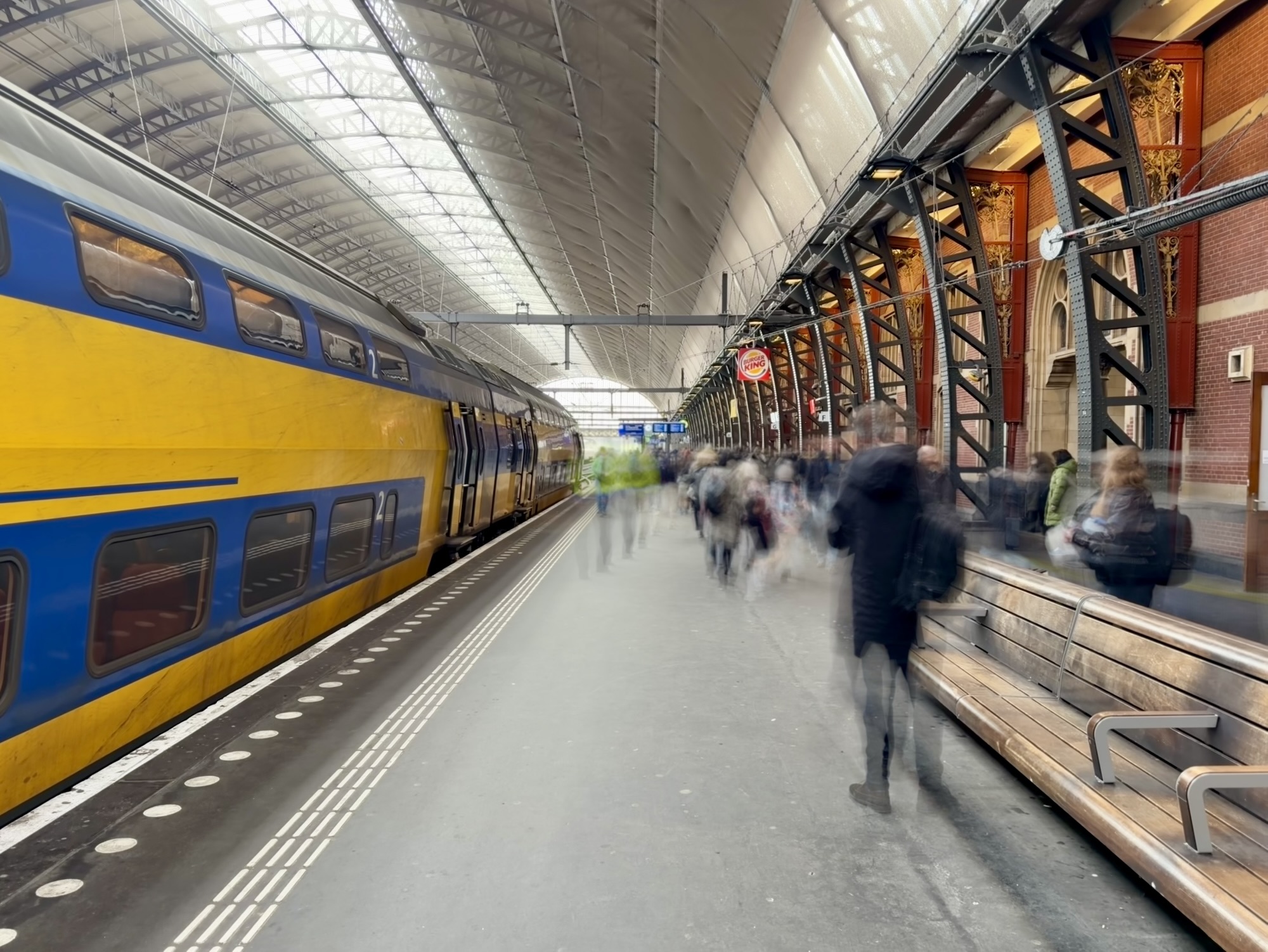
We had breakfast in our rooms and met in the lobby at 10 AM. A 1 km walk check us to Sloterdijk station where we caught what we think is a regional train, which was took us one. Stop to Amsterdam Central Station. A return ticket was €7.60 return which seemed like a lot of money, and we still had to take a tram, or walk for half an hour to get to Rijksmuseum. So we need to do a little more research on whether or not, we are using these system as cheaply as possible.
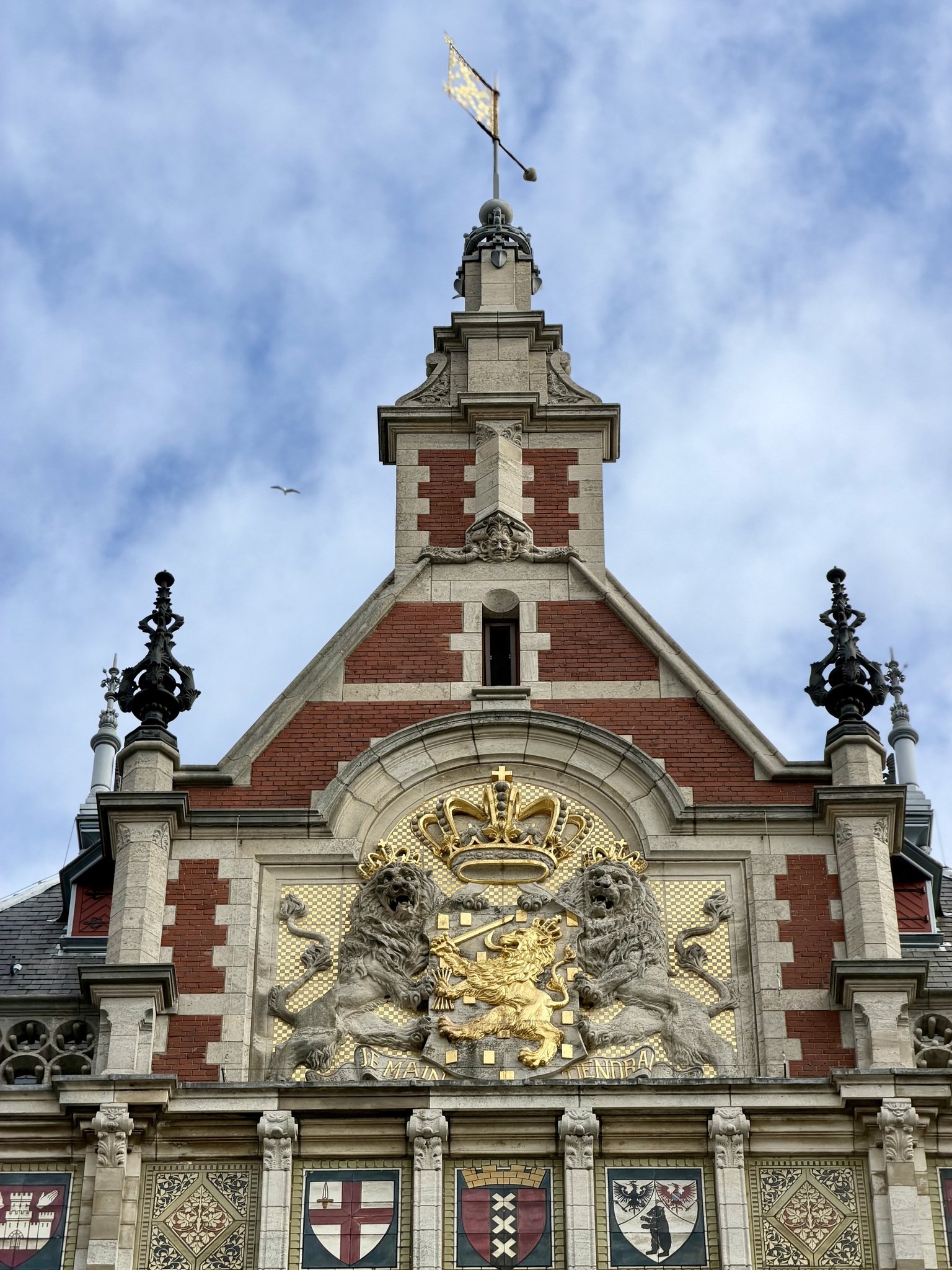
Both the Rijksmuseum (1885) and Amsterdam Central Station (1889) were designed by Dutch architect Pierre Cuypers (1827-1921). He is known for a distinct Neo-Gothic and Neo-Renaissance style, often creating ornate, cathedral-like structures.
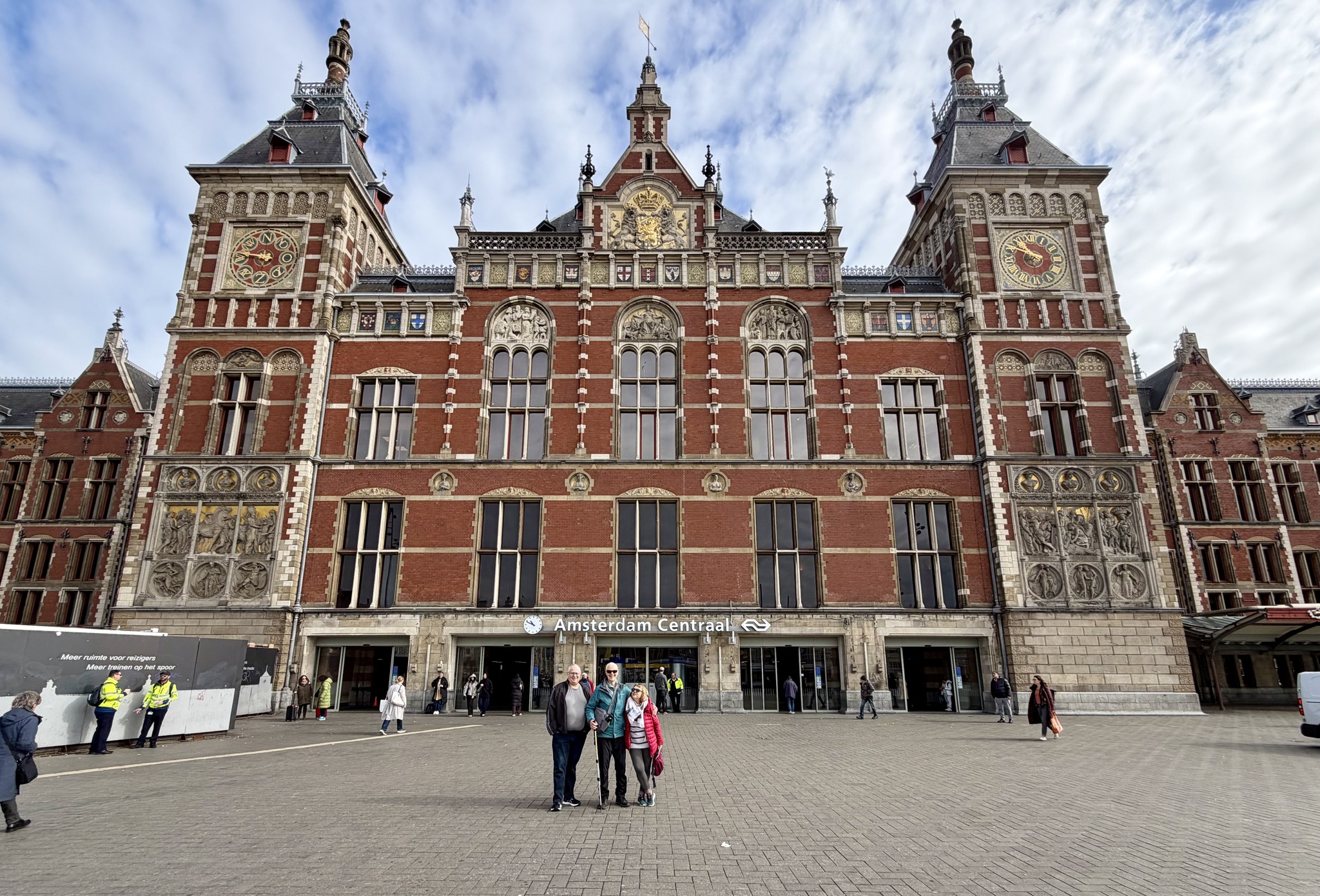
Wayne, Alina and I decided to walk to the museum, while David and Dayle and Mark and Cindy took the tram. They beat us by a few minutes.
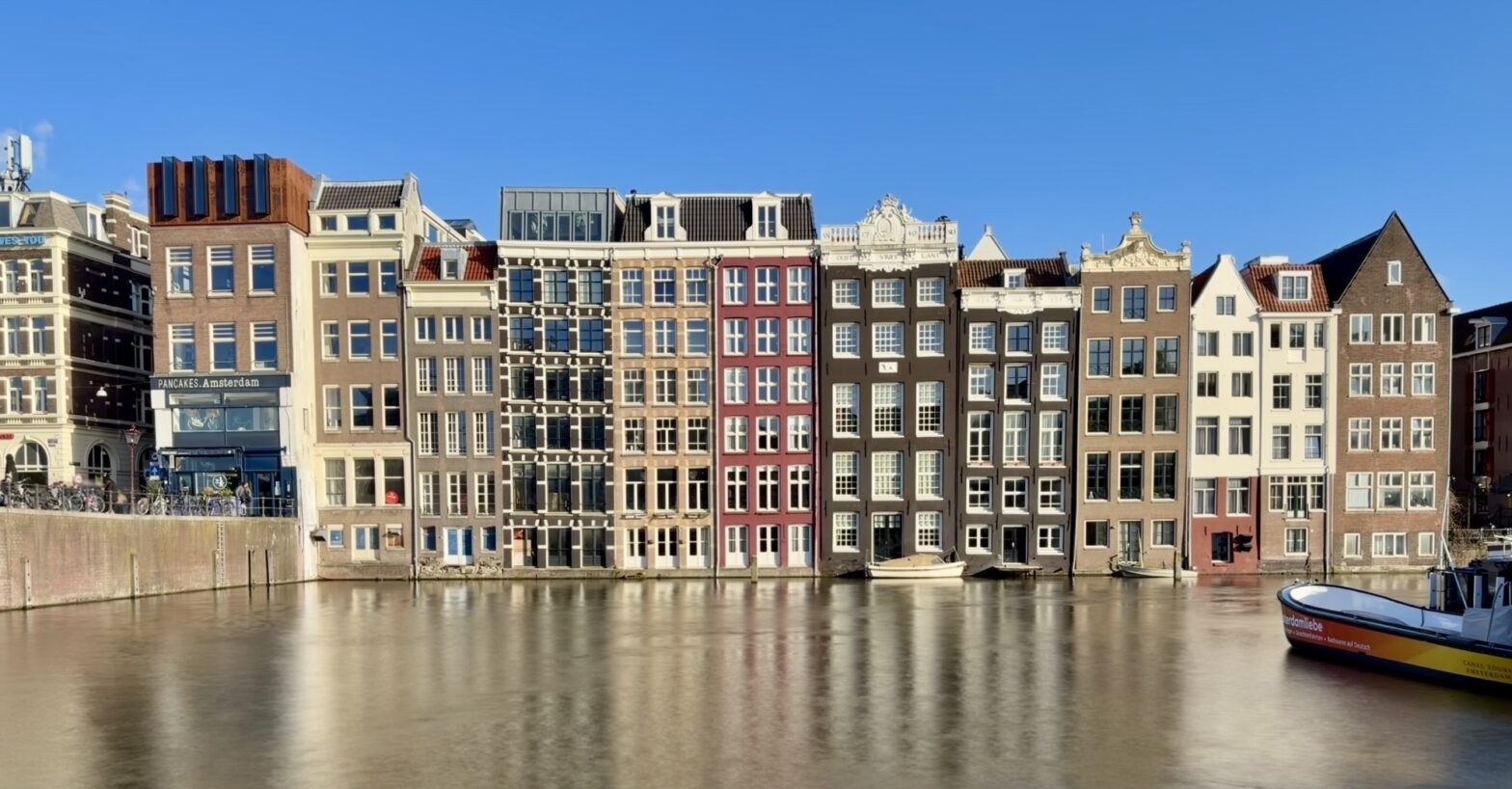
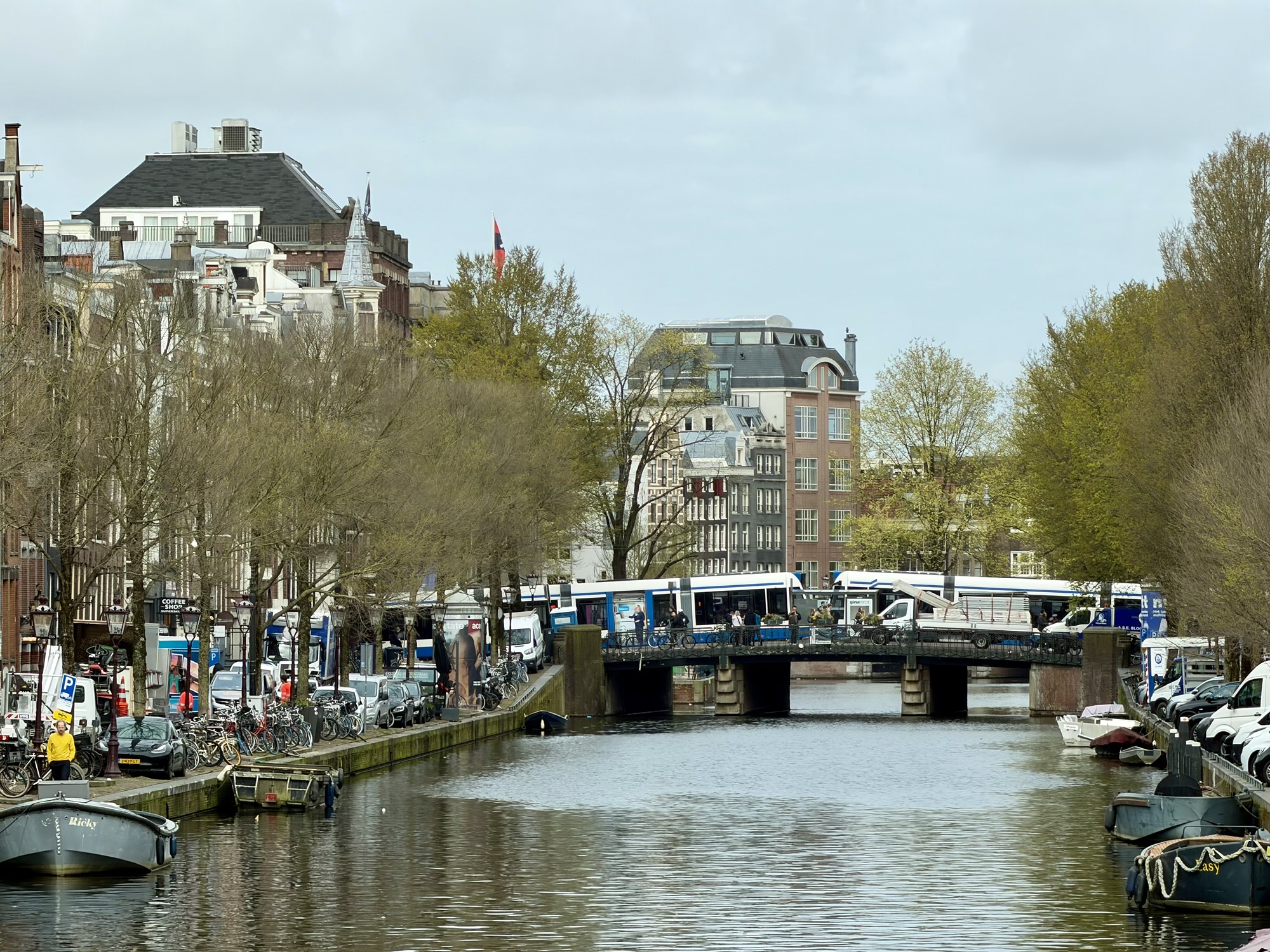
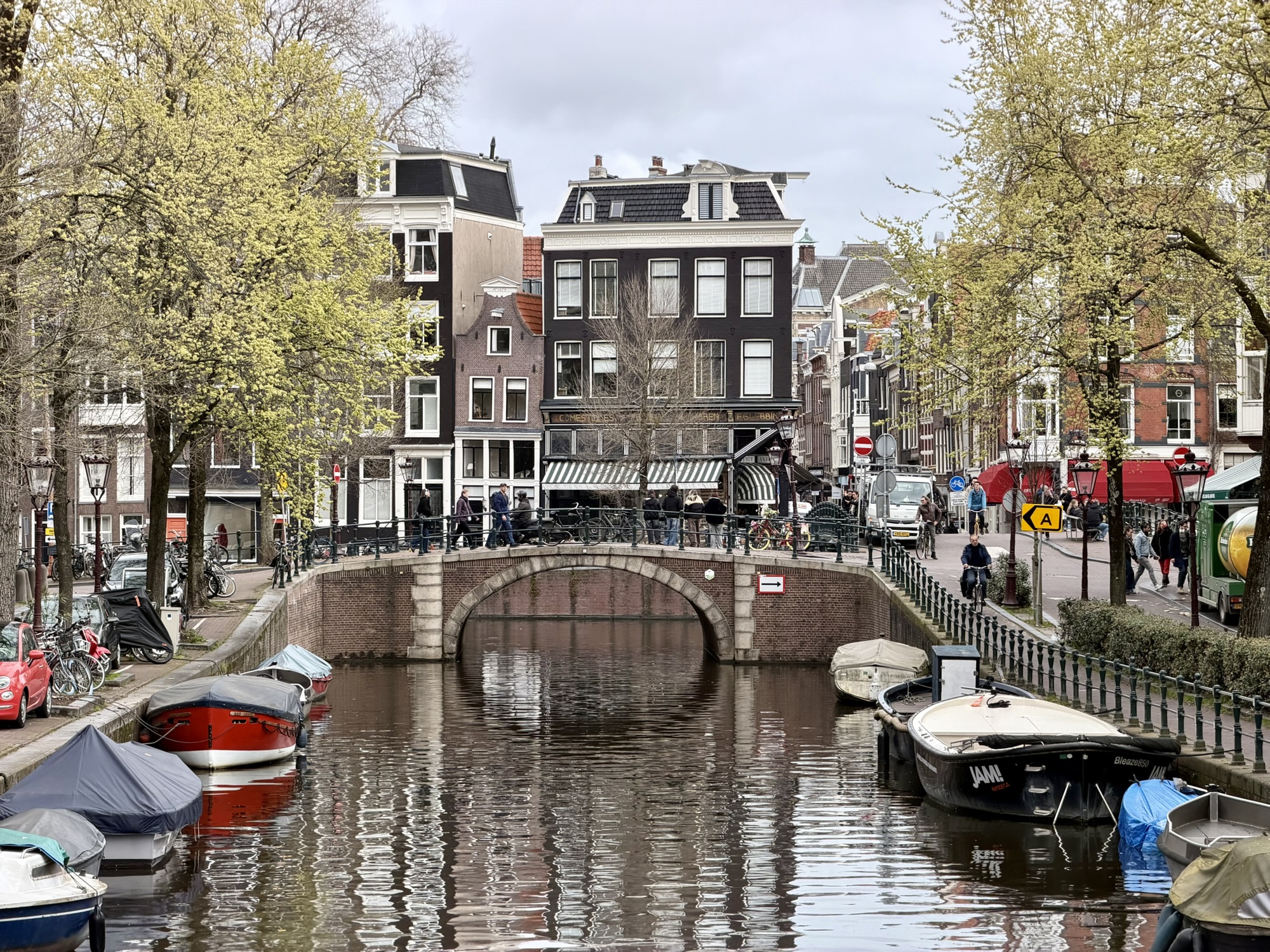
Our walk to the museum took us across the three main canals of Amsterdam – Herengracht, Prinsengracht, and Keizersgracht. The buildings are so beautiful and distinctive. These buildings are often slim, high and deep.
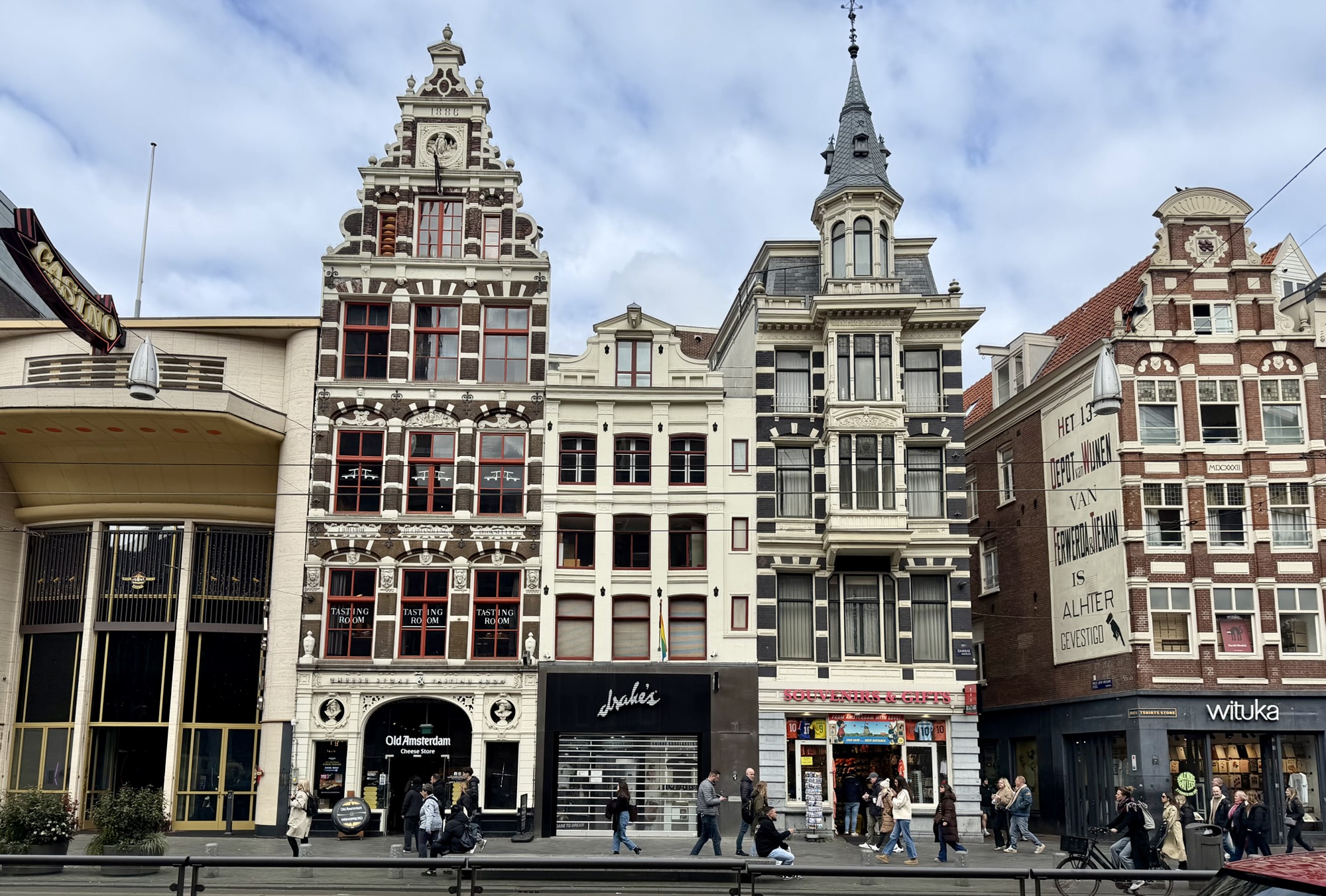
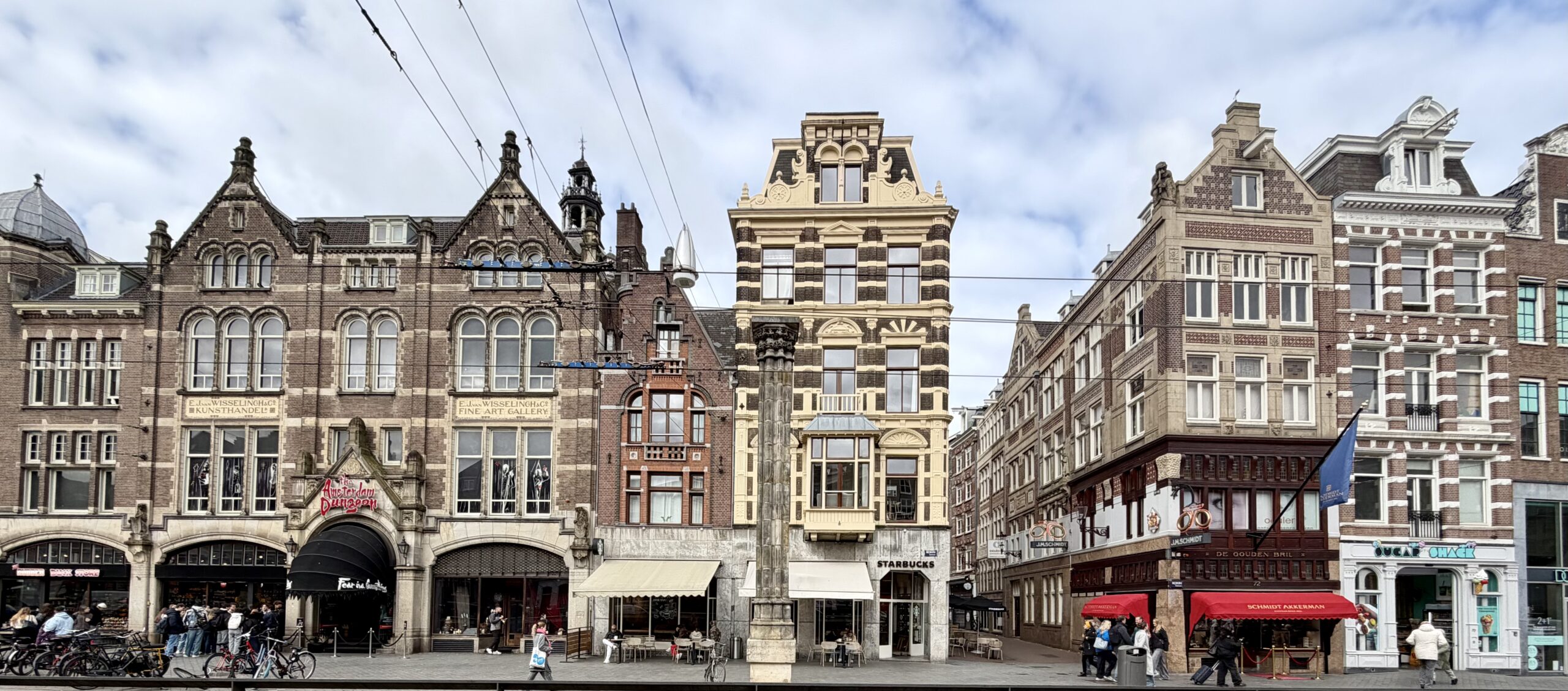
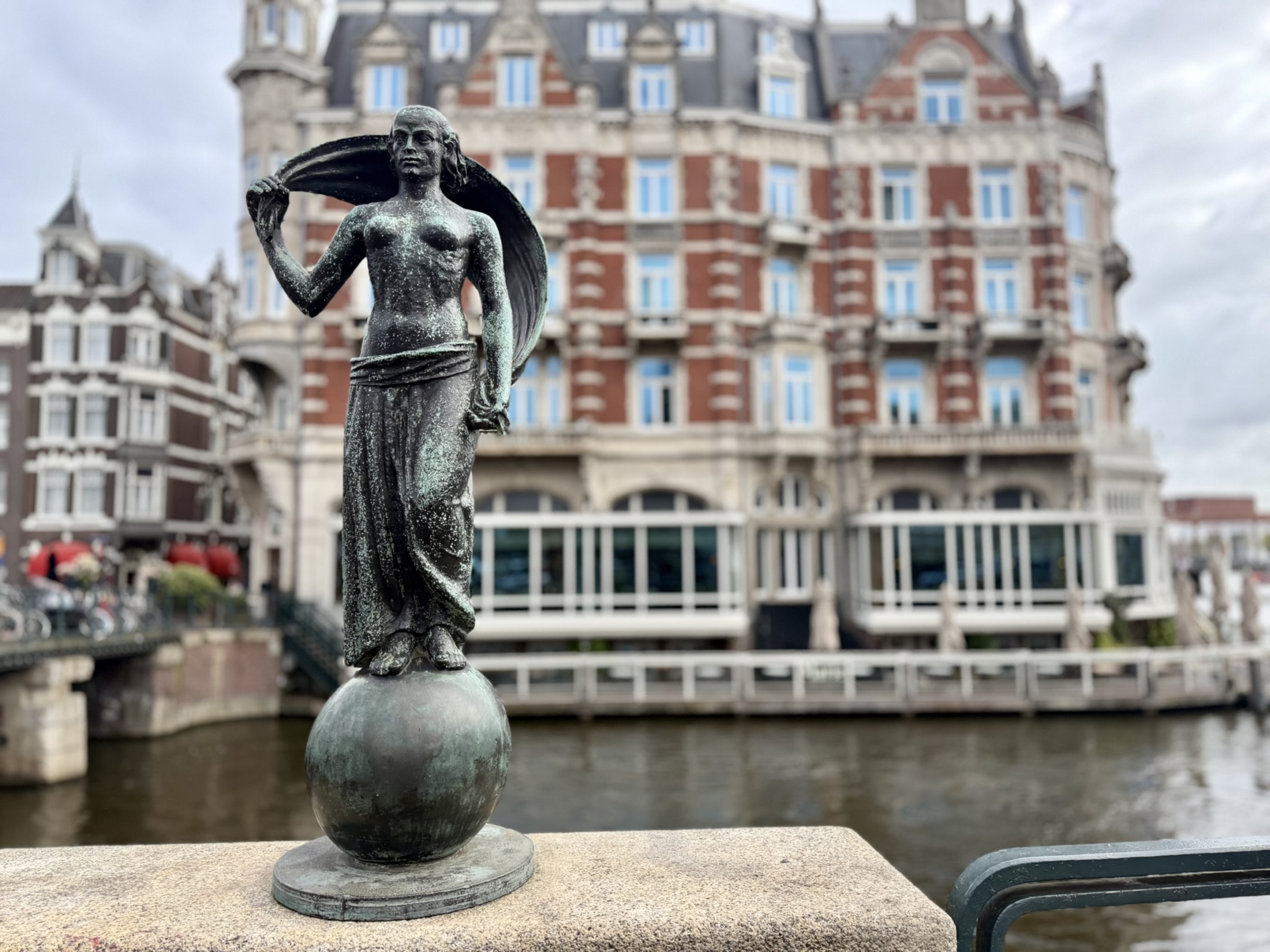
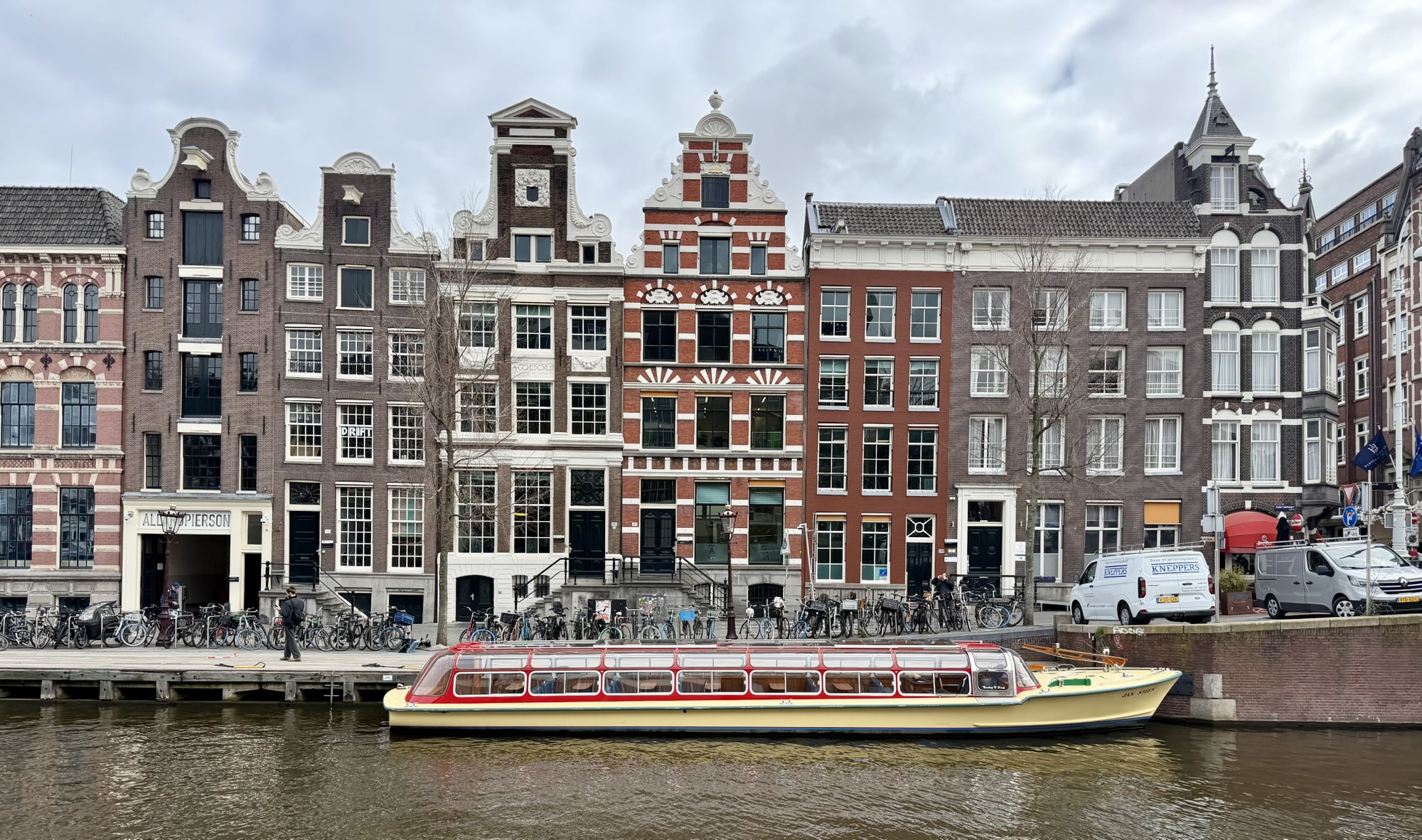
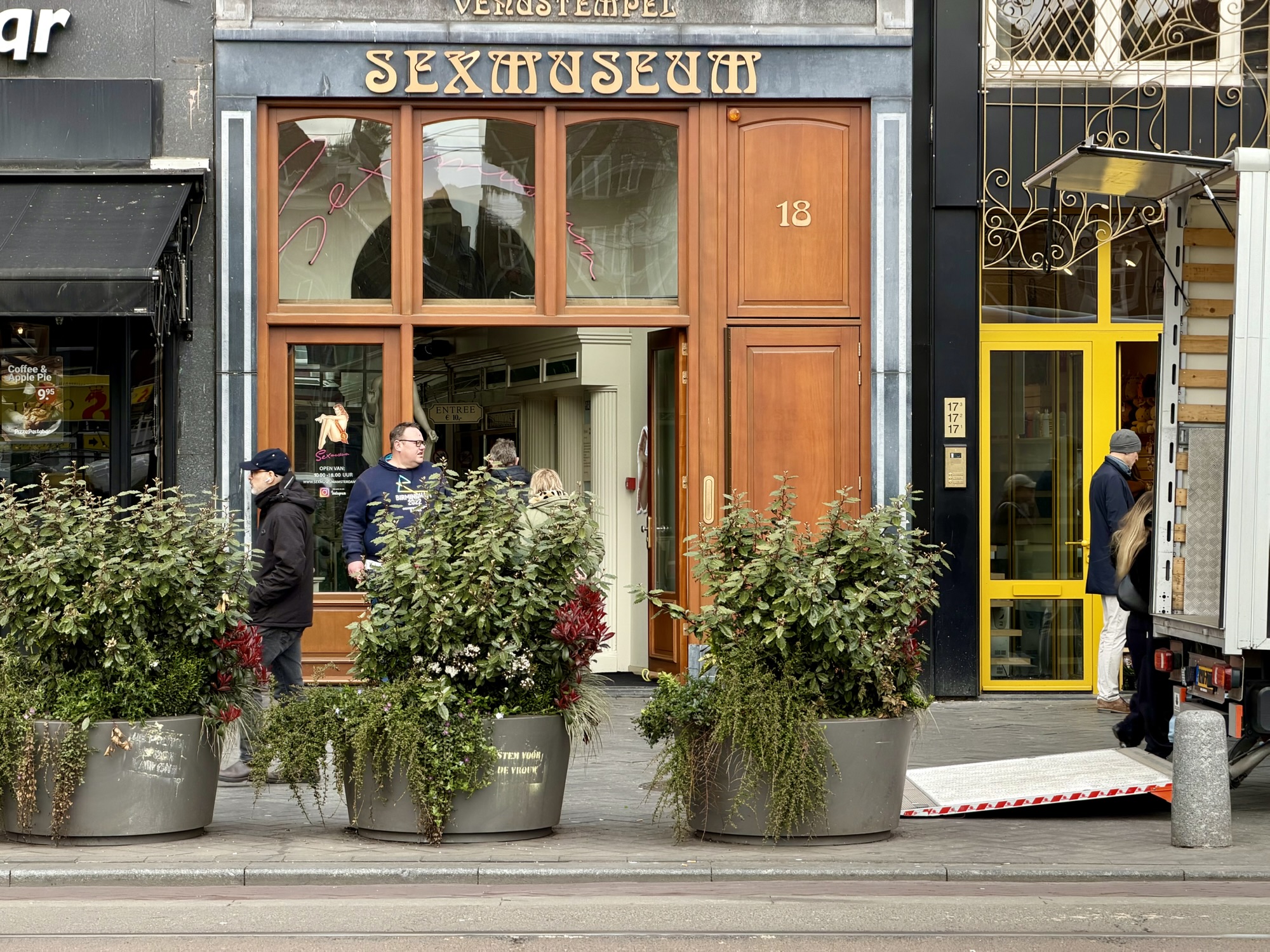
We had to give the sex museum a mess since we already had time tickets for Rijksmuseum.
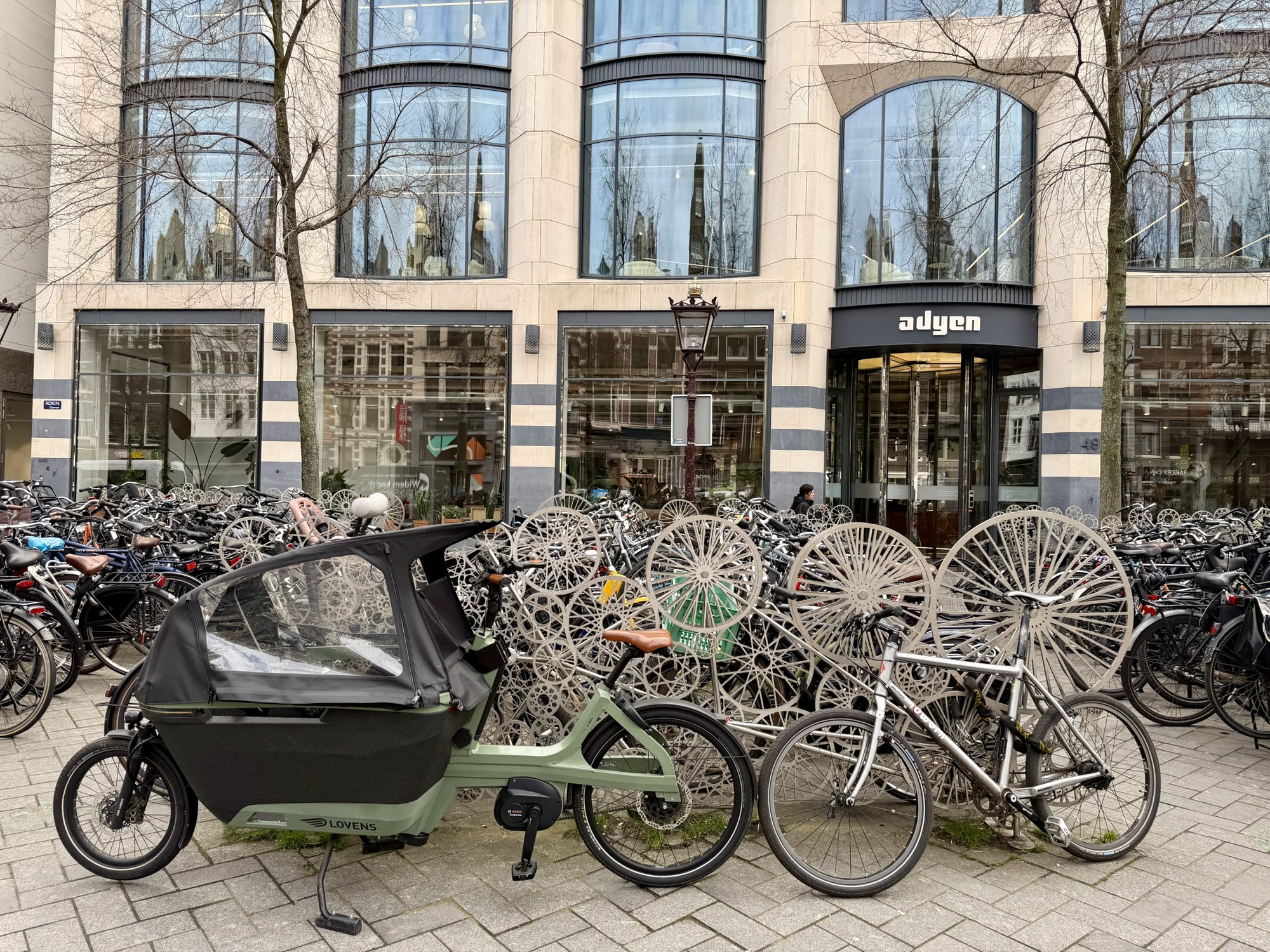
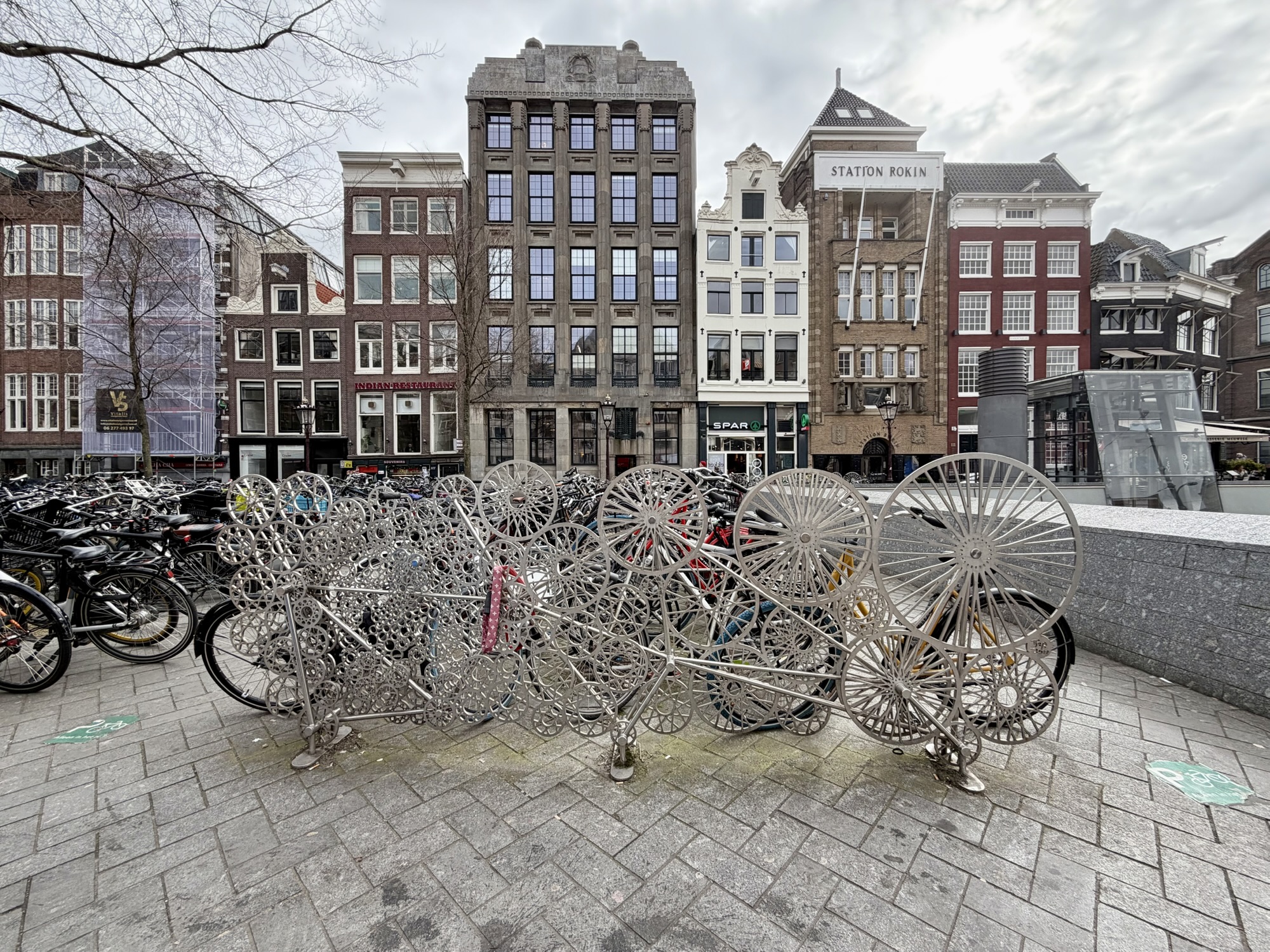
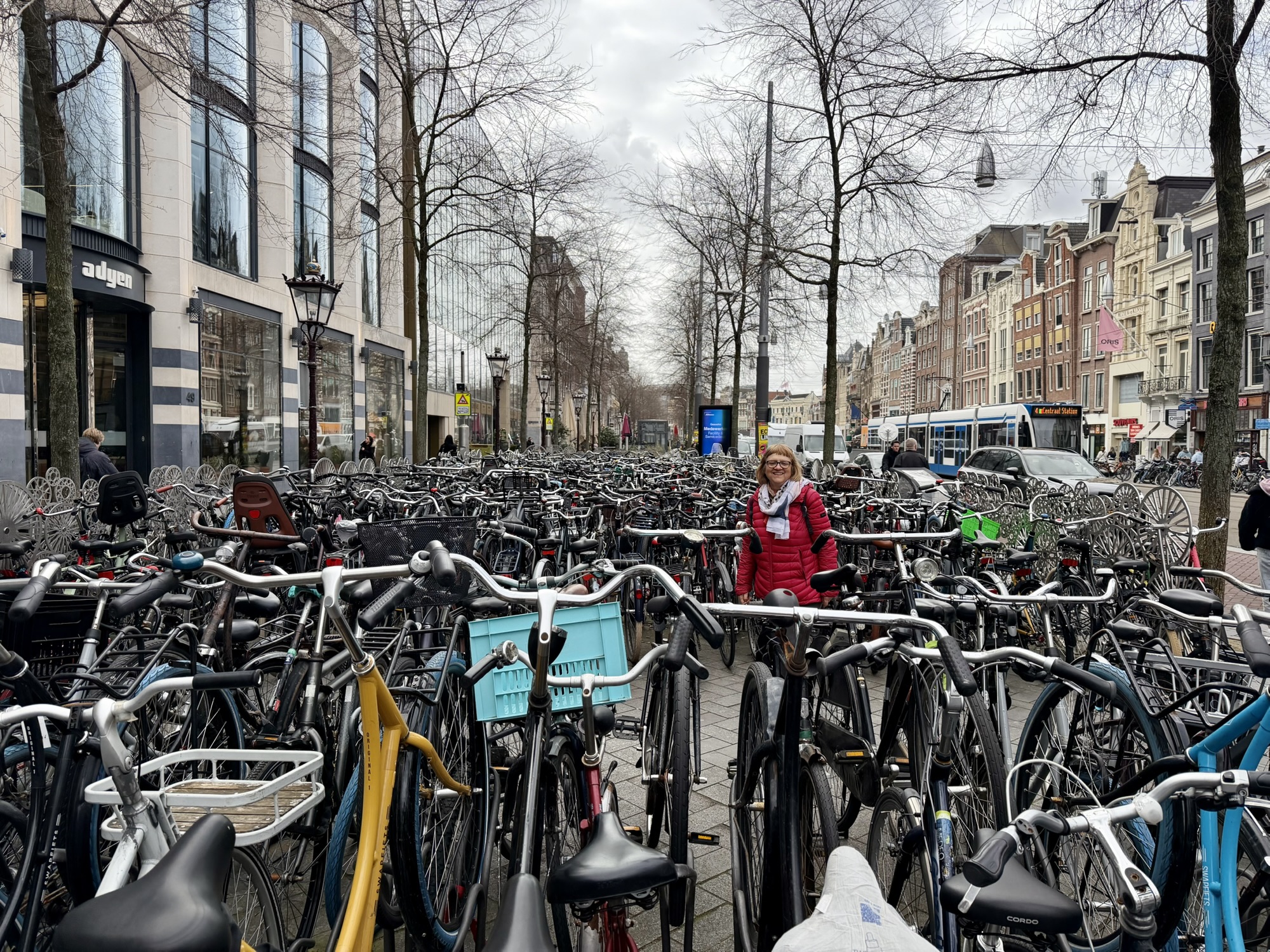
Around every subway station there were massive bike parking lots. This particular one had beautiful art, indicating the edges of the lot.
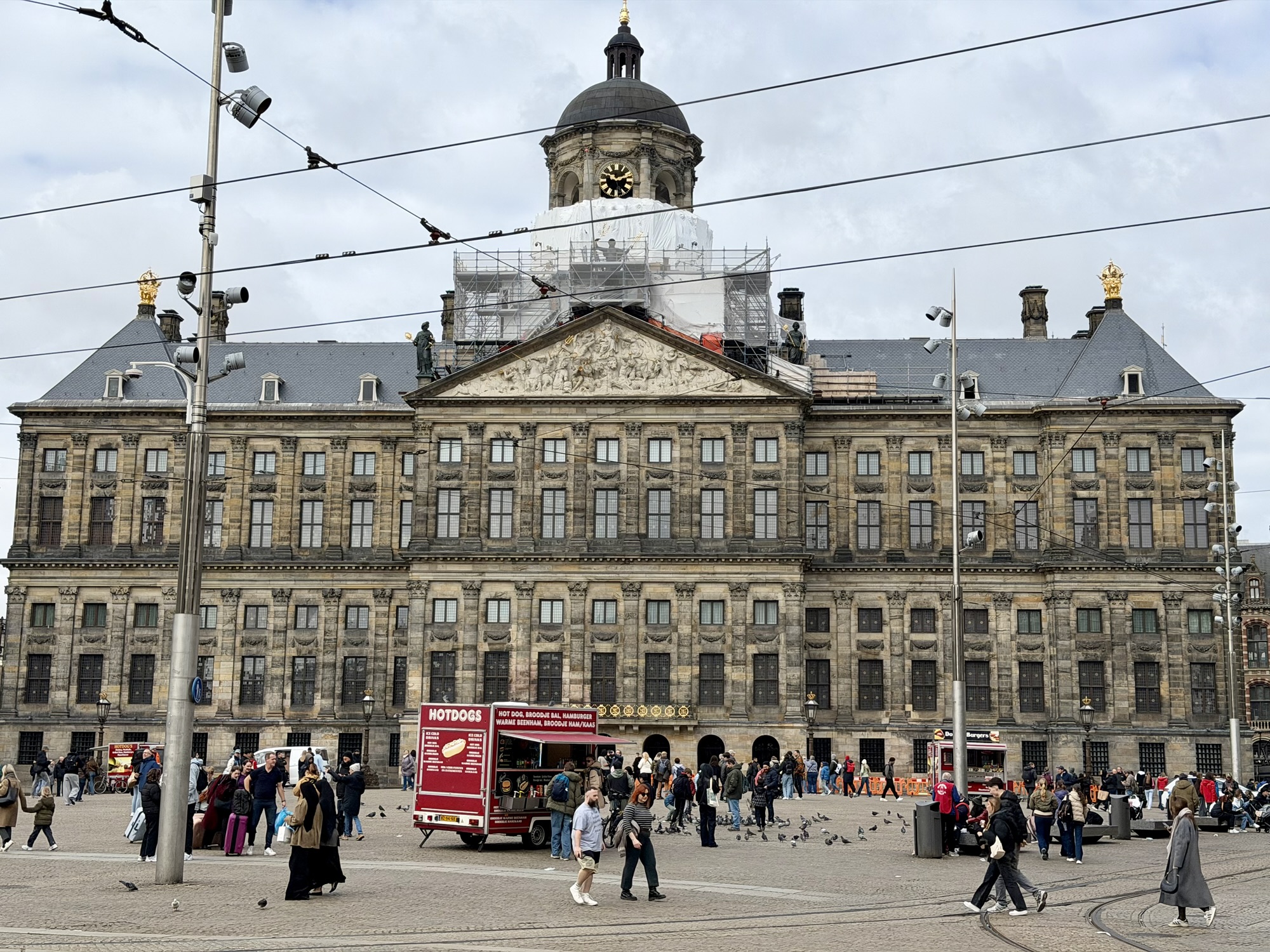
This is the Royal Palace of Amsterdam and is on Dam Square, a large open square with many impressive buildings.
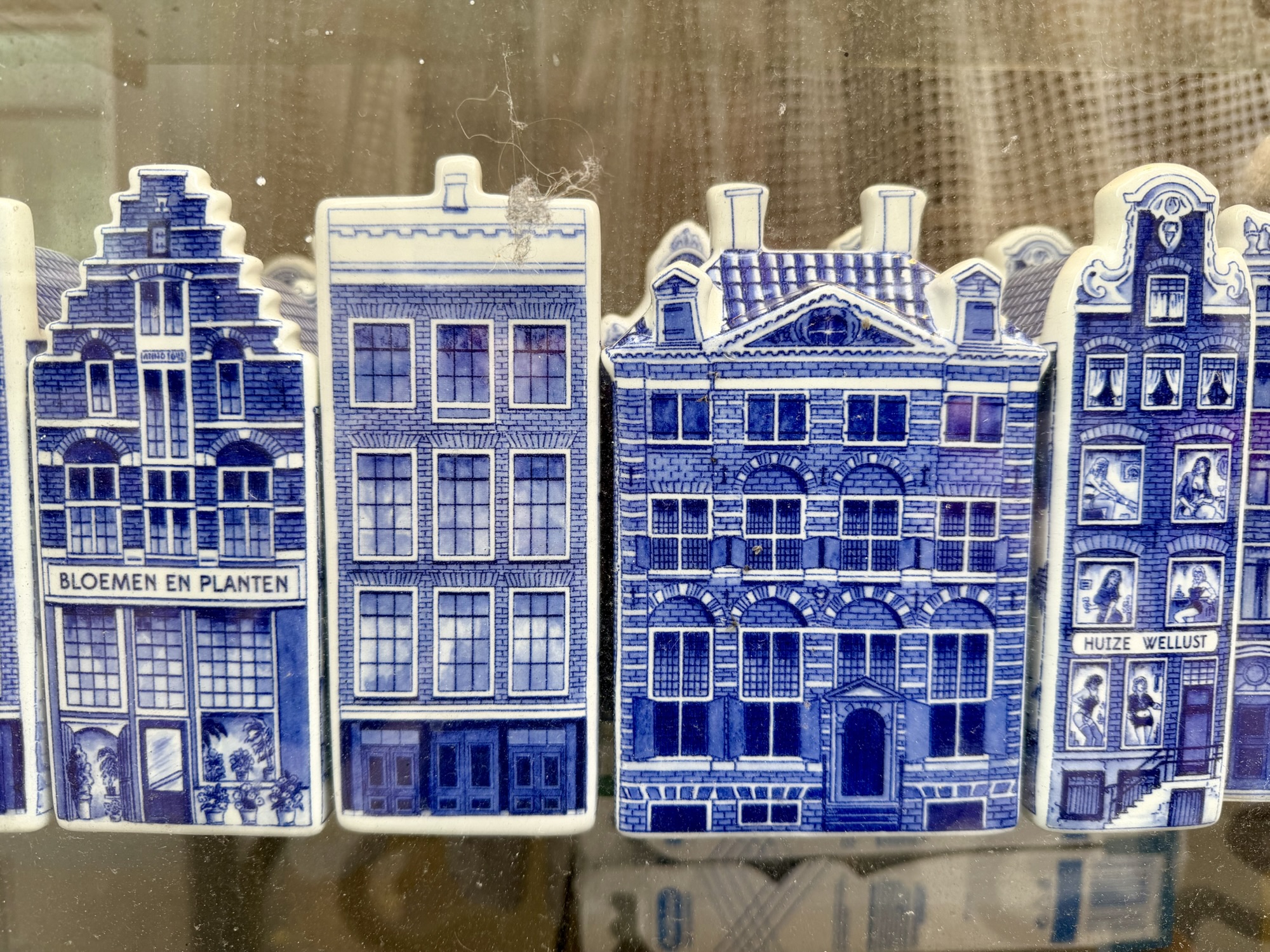
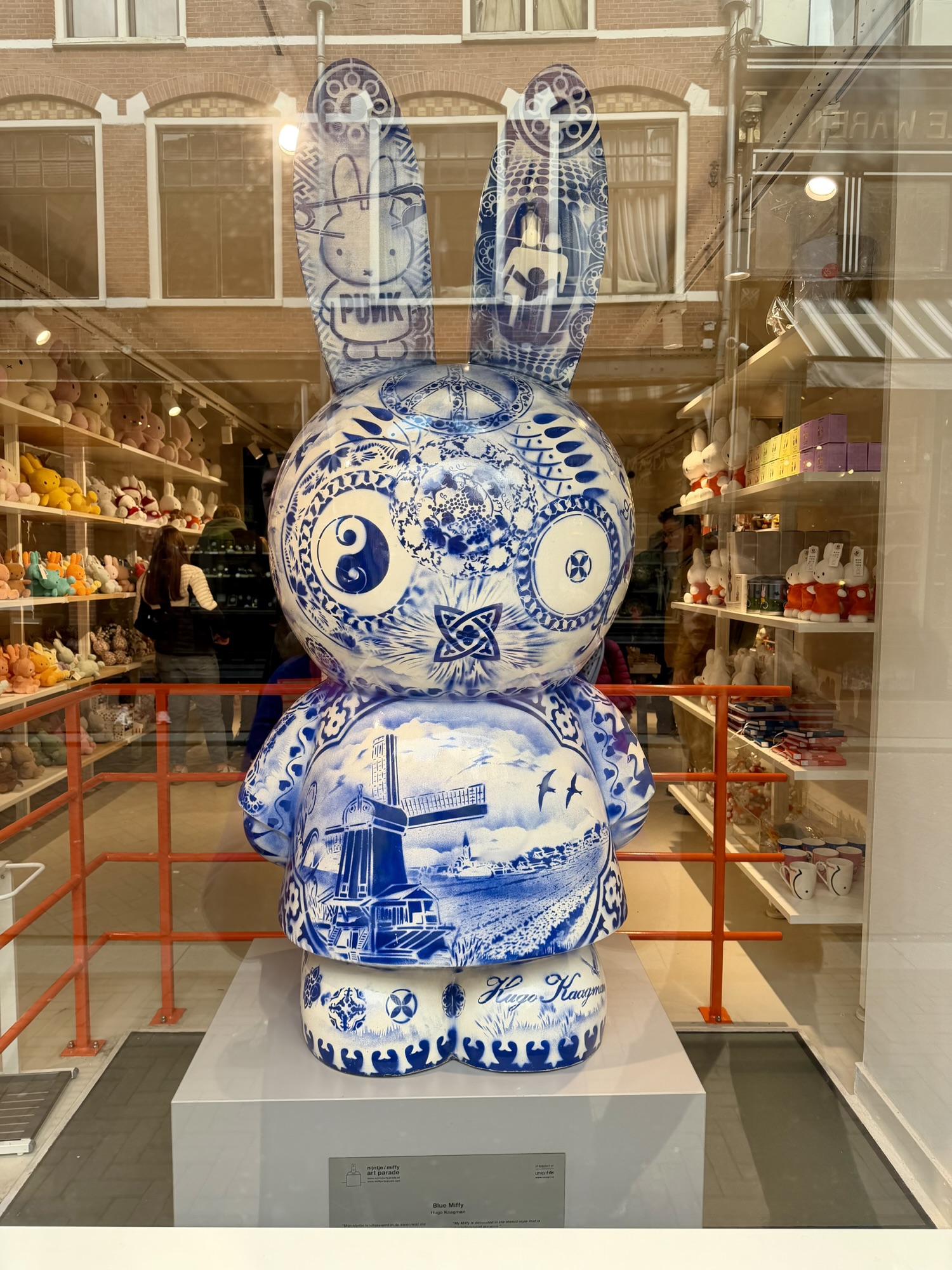
These Delft pottery inspired Canal townhomes were in a window. At one time KLM gave them out to first class passengers. Further down the street we saw a giant Delft pottery inspired Easter bunny. Tomorrow five of us will be visiting Delft.
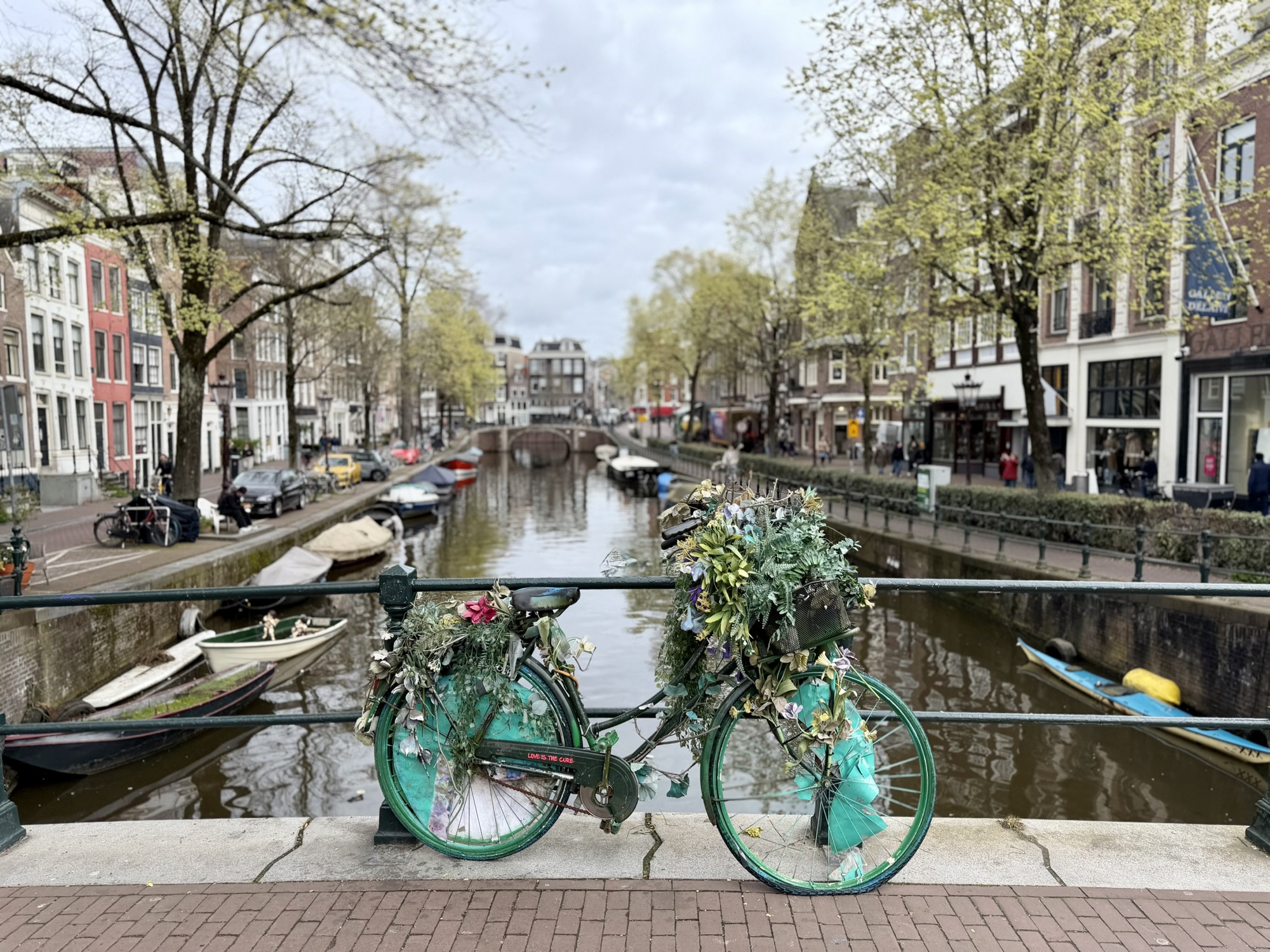
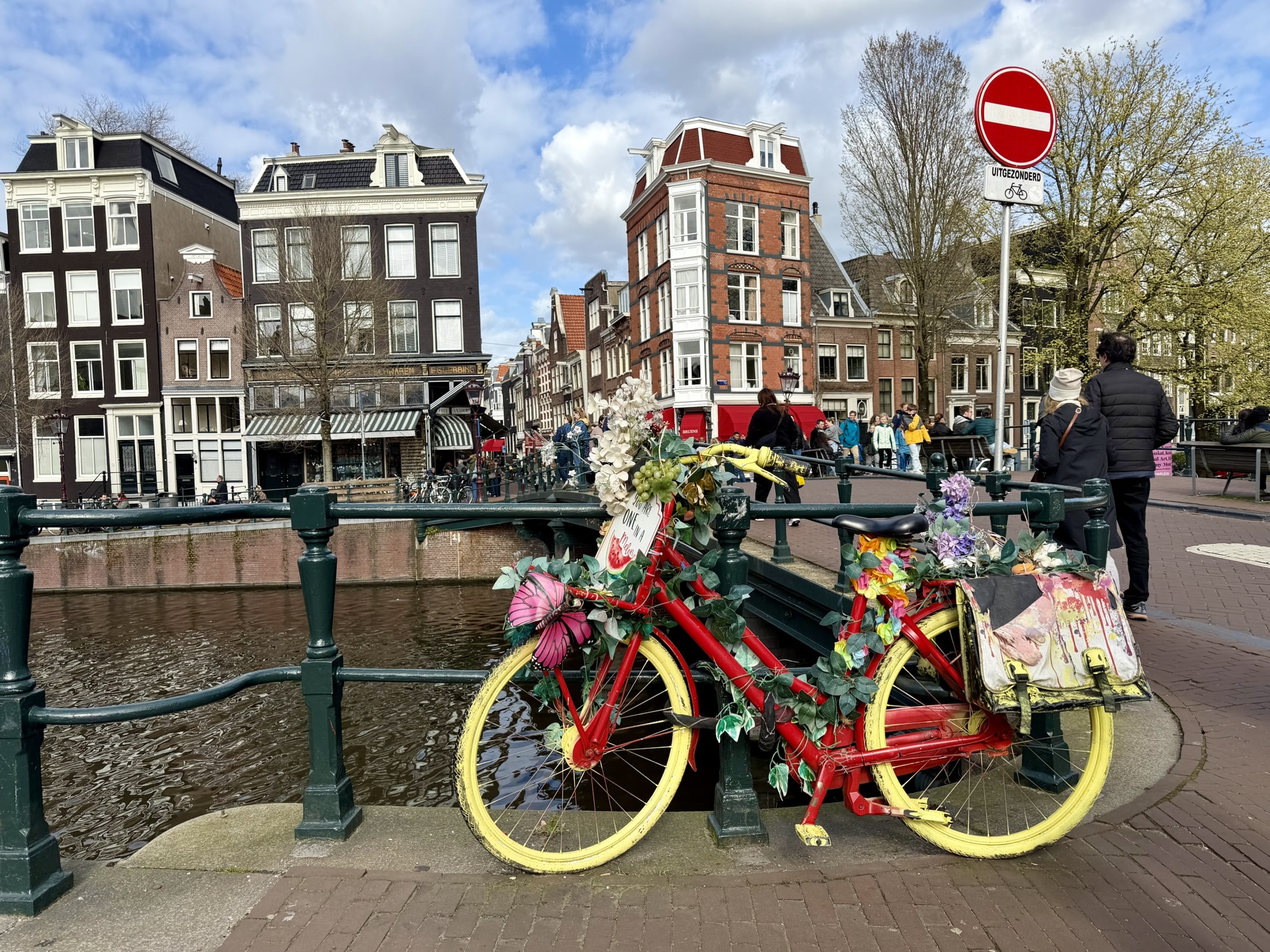
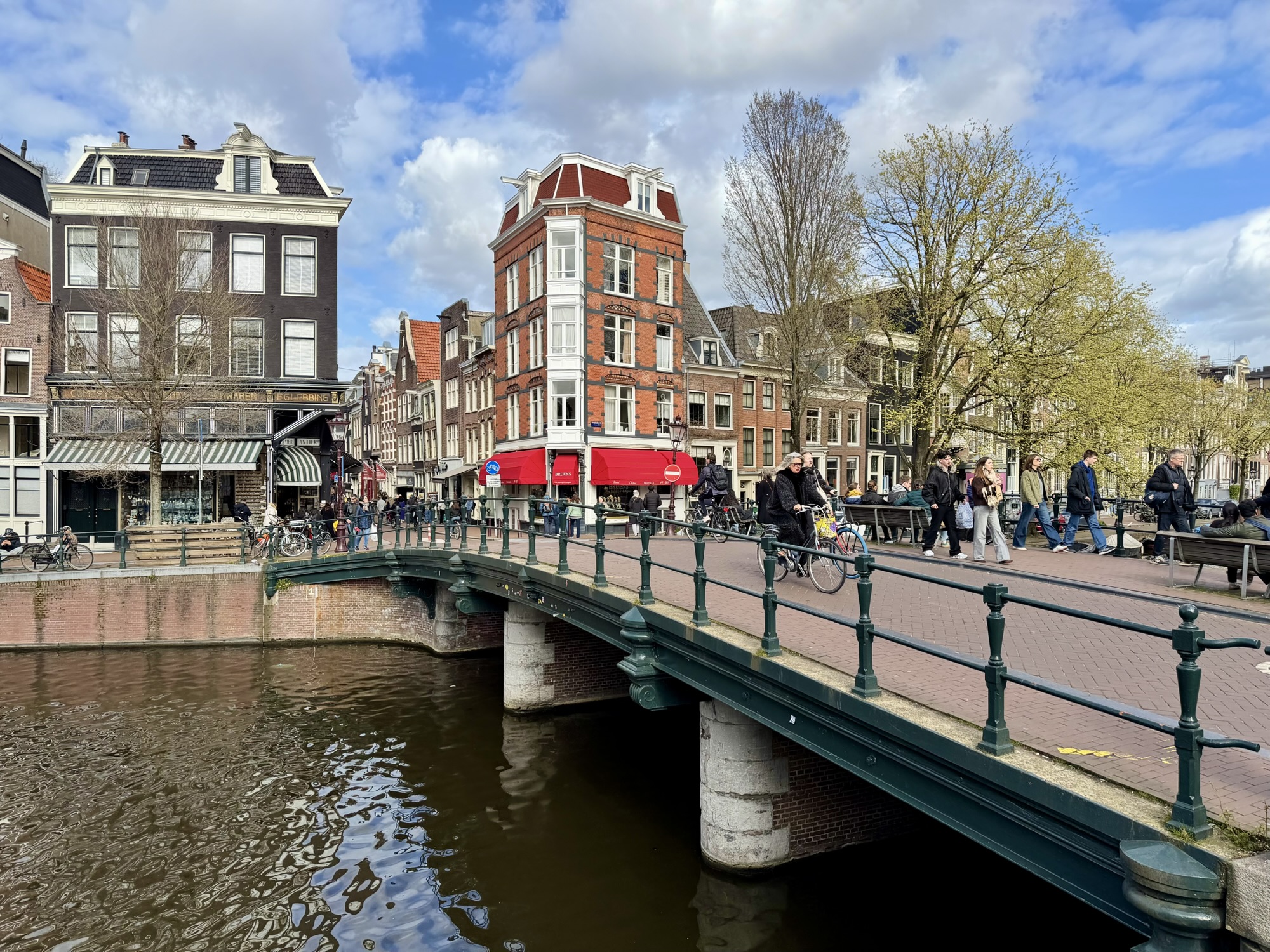
Because Amsterdam is on many canals, there are many bridges making for many beautiful scenes.
Dayle and Alina had some trouble booking their tickets online, which is required, as this, choosing an entry time slot, for the museum, but they were able to get things sorted out.
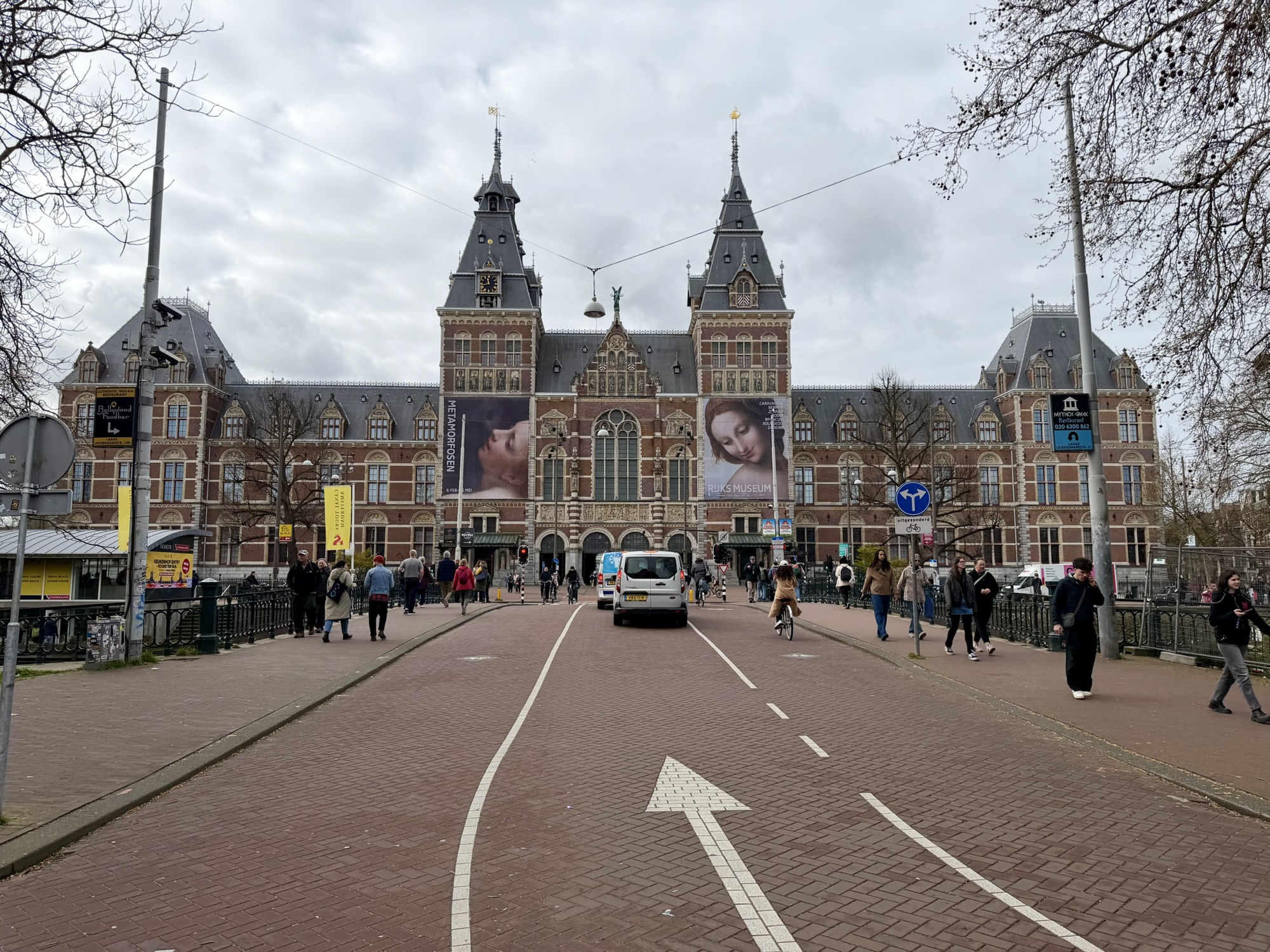
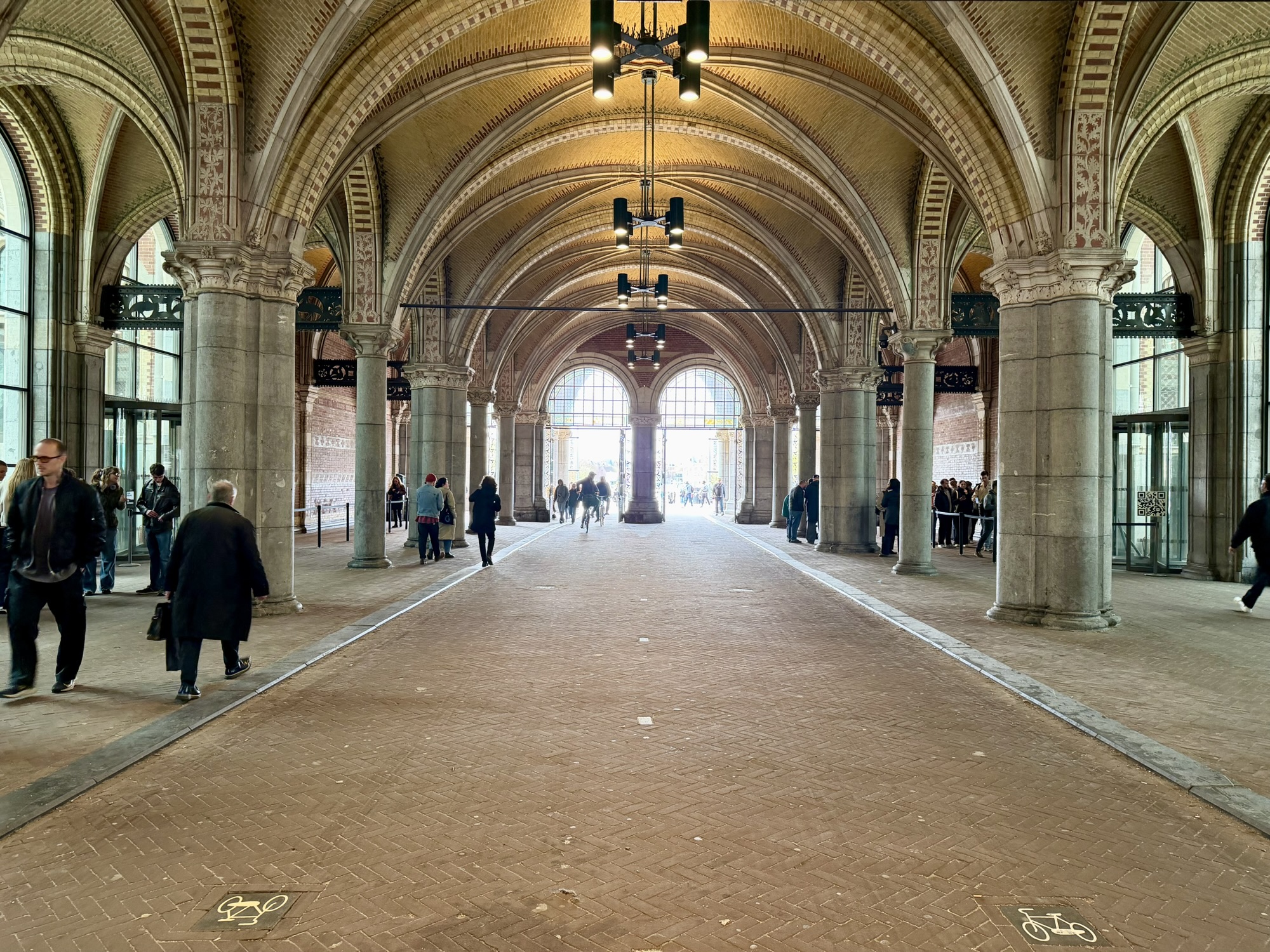
In the original design that were too large atria, which have since been covered with large glass roofs. There is a bike path between the two, which of the architects in the latest renovation would have liked to have removed, but there was a public battle against doing so. In the end, the bike path remained, and windows were put on either side of it so it can be seen from the inside of the museum and vice versa.
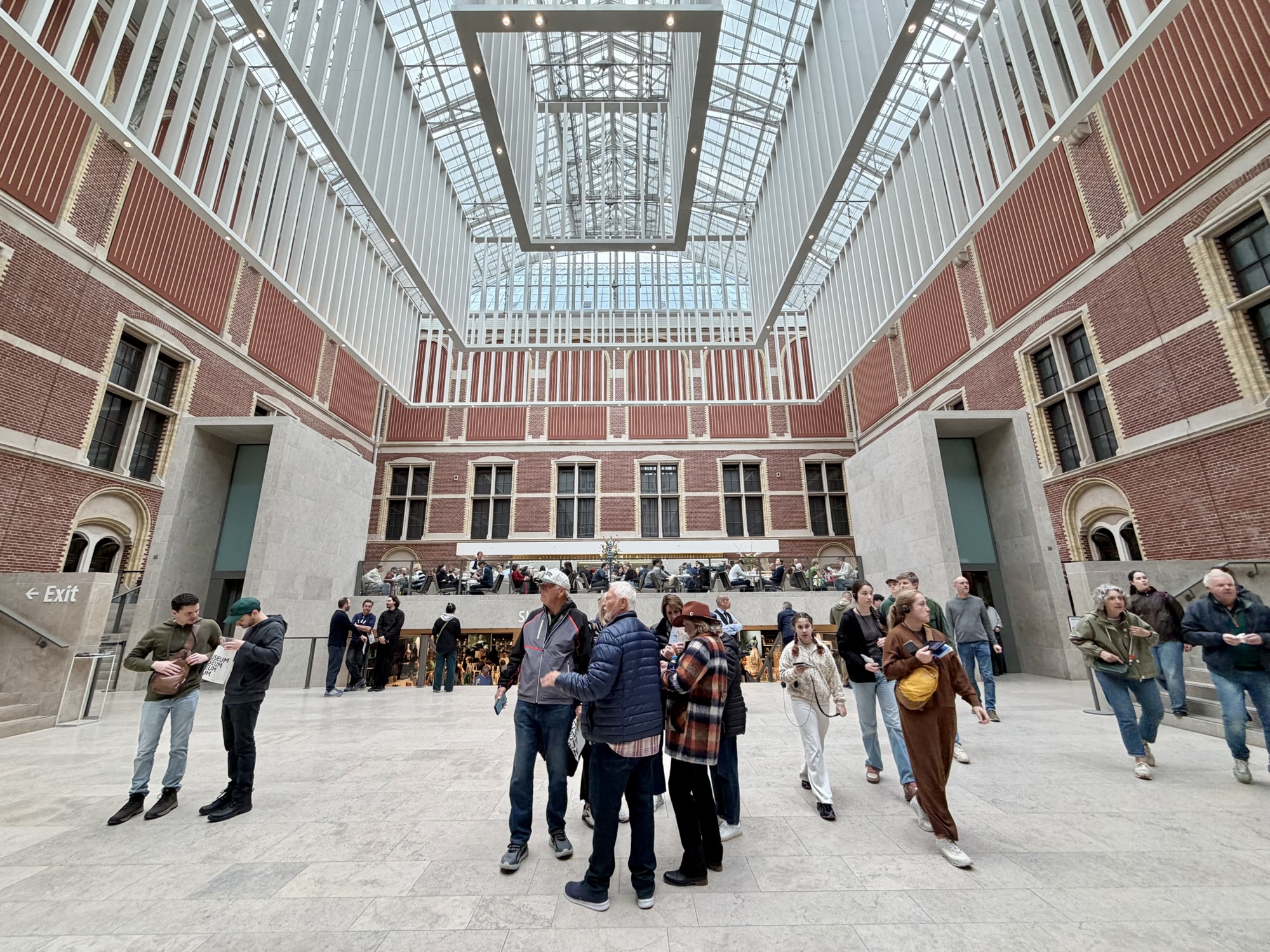
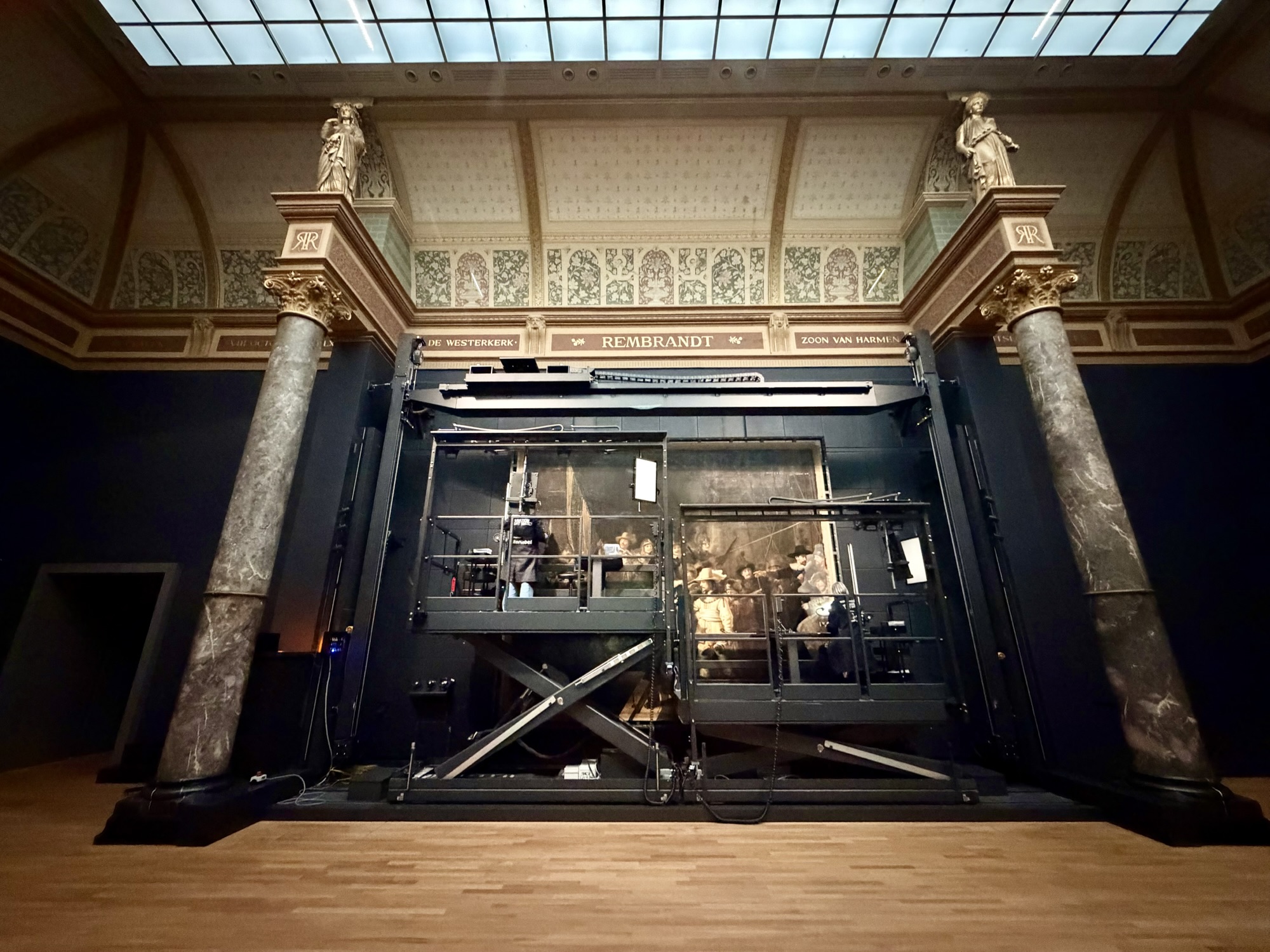
We started at one of the museums, most famous paintings, entitled The Night Watch. A large replica Matt at the top of the stairs, and at the one end of the great hall was a Glasston area where the original has been under restoration since 2019. An extremely friendly and interesting museum employee told us about the painting and the restoration.
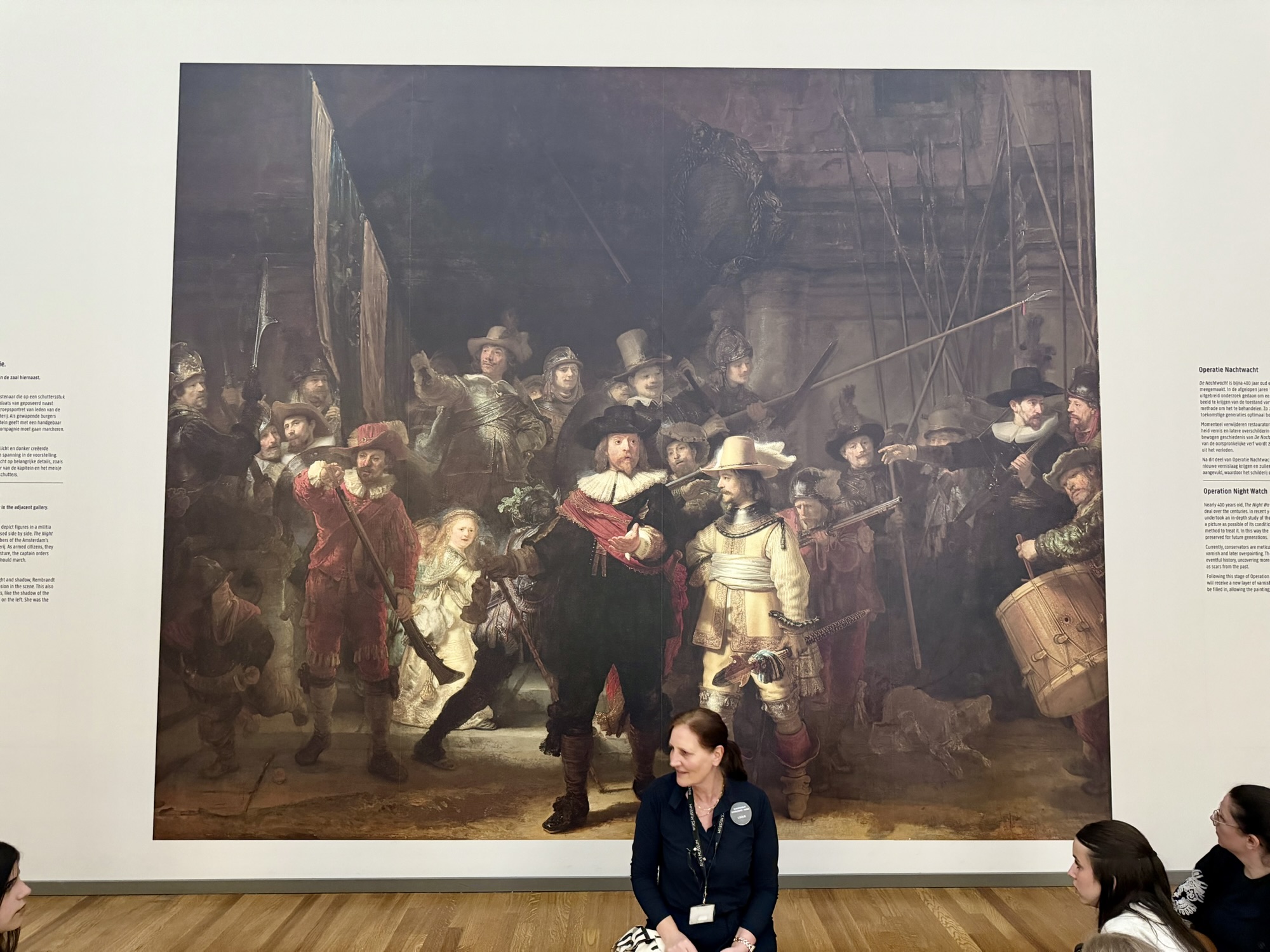
It’s a daytime scene, but over the years, as the preserving varnish darkened and layers of dirt built up, it darkened, and it got its popular title. When the painting was moved to a smaller room, the sides were lopped off (and the pieces lost), putting the two main characters in the center and causing the work to become more static than intended. During World War II, the painting was rolled up and hidden for five years. In 1975, a madman tacked the painting, slicing the captain’s legs, and in 1990, it was sprayed with acid. It was still fully restored after each of these incidents.
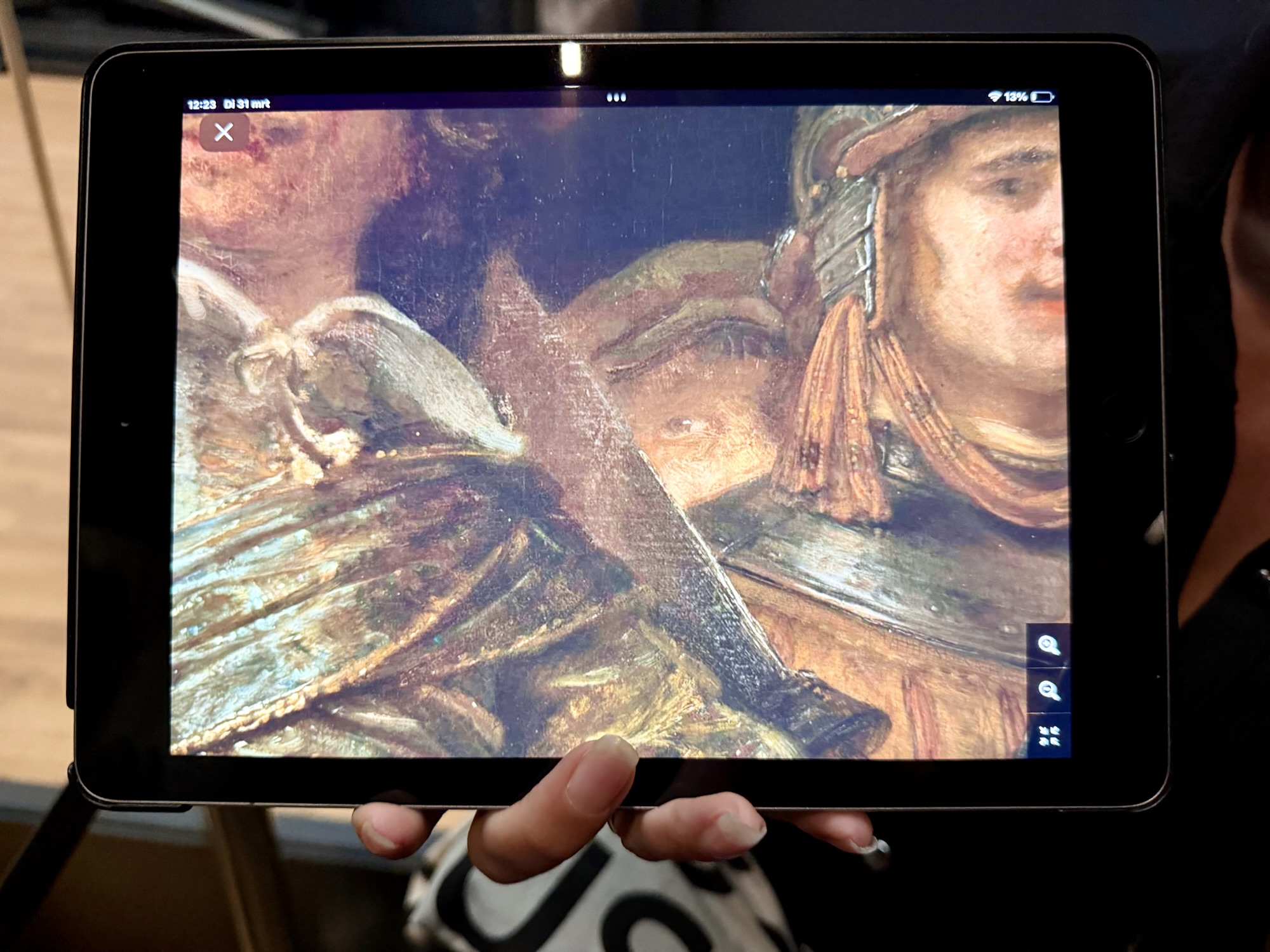
The Museum employee told us that if you look very closely, you can see Rembrandt peeking over the shoulders of people in the foreground in the picture, and showed us on her iPad.
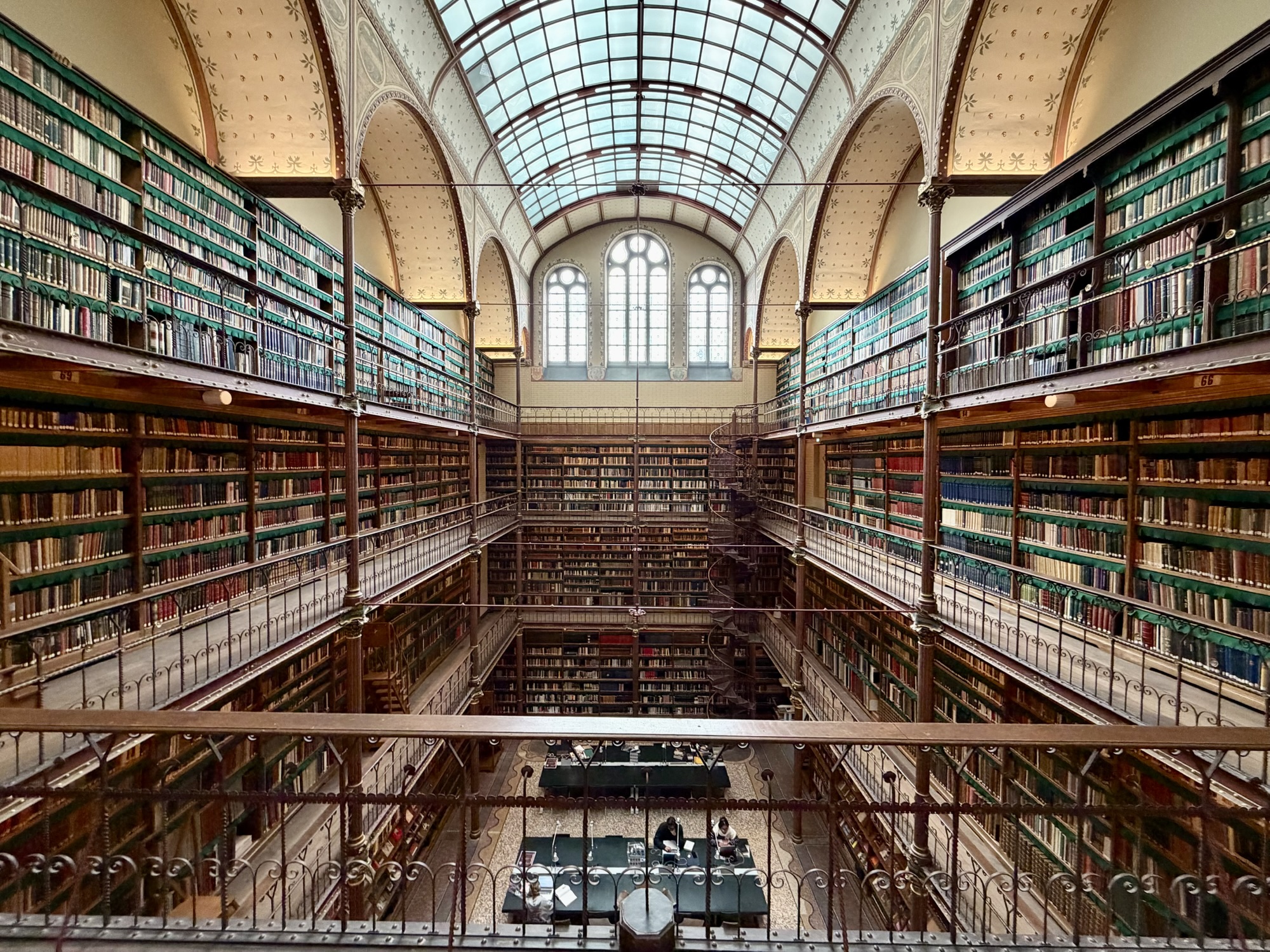
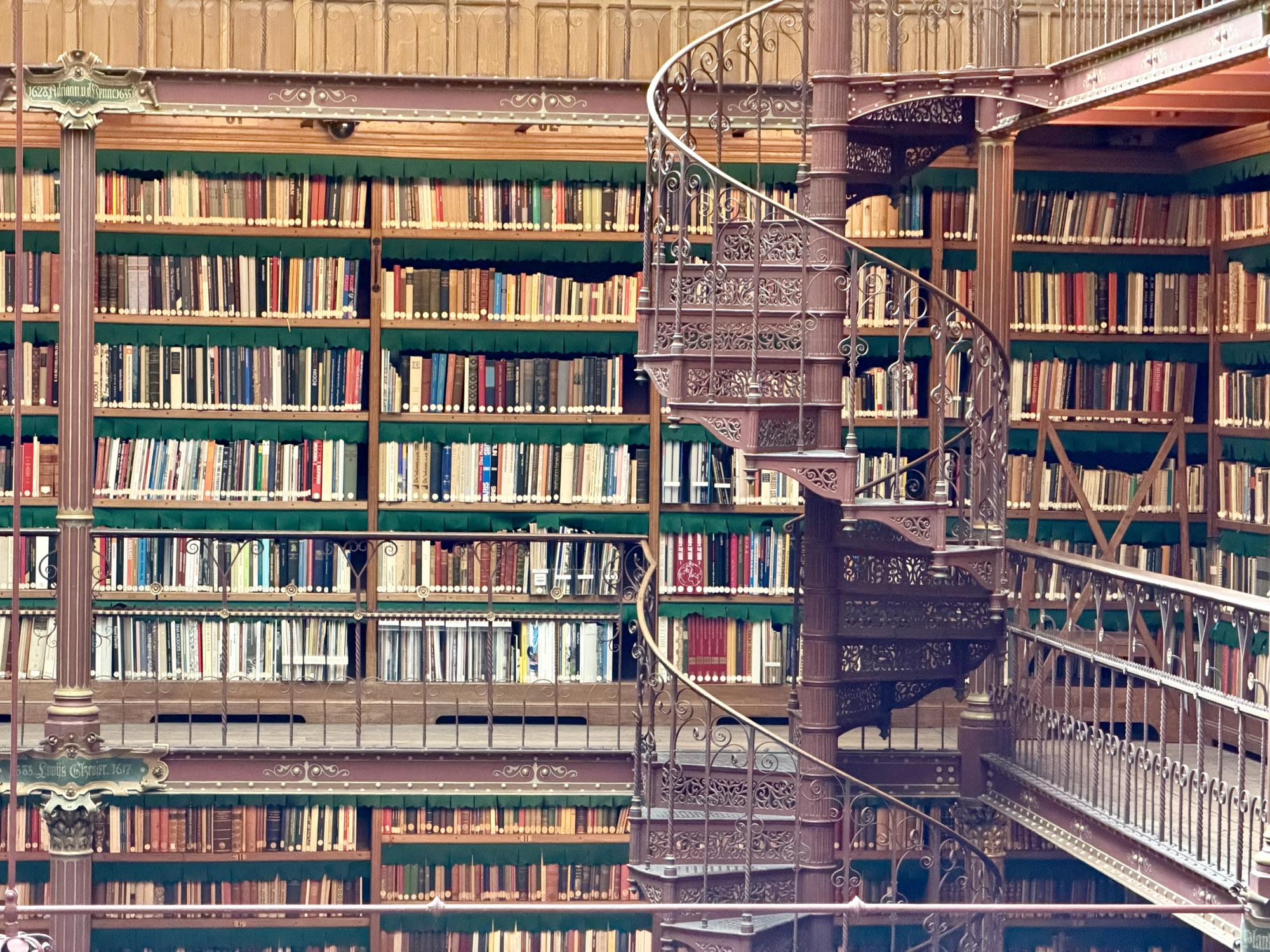
There is a beautiful library in the building.
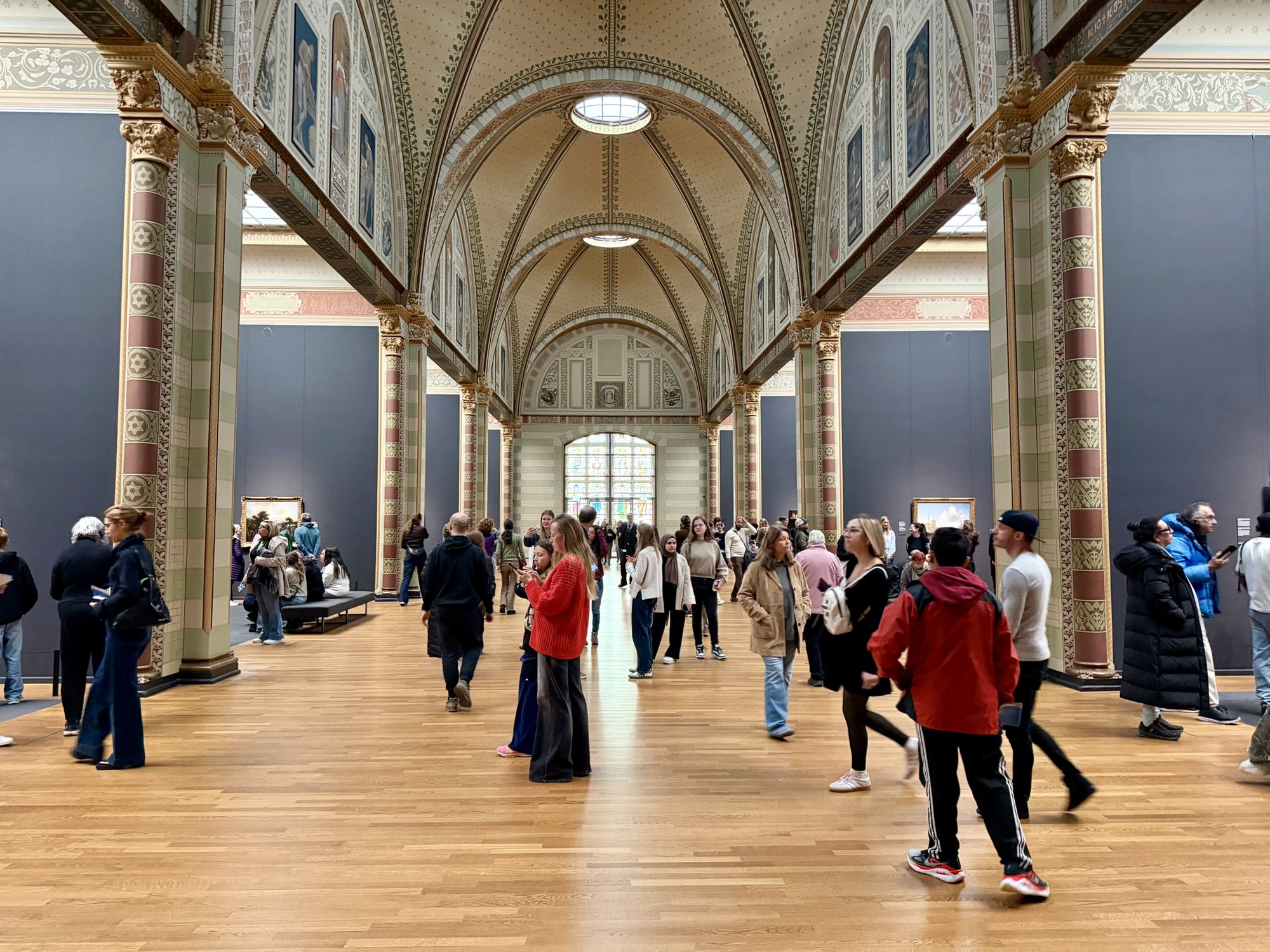
This is the great hall and it has very large stained glass windows at the opposite end to the Night Watch.
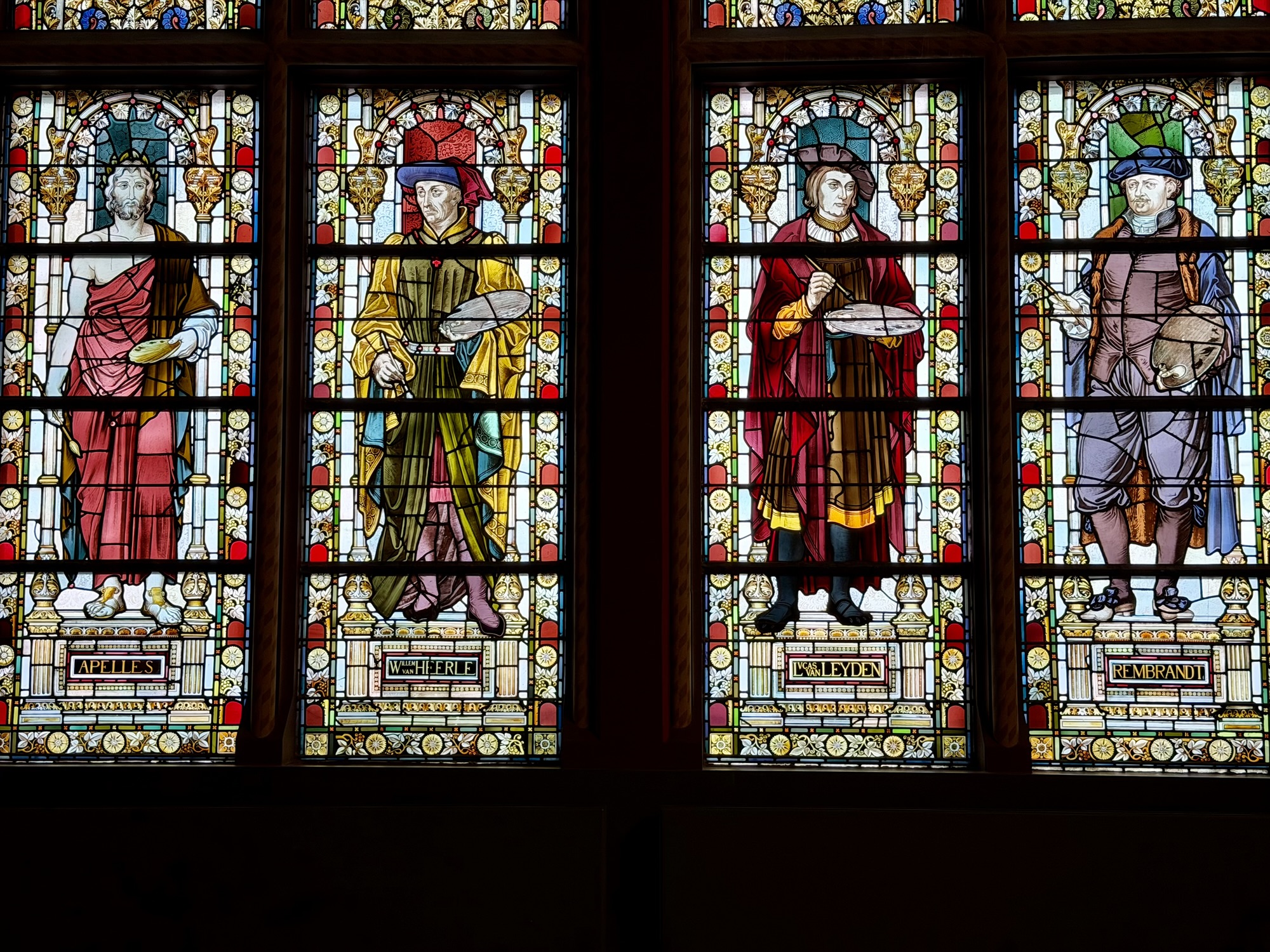
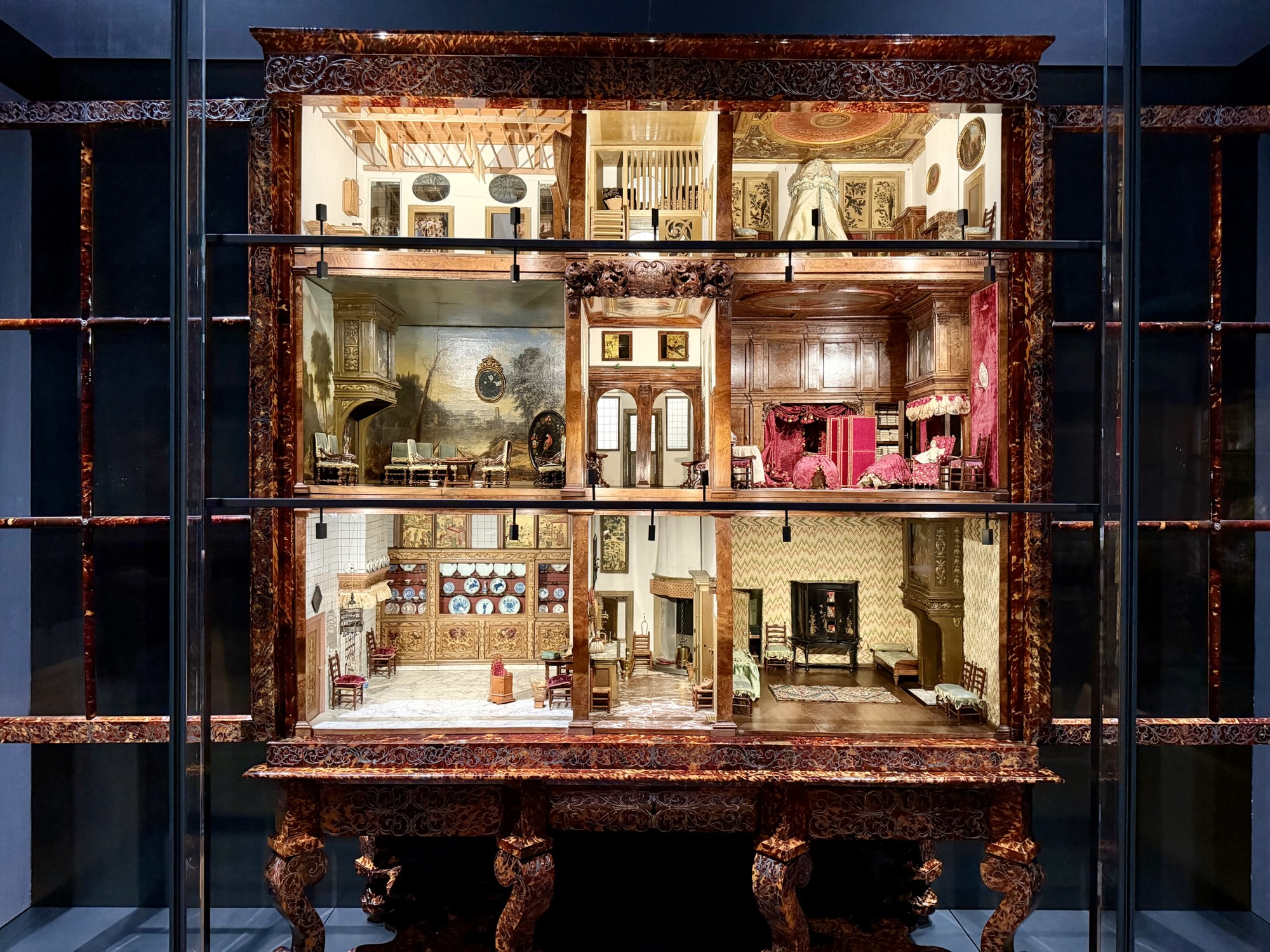
There were a couple of beautiful doll houses.
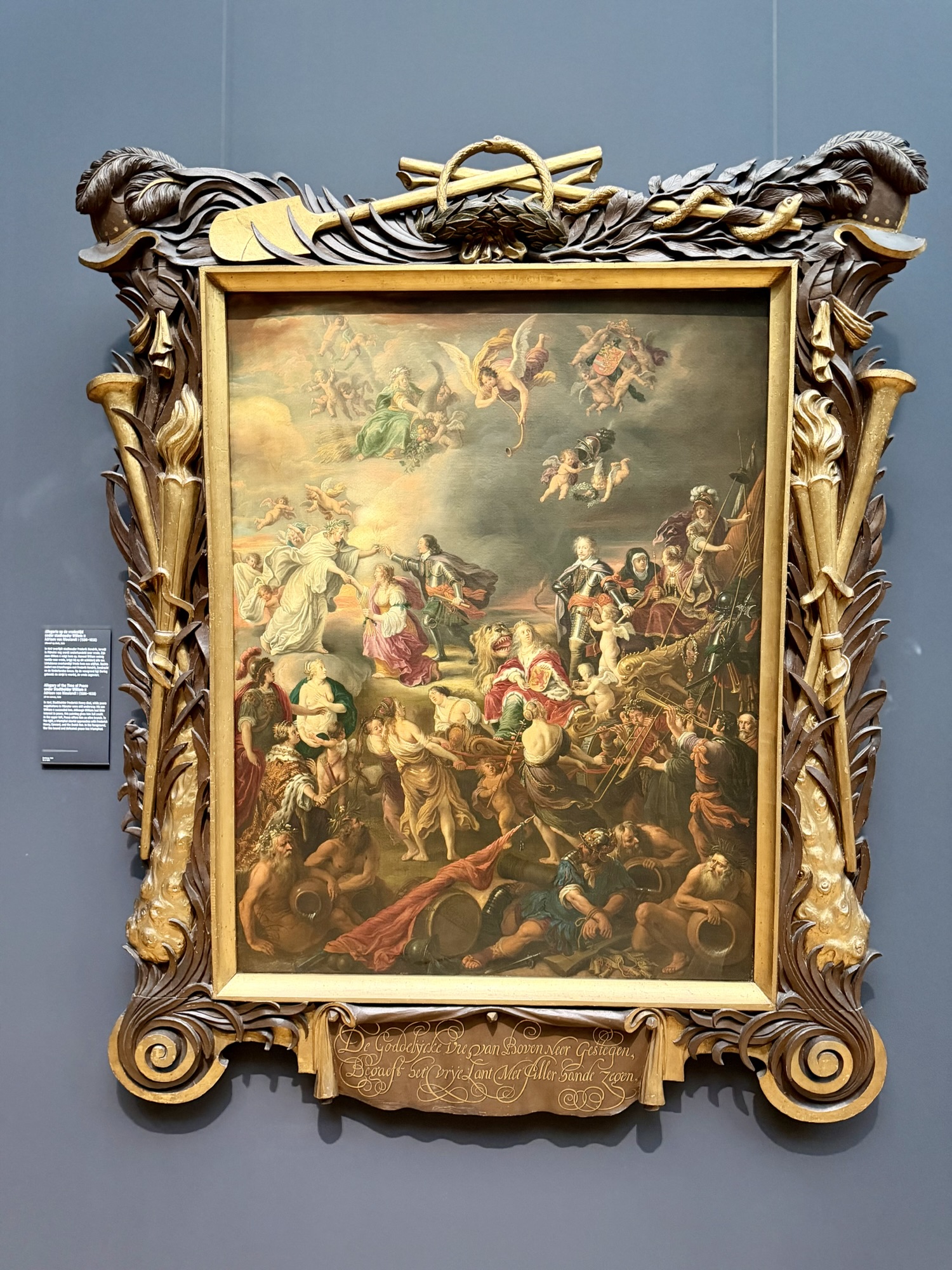
This frame caught my eye and struck me as being more impressive than the painting it contained.
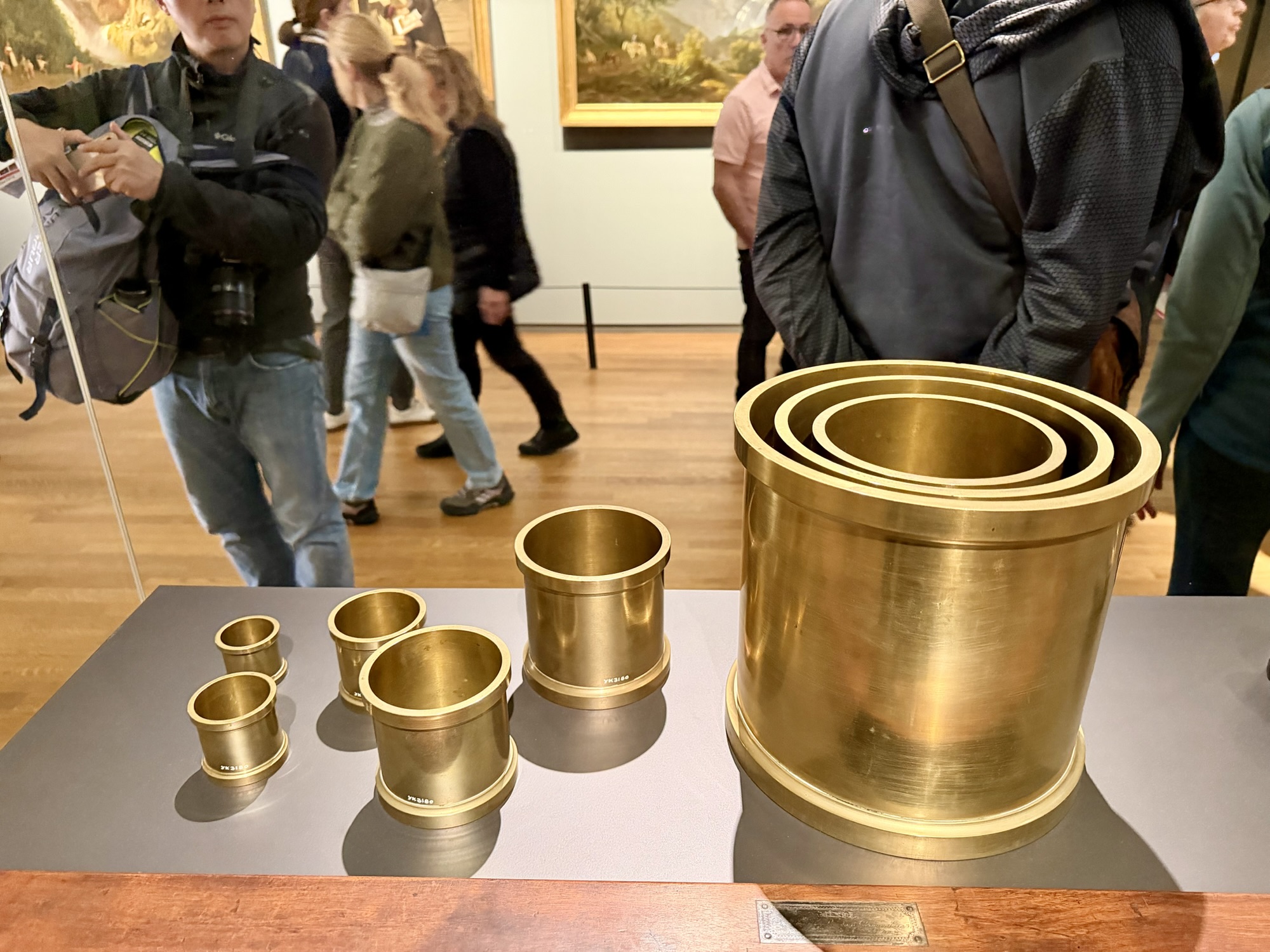
The Netherlands was the first country to standardize to the metric system, and these were standard weights.
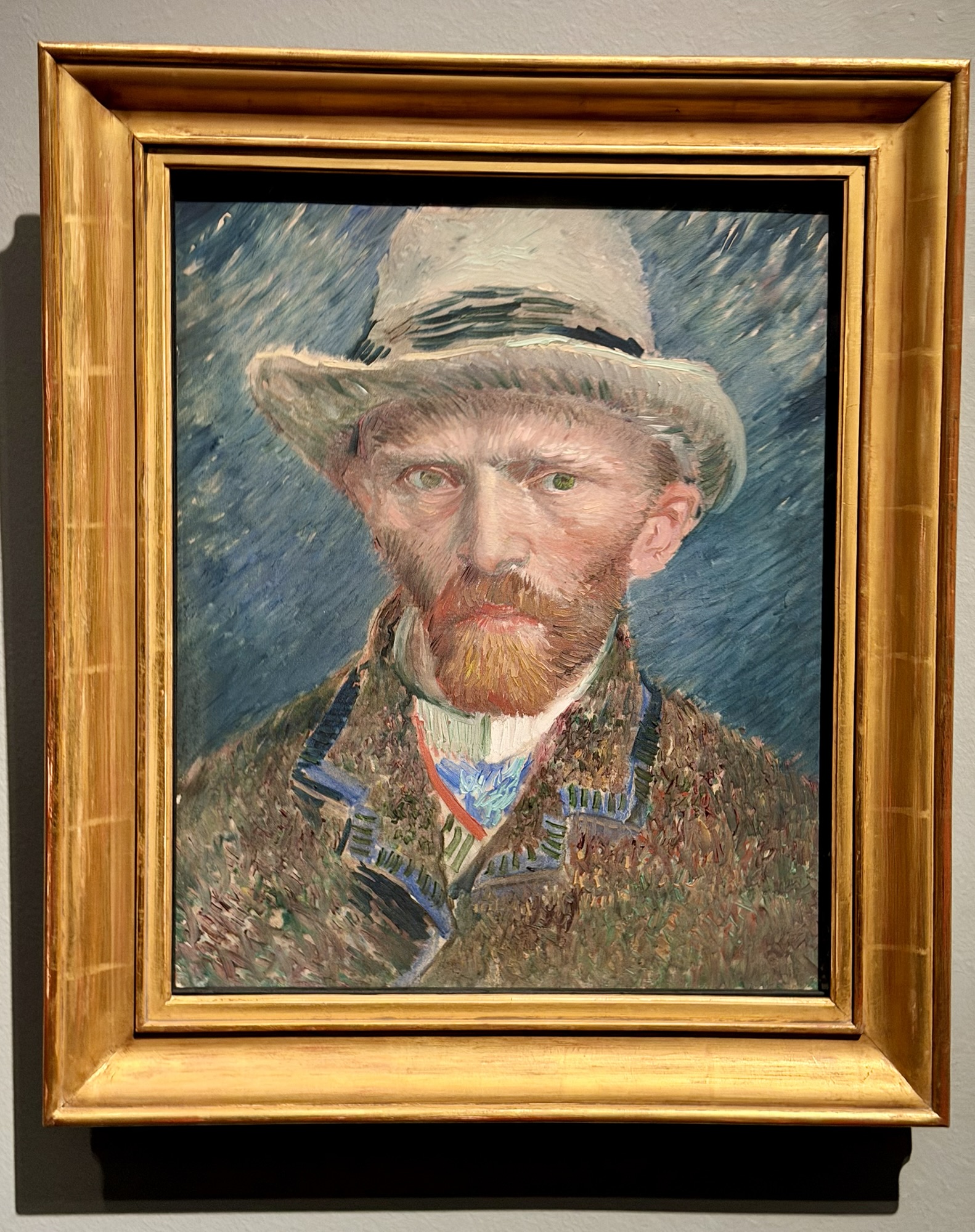
Of course, we had to see Van Gogh’s self portrait.
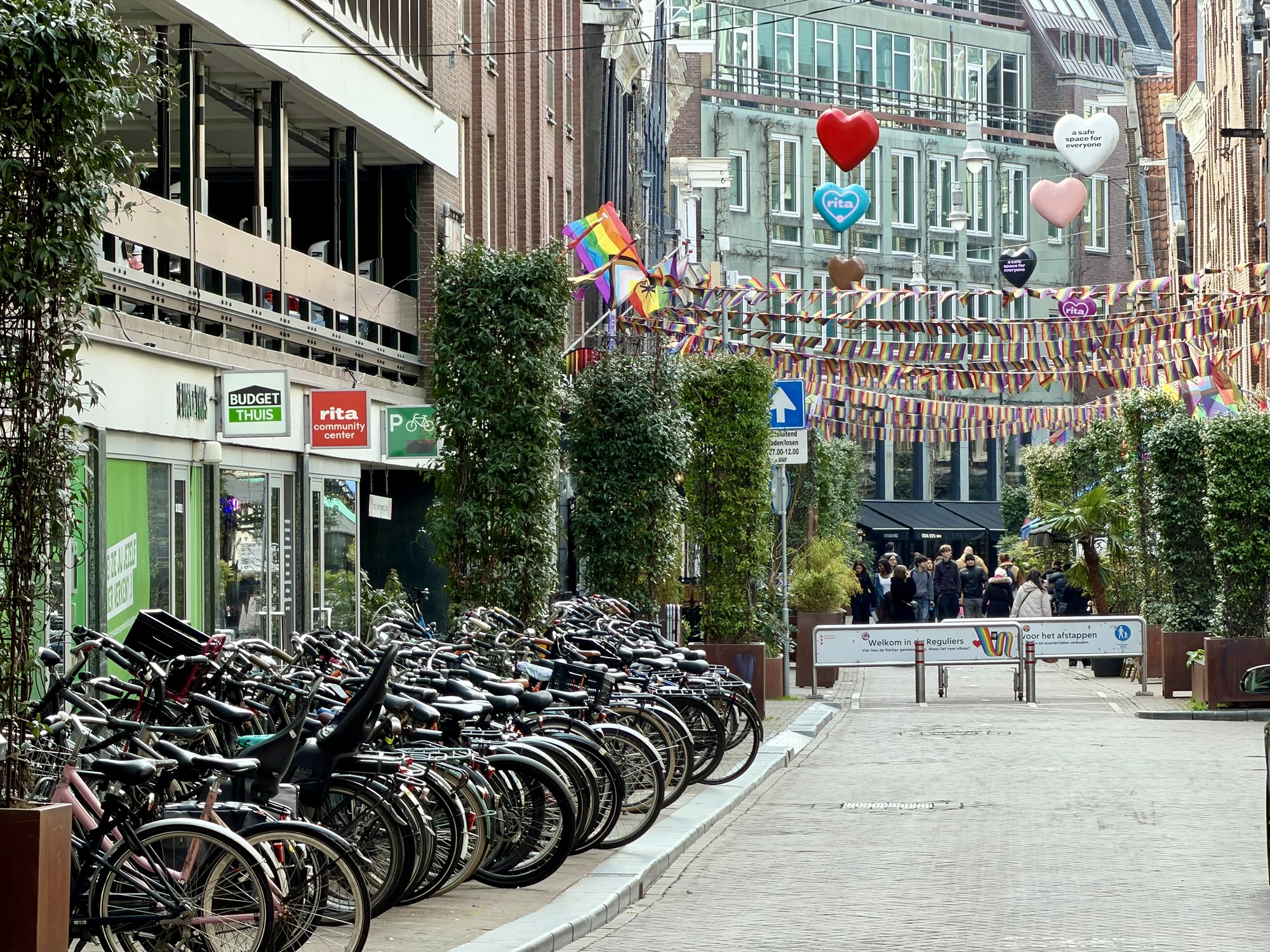
This was a less crowded scene near the museum just before lunch.
We had lunch at Cafe Hans en Grietje. The food was delicious.
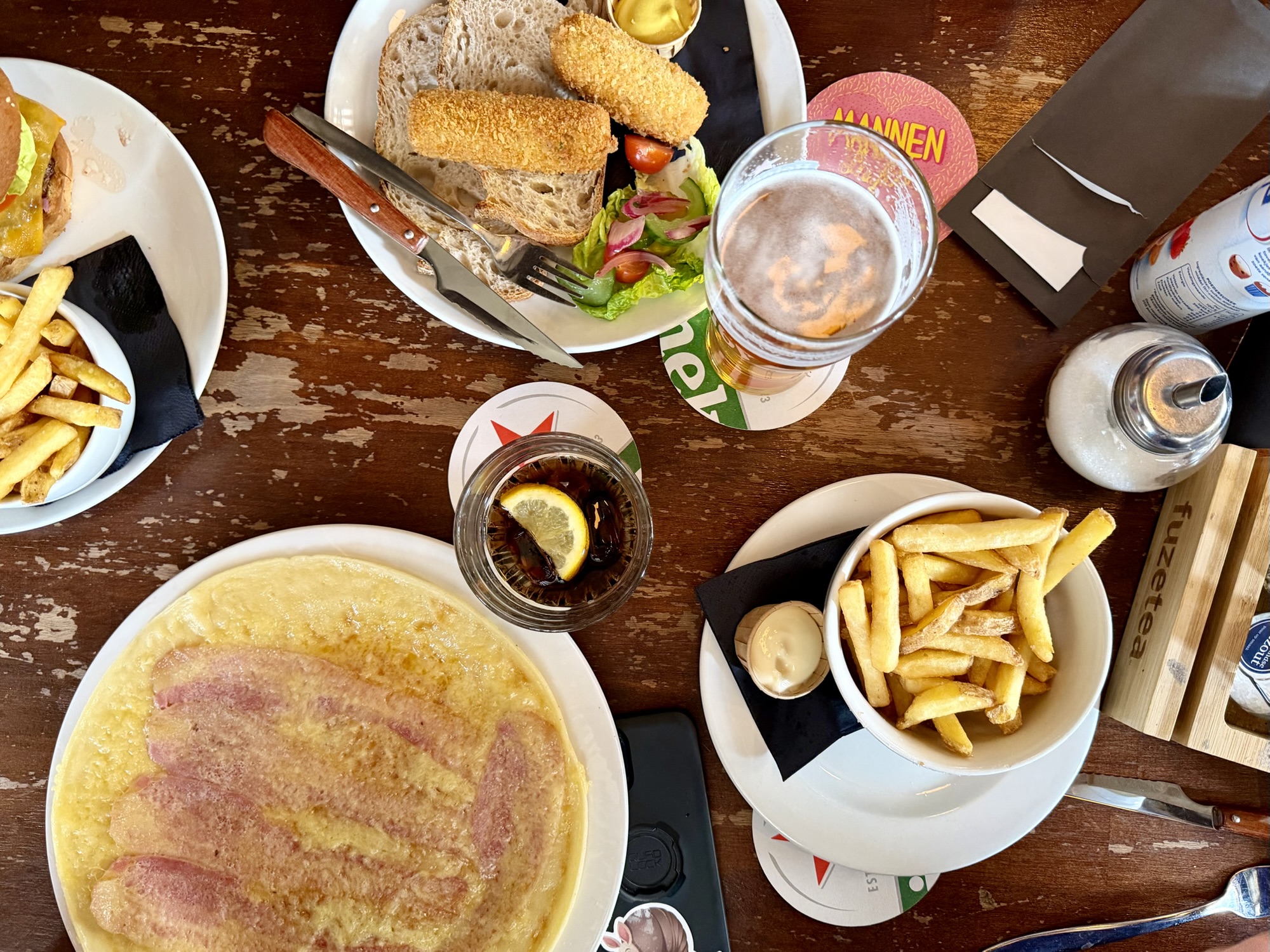
Then we wandered indirectly back towards Amsterdam Central.
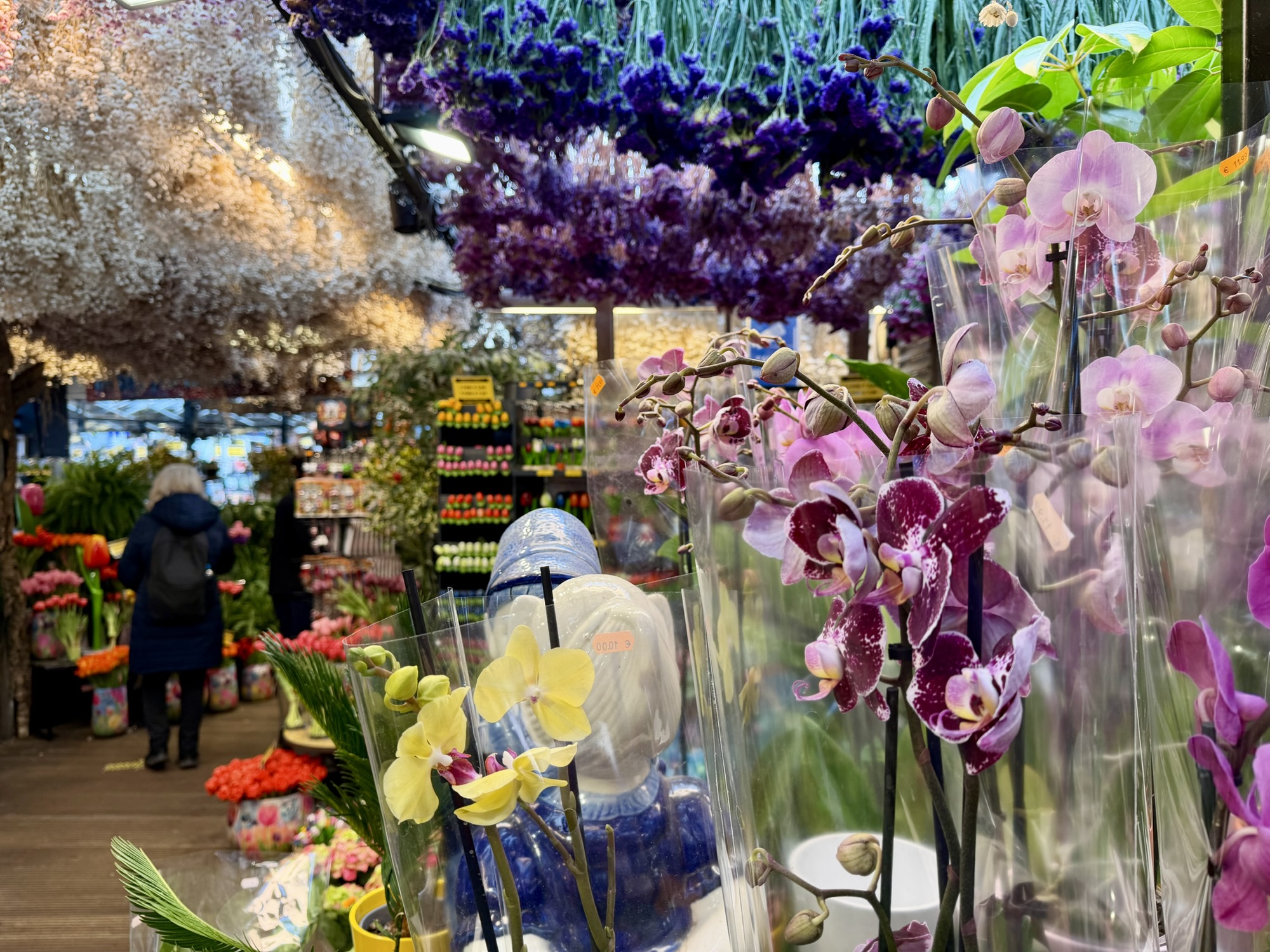
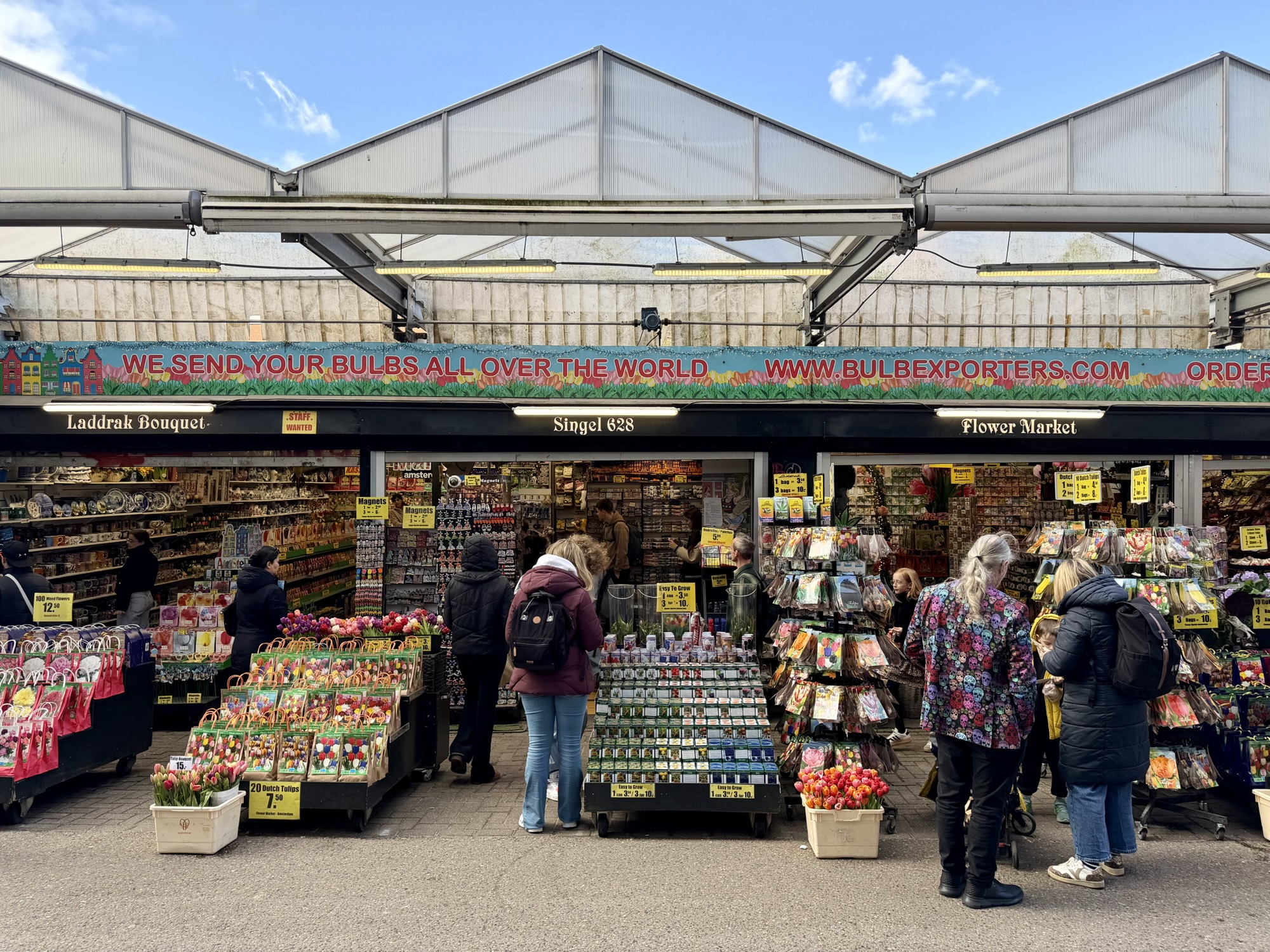
We spent some time walking around the flower market. It was very crowded.
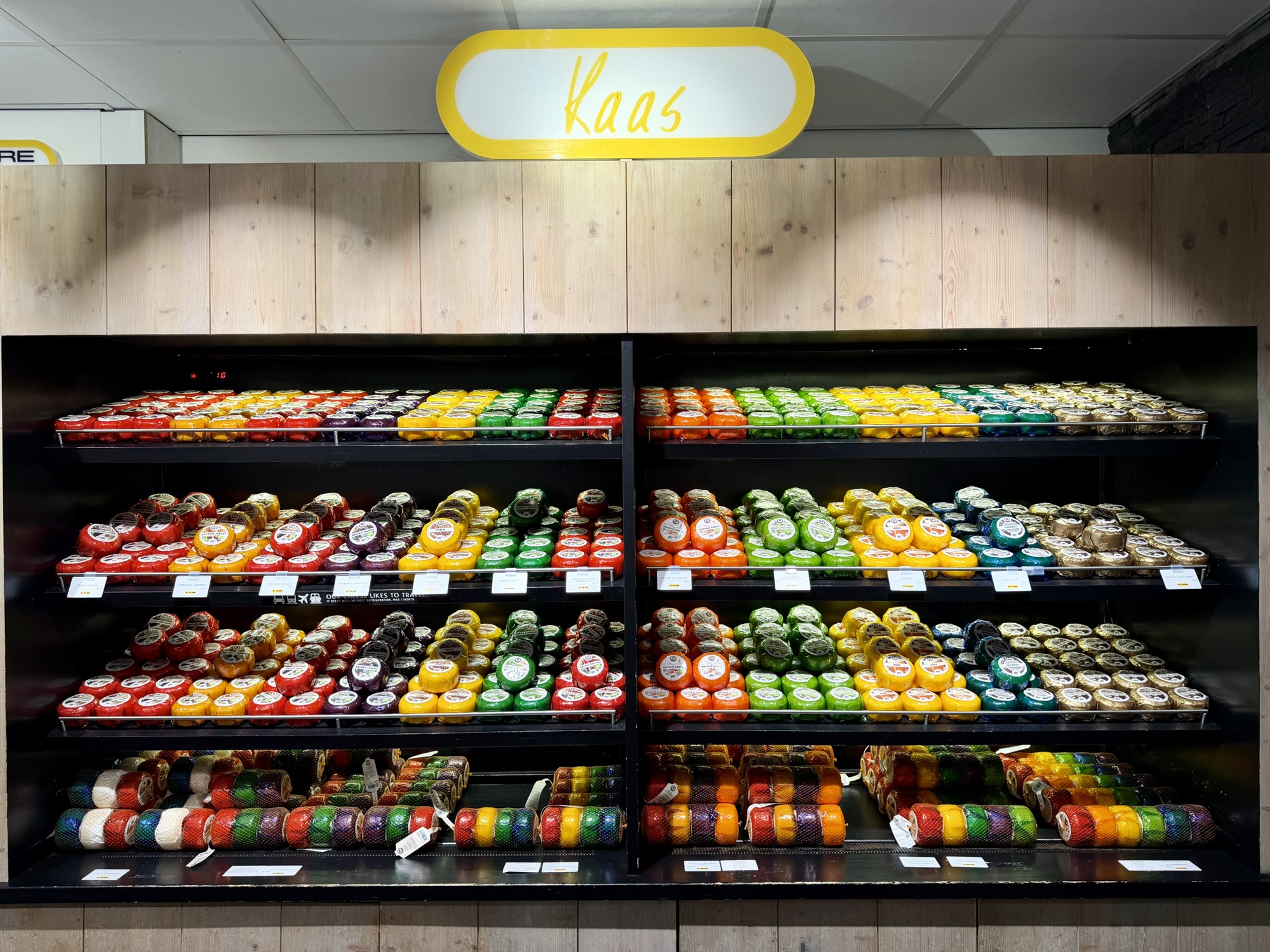
This shop sold every imaginable flavour of cheese in very colourful wax wrap.
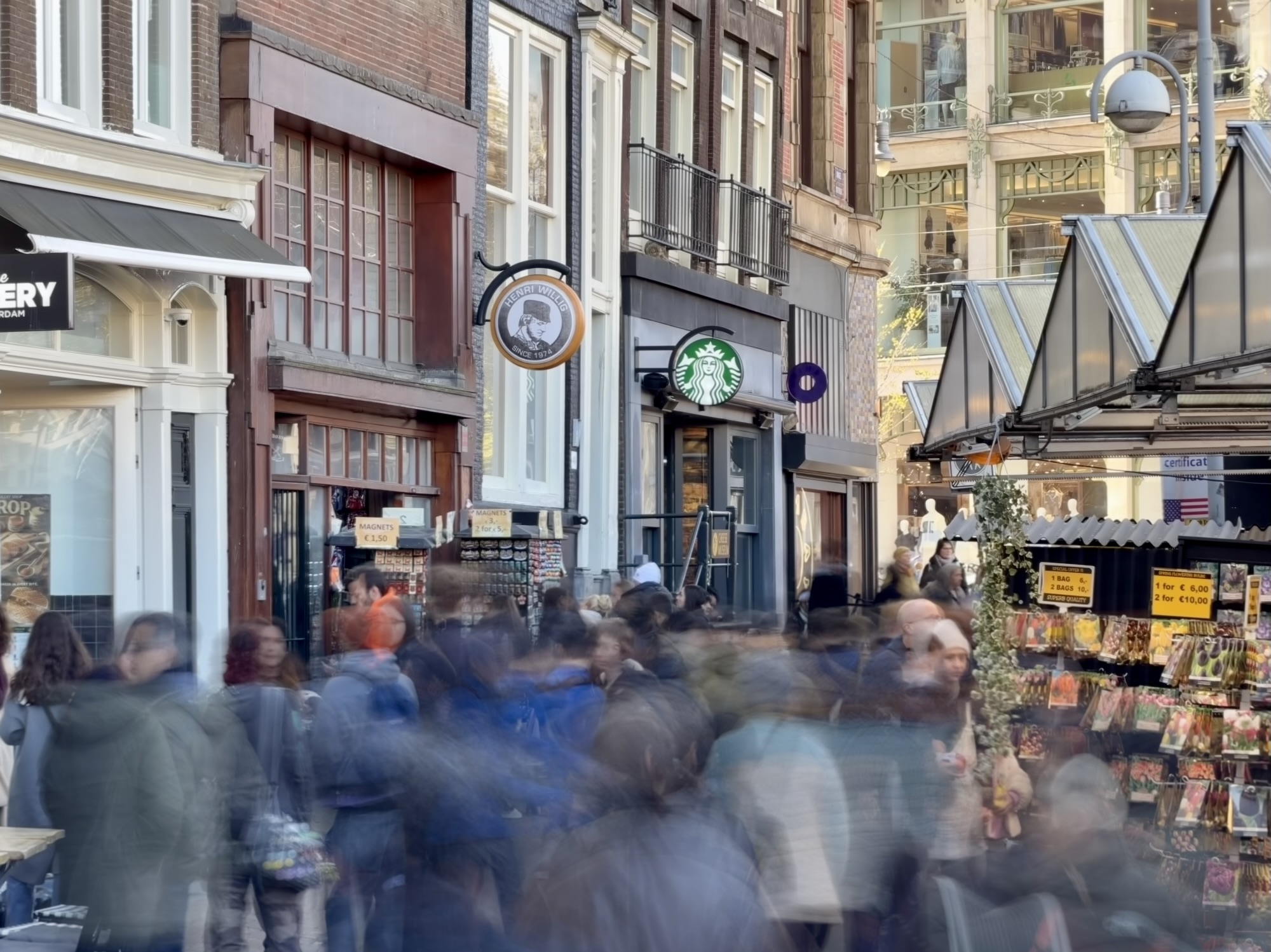
By the time we left there, all of the streets were becoming quite crowded.
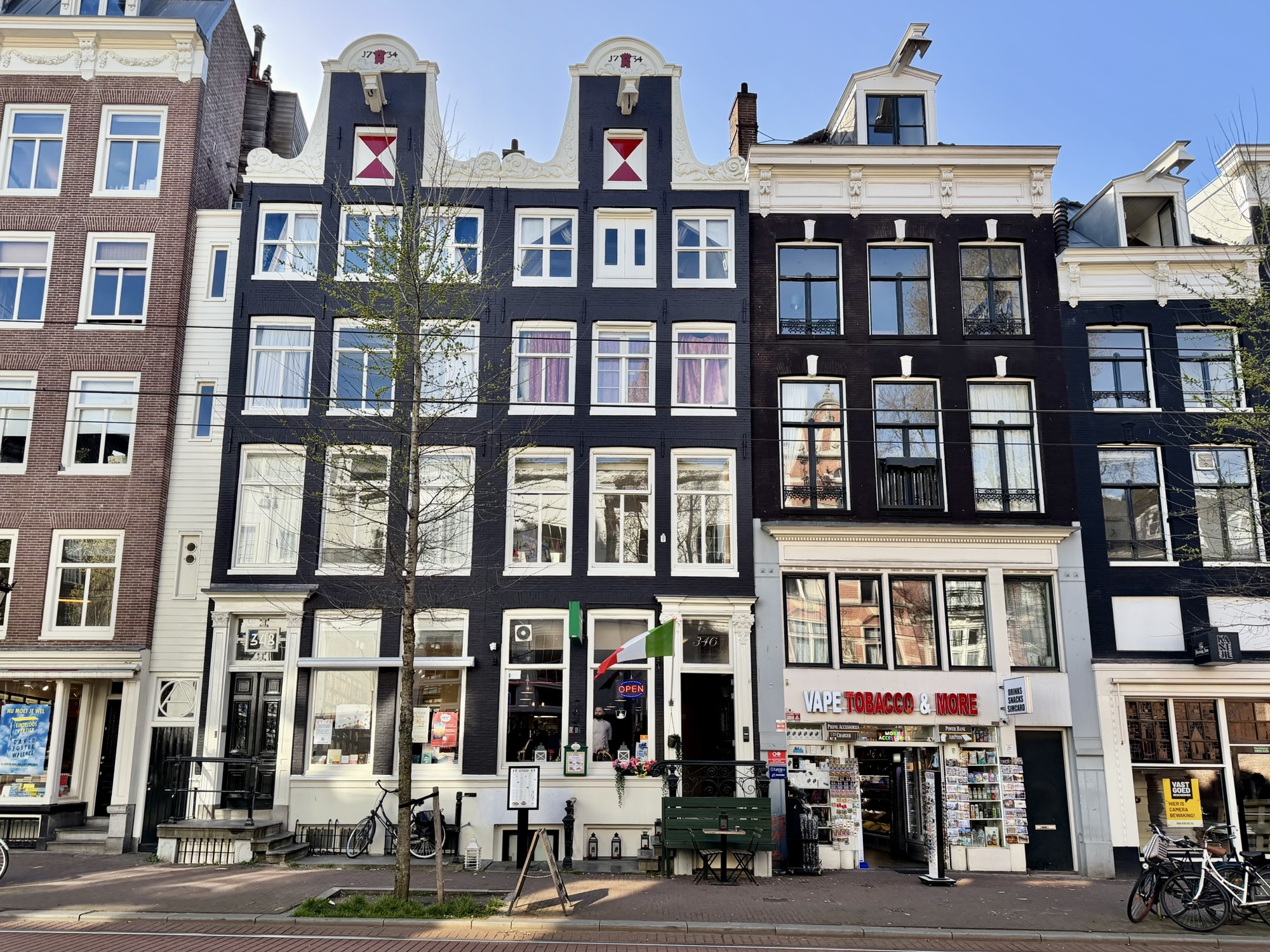
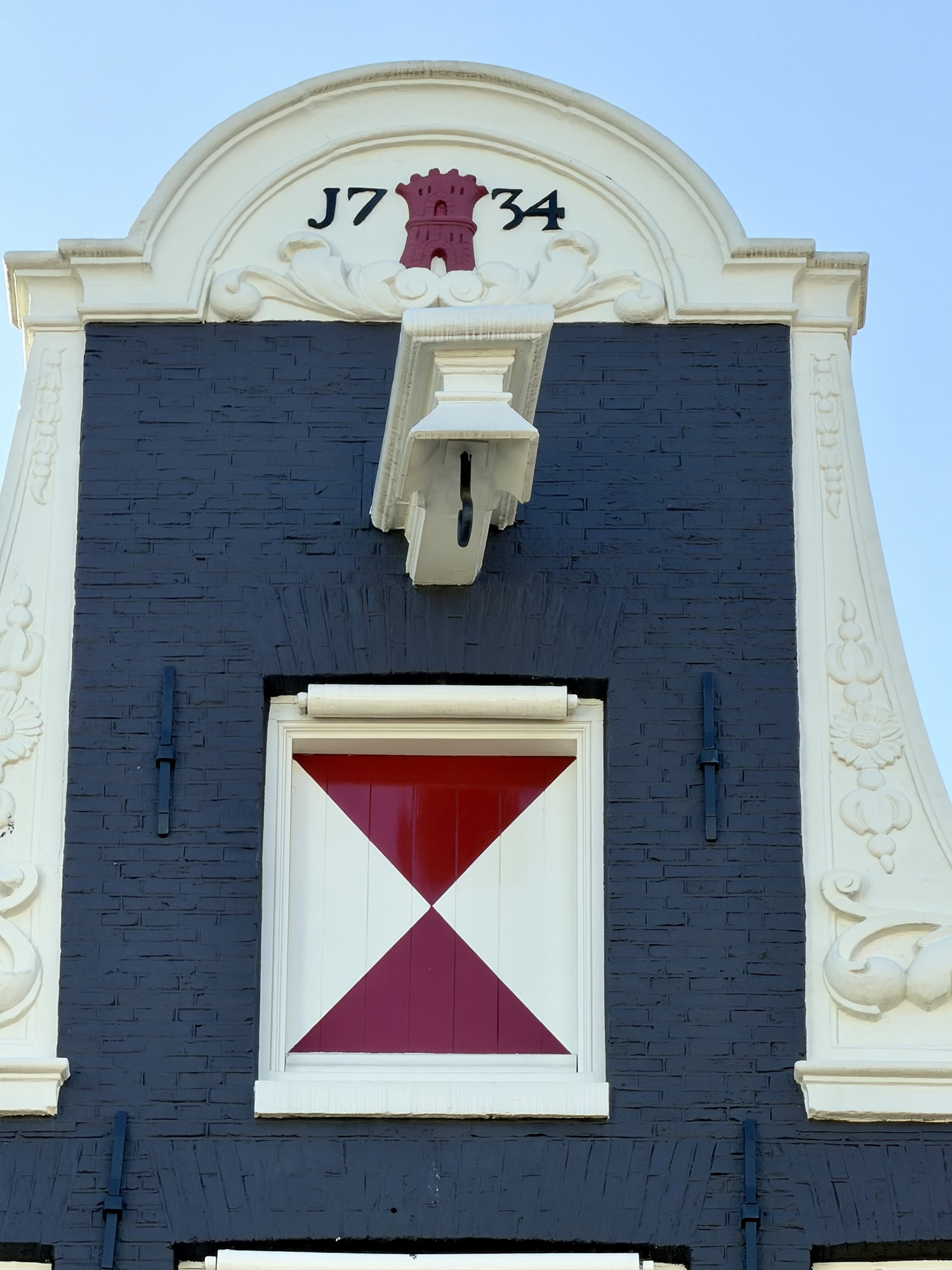
Canal house is often had a basement and loft where trade goods could be stored. A special beam or pulley would be located in the attic to hoist up valuable goods or heavier stuff.
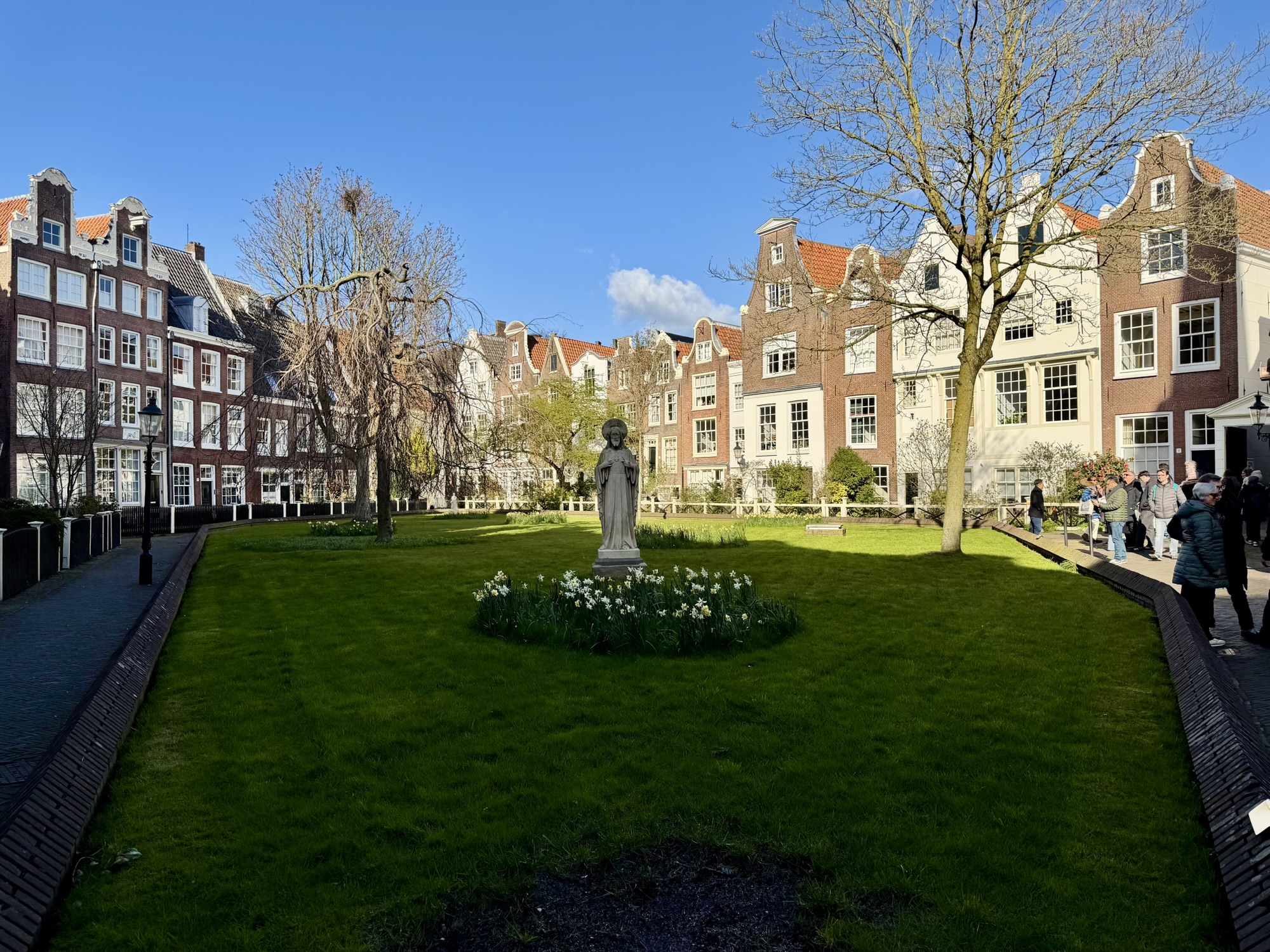
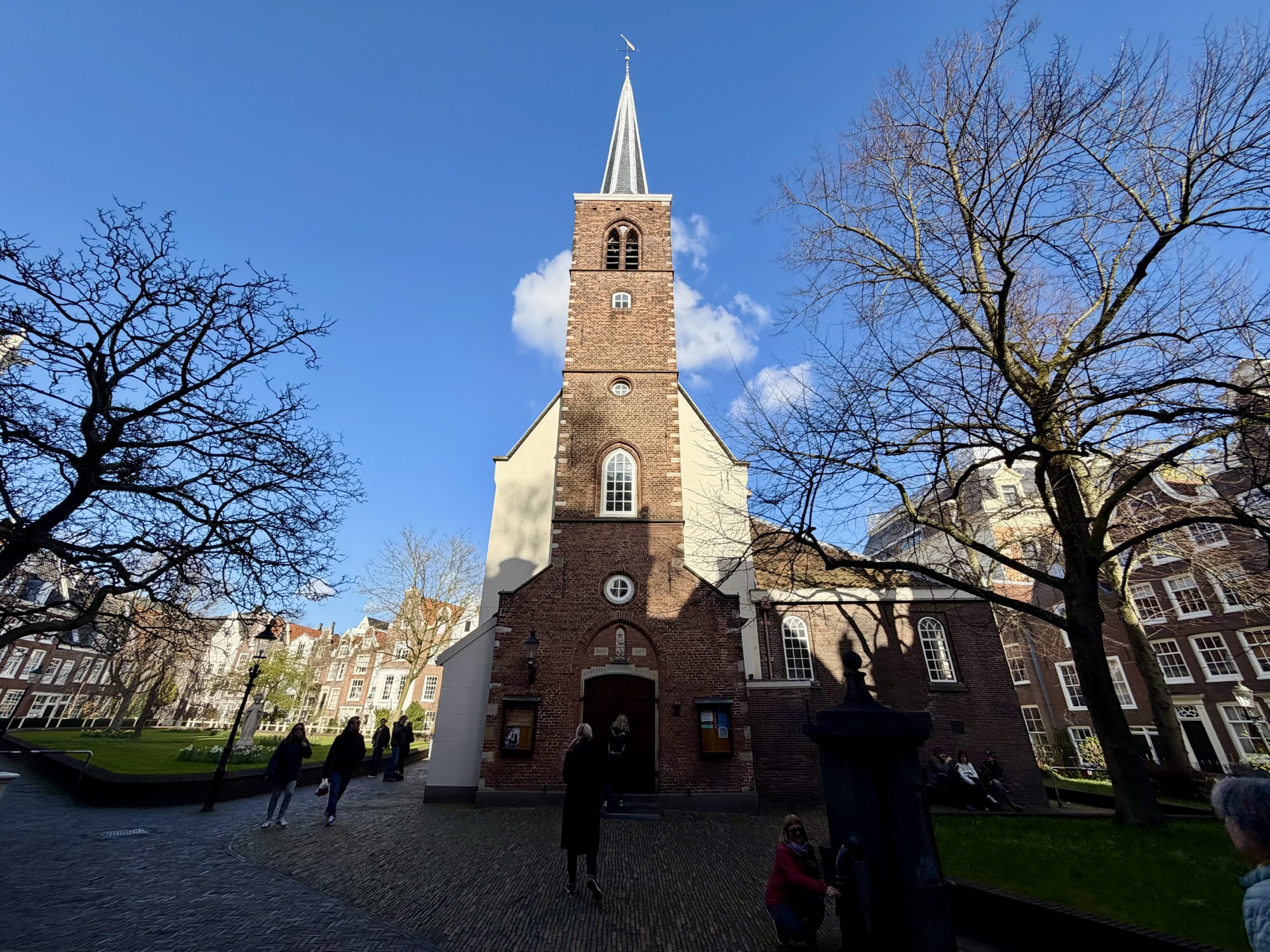
Begijnhof Chapel is located in one of Amsterdam‘s oldest inner courtyards. The Beguines were a lay female Catholic order that sought to imitate Christ: living in poverty and devotion, and for the care of others. And hidden in their hidden courtyard where they lived was a hidden church, the Begin Chapel. Today, the courtyard’s residents are no longer nuns but do remain strictly female.
Amsterdam Oersoep is a passageway with an aquatic-themed design which pays tribute to the capital city’s famed waterways. It contains a water bottle filling station in a large fish on one of the walls.
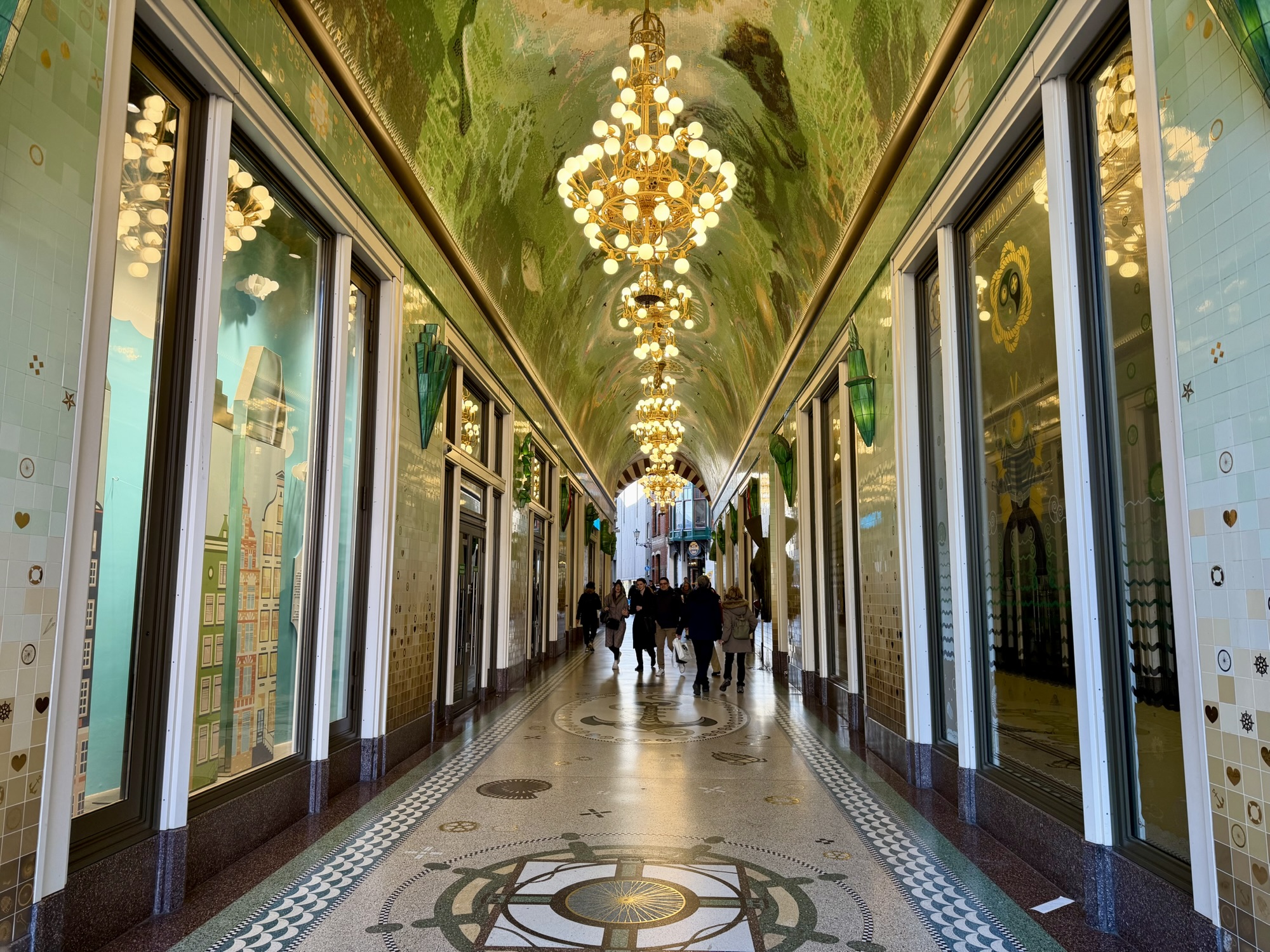
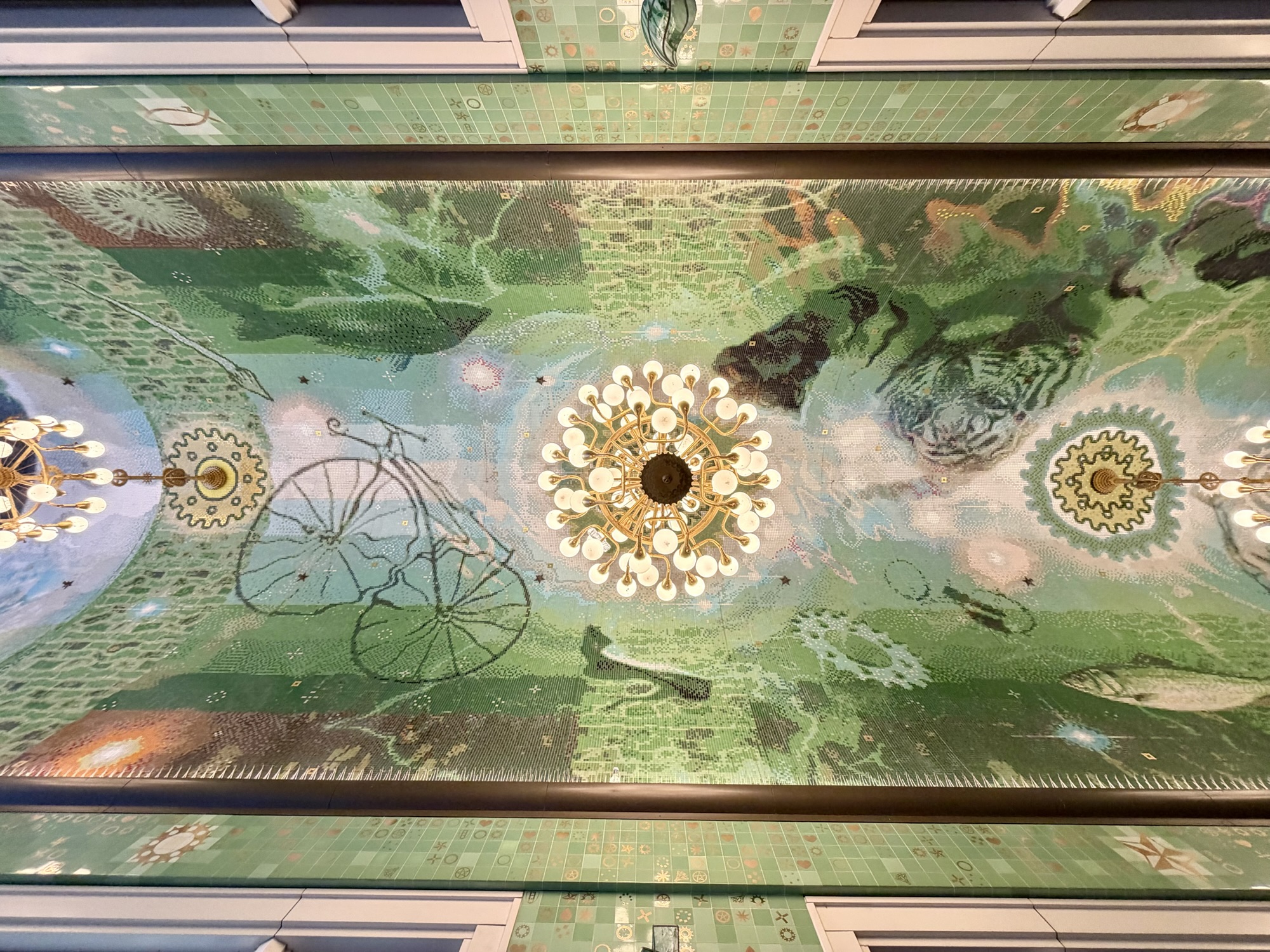
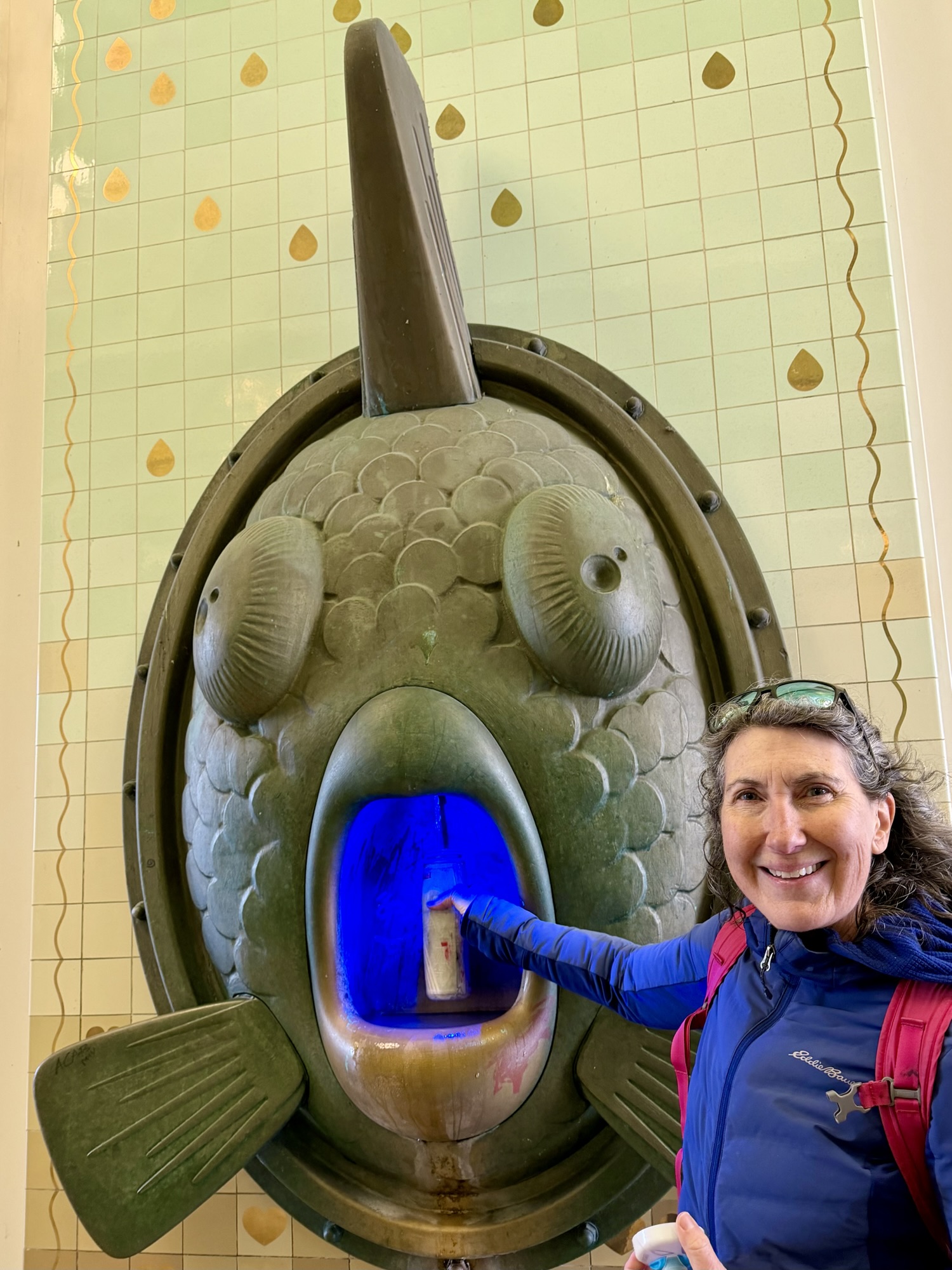
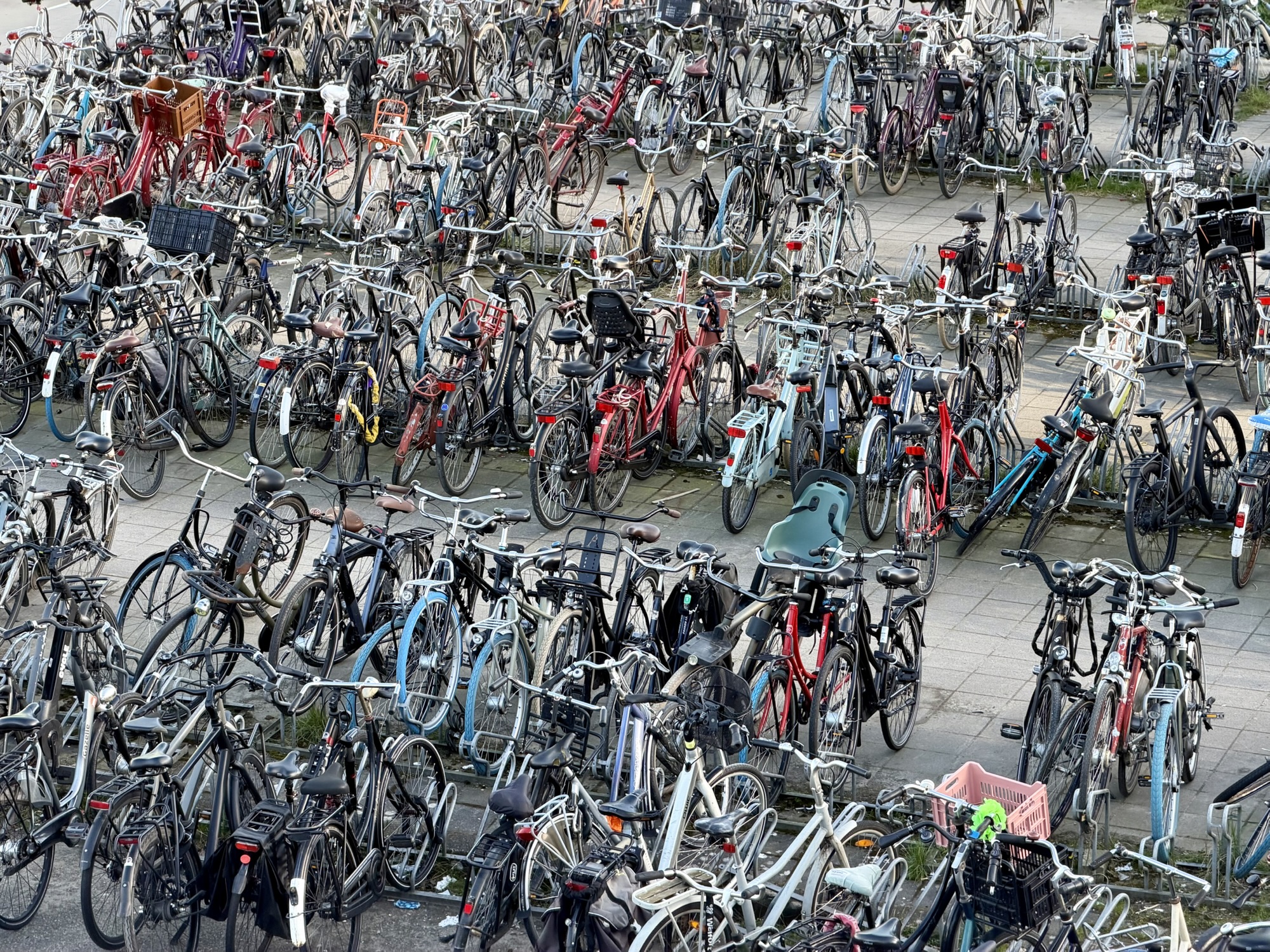
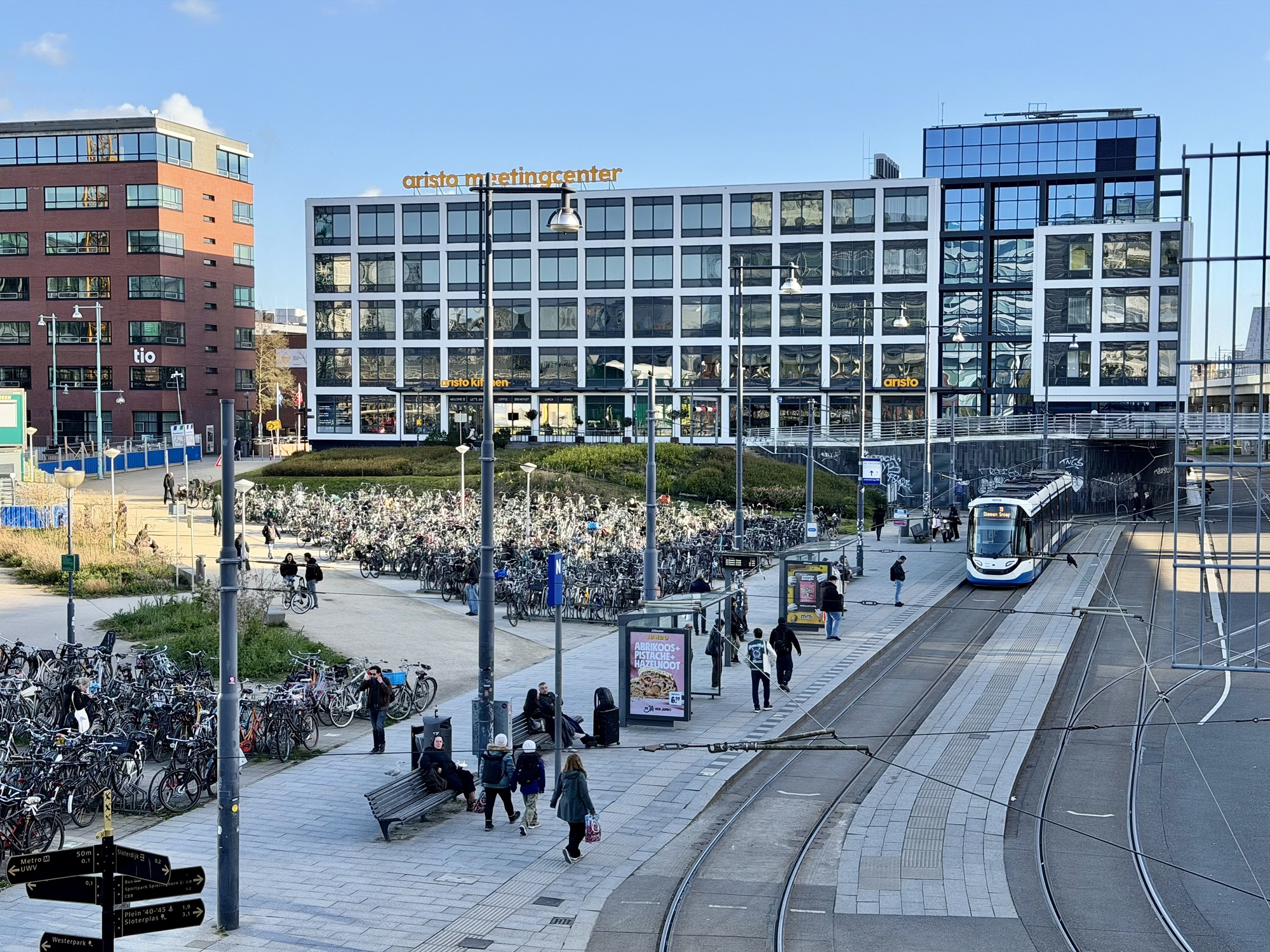
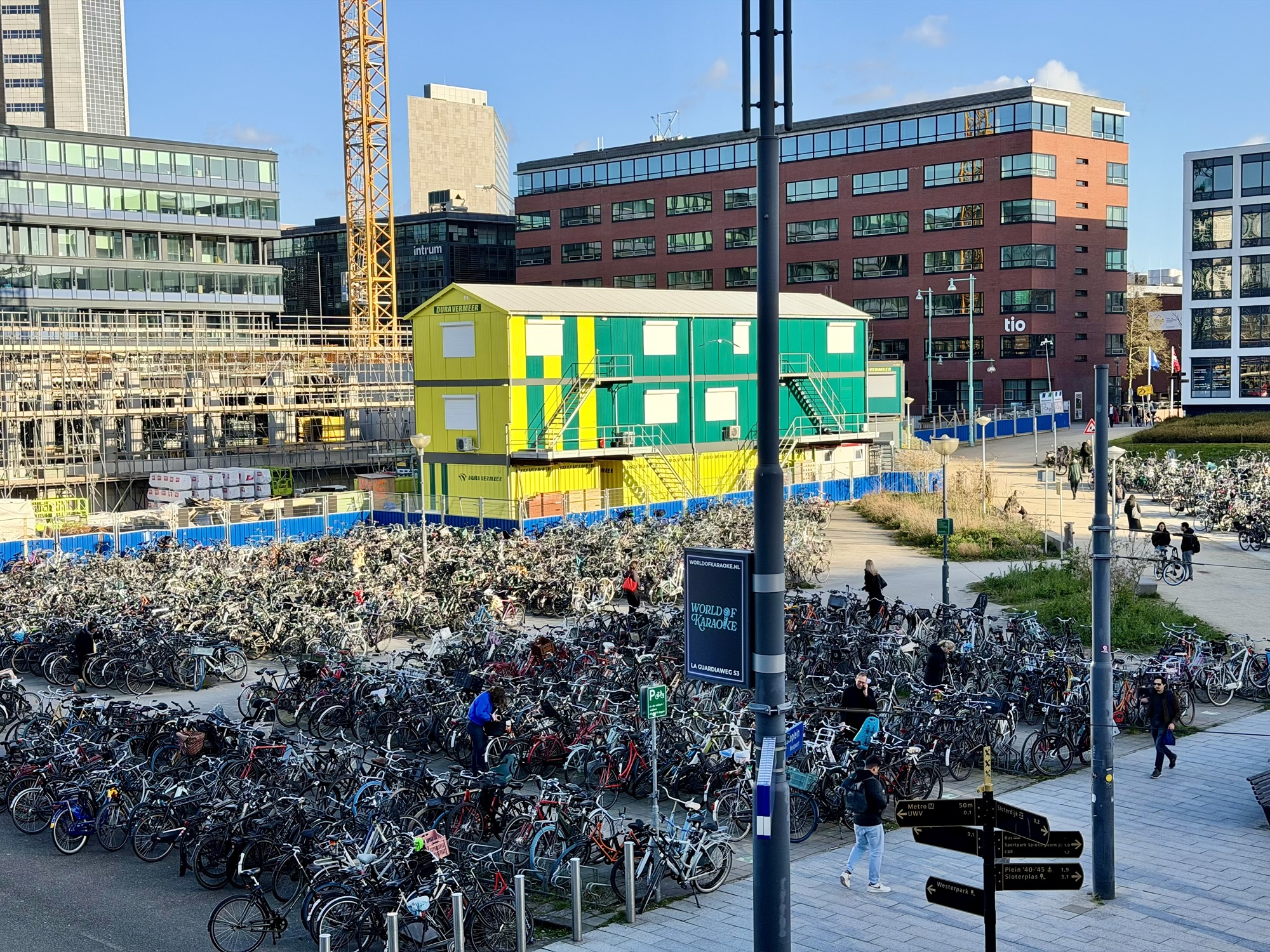
We arrived back at the train station just after six and road one stop back to the area where we are staying. We left the station a different way today and discovered an elevated rainbow path. It gave us a great view of the bike parking which we saw yesterday.
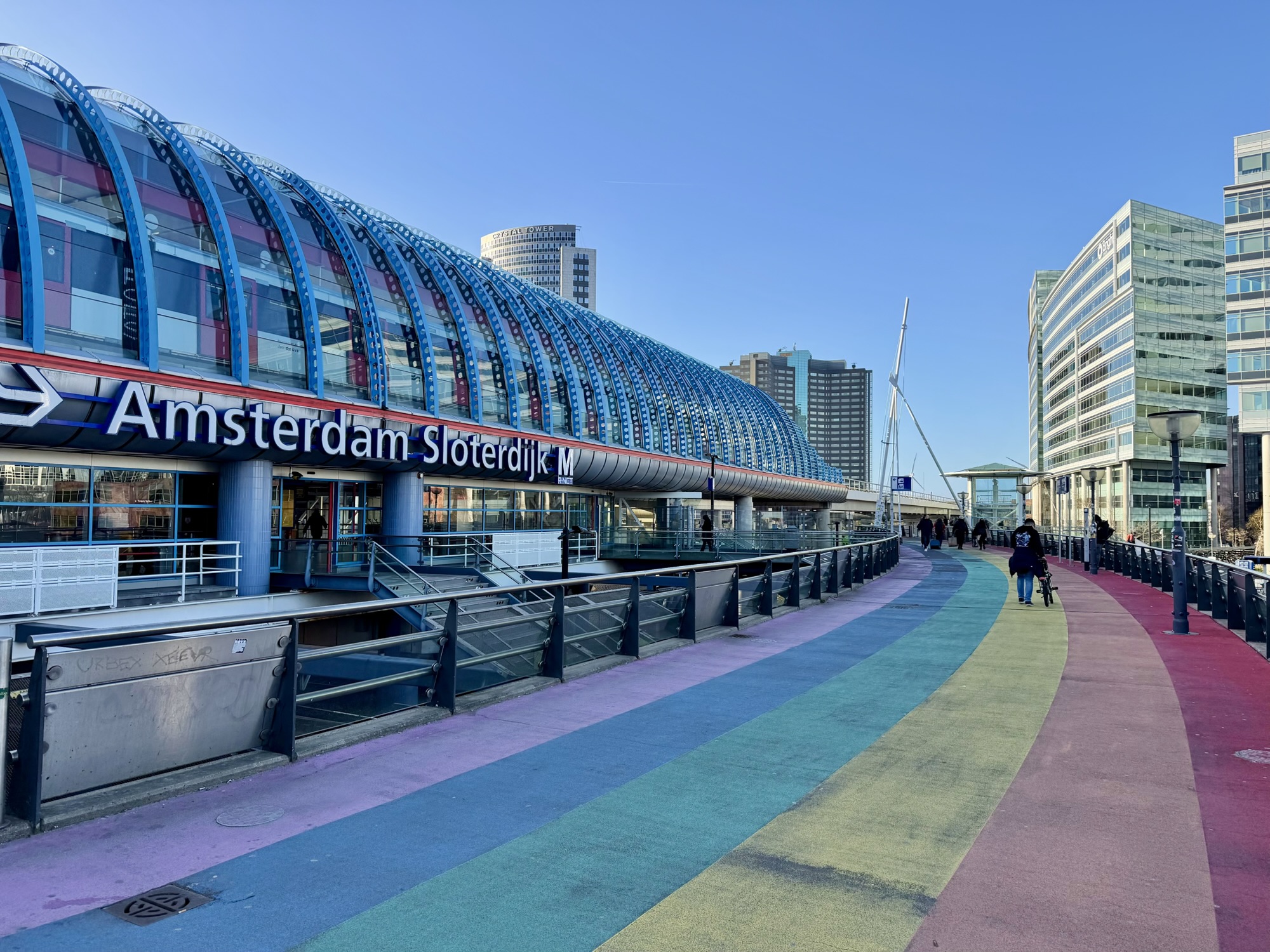
Since it was getting late, we decided to eat at the same restaurant by the station where we ate last night and then headed back to the hotel to rest, and for me to write the blog.
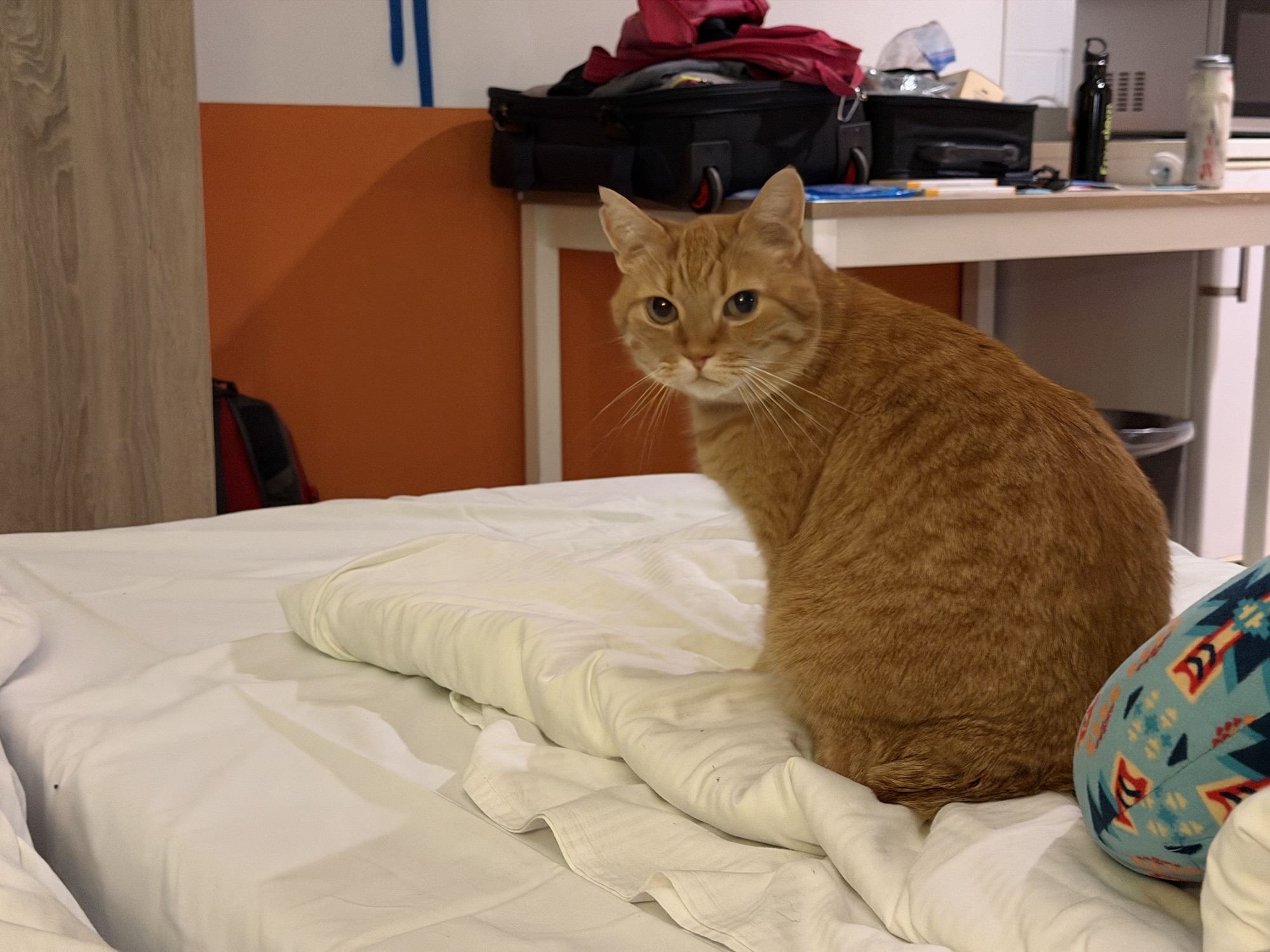
Late in the evening, we had a visit from the very friendly hotel cat.
Discover more from Lisa Stokes
Subscribe to get the latest posts sent to your email.
You take such lovely photos!
Thank you