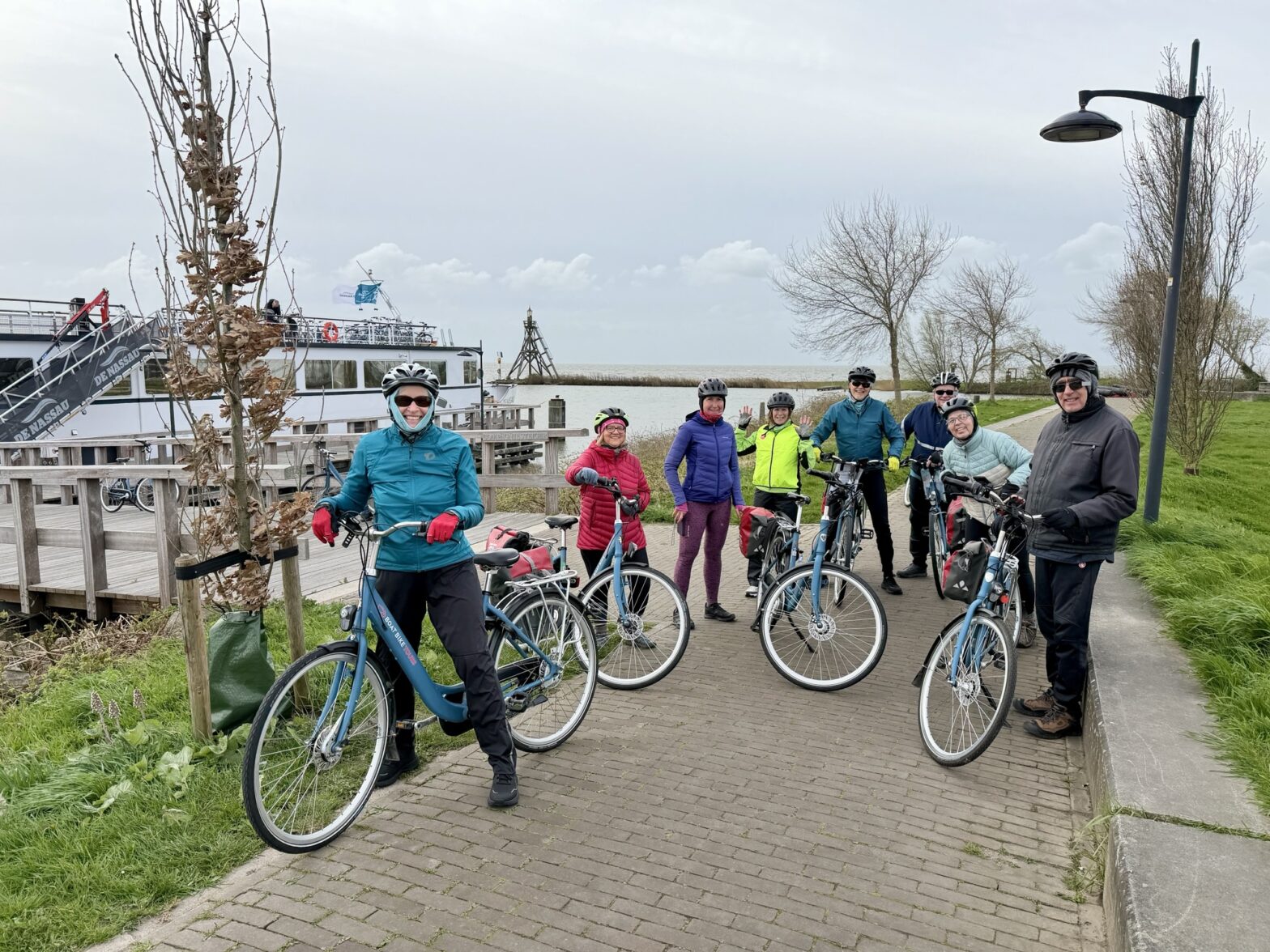
The planned distance for the day was 51 km. We were in the dining room just before eight where we were able to serve ourselves breakfast from a buffet, and pack lunches in paper bags. We were to be on the dock at nine for bike fitting. I had asked about bringing my own seat, but didn’t get a reply, telling me that it wouldn’t be compatible, until after I had arrived in the Netherlands. But when I saw them adjusting seats this morning, I realized mine was compatible. I went back to the room to get it, and one of the crew members put it on for me. It’s early in the year to be doing 280 km in six days so I want to have the seat to which I’m accustomed. I also put my QuadLock on the bars. Here we are ready to go.
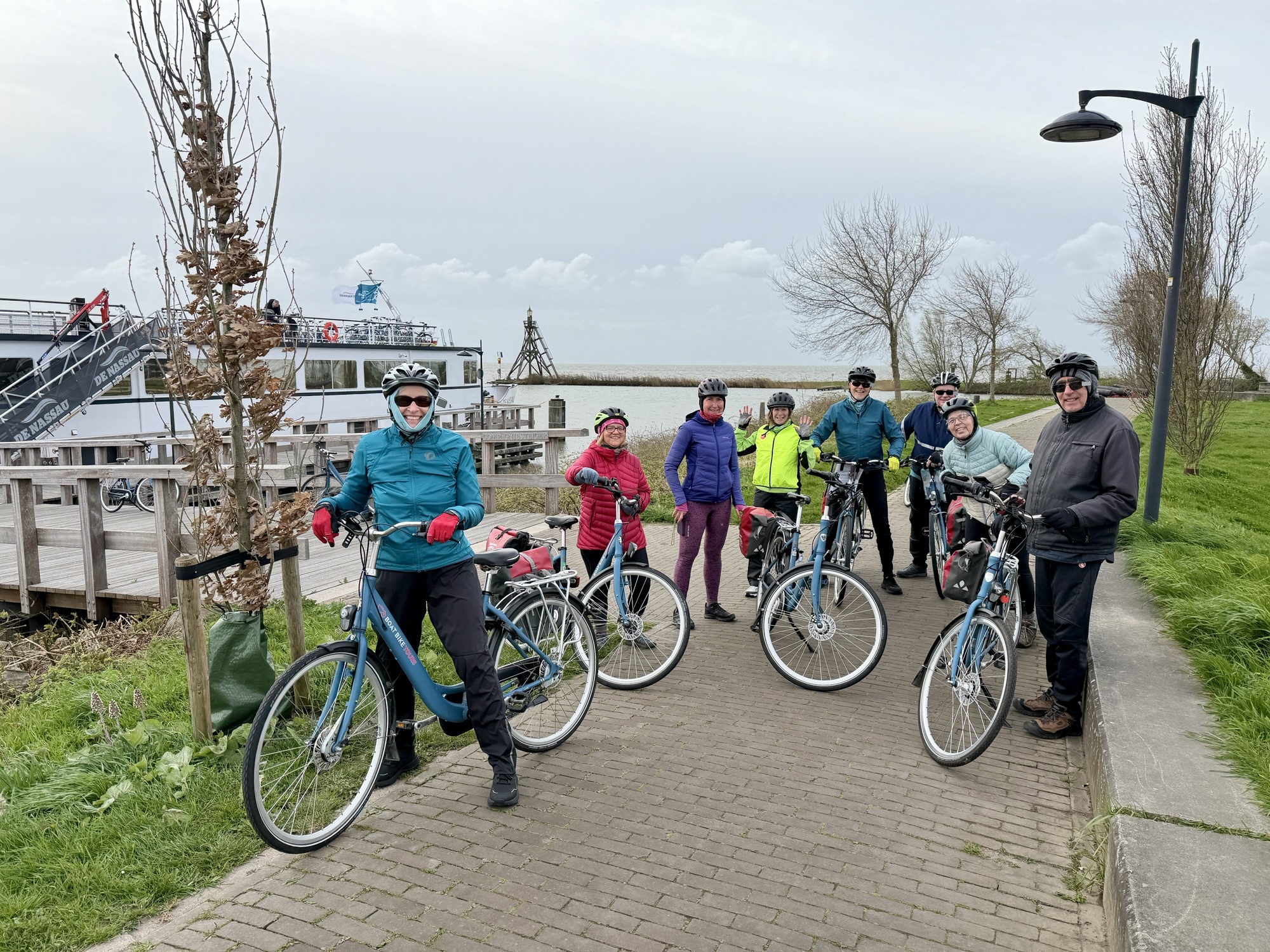
We had a few stops for various things, including making adjustments to seat height. Before we were out of town, I fumbled my phone, getting it off the bars, and it fell onto the hard brick road. Fortunately, it seemed to be alright.
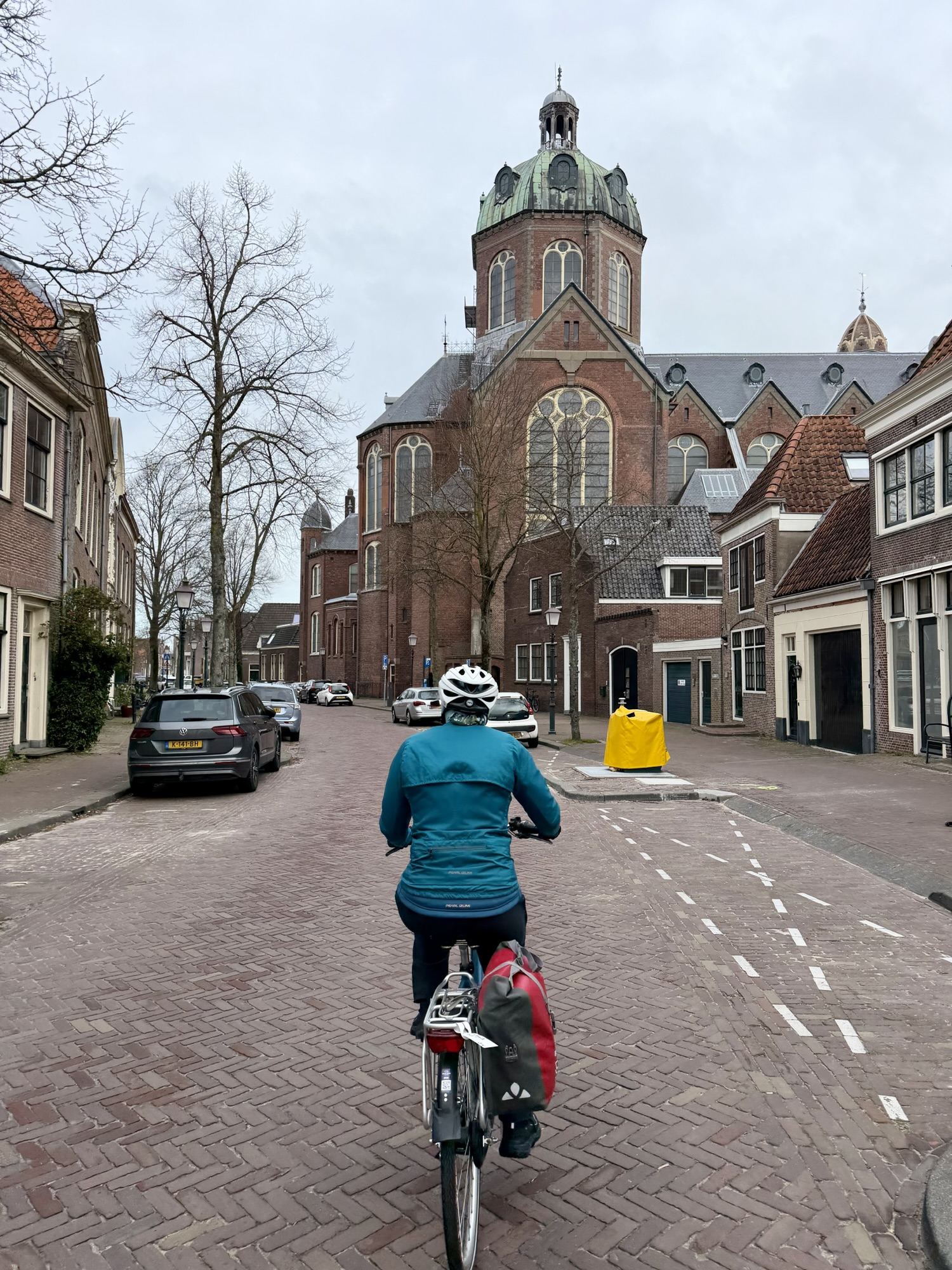
We saw so many interesting houses today. Early on in the Ride quite a few of the houses had a mix of tile and thatch roofing. I couldn’t think of why they would mix it like that so I asked Google: Dutch houses often mix thatch (reed) and tile roofing for a combination of durability, historical tradition, and practicality. Thatch is used on steeper, upper sections for excellent insulation and aesthetics, while durable tiles are placed on lower, high-wear areas to prevent rot, fire damage, and manage water runoff.
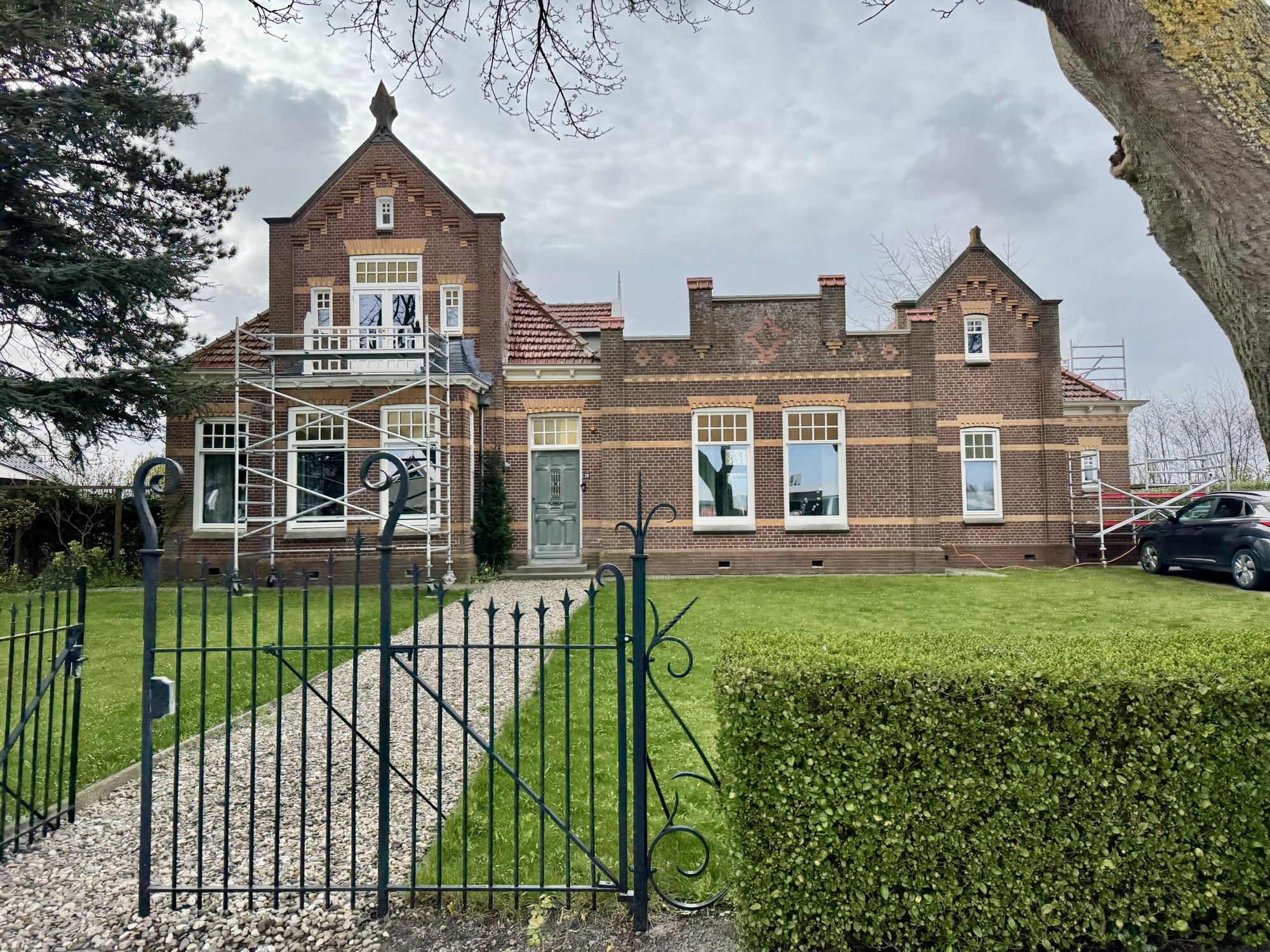
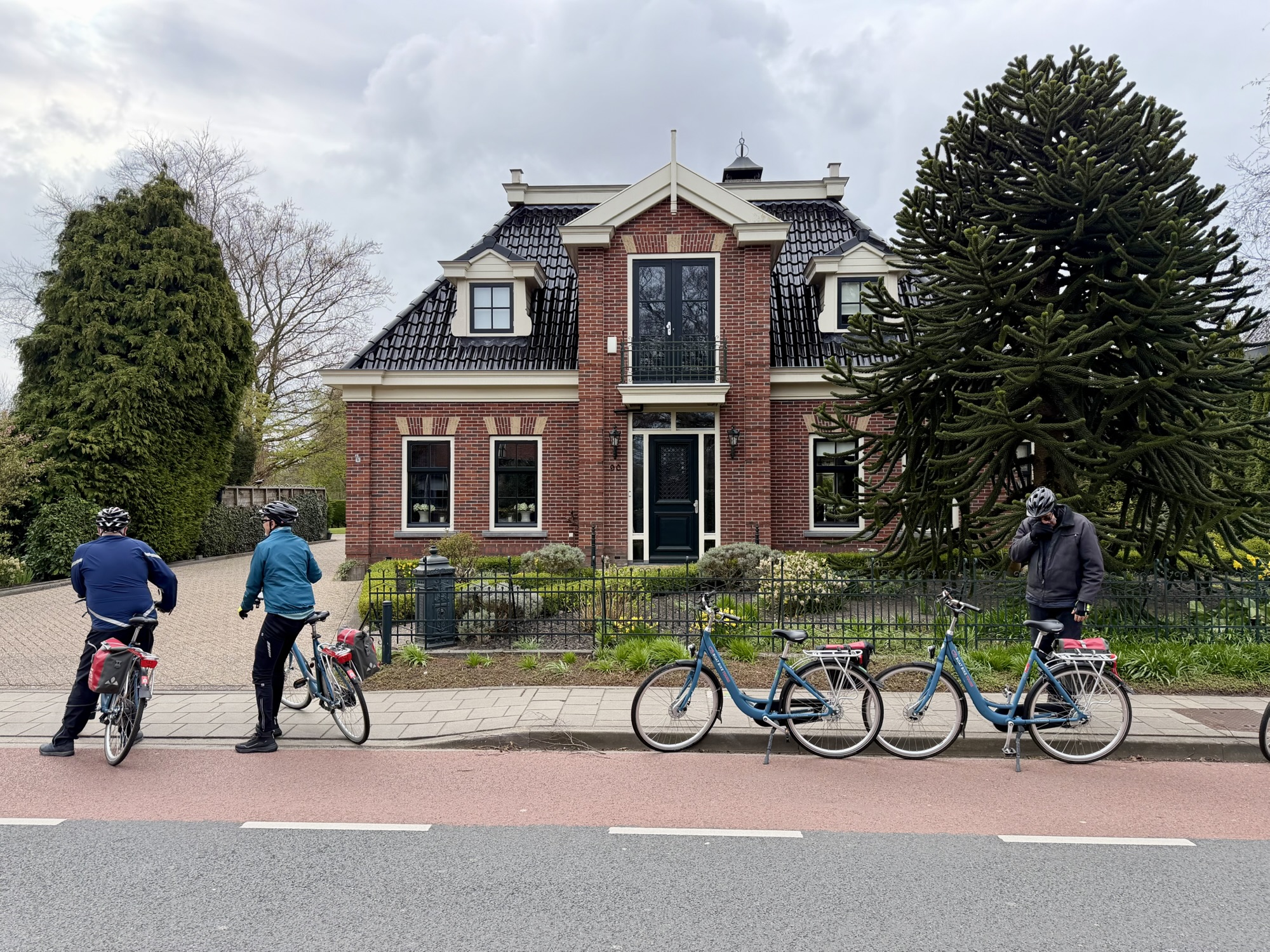
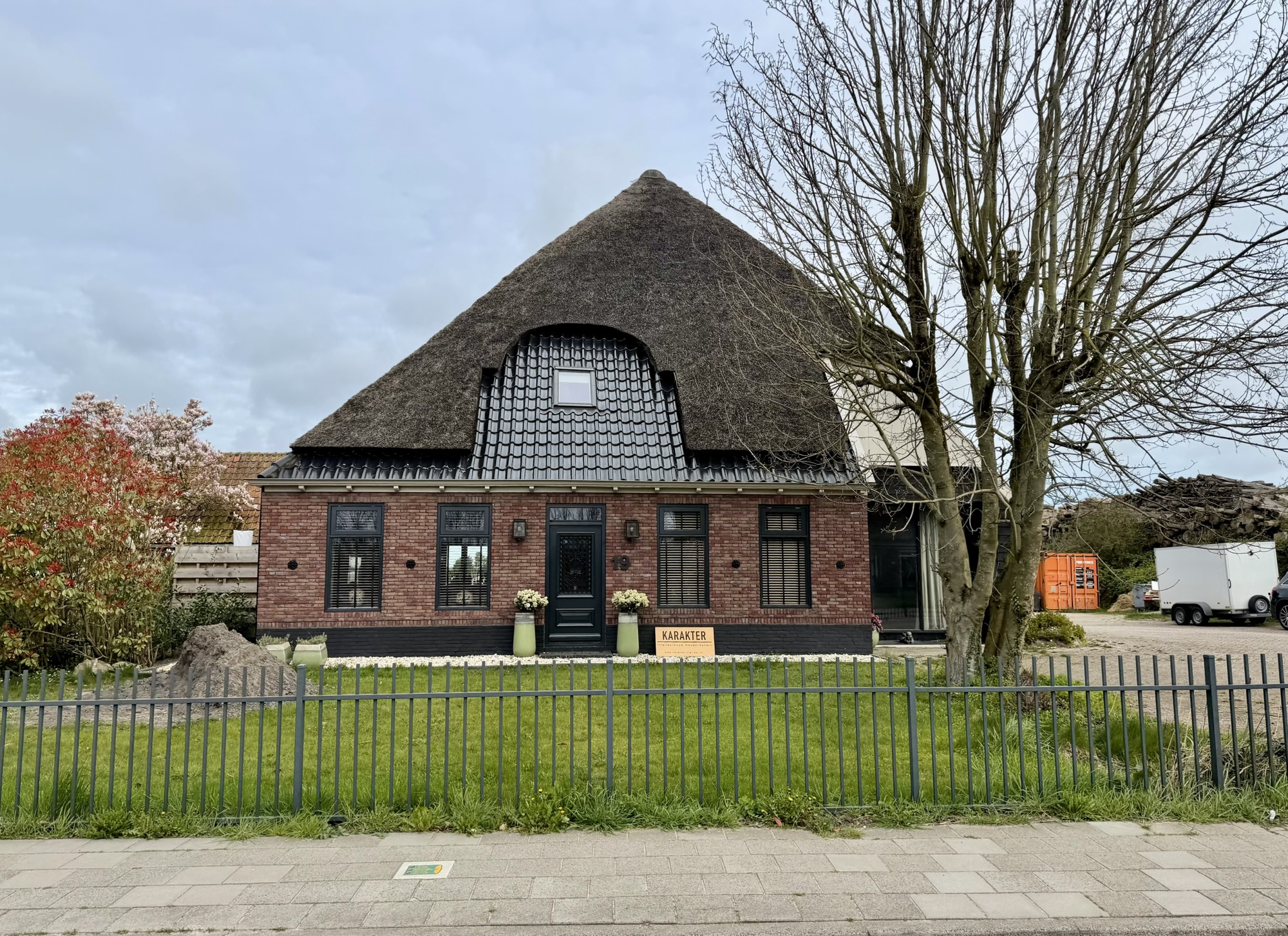
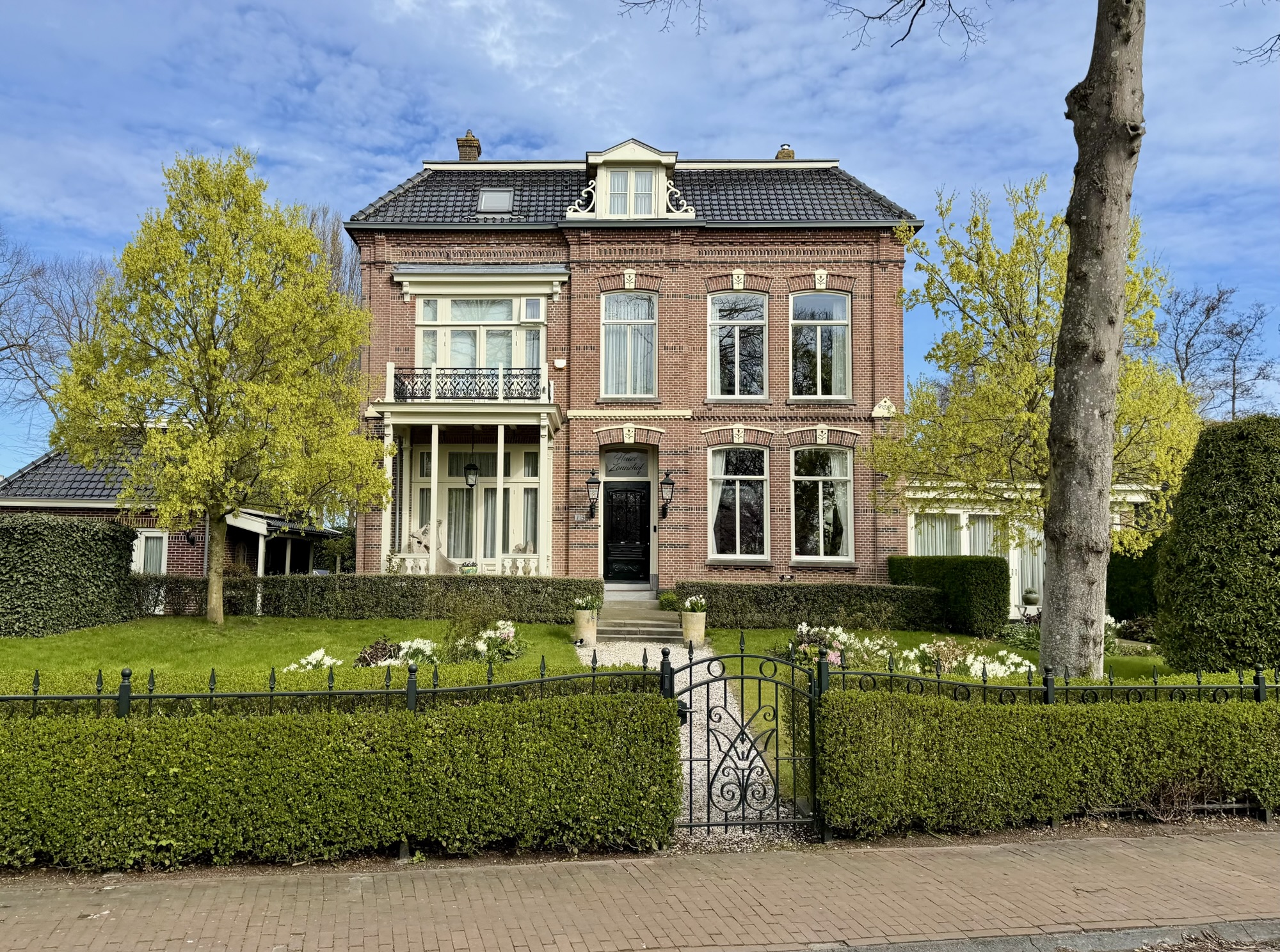
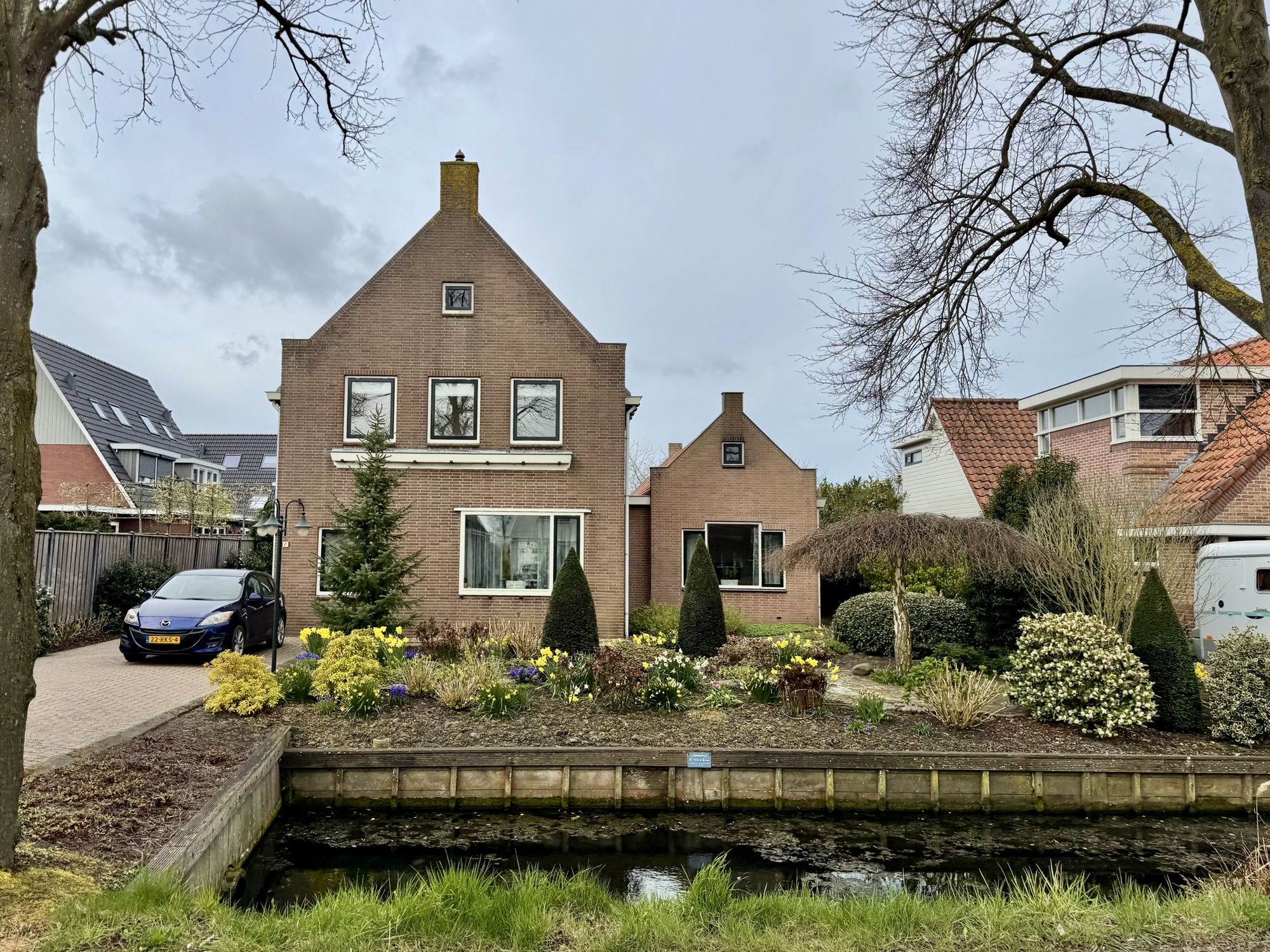
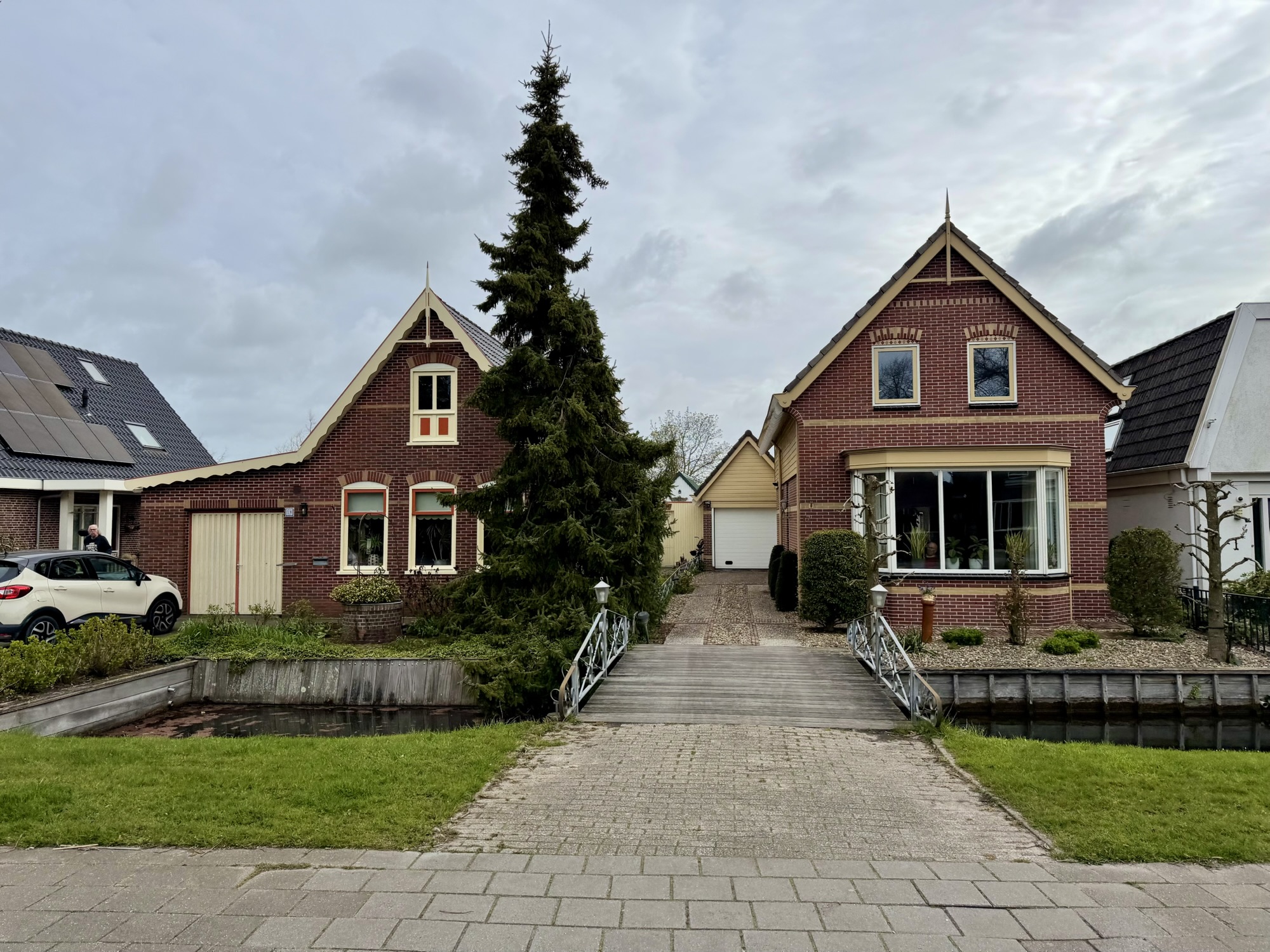
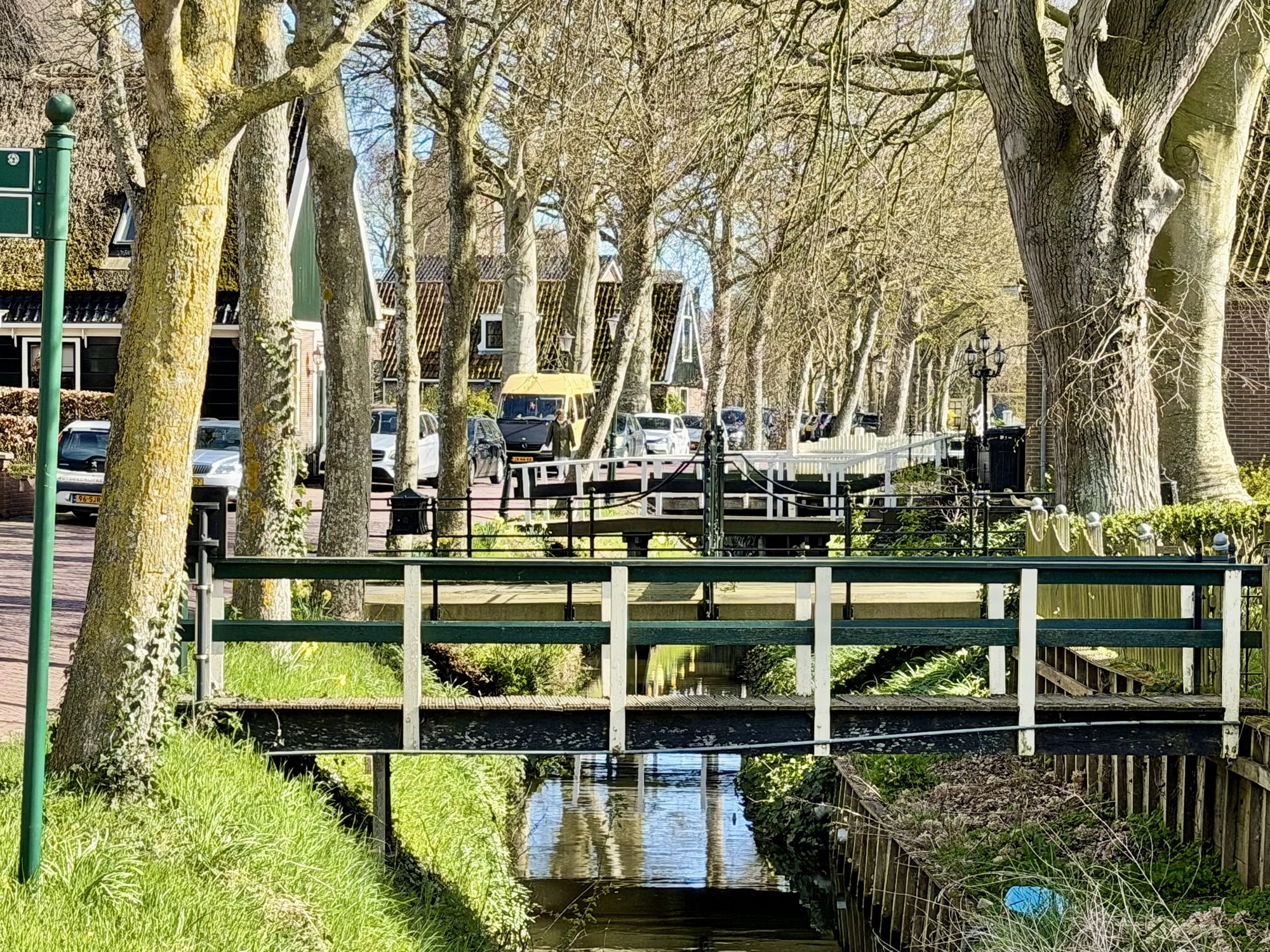
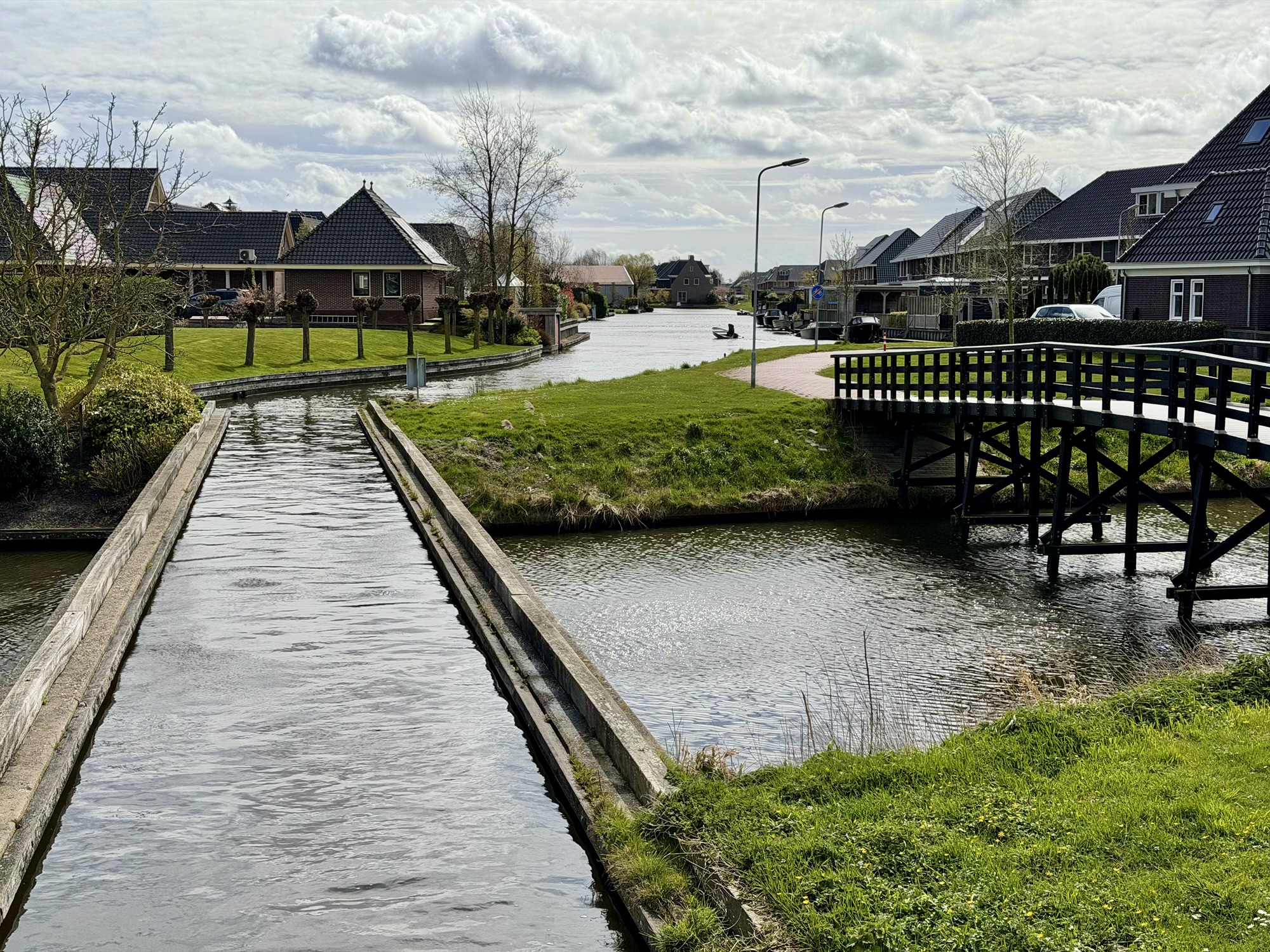
We also saw many homes that had a canal between the road and the house so needed a bridge across the canal was required for each driveway.
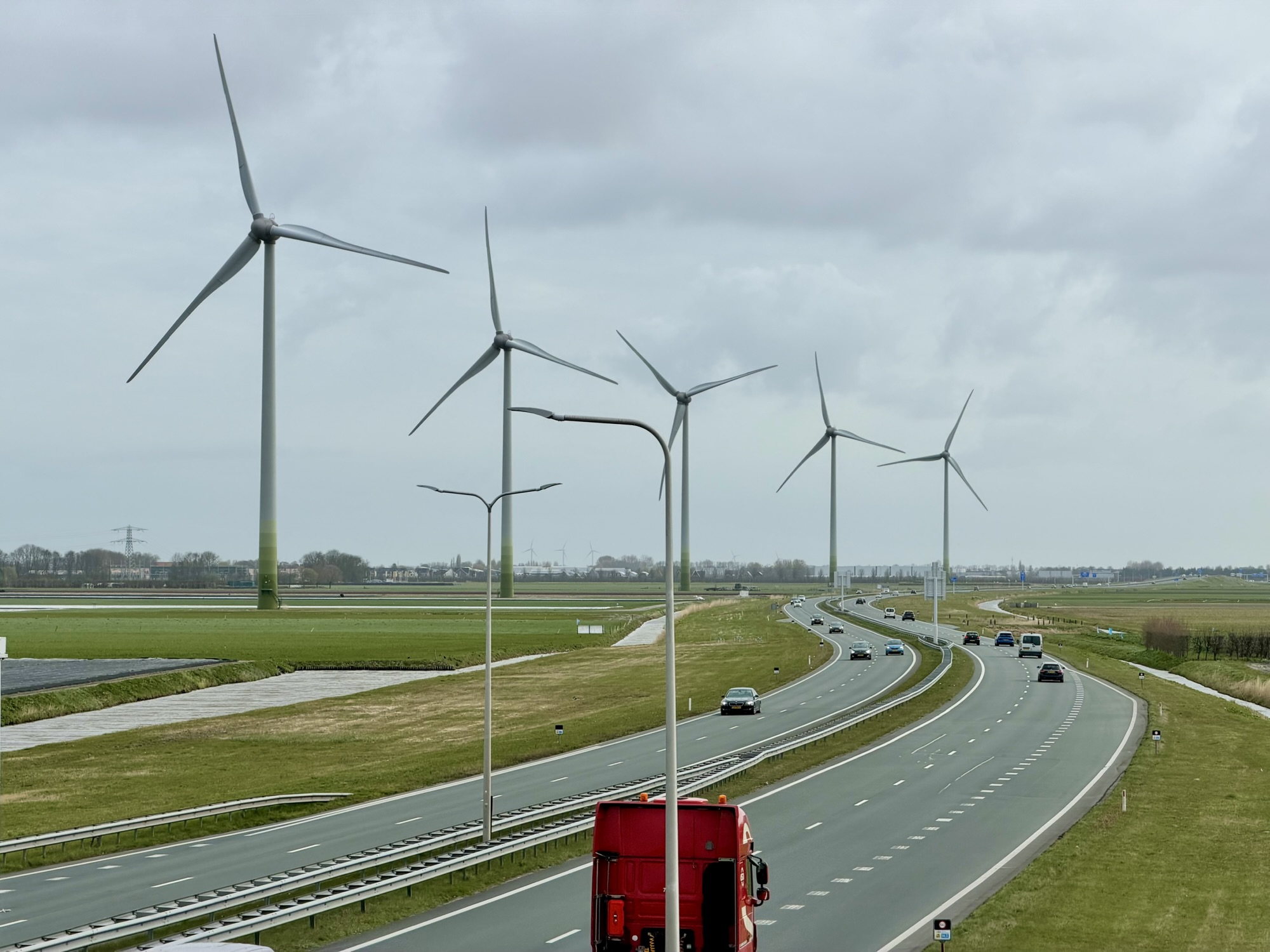
There was a nice gentle rise and cycling infrastructure to cross this highway, which gave us a good view of some of the many turbines we have passed since we got here.
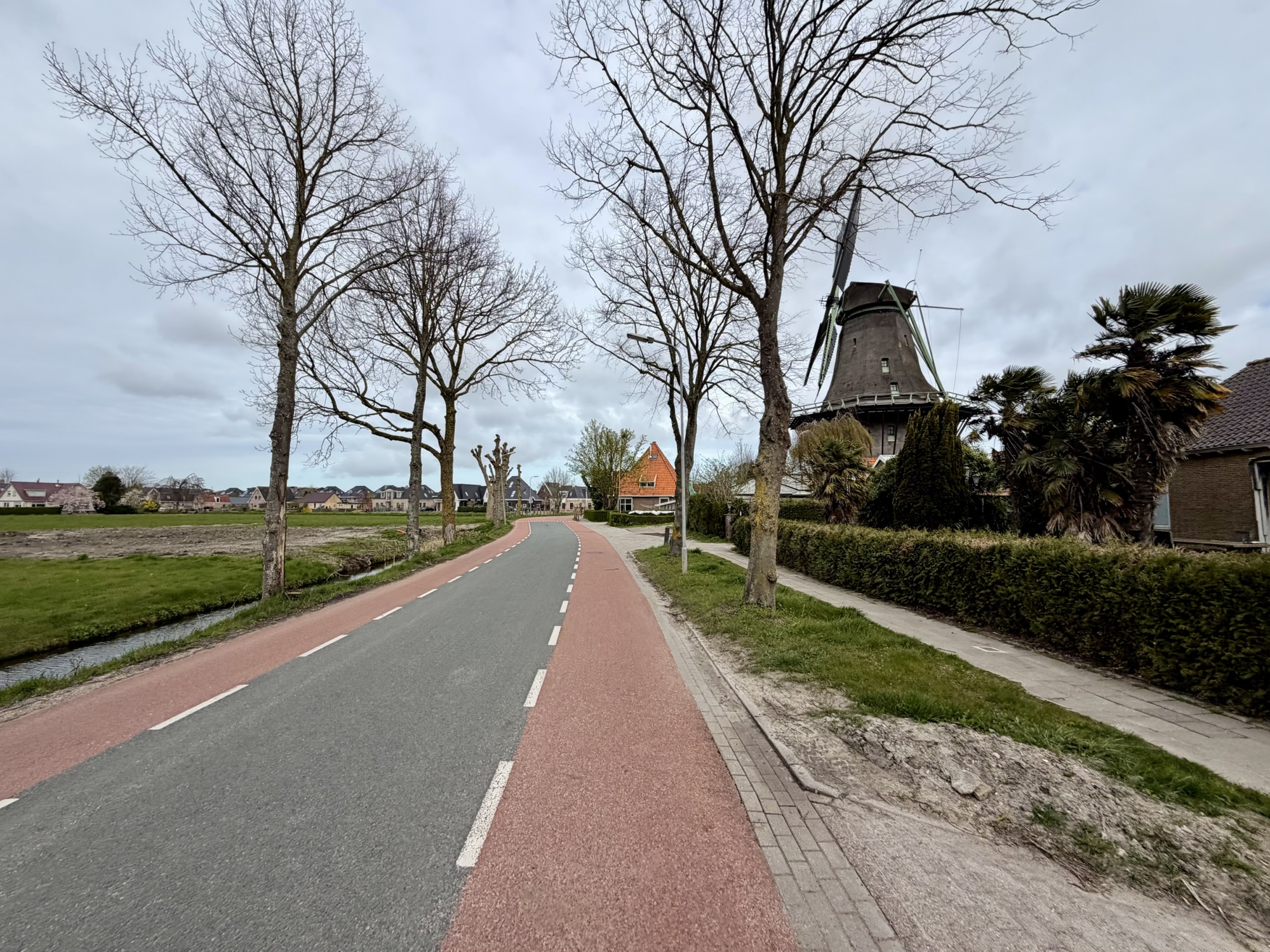
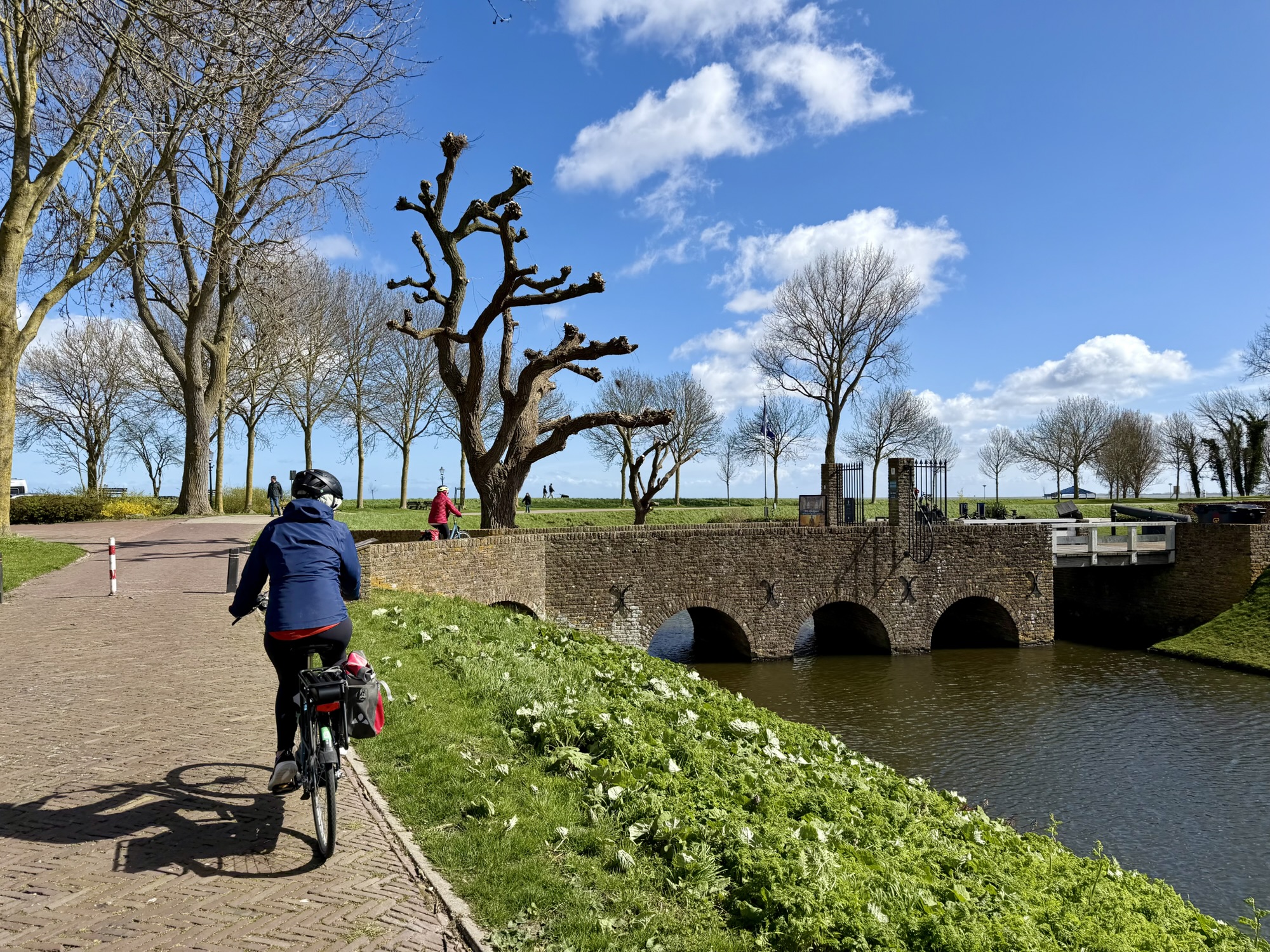
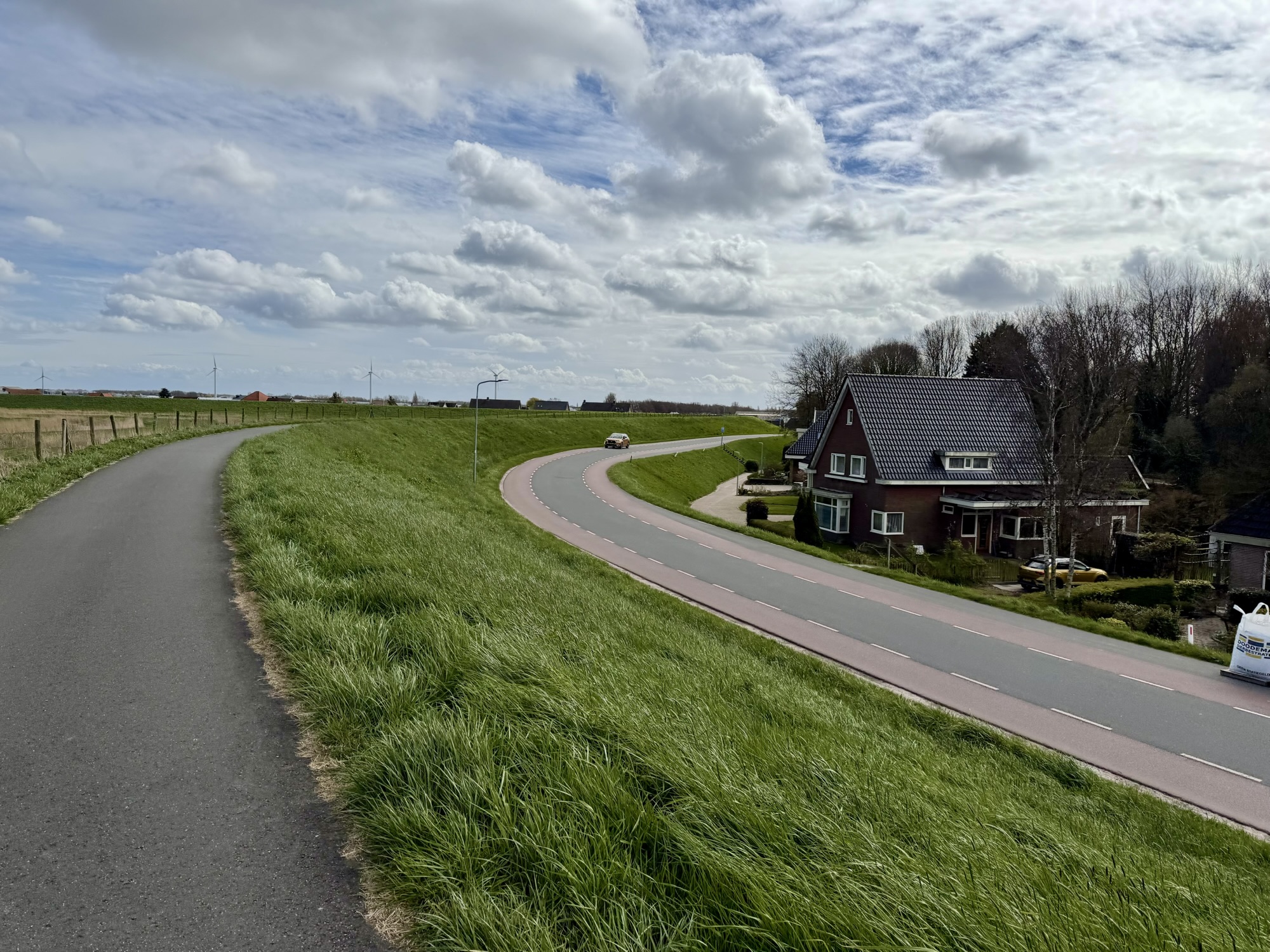
We were on many advisory bike lanes (fietssuggestiestroken) today. They are painted, dashed-line lanes, often red, designed for shared use on narrow roads where space for segregated lanes is limited. While offering no strict legal separation, they signal a designated area for cyclists. Drivers may enter them to pass oncoming traffic, but must yield to cyclists.
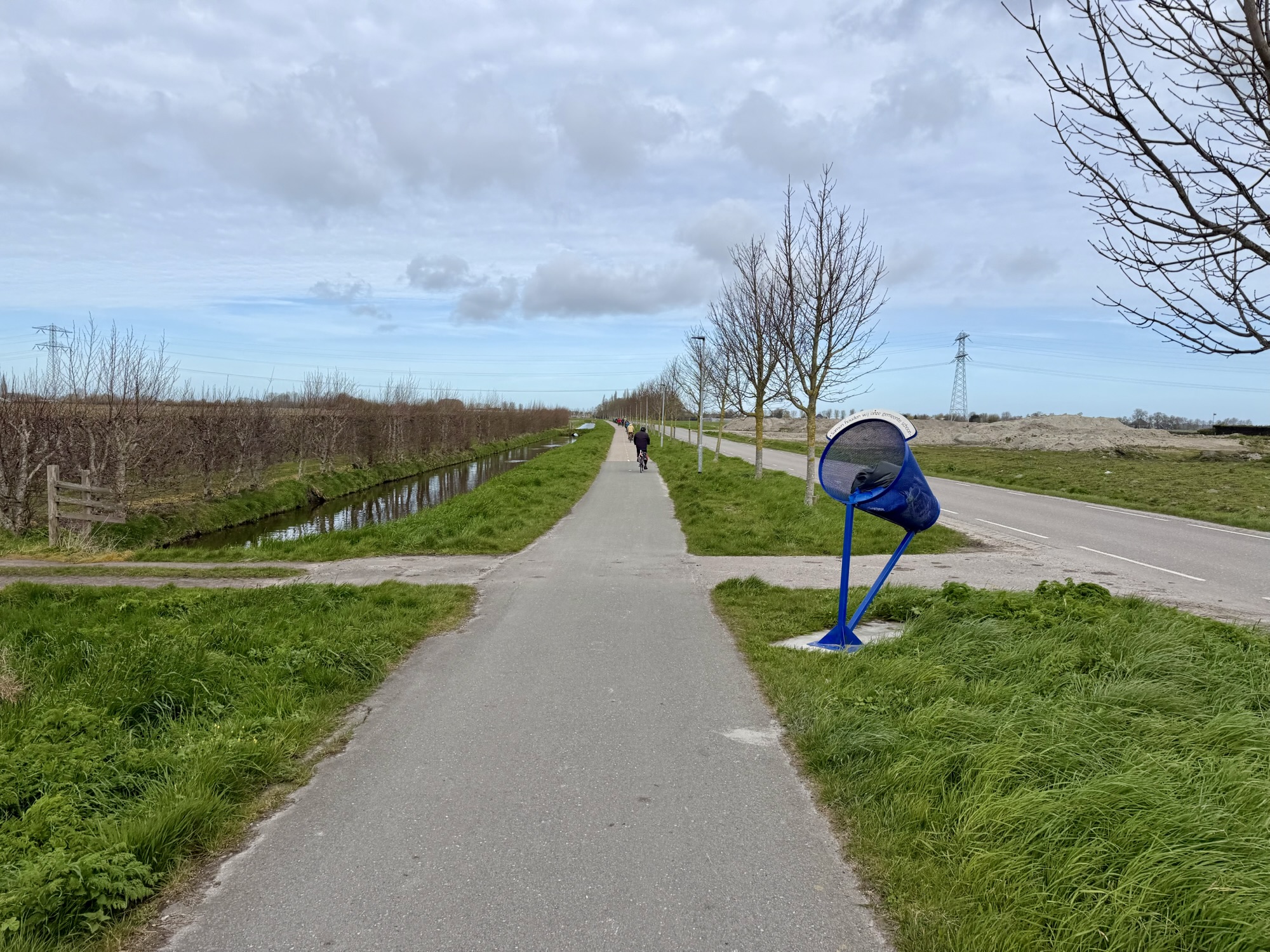
We would regularly see these garbage cans, which were angled so one can throw garbage away without stopping. I think Dutch people must have better aim than me because I don’t think I would be able to get it in. I never saw any litter on the ground around them.
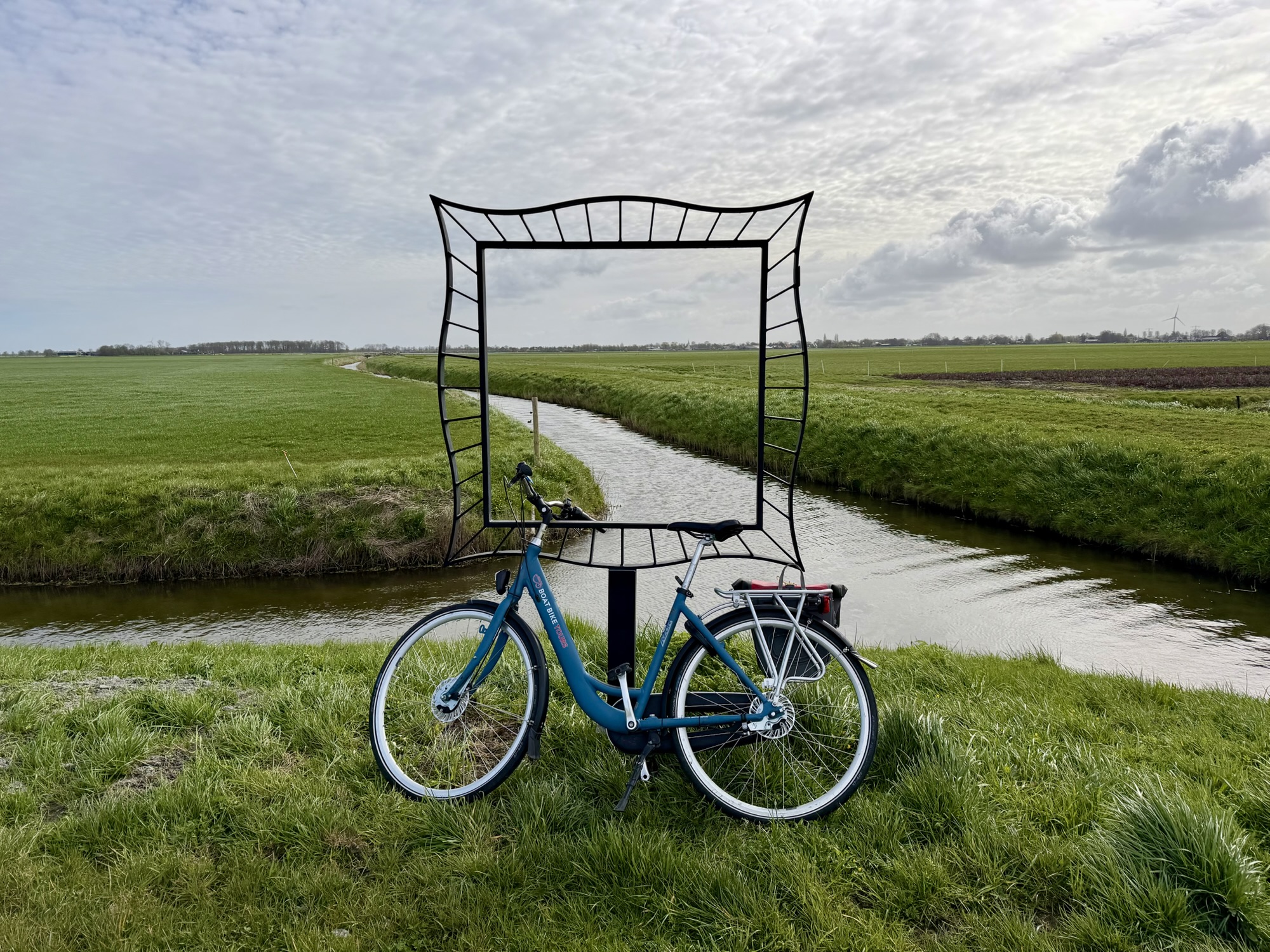
We saw these frames at various points along our route. They had QR codes on them that lead to Vimeo videos which presumably explain what you’re seeing, but require a Vimeo account which I do not have.
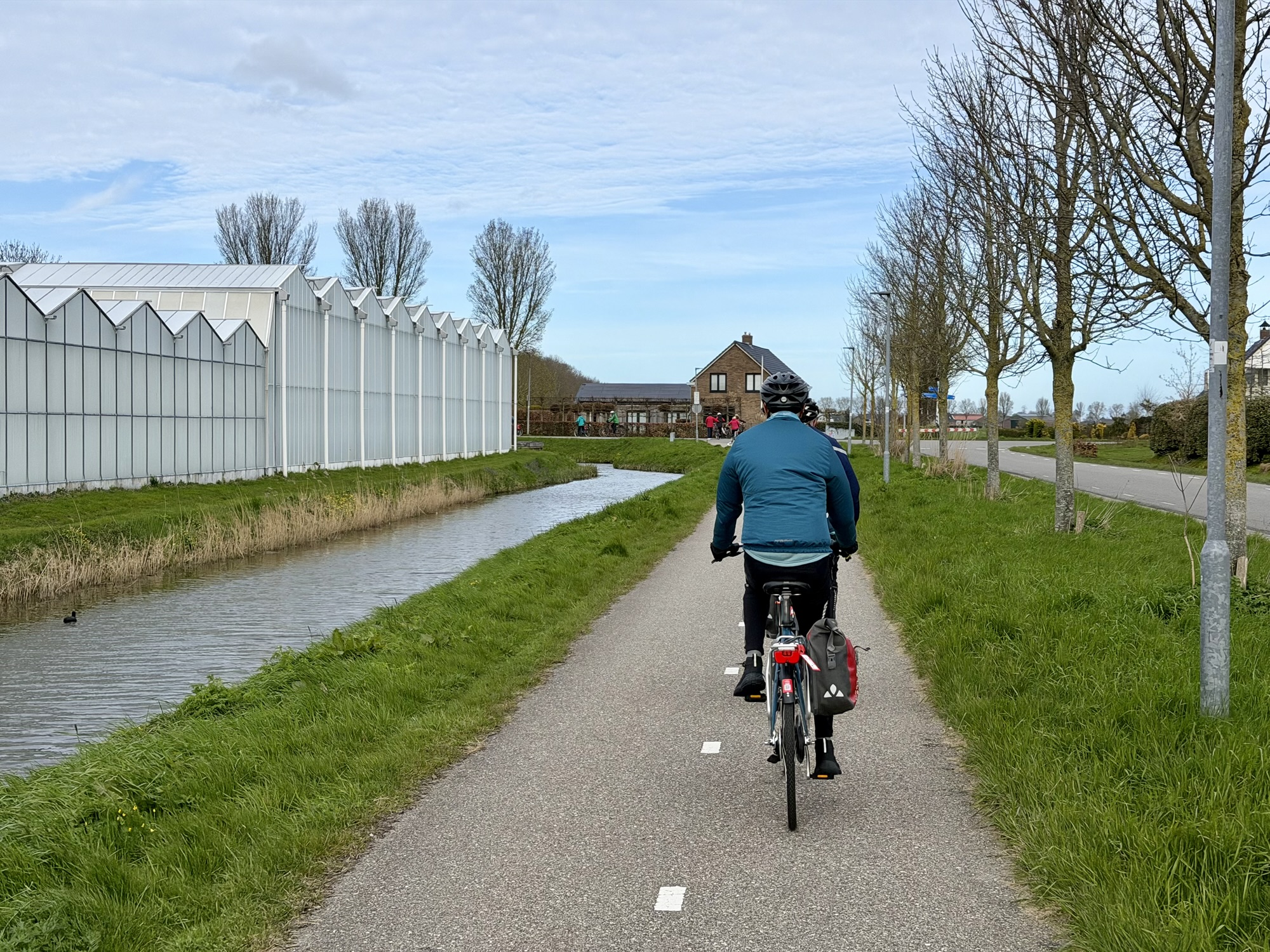
We passed several areas that had huge numbers of greenhouses lining the road.
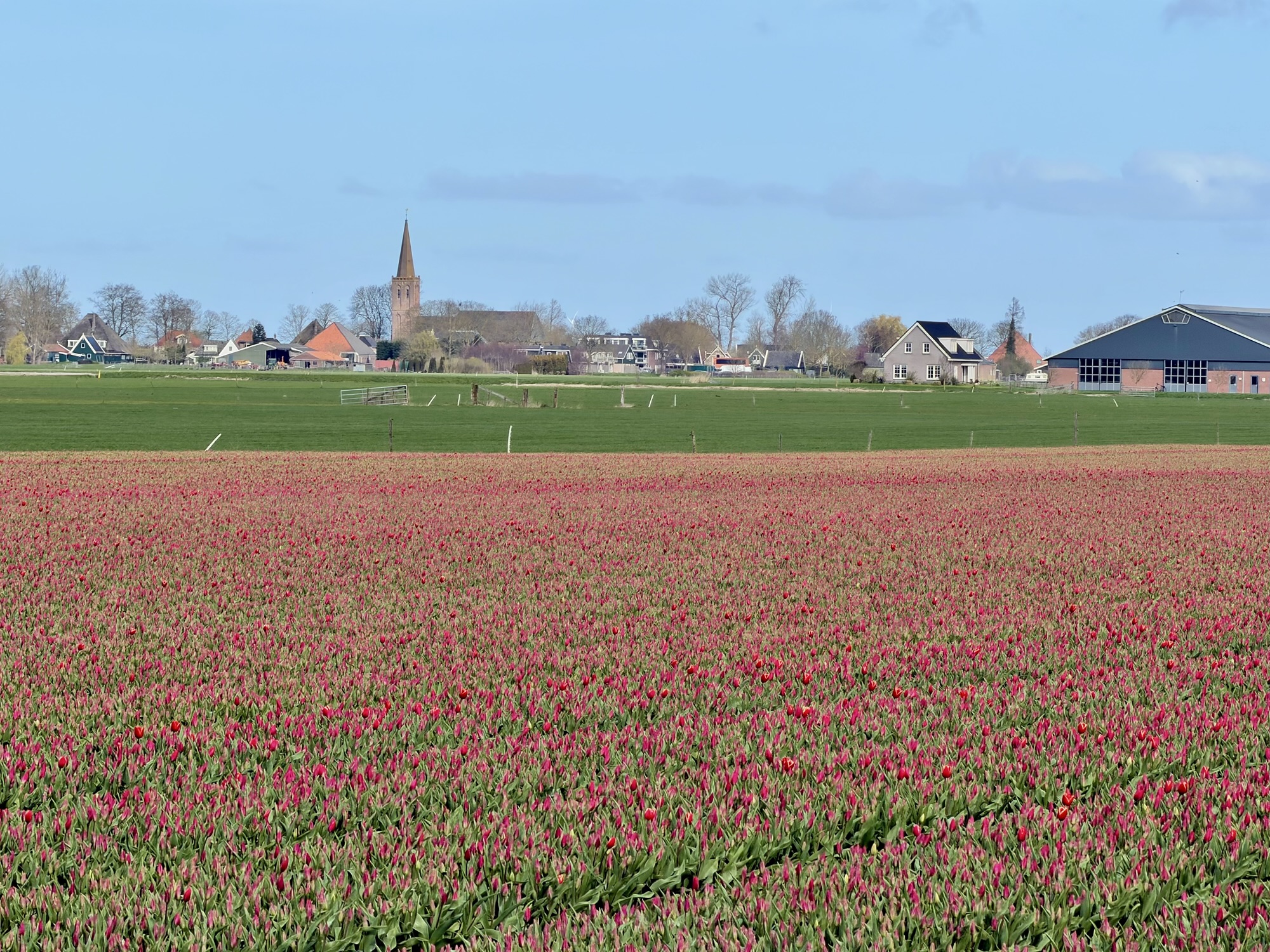
Just after this lovely little town, we came across our first tulip field.
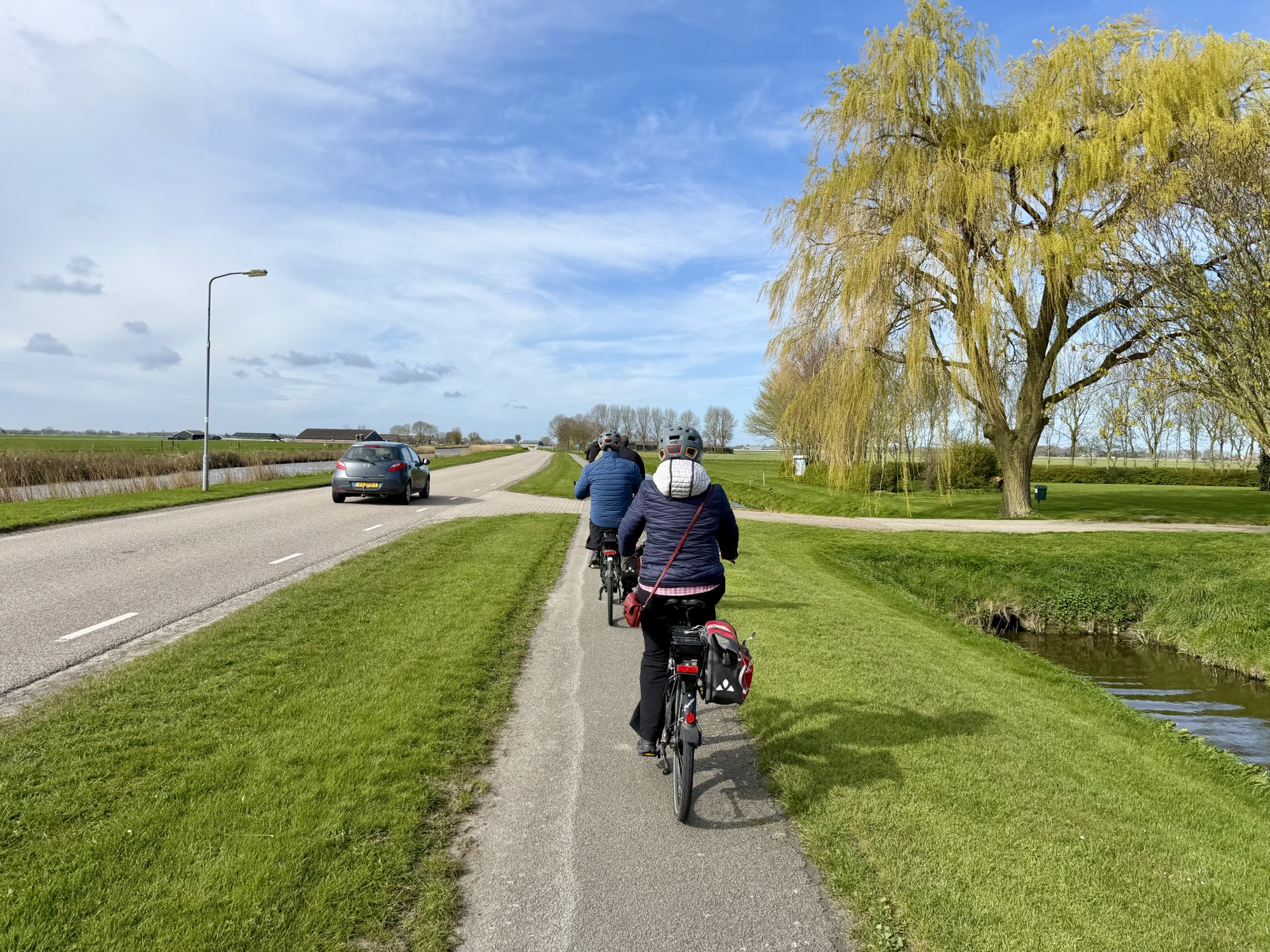
This was one of the narrower bike paths that we travelled on.
These series of bridges led from the road to people’s homes.
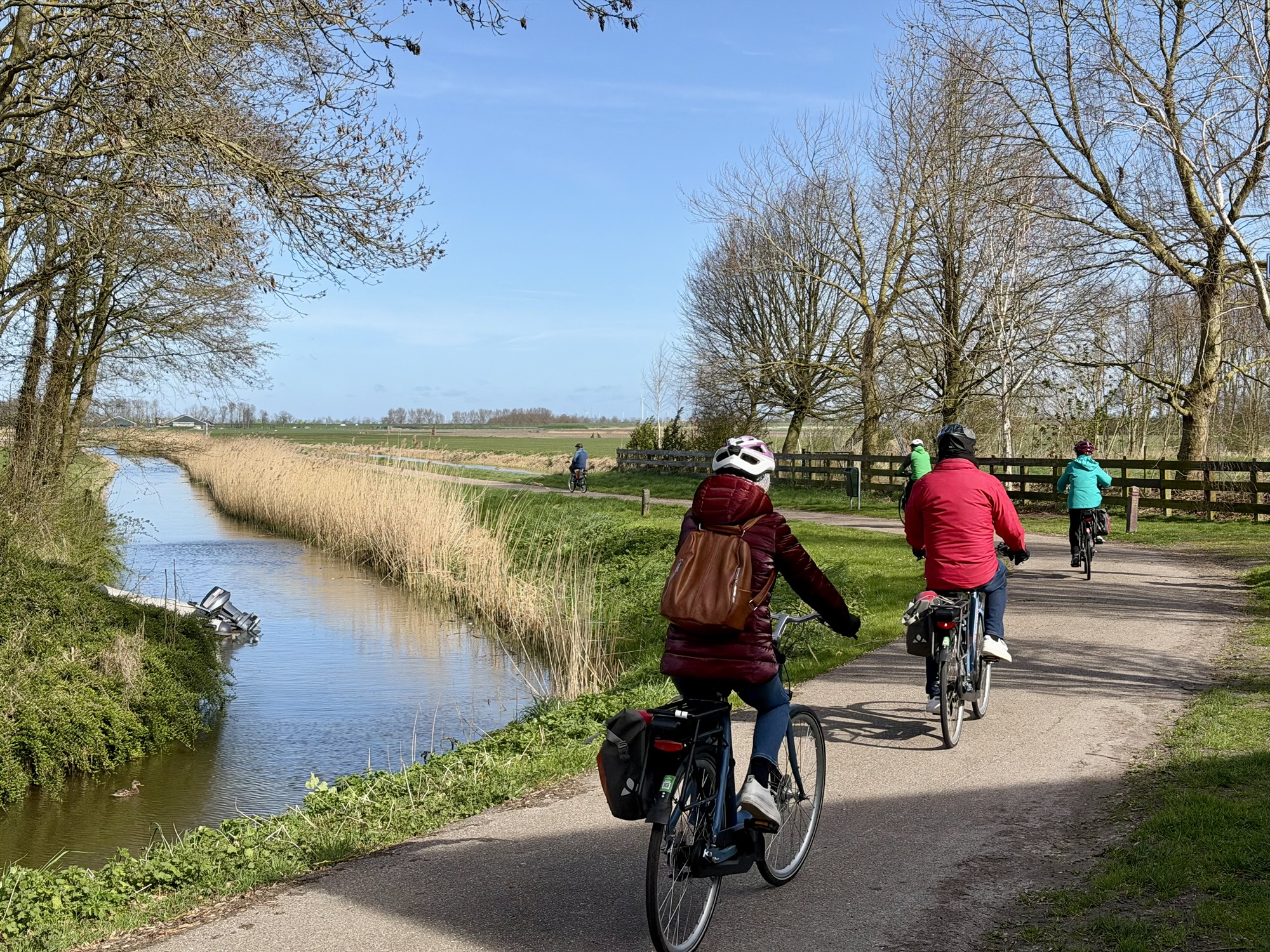
We were often running into other small groups from the barge.
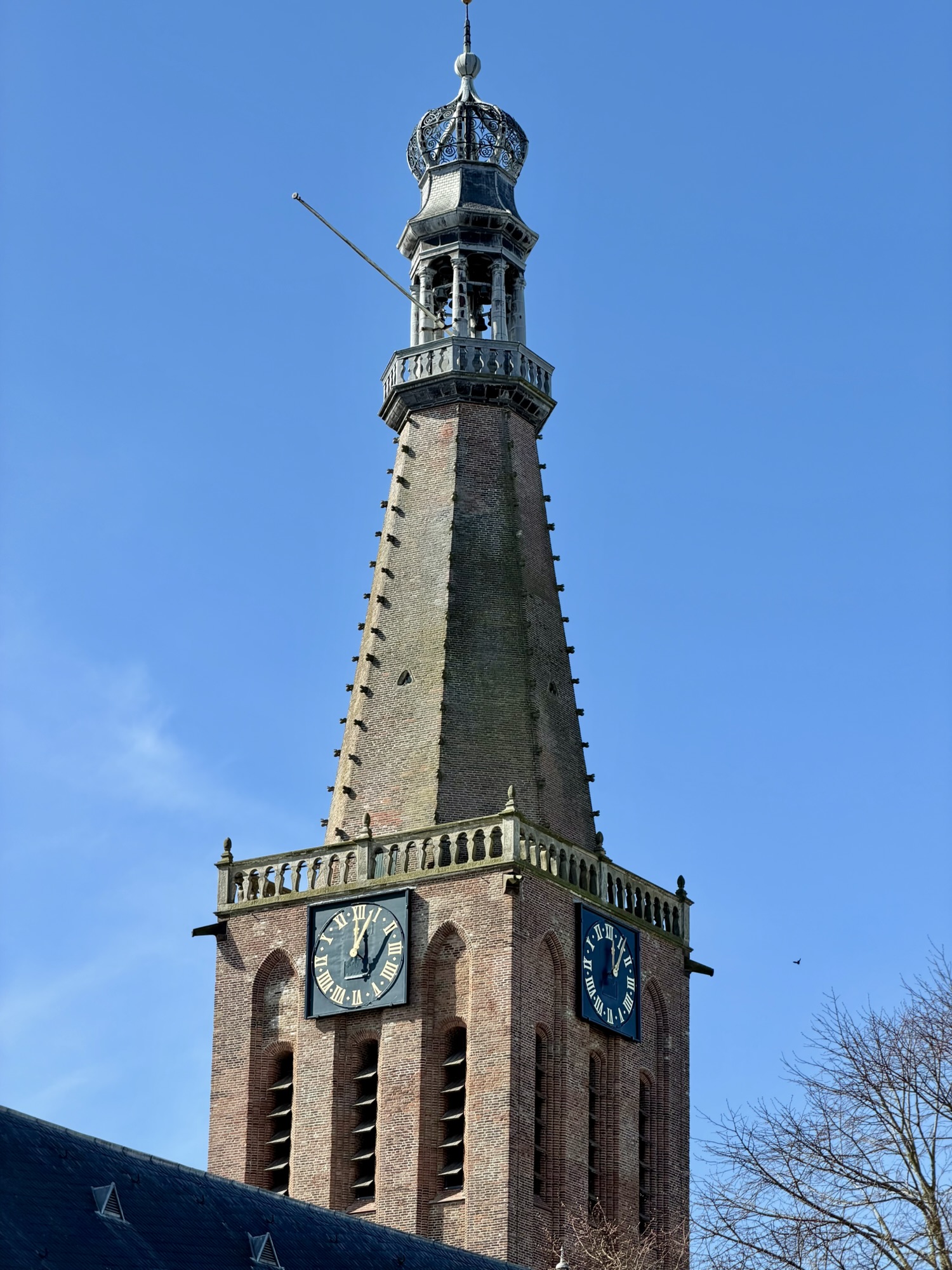
We stopped for lunch in Medemblik. It was cool and windy, but we found a somewhat sheltered step to sit on to eat our bagged lunch. We listened to the church bells on the hour and a half hour as we ate our lunch.
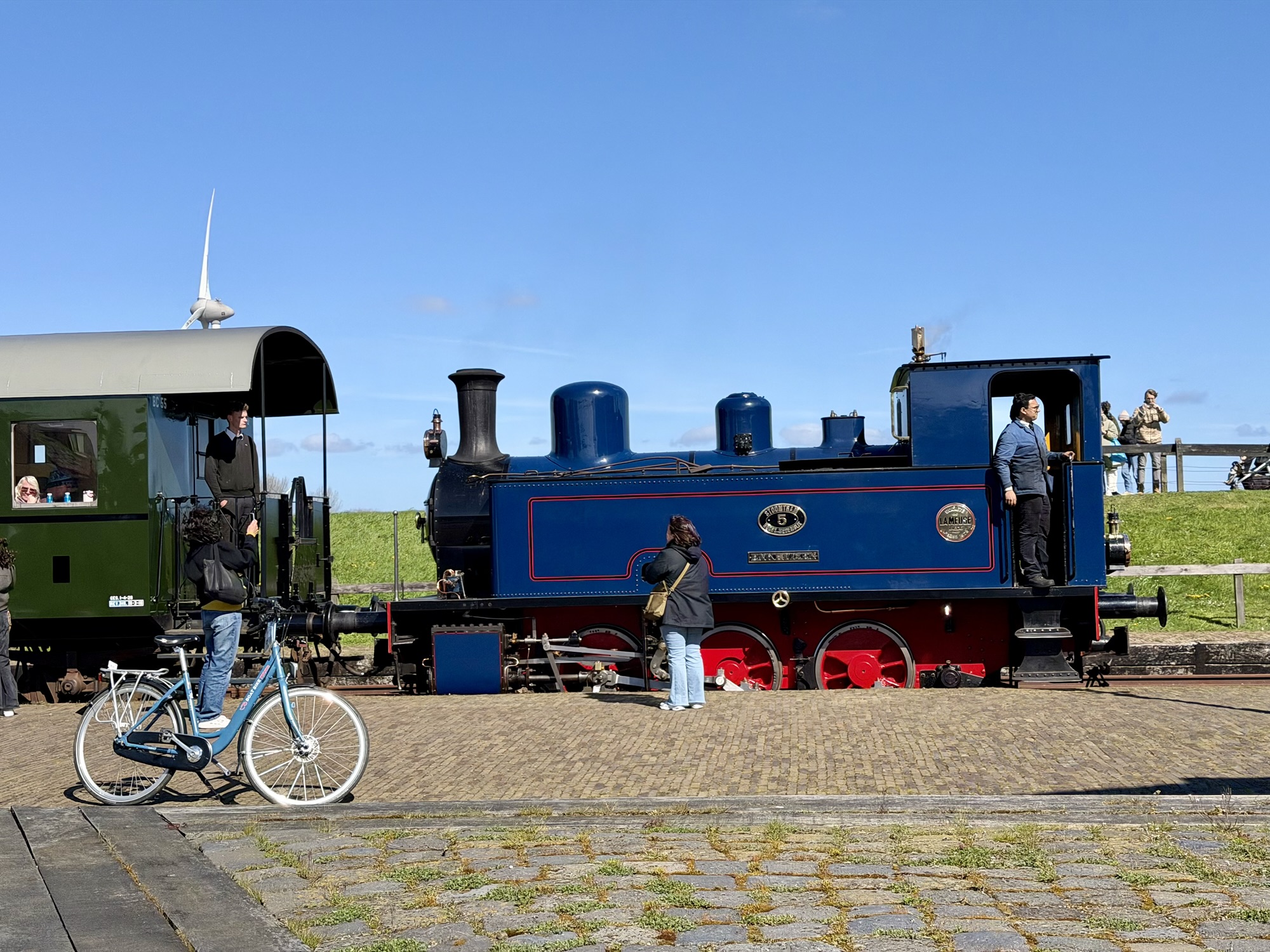
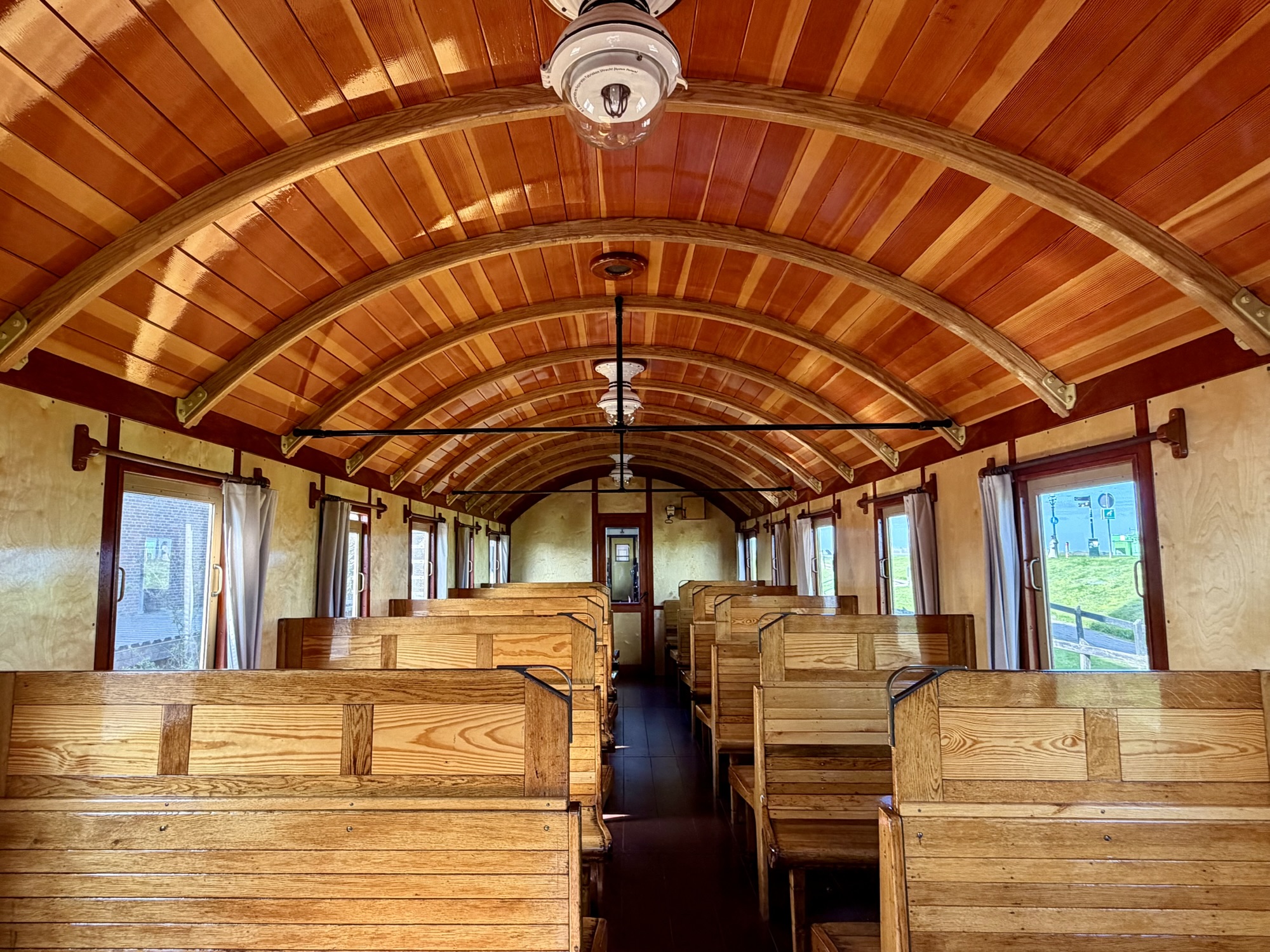
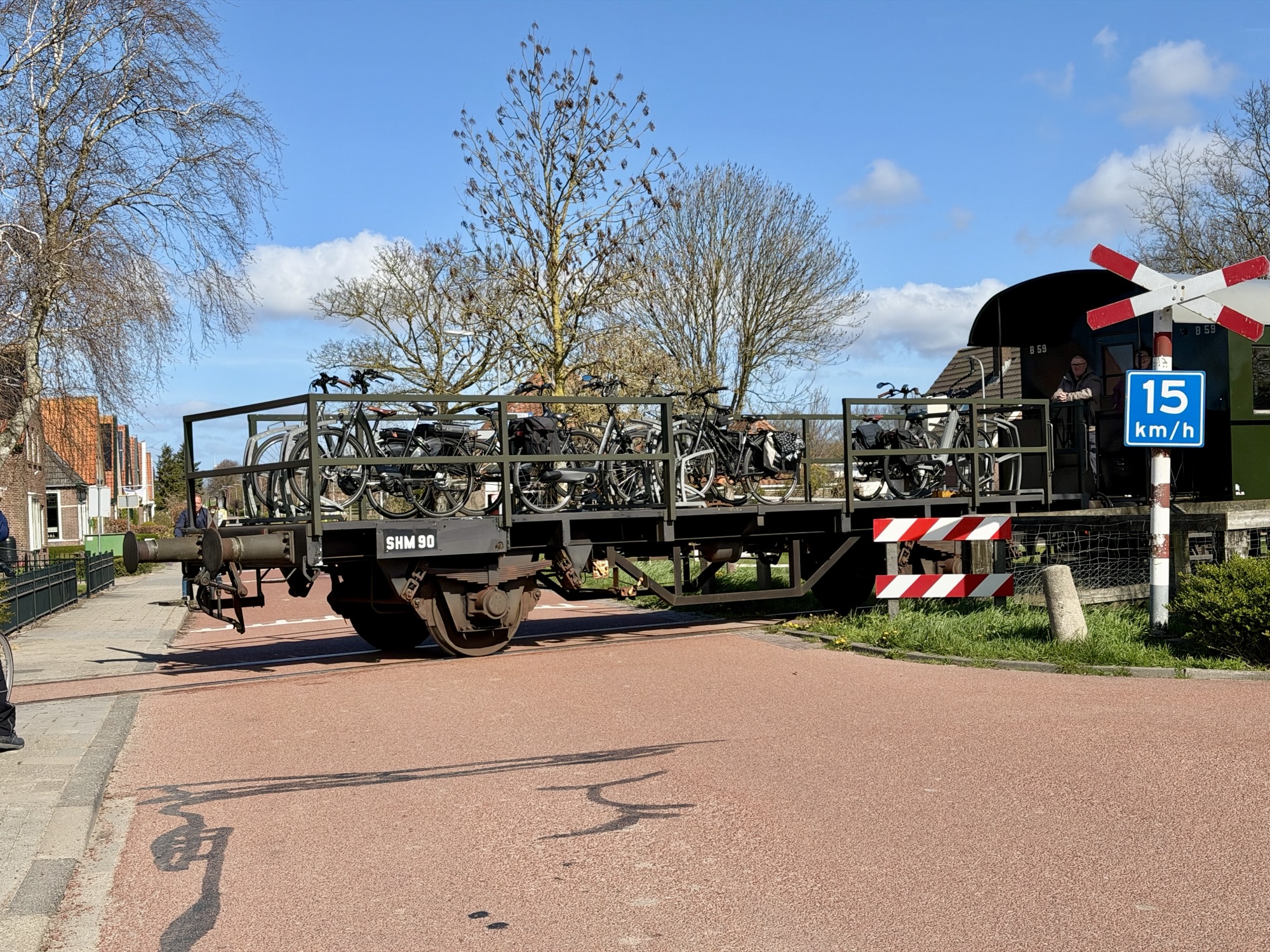
Just after we sat down the Hoorn-Medemblik steam train pulled in to the station. It had quite a few passenger coaches, a buffet car, and a bike car. Passengers had time to explore the city before the return trip. There was also a museum there, but I didn’t take time to go in.
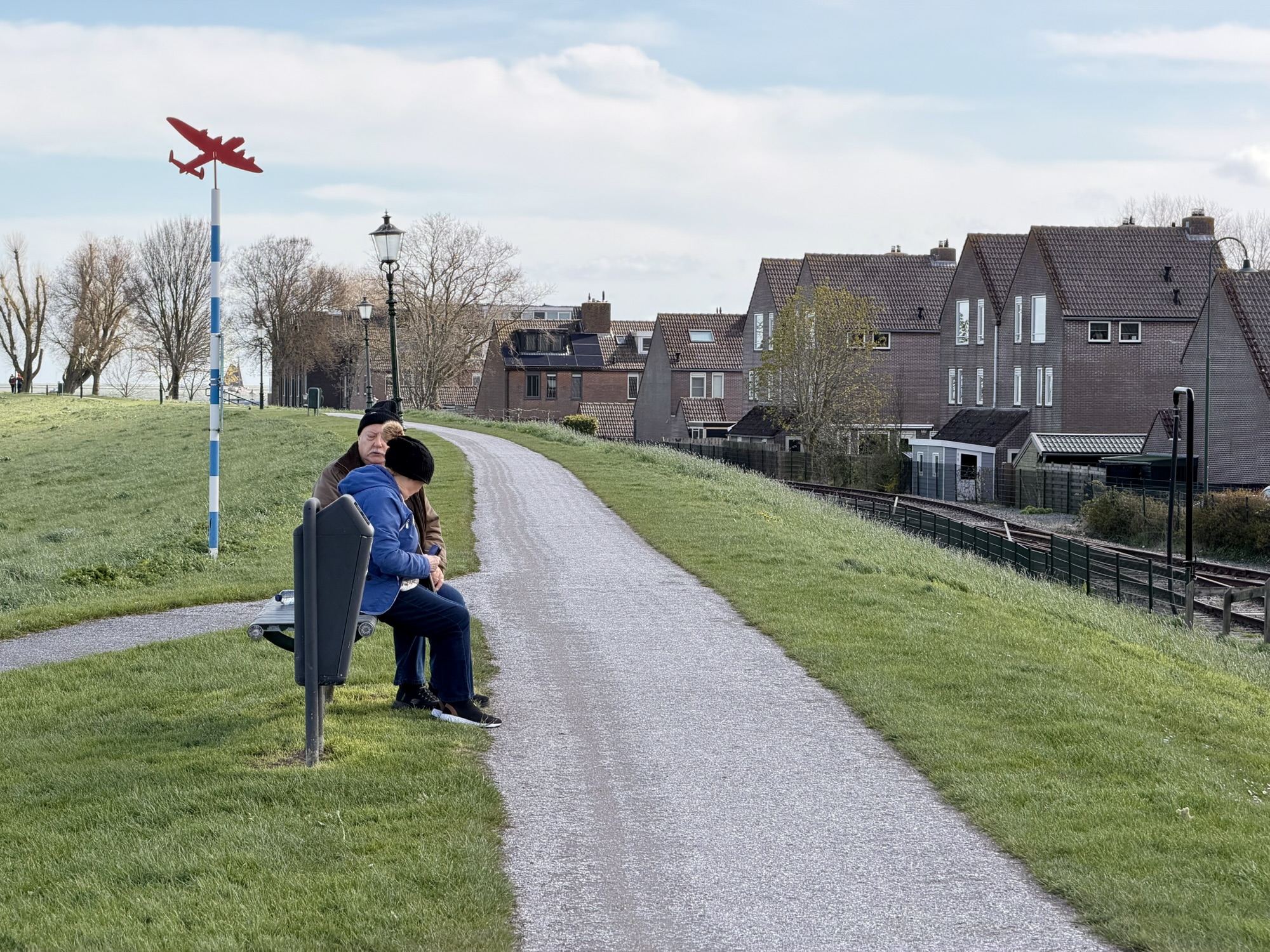
There was a large embankment behind the building. I saw several of these posts with planes along our route. This memorial in Medemblik marks two RAF bomber crashes in the IJsselmeer during World War II. A Hampden in 1942 and a Stirling in 1943 were both shot down by German night fighters. The crews—young airmen from Britain, Canada, and New Zealand—lost their lives. The sign commemorates them as part of the “Traces of the Air War” project.
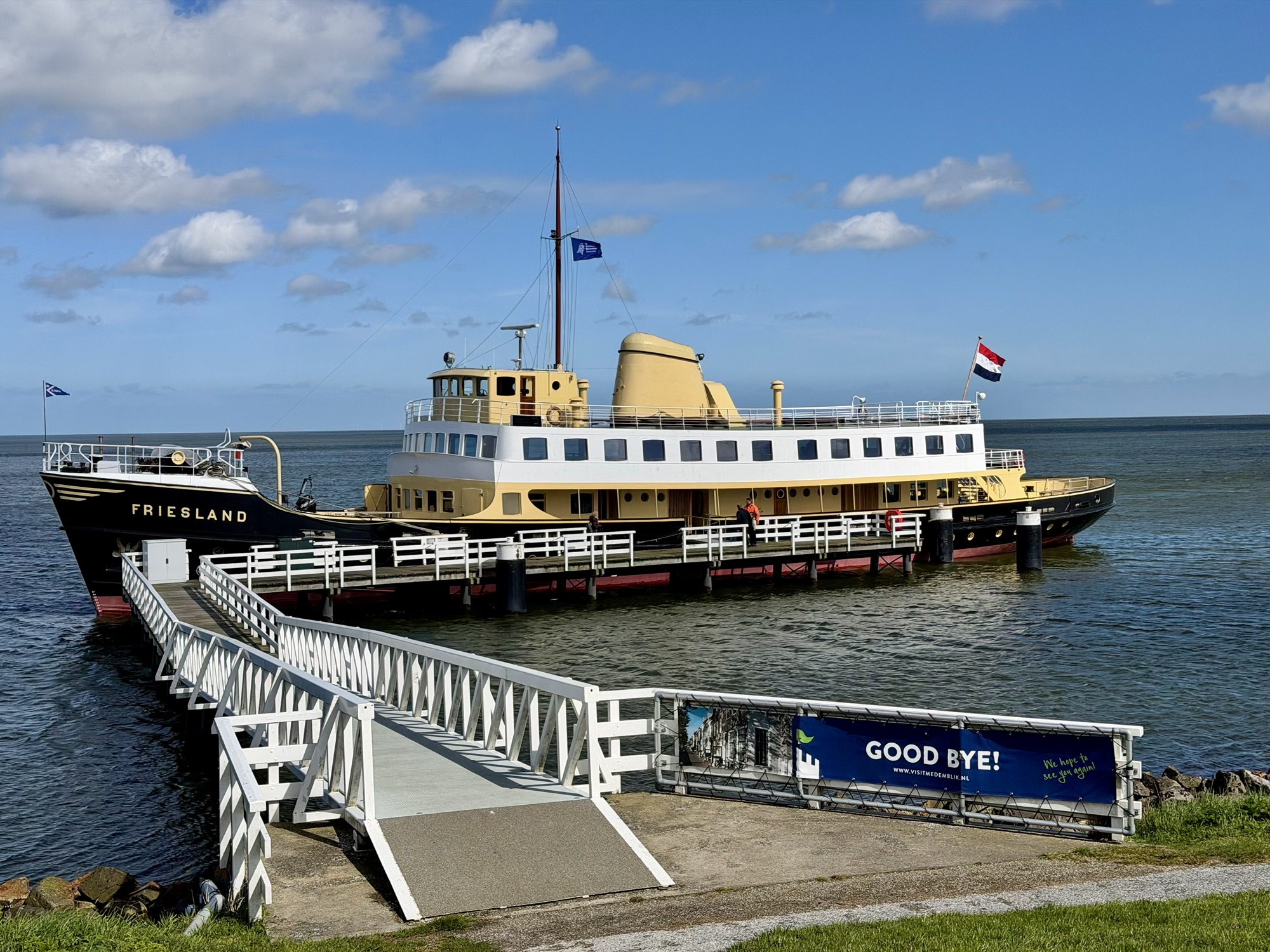
There was a day excursion ship moored near the station.
This is a marina in Medemblik.
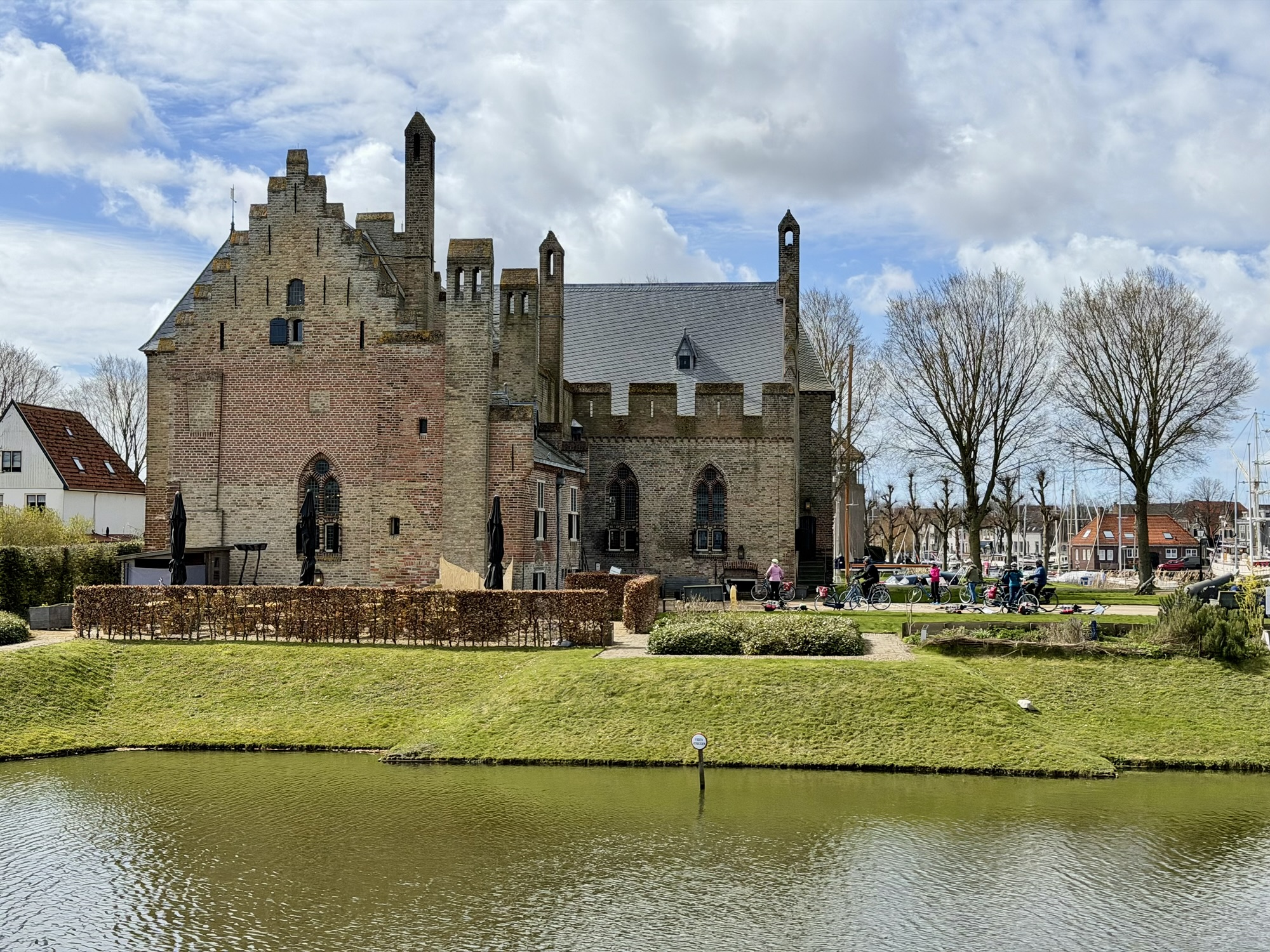
Radboud Castle. I decided to keep riding, but Alina visited. I was on my own for the last 24km. From the website: Radboud Castle was built by Count Floris V as one of five castles used, among other things, to keep the rebellious West Frisians under his thumb. Floris built these castles in the period 1282-1287. A record pace, normally in those days it took about 10 years to build one castle, let alone five. Radboud Castle is the only castle that remains. The castle has a moat.
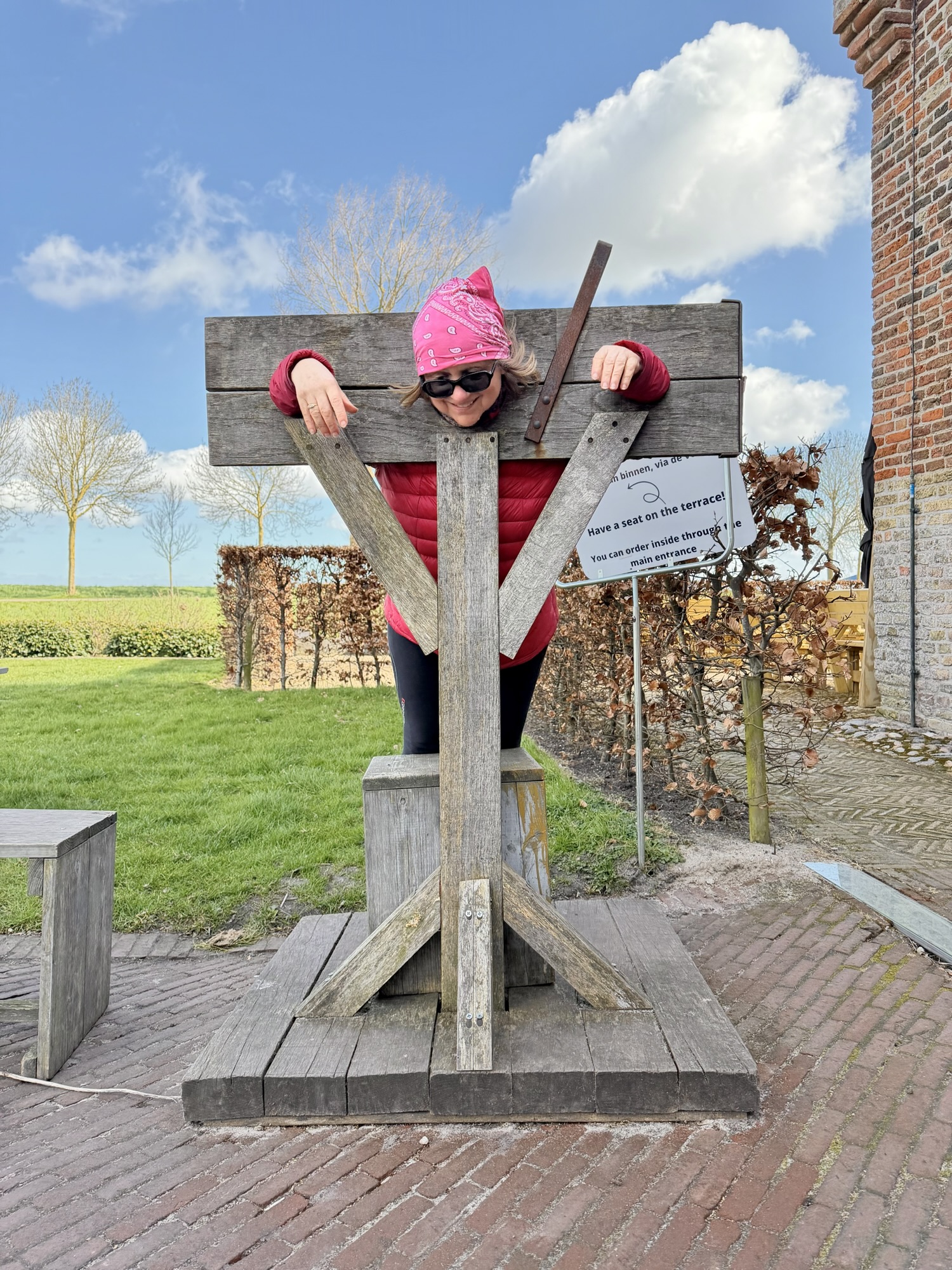
Alina posed in the stocks.
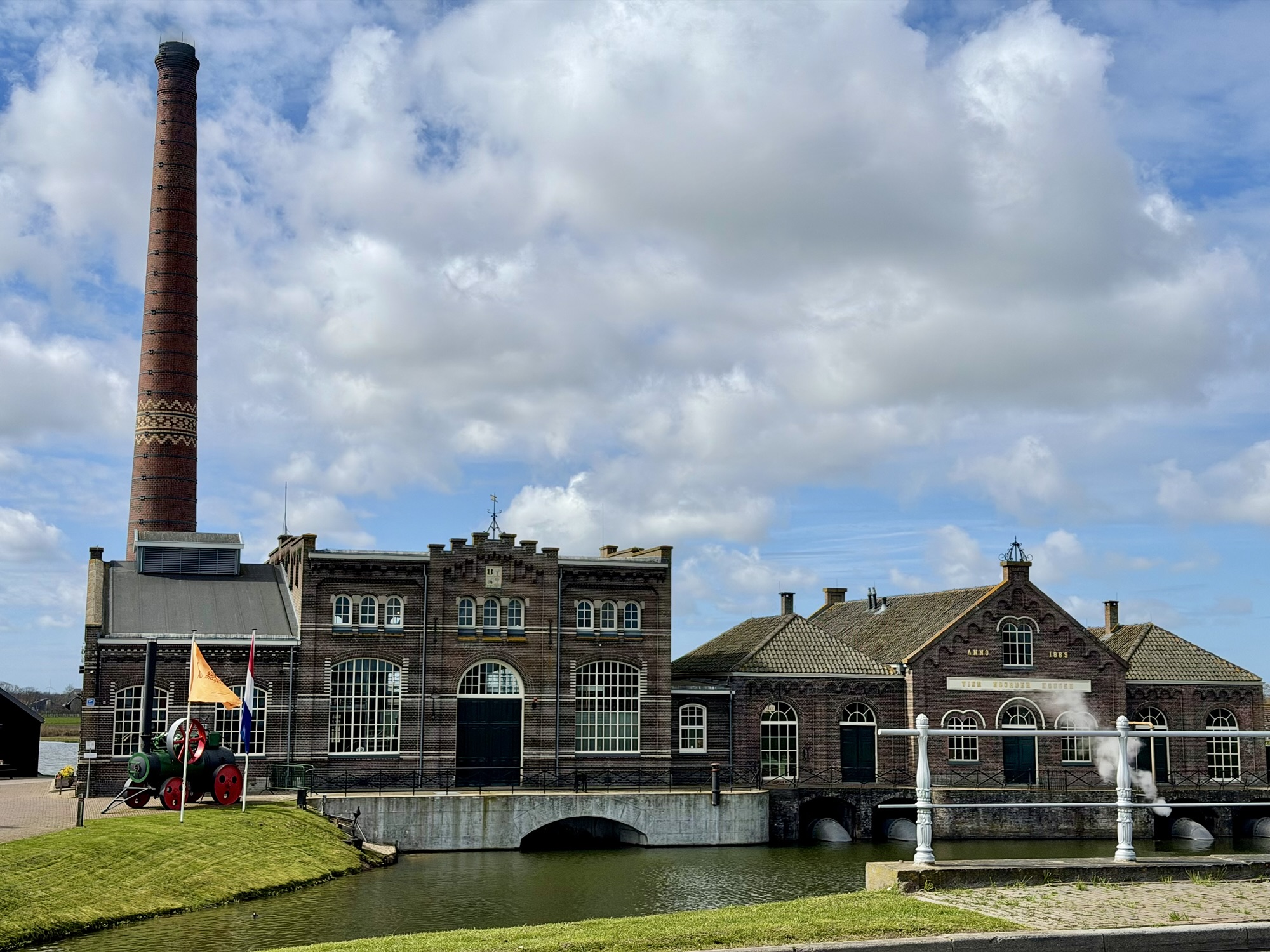
The Dutch Steam Engine Museum (Nederlands Stoommachinemuseum) in Medemblik is a premier industrial heritage site located in a former steam-powered pumping station from 1869. Situated on the IJsselmeer coast, it offers a functioning look into the history of steam technology.
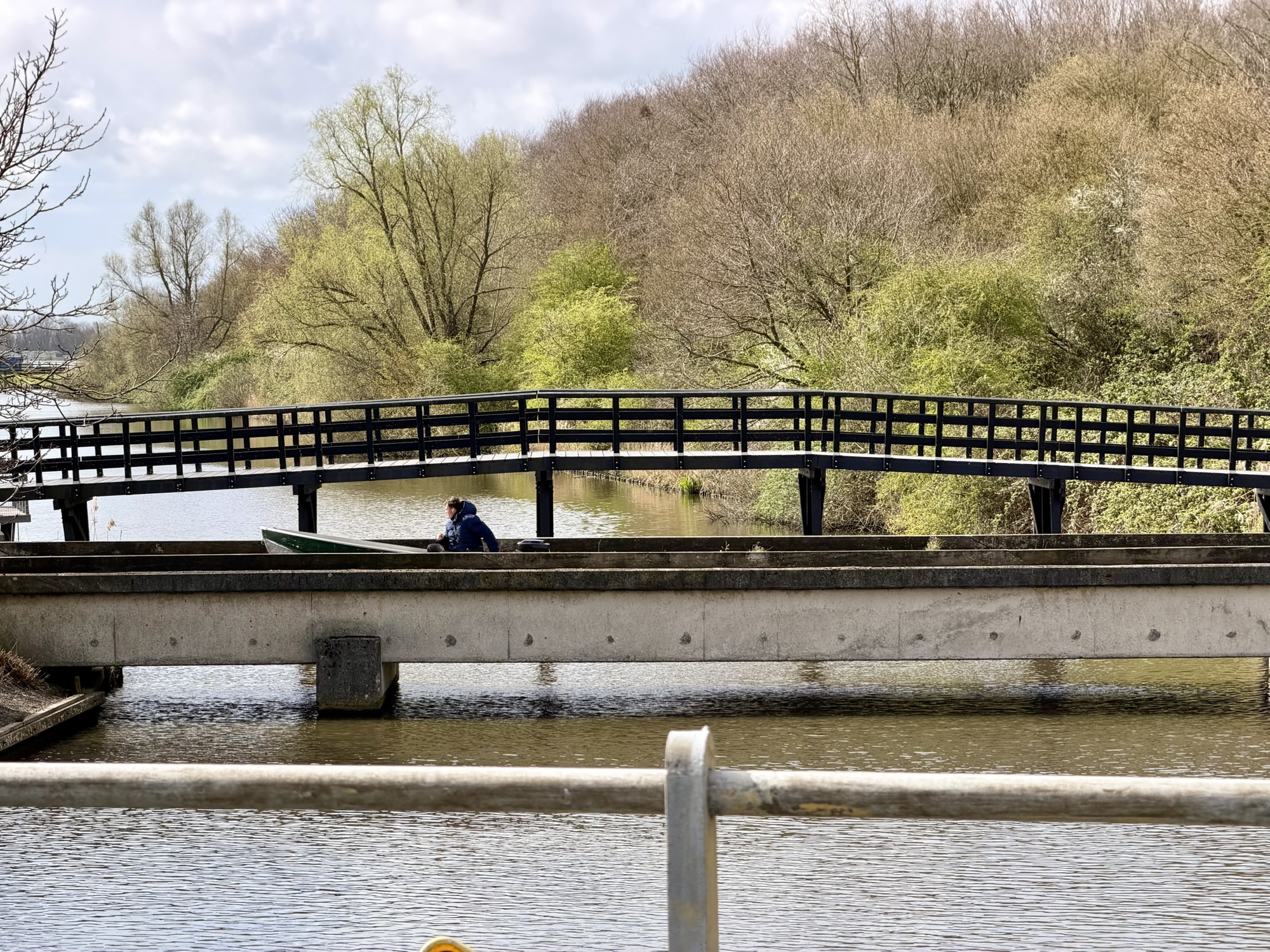
I was fortunate to see a man in a little motorboat travelling across this aqueduct over a canal.
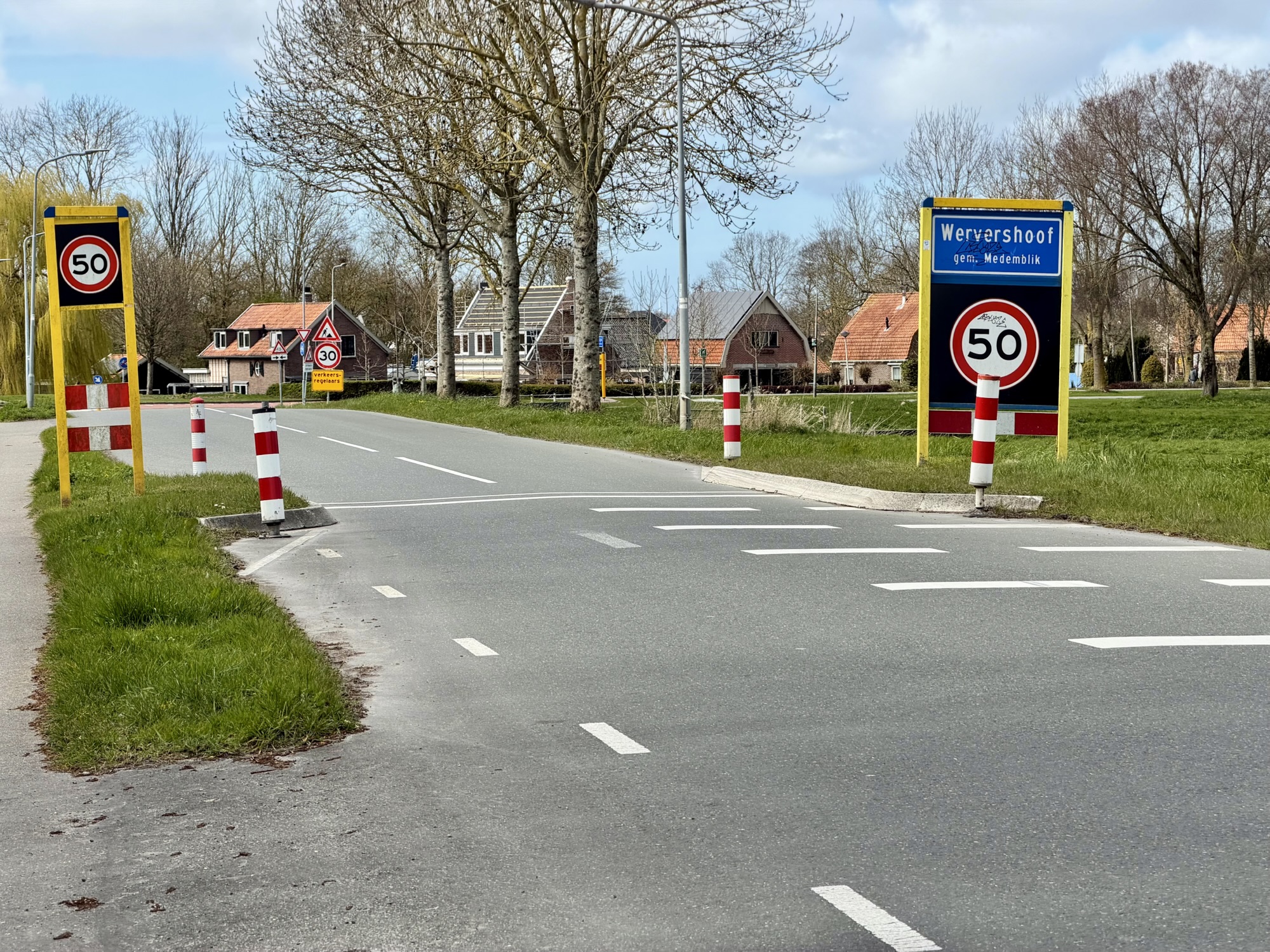
The road behind me is 60 km an hour and at the point in the picture is changing to 50 and entering of the ledge. The road is narrowed to ensure safe driving in the village.
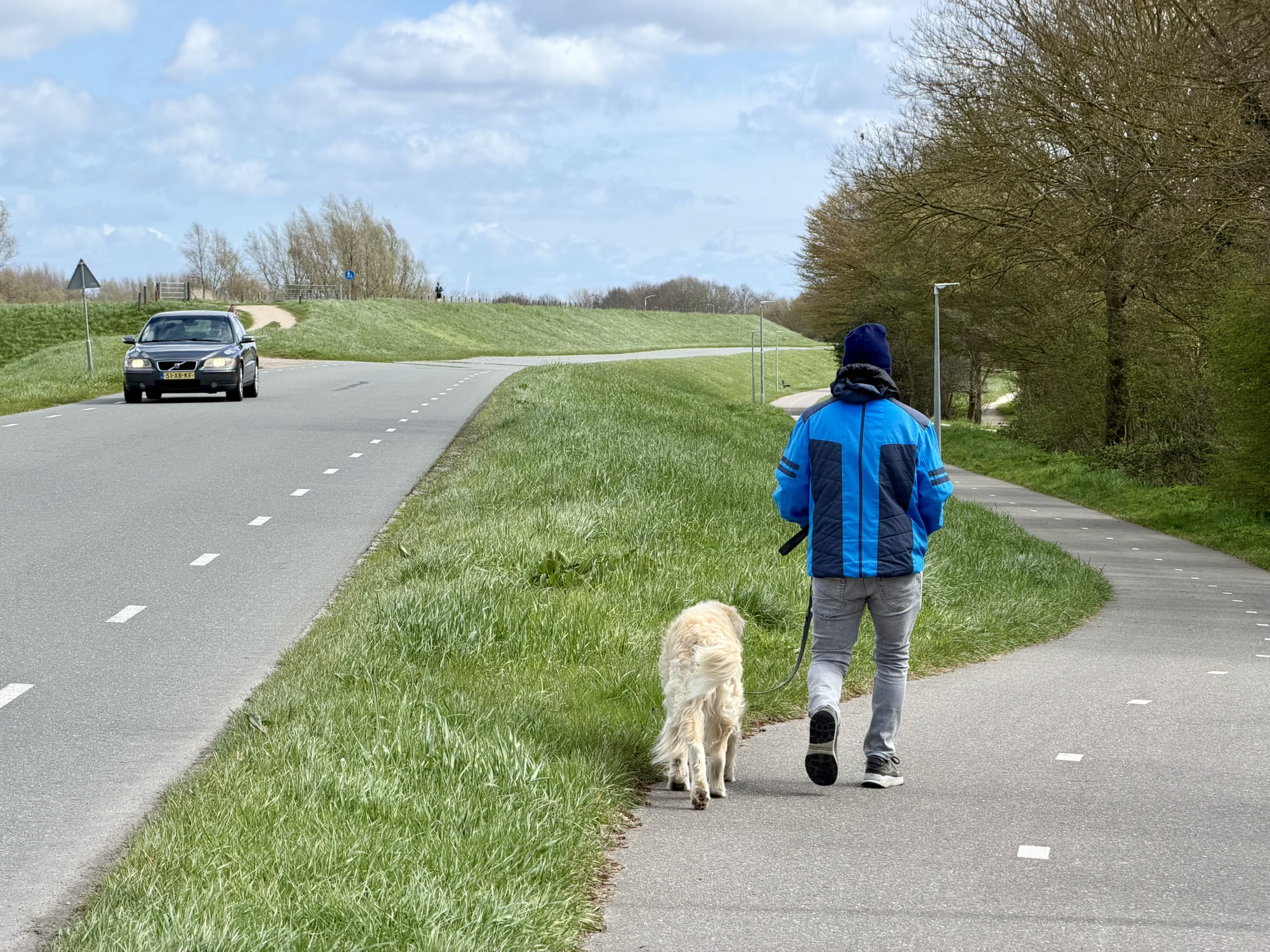
In many places, the bidirectional bike lanes are only slightly narrower than the bidirectional car lanes.
Here you can choose from the bike path on the embankment, or the advisory bike lanes below.
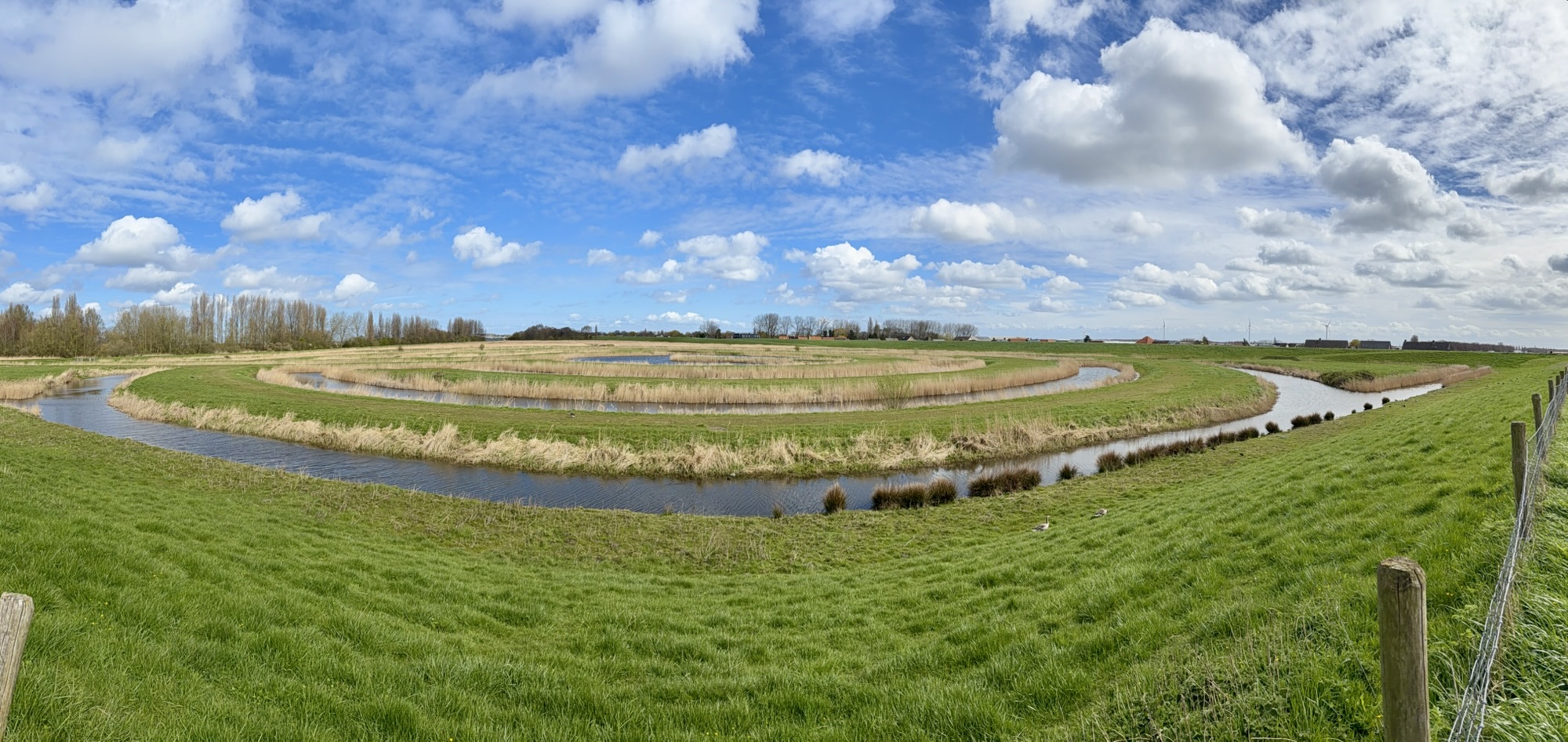
The Koopmanspolder near Andijk, is a testing ground for water management and is laid out in concentric circles.
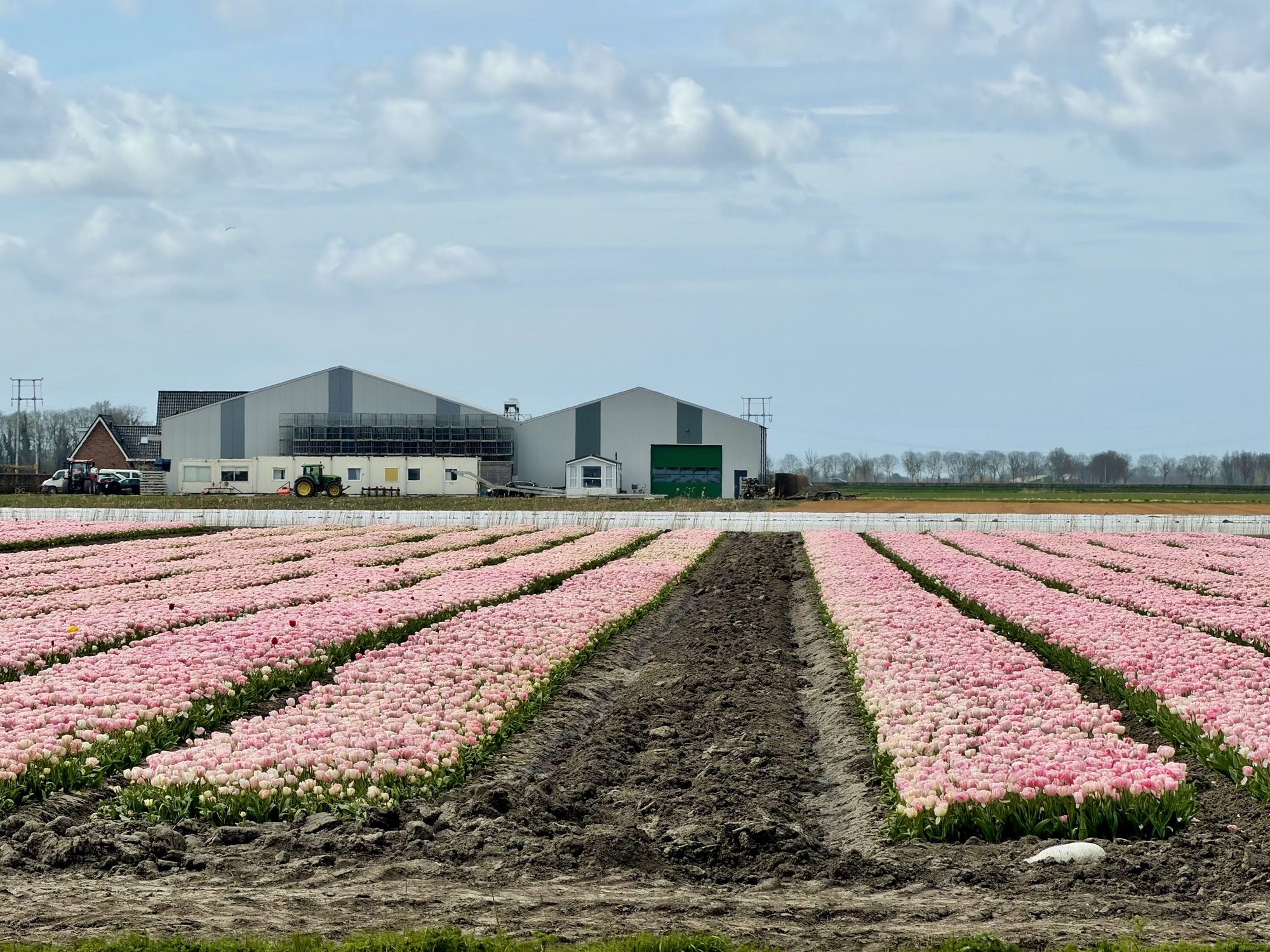
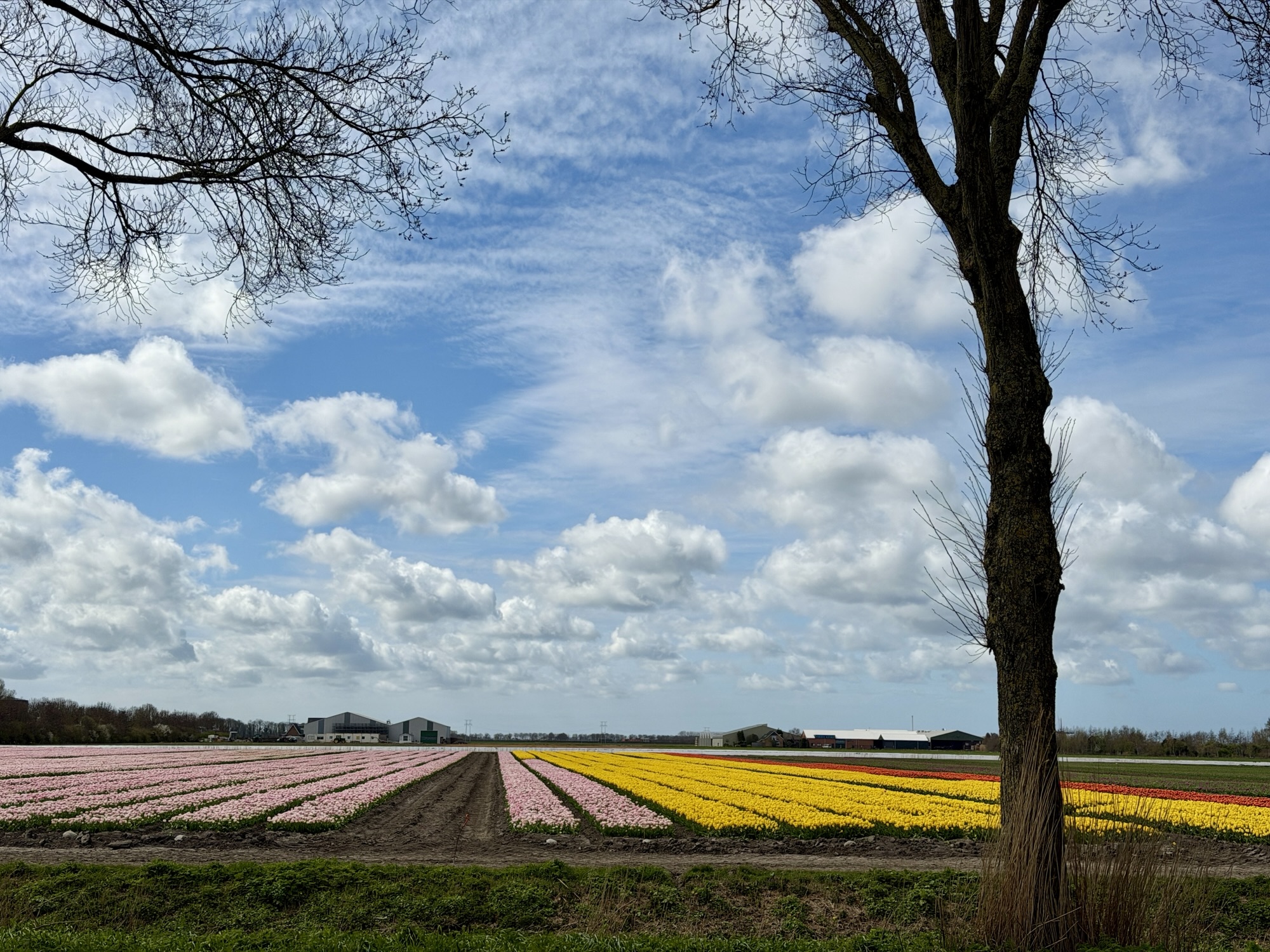
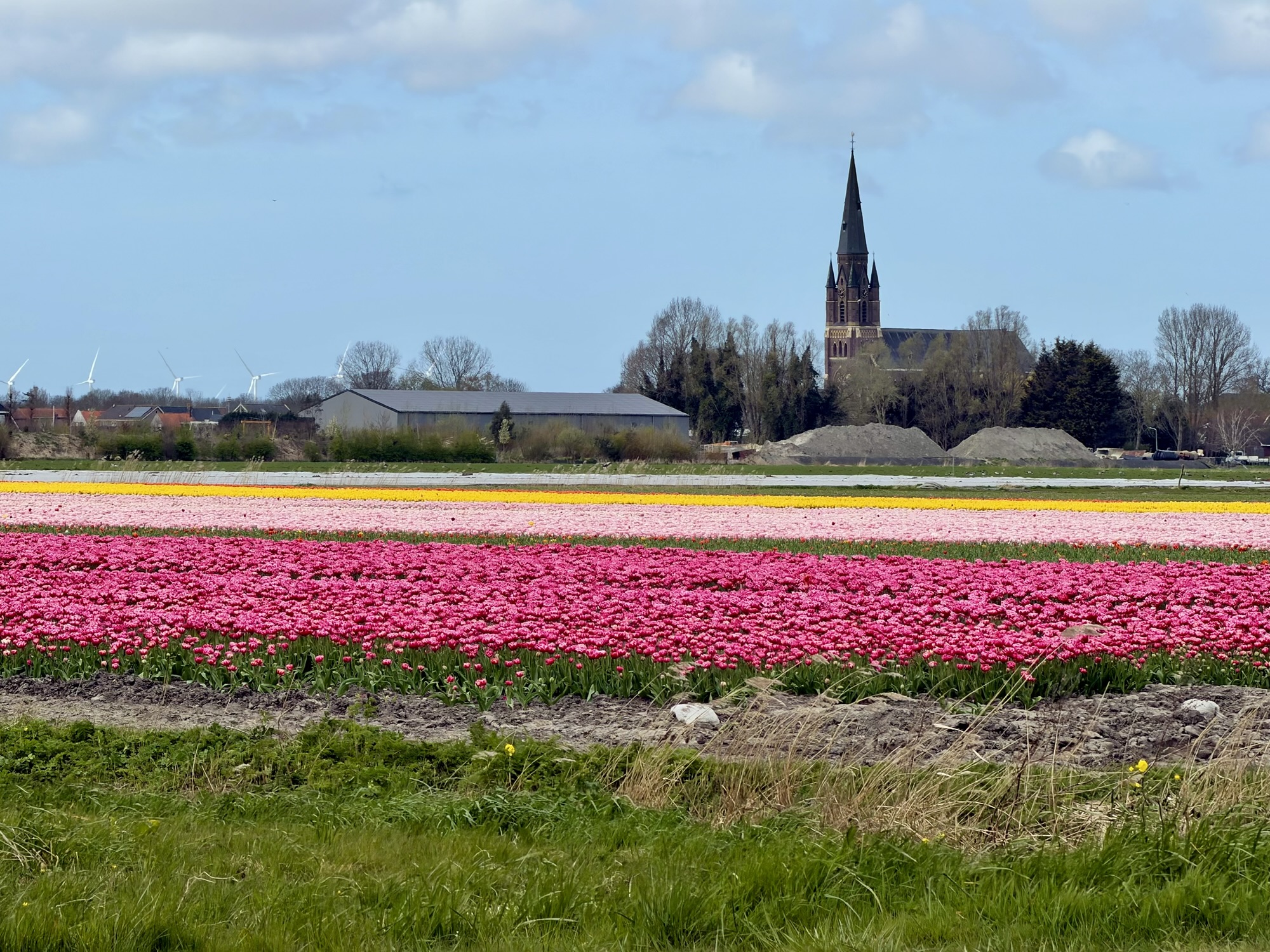
These were the most extensive tulip fields I saw all day.
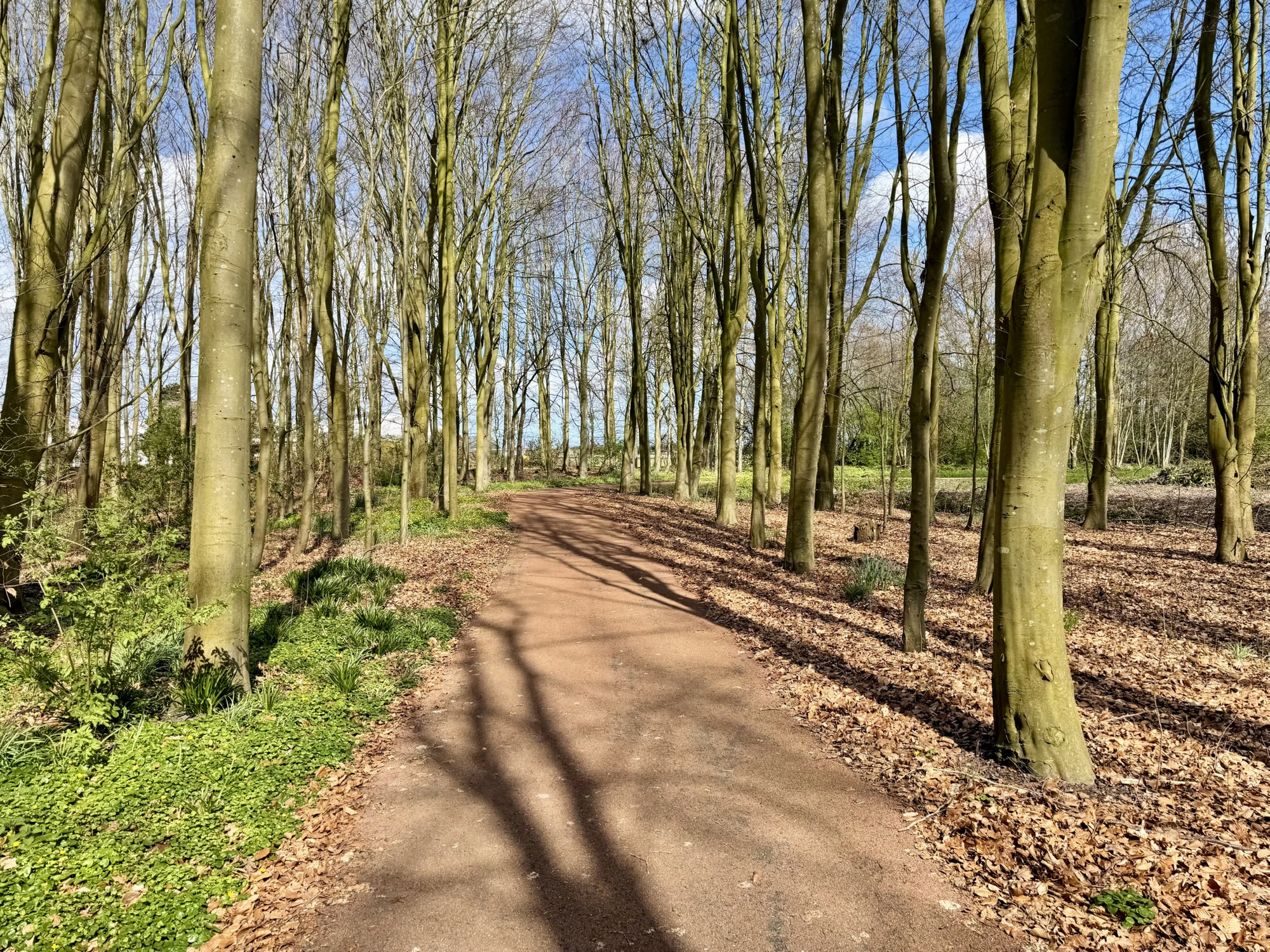
We had a few kilometres through a treed area.
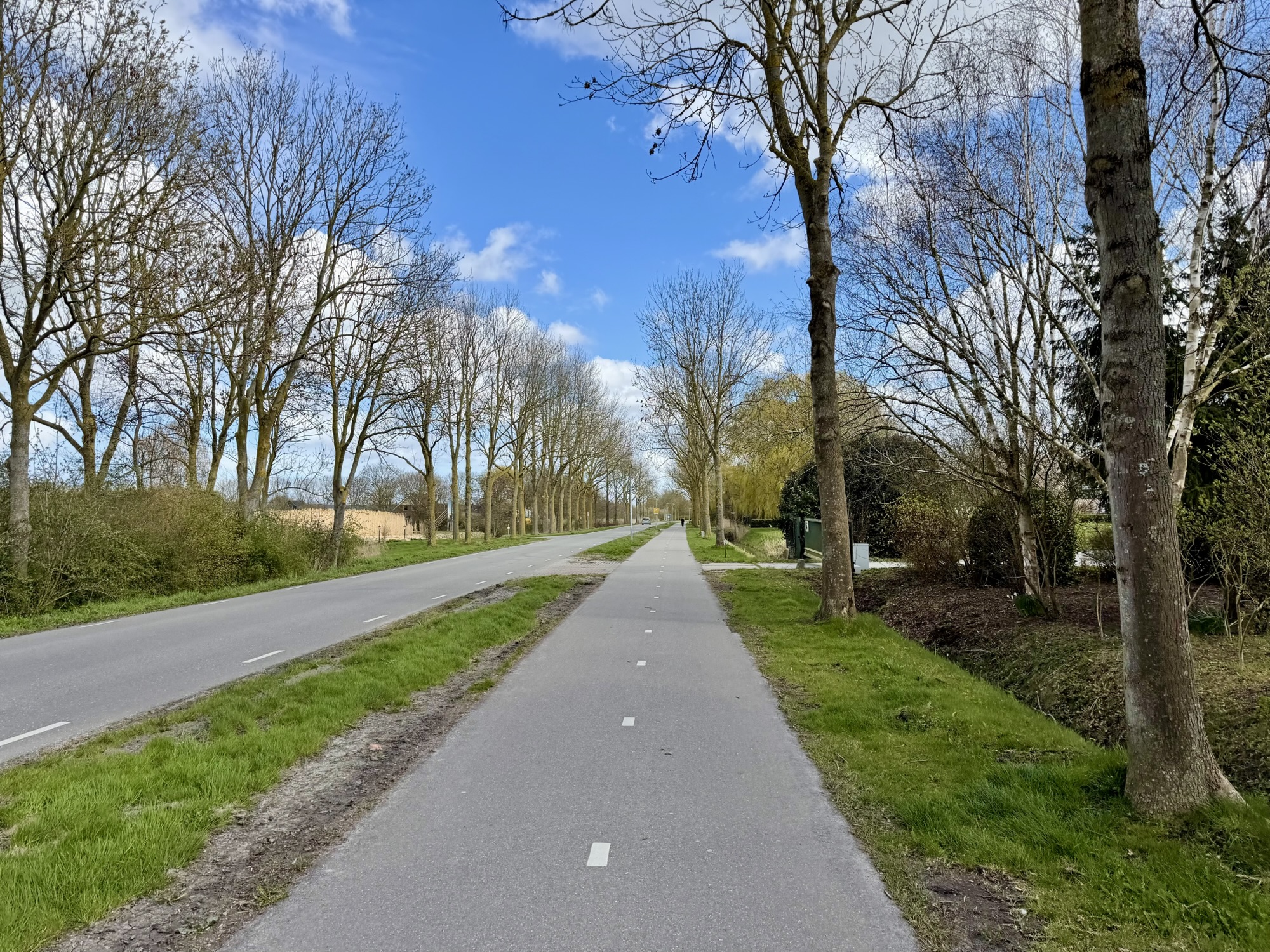
This is another spot where you can see that the bike lanes are almost as wide as the road.
I was getting pretty tired as I entered Enkhuizen. Here are a few of the things that I saw.
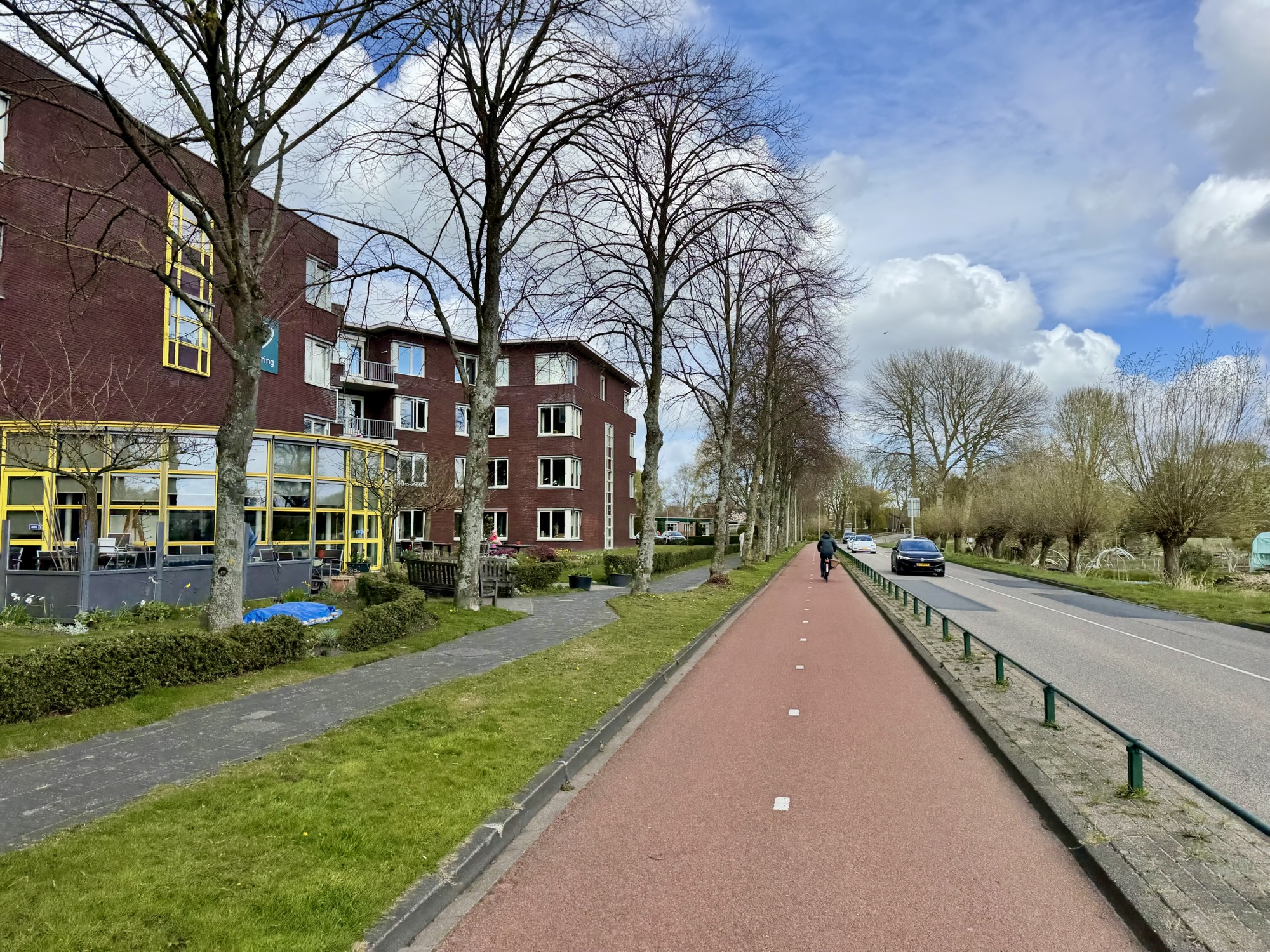
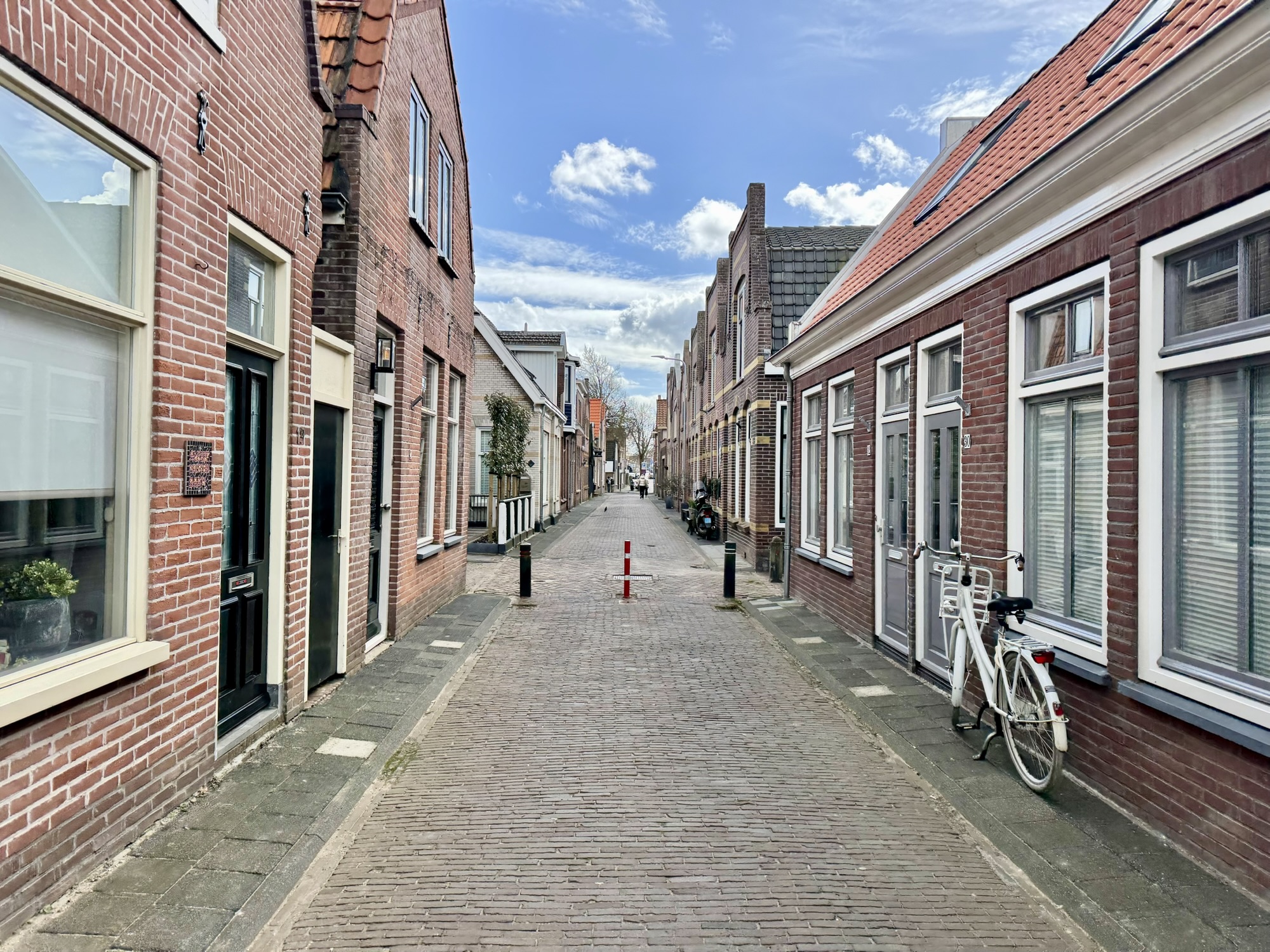
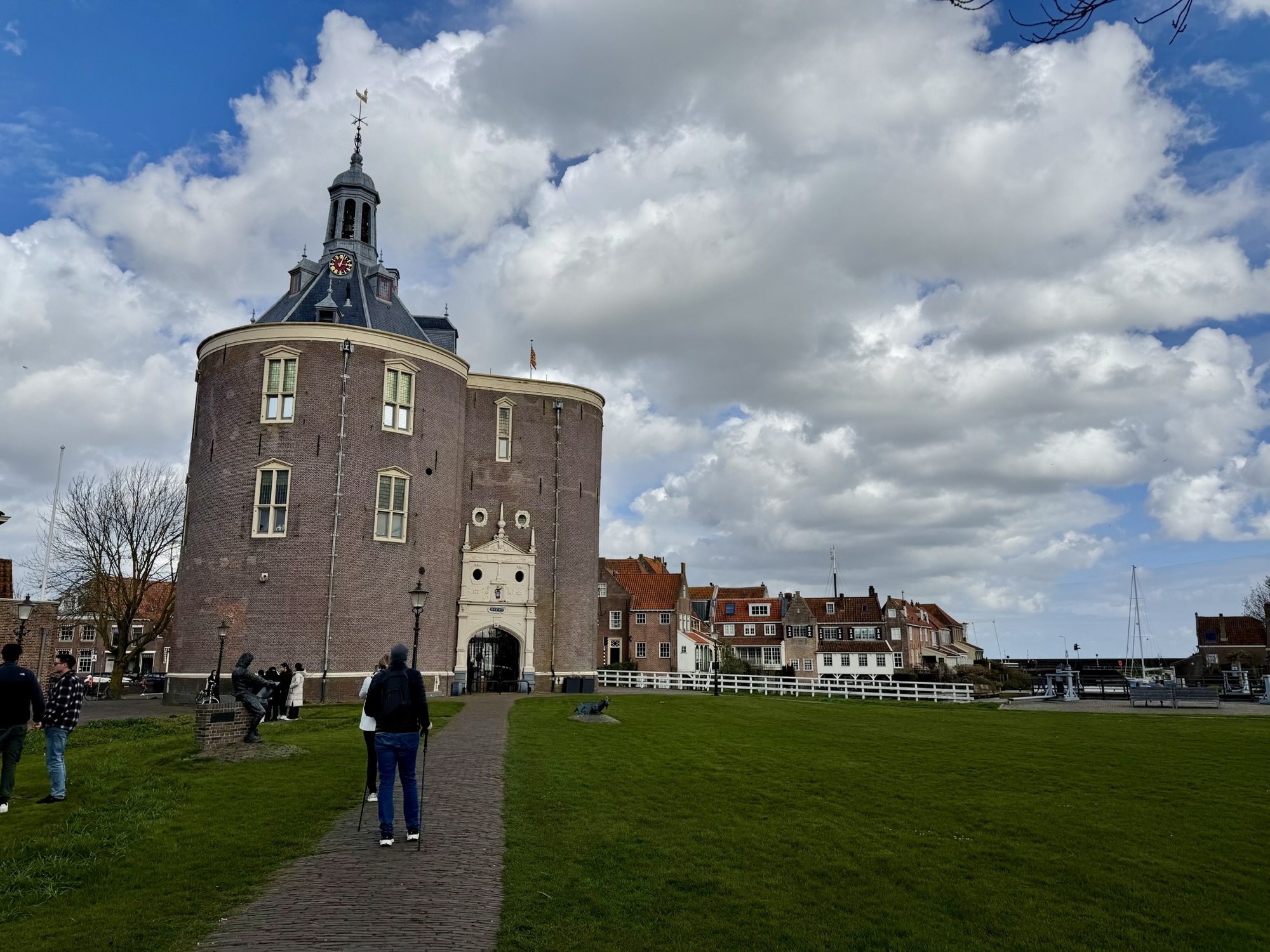
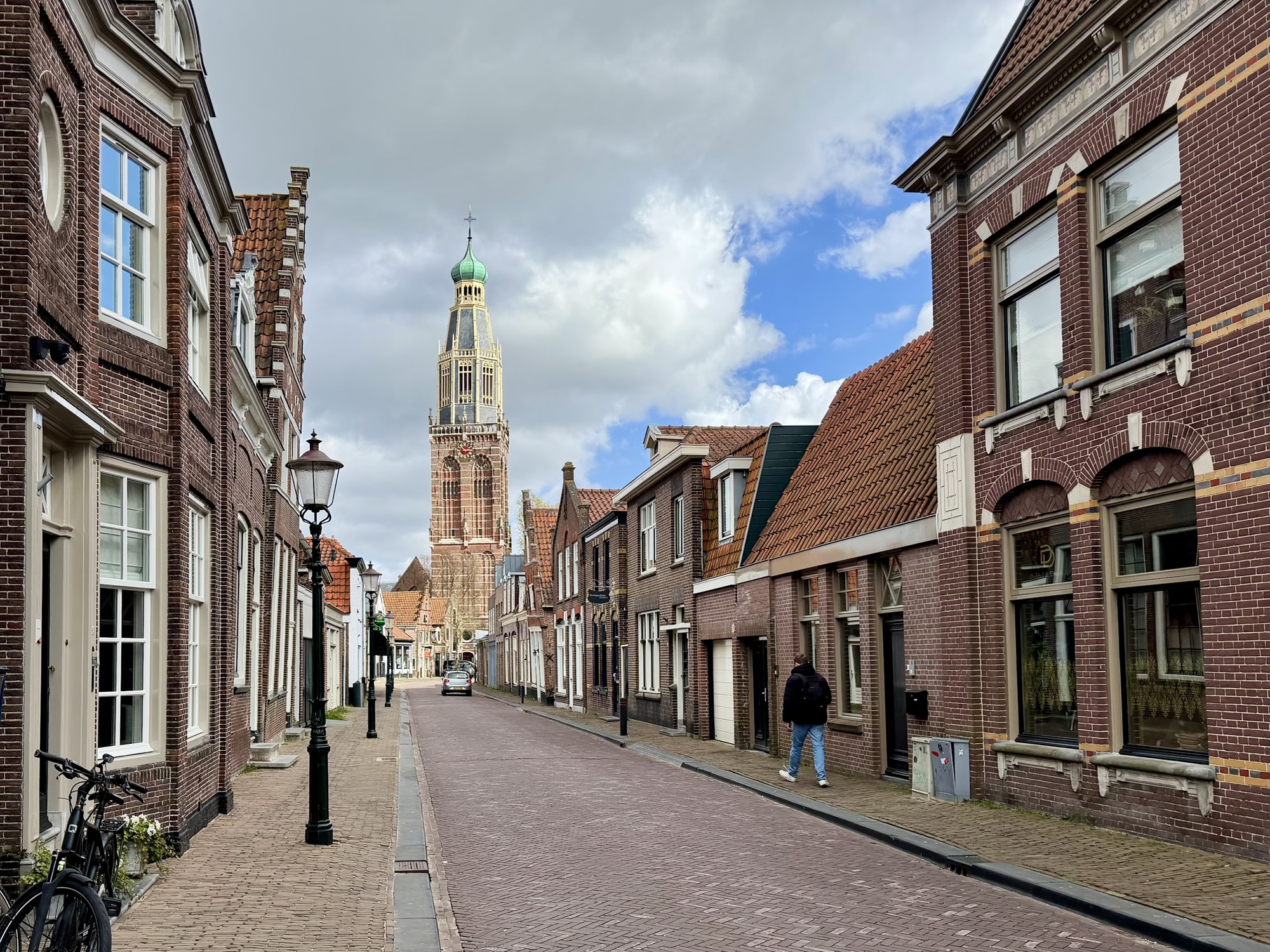
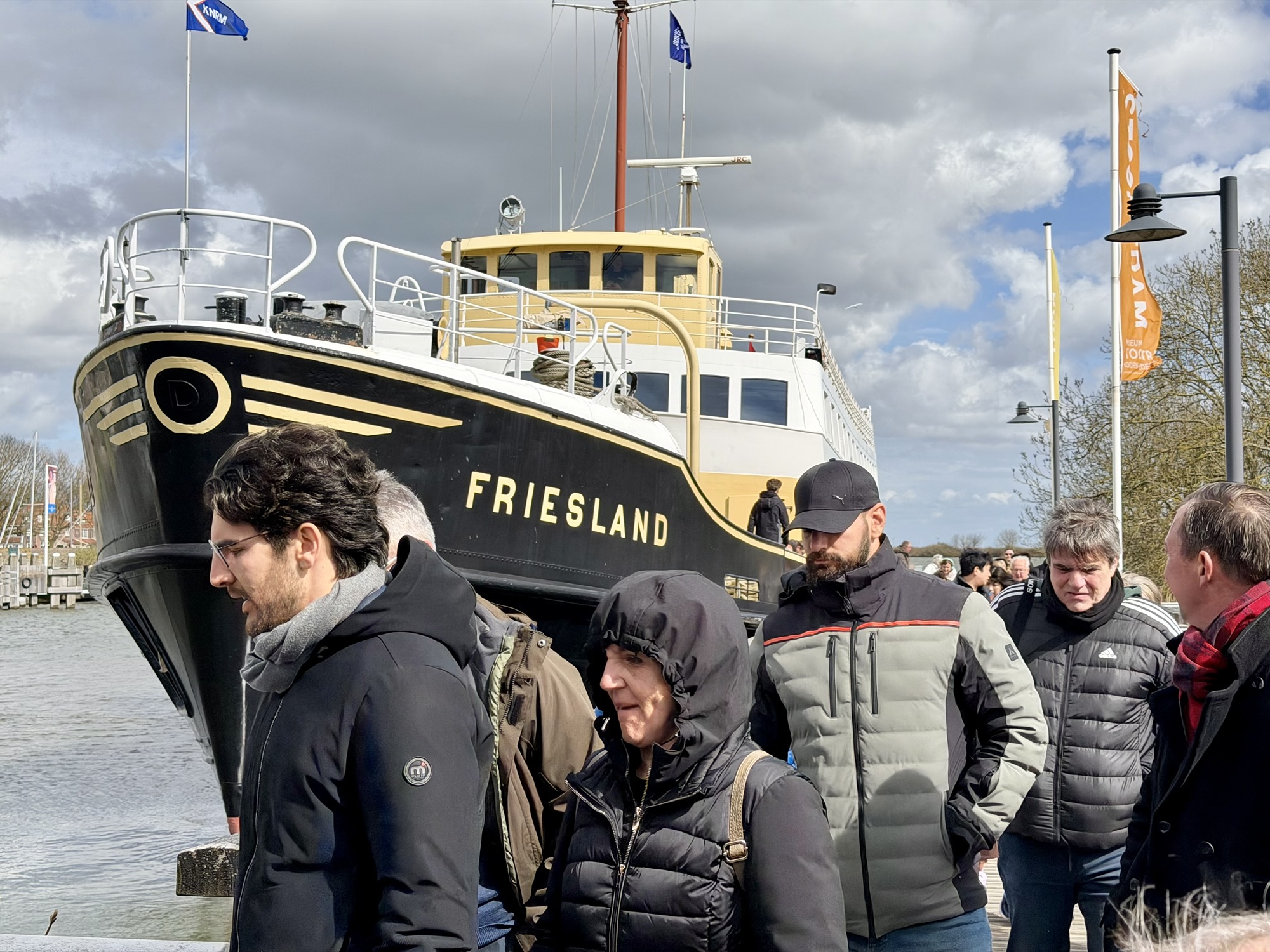
The day excursion ship I saw at lunch was just docking as I arrived by bike.
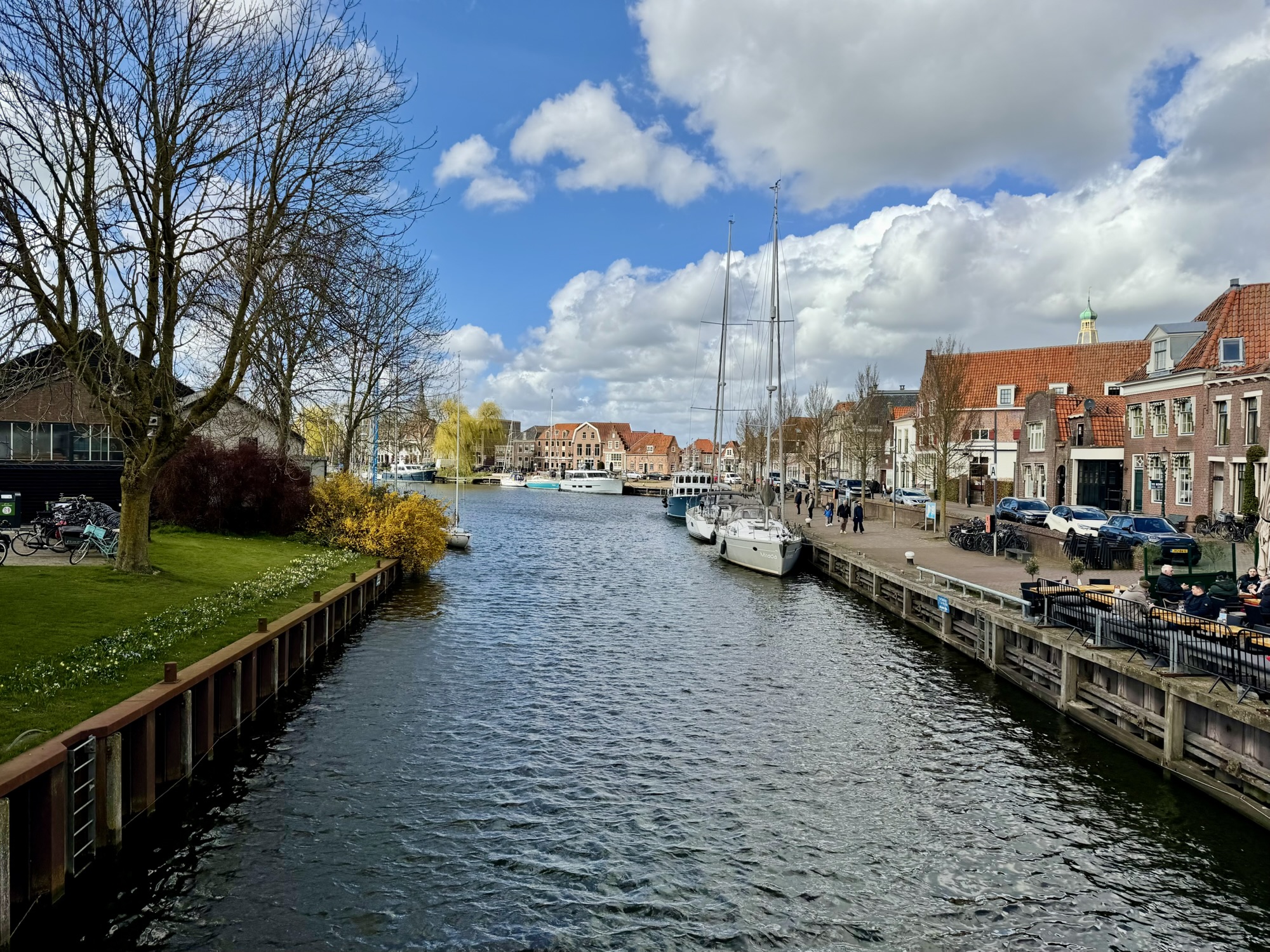
I crossed this canal along the way to the docks. The Ride with GPS file provided to us by the tour company led me right down to the docks, but I couldn’t find our ship. They have established a WhatsApp group for questions so I asked where the ship was and Simone immediately dropped a pin showing that they were just over a kilometre away and what the route was. I used Google maps to get back to the ship.
I sat down and started reviewing my photos and found that about 80% of them were out of focus. I’ve never experienced this before, and I attributed it to the fact that I had dropped the phone this morning. I googled it and it was consistent with the lenses being damaged inside the phone. I spent time I would otherwise have been working on the blog deleting all the fuzzy pictures. I was quite upset to lose all those pictures and worried about what would happen in the days to come. I took several pictures on all the lenses and they were sharp. I decided to turn off the phone and turn it on again. At dinner, I went into the recently deleted photos to show Mark what they looked like and they were all sharp! I was overjoyed to discover that it seemed to be a software issue solved by turning the phone off and on again. Fingers crossed for the coming days.
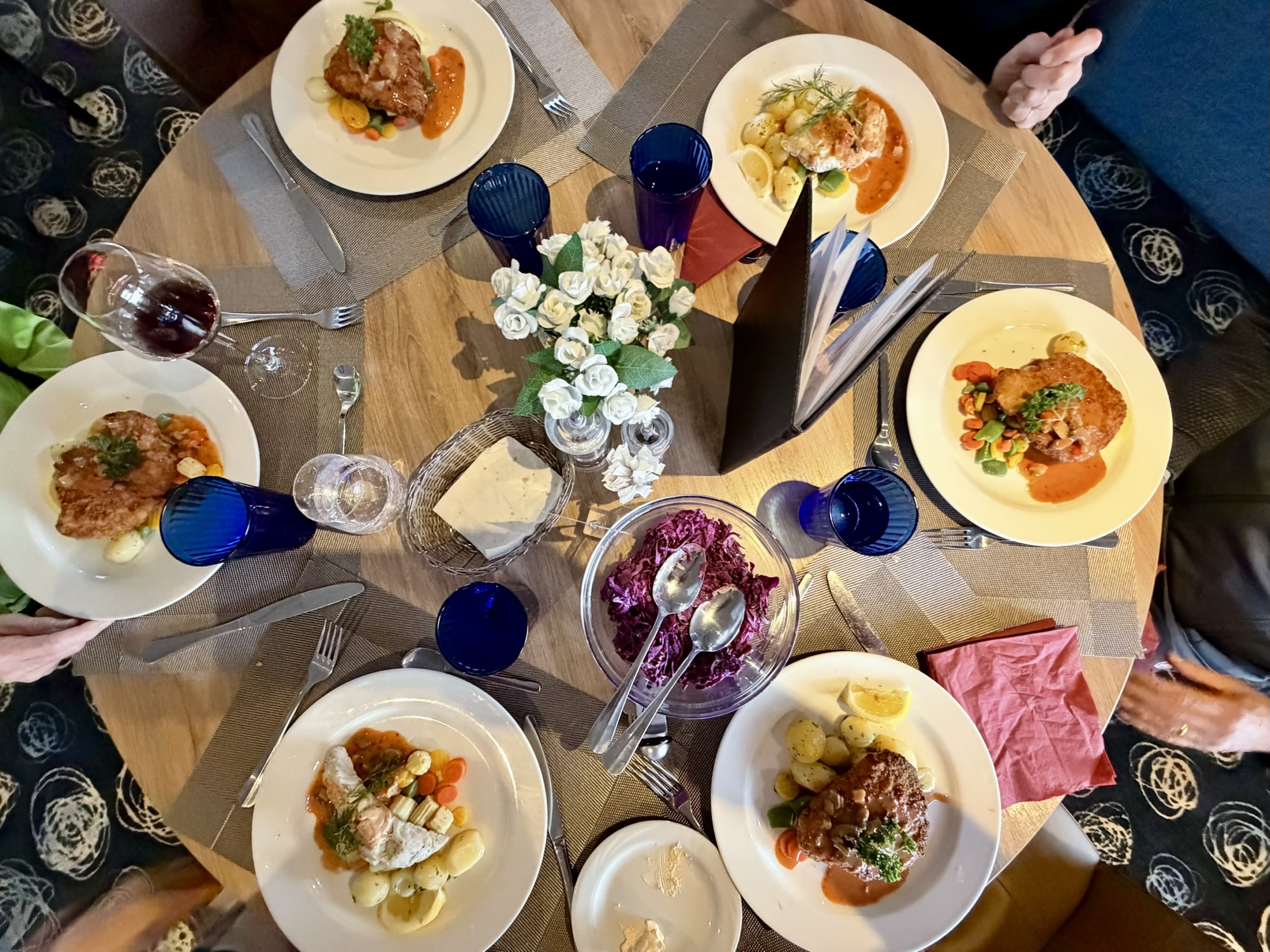
Dinner was served at six. We have been assigned tables and table mates.
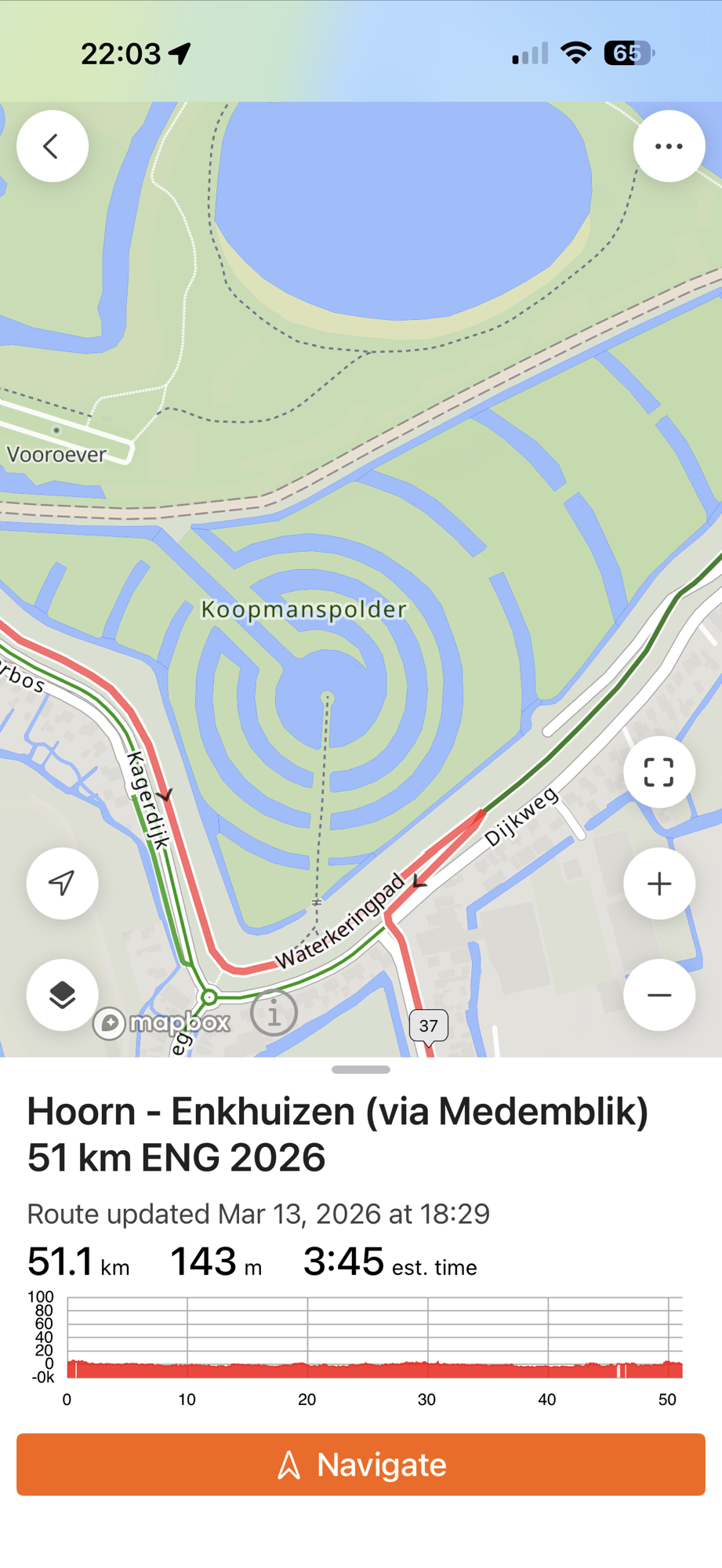
Here is a map of our route for the day. The wind was very strong, gusting to over 50 kph, but for much of the ride it was at our side or back, so it wasn’t as troublesome as I expected, when I looked at the forecast this morning.
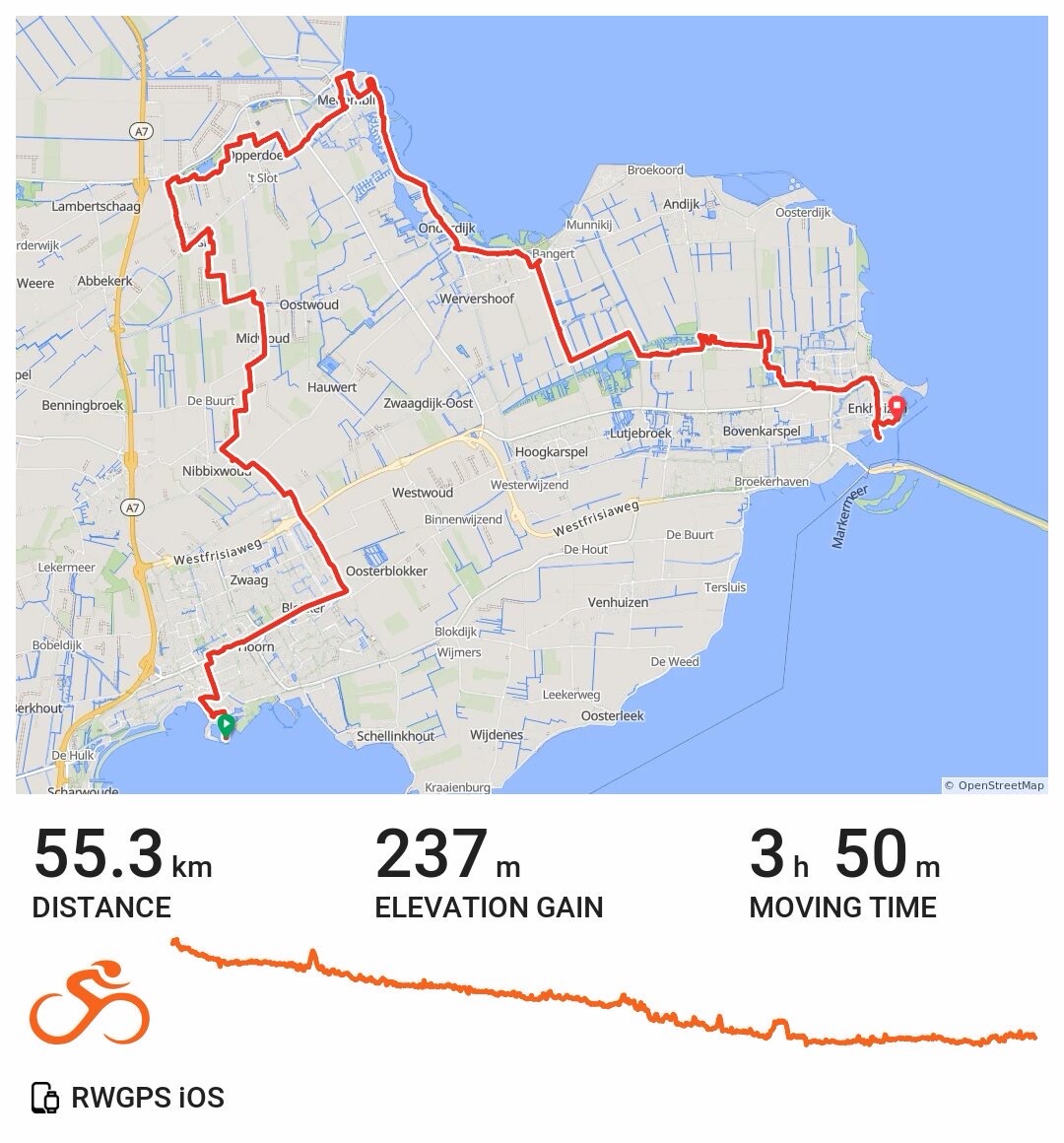
Tomorrow we sail from about 6 AM to nine and begin our ride in a different city.
Discover more from Lisa Stokes
Subscribe to get the latest posts sent to your email.
Wow, that is amazing to read your blog, so nice you are finding your ways through every aspect. Strong lady! You have a great team work with team. Everyone is great, enjoy rest of the trip and can’t wait to hear from you for more
Thanks Pragna. It is a dream vacation