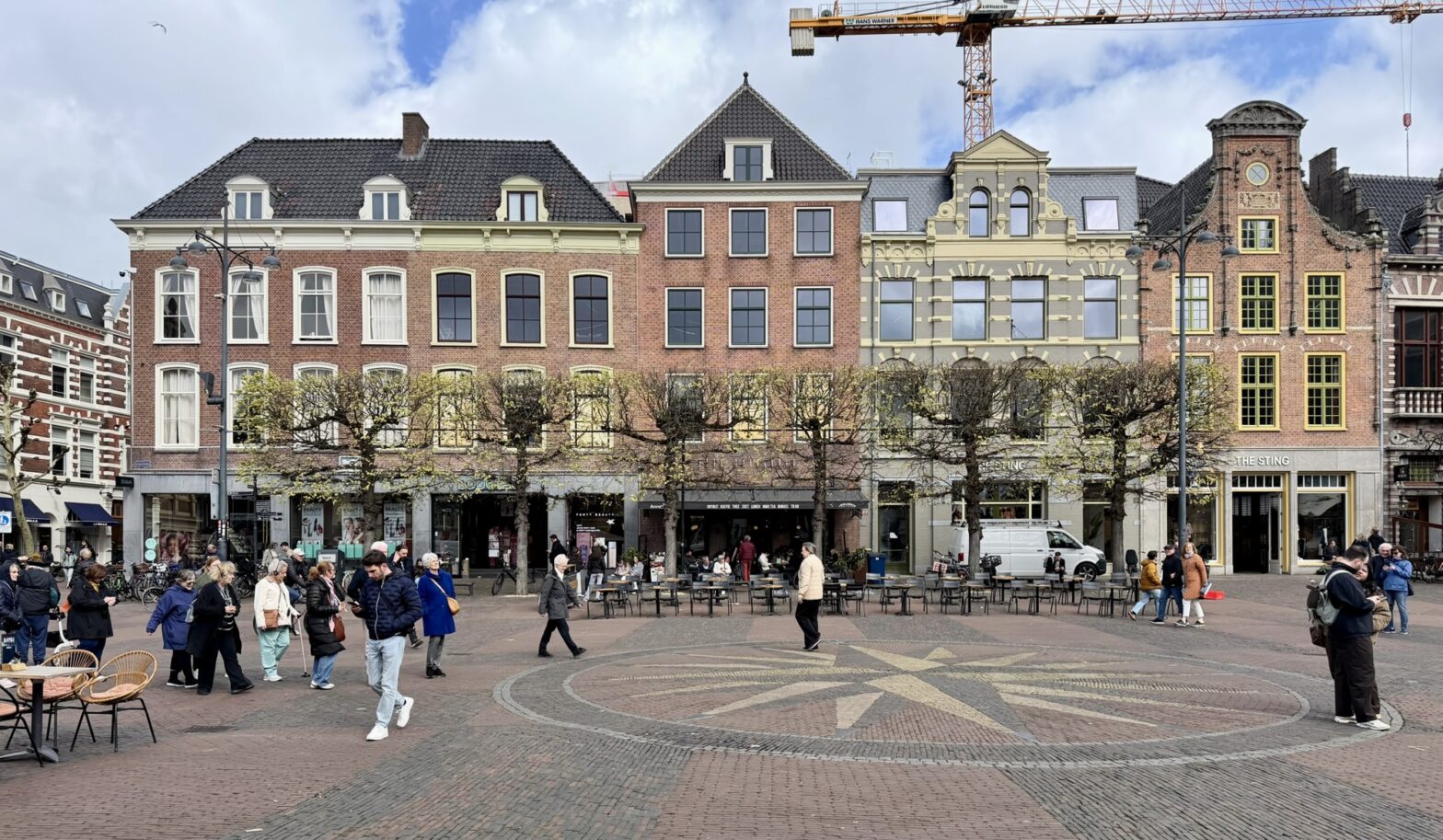
Our Canadian group of seven, who became nine with Brooke and Melanie, headed off together this morning. We were following a route David created because we wanted to go to Haarlem, but cycling the provided scenic route would have meant a 70 km round-trip and none of us felt up to that. It created complications because those who had free Ride with GPS accounts were not able to use David’s route with navigation. However, we eventually got sorted and headed out.
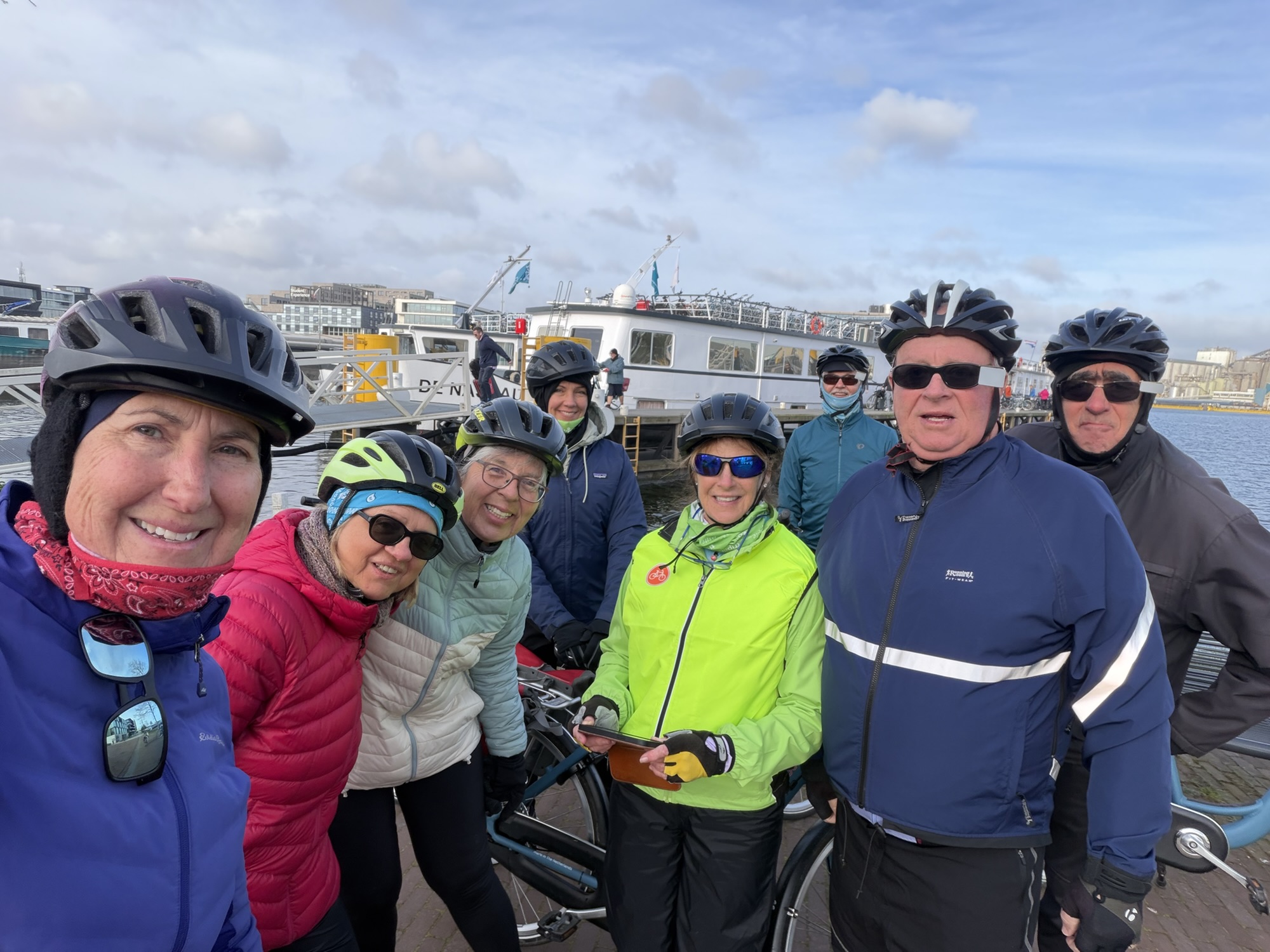
Unfortunately, within the first kilometre or so we lost Alina and Brooke. We spent a lot of time backtracking and trying to find them to no avail. We communicated with them in our WhatsApp group, but decided they must’ve ended up ahead of us and carried on. Eventually through texting, we realized they were behind us, and we waited on the bike path just across from Teleport Hotel, where we stayed last week. There was a memorial at this spot. The information sign read:
On December 15, 1944, three men were shot dead on the tram tracks of the Haarlemmerweg. Matthijs ‘Pa’ Verkuijl (1895) was a manager at the Veevita grass drying plant in Badhoevedorp. He helped people in hiding, arranged the storage of food and weapons, and was locally known as the ‘soul of the resistance’. His son Henk (1922) punctured tires of German vehicles and was involved in arms smuggling for the resistance. Police detective Pieter Elias (1907), as a member of the Amsterdam Commando Group, spied on the Sicherheitspolizei to warn other resistance fighters of impending arrests and unmasked traitors. The three men, who committed many more acts of resistance, were arrested in November 1944 following betrayal. Placed on the list of Todeskandidaten (candidates for execution), they were ultimately executed by the occupying forces here at this spot as retaliation and left in a mass grave in the dunes of Overveen. After the war, Pieter Elias, Matthijs Verkuijl, and Henk Verkuijl were given a final resting place at the Honorary Cemetery in Bloemendaal.
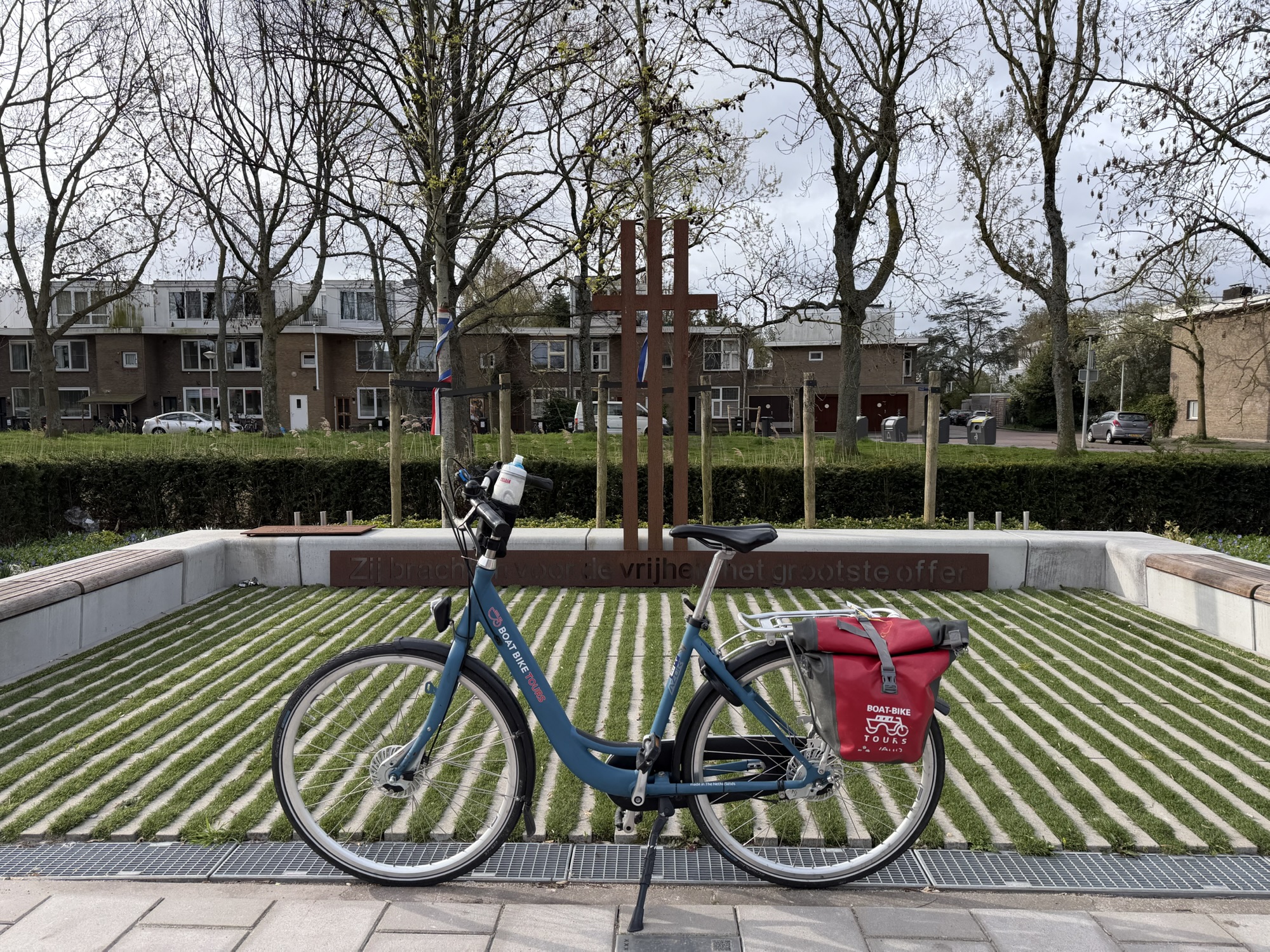
This windmill dates back to 1632. It is mind-boggling to me that it’s still standing, and still works, especially since it is made out of wood.
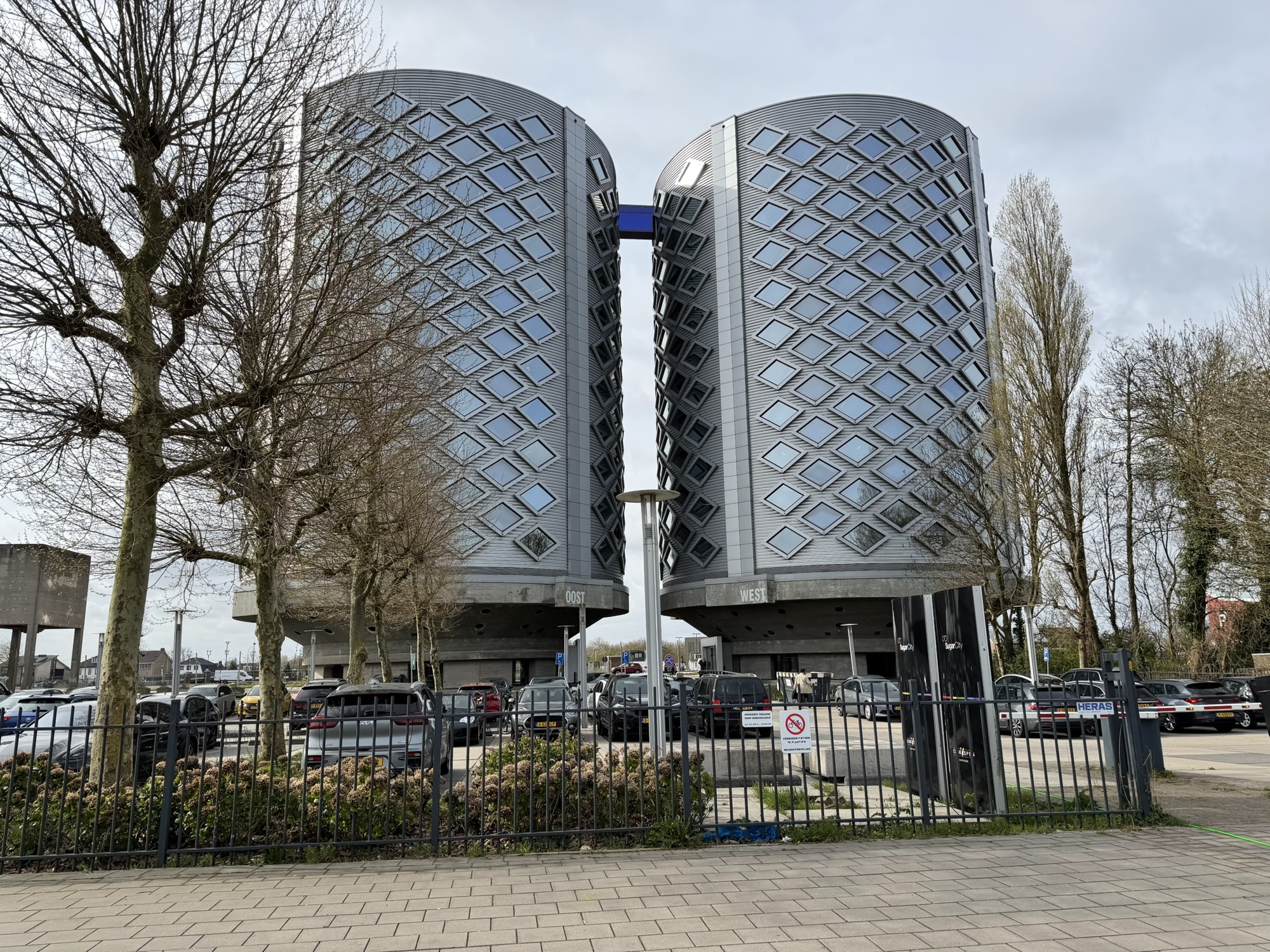
I saw these interesting buildings near a sugar refinery.
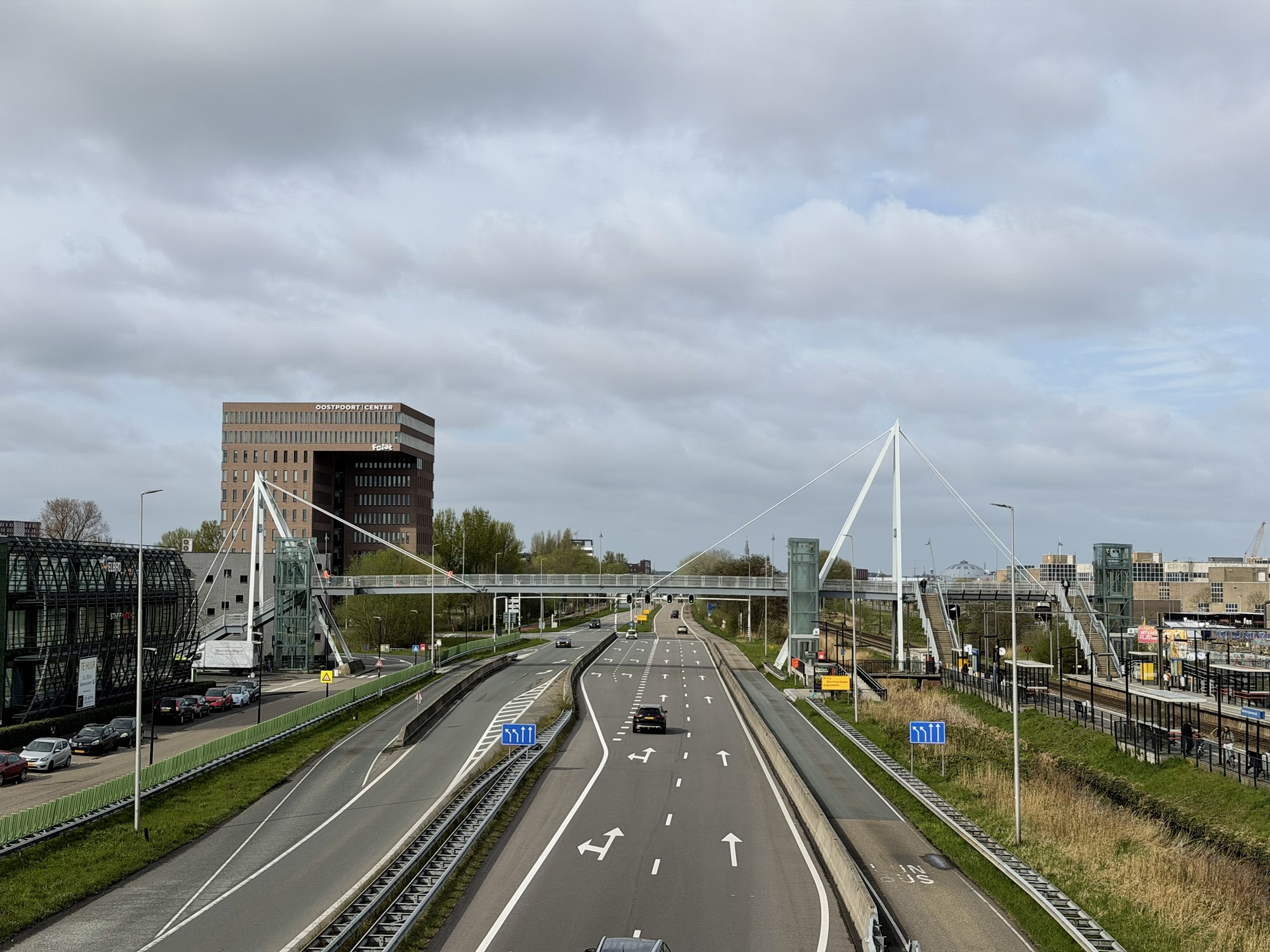
Cycling and regional rail is very well integrated in the Netherlands. Our ride was 20 km long, but we passed several regional rail stations. Each station had bike parking and pedestrian/cyling infrastructure across the highway.
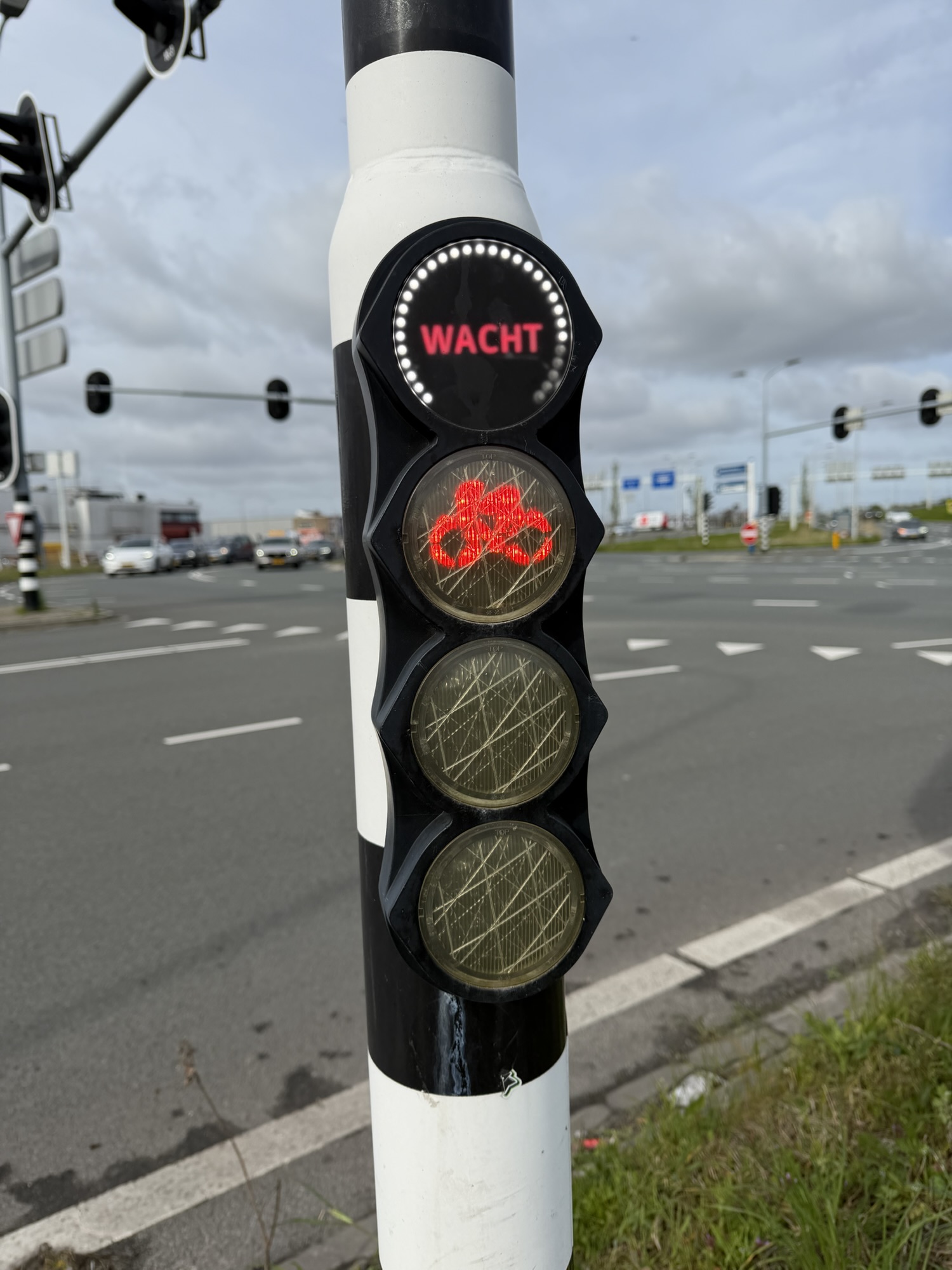
I like these countdown lights. If you watch the white dots around the word Wacht they will disappear as you wait, and when there are no dots left, the light turns green.
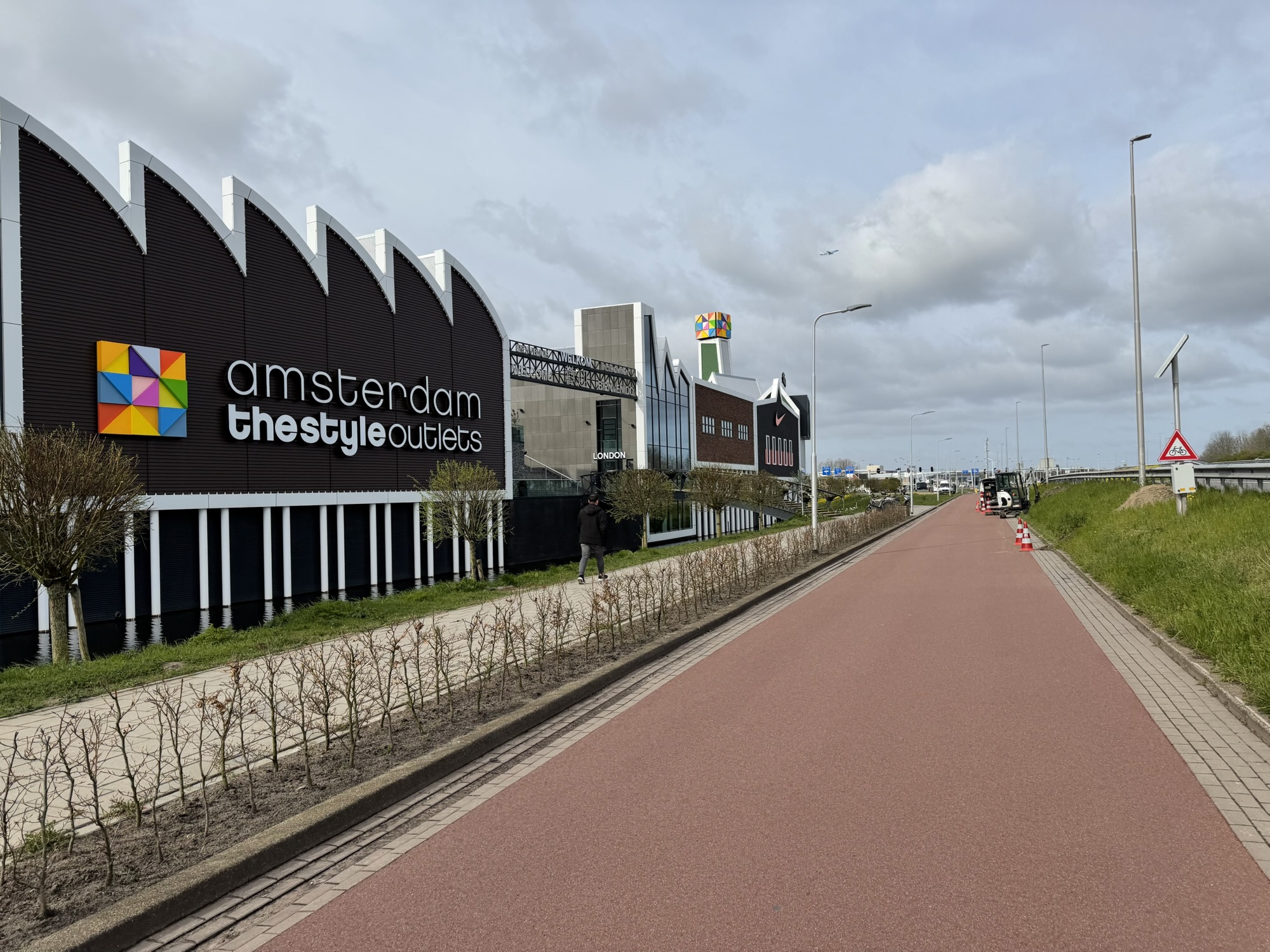
We passed an Outlet Mall about halfway between Amsterdam and Haarlem. The town that is halfway between the two cities is called. Halfweg, which means halfway.
As we cycled into Haarlem, the radio tower caught my eye. It is 126 m tall communications tower, built in 1972, which serves a critical hub for telecommunications, data, and radio transmission. It also features secure data centre facilities. We saw a very similar tower in Zaandam.
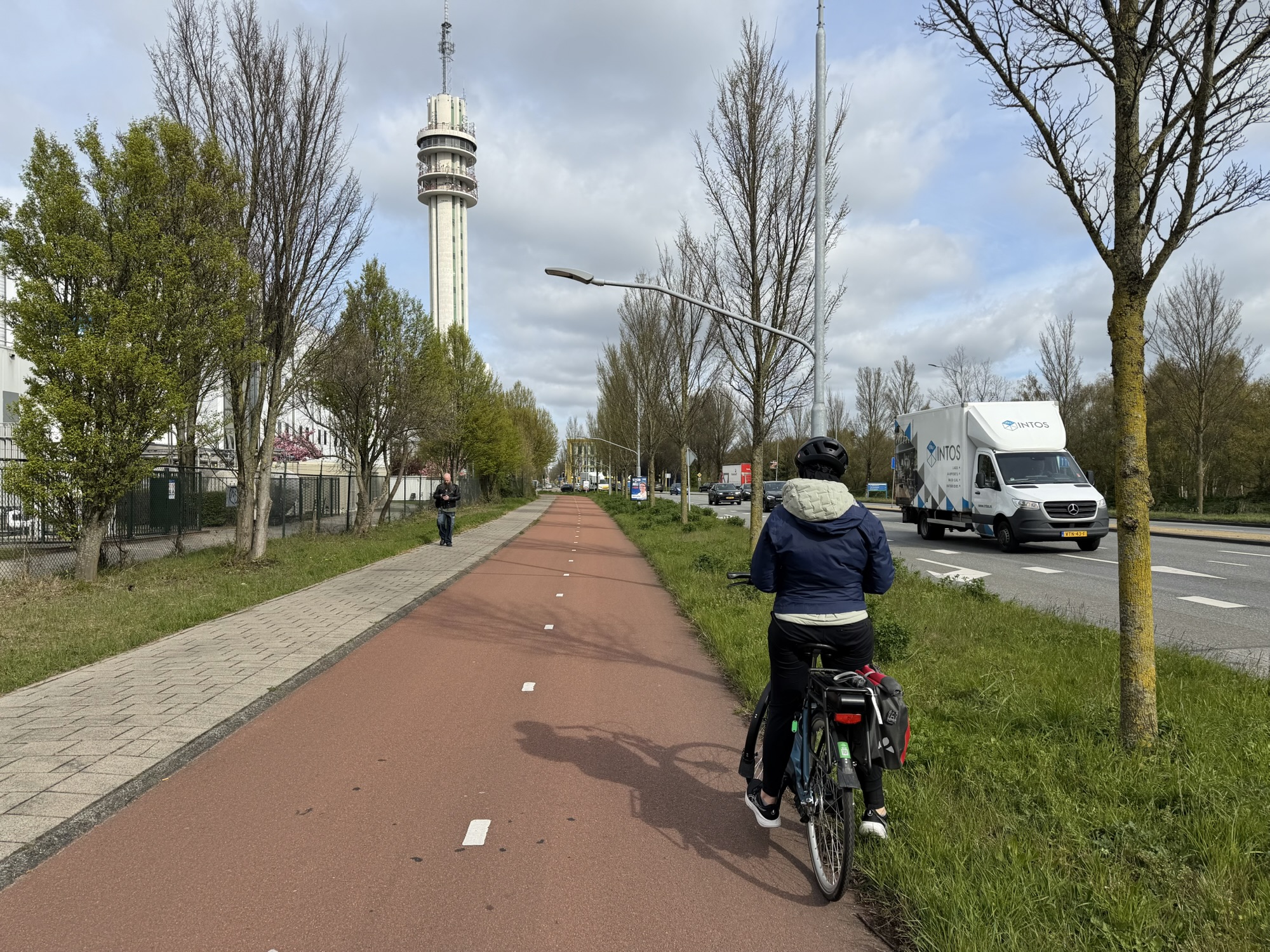
Haarlem is a beautiful city with many old buildings. Our original itinerary had us docking in Haarlem for two nights. Unfortunately that changed and this meant we only had a couple hours in Haarlem before riding back to the barge.
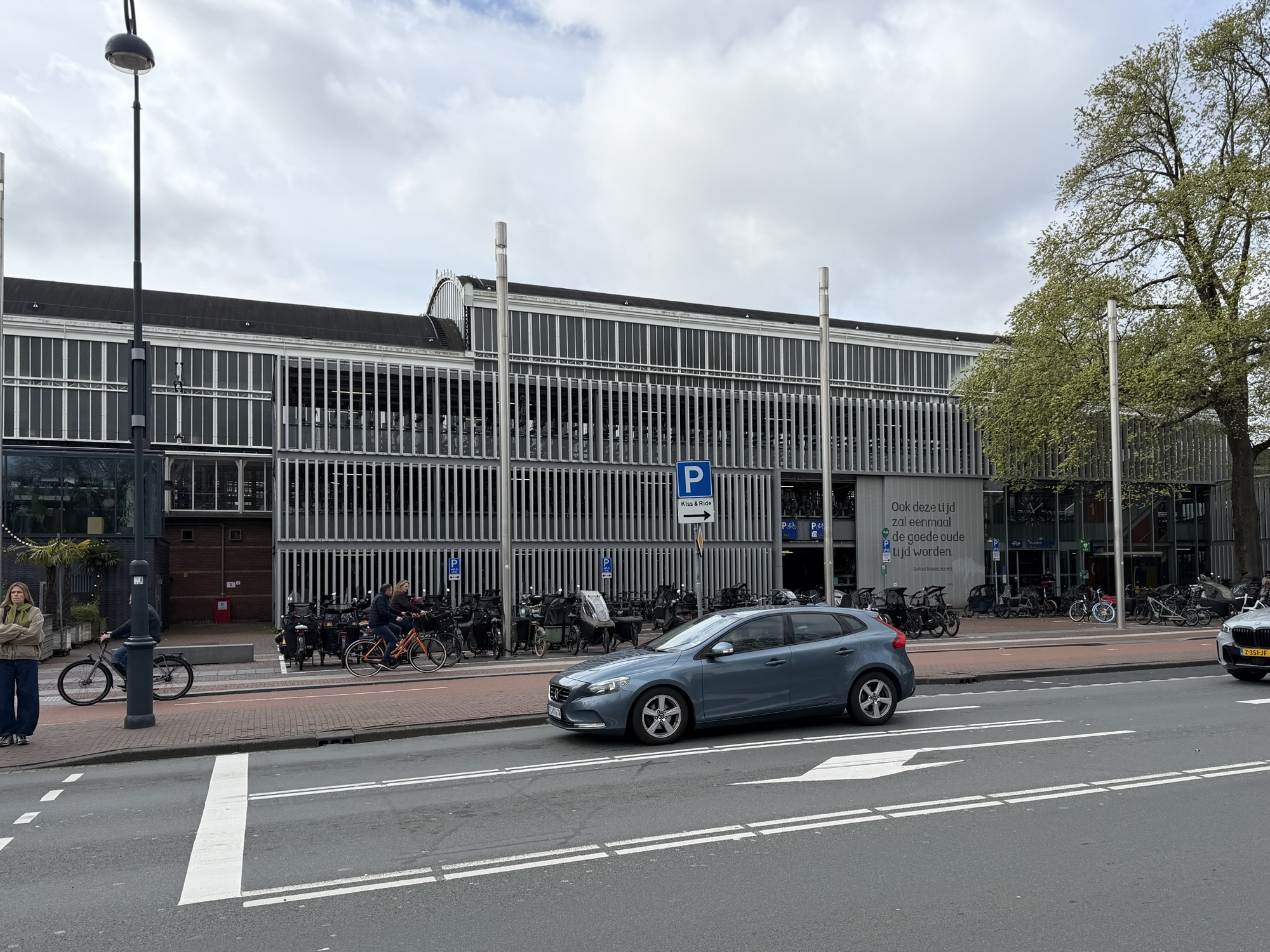
This is the train station in Haarlem. You can see the massive amount of indoor bike parking through the screen, which overflows into racks on the sidewalk.
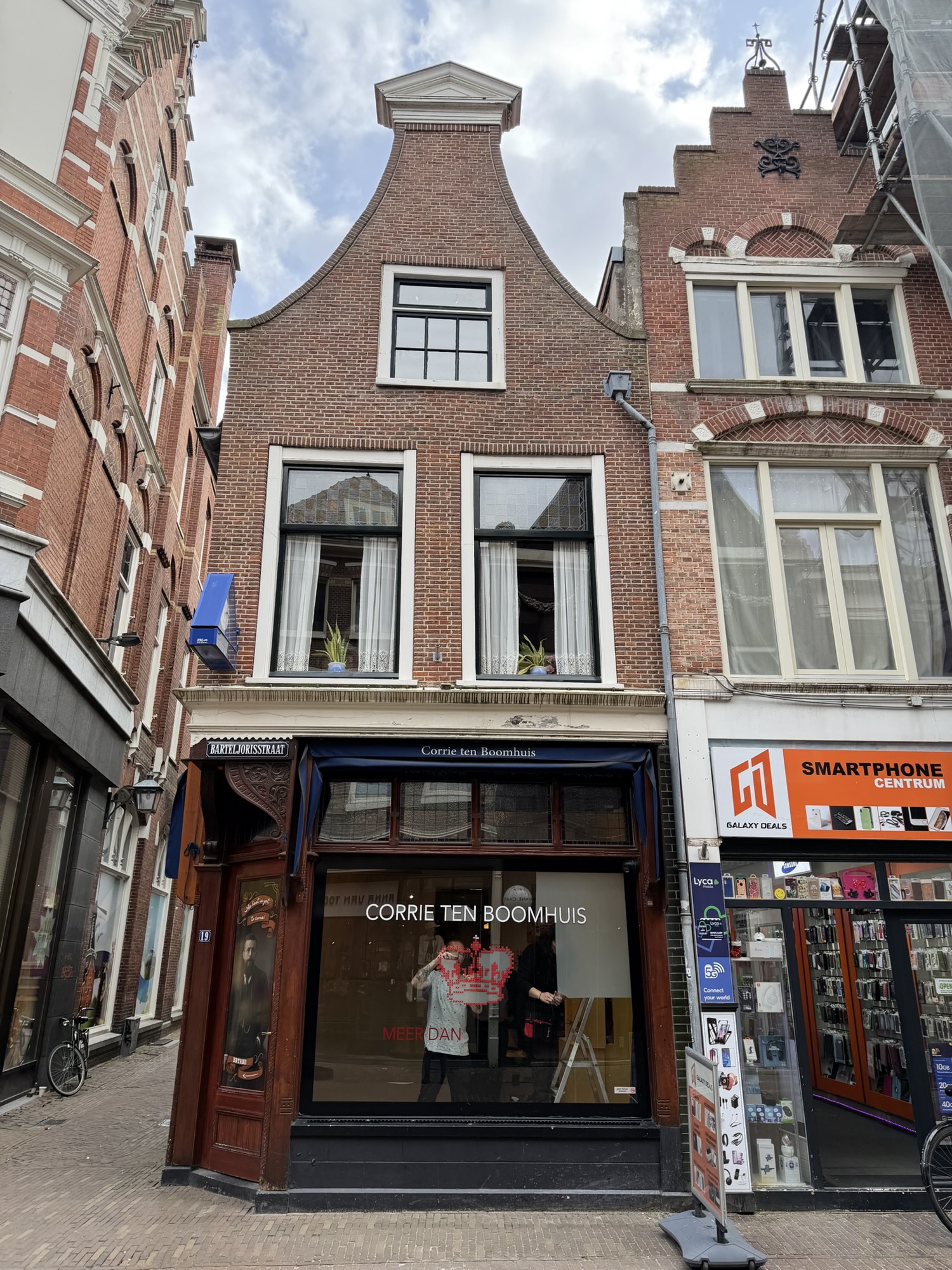
This is the Corrie Ten Boom house. From the Wikipedia summary for Corrie Ten Boom: Cornelia Arnolda Johanna “Corrie” ten Boom (15 April 1892[1] – 15 April 1983) was a Dutch watchmaker and later a Christian writer and public speaker, who worked with her father, Casper ten Boom, her sister Betsie ten Boom and other family members to help many Jewish people escape from the Nazis during the Holocaust in World War II by hiding them in her home. They were caught, and she was arrested and sent to the Ravensbrück concentration camp. Her most famous book, The Hiding Place, is a biography that recounts the story of her family’s efforts and how she found and shared hope in God while she was imprisoned at the concentration camp.
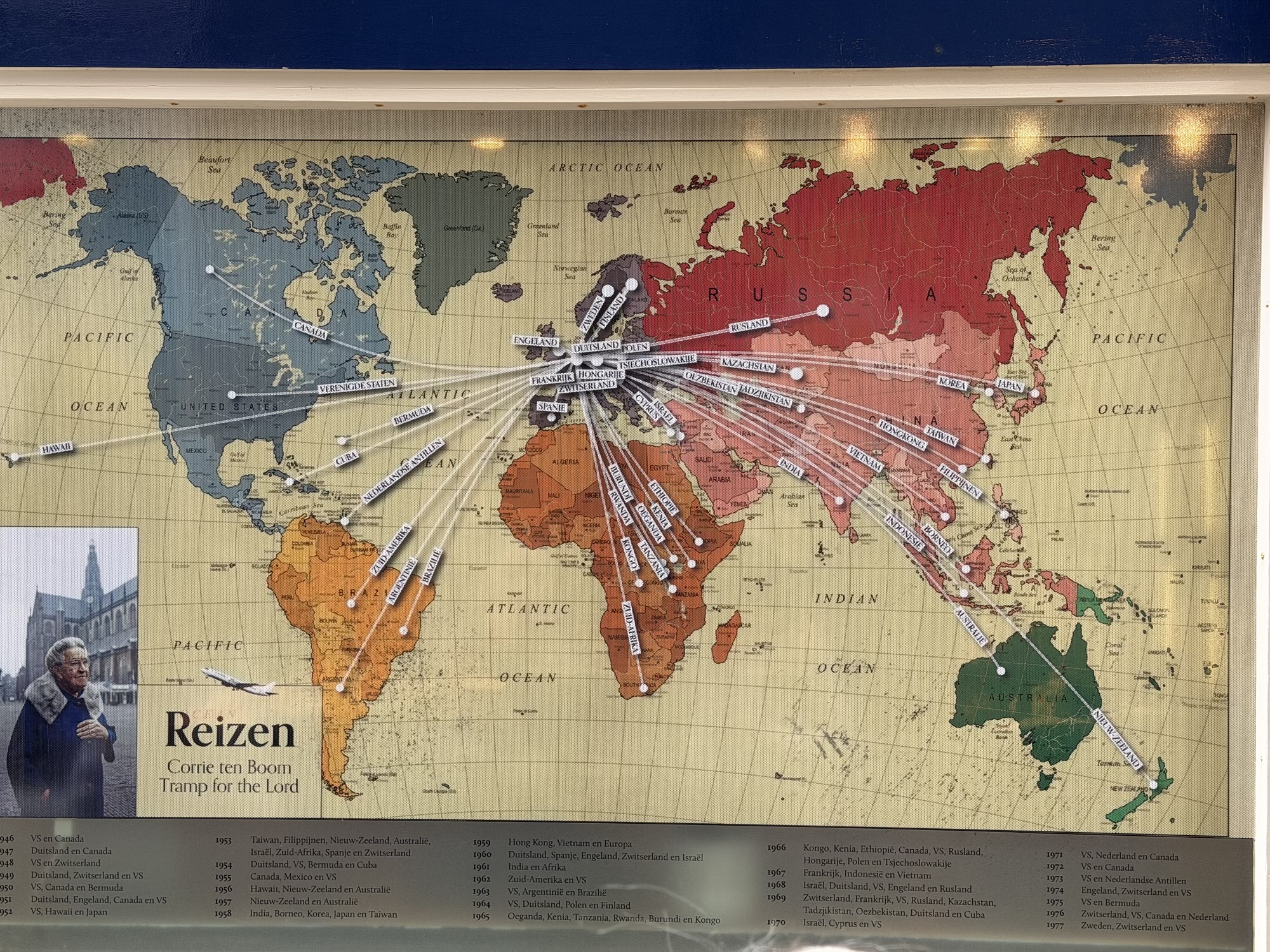
This map shows all the places that she visited after the Second World War. She began to minister worldwide and travel widely visiting those she felt were suffering and who were in need of leading to the Lord in places as diverse as Africa and Germany.
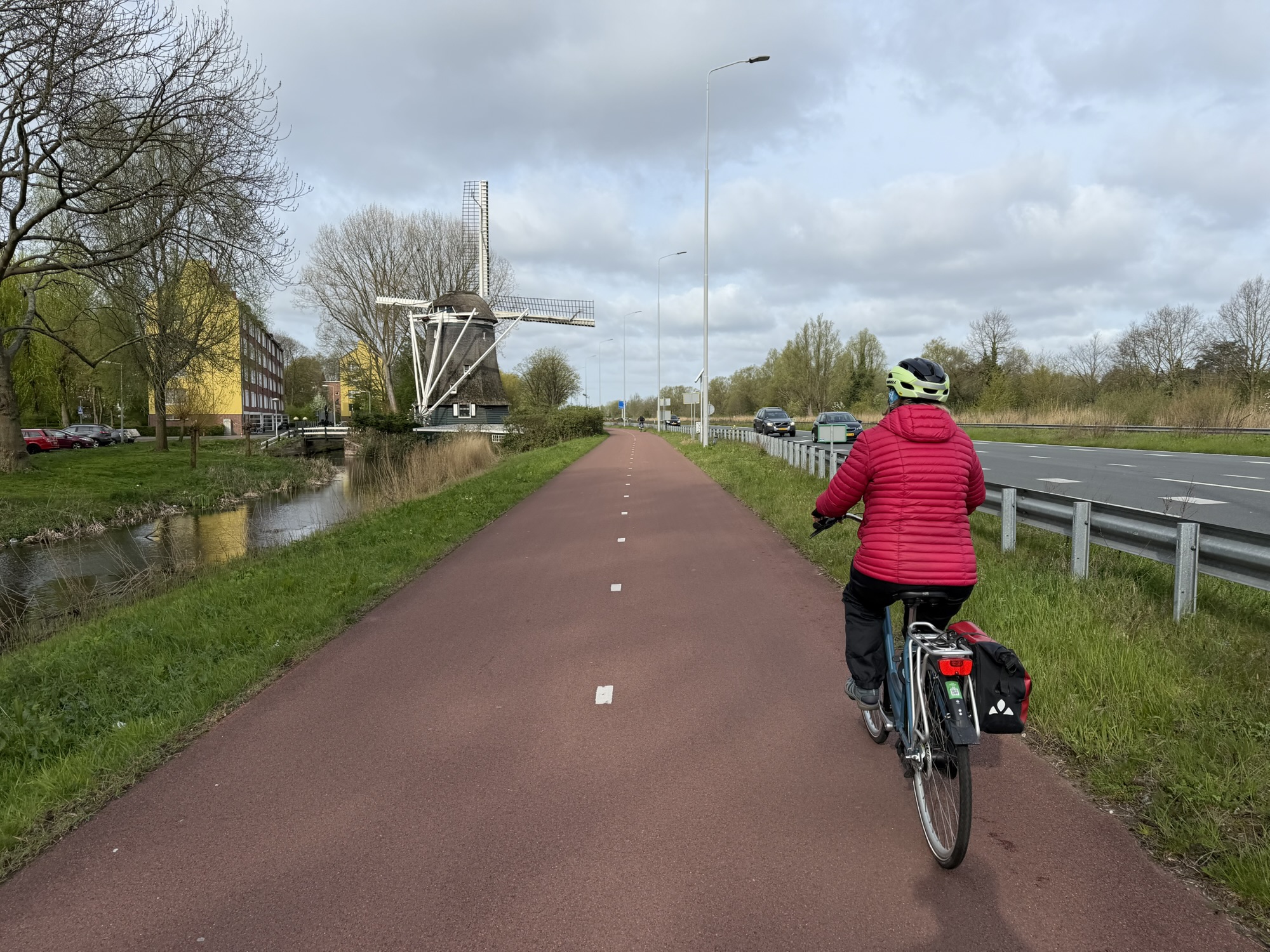
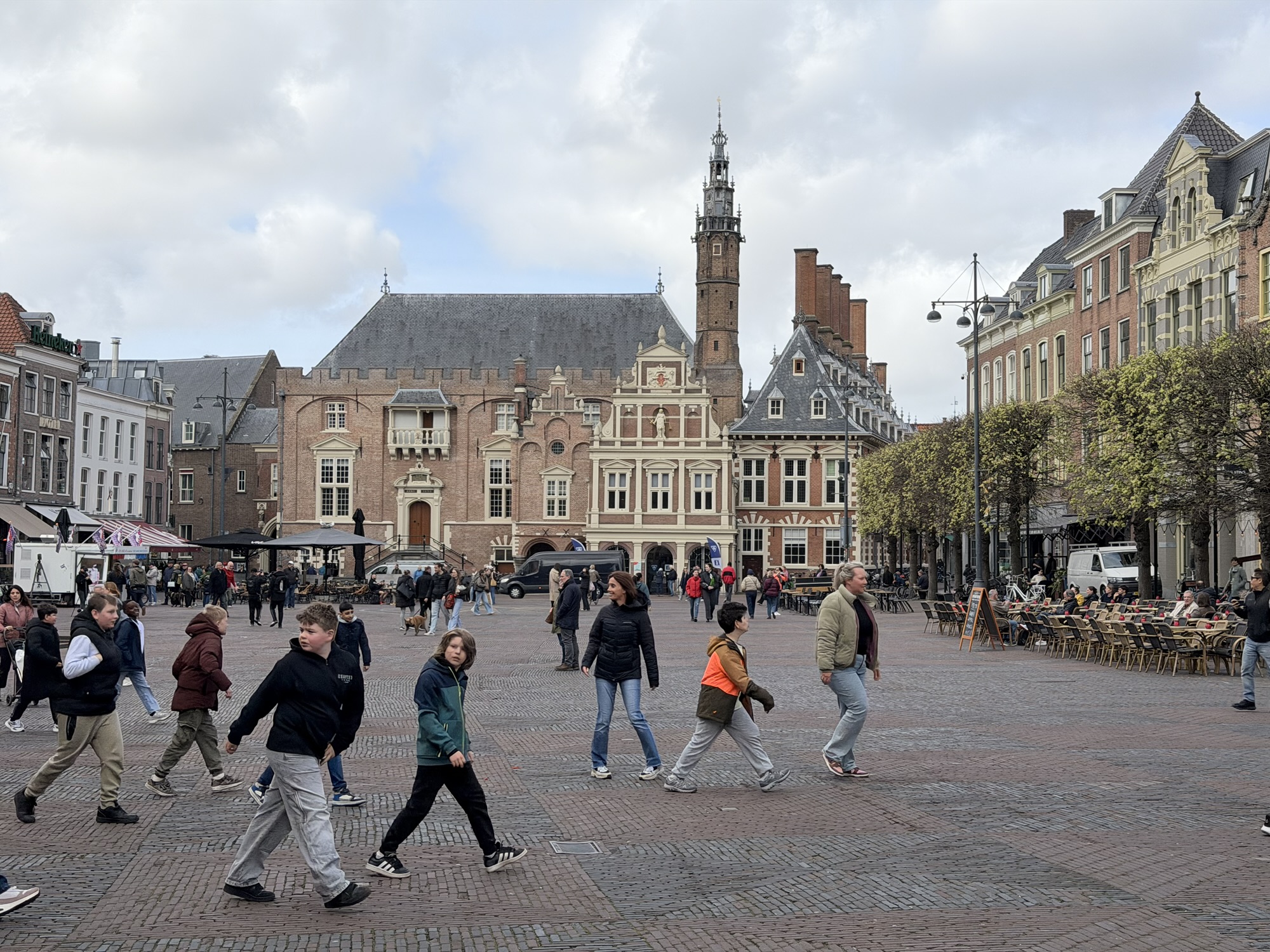
The Main Square had many beautiful buildings surrounding it. The first stop we made was at a coffee shop with delicious baked goods.
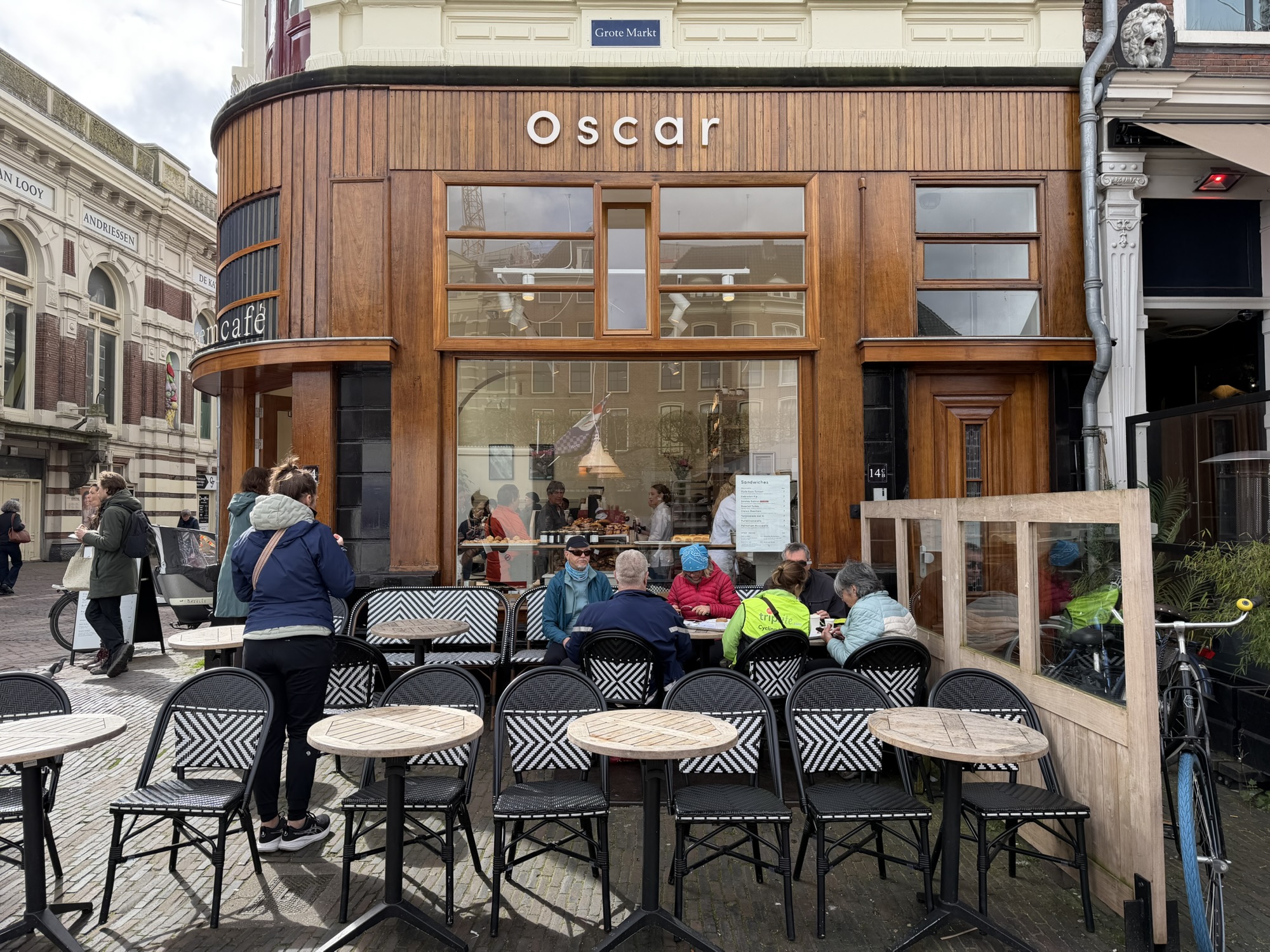
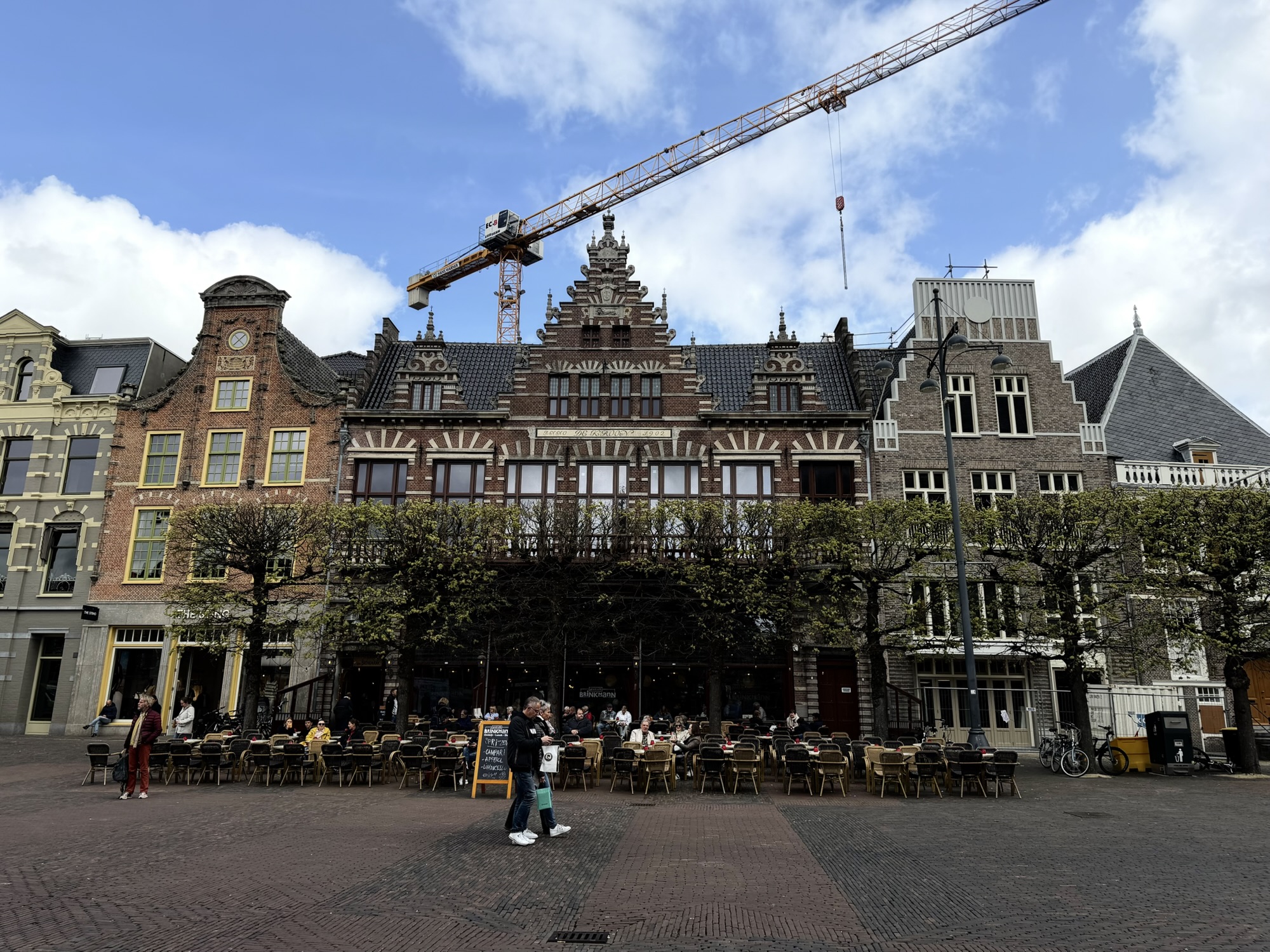
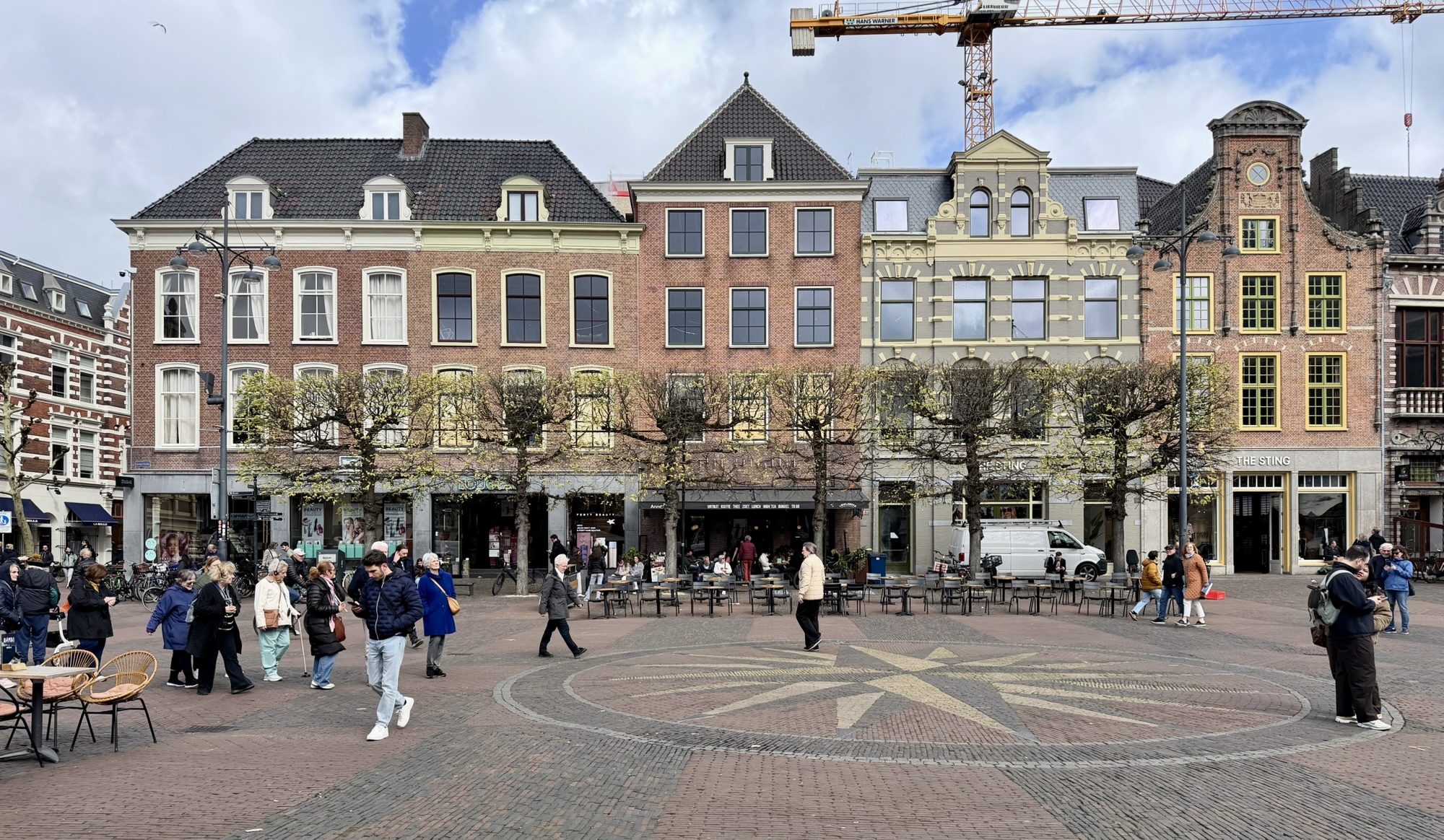
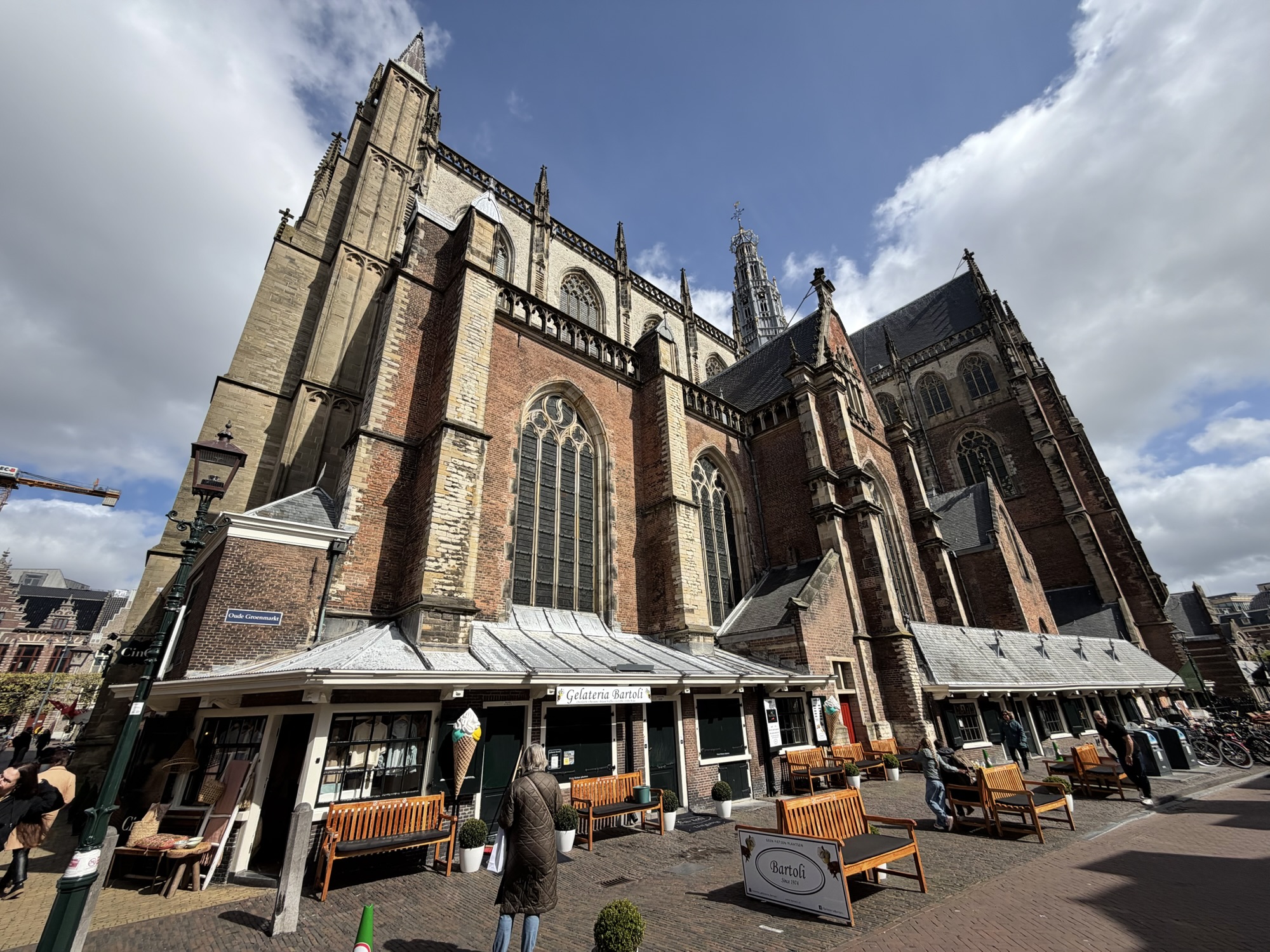
After eating, we decided to spend 70 minutes exploring the town, and to meet back at the bikes. I started at Grote of St.-Bavokerk. It is a a late-medieval Protestant church (formerly Catholic) located on the Grote Markt square.
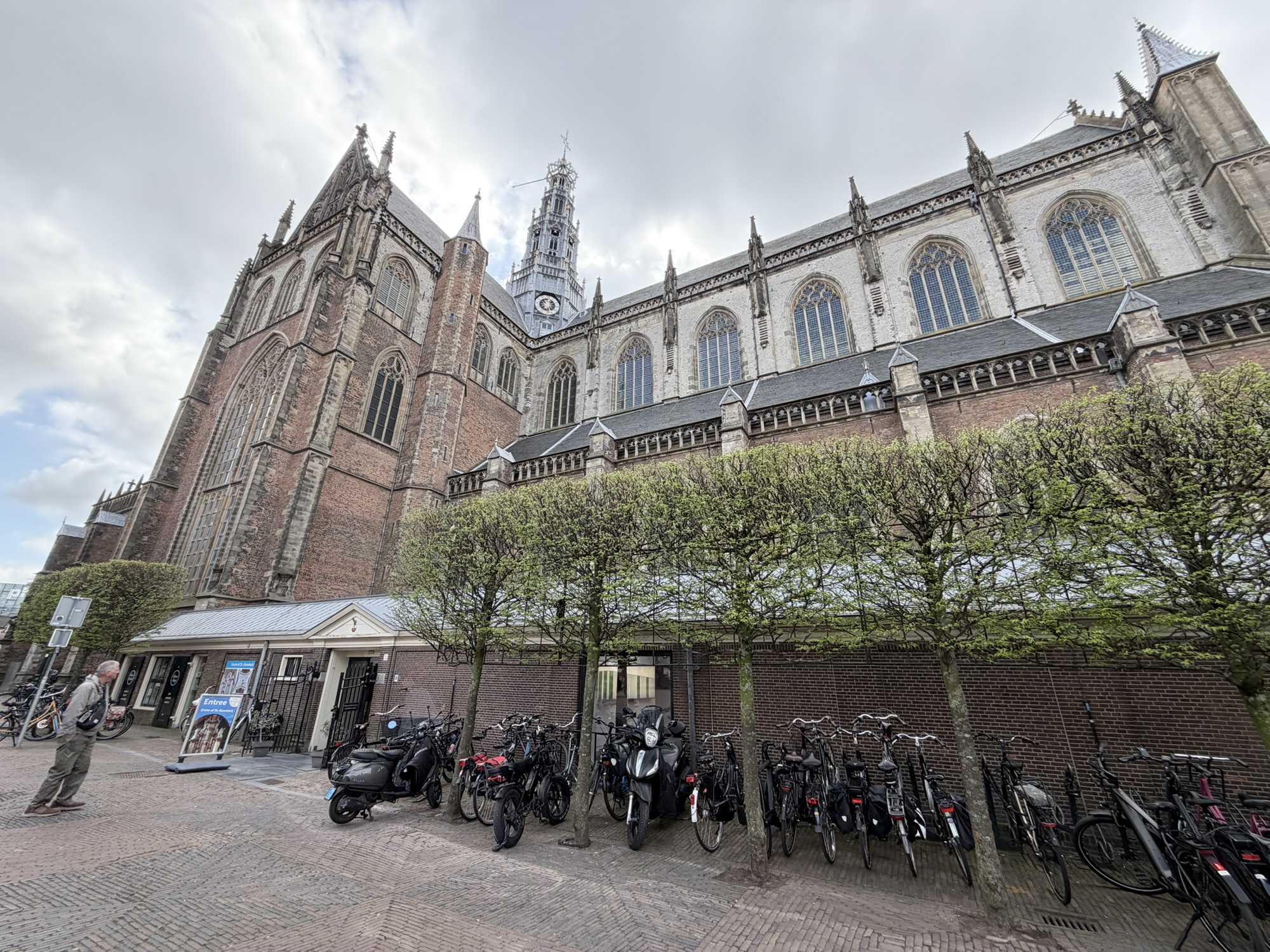
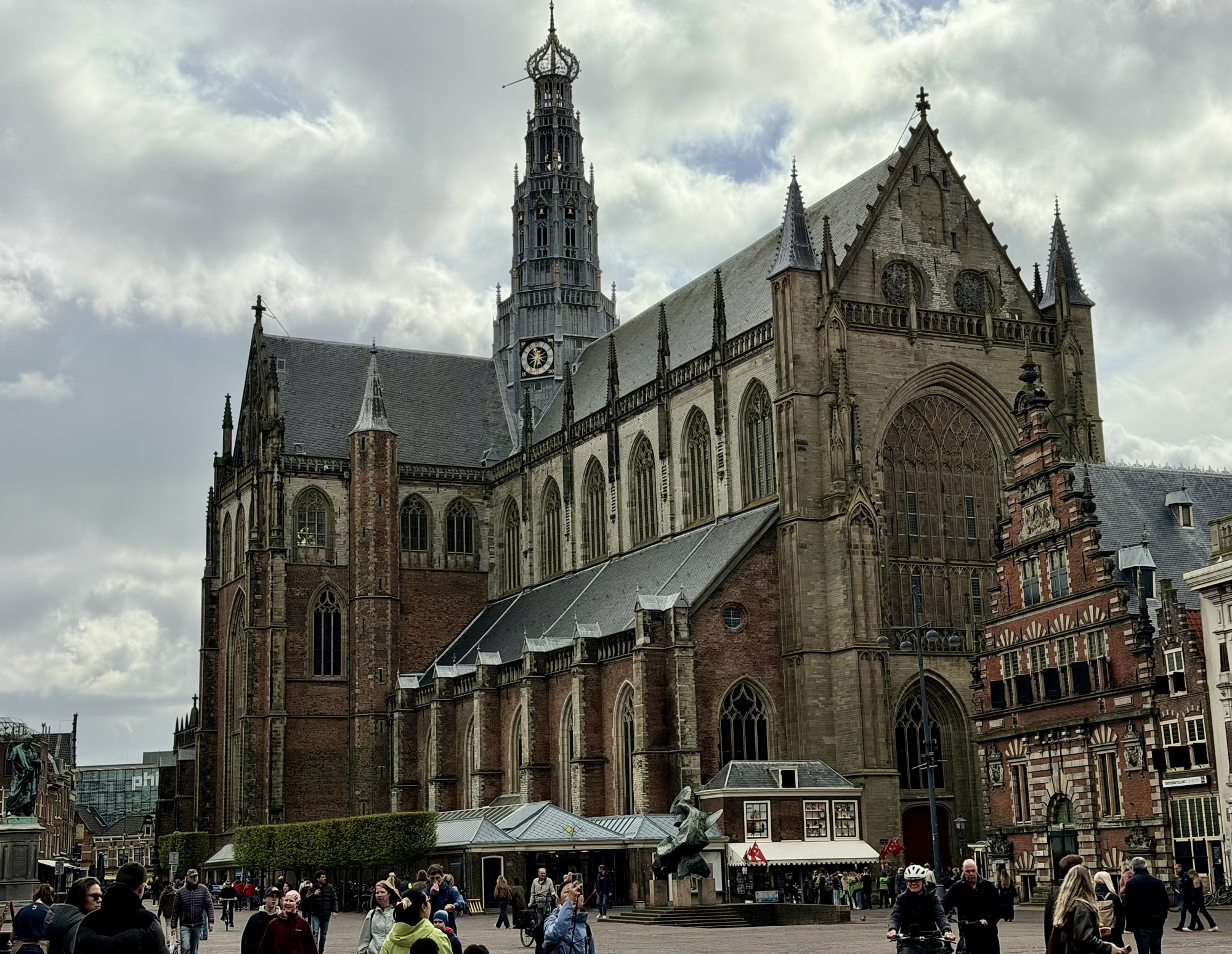
Famous for its 78-meter high tower, stunning Gothic architecture, and a historic 1738 Christian Müller organ, it is a key landmark in the Netherlands. Construction spanned the 14th to 16th centuries.
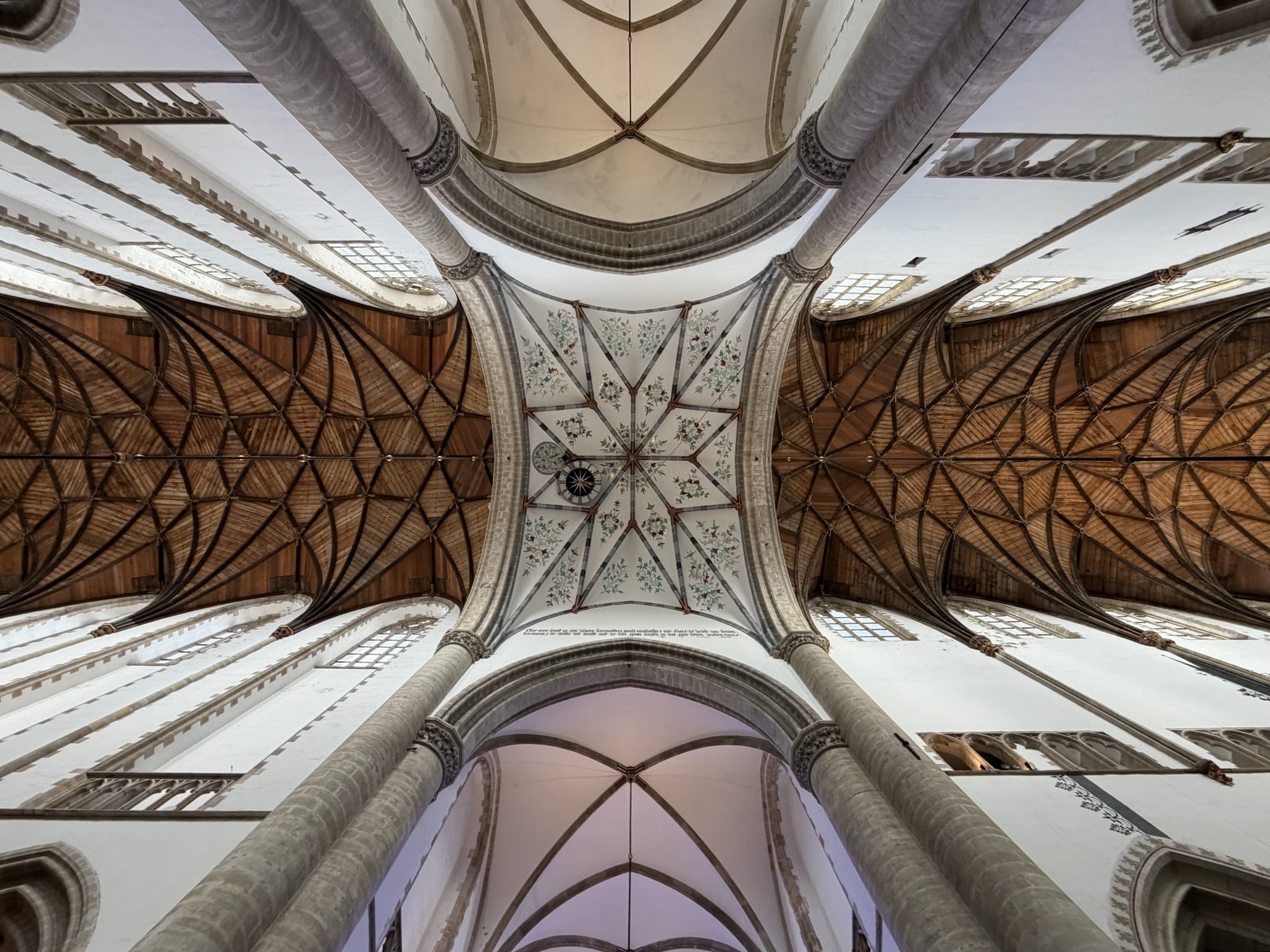
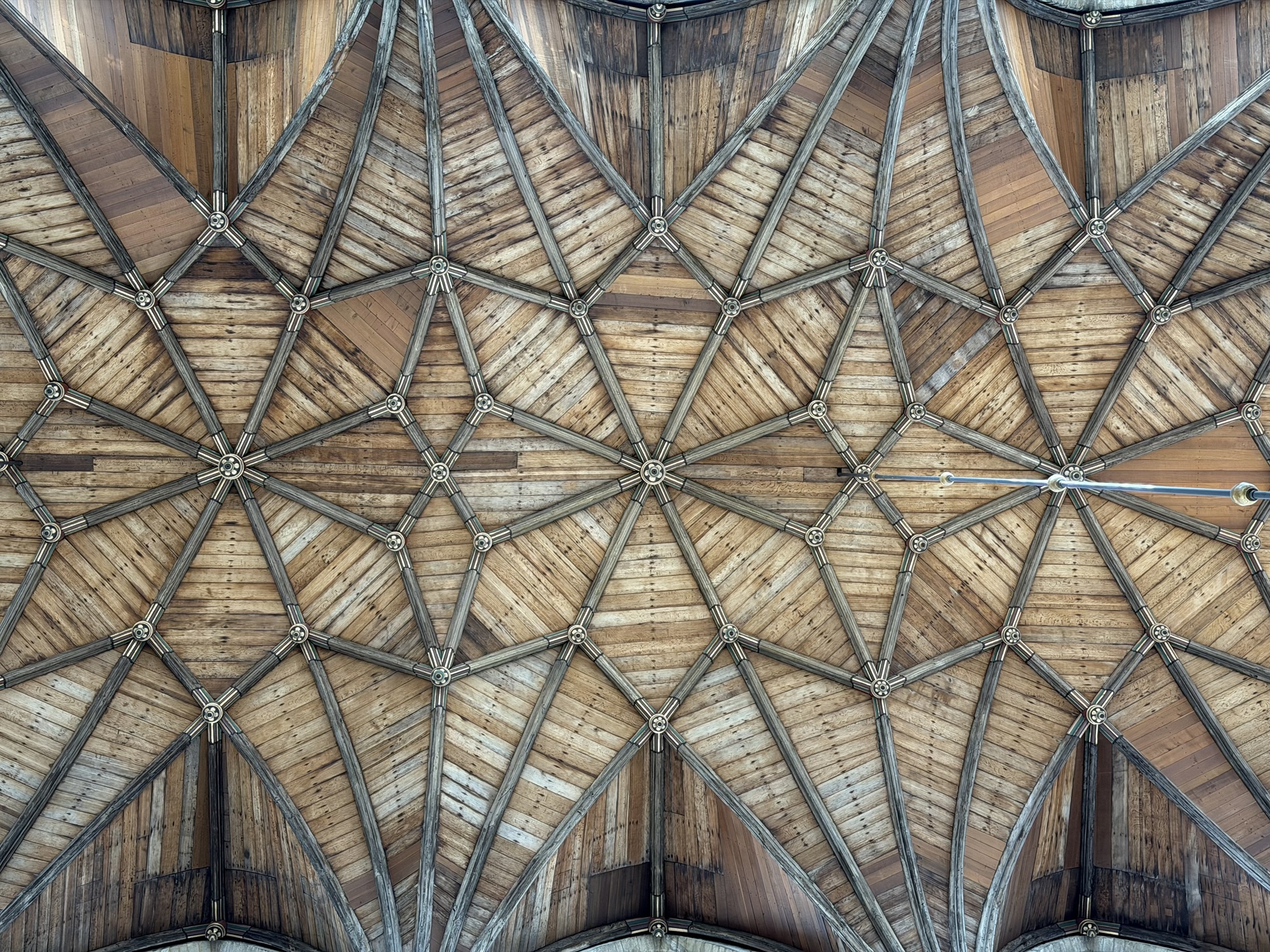
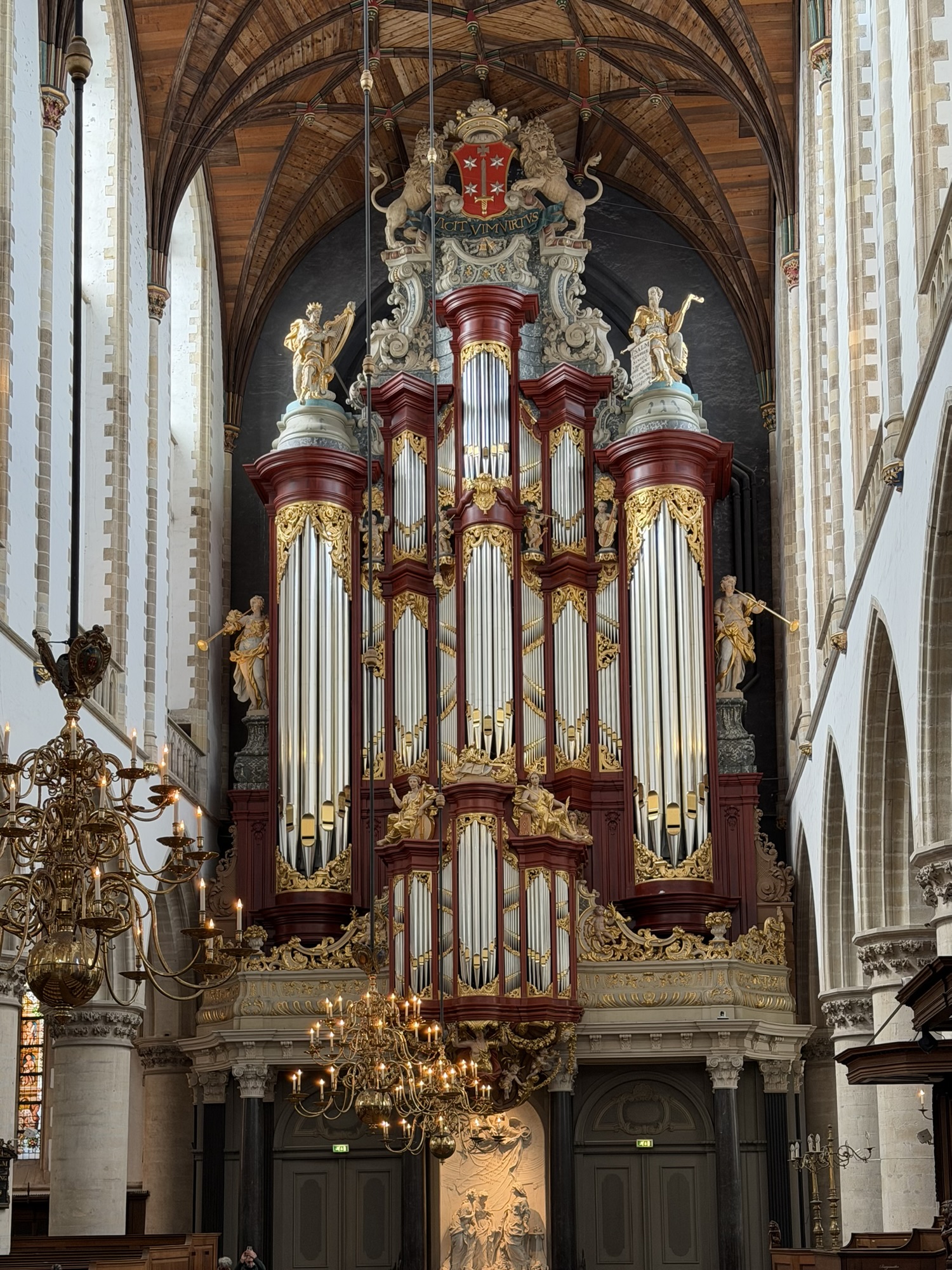
The magnificent Müller organ, completed in 1738, is world-famous. It was played by famous musicians including Handel and Mozart in 1766.
The church had a coffee shop in it with the proceeds used to help those in need. It wasn’t open when we were there, though.
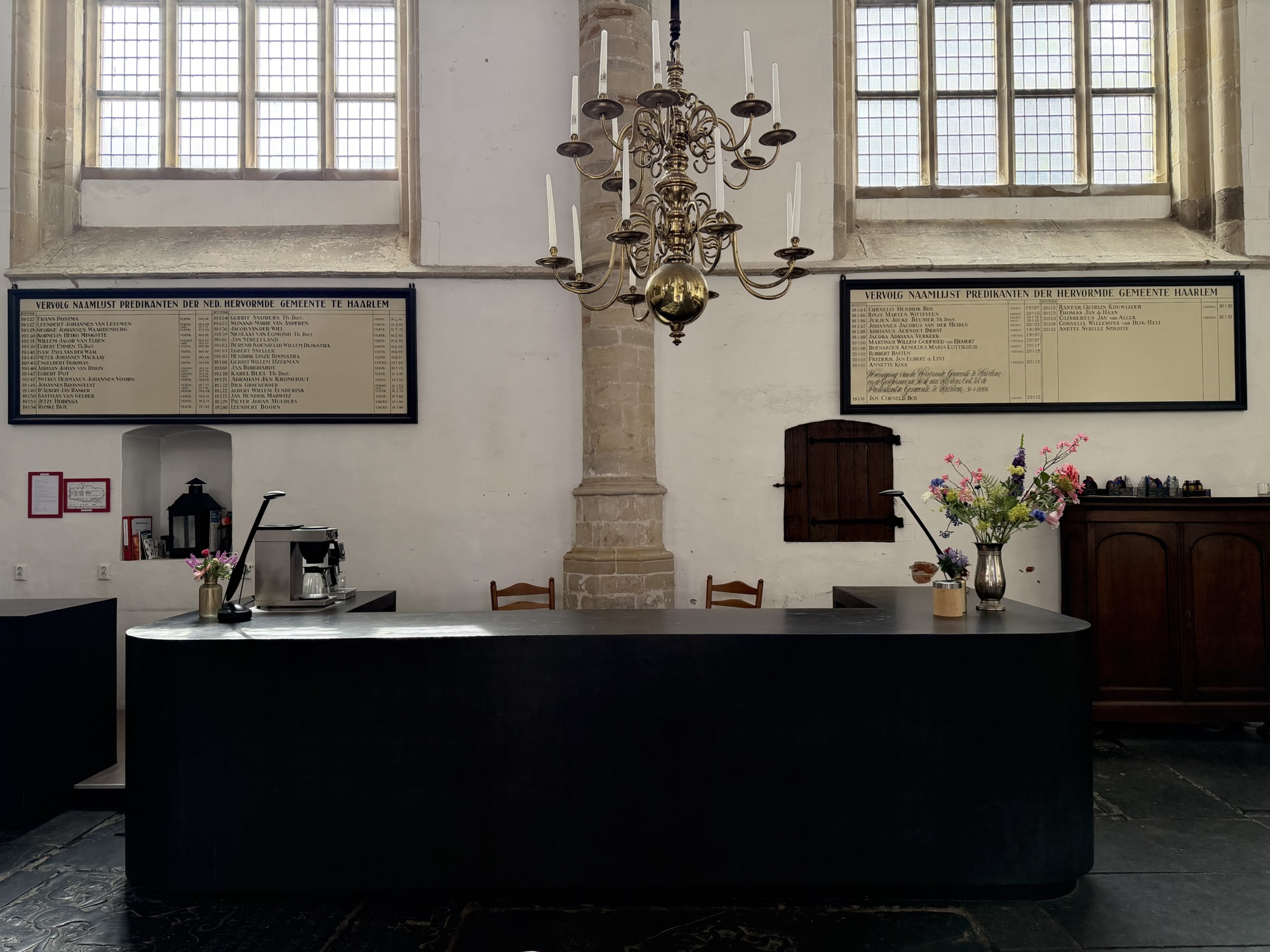
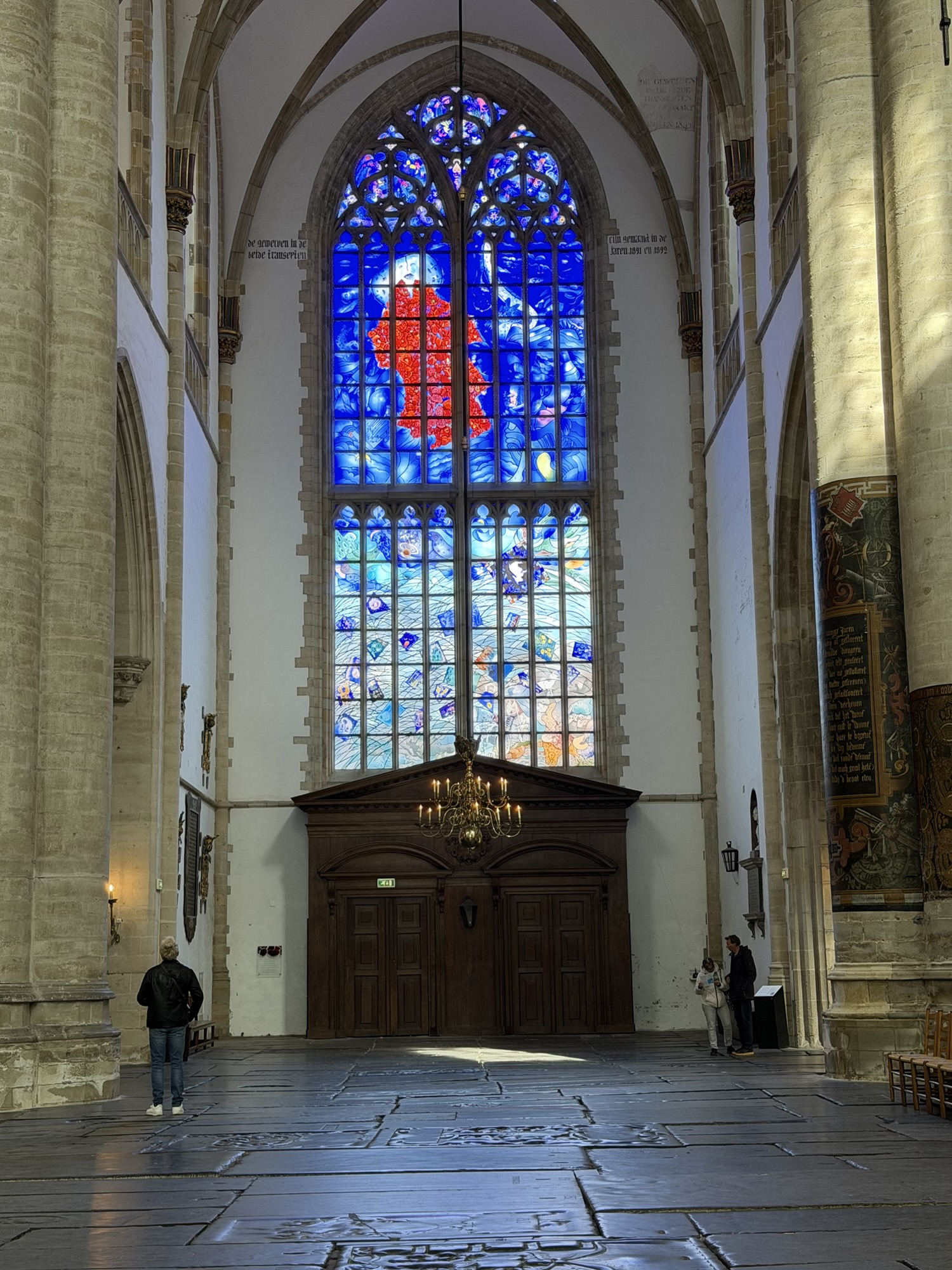
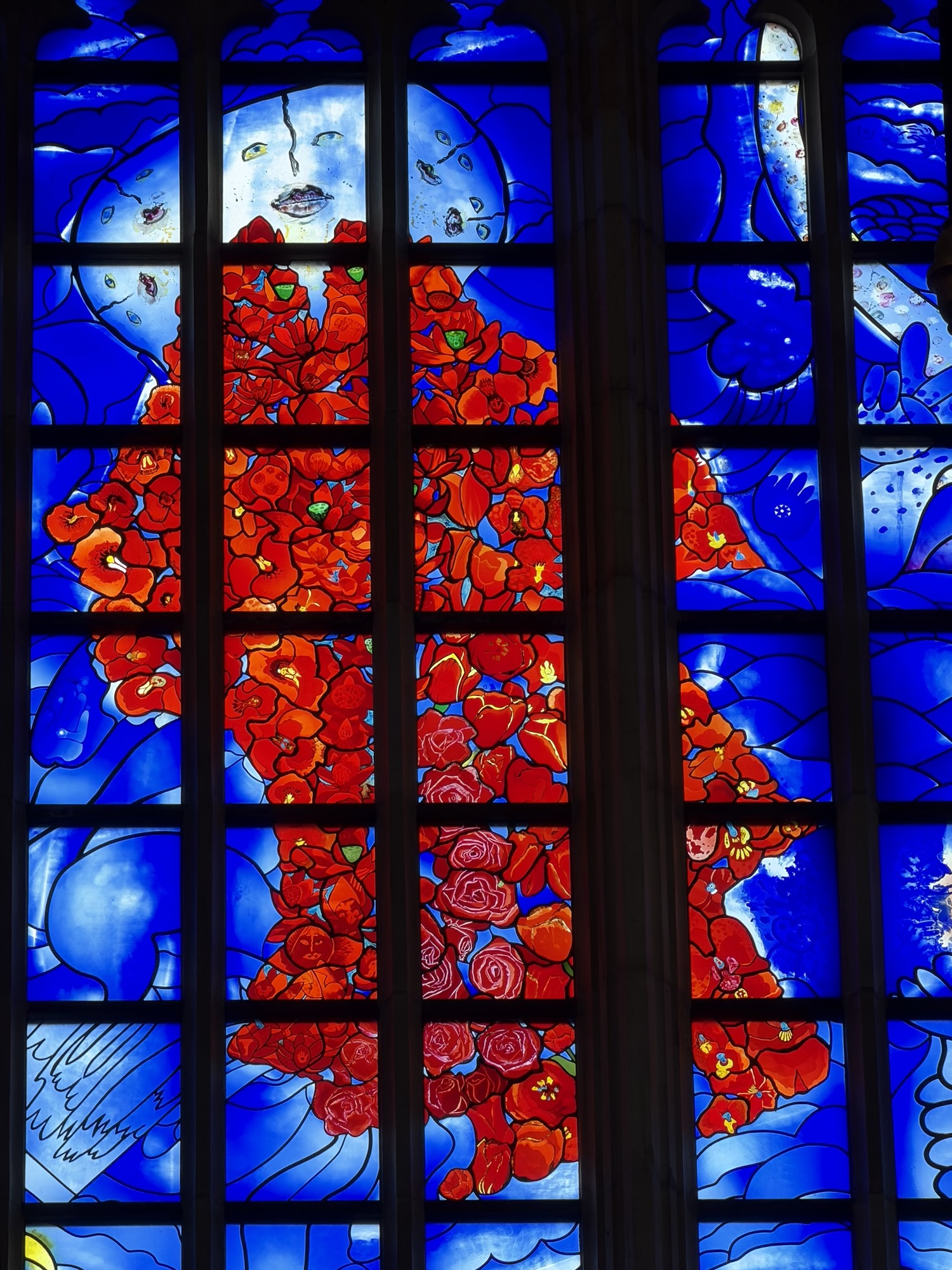
The church has businesses physically attached to it around its base. Unfortunately, I had no time to spare for an ice cream.
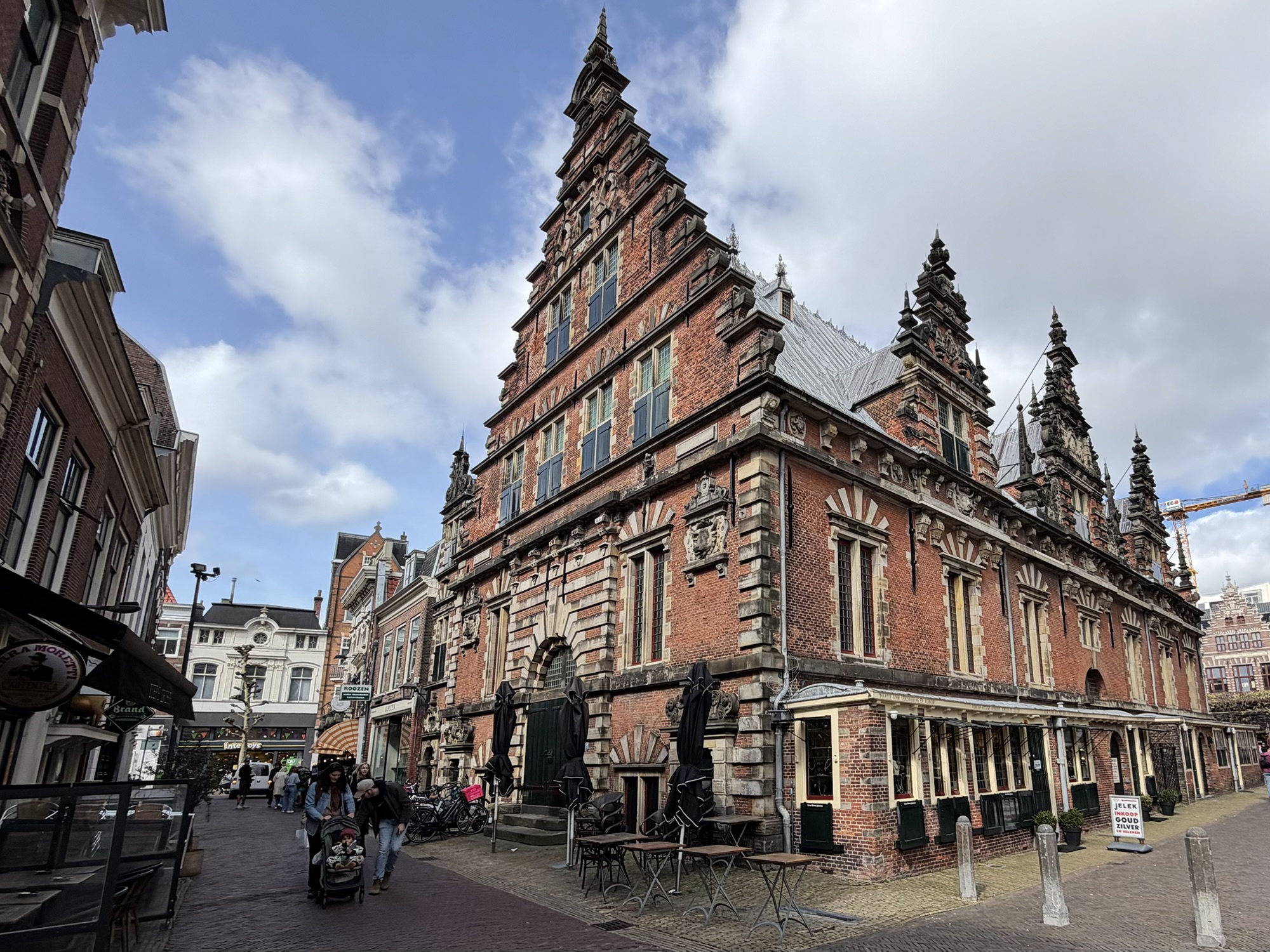
The Vleeshal, across a narrow street from the church, is an historic building that was constructed in the early 17th century. It is located at the Grote Market.
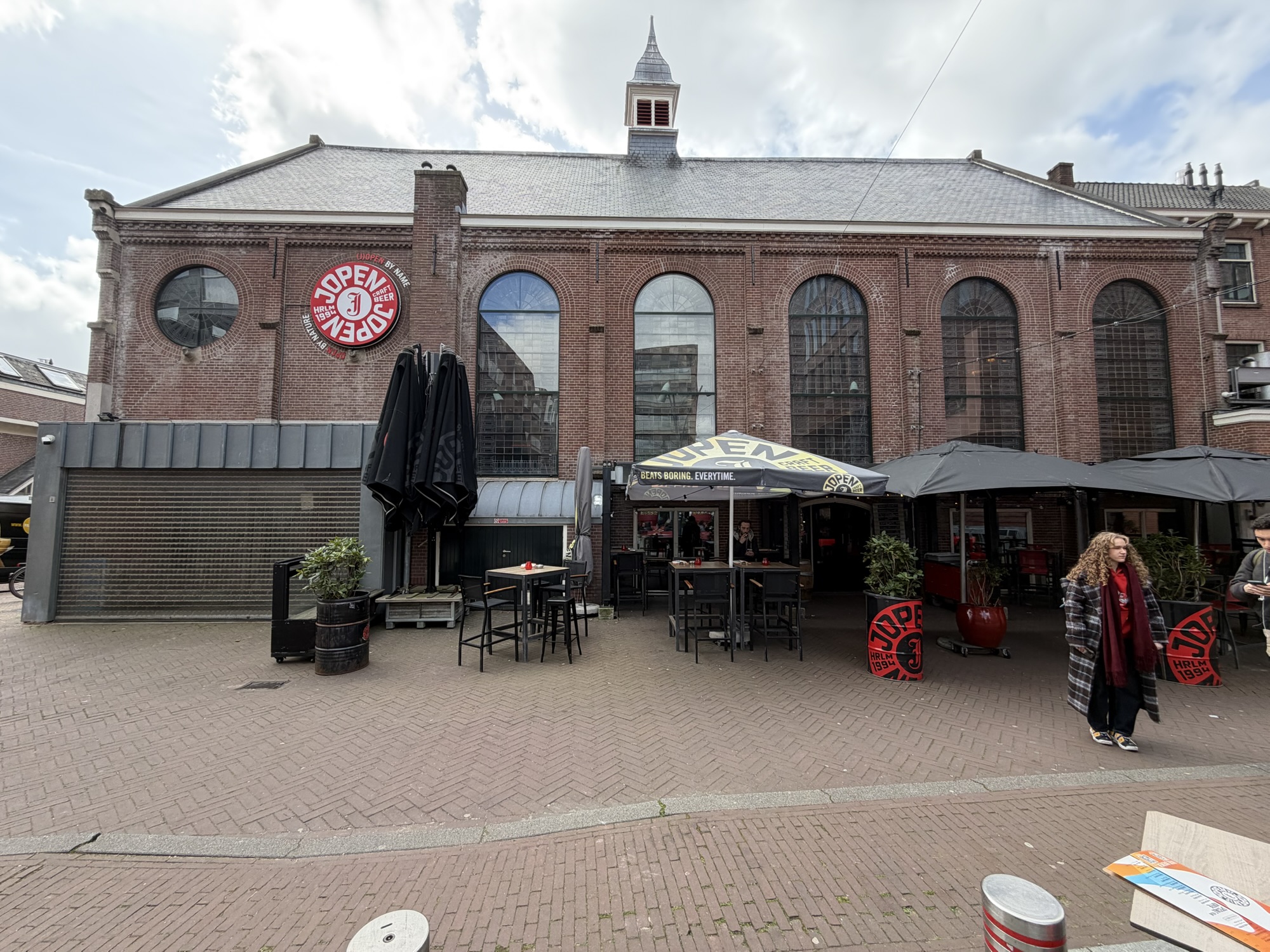
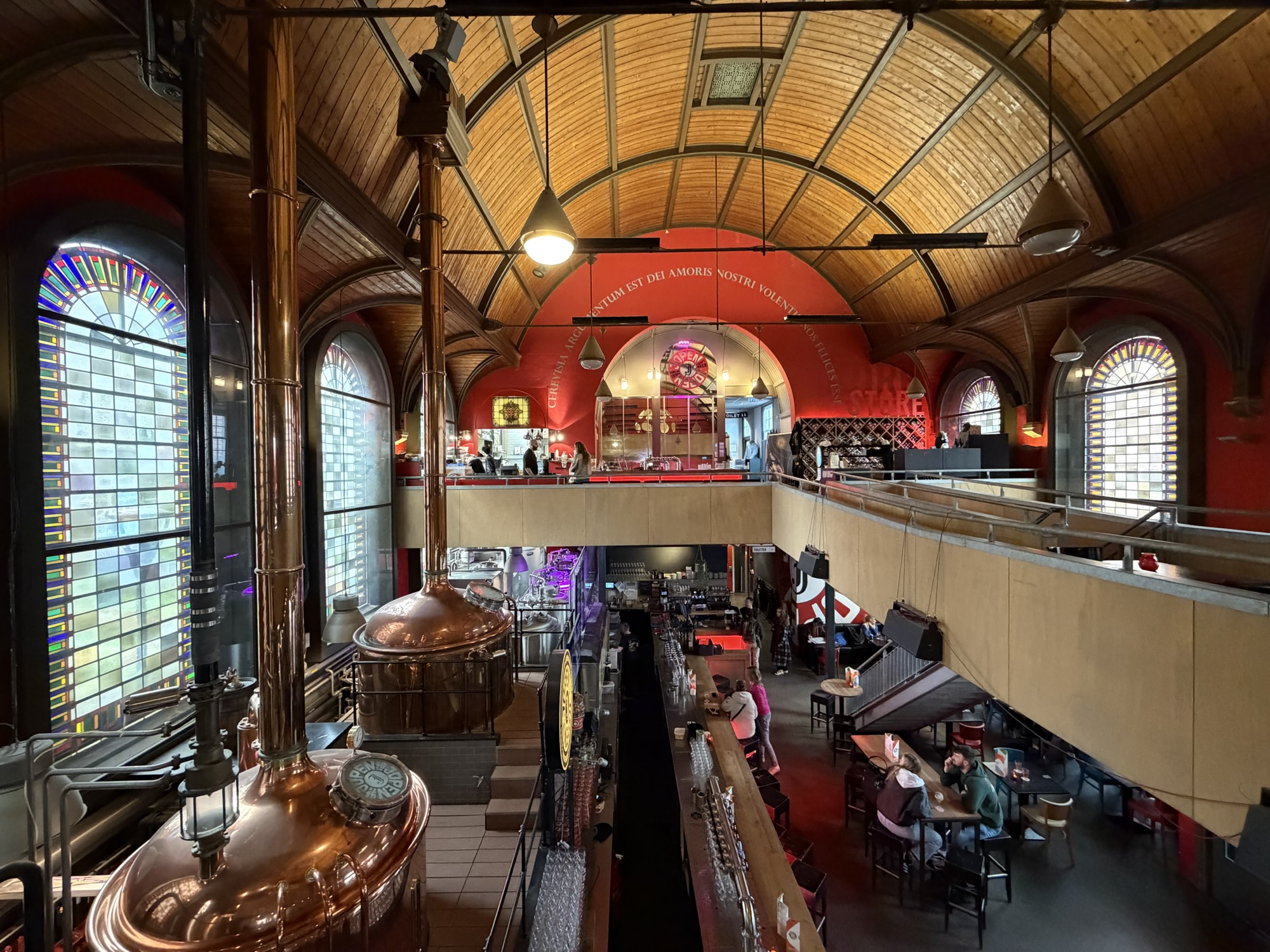
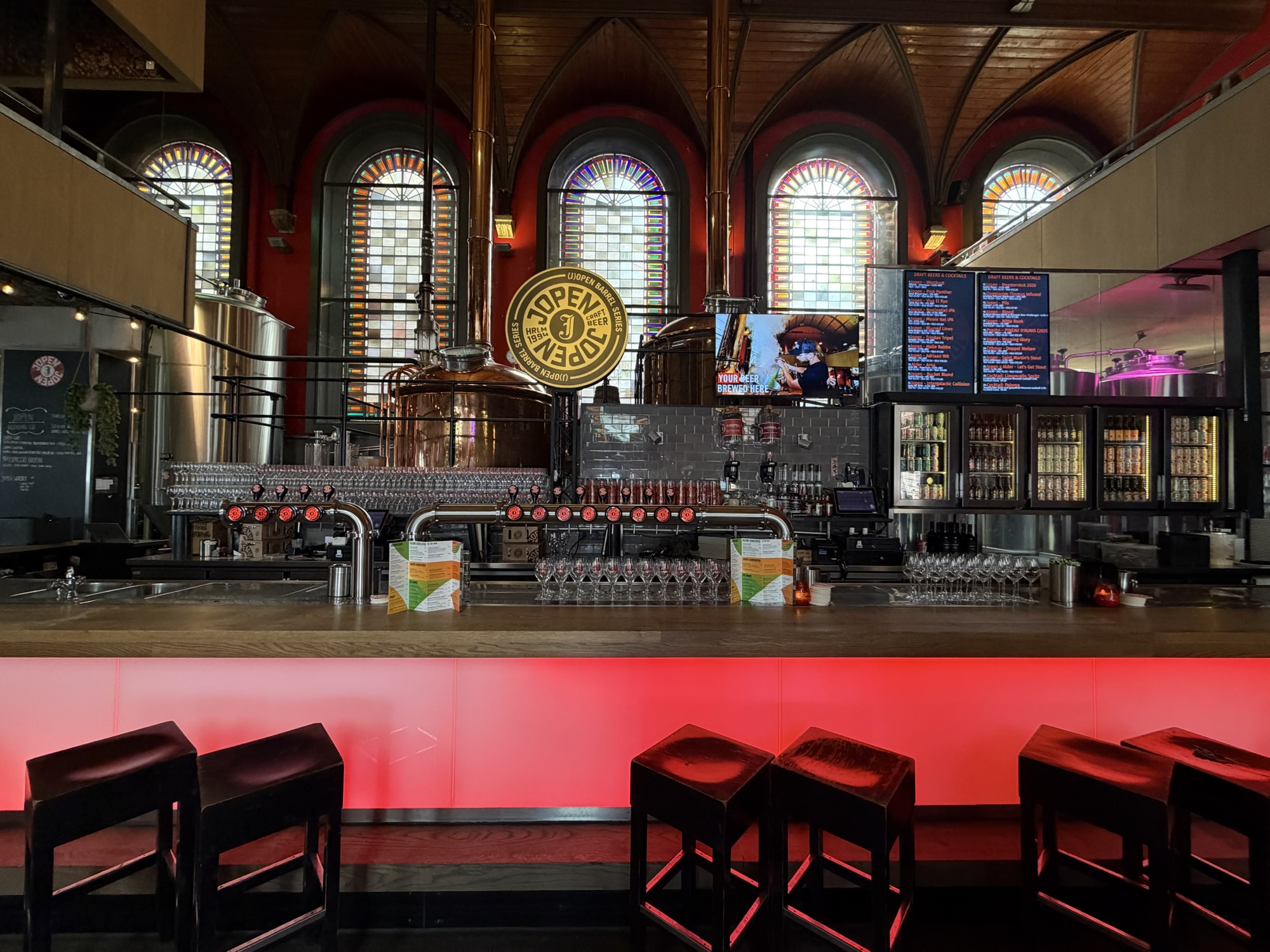
I then walked quickly to Jopenkerk, a church turned brew pub. A Jopen is an historical 112-liter beer barrel. Kerk means church.
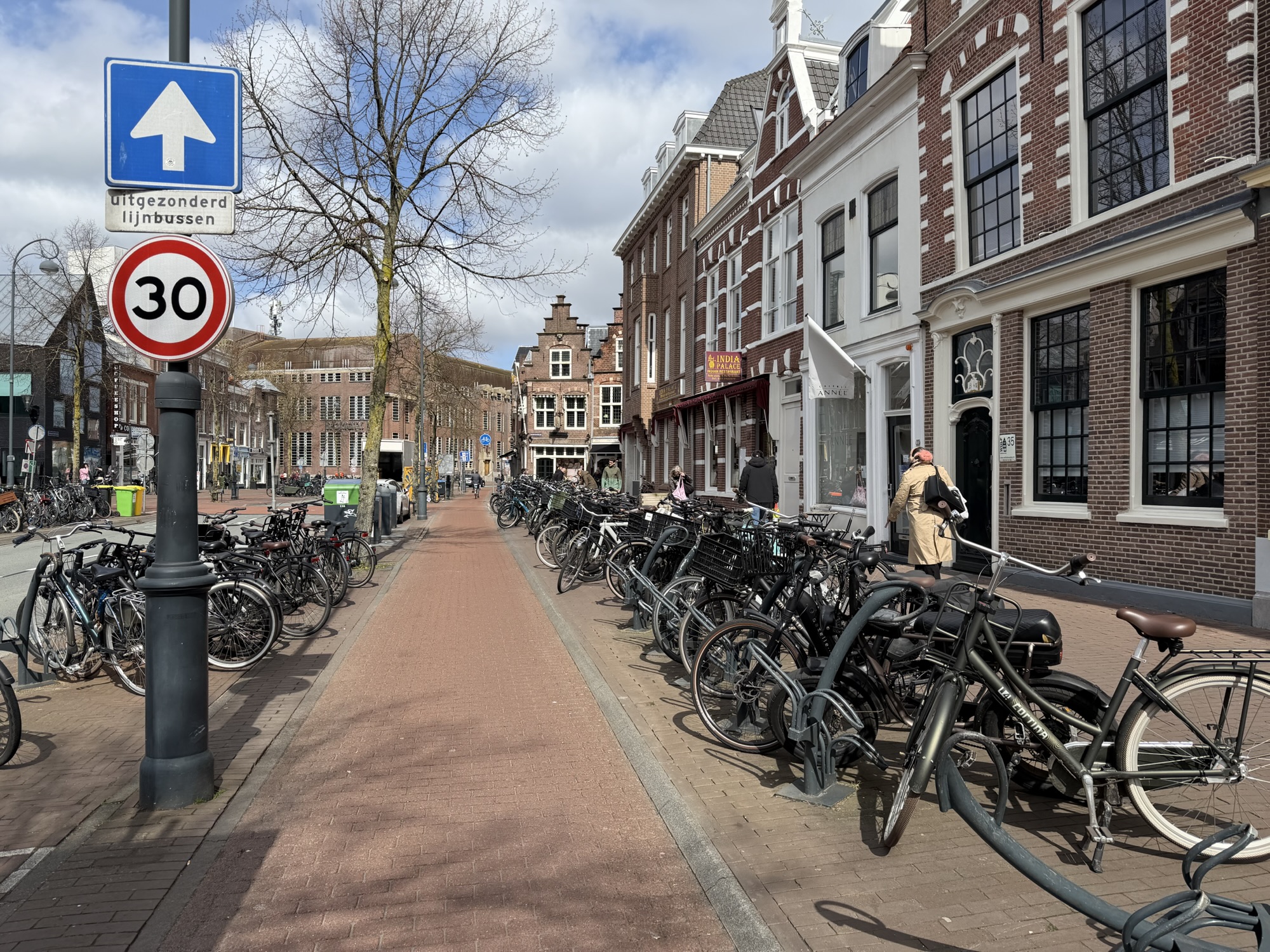
Bikes are parked everywhere in the Netherlands, but are rarely in the way.
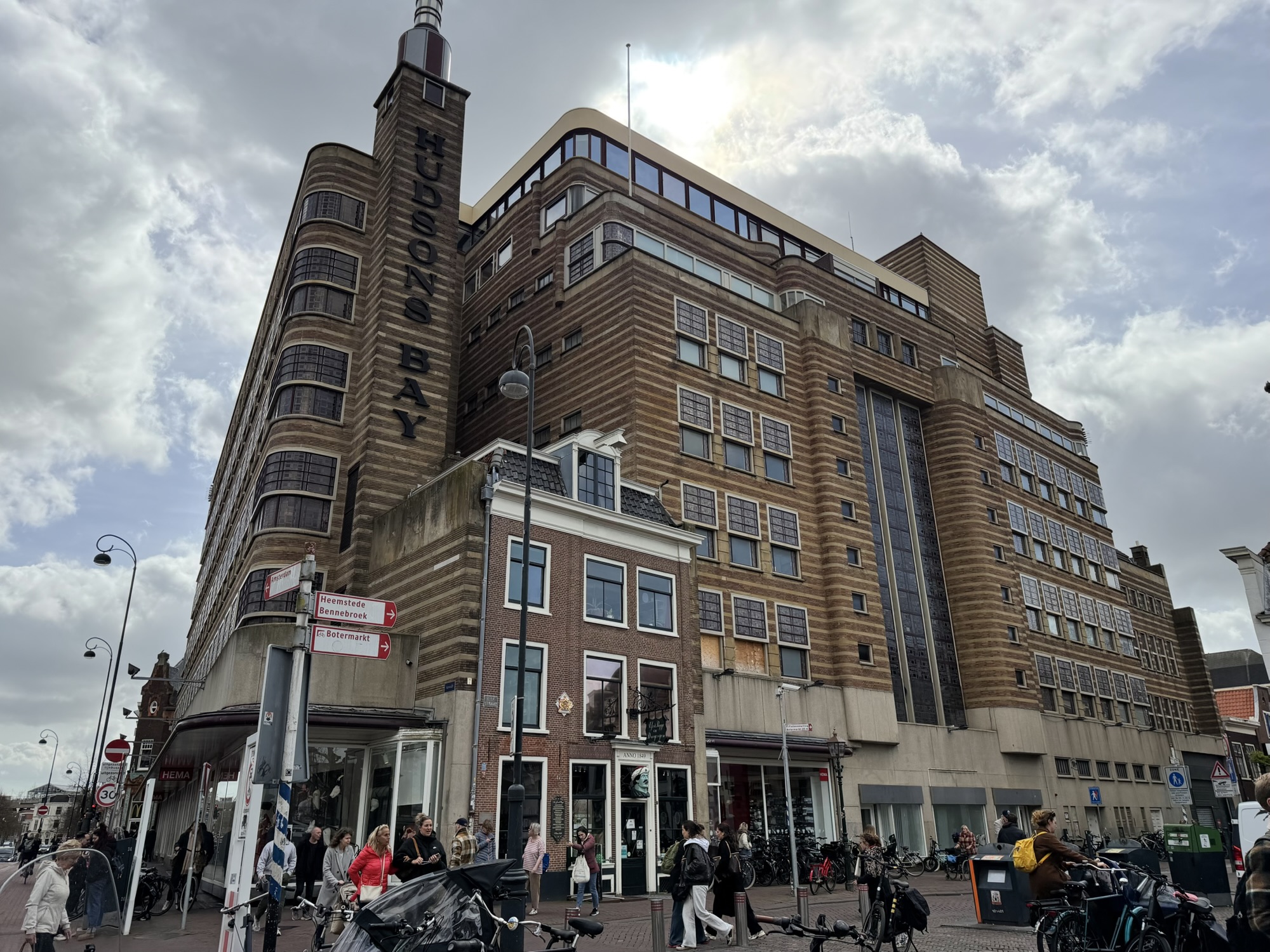
I was surprised to pass a Hudson’s Bay sign. It was open from 2017-2019 in a building previously occupied by another department store, but still bears the sign.
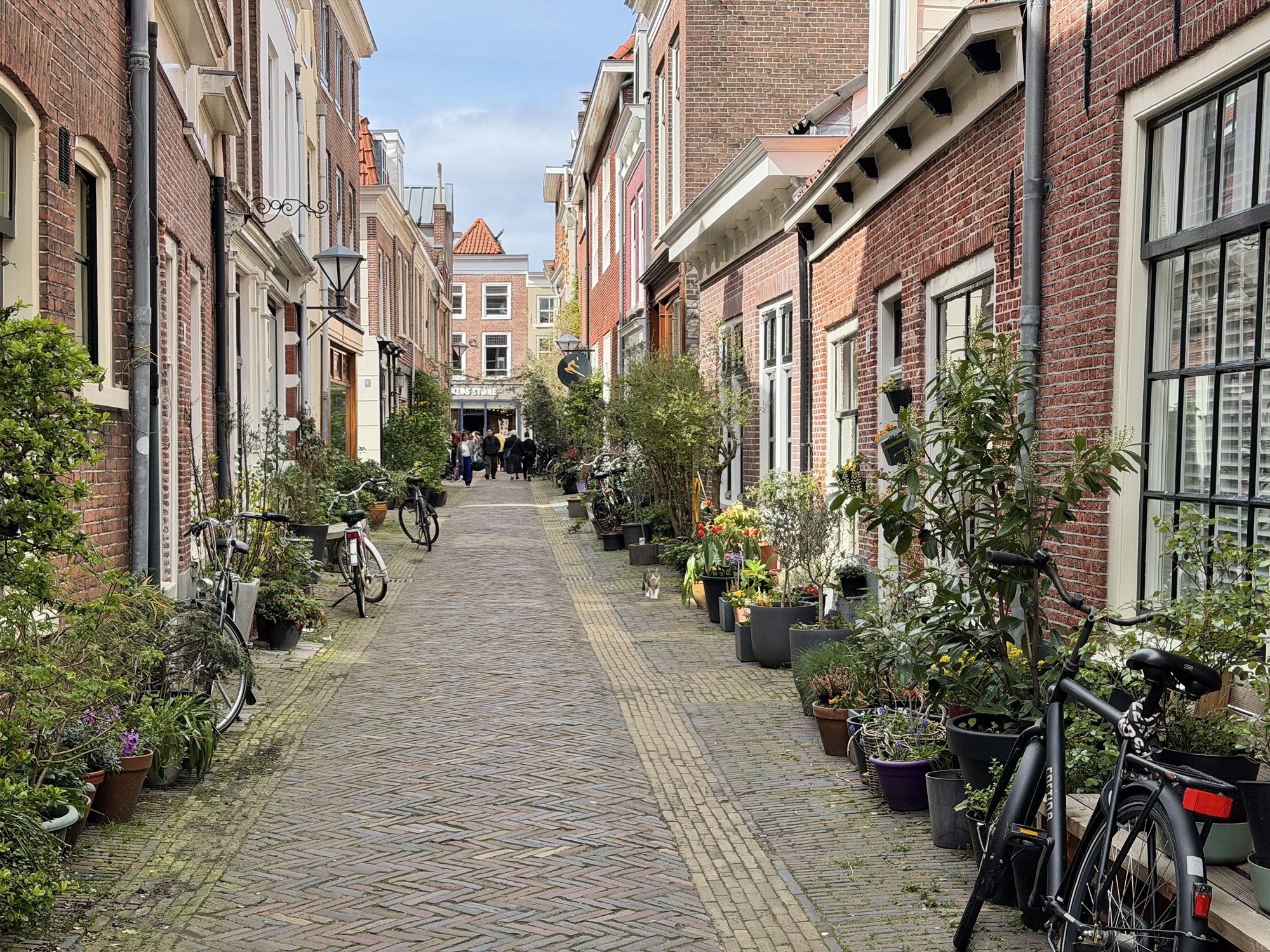
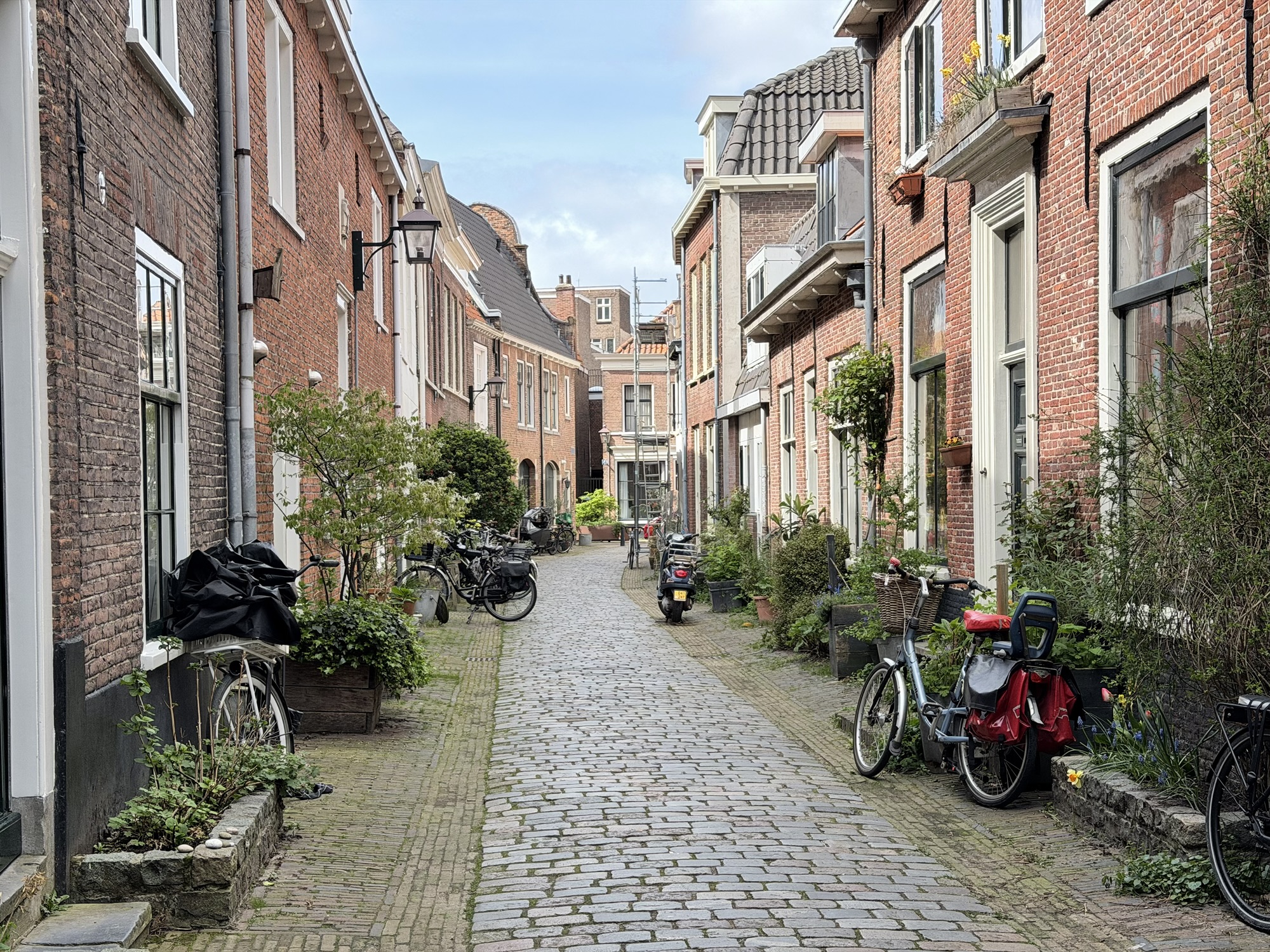
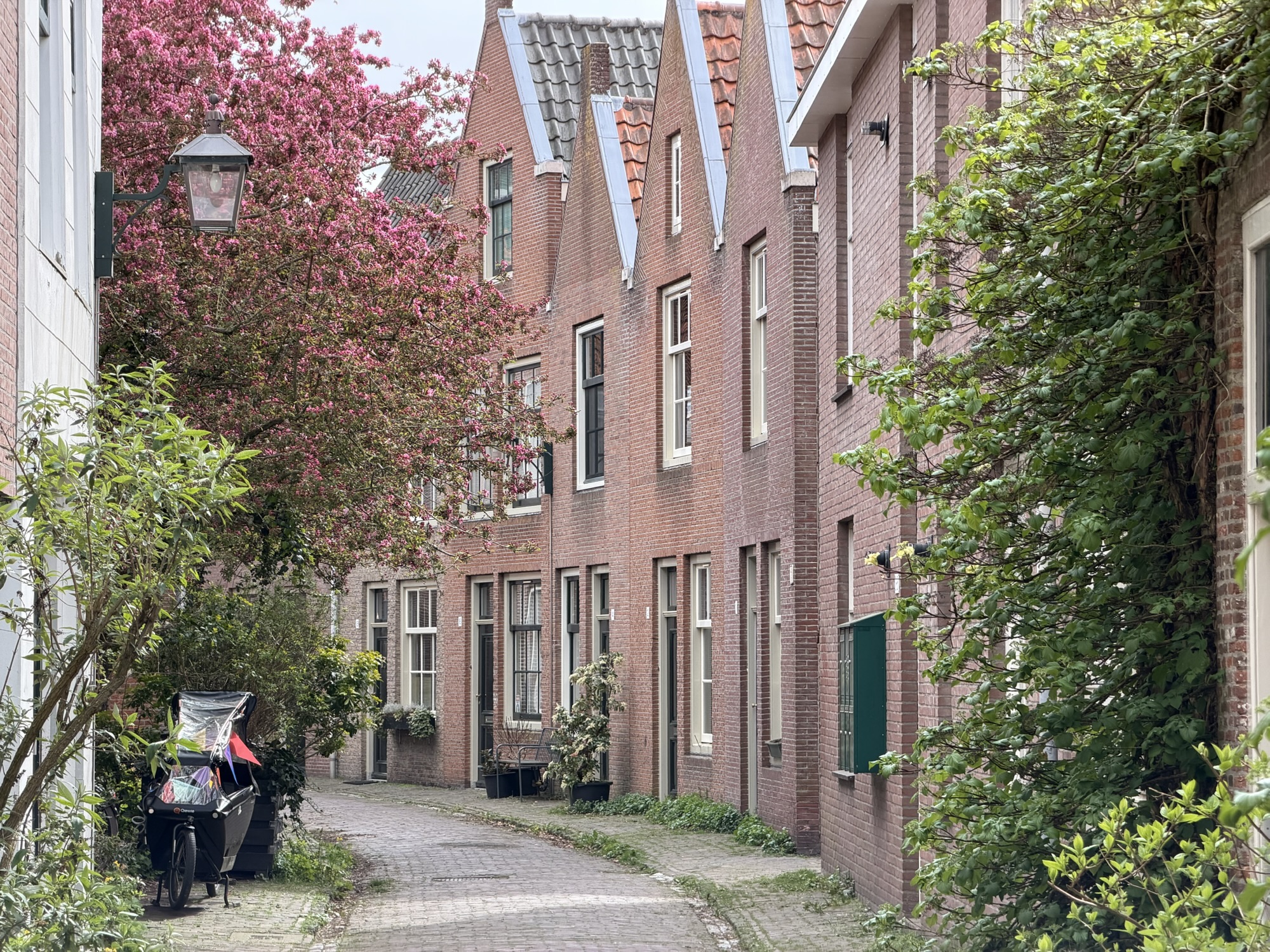
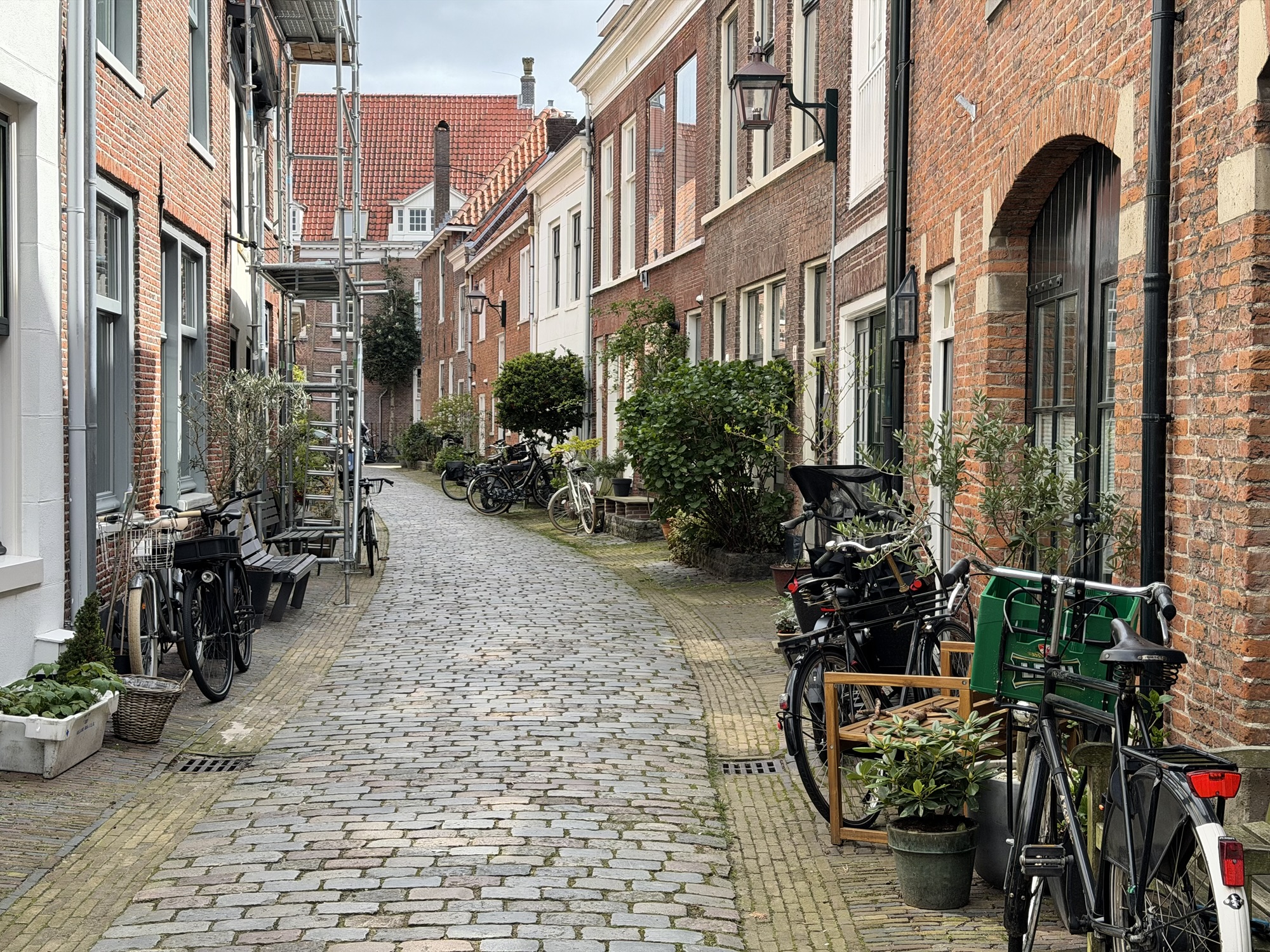
I next walked to the Frans Hals Museum. It houses the largest collection of Frans Hals (1582-1666) paintings in the world, as well as works by other famous artists from Haarlem. I didn’t have time to go in, but the surrounding streets were very narrow, old and picturesque. I would have liked to linger. Instead, I quickly took so many pictures that I couldn’t decide on just one or two, so here’s a slideshow.
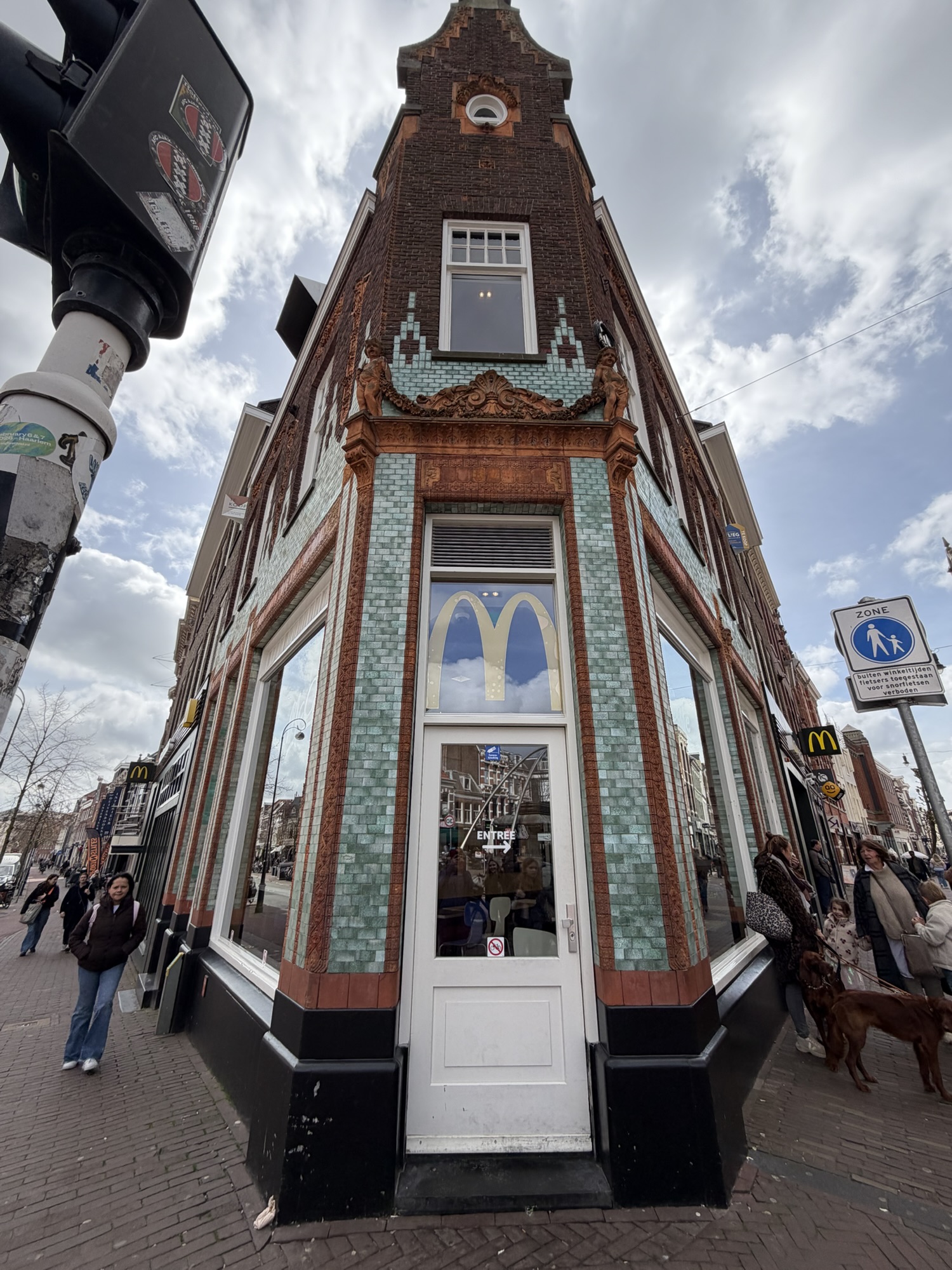
On my way back to the bikes I passed a McDonald’s whose exterior was in keeping with the local architecture.
There was a tourist office and City Hall at one end of the main Square. The tourist office directed us to free bathrooms in City Hall, which we all used before heading back to Amsterdam.
We followed the same route back, but had to travel to Amsterdam’s Central Station. The barge had been moved from the western docks to where we boarded last week.
This video shows us riding into Amsterdam.
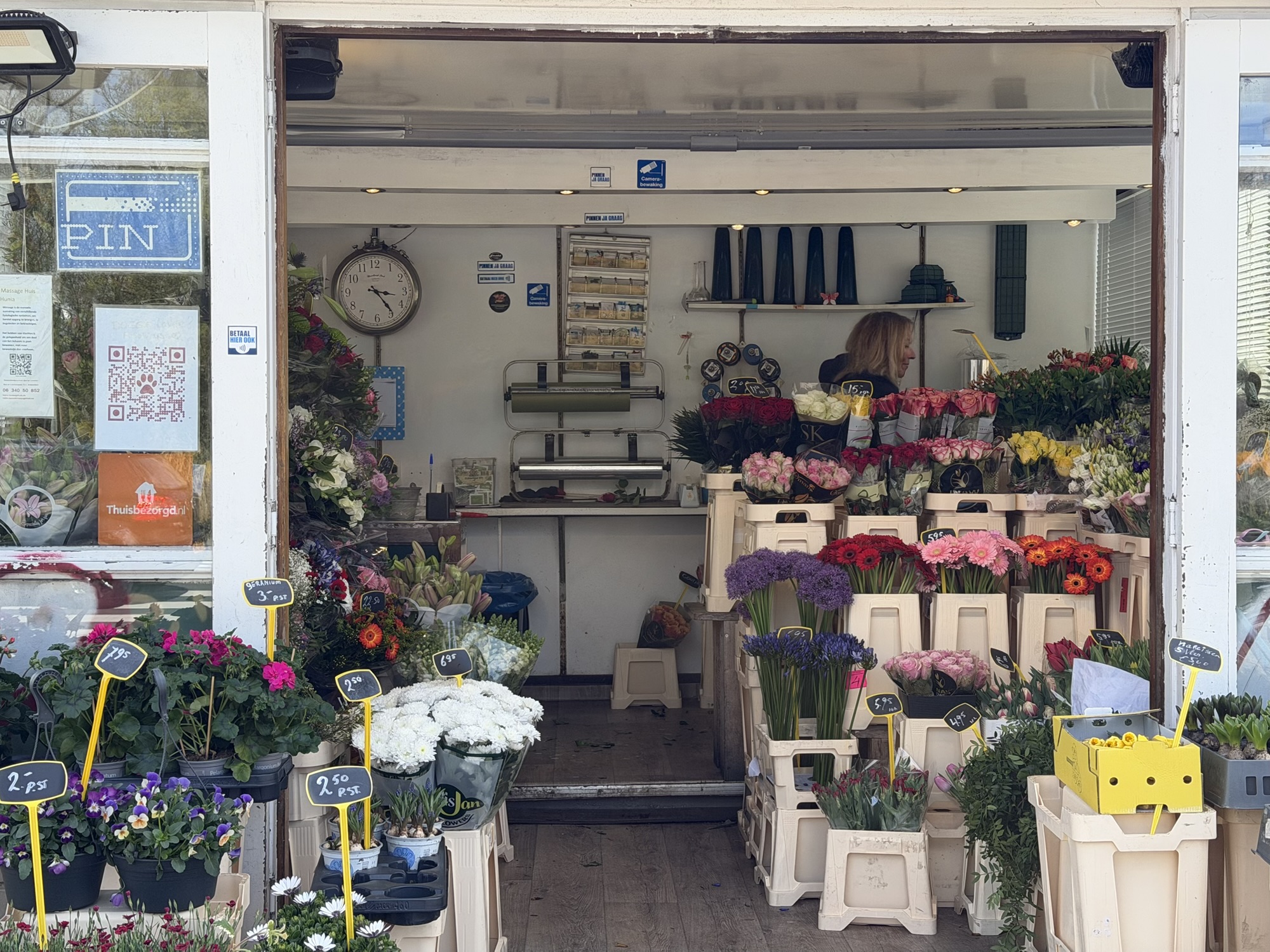
We passed a pretty little florist in a container. I like the way they use containers here for businesses. I also saw this on my trips to Bratislava.
This video shows us riding into Central Station and arriving at the ferry dock.
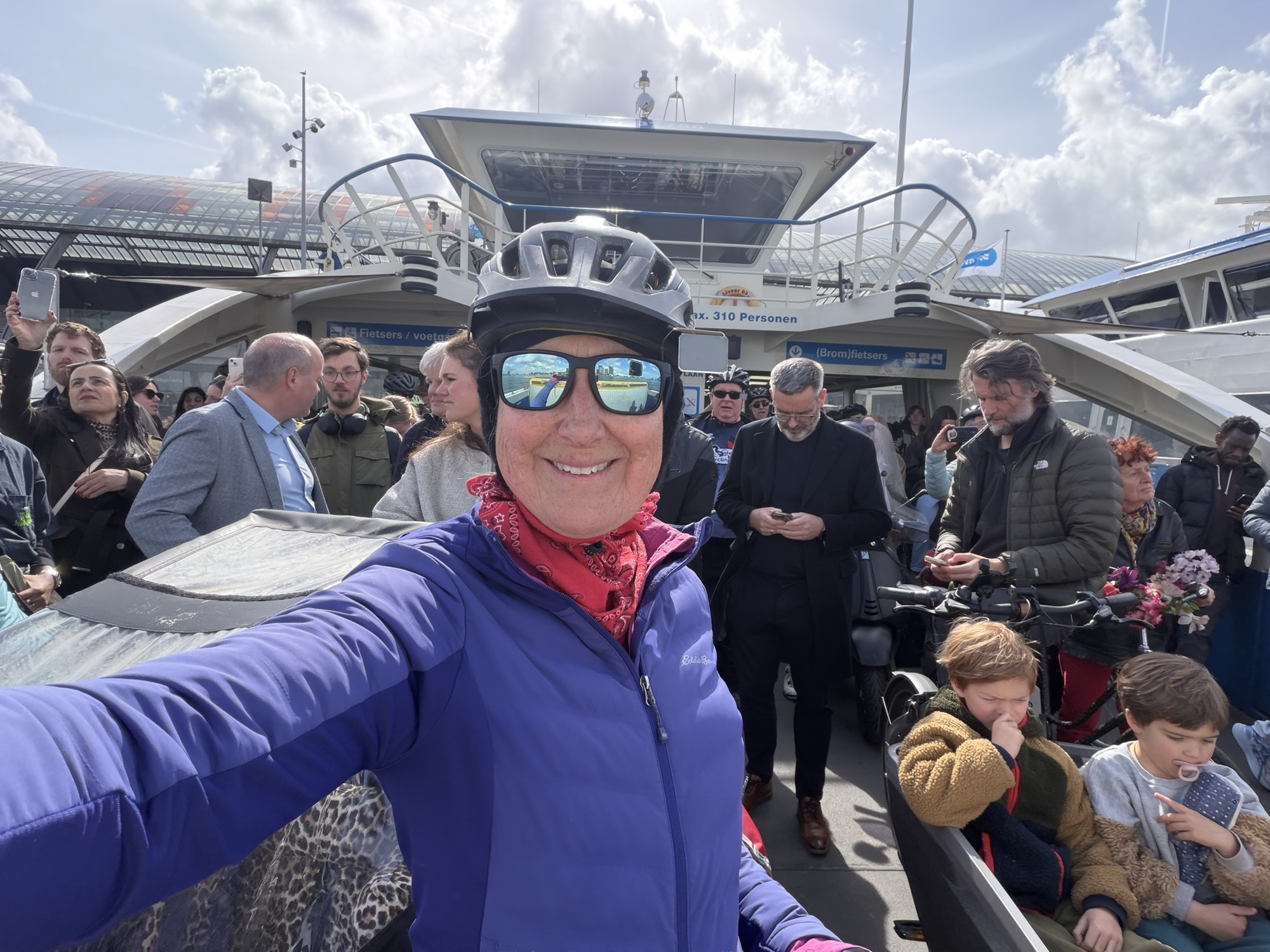
Here we are on a ferry that looked and felt like it was near the capacity of 310 people.
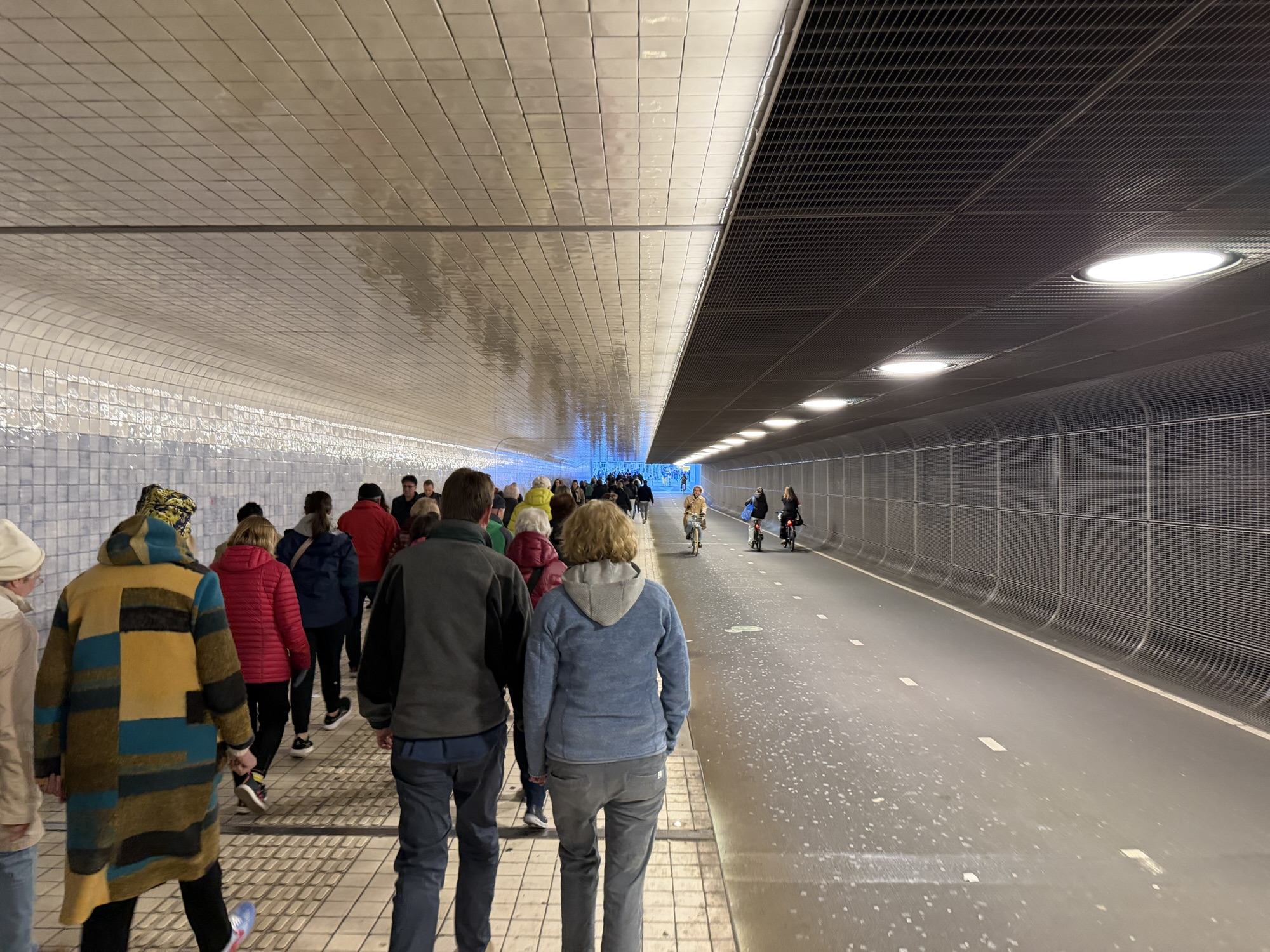
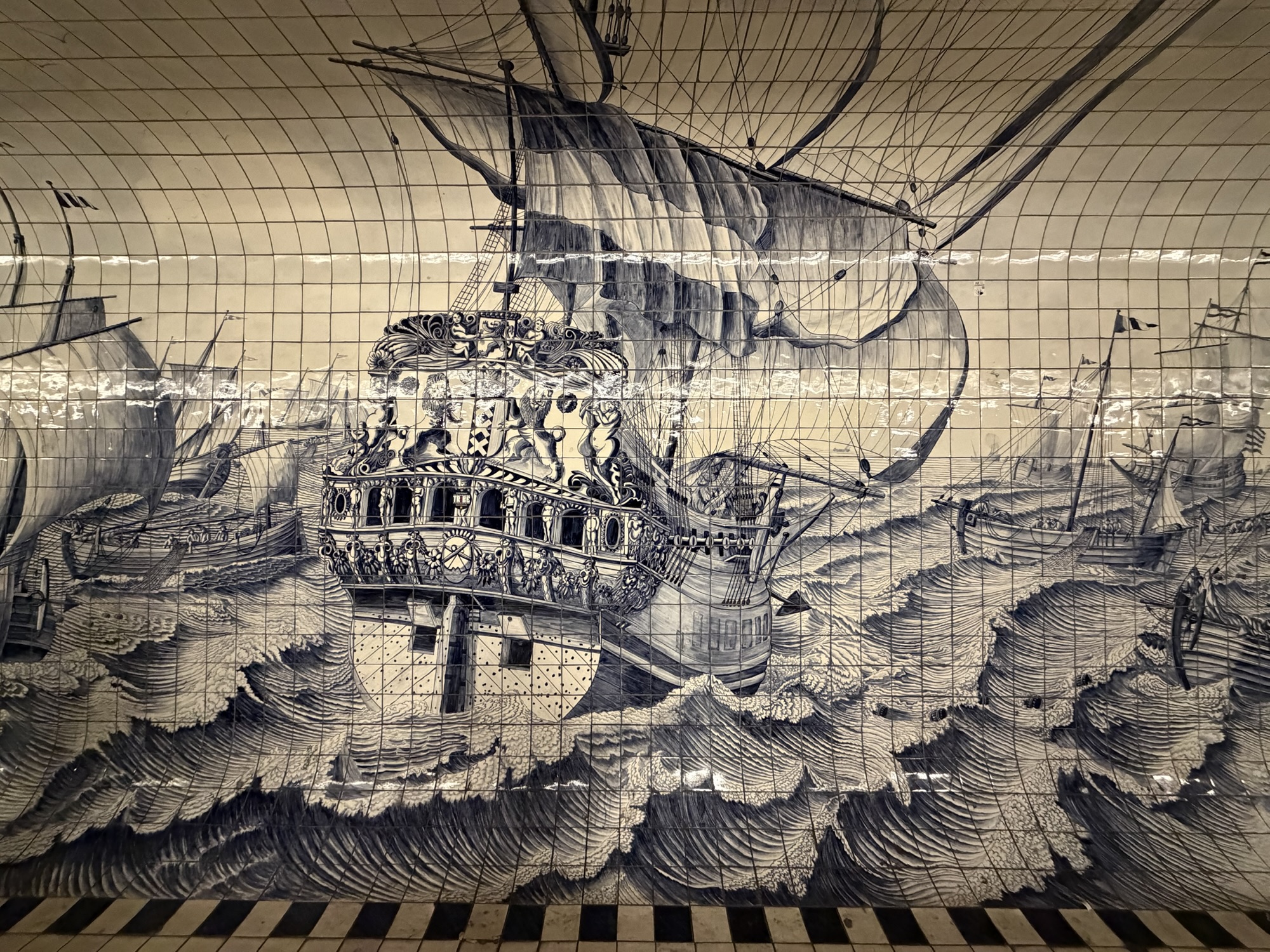
After a short rest and dinner on the barge, we went for a walking tour of Amsterdam. This is the sidewalk and bike lanes under Amsterdam station. They are lined with Delta tiles. Pedestrians around Central Station actually outnumbered cyclists.
We walked to a pub and met a friend of our tour guide, who gave us a very brief talk about an area of the city known as the Jordaan. It was a working class area, but is now an upscale vibrant district. People often had street-level businesses and lived above them.
It was only eight or 10° but most of the bars and restaurants had people spilling out onto the street. It was very busy.
When the Simone, the barge tour director, discovered that I was writing a blog, she printed the QR code for the noticeboard, and told the other passengers about it at one of our evening briefings. At one of the places we stopped on our walking tour there was a beautifully decorated bike. Simone pointed to the bike and said, “Look Lisa, a picture for your blog”. She was right.
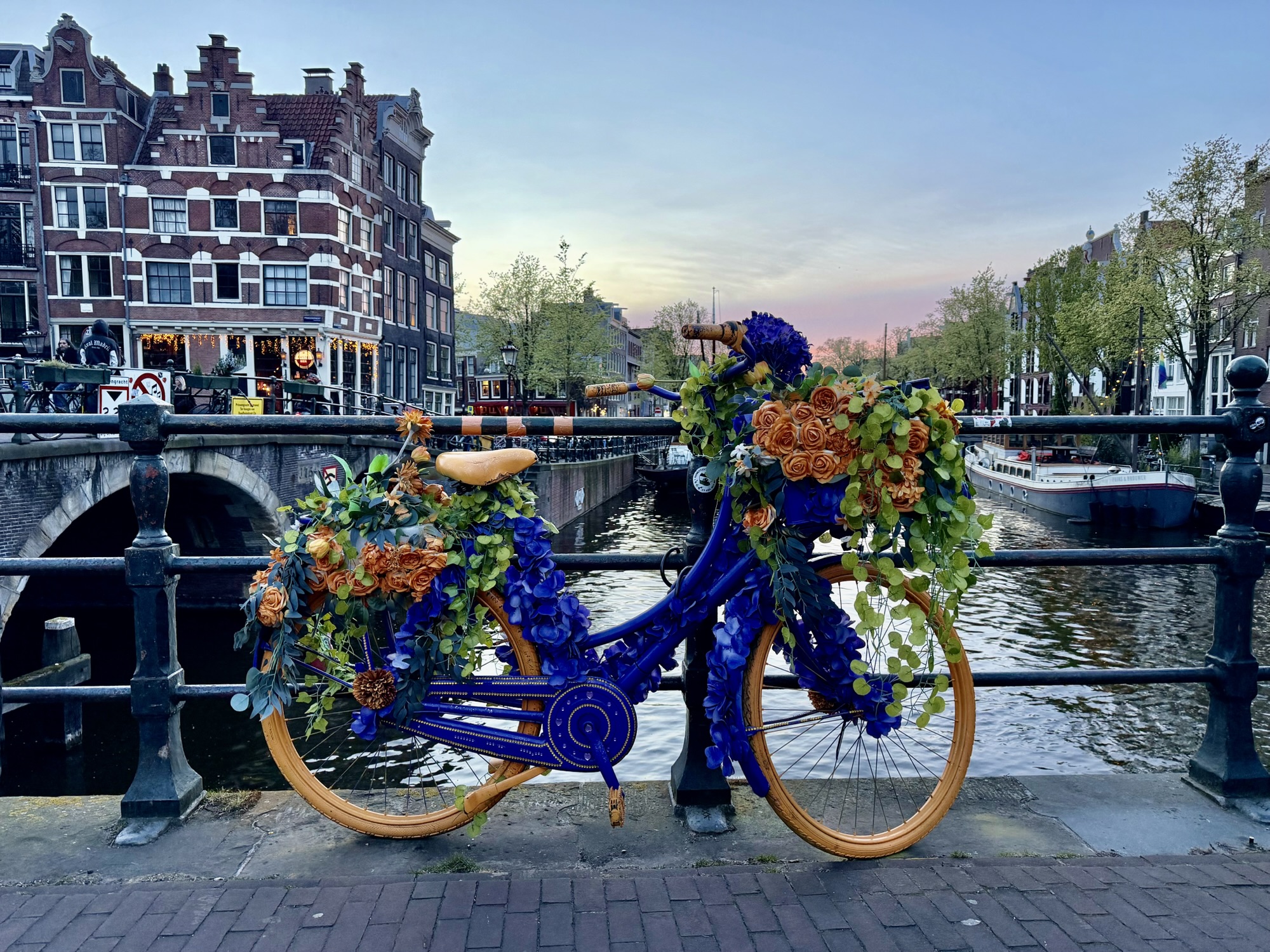
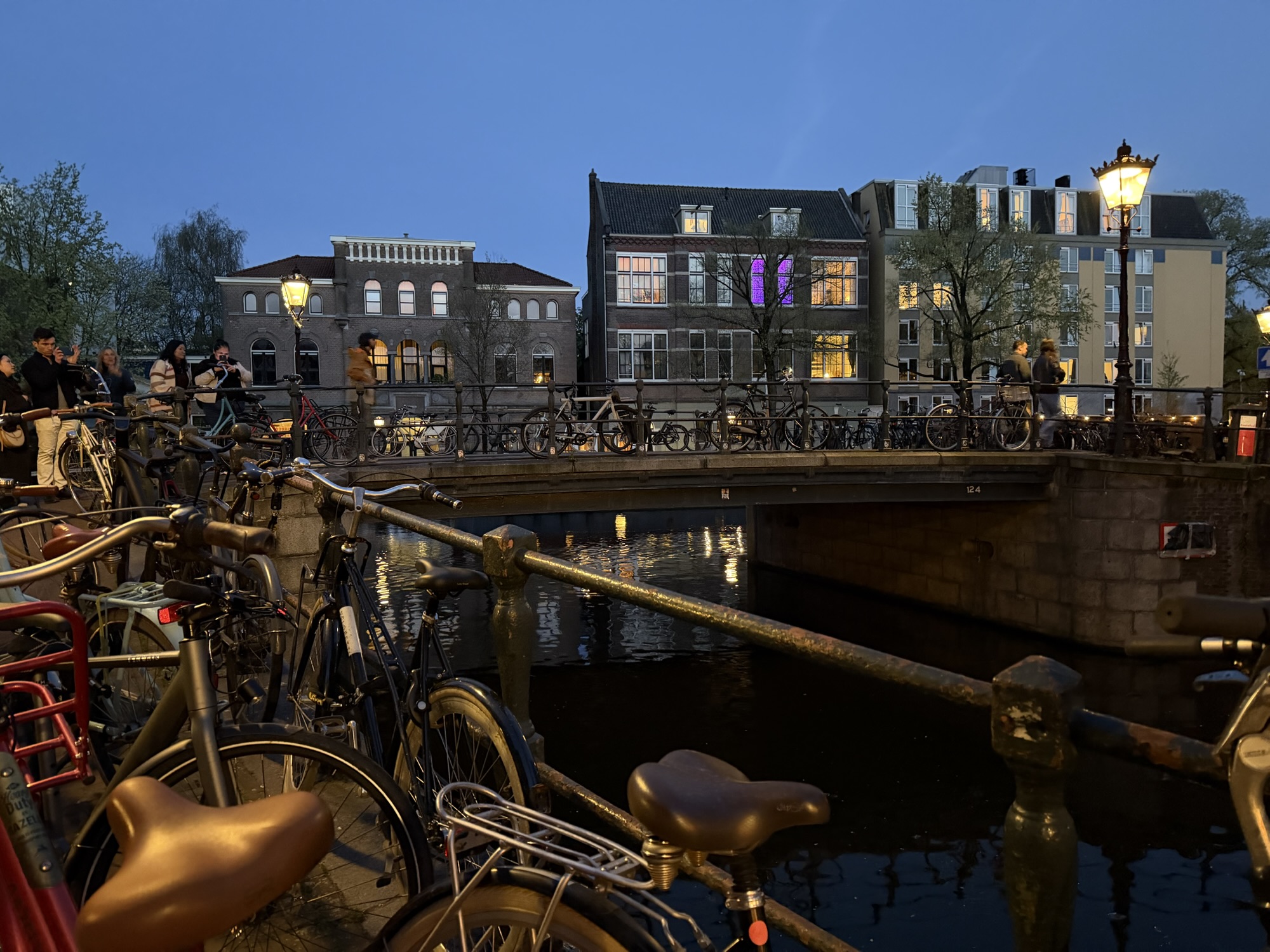
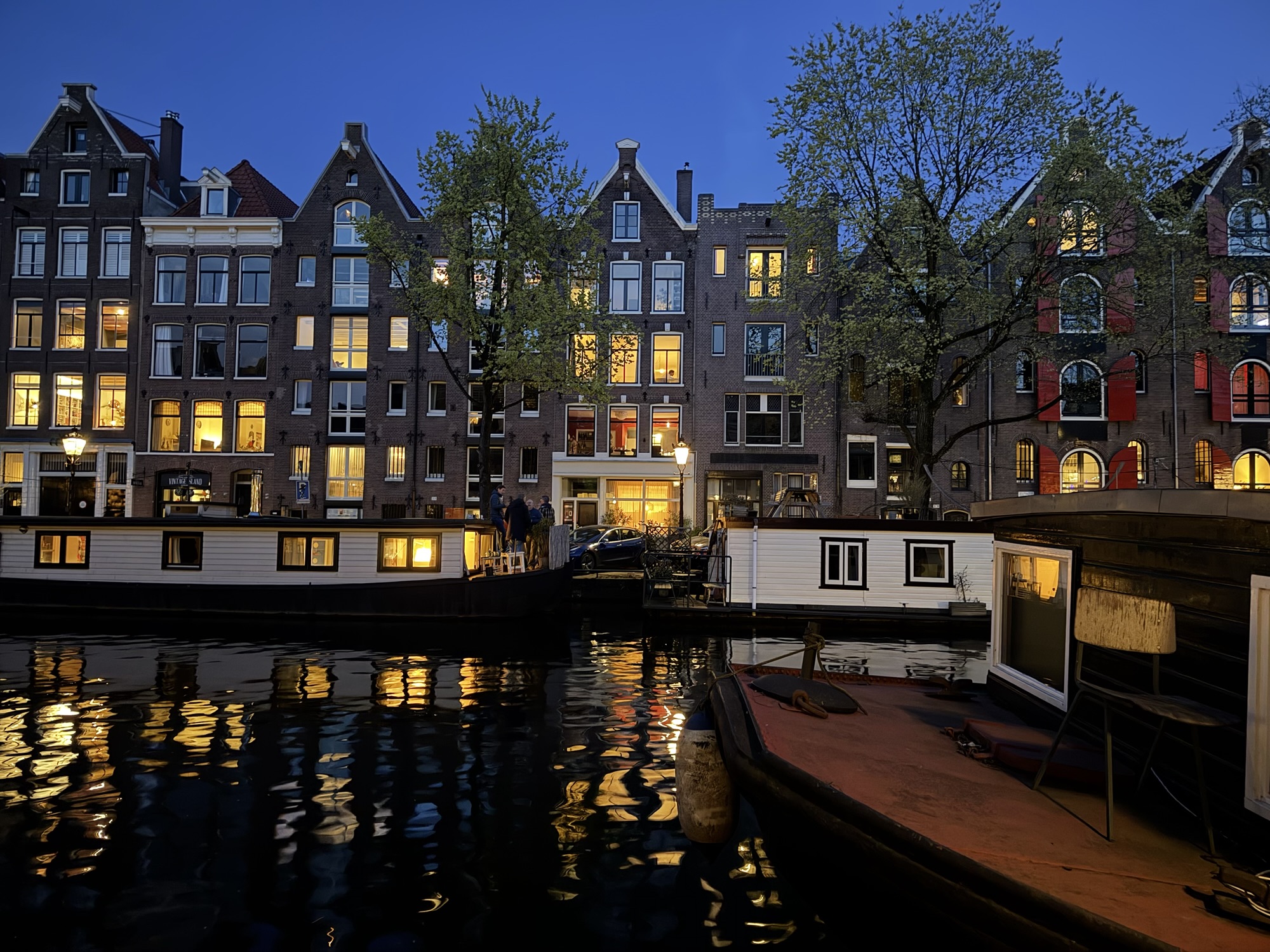
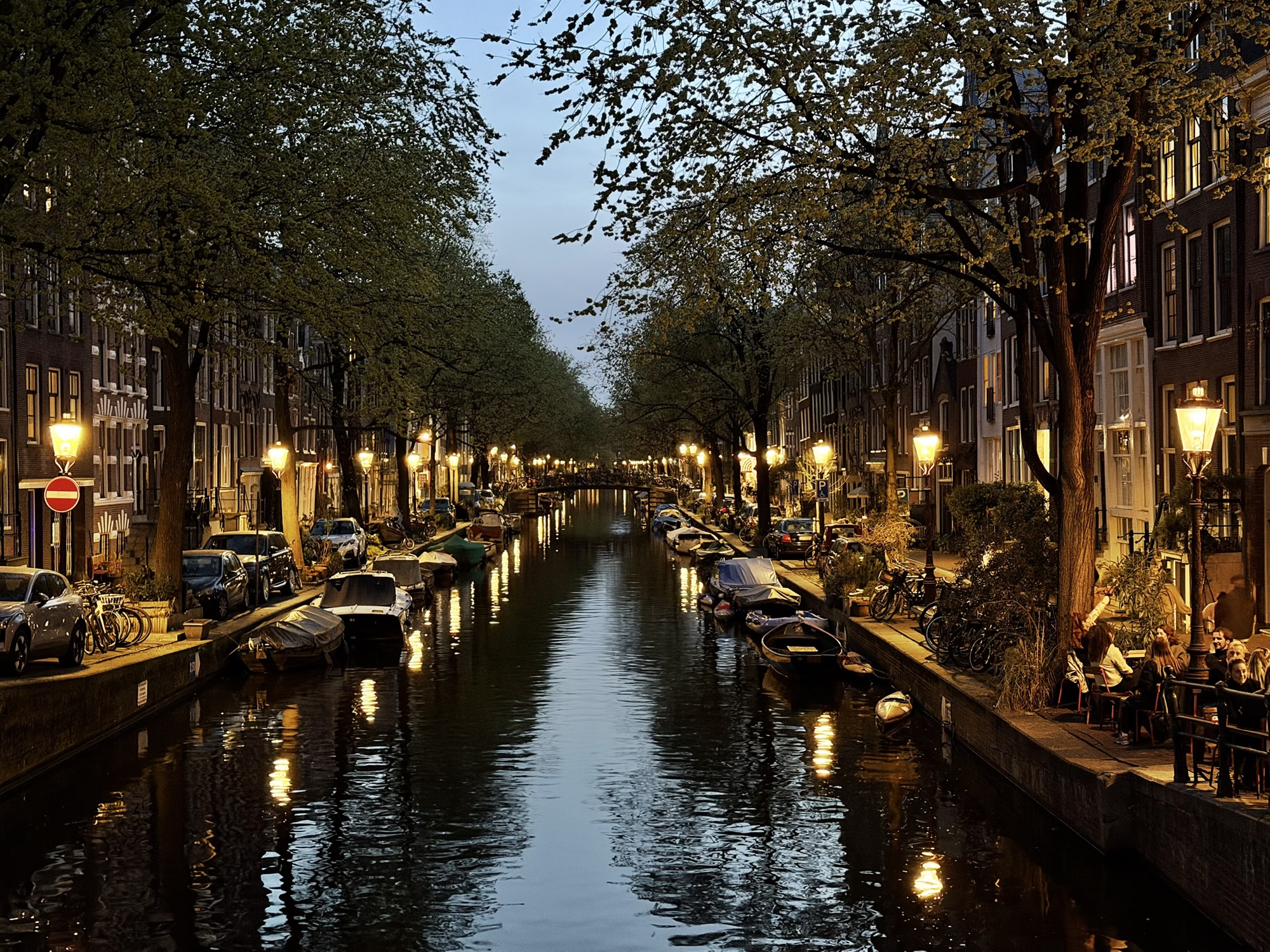
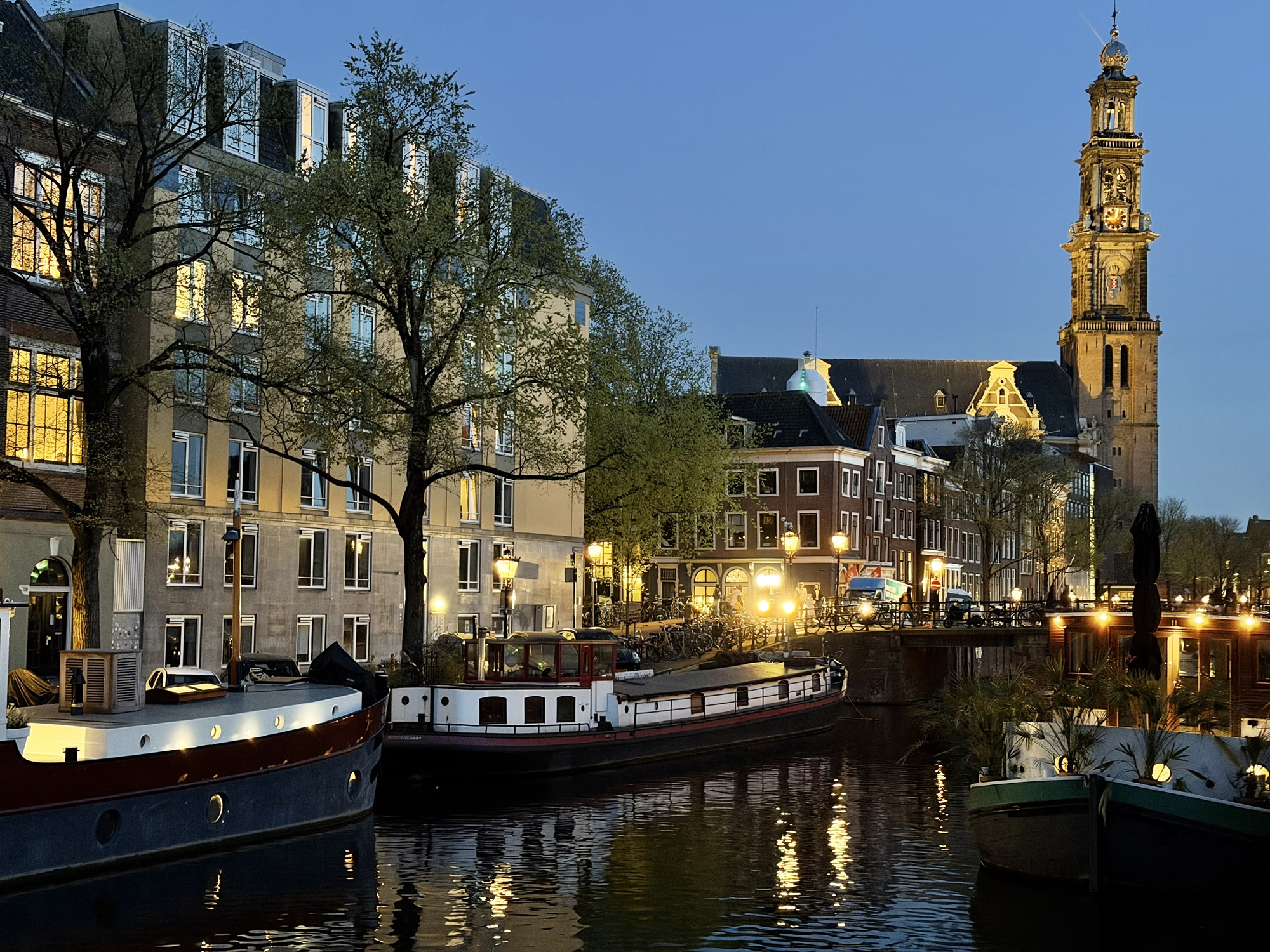
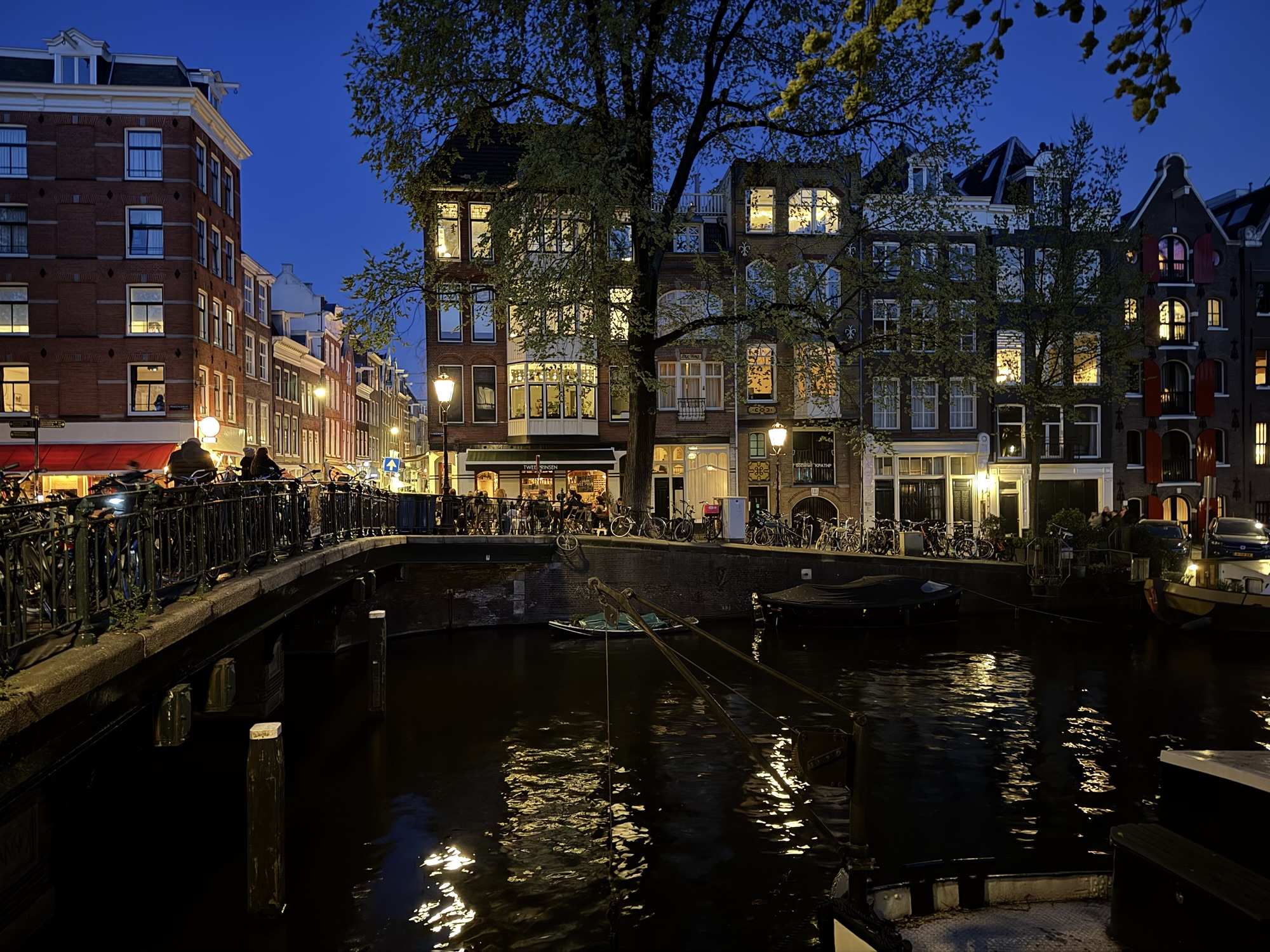
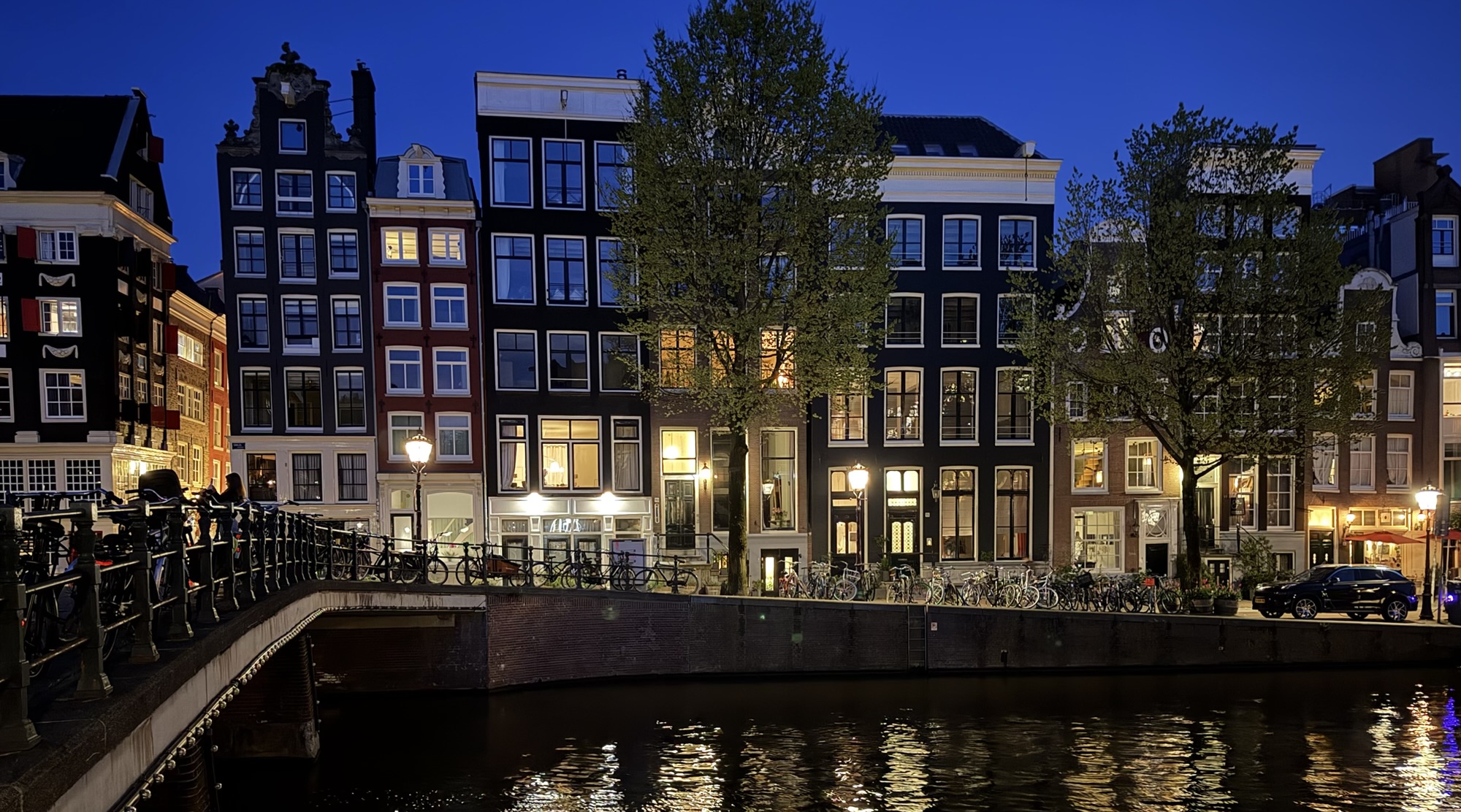
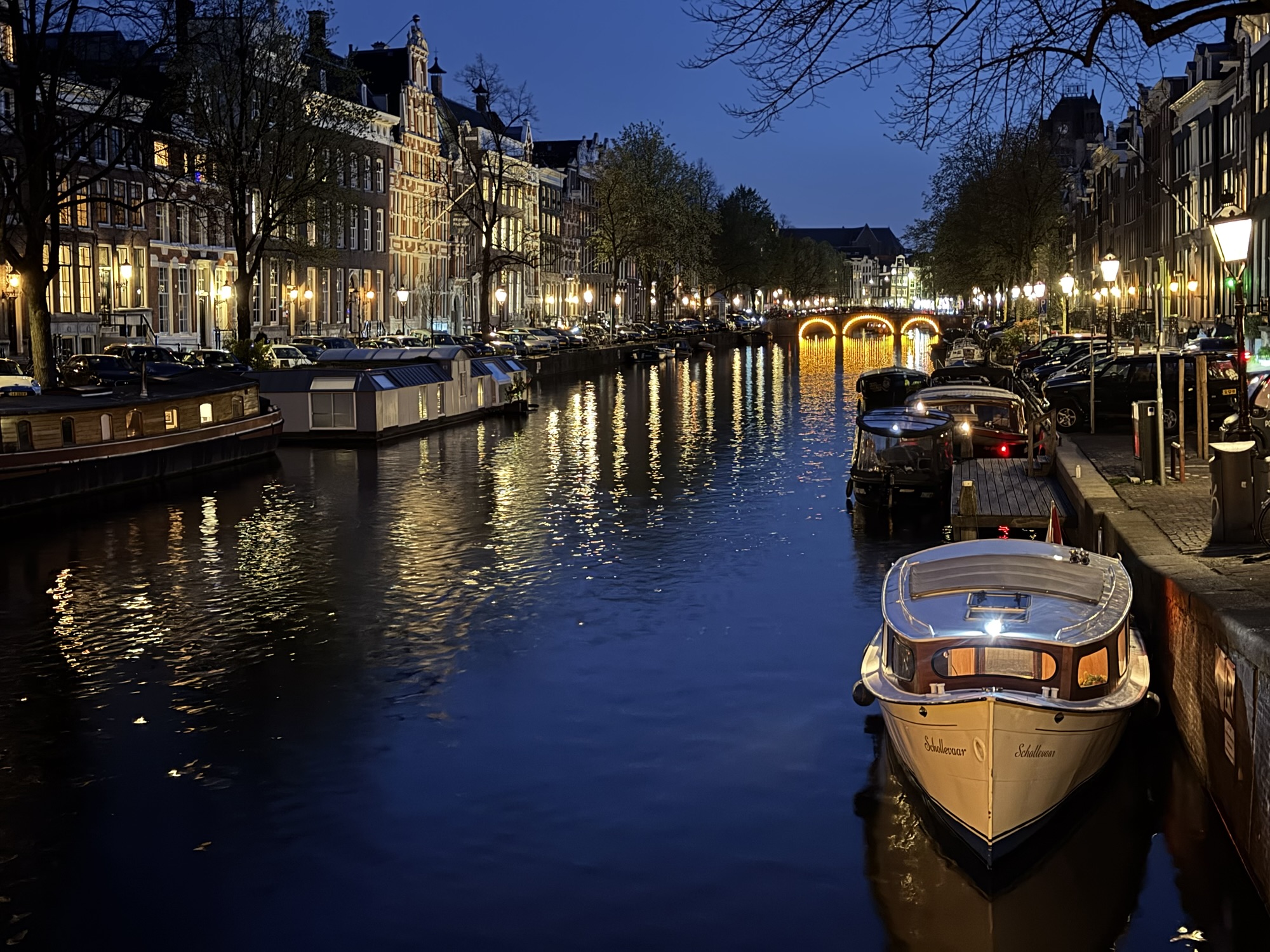
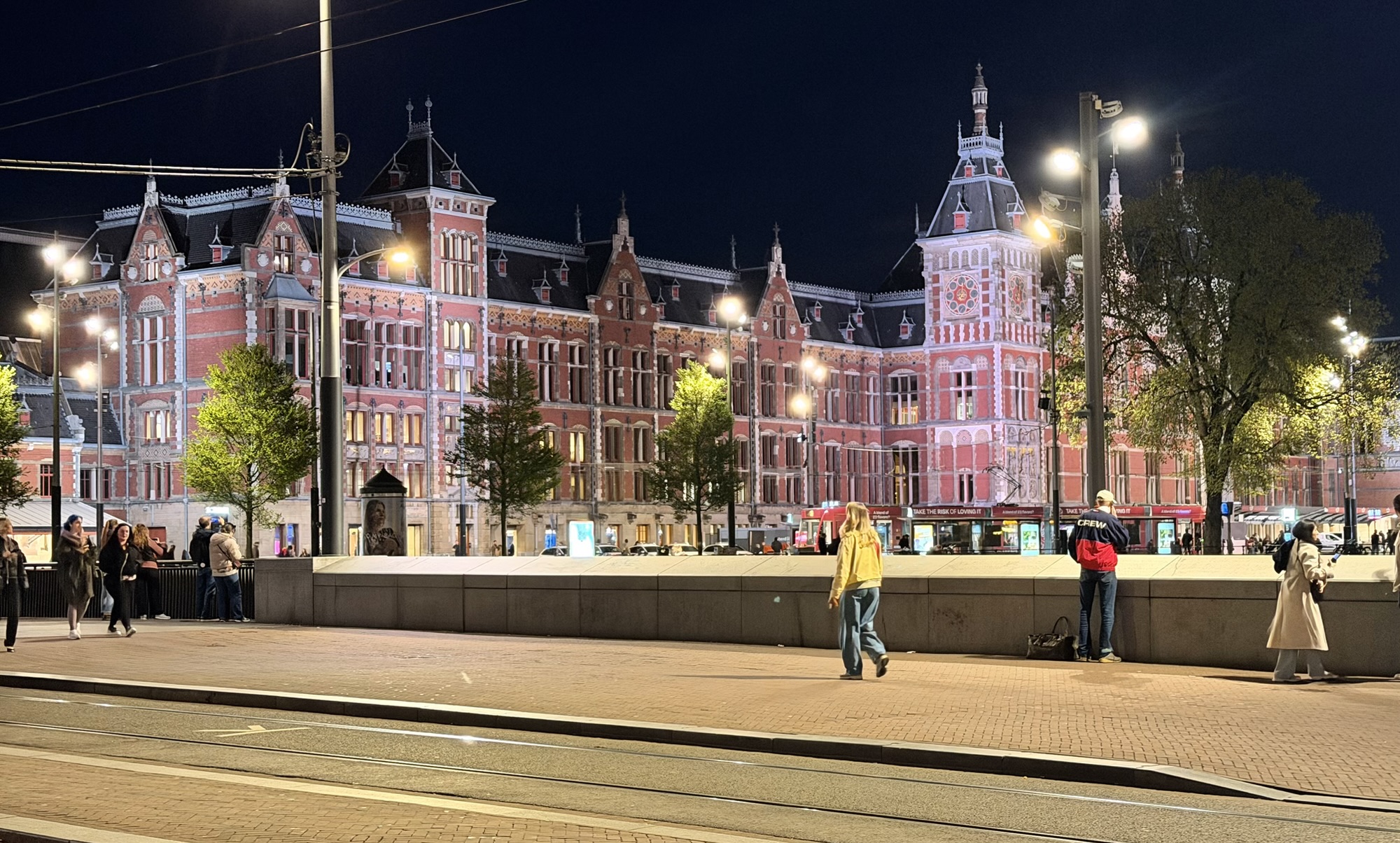
I will end tonight’s blog with a slideshow of some of the canal scenes we passed, and a nighttime view of Central Station.
Discover more from Lisa Stokes
Subscribe to get the latest posts sent to your email.