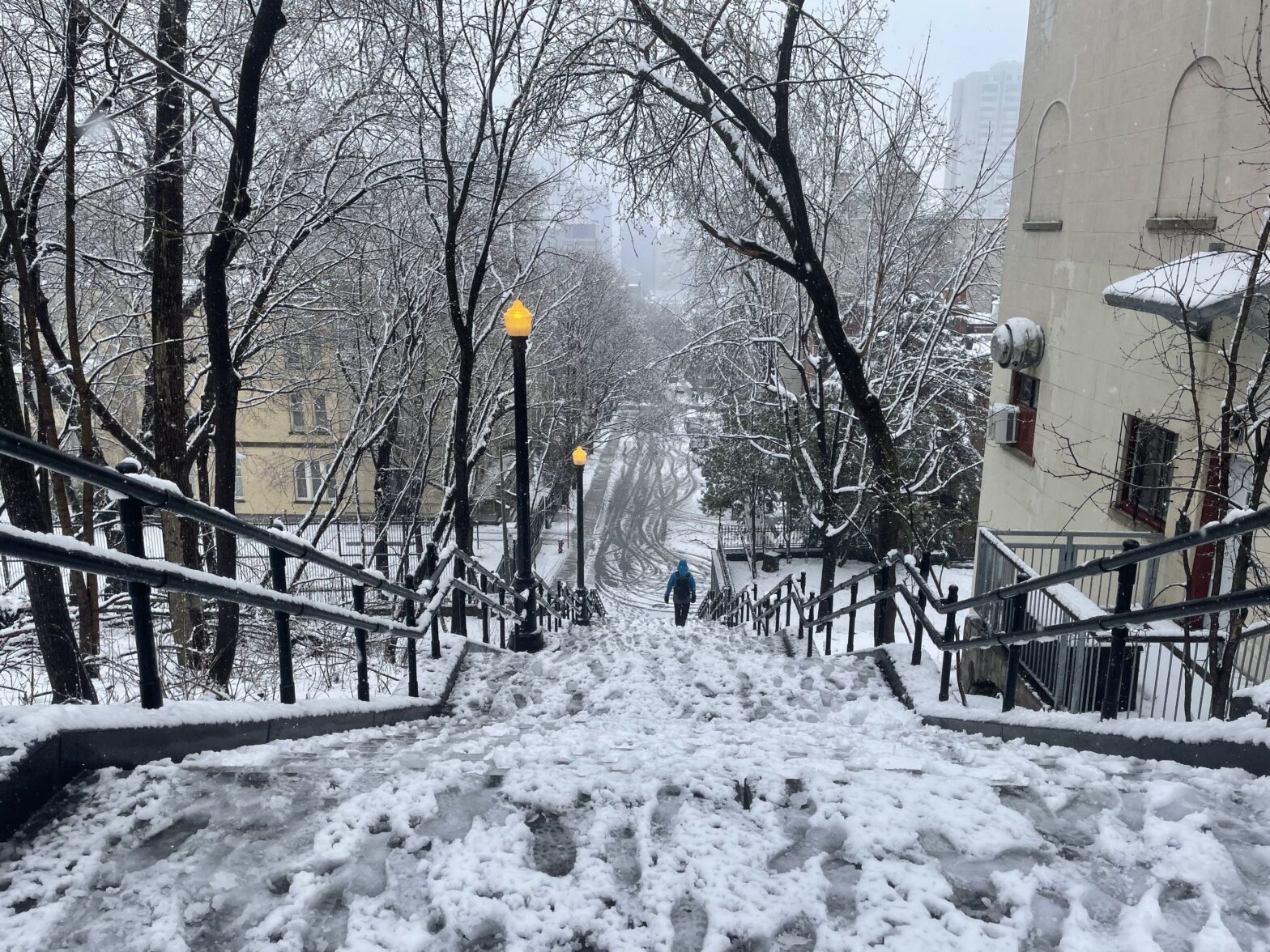
There was a significant heavy, wet snowfall overnight. The plan for the morning was to visit Mehrunnisa to see her apartment, and the views from its rooftop patio. Then she would show us around McGill.
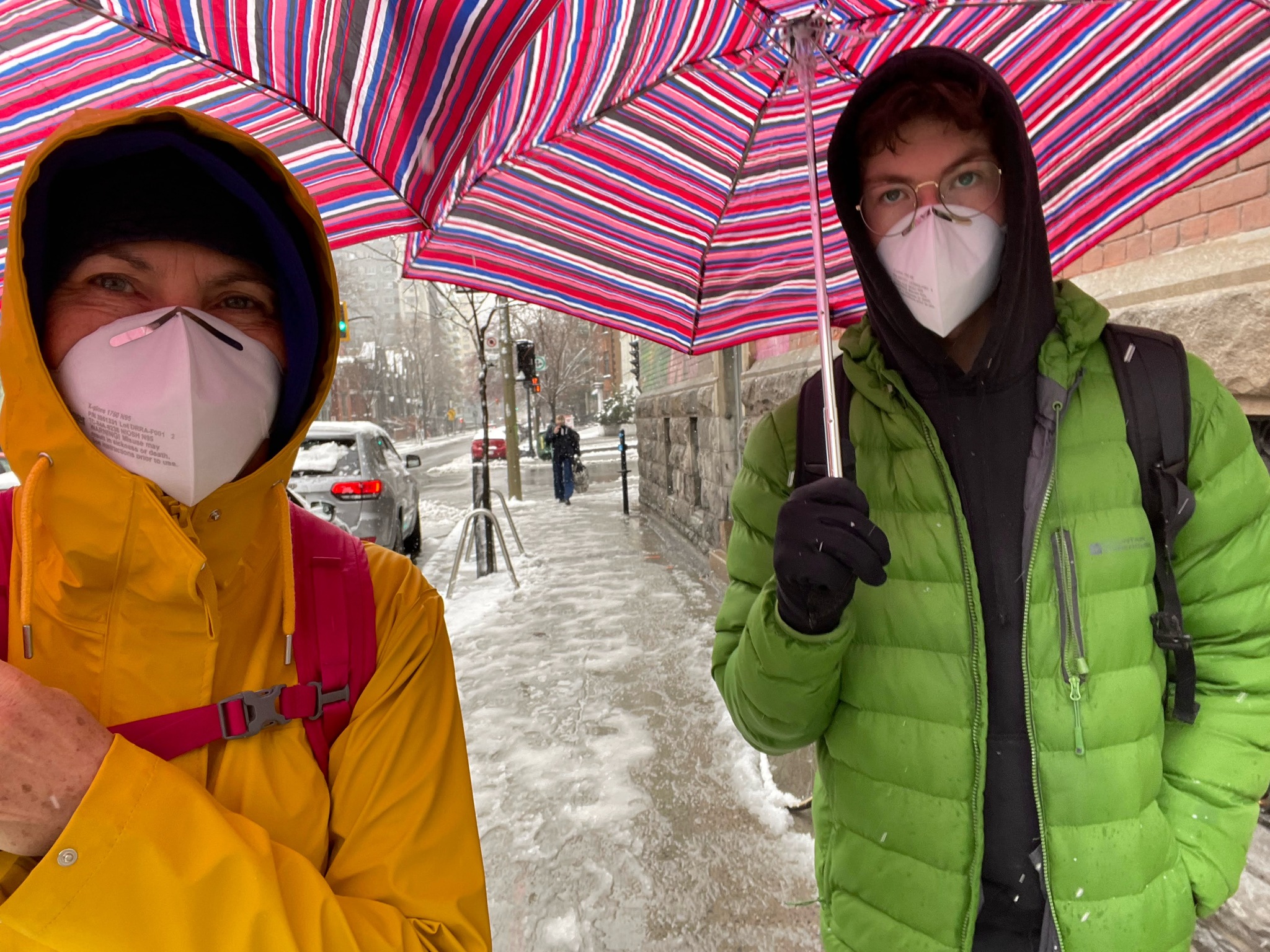
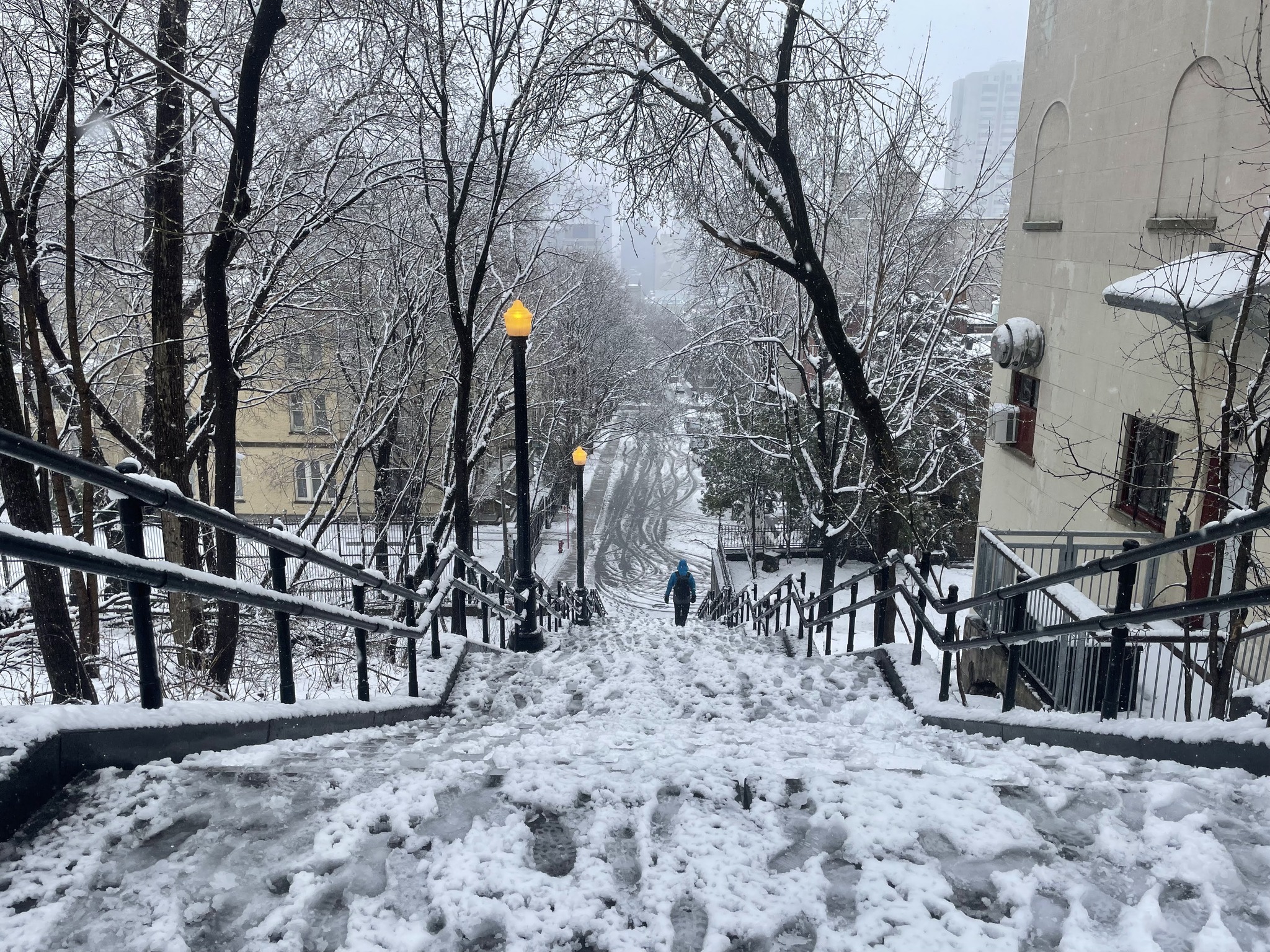
There was no way we could ride a bike in these conditions, so we walked. It was still snowing fairly heavily, so we took umbrellas. We had to walk up some slippery steep sidewalks.
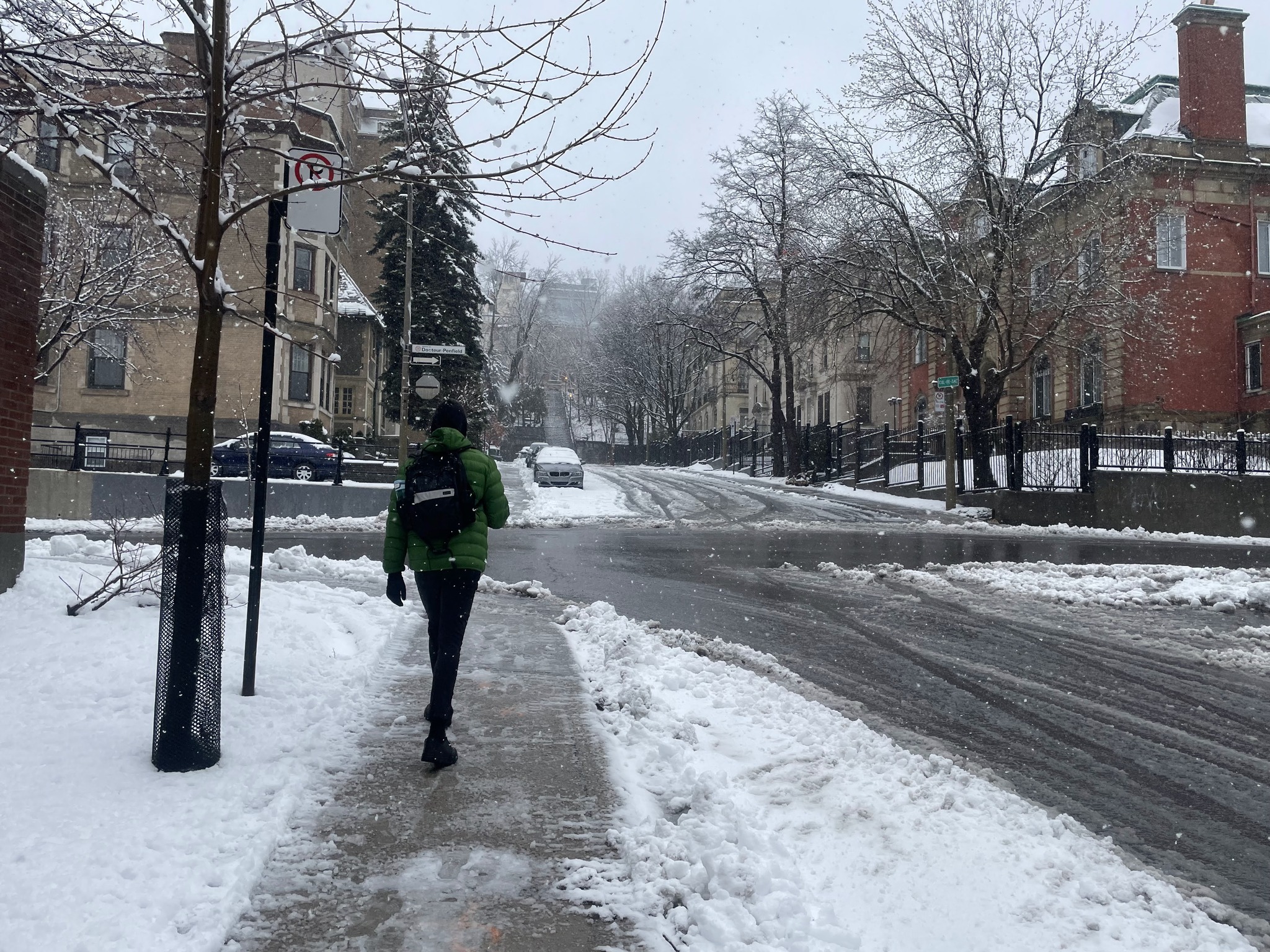
The consulate general of the Russian Federation is located on Avenue du Musée. There have been regular protests outside the building, with protesters staining the snow red, and painting a Ukrainian flag on the fence in front of the consulate. Montreal city councillor, Serge Sasseville, lives across the street, and flies Ukrainian flags from many of the windows of his home.
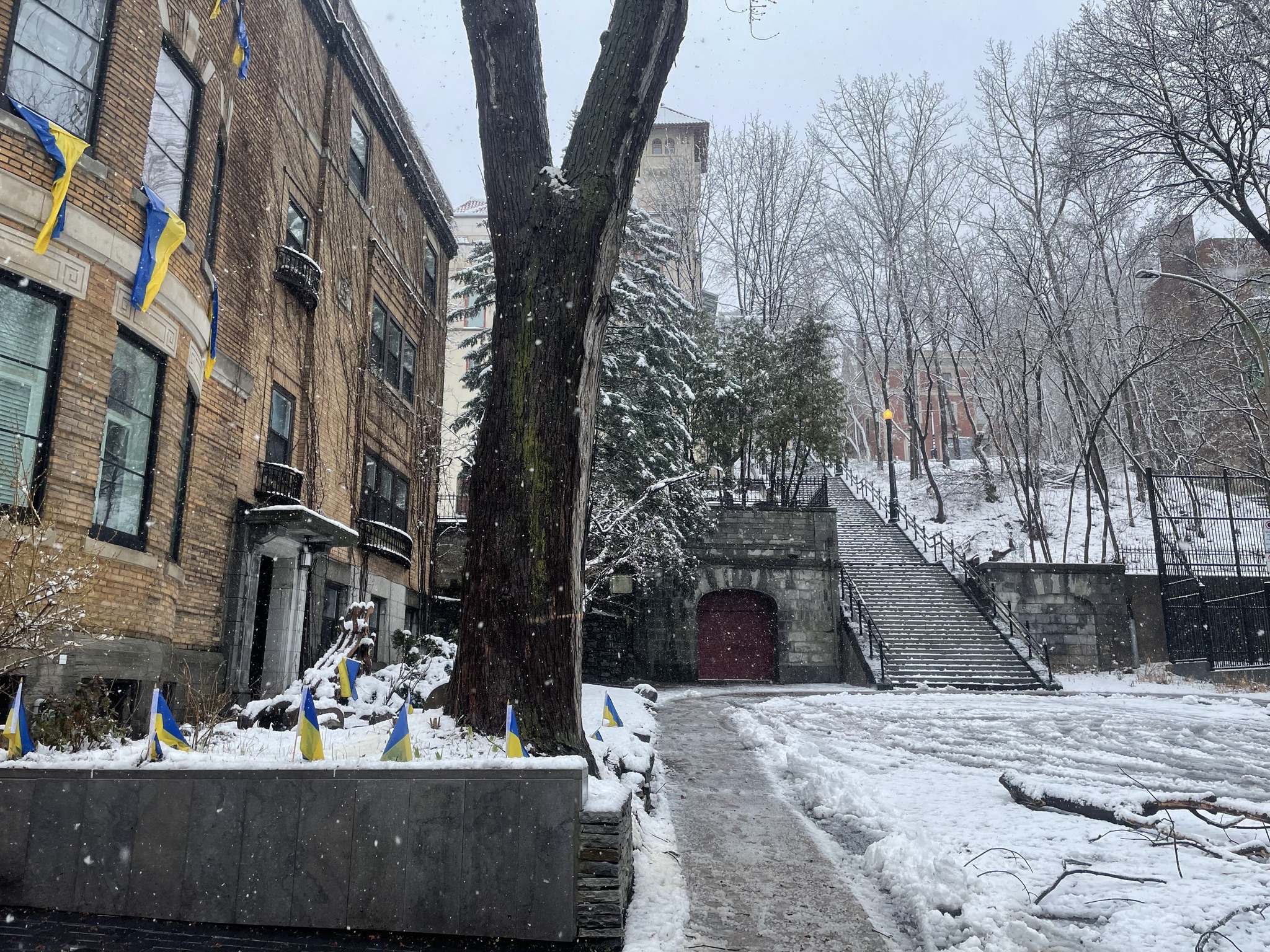
We had to be very careful climbing the stairs.
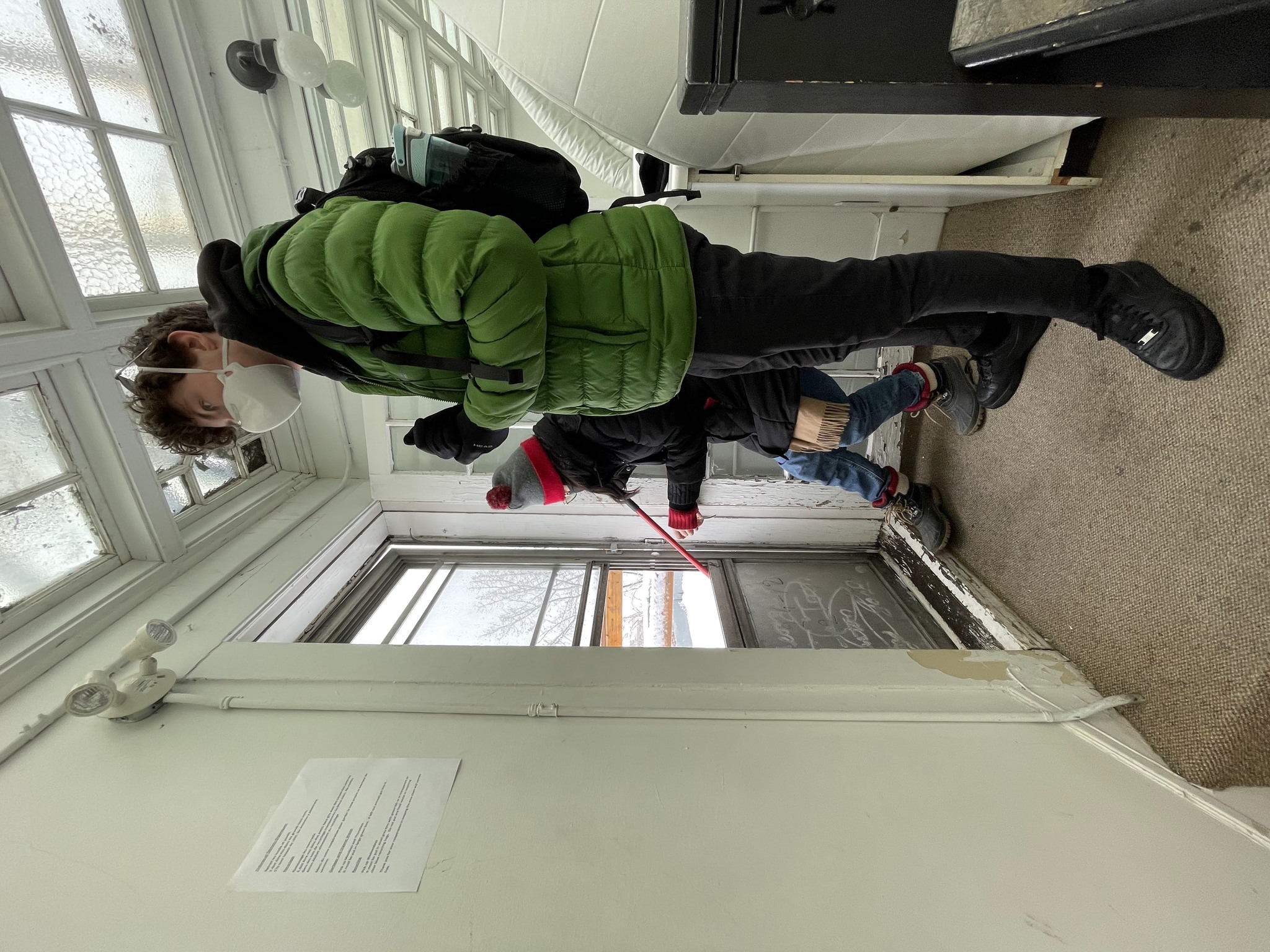
The apartment where Mehrunnisa lives, has a rooftop patio. There was enough accumulated snow that we couldn’t push open the screen door. Mehrunnisa opened the window and used a broom to clear it out out of the way.
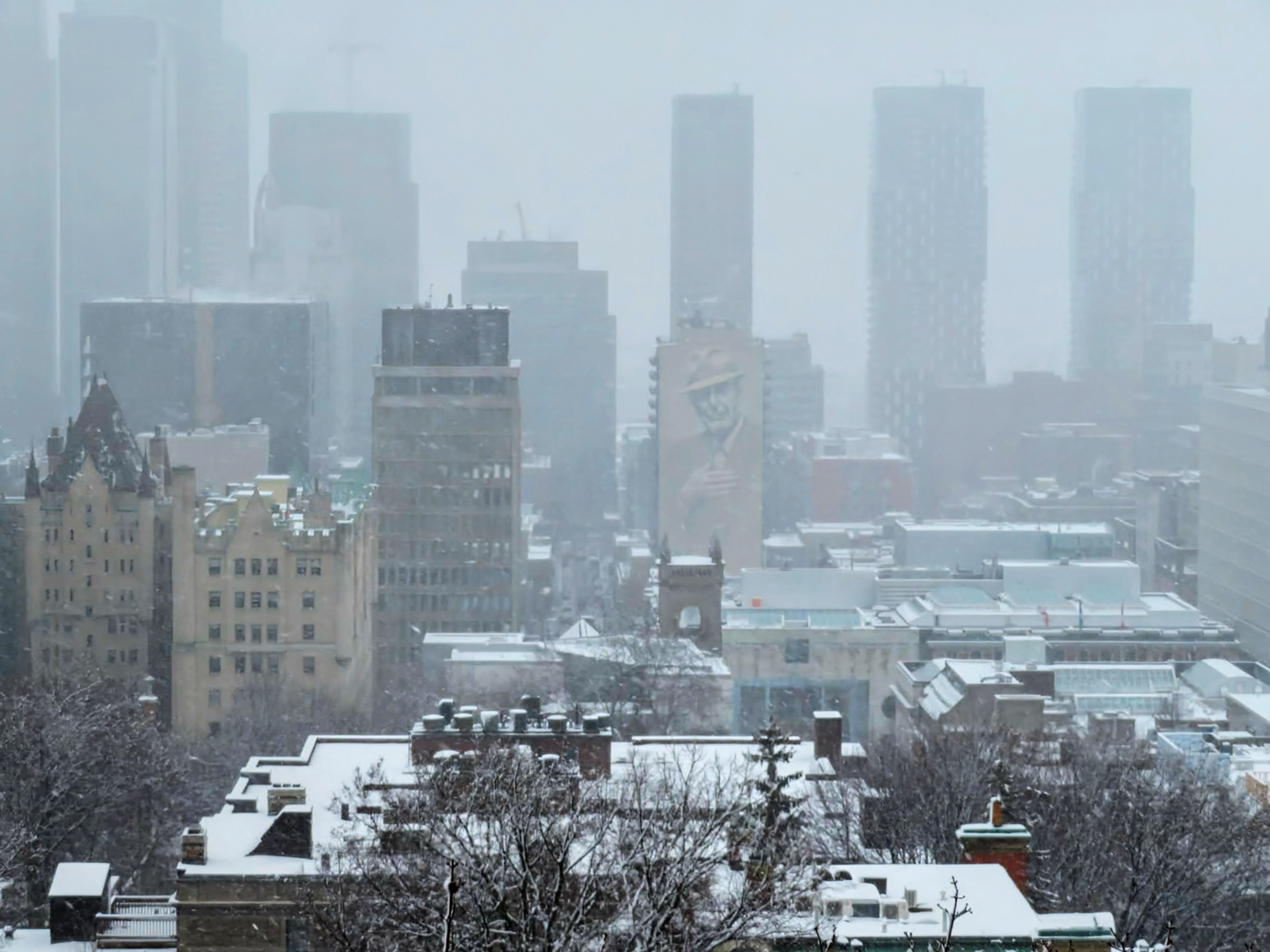
The snowfall was slowing, but the view was still quite obscured.
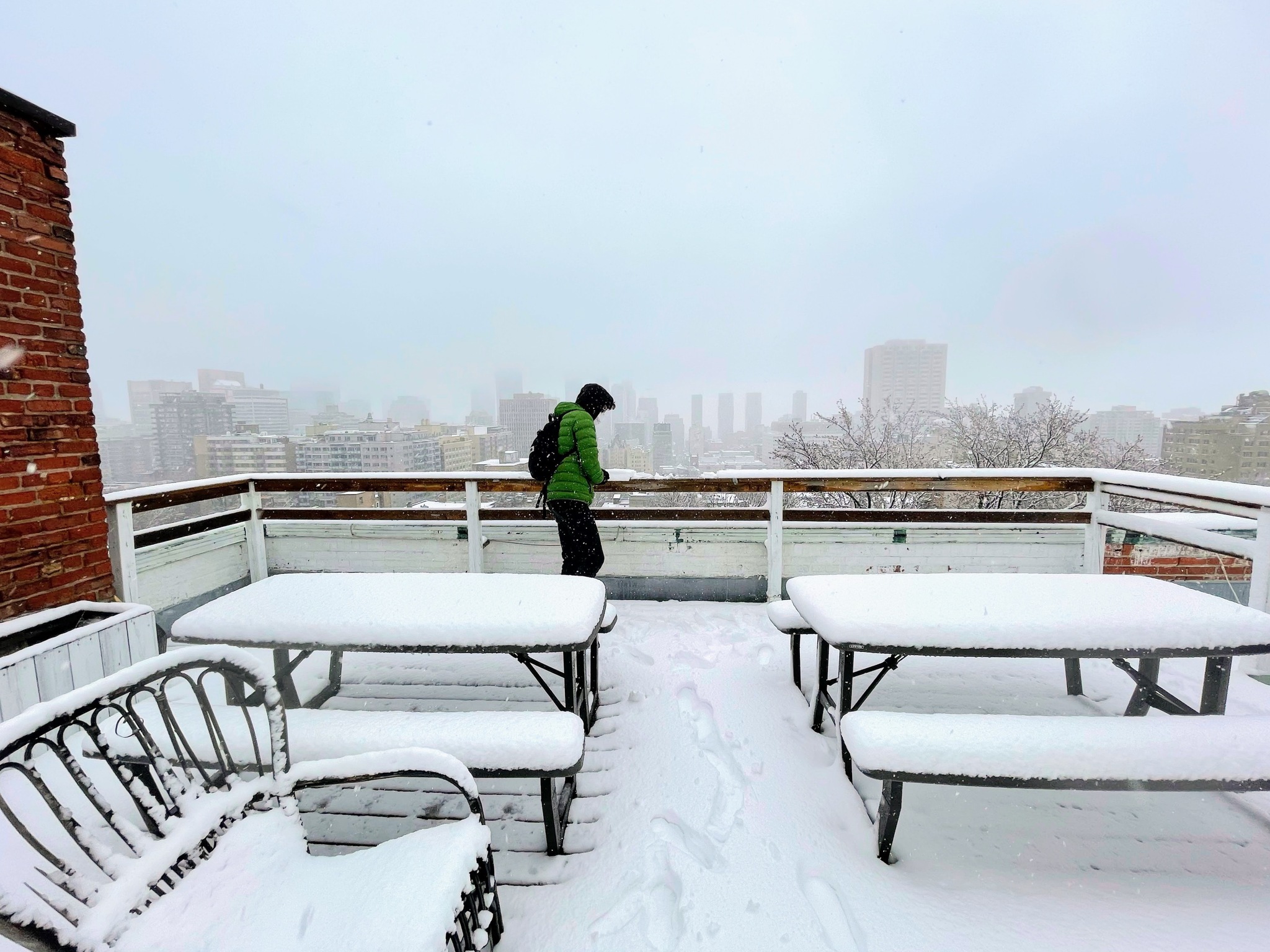
In this picture, you can see how much snow has accumulated on the tabletops.
We descended a different staircase, which took us down to the McGill campus.
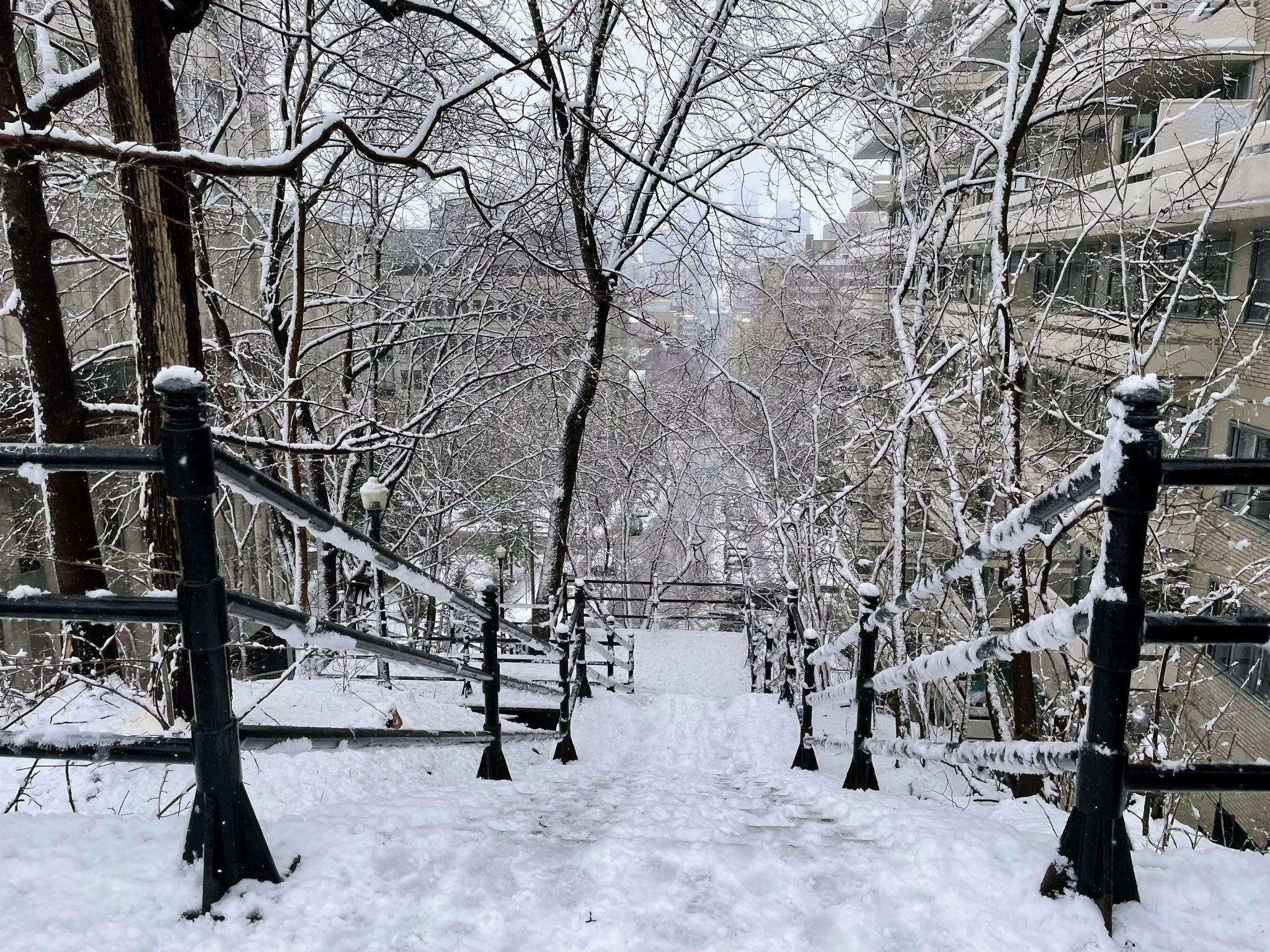
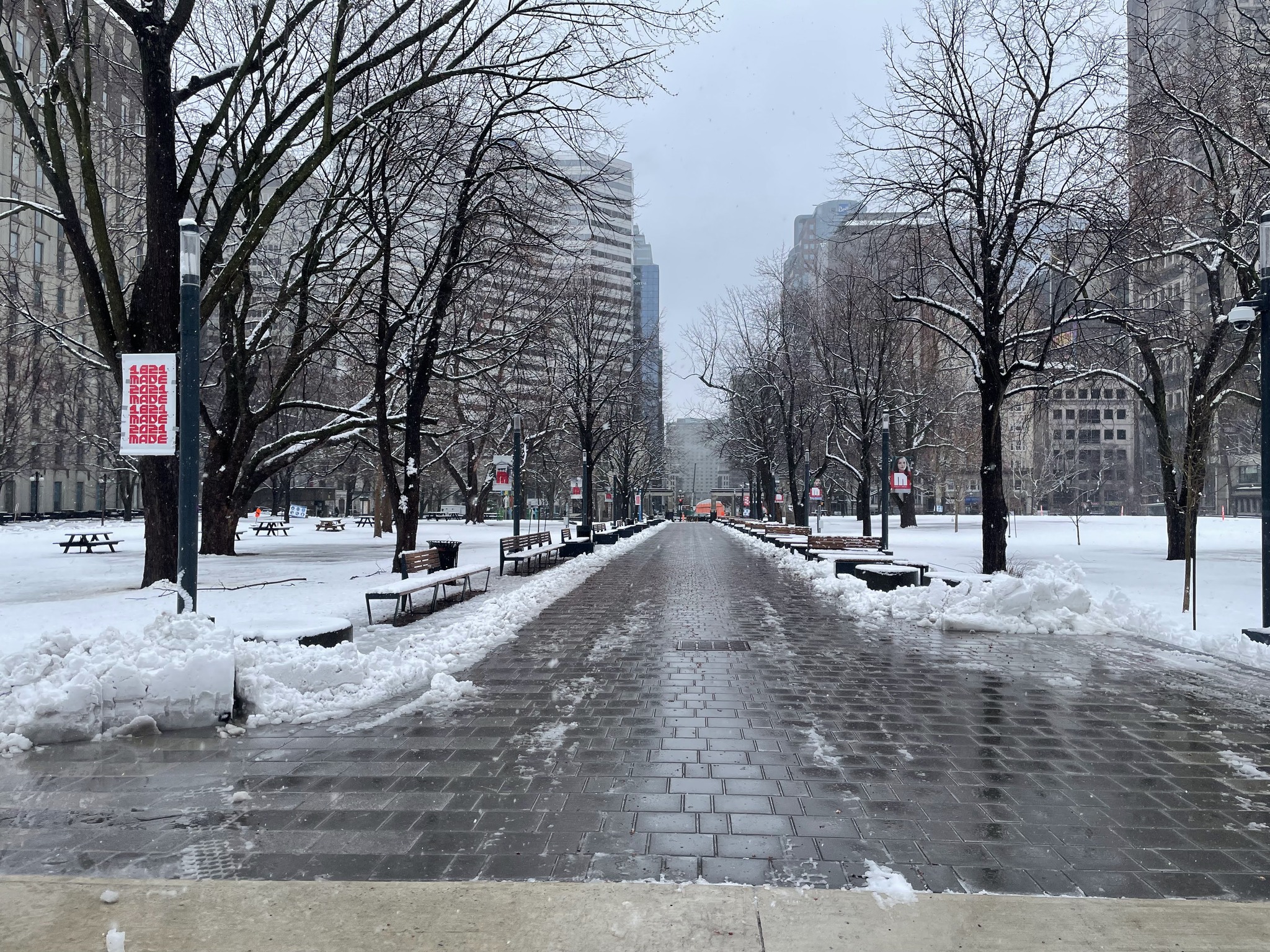
It was very cold, so we walked through campus, but didn’t linger.
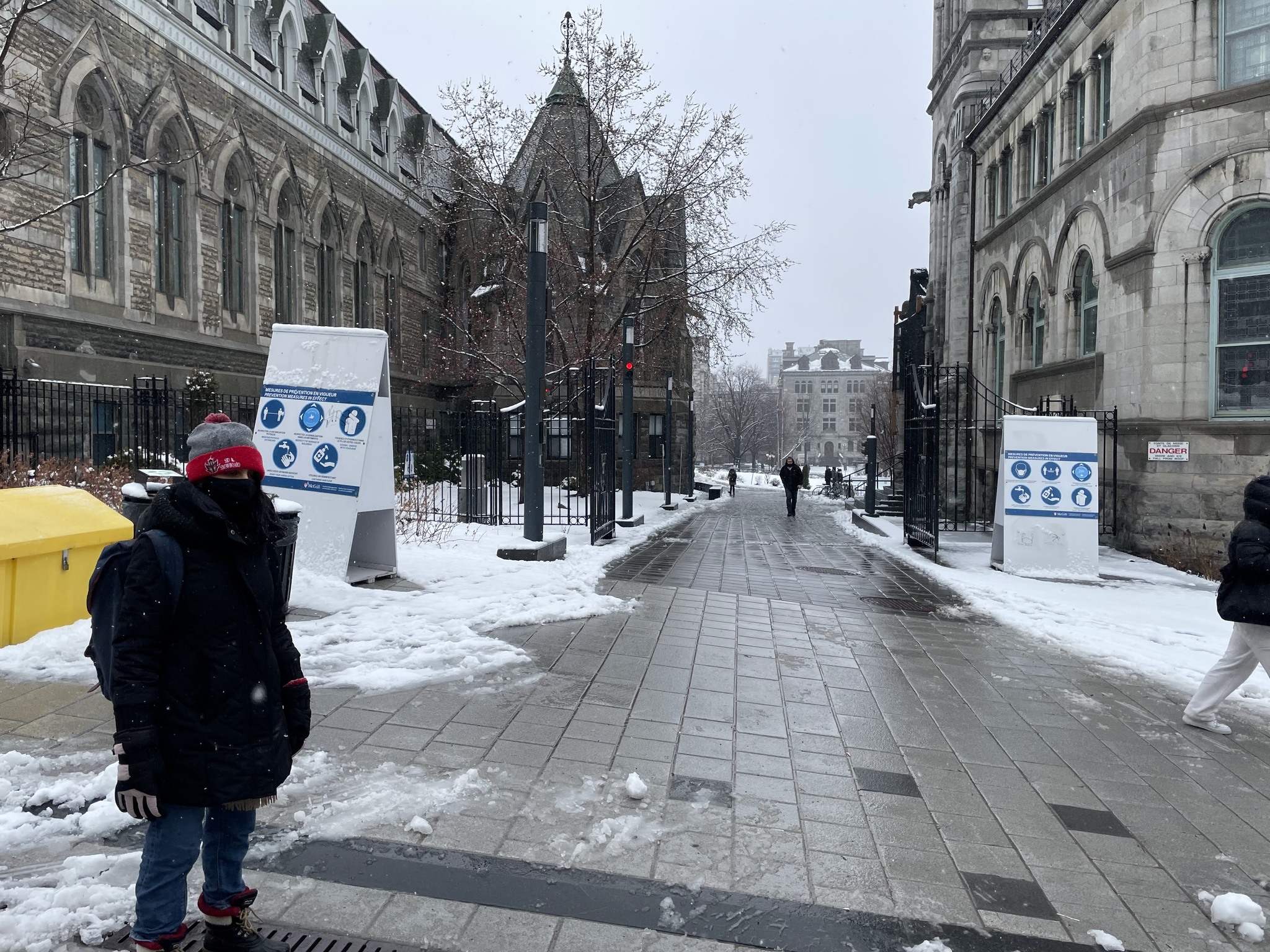
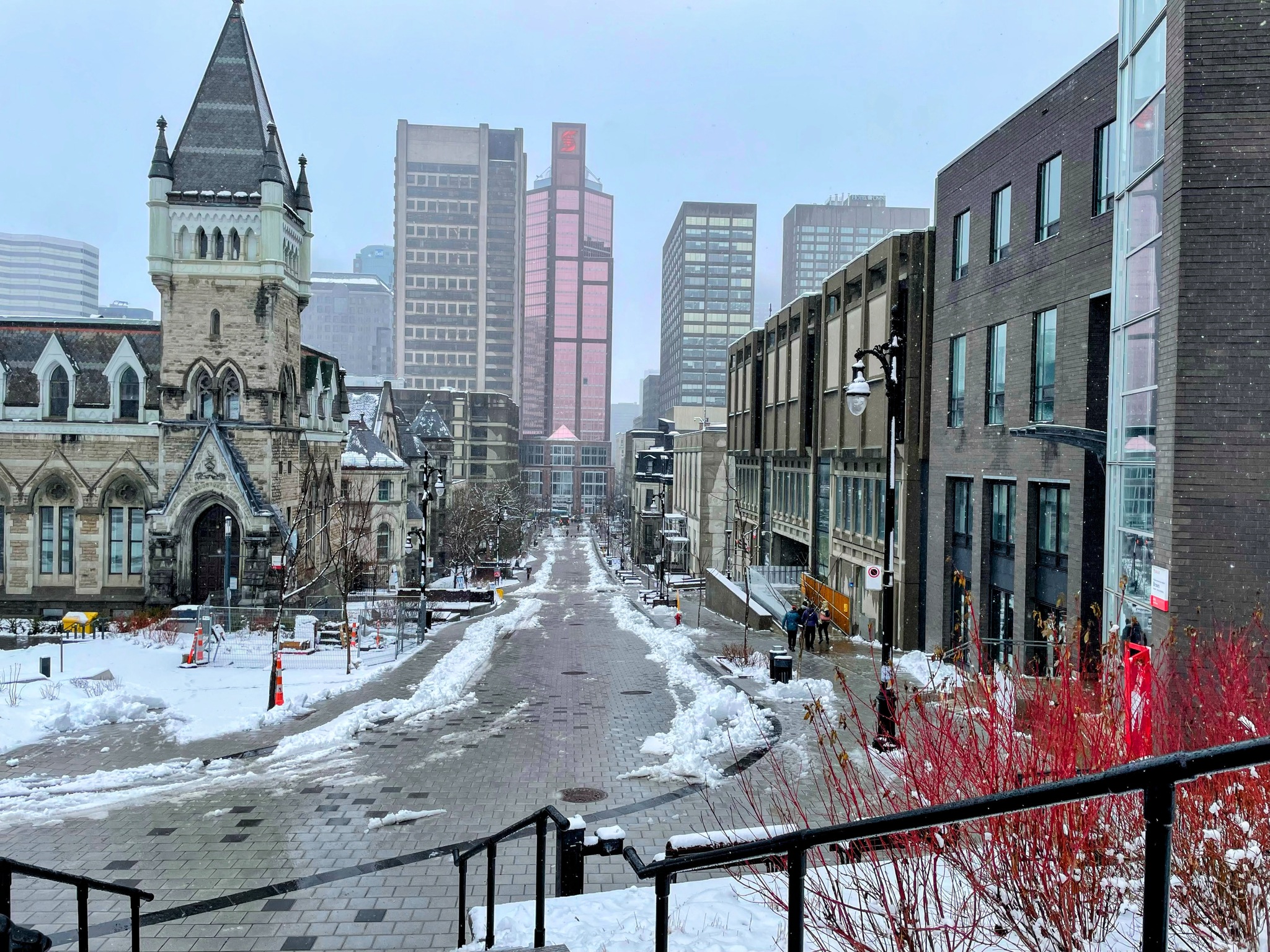
I found these retractable bollards interesting. I hadn’t seen one in person before. I have since seen another in a small town in Slovakia.
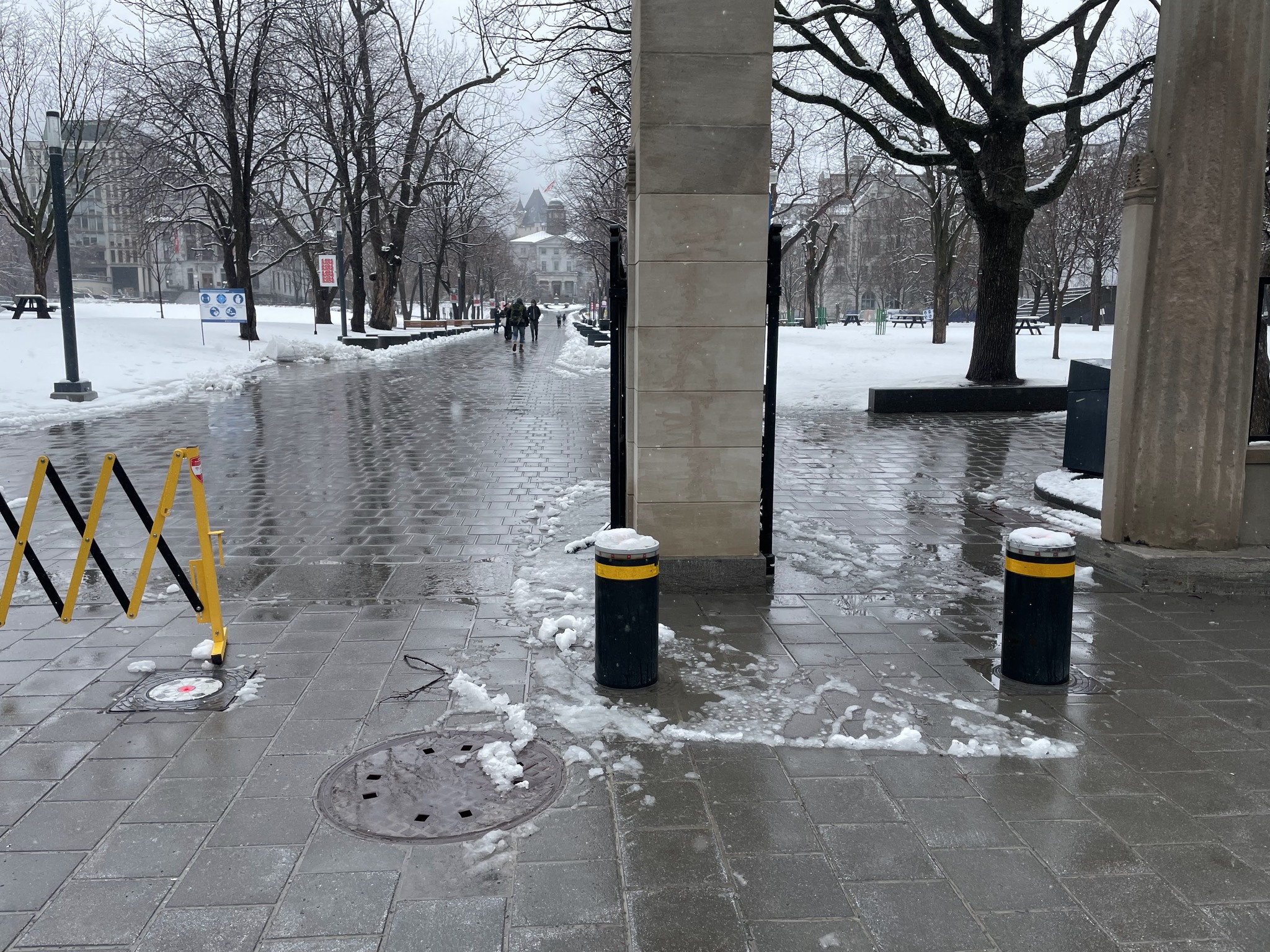
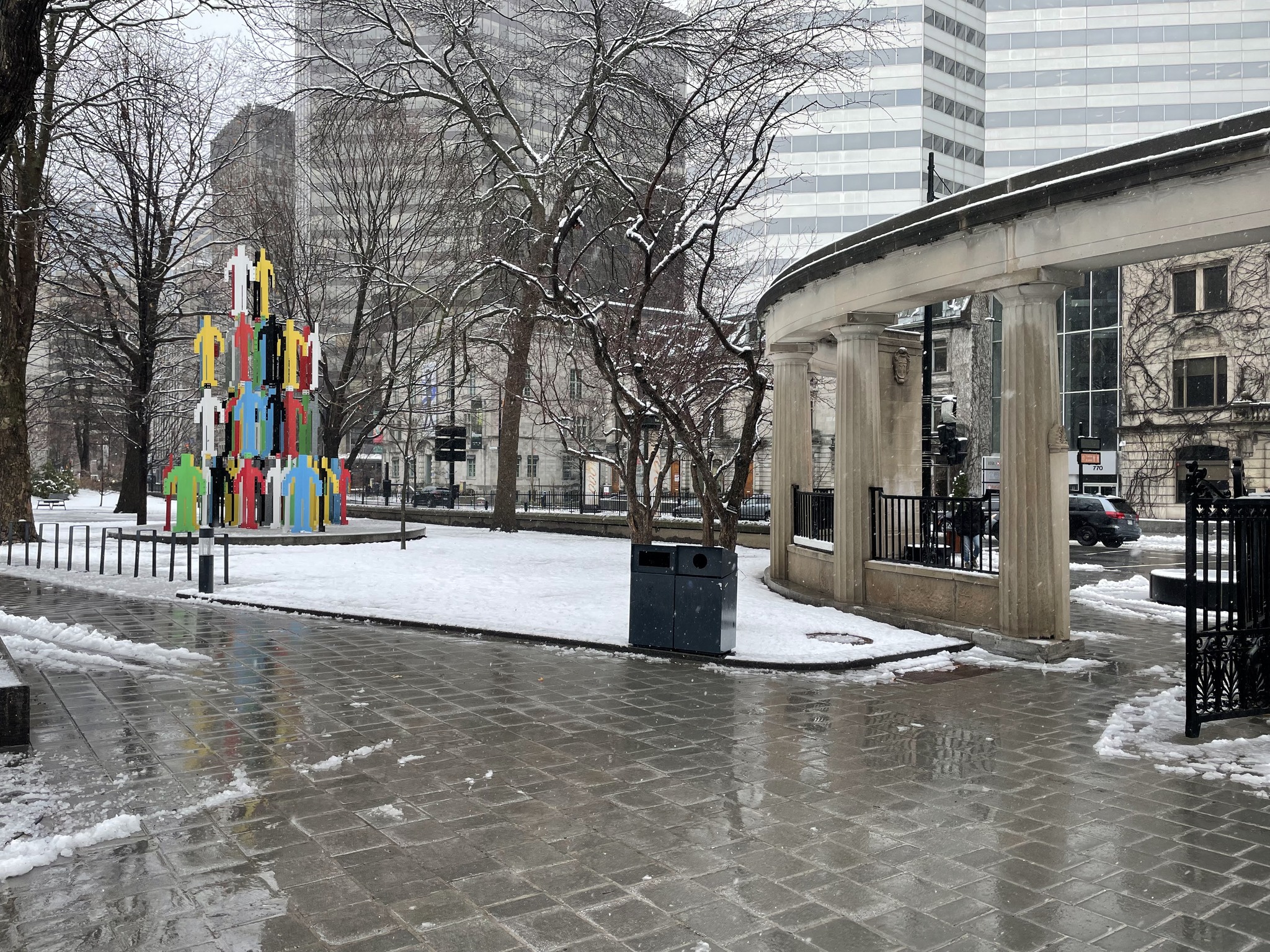
This is Jonathan Borofski‘s “Human Structures“ sculpture, and the Roddick Gates. The sculpture features multiple groupings of figures, made from painted and moulded galvanized steel, “exploring themes of interconnectedness and the relationship between the individual and their environment”. The gates, located on Sherbrooke Street West, serve as the main entrance to the campus.
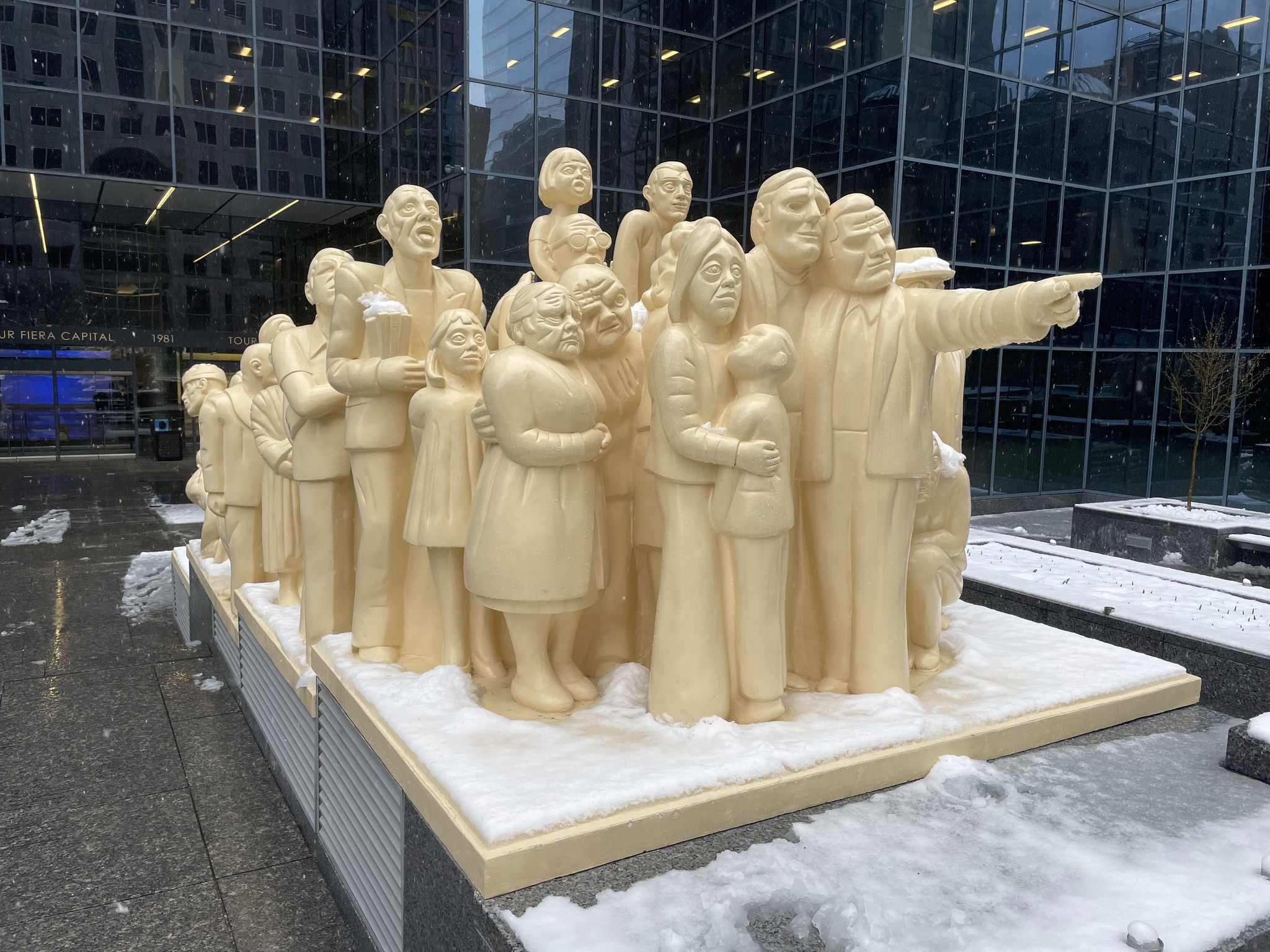
This sculpture, entitled the illuminated crowd, was created in 1968 by Raymond Mason. It features 65 figures. The plaque reads, “A crowd has gathered, facing a light, an illumination brought about by a fire, an event, an ideology – or an ideal. The strong light casts shadows, and as the light moves towards the back and diminishes, the mood degenerates; rowdiness, disorder and violence occur, showing the fragile nature of man. Illumination, hope, involvement, hilarity, irritation, fear, illness, violence murder and death – the flow of man’s emotion through space.”
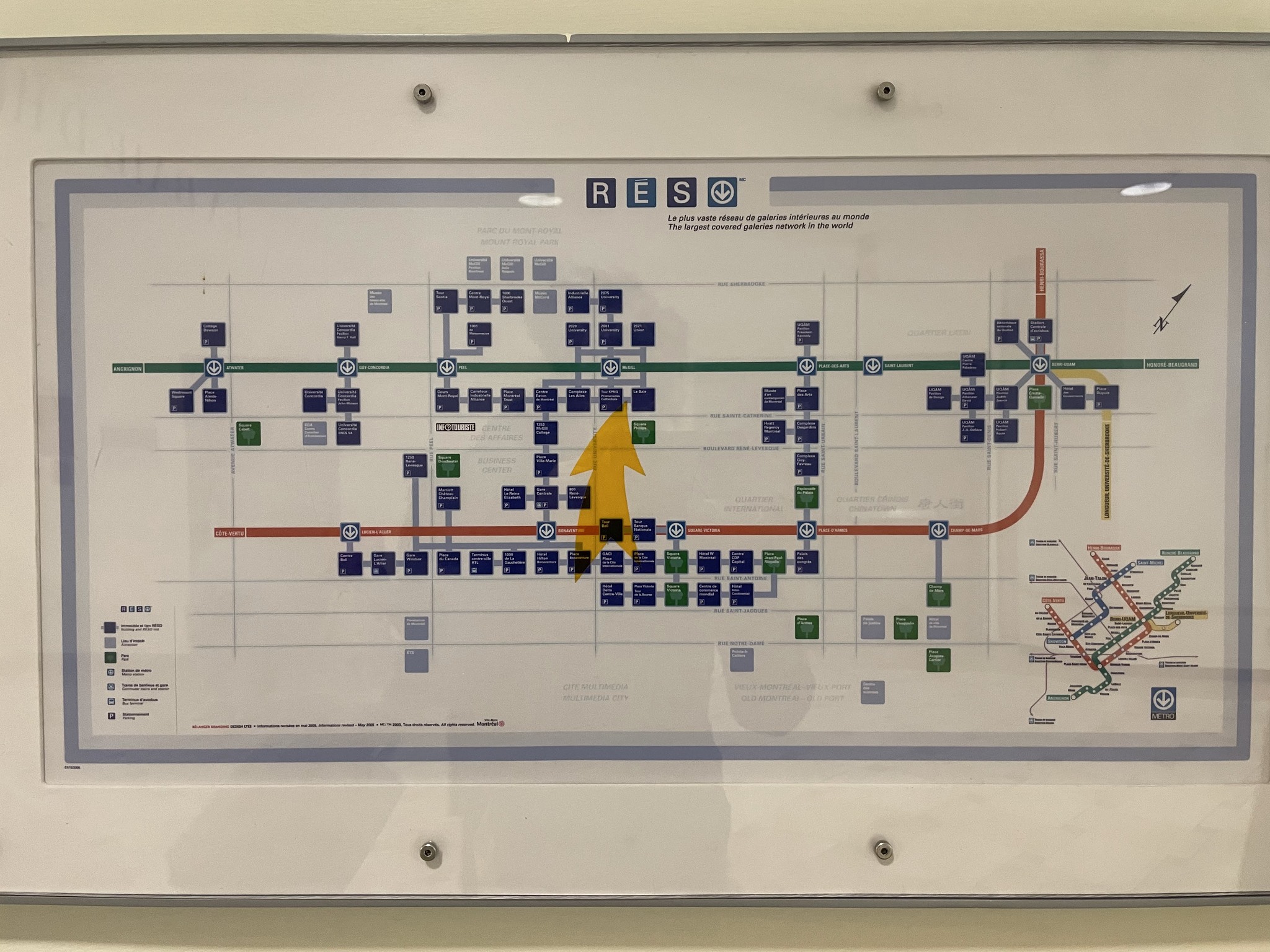
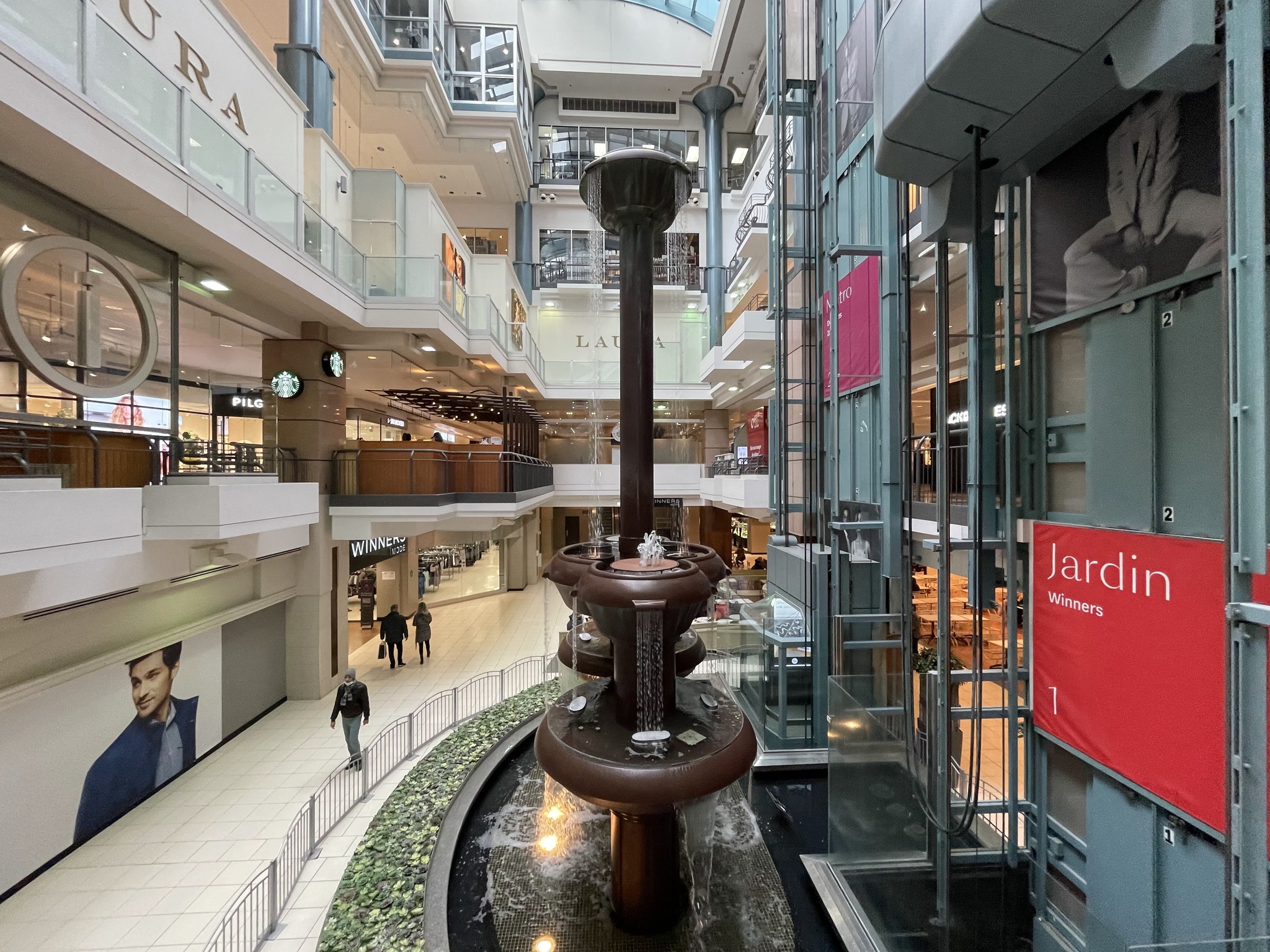
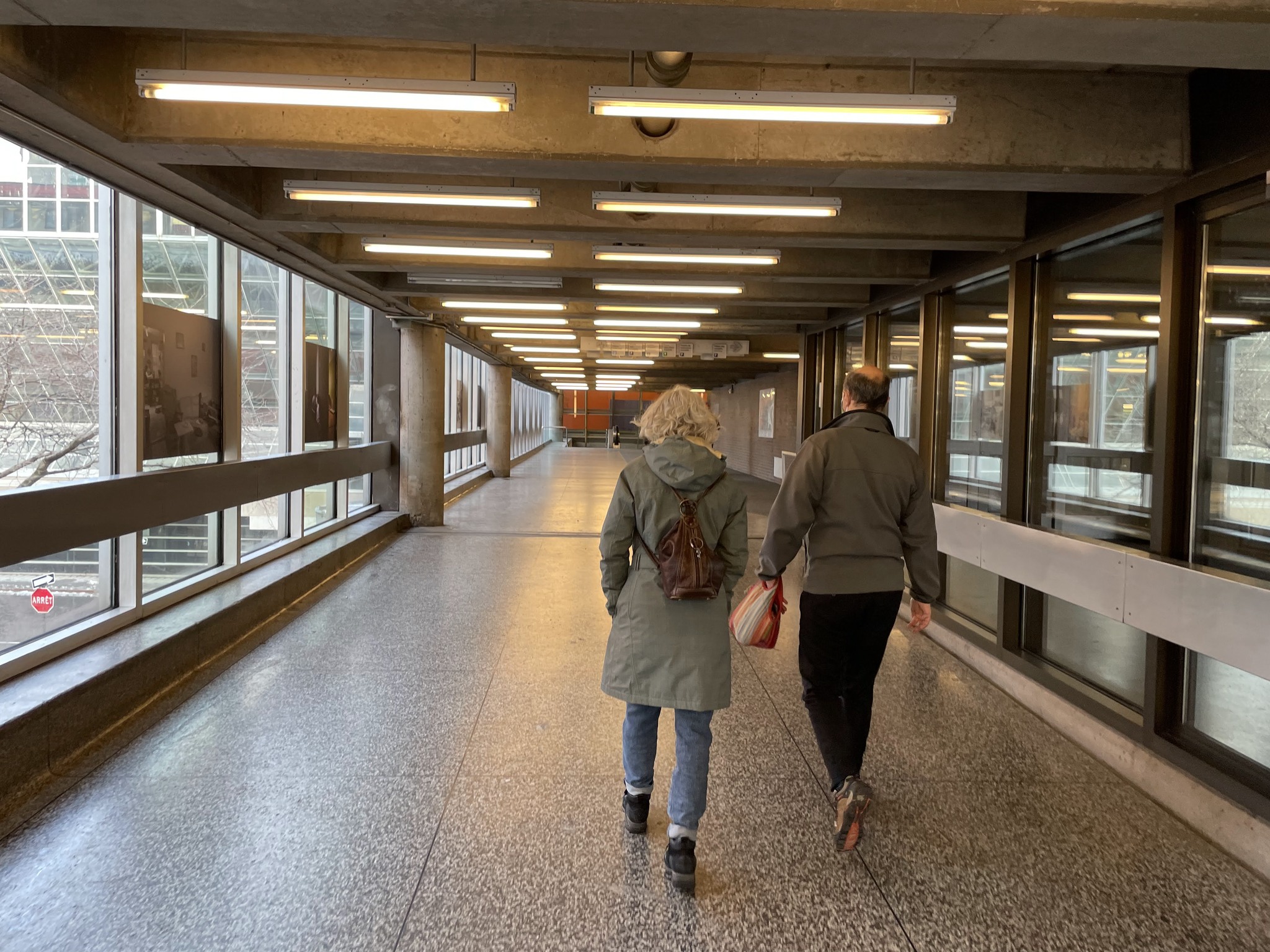
We decided that it was a day to explore RESO Montreal. Montreal’s underground city, and network of interconnected tunnels, and walkways beneath the city’s downtown is similar to the PATH system in Toronto. RESO is a homophone for “réseau” (network).
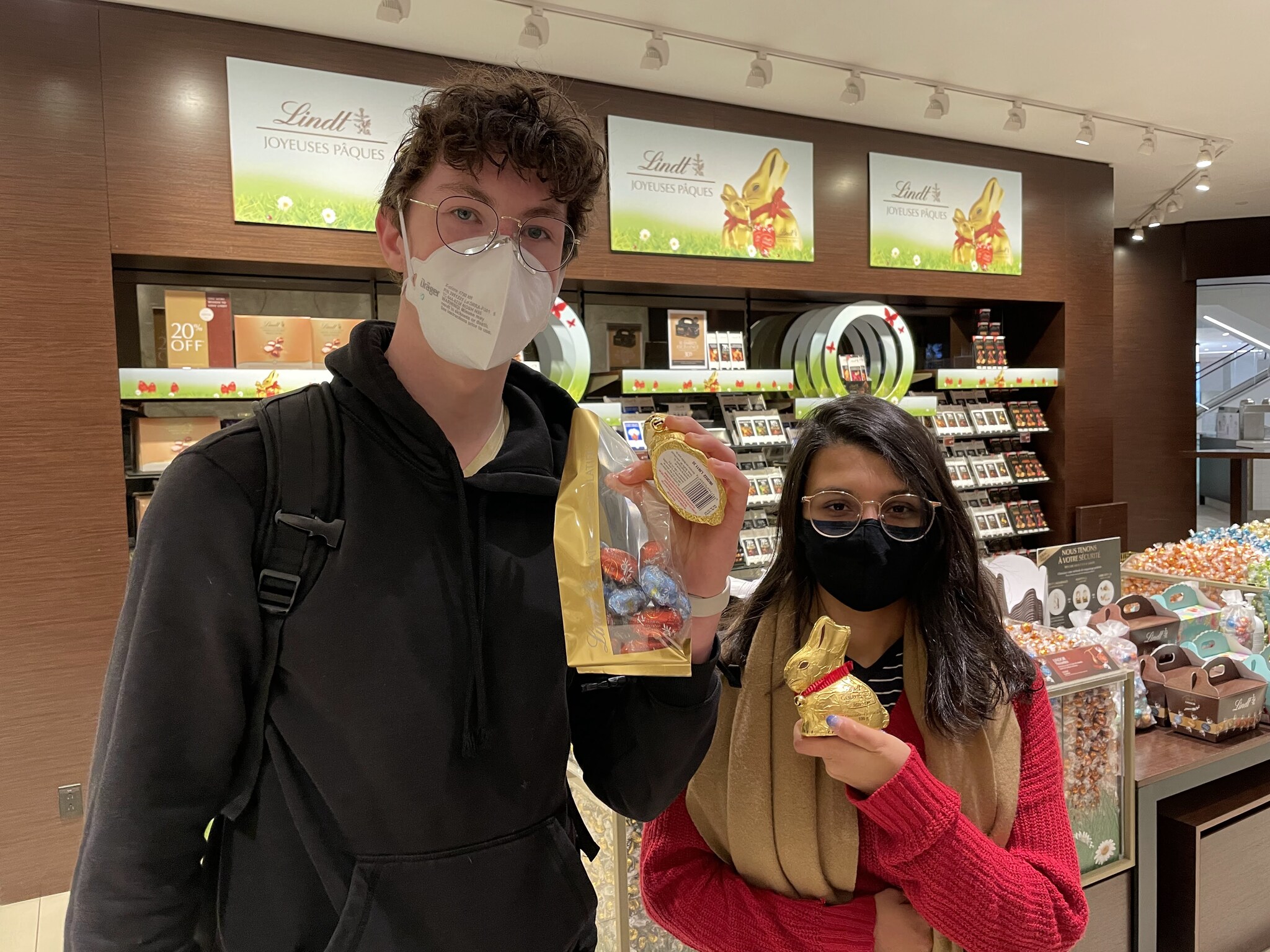
The Lindt store was clearing out Easter chocolate.
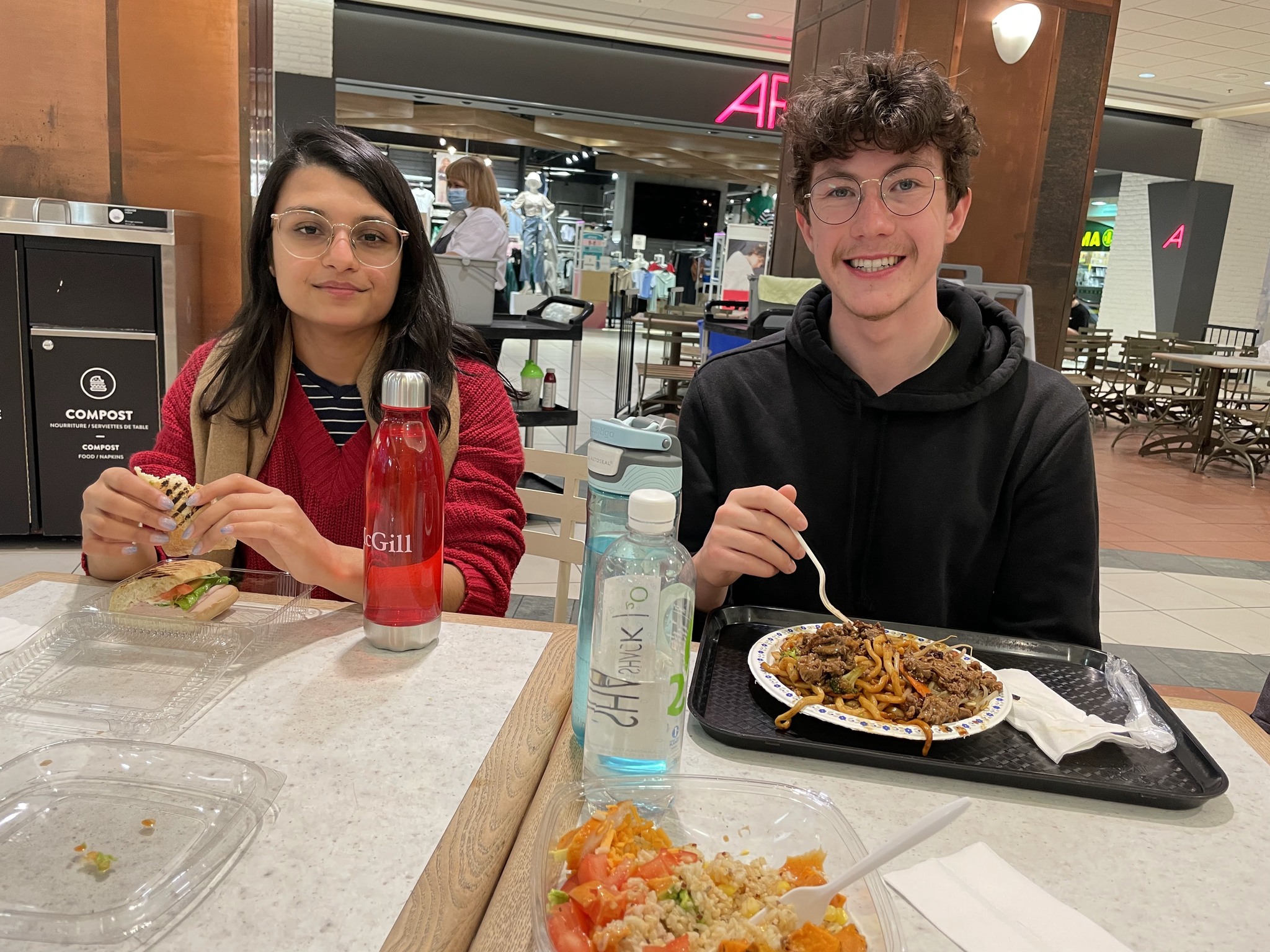
We had lunch in the food court.
RESO spans approximately 32 km of tunnels and walkways and connects numerous buildings, including five shopping malls and the metro system.
I wanted to thoroughly explore RESO, but it was quite confusing, and we had to backtrack from dead ends a few times. The kids were getting tired, so we got the metro back to where we were staying. We said goodbye to Mehrunnisa, who needed to finish packing, to be ready for her return to Ontario for the summer.
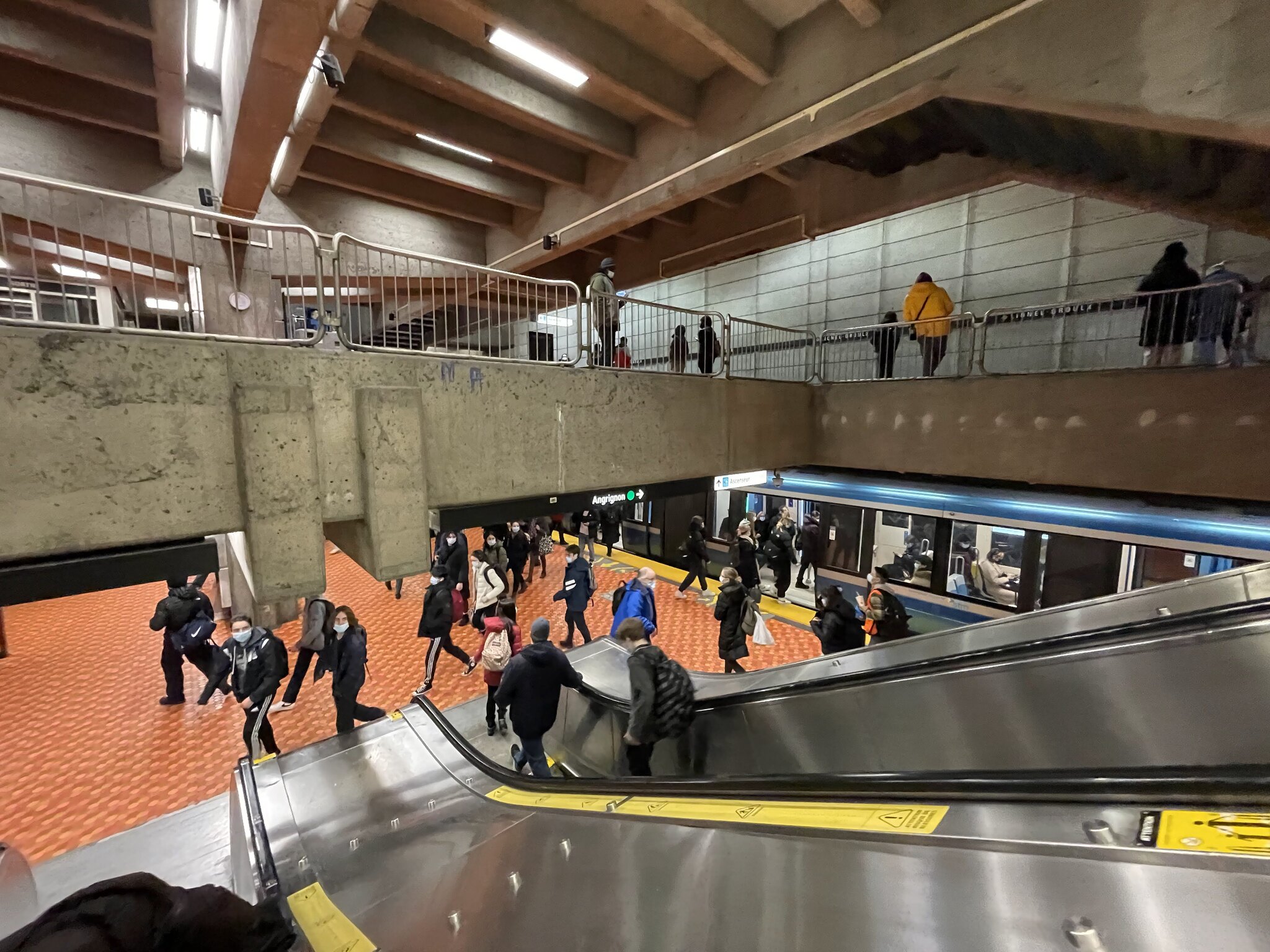
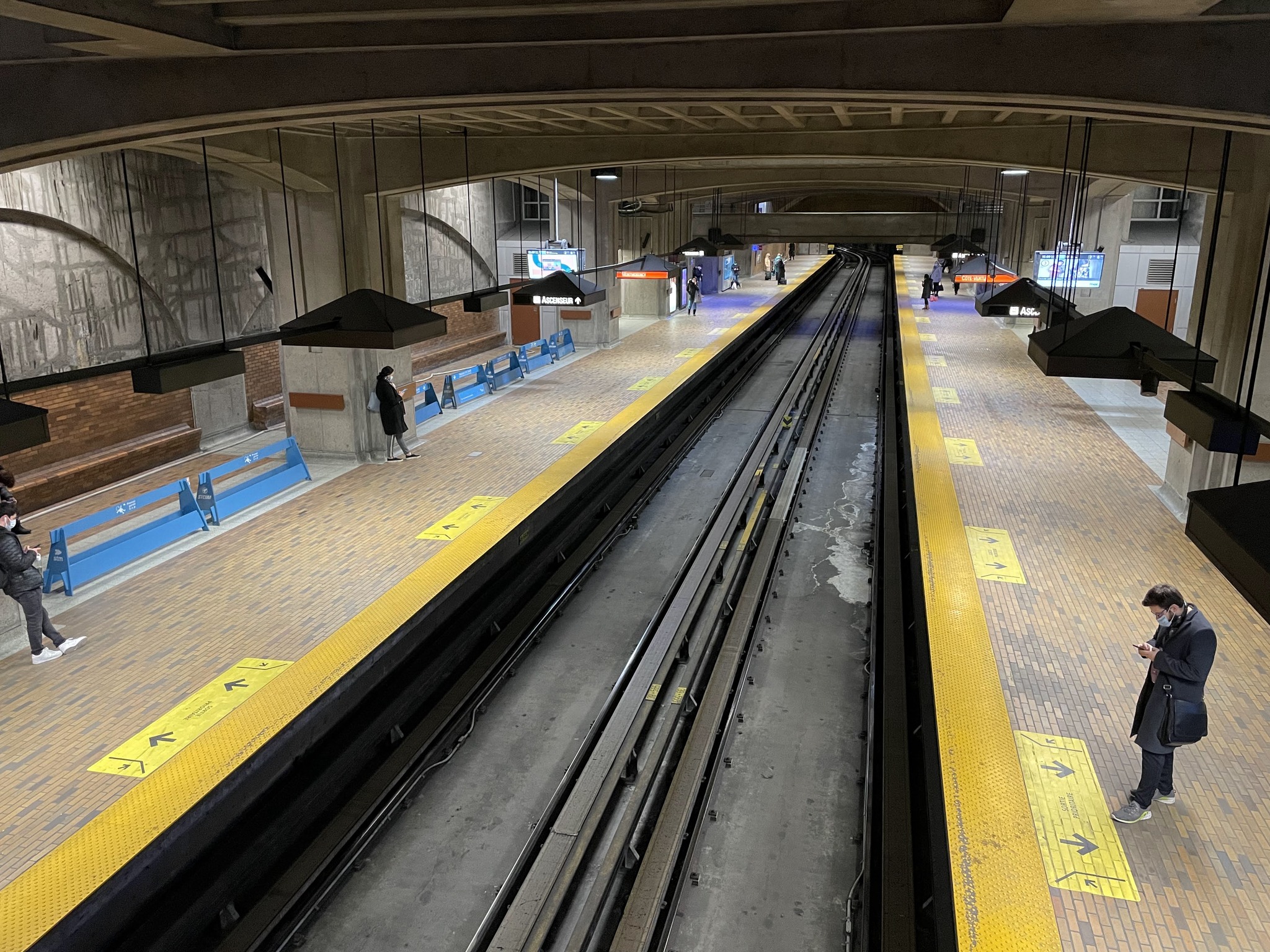
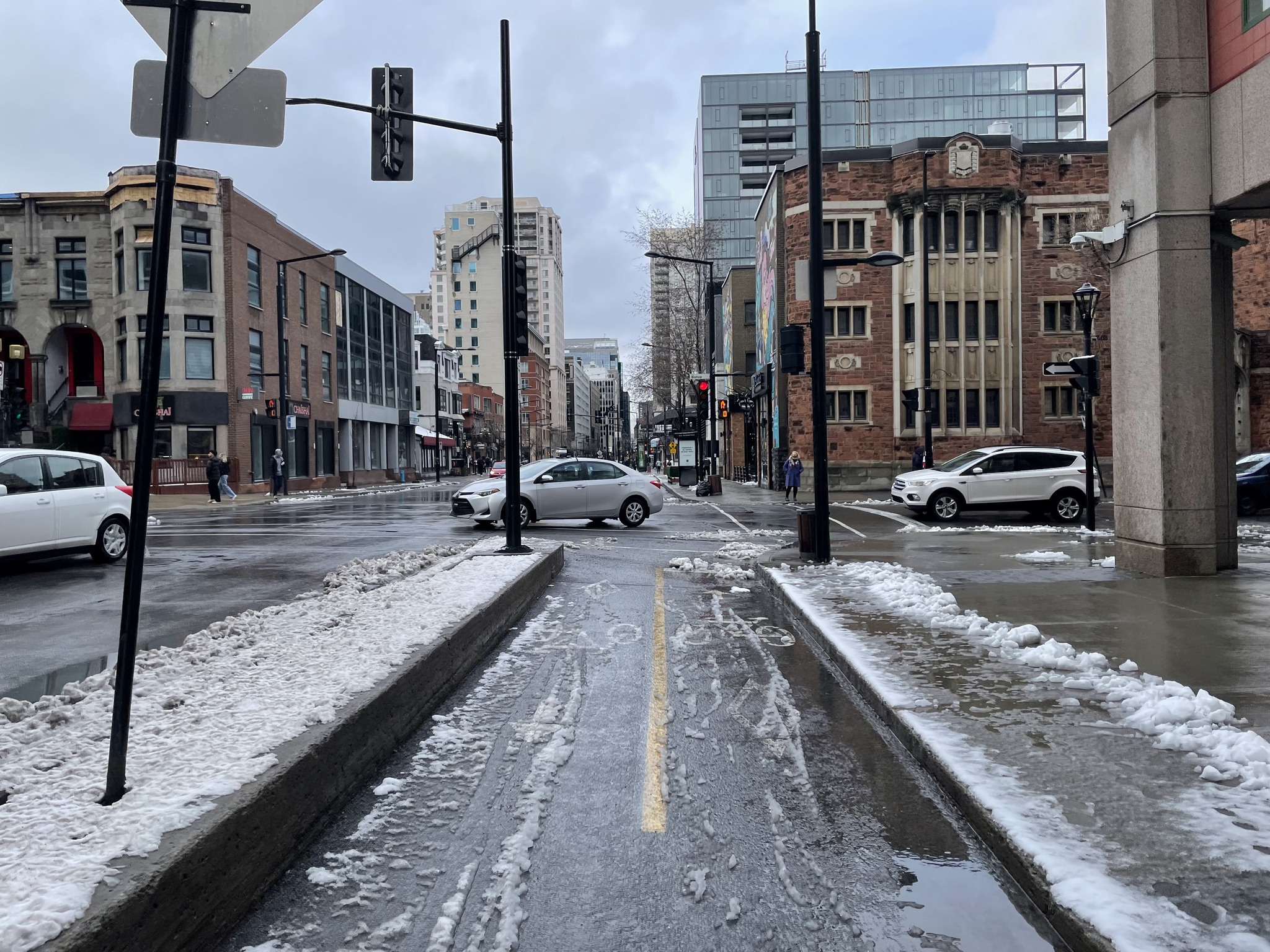
I dropped Owen back at the apartment. The snow was melting, so I borrowed a bike share bike to ride back to Complexe Desjardins to continue exploring RESO.
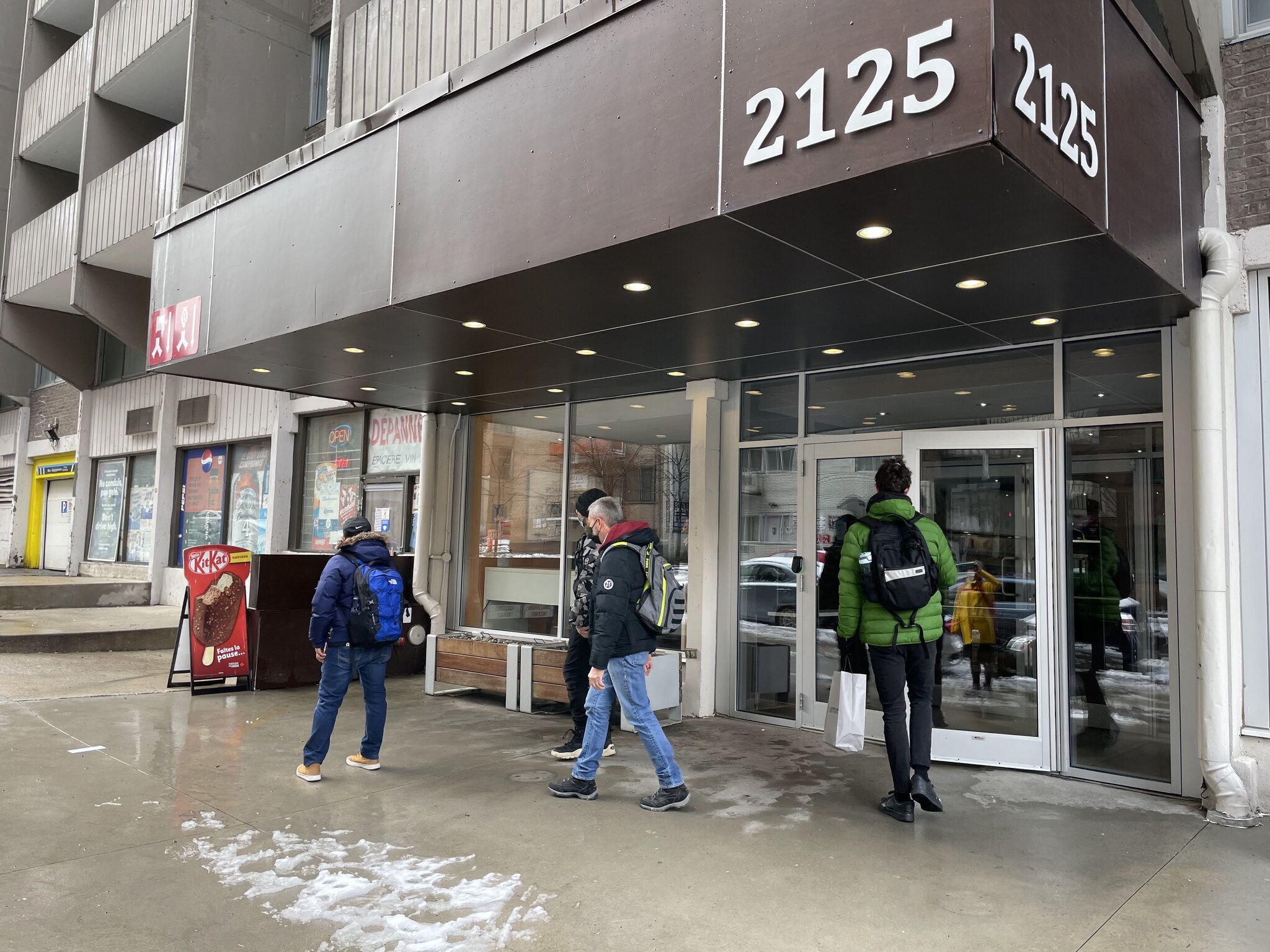
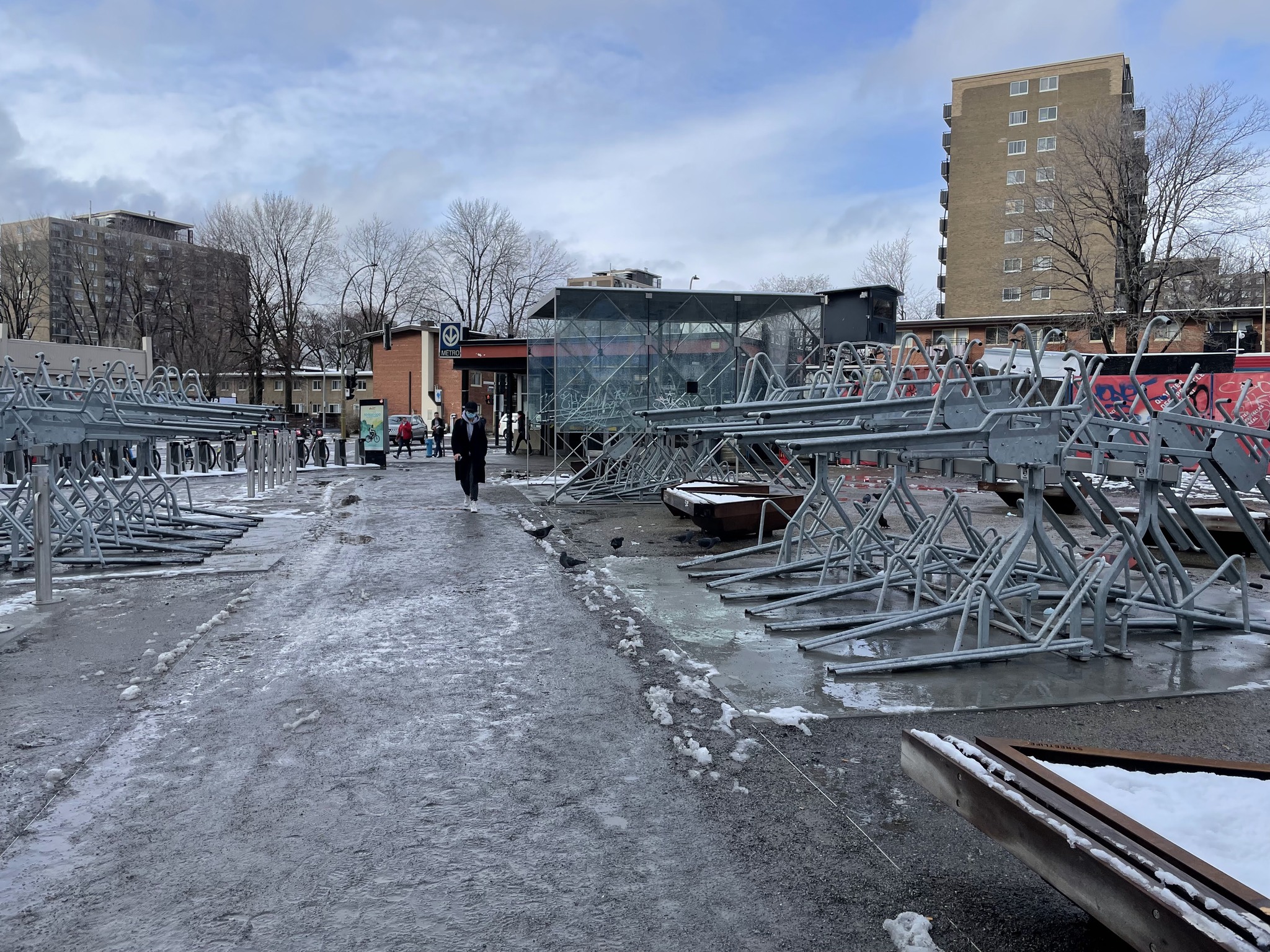
These two level bike racks were outside the Saint-Laurent Metro stop.
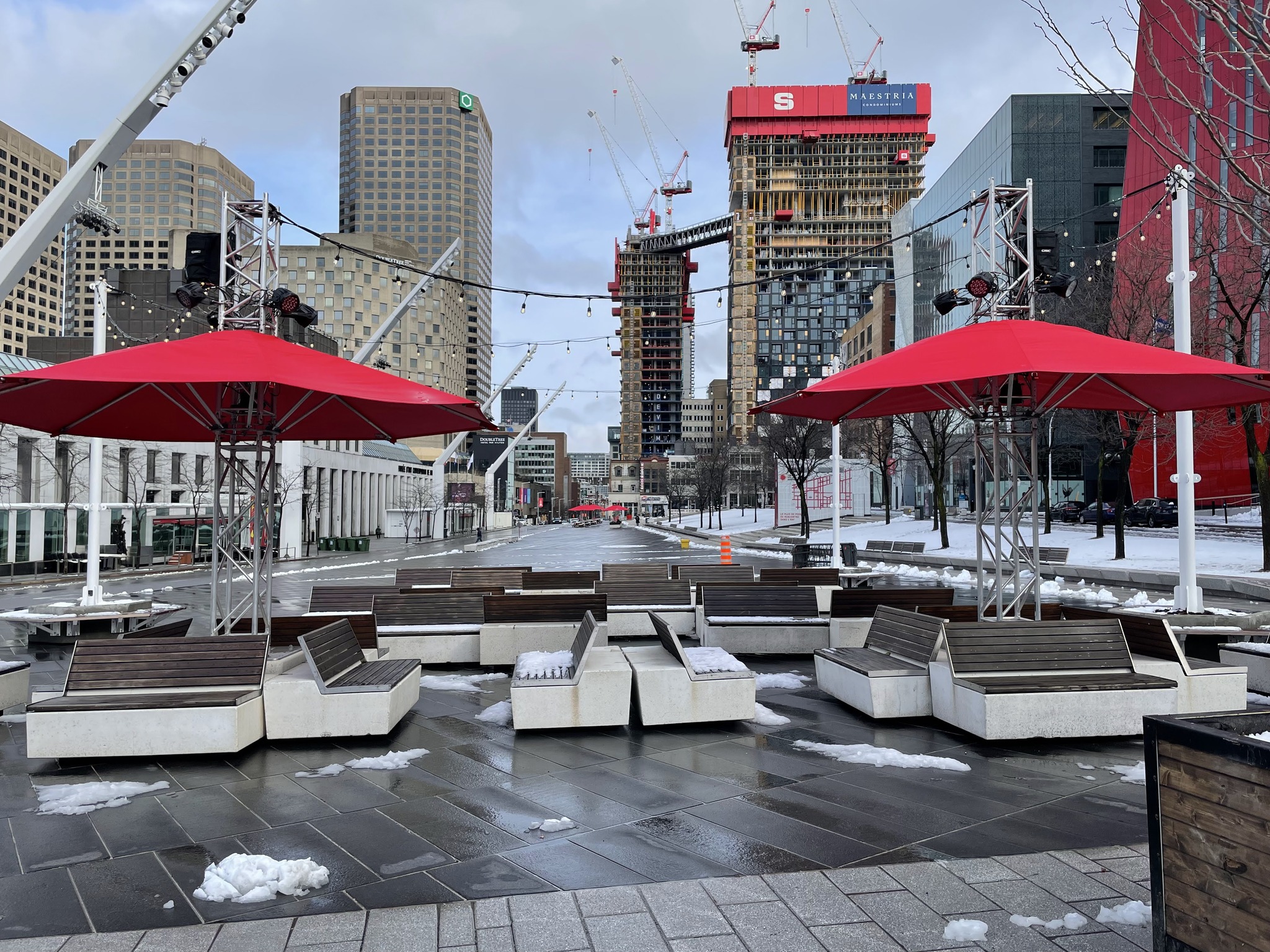
The shopping centre faces Place des Arts. No one was lounging outside today.
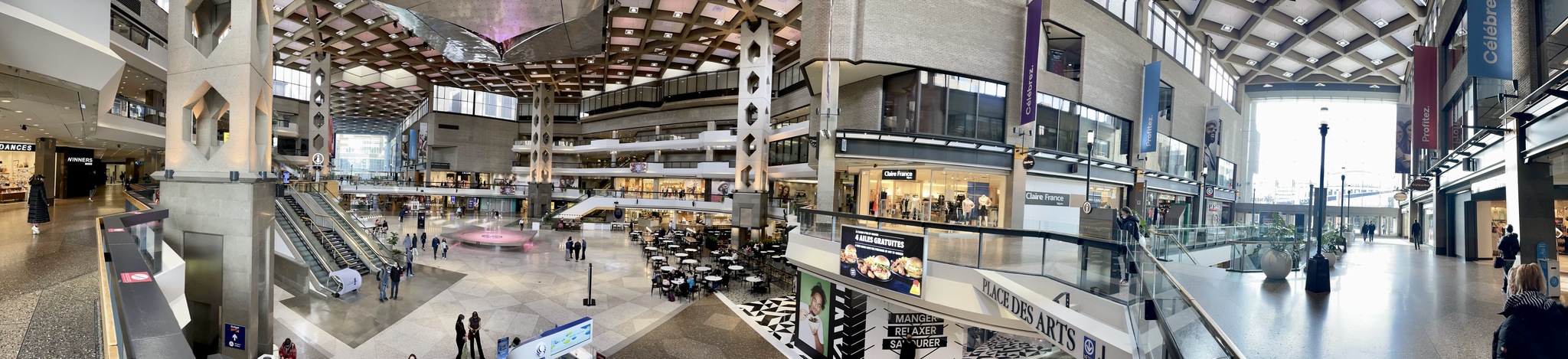
Complexe Desjardins was very open and light inside.
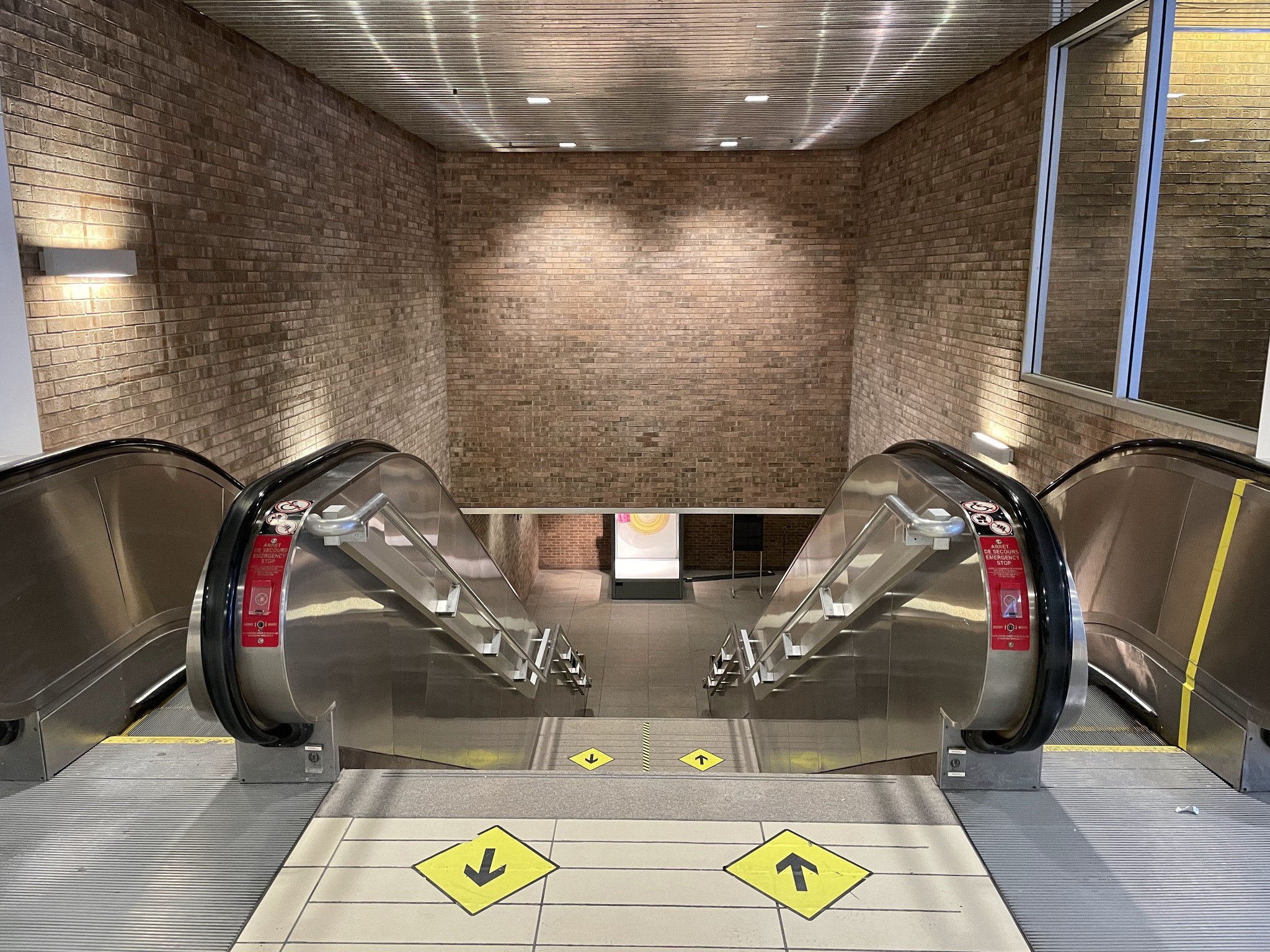
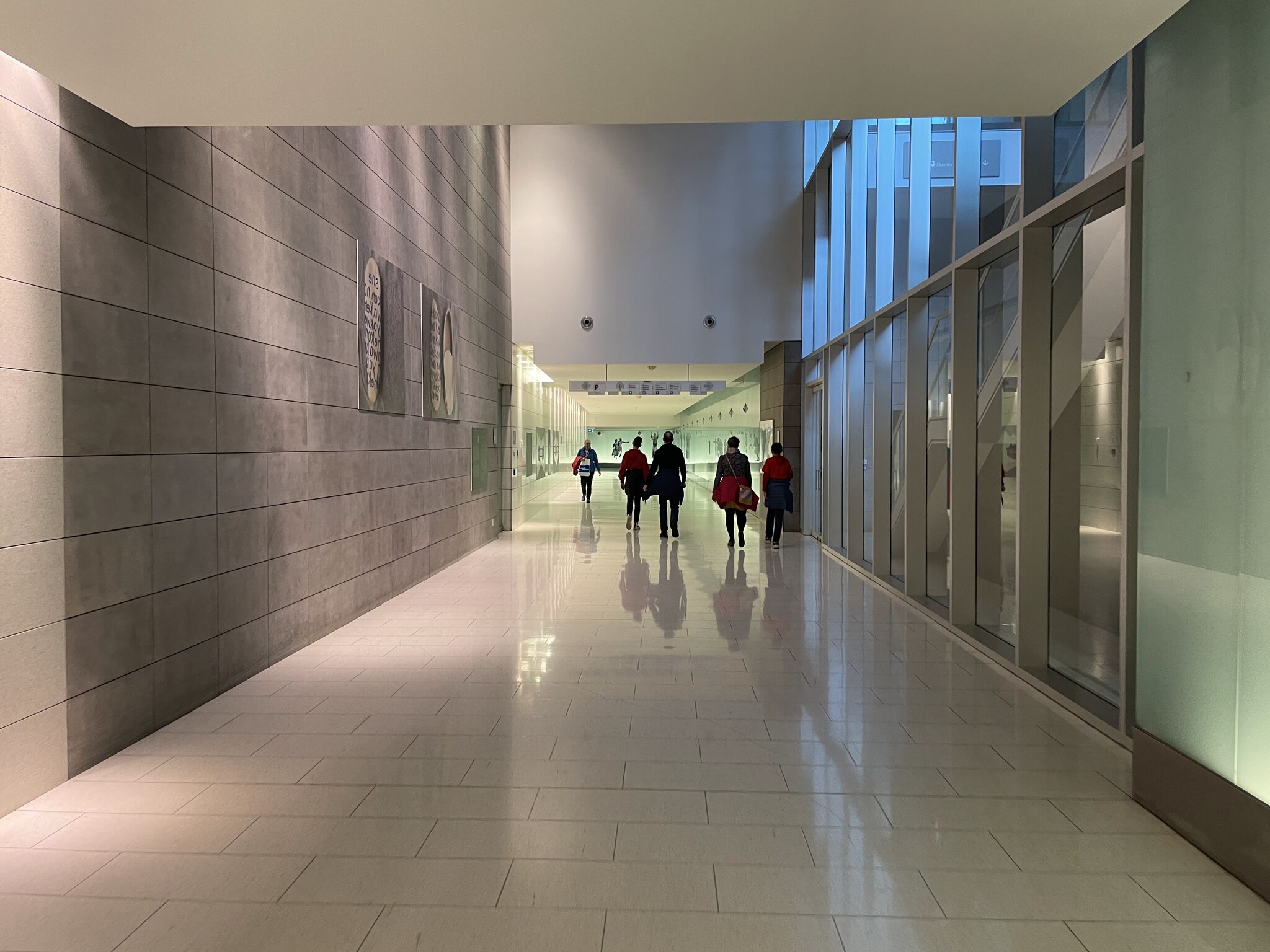
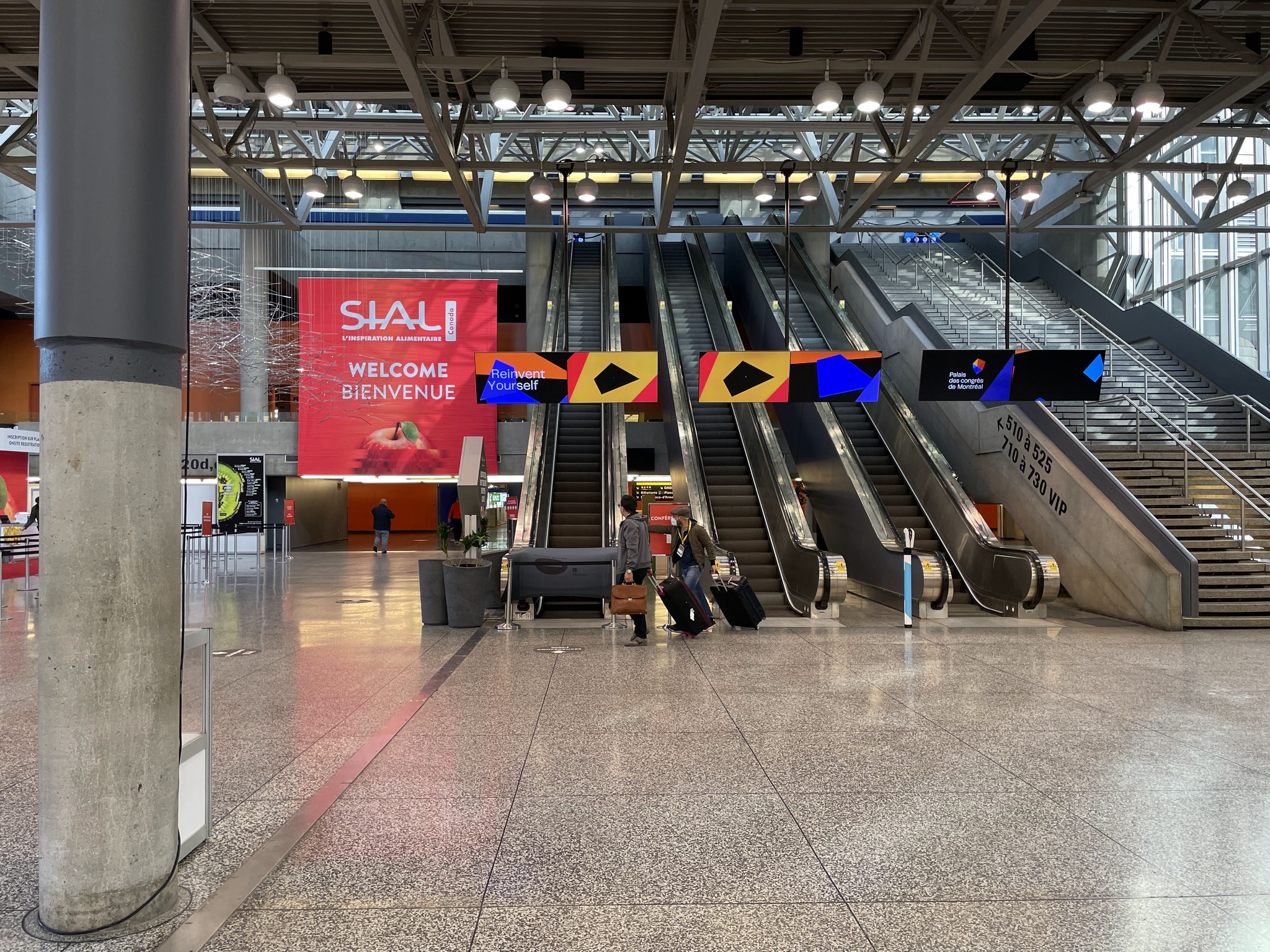
The scenes within RESO varied significantly, depending on whether they were underground, and presumably, when they were built.
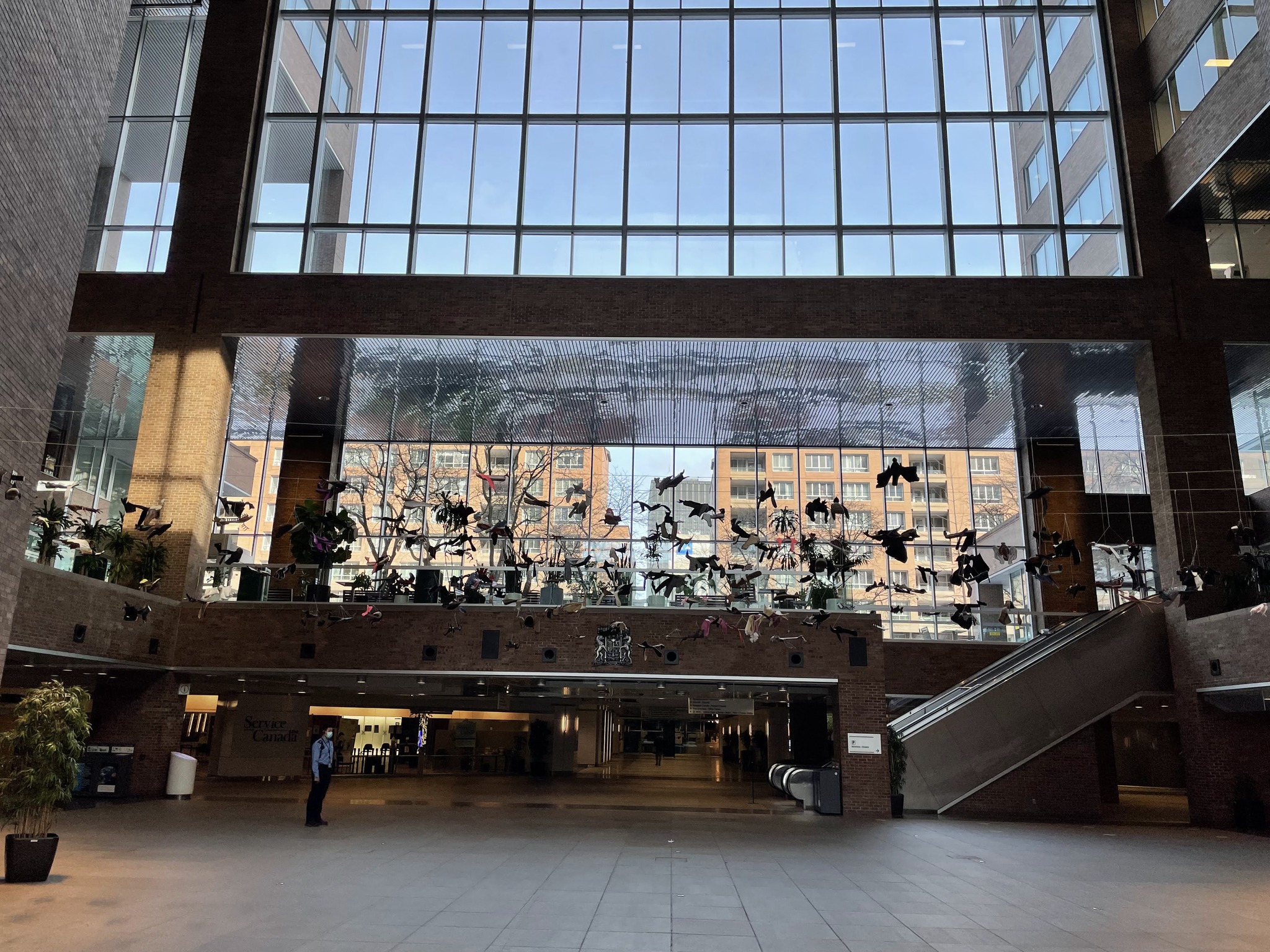
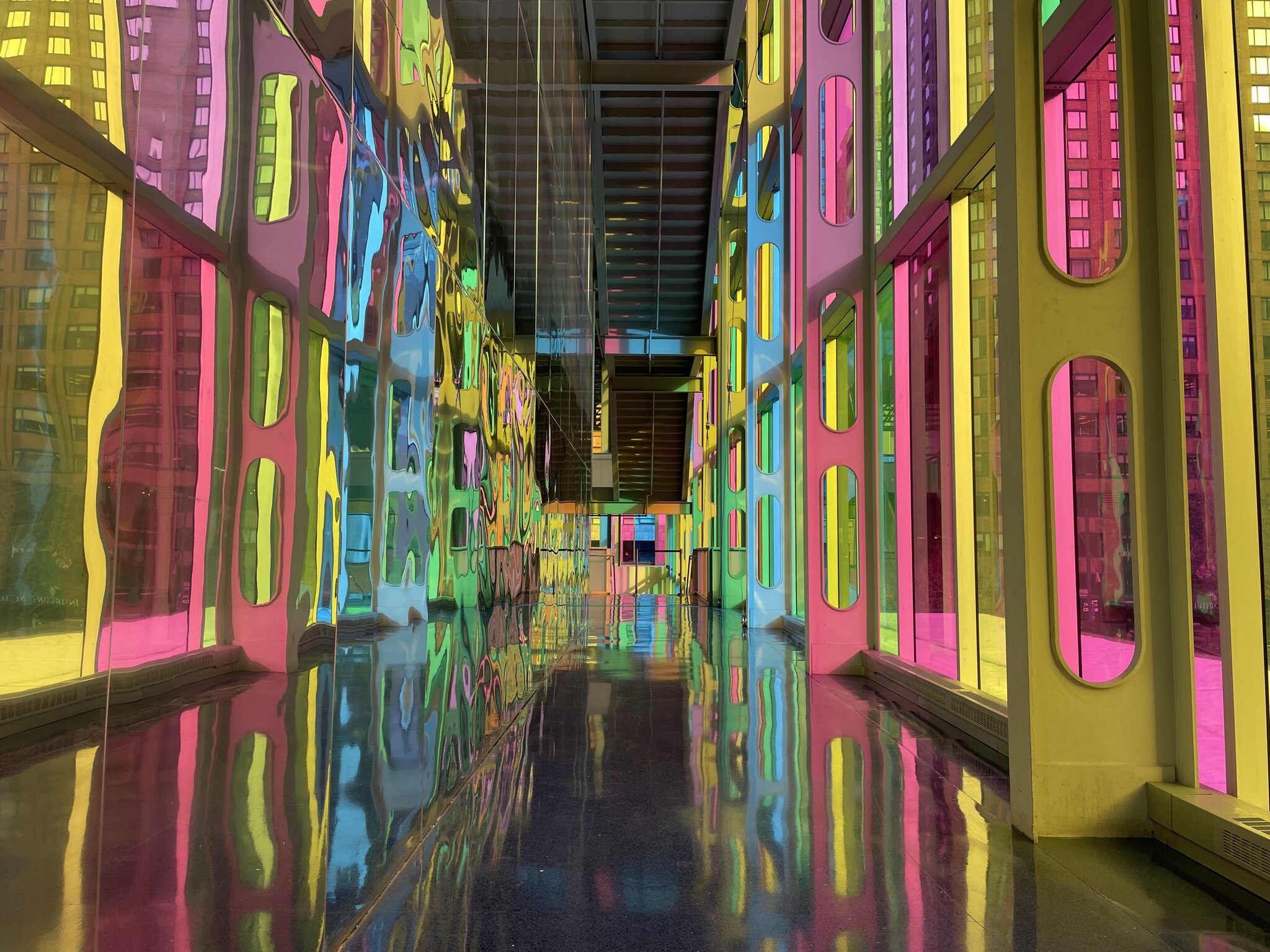
This is the inside of Palais des congrès. I posted a picture of the outside here. The coloured glass is even more spectacular inside. The mirror on the left doubles the effect of the windows on the right.
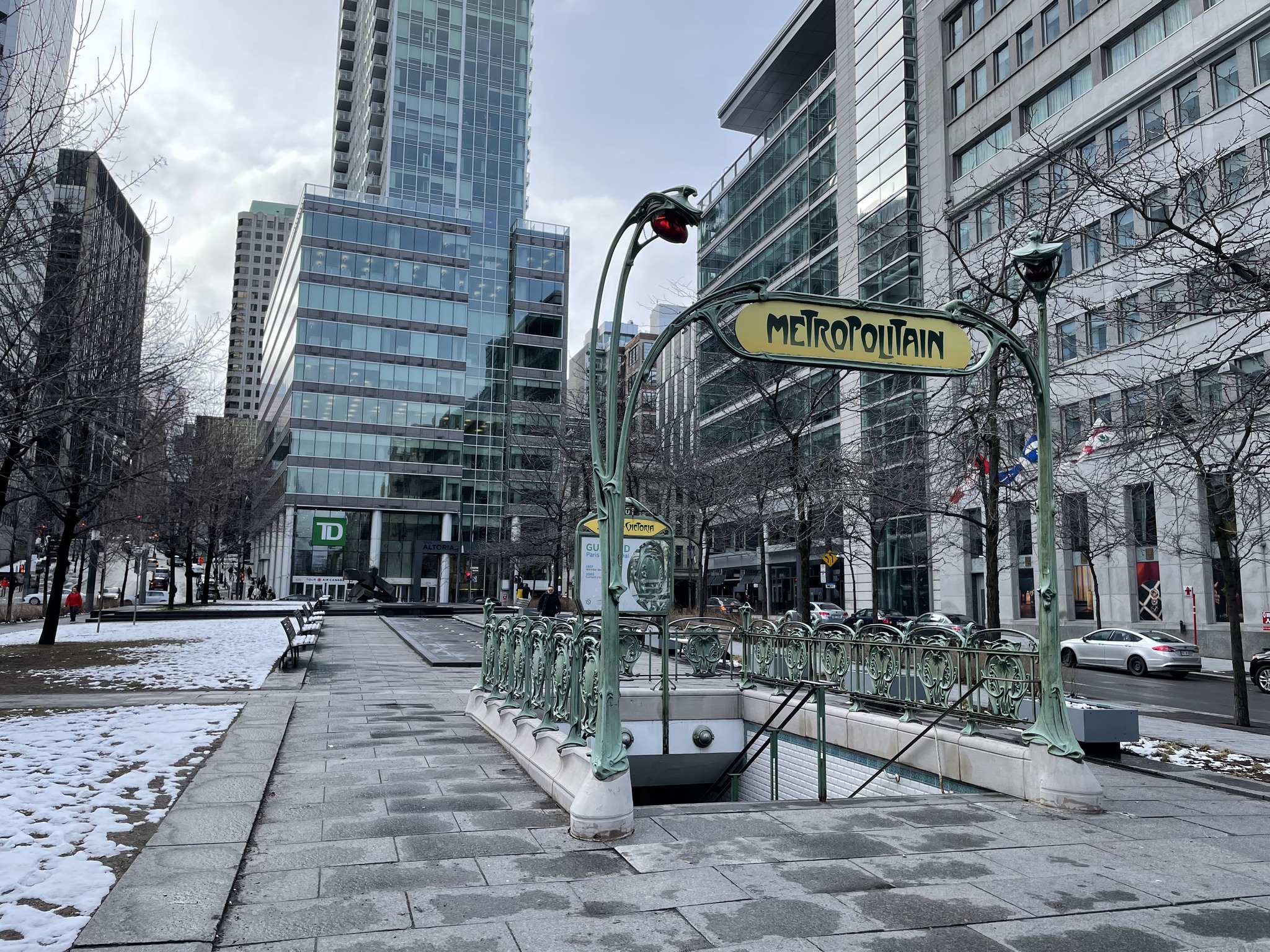
It was getting late, and I was having trouble finding my way underground, so I emerged into Victoria Square to look for a bike share station. I discovered this metro entrance which is the only example of a Paris metro sign in use at a subway station outside of Paris. This is an original entryway designed by Hector Guimard in the Art-Nouveau style. It can be found at the Victoria Square station. It was installed in 1967 to celebrate the collaboration with Parisian engineers on the construction and opening of the Montreal metro.
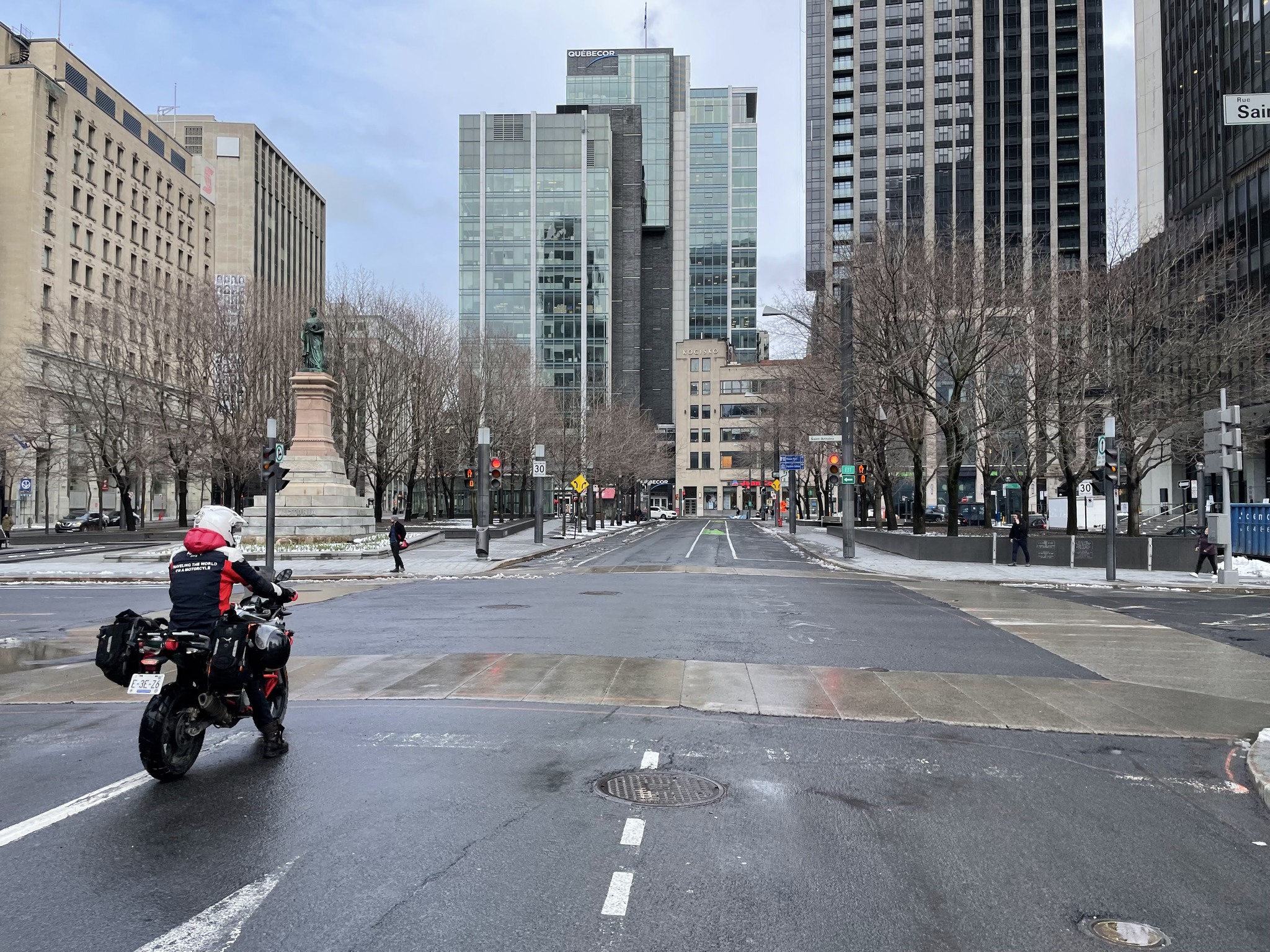
The snow was almost gone. Despite being evening rush-hour, many of the streets streets were empty of cars.
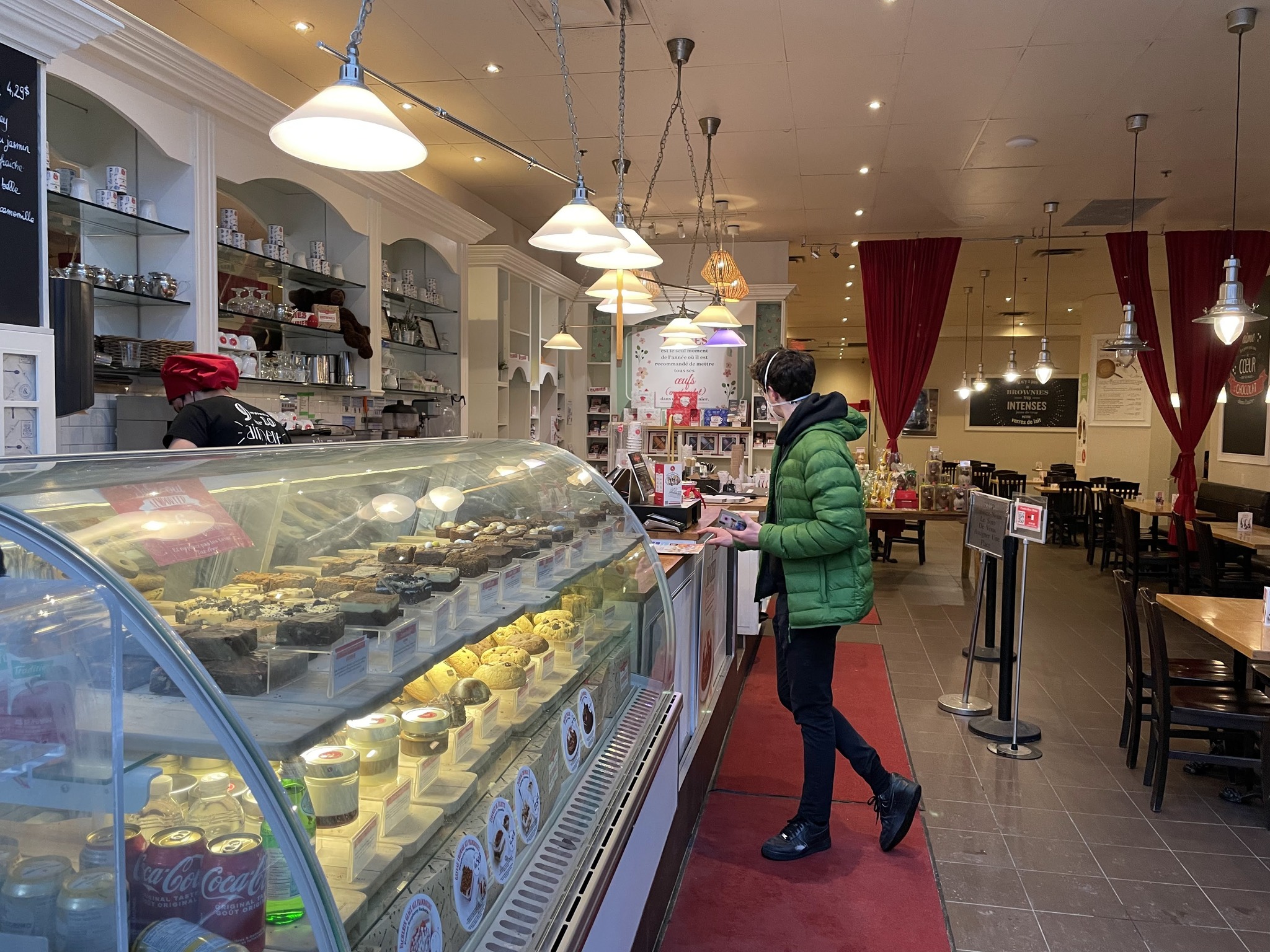
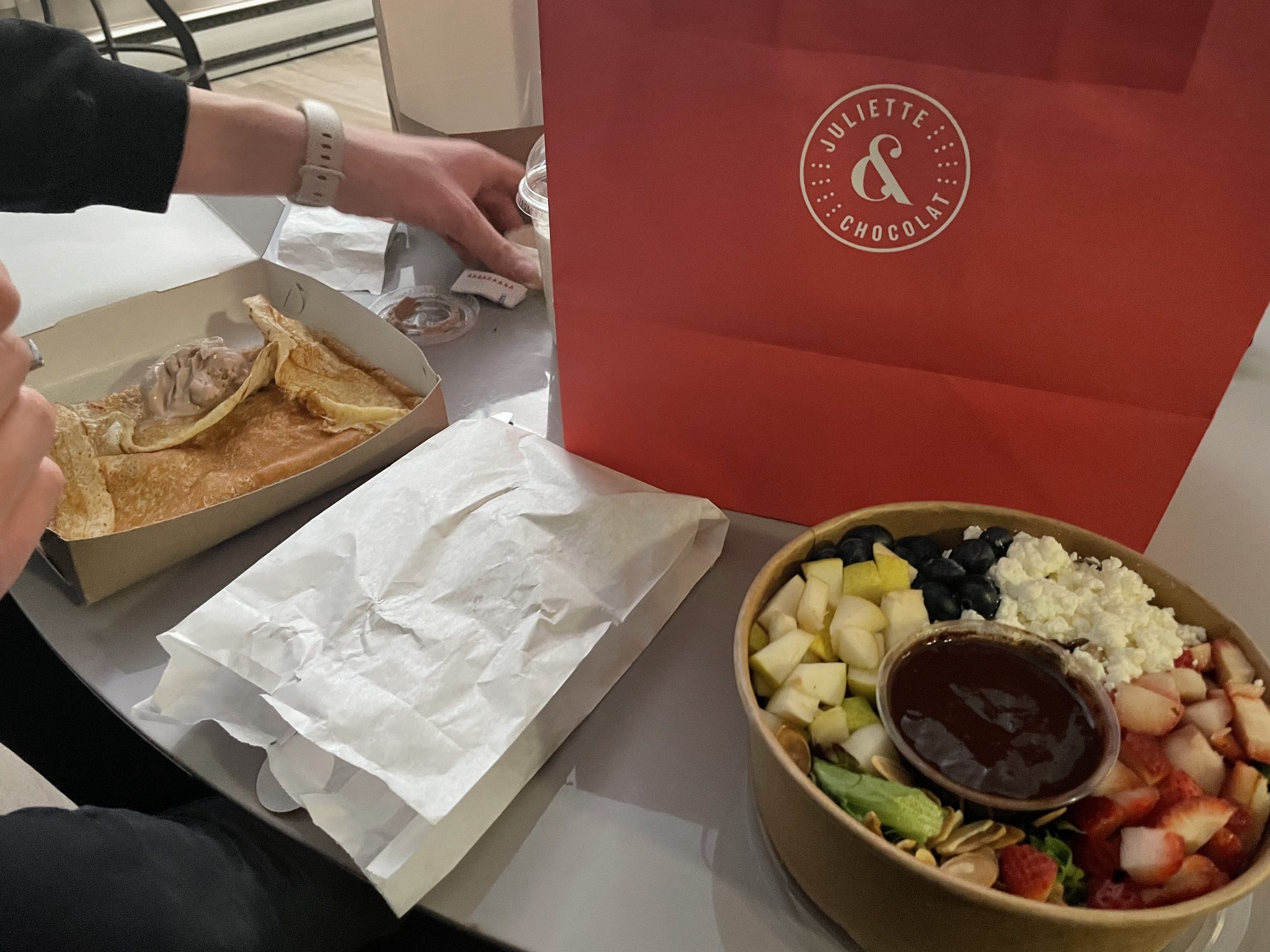
Owen and I decided to try Juliette & Chocolat, for dinner. He had a crêpe and I had a salad with chocolate dressing. It was good, but a bit odd. We then packed what we wouldn’t need in the morning, in preparation for catching the train home.
Discover more from Lisa Stokes
Subscribe to get the latest posts sent to your email.