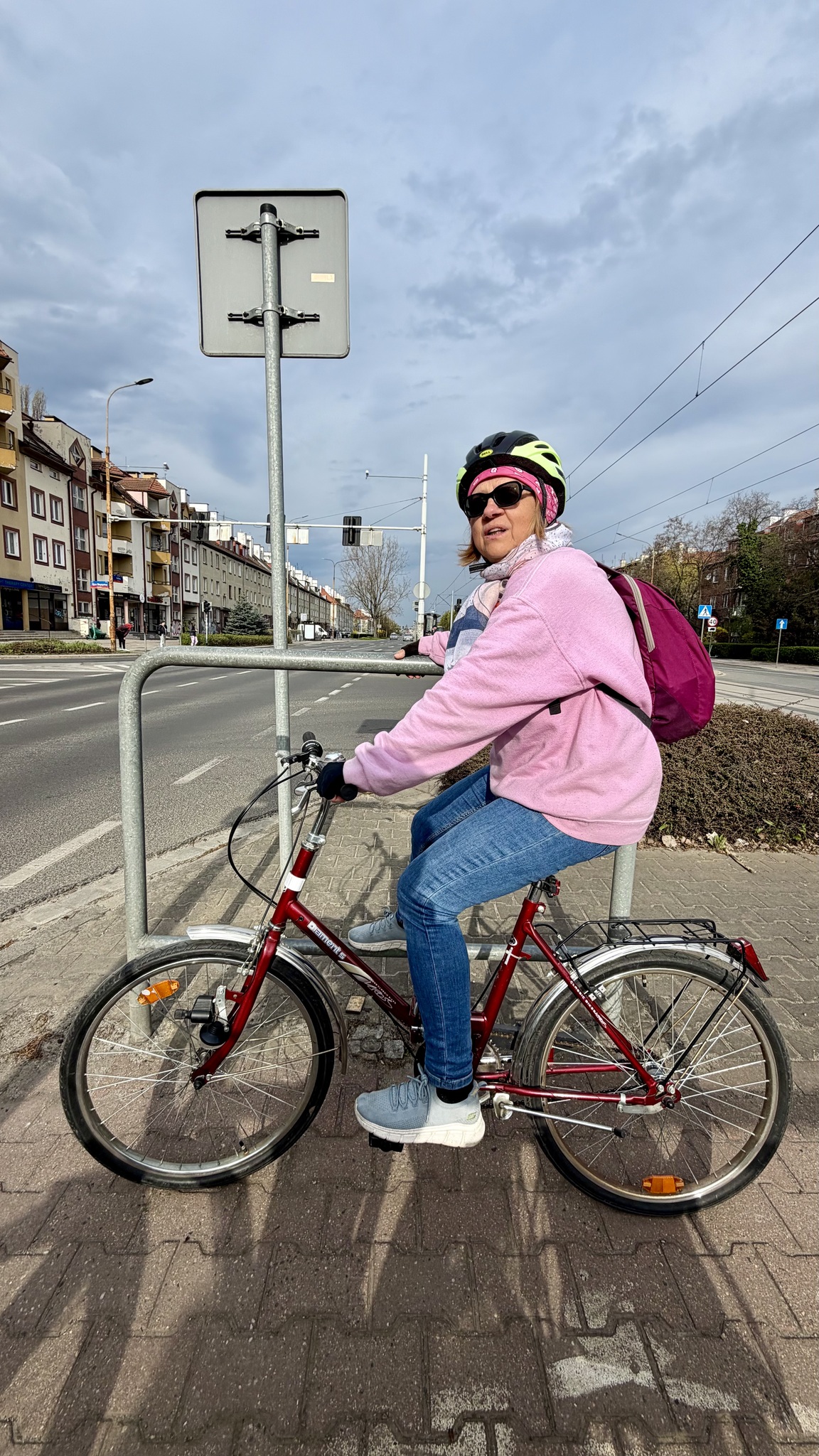
Here is a better picture than the one yesterday of Alina at the bar for cyclists. You can put your foot on the lower bar and hold onto the top bar with your hand.
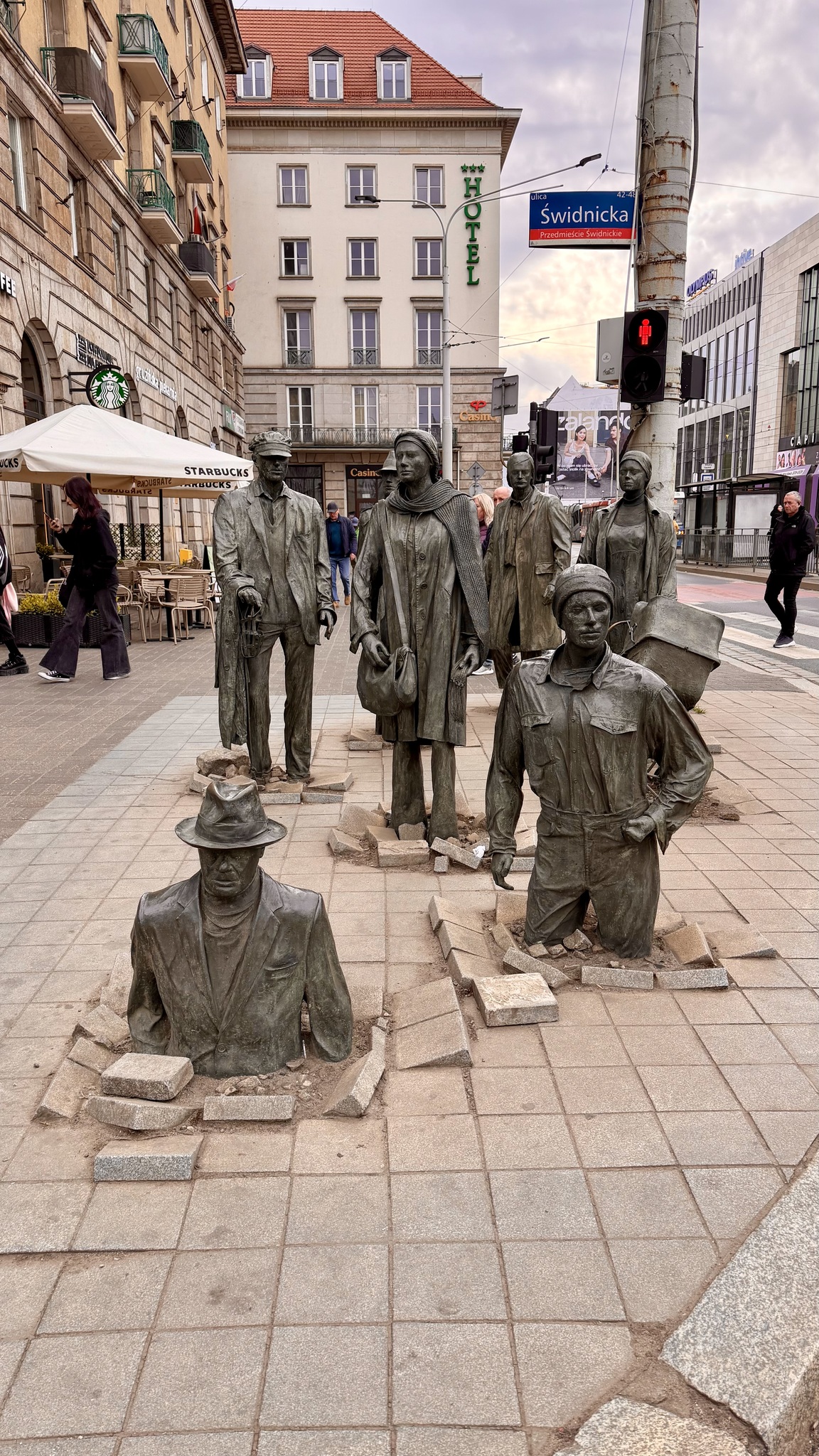
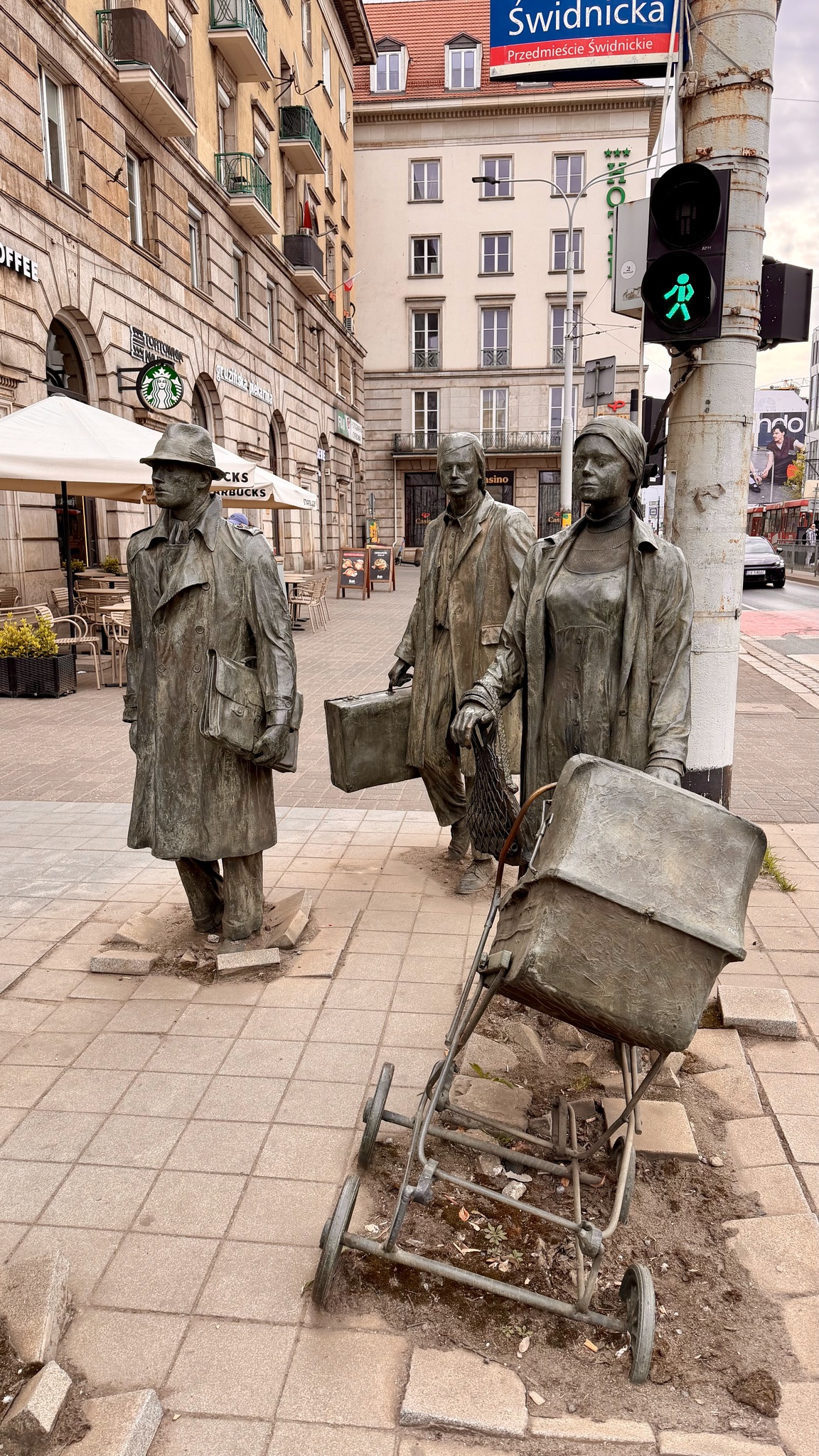
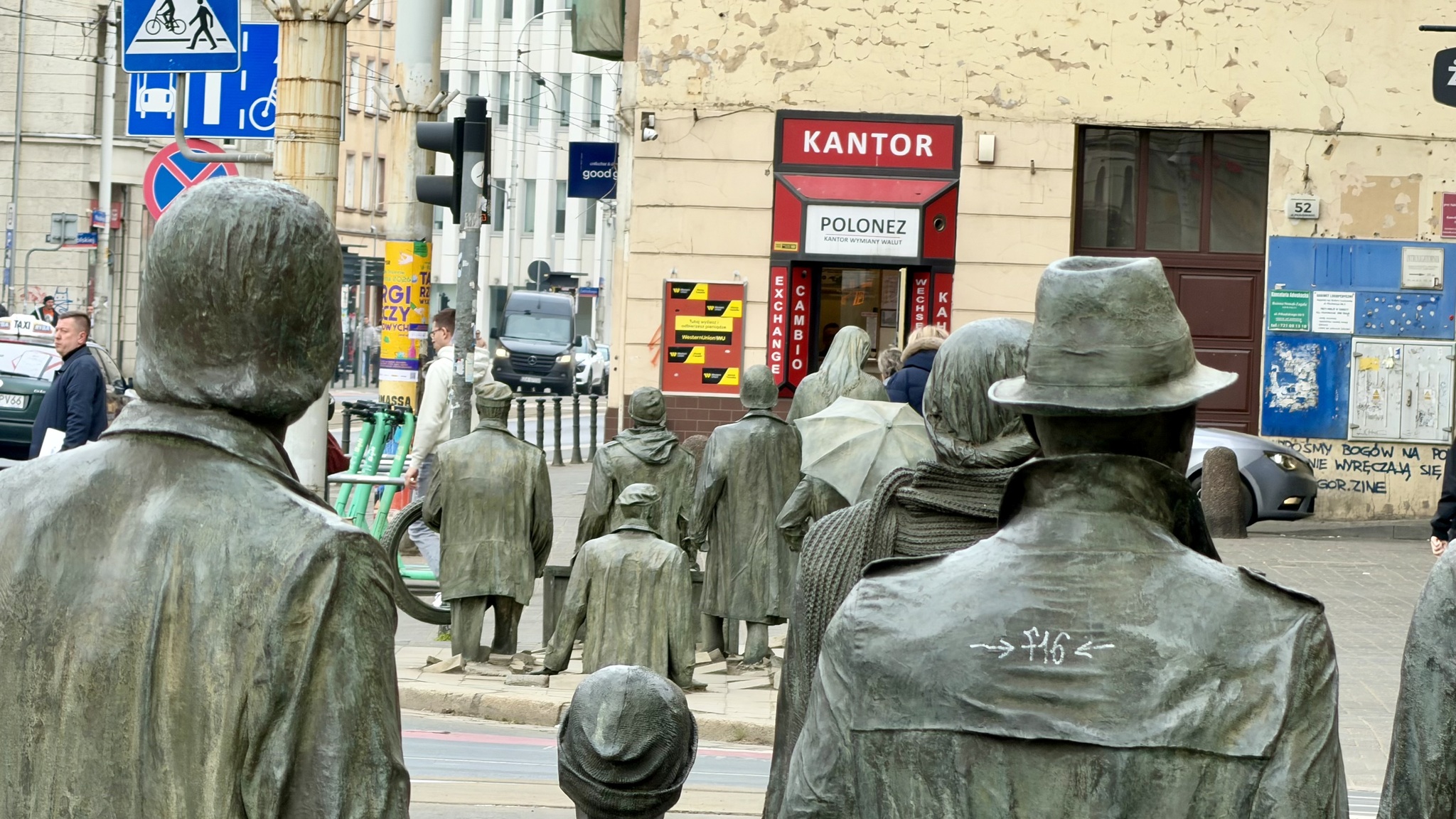
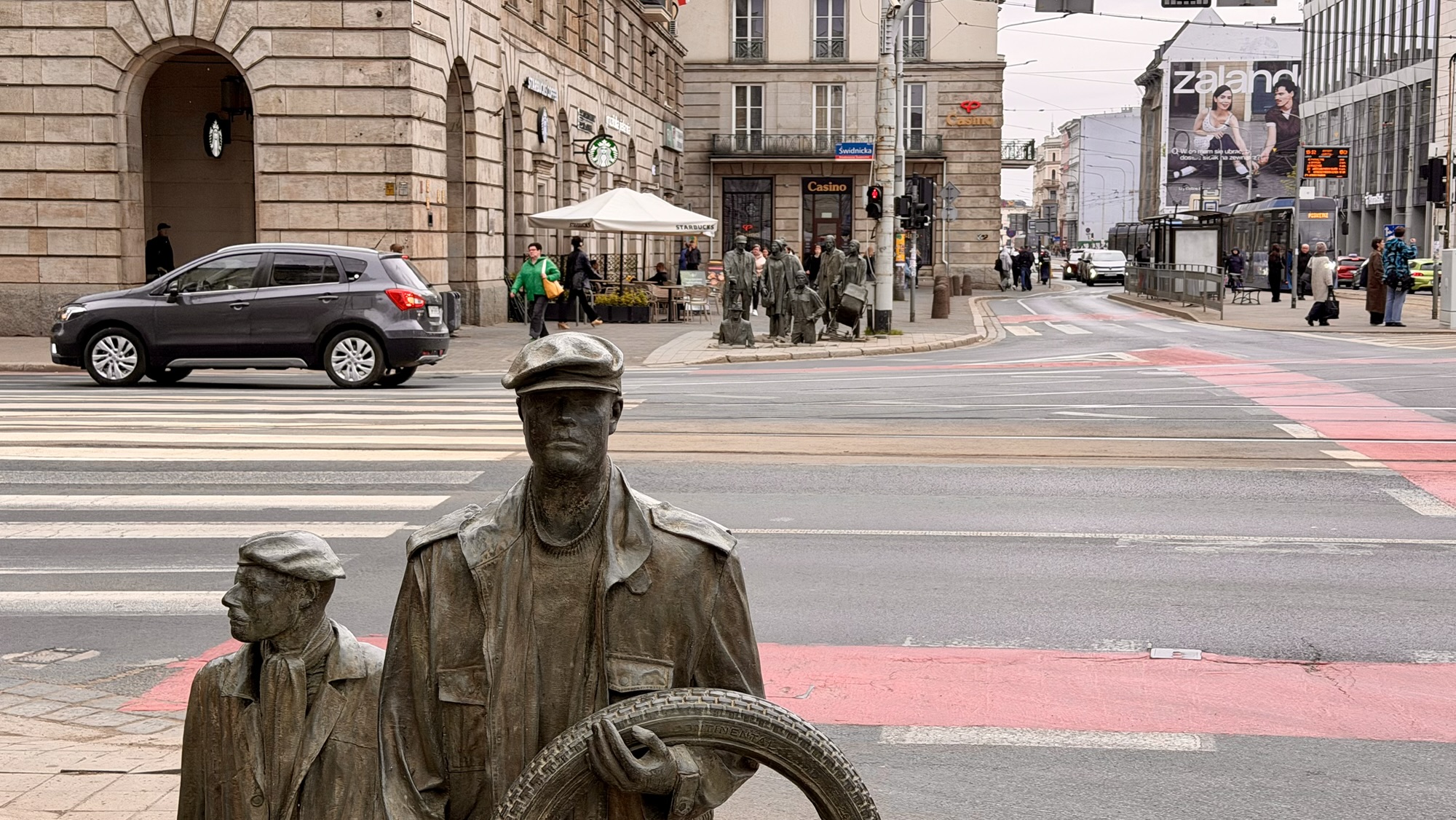
I was in a rush a few days ago when I took pictures of The Passage, so we stopped, and I took a few more today. The people on one side of Swidnicka Street are descending into the ground. The ones on the other side are emerging. It is said to represent the period of martial law in Communist Poland in the 1980s.
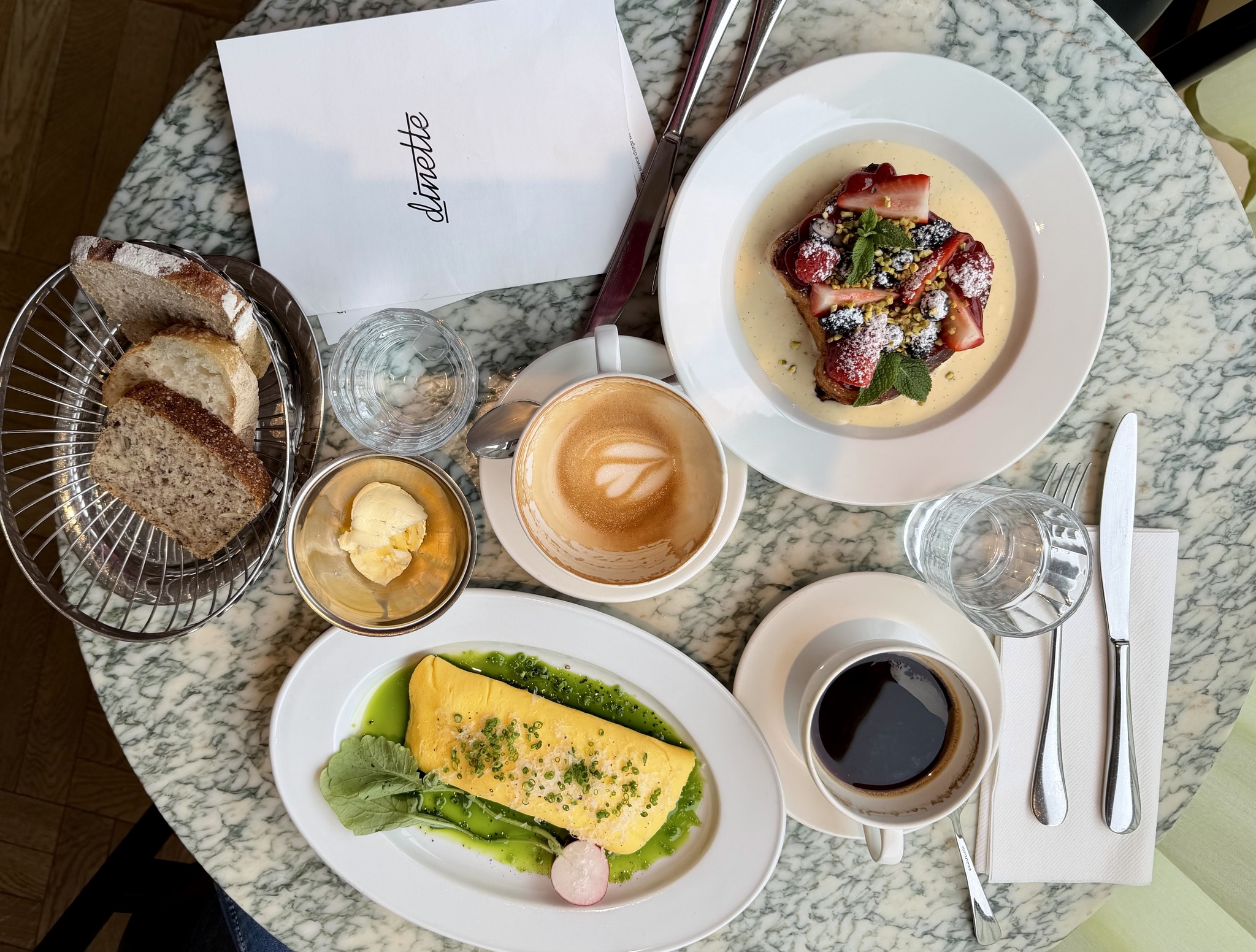
Alina treated me to breakfast at Dinette. It is reviewed in the Michelin restaurant guide.
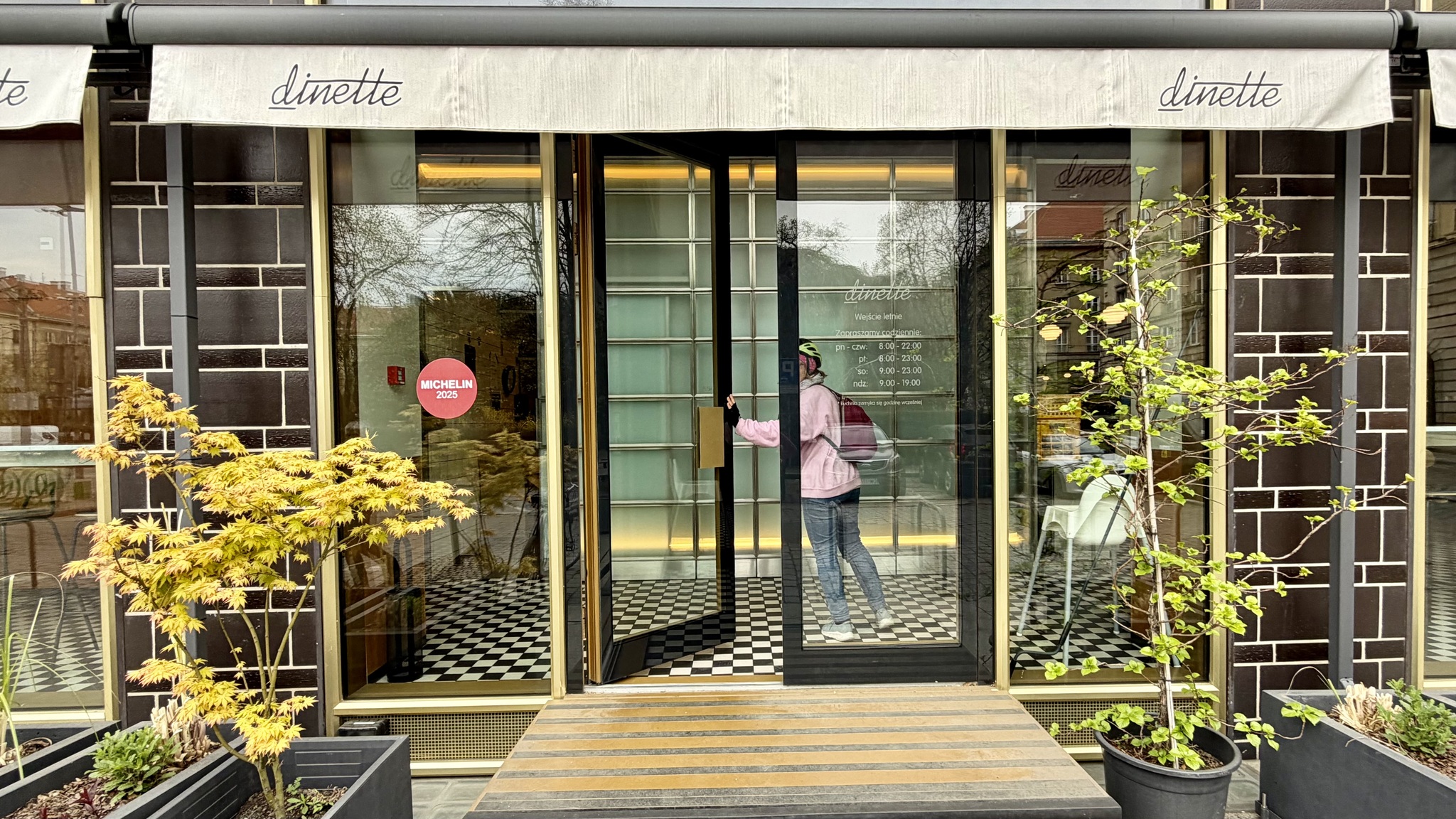
From the guide: “Operating as both a coffee shop and restaurant, this is one of those appealing something-for-everyone places. Occupying part of a former 1930s department store, its modern bistro feel is infused with subtle Art Deco touches that tie in with the building’s history. Brunch is served in the day, before the dinner à la carte kicks in with its clean, fresh, and seasonal dishes taking inspiration from around Europe. Pastries from the café are sometimes available for dessert.”The food was delicious and beautifully presented.
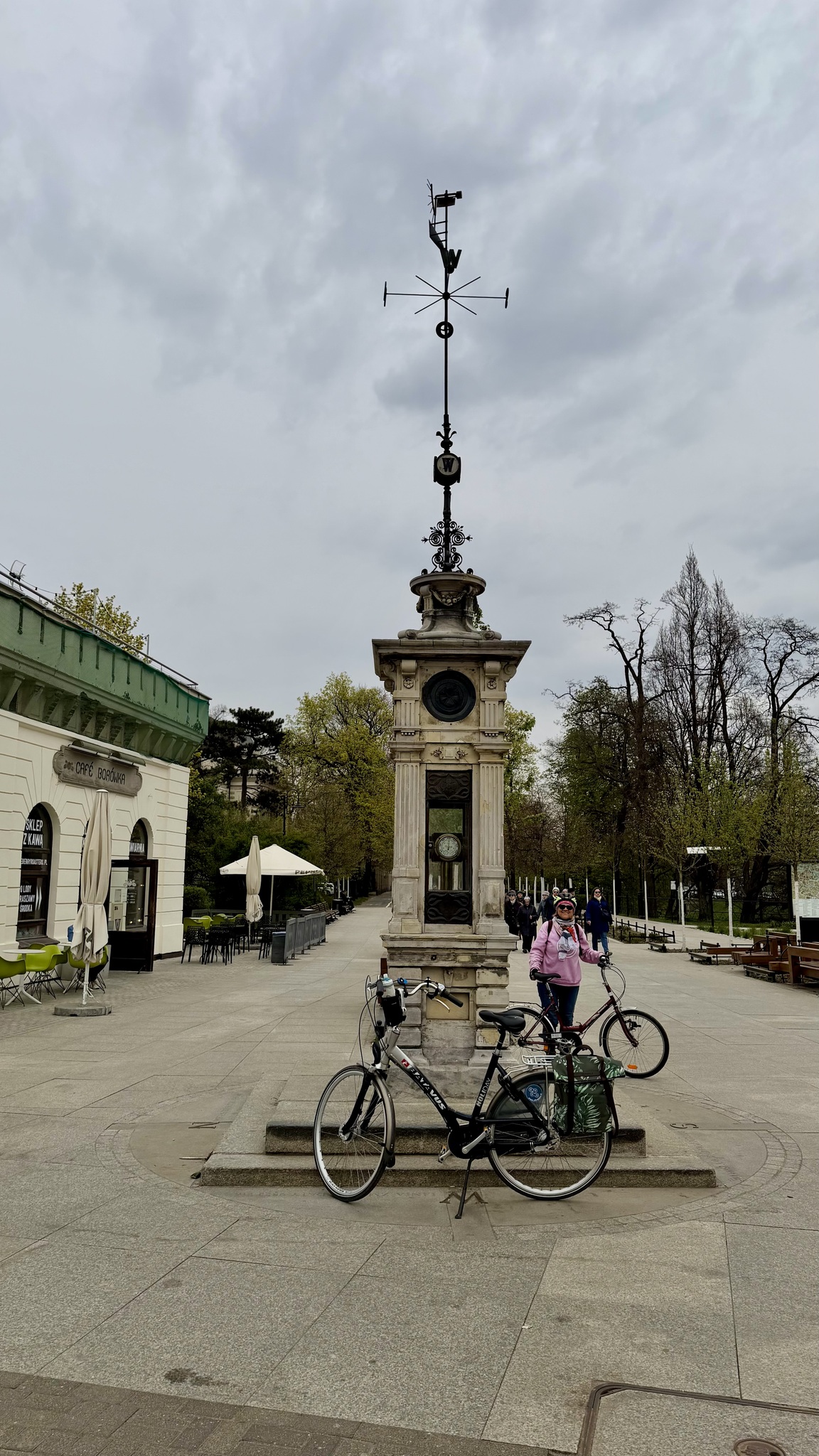
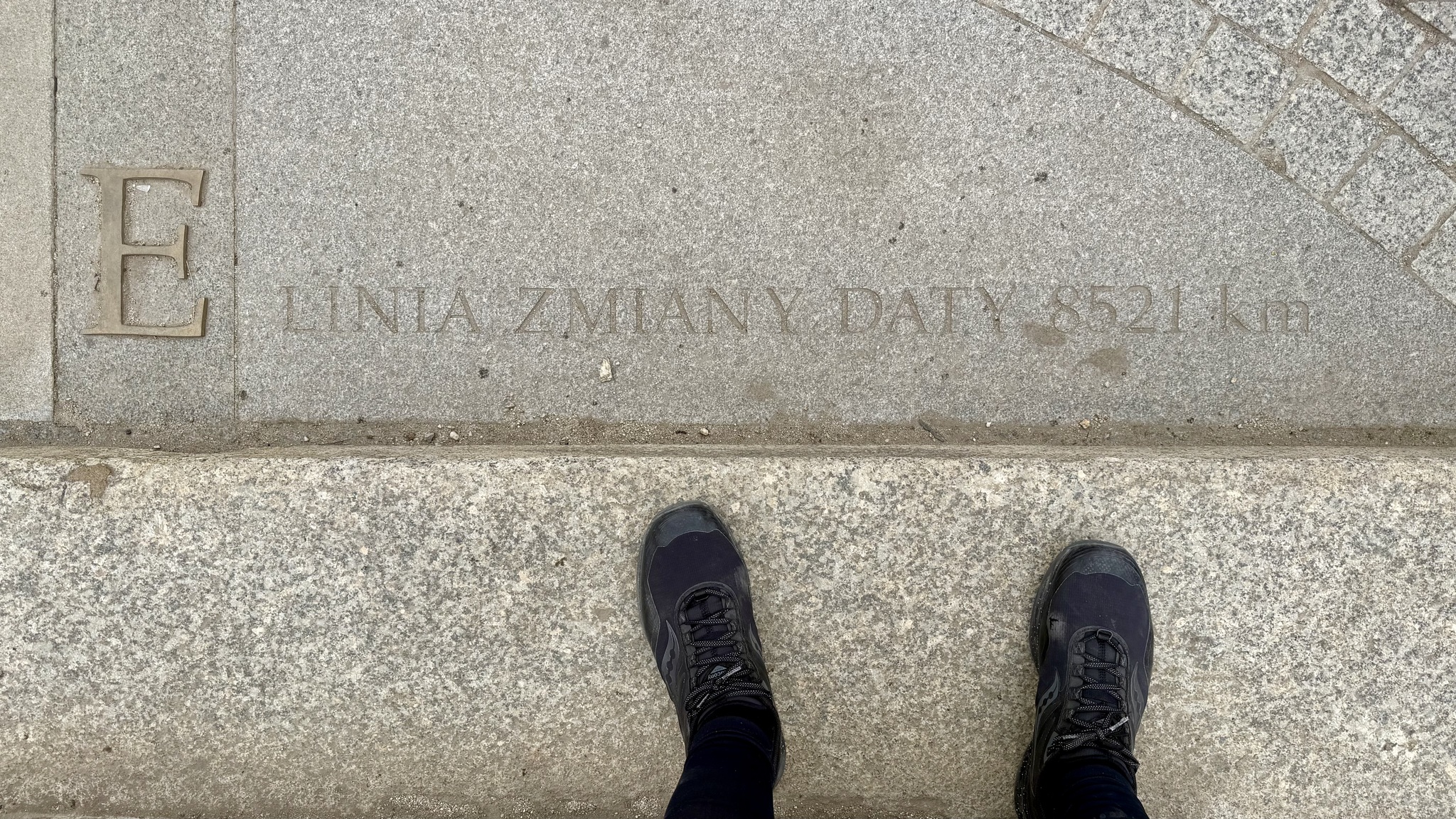
Nearby was a meteorological station. It showed temperature and air pressure. Distances to the international dateline to the east (8521 km), the North Pole (4388 km), the international dateline to the west (9822 km), and to the South Pole (15,699 km) were carved into the pavers. The world is a big place.
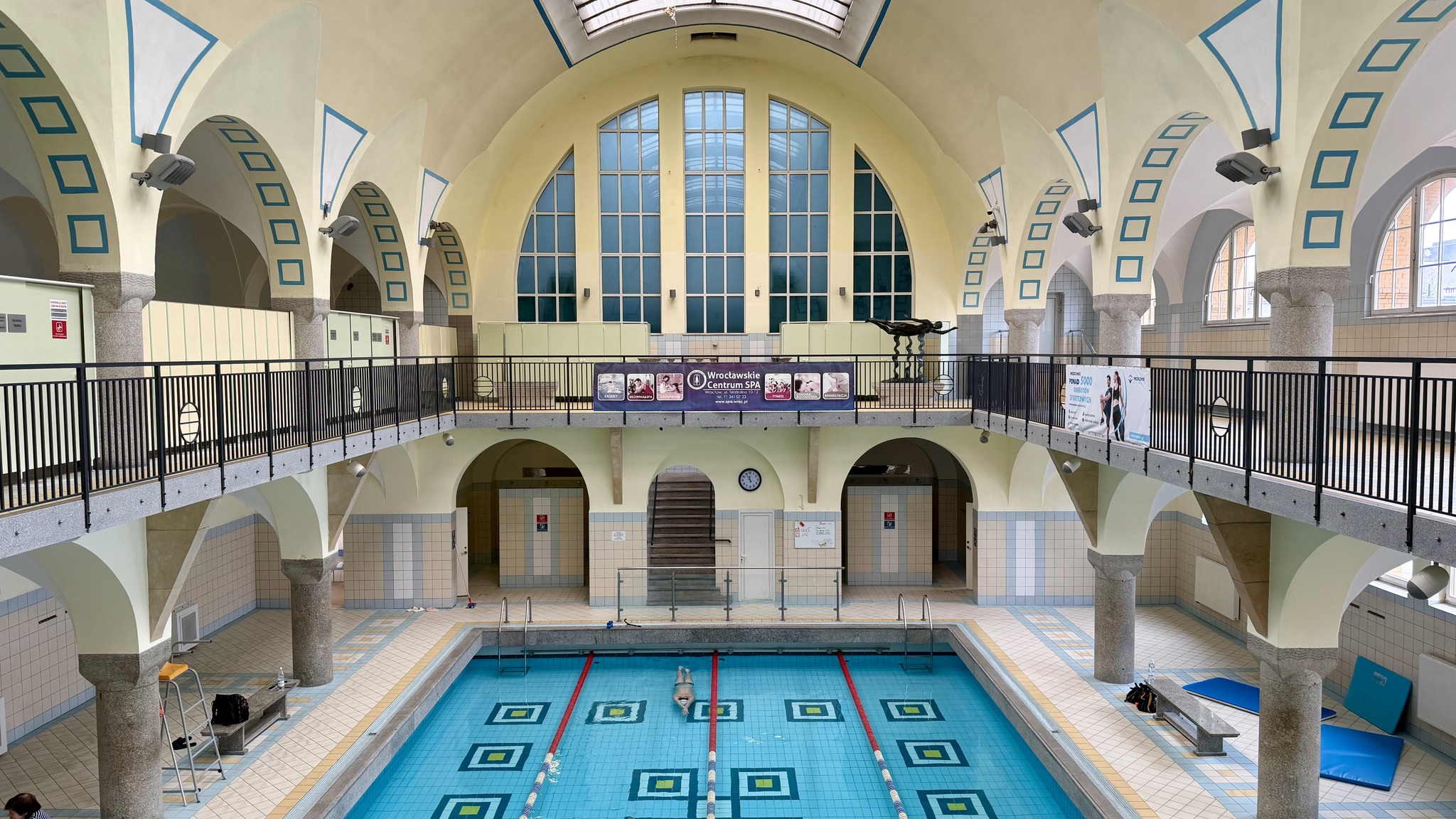
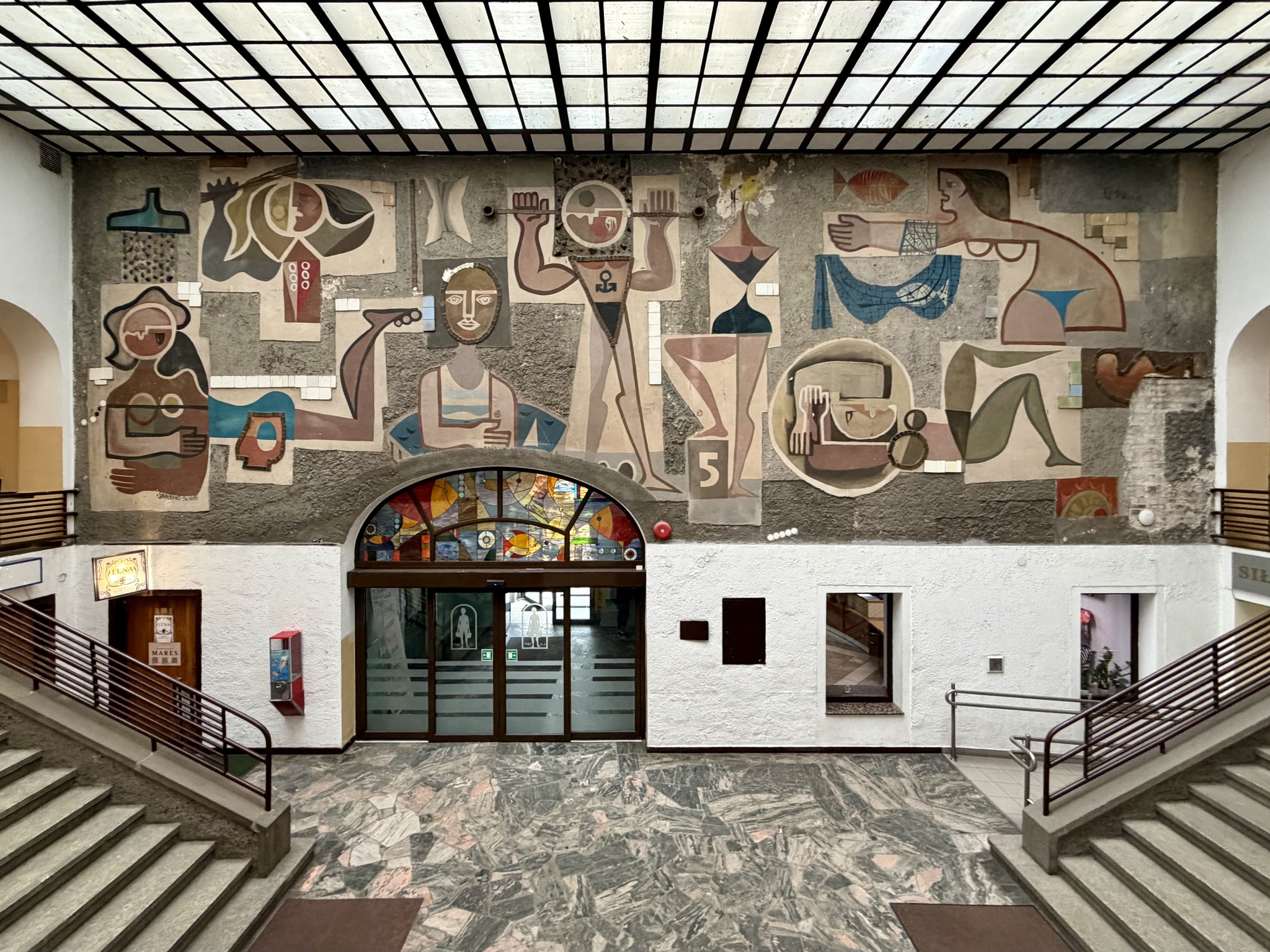
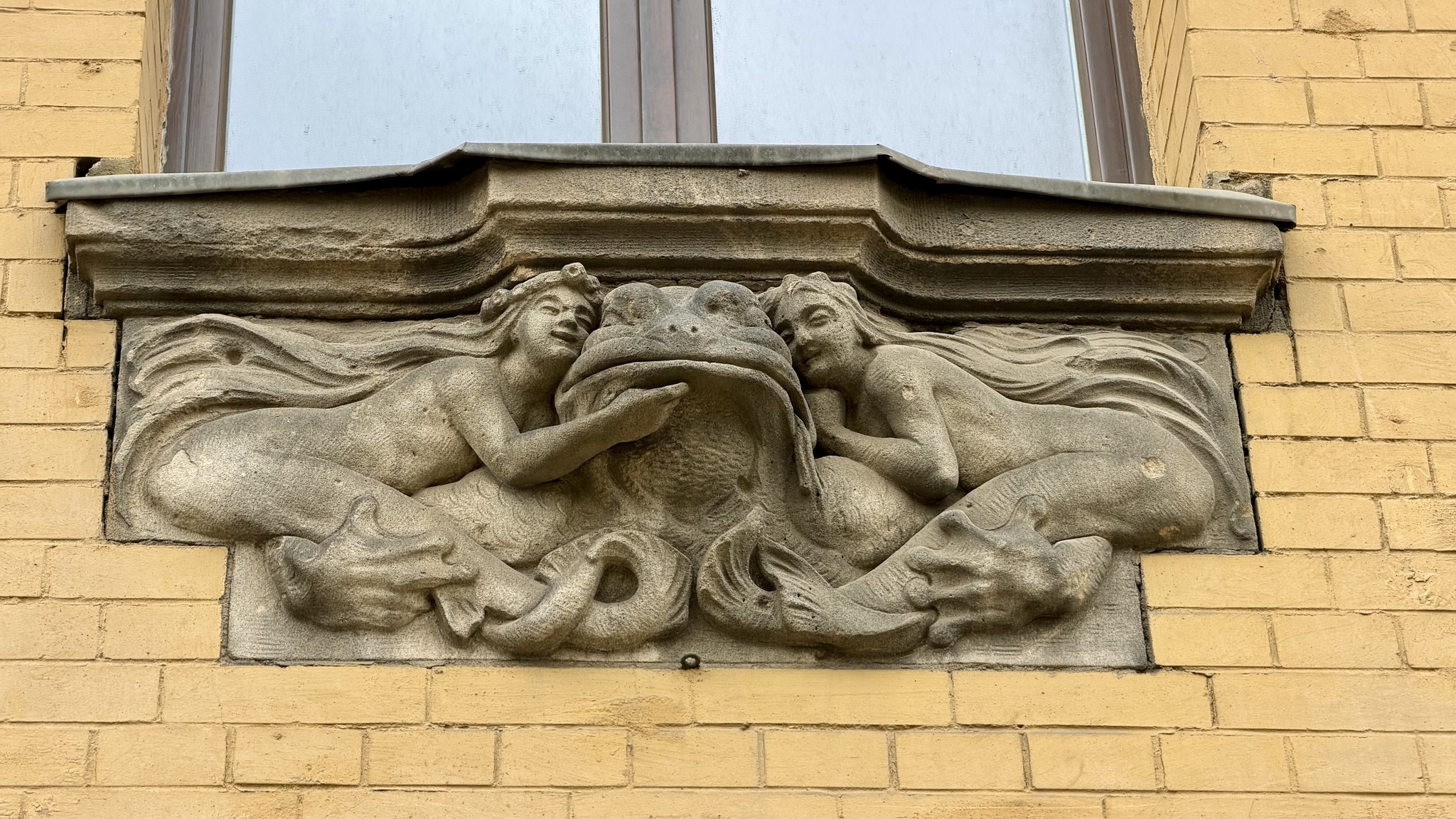
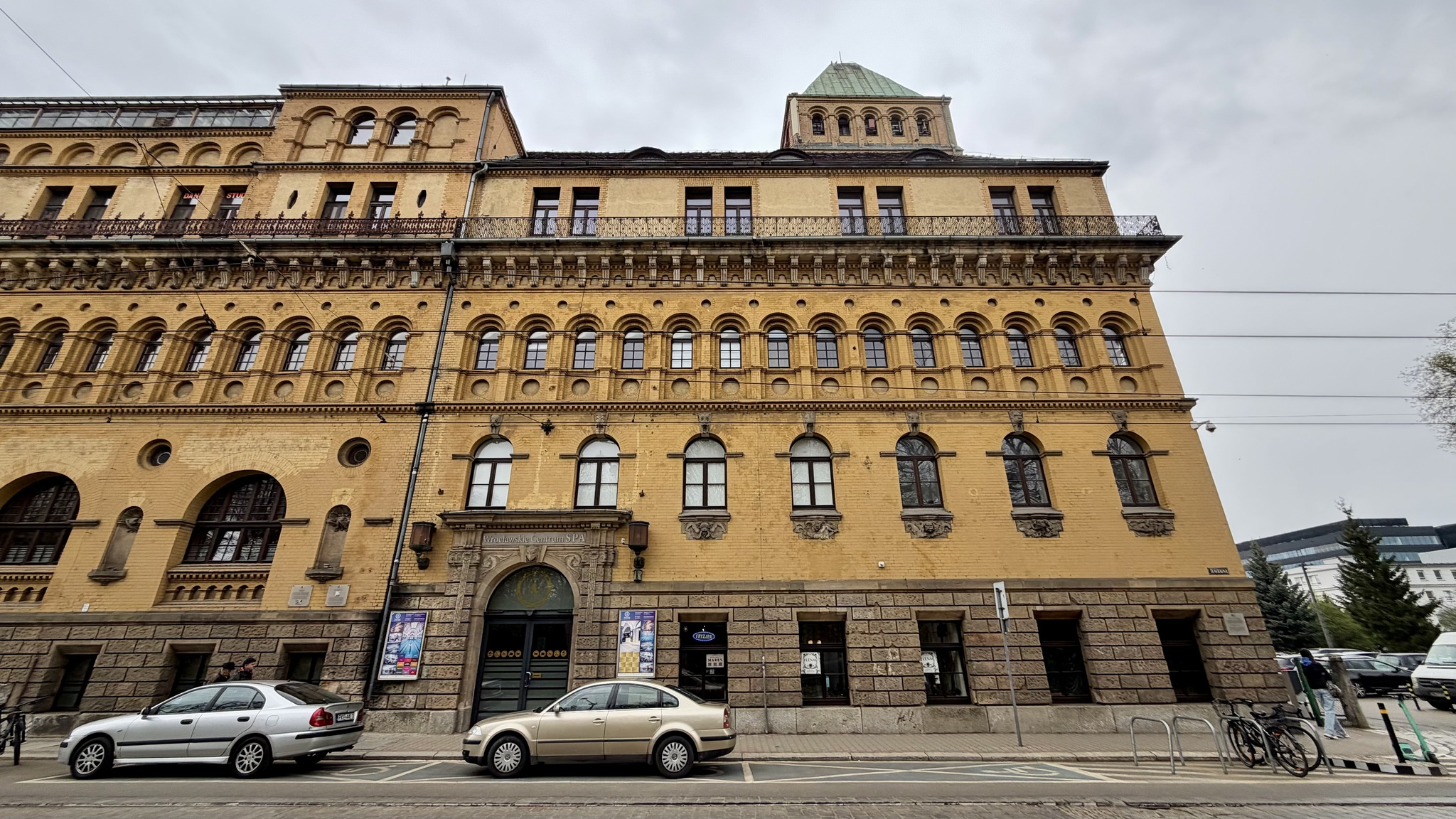
Our next stop was the Wrocławskie Centrum Spa. It is a recreational facility built between 1895 and 1897. It has a swimming pool, saunas, steam baths, rehab, and sports facilities. When Alina was a young child, she and her mother used to come to the public baths here. At the turn of the 20th century, many residents lived in tenement housing that lacked proper bathrooms.
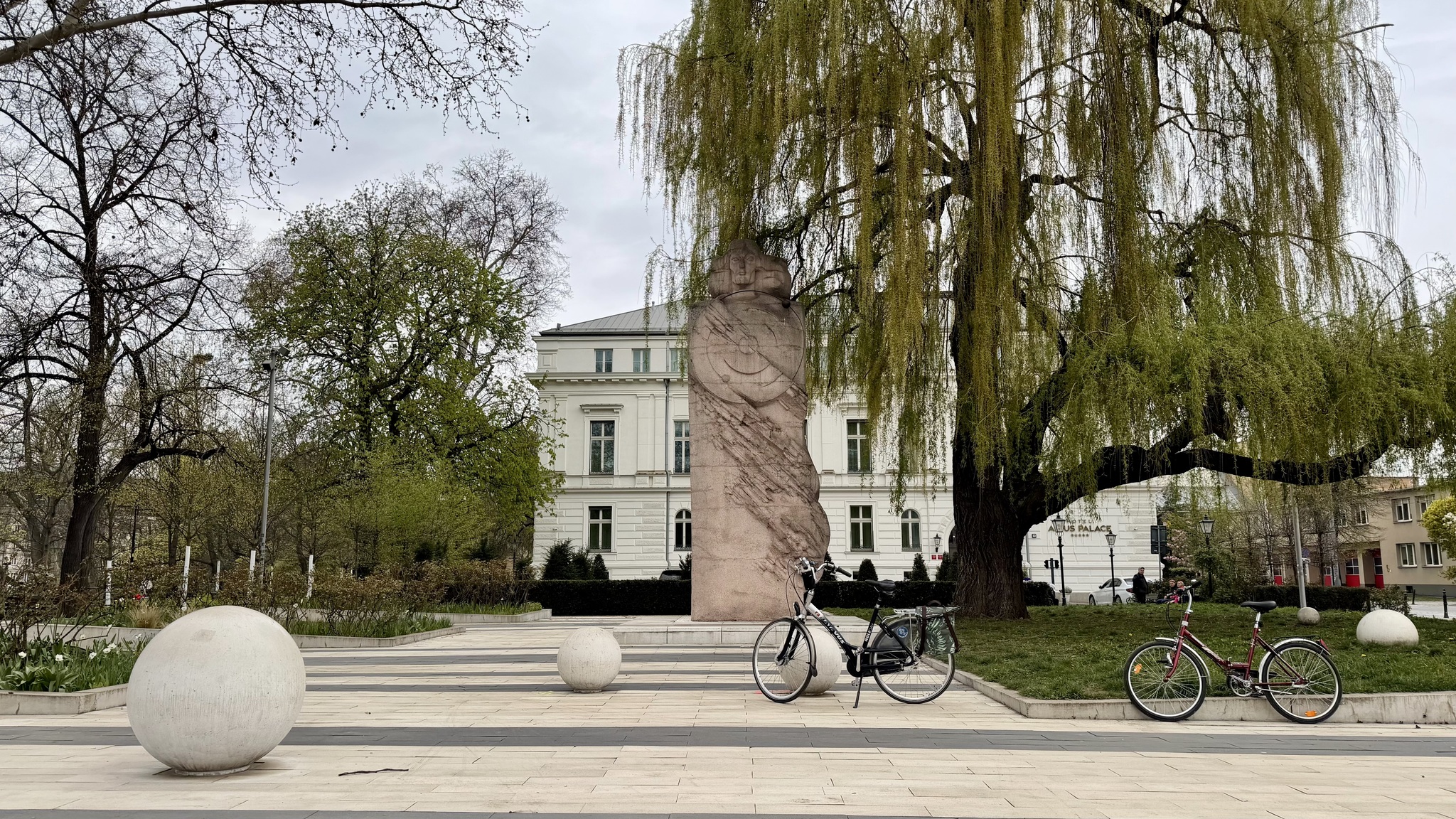
This is a statue of Nicholas Copernicus. Wroclaw’s airport is named for him. However, he probably never visited the city, despite holding a formal administrative connection as a Church Canon of the Holy Cross Collegiate Church. He might have studied under or was influenced by astronomers connected to Wroclaw.
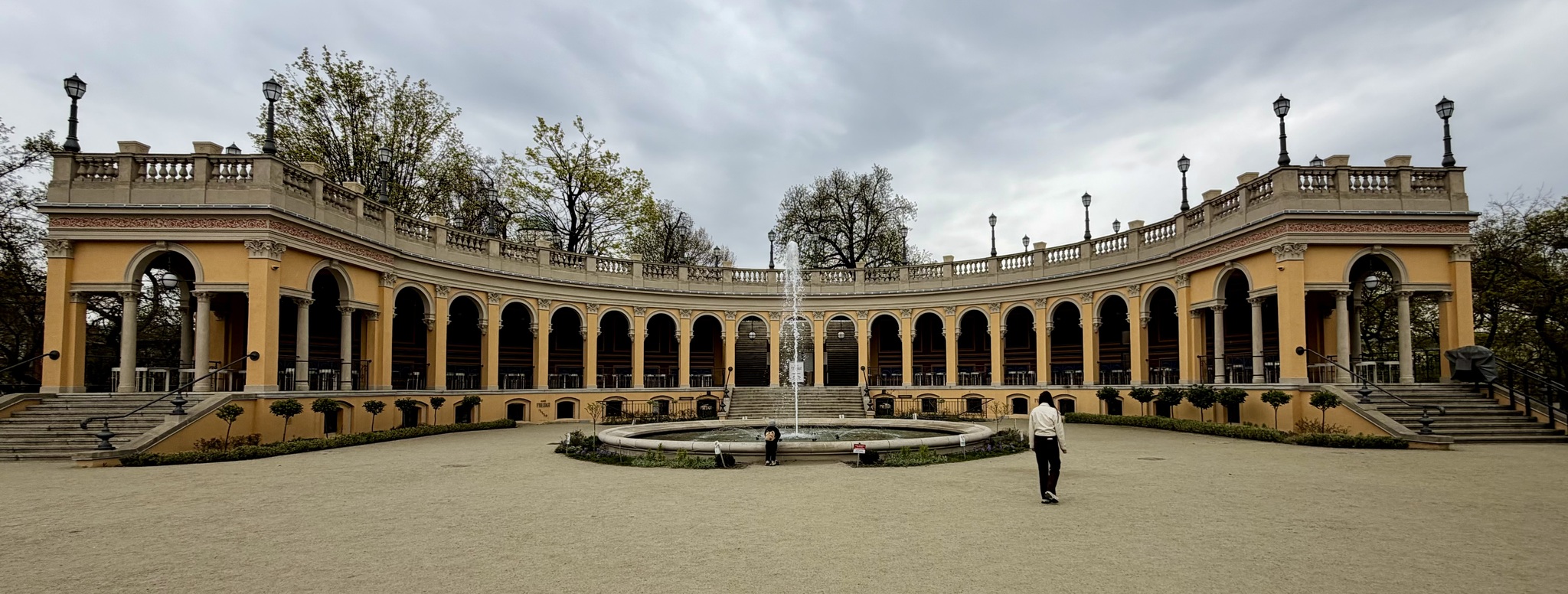
Across the street is Bastion Sakwowy (Saddlebag Bastion). It is a fragment of the former city fortifications and an elevated pavilion. It was built in 1867.
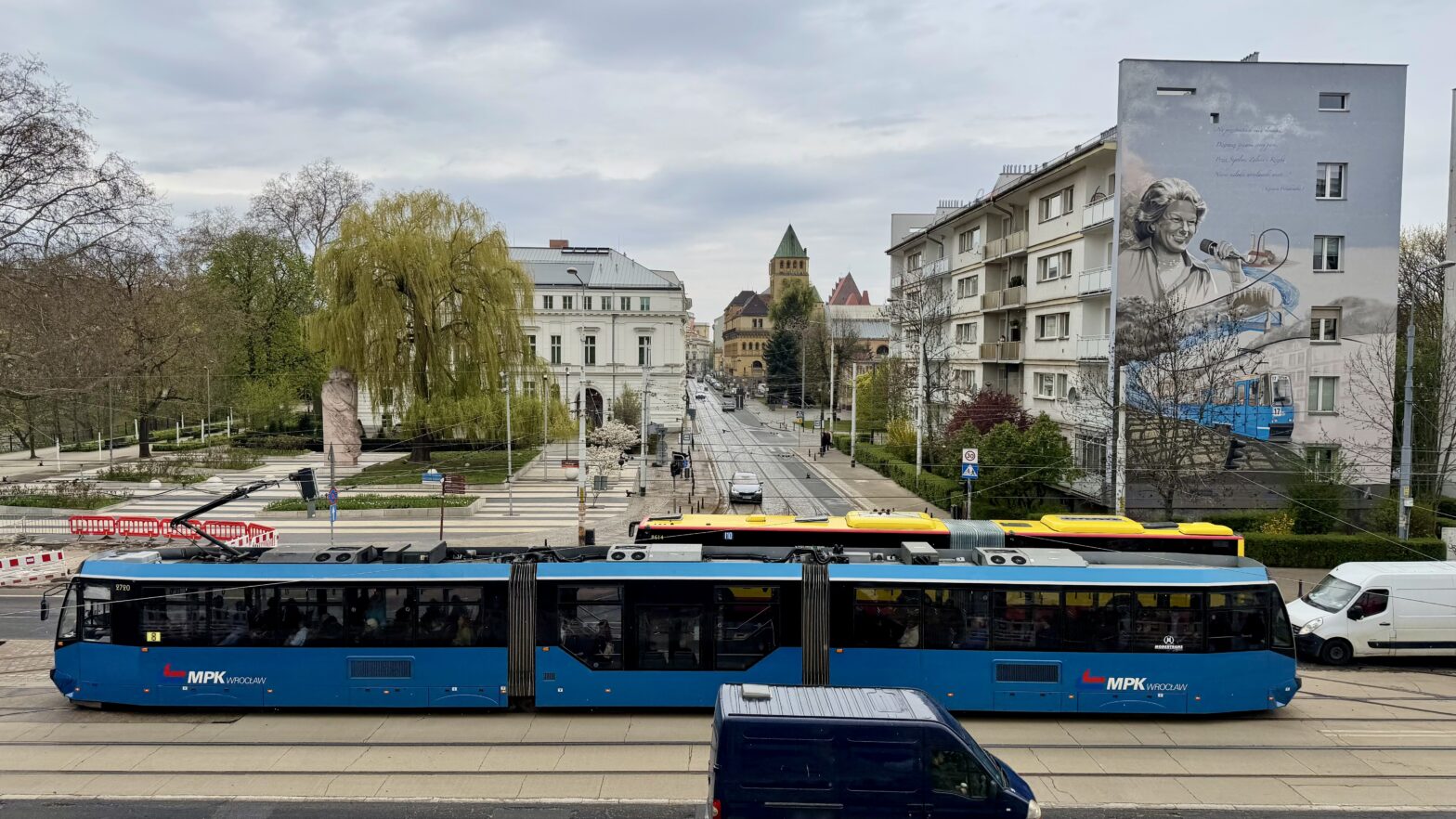
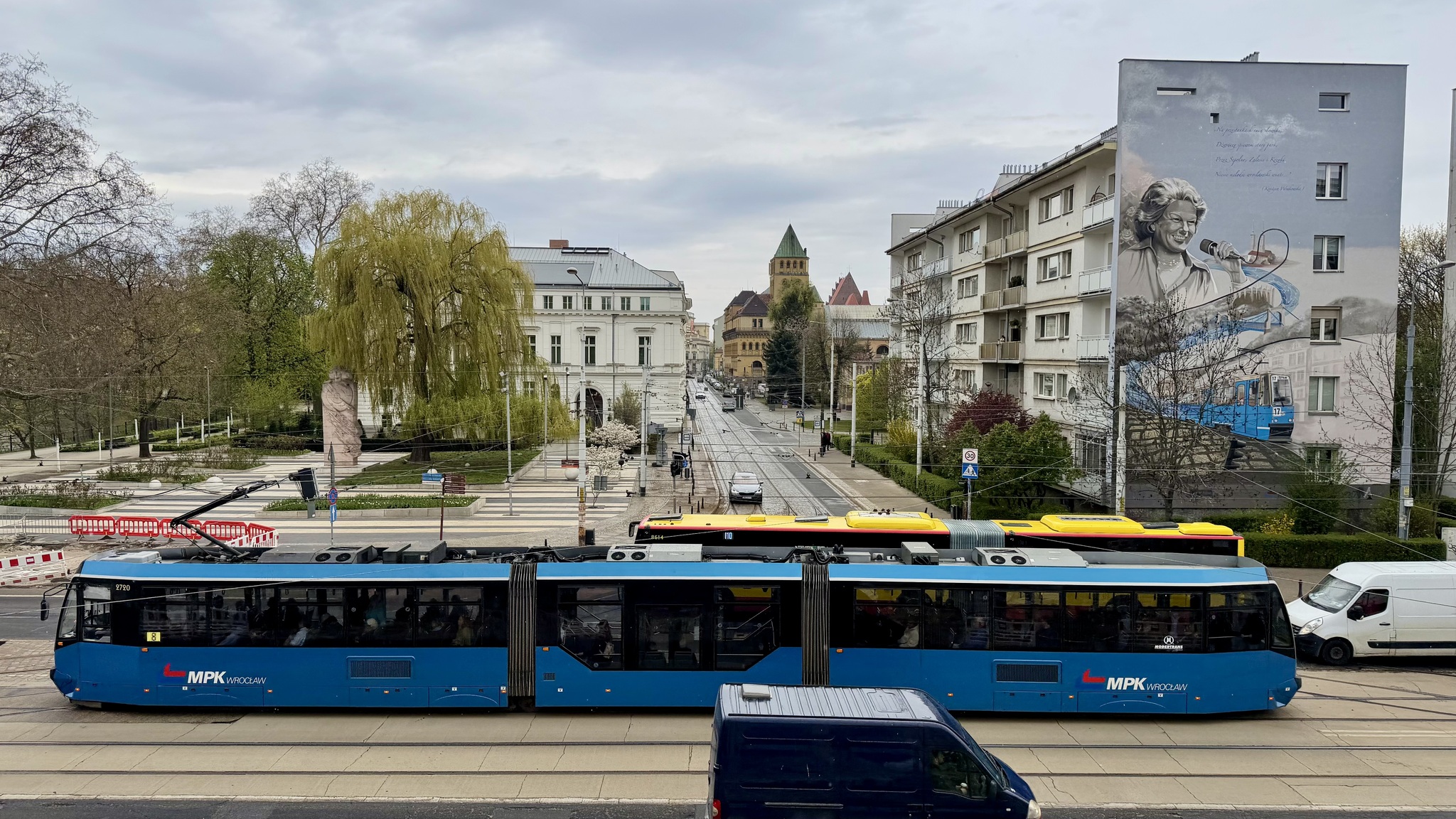
The view from the bastion includes this mural of Maria Koterbska. She is famous for the song “Blue trams running along the rails” (“Niebieskie tramwaje”). As Alina was telling me the story, a blue tram was passing by, reflecting the blue tram in the mural.
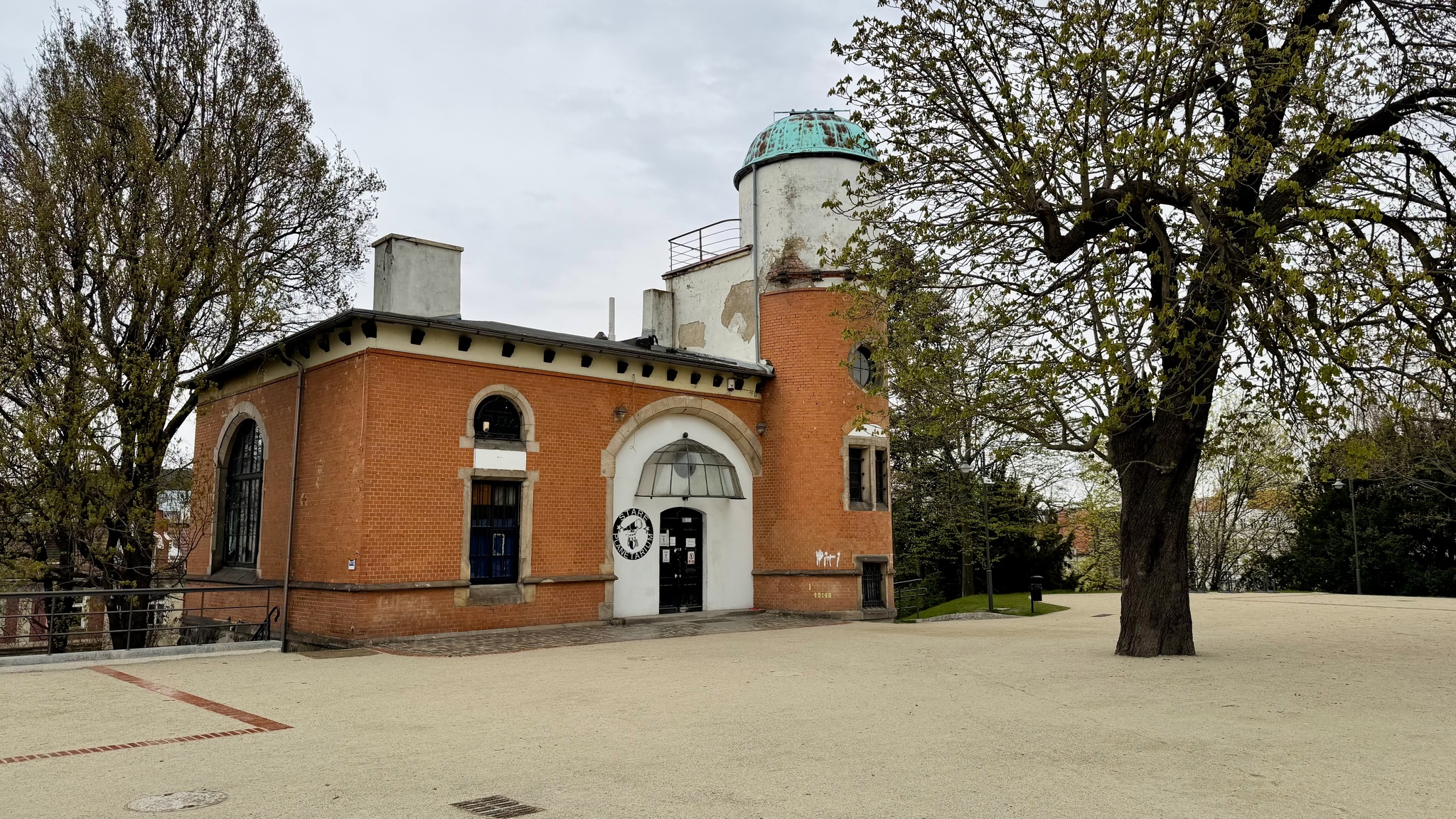
This is the Wroclaw Planetarium. It offers educational shows and is very close to the Nicholas Copernicus monument.
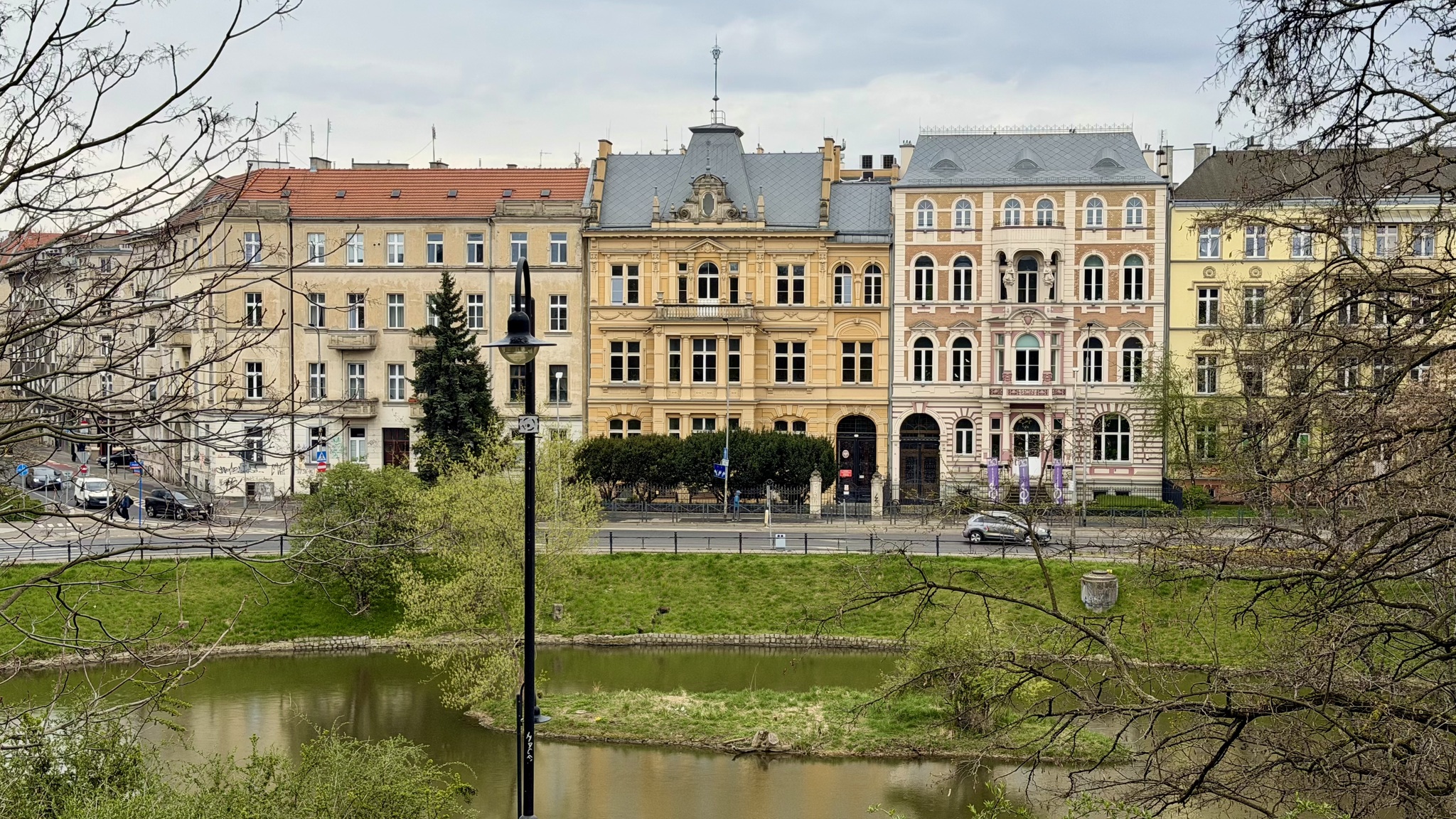
Wroclaw had defensible walls and a moat system in the 13th century. It was developed to protect the old town and is now a scenic green pedestrian belt known as the old town promenade.
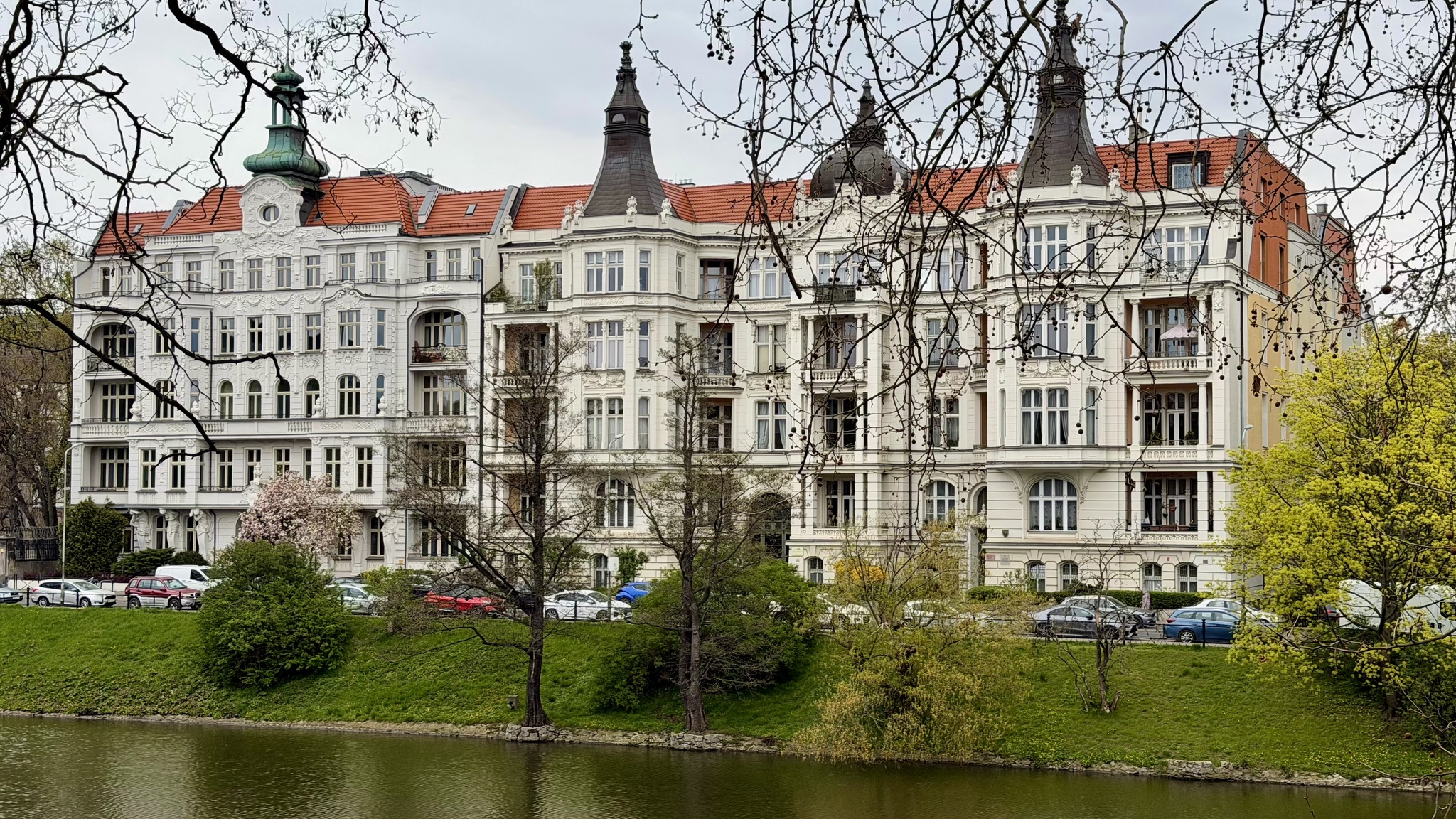
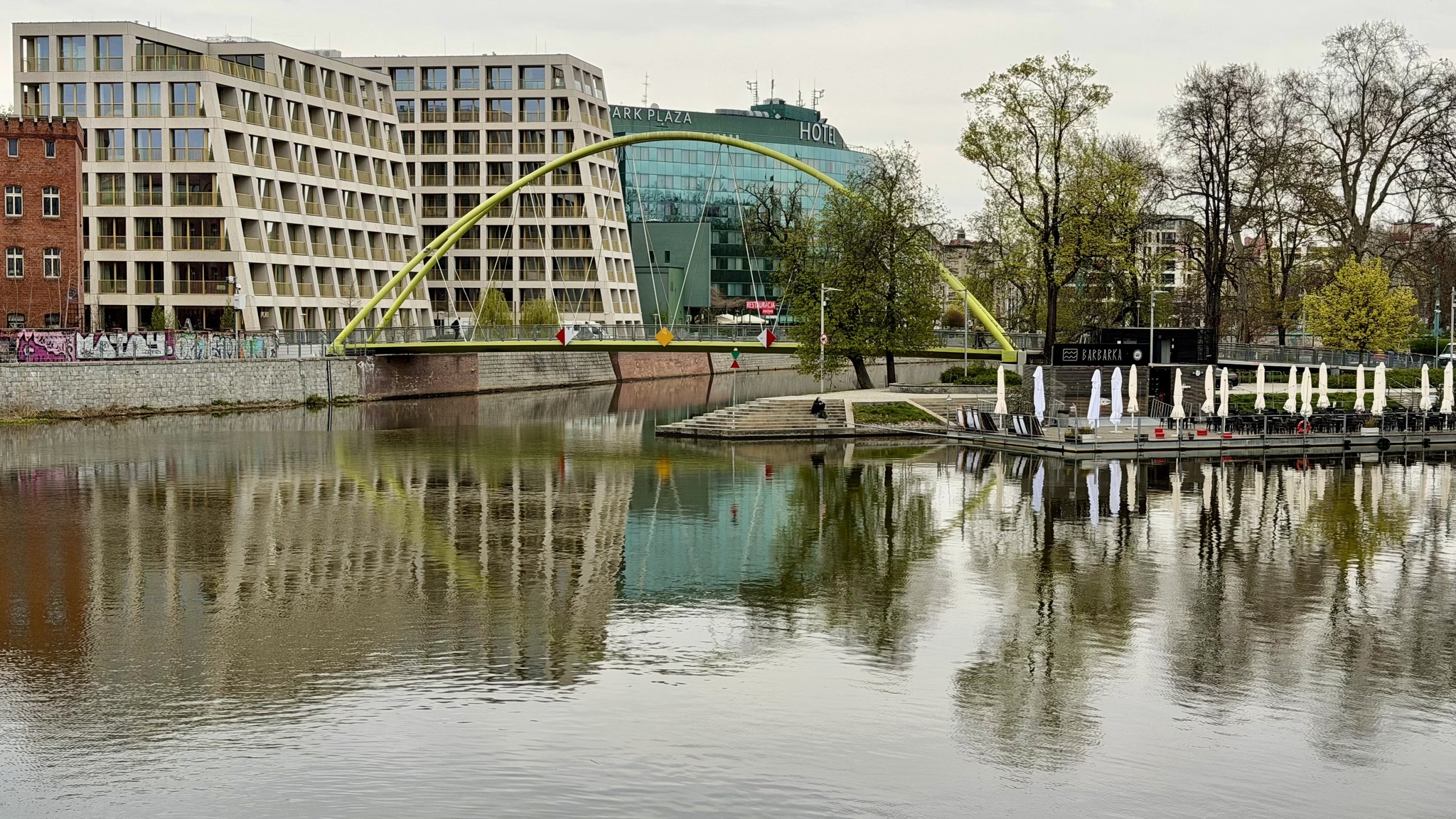
There are many beautiful buildings along the moat.
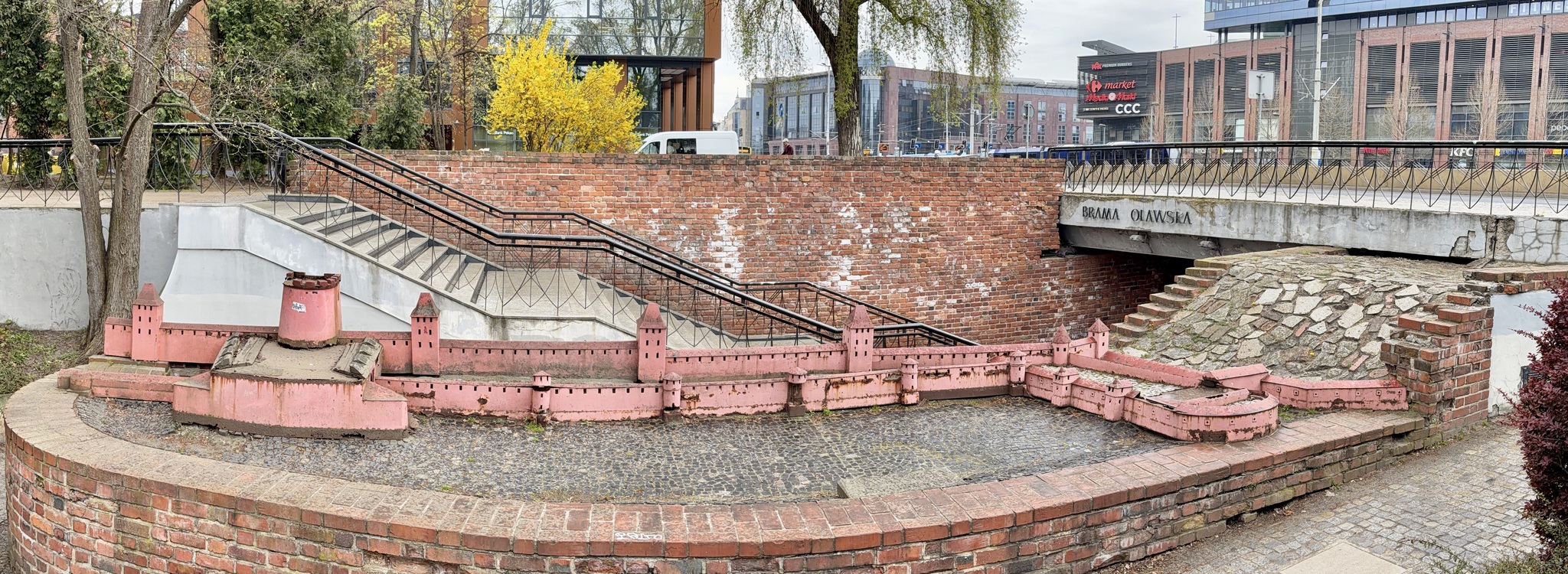
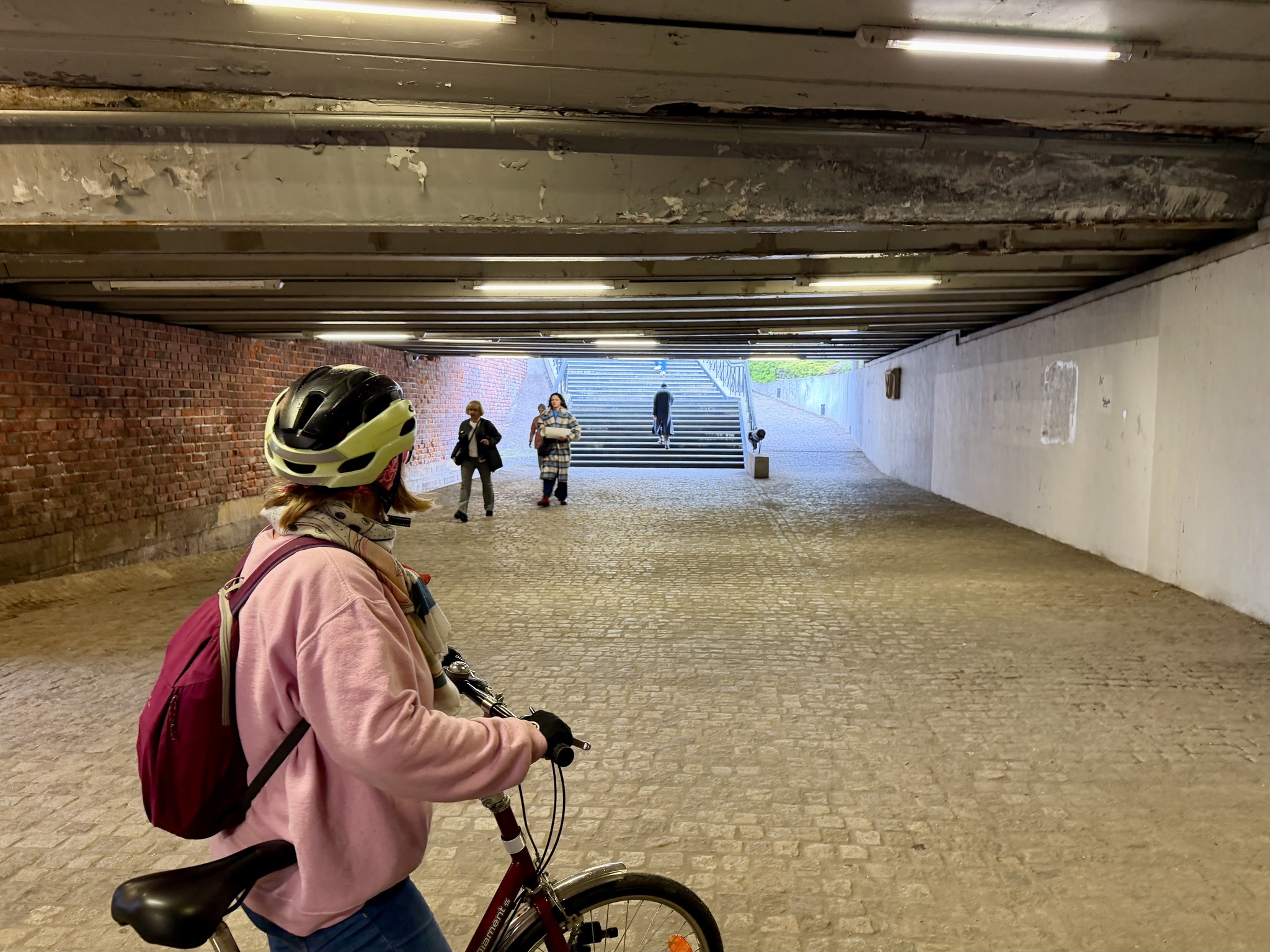
There is a small model of the fortified city at a pedestrian and cycling underpass, Brama Olawska. The remnants of the medieval gates were uncovered during the construction of the underpass.
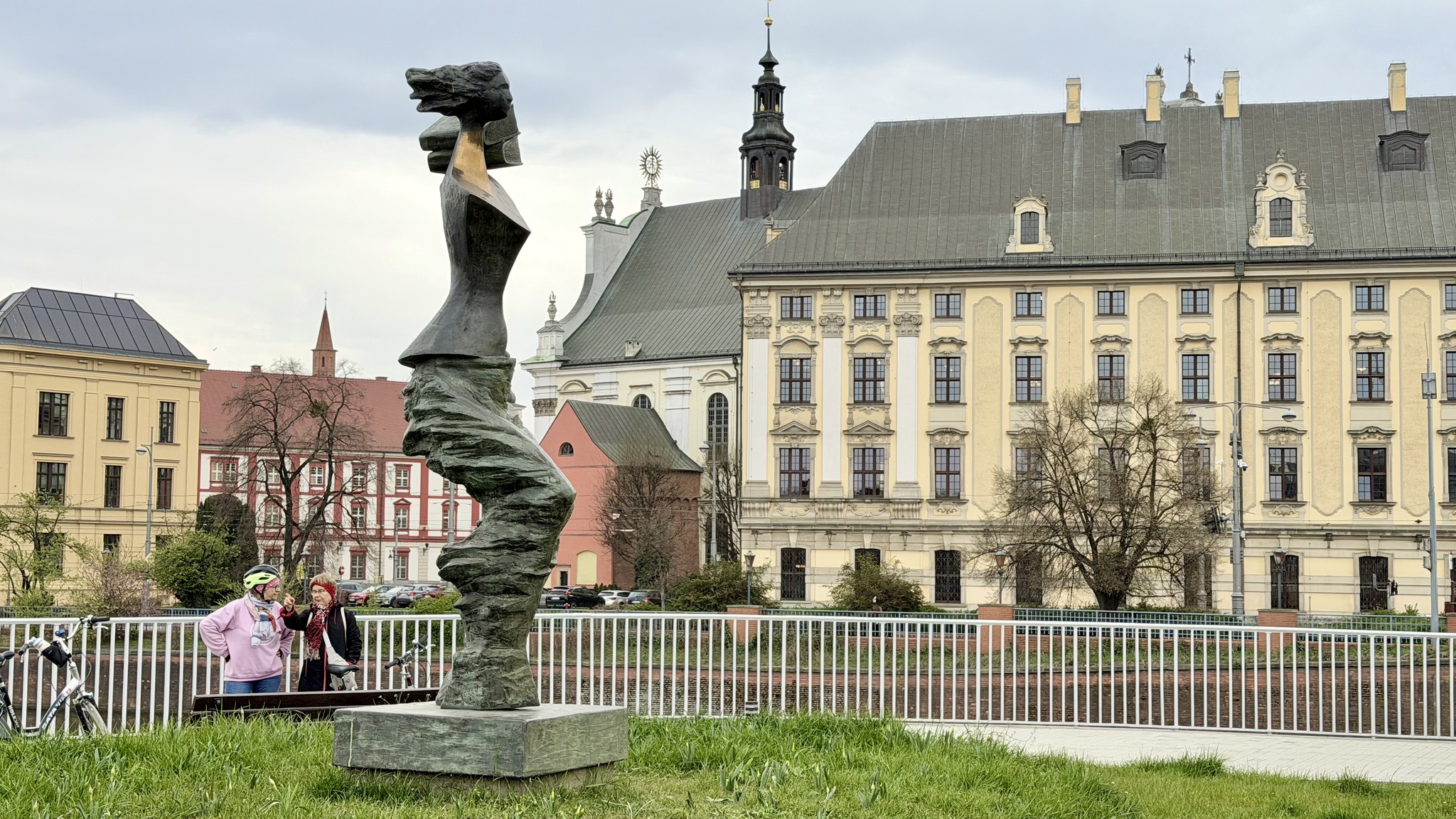
Next, we met a high school friend of Alina’s, Krystyna, on the University Bridge. Krystyna is a city tour guide. The statue is Stanisław Wysocki’s tribute to the thousands of anonymous heroes who sprang to Wrocław’s rescue during the great flood of 1997. Erected in 1998, the three-metre statue depicts a nameless woman wading out of the water carrying books, mimicking scenes that took place in 1997 when local students joined efforts to save the priceless artefacts in the University Library.
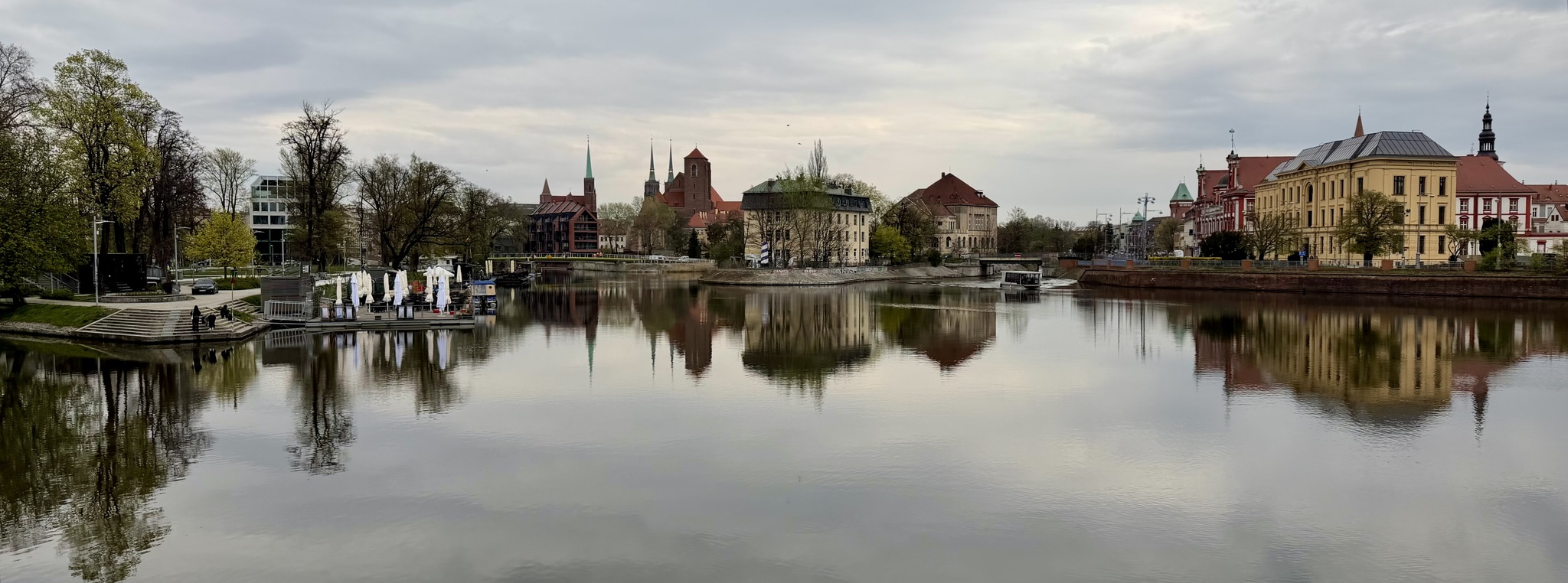
This widening of the Oder River has several islands connected by footbridges.
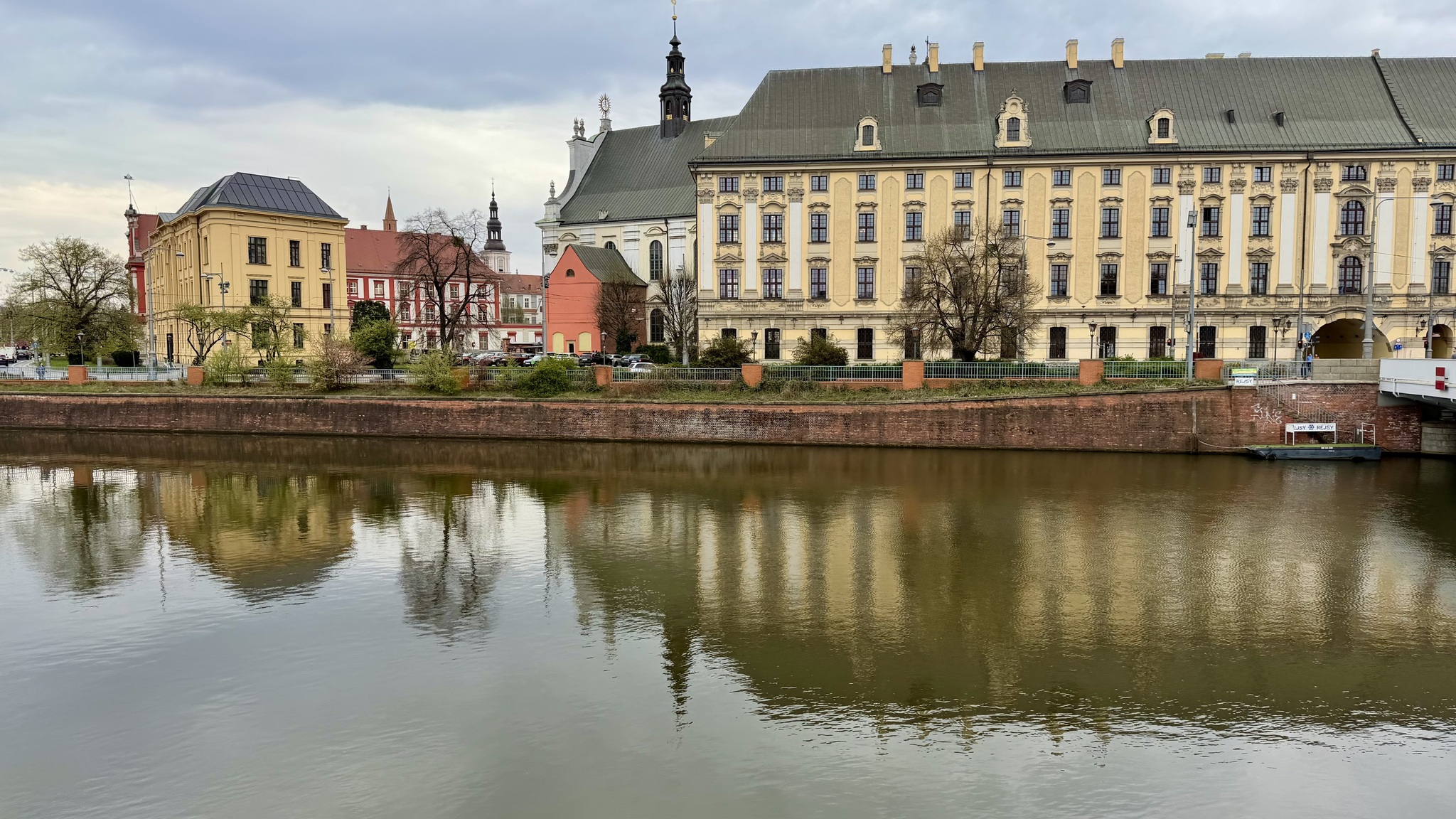
These are university buildings.
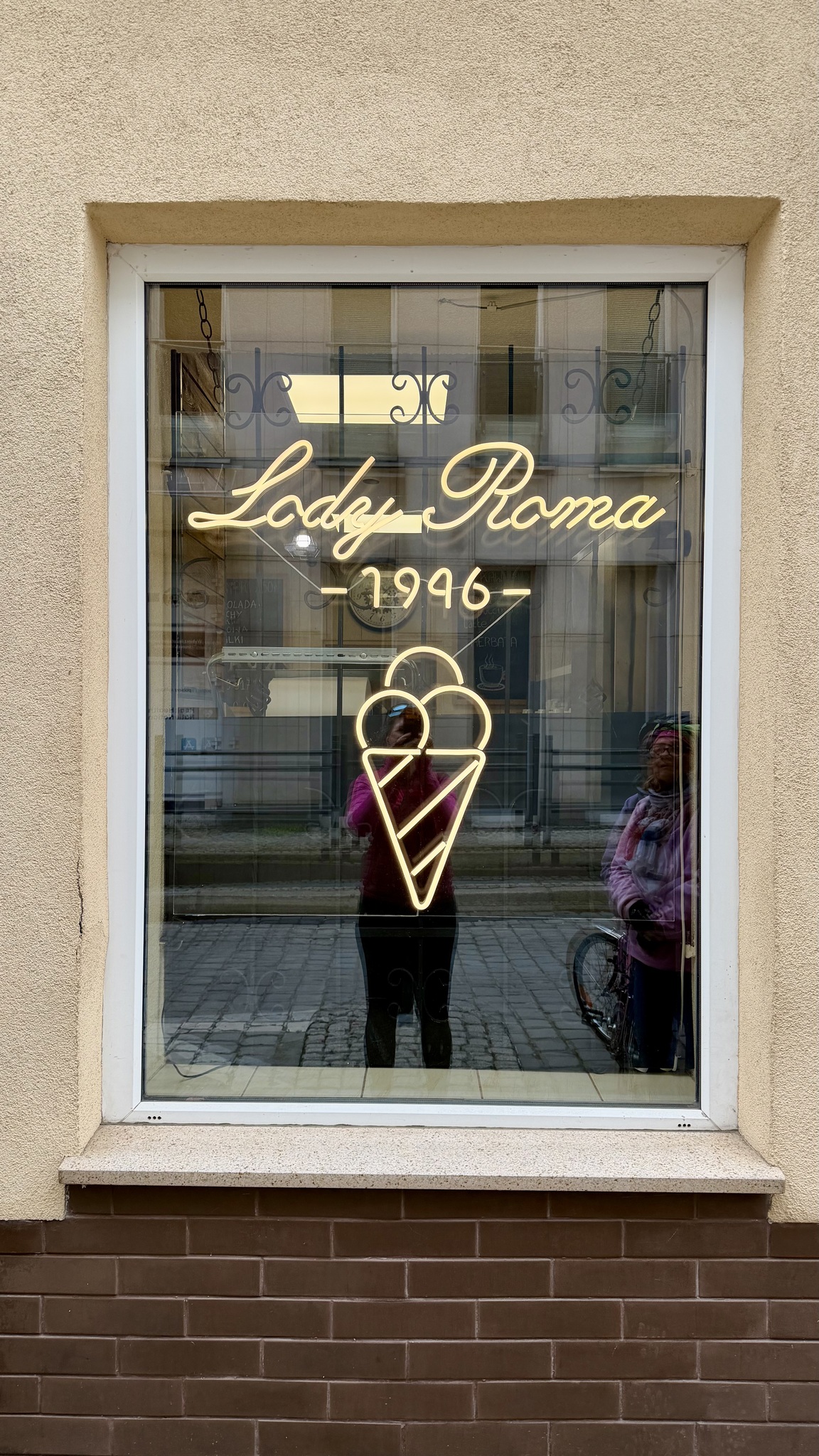
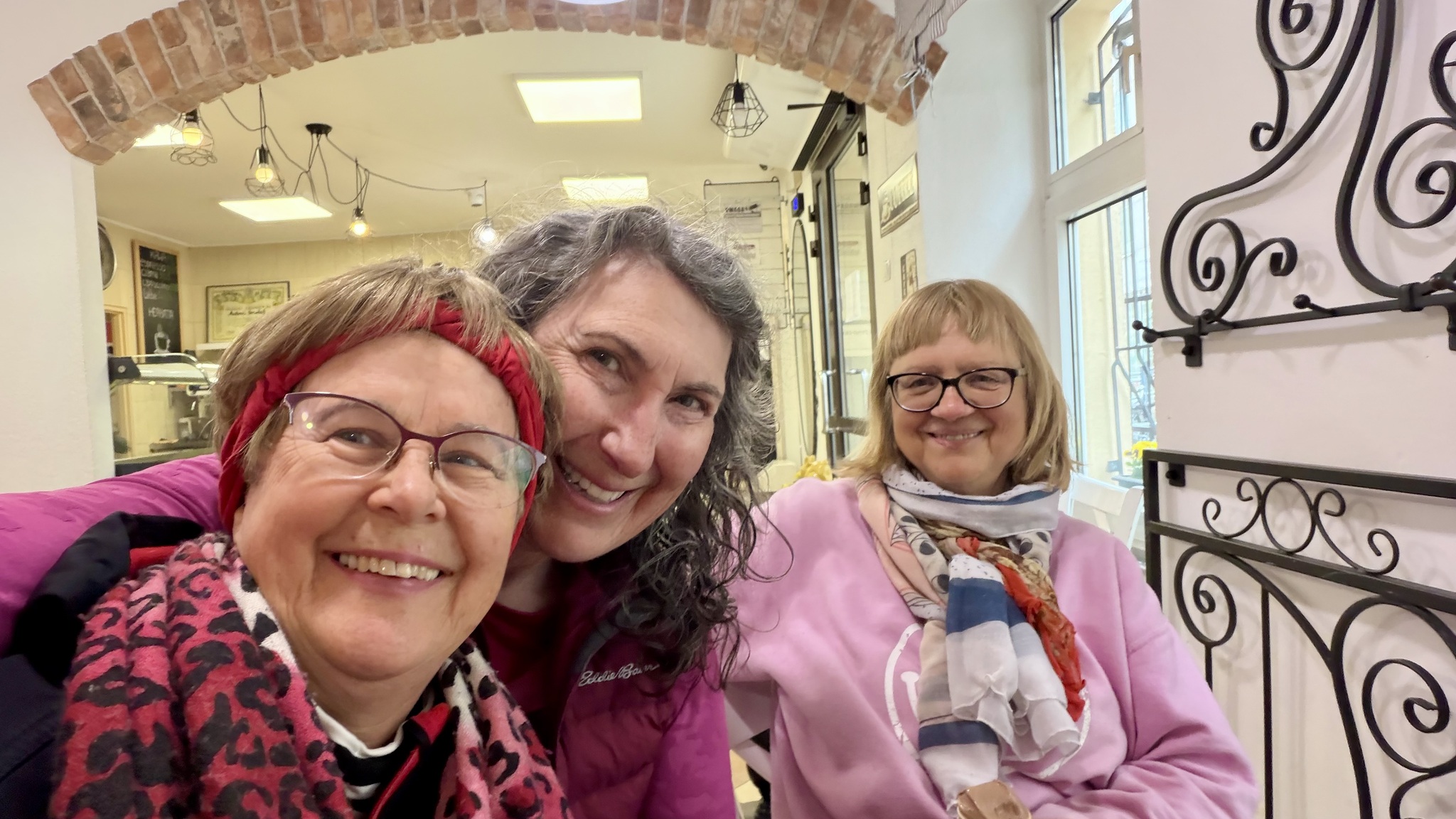
We stopped for ice cream at Lody Roma. It was started in 1946 by two friends – a Polish pilot and mechanic, and an Italian pastry chef. The British newspaper, the Guardian, recognized it. It is one of the 20 best ice cream parlours in Europe.
Krystyna showed us the beautifully restored interior of one of the buildings in the area.
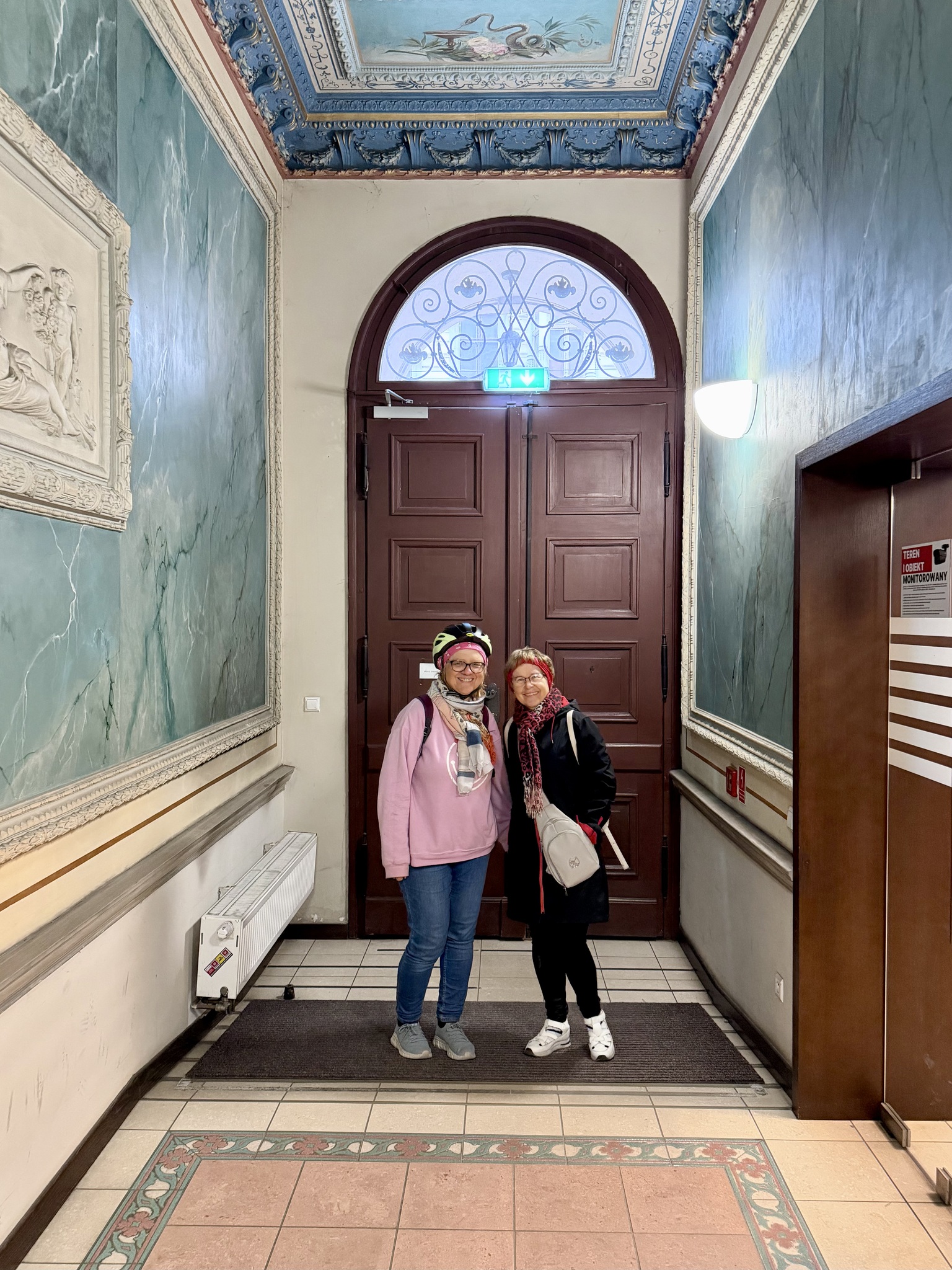
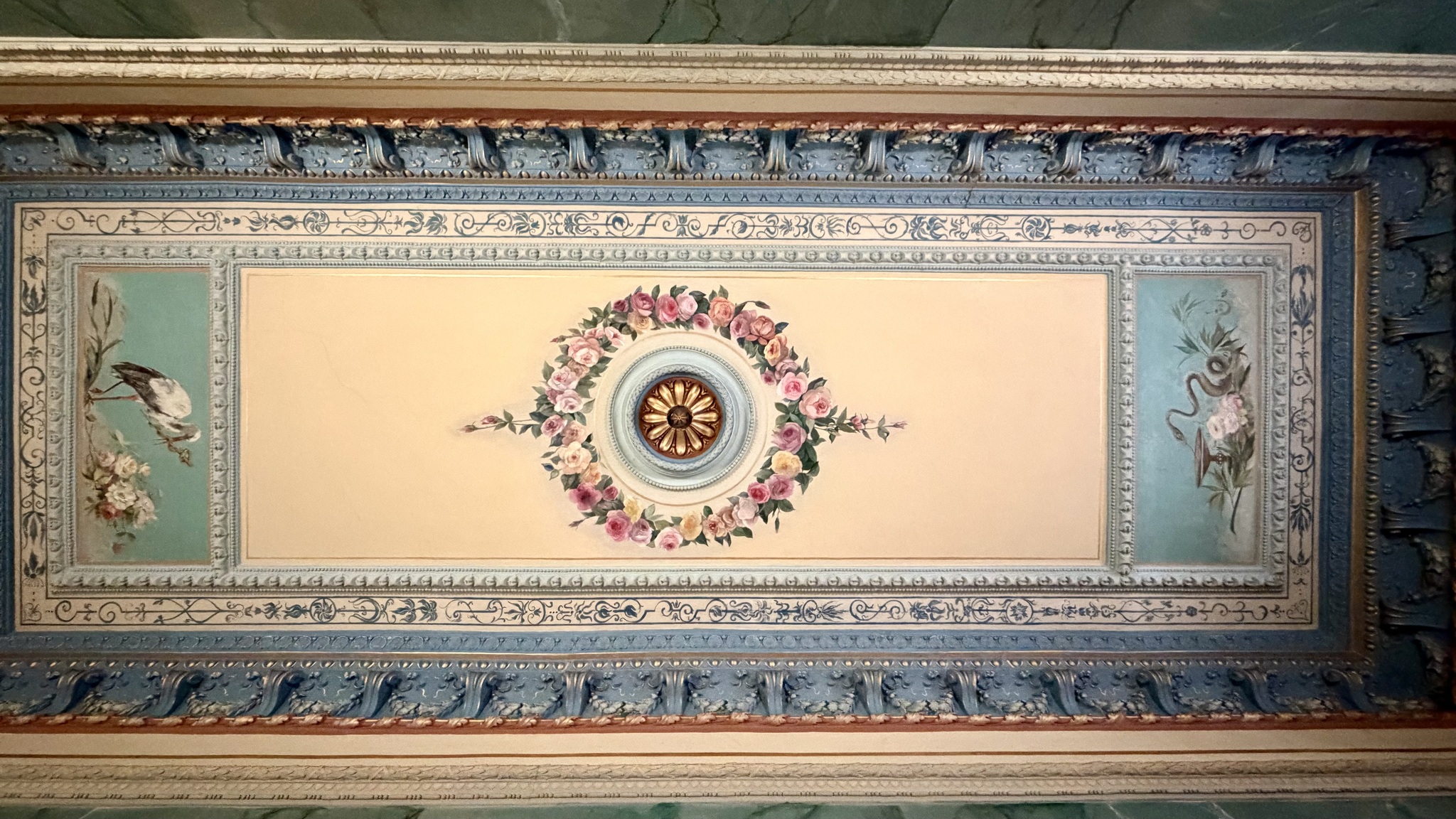
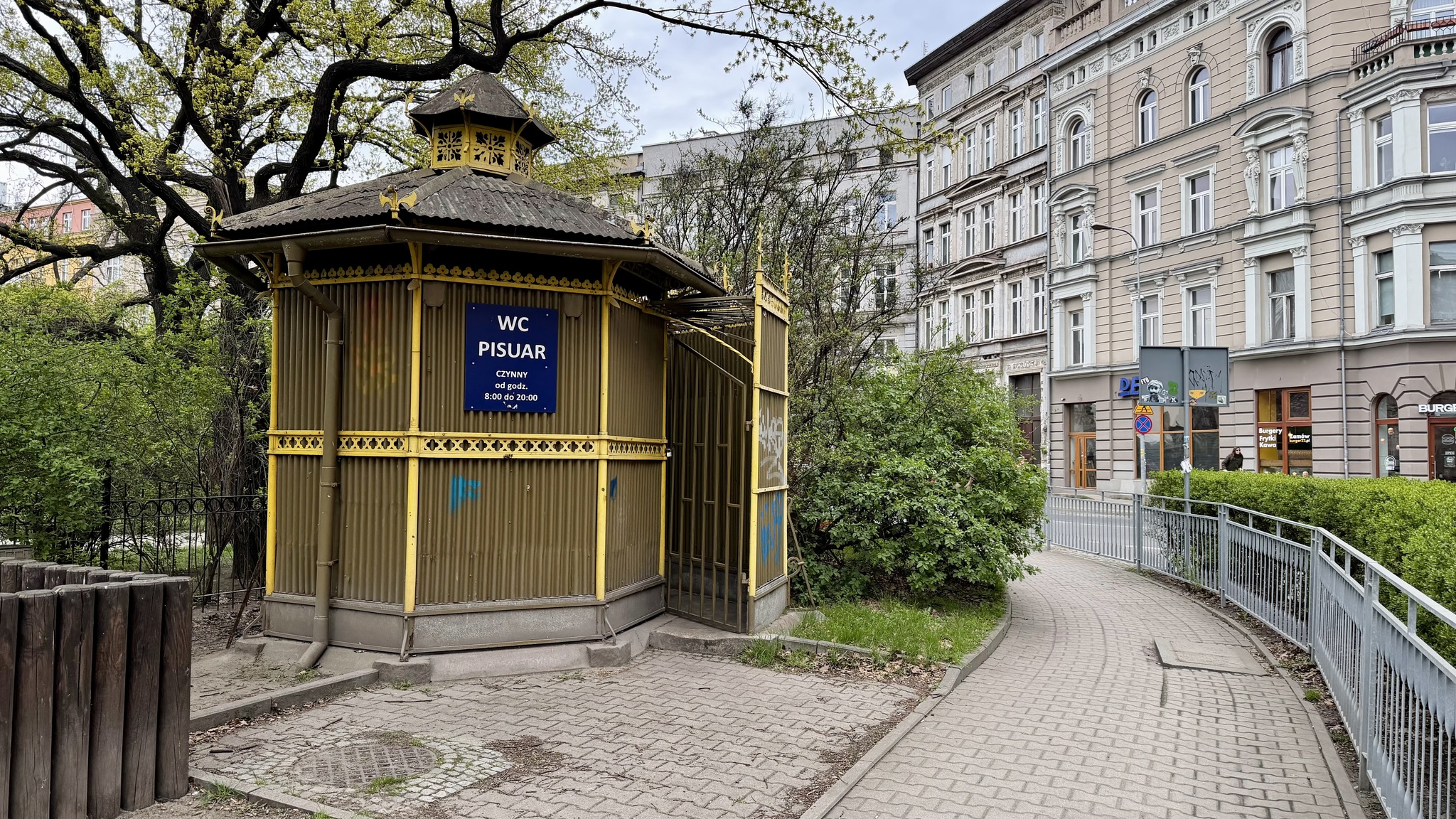
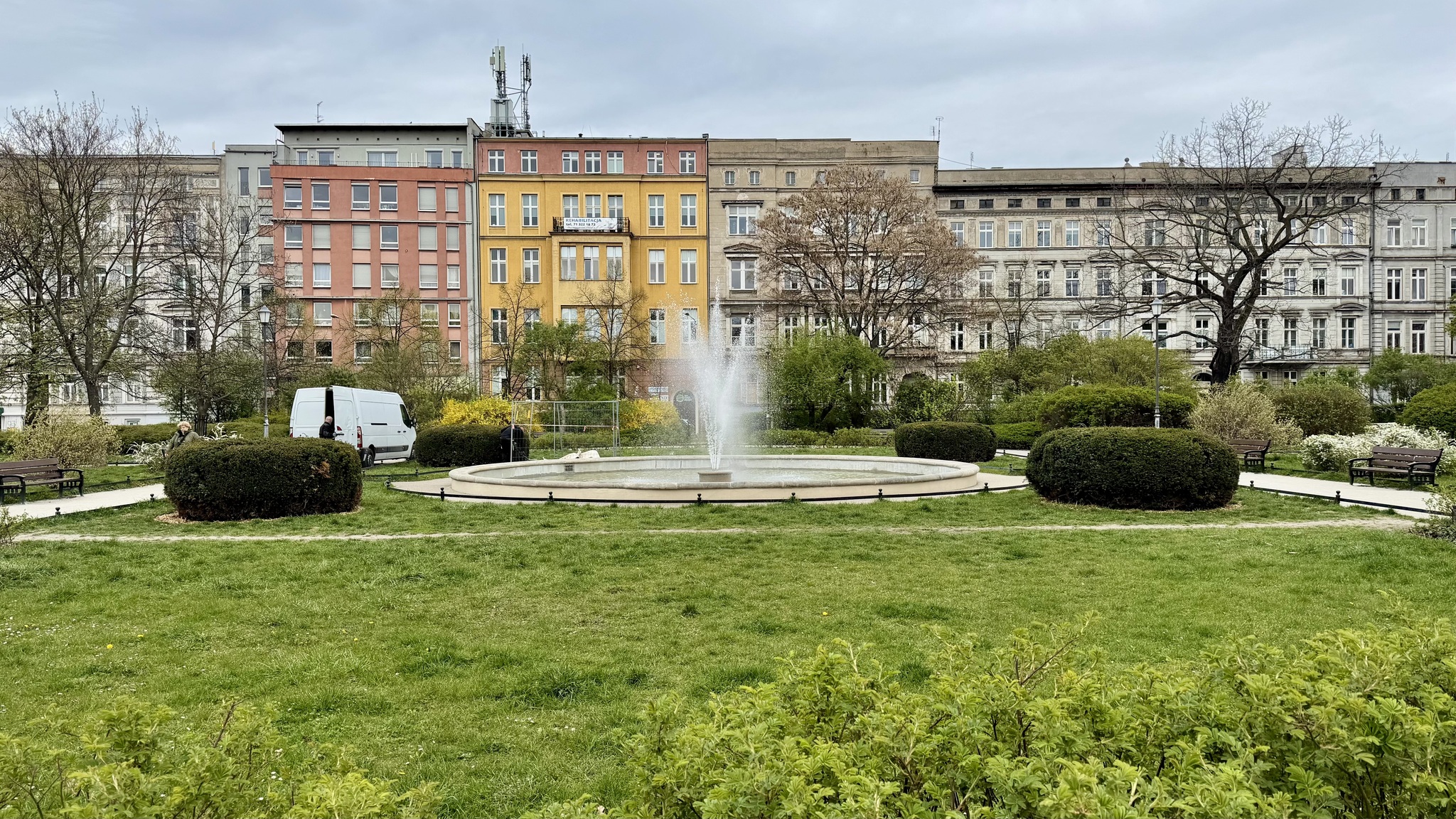
Plac Świętego Macieja, St. Matthias Square, has a pisuar that was a little bit more private than the “Pee curls” we saw in Amsterdam. The park dates back to 1876.
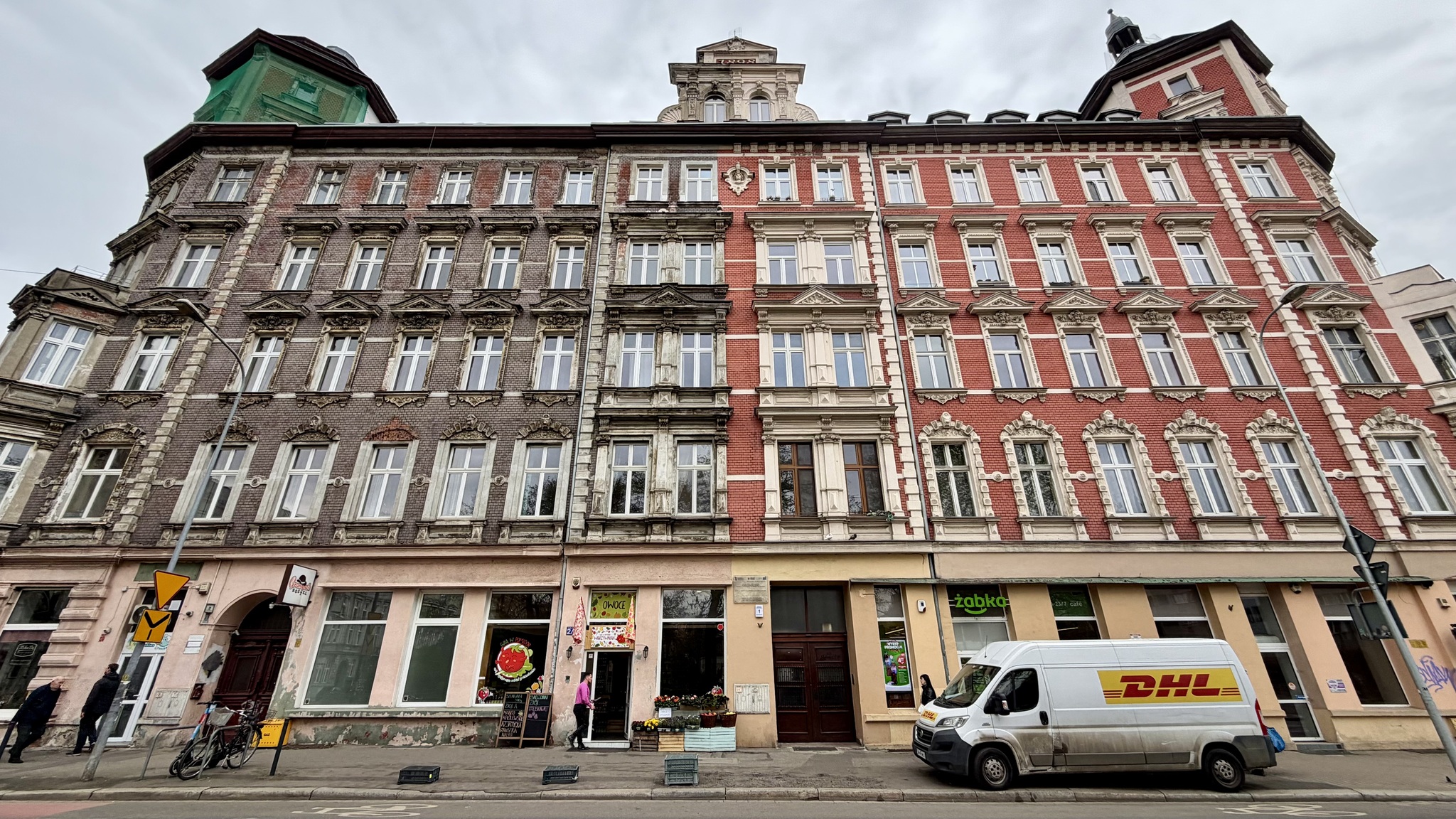
Buildings that have suffered years of neglect are slowly being renovated. Here you can see one that’s been renovated on the right, but not yet on the left.
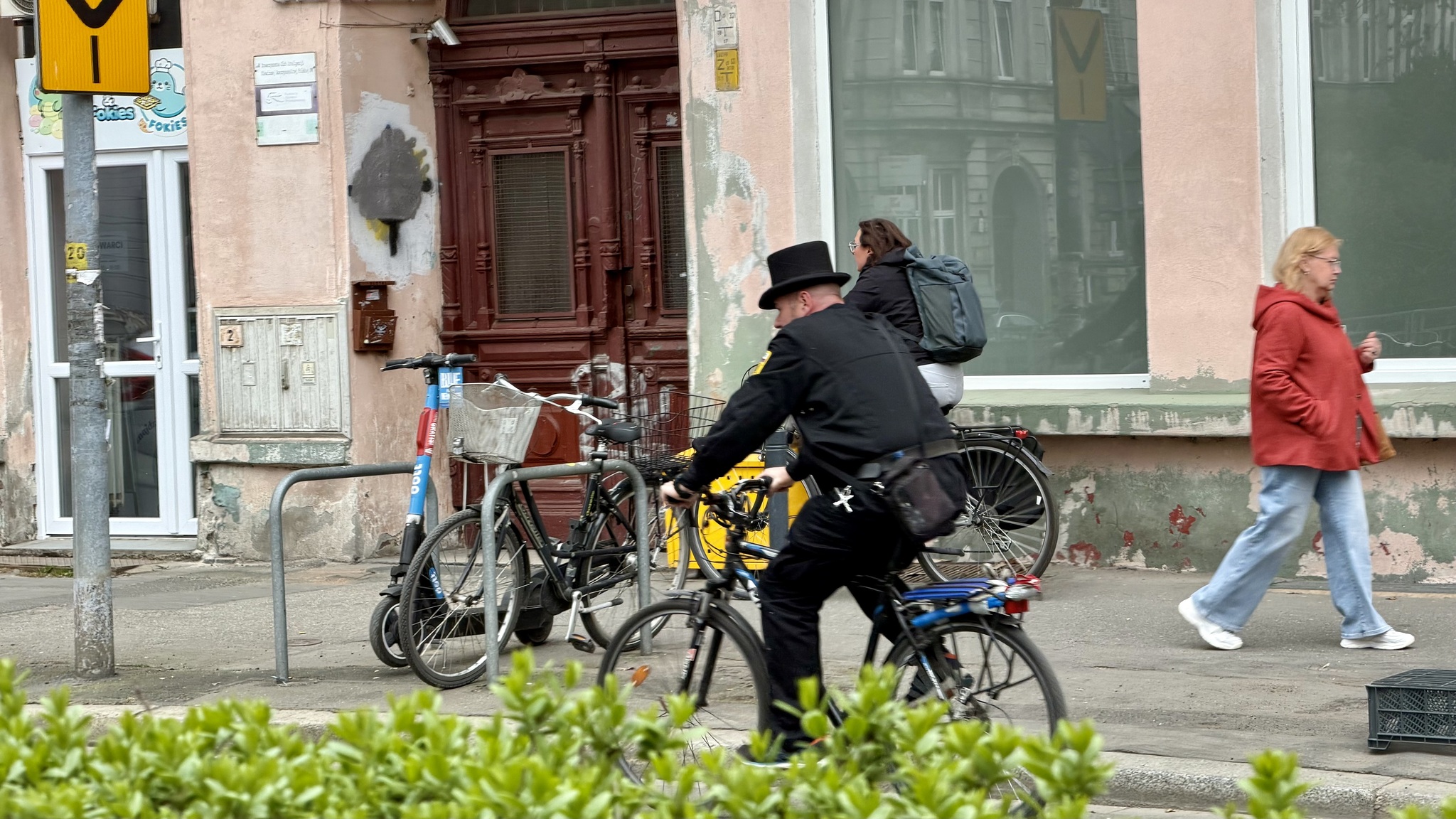
Krystyna was very surprised to see a traditionally dressed chimney sweep riding by on his bike.
Midrise apartments surround Plac Świętego Macieja.
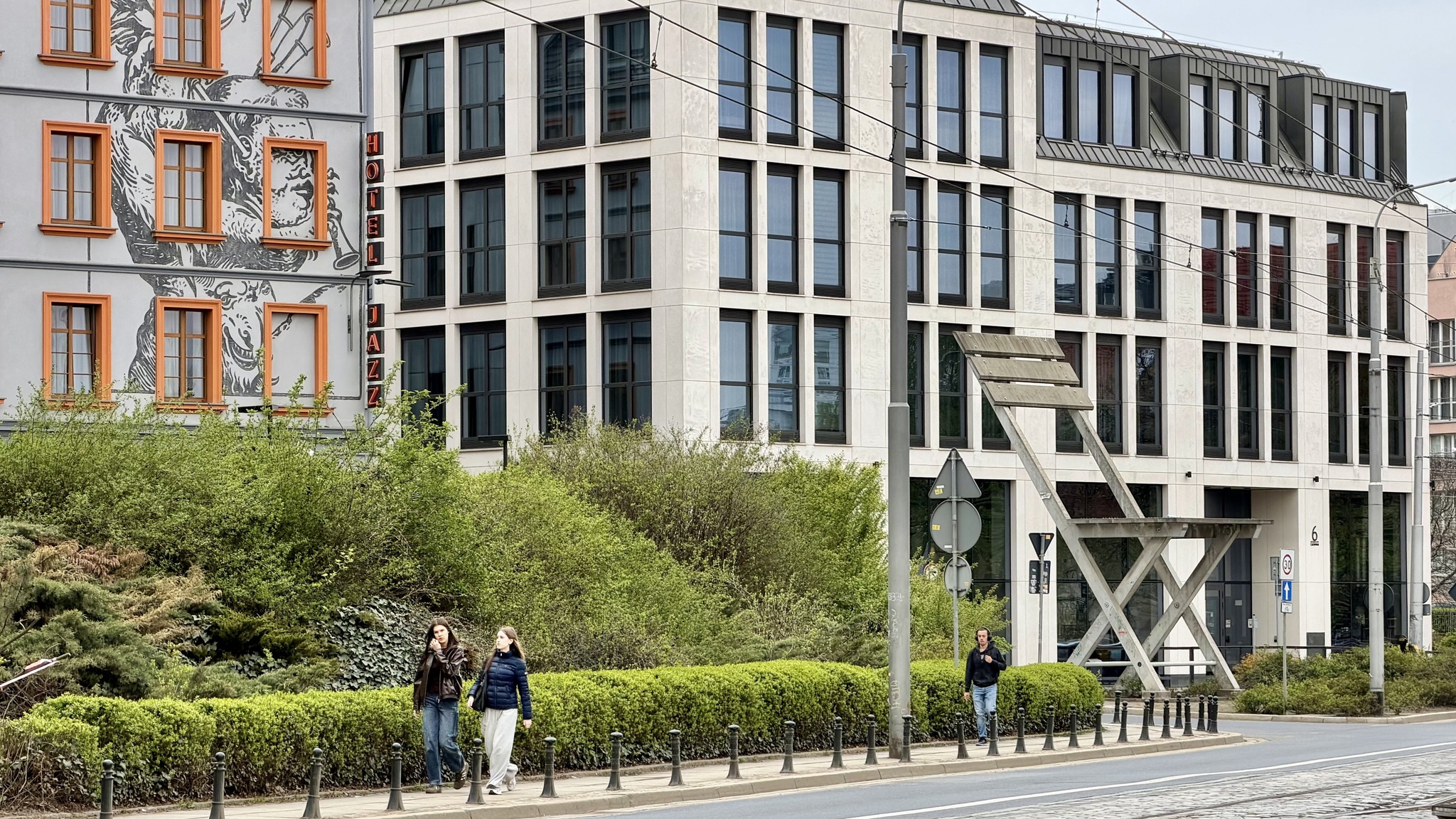
In 1970, Tadeusz Kantor submitted his first impossible architecture design, an eight-metre-high folding chair made of concrete, to the Wrocław 70 artistic symposium. From the website:
Placed “among street traffic, it was to make an impression of something abandoned”. He explained in an interview that: This artistic condition existed not in the chair, not in the form, but in the surroundings. The existence of this chair caused all of the surroundings to become artistic. Despite promises, the design wasn’t realized at the time. Lech Stangret wrote what follows: The organizers of the symposium found themselves in a difficult position. They promised the designs would be realized, but Kantor’s idea caused not only technical but also ideological problems – this idea was seen as a mockery of the socialist monuments which were being raised all over Poland.
In 2011, after his death, a concrete chair was created according to his design and erected in Wroclaw.
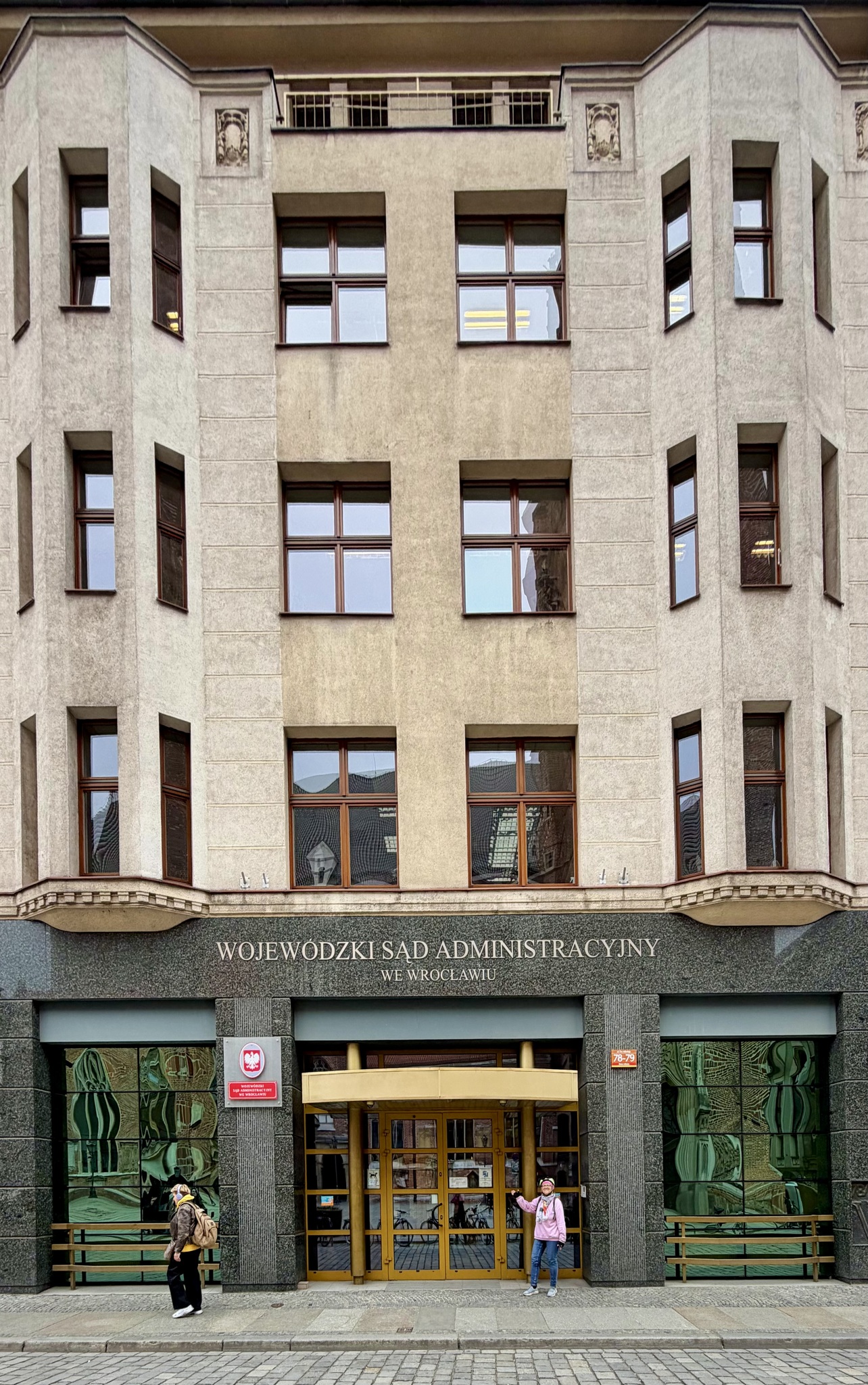
This is Alina’s high school.
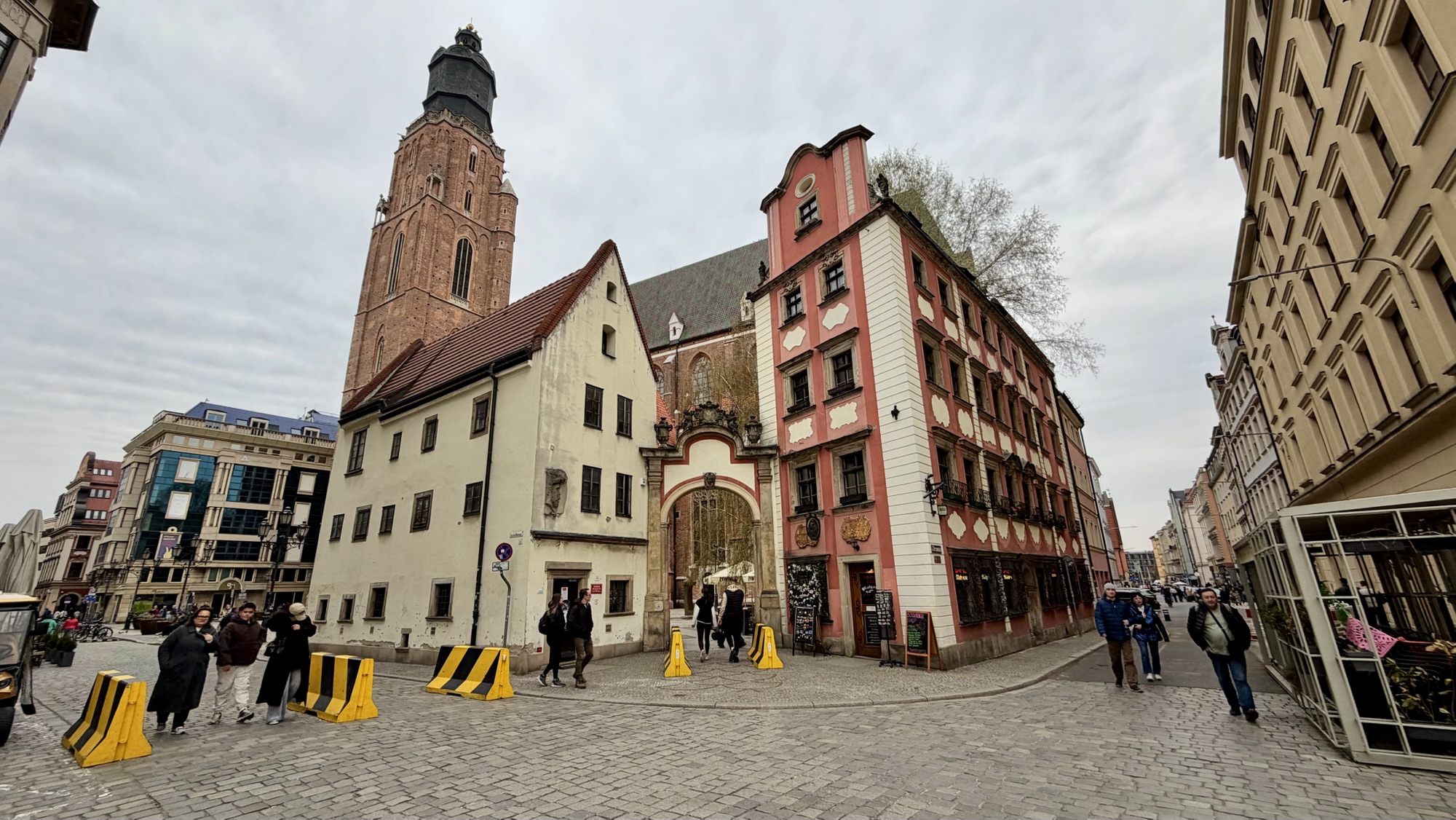
It is across the street from St. Elizabeth’s Church (Bazylika św. Elżbiety). This is the same St. Elisabeth that I wrote about when I visited The Blue Church in Bratislava. The structures date back to the 14th century. However, it was gutted by fire in 1976, destroying the organ. The church and tower were reconstructed.
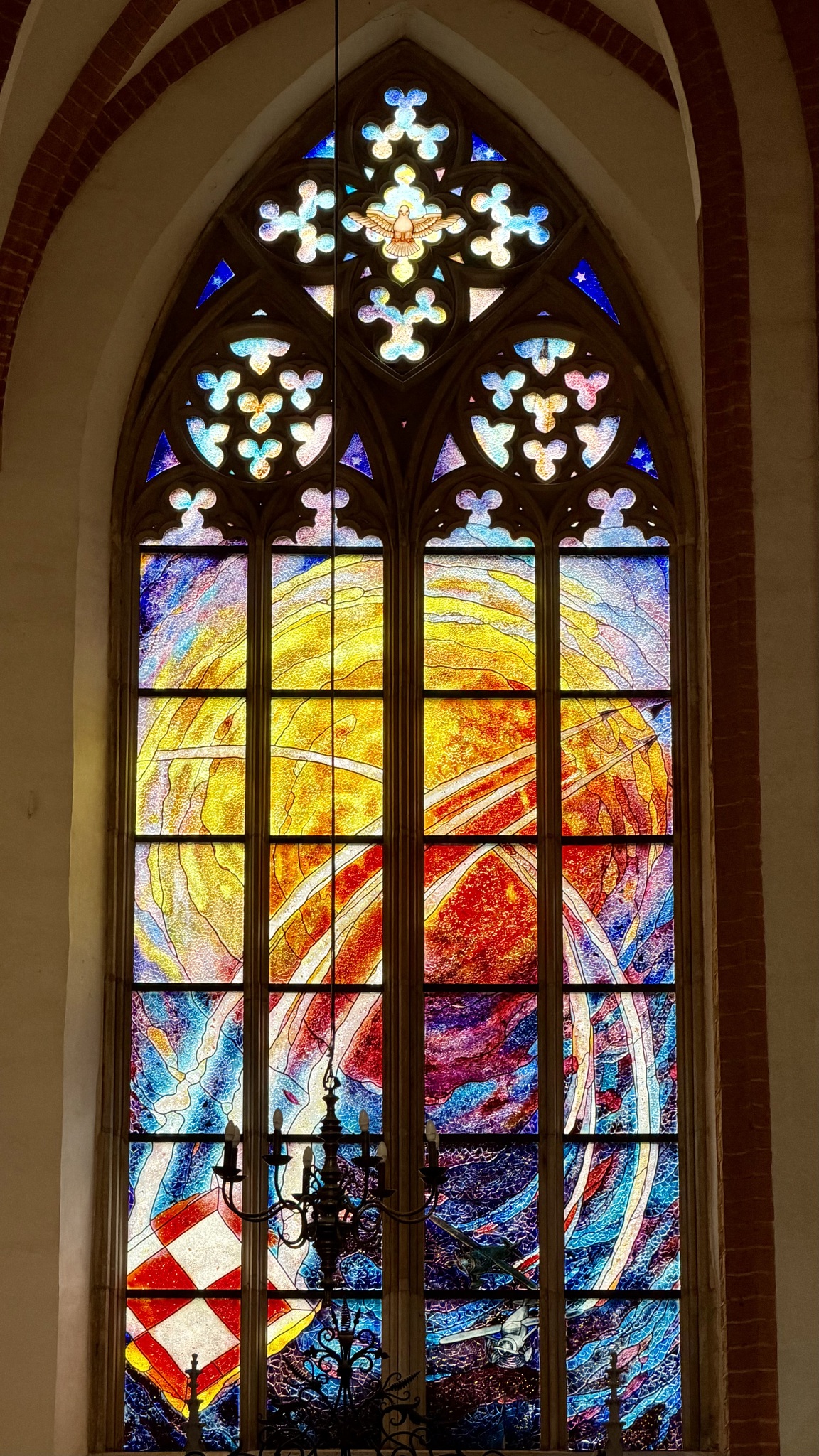
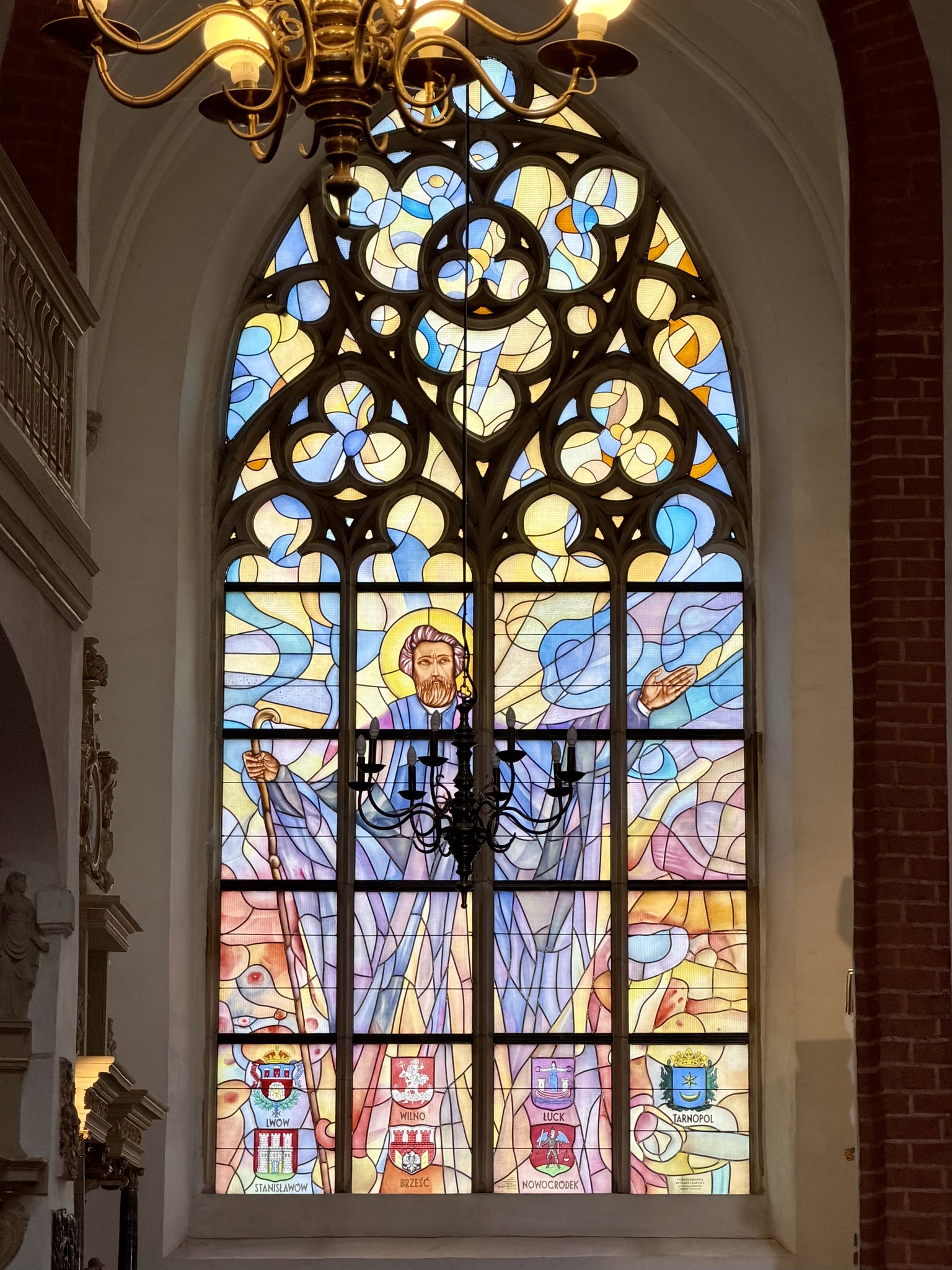
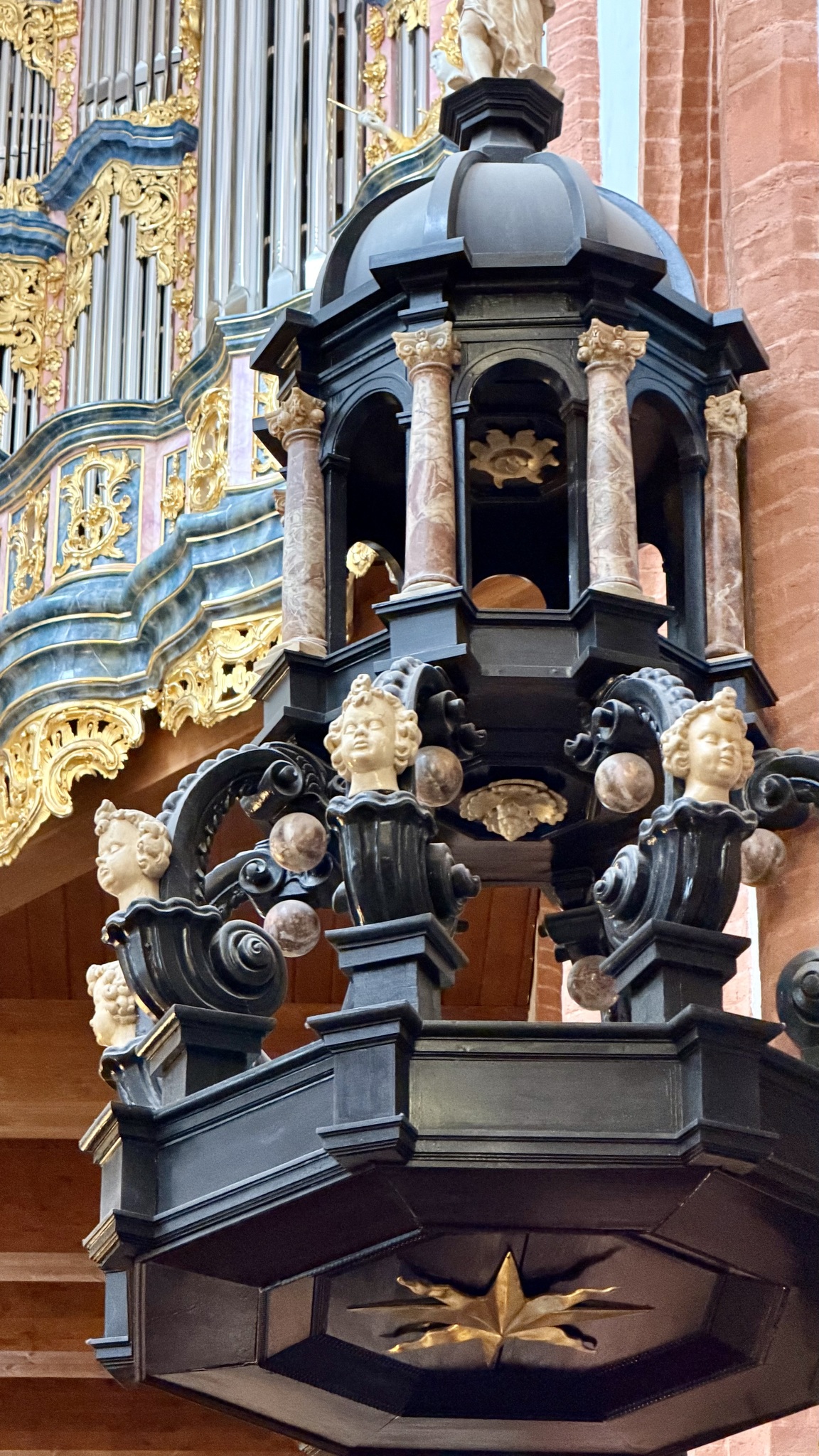
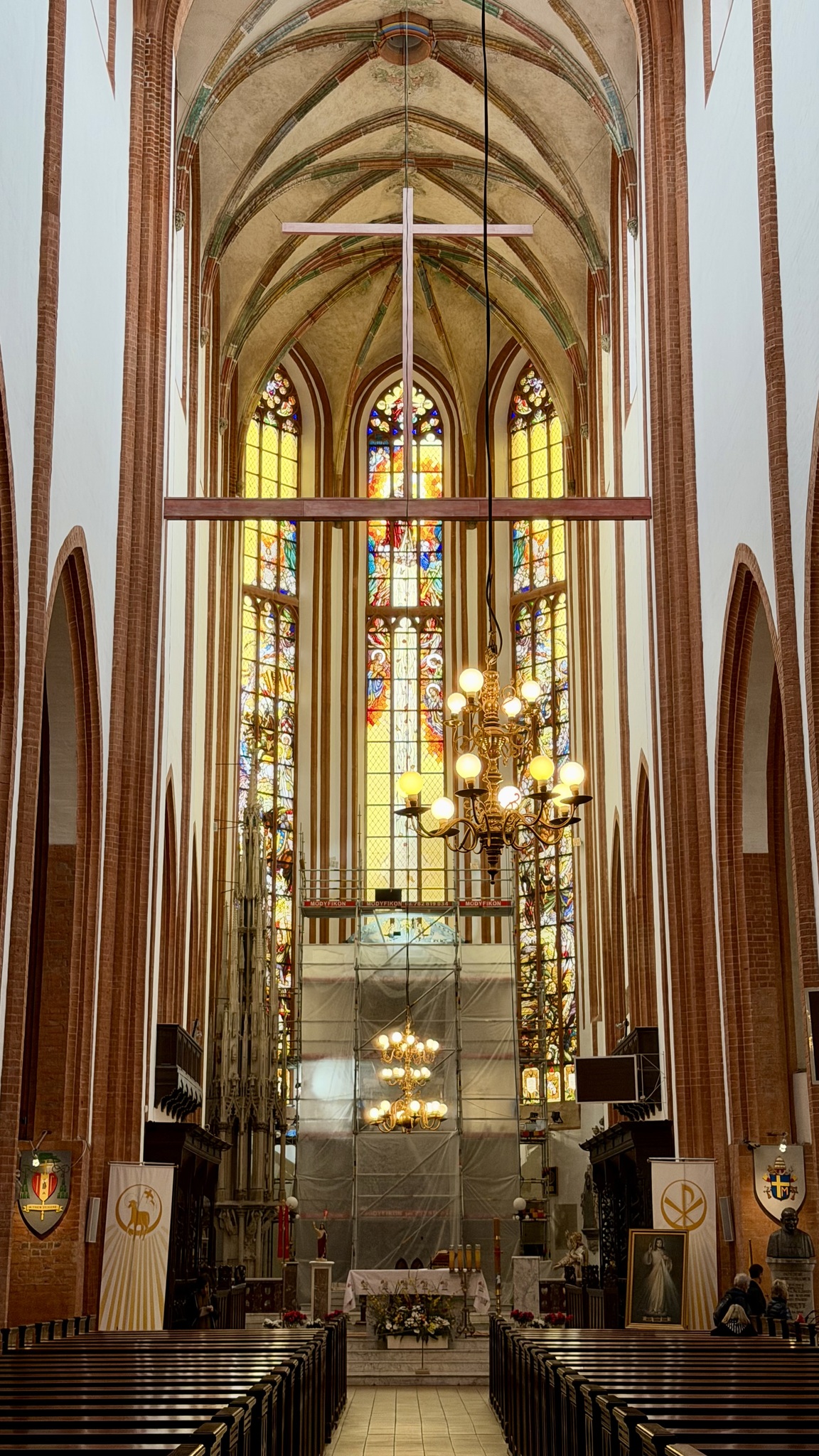
It’s hard to get a picture of the exterior and I realize as I write this that I did t even do a good job of trying. This is my best which has buildings in front of it, but shows the tower that we climbed.
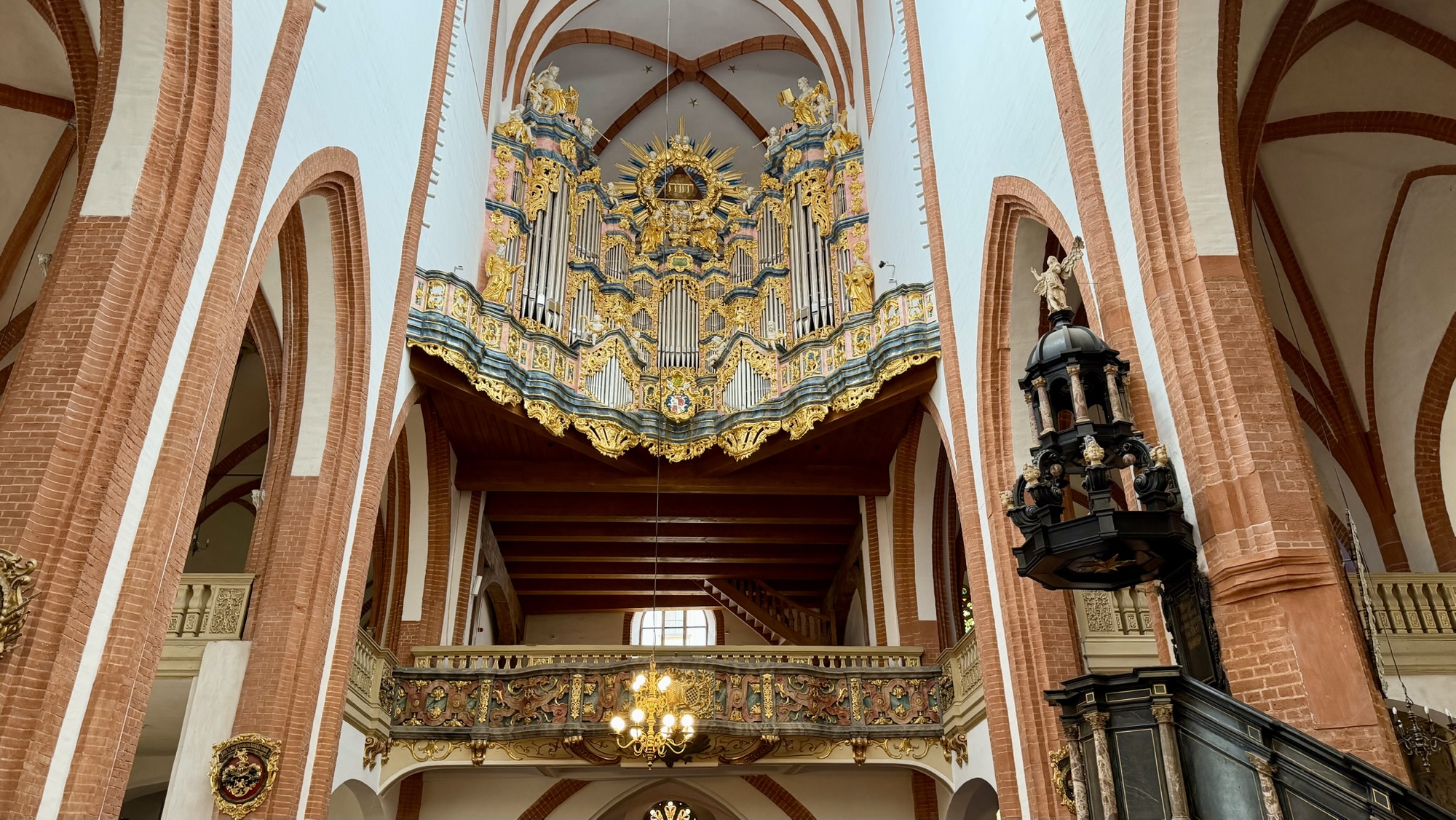
A new pipe organ was built by a consortium of three organ workshops. As the original instrument, the pipe organ is mechanical and has 54 ranks. It is 16.5 m high, 10 m wide in a straight line (12.7 of curve width). Its weight exceeds 30 tonnes. The pipe organ is composed of almost a million elements, including nearly 3.5 thousand pipes of sizes between 6 mm and 12 m. It was inaugurated in 2022.
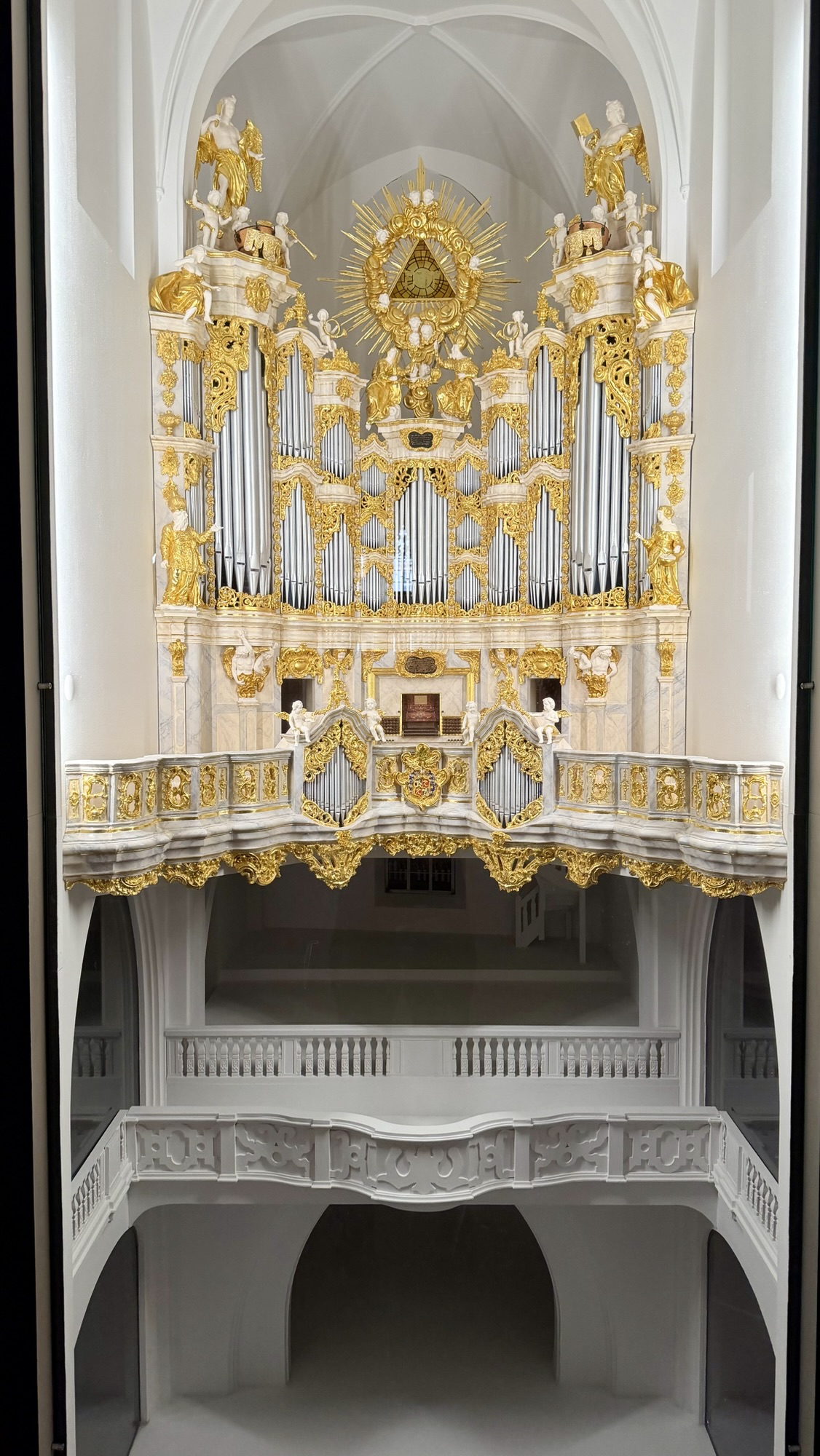
A 1:10 scale model was made as a first step to the reconstruction and is displayed in the church.
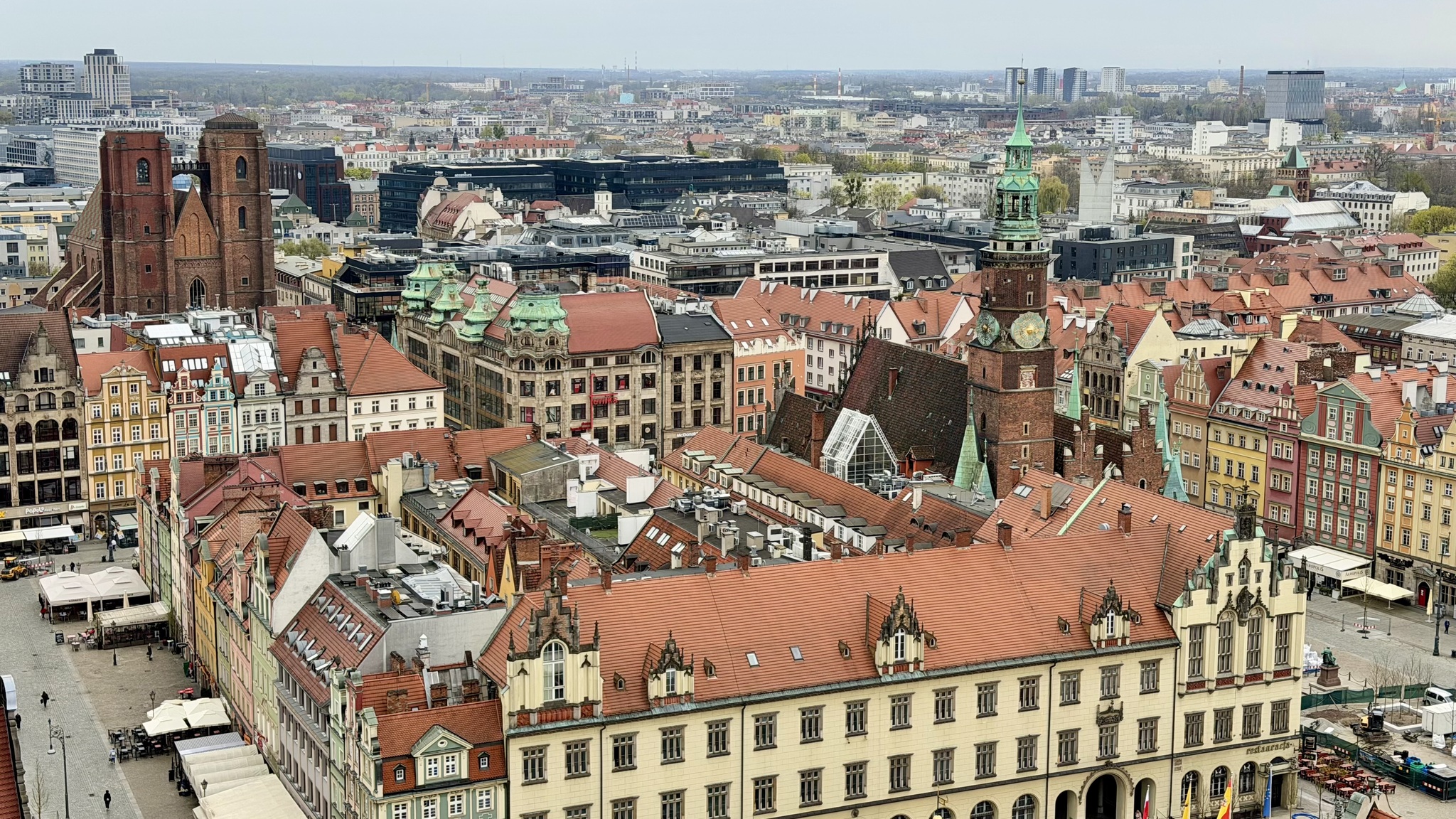
St. Elizabeth’s has a 91m tower open for climbing, which gives spectacular views over the market square. It felt more difficult to climb than the taller tower of the new church in Delft because the steps were of varying heights.
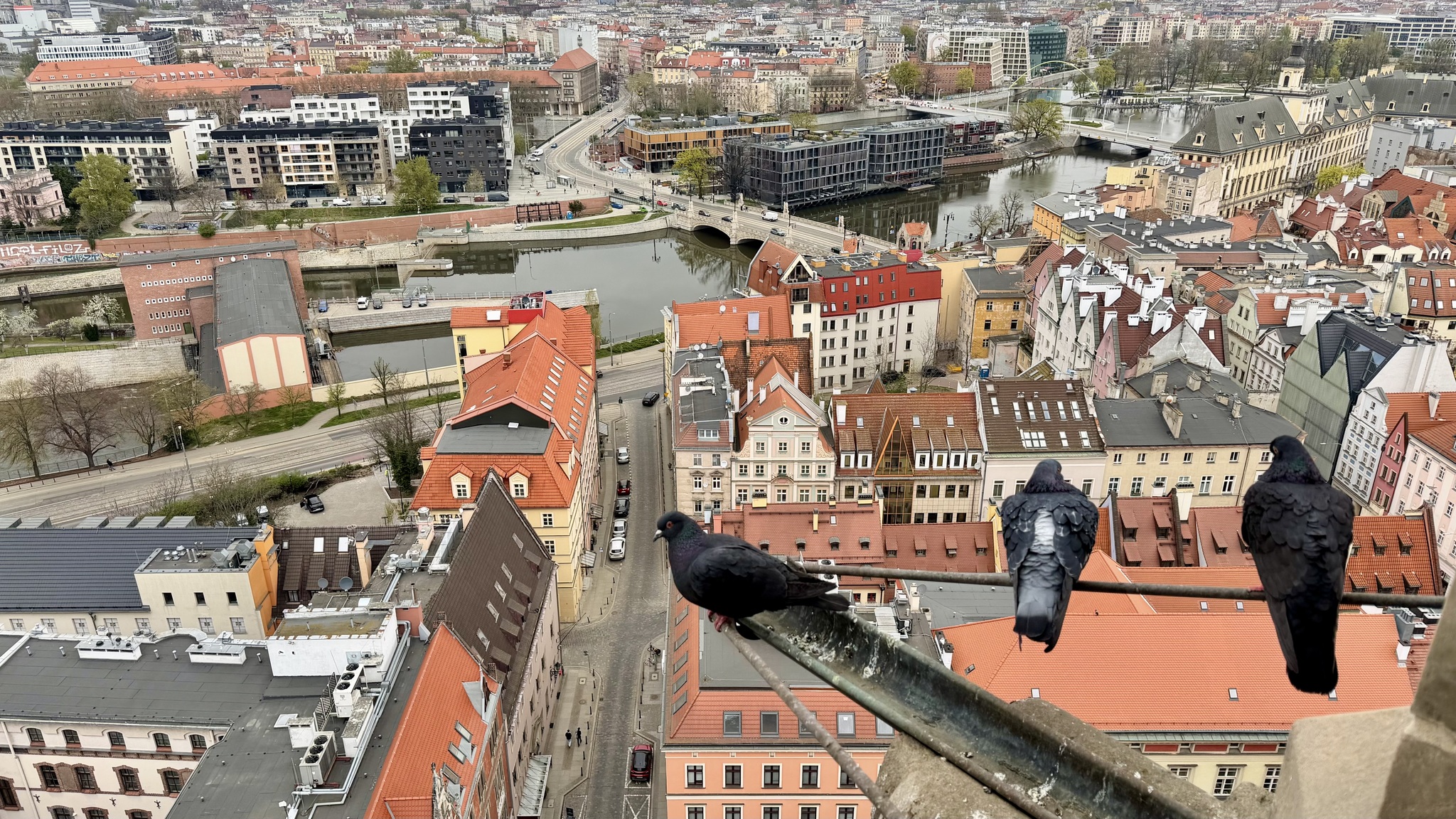
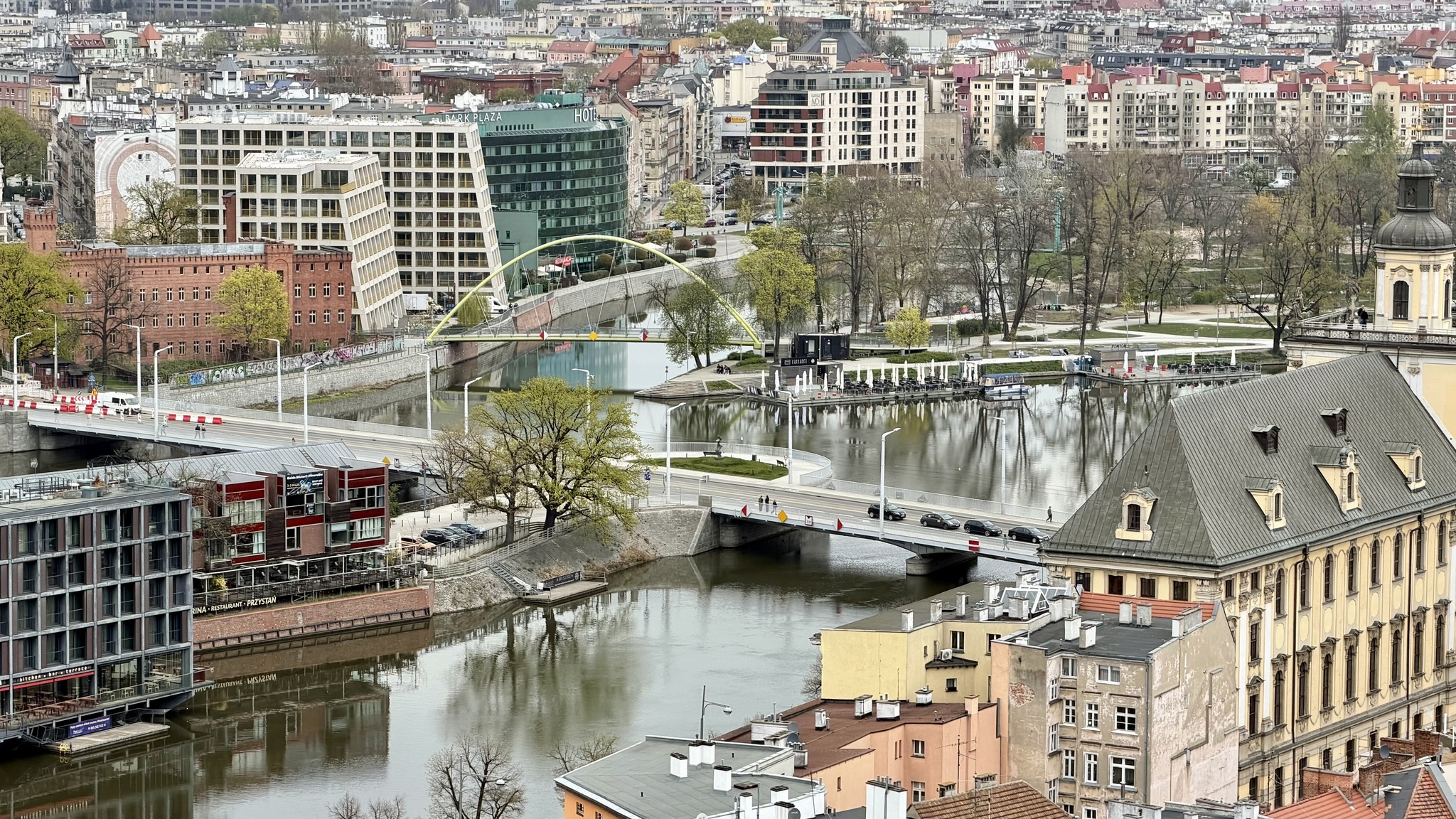
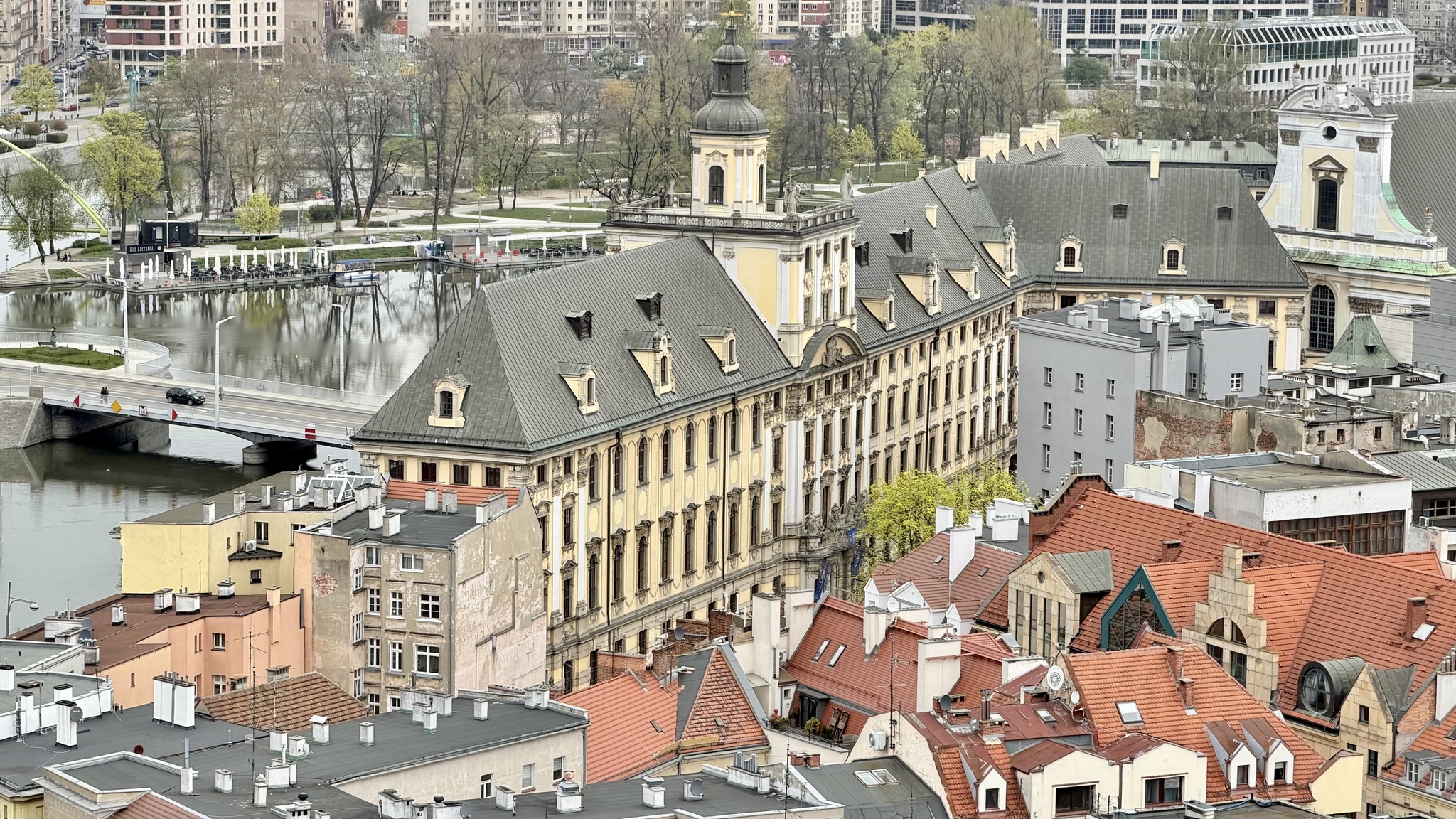
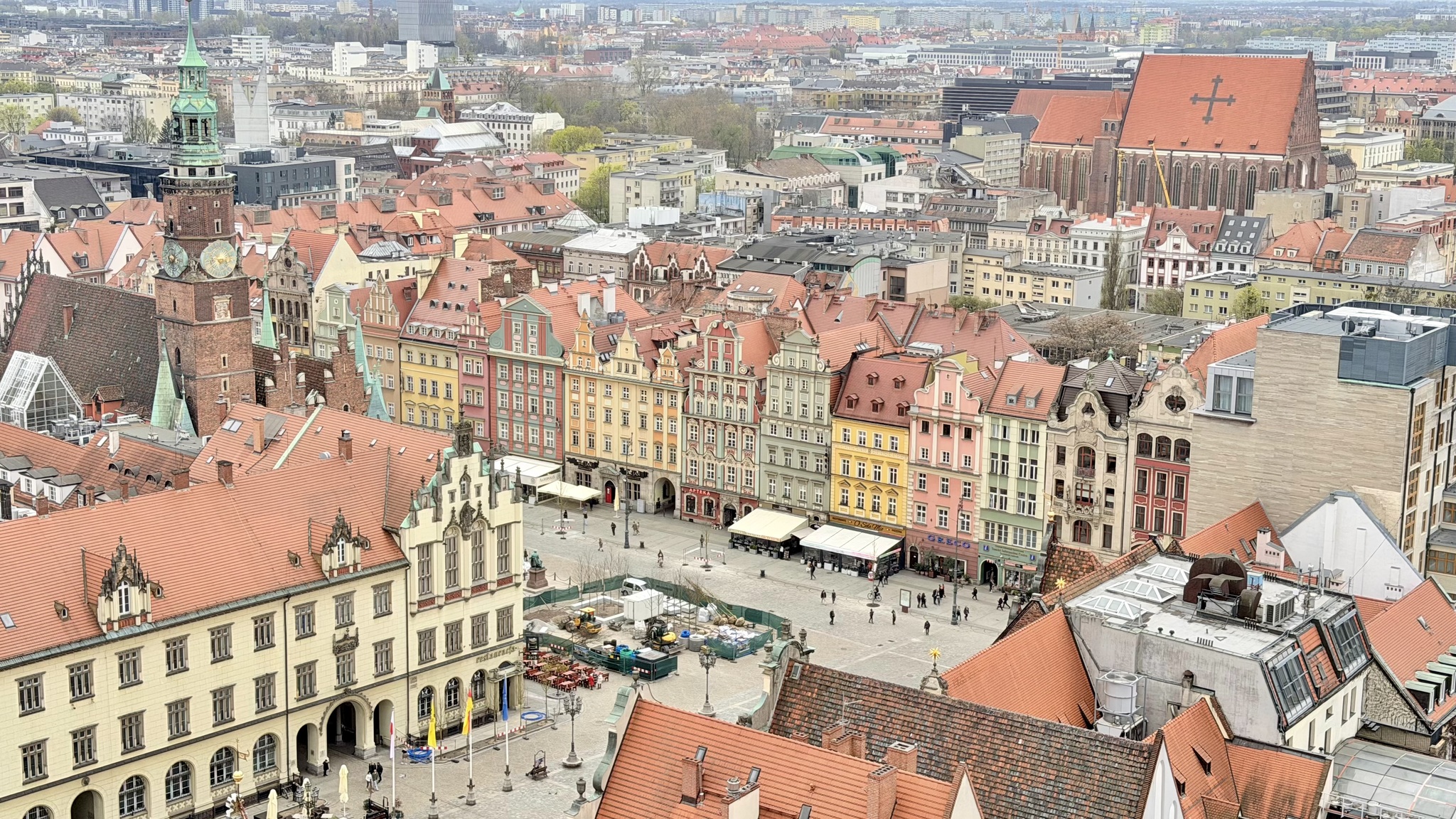
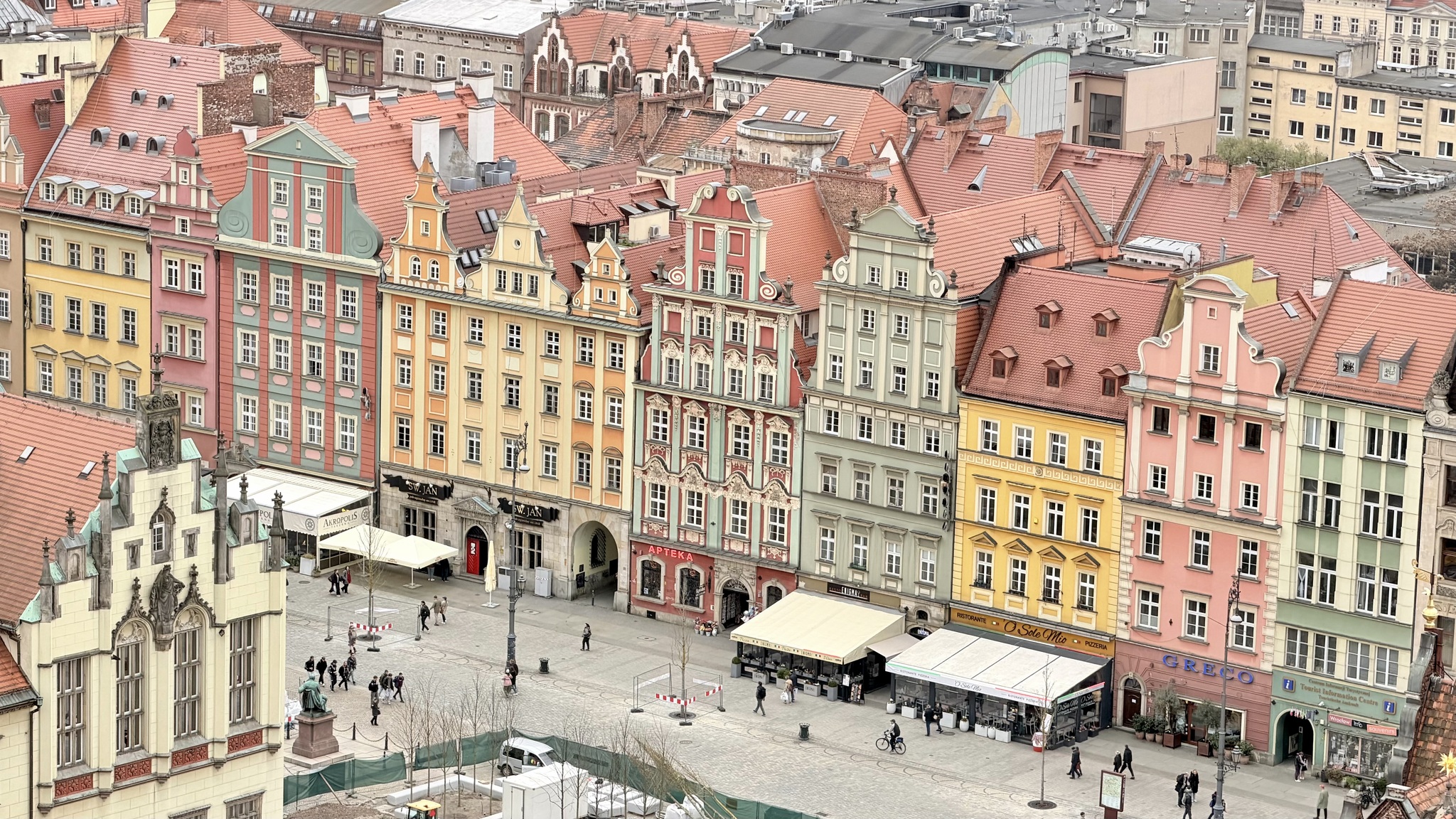
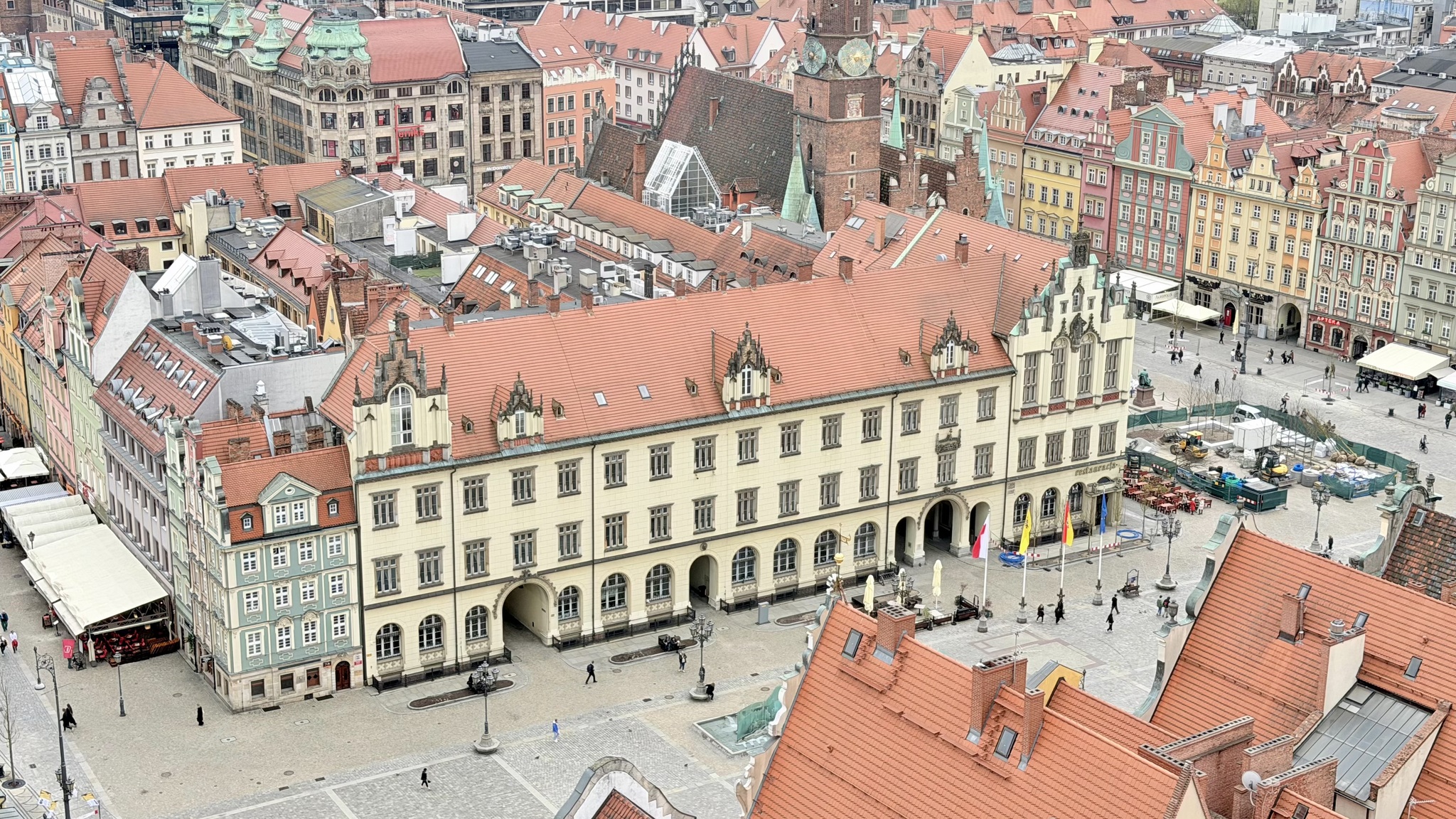
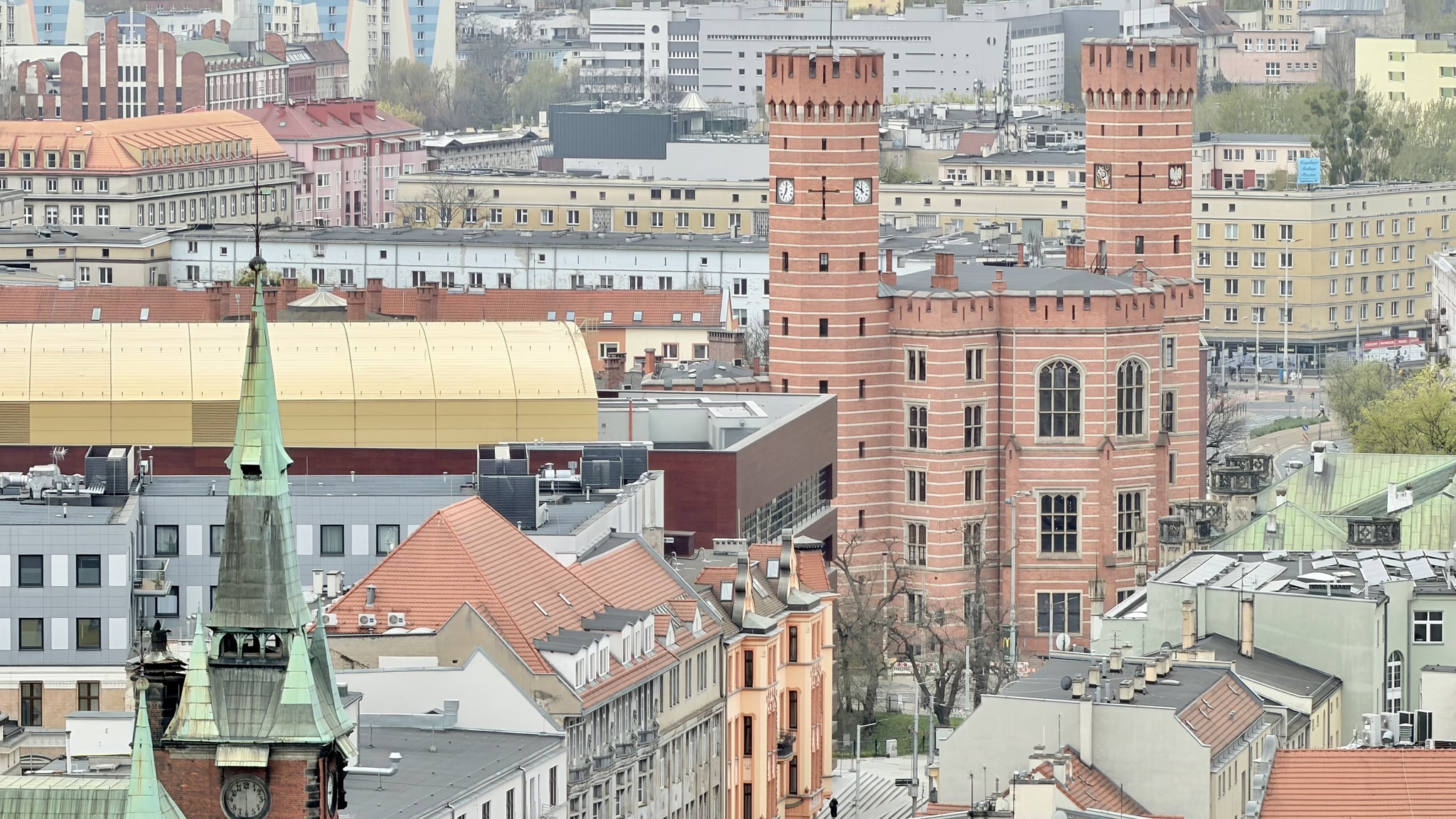
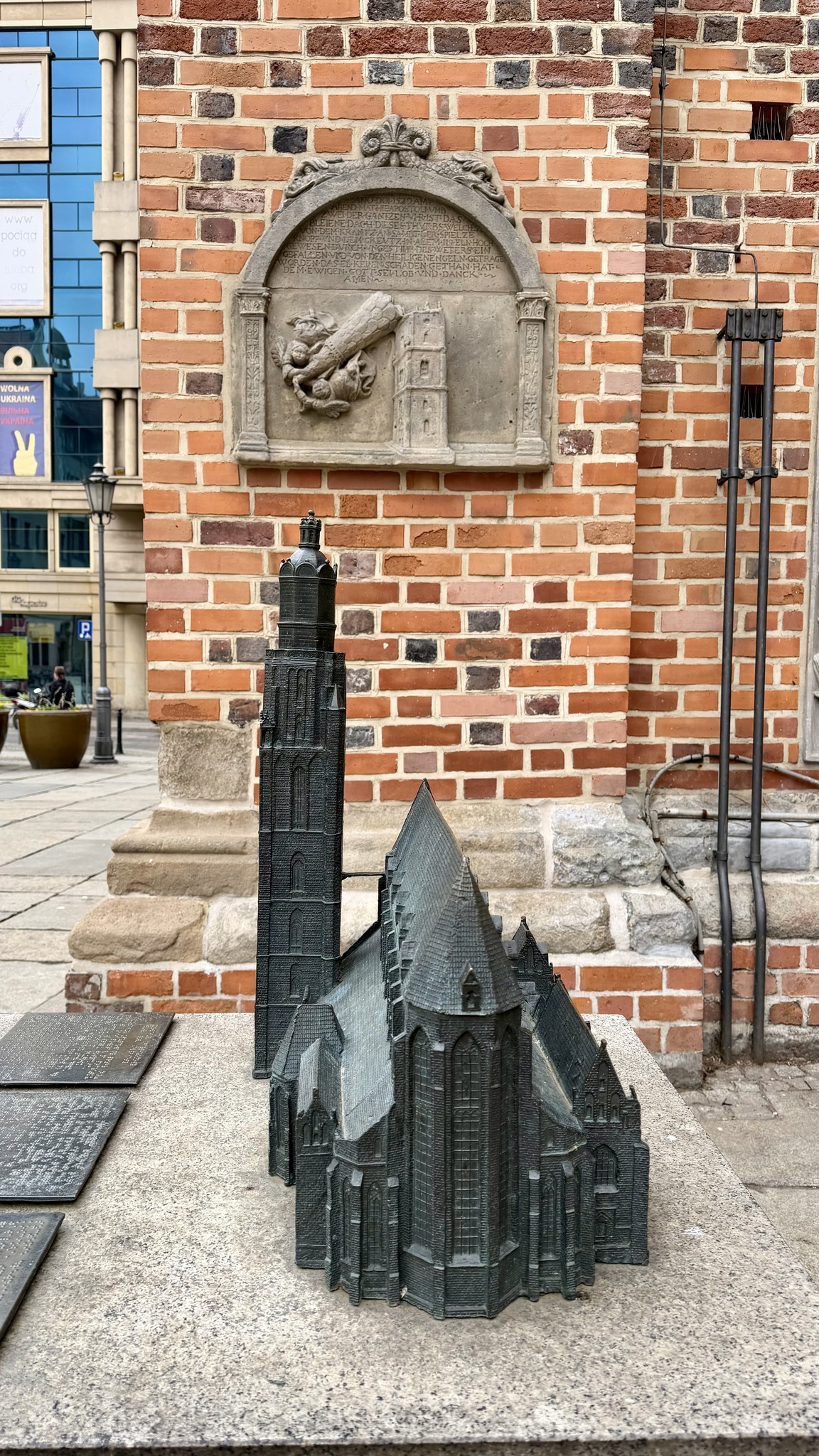
Outside the church was a small model.
Wroclaw is known for its small bronze dwarves scattered throughout the old town. From Wroclawguide:
It started with a political protest in the 1980s – the “Orange Alternative“ to express dissatisfaction with the communist regime. It was dangerous to express an opinion that differed from the official line. Anti-communist graffiti was regularly painted over. Starting in 1982, members of the movement began painting pictures of dwarfs over the painted-over graffiti. Over time, the colour, orange, crystallized as a response to communist, red, and protest events. Participants began to wear orange headgear, reminiscent of dwarf caps. Thus, the “Dwarf Uprising of Wroclaw” became a silent, but obvious form of protest.
The first bronze statue dates to 2001. Various sources claim that there are anywhere from 200 to 700 bronze dwarfs around the city. Here’s a slideshow of some of the ones that I encountered. This website has pictures of hundreds of dwarfs.
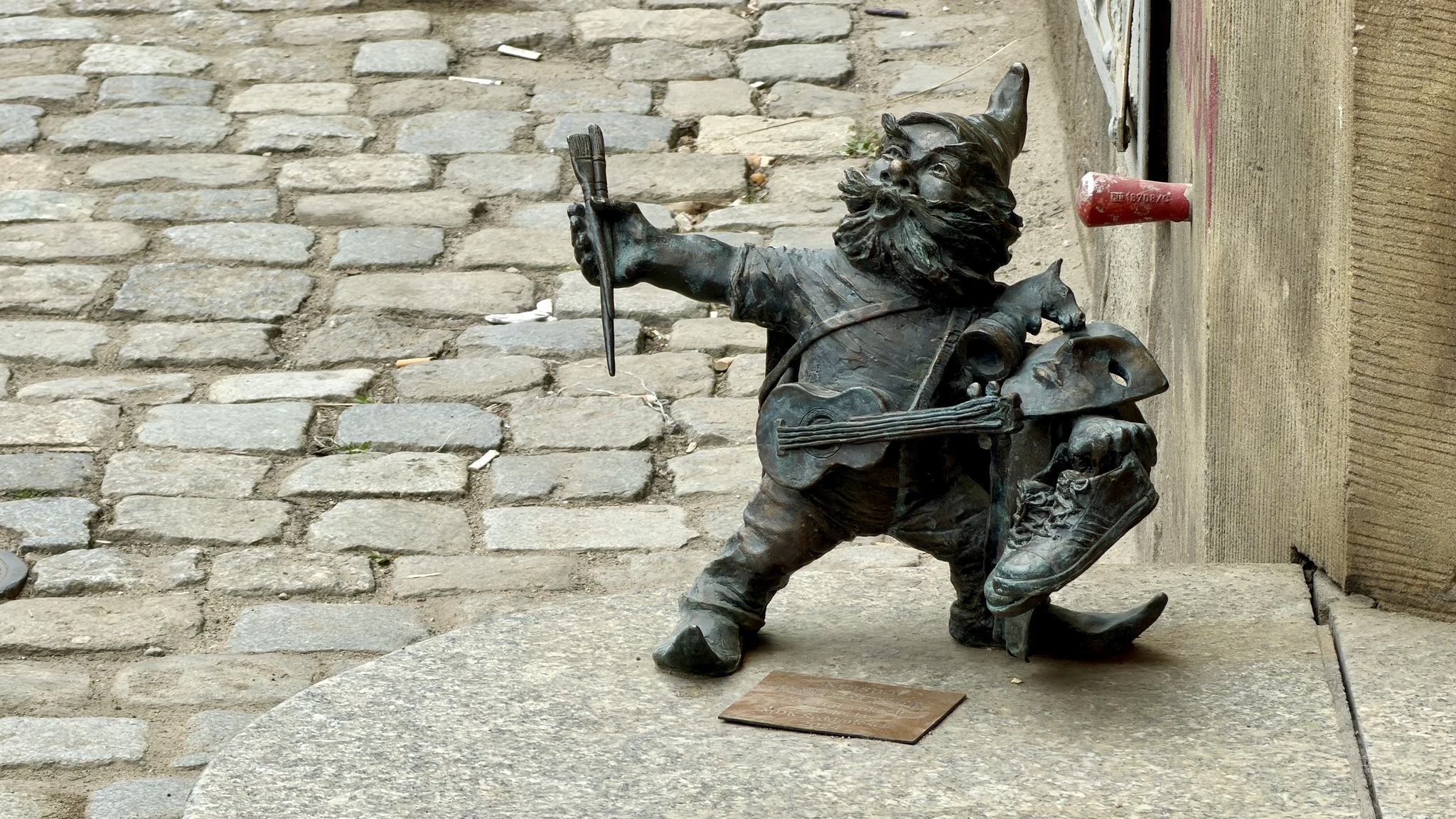
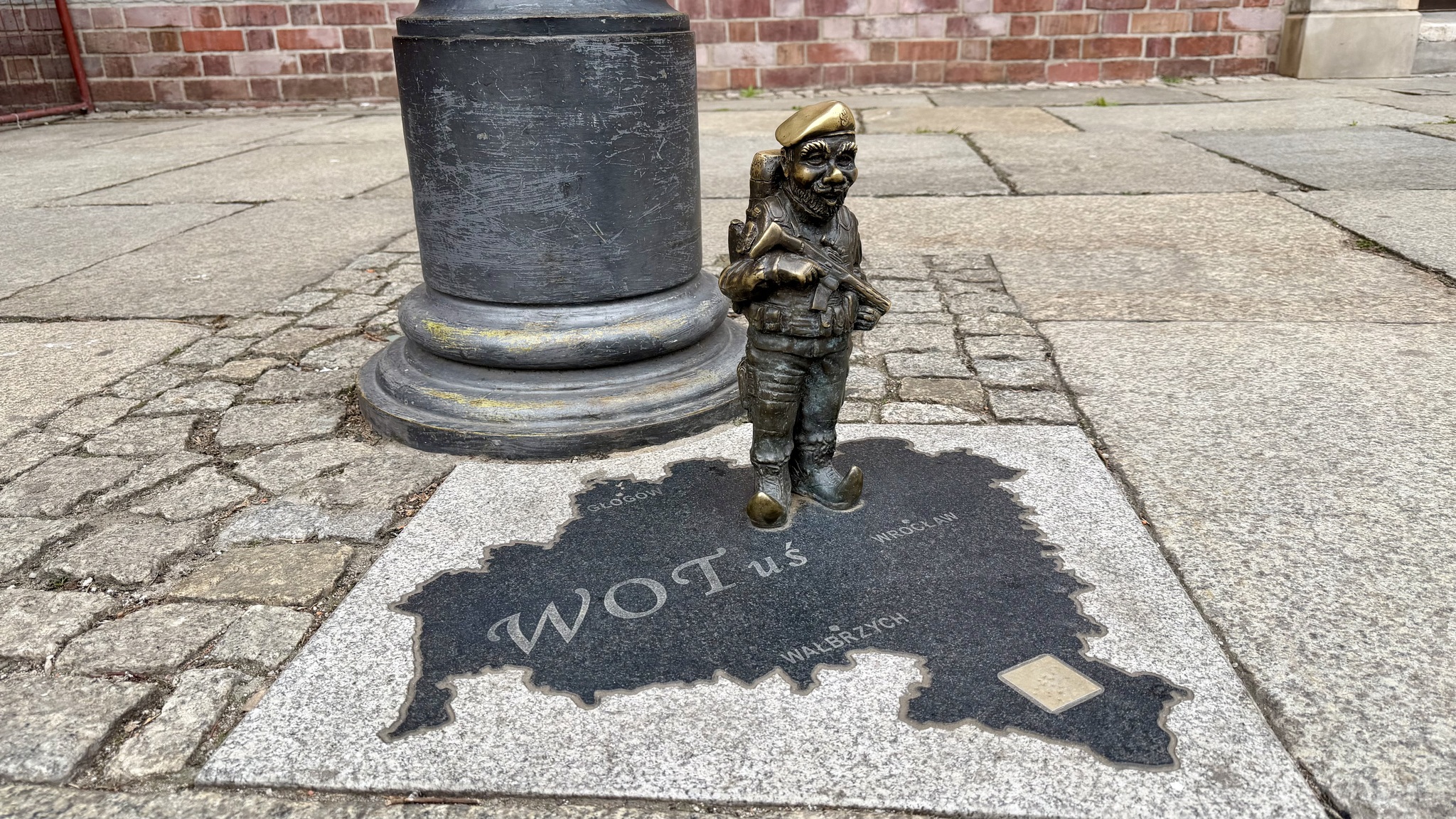
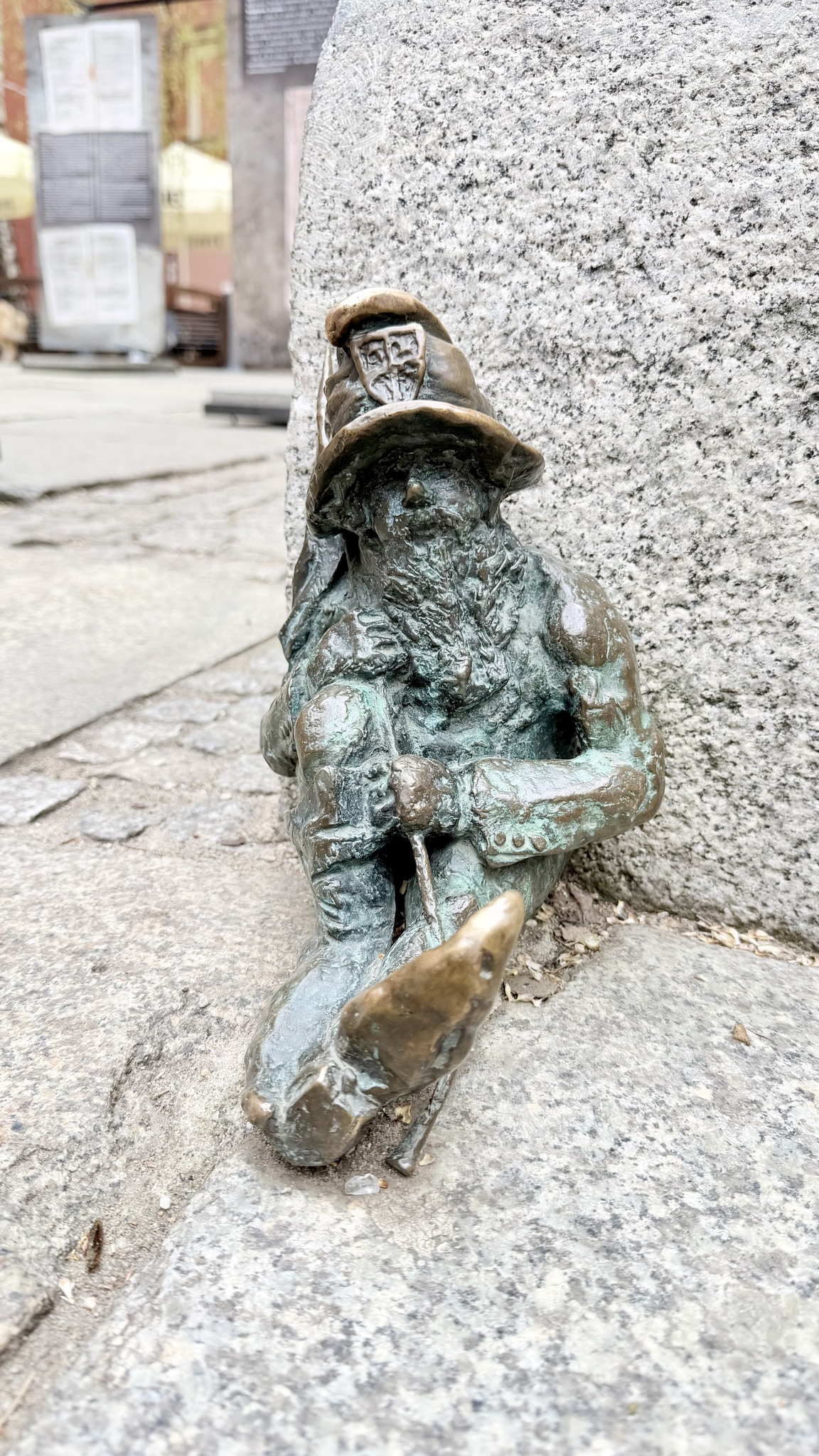
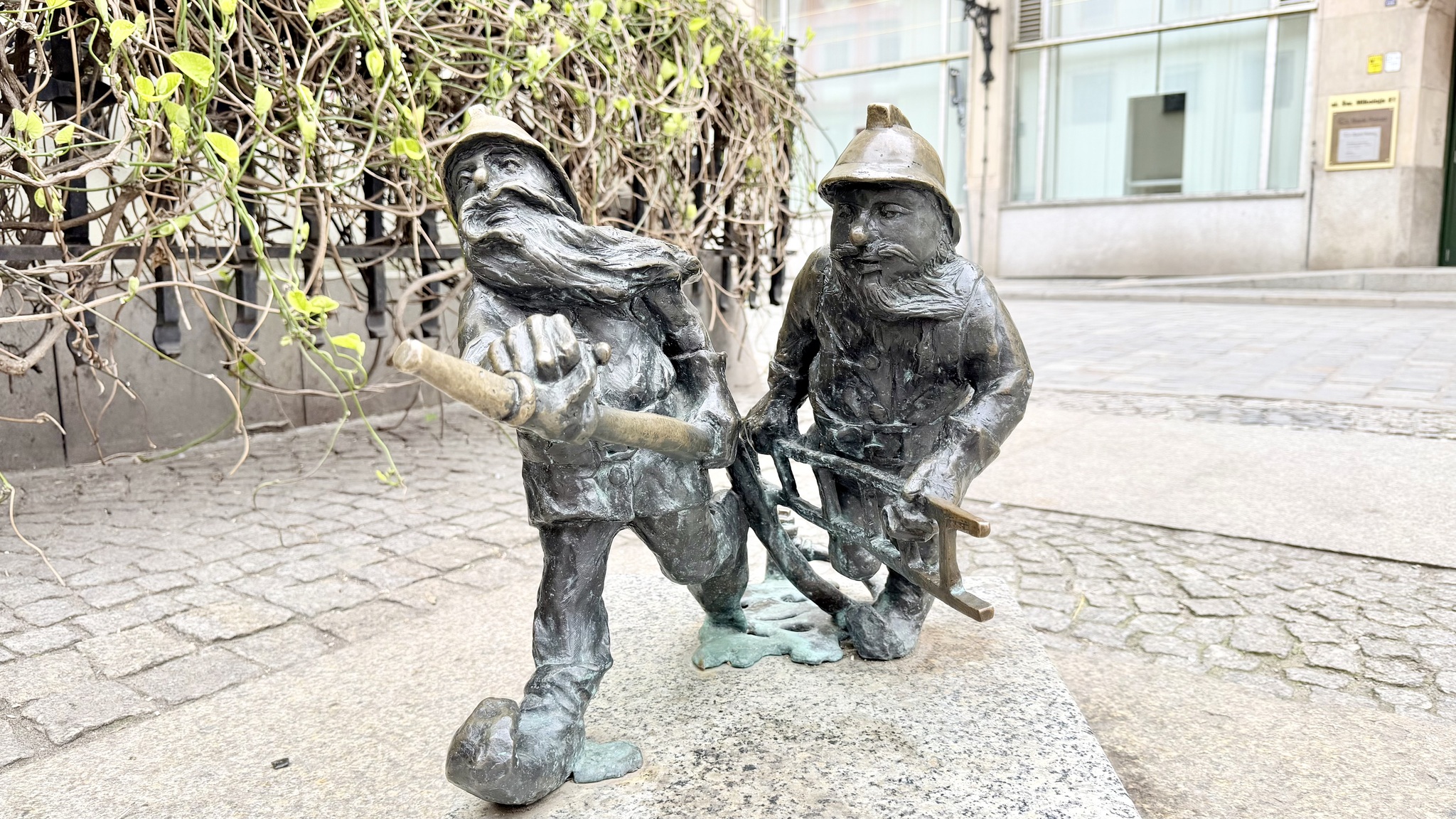
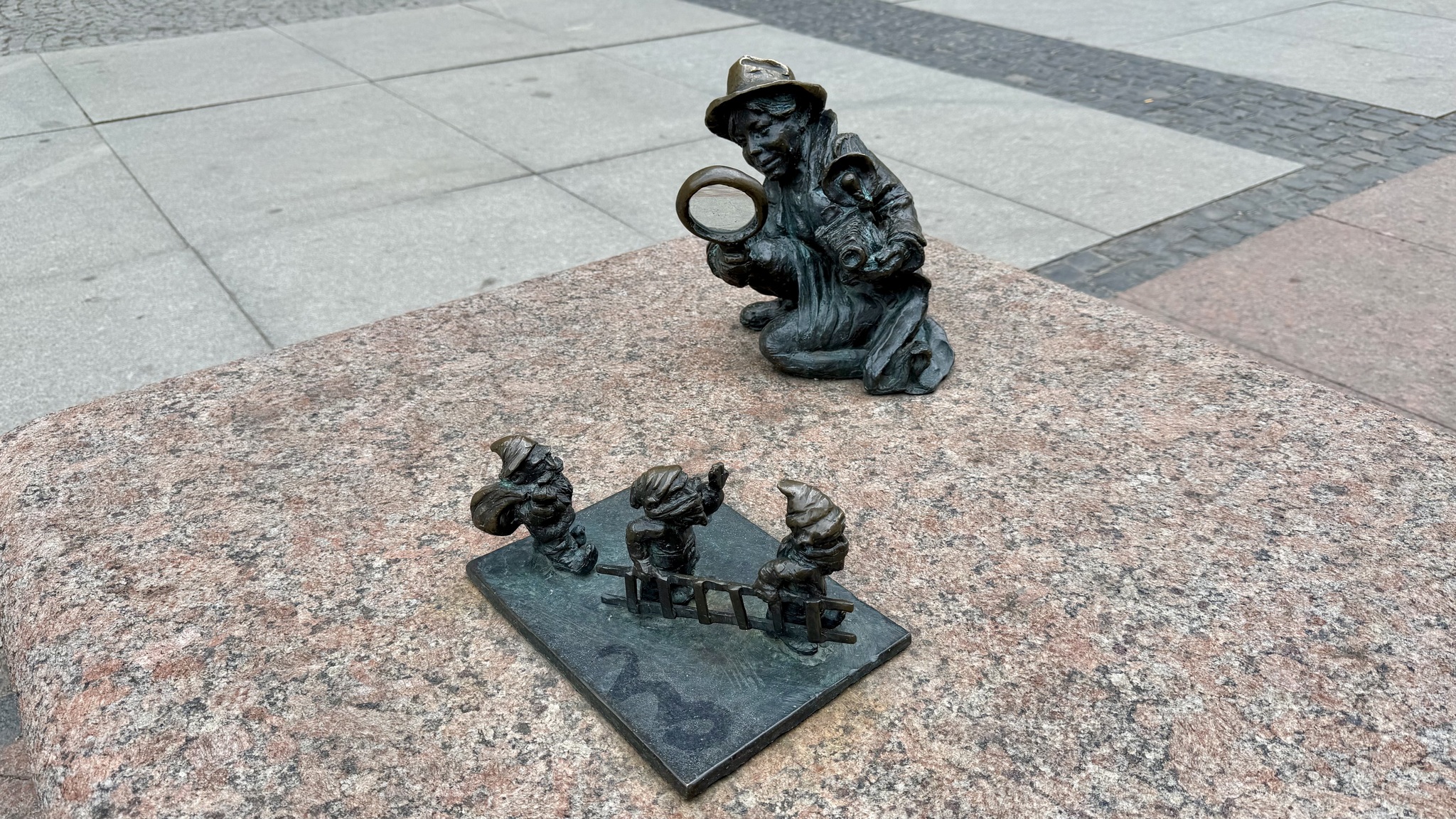
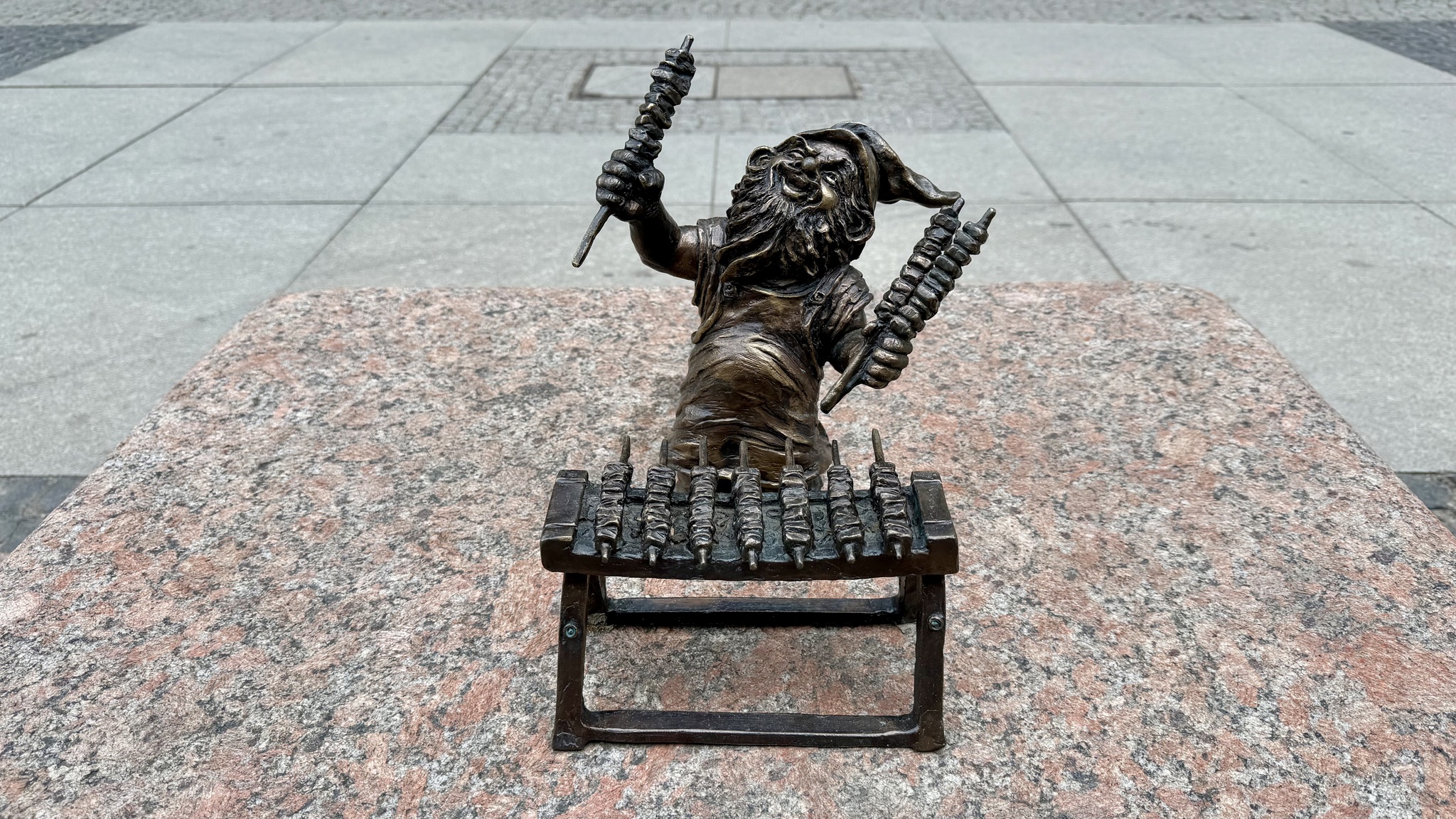
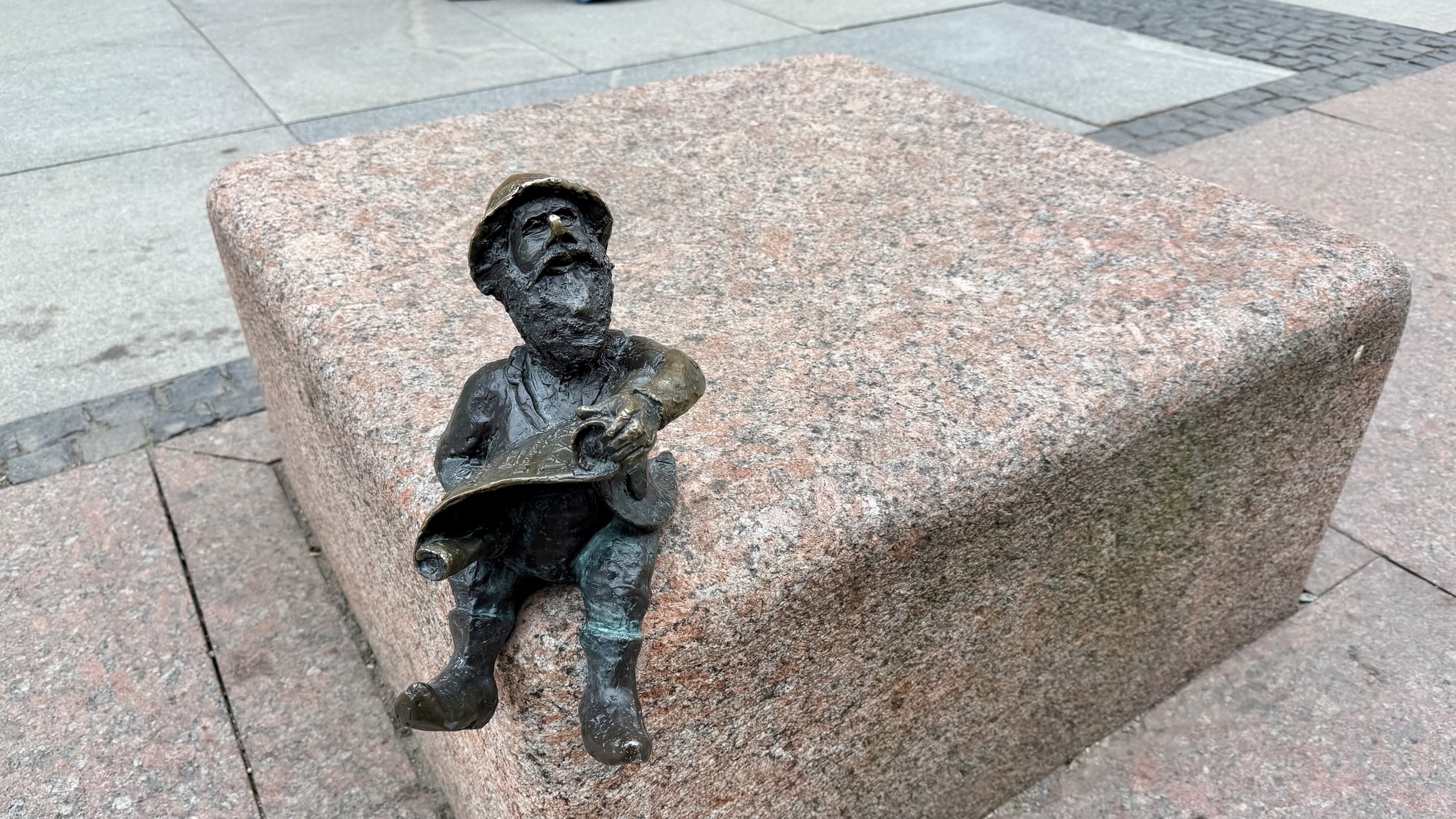
We then headed back to the apartment so Alina could continue to try to find technicians to come to the apartment tomorrow for her maintenance issues. The market area is largely car-free.
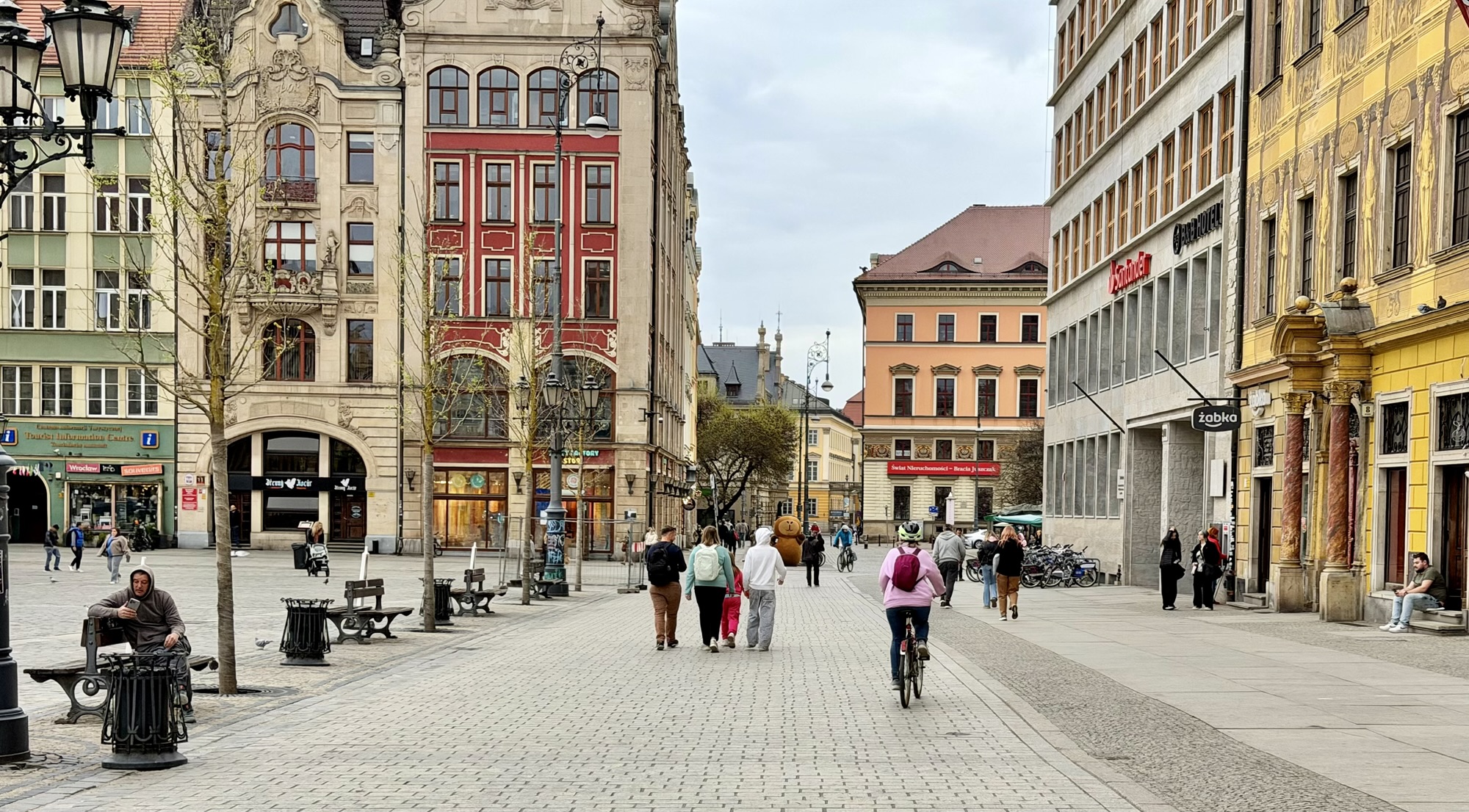
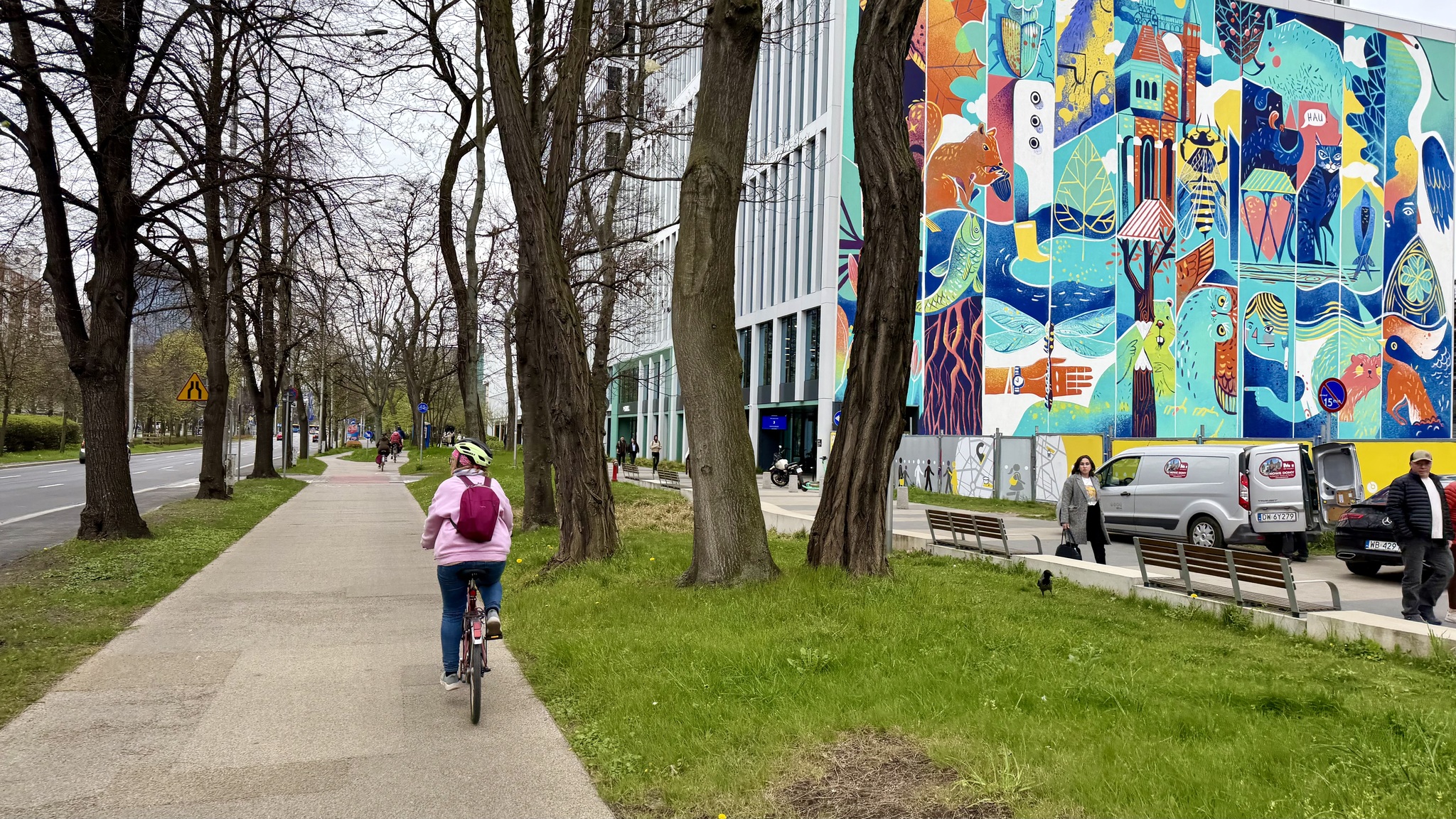
We then had active transportation infrastructure all the way back to the apartment.
j
Discover more from Lisa Stokes
Subscribe to get the latest posts sent to your email.