
This is quite a long post, and I was thinking about whether I should break it into multiple posts, but I decided to add a table of contents, instead, to make it easy to jump to a specific section. 
The Ride
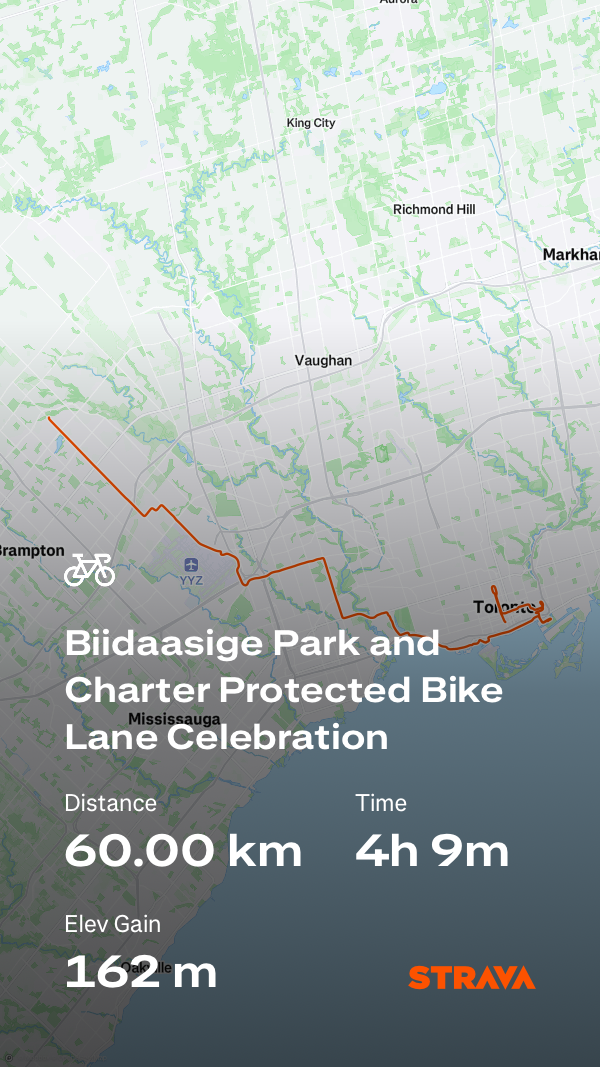
Cindy, Barry and I decided to ride to Biidaasige Park, a new park in the Port Lands of Toronto. The project started in 2017 and is ongoing. It involves flood protection, rerouting of the Don River to create a naturalized mouth and new River Valley, new parks and public spaces, and Villiers Island, renamed Ookwemin Minising, a new island community, which will eventually house more than 15,000 people, with the first people scheduled to move in by 2031. The island is being developed in multiple phases with completion expected between 2040 and 2050.
We met on Torbram Road at 10 AM, getting to Airport Road through an industrial area, and cutting through the airport to get to Renforth and Eglinton, where there is an excellent multi-use path. Mid morning traffic isn’t too bad on Airport Road, and it’s the shortest route from Southeast Brampton.
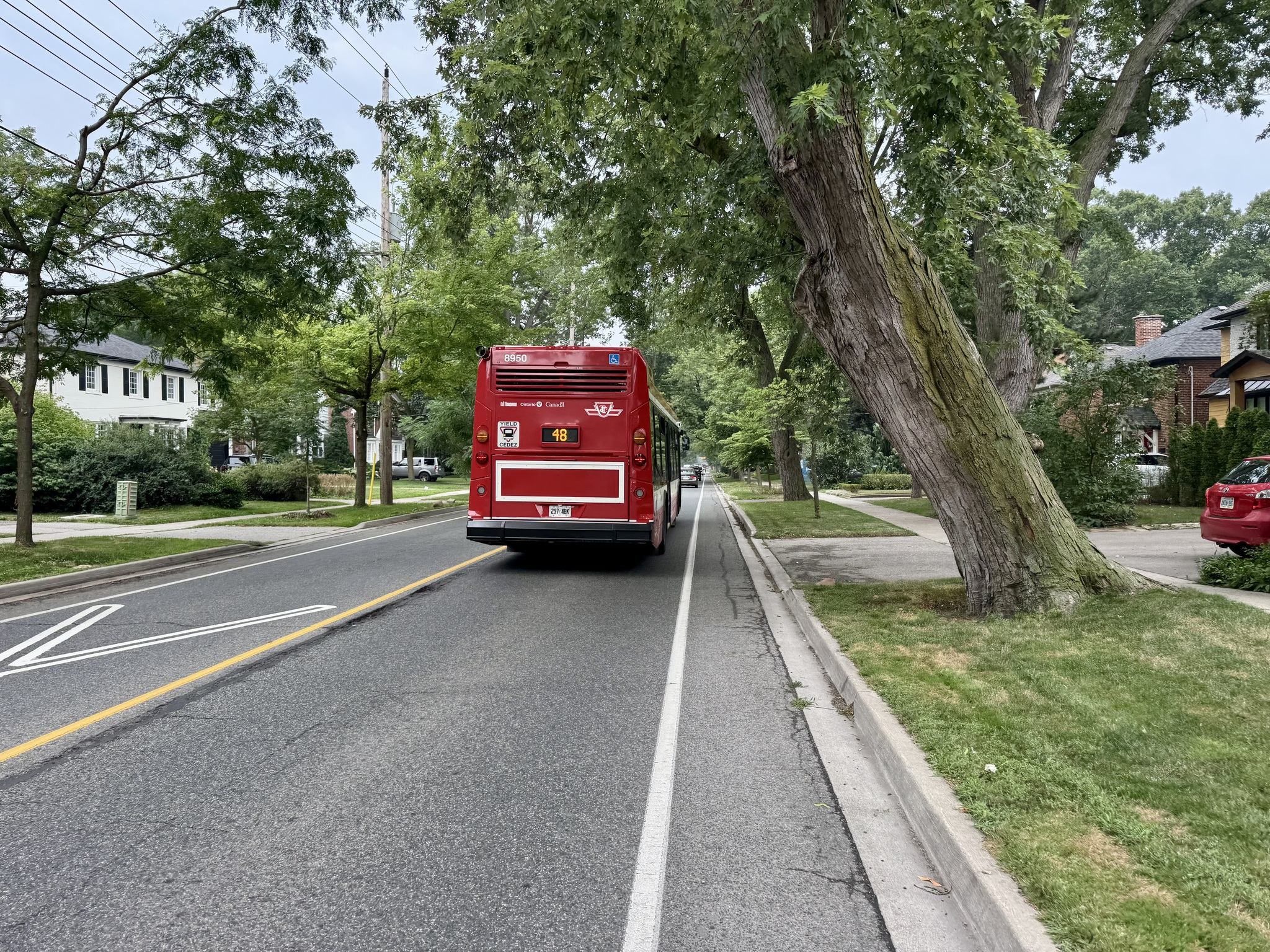
We turned south on Royal York Road, so I could pick up a few new Squadrathinos tiles. Whenever I’m planning a route into Toronto, I try to ride on different streets, for the experience, and for the tile collecting. Royal York Road had a very narrow bike lane, but felt fairly comfortable to ride with the traffic calmed by having only one lane in each direction, being a bus route, and having large trees overhanging the street.
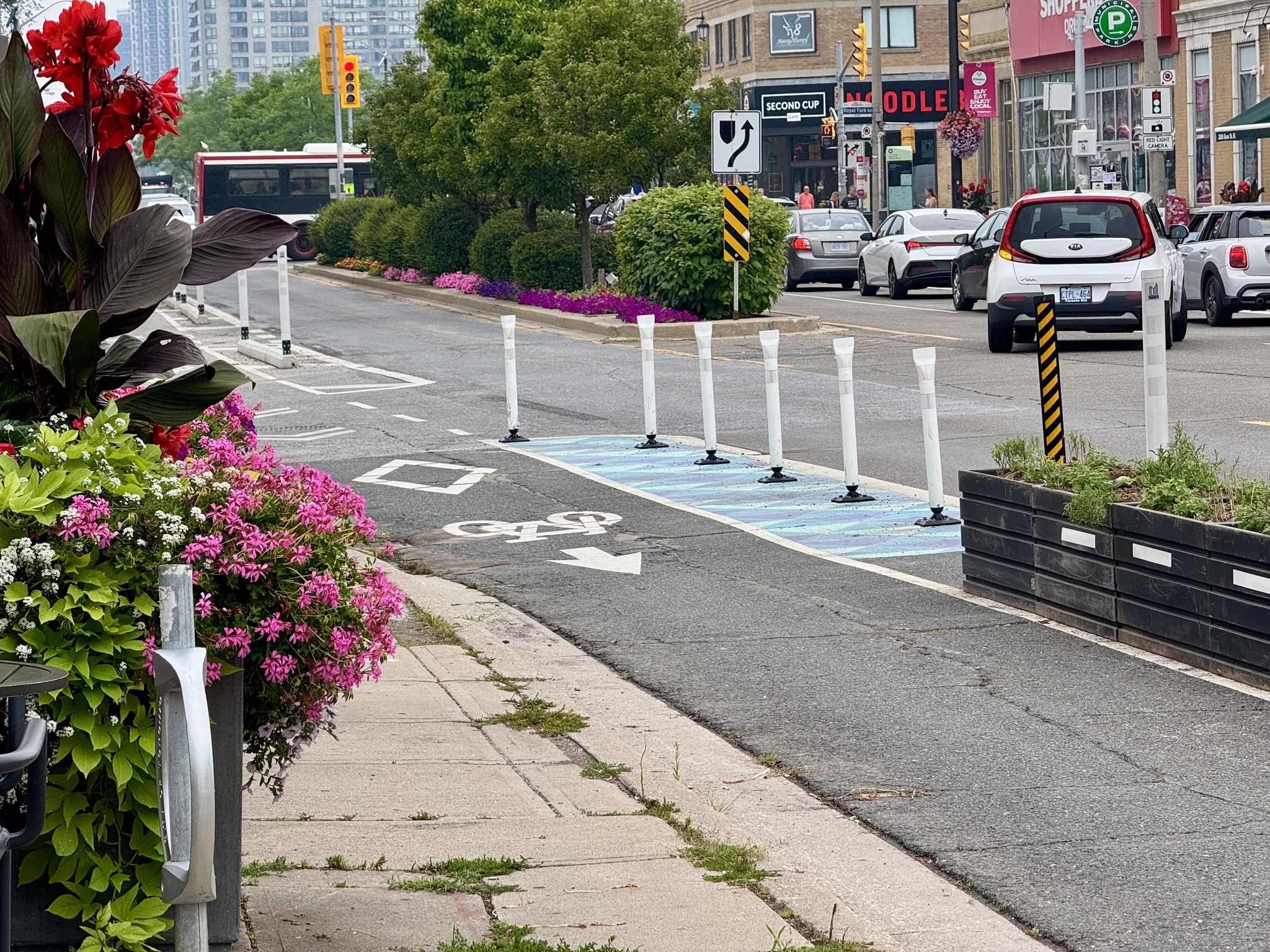
When we got to Bloor we used the protected bike lanes. This is the area where there has been a considerable amount of backlash, and which contributed to the Ford government’s Bill 212. I went to a rally against the bill last October and you can read about it here. Cycle Toronto filed the court case against the legislation.
We had already decided we were going to Toronto today, when we learned that Cycle Toronto had won their case, and planned a celebration rally at the courthouse in the late afternoon, so we decided to attend that, in addition to exploring the park.
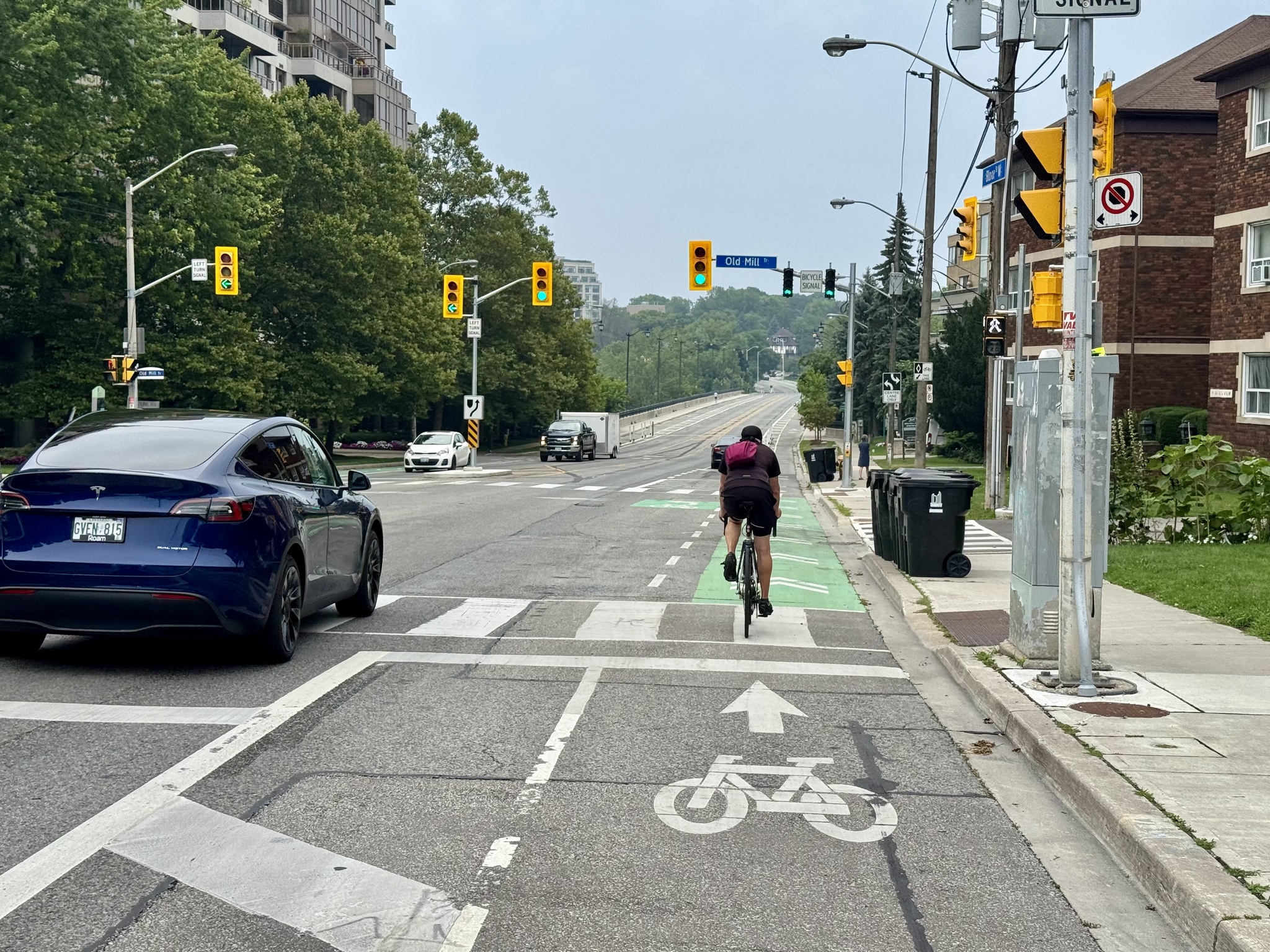
Cindy drives on Bloor weekly on her way to her ukulele group, and says traffic has become much better after the protected lanes went in, than it was before. As we cycled along, it seemed that the only delays were due to red lights, and that otherwise traffic was generally moving at a reasonable pace for a dense urban area.
The Ford government, and people who are against bike lanes constantly claim that they aren’t against bike lanes, but that they should be on secondary streets. However, there is no direct alternative to Bloor Street, and many of the things that people want to ride their bikes for are located along Bloor Street. Even if one was willing to use secondary streets, despite adding significant distance, there are some places, like the Humber River showing here, where there is no alternative way to get across, and as you can see in the picture, there’s no traffic, either. I am aware that this picture was taken midday, but it is not possible to build enough roads to accommodate peak traffic volumes.
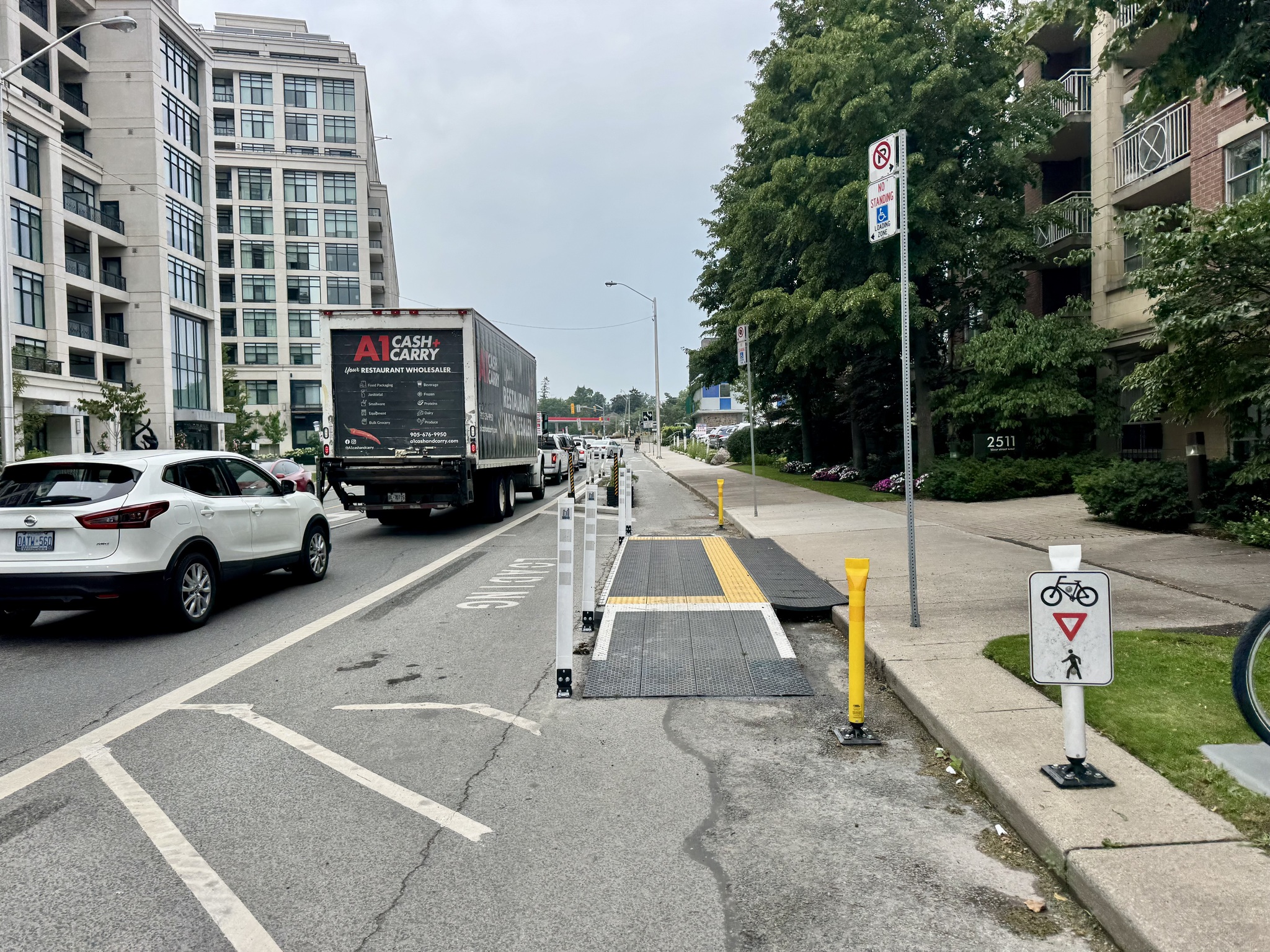
Toronto has put in metal floating bus stops in this section which is very new. The older sections have the bus floating bus stops built-in out of asphalt.
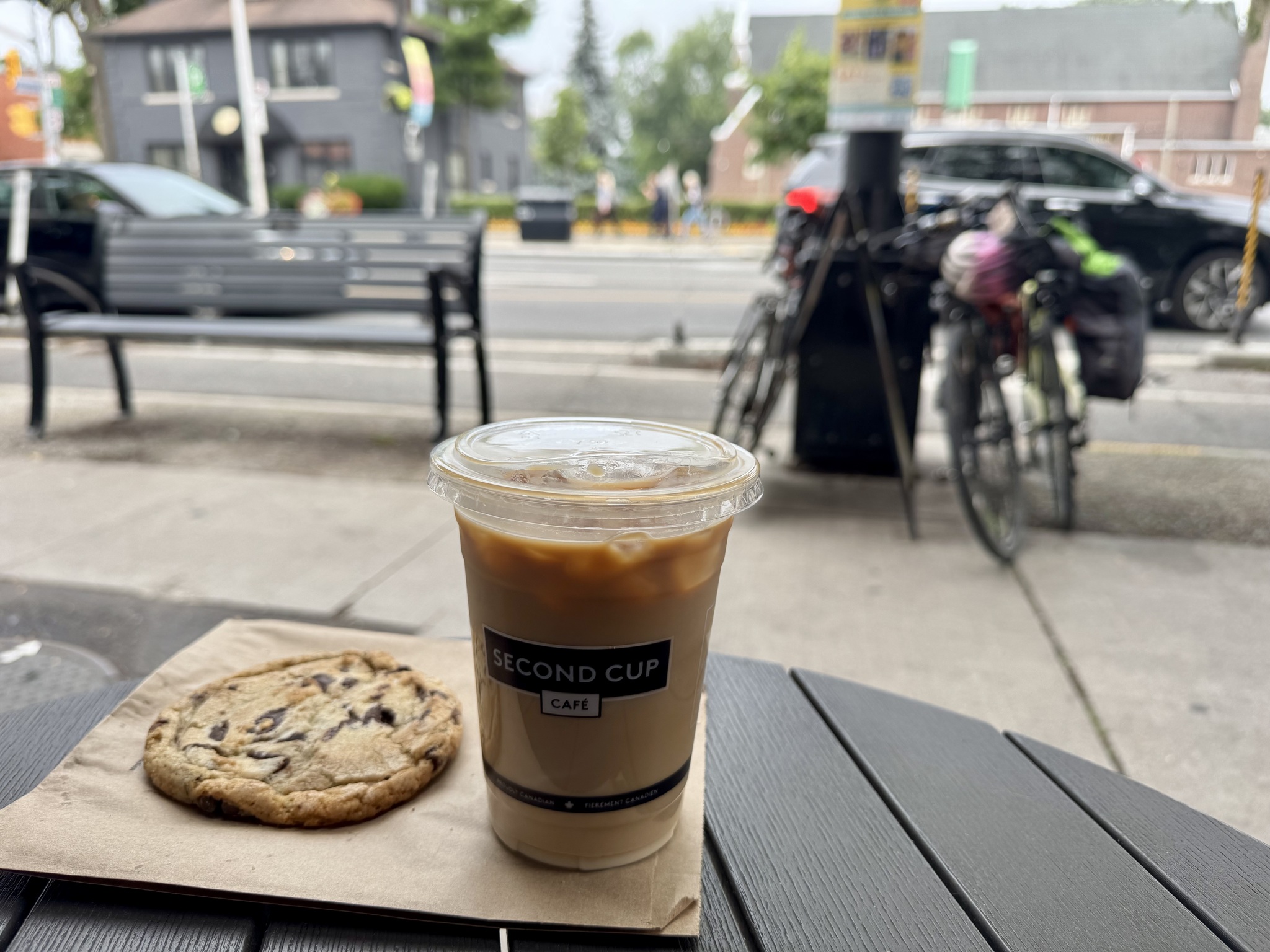
We stopped at Second Cup for a break when I was about 30 km into the ride, and Barry was 50 km into the Ride, having come from Georgetown.
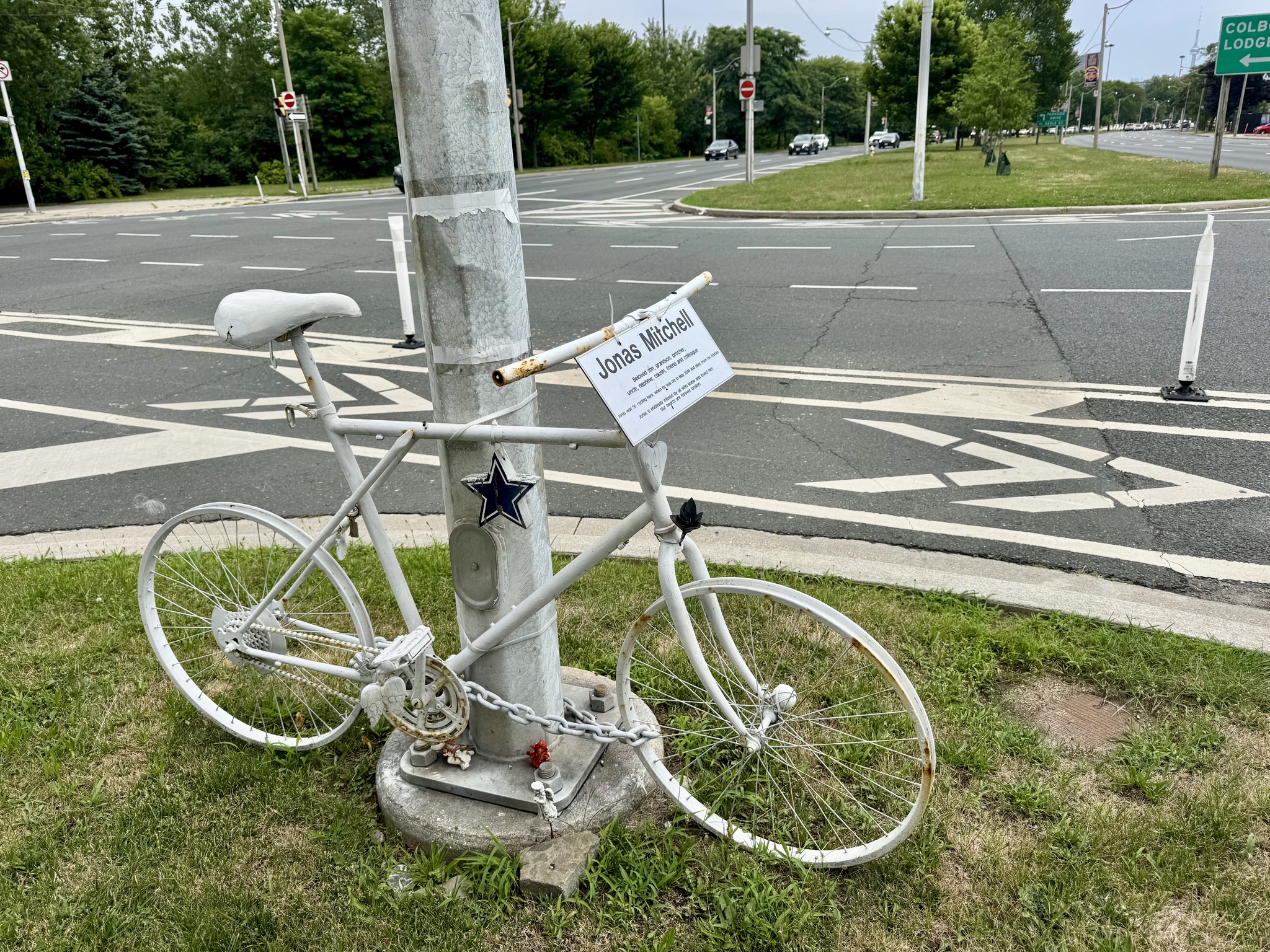
This ghost bike was placed at Lakeshore Boulevard and Colborne Lodge Drive, after Jonas Mitchell, aged 35, was hit and killed by a driver.
We then rode the Waterfront Trail to Cherry Street.
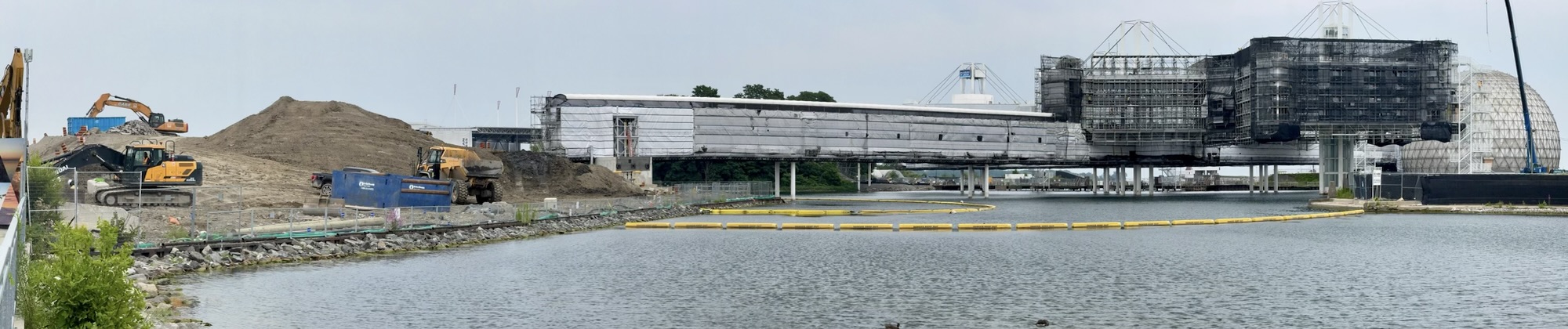
Another travesty of the Ford government is allowing a foreign company to build a spa at Ontario Place, using tax pay money to build the parking lot, and pricing the lease at a giveaway rate.
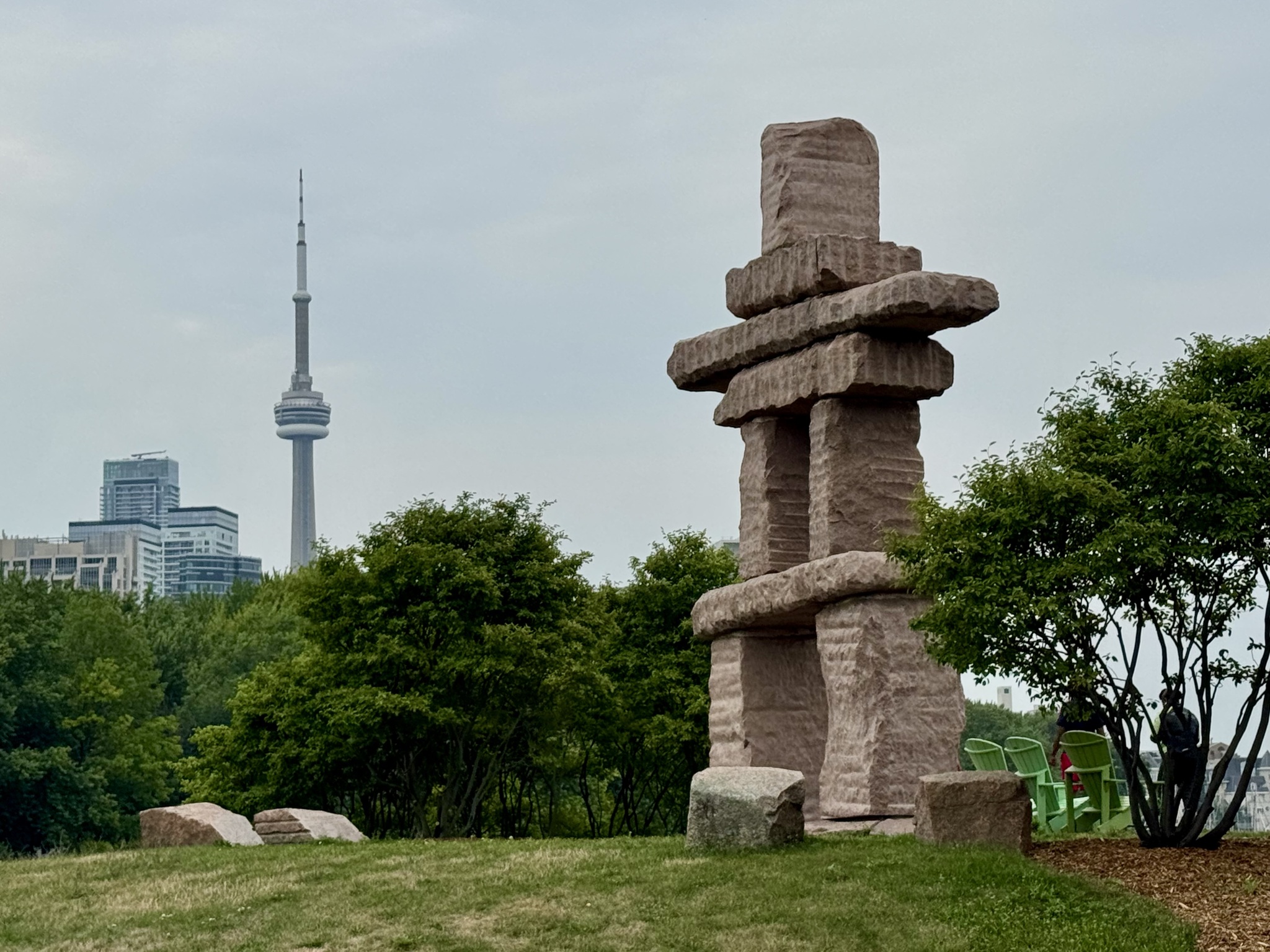
I like the contrast between the inukshuk and the CN Tower in this image.
There’s a cute splash pad and playground by the Billy Bishop airport.
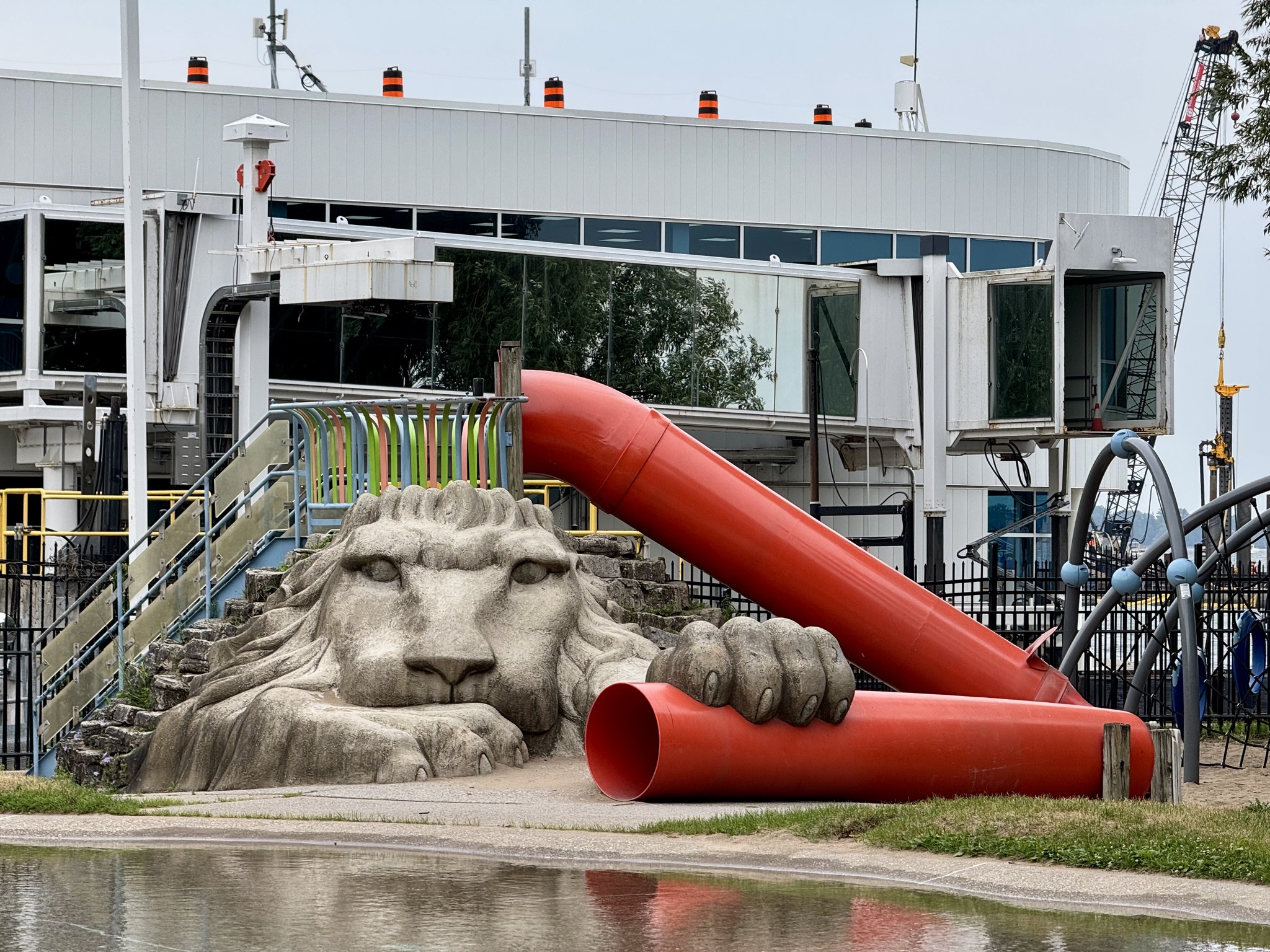
Cindy had not been to Ireland Park before, so we stopped briefly. The park memorializes, the Irish who emigrated to Toronto to escape famine, between 1846 and 1849. In 1847 alone, over 38,000 Irish men women and children landed in Toronto, a city of only 20,000 people. The artist, Rowan Gillespie, created a series of famine sculptures in Dublin, entitled, Departure. There are seven sculptures there, and only five in Toronto, to speak of the loss of life in transit, and upon arrival.
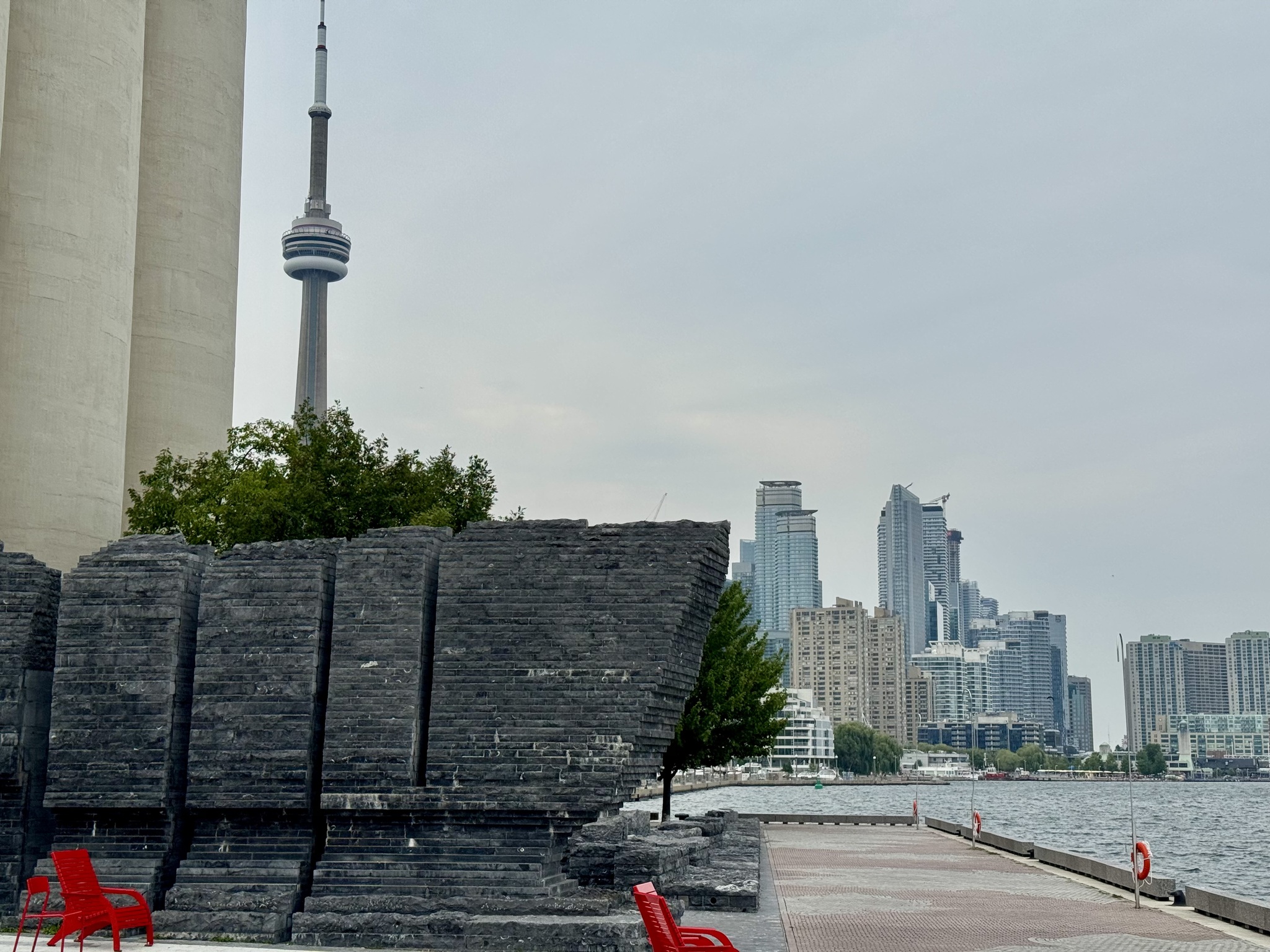
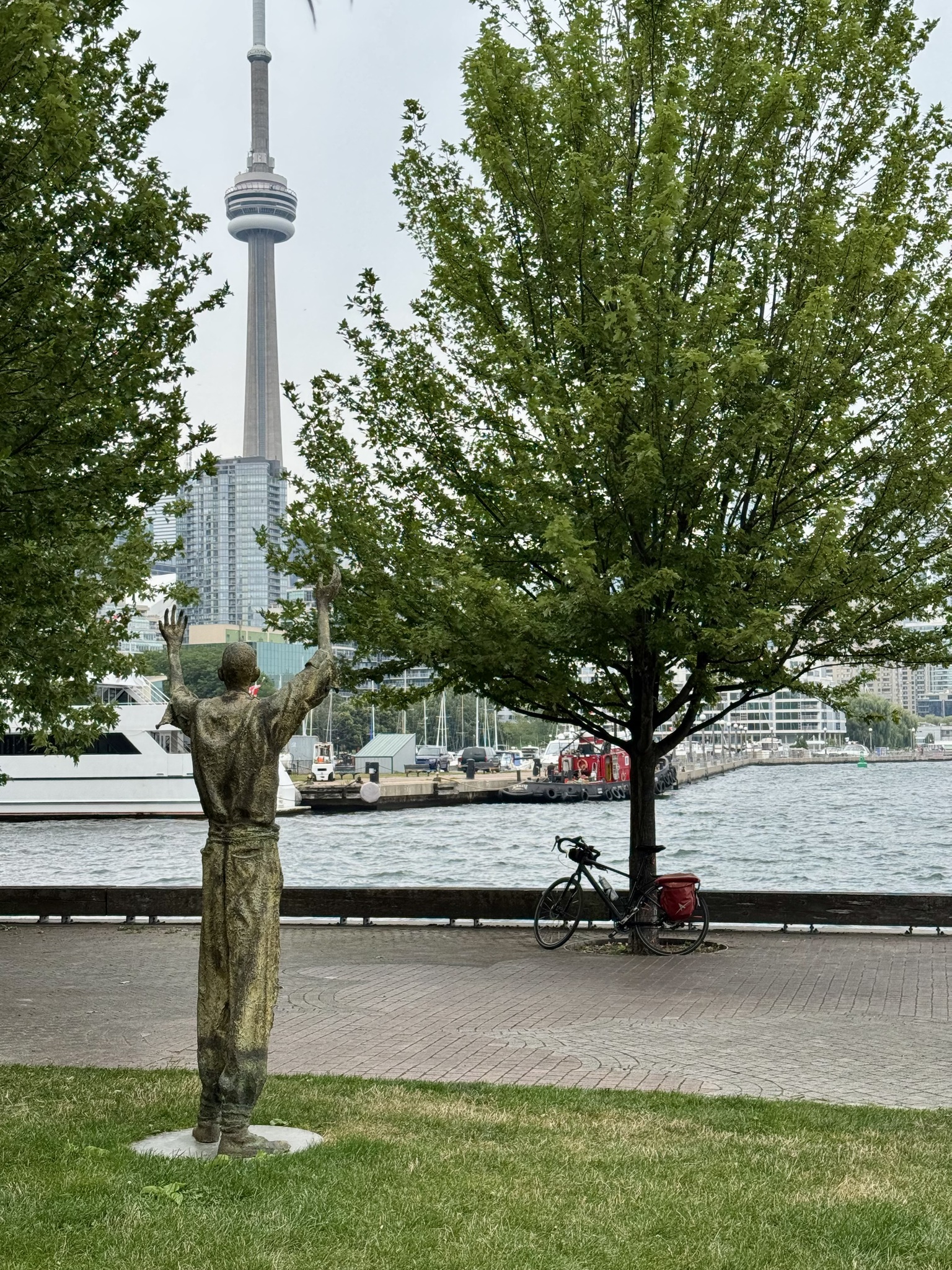
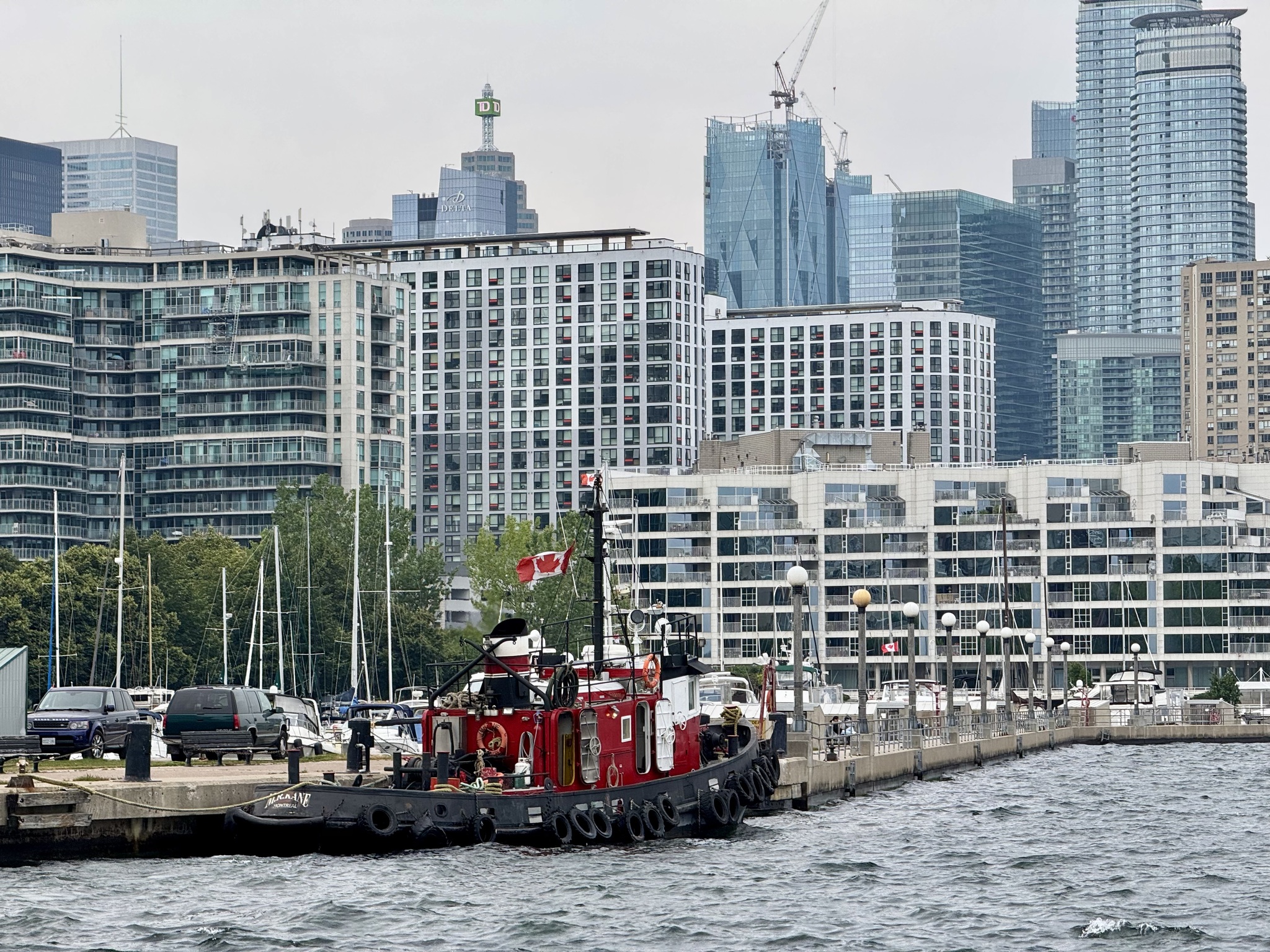
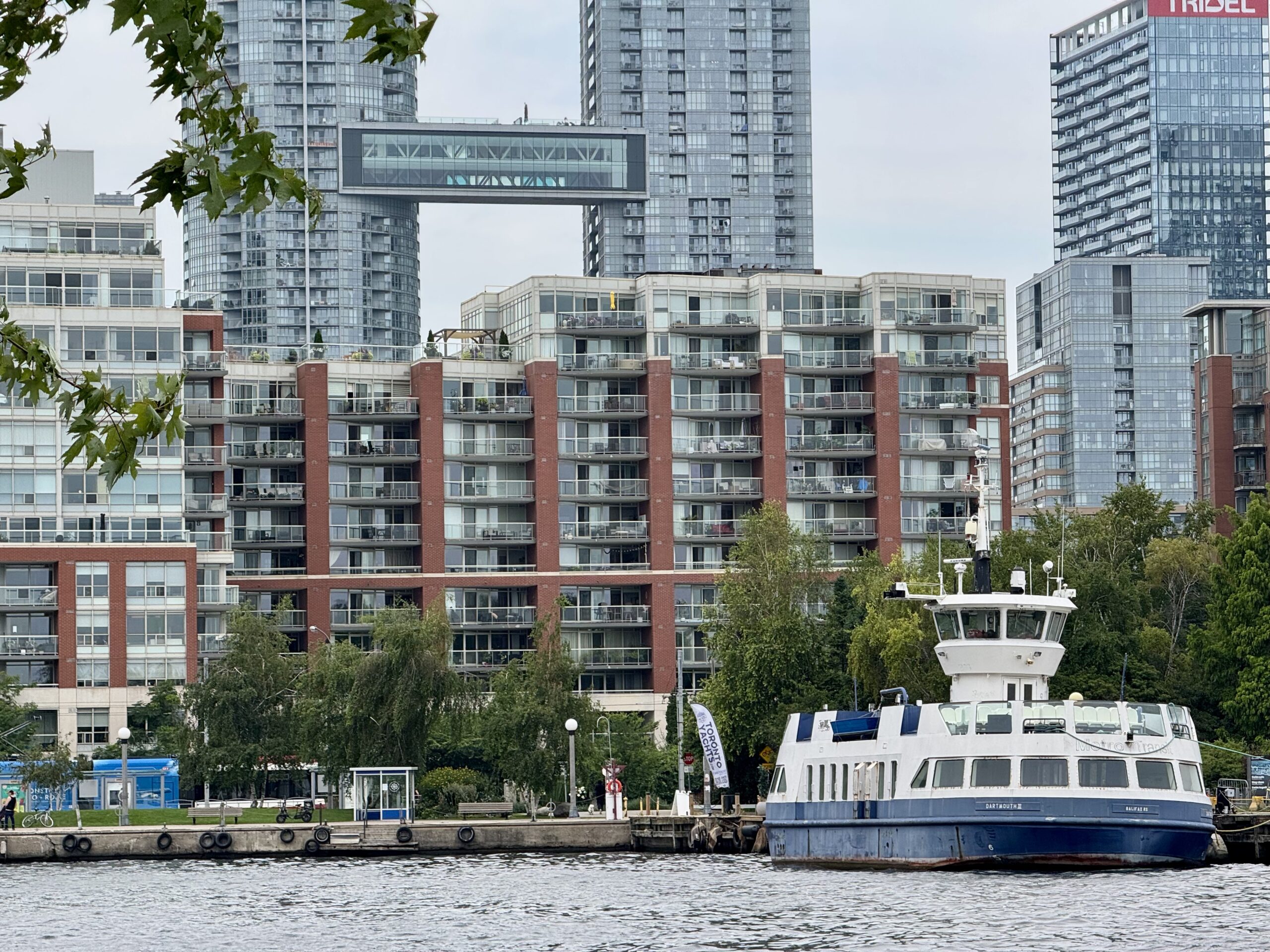
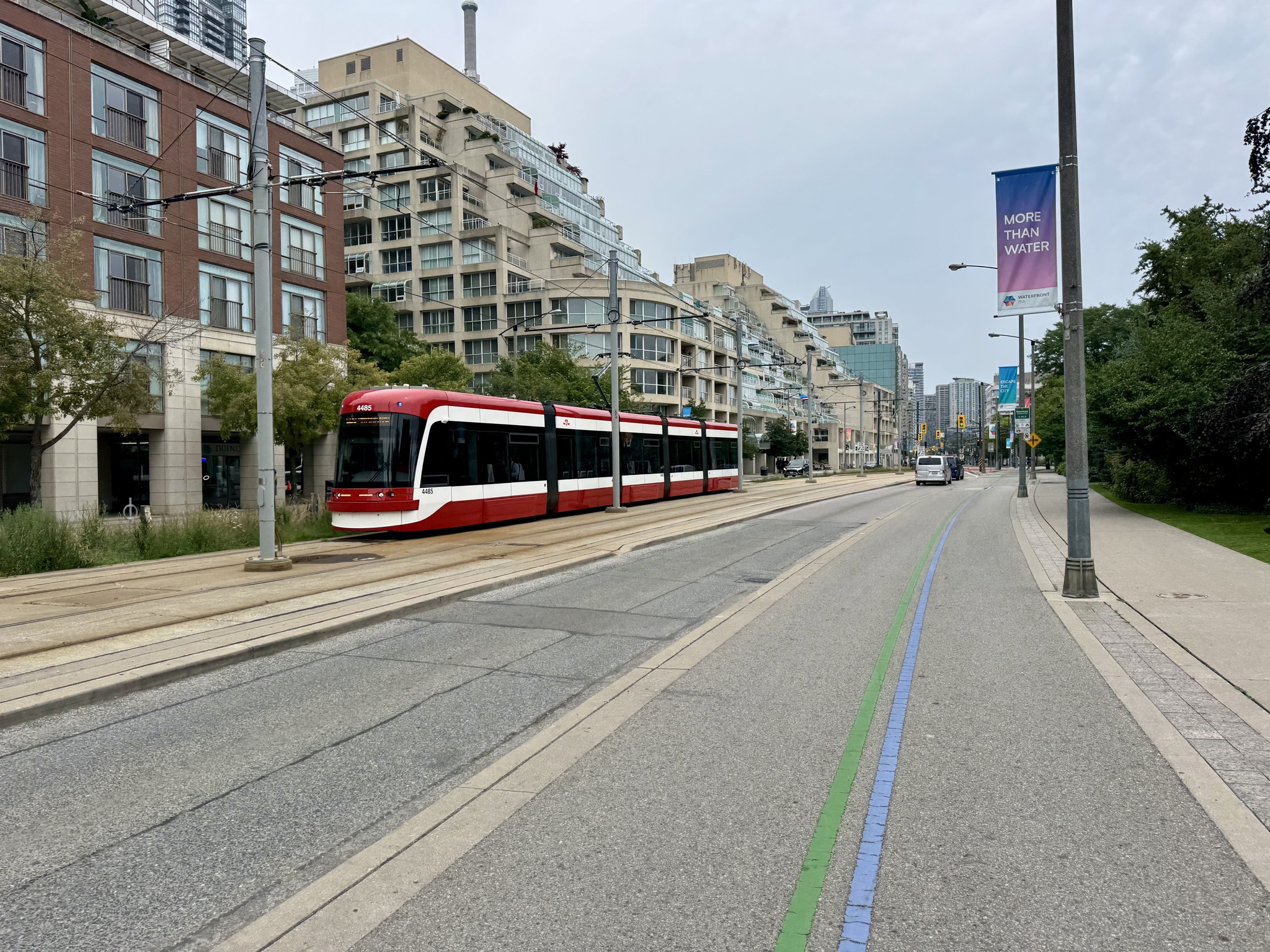
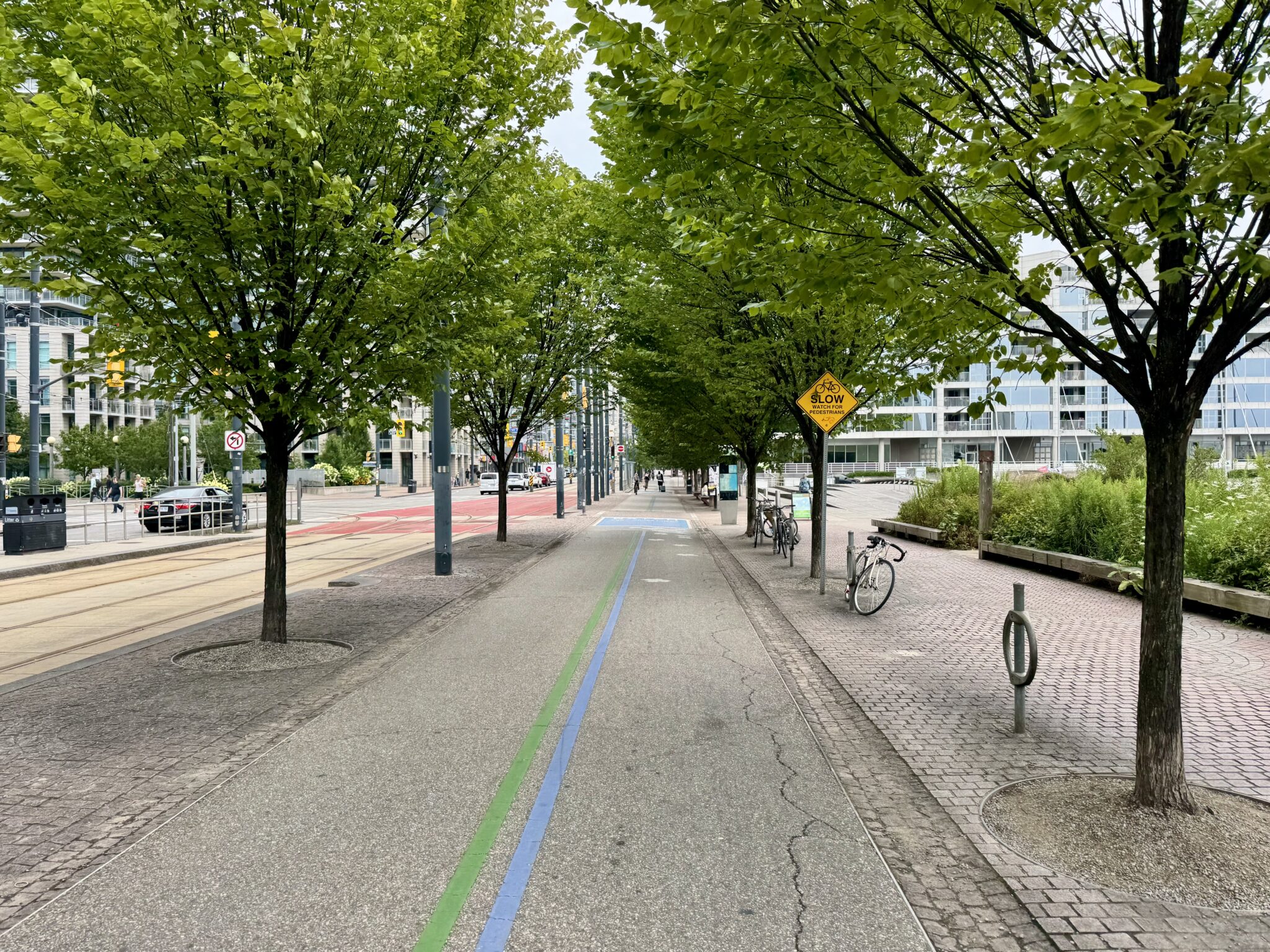
The Waterfront Trail continues along Queen‘s Quay.
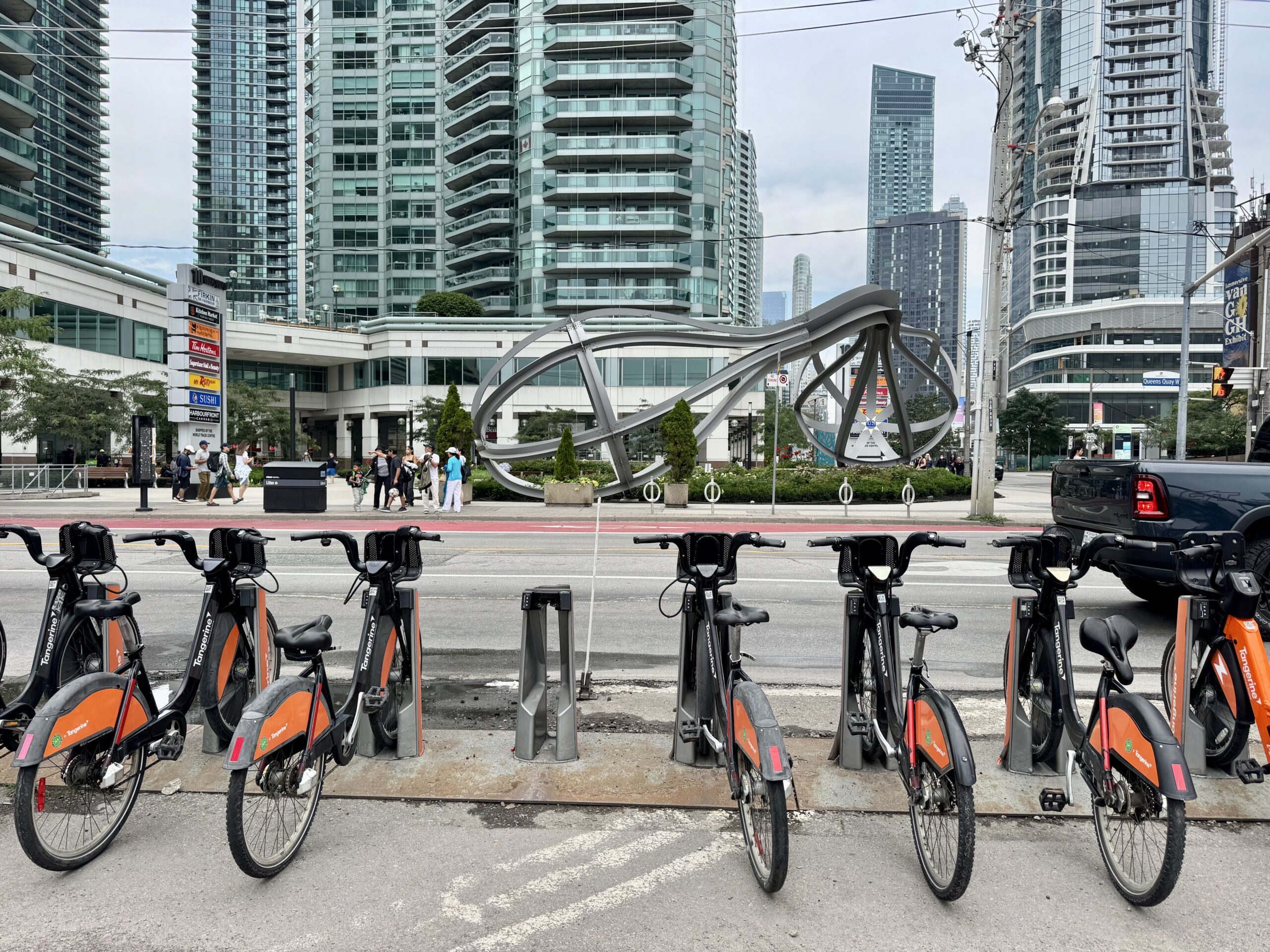
At the foot of Yonge Street is a sculpture by Richard Deacon entitled Between the Eyes. It makes me think of a whisk.
Redpath still operates a sugar refinery on Queen‘s Quay, and sugar is regularly delivered by ship. Cranes are used to dig the sugar out of the hold as seen in this video I made a few years ago.
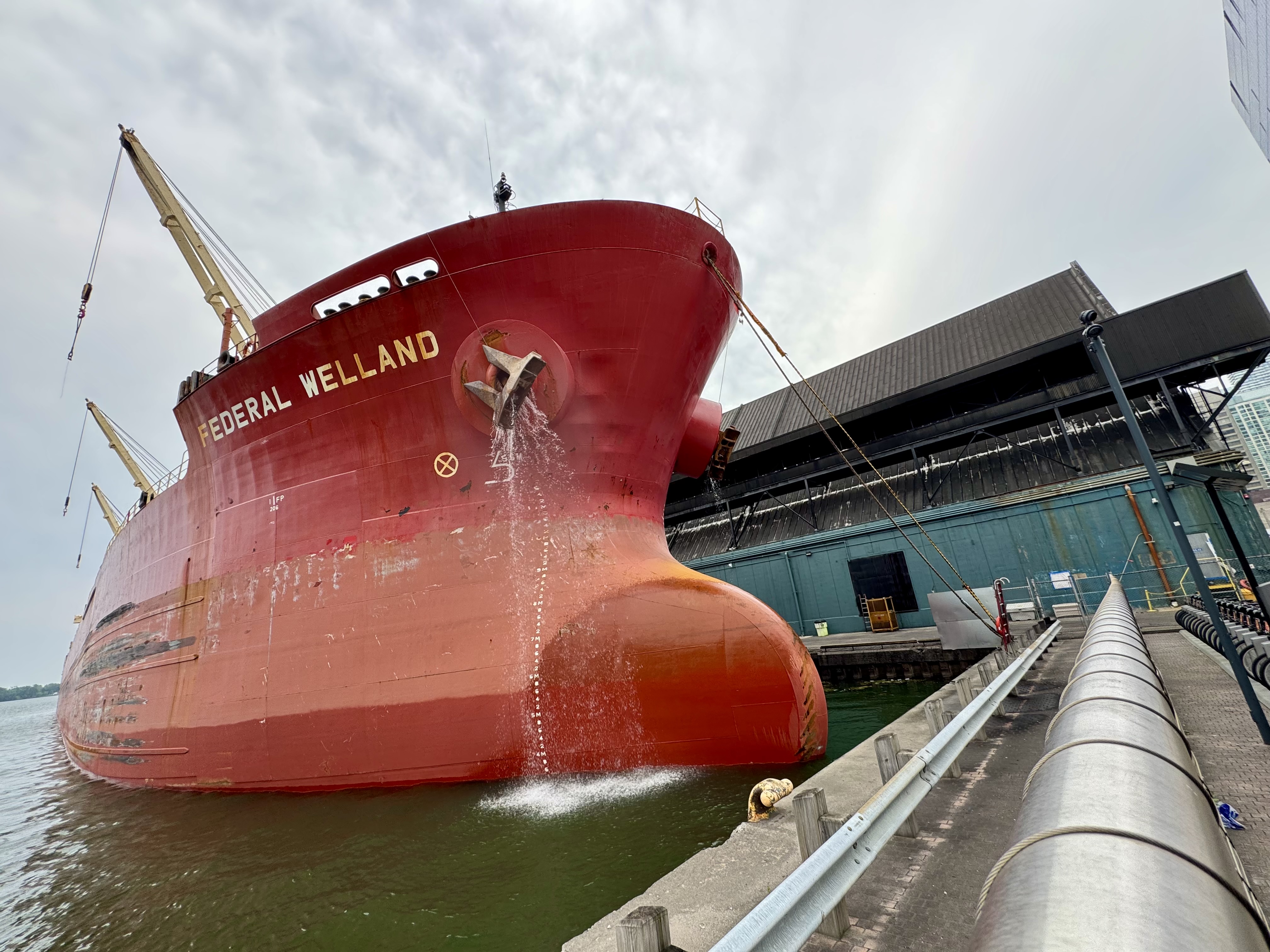
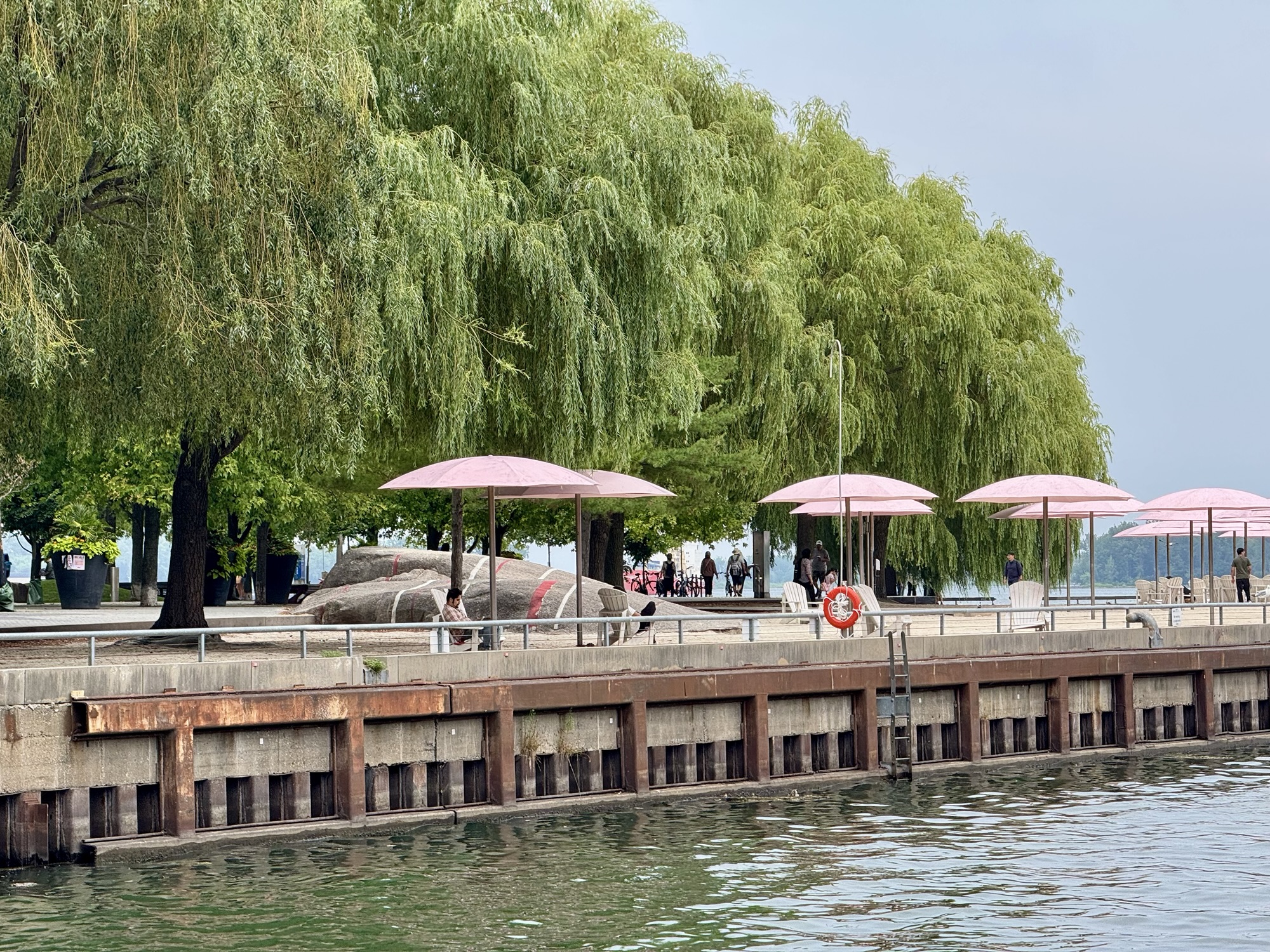
On the next wharf is a park called Sugar Beach, which pays homage to the industry across the channel.
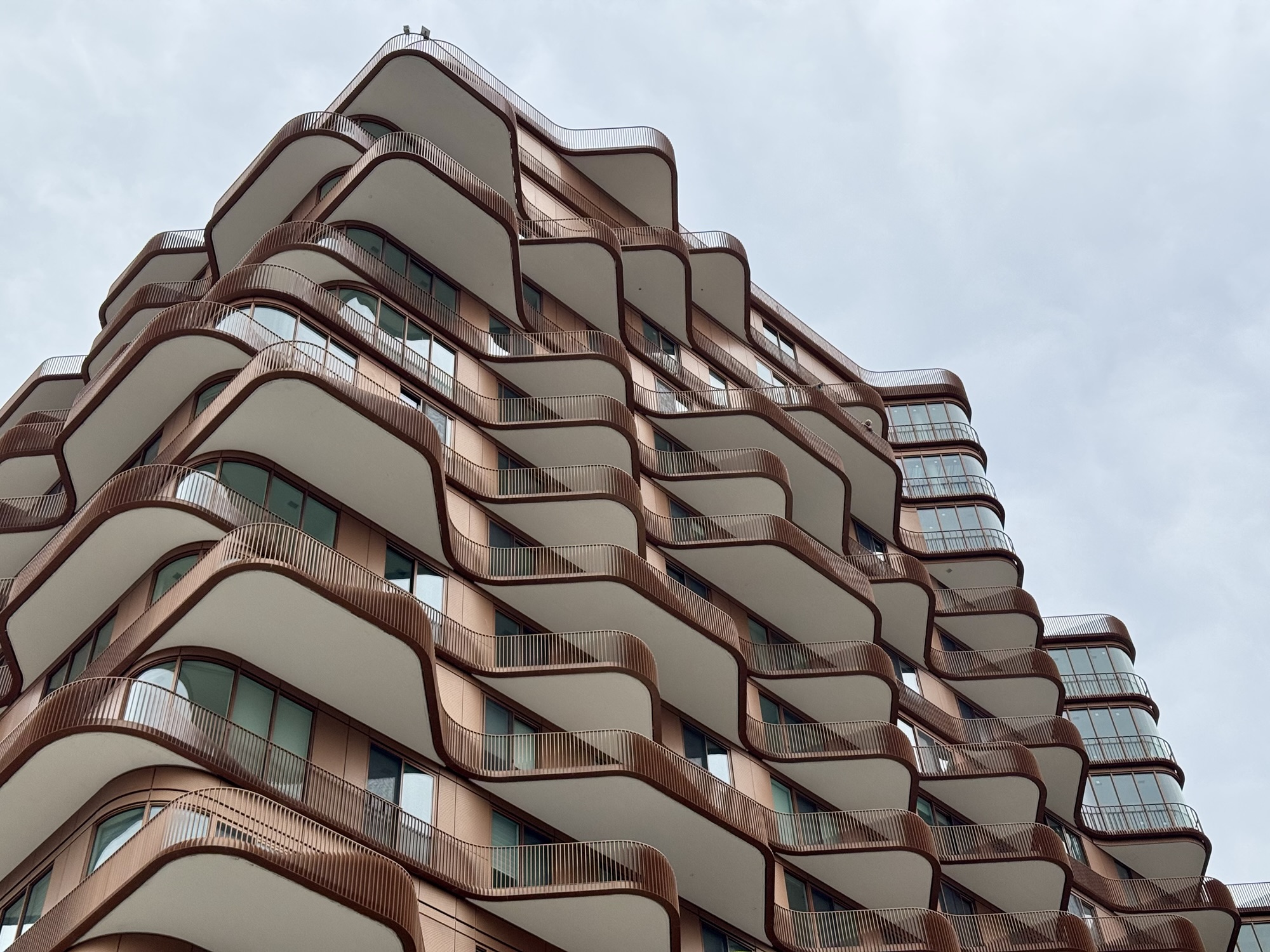
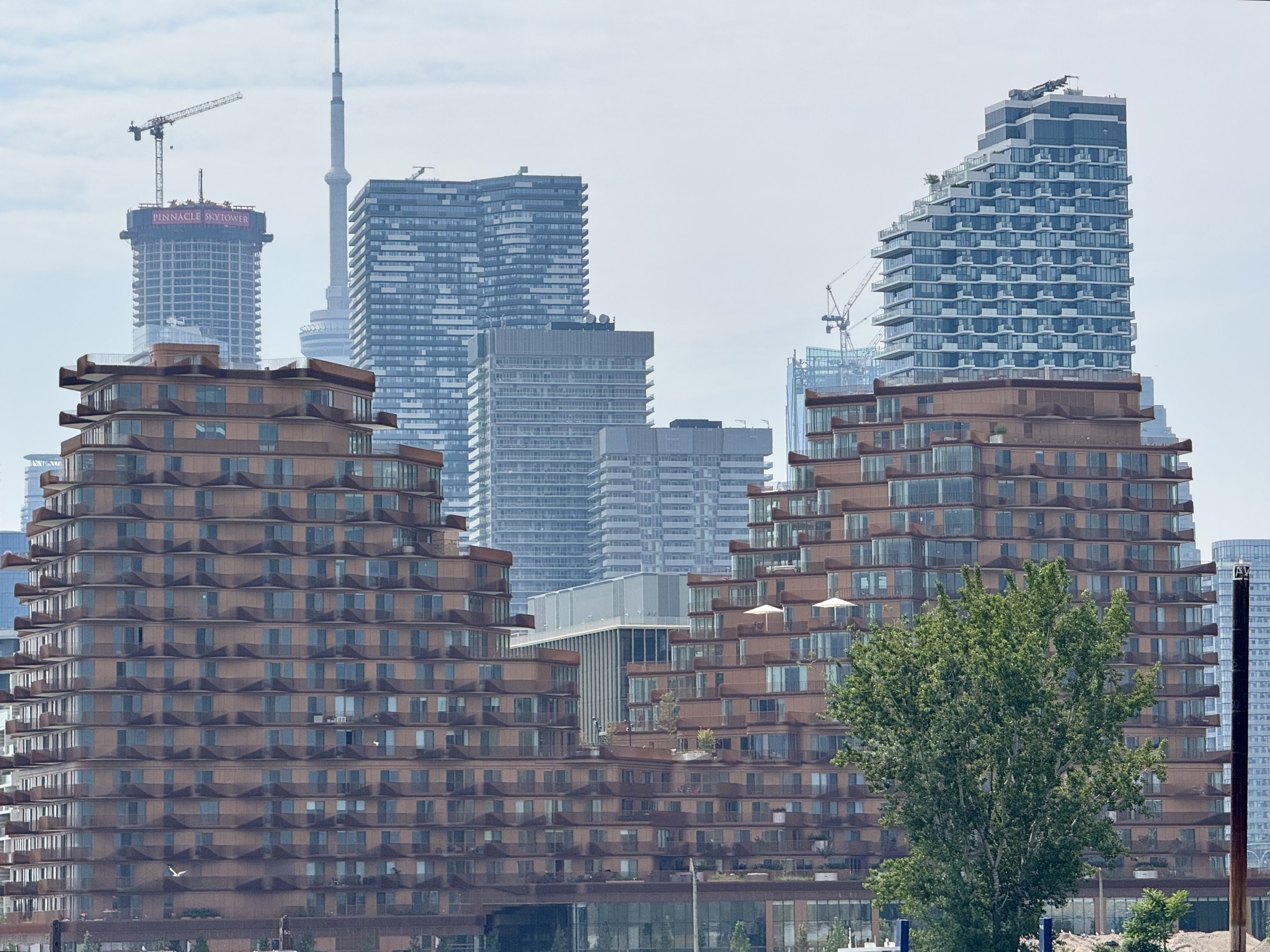
This neighbourhood is known as Bayside, and replaces an industrial port. This particular development is named Aqualuna. It is a “sculptural 16 story residence defined by its cascading terraces that echo the waves of Lake Ontario“.
Biisaasige Park
Before the 20th century, the Port Lands area was primarily marshland. In the early 20th century, Toronto began filling in the marsh to create land for industrial development, including factories, docks, and storage facilities. However, the decline of shipping and the rise of trucking led to the area being under utilized.
Waterfront Toronto is re-naturalizing the mouth of the Don River and developing flood protection. Some roads in the area have been shifted and new ones will be created. Four bridges were required. They were manufactured in Dartmouth, Nova Scotia, and shipped by barge to Toronto. This video shows them arriving in Toronto and being installed.
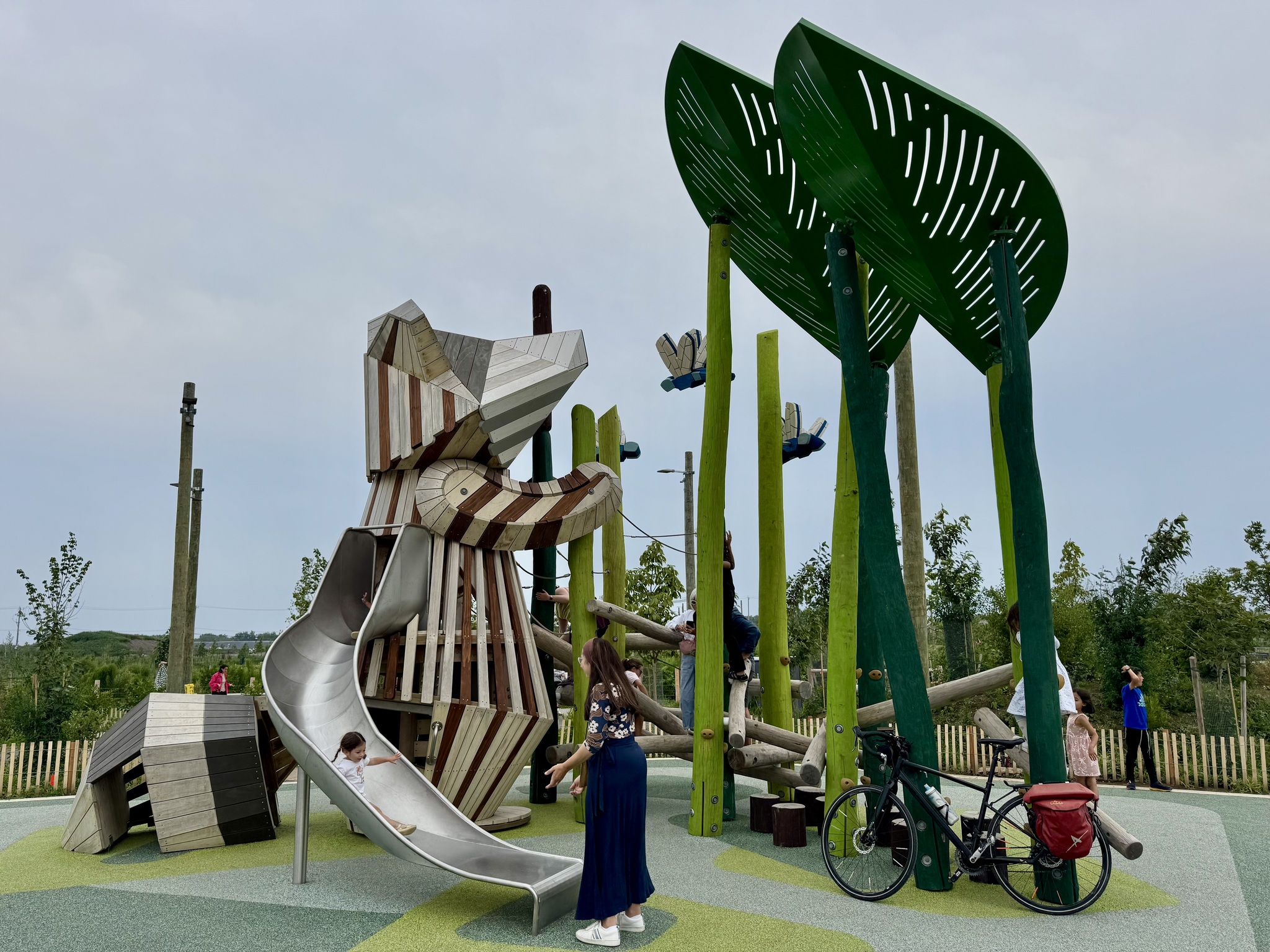
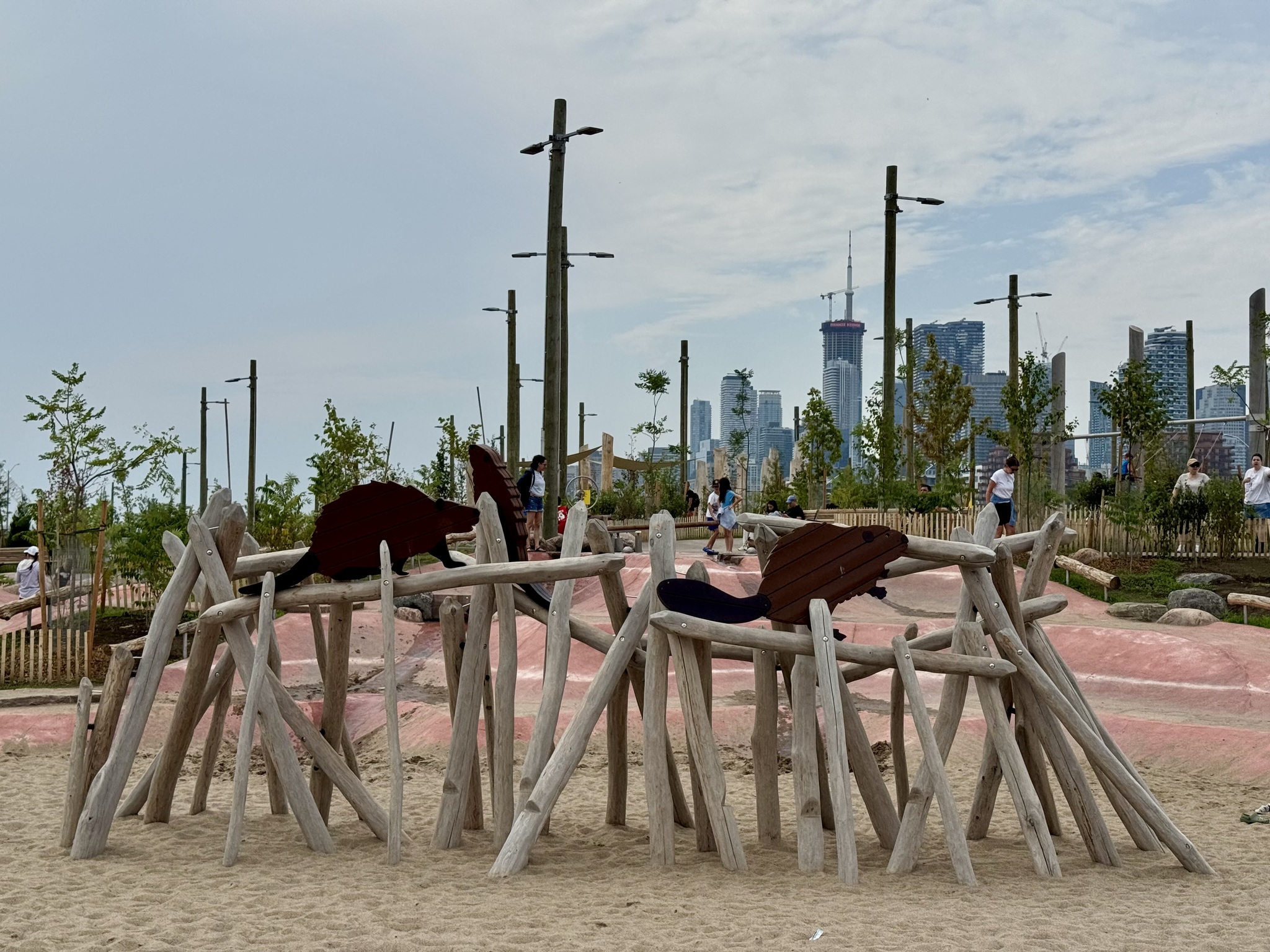
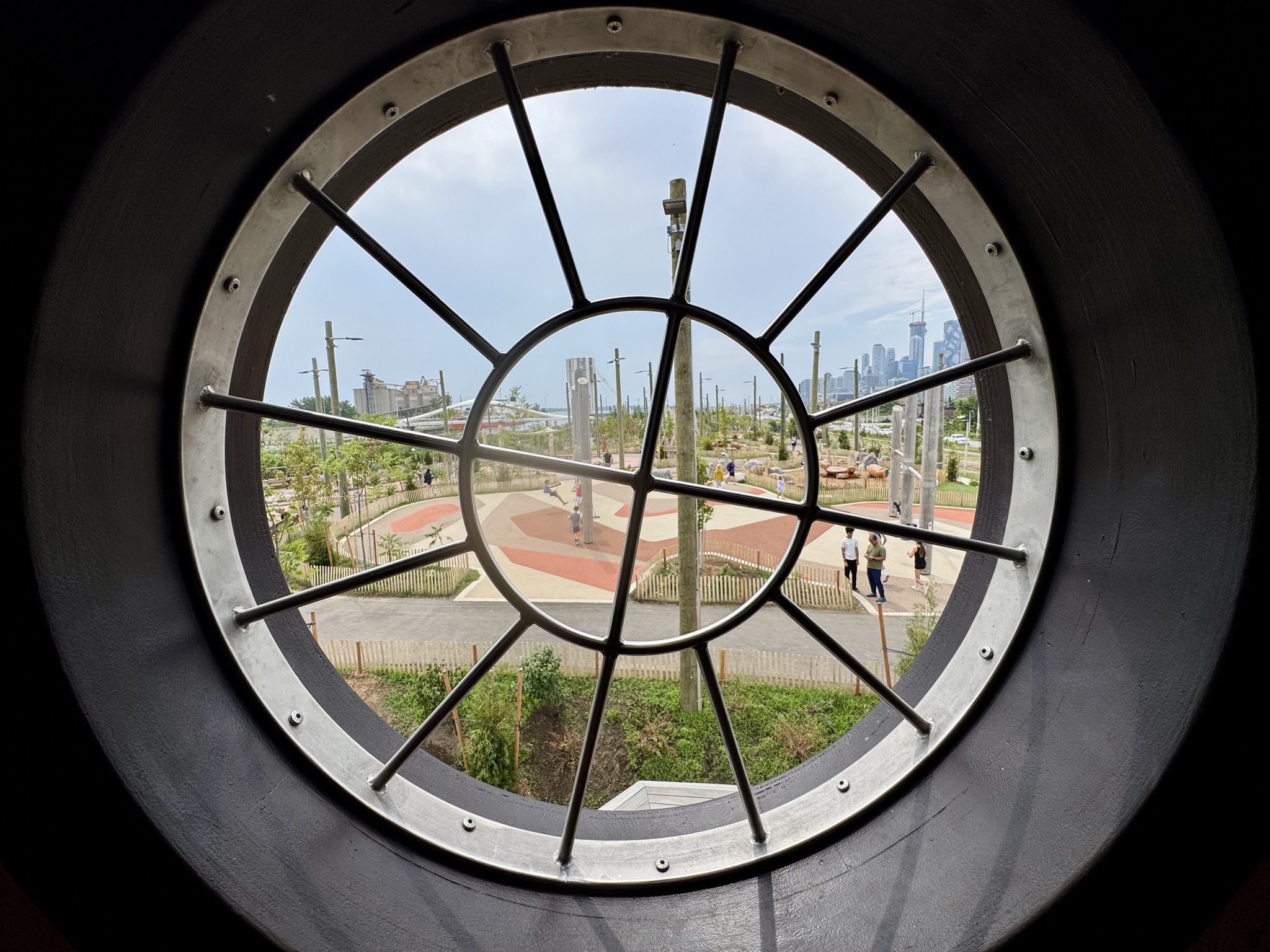
The new park, Biidaasage, named in the Anishinaabemowin language, meaning “sunlight shining toward us”, has a unique playground with a giant raccoon, beaver dam, and an owl which you can climb inside of.
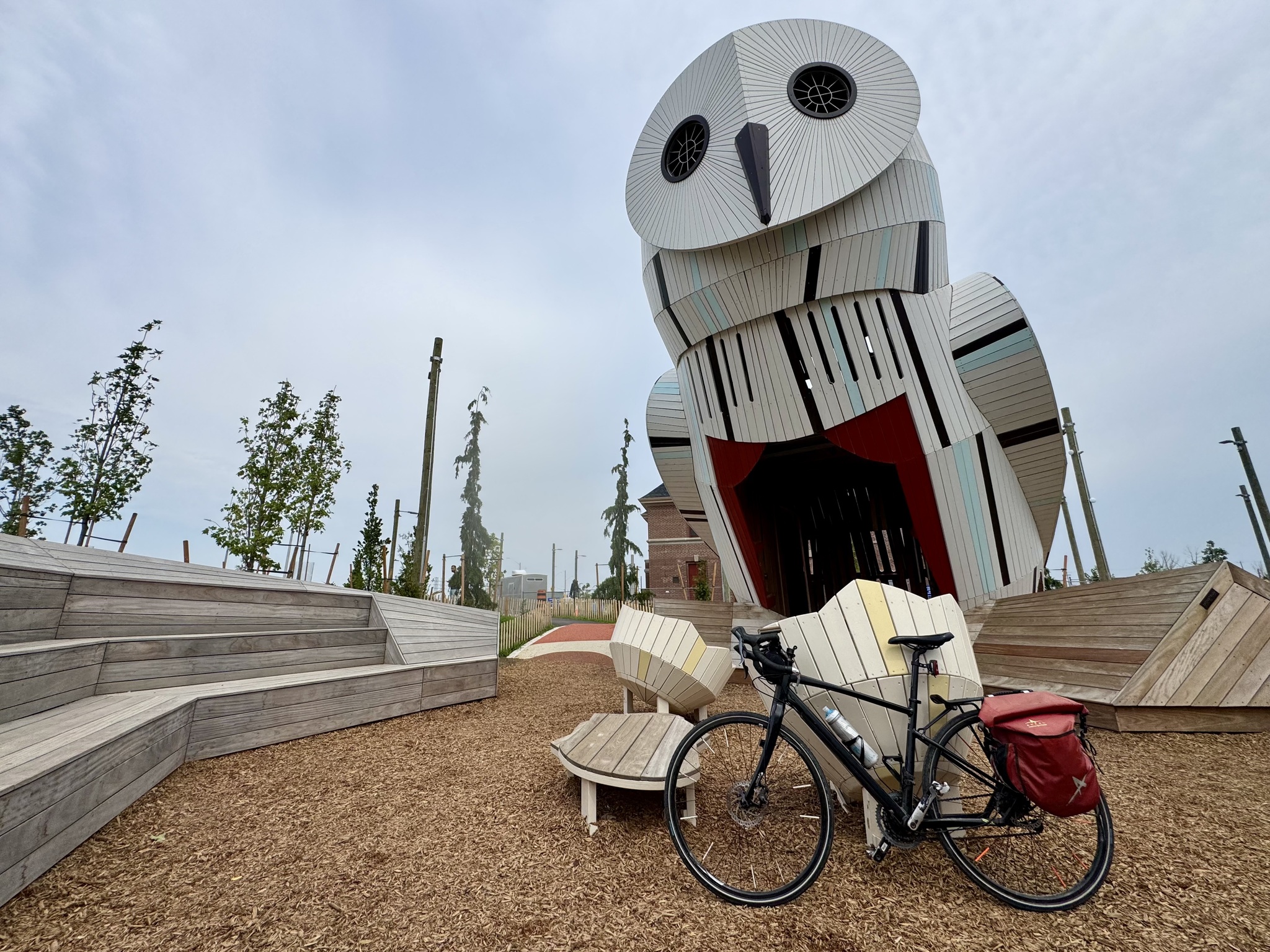
This is the inside of the owl.
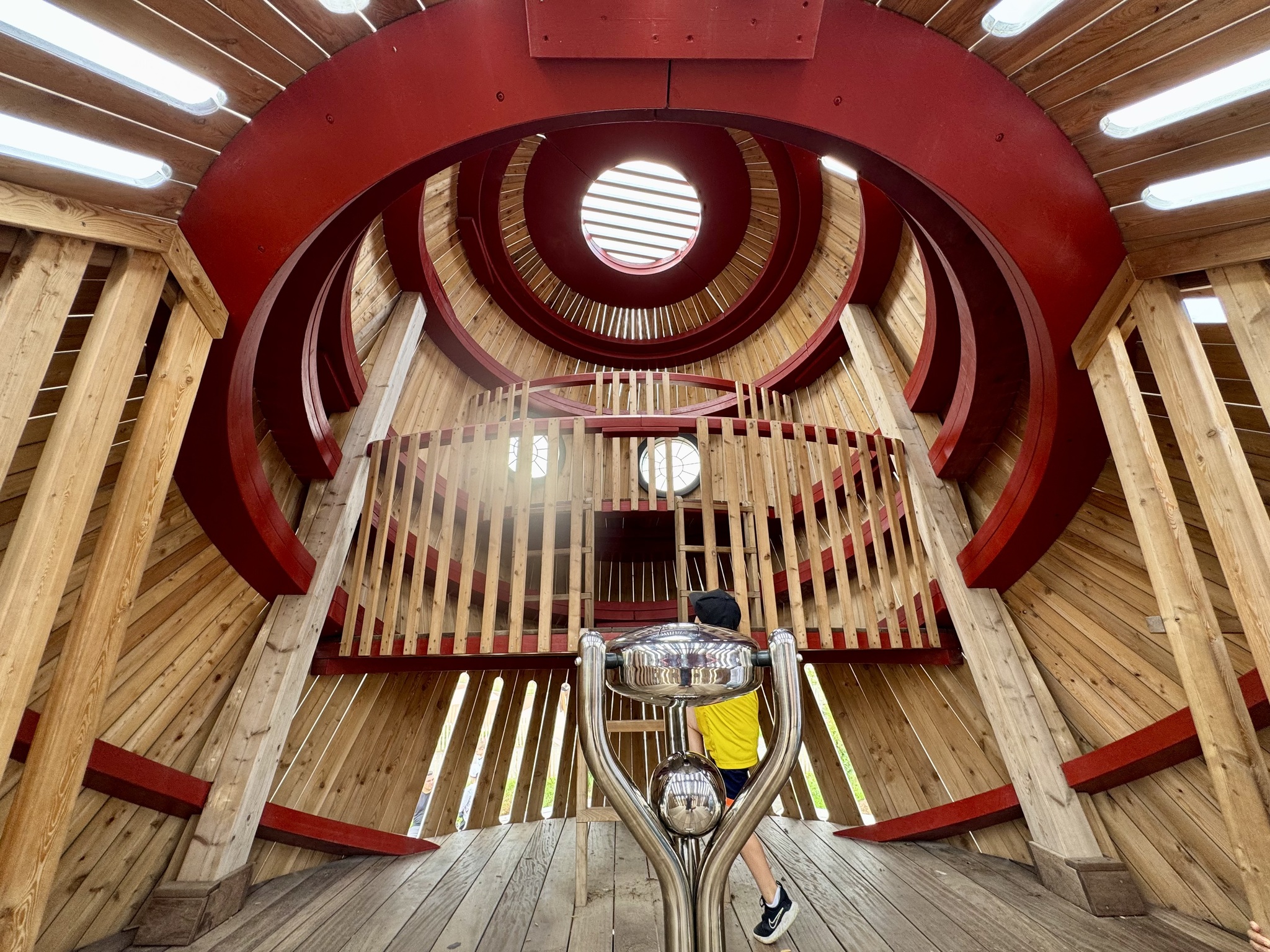
This is one of the owls eyes and the view through it. They have planted a lot of trees, which should cool and shade the area as they grow.
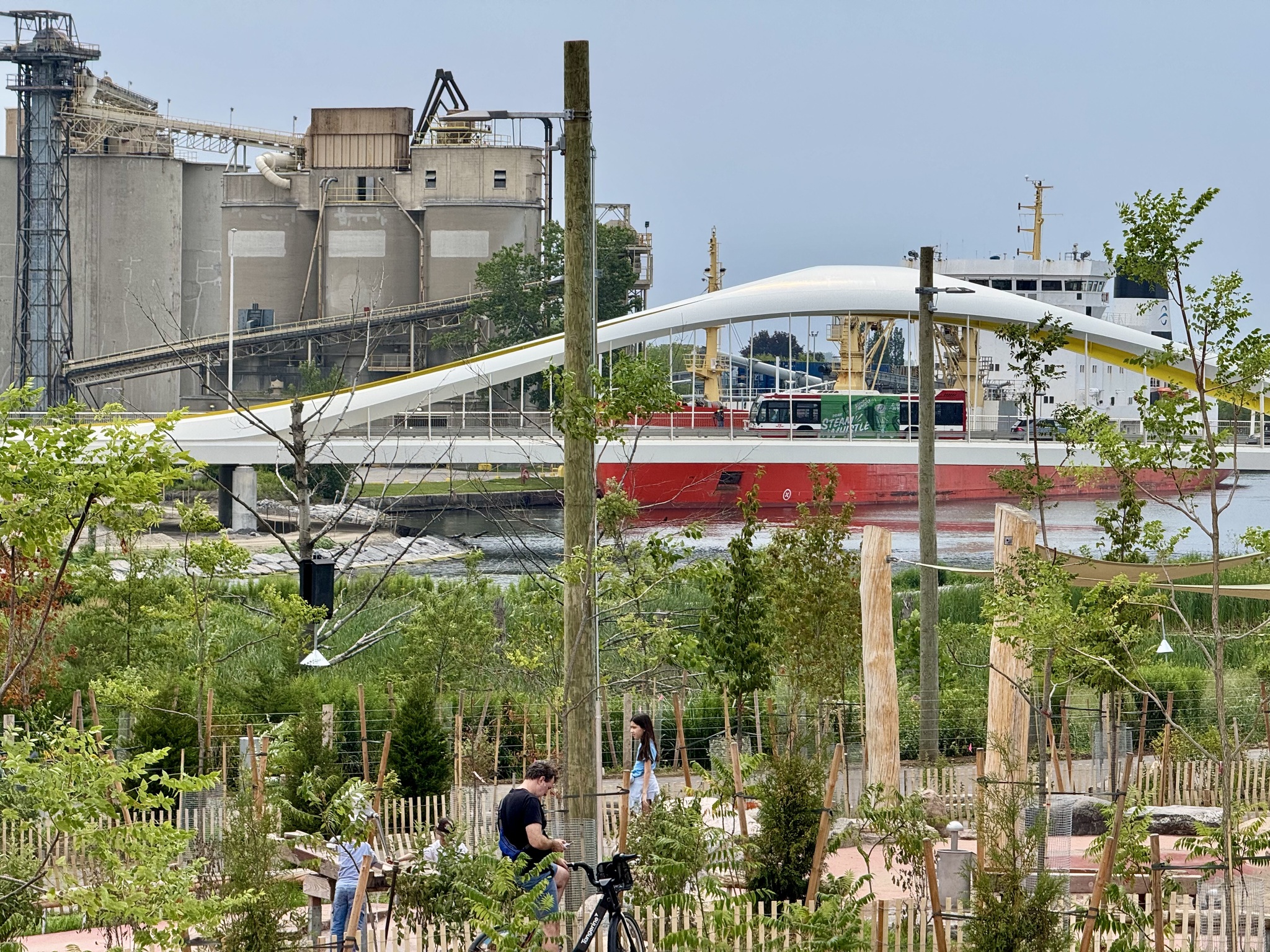
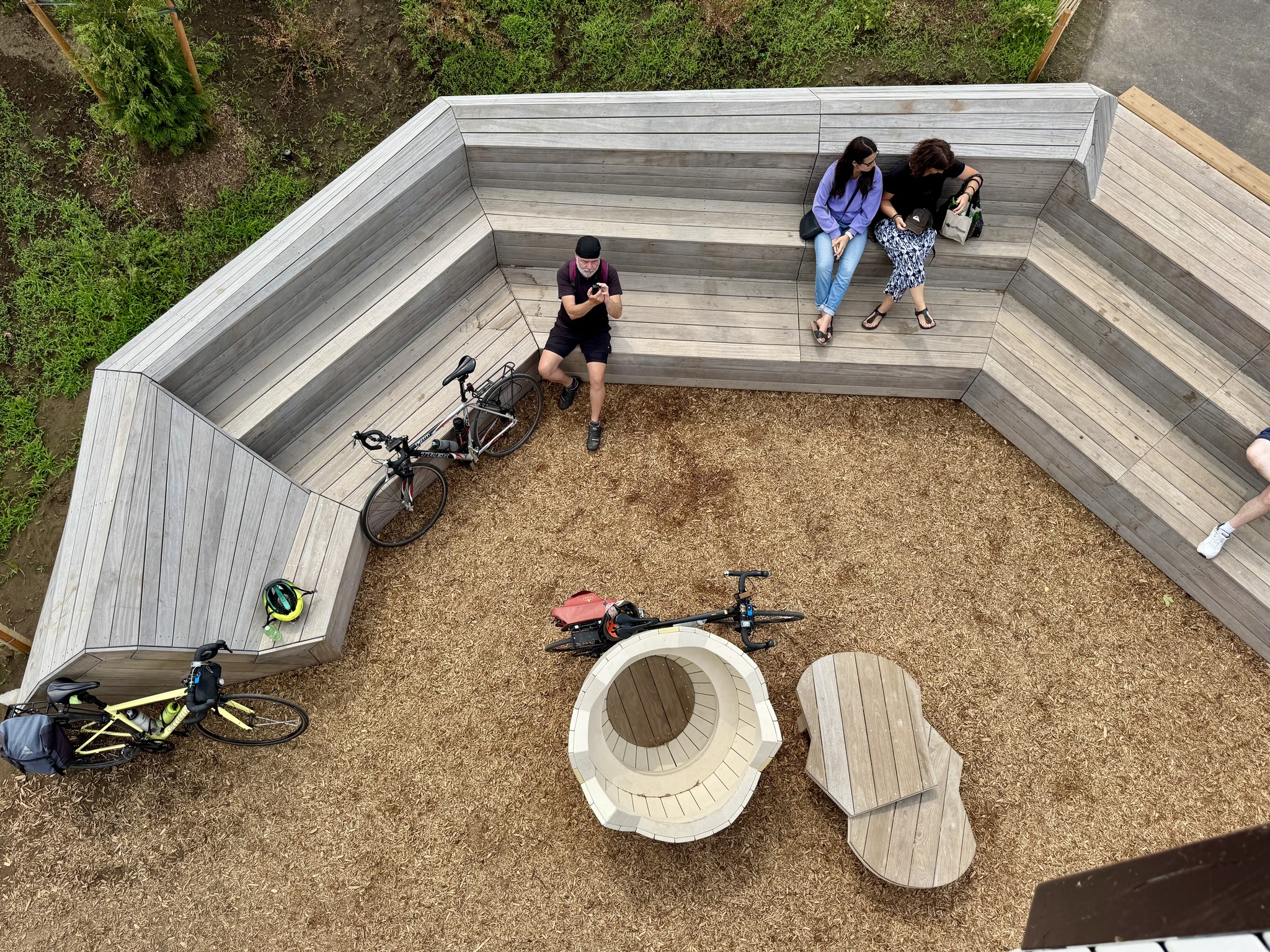
There is plenty of comfortable seating for caregivers. We ate our packed lunches here.
These are the Aqua Luna condos against the skyline.
We walked through the distillery district.
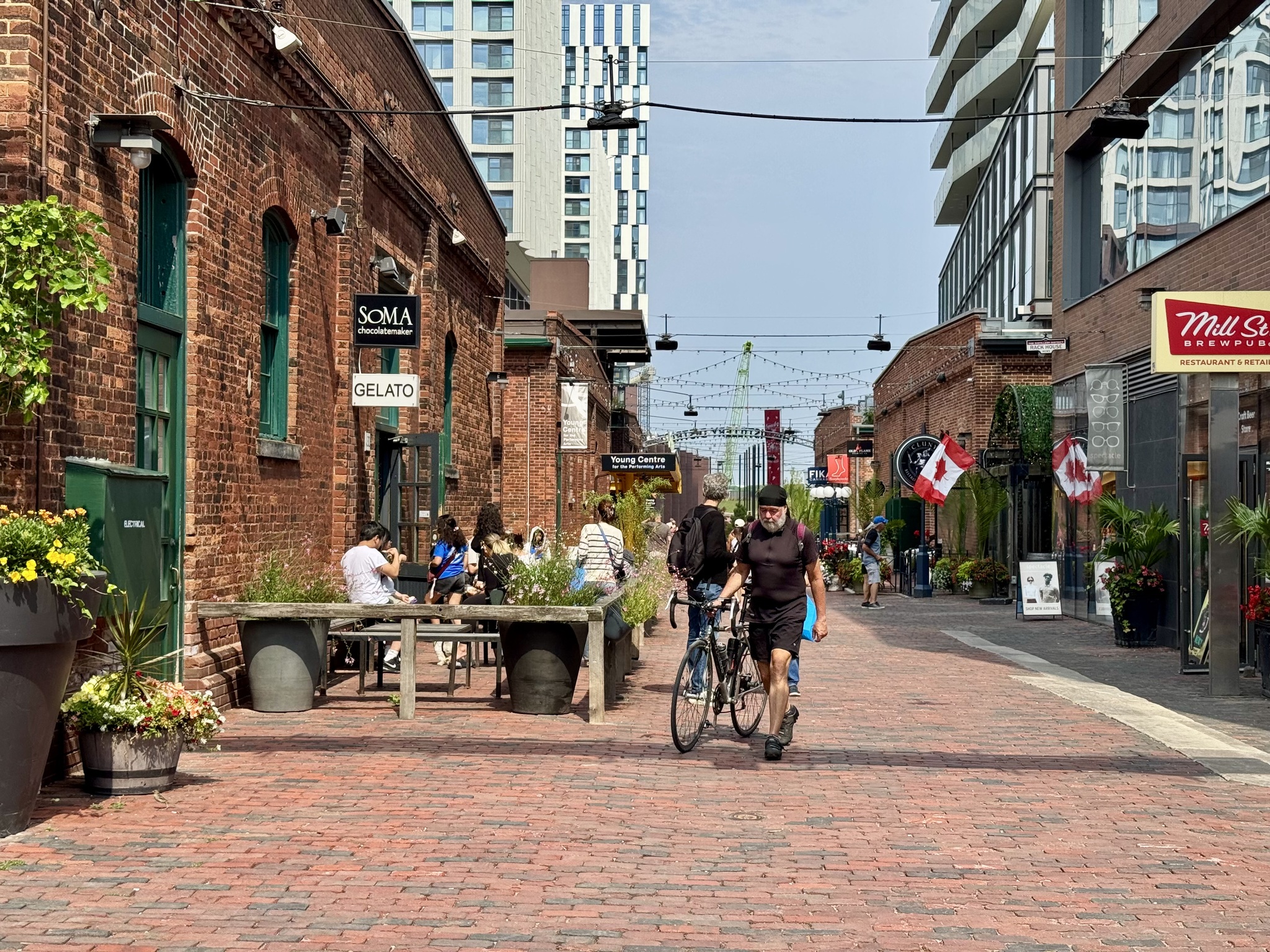
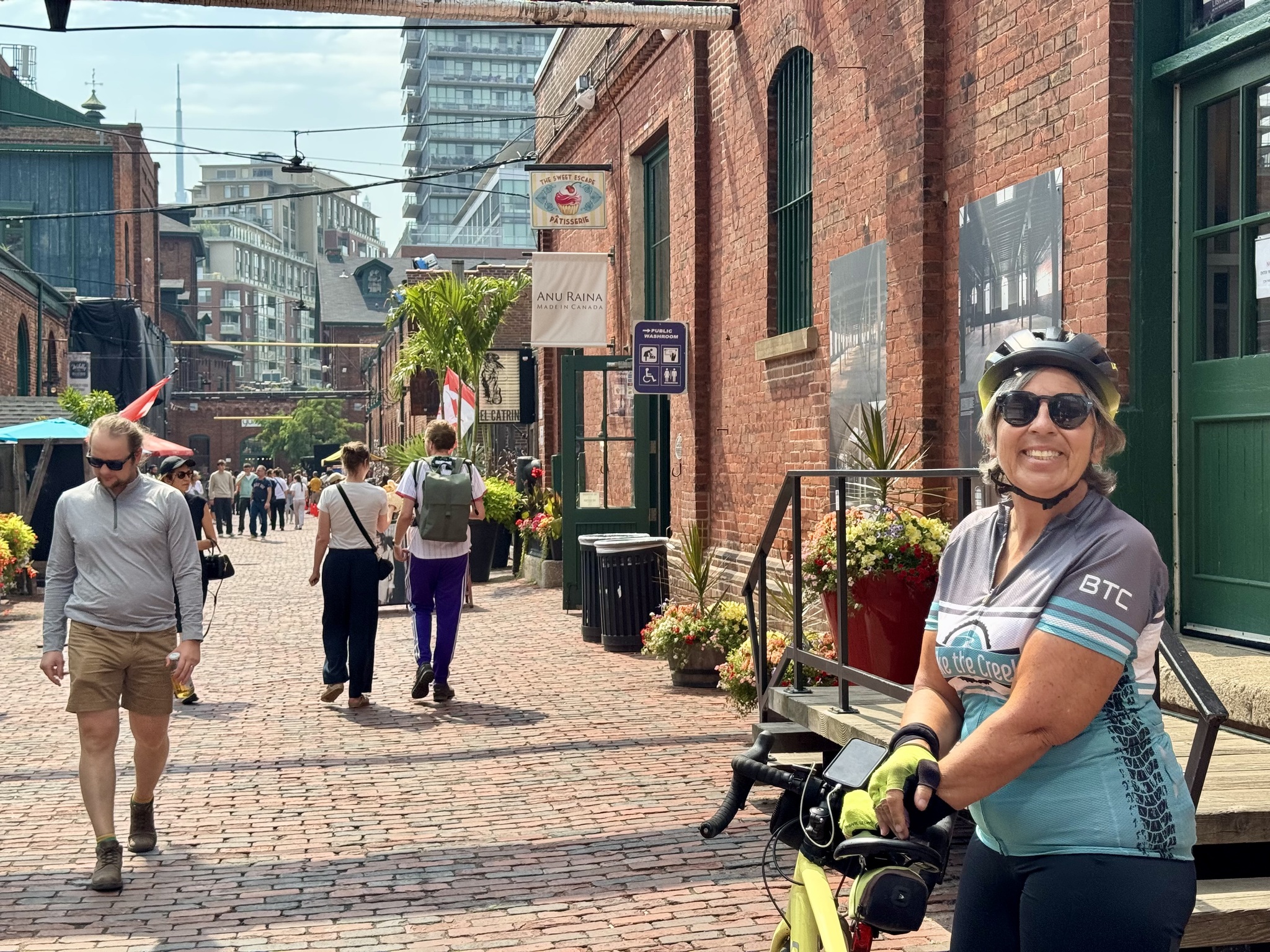
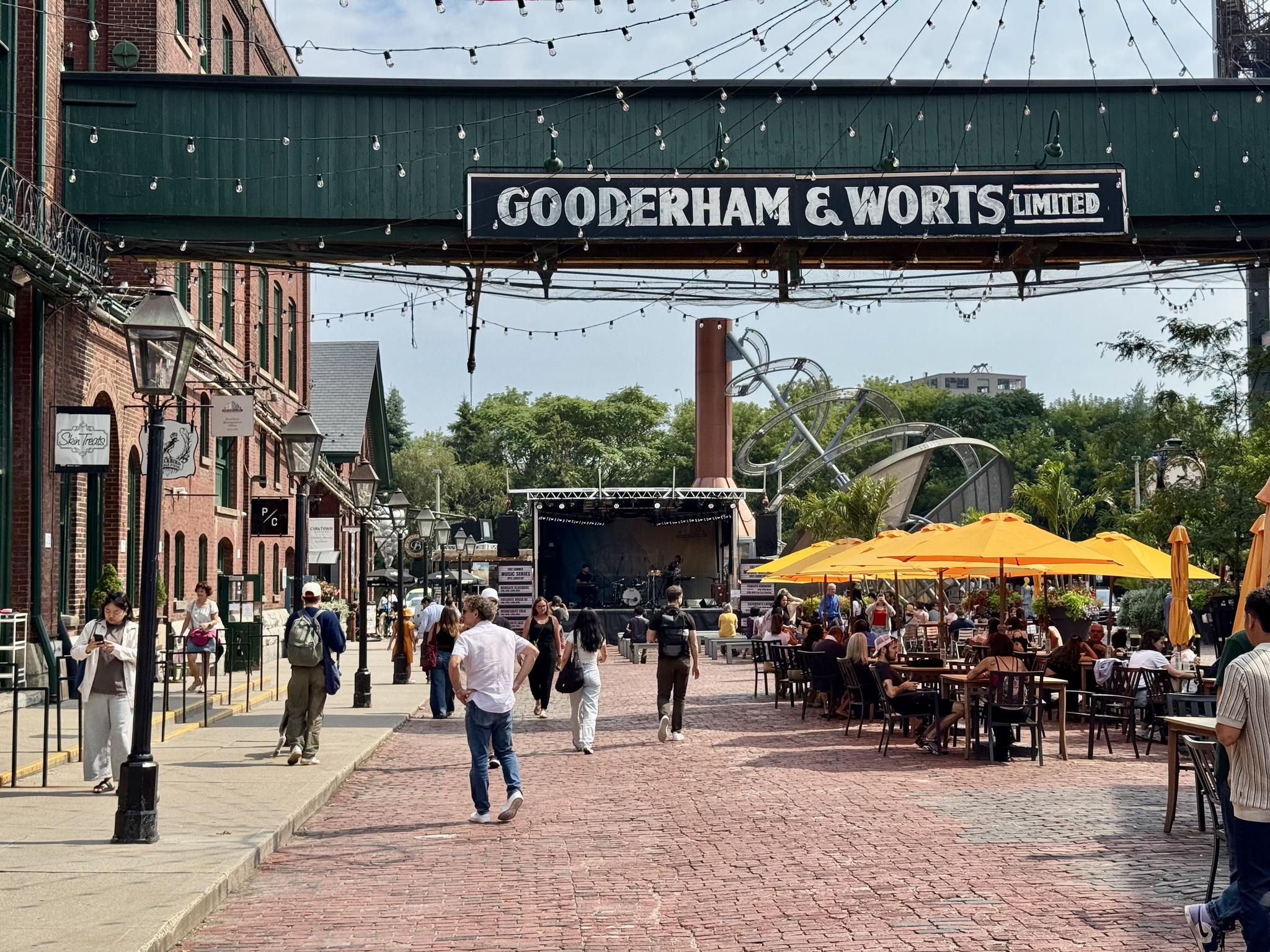
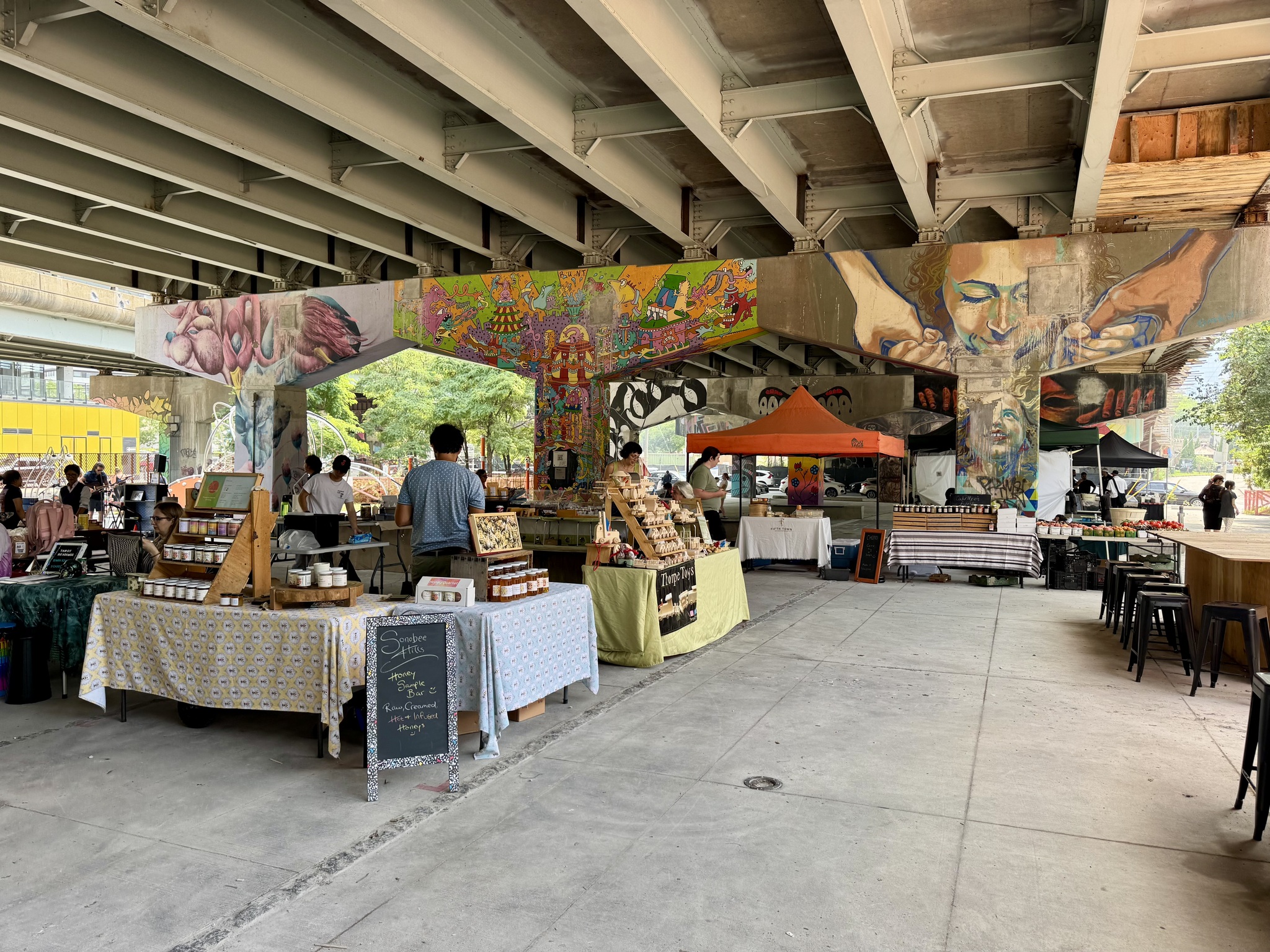
Then we rode along Mill Street to Underpass Park in Corktown. Unfortunately, most of the park, where they have skateboarding and basketball courts, is closed due to construction on the overpass. There was a farmers’ market today on the west side of Lower River St where the park is still accessible.
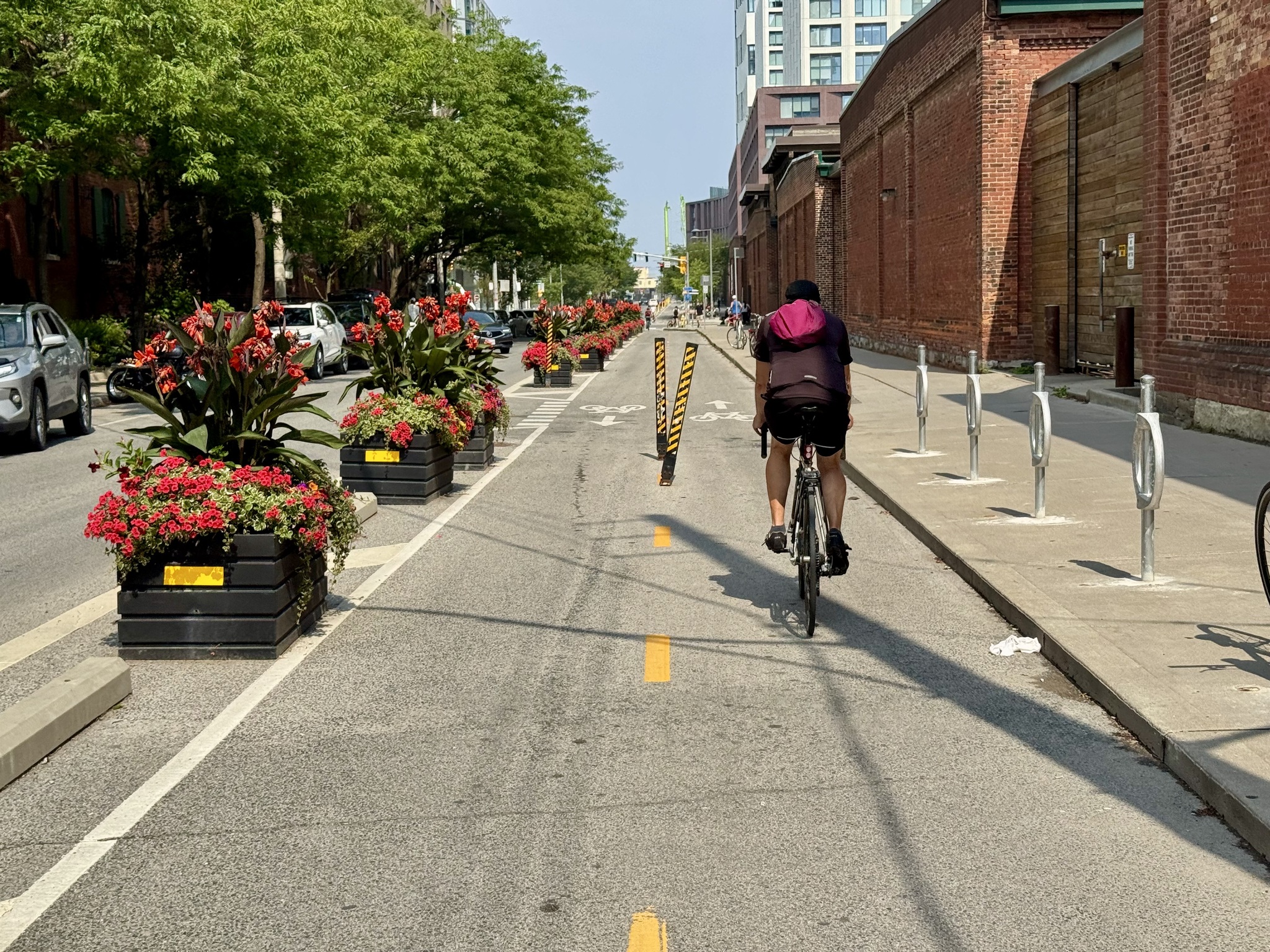
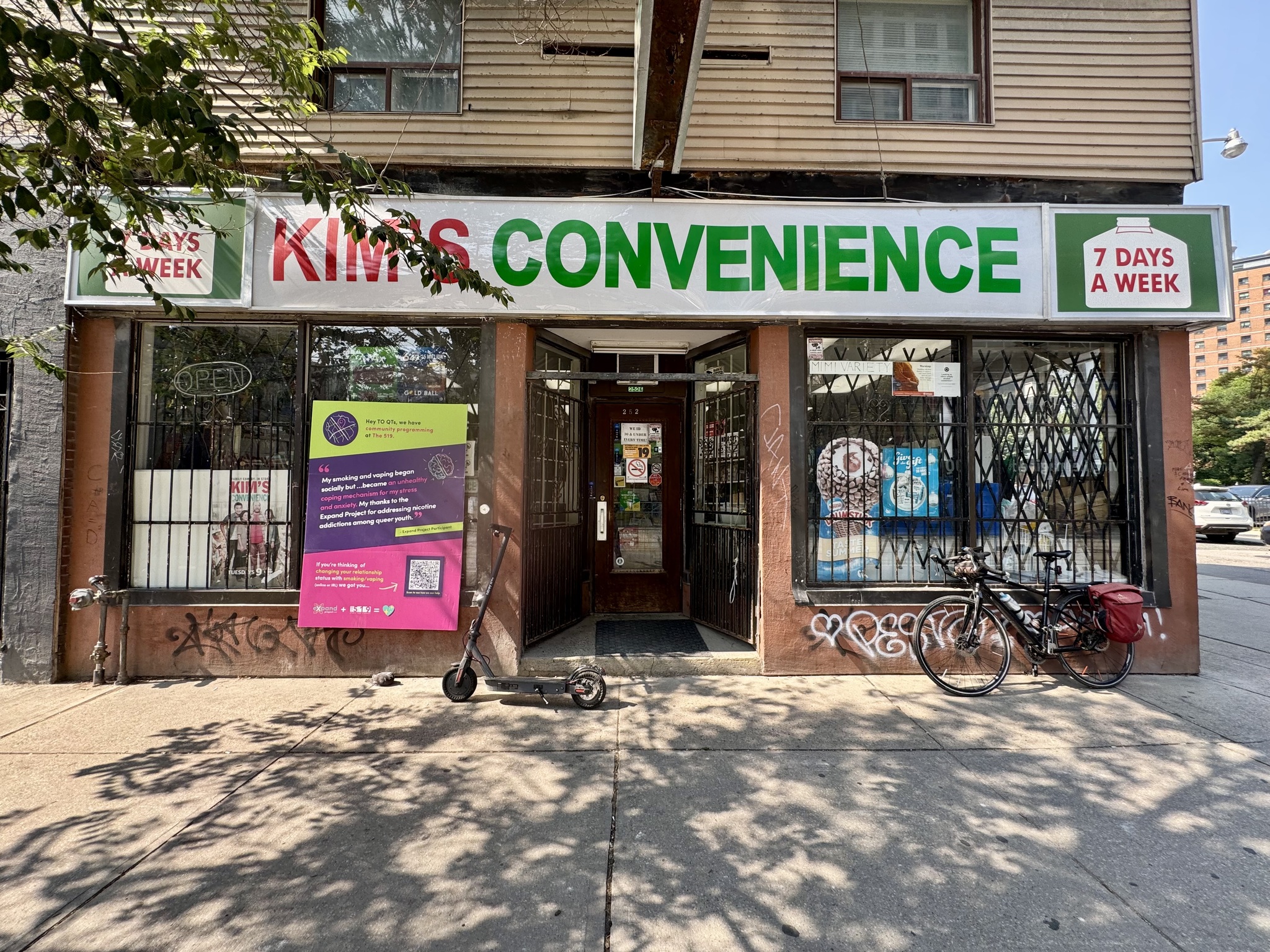
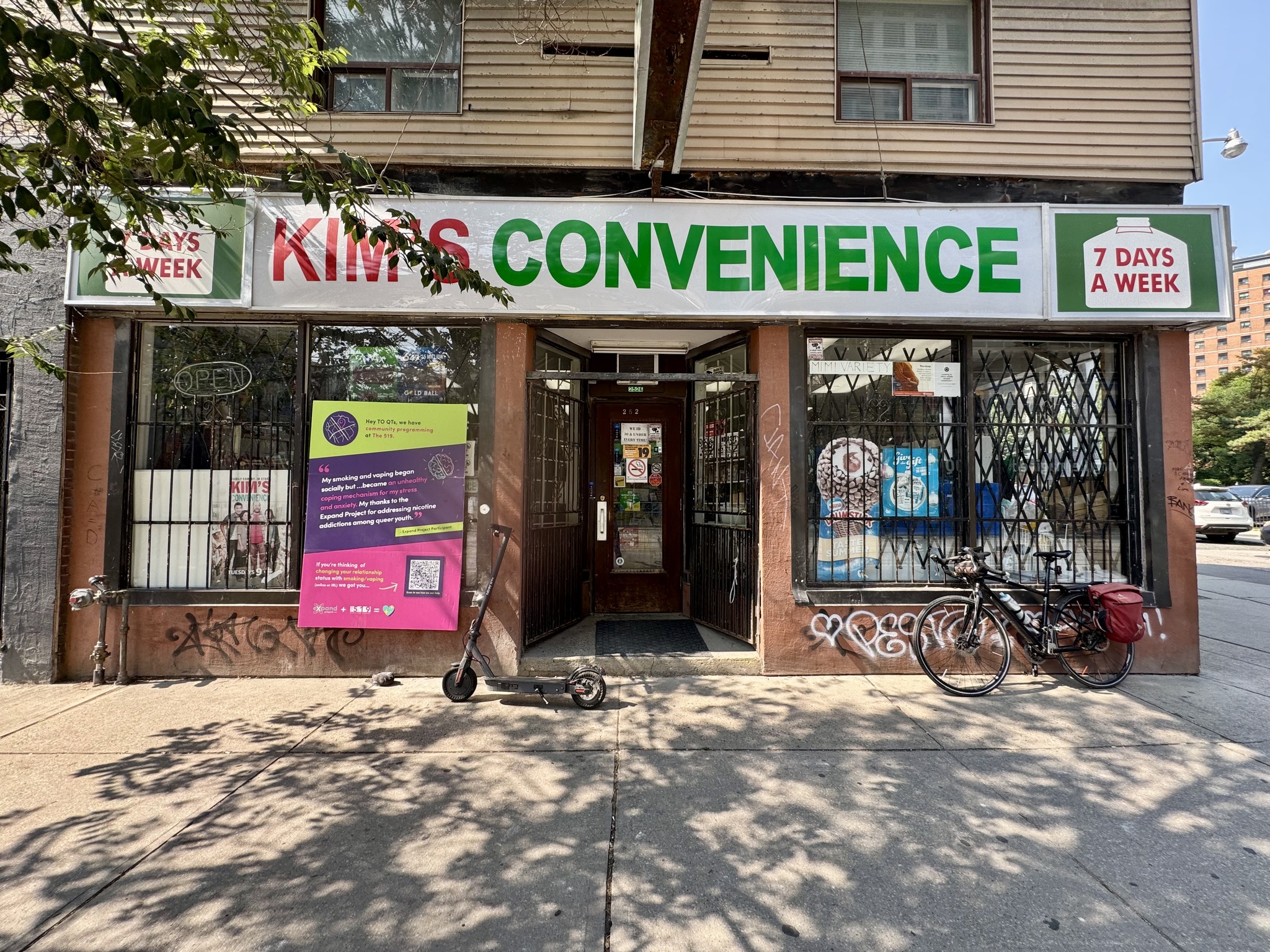
As we rode along Queen Street I spotted Kim’s Convenience store, which was used for the exterior shots of the eponymous TV show, and the owner decided to keep the signs after the show ended.
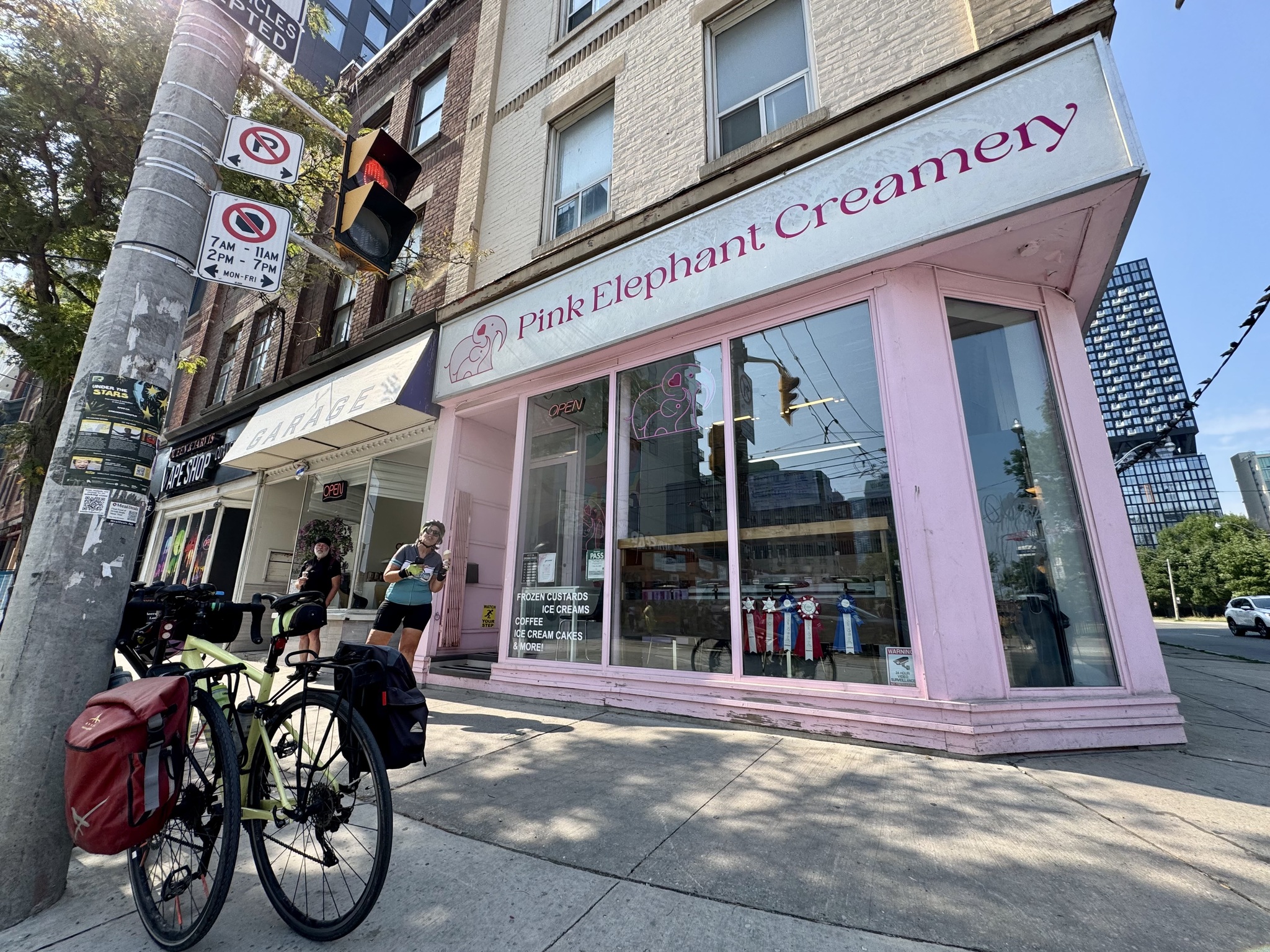
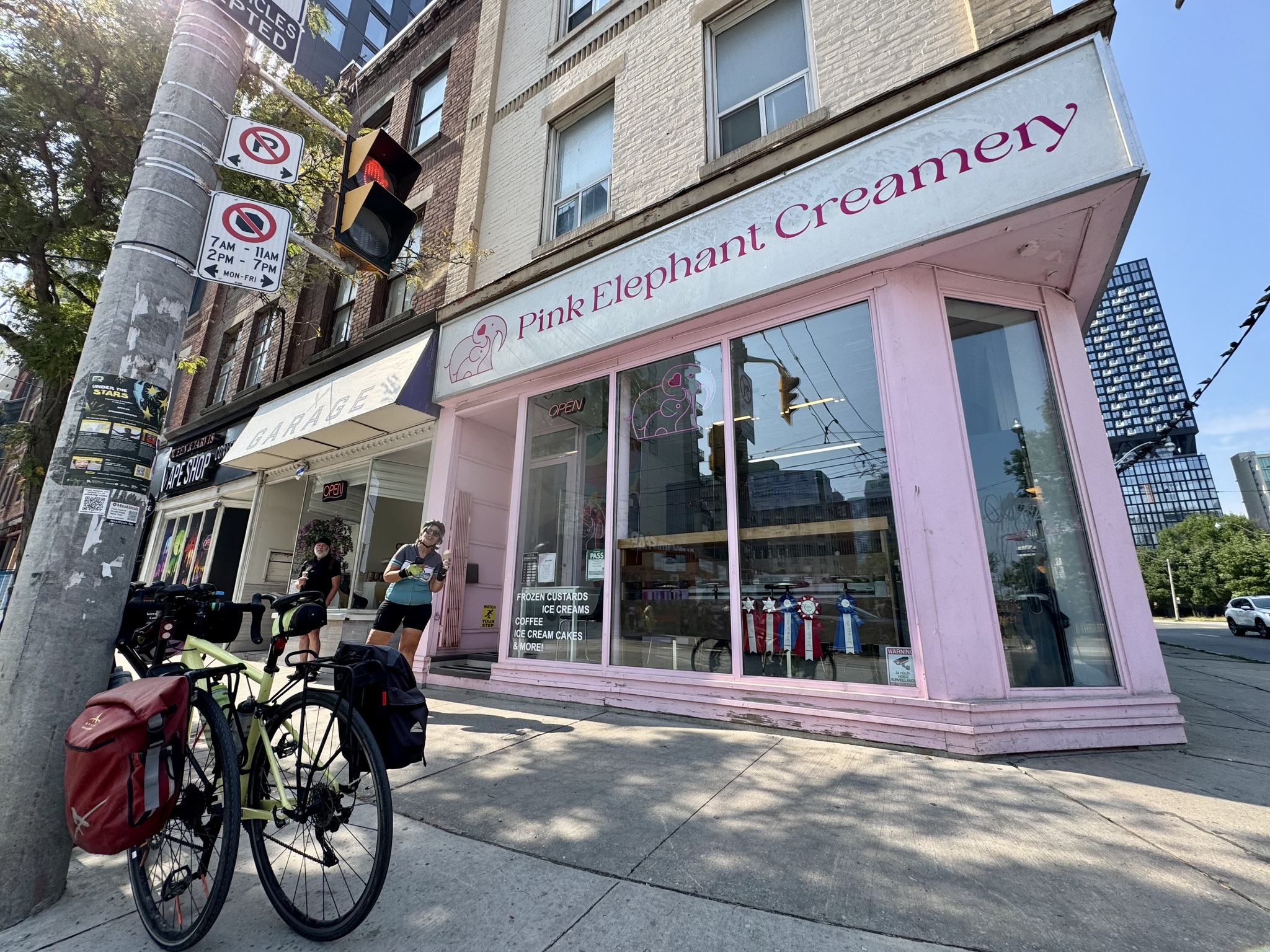
In the next block, I spotted this ice cream store at the perfect time for a mid afternoon snack. The ice cream is made in the store. Cindy had Biscoff flavoured ice cream and I had Oreo. It was quite good.
The Rally
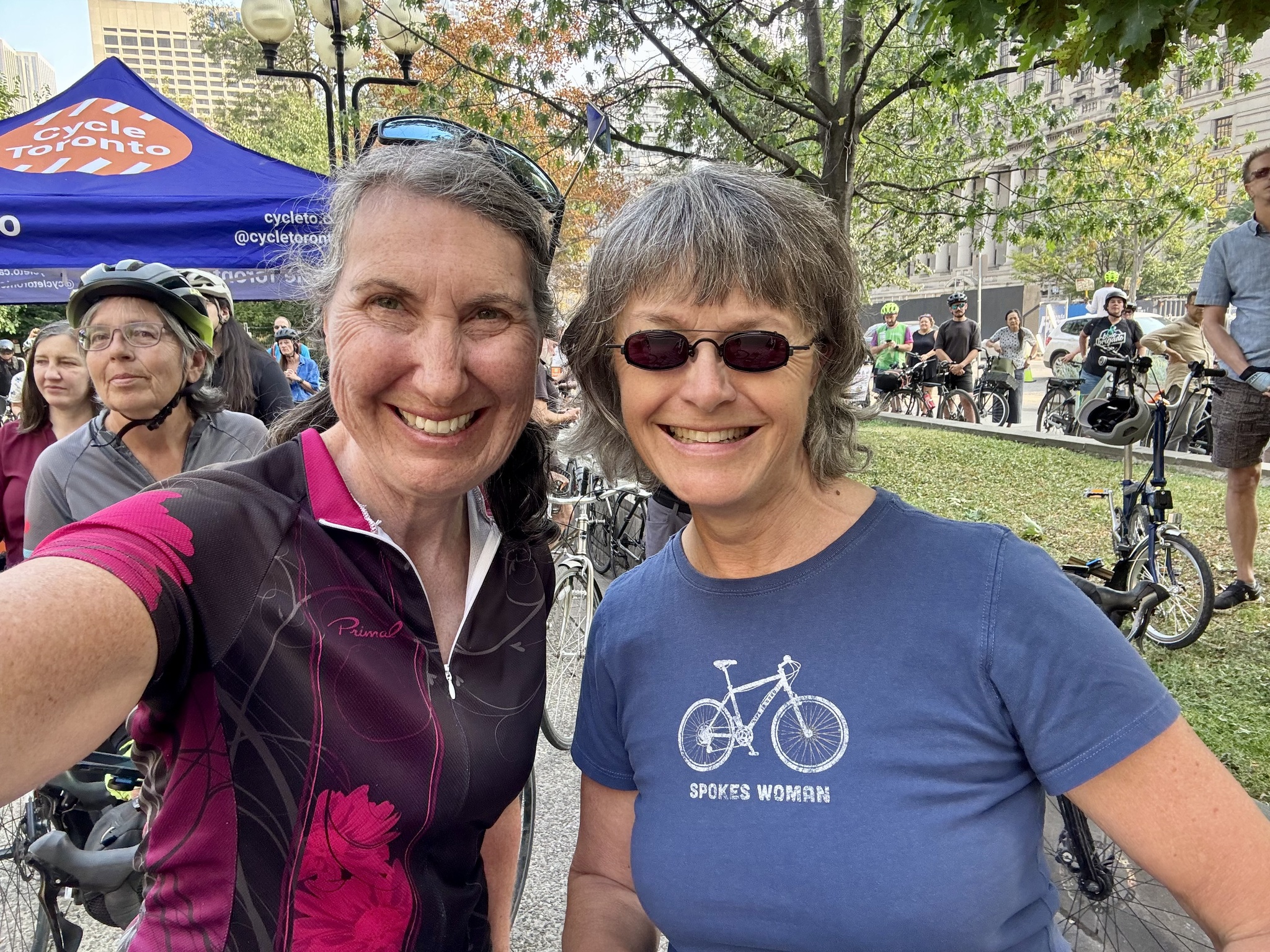
We arrived for the rally about an hour early and found a shady spot to sit down. Shortly thereafter Janet Joy, a Toronto, cycling advocate, who partnered with BikeBrampton in 2018 to do a Book Ride. Janet Rode the Empire Trail and Erie Canalway Trail from New York City to Toronto on a Brompton folding bike last year. I really enjoyed following her adventure because I had cycled the Erie Canalway portion of the ride just weeks earlier. The time flew by chatting with Janet.
Cycle Toronto decided to take the government to court over the bill which they claimed violated Canadians charter rights under section 7. The judge ruled, “that government decisions that increase risk to people, particularly vulnerable road users like cyclists, are unconstitutional when not made in accordance with the principles of fundamental justice. The ruling affirms that government action cannot knowingly make streets less safe, especially when it won’t achieve the goal of reducing traffic congestion, and that public safety must be a paramount consideration in policymaking“.
At 5:30 Michael Longfield, Executive Director of Cycle Toronto spoke, and then the two lawyers who argued the case spoke as well.
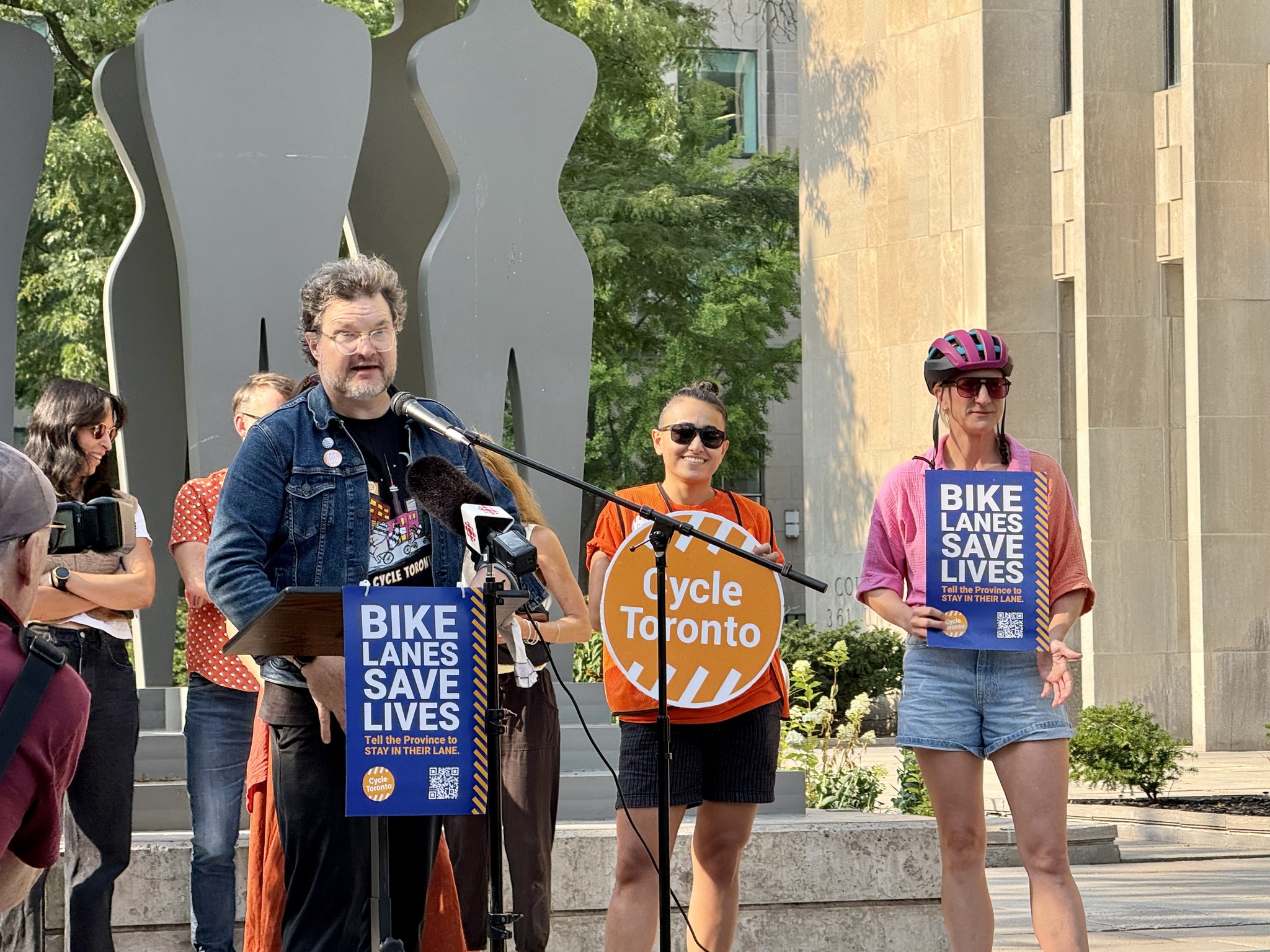
They all urged us to read the judgement for ourselves.
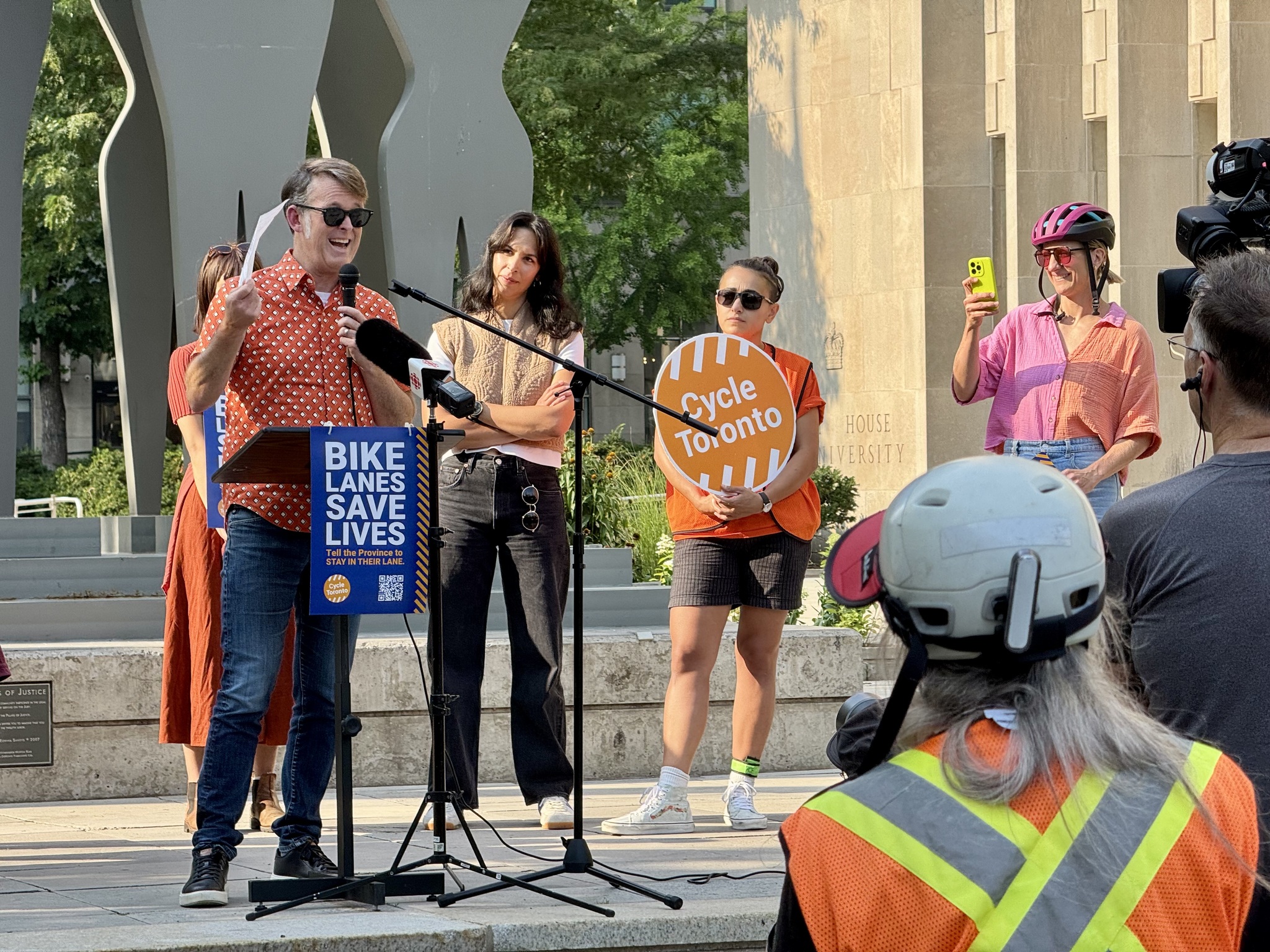
Andrew Lewis, Partner, Paliare Roland LLP, finished his remarks, by saying of his ride this morning, “The ride is definitely better on charter protected bike lanes”.
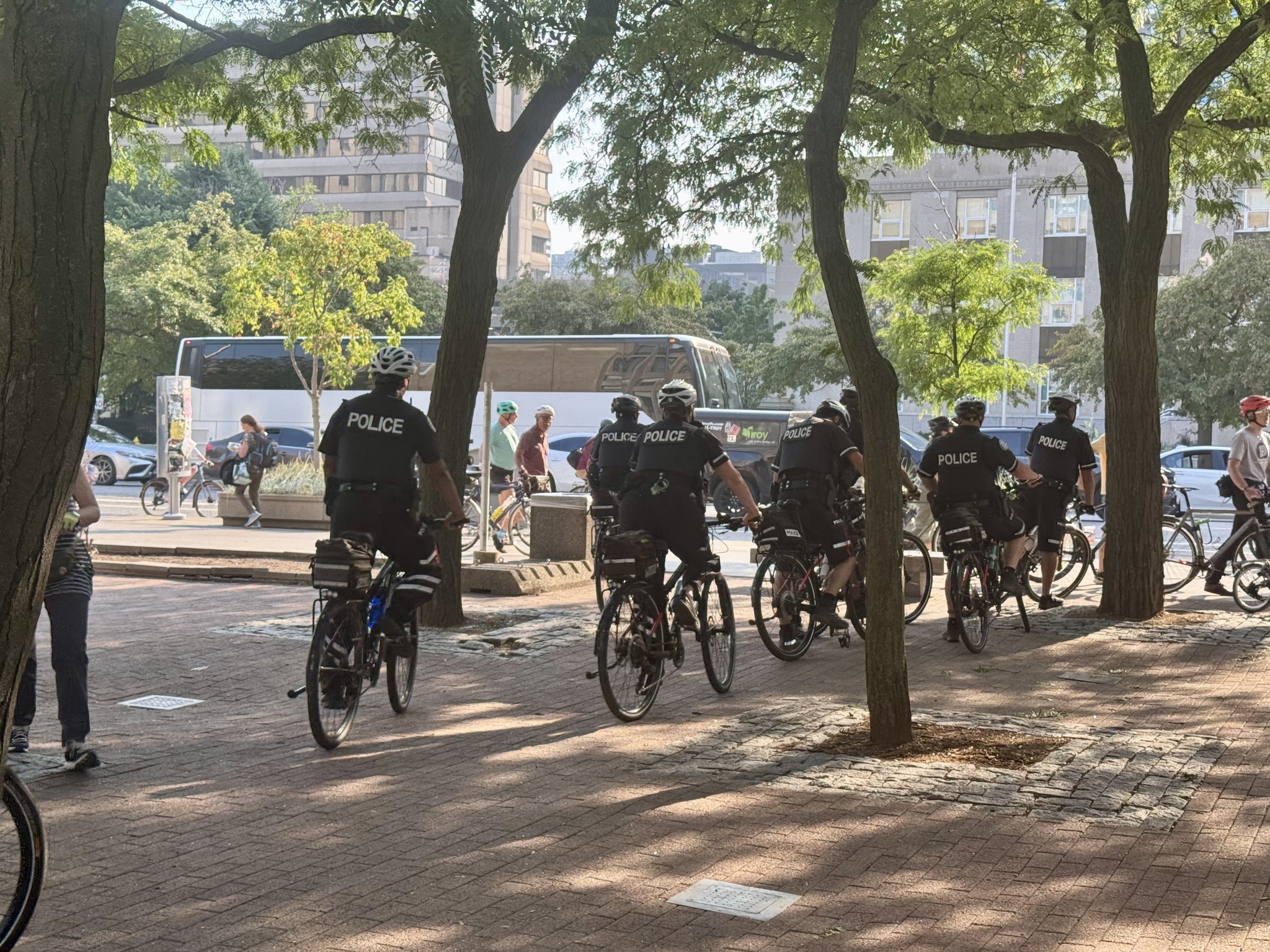
Cycle Toronto organized the ride, and marshals to keep everyone safe, however, the police chose to attend, and stood with the marshals blocking cross traffic on university and Queens Park Circle as we rode.
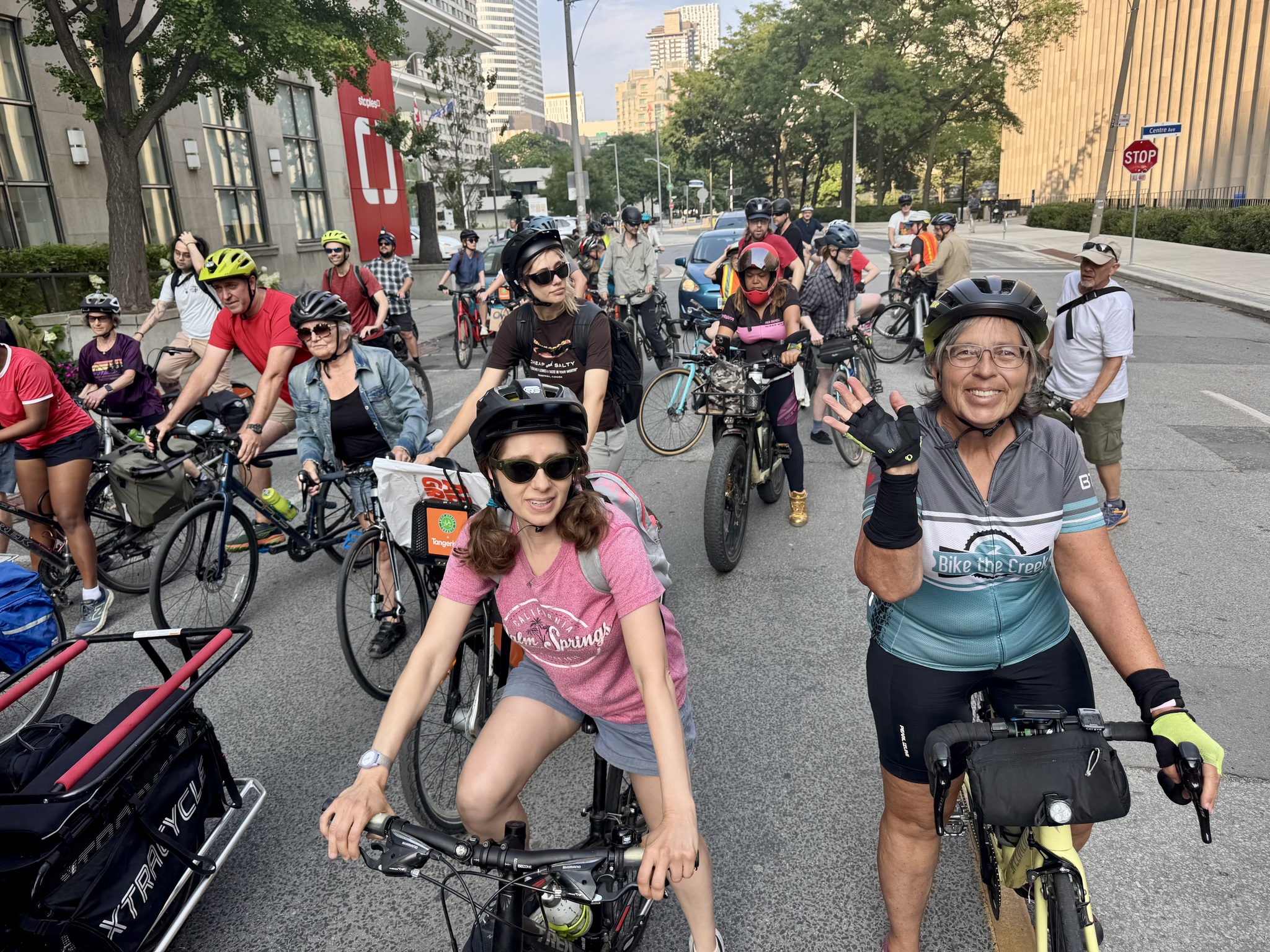
Here we are getting ready to go on Armoury Street.
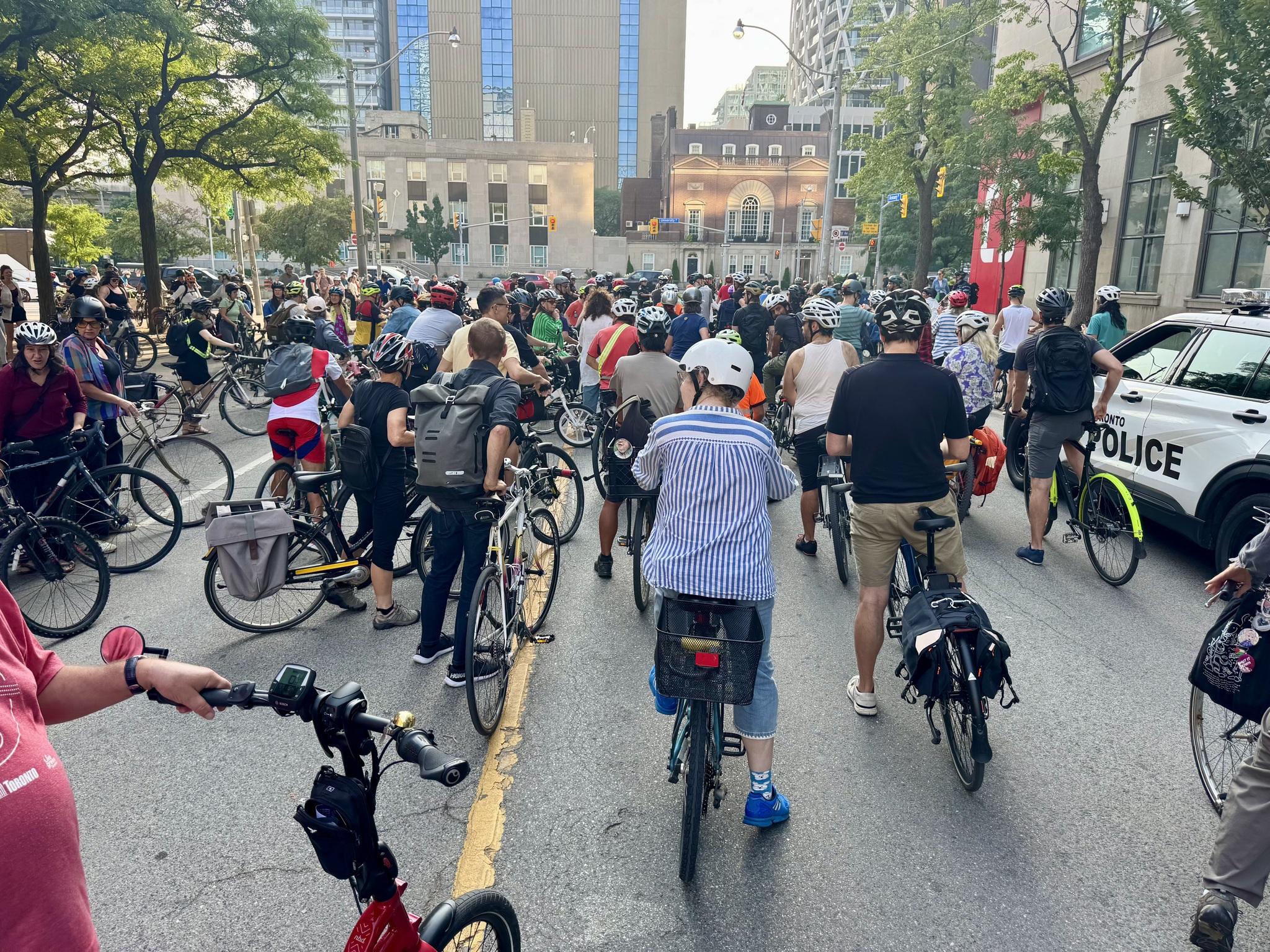
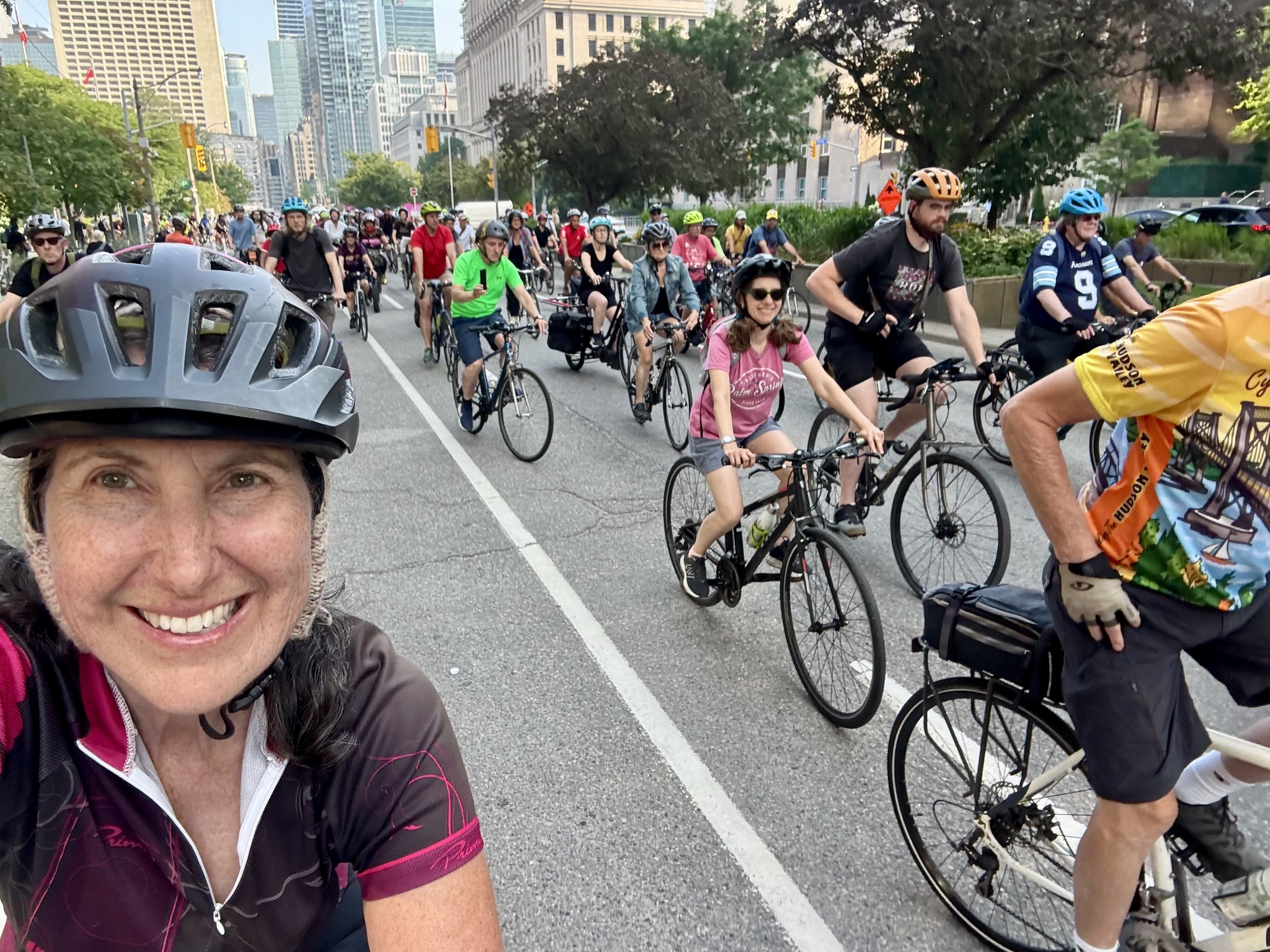
And we are off. I would estimate there were at least 300 cyclists. We filled University Avenue and left the bike lanes available for riders who needed to move faster than the very large group.
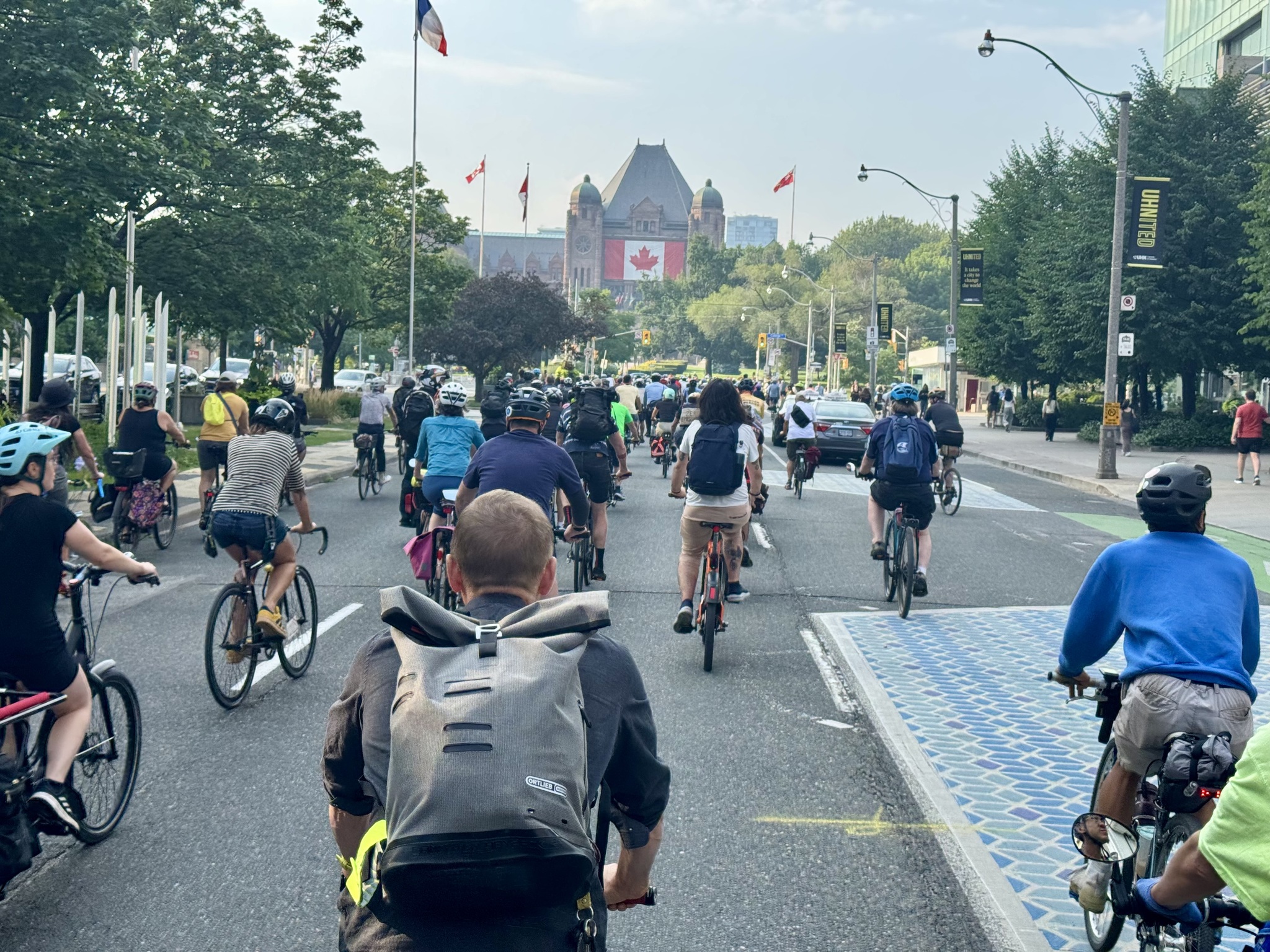
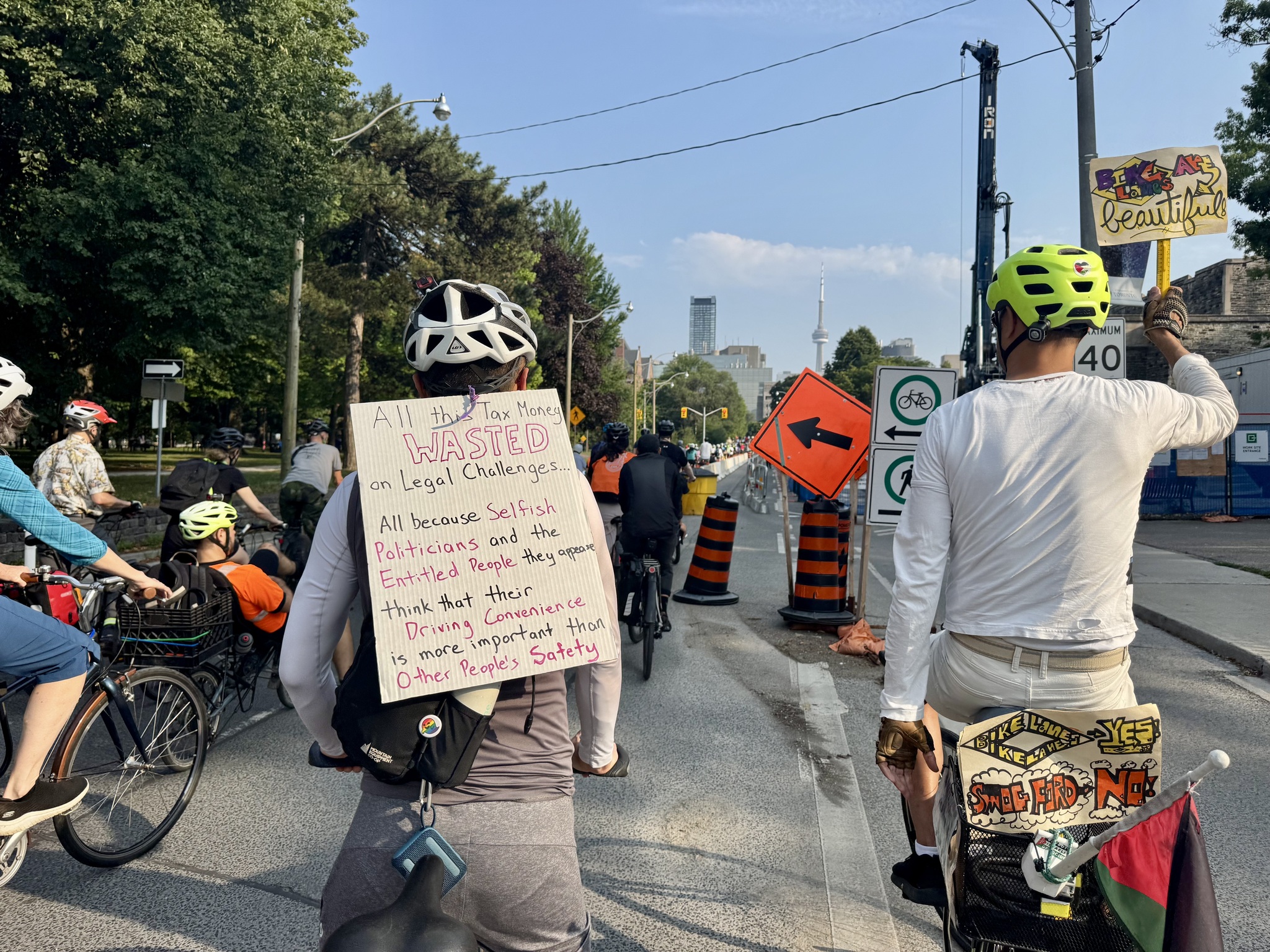
Here is a link to a playlist of the videos I took during the ride.
We finished at Queens Park, and then dispersed.
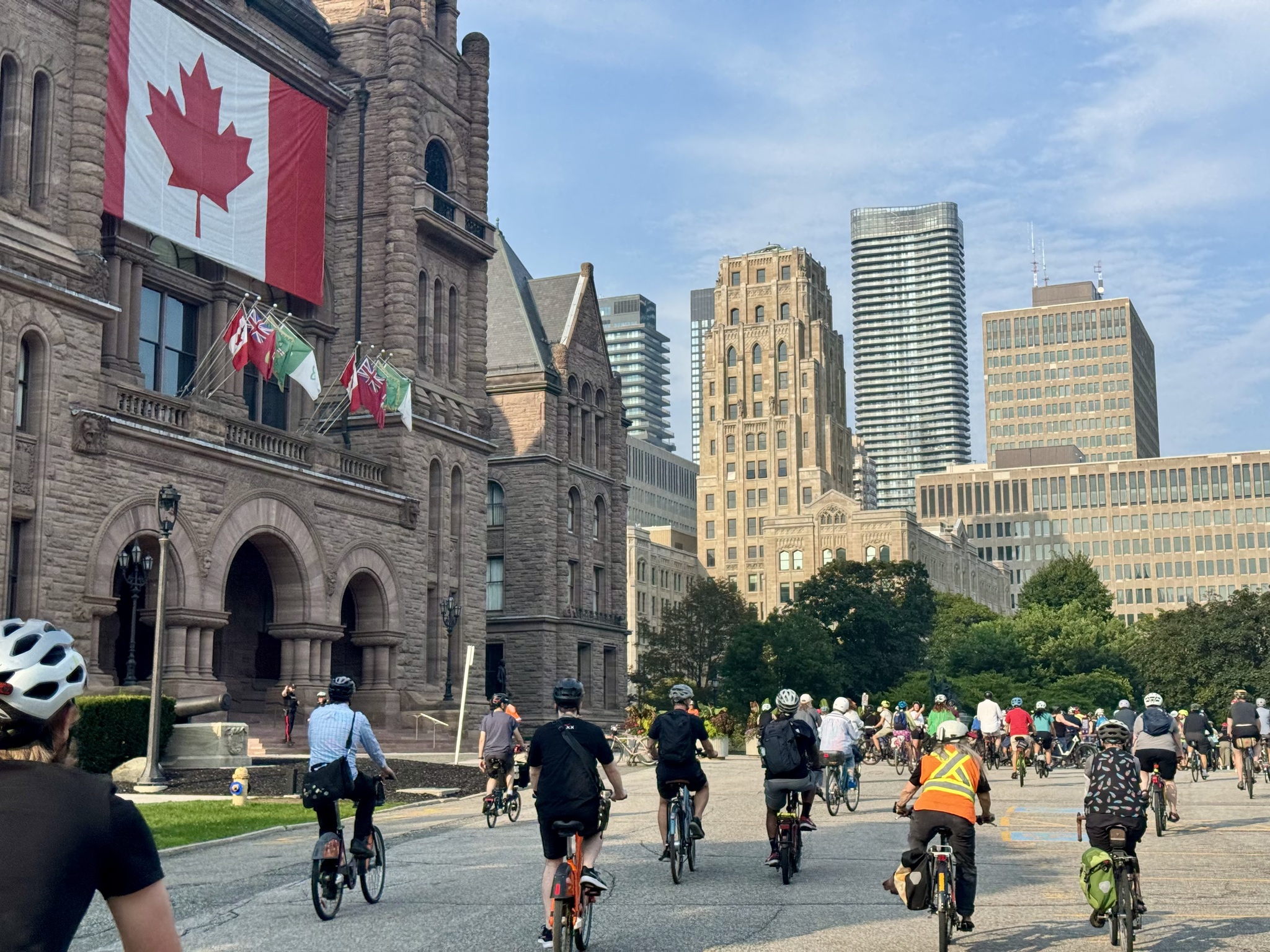
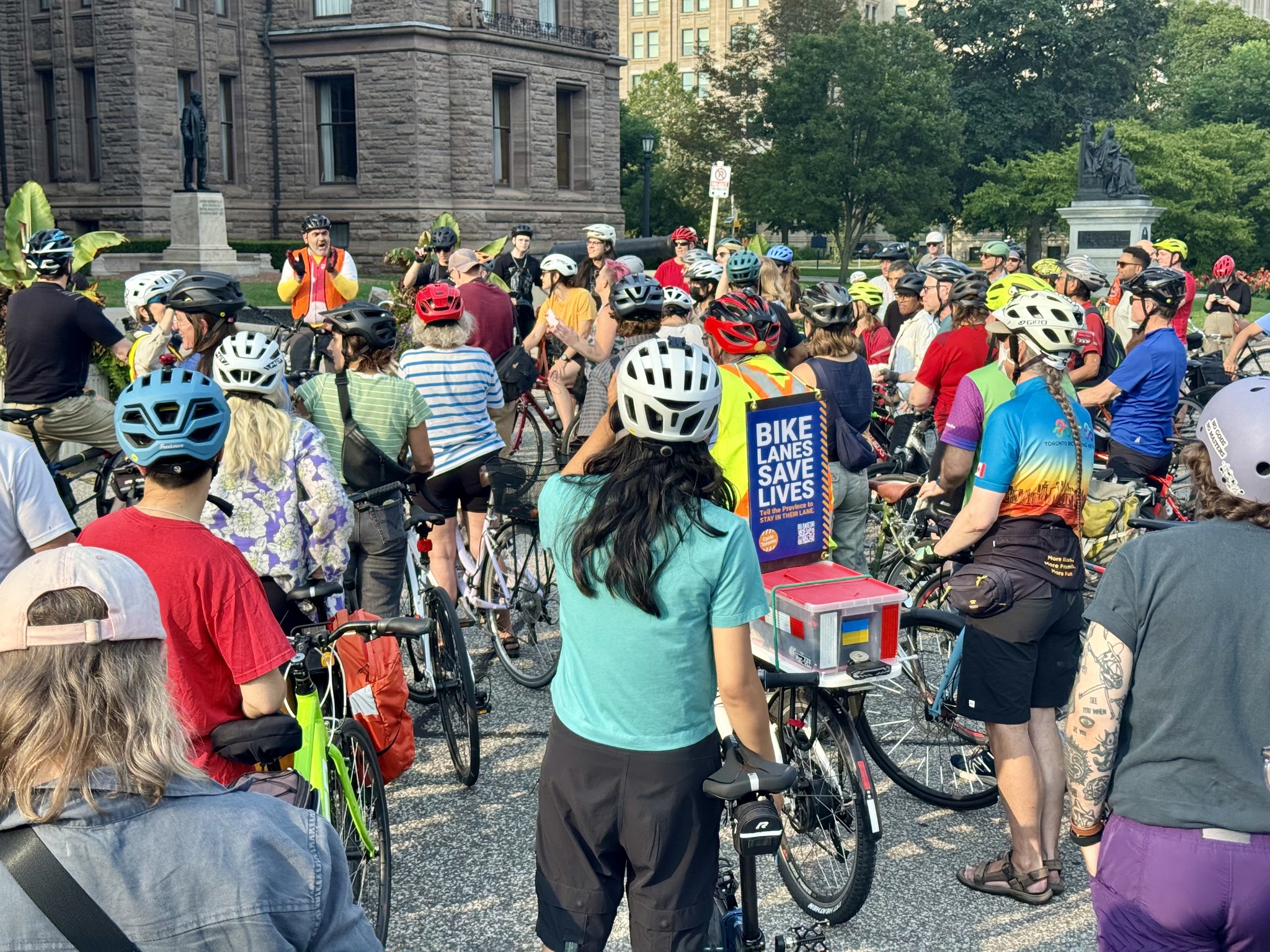
Barry made a video of the Charter Challenge Victory Bike Rally. It has a catchy AI generated song, and finishes with the quiet and sweet sound of bike tires on the road, which can be heard because there were no cars around.
We rode south on the University Avenue bike lanes, which will now remain, at least until a government appeal is filed and heard. The lanes in front of the hospital were designed to be wide enough to allow ambulances to use them, since cyclists can get out of the way of emergency vehicles, more easily than drivers.
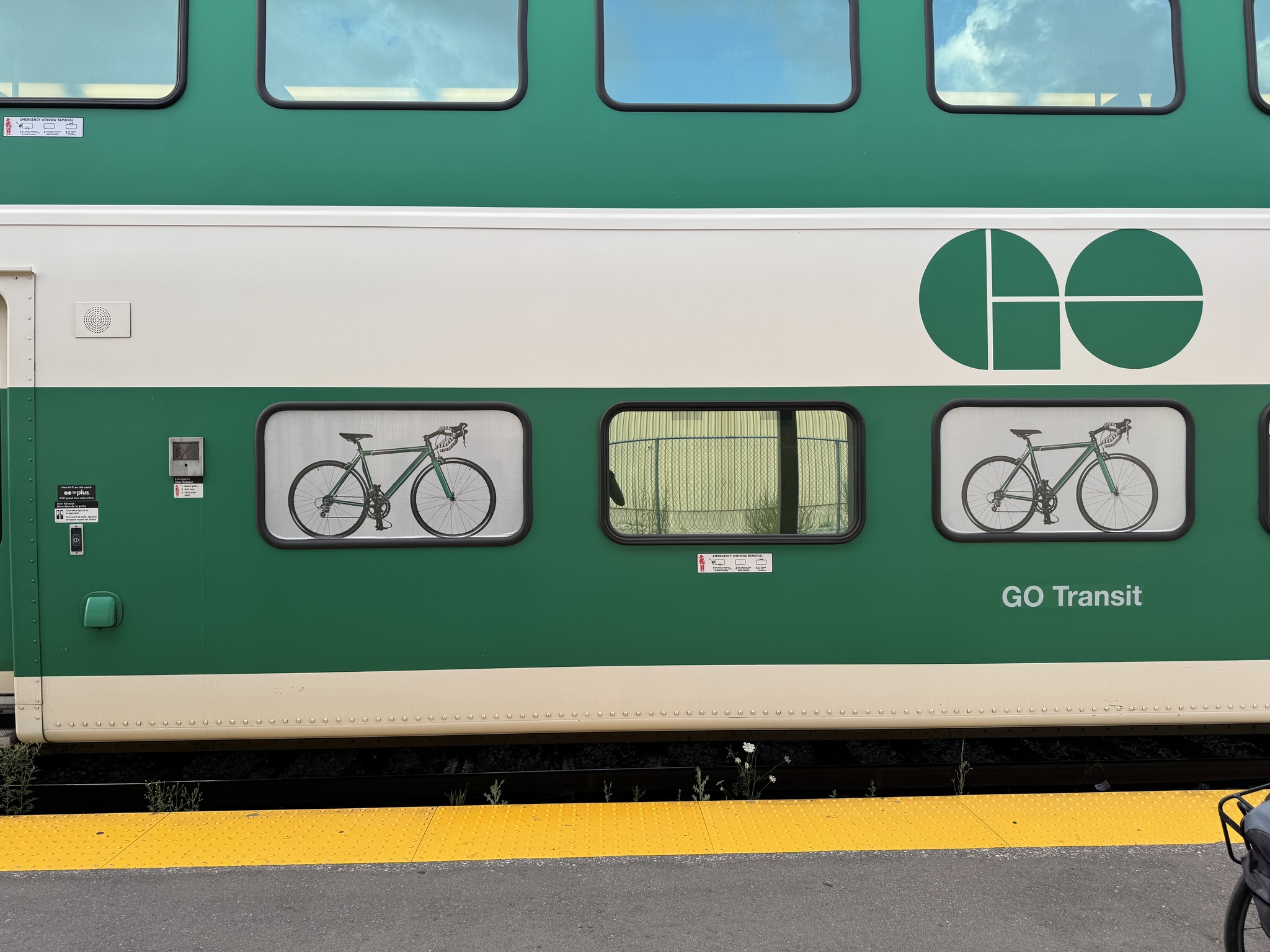
We caught the train out of Union Station just after 7 PM. The platform is announced only 10 minutes before the train leaves. There is no information available on the screens in the station, on the platform, or on the website, to indicate whether or not a train will have a bike coach. After the platform was announced, we carried our bikes up the stairs, and then a considerable distance along the platform, to the first coach. Because there was room on this coach for two bikes, Cindy and I boarded. Barry continued to the next coach.There is not time to comfortably walk the length of the train to discover whether or not there is a bike coach available. I have repeatedly requested that GO provide this information and have been told by the Twitter Kitchener Line account that they will pass the request along. Nothing has changed in the years that bike coaches have been available. I think it would be better for all passengers, not just those with bikes, to provide this information to people travelling with their bikes. I cannot understand GO Transit’s reluctance to provide this information.
When we disembarked at Bramalea GO and walked along the train to the stairs I saw that there was a bike couch in this train set. Had we known, we would not have had to split up for the return ride, and slightly inconvenience other passengers, because even in designated areas, the bikes slightly block the flow of people through the doors and up the stairs.
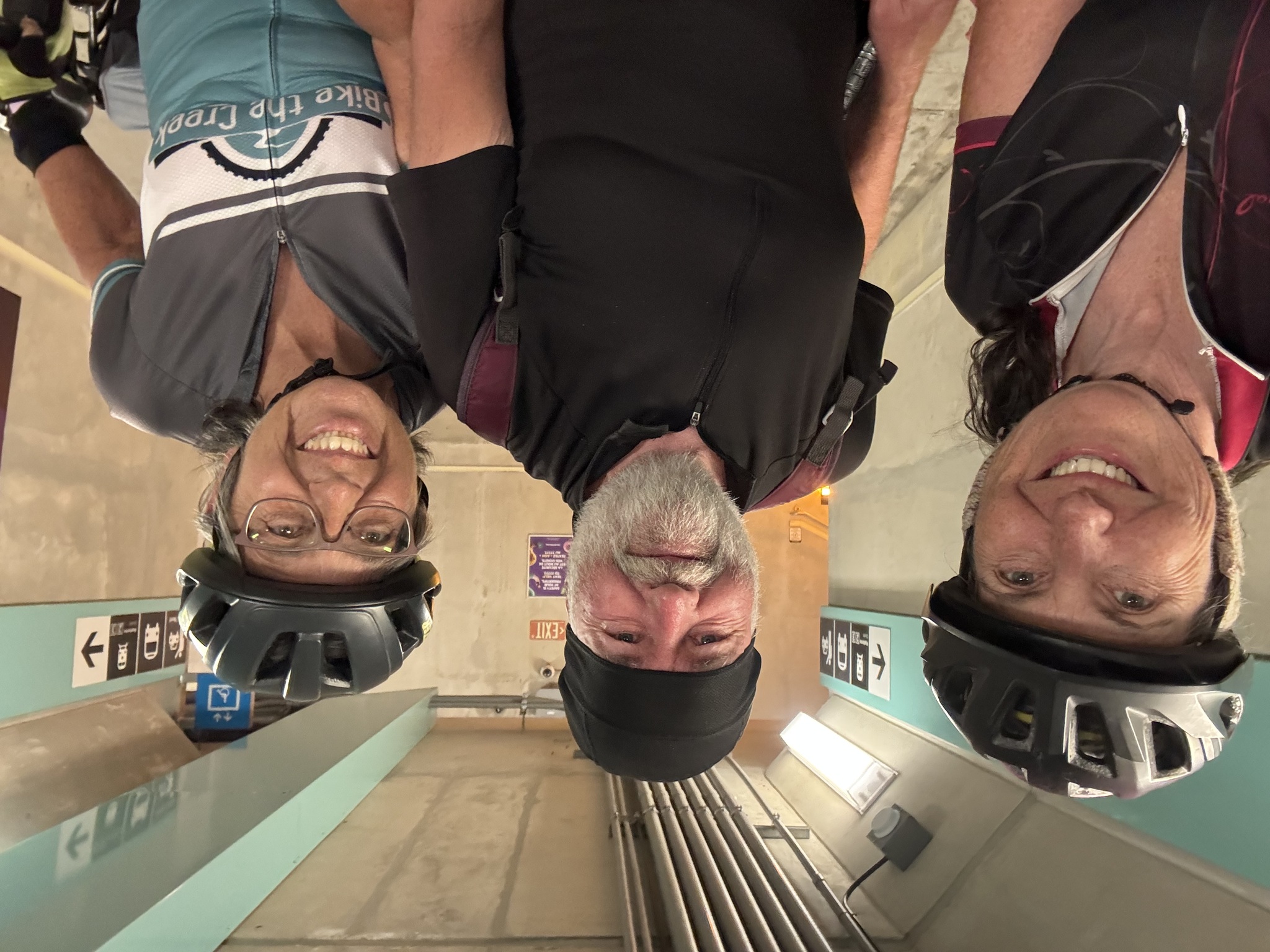
It was a lovely evening to cycle the last 10 km from the station to home which brought my total to 70 km for the day.
Street Art
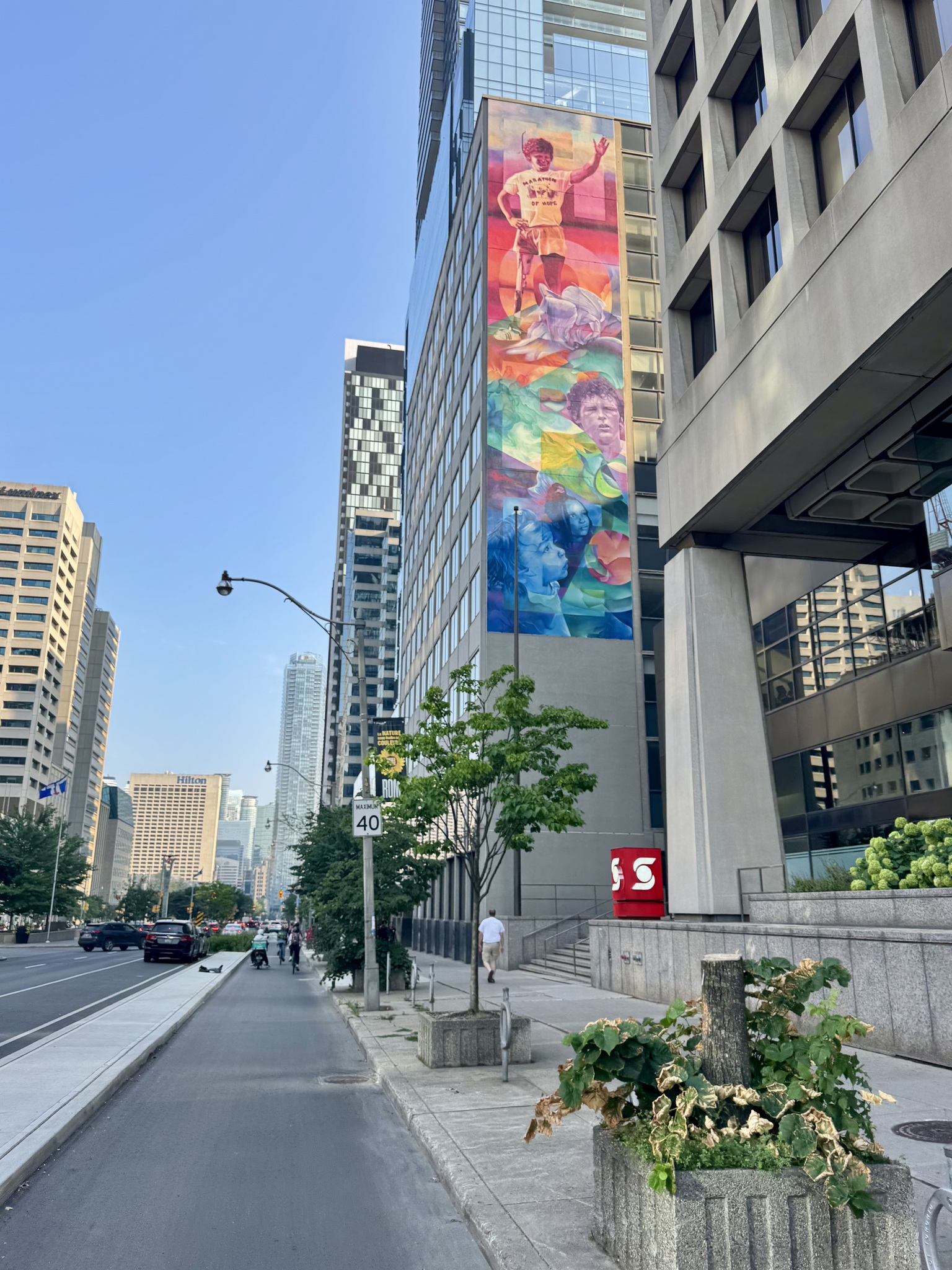
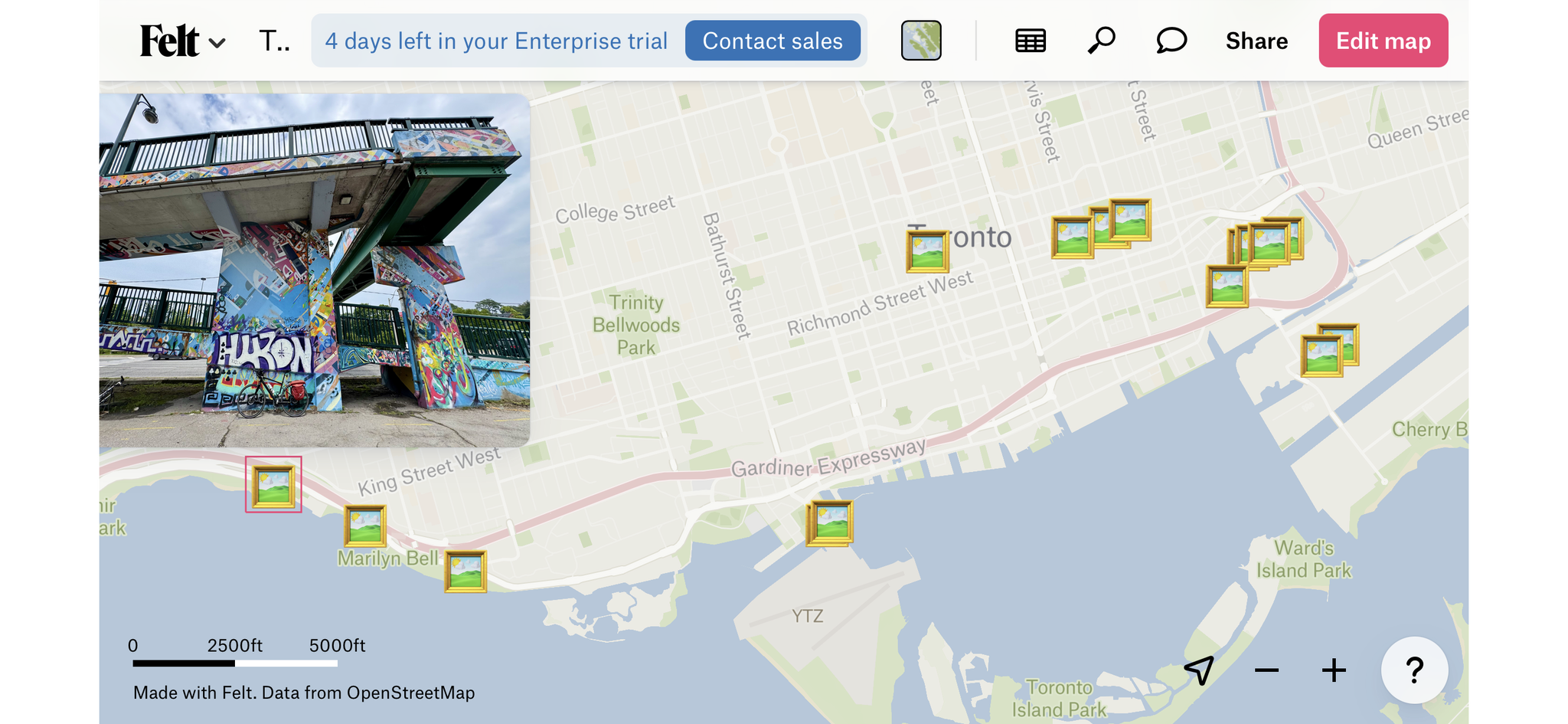
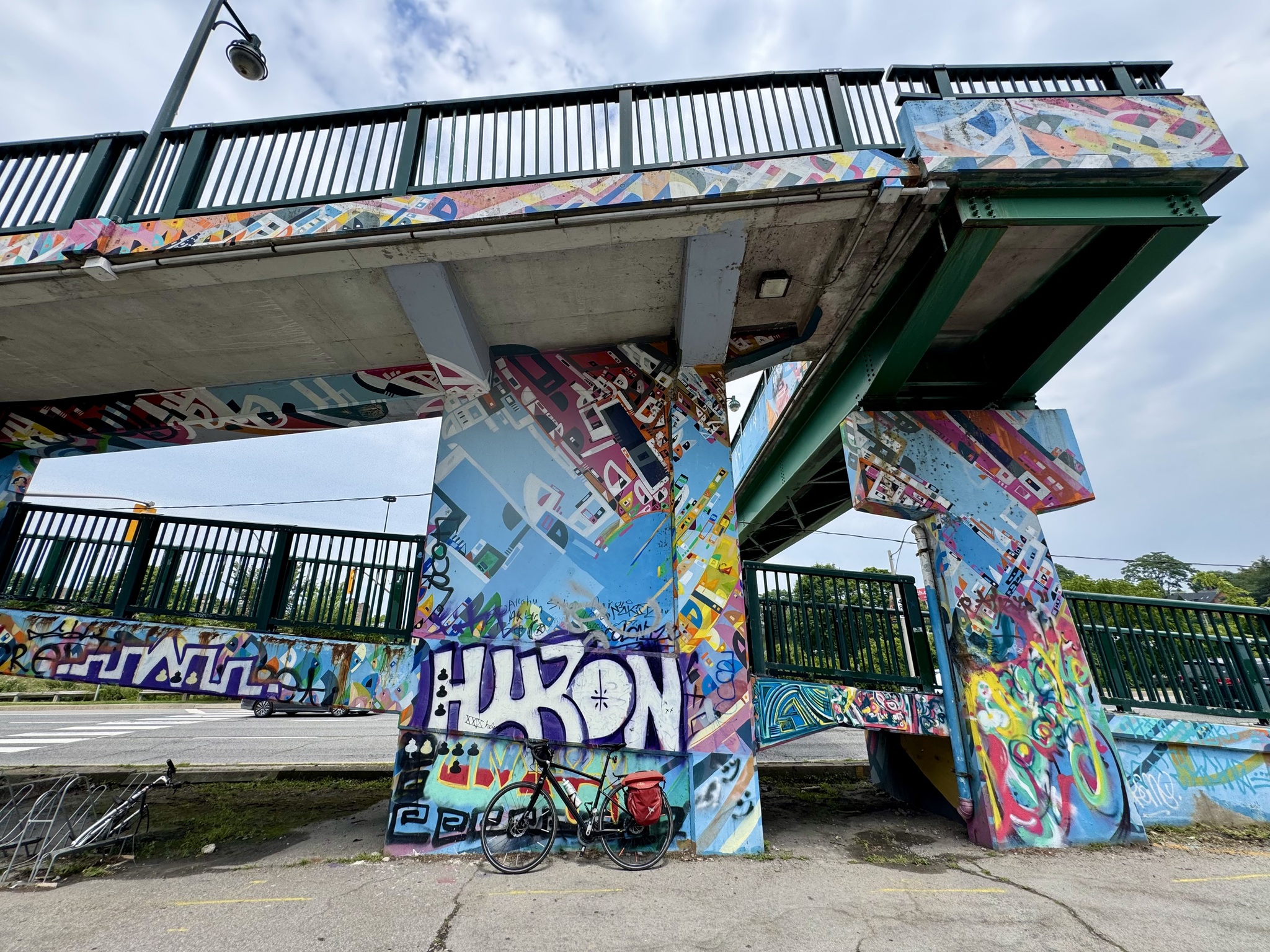
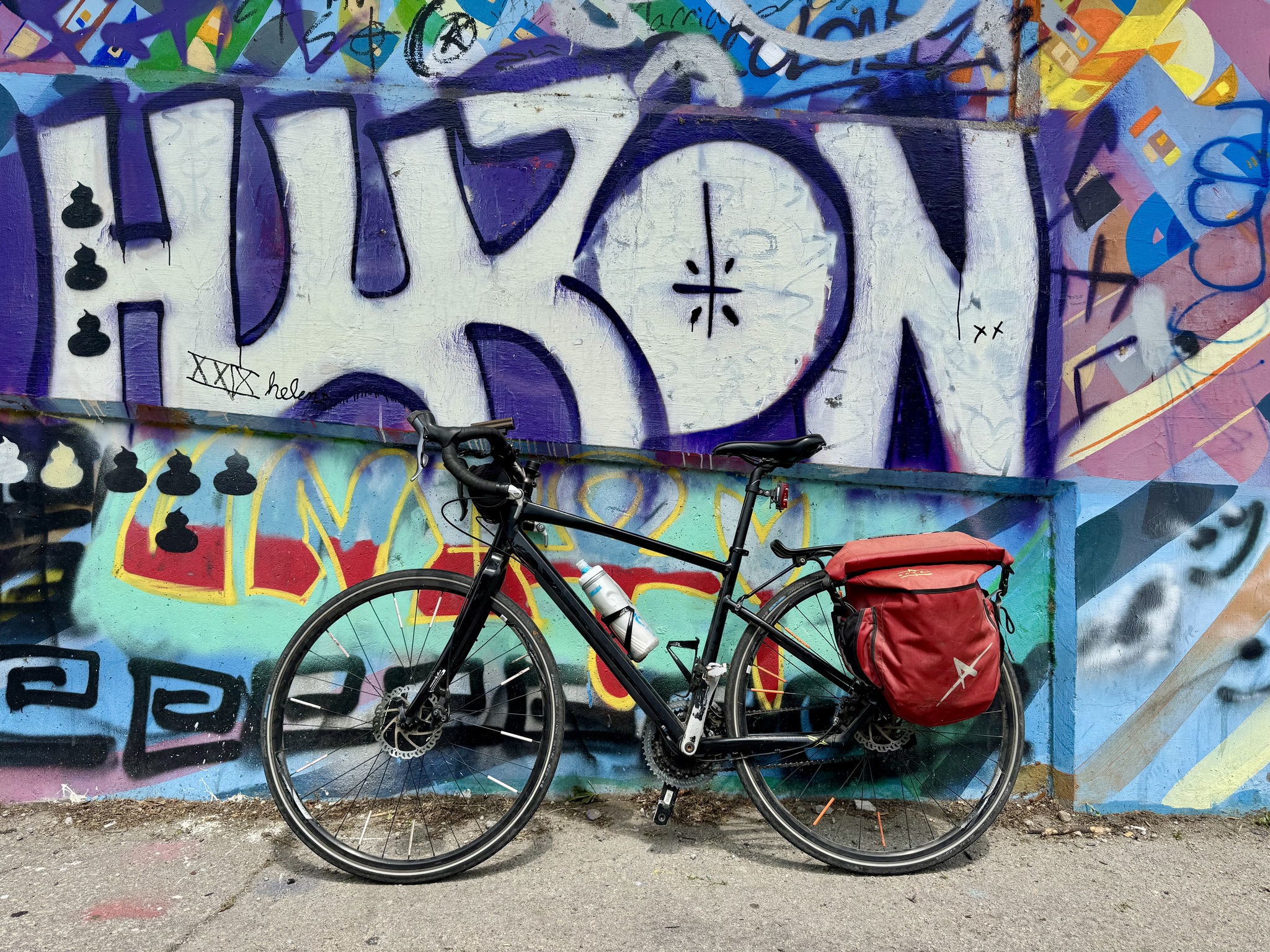
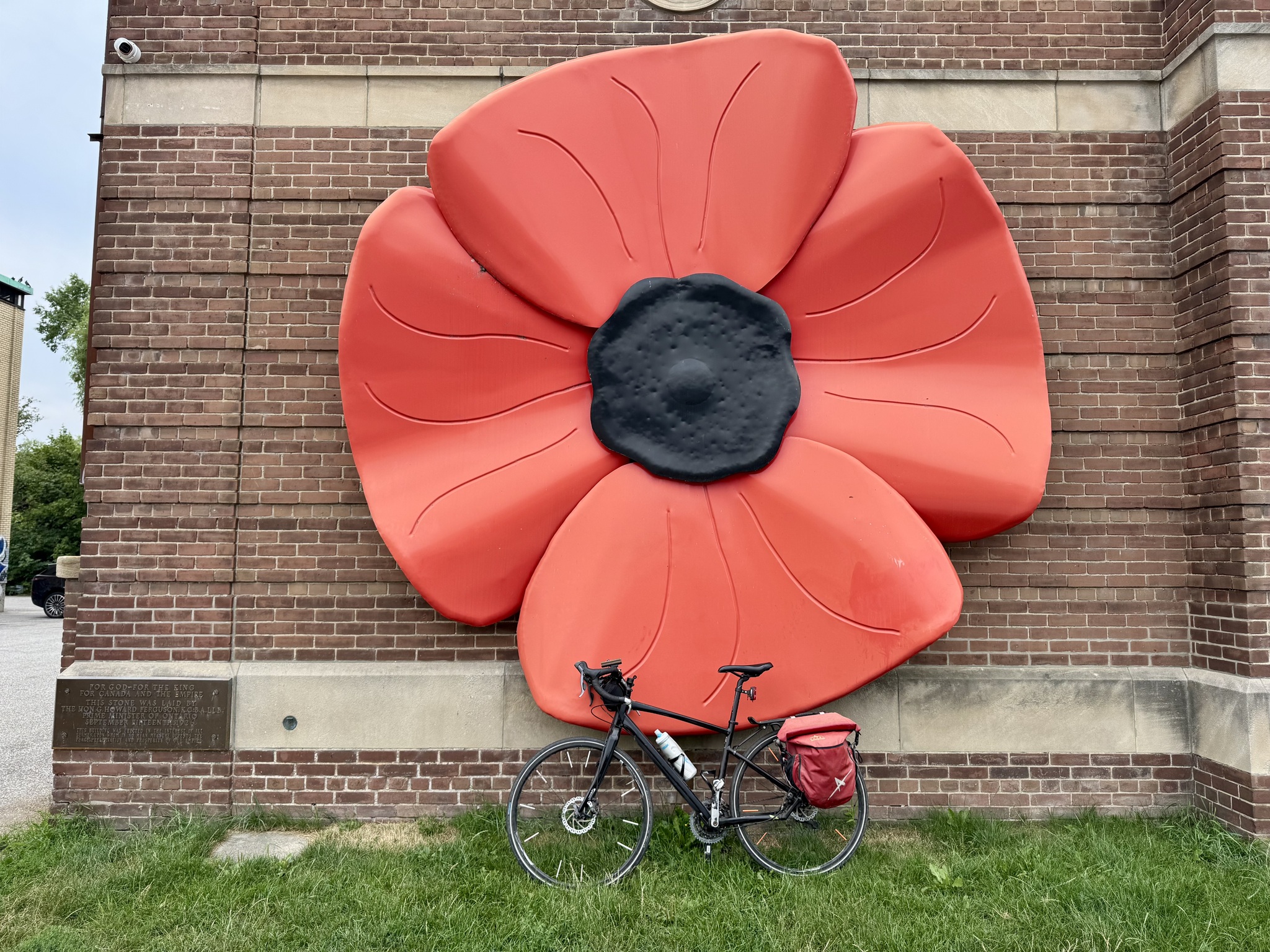
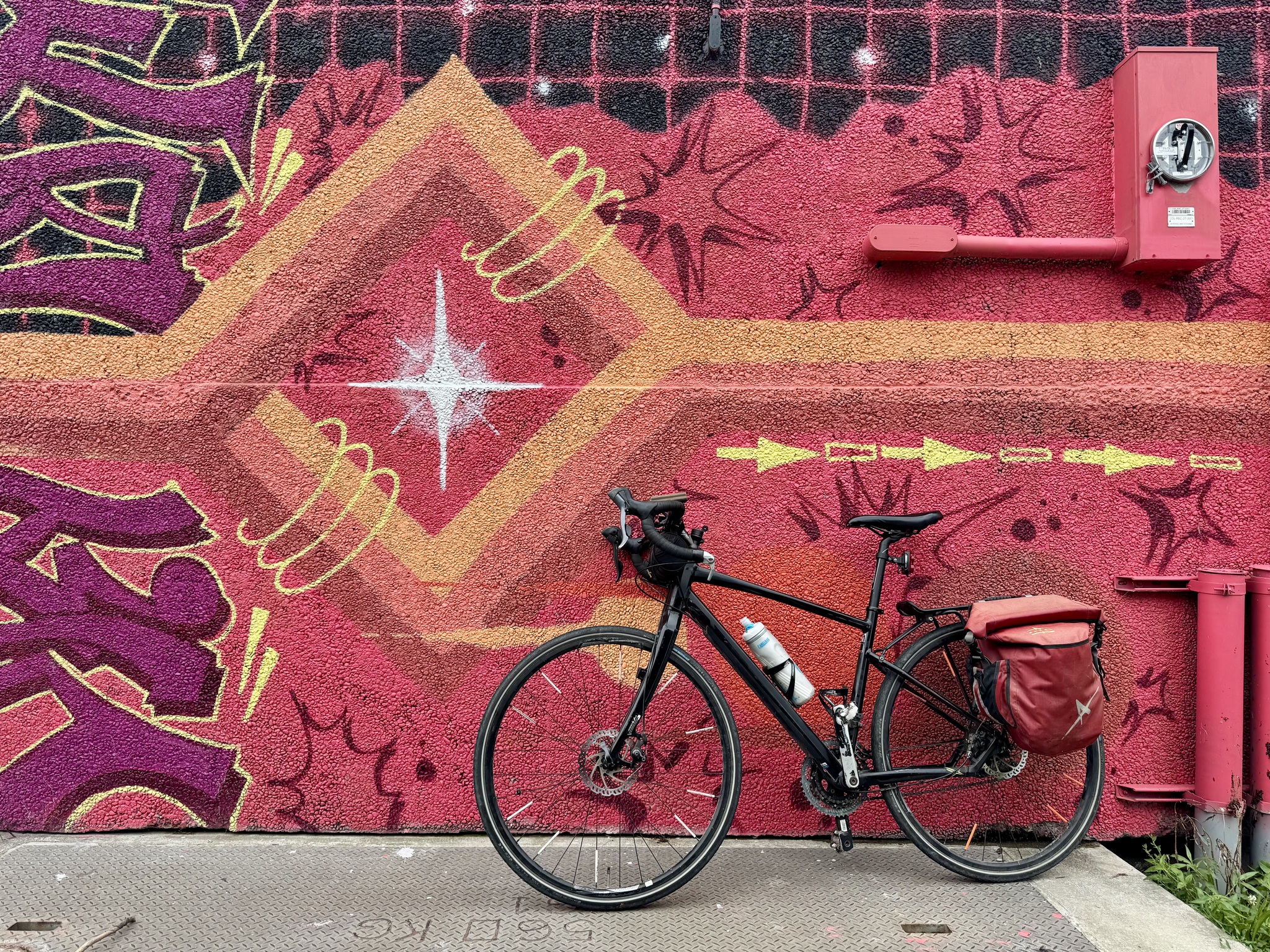
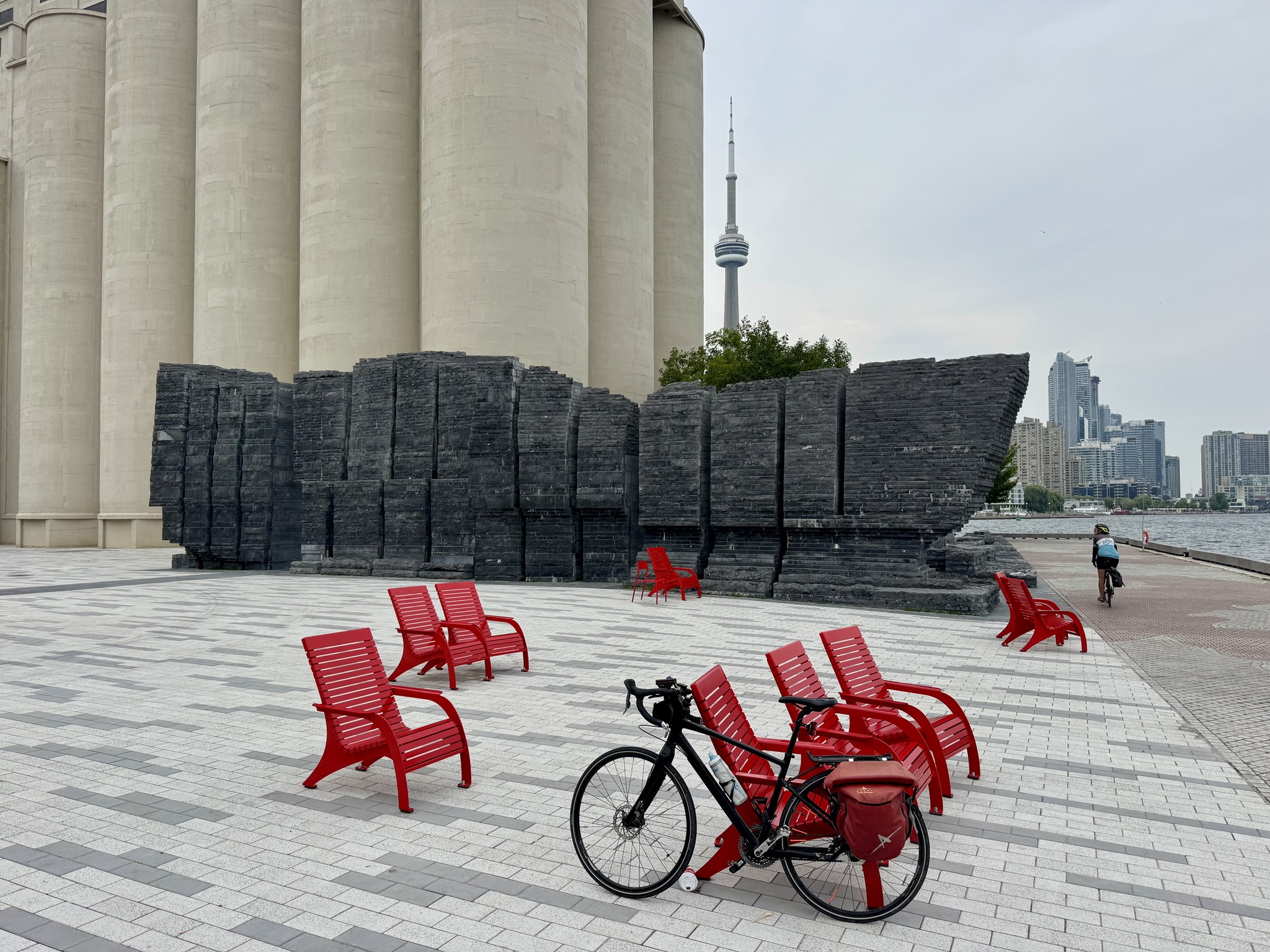
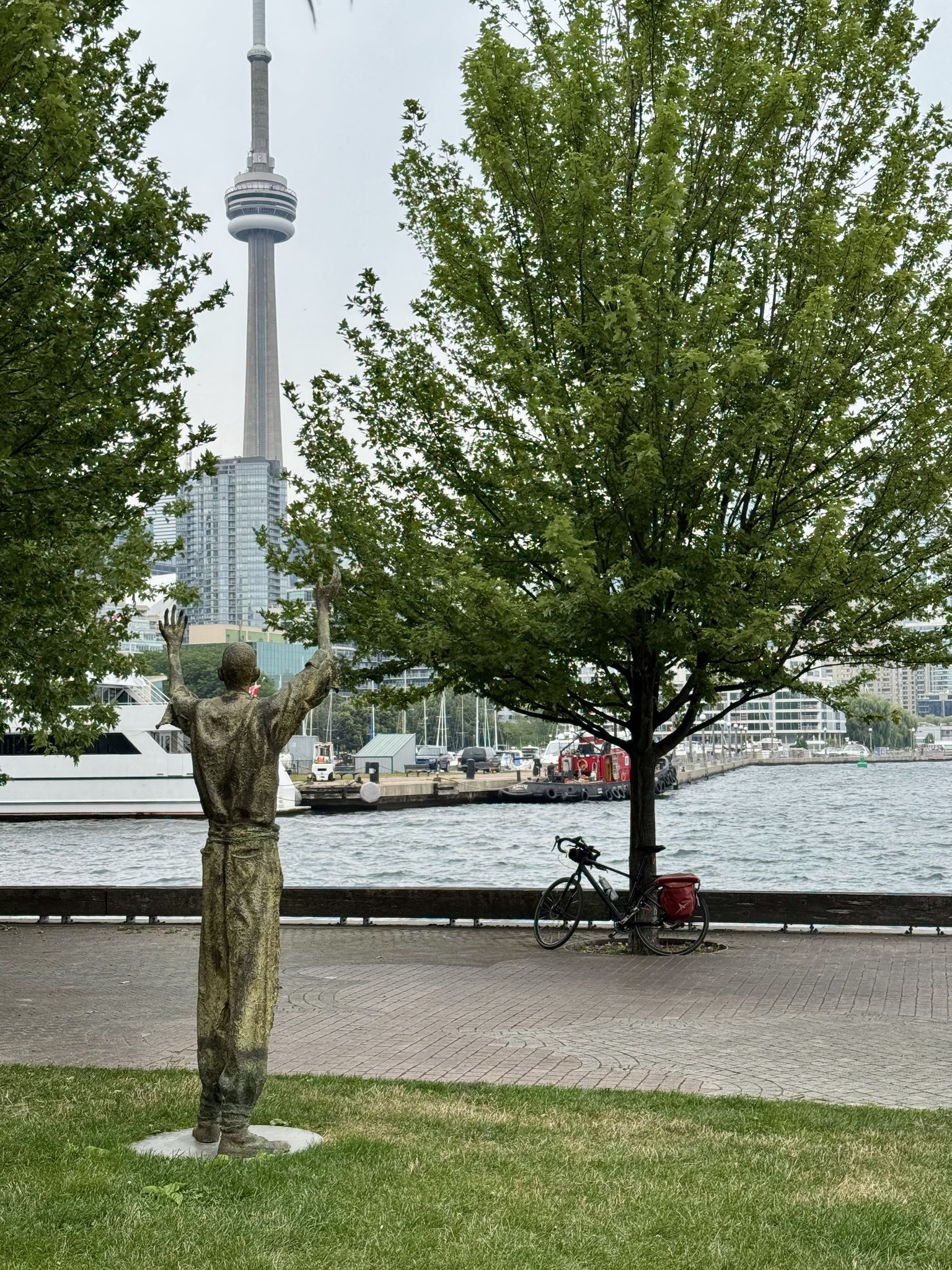
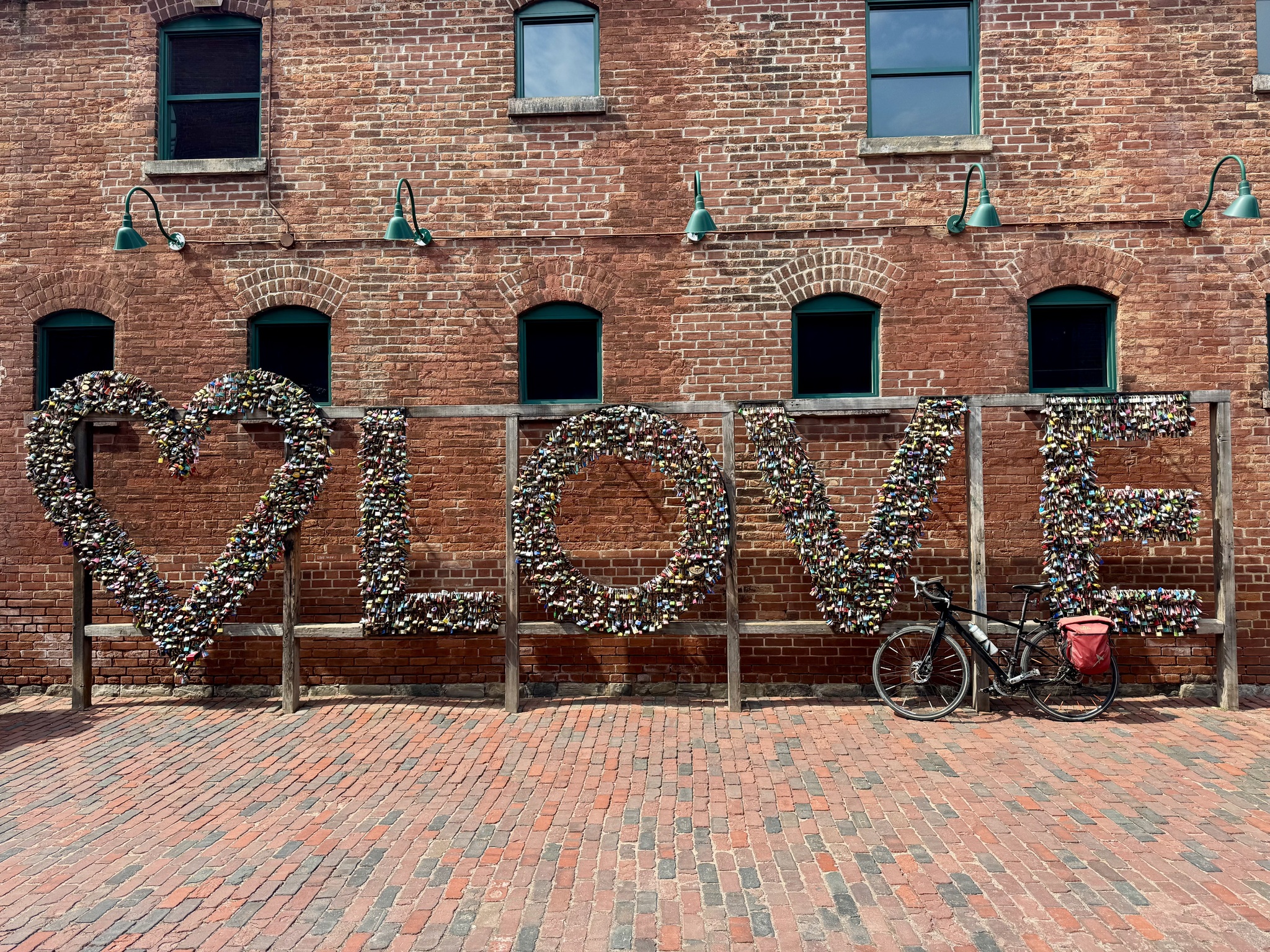
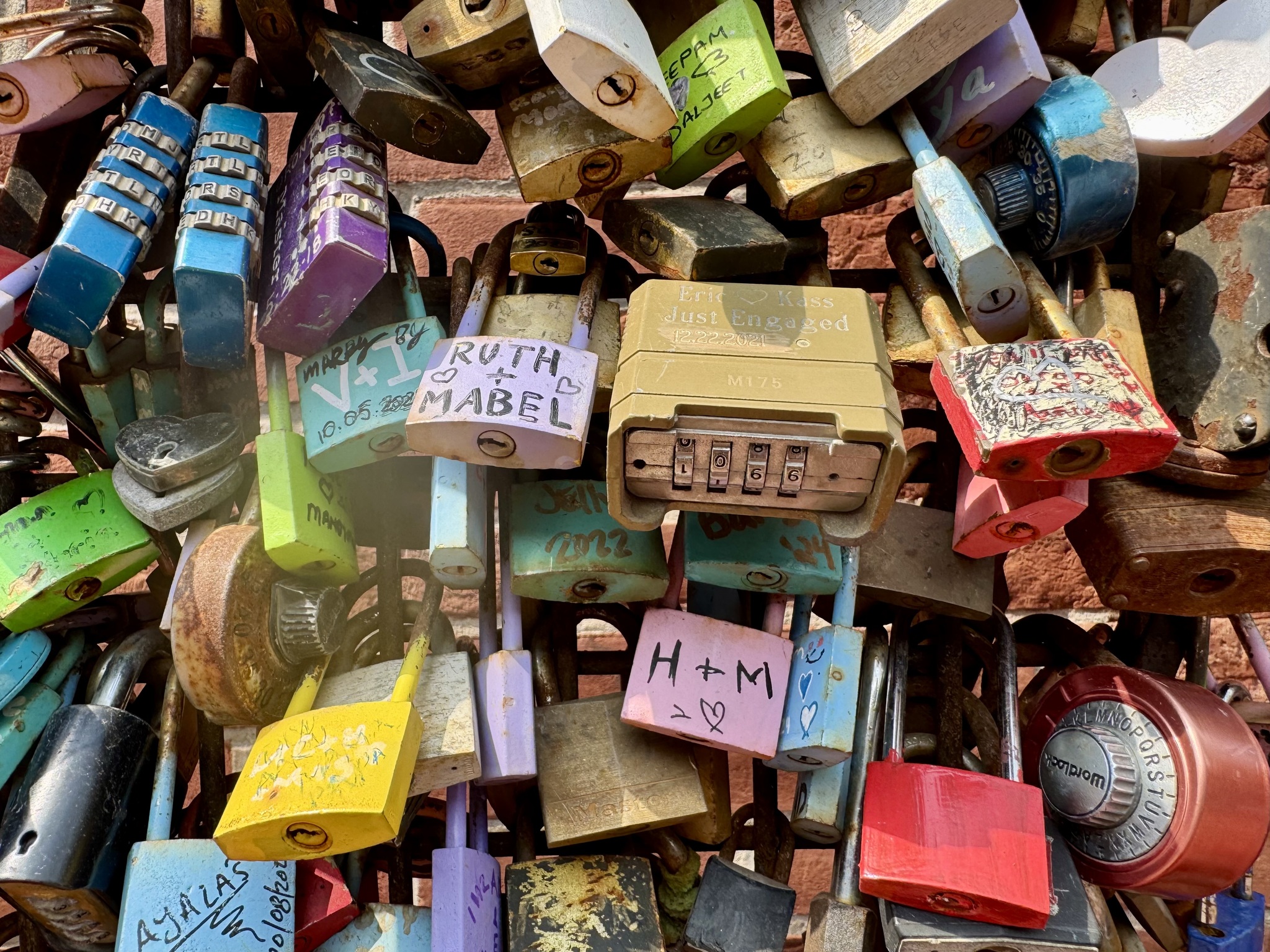
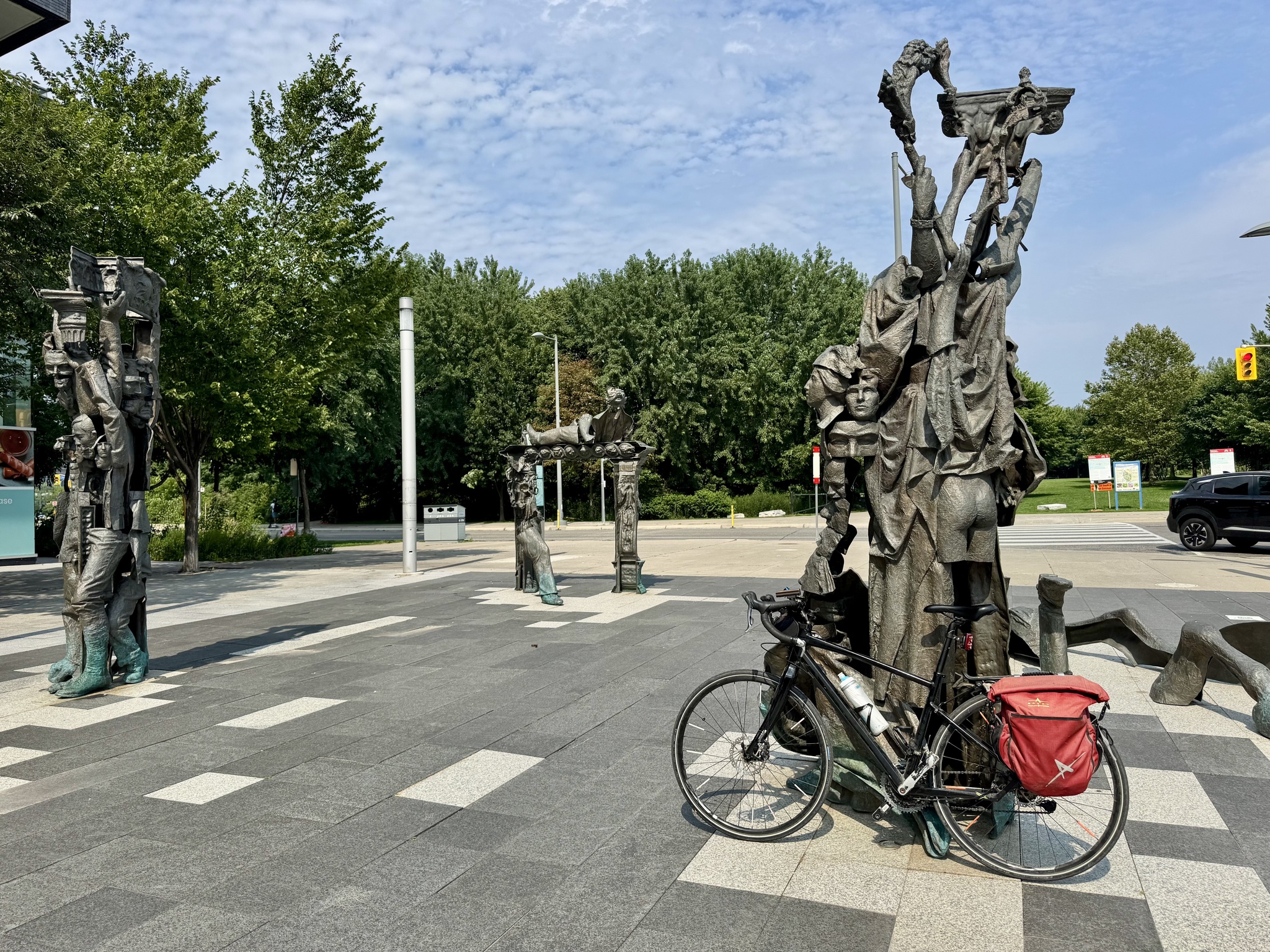
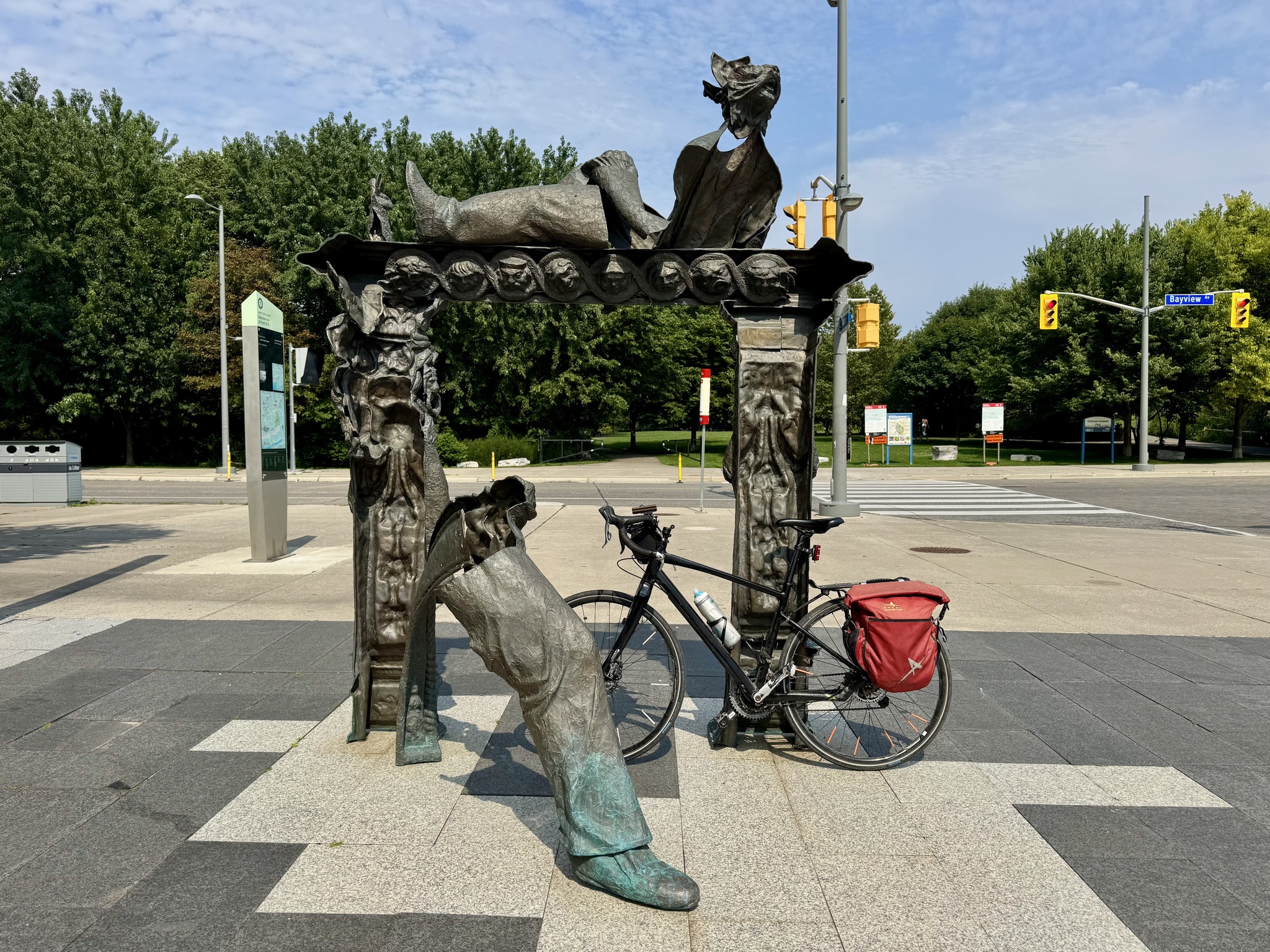
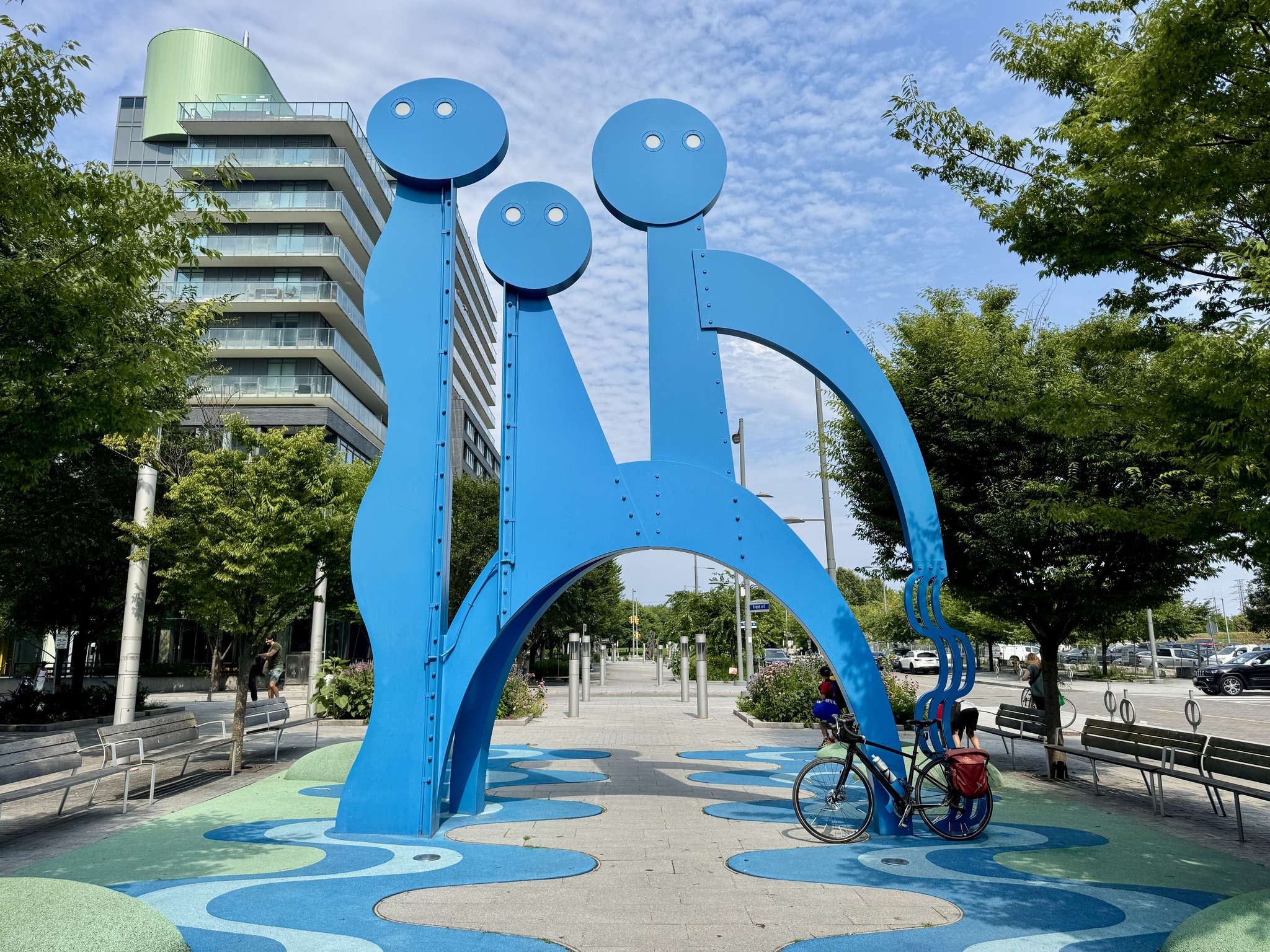
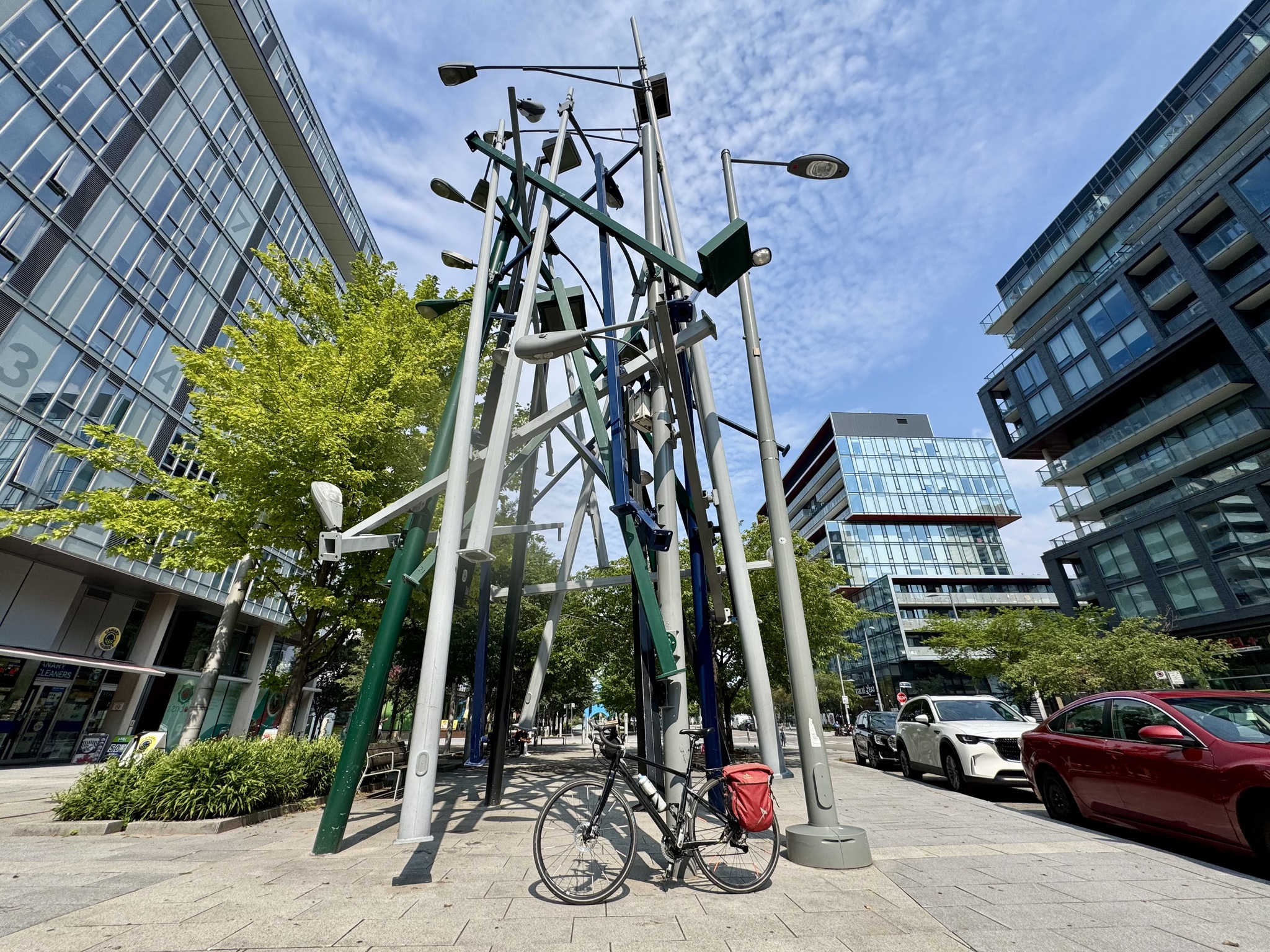
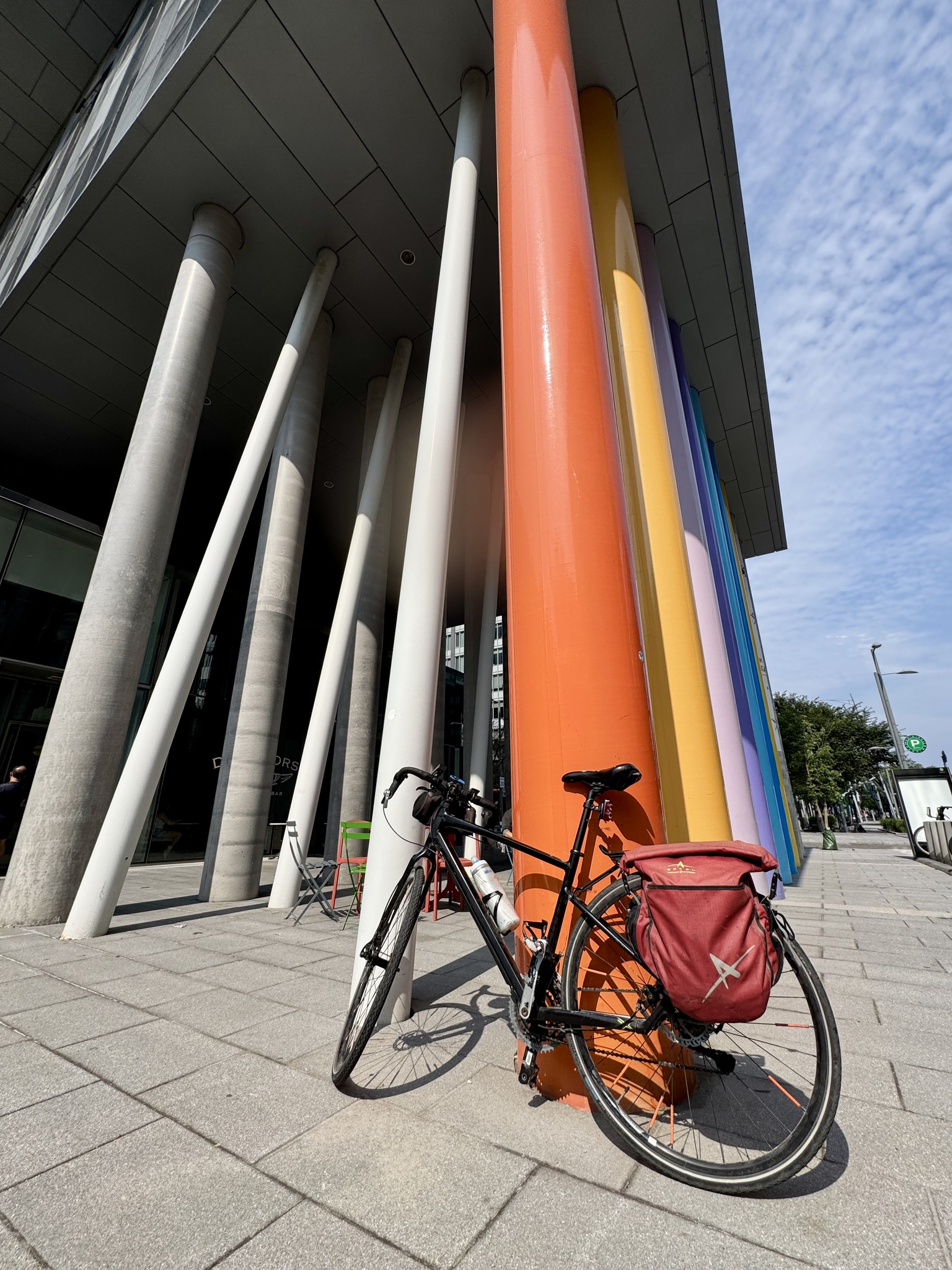
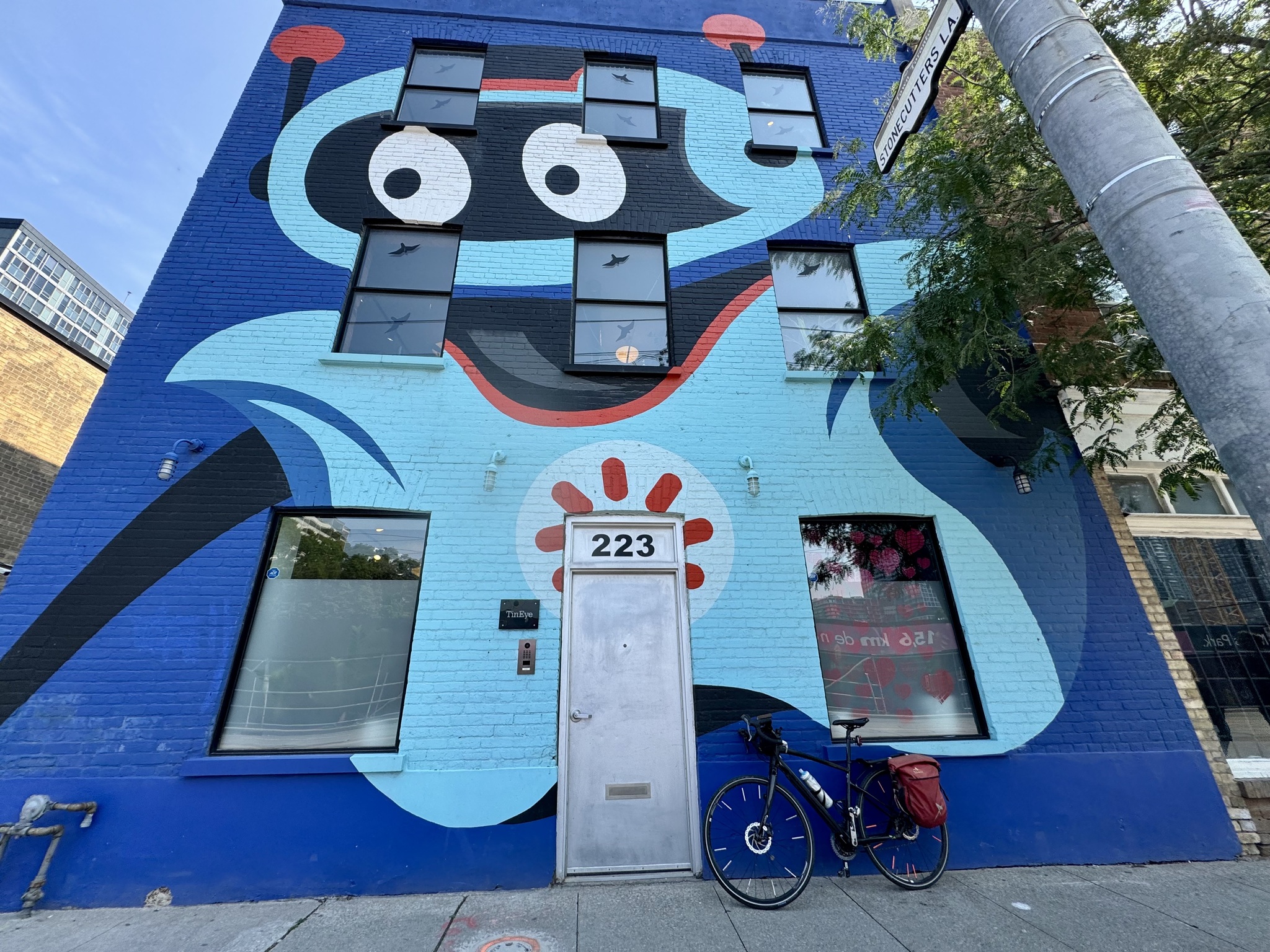
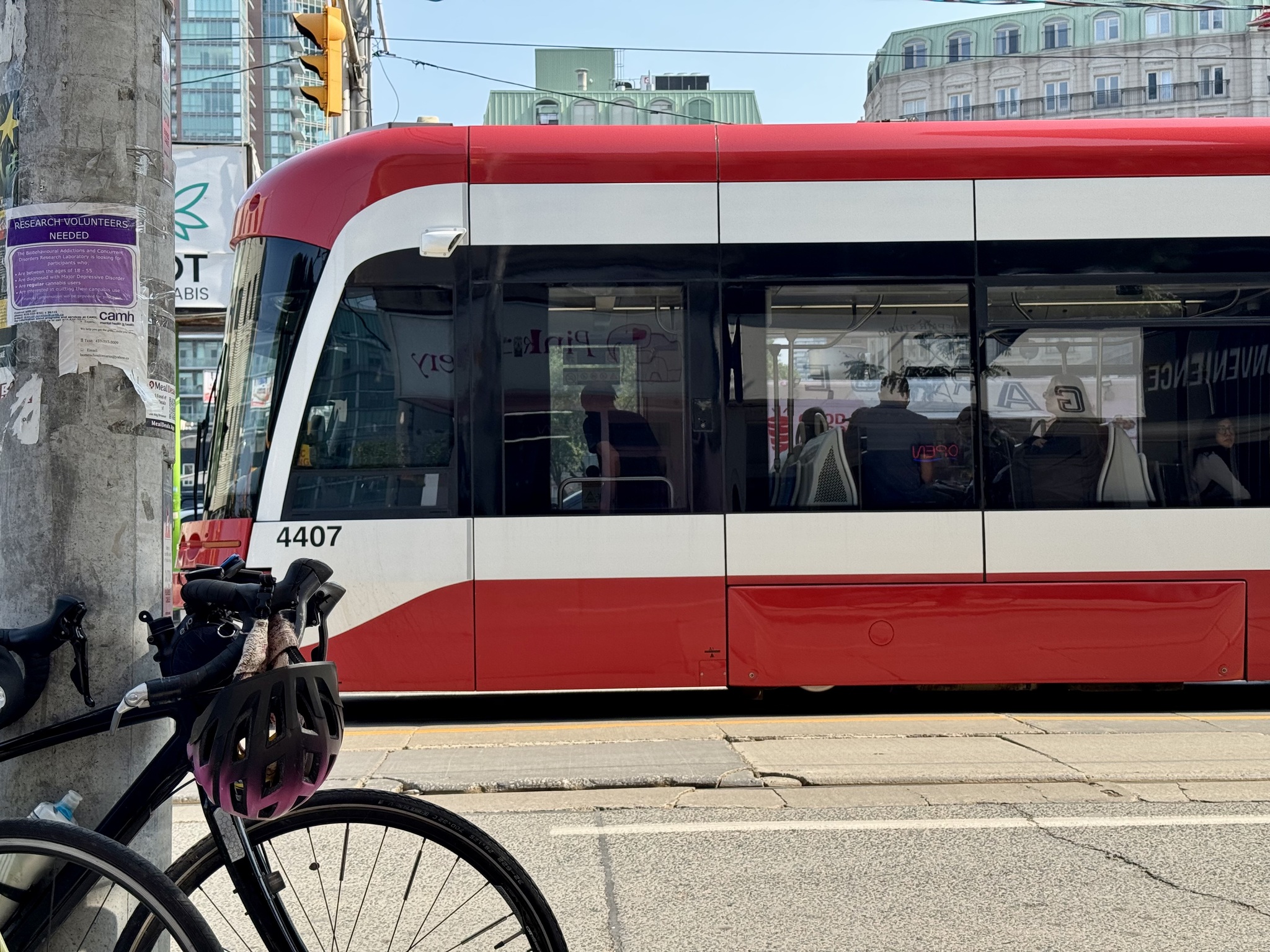
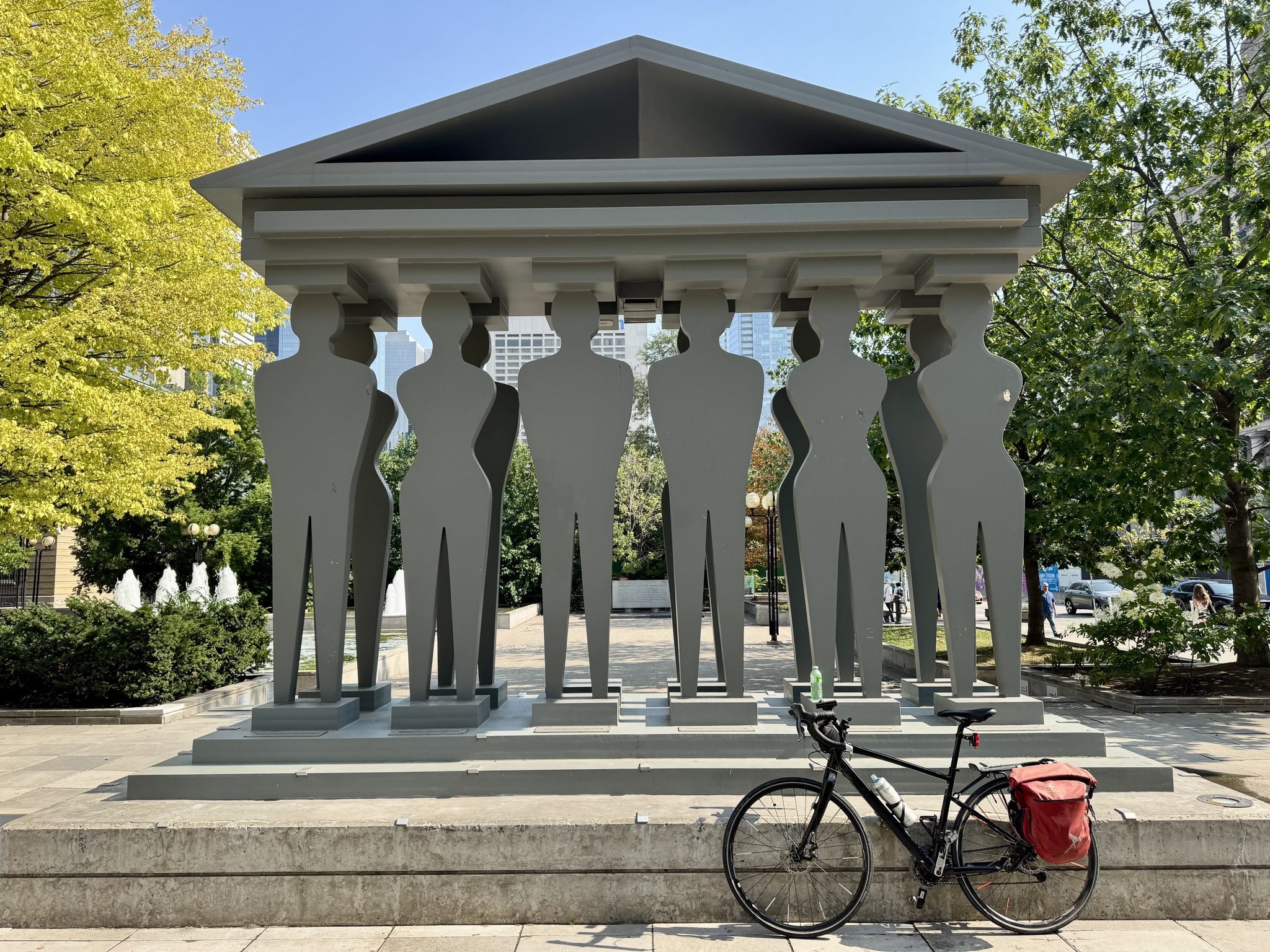
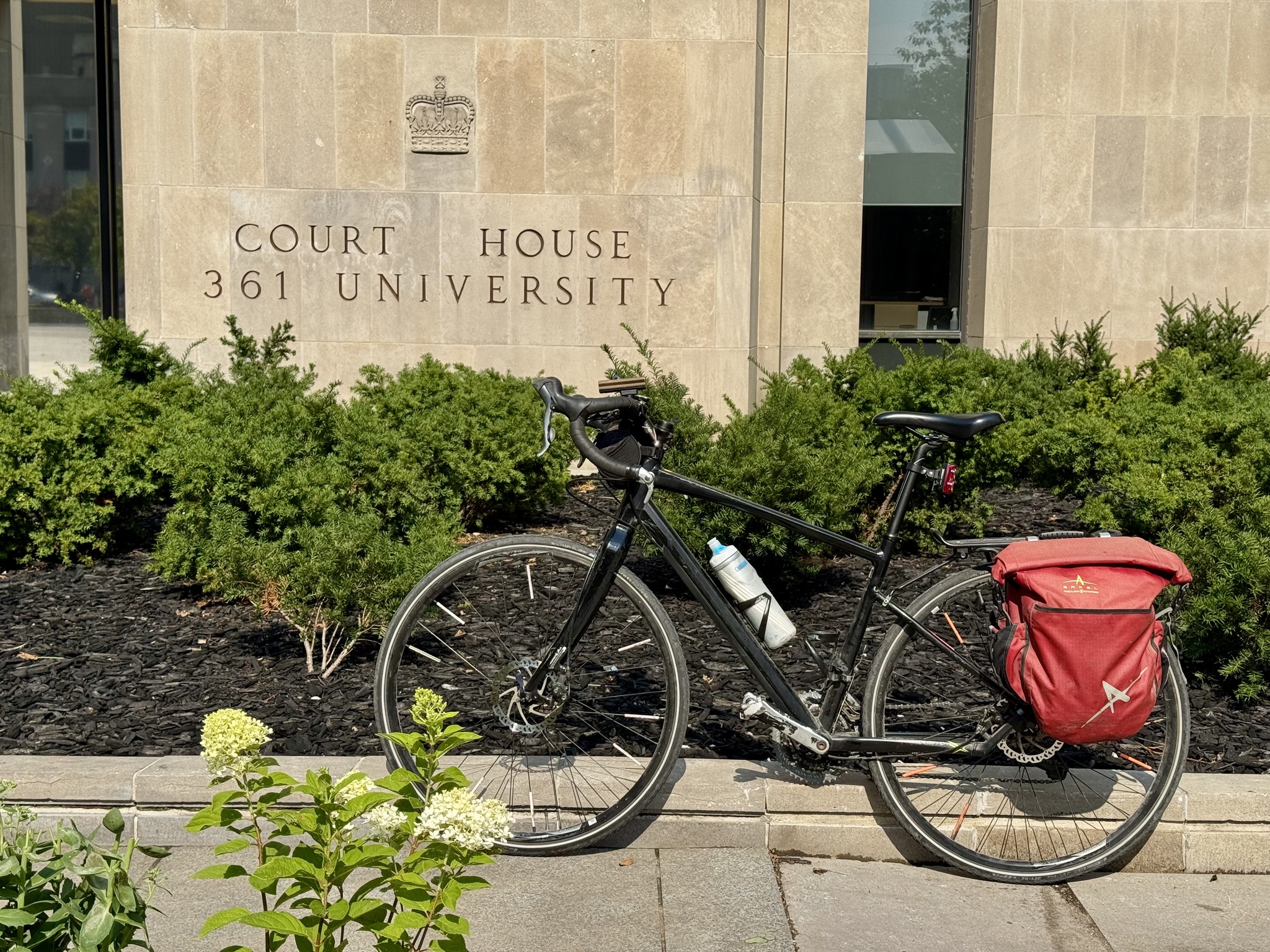
Here is a map, with a link of all the places I took pictures of my bike today. Not all of them are in front of murals, but they do represent places of note where I was today.
This website is a good source for public art in Toronto.
Discover more from Lisa Stokes
Subscribe to get the latest posts sent to your email.
One thought on “Ride to Toronto – Biidaasige Park, Bike Rally, and Public Art”