Day 11 – Exploring Montreal
Dayle decided to take another rest day, and David accompanied Cindy and me. I planned a 31km ride around food and parks.
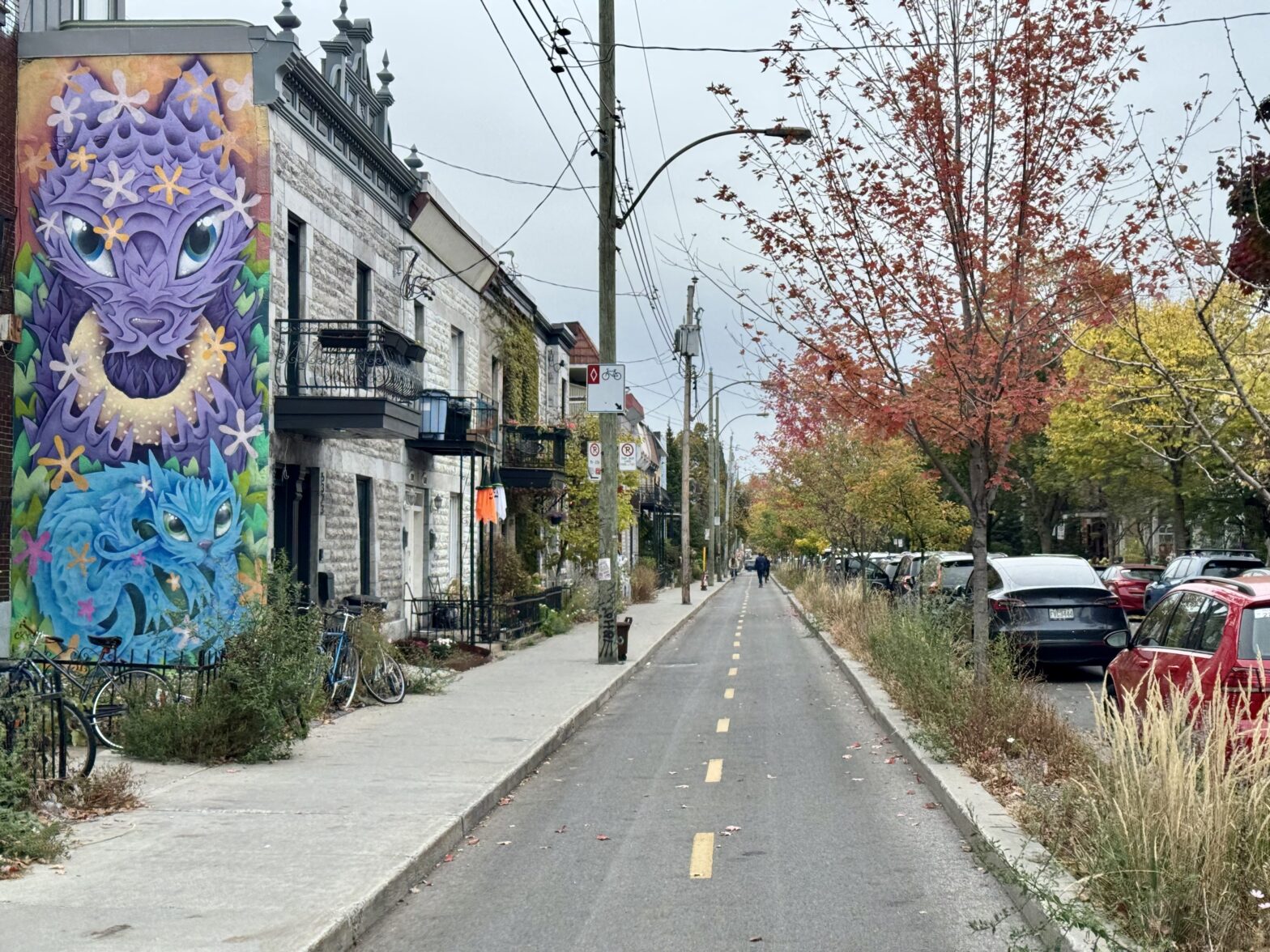
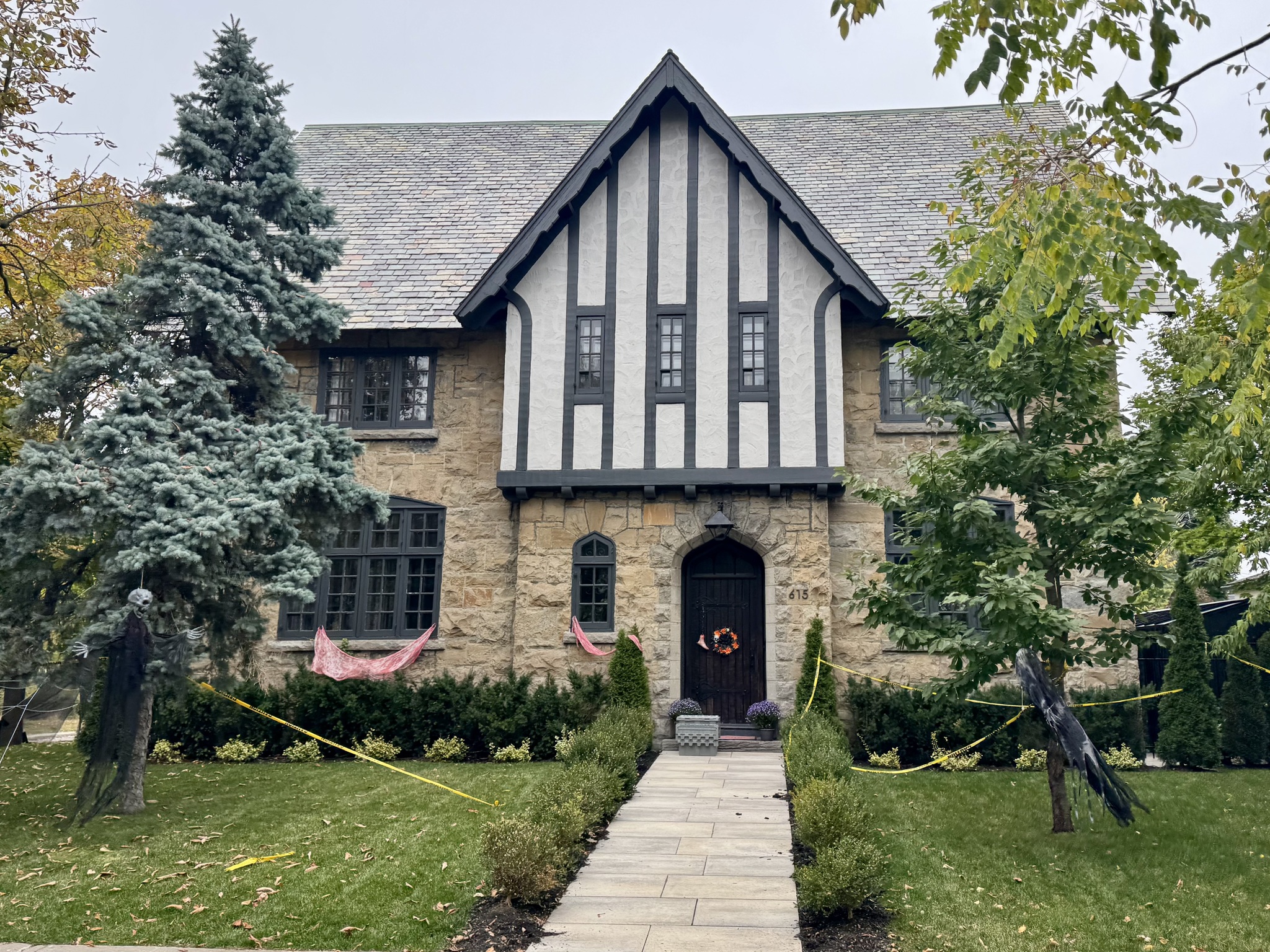
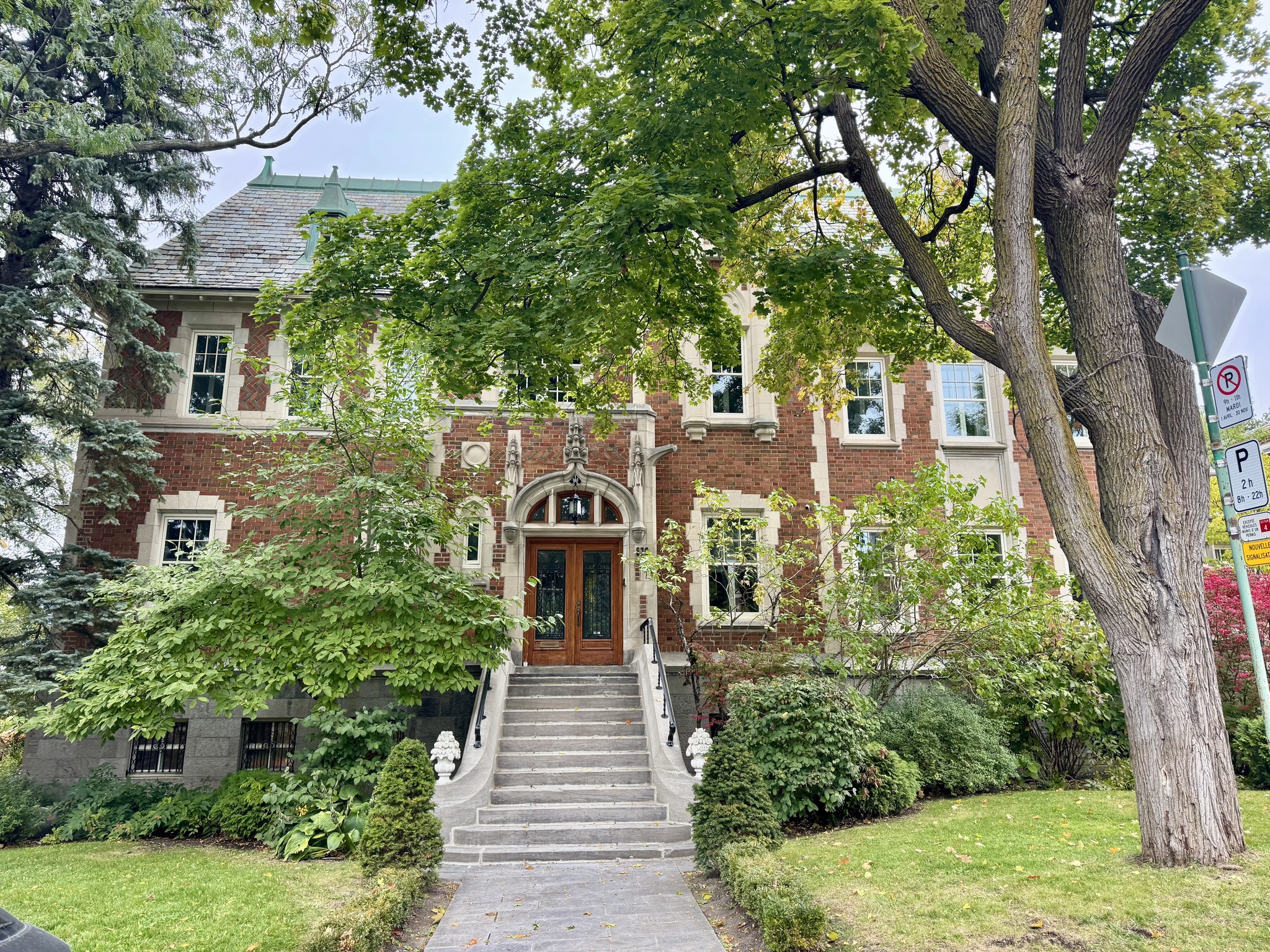
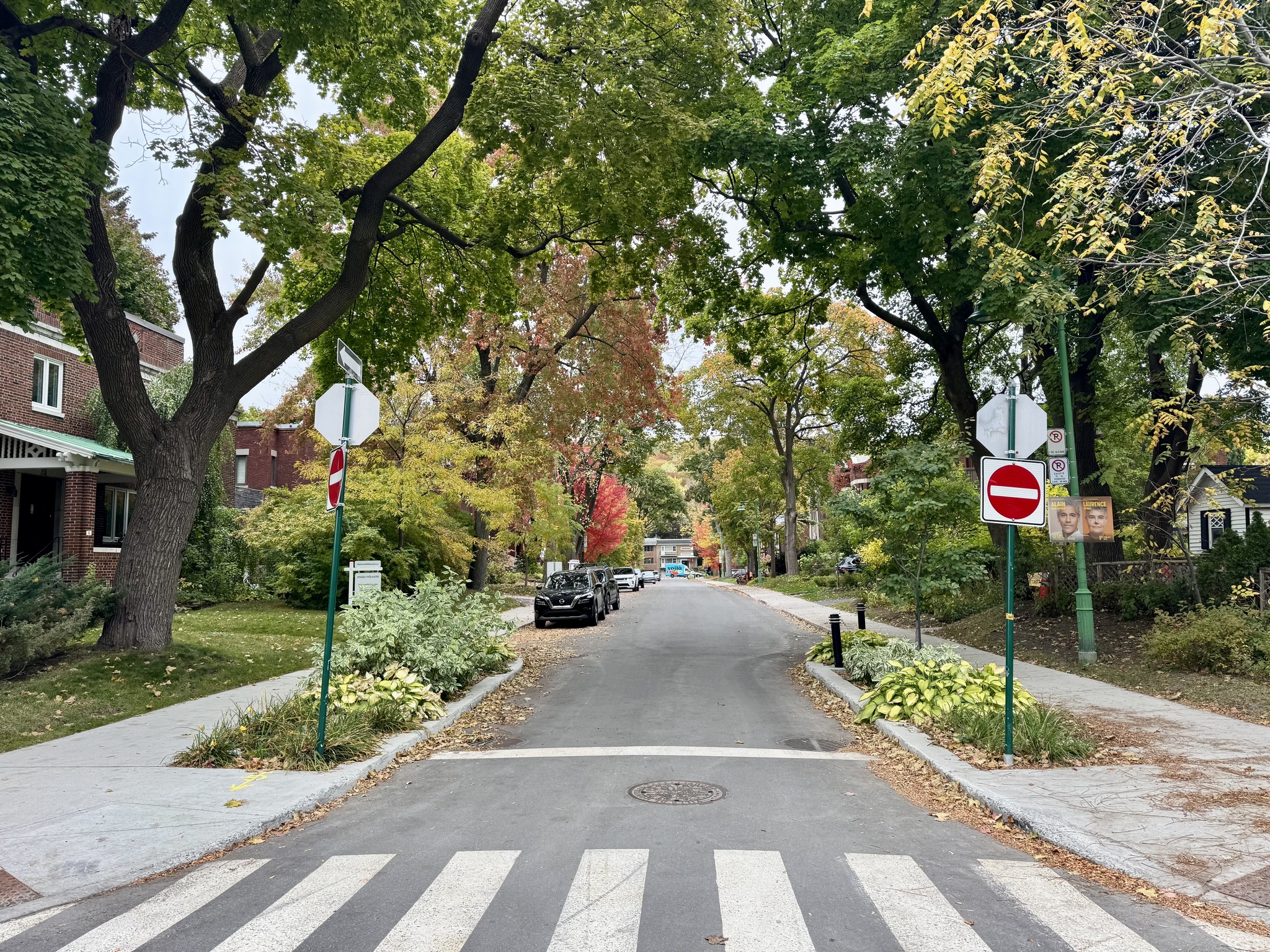
We cycled around Mont-Royal through Outremont, past beautiful homes and traffic calmed streets.
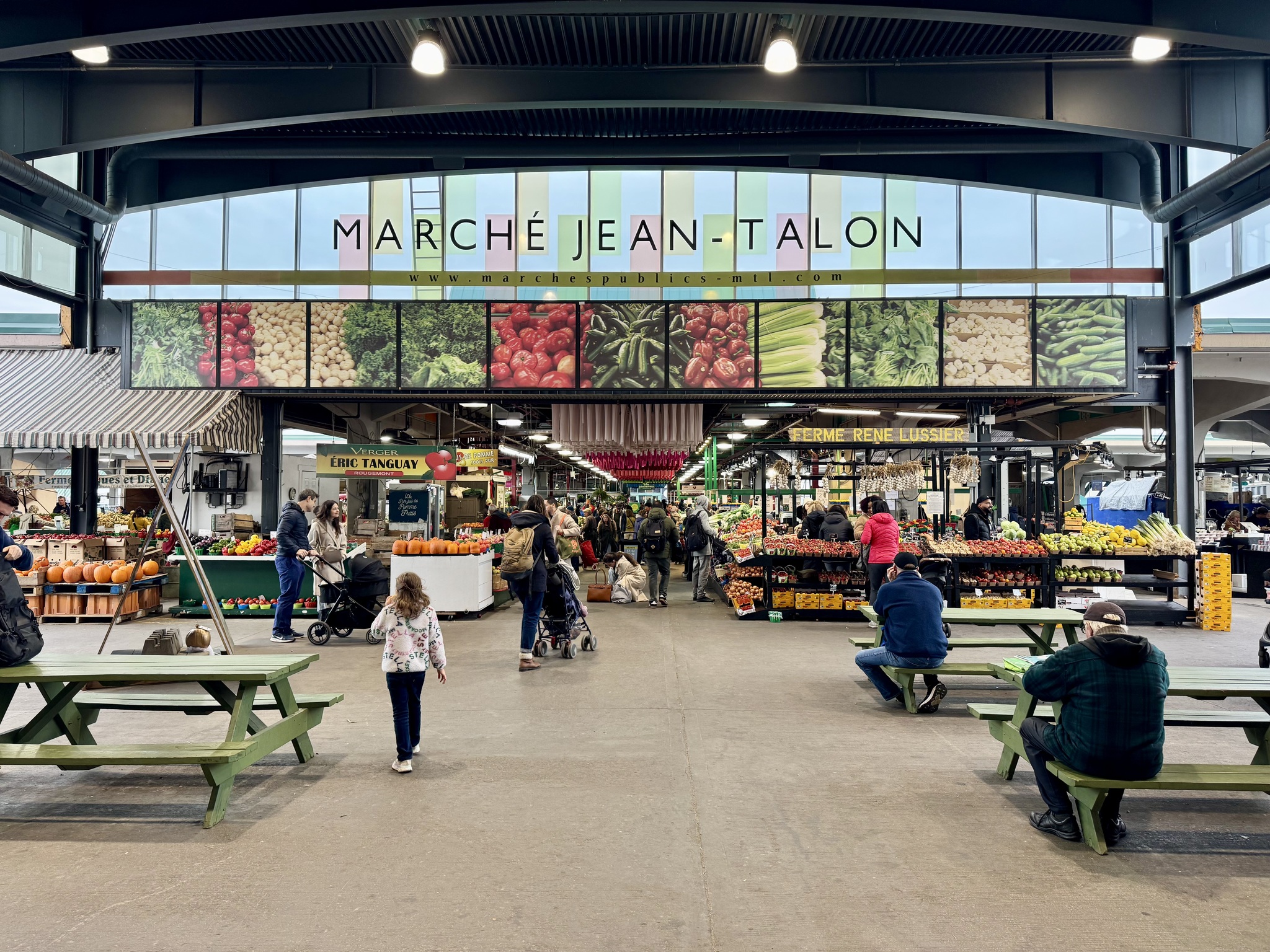
Our first stop was the Jean Talon Market. It is a large market located in Little Italy that is open year-round. It was built as a depression era project in the Art Deco architectural style. Jean Talon is the largest market in Montreal. Underground parking was added in 2004.
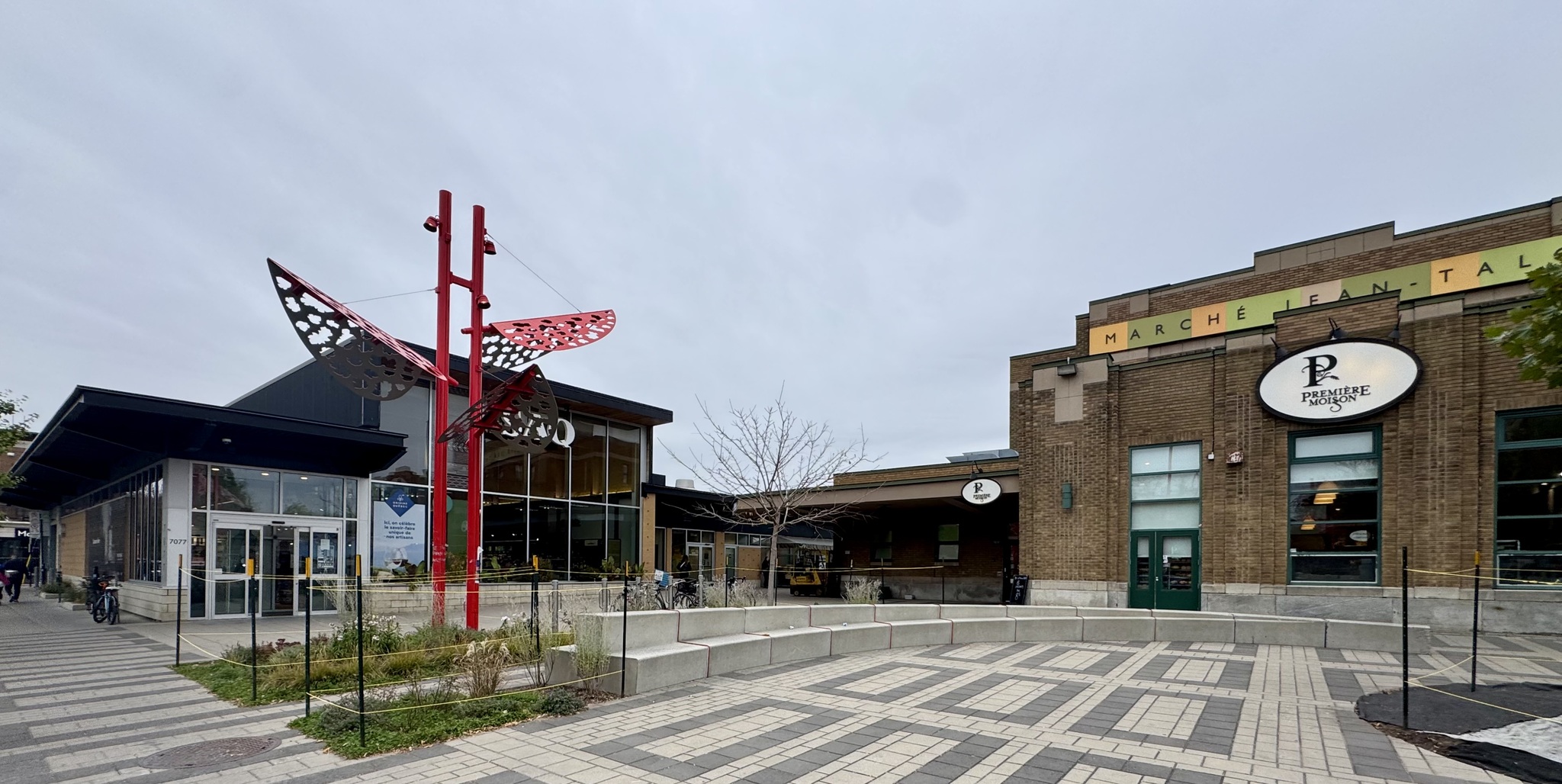
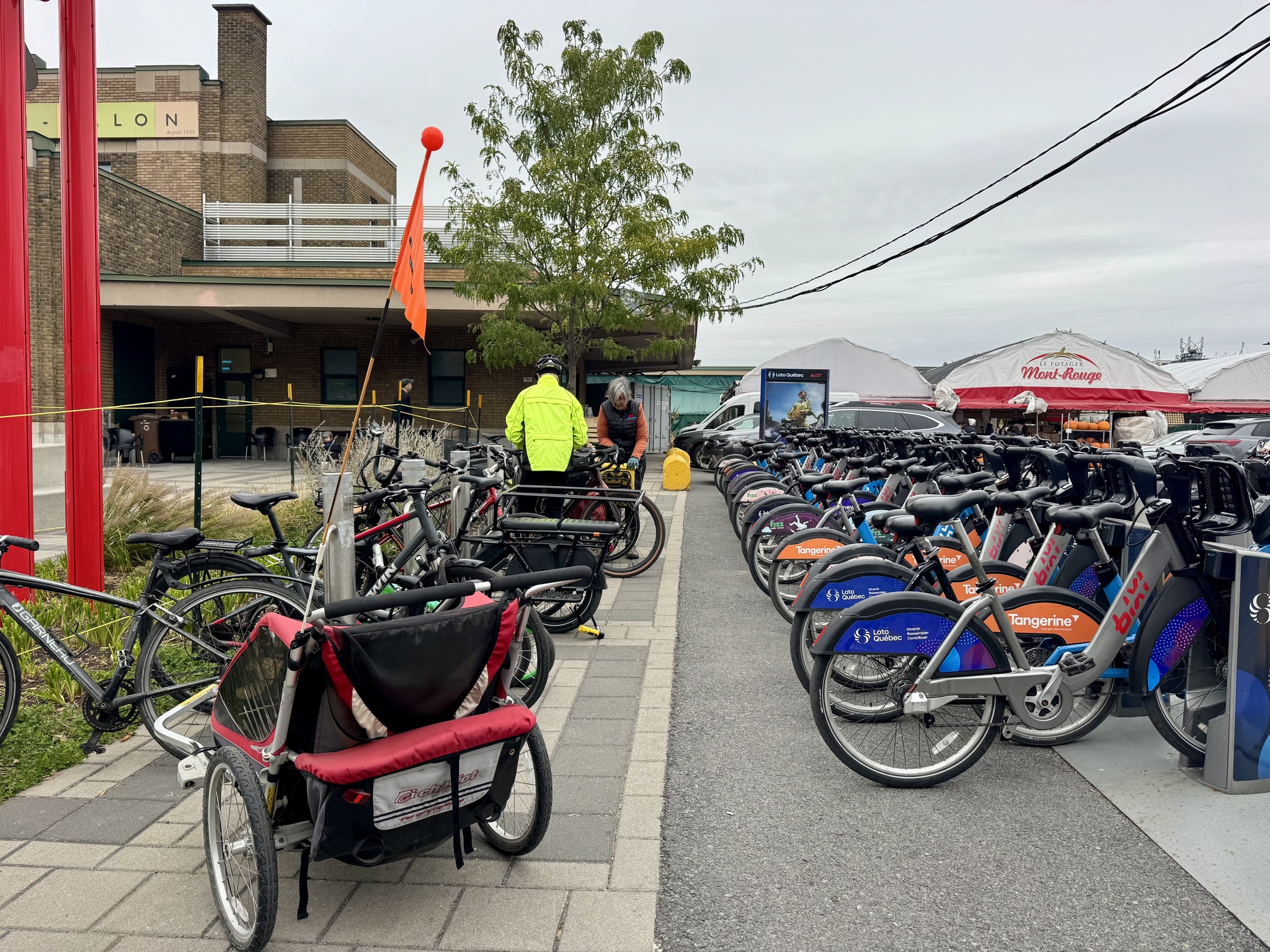
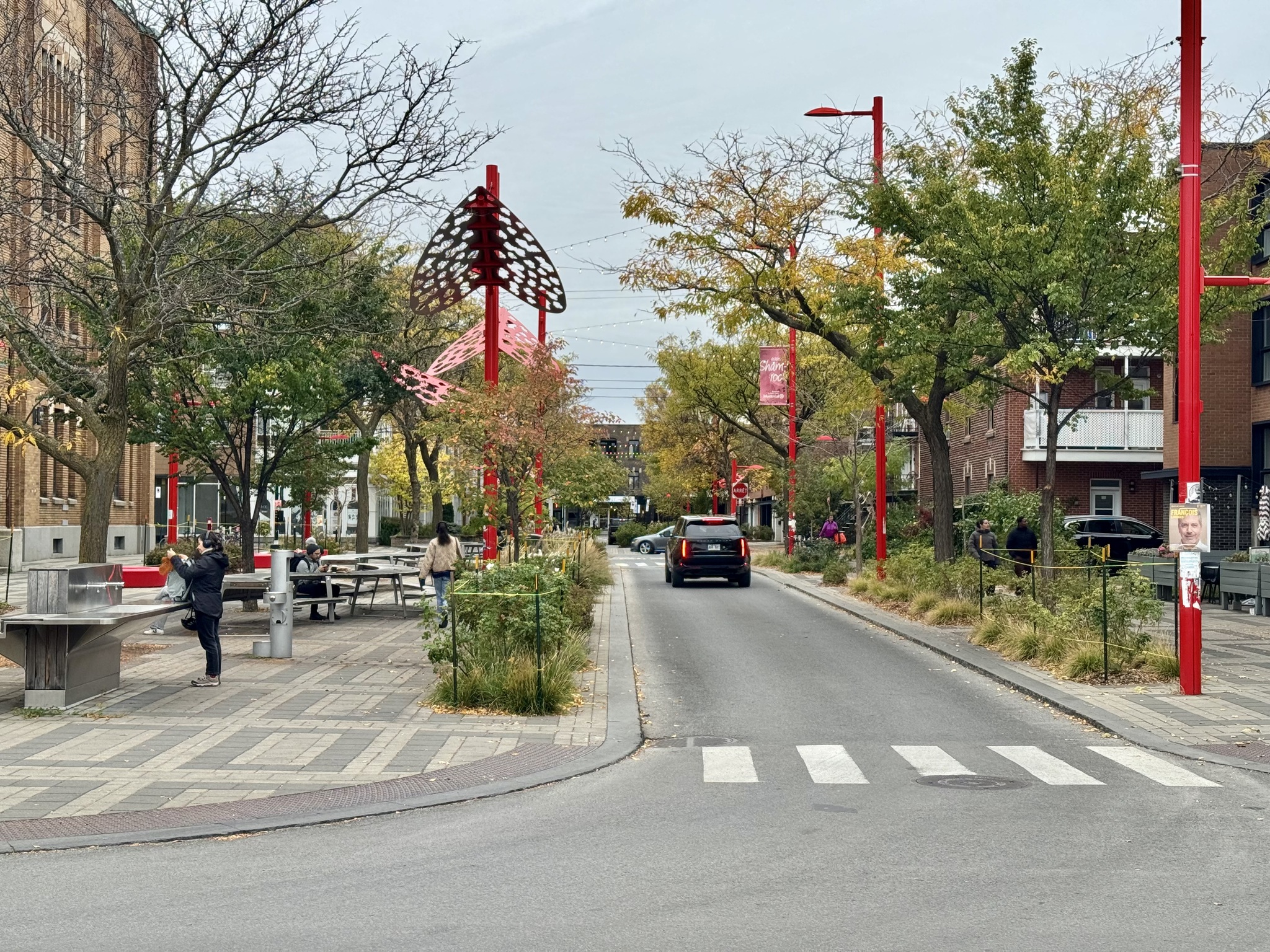
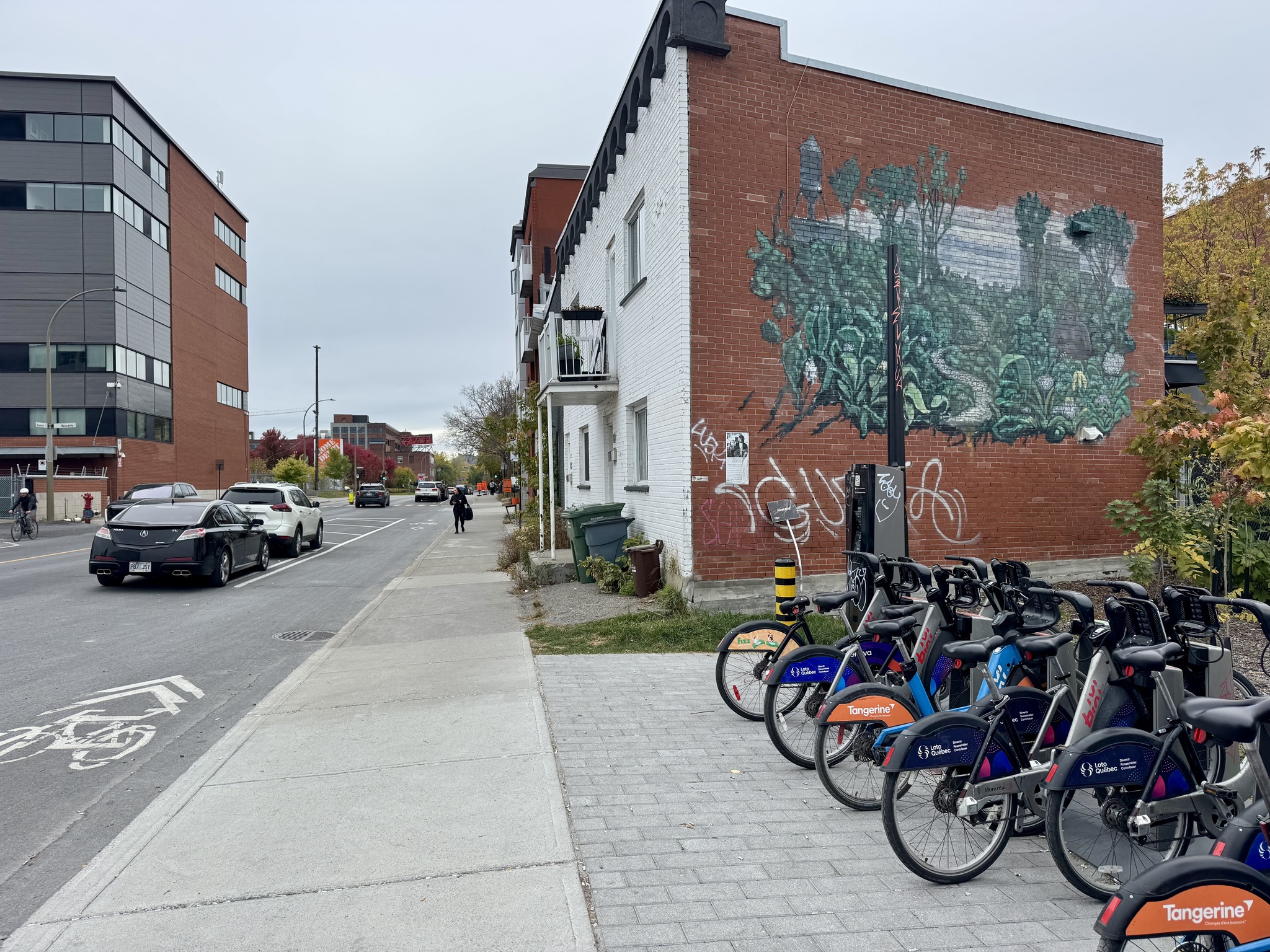
Shamrock Avenue, in front of market, was rebuilt to allow only one lane for motor vehicle traffic, creating space for wide sidewalks and parks. The front of the market was also turned into a park, eliminating a parking lot, making space for seating, bike parking, and a bike share stand.
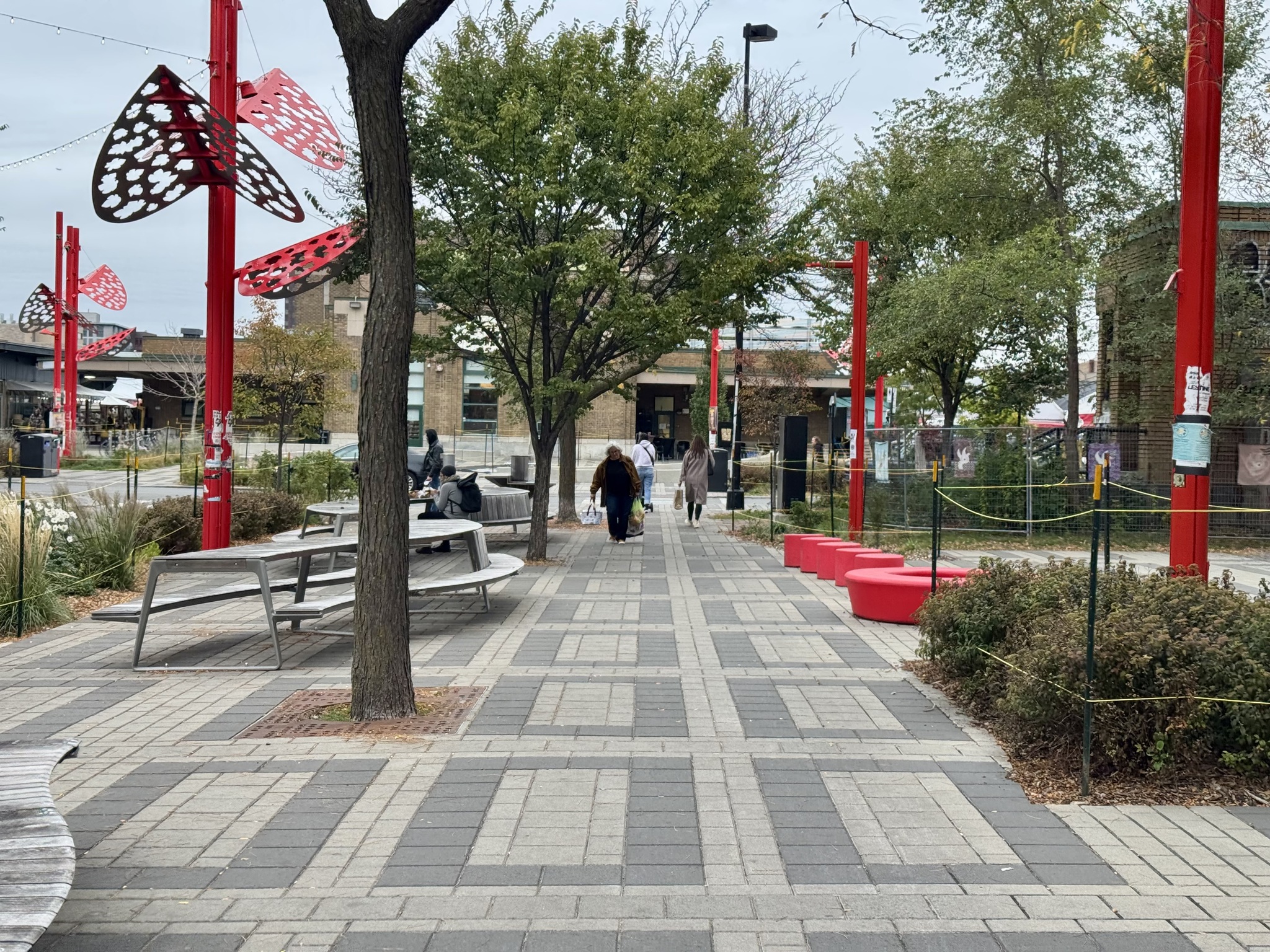
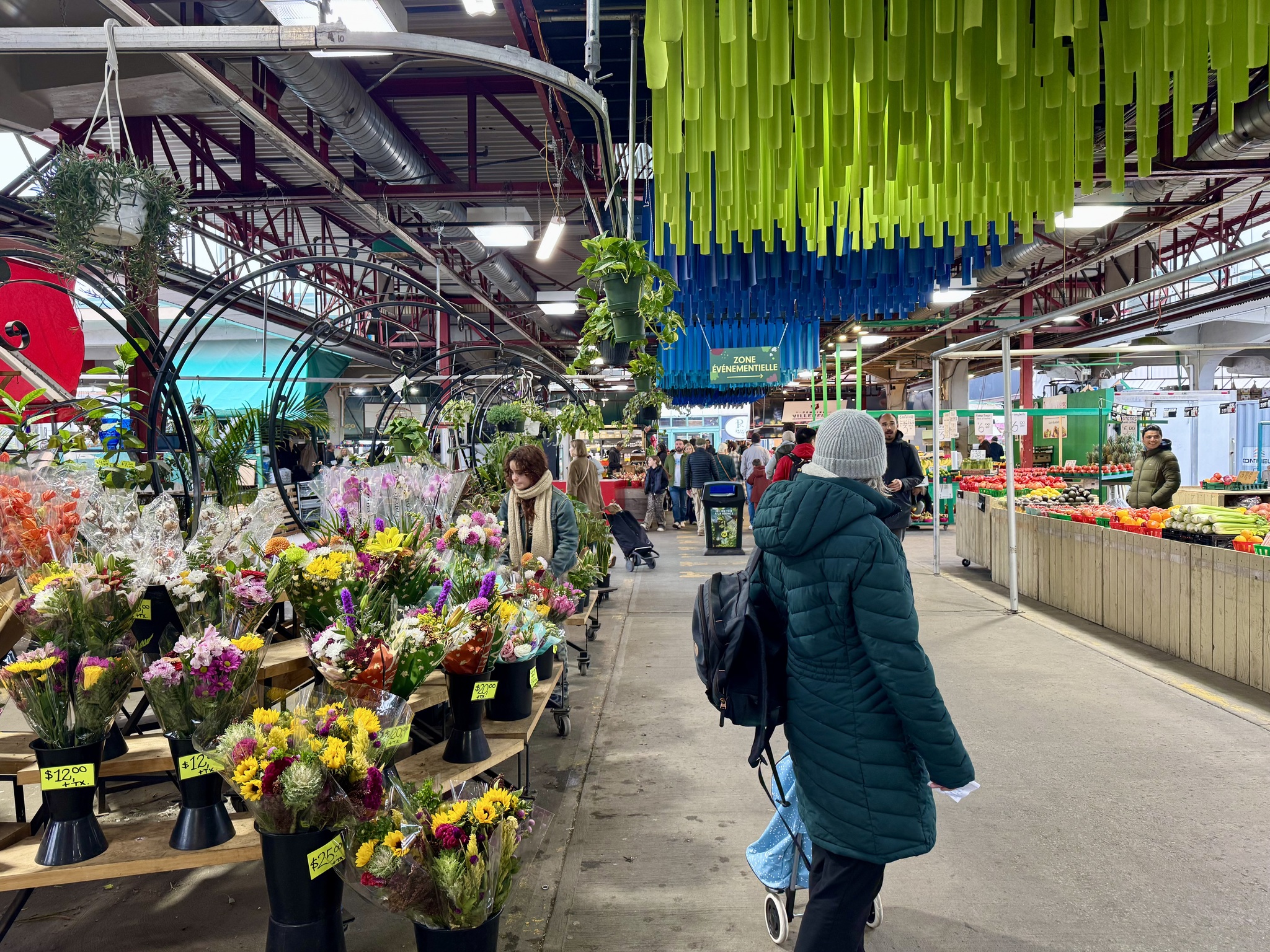
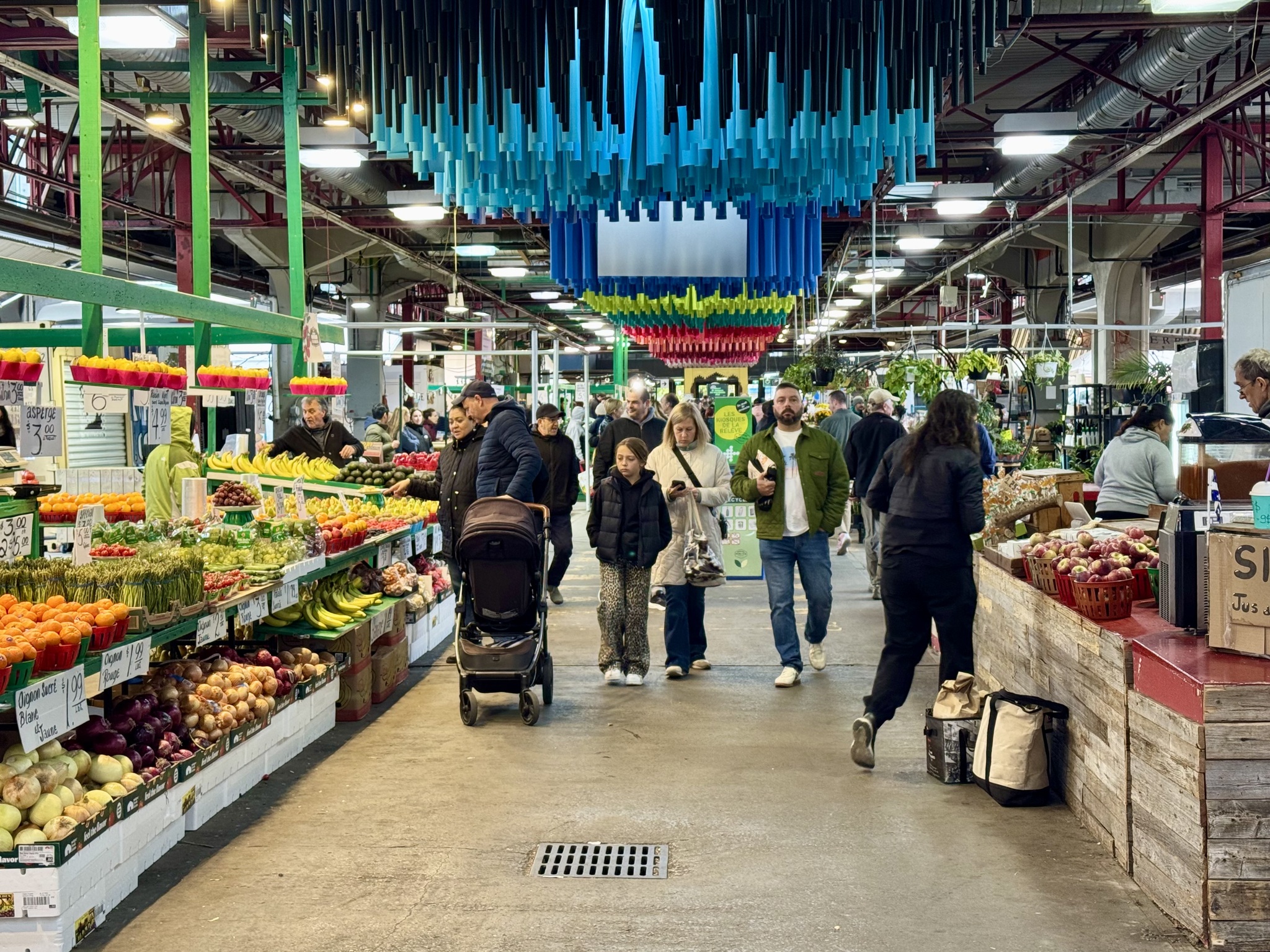
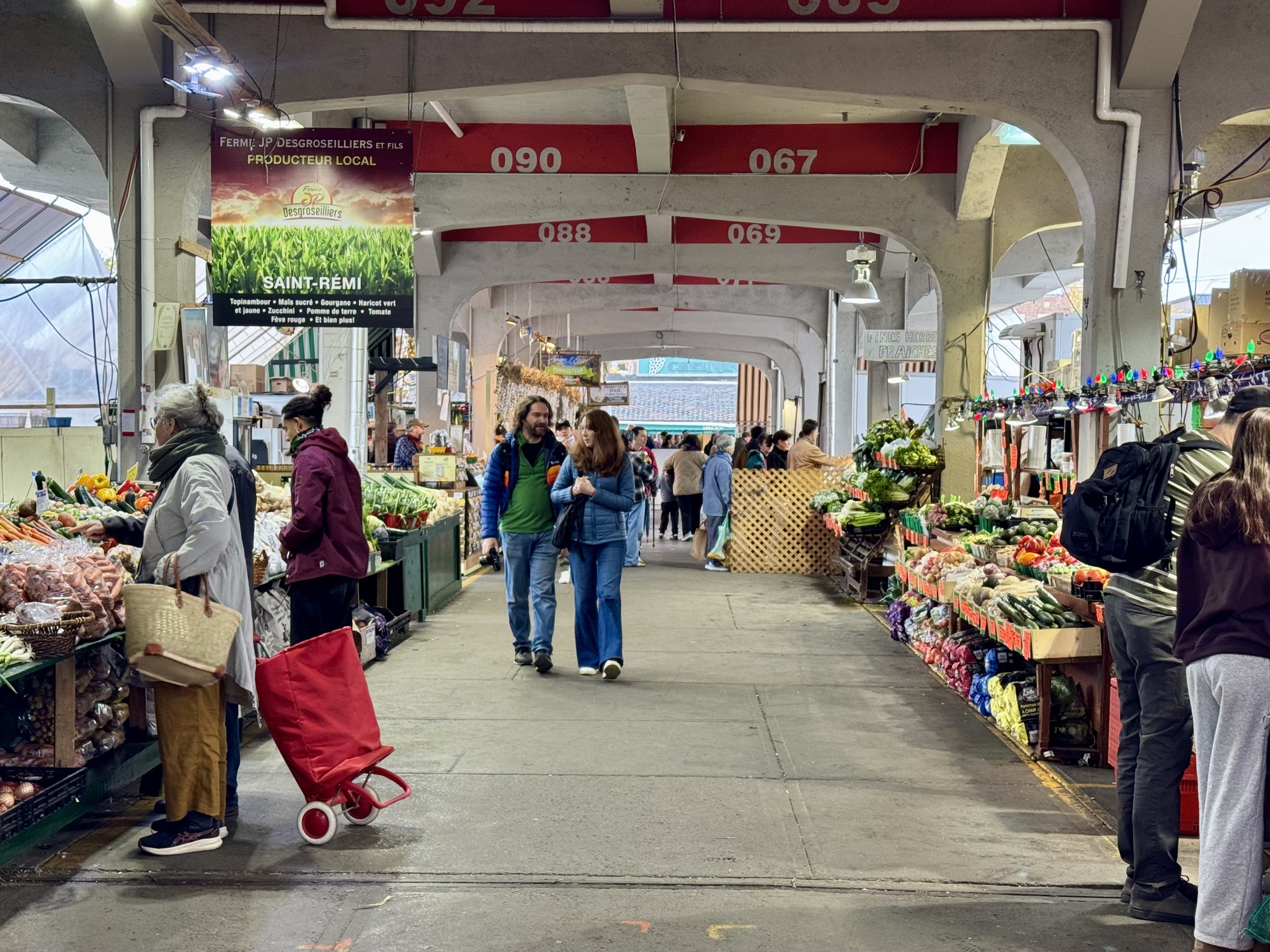
The market was large and bright. The food looked delicious.
After exploring the market, we decided to indulge ourselves with hot chocolate at Café Saint-Henri.
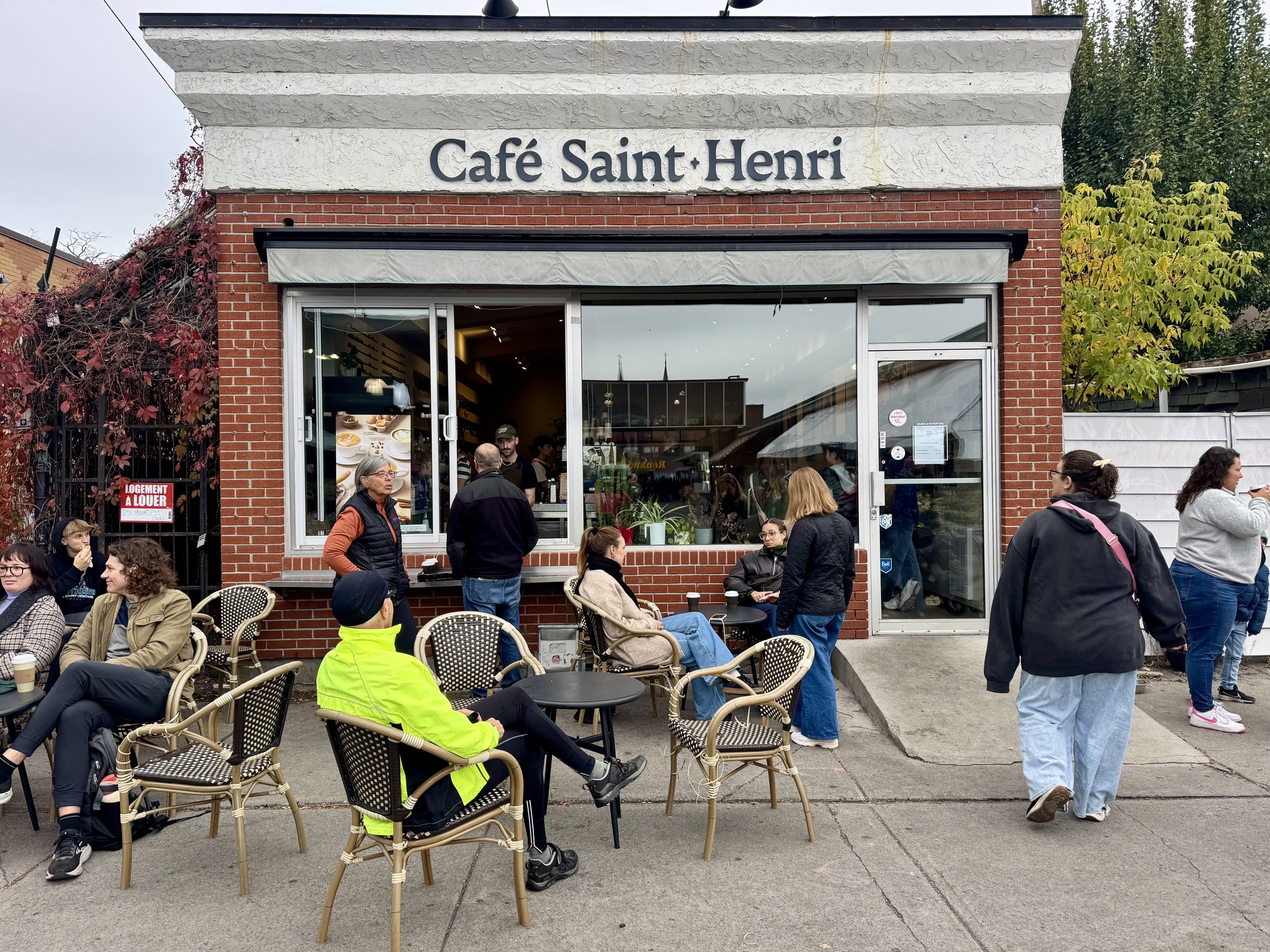
I joked that Cindy and I felt like this cyclist after riding up the three steep hills back to the Oratory, yesterday.
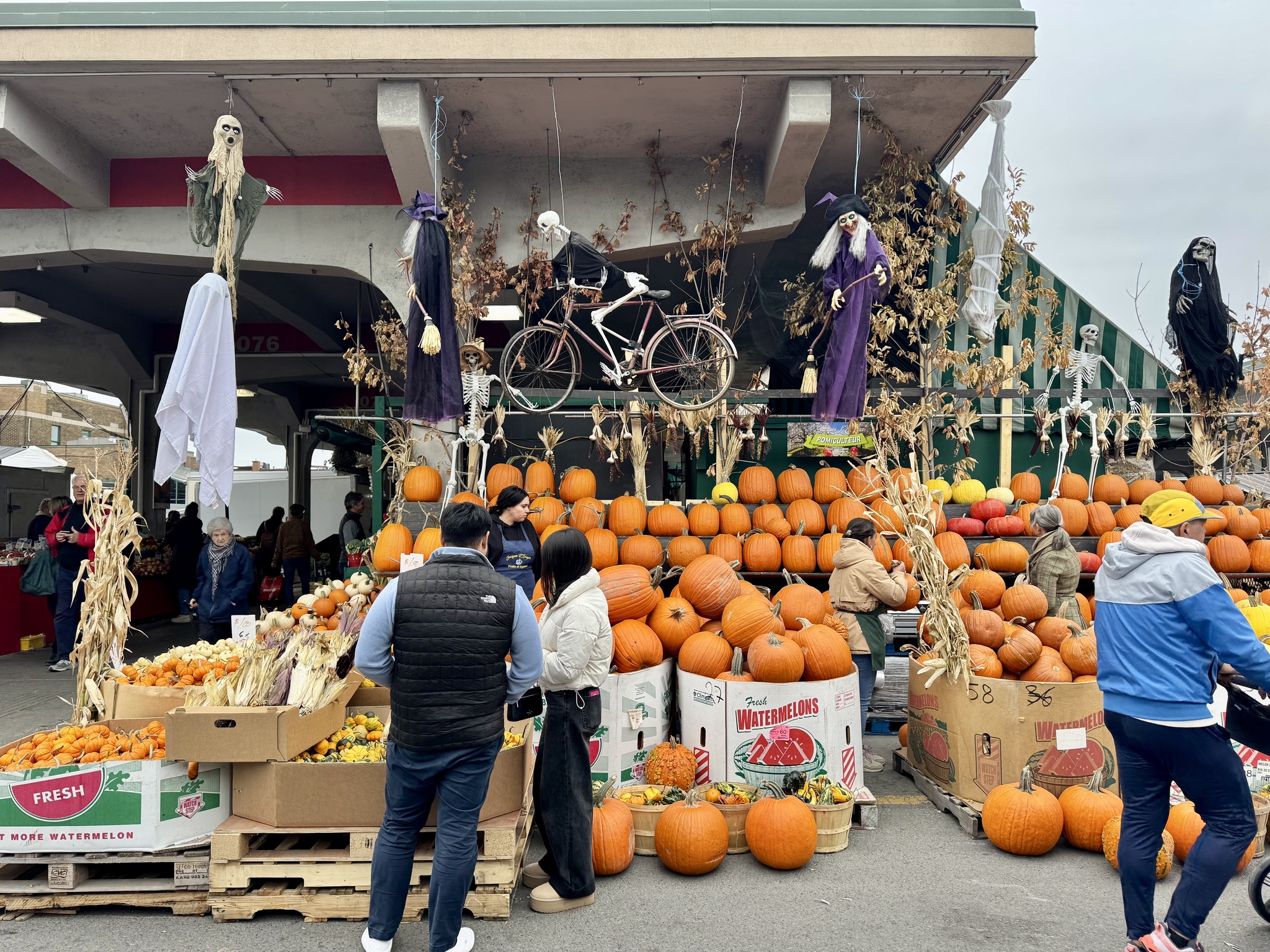
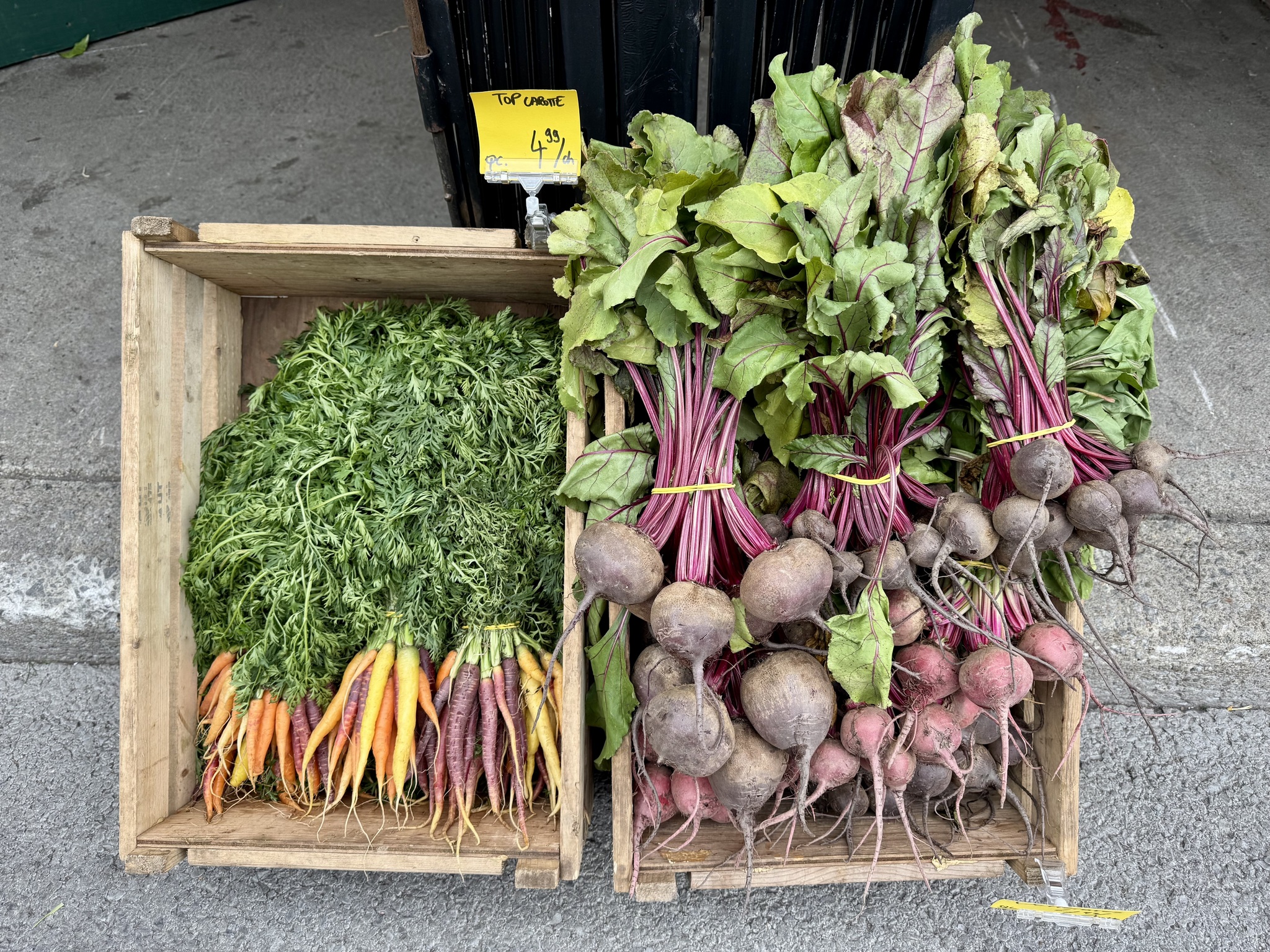
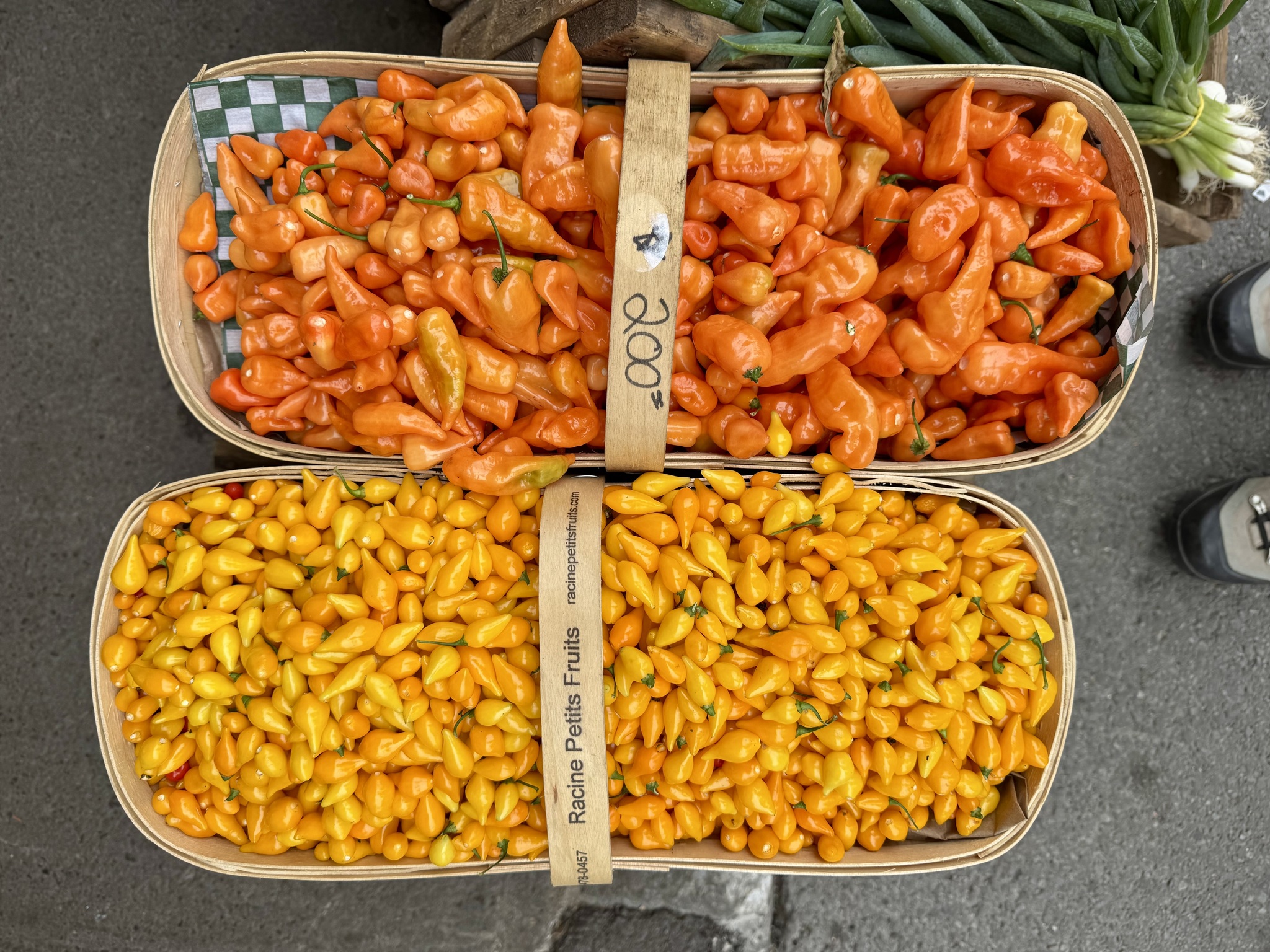
There were many stalls around the outside of the market building, as well. The produce looked amazing.
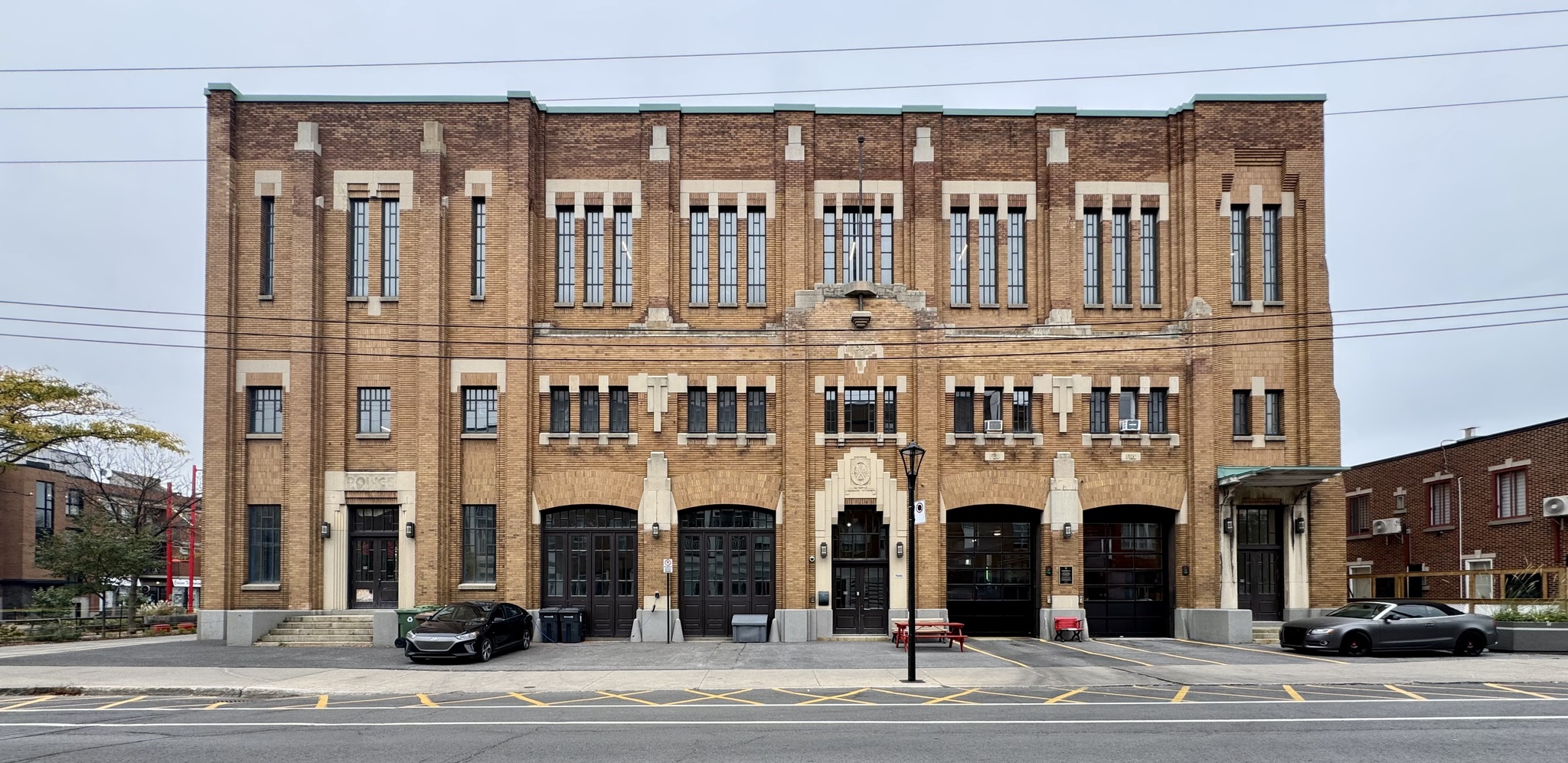
Another depression era Art Deco public works project was this combination police and fire station, just a block away from the market.
I couldn’t believe all the parked bikes on the sidewalk and porches in this neighbourhood.
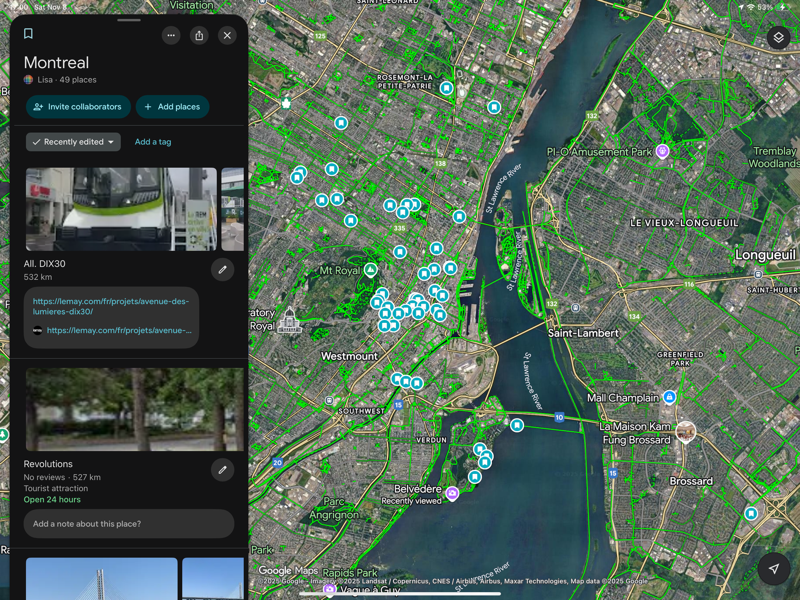
When I’m on social media and see places that I would like to visit in the future, I add them to lists on Google maps. Over the past few months, knowing I would be visiting Montreal, I regularly added places to my Montreal list. That made it reasonably simple, last night, for me to create a route of places to see, today. The places saved in a list show up as bookmarks on the map. This allows me to see which places of interest are in proximity to each other, and to build an efficient route to ride or walk.
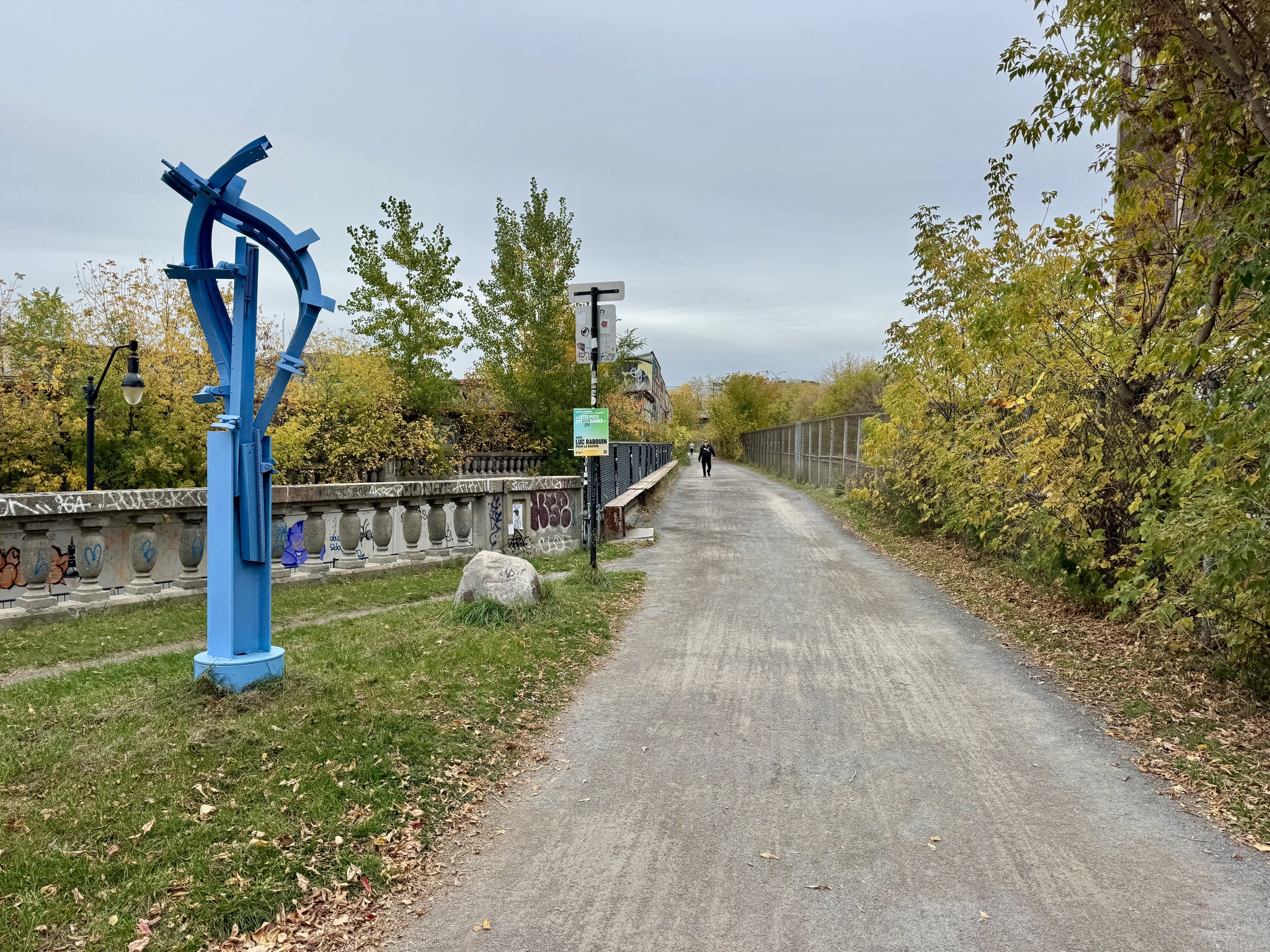
One of the places I read about recently is the Parc linéaire du Réseau-Vert, or Green Network Linear Park. The park is situated on an old rail line in an industrial area that has developed as an active transportation corridor over many years.
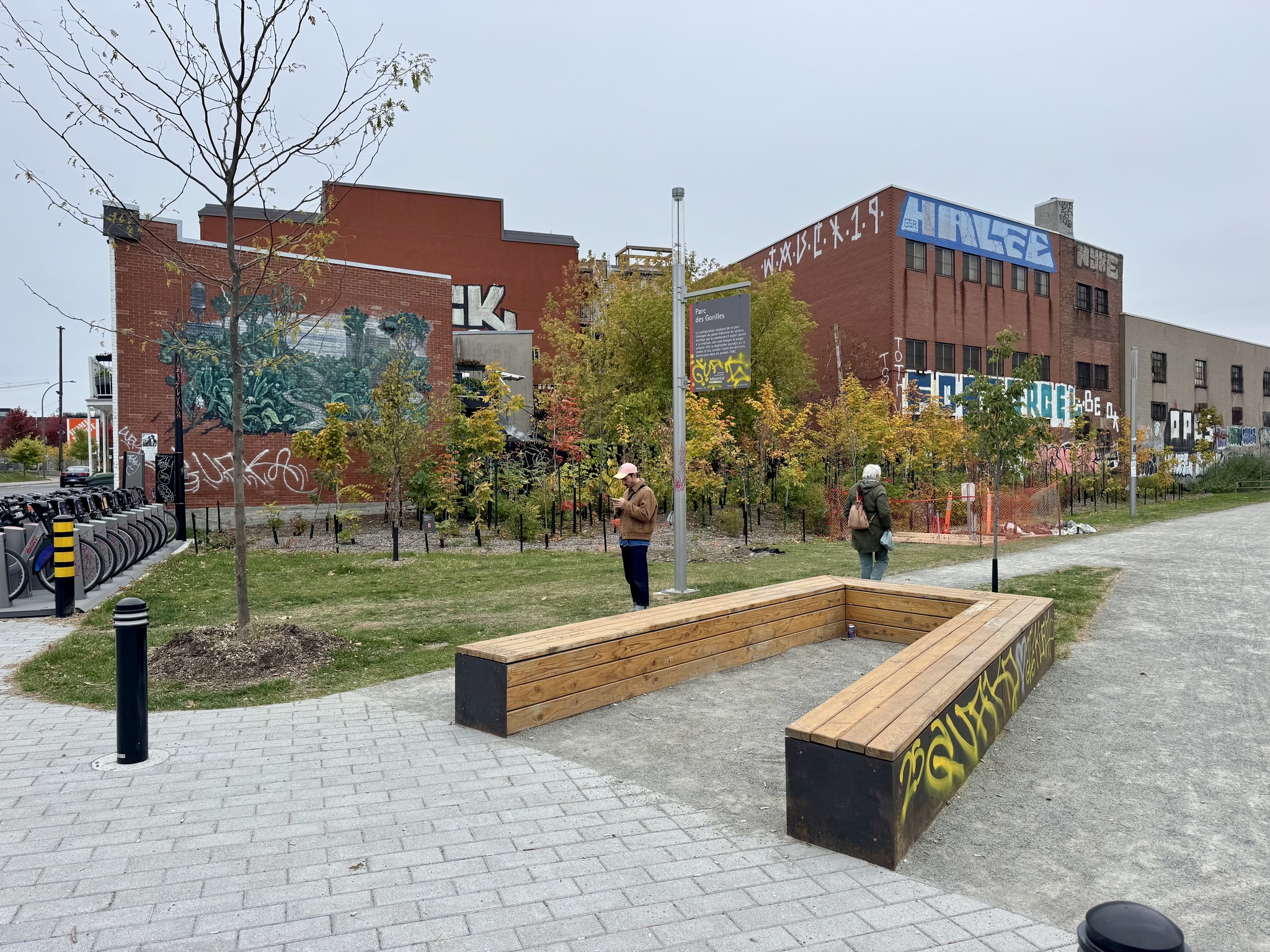
We entered at Gorilla Park, which was created by a partnership between the city and local citizens, to transform an urban wasteland. The park was named by the community. The name is reflected in this mural which shows a gorilla in the jungle if you look, if you look closely.
There was a piano in this covered seating area. I tried playing it, but not surprisingly, given it is outdoors, not all the notes worked, and it was out of tune.
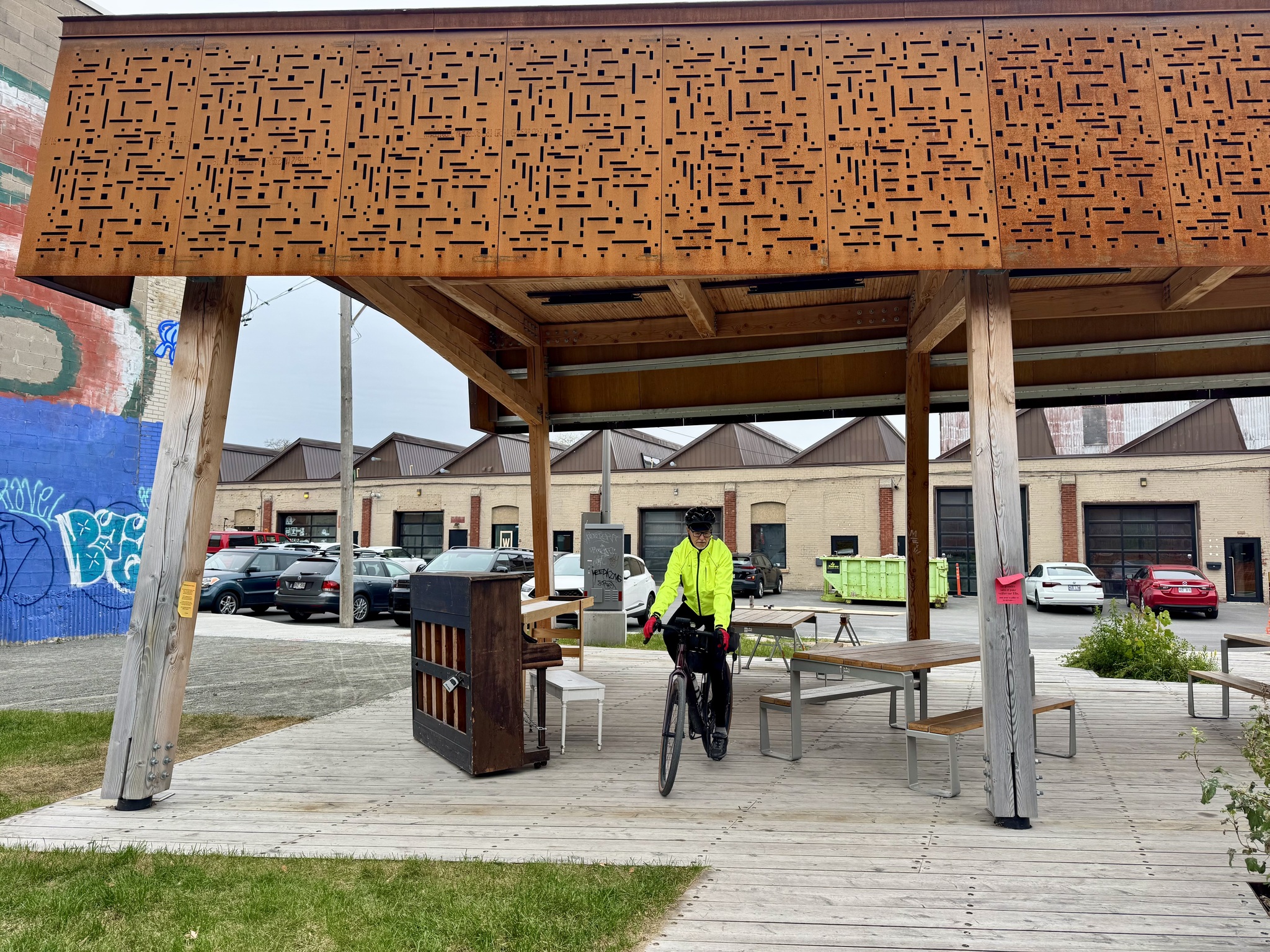
I was reminded of my visit to New York City’a High Line, which is a linear Park built on an old elevated rail line.
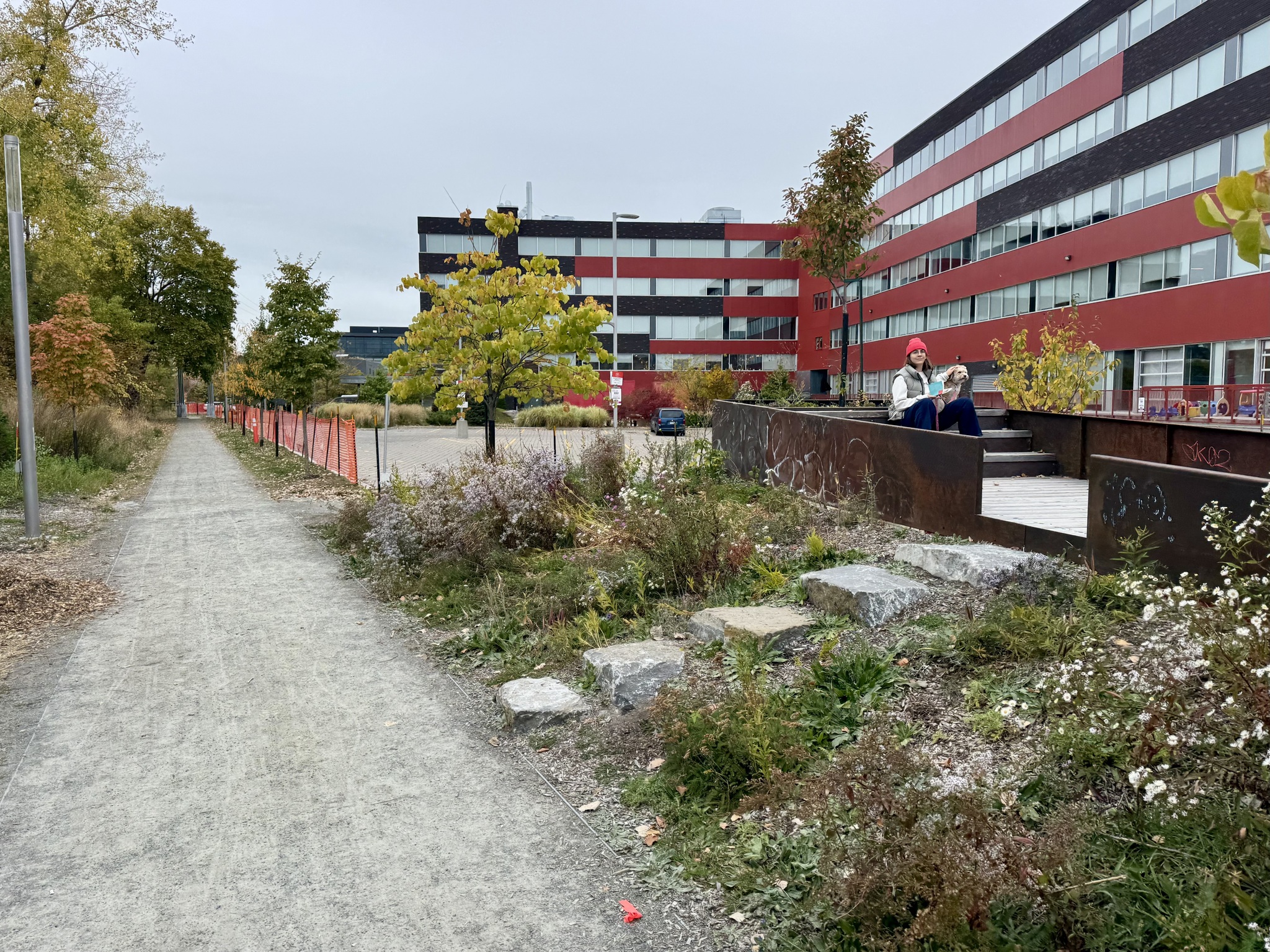
There were many places to sit, and art made out of reclaimed industrial bits and pieces.
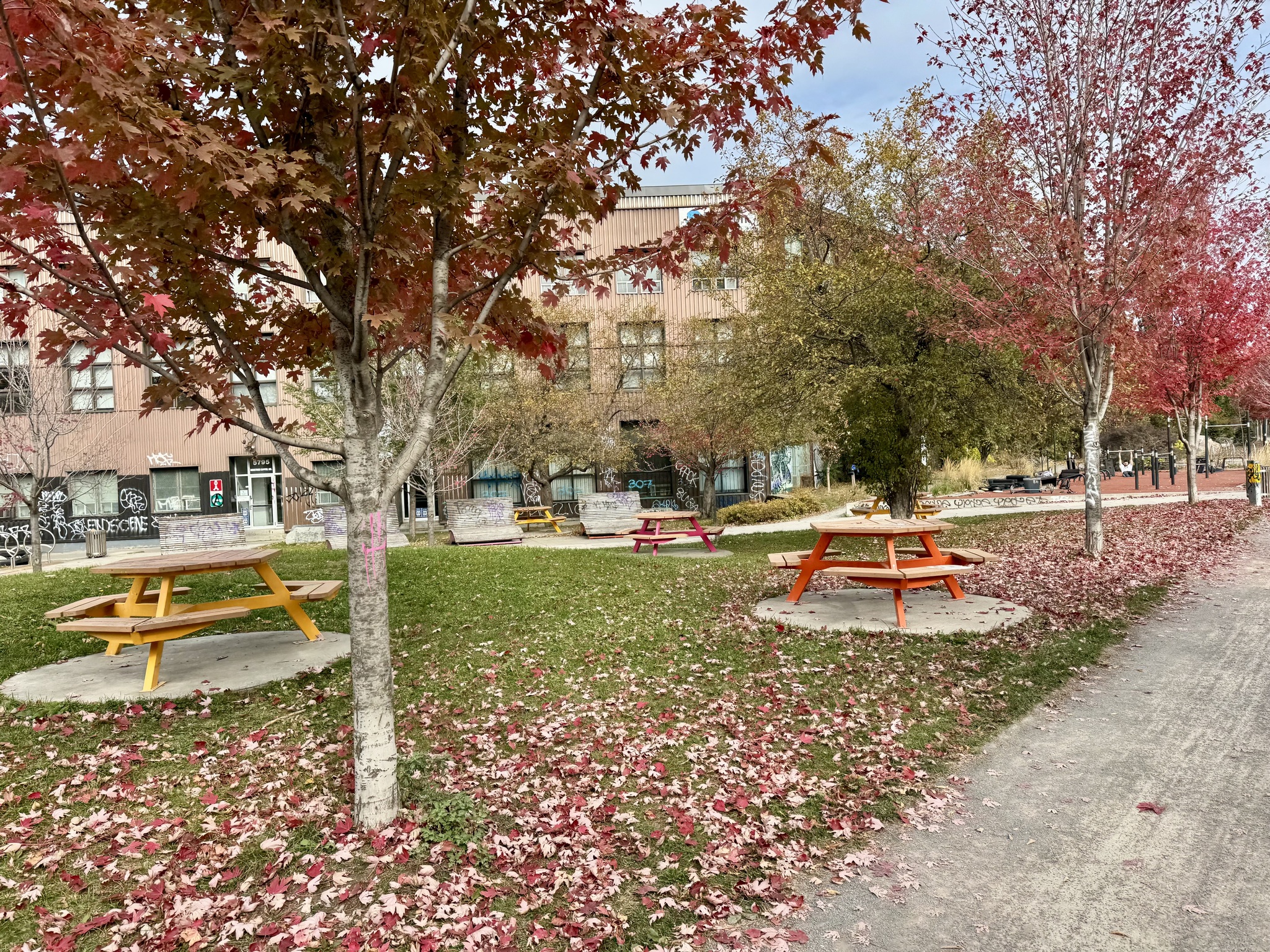
Cindy suggested a visit to Fairmont Bagel. It was started in 1919 and is operated by the grandchildren of the founder. It is open 24 hours a day.
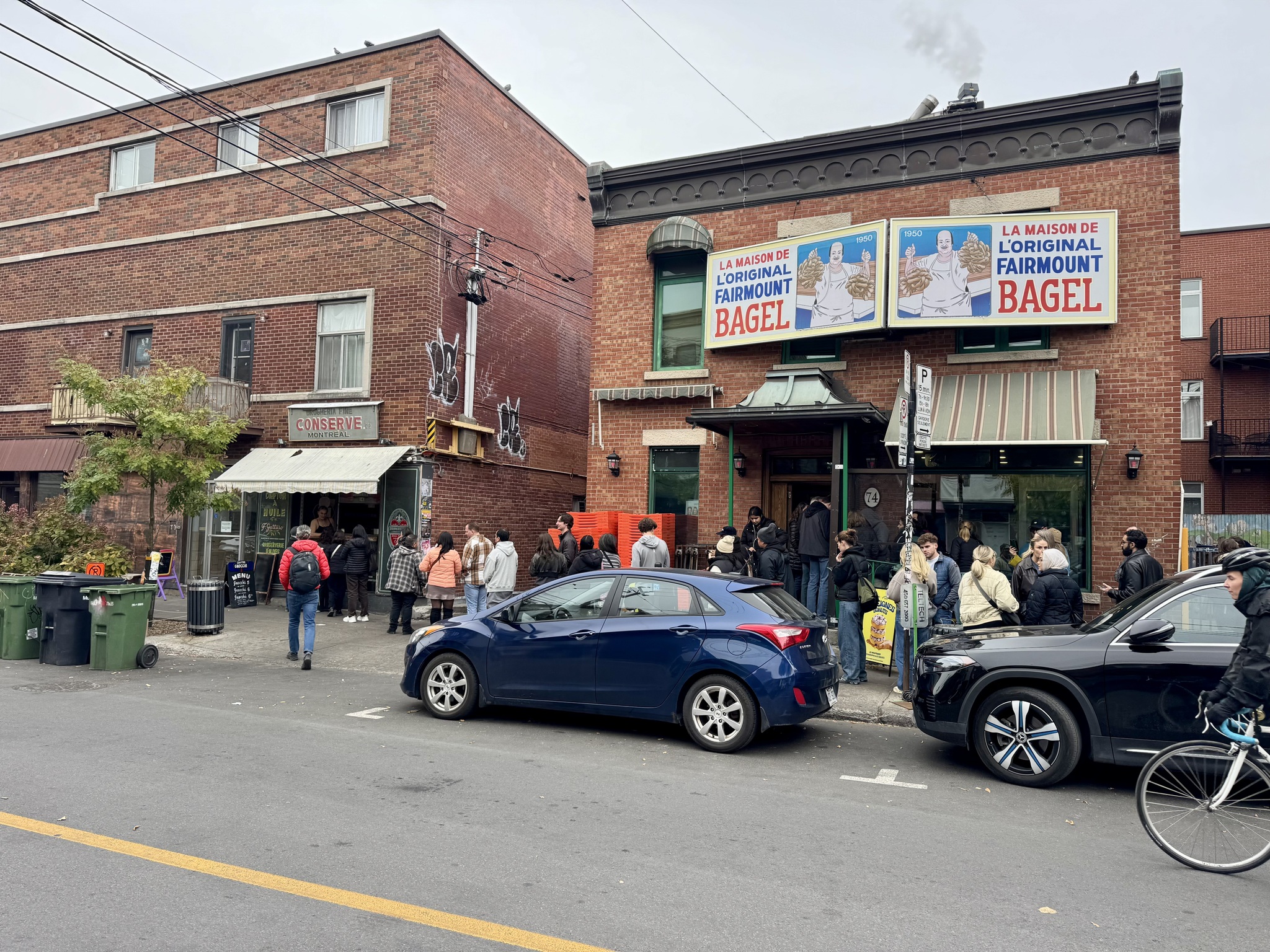
There’s no space to eat in. However, there were quite a few colourful benches on the wide sidewalk adjacent to the store. There was a lineup outside when we arrived, which took about 20 minutes to get through. The lineup never diminished during the time we were there.
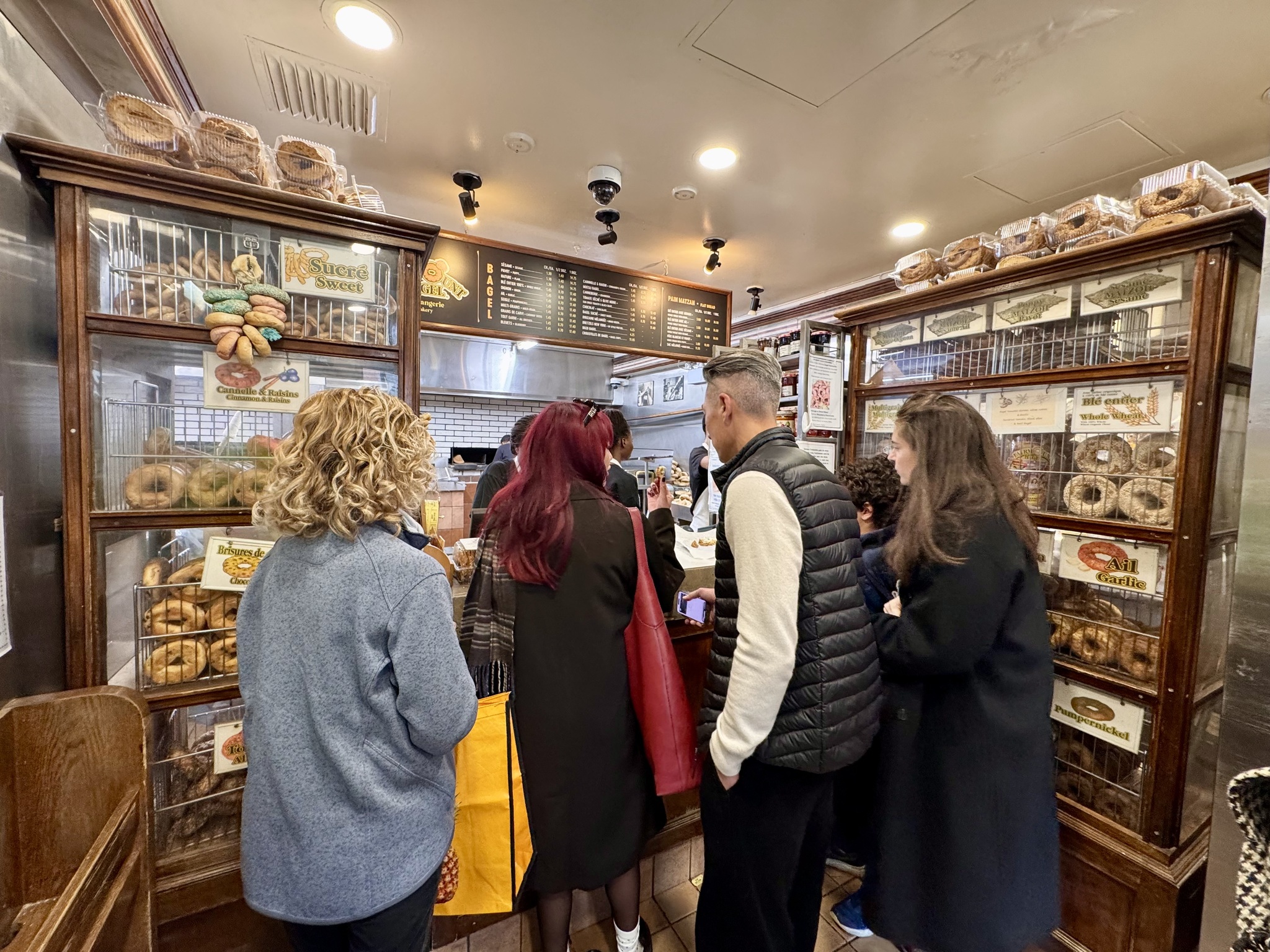
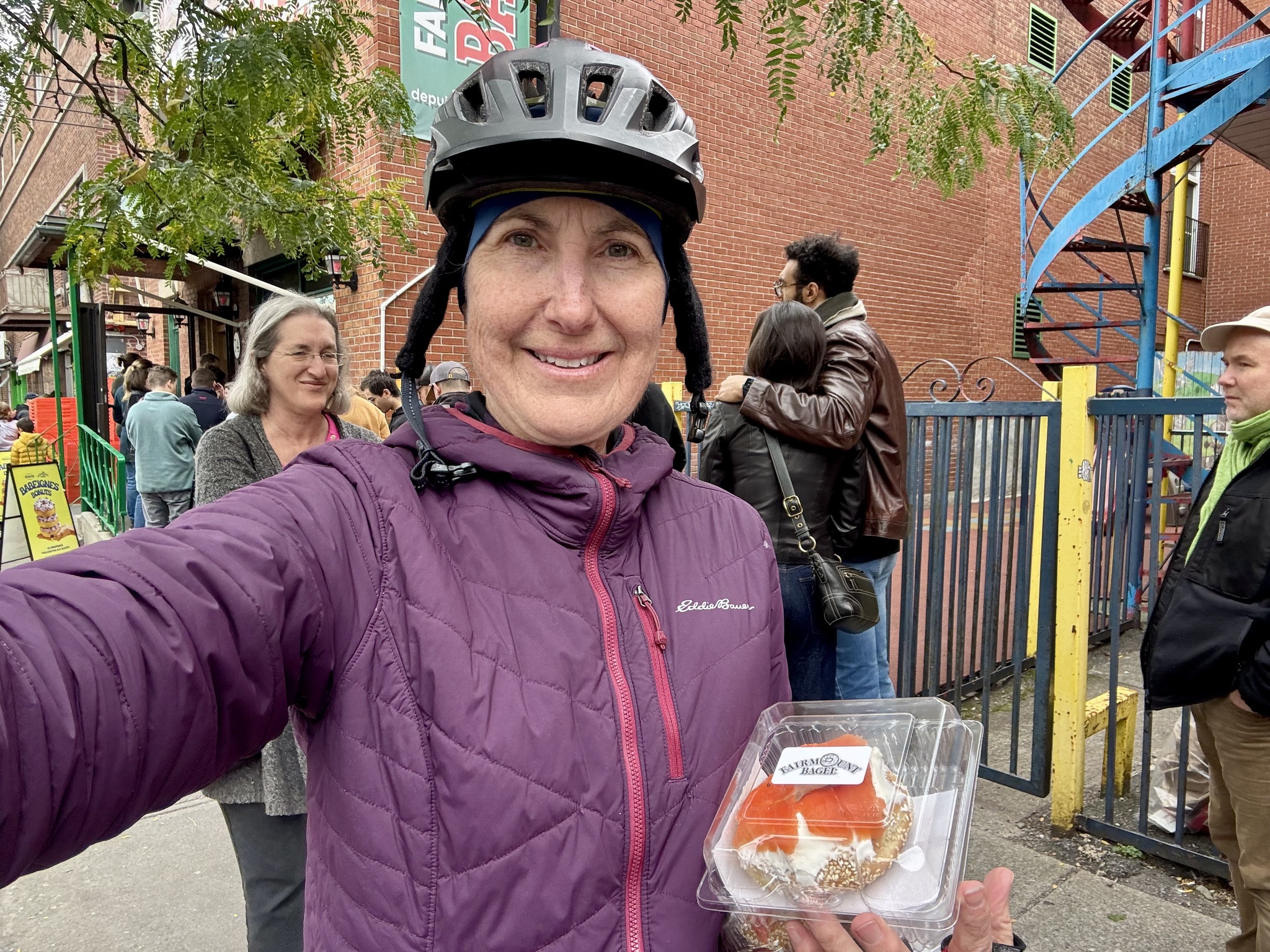
We treated ourselves to bagels and lox. They were delicious. Cindy bought a dozen bagels to take home.
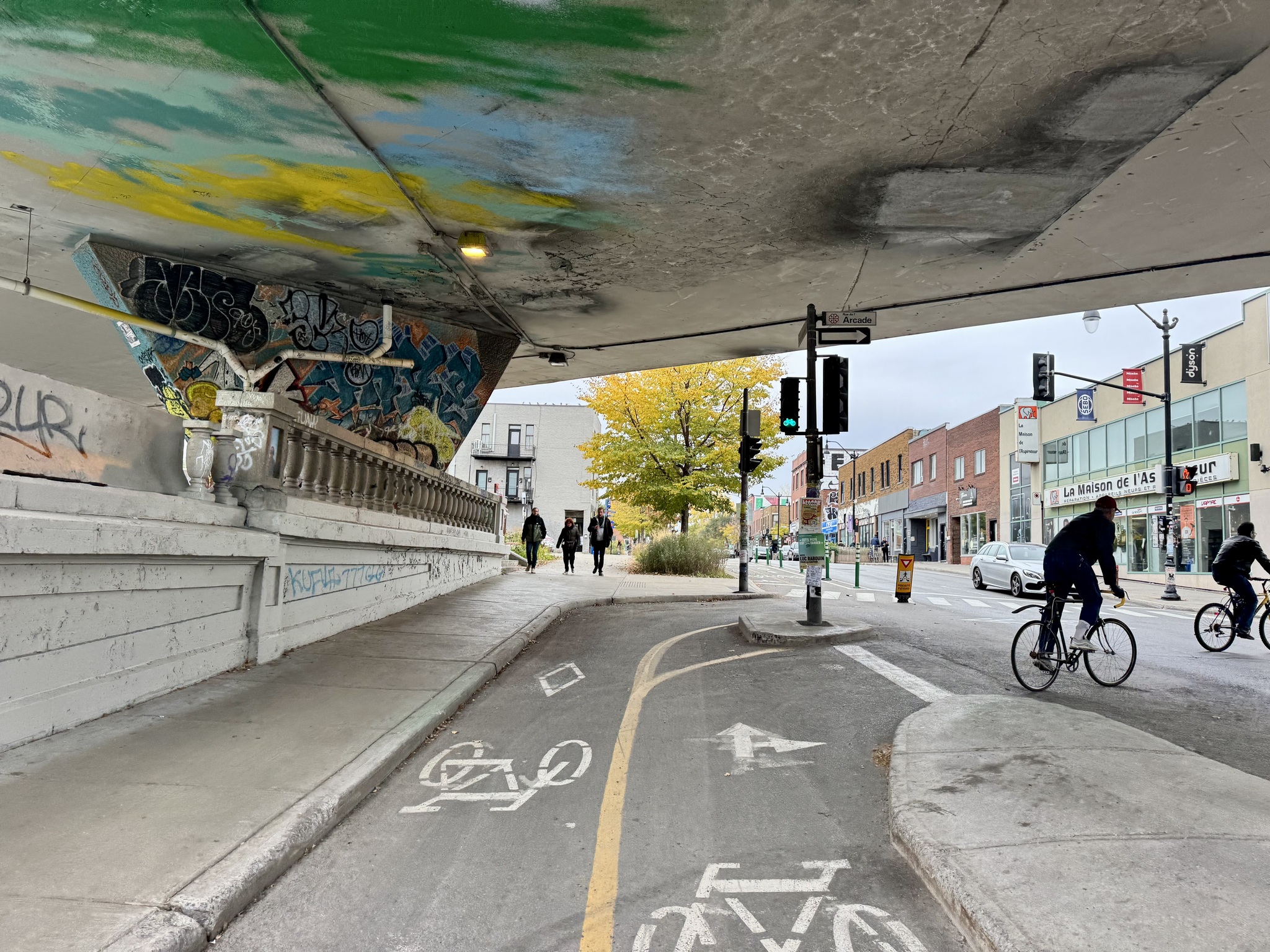
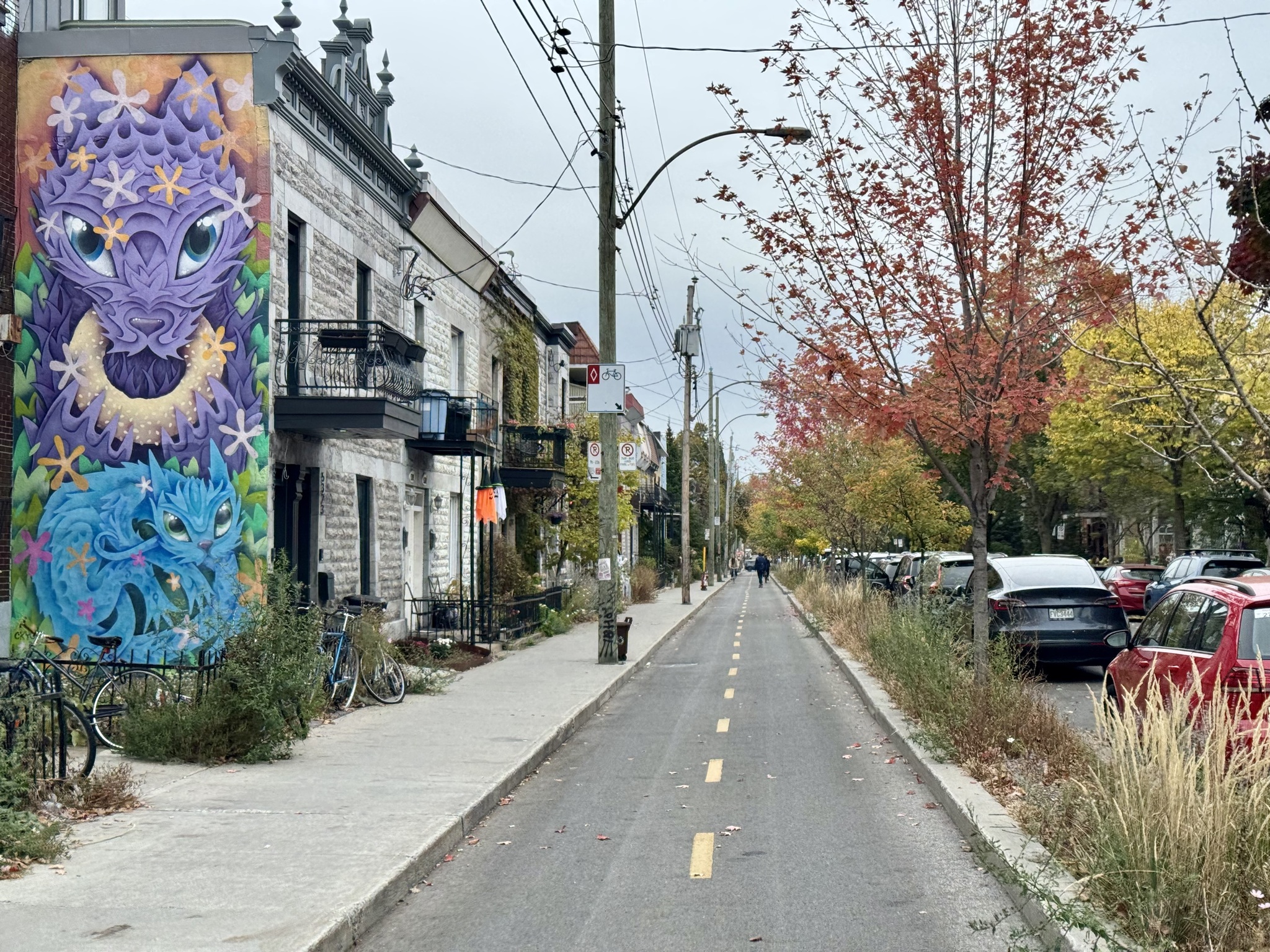
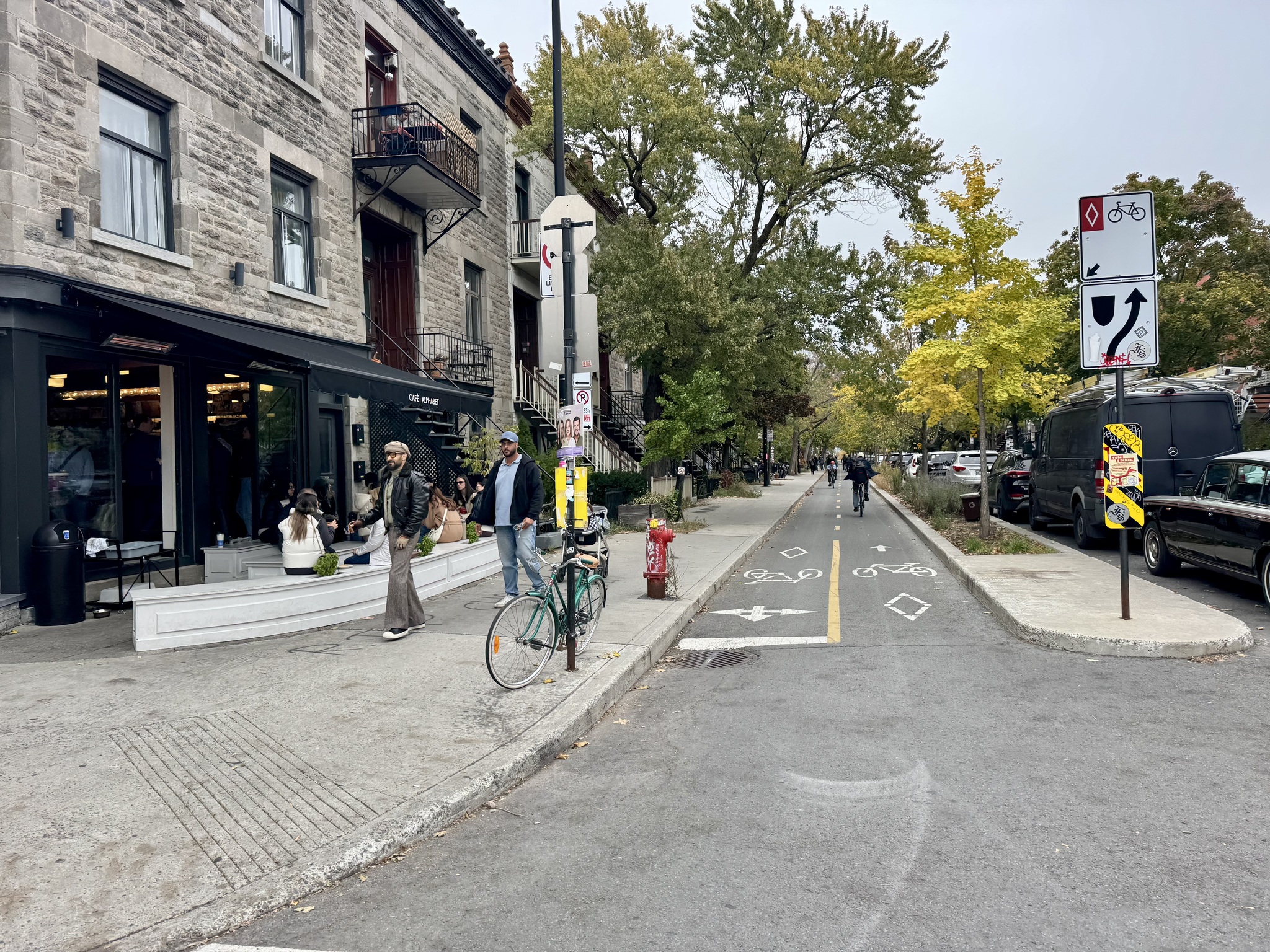
There was cycling infrastructure that took us from Reseau Vert almost all the way to Fairmont Bagel.
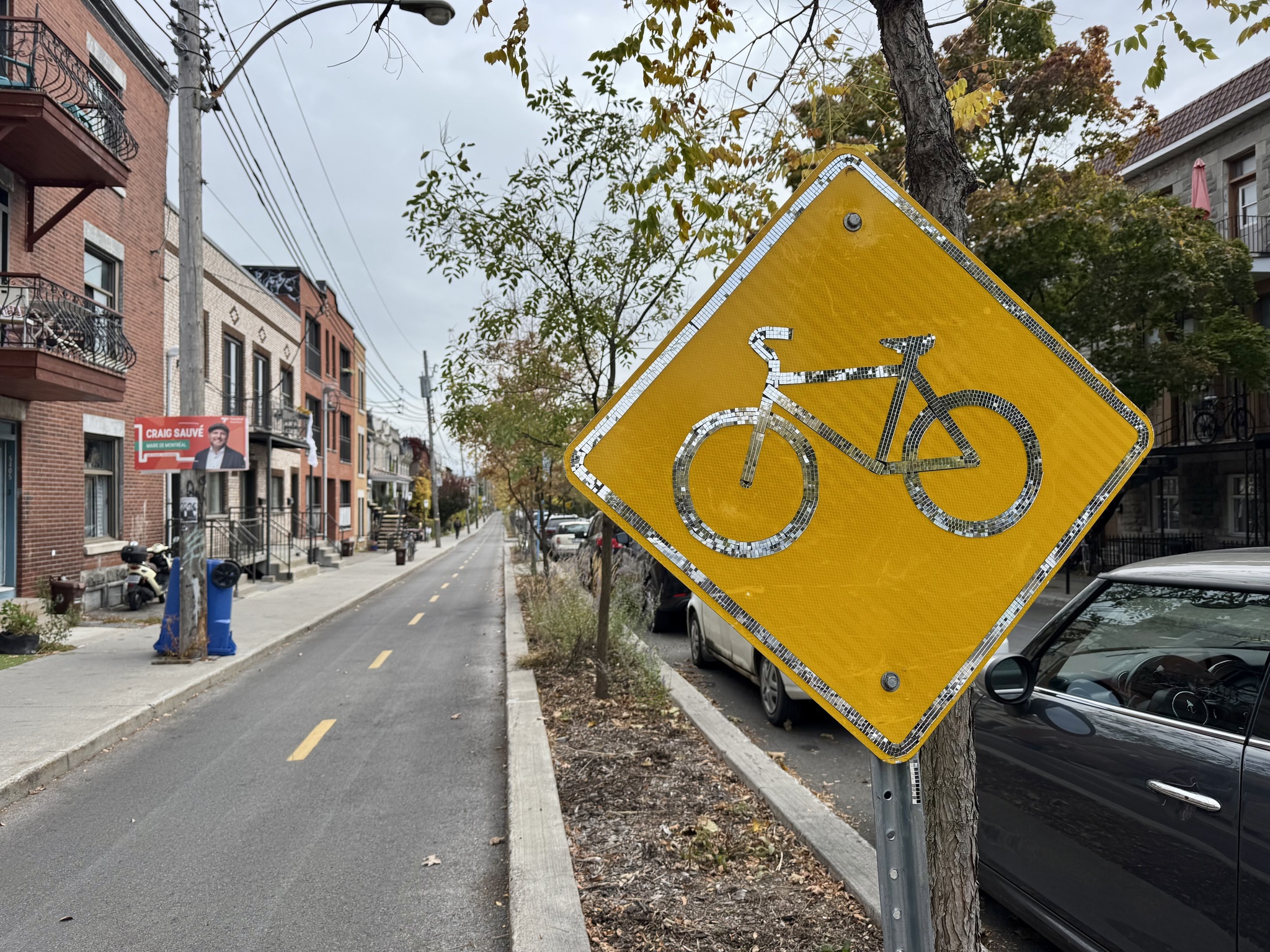
We saw this sparkly bike sign alongside the cycle track.
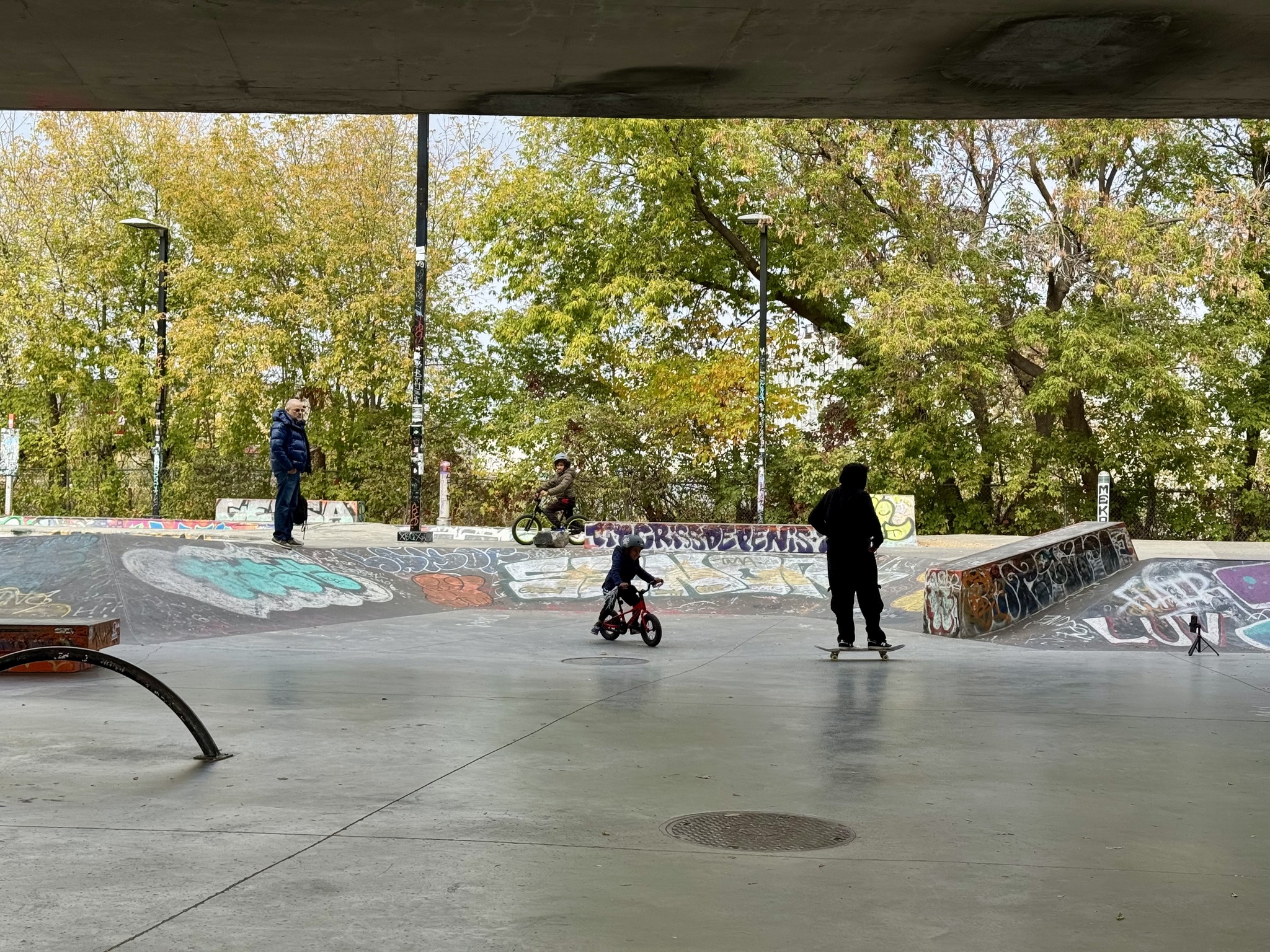
We retraced our route to continue along the Reseau Vert, passing a skateboard park in an underpass, that reminded me of Underpass Park in Toronto.
These steel beams are used as a motif in many places along the trail. Unfortunately, they’ve all been tagged quite badly.
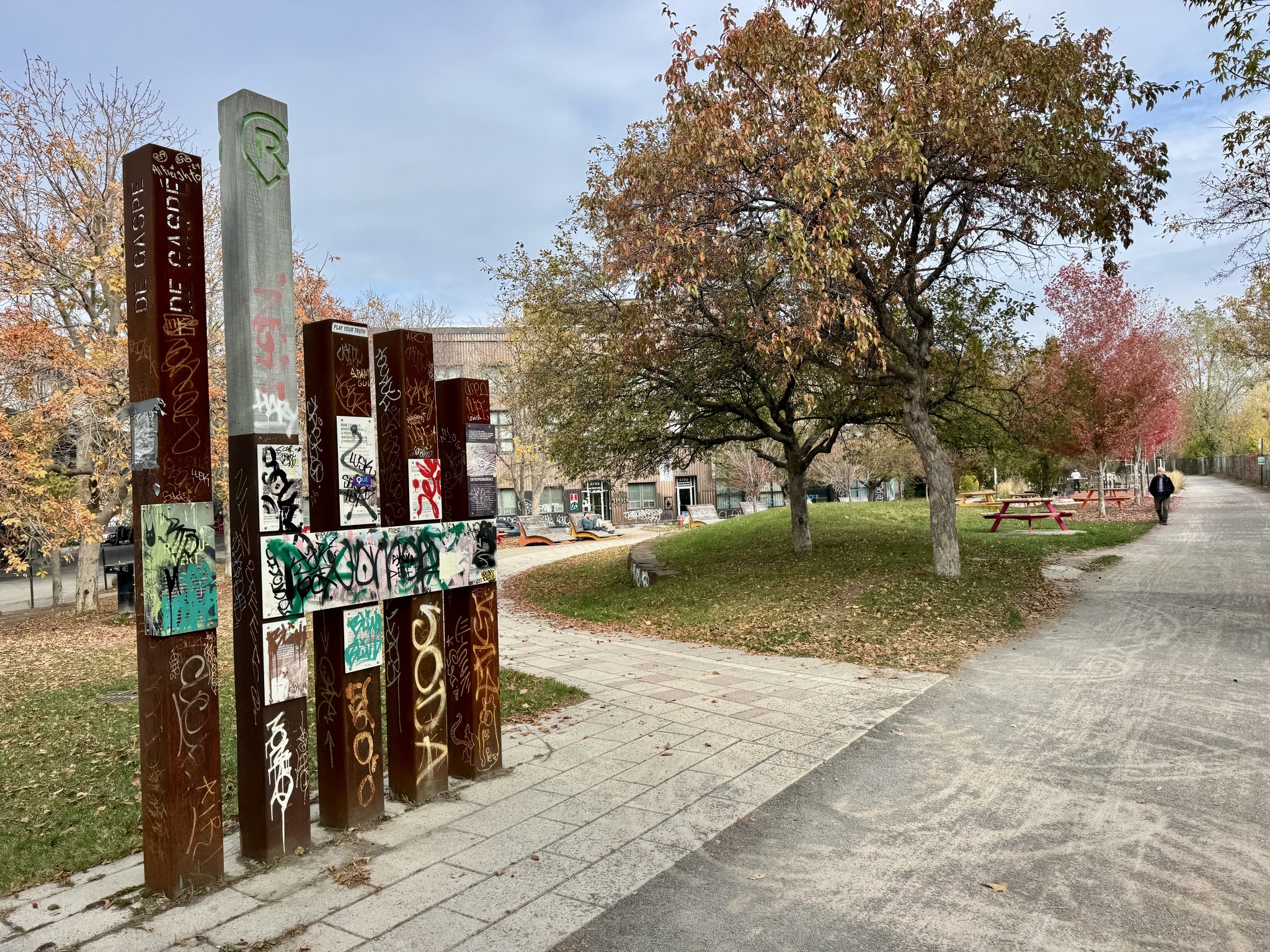
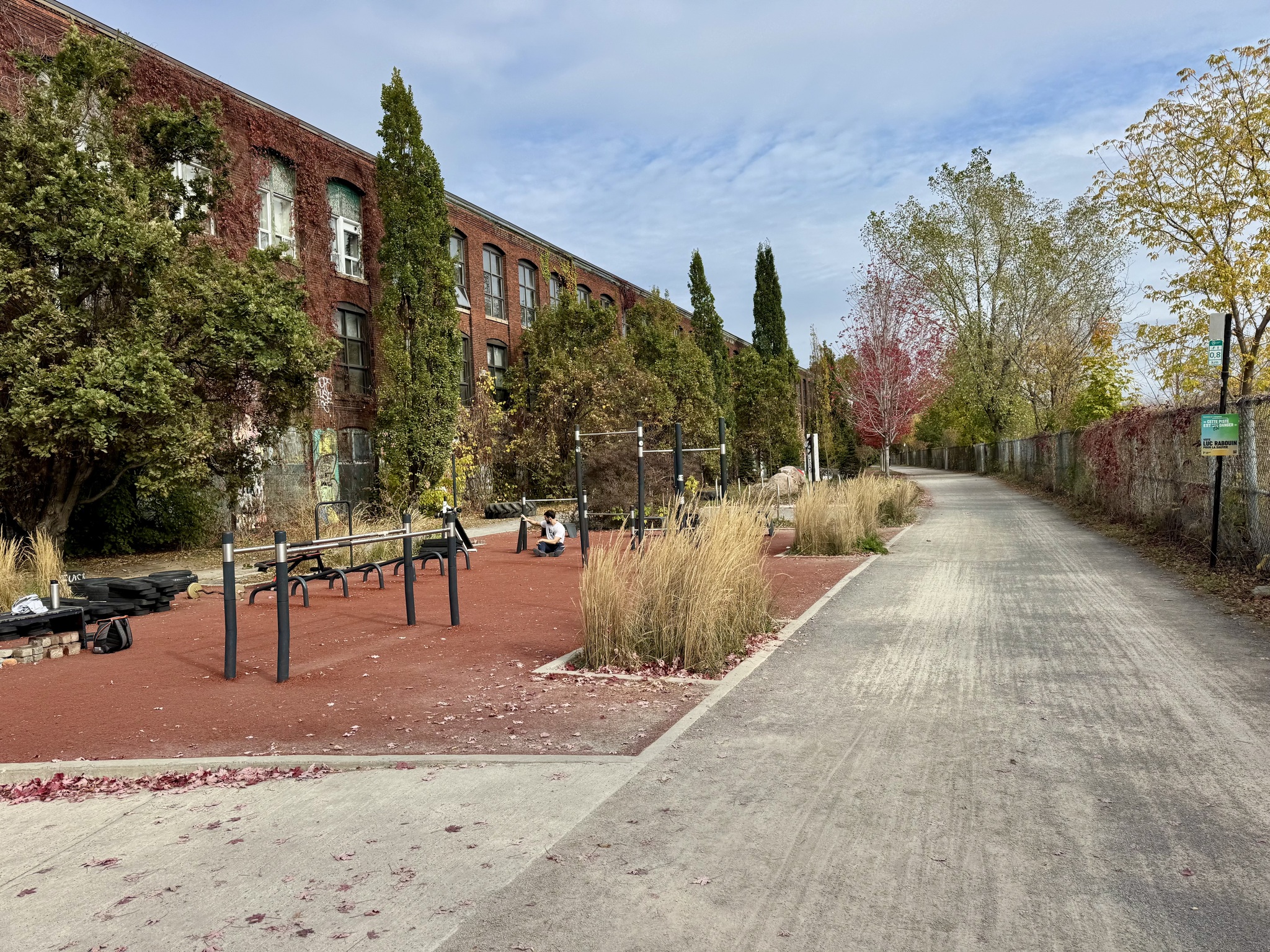
We saw more places to sit and places to work out.
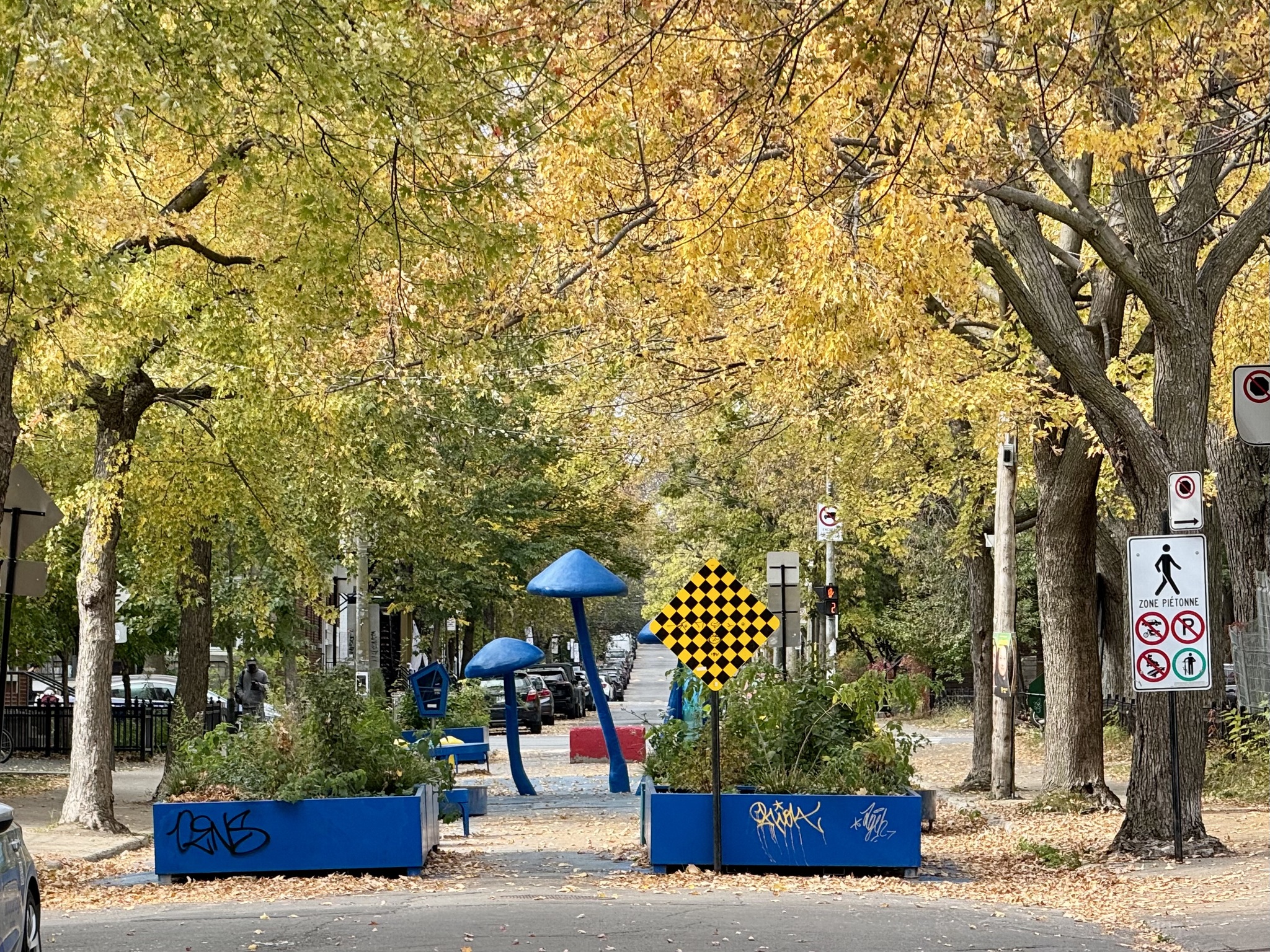
When we neared the east end of the linear park, we started to ride toward the waterfront, with a planned stop at another park along the way. We passed Montreal’s first School Square. When École Paul-Bruchési, renovated to extend the school, it lost schoolyard space. They worked with the city to close the street in front of the school and build a playground to recover that space. I love seeing roads being repurposed from motor vehicle use.
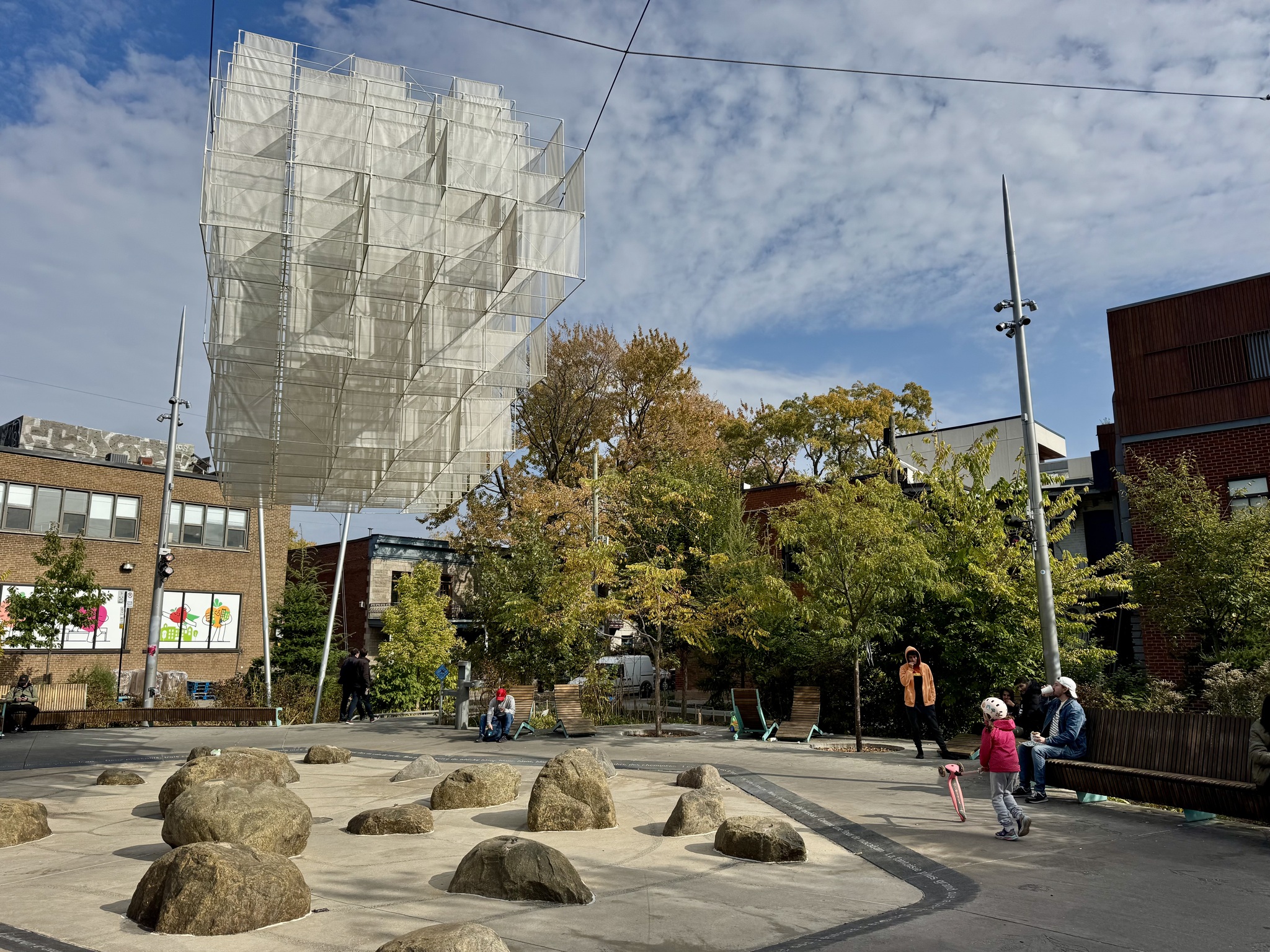
Place des Fleurs-de-Macadam is located on land previously occupied by a gas station. The ground was decontaminated and then turned into Quebec‘s first “water Square“. It is a temporarily floodable public square, and gathering place. It has lots of seating, a water fountain, and mist blowers for cooling off on hot days. It helps to reduce the heat island effect and stormwater runoff. It was designed by the same company that designed Shamrock Park.
We admired this large colourful mural by TYXNA while we were stopped at a traffic light in the Plateau neighbourhood.
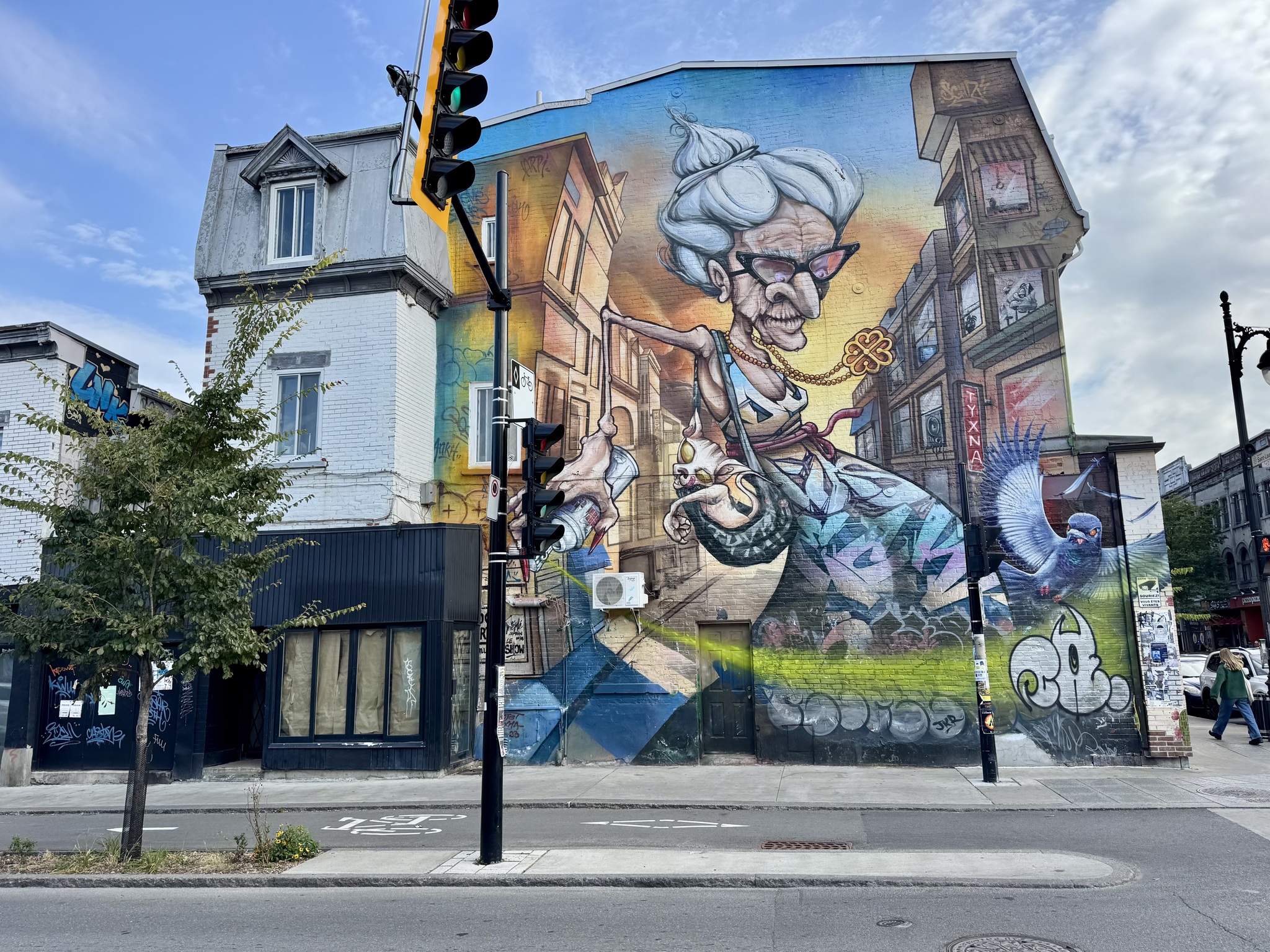
We knew that by going down to the waterfront, we would have to climb back up to the Oratory again, but it was still a fun descent.
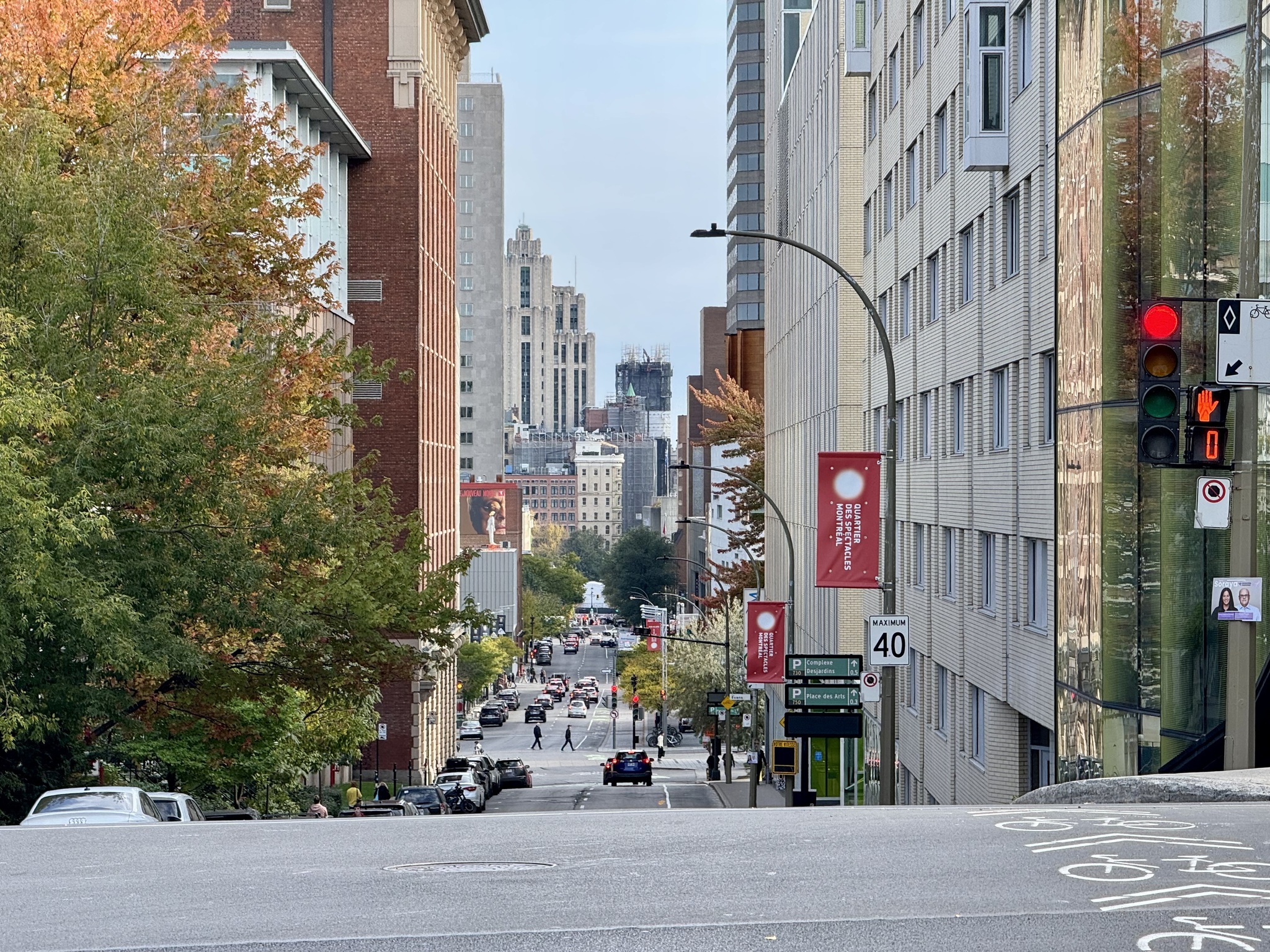
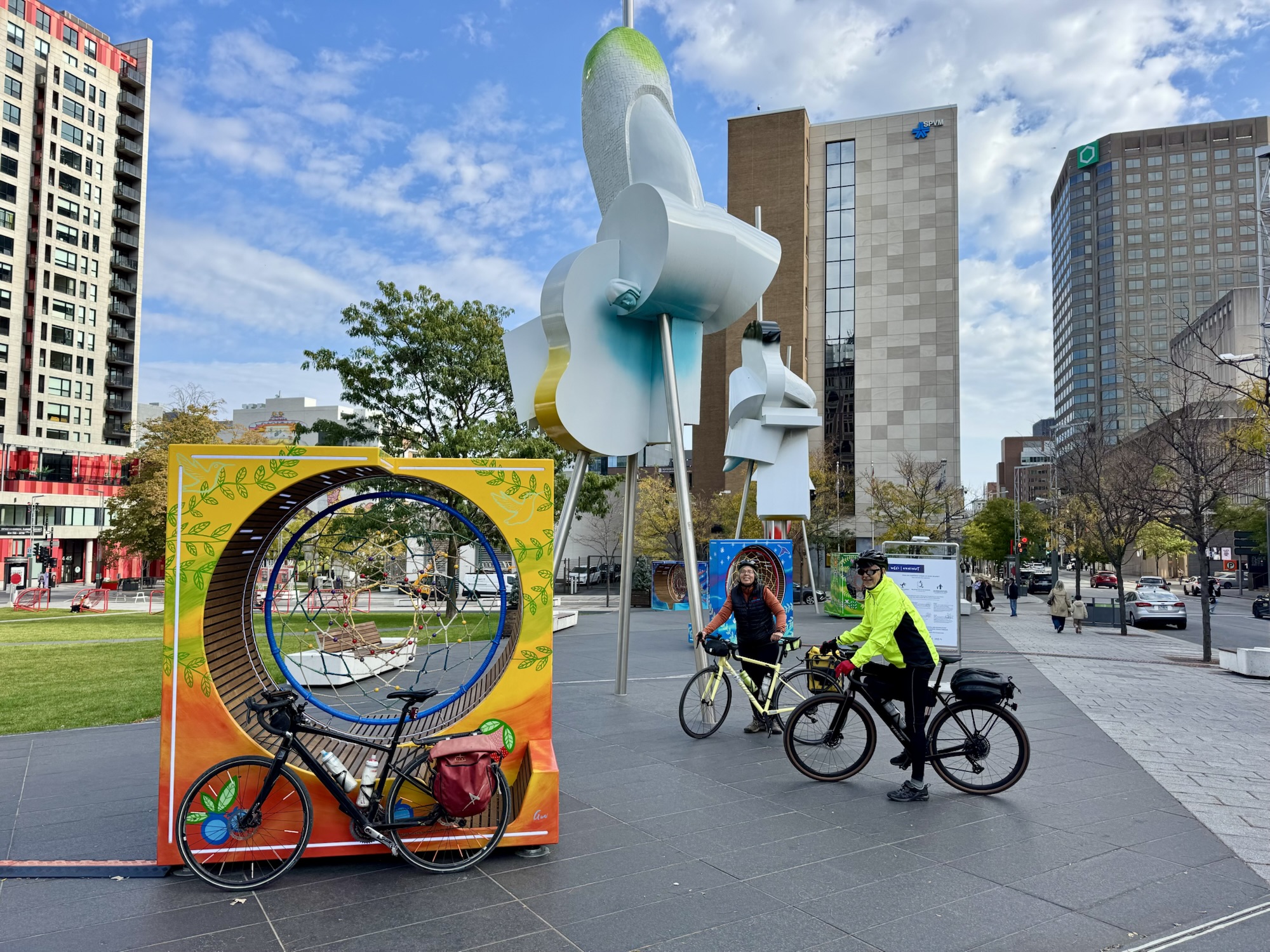
Our next stop was Parterre du Quartier des spectacles. It’s another great park, and the colourful dream catchers/benches were fabulous.
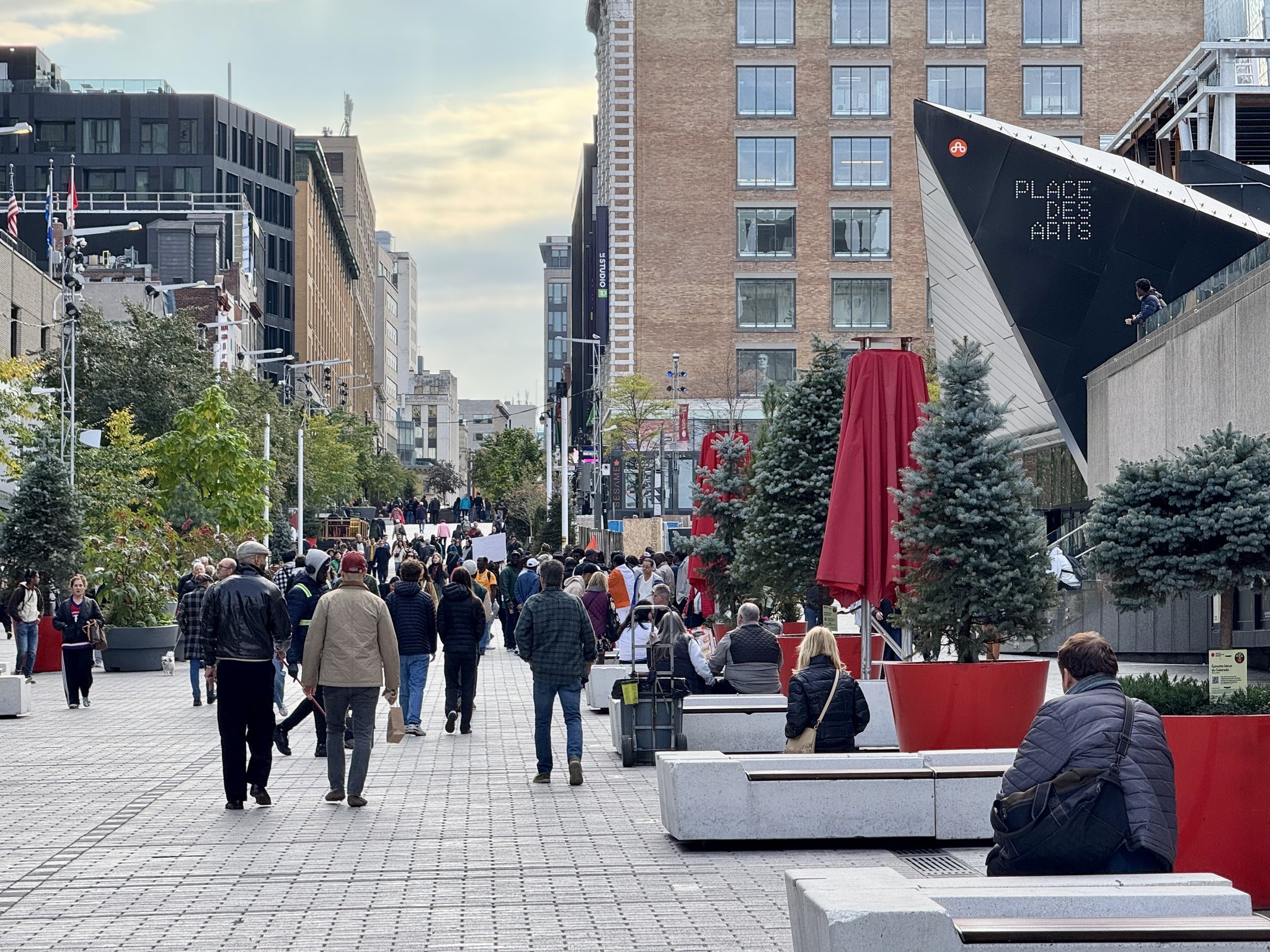
We stopped at the pedestrianized section of Saint Catherine Street just long enough to marvel at the crowds and take a few pictures.
Chinatown’s pedestrianized street was even more crowded.
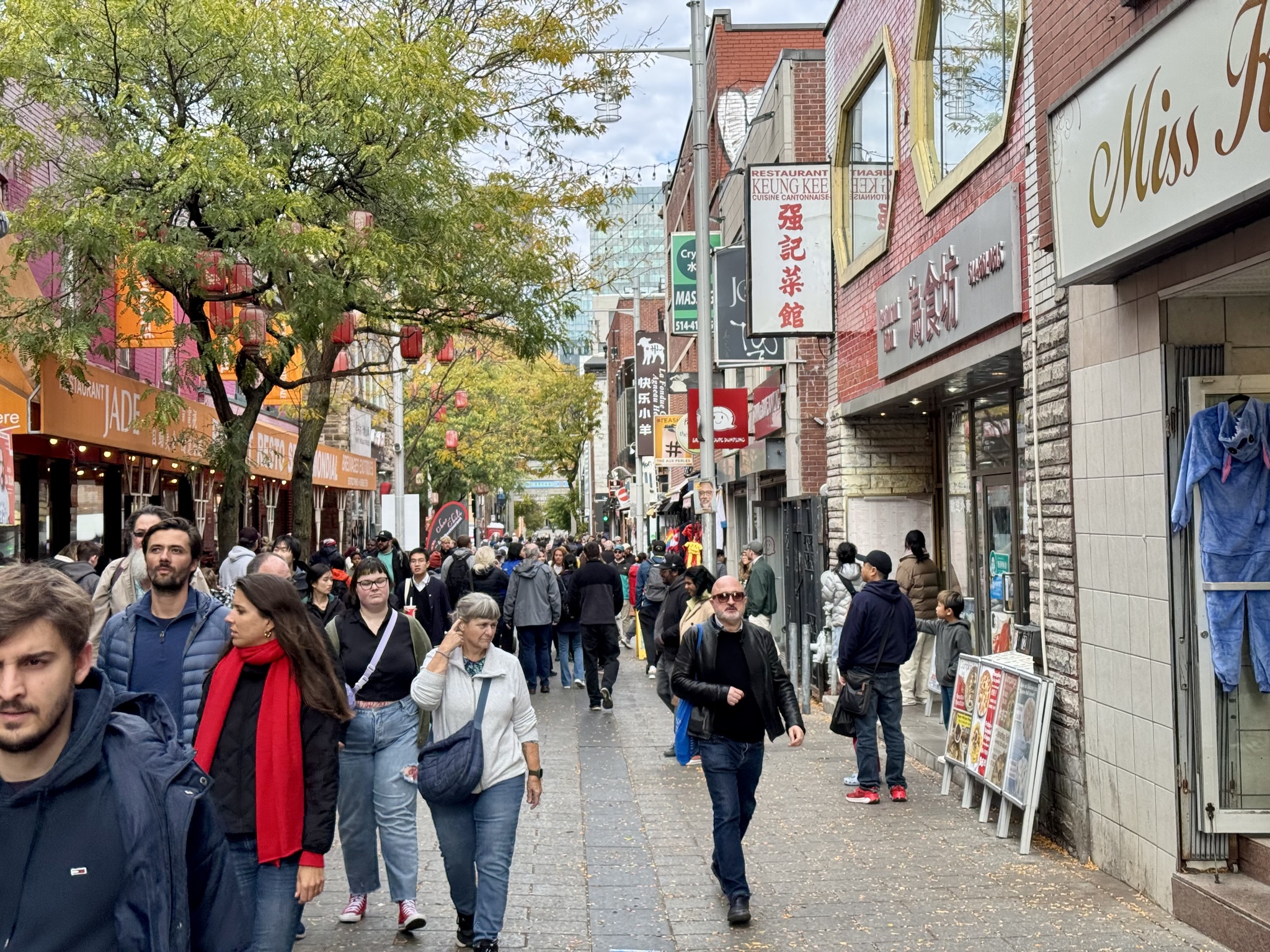
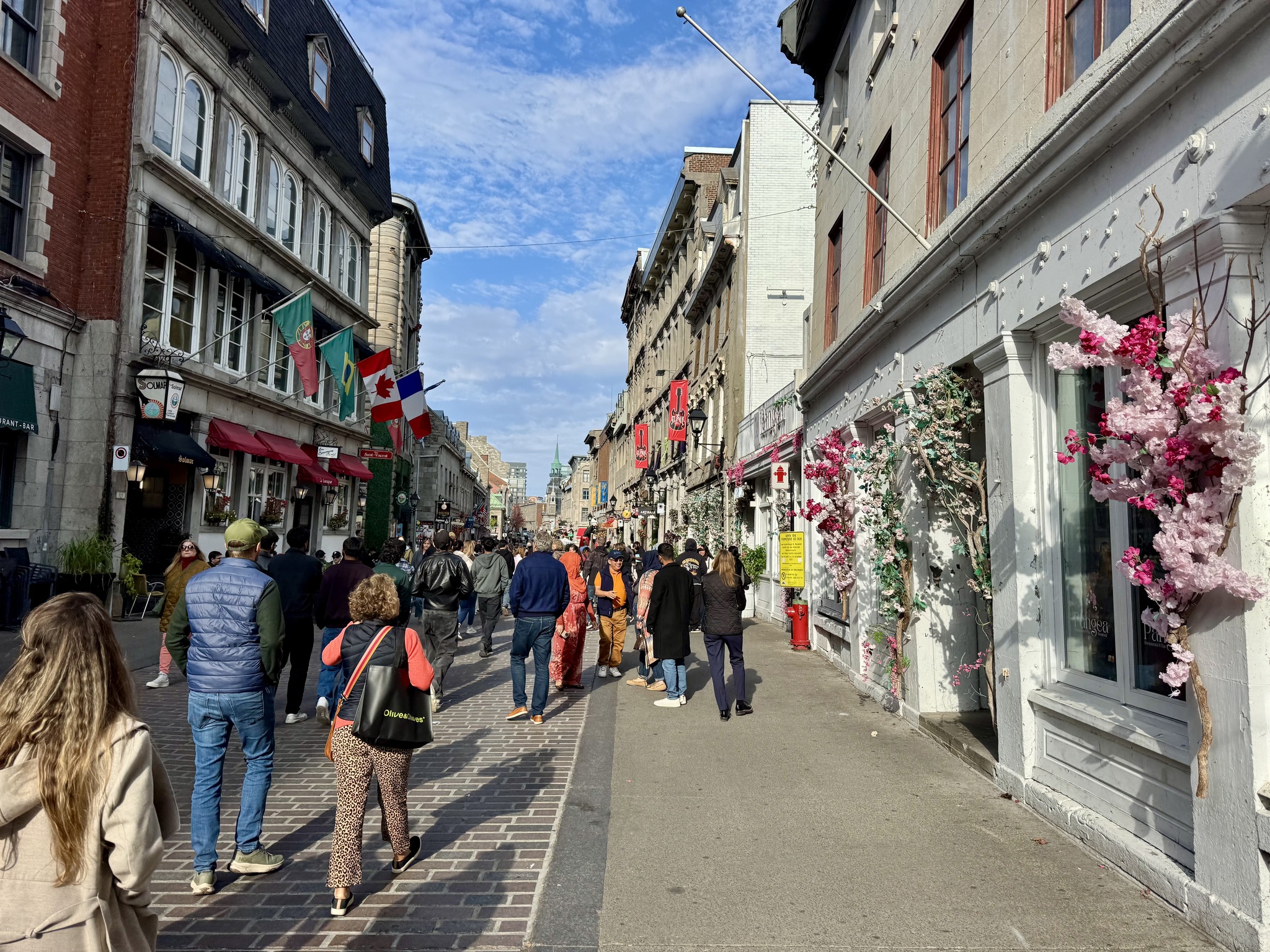
Shortly thereafter we came to Saint Paul Street, which was also pedestrian only. We had to walk our bikes on all three streets as they were far too crowded to safely ride.
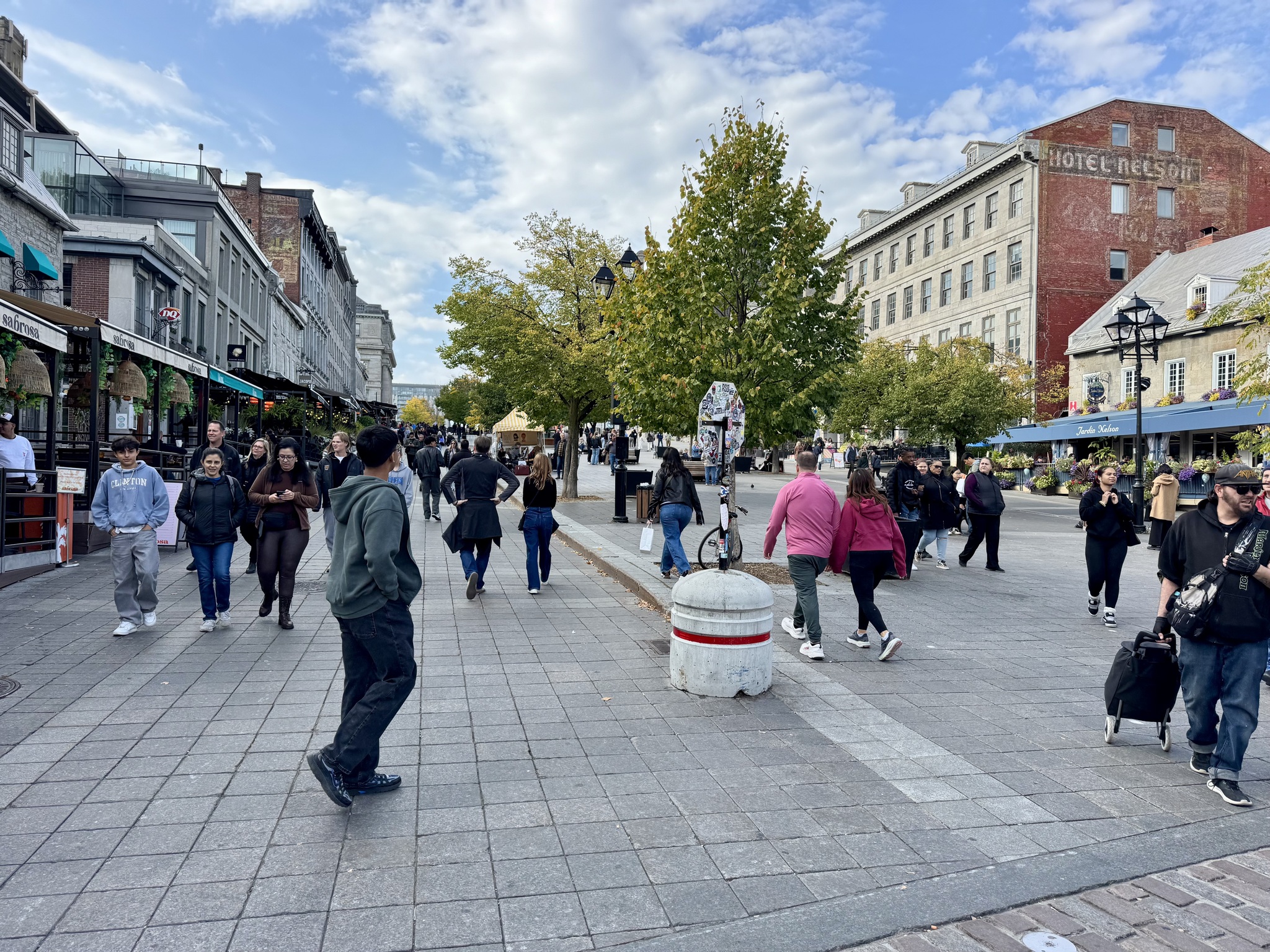
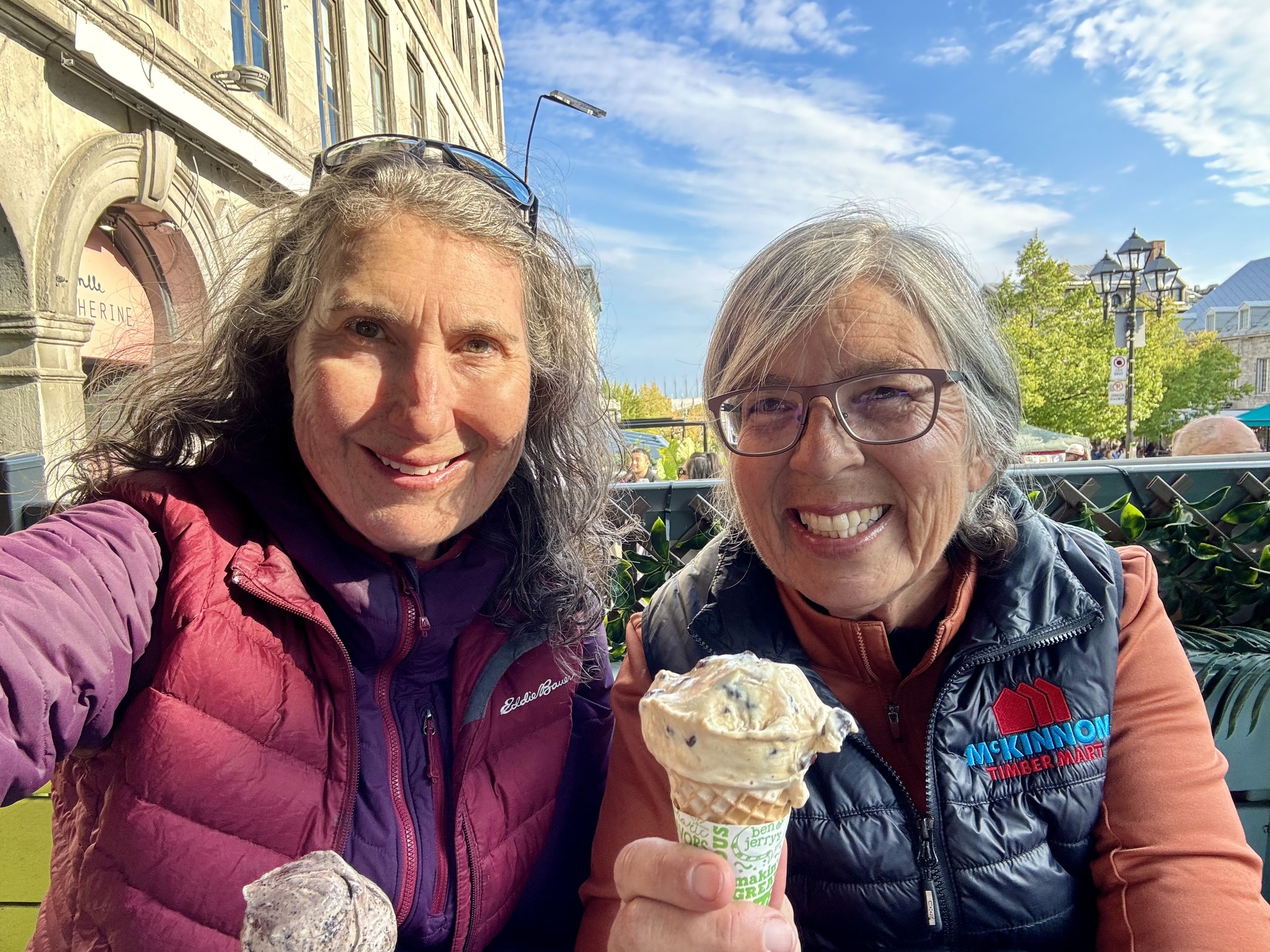
In Jacques Cartier Place we had ice cream at the Ben & Jerry’s. It was also very busy. Build a city where pedestrians feel comfortable, and you will attract lots of pedestrians.
Our next stop was the cruise ship terminal rooftop park: Promenade d’Iberville. In addition to a 2200 m² area of plants, it has a 180 m long wooden walkway which leads to spectacular views over the port.
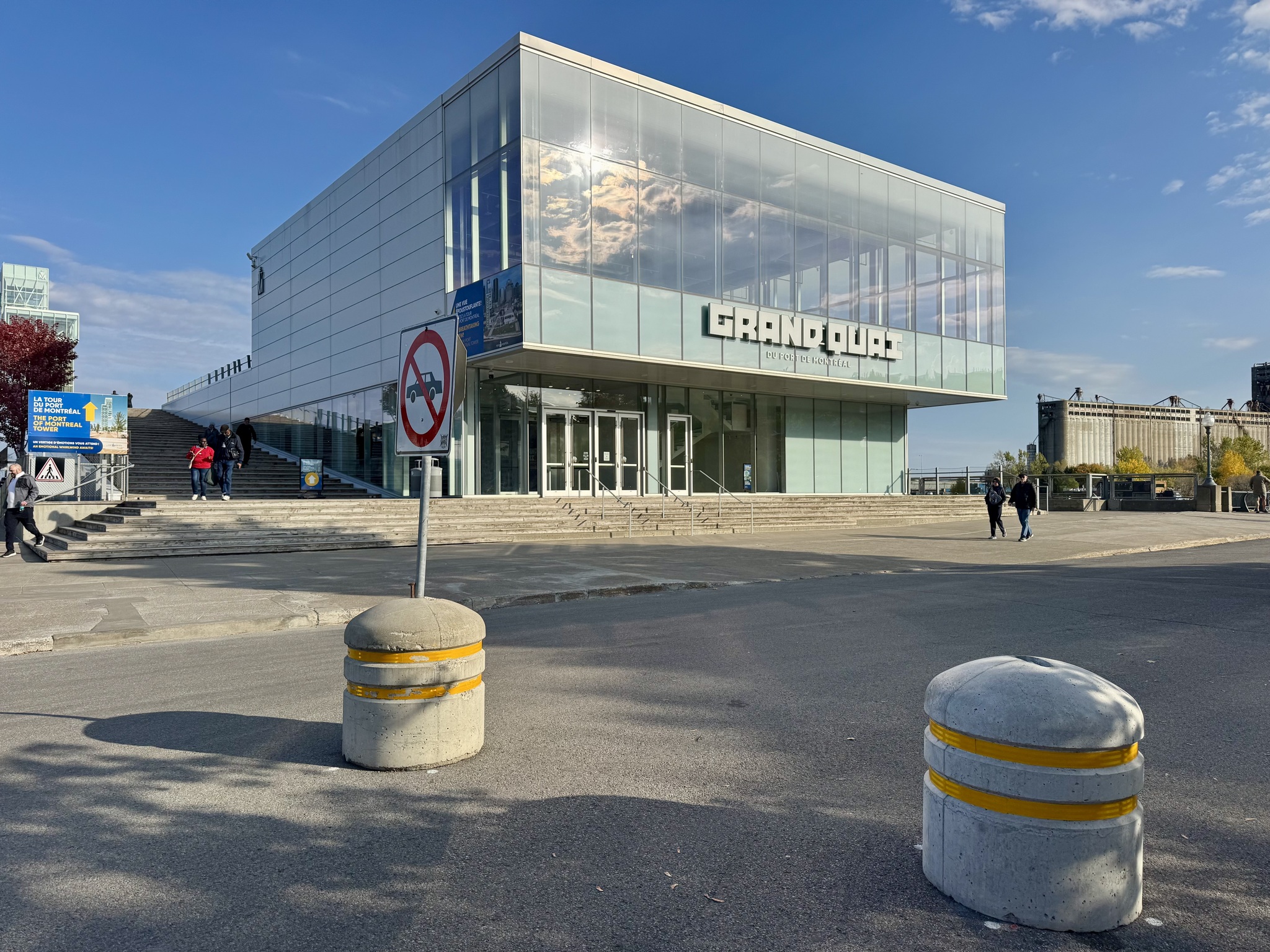
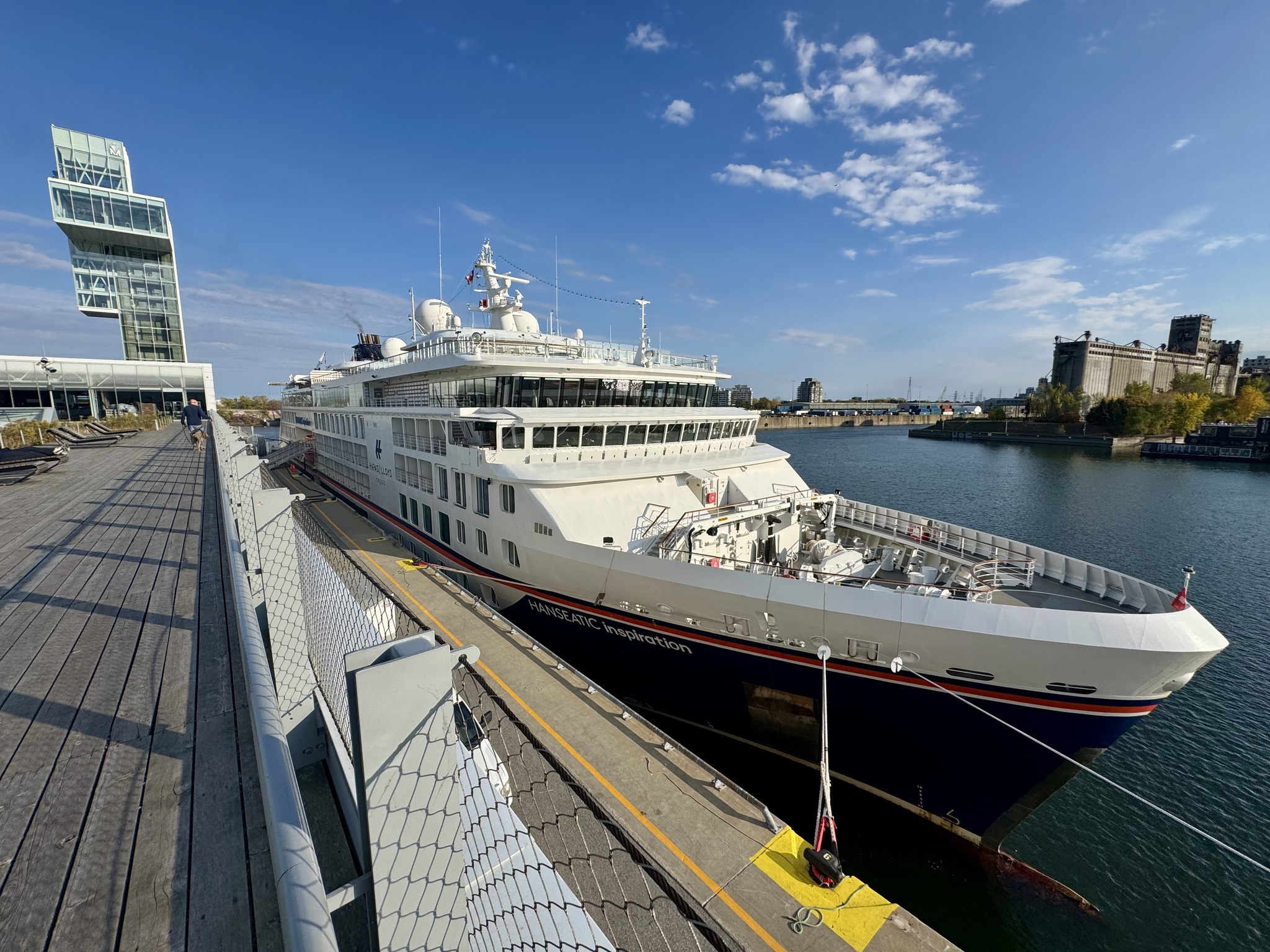
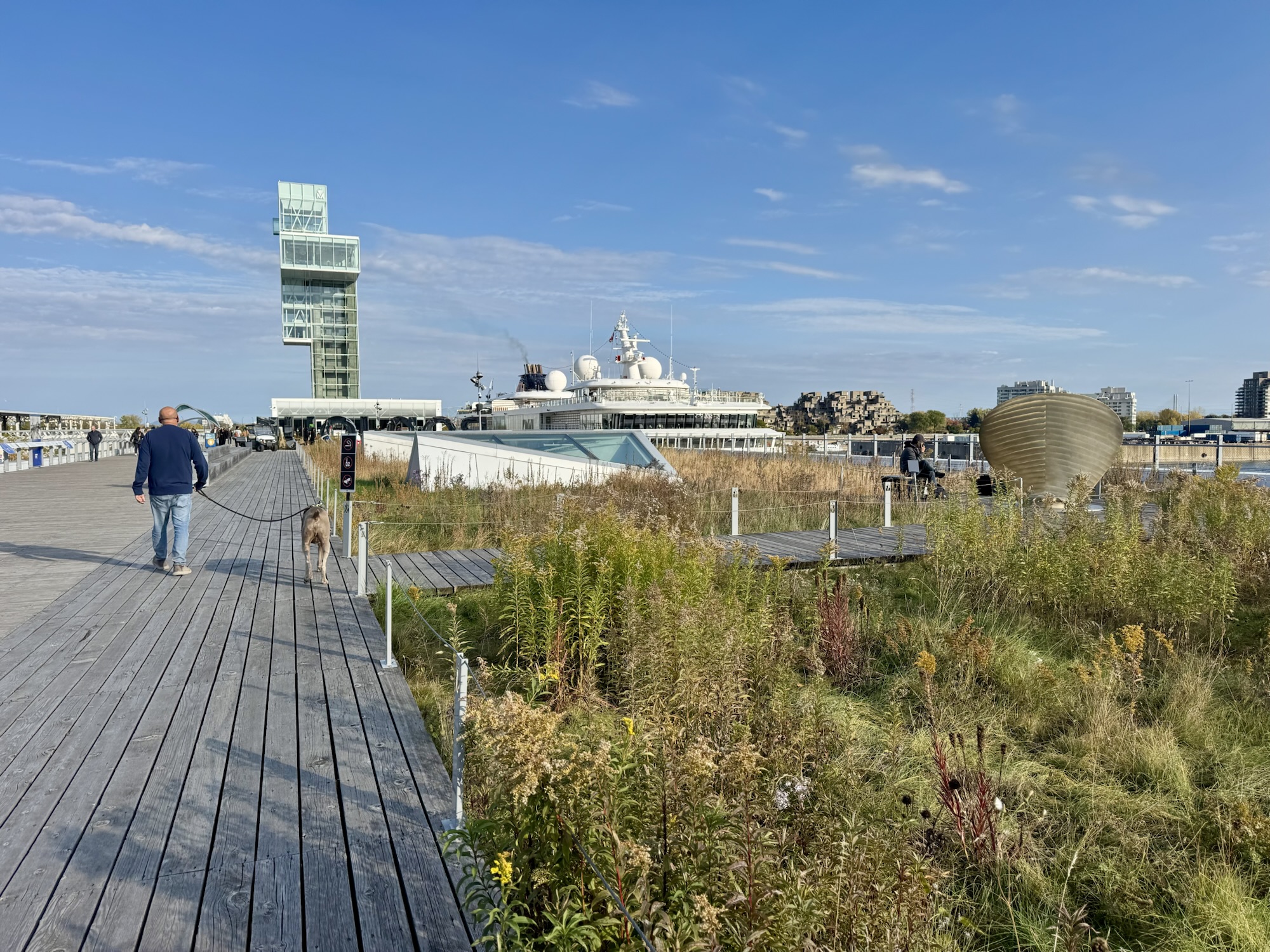
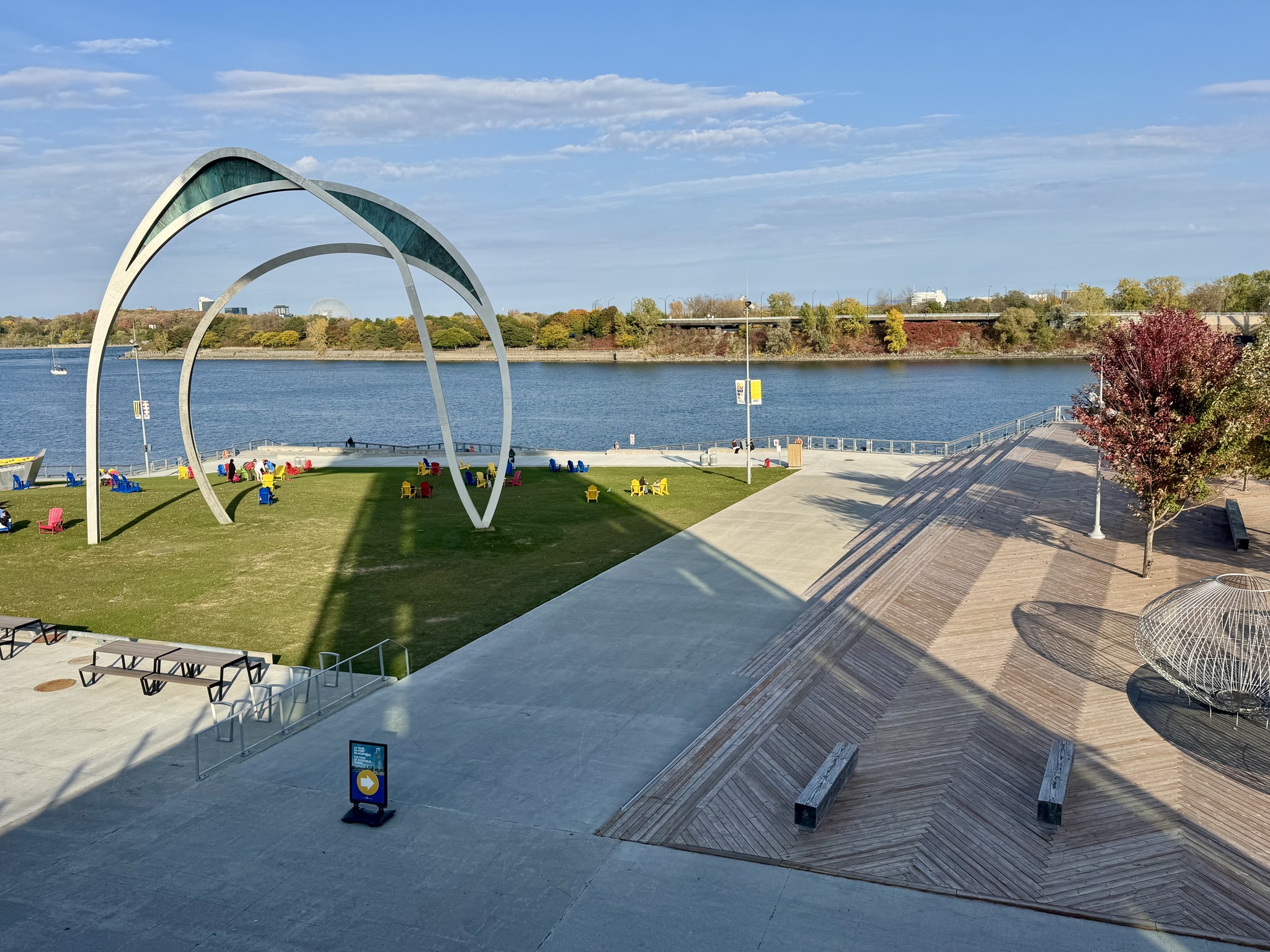
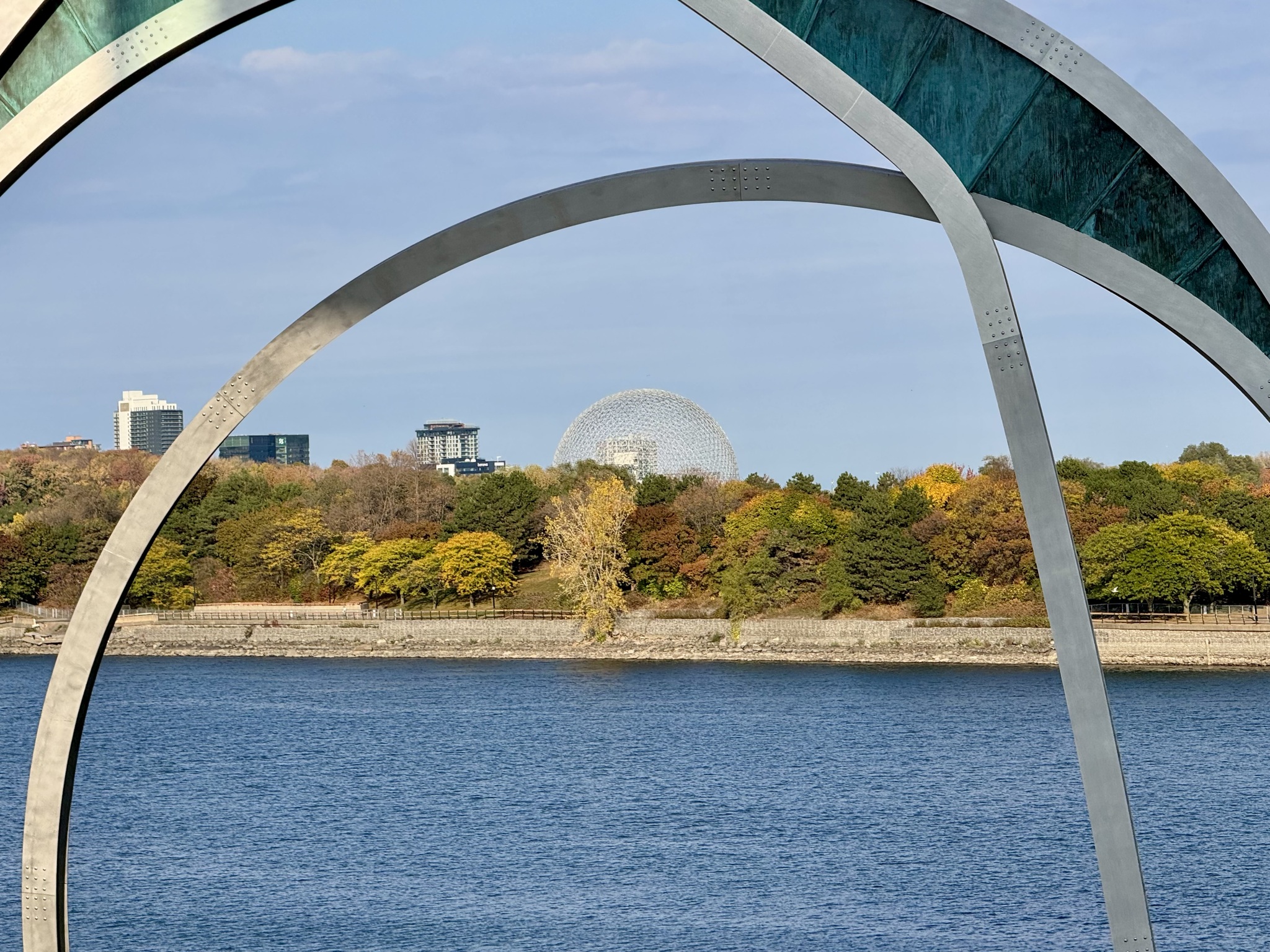
It leads down to a waterside park, Commencement Square, with a large piece of public art, entitled Leurs effigies, that frames the biosphere in Jean Drapeau Park.
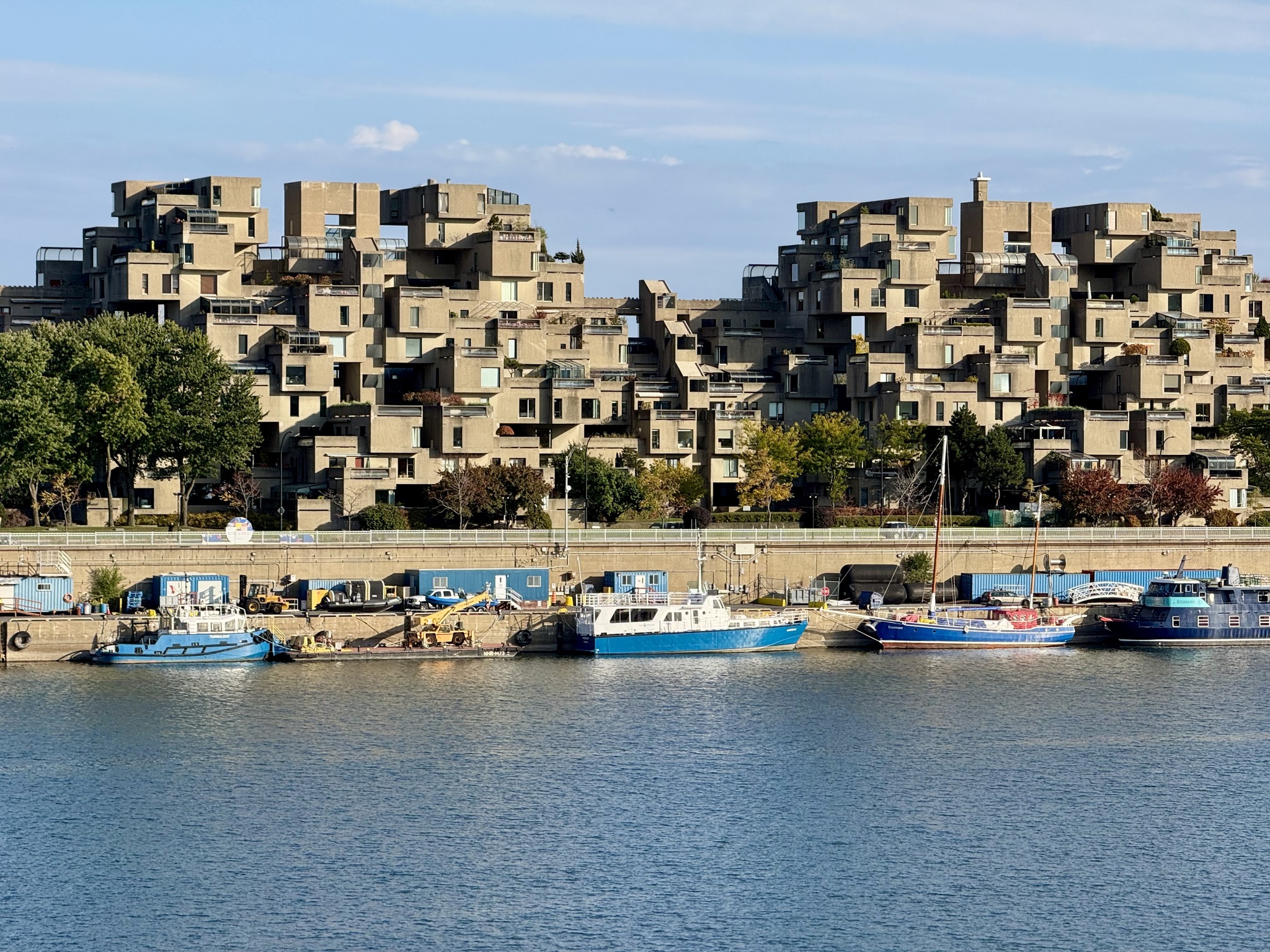
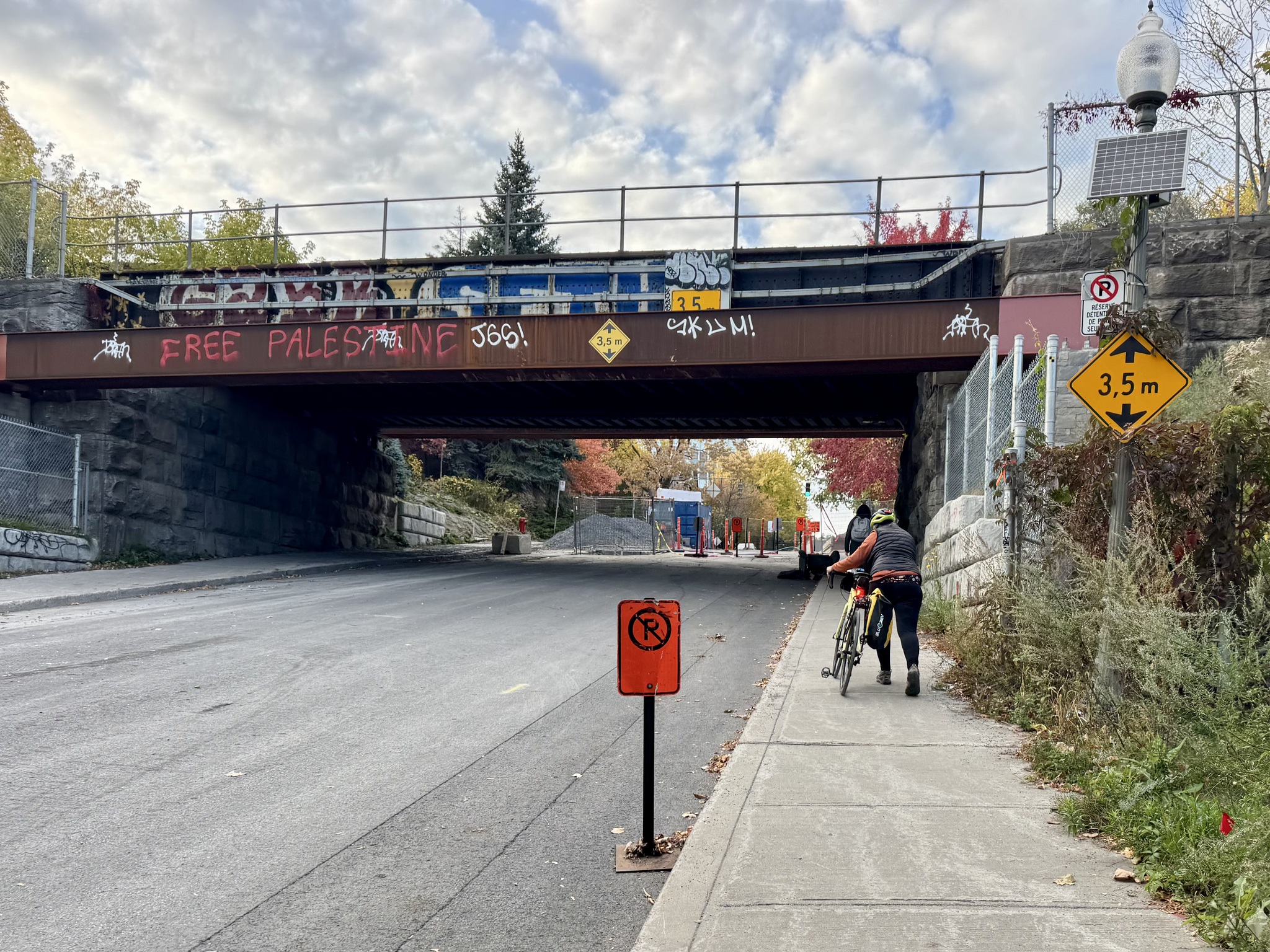
From there, we had about a 6 km ride back to the Oratory. We walked the same first steep hill as yesterday. However, I changed the route slightly, for the second two hills we walked yesterday, to ones that were less steep but longer. We all walked the first hill. I walked part of the second hill. And we all made it up the third hill on our bikes.
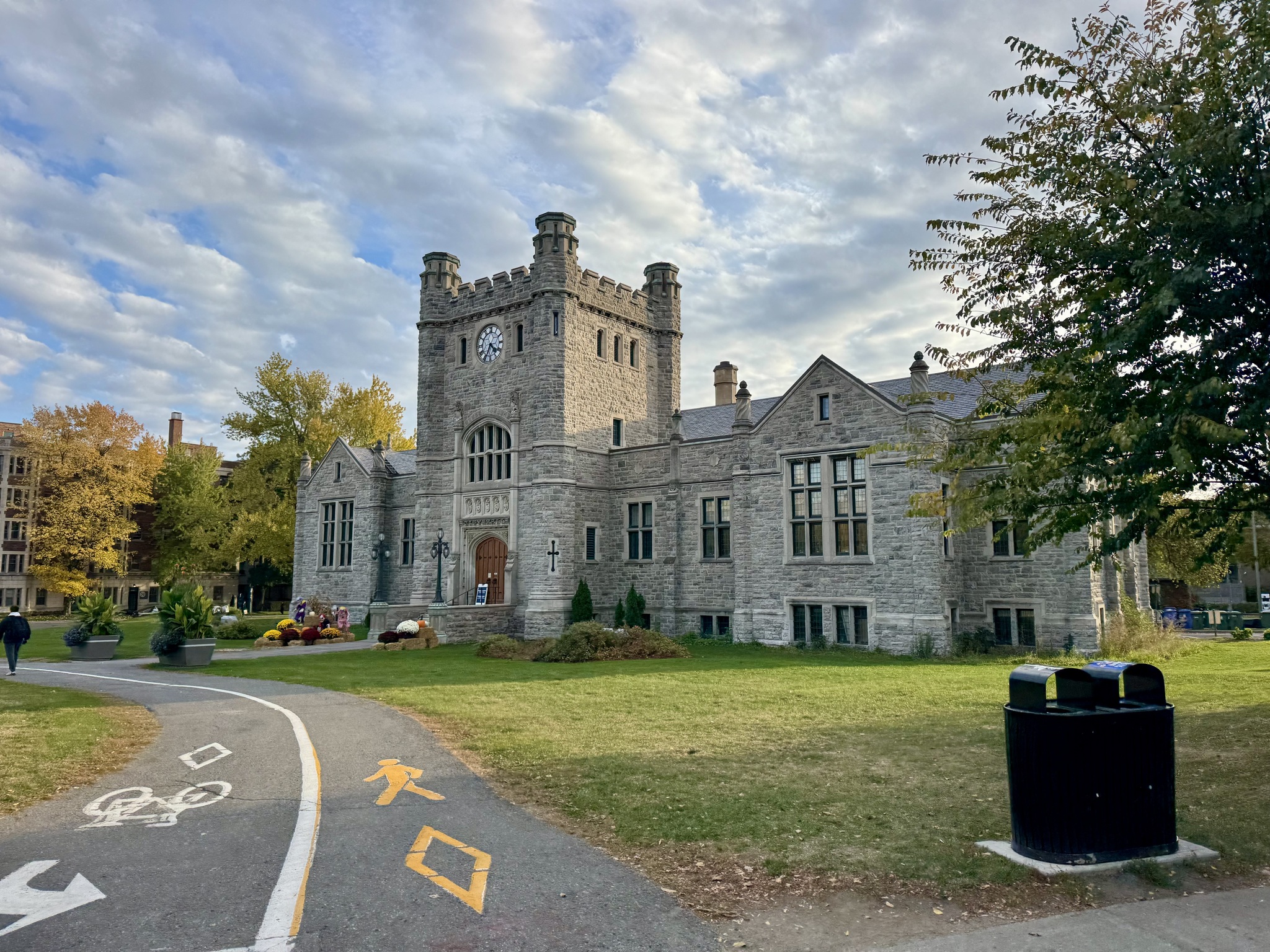
We passed Westmount City Hall. Westmount is an independent city surrounded by Montreal.
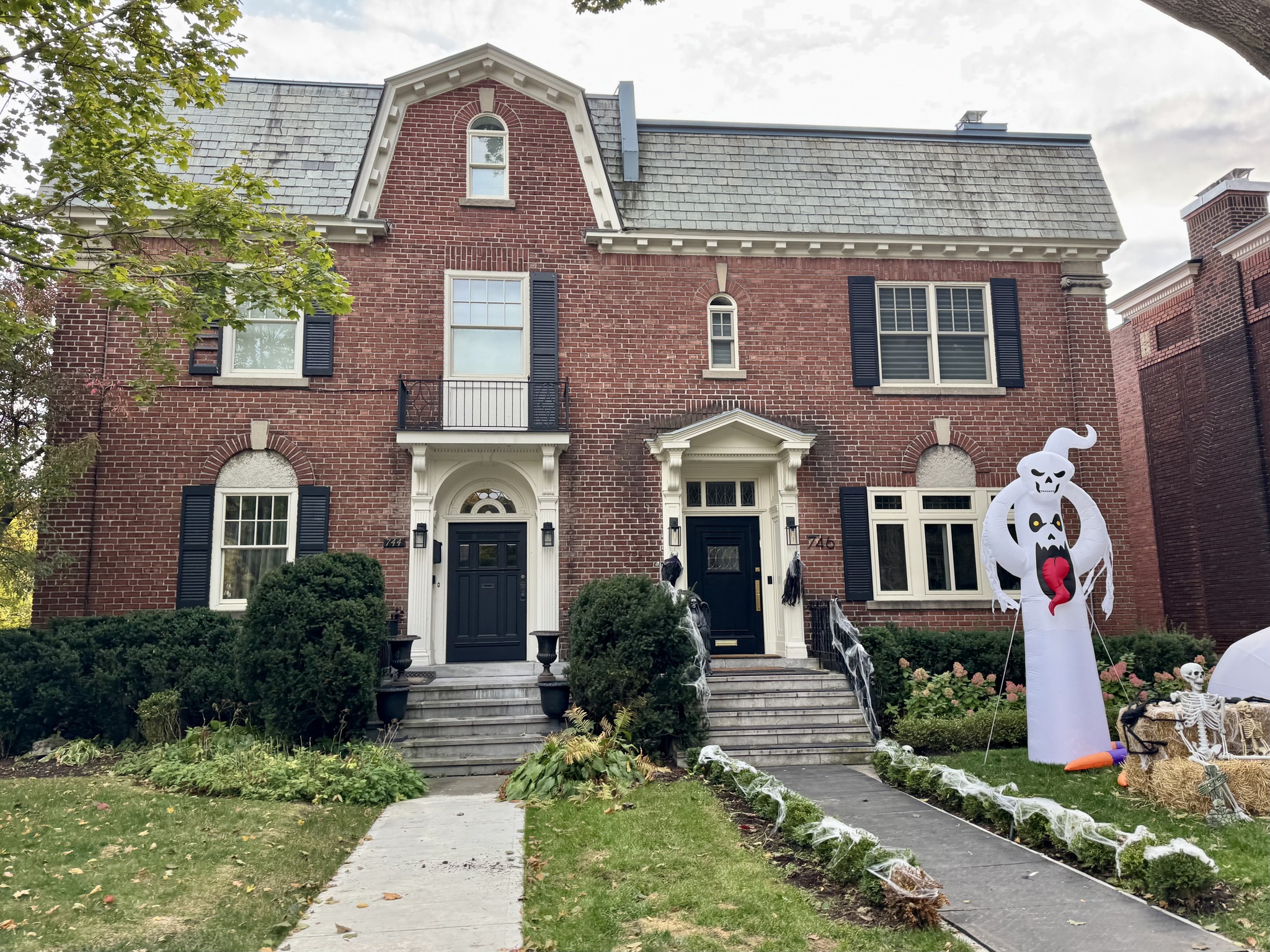
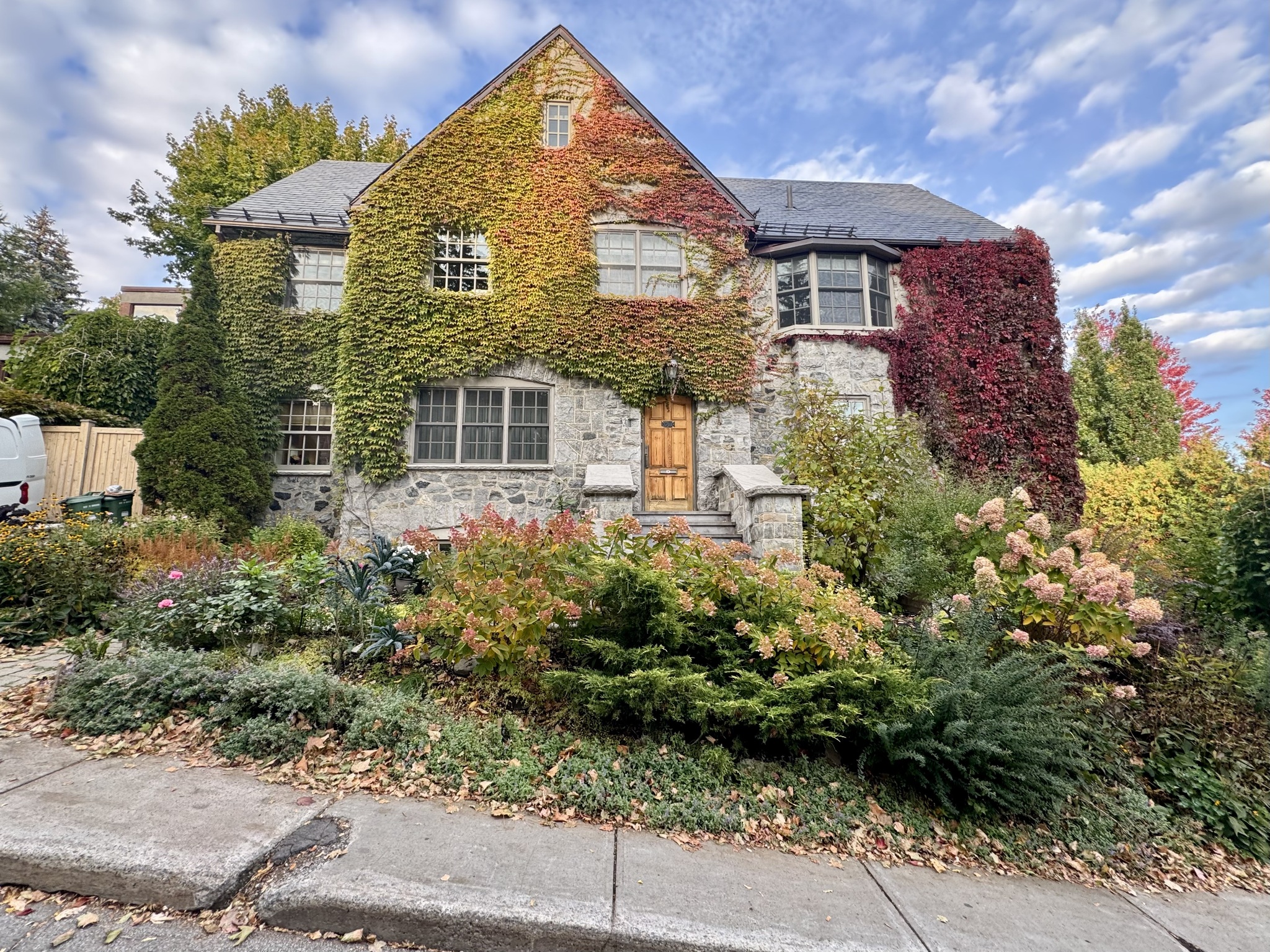
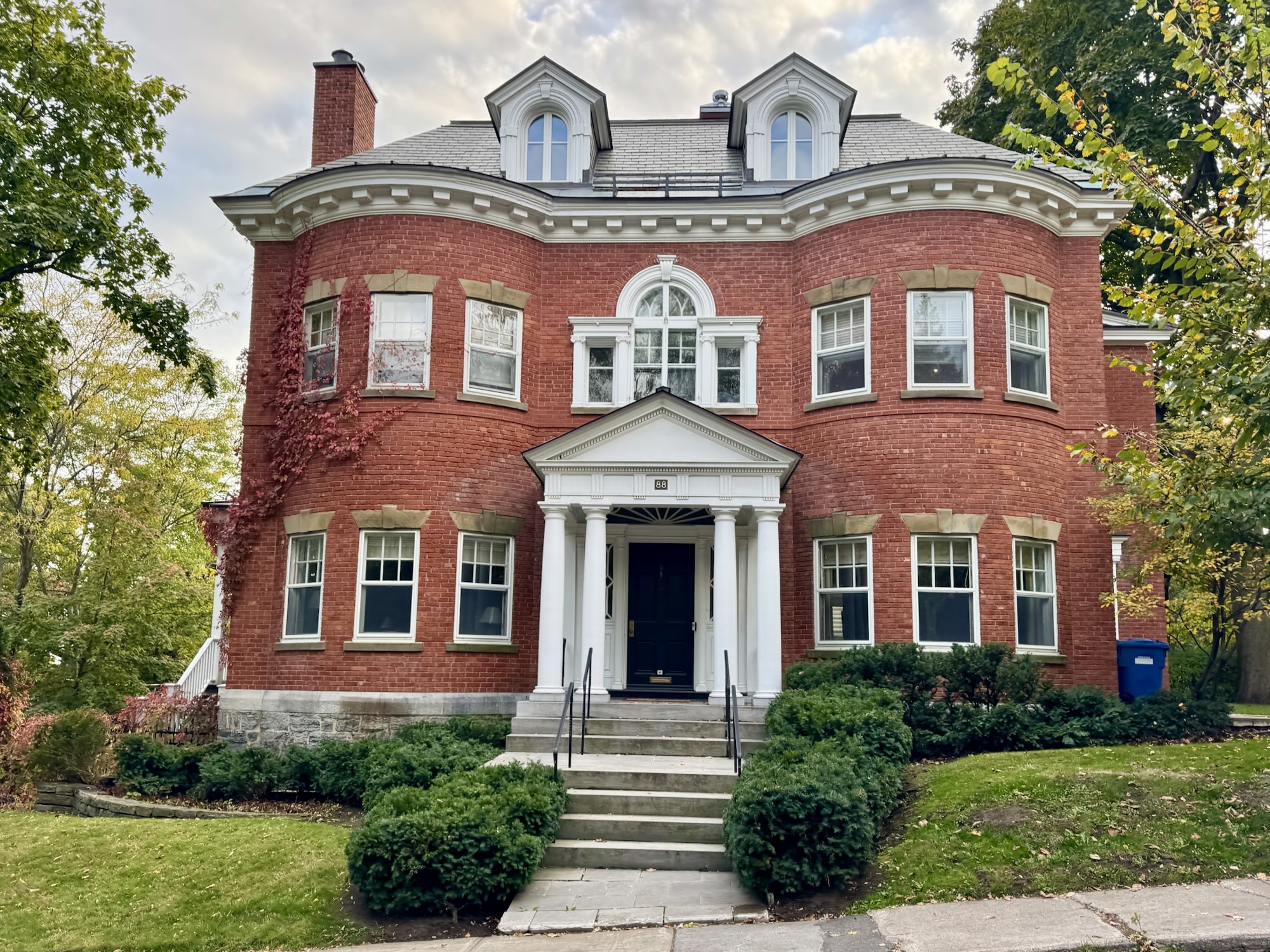
Once again, we were treated to many beautiful homes as we rode through Westmount.
We had dinner at sushi shūshū again. My Poké bowl was so good last night that I ordered it for a second time. We didn’t linger because we wanted to see the basilica that had so far eluded us.

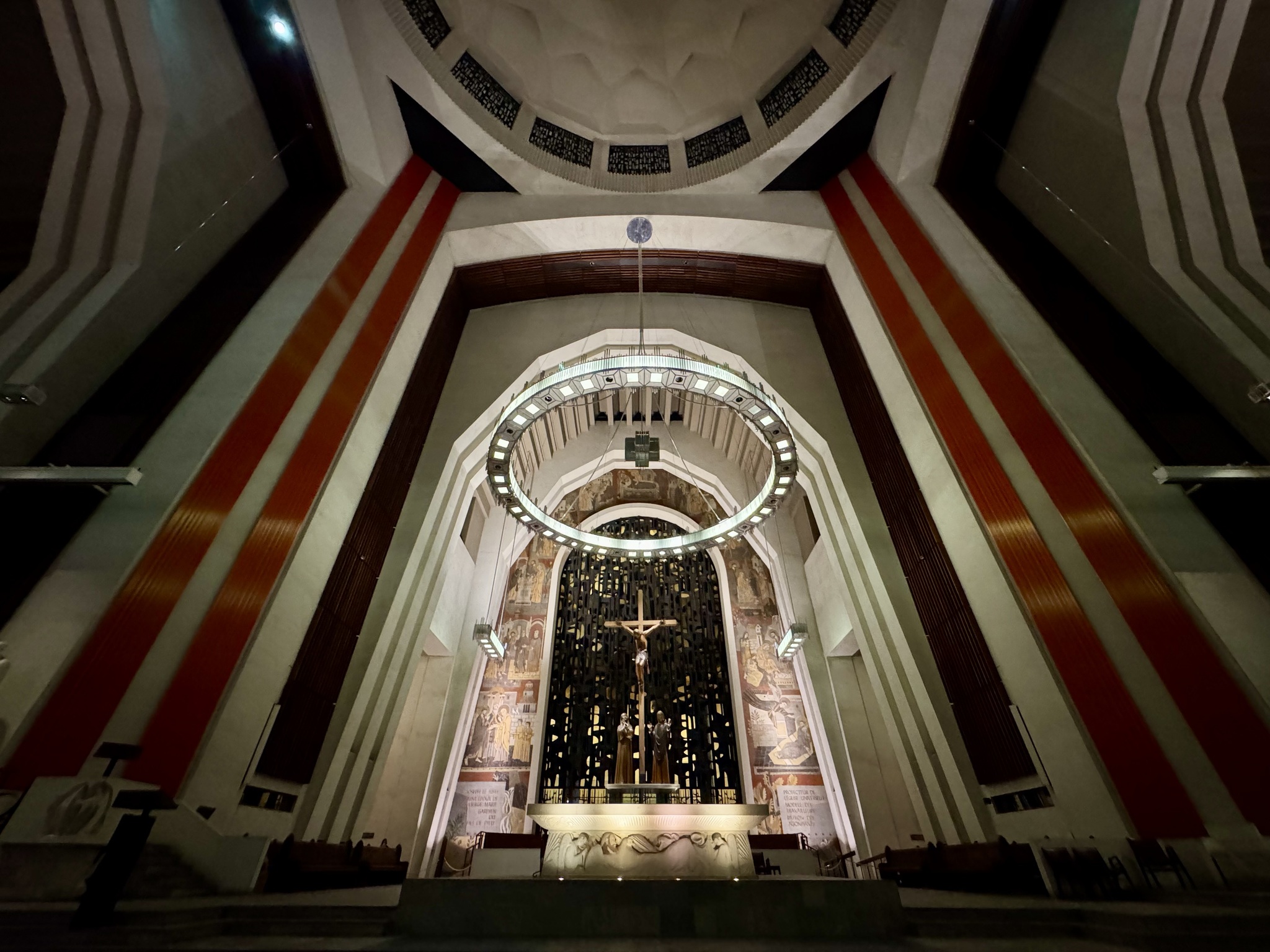
Saint Joseph’s Oratory is Canada‘s largest church. The interior of the main basilica is art deco architecture. The interior was completed in 1966. It has a seating capacity of over 2000.
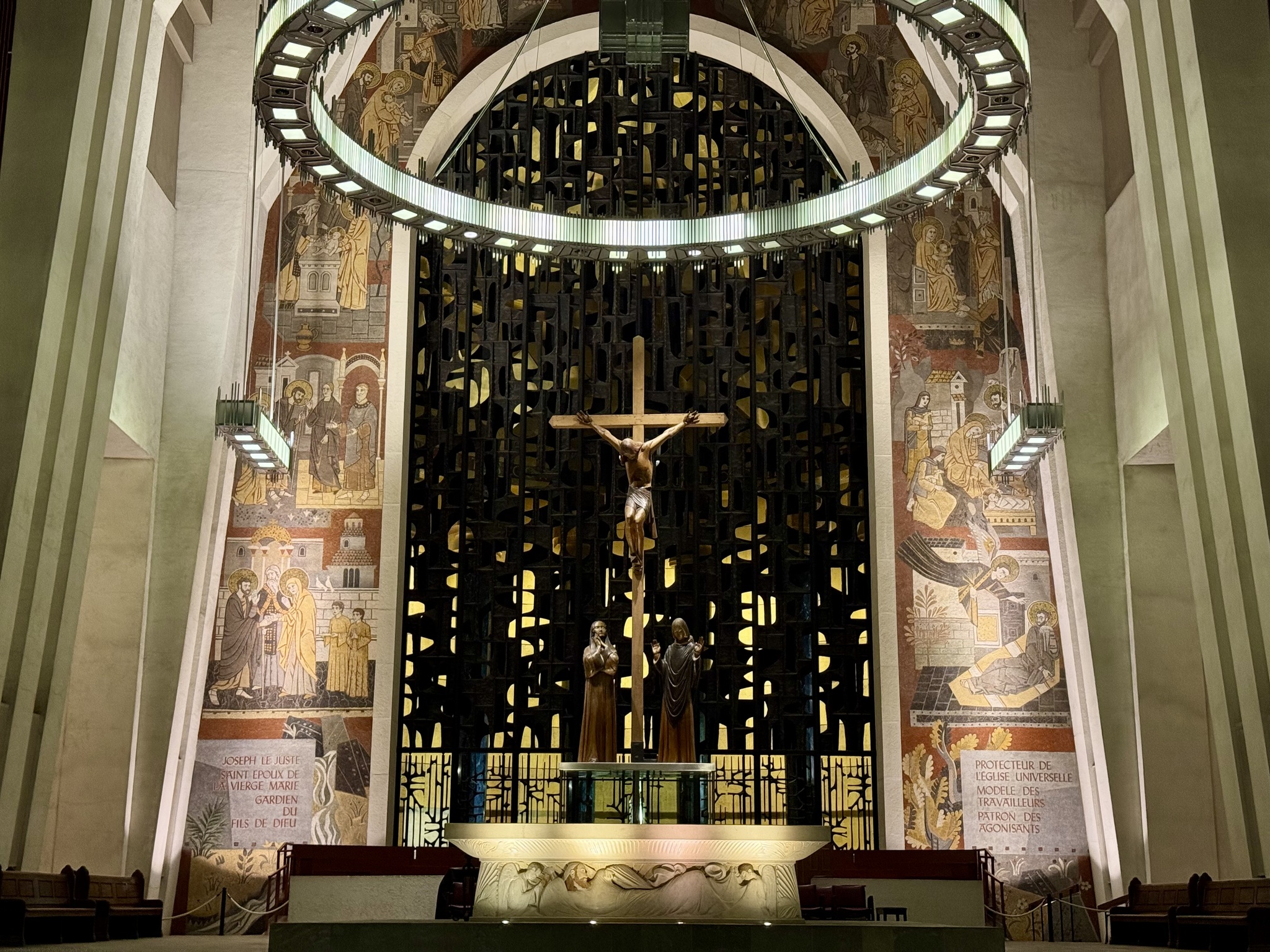
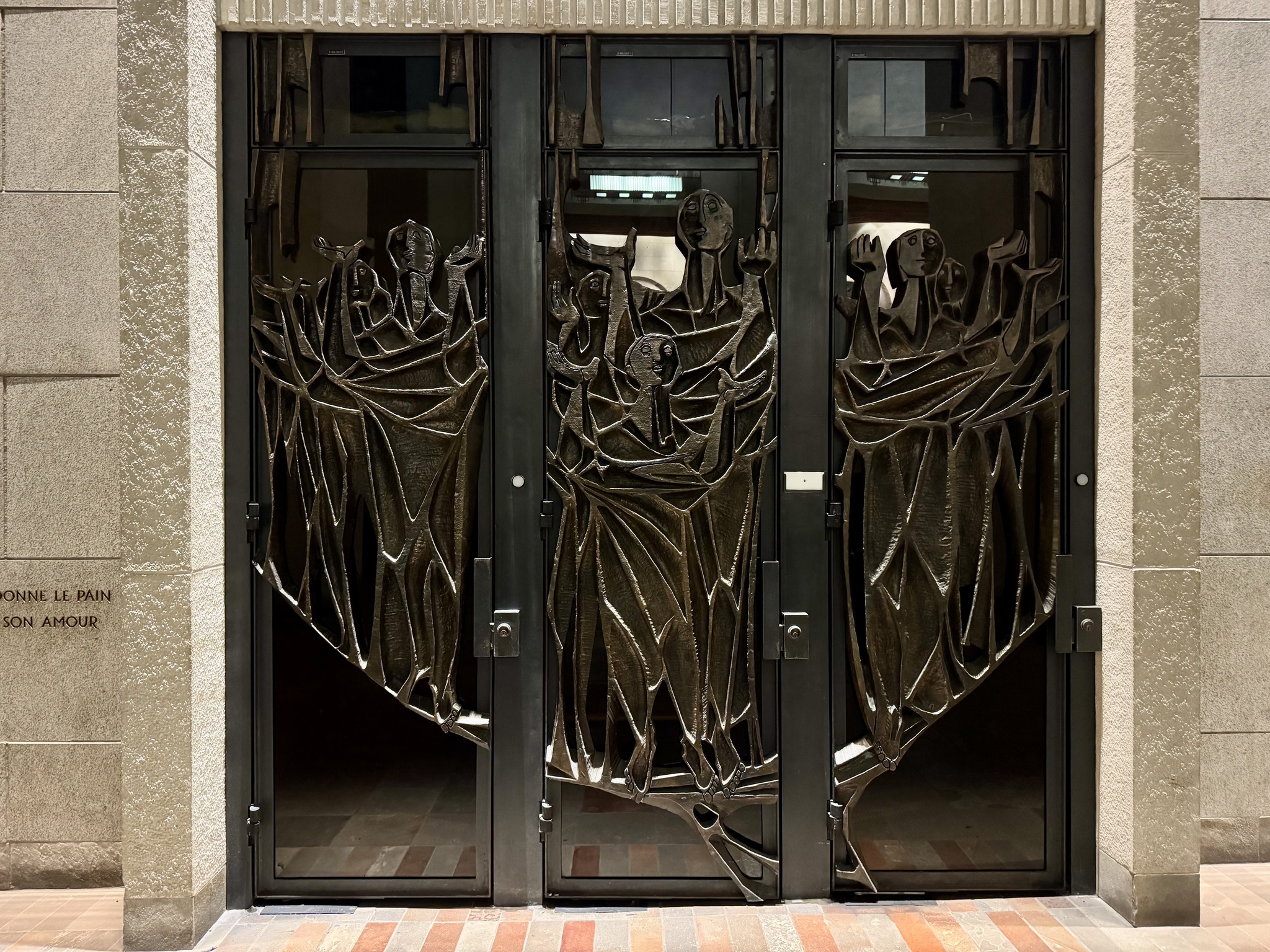
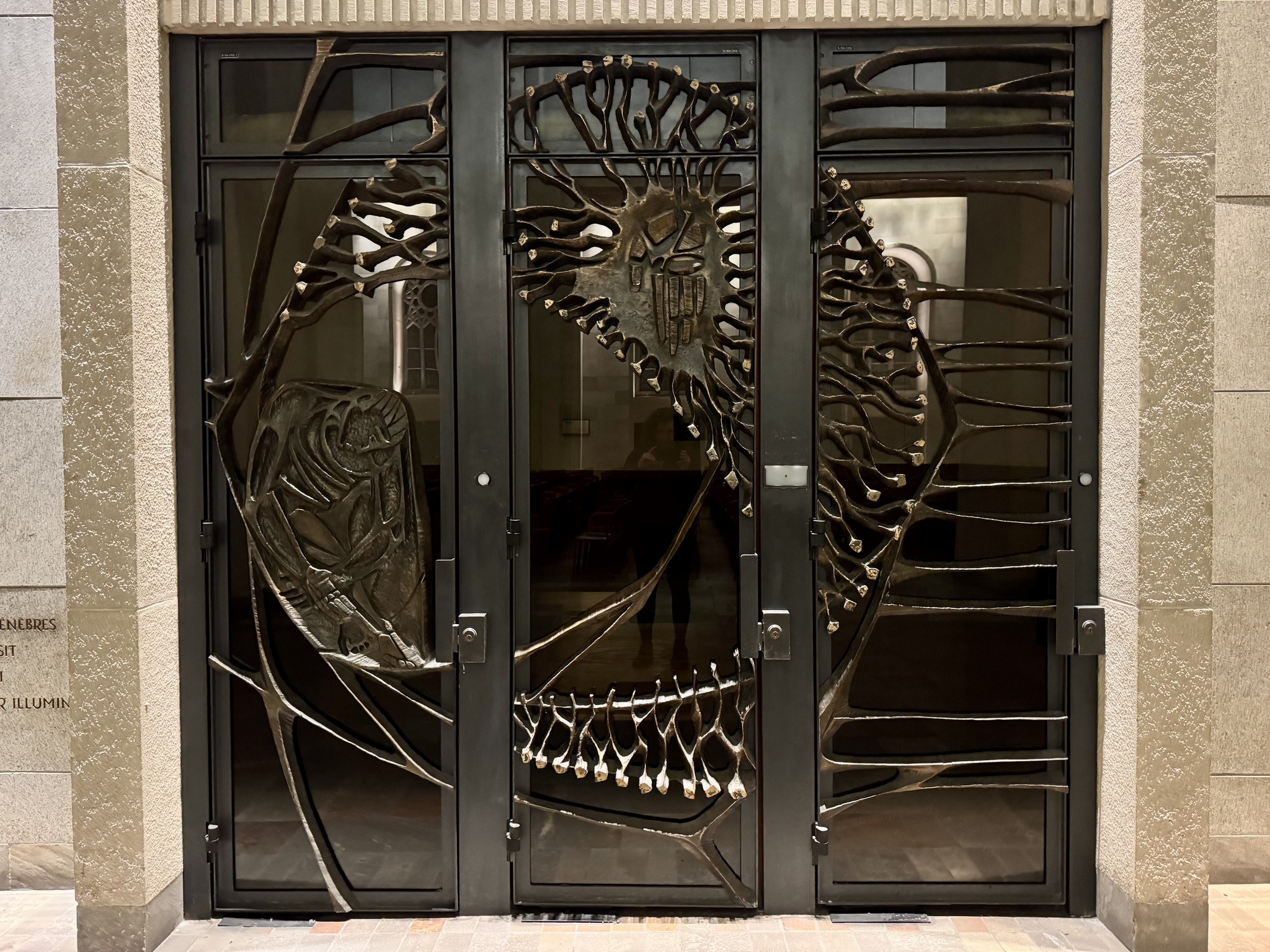
These are the doors to the Basilica from the lobby. The Oratory website has detailed information about the many design features of the basilica.
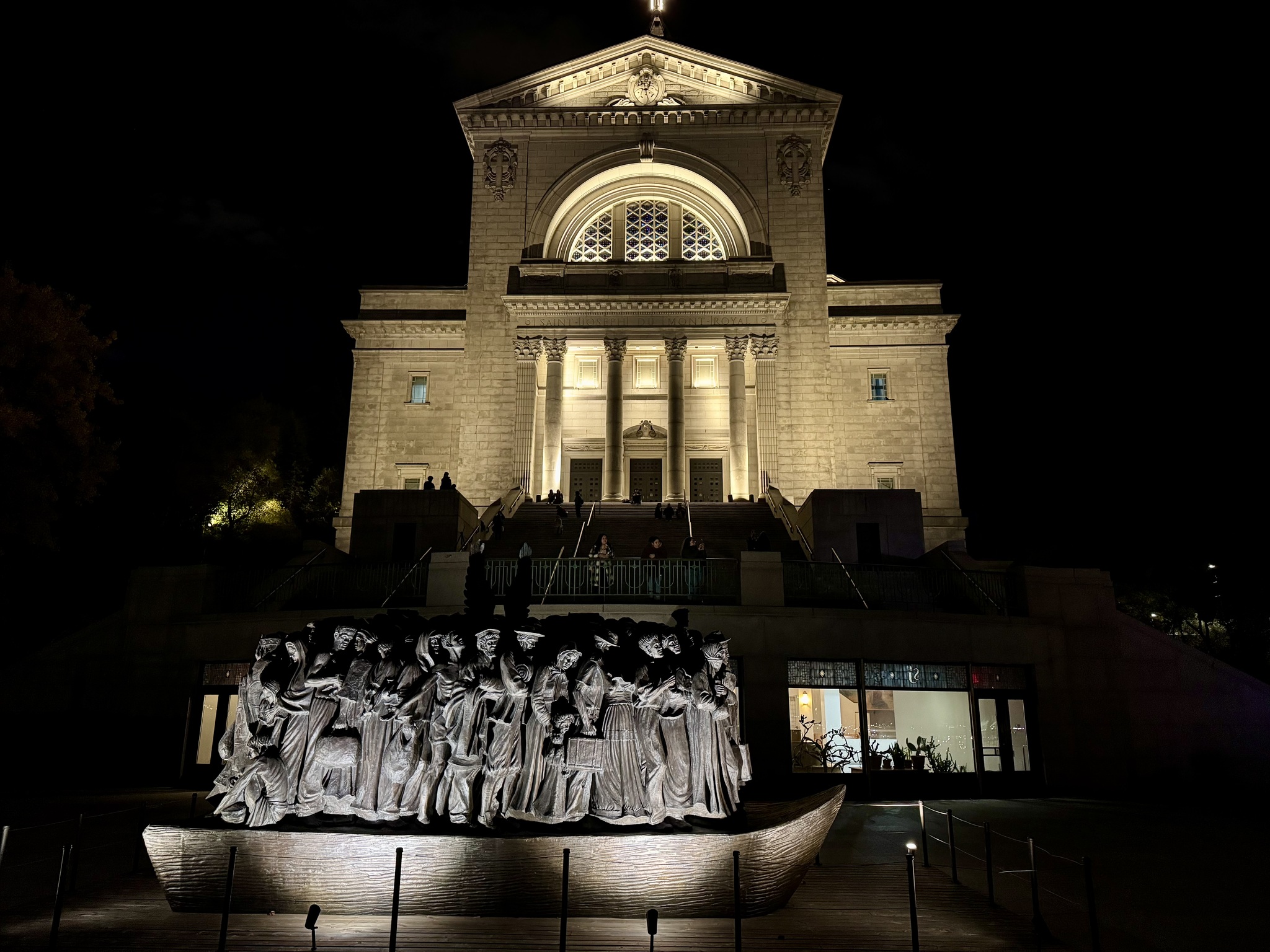
This sculpture, entitled Angels Unaware by Canadian sculptor Timothy Schmaltz is a replica of one in Saint Peter’s Square in the Vatican. It depicts immigrants and refugees from every corner of the world on a boat.
And this is the view from the terrace on the seventh floor.
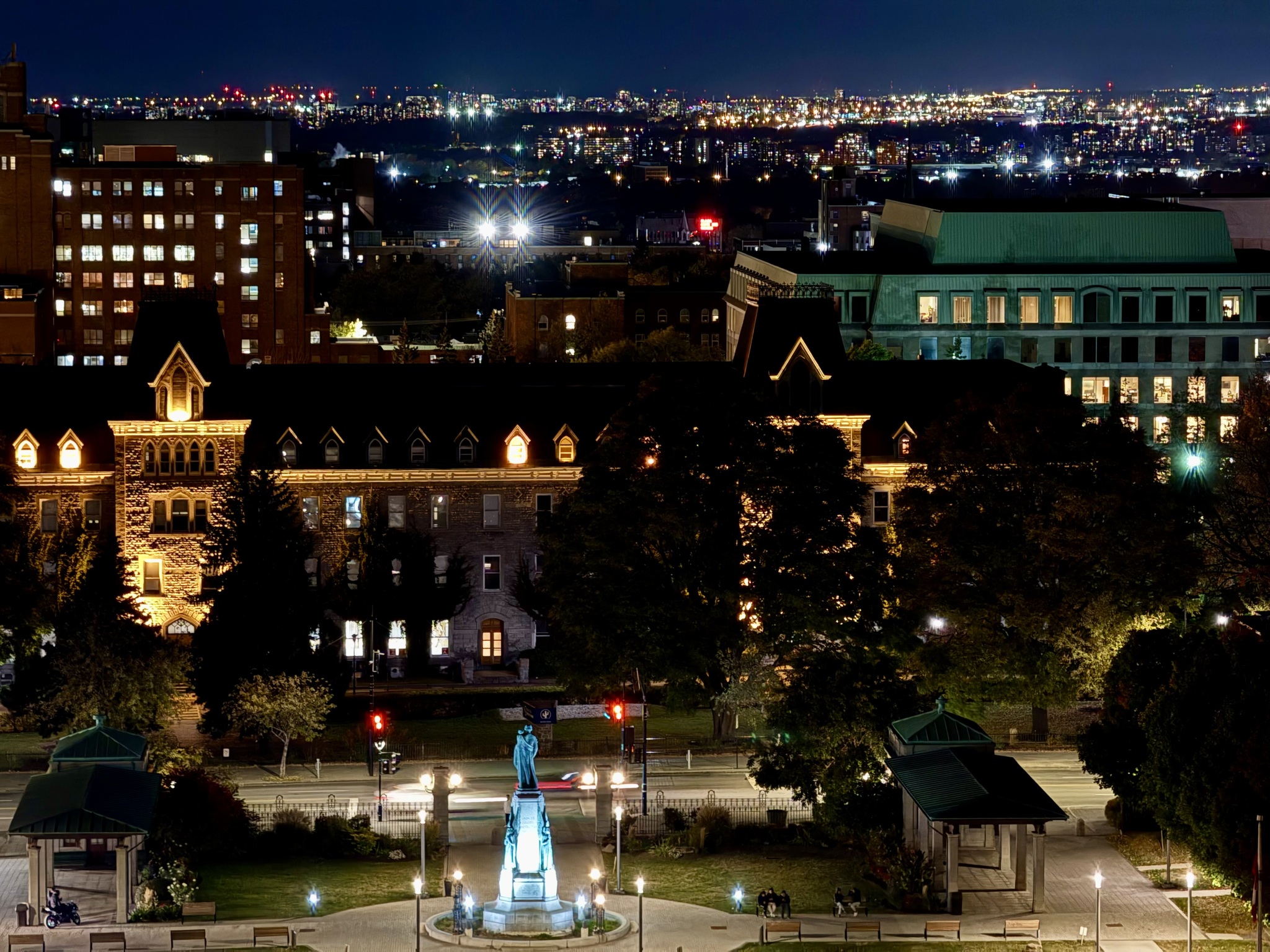
After finally successfully seeing the basilica, we headed back for our final night at the residence.
Day 12 – Travelling Home
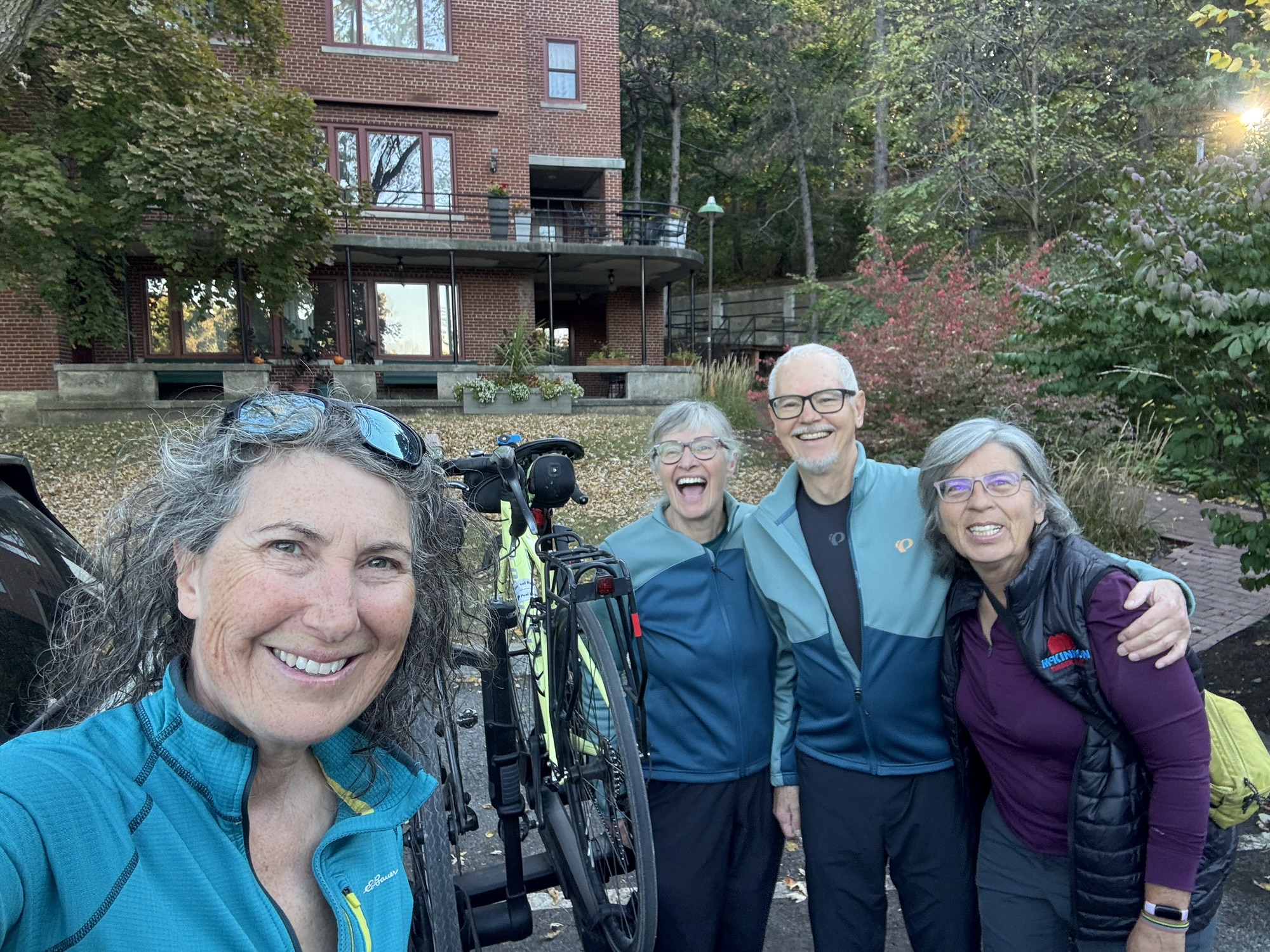
Here we are ready to roll, in the van, rather than on our bikes. The day is forecast to be absolutely beautiful to begin with, followed by heavy rain as we get to Toronto.
My cousin lives in Cornwall, a 90 minute drive from Montreal, and I arranged to stop at her house for coffee and a visit. It was so good to catch up, but we couldn’t linger with the long drive still ahead of us.
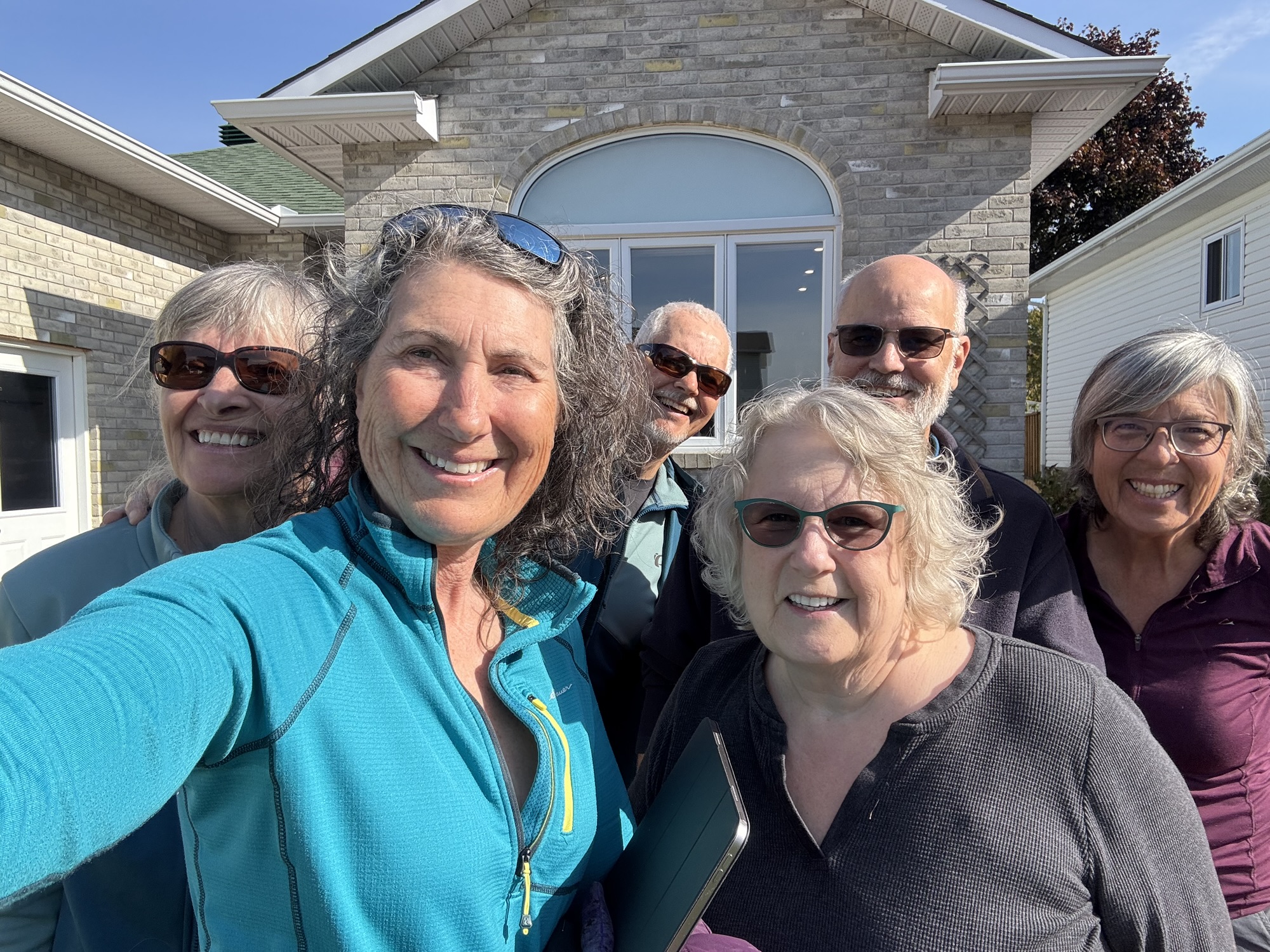
When we got out of the car at the Mallorytown service centre for lunch it was 23°.
The rain started just as we were getting on the 407 at the east end of the city, but wasn’t as bad as forecast. David and Dayle dropped us off in reverse order, Cindy first, and then me.
It was an absolutely delightful trip, which I would highly recommend.
Cost
In 1957 Arthur Frommer published a book entitled Europe on 5 Dollars a Day. It was a revolutionary concept at a time when one needed to be wealthy to travel to Europe. It was timed perfectly for the rise of air travel to Europe versus ship. The final editions of Frommer’s first series were titled Europe from $95 a Day. The concept no longer made sense when hotels could not be had for less than $100 a night, so that series was discontinued in 2007. Unfortunately, travel is becoming so expensive again that it is beyond the reach of many people.
I don’t usually share the cost of my trips, but I thought there might be readers who would like to plan a trip like this for themselves, who might be interested in knowing what our trip cost. Our trip didn’t included air travel, but I was still very happy to do our trip for $102/day. By comparison, a similar trip we did along the Erie Canalway in New York last year, cost me $152 Canadian per day.
Here’s what was included in the $102 per day.
- Gas and 407 tolls
- Accommodation for 11 nights, seven including breakfast, split two ways when Cindy and I shared on eight nights, and split four ways when the four of us shared a full apartment. The apartments were relatively expensive due to the cleaning fee that is applied when one books through AirBnB not being spread over multiple nights. However, it was challenging to find accommodation over the Thanksgiving weekend. When we have rented full apartments or houses in the past, for multiple days in a row, this has proved to be an economical option, because it allowed us to prepare our own breakfasts and dinners. When staying just one night in an apartment it didn’t make sense to spend time grocery shopping, and trying to transport leftovers on our bikes. Staying at Saint Joseph’s Oratory of Mount Royal accommodation, for the five nights we were in Montreal, was key to keeping our accommodation costs down.
- Parking was included for the nights we stayed at the Oratory, and they only charged us $5 per night (an amazing rate in a big city like Montreal) during the time we left the car there, when we were on our self supported trip. Small fee for ferry crossing.
- 12 days of meals. We packed a lunch at home on the first day. We bought groceries for breakfast one morning. The rest of the meals were in restaurants. We had some quite expensive lunches, such as the one right beside the trail in Granby, which cost me $42, but we also had some more reasonable ones at chain restaurants like Tim Hortons or Subway. In Montreal, we found a good and reasonably priced Japanese restaurant and ate there four of the five nights.
Discover more from Lisa Stokes
Subscribe to get the latest posts sent to your email.