Today we visited the Reichstag dome, Brandenburg gate, Bebelplatz, Holzmartk, and the East Side Gallery.
On our way to the Reichstag Dome, we cycled through Olof-Palme-Platz. This small plaza was named after the Swedish Prime Minister assassinated in 1986. It contains a fountain, Ammonitenbrunnen, Ammonite fountain in English, which along with the outer wall forms the shell of a snail.
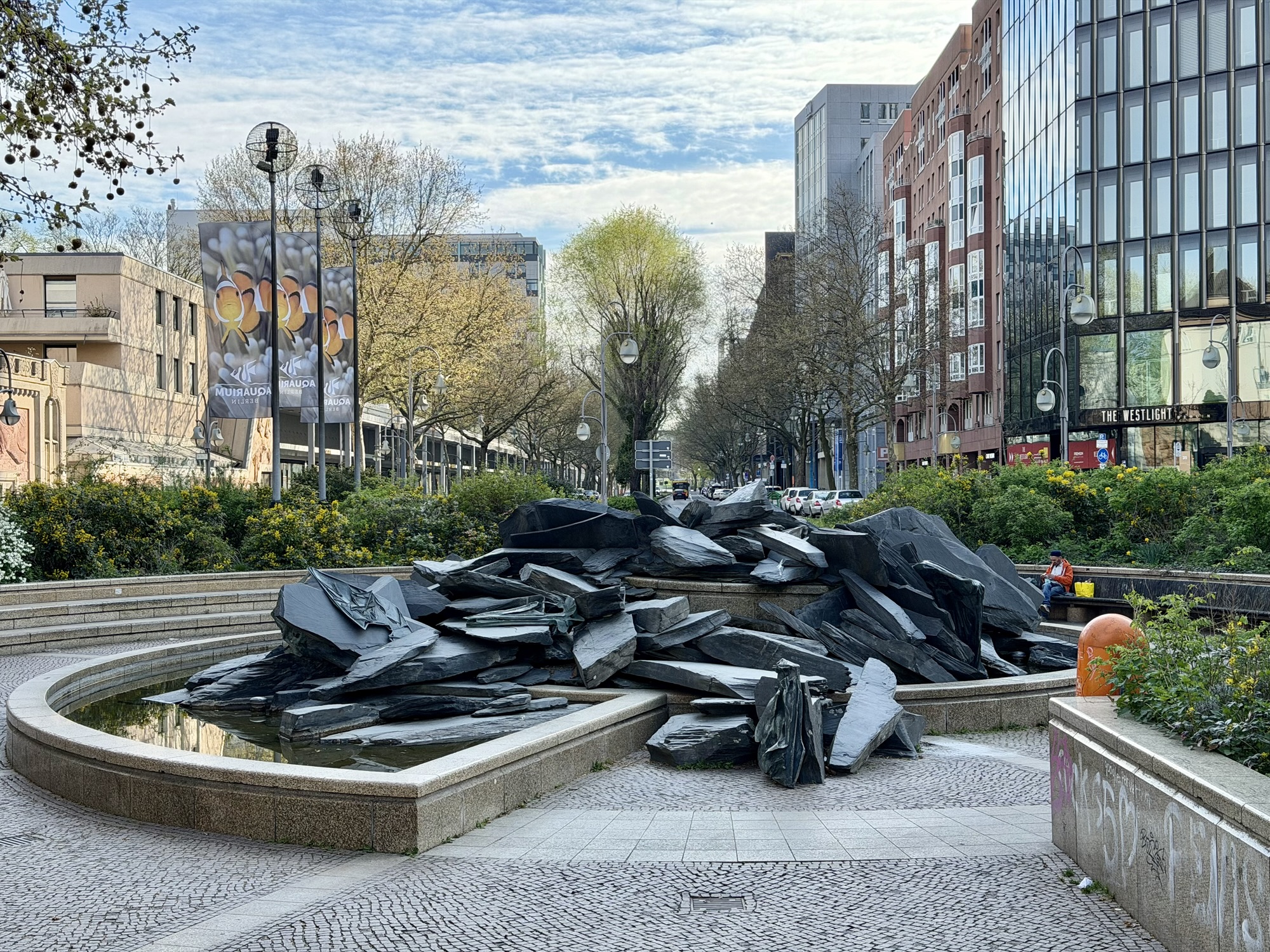
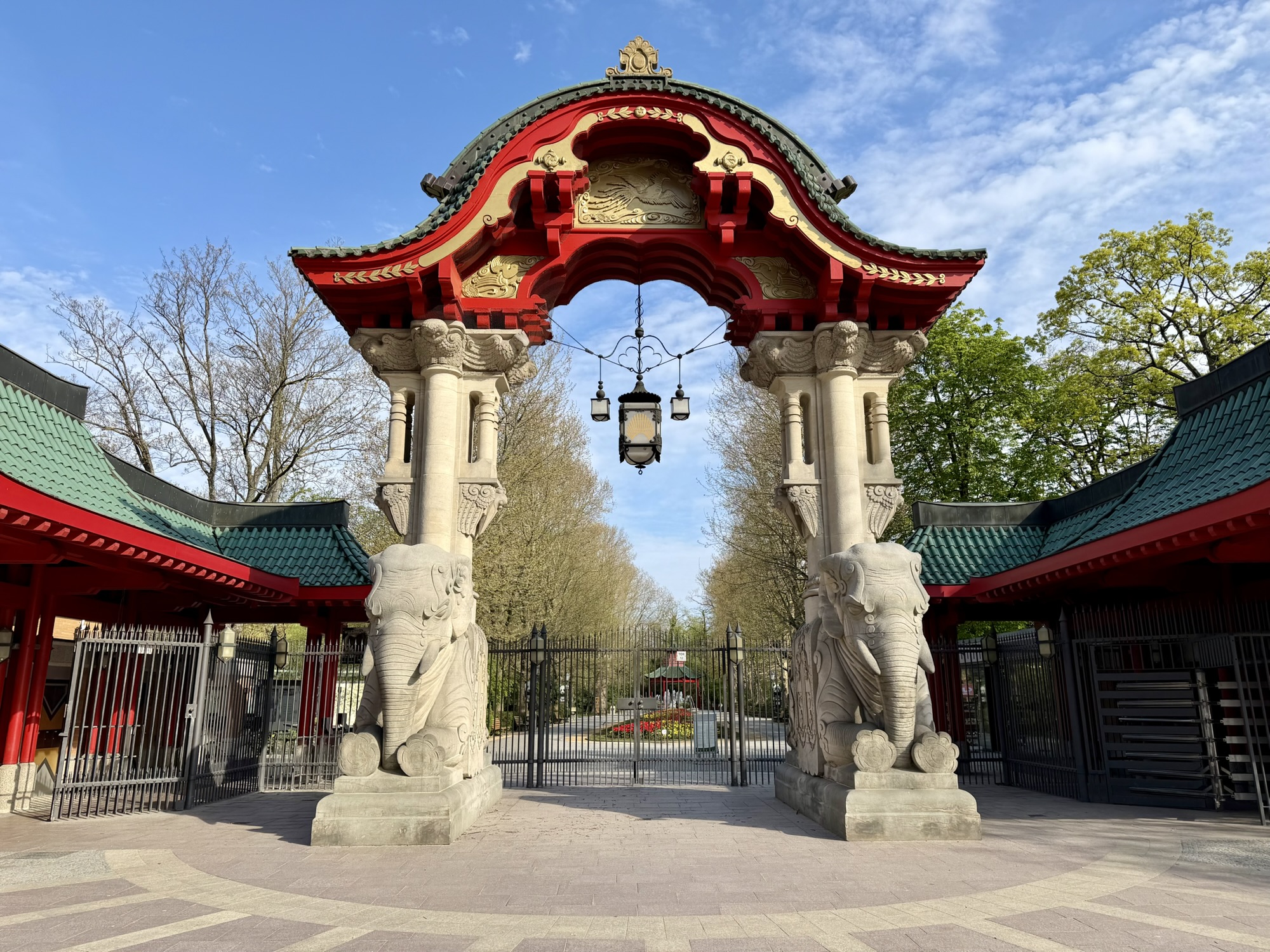
The fountain is in front of Berlin‘s zoological gardens (zoo). I found it interesting that in both Berlin and Wroclaw the zoo was right in the city, unlike in Toronto (other than the small one at High Park).
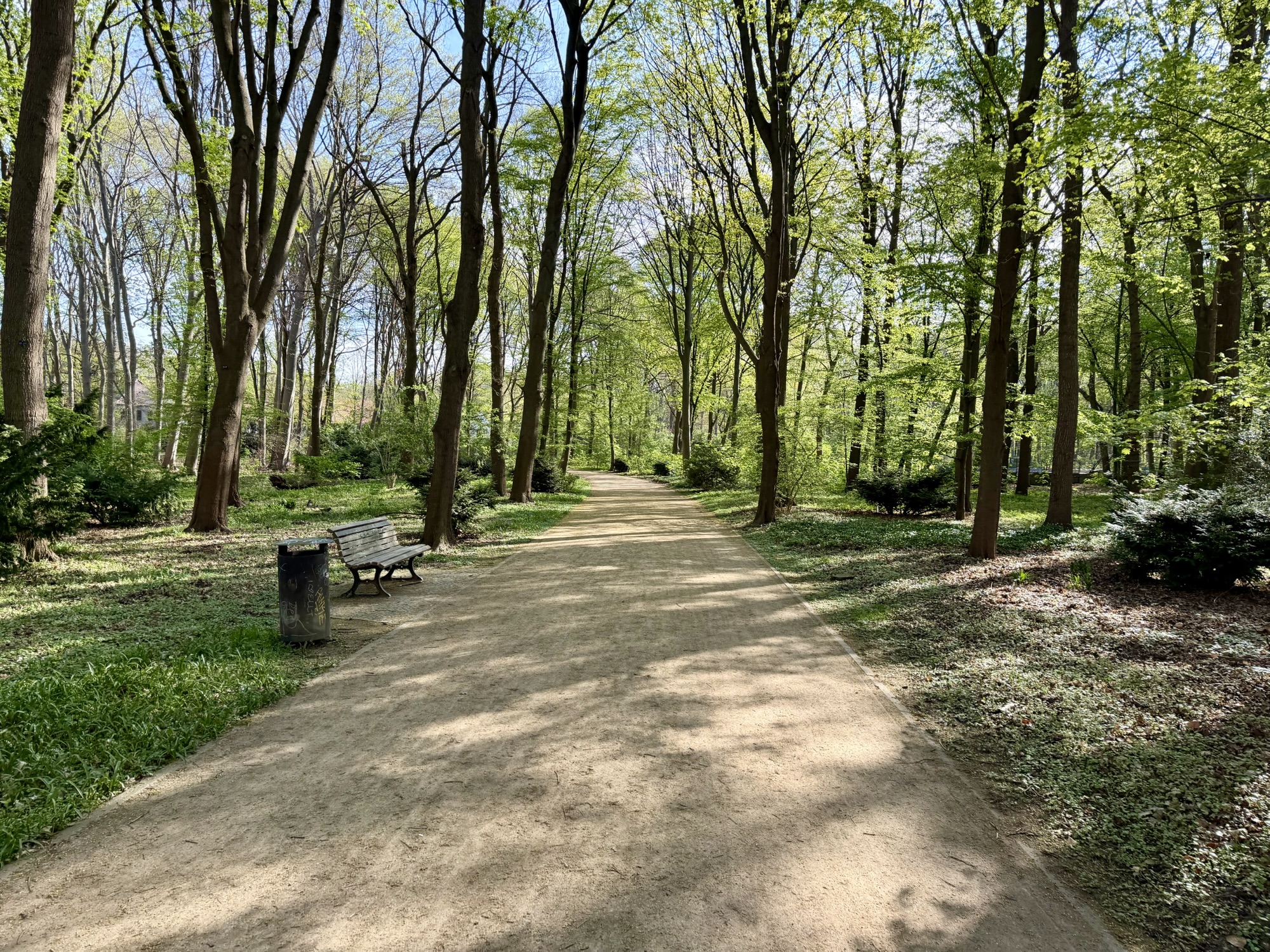
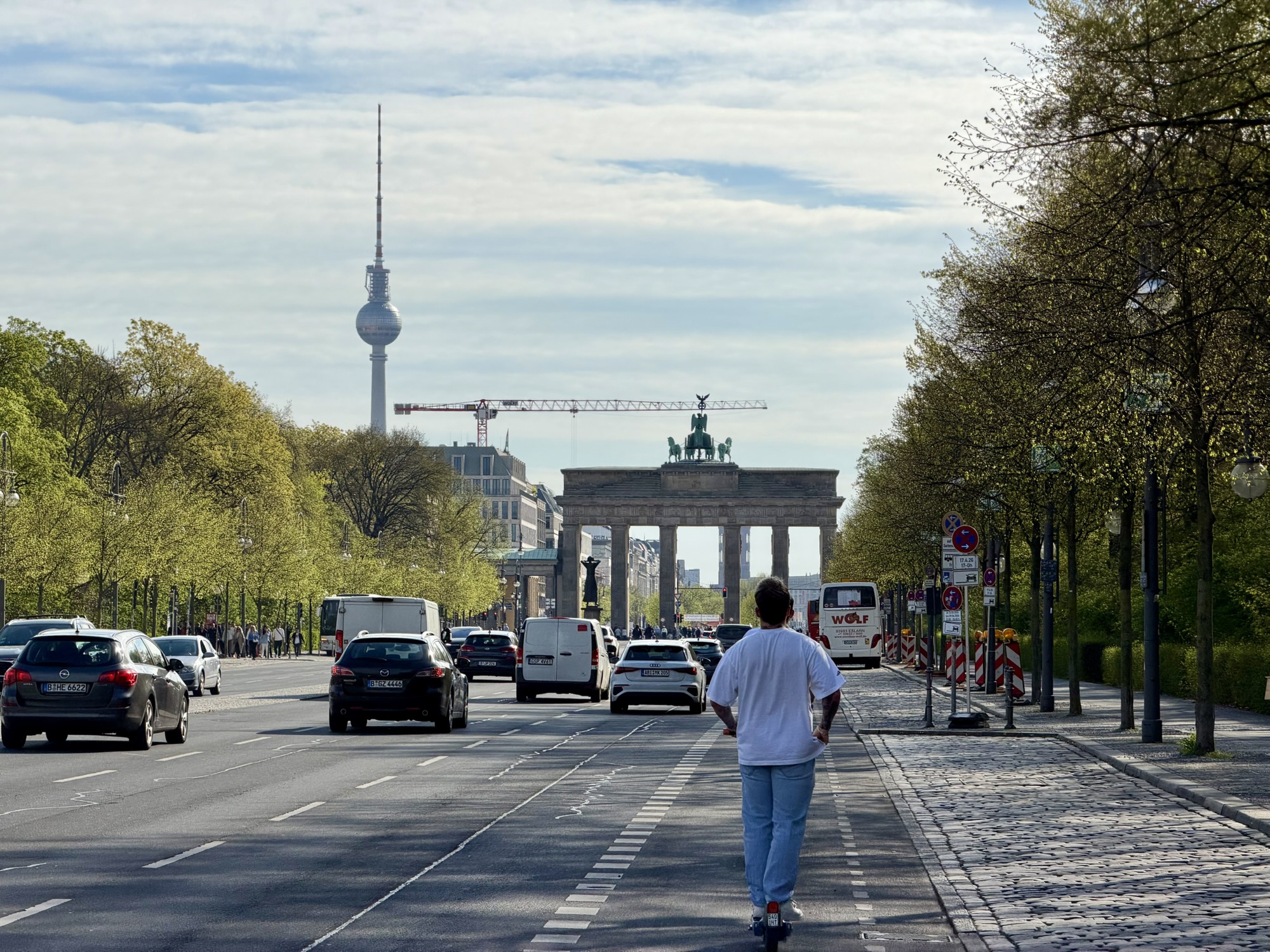
We rode through the Tiergarten again, and then along the road to the Brandenburg gate. The Reichstag is very close by, off to the left.
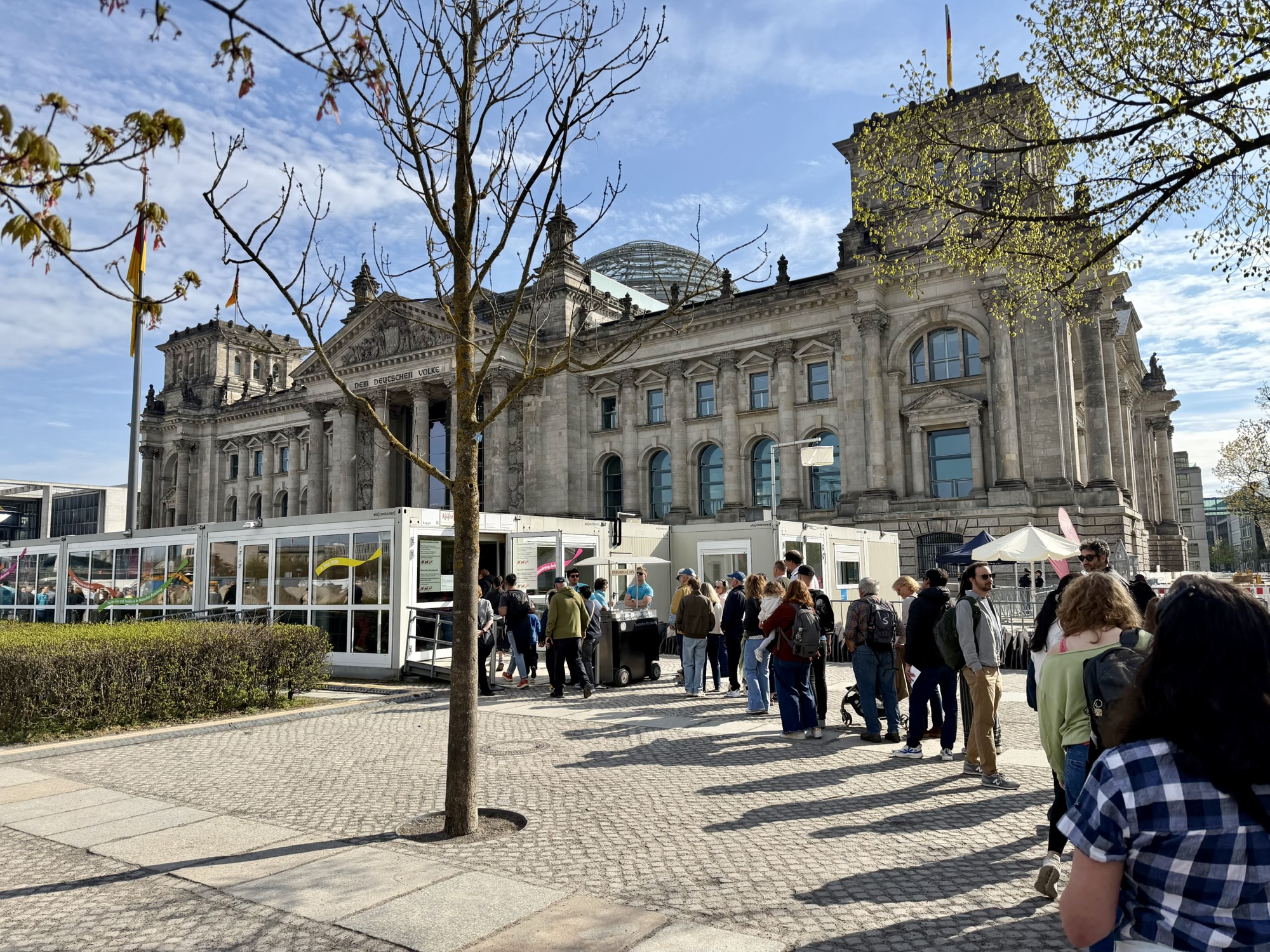
Entry to the Reichstag dome is free, but you must register for tickets ahead of time and bring government issued photo ID with you. We took our passports. There was a makeshift security area with airport type security levels – checking ID and passing through metal detectors before being allowed into the building.
There was a security sluice, which is a heavily controlled, automated access corridor, similar to an airlock, as we entered the main building. A security sluice uses two interlocking doors that never open at the same time. It prevents tailgating, forced entry, and unauthorized access in high security facilities.
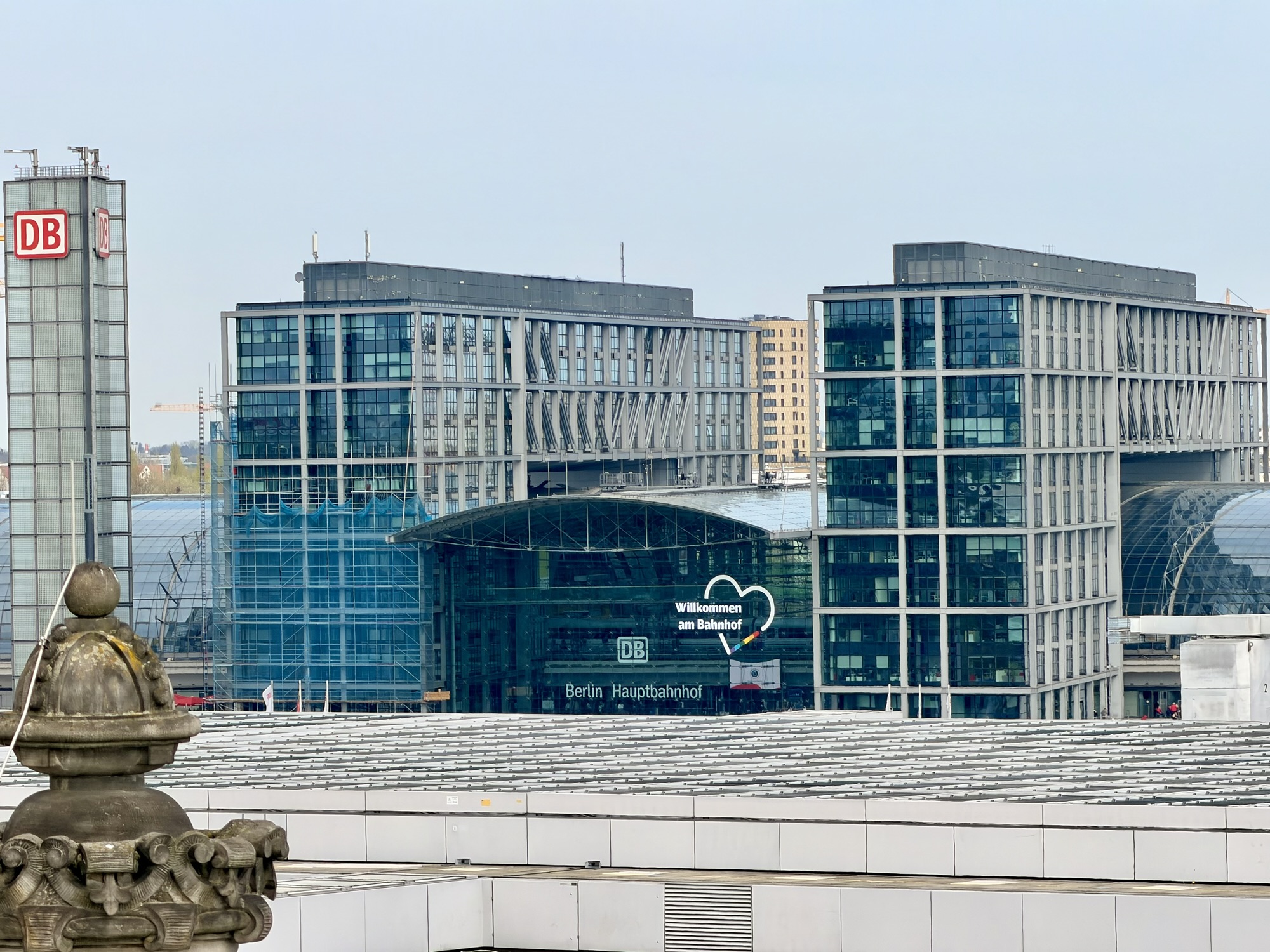
An elevator ride took us to the open rooftop at which point we were allowed to walk around on our own and spend as much time as we wished exploring the views from the rooftop and the dome. There were great views of Berlin Hauptbahnhof, the Central Station.
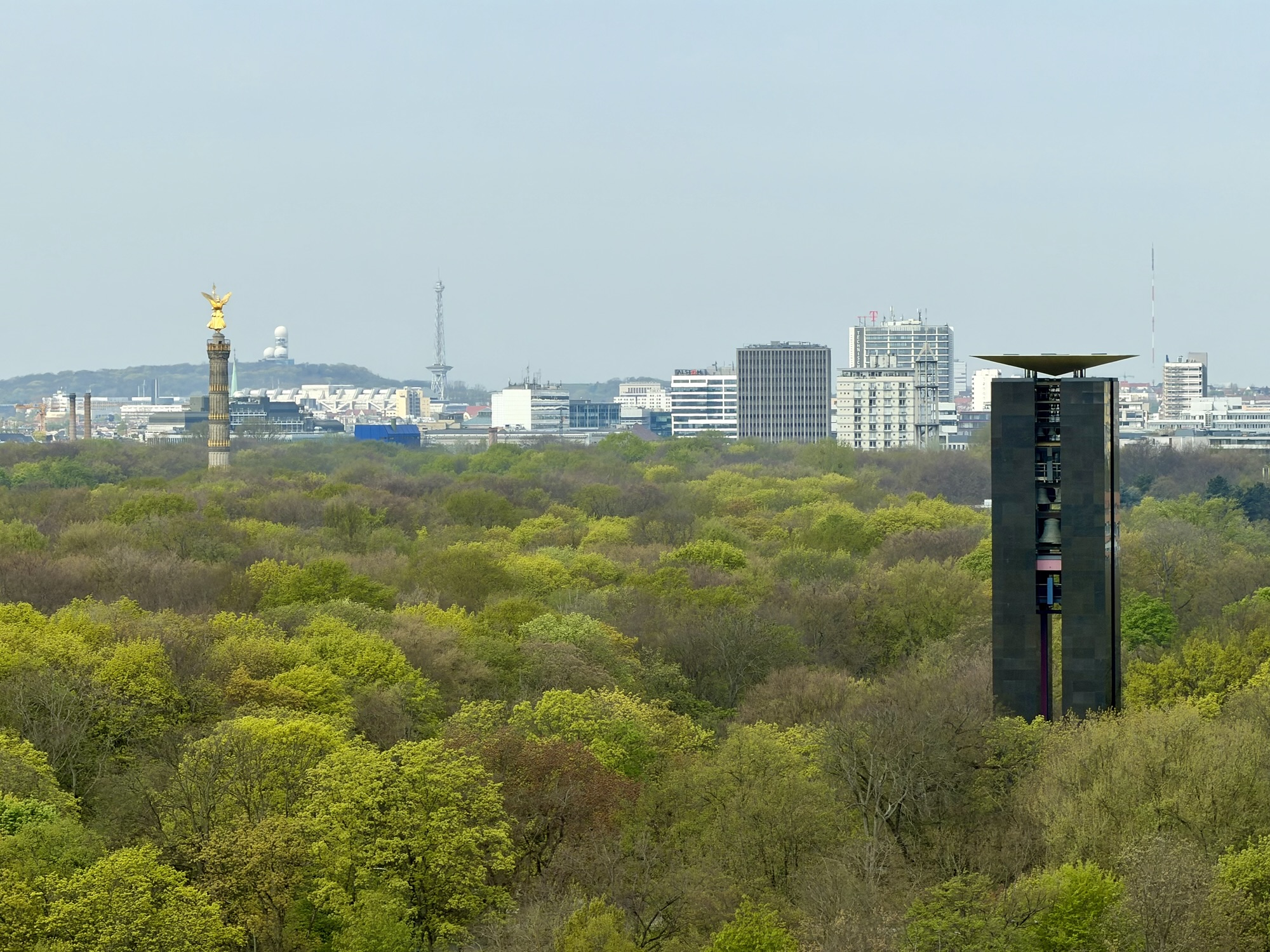
In this view to the west, you can see the size of the Tiergarten. On the left, you can see the Victory Column, Teufelsberg, the Cold War listening station, which we visited yesterday, and a carillon, on the right. The carillon is the fourth largest instrument of its kind in the world. It has a 68 bronze spells and a 42 m tall freestanding tower. It was erected in 1987 to celebrate Berlin 750th anniversary. This is a mechanical carillon. The carilloneur sits in a cabin in the middle of the bells and plays a keyboard using their fists and feet.
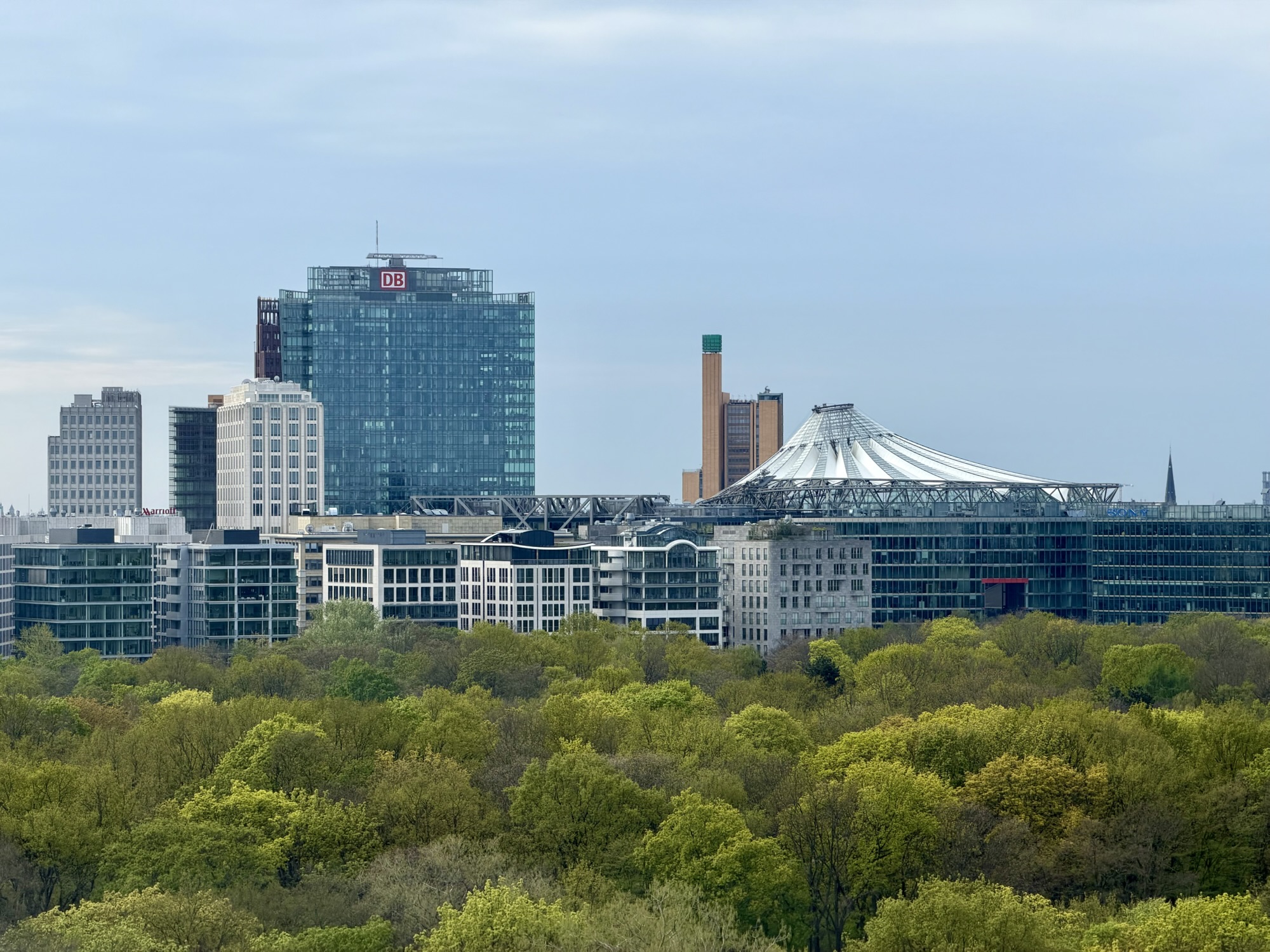
Here you can see the tent like roof of the Centre at Potsdamer Platz.
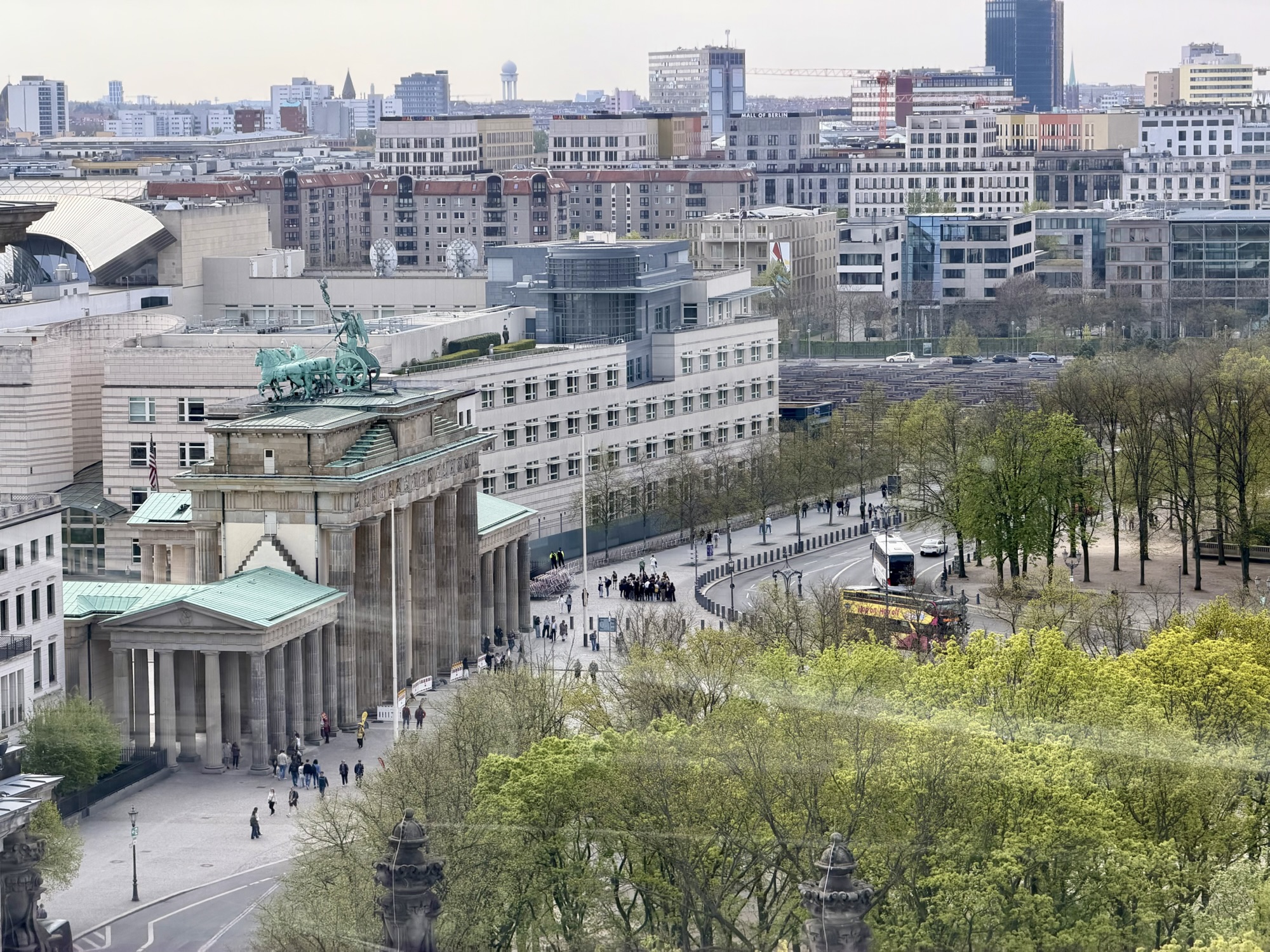
At bottom left, you can see the Brandenburg gate in this image. At centre right is the holocaust memorial.
The Reichstag building in Berlin is the seat of the German federal parliament (the Bundestag). It originally opened in 1894. It now features a glass dome, completed in 1998, which has a view of the parliamentary chamber, symbolizing government transparency. It is the most visited Parliament building in the world with more than 3 million visitors annually.
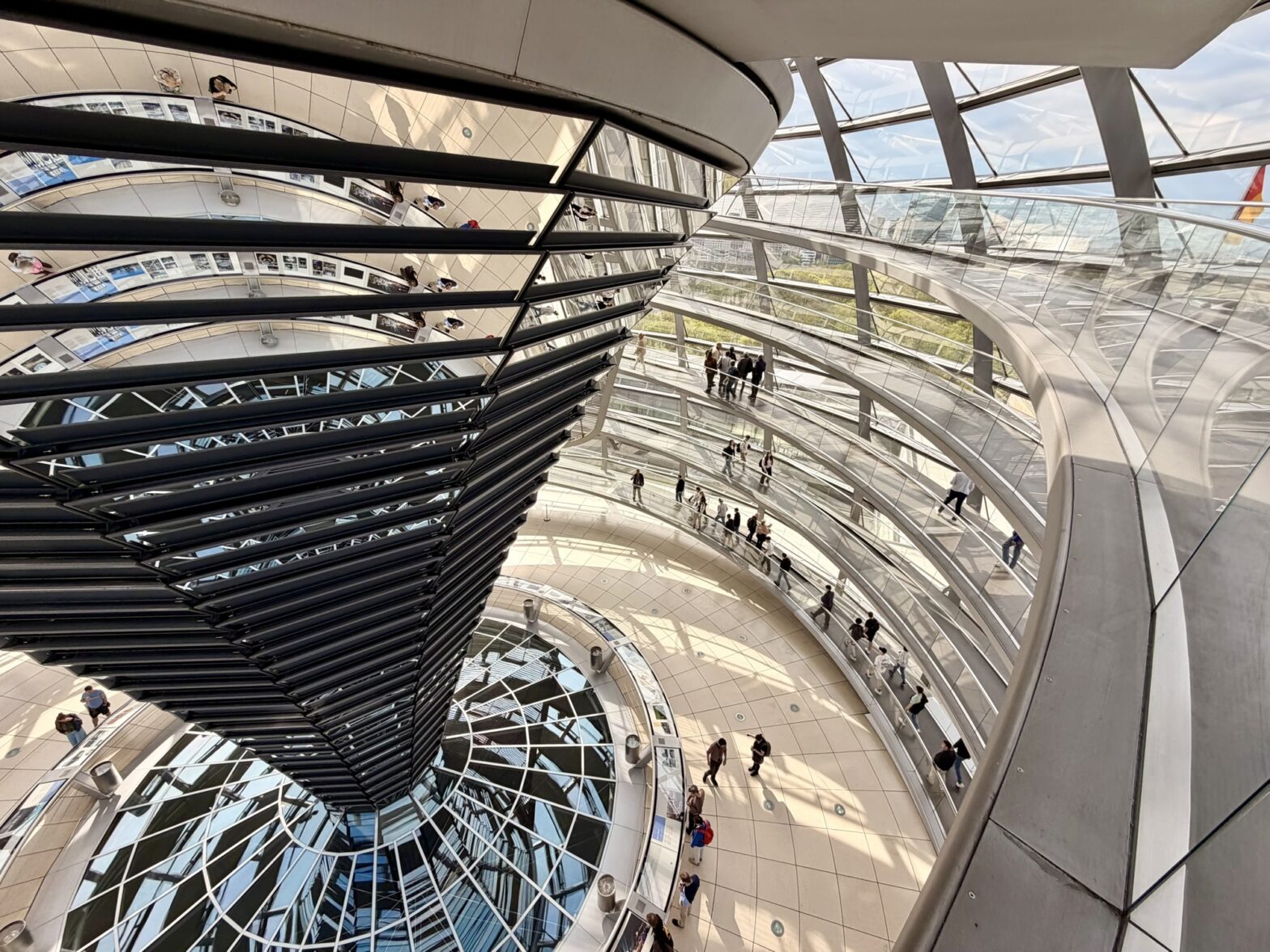
Norman Foster, and partners, were the architects of the dome. The rotating sunshade structure on the left is the computer controlled system of 360 mirrored aluminum panels that track the sun’s path. It prevents glare in the parliament chamber below and redirects natural daylight inward while preventing excessive solar heat gain.
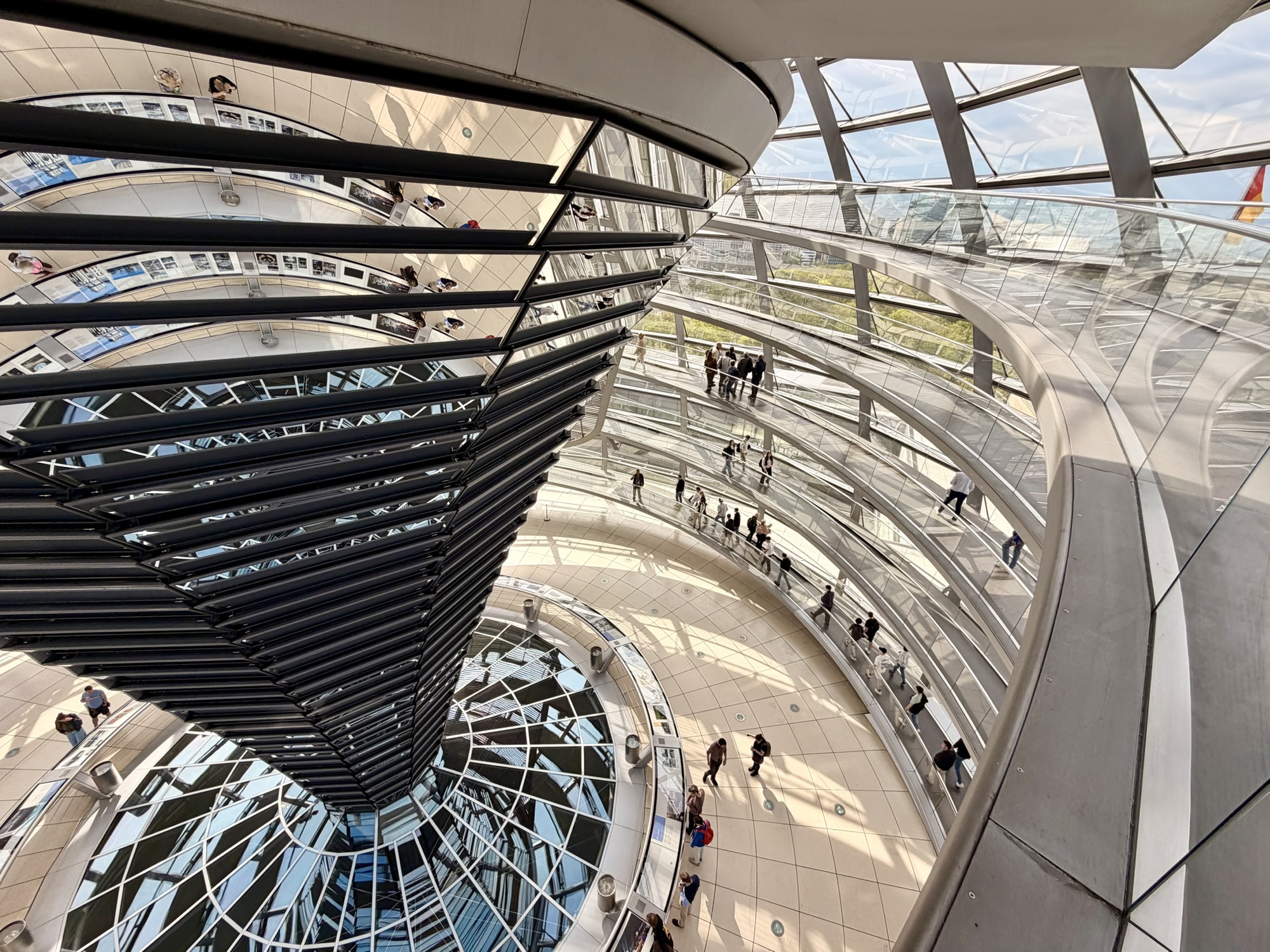
The Reichstag dome uses a sweeping double helix ramp system that allows visitors to walk continuously up to the top and back down. People ascending and descending can enjoy panoramic city views without crossing paths. There were free audio guides available that detected where you were on the ramps and provided descriptions of the views as you passed them.
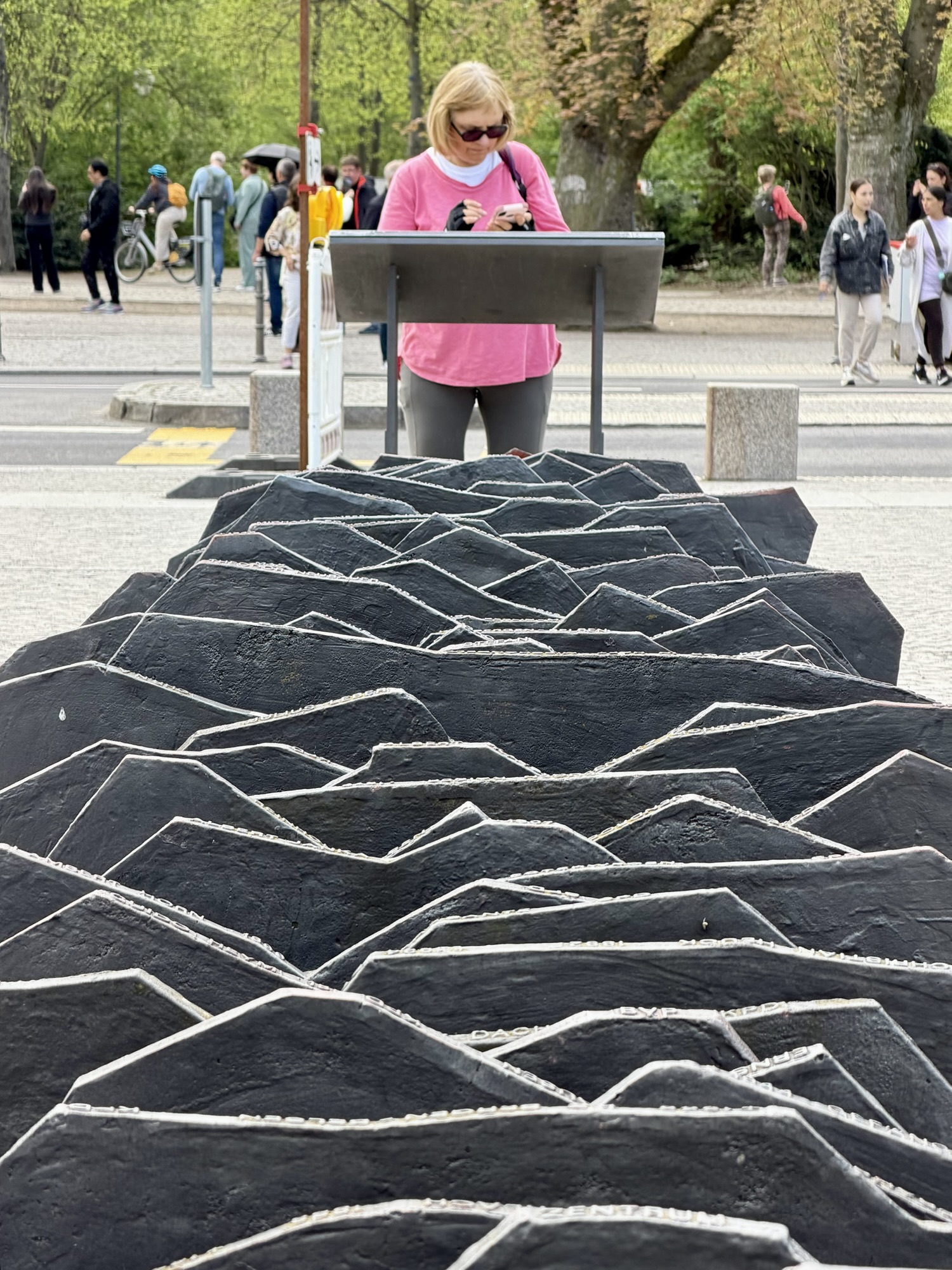
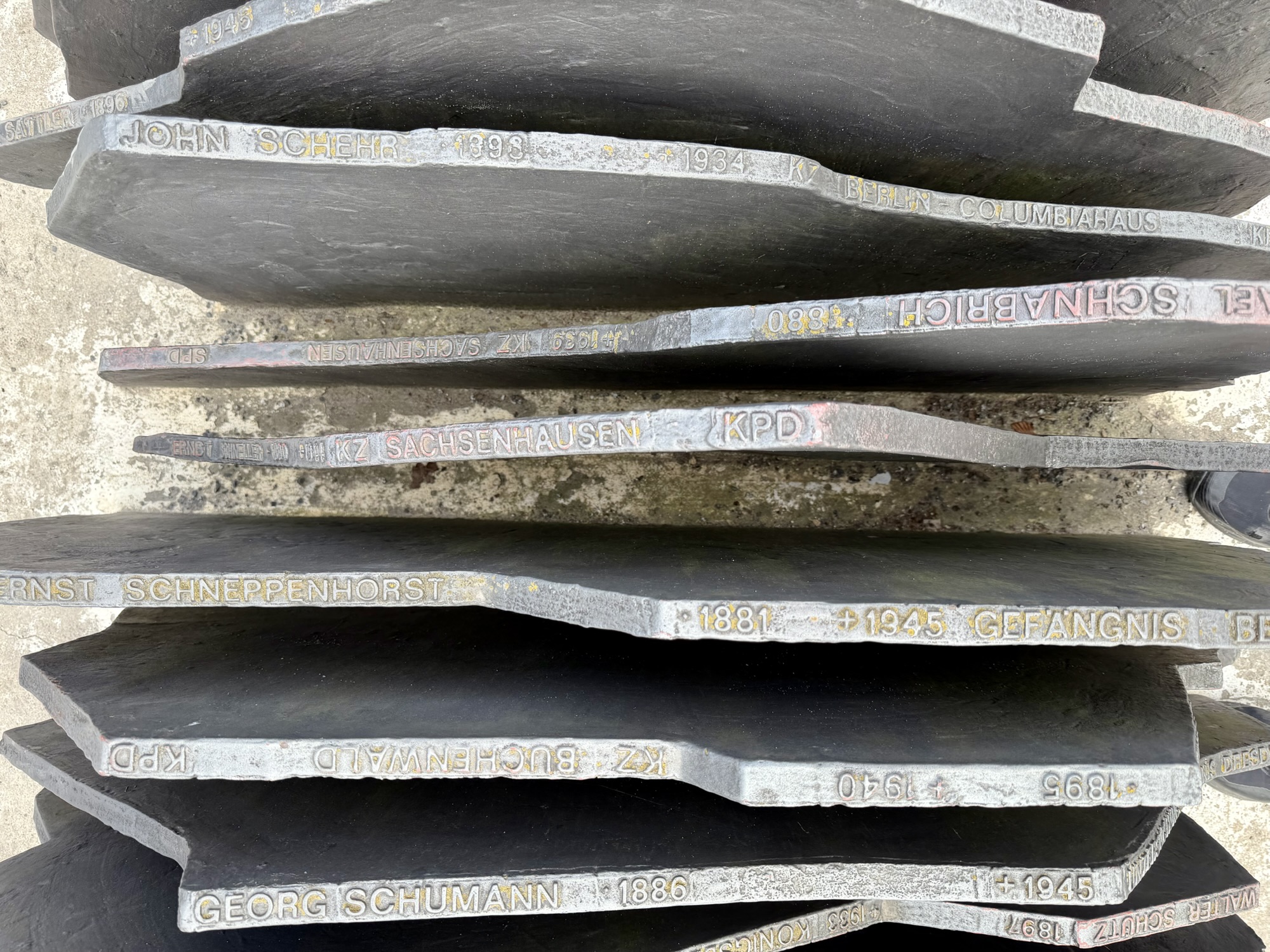
Outside of the Reichstag is the Memorial to the Murdered Members of the Reichstag. It commemorates the 96 members of the parliament who were murdered between 1933 and 1945. The memorial was erected in 1992. It is made up of 96 cast iron plates with the names, birth and death dates and places engraved on the edges.
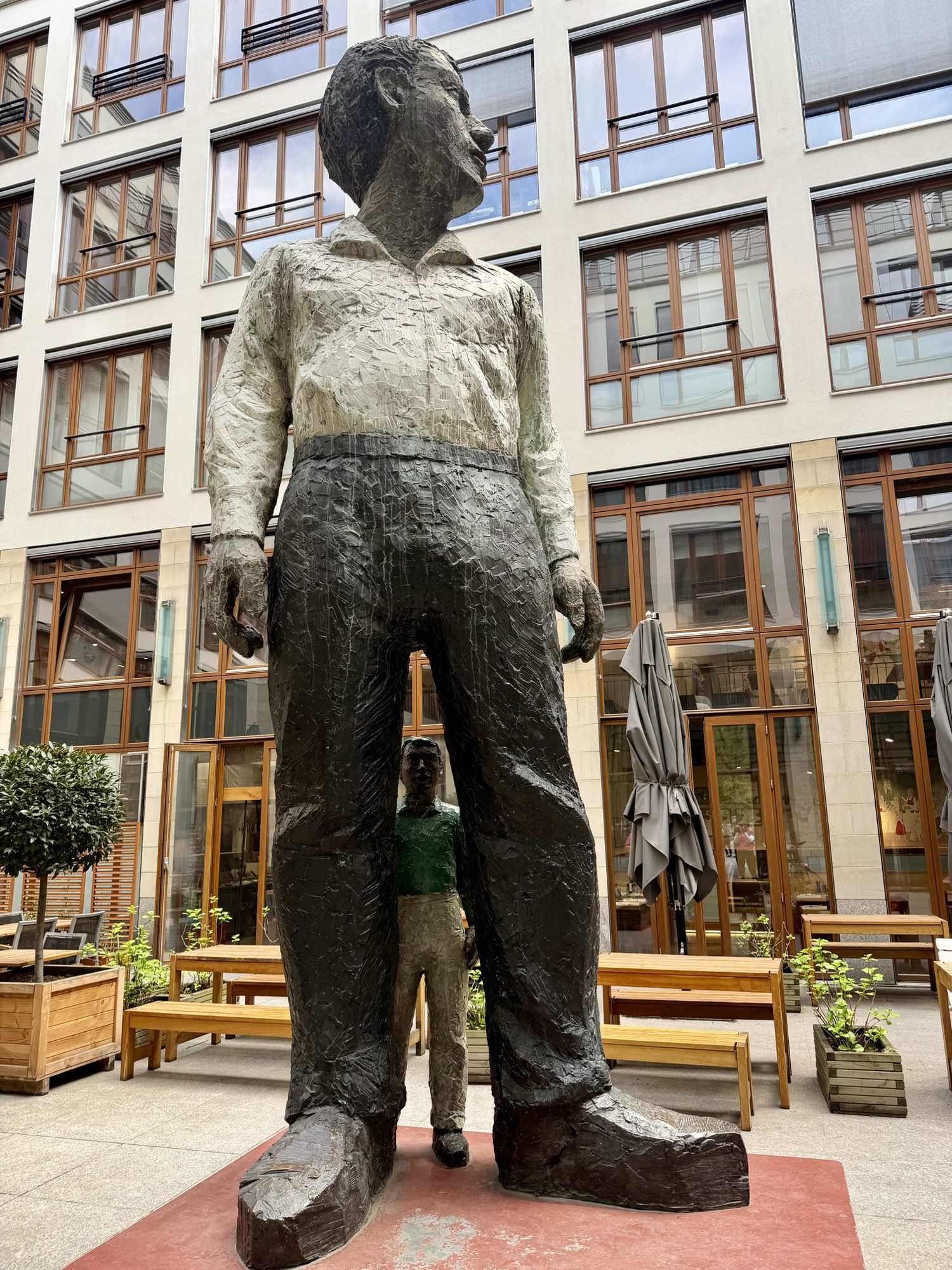
This Stephan Balkenhol sculpture entitled Großer Mann mit kleinem Mann (Big Man with Little Man) features a towering figure gazing toward the Brandenburg gate and a smaller figure looking through his legs towards the street. The big man is a “larger than life figure that symbolizes, the strength and presence of the individual citizen within a Democratic society”. The little man is an “homage to everyday people who opposed state oppression and authoritarianism“.
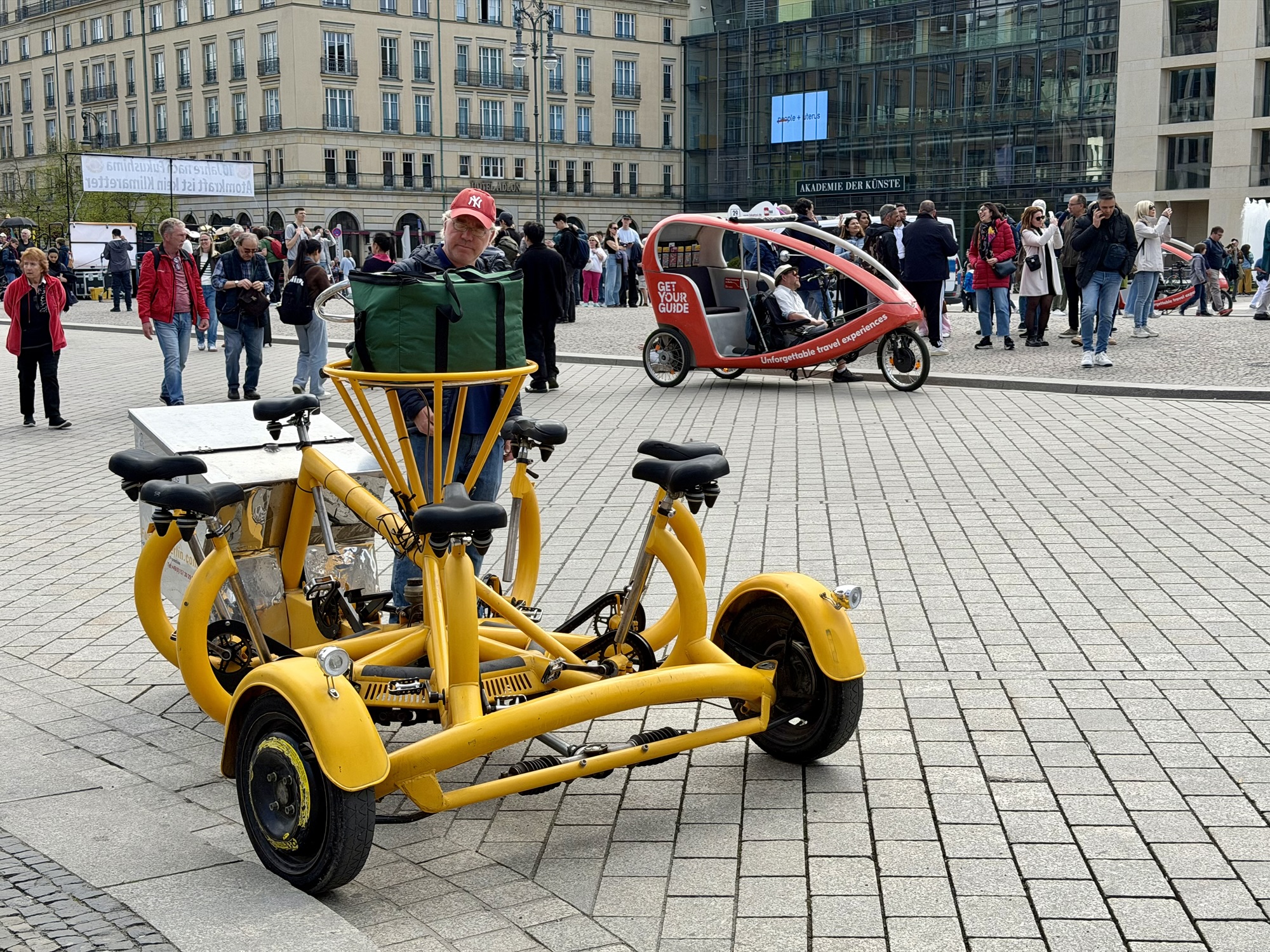
I don’t think I have ever seen an odder bicycle.
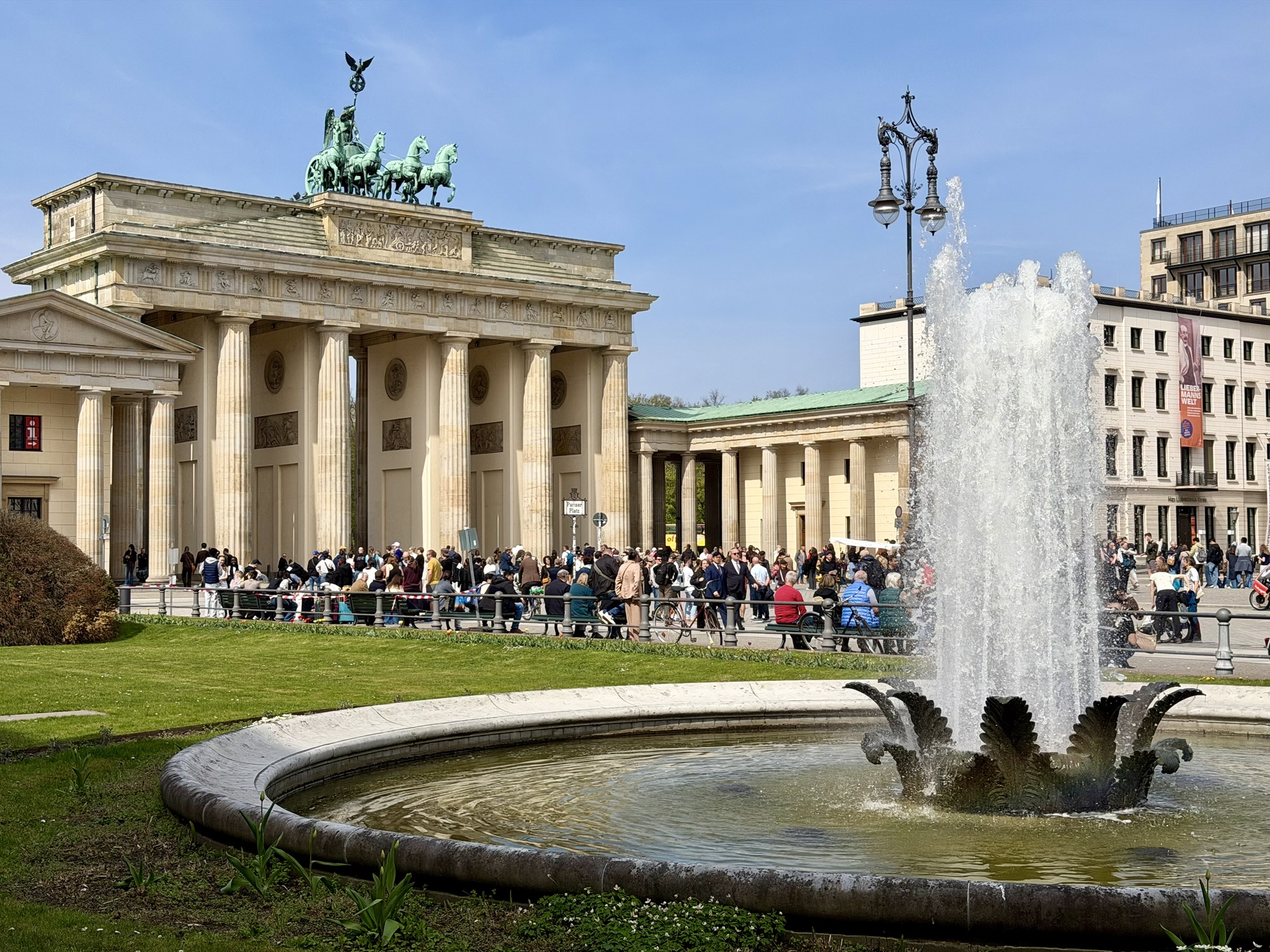
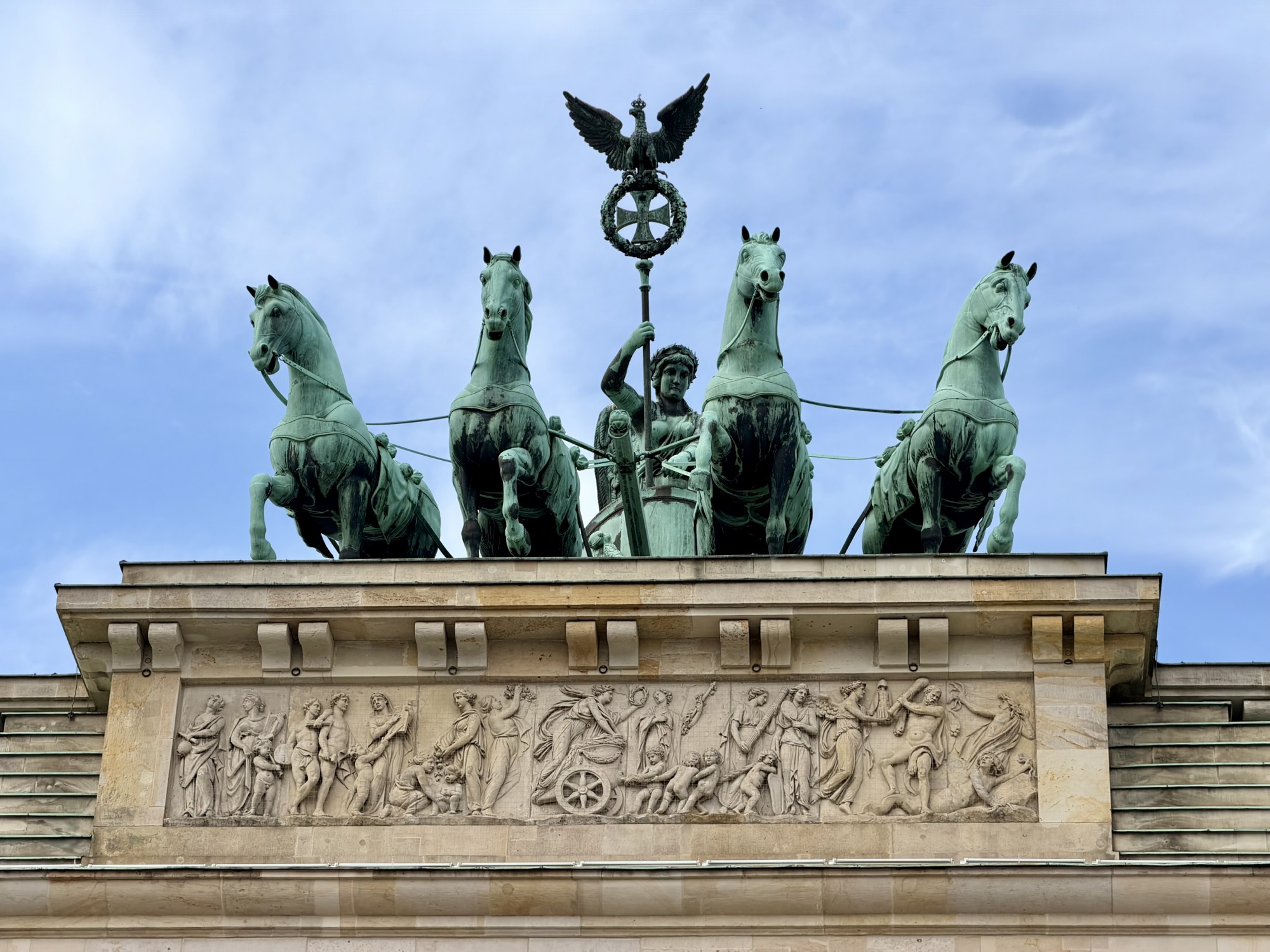
The Brandenburg gate is an iconic 18th century neoclassical monument. It was commissioned by King Frederick Wilhelm II and built between 1788 and 1791. It has served as a symbol of peace, Cold War era division, and modern German reunification.
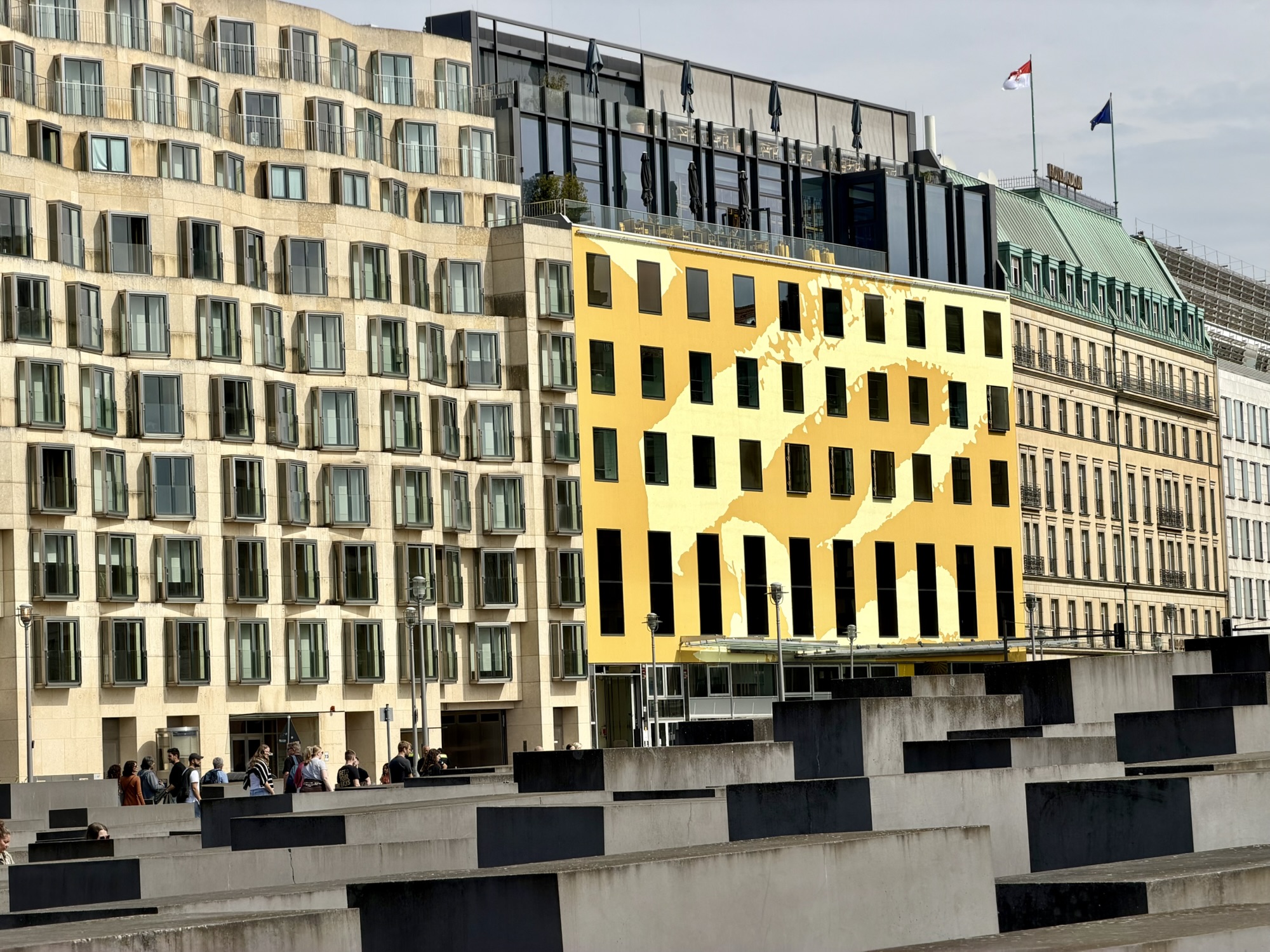
The building on the left across the street from the Holocaust Memorial in the foreground, was designed by Frank Gehry for DZ Bank. It is a somewhat sedate building on the outside, for Frank Gehry, due to a requirement that it that building blend in with the surrounding embassies and historical buildings.
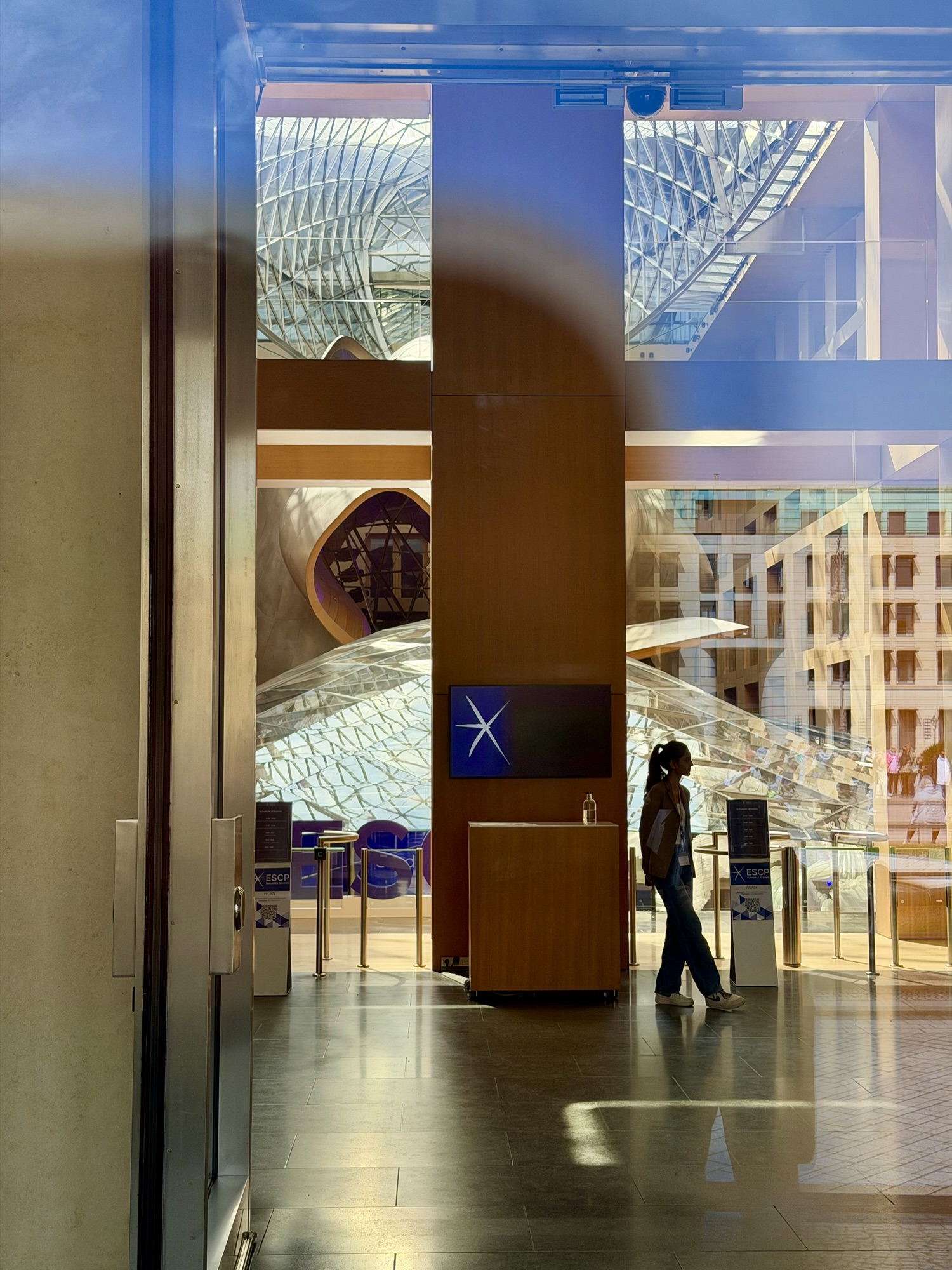
I knew I wanted to go in to see the sculpture in the atrium. However, there was graduation event being held, and security would not allow us to go in. I was only able to get a picture of it through the doors.
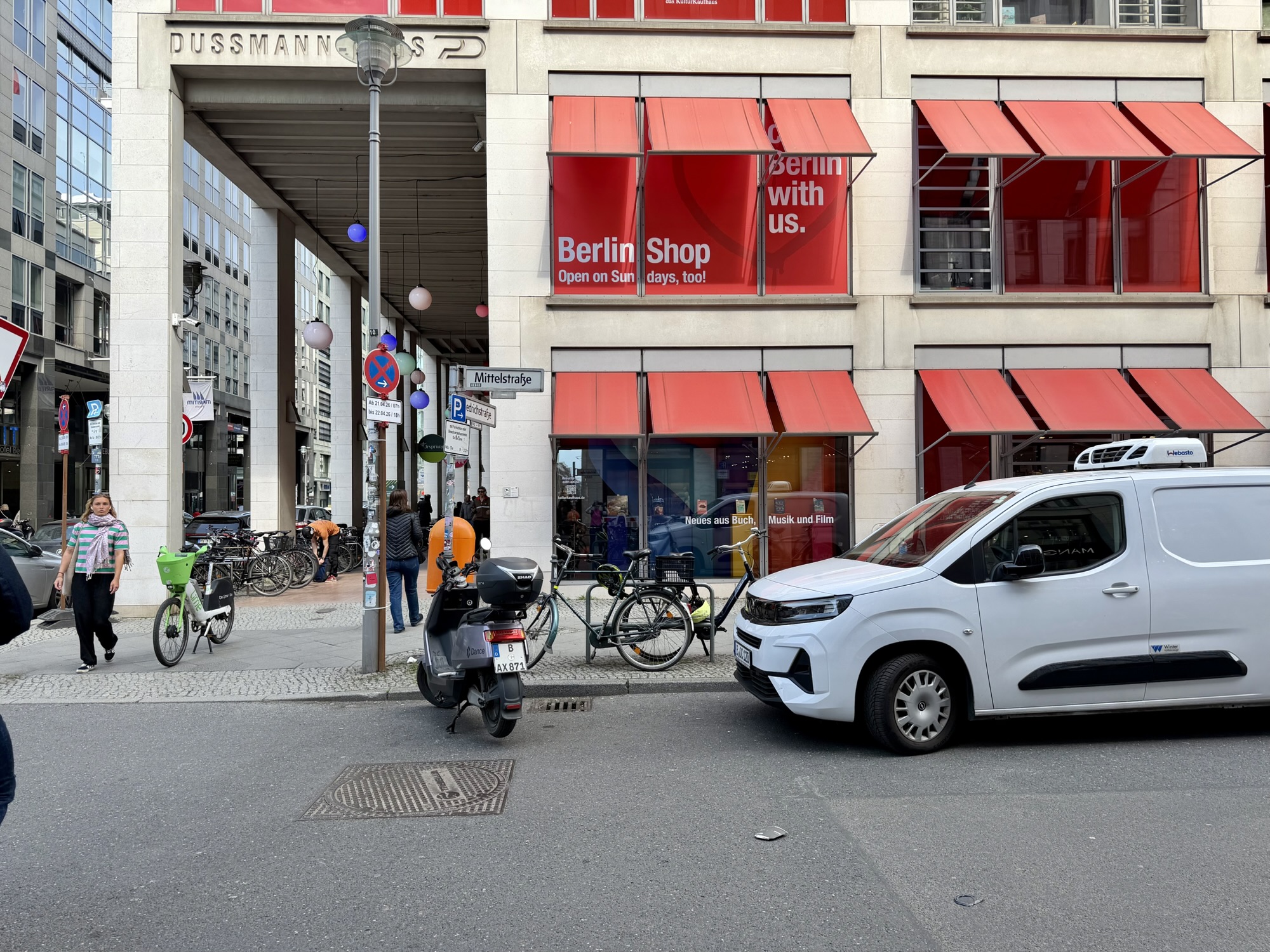
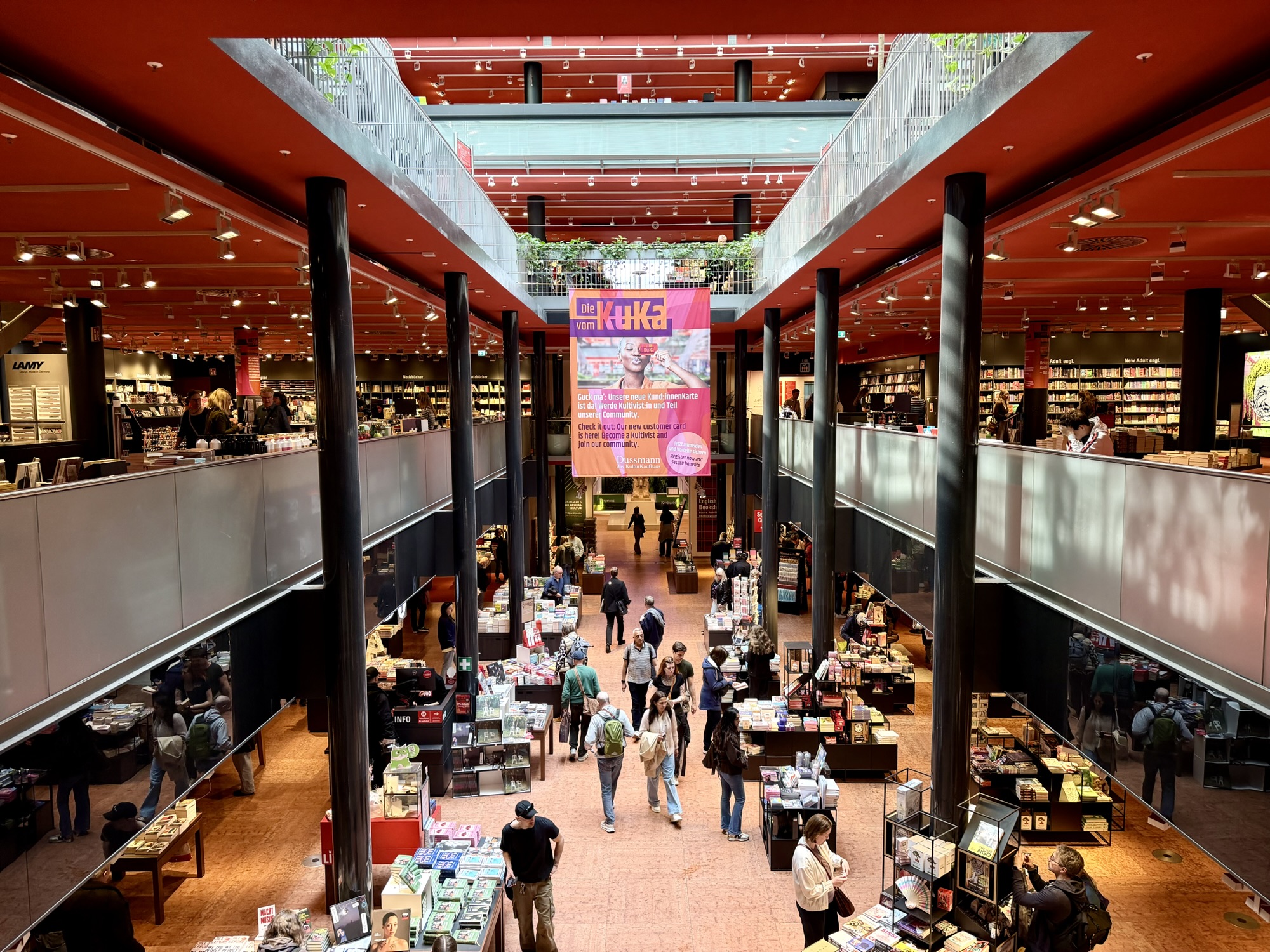
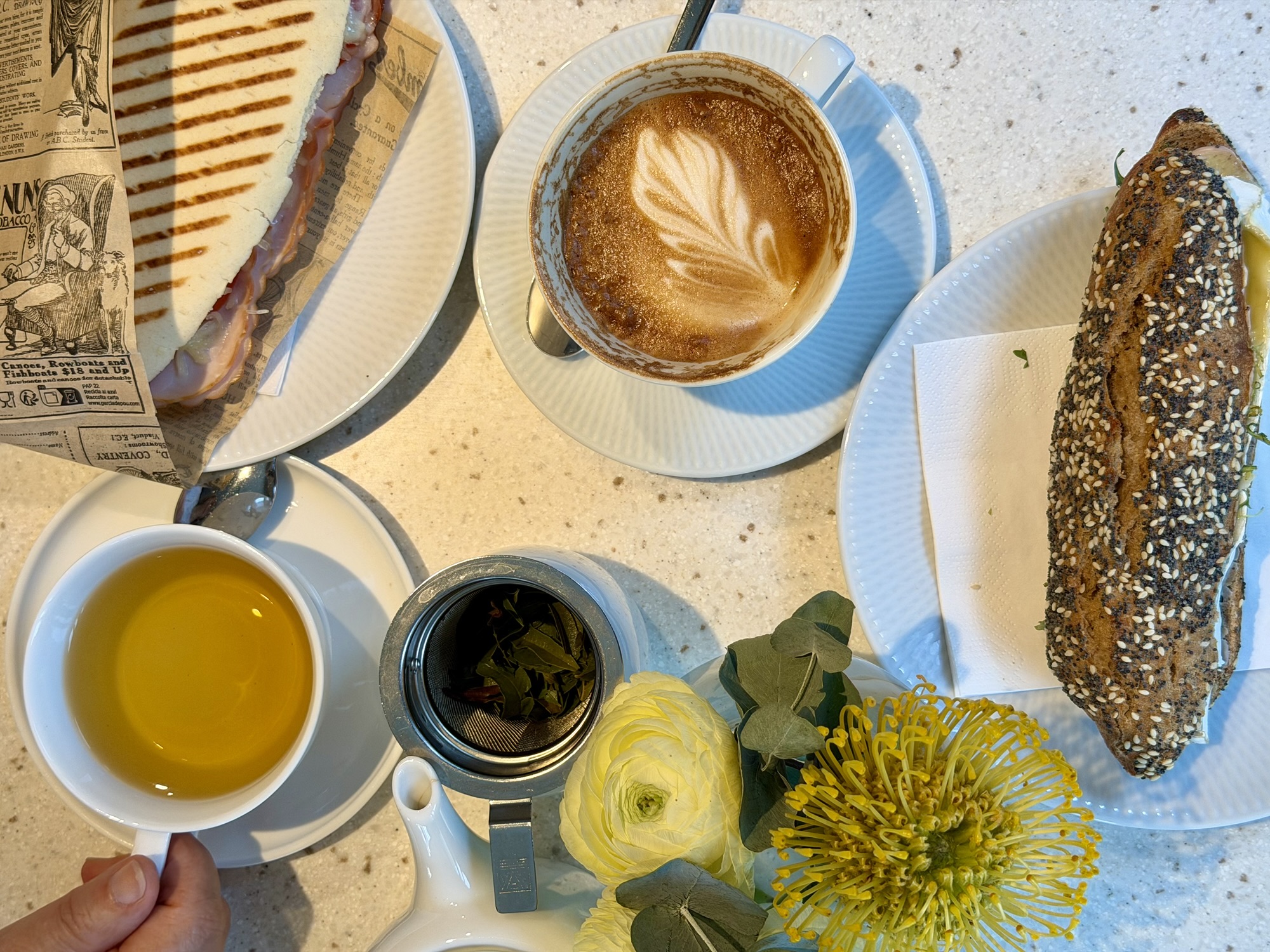
We stopped at the spectacular Dussmann das KulturKaufhaus book store to browse and have lunch in their café. It covers five floors and has over 100,000 books, including a very large English language literature section.
Our next stop was Humboldt University and the square in front of it – Bebelplatz. In the square is a memorial entitled The Empty Library at bottom right in the picture below. It commemorates the infamous Nazi book burnings of May 10, 1933. A plaque set near the memorial translates to:
That was but a prelude;
where they burn books,
they will ultimately burn people as well.

Heinrich Heine 1820
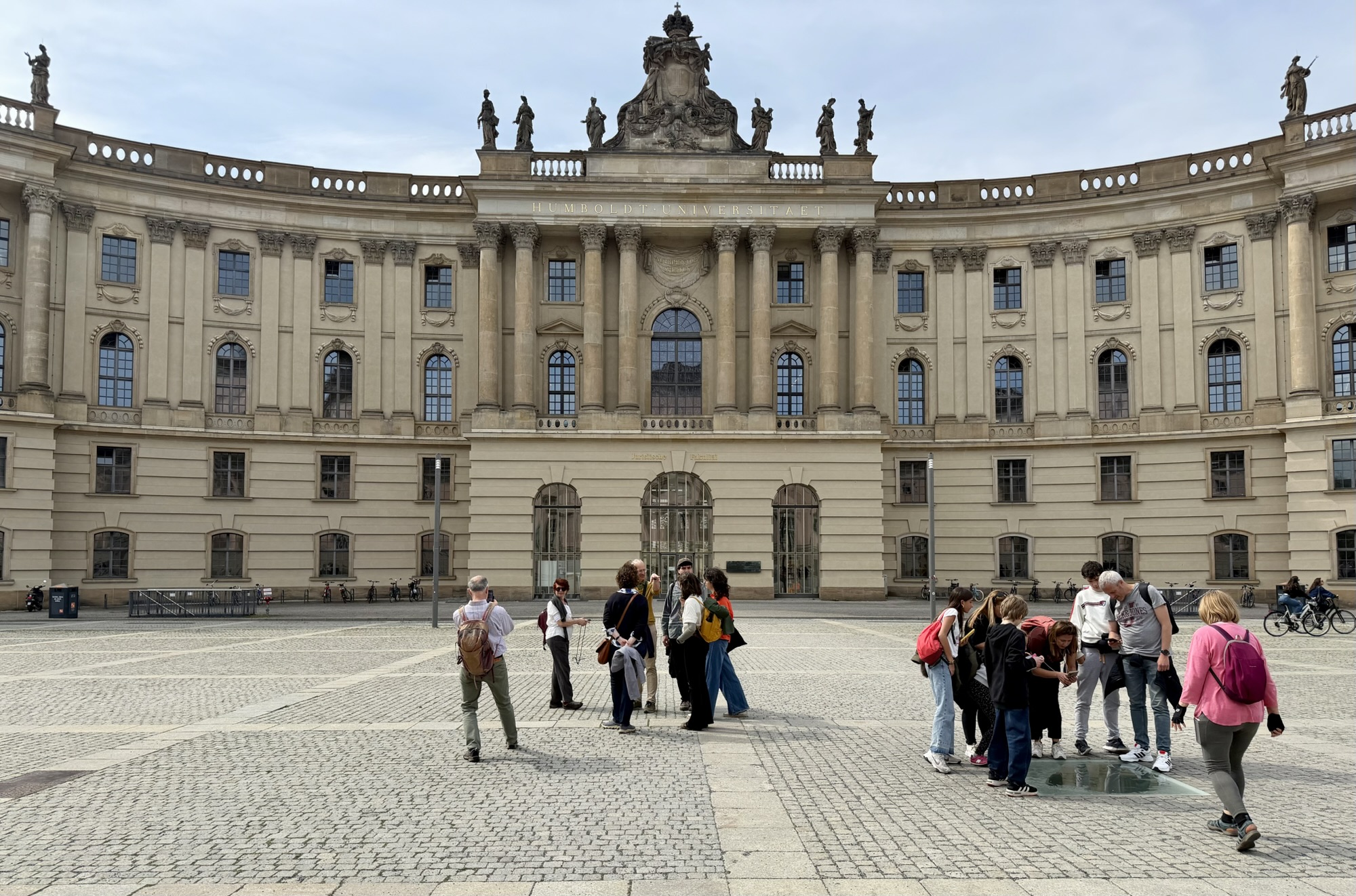
Humboldt University is named after two prominent German brothers: the educational reformer Wilhelm von Humboldt and the naturalist Alexander von Humboldt. Alexander was the first scientist to identify and articulate the concept of anthropogenic (human-caused) climate change. More than 200 years ago, he connected the dots between human activity and ecological shifts, famously warning that mankind’s “mischief” disturbs nature’s order. His insights included deforestation and desertification, the interconnectedness of nature, and the danger of industrial emissions. His observations laid the groundwork for the modern environmental movement.
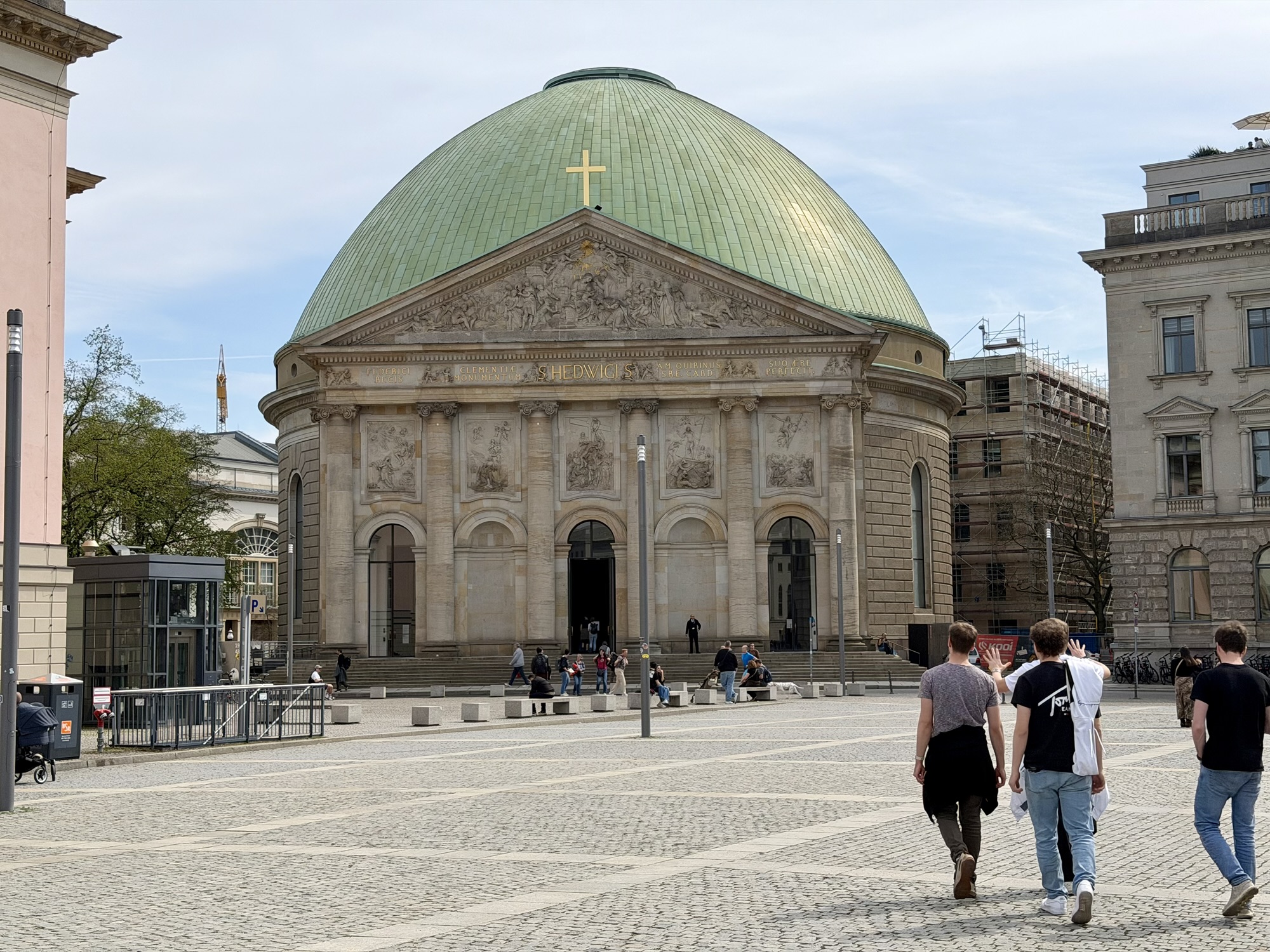
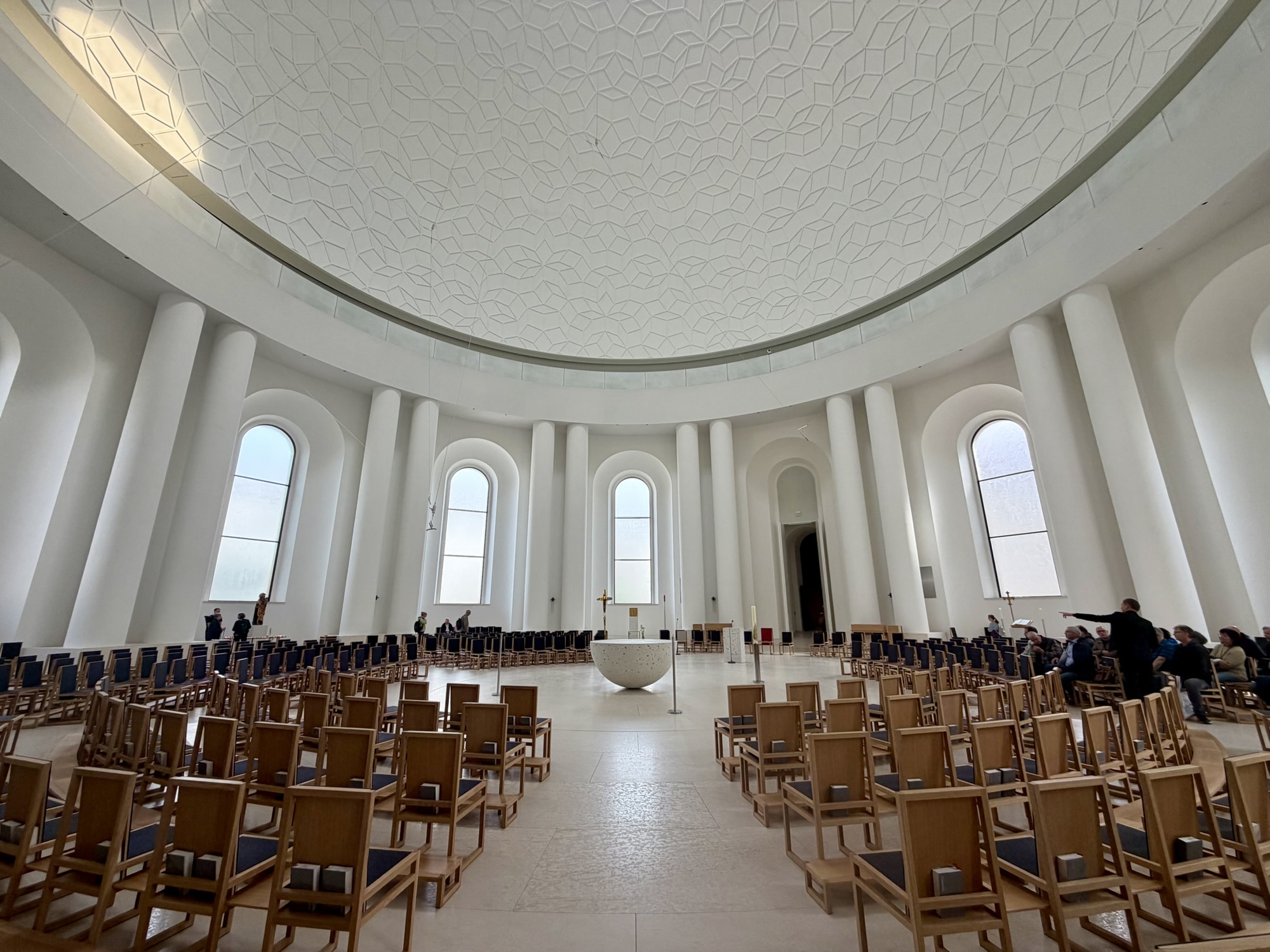
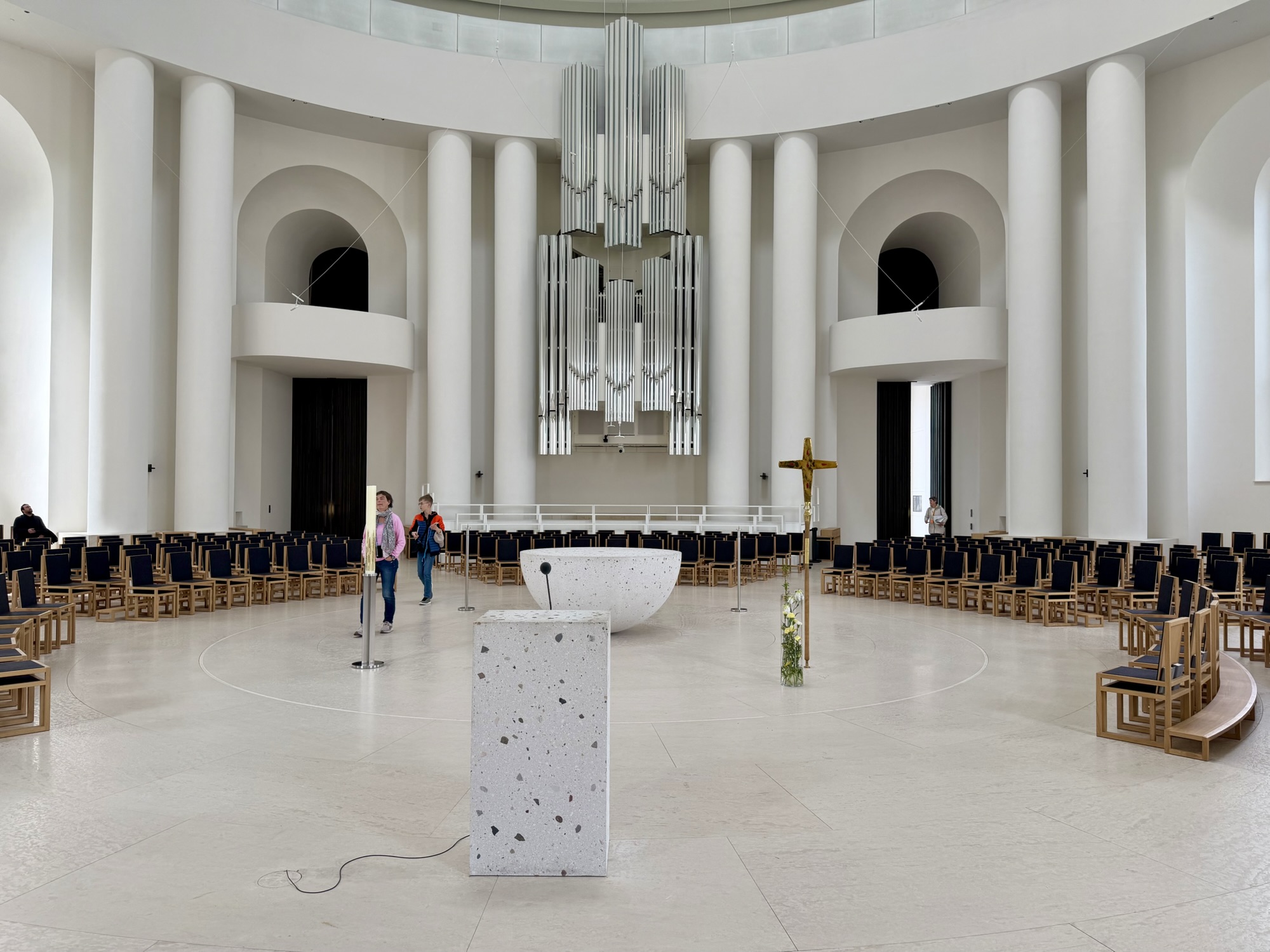
Facing the same square is St Hedwig‘s Cathedral. It is the oldest Catholic Church in Berlin and was inspired by the Roman pantheon. It dates back to 1747. I don’t think I’ve ever seen such a plain Catholic Church. When I looked up information about it to write the blog today, I learned that it looked much different in the past. It was heavily damaged after World War II and rebuilt. Then was renovated again to its current very plain state in 2024.
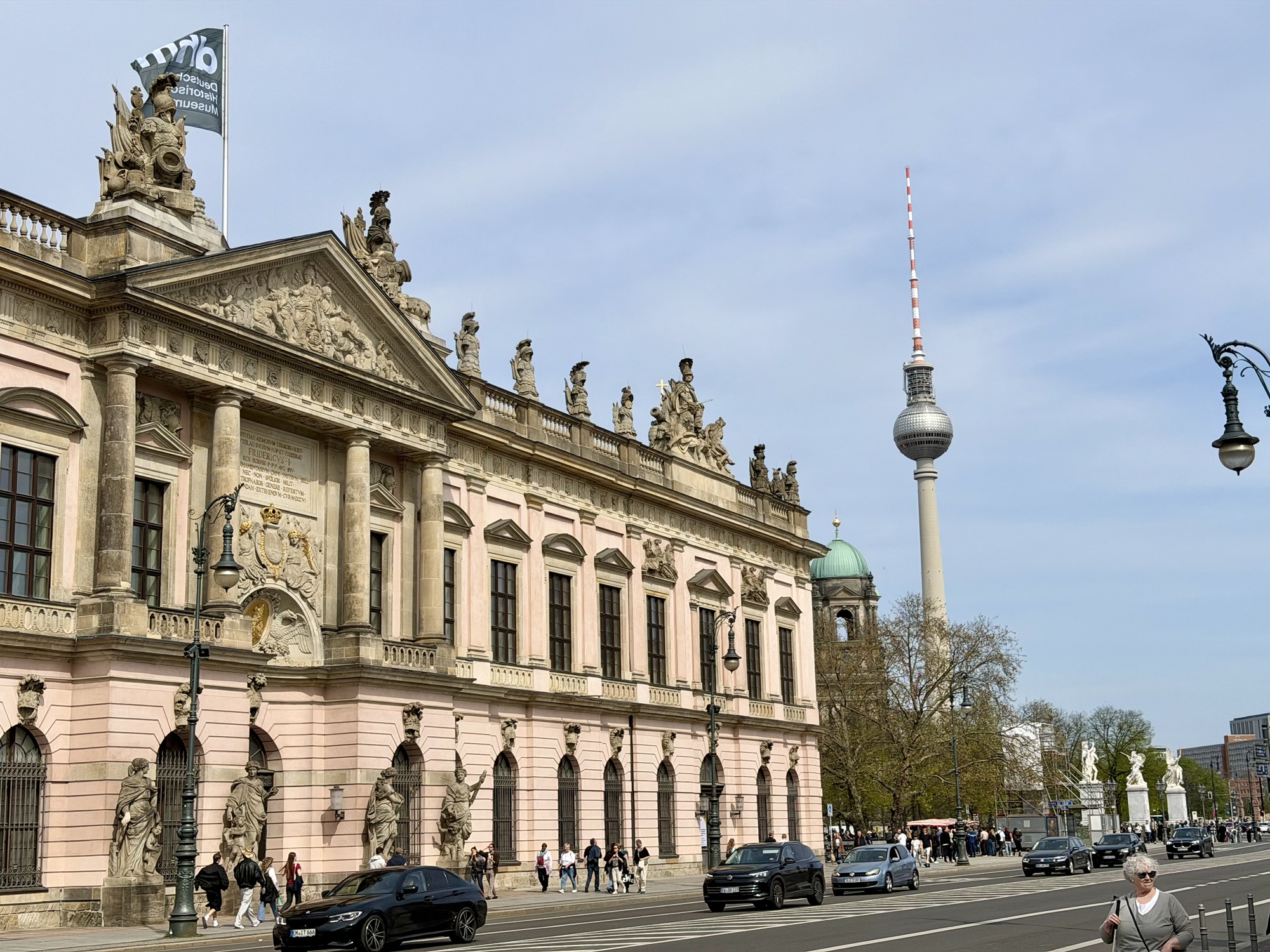
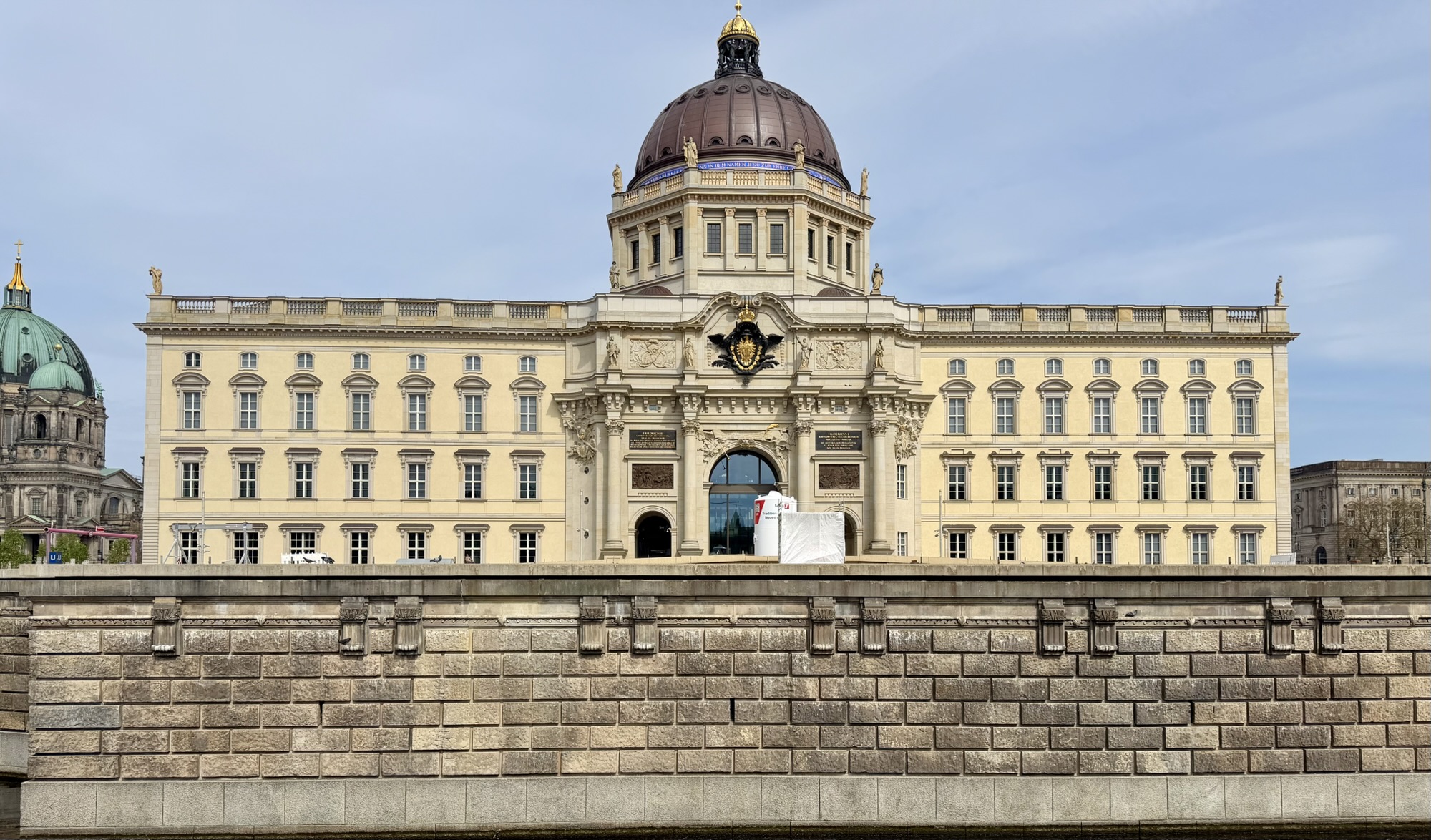
Next, we visited Museum Island, a UNESCO World Heritage site. It houses five world renowned museums, and the Berlin Cathedral.
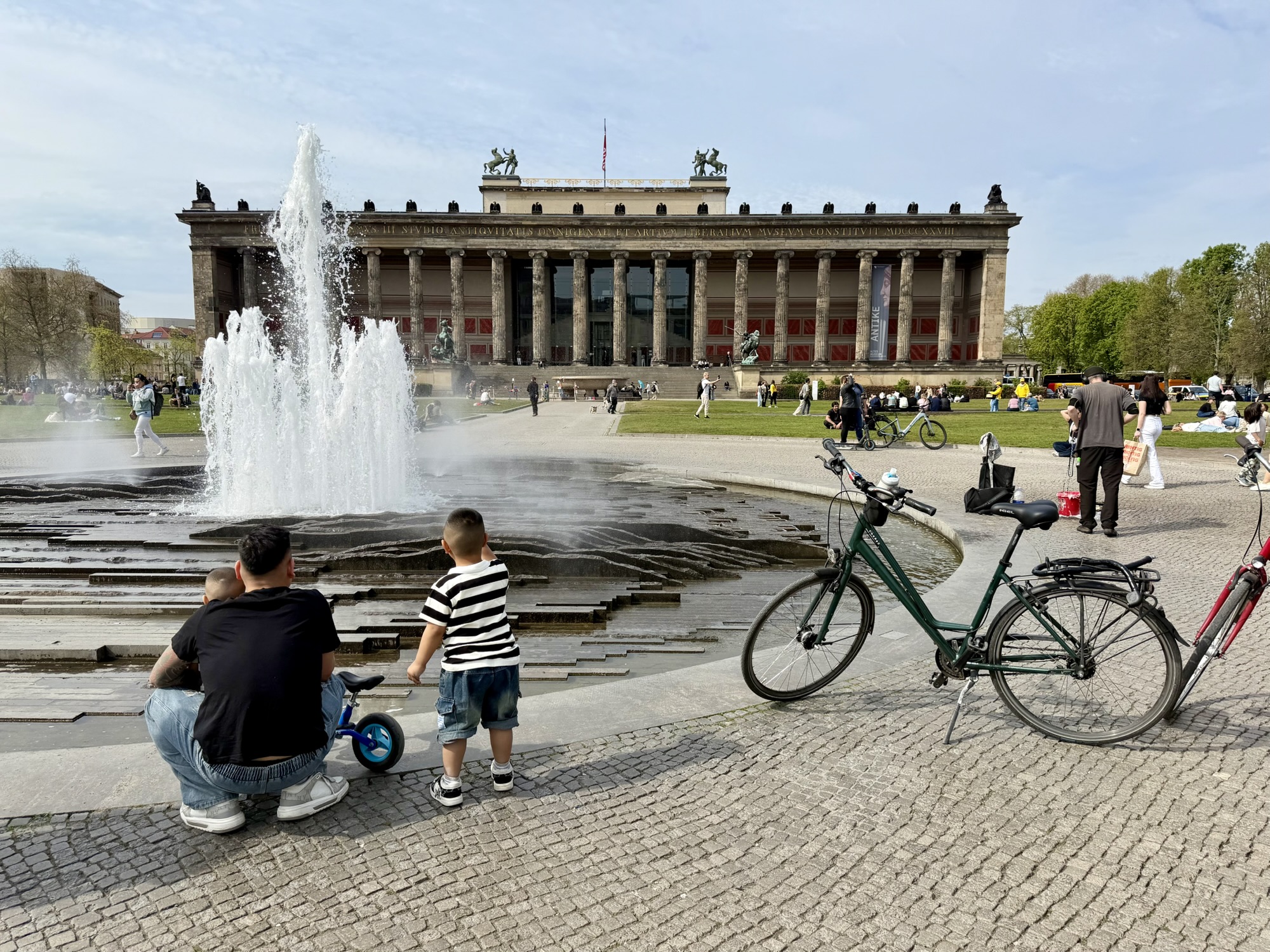
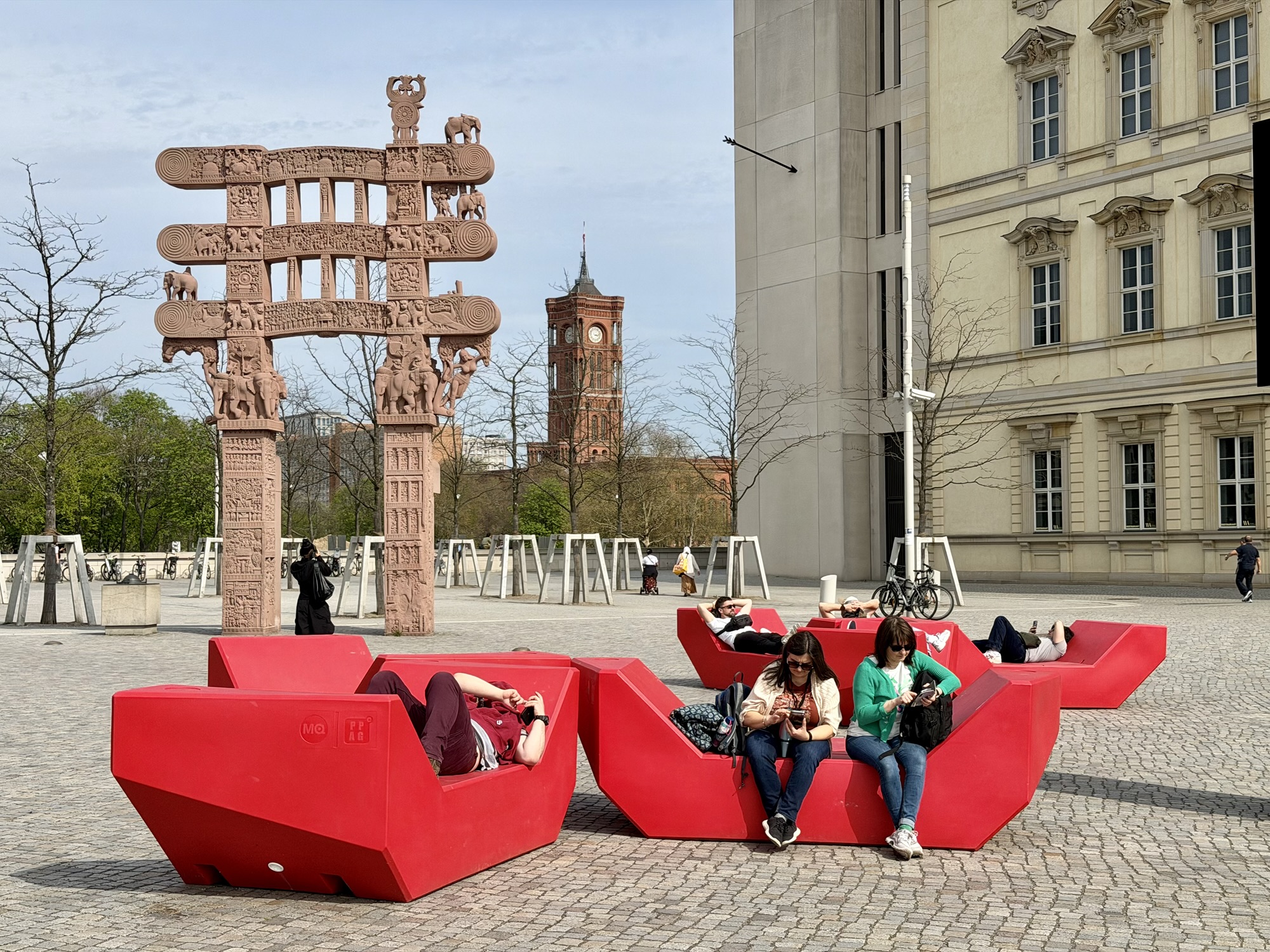
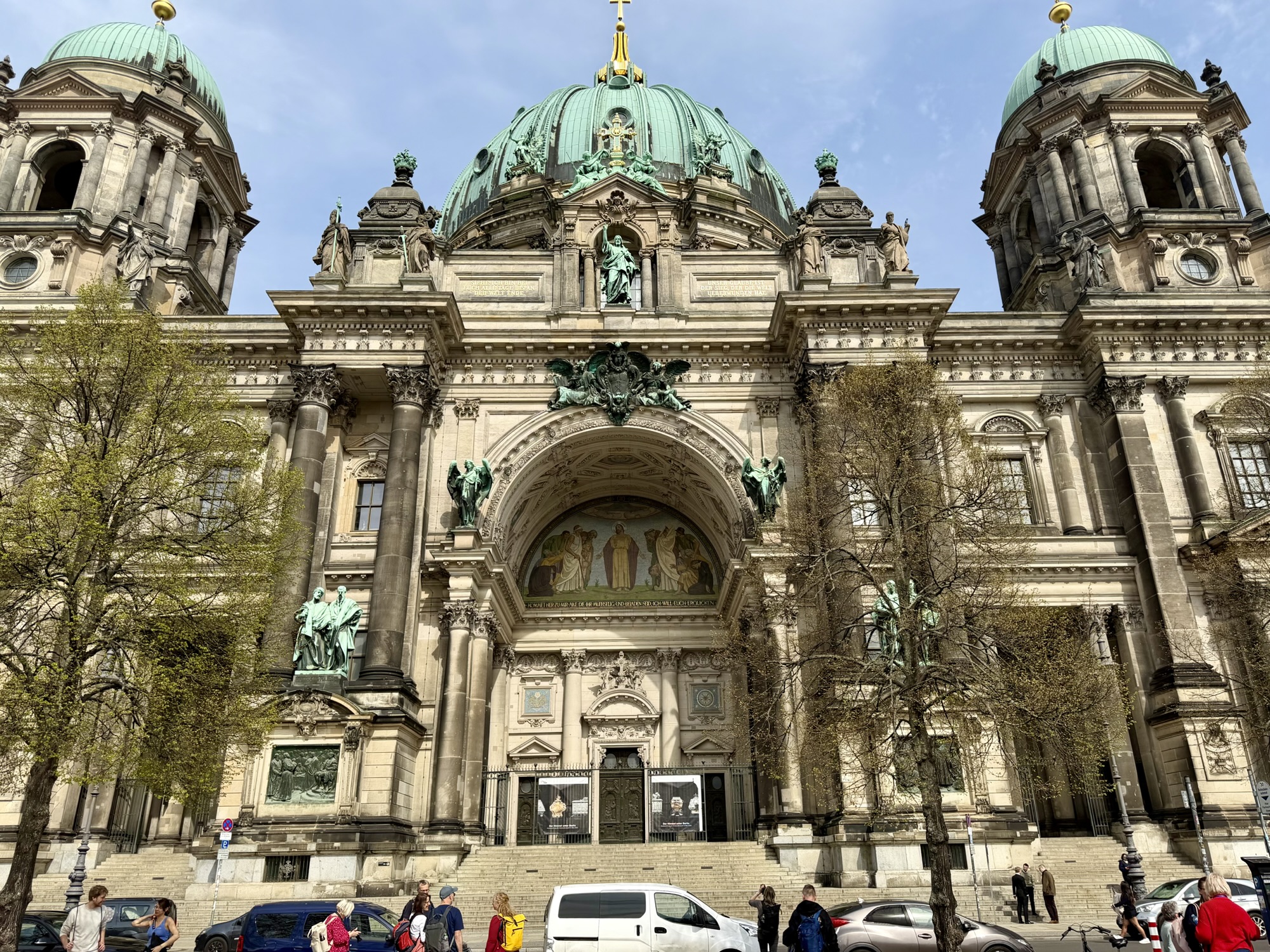
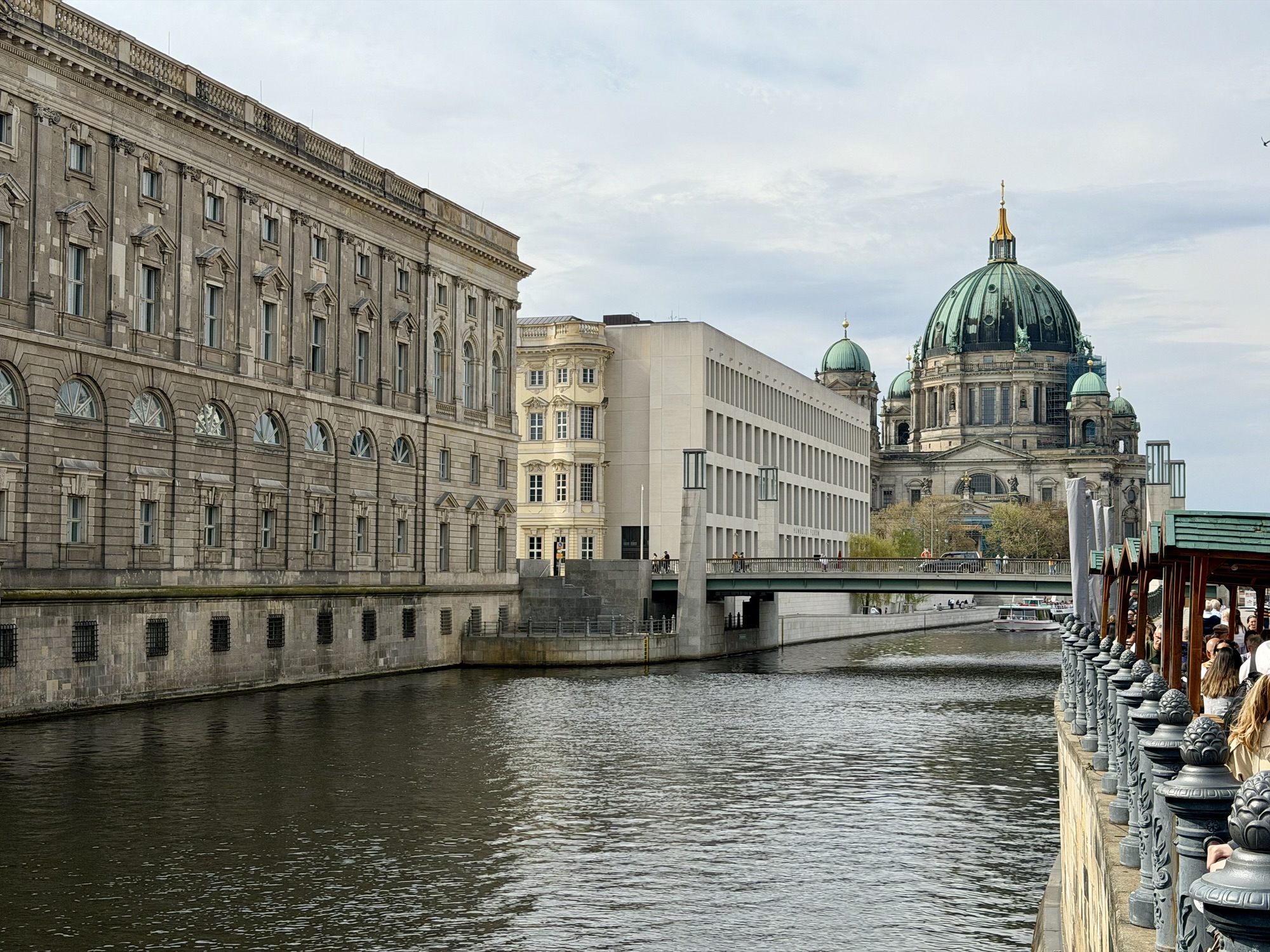
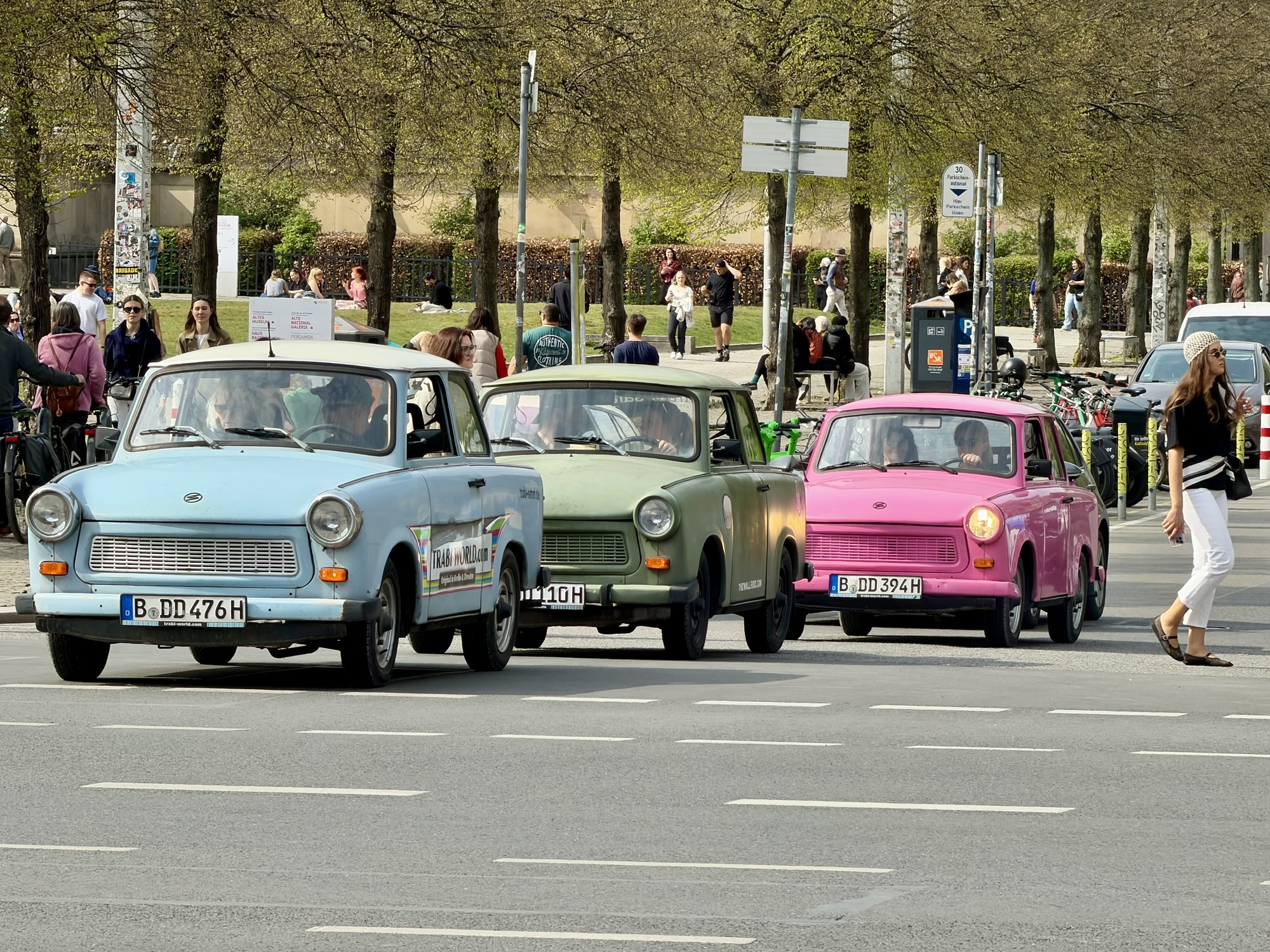
While we were there, we saw these old East German cars – Trabants (or Trabis) which you can rent to drive in a guided tour.
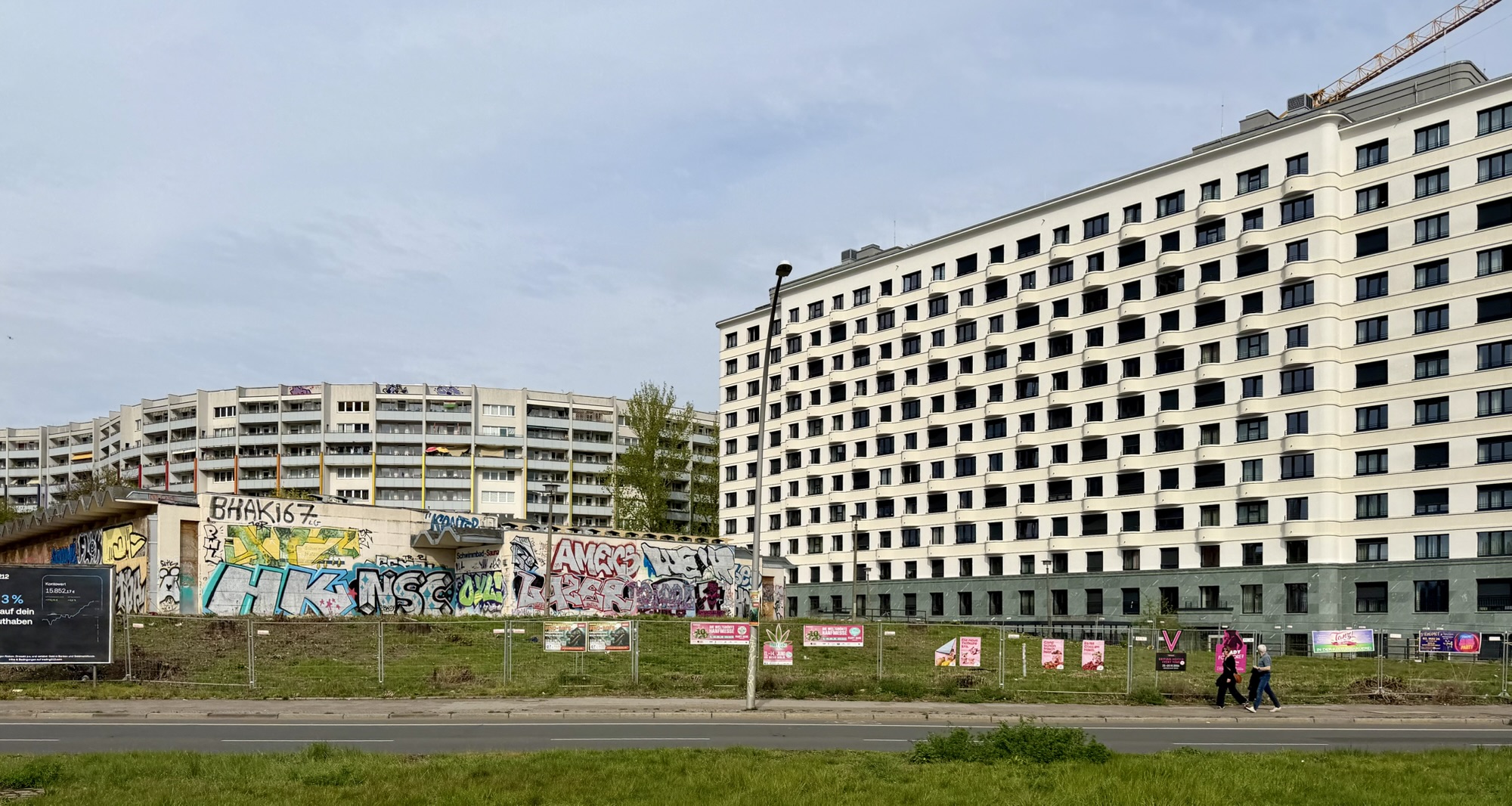
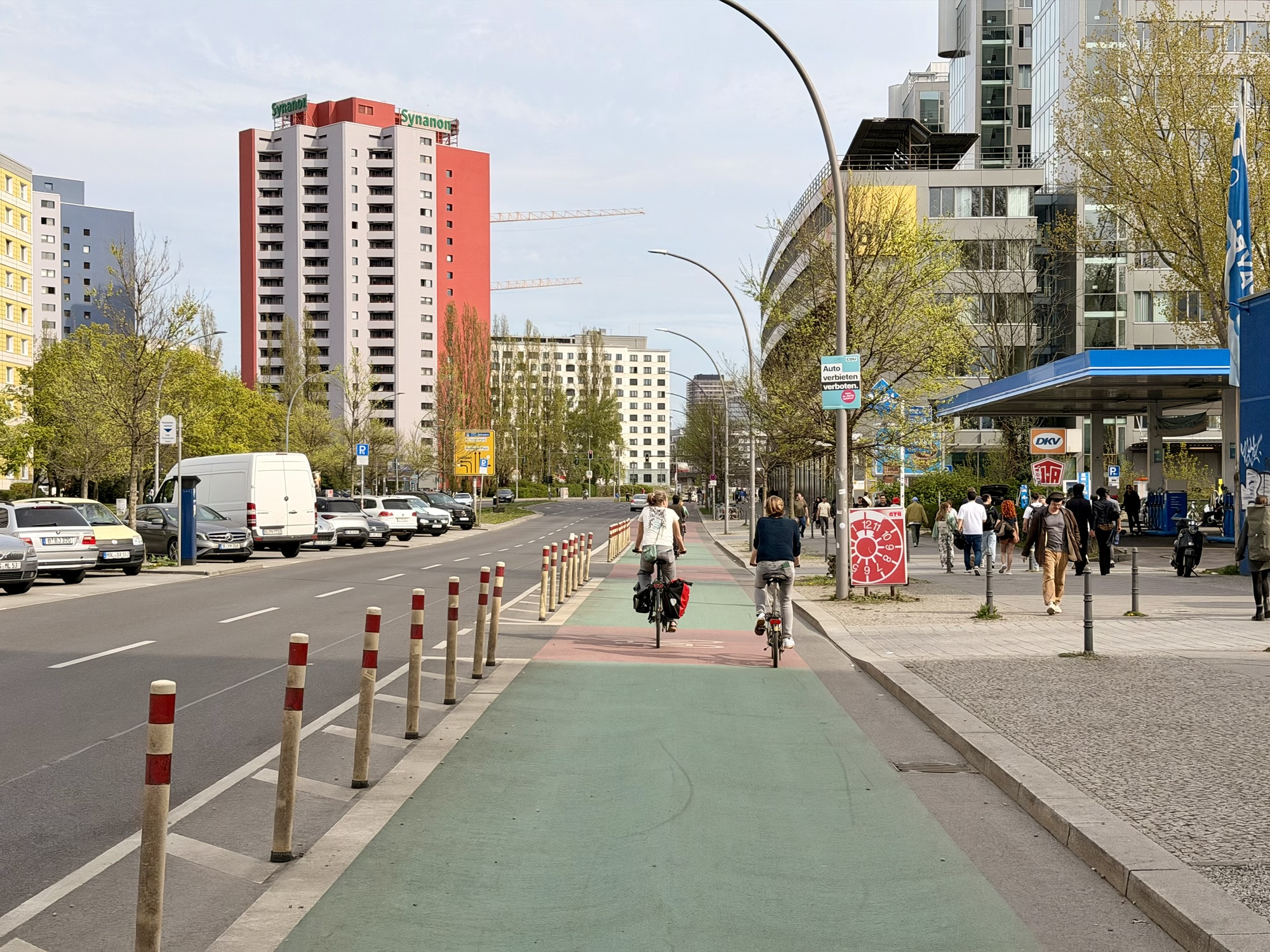
From there we rode to the east side of the Spree River to what was East Berlin. It has a very different feel to it. We encountered some high quality cycling infrastructure there.
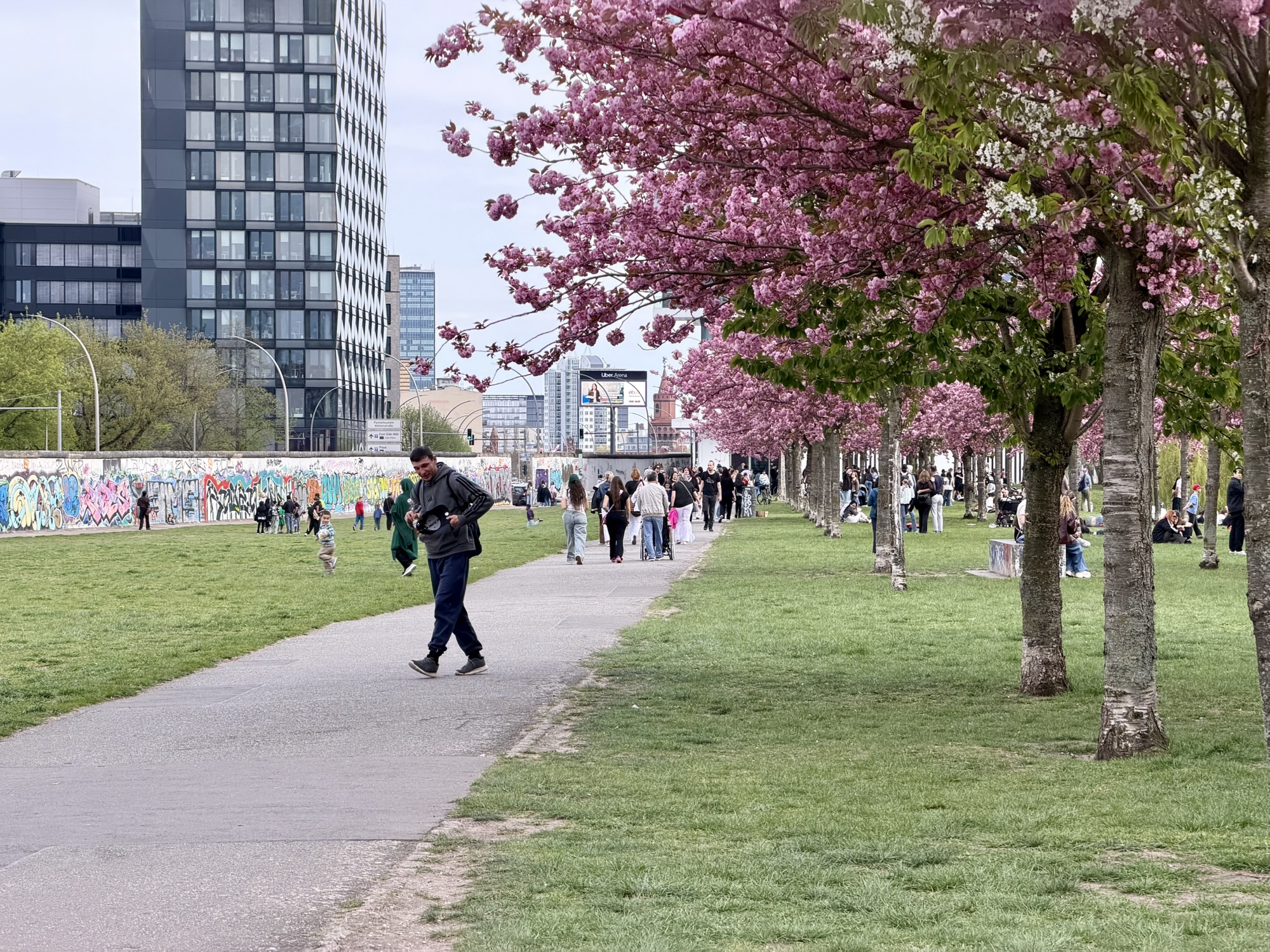
Our next stop was the East Side, Gallery, the longest remaining section of the Berlin Wall covered in street art. The blossoming trees provided a beautiful contrast to the graffiti and street art.
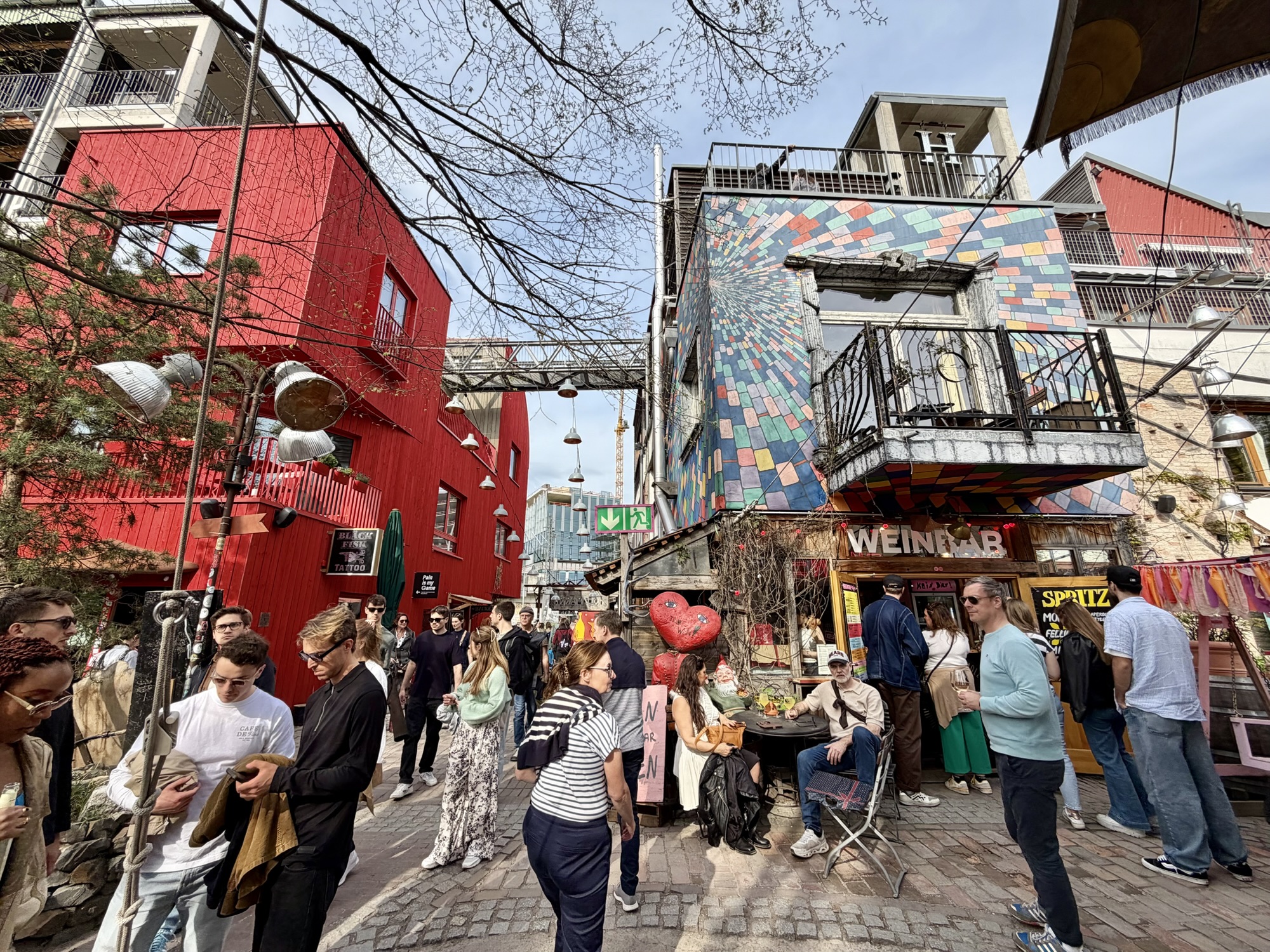
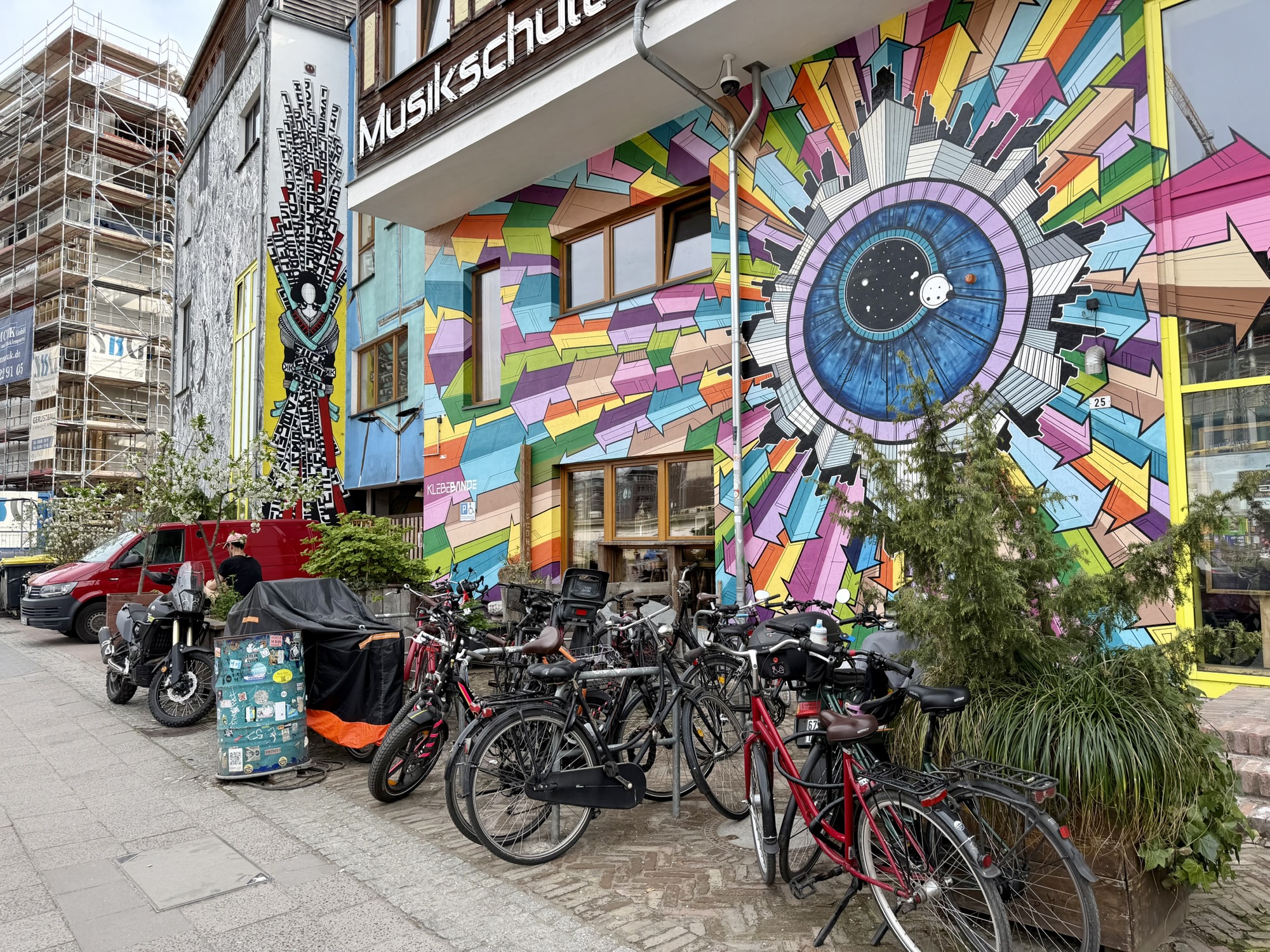
When we passed the Holzmarkt, which neither of us knew about ahead of seeing it we knew we had to stop and check it out. It is a vibrant, cooperative, urban village located on the Spree River. It offers spaces for “concerts, art and culture, gastronomy, original shops and small businesses from the creative sector.”
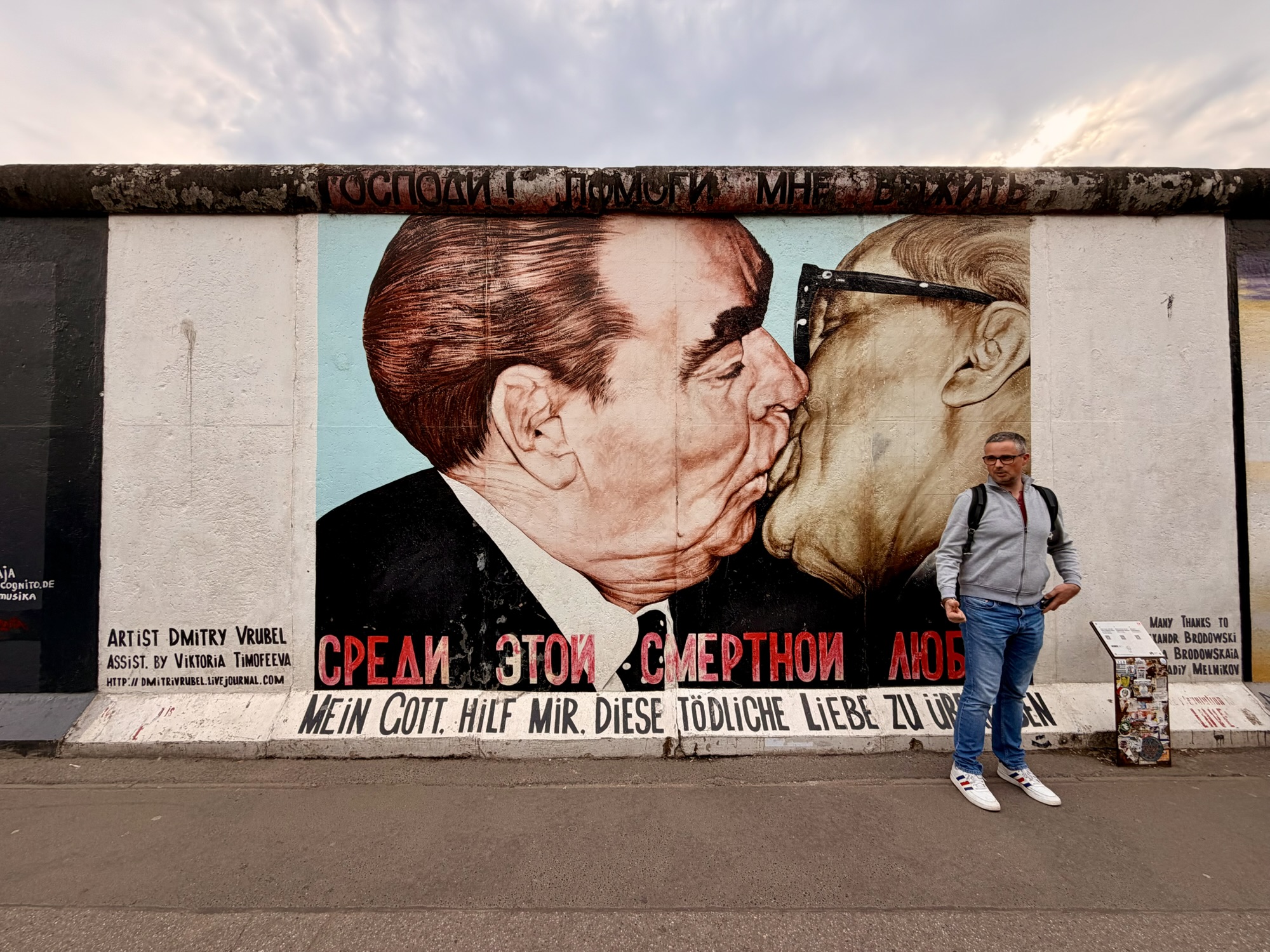
This is the most famous piece of street art on the wall and there was a lineup to take pictures in front of it. It is entitled, “Mein Gott, hilf mir, diese tödliche Liebe zu überleben (My God, help me survive this deadly love)” but more commonly as the Socialist Kiss. It depicts Soviet leader, Leonid Brezhnev, and East German leader Erich Honecker in an impassioned kiss. The “socialist fraternal kiss was a ritualized, high-level greeting between communist leaders meant to symbolize deep solidarity and unbreakable ideological unity. It typically consisted of an embrace and three kisses on the cheeks, but exceptionally close allies sometimes kissed on the mouth”.
The Oberbaumbrücke is a striking, double-deck Neo-Gothic brick bridge crossing the River Spree. Acting as a major landmark, it connects the vibrant districts of Friedrichshain and Kreuzberg. It carries road traffic on the lower deck and u-Bahn train lines on the upper level. It is considered a symbol of unity because it historically linked the two boroughs separated by the Berlin Wall. During the Cold War, it served as an official pedestrian border crossing between east and West Berlin.
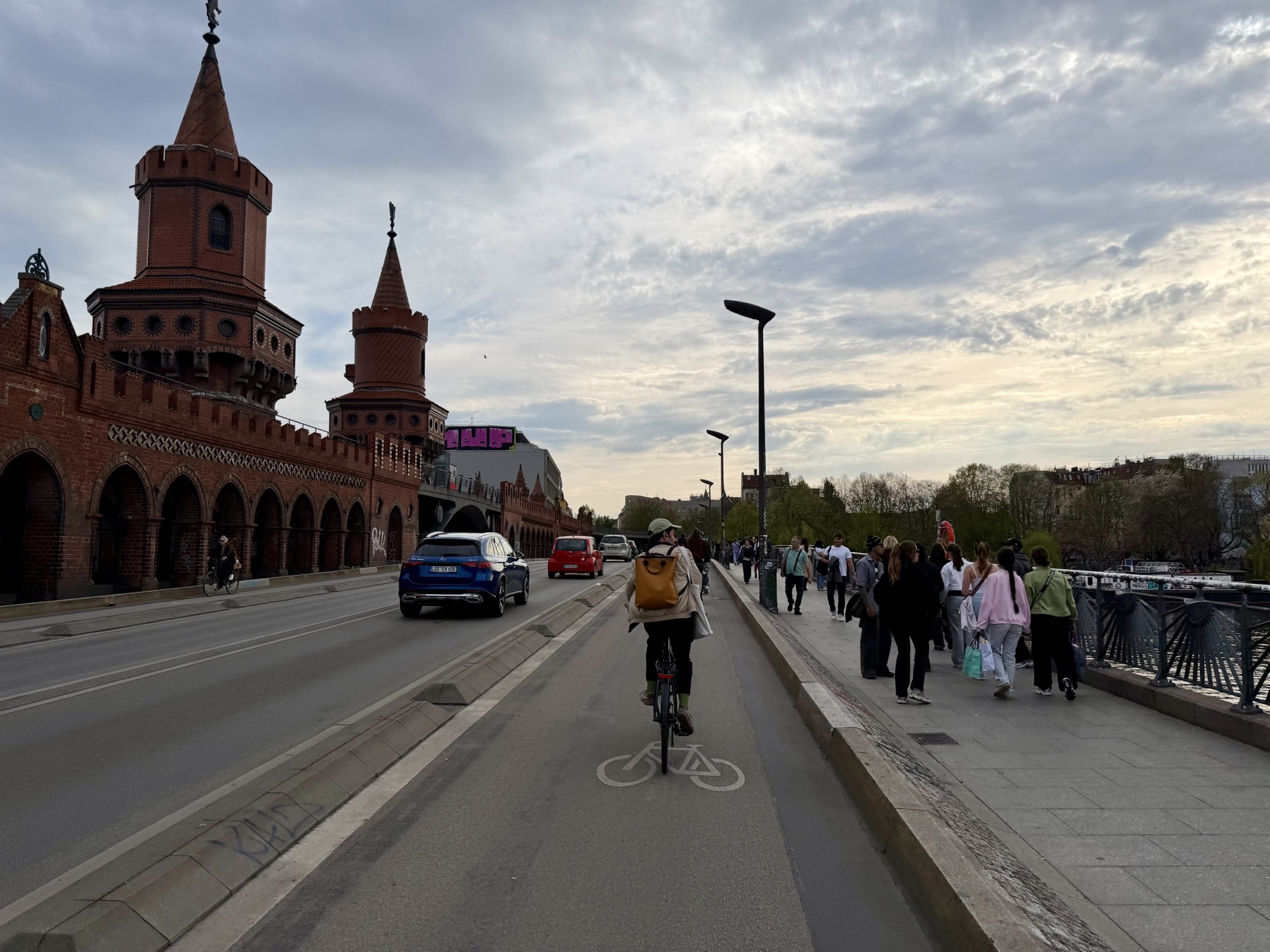
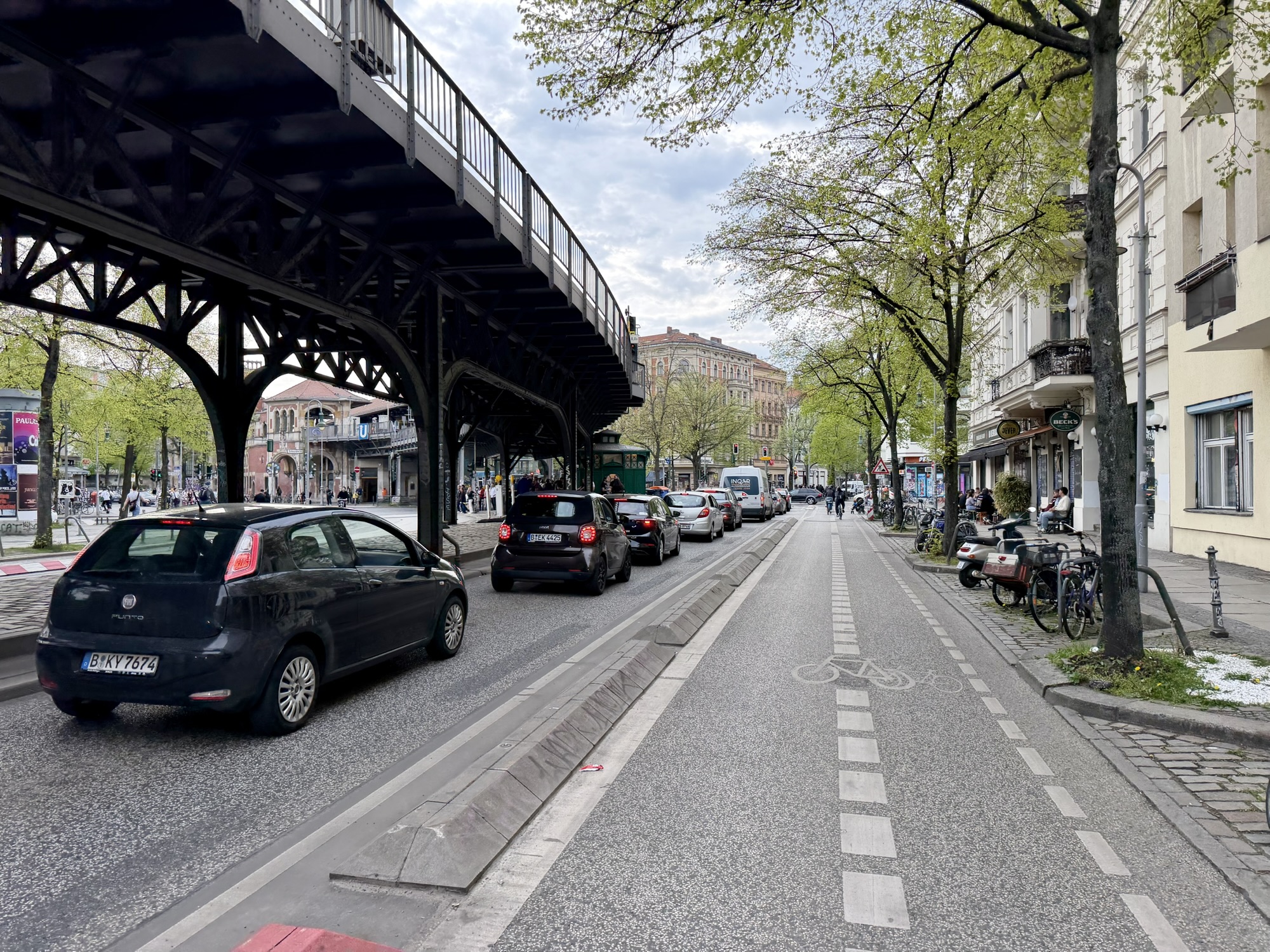
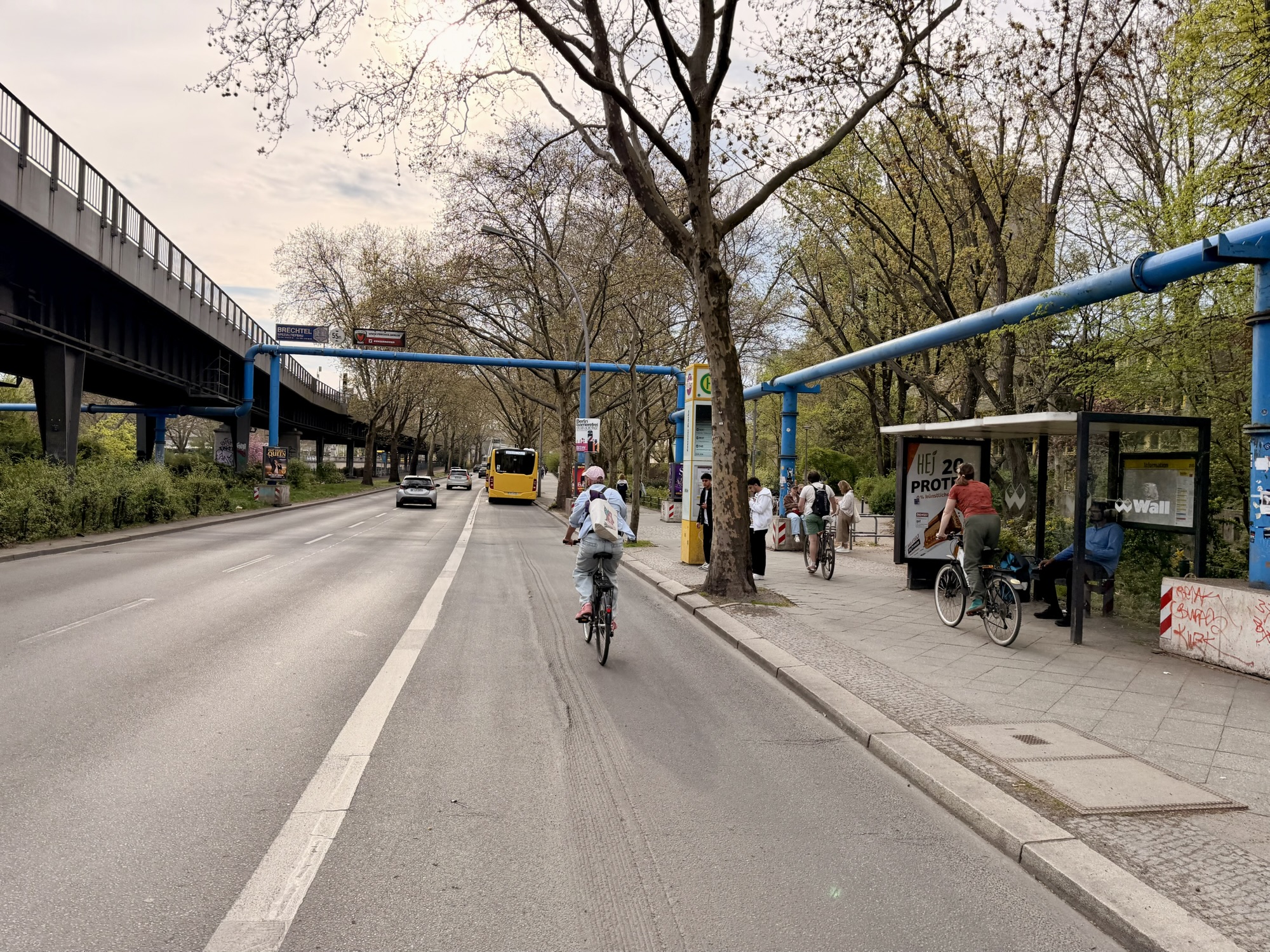
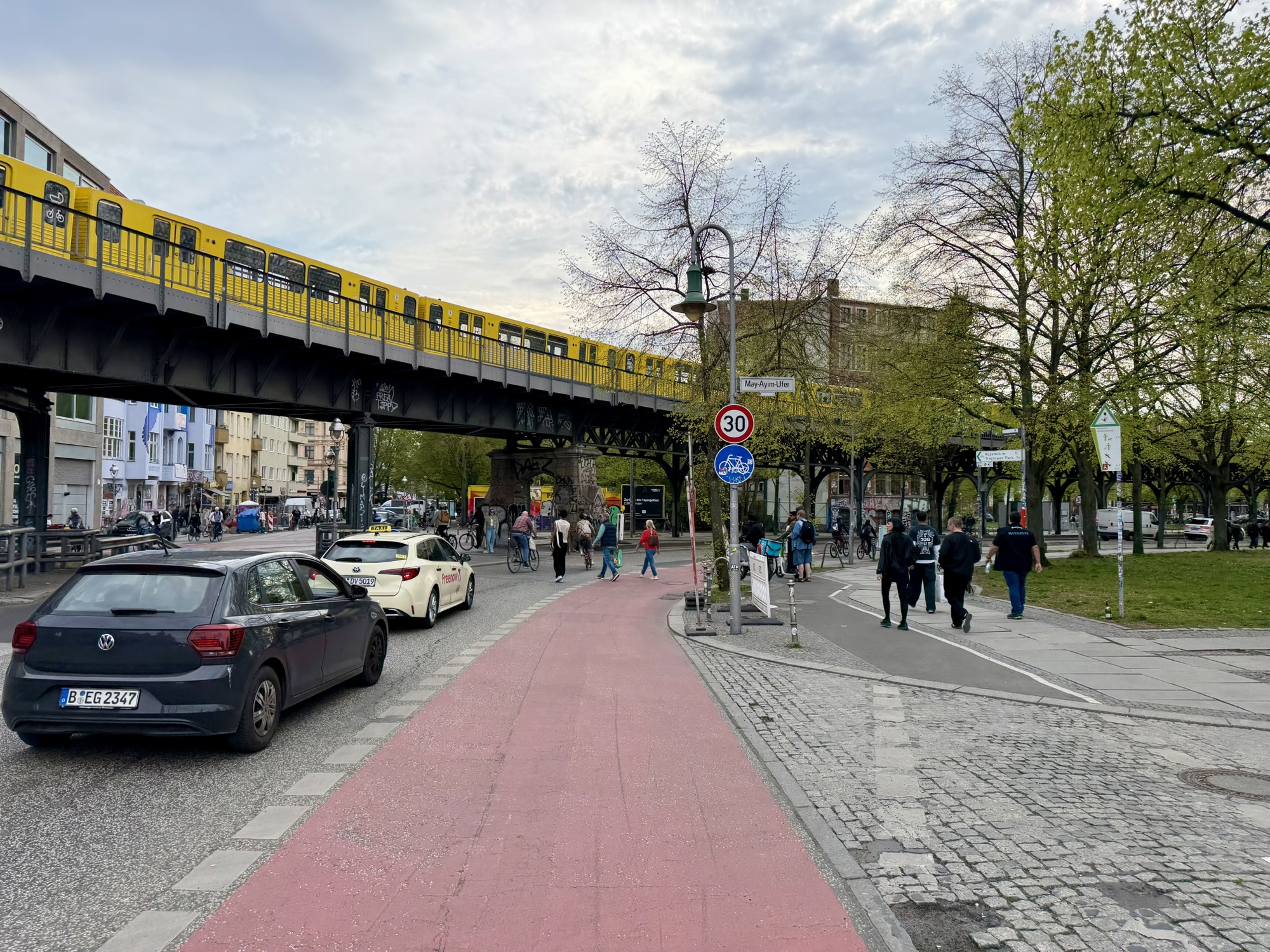
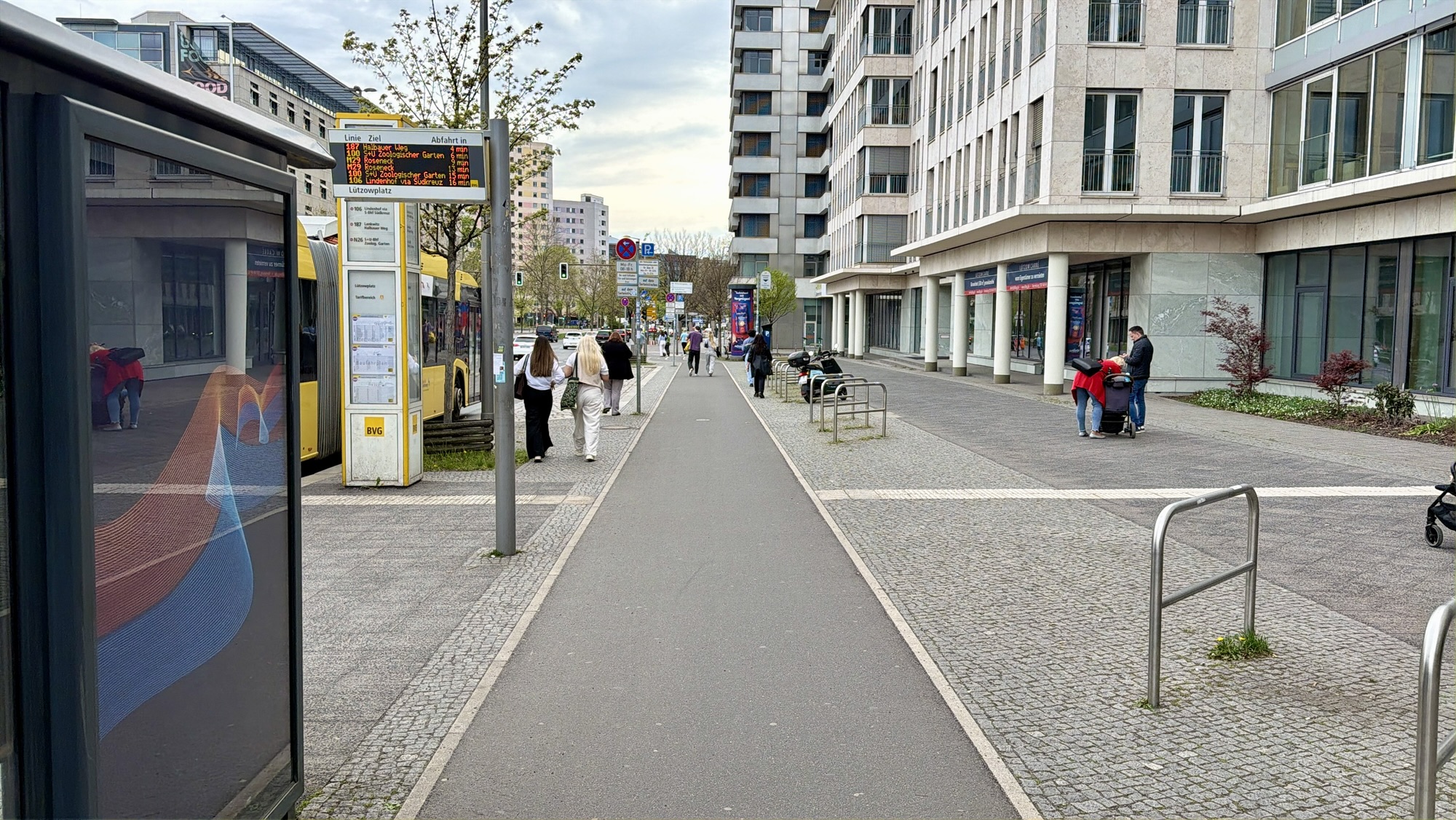
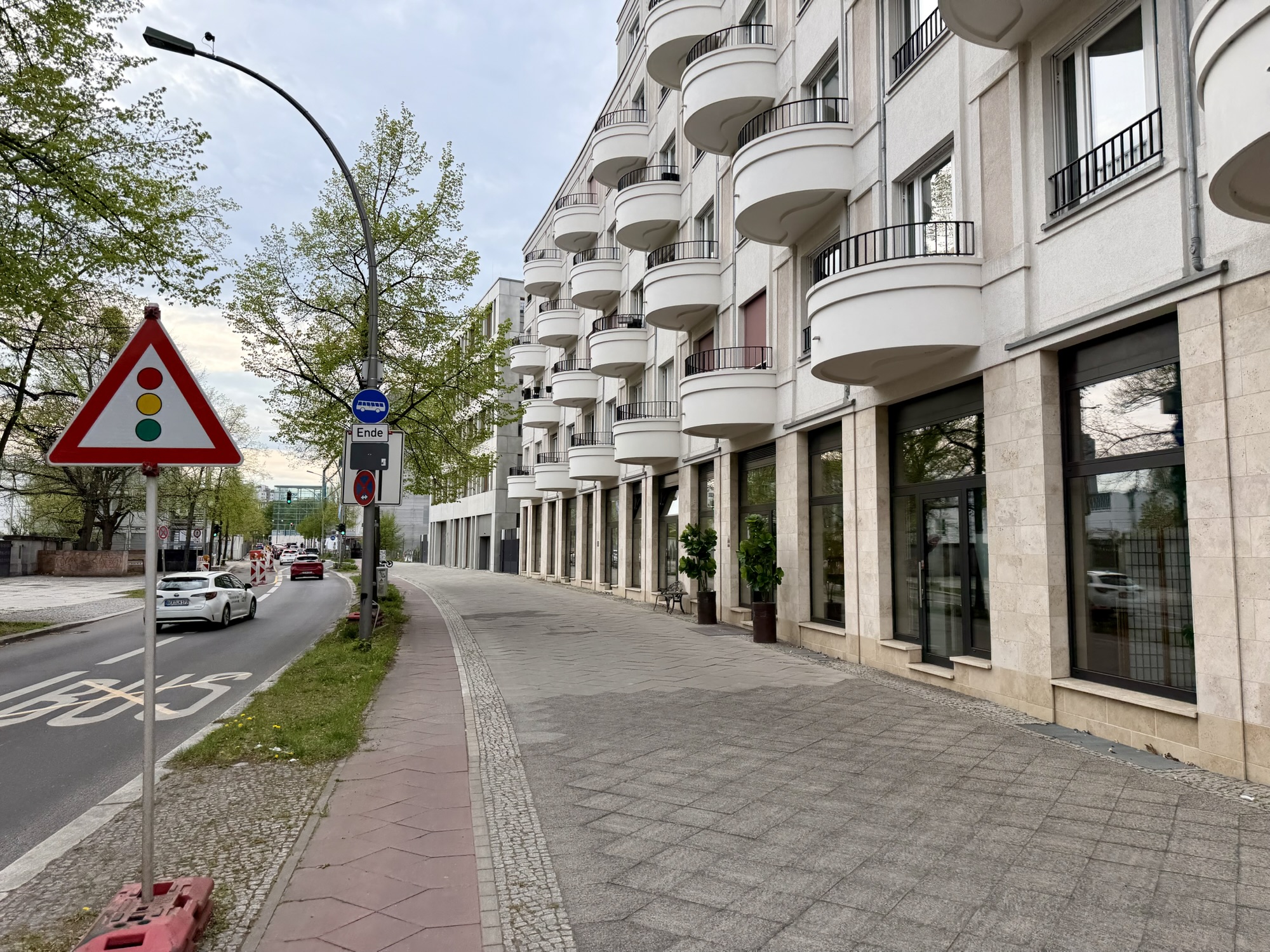
The u-Bahn is elevated through Kreuzberg. Like many areas of Berlin there were many different types of cycling infrastructure, ranging from a curb lanes shared with buses to a small strip beside the sidewalk, to a nice separated cycle track.
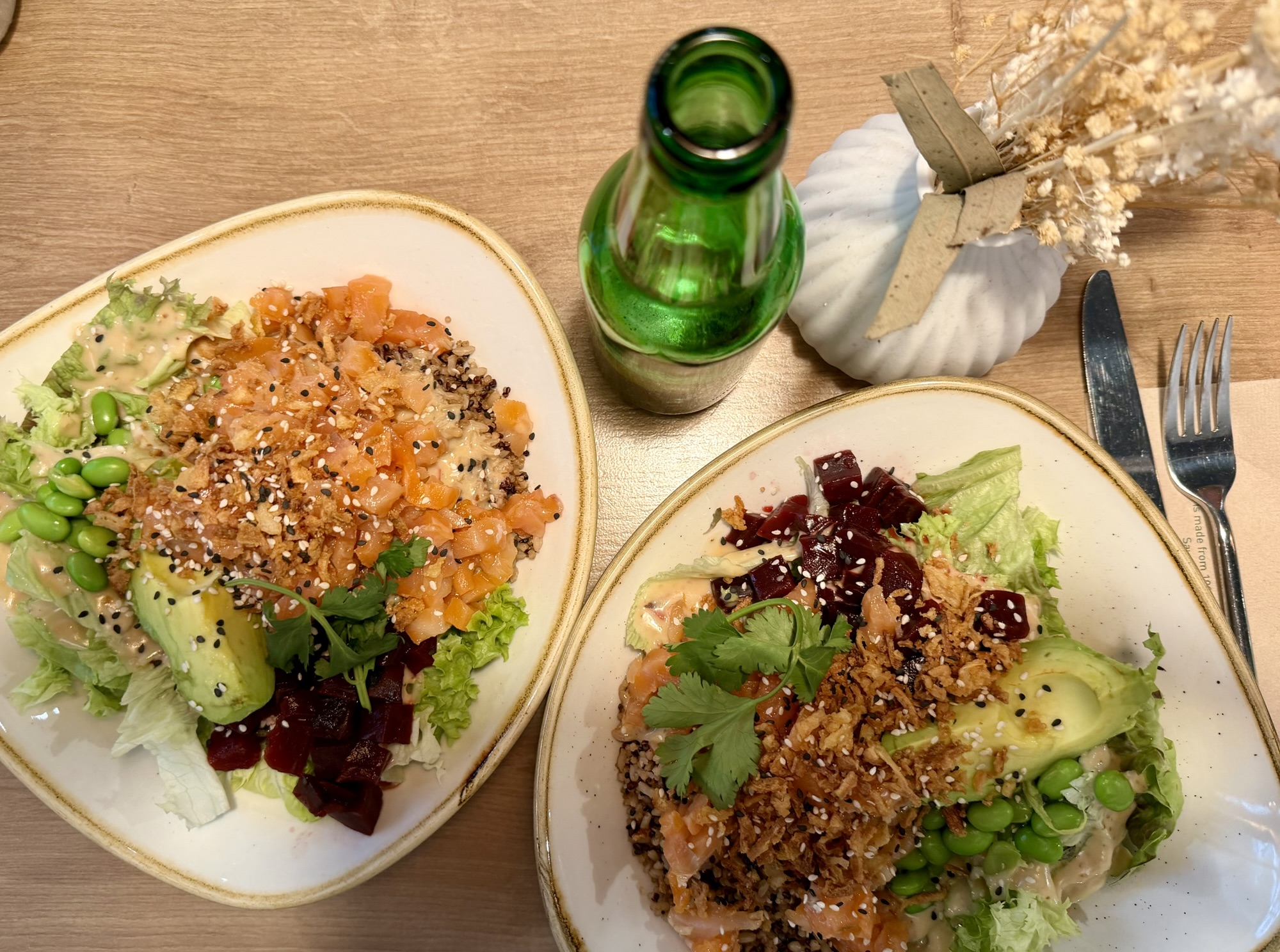
When we were in Amsterdam, we went to a restaurant that served Poké bowls for a couple of our dinners. We were craving that so and found a restaurant called Dean and David that served exactly what we were looking for.
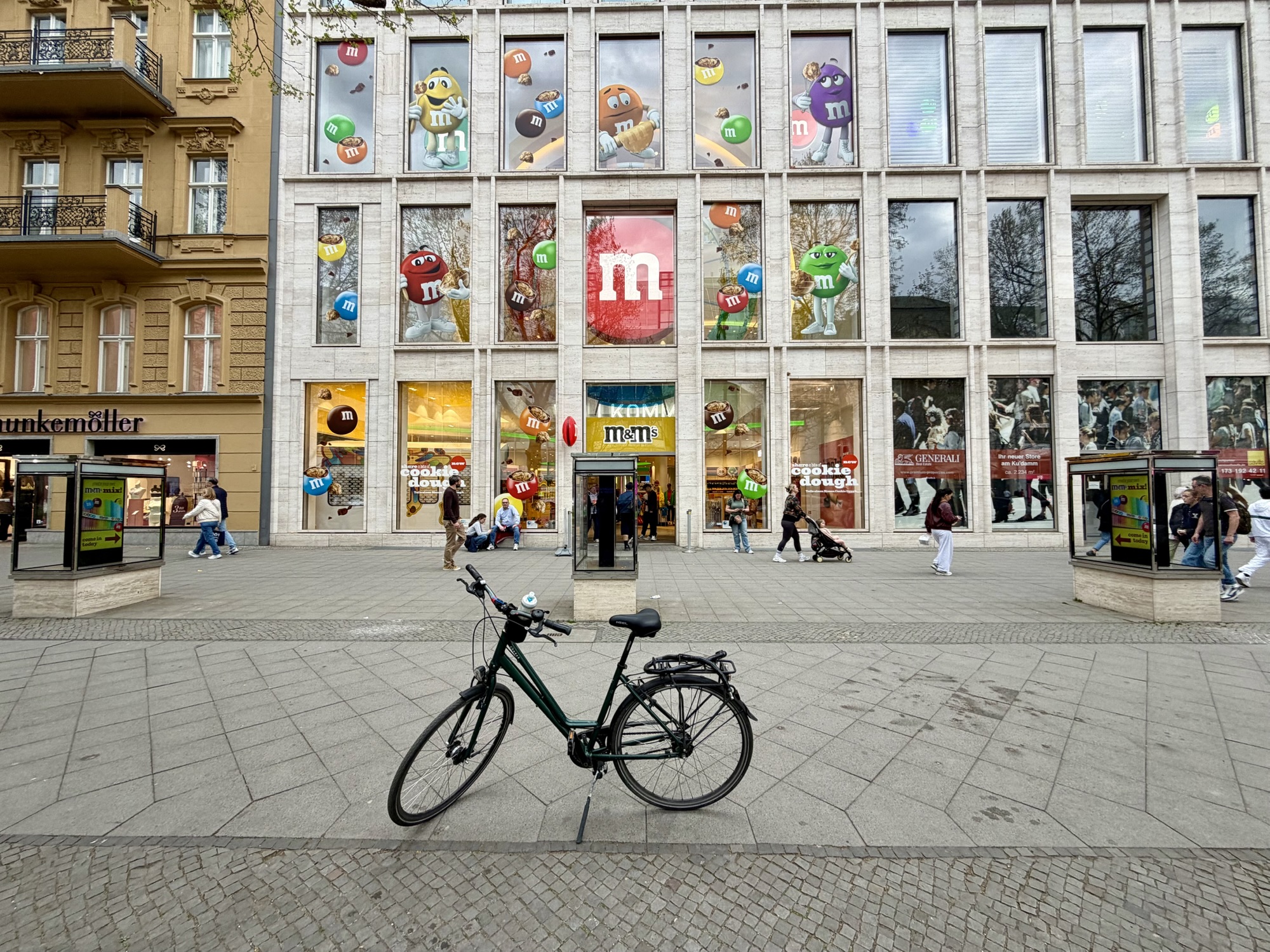
As we were riding back to the guest house, we passed an M&M store. I had to go in. The colours and selection did not disappoint.
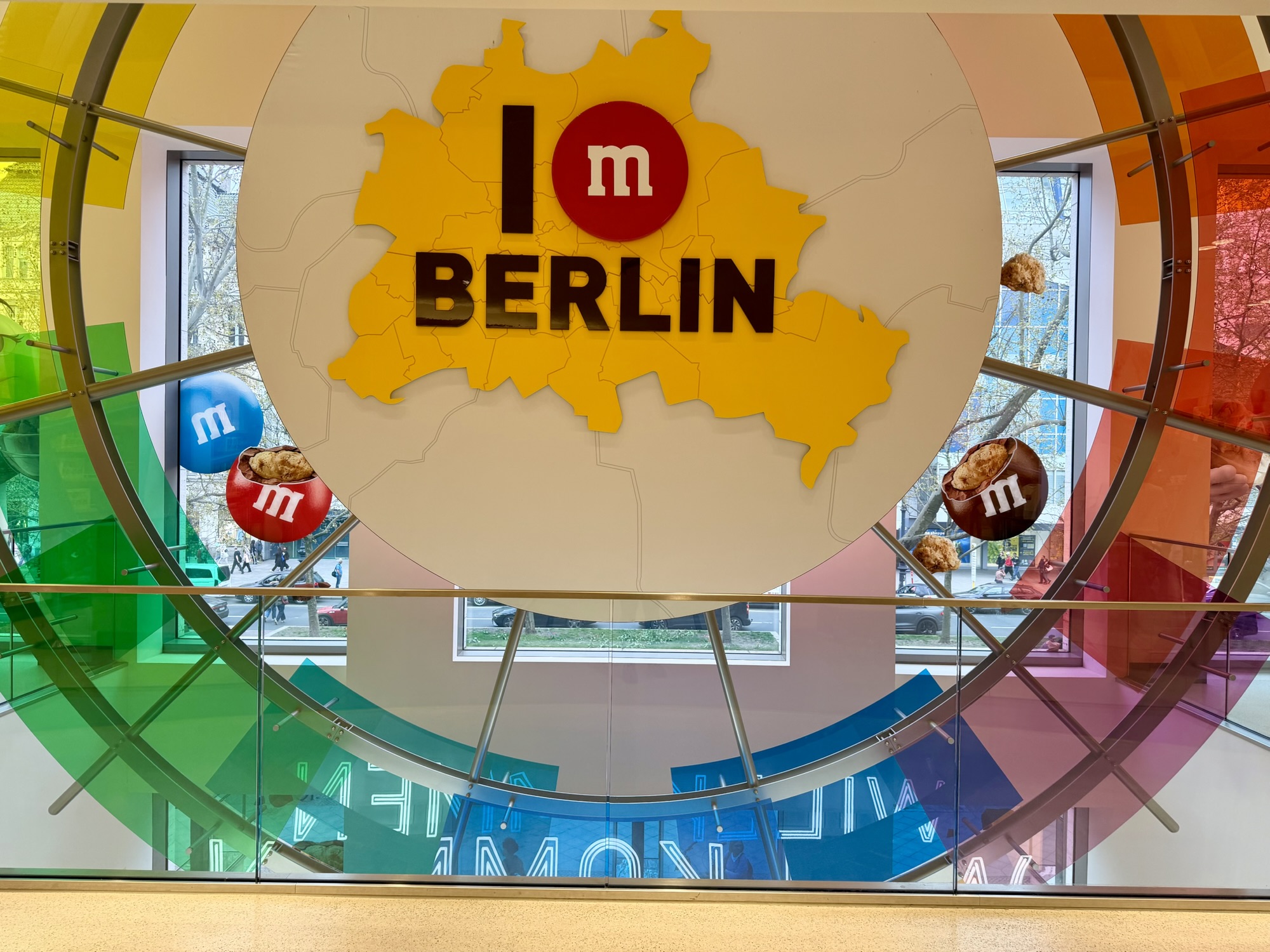
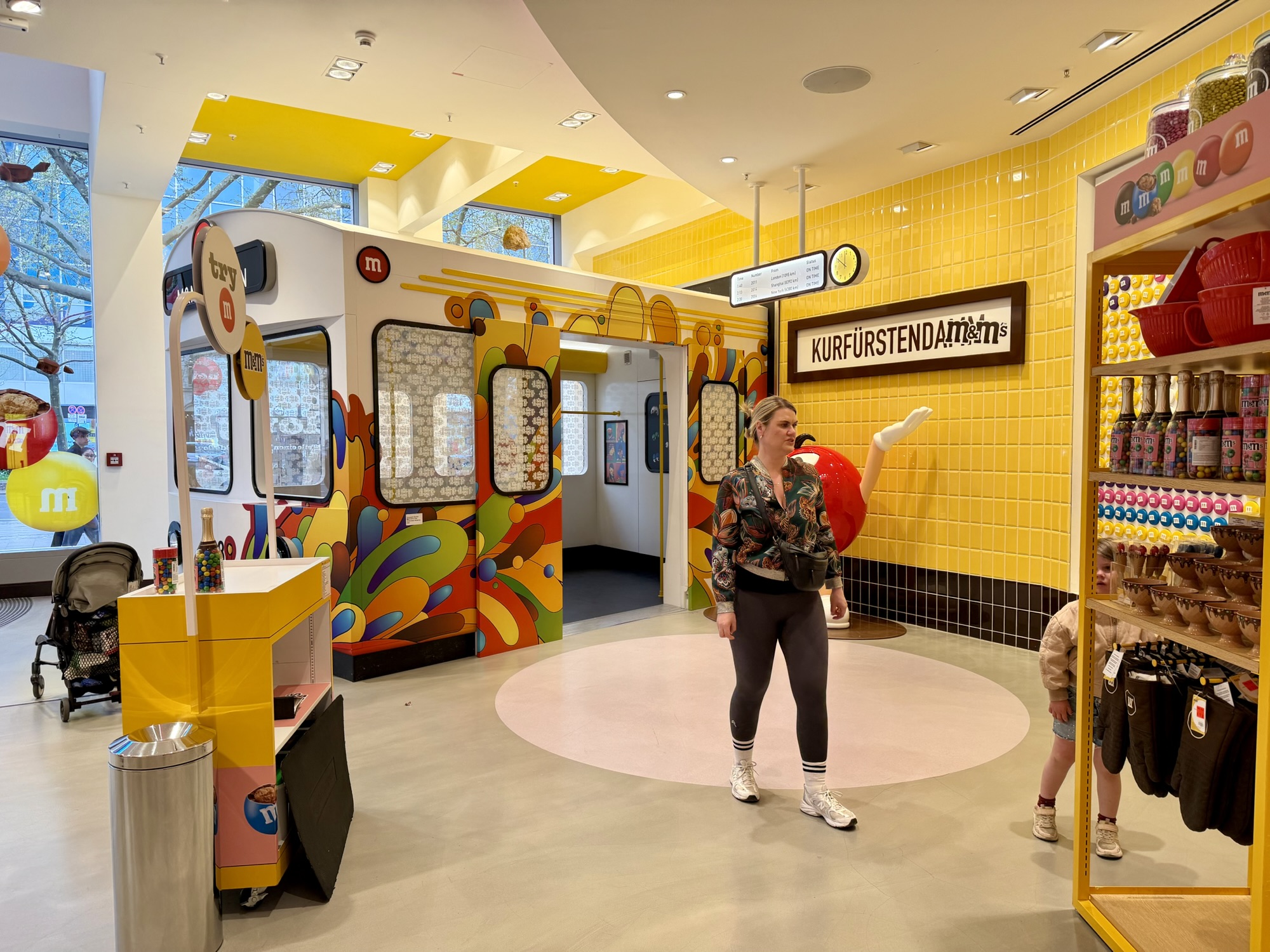
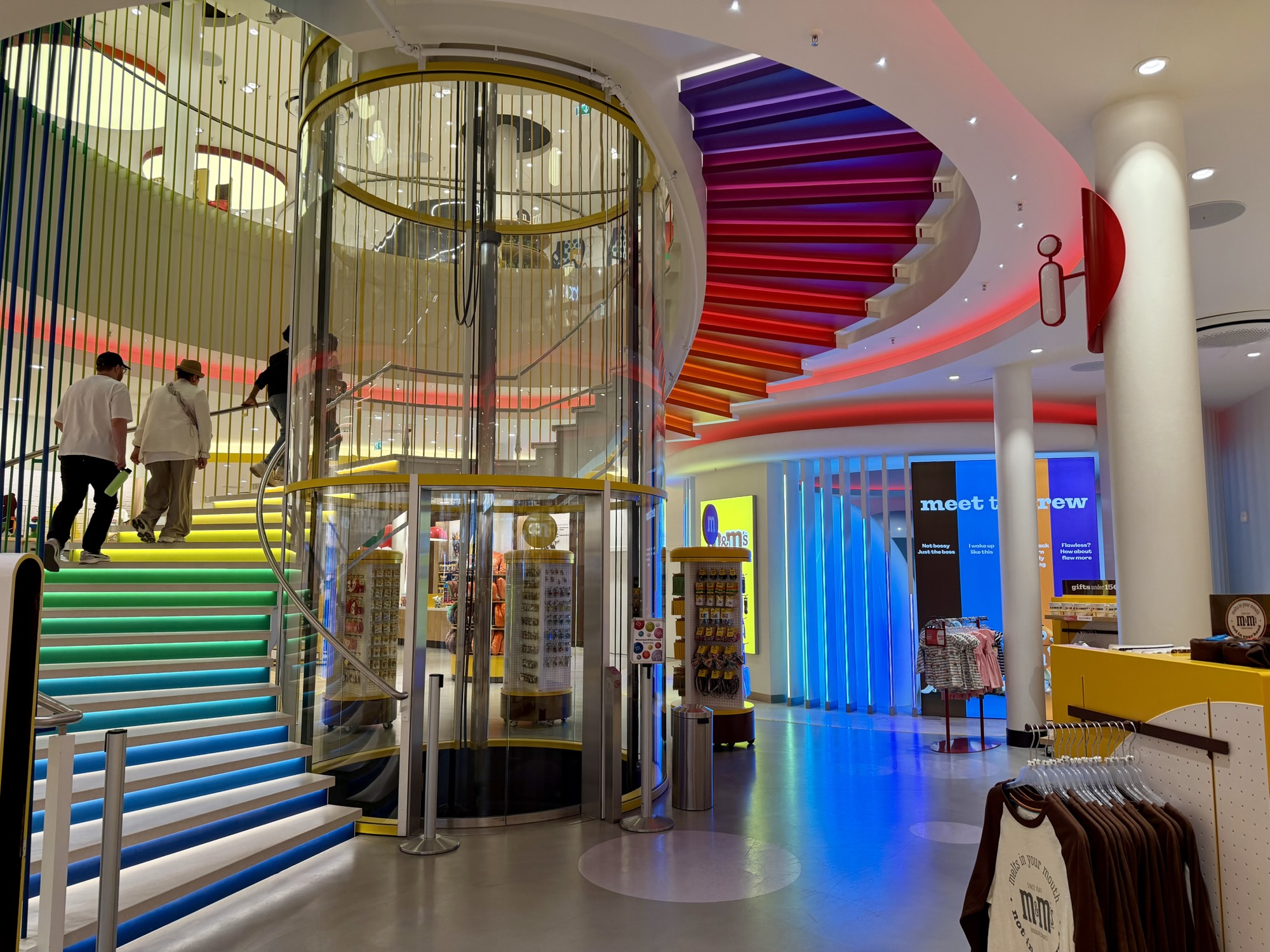
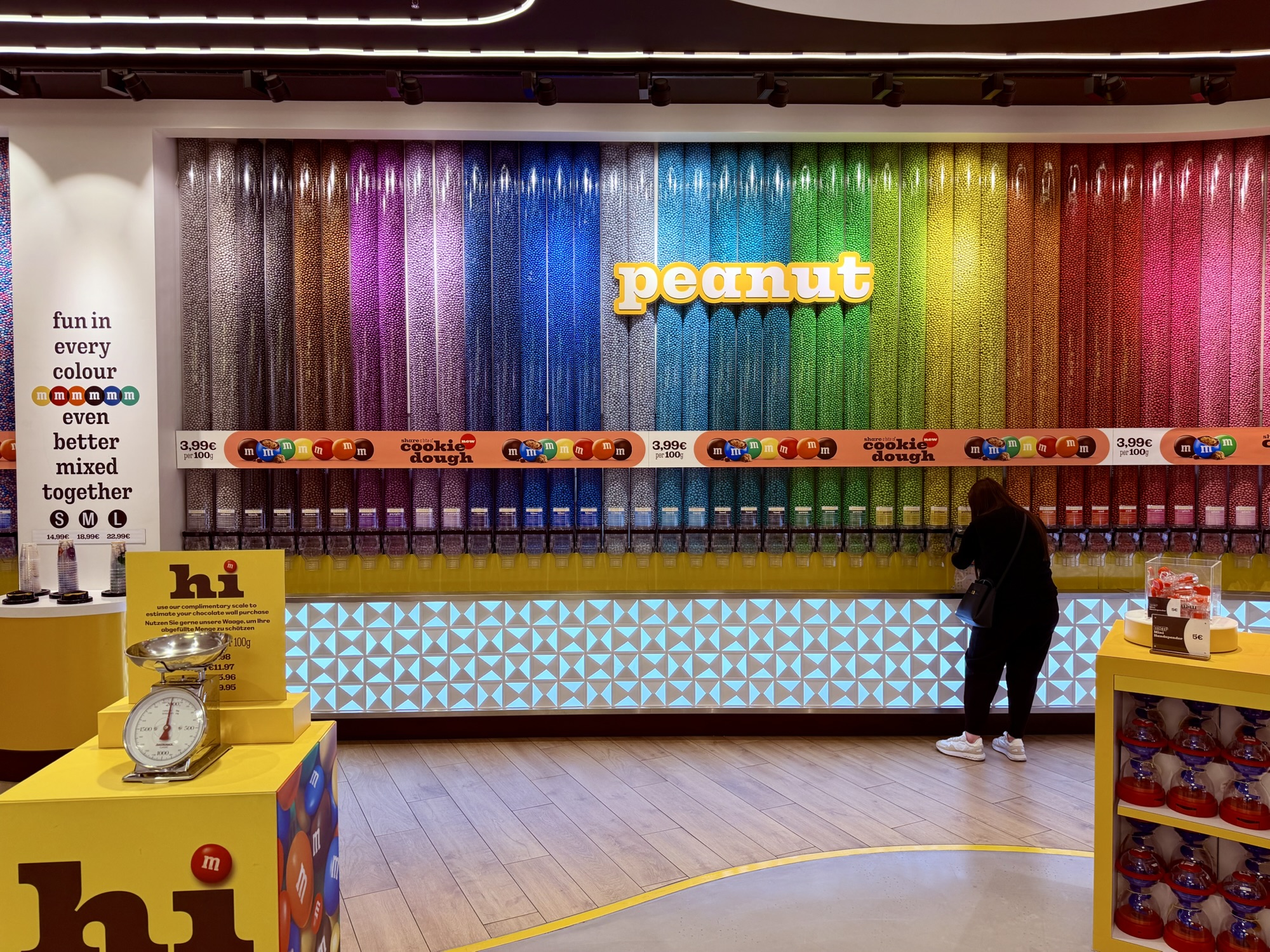
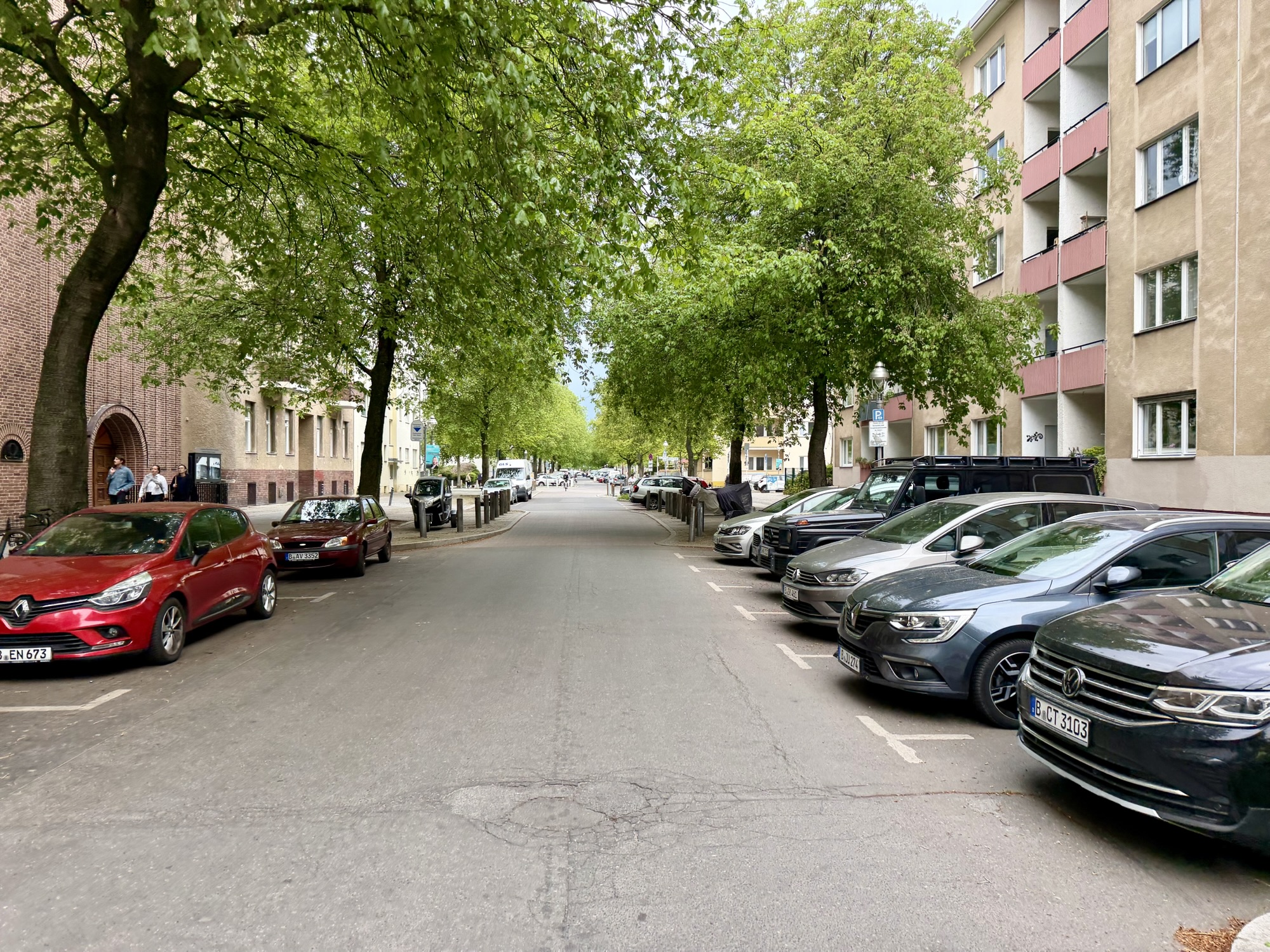
This is a typical road without cycling infrastructure. Lots of parked cars, a nice tree canopy, and not many people driving. When they are driving, the speed limit is 30 kph. It feels very comfortable.
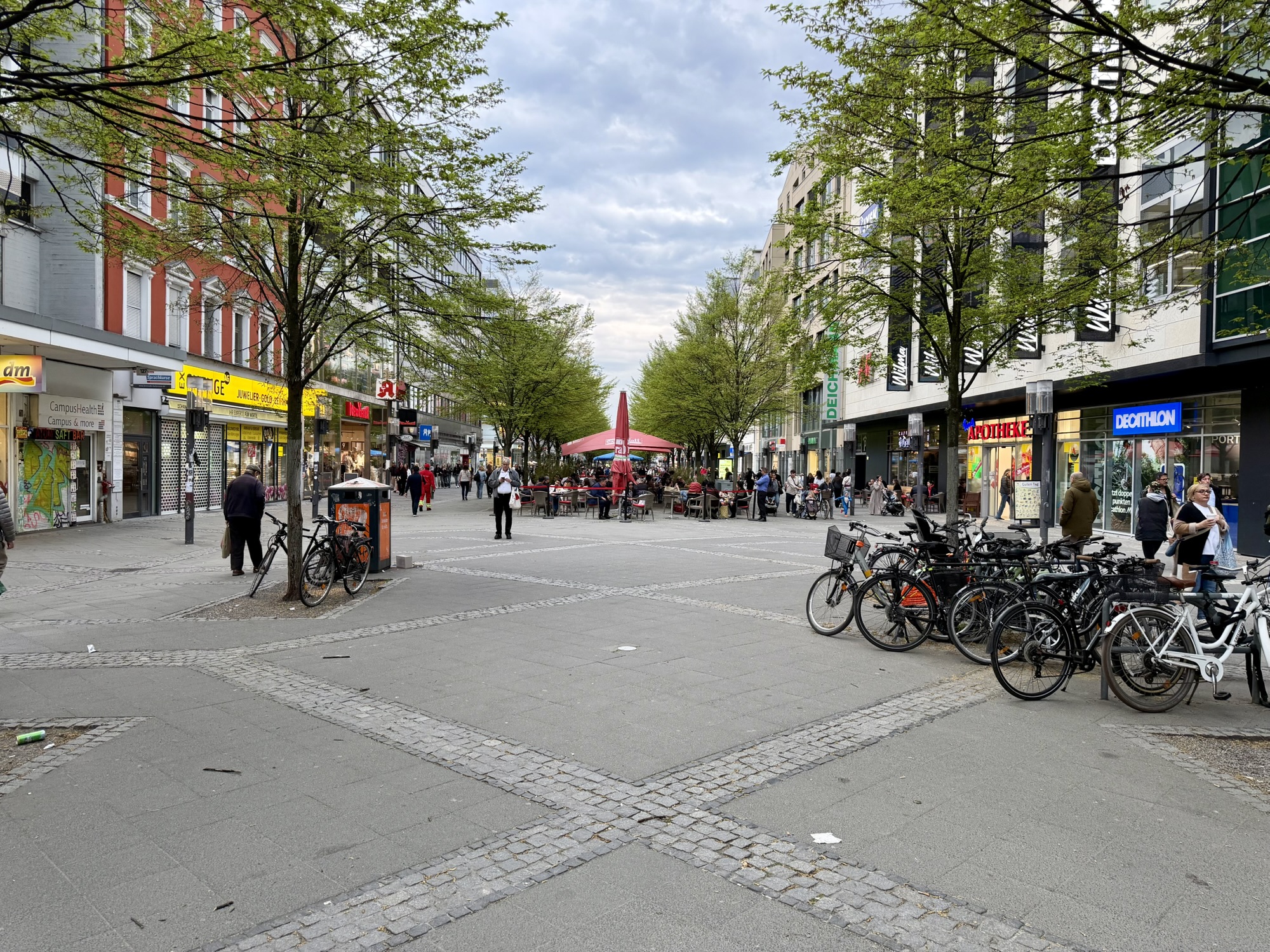
This area in Charlottenburg is pedestrianized and was very busy for a Saturday at 7 PM.
Berlin was my least favorite of the three large cities I visited on this trip. However, as I write this blog, back in Brampton, I am finding I have a growing appreciation for Berlin. It is a good cycling city. It has so many parks, museums, and outdoor culture. It has great public transit. Brampton is the 9th largest city in Canada, yet does not make the Globe and Mail’s 100 Most Livable Cities list. All Brampton’s official plans provide a path for becoming more livable, yet Brampton Council consistently make decisions that go against those plans and lock in the status quo.
Discover more from Lisa Stokes
Subscribe to get the latest posts sent to your email.