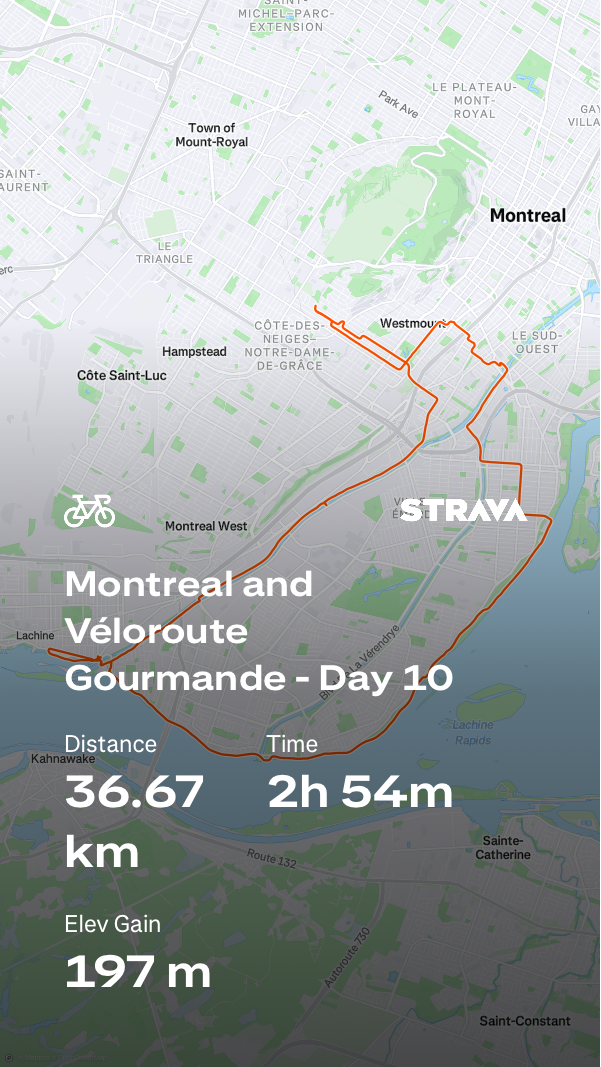
We met for breakfast a little later this morning. We are all feeling quite tired after 557 km of riding over the last eight days, without a rest day. David and Dayle have decided to take a rest day. Cindy and I planned a loop along the Lachine and Aqueduct canals. However, because the route is only 34 km, we went back to the room to relax for a while before setting out.
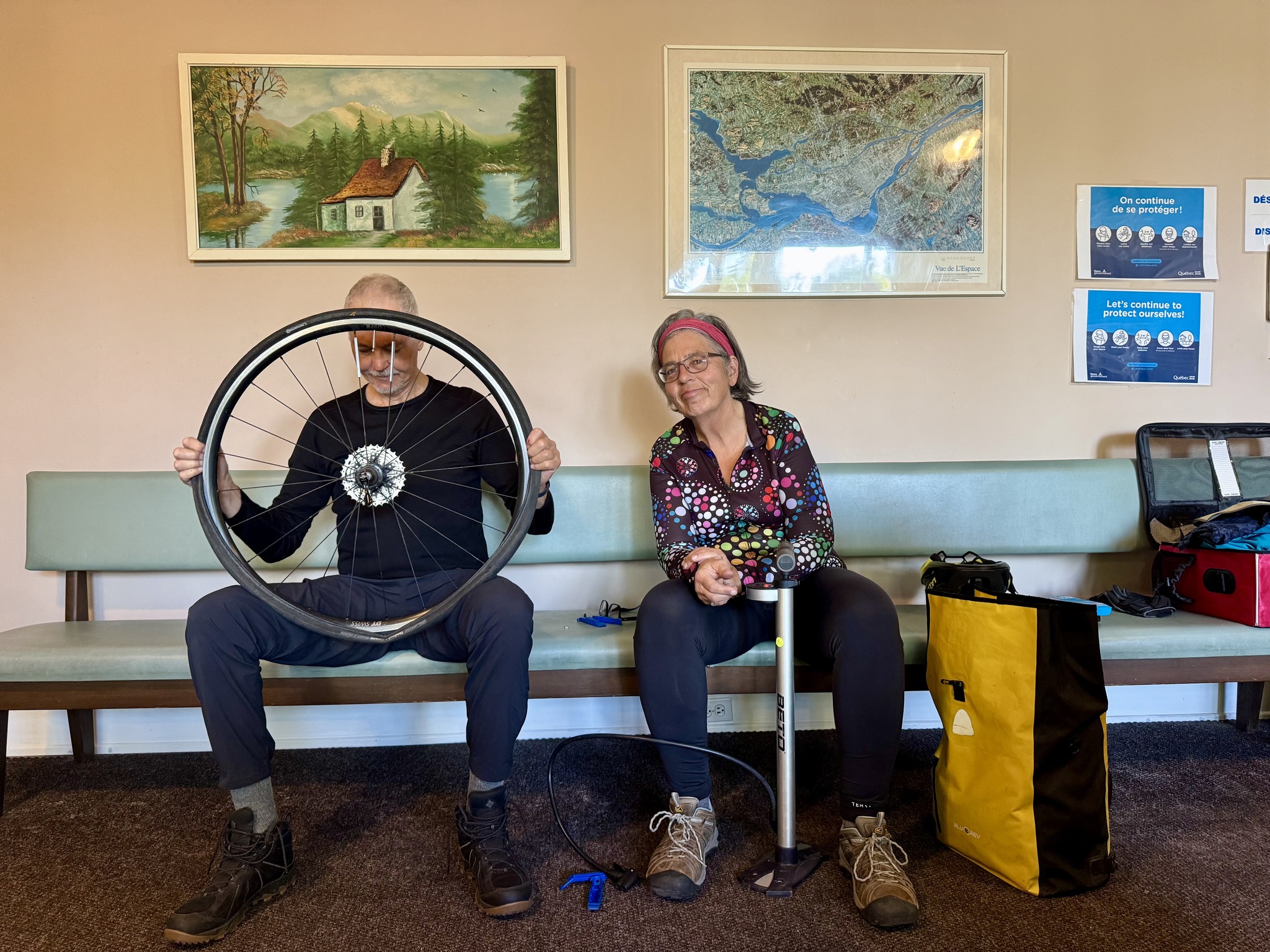
About 11am we got dressed, and went to the lobby to get our bikes. We discovered that Cindy’s tire was completely flat, for the third time in as many days. David and Cindy went to work, but could find no hole in the tube, or debris in the tire. The new tube Cindy bought yesterday was the wrong size. They pumped it back up and we set off.
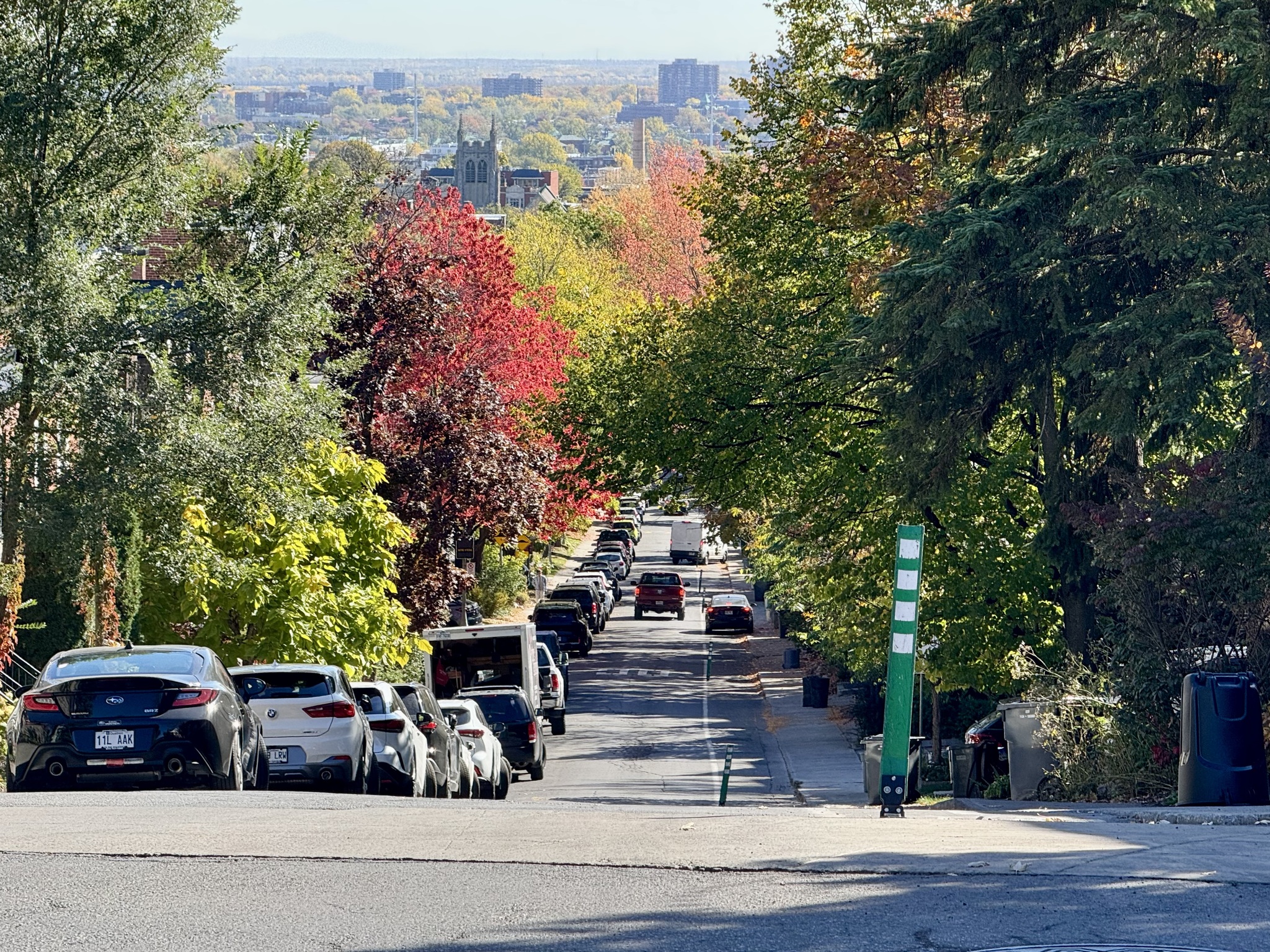
We had an exhilarating descent down to the waterfront. We were either on calm, residential streets or cycling infrastructure.
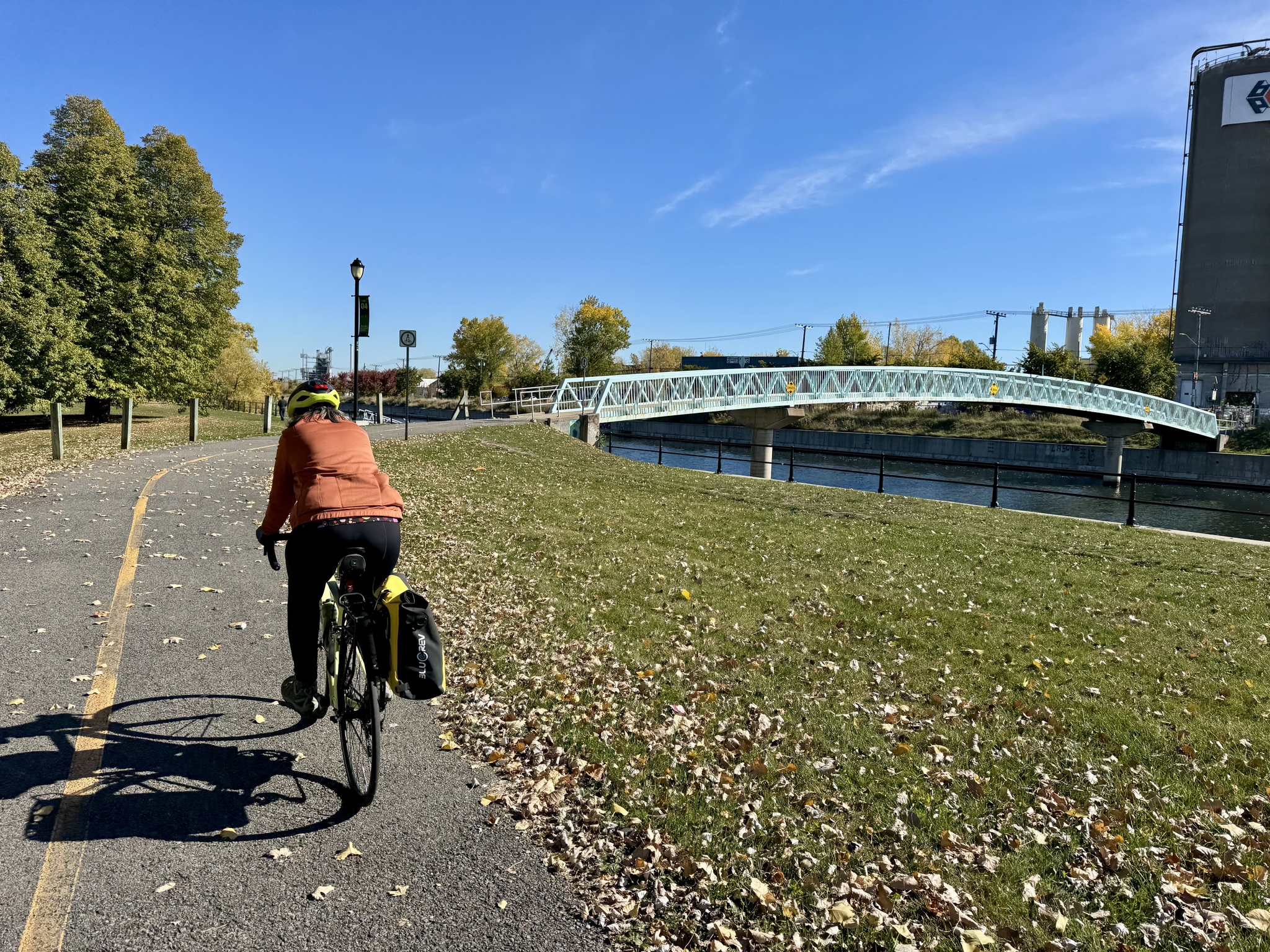
The paved paths along the canals are lovely. There are crossings for active transportation, in addition to road crossings.
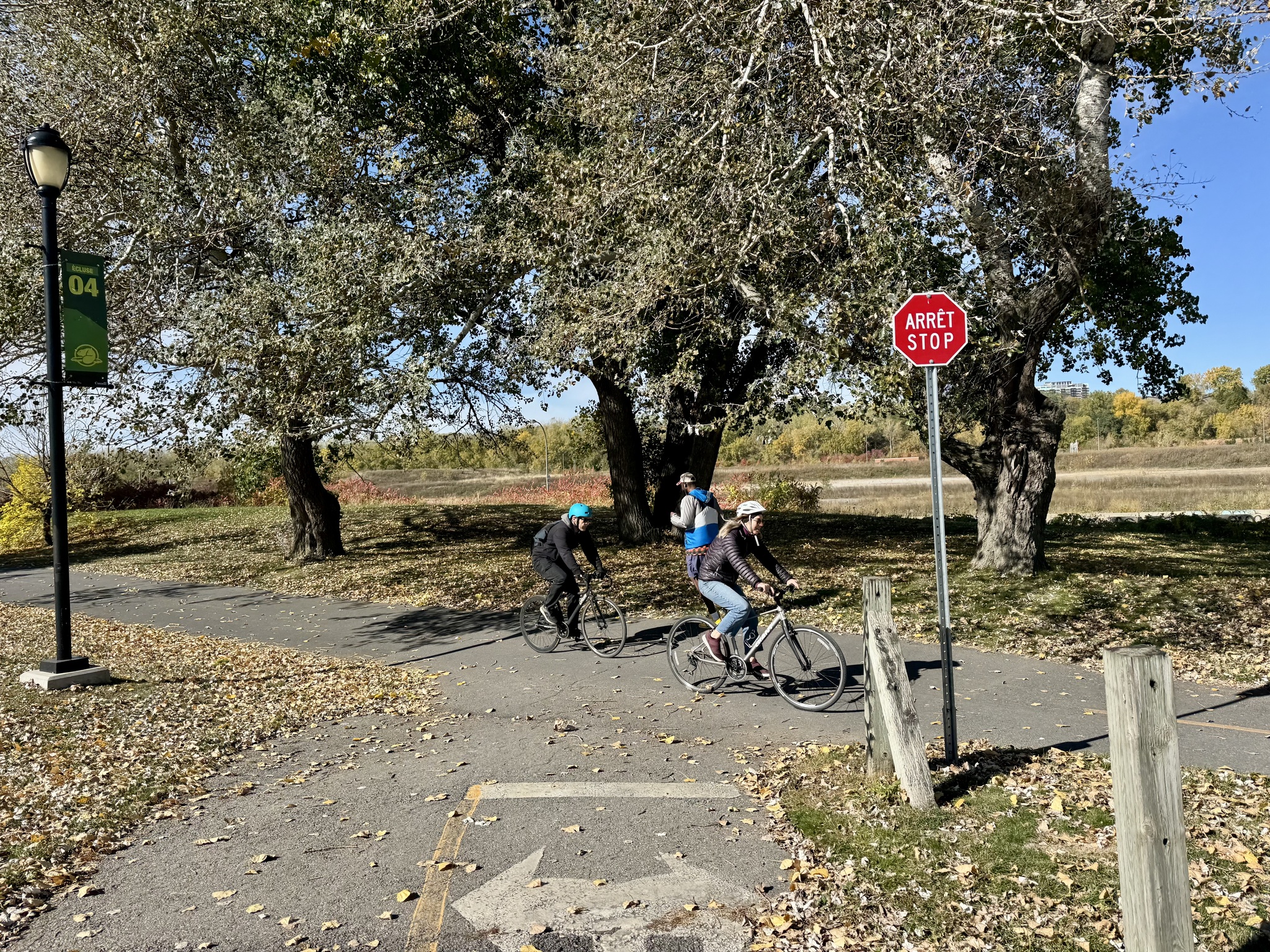
They get busy enough that at some intersections there are stop signs.
The path went under the road at this bridge crossing.
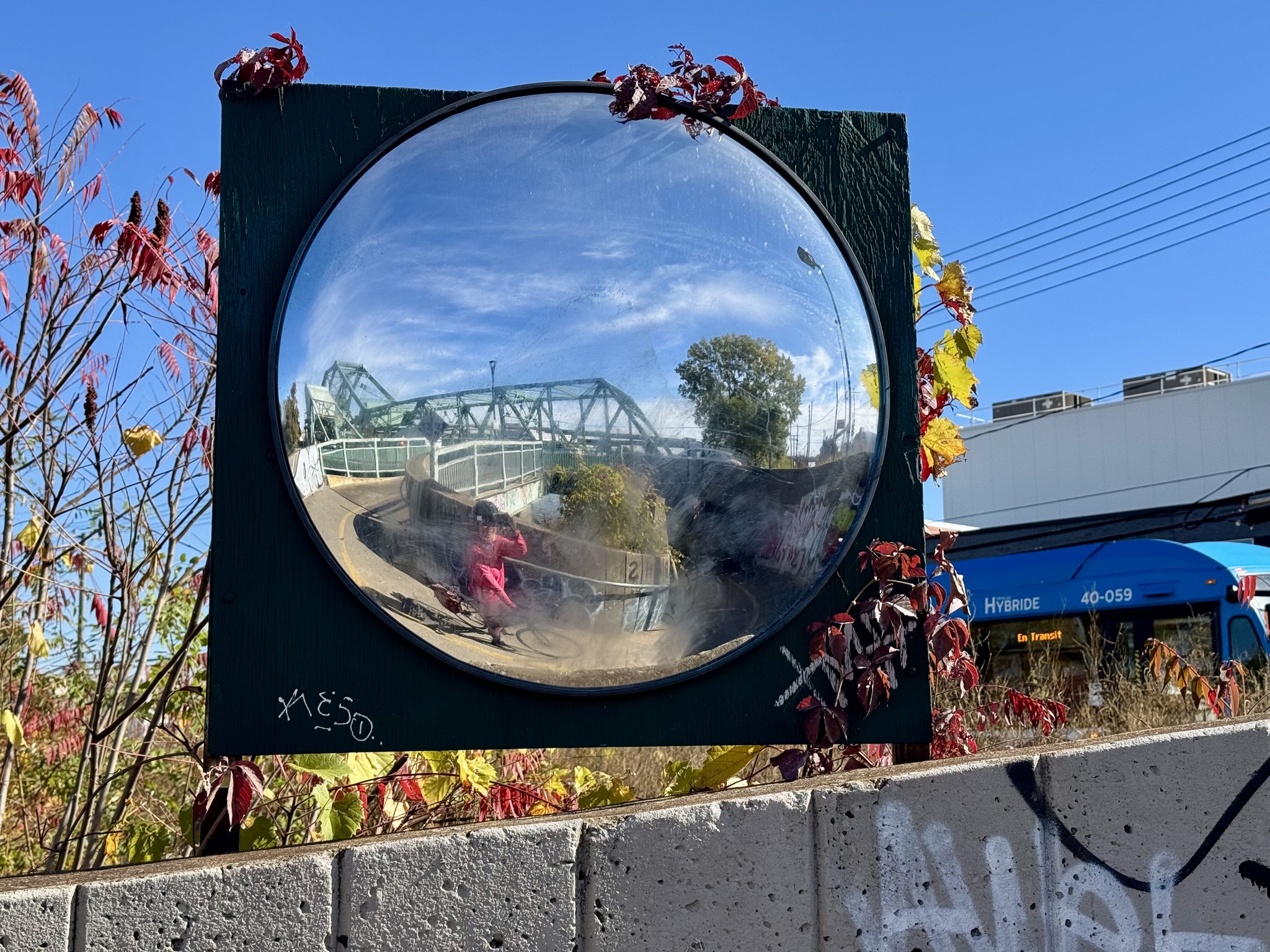
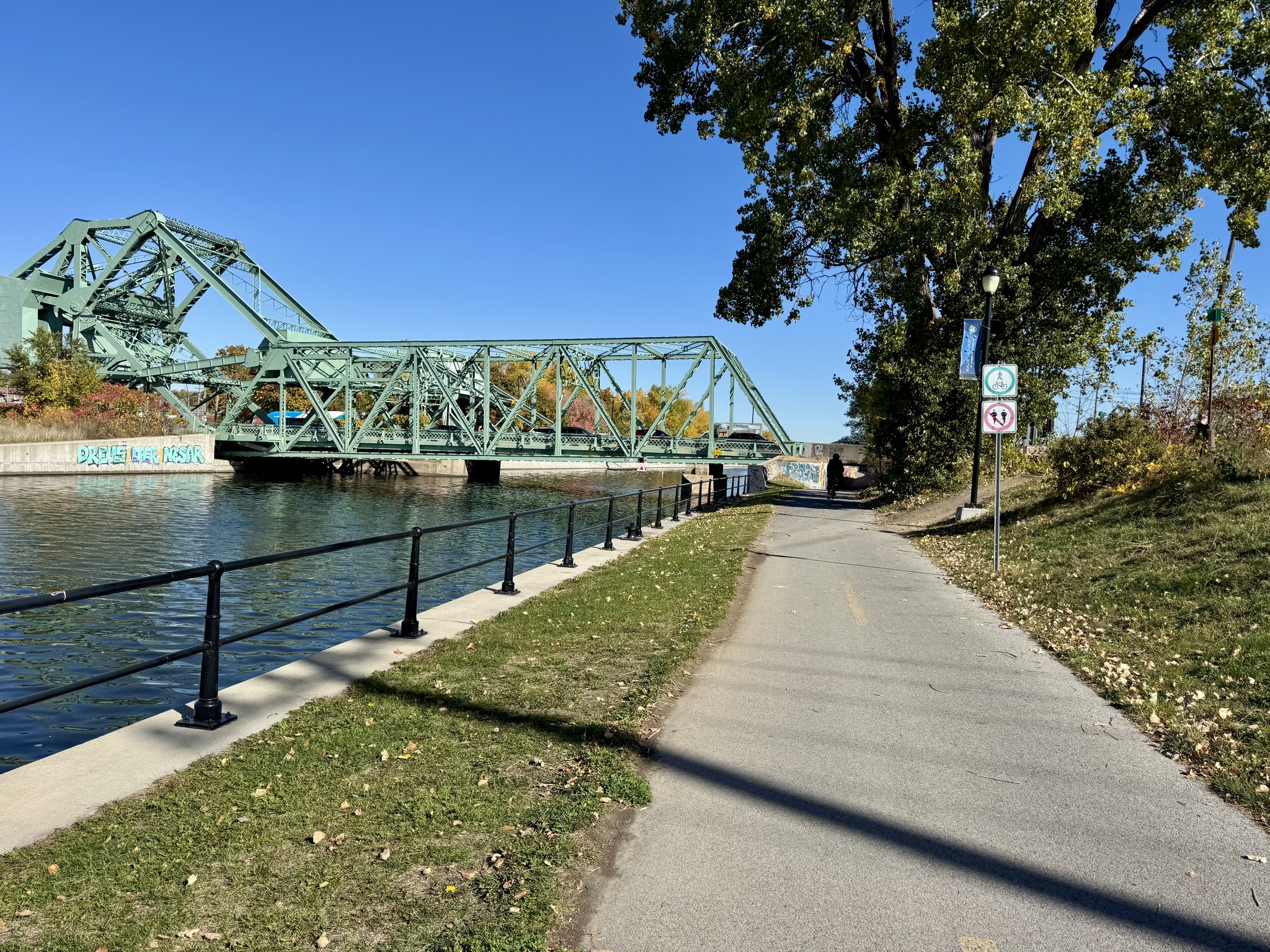
There was still plenty of autumn colour.
The Lachine Canal was built in 1825 to bypass the Lachine Rapids, which had previously prevented ships from reaching the Port of Montreal. It operated until 1959 when the St. Lawrence Seaway opened.
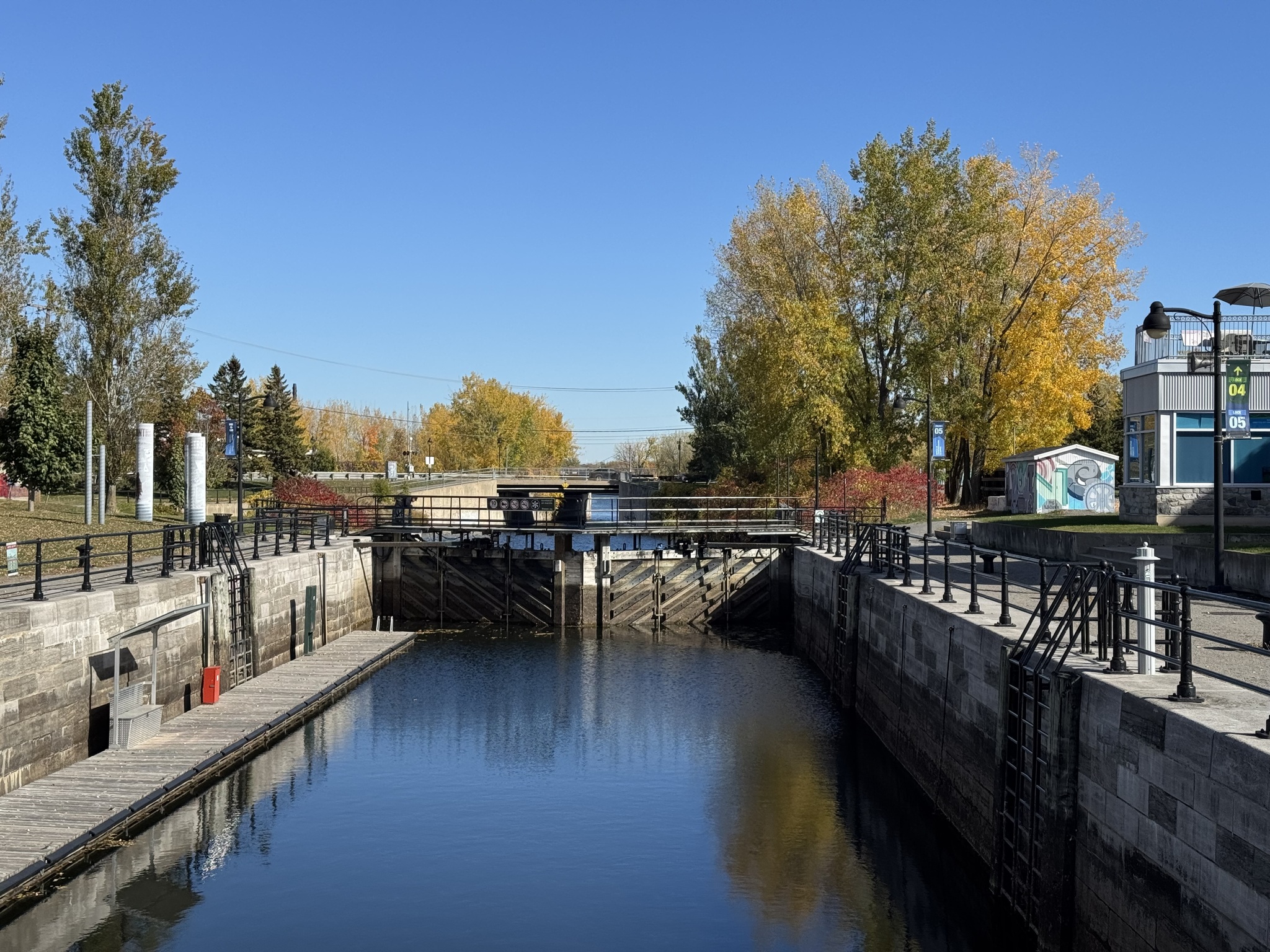
This is the Lachine Canal visitor centre at lock one. The Lachine Canal takes its name from the nearby Lachine Rapids, which were named because of a misunderstanding in early French exploration. French explorers believed a route to China might lie up the St. Lawrence River. When they failed to get past the dangerous rapids, the rapids were mockingly called “La Chine,” meaning China.
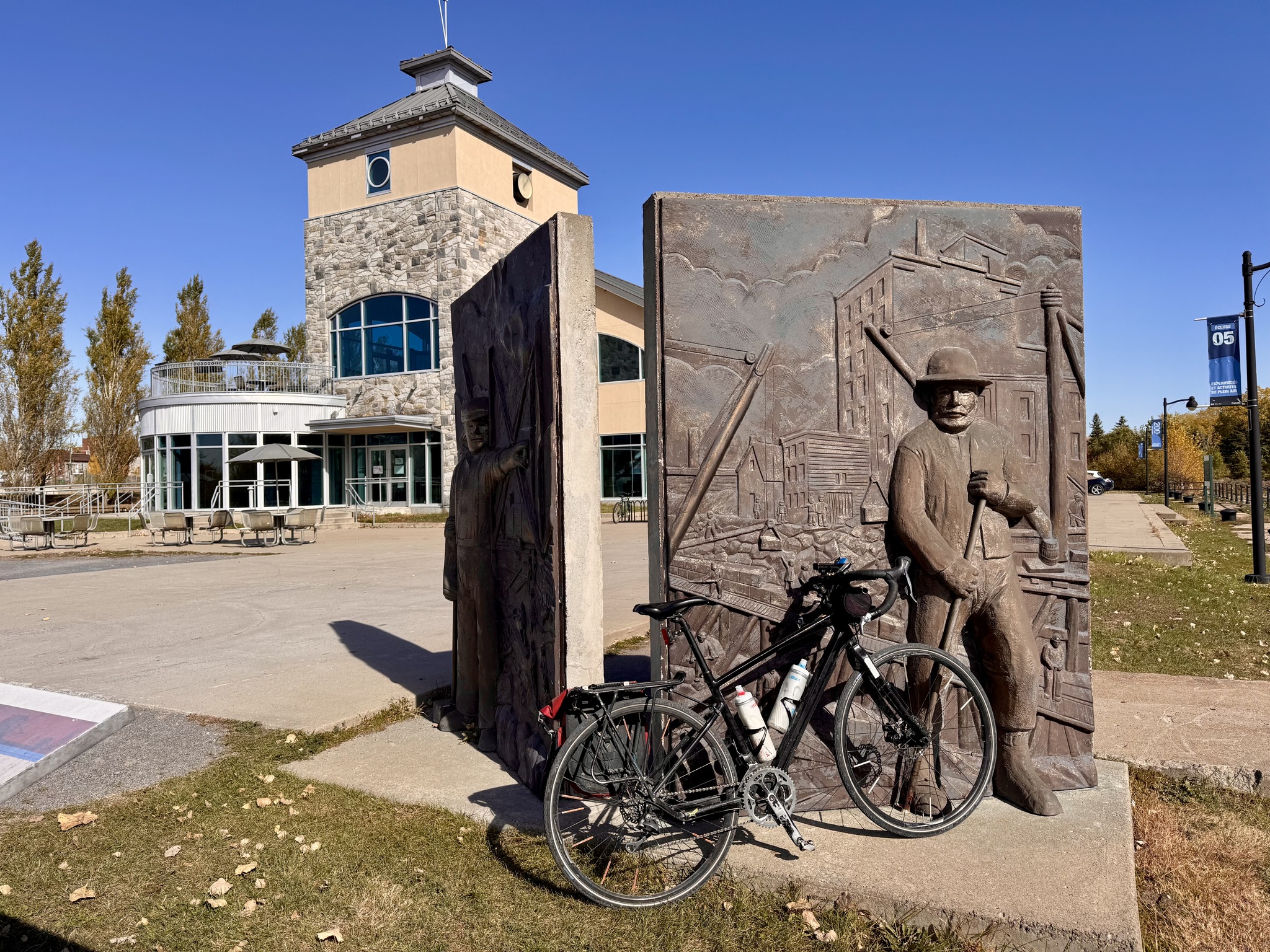
We were only about 12 km into the ride, at the west end of the Lachine Canal, but given our late start, we were ready for lunch. We were still a ways from where I had planned to have it, so I searched Google maps for “cafés near me”. We found one that looked appealing about a kilometre away.
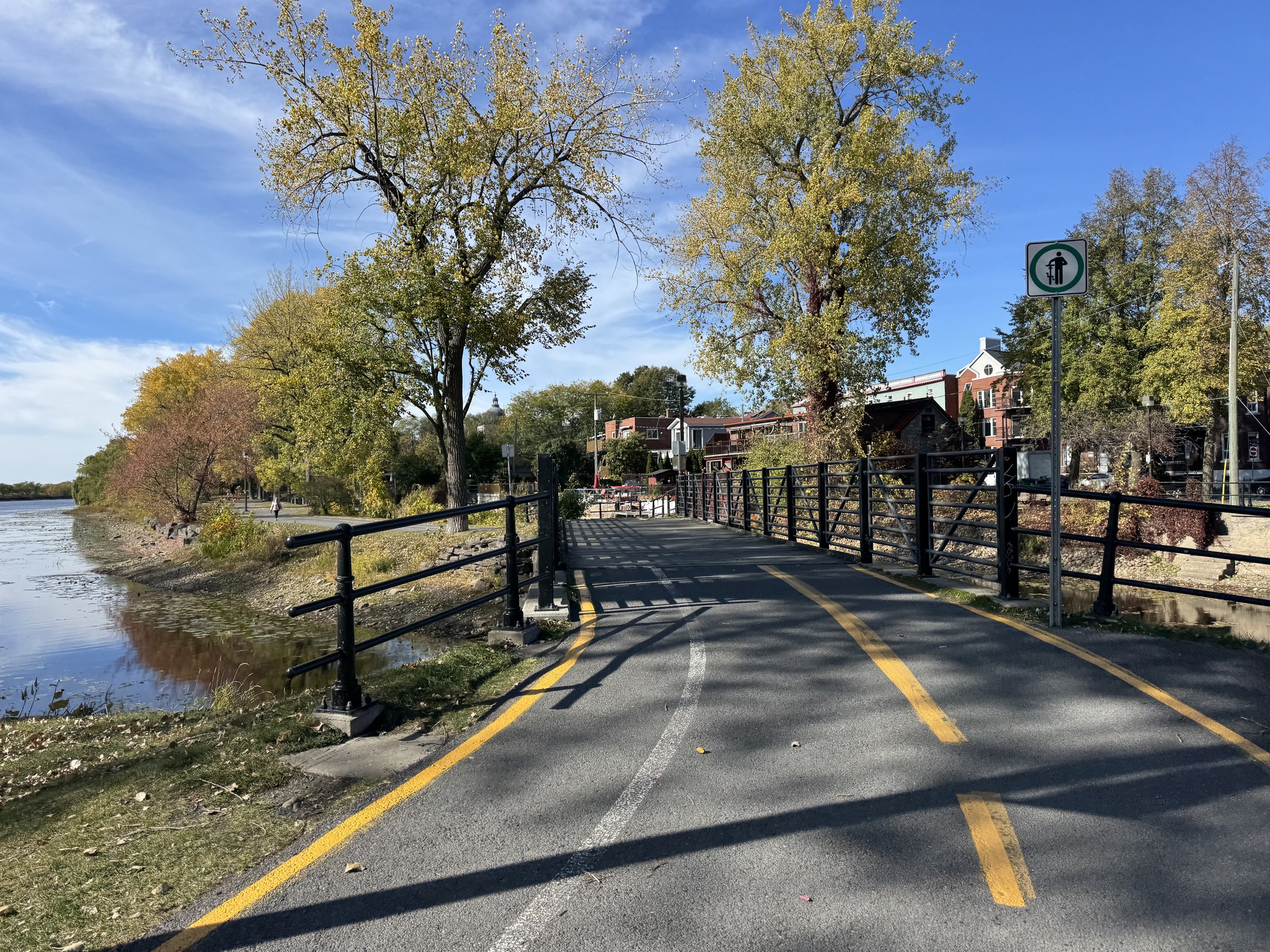
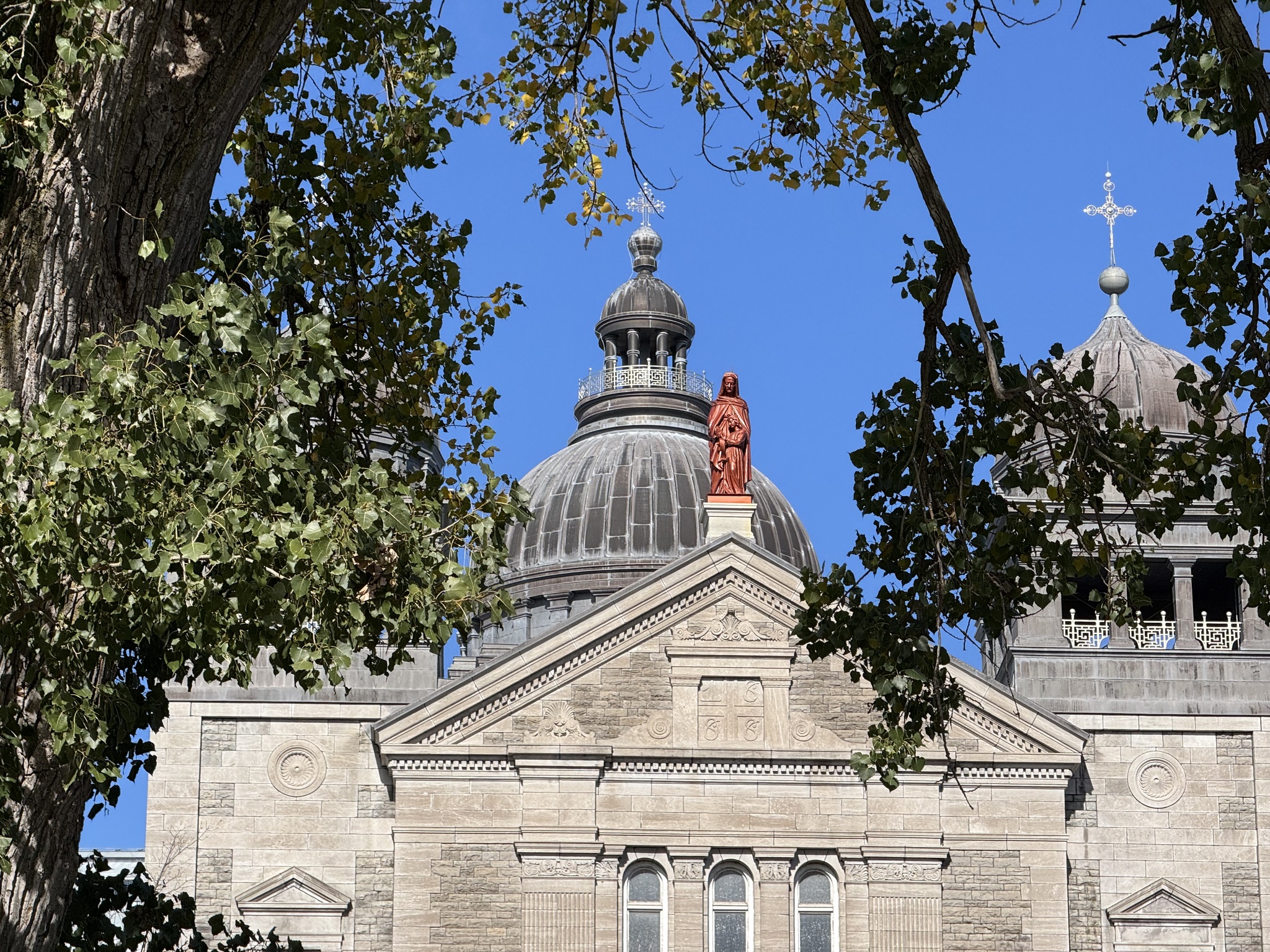
We were able to continue along a multi use path. We passed Saint Anne’s College.
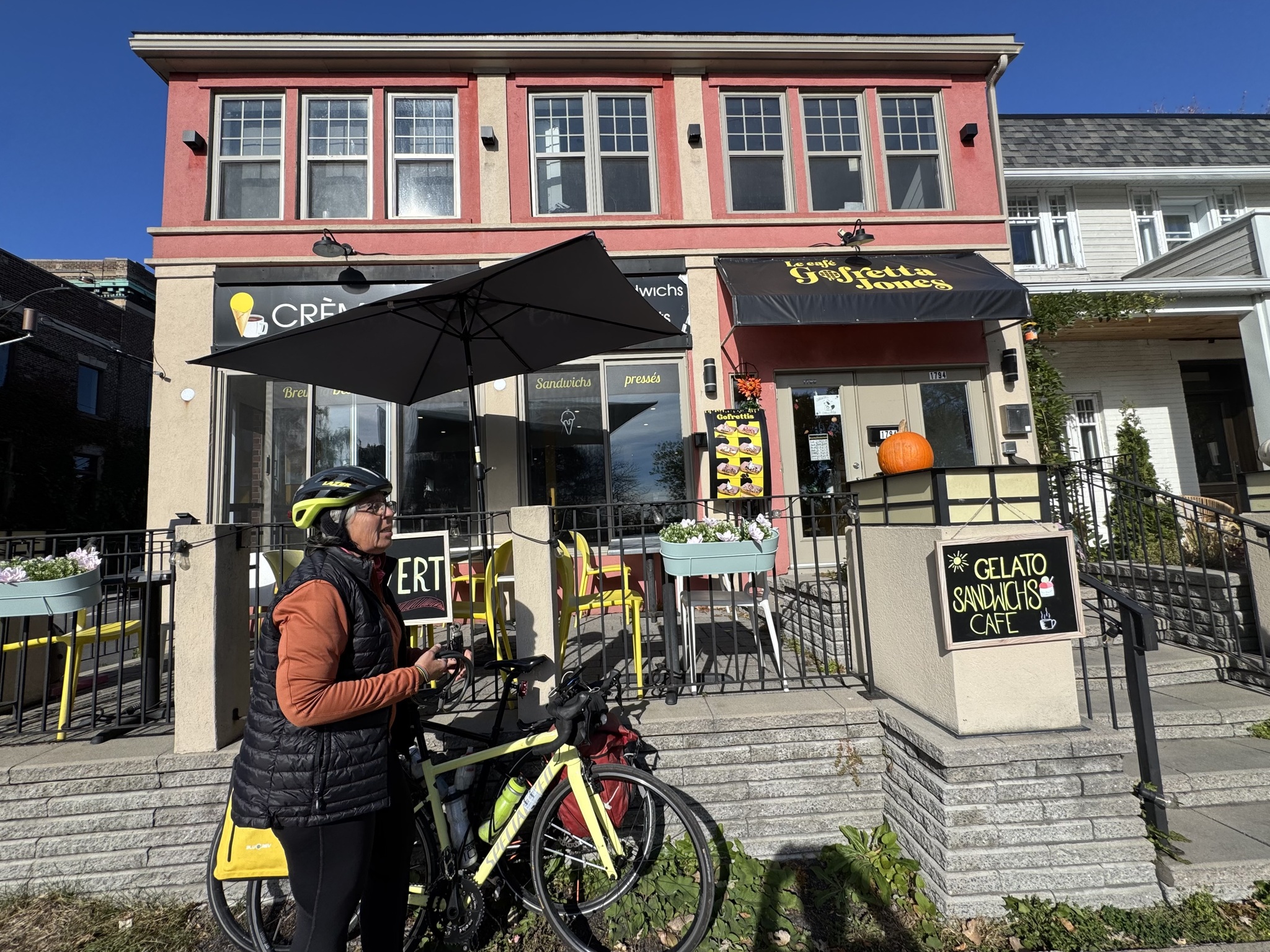
A few metres off the path we stopped at Gofretta Jones Café.
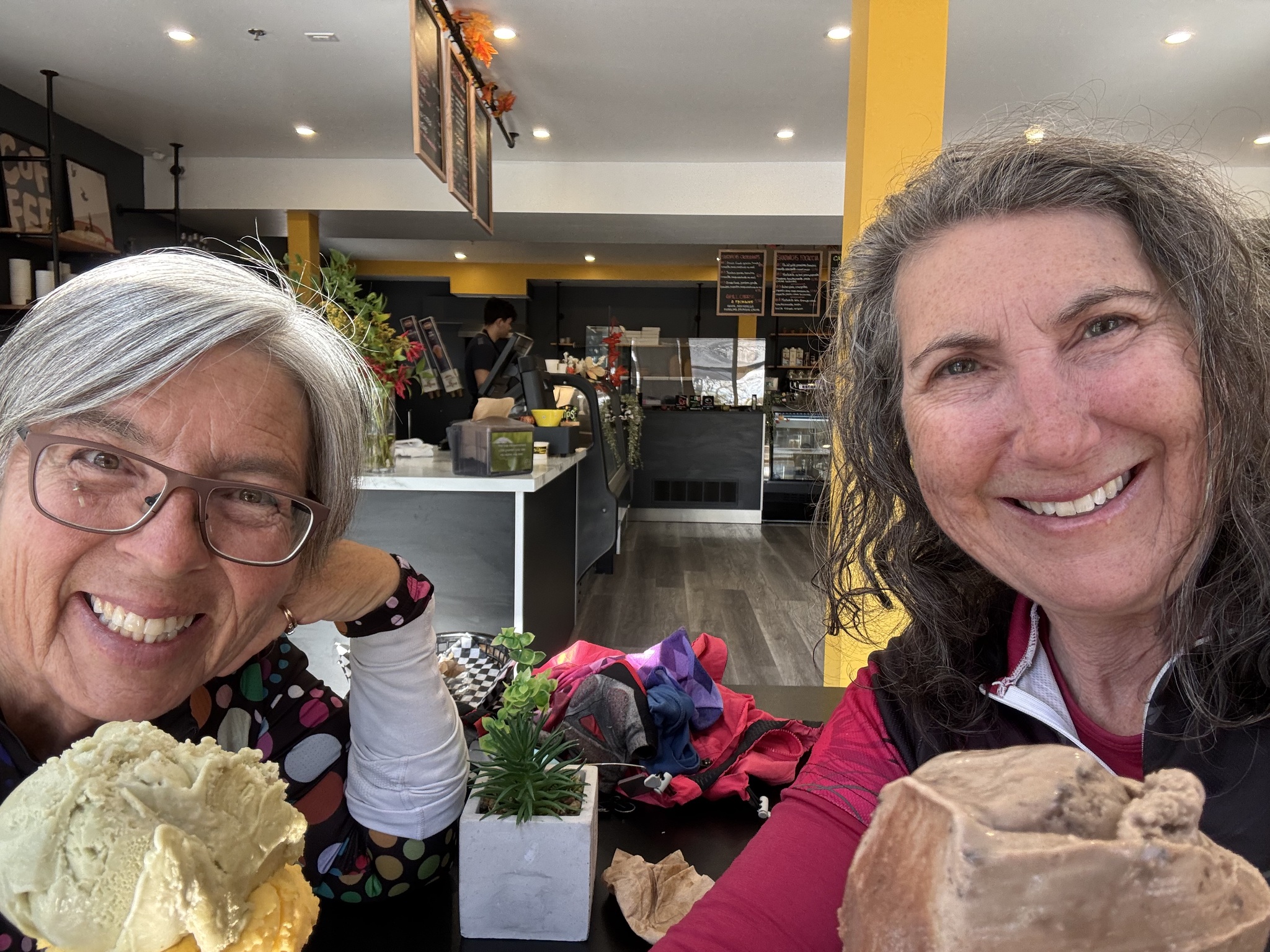
It was hard to decide what to eat as everything sounded so good. We each ordered a different sandwich and then split them. After the sandwiches, we moved onto gelato. The warm sunshine filled the café.
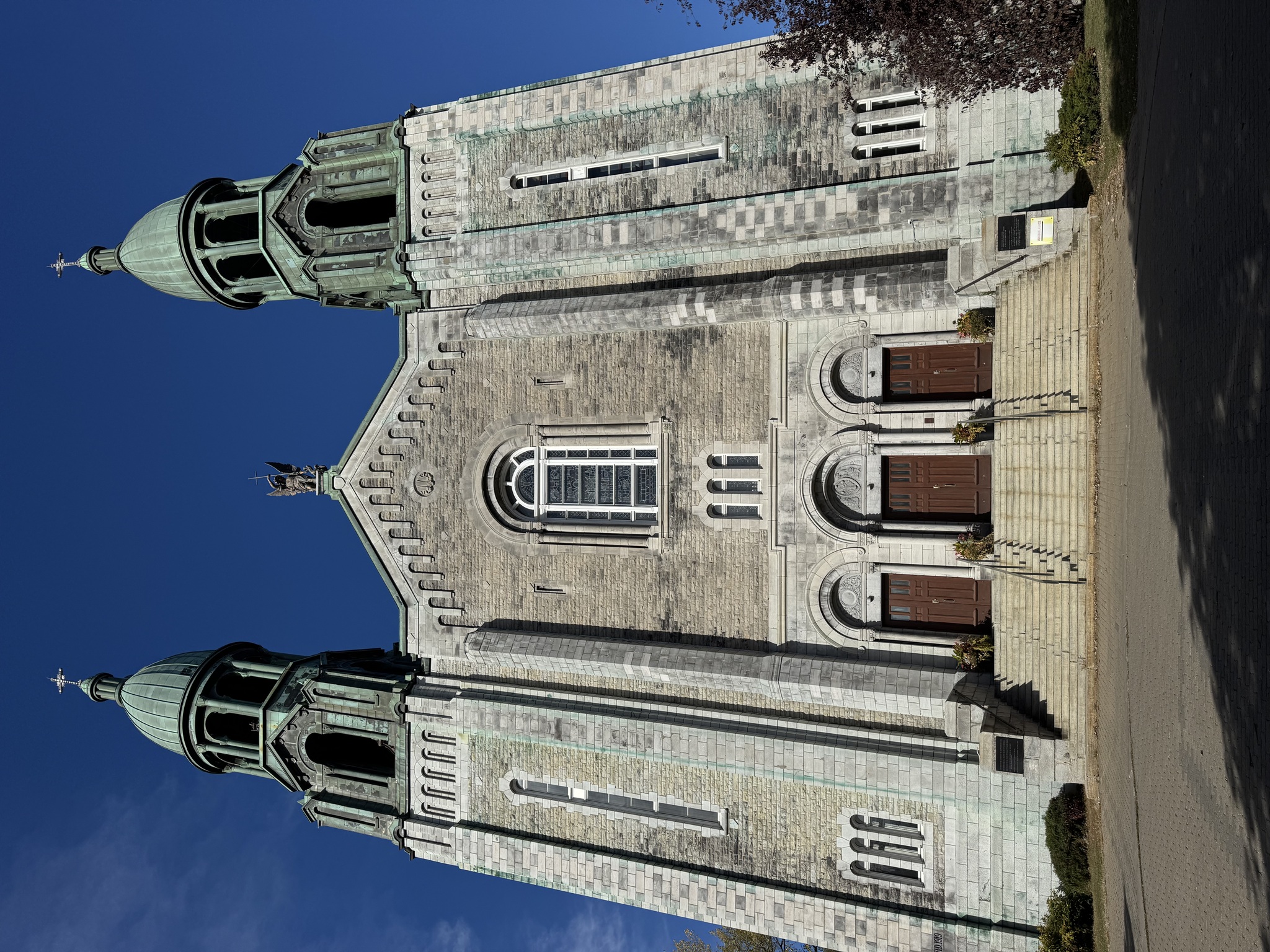
After lunch, we cycled back toward the route I had planned. We passed the Holy Guardian Angels of Lachine Catholic Church. The first wooden chapel was built nearby in 1676. It was replaced by a larger fieldstone church in 1703. A wealthy merchant offered the church the land on which this church, built in 1919, stands. It replaced the previous church on this site, which burned to the ground in 1915. The architect, Alphonse Venne, also designed Saint Joseph’s Oratory of Mount Royal.
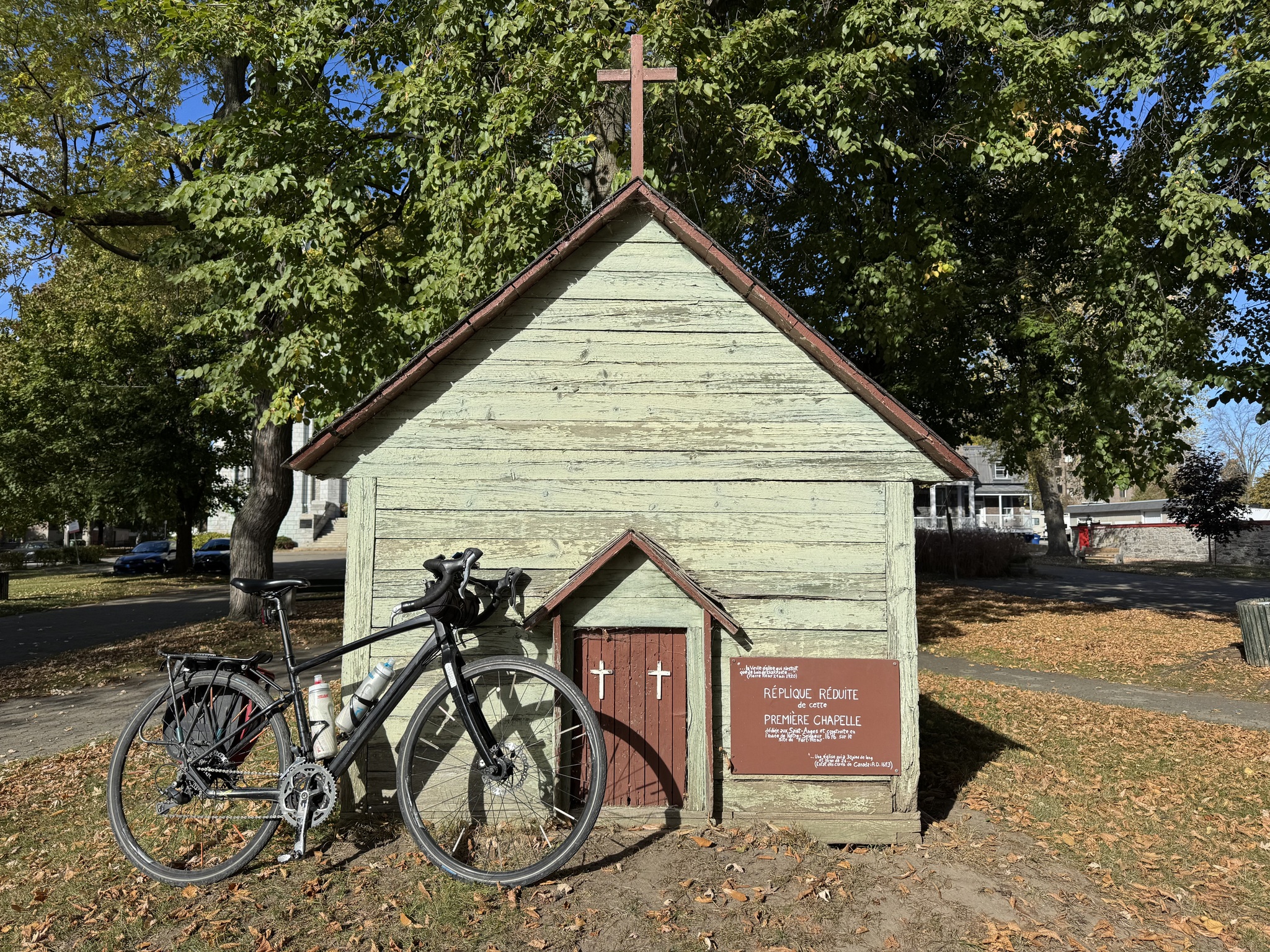
This is replica of the first wooden chapel.
LaSalle is a borough of Montreal. A multi use path runs along the St. Lawrence, and was lovely to ride with the fall colours and the views.
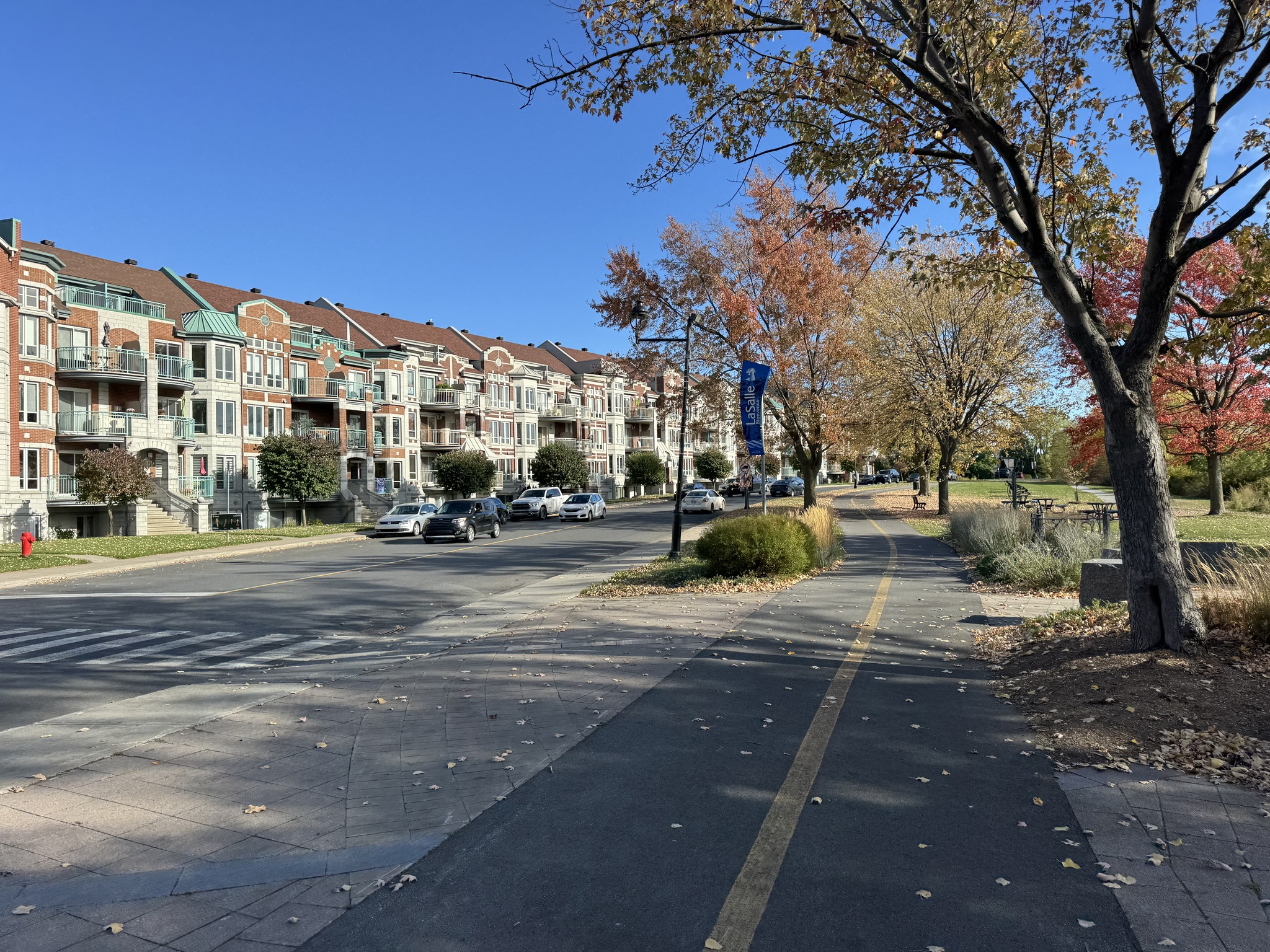
The Fleming windmill is a five storey stone tower, which was built in 1827 by William Fleming to grind wheat. Its ceased operations in 1891. It is one of the last remaining windmills in Quebec, and the only one of its type on the island of Montreal.
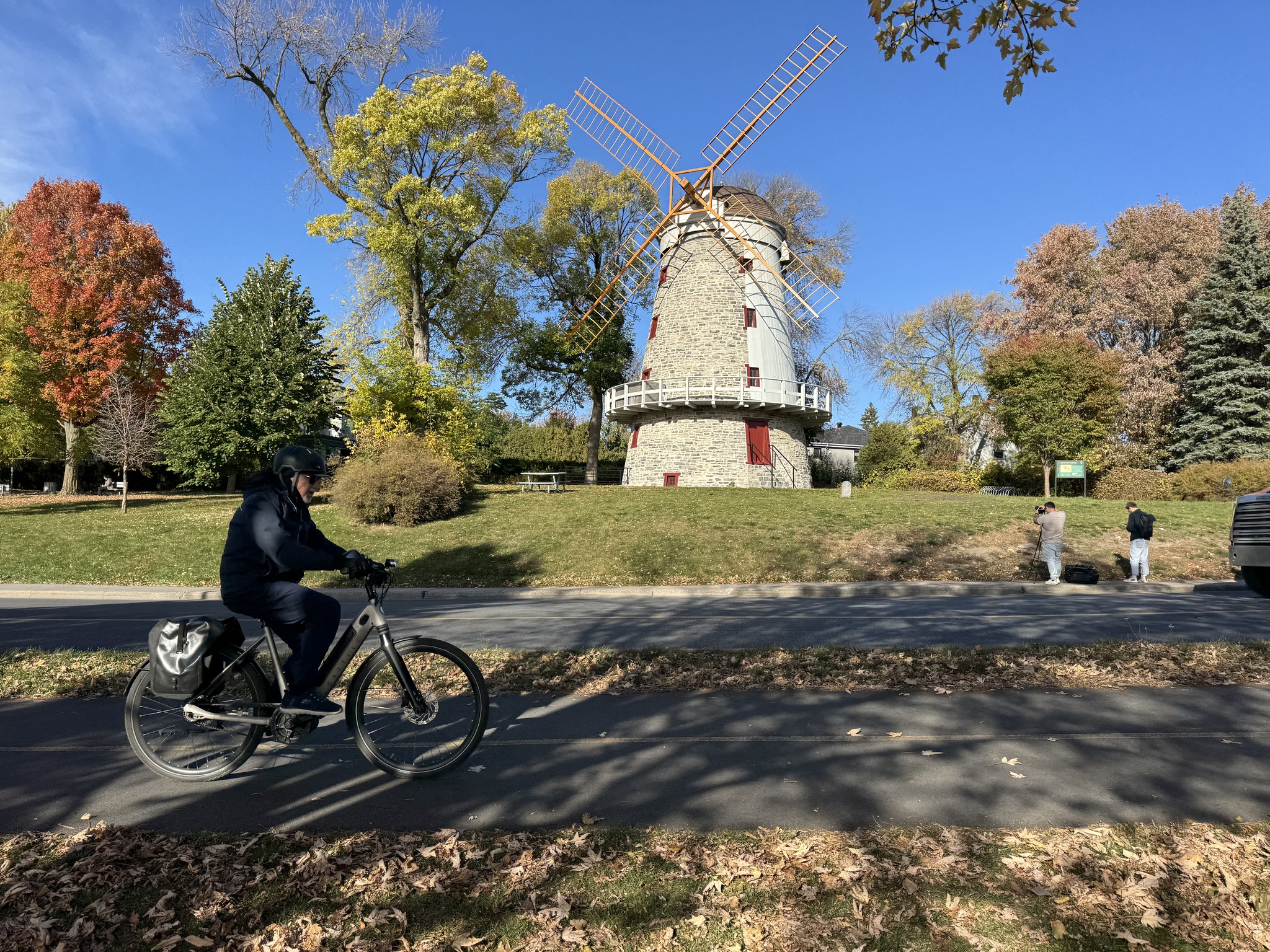
Route Verte 5 runs along the St. Lawrence through LaSalle.
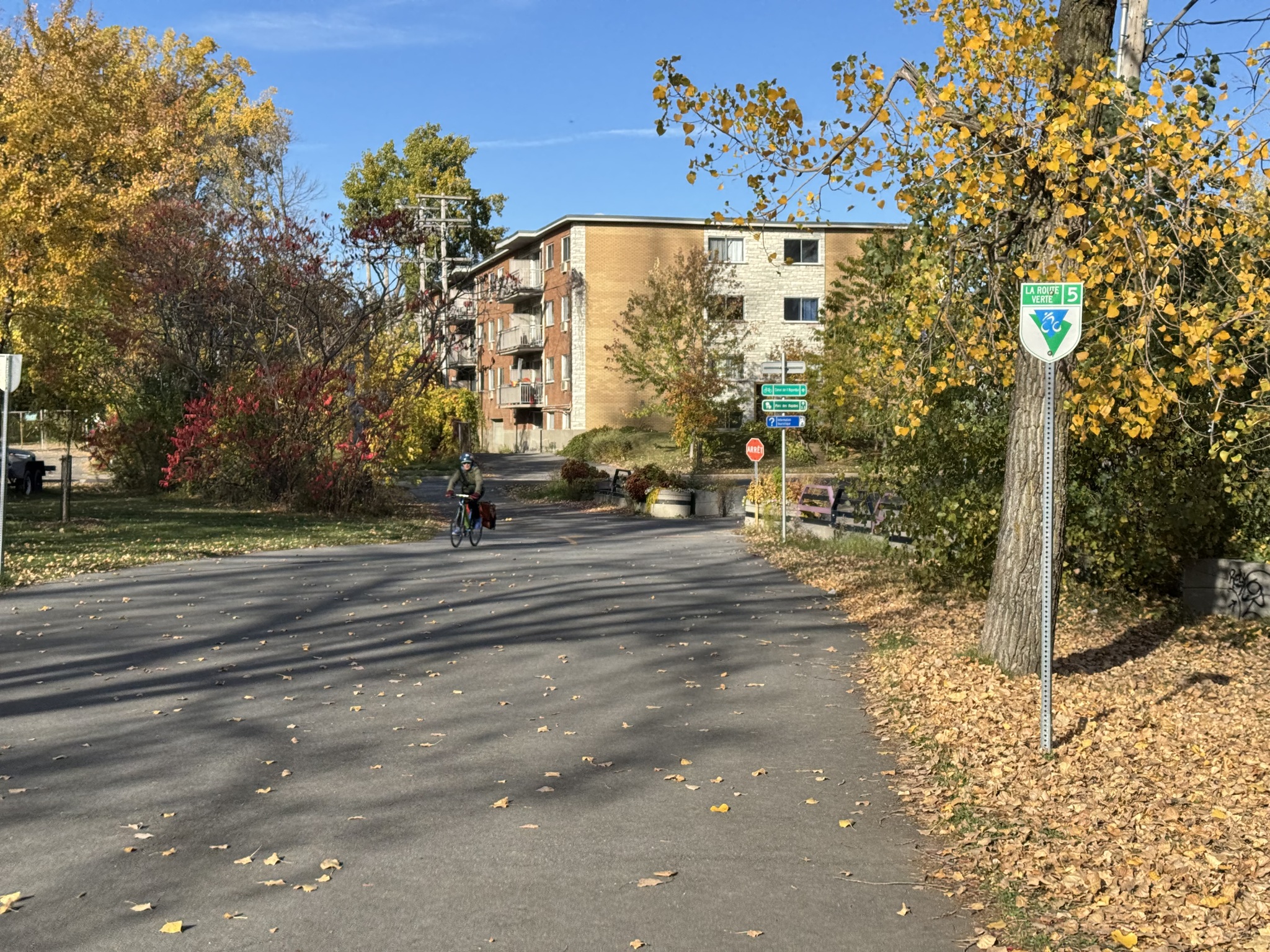
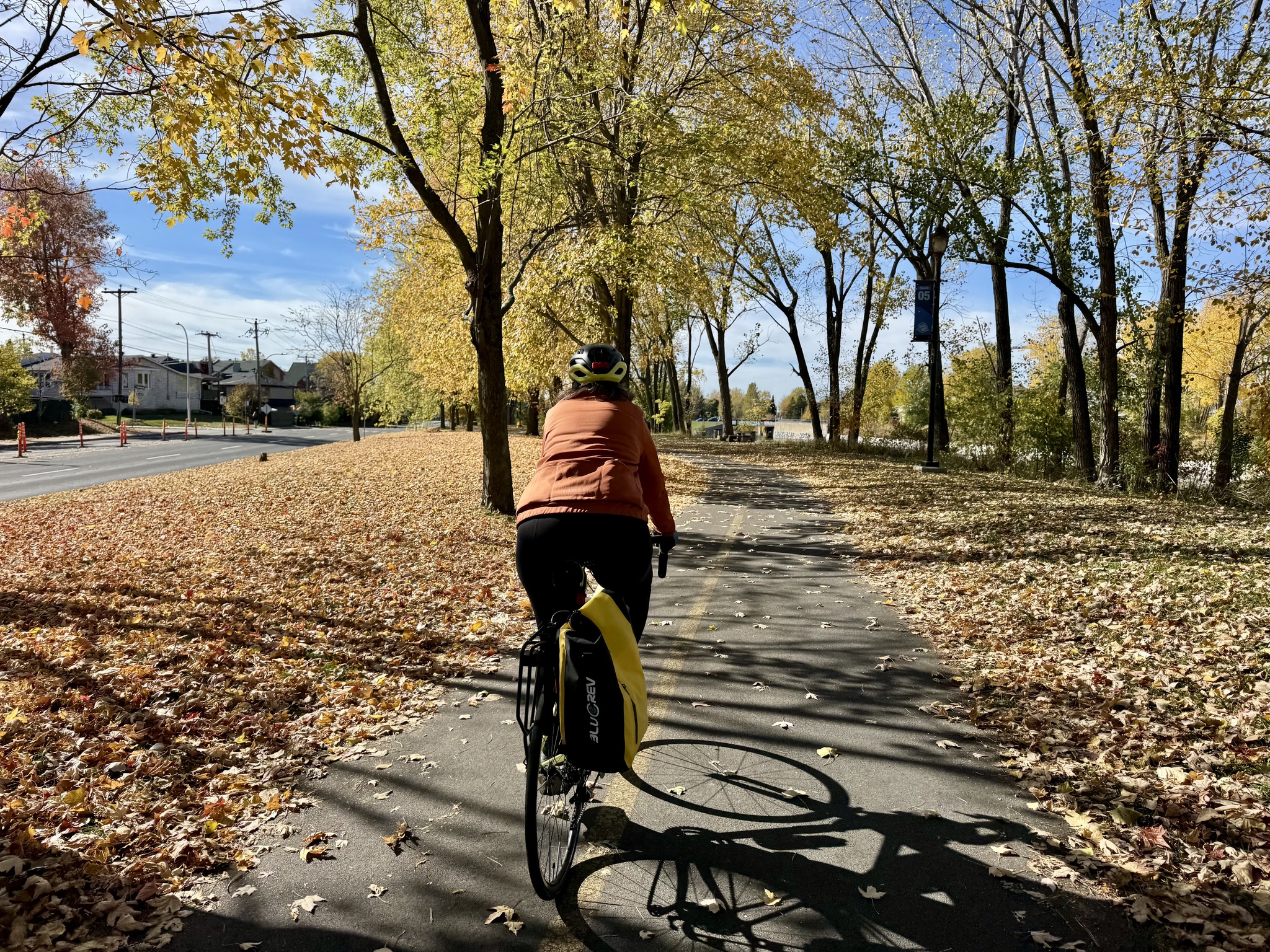
The sun was strong and highlighted the beautiful autumn colors. In some places, the trees met over the top of the path.
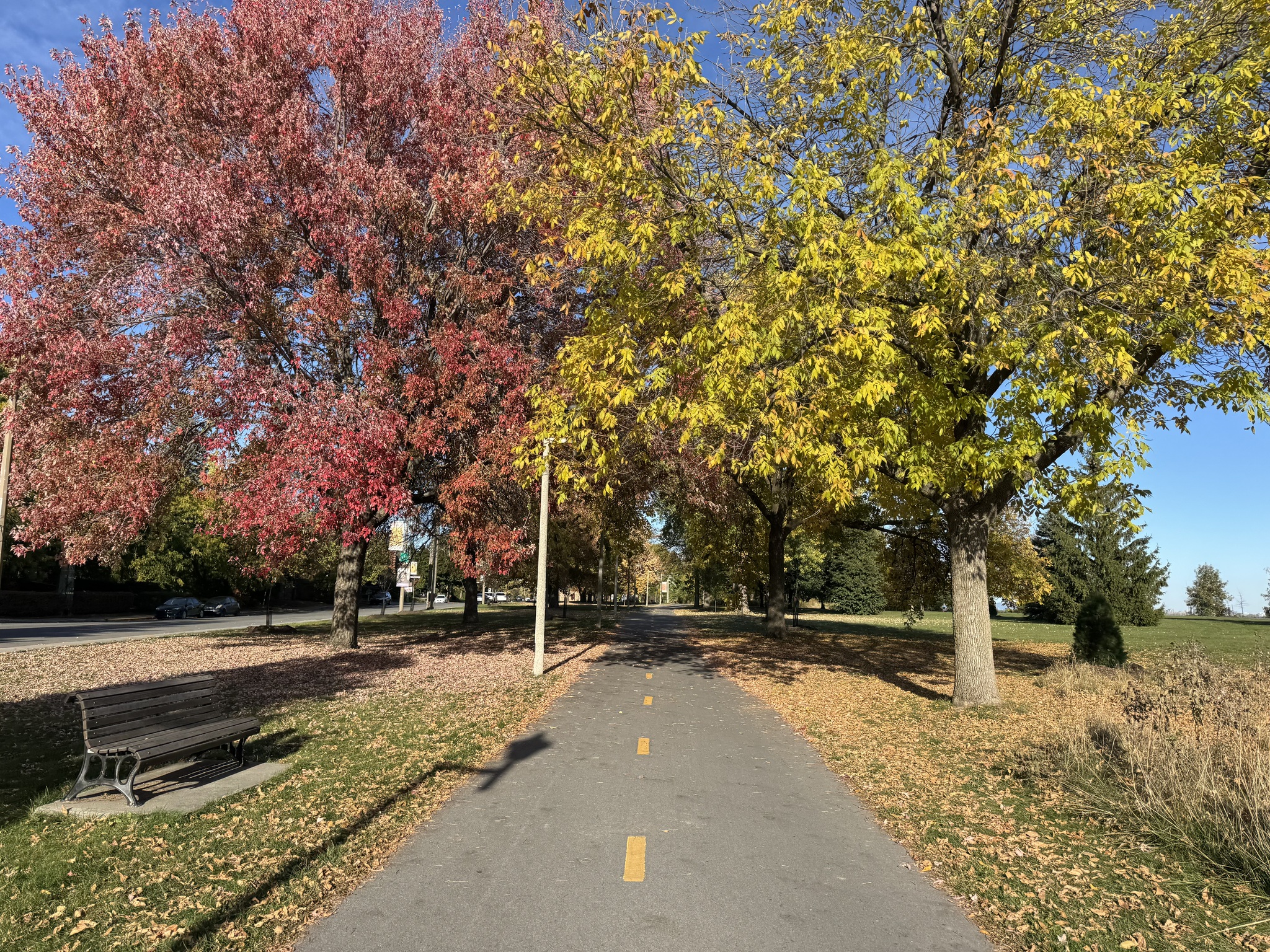
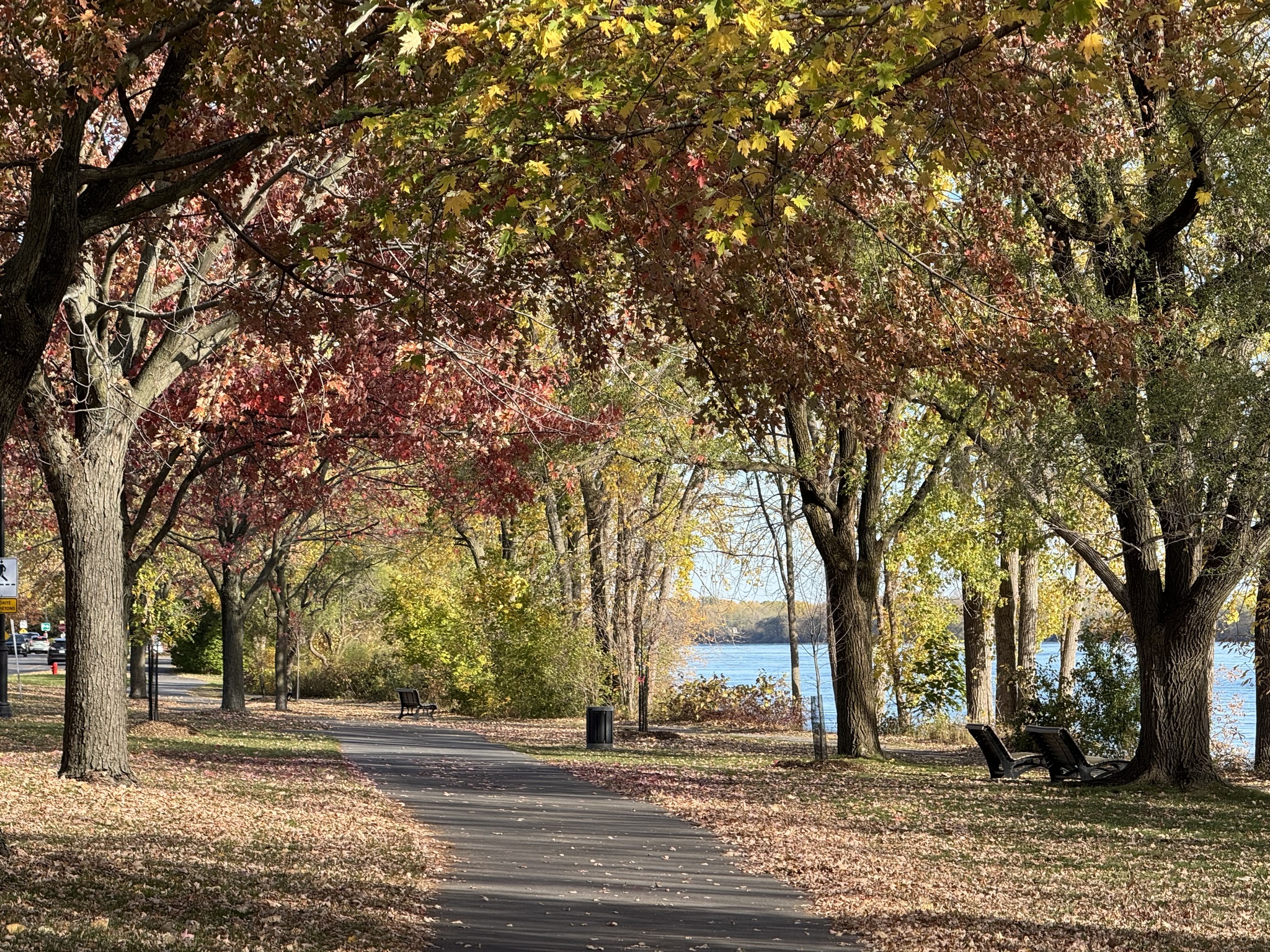
I had planned to return along the Aqueduct Canal, but we missed the cue, and continued along the St. Lawrence. When I realized we decided to carry on rather than turning back, because the ride along the St. Lawrence was so pleasant. There are two canals so close together because the water in the Lachine Canal became so polluted that a second canal was built to bring water from the St. Lawrence into a water treatment plant for the growing Montreal population.
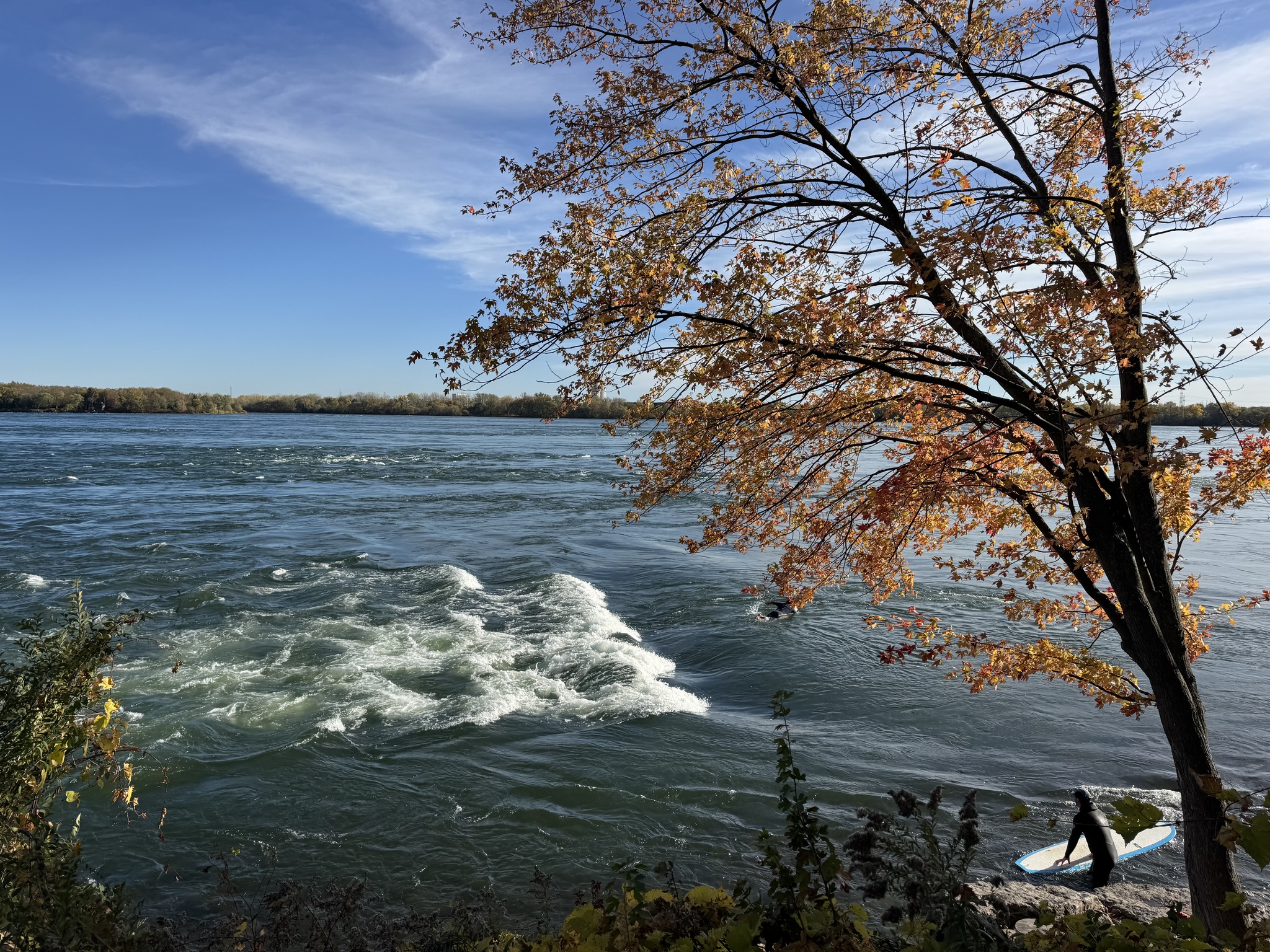
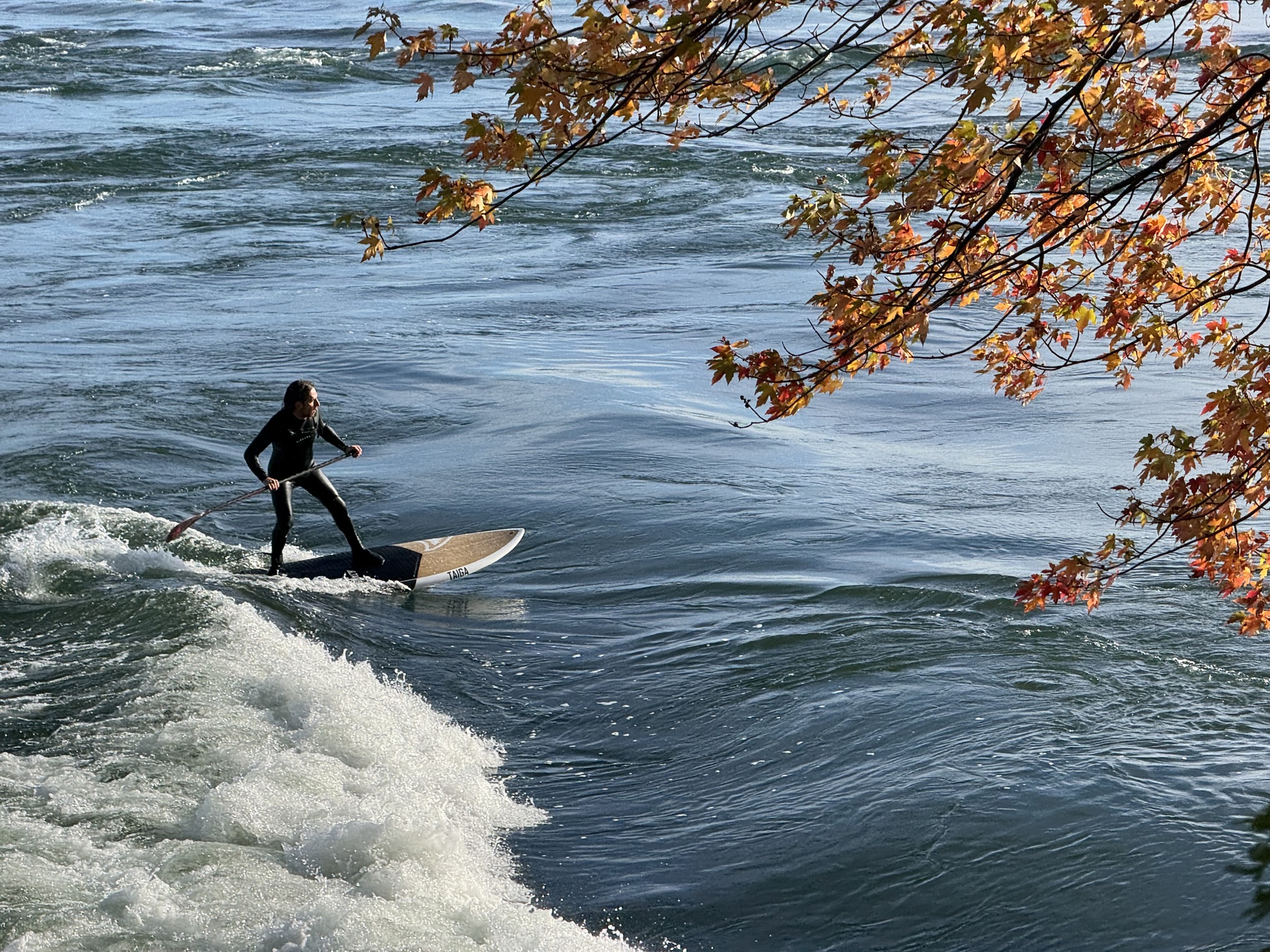
There was a small rapid here where people were surfing on stand-up paddle boards.
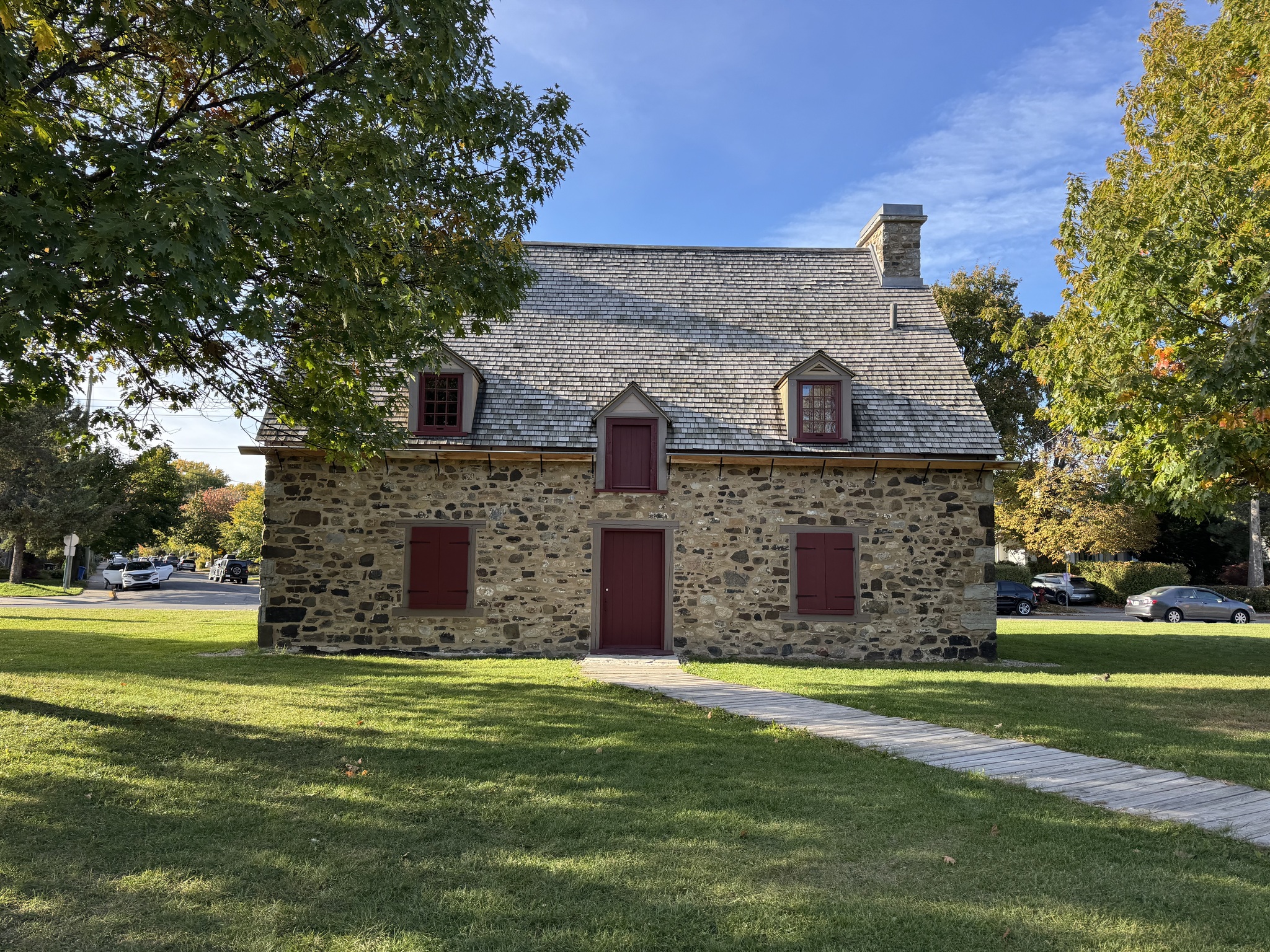
Maison Nivard-De Saint-Dizier is an example of rural architecture from the early days of French settlement. It was built in 1710.
Nuns’ Island (Île-des-Sœurs) was owned by the religious order Congrégation de Notre‑Dame. The nuns use the land for farming for about 200 years. In 1956 they sold the island for large scale development. The population of the island in 2021 was 21,000. I would like to explore the island in the future. There are several Ludwig Mies van der Rowe buildings on the island.
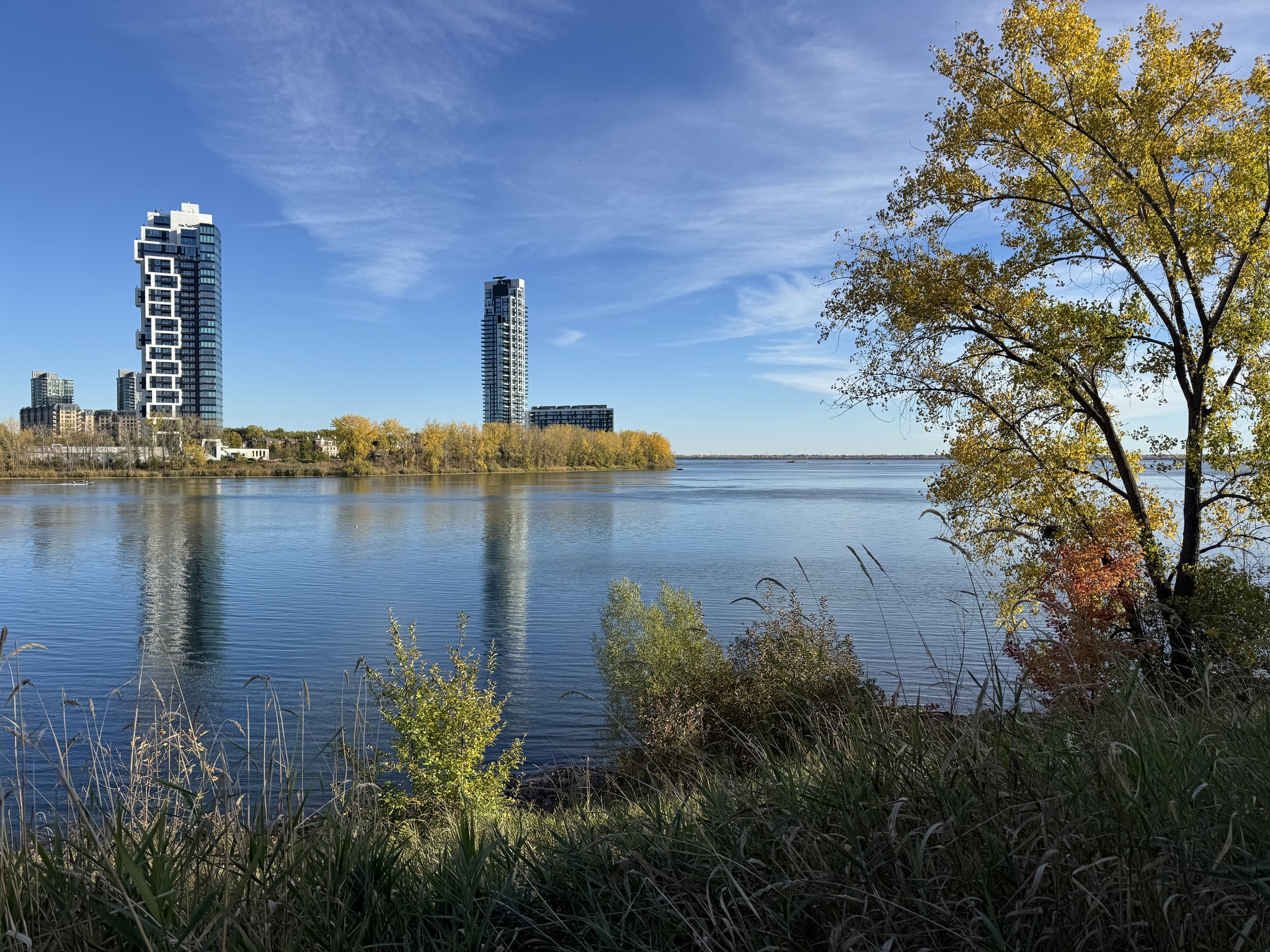
We left the path along the St. Lawrence and cycled through Verdun, which had a lot of traffic calming and cycling infrastructure.
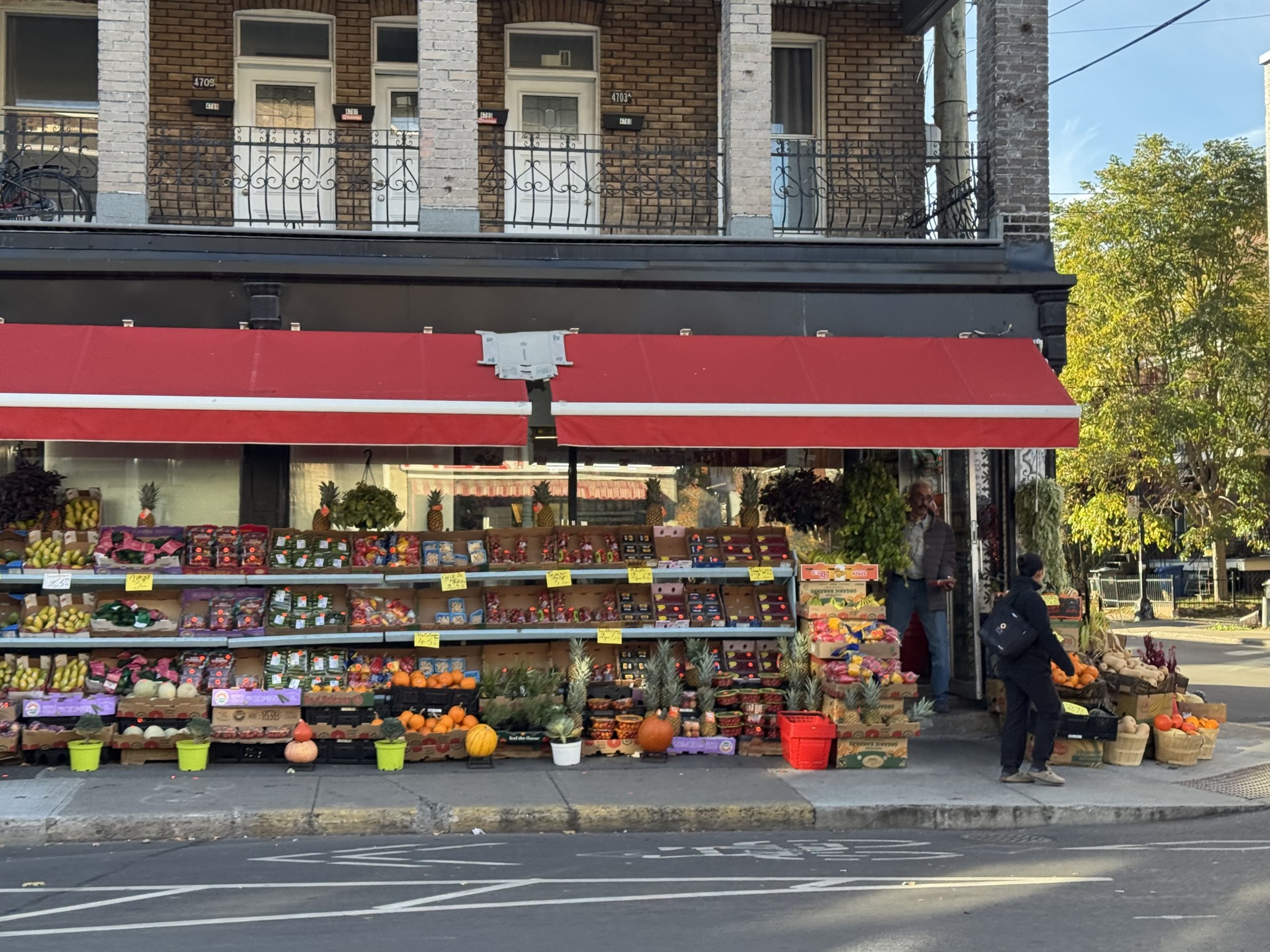
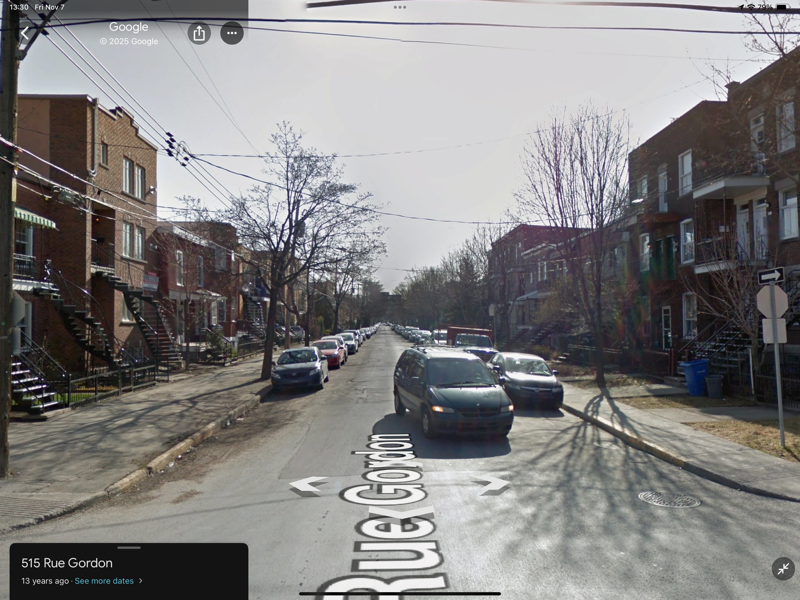
Rue Gordon has been traffic calmed by “daylighting” the intersection. Daylighting is the practice of removing parking spaces adjacent to an intersection, and narrowing the distance that pedestrians need to cross. This intersection also has a raised crosswalk so that pedestrians stay at the same level in the road, but cars have to drive up and down a ramp, which discourages speed. I took a screen cap from Google maps to show what the intersection used to look like. The amount of consultation that cities have to do to make our roads better for everyone, as opposed to optimized for driving, infuriates me. It always shocks me how people so fiercely protect the car centric status quo. Imagine preferring the before picture to the after! There were a lot of cars in the area, but it was still quite quiet because they were all driving slowly due to the environment being engineered to make that happen.
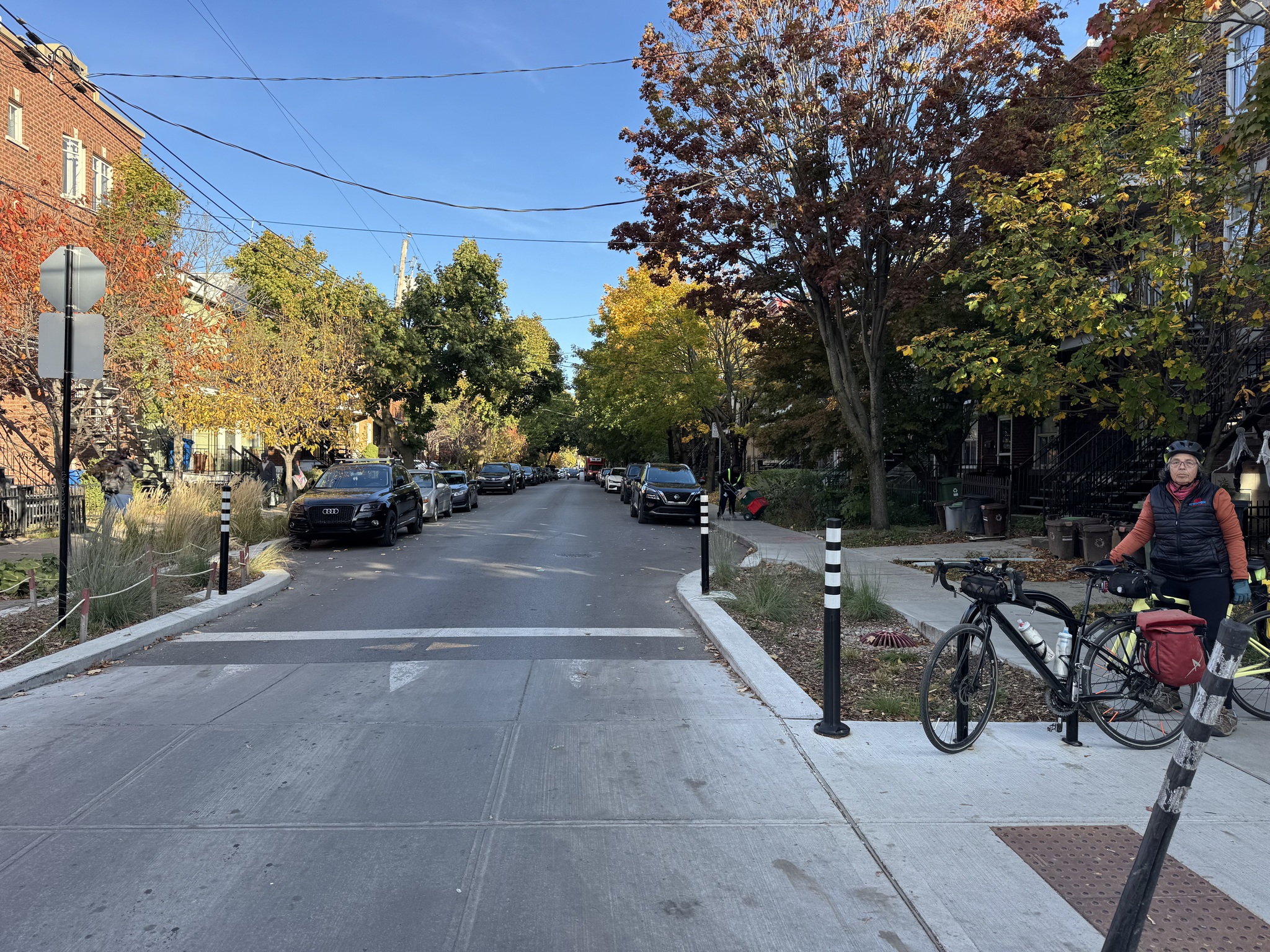
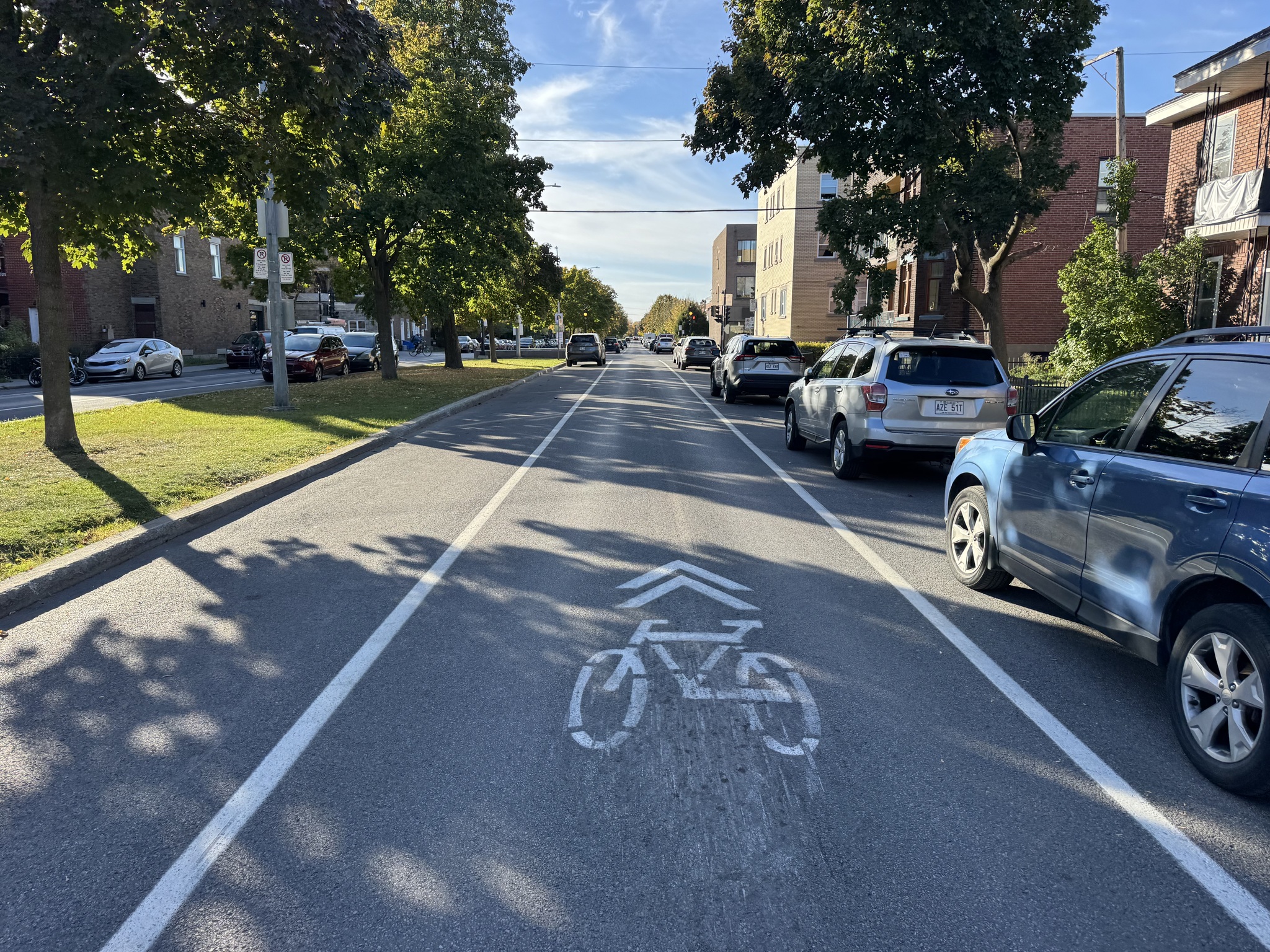
This street only had sharrows, however, with a boulevard down the middle, a shared travel lane for cars and bikes, and four lanes of parking, it felt comfortable.
Philippe-Zotique-Milette Park has been designed to combat urban heat islands. It has permeable surfaces that filter water, a water play area with foggers that produce fine droplets of water, that cool through evaporation, and shade structures.
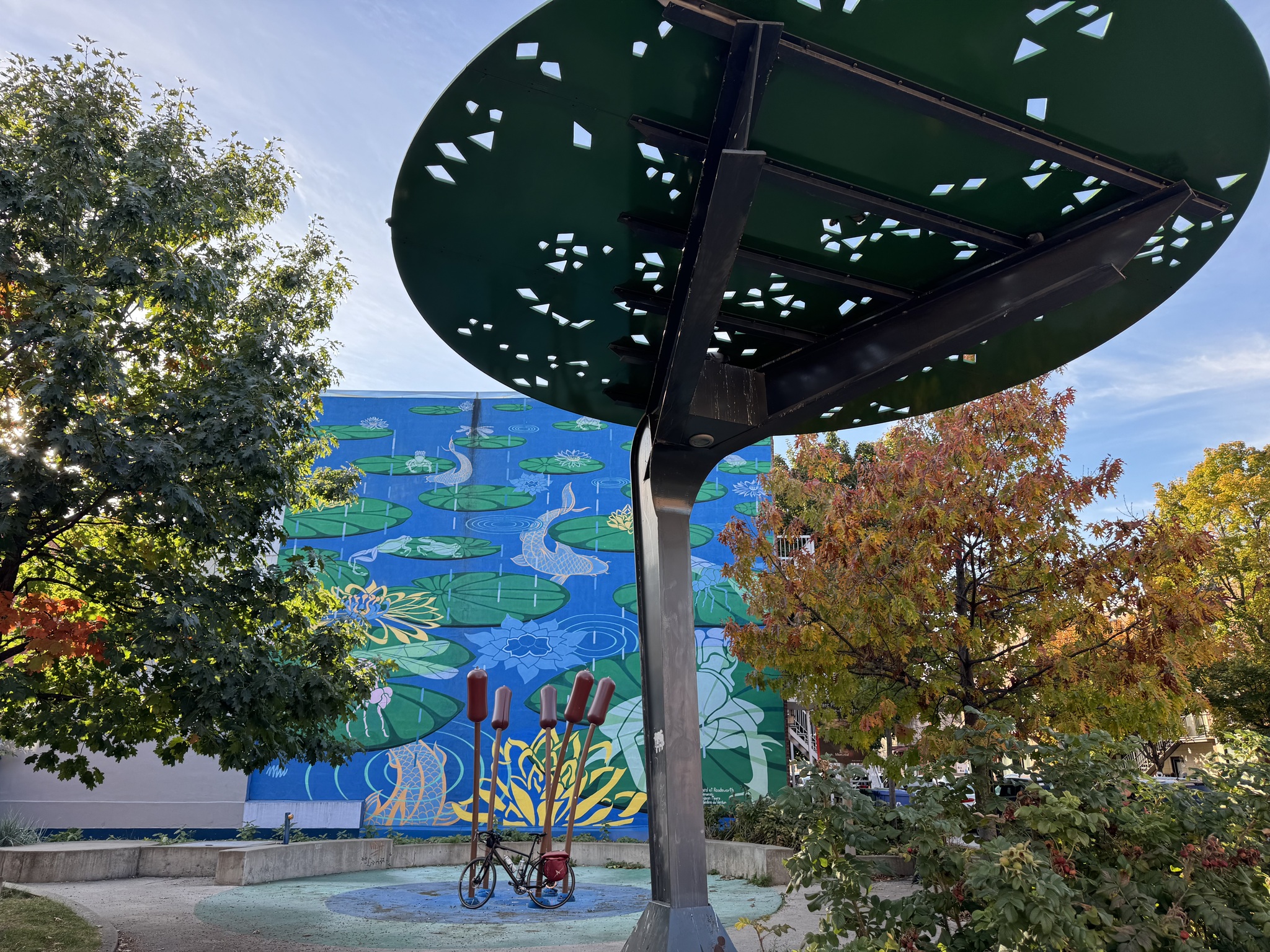
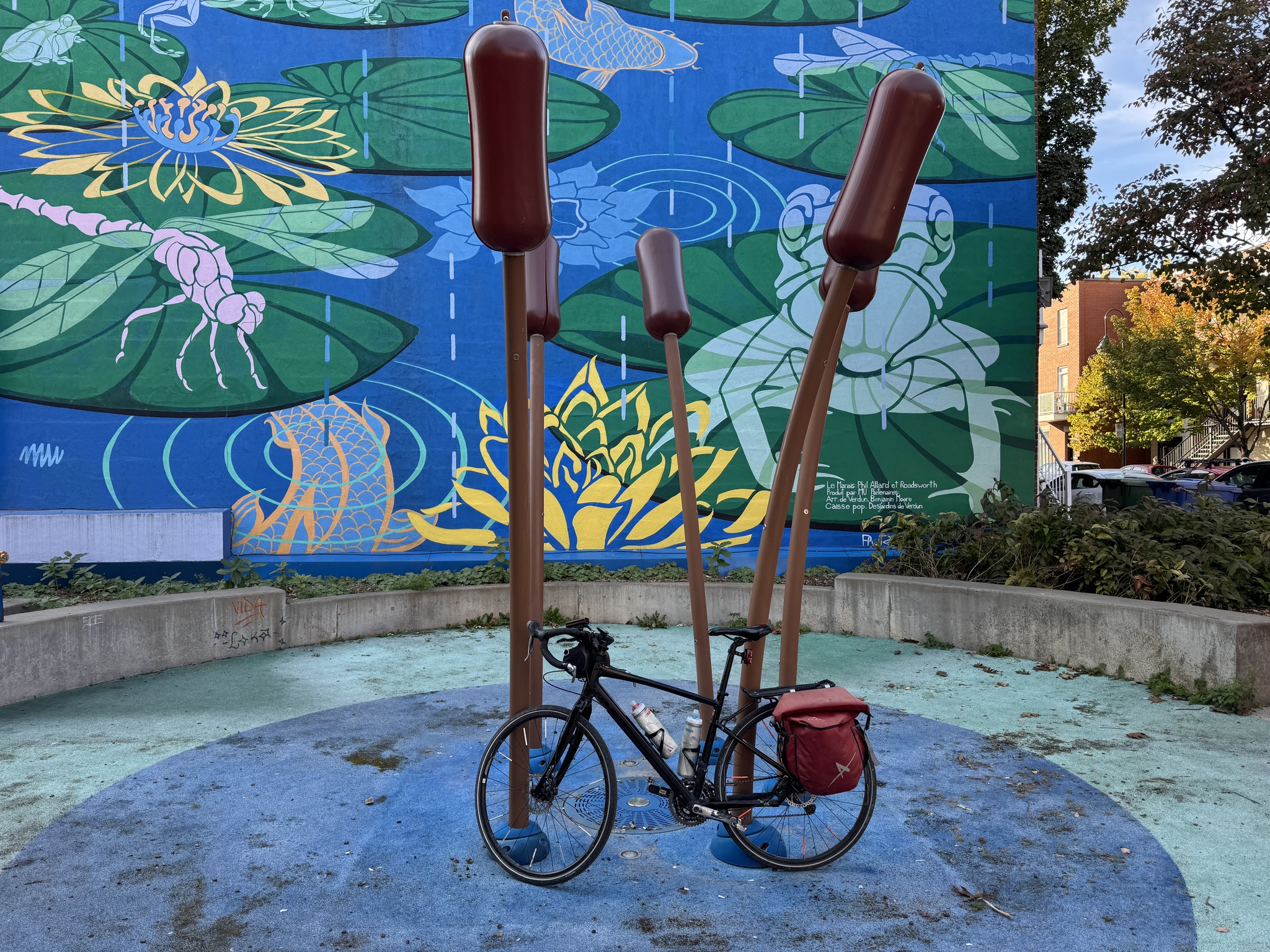
The mural depicts endangered, native species as part of a marsh threatened by urban development.
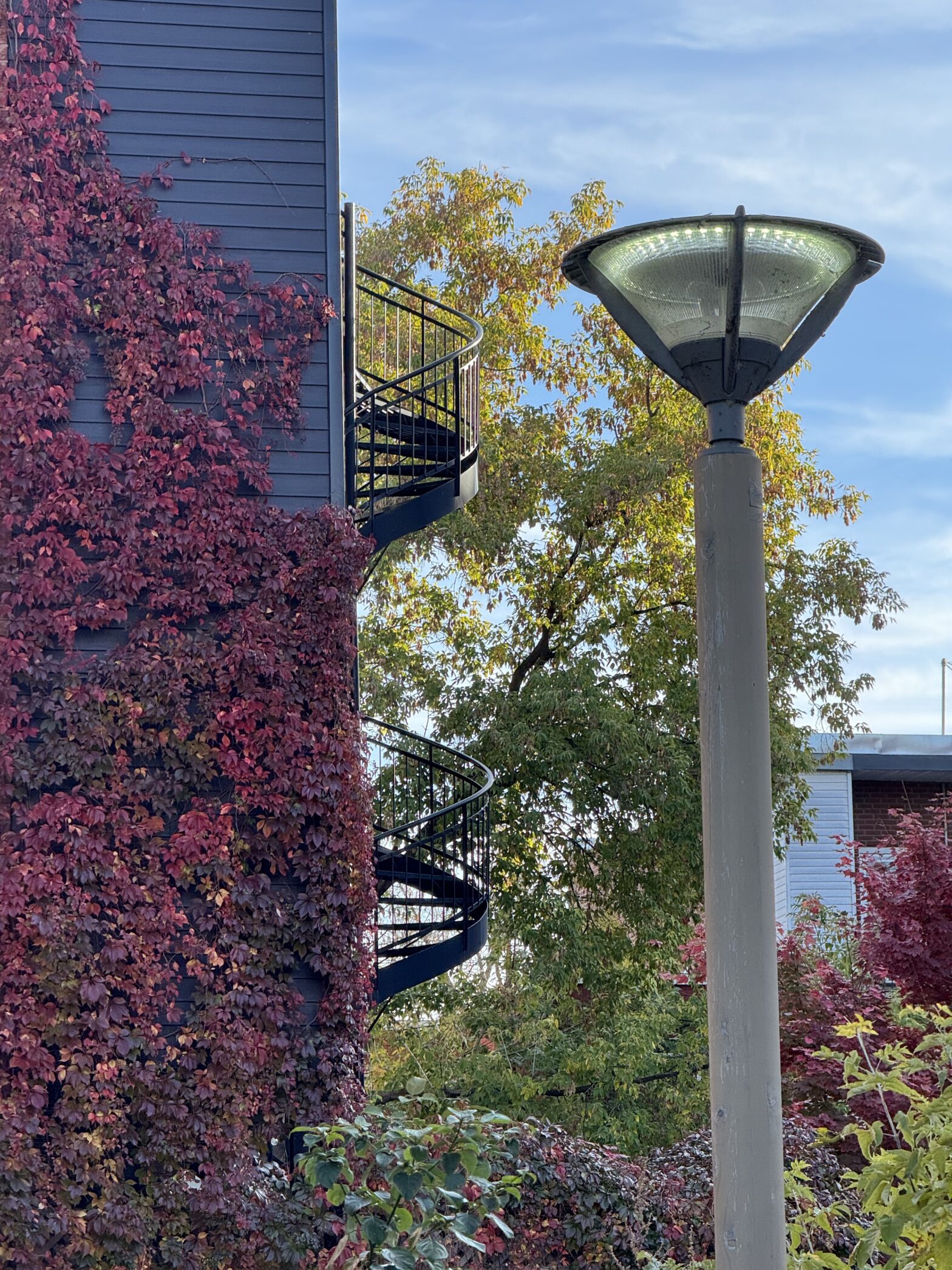
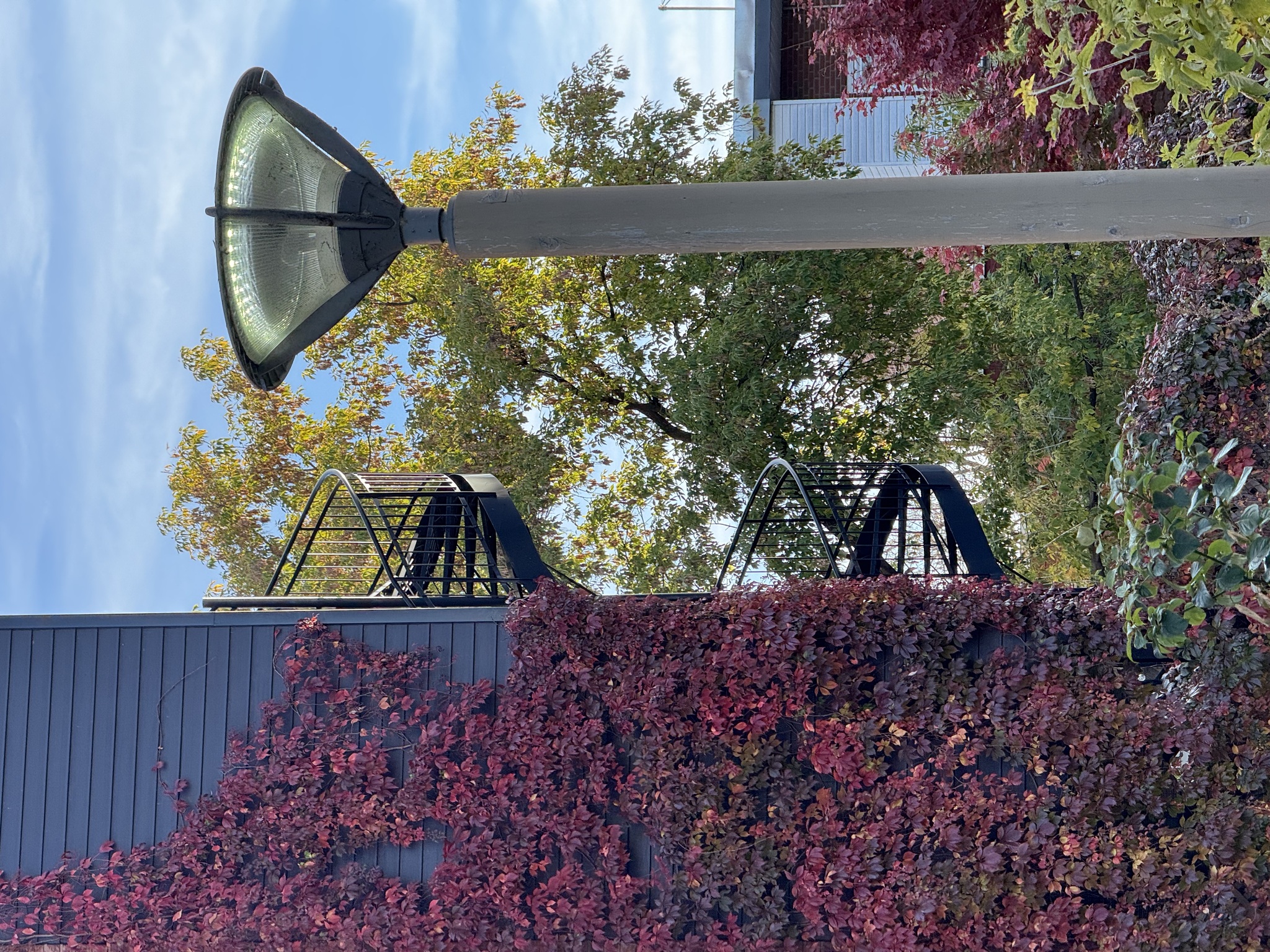
This small apartment next to the park caught my eye with the beautiful ivy and iconic Montreal outdoor staircase.
We were heading to Atwater Market, which is on the Lachine Canal. This area is so busy that they have built a cyclo-pedestrian roundabout to manage the traffic. With the many arrows they leave absolutely no question as to which direction one should navigate the roundabout.
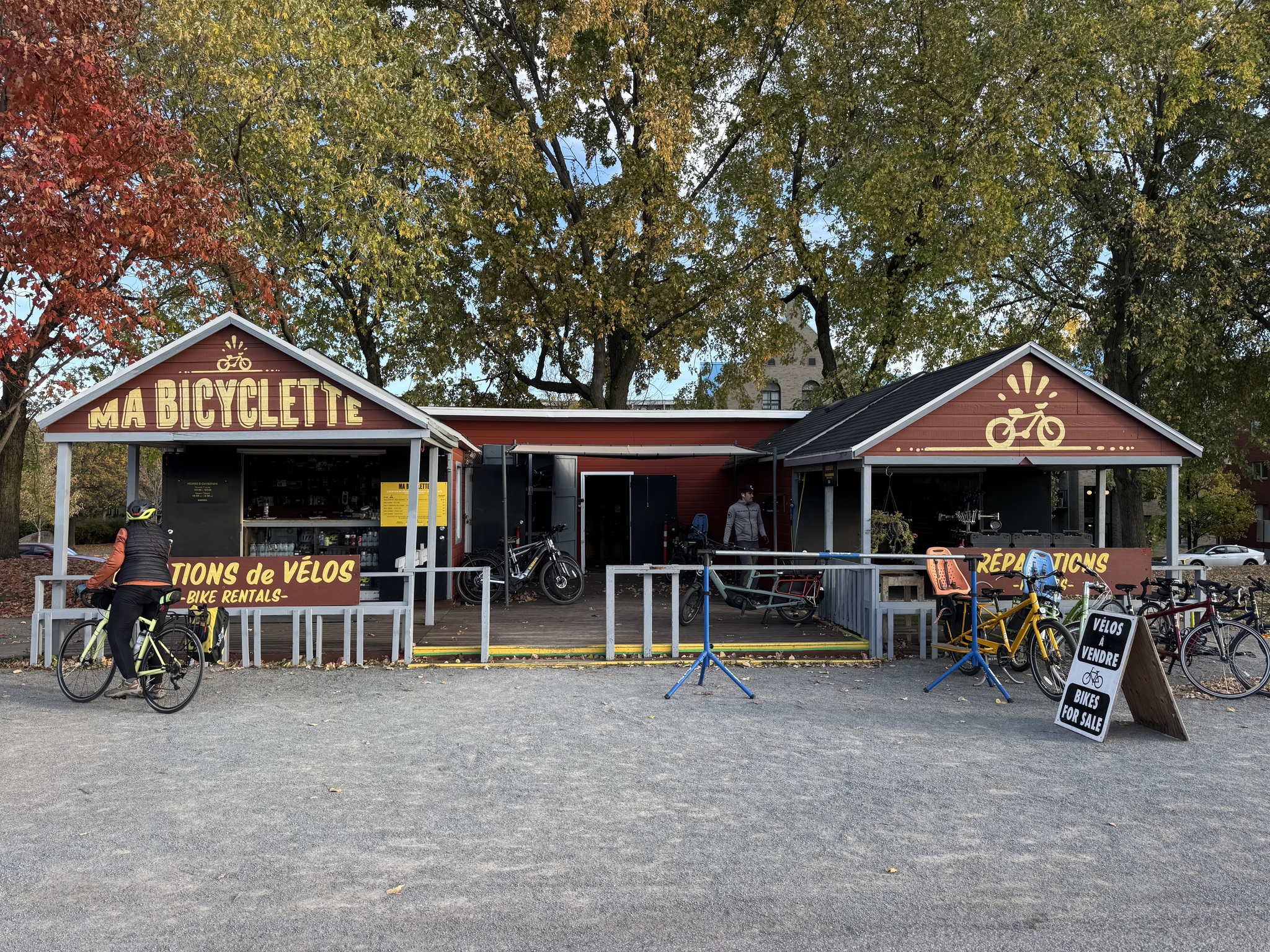
We stopped at this bicycle rental, parts, and repair business so that Cindy could purchase the correct size tube, in case she encountered another flat. However, despite finding nothing wrong first thing this morning, her tire remained inflated.
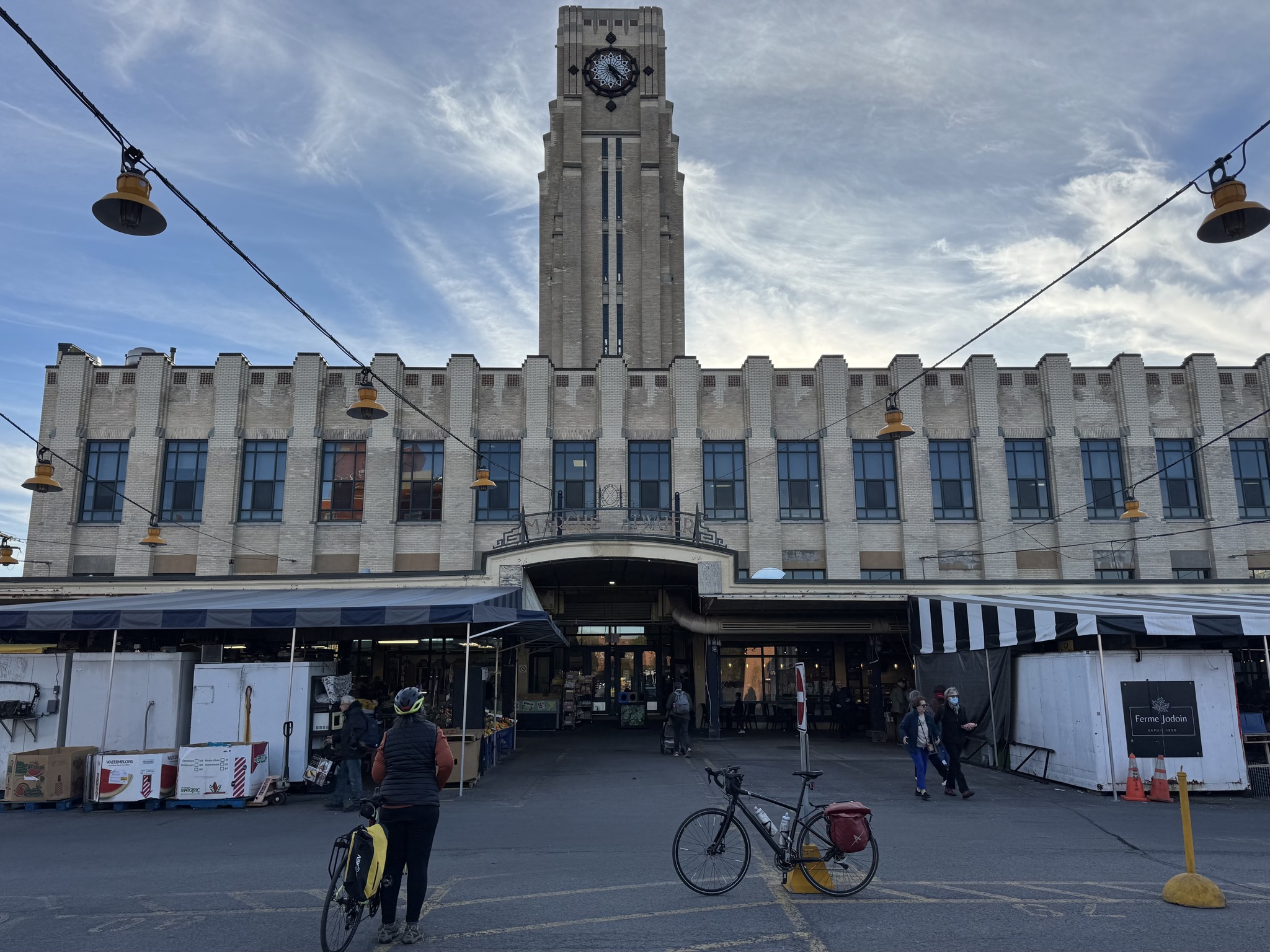
This is Atwater Market. It opened in 1933, in an Art Deco-style building designed by architect Ludger Lemieux in response to the Depression-era push for public works.
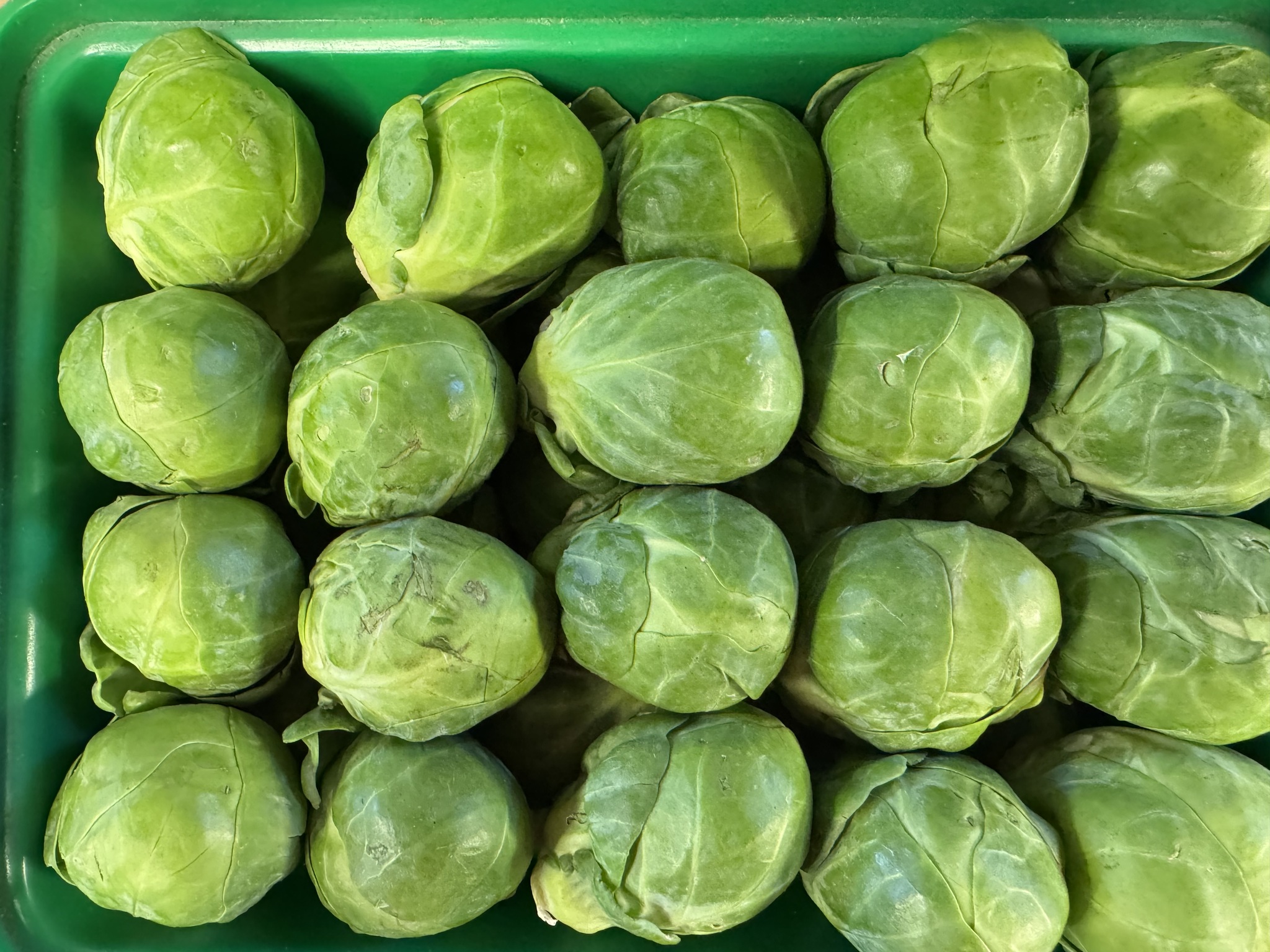
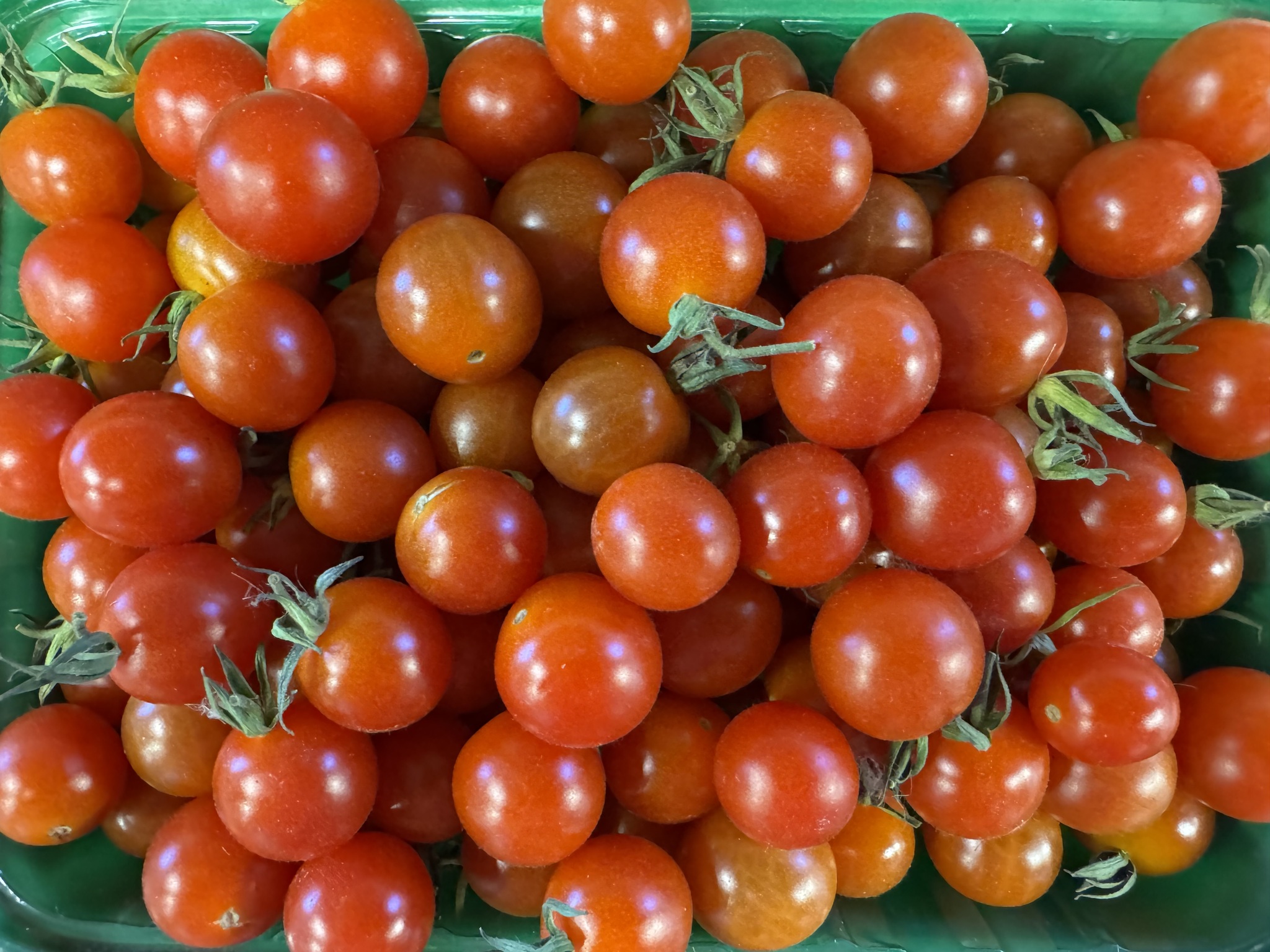
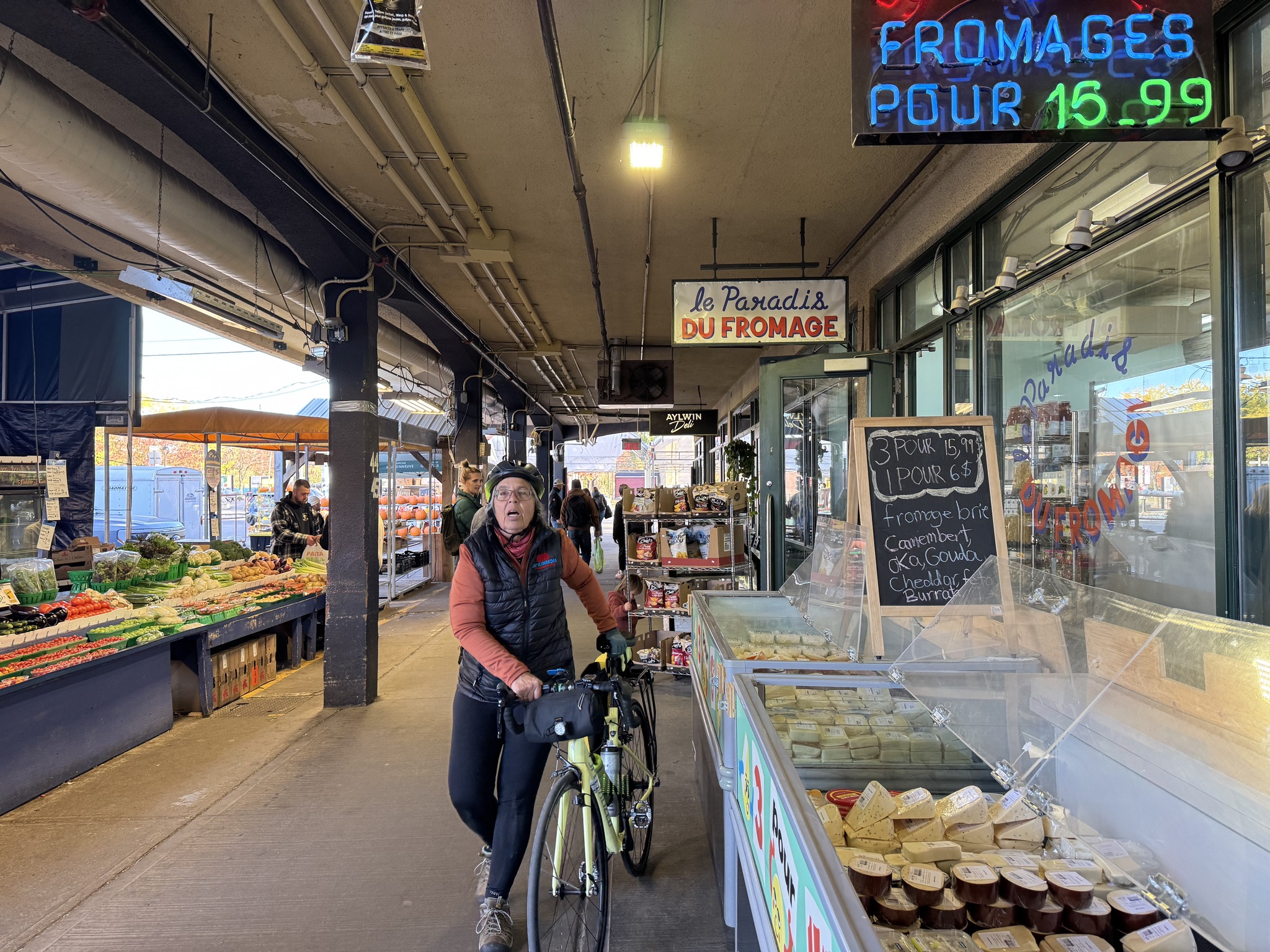
Everything looked absolutely delicious. There were stalls outside selling vegetables and cheese
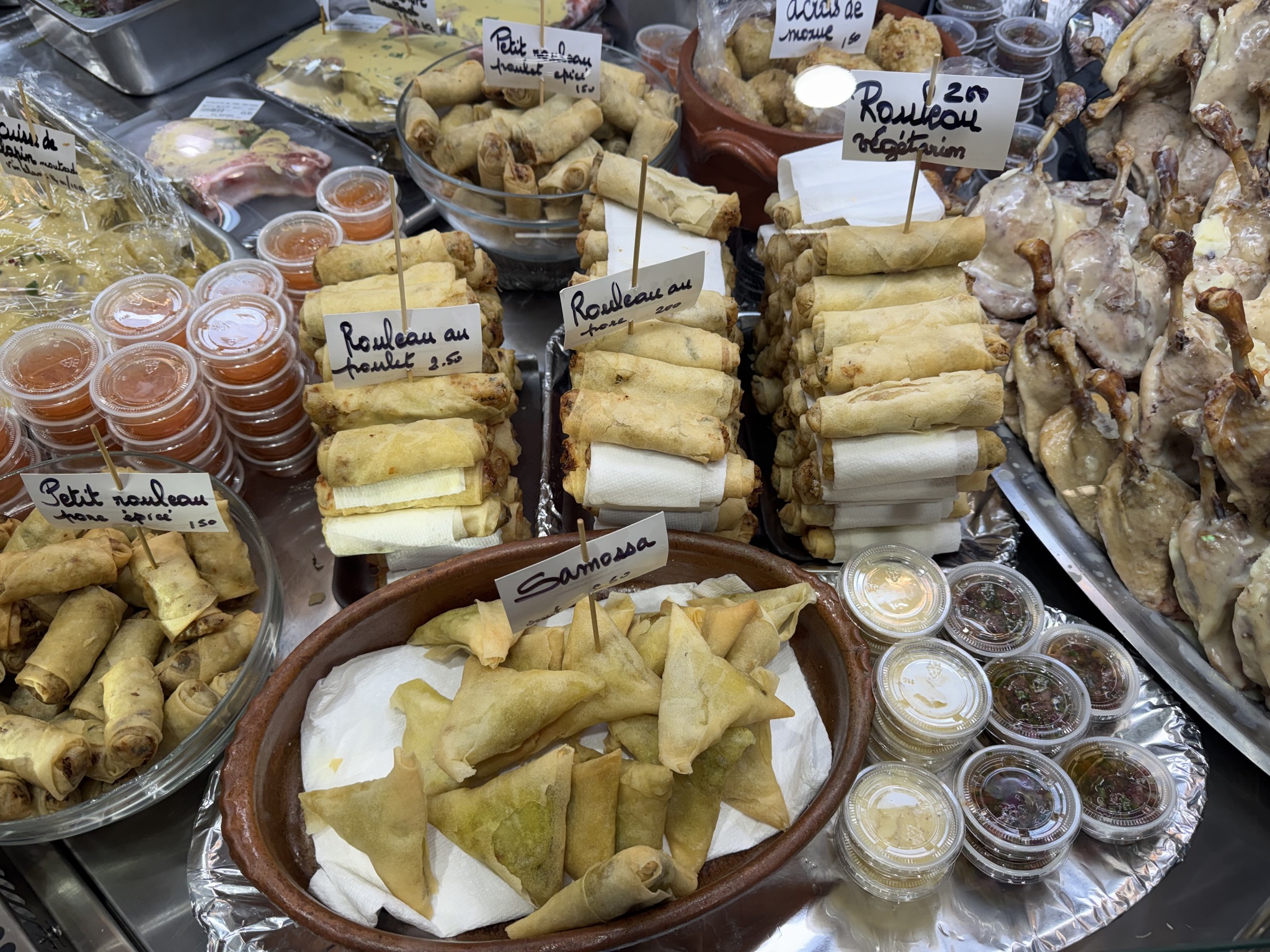
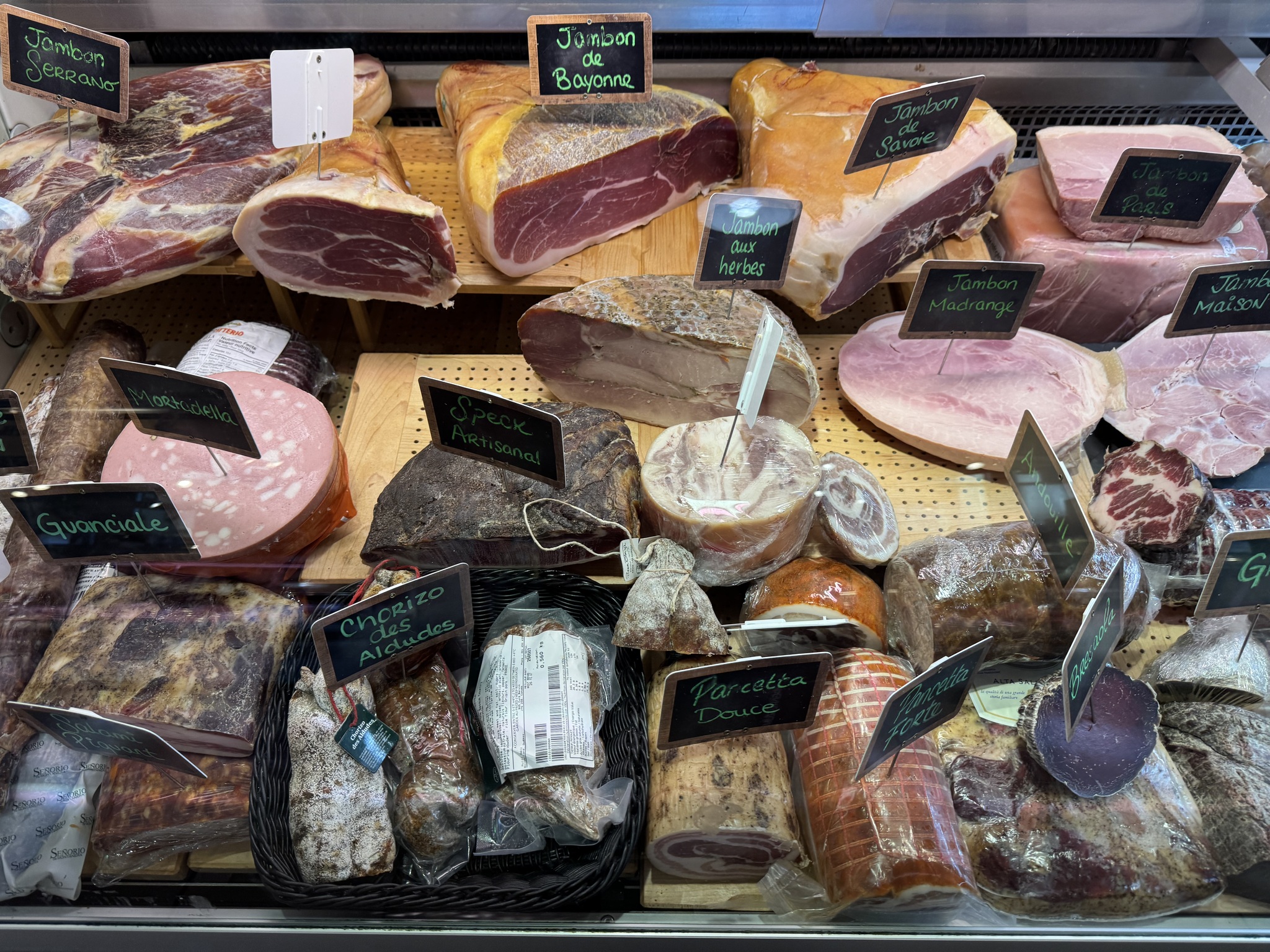
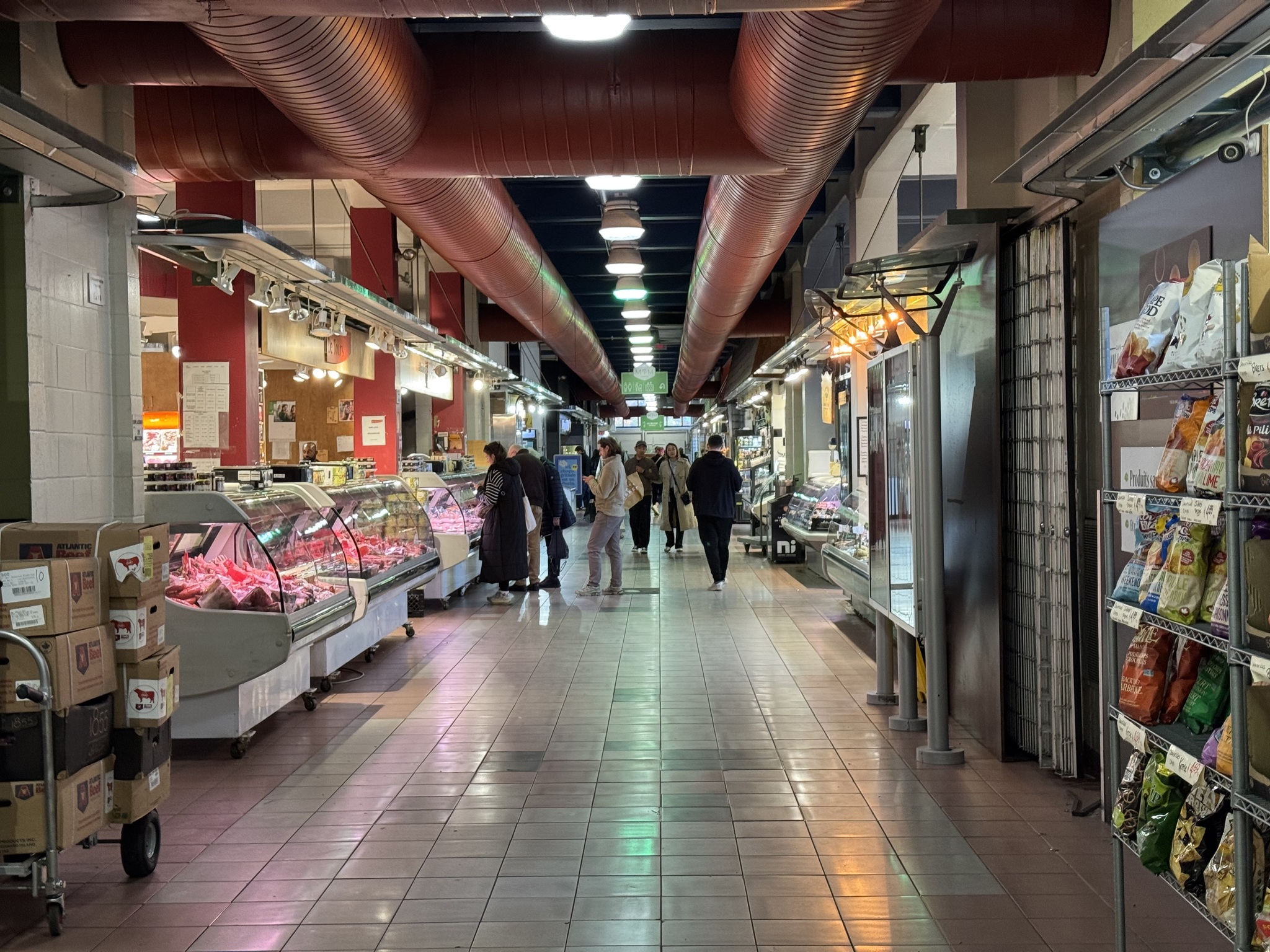
Inside there were butchers and prepared food among other edibles.
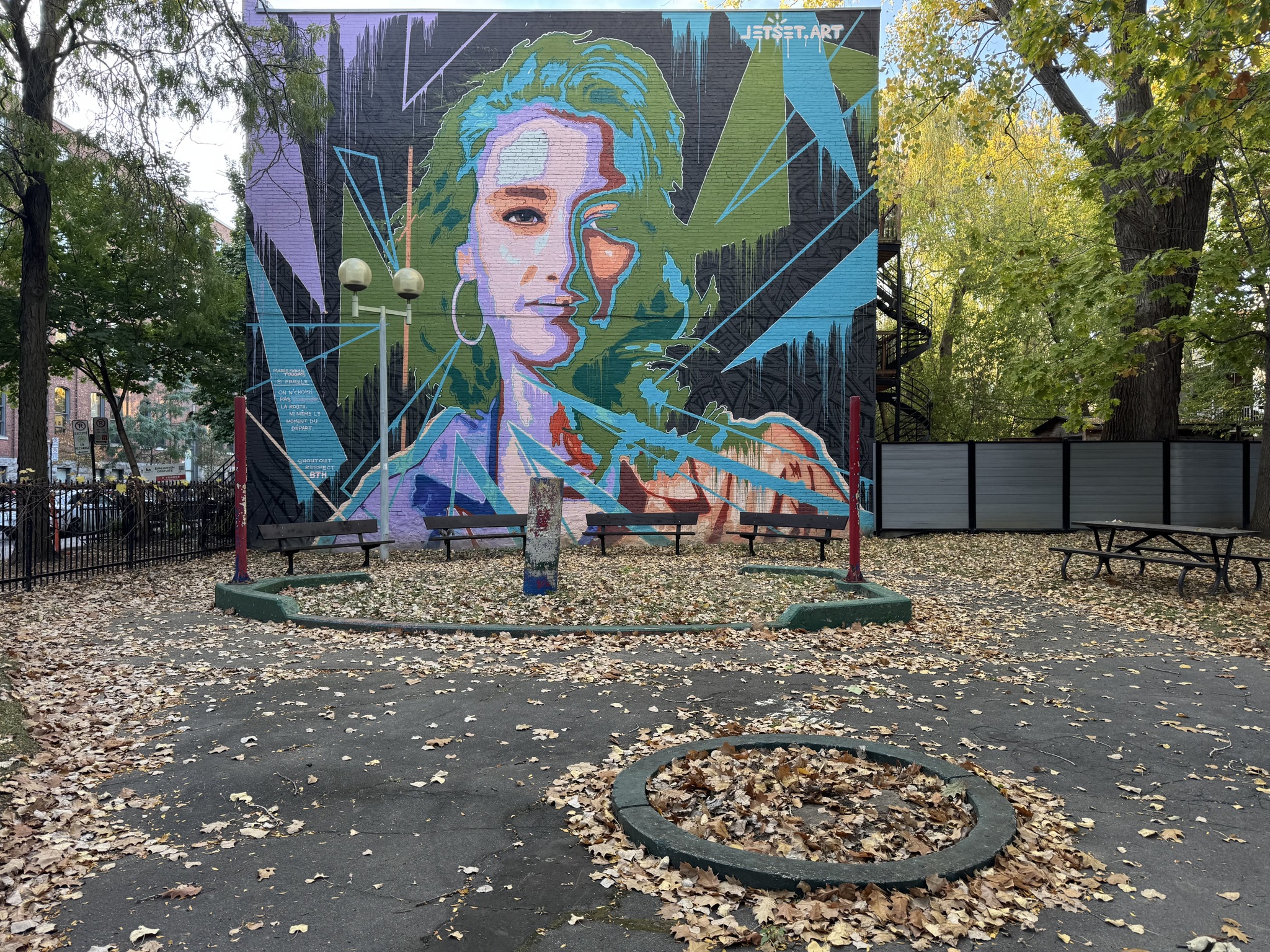
We reluctantly left without making any purchases, and began the uphill trek back to Saint Joseph’s Oratory. We stopped briefly at a small park with a large mural.
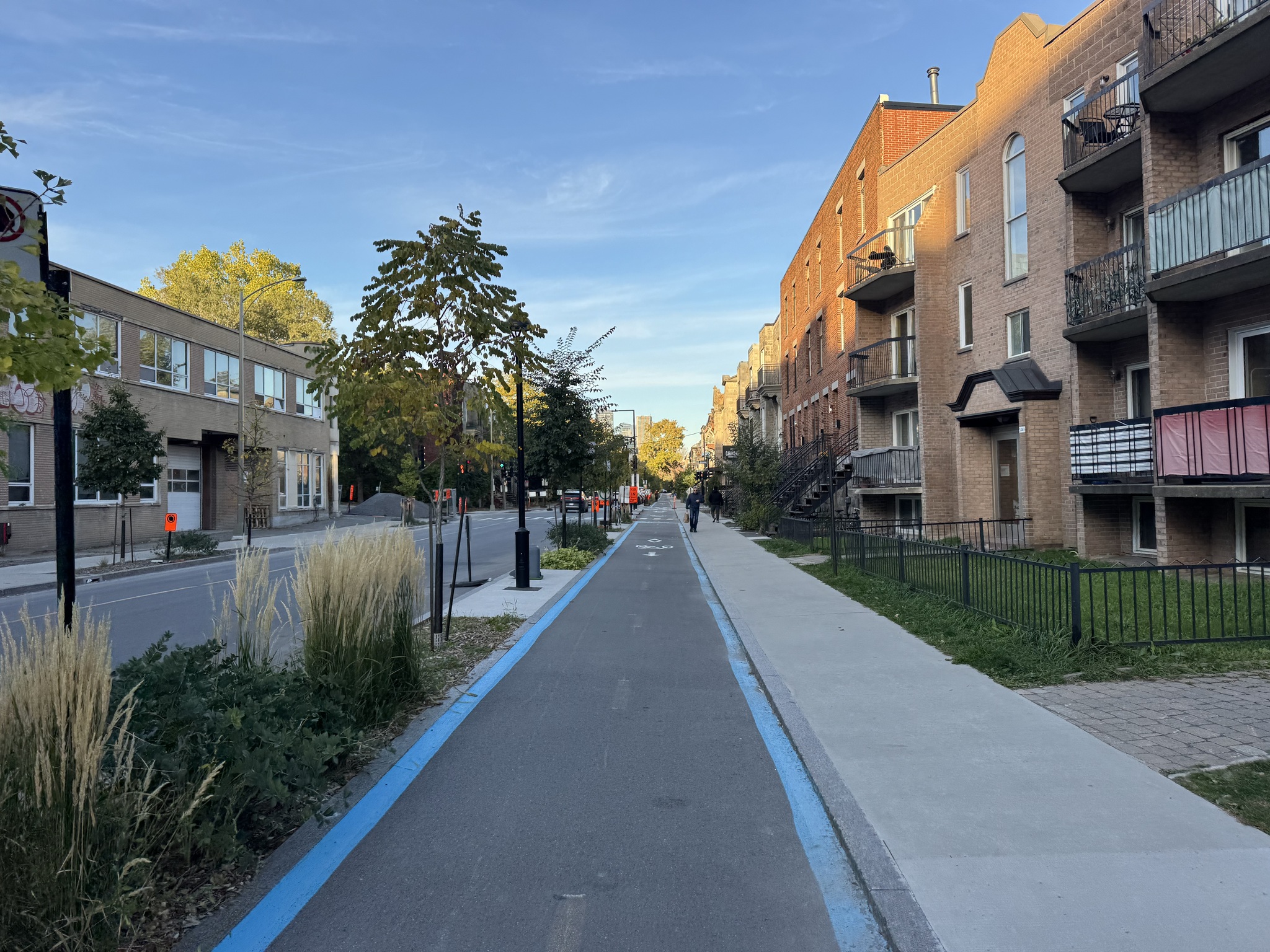
We rode on a new raised cycle track with bioswales.
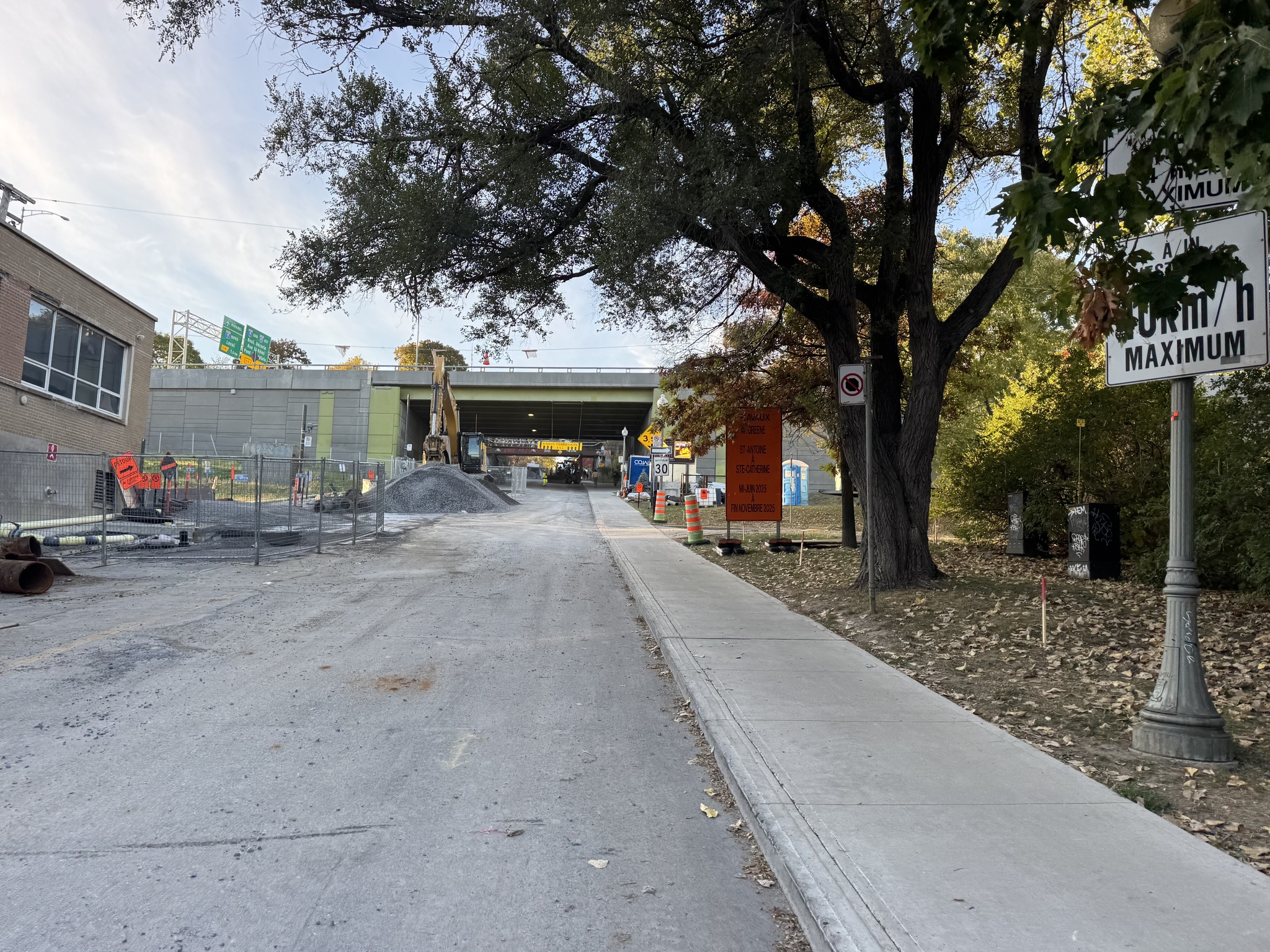
Then, the climb began. There were three distinct steep sections with plateaus in between. Our legs were quite tired, since we had not had a rest day in over 500 km, so we walked parts of all three hills.
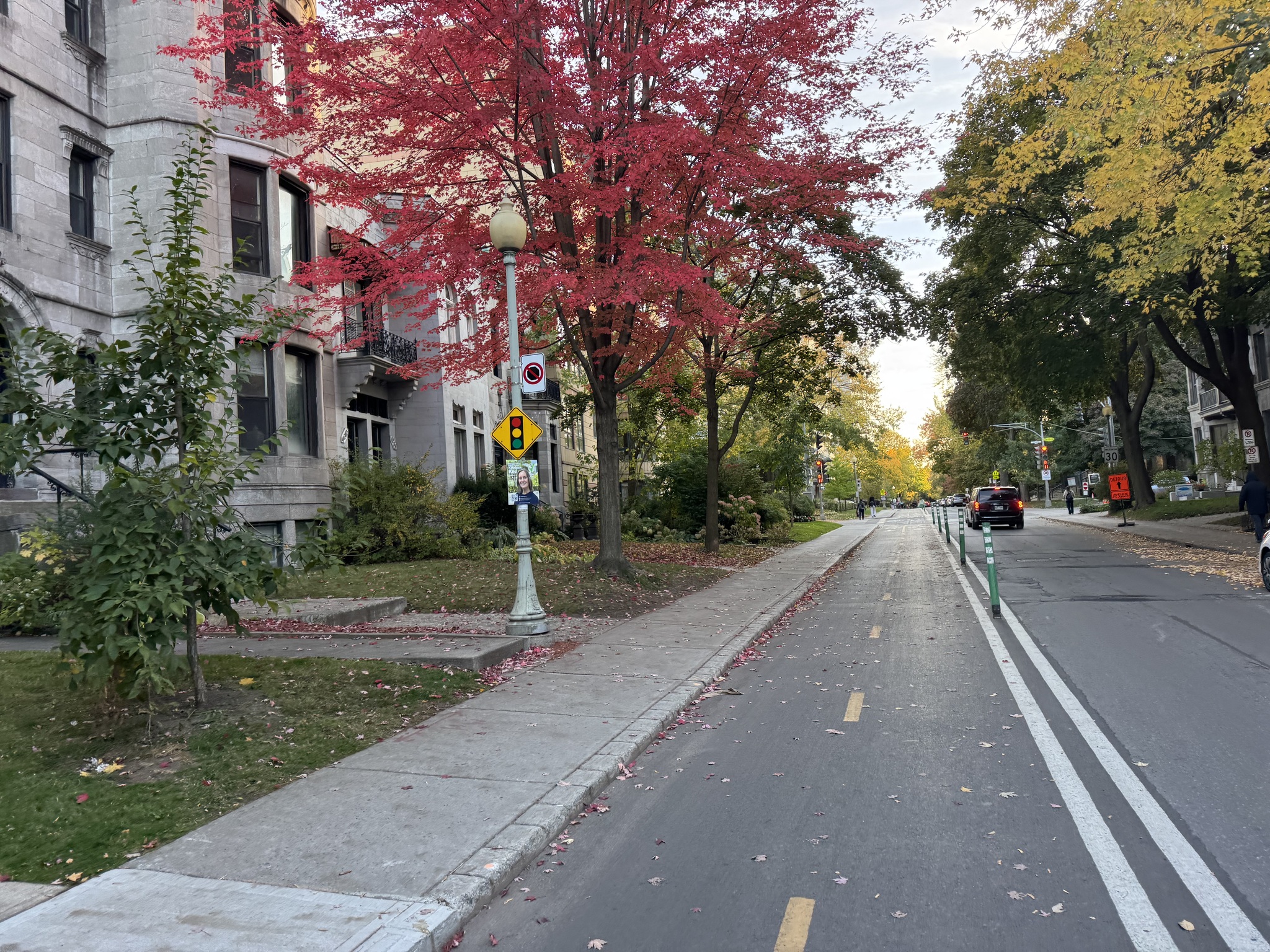
This was one of the flat areas with a bi-directional cycle track between the first and second climb.
We cycled up to the parked cars here and then walked the steep section.
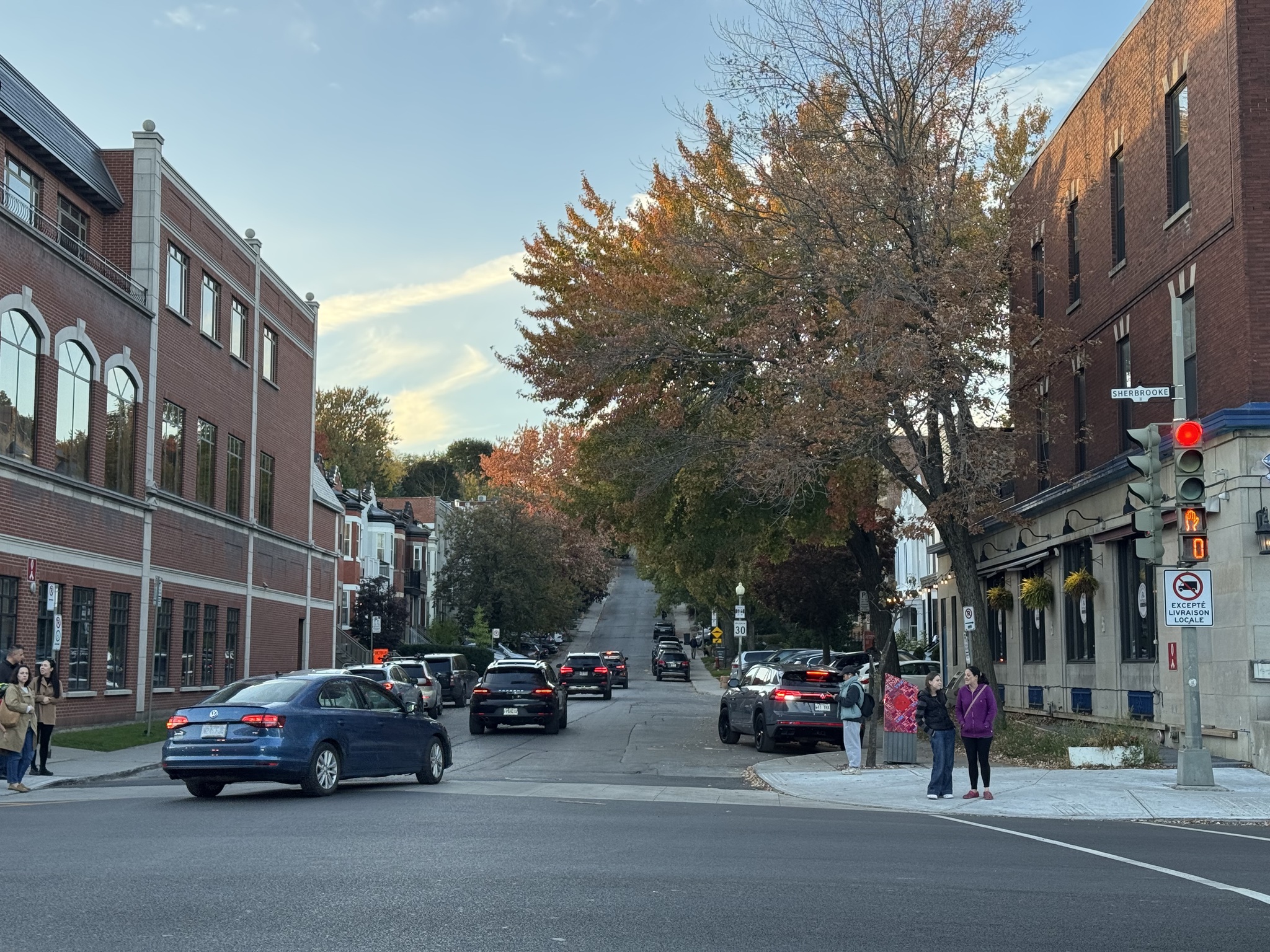
It’s often difficult in pictures to get a sense of how steep a hill is. This image, looking at the houses that line the street, illustrates the steepness of the slope.
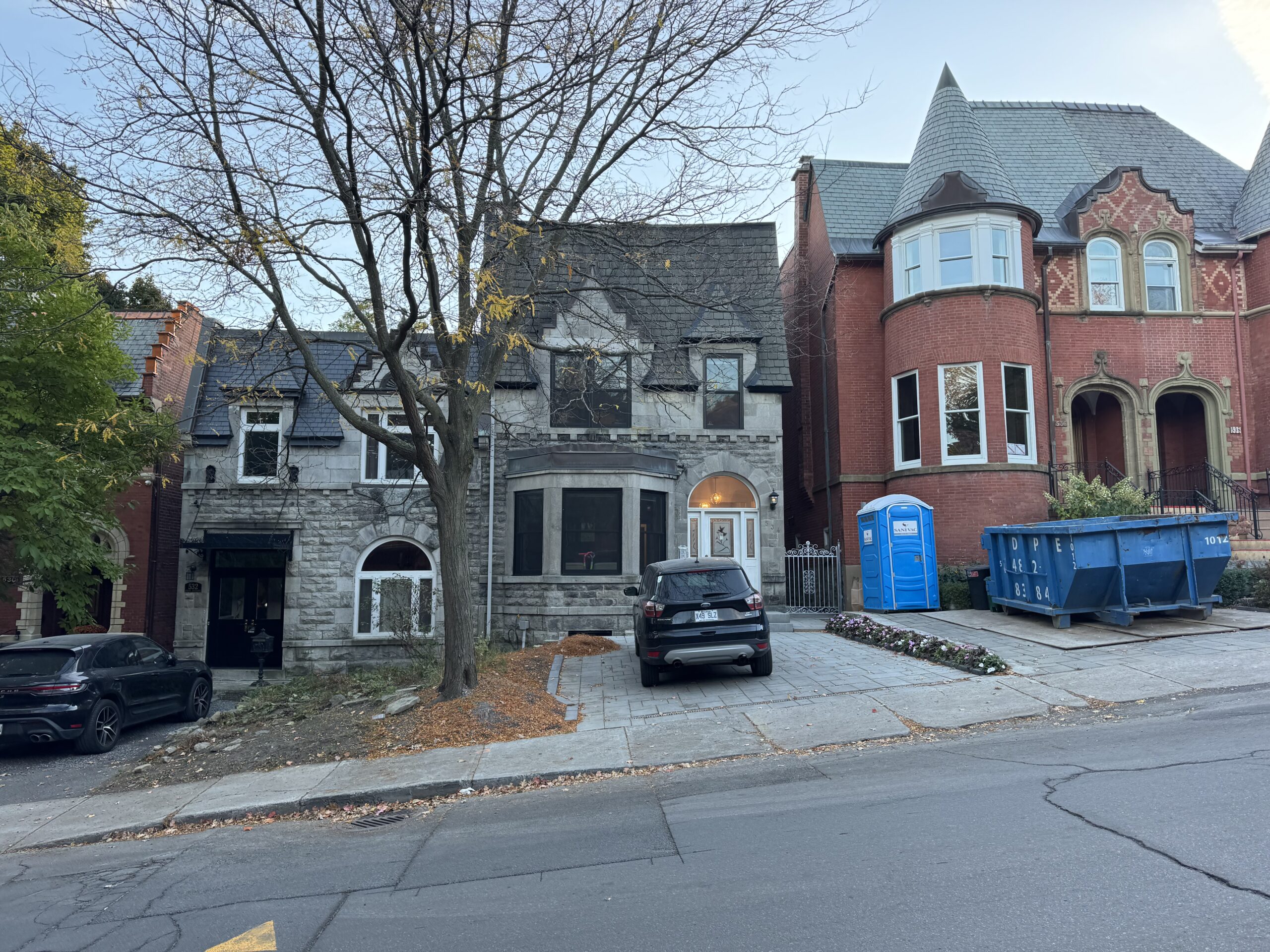
Here, we rode to the parked white car and then walked the rest of the way. We were walking faster than the cars.
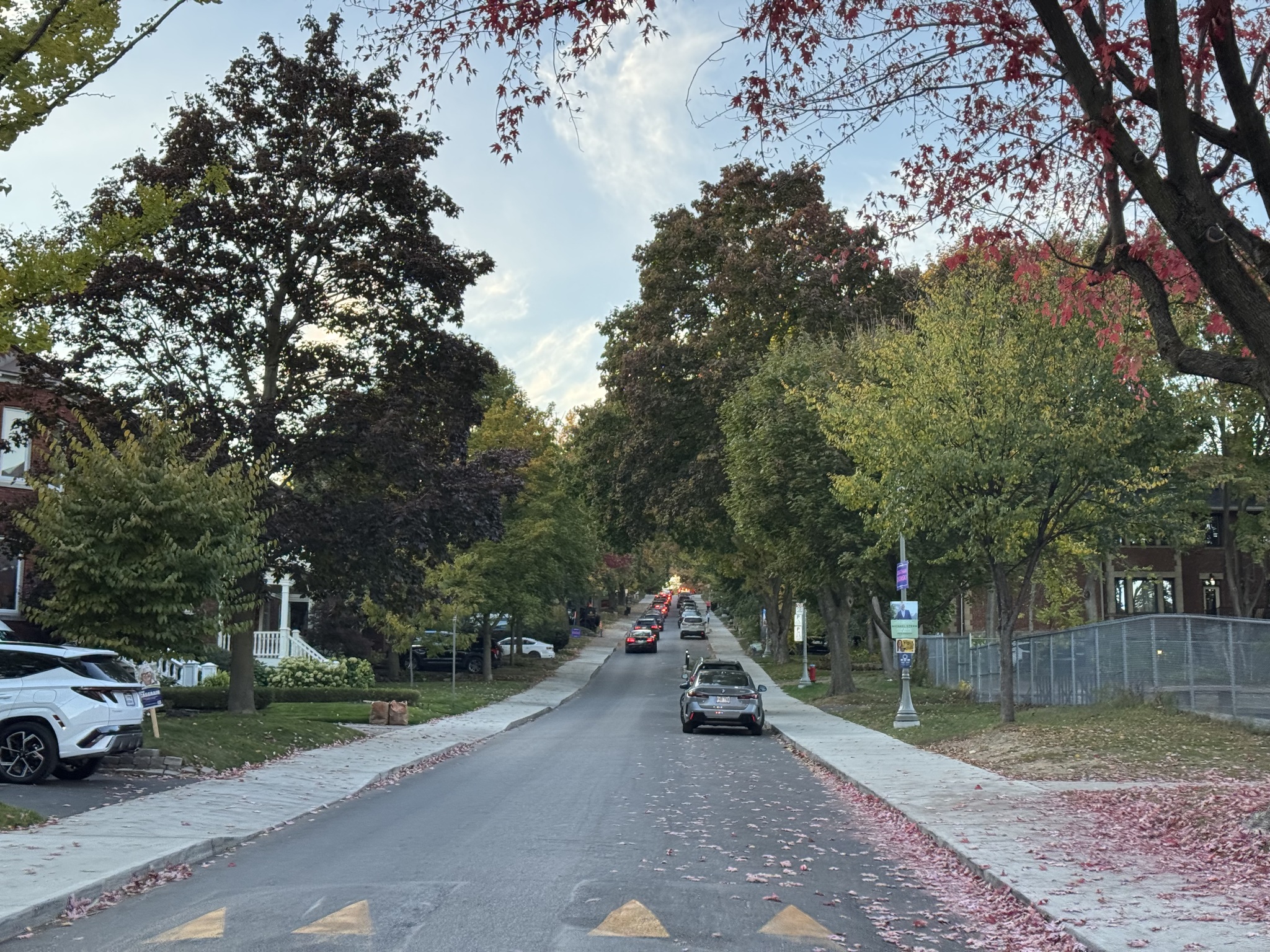
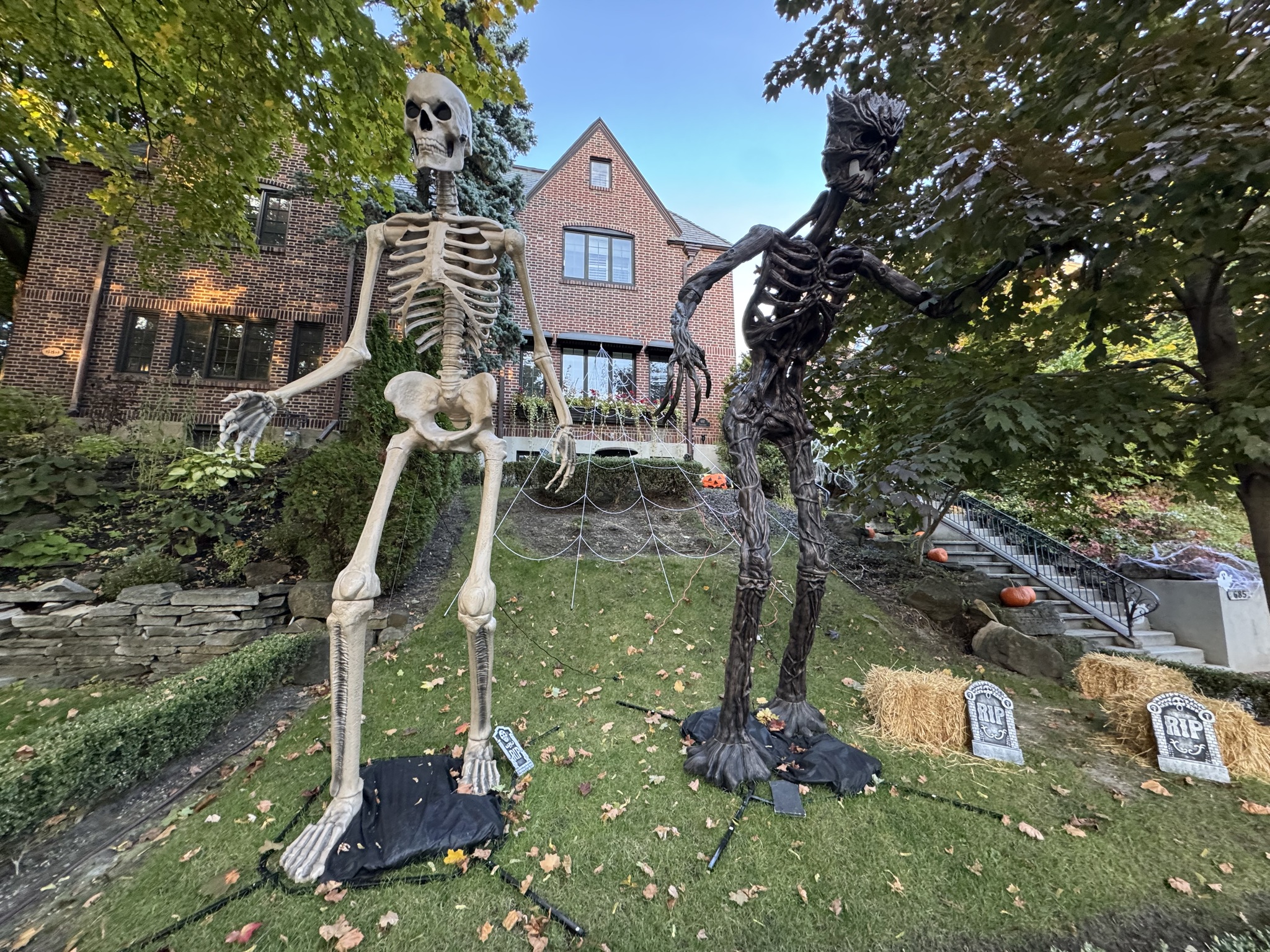
Back in Westmount many homes had over-the-top Halloween displays.
When we got back to the accommodation, we changed, and then went back to the same restaurant, sushi shūshū for dinner, as we had our previous two nights in Montreal. Once again, the food was delicious, and the waiter, excellent.

After dinner David and Dayle decided to continue with their rest day. Cindy and I tried to see the Basilica at the Oratory, which we had arrived too late to see last week.
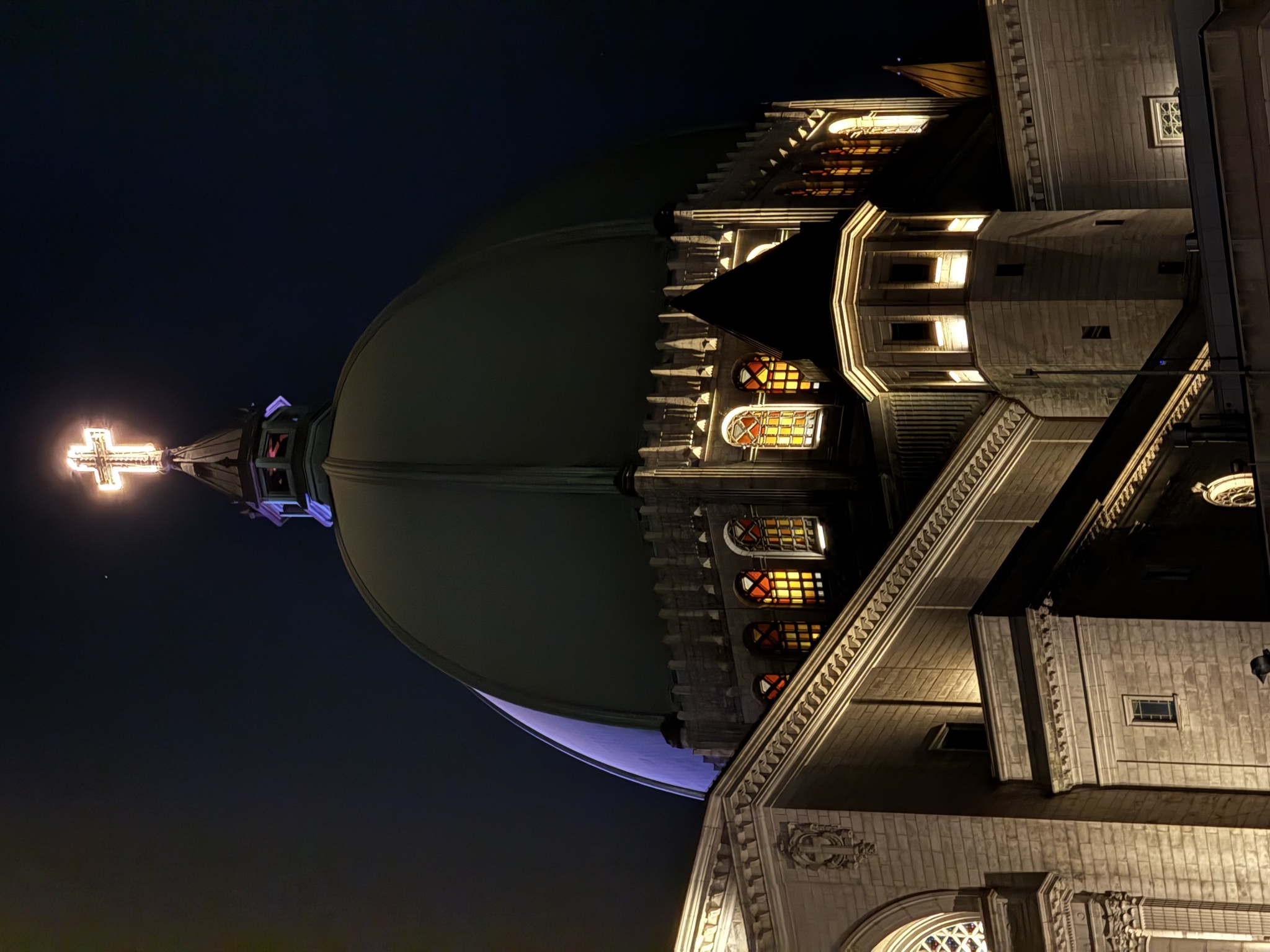
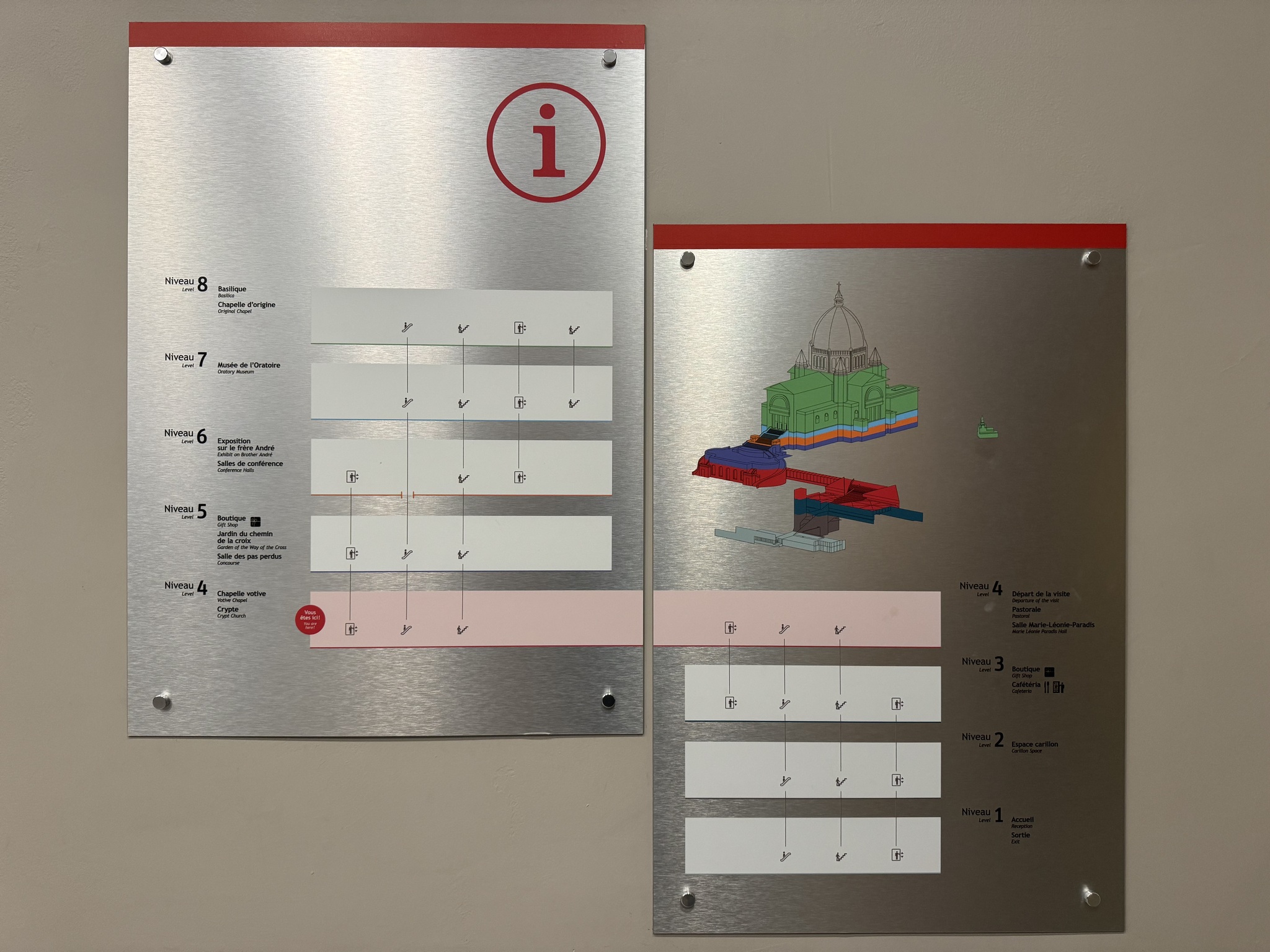
We rode the escalators up to the fourth floor, and then walked past the crypt into an area that had additional escalators to go up to the basilica. However, when we got to those escalators, we could see that there was a gate locking access to the fifth floor. We turned around to walk back out and discovered that we had been locked in. There was one other couple with us. The door to the outside was chain closed. The woman who locked the doors had seen us come in, but locked them and left, nevertheless. Fortunately, the other couple were fluent in French. The woman walked up the escalator to the fifth floor, and called out until a security guard came. The security guard opened the gate to allow us access to an elevator, which took us down to the fourth floor on the other side of the locked door. It was a very odd experience.
We have one night left in Montreal, and will try to get back to see the basilica earlier, tomorrow.
Discover more from Lisa Stokes
Subscribe to get the latest posts sent to your email.