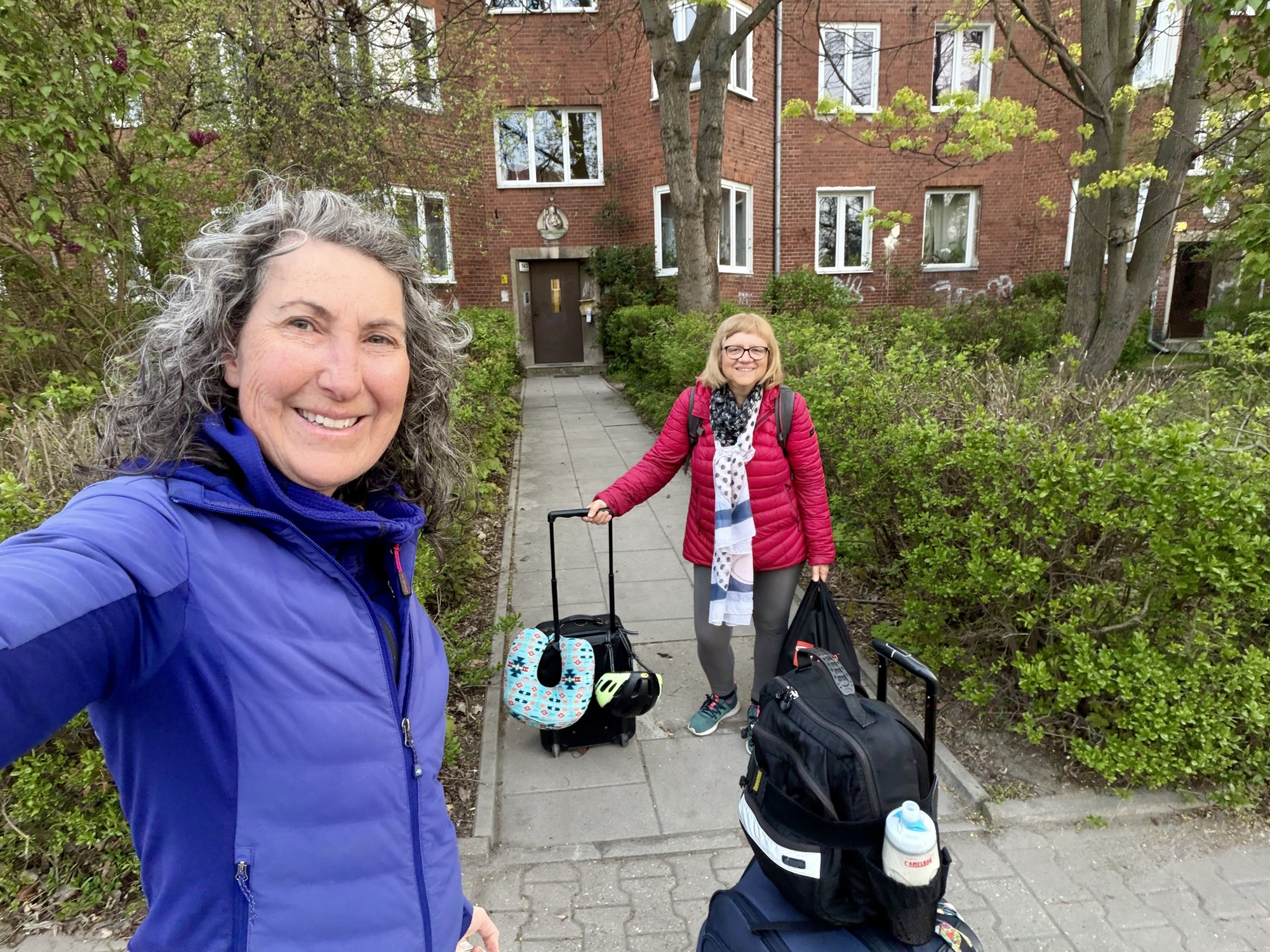
We set our alarms for 5:30 AM and were out of the apartment by 6:15 for our 7 AM train to Berlin. Here we are ready to walk to the bus stop just around the corner.
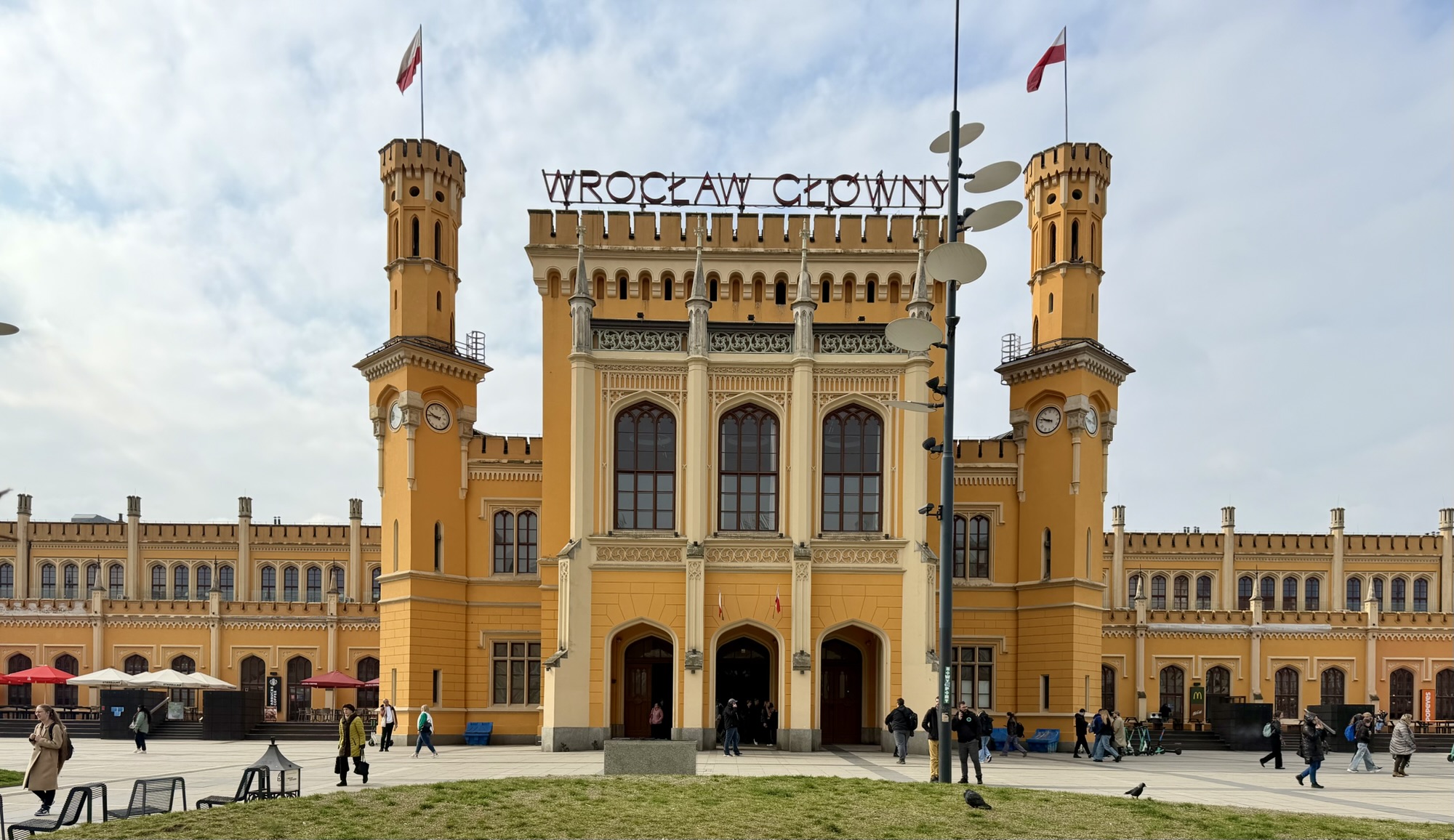
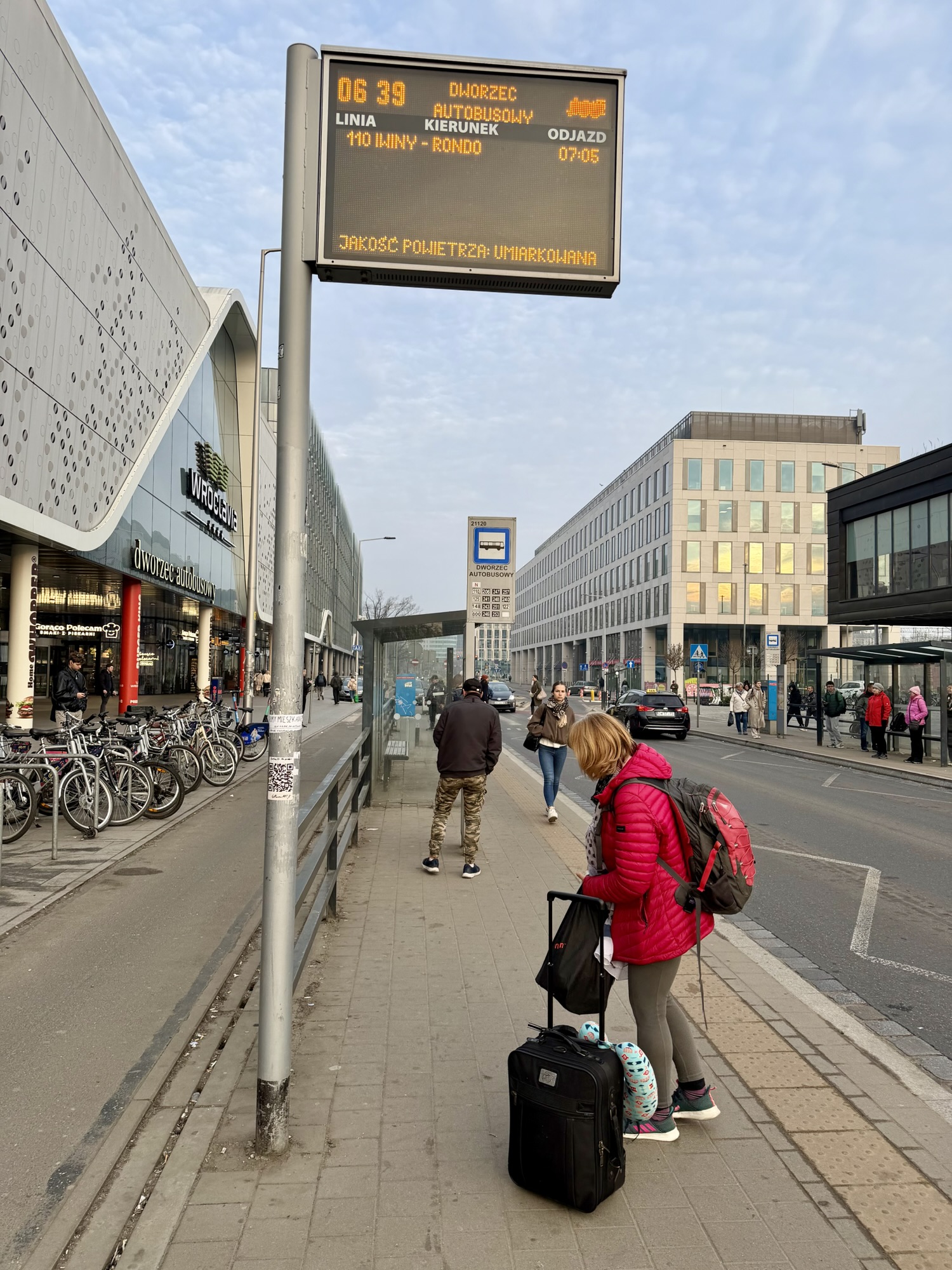
It was a one-bus ride to the main bus station in Wroclavia Mall, which was right across the road from the main train station, Wroclaw Glowny.
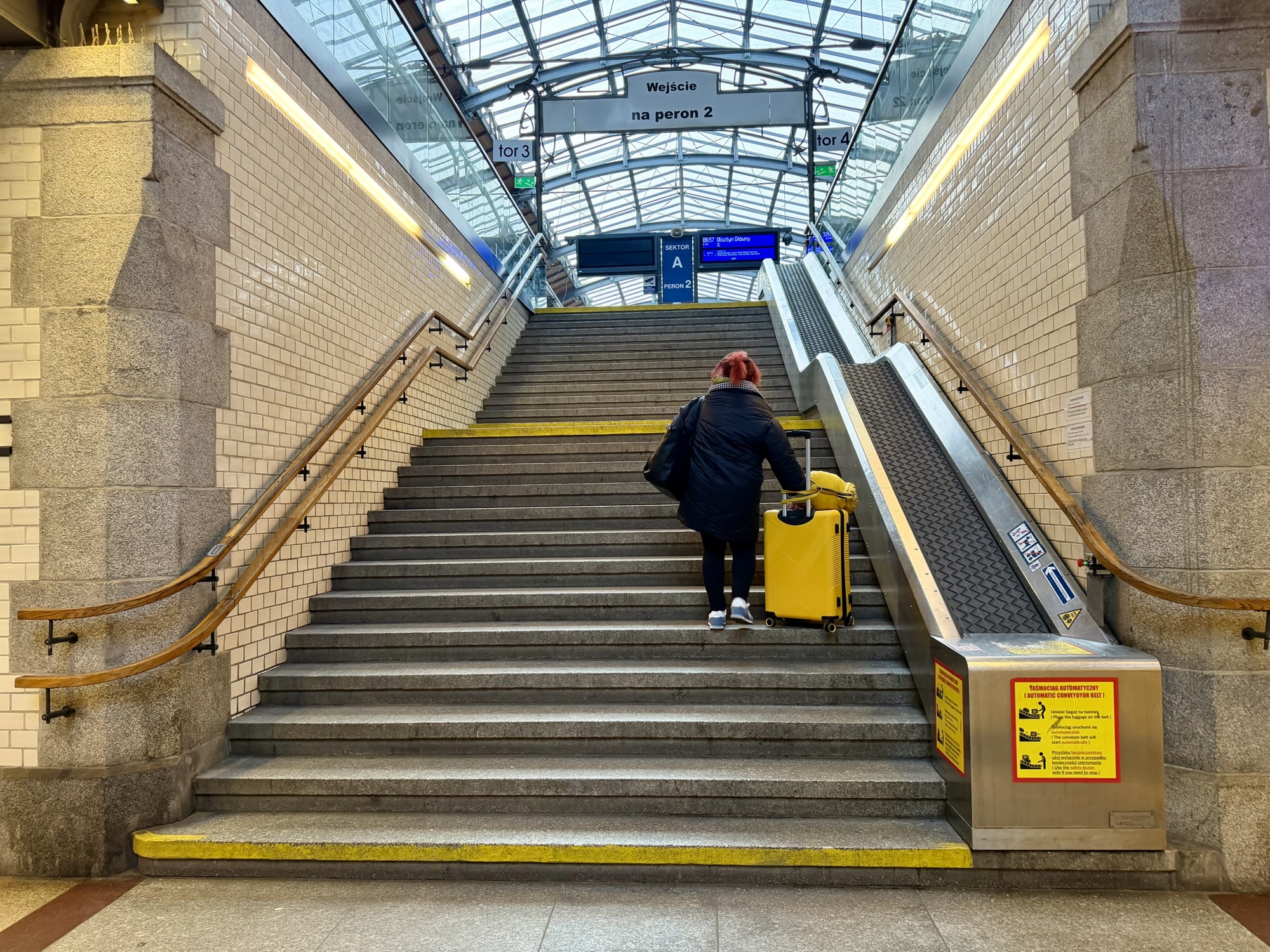
We determined which platform we needed to board the train from, then because we had some extra time, I got a coffee and Alina got some Polish donuts. In addition to having elevators to each platform, they had conveyor belts for you to put your luggage on if you choose to climb the stairs and don’t want to carry your suitcase. I’ve never seen something like this before. Apparently they are unique to Wroclaw Glowny. The train arrived and left on time.
At First German Station, Frankfurt am Oder, there was an announcement we did not understand. People started getting out identification documents.The police boarded and looked at some IDs, but we didn’t have ours out. He looked at us, said something that sounded pleasant, and carried on without checking us. We saw one officer walk by with someone’s passport. Then they left our car and the train started moving. I was surprised to see people getting out identification since both countries are in the Schengen area ( a system of open borders that encompass 29 European countries that have officially abolished border controls at their common borders) and normally no documentation needs to be shown when crossing the internal borders. It appeared that they were looking for someone in particular, rather than generally checking identification.
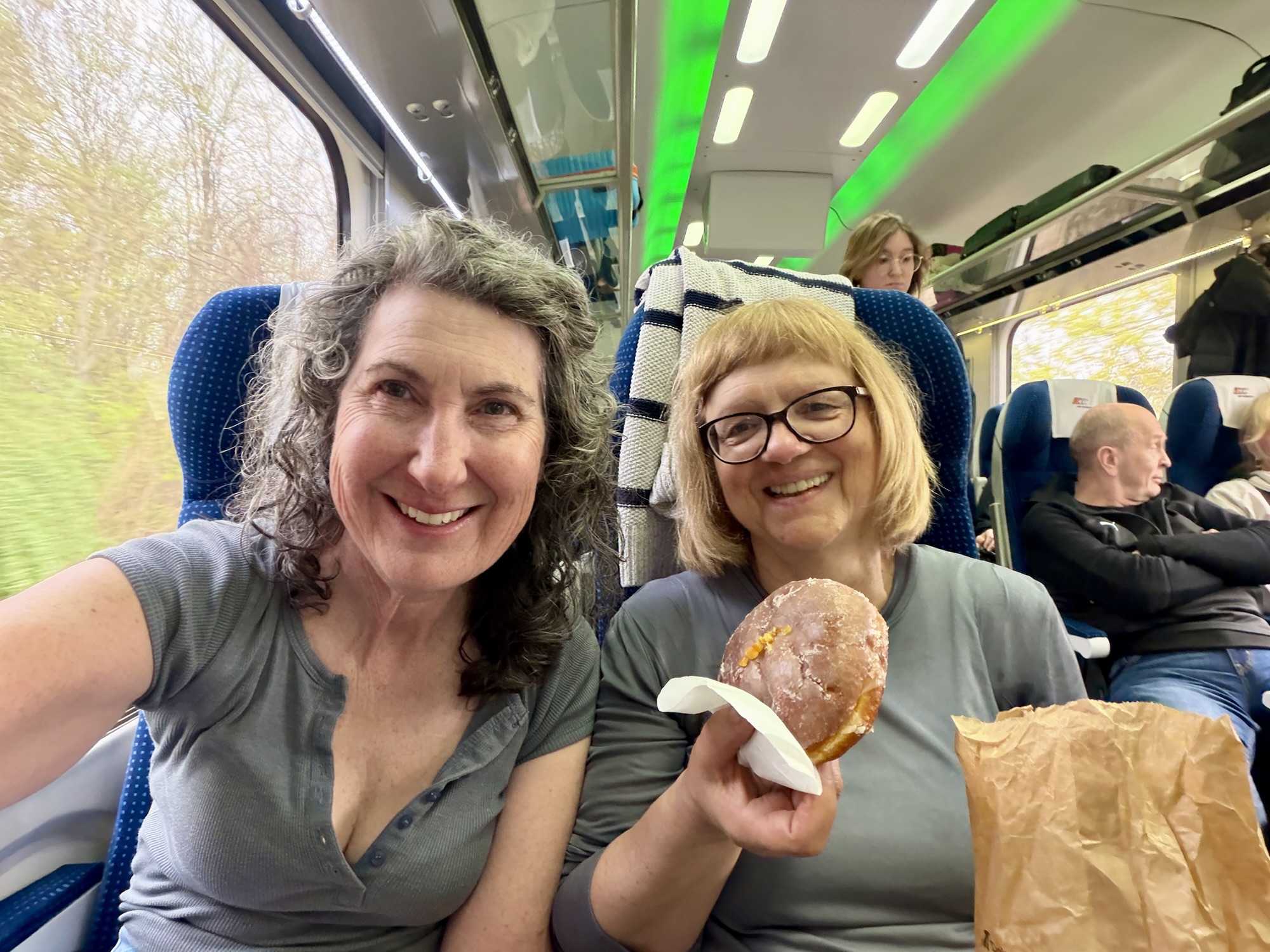
Alina told a childhood story about the donuts: children would challenge each other to eat them without licking their lips. I found it impossible.
We got into Berlin Ostbahnhof a few minutes ahead of schedule.
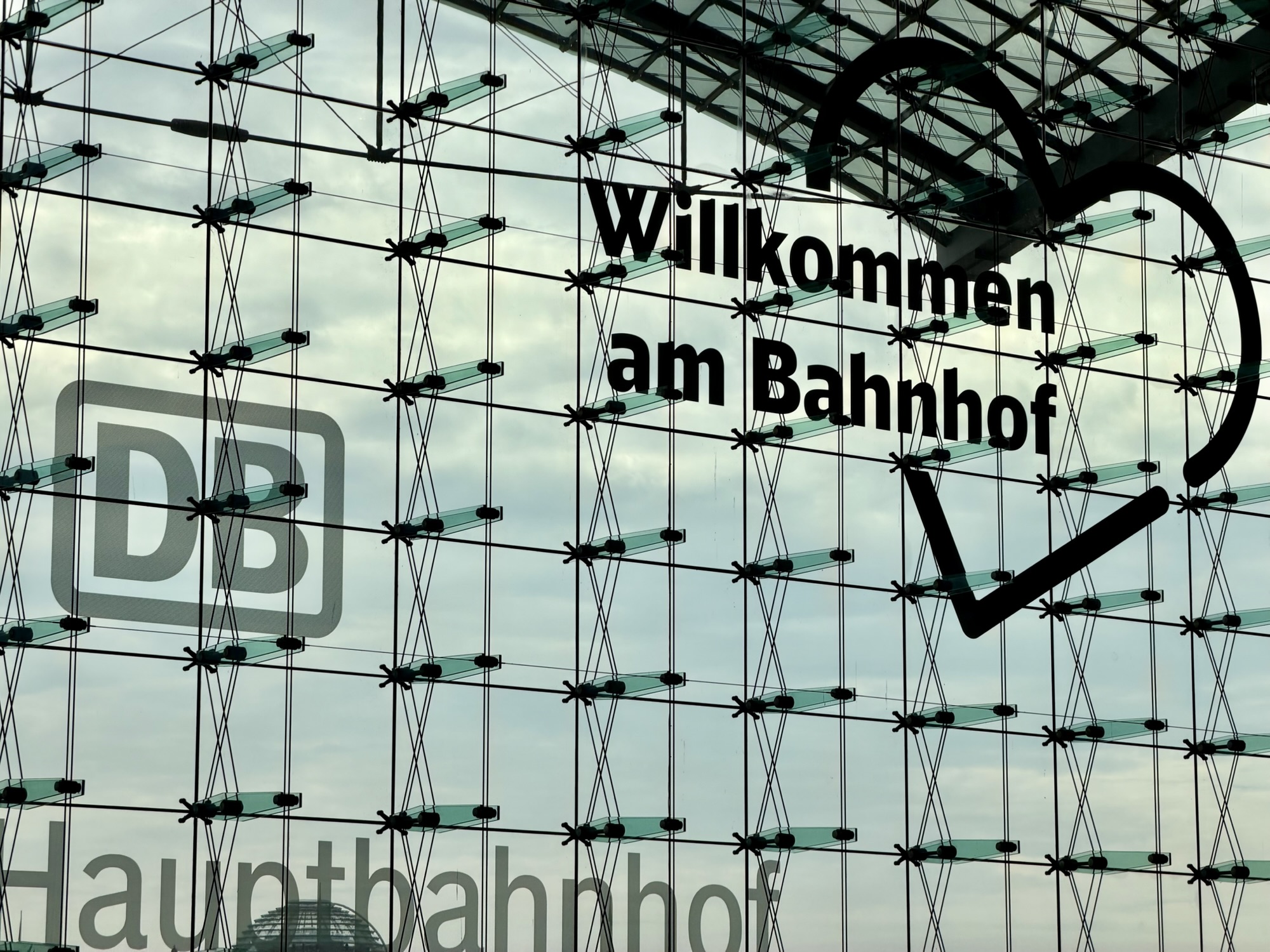
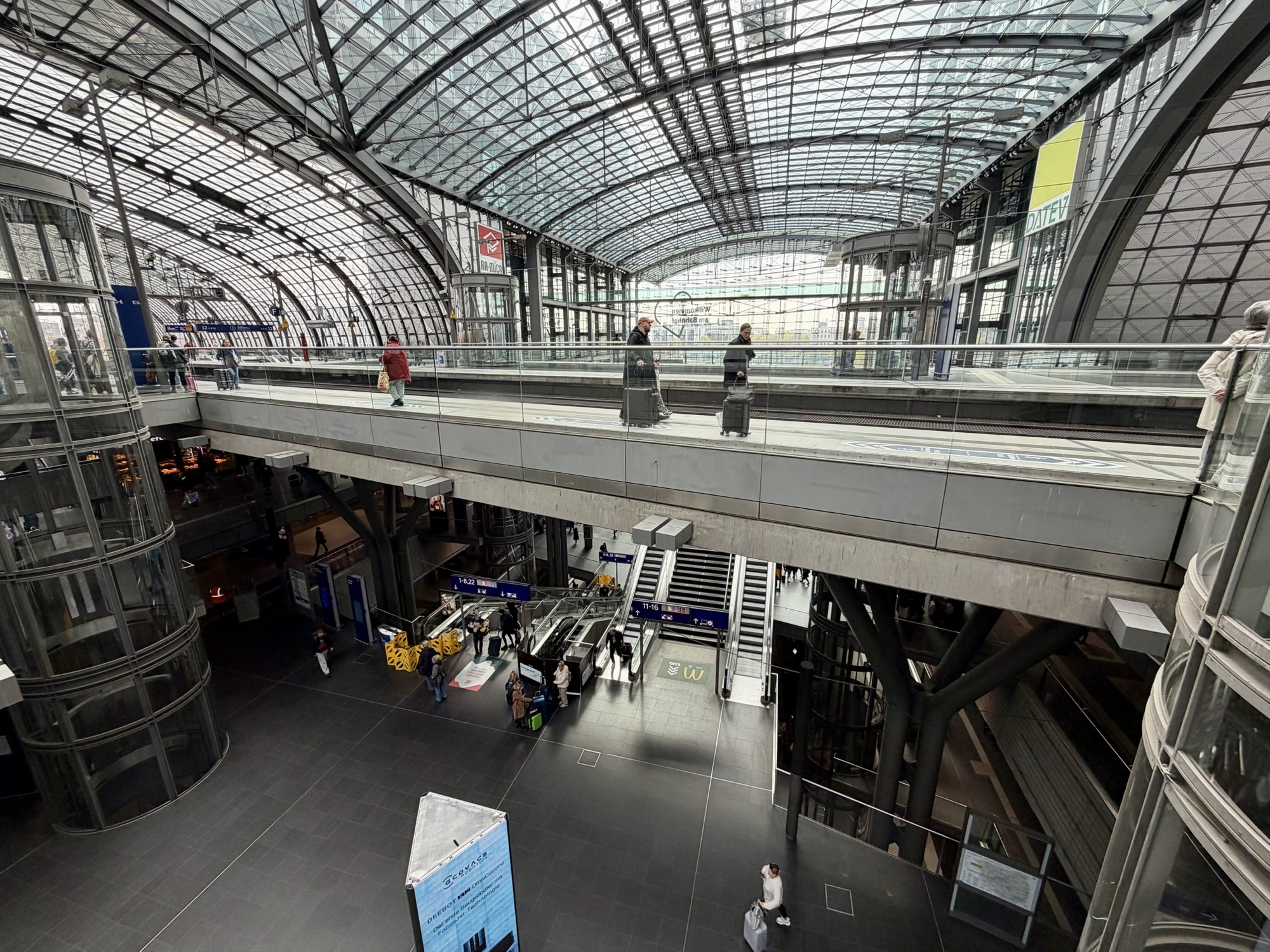
After booking our train tickets, we changed our minds about where to book accommodation. The accommodation we booked was closer to Berlin Hauptbahnhof, the central station, so we decided to stay on board one additional stop.Berlin Hauptbahnhof is the largest and most modern interchange station in Europe. It serves over 300,000 passengers daily. It connects high speed (ICE) trains, regional services, the S-Bahn (somewhat equivalent to Ontario GO Train, but much better) and u-Bahn (the subway) , as well as local trams. It opened in 2006 and has elevated platforms on the top level, underground platforms on the bottom level, and three levels of shopping and restaurants in between. I flipped the first image, taken from inside the station, so the words aren’t viewed from the back, as they actually are from inside the station.
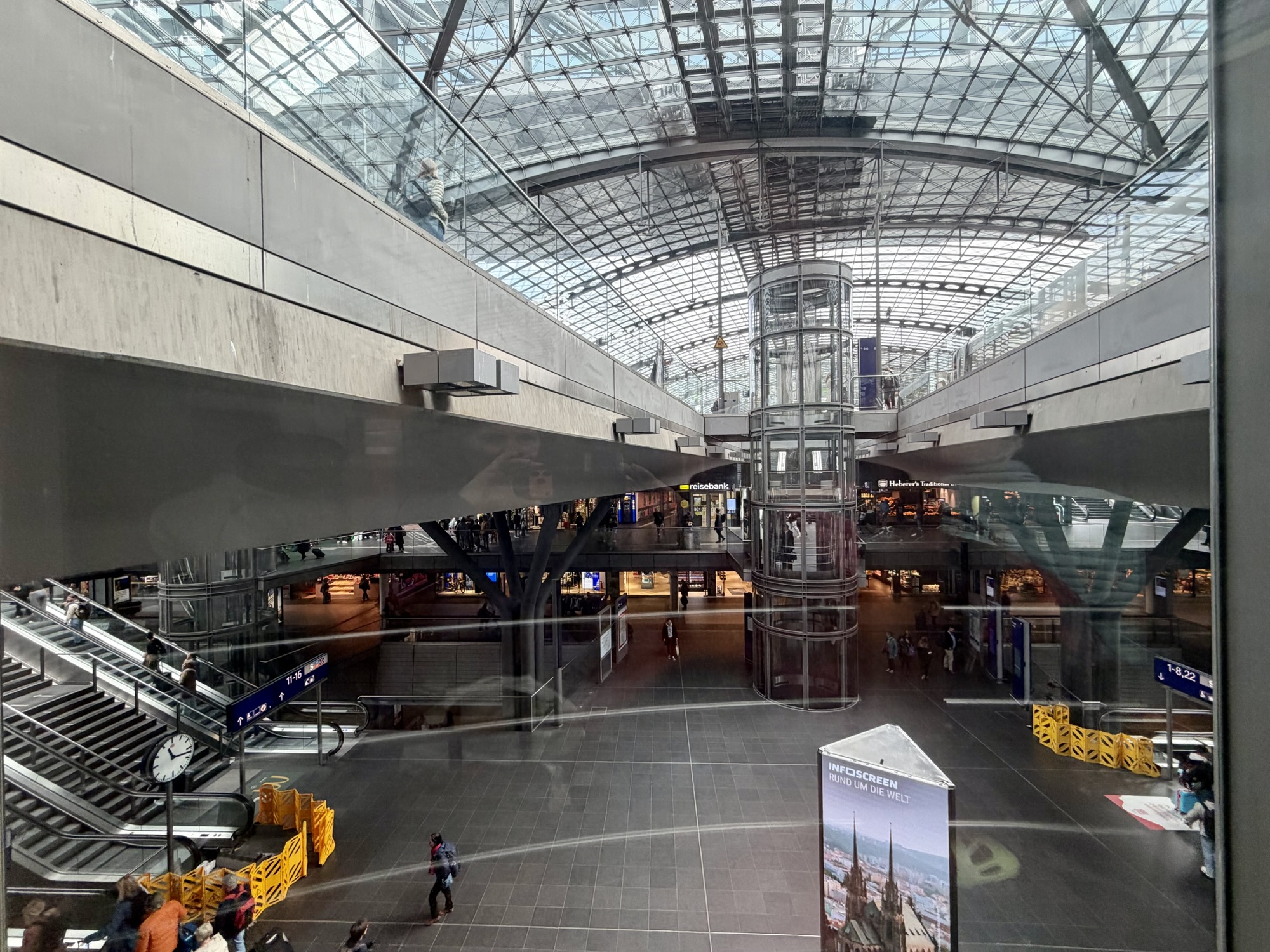
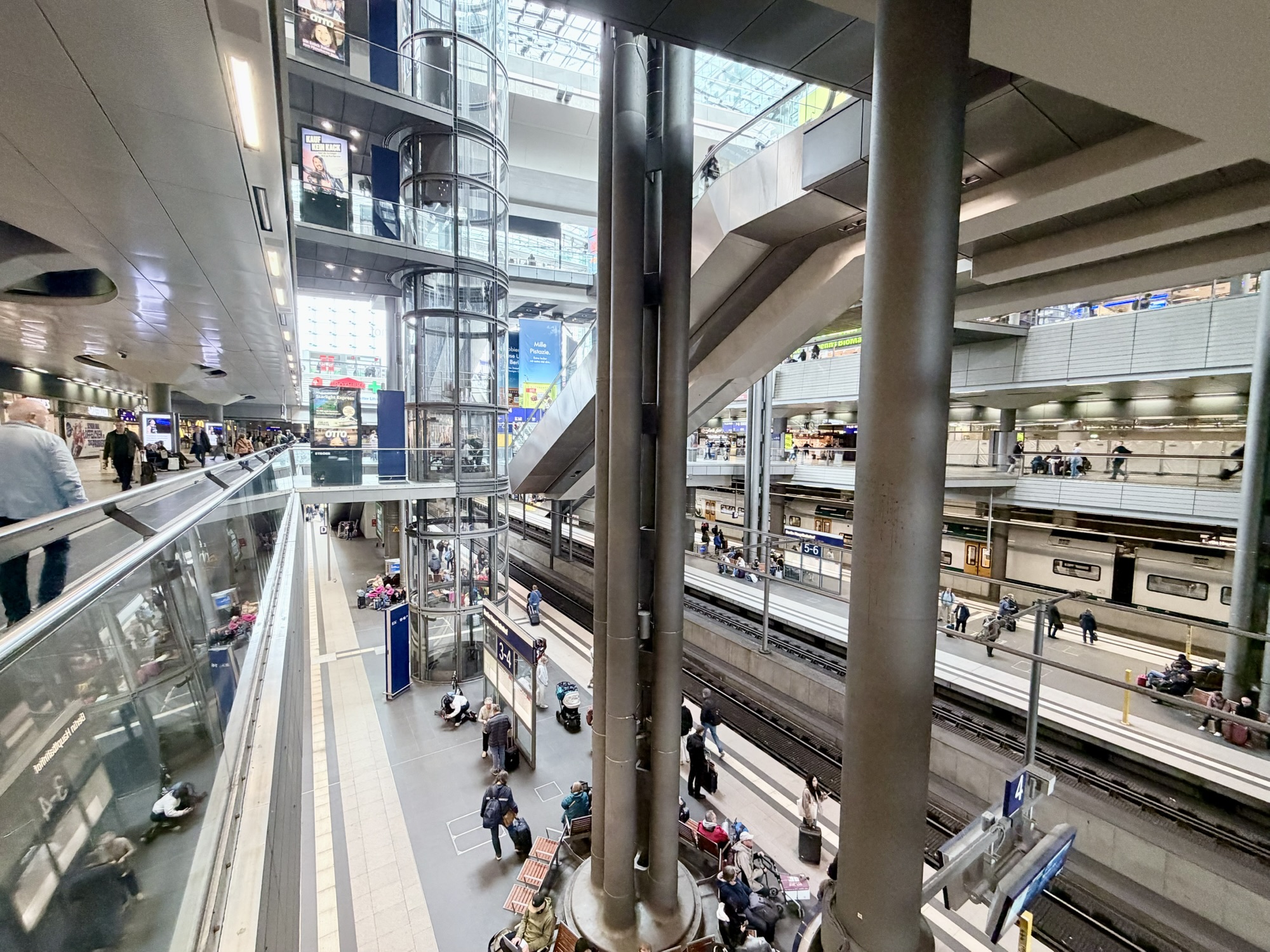
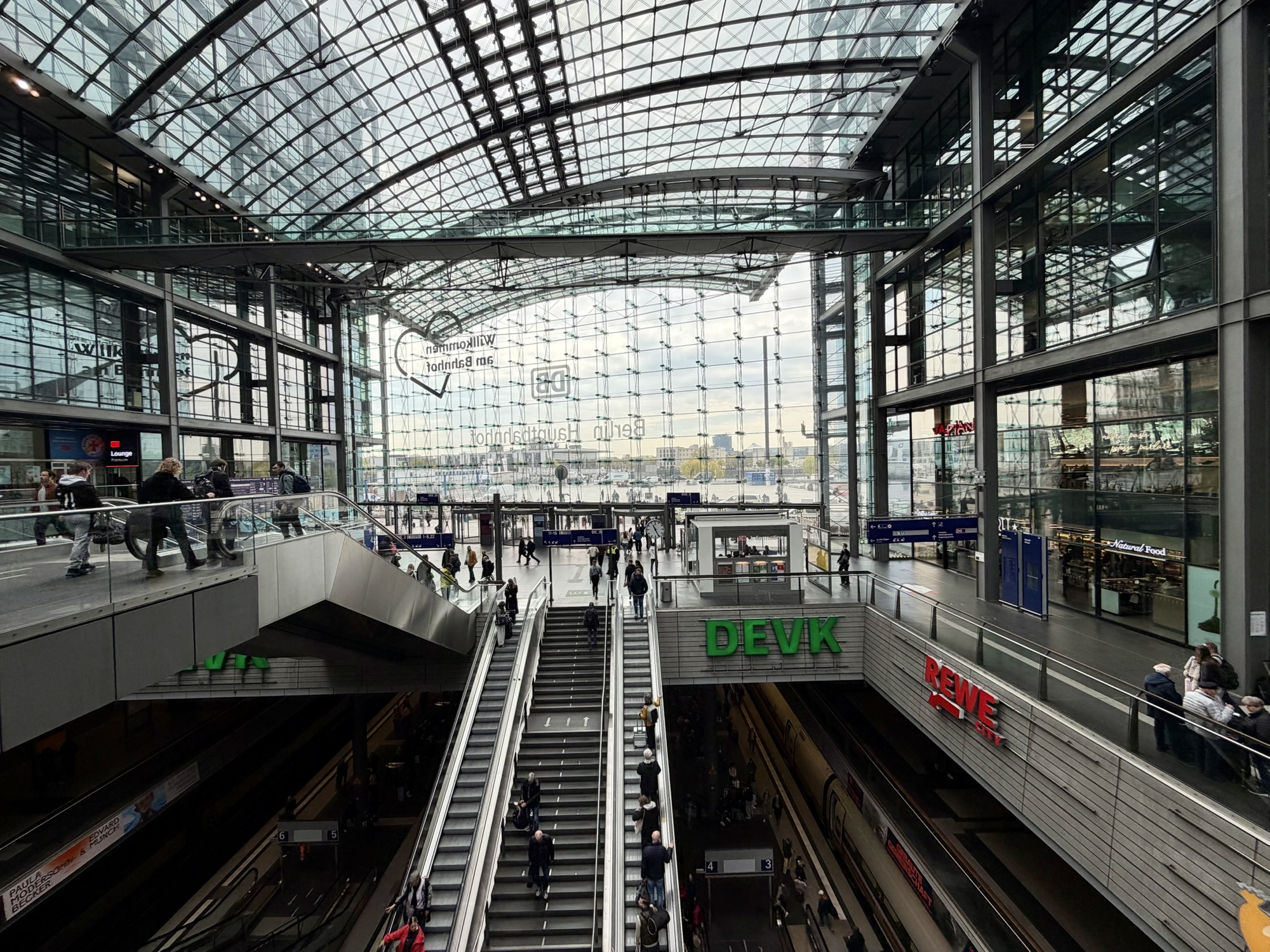
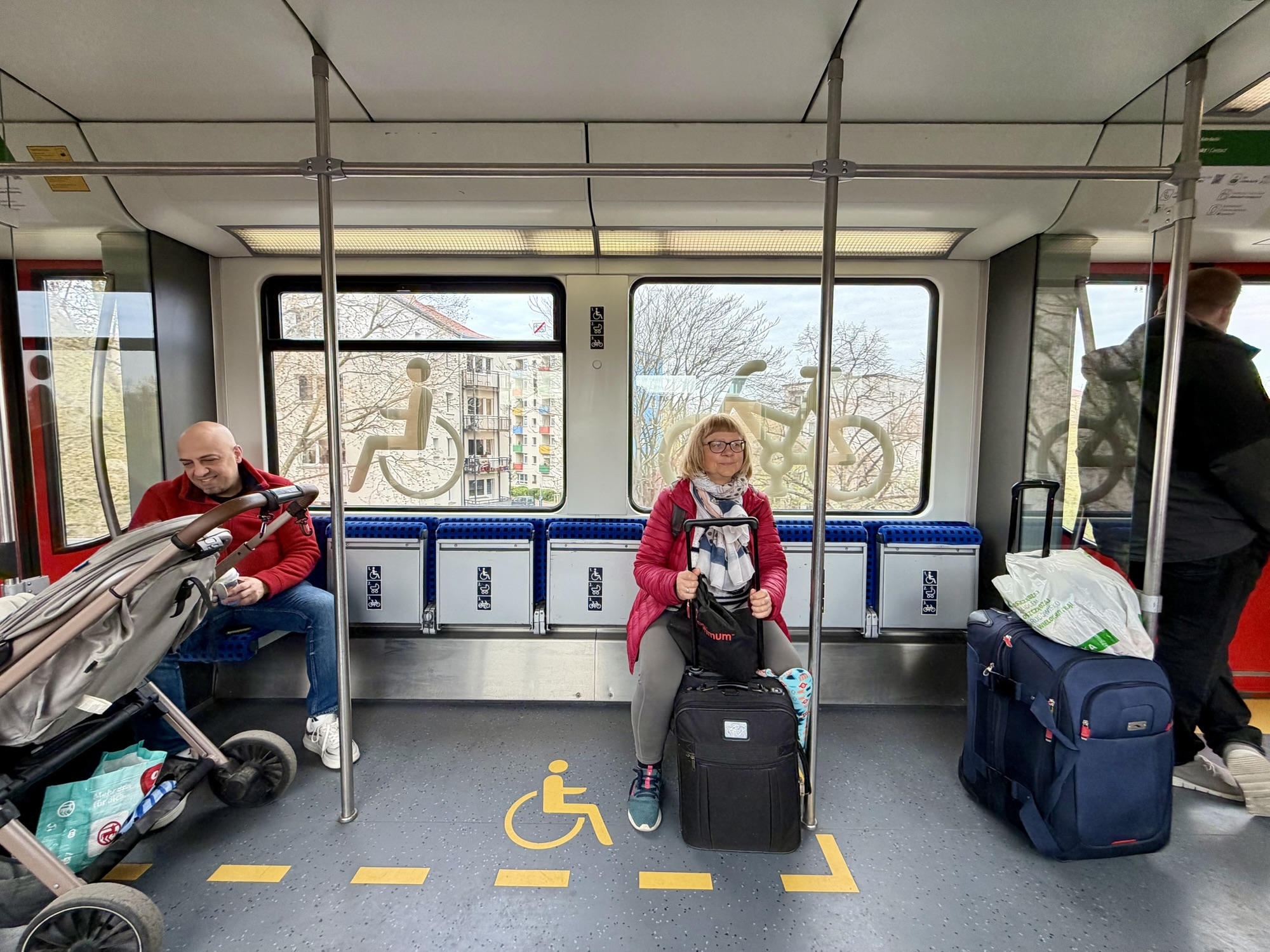
We transferred from the intercity train to s-Bahn and travel a few stops. Then we had a 700 m walk to our accommodation.
We were staying at a small guest house of about a dozen rooms in a larger residential building. Once we settled into the room, I tried to set up an account on one of the city’s bike share apps. I was unable to do so because for some reason unknownst to me, the verification text wouldn’t come to my phone.
When I was in Bratislava three years ago, I had a local SIM card and no access to my phone number tied to my credit card account without swapping the SIM cards, which meant that I was unable to sign up for bike share there. Fortunately, Michael had a phone with dual SIM card slots and had access to both his home and local numbers, so he was able to do it for me.
I thought I wouldn’t have trouble this time, because I had international roaming on my home number. And the bike share app asked me to use a drop-down menu to choose the country code for my phone number, but it wouldn’t work. I tried a second bike share company and app with the same result. So we decided to just do a walk of the things we wanted to visit in the area in which we were staying.
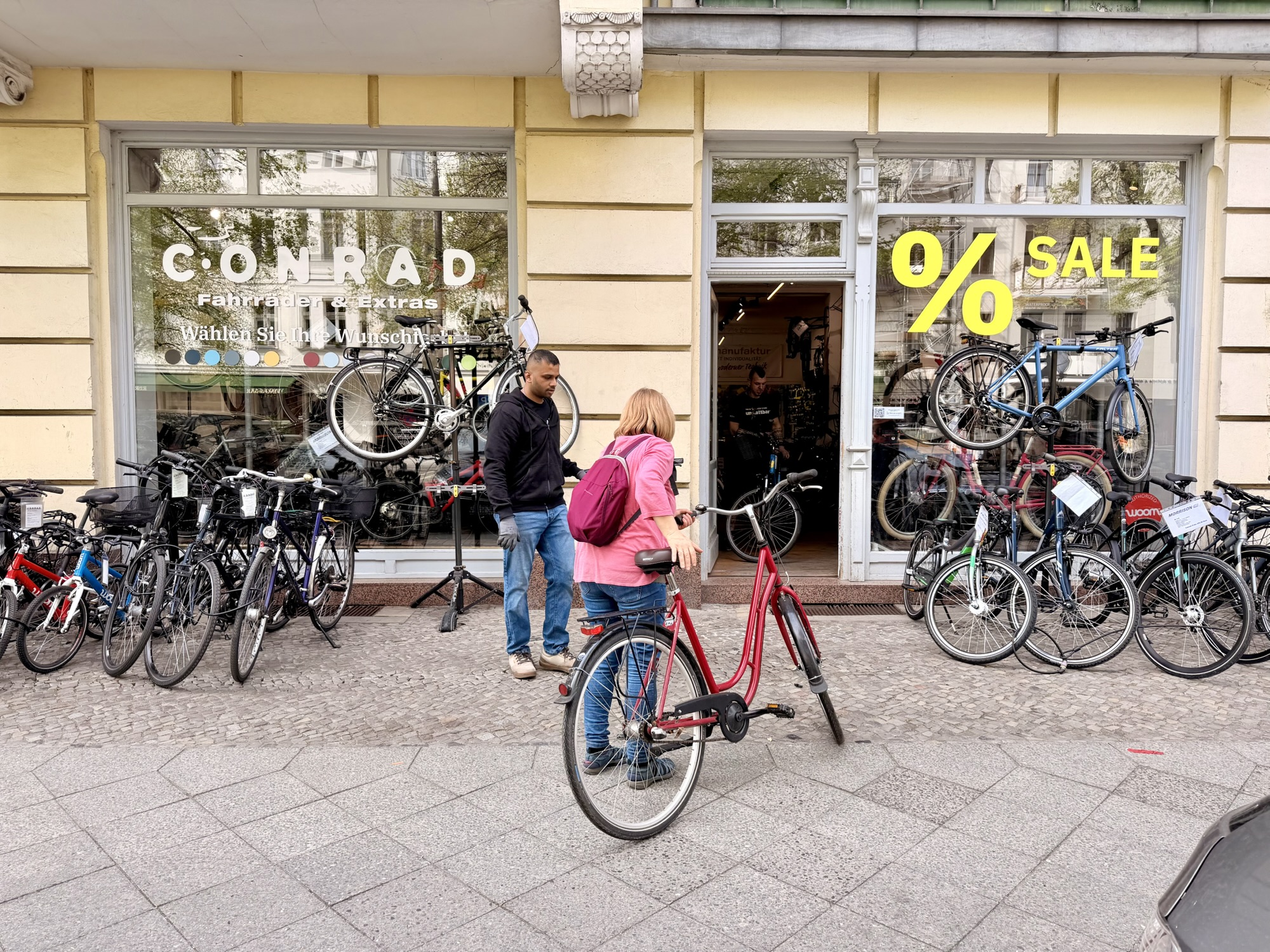
About 700 m from the guest house we came across a bike shop. I suggested we go in and ask if they had rental bikes. They did, and they were willing to rent them to us for three days for €10 a day each. That was quite a deal so that’s what we did. We rode them back to the hotel so that I could get my handlebar phone holder and helmet.
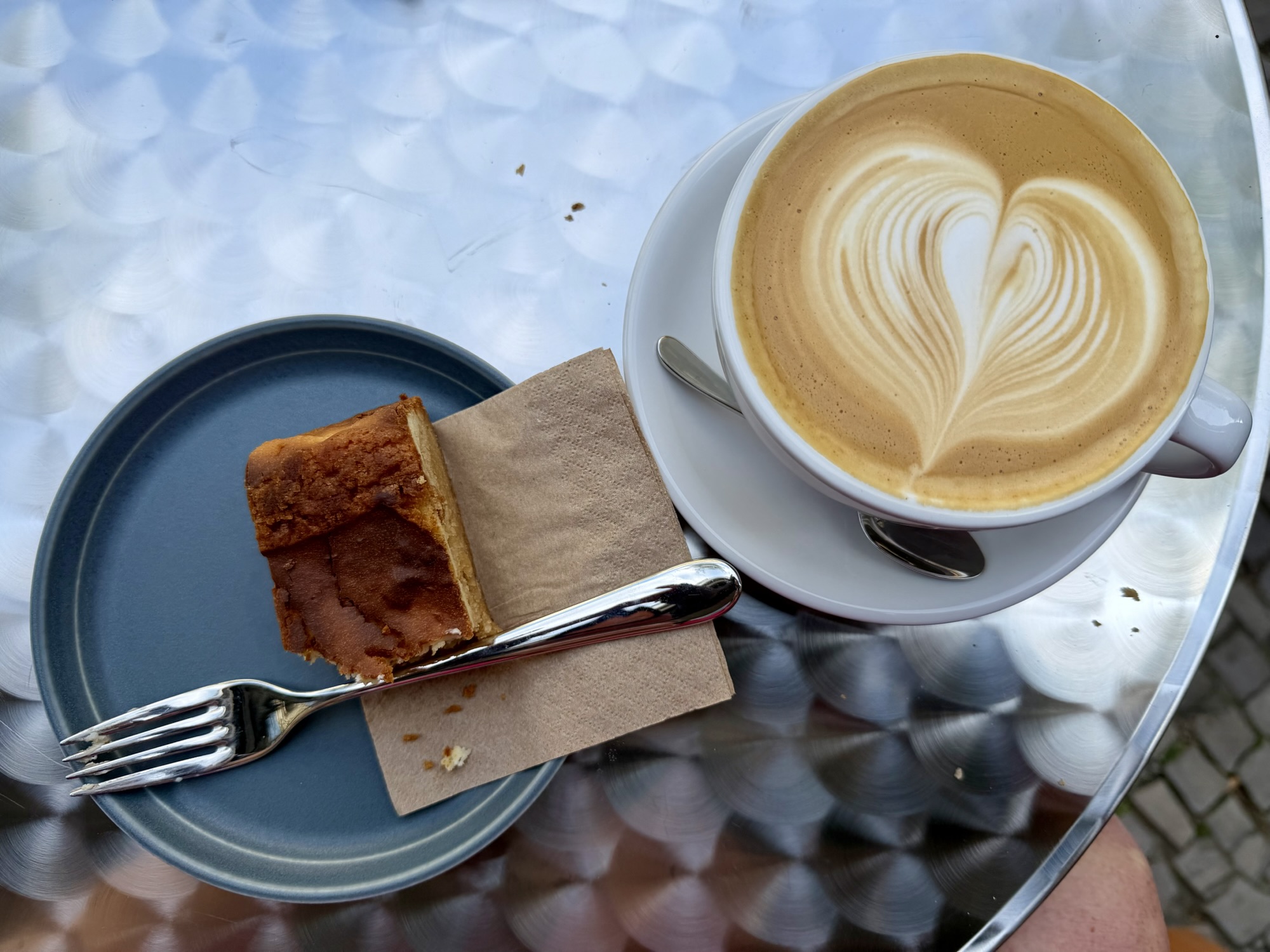
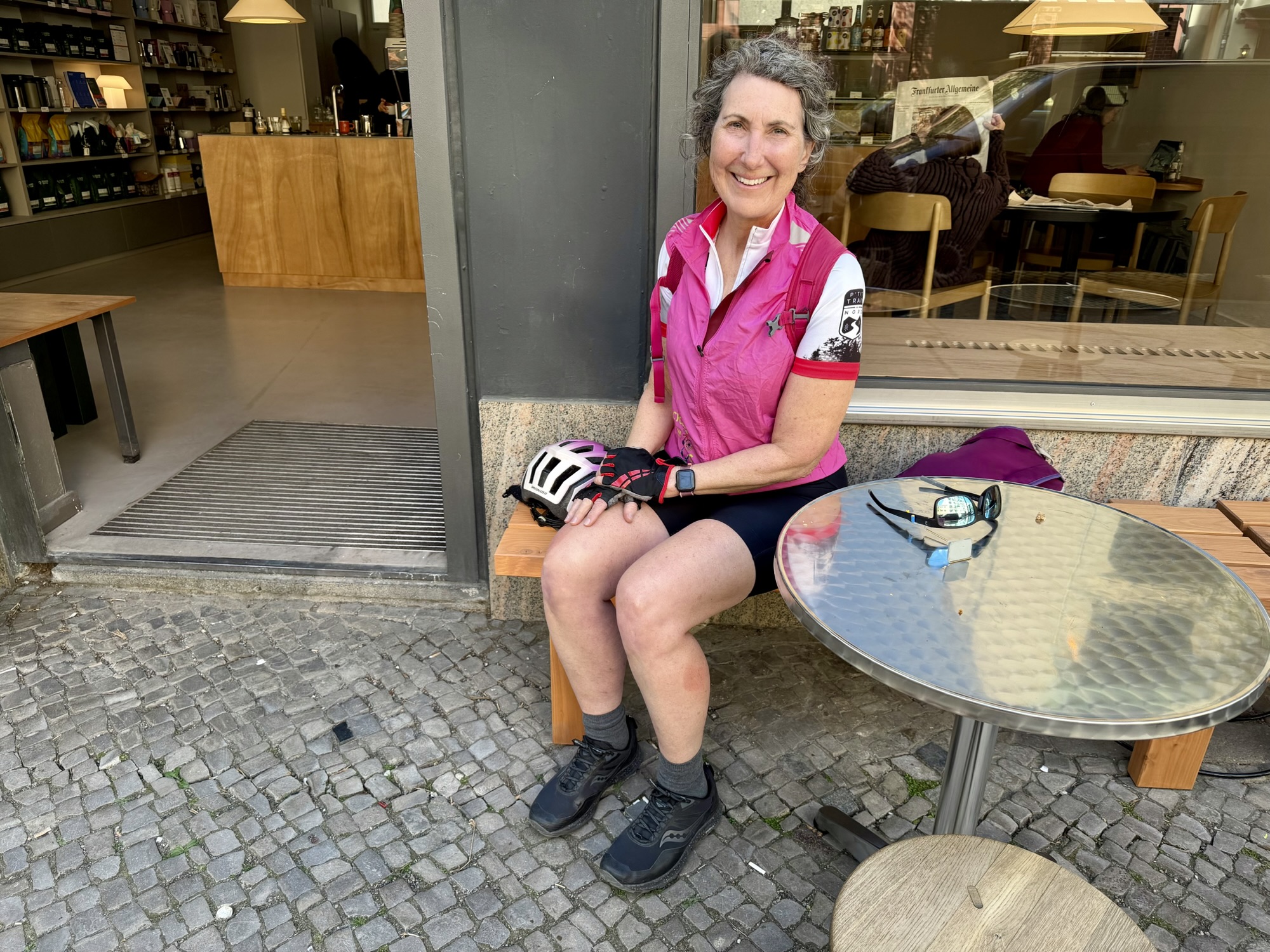
Then it was time to have a coffee.
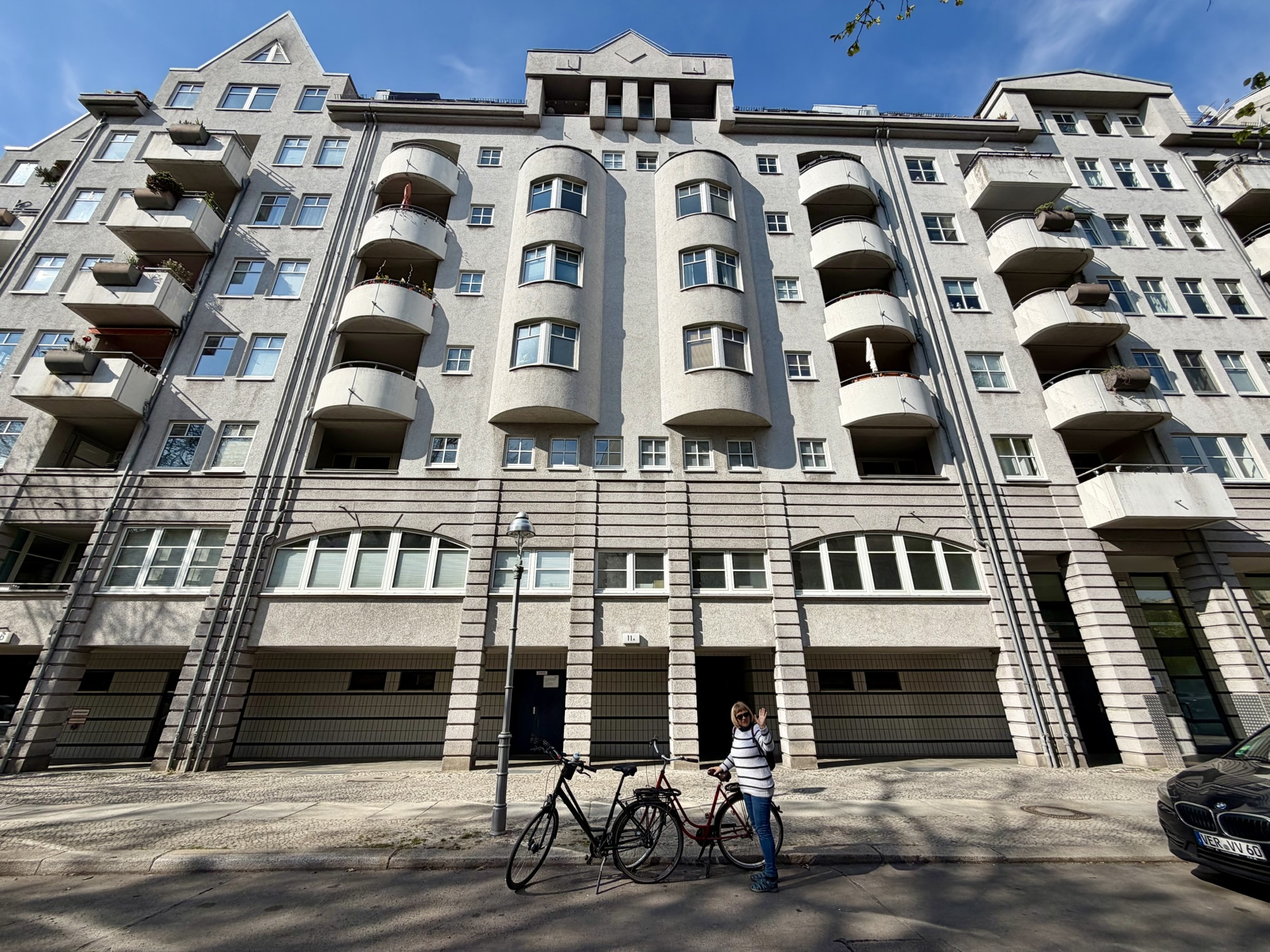
Our first stop was the home of one of Alina’s high school friends who she saw when we were Wroclaw. This is why we chose to have our accommodation in this area rather than near Berlin Ostbahnhof, but unfortunately she was out of town during our stay. On the other hand, we discovered a couple days later that this area of the city was a more desirable area to stay than where we had originally planned.
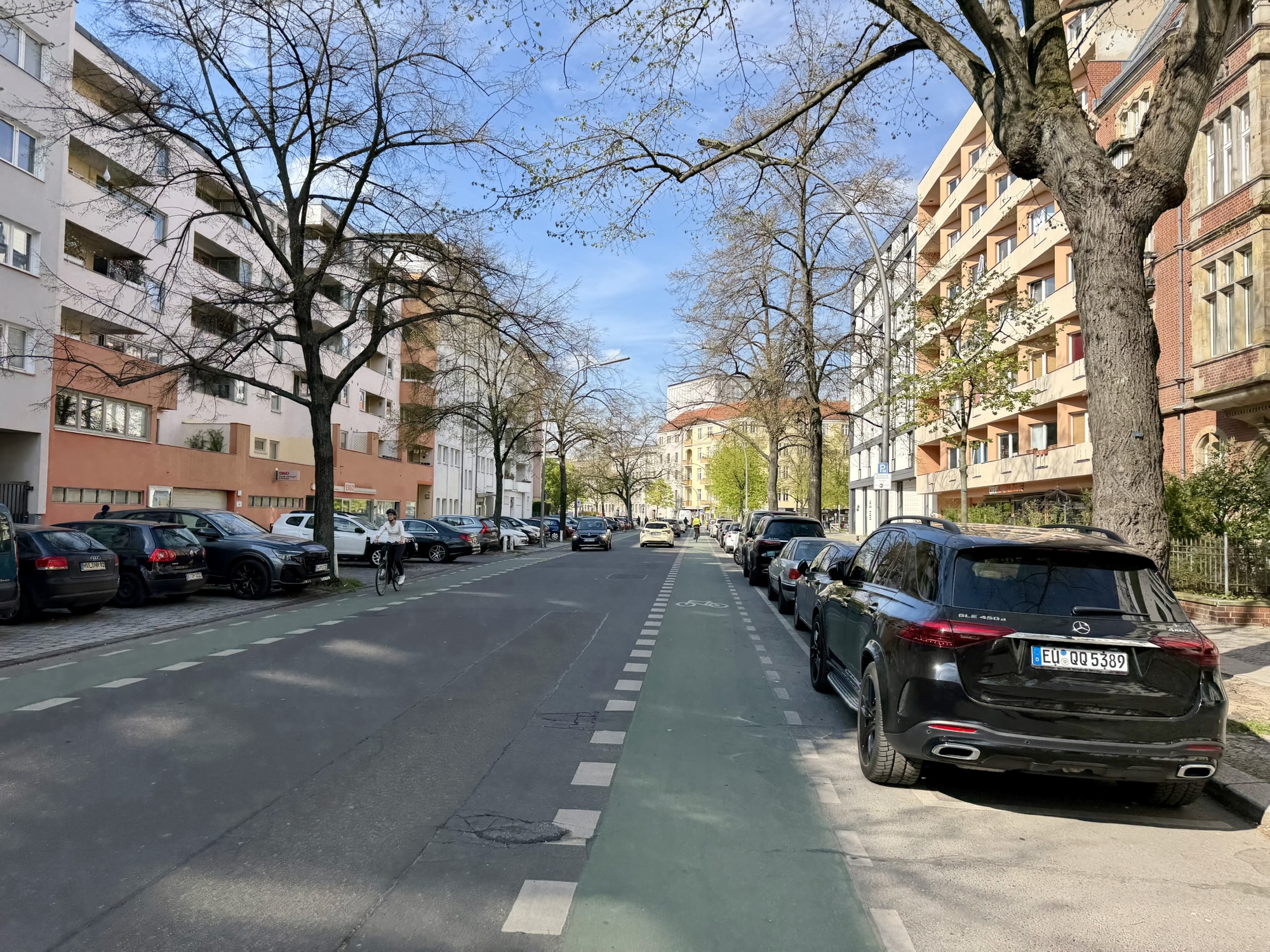
Berlin’s cycling infrastructure was not as good Amsterdam or Wroclaw but there was still quite a bit. A lot of bike claims were like this, painted, but in the door zone of parked cars.
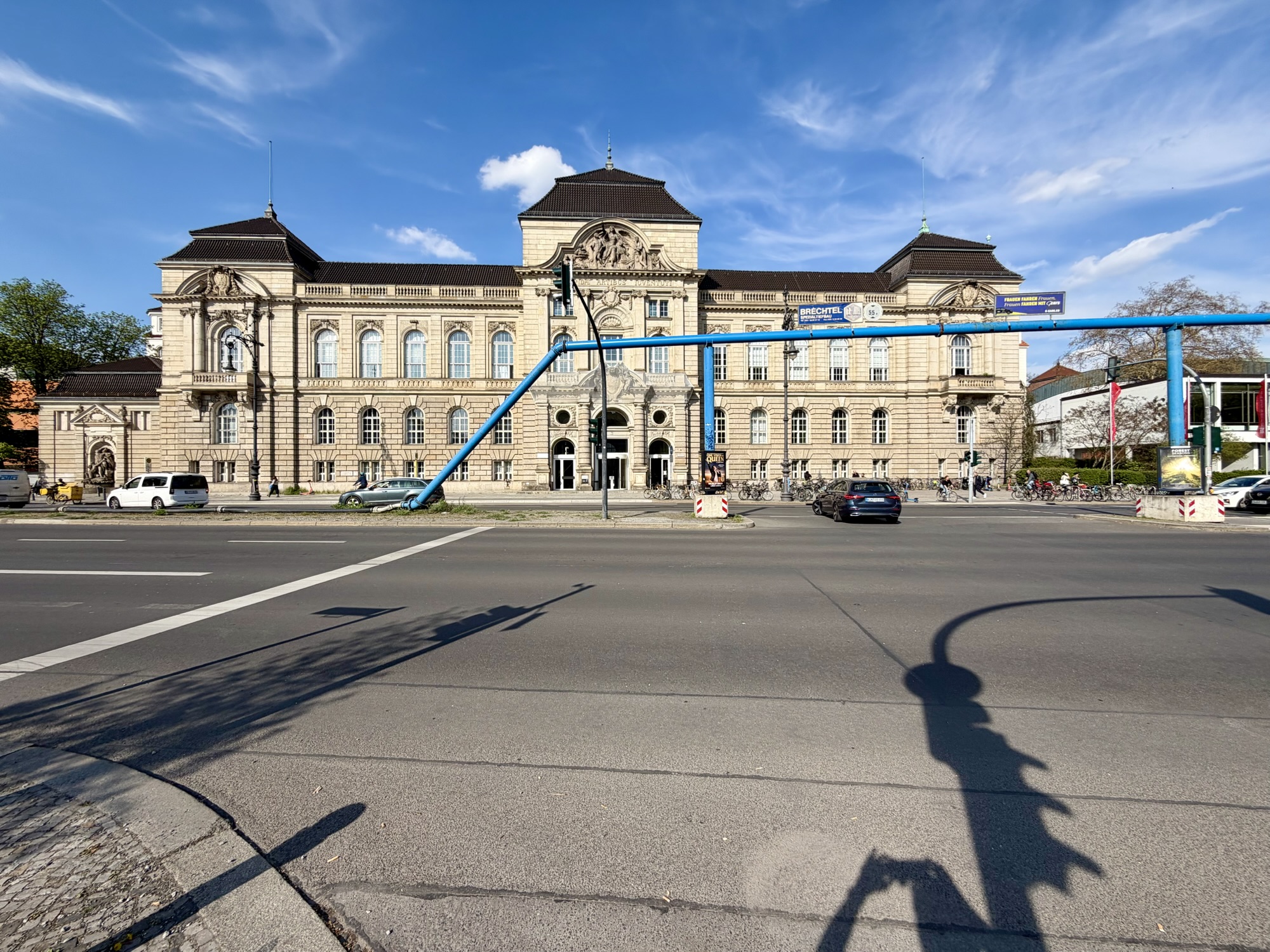
I kept seeing these pipes, in pink or blue around the city and wondered what they are. I googled it when I got back to the guest house and found out that they are temporary drainage systems. They pump ground water away from Active construction sites and channel it to nearby canals and rivers. This is needed because Berlin is built on Marie lounge and sand with a very high water table. Whenever developers dig for new foundations, the trenches immediately flood with groundwater. This means that water must be constantly pumped out to keep building sites dry. The pipes act as temporary above ground. Rerouting of the water away from construction sites.
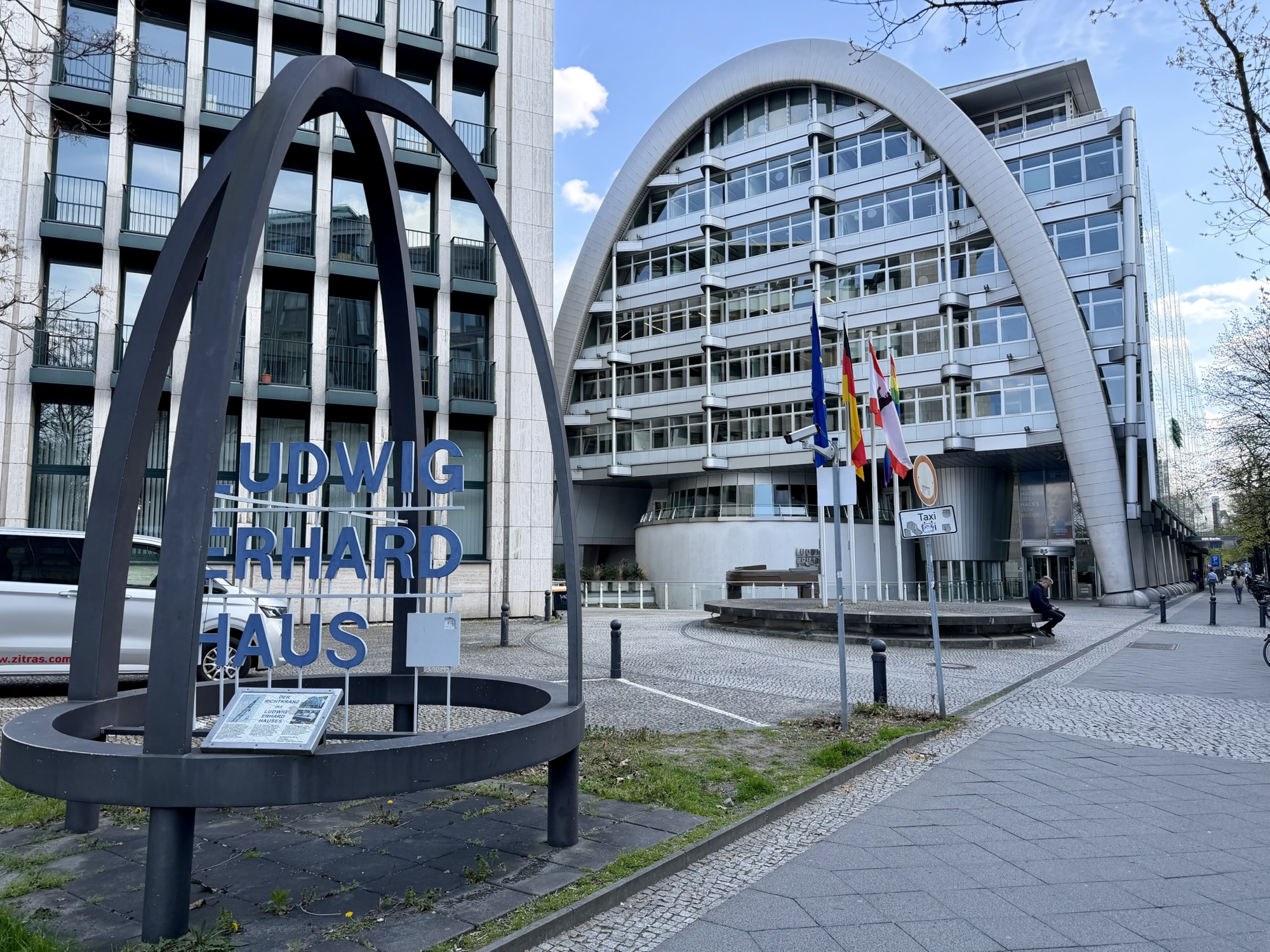
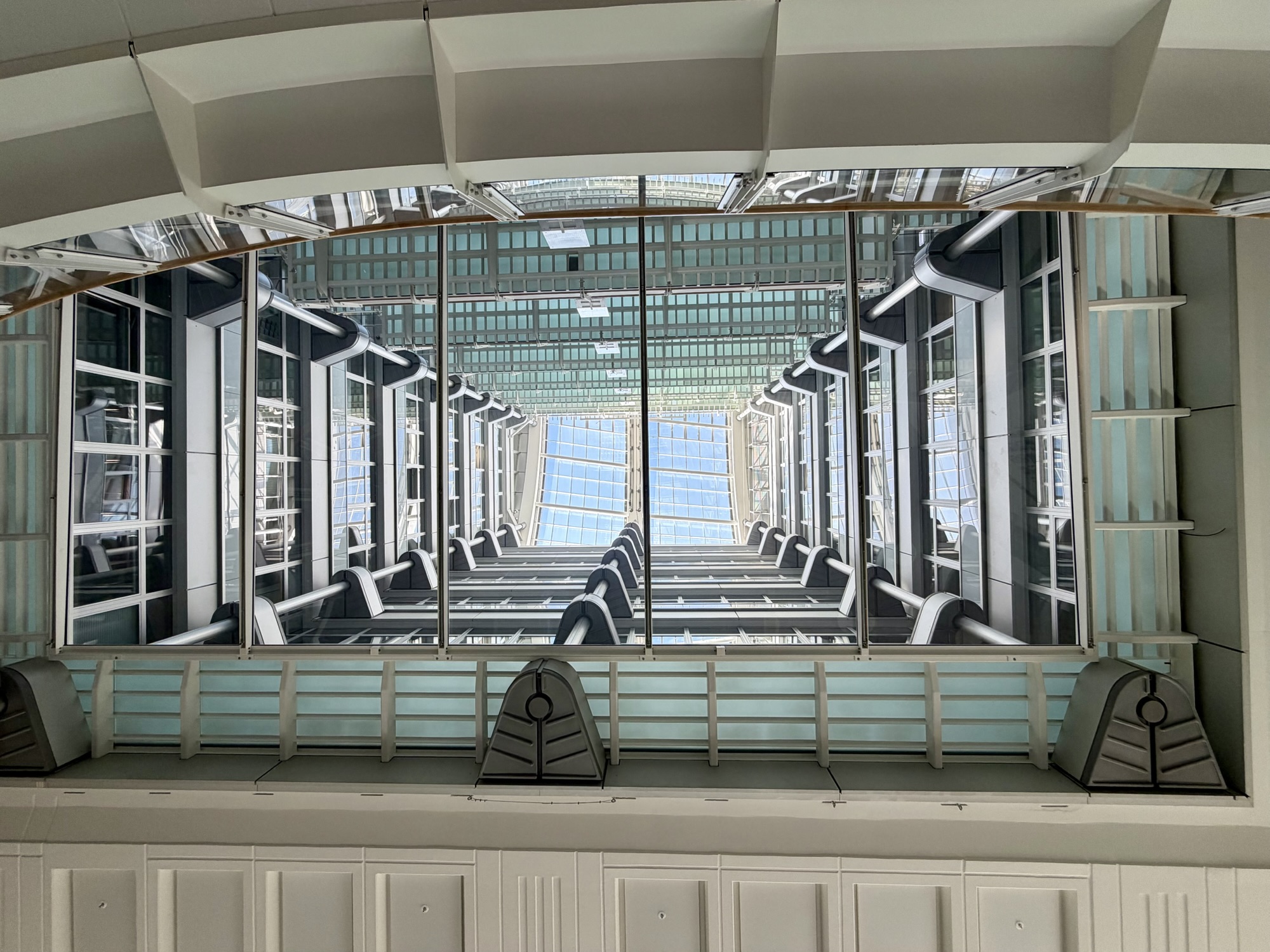
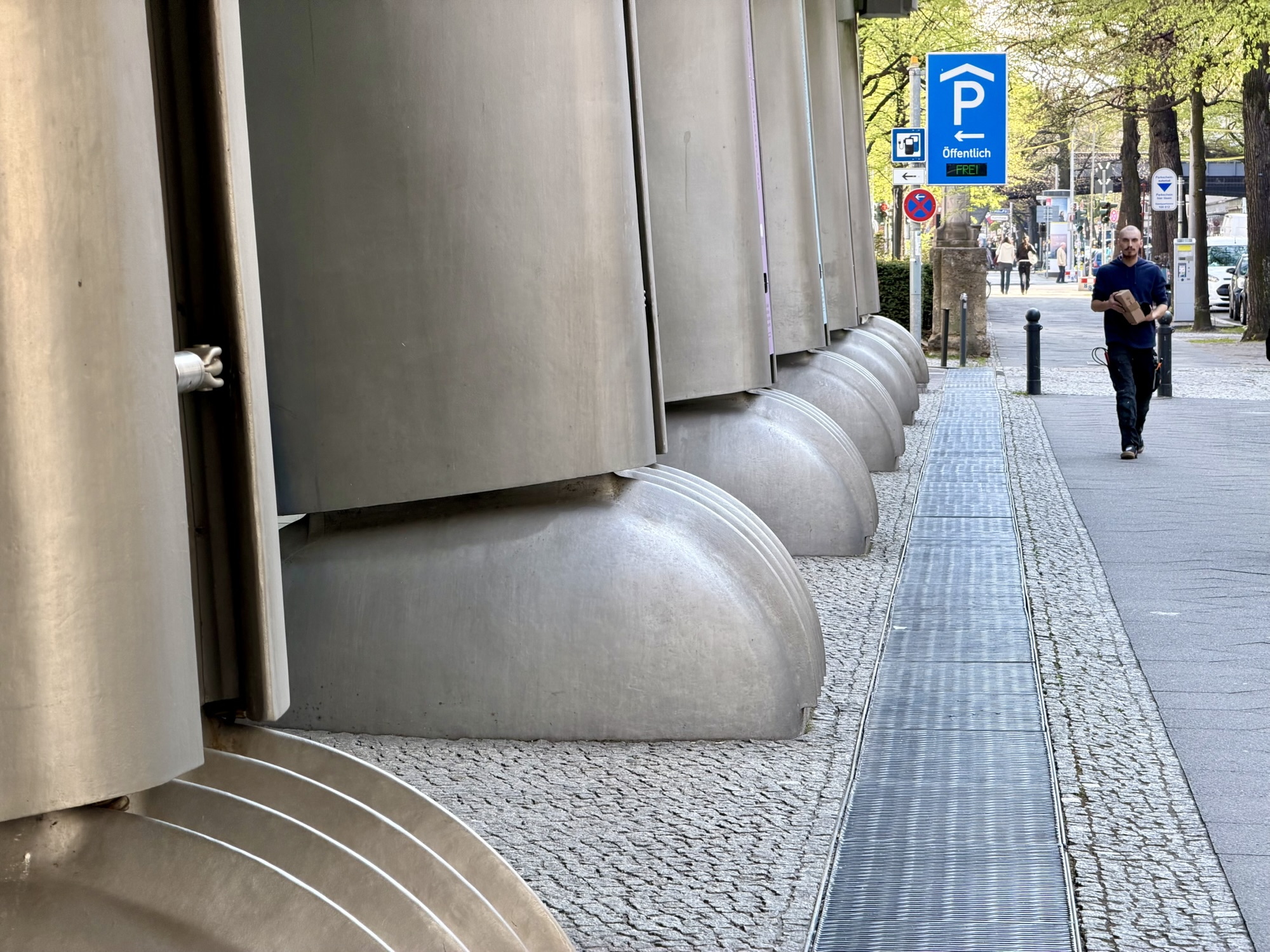
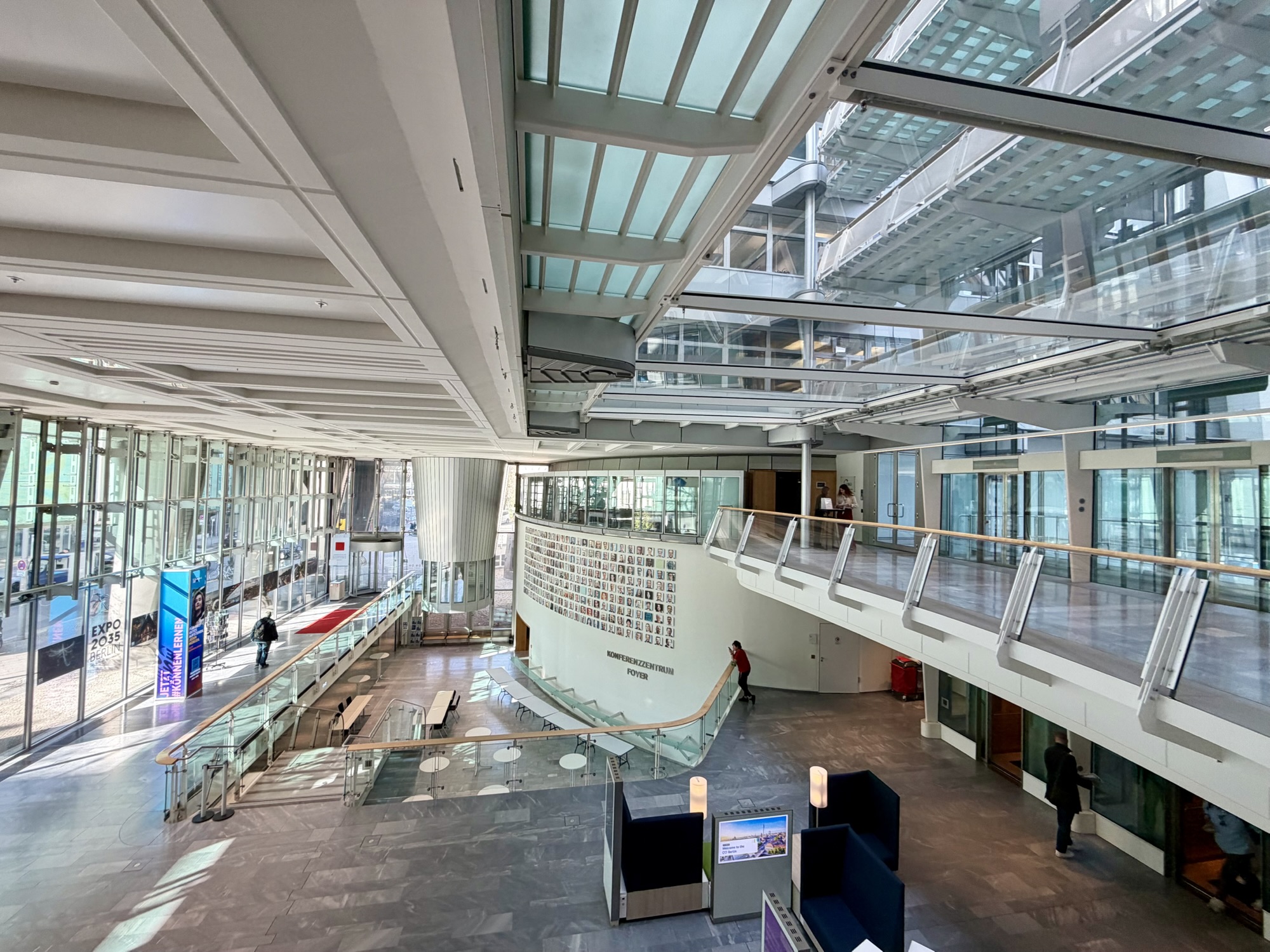
As with the other places I visited on this trip I had a Google Maps list of places that I wanted to visit in Berlin. One of the places was Ludwig Erhard Haus for its interesting architecture. I hadn’t specifically planned to see it today, but I recognized it as we cycled past so we stopped. The steel arches have supports that look like paws – they were cast to look organic and kinetic—acting like the paws or joints of a mechanical beast rooted to the pavement. It is an iconic, futuristic office and conference building built in 1998. Its nickname is the armadillo because of its shape. It was designed by British architect Nicholas Grimshaw.The nine stories of the building are suspended from the steel arches, allowing the first floor to have no supports. Ludwig Erhard was the second chancellor of West Germany, from 1963 to 1966. The building belongs to the Berlin Chamber of Industry and Commerce.
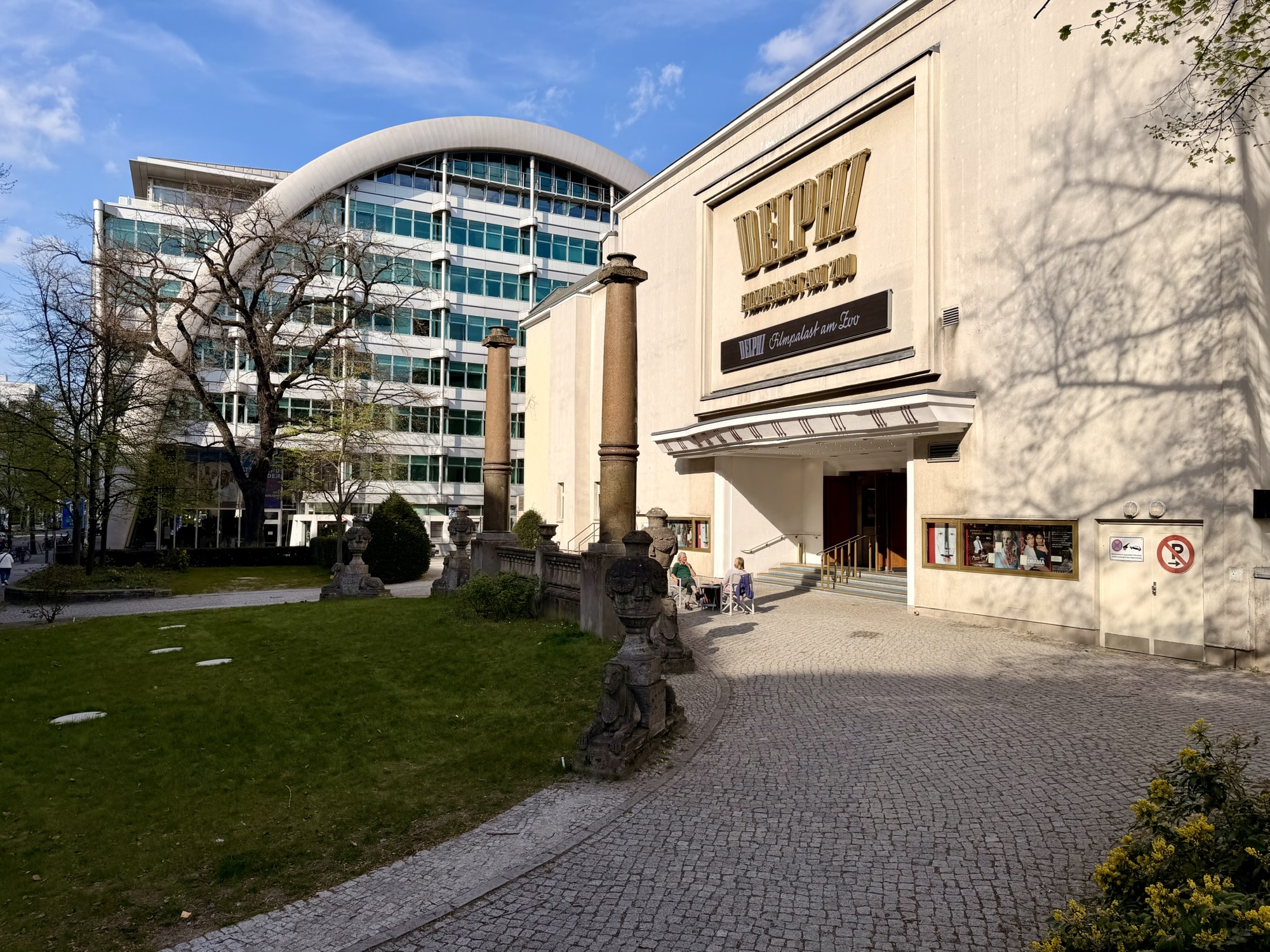
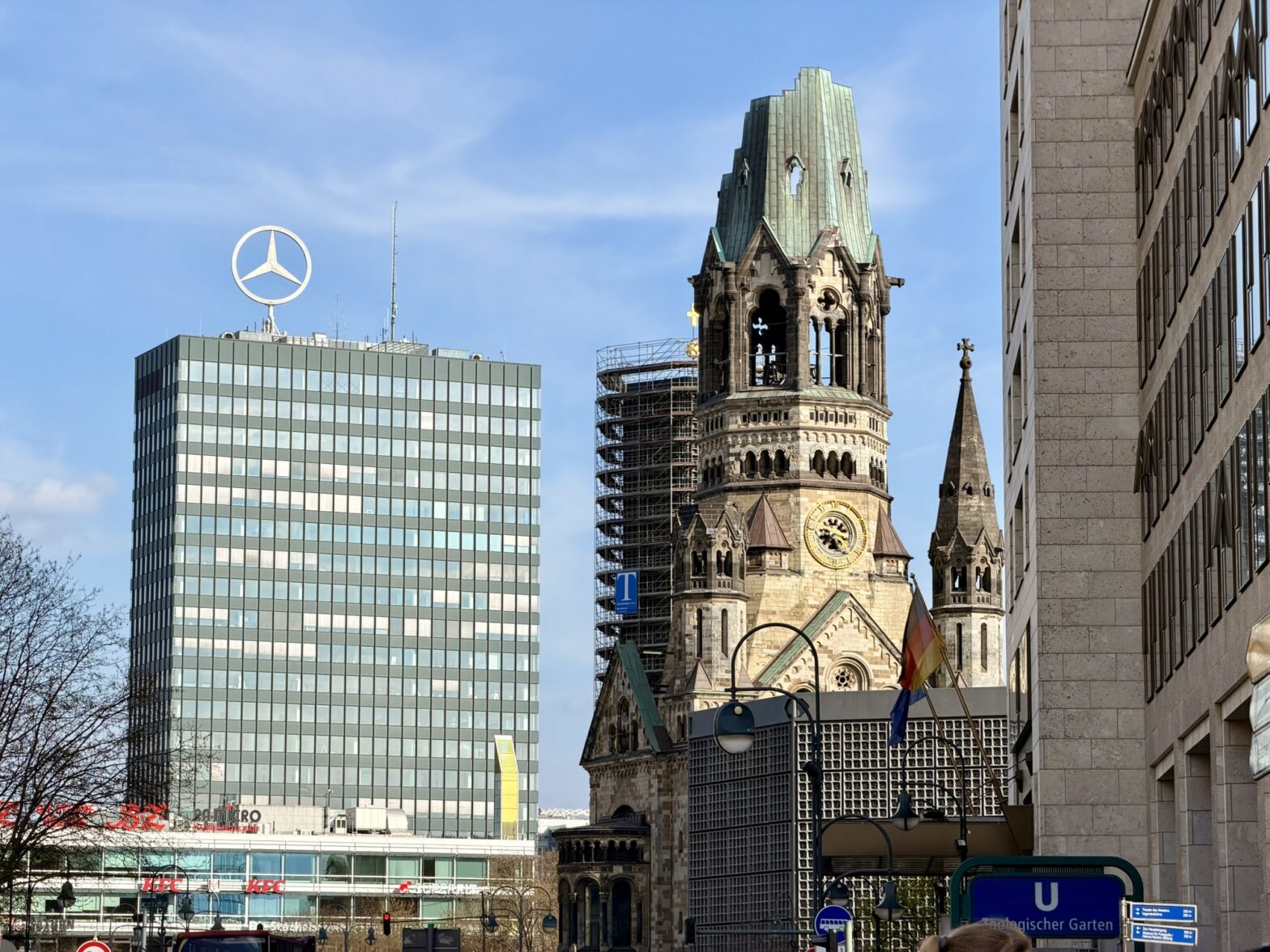
Kaiser Wilhelm Memorial Church has been converted into a war memorial. The original West tower was partially destroyed during bombing by Allied forces in 1943. It was intentionally not completely rebuilt so that its ruin could serve as a memorial against war and destruction.
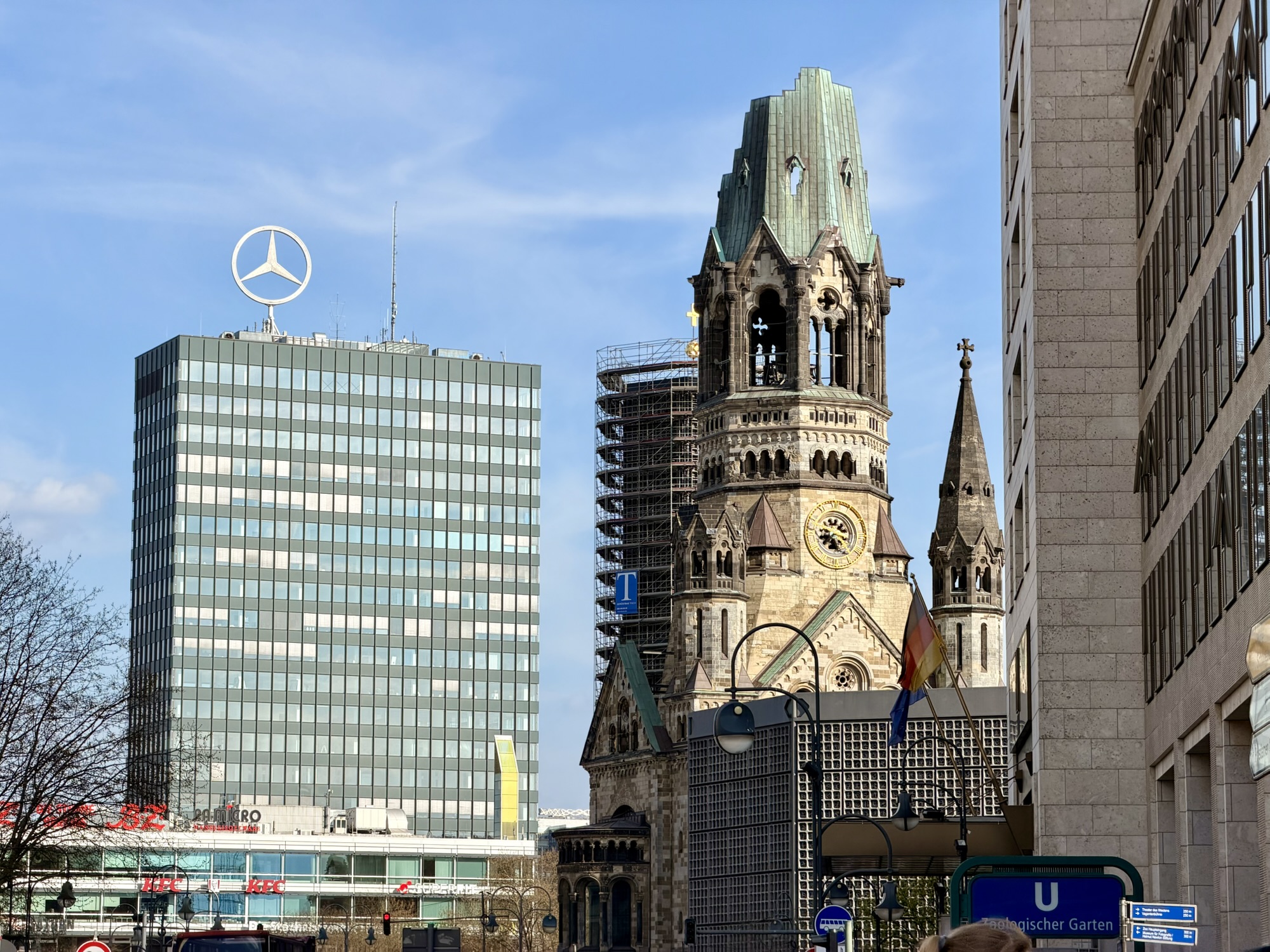
In 1957, the architect Egon Eiermann, won a competition with his design, which proposed demolishing the old building and building a new one. However, it was decided to preserve the partially destroyed church tower. It was joined by a four part grouping of modern buildings, including an octagonal nave, hexagonal bell tower (which is currently covered in scaffolding), a square chapel, and a foyer.
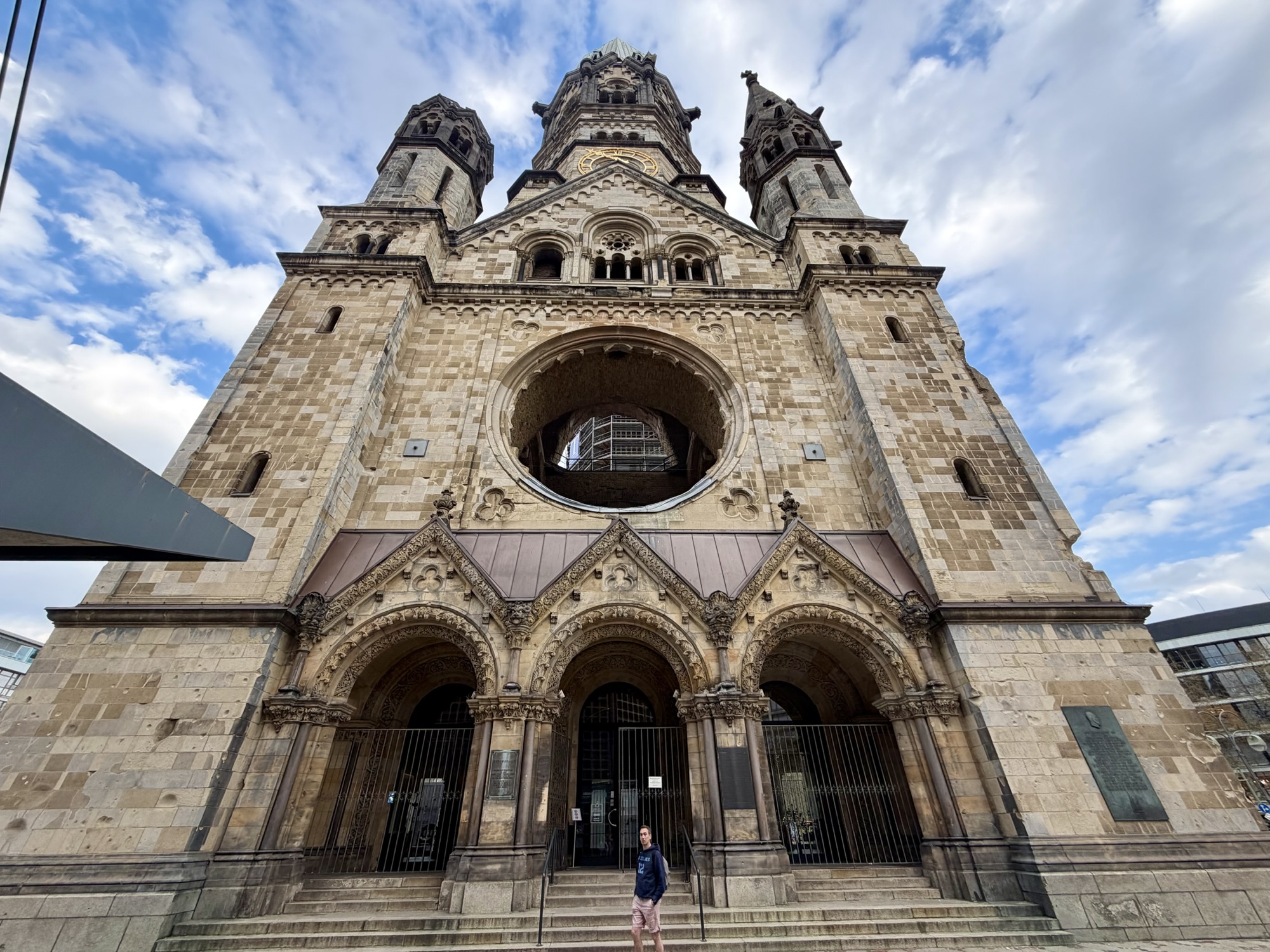
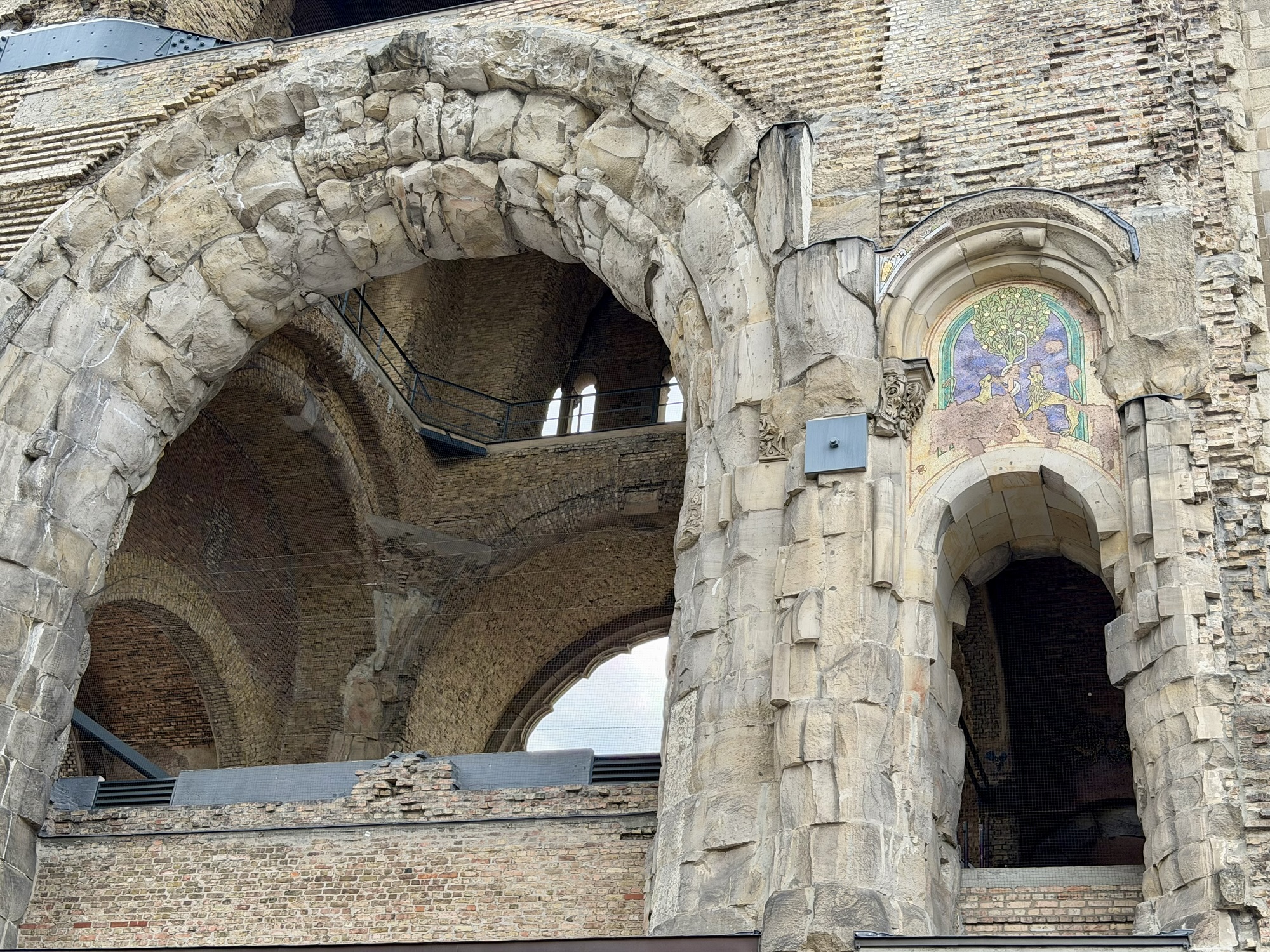
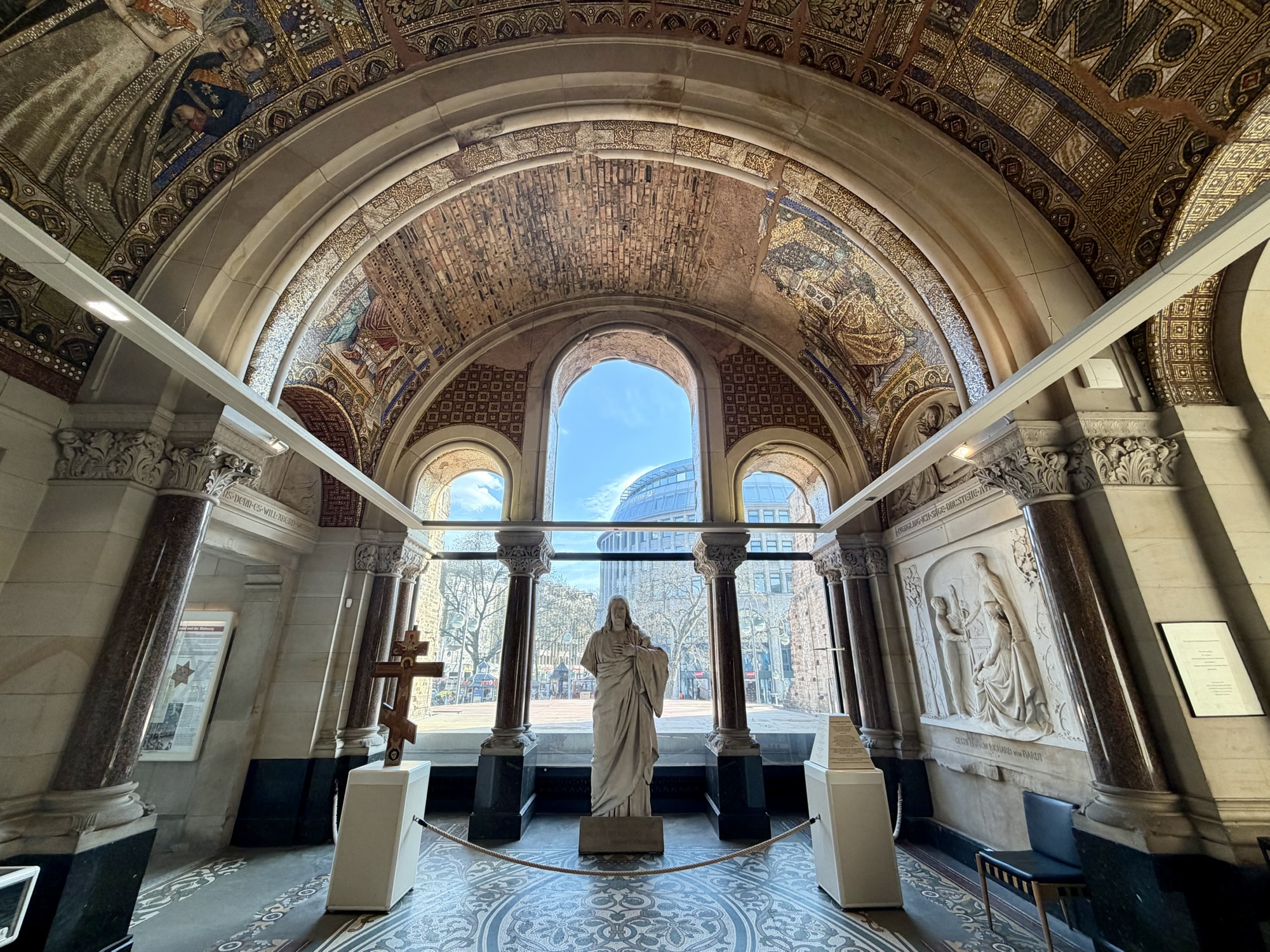
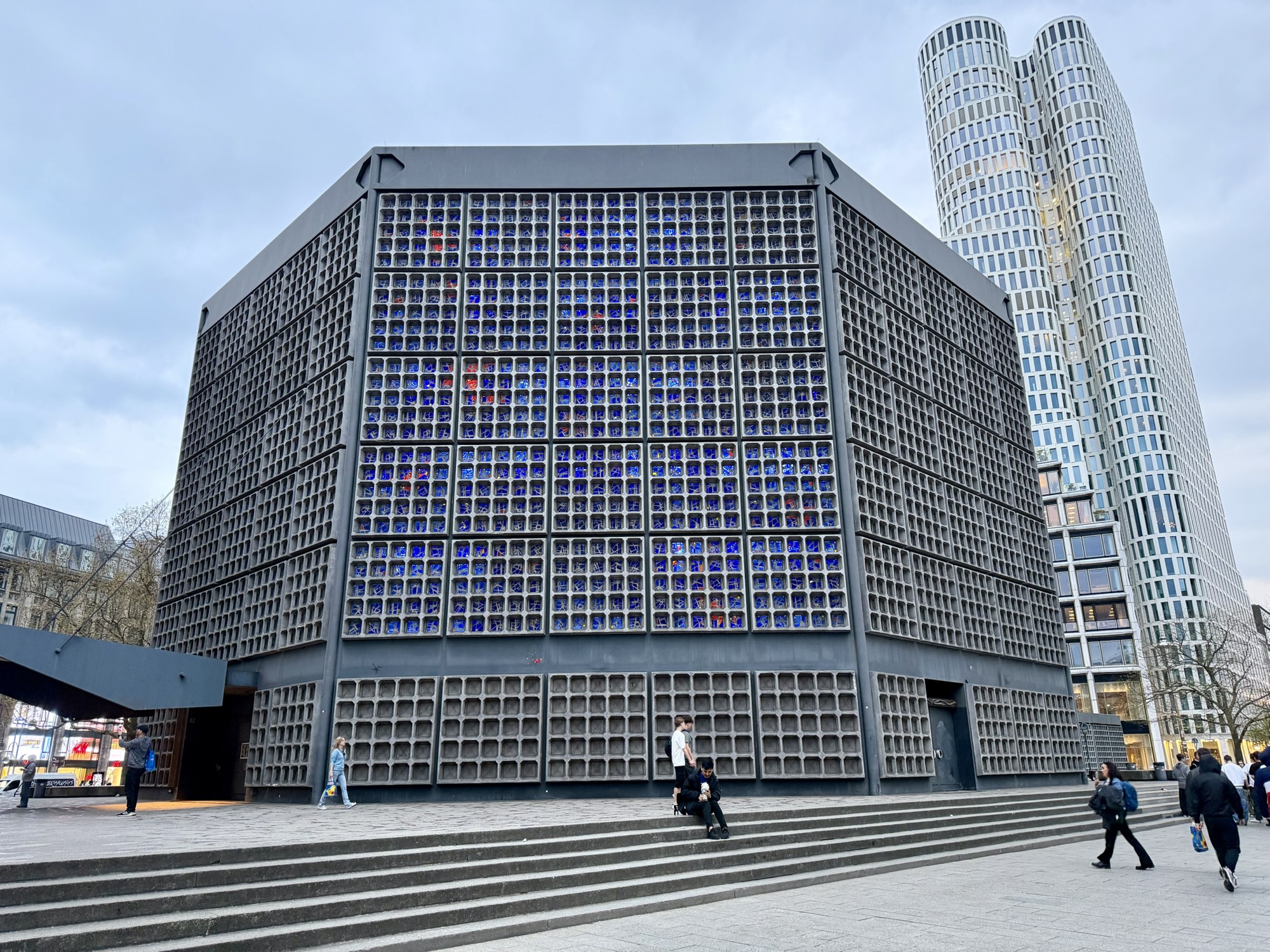
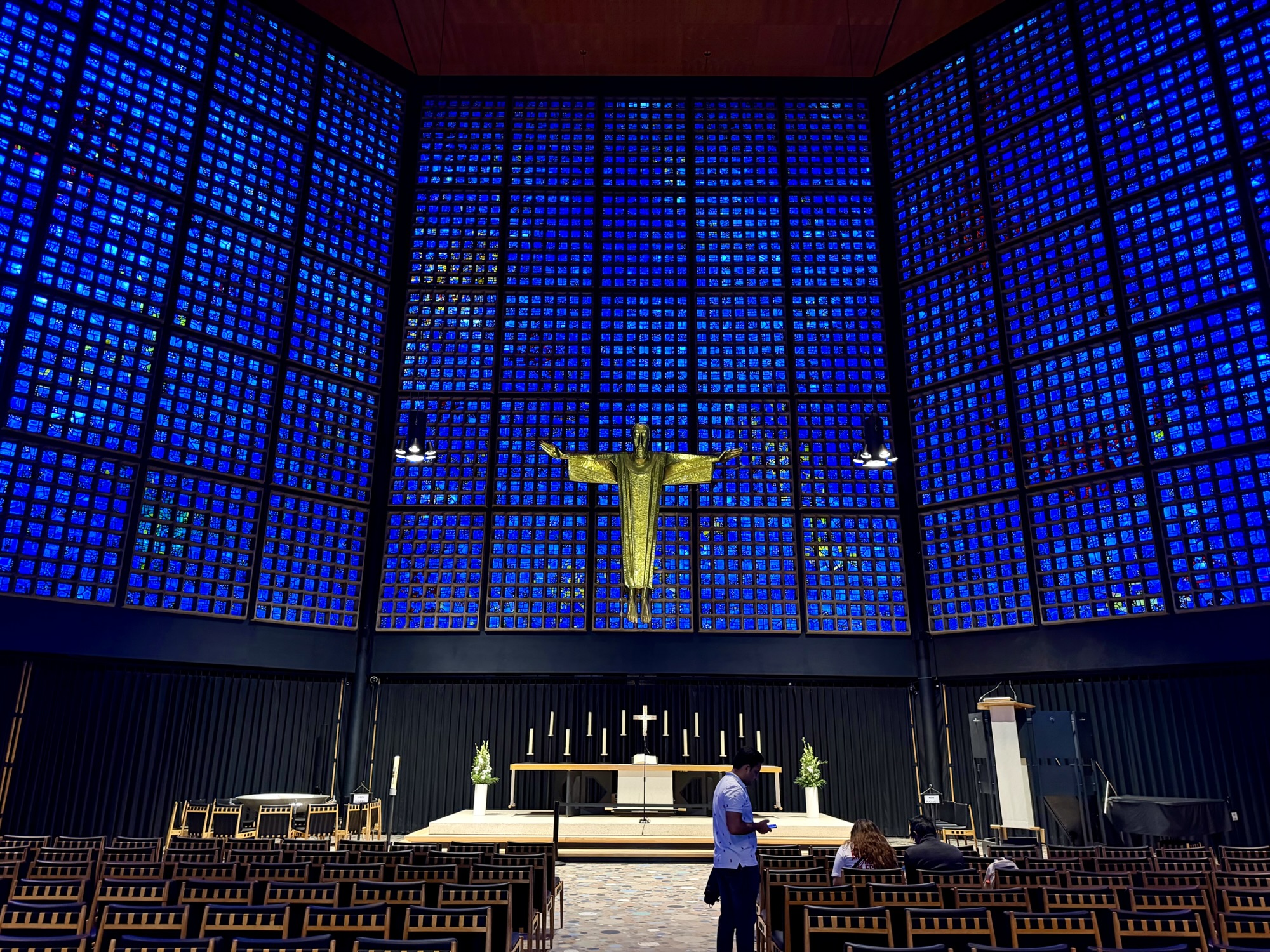
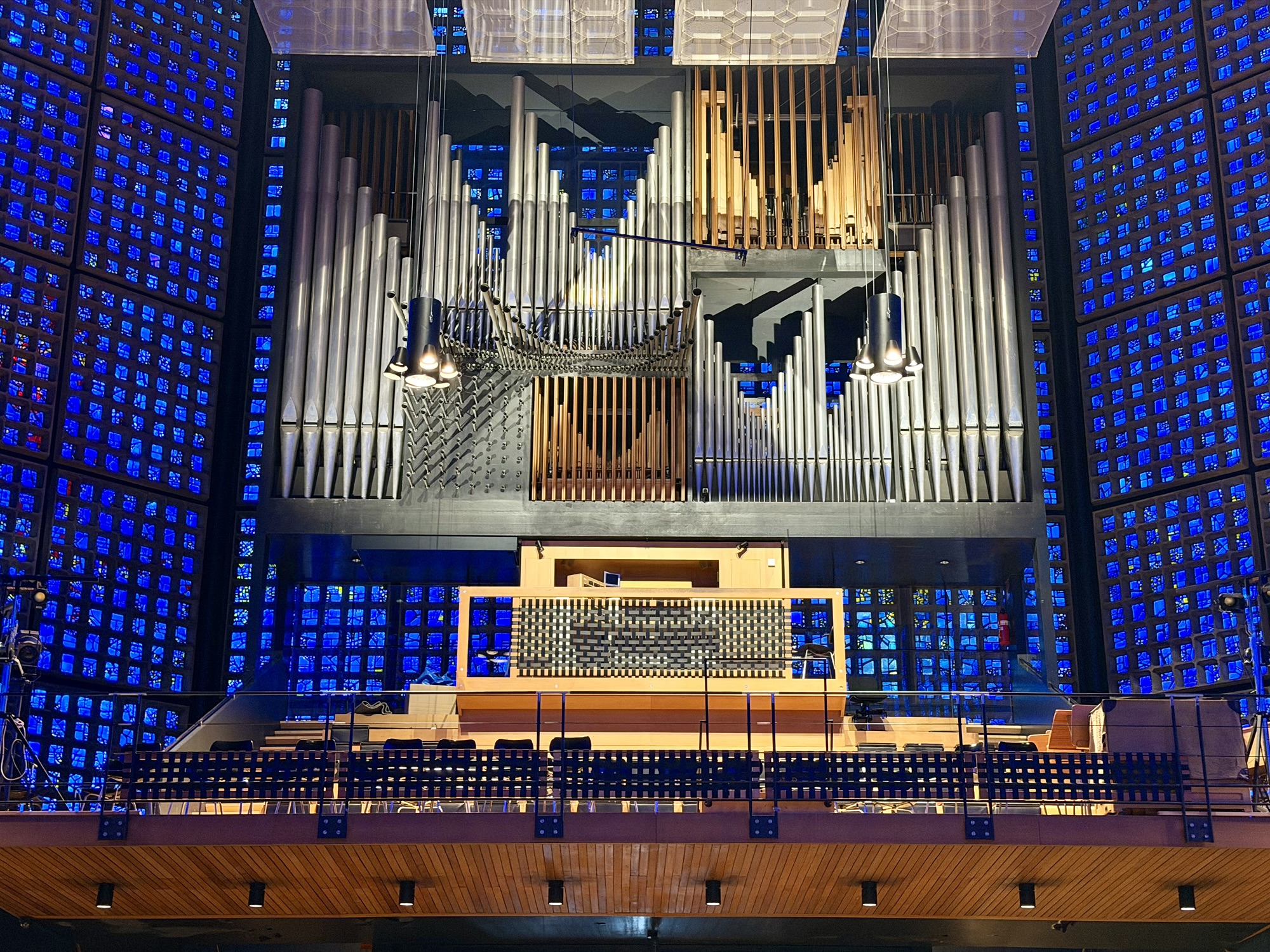
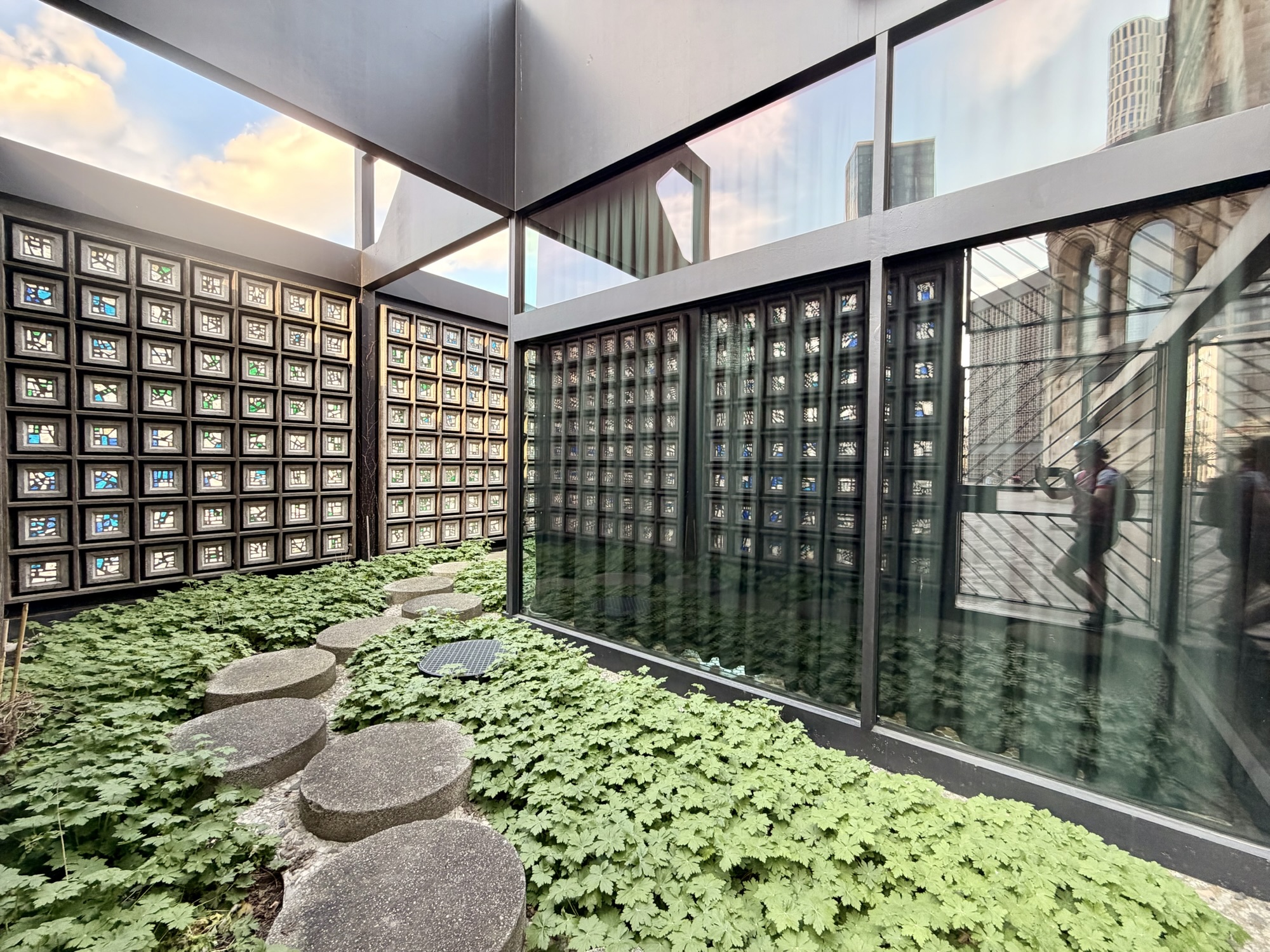
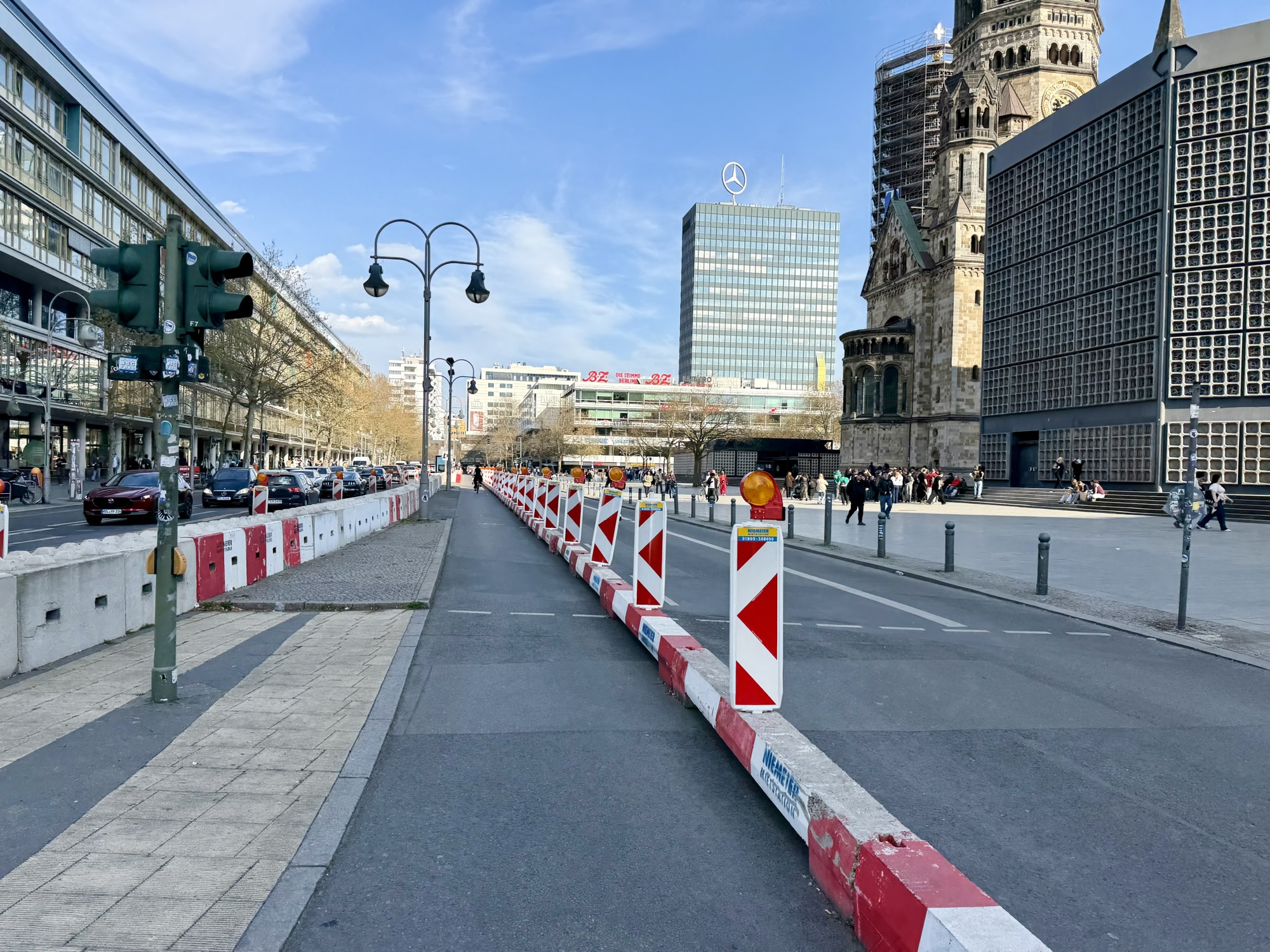
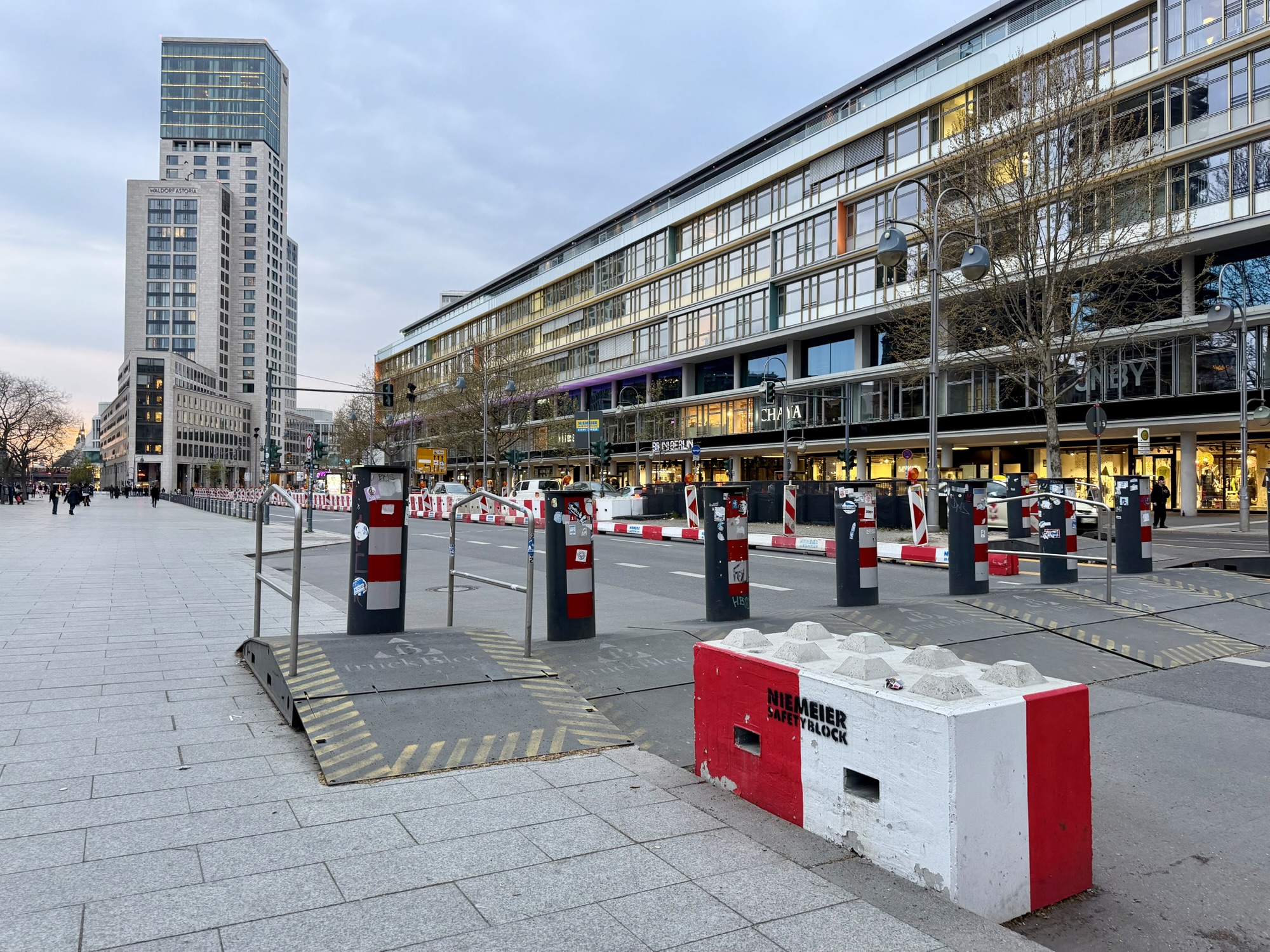
There is an annual Christmas market that takes place around the church. In December 2016 there was an Islamist terrorist attack which involved driving a tractor trailer into market goers. 11 people died in the attack and another 55 were injured. Today, the streets around the church have ugly, antiterrorist bollards and ramps. In Toronto in 2018 there was a vehicle ramming attack in North York that killed 11 and injured 15. Following that attack Toronto erected Jersey walls around various places where there are lots of pedestrians, including Union Station. I’ve always thought it was “very Toronto” that those Jersey walls haven’t been replaced with something more attractive, that also provide security, but the structure erected for this earlier attack in Berlin is even uglier.
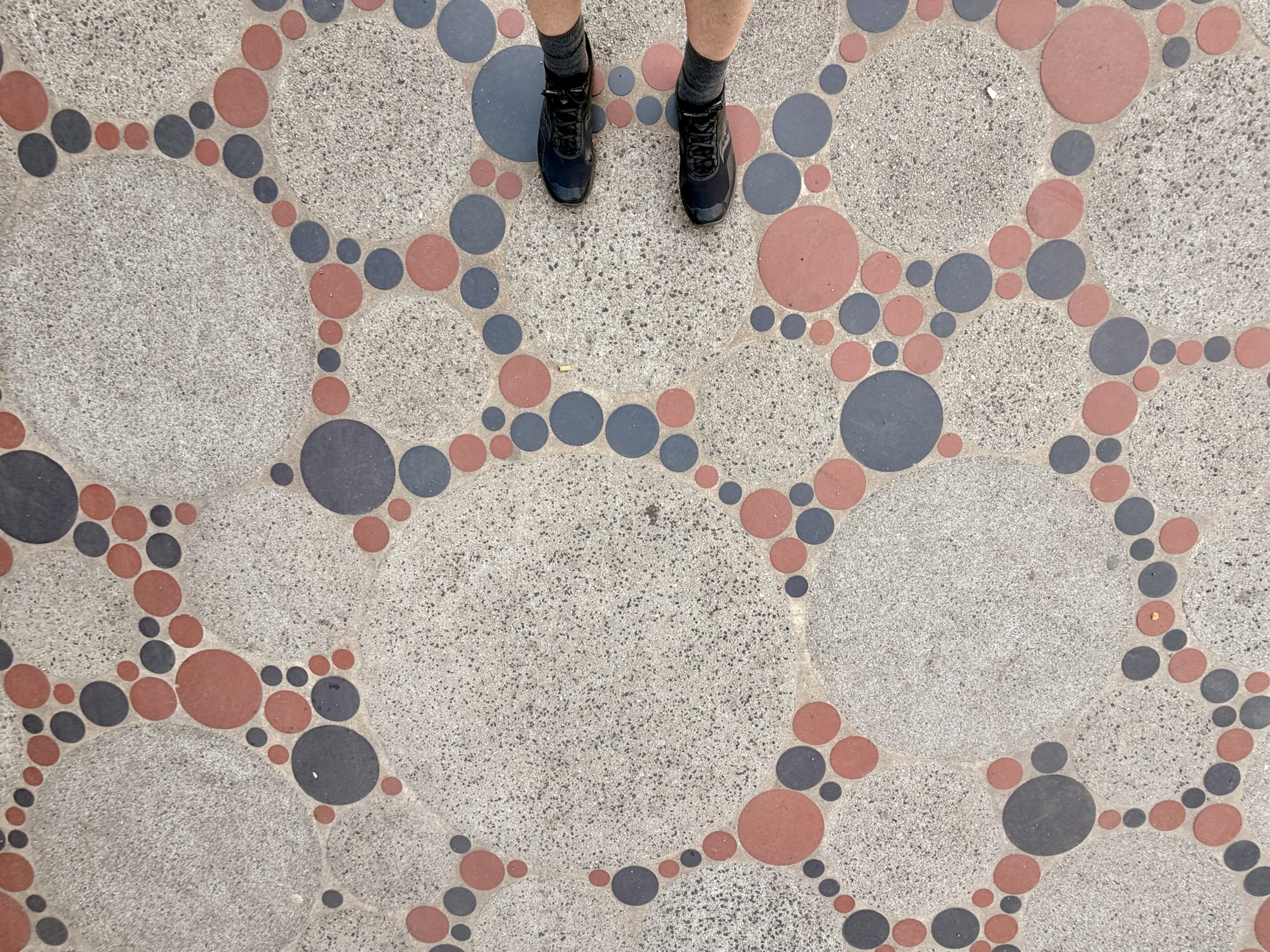
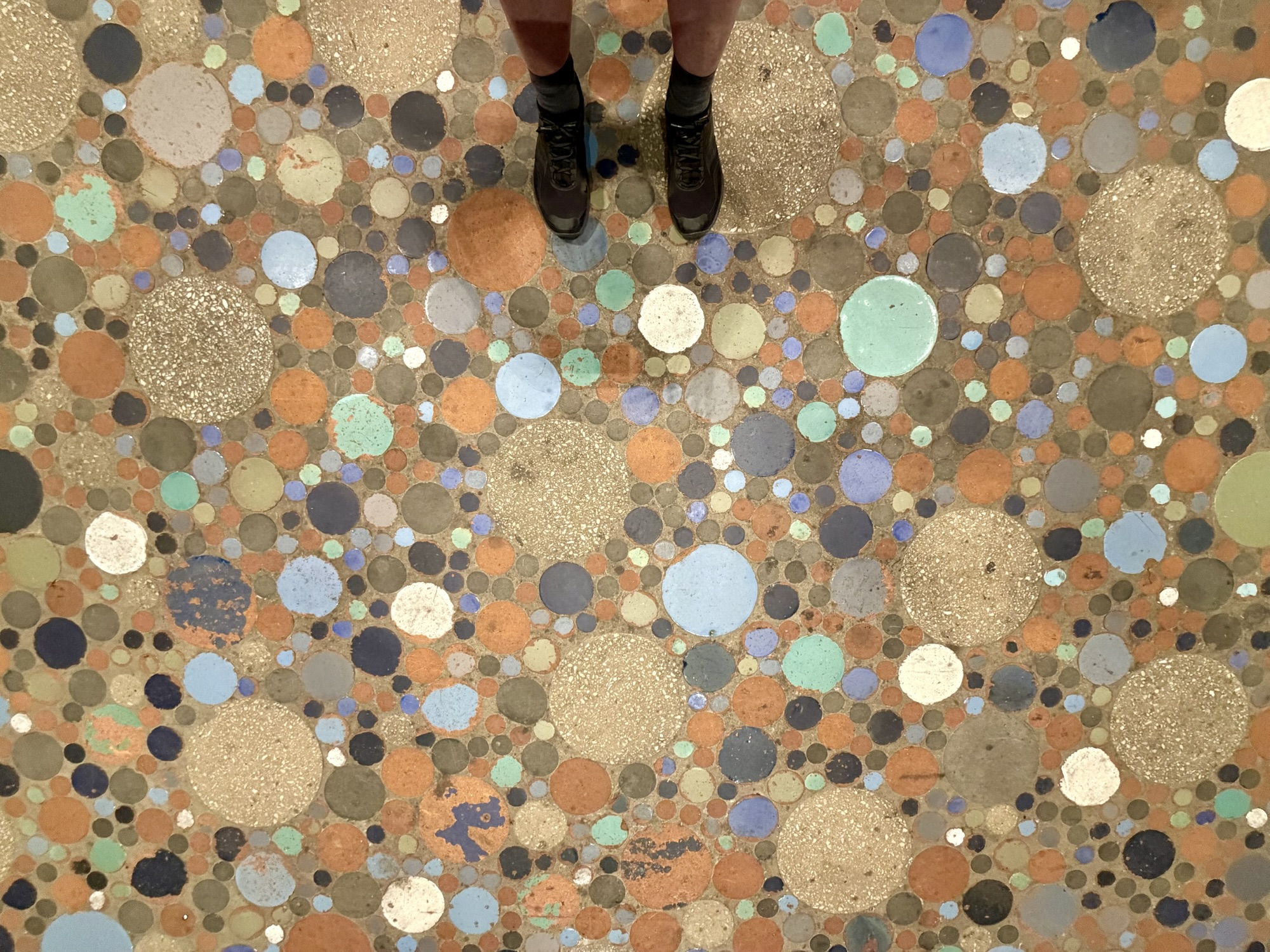
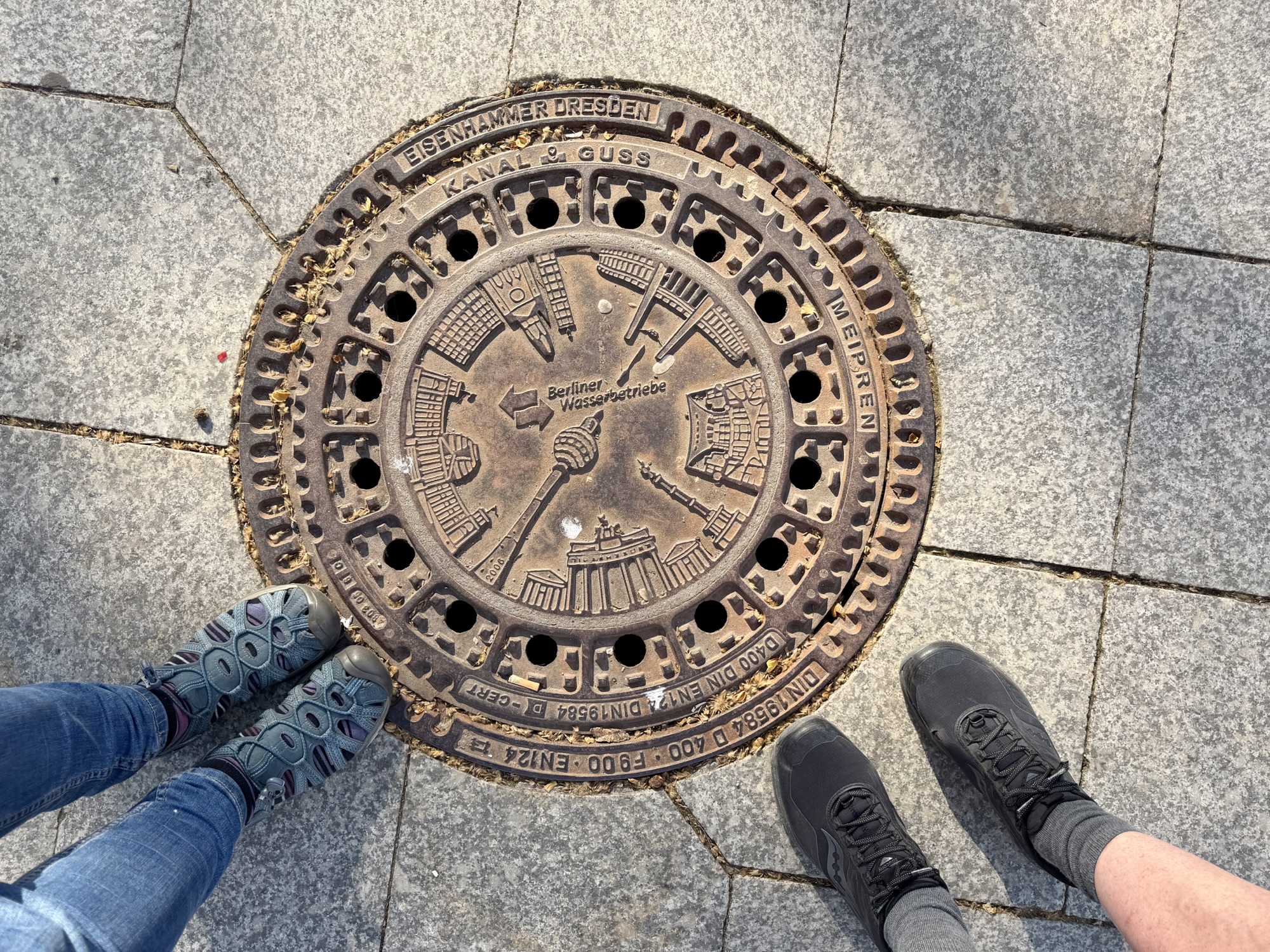
They were quite a few pieces of public art, and a beautiful utility cover in the square near the church. The circular mosaic floors were inside and outside the new building buildings.
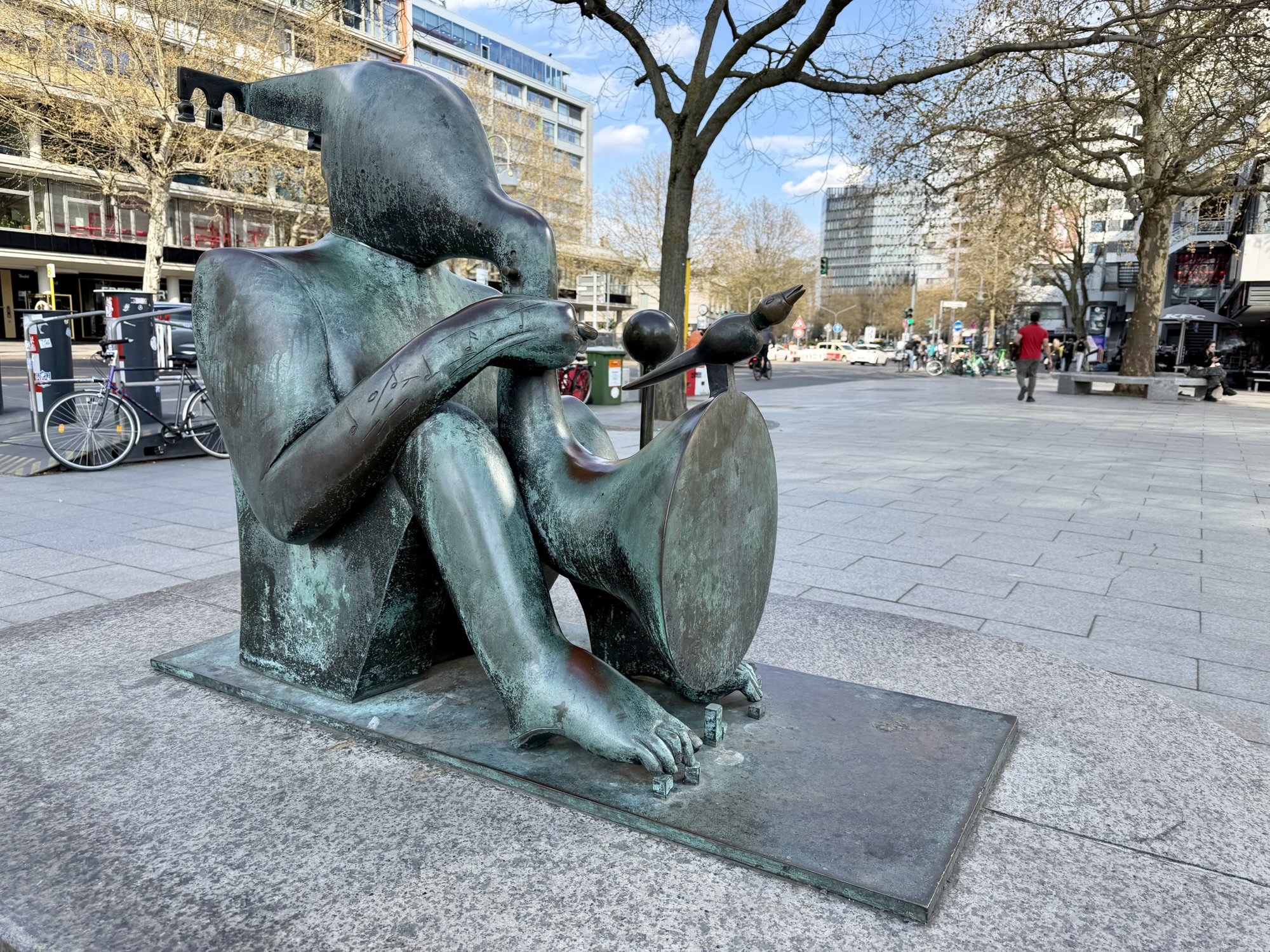
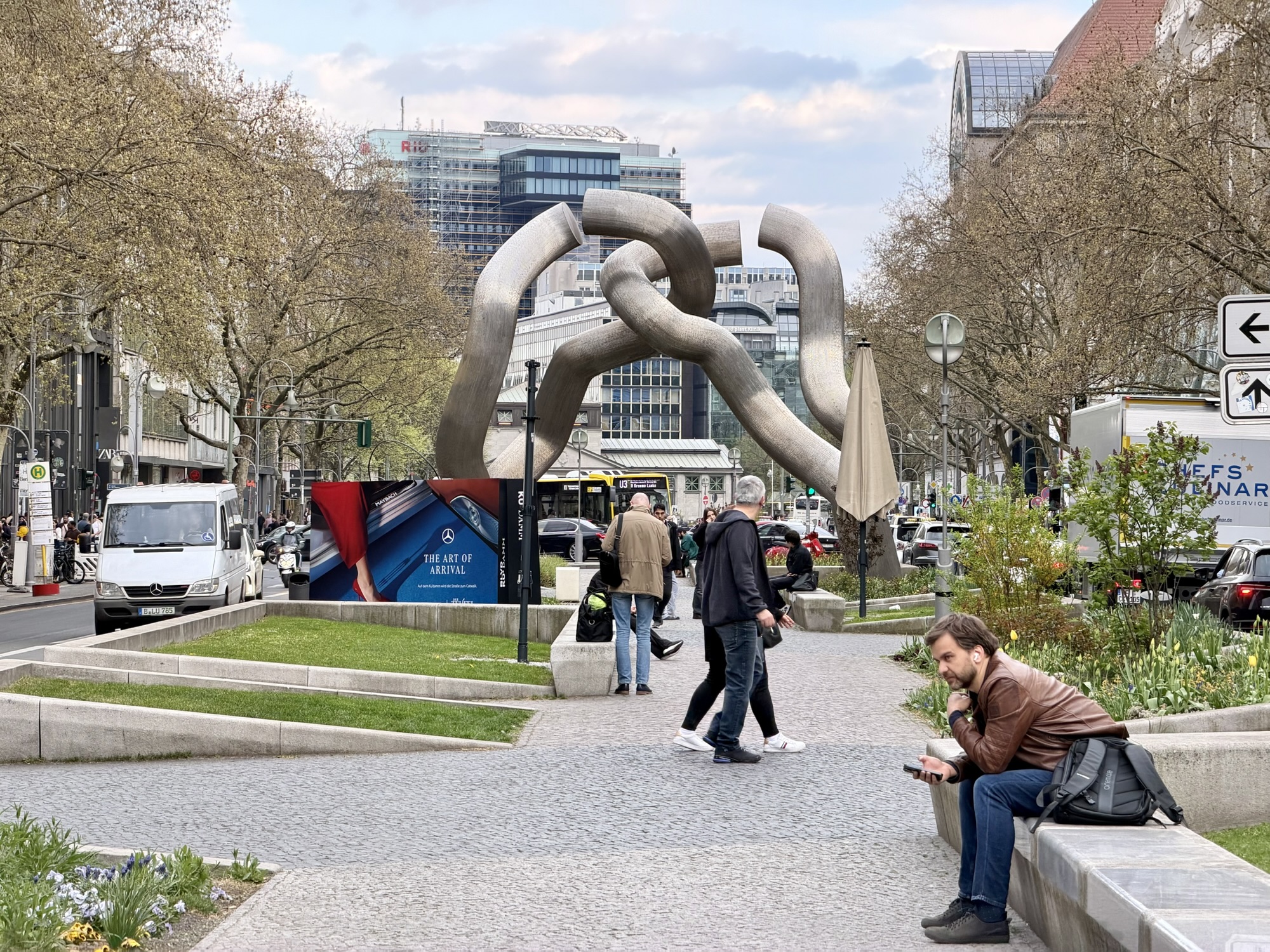
The Kurfürstendamm is a popular promenade and shopping area and features this sculpture simply called Berlin, but known locally as “ Dancing Spaghetti“. The sculpture by Brigitte Matschinsky-Denninghoff and Martin Matschinsky symbolizes the severed physical and emotional connections between east and West Berlin during the Cold War. It was unveiled in 1987.
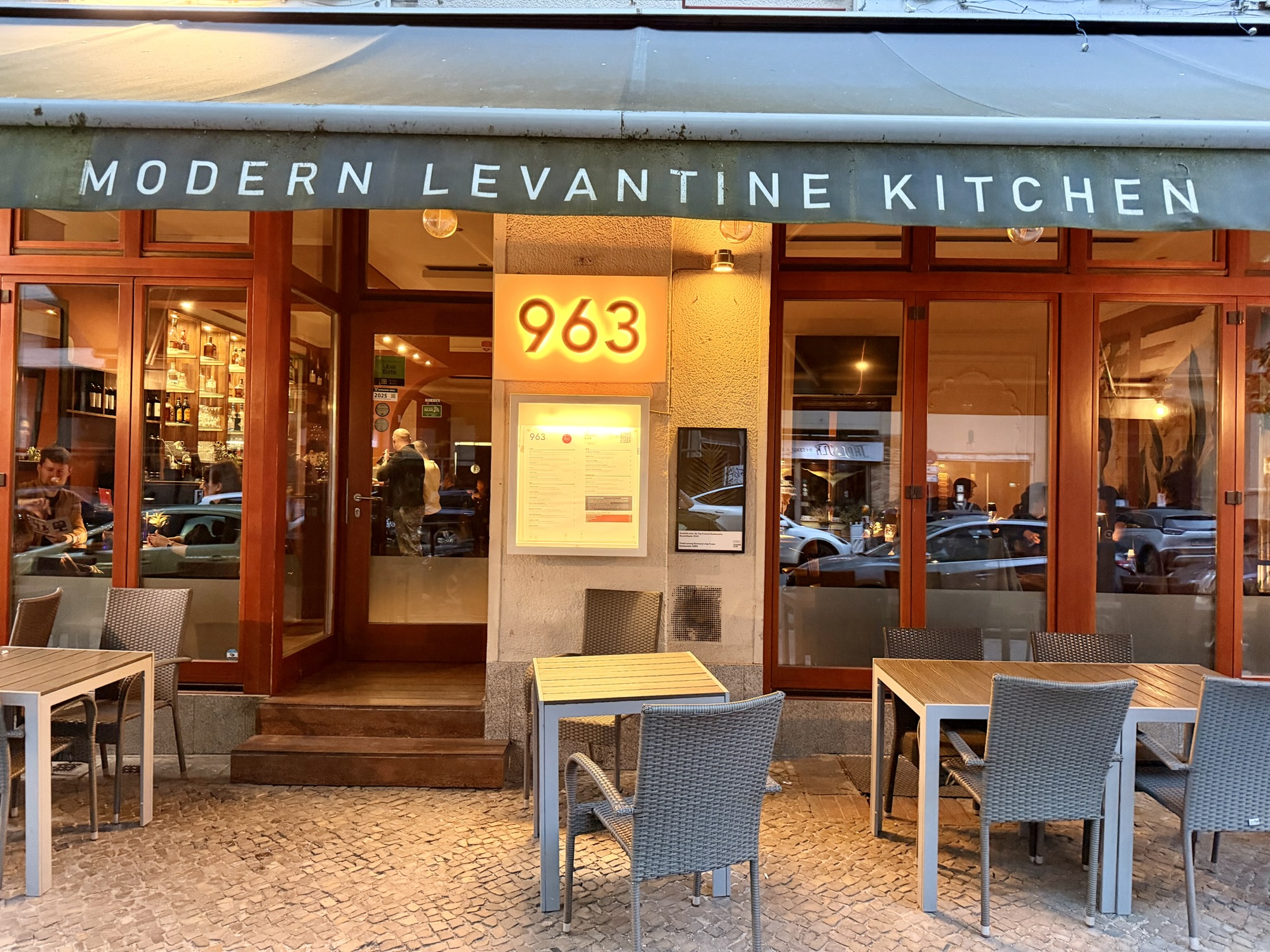
By this time we were starting to get hungry. Our first choice restaurant, a salad place, was closing just as we arrived. We checked the menus at a couple places and chose the Modern Levantine Kitchen. The prices on the menu looked quite a bit better than the other places we considered. However, it turned out the portions were very small. However, the food was delicious.
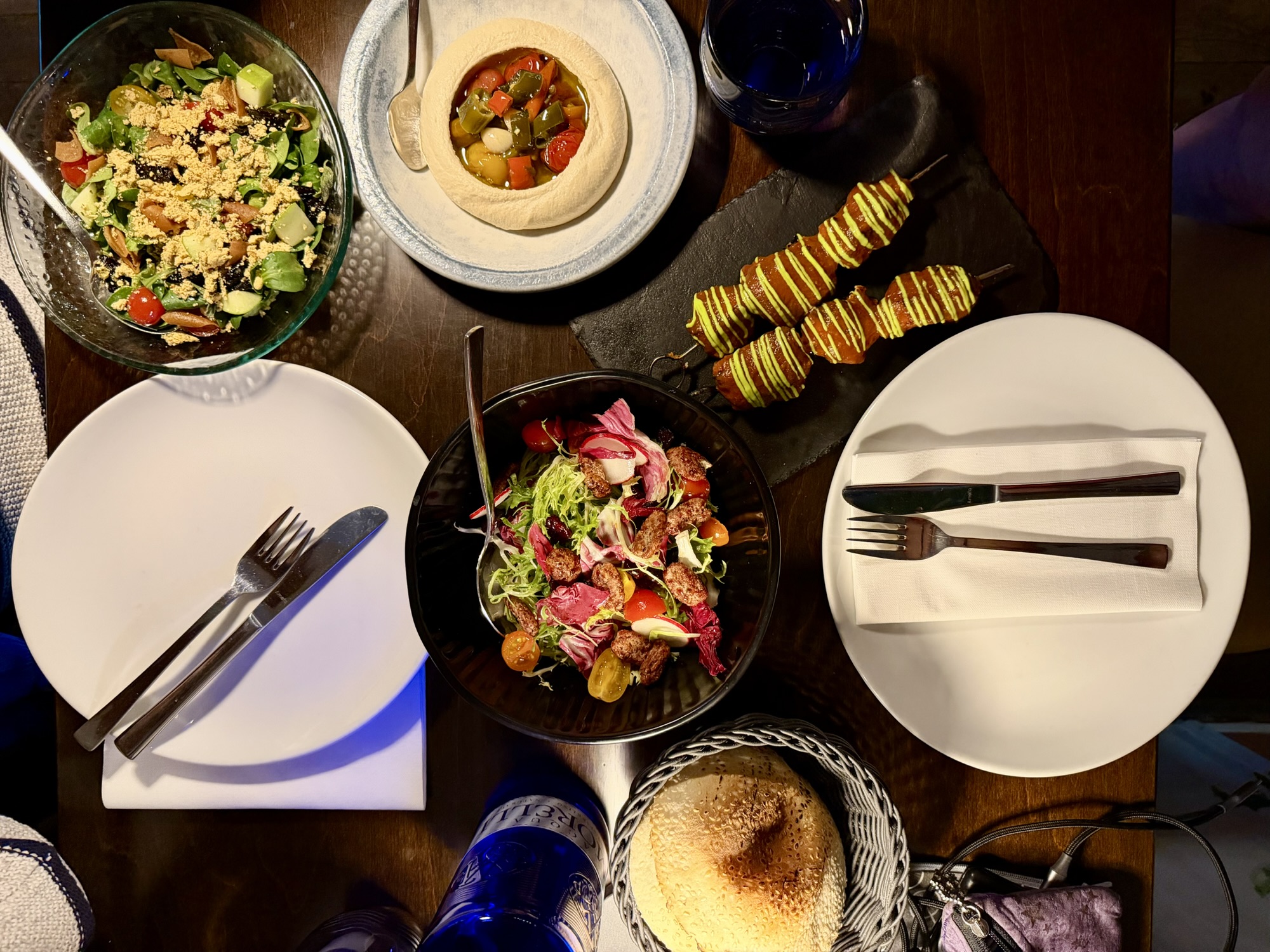
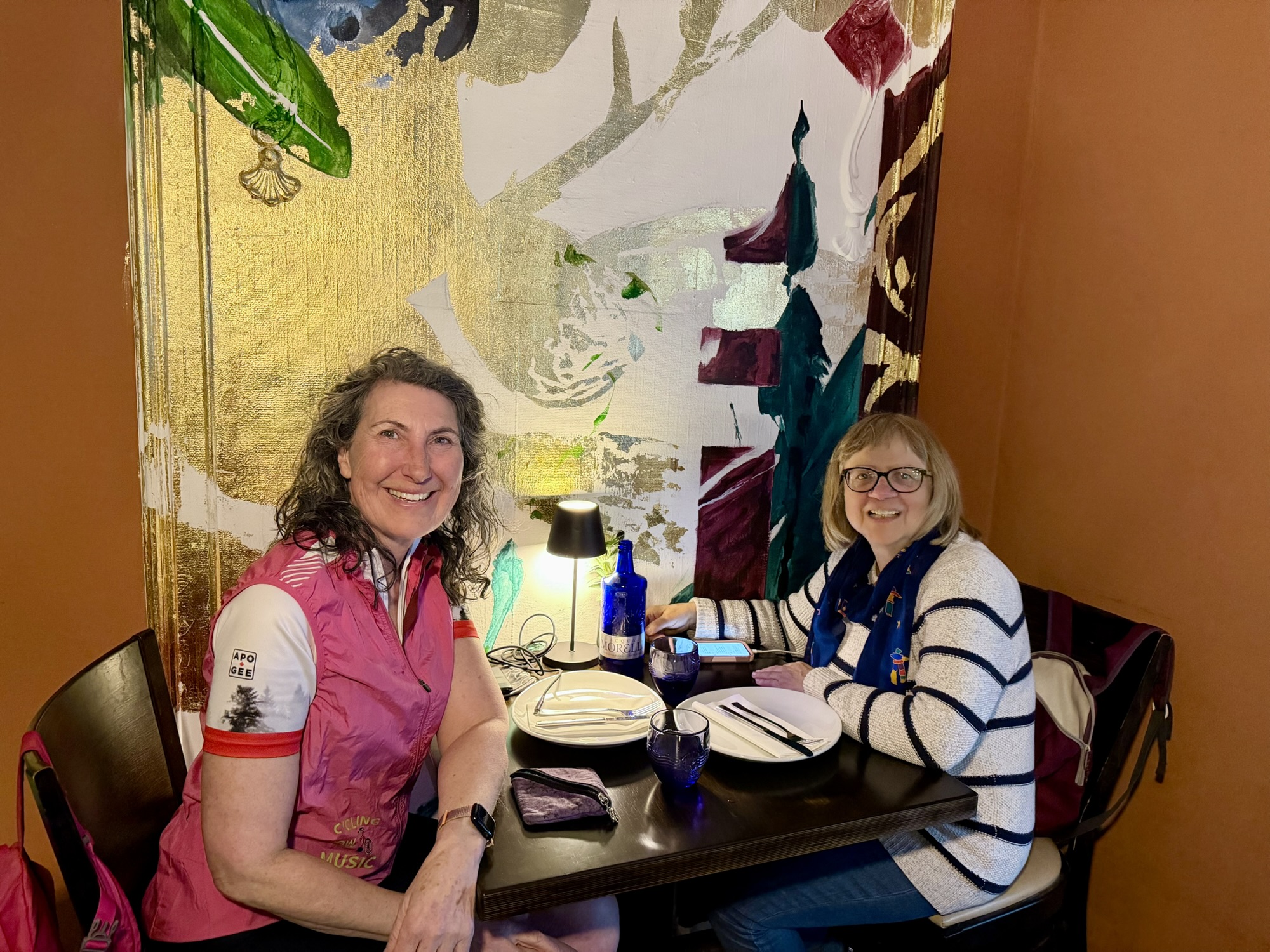
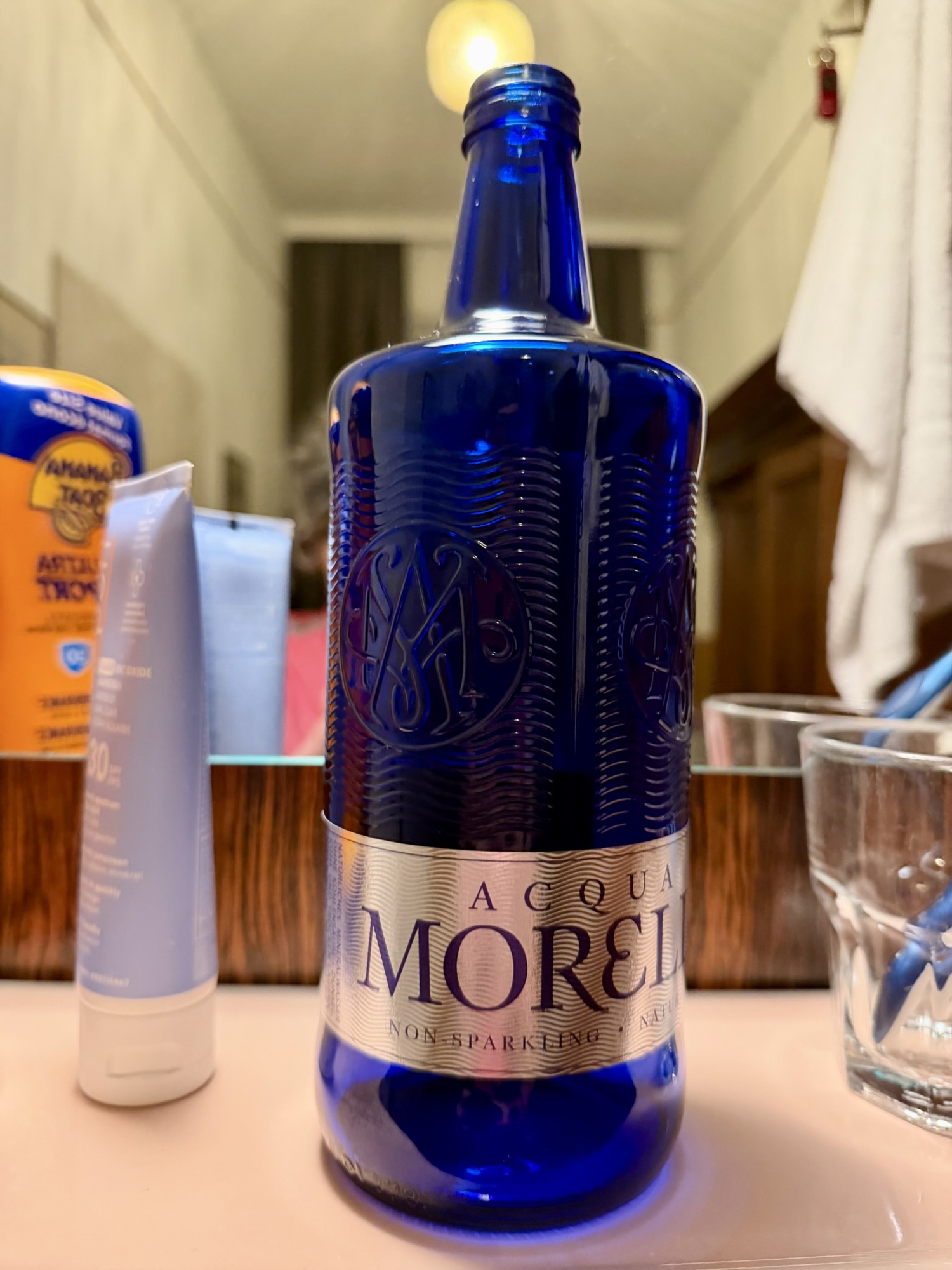
We also accidentally ended up paying for water. Alina asked for water and the waitress asked whether we wanted still or mineral. Alina answered still and the waitress left. I sent to Lina. I think we’re gonna have to pay for that. We should’ve asked for tap water. Alina didn’t think so so we entered into a wager for a euro. In the event, a fancy cobalt blue glass bottle appeared at the table, uncapped, and when the bill was presented, we had been charged €7 for 700 mL of non-sparkling water. I won the wager and we were very careful from then on to order tap water.
Quite a few arterial streets had no cycling infrastructure at all, but traffic was generally light, and they were still quite a few people riding. On streets with lanes reserved for busses, cyclists shared that lane. However, my observation was that most of those riding were the “Strong and Fearless” type of cyclists. Roger Geller, from the Portland Department of Transportation defined four types of cyclists:
- Strong and the Fearless
- Enthused and Confident
- Interested but concerned
- No way, no how
This first page of the report had this quotation: “Riding a bicycle should not require bravery. Yet, all too often, that is the perception among cyclists and non-cyclists alike.” To a great extent it requires bravery to ride a bike in Brampton, and Berlin had a similar feel.
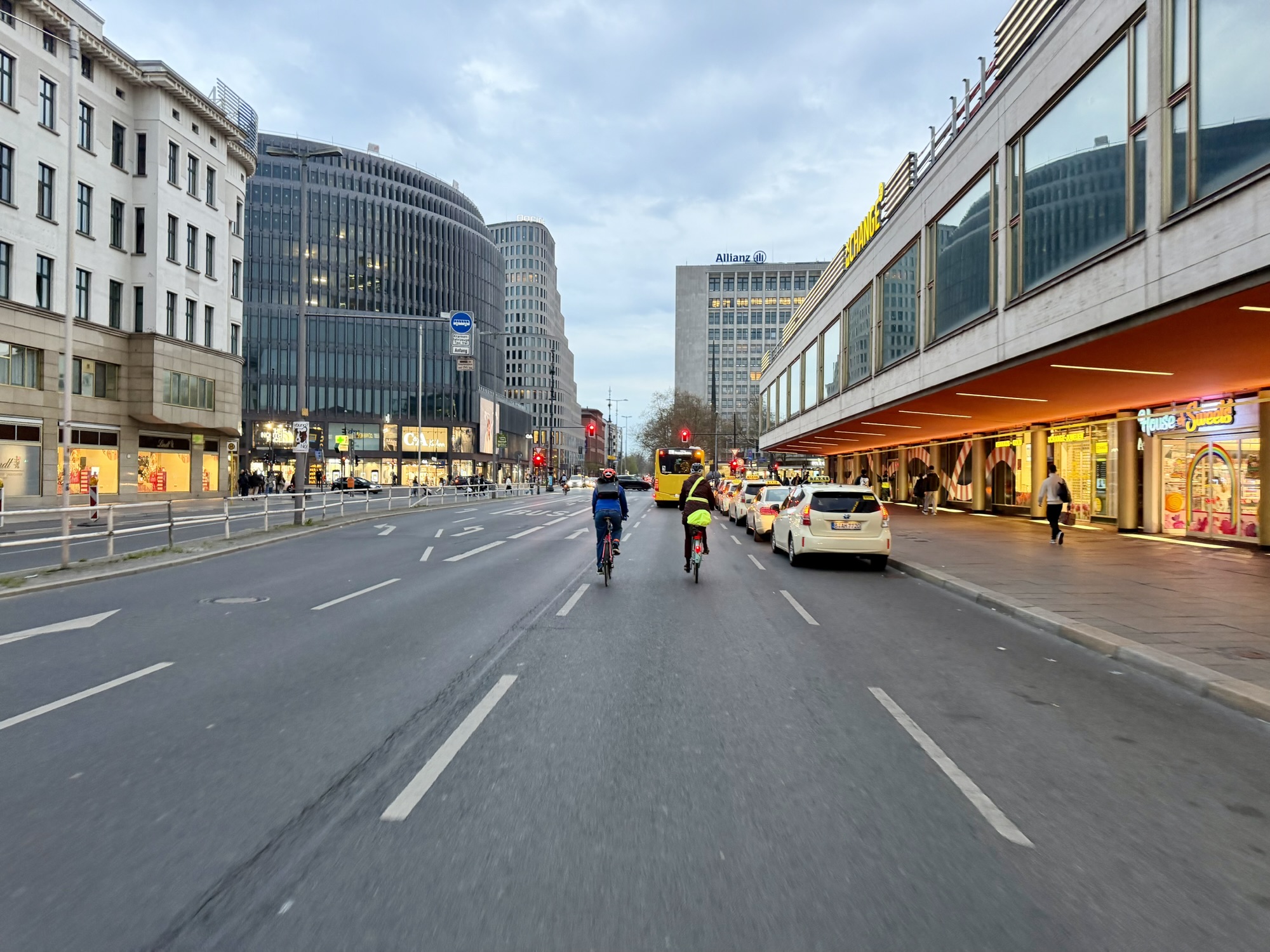
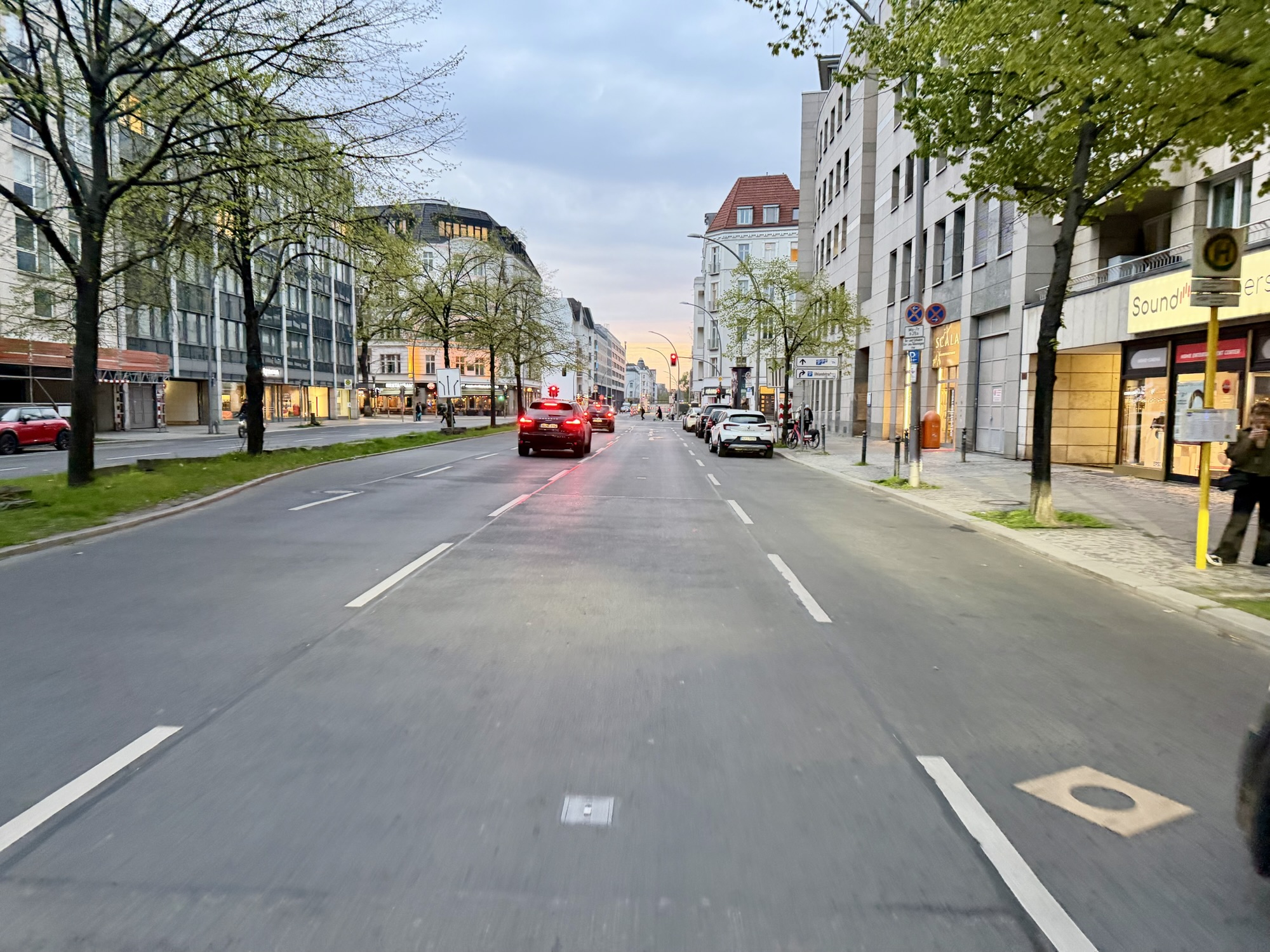
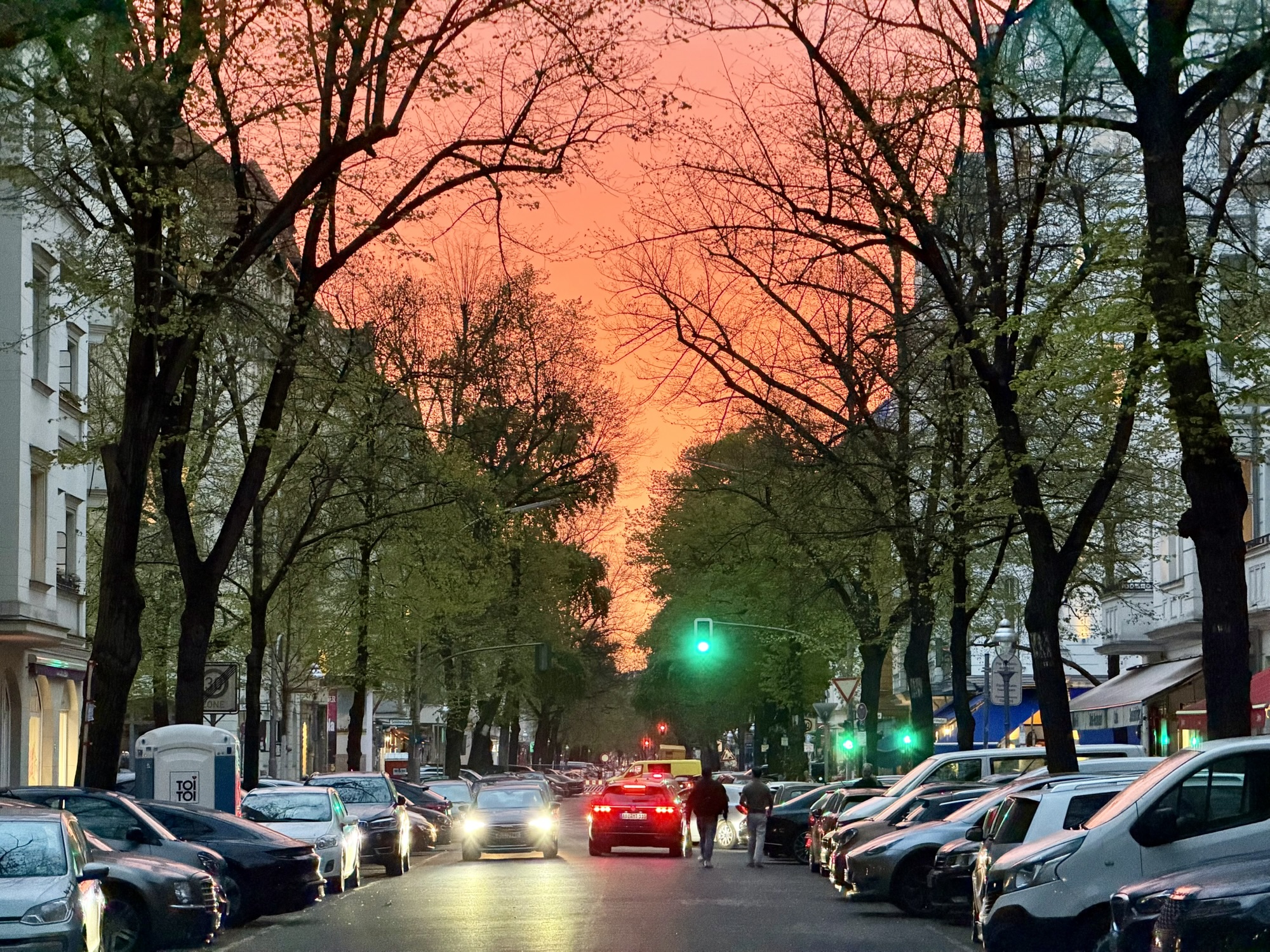
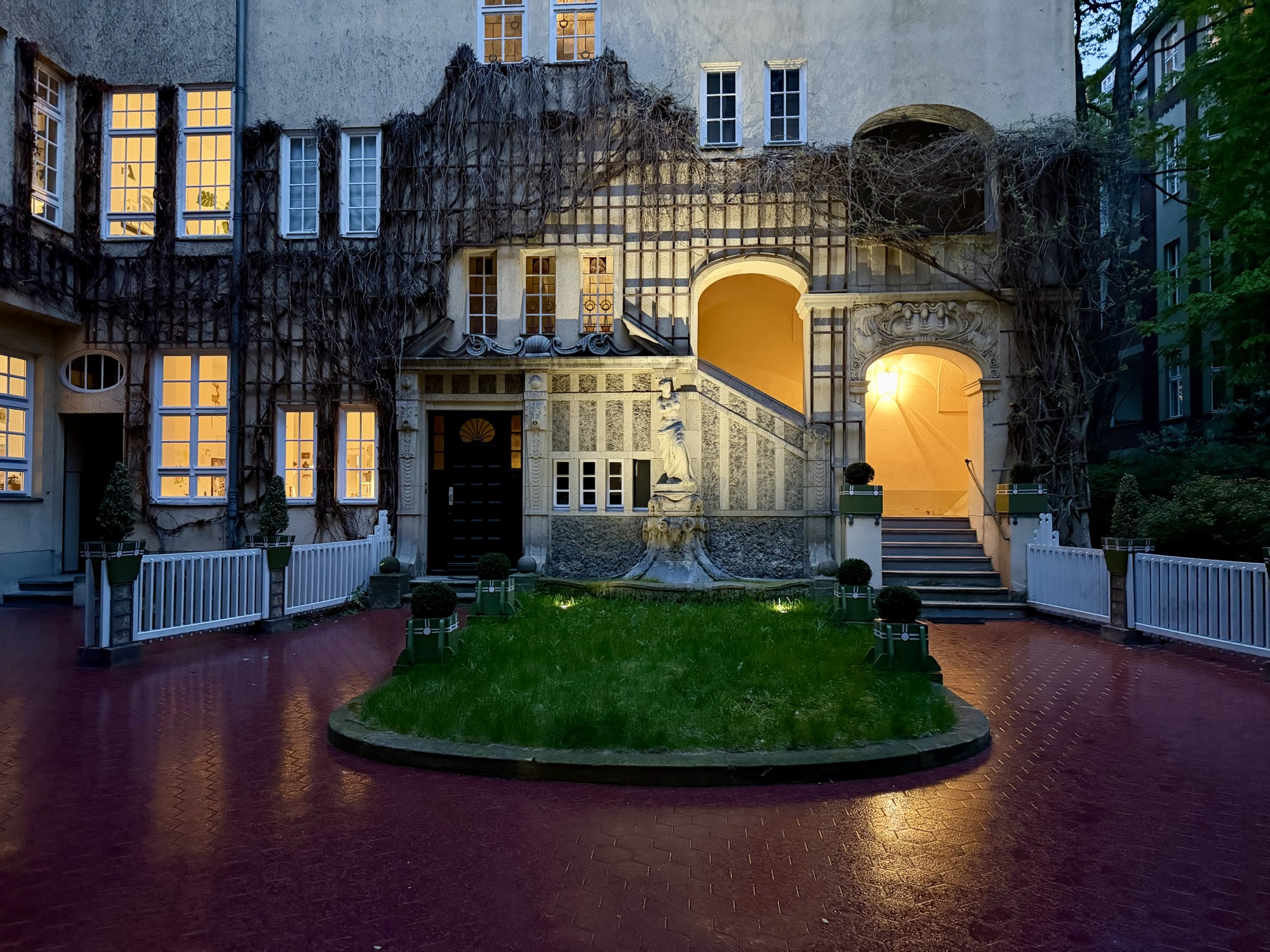
There was a beautiful sunset as we arrived back at our guest house which had a peaceful courtyard where we locked up our bikes for the night.
Since we paid so much for the water, I brought the bottle back with me as a souvenir.
Discover more from Lisa Stokes
Subscribe to get the latest posts sent to your email.