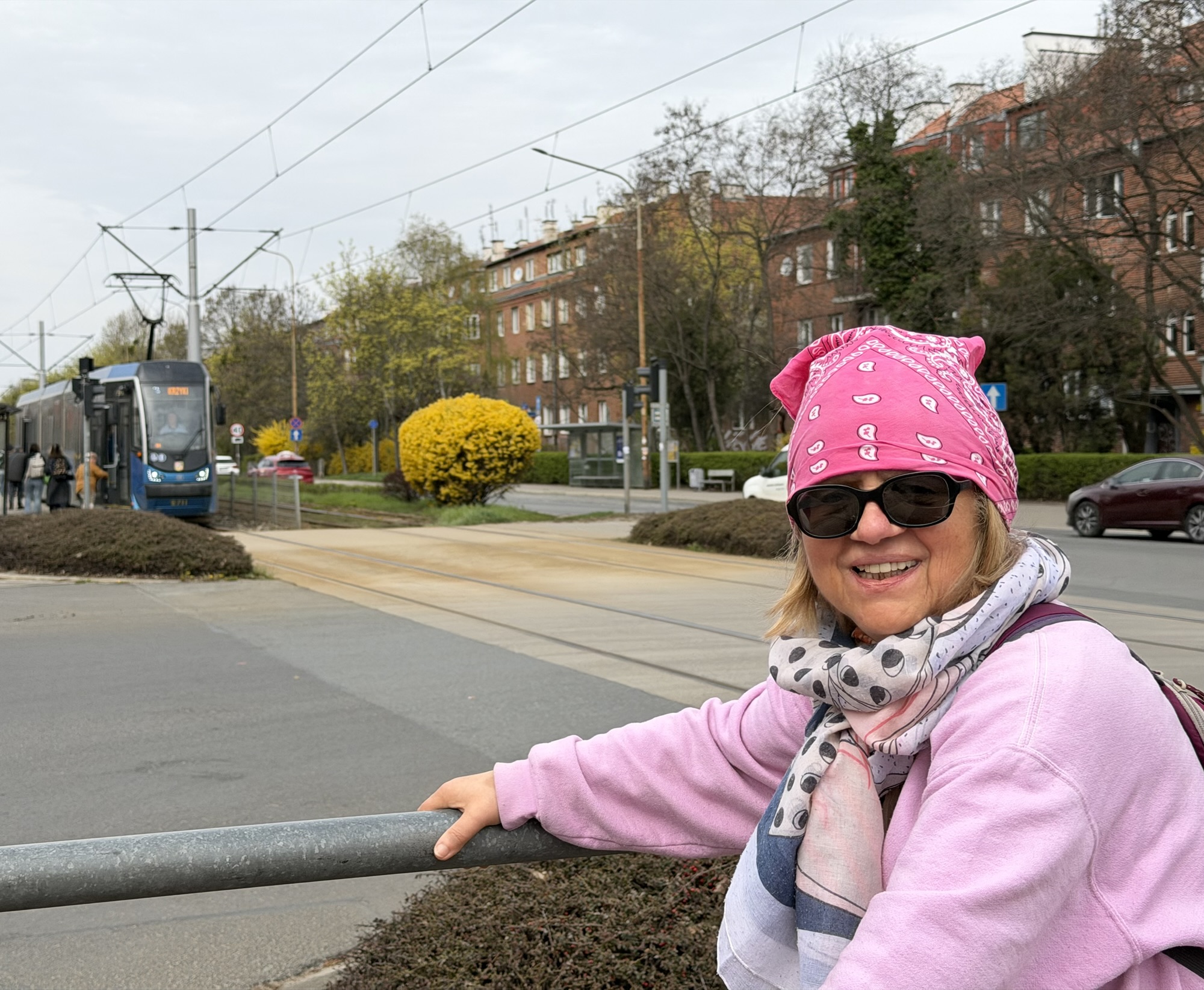
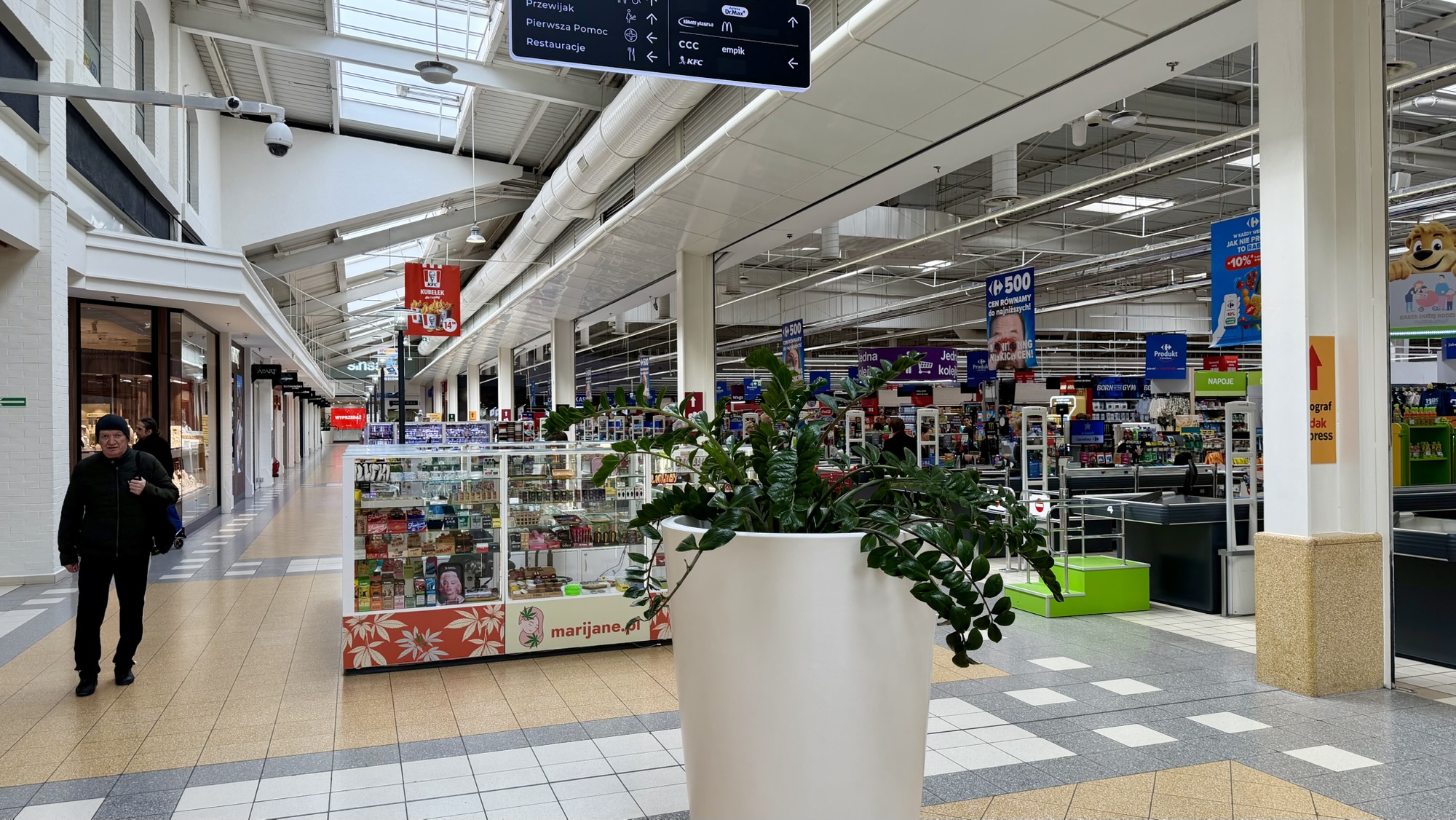
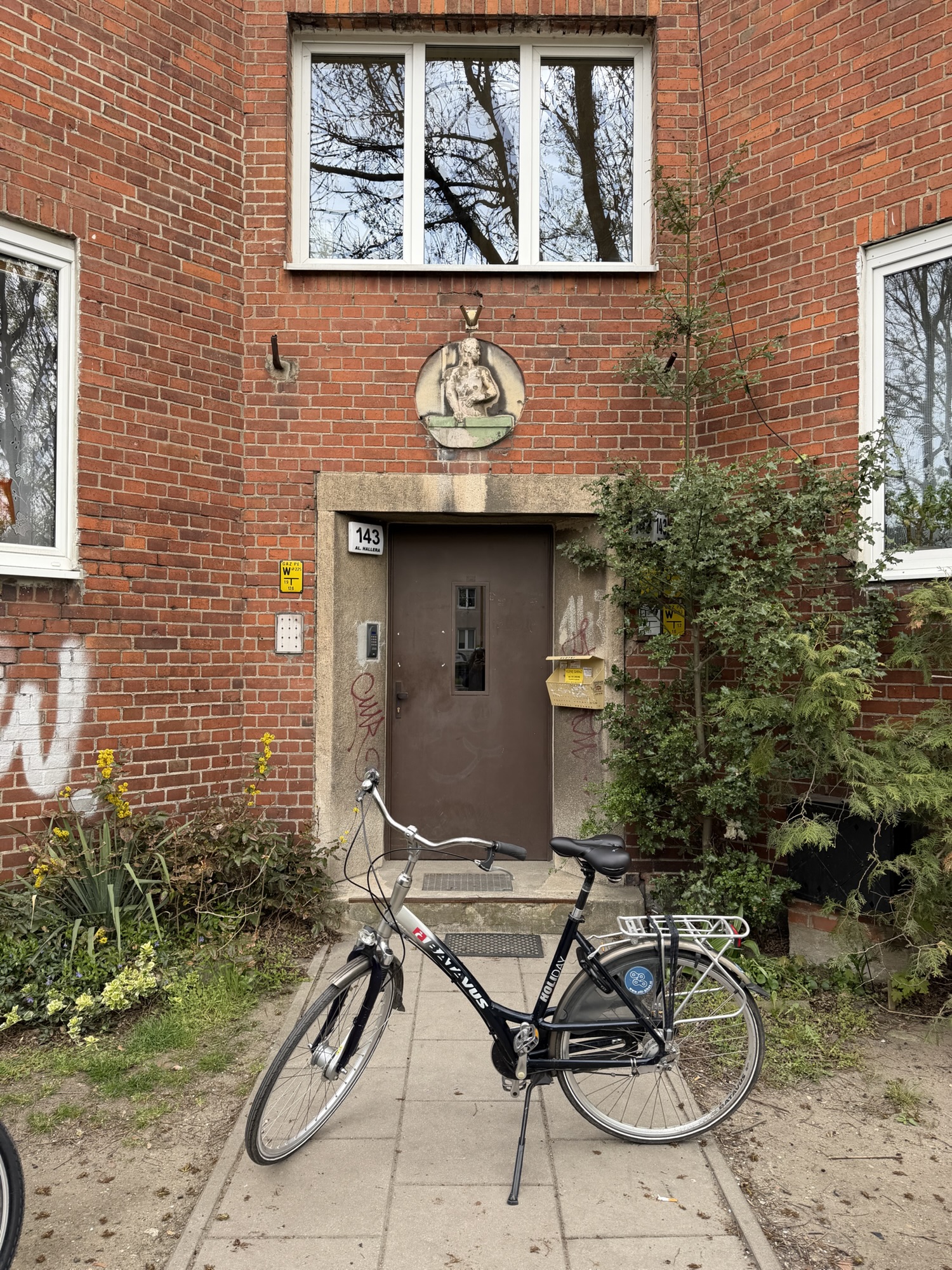
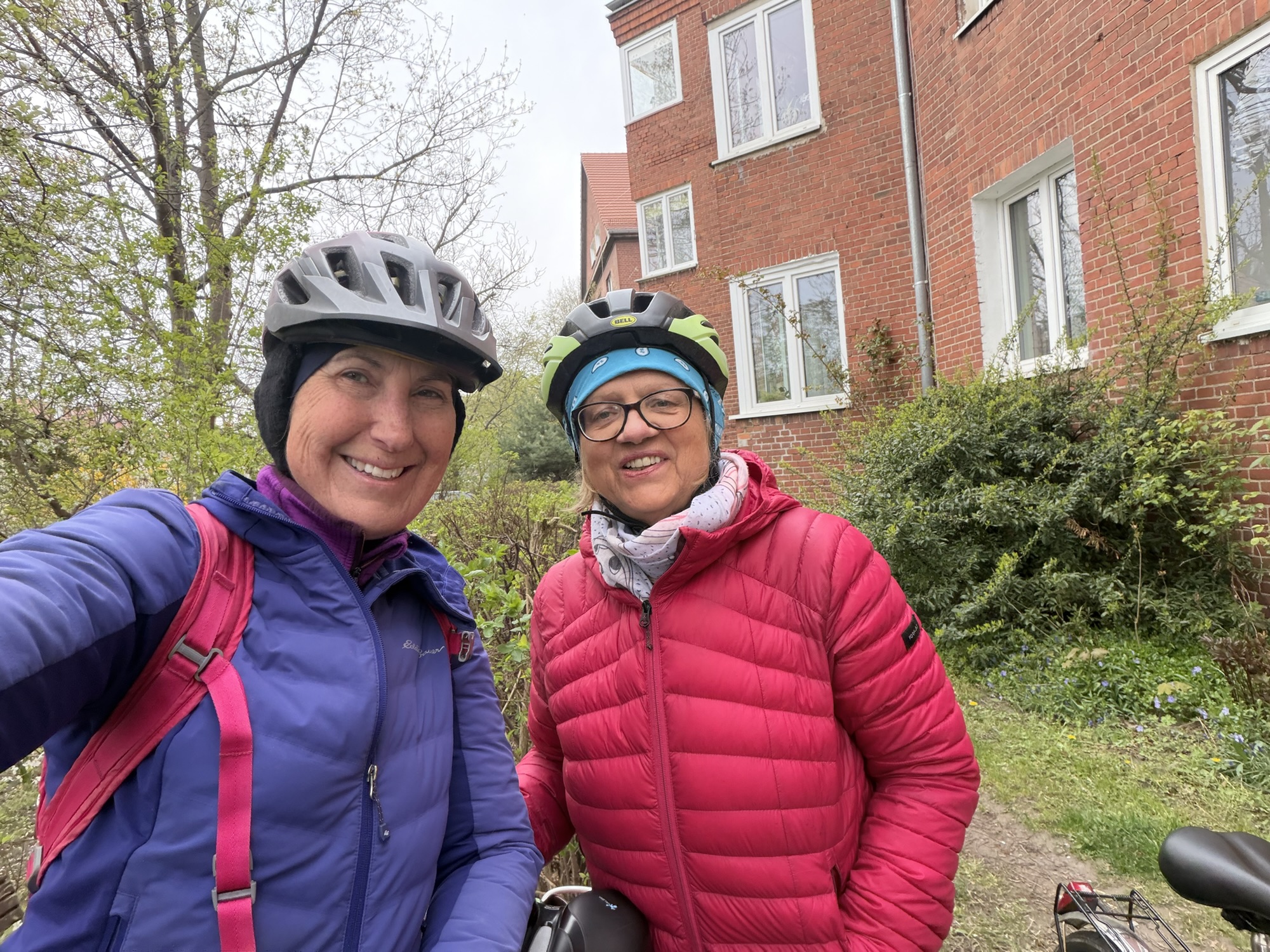
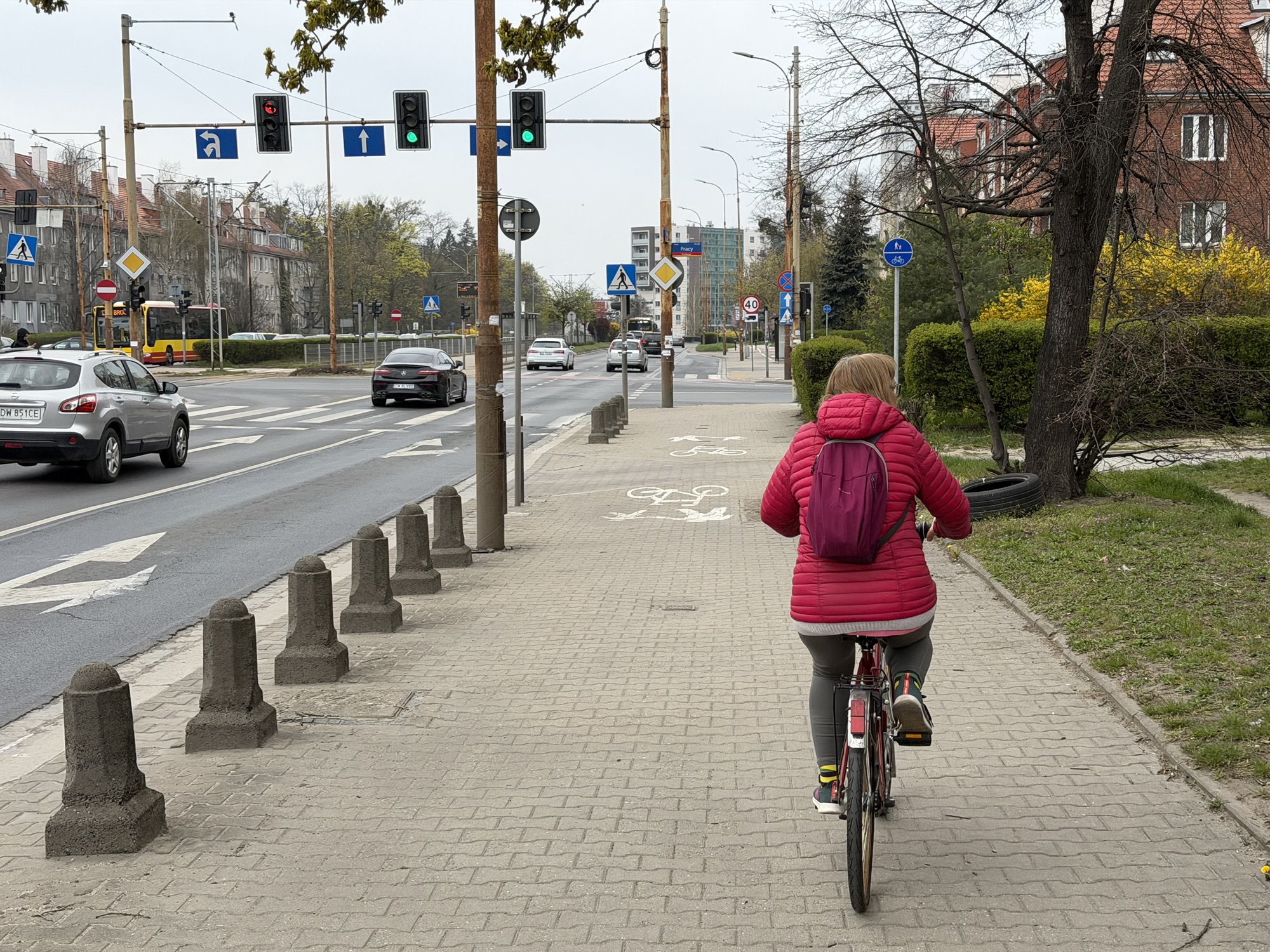
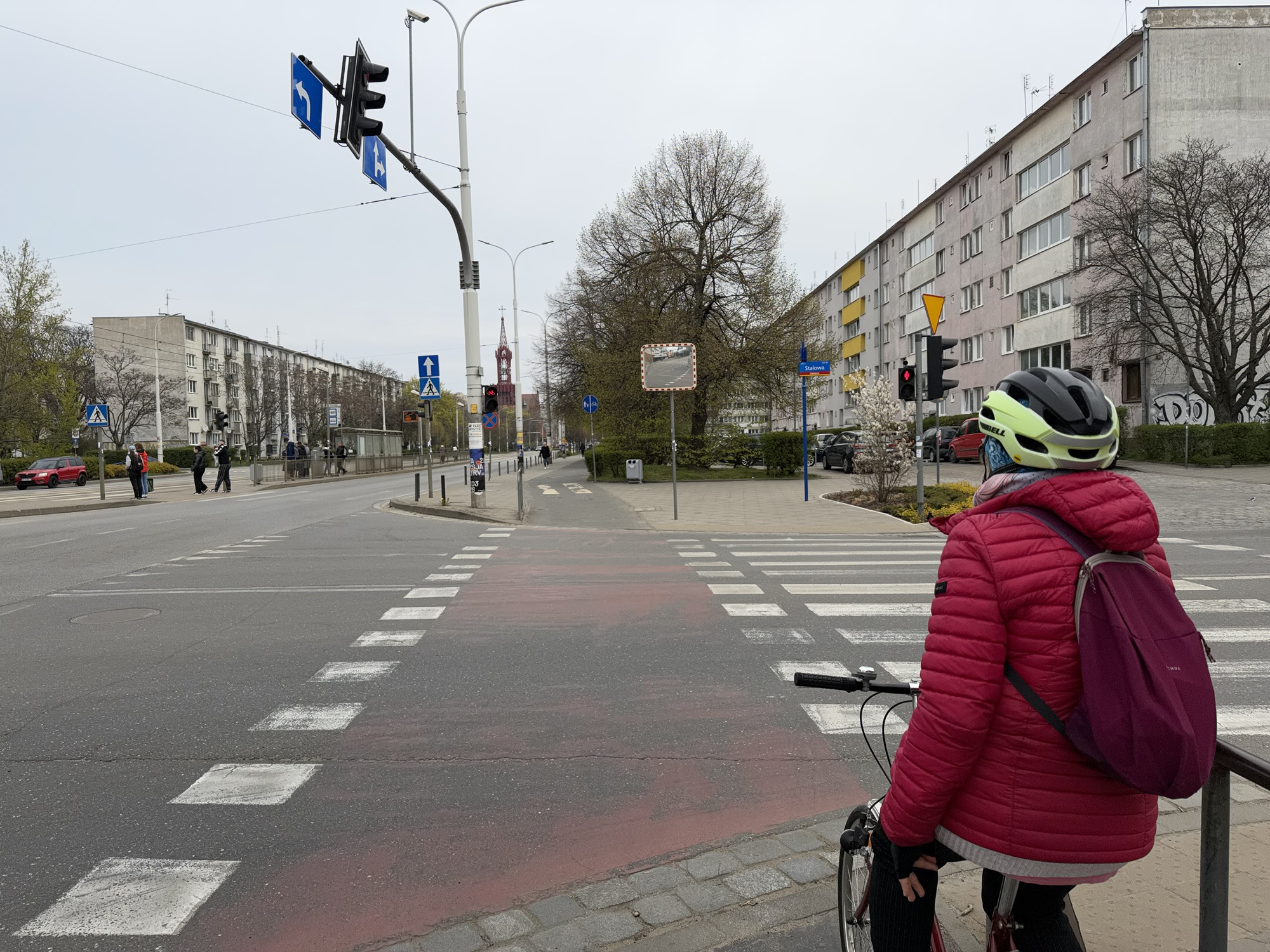
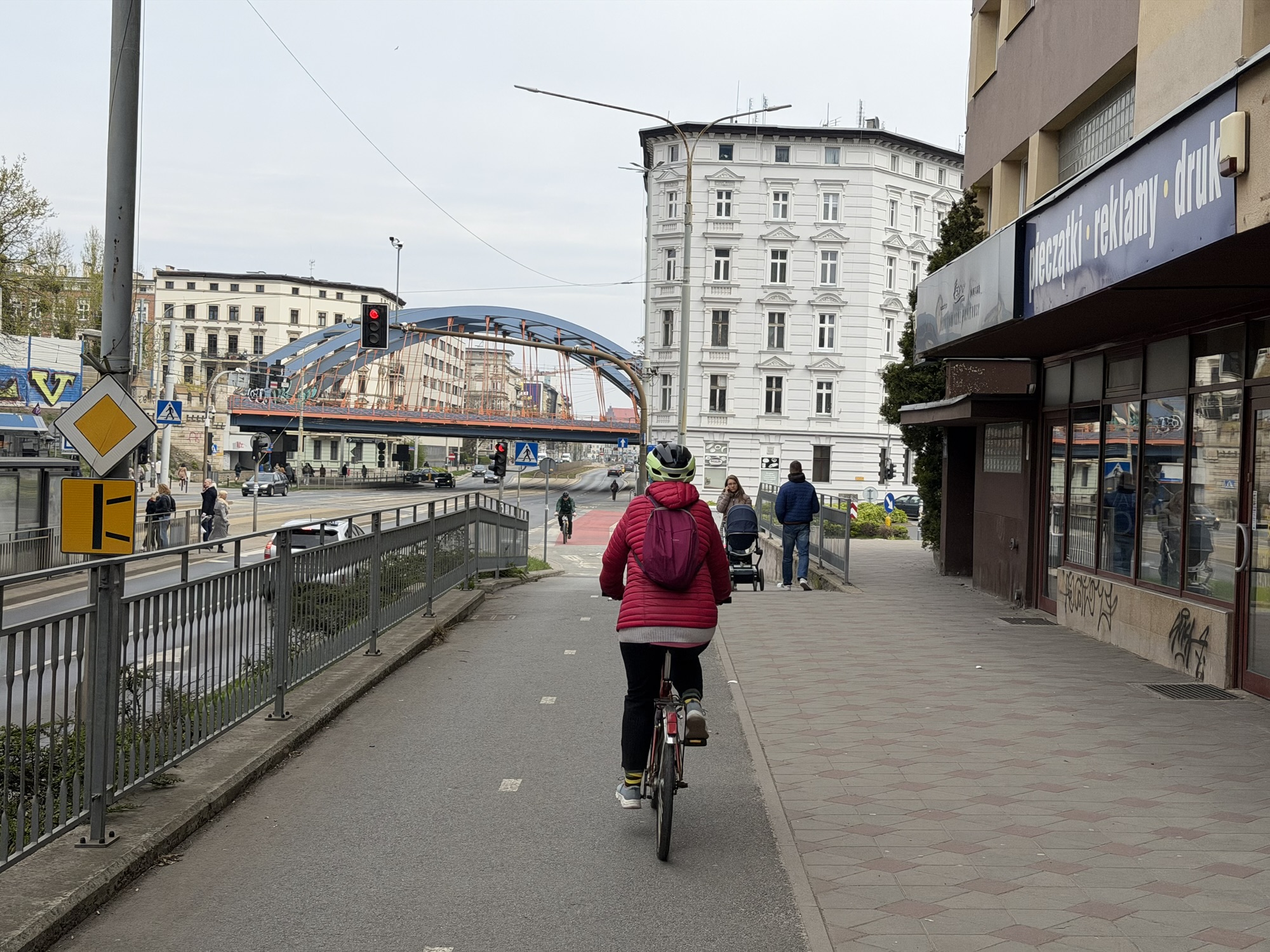
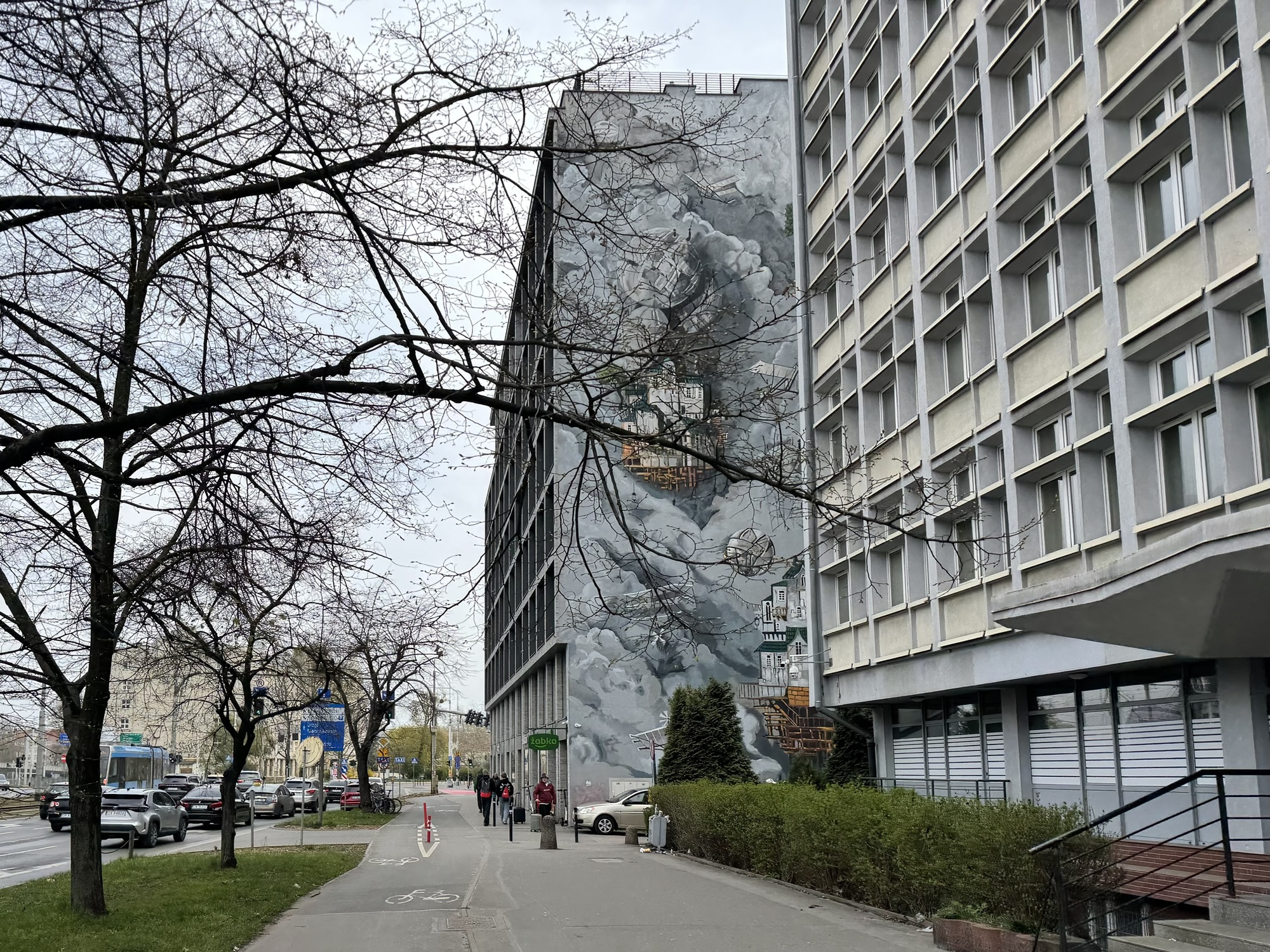
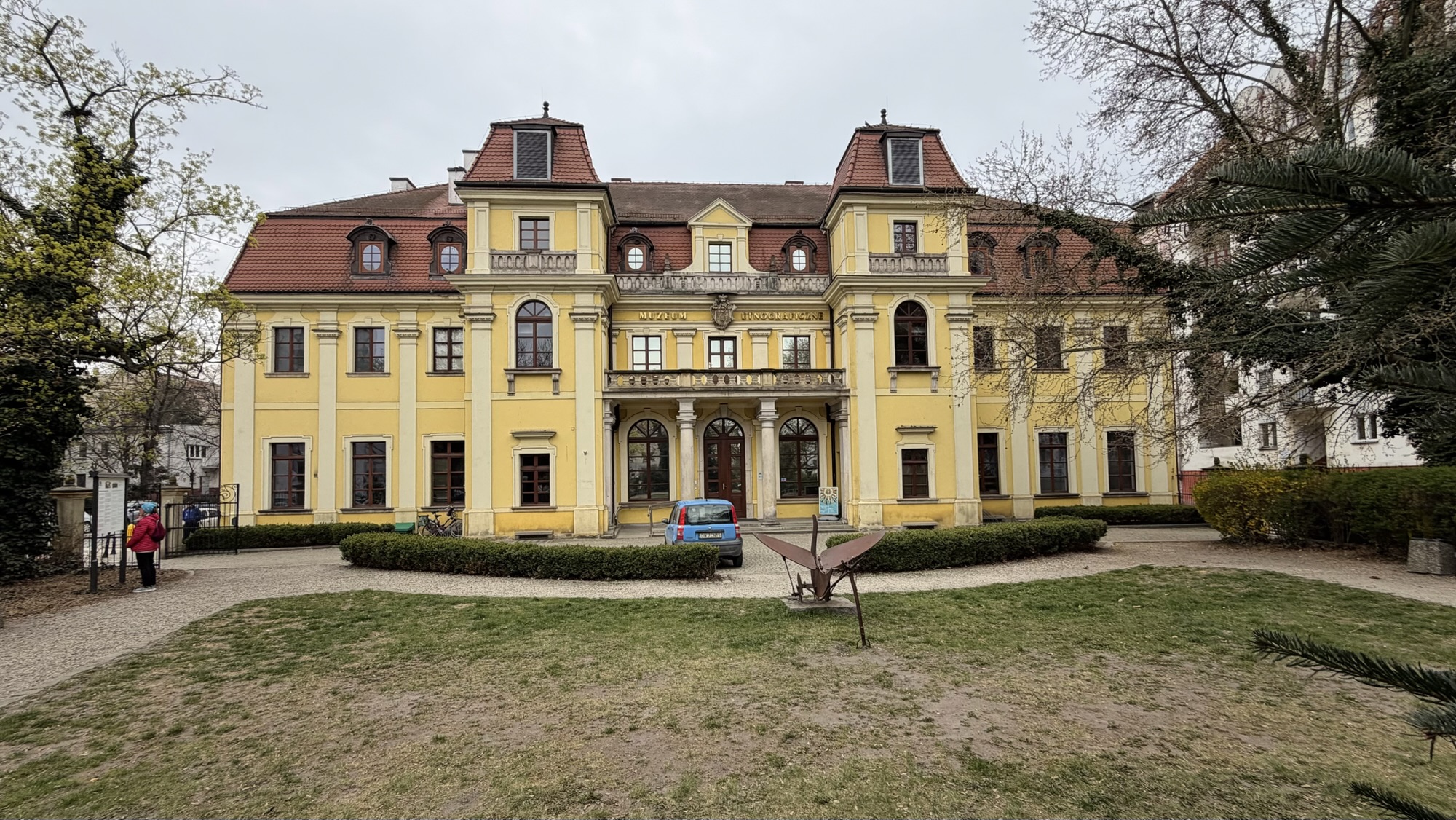
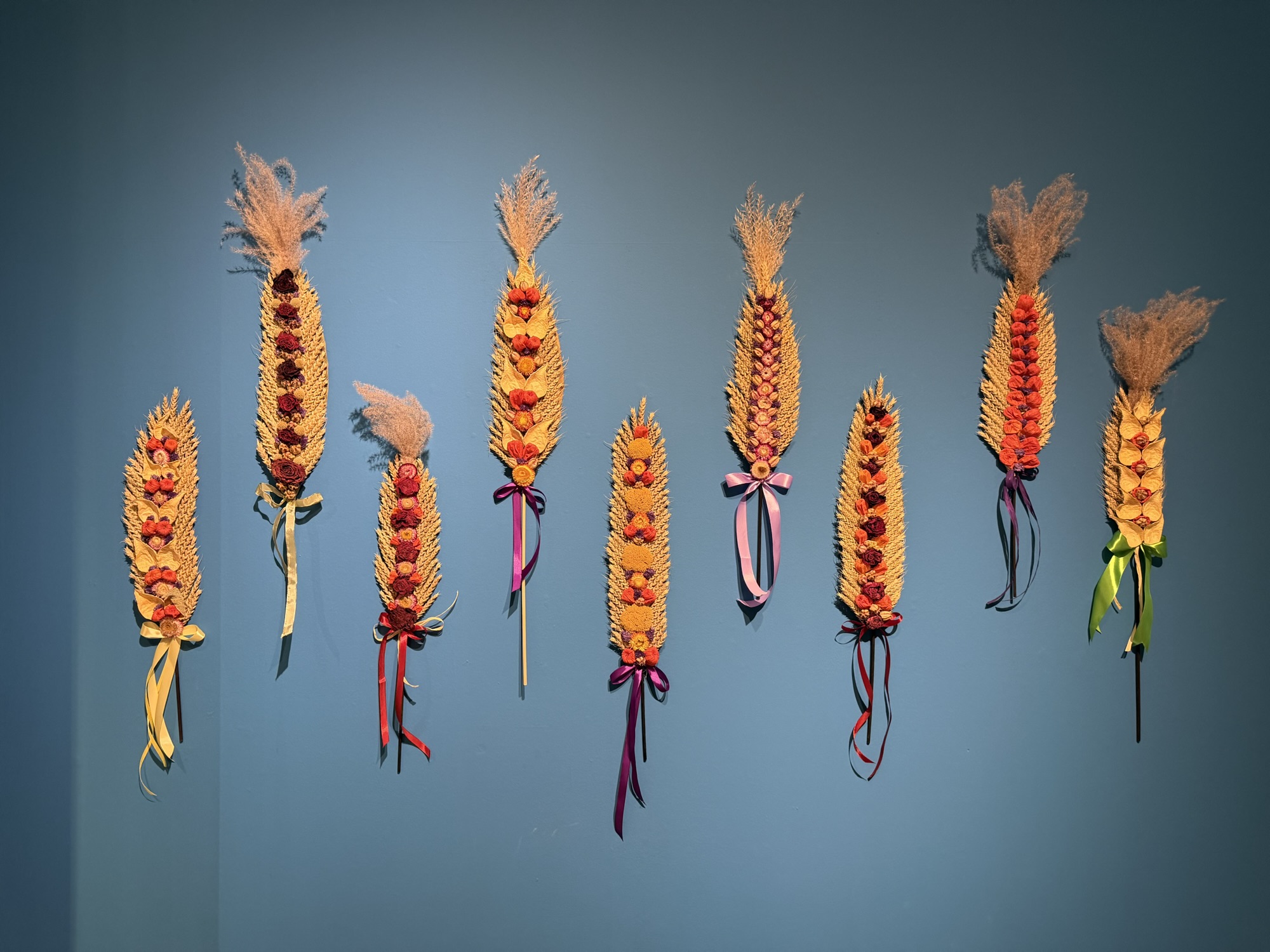
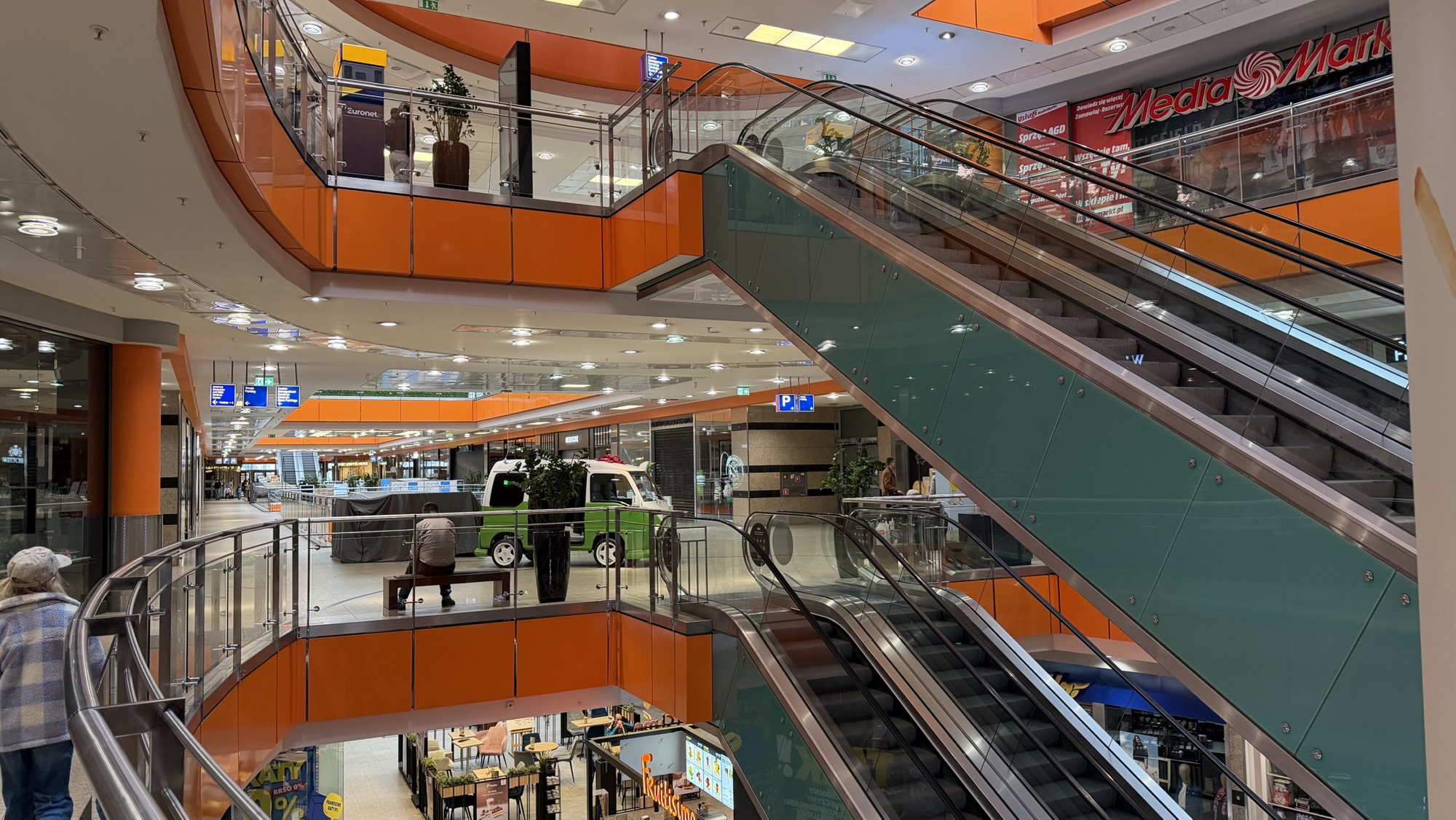
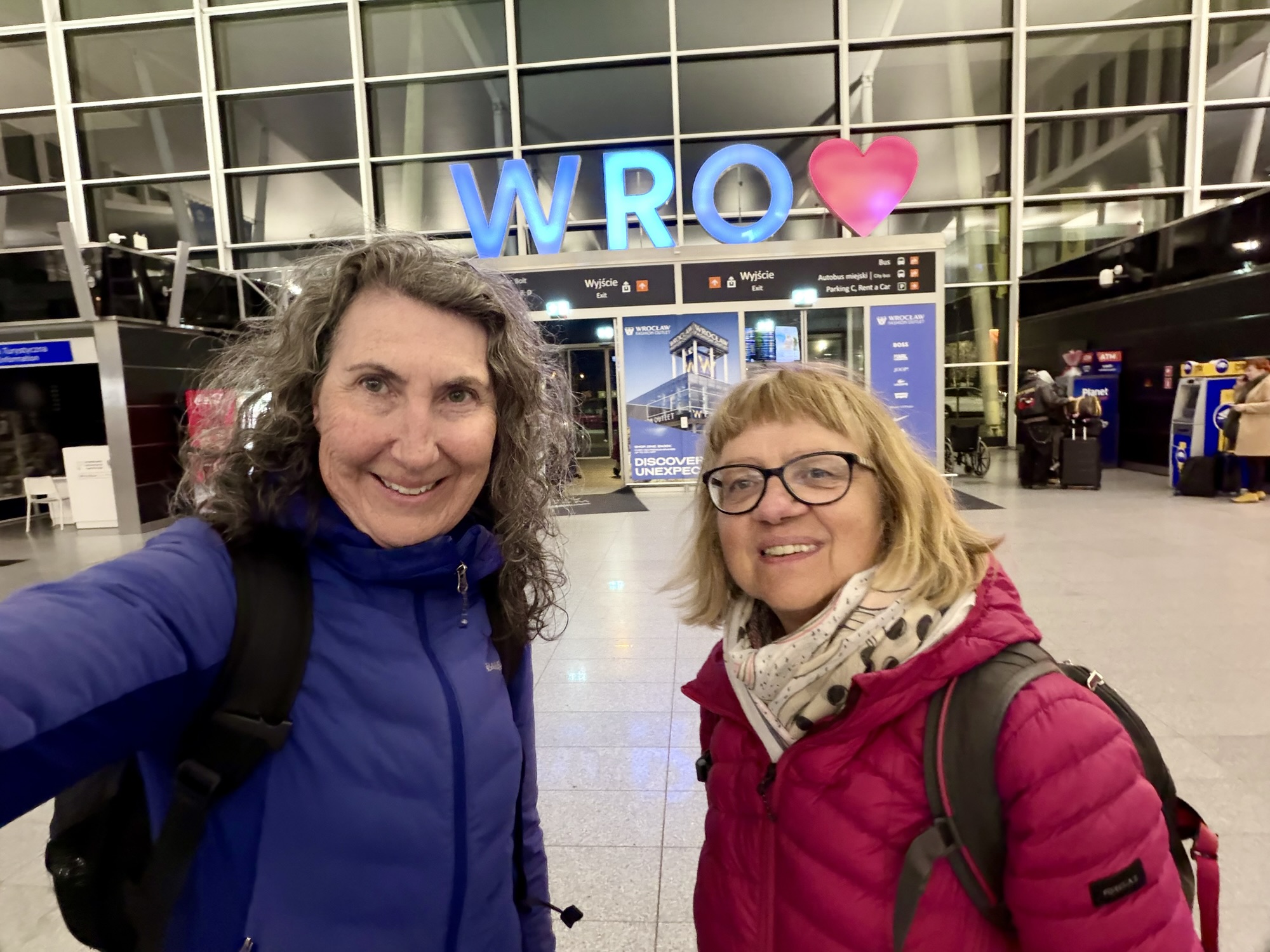
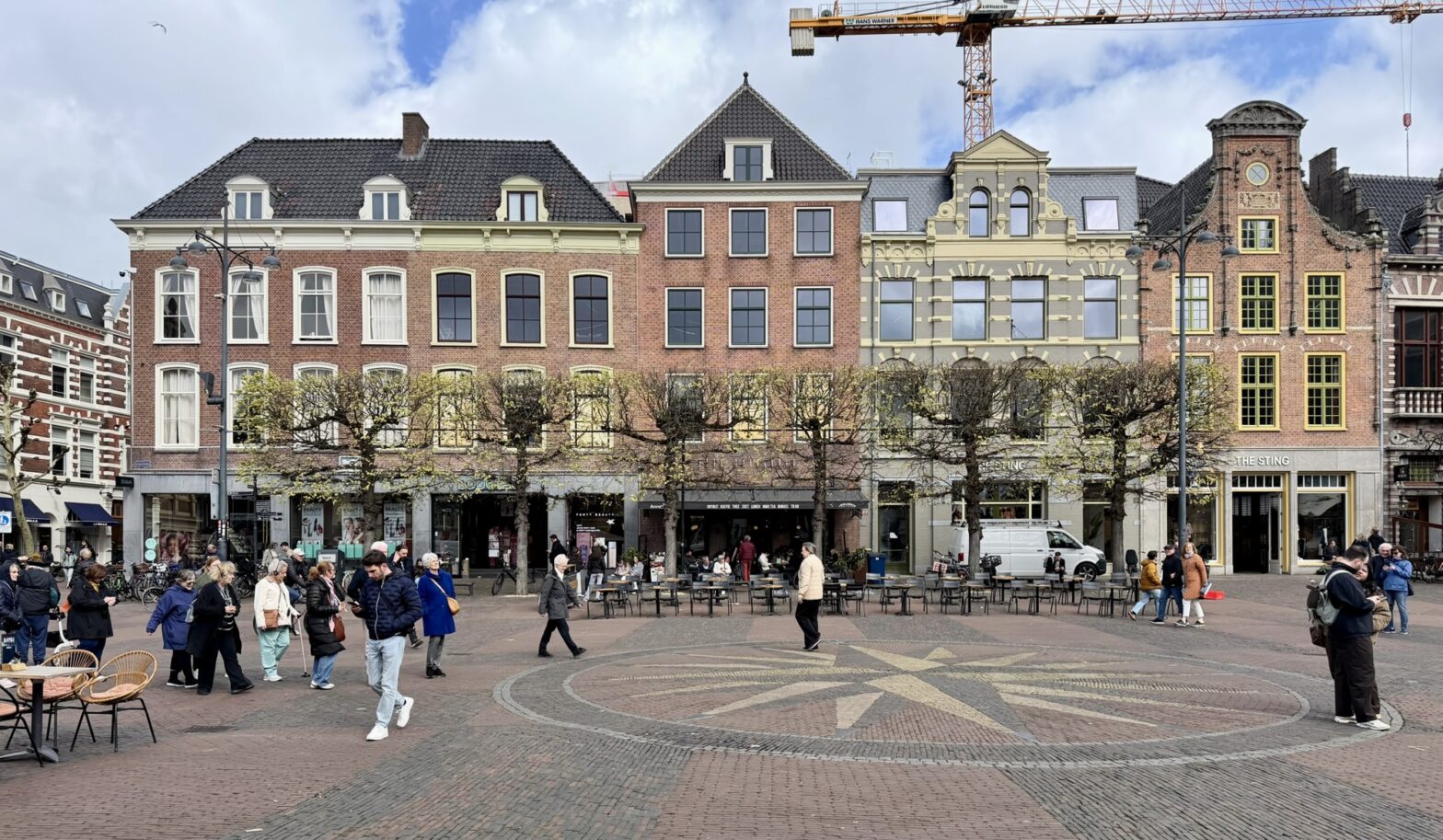
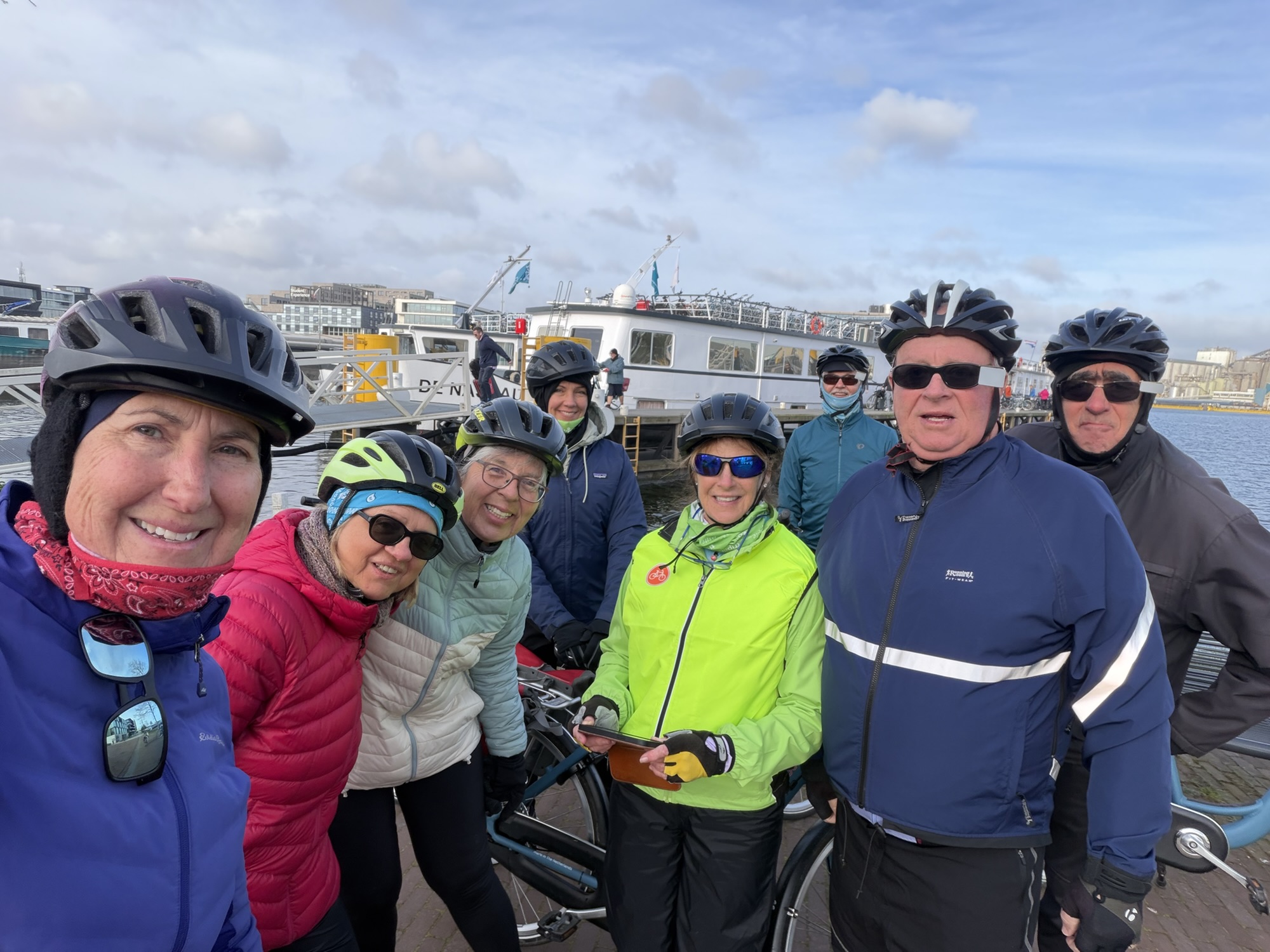
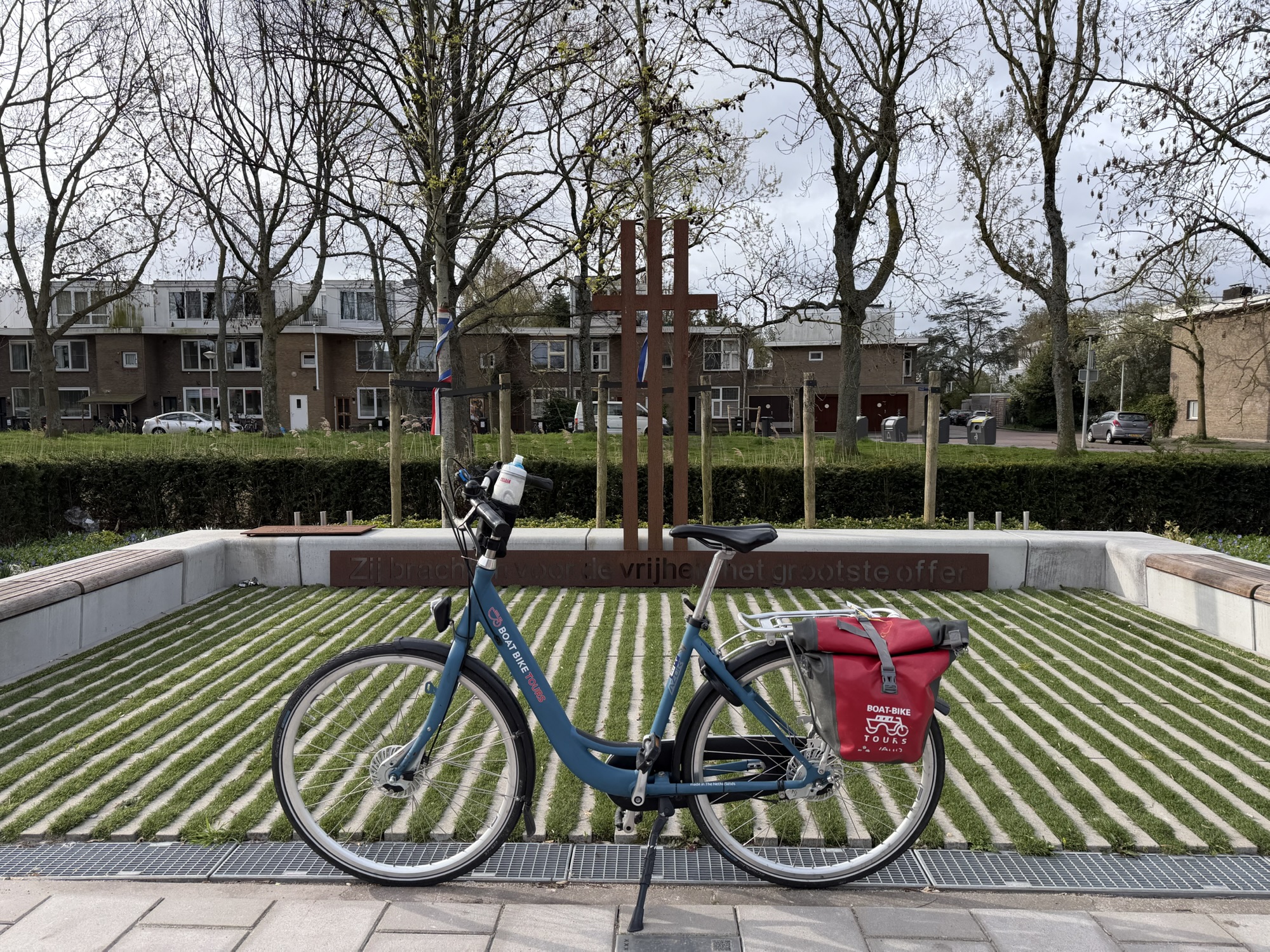
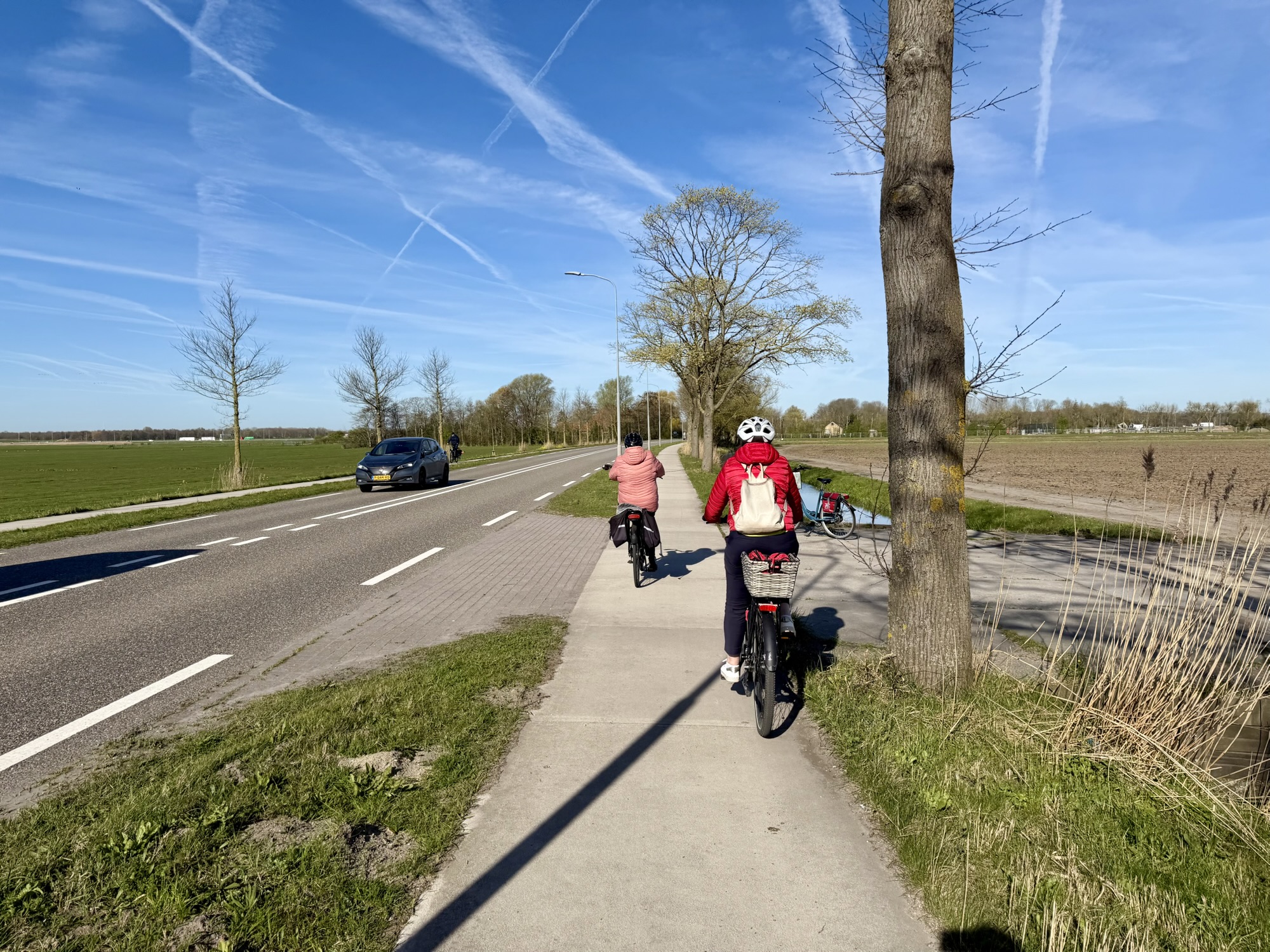
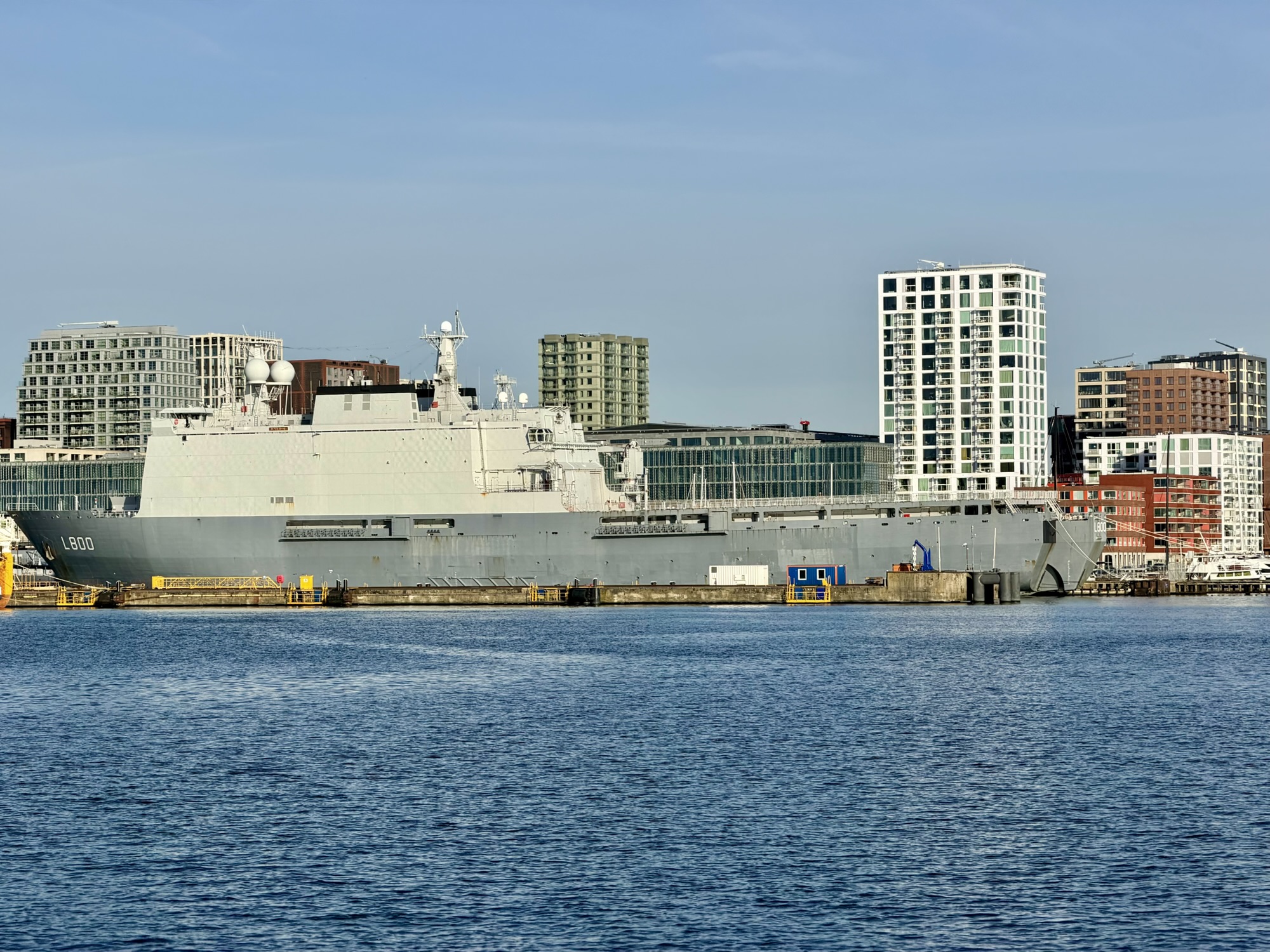
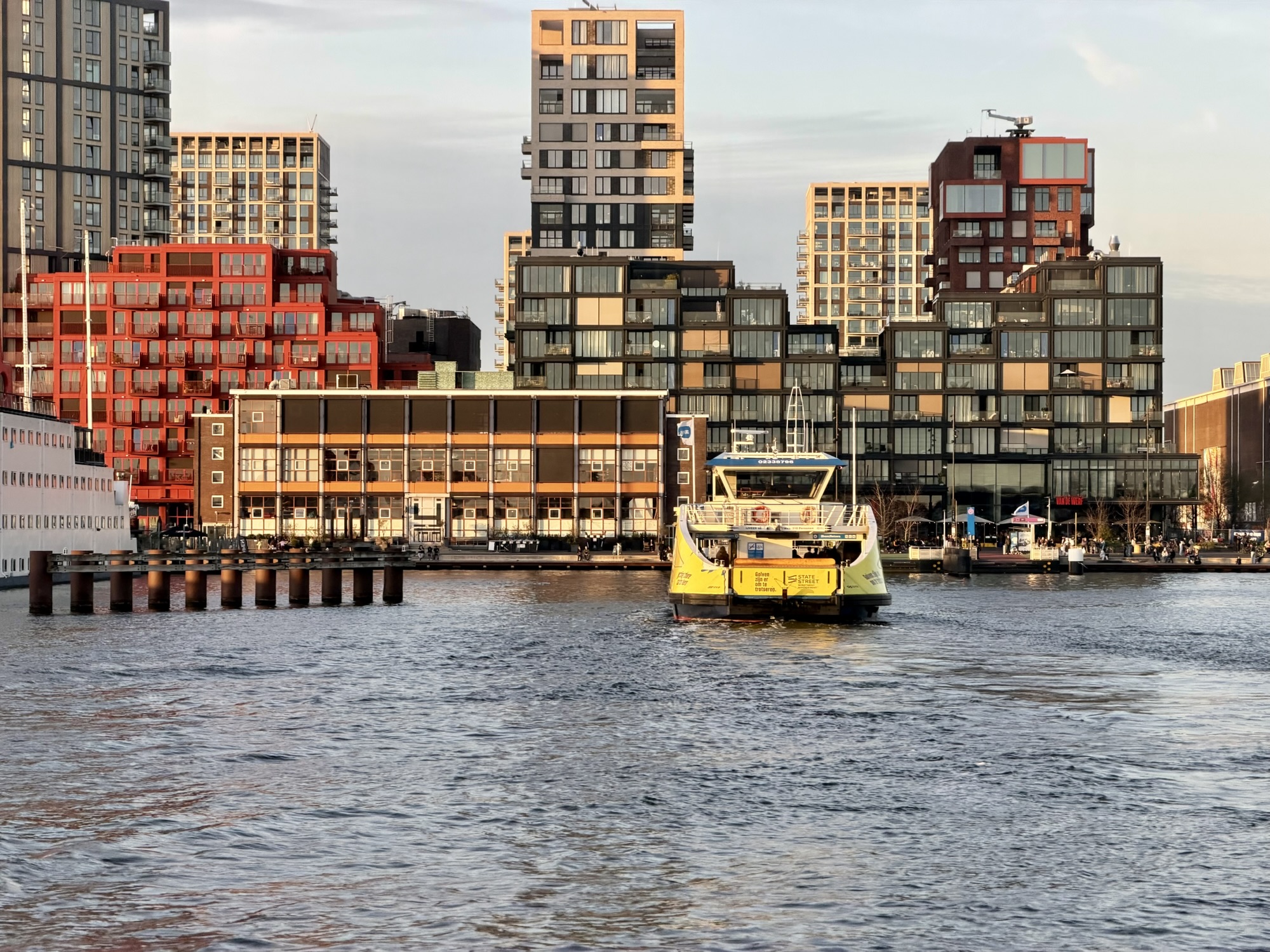
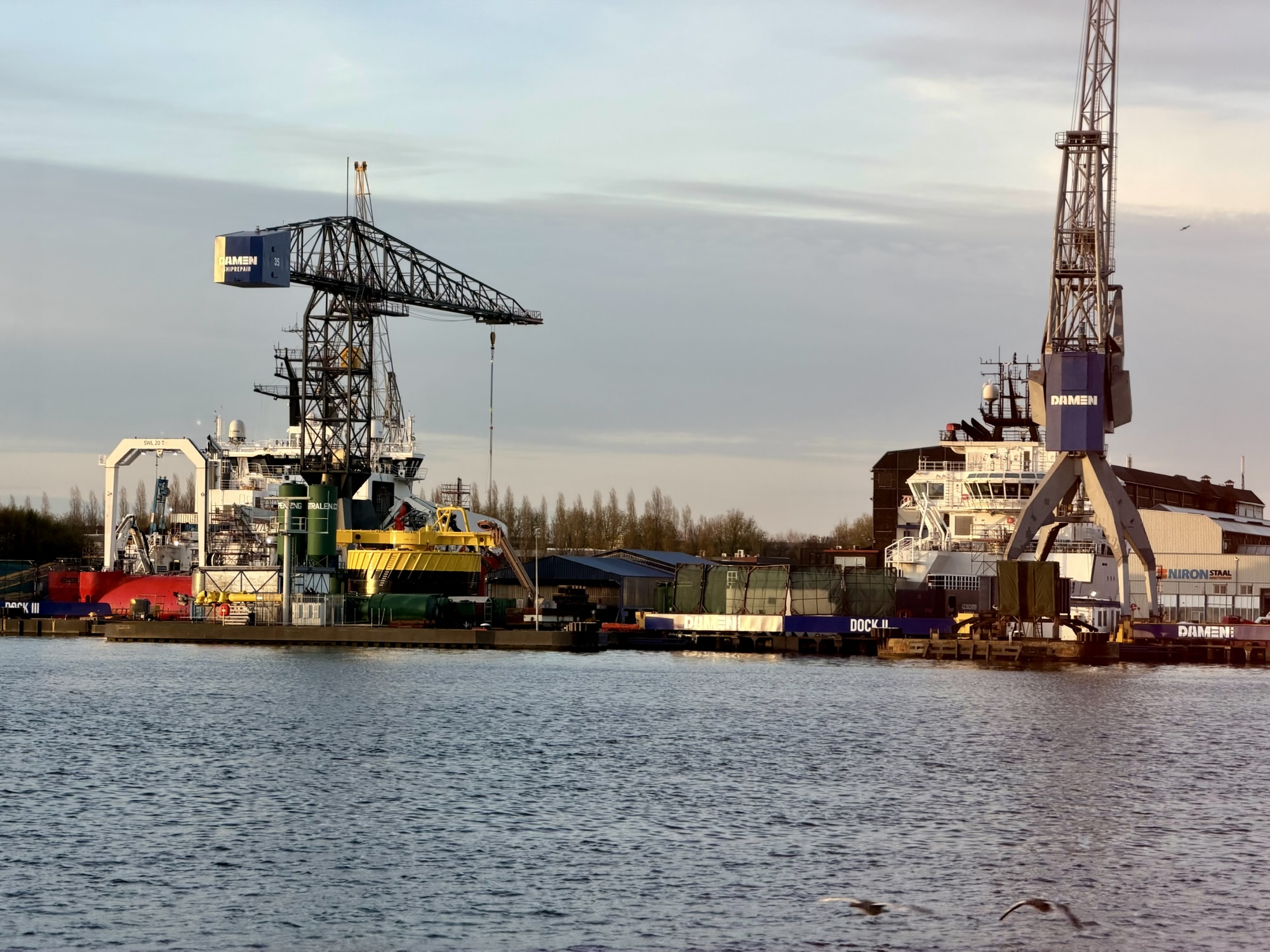
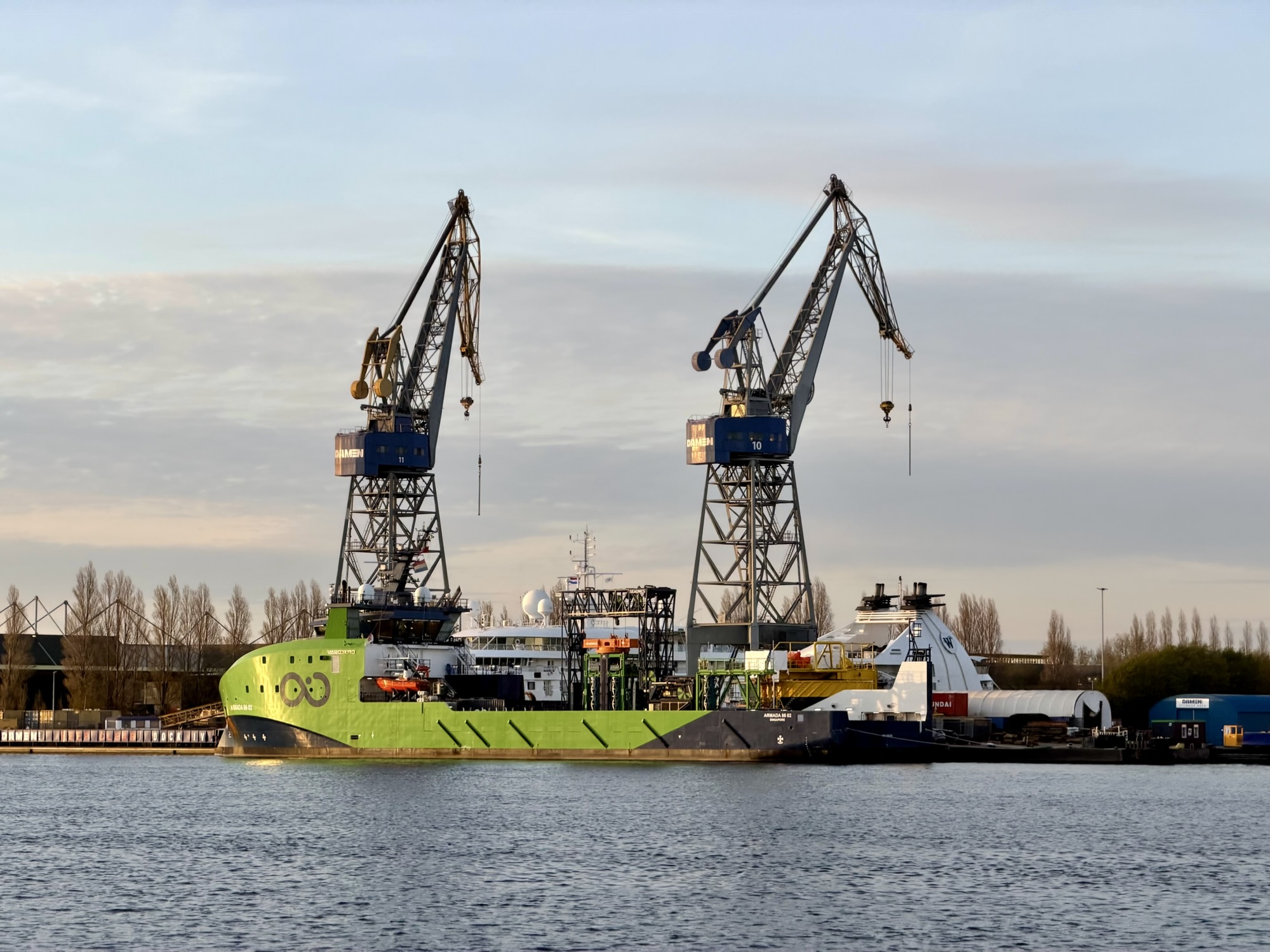
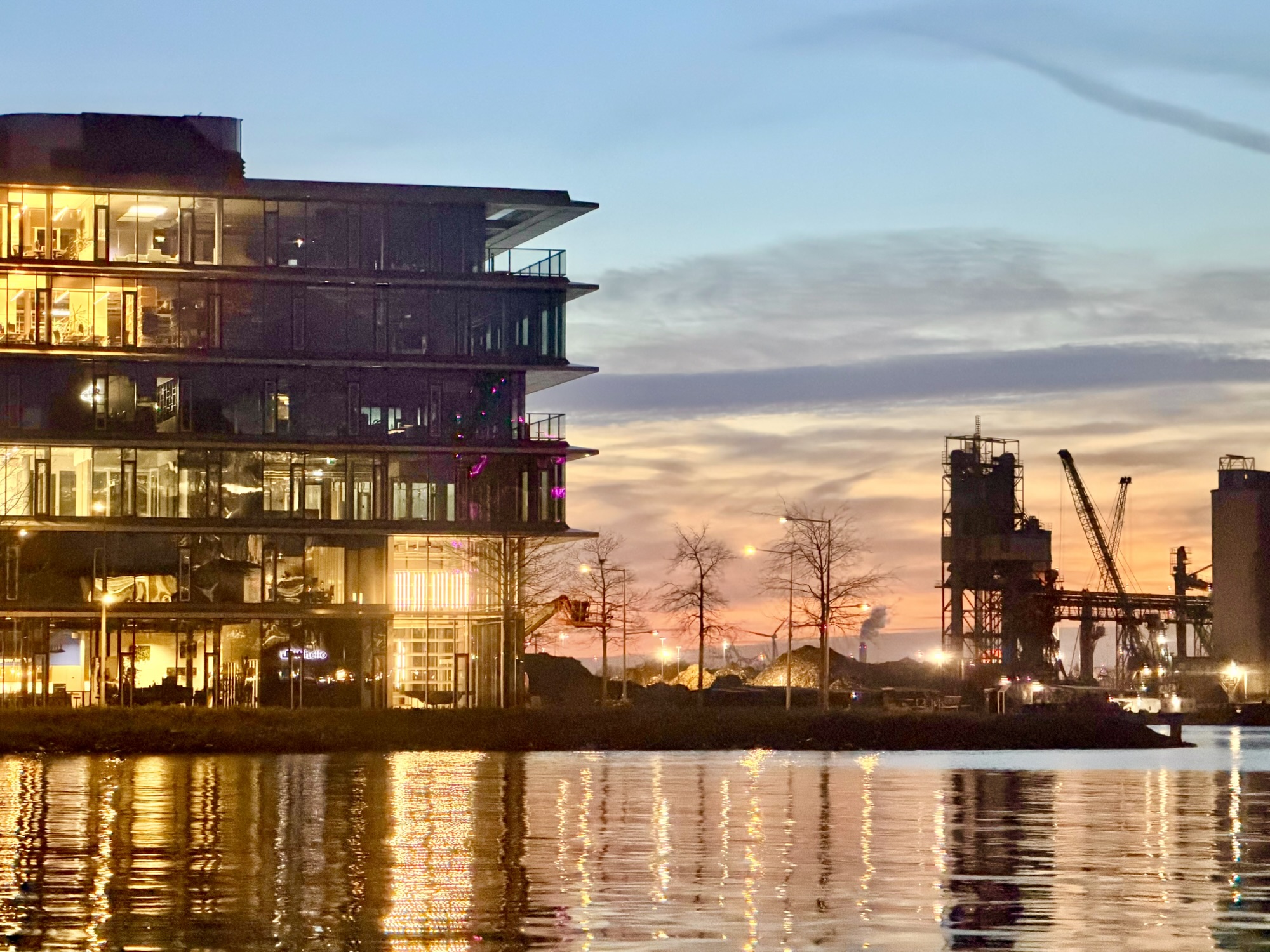
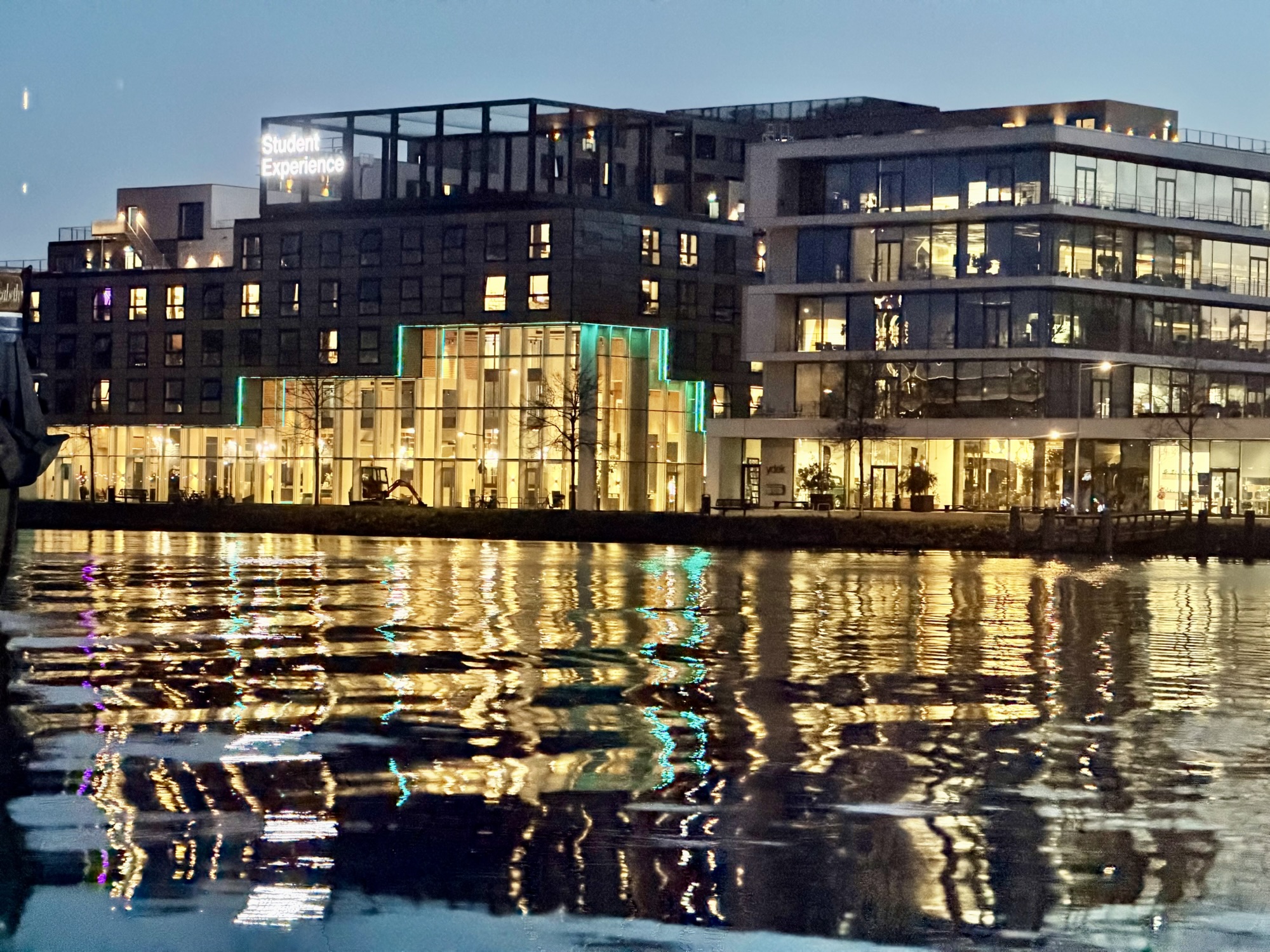
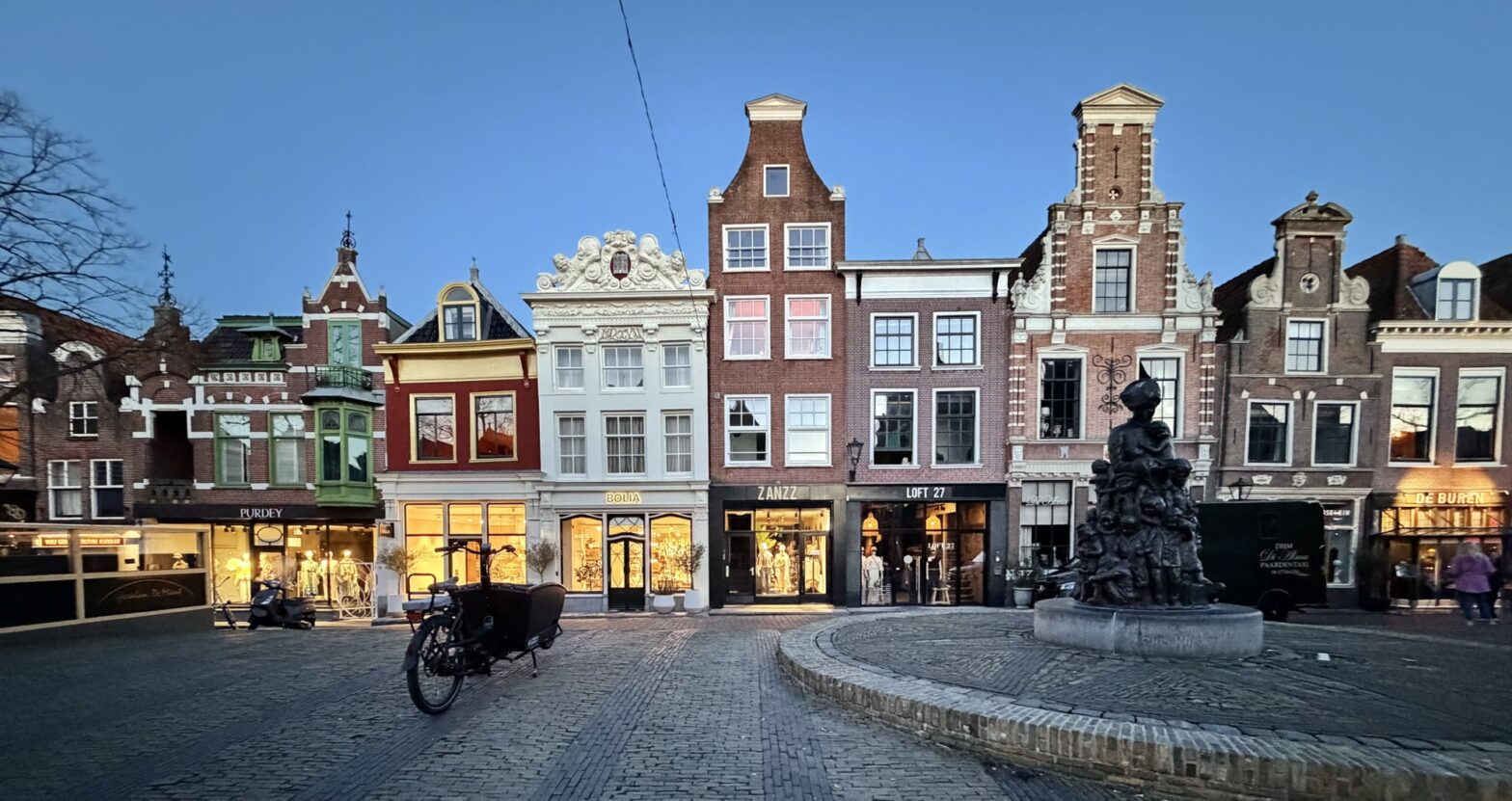
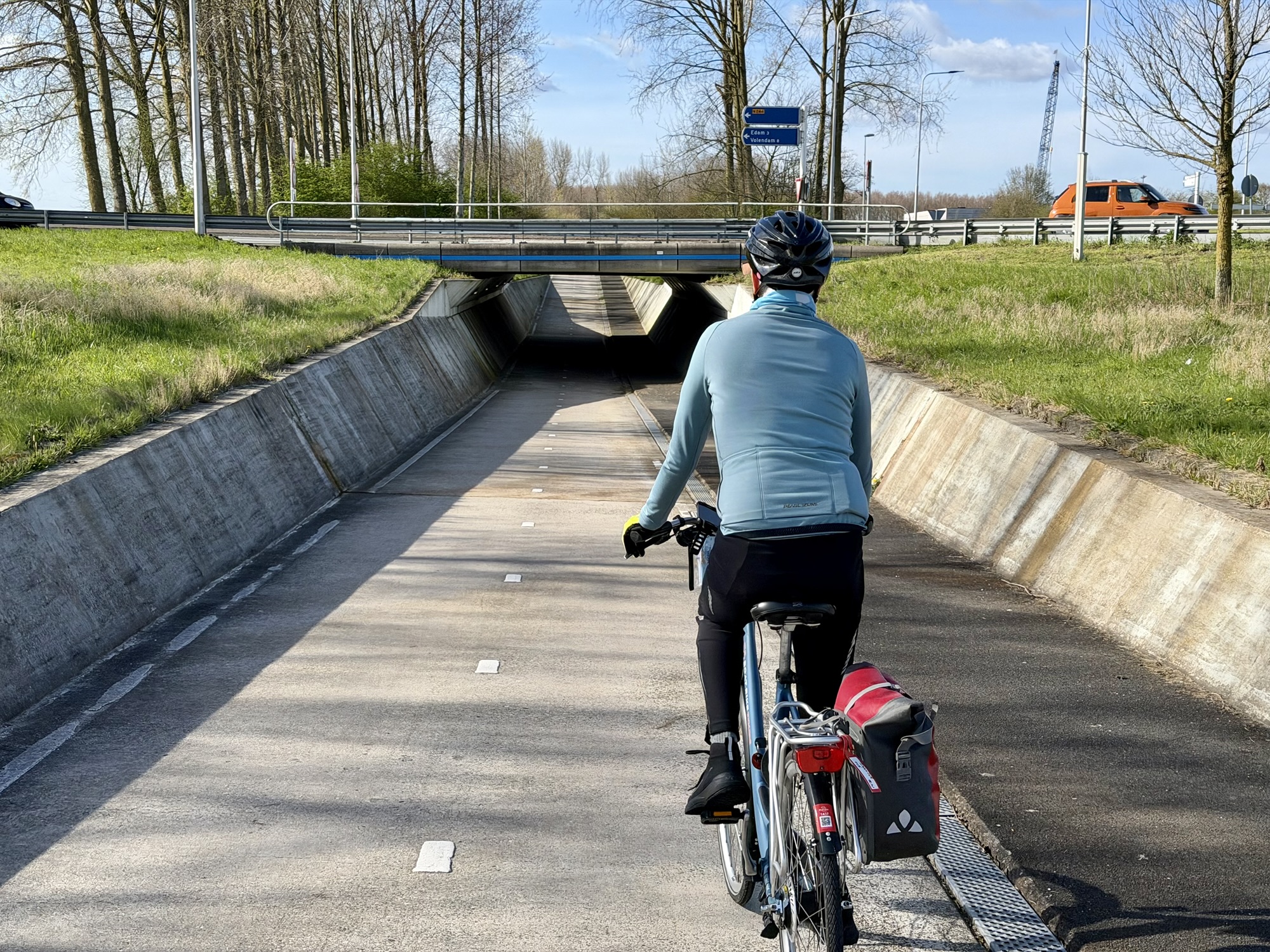
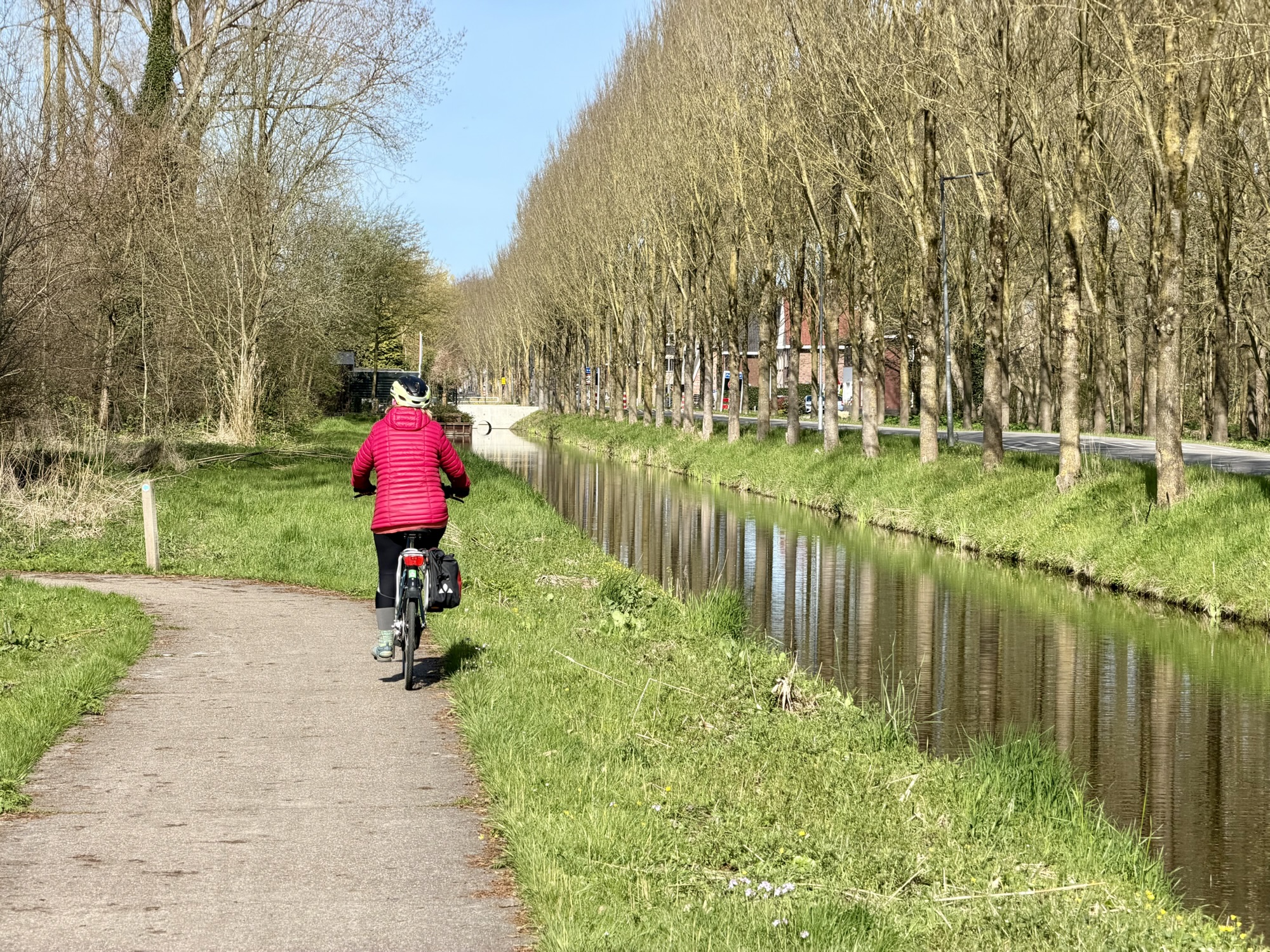
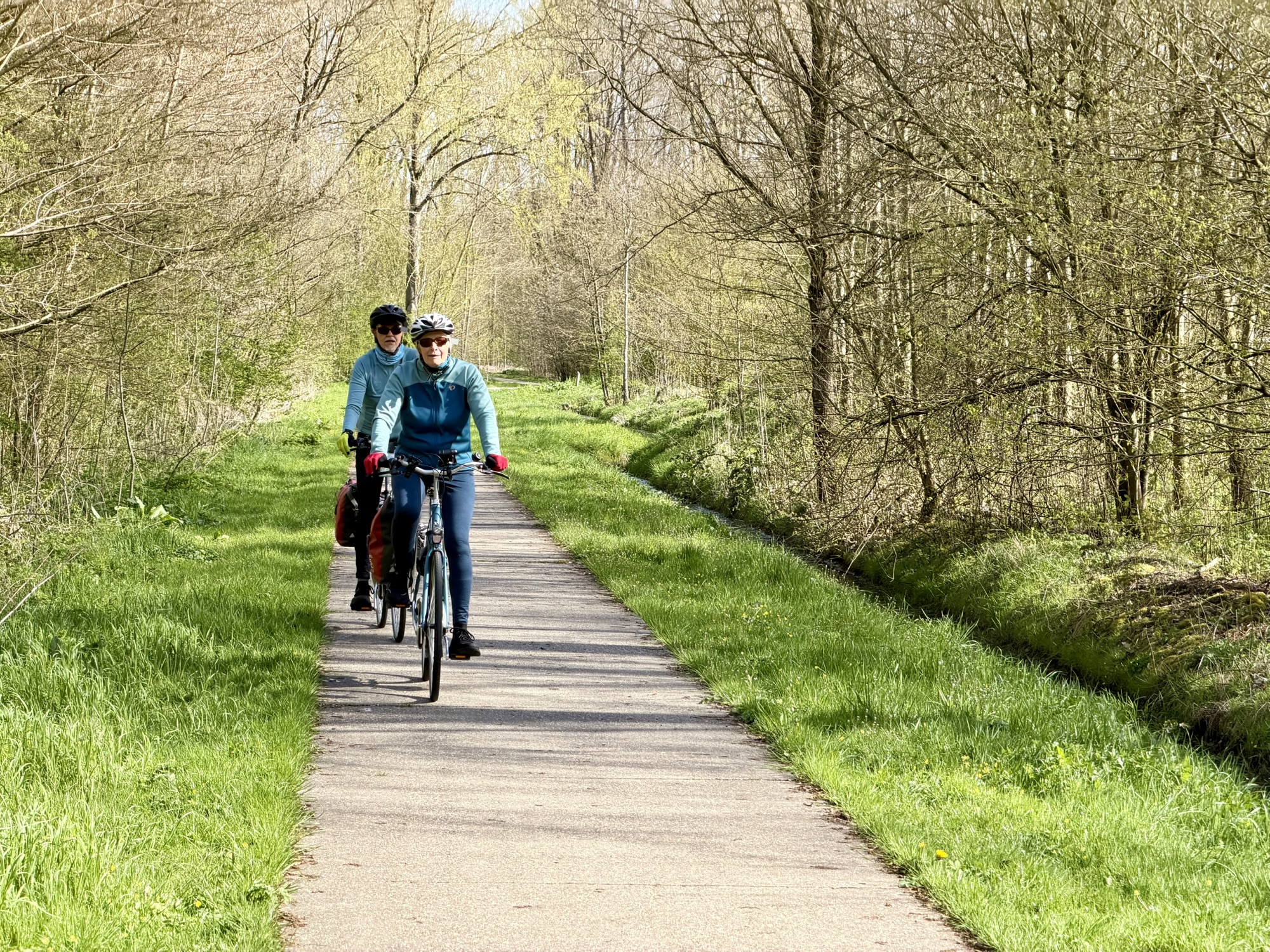
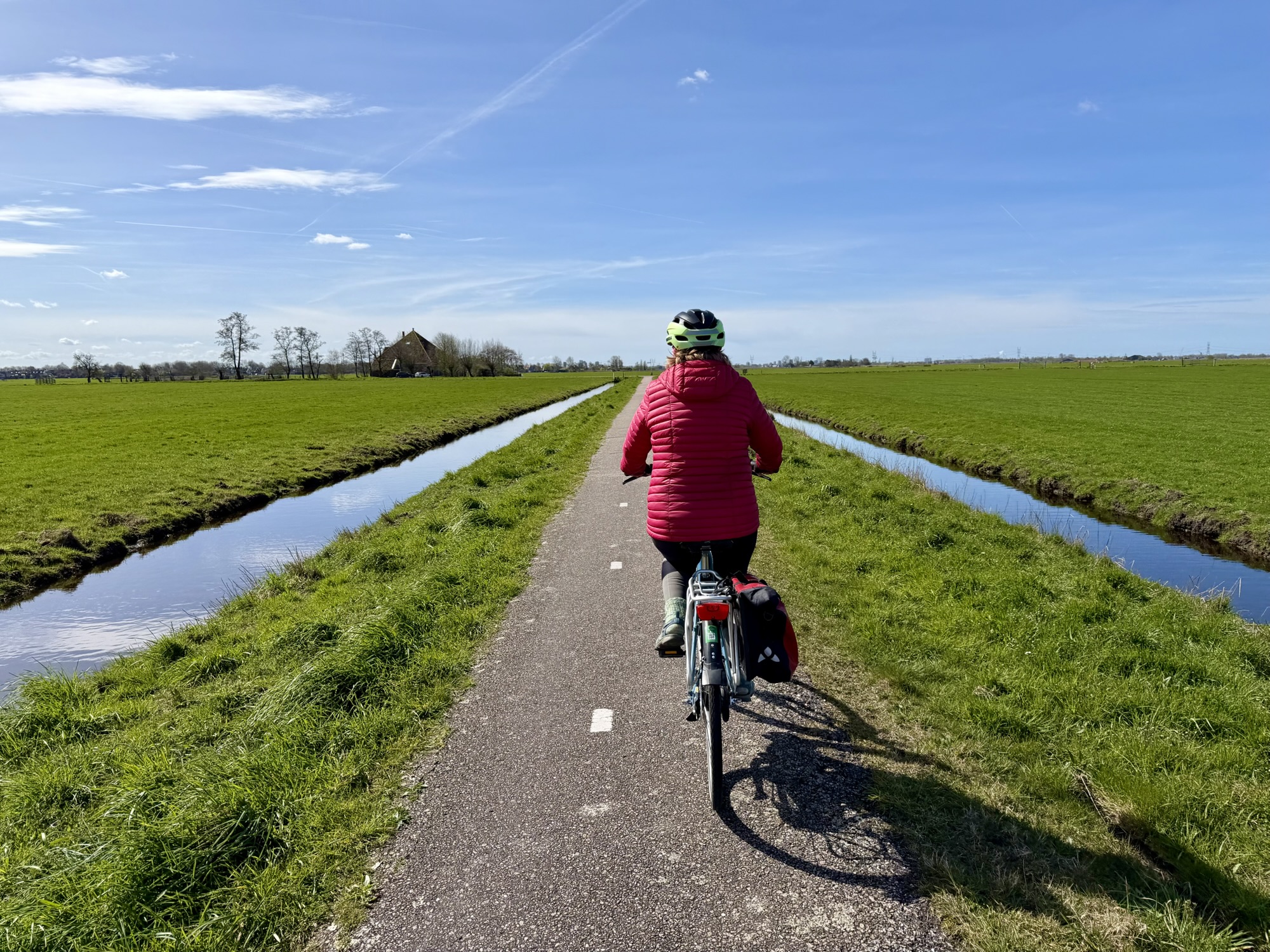
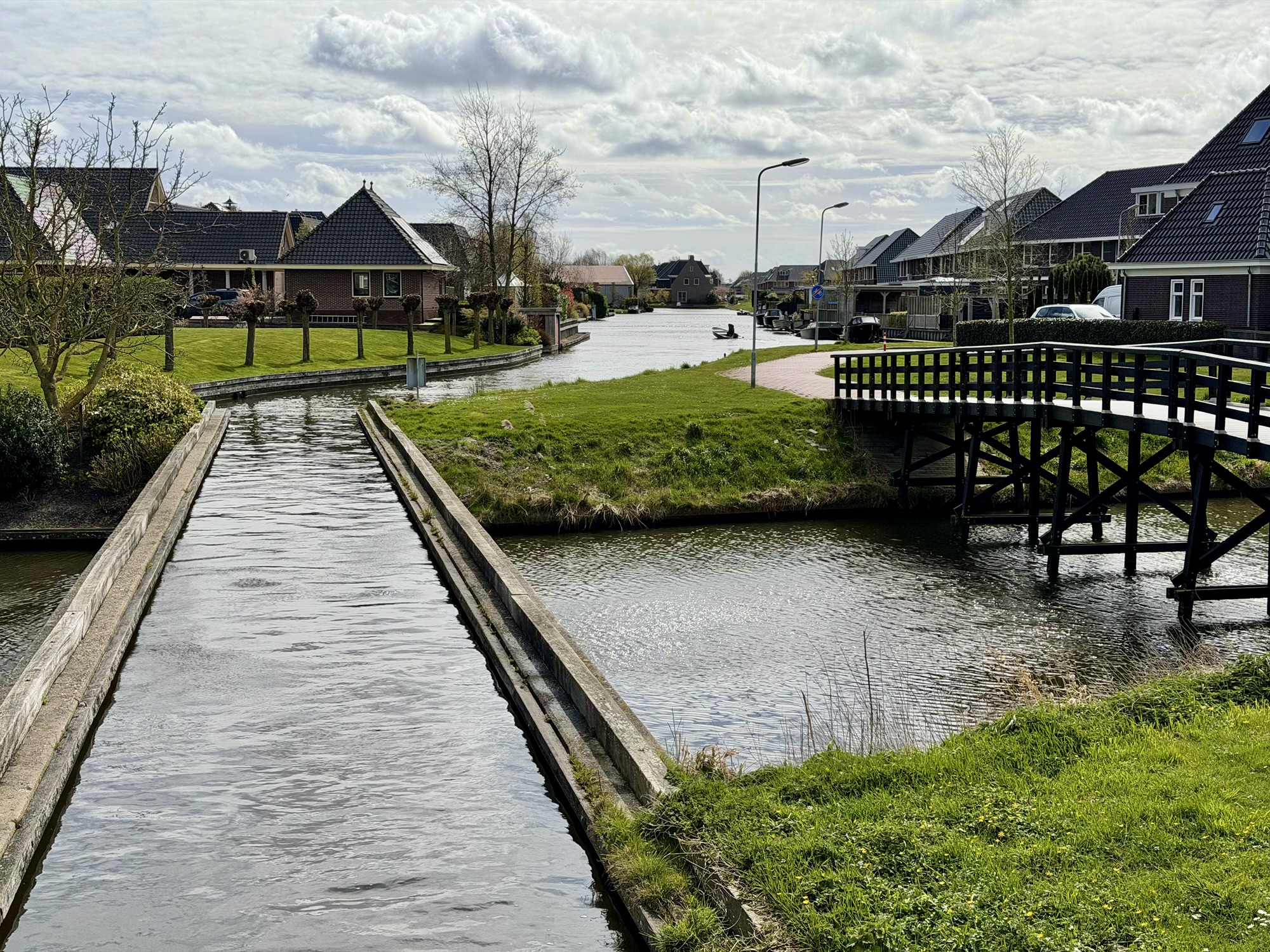
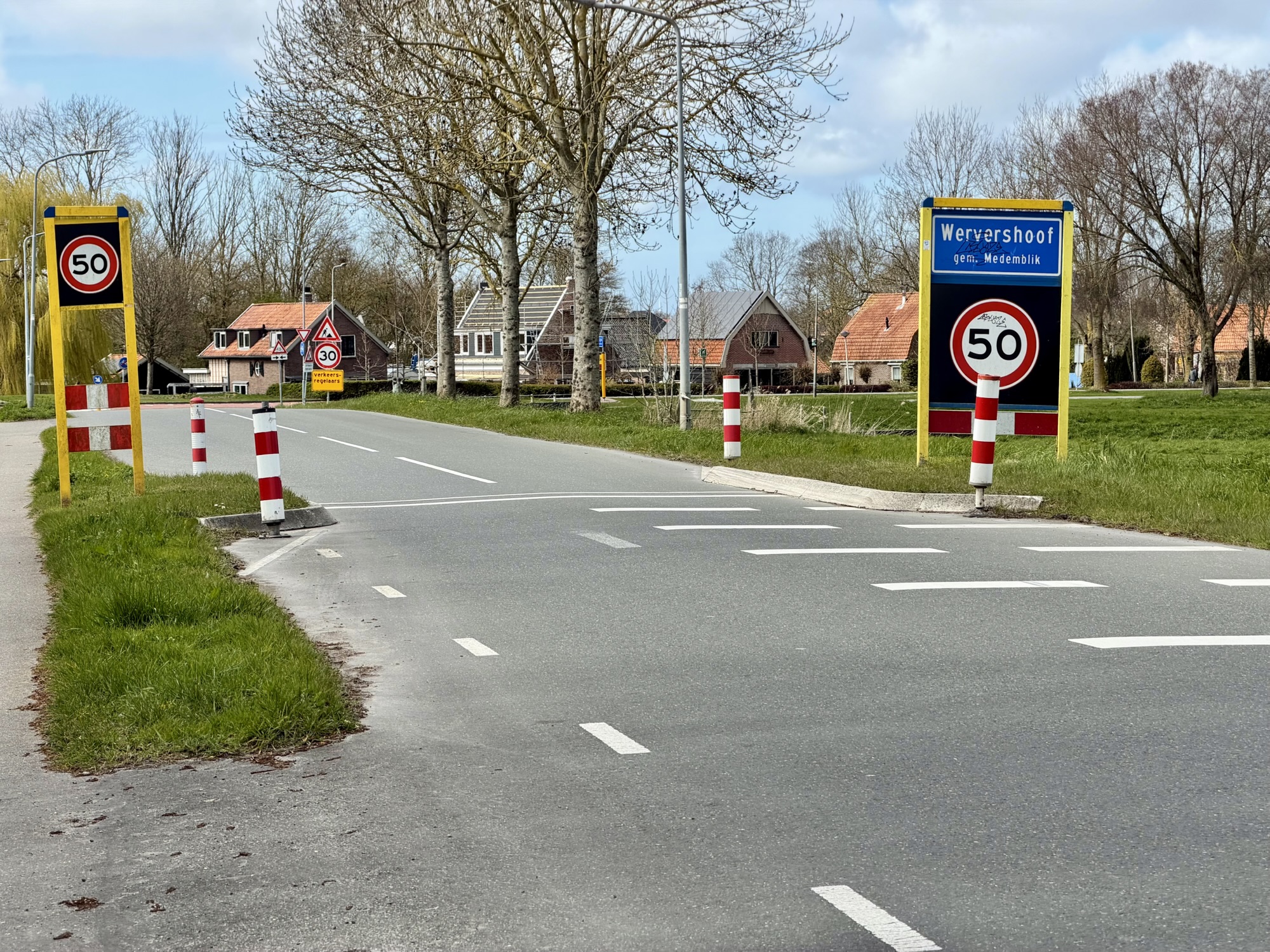
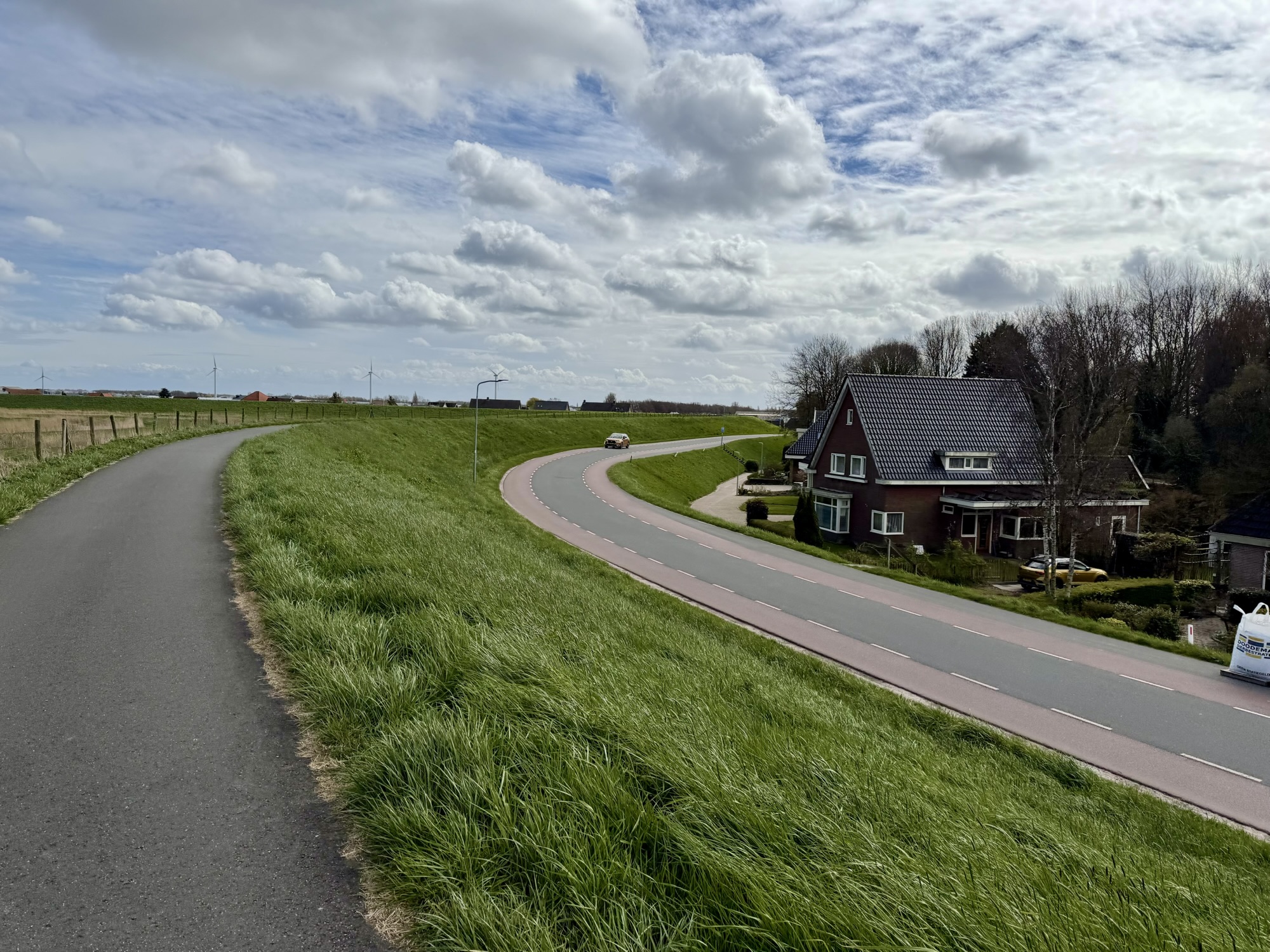
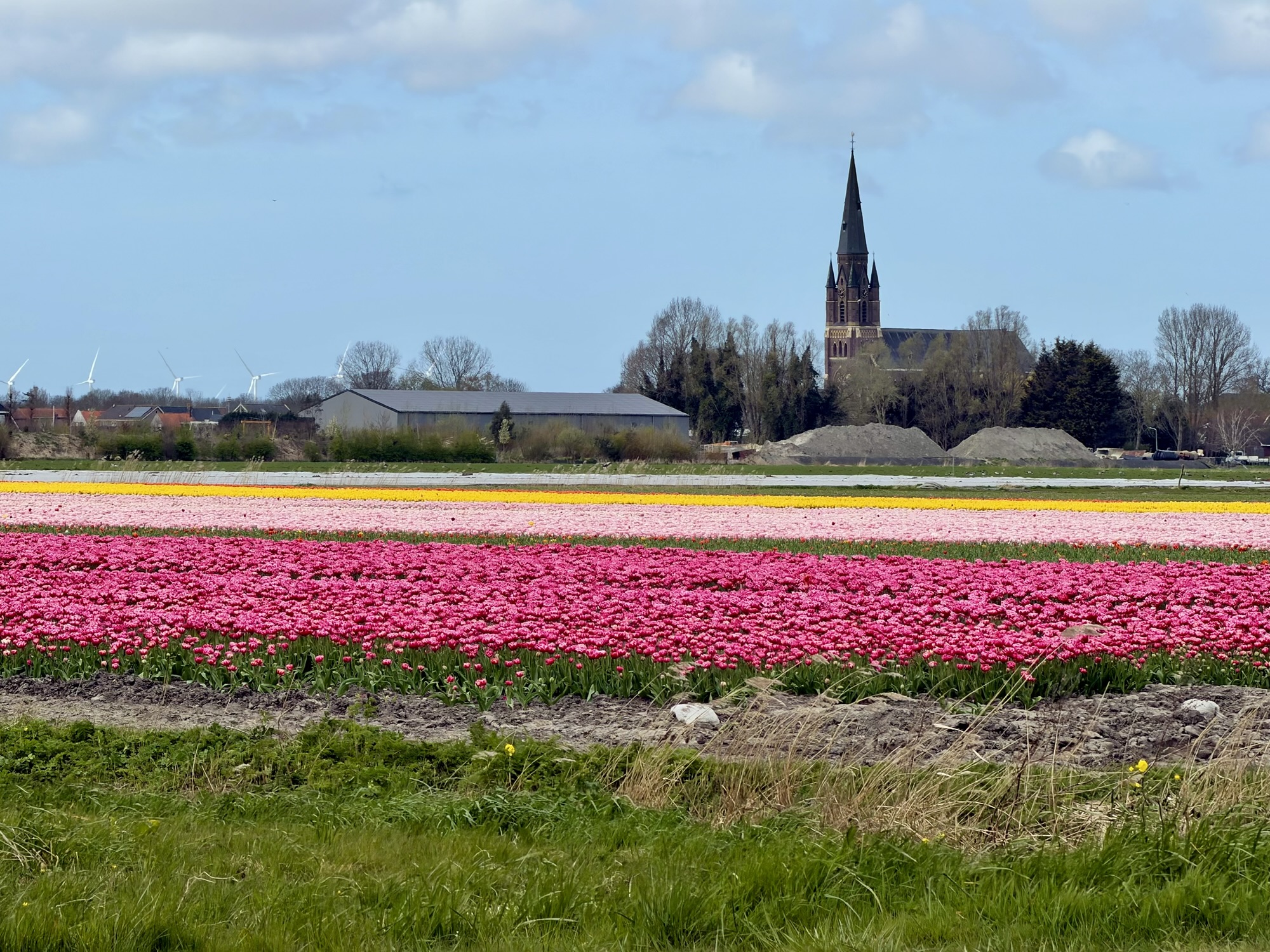
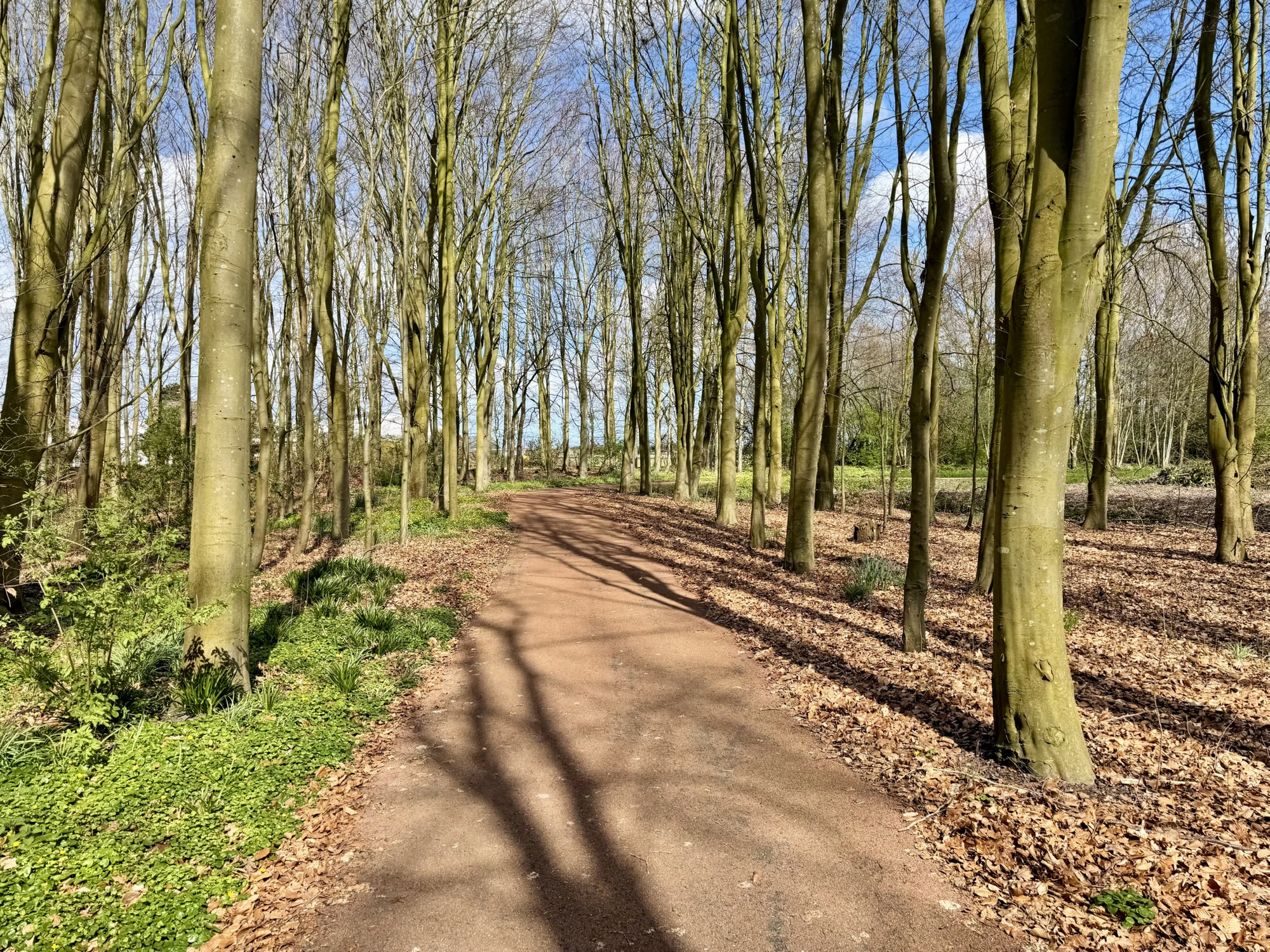
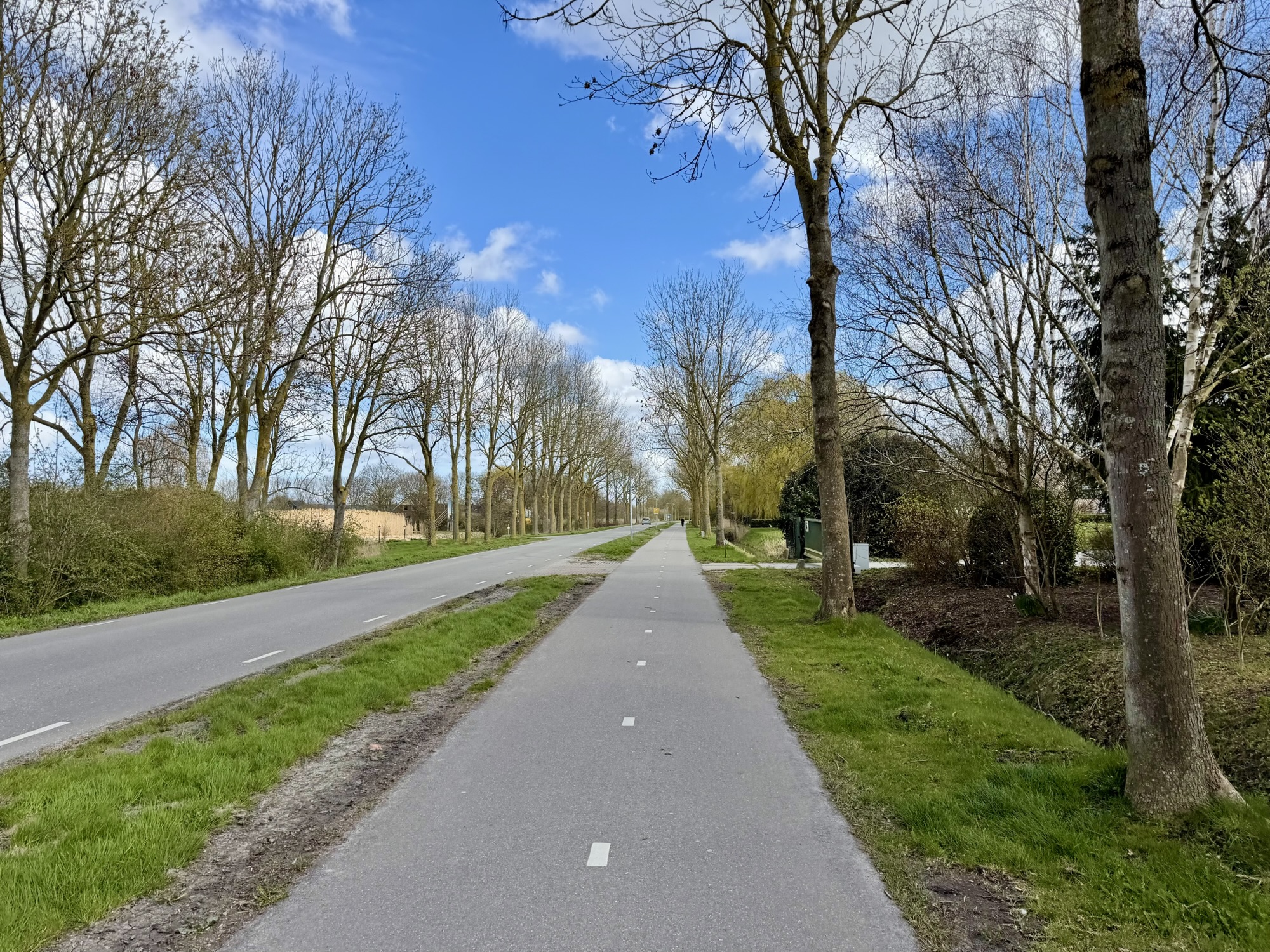
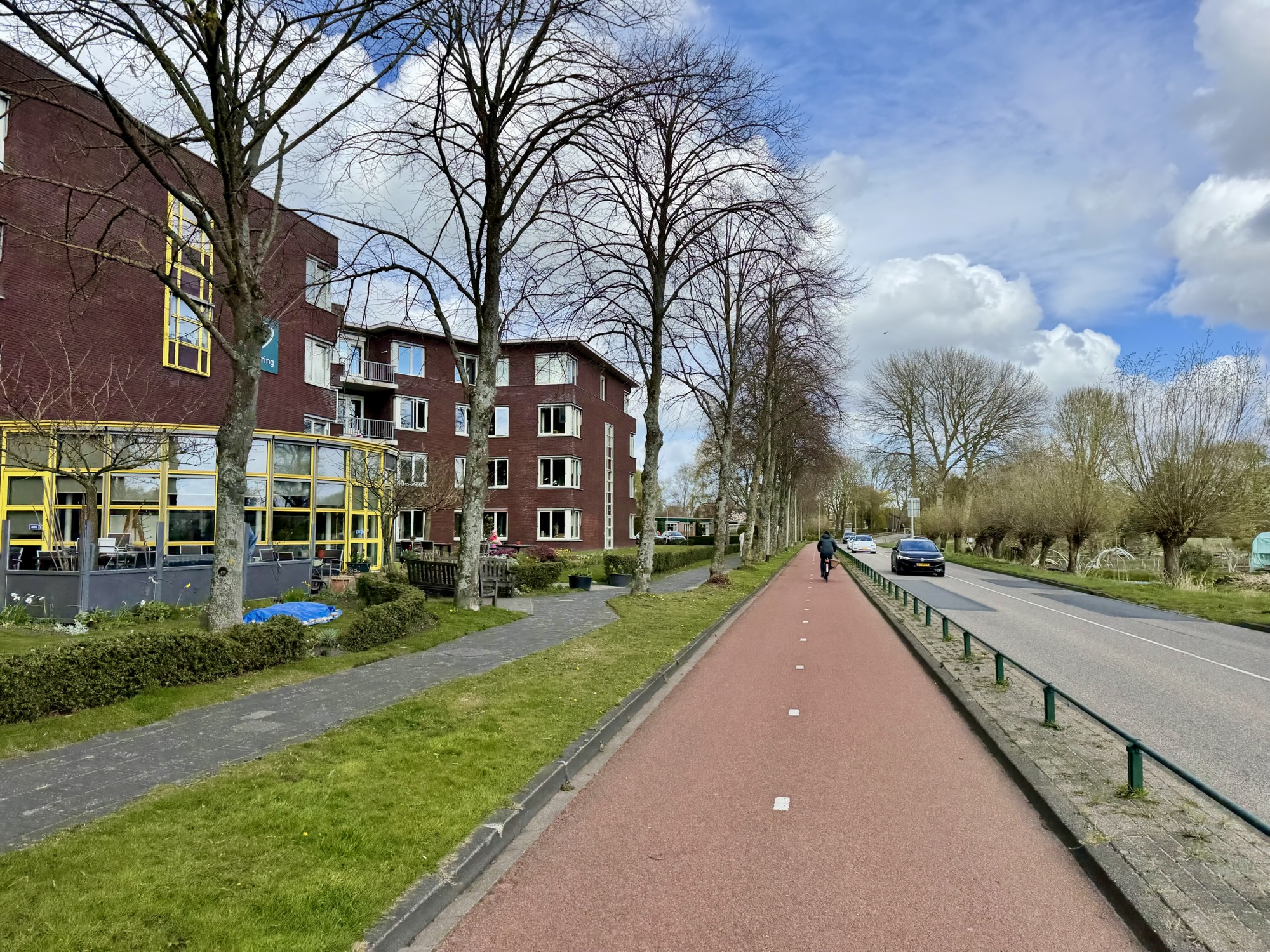
We had another relaxing start this morning. We made breakfast in the apartment from what we bought yesterday at the convenience store. Alina needed to get a phone number so that she could communicate with repair people that she needs to book to deal with the issues in her apartment. We also needed more groceries. So we rode our bikes to the local mall, which was anchored by Carrefour. Many of the intersections that have traffic lights have these bars for cyclists to lean on so they don’t have to take their feet off the pedals.
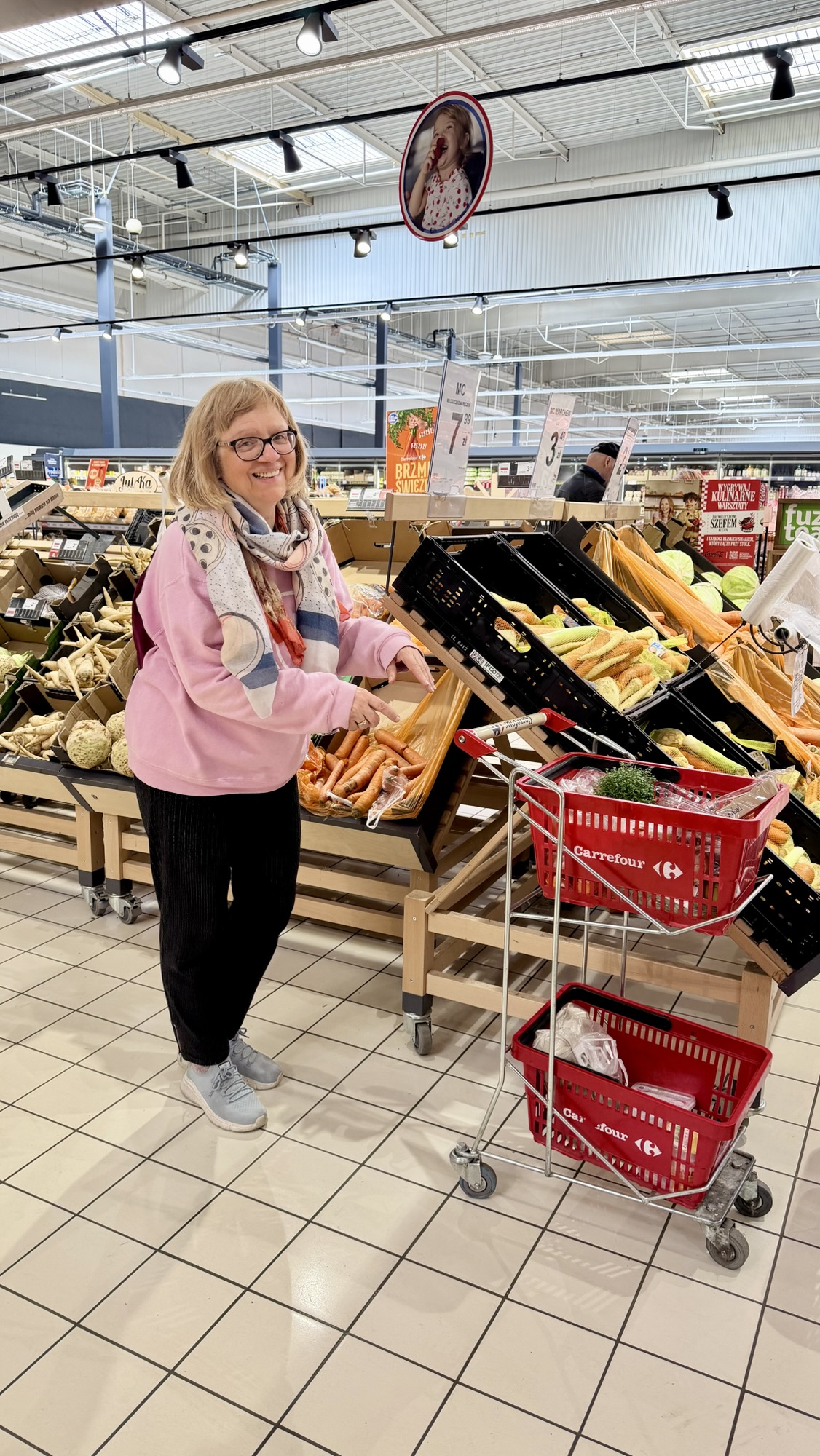
Carrefour is the French multinational that pioneered the hypermarket or “everything under one roof” model that combines supermarket goods with department store items. It was my first time in one, but a familiar format with Costco, and since Walmart had groceries.
I thought these carts that accommodate two shopping baskets were cute.
Alina visited one of several cell phone stores at the mall and got an eSIM. They told her to come back after an hour, so after doing our shopping, we got lunch at the mall.
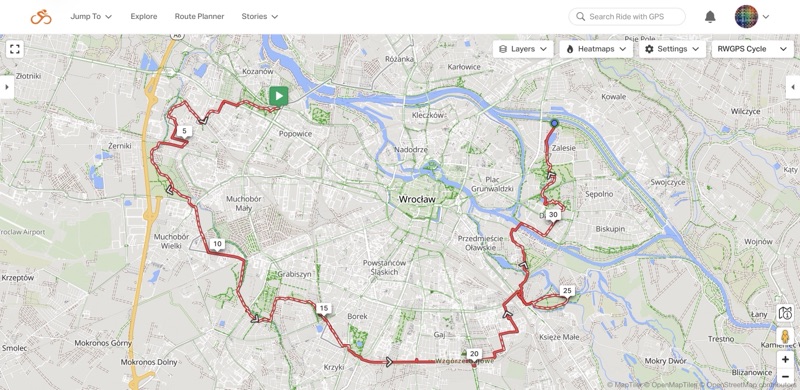
Alina’s eSIM was still not active when we went back, so we took the groceries back to the apartment and then went out for a ride. Last fall when Alina was in Poland, she bought a book of rides around Wroclaw. The book provided QR codes to get GPX files for the rides. The cues were not in the GPX file, but because I have a paid Ride with GPS account, I was able to auto-trace it to get the cues. Here is a screenshot of the route.
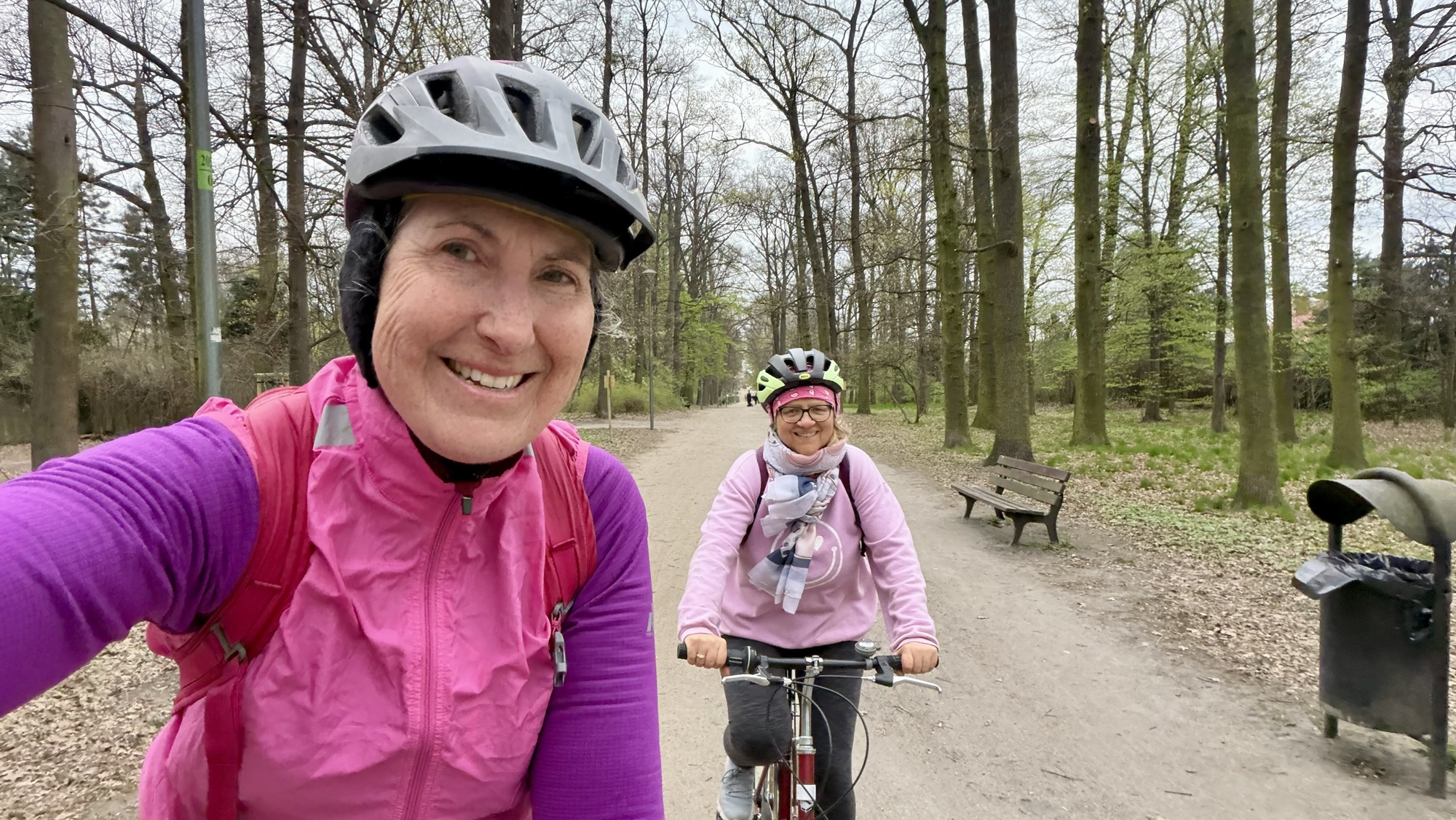
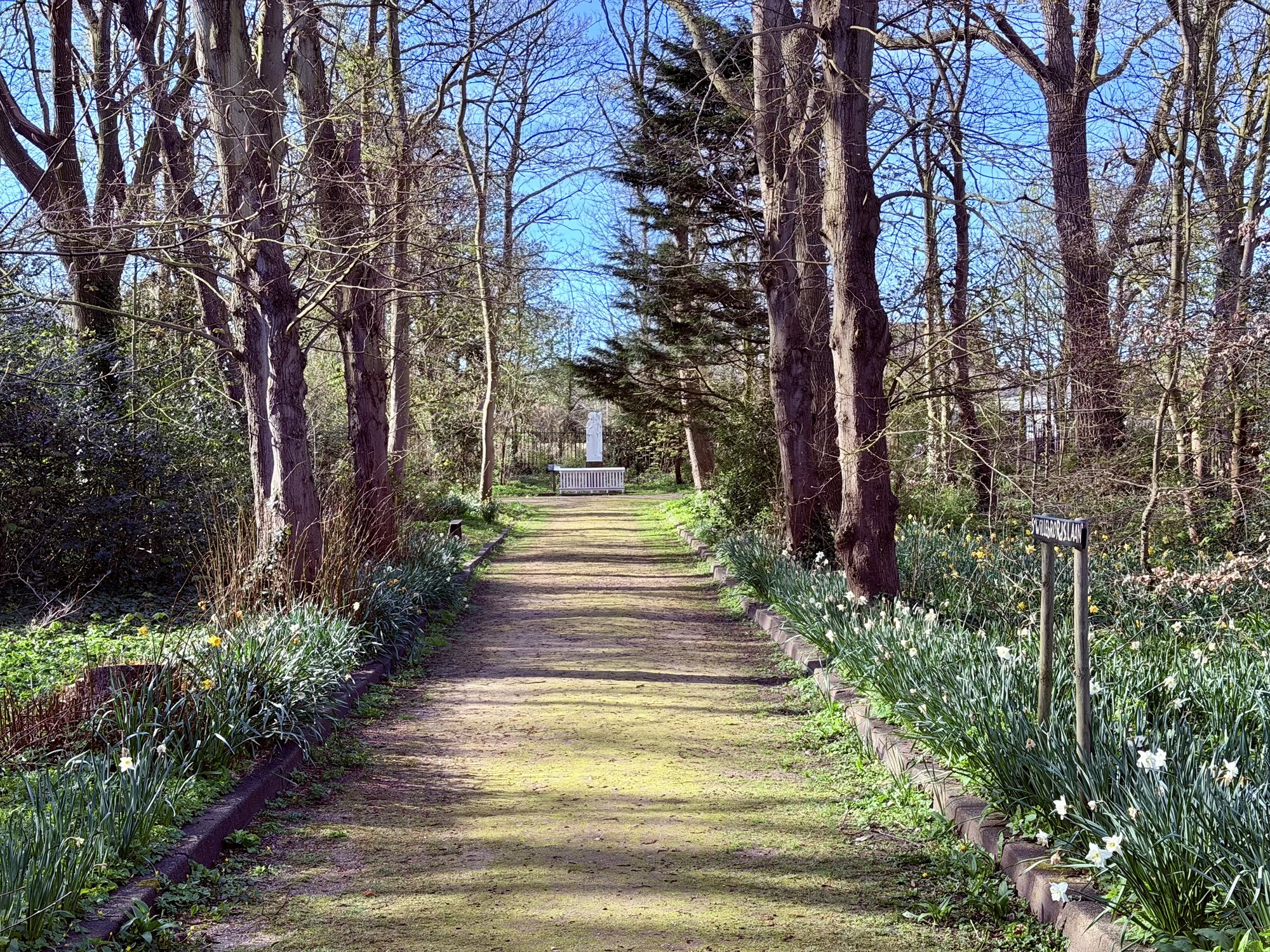
We decided to do a short section near the apartment because it was late afternoon by the time we left.The trail started out very close to Alina’s apartment and was a smooth granular surface.
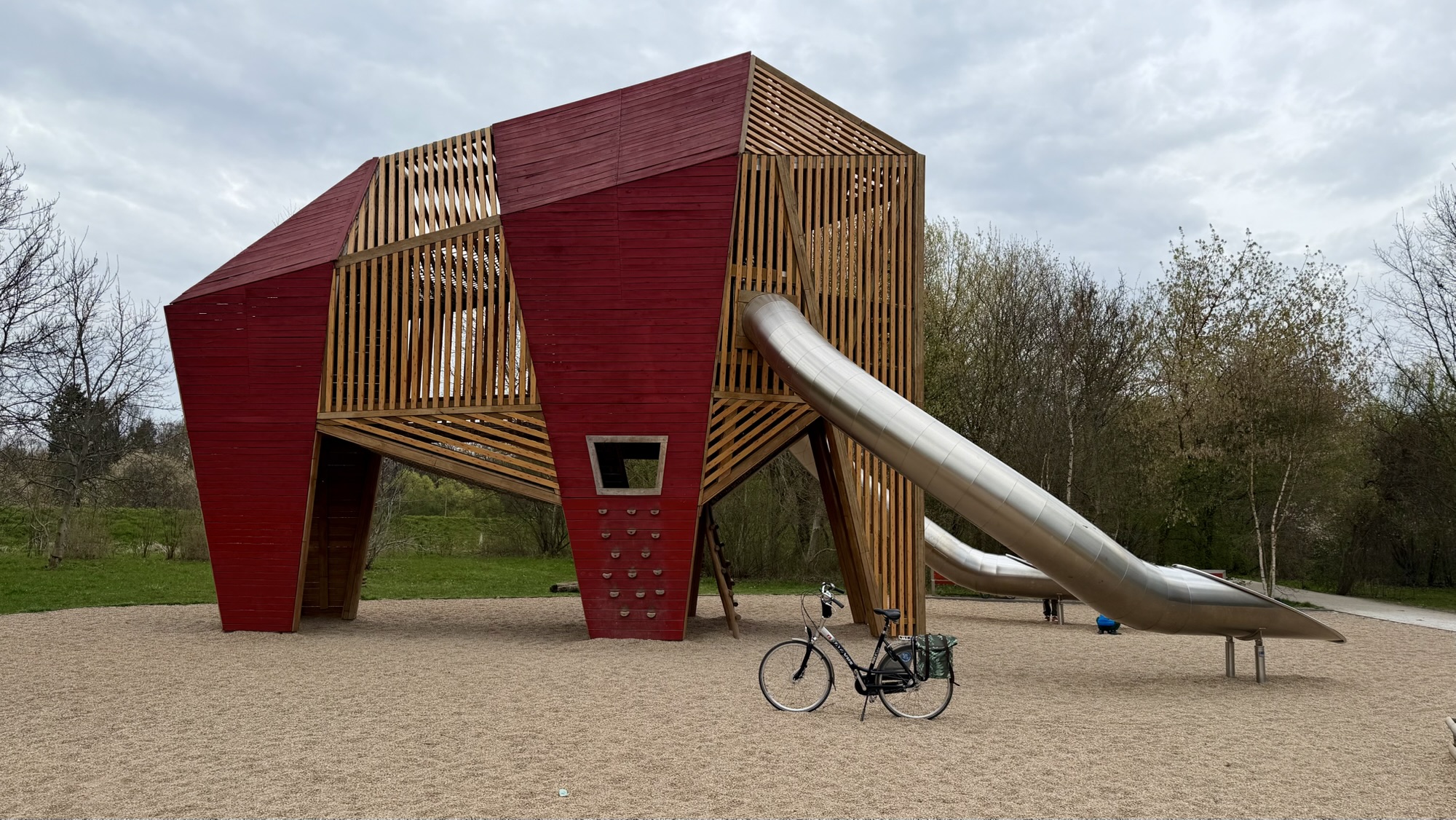
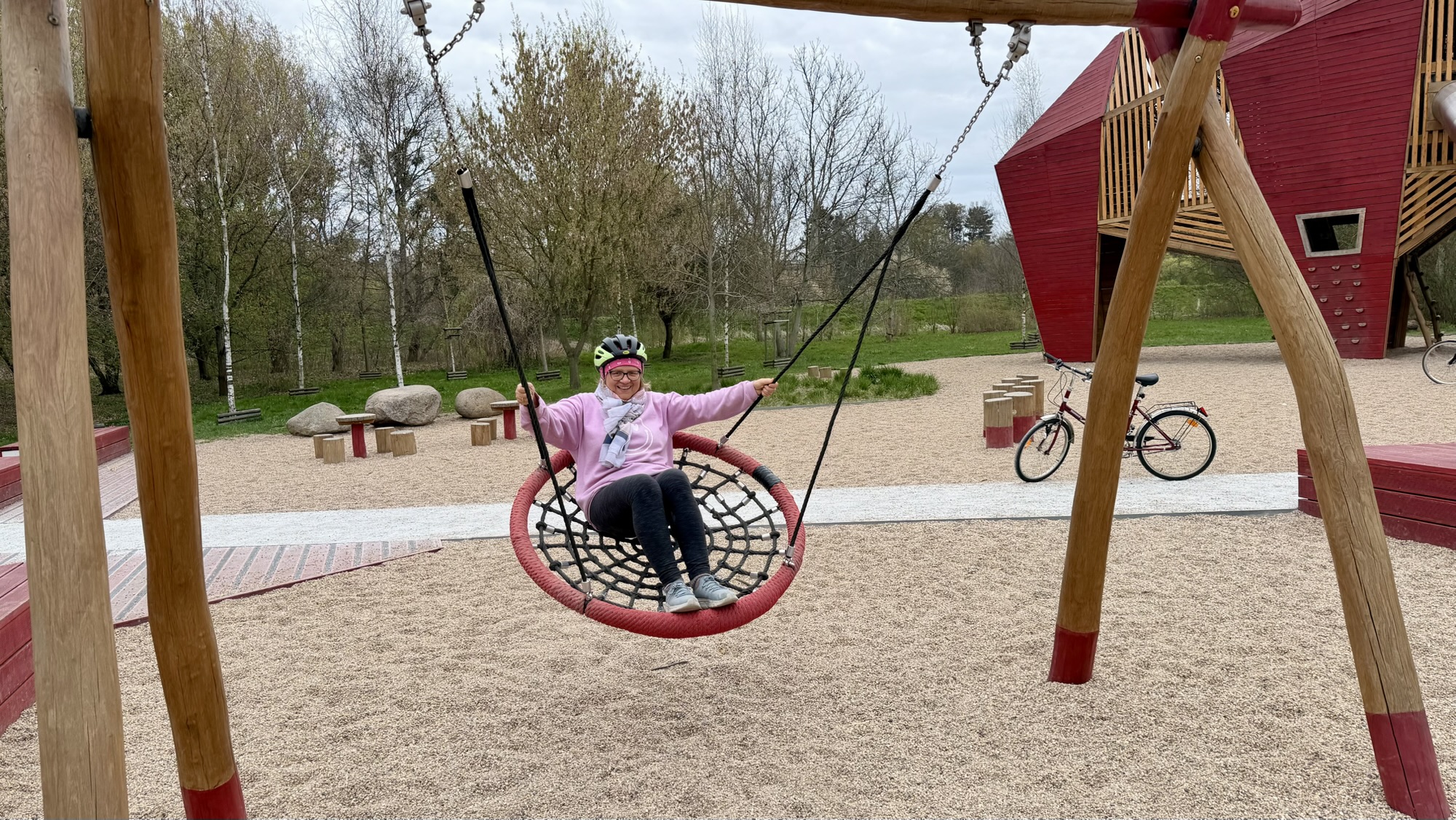
We stopped at a Park Mamuta. I remember seeing a picture in one of Alina‘s rides on Strava last fall of this woolly mammoth. The mammoth structure encourages climbing and active play with plenty of shade. The park was inspired by the discovery of mammoth tusks in the area in the 1990s.
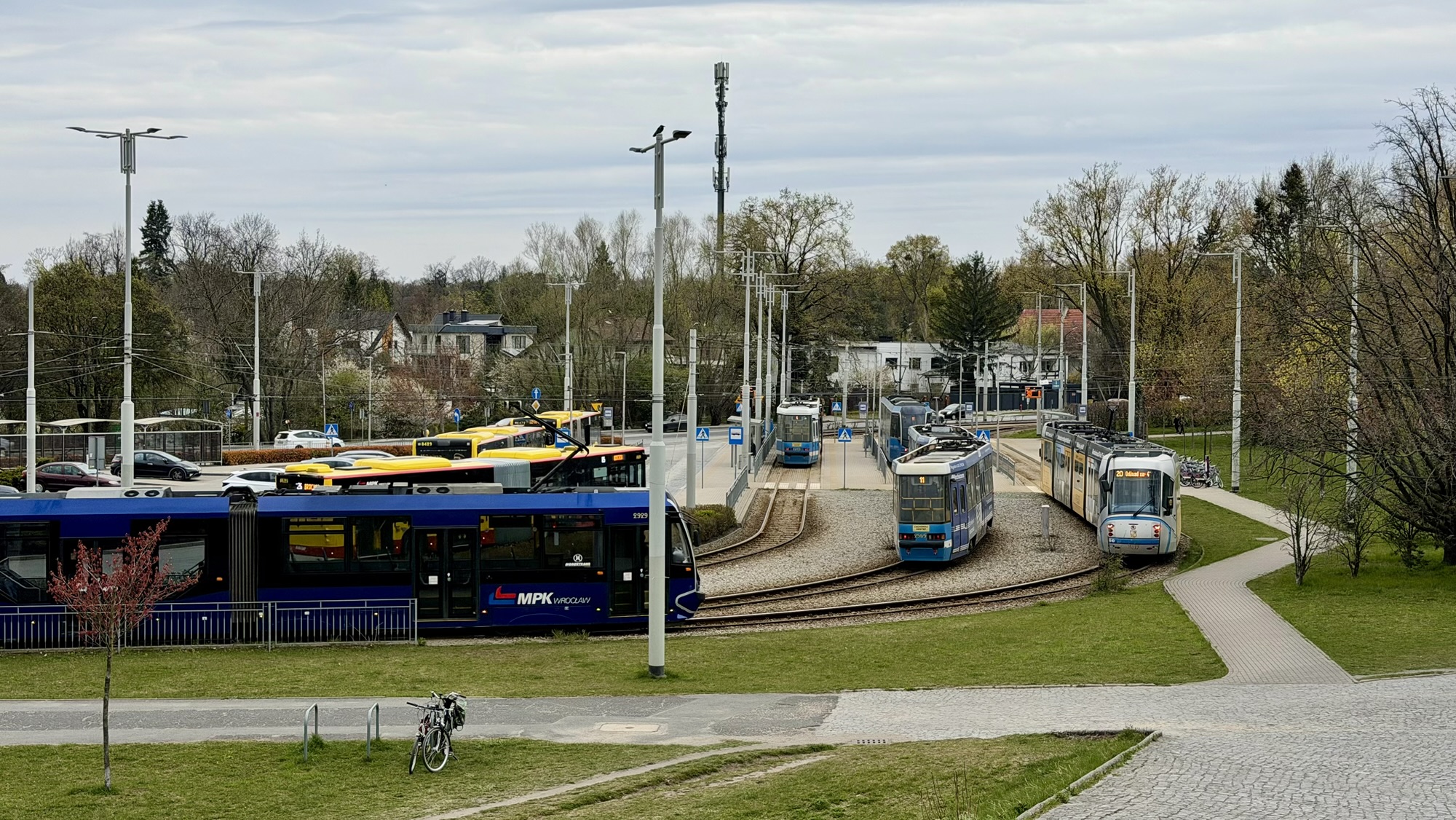
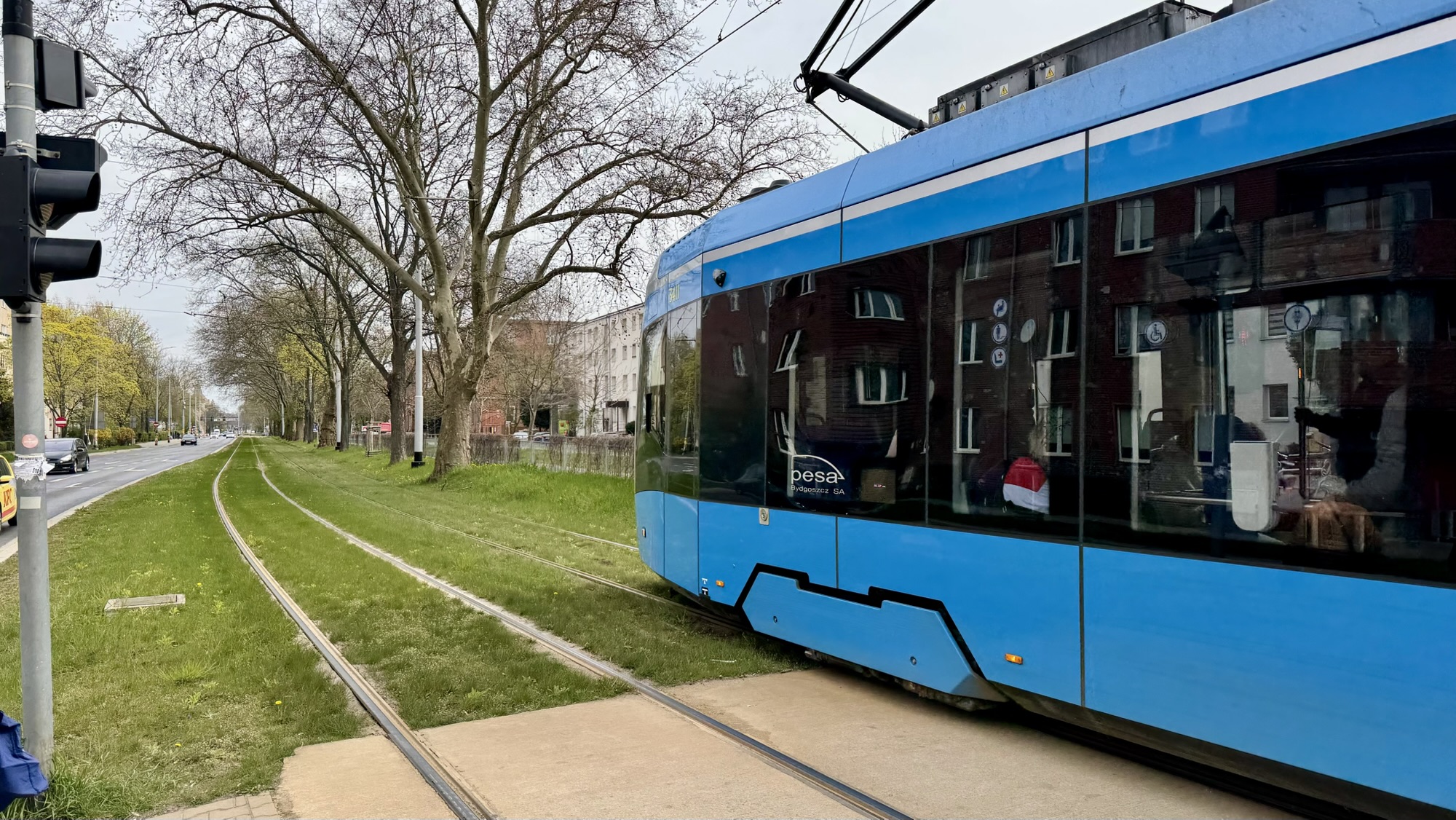
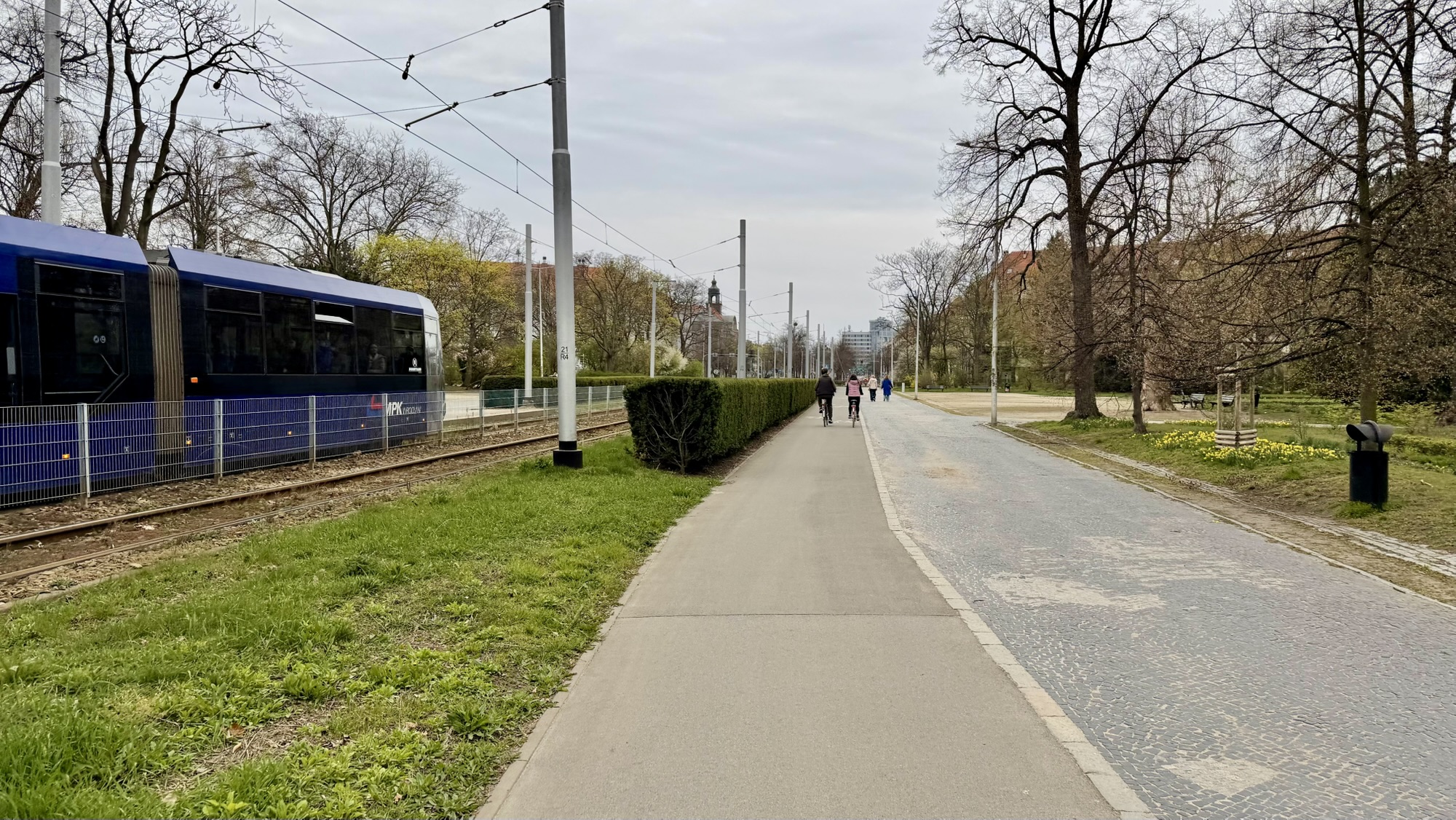
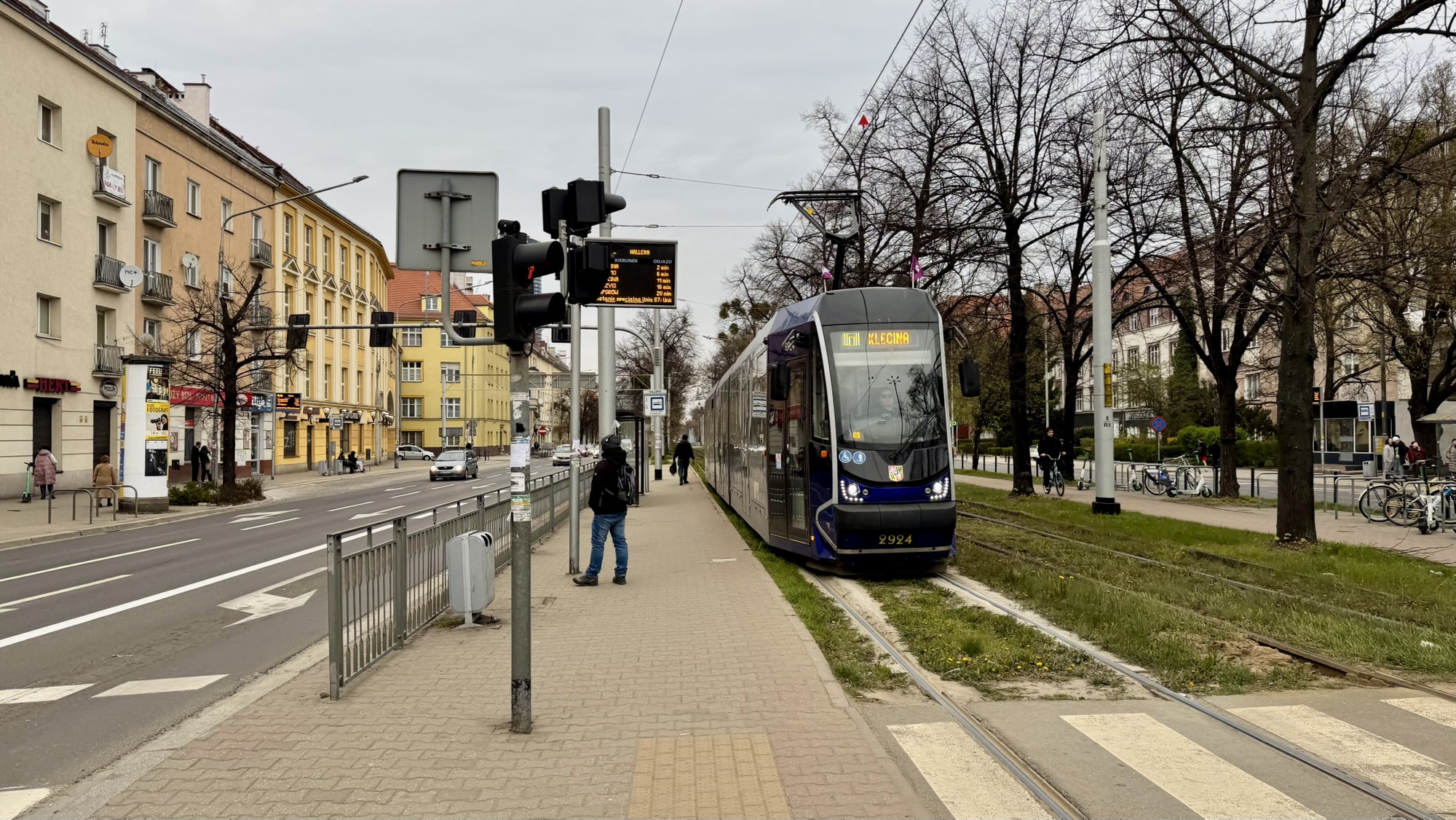
Shortly thereafter, we passed a streetcar terminal. I like the way that the streetcar tracks are often set in grass here.
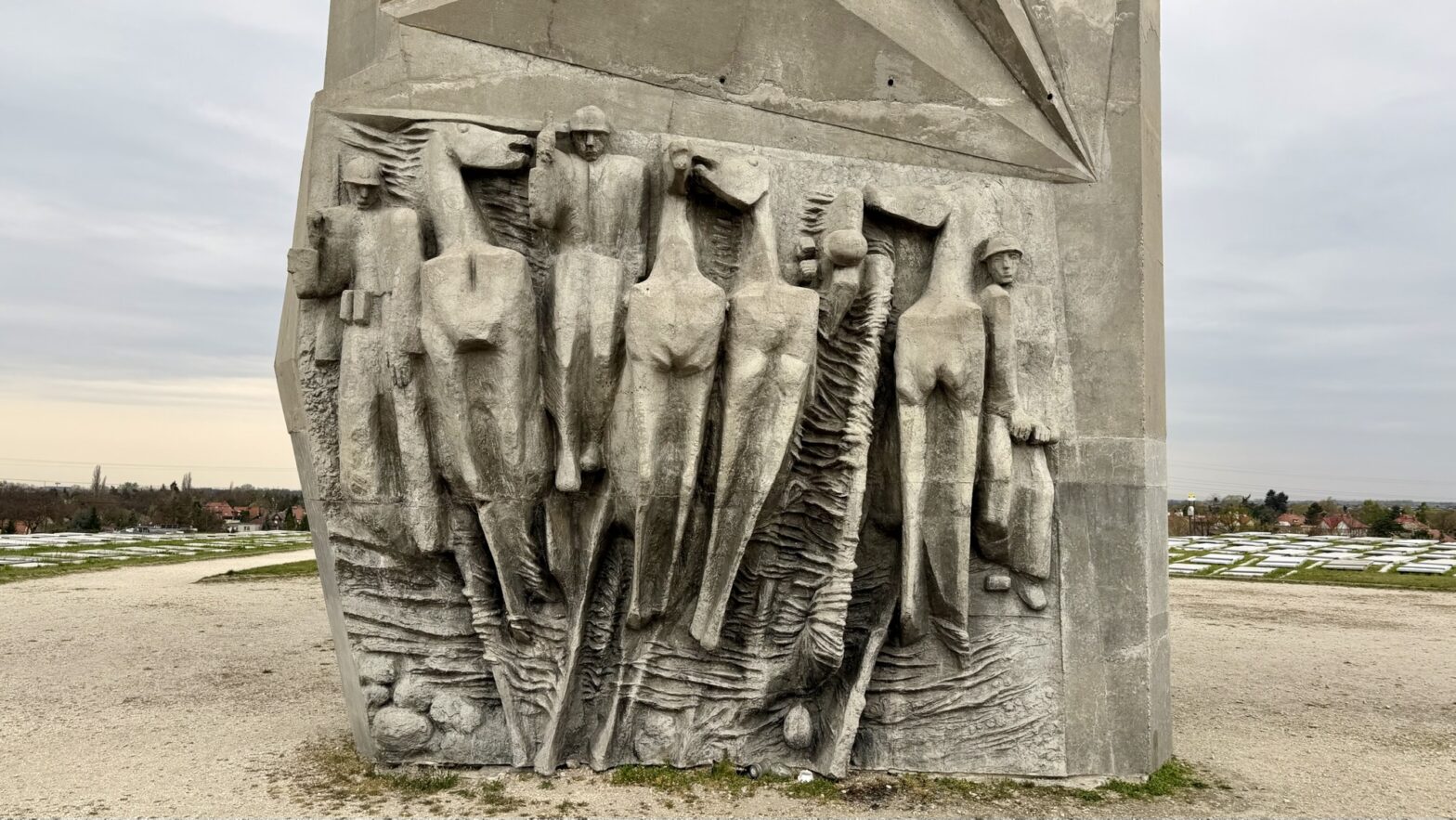
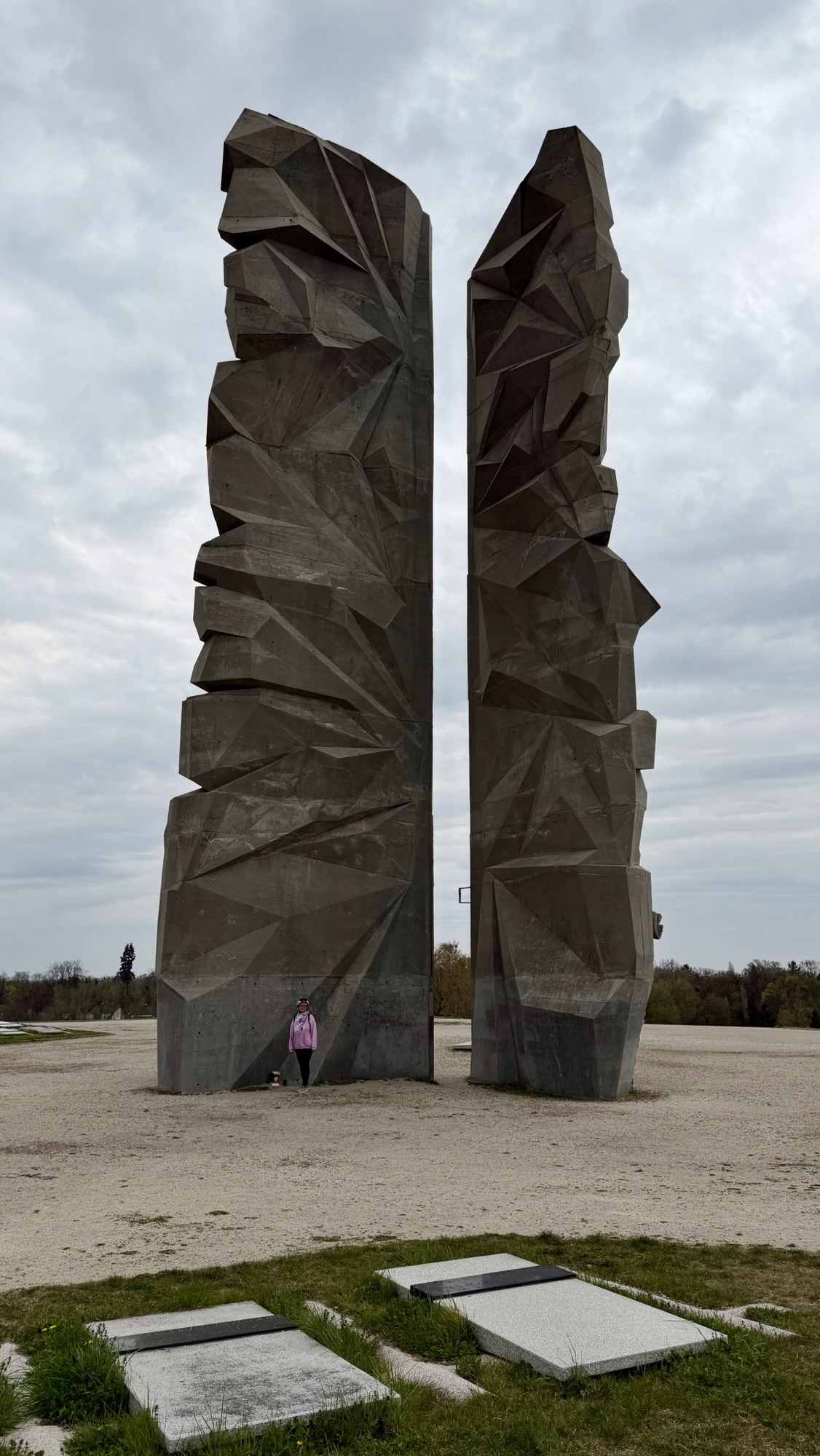
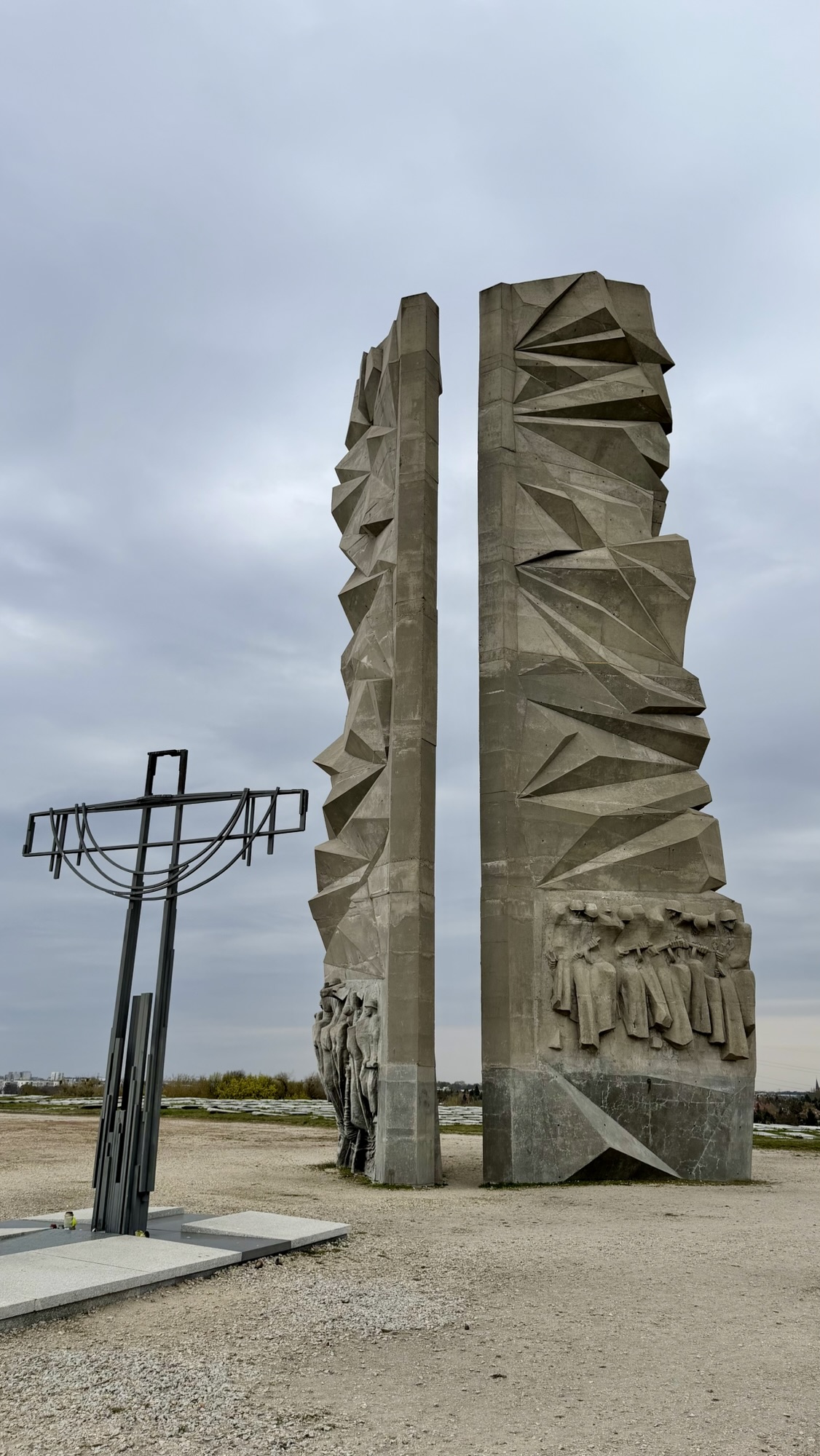
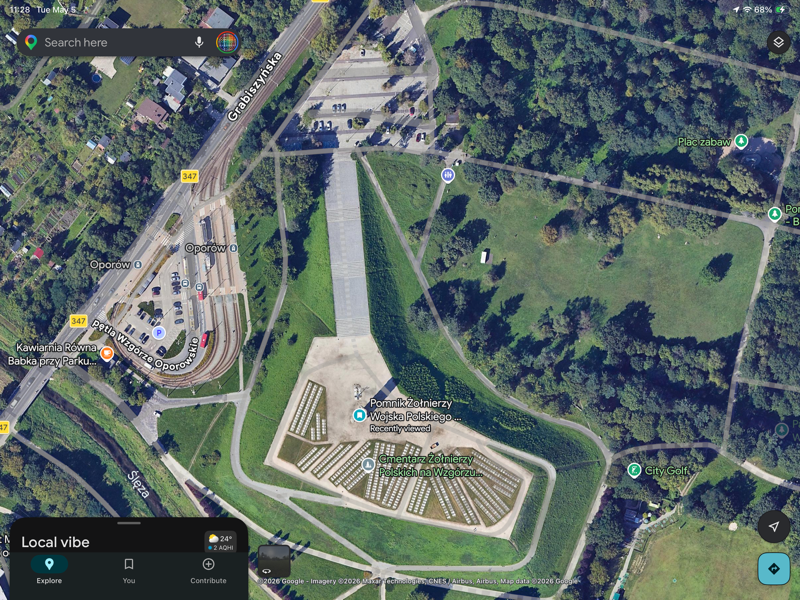
The Cemetery of Polish Soldiers (Cmentarz Żonierzy Polskich) is a memorial site established between 1968 and 1970. It holds the graves of over 600 Polish soldiers from the 1939 September campaign, the Second Polish Army, and victims of Nazi terror. It was created to consolidate scattered graves found throughout Lower Silesia after the war. Alina recalls school trips to the site.
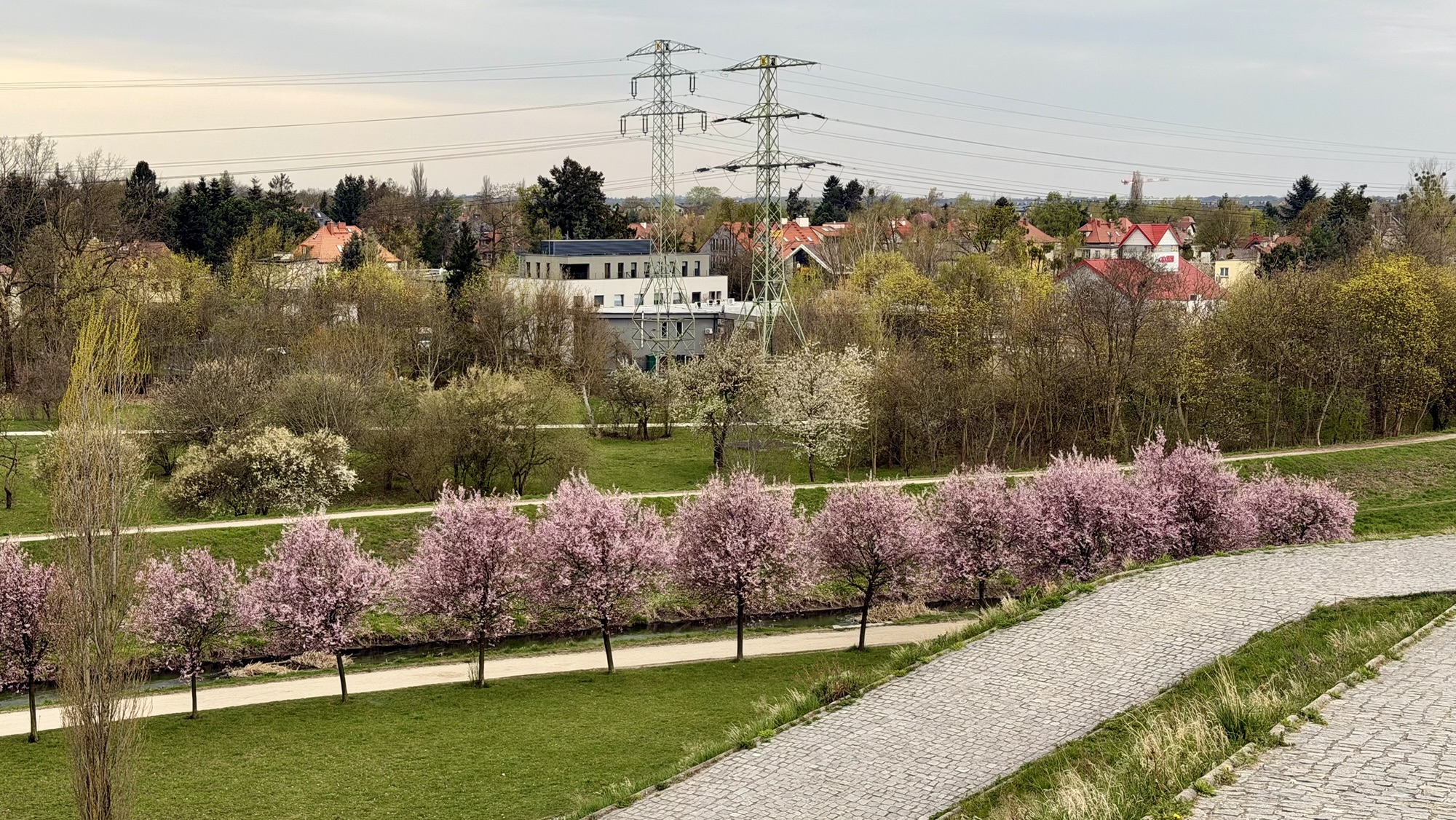
It features a massive 23 m monument designed as stylized Hussar wings. It is situated on an artificial hill next to the Ślęza River. There was a lovely line of flowering trees in blossom.
Alina explained that Polish Hussars wore wings primarily for psychological warfare, intimidation, and to display their elite status as noble heavy cavalry. These large, feathered frames, attached to the backplate of their armor or saddle, created a terrifying, loud, and distinctive appearance intended to demoralize enemies and frighten their horses during a charge.
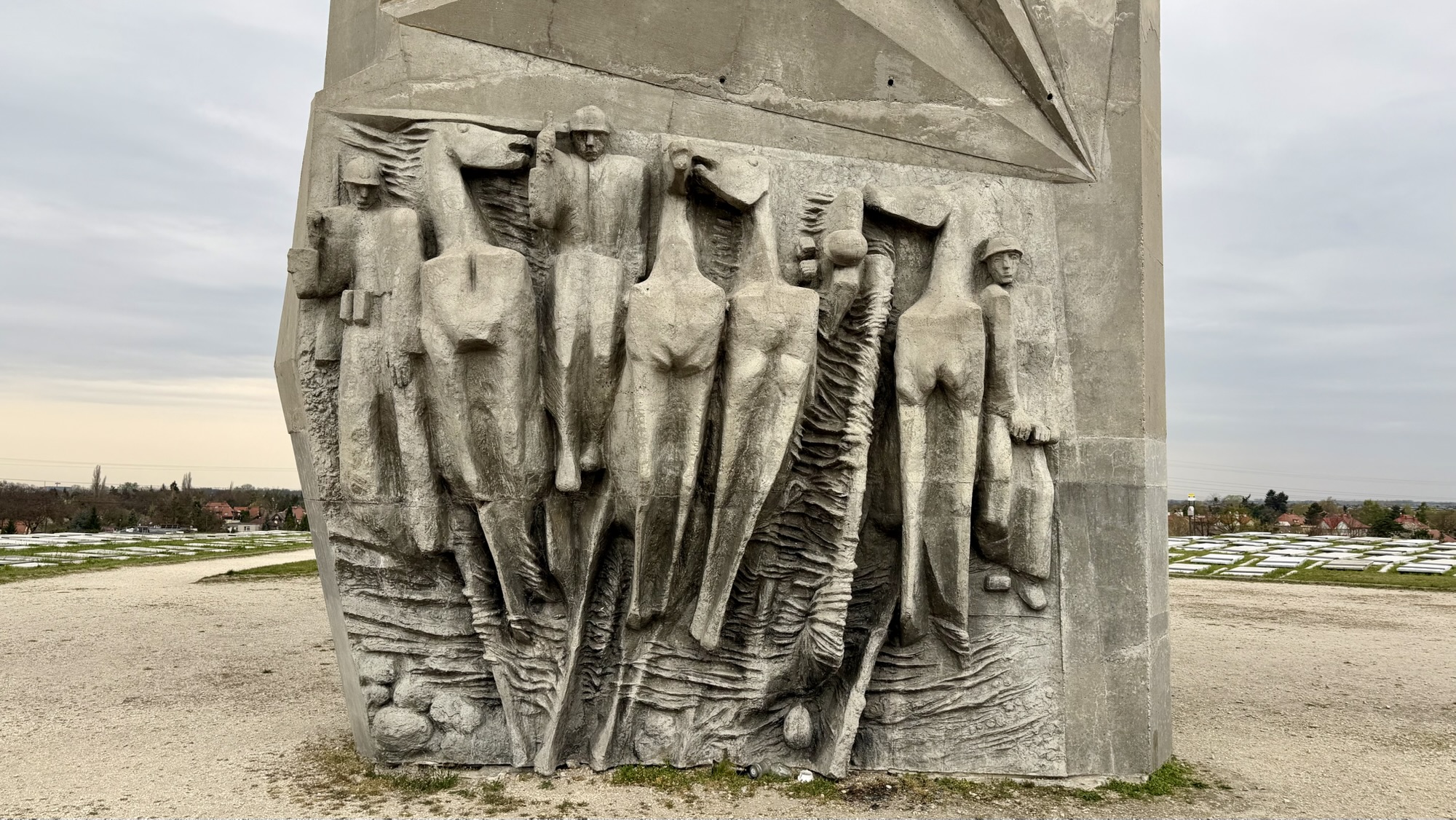
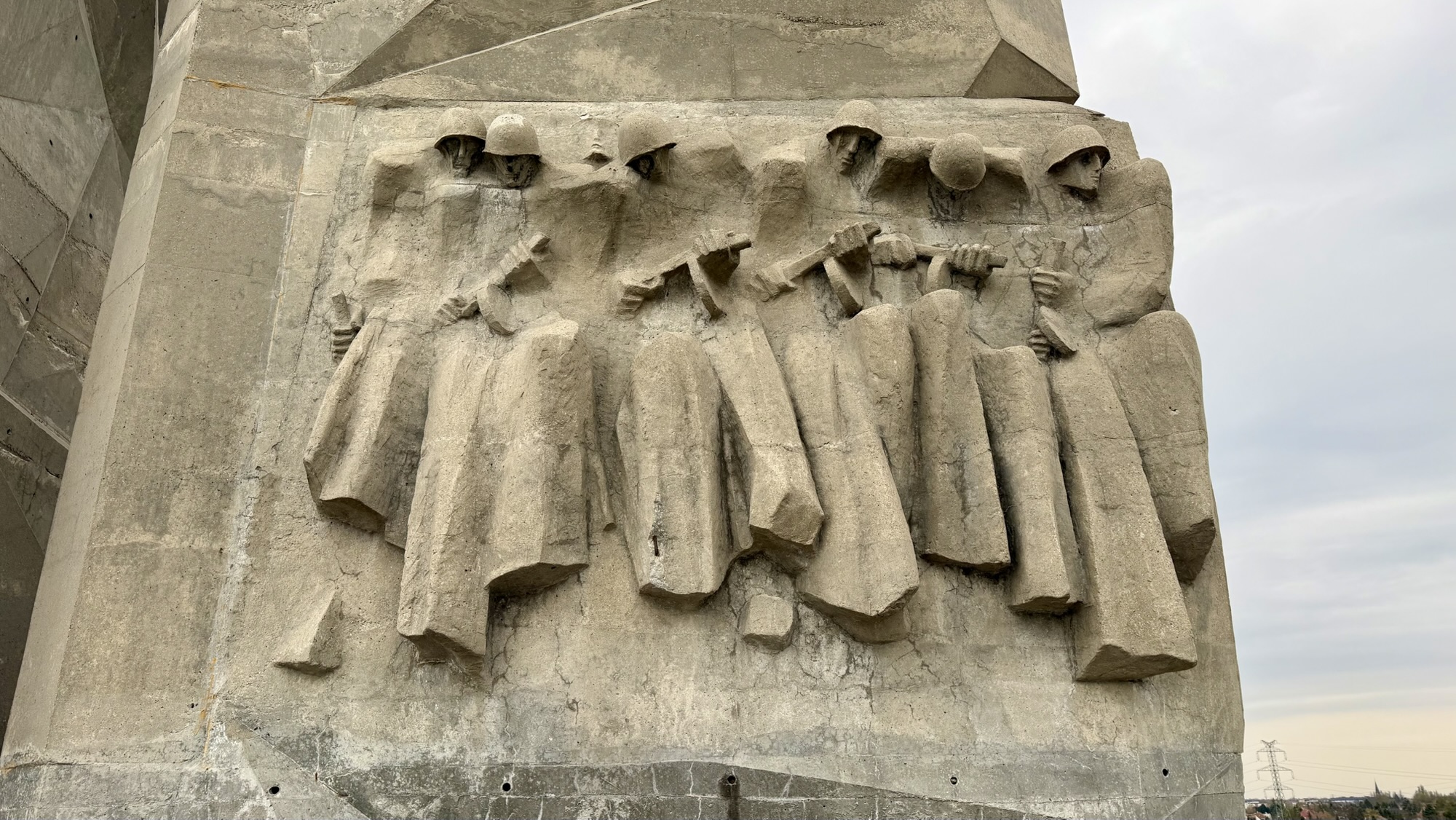
It is decorated with reliefs of soldiers. One of them depicts silhouettes of lancers and horses during the charge in 1939, while the other captures the scene of the attacking soldiers.
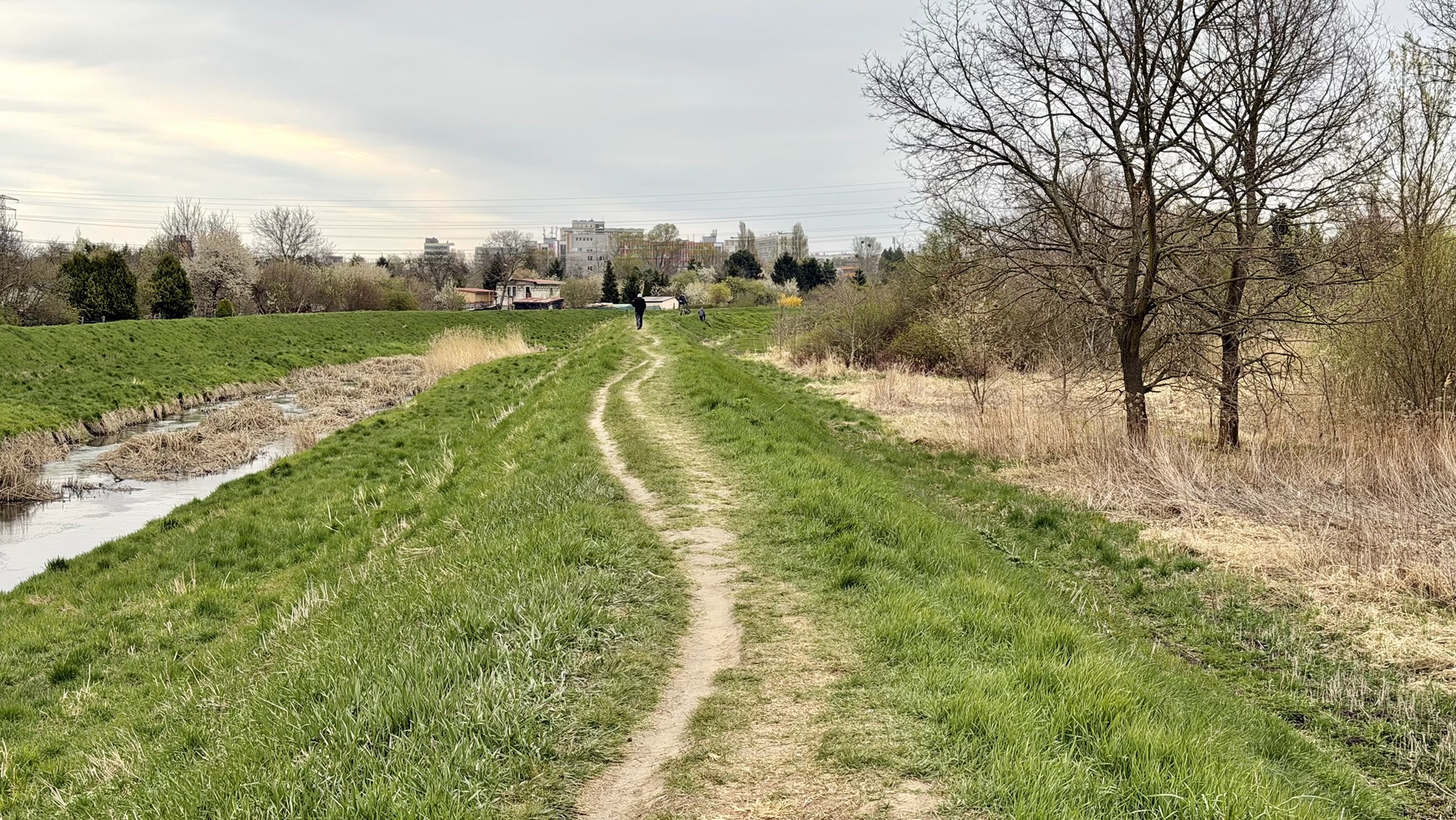
The route deteriorated to a single track on a berm next to a the Ślęza River. At this point, it was after 6 PM and we were starting to get hungry.
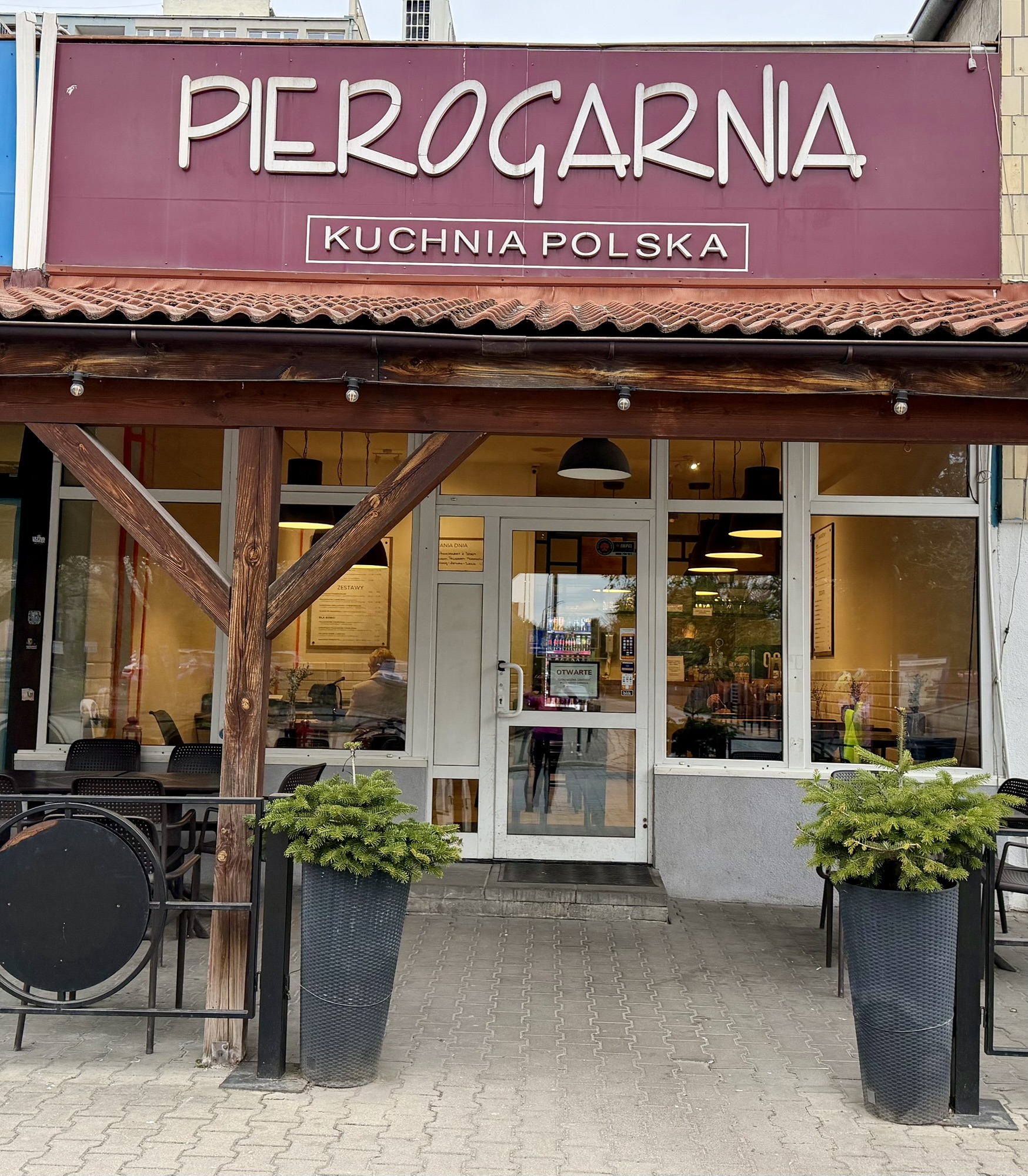
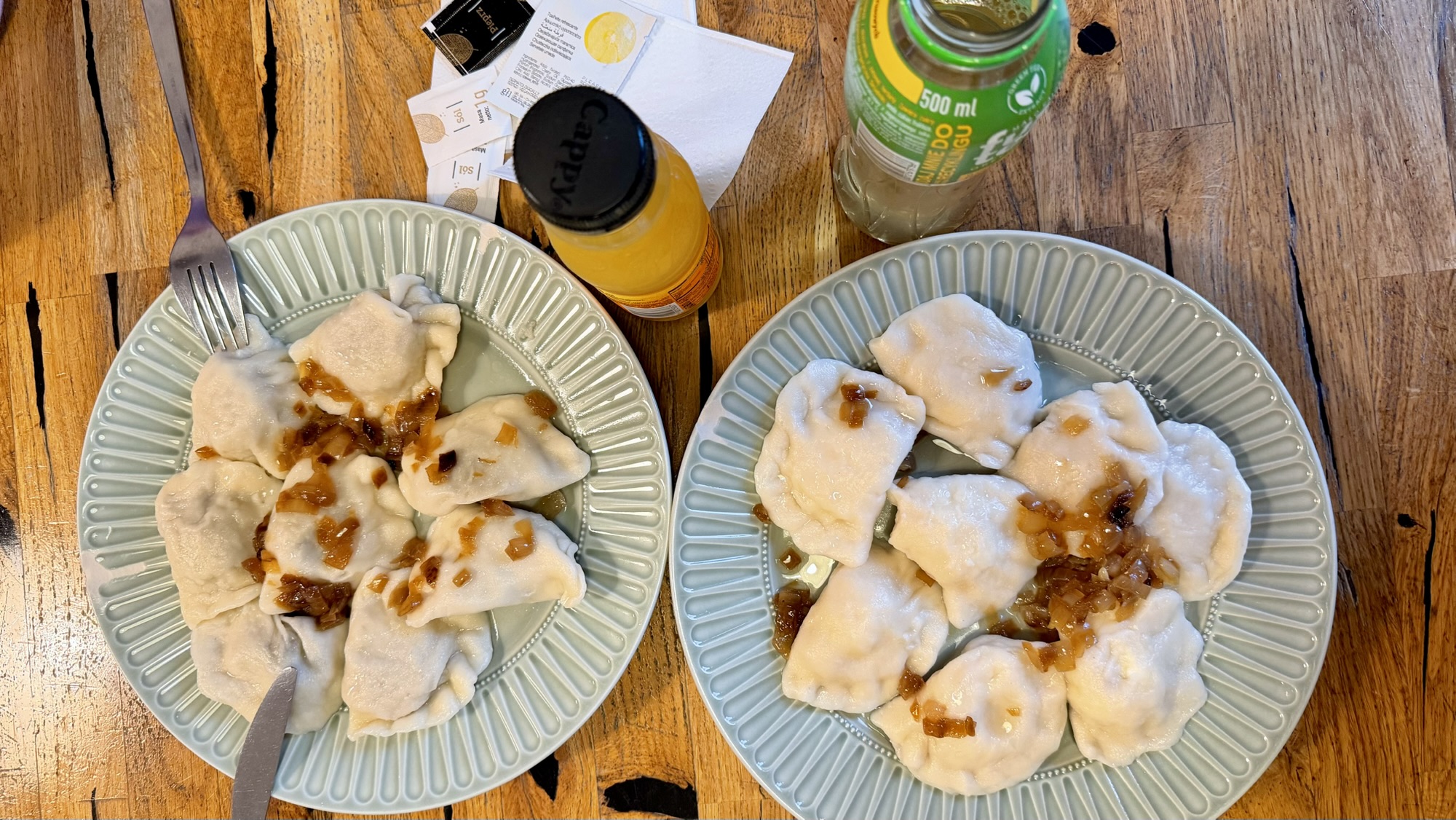
Alina suggested pierogies for dinner, so we headed to a local restaurant.
After two slower days, I was beginning to feel more rested and ready to continue exploring. Tomorrow, we will have an earlier start by having breakfast at a restaurant that is in the Michelin guide.
I was getting behind on the daily blog posts, so, having written the first two weeks, I decided to take a break and finish writing about the trip when I got home. Over the next few weeks, I will publish the last nine days of the trip. This will include touring Wroclaw, Berlin, and back to Amsterdam.
I woke at 7:30, saw that Alina was already up, and said I needed another half hour of sleep. The next time I woke was 10. I felt much better. Alina discovered a number of maintenance issues in her apartment that she will have to deal with over the next few days, which caused her a restless night and prevented her from sleeping in.
We discovered that the bike tires needed pumping, so Alina borrowed a pump from a neighbour. Then we rode to a convenience store to pick up a few things for breakfast.
It was noon by the time we were ready to leave again. I was grateful for the slower start. Alina generously loaned me the nice city bike that she bought herself last fall, and is riding a folding bike borrowed from a friend.
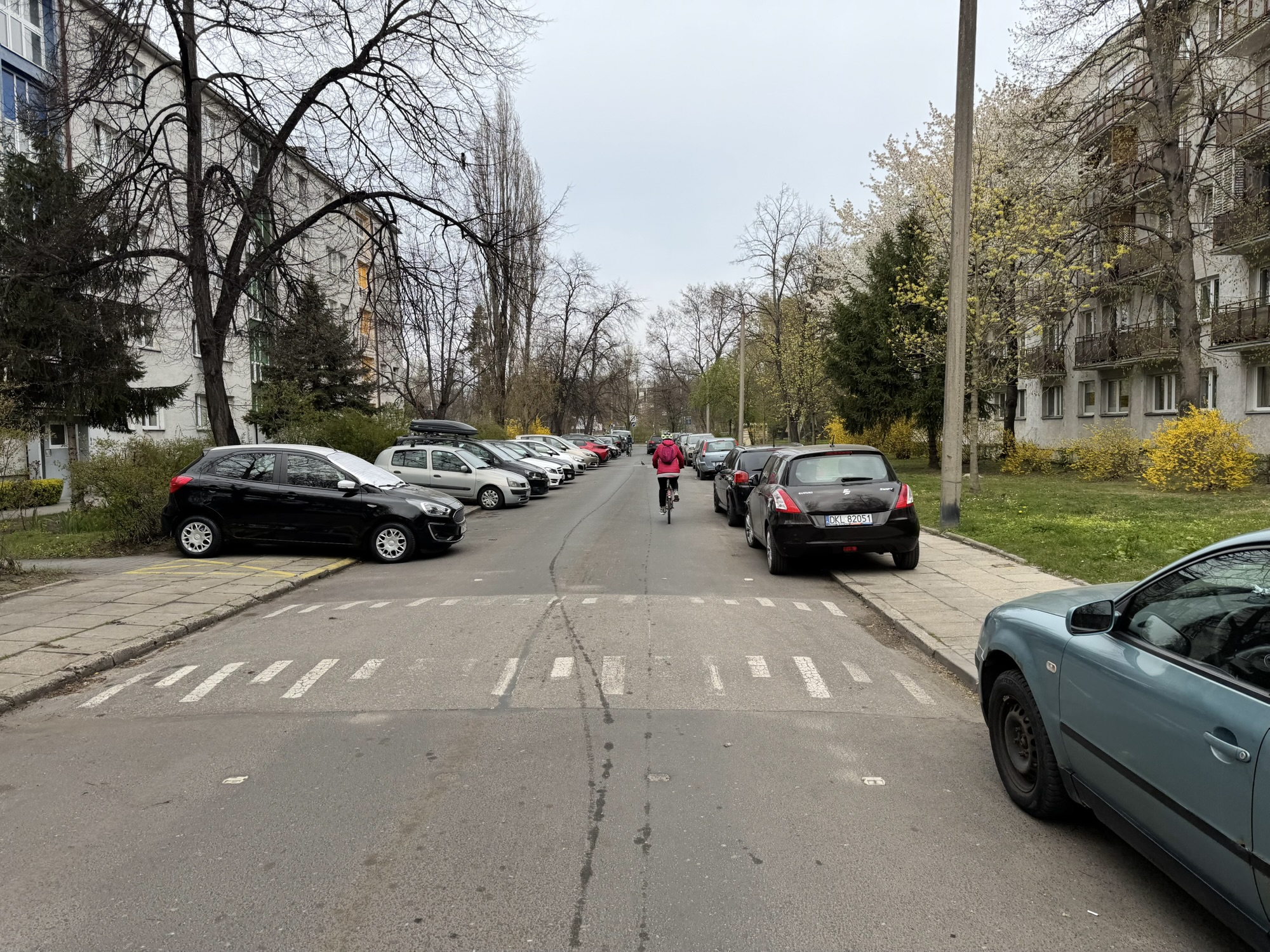
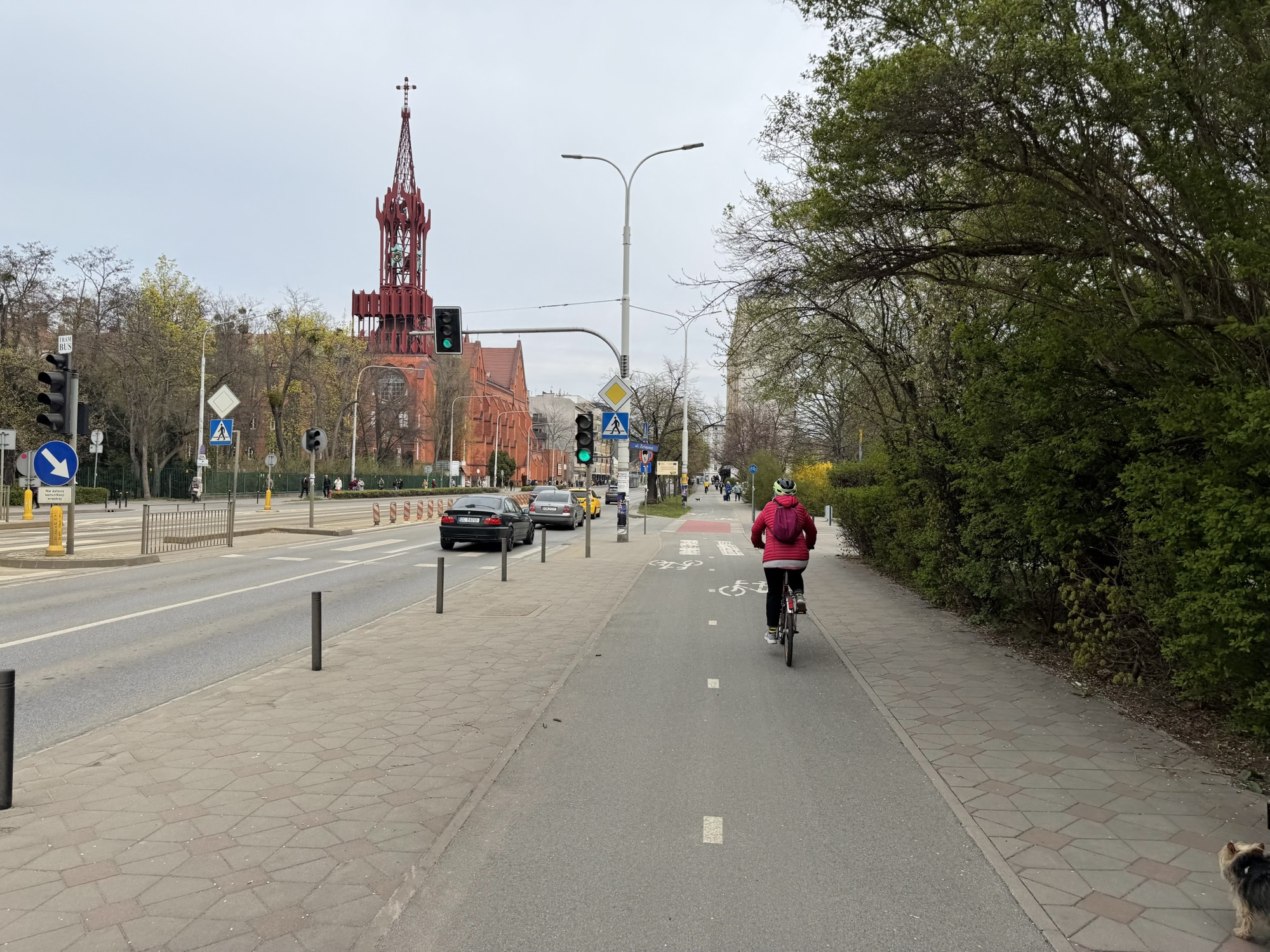
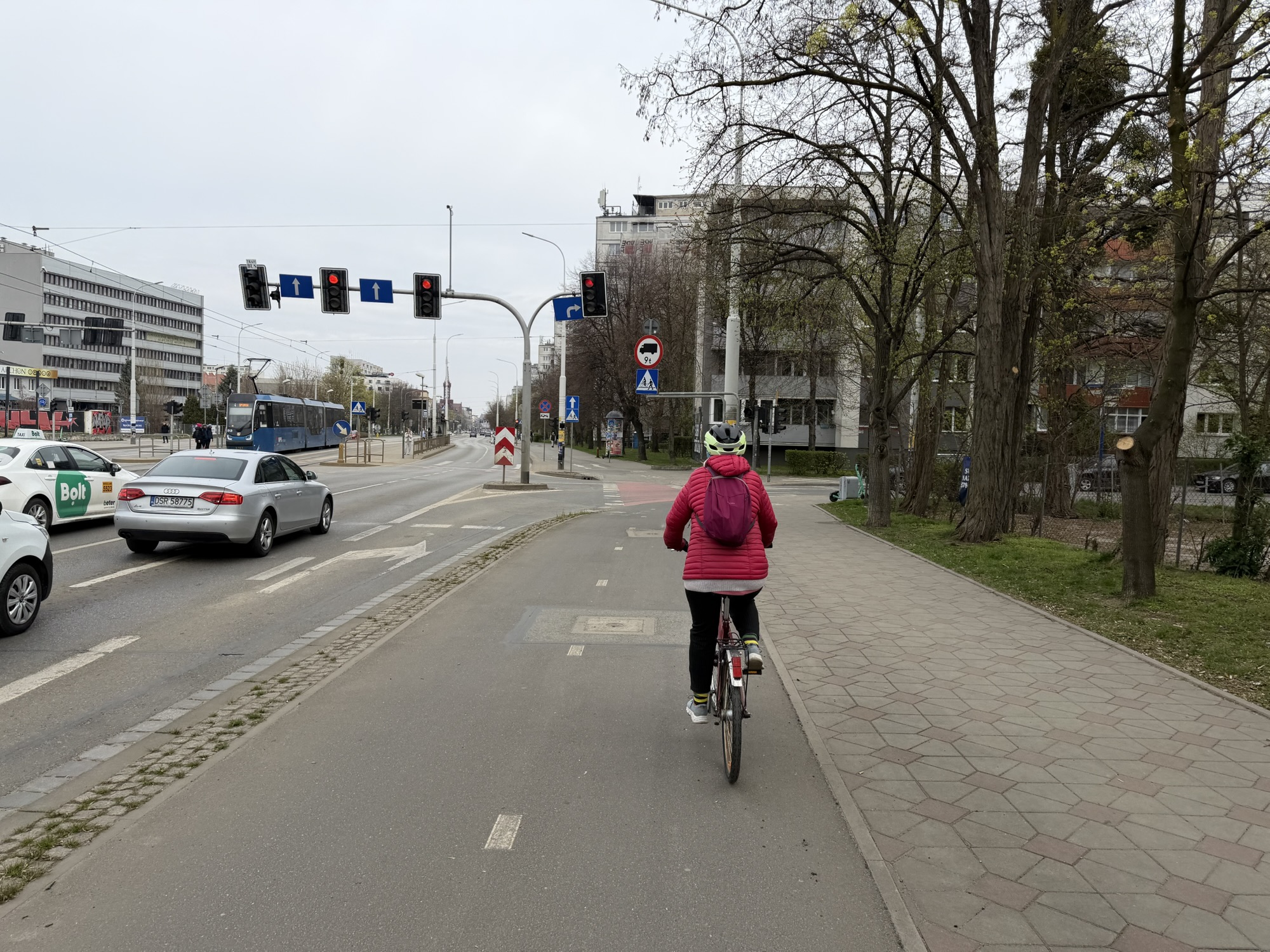
We were on cycling infrastructure right from Alina’s front door and adjacent to a tram line. On only the smallest residential streets were cars and bikes sharing the same space. Here is a slideshow of images from our ride to the museum. In the second image, despite the excellent progress Wroclaw has made transitioning to sustainable transport (more about that later), you can see that there are still spaces where the car triumphs over Active Transportation spaces.
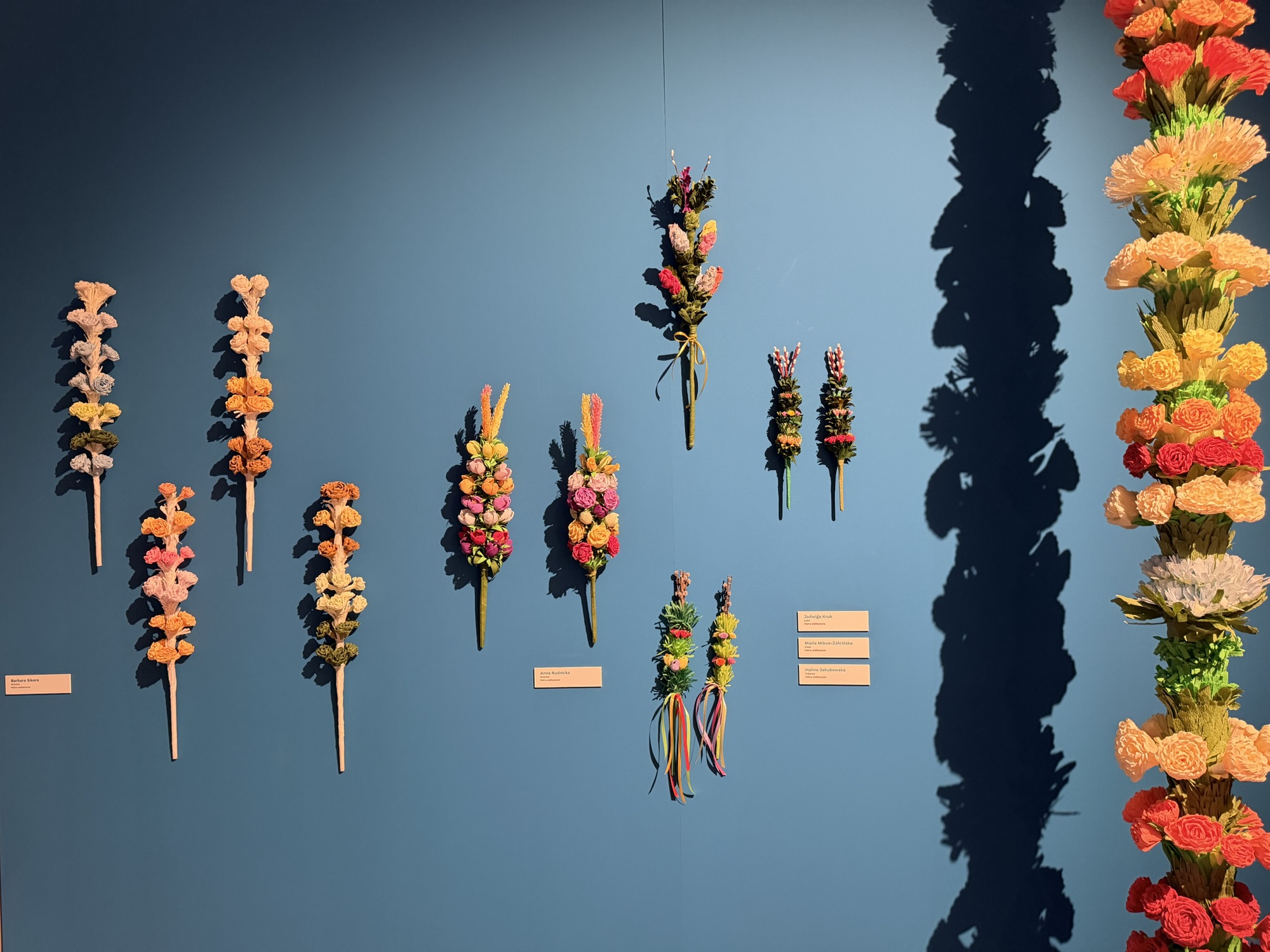
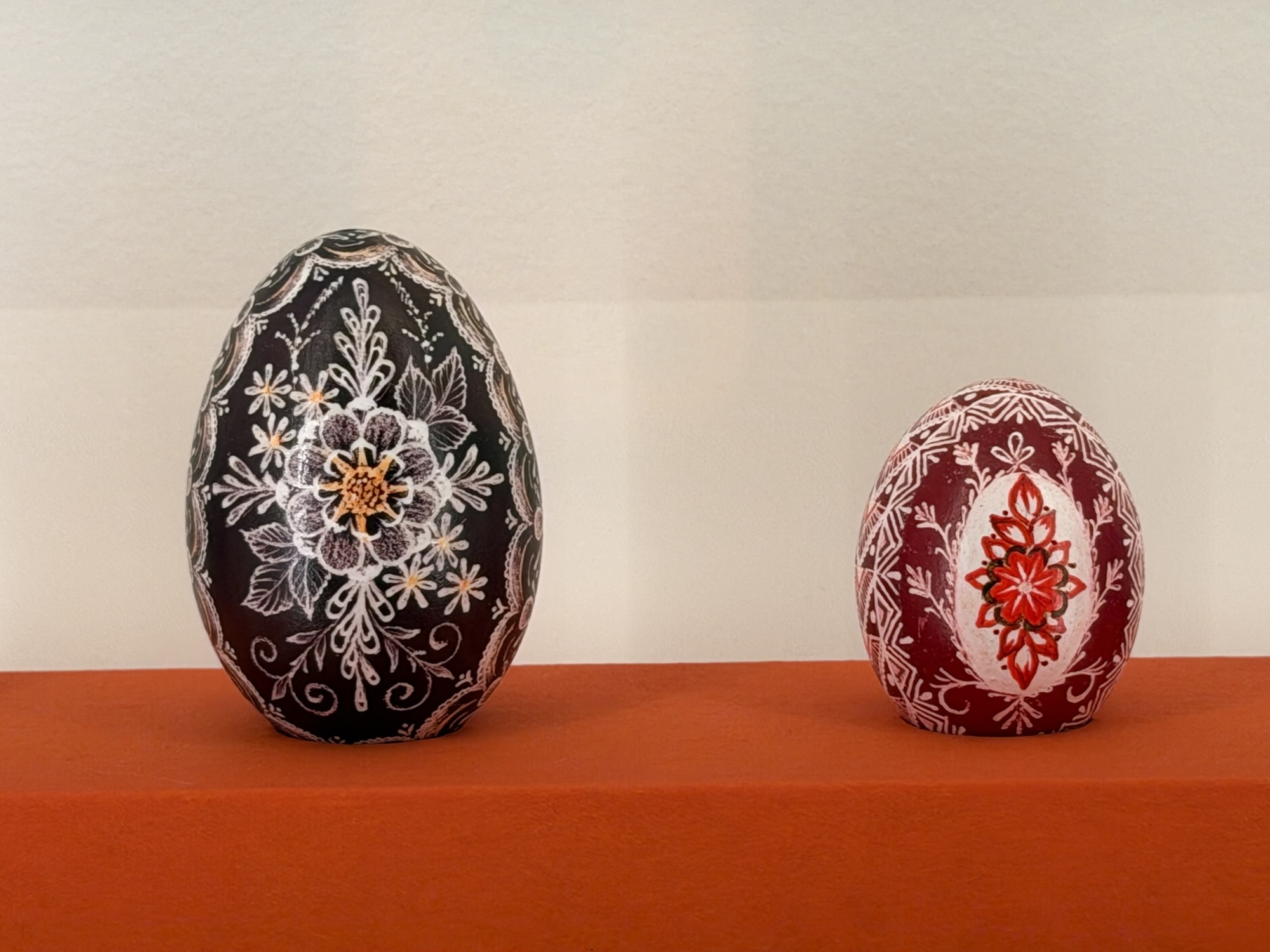
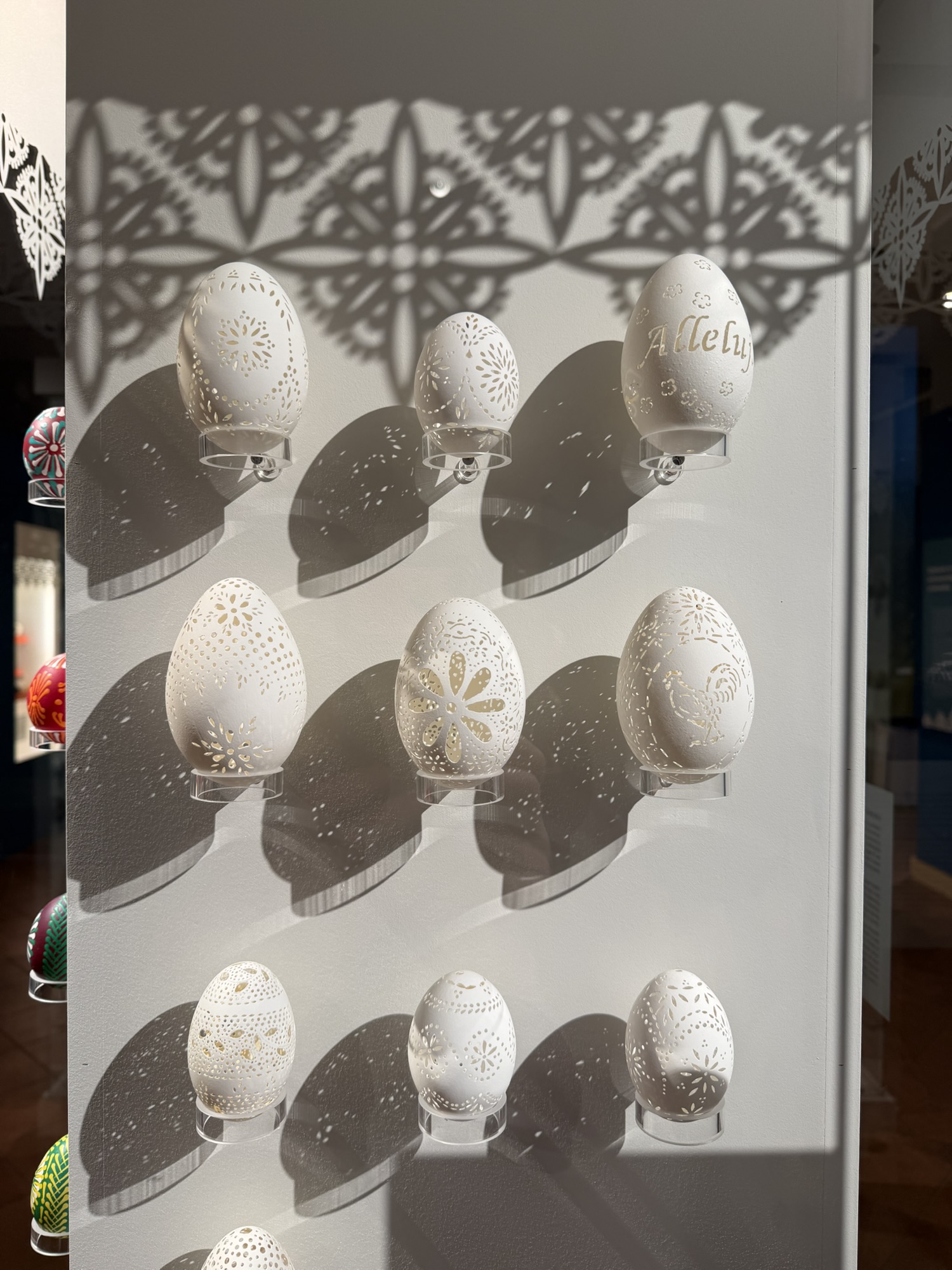
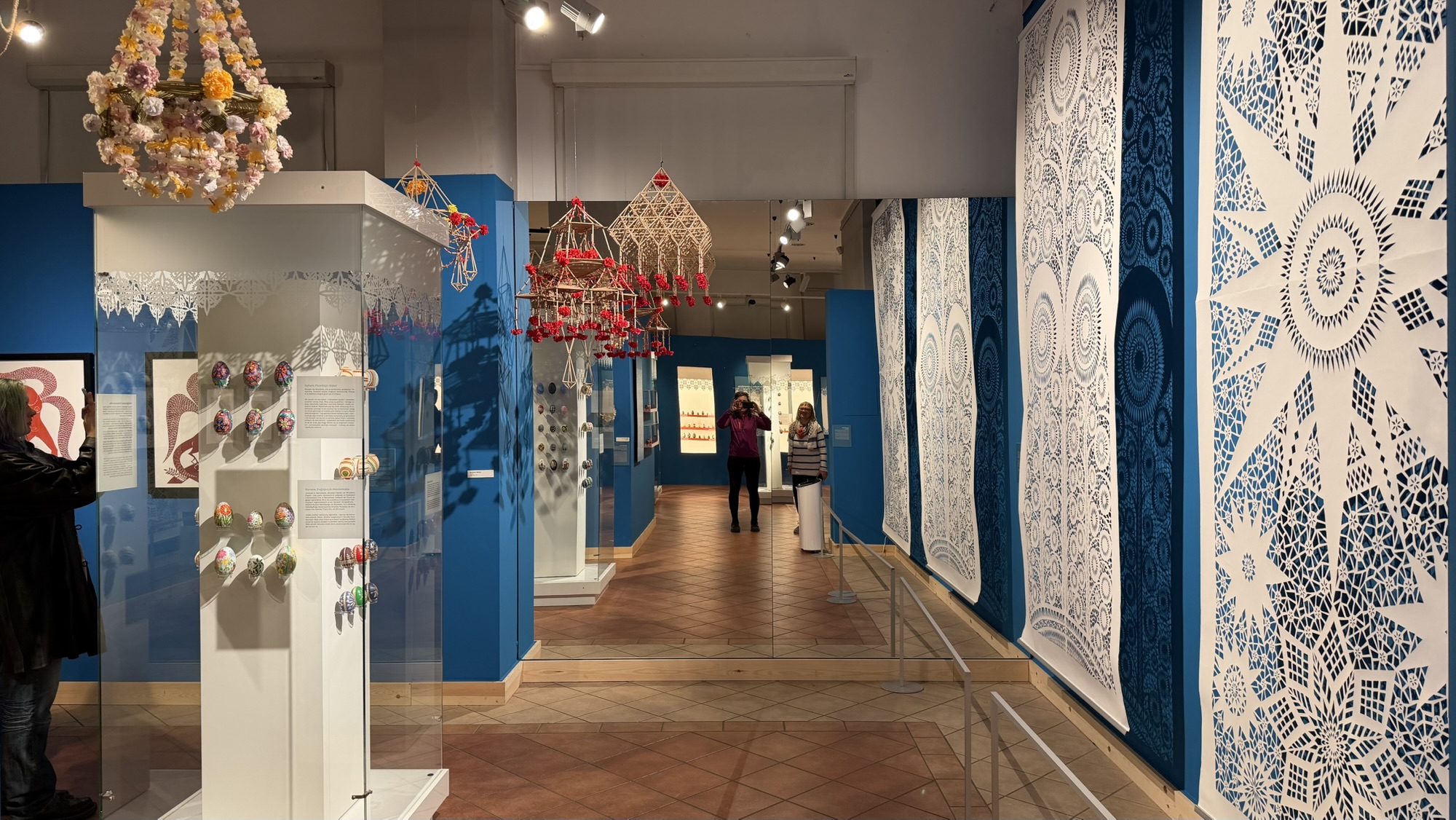
We cycled to the Ethnographic Museum, which is dedicated to regional Culture Lower Silesia. The building dates to the 16th century. We were there for the Easter Egg and Palms exhibit. It was a small exhibition of decorated eggs, with traditional and modern techniques, and palms.
The eggs ranged in size from the familiar chicken egg to enormous ostrich eggs.
One artist, a dentist by day, uses her dental tools to carve intricate patterns in egg shells.
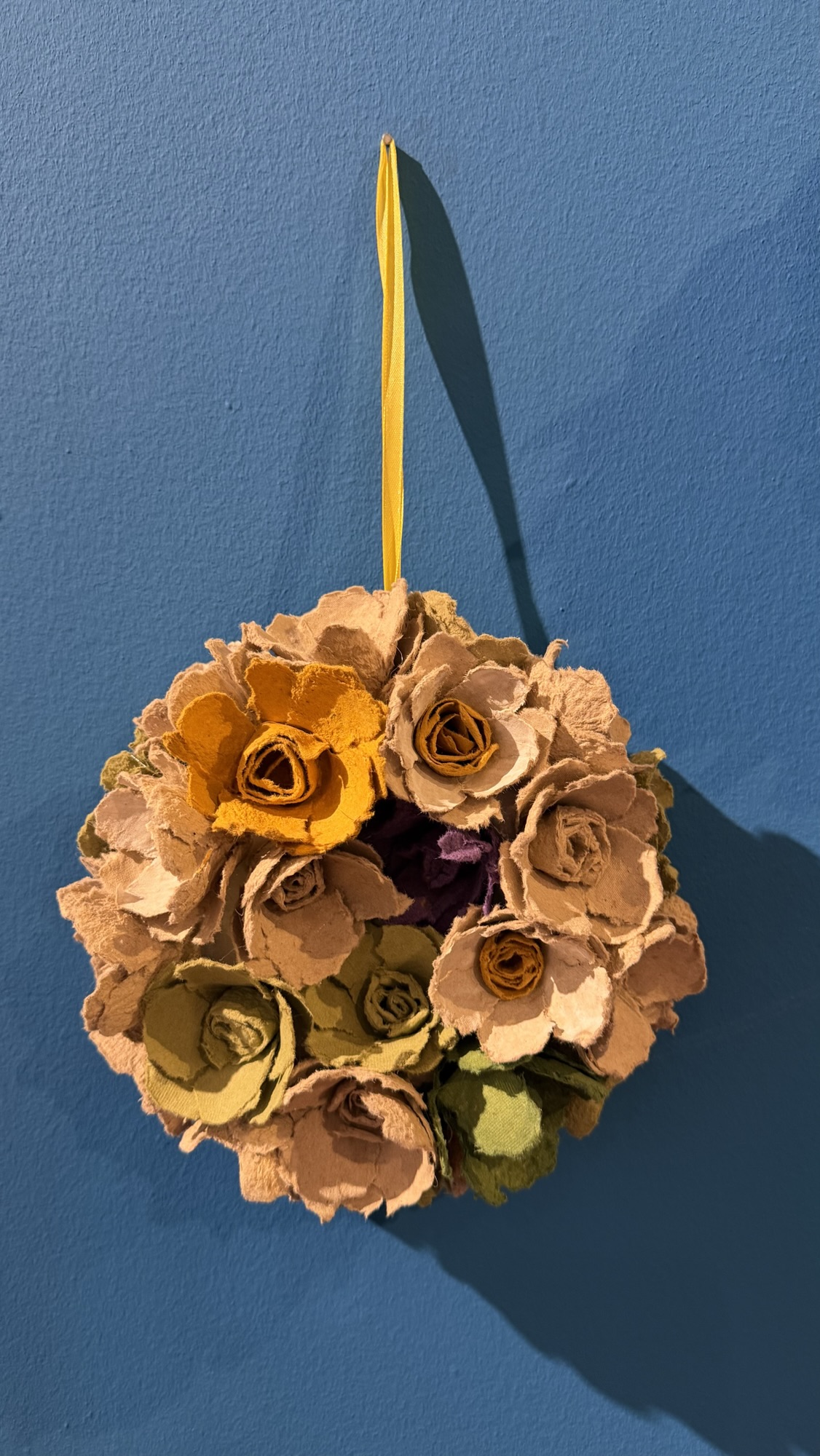
This bouquet was made out of variously coloured egg cartons.
One of the artists cut detailed patterns into large sheets of paper.
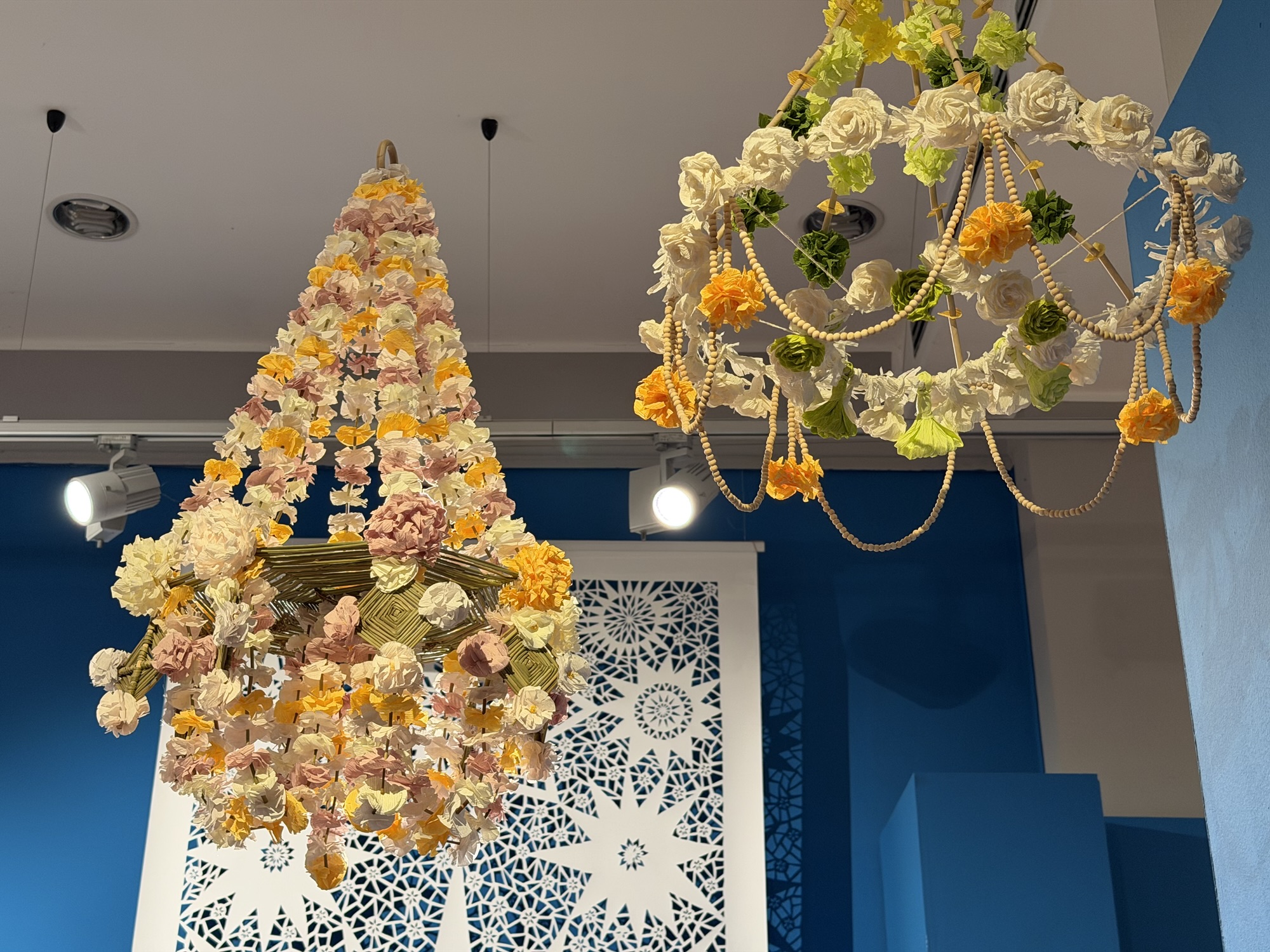
Pająki (Polish for “spiders”) are traditional Polish chandeliers made of straw, paper, and yarn, crafted for Easter to ensure prosperity and happiness.
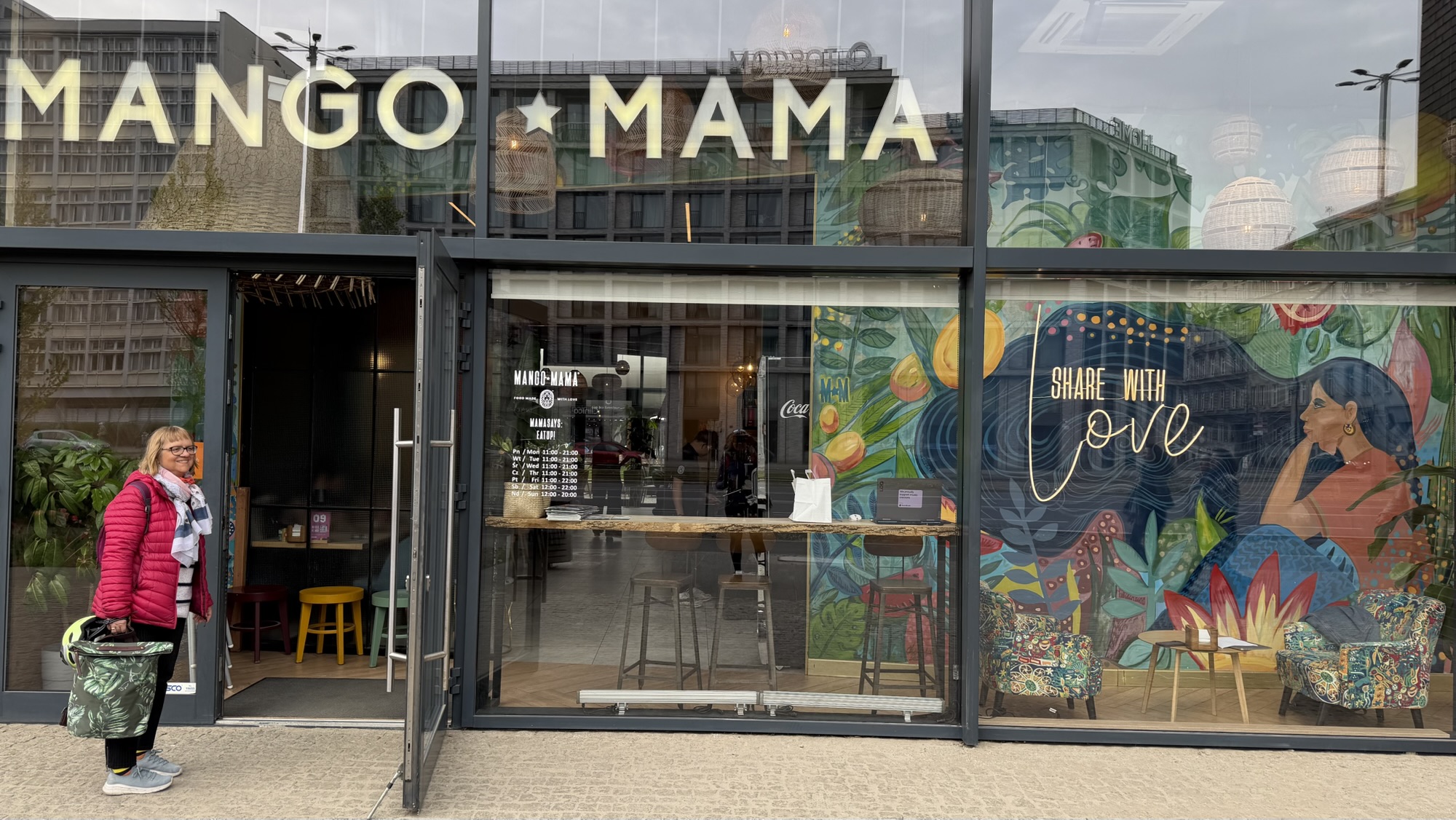
By the time we finished at the museum, I was feeling in need of a coffee, but we didn’t have long before we were supposed to meet Alina’s high school friends for a reunion. We parked our bikes and walked into a mall in search of a coffee shop, which we found. I got a takeout latte, and then we continued on to Mango Mama, the restaurant where the reunion was taking place.
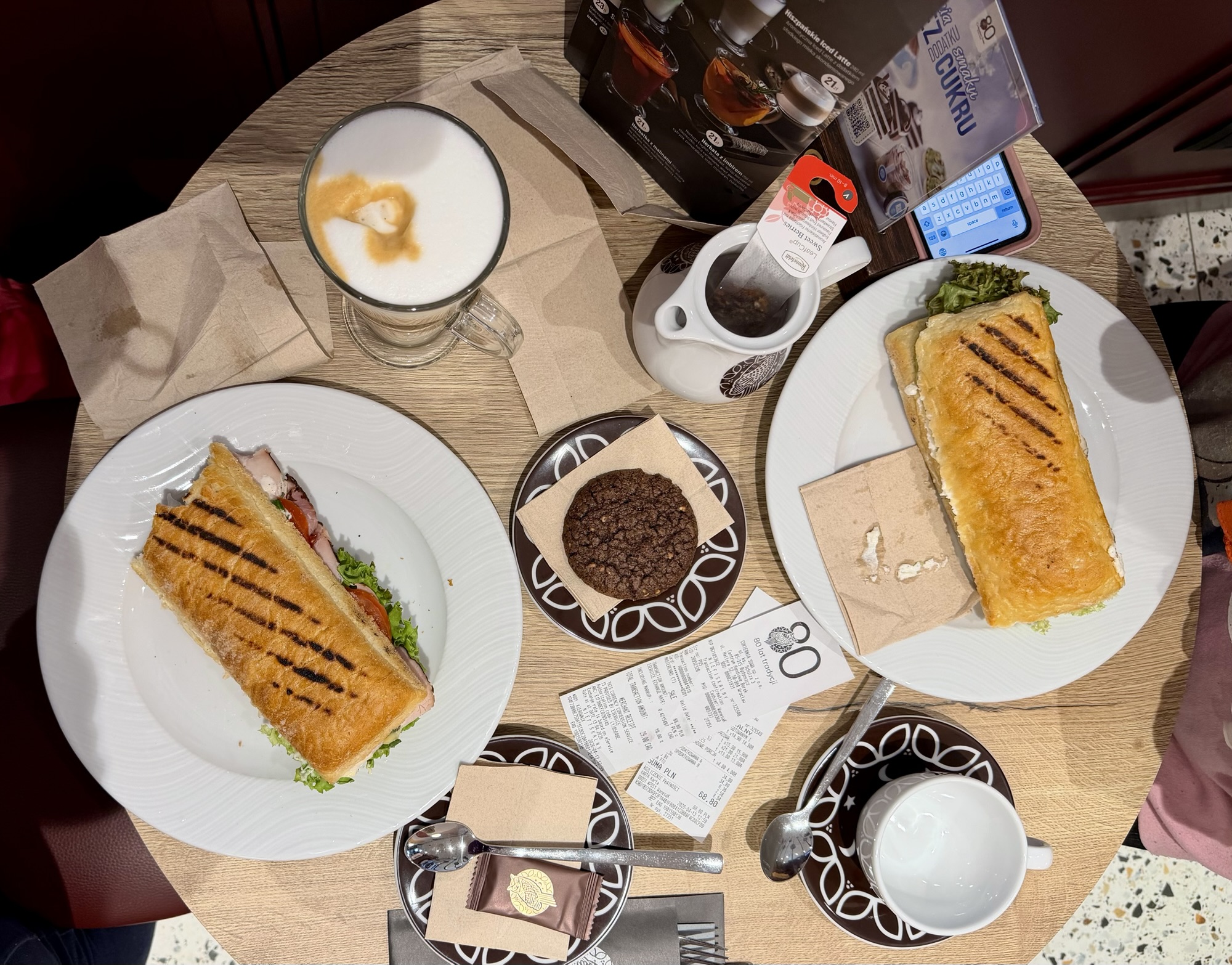
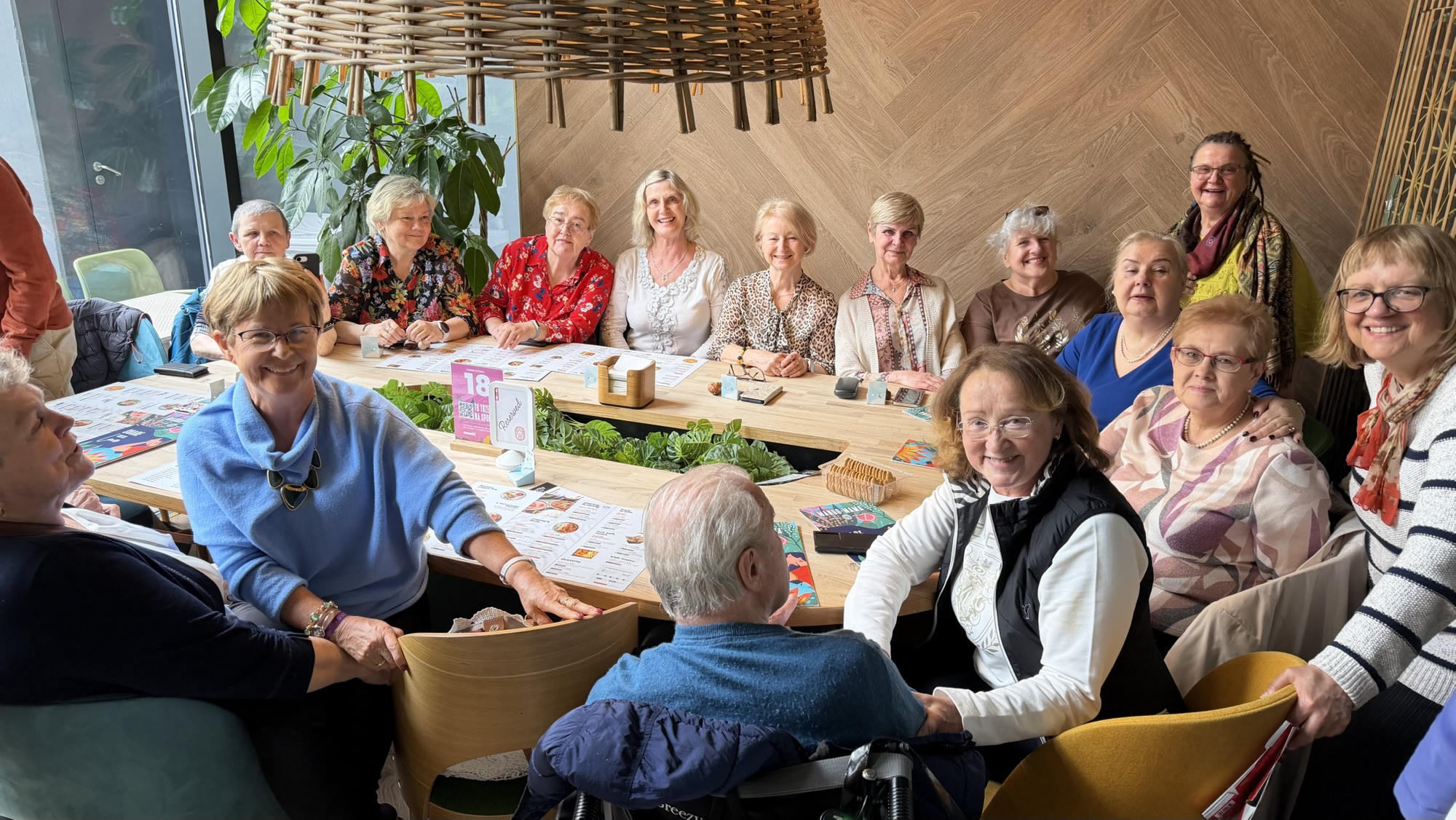
I met some of Alina‘s friends, but there were too many to fit around the table, and only one other person who spoke English. I told Alina I would entertain myself so she wouldn’t have to worry about entertaining me. I went back to the coffee shop and got a sandwich and cookie.
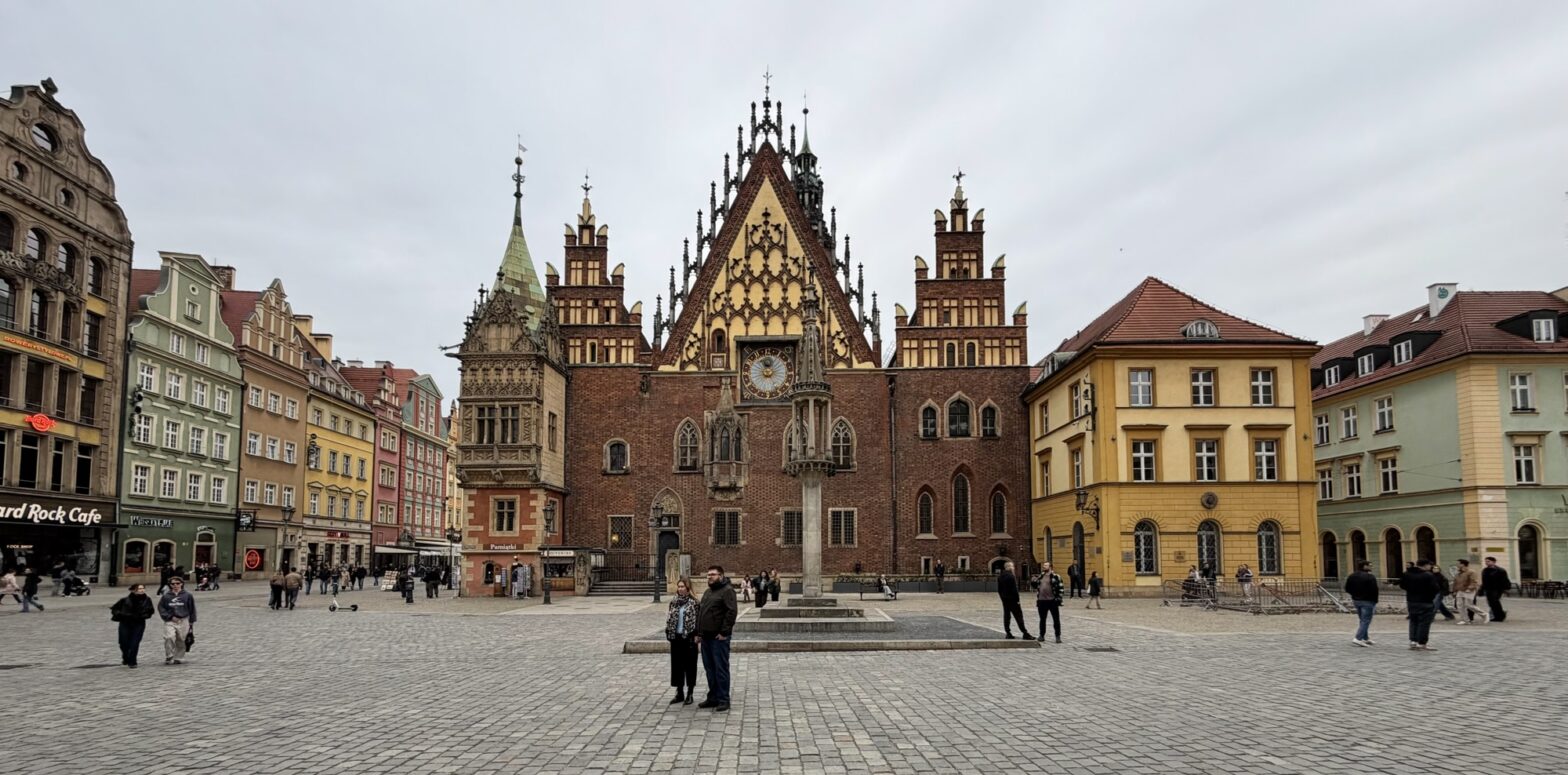
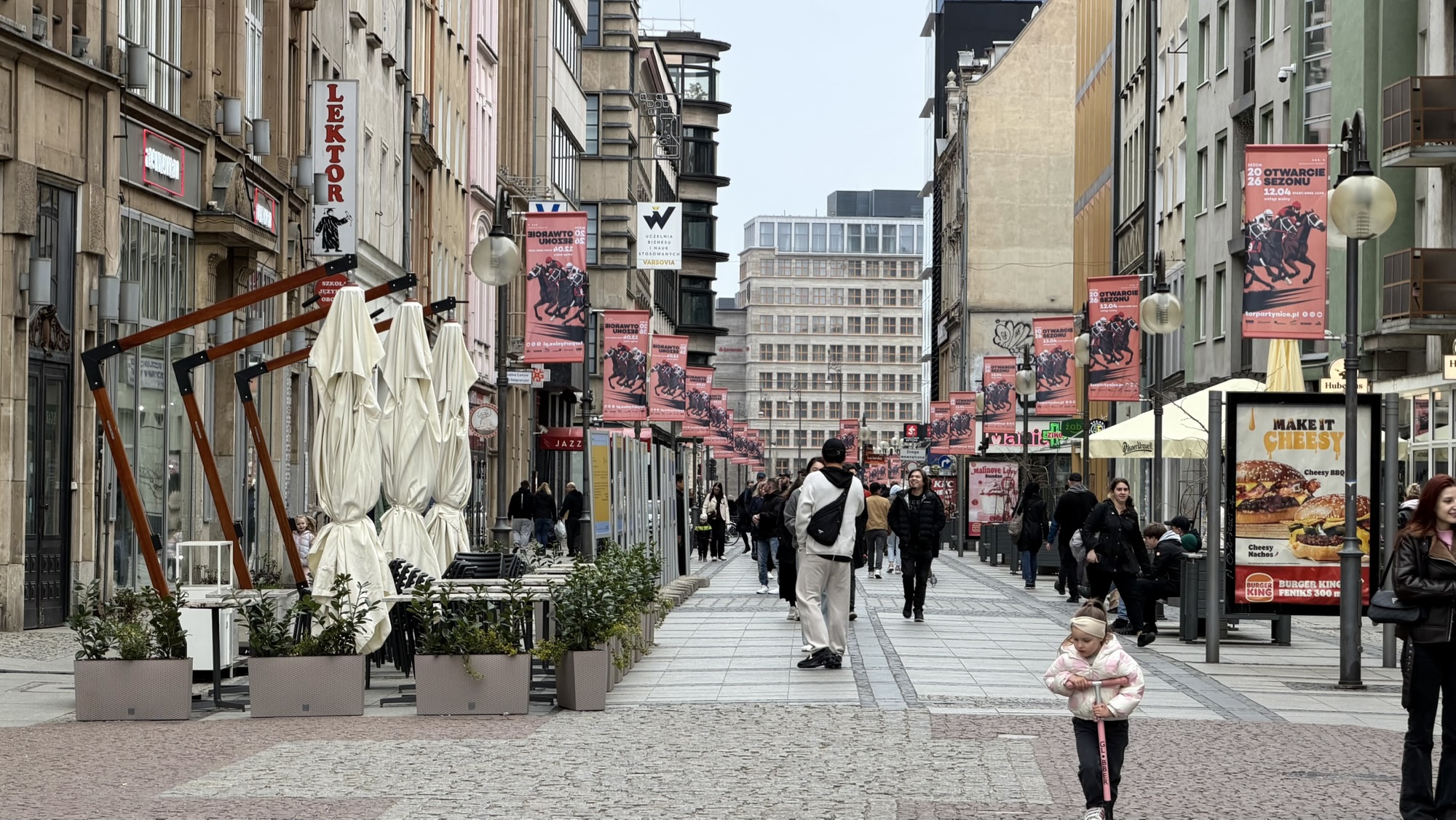
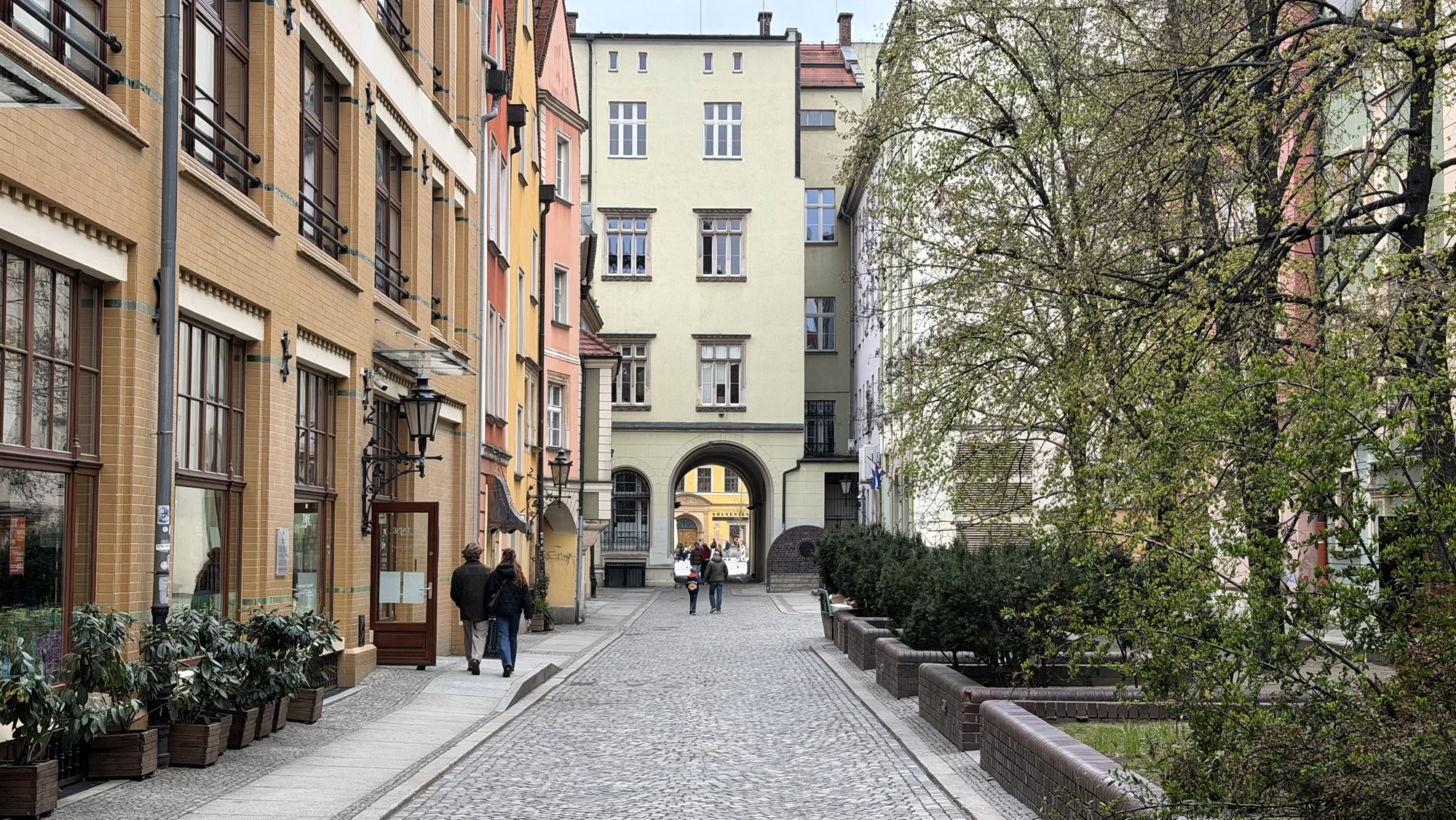
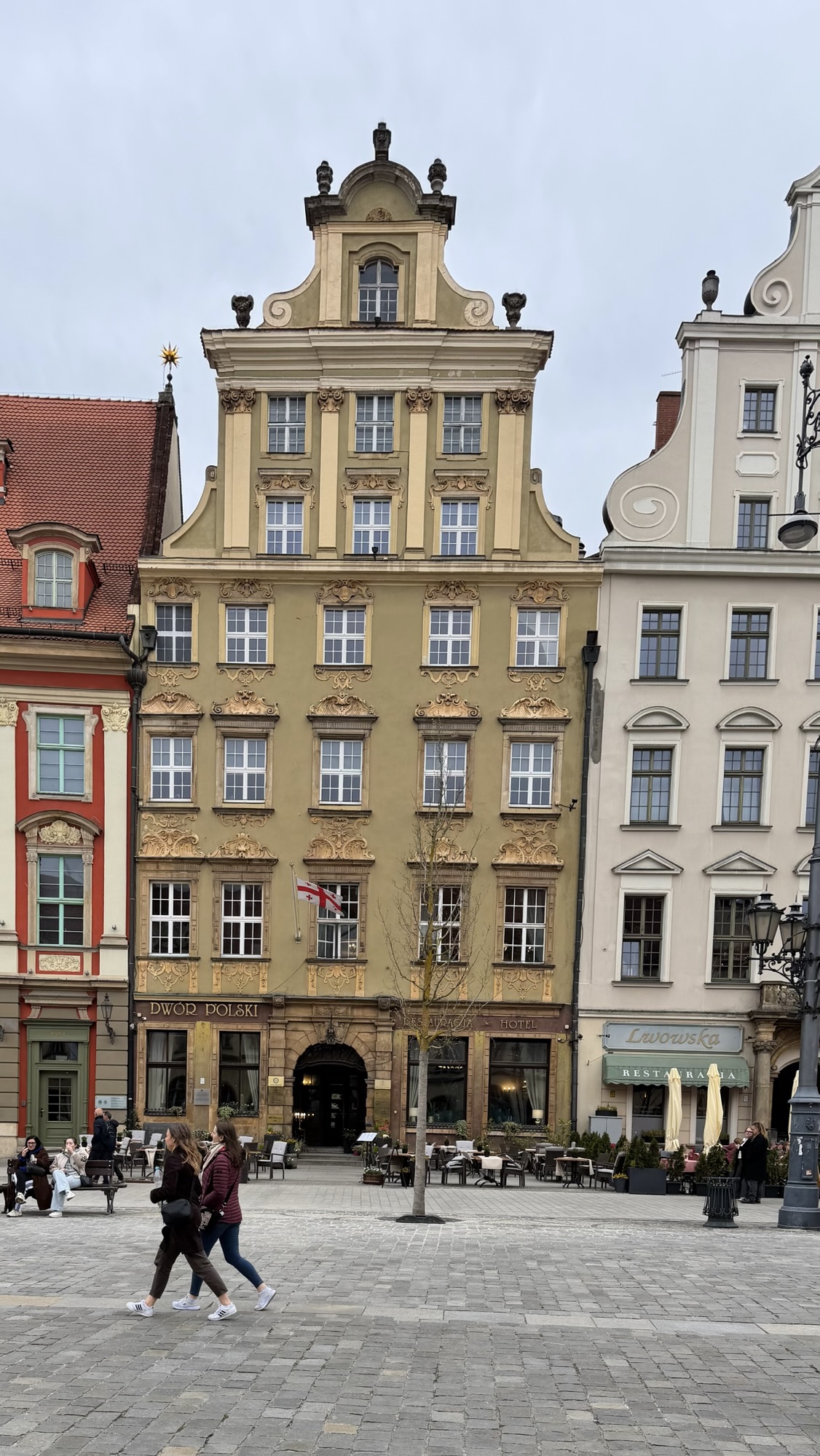
I then opened my Wroclaw (pronounced vrot-swaaf) list on Google Maps to see how close I was to the things I want to see while I’m here. I was very close to Market Square, or Rynek. This pedestrianized street connected the busy street, where the mall is located, to Rynek.
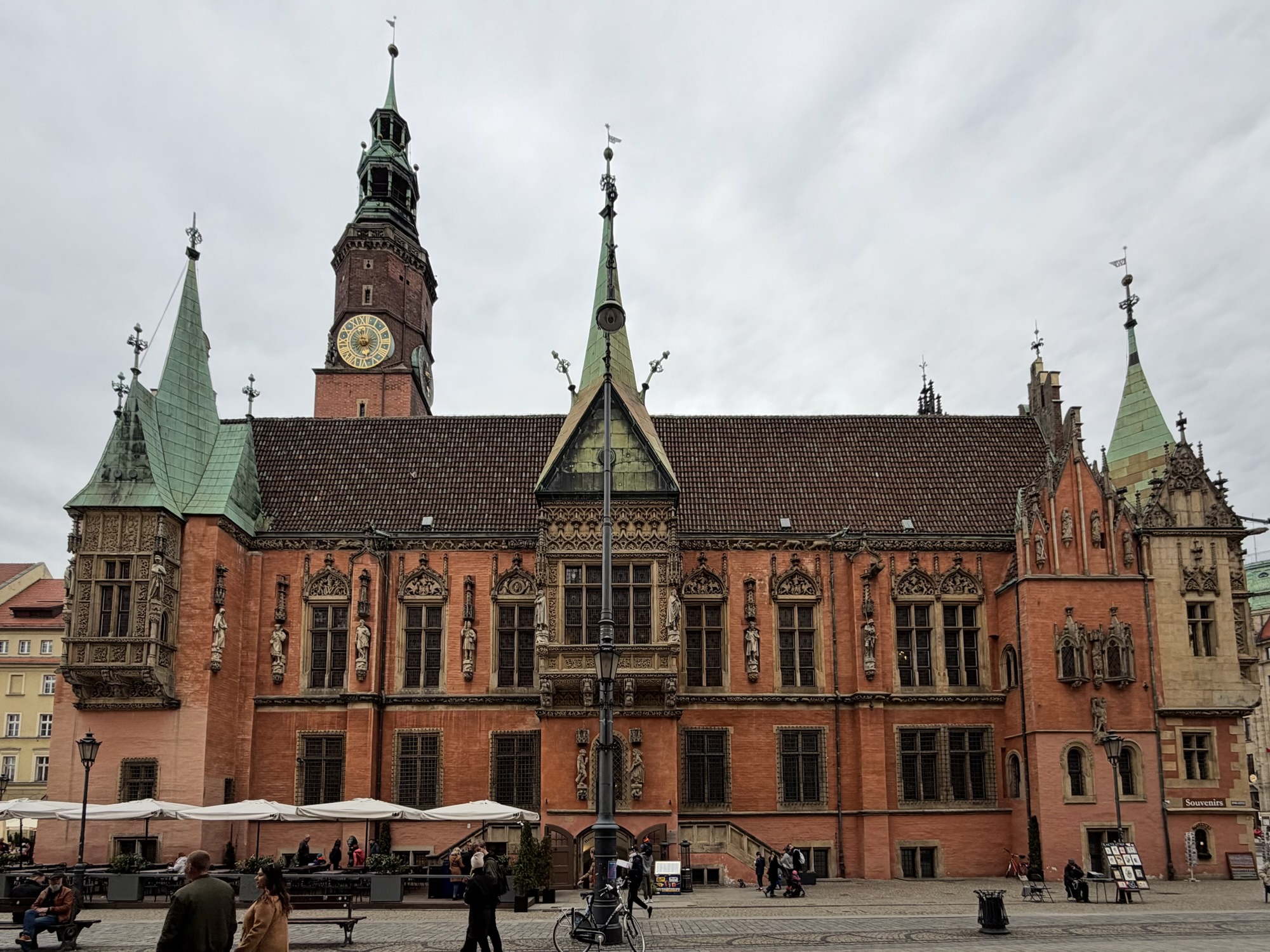
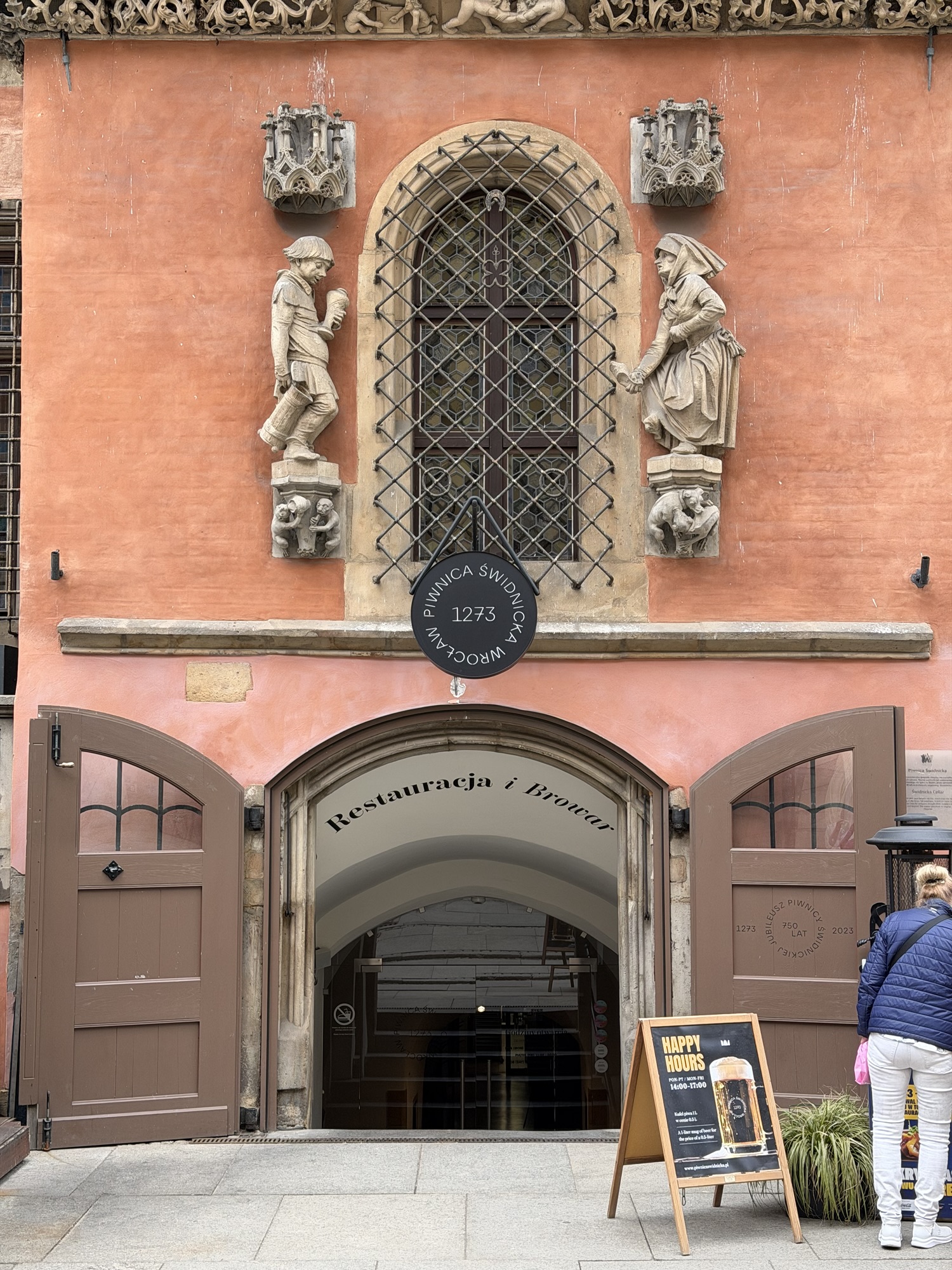
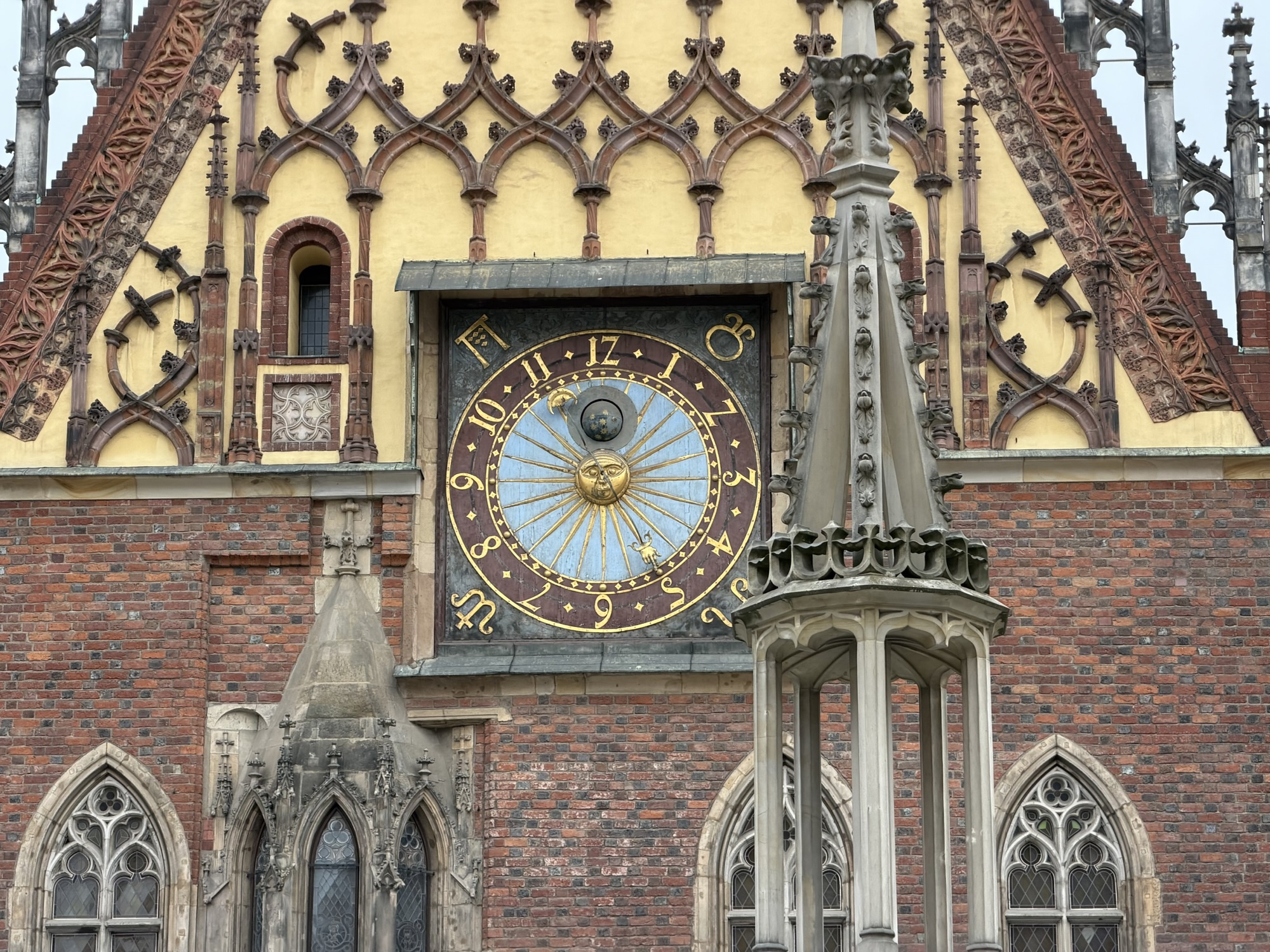
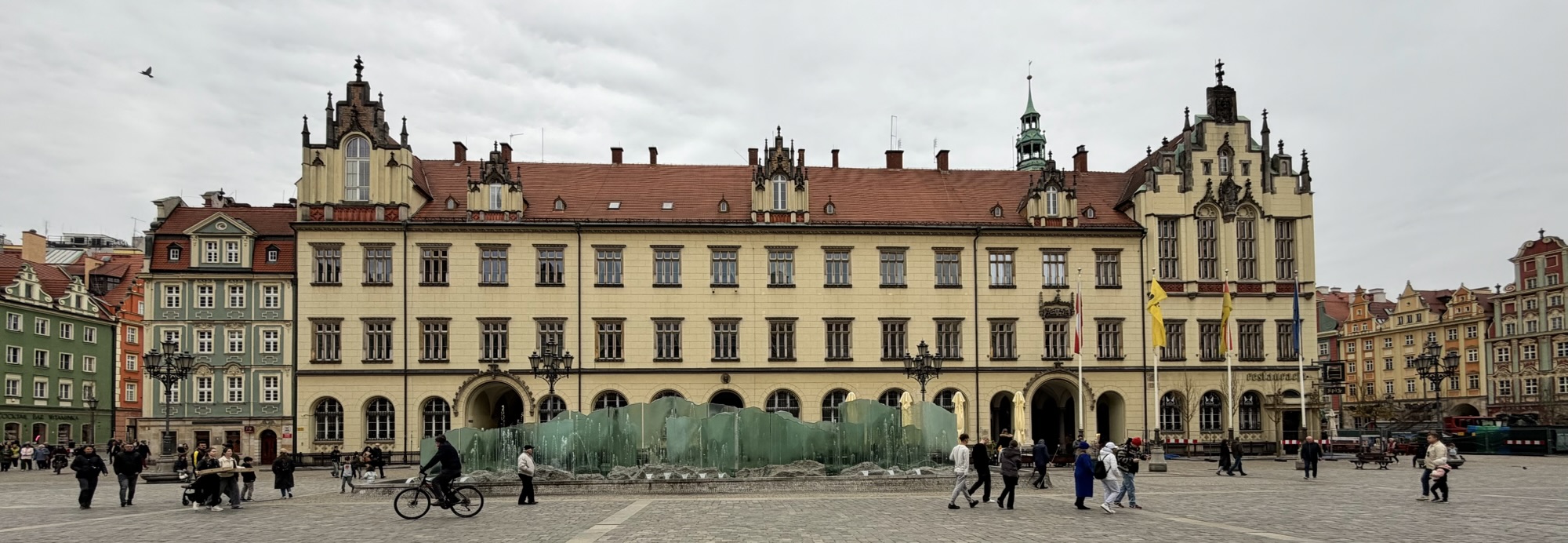
The Old Town Hall, or Ratusz in Polish, is a premier example of Gothic architecture in Europe which serves as the Museum of Bourgeois Art. It was built in the 13th century and contains the oldest restaurant in Europe, Świdnicka Cellar, established in 1273.
Above the door to the basement restaurant is a sculpture by Christian Behrens depicting a marital scene of a drunken husband returning with a beer mug and his furious wife preparing to strike him with her shoe.
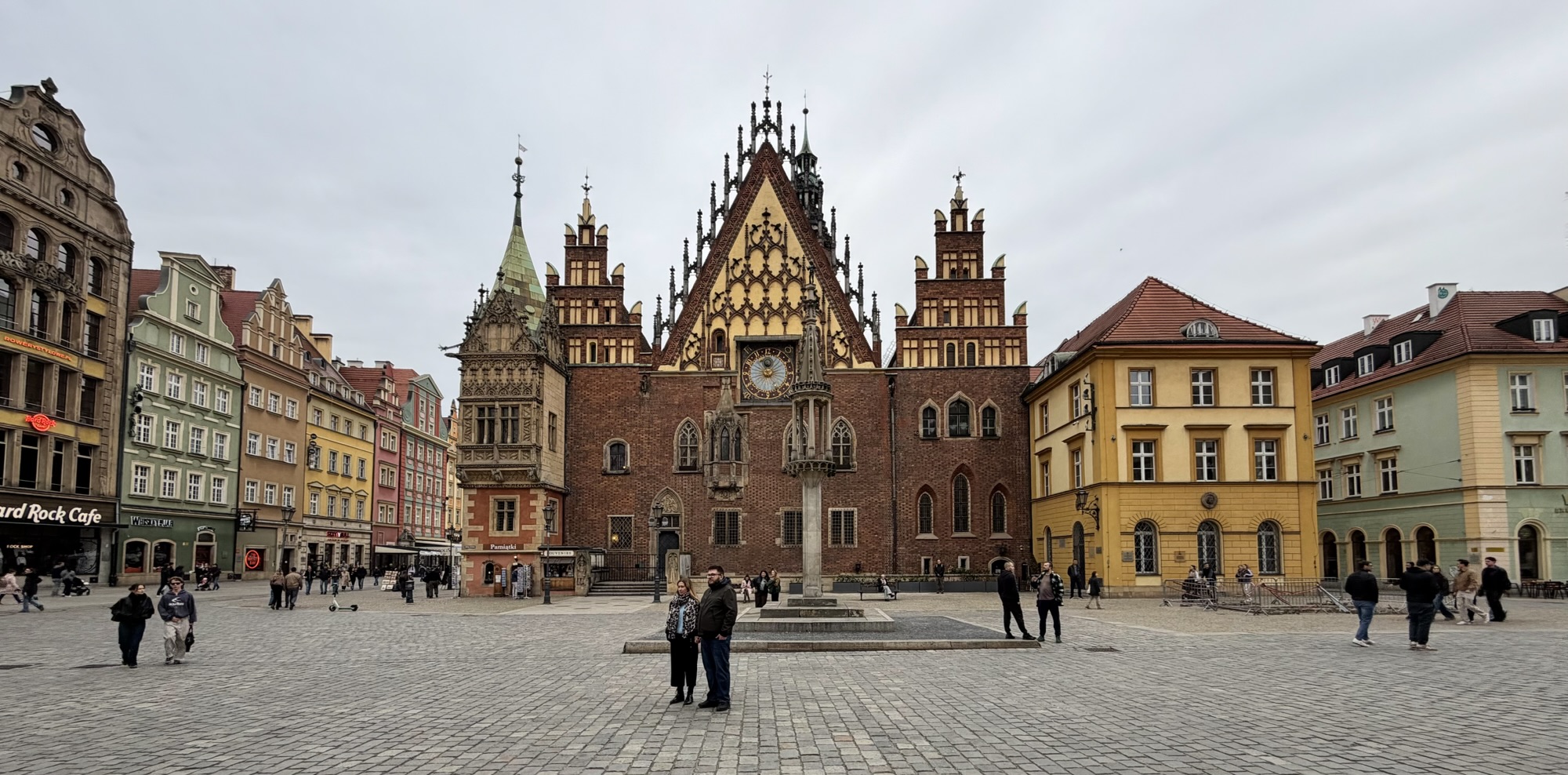
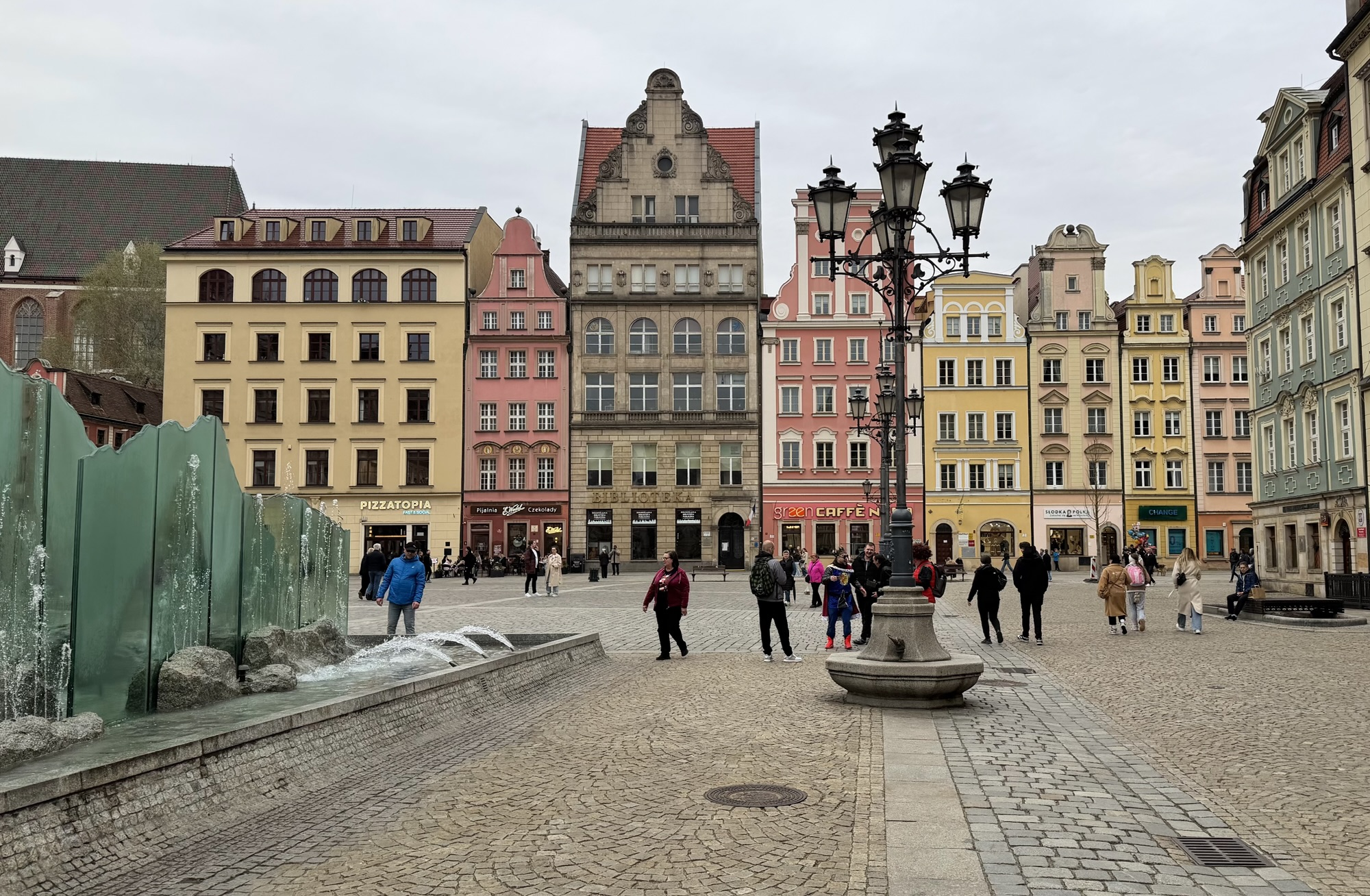
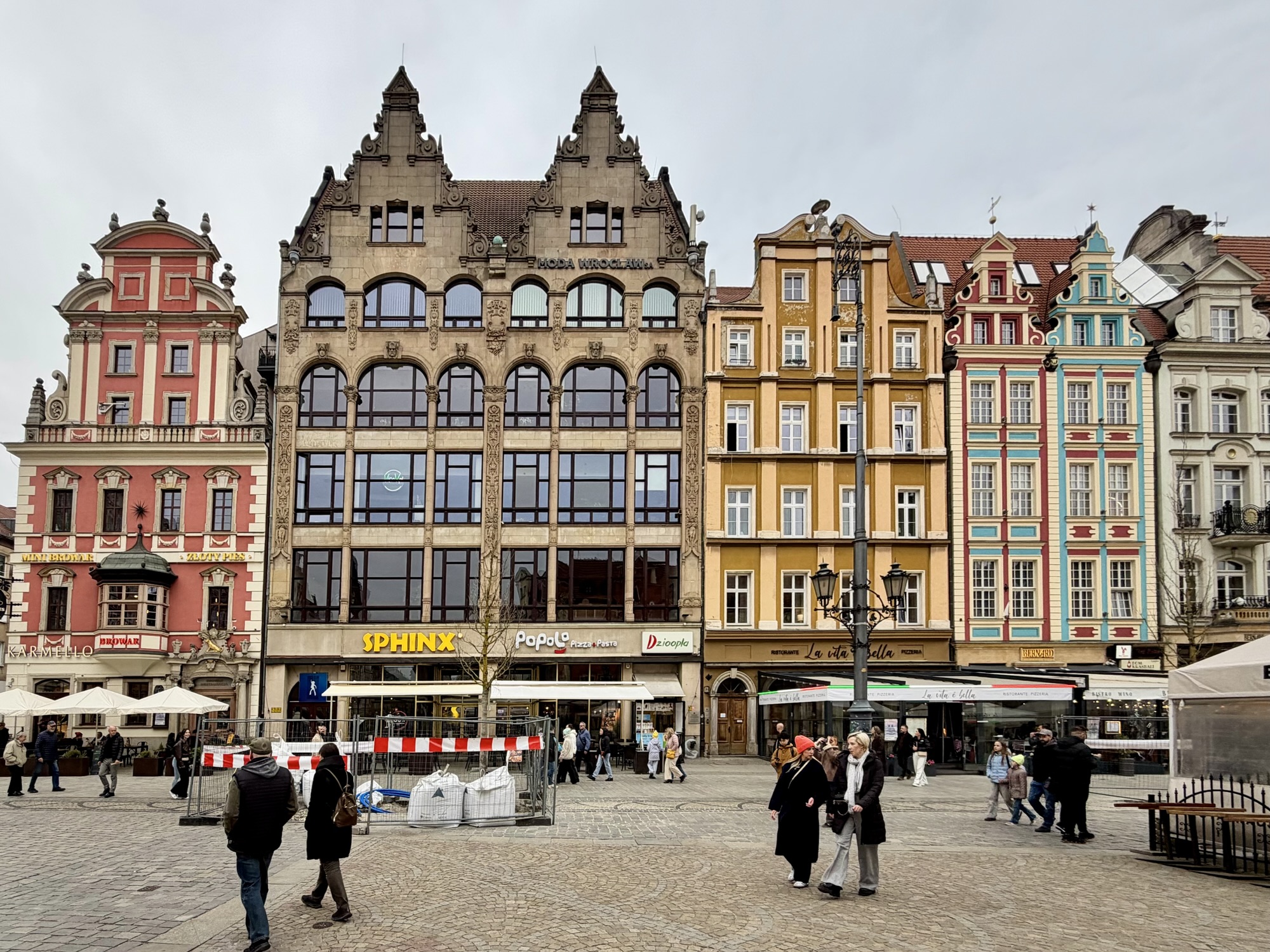
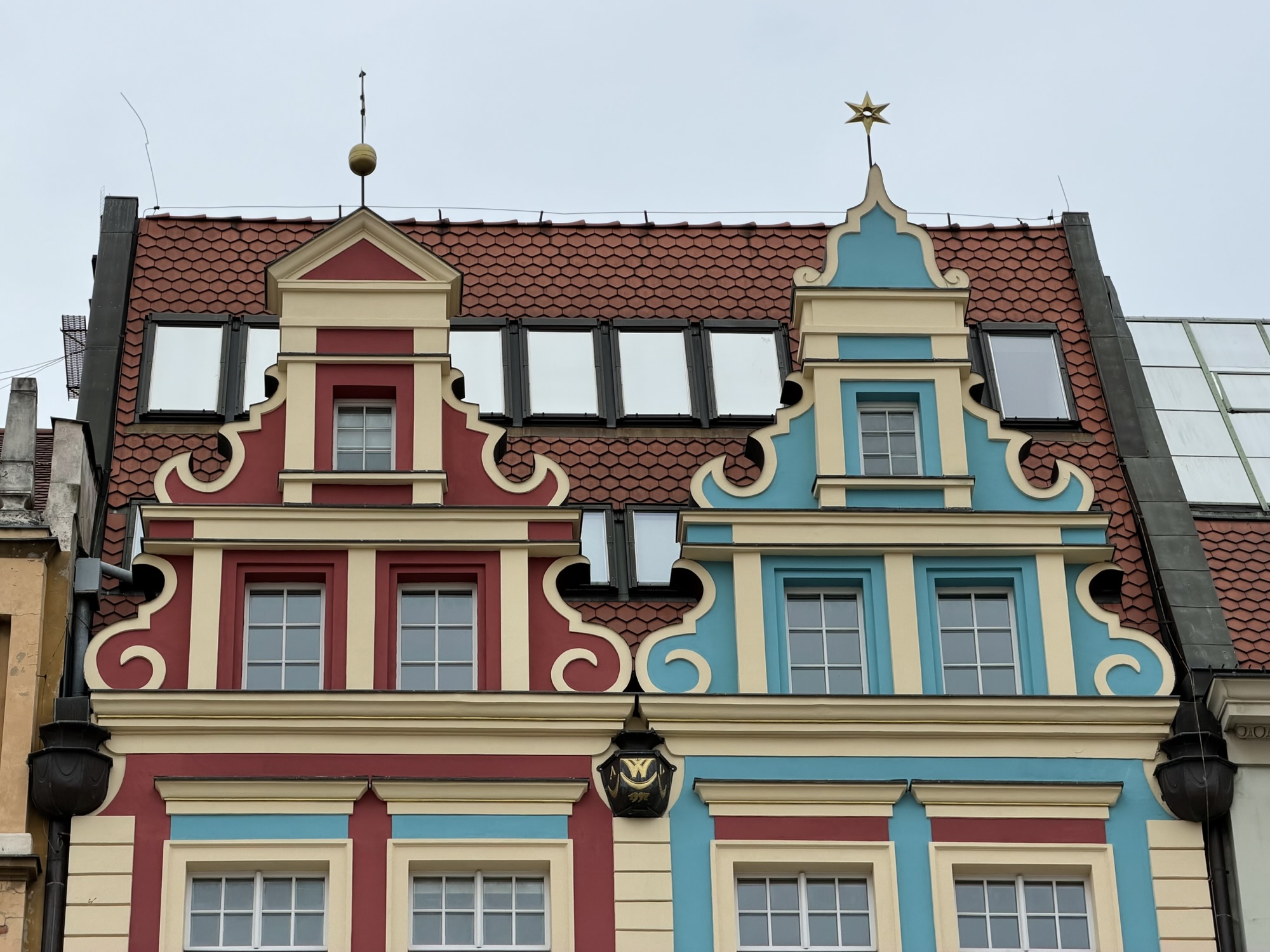
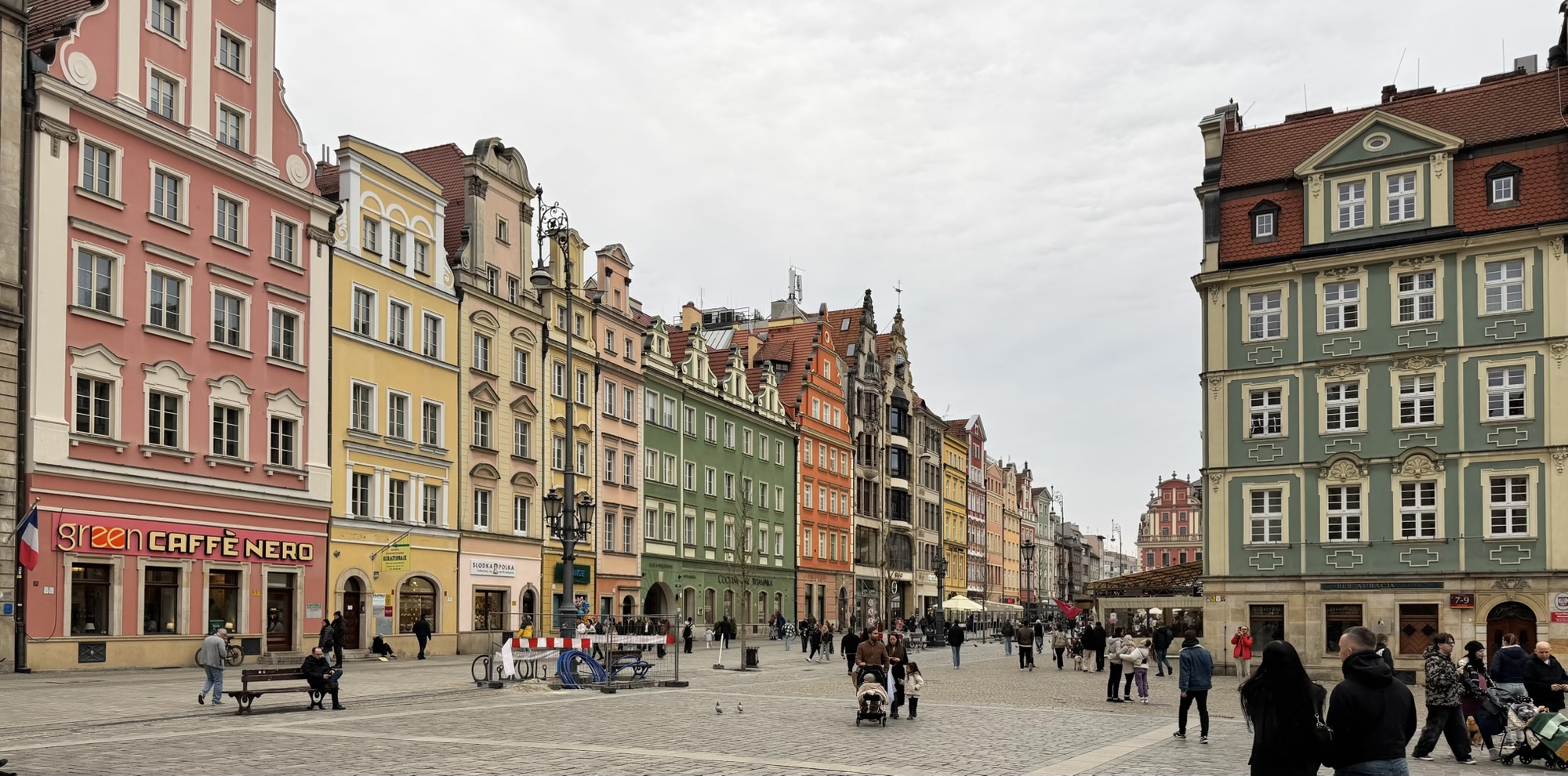
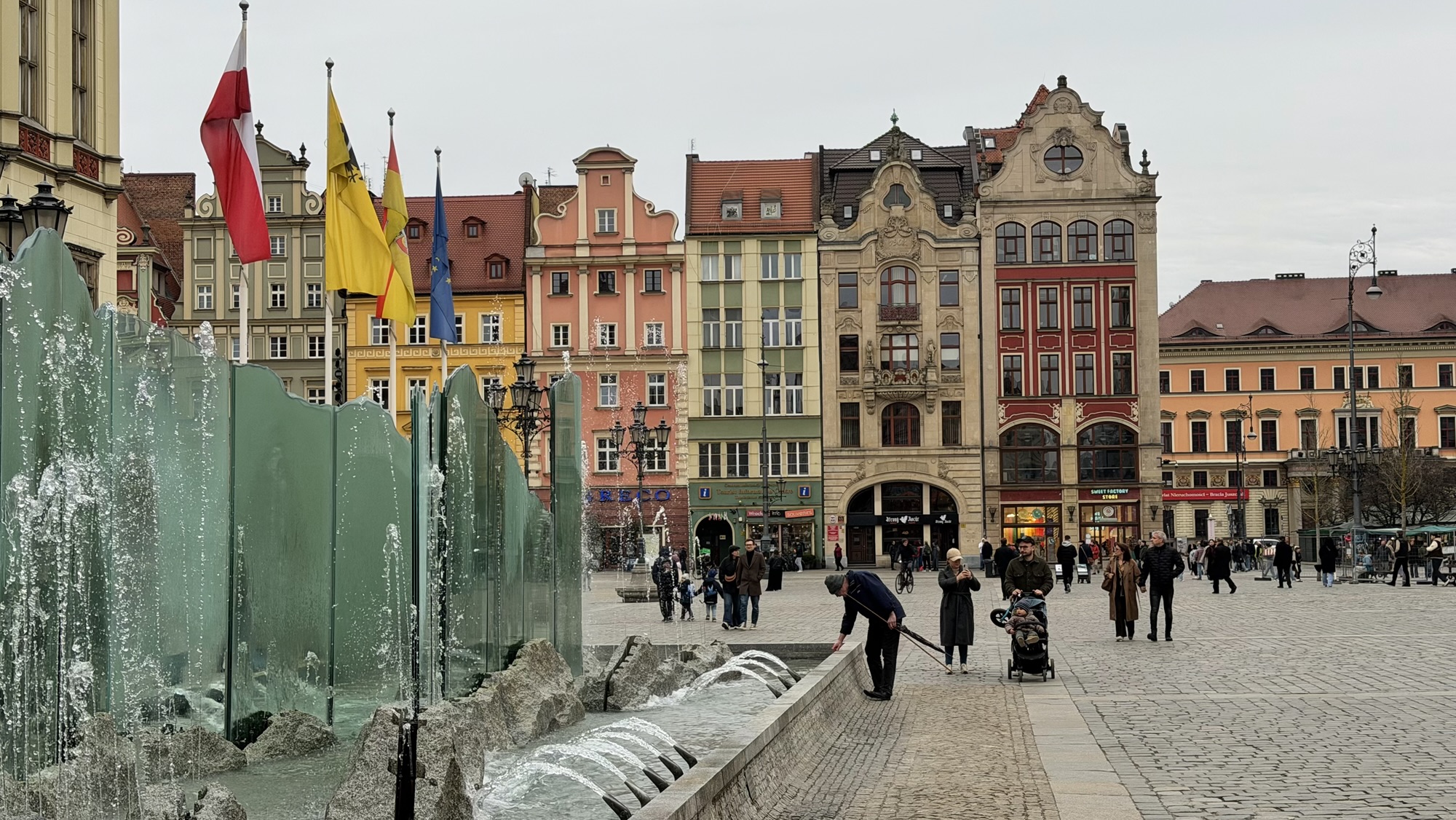
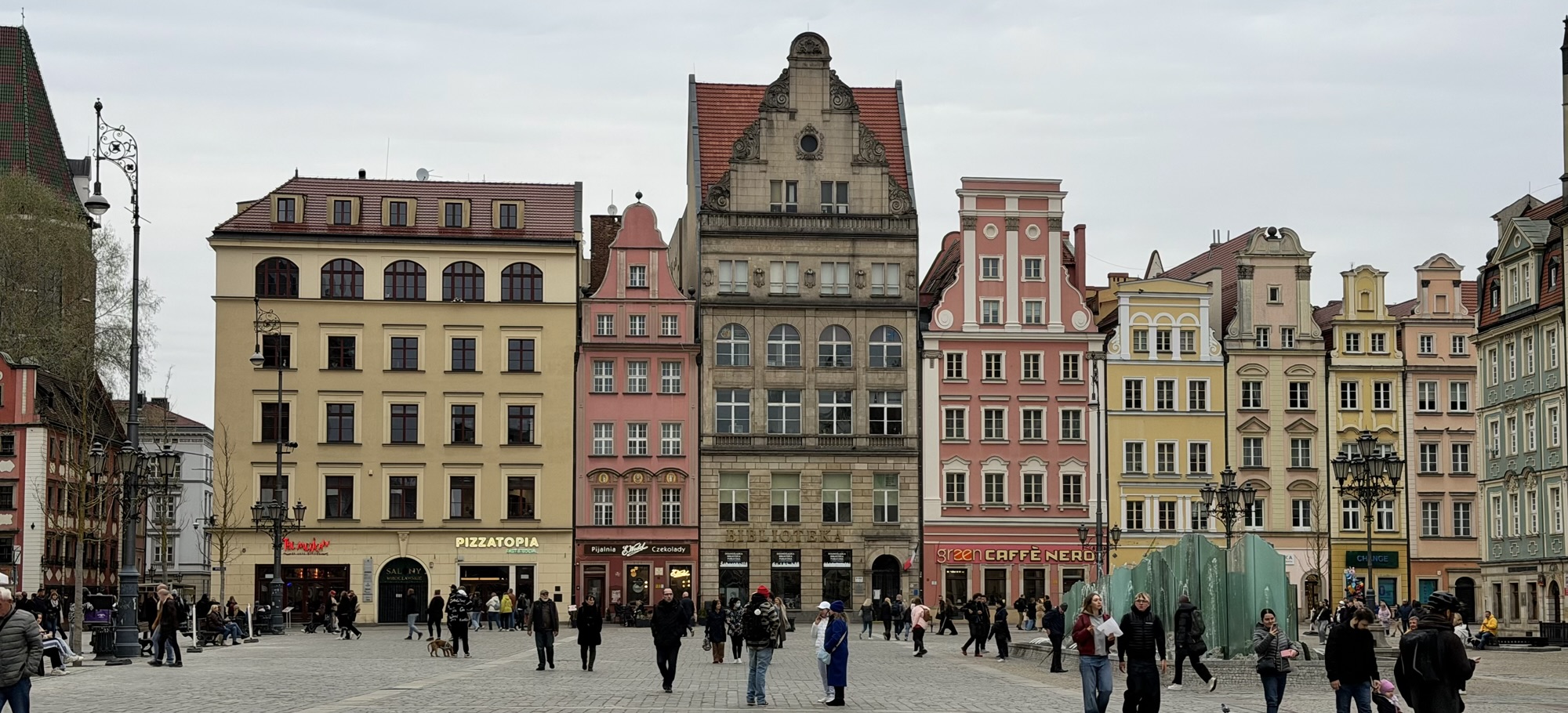
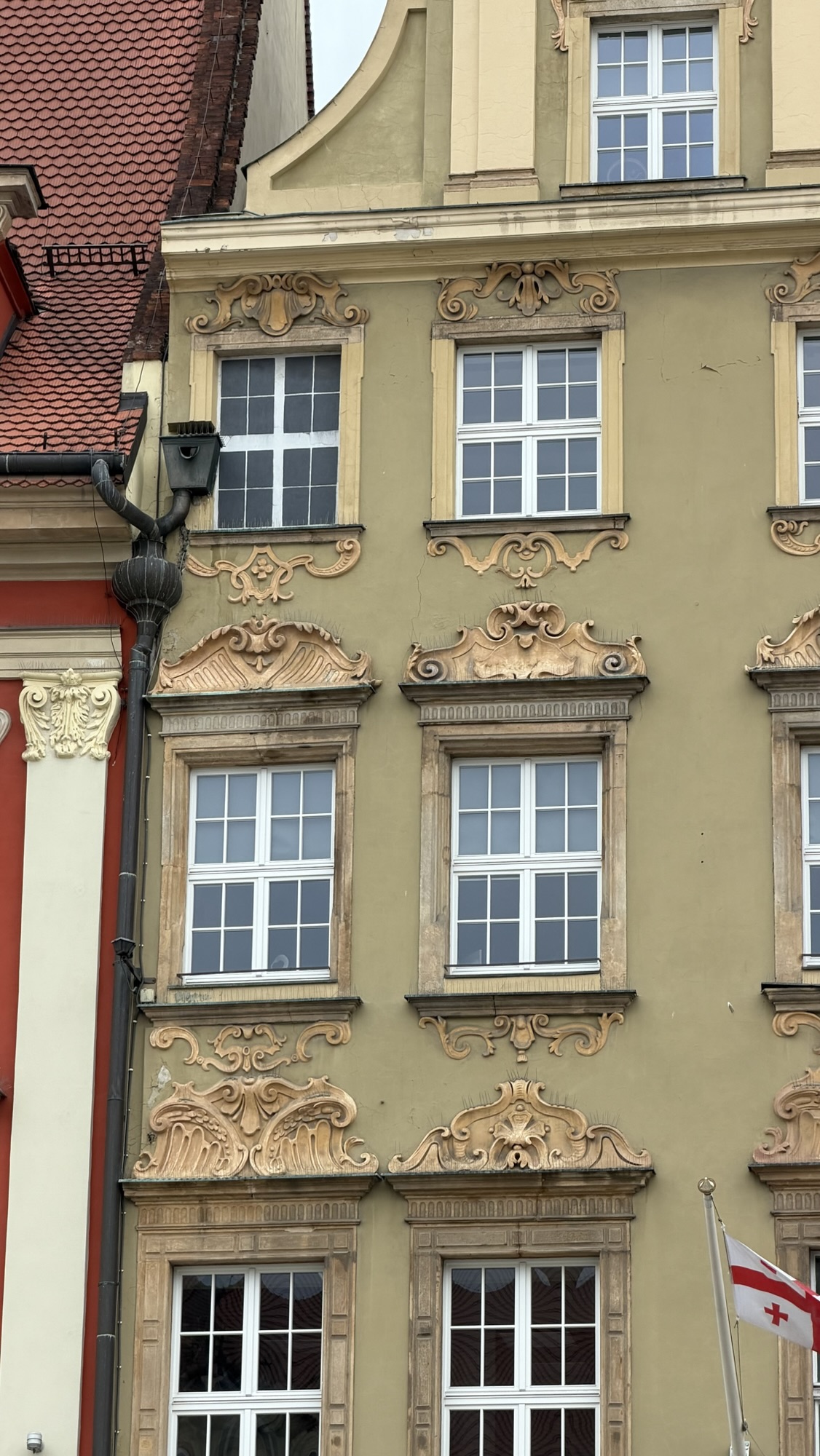
Wrocław’s Rynek (Market Square) is one of Europe’s largest and most picturesque, featuring a 3.8-hectare area surrounded by colourful Gothic, Renaissance, and Baroque buildings. It ranks among the top three largest squares in Poland, noted for having the country’s largest old town hall (66m tower) and a vibrant, pedestrian-only atmosphere. At 213 by 178 meters, the rectangle is exceptionally large – in the top ten largest in Europe. Unlike some linear European squares, Wrocław features a dense, central block of buildings (including the City Hall) rather than just an open plaza. Here is a slideshow of some of the many images I took of this stunning square.
One of Alina’s classmates from out of town invited people back to her hotel for a drink. I was invited, but I was still feeling tired, so I decided to head back to the apartment on my own. I picked up a piece of pizza to take home with me for dinner.
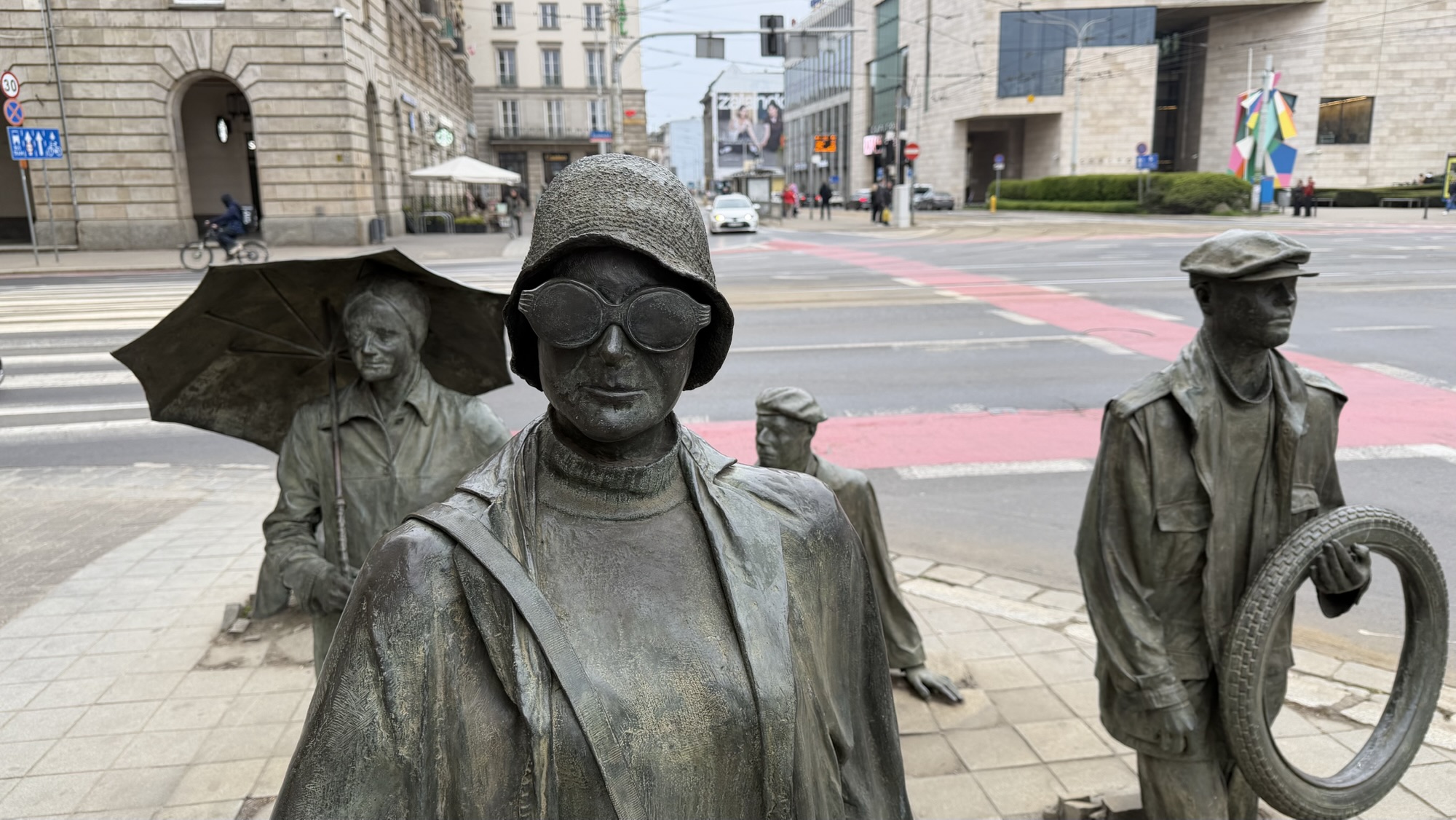
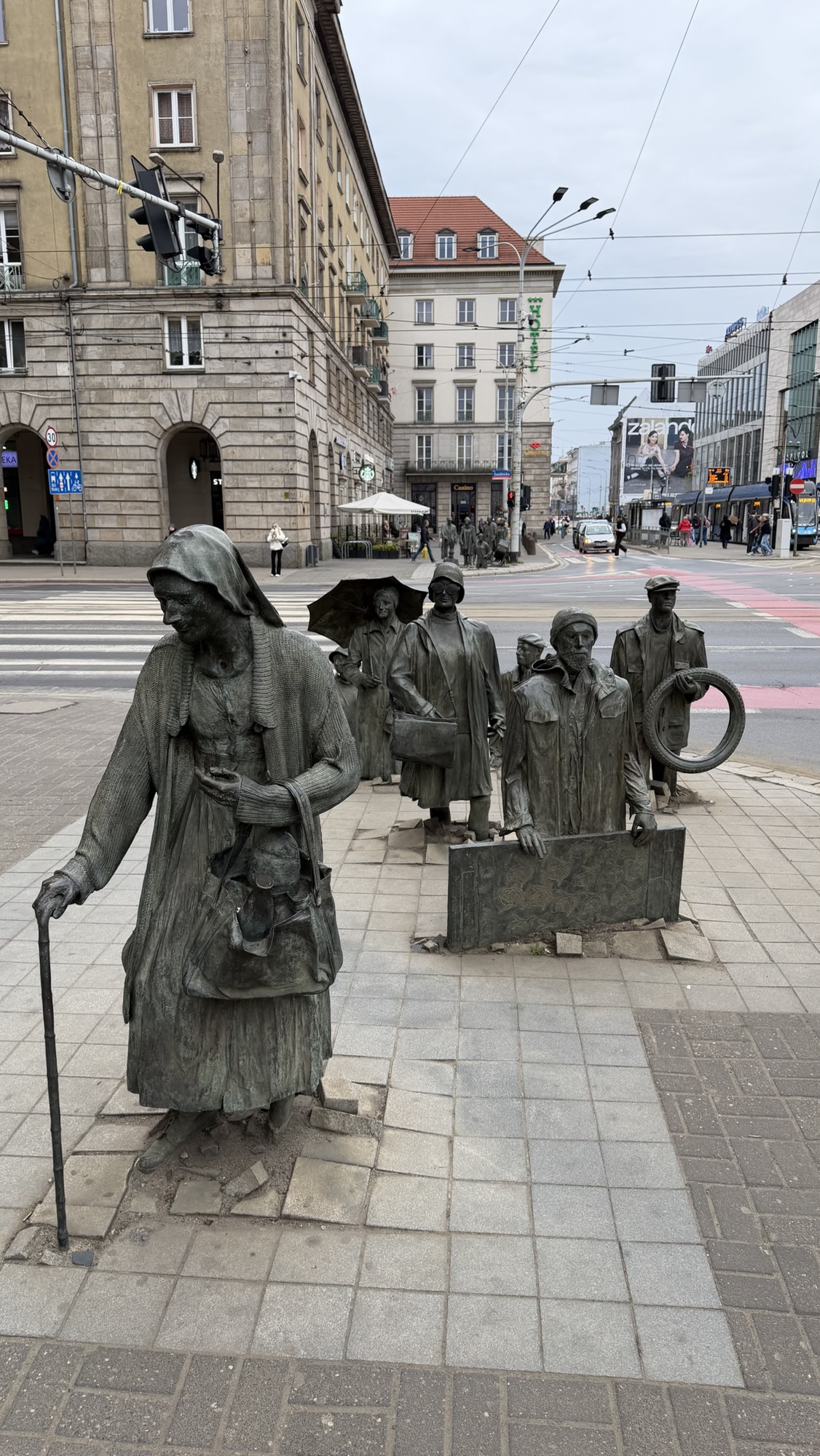
In the background of this image is a second sculpture. The people on the far side of the Swidnicka Street are descending into the ground. The ones in the foreground are emerging. It is said to represent the period of martial law in Communist Poland in the 1980s.
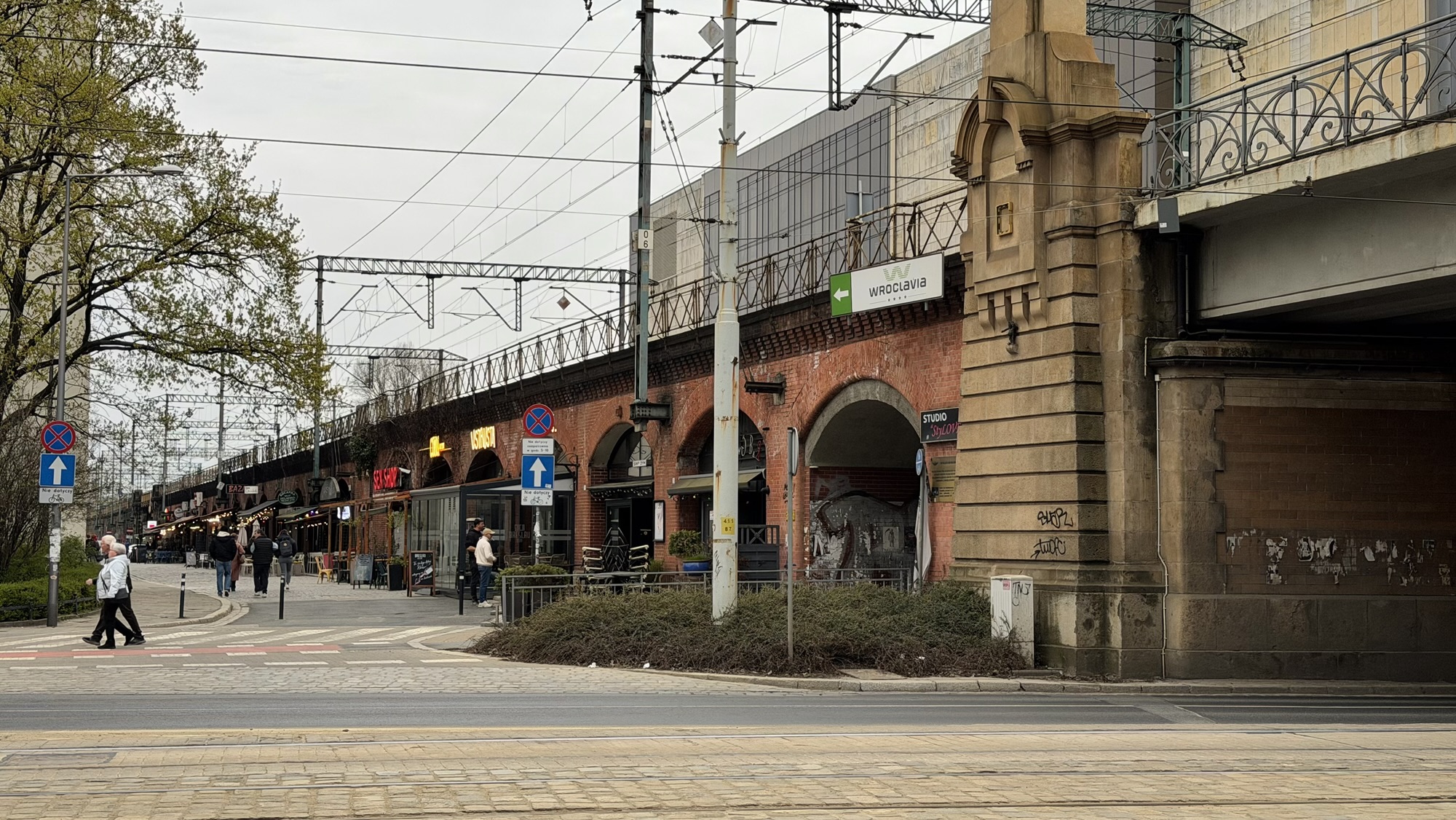
Another interesting thing that I passed on my way back was Nasyp (the embankment), a vibrant nightlife and dining hub located under 19th-century railway arches along Bogusławskiego and Swobodna streets, featuring over 70 bars, restaurants, and cafés. This Prussian-era structure hosts various businesses, offering a unique, rustic atmosphere with exposed brick directly beneath active train tracks near the central station. Unfortunately, I felt too tired to stop, and the next couple of days we had in Wroclaw were filled with other sightseeing activities.
Wroclaw made it into the Copenhagenize index in 2025. It claims to be the “most comprehensive and holistic ranking of bicycle-friendly cities in the world”. It has a score of 51.3 on the index. The number one city that attracts the most is 71.1. There are three Canadian cities in the index: Montreal at number 15, Quebec City, and Vancouver at numbers 29 and 30.
From the index: “Wrocław has broken into the 2025 ranks due to years of network-building now paying off with safer, more accessible routes. The city is paying special attention to communication, education, and rider support, making use of these as key tools in order to reinvigorate a declining bicycle modal share. Investments have resulted in Wrocław becoming one of Poland’s most progressive cycling cities.”
The Institute for Transportation and Development Policy (IDTP) has published a new interactive mapping tool, “Global Atlas of Sustainable City Transport,” that examines cities’ progress on car-free transportation options.
From their website: “Wroclaw scored well, positioning second in the list of cities for the category ‘residents’ proximity to frequent transit’, despite its lack of a metro system. It was found that 86% of residents live within a 500 m distance of a bus or train, with a service frequency of 10 minutes or quicker. Wroclaw’s extensive tram and bus network showcases that the best urban public transportation systems are not necessarily the most modern.”
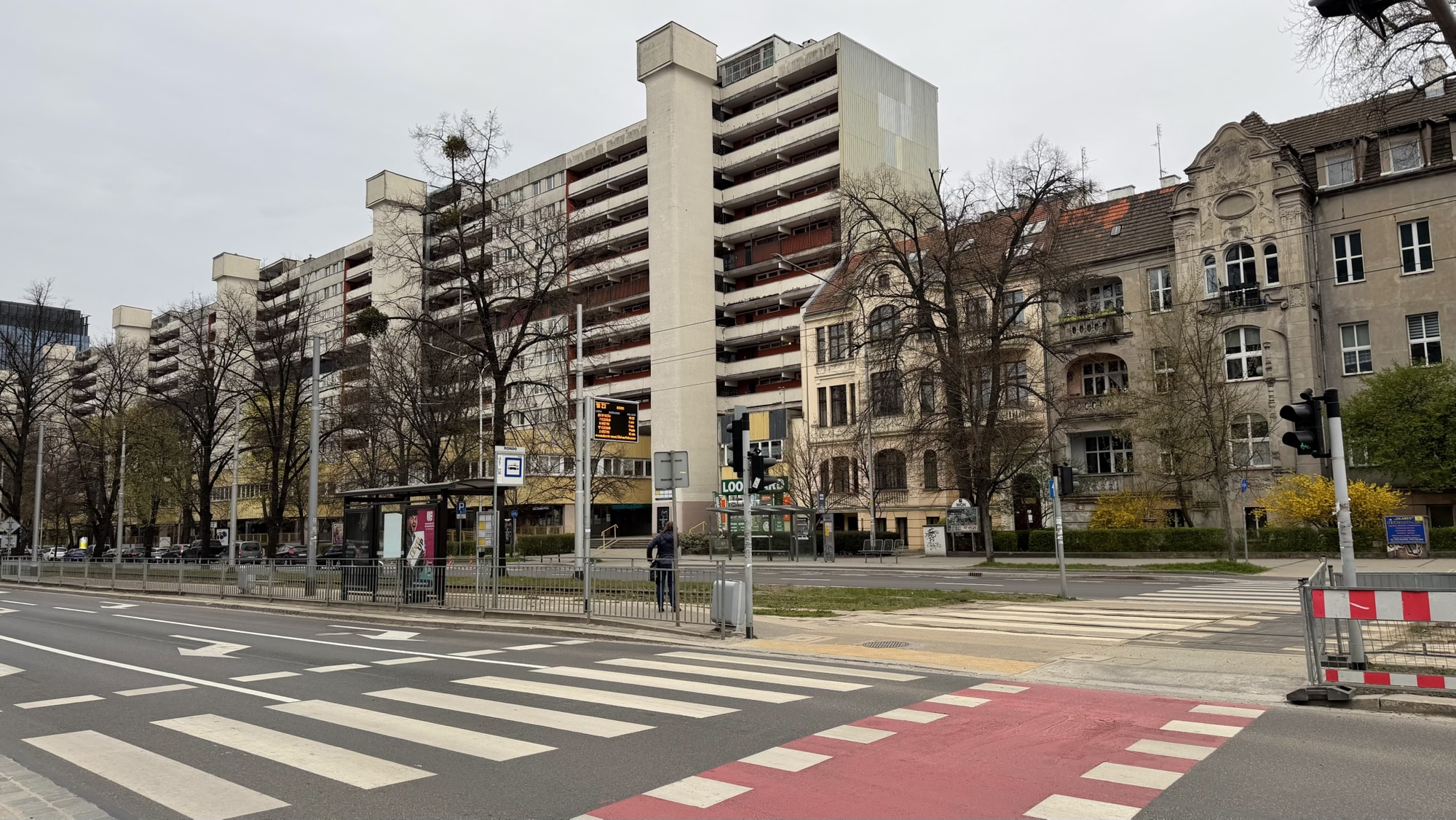
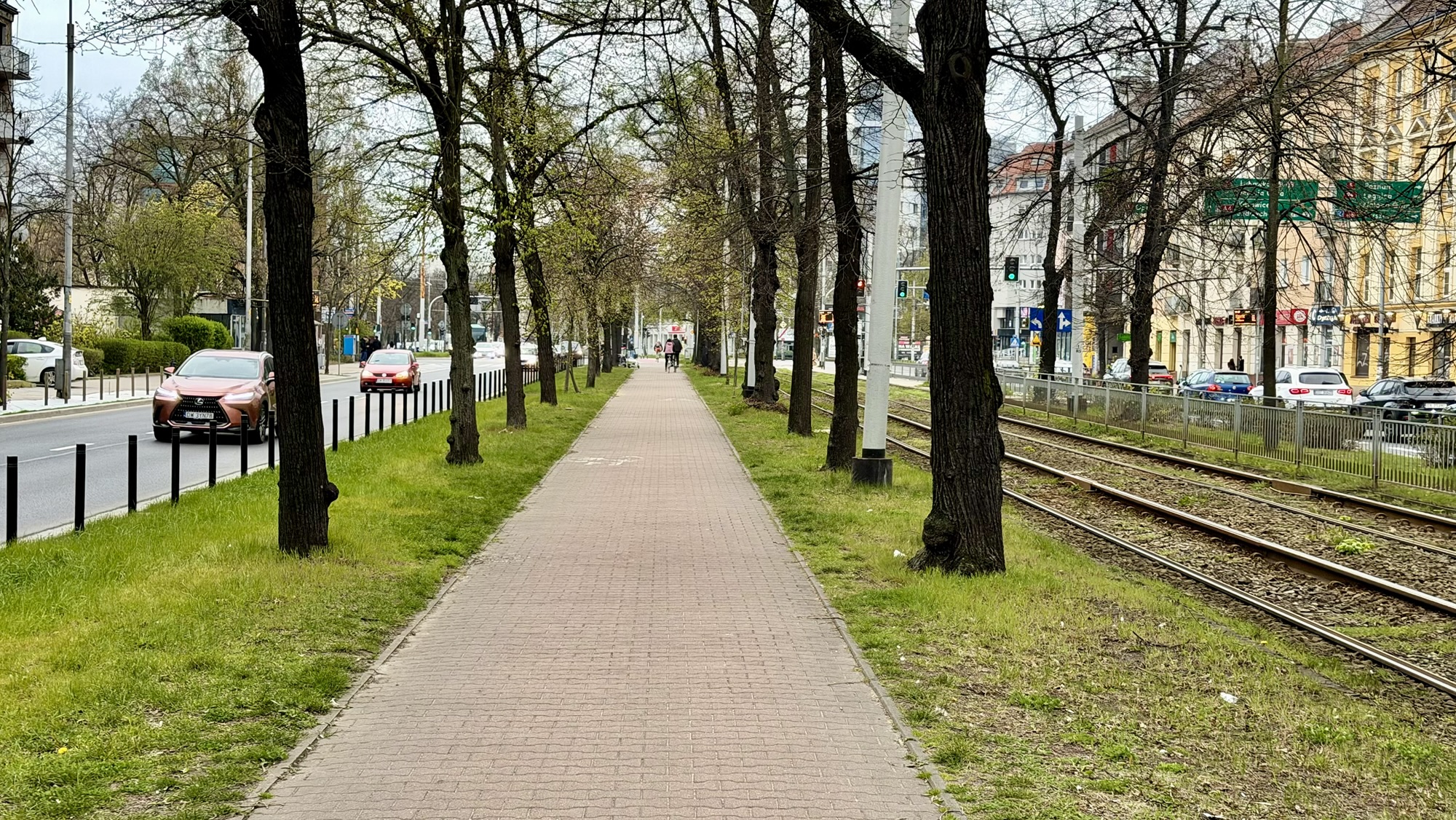
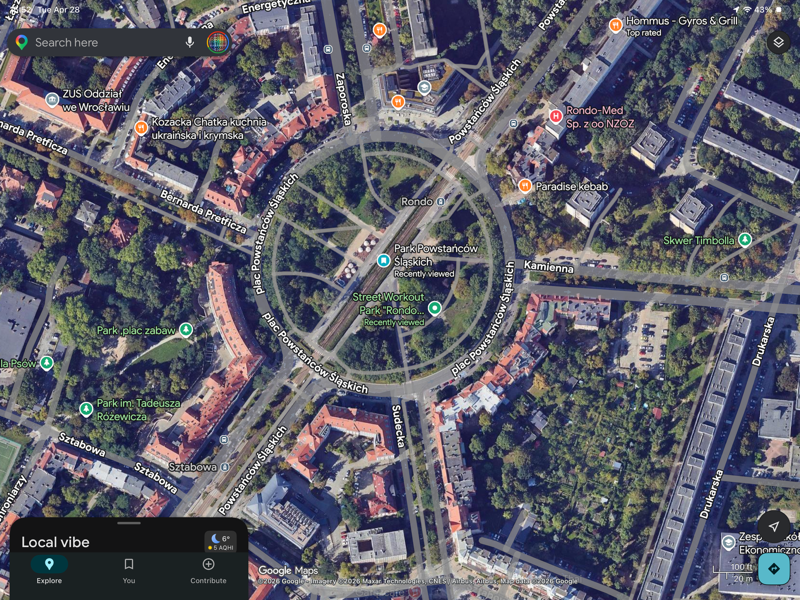
The image below is in the centre of a huge roundabout with tram, Cyclepath, sidewalk and parkland in the middle. There are also multi-use paths along the right hand edges of the roads that encircle the park, so one has the option to cycle straight though or go around the edges.
Wroclaw has a vast tram system of 22 lines supplemented by a bus network with over 80 lines. They serve roughly 25 million passengers annually, and 86% of residents are within 500 m of fast public transit service.
Wroclaw has 100,000 fewer residents than Brampton. The contrast is stark when compared to our cycling and transit networks in Brampton.
Most days Alina has been getting up before me, but today I woke up before my alarms to shower and wash my hair. When I was finished, Alina was still asleep. She accidentally forgot to set an alarm last night. We went down to breakfast, making our lunch as usual. Then we returned to the cabin to finish packing and to leave the boat by 9 a.m.
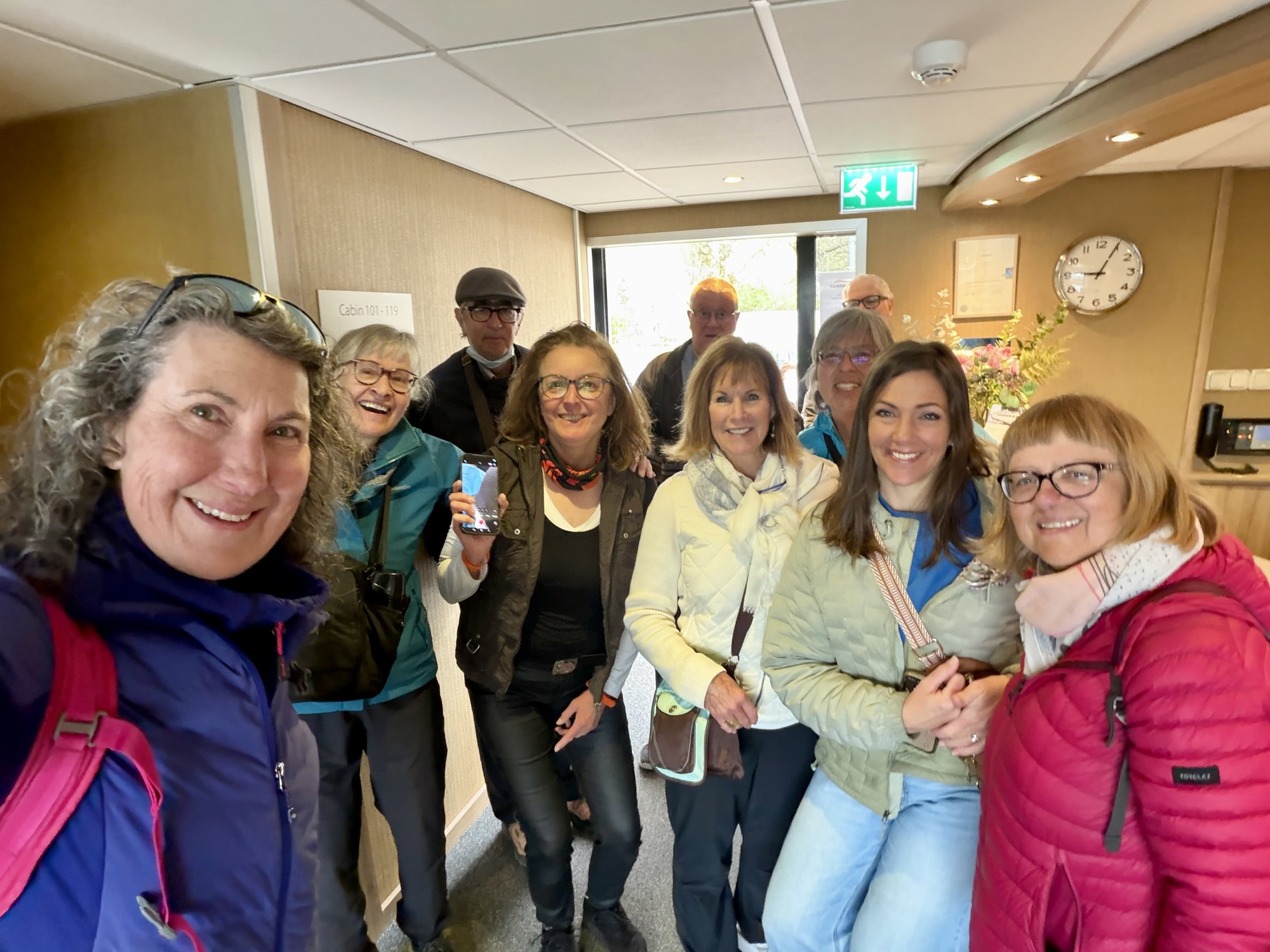
When we purchased the tour last fall, we also purchased an Amsterdam canal tour. We were able to leave our luggage on board until noon. We said goodbye to our new friends, Melanie, Brooke, and Karen, then set off for the ferry.
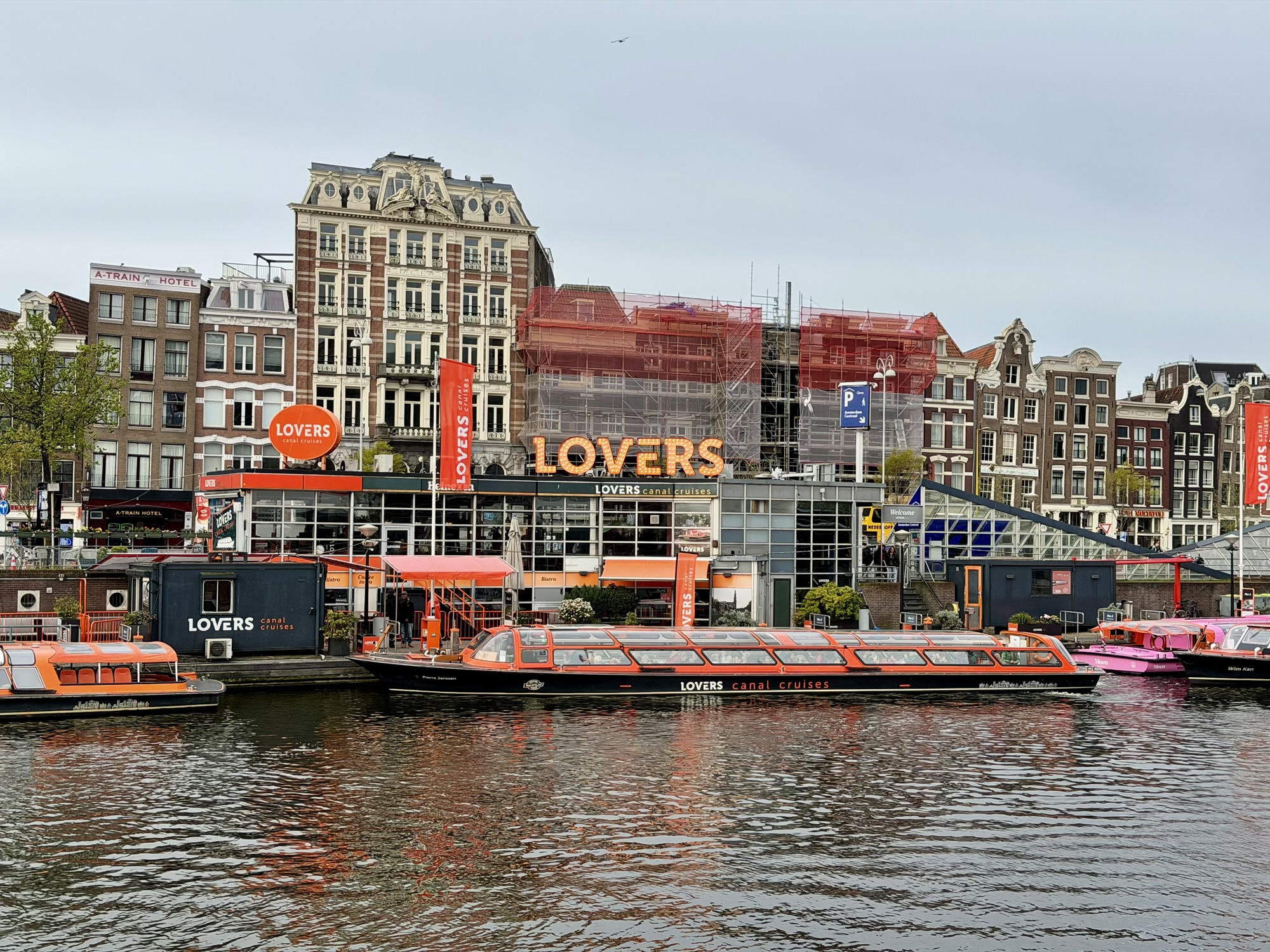
A few minutes on the ferry and we were at Central Station. We walked through the pedestrian cycling tunnel to Lovers Canal Tours, on the other side of the station.
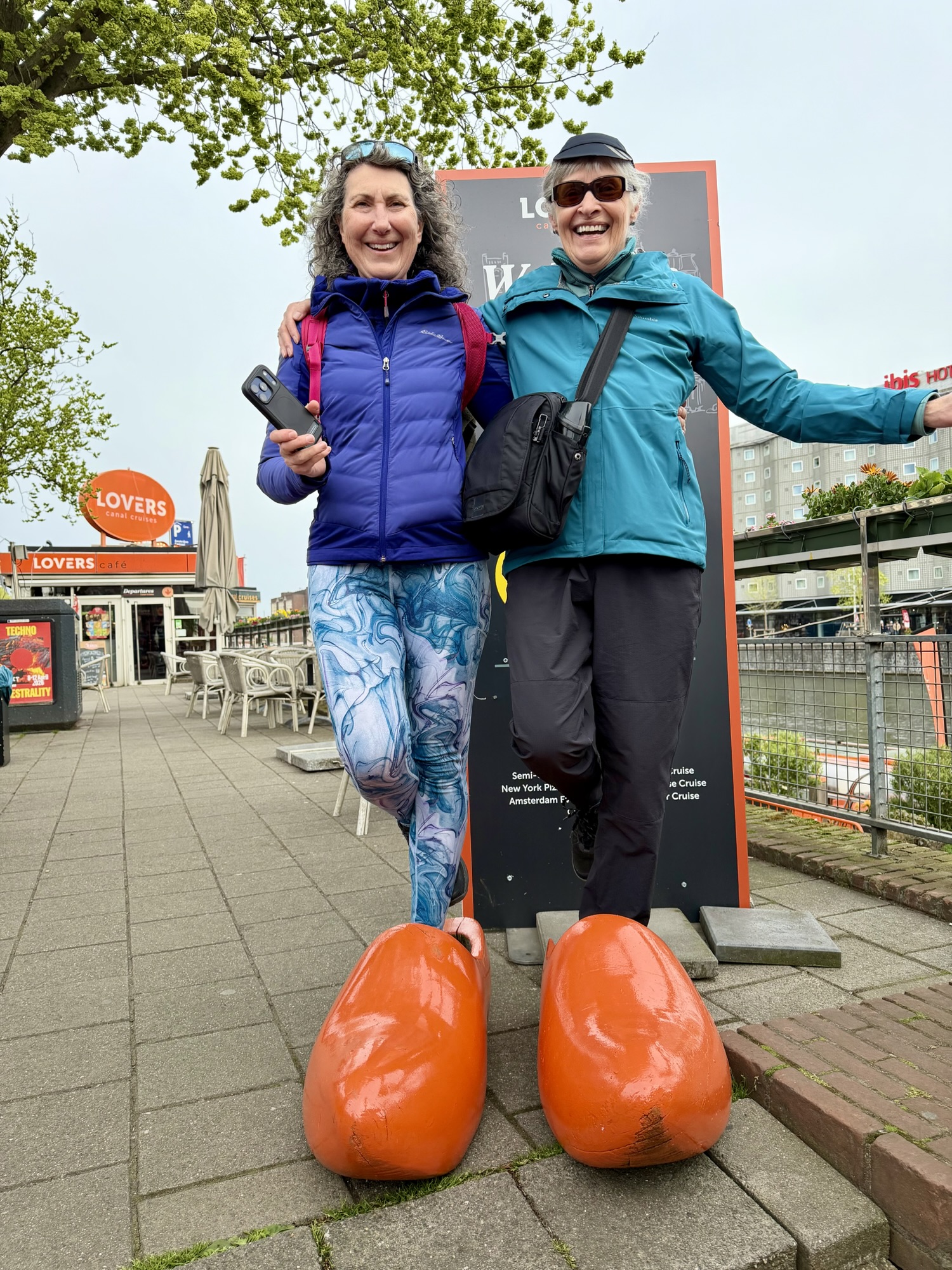
They had a pair of giant orange clogs in which we posed.
The tour lasted about an hour. They provided headsets with the commentary about what we were seeing.
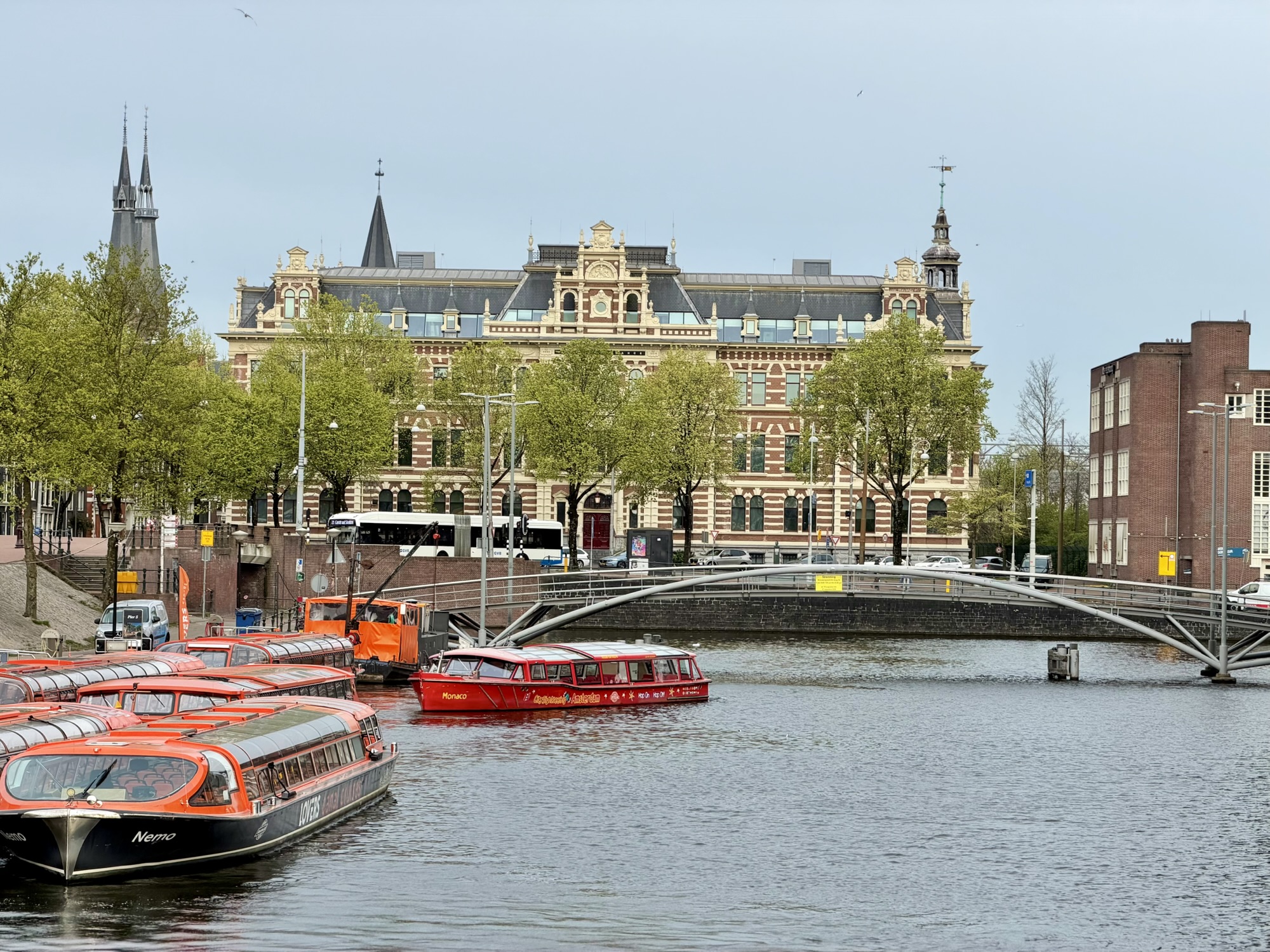
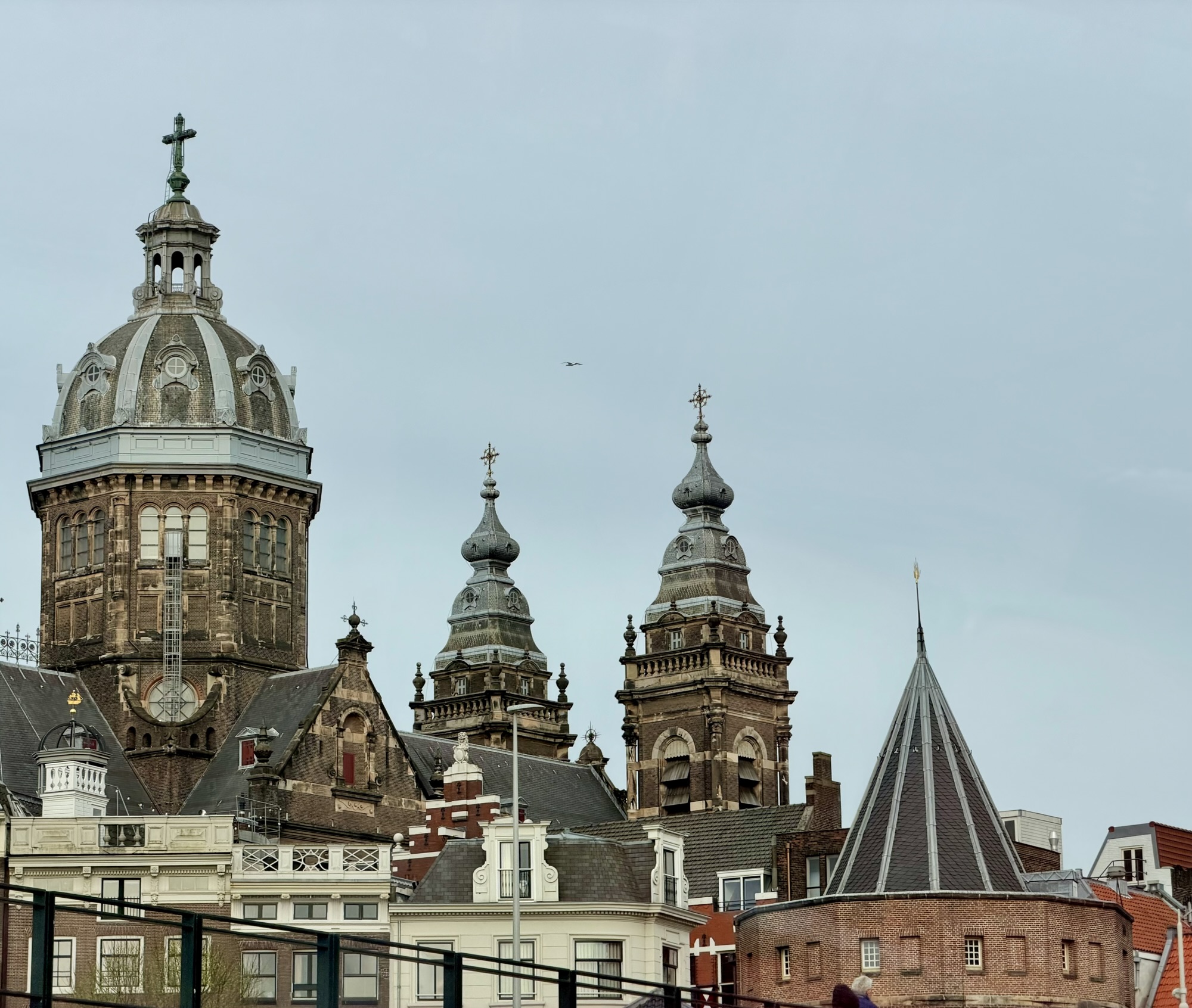
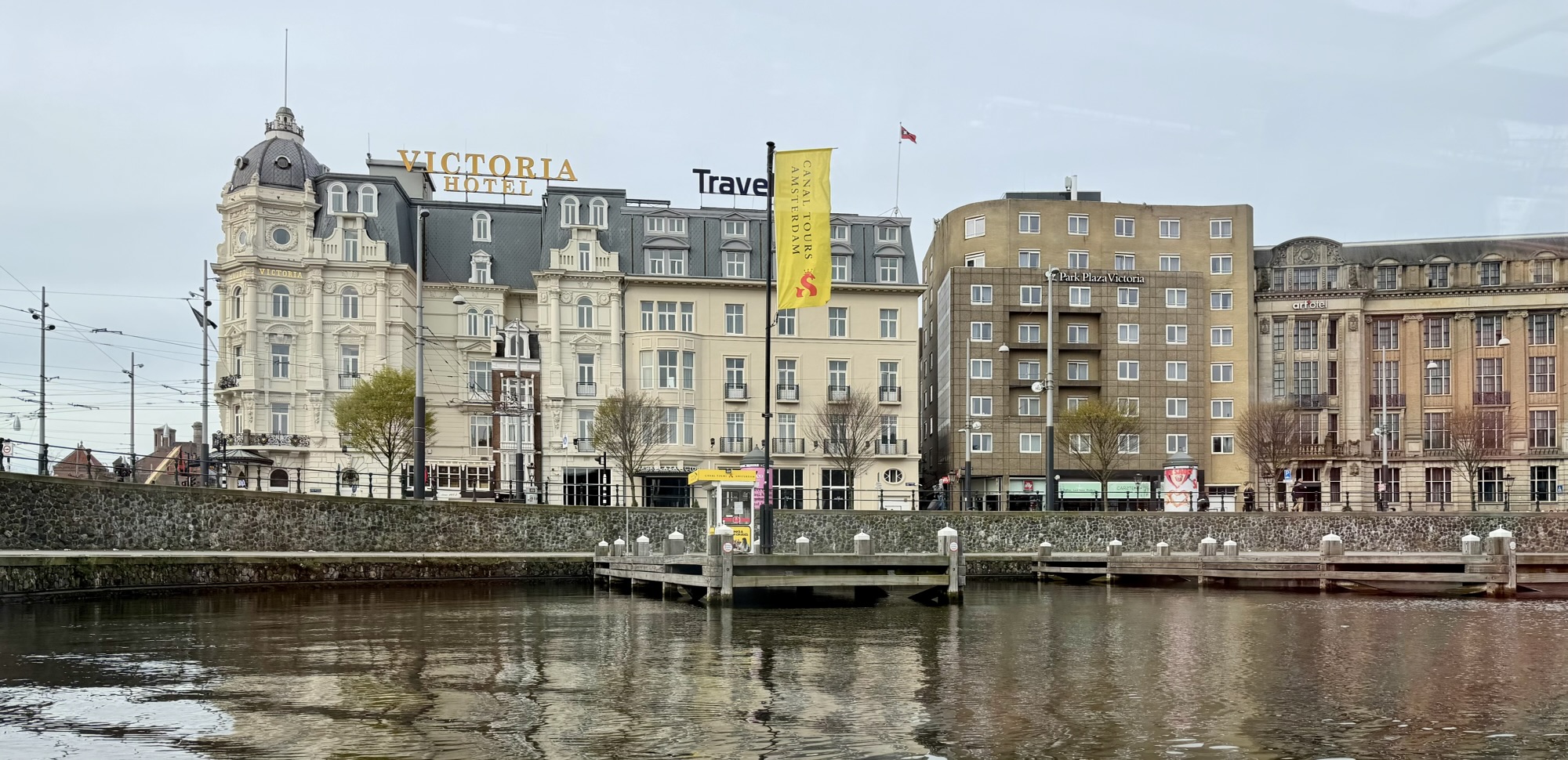
Here are a few of the sites near Central Station.
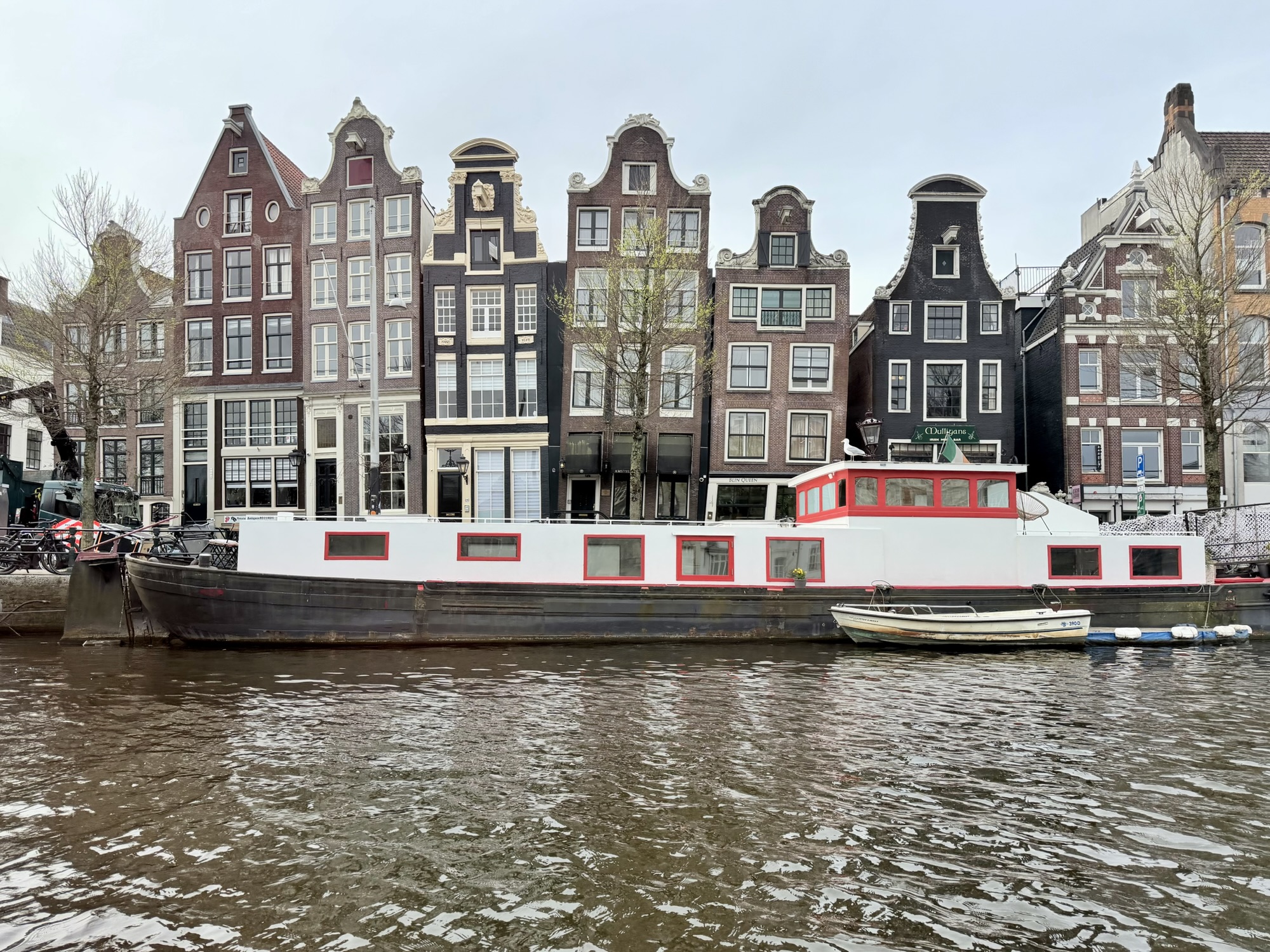
The “Dancing Houses” of Amsterdam are a row of 17th-century canal homes, along the Damrak waterfront, that appear to tilt and sway. Built on wooden piles driven into soft soil, these narrow merchant houses have settled unevenly over centuries, creating a “wobbly” look.
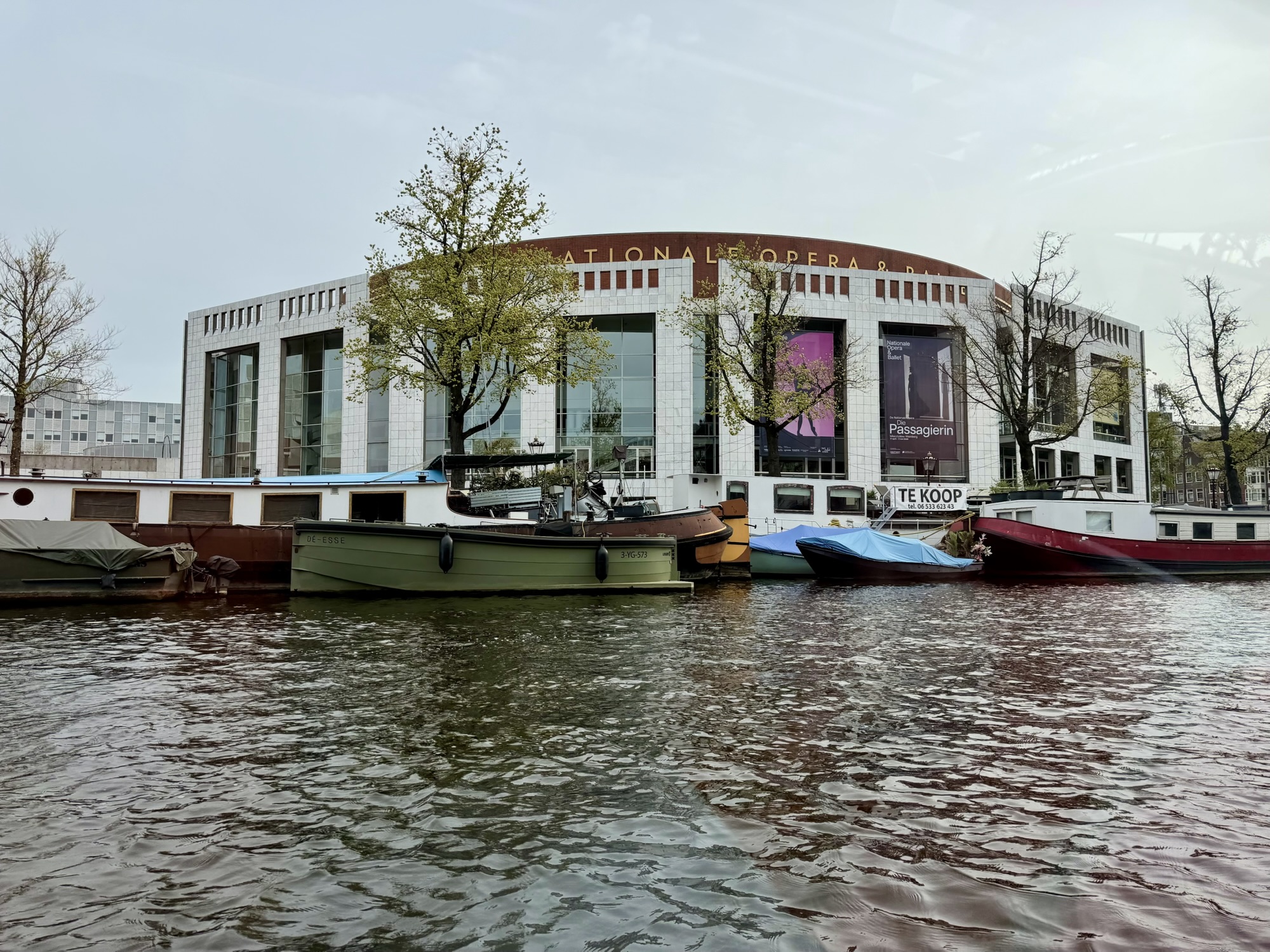
The Amsterdam opera house, officially the Dutch National Opera & Ballet, is nicknamed Stopera (a portmanteau of stadhuis—city hall—and opera). It faced massive controversy in the early 1980s, sparking protests and riots, because its construction required demolishing buildings in the historic Jewish Quarter, and it went massively over budget. The building’s white, modern facade and overall design led critics and locals to mockingly dub it “the false teeth”. It is quite different than most of the centuries-old buildings in the historic canal belt.
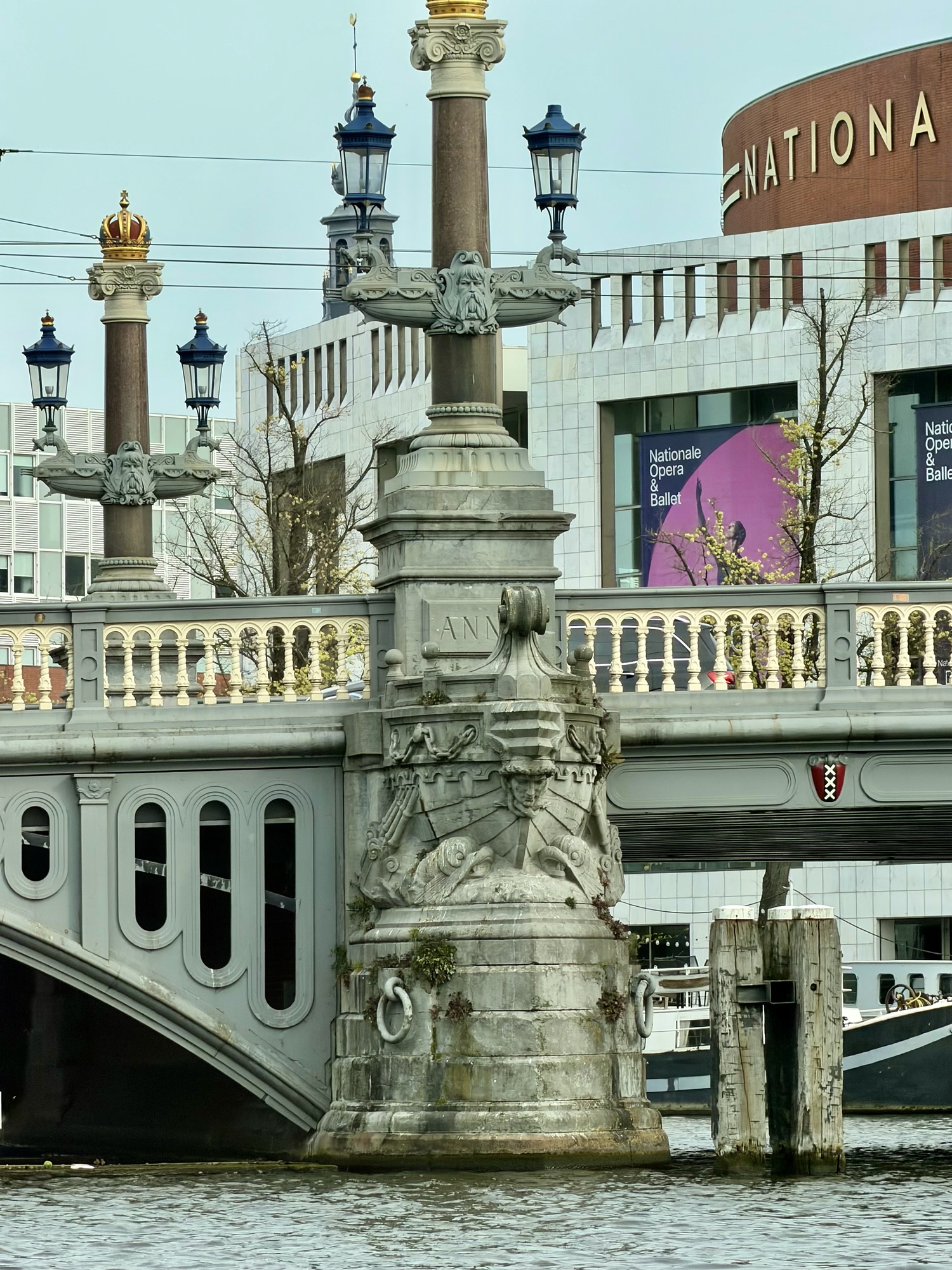
This nearby bridge has beautiful stone carvings.
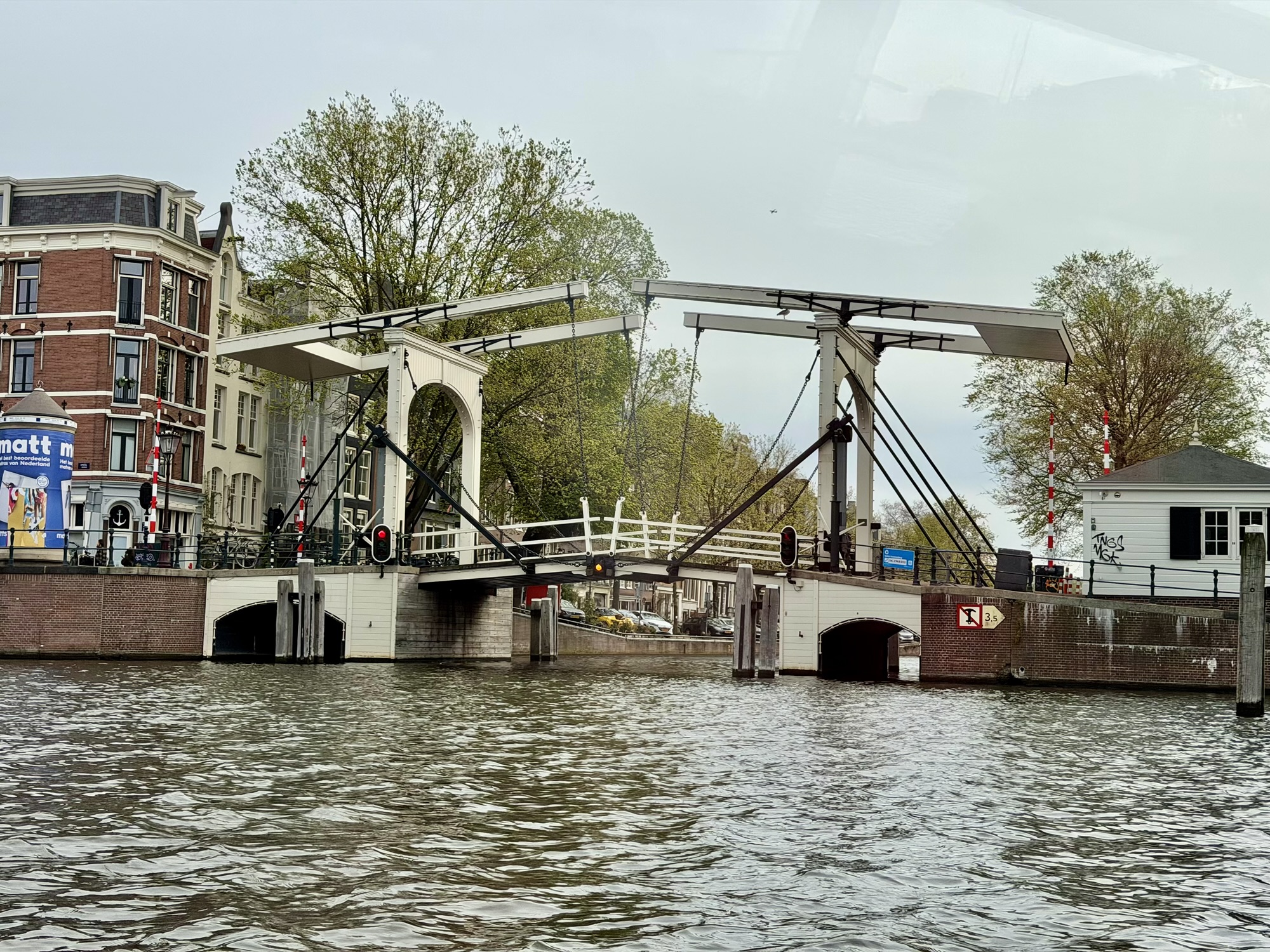
The Magere Brug (Skinny Bridge) is an iconic, historic wooden drawbridge in Amsterdam, spanning the Amstel River. Built originally in 1691 and reconstructed in 1934, it connects Kerkstraat with Nieuwe Kerkstraat. Famous for its romantic, narrow design, it is illuminated by 1,200 lights at night and restricts access to pedestrians and cyclists. It also features in the James Bond movie, Diamonds Are Forever.
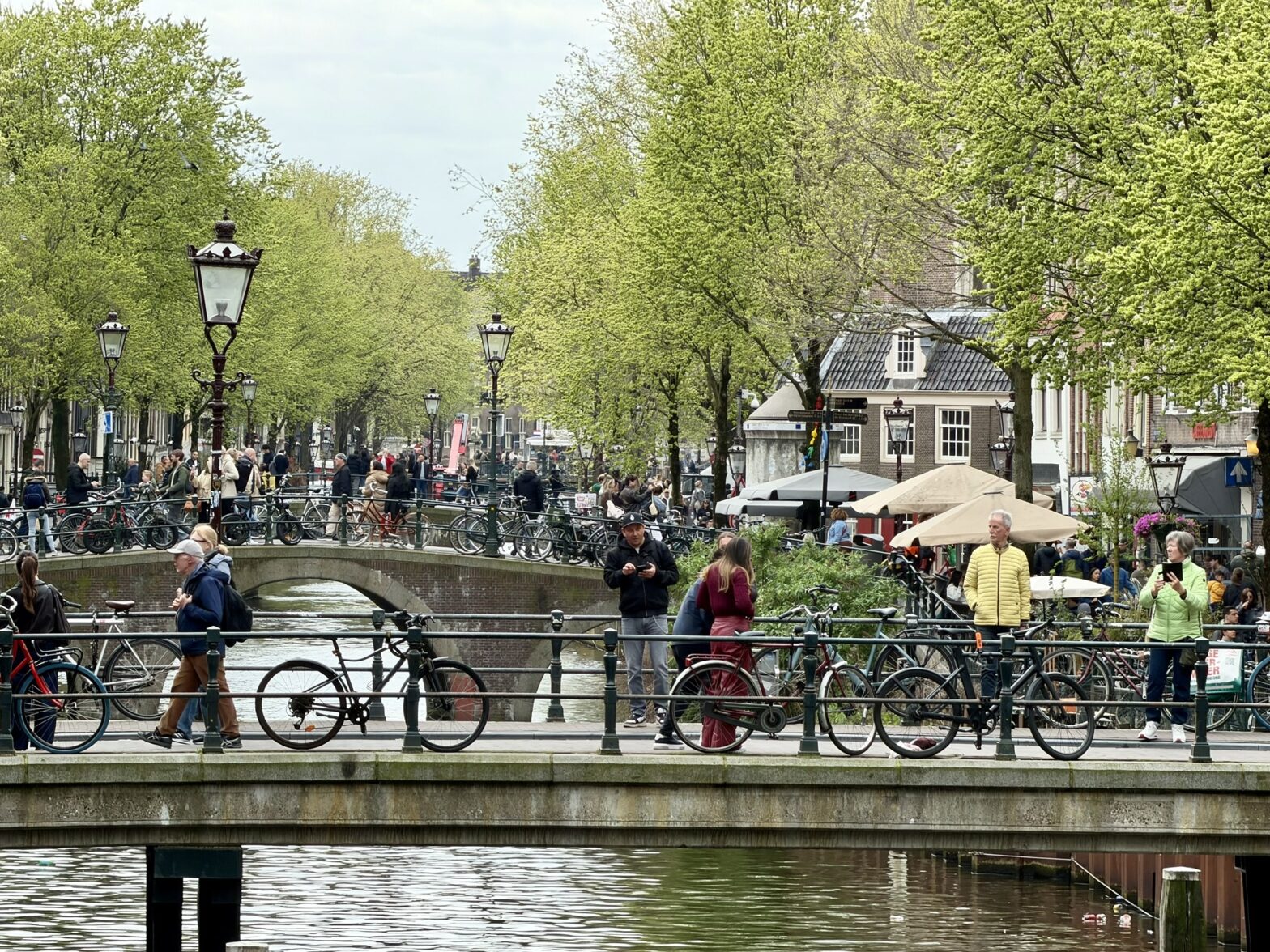
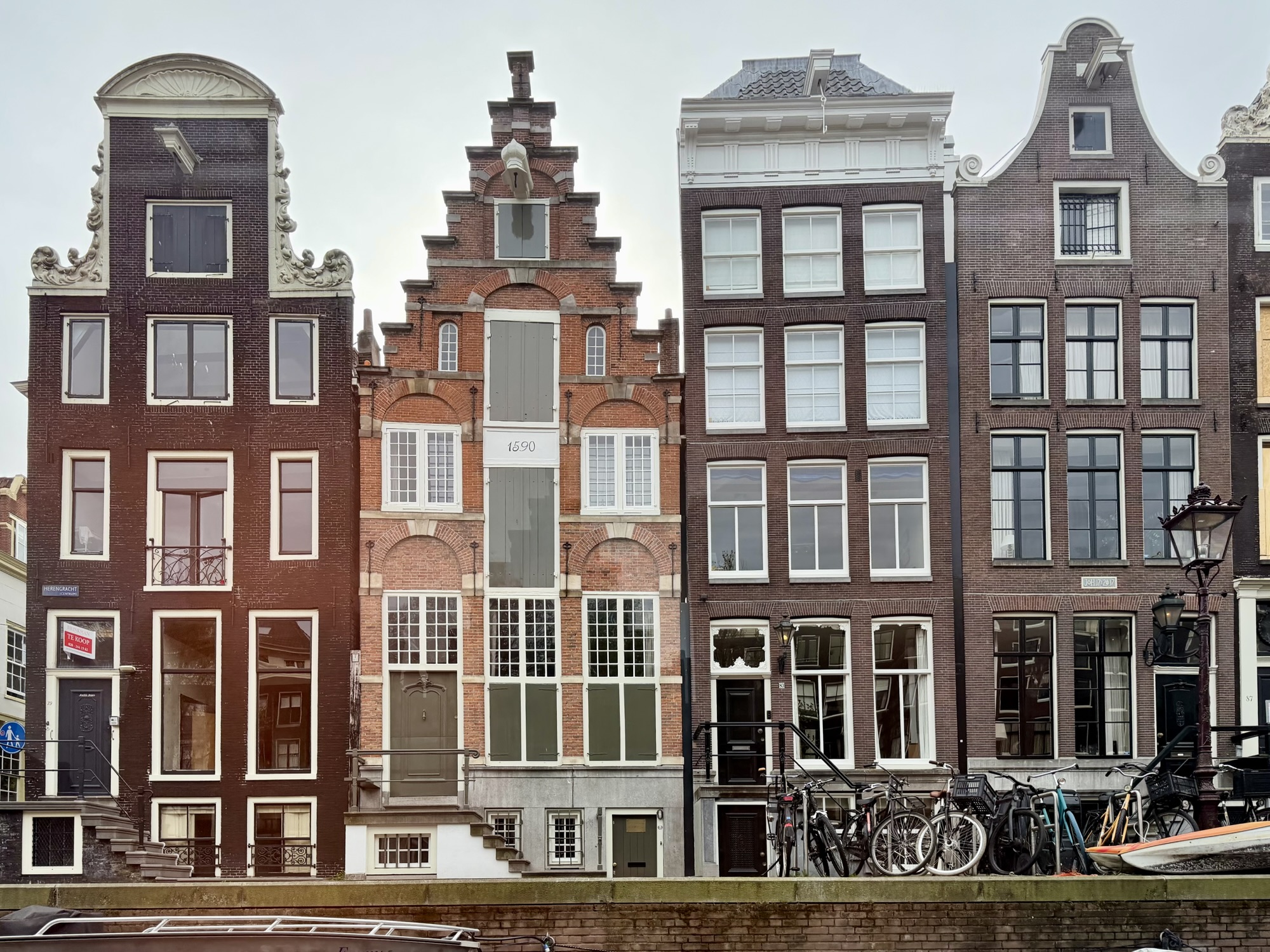
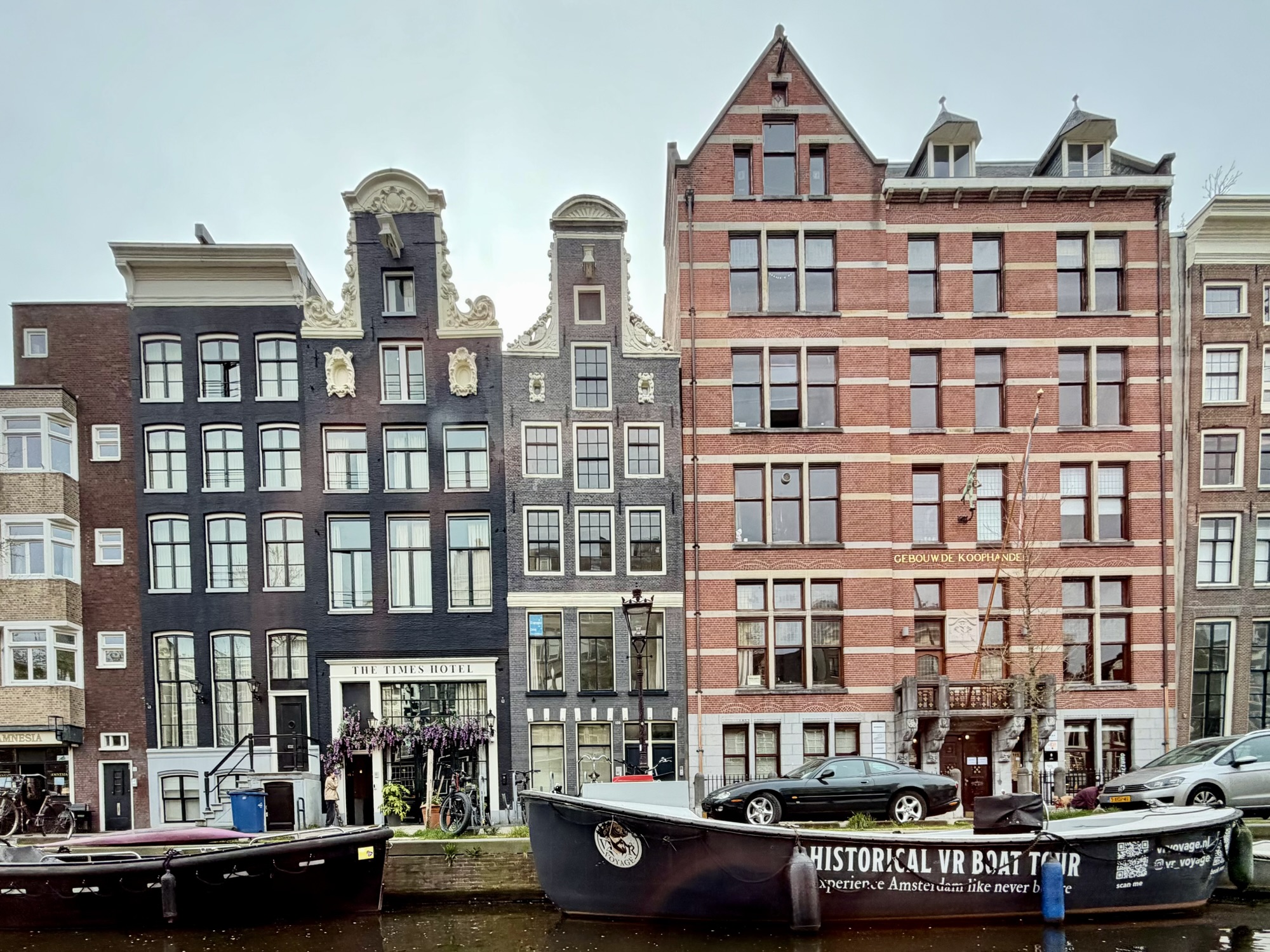
There seems to be an endless variety of facades among the homes in the canal belt.
I took a few videos during the canal tour to better capture, the endless rows of unique canal homes. Amsterdam also has 2500 houseboats on the canals which you can see in the first video. No new ones are allowed.
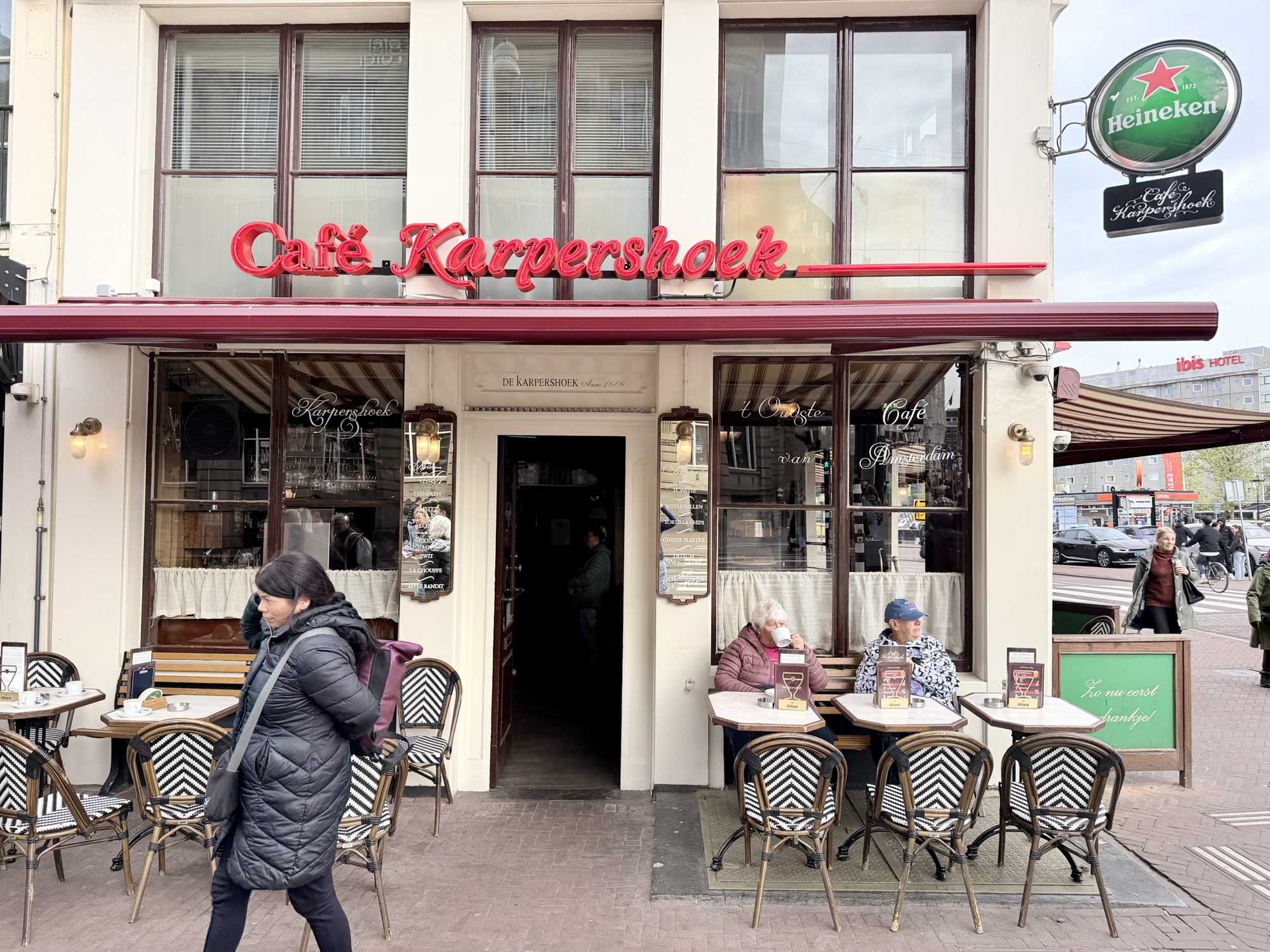
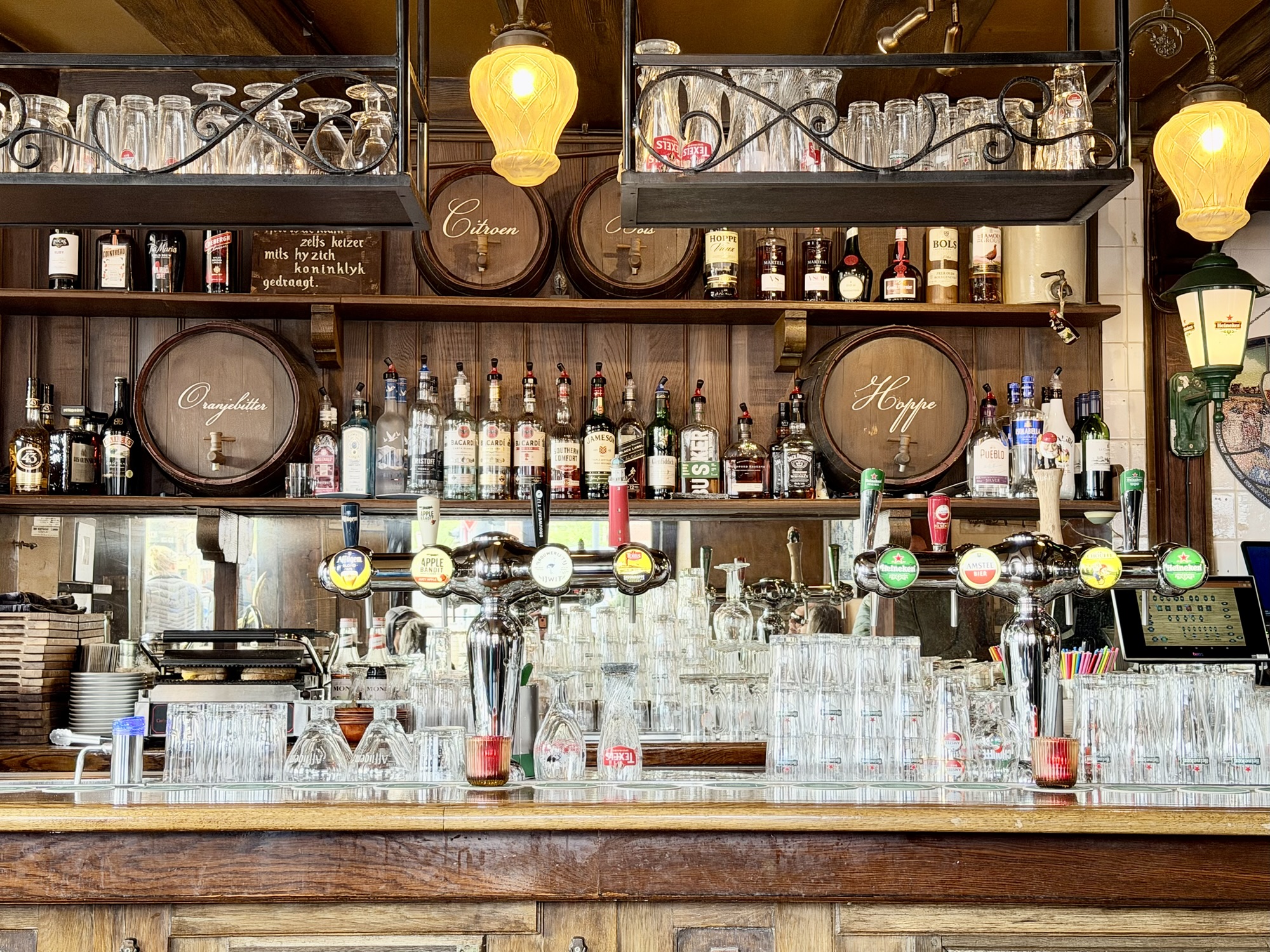
After the tour, we had coffee and food at Café Karpershoek. It is the oldest pub in Amsterdam. In 1606, the Karpershoek started as a guest house for the crew of the ships of the Dutch East-Indian Company (VOC).
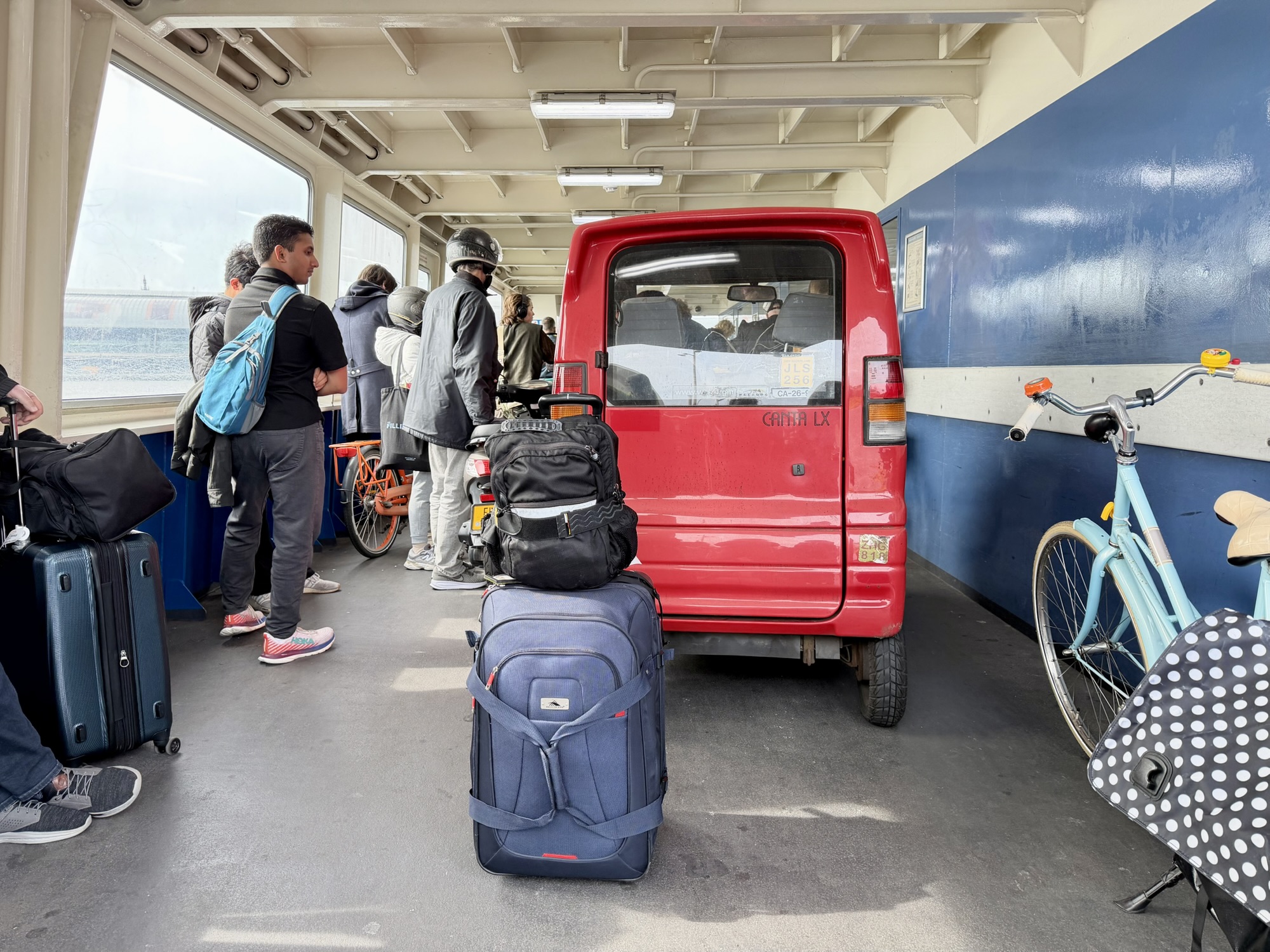
We then took the ferry back to the barge to pick up our luggage before the noon deadline.
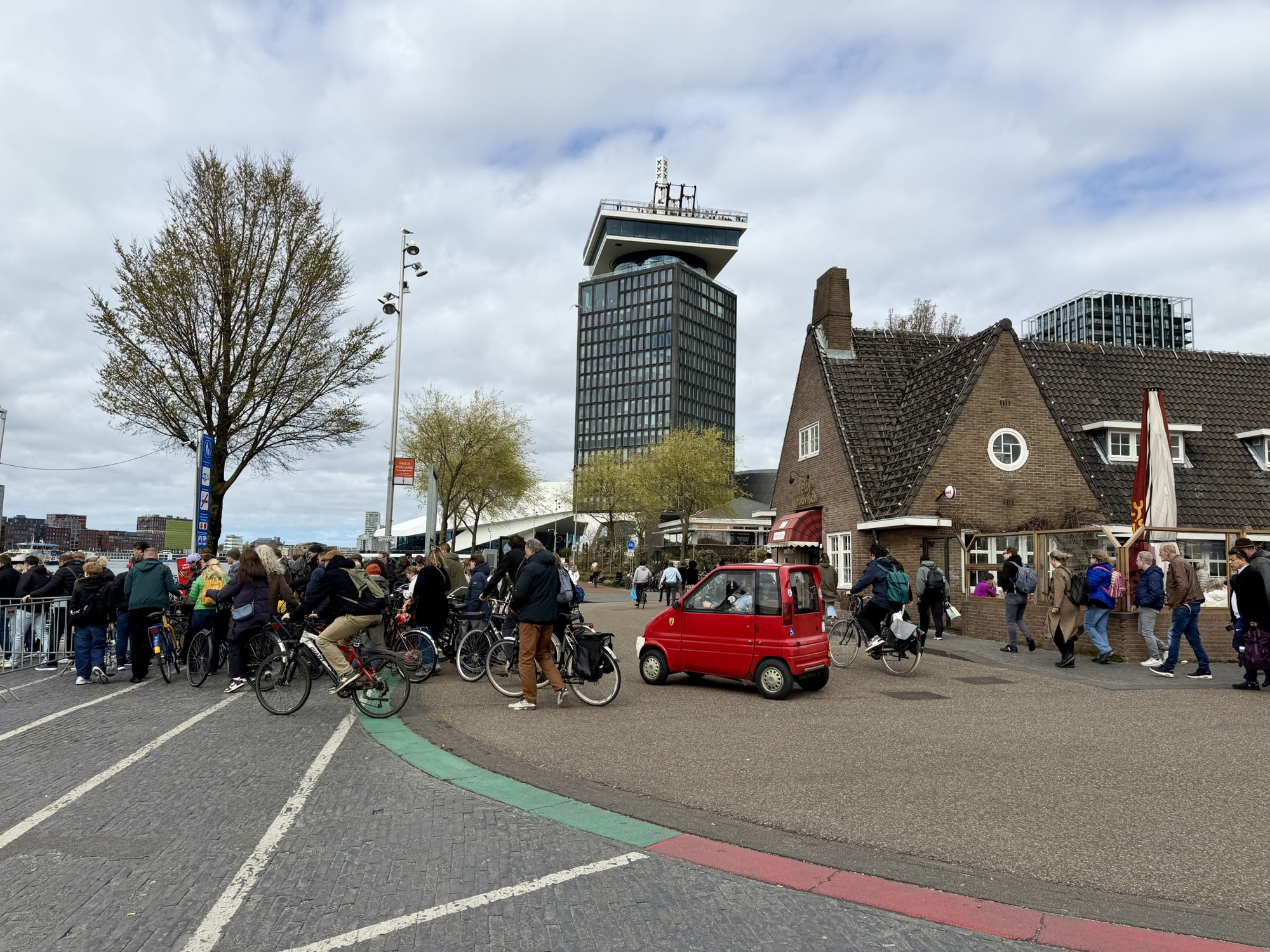
On the way back, we saw a very tiny car using the ferry. These cars seem to be able to use the same spaces that bikes can use.
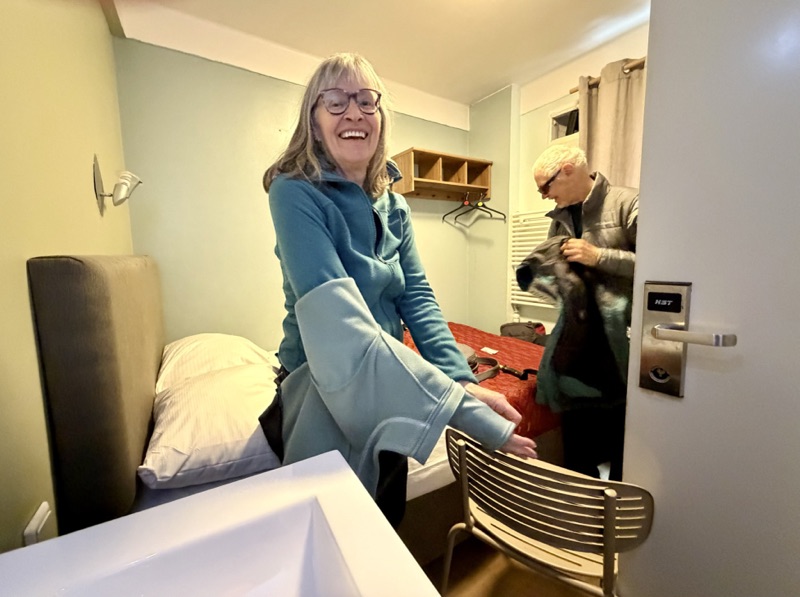
David and Dayle, Wayne, Cindy, and Mark are staying at the Hotel Neutraal, only a few hundred metres from Amsterdam Central Station. The rooms were incredibly tiny, but very expensive..
Alina and I are flying to her hometown of Wroclaw at 9:30 p.m., so we needed luggage storage for the day. The privately run business next to the station wanted €26 for a locker large enough for all of our stuff. So Cindy suggested that we could leave our suitcases at their hotel; that is what we did. We had to lug them up two flights of stairs, but it was worth it to save the €26. We might have to pay it yet, as when we return from Berlin next week, we arrive in the city about six in the morning, but do not fly out until six that night.
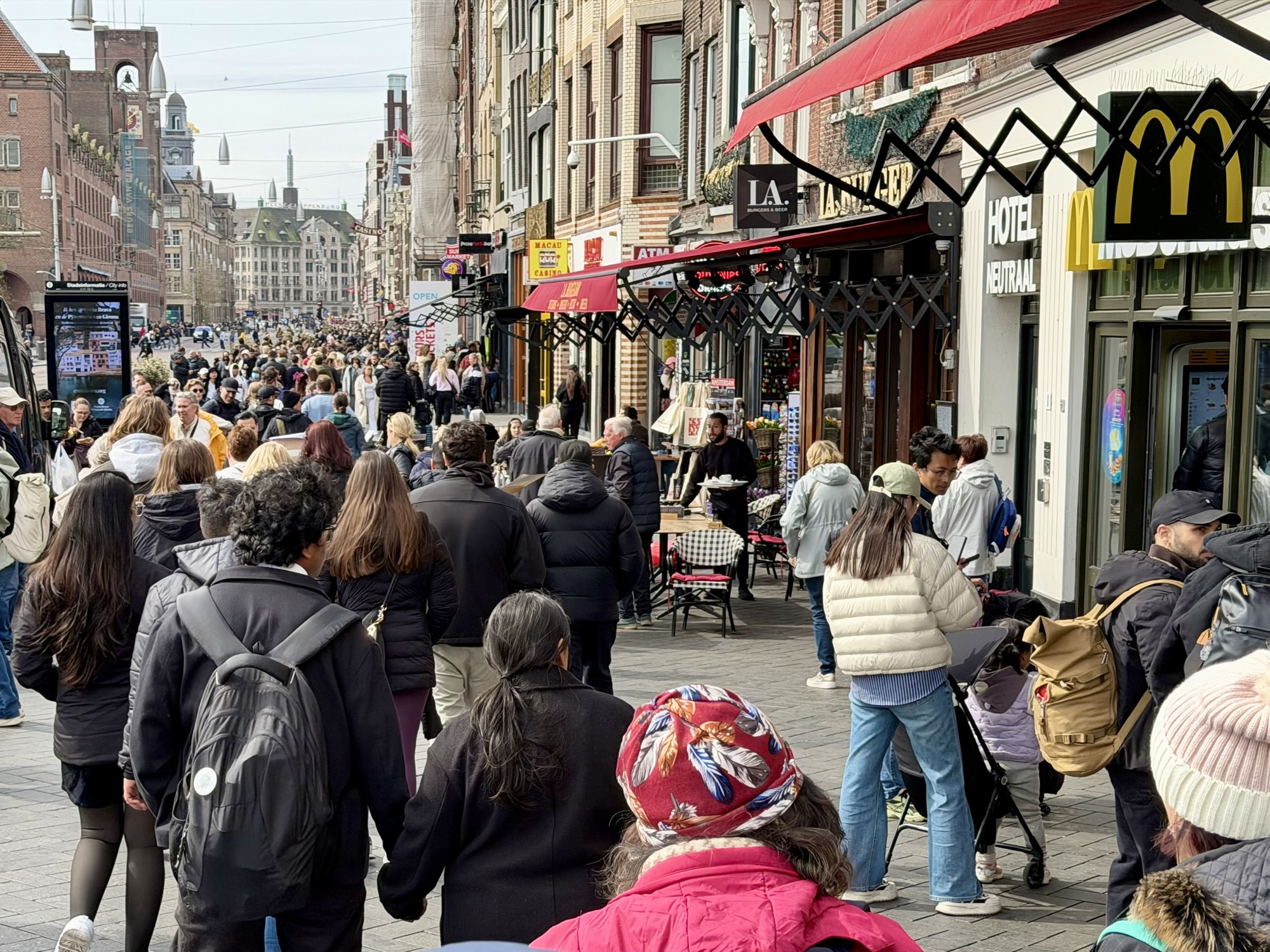
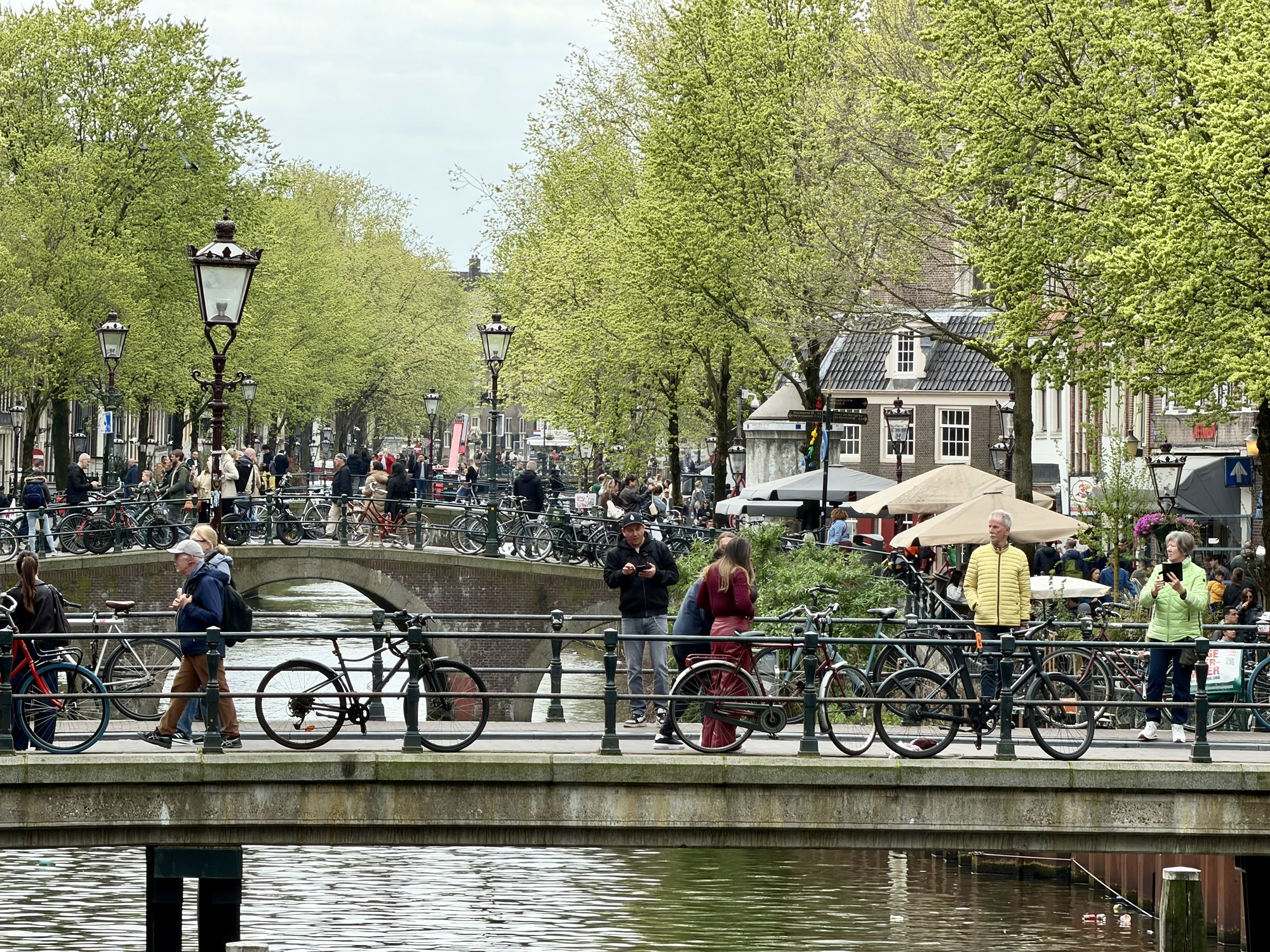
We then went on a walk to the Holocaust memorial, photographing scenes as we went. The crush of people in the area of the Central Station and the old canal belt area of the city was mind-boggling.
Amsterdam is aggressively curbing overtourism, aiming to cap visitor overnight stays at 20 million annually, with projections for 2026 exceeding 25 million. Key measures include the highest tourist tax in Europe (it increased from 9 to 21% between when we booked and when we stayed ), a ban on new hotel construction, closing the central cruise terminal by 2026, and restricting tourist-oriented shops.
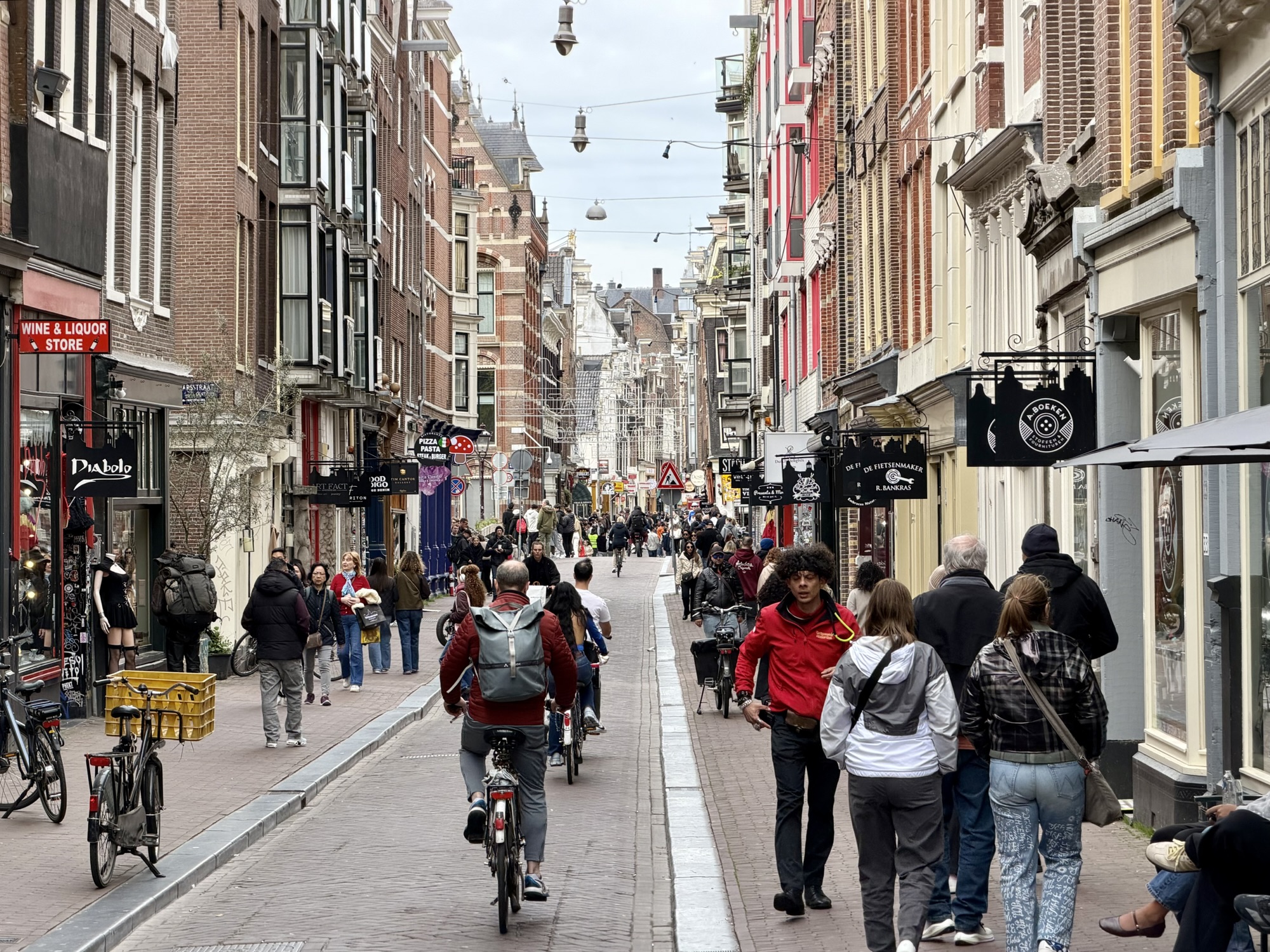
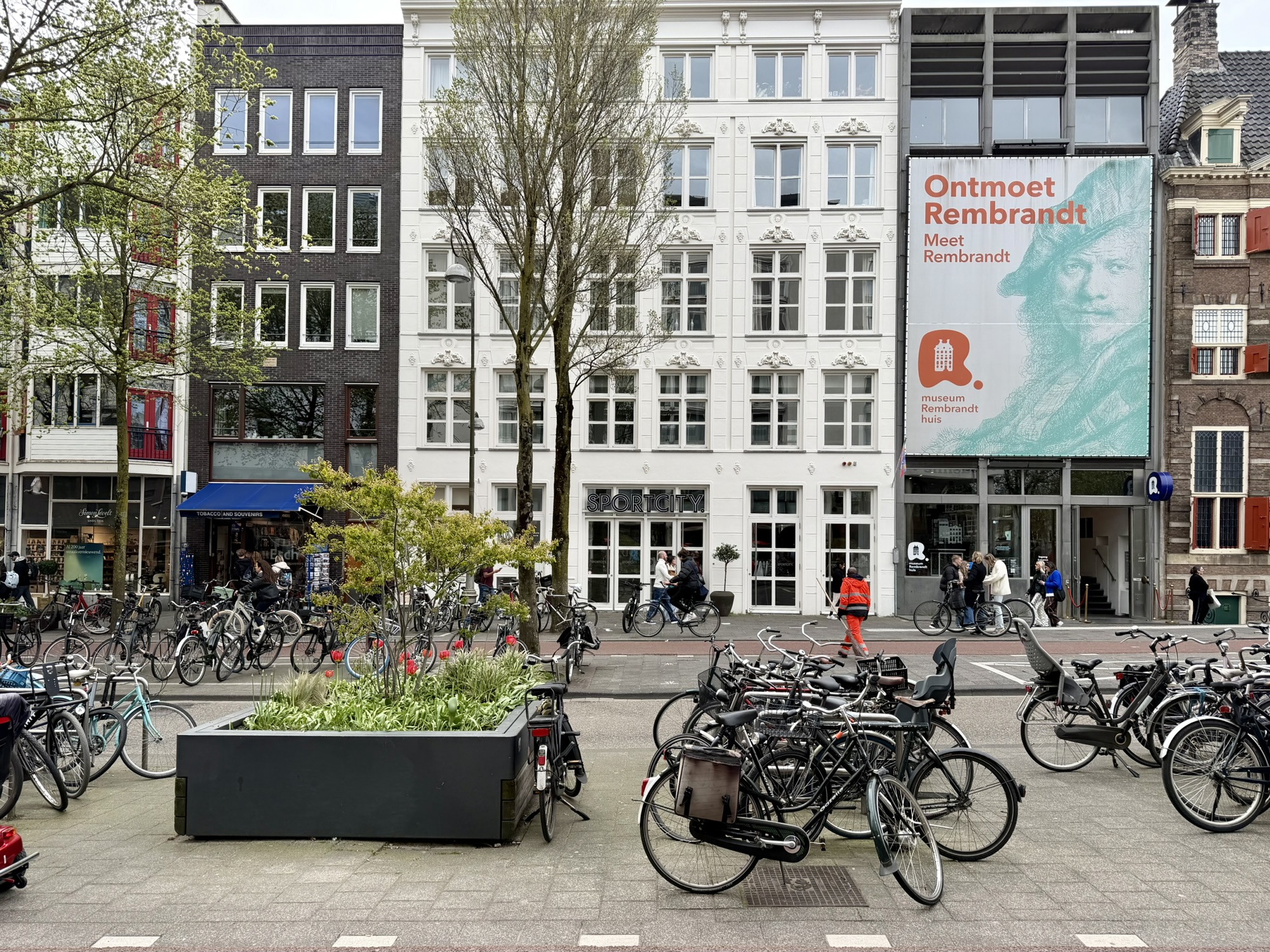
Here are some of the scenes along the way.
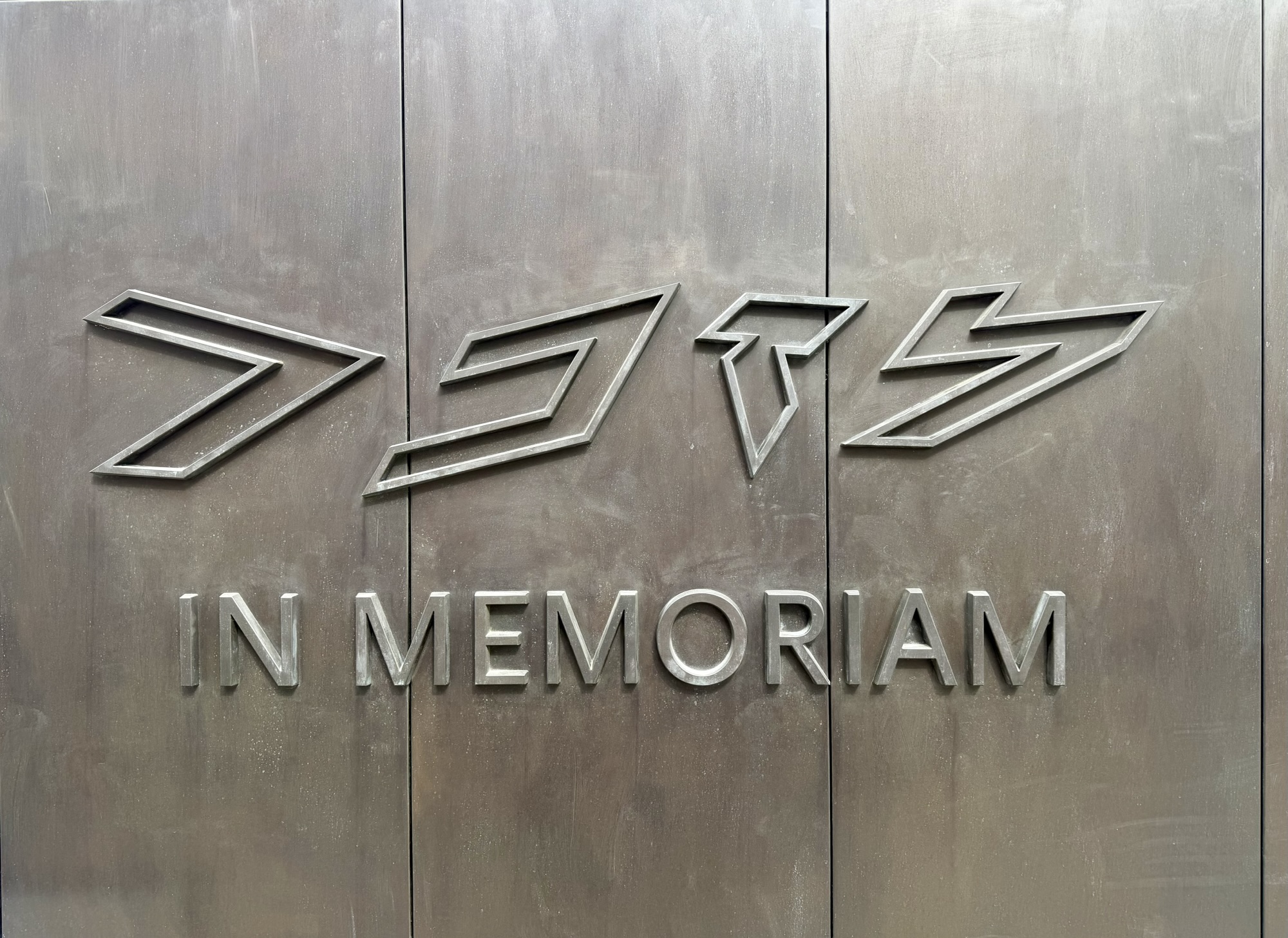
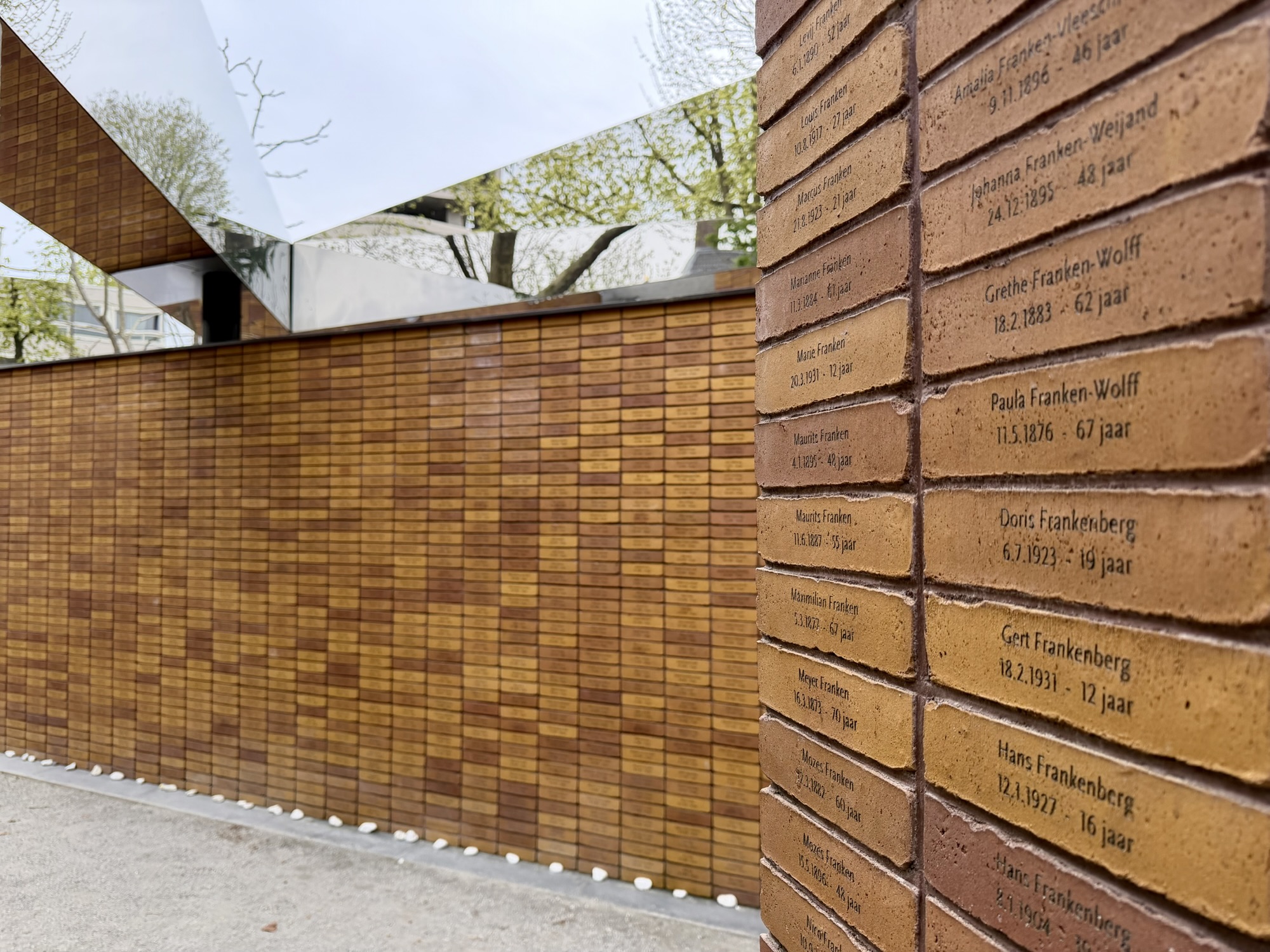
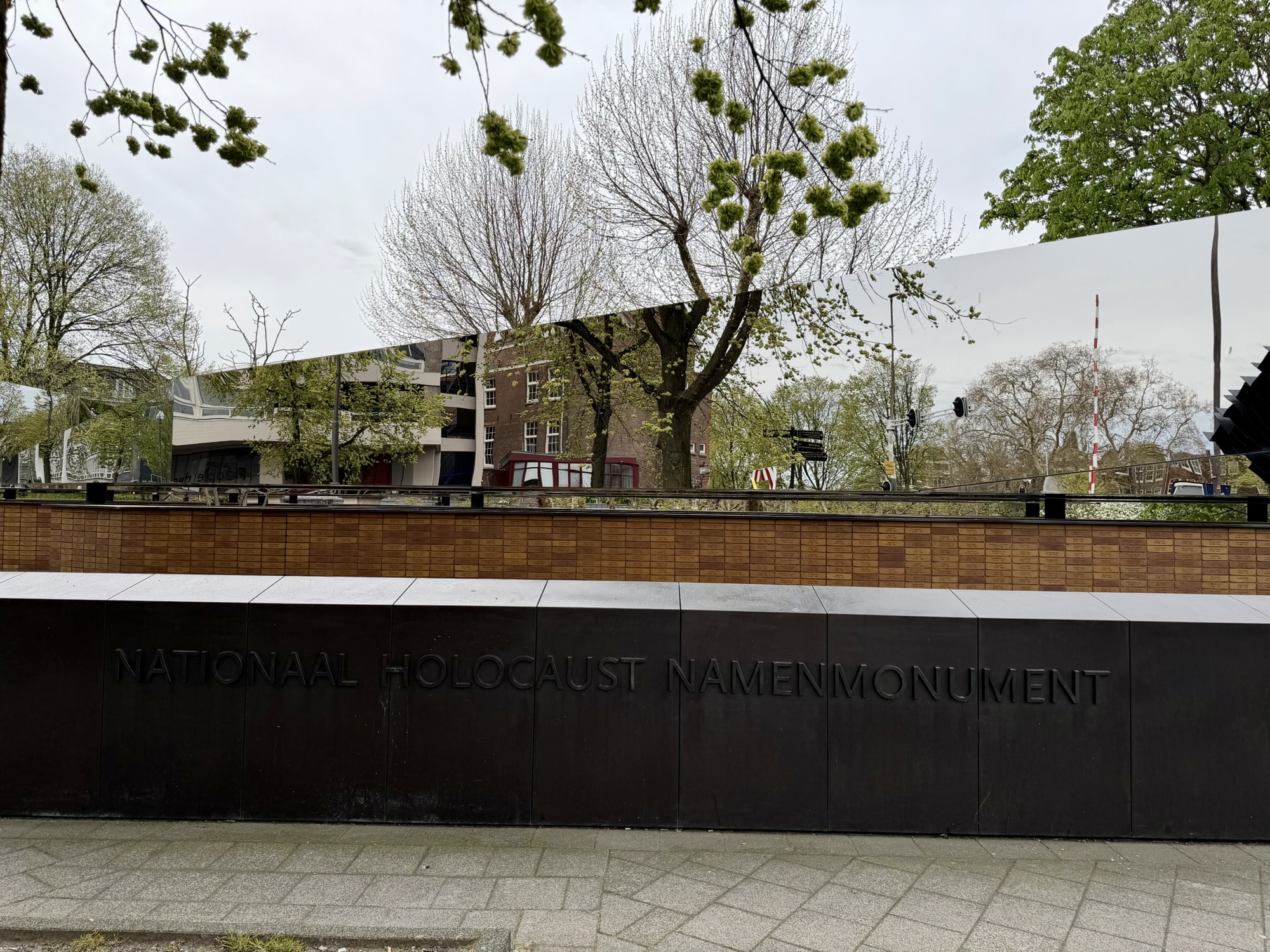
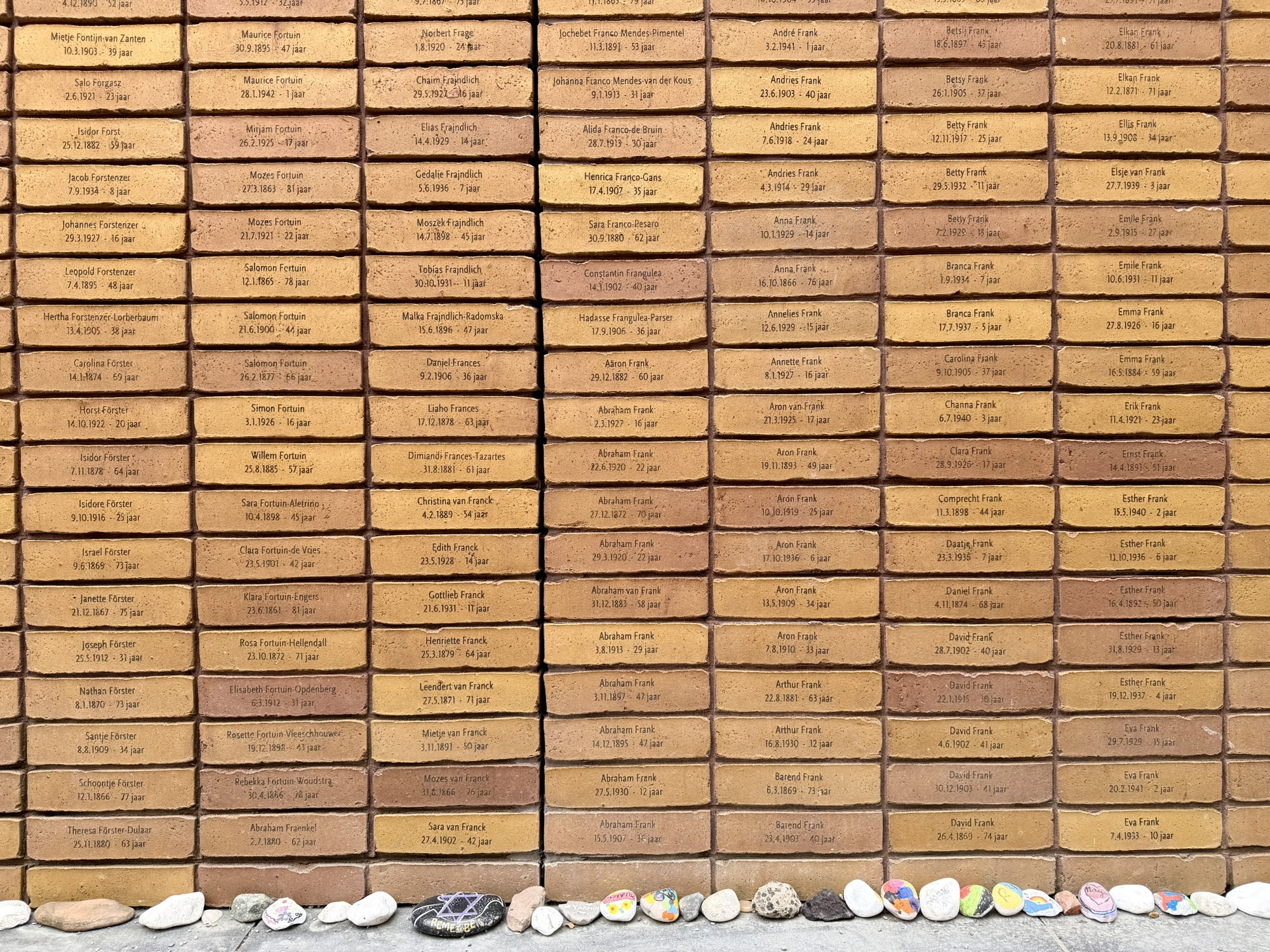
The Dutch National Holocaust Names Memorial in Amsterdam, inaugurated in September 2021, honors over 102,000 Dutch Jewish, Sinti, and Roma victims murdered during World War II. It was designed by Daniel Libeskind, who also designed the Ottawa Holocaust Memorial, which Cindy and I visited a couple of years ago. He also designed the Crystal edition at the Royal Ontario Museum.
The memorial features brick walls forming Hebrew letters for “In Memory Of,” with each brick displaying a victim’s name, age, and date of birth.
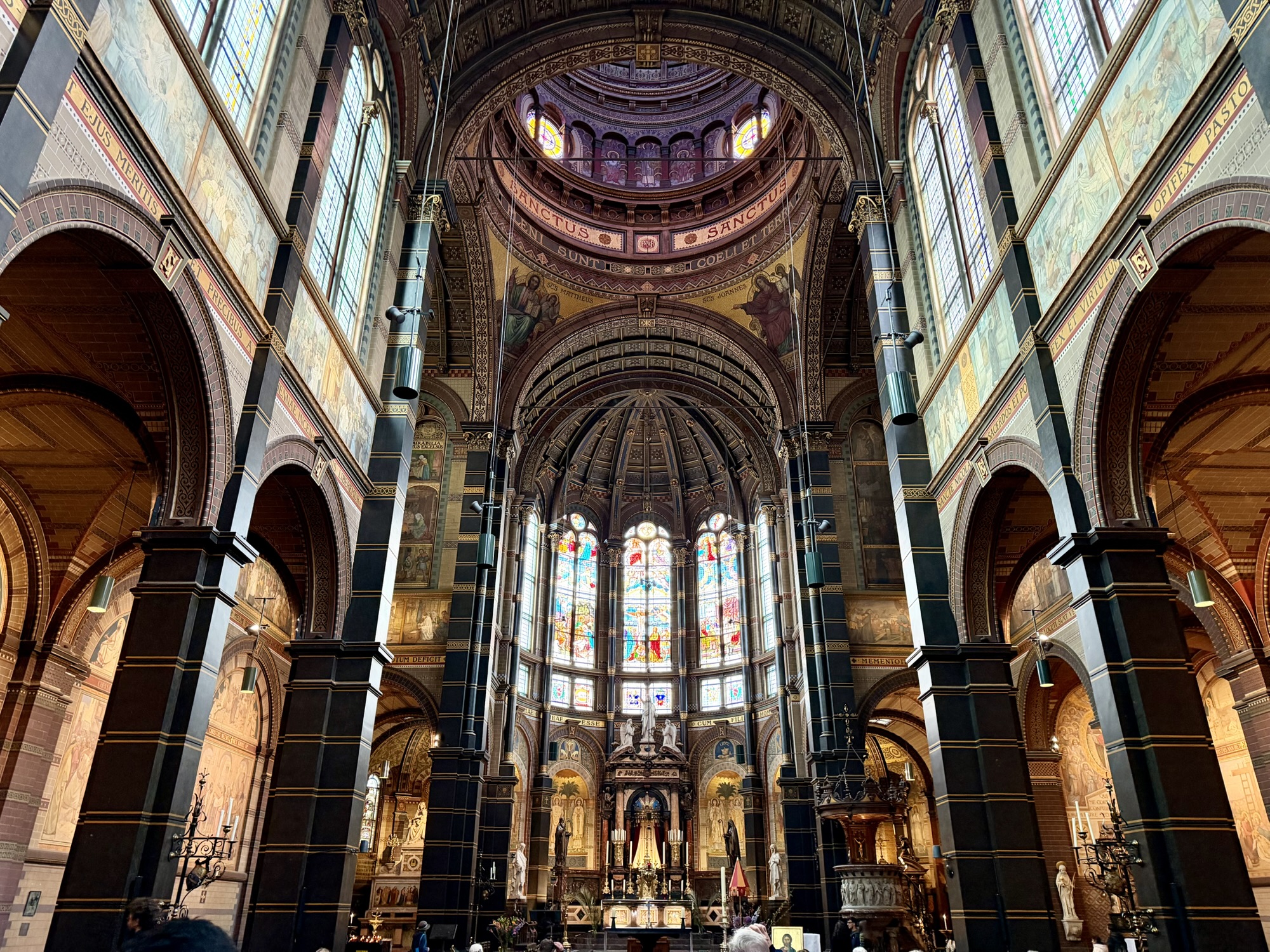
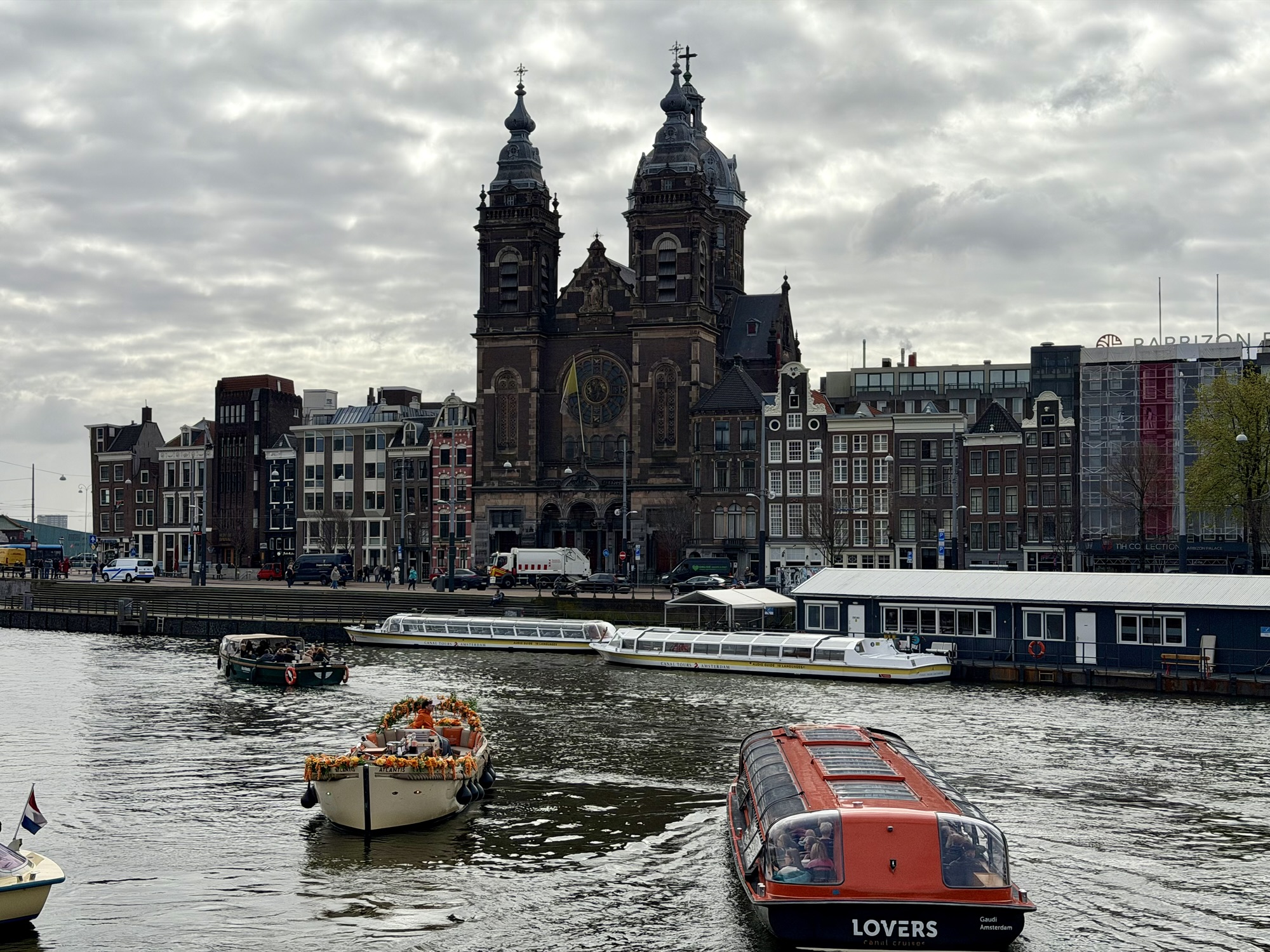
Our final stop before collecting our luggage was the Basilica of Saint Nicholas.
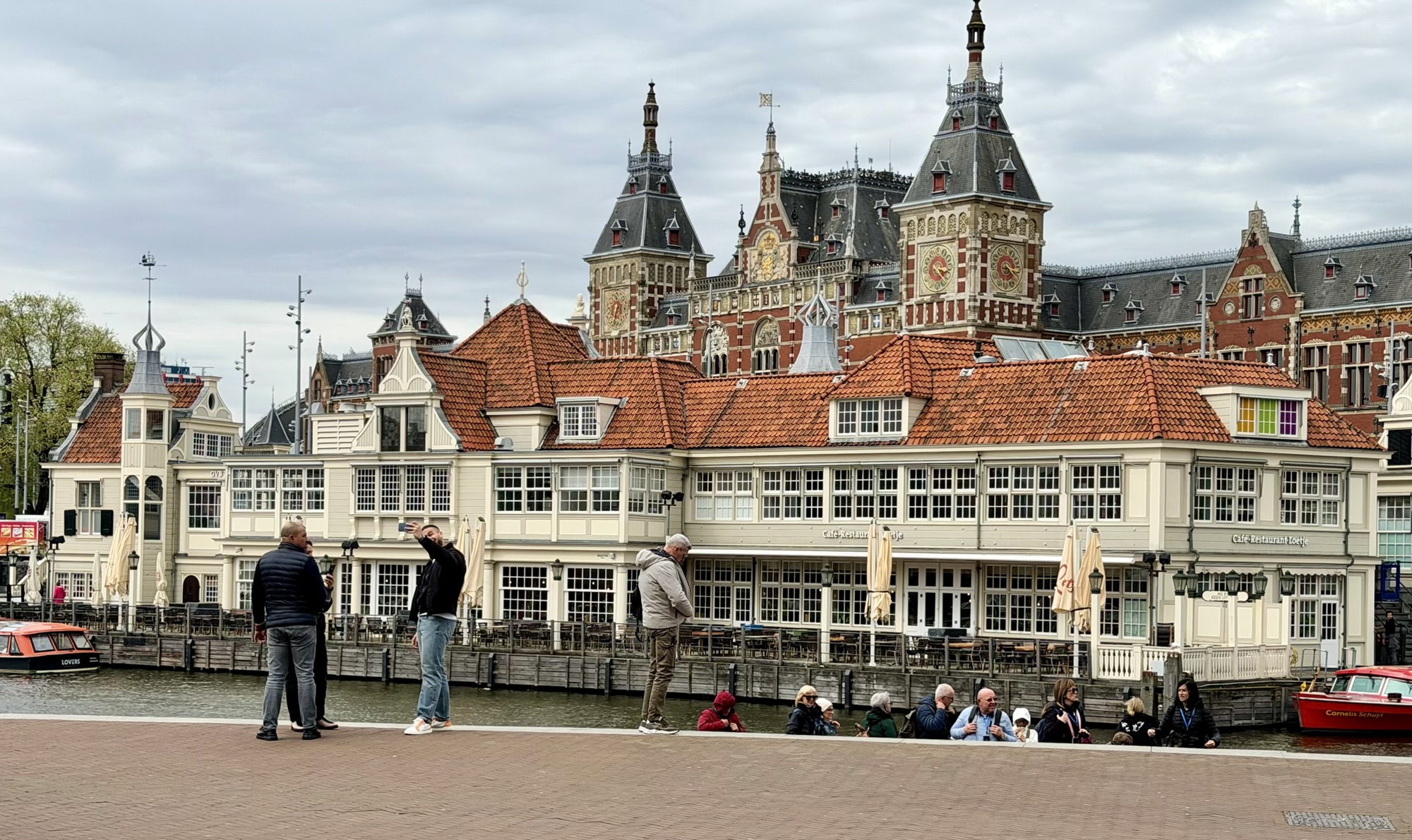
From the front steps of the Basilica, we could see the beautiful building that contains an office of the municipal transit system, some restaurants, and some sightseeing boat companies.
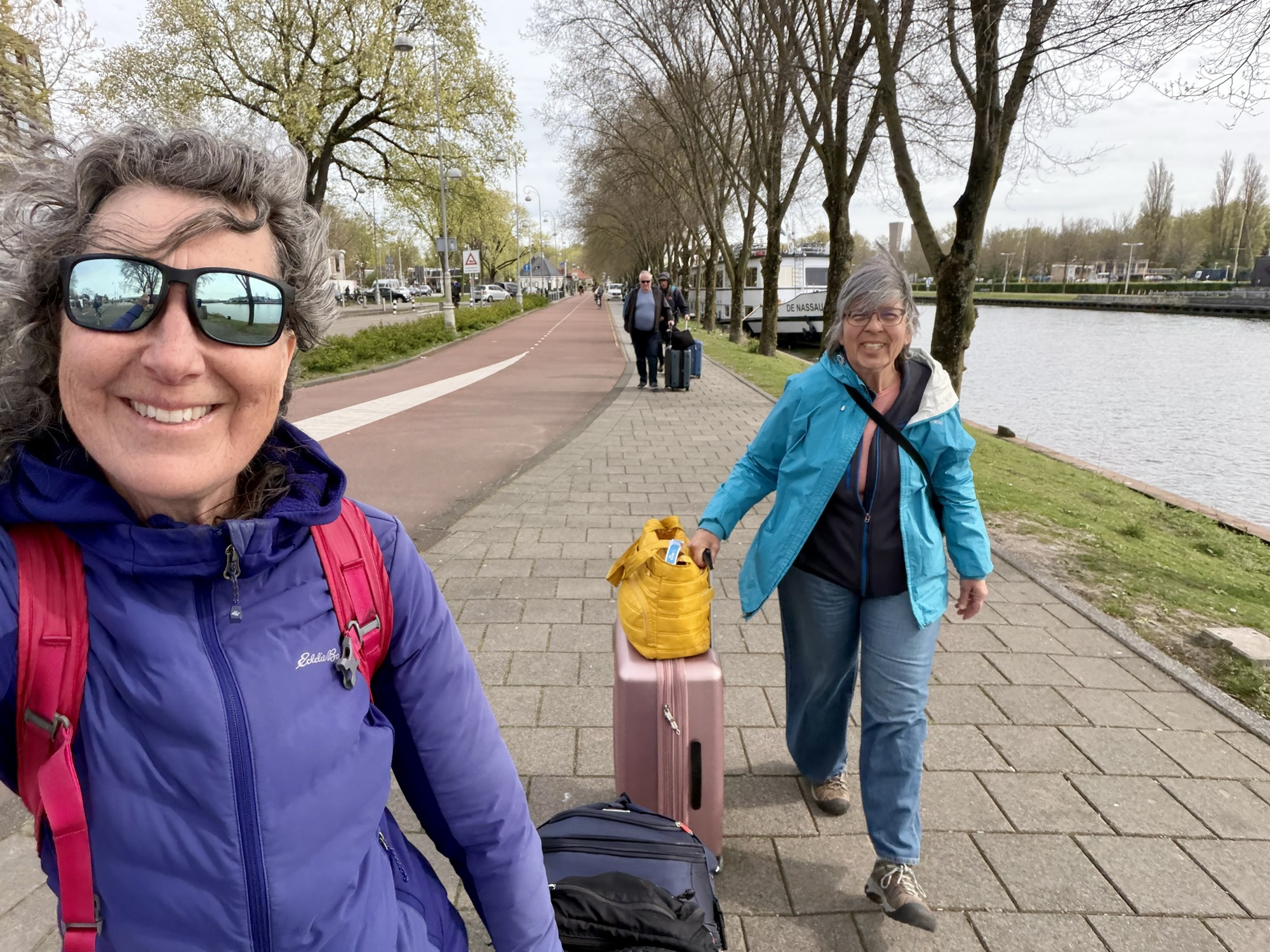
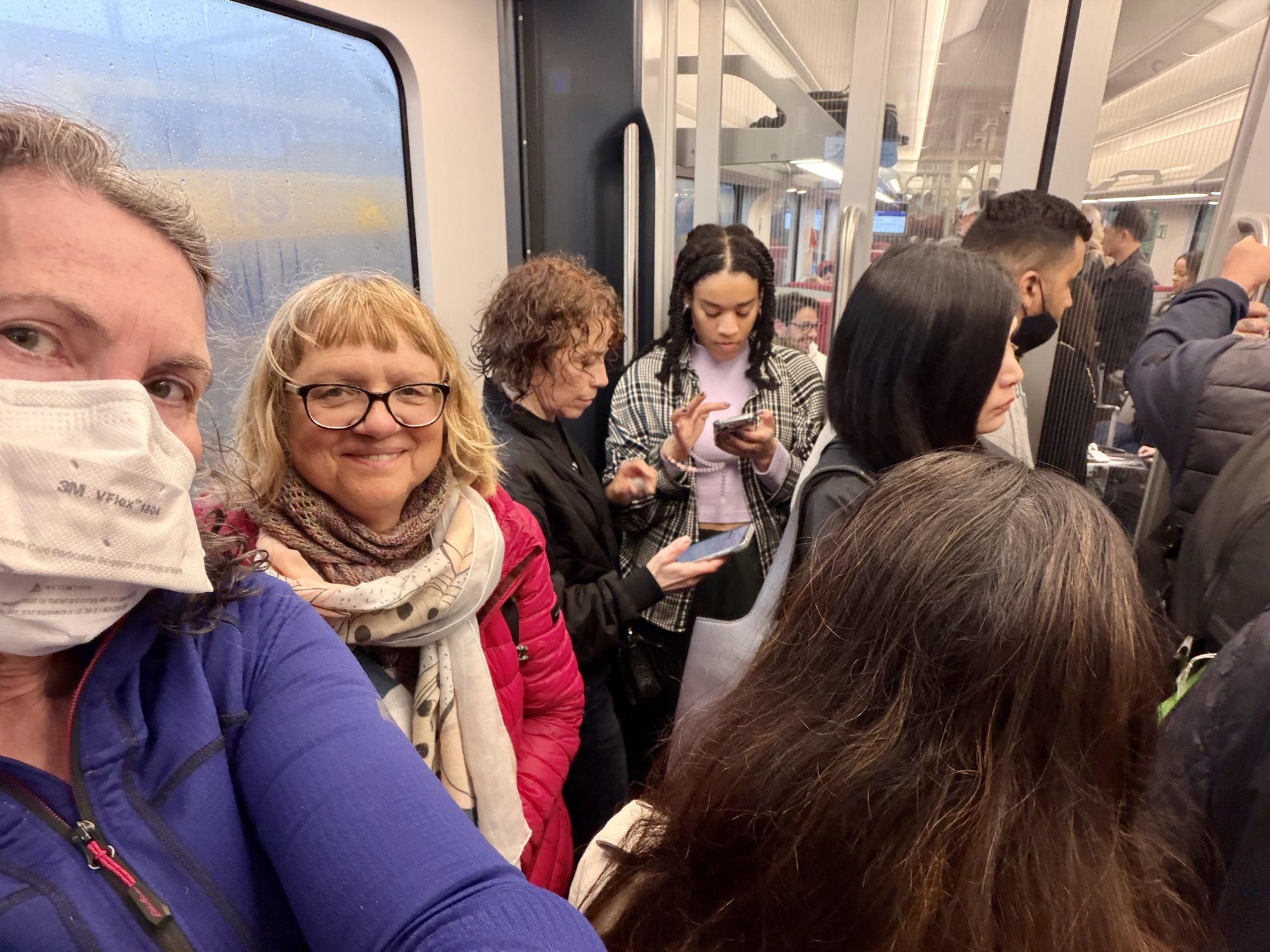
We then collected our luggage, said our goodbyes, and headed to Central Station, where we purchased tickets to Schiphol Airport. I don’t think I’ve ever been on such a packed train as the one that we boarded. We had to stand in the door area between the first and second class compartments. Fortunately, it was direct to the airport and only took about 12 minutes.
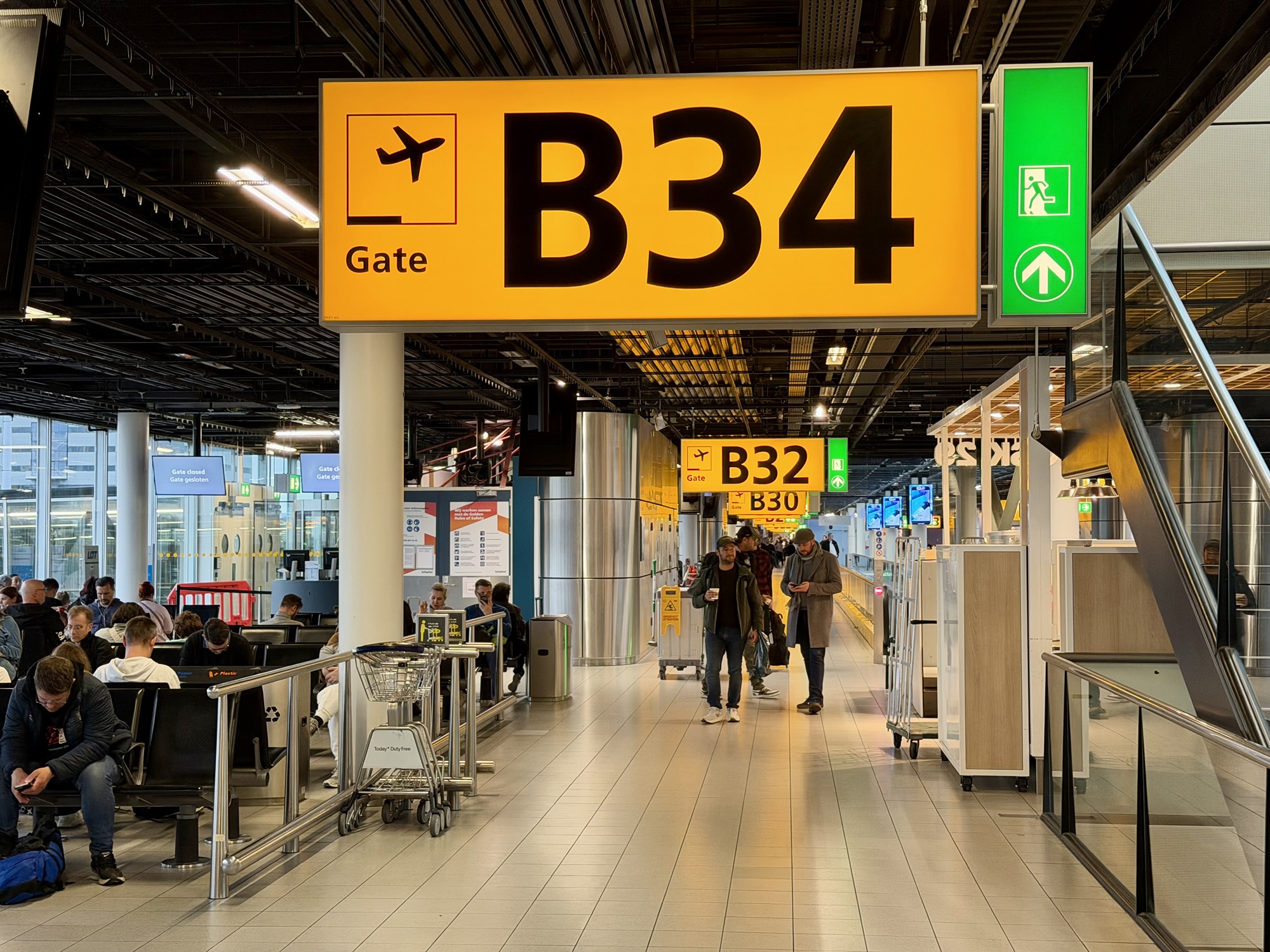
Checking my luggage, and getting through security, was unremarkable and relatively quick. I don’t think our gate could’ve been any further from where we entered the airport, though, and it seemed to take as long as it took to check the luggage and get through security, to get to our gate.
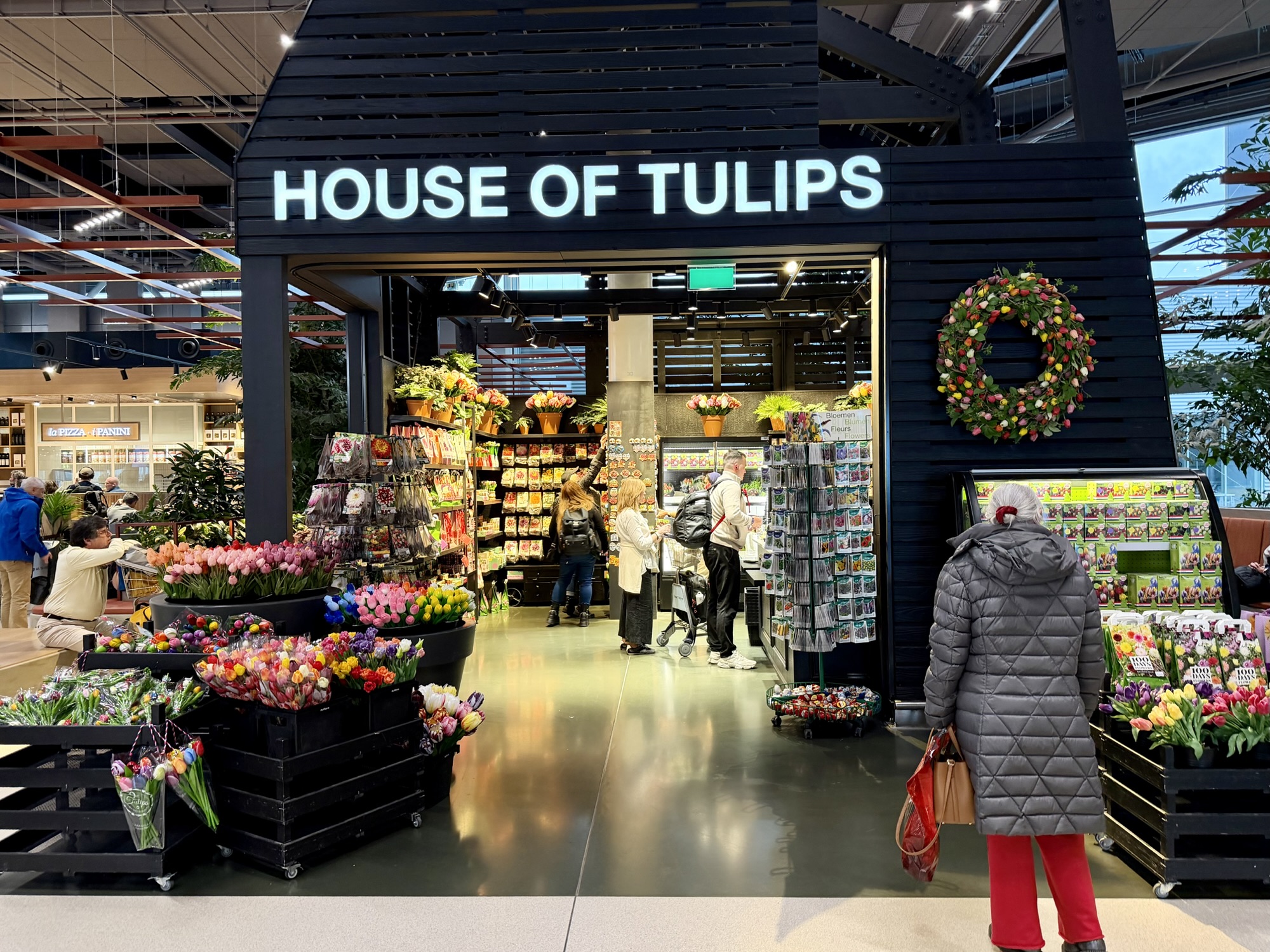
We stopped at a shop for Alina to buy some tulip bulbs to take to her friends in Poland.
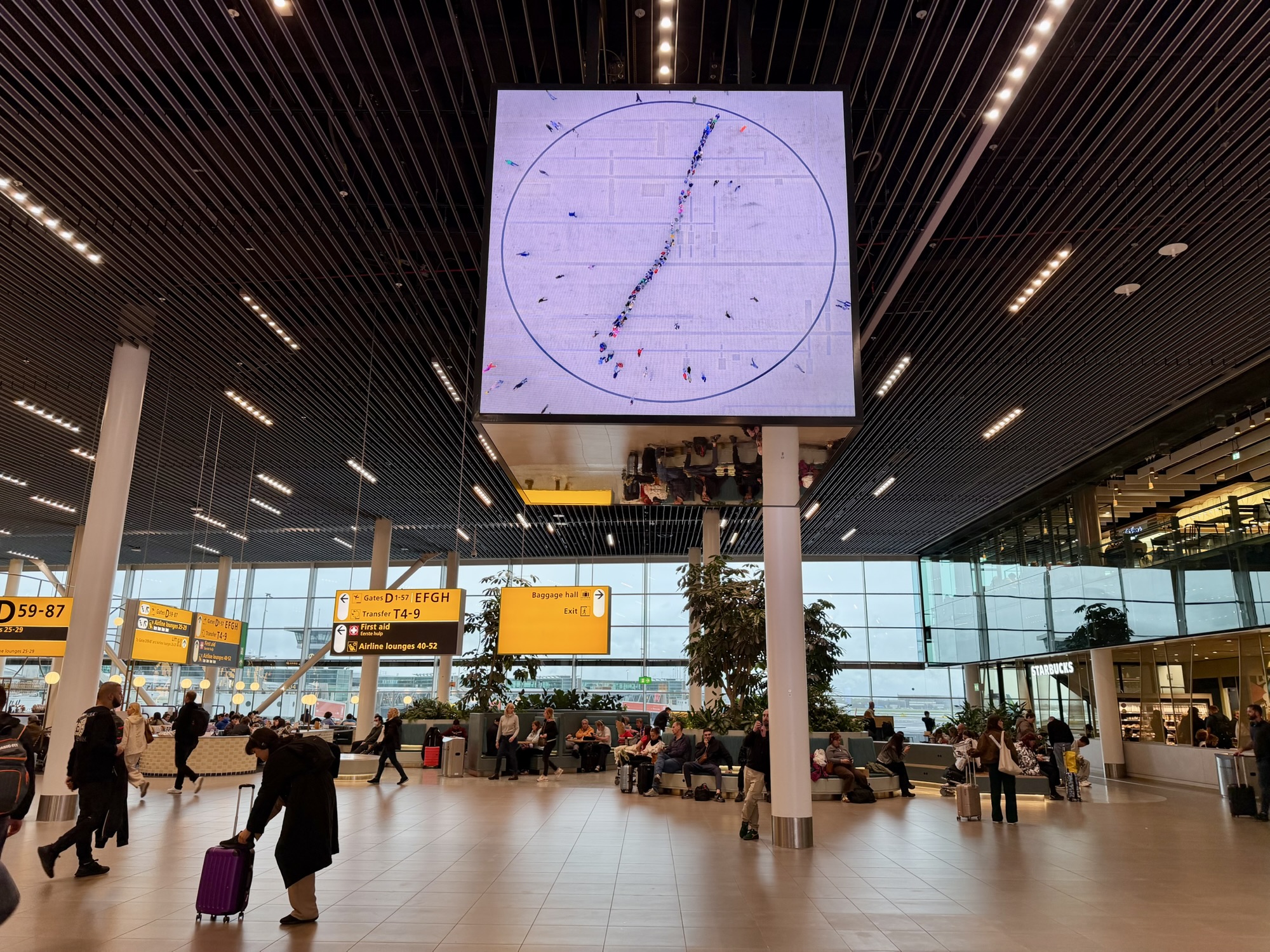
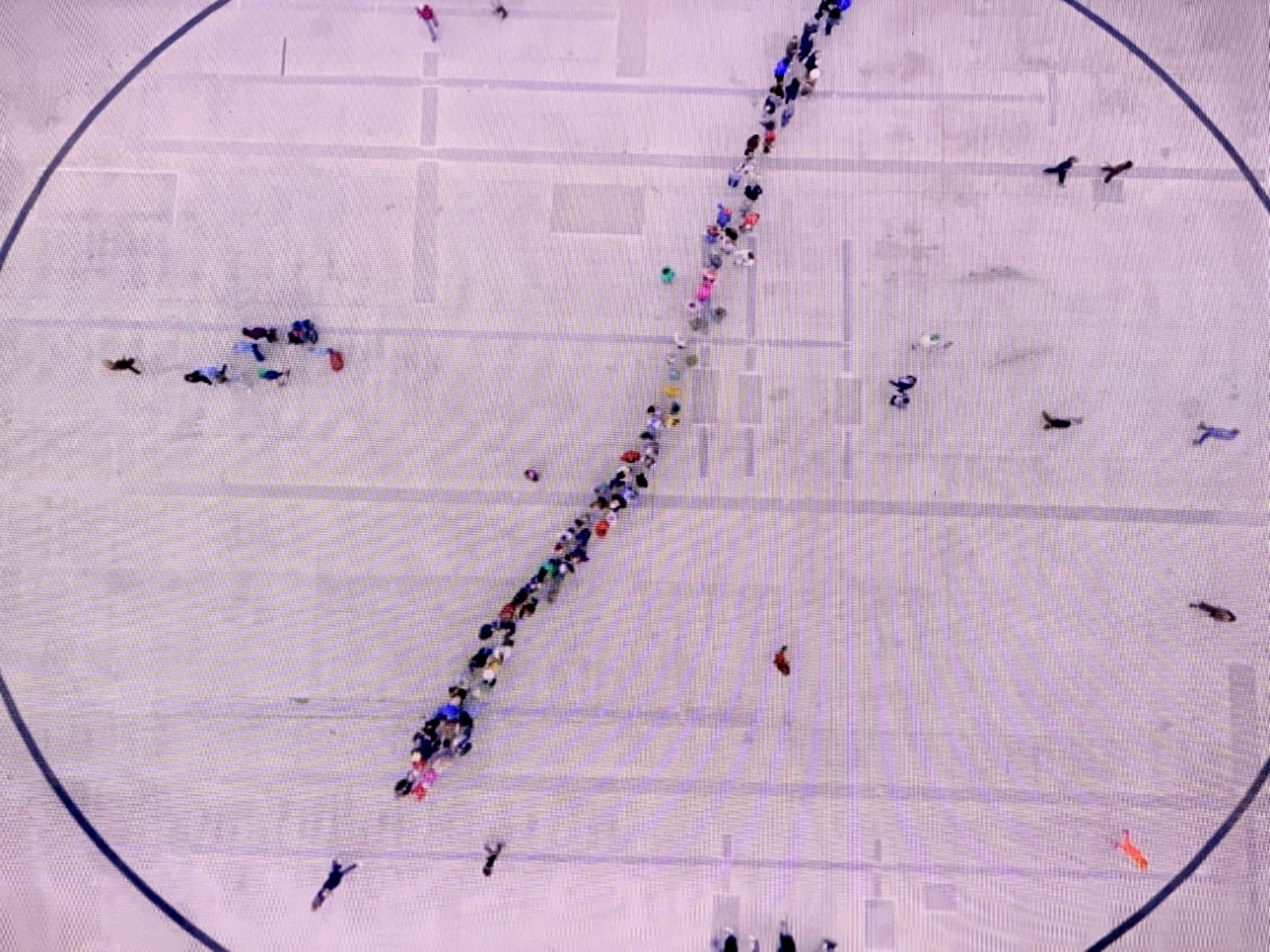
This large clock’s hands were a video of actual people joining the line and leaving it.
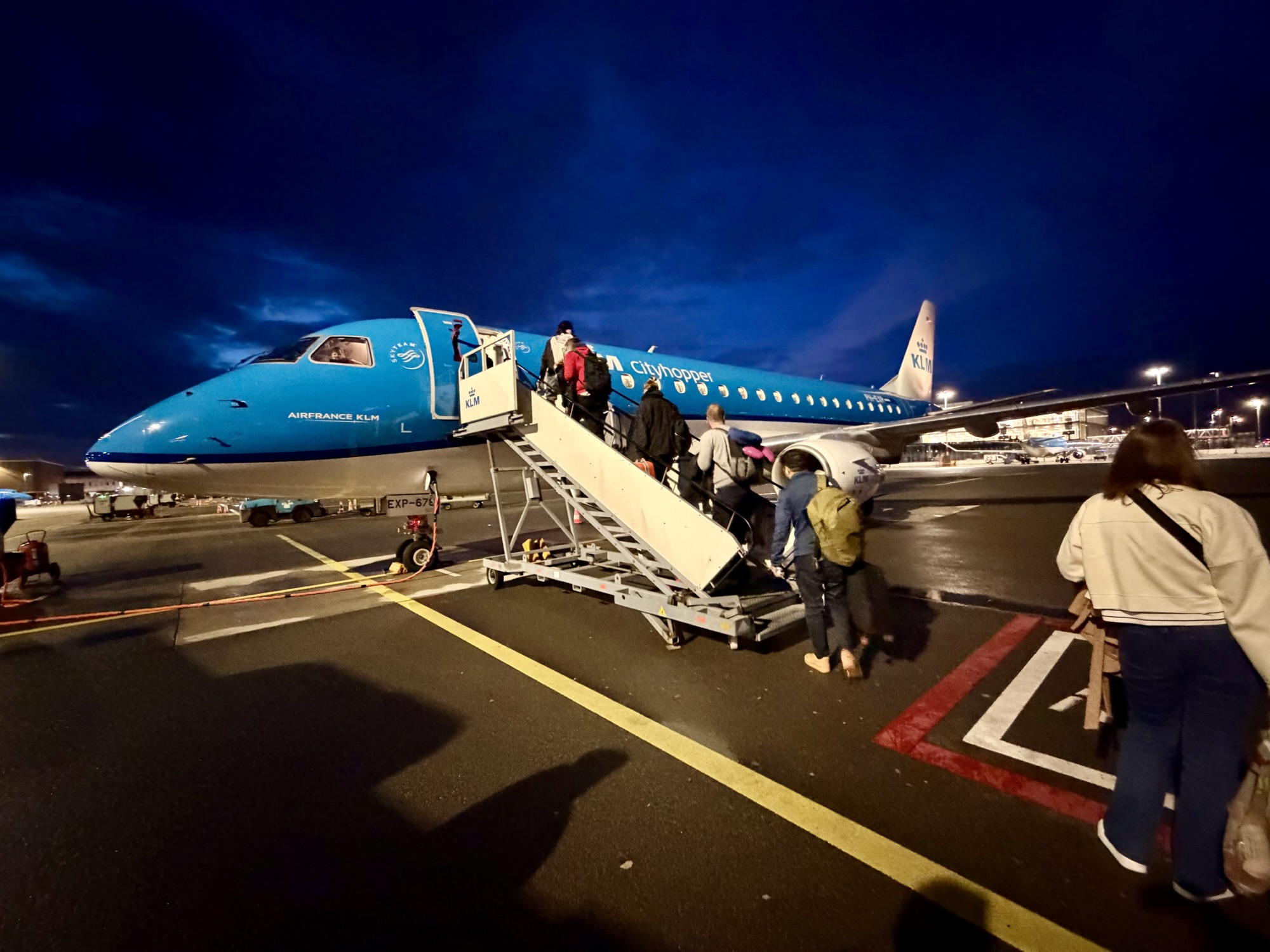
The plane was relatively small, and we had to take a bus and climb stairs to board it. So today we travelled by ferry, canal boat, foot, bus, train, and plane.
The flight was unremarkable. Wroclaw airport is quite small, and by the time we got to the baggage hall, the belt was already moving, and my suitcase came off first.
We got a taxi to Alina‘s apartment. By the time we got settled in and into bed, it was almost 2 in the morning.
Our Canadian group of seven, who became nine with Brooke and Melanie, headed off together this morning. We were following a route David created because we wanted to go to Haarlem, but cycling the provided scenic route would have meant a 70 km round-trip and none of us felt up to that. It created complications because those who had free Ride with GPS accounts were not able to use David’s route with navigation. However, we eventually got sorted and headed out.
Unfortunately, within the first kilometre or so we lost Alina and Brooke. We spent a lot of time backtracking and trying to find them to no avail. We communicated with them in our WhatsApp group, but decided they must’ve ended up ahead of us and carried on. Eventually through texting, we realized they were behind us, and we waited on the bike path just across from Teleport Hotel, where we stayed last week. There was a memorial at this spot. The information sign read:
On December 15, 1944, three men were shot dead on the tram tracks of the Haarlemmerweg. Matthijs ‘Pa’ Verkuijl (1895) was a manager at the Veevita grass drying plant in Badhoevedorp. He helped people in hiding, arranged the storage of food and weapons, and was locally known as the ‘soul of the resistance’. His son Henk (1922) punctured tires of German vehicles and was involved in arms smuggling for the resistance. Police detective Pieter Elias (1907), as a member of the Amsterdam Commando Group, spied on the Sicherheitspolizei to warn other resistance fighters of impending arrests and unmasked traitors. The three men, who committed many more acts of resistance, were arrested in November 1944 following betrayal. Placed on the list of Todeskandidaten (candidates for execution), they were ultimately executed by the occupying forces here at this spot as retaliation and left in a mass grave in the dunes of Overveen. After the war, Pieter Elias, Matthijs Verkuijl, and Henk Verkuijl were given a final resting place at the Honorary Cemetery in Bloemendaal.
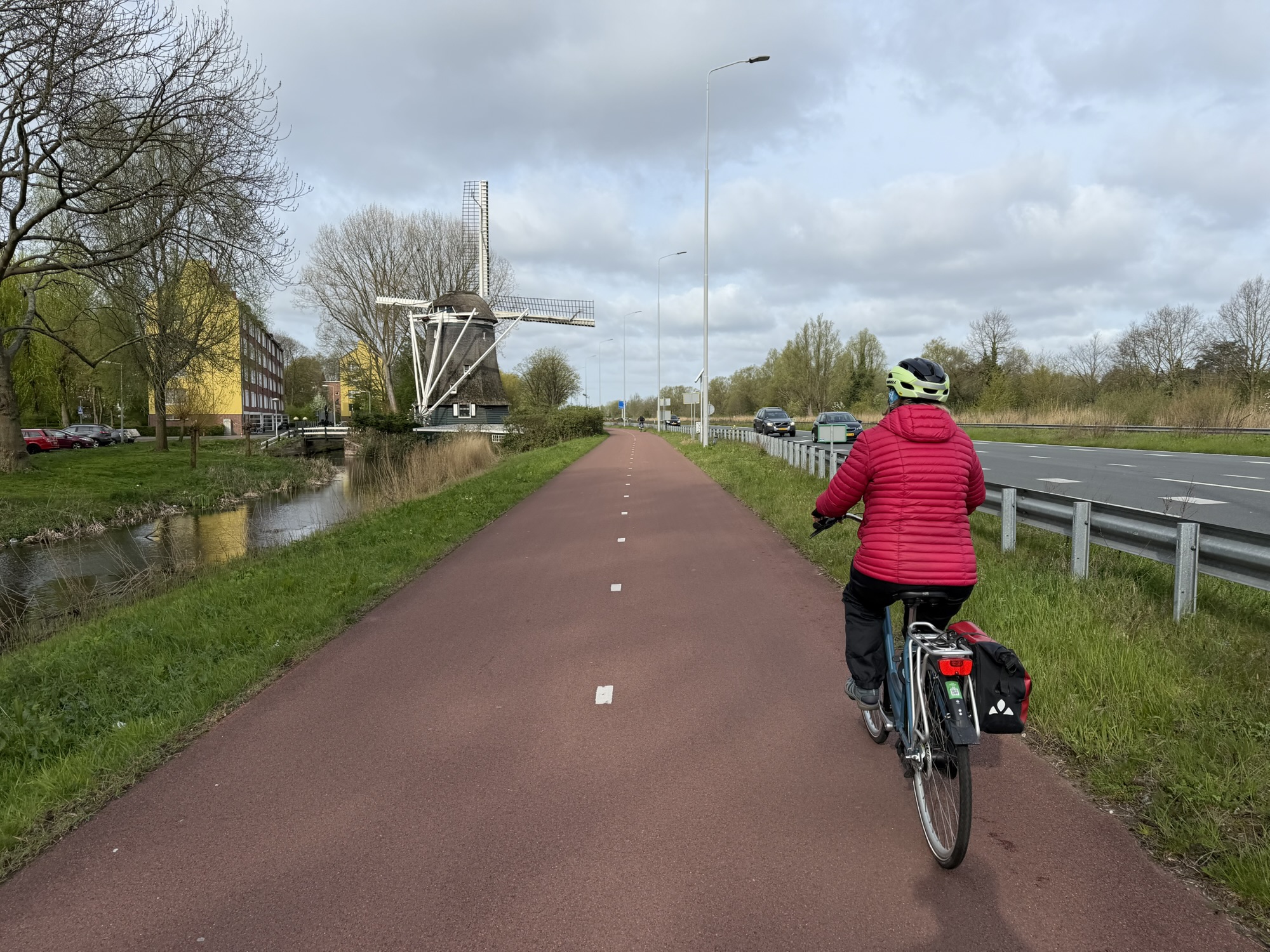
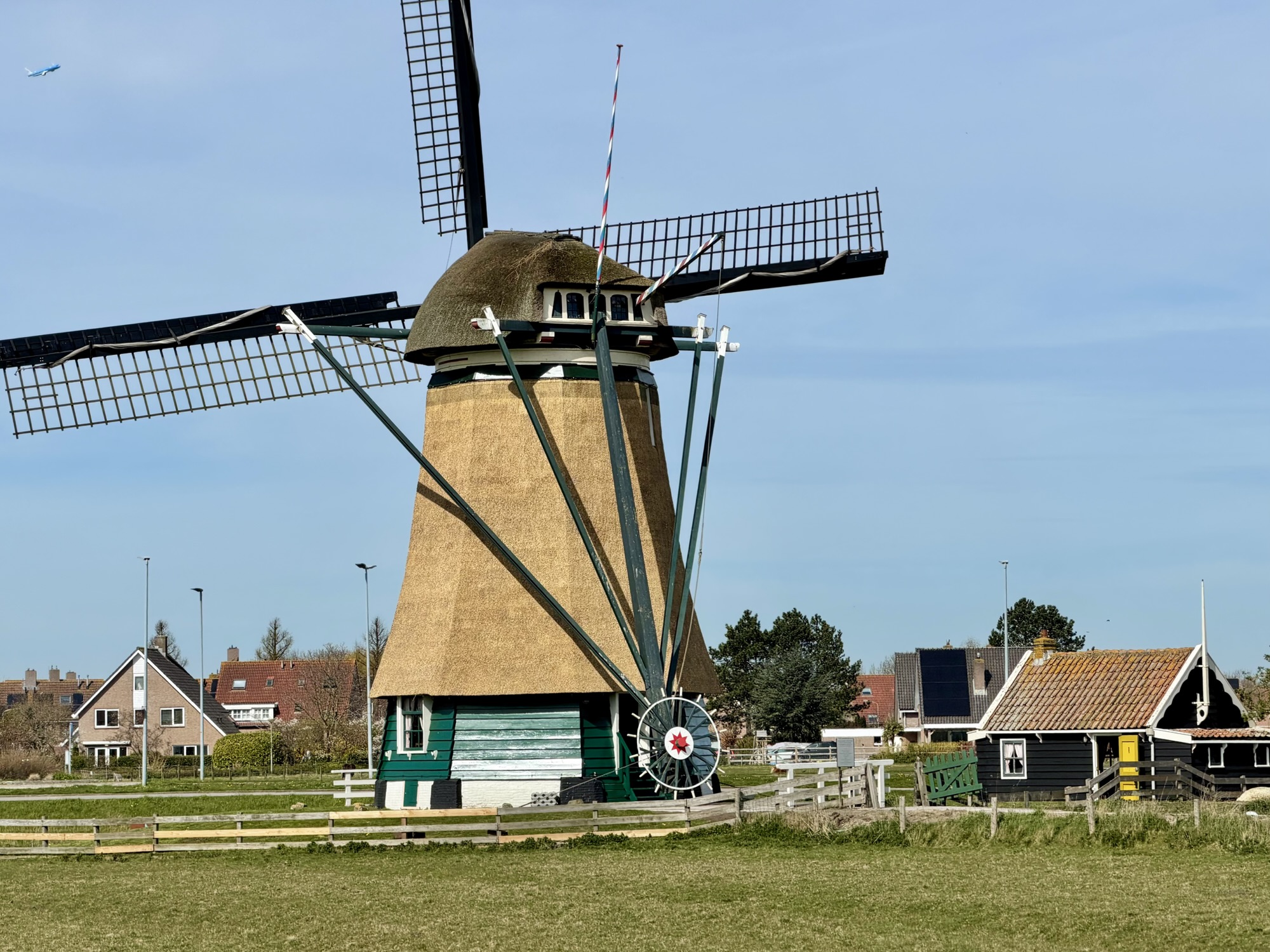
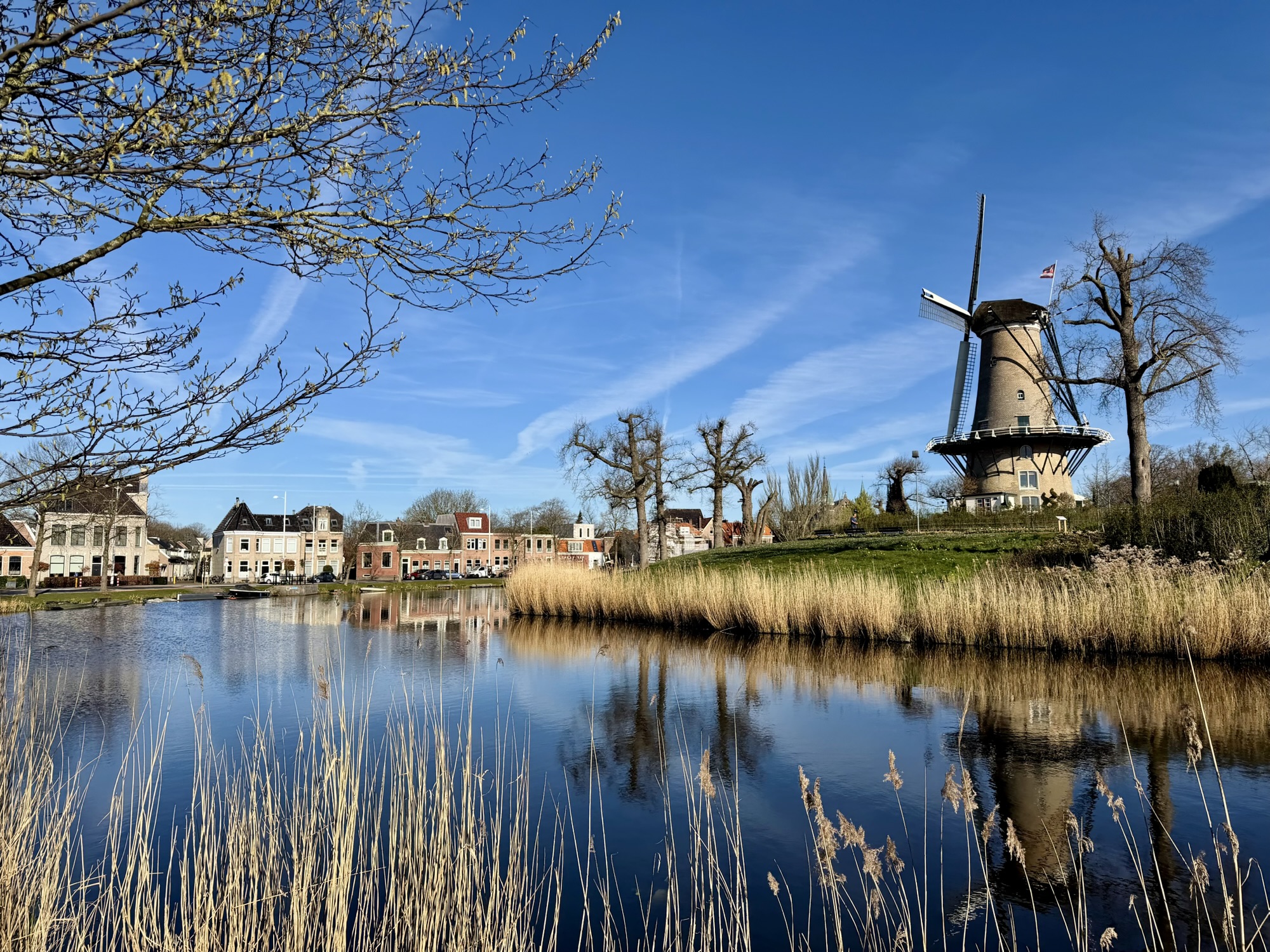
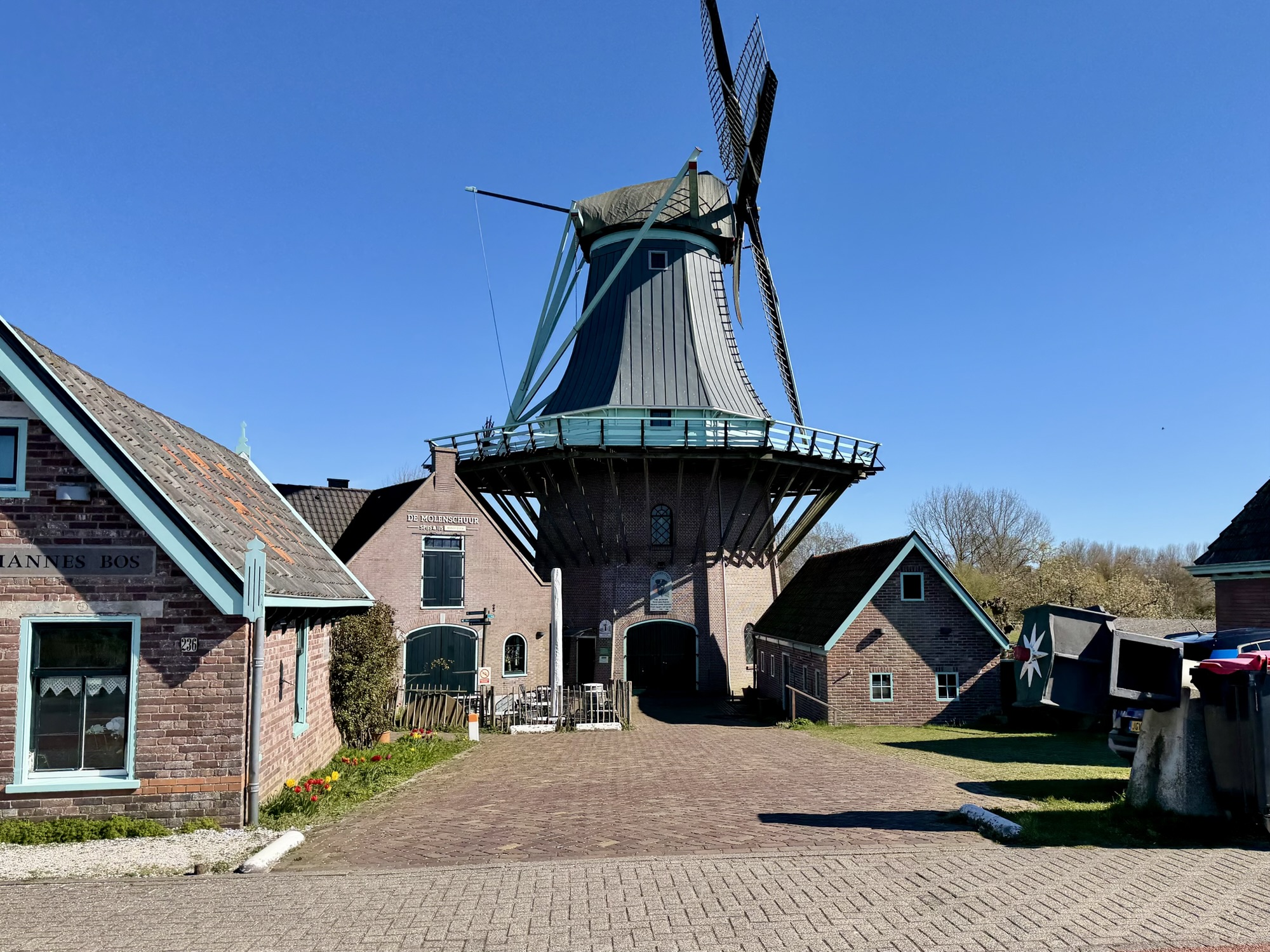
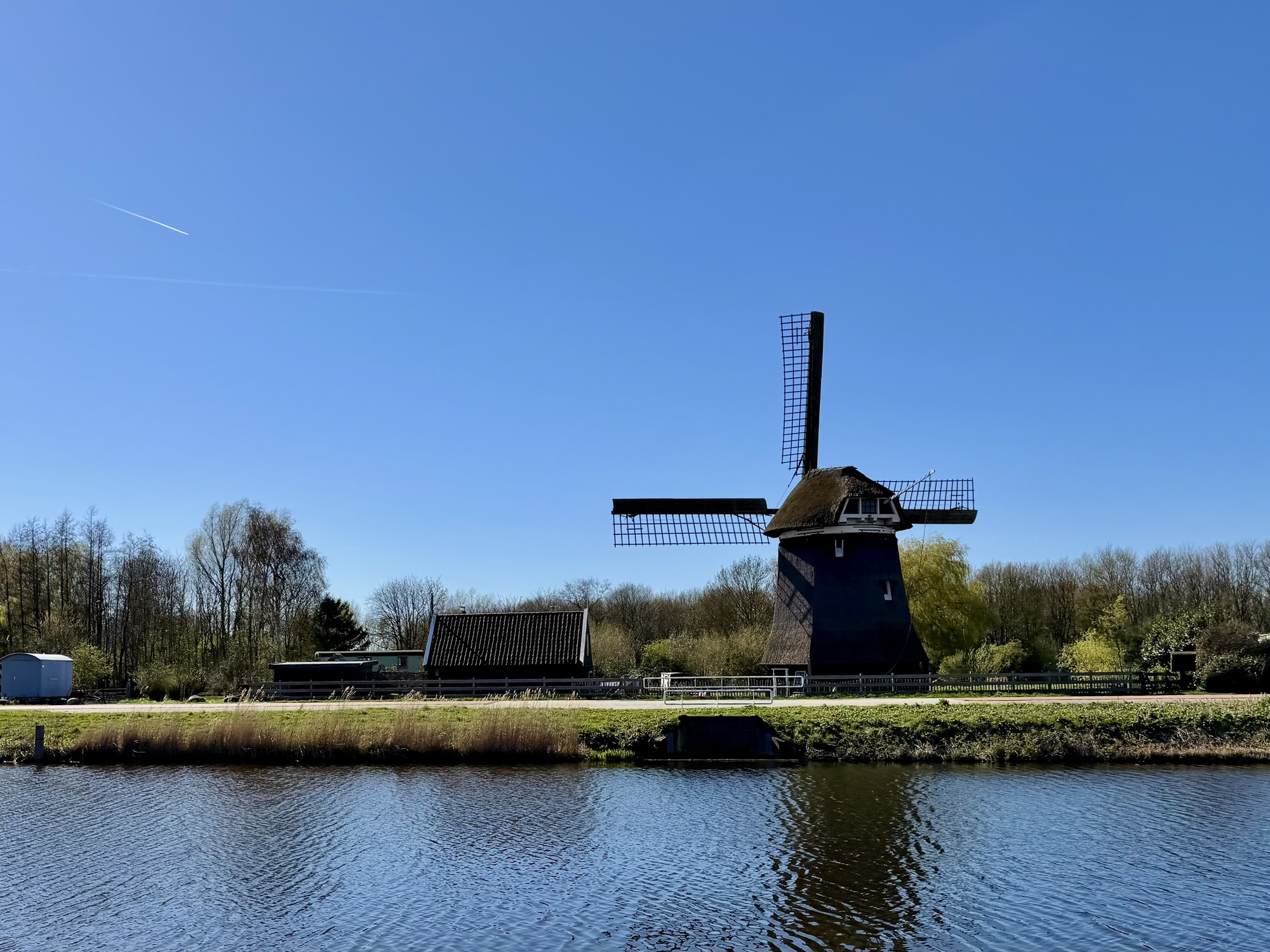
This windmill dates back to 1632. It is mind-boggling to me that it’s still standing, and still works, especially since it is made out of wood.
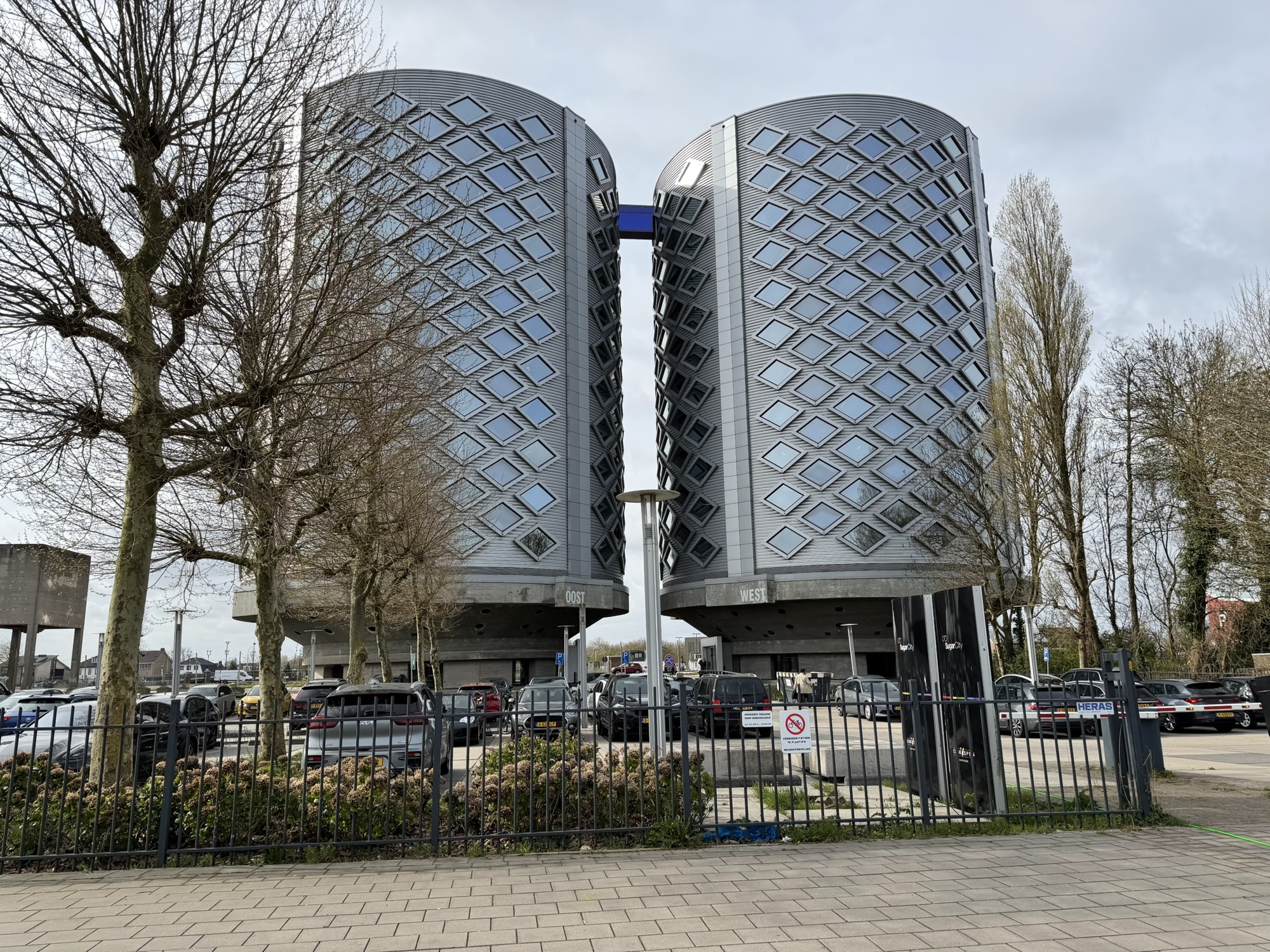
I saw these interesting buildings near a sugar refinery.
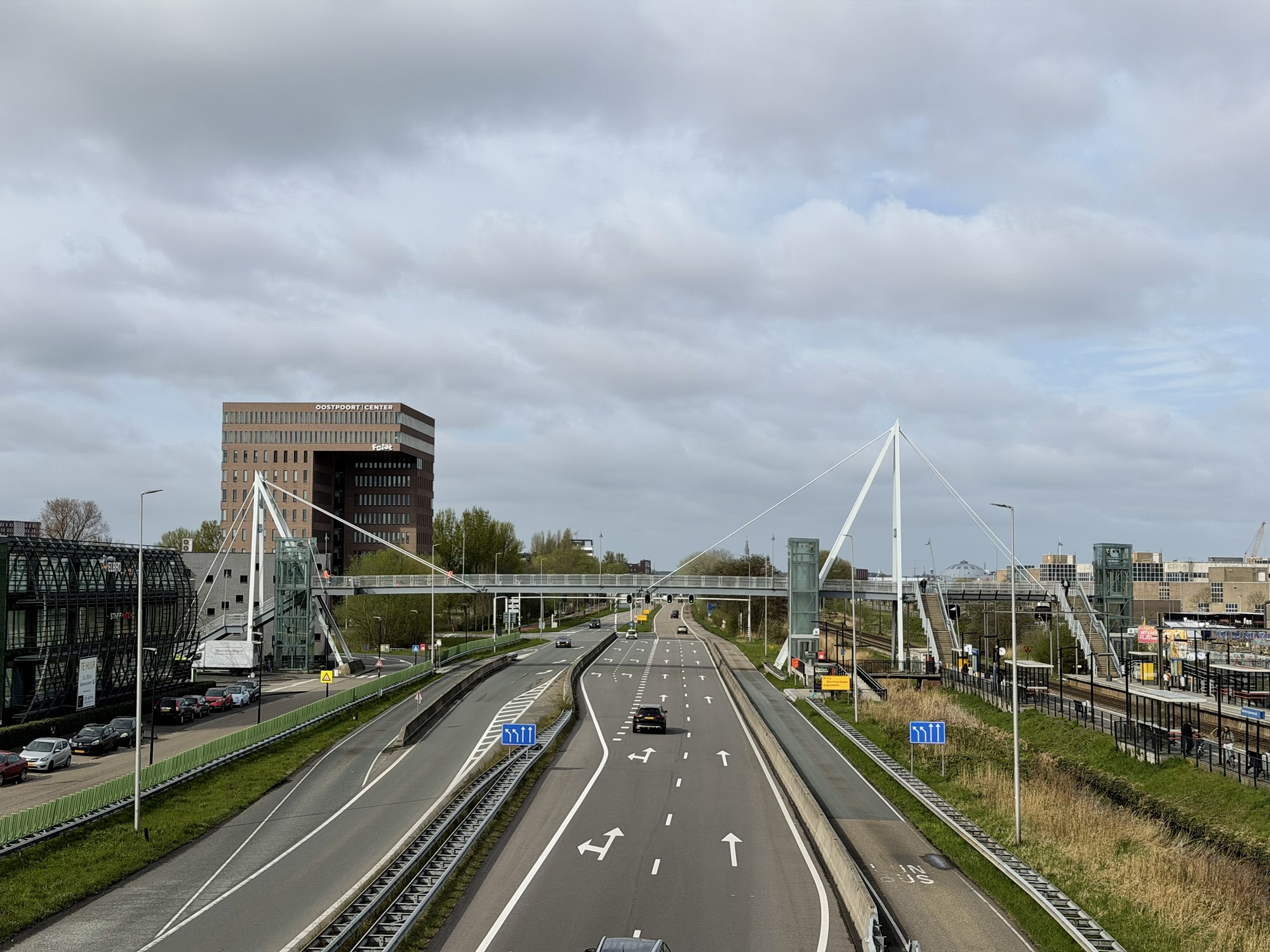
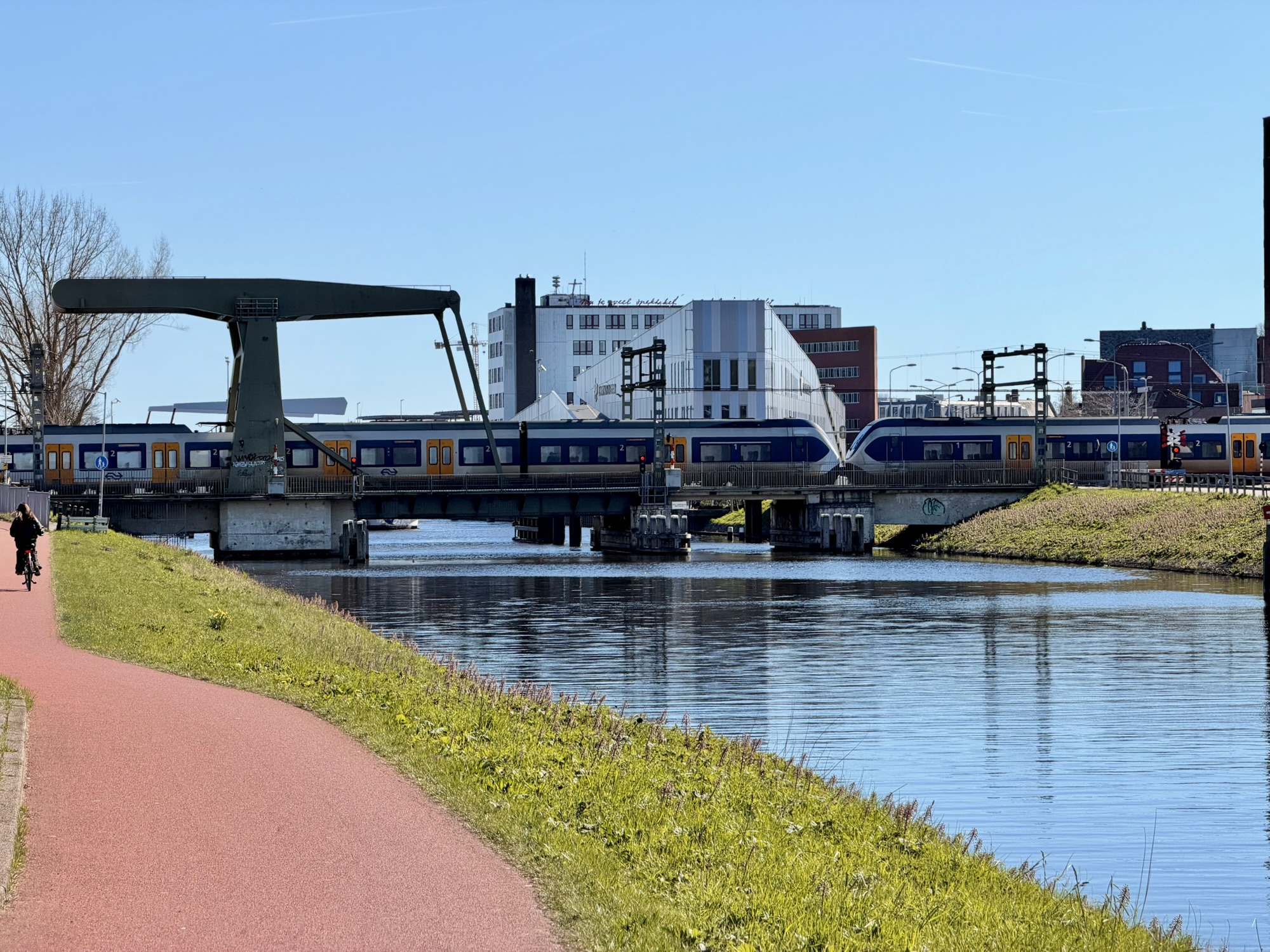
Cycling and regional rail is very well integrated in the Netherlands. Our ride was 20 km long, but we passed several regional rail stations. Each station had bike parking and pedestrian/cyling infrastructure across the highway.
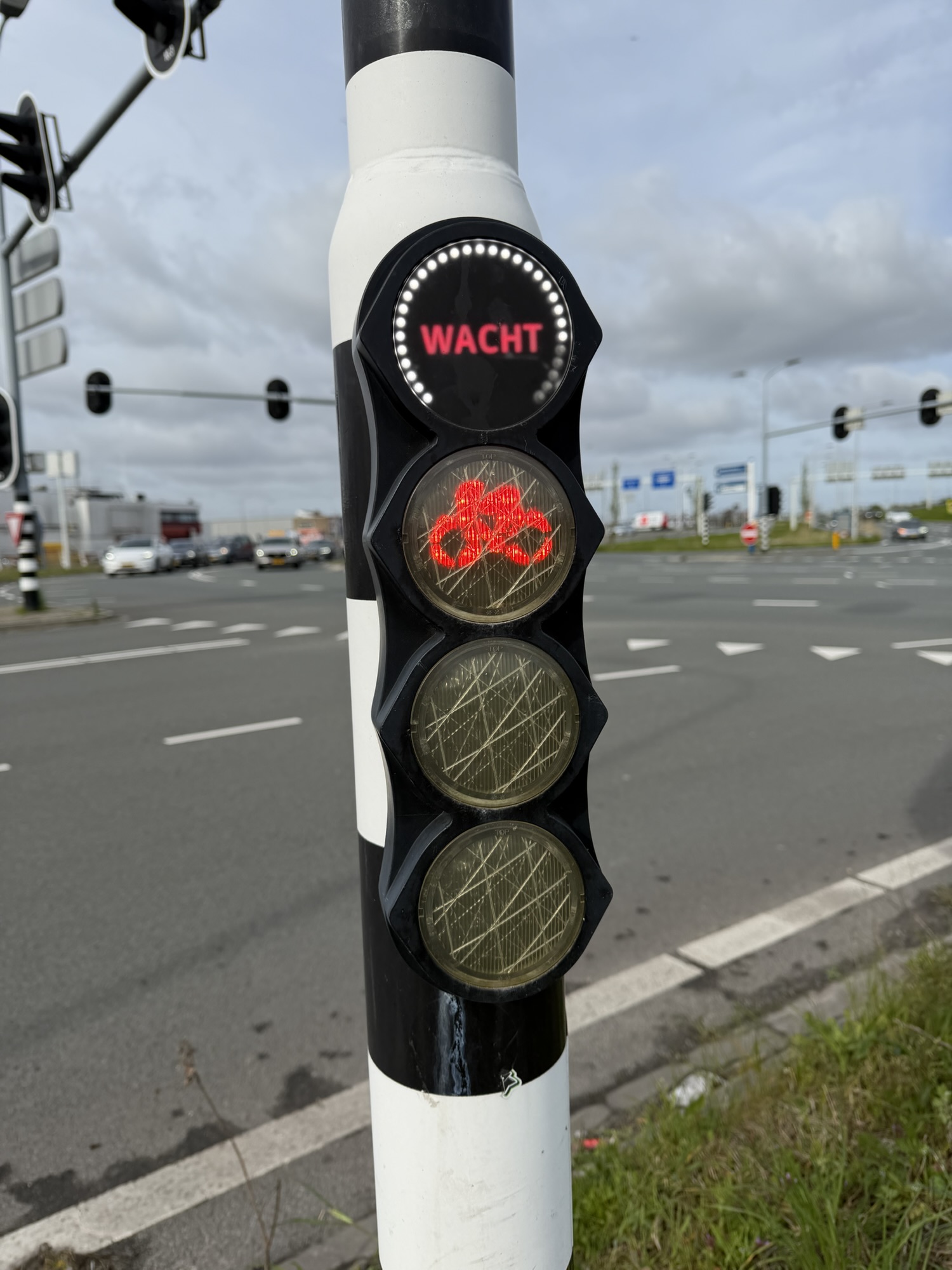
I like these countdown lights. If you watch the white dots around the word Wacht they will disappear as you wait, and when there are no dots left, the light turns green.
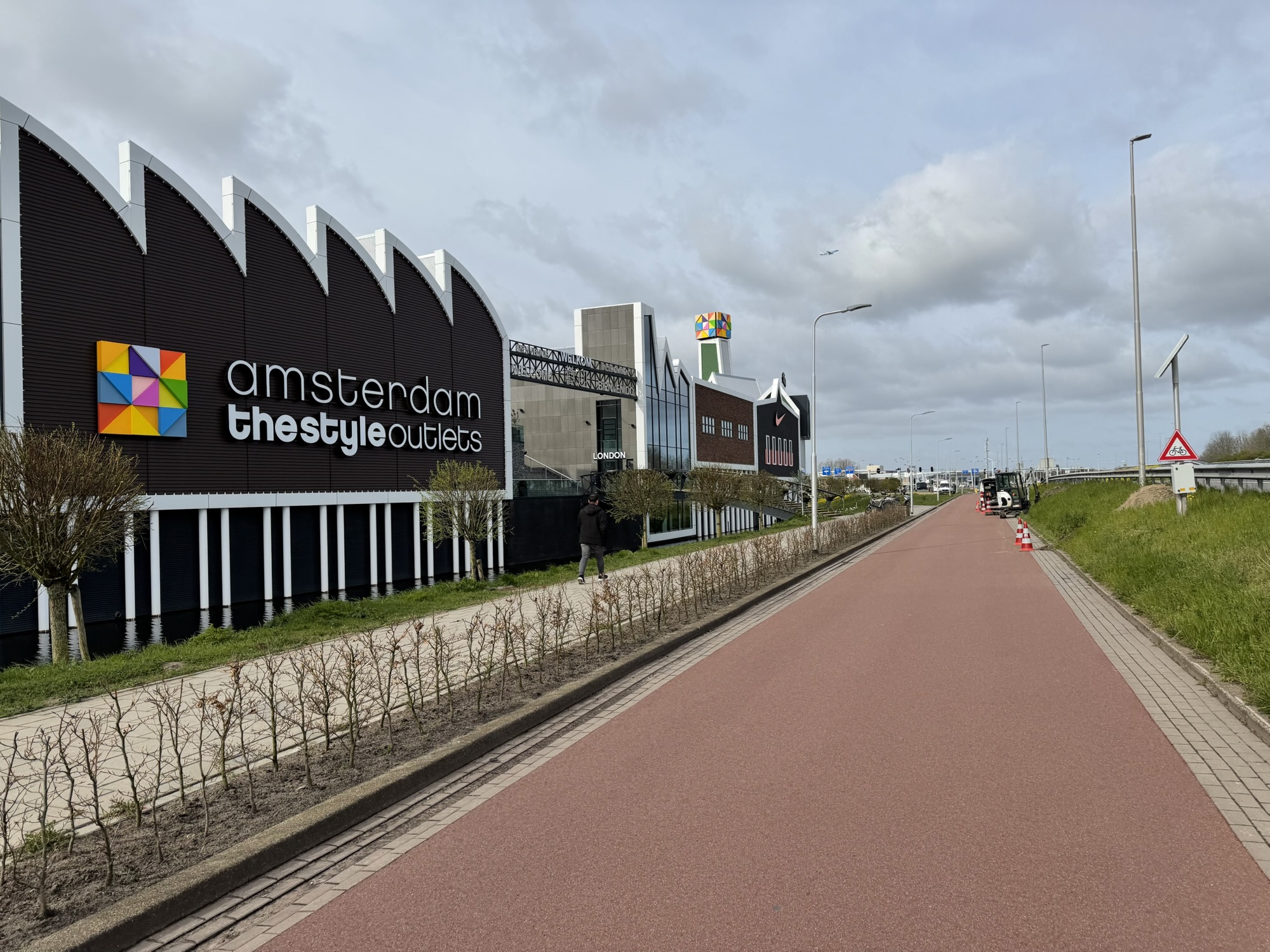
We passed an Outlet Mall about halfway between Amsterdam and Haarlem. The town that is halfway between the two cities is called. Halfweg, which means halfway.
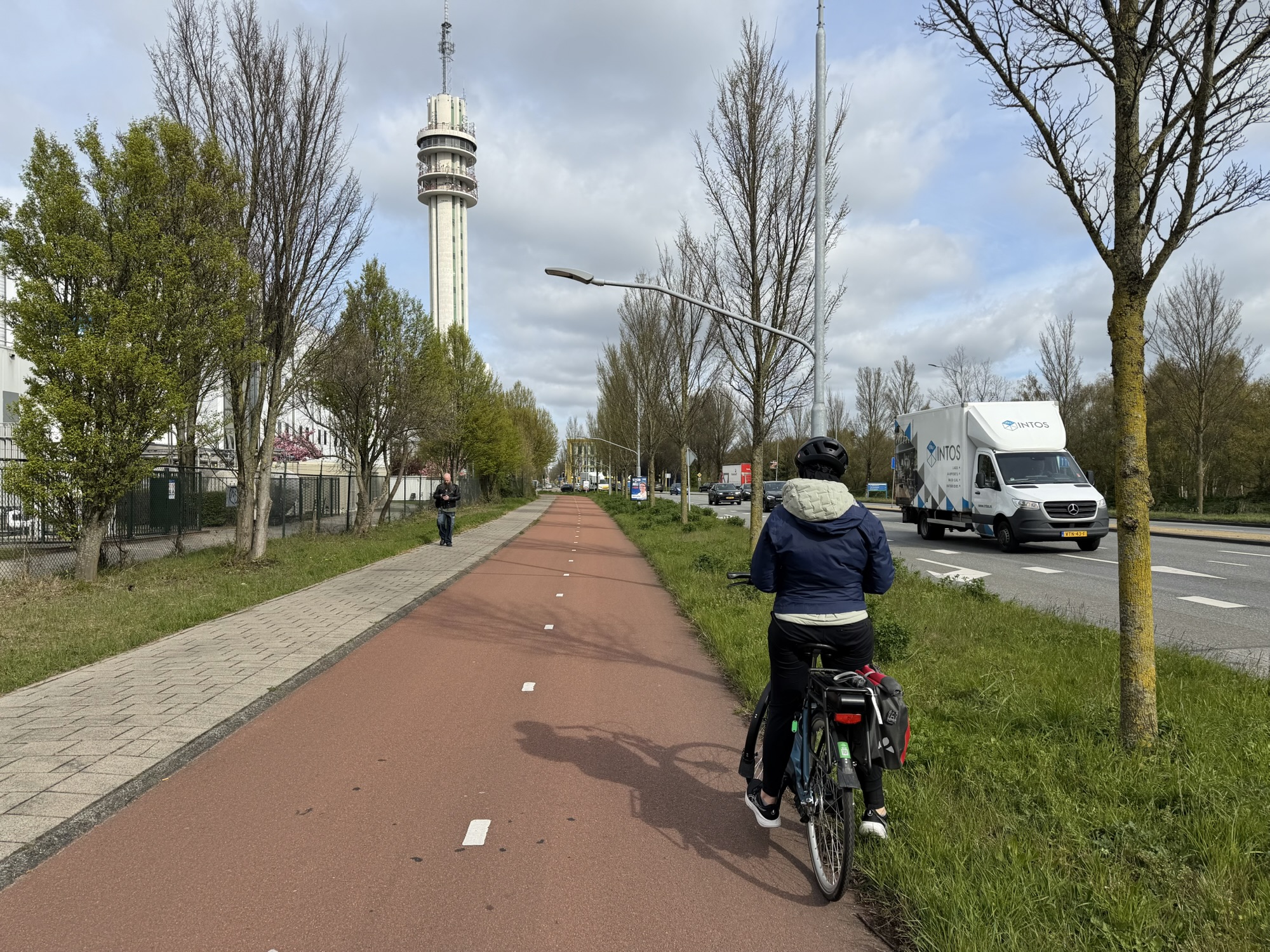
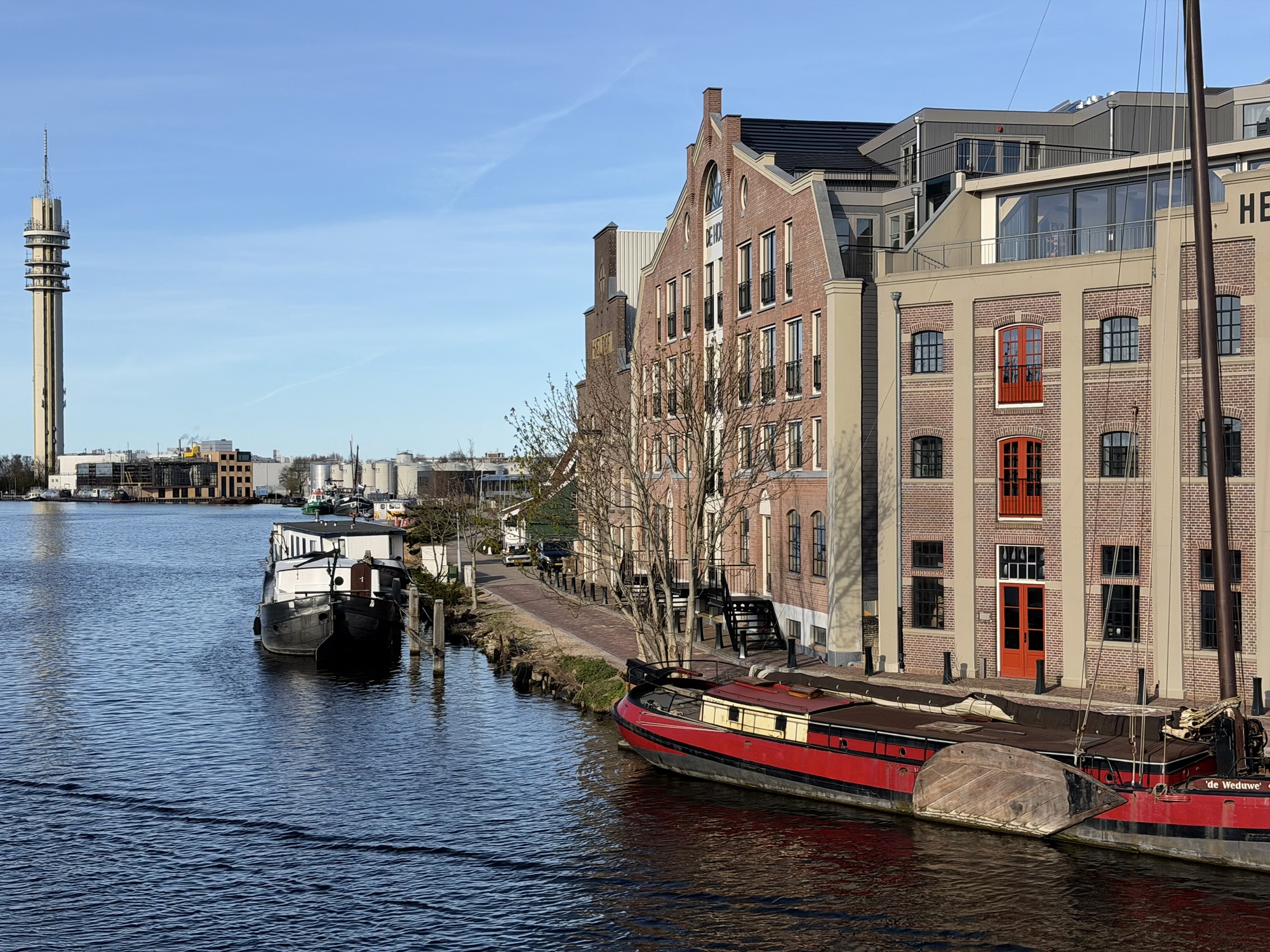
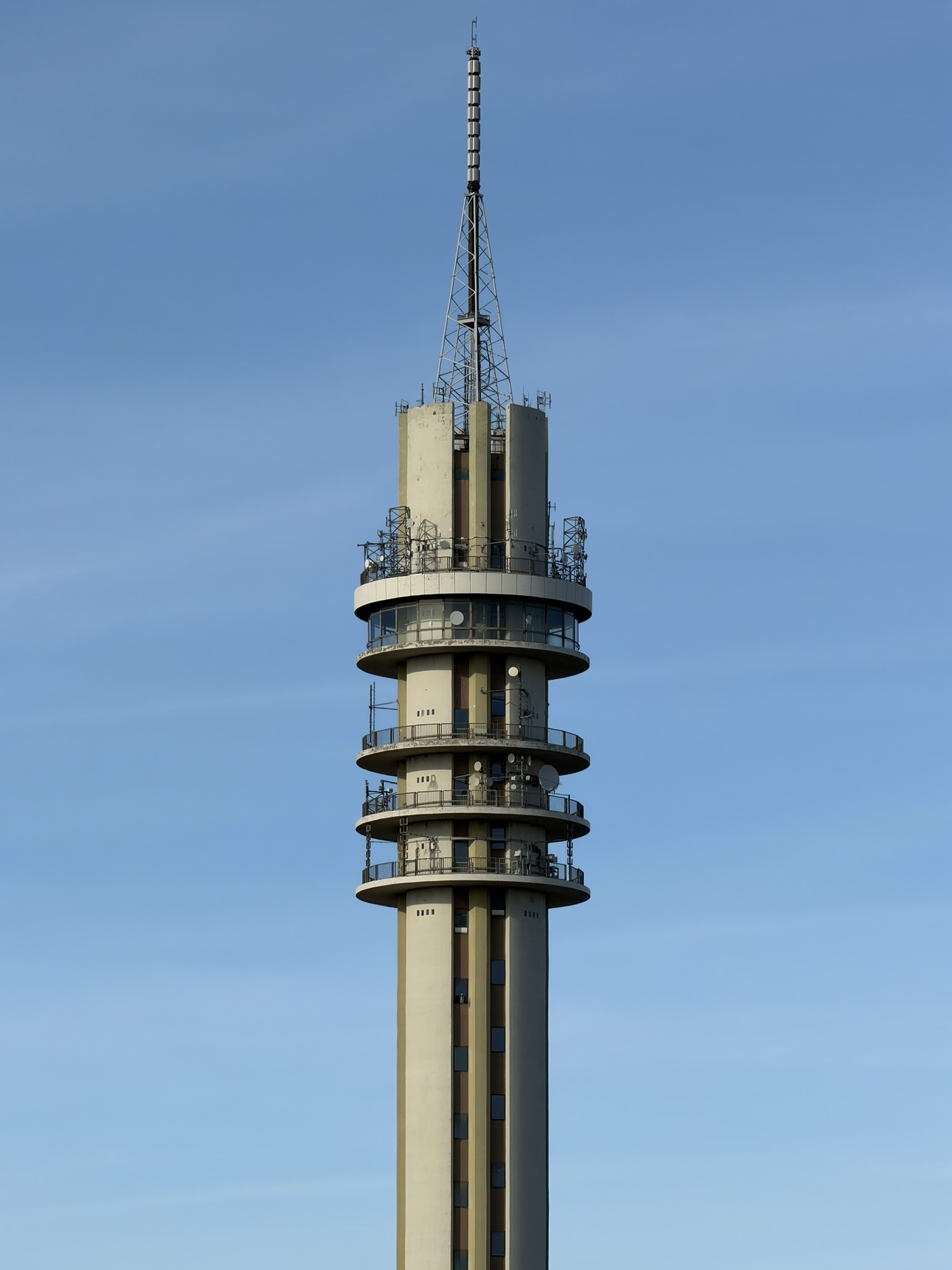
As we cycled into Haarlem, the radio tower caught my eye. It is 126 m tall communications tower, built in 1972, which serves a critical hub for telecommunications, data, and radio transmission. It also features secure data centre facilities. We saw a very similar tower in Zaandam.
Haarlem is a beautiful city with many old buildings. Our original itinerary had us docking in Haarlem for two nights. Unfortunately that changed and this meant we only had a couple hours in Haarlem before riding back to the barge.
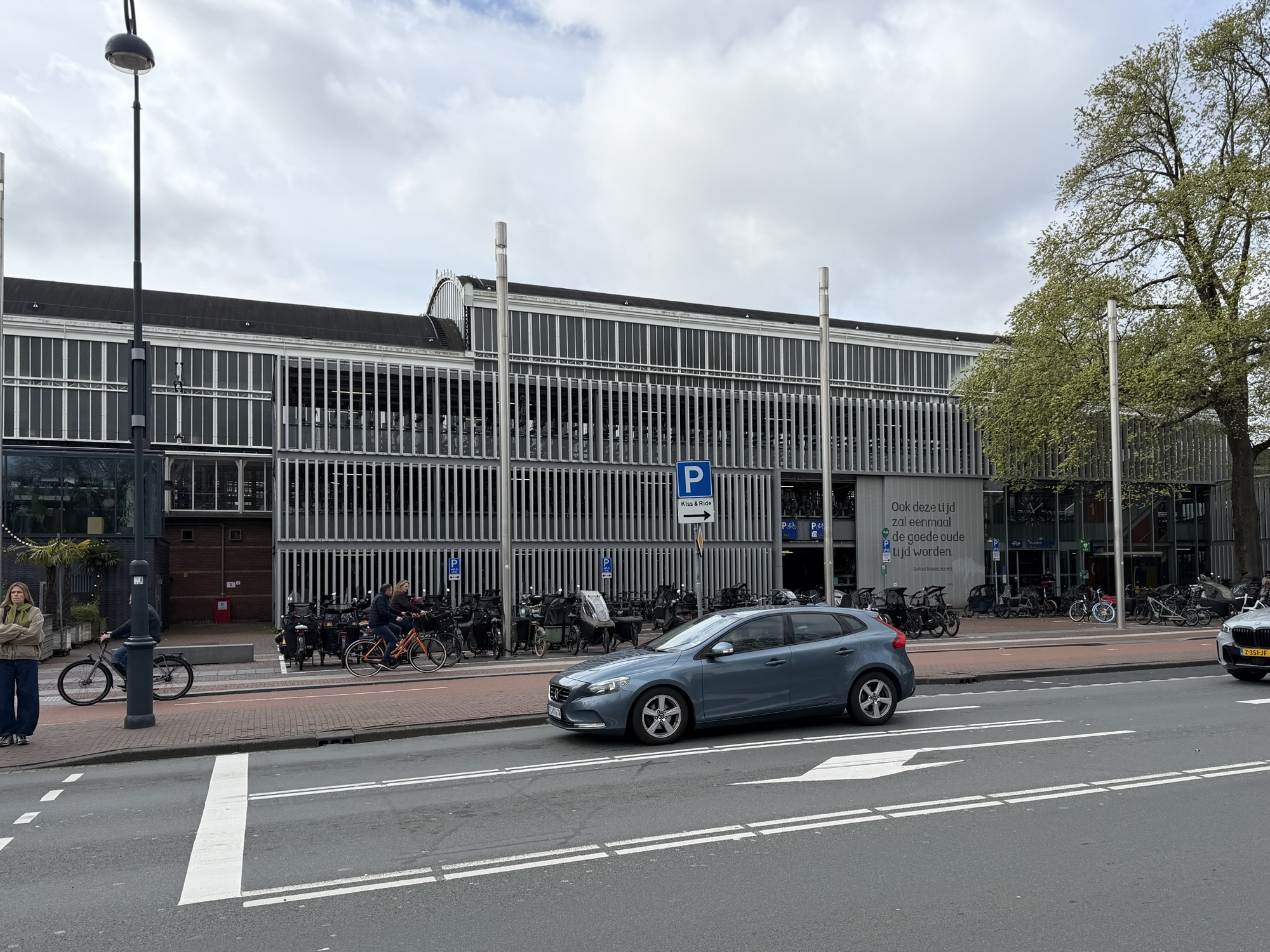
This is the train station in Haarlem. You can see the massive amount of indoor bike parking through the screen, which overflows into racks on the sidewalk.
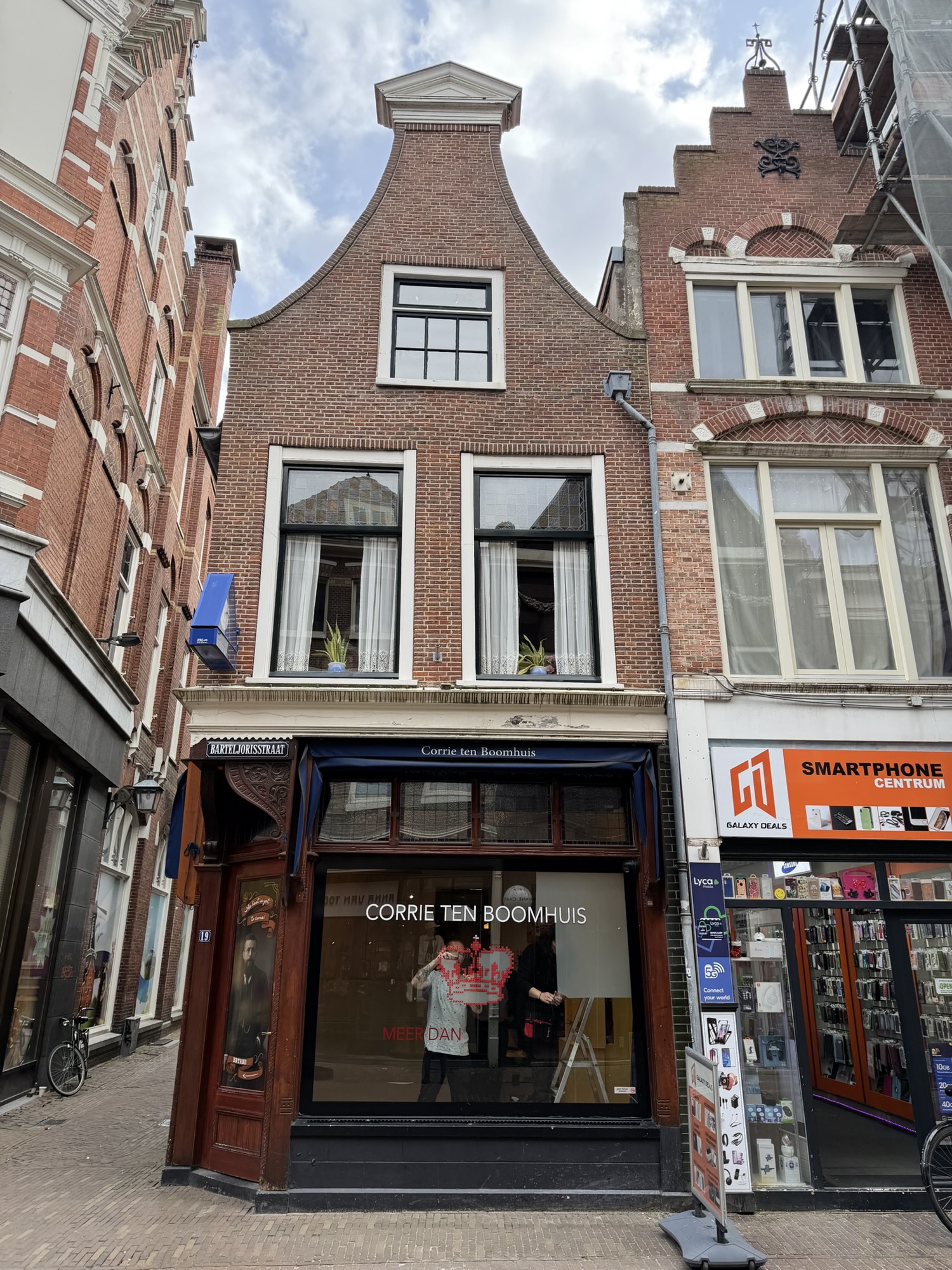
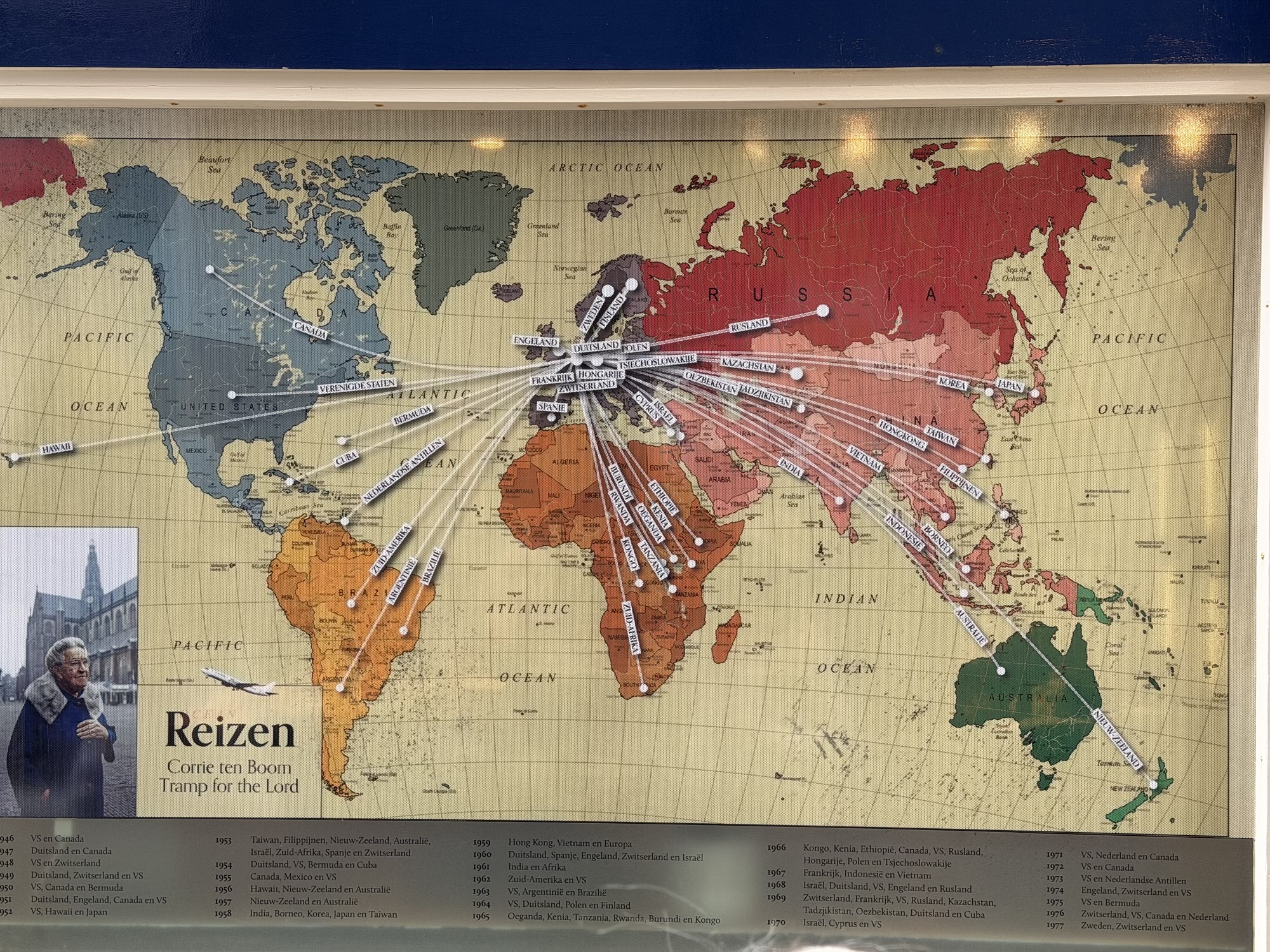
This is the Corrie Ten Boom house. From the Wikipedia summary for Corrie Ten Boom: Cornelia Arnolda Johanna “Corrie” ten Boom (15 April 1892[1] – 15 April 1983) was a Dutch watchmaker and later a Christian writer and public speaker, who worked with her father, Casper ten Boom, her sister Betsie ten Boom and other family members to help many Jewish people escape from the Nazis during the Holocaust in World War II by hiding them in her home. They were caught, and she was arrested and sent to the Ravensbrück concentration camp. Her most famous book, The Hiding Place, is a biography that recounts the story of her family’s efforts and how she found and shared hope in God while she was imprisoned at the concentration camp.
This map shows all the places that she visited after the Second World War. She began to minister worldwide and travel widely visiting those she felt were suffering and who were in need of leading to the Lord in places as diverse as Africa and Germany.
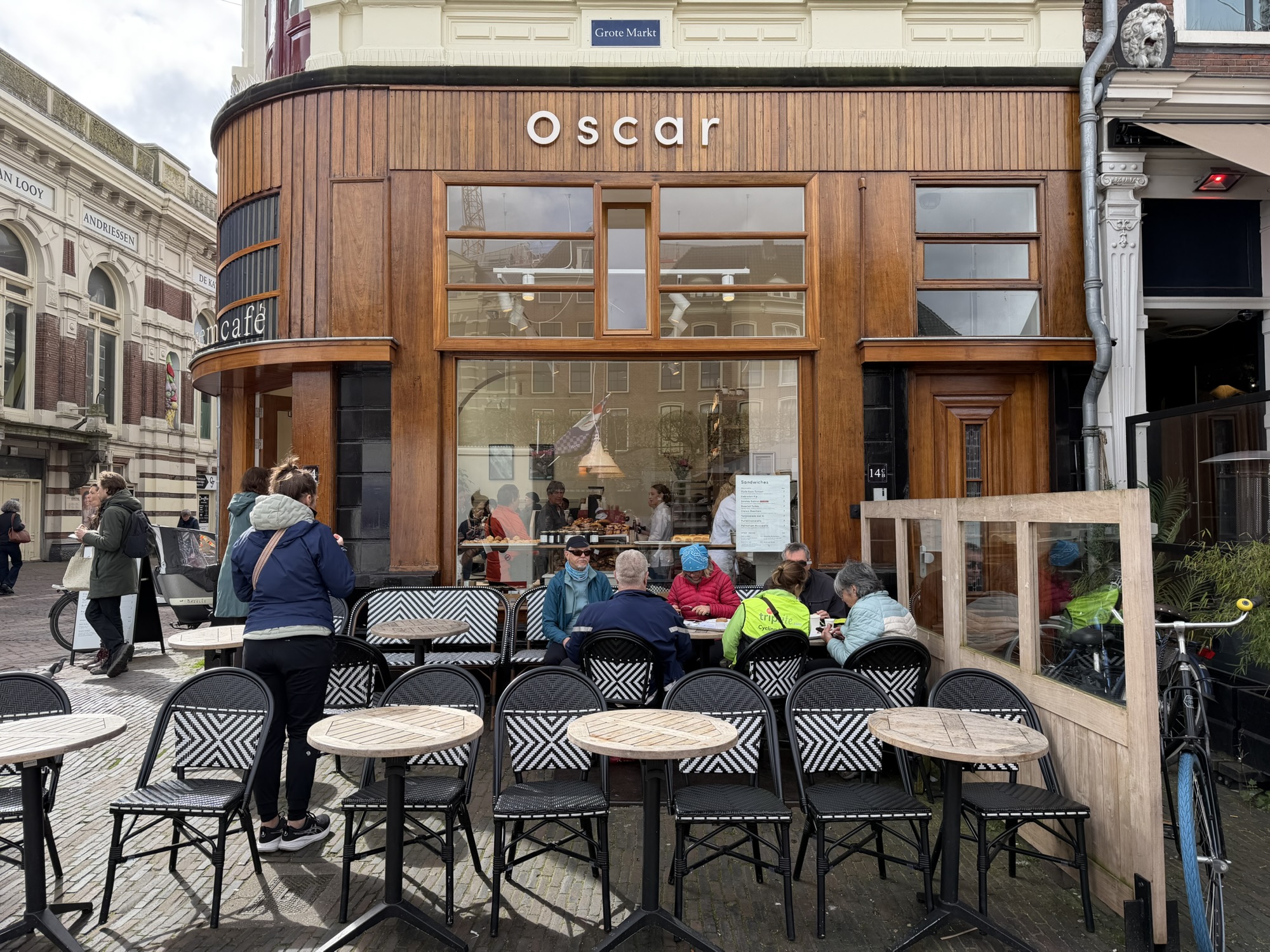
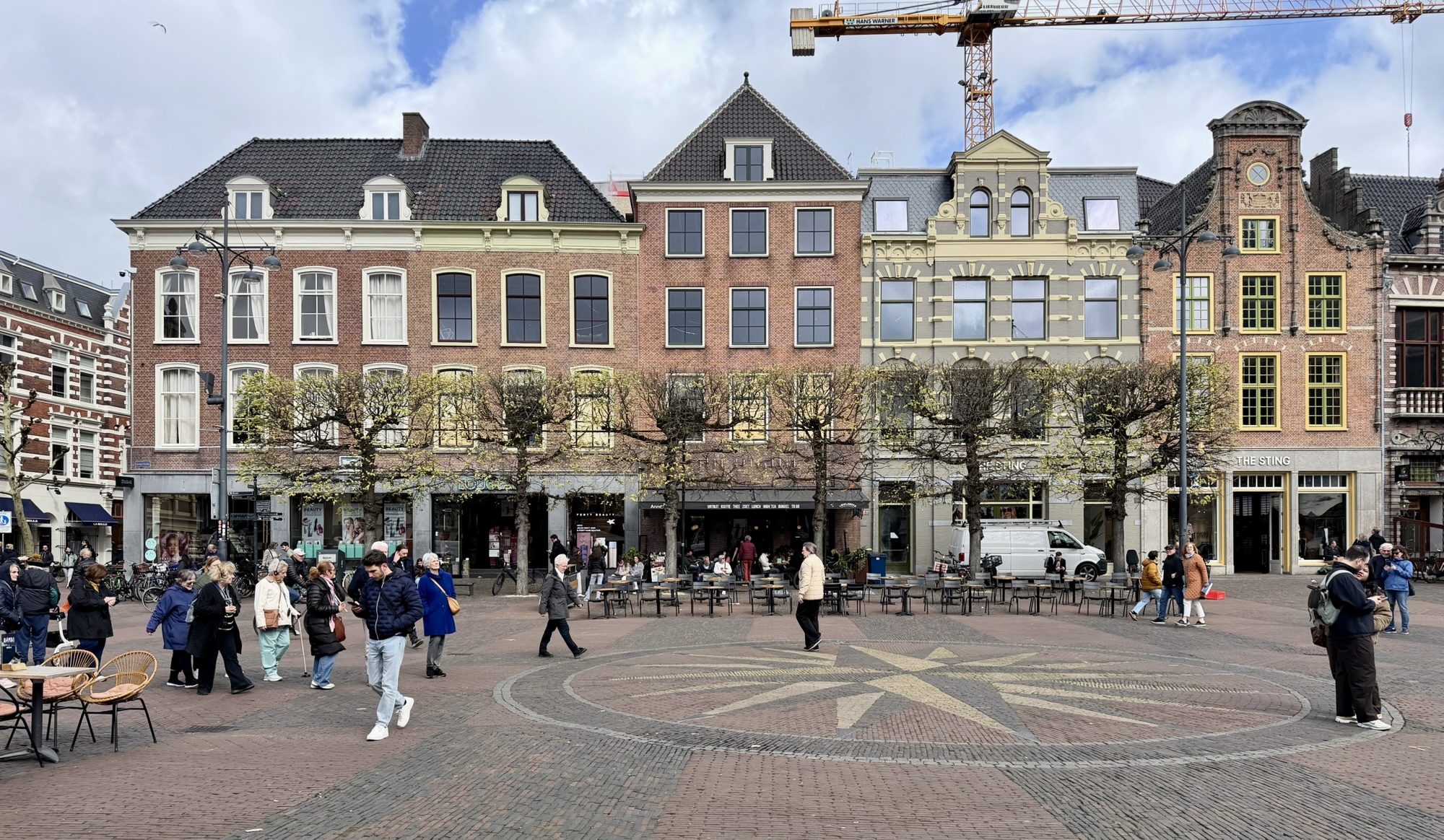
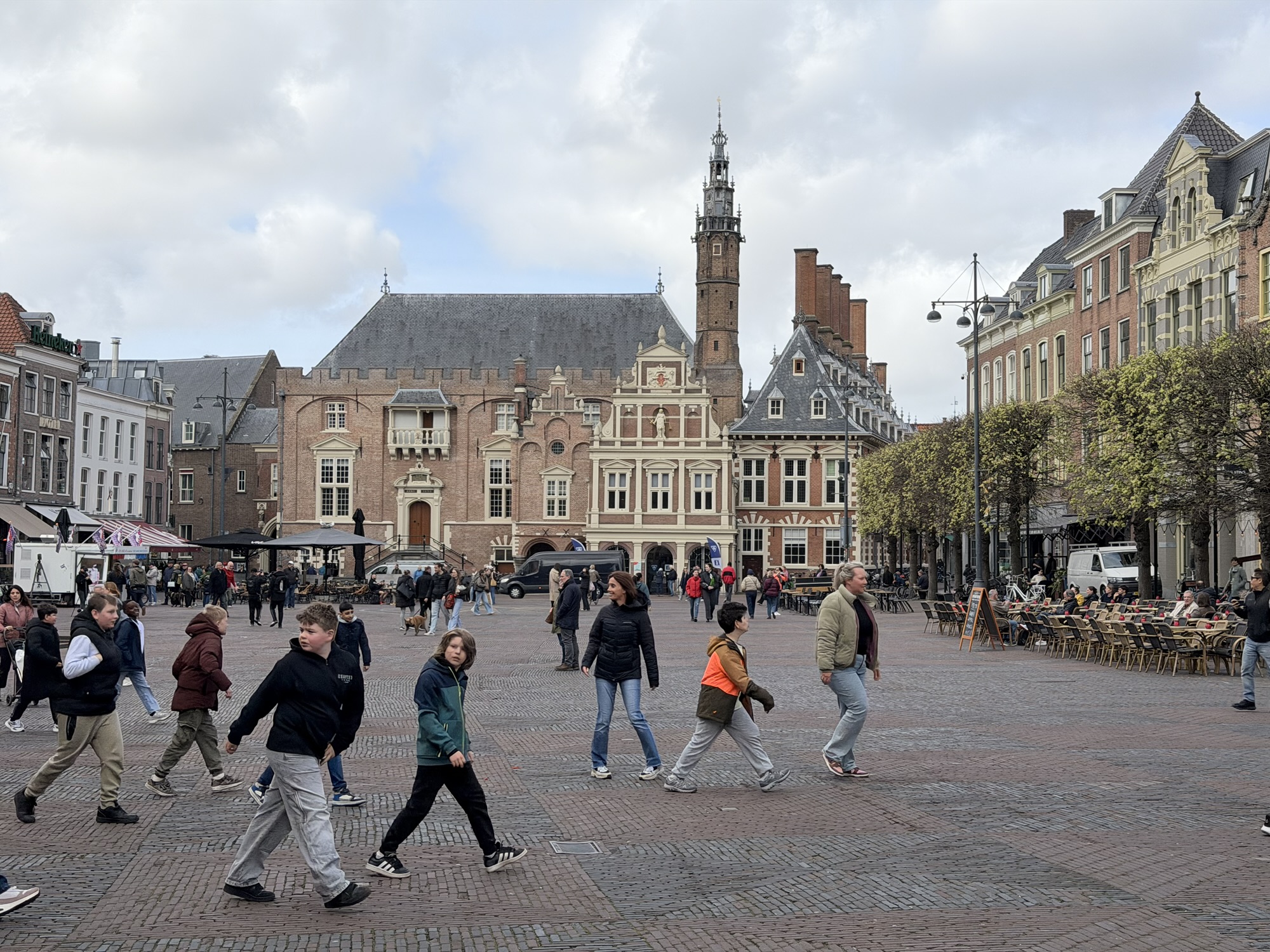
The Main Square had many beautiful buildings surrounding it. The first stop we made was at a coffee shop with delicious baked goods.
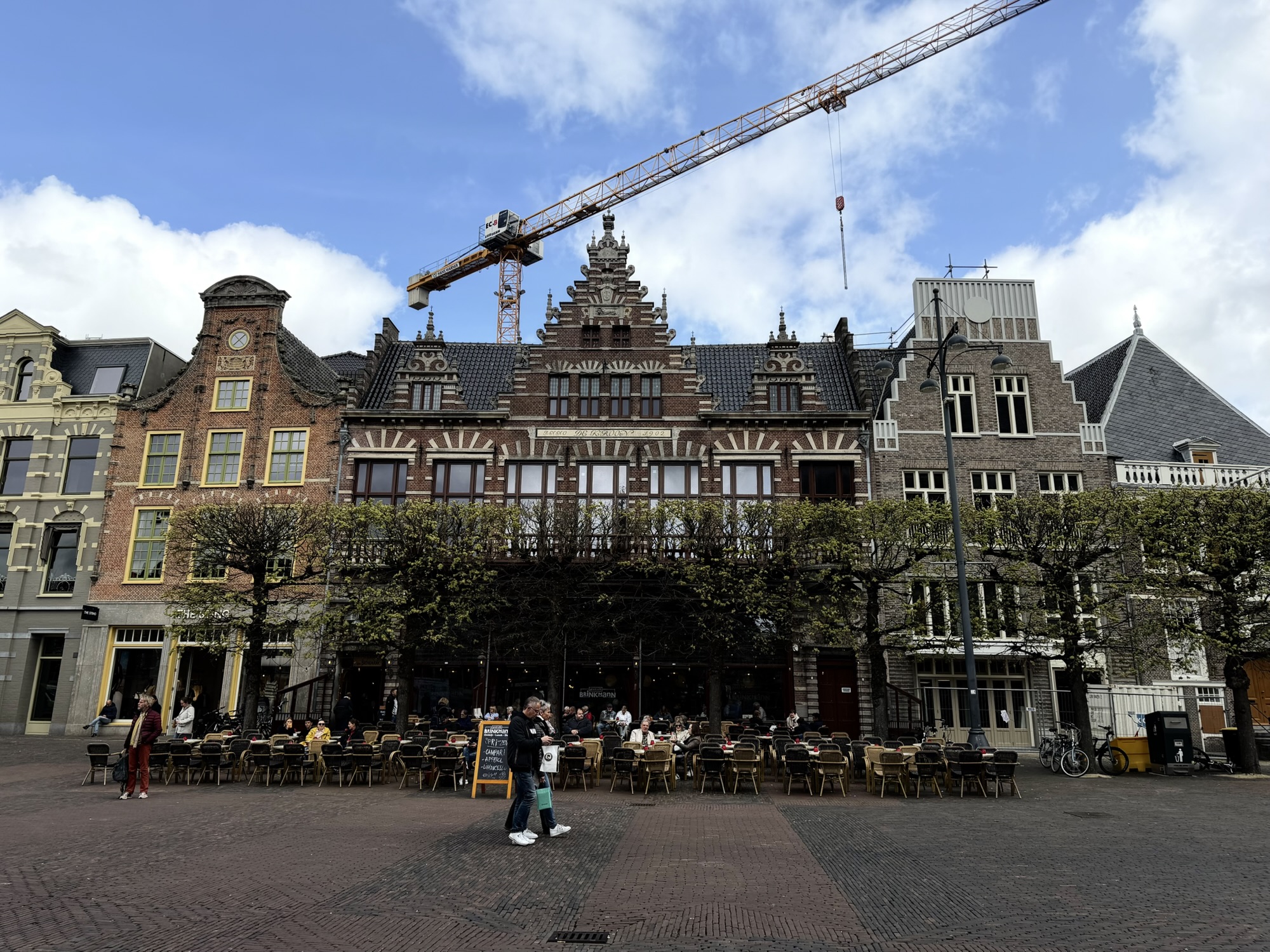
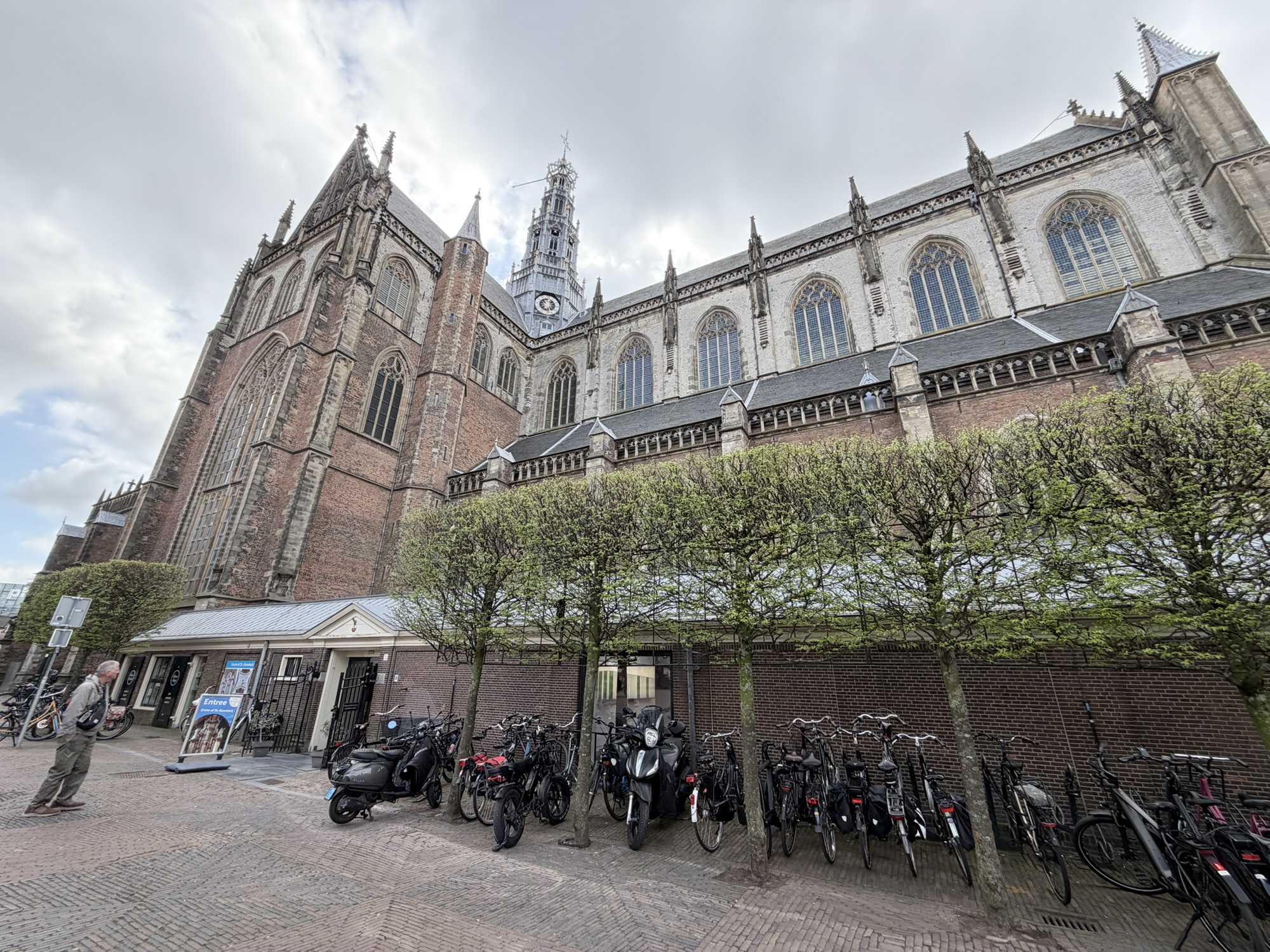
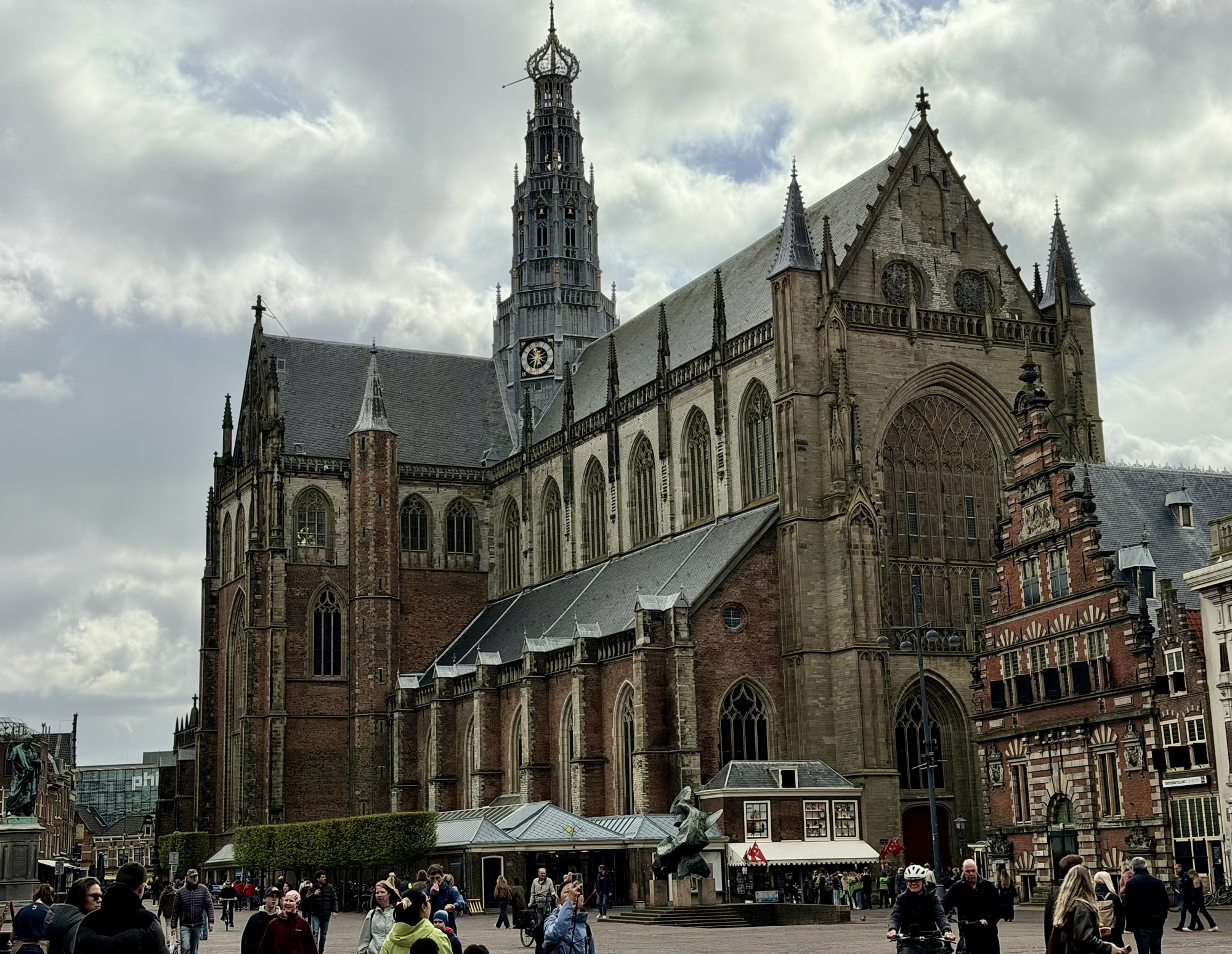
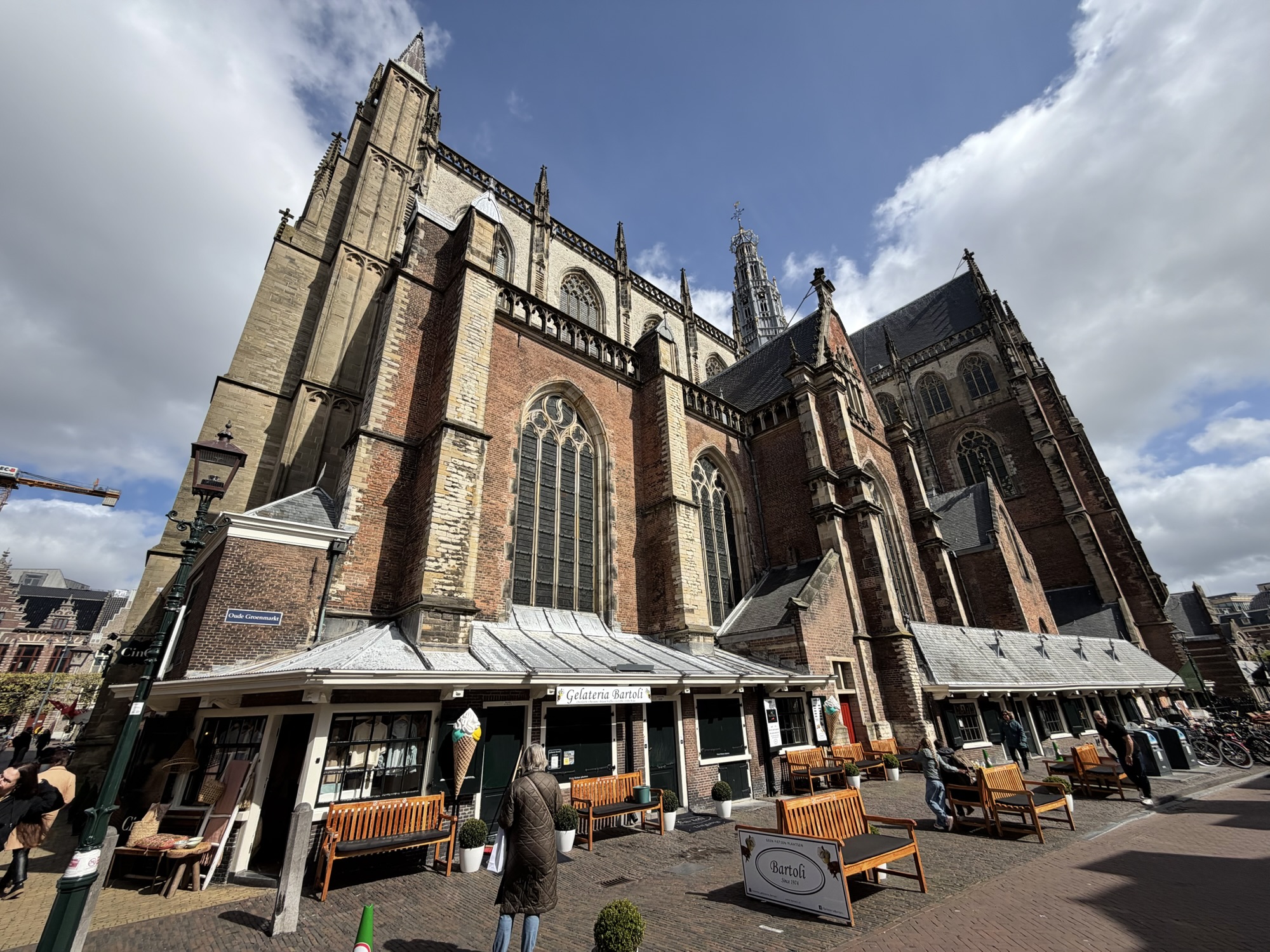
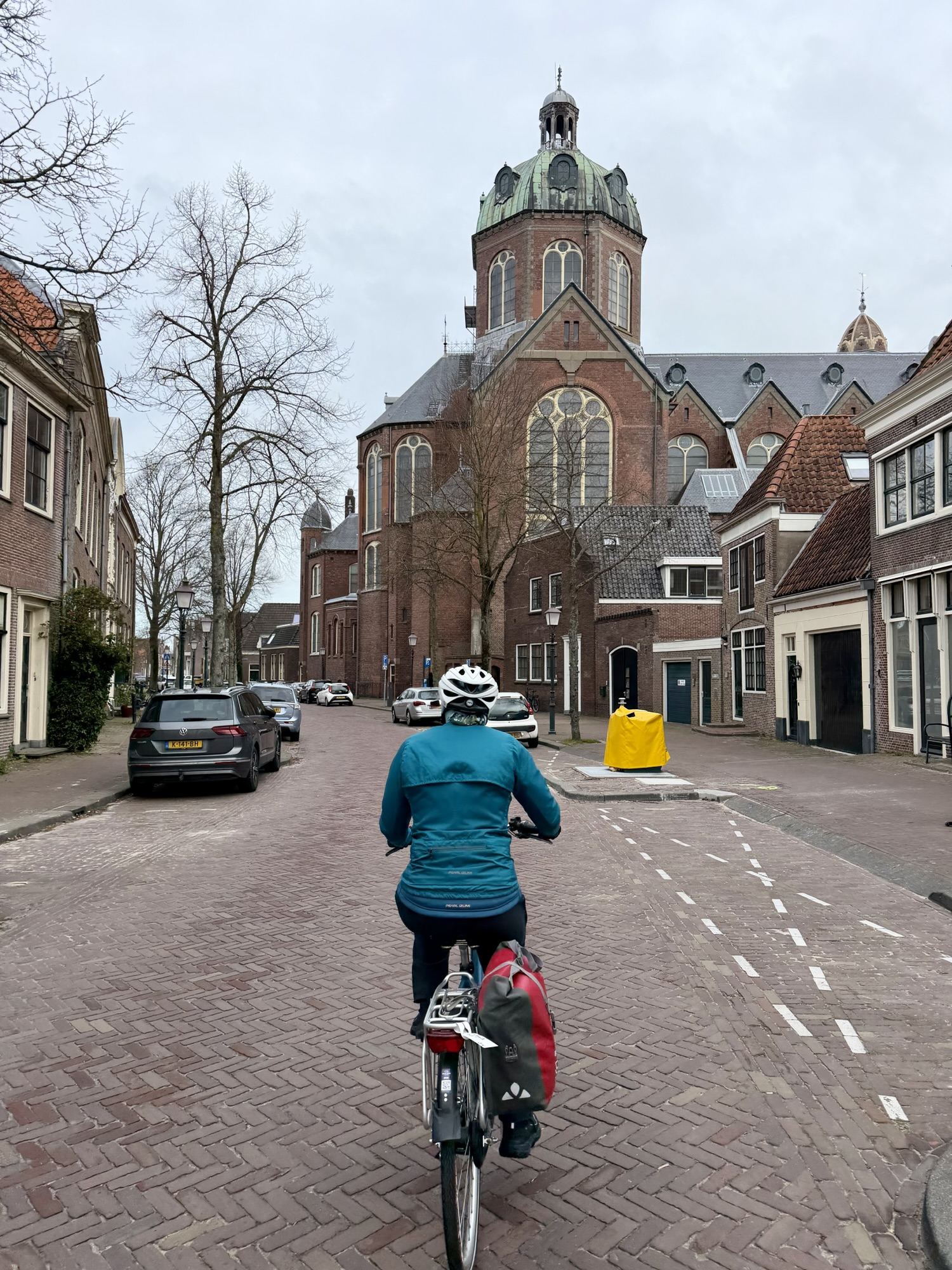
After eating, we decided to spend 70 minutes exploring the town, and to meet back at the bikes. I started at Grote of St.-Bavokerk. It is a a late-medieval Protestant church (formerly Catholic) located on the Grote Markt square.
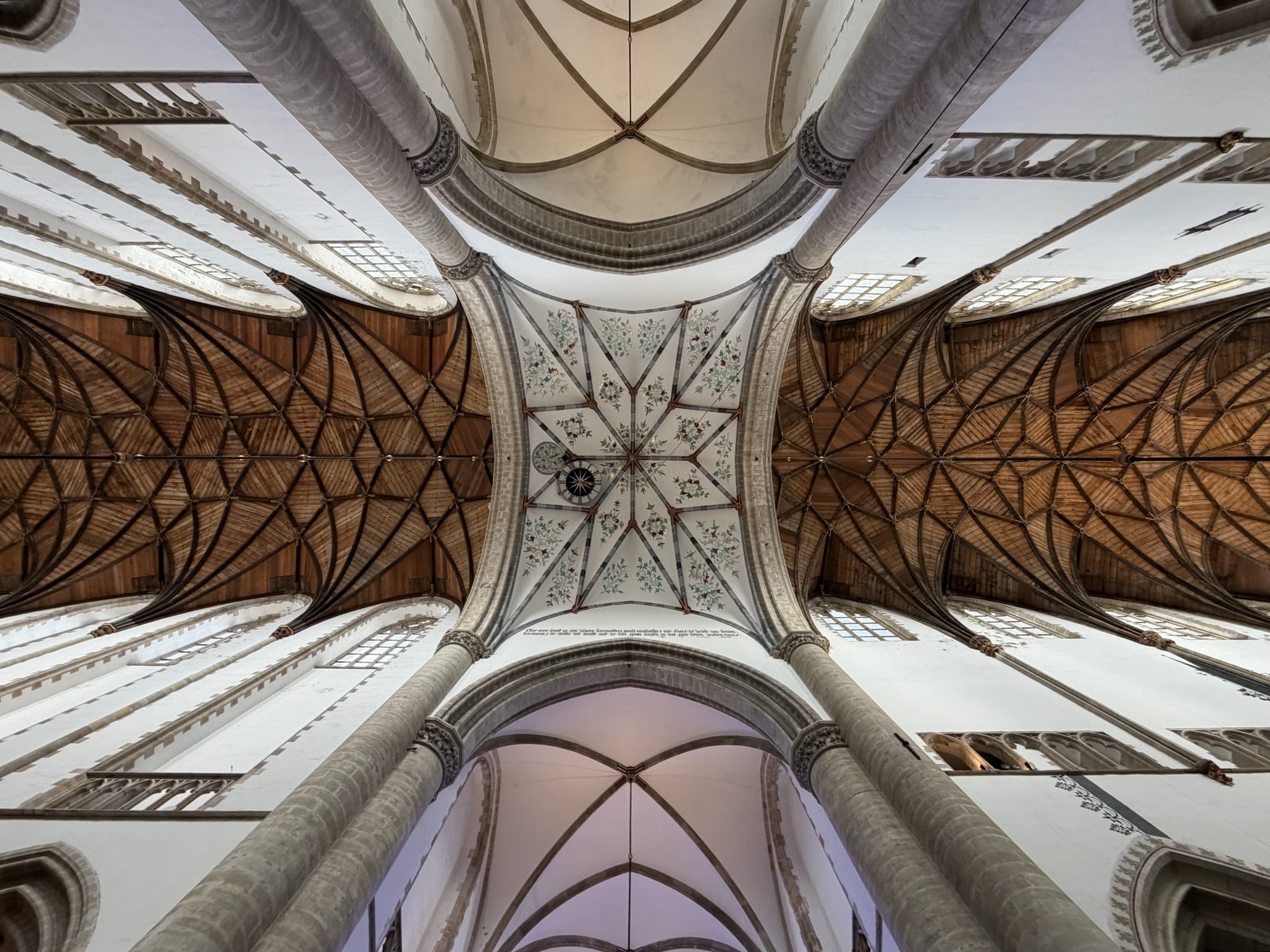
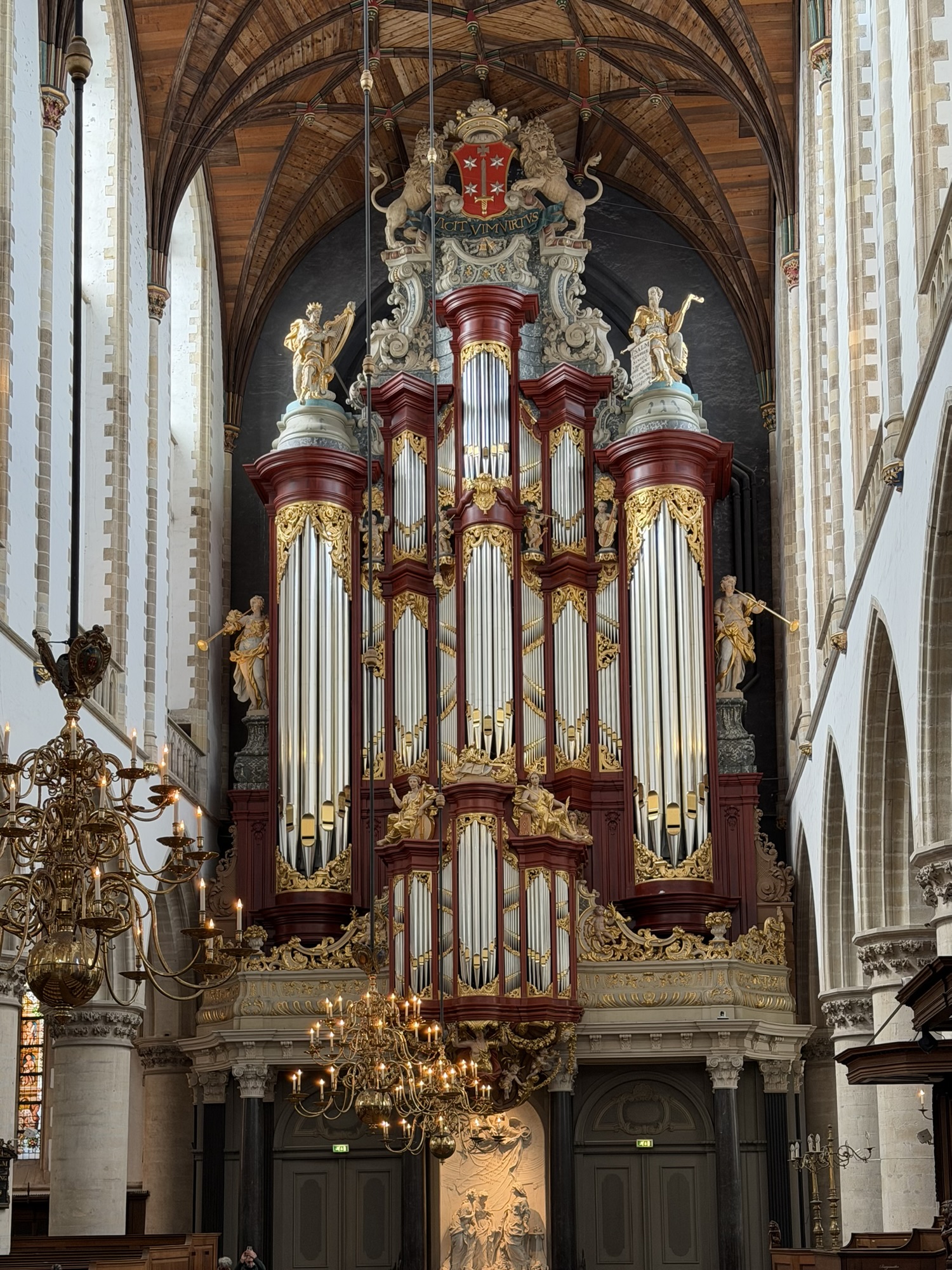
Famous for its 78-meter high tower, stunning Gothic architecture, and a historic 1738 Christian Müller organ, it is a key landmark in the Netherlands. Construction spanned the 14th to 16th centuries.
The magnificent Müller organ, completed in 1738, is world-famous. It was played by famous musicians including Handel and Mozart in 1766.
The church had a coffee shop in it with the proceeds used to help those in need. It wasn’t open when we were there, though.
The church has businesses physically attached to it around its base. Unfortunately, I had no time to spare for an ice cream.
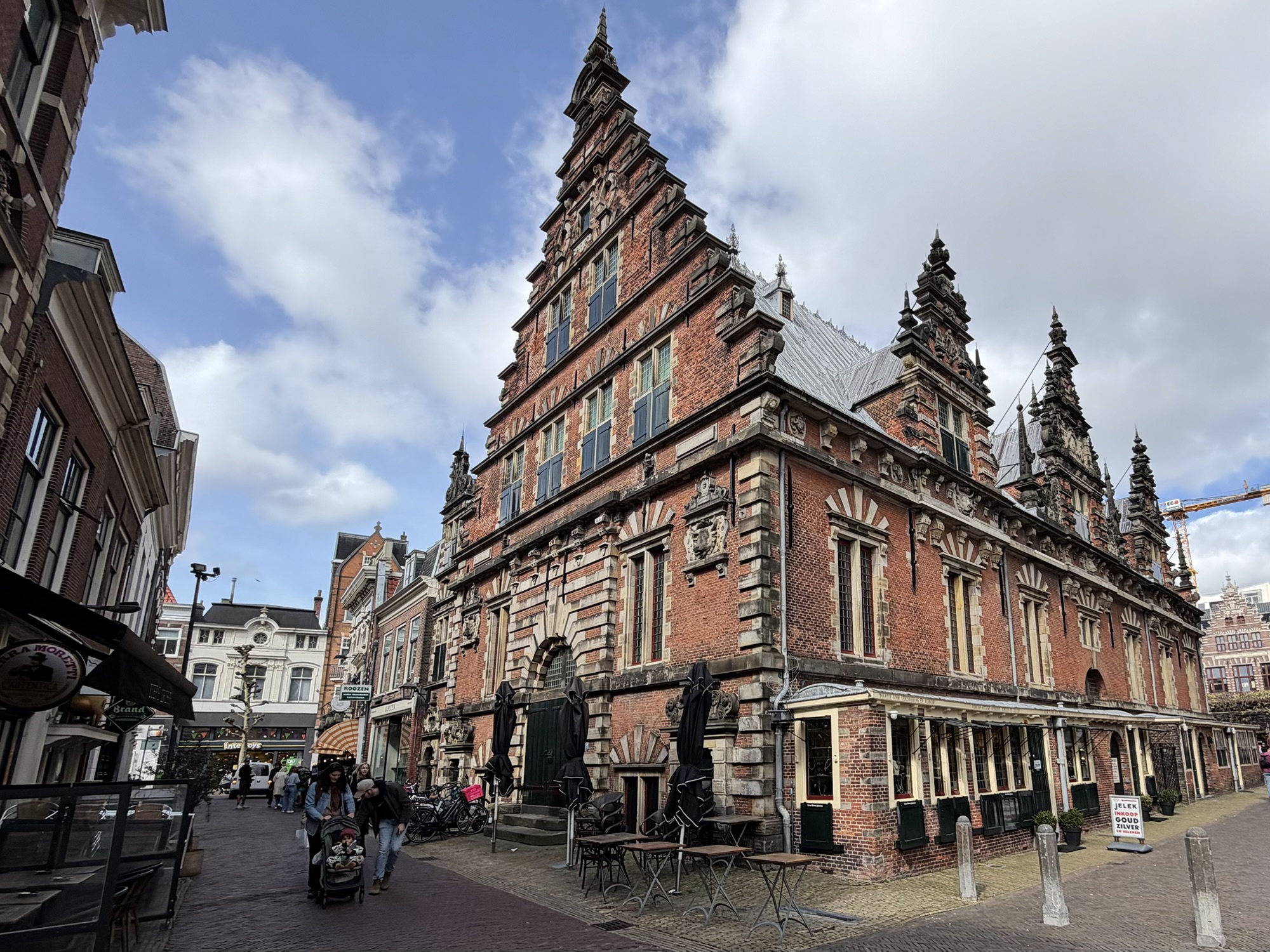
The Vleeshal, across a narrow street from the church, is an historic building that was constructed in the early 17th century. It is located at the Grote Market.
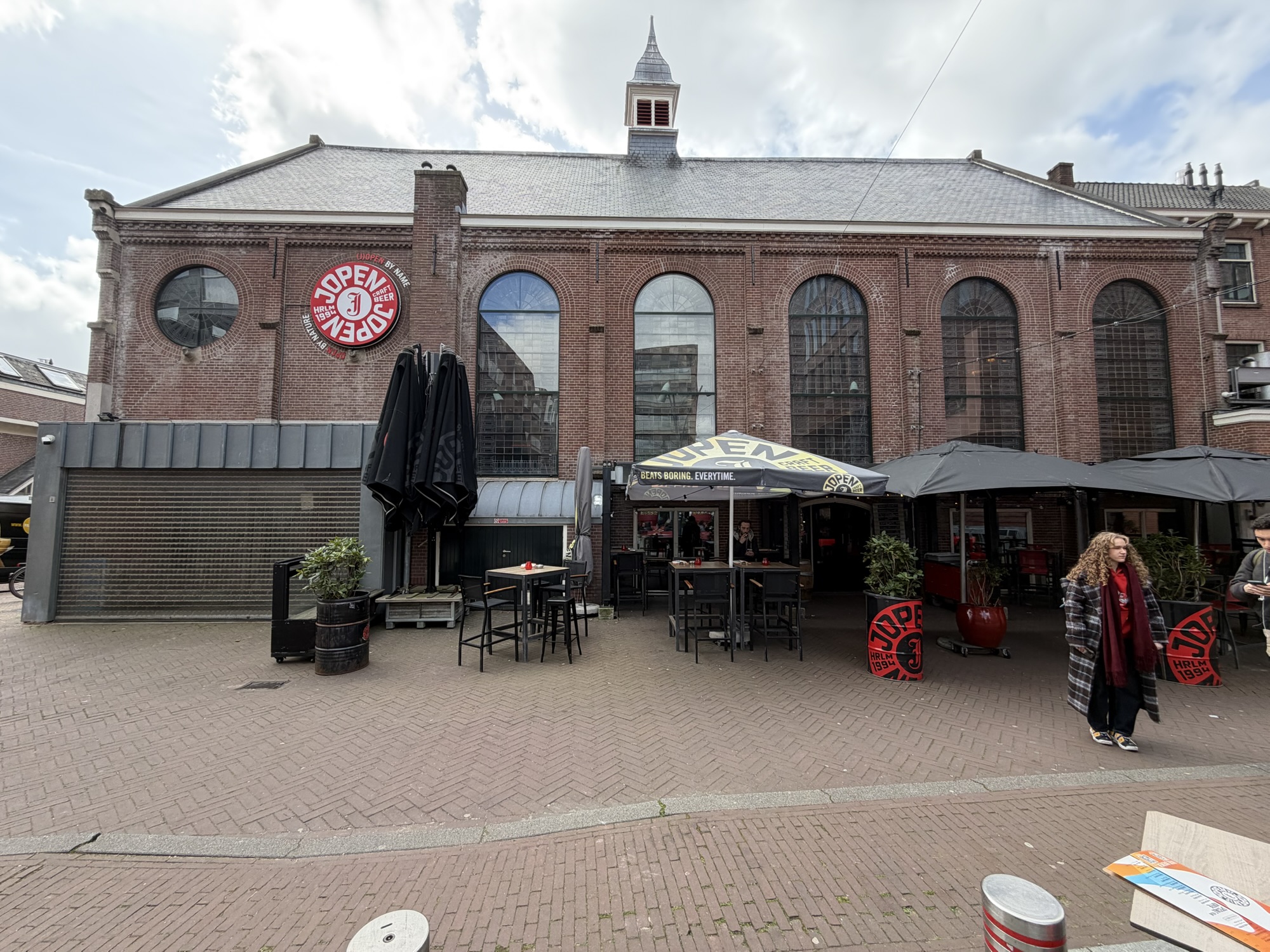
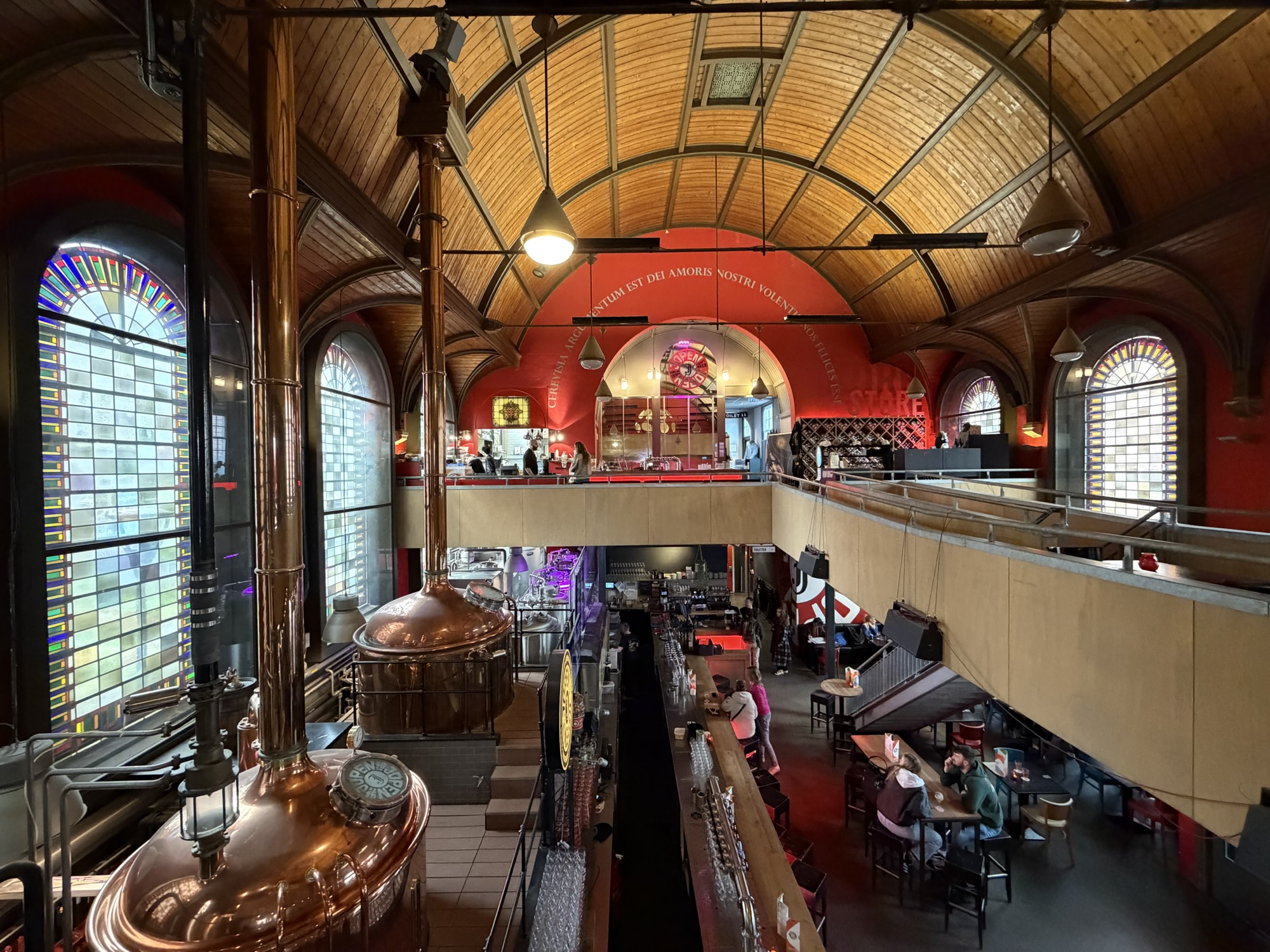
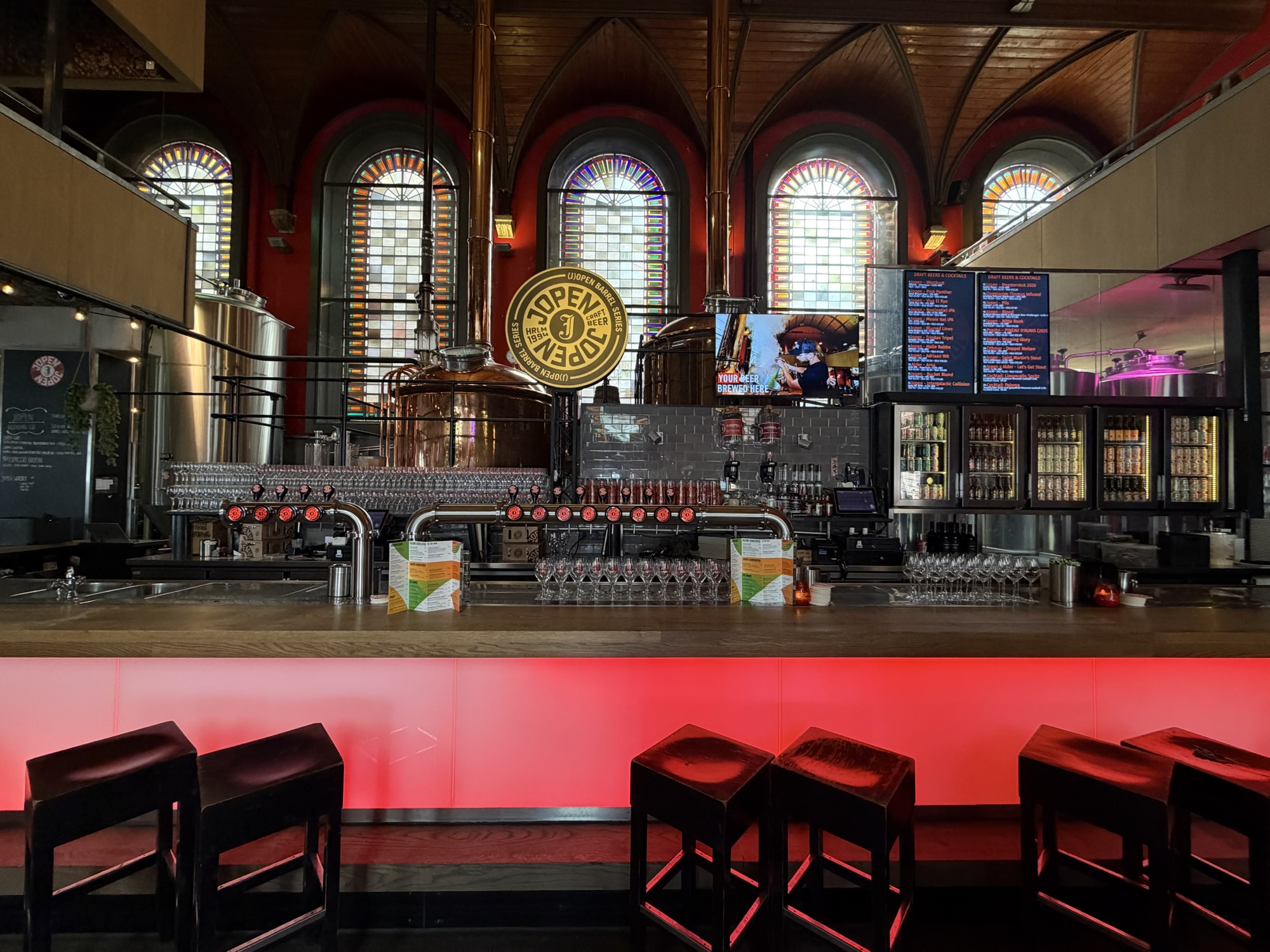
I then walked quickly to Jopenkerk, a church turned brew pub. A Jopen is an historical 112-liter beer barrel. Kerk means church.
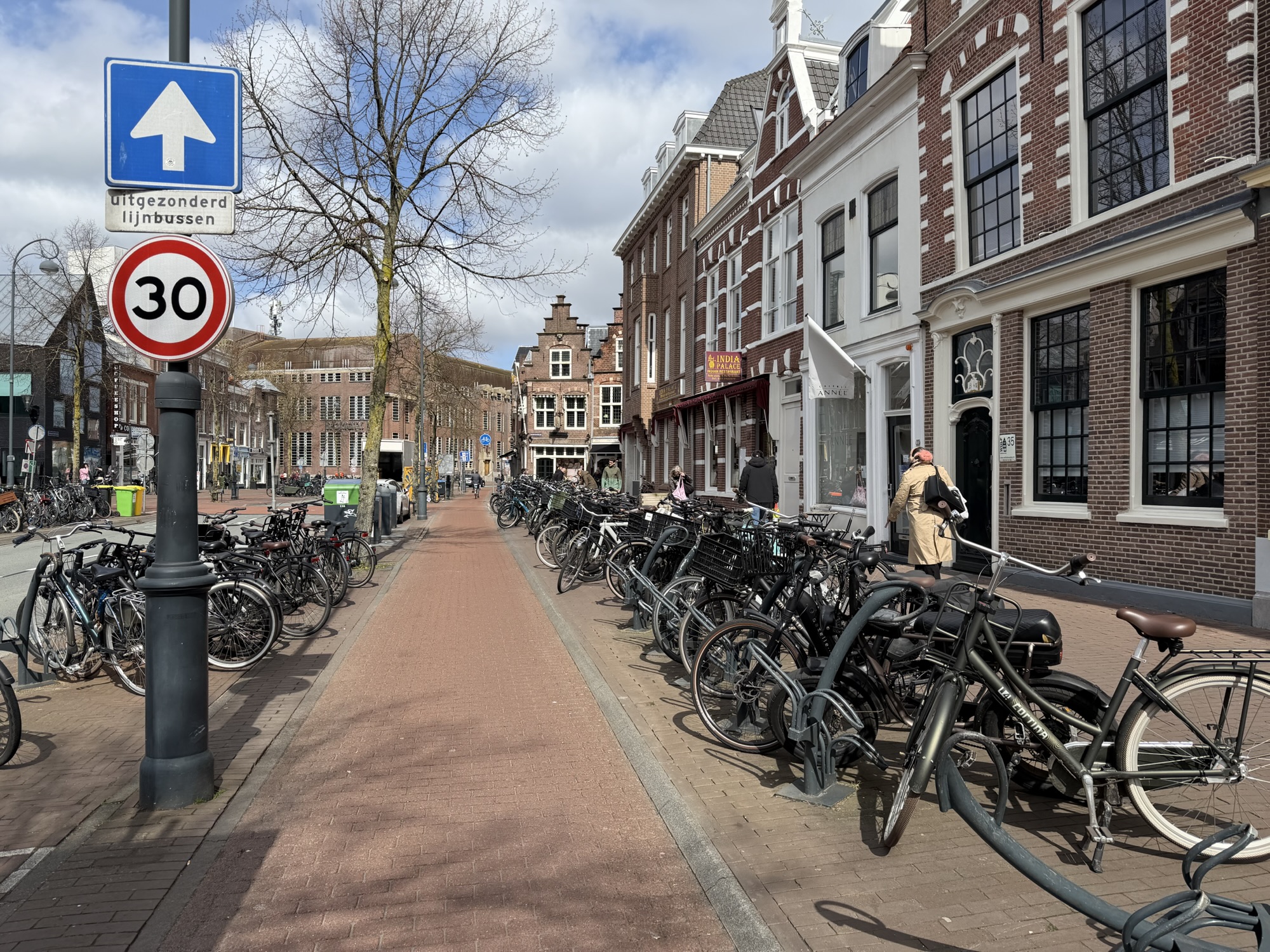
Bikes are parked everywhere in the Netherlands, but are rarely in the way.
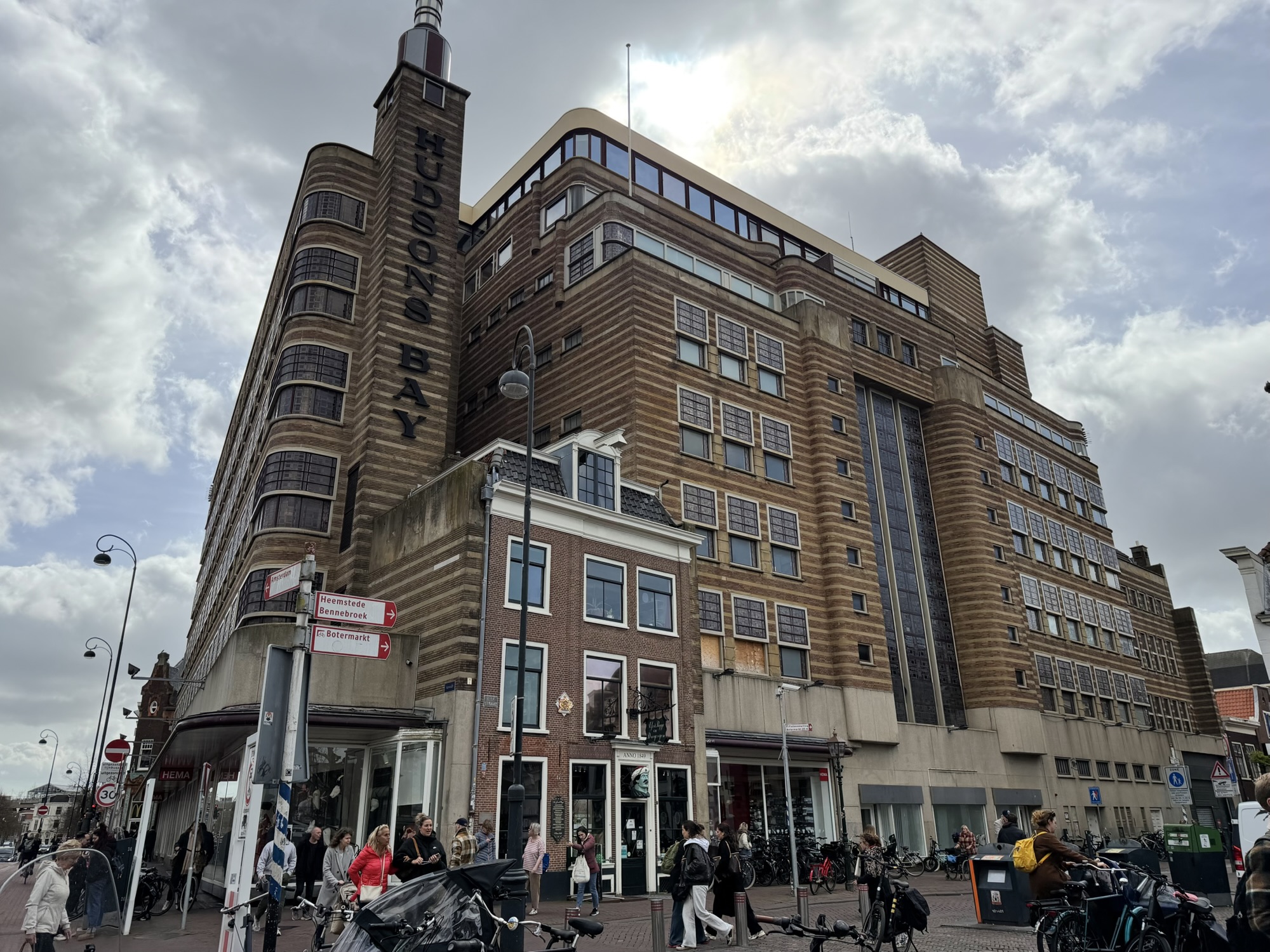
I was surprised to pass a Hudson’s Bay sign. It was open from 2017-2019 in a building previously occupied by another department store, but still bears the sign.
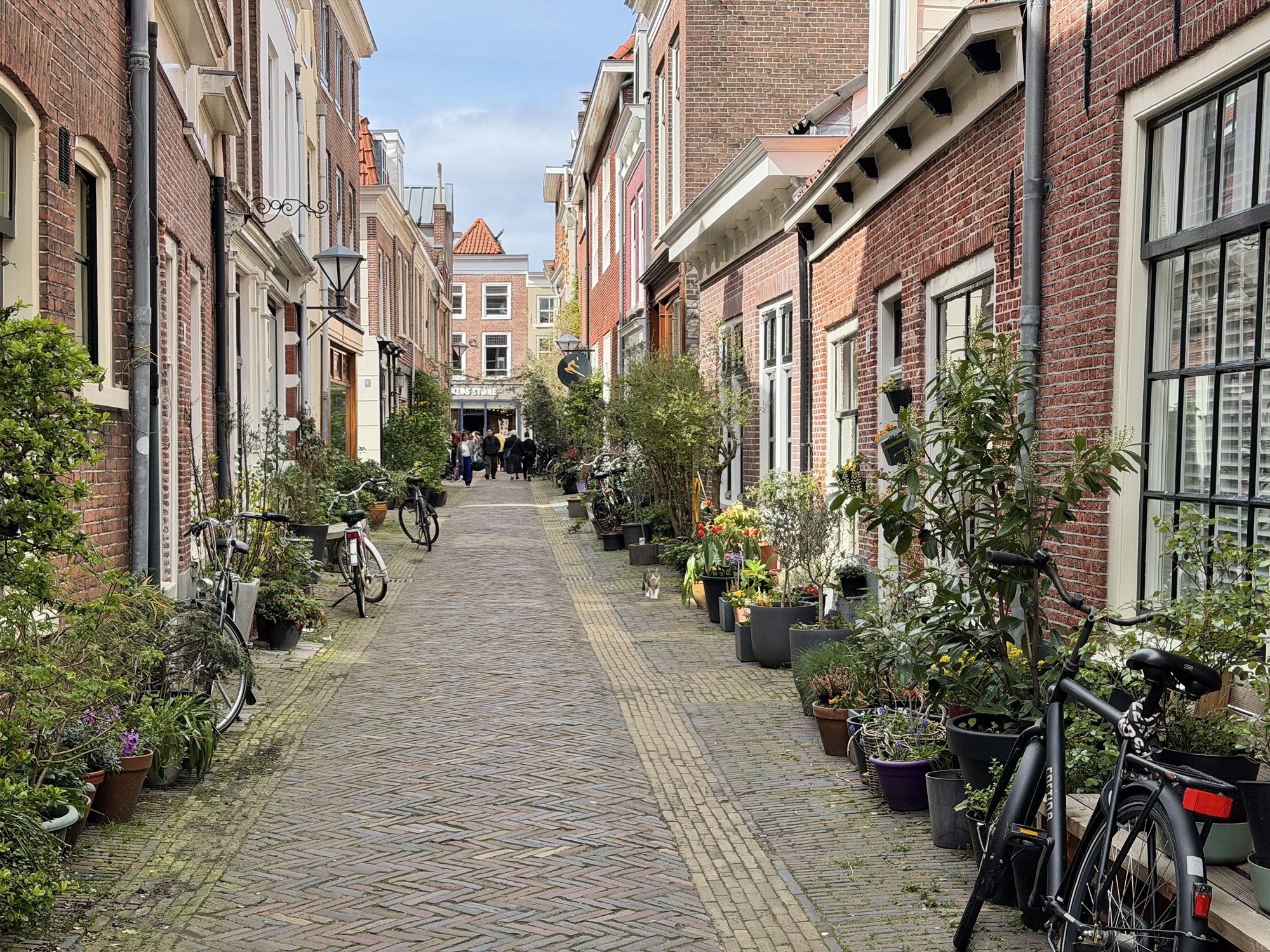
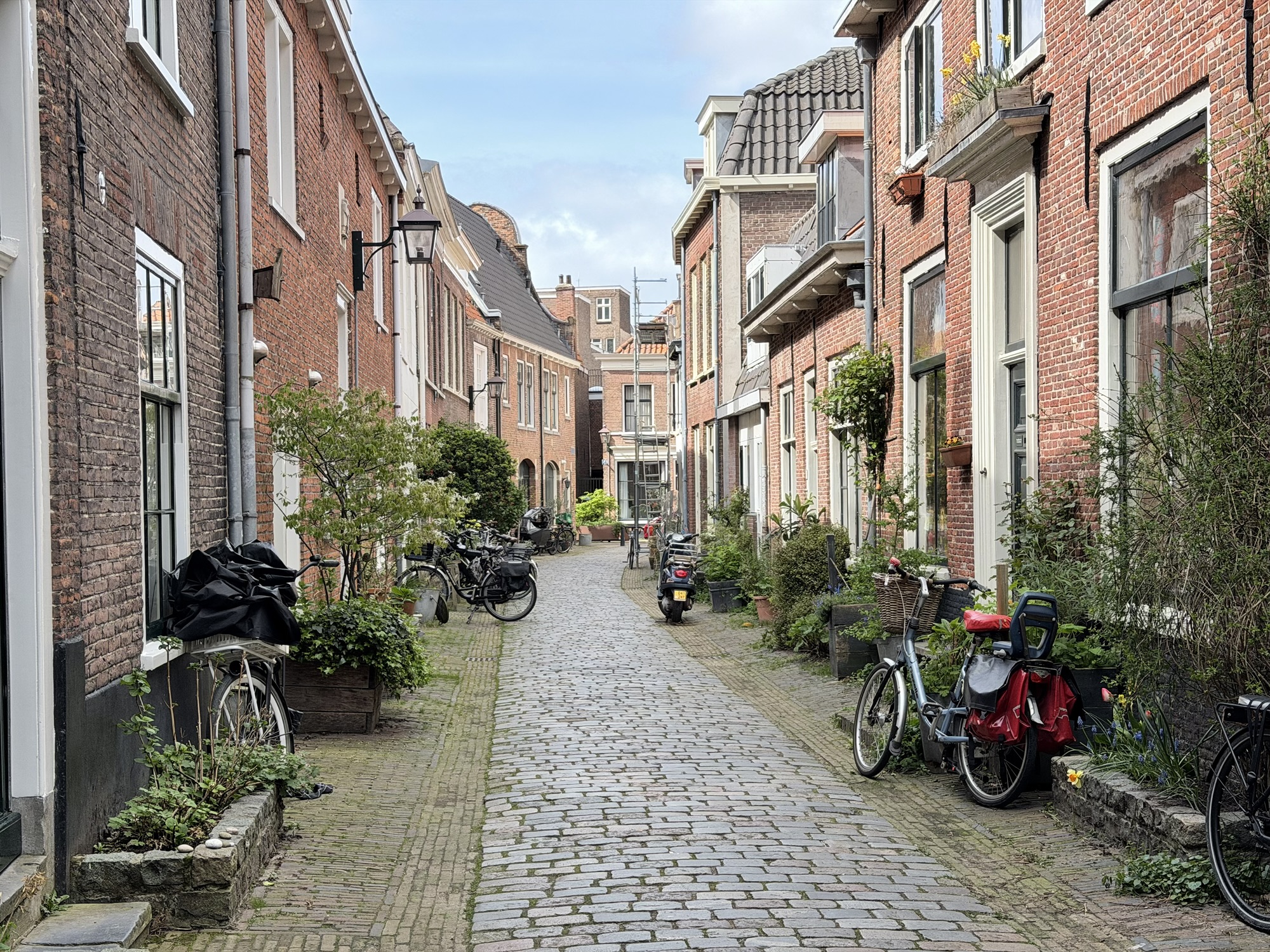
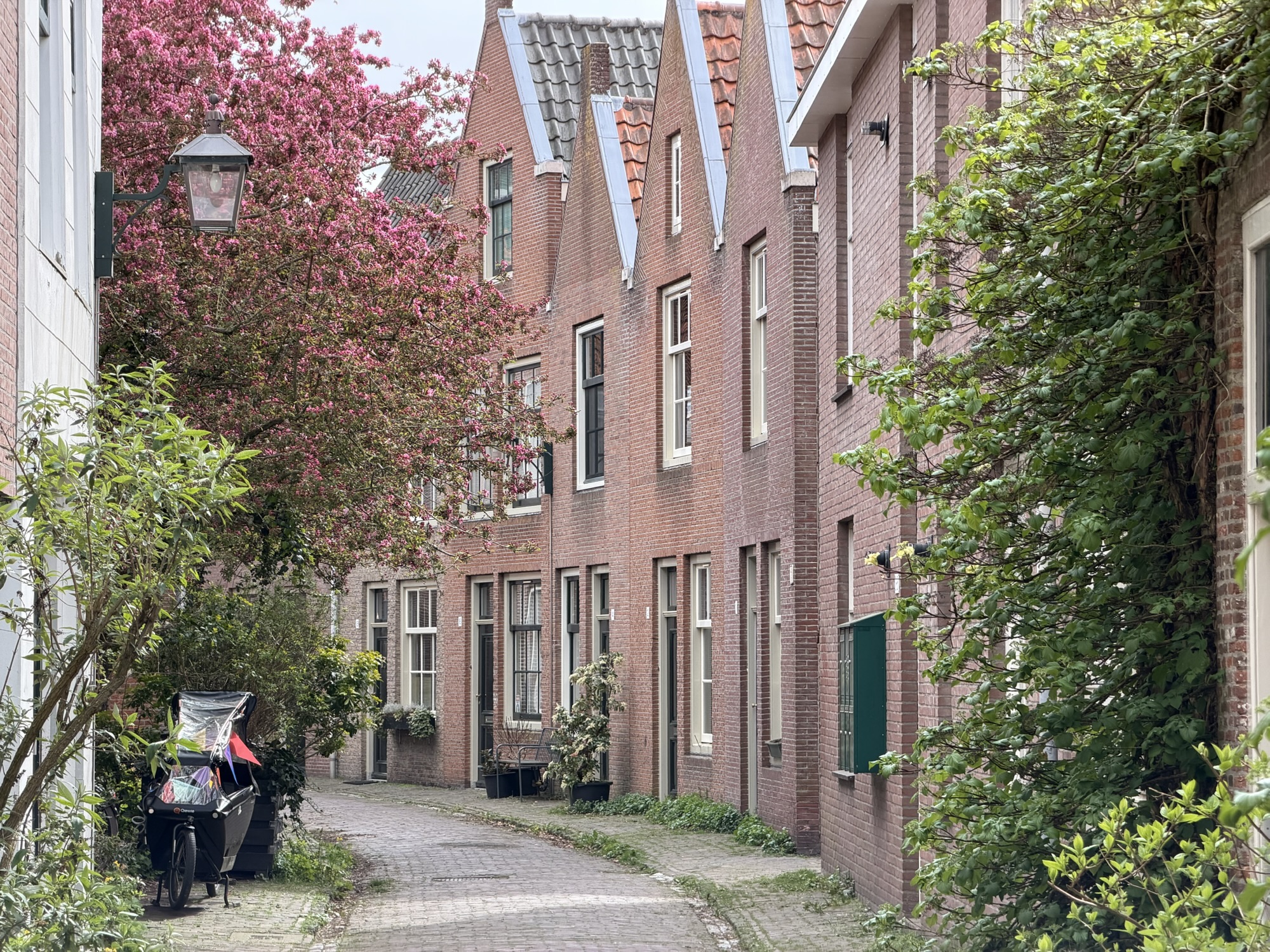
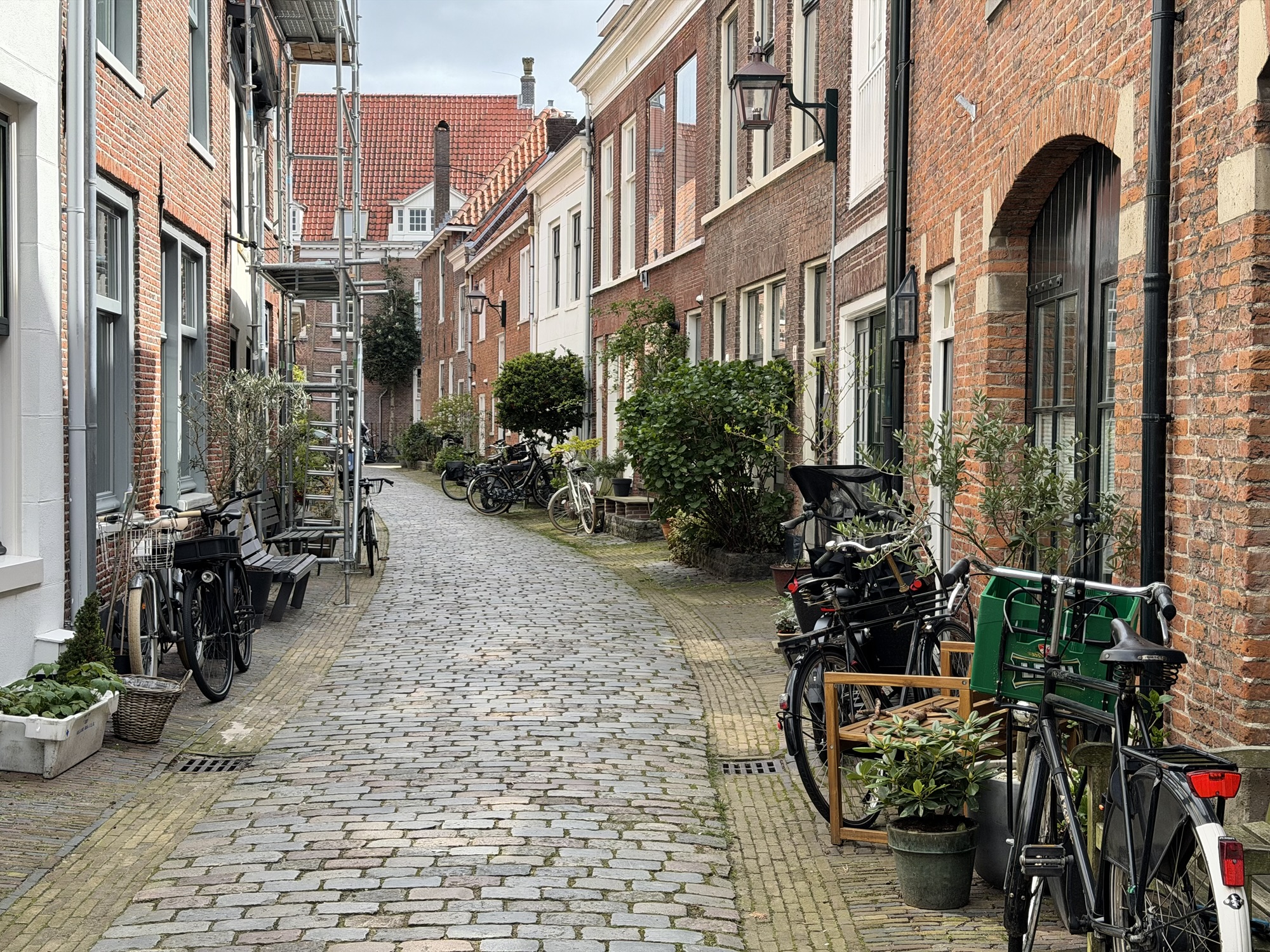
I next walked to the Frans Hals Museum. It houses the largest collection of Frans Hals (1582-1666) paintings in the world, as well as works by other famous artists from Haarlem. I didn’t have time to go in, but the surrounding streets were very narrow, old and picturesque. I would have liked to linger. Instead, I quickly took so many pictures that I couldn’t decide on just one or two, so here’s a slideshow.
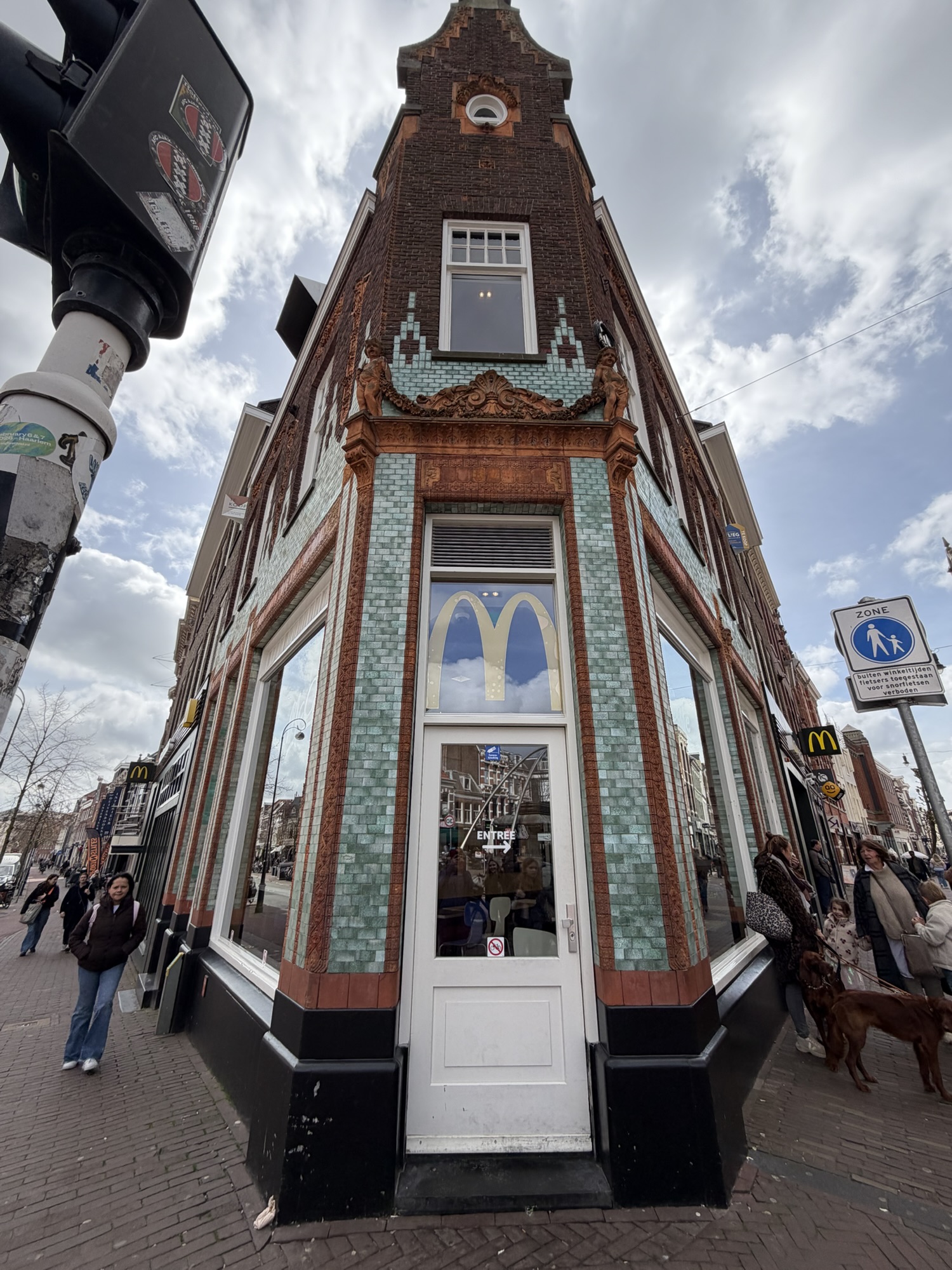
On my way back to the bikes I passed a McDonald’s whose exterior was in keeping with the local architecture.
There was a tourist office and City Hall at one end of the main Square. The tourist office directed us to free bathrooms in City Hall, which we all used before heading back to Amsterdam.
We followed the same route back, but had to travel to Amsterdam’s Central Station. The barge had been moved from the western docks to where we boarded last week.
This video shows us riding into Amsterdam.
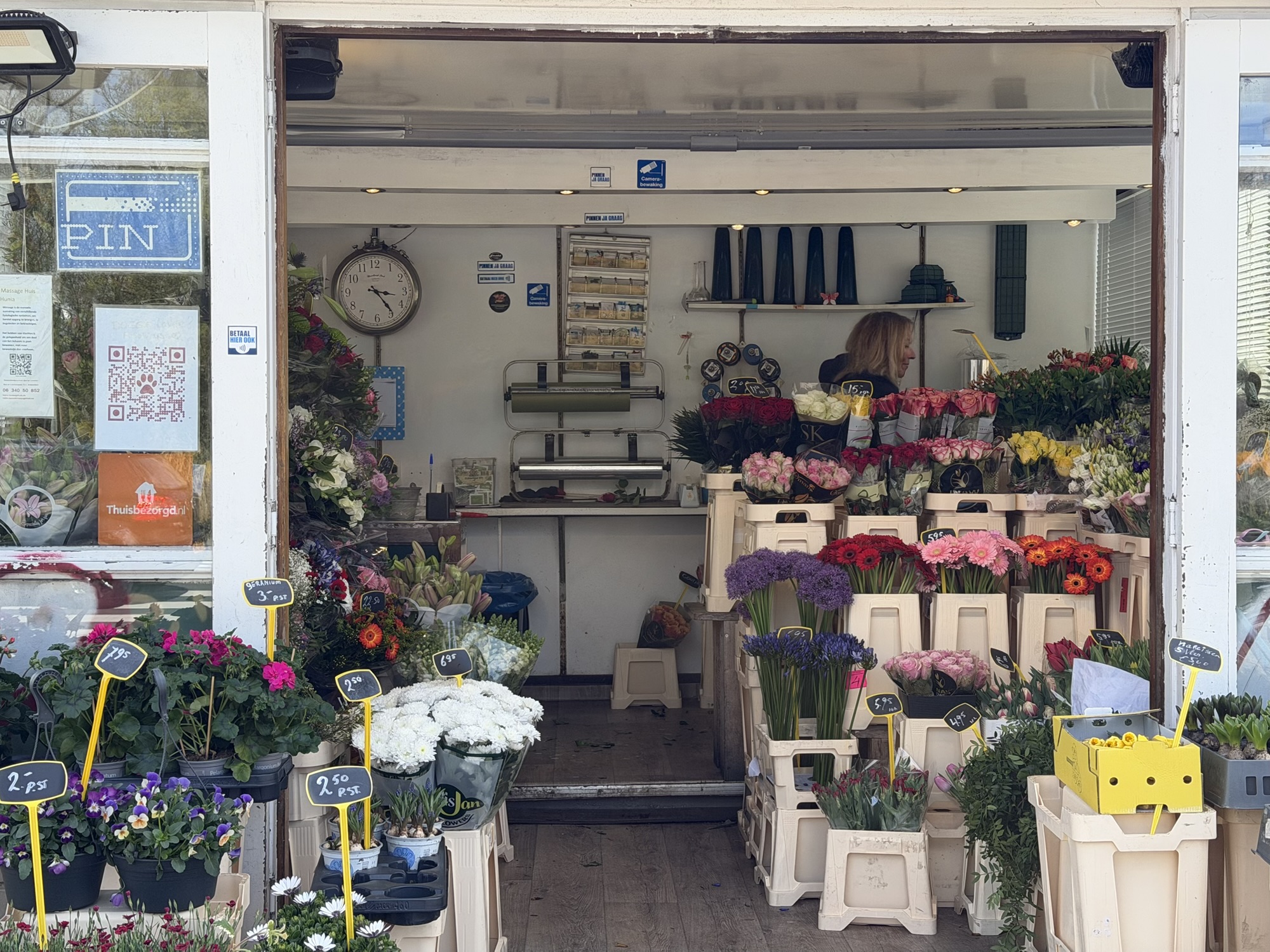
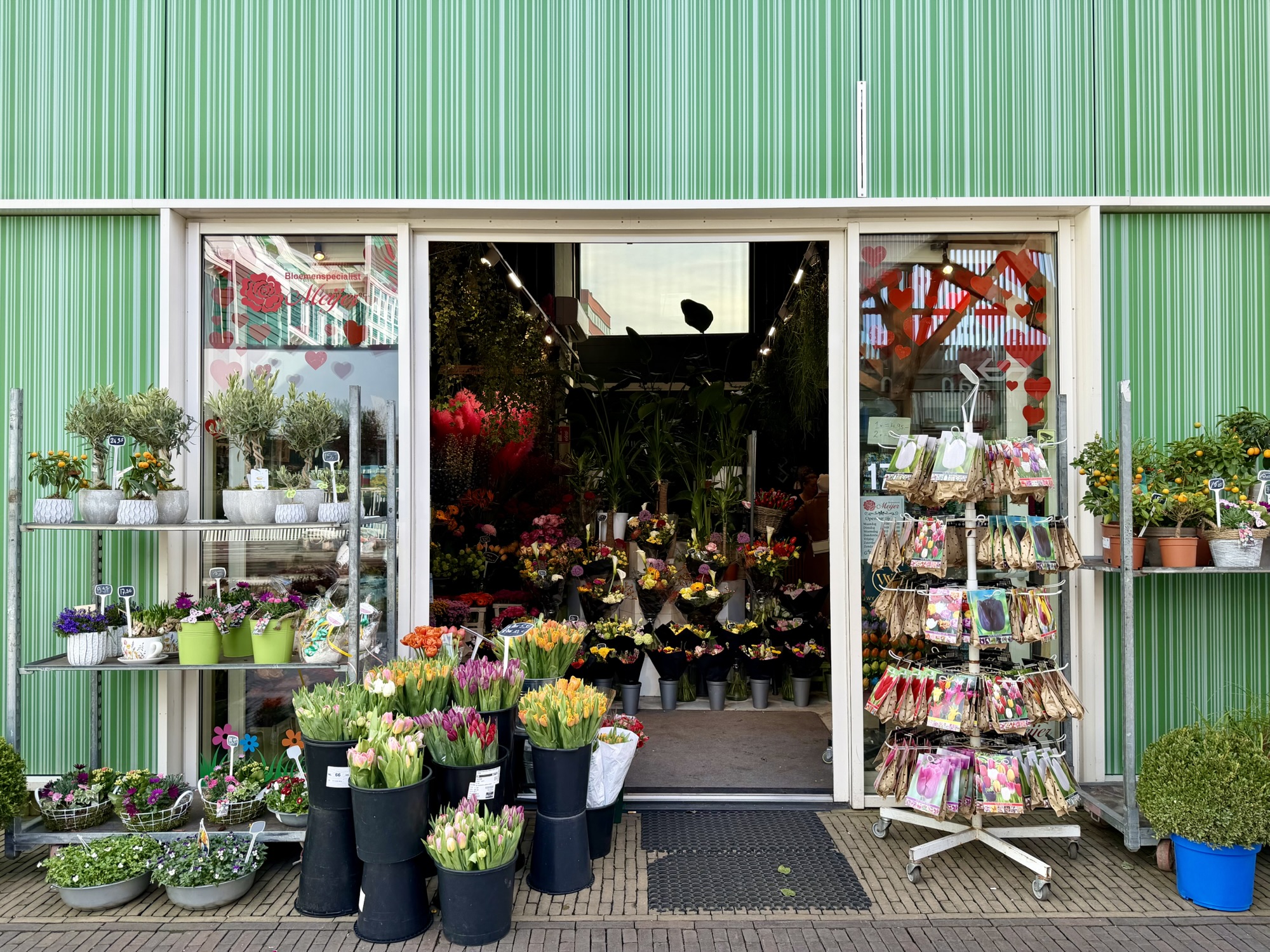
We passed a pretty little florist in a container. I like the way they use containers here for businesses. I also saw this on my trips to Bratislava.
This video shows us riding into Central Station and arriving at the ferry dock.
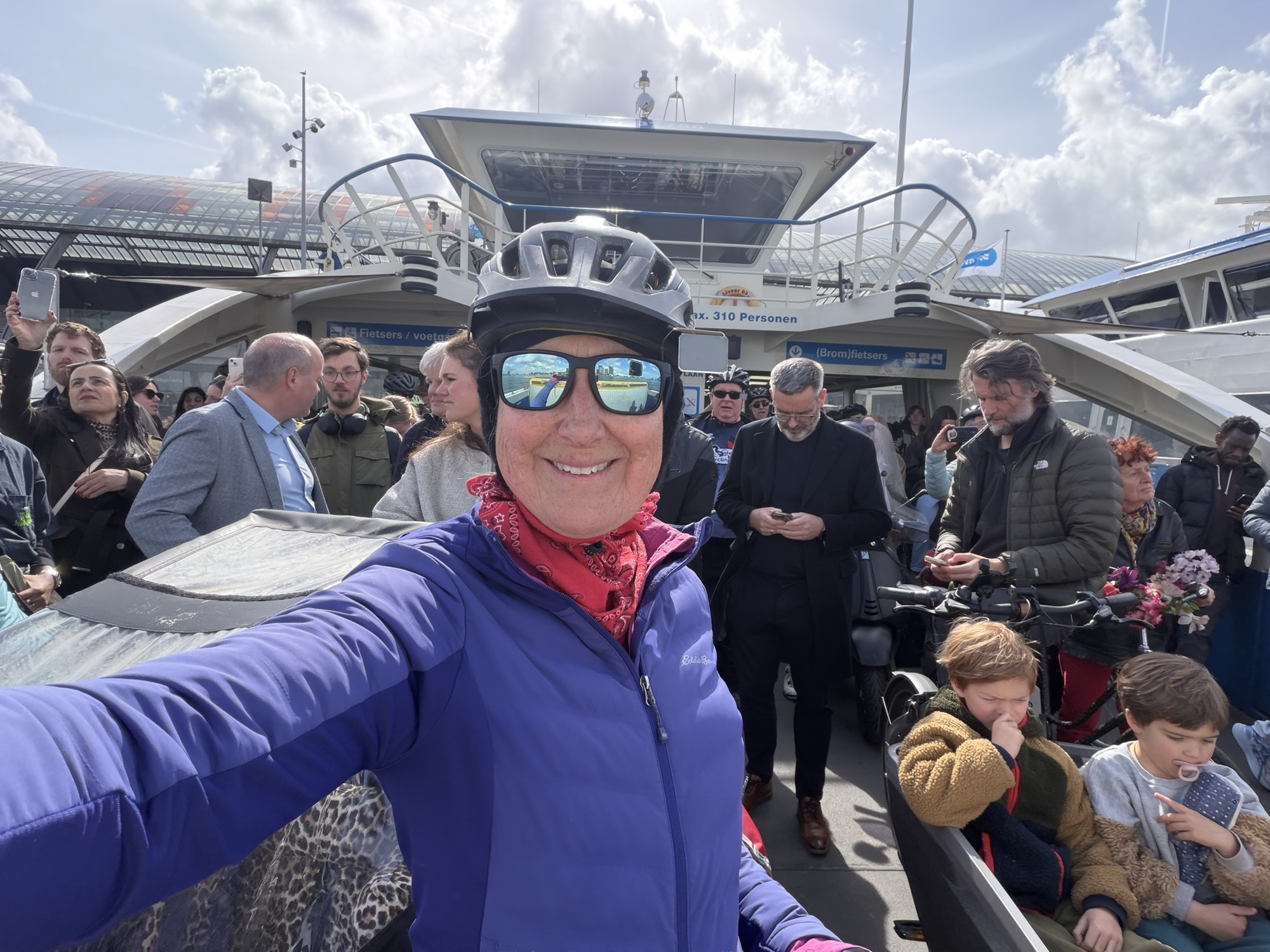
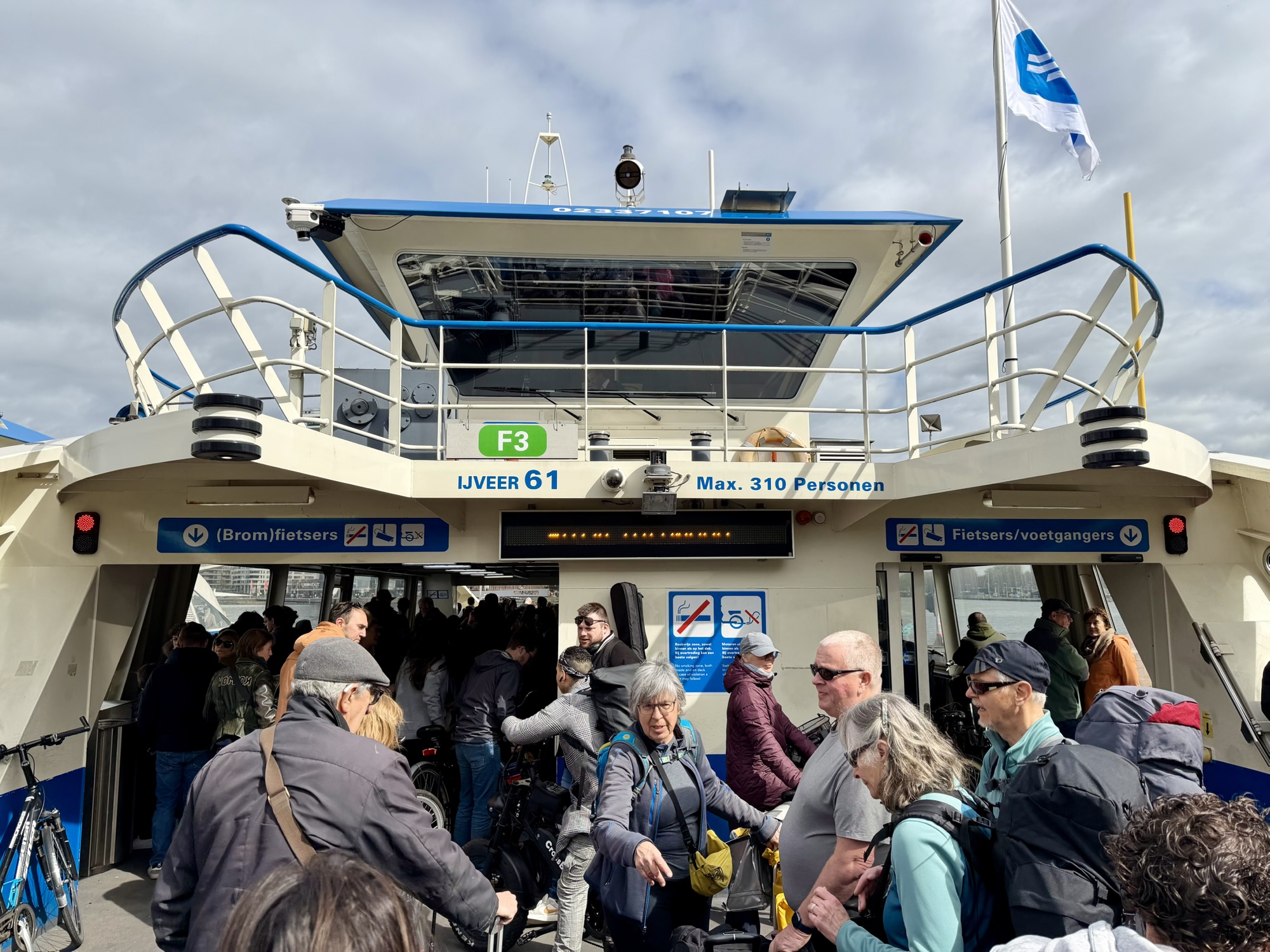
Here we are on a ferry that looked and felt like it was near the capacity of 310 people.
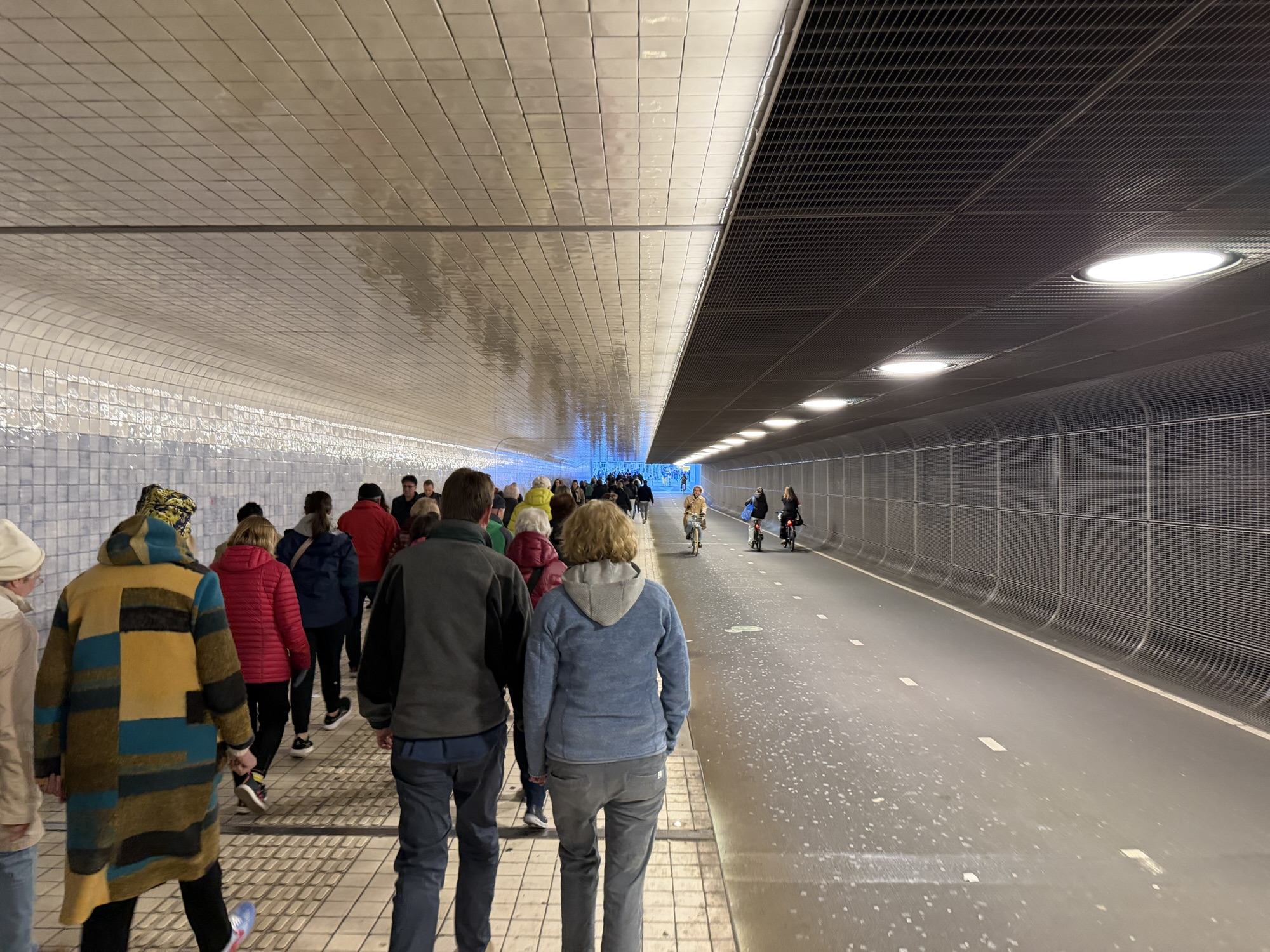
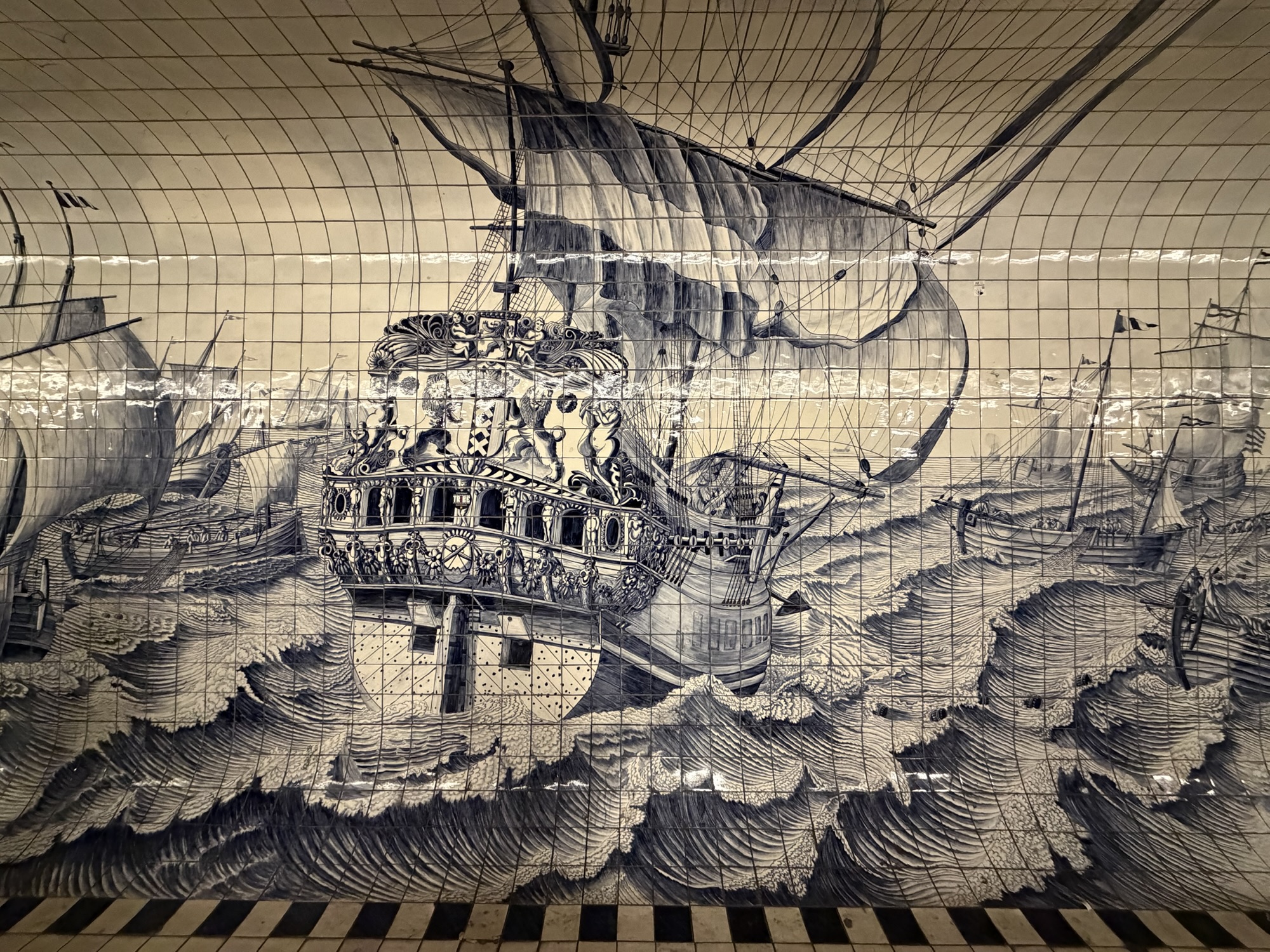
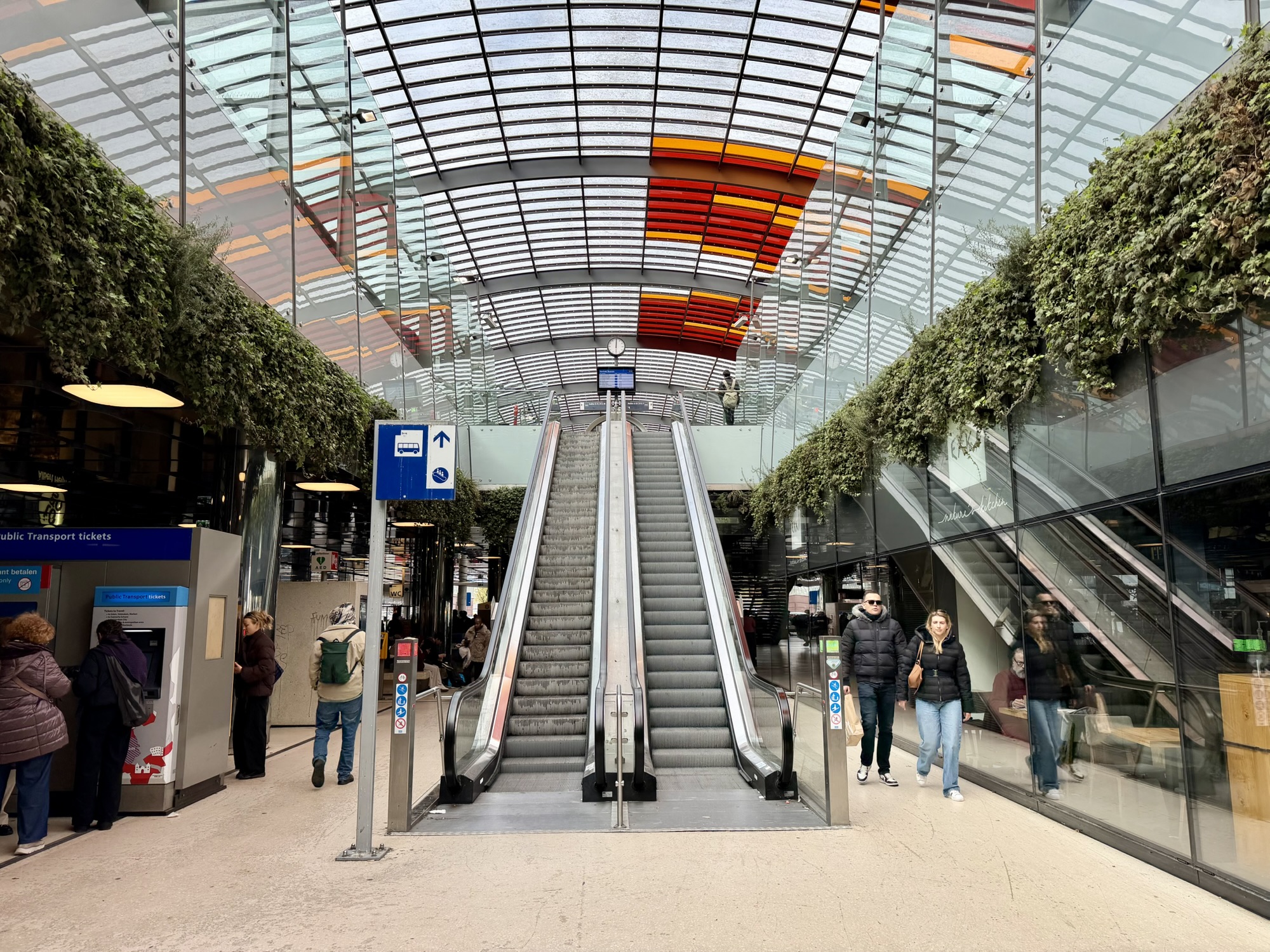
After a short rest and dinner on the barge, we went for a walking tour of Amsterdam. This is the sidewalk and bike lanes under Amsterdam station. They are lined with Delta tiles. Pedestrians around Central Station actually outnumbered cyclists.
We walked to a pub and met a friend of our tour guide, who gave us a very brief talk about an area of the city known as the Jordaan. It was a working class area, but is now an upscale vibrant district. People often had street-level businesses and lived above them.
It was only eight or 10° but most of the bars and restaurants had people spilling out onto the street. It was very busy.
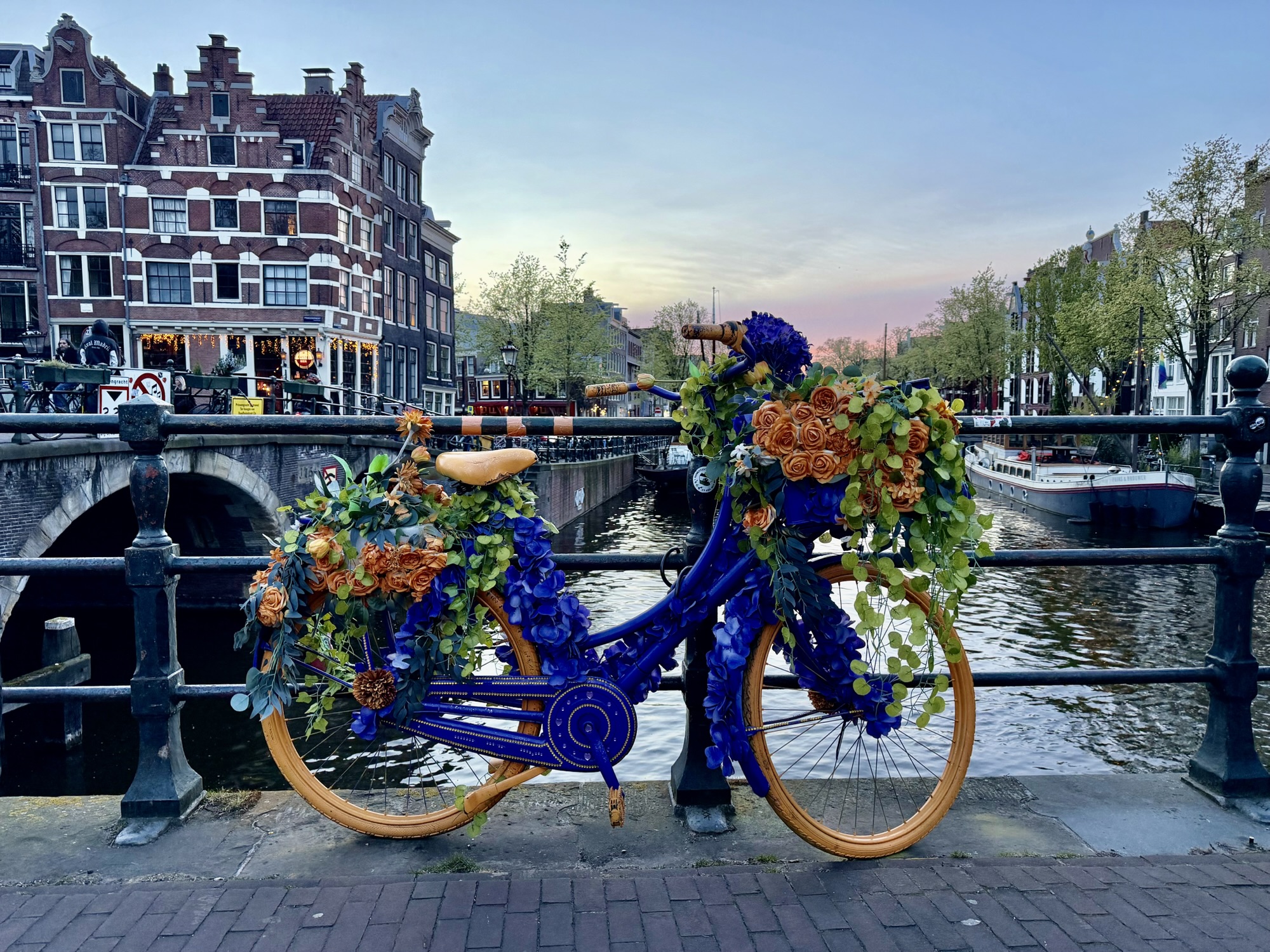
When the Simone, the barge tour director, discovered that I was writing a blog, she printed the QR code for the noticeboard, and told the other passengers about it at one of our evening briefings. At one of the places we stopped on our walking tour there was a beautifully decorated bike. Simone pointed to the bike and said, “Look Lisa, a picture for your blog”. She was right.
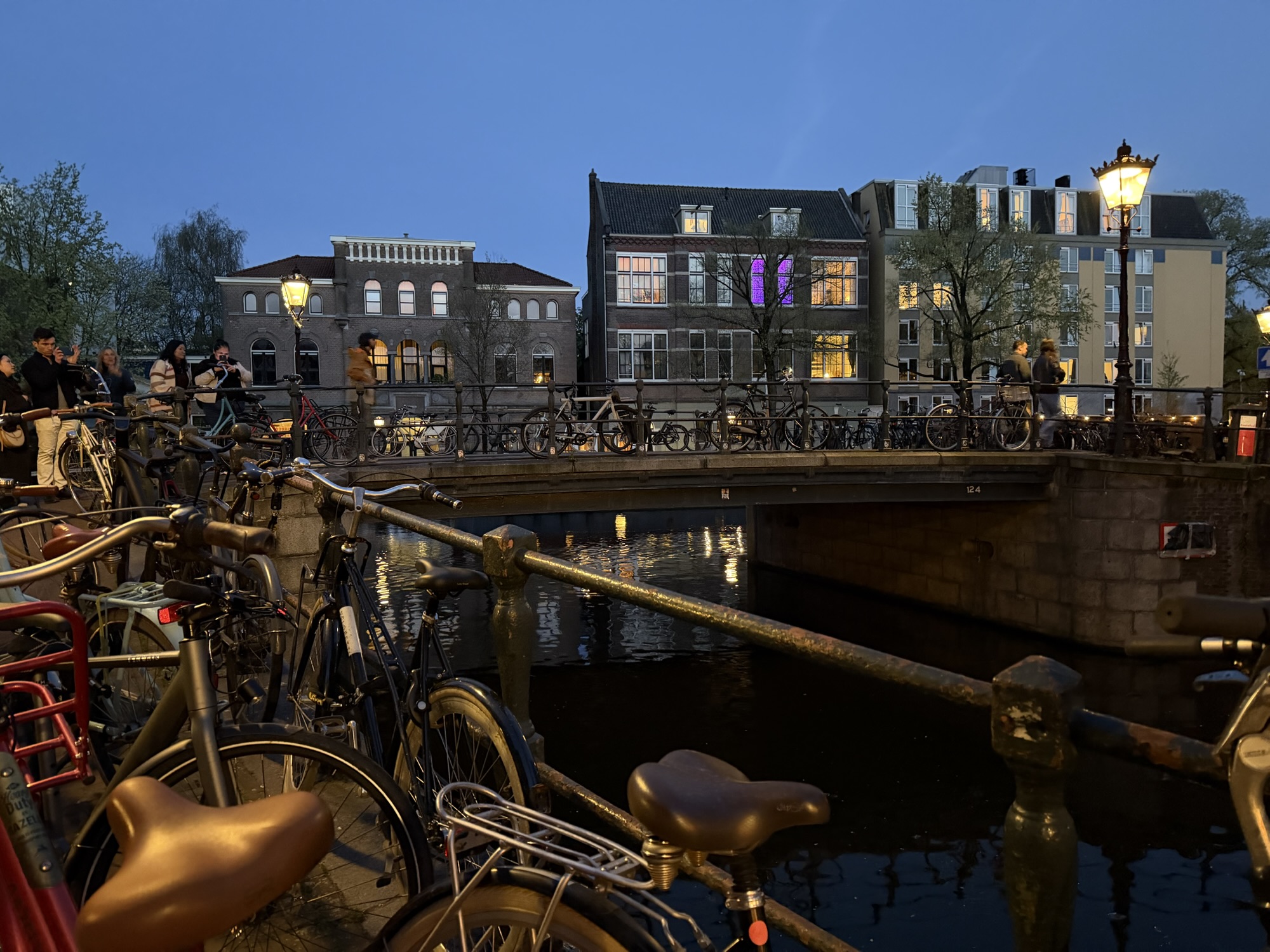
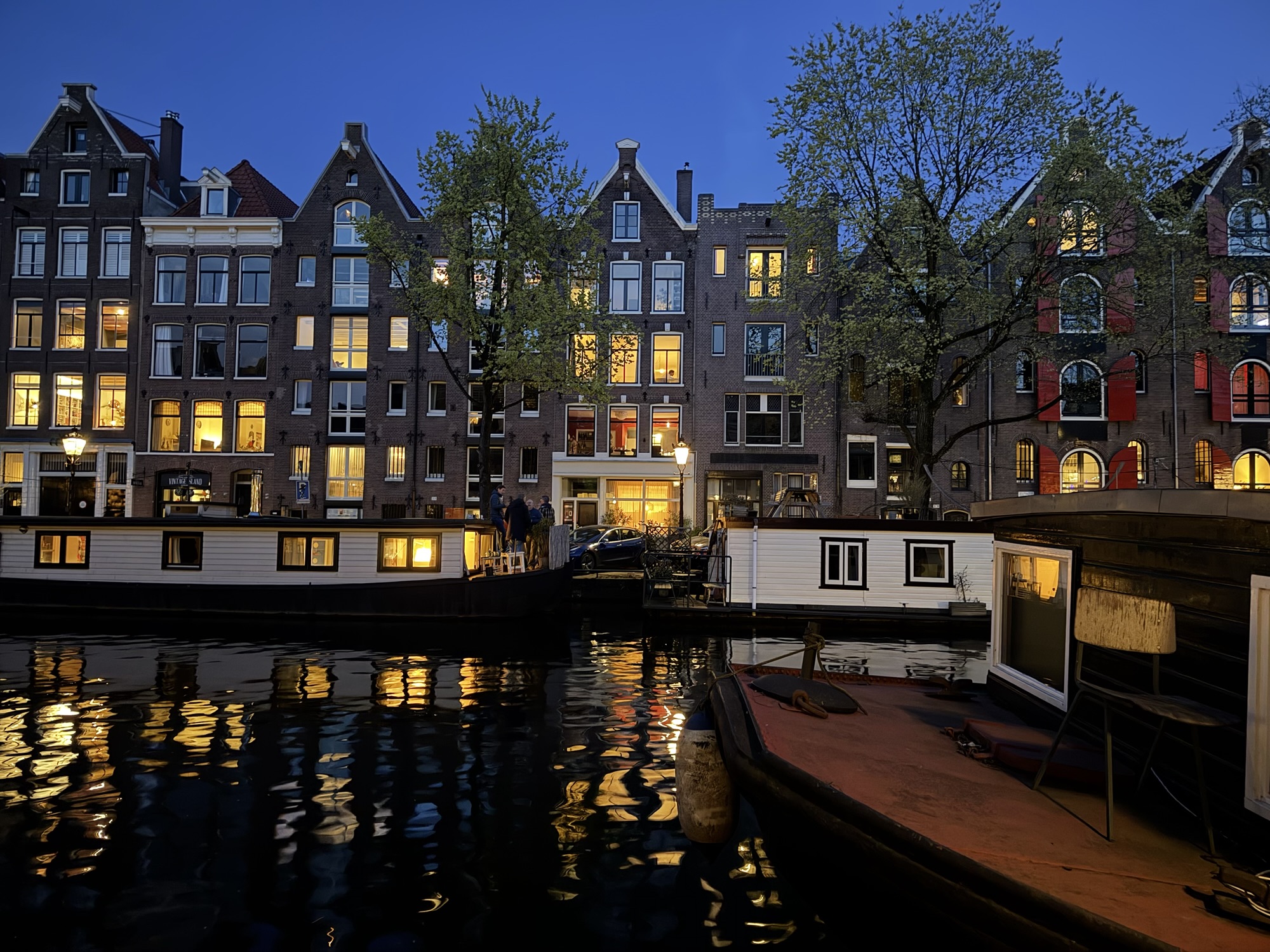
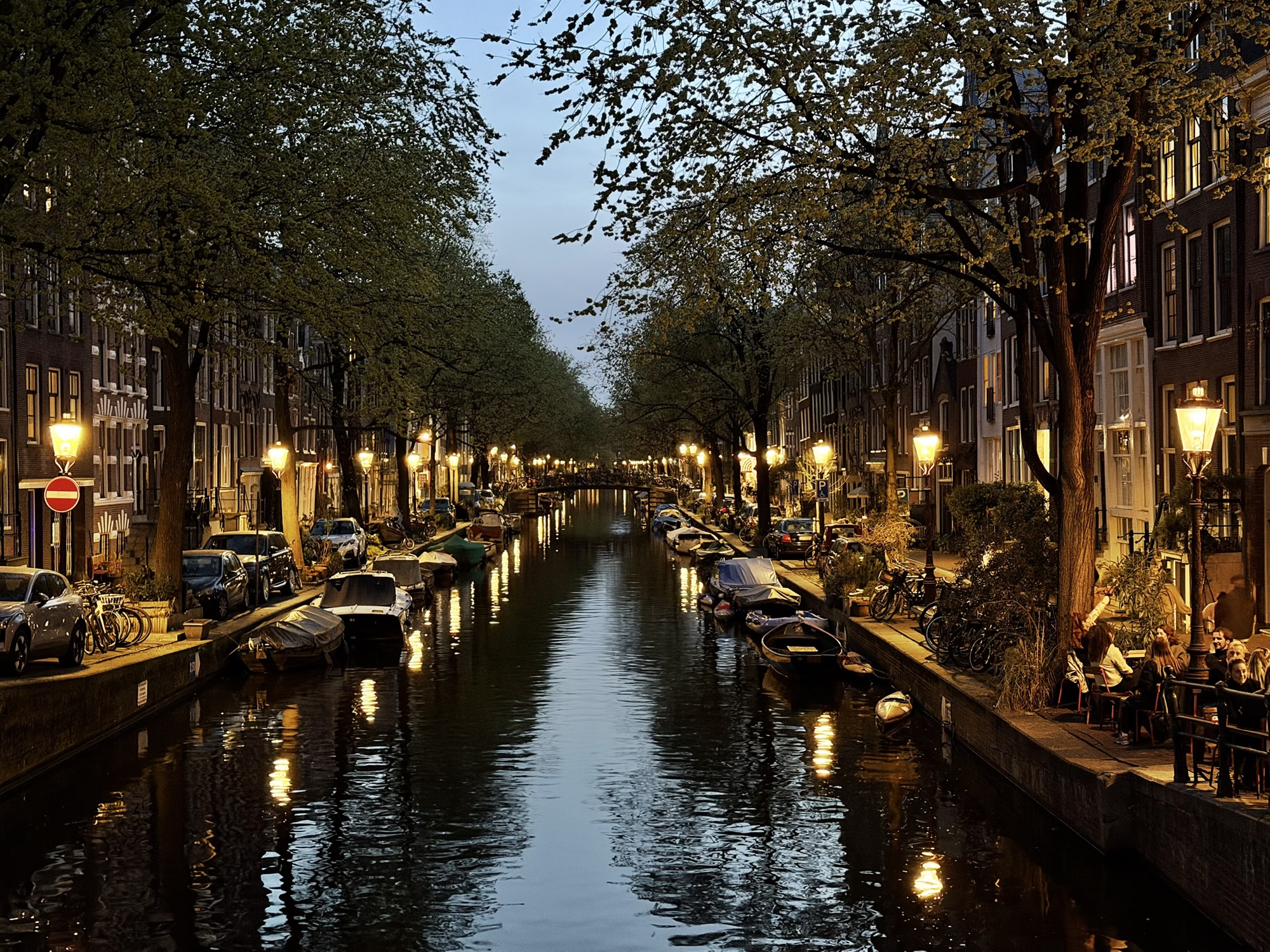
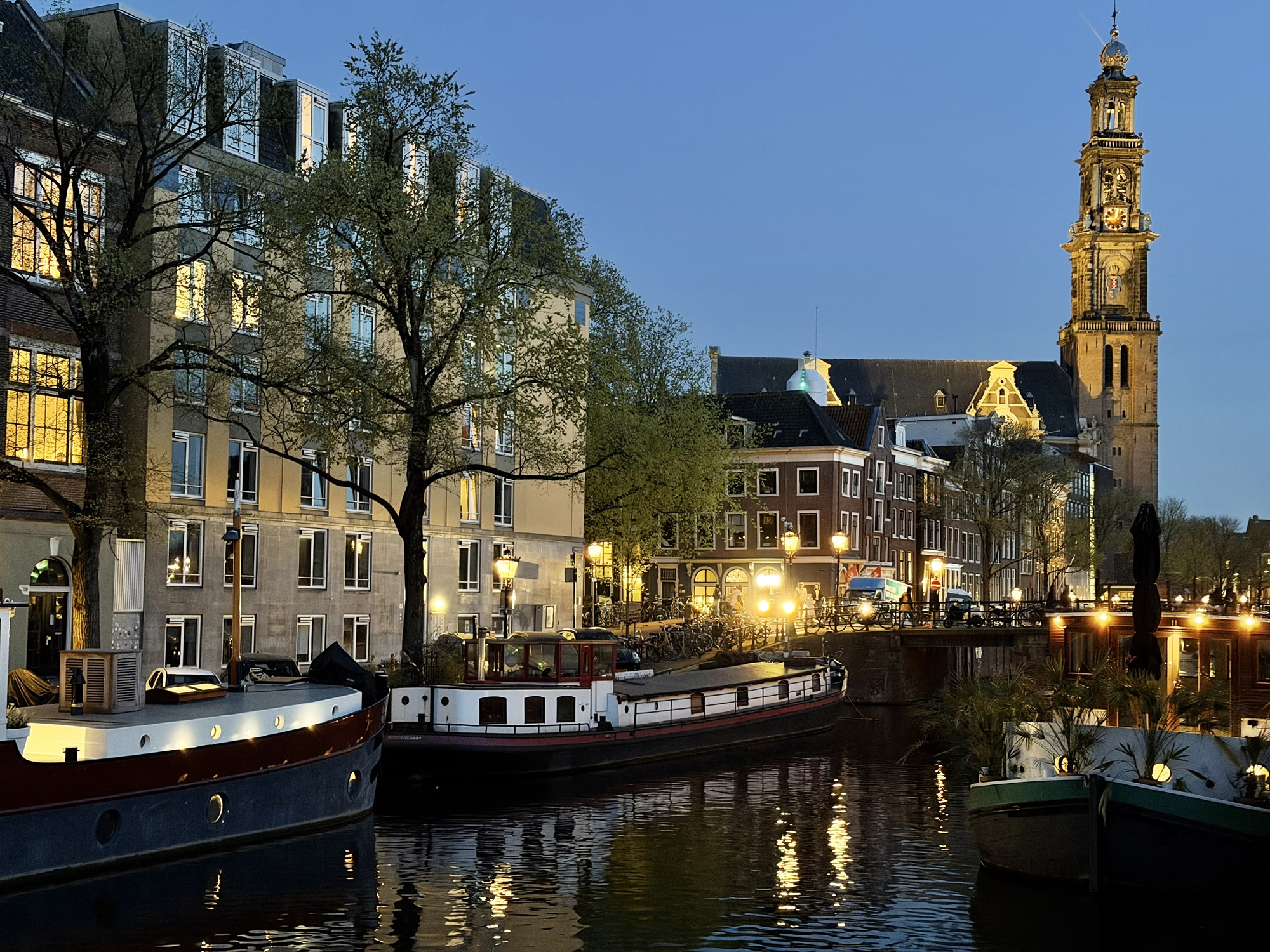
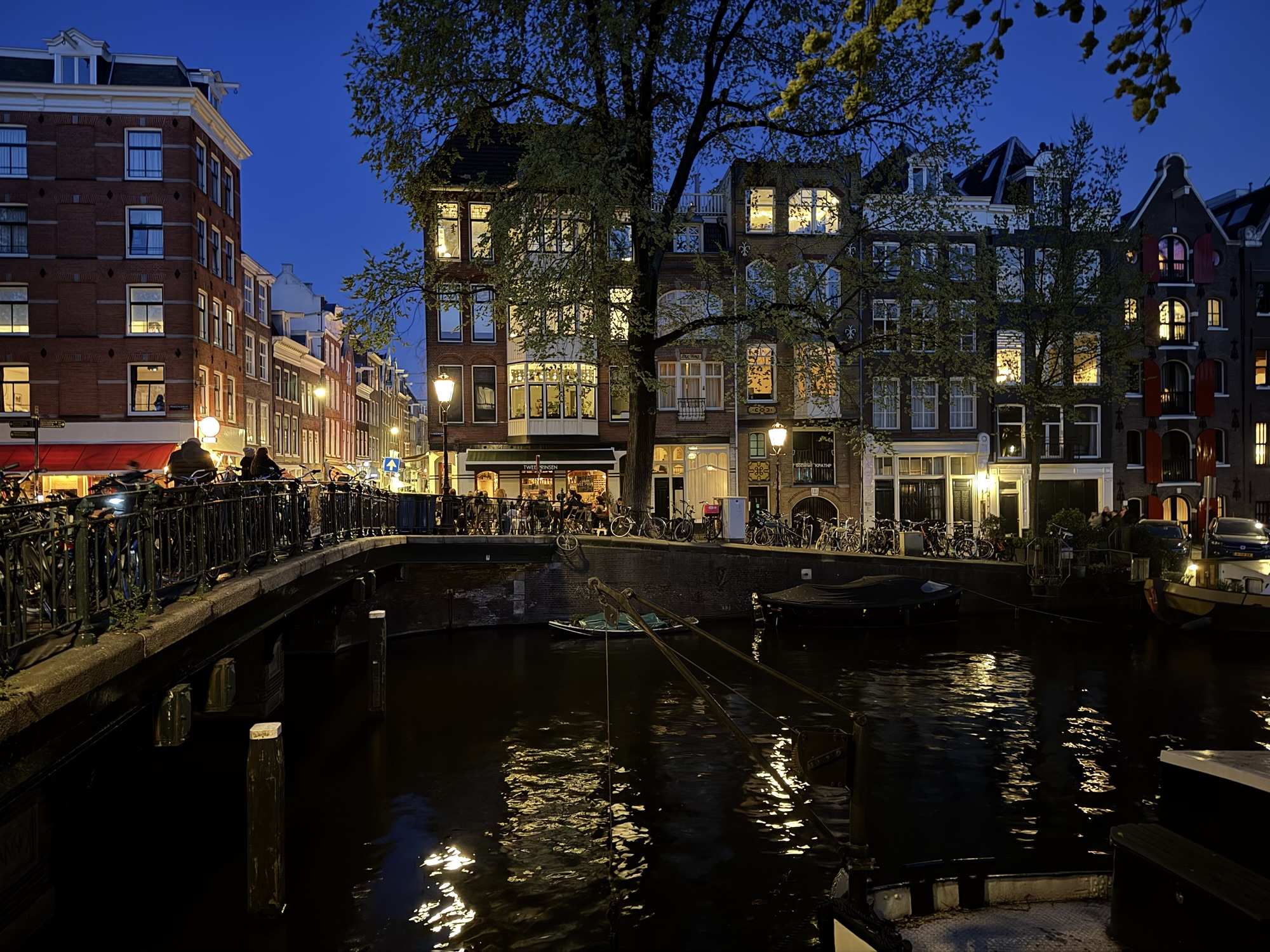
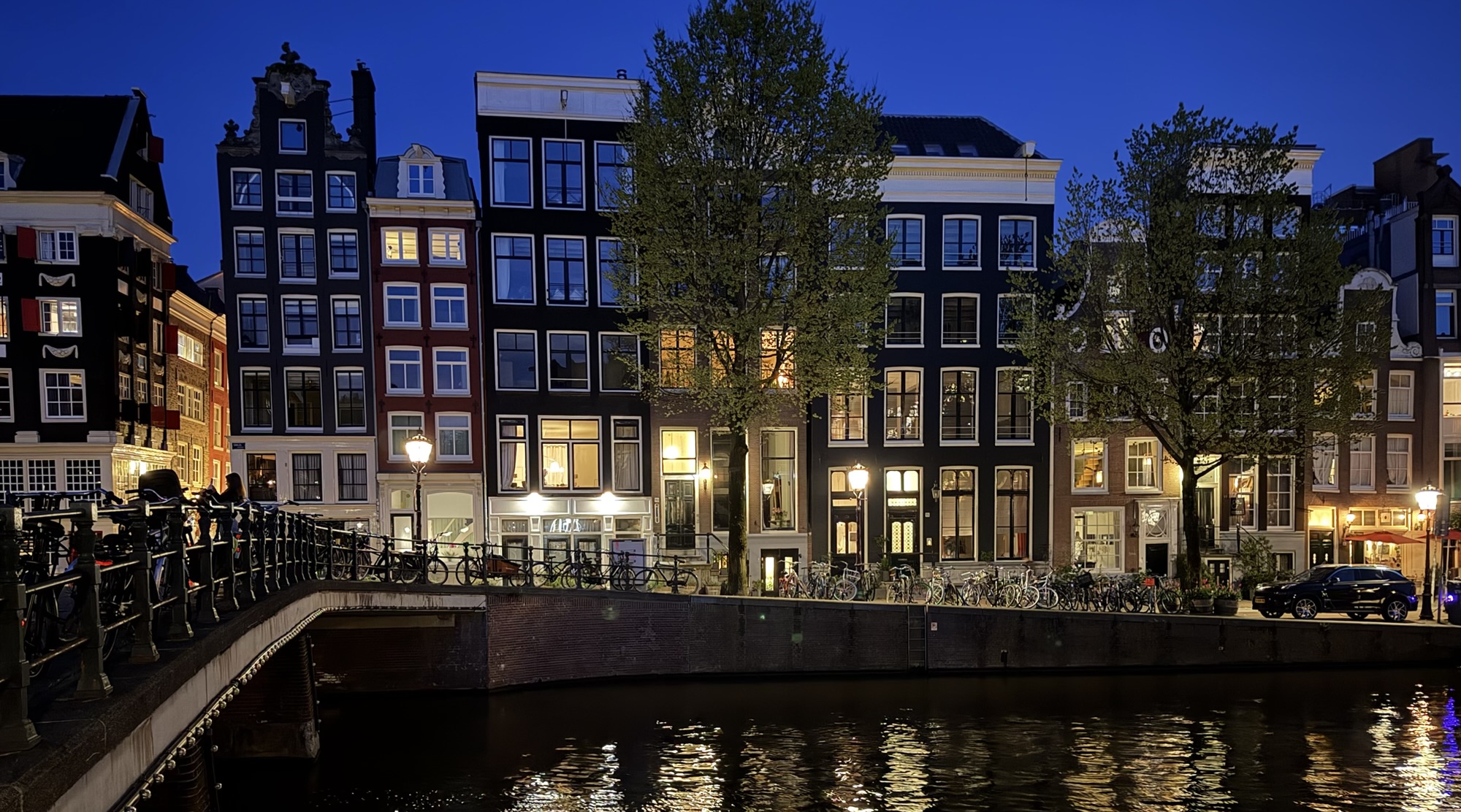
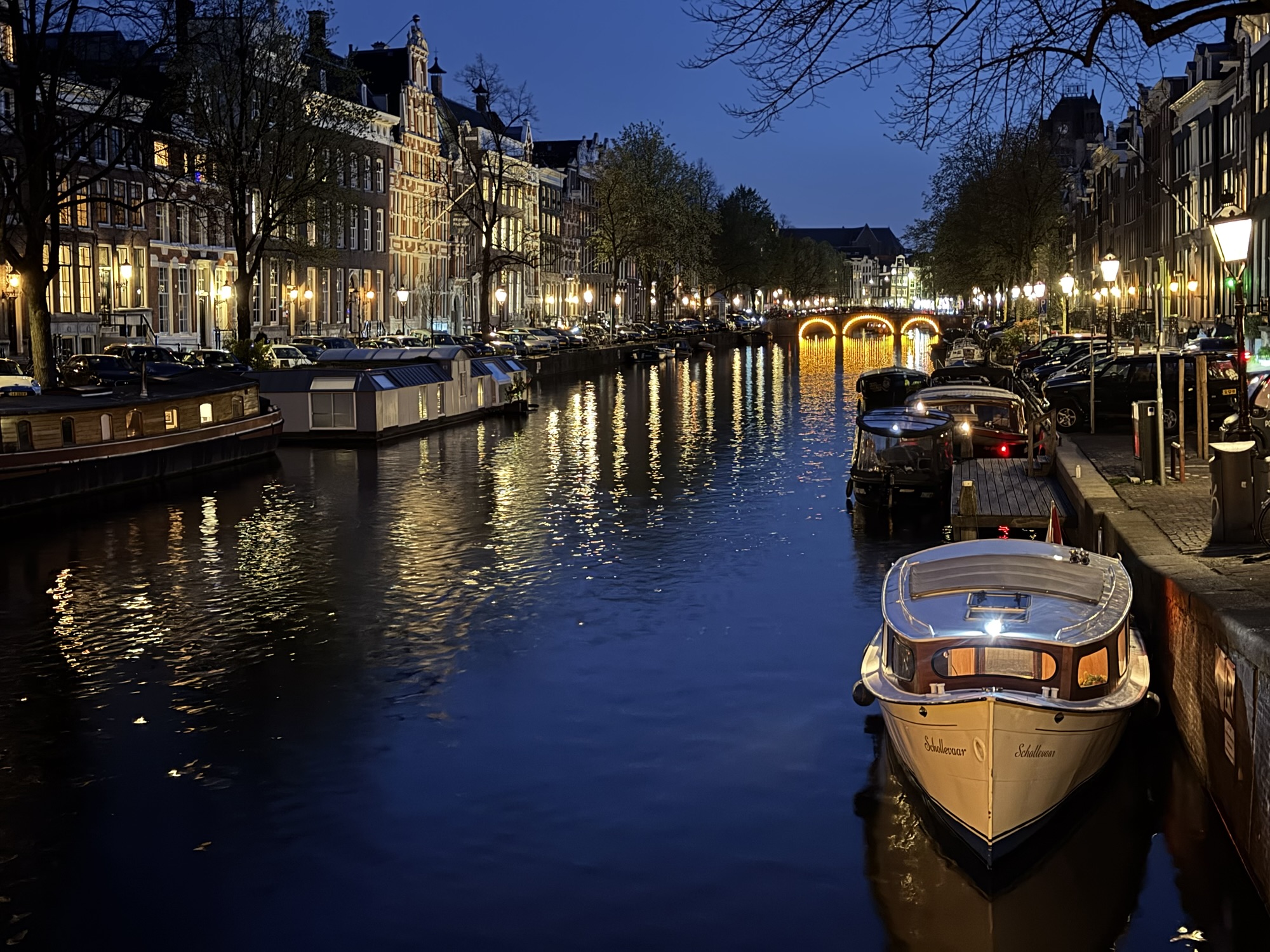
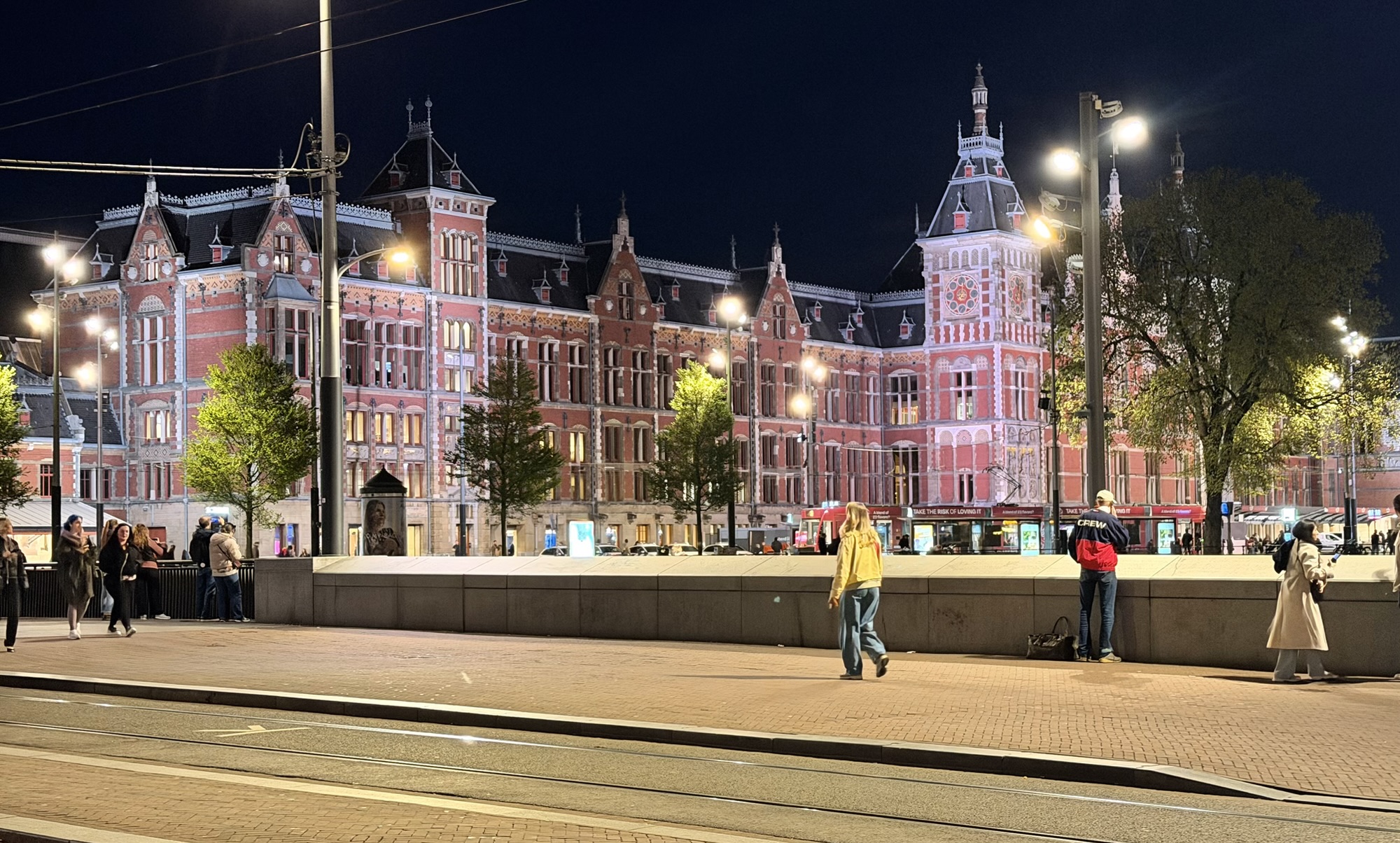
I will end tonight’s blog with a slideshow of some of the canal scenes we passed, and a nighttime view of Central Station.
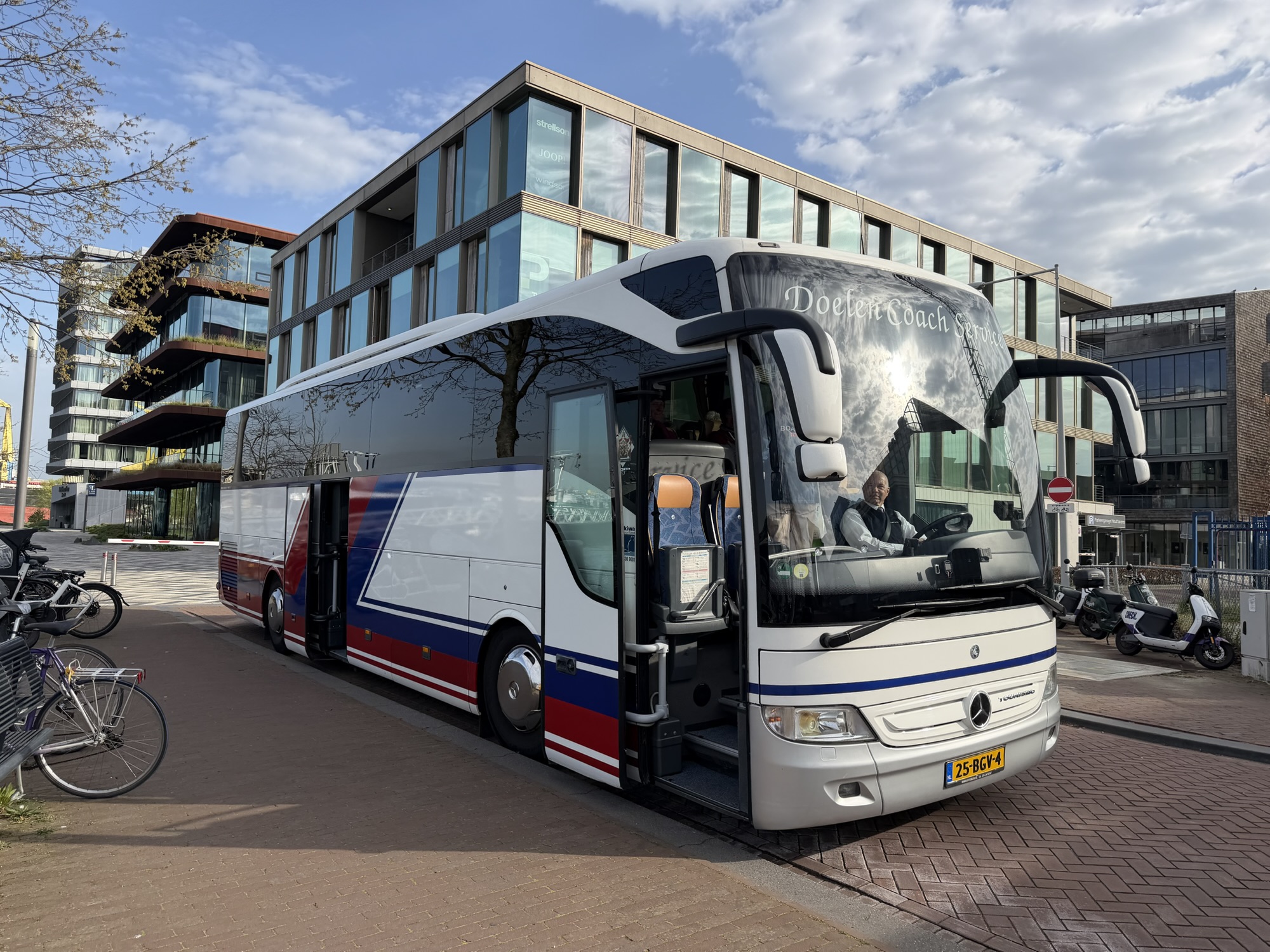
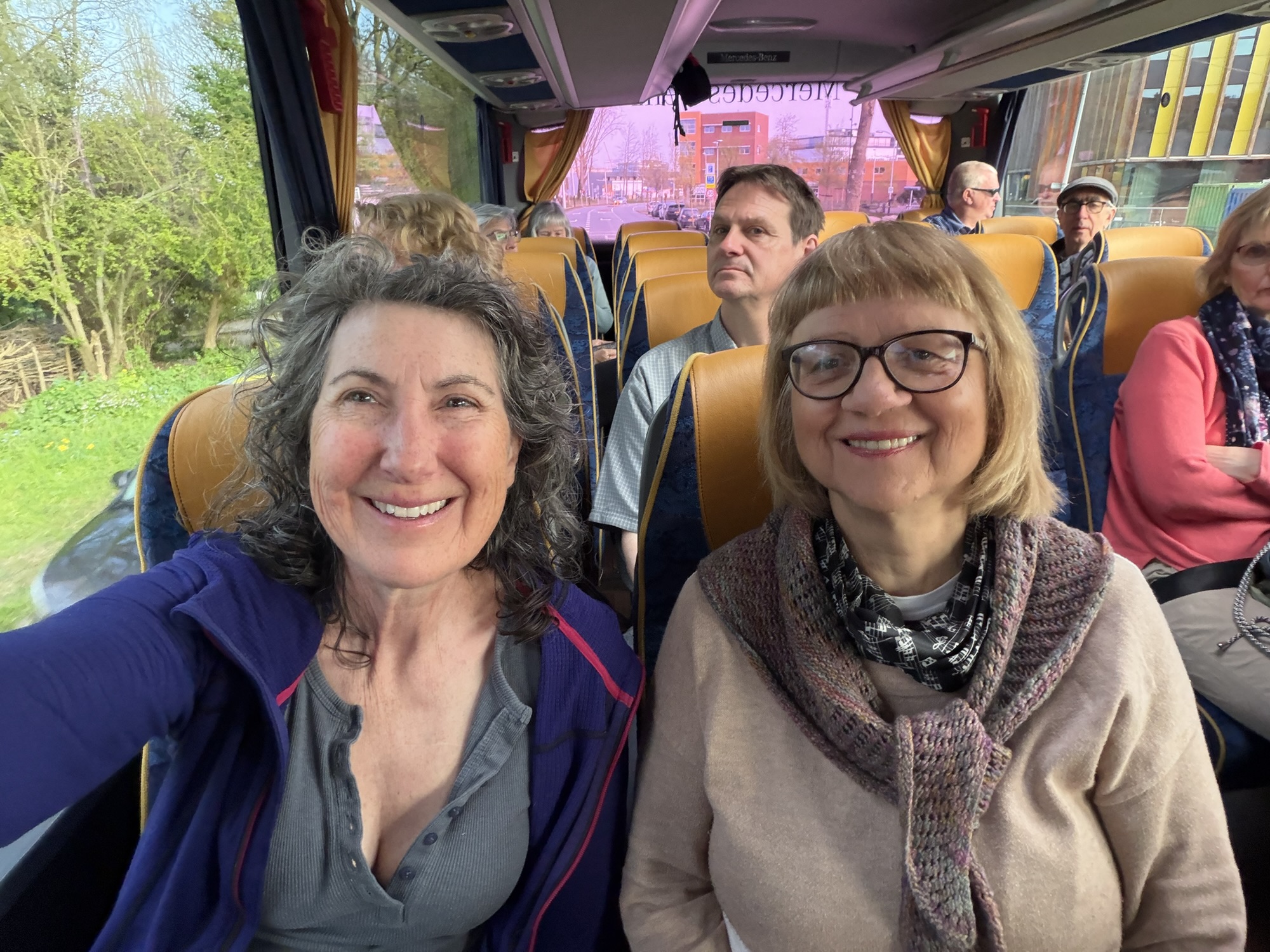
We woke at the usual time, but the coach that had been arranged to take us to Keukenhof didn’t leave until 10. This gave me time to continue working on yesterday’s blog. I also worked on it on the coach when the scenes weren’t too distracting.
I took three videos out of the window of the bus as we were leaving Amsterdam.
The Westergasfabriek buildings have been repurposed as Amsterdam’s cultural Park. The buildings looked beautiful from the bus. The gas that once lit the streets of Amsterdam was produced on this site. The buildings were constructed around 1885 in the Dutch Neo Renaissance style.
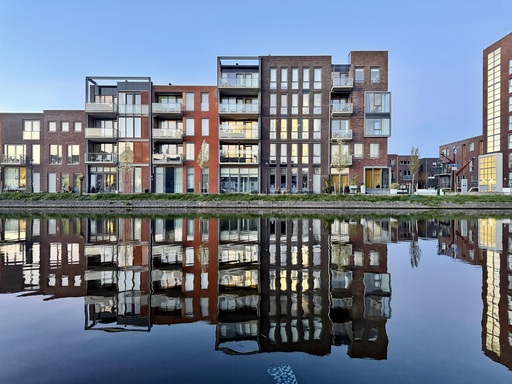
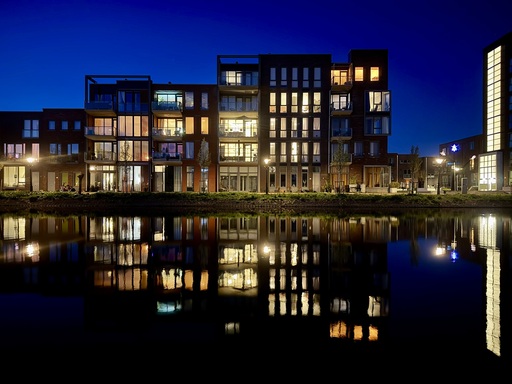
The second two videos are of apartment buildings that we walked past on the bike path side of the buildings when we were staying at the Teleport Hotel (which we passed on the drive) last week. I find them appealing looking buildings, for their height, bulk, windows, and colour.
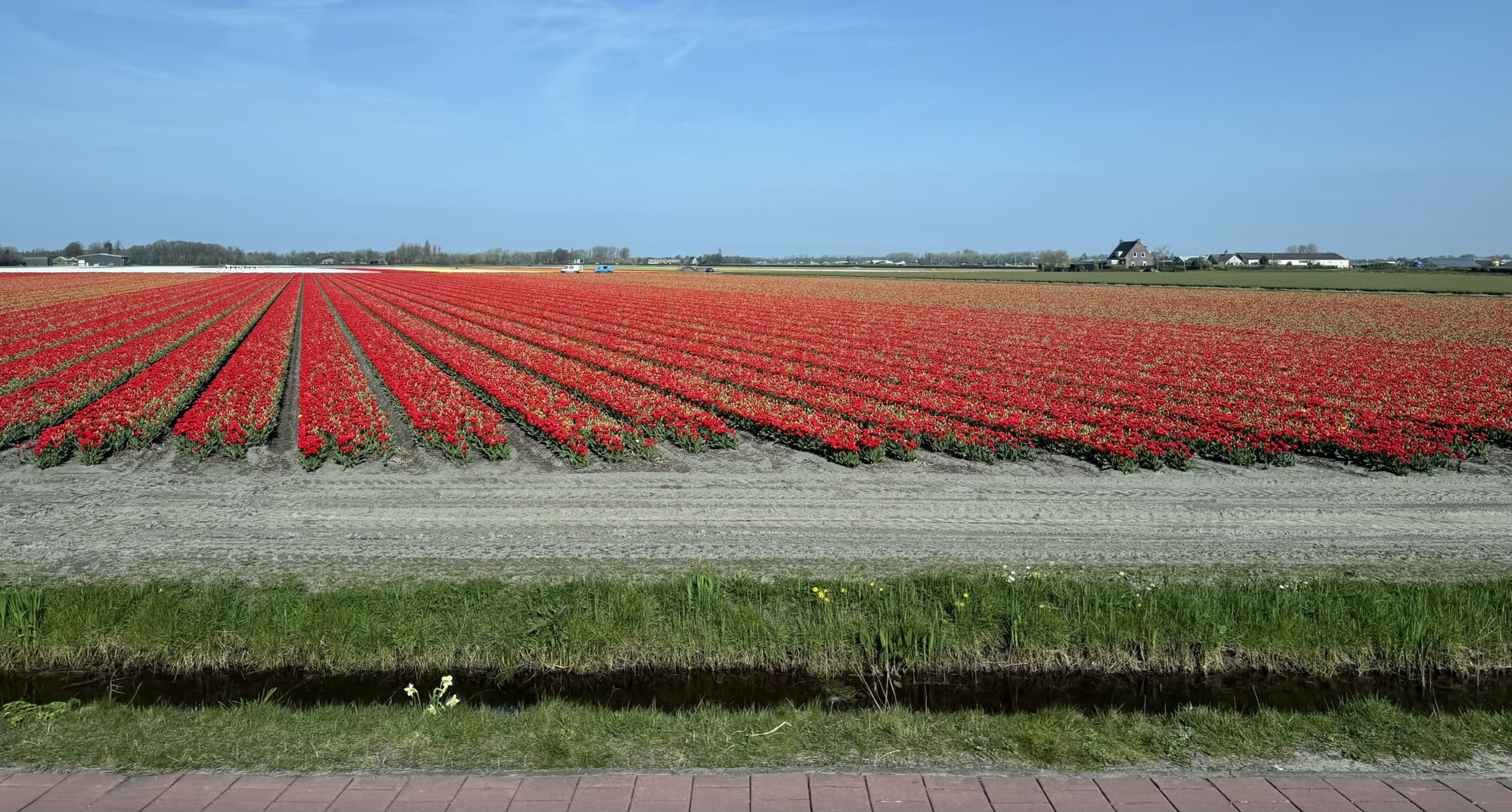
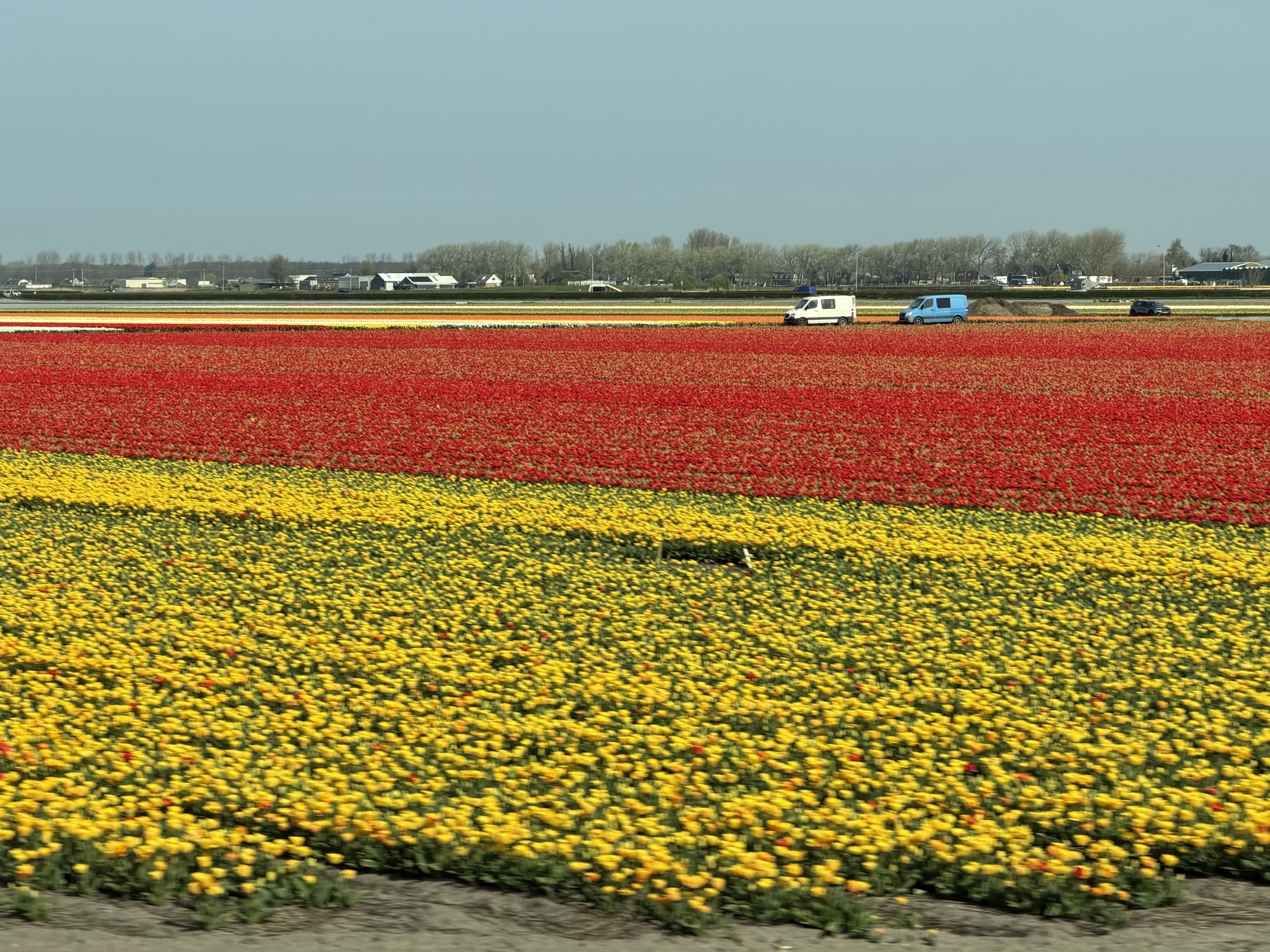
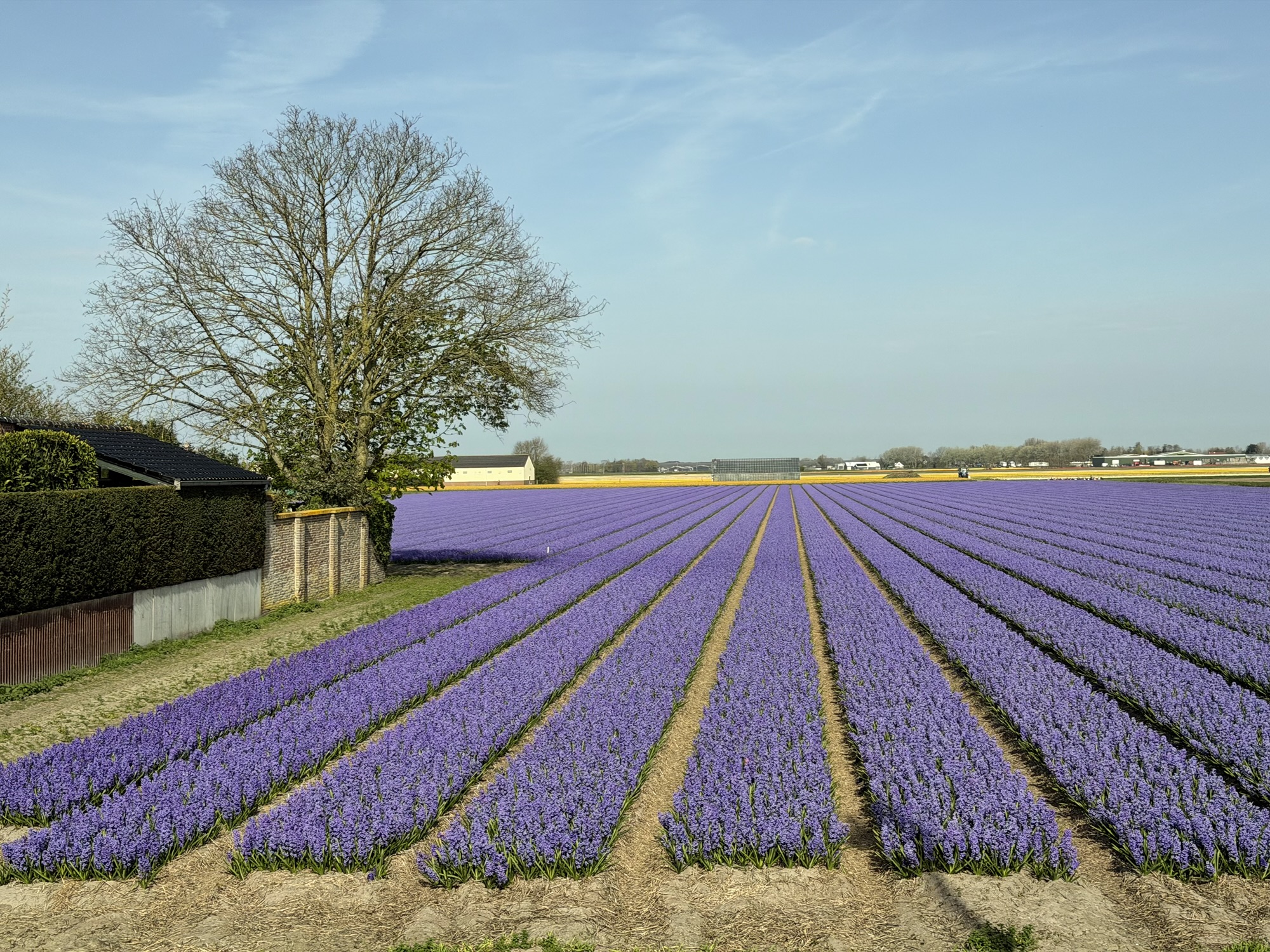
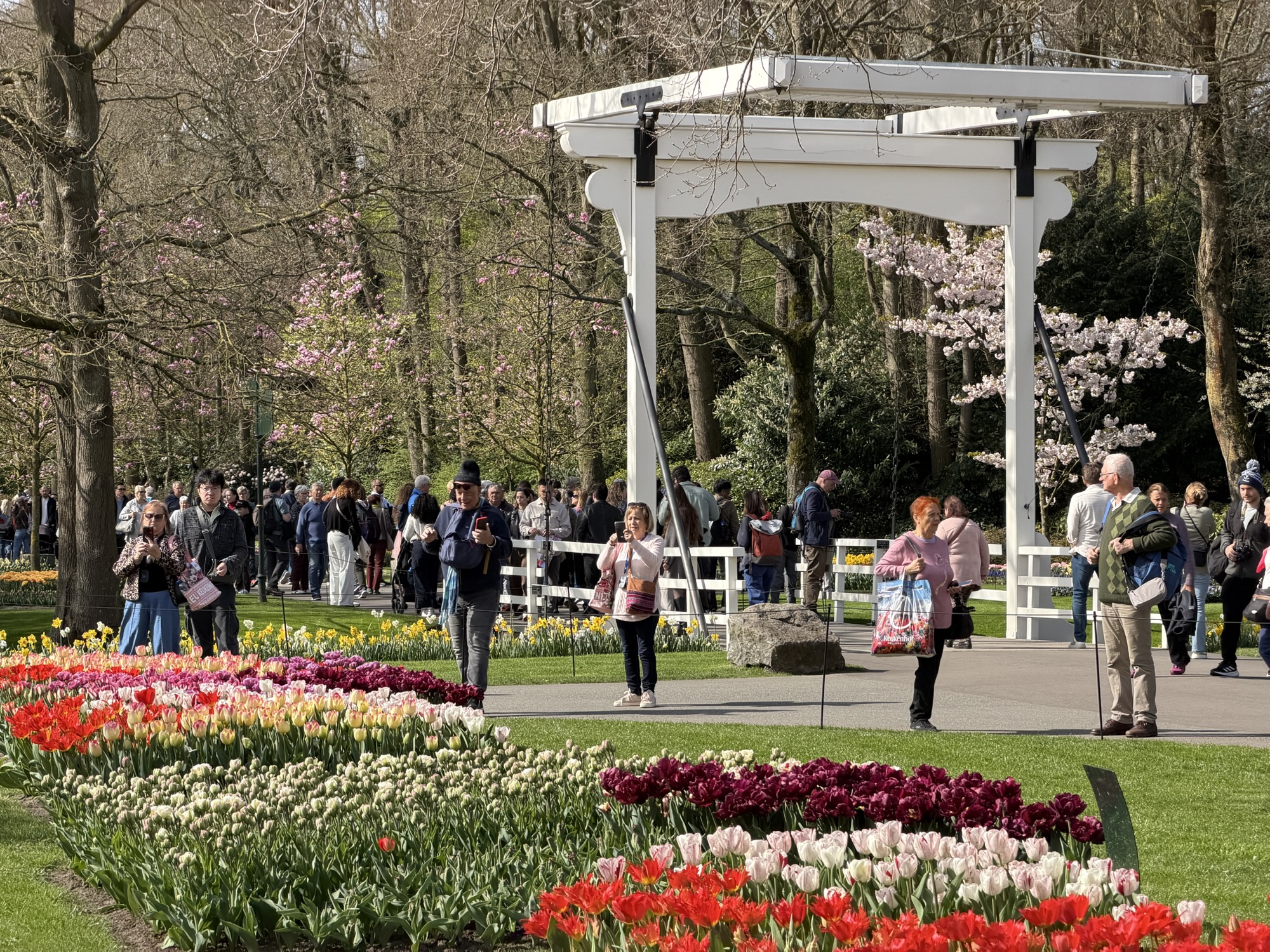
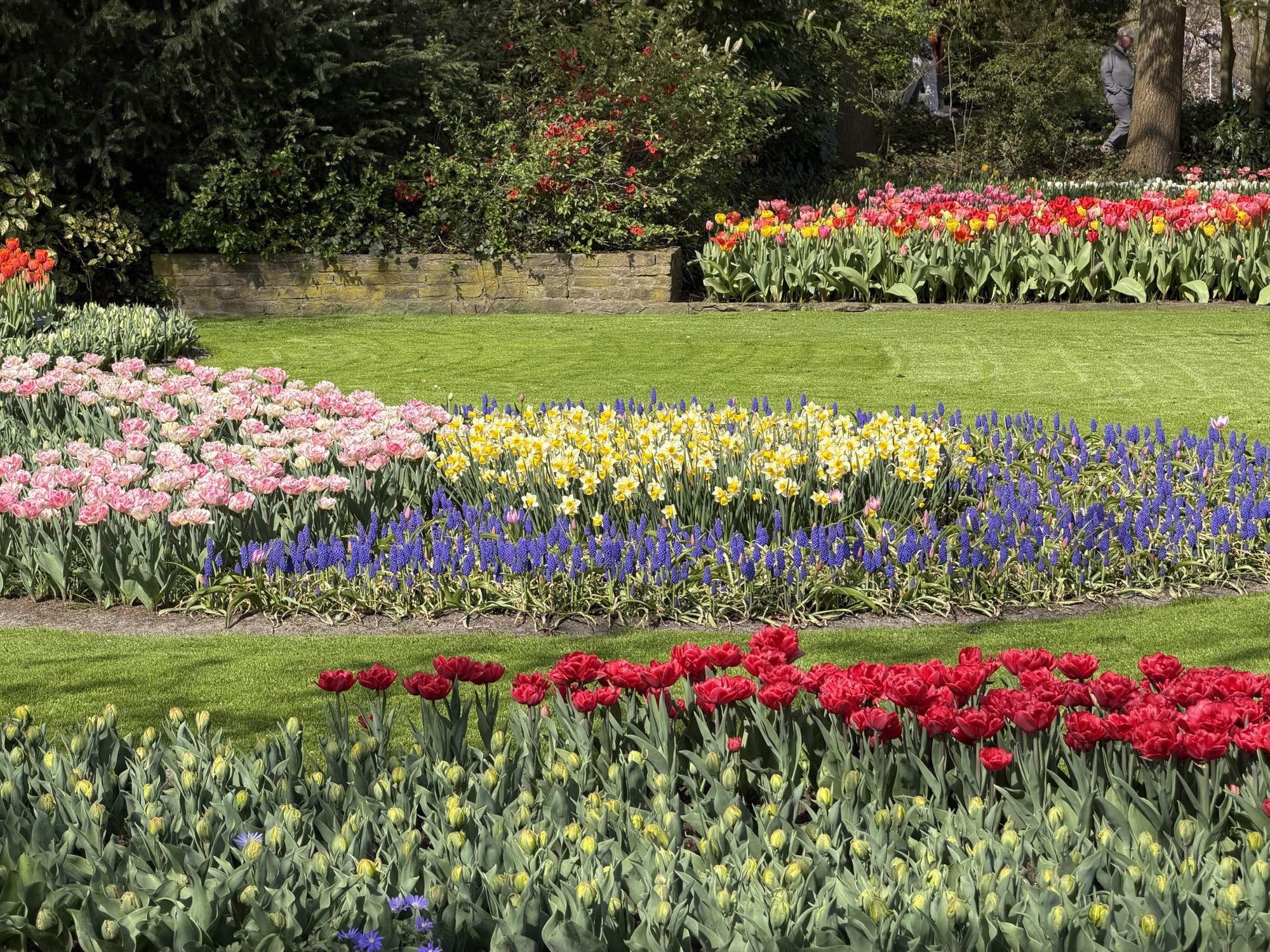
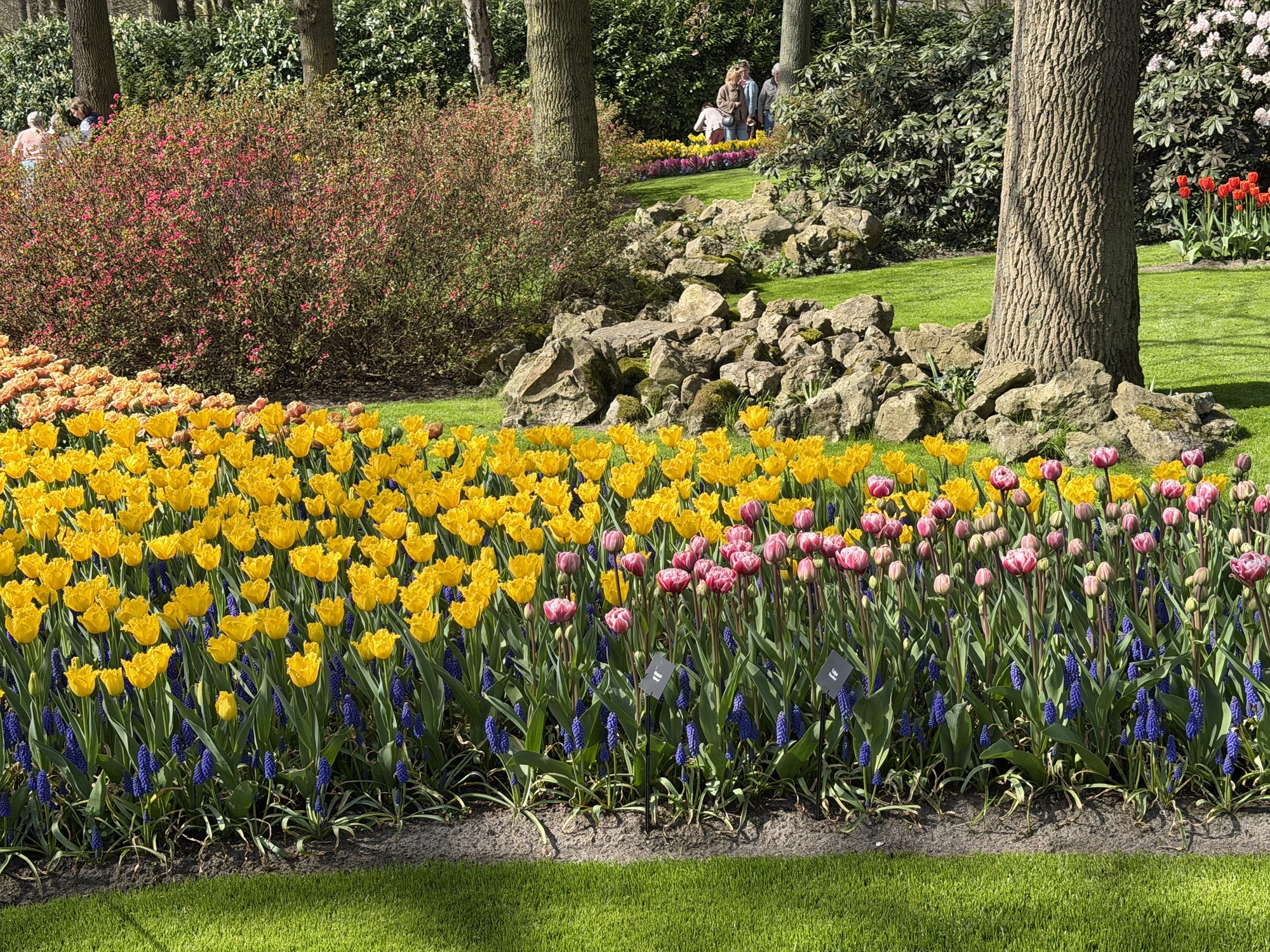
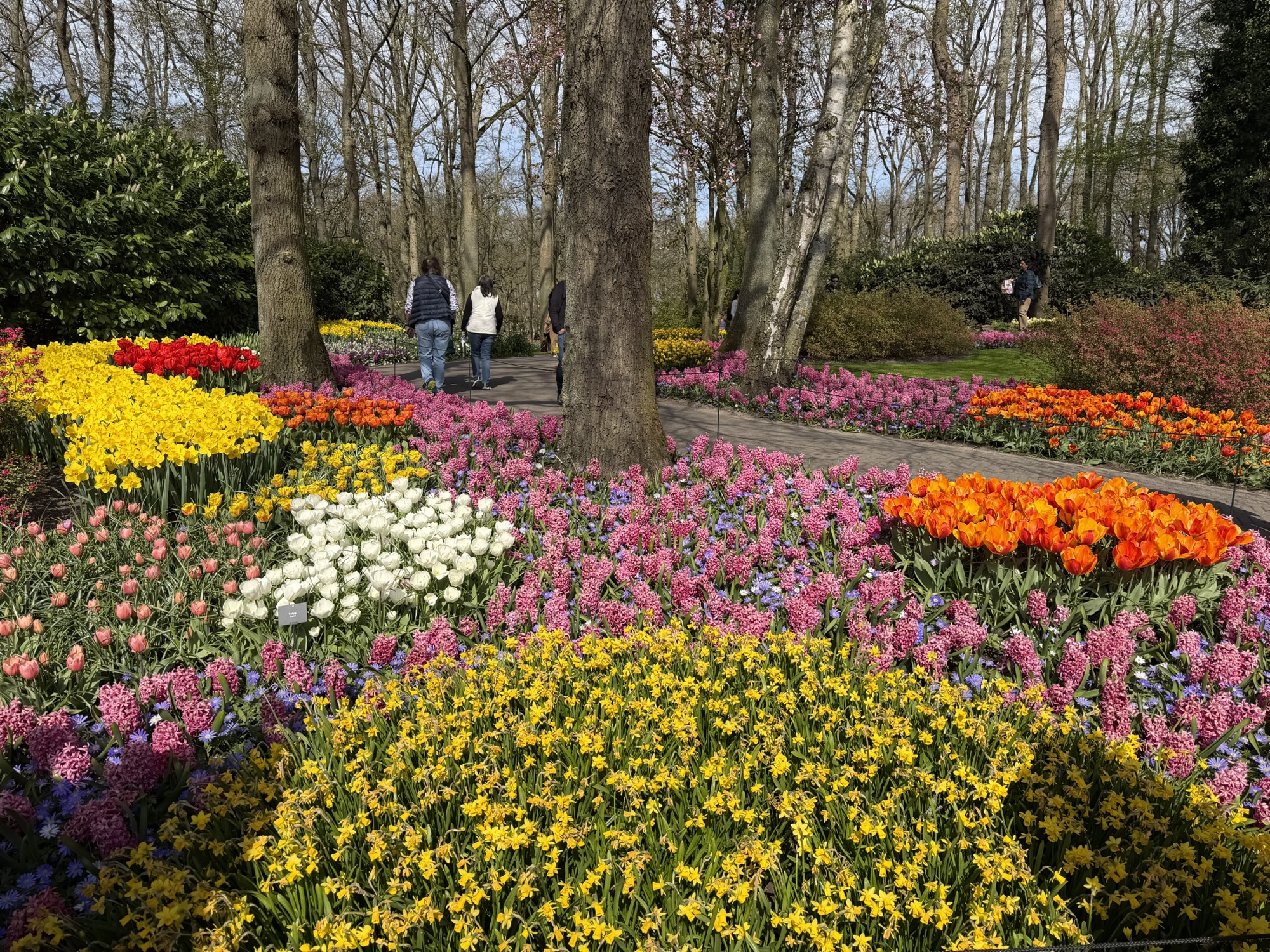
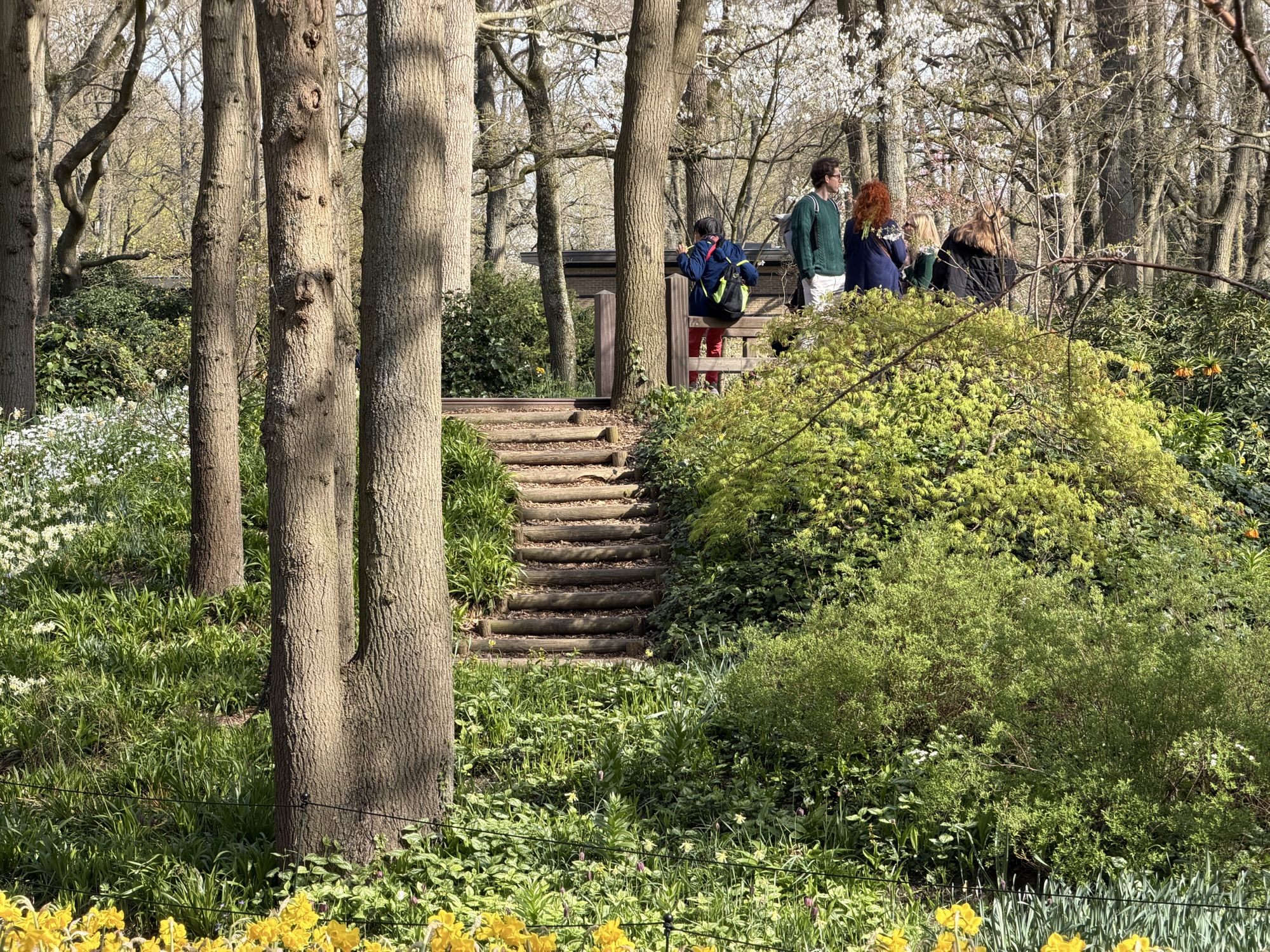
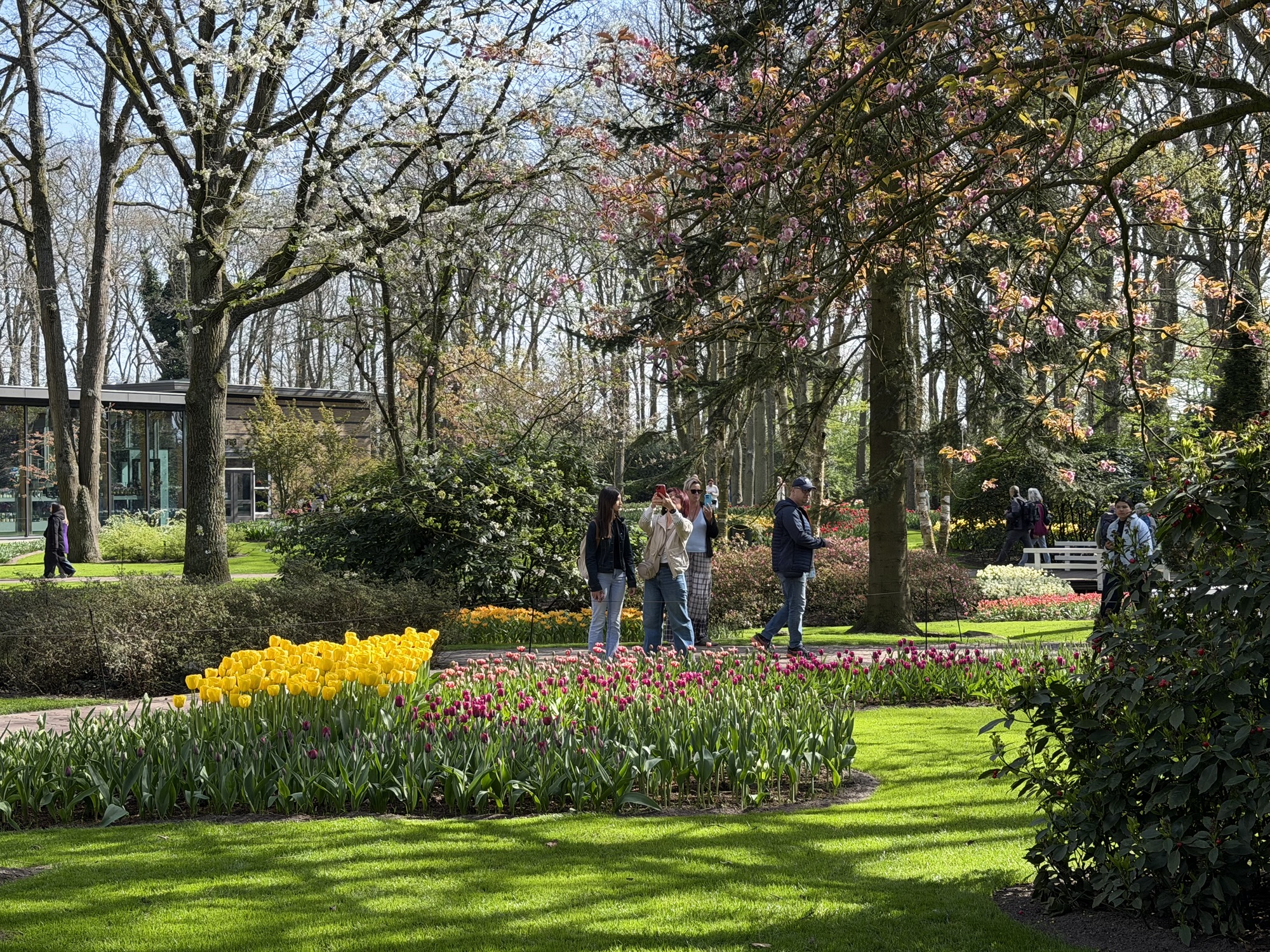
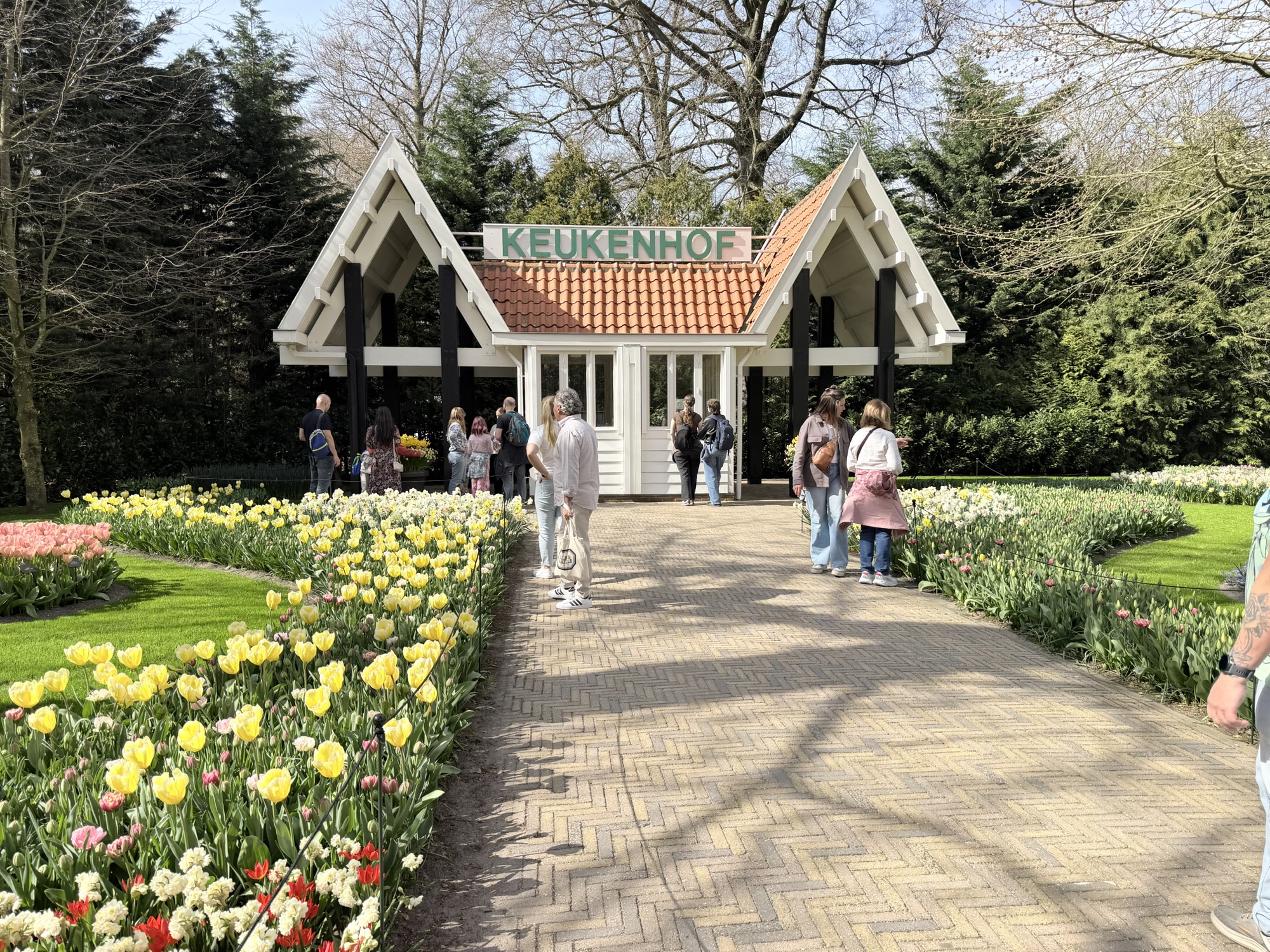
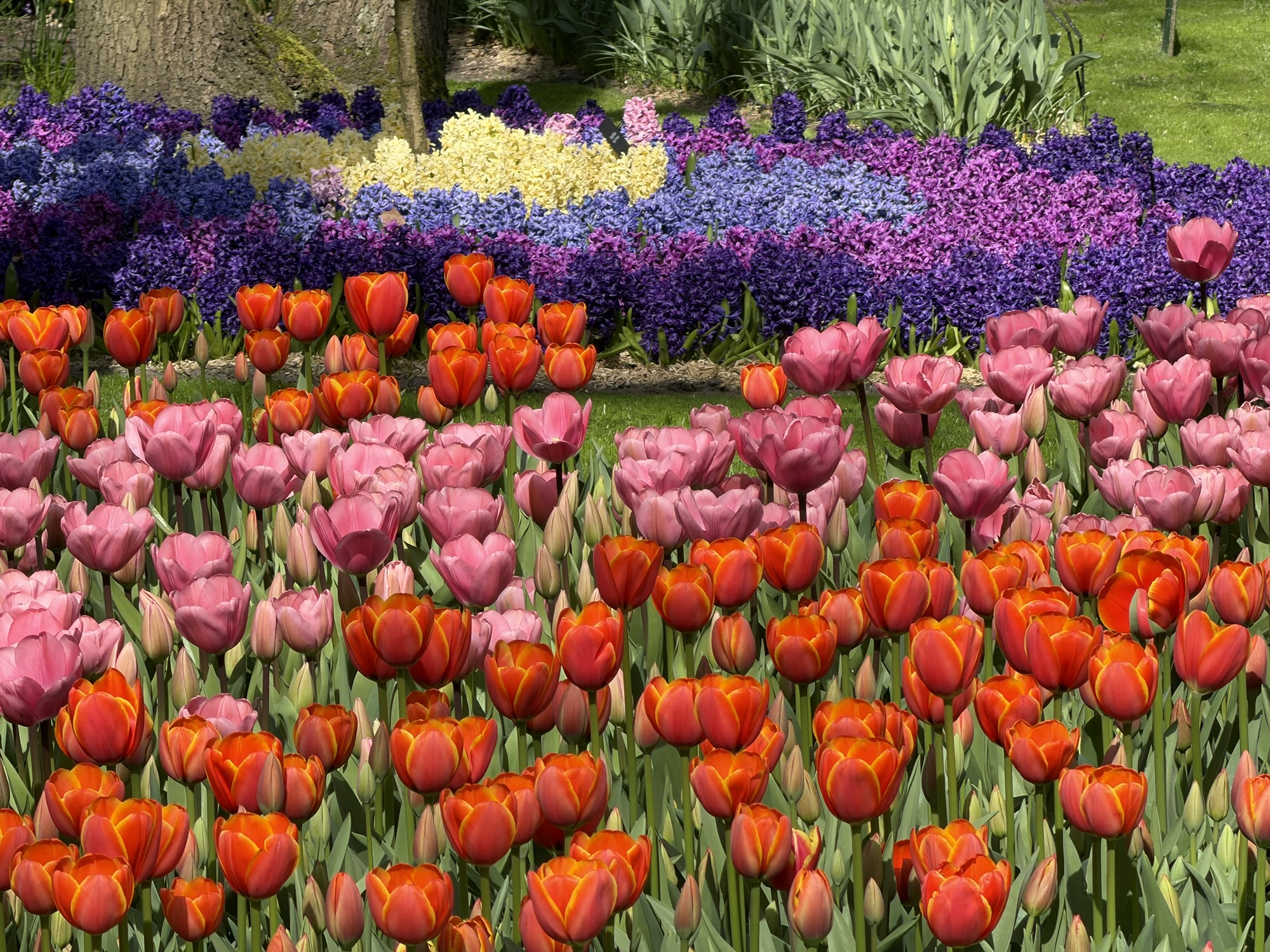
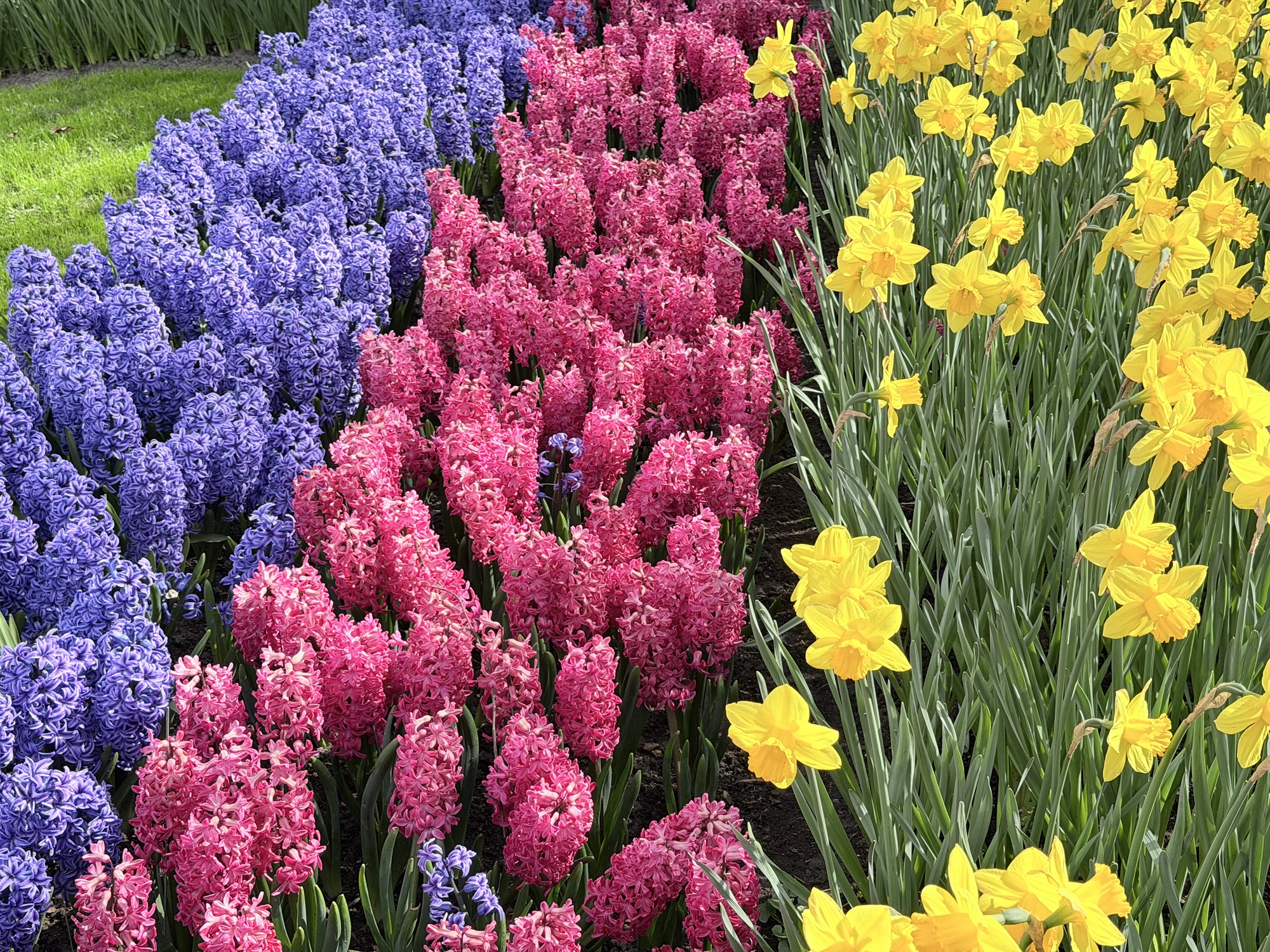
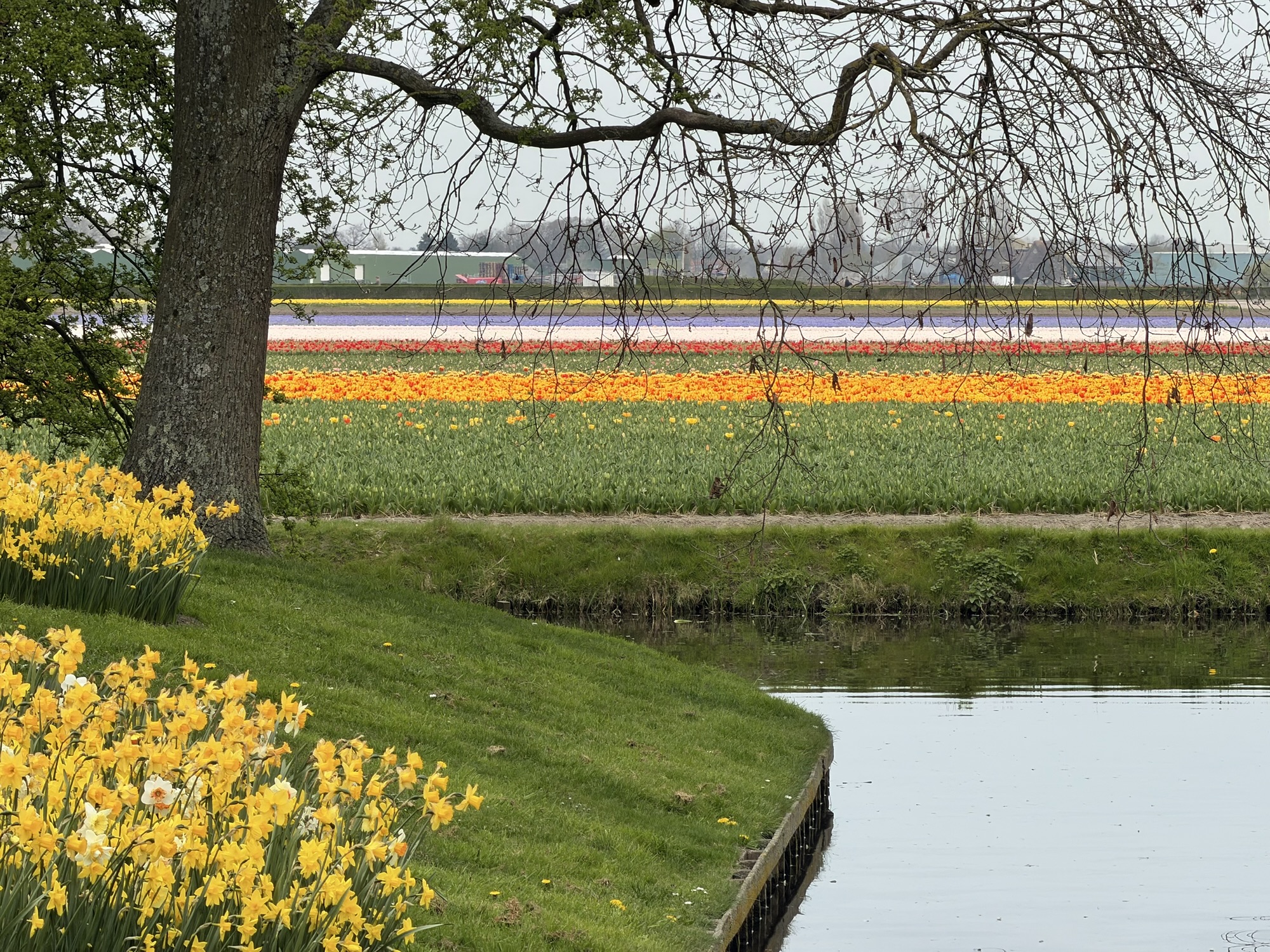
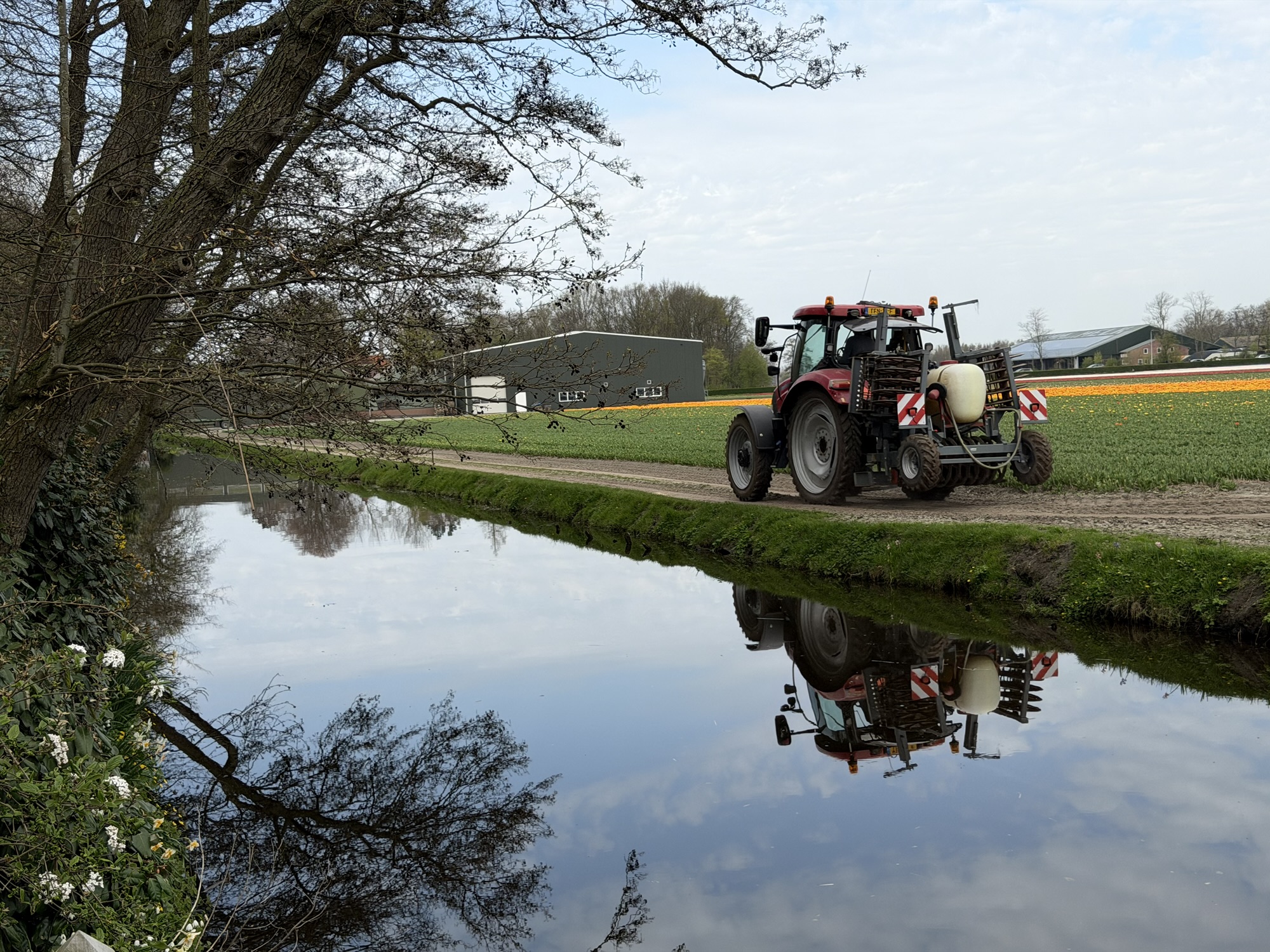
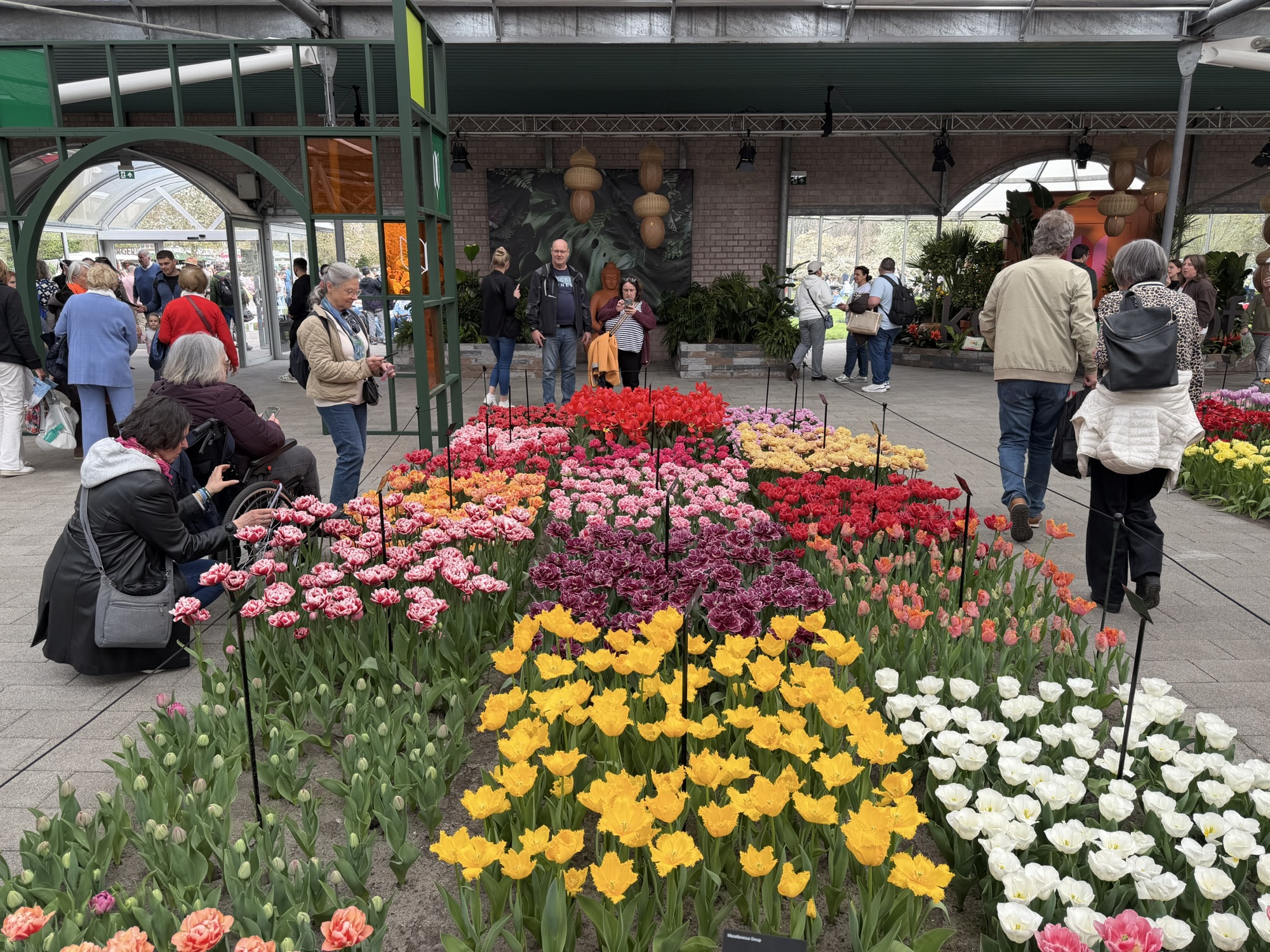
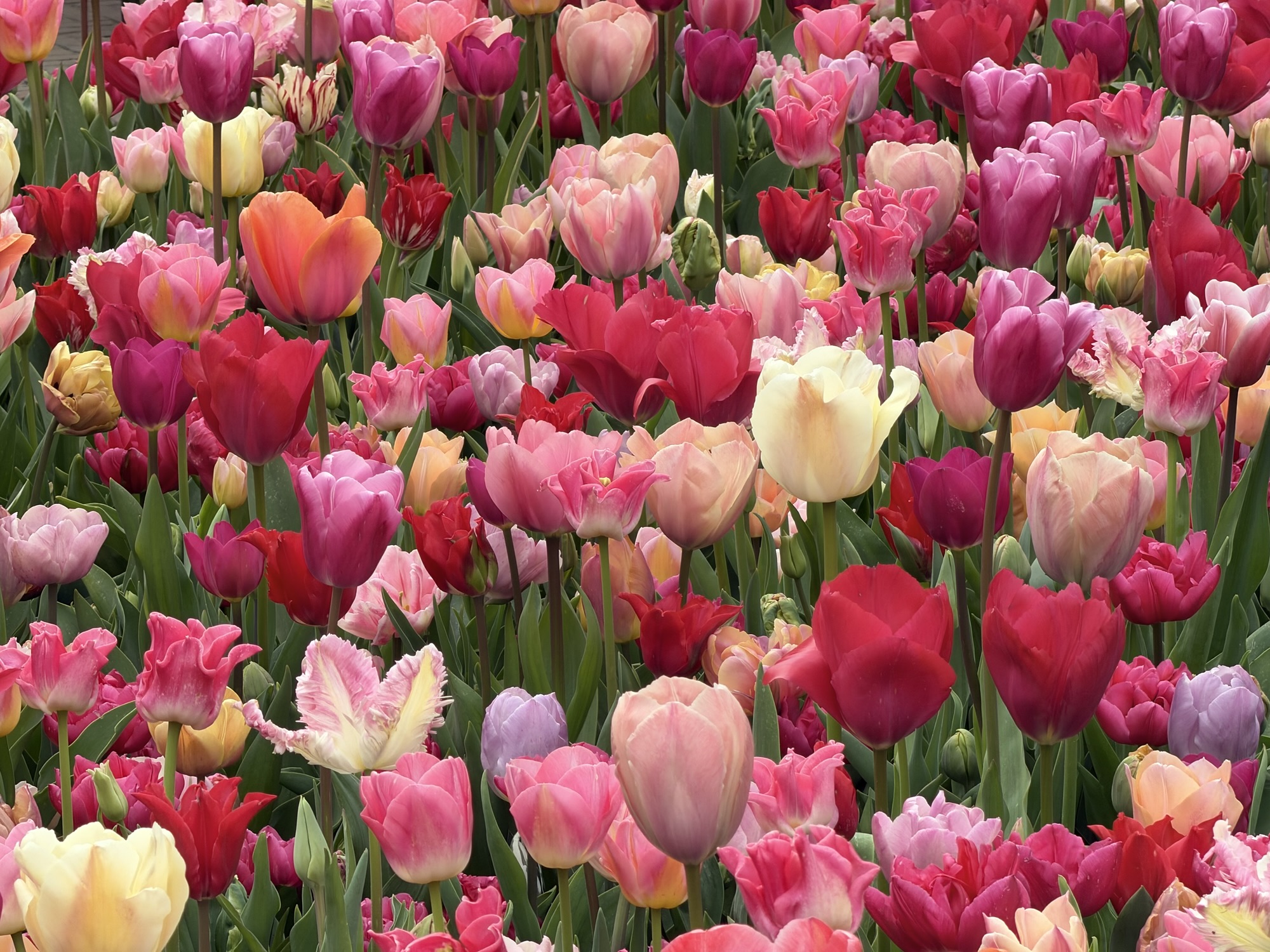
The drive took about an hour. There are fields of flowers, all around the formal gardens.
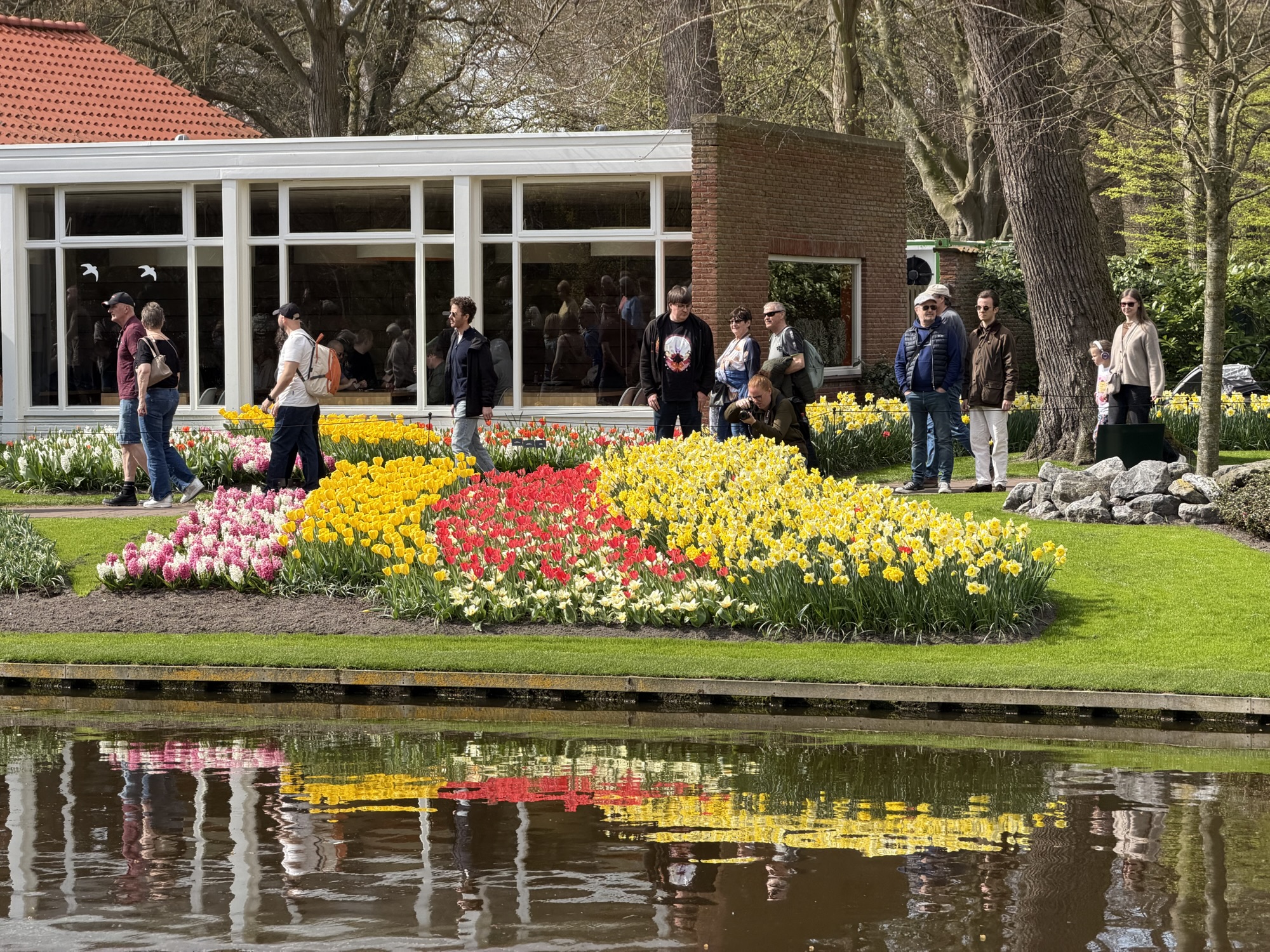
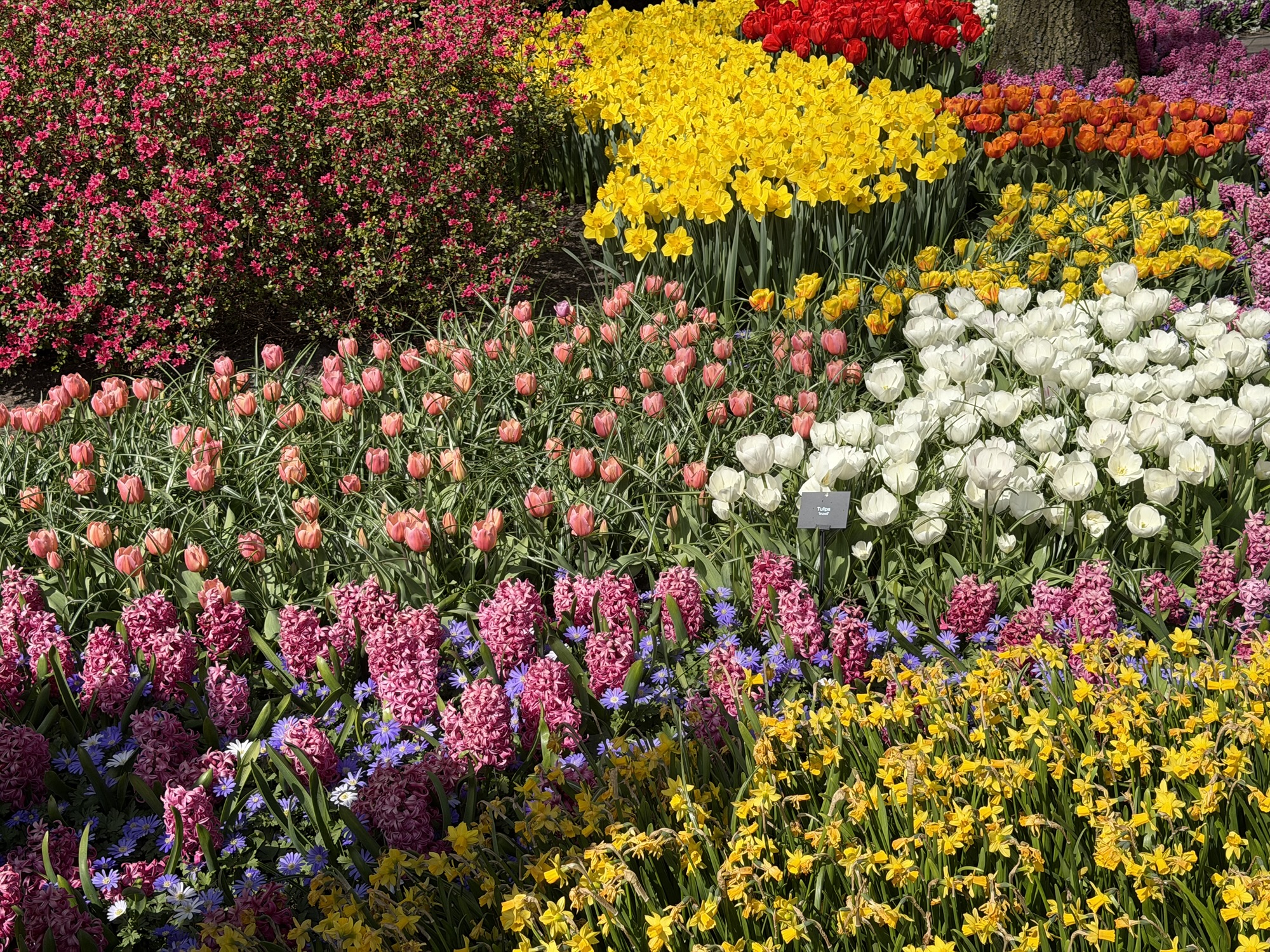
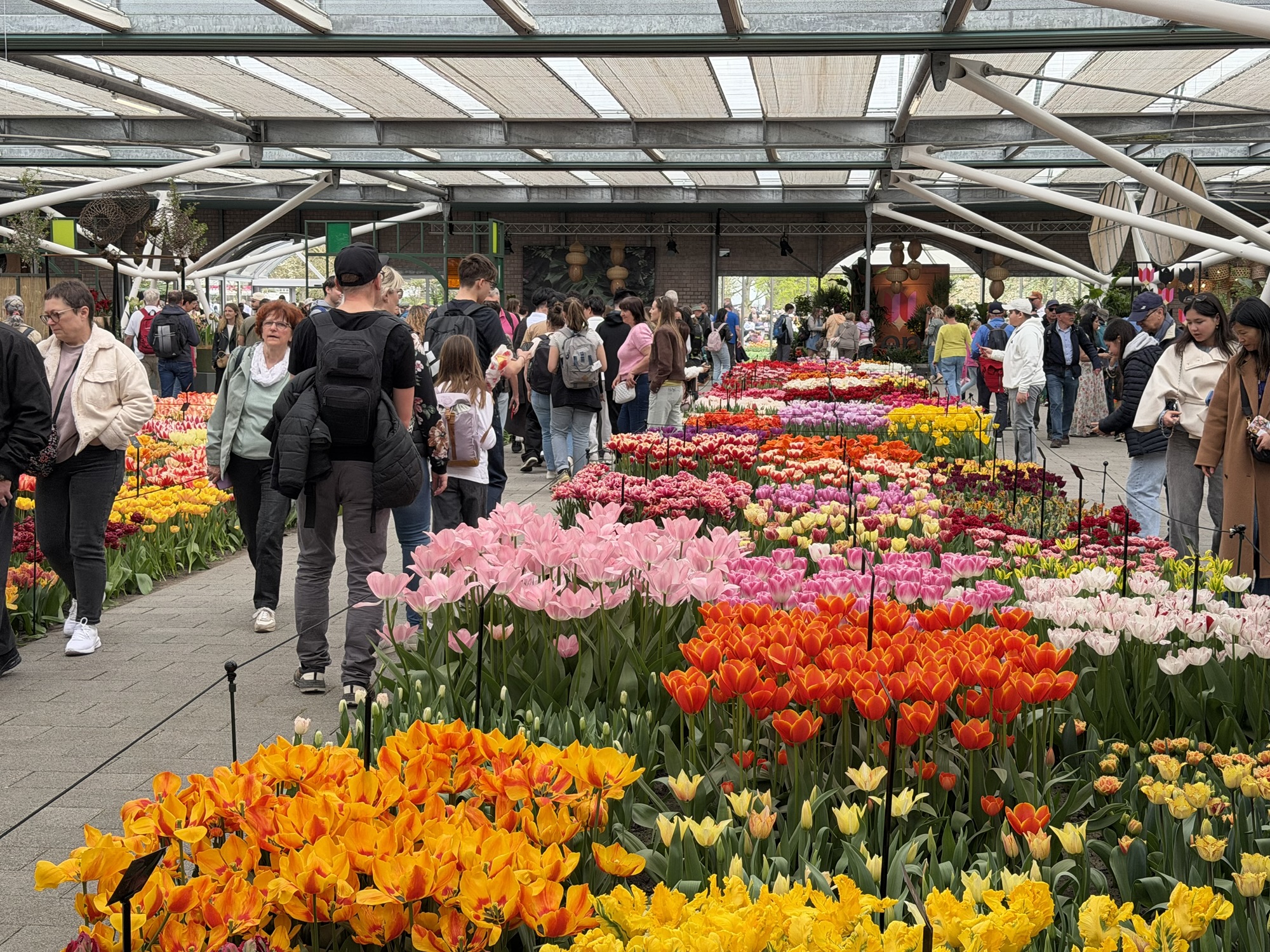
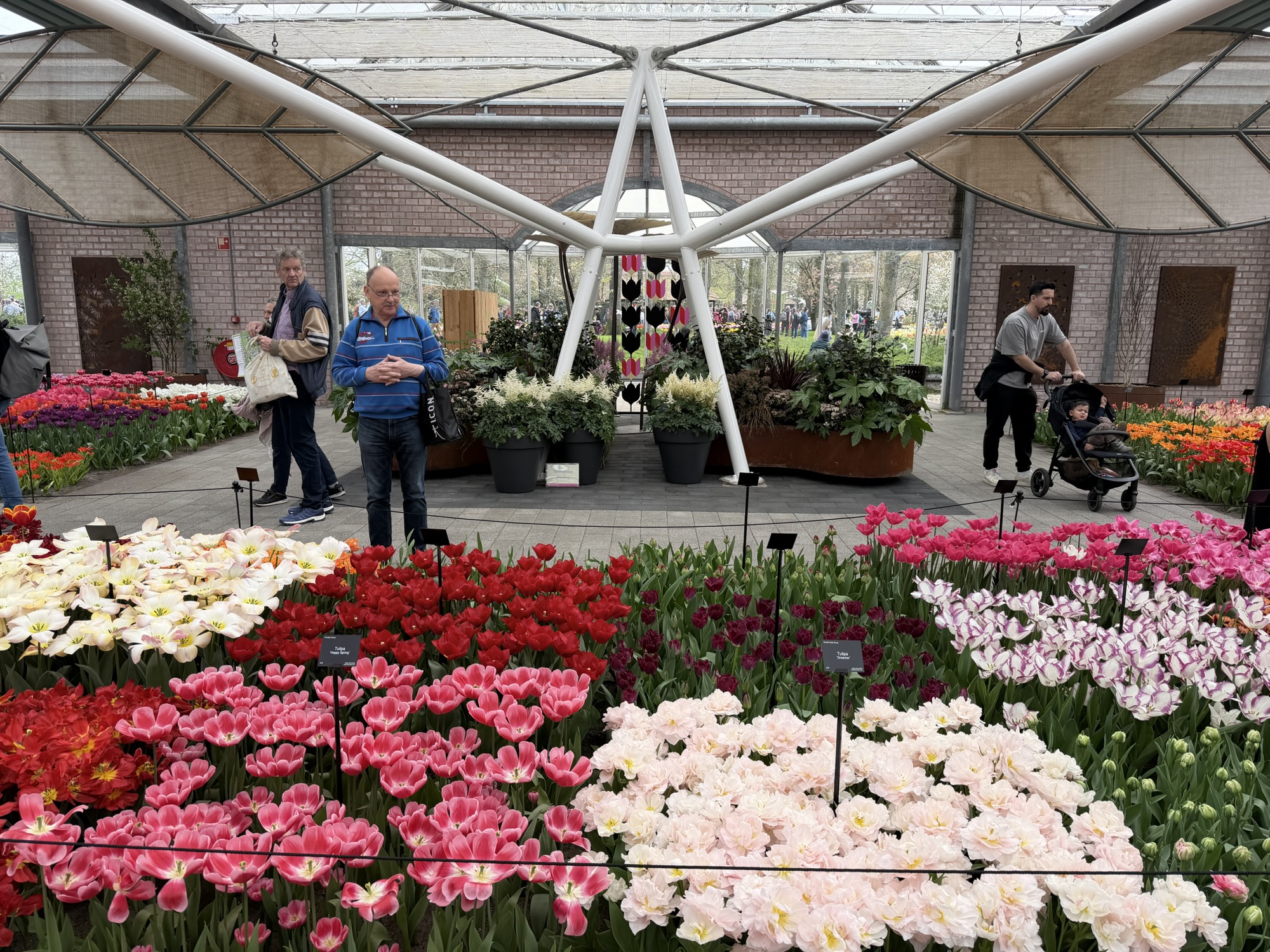
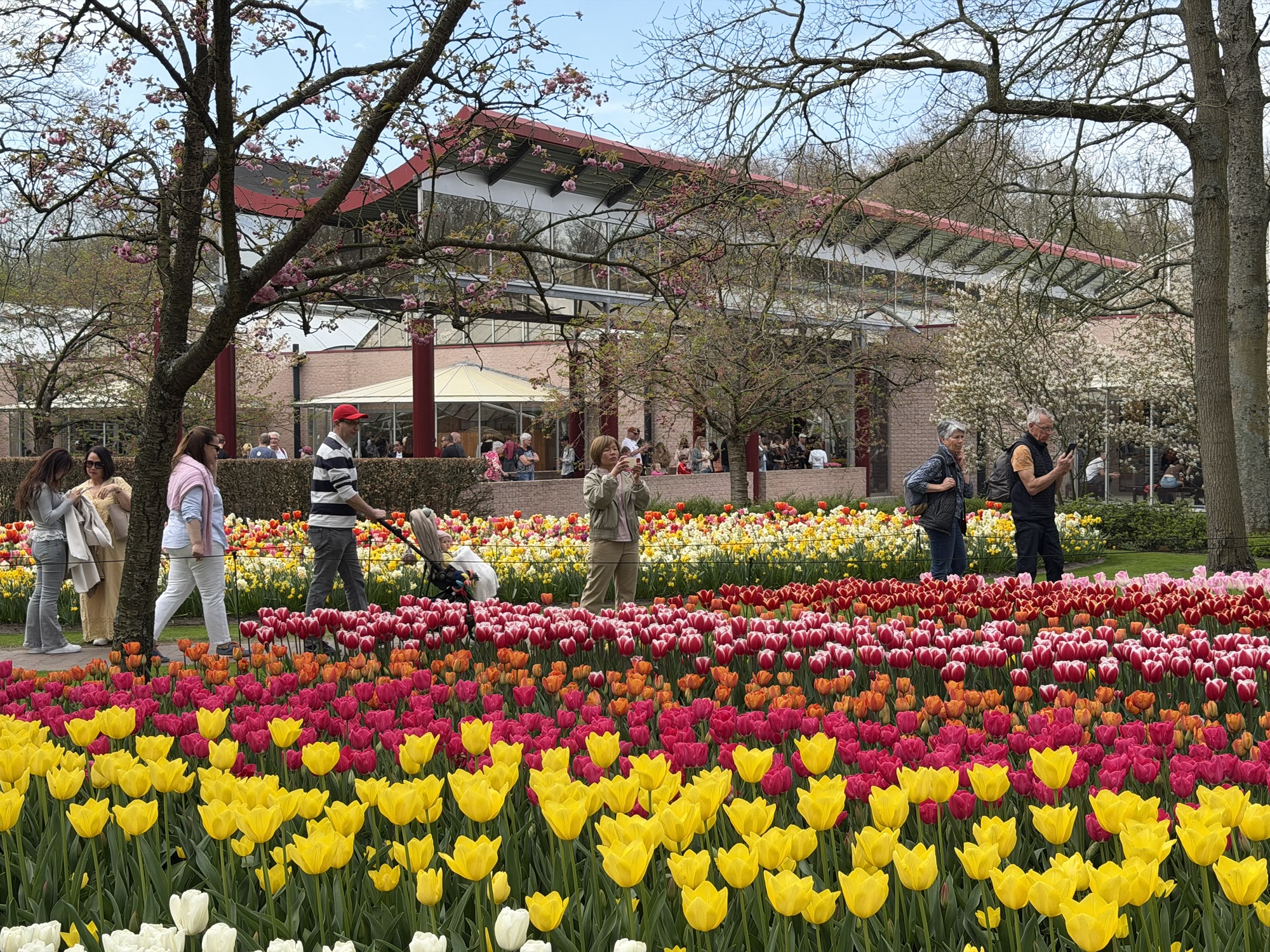
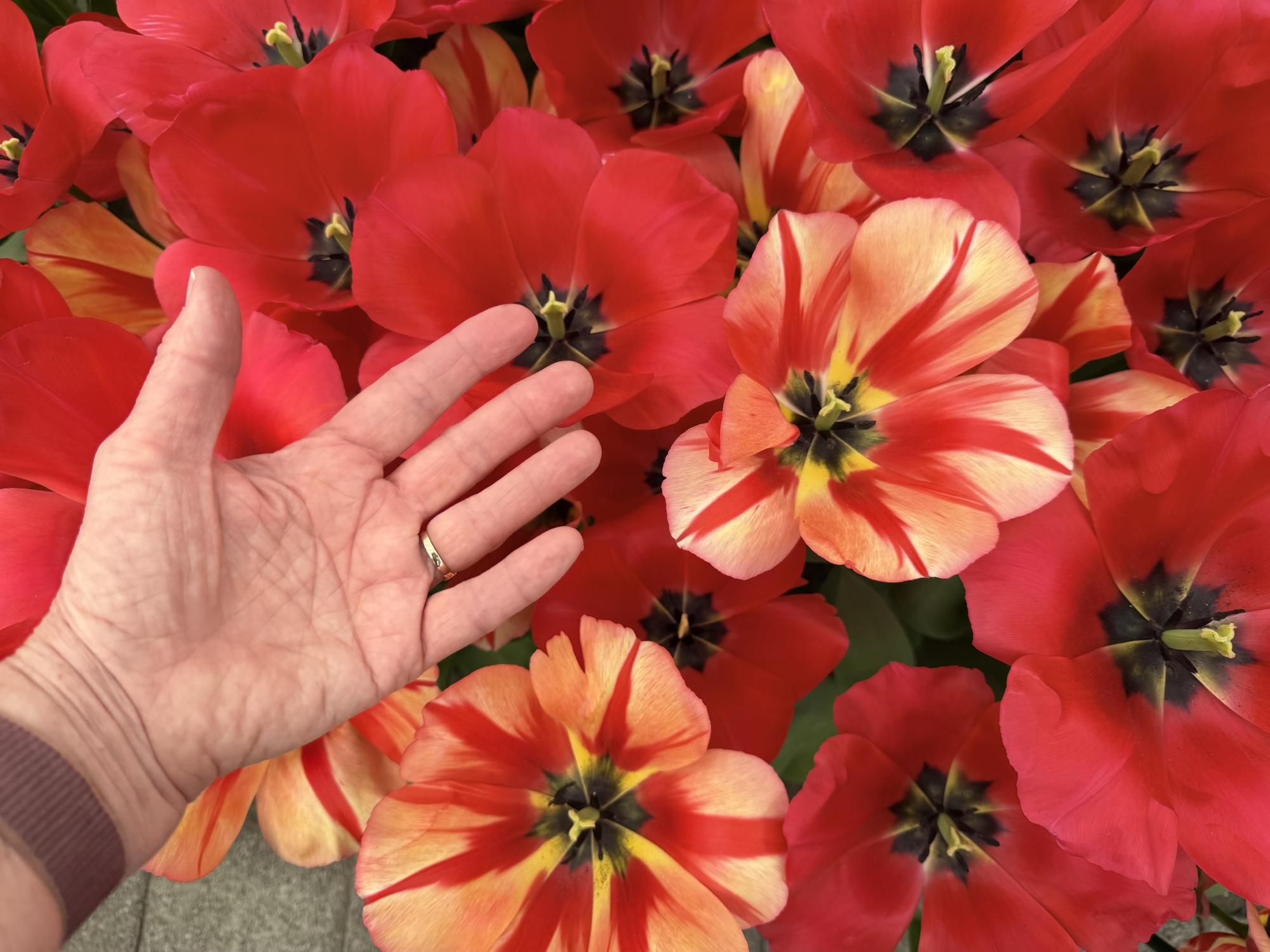
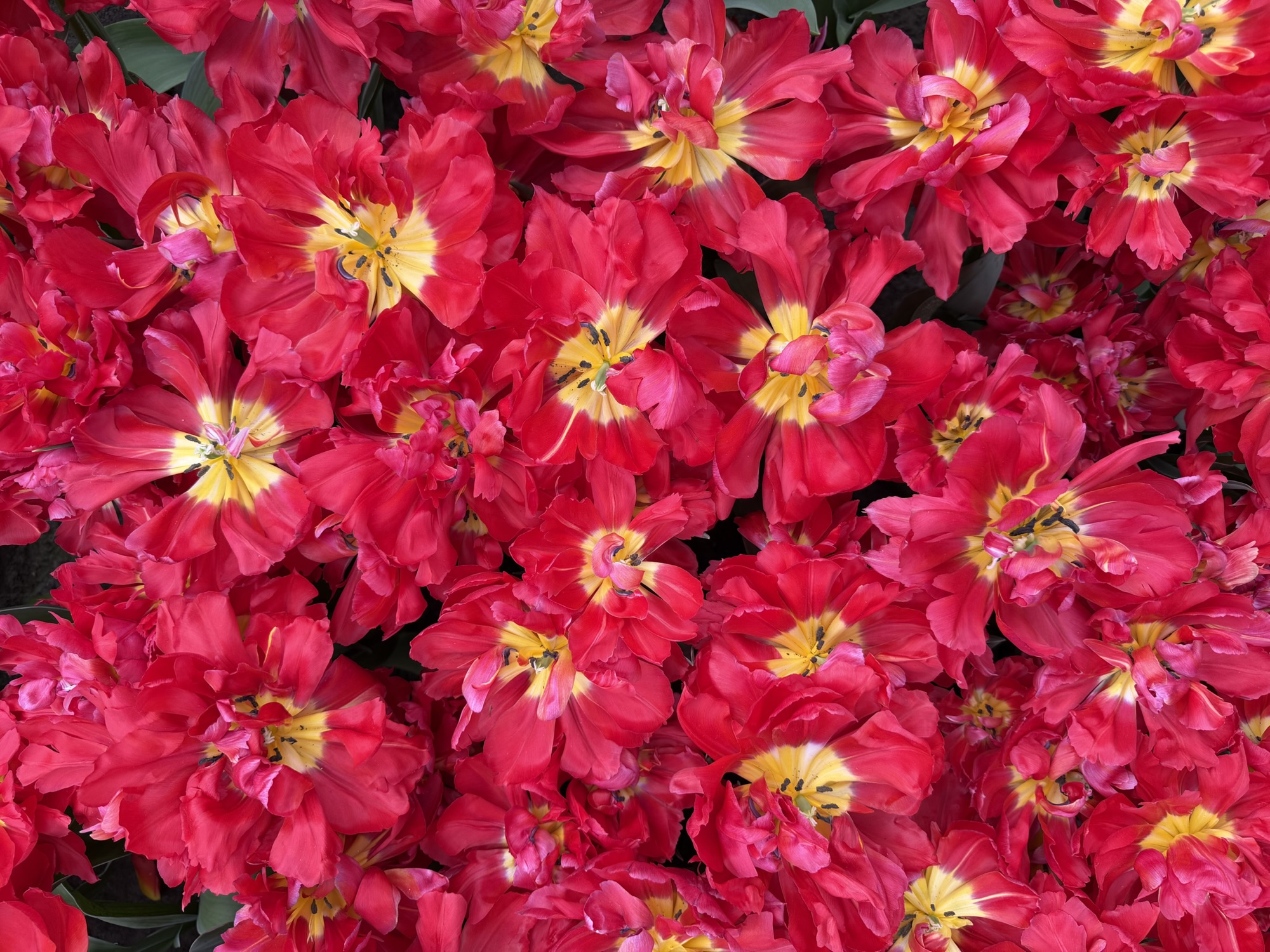
Keukenhof is only open for eight weeks each year, and receives over 1.4 million visitors to view the over 7 million flowering tulips, daffodils and other bulb flowers in spring.
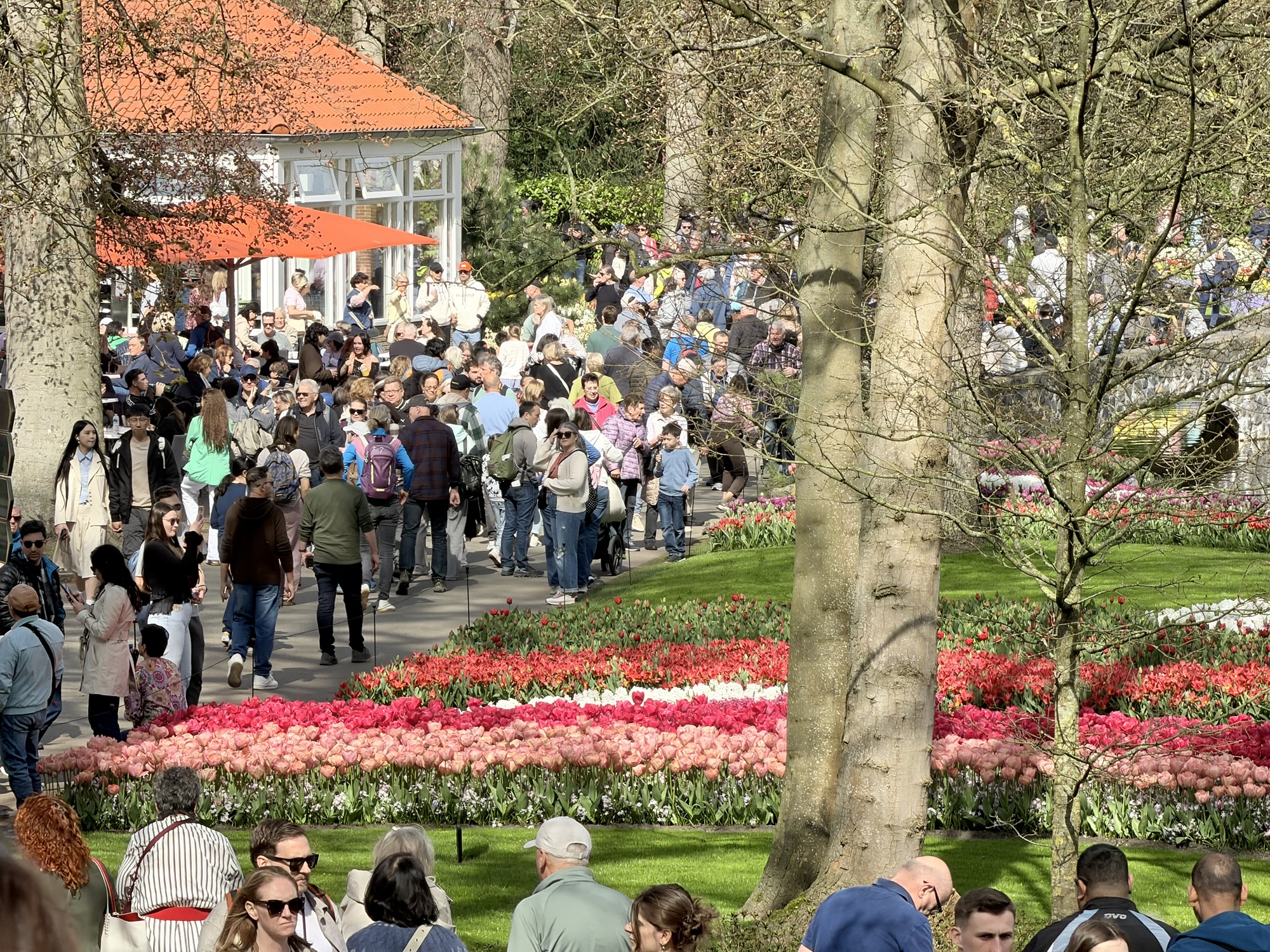
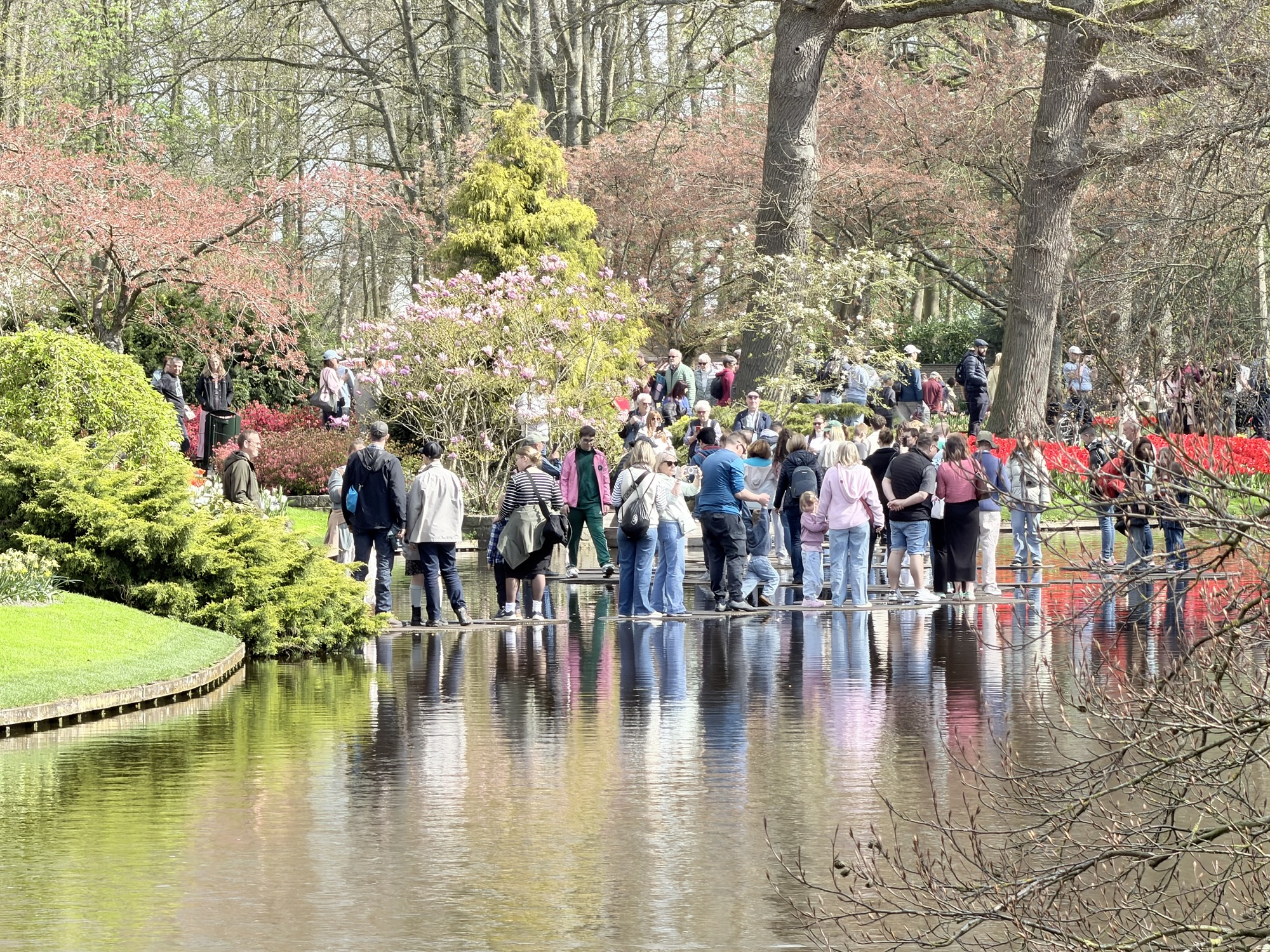
There were already a lot of people there when we arrived. It was very well organized with coach parking in one place, and car and bike parking in another.
We had already purchased our ticket months ago so we were able to walk in quickly with the QR codes on our tickets. The lines to purchase tickets were quite extensive.
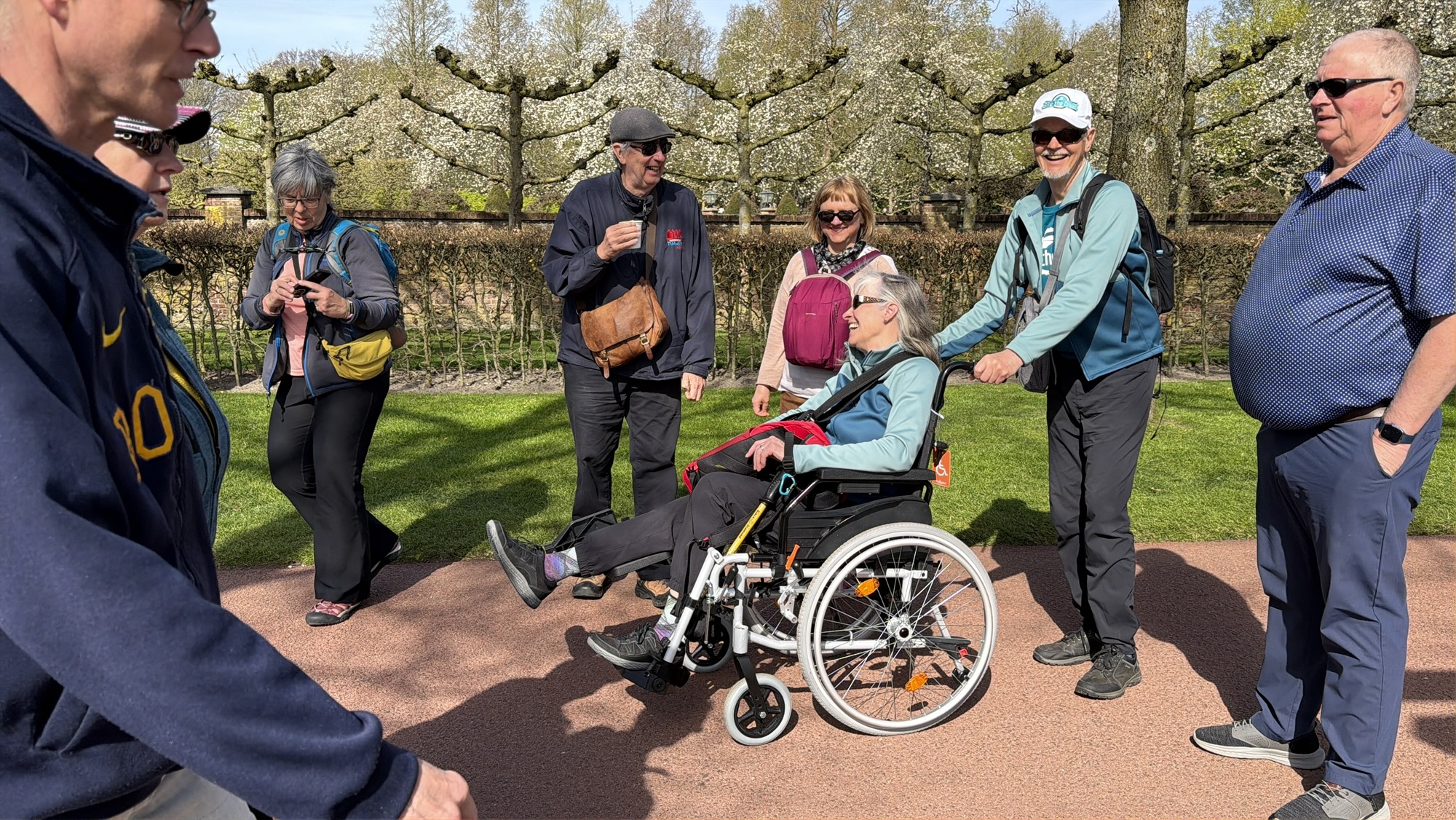
Our tour guide told Dayle that she might be able to get a wheelchair there so she could continue resting her Achilles tendon, and she was right.
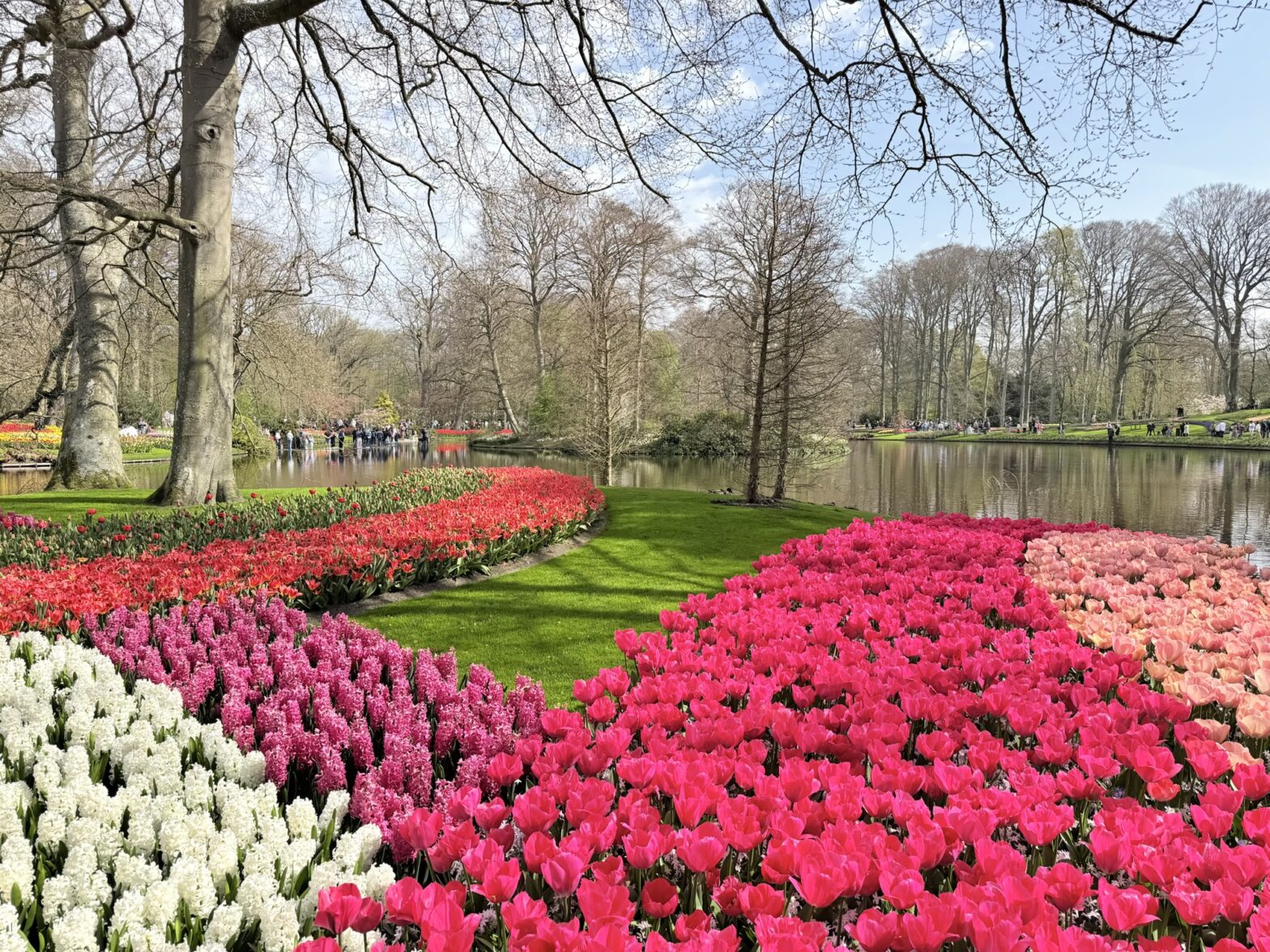
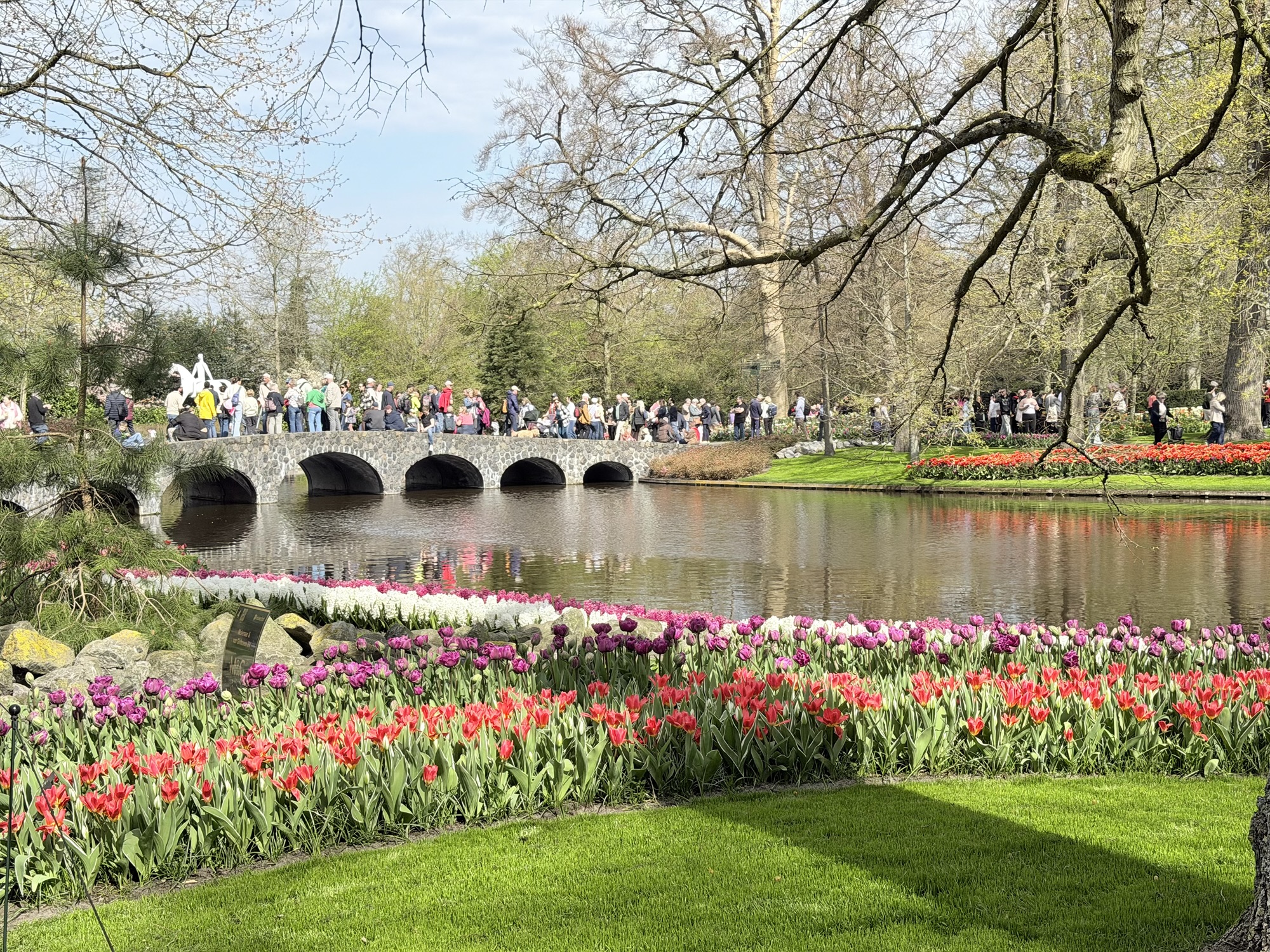
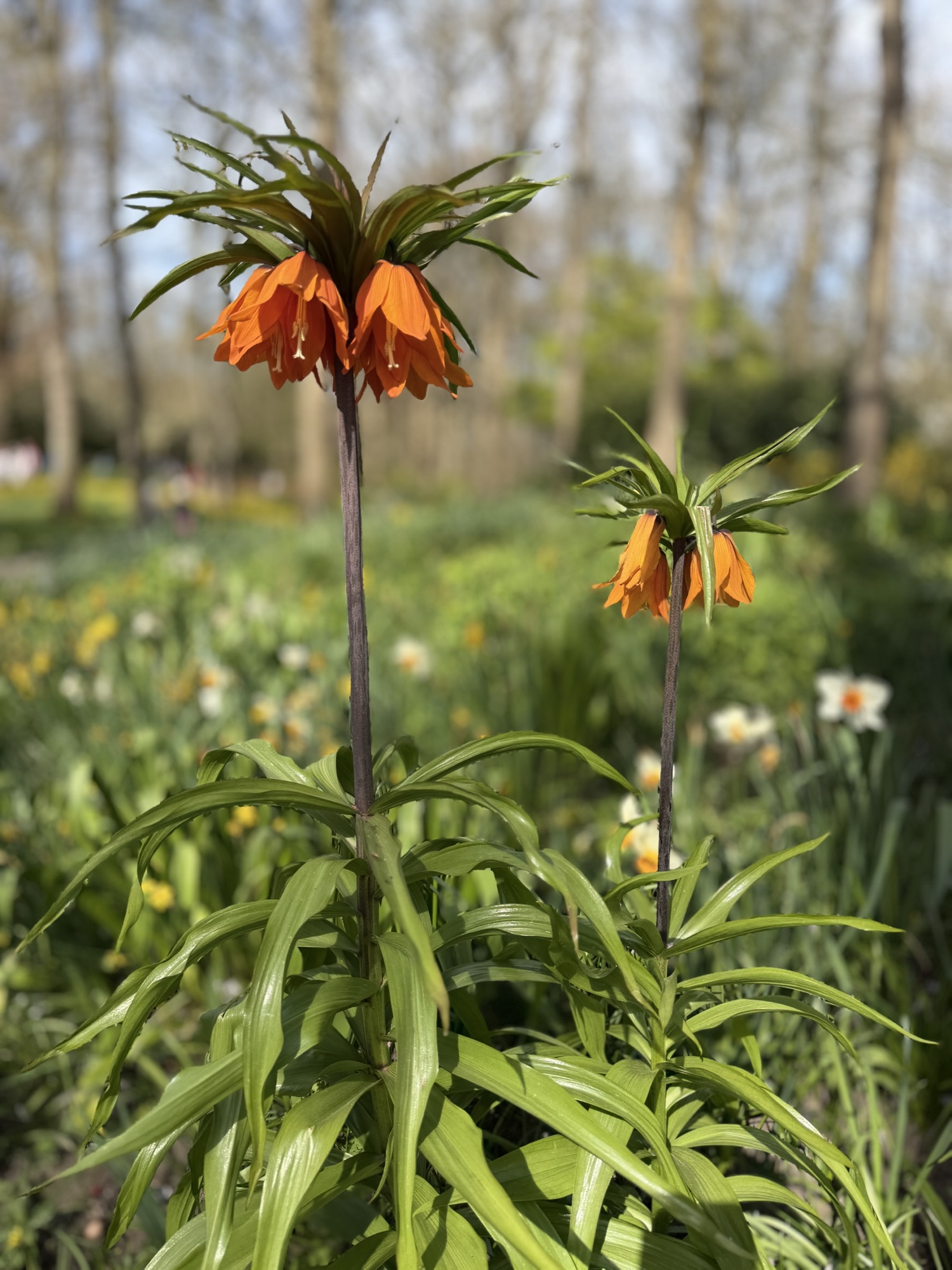
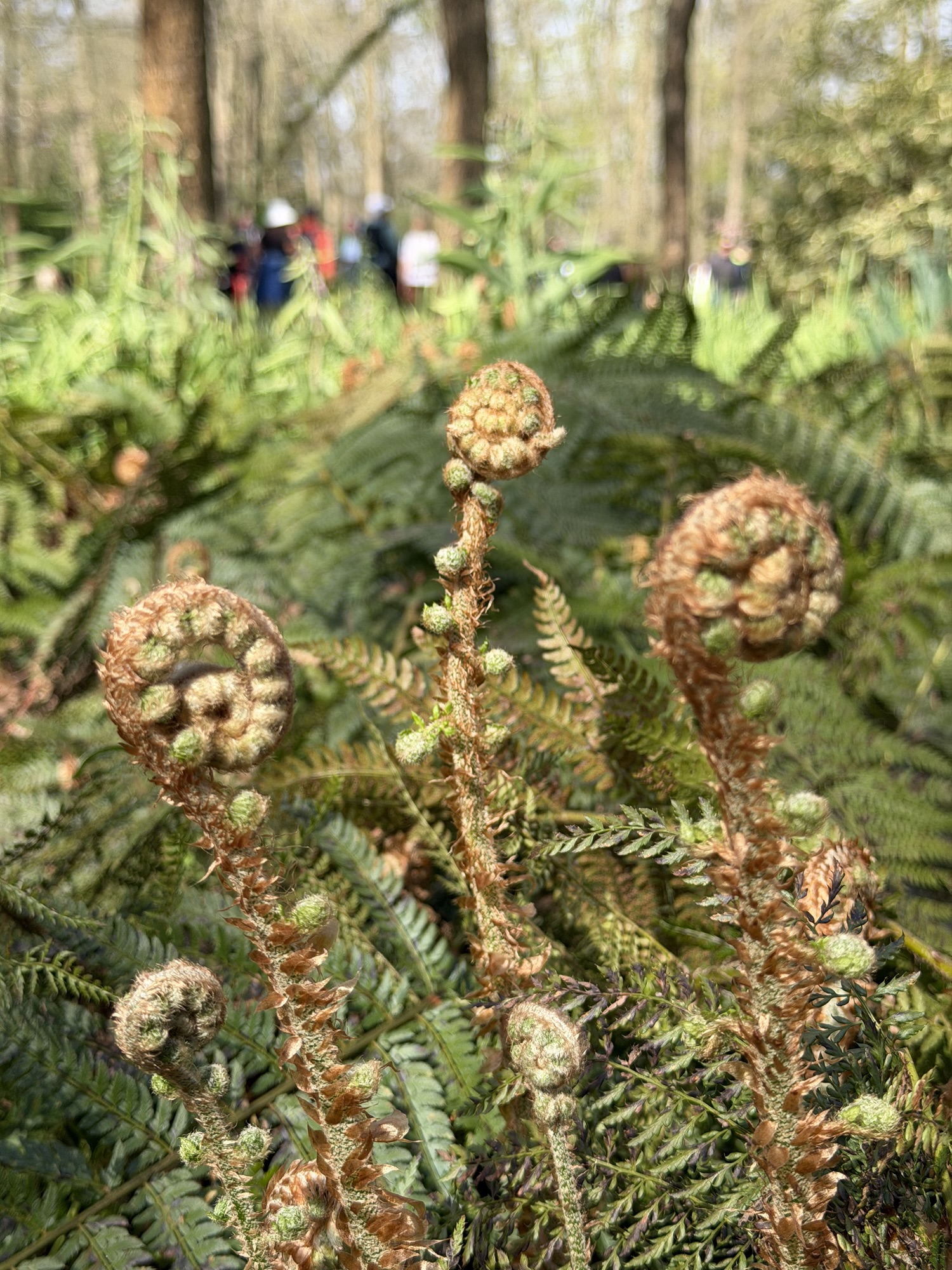
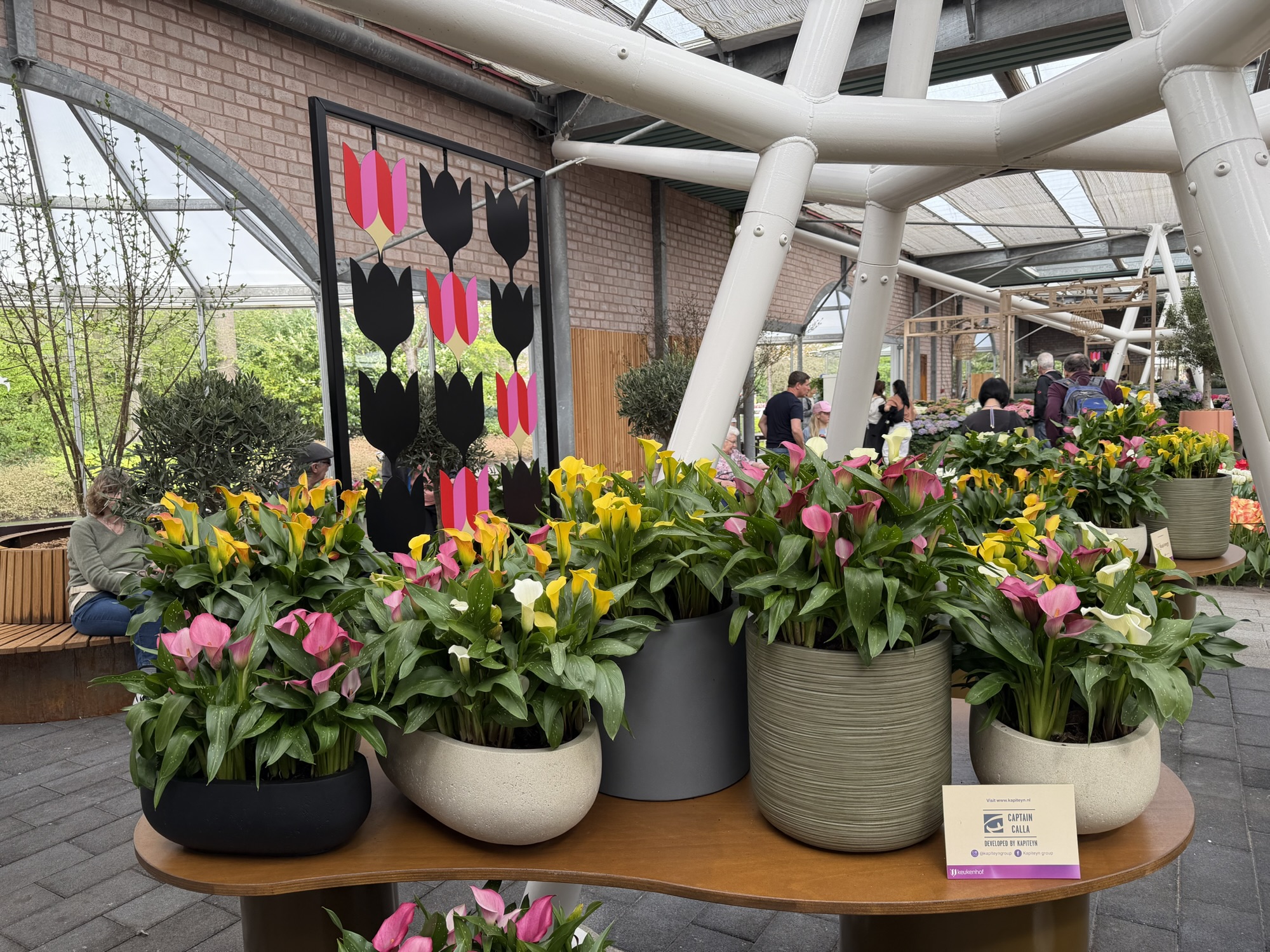
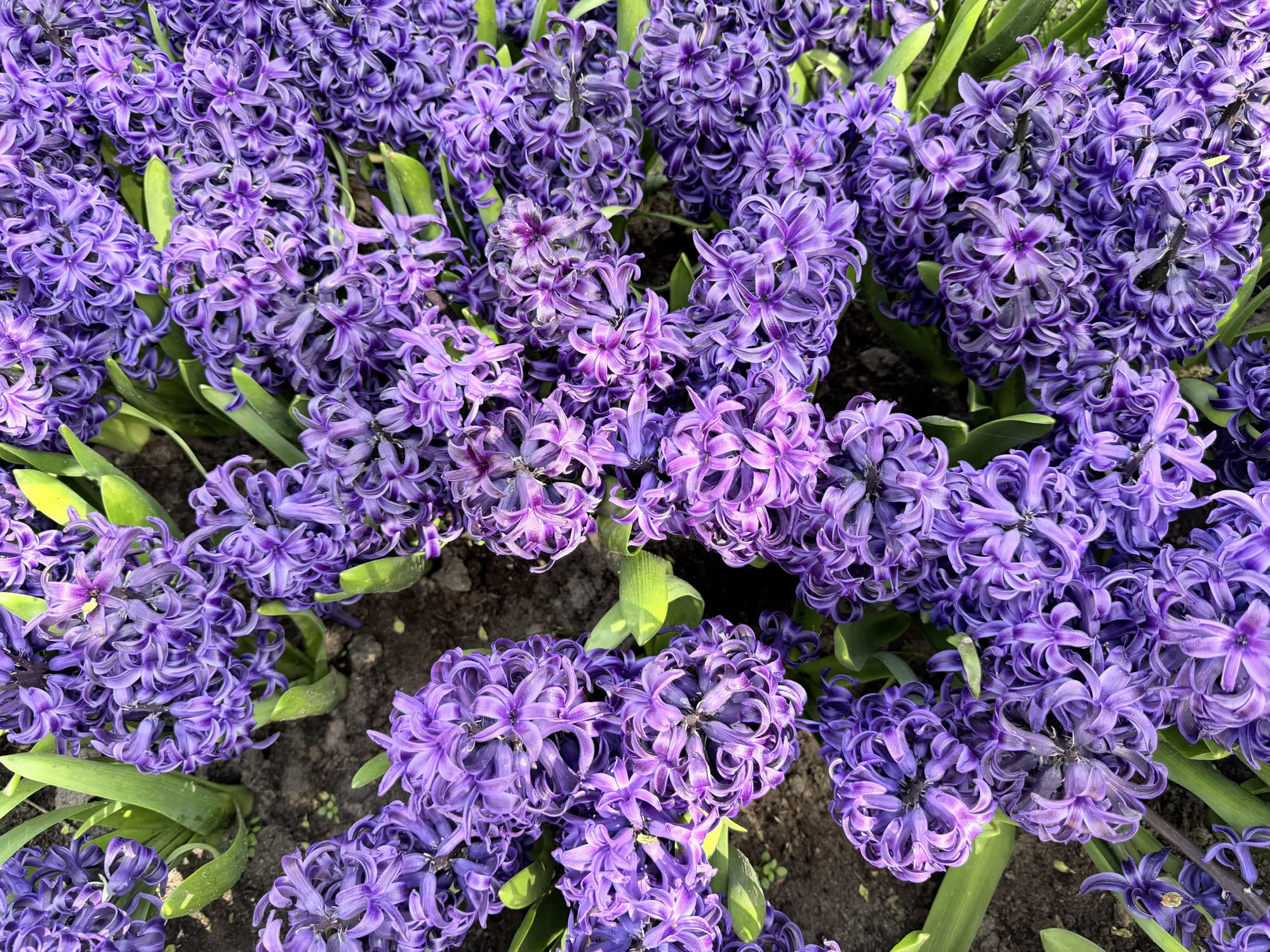
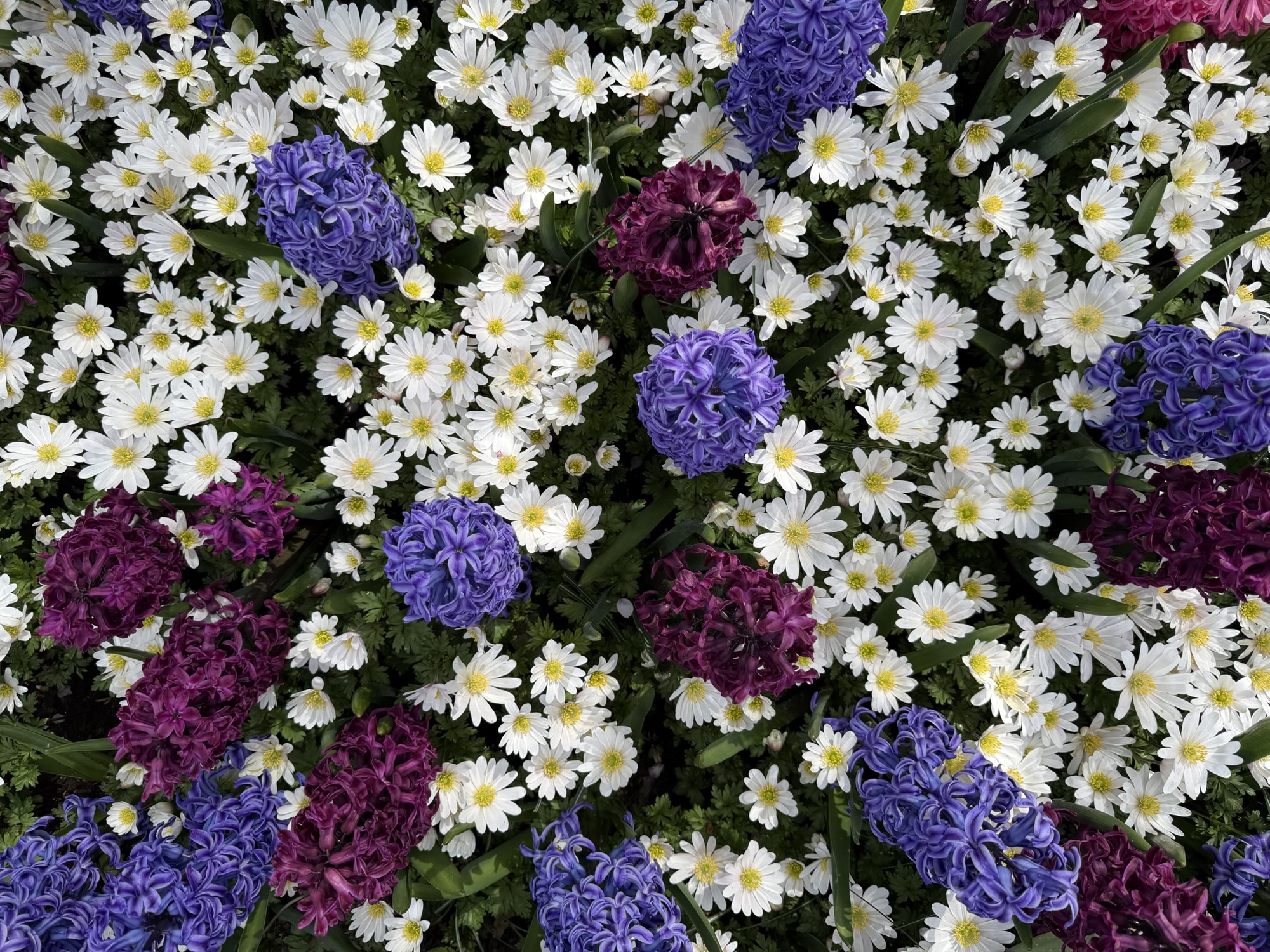
I have so many beautiful images that I’m going to group them into categories and put them in as a slideshows between text. We decided to stay together, and were for the most part surprisingly successful given the number of people.
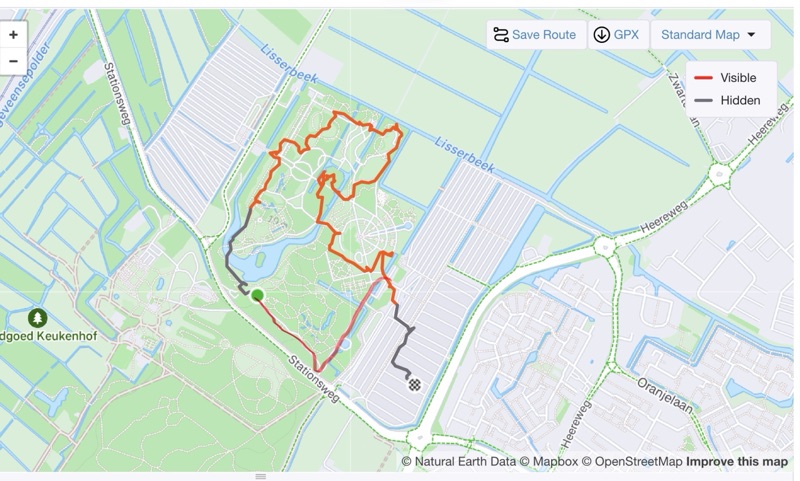
The gardens were enormous and in three hours, we did not get through them all. I forgot to put on Strava right away, but this drew in where we walked before I started recording. This image will show you the ground we covered and what we missed. You can see that even in the Netherlands, where many people travel by coach, train, and bike, parking lots can exceed the space needed for the attraction they are built for.
Screenshot
It was very well organized. There were ropes at about knee height around all of the gardens and people were very respectful about staying on the paths.
I took a video of the stunning open area near the centre.
Despite the crush of people, it was sometimes possible to get pictures without any people or too many people in the way.
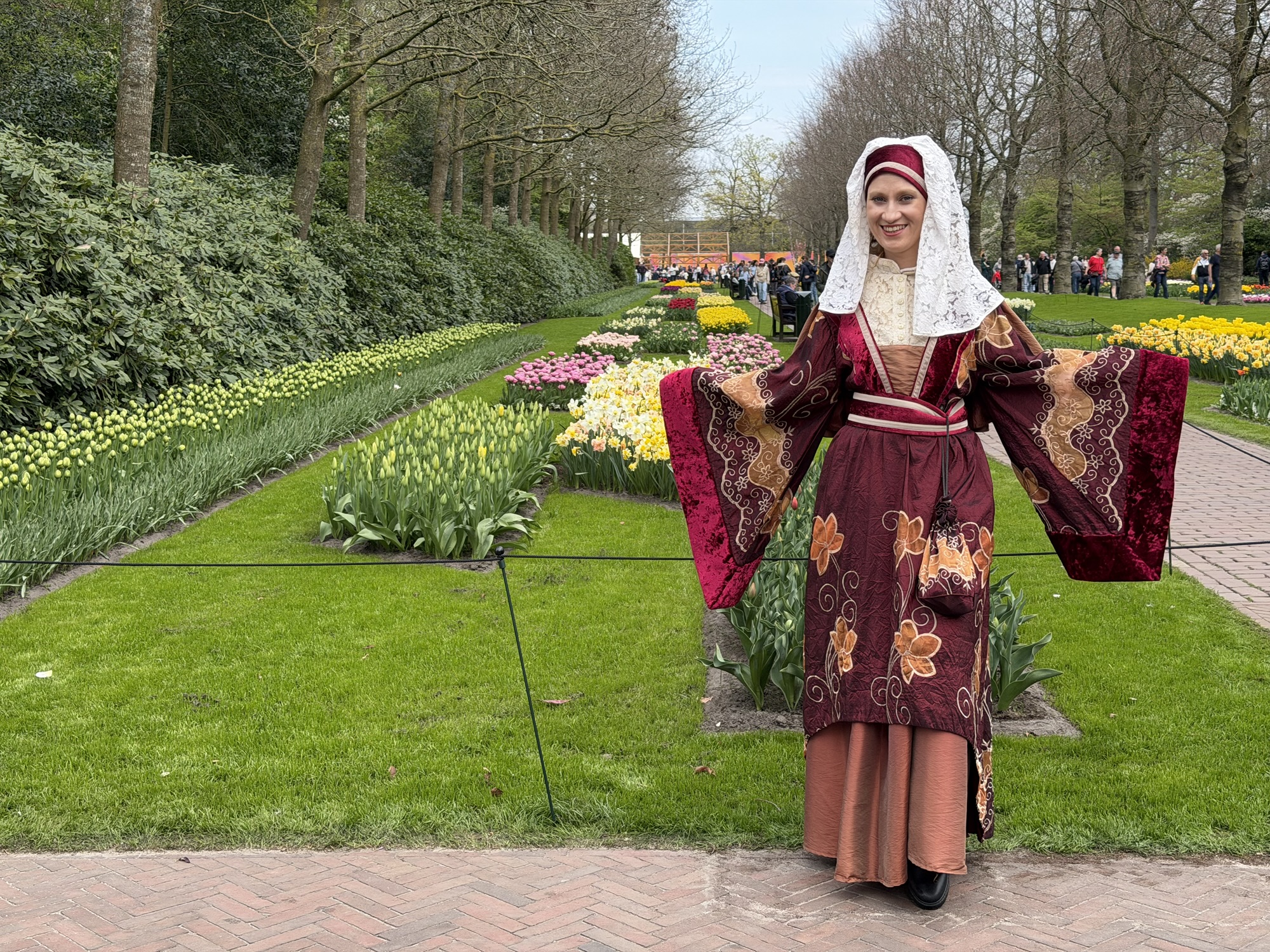
Keukenhofdates back to the 15th century. “Countess Jacoba van Beieren [Jacqueline of Bavaria] (1401-1436) used ‘Keukenduyn’ [kitchen dunes] as hunting ground for the kitchen of Teylingen Castle. Keukenhof Castle was built in 1641 and the estate grew to encompass an area of over 200 hectares.”
This young woman is dressed Countess Jacoba.
Landscape architects Jan David Zocher and his son Louis Paul Zocher, who also designed Amsterdam’s Vondelpark, redesigned the castle gardens in 1857. That park, in the English landscape style, still constitutes the basis of Keukenhof.
In 1949 a group of 20 leading flower bulb growers and exporters came up with the plan to use the estate to exhibit spring-flowering bulbs, signaling the birth of Keukenhof as a spring park. The park opened its gates to the public in 1950 and was an instant success, with 236,000 visitors in the first year alone. 2024 was the 75th edition of Keukenhof which has become a world-famous attraction.
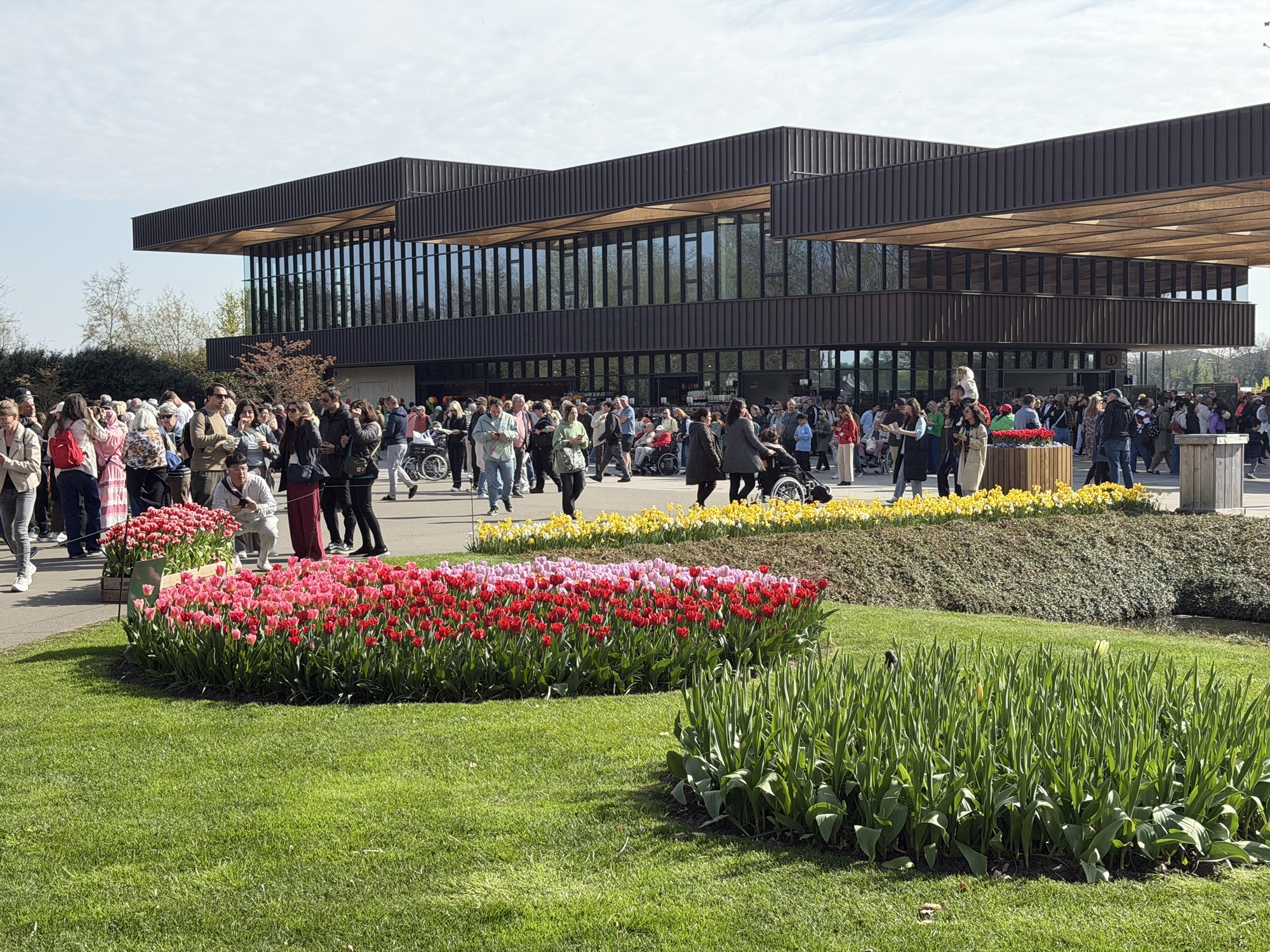
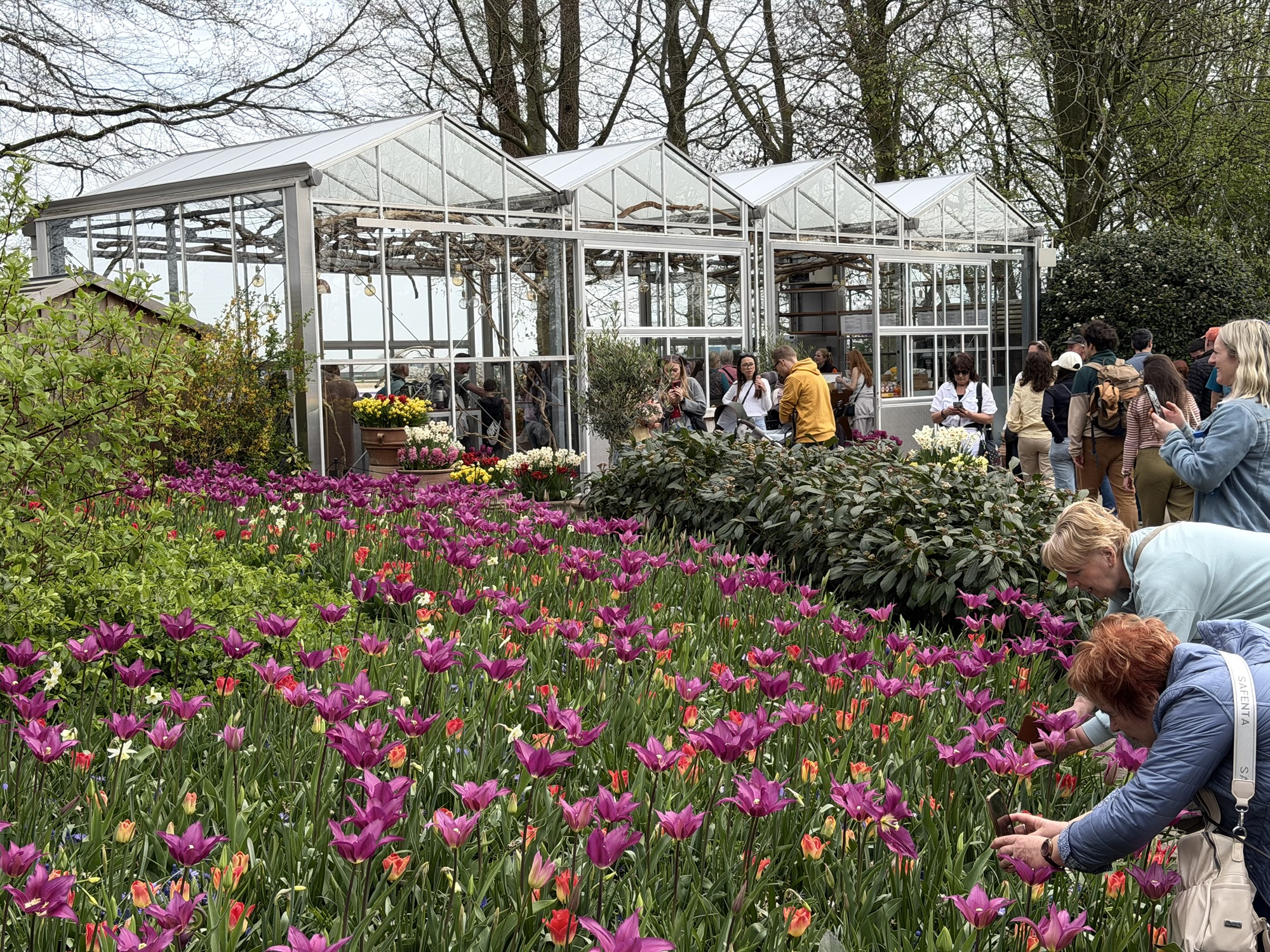
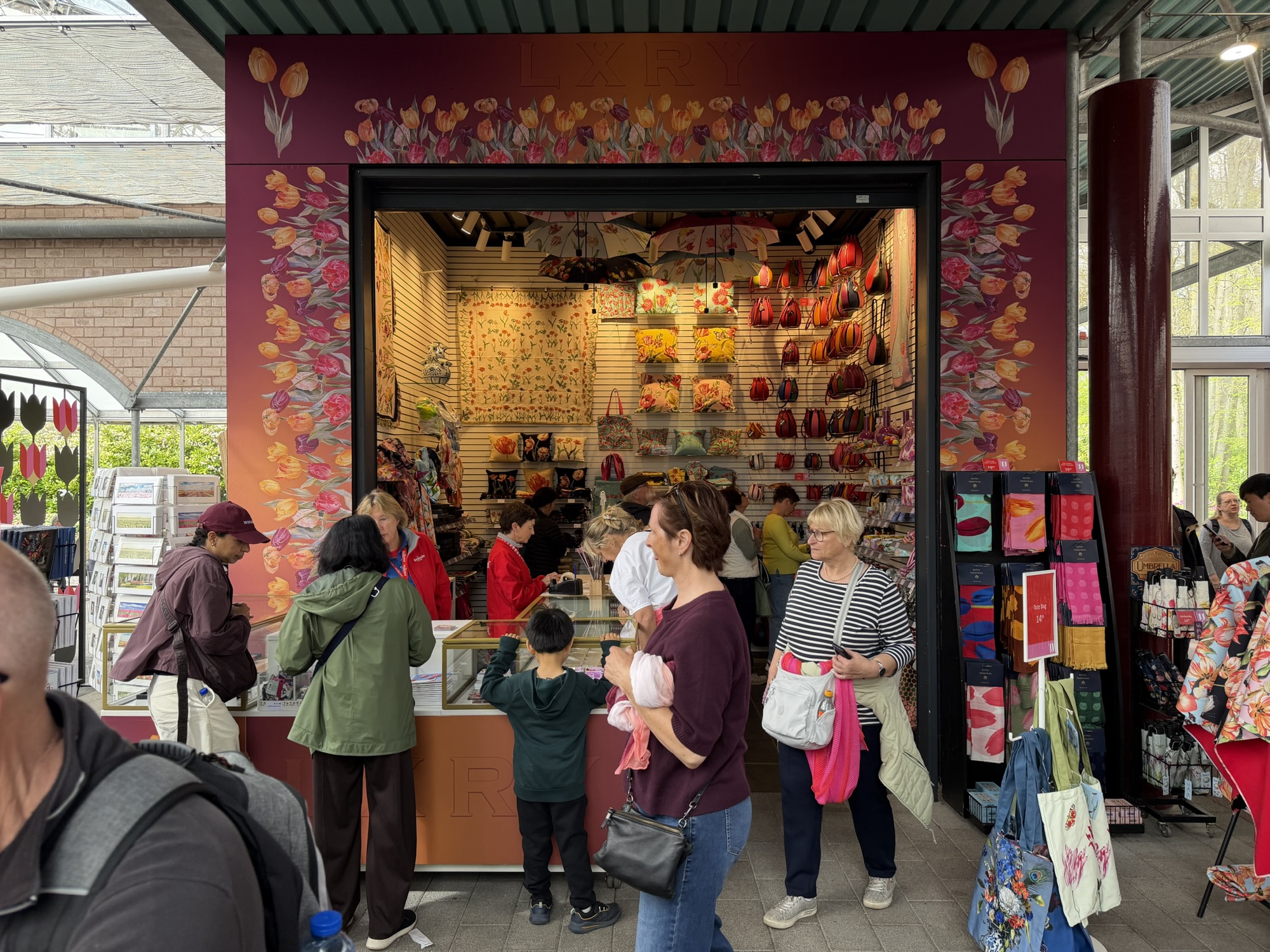
There were many places to buy many types of food, and tulip themed souvenirs, which were spread out nicely so they weren’t overly crowded despite the crush of people. This was a coffee shop with tables and views of the fields beyond the formal gardens.
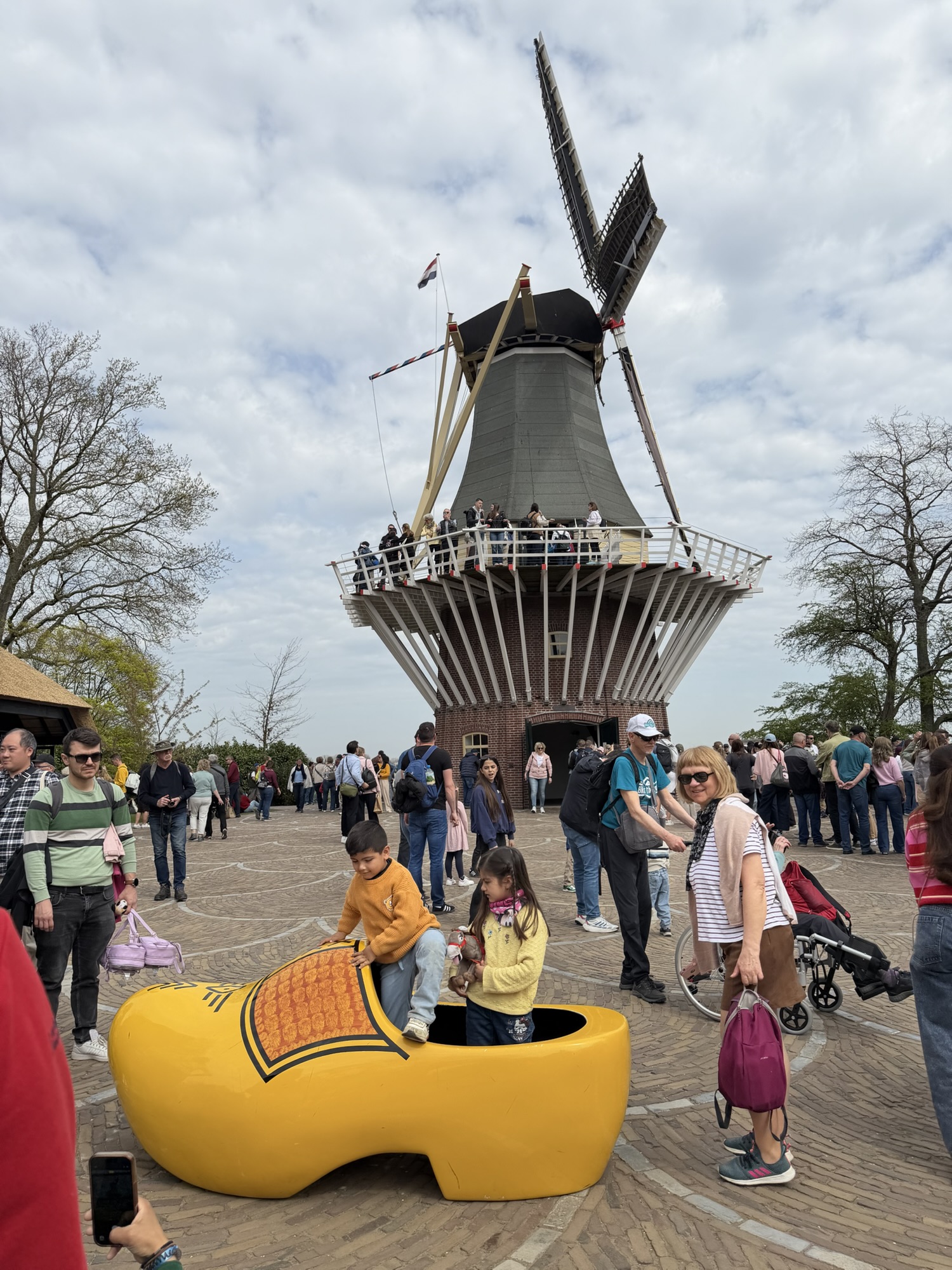
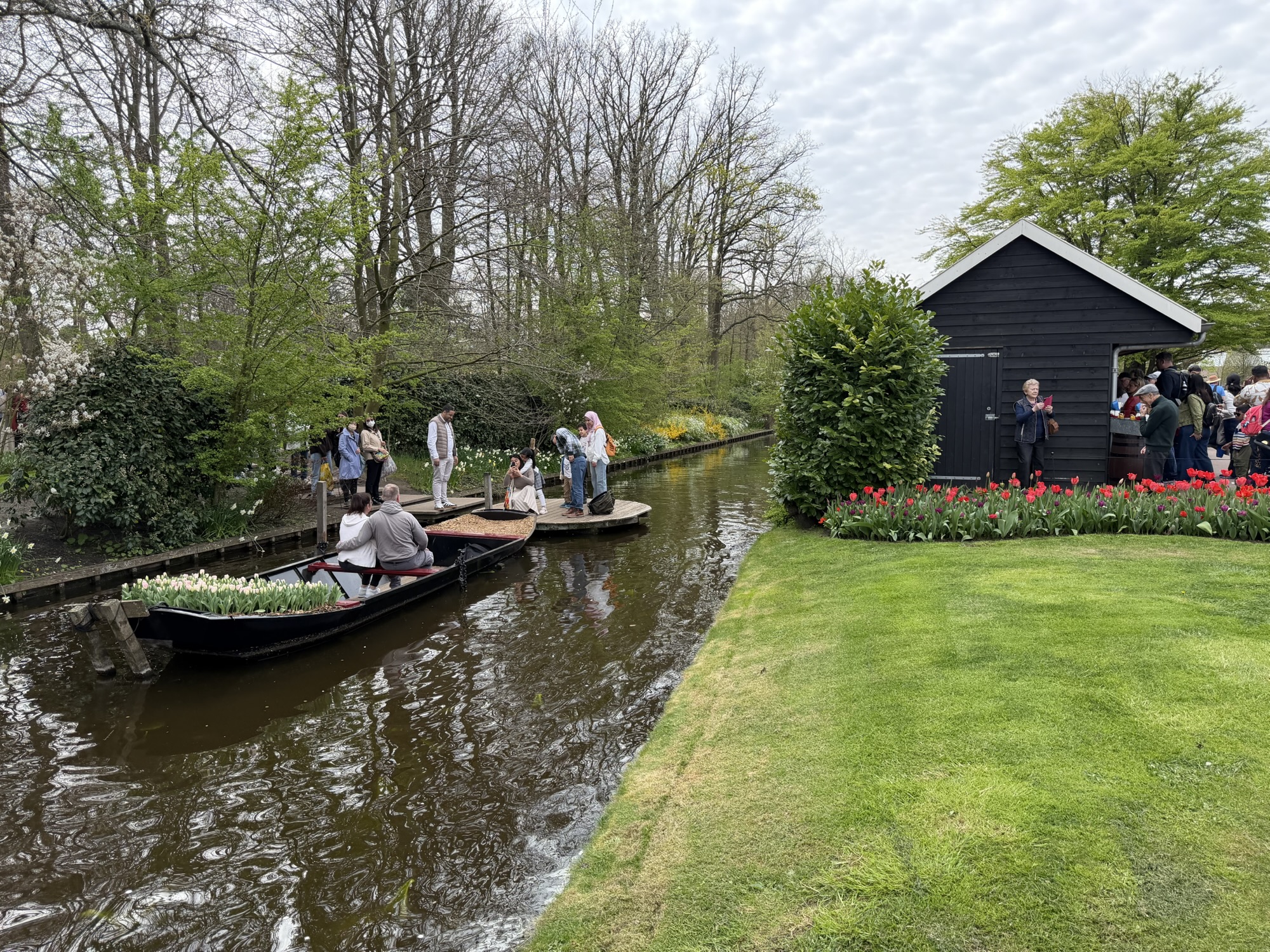
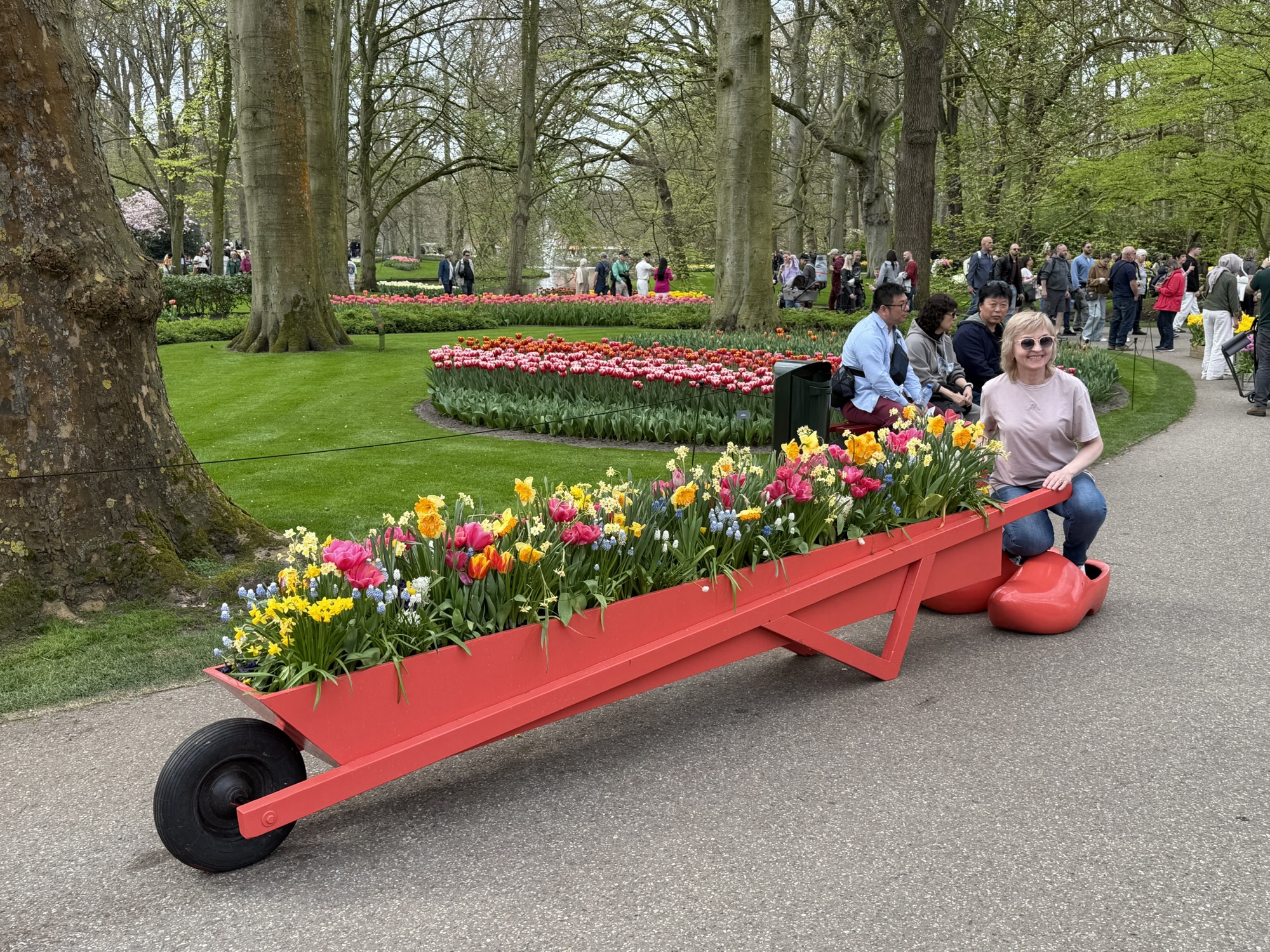
There was a lineup to climb up the windmill, to sit in a clog, or a boat, or to push a comically large wheelbarrow, but none of us chose to wait to do those things.
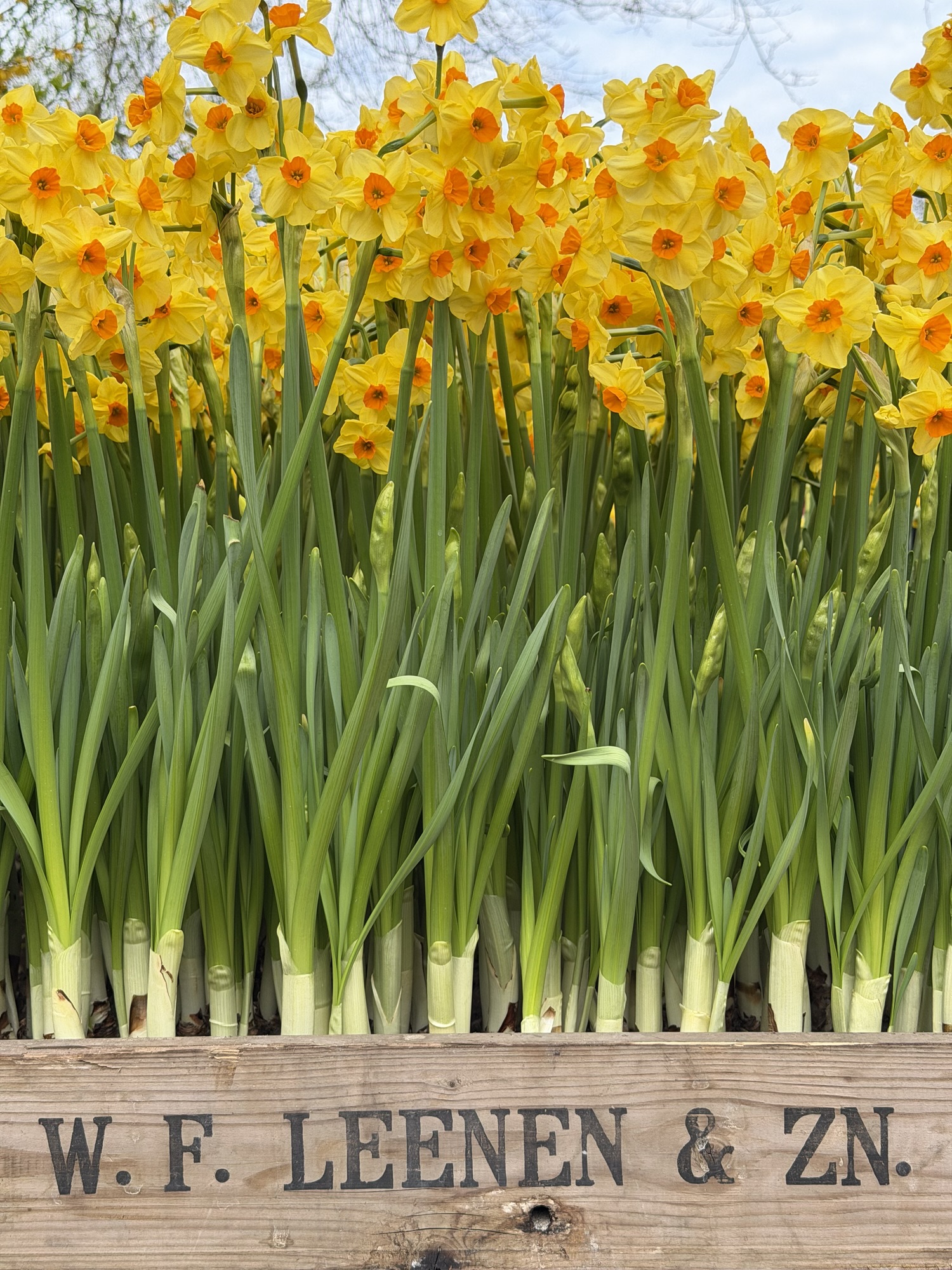
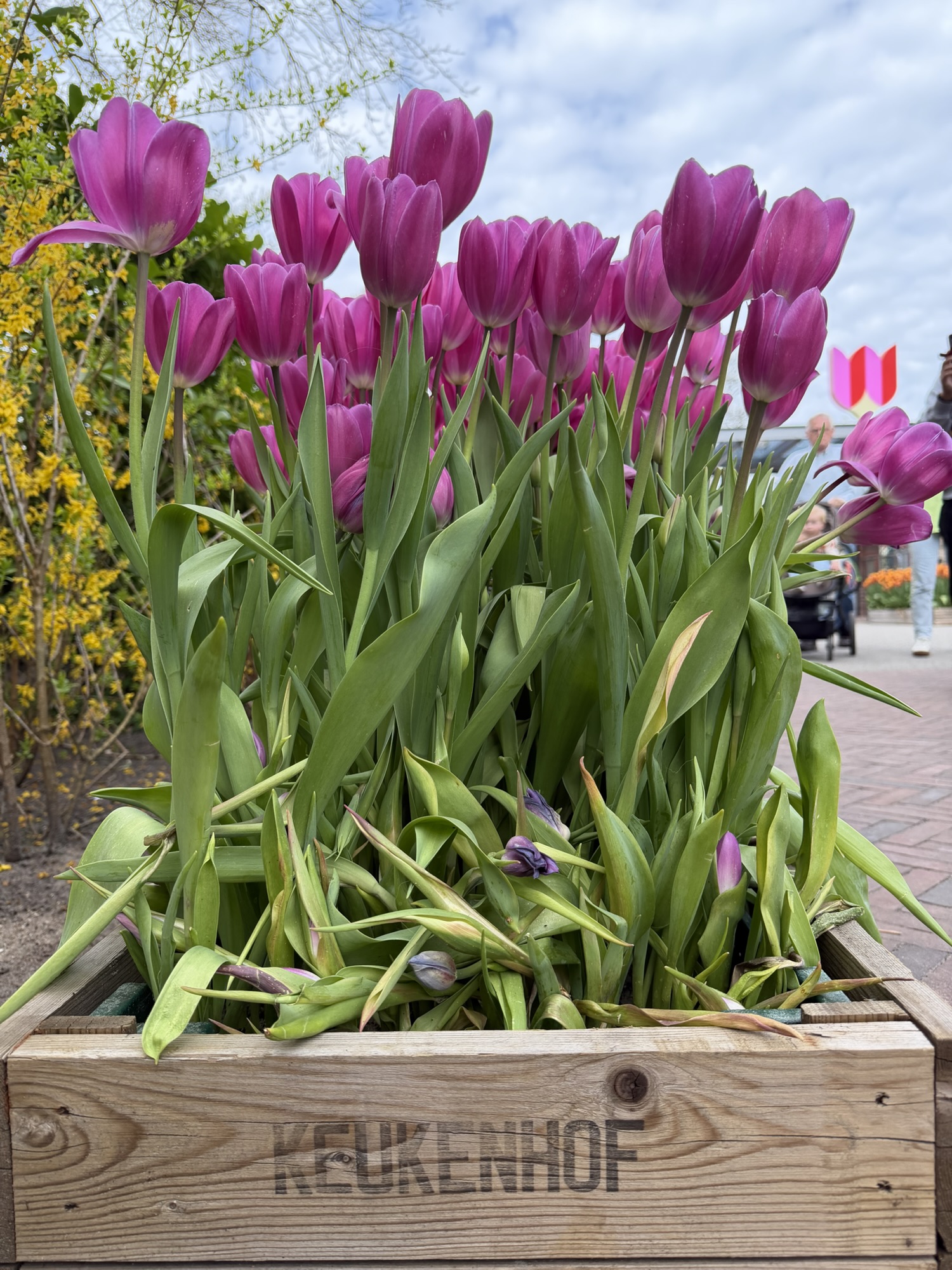
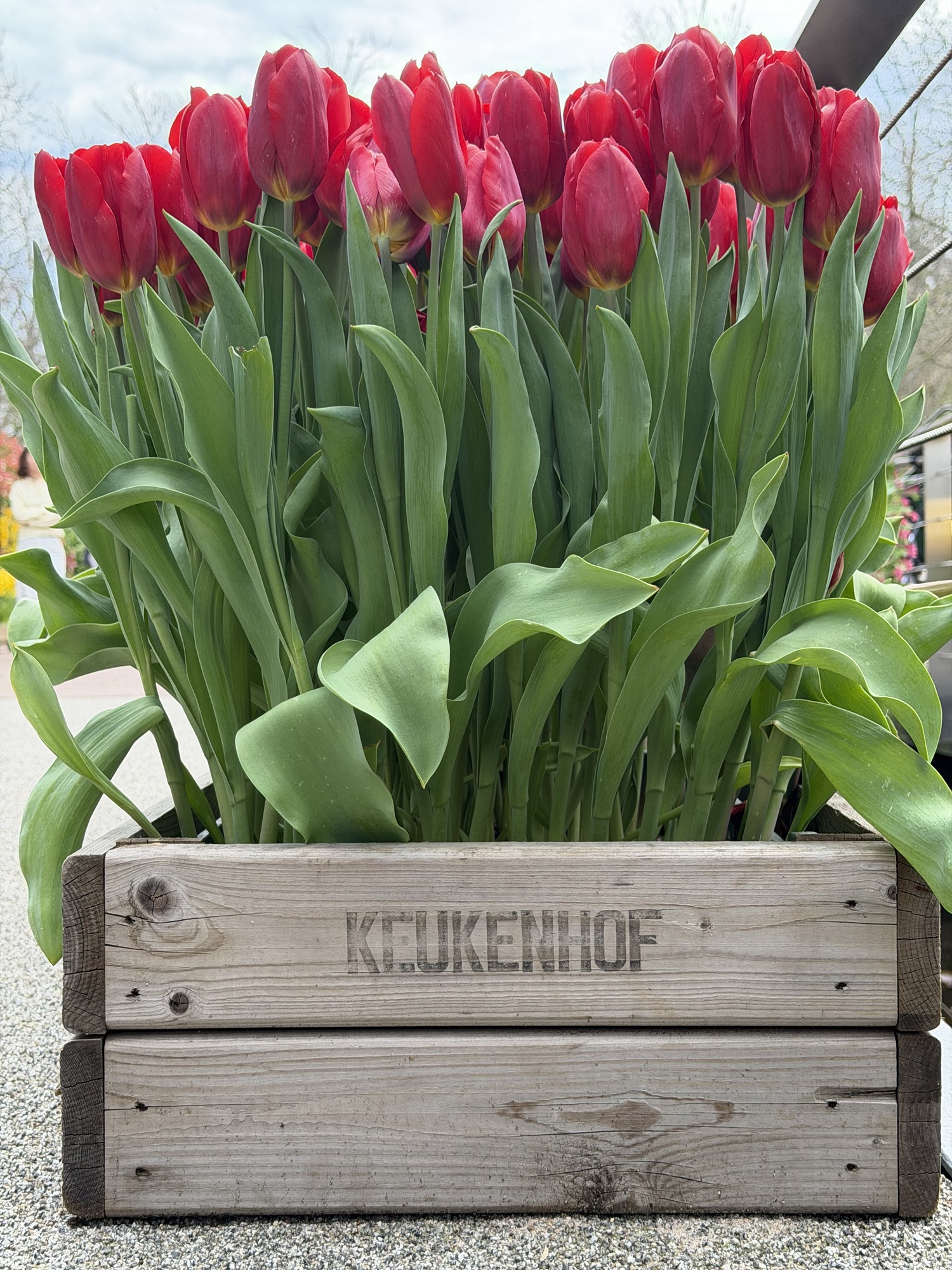
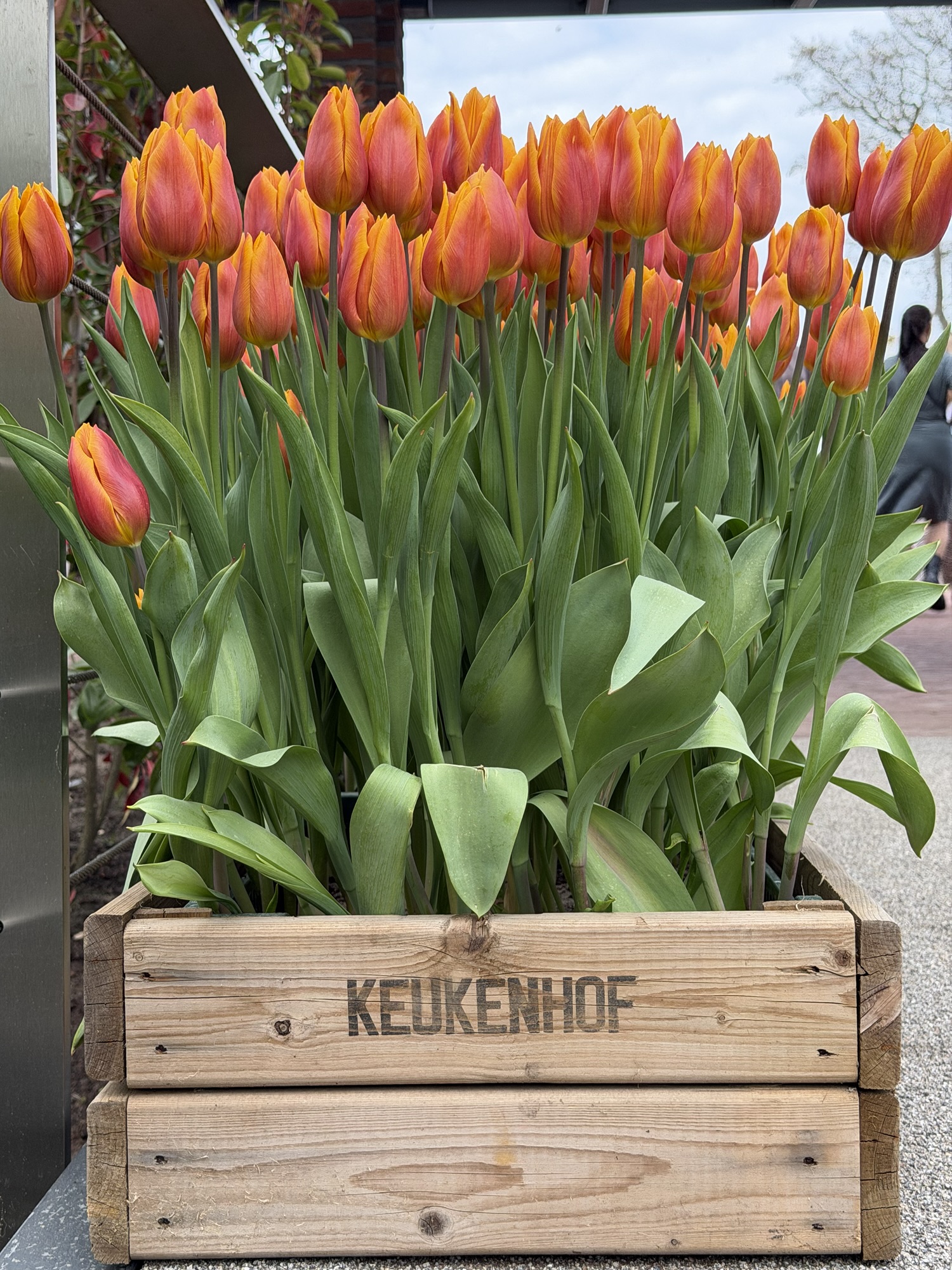
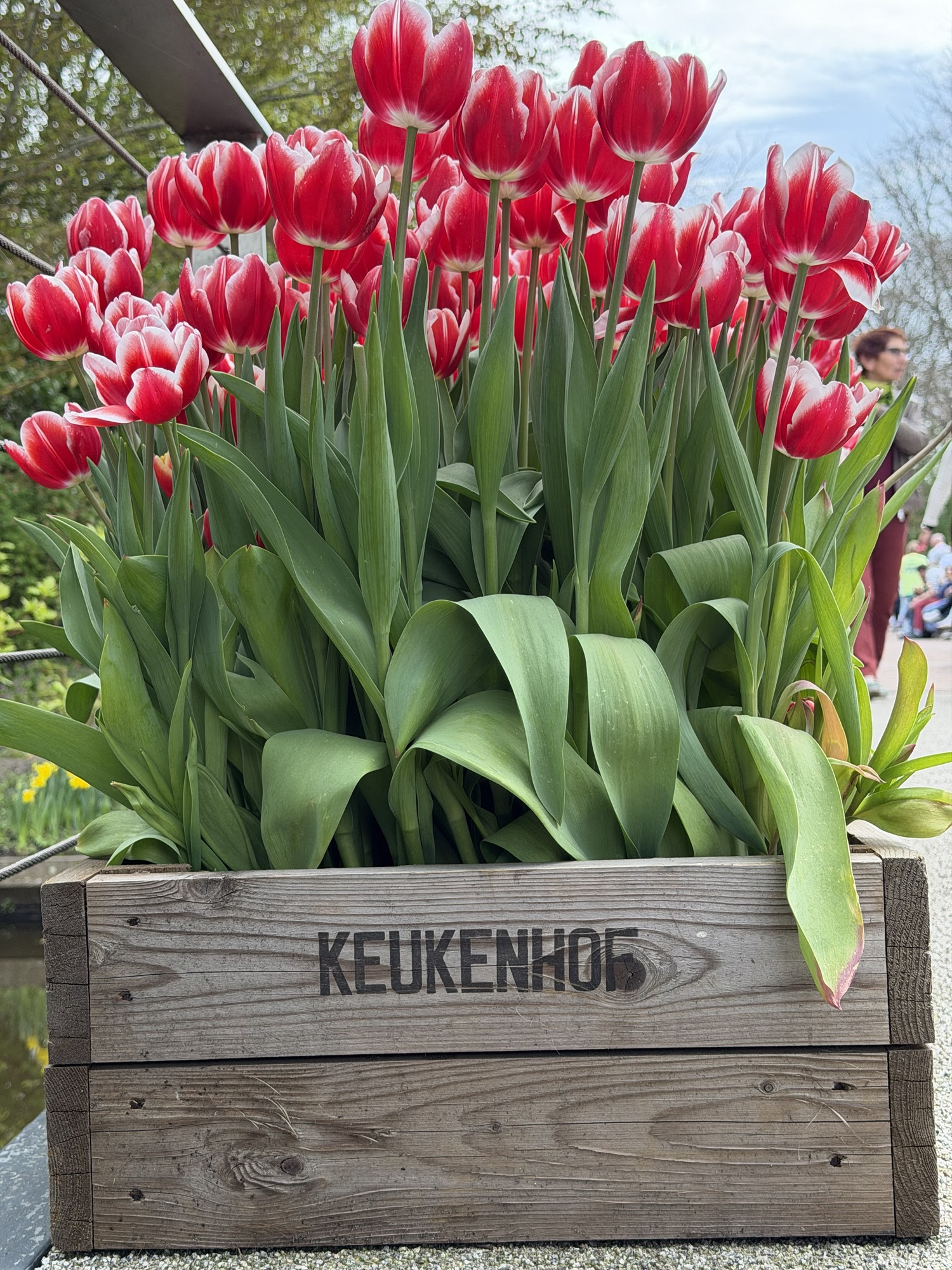
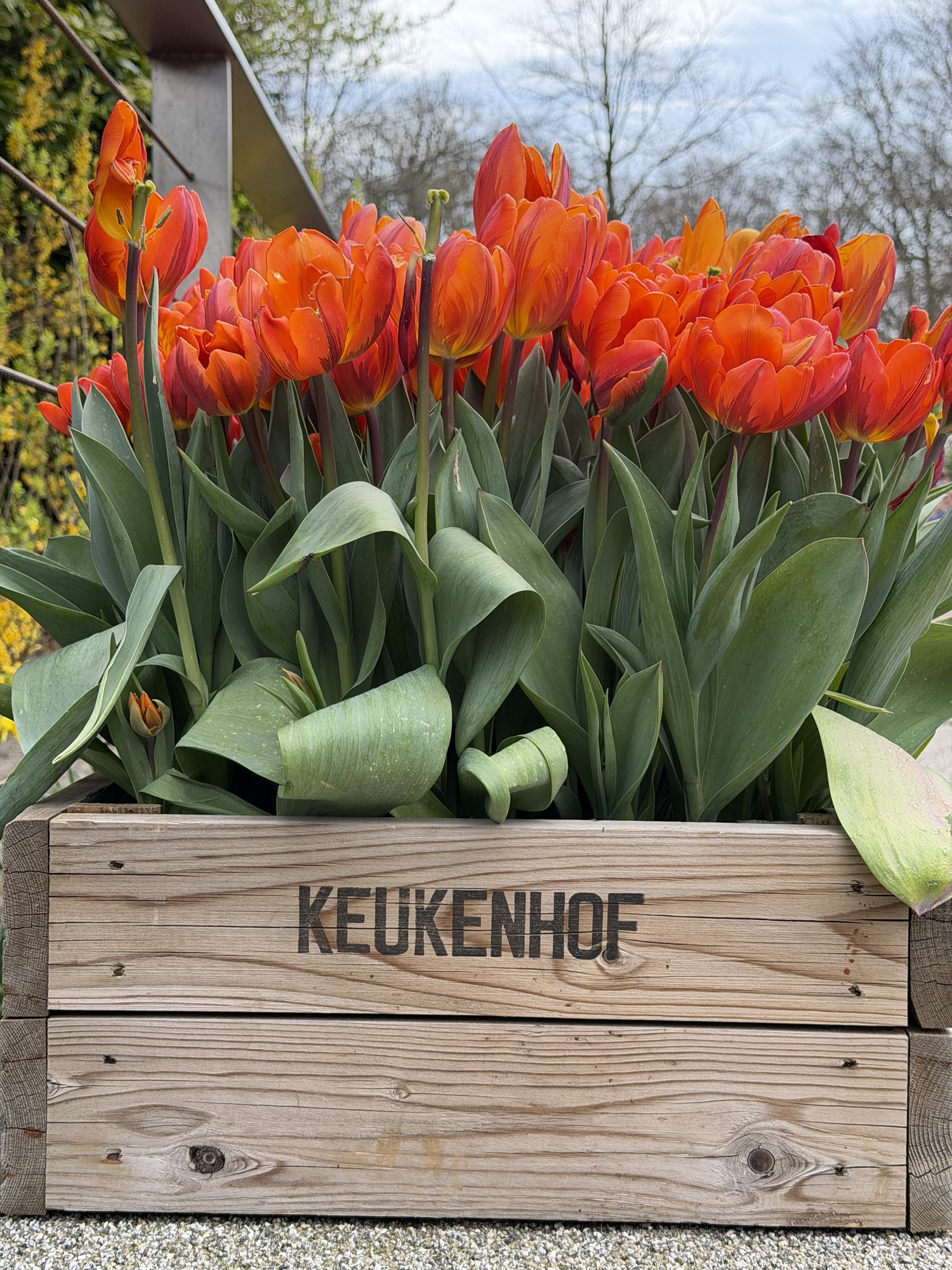
We ate sandwiches that we made at breakfast as we’ve done all week. We found seating near the opposite entrance to the one we used. There were rustic boxes of tulips in the area where we ate.
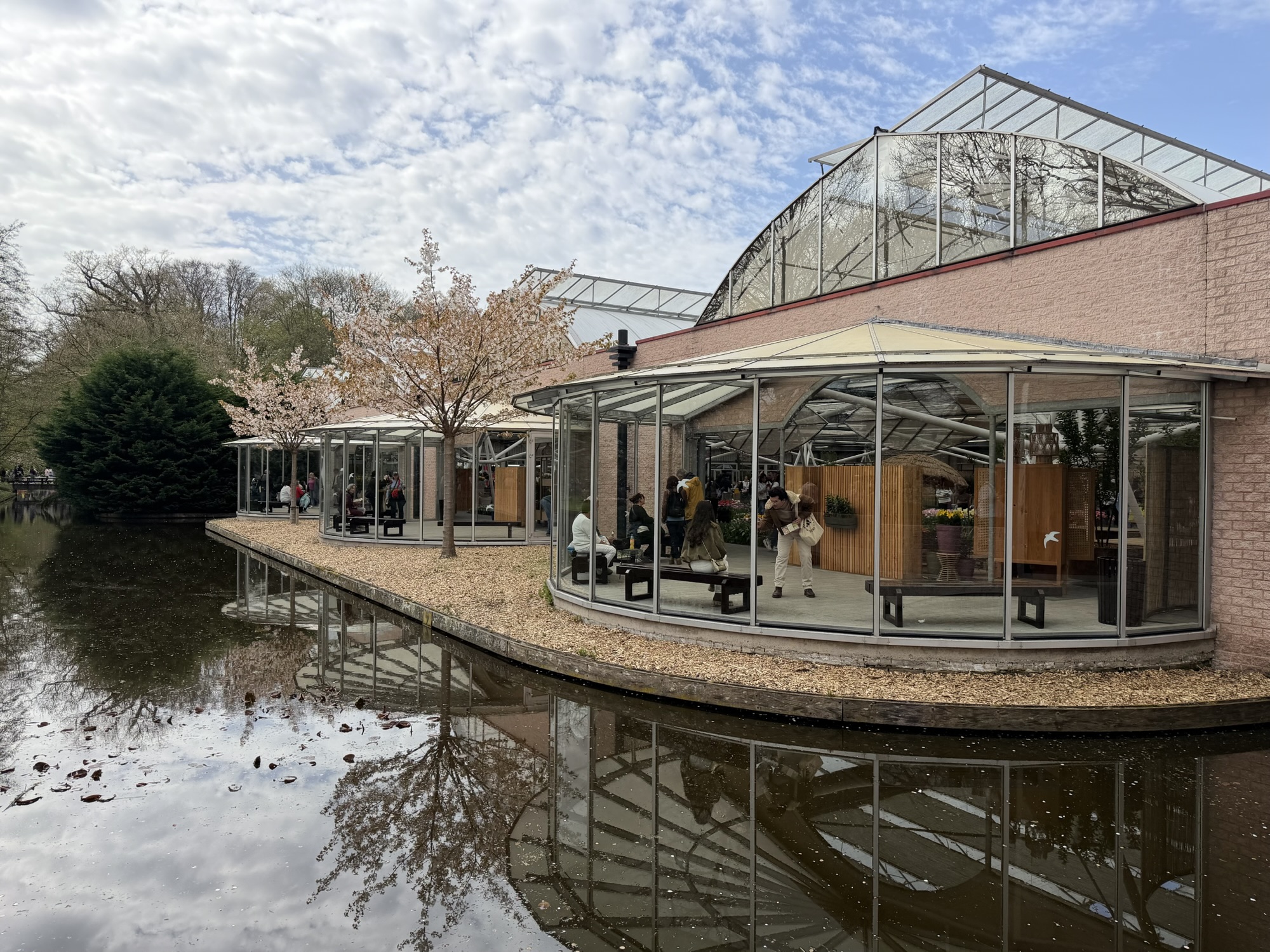
Our group of seven dwindled to six when Wayne scooted off after lunch to cover more ground. At one point, we ran into Melanie and Brooke, who advised that we must visit the Willem-Alexander Pavilion. We were thankful for the advice because it was stunning.
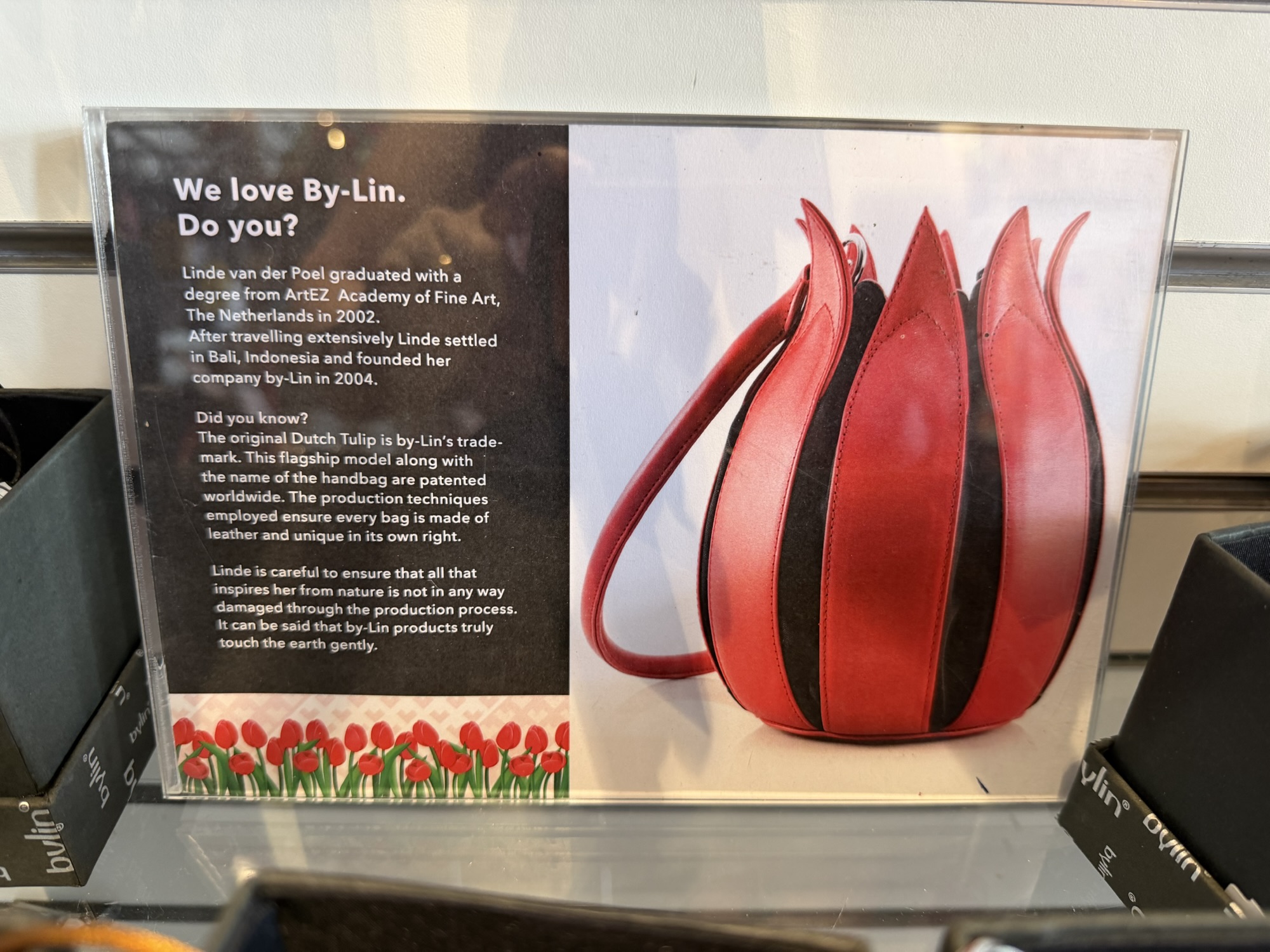
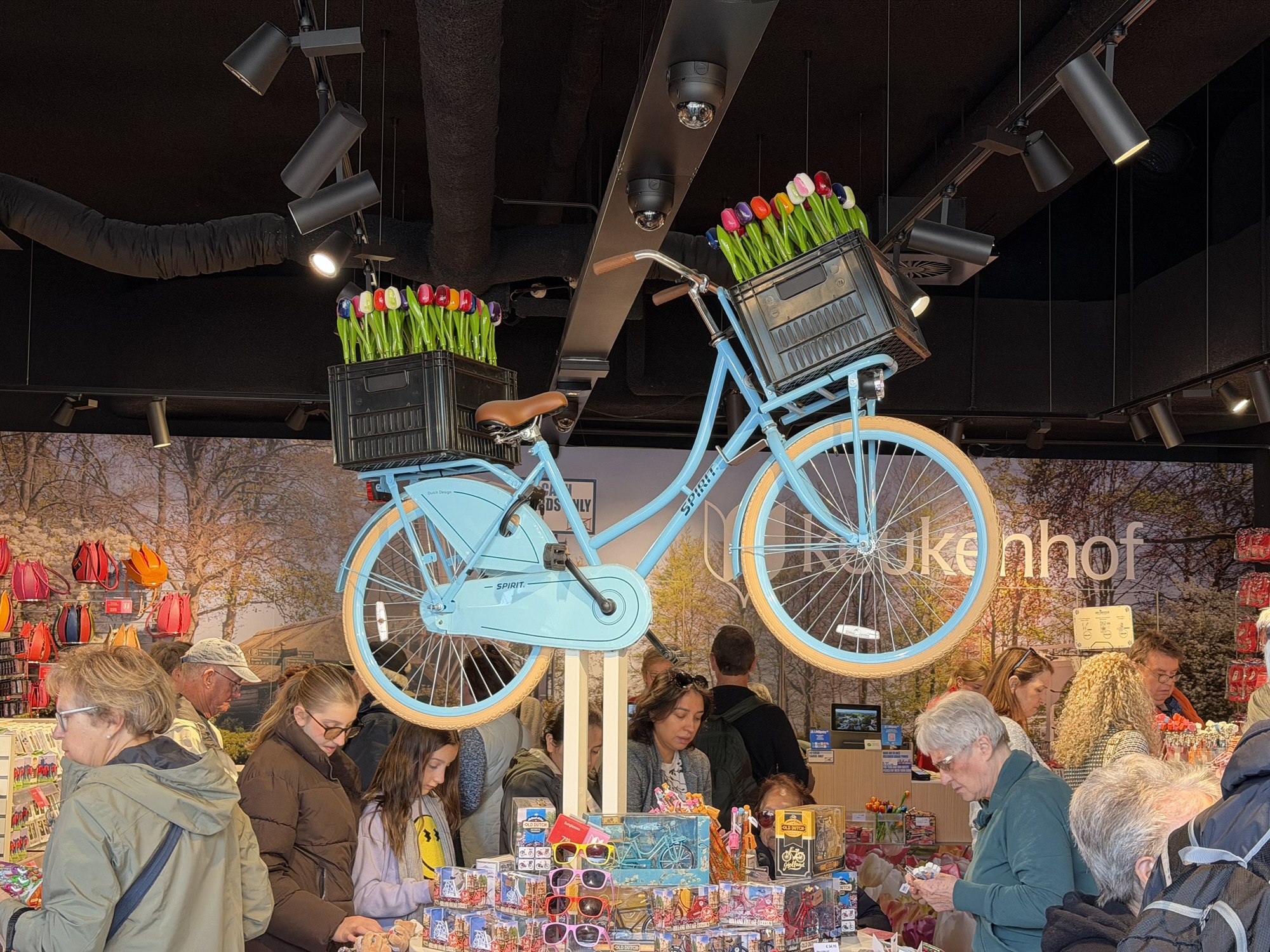
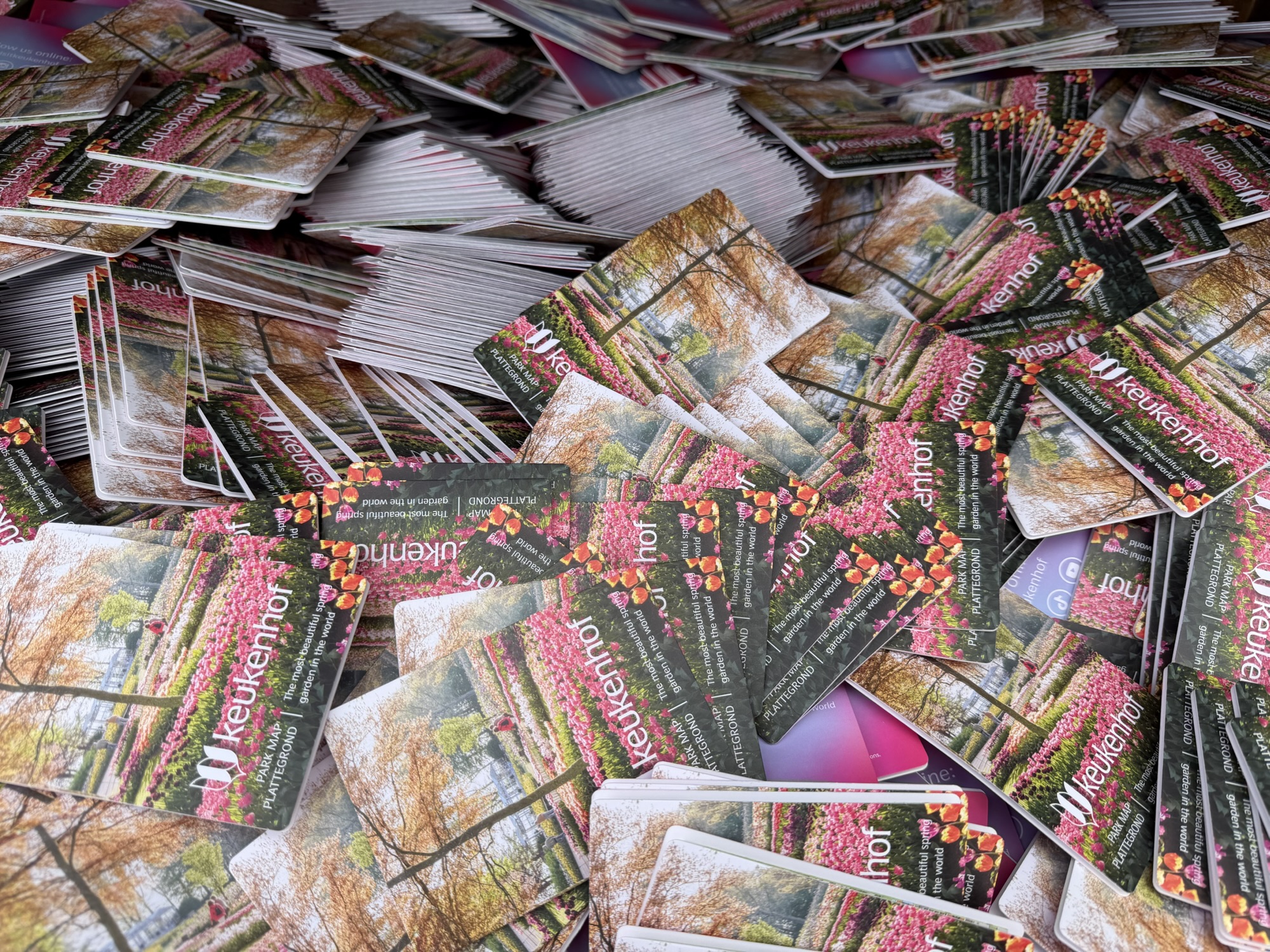
There was a gift shop inside the pavilion and one of the things they sold was tulip shaped purses a small one was €200. The bike was hanging in the main entrance gift shop.
Unfortunately, we ran out of time to visit two other pavilions. There is also a 45 minute boat tour one can take. Orange step-thru rental bicycles are available for touring the area.
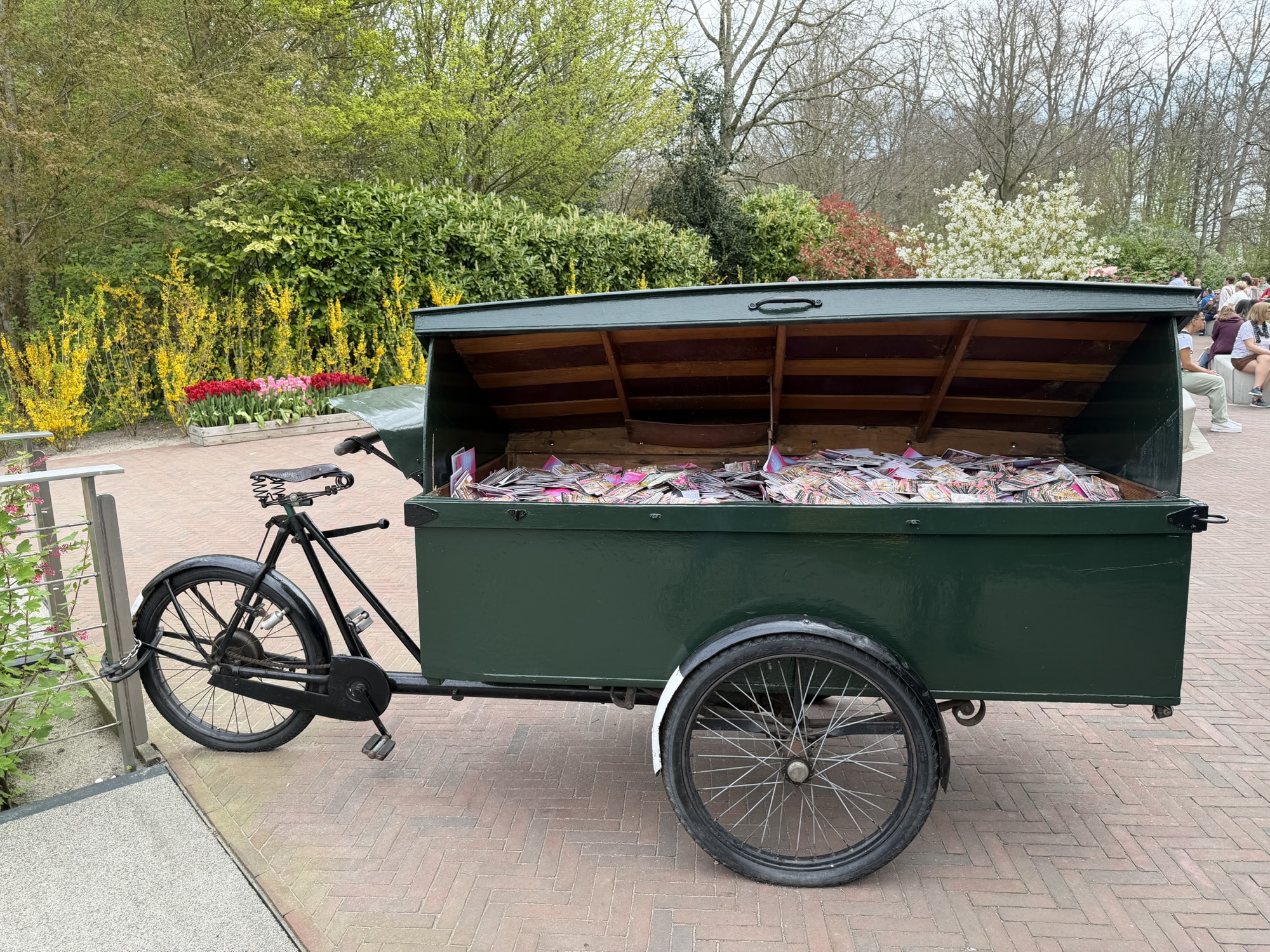
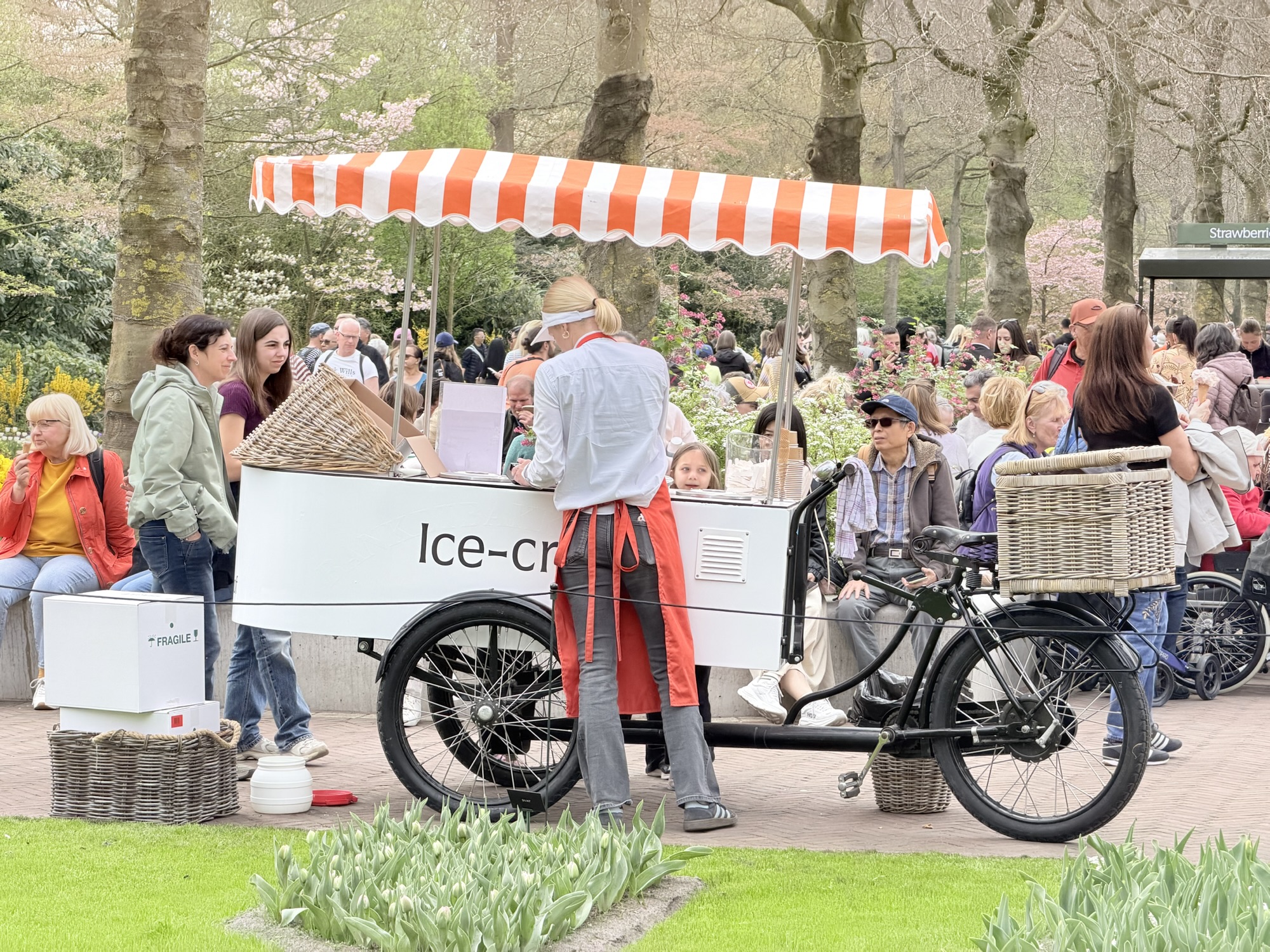
We saw a cargo bike full of maps, and ice cream being sold from another bike.
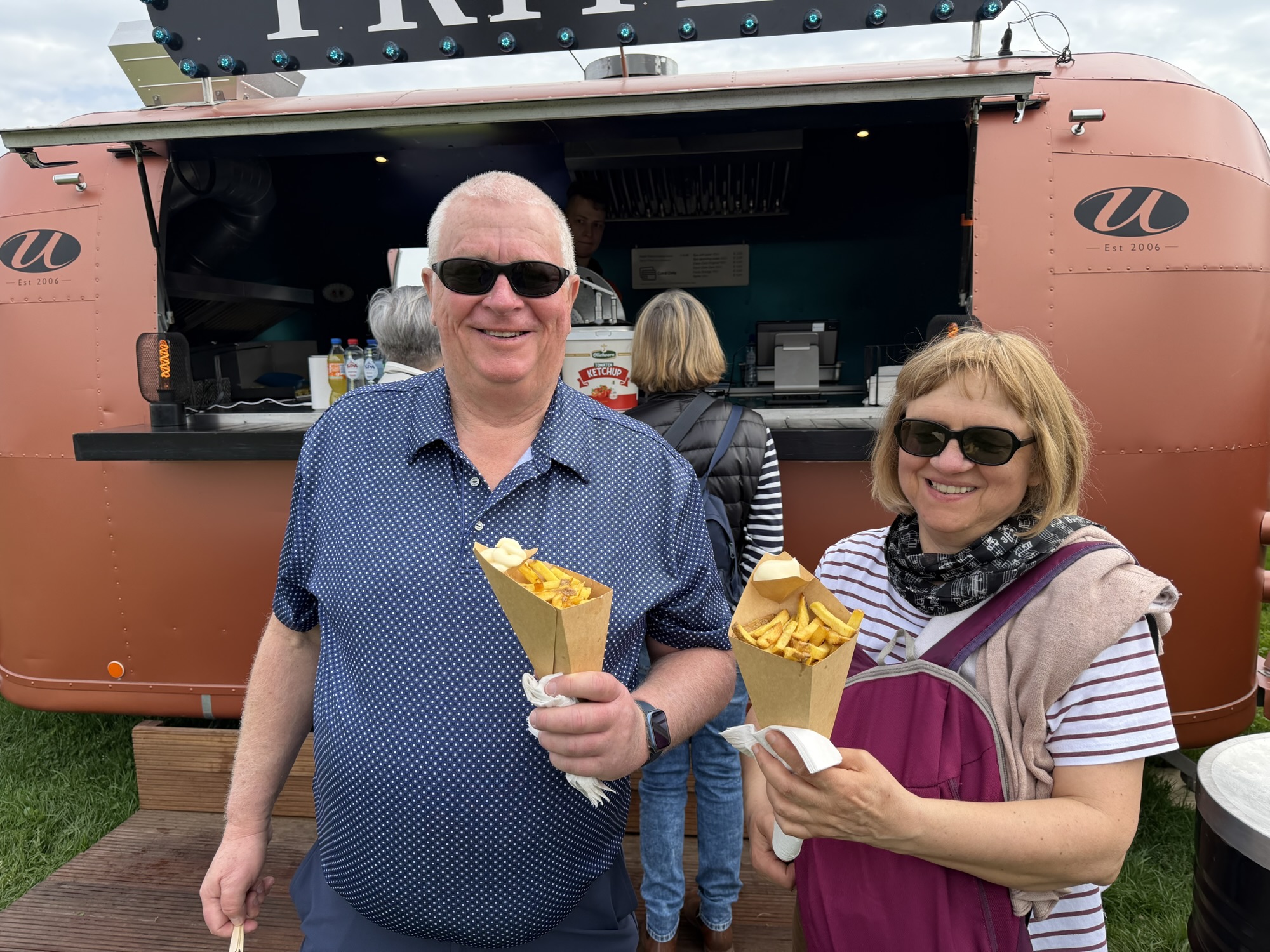
We returned to the bus at 2:15 PM. Wayne and Alina bought some delicious fries and mayonnaise on the way out.
A couple of people on the bus asked if they could be dropped off in Haarlem. After consulting with the office, our tour guide decided they could do that, as long as the couple took the train back to Amsterdam. So we had a preview of Haarlem, our destination by bike tomorrow.
The day off the bike worked well for Dayle, who thinks she’ll be able to ride tomorrow. And it worked well for me because I’ve been suffering from headaches for the last few days, but that ended this morning, hopefully for the rest of the trip.
Here’s a final slideshow of my remaining favourite images from the day.
We had the options to ride a short, medium, or long route today. The accumulated cycling, and poor sleep I’ve been experiencing, is catching up with me, so I chose the short route of 38 km.
It was a harsh, snowy winter in Brampton this year. The snow started in late November, and continued to accumulate all winter long. It even snowed enough to cover our wooden deck a couple days ago. This meant that I was riding less over the winter than I normally would. I accumulated about 400 km of riding from January to March. In the last six days, I’ve cycled 243 km, with one walking day, and it’s catching up with me.
The itinerary today had us cycling through Egmond-Binnen and Limmen to Zaandam.
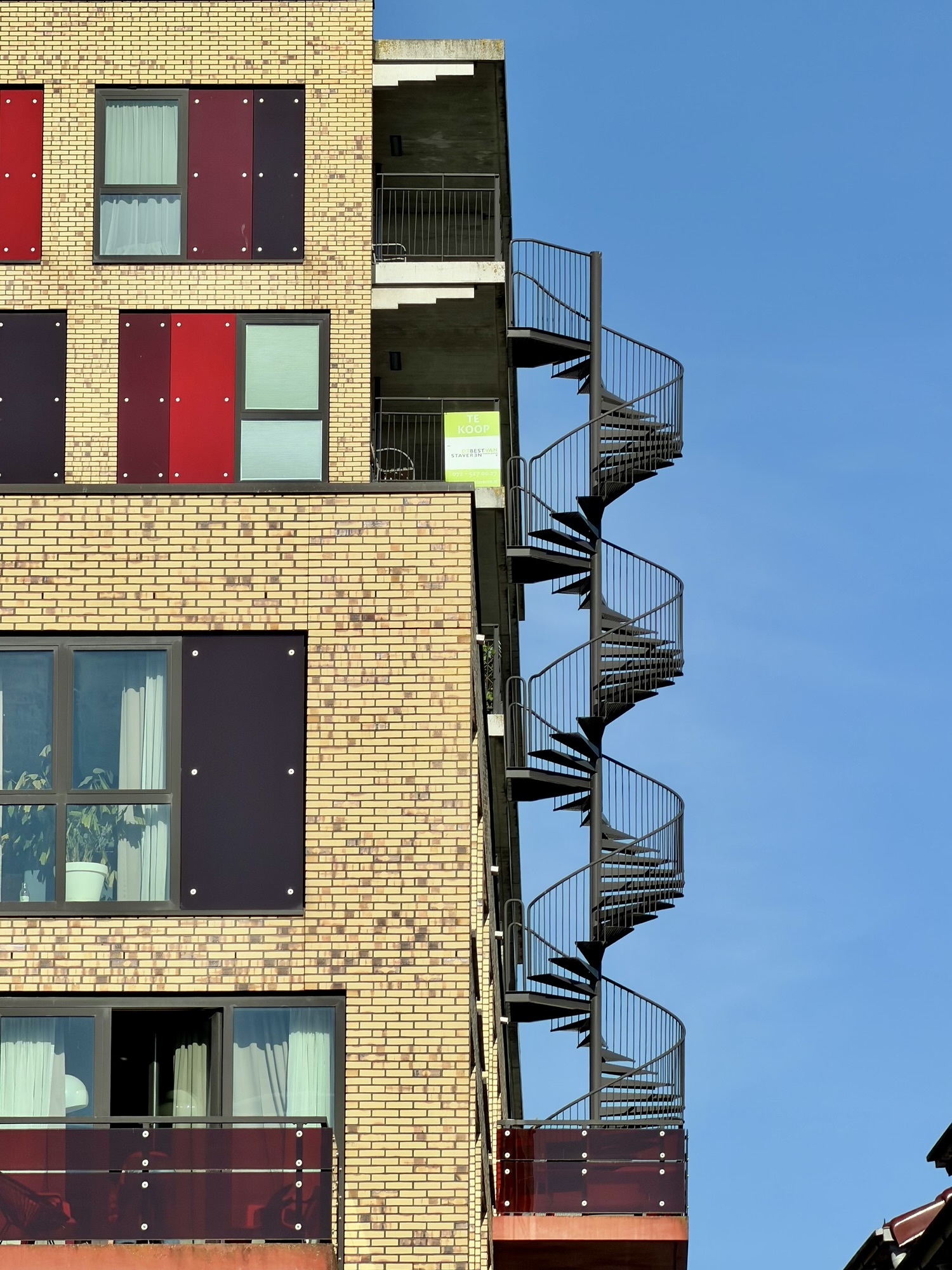
Outdoor fire escape stairs are very common in all of the places we have visited.
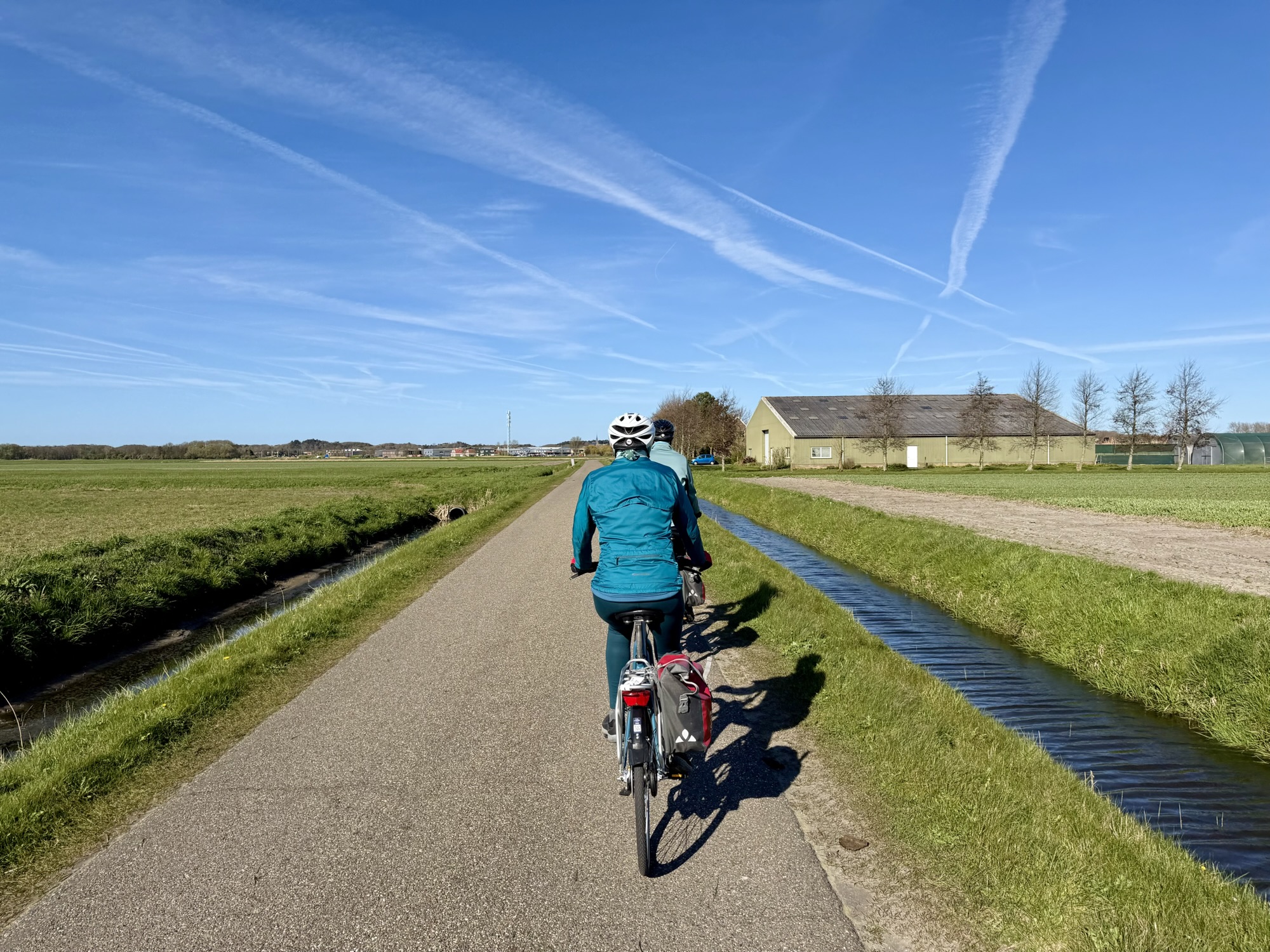
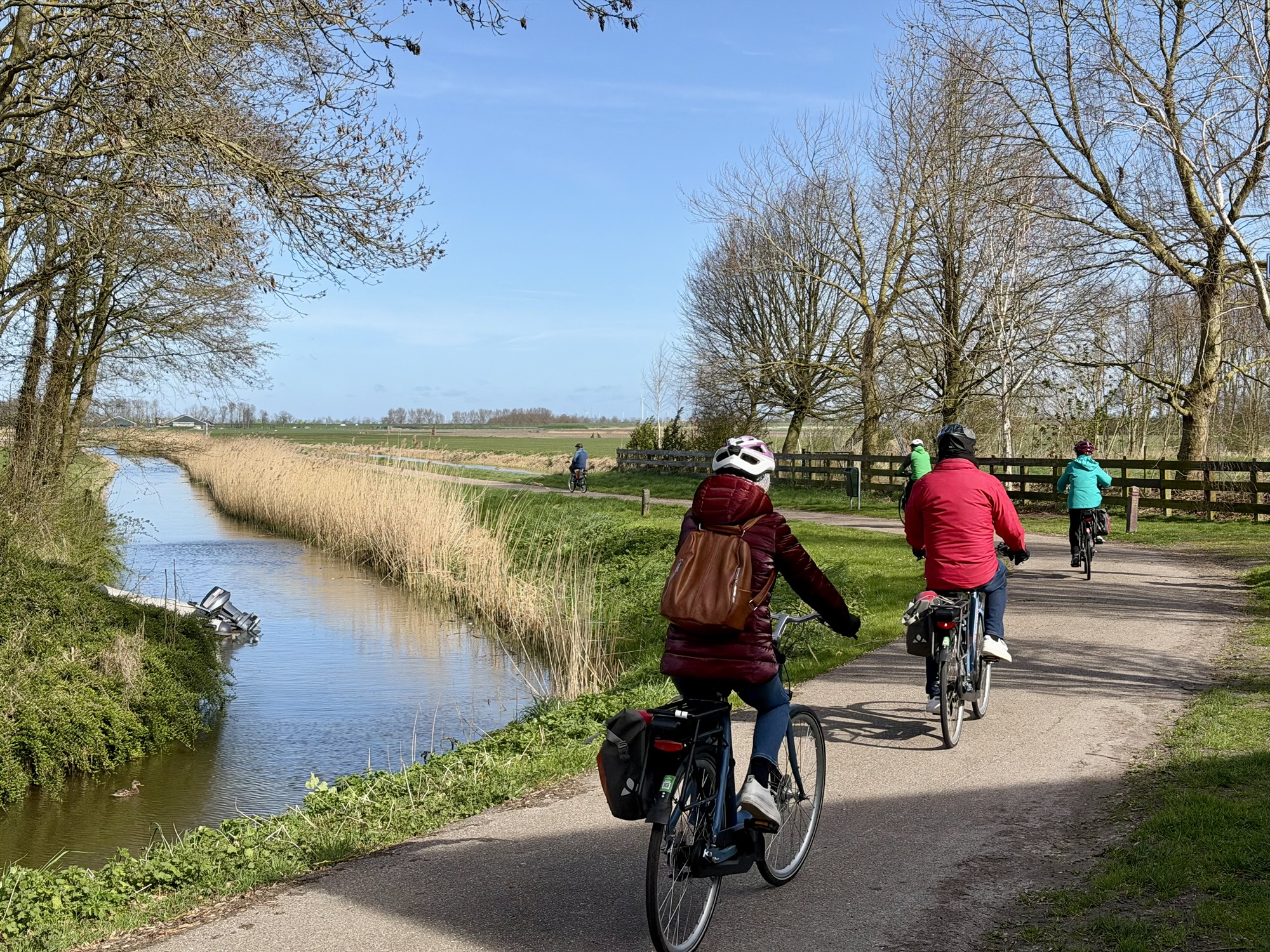
It wasn’t long before we were in the countryside, and as usual for the Netherlands, there was cycling infrastructure between the towns.
Some of the group stopped at this nursery.
Another group of us stopped at The Liobak monastery in Egmond Binnen. The site originally featured a 10th century Benedictine Nunnery before it transitioned into a male monastery. However, today a community of Benedictine sisters, founded in 1935 is on the site. It is known for its focus on hospitality and simplicity. One can stay with them for €70 per night.
A welcoming sign translates to:
You are at the Sanctuary of Our Lady of Distress. This is the largest Marian pilgrimage site in the Netherlands and was established around the year 1400. Tens of thousands of people visit the historic Chapel of Grace and Runxputte annually for the healing water from the Mary Spring. The Sanctuary is a special place for reflection and contemplation.
The Chapel of Grace and the Pilgrimage Chapel are open daily for Holy Mass, adoration, and confession.
Activities, retreats, lectures, and exhibitions are regularly organized. The Oesdom tea house and the shop can be visited on the grounds. You can stay overnight in the guesthouse located in the former Julian Monastery.
We walked around the outside of Juliana Closter, and the small area of the grounds around it. I realize now, as I’m writing the blog, that the grounds were much bigger than what we explored and contained many more buildings.
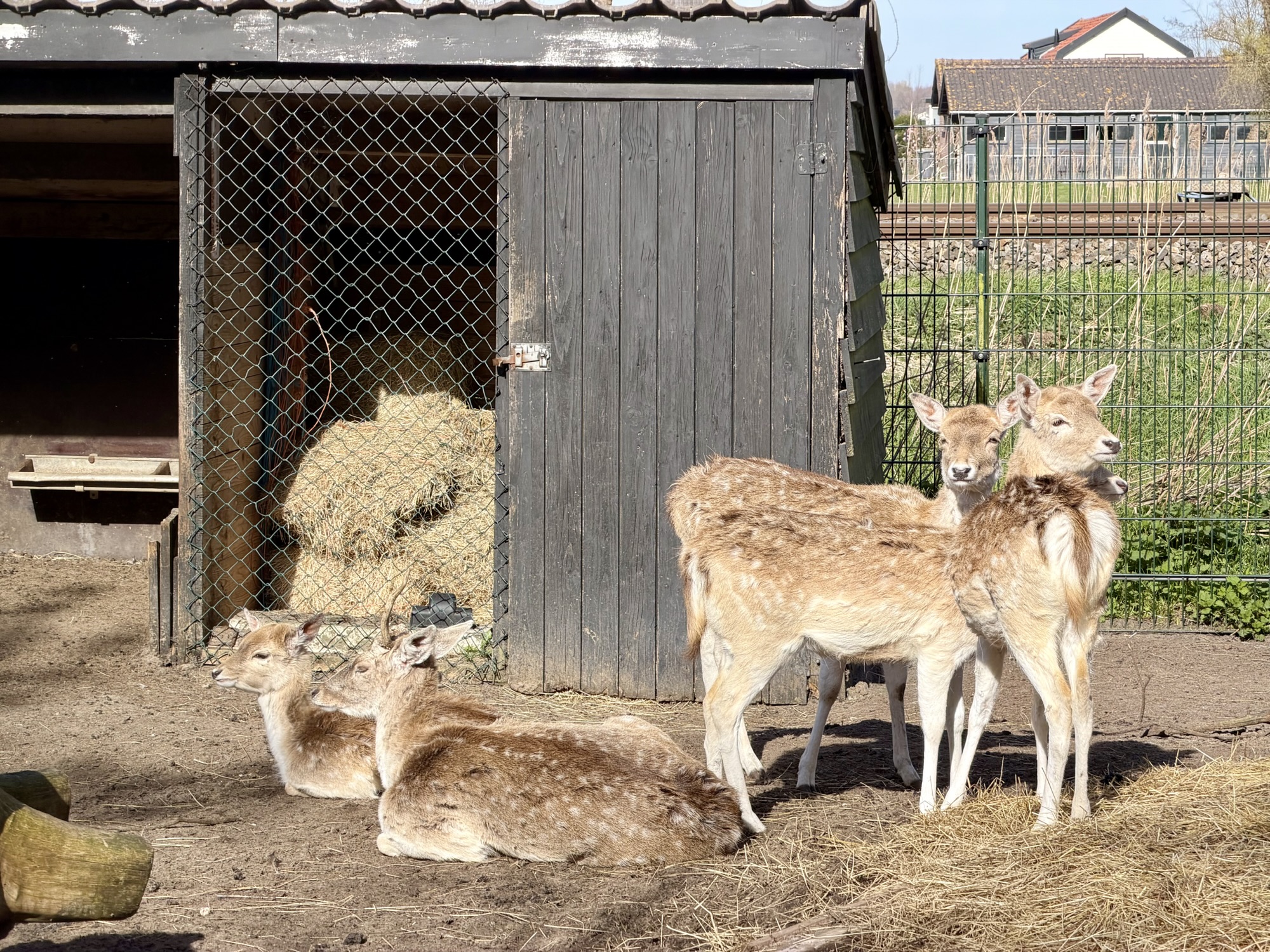
Across the road from the Julianna cluster there were some very sweet white tailed deer, which apparently belong to the nuns.
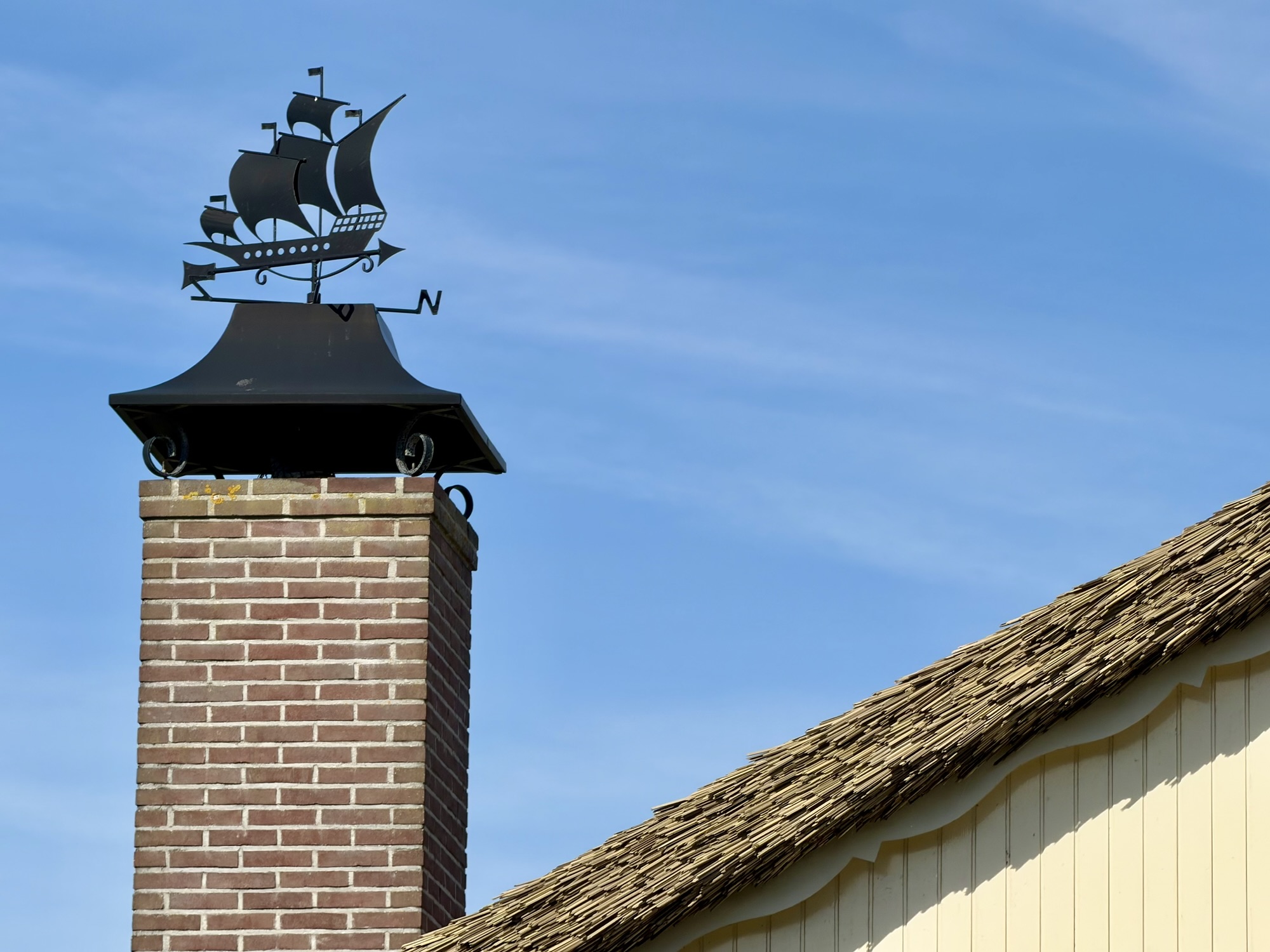
I thought it was interesting to see the edge of this hatched roof.
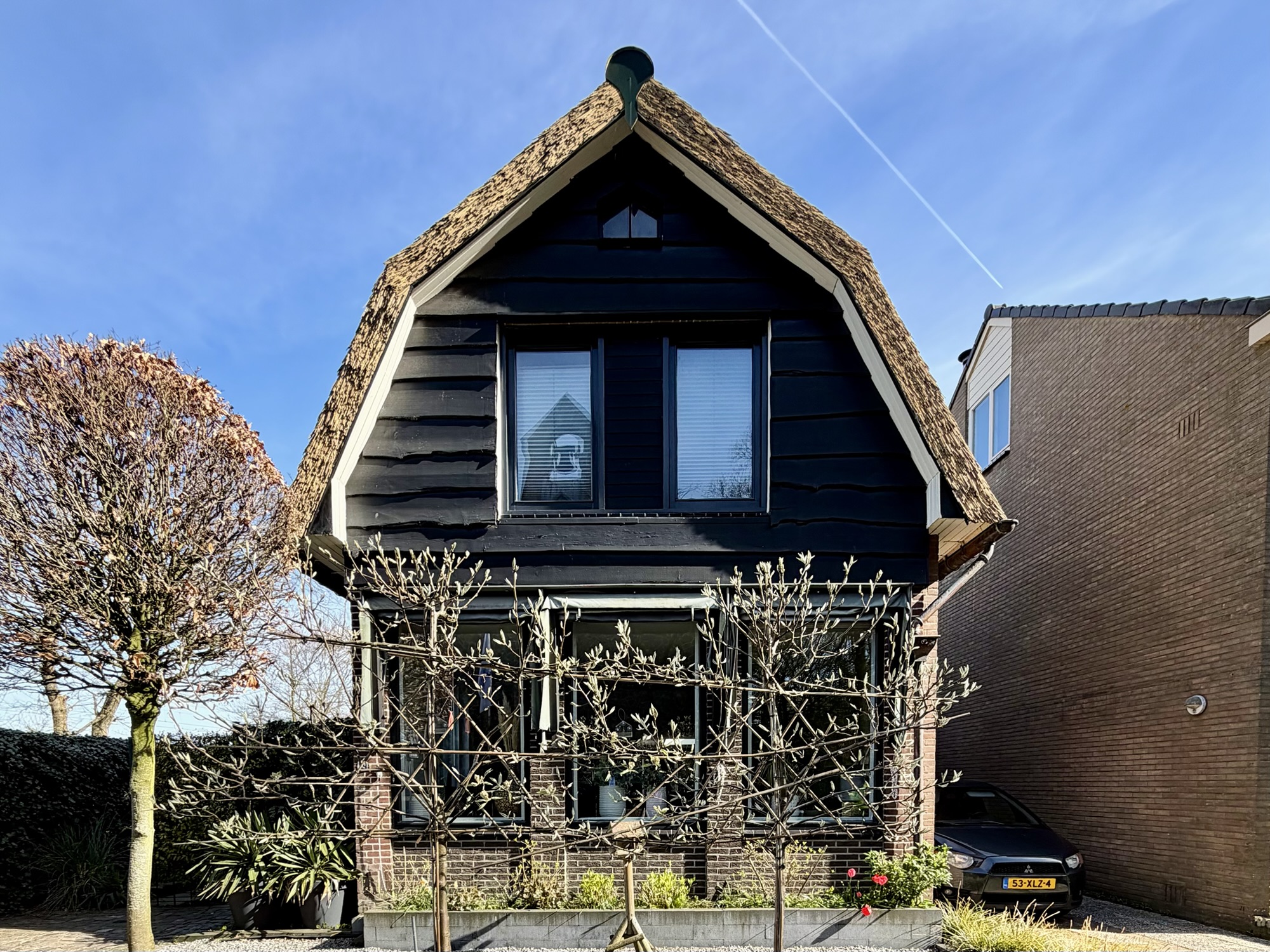
Espalier trees are very popular here. It is the practice of controlling with the plant growth for the production of fruit, by pruning and tying branches to a frame.
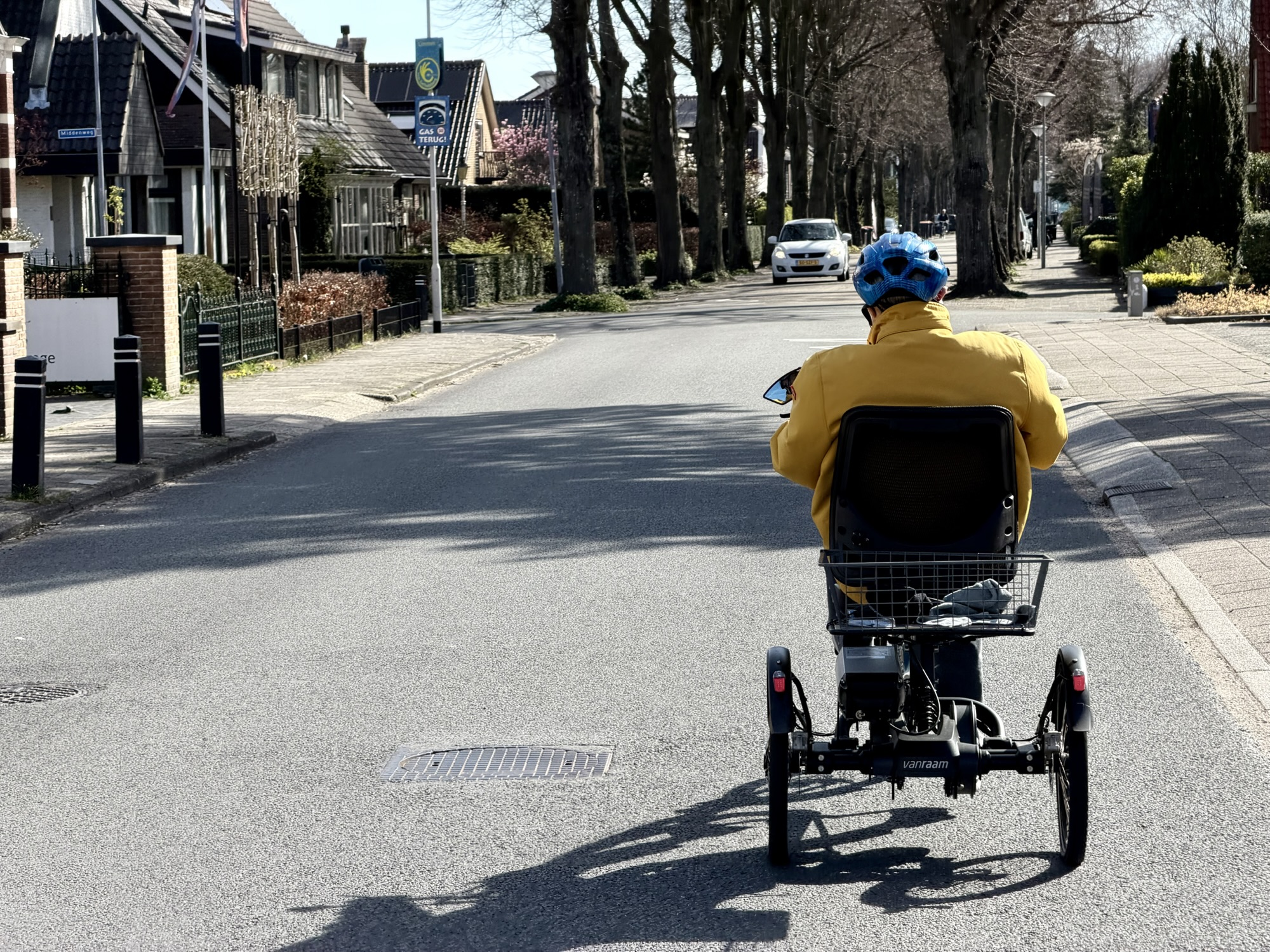
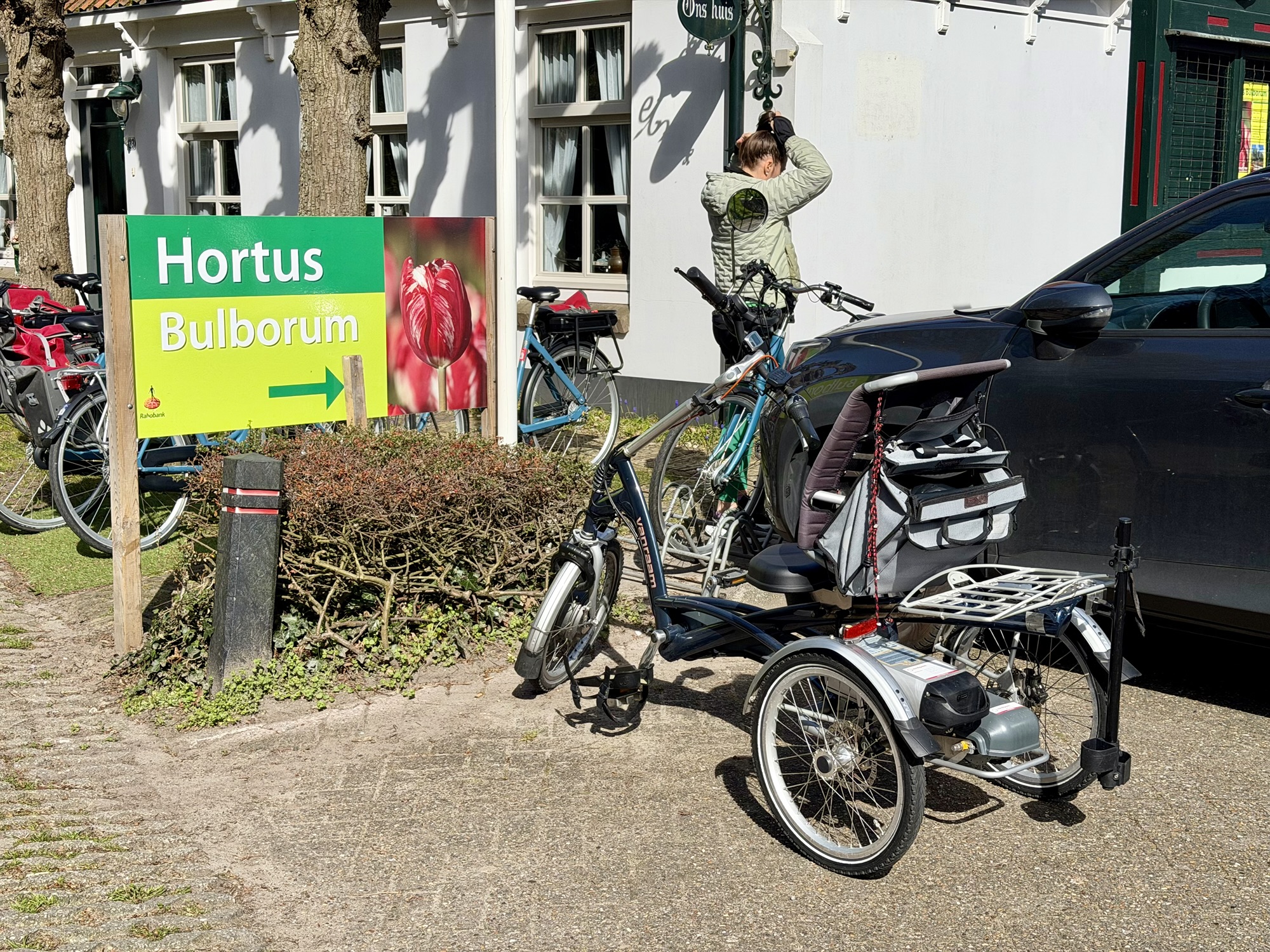
I saw another person riding an electric tricycle today. And another one was parked at the gardens,
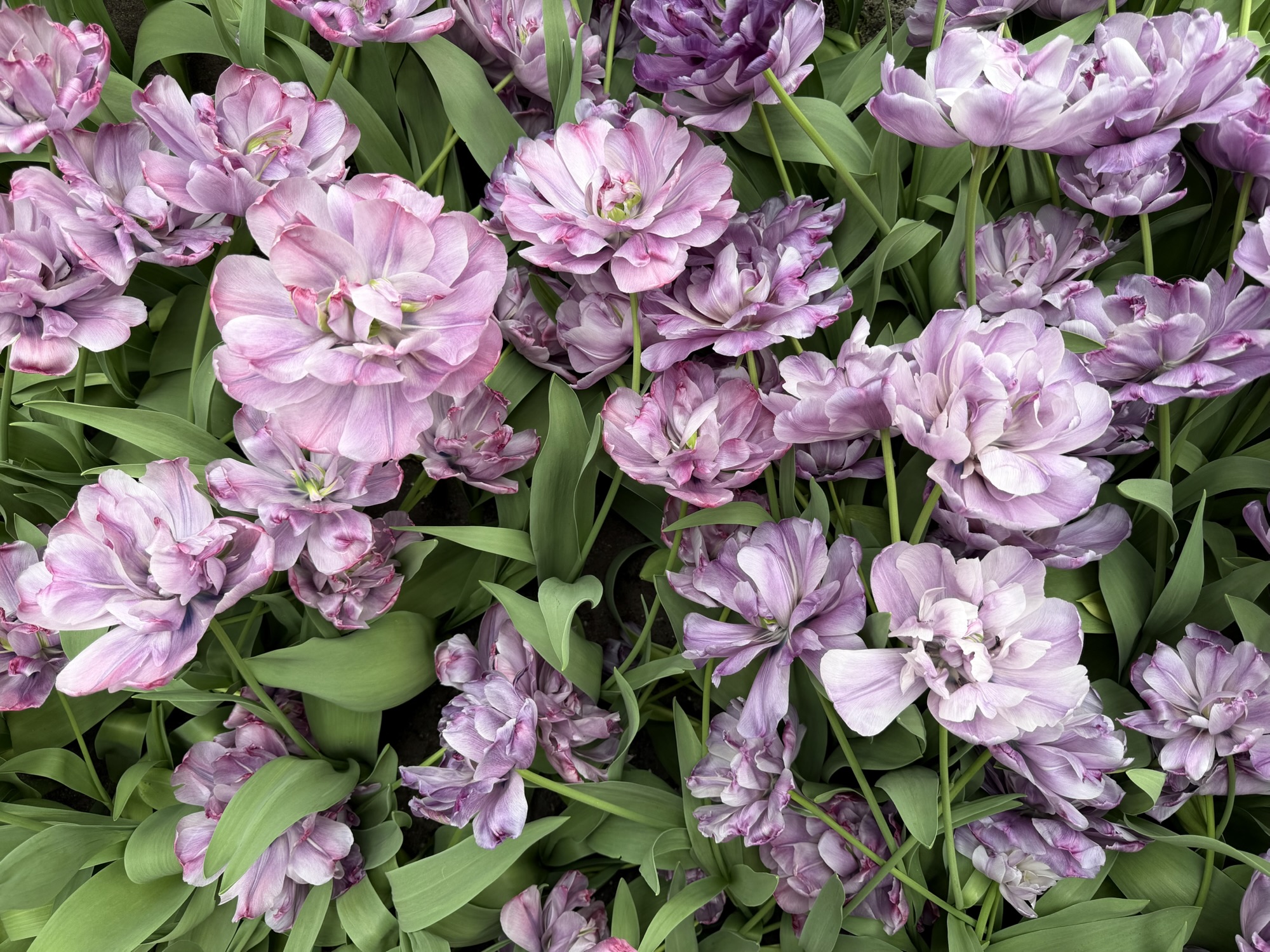
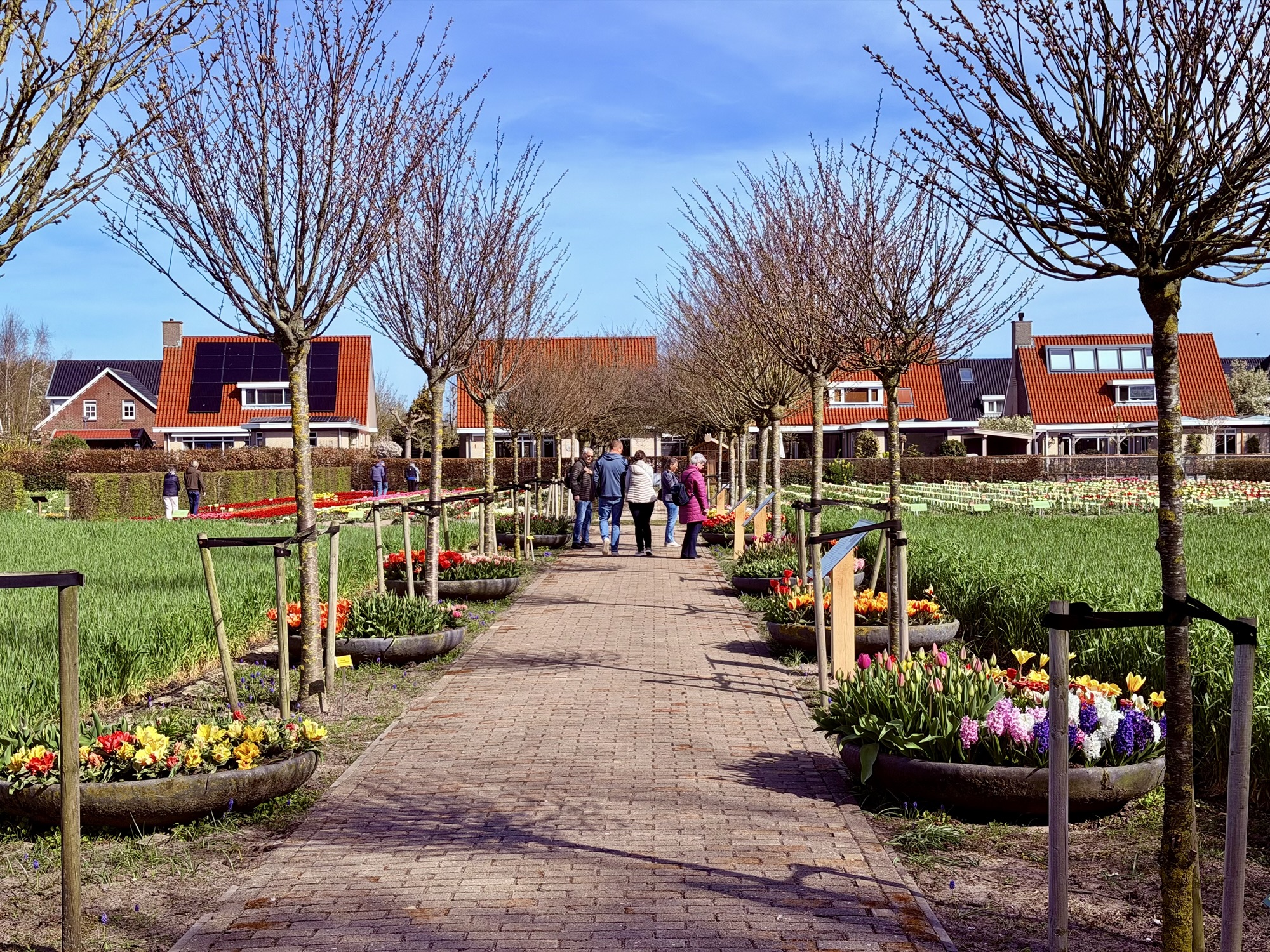
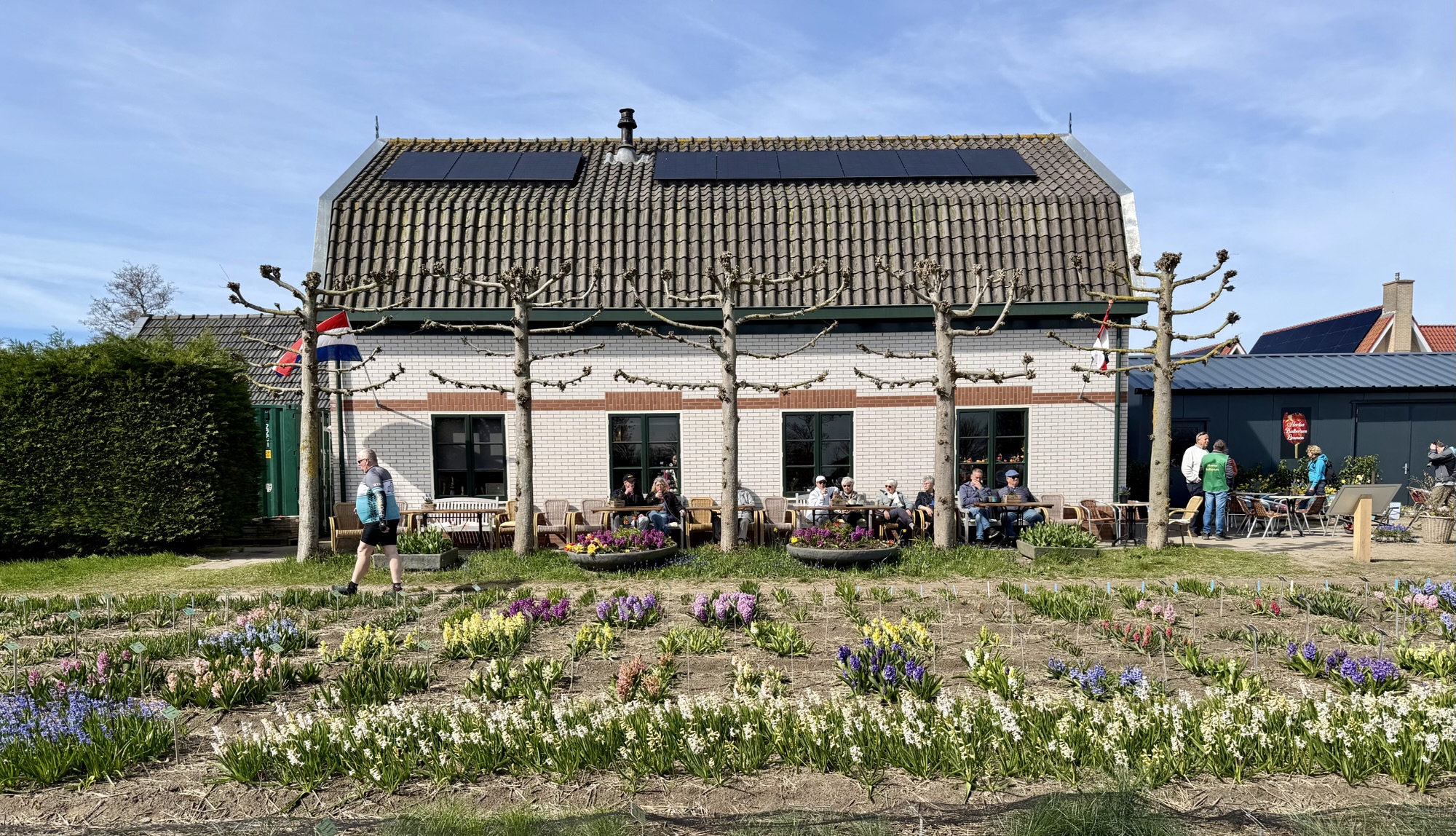
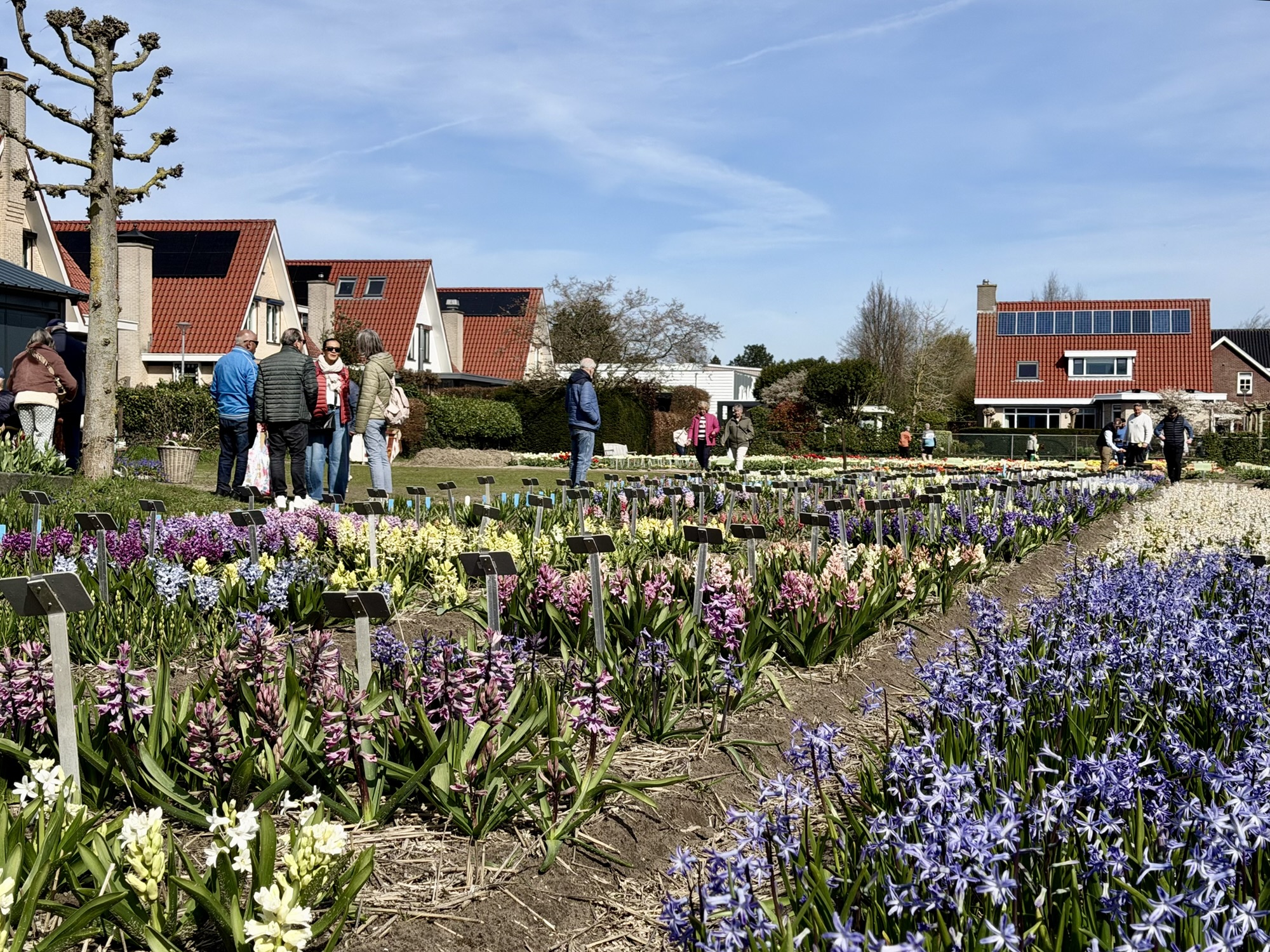
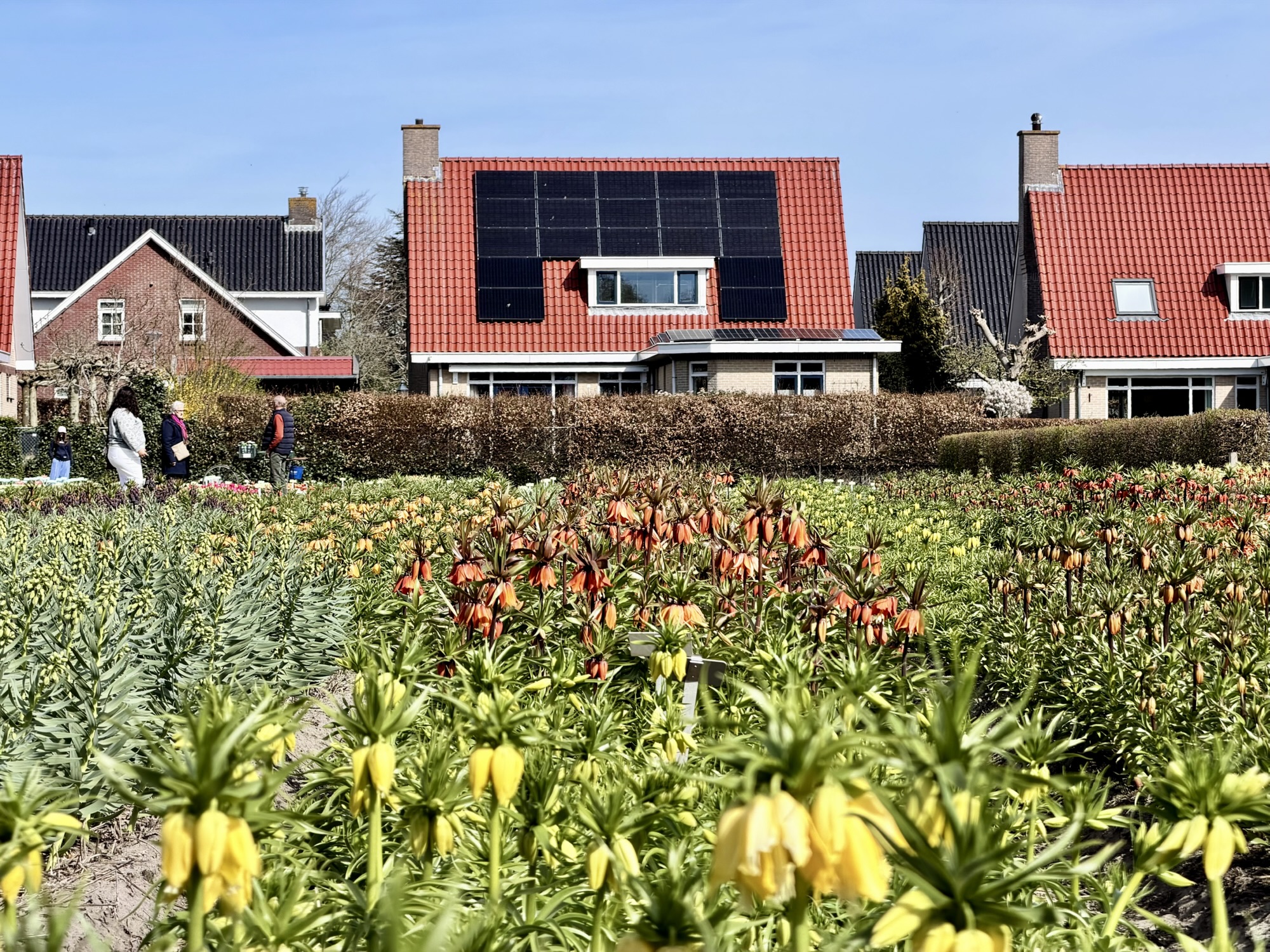
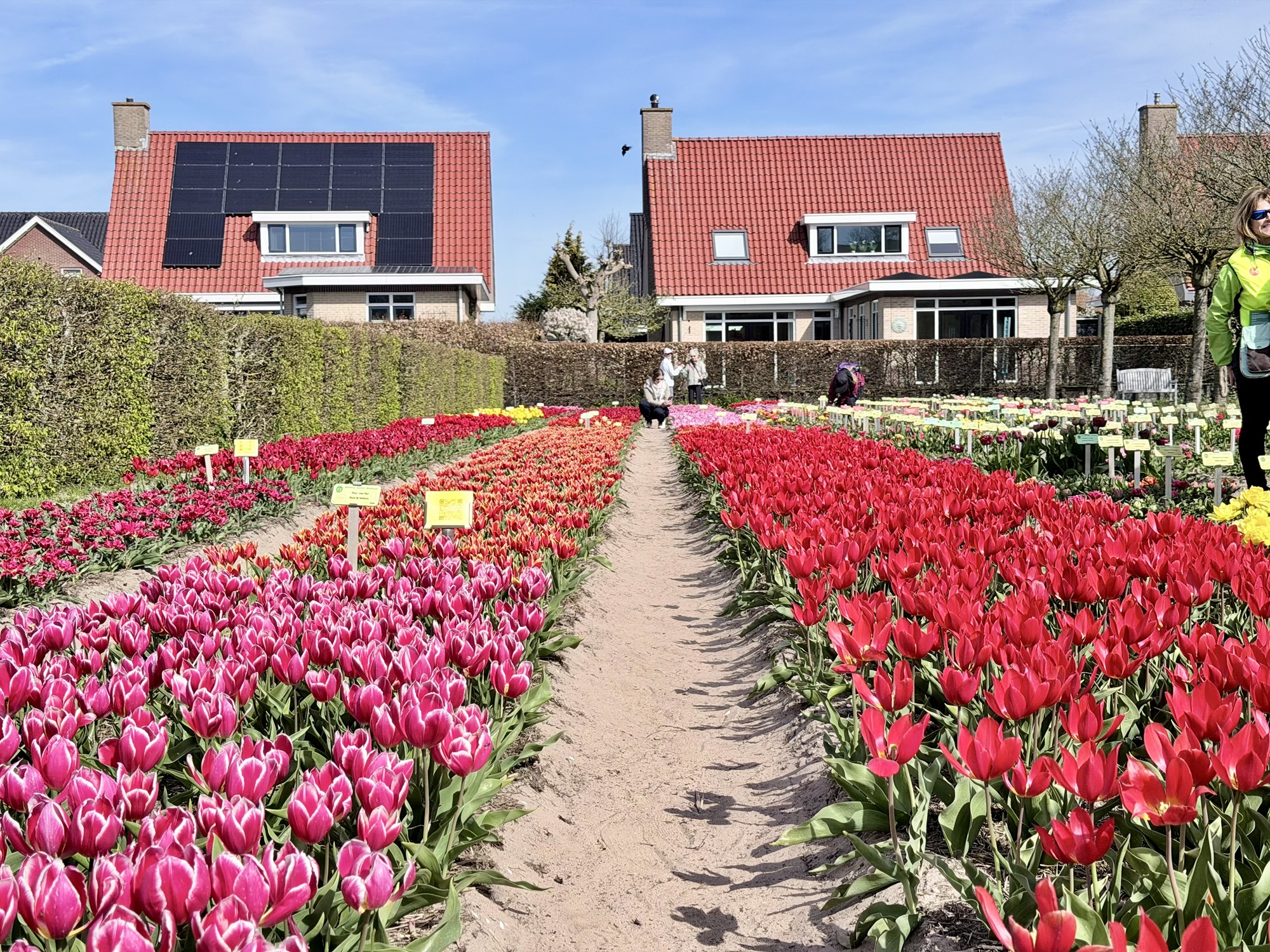
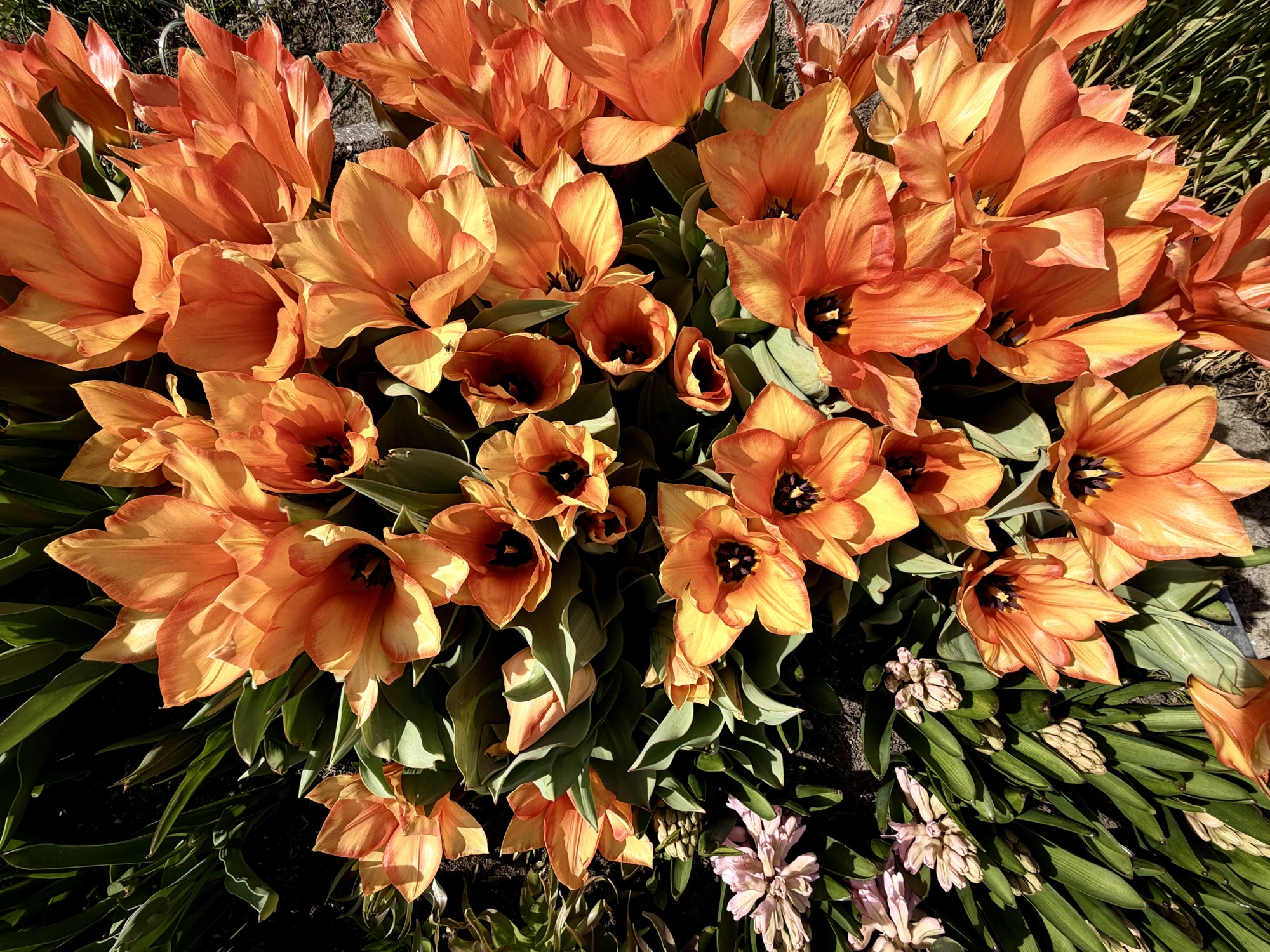
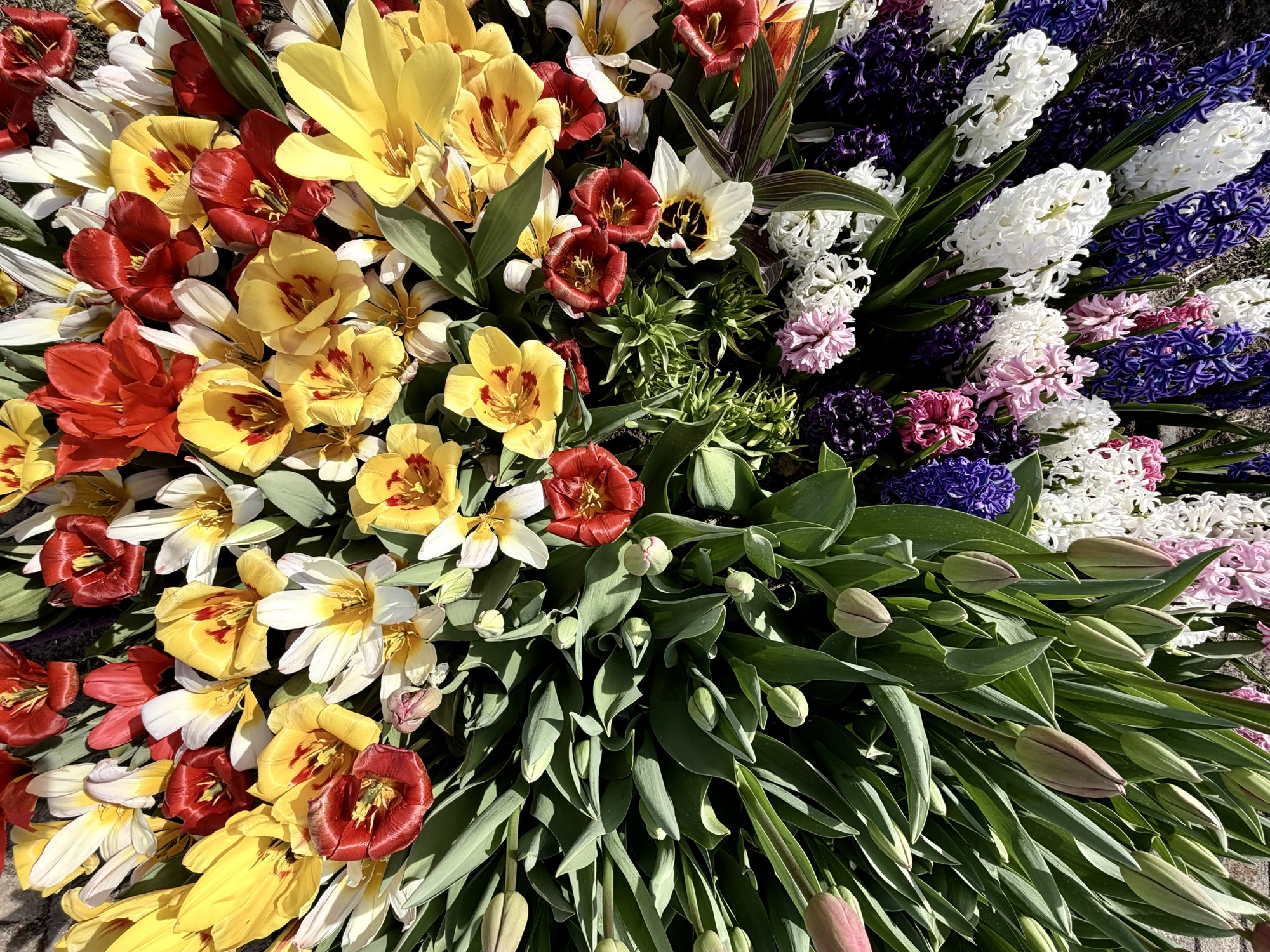
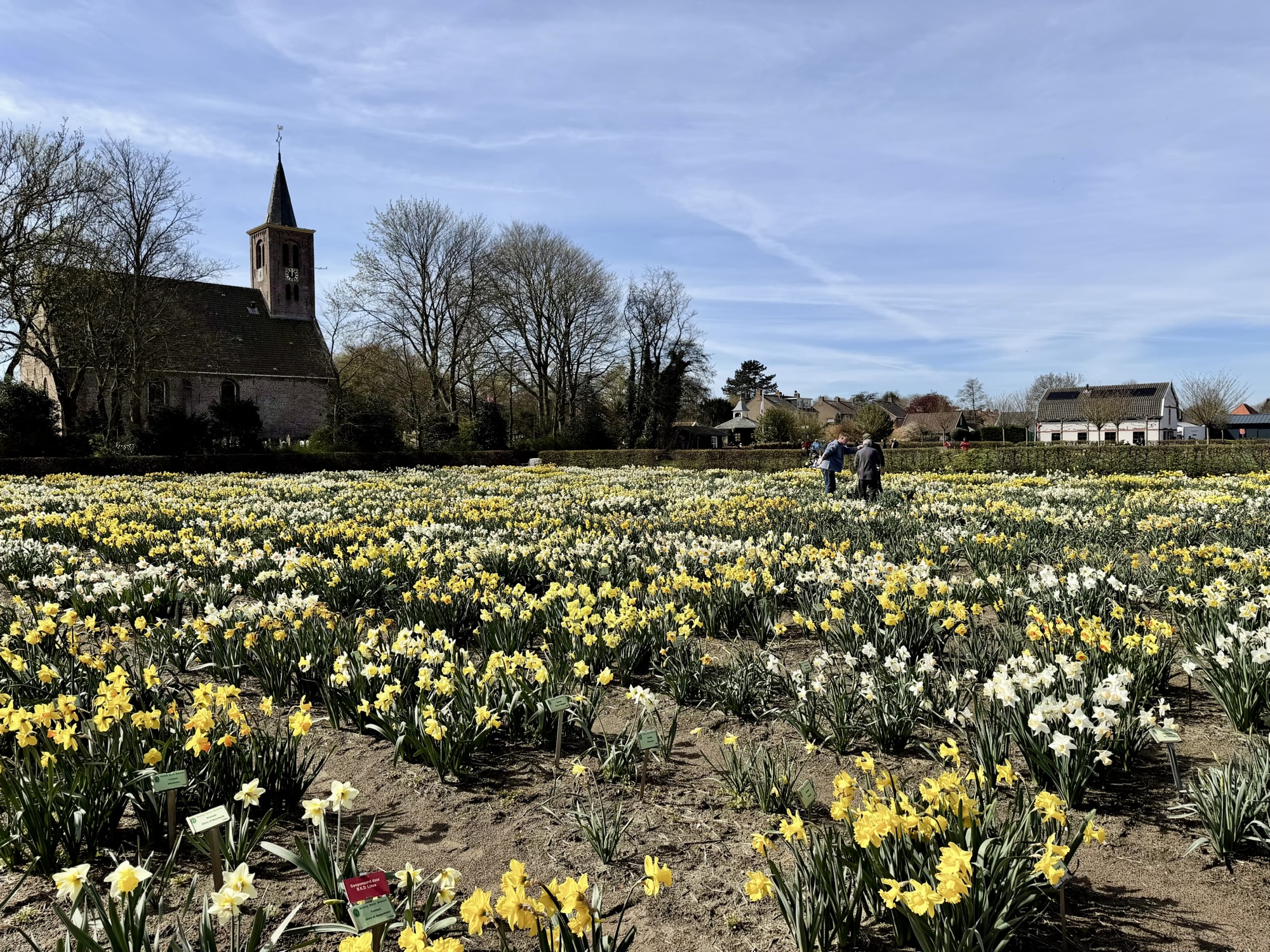
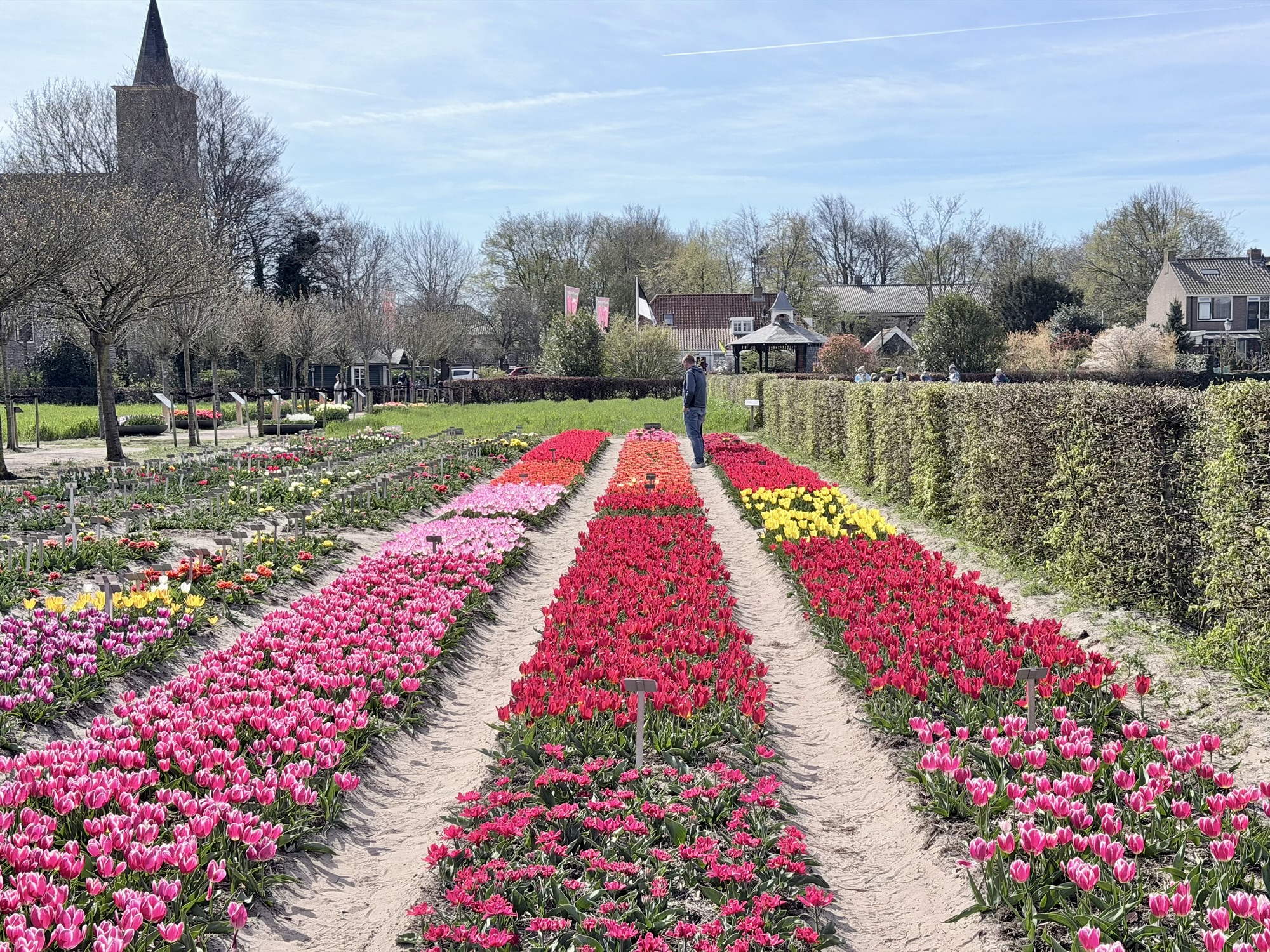
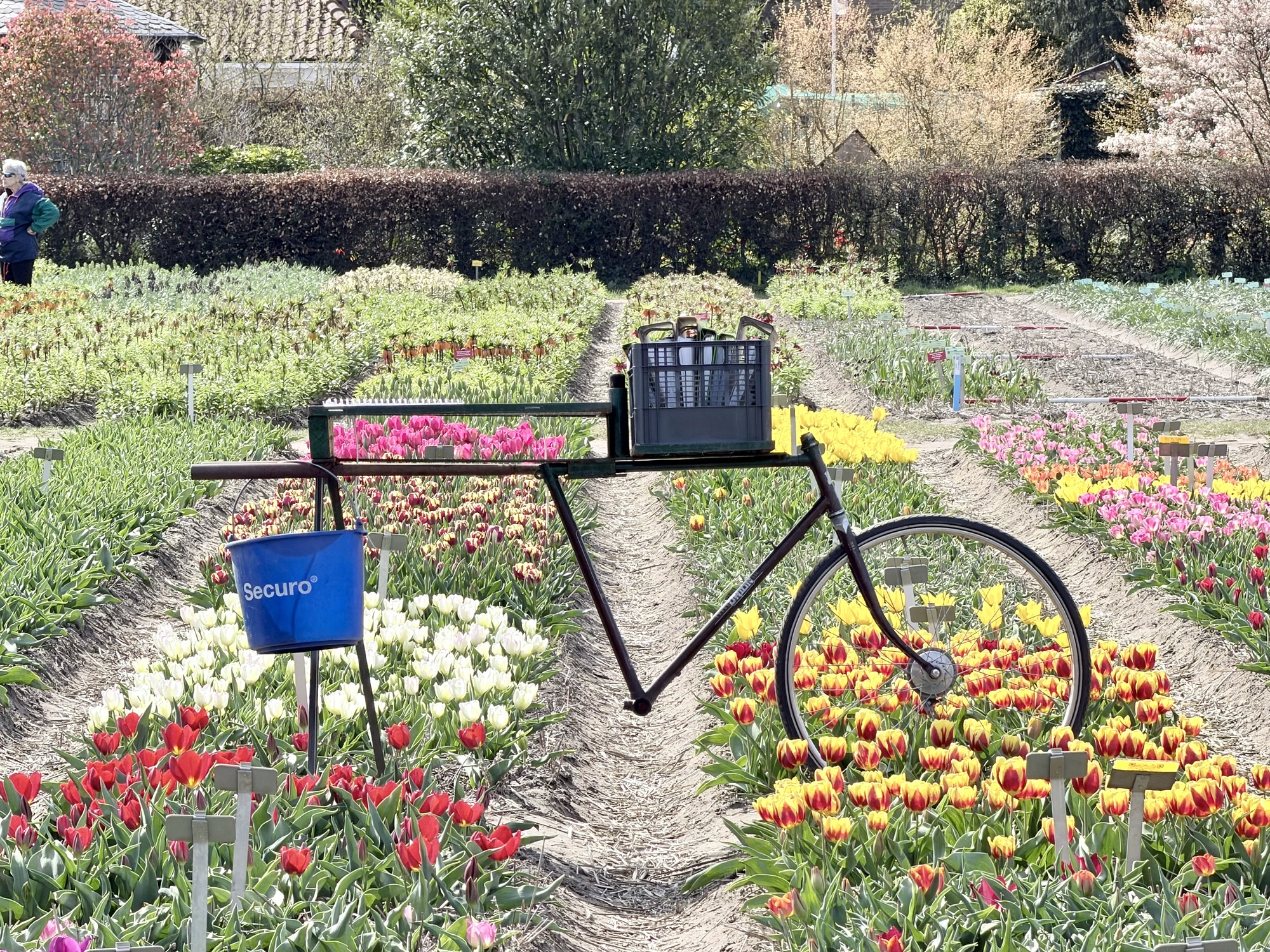
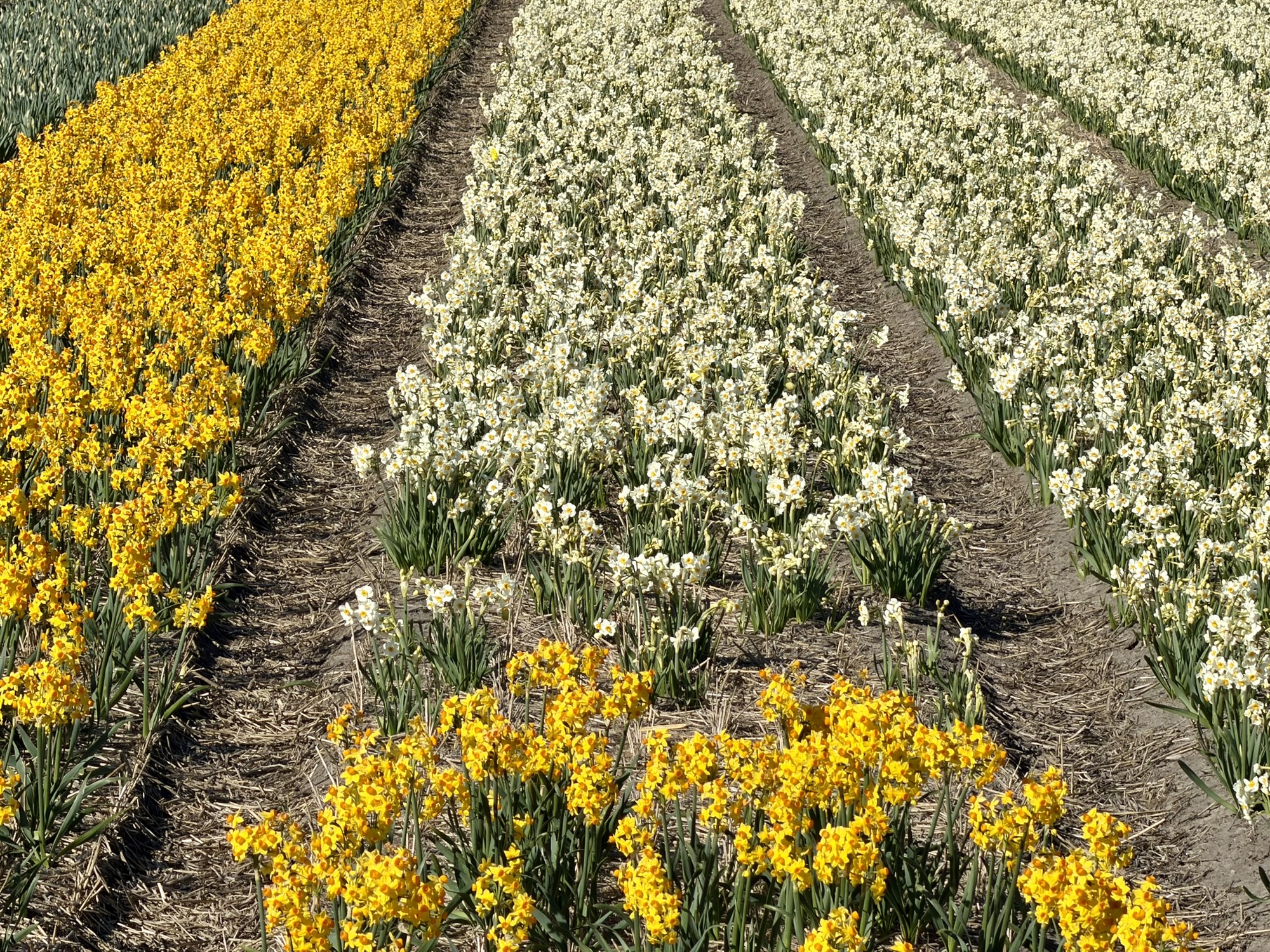
Next we stopped at Hortus Bulborum, a unique garden museum dedicated to the preservation of rare and historic bulbs. Some of the over 3,500 tulips, daffodils, hyacinths, and other flowers planted here are nearly extinct in the rest of the world.
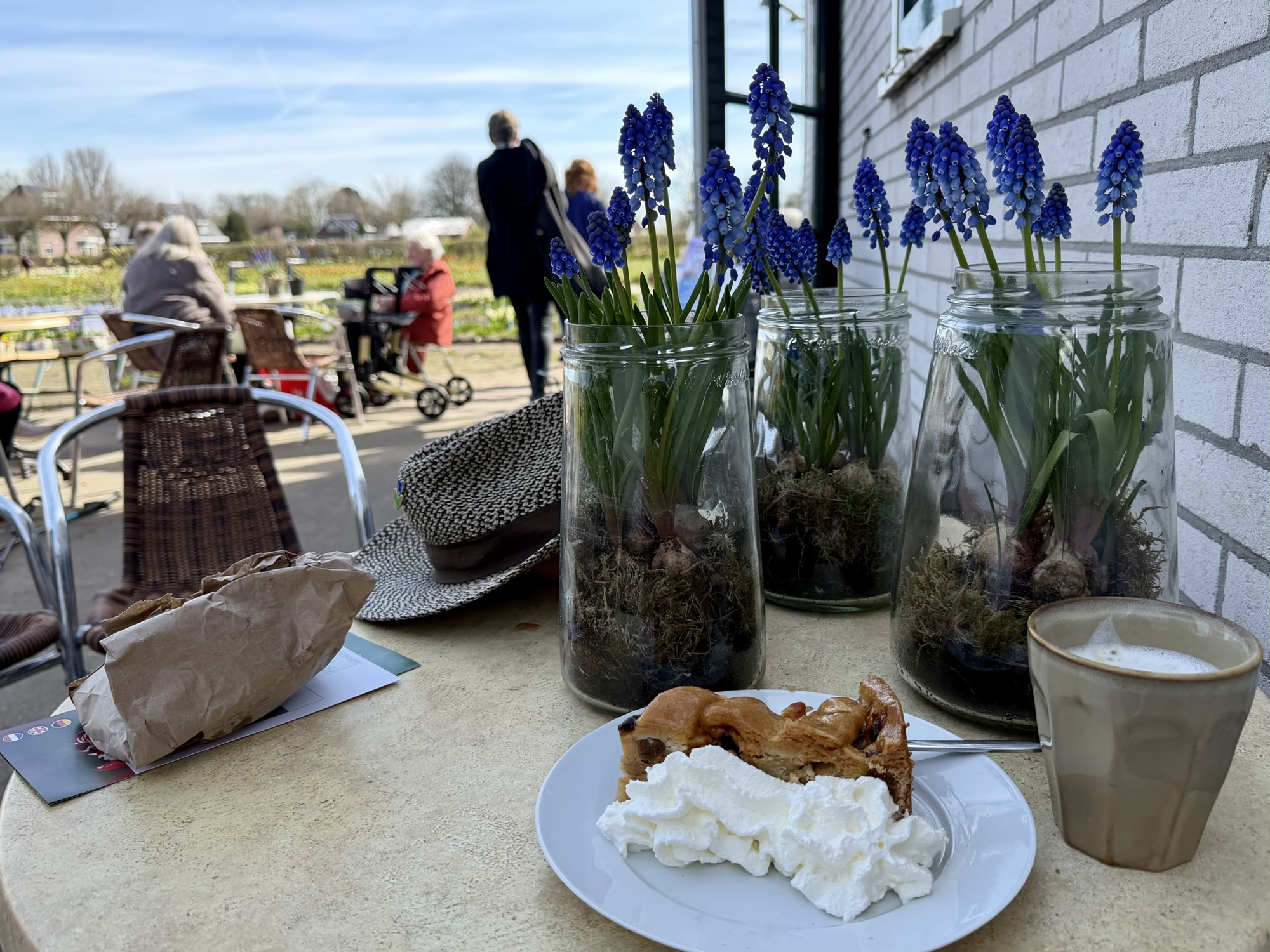
They have a coffee shop which we visited first thing.
Everyone enjoying their coffee and cake sat with their backs to the building facing the beautiful gardens.
It was too difficult to select only a couple images so here’s a slideshow of the best.
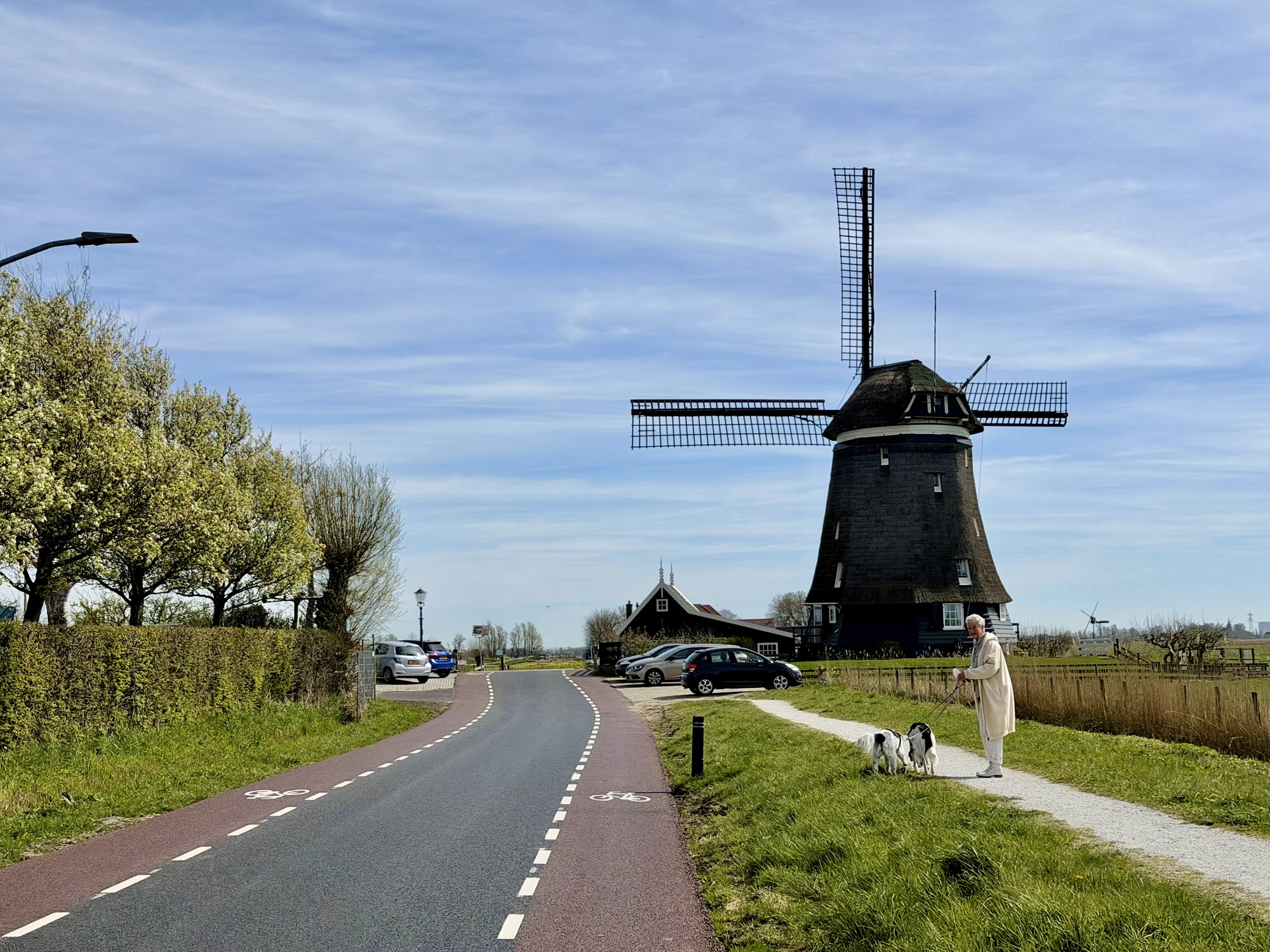
These are a couple of the many windmills we have seen dotting the landscape as we cycle around.
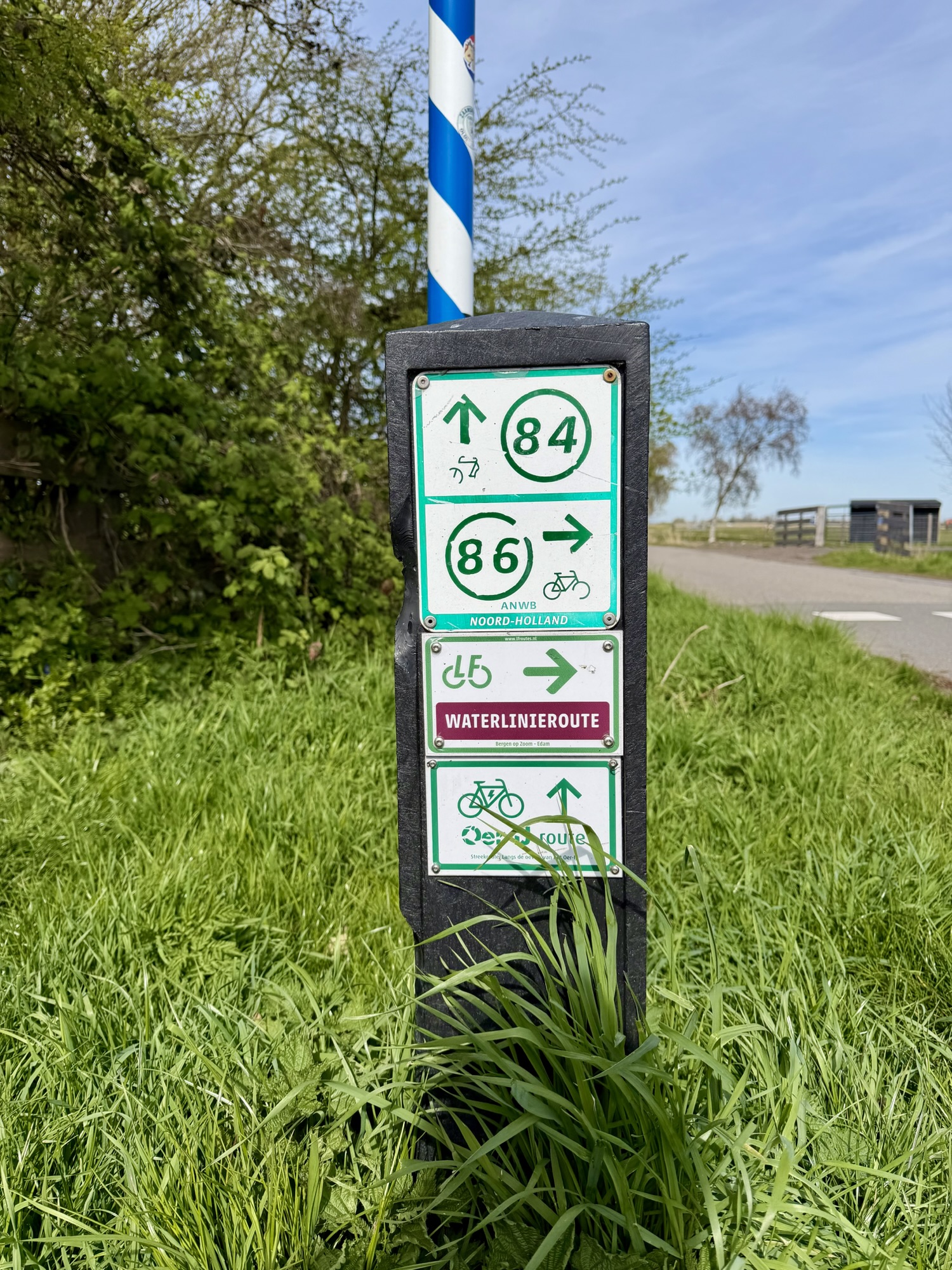
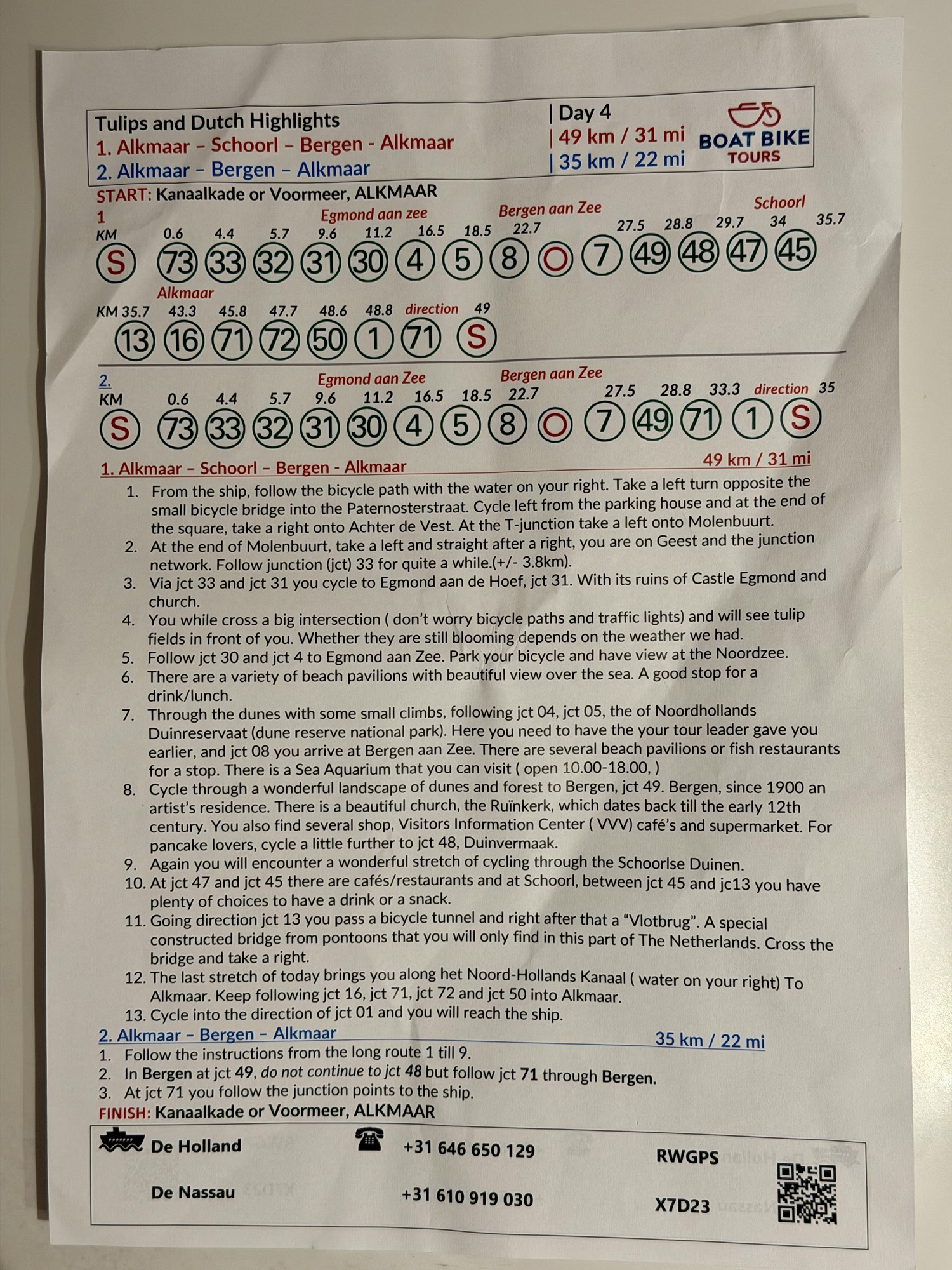
I have been Ride with GPS to guide me. It’s my preferred tool for planning and navigation and I’ve been using it for years. I was pleased that it was the app chosen by this tour company.Those who prefer paper maps, and sign posts are able to navigate using a very clever system. At each intersection one looks for a number and that will indicate how you should proceed. People who wanted to navigate by paper were provided with a paper that has all the numbers on it. The numbers are not unique overall, but will be unique to an area.
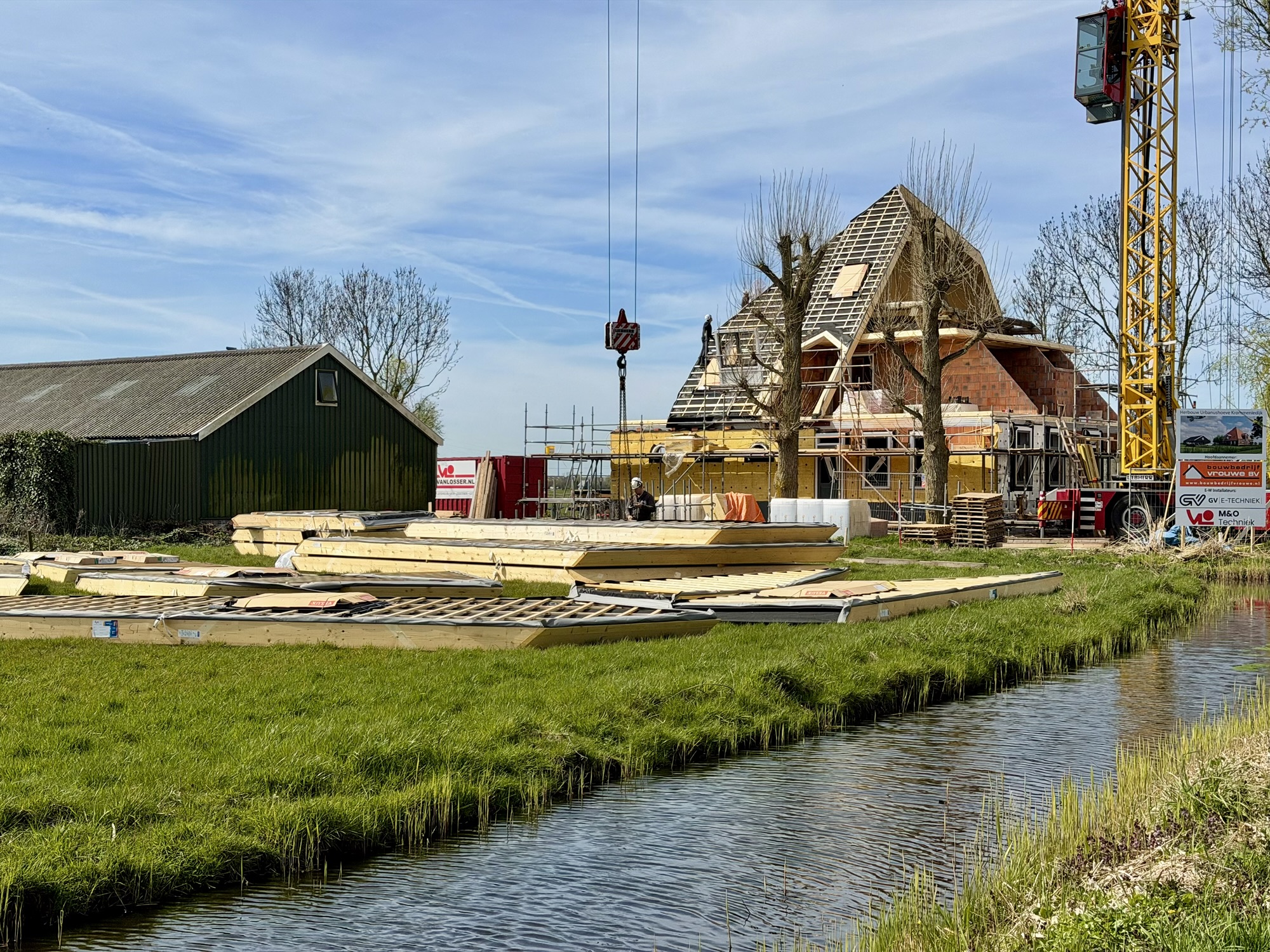
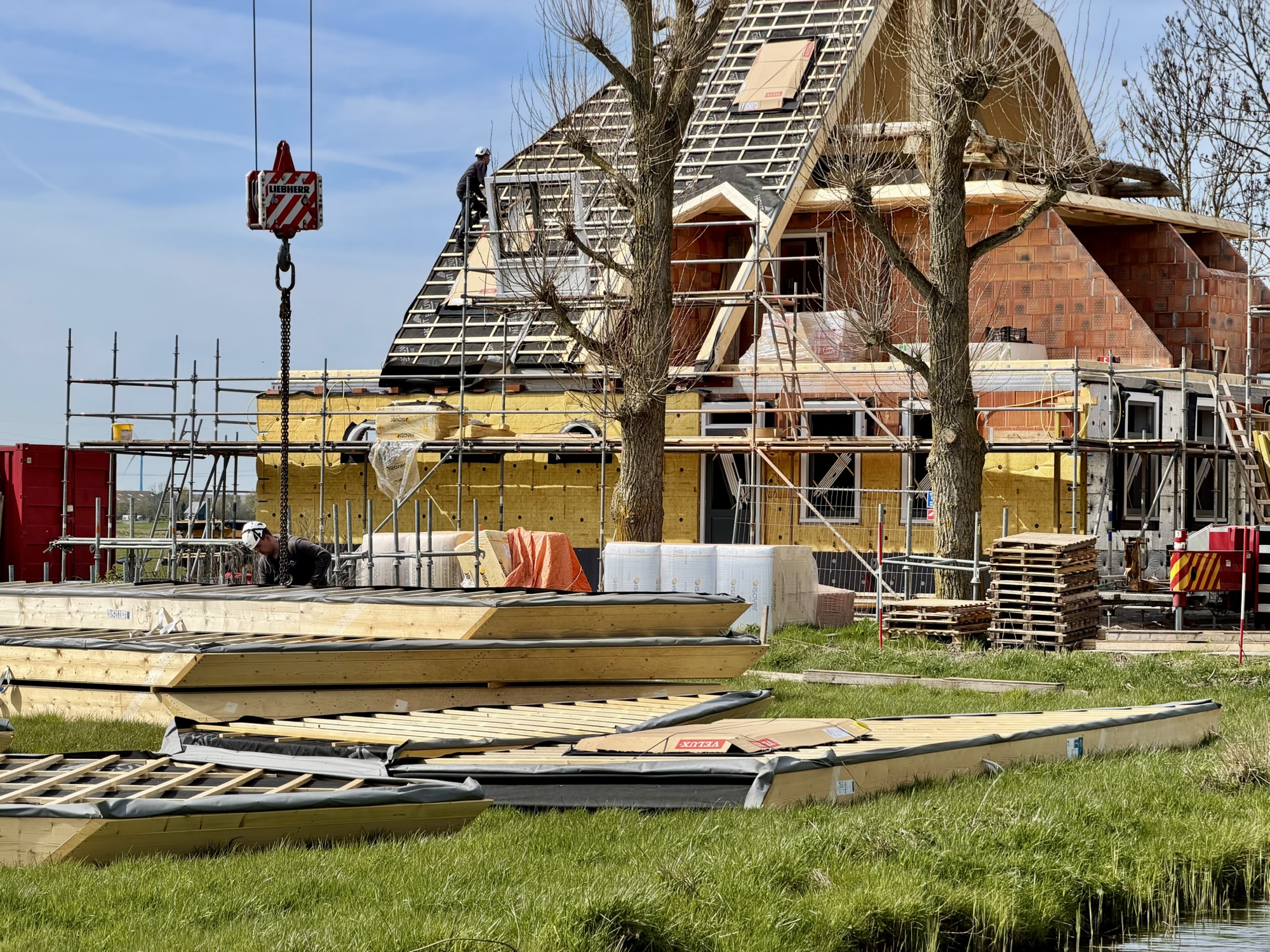
We stopped here to watch a large crane, lifting a pre-fabricated roof panel onto a house.
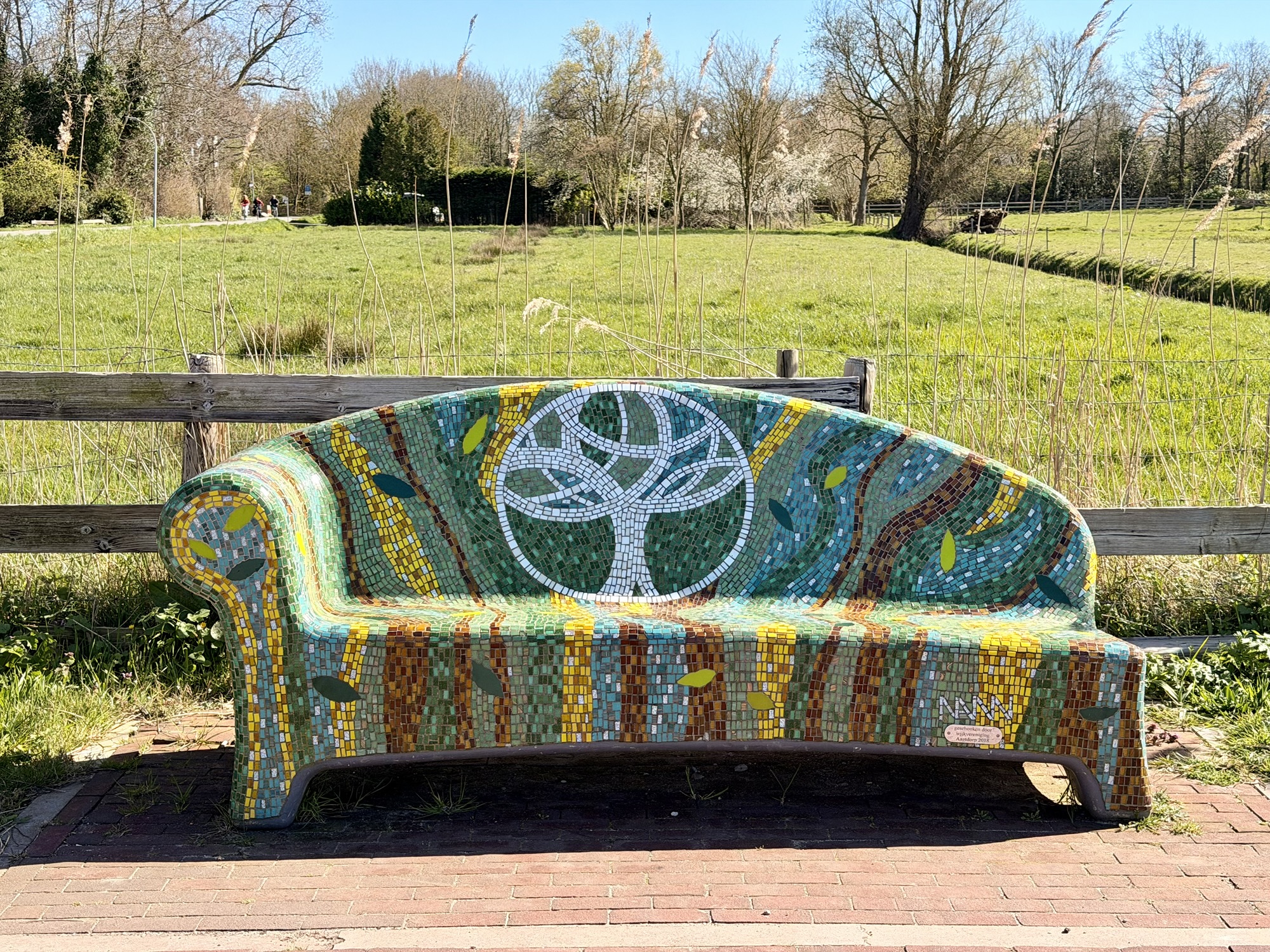
Today I encountered many more mosaic benches. It seems to be a theme in this area.
Here we are Zaandam, which felt much busier than most of the small places we have visited, but not as busy as Amsterdam.
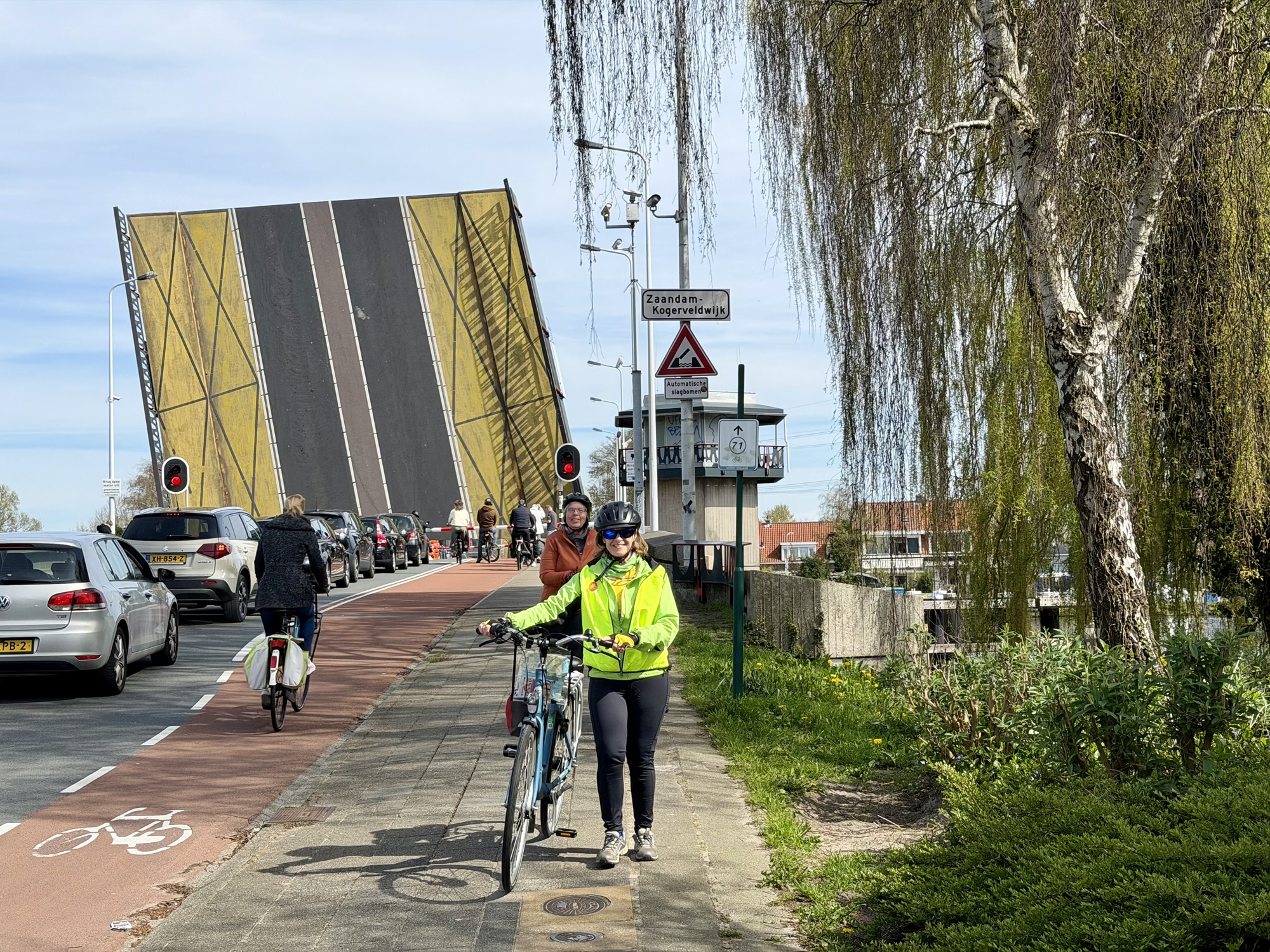
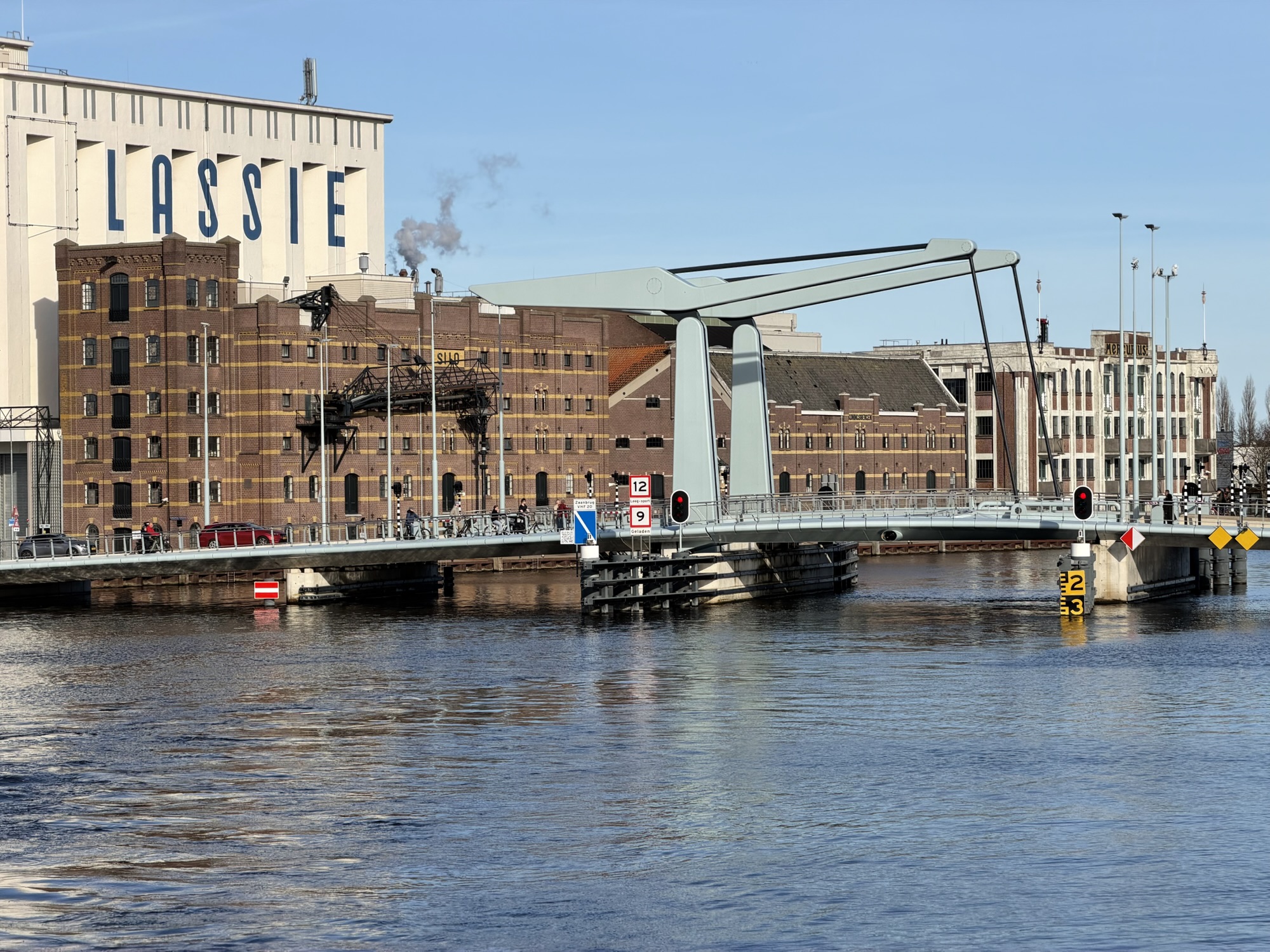
We had to cross a major canal to get to where the barge is docked. The bridge deck was up when we arrived and we had to wait several minutes for a ship to go through.
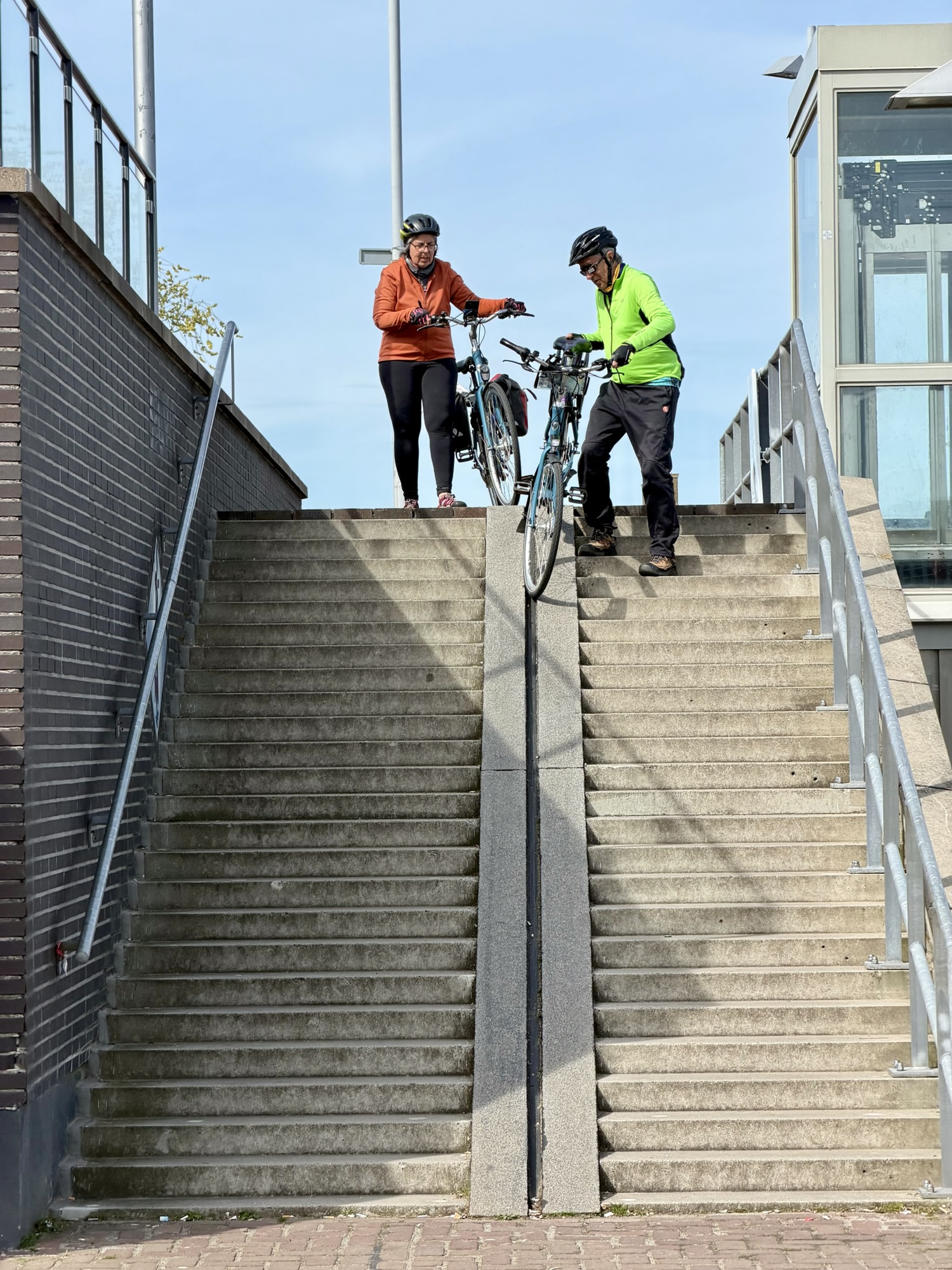
There was an elevator to get from street level down to the dock, but it wasn’t working. Fortunately, there was a bike rail, which meant we didn’t have to carry our heavy bikes down.
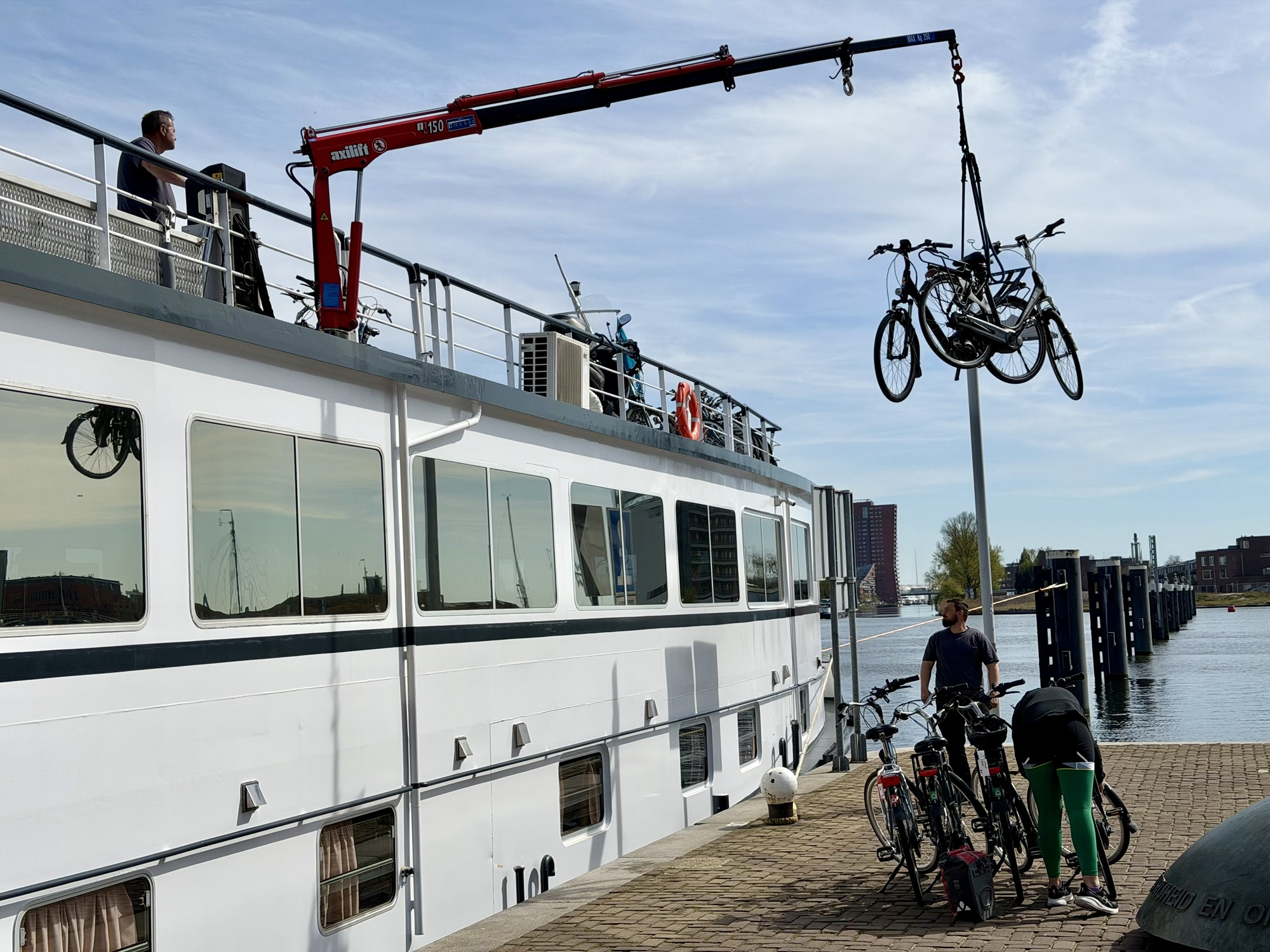
I’ve been waiting for days to capture this image of the crew, bringing the bikes back onto the boat with a small crane.
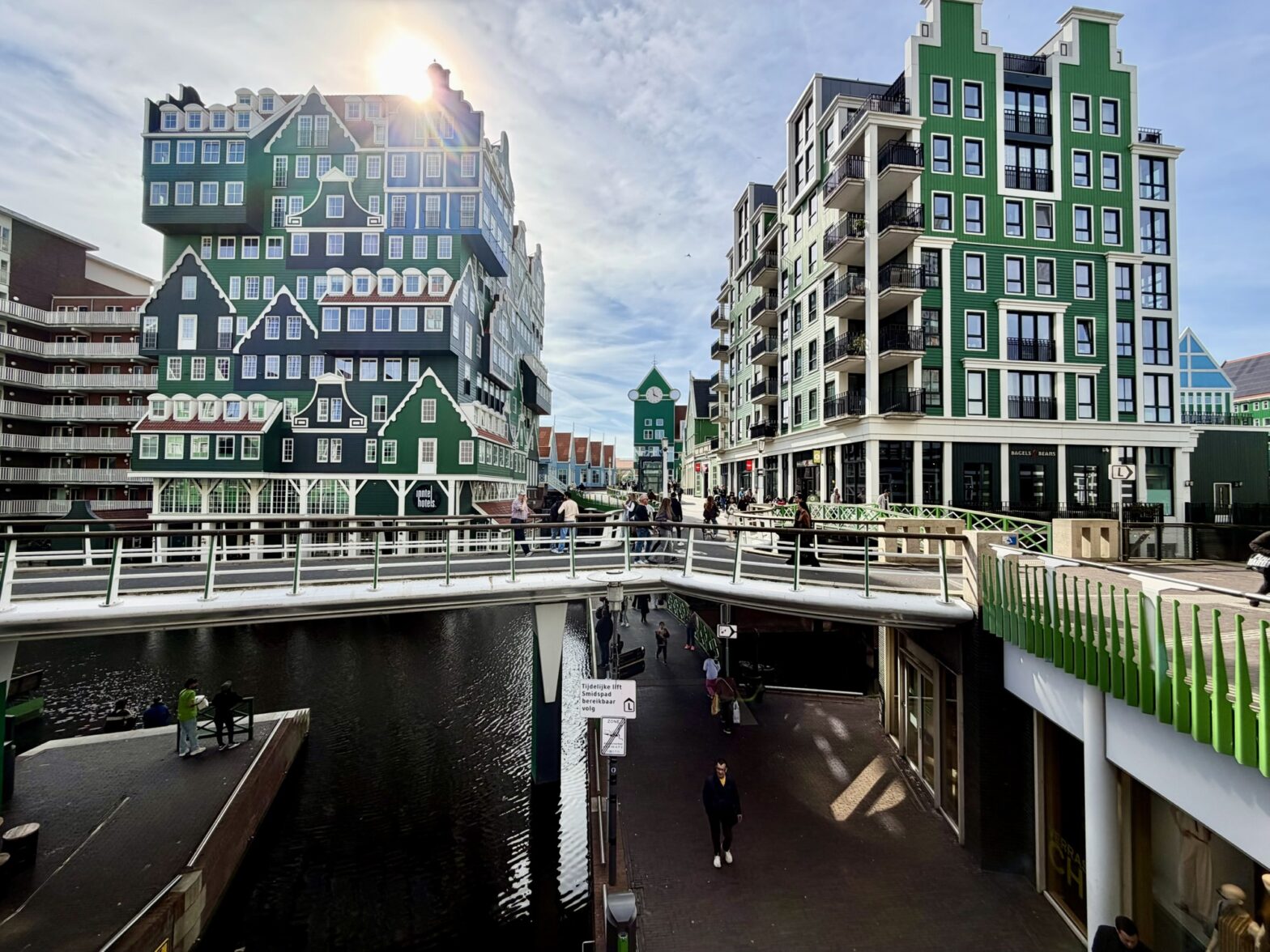
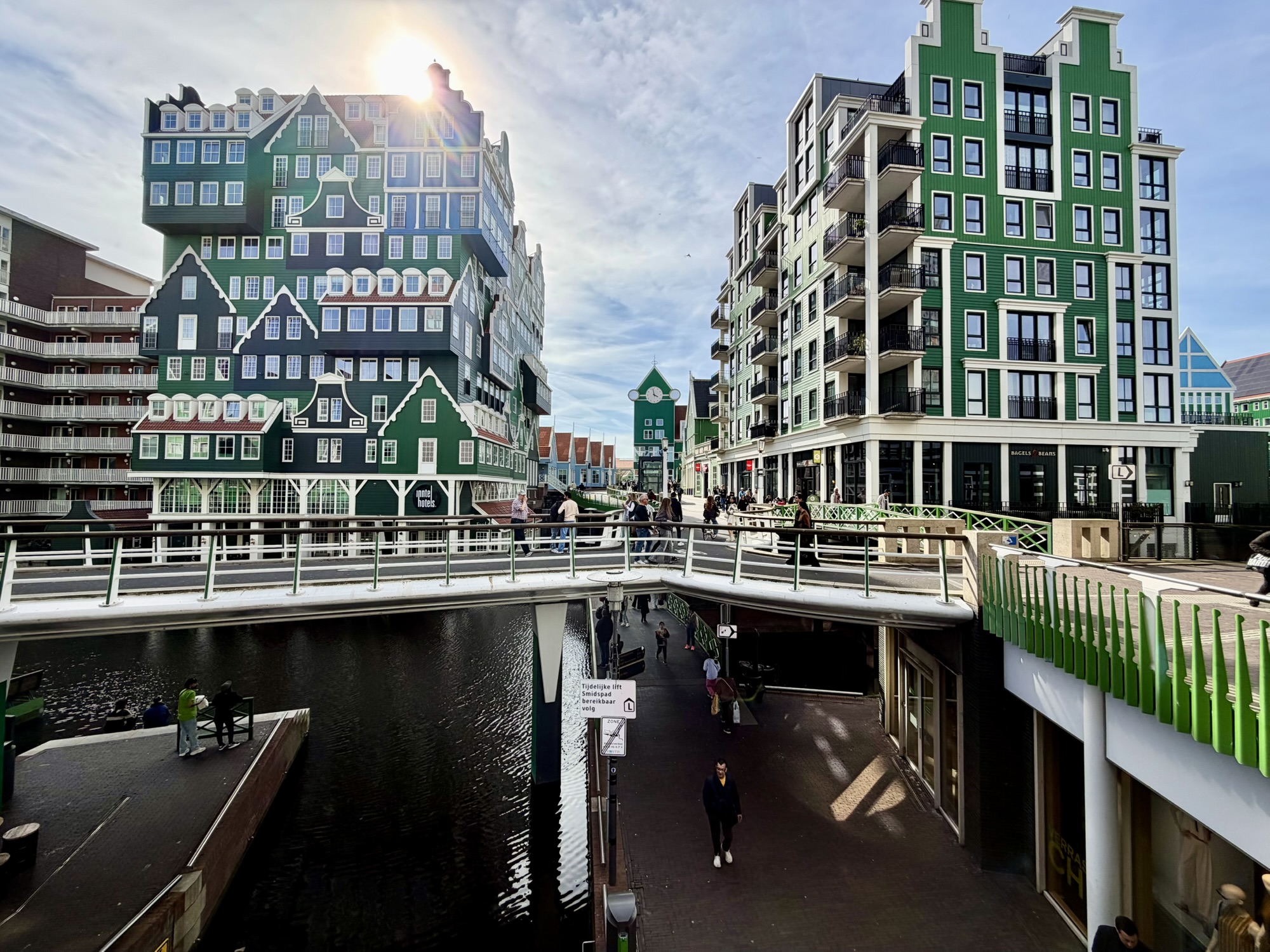
Some of us arrived back in time for coffee and cake. Then I took a half hour break before meeting Cindy to walk to the Inntel Hotel. I have been seeing pictures of this hotel for years and was very excited to see it in person.
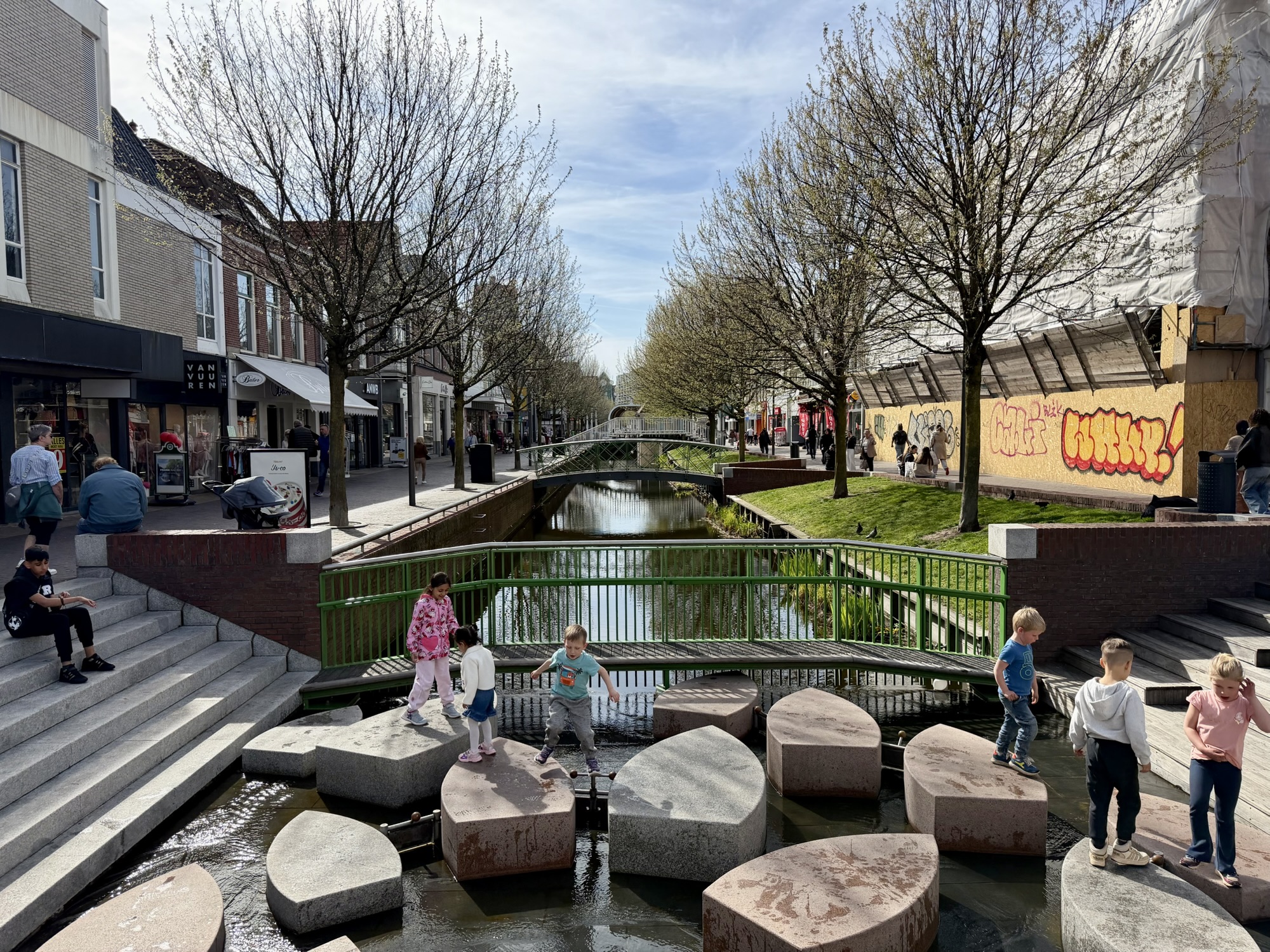
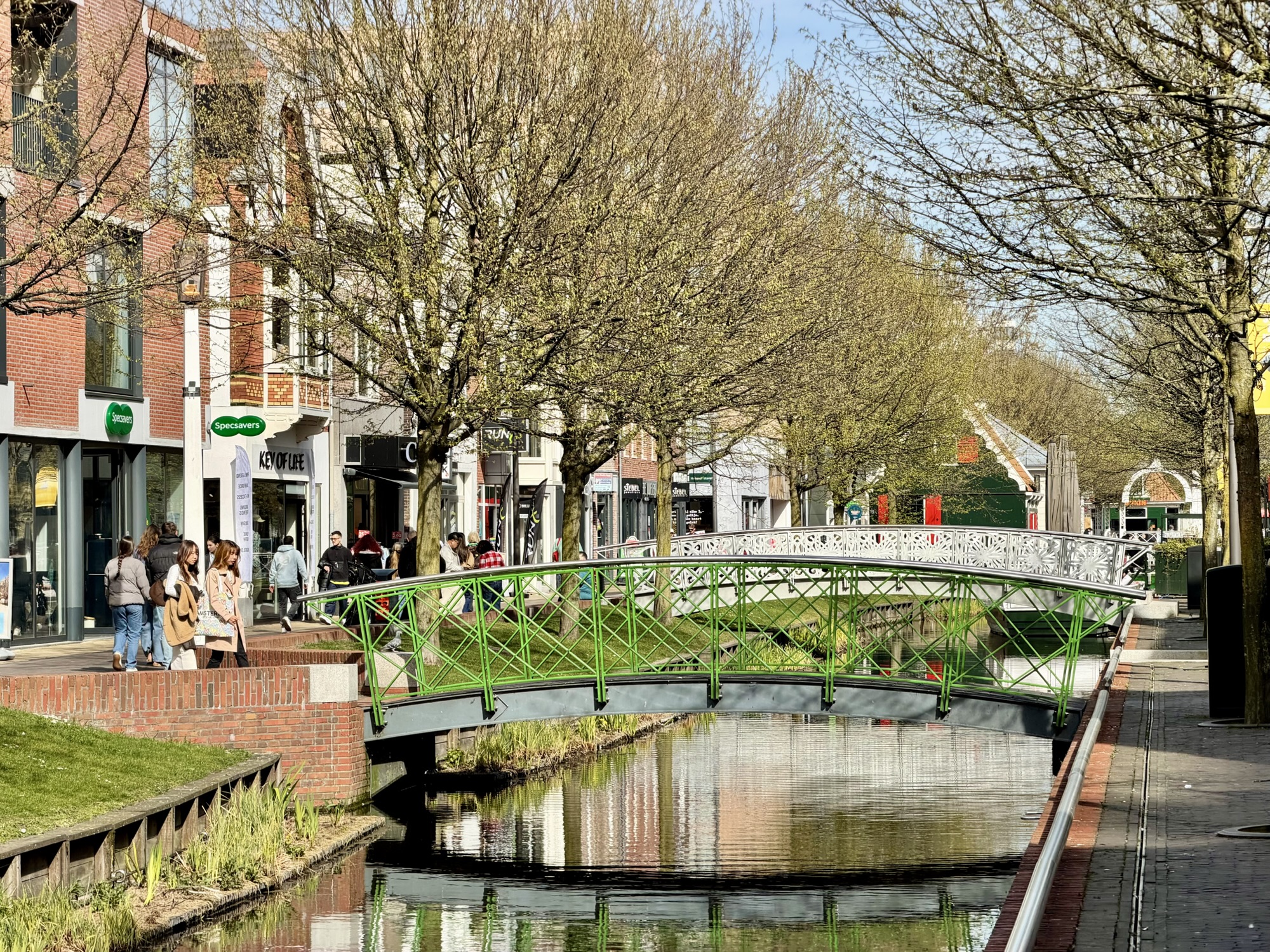
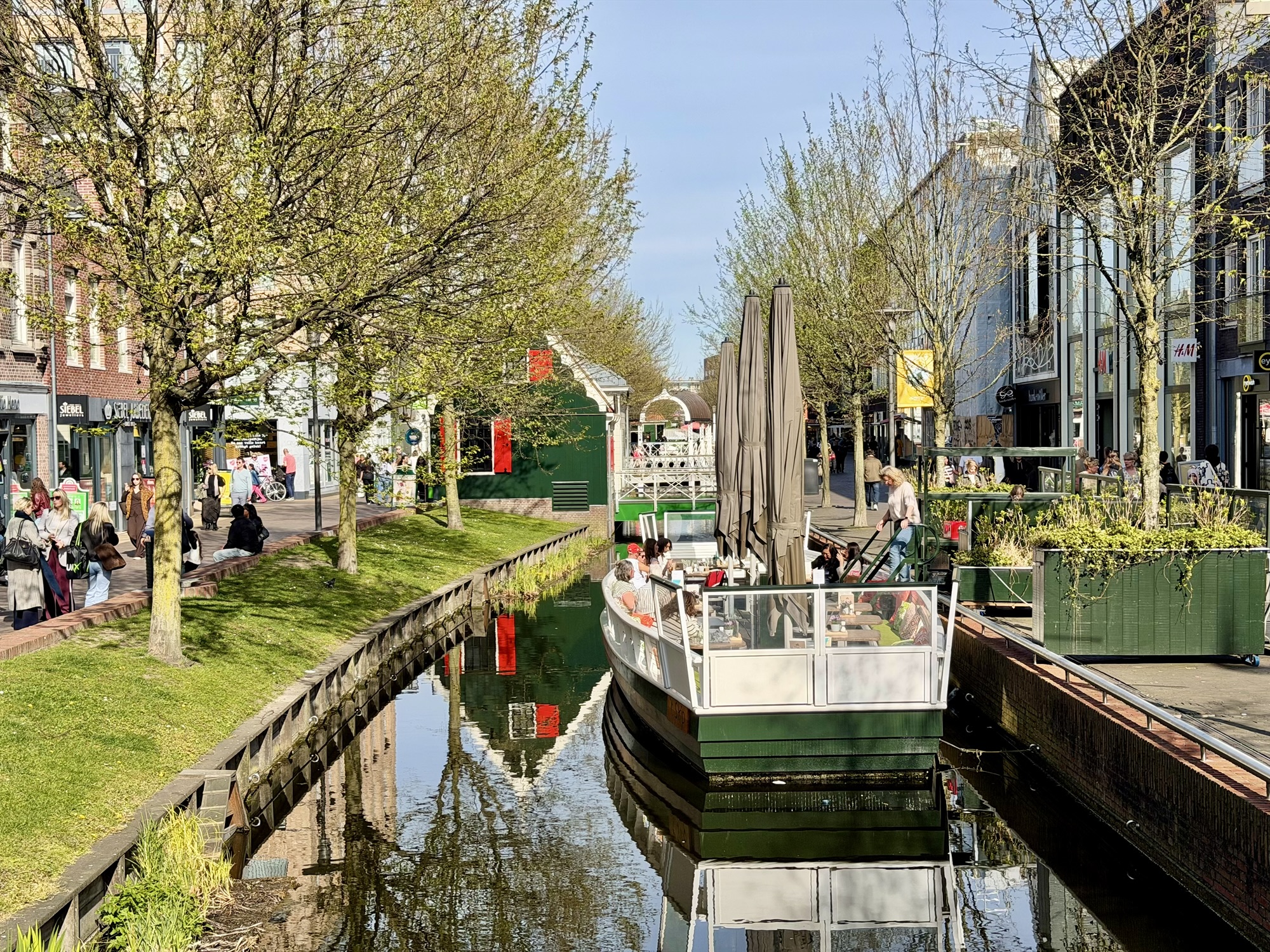
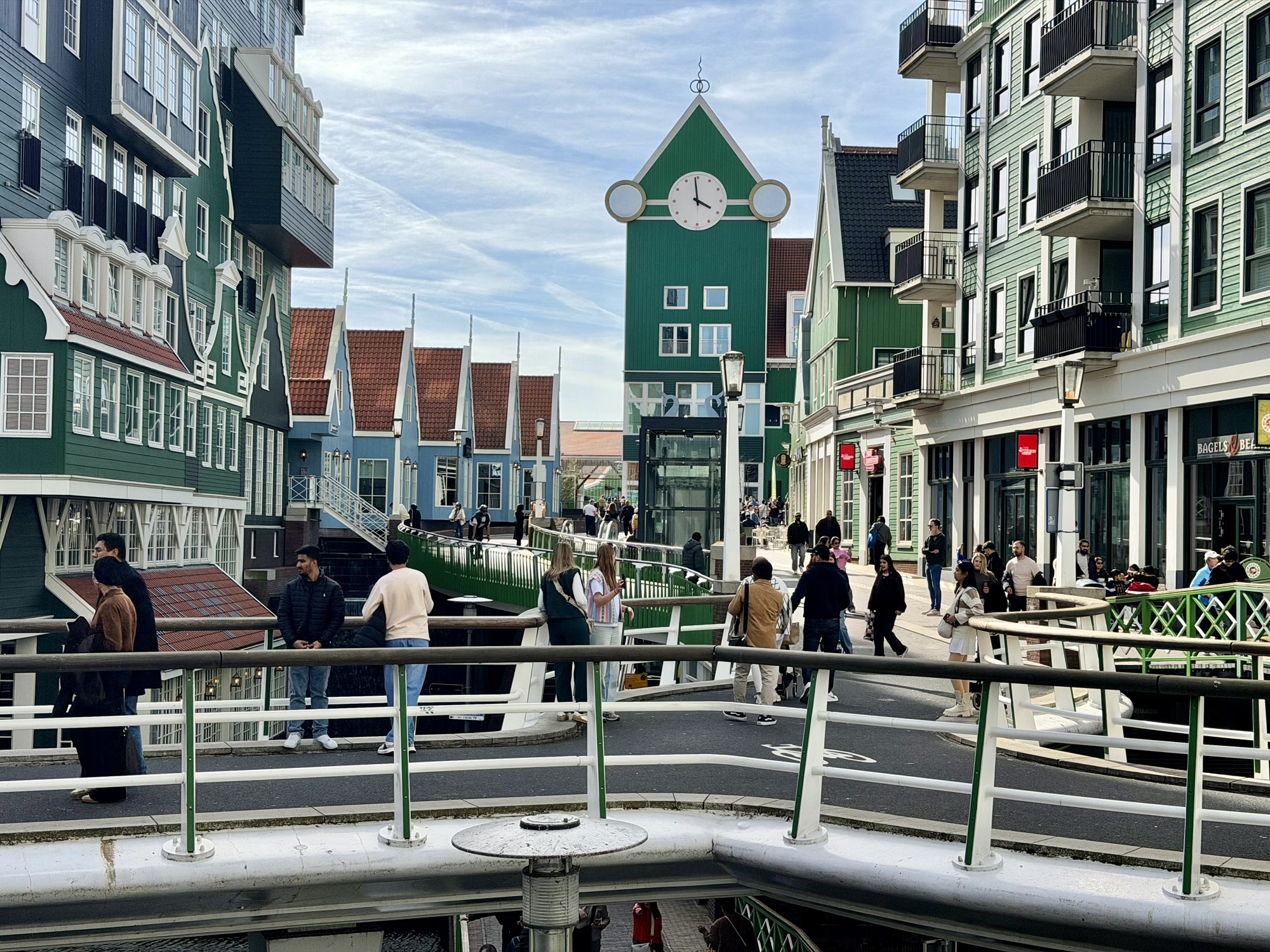
We walked down a canal lined with shops on either side to the city center, where “modern architecture seamlessly blends with rich historical heritage, showcasing the city’s industrial past and cultural significance”.
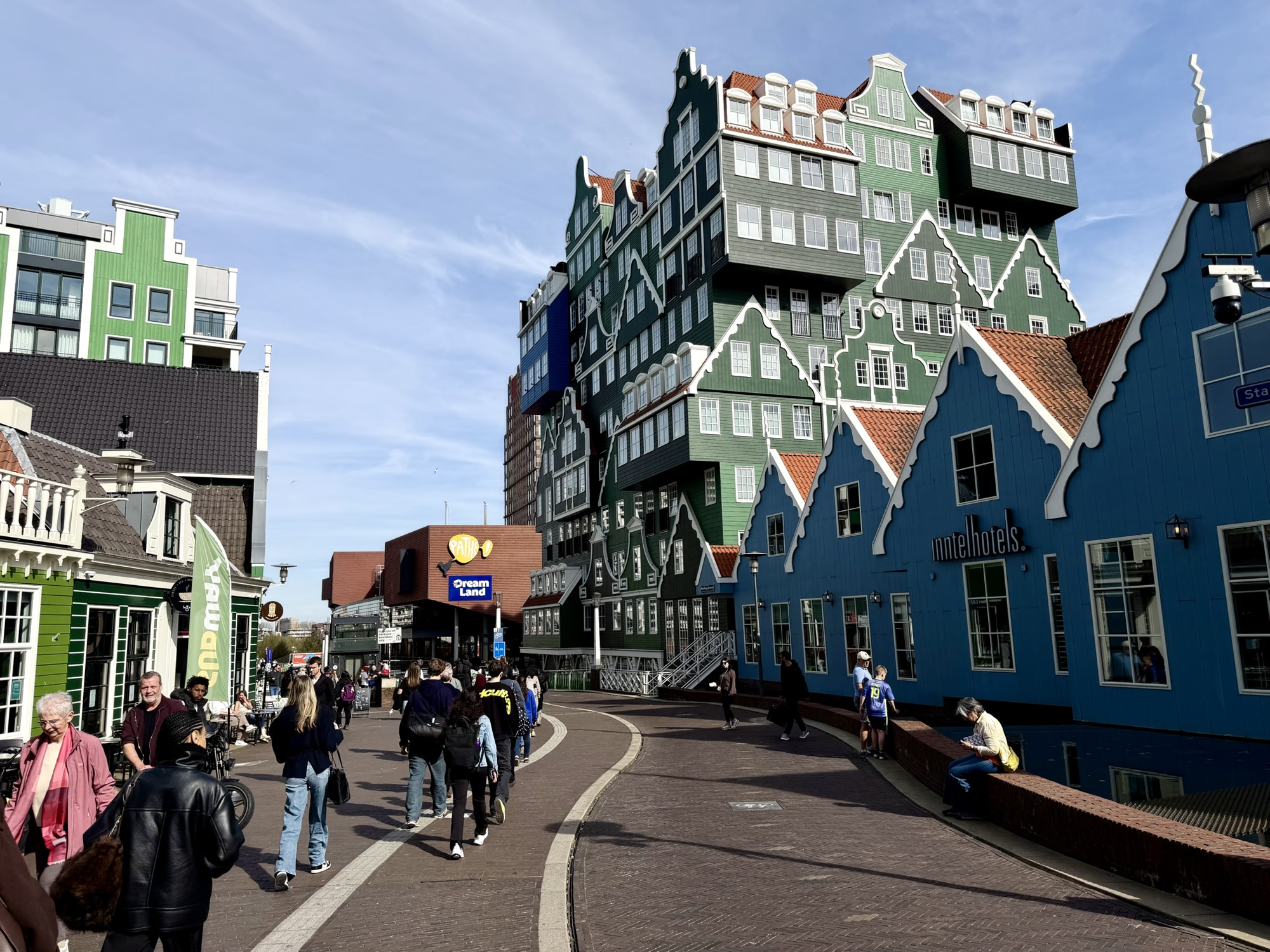
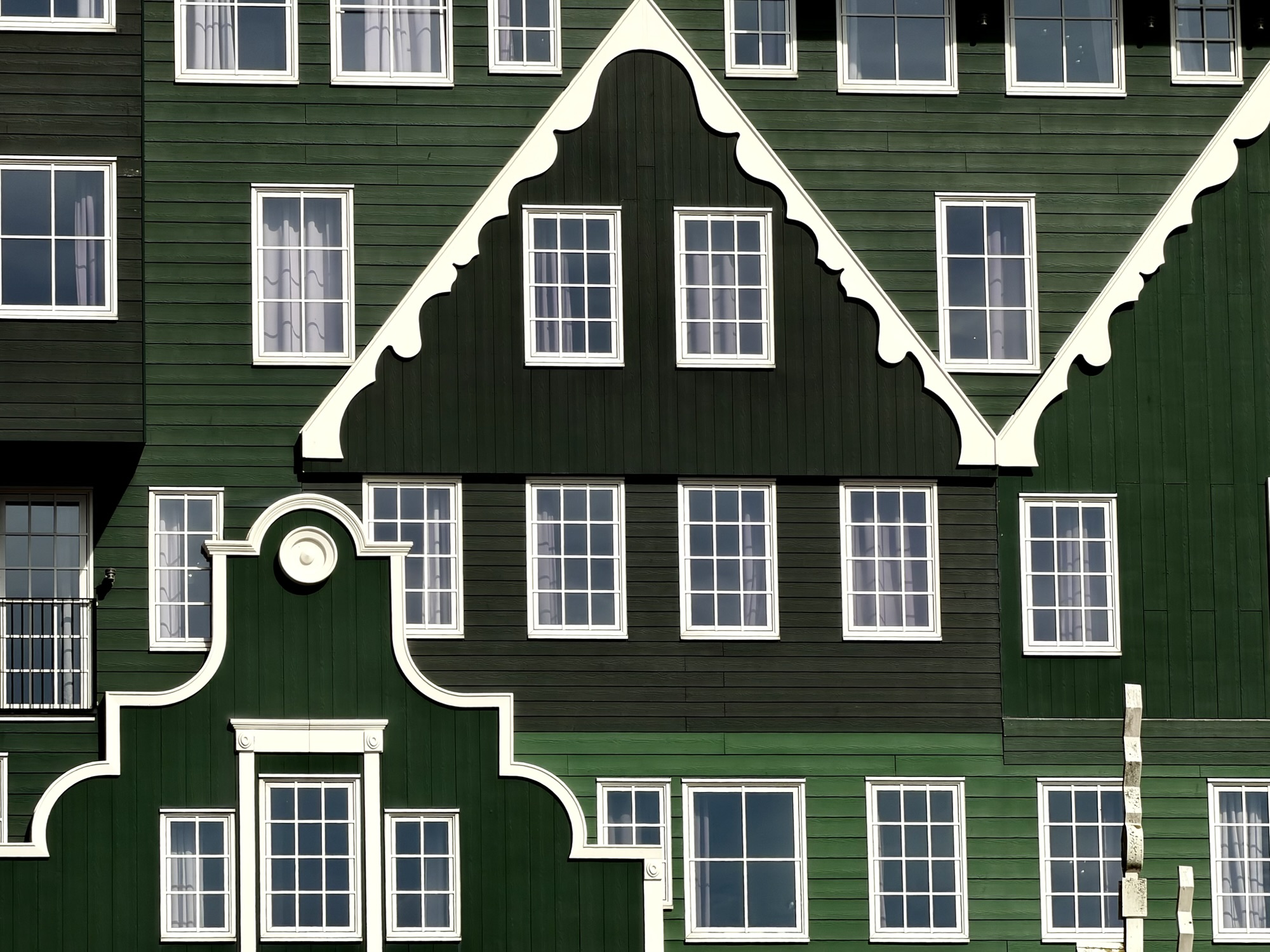
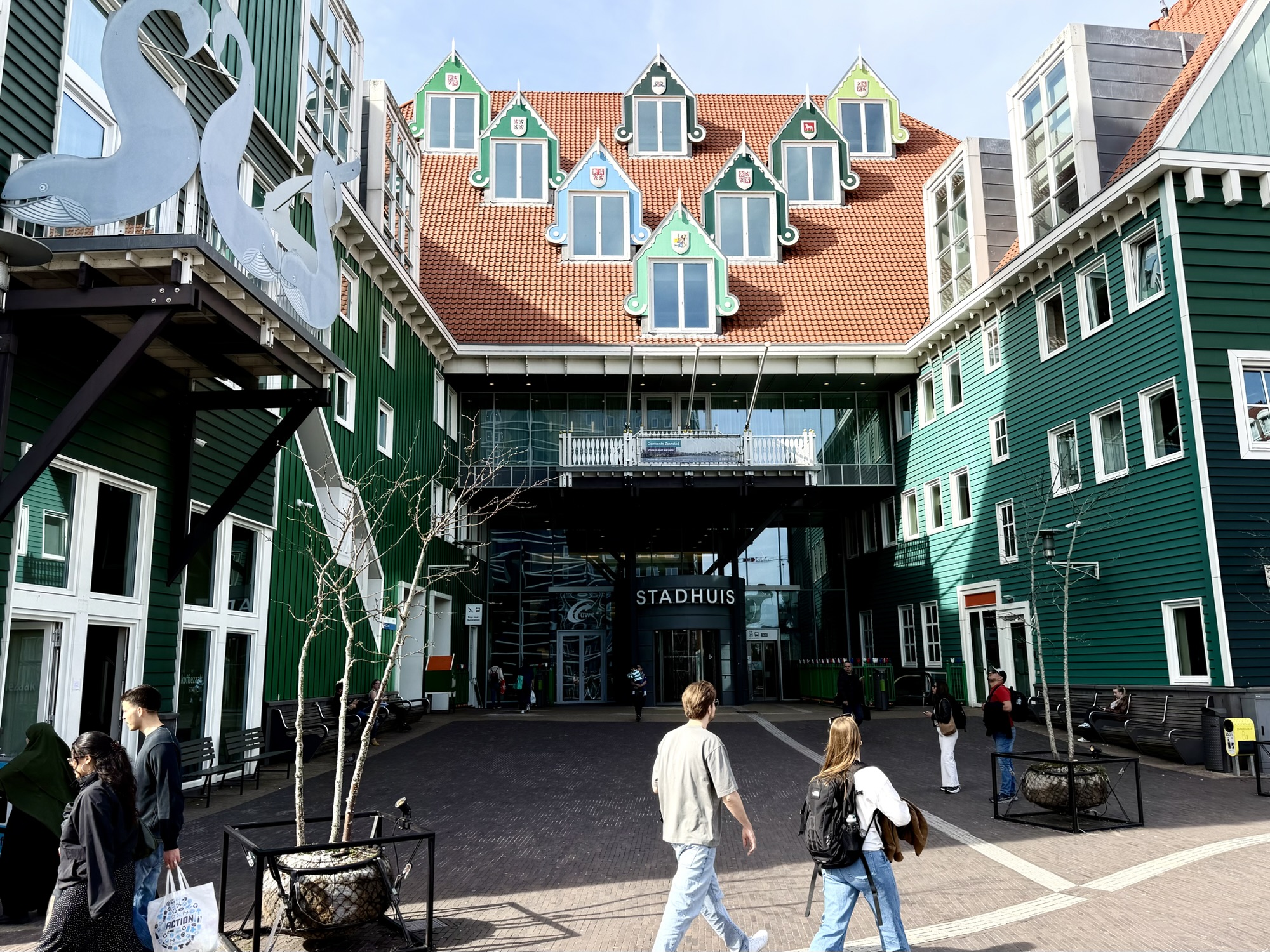
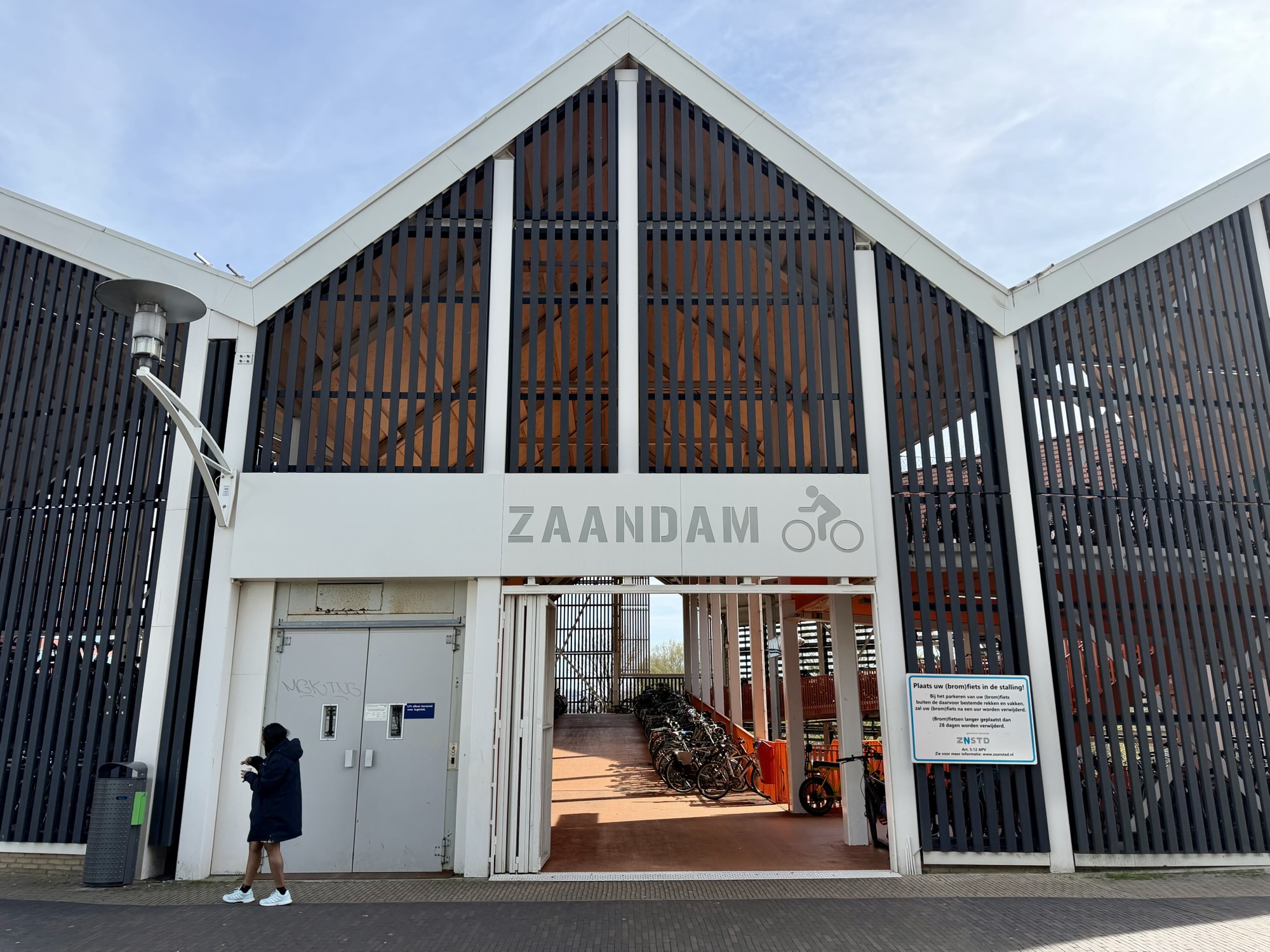
The hotel was exactly as I had envisioned it, but what I didn’t realize is that the whole area is being built in a similar style and includes a train station and a large bike parking garage.
This is how the city centre is described in a book that I picked up at the tourist center.
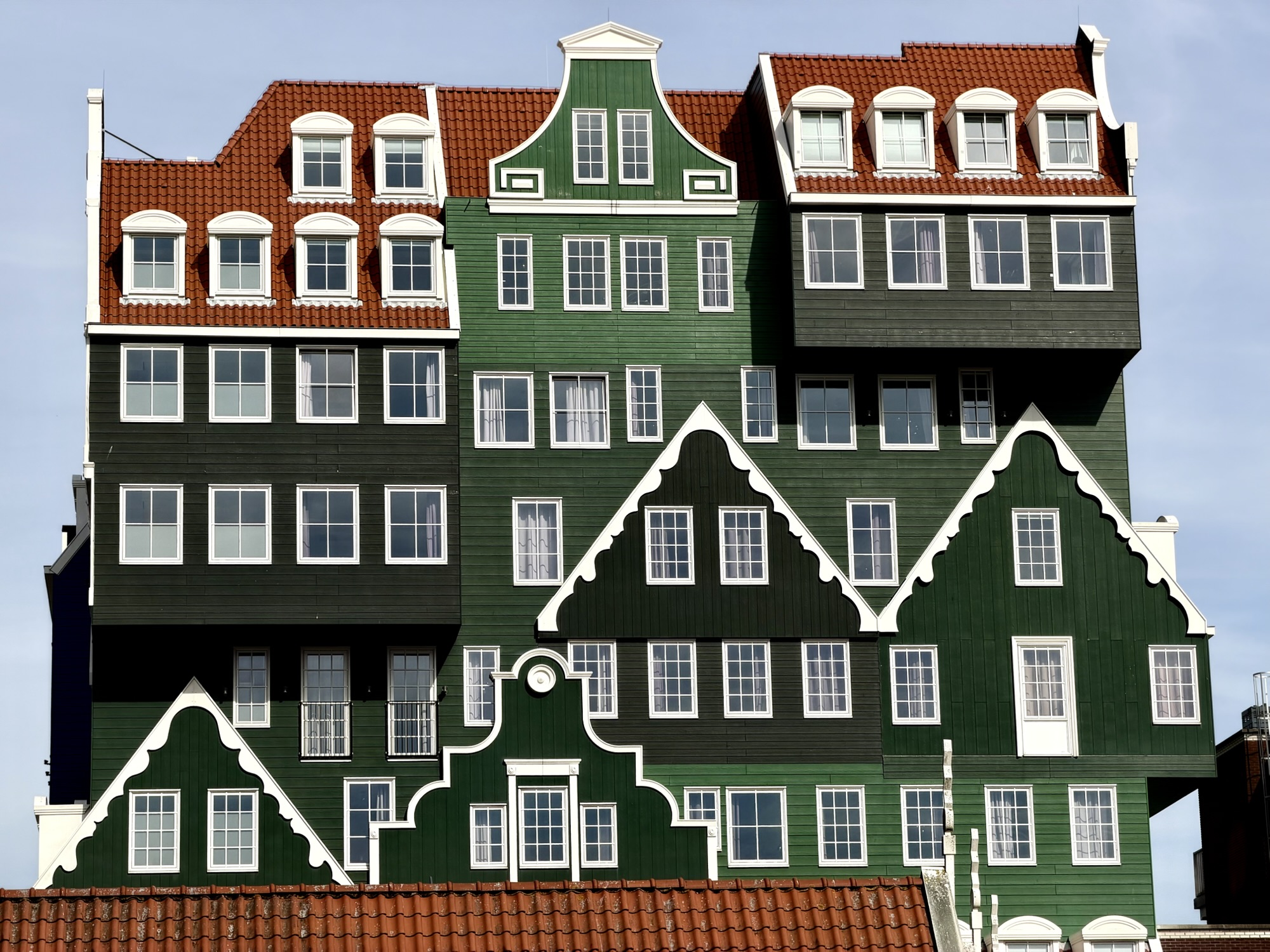
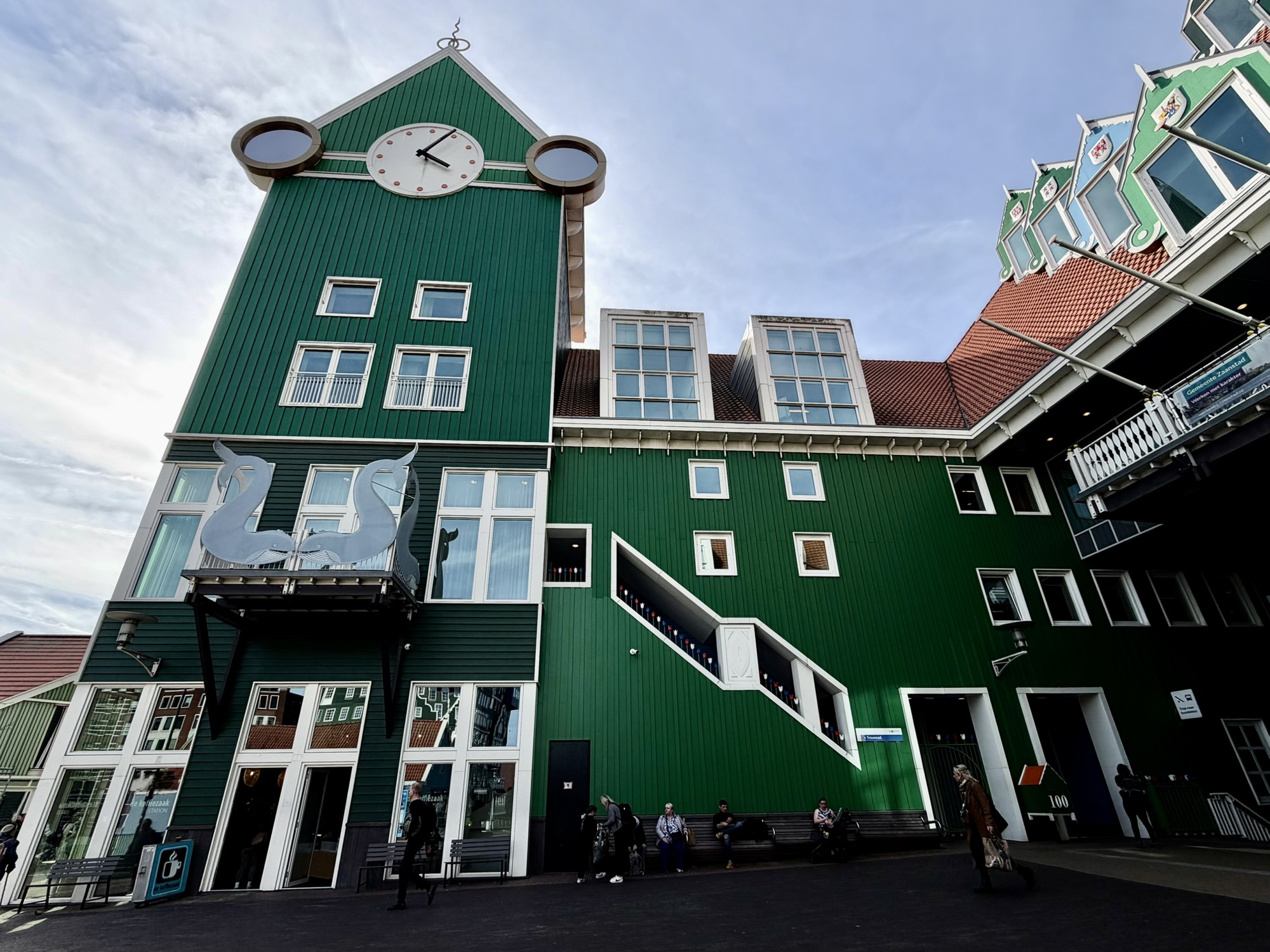
One of the most striking features is the iconic Inntel Hotel, its façade designed to resemble a stack of traditional Zaan region houses, painted in vibrant green with crisp white trims. This building alone captures the essence of Zaandam’s unique identity, merging the old with the new in a way that is both visually stunning and historically respectful.
The transformation of Zaandam’s city center, known as the ‘Inverdan’ project, has turned a once-dreary entrance into a lively and inviting hub. Guided by urban planner Sjoerd Soeters, the municipality of Zaanstad undertook this ambitious project, which, despite initial skepticism over its cost of over 800 million euros, has had an enormous positive impact. Even during the economic crisis of 2010, the project was completed, transforming the area in just ten years.
Today, the renovated station area and shopping street ‘De Gedempte Gracht’ welcome visitors with open arms. Where the center was once unremarkable, the stunning town hall and the internationally renowned Intel Hotel now serve as vibrant gateways. This carefully planned area, with its blend of historical charm and modern convenience, has become a bustling center of activity.
A major highlight of the renovation is the improved flow in the shopping area. The focus has shifted from the east side along the Zaan to a direct connection between the main road, the station, and the city center. This has created a shopping area that is bookended by key attractions, with the Intel Hotel drawing tourists daily who can’t resist snapping photos and selfies.
This influx of visitors has also brought new life to the shopping district.
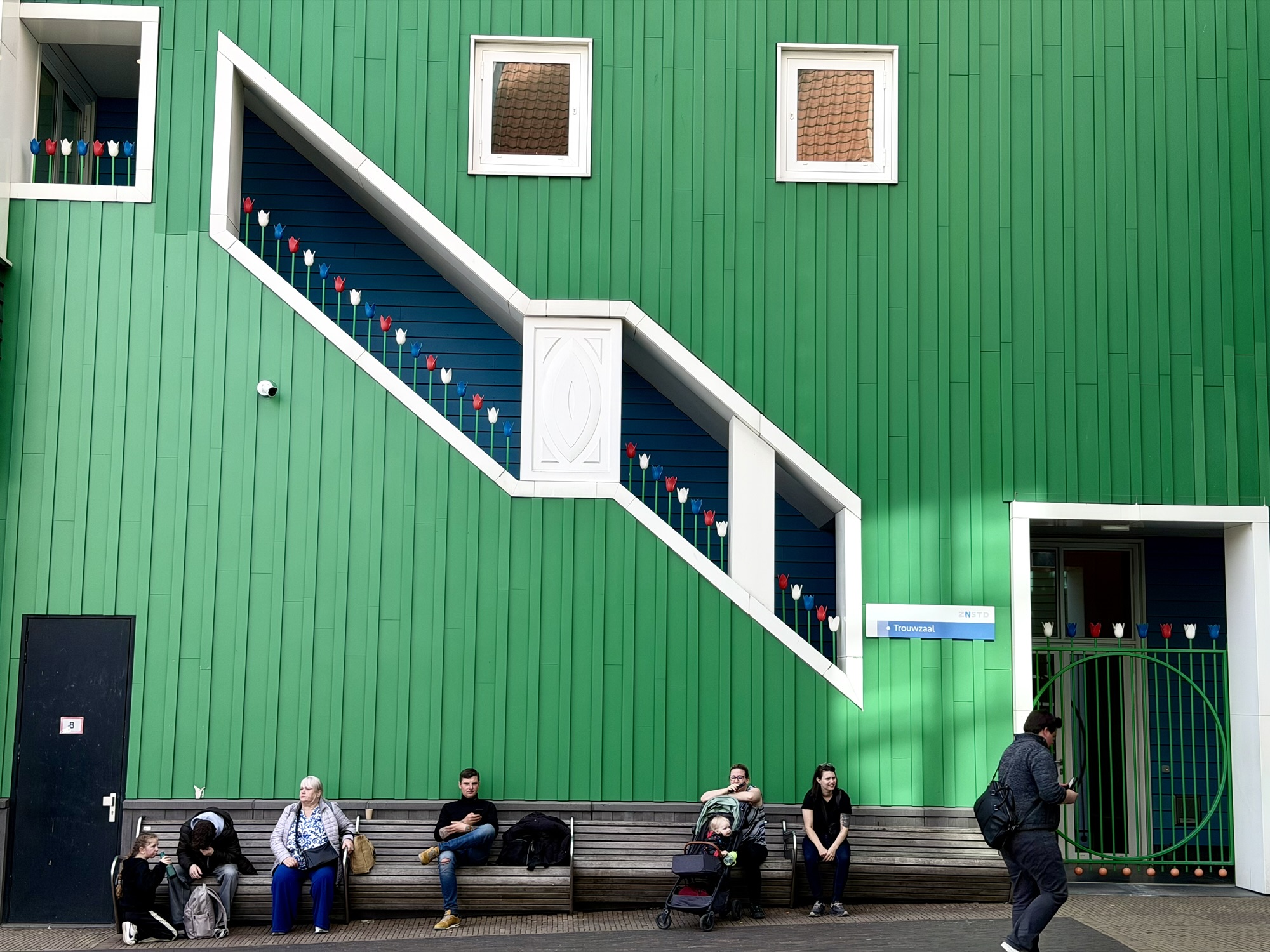
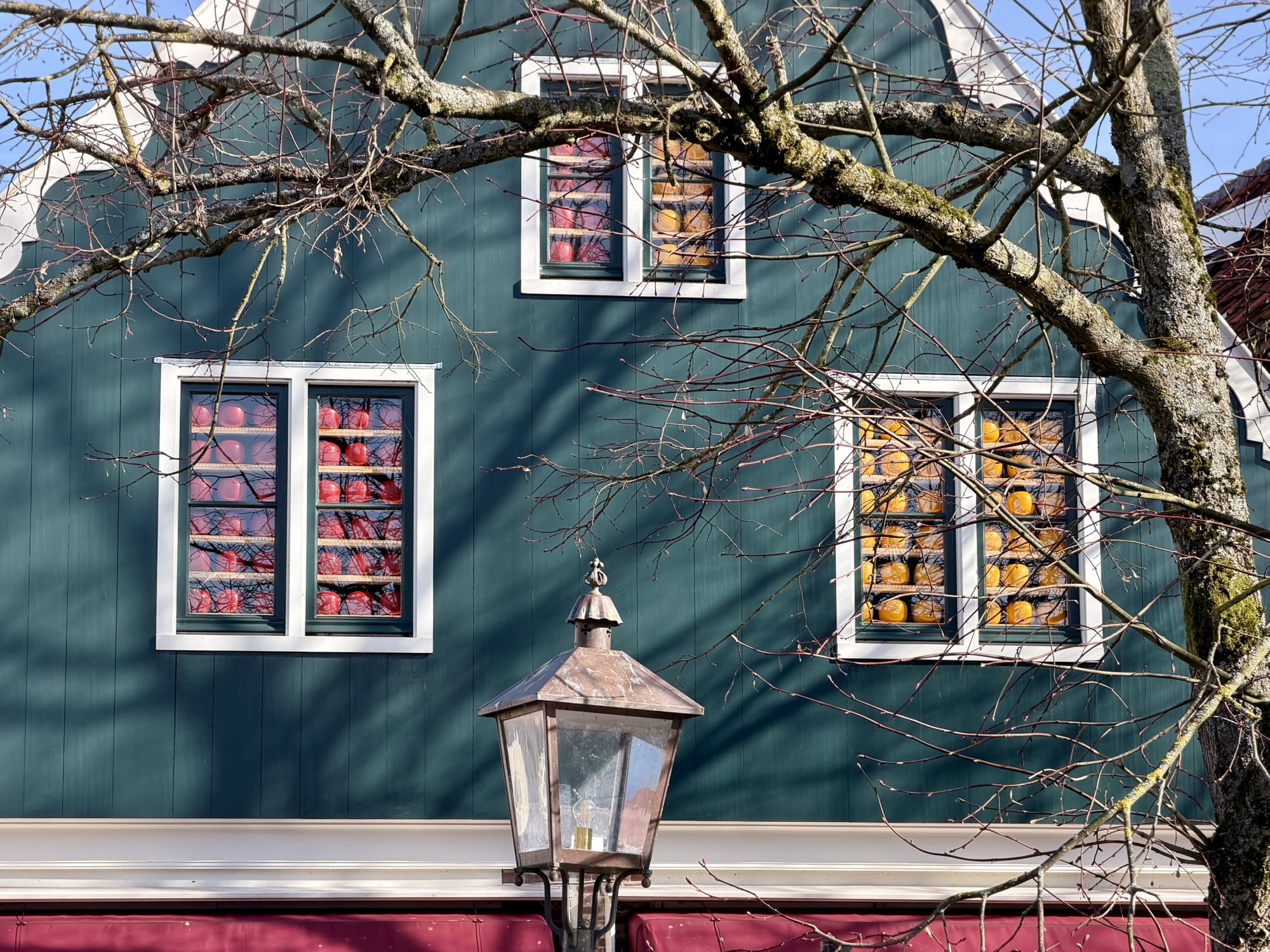
This modern area houses Zaandam City Hall (Stadhuis) which is designed as a series of Zaan houses. They showcase the façade architecture that is characteristic of the region. Wooden façades are painted in various shades of green accentuated with white trim, windows and decorative curls.
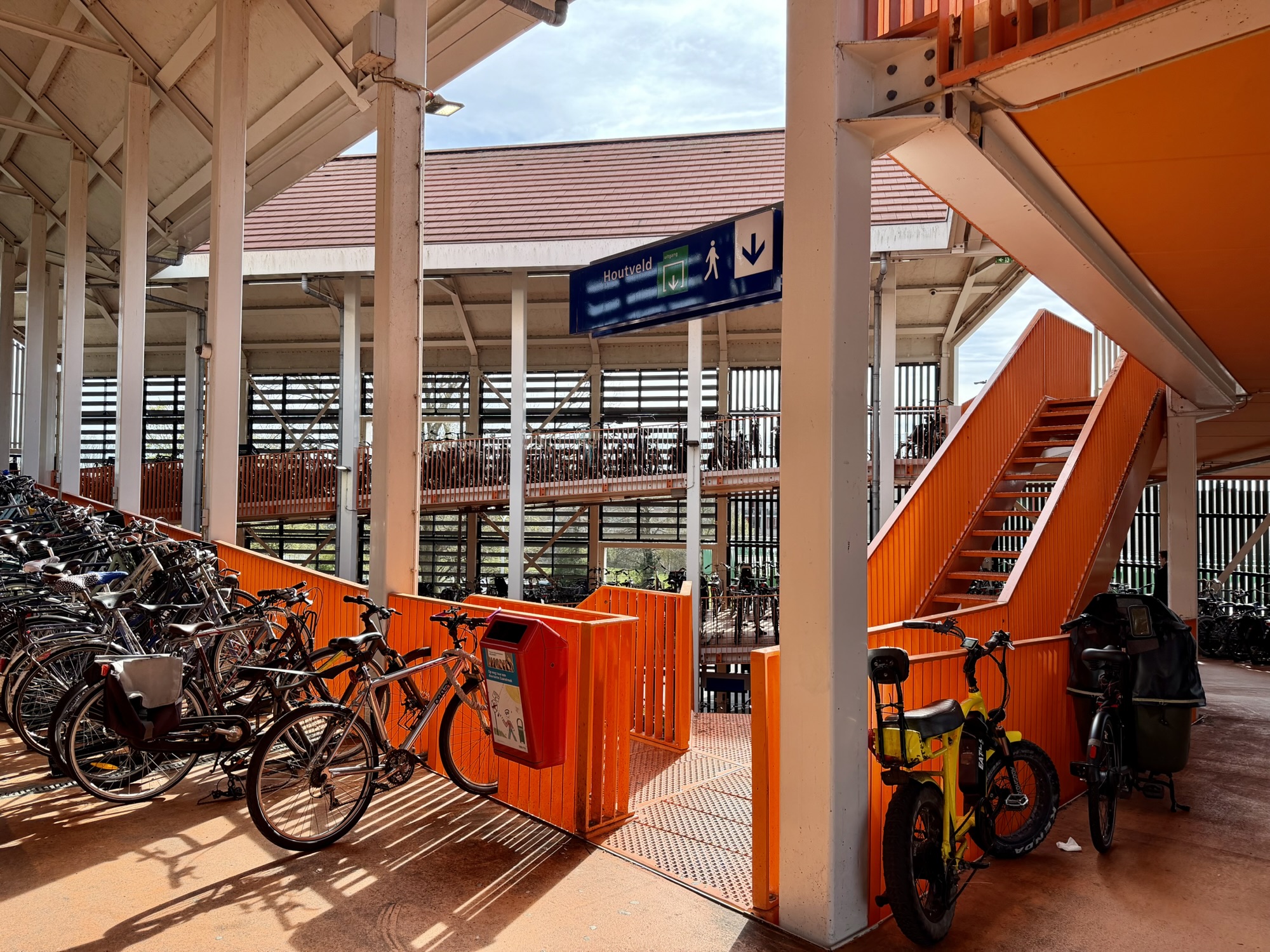
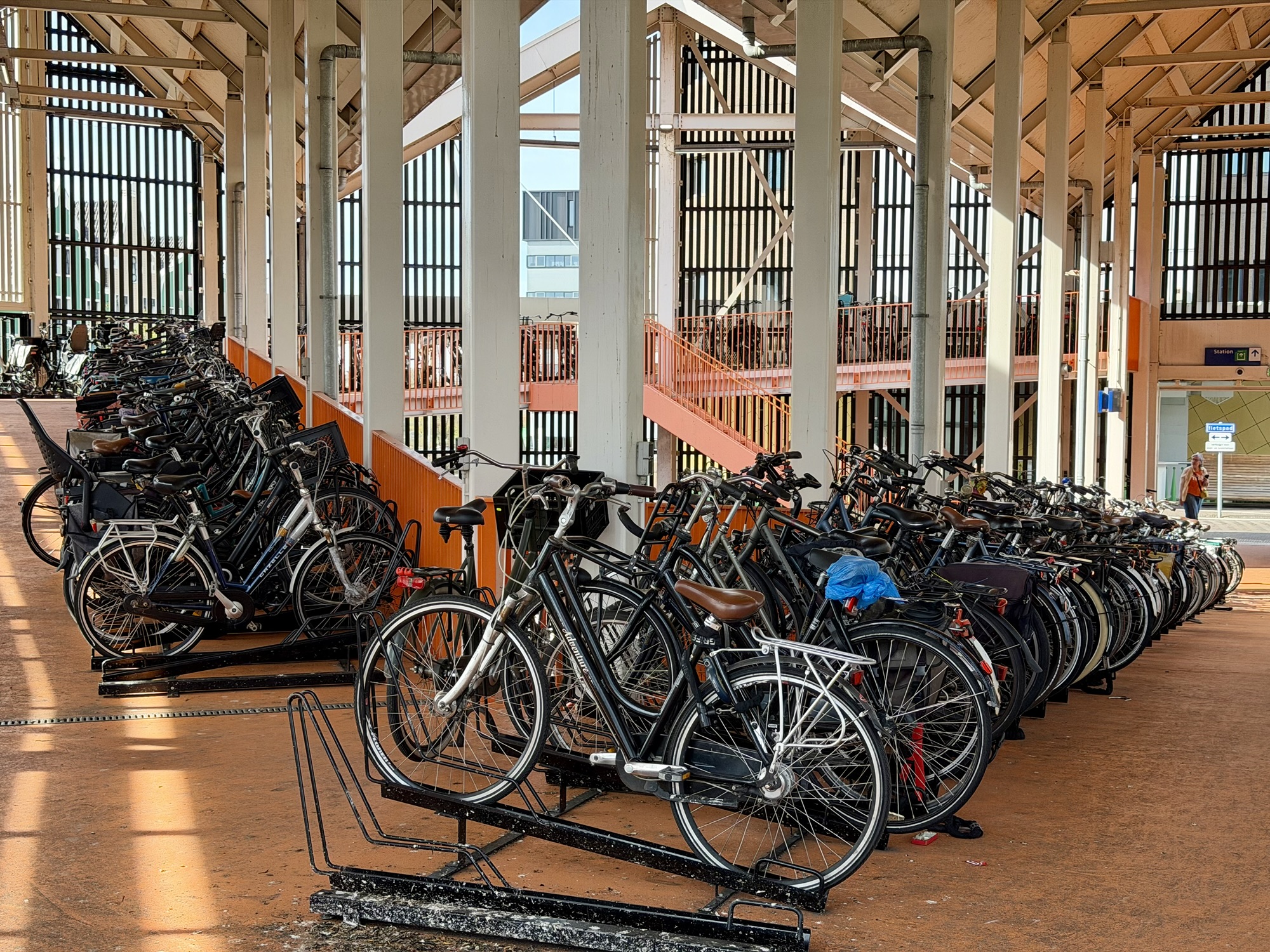
The bike parking station was the most incredible bike parking I have ever seen in person. I took some pictures, but they didn’t show the true size of the building.
Here’s a video of me, walking half of the floors of the building.
The barge set sail just before six. According to the itinerary, we were supposed to be sailing to Haarlem, but there was a problem getting a berth there, so we sailed back to Amsterdam. When we arrived at the dock we had been assigned, it hadn’t been vacated yet, so the captain took us on a cruise until the berth became available.
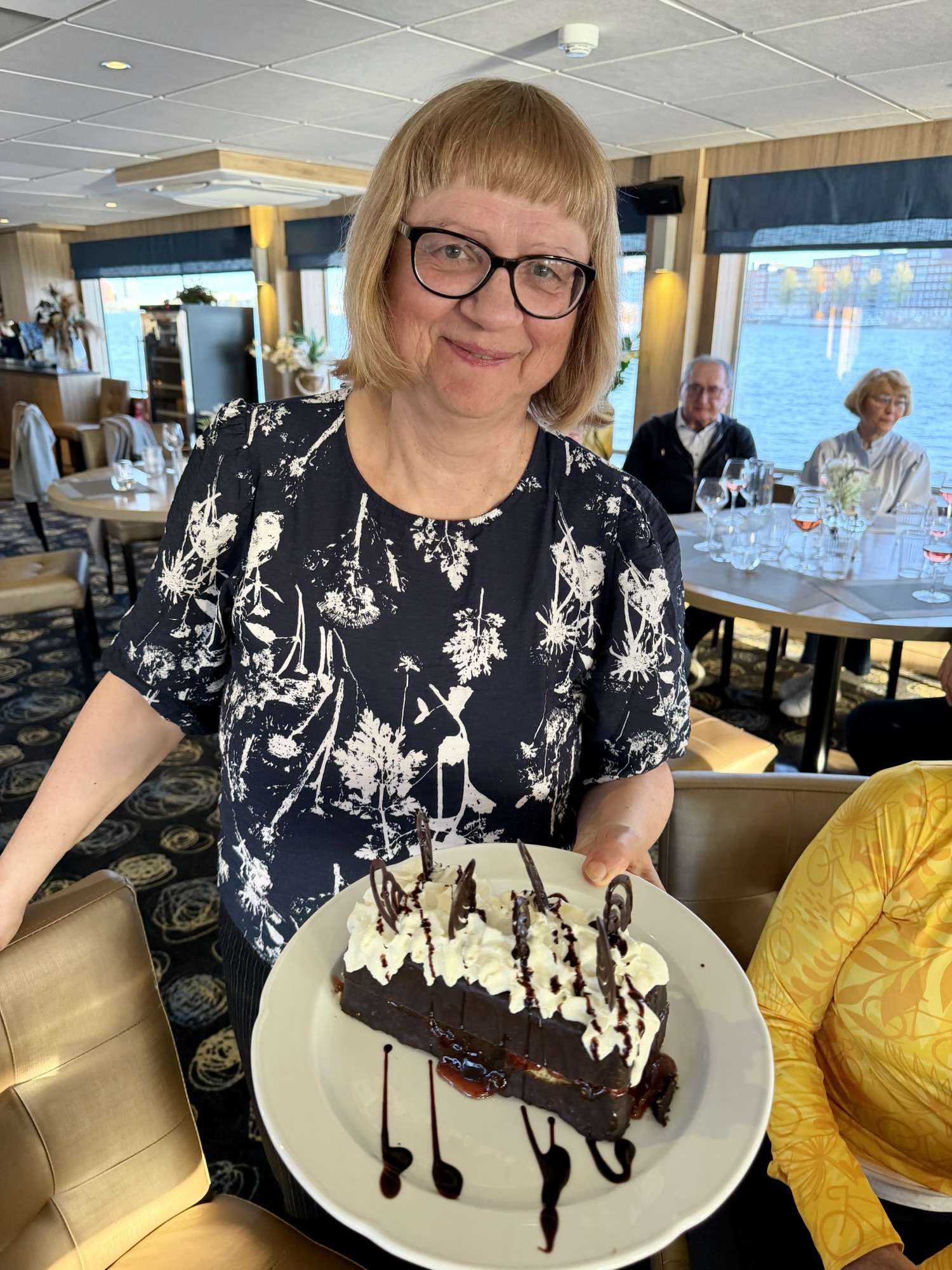
It was Alina’s birthday today. Cindy surprised her with a homemade bag and chocolate first thing this morning. I bought her some wooden tulips at the tourist office in Zaandam City Centre, and the crew and passengers sang Happy Birthday while delivering a cake. 
Unfortunately, this means that the planned ride to Keukenhof tomorrow would be about 70 km round-trip, rather than 40. So the tour company has arranged for a coach to take us. I’m disappointed not to be staying Haarlem, but I can use a day off the bike. Our final day of riding will be Friday, and the tour company will plan a route from Amsterdam to Harlem, so we won’t miss seeing that city.
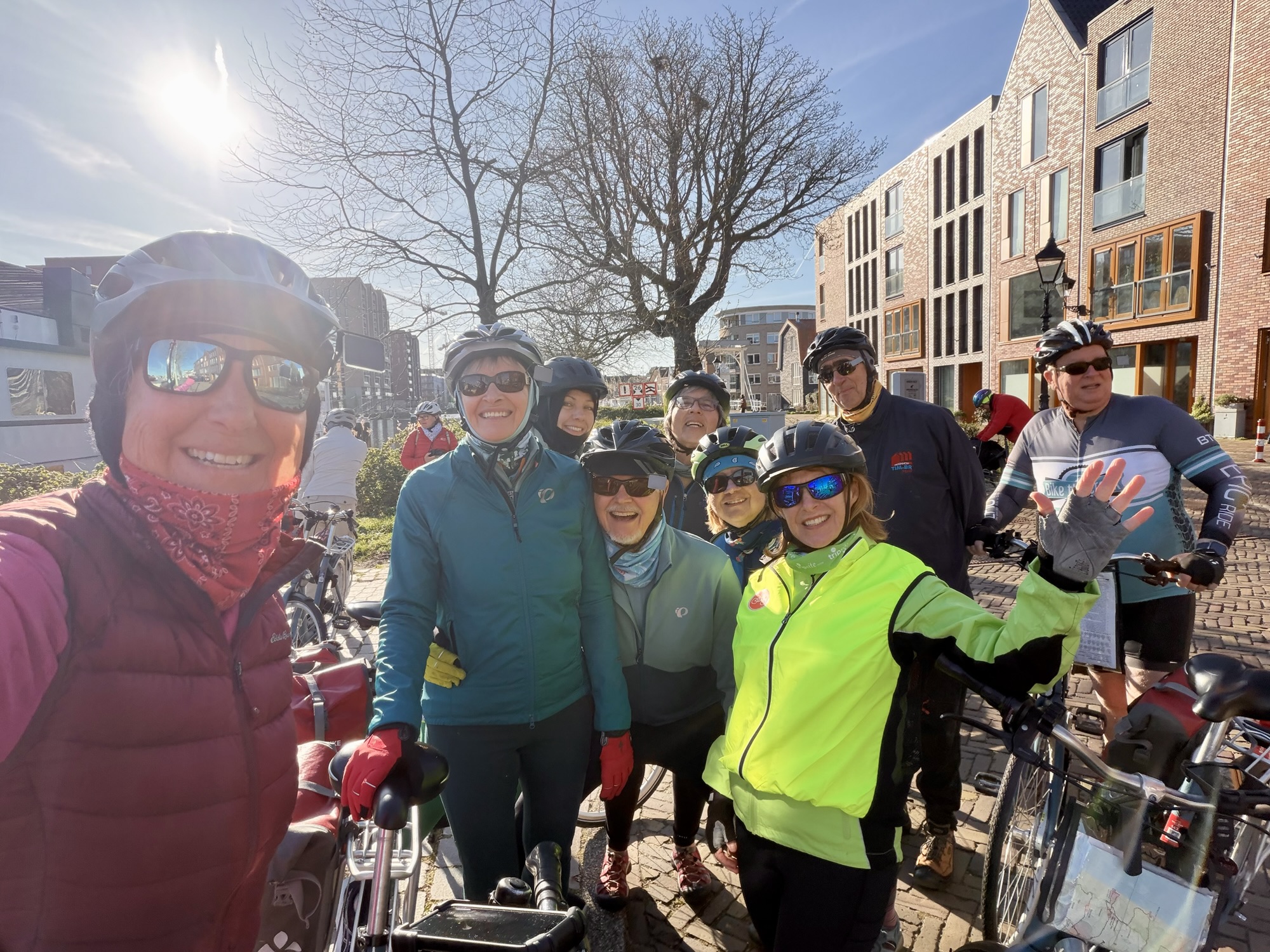
This morning we had our seven BikeBrampton people plus Melanie and Brooke. We stayed together about half of the ride. We set off about 9:15.
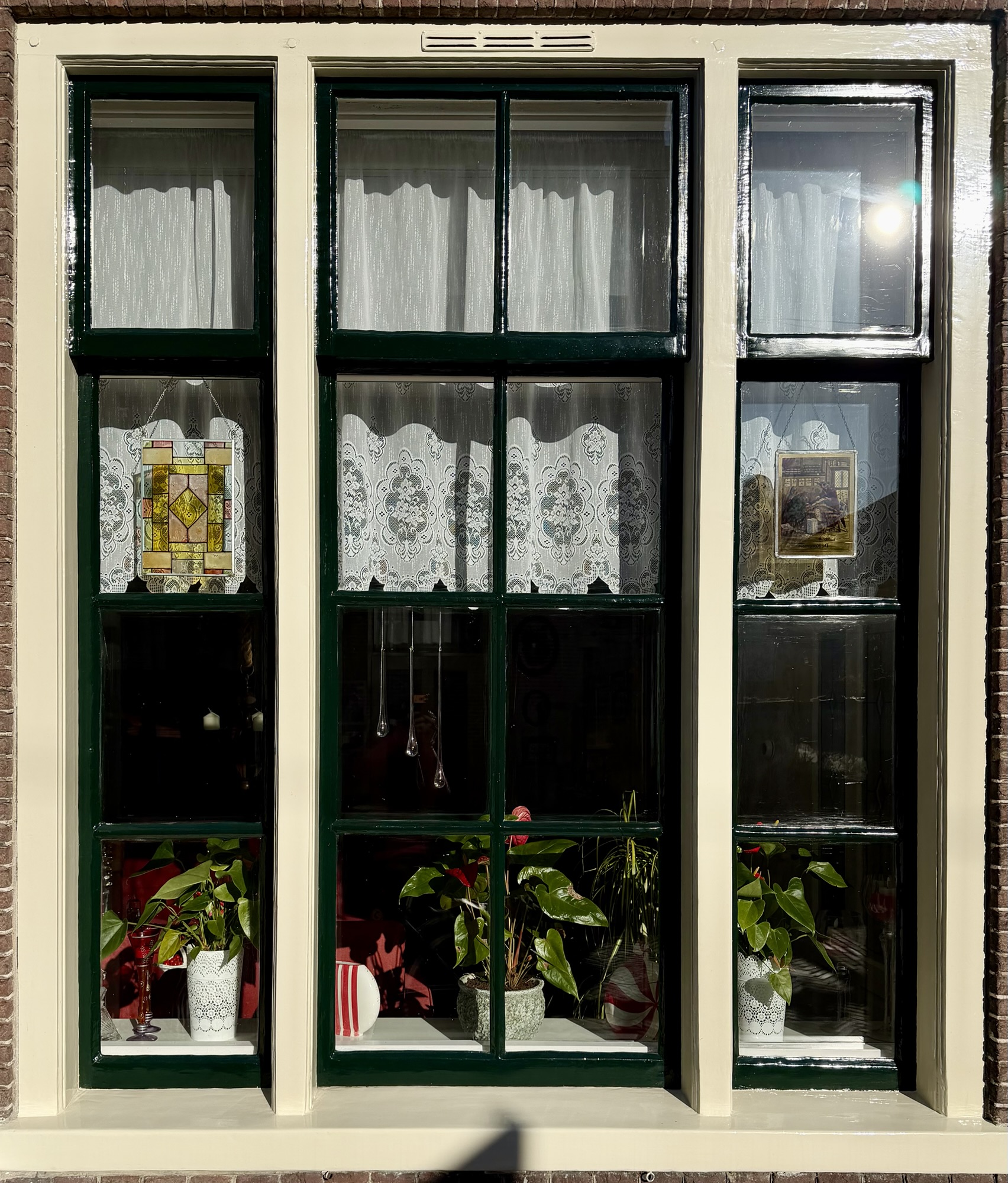
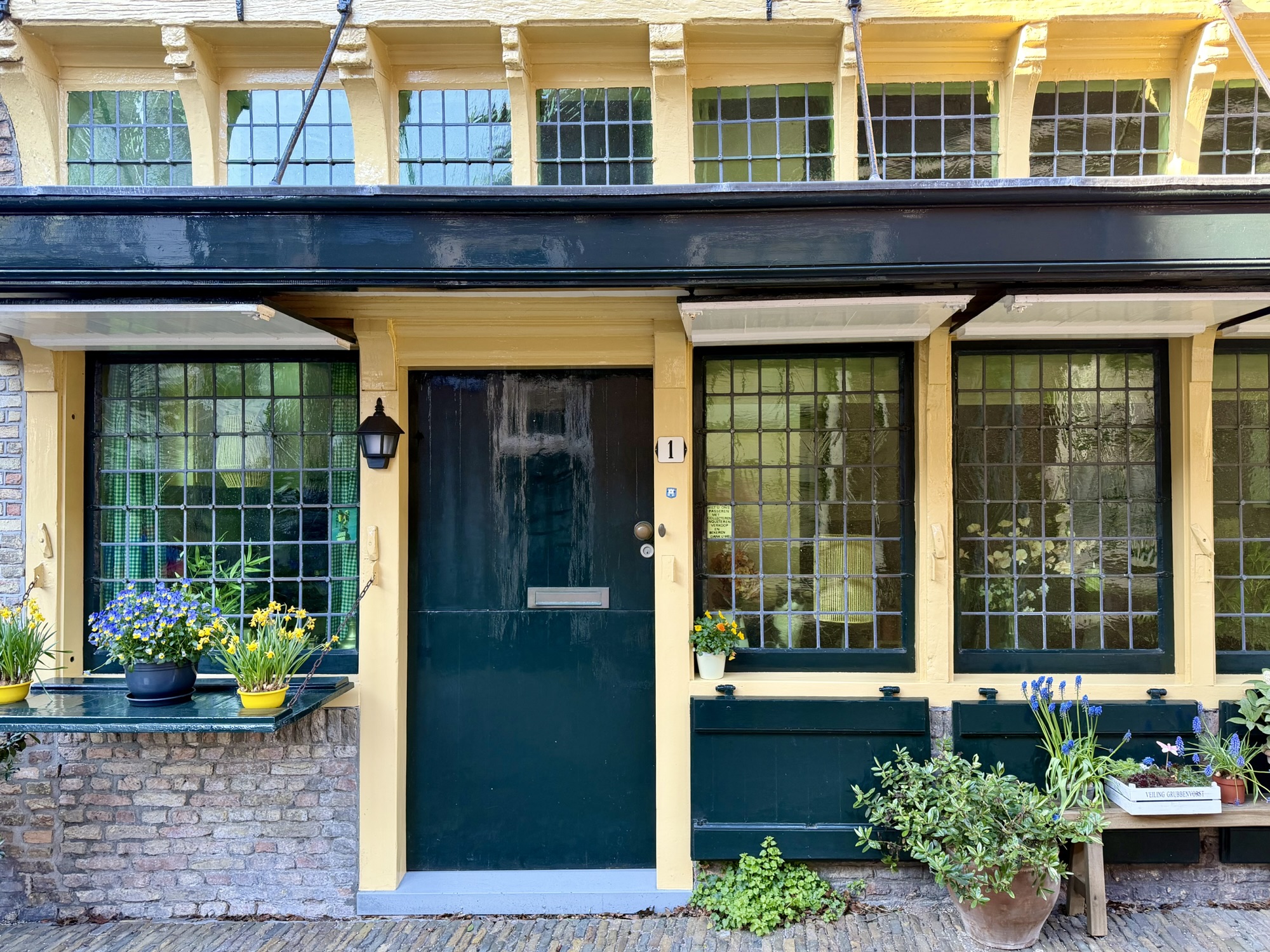
The Dutch tradition of not using curtains, or leaving them wide open, is a multifaceted cultural habit rooted in history, religion, and a preference for openness and light.
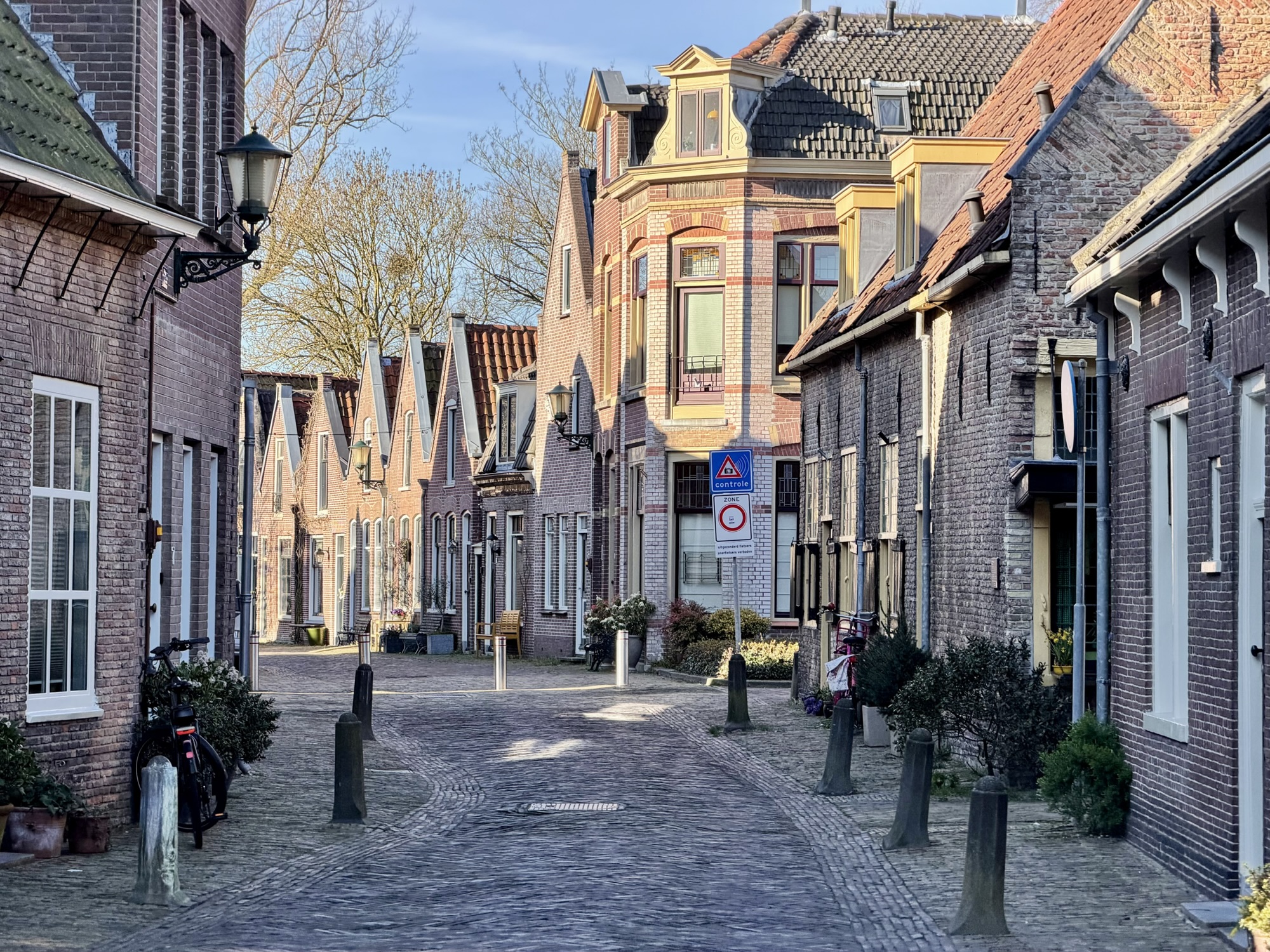
Alkmaar is a town of about 100,000 people, much like many other towns we’ve seen, it is full of old homes and cobbled streets.
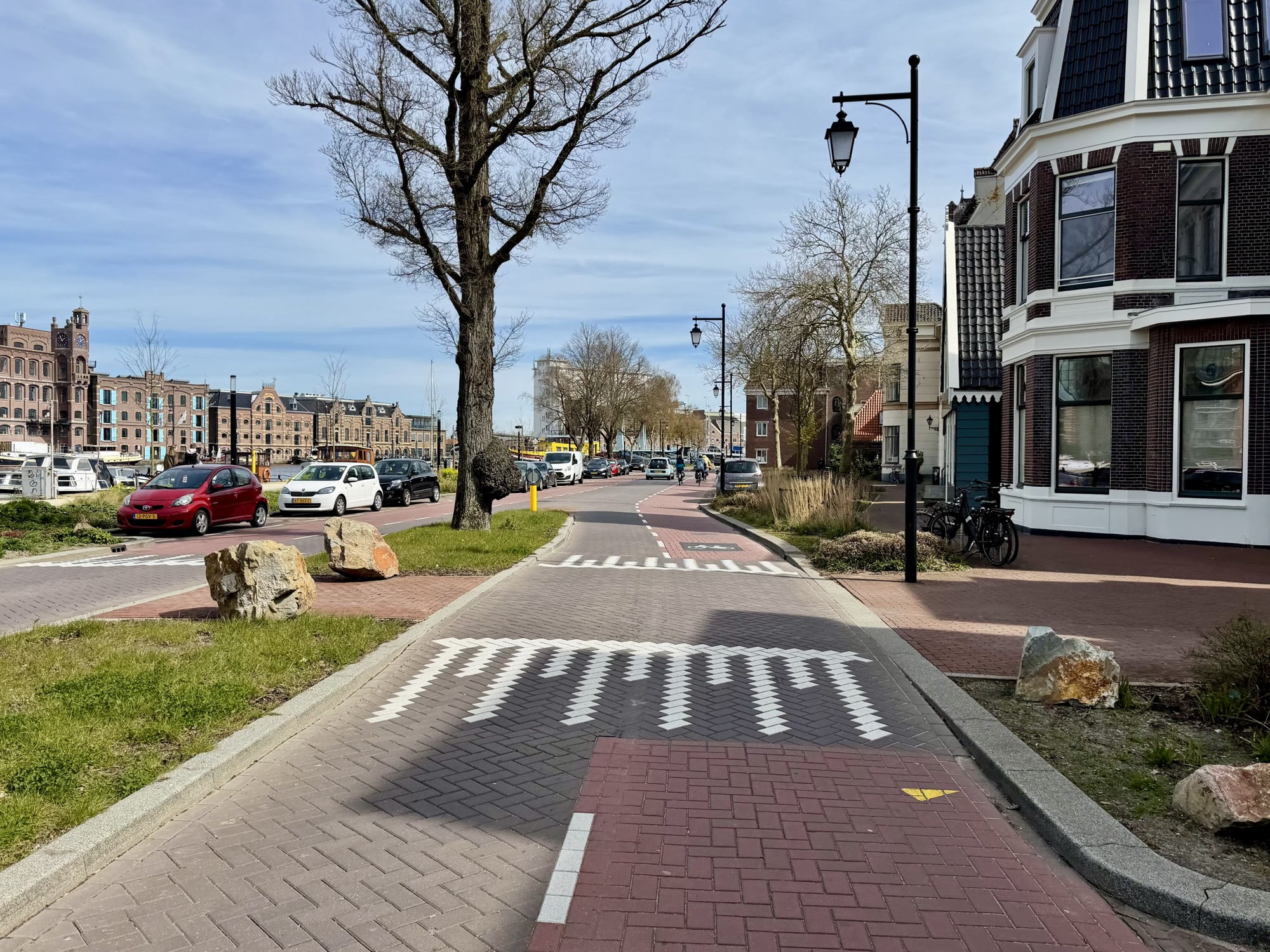
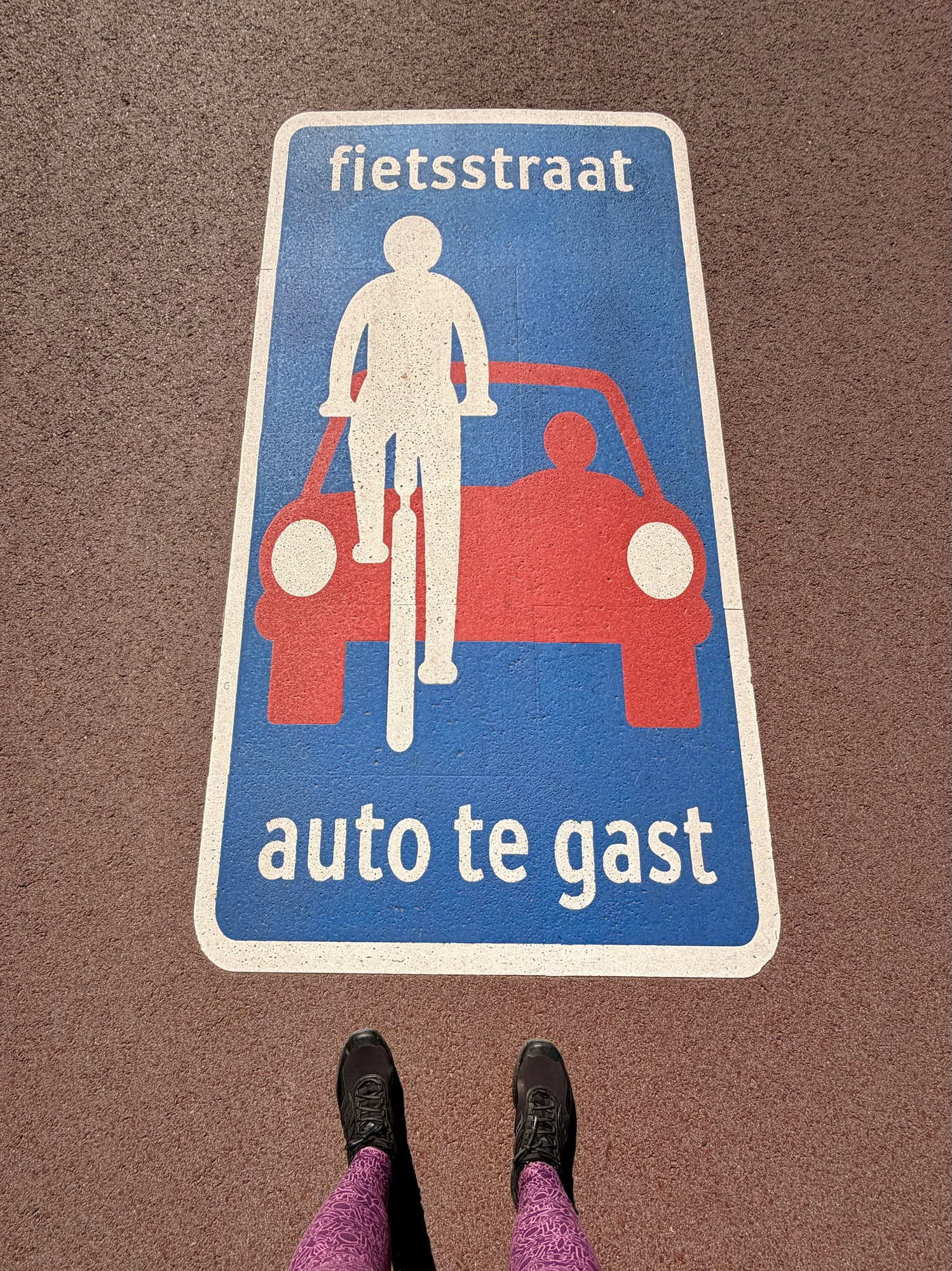
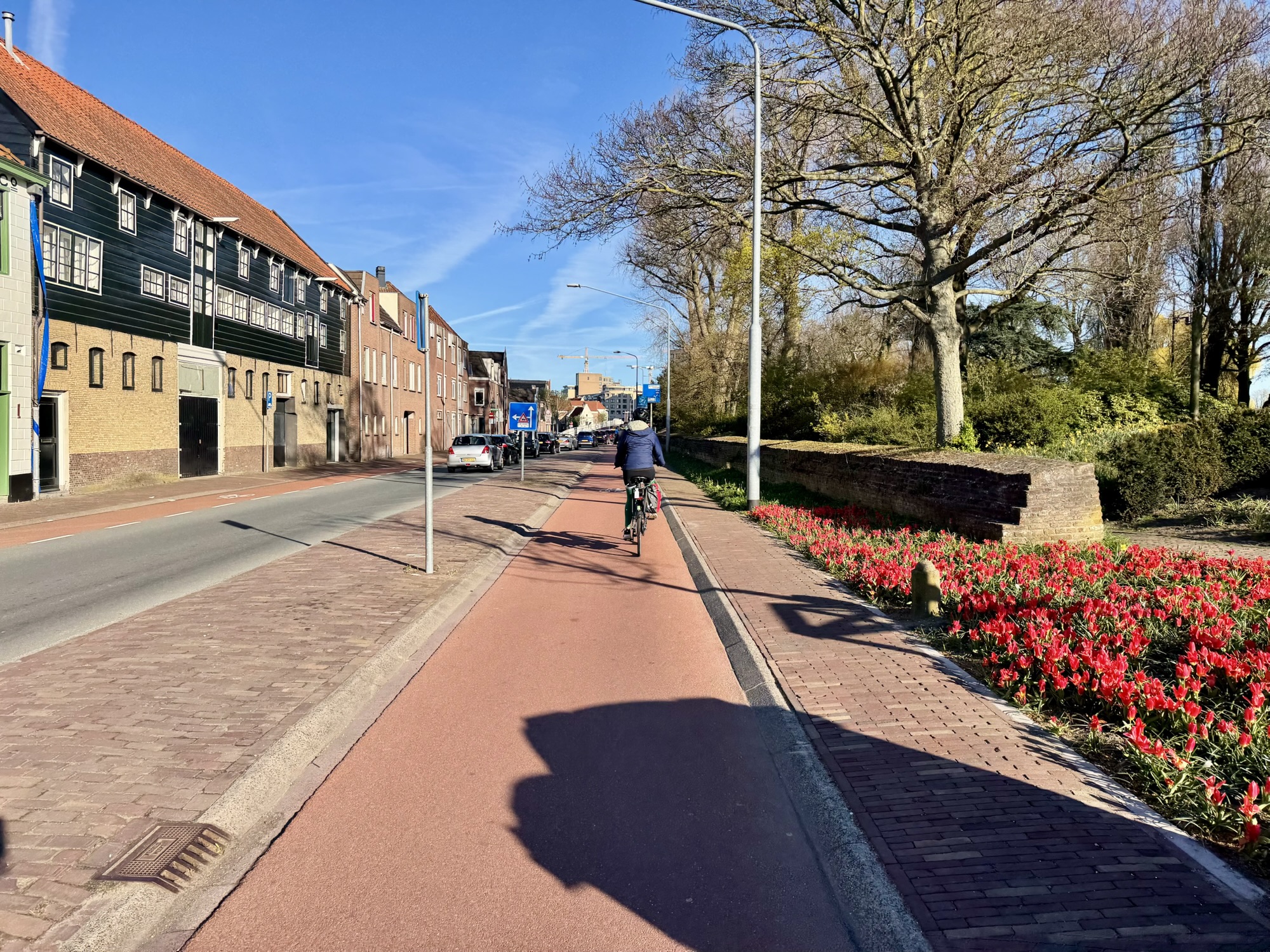
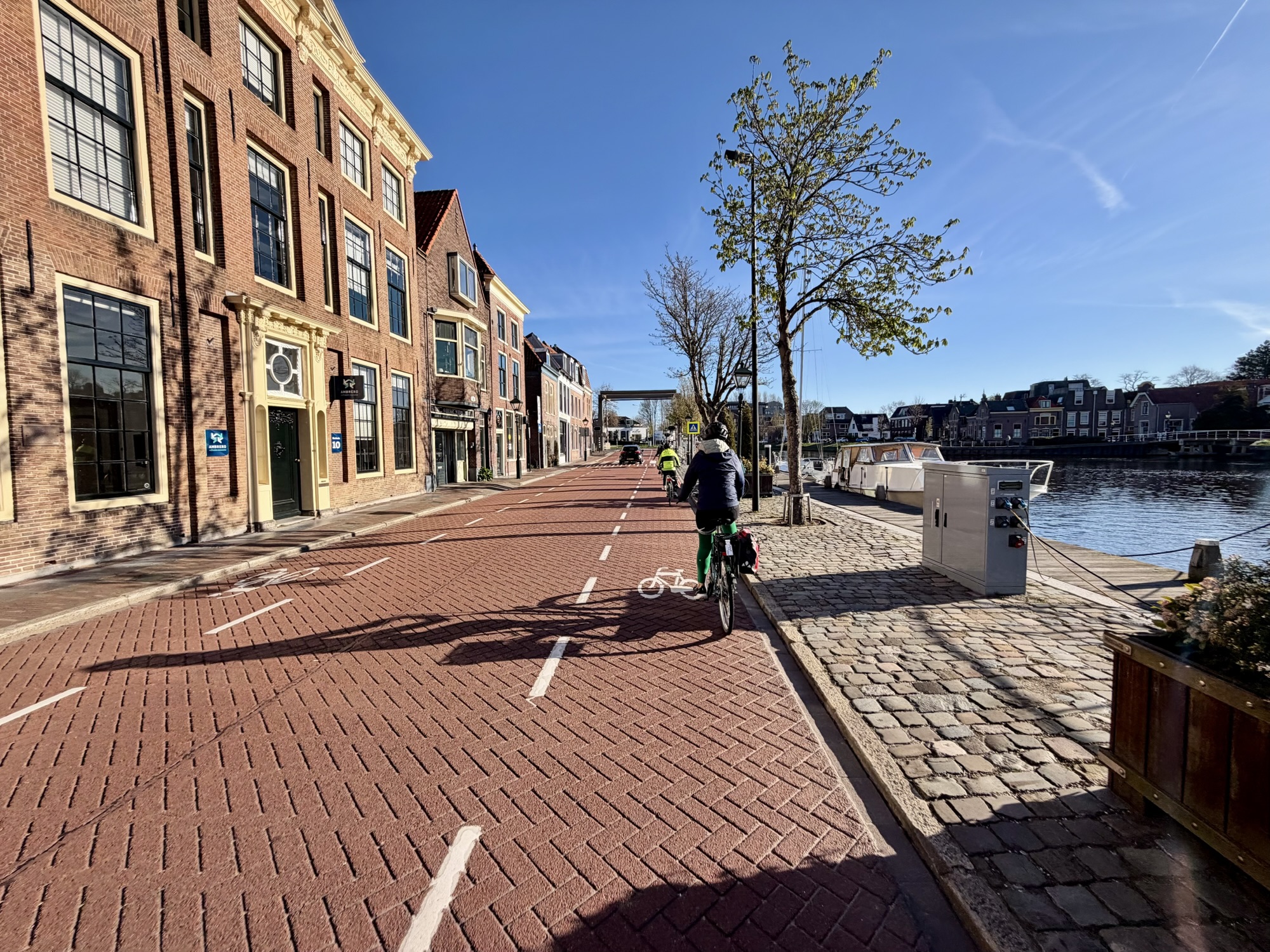
I continue to be amazed by how they fit cycling infrastructure in, even on many of the small streets. And when they can’t fit it how they use a “cars as guest” concept so cyclists and pedestrians are not intimidated by cars.
Here are a few of the pretty scenes we saw as we left Alkmaar.
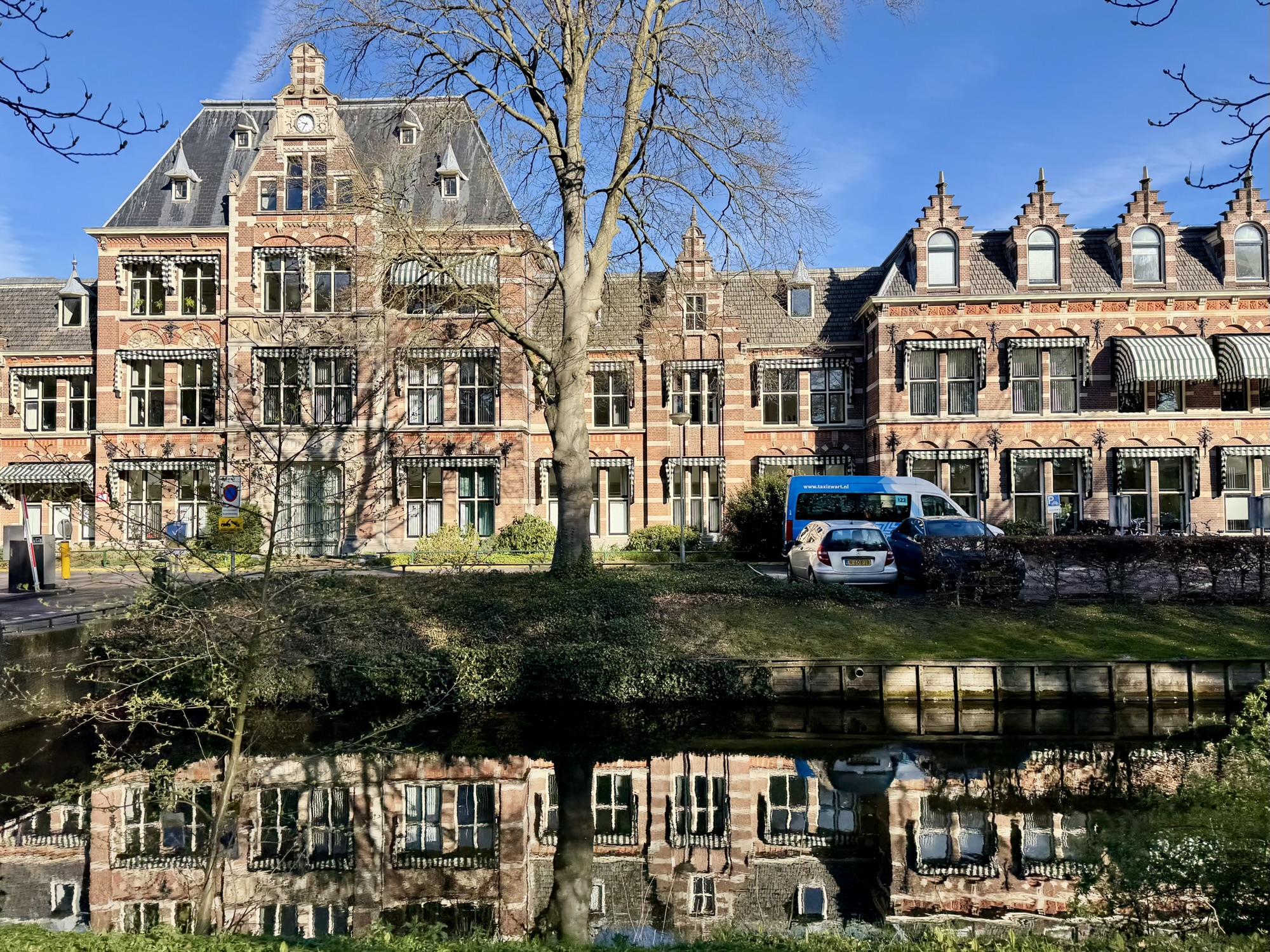
This beautiful old hospital building was reflecting in the canal as we passed by.
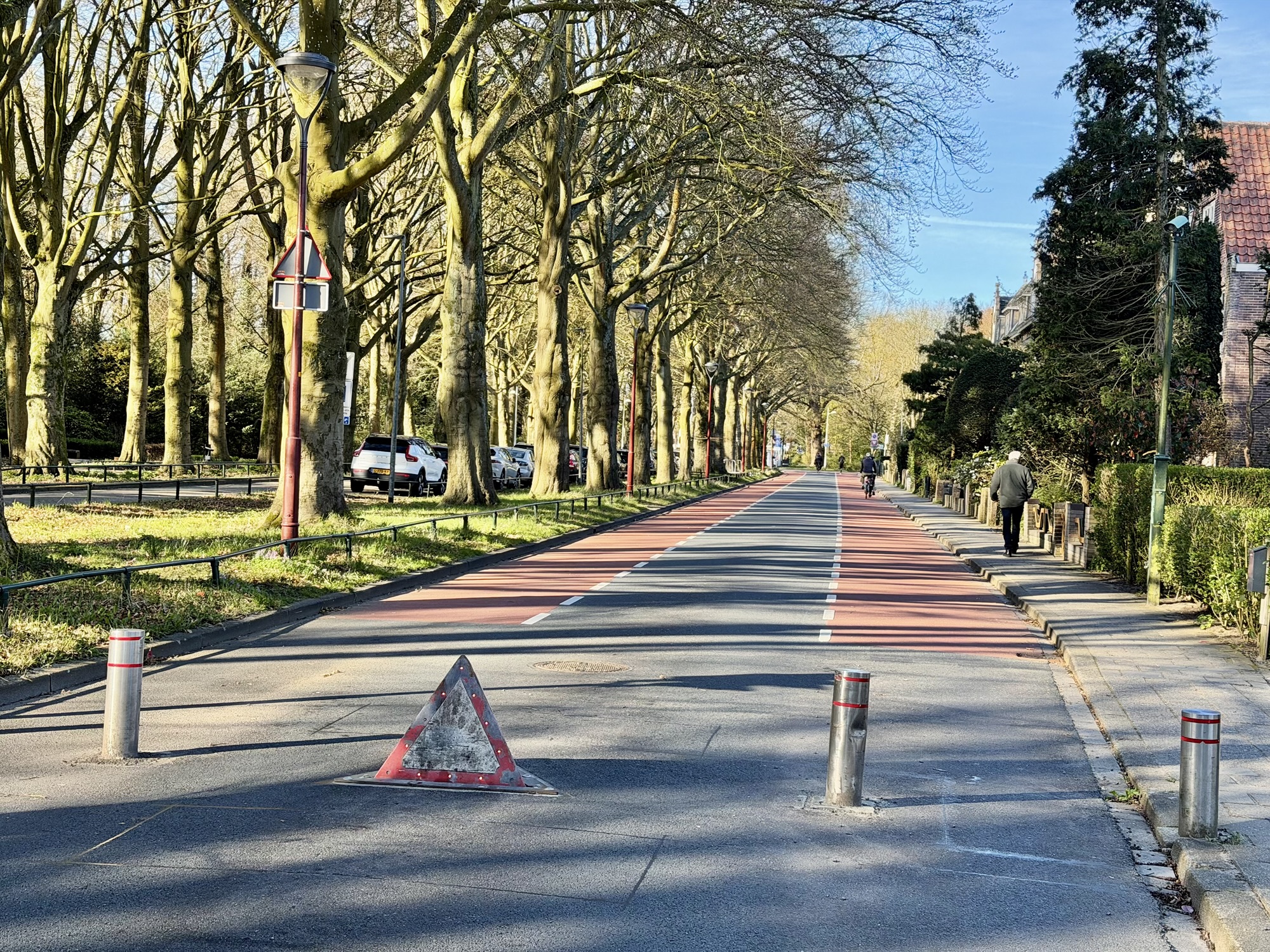
The triangular shape in the centre can be raised and lowered, so that cars can be prevented from using the road at certain times.
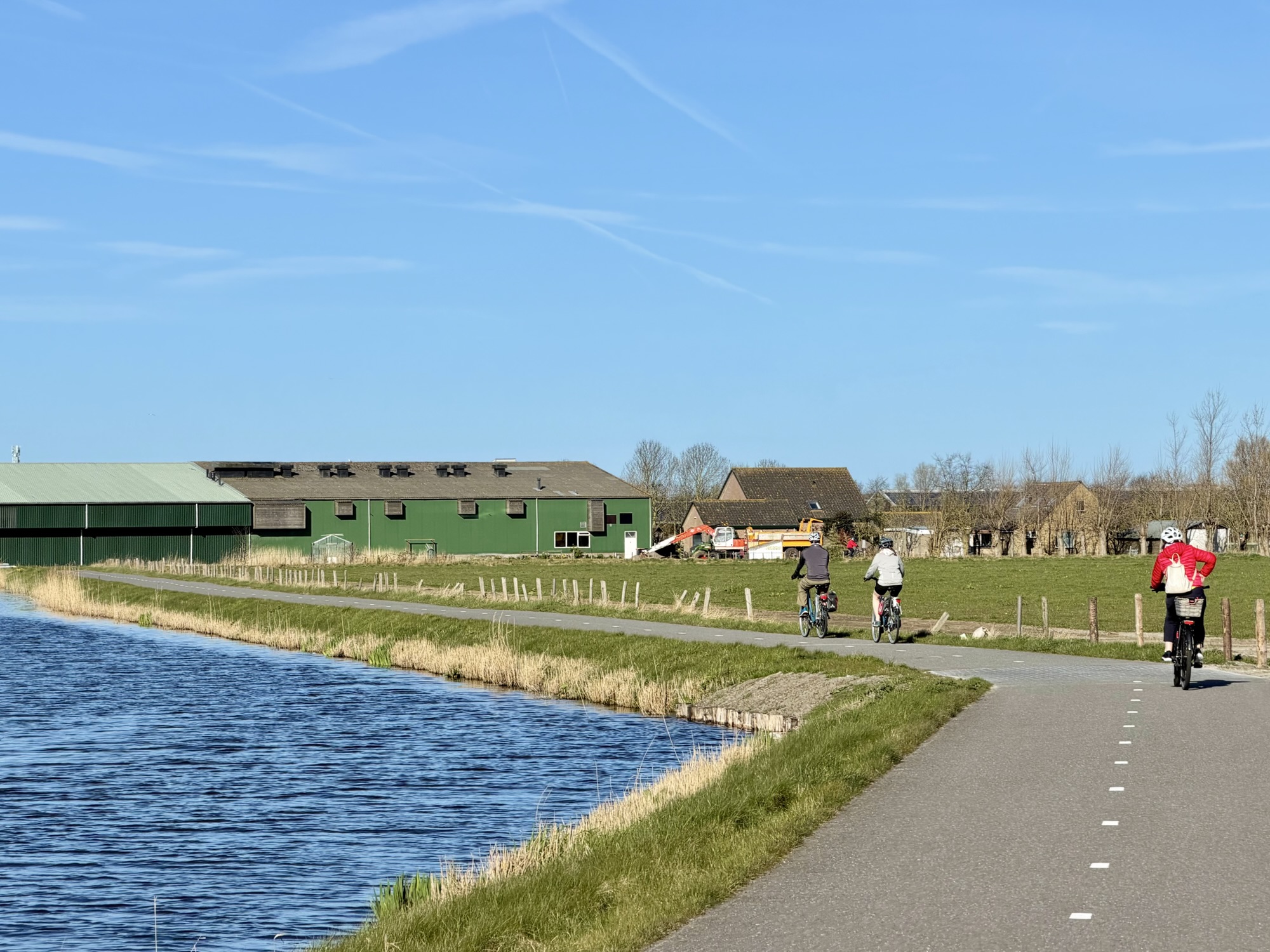
Roads like this in rural areas have very few cars and feel very comfortable to cycle on.
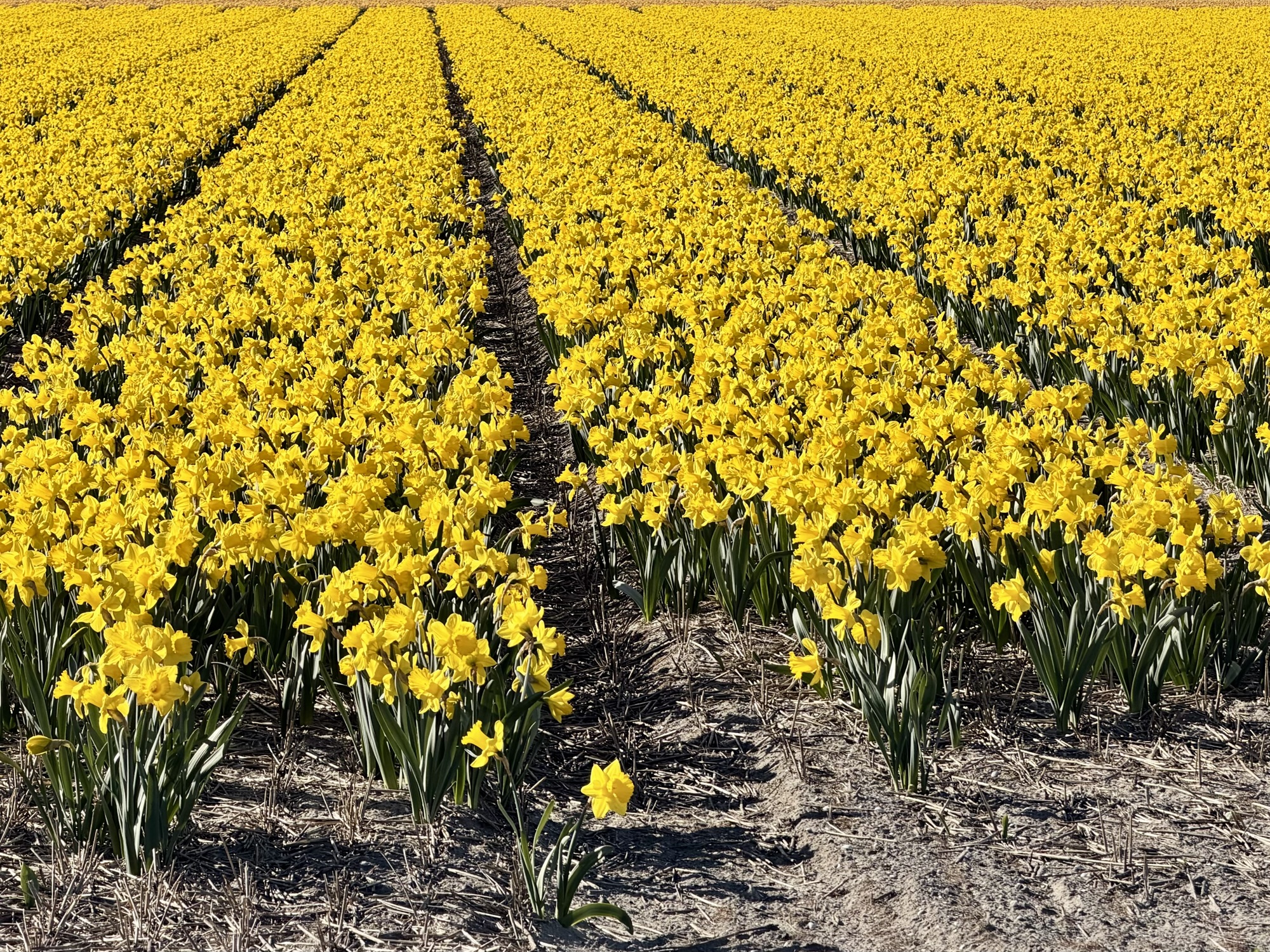
We passed some daffodil fields on our way to Egmond aan den Hoef. The ruins of Castle Egmond were next to the church. The church grounds were peaceful and blooming with daffodils.
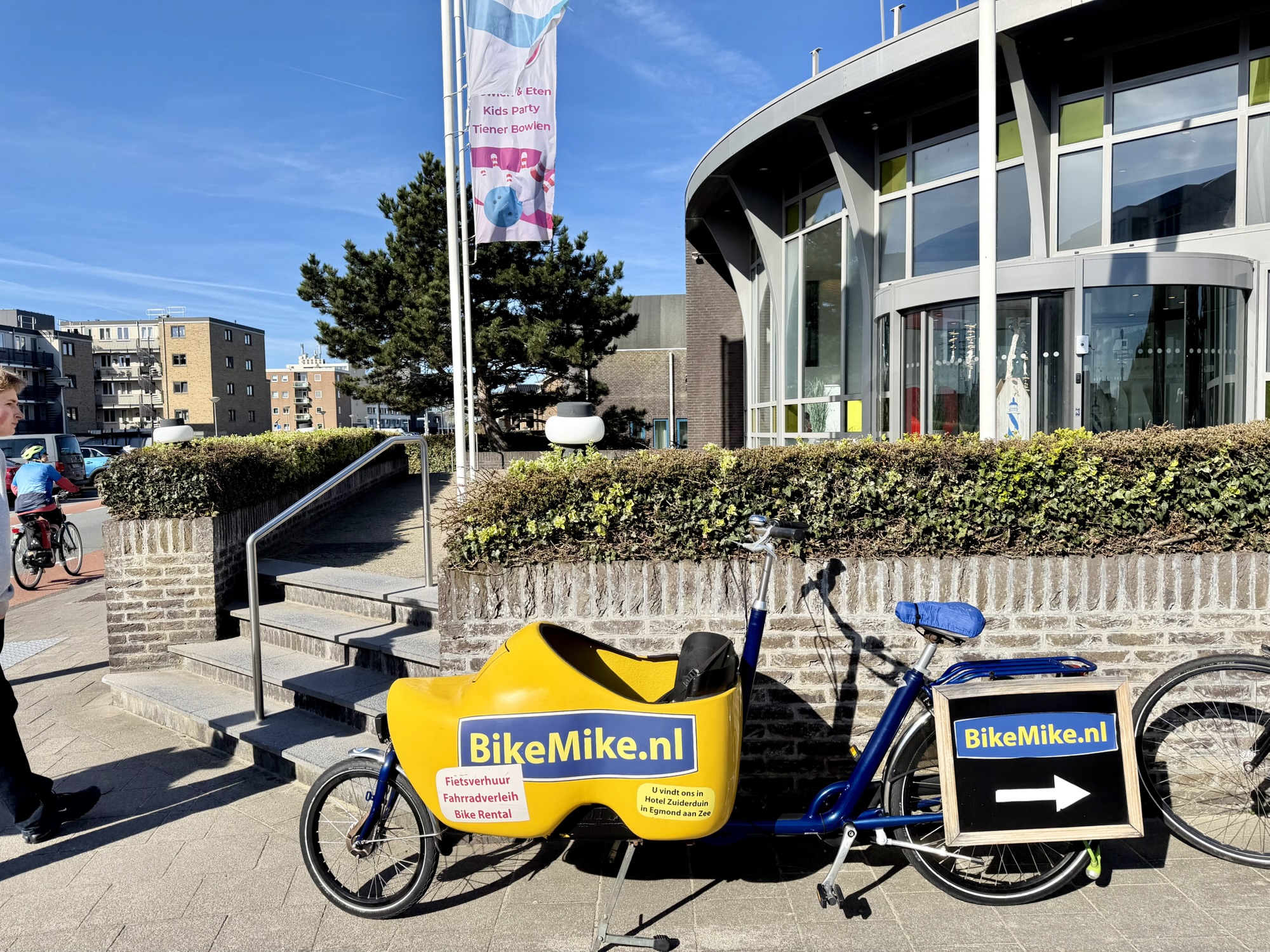
I saw this Dutch clog cargo bike on the way into Edmond aan Zee.
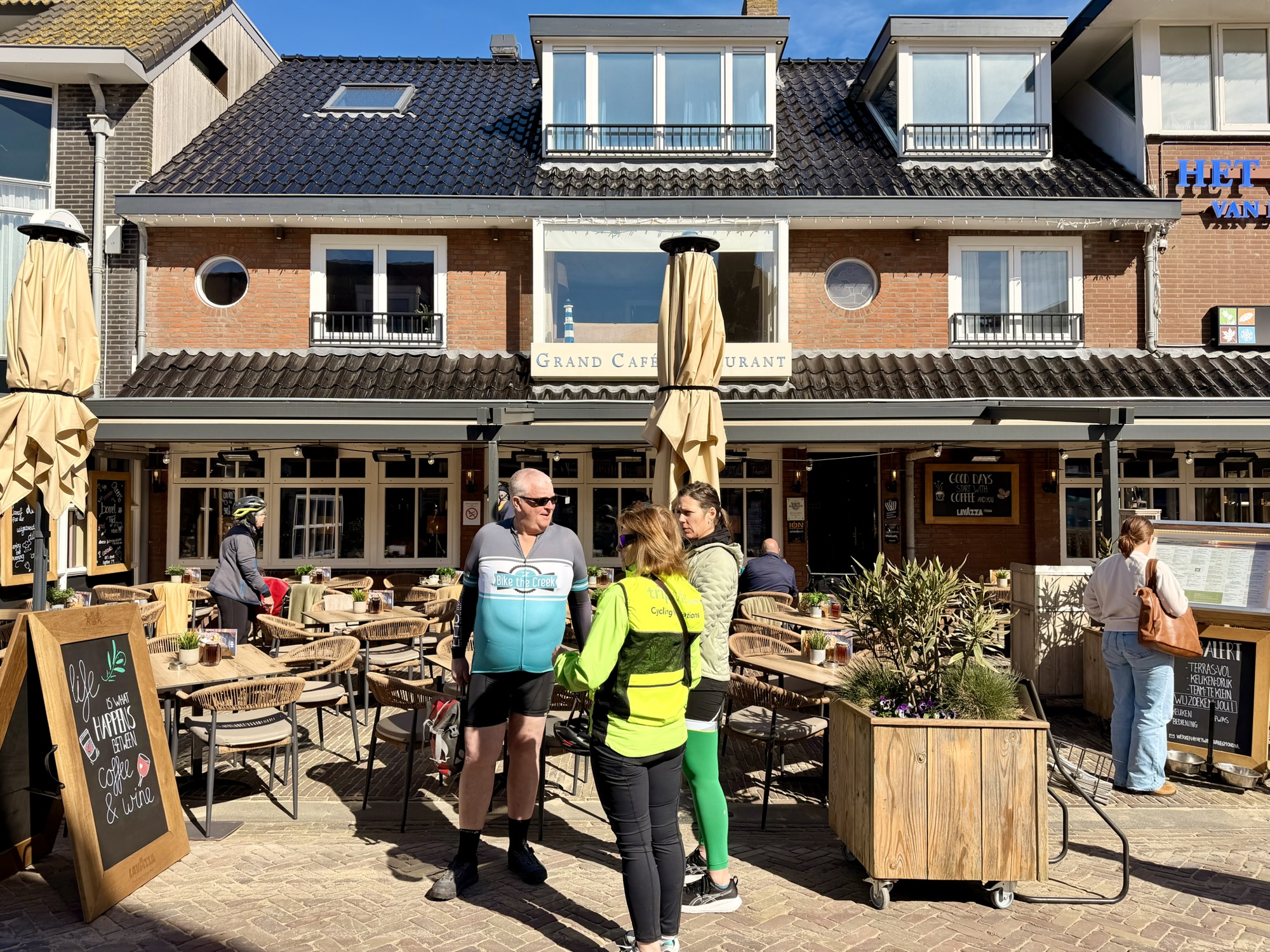
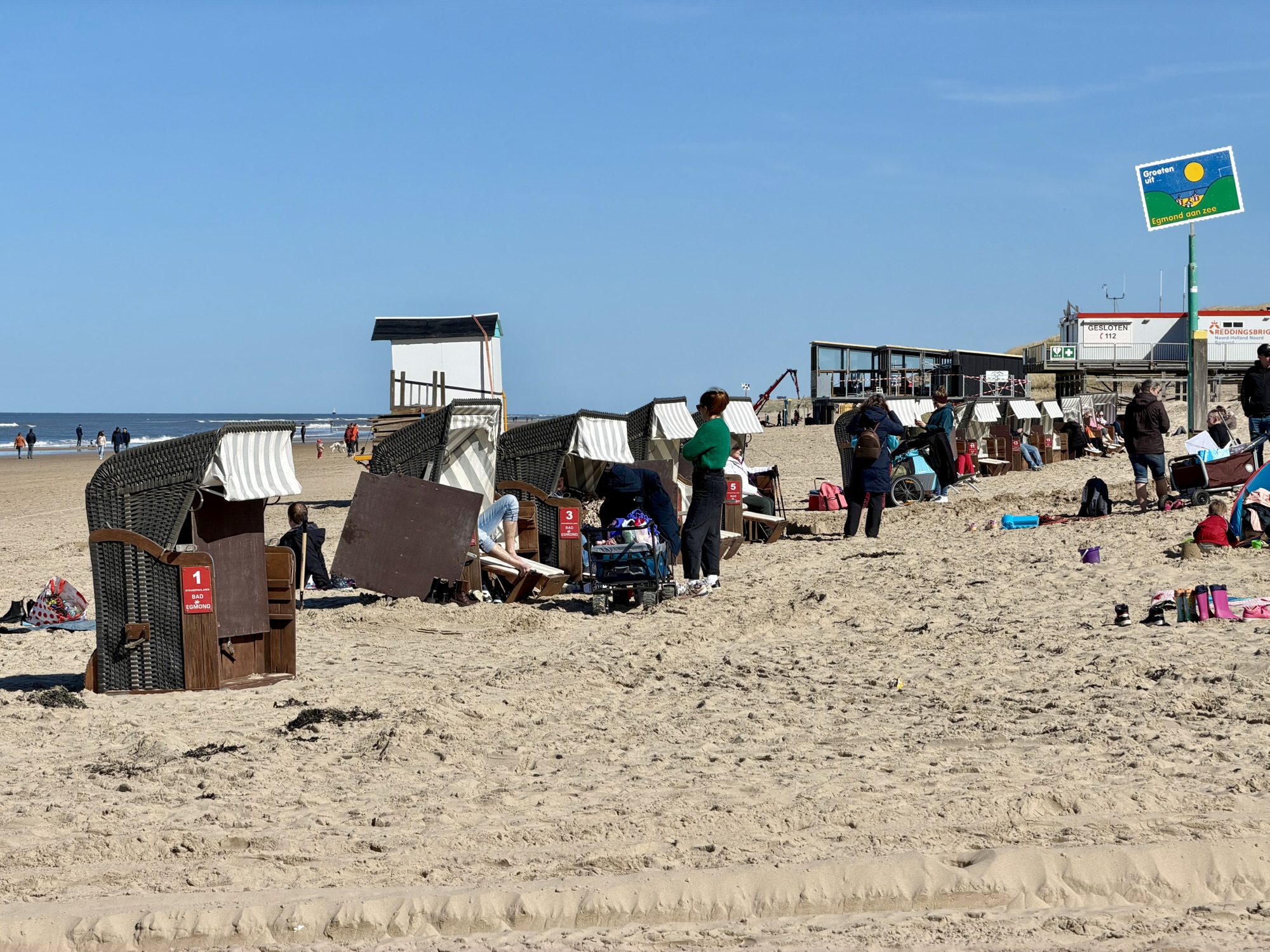
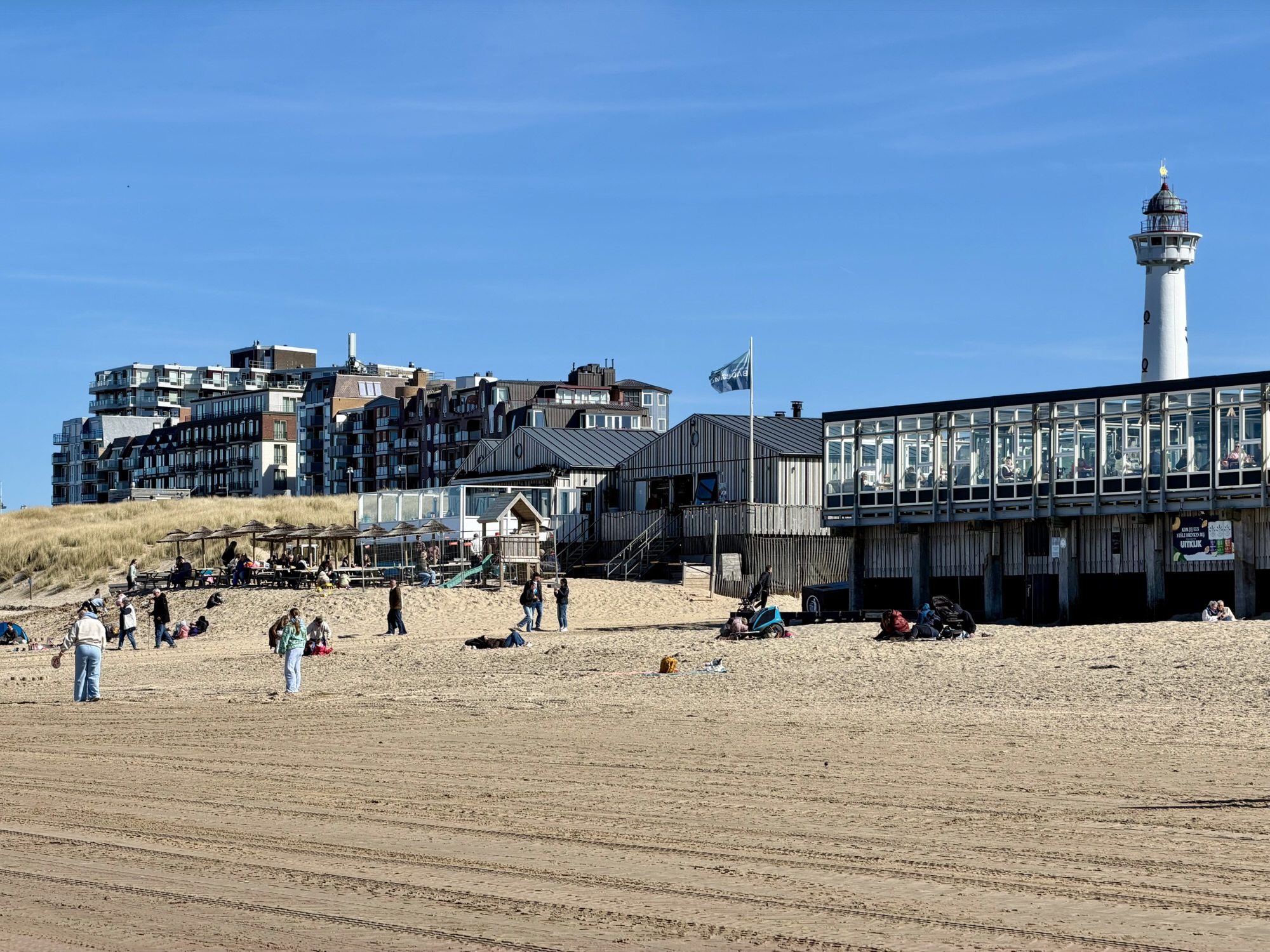
Our next stop was Edmond aan Zee. We parked our bicycles at the beach, and went to a local café for coffee.
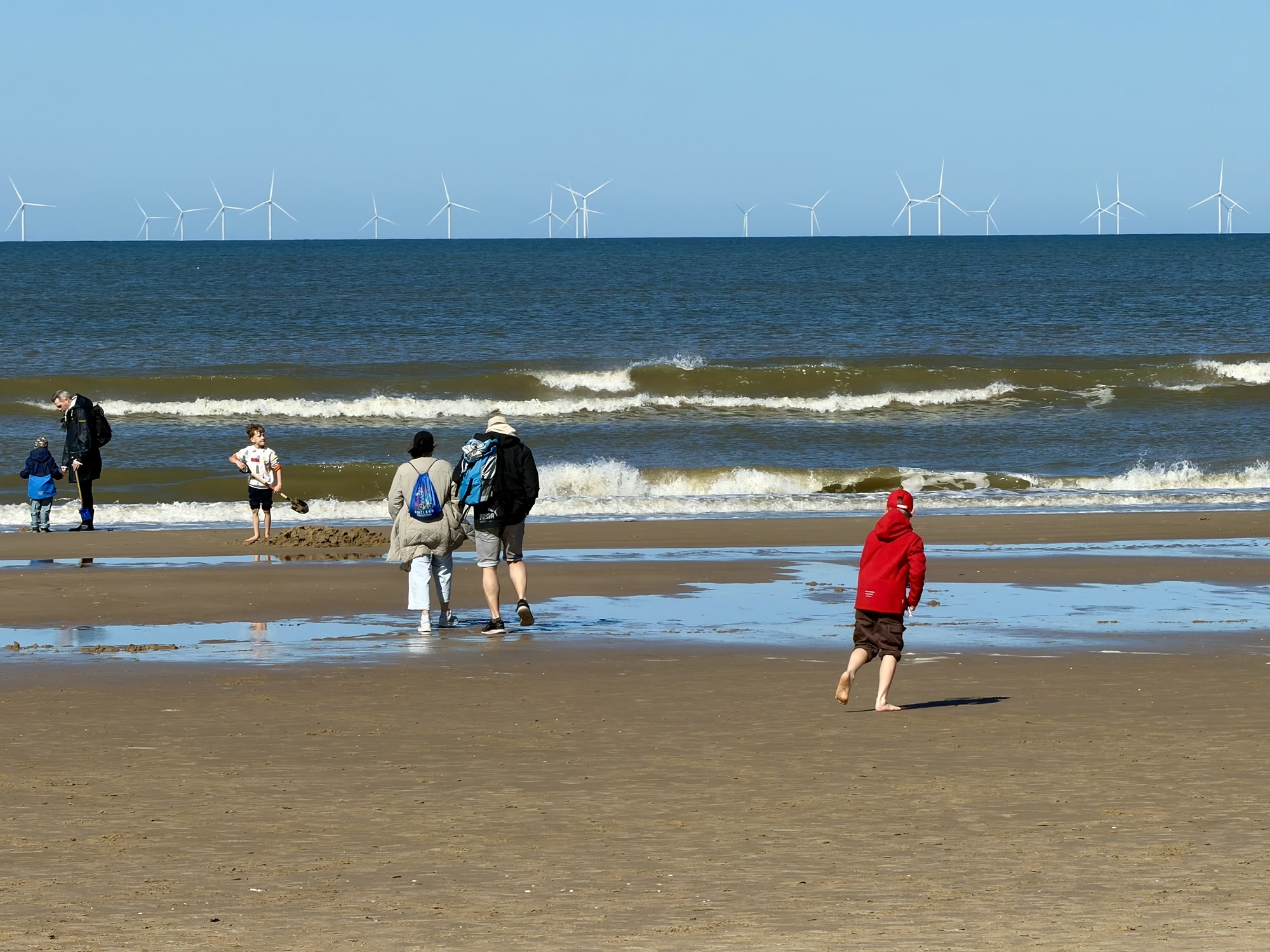
Then we walked down to the beautiful wide beach.
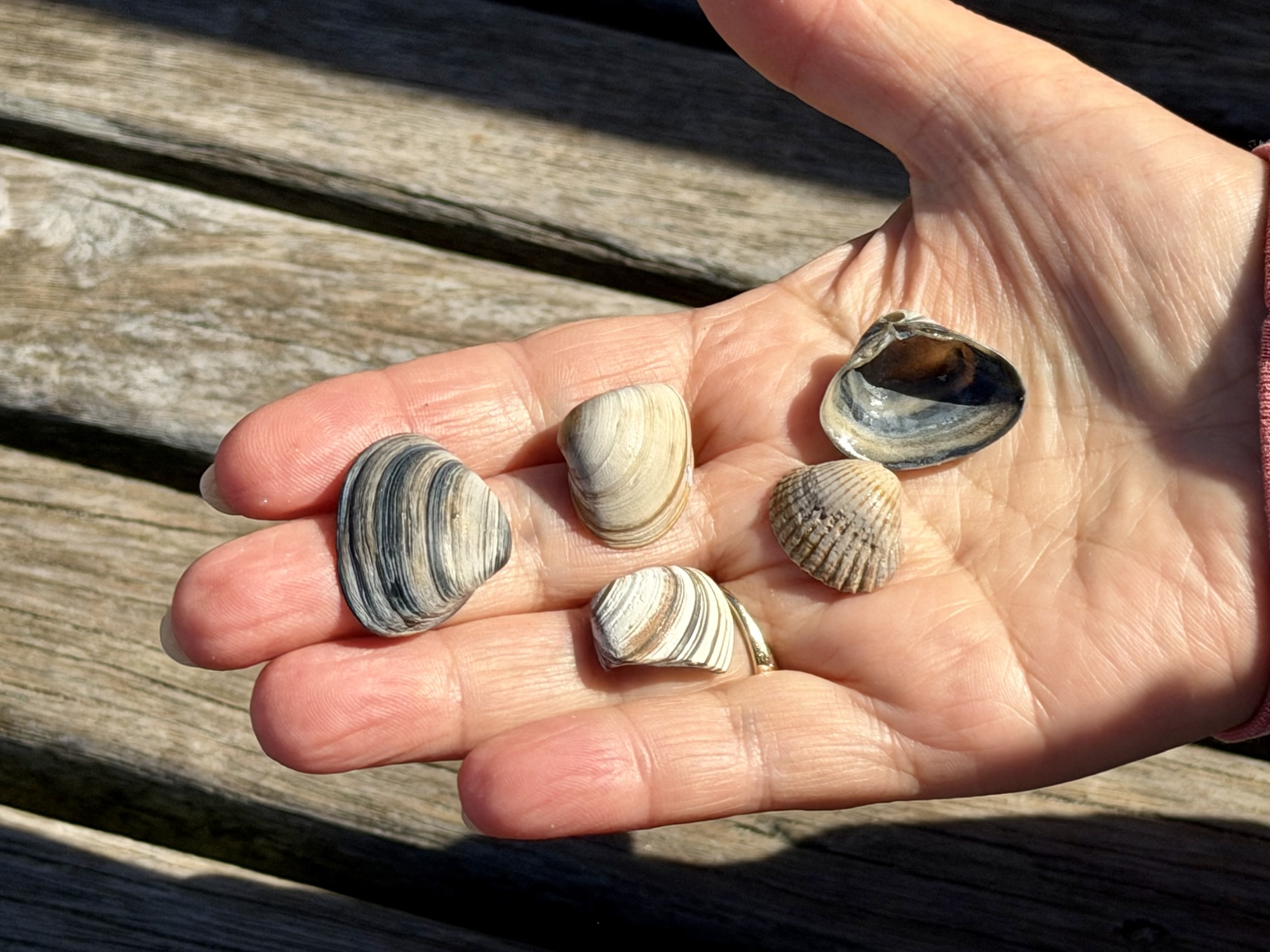
Alina collected some shells, and dipped her feet into the cold North Sea. She said the temperature was similar to Lake Ontario in the spring as the ice is melting.
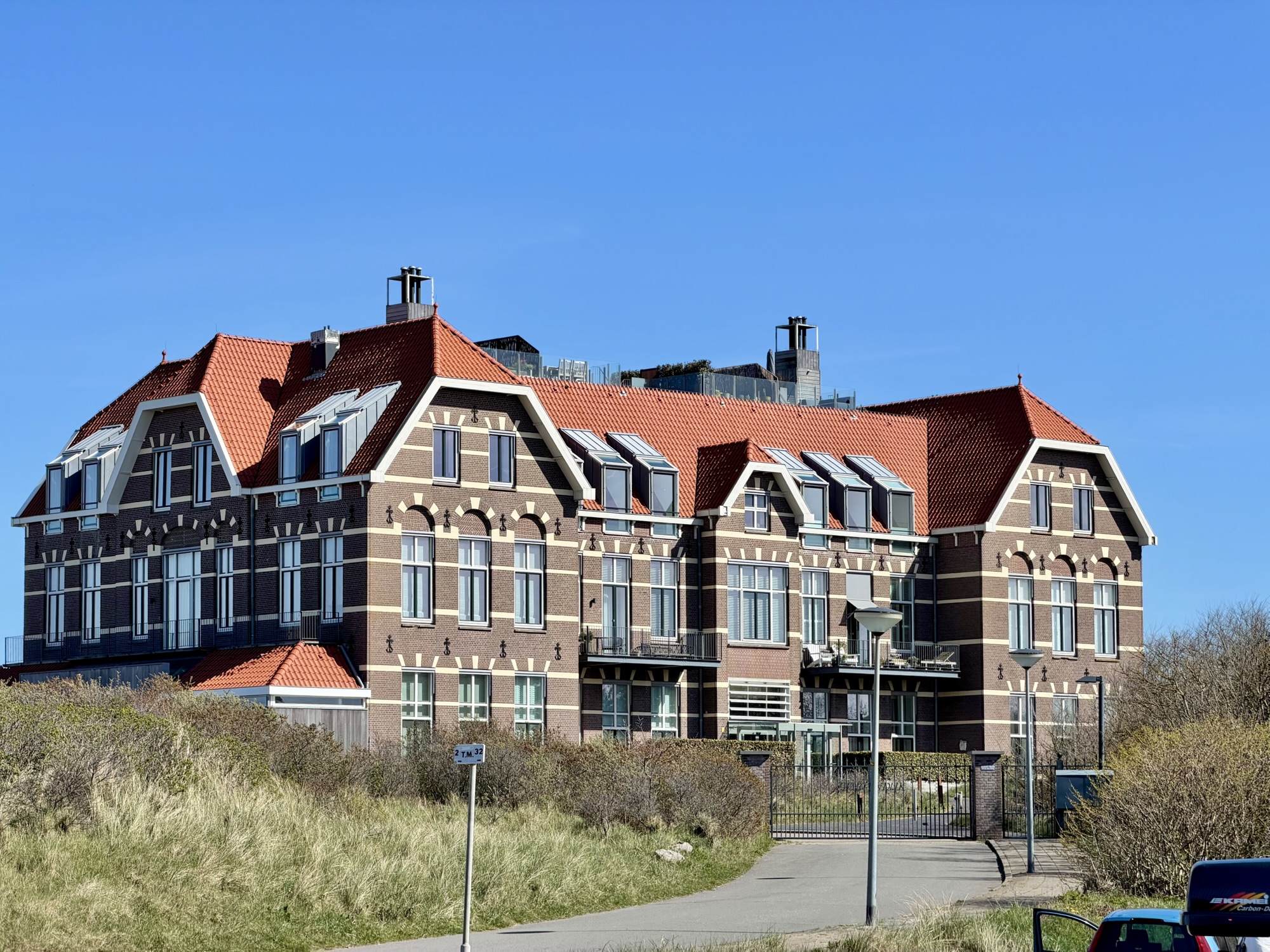
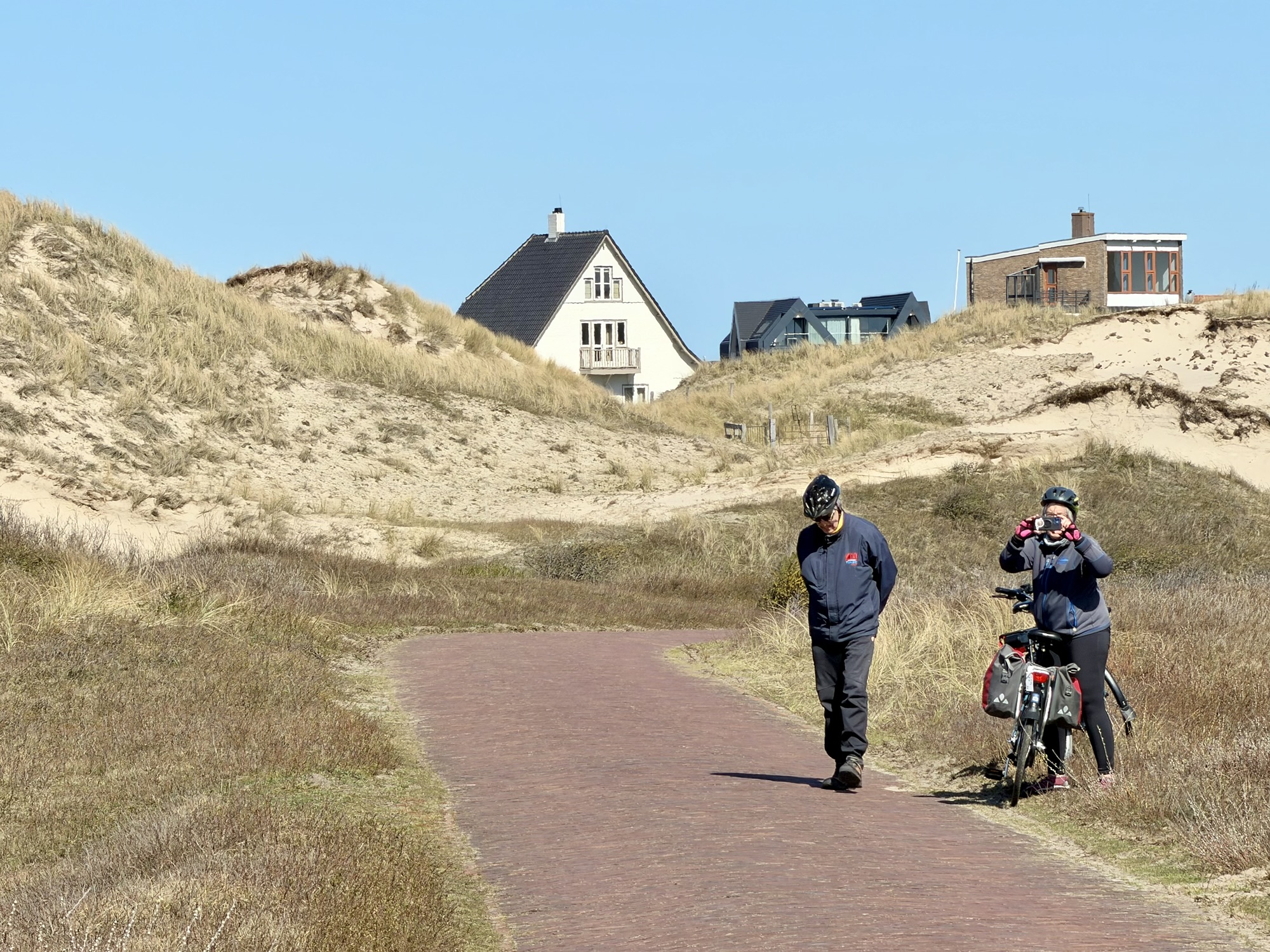
This beautiful building at the top of one of the Sand dunes, caught my eye, but I don’t know what it is.
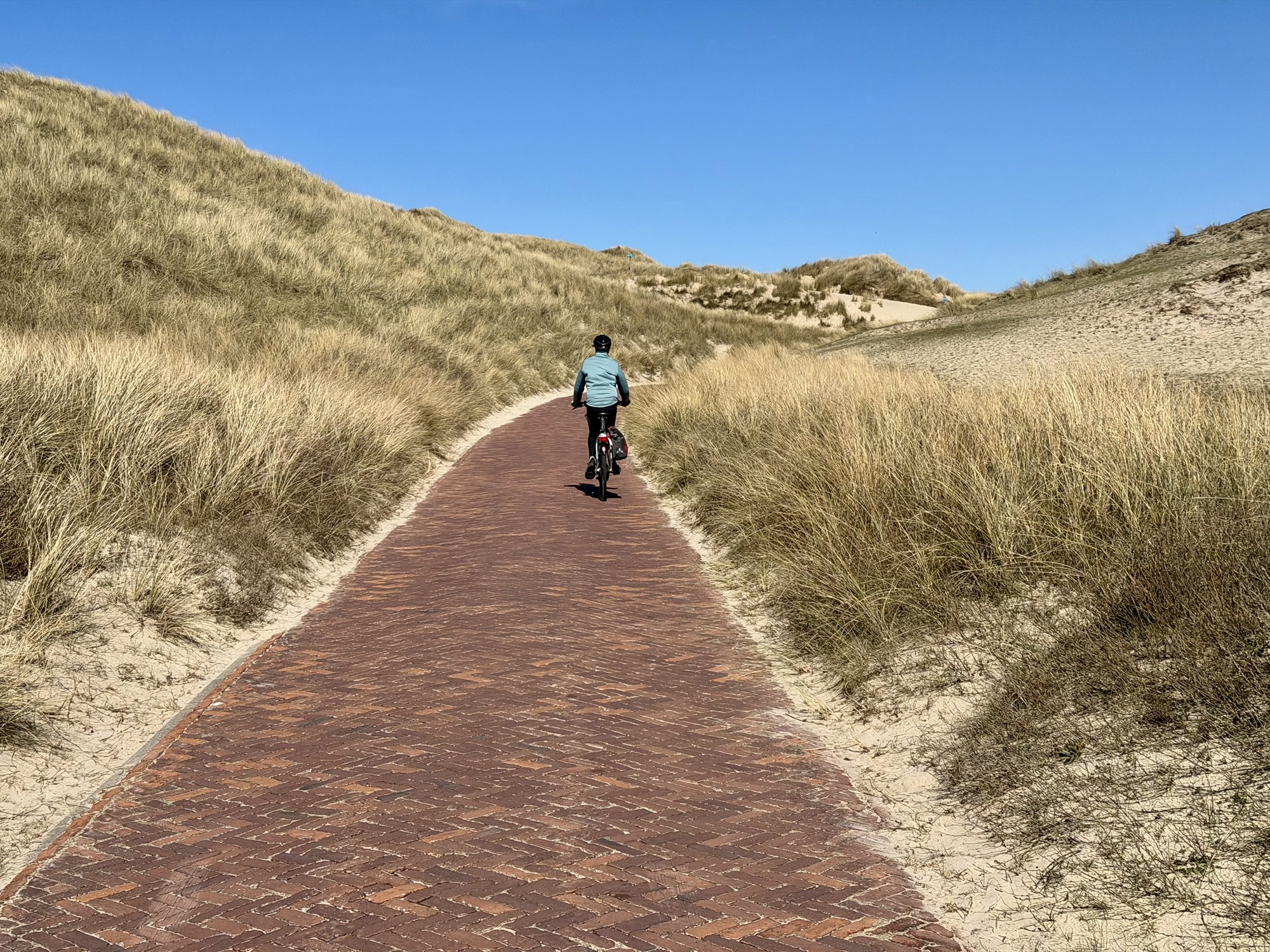
We encountered the most hills that we’ve seen on this entire trip riding into through the Noord Hollands Duinreservaat, the Dune Reserve National Park. We required a ticket to be in the park, which was provided to us last night. We were told to date it and make sure we had it with us in case we were asked for proof of payment.
David and Dayle made the decision, as we left the park, to take the short route directly back to the boat, because Dayle’s Achilles tendon was acting up, as it did at the end of our trip in Quebec last year. The rest of the group split in two, with some eating at a picnic table in the park, and some continuing on the next town.
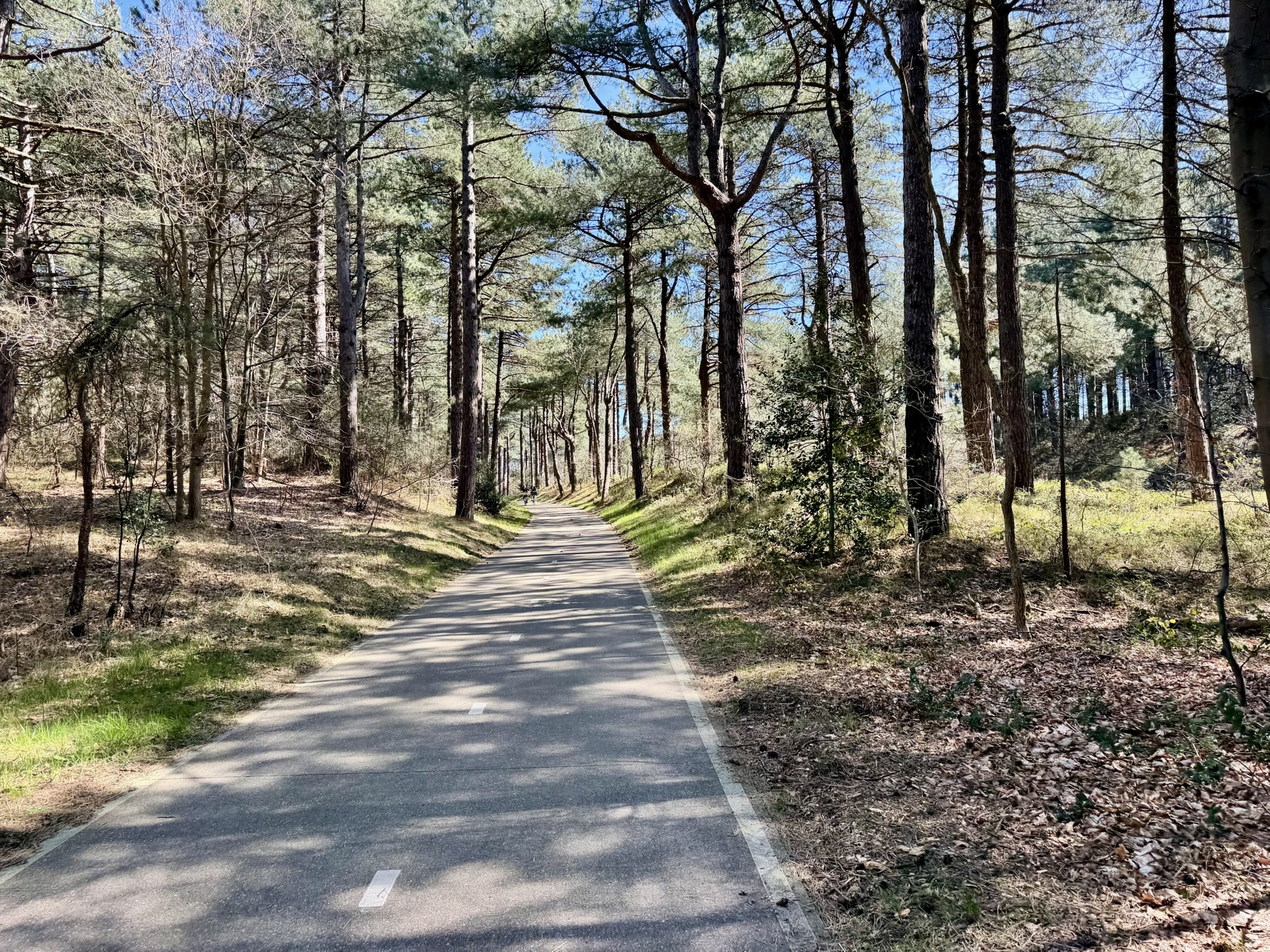
We rode through several forests over the day. They were so peaceful and the paths were smoothly surfaced.
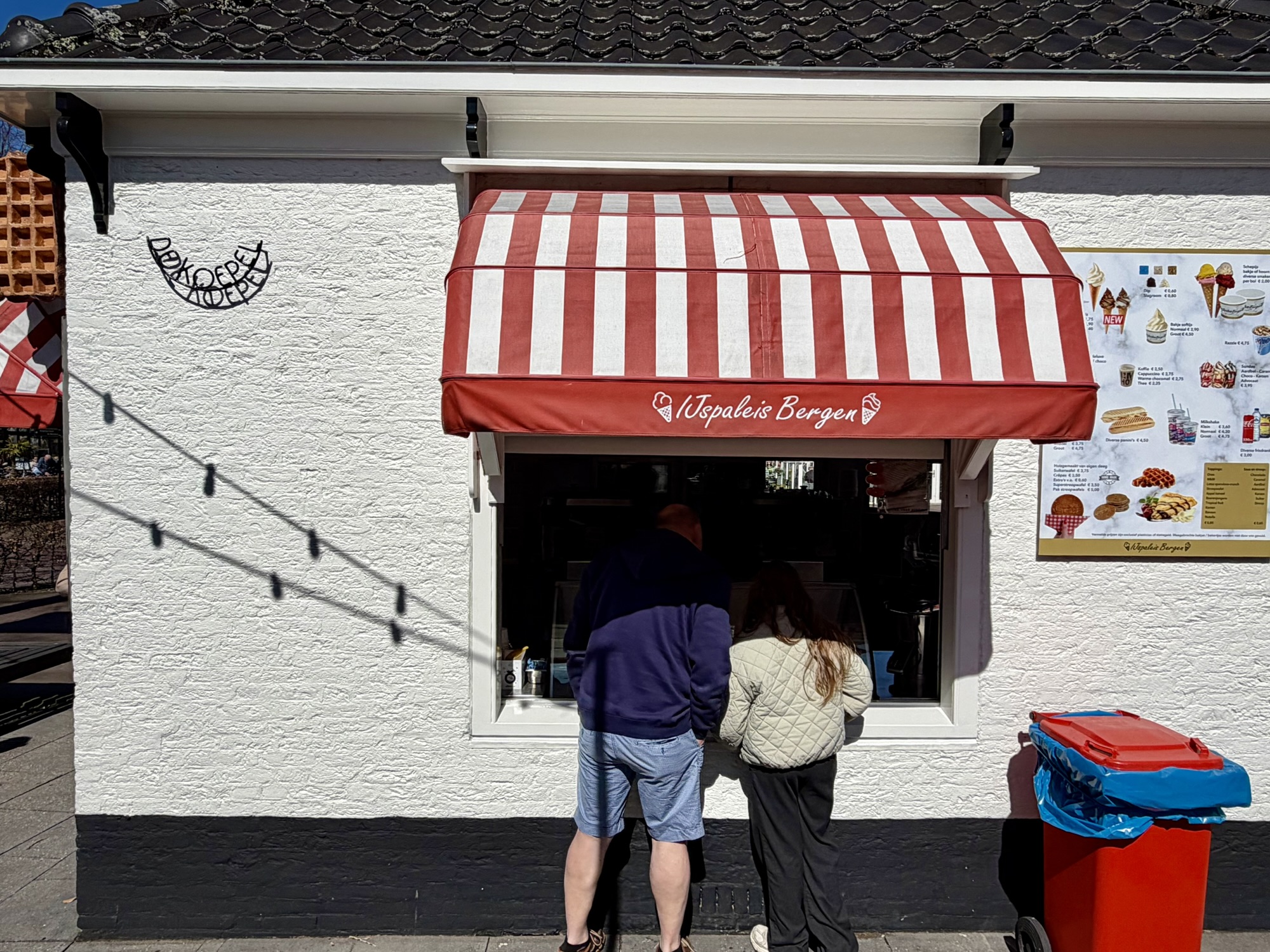
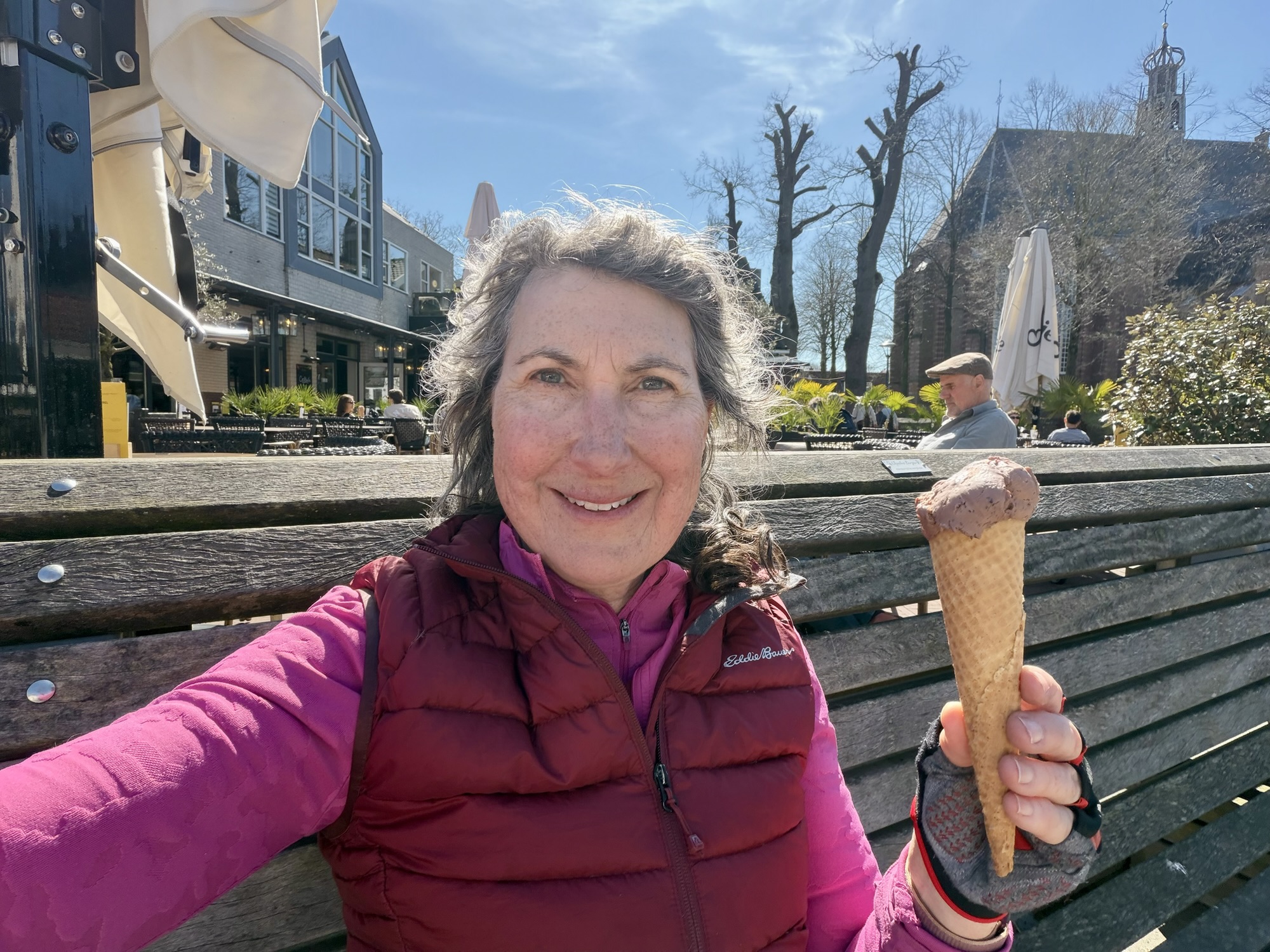
We found Wayne, Melanie, and Brooke almost immediately upon arriving in Bergen. Then we set off in search of ice cream, and this time we were successful.
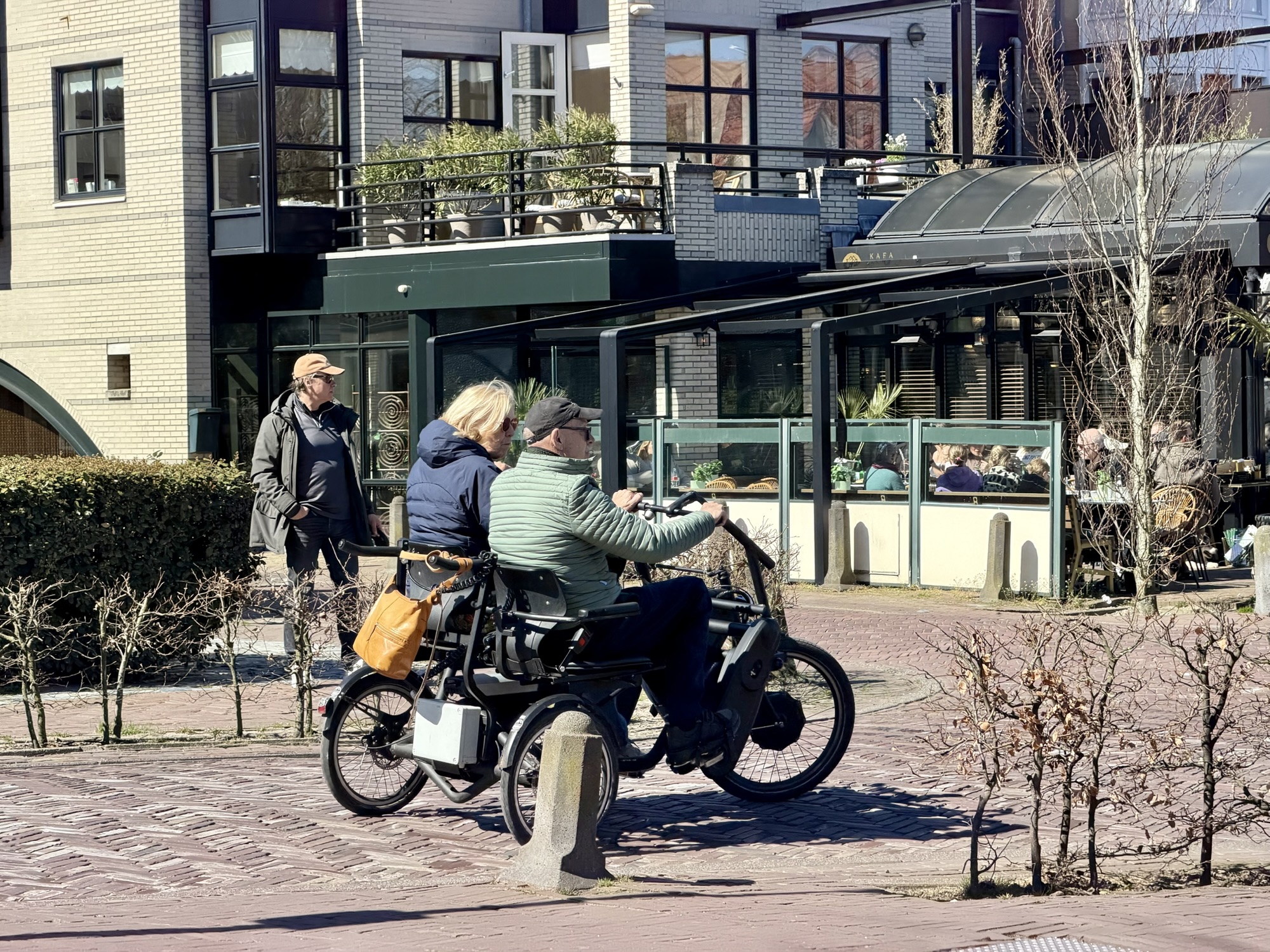
While we were eating ice cream, this couple pulled up in their tandem tricycle, which is specifically designed for a couple when one of them has mobility issues. I was interested in speaking to her about the bike, and she was interested in speaking to me about the mirror that I wear on my glasses when I ride. I’ve had over a dozen people ask me about it in the last few days. No one I’ve spoken to about it has encountered one like it here.
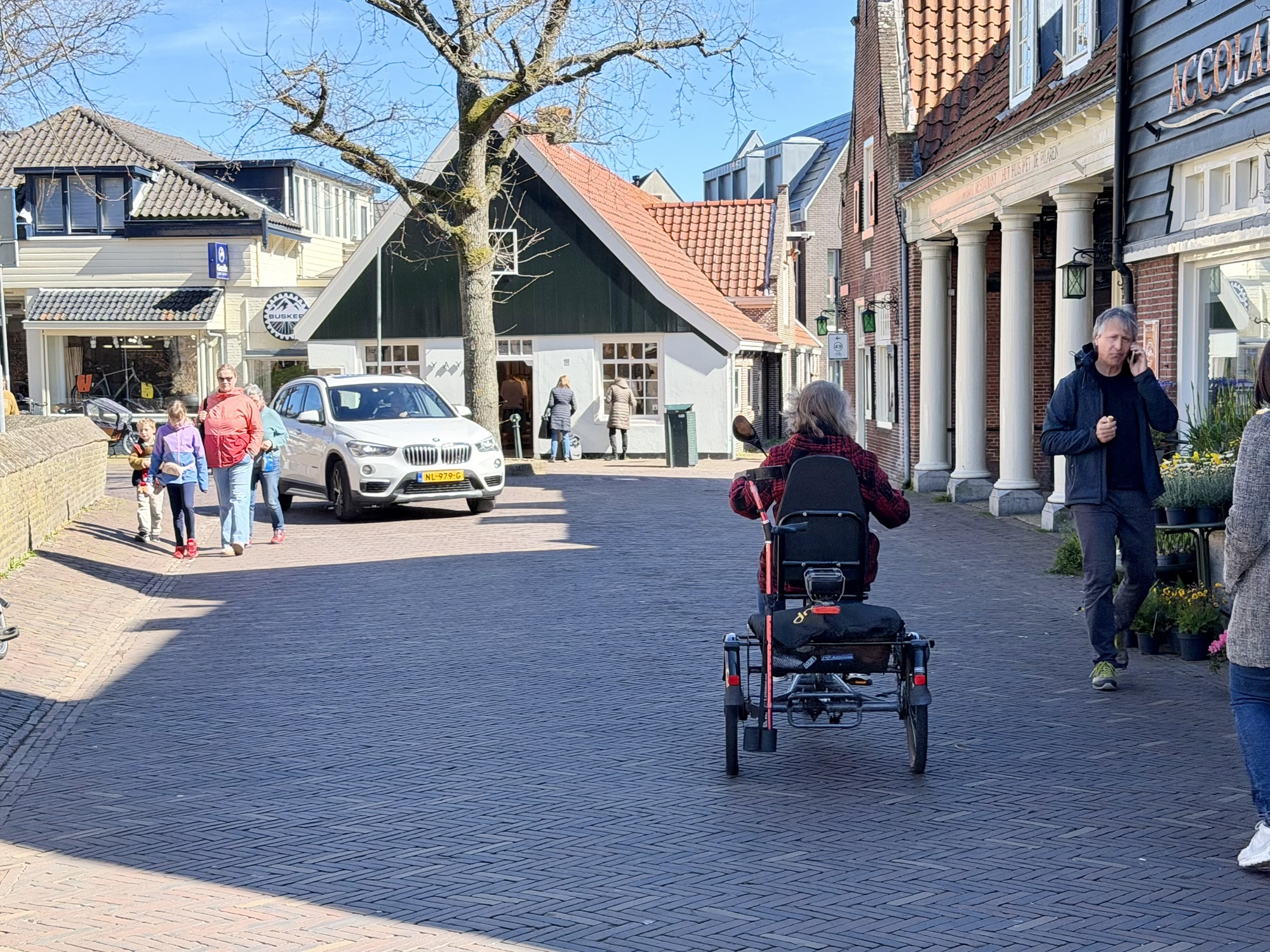
I’ve also seen many older people on tricycles. This one has a place that holds a cane when the rider is on the bike. It’s wonderful to see so many active older people, even ones with disabilities. One of the things we often face when we are advocating for cycling infrastructure is people claiming that it will negatively impact disabled people. I’ve never believed that to be so, and that has been reinforced since I got here.
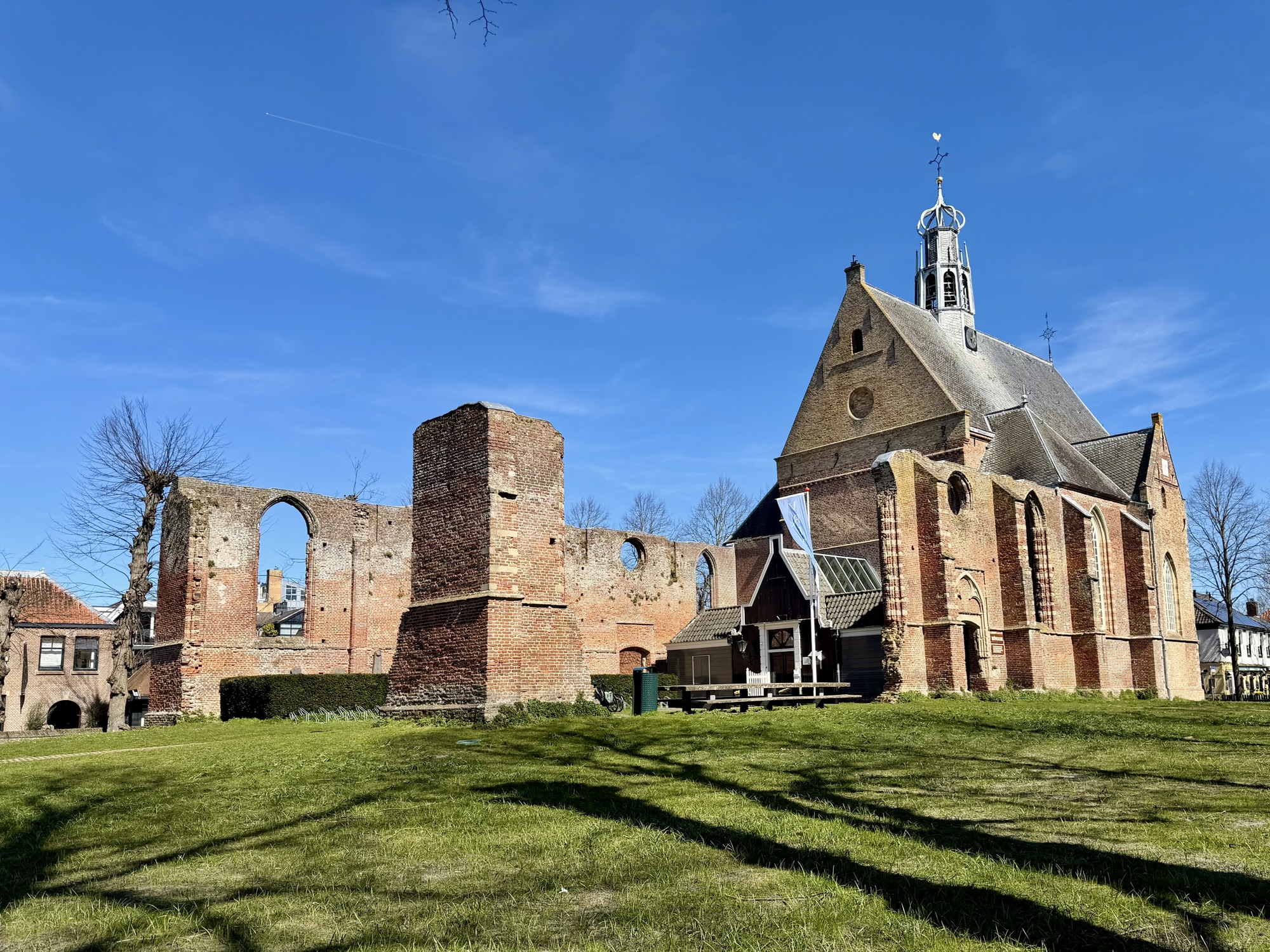
This church is known as the Ruïnkerk, and dates back to the early 12th century. There were many beautiful buildings in Bergen, old and new.
In Schoorl there was a climbing dune which looks like a popular attraction. It is the highest tune in the Netherlands at 55 m high. I was starting to get a headache and had gotten ahead of the others so I messaged Cindy that I was continuing on alone to the boat.
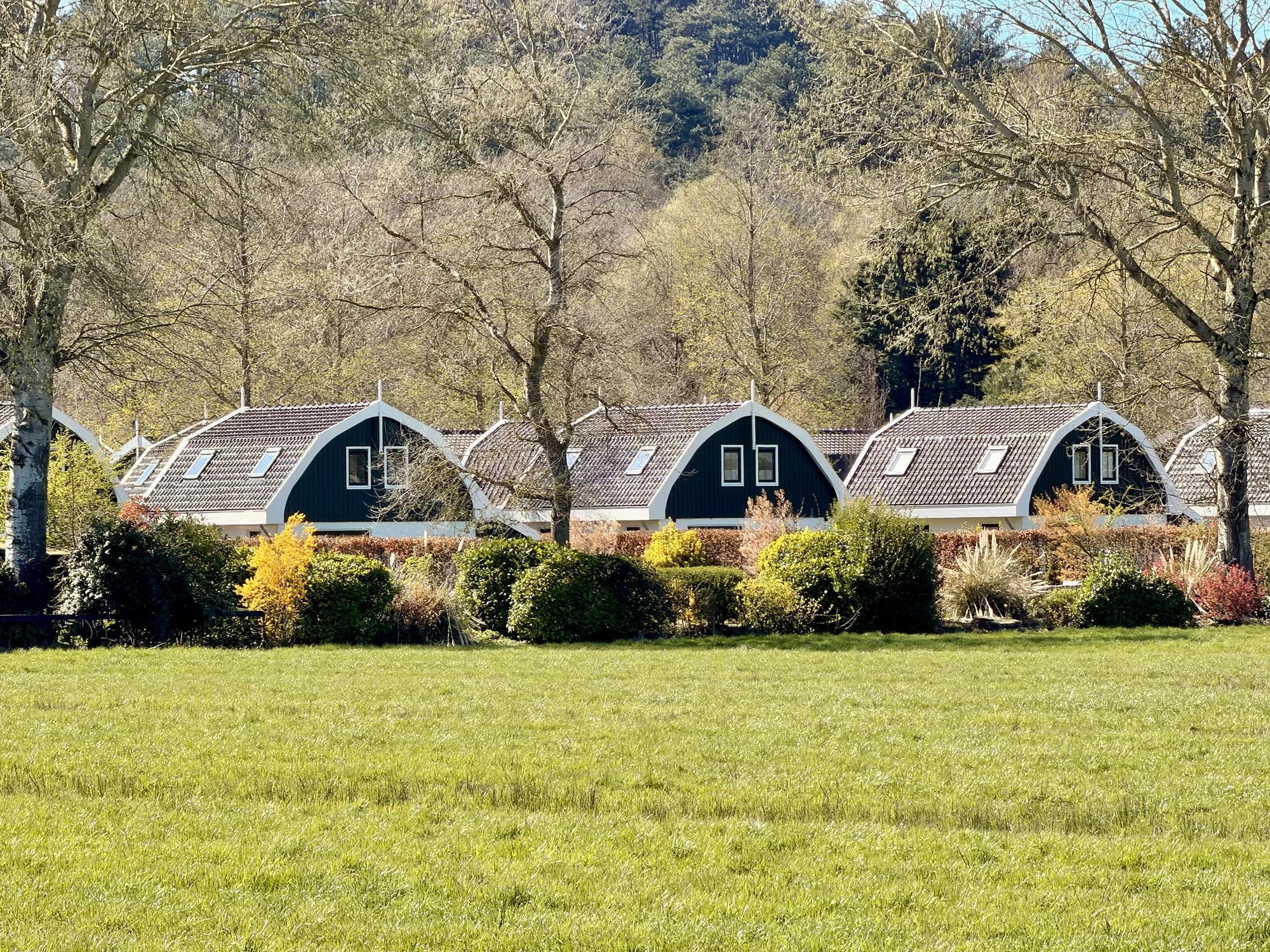
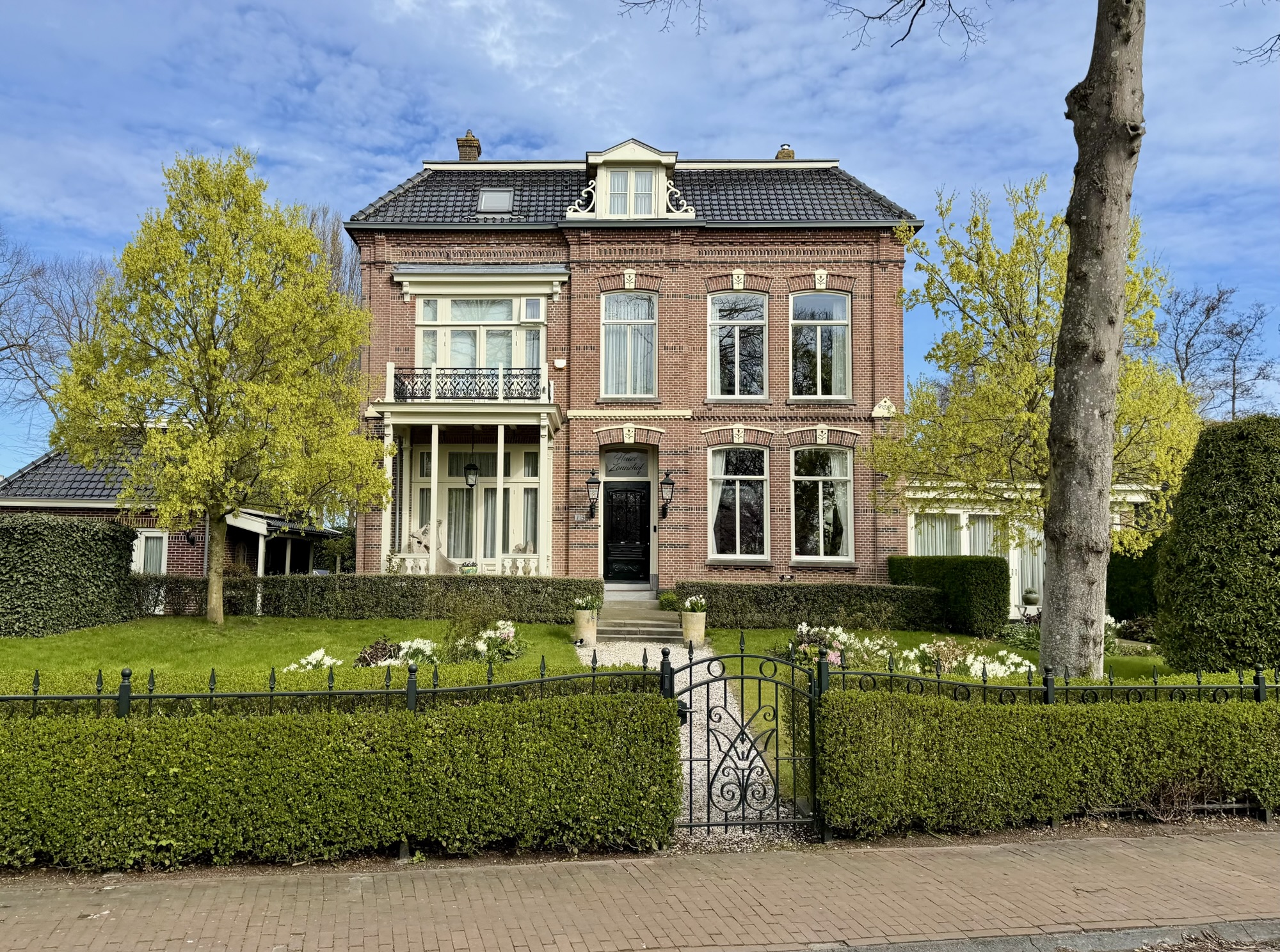
Most of the homes here differ from one another, but there was a large group of cookie cutter homes just past Schoorl.
I encountered this mosaic bench in a pastoral setting.
Here are a few of the things I saw as I returned to Alkmaar.
The boat was parked in a busy canal along a main street with retail on both sides. It’s not moving tonight, so the bikes were not reloaded, but instead, we locked them with the frame lock, and the crew put along an extremely long cable lock through all of them.
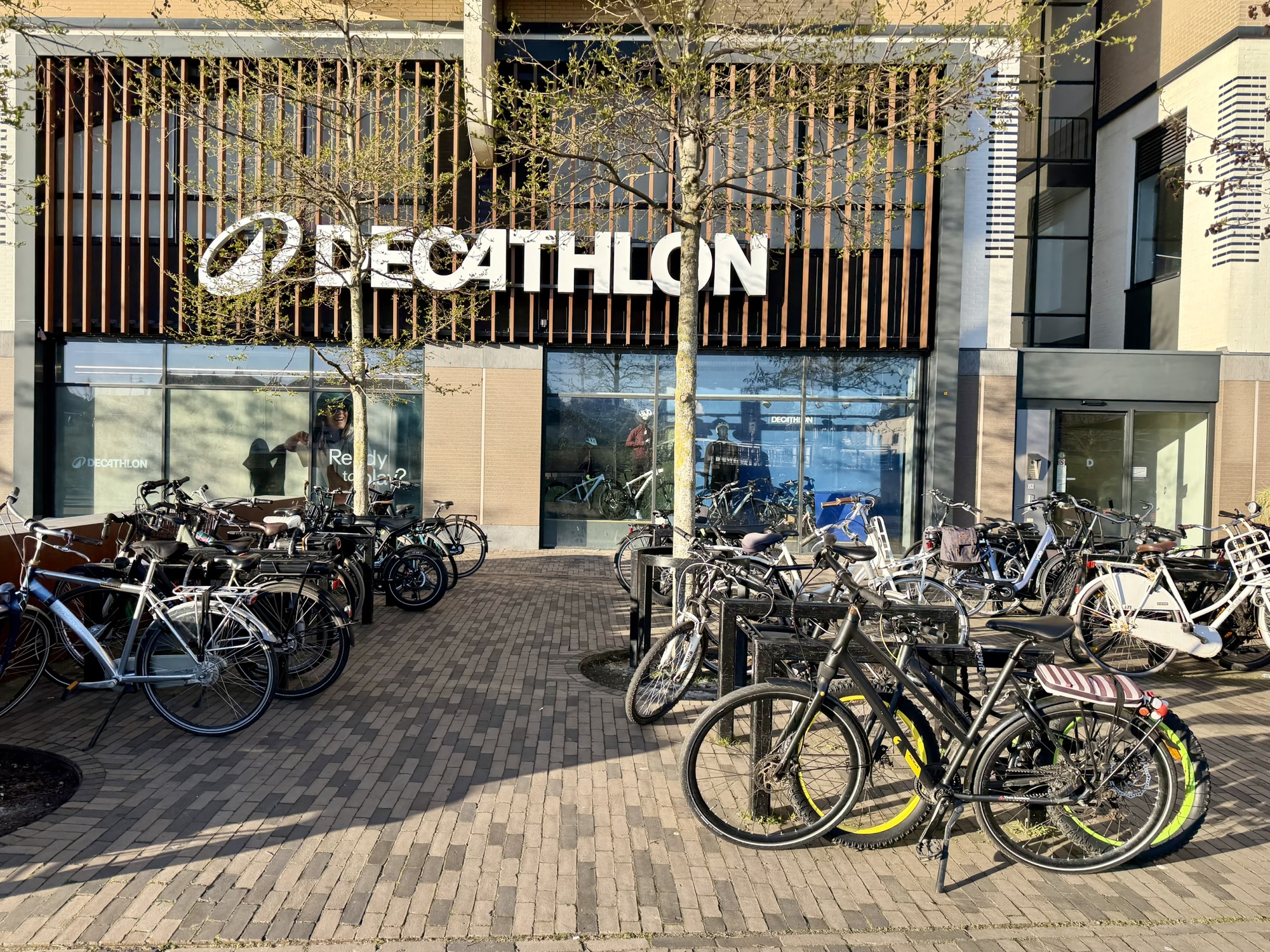
I noticed there was a Decathlon store when I looked out the cabin window. I have found myself missing a water bottle holder on the frame of the bikes we are riding. So I walked over to Decathlon after dinner, and bought one which I could Velcro to the bars of the bike. I’m looking forward to being less thirsty while I ride tomorrow.
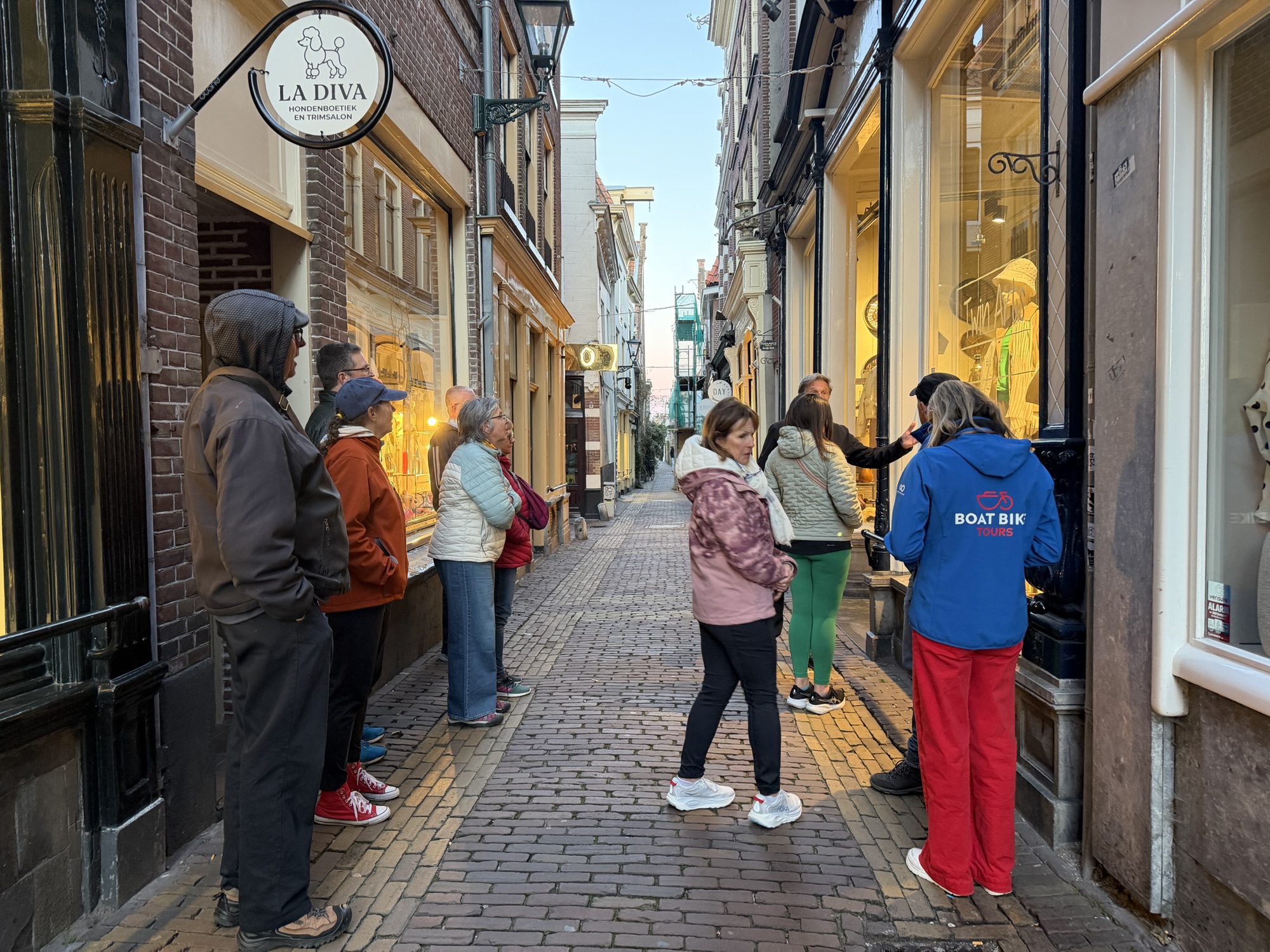
At 8 PM, we met Richard, a local tour guide, who took us on a walking tour of the city.
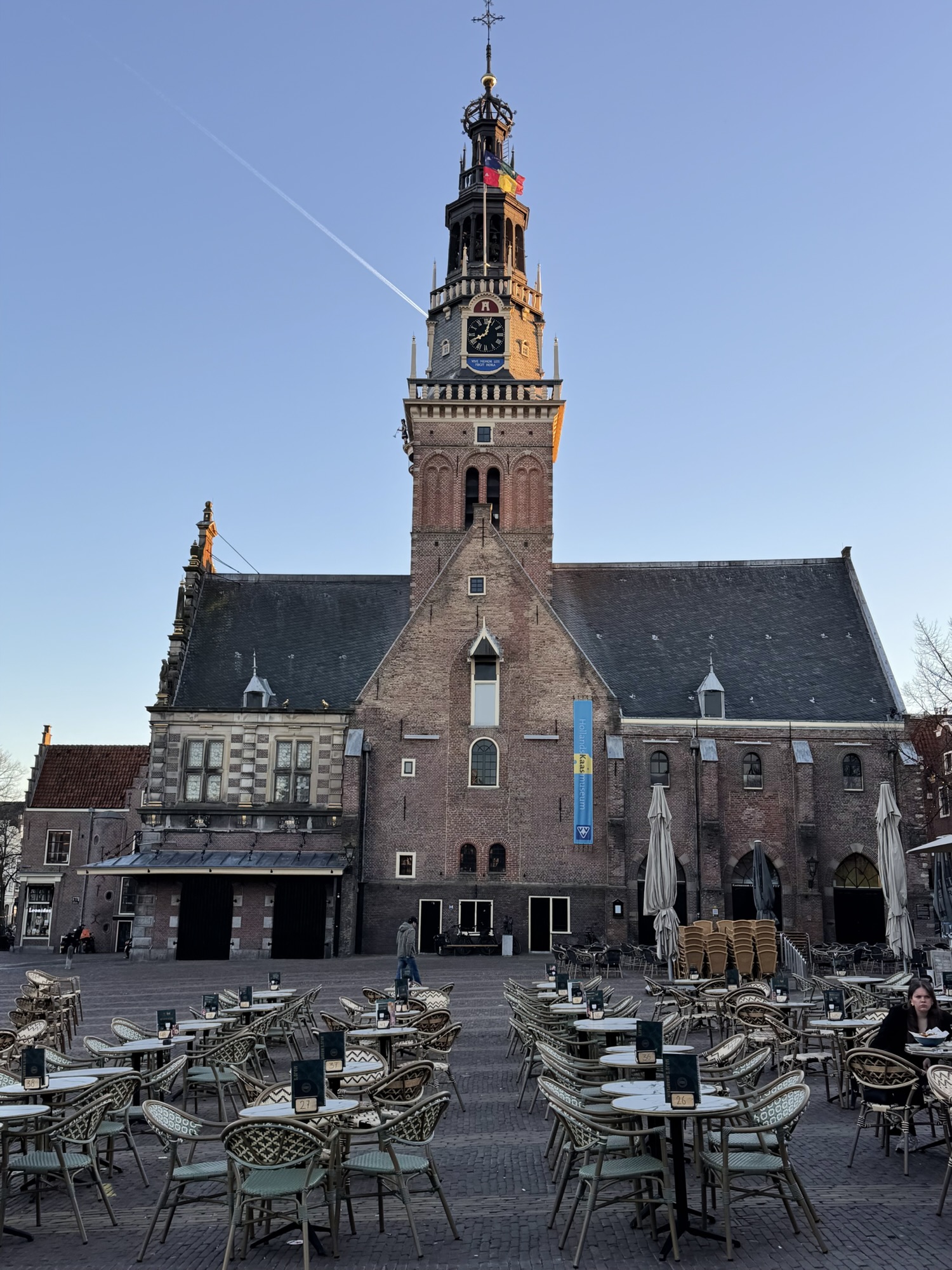
He started in the main square where the cheese market is held on Fridays. Wayne, David and Dayle took the train there last Friday so they could experience the auction. The auction is held in the square in front of the church.
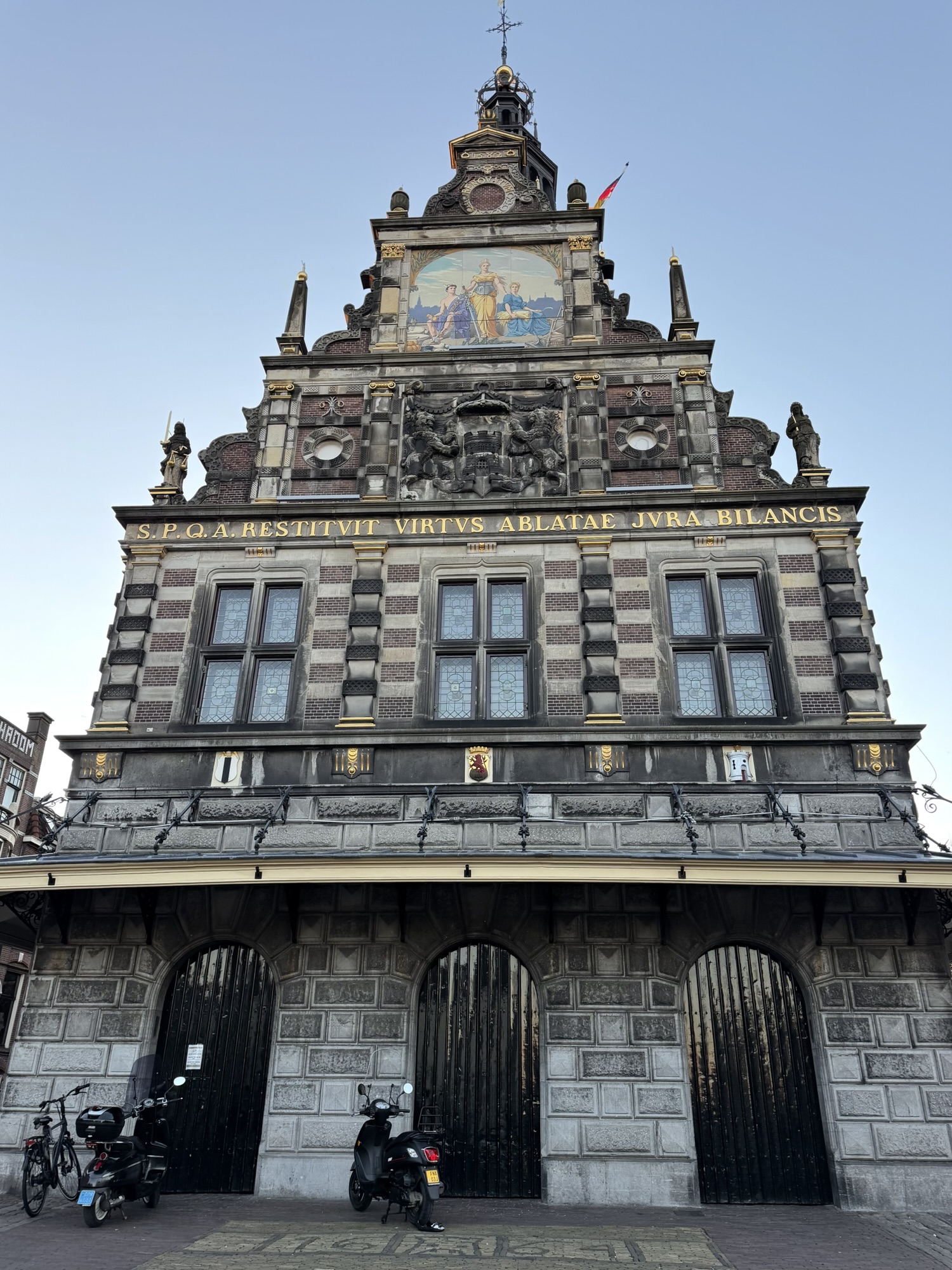
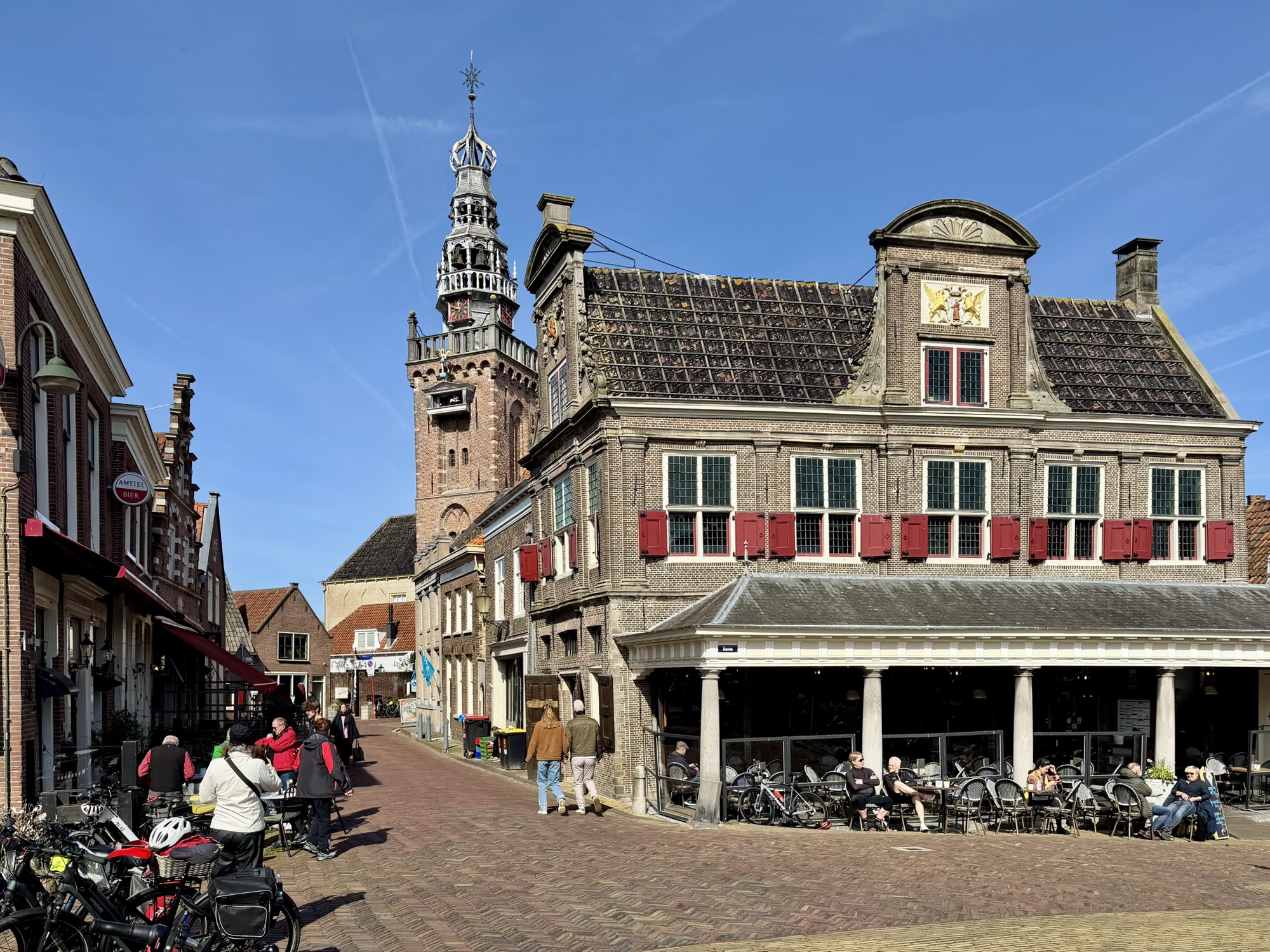
The left side of the church, built as the Holy Spirit Hospital, where the poor and pilgrims found shelter, took on a new purpose in the 16th century as the Weigh House. De Waag is an iconic building in Alkmaar that dates back to the 16th century. This building played a crucial role in the cheese industry, where cheese was weighed before being sold.
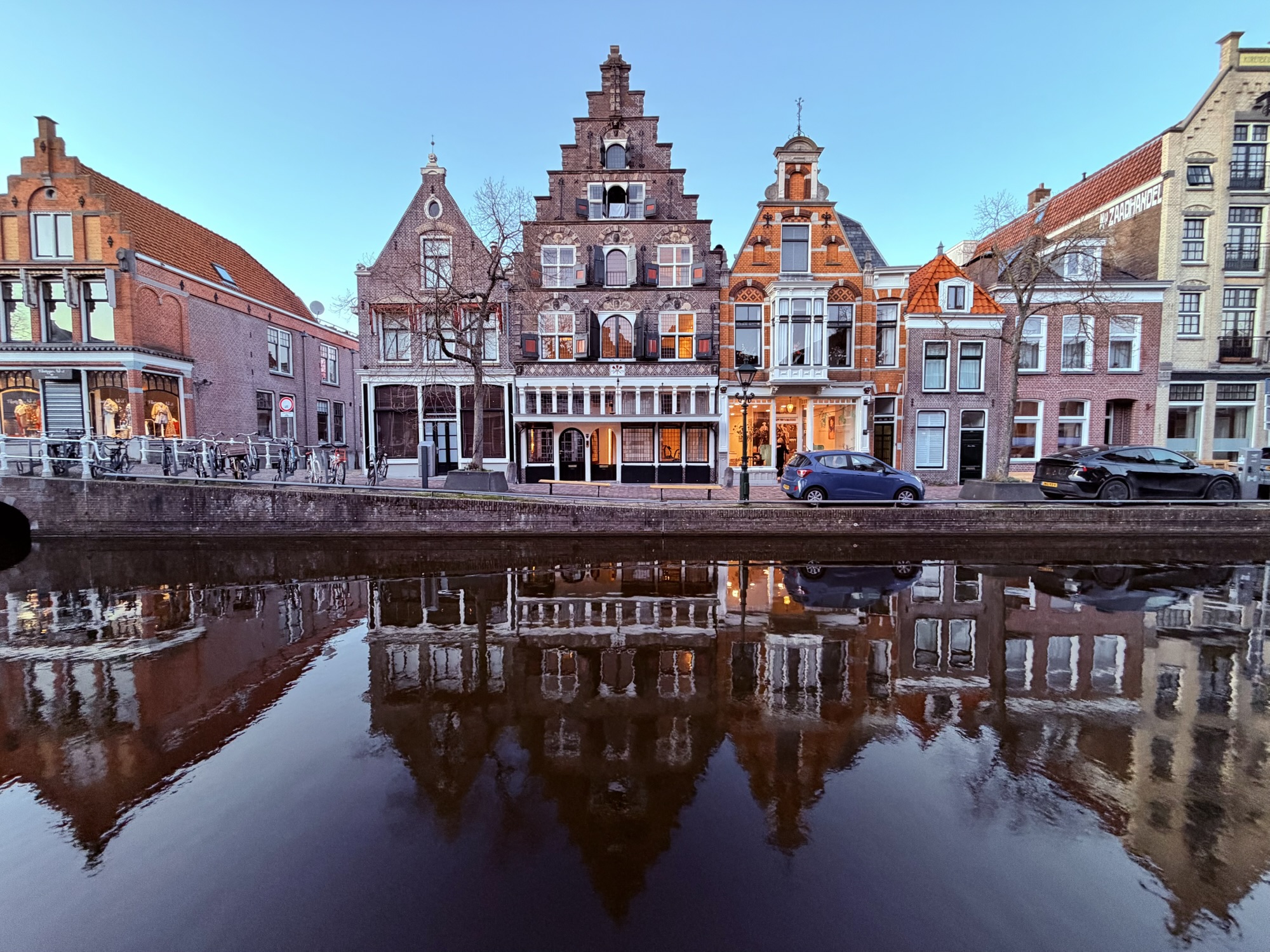
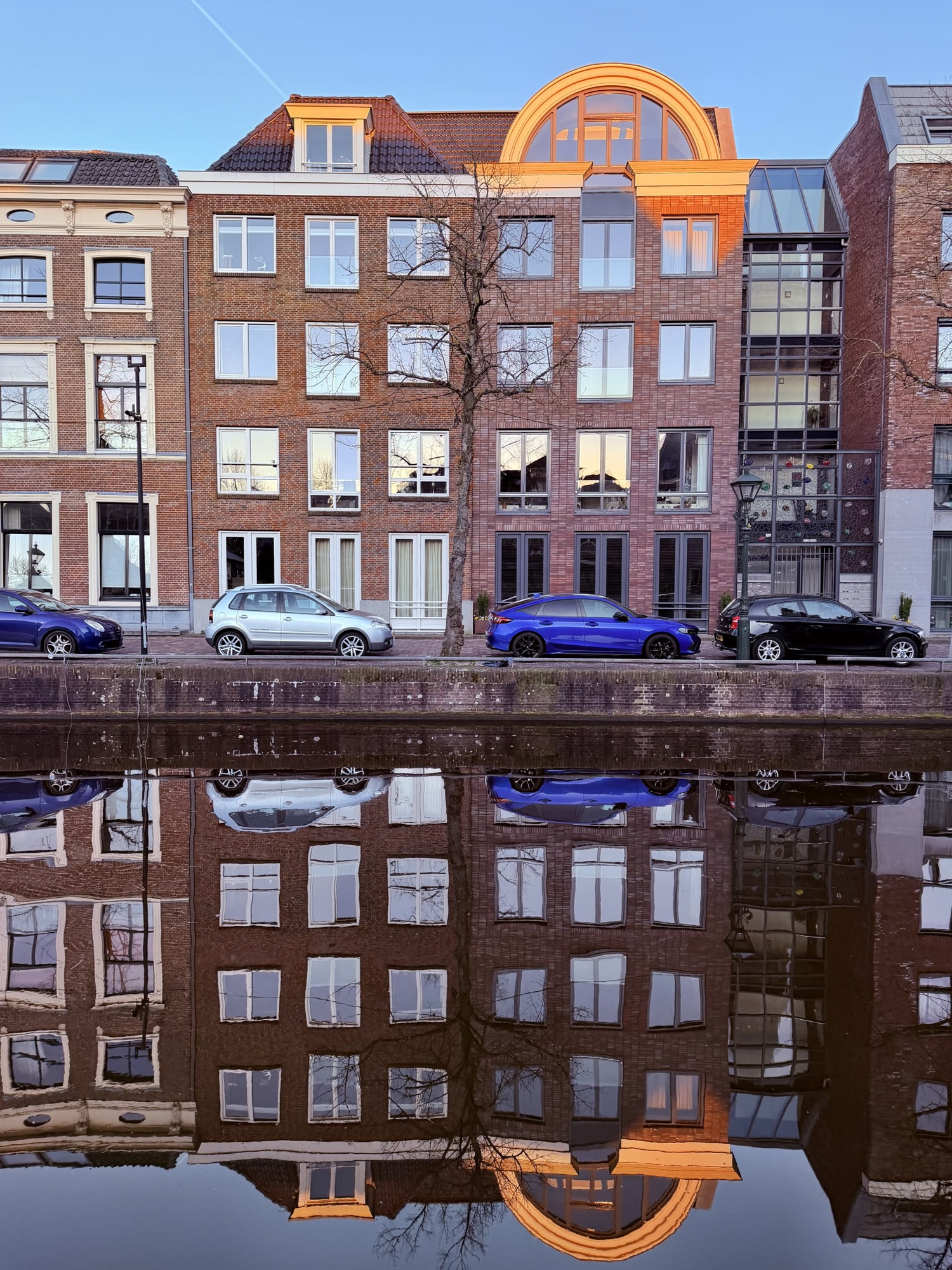
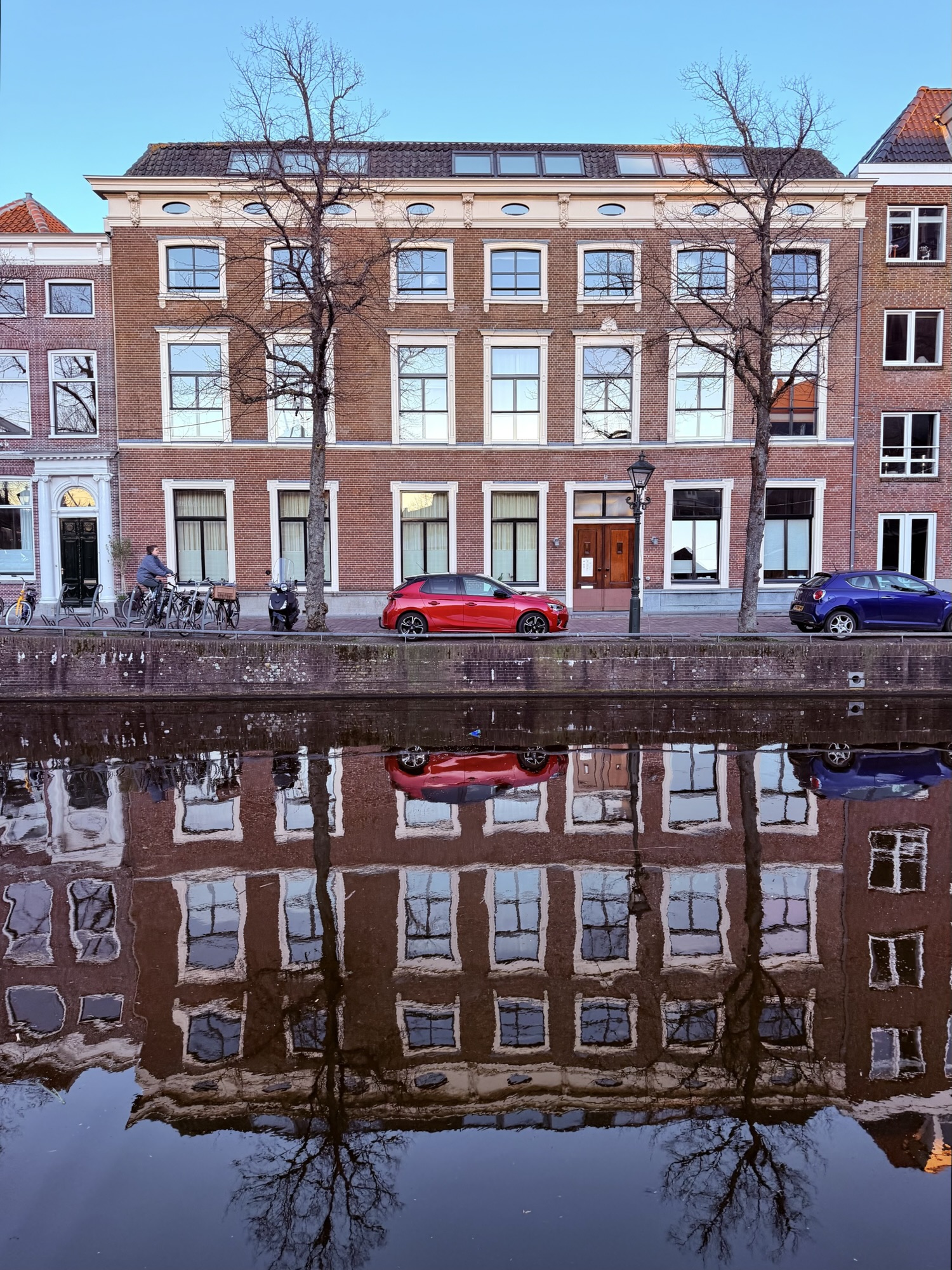
In the calm evening, the canal homes were reflecting beautifully in the canals.
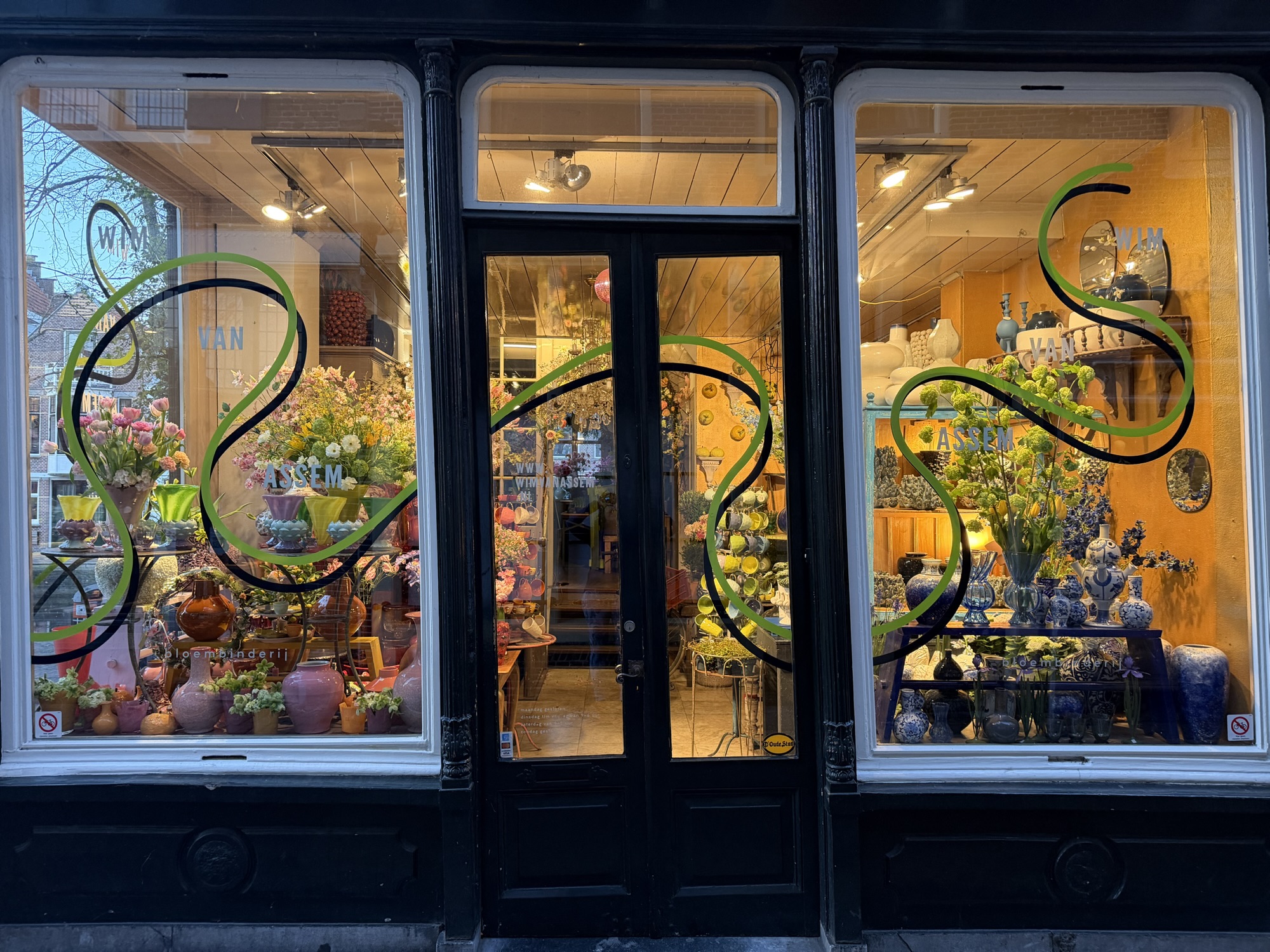
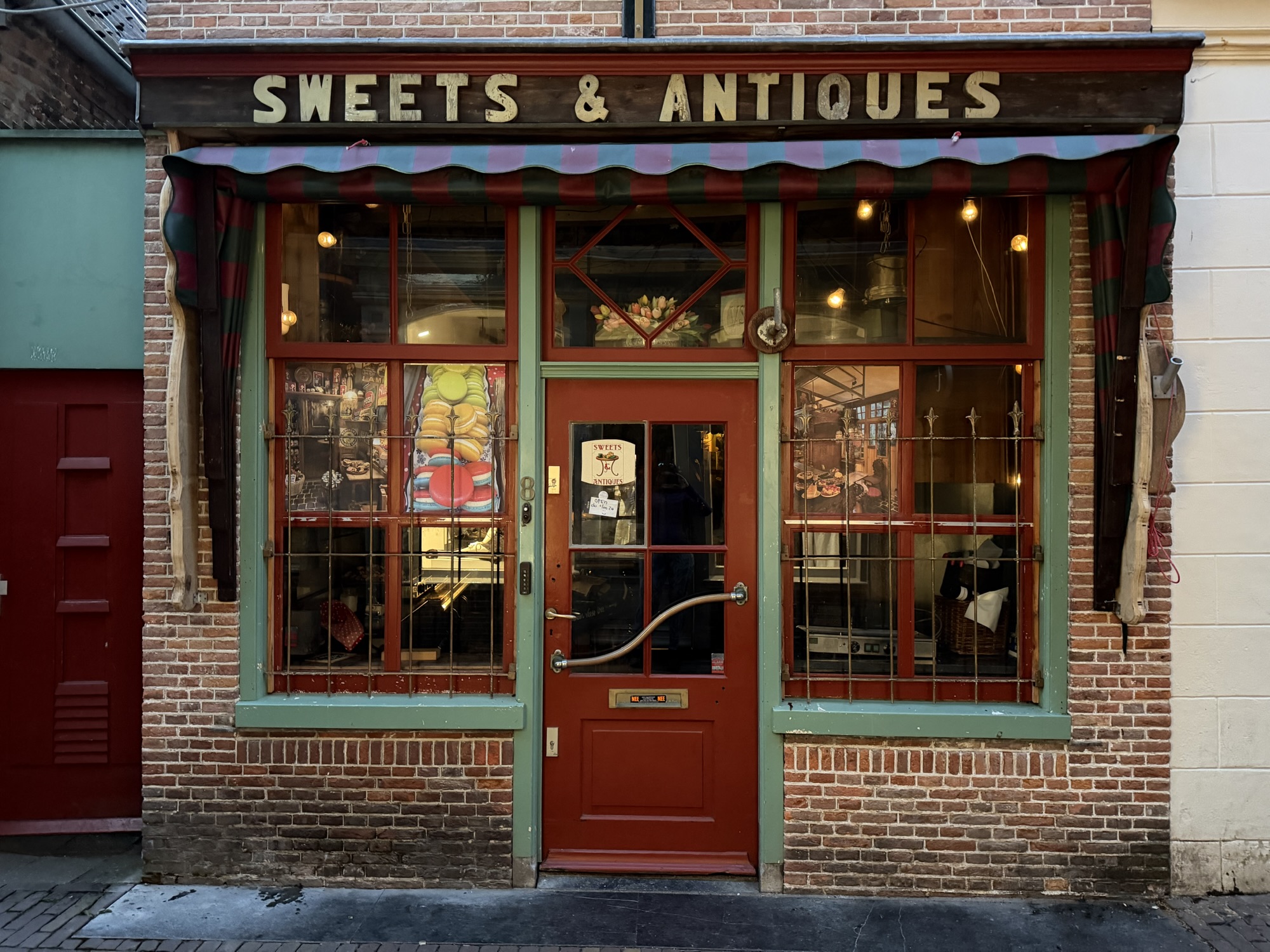
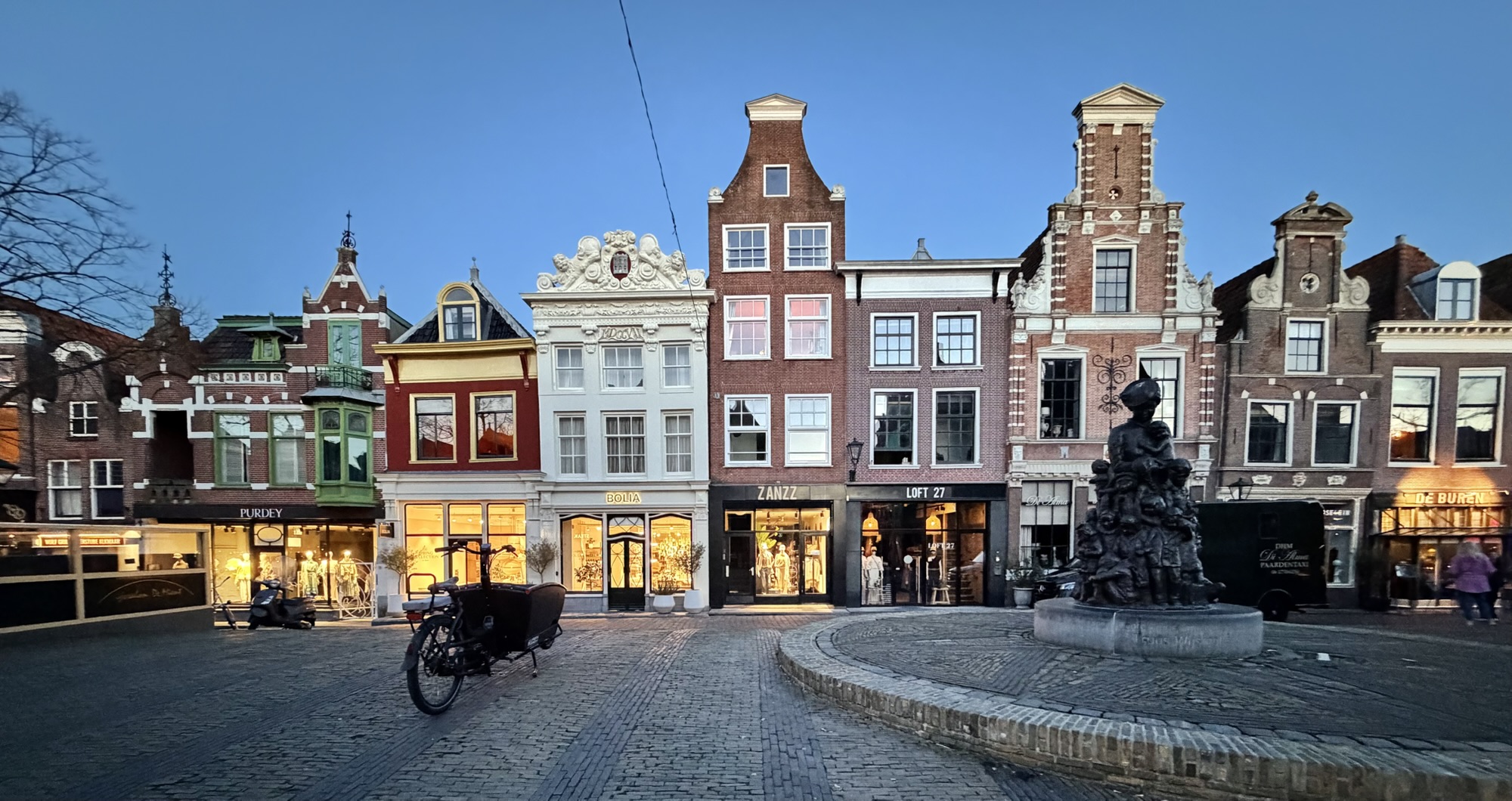
There were many pretty storefronts.
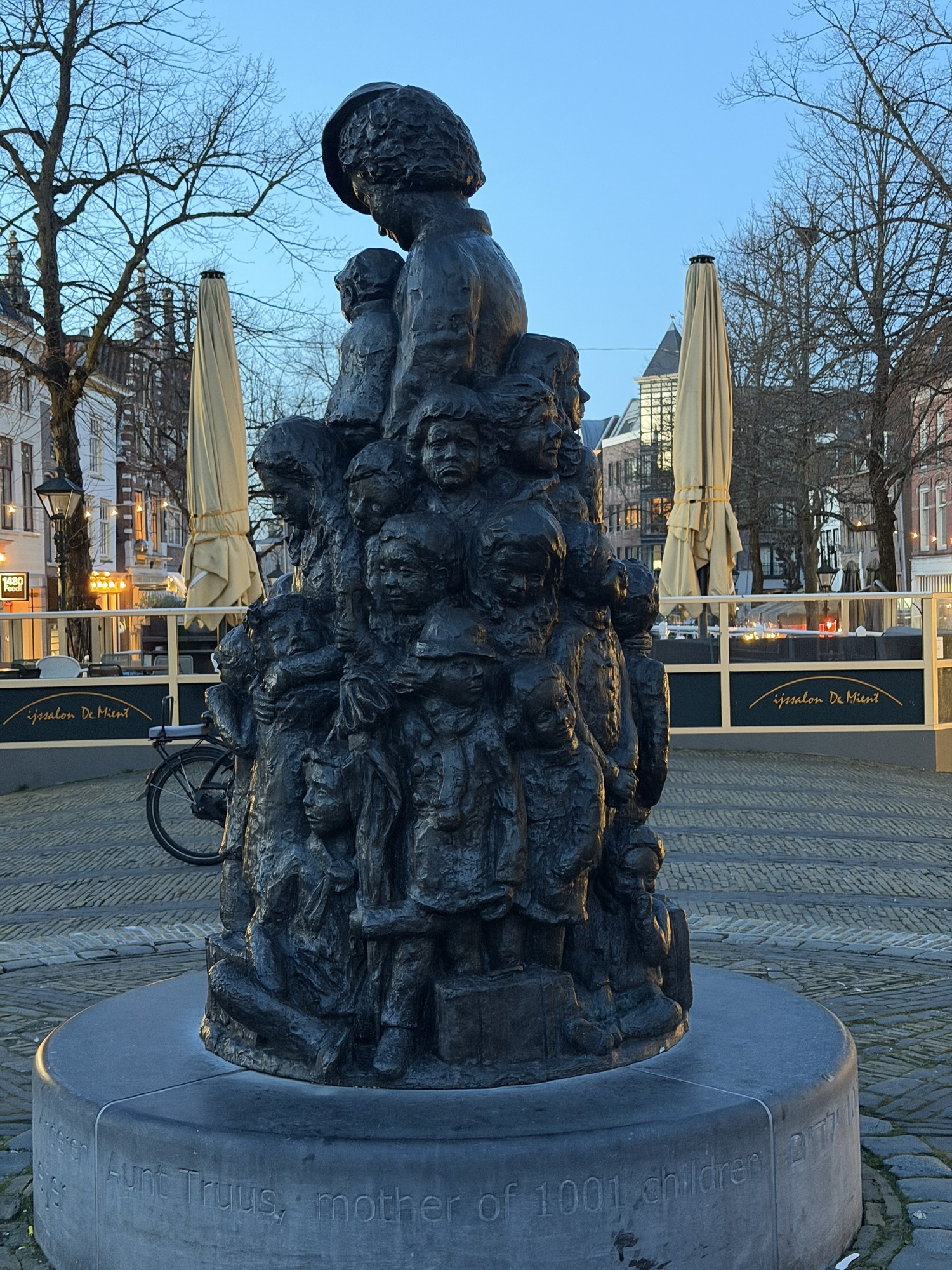
Truus Wijsmuller-Meijer, known as the mother of 10,000 children, organized ‘child transports’ after Kristallnacht on November 9/10, 1938, until the beginning of the war. She was given permission from Adolf Eichmann and saved 10,000 children from Germany, Austria, Poland and the Czech Republic, arranging for them to be sent to England, and then onto other safe countries.
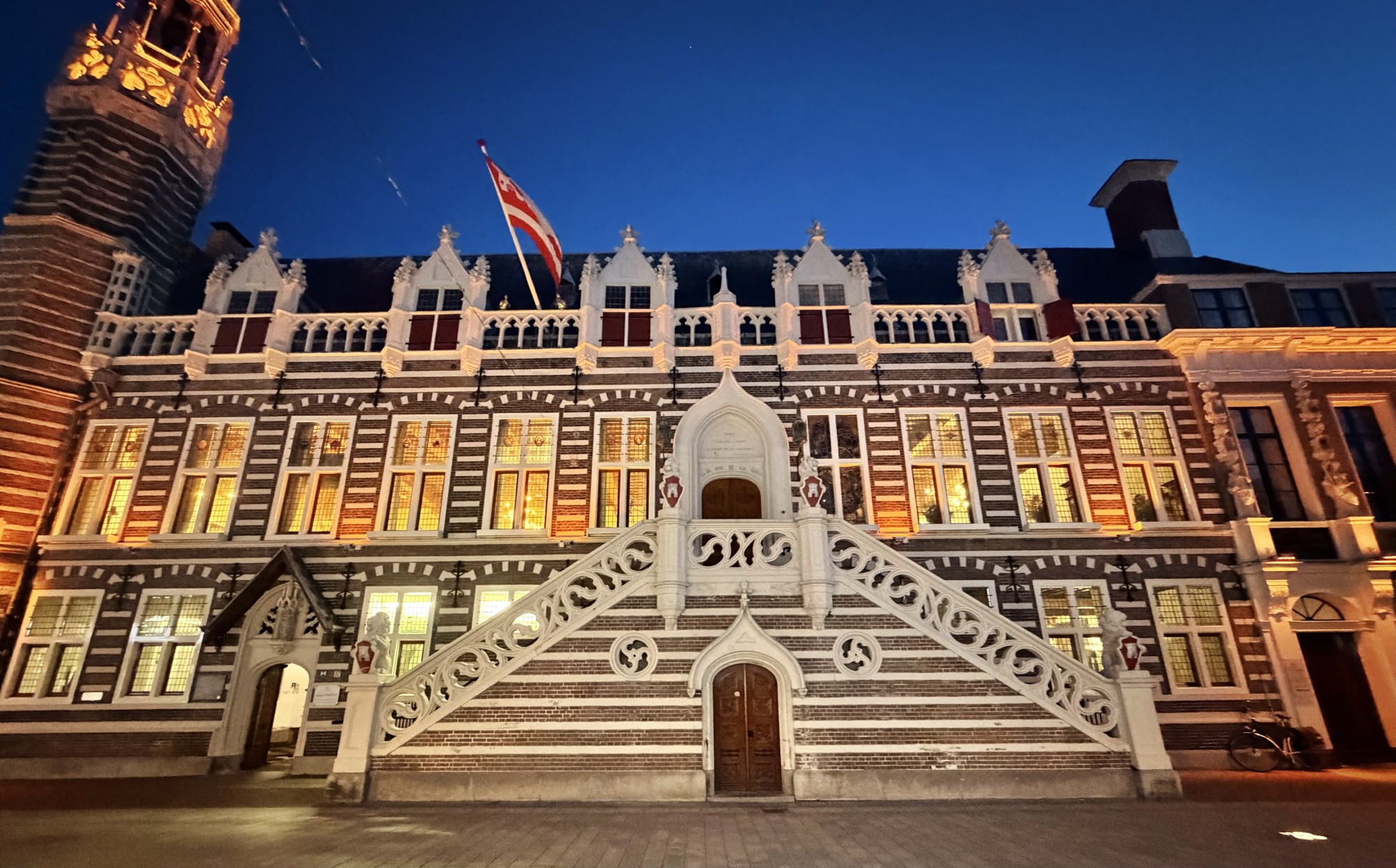
This is Alkmaar City Hall built about 1520.
This was an Almshouse, one of 16 that used to exist in the city.
This was a monastery. There is now a restaurant in the top of the tower.
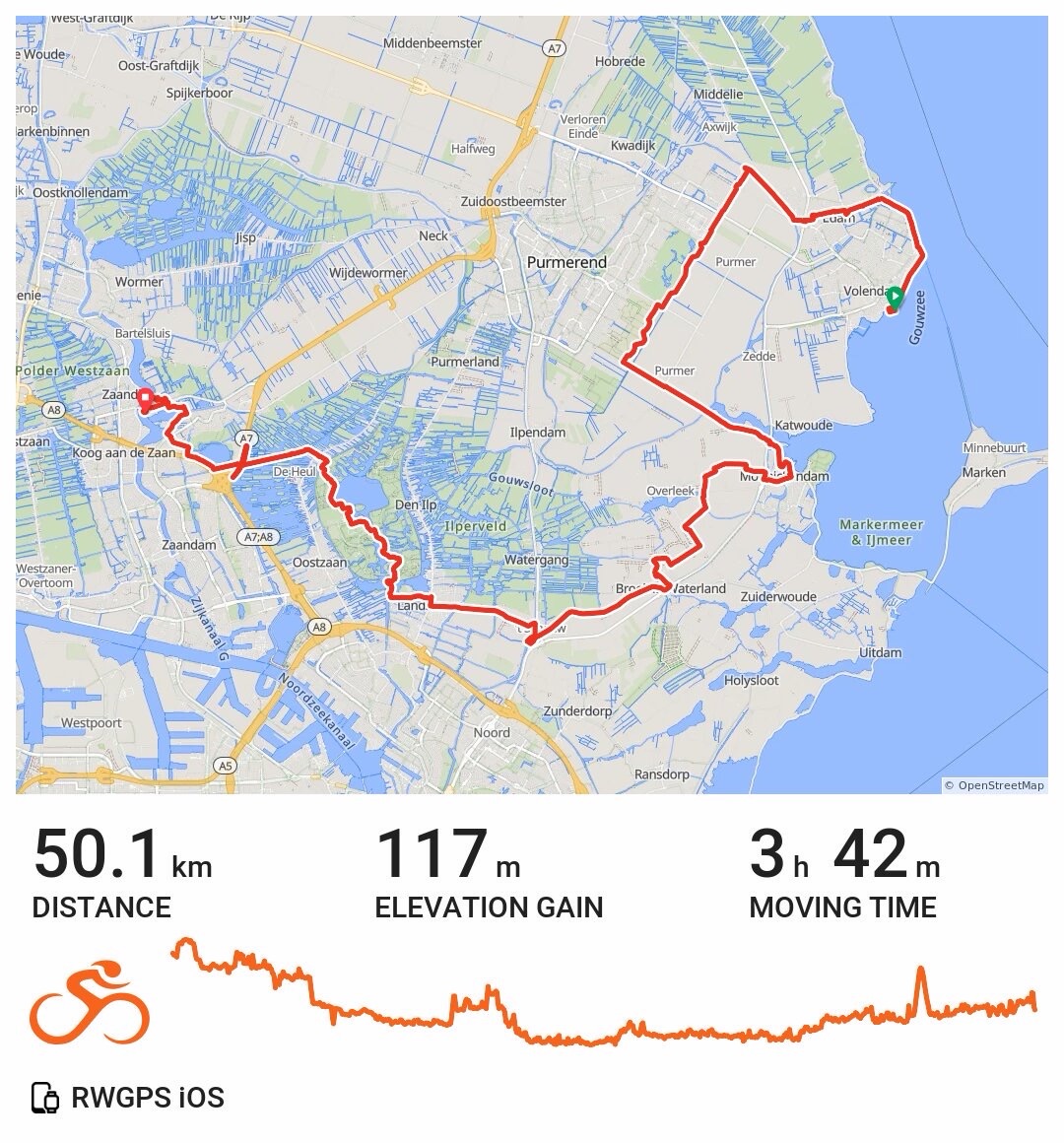
I was so tired when I got back to the boat that I wasn’t able to write the blog for the day. Here’s a map of our route that we covered today.
We woke about 6:30am to the sound of the barge engines being turned on. It was about half an hour before we were underway on our two hour sail to Volendam, where we began riding today.
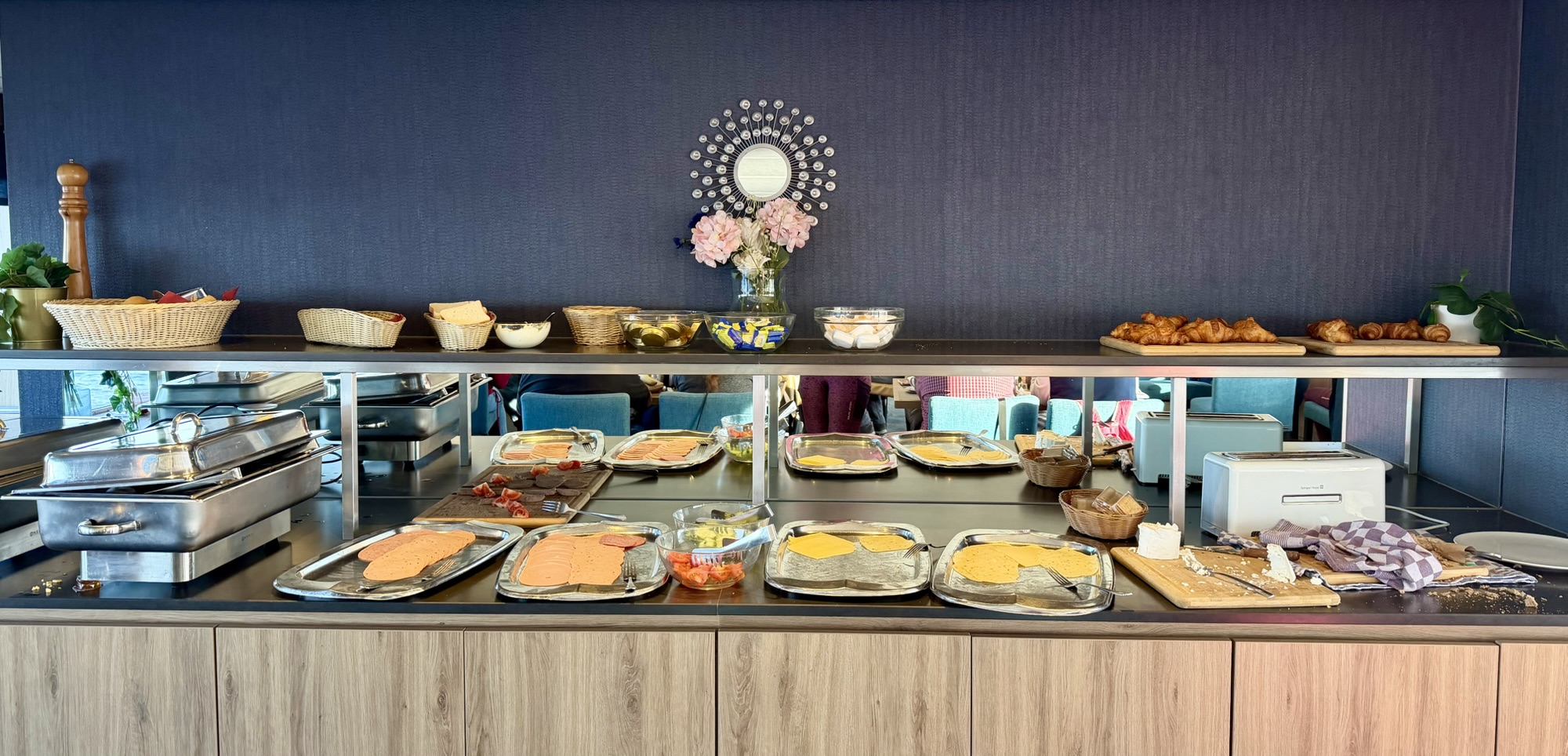
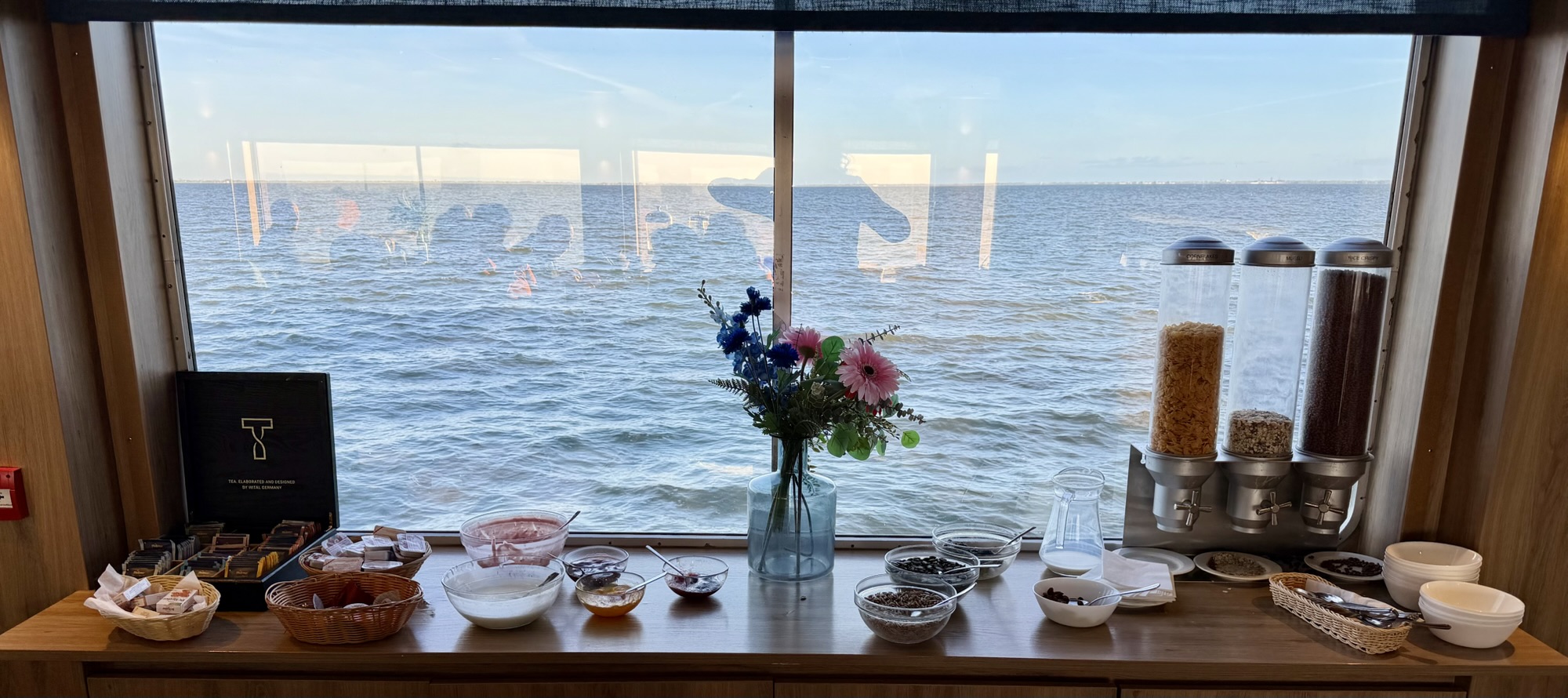
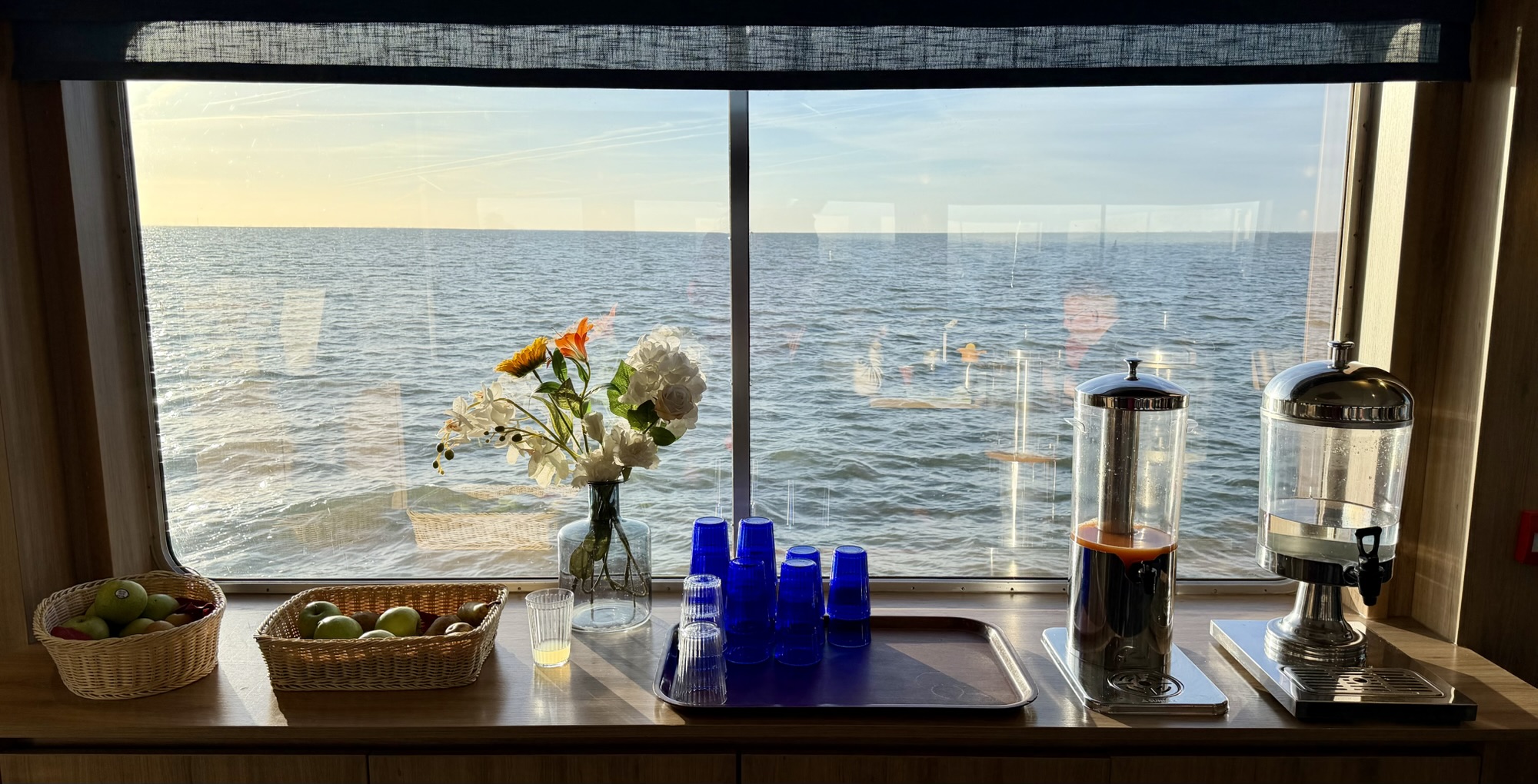
Breakfast is a buffet and we can pack a bag lunch to take with us. I took pictures of the buffet today.
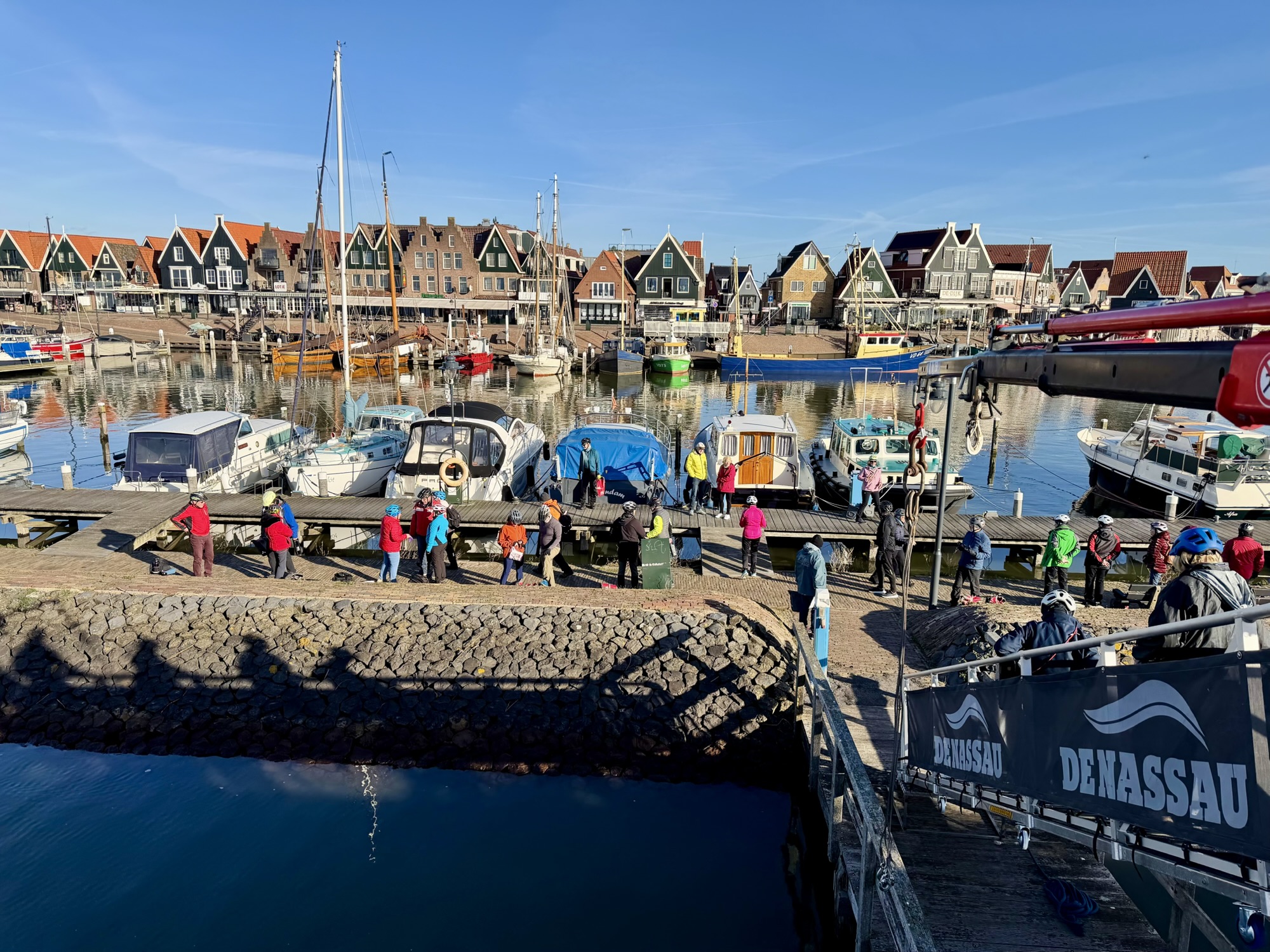
We began disembarking just after nine. After all the passengers were off the crew wheeled the bikes down the gang plank.
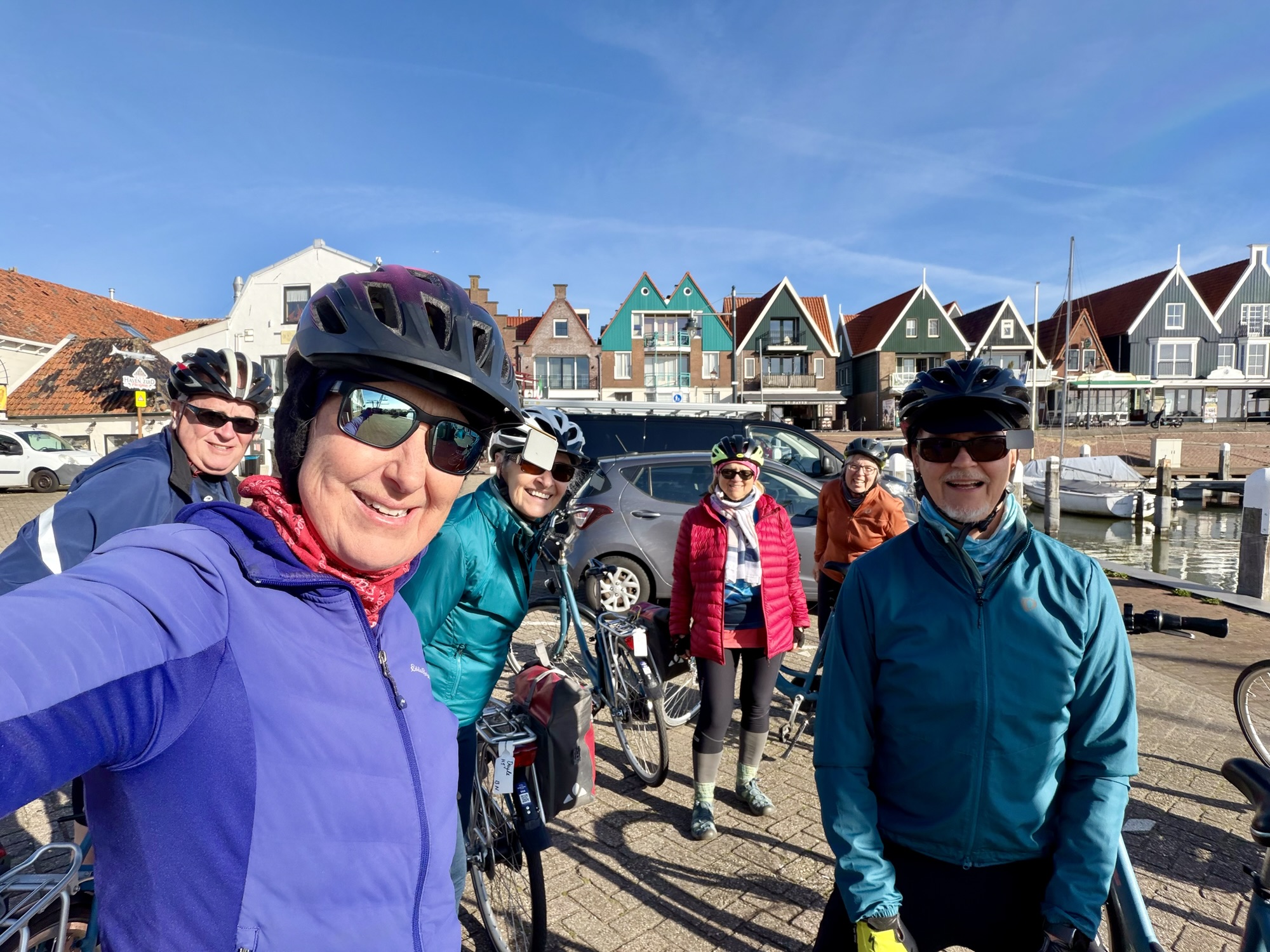
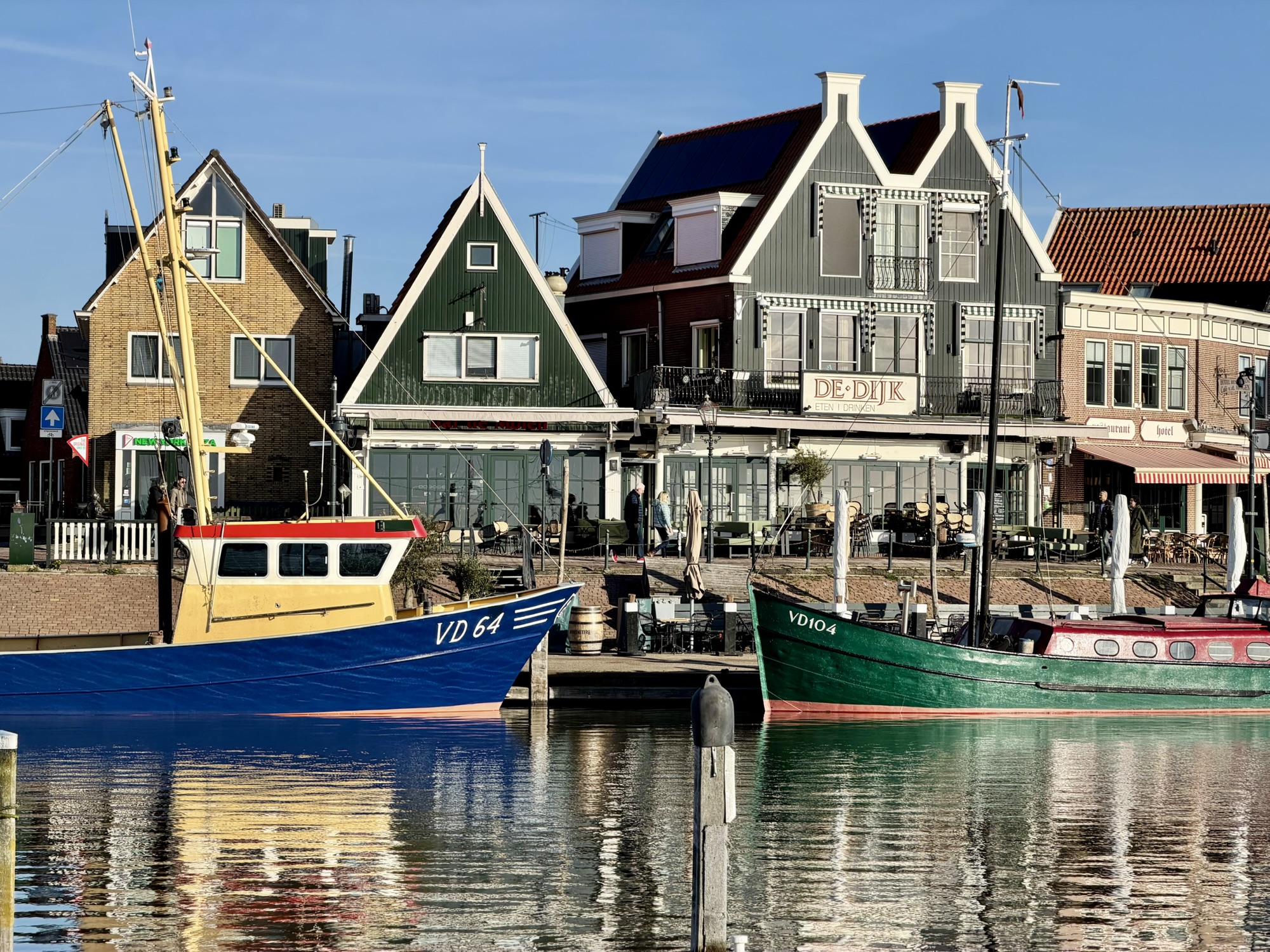
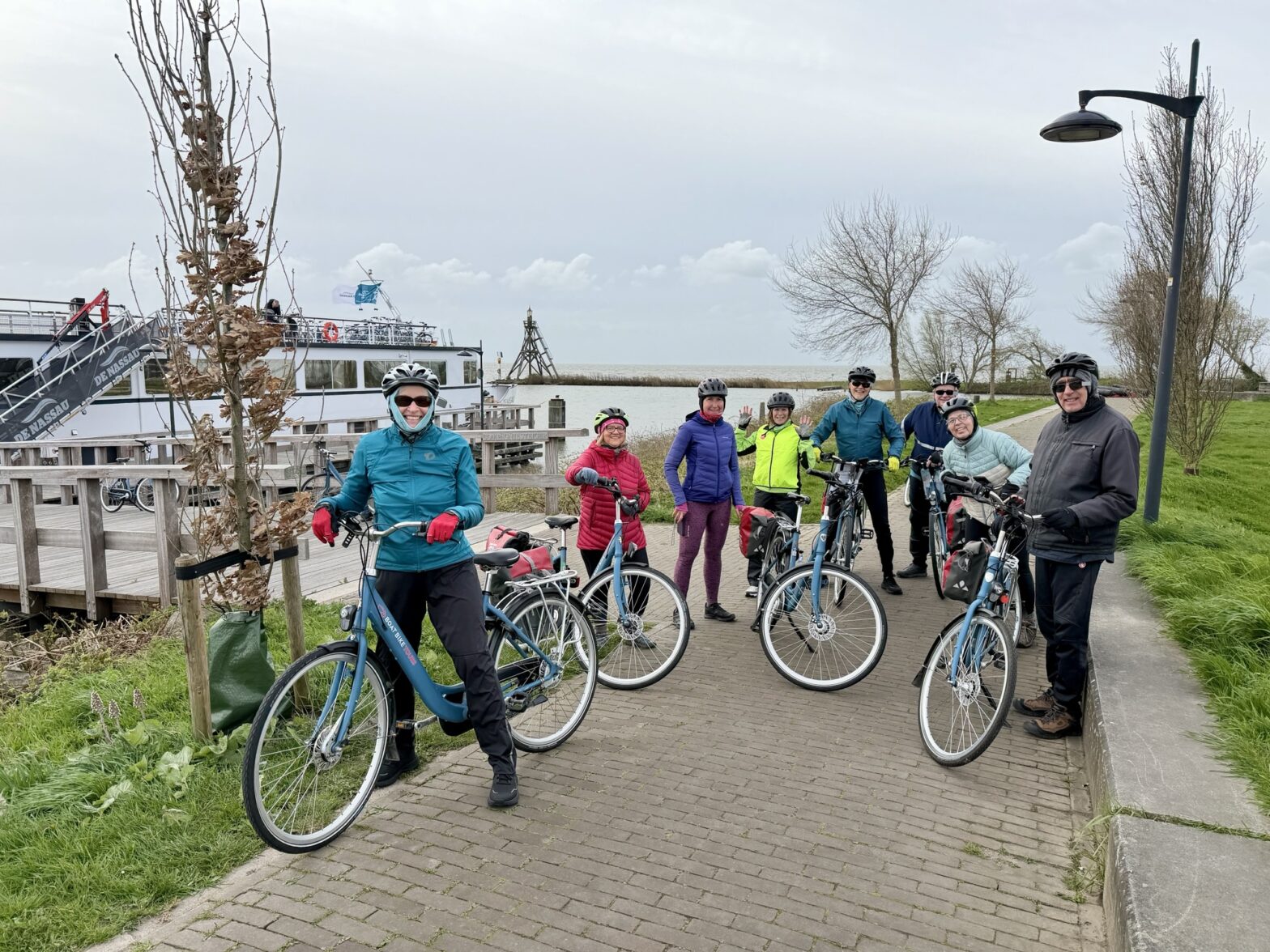
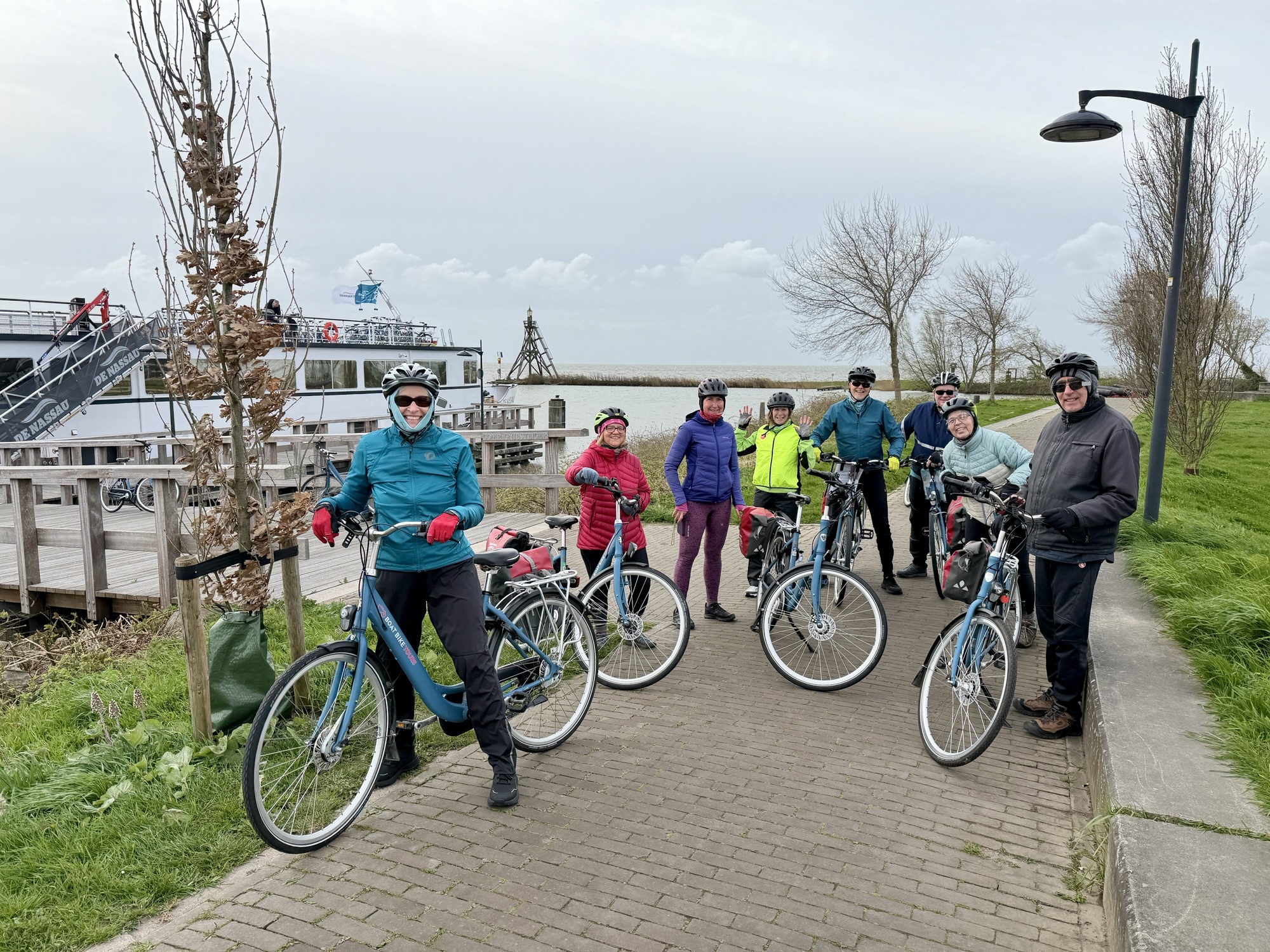
Here’s our starting picture Volendam harbour in the background.
Melanie and Brooke joined us again today. Brooke had some trouble with her bike yesterday and was provided with a different one today, but had to wait for it to be set be fitted. Since I was among the first few people that arrived back yesterday, my bike was first dawn. So today it was the last one off. We set off about 945.
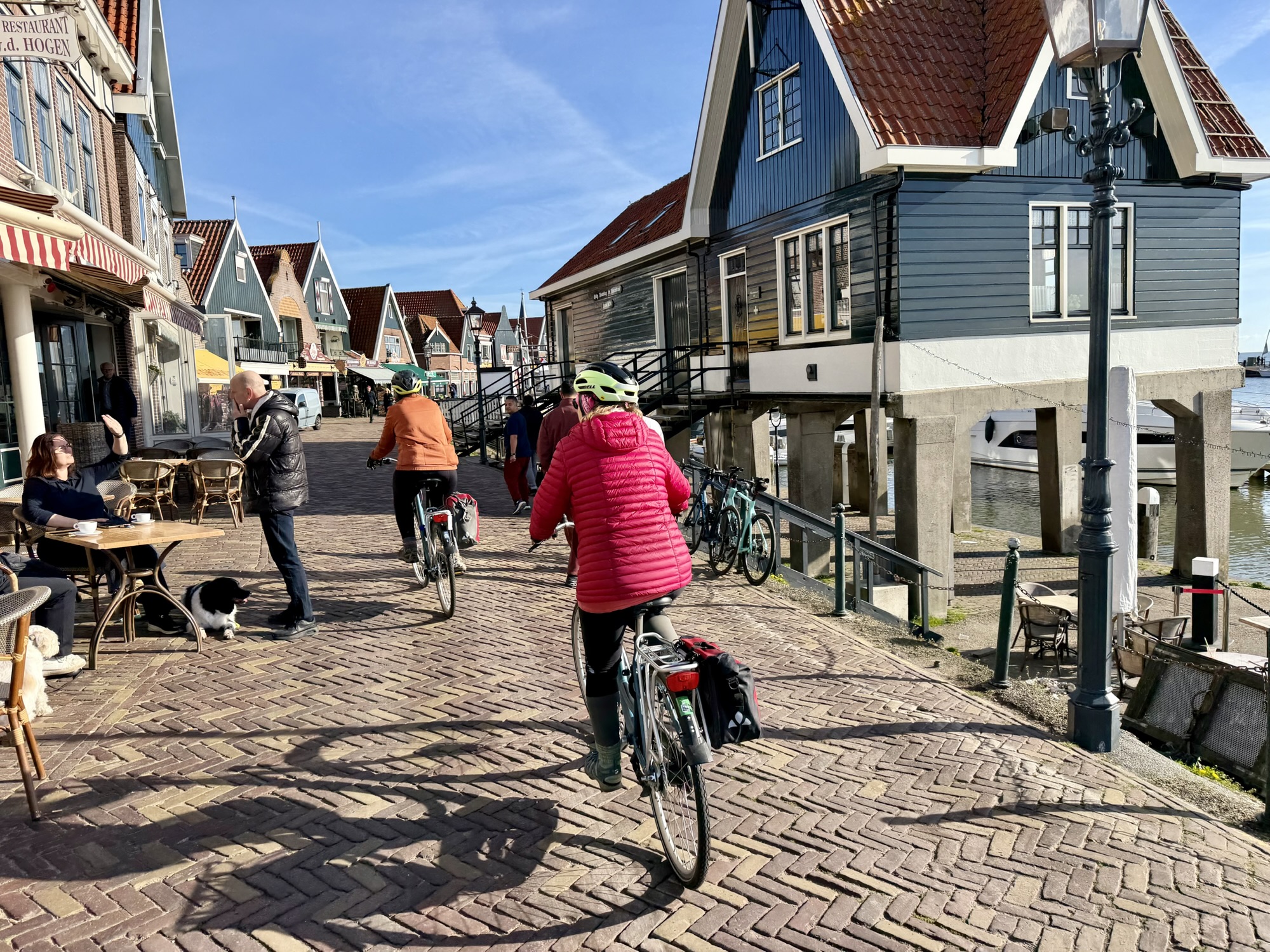
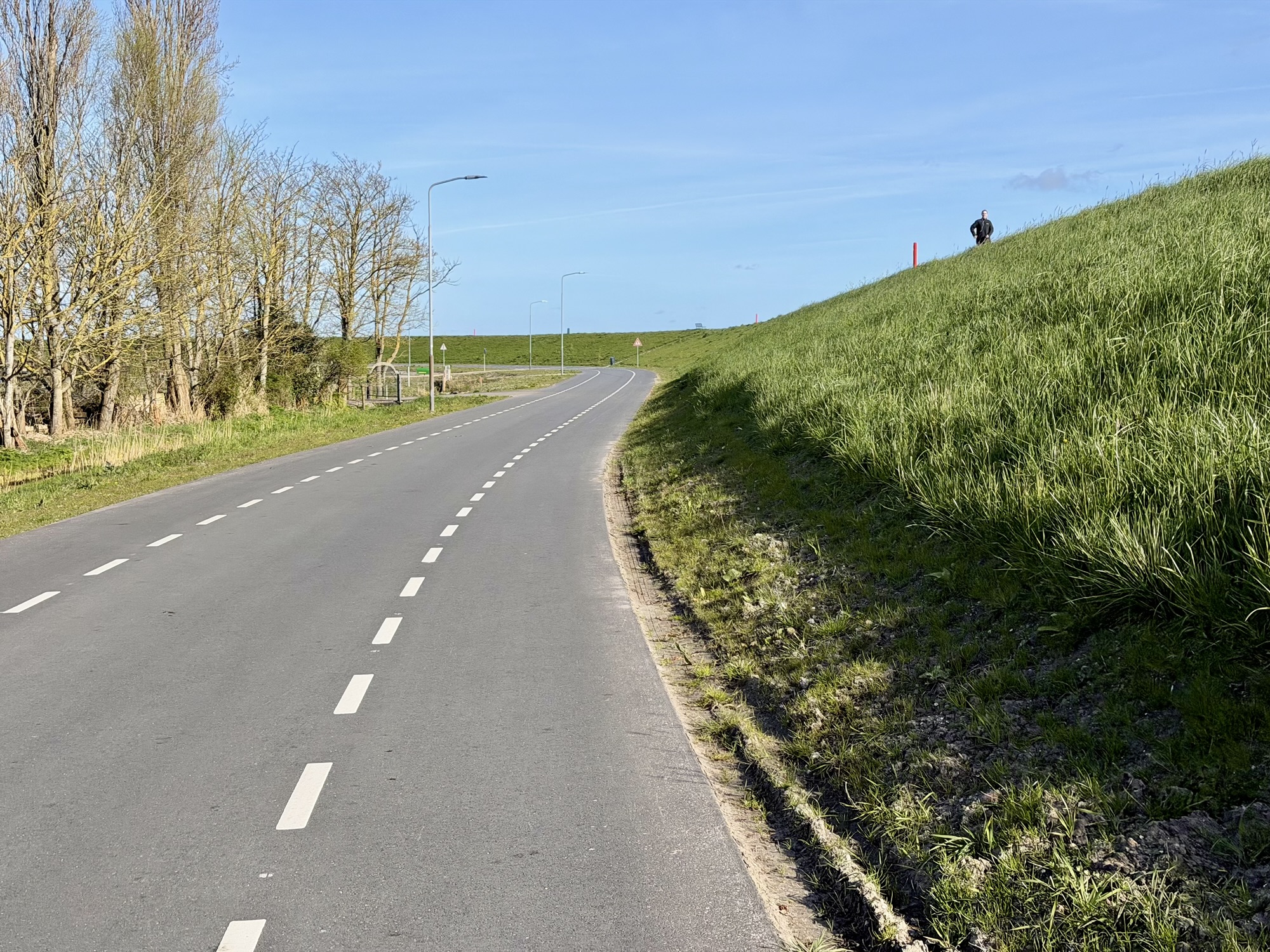
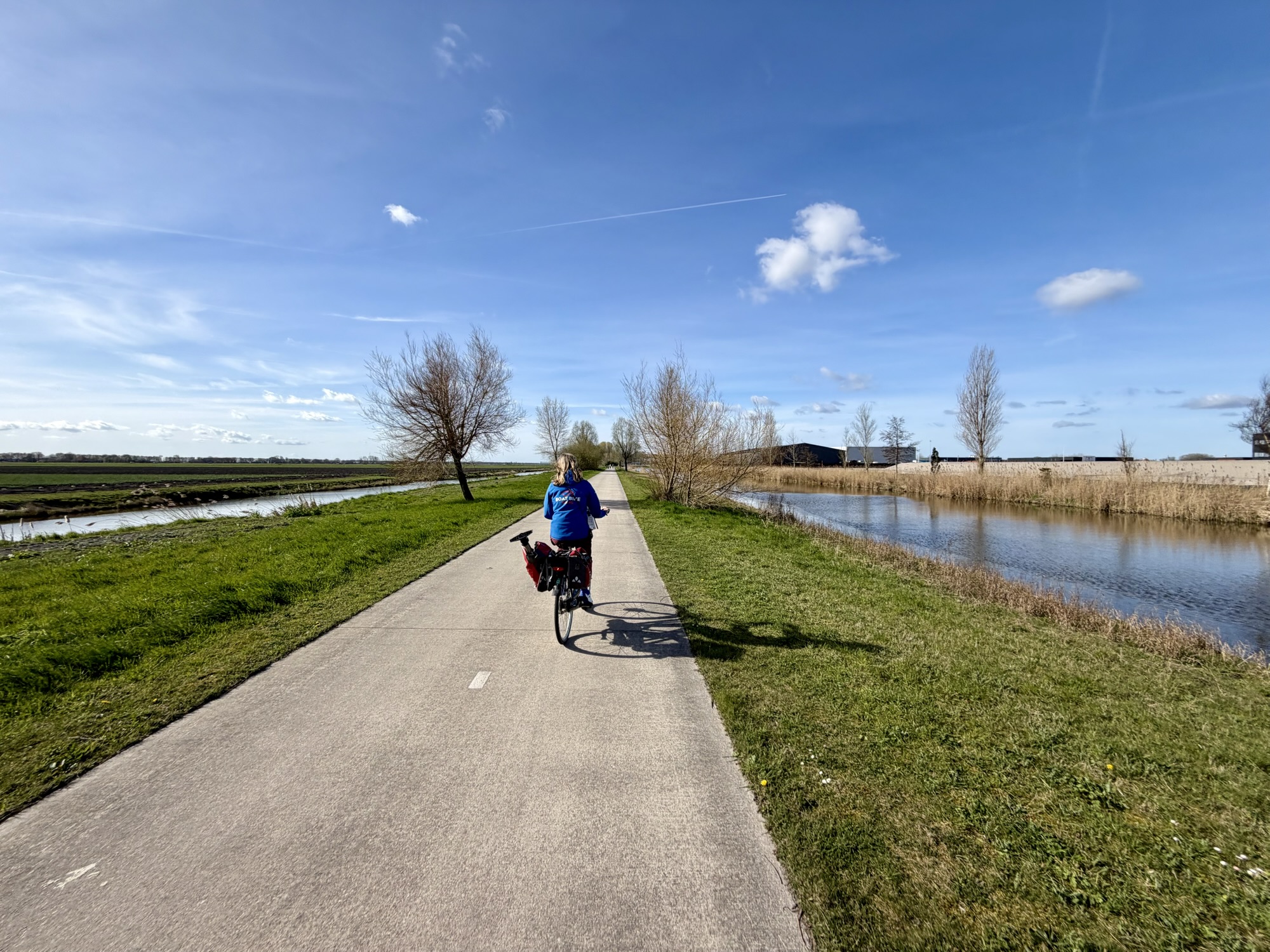
The brick road surrounded by quaint homes and shops was a bit rough as we headed out of town, but it wasn’t too long before we were on a smooth asphalt advisory road with an embankment on our right and homes on our left.
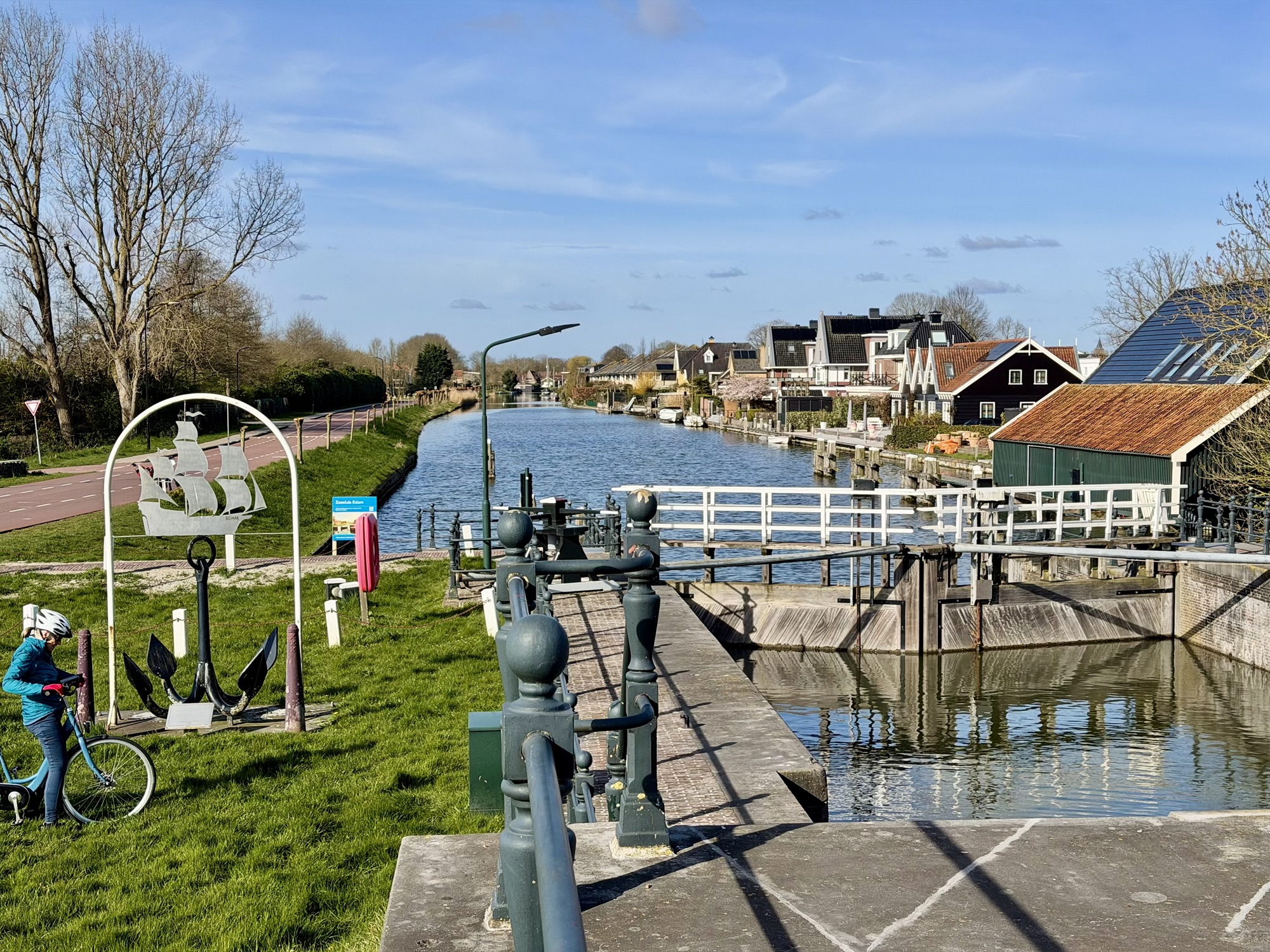
We stopped briefly at a lock partway between Volendam and Edam.
This video shows some of the canal homes in between the two places.
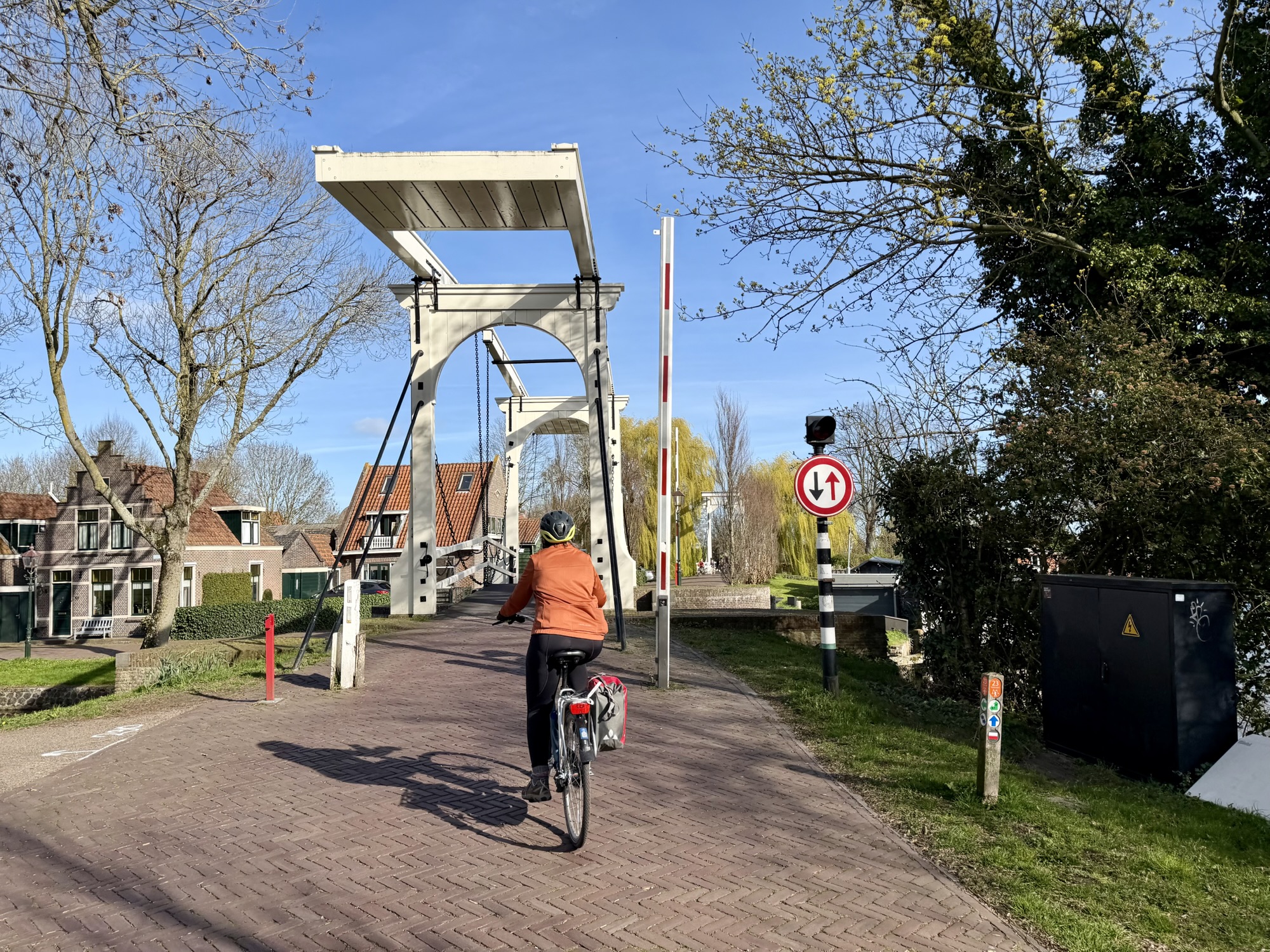
These types of canal bridges are very common.
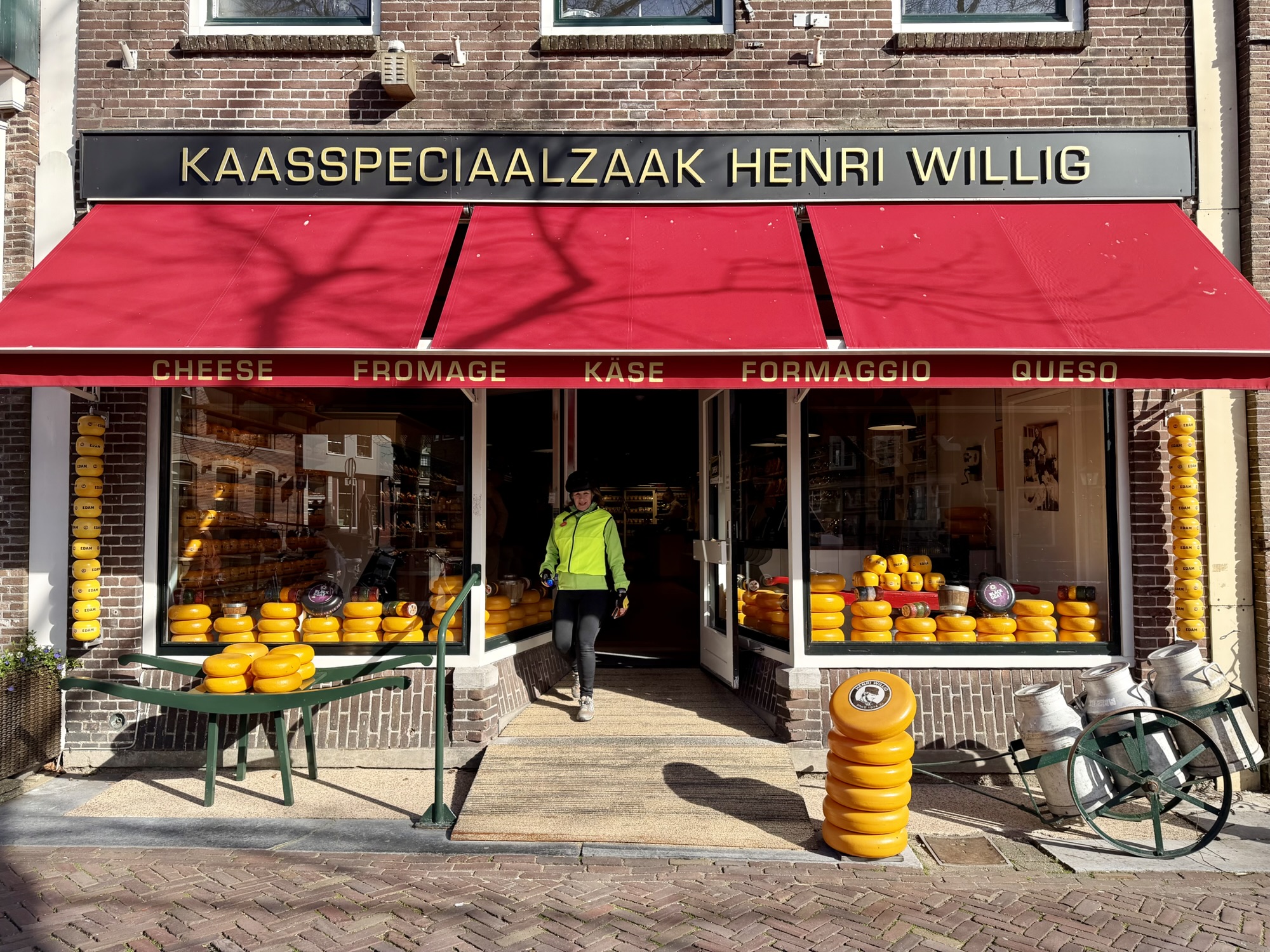
Edam is another lovely town and is the home of the eponymous cheese. It was founded in the 13th century. It was a former shipbuilding and trading hub. It’s known for its quiet canals, narrow streets, historic 17th-century houses, and traditional cheese market held in summer.
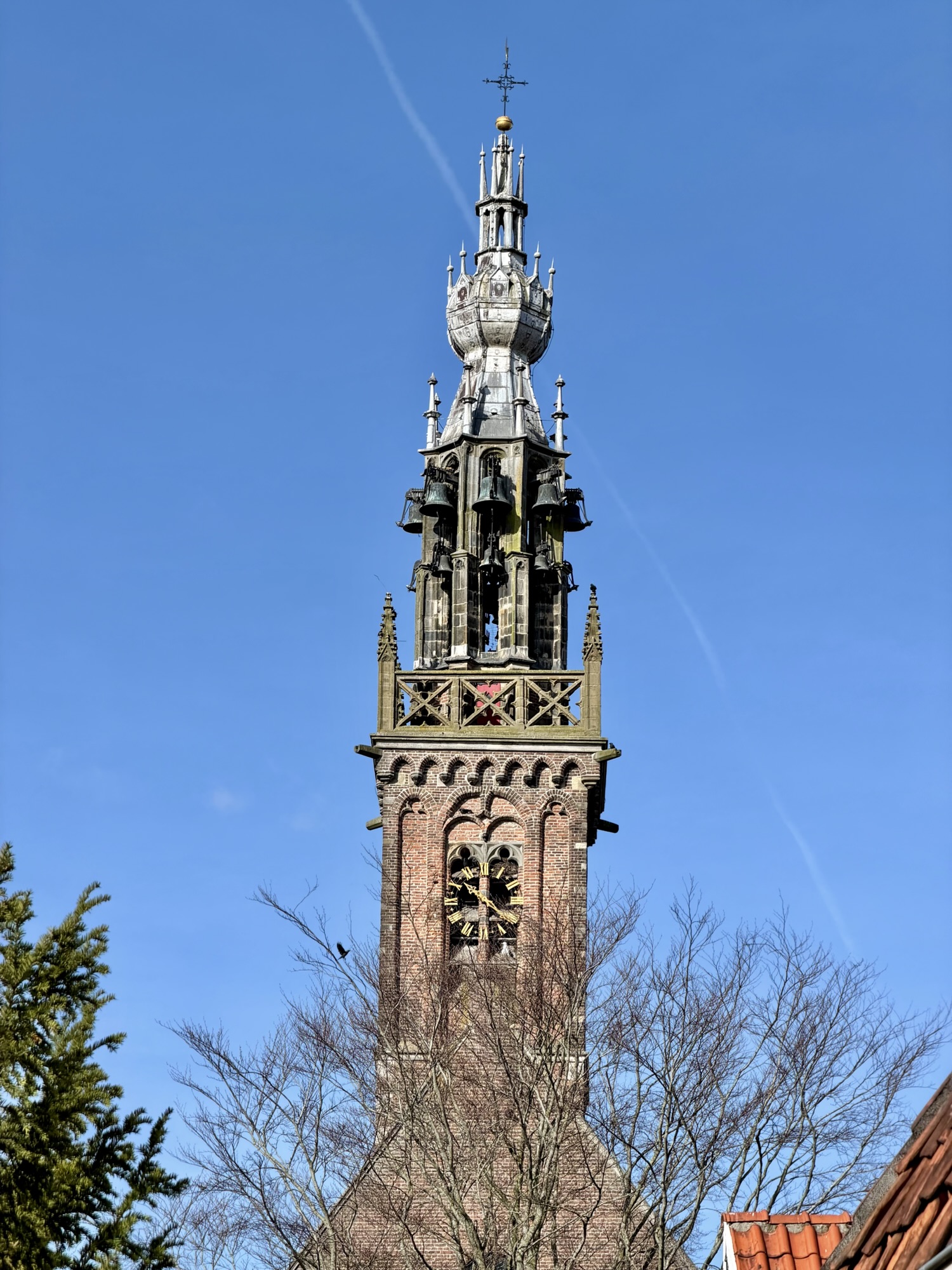
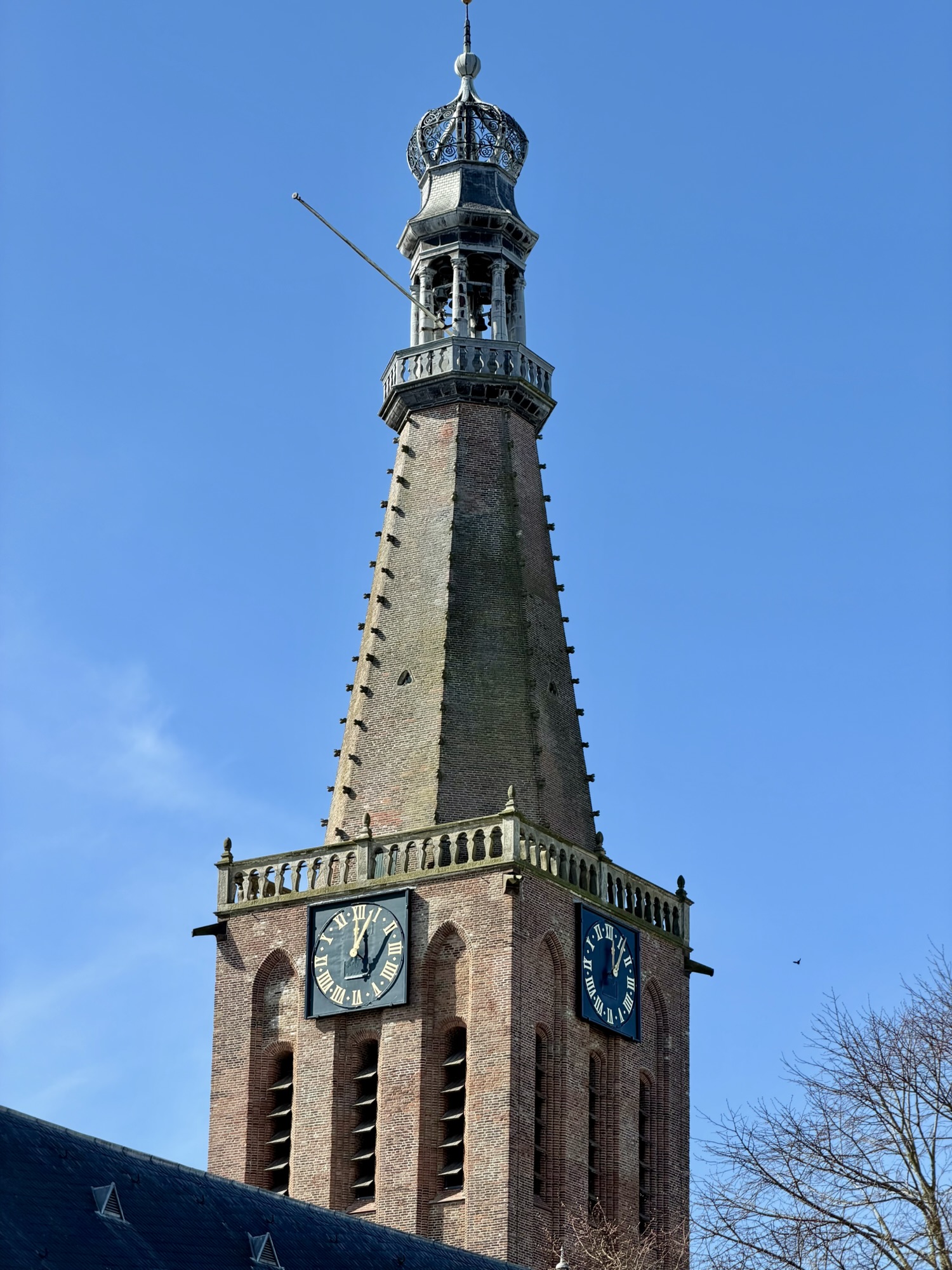
This is the church steeple in Edam.
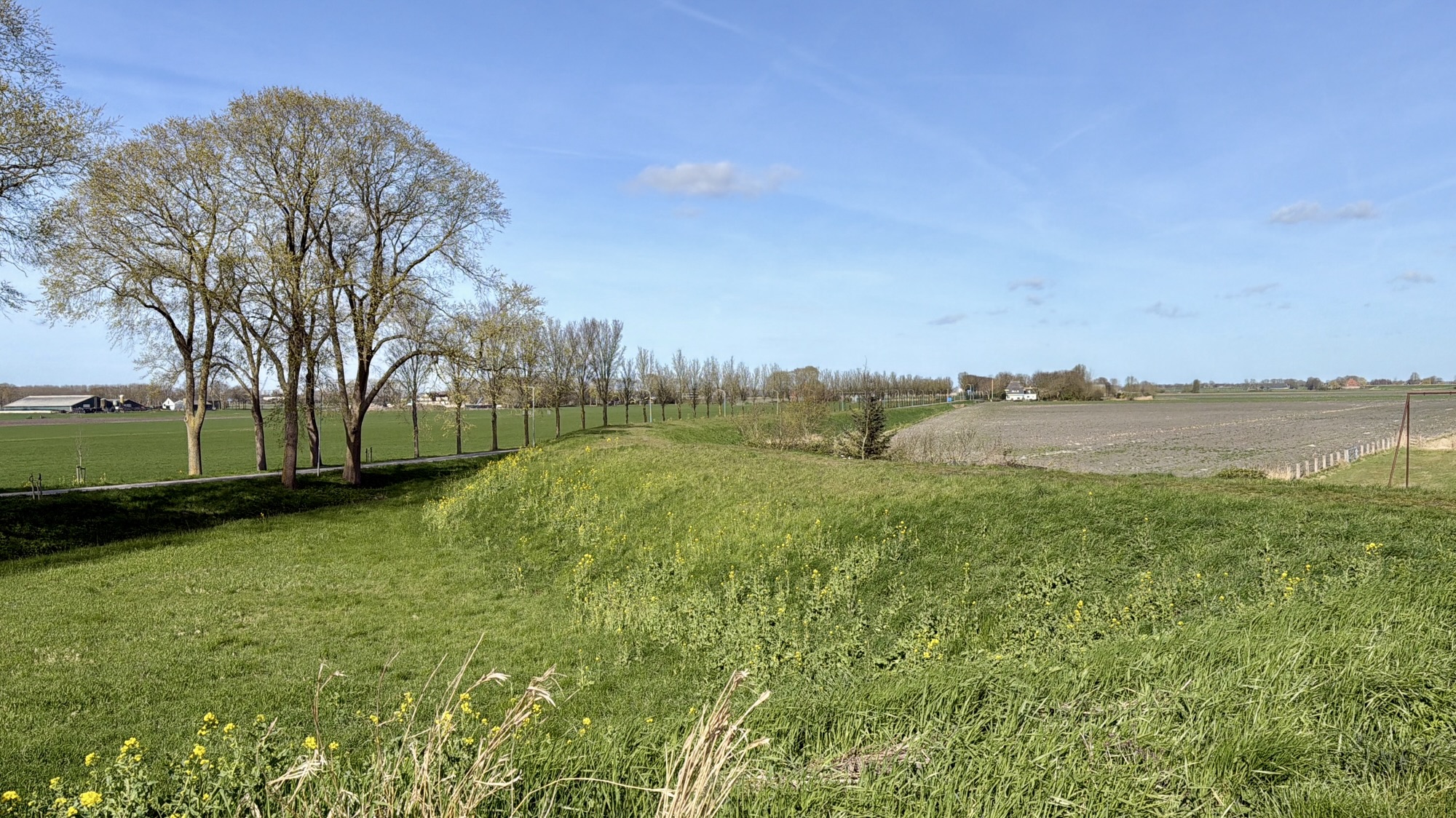
As we left Edam we passed another large embankment, dijk in Dutch.
This is Simone, our tour guide, who rides every day we do. Our tours are self-guided, with either paper maps, or Ride with GPS, but Simone is available to help people who need along the way.
The bike path was grade separated from this busy road with a gentle incline.
Here are some of the pictures I took of our group riding today, presented the slideshow. Click on the arrow to see the other images.
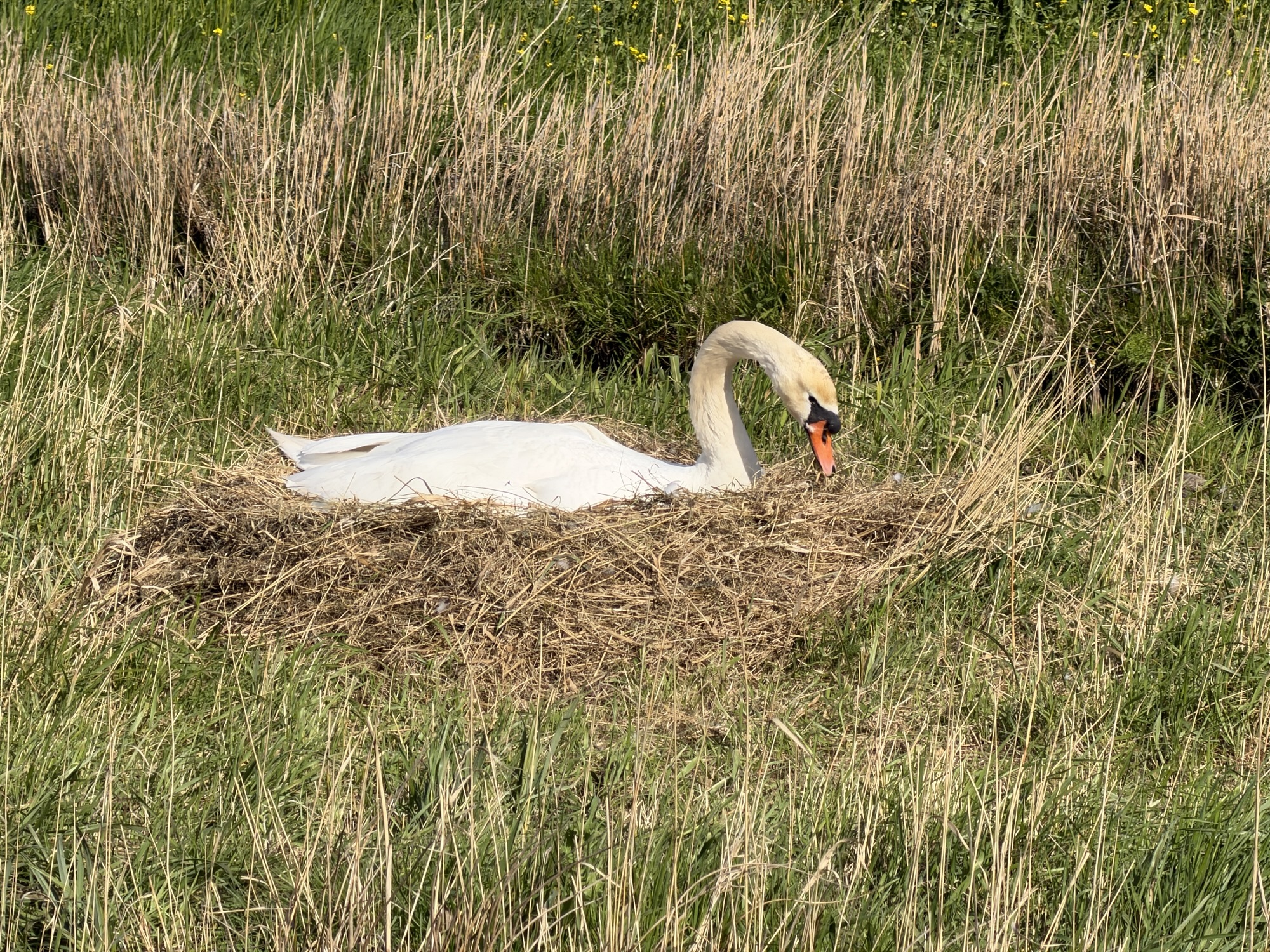
Dayle brought a camera with a very long lens for pictures of birds. She often stops when she sees birds that are we don’t have, or are not common at home. Today she didn’t need her long lens to capture this swan sitting right beside the bike path on a nest of eggs.
Image credit: Dayle
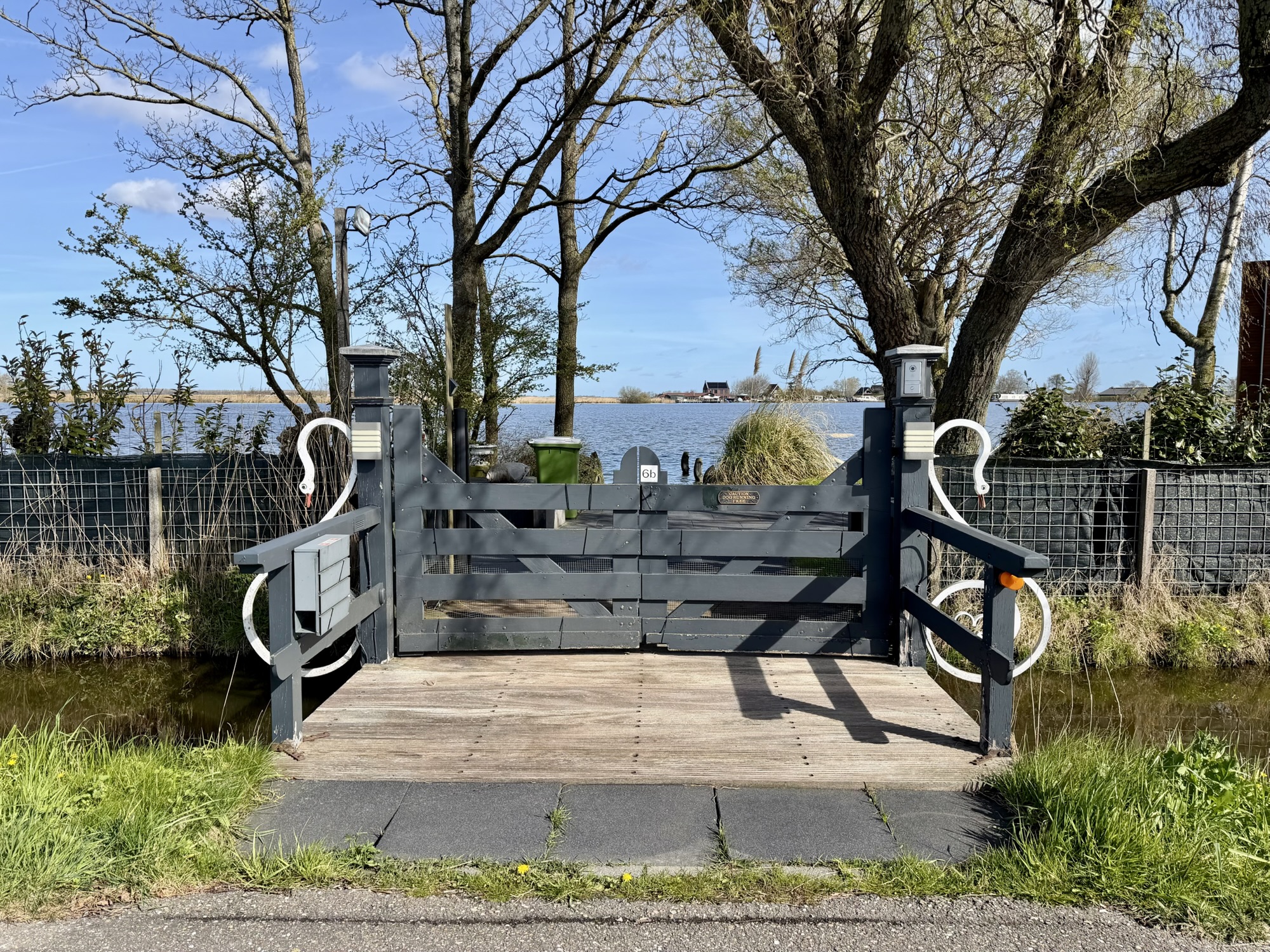
Shortly there after we passed a cute gate framed by swans.
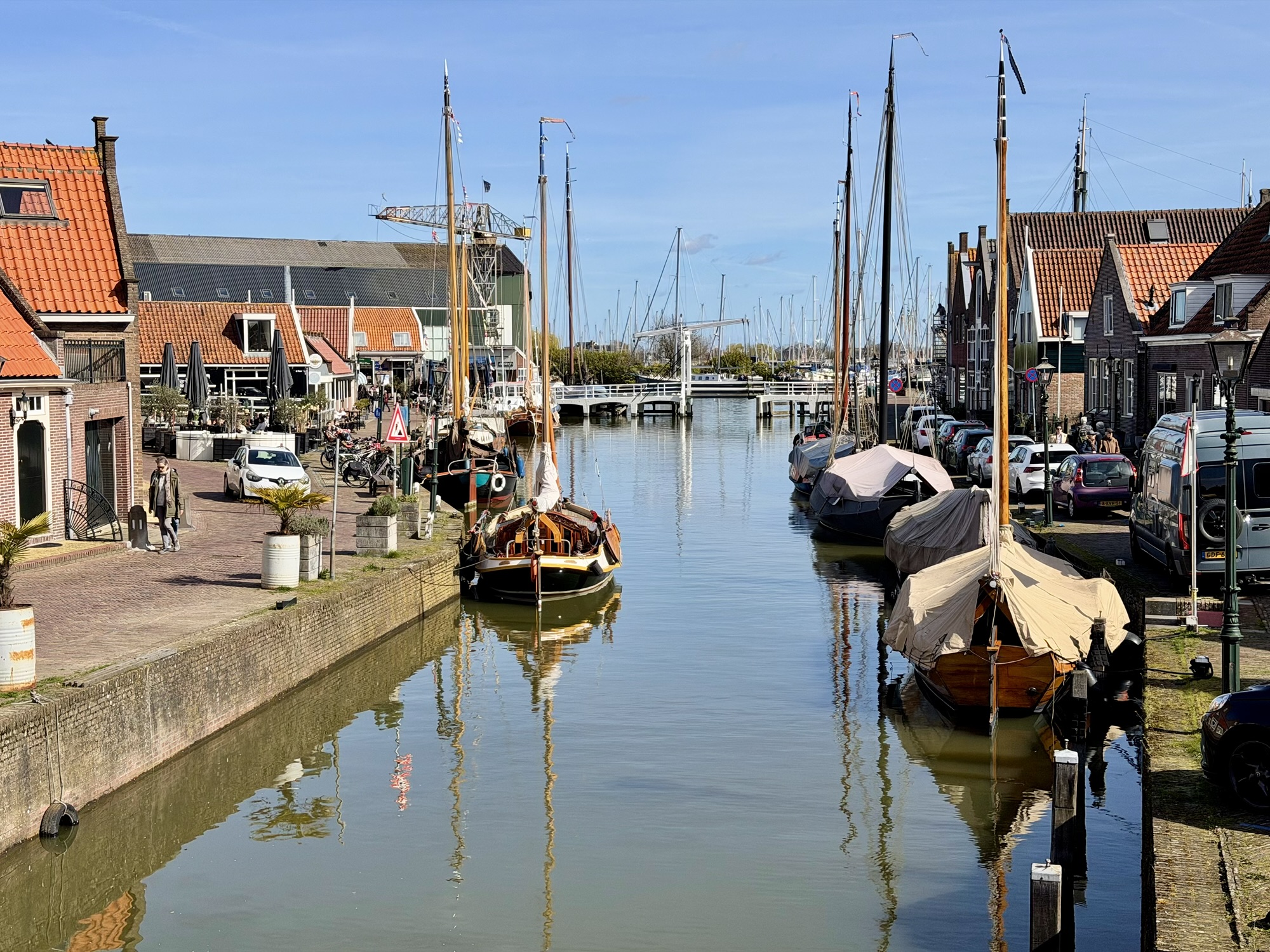
Lunch was in Monnickendam. I took this picture from a lock to the harbour. It had lovely views, and a long bench along one side of the road. I suggested it as a spot to have lunch. Alina joined me. Somehow, the others lost track of where we were and carried on down to the harbour for their lunch.
We listened to the church bells at noon and watched a mechanical display with each chime of the hour.
Then we decided to take Simone‘s advice and visit the coffee shop by the lock. Alina had mini pancakes and I had a latte. It was delicious. I thought it looked expensive before we walked in, but the total wasn’t as bad as many coffee shops we’ve seen and visited.
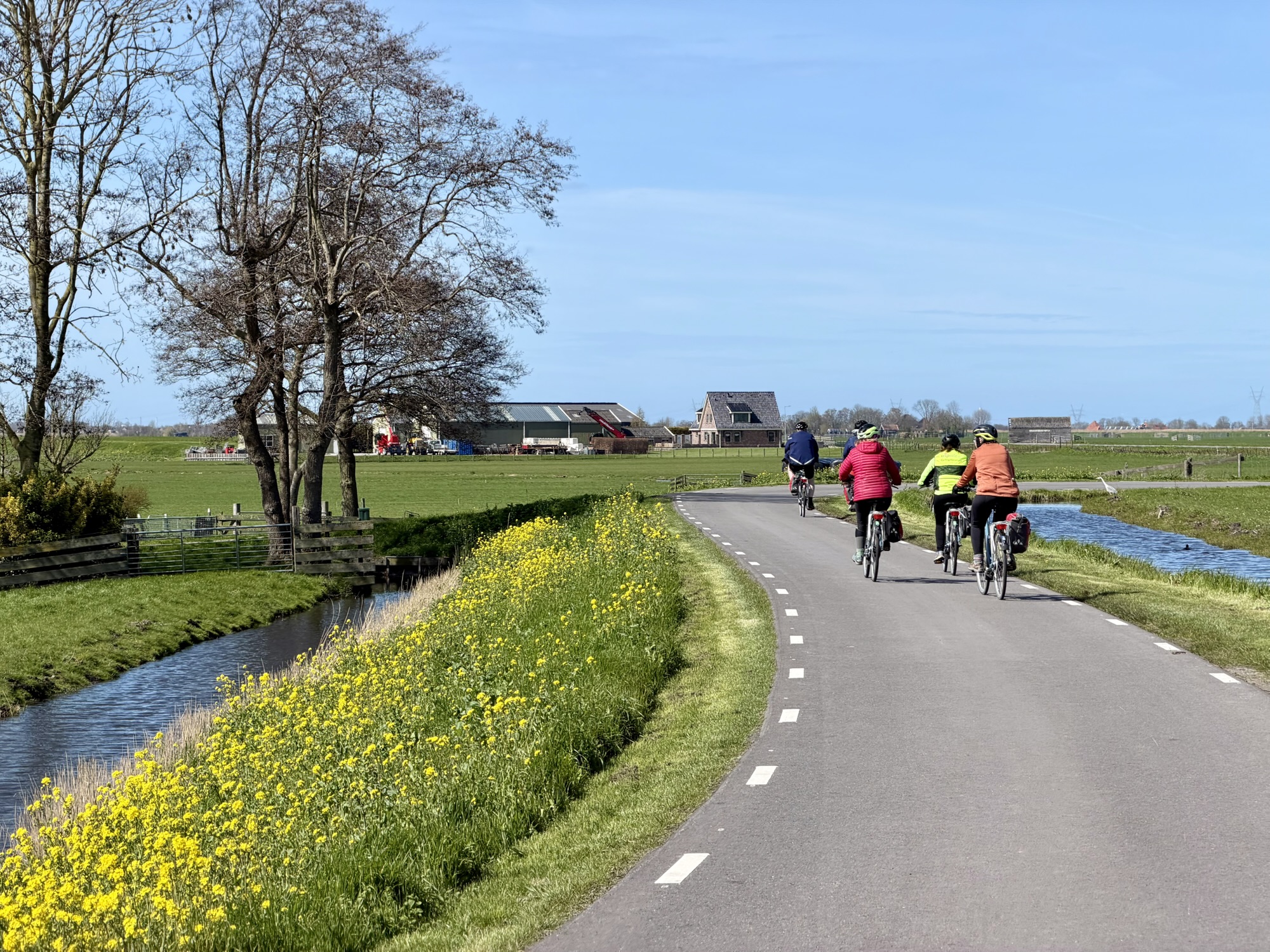
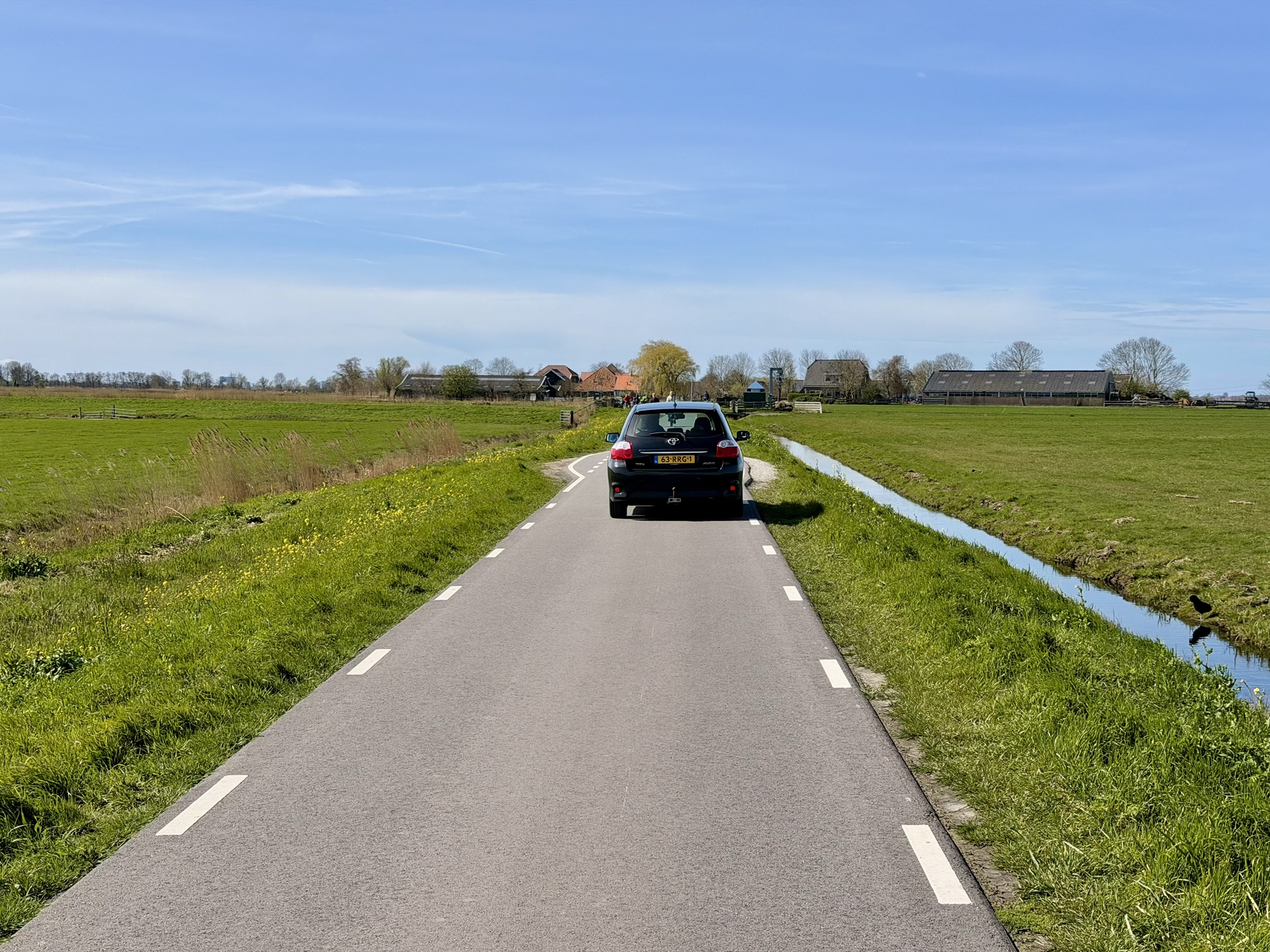
Alina and I followed Ride with GPS out of town and caught up with the others who left the harbour at about the same time. Today we travelled on quite a few roads that were not much wider than one small European car. This one had a little bit of extra asphalt every so often where a cyclist could pull aside to let the car buy. Or each car can pull assigned if two had to pass.
The next little place we came to was called Broek in Waterland. It was a lovely little village. We saw this couple in a small motor boat. The woman had a pole to push off of objects on the side.
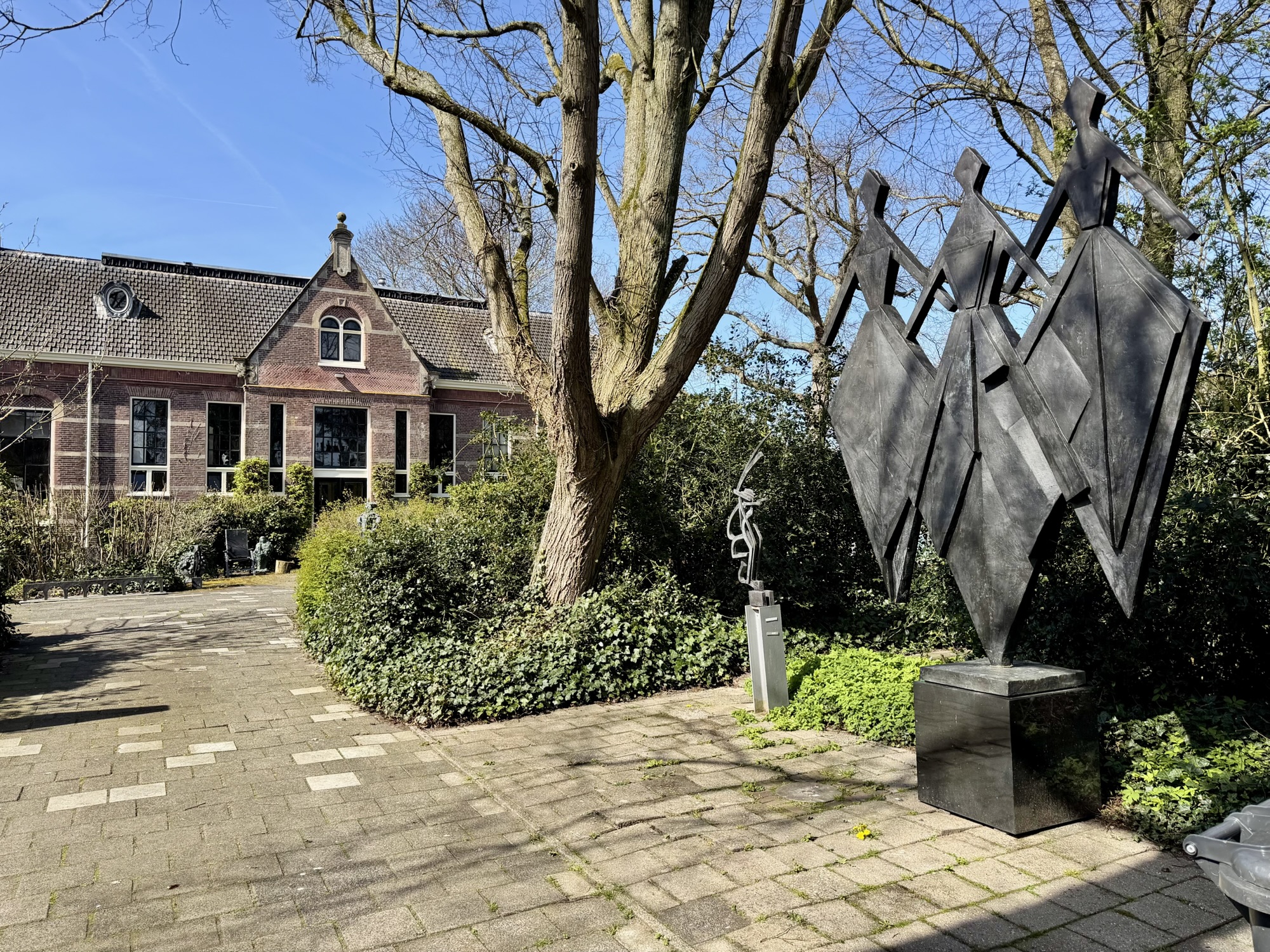
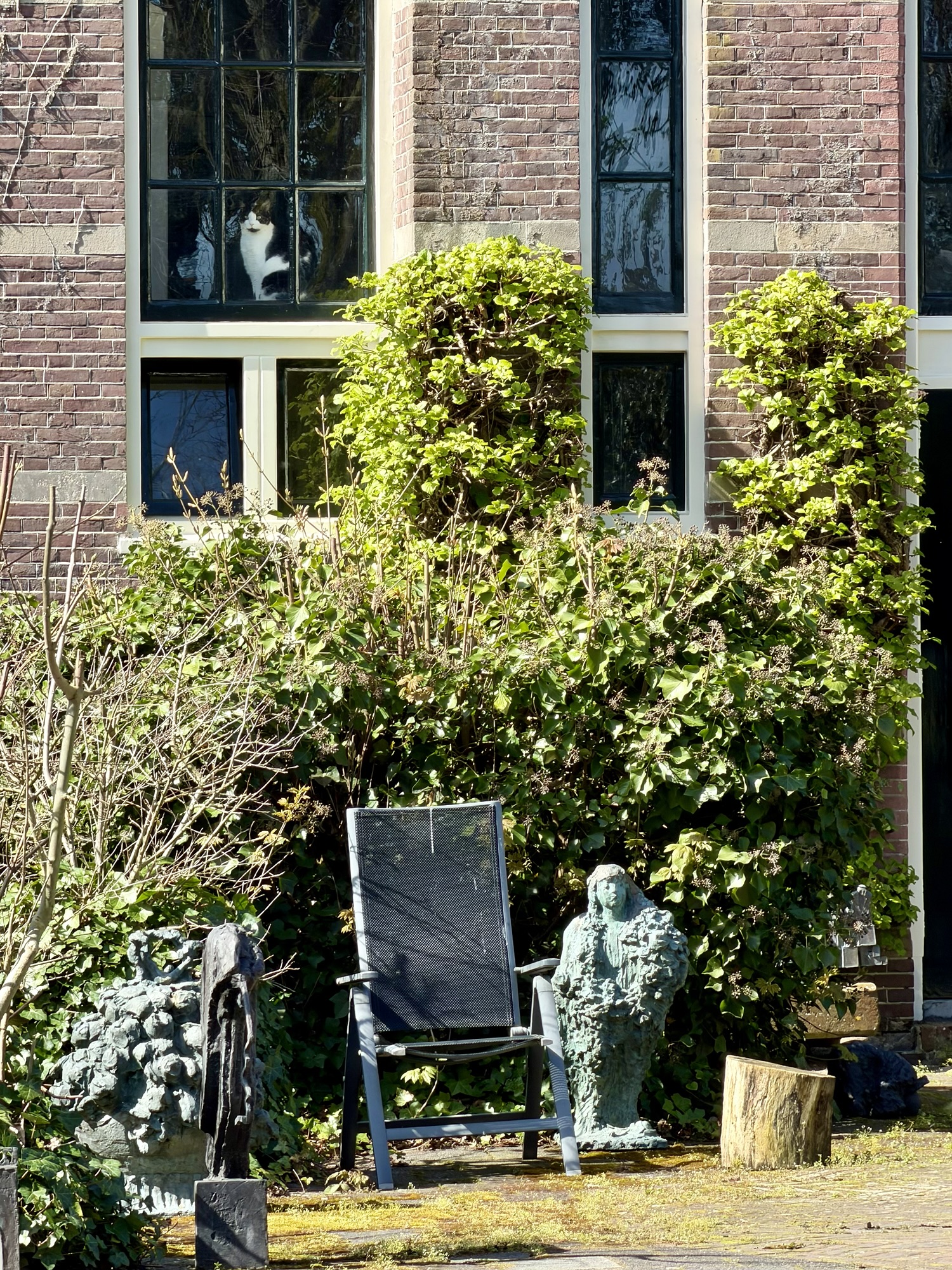
This beautiful home had a lot of pieces of art around the yard.
I called Cindy over to take a look at it because I knew she would appreciate the art and she saw a cat looking out the window.
It was about this time that Wayne suggested we should look for ice cream. Everyone agreed.
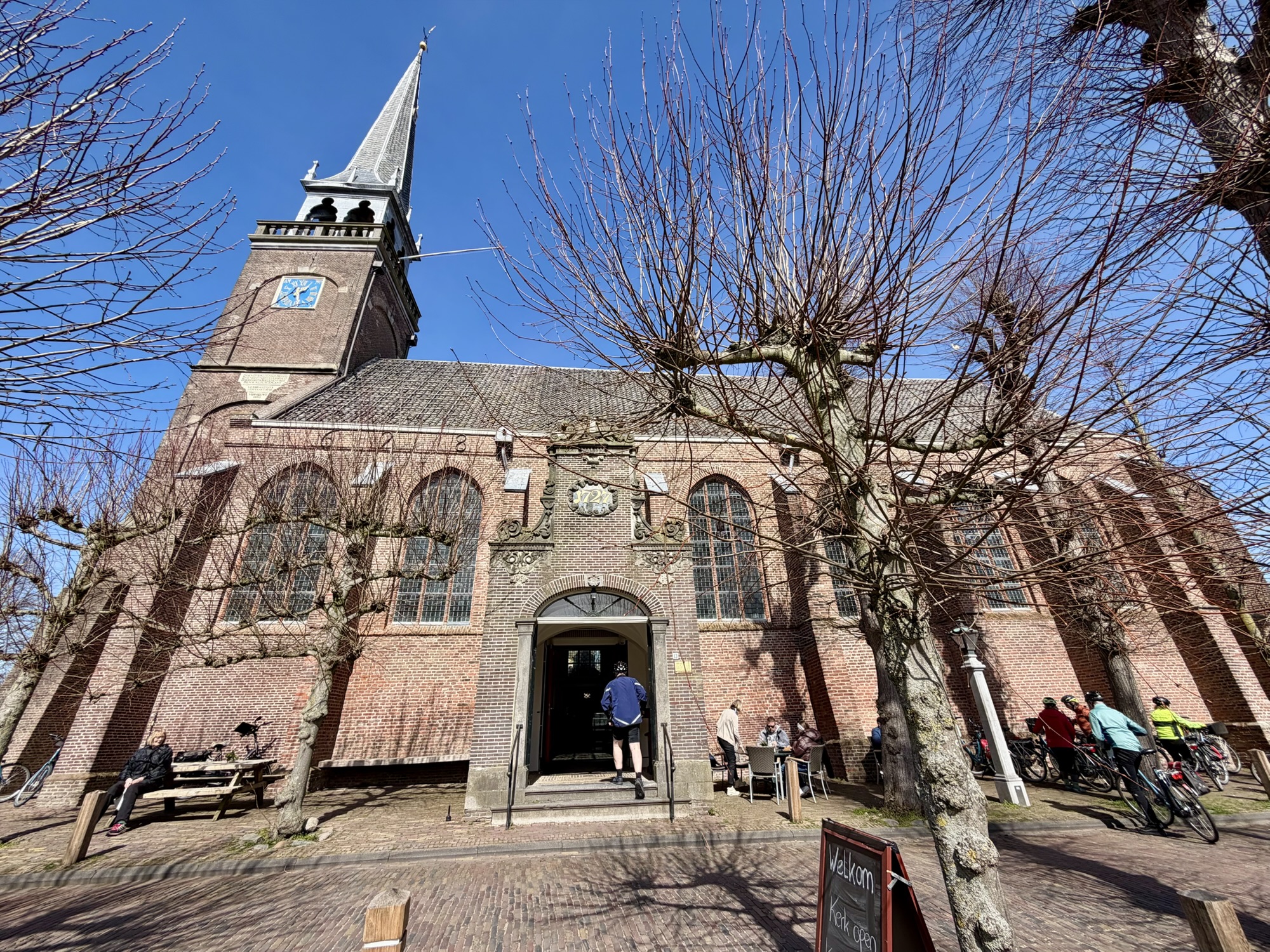
The church of Broek in Waterland was built before 1400 but was raised to the ground during the 80 years war. In 1628 the inhabitants Broek in Waterland started to rebuild the church on the foundations of the old building.
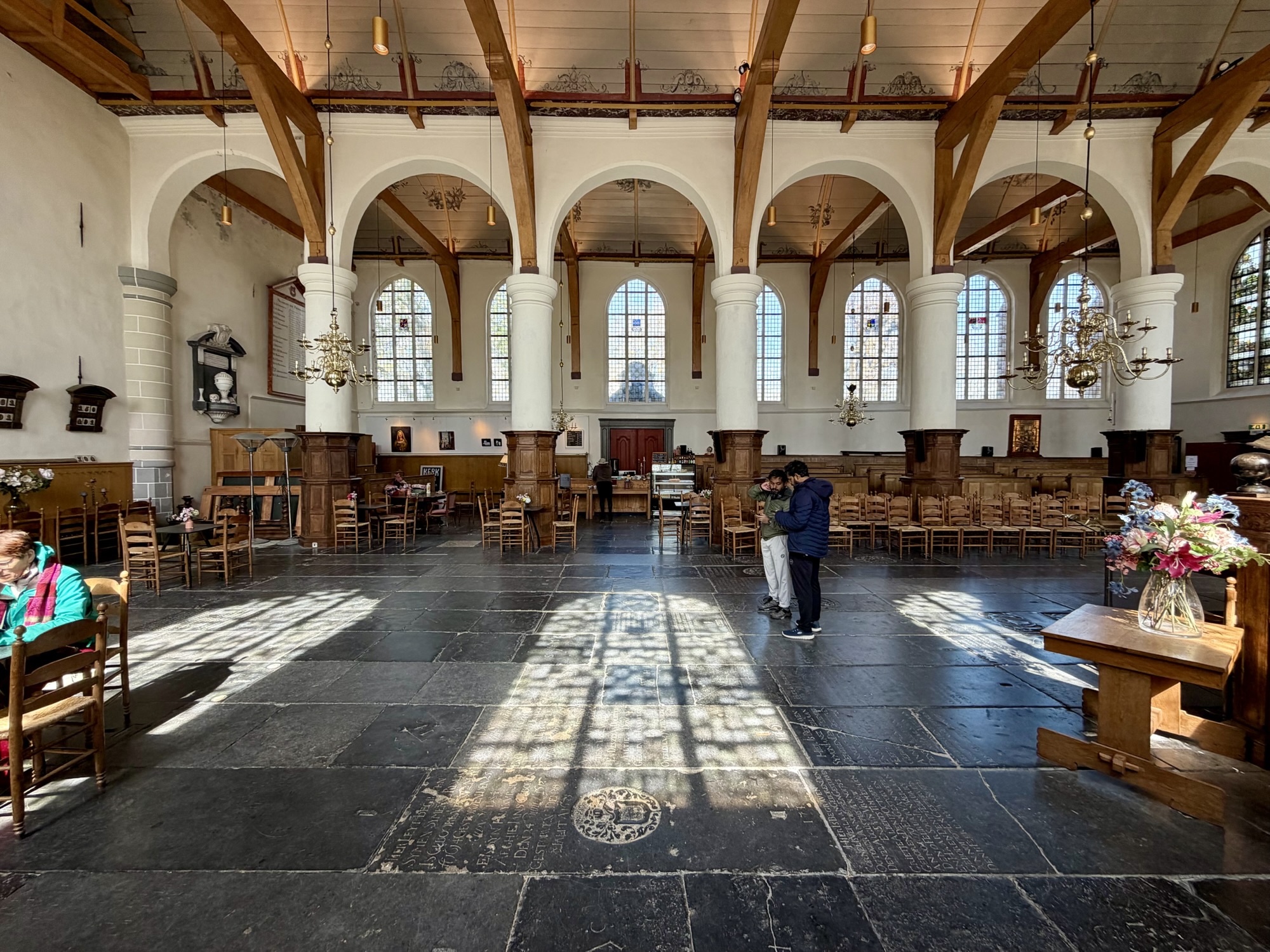
The church now houses a coffee shop, but we didn’t linger because they didn’t have ice cream.
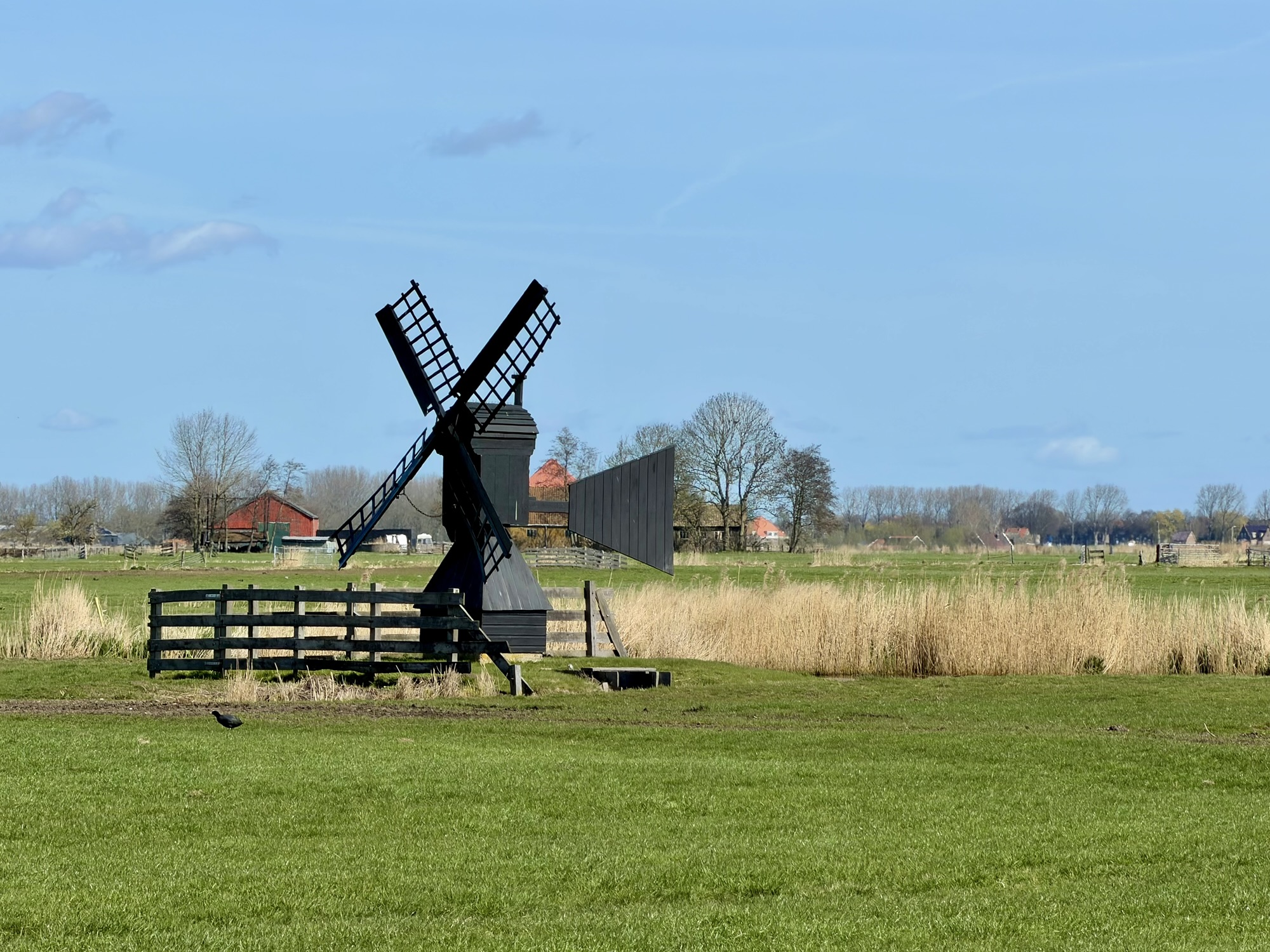
This little windmill was on a small canal, or perhaps irrigation ditch.
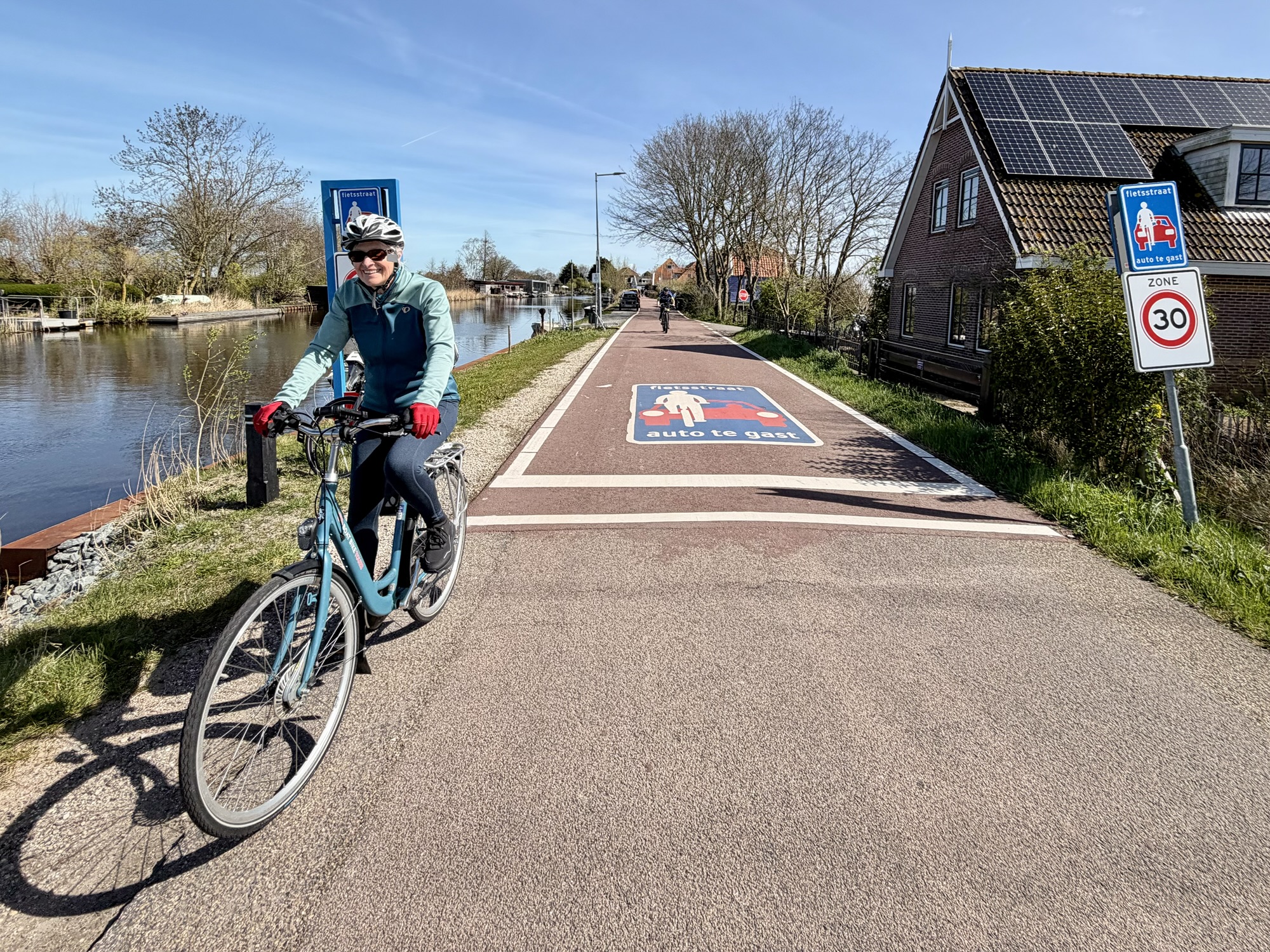
“Auto te gast” is a Dutch traffic phrase meaning “cars are guests”. It is commonly used on “fietsstraat” (bicycle streets). It signifies that while cars are allowed, they are secondary to cyclists, must drive slowly (usually max 30 km/h), and cannot hinder cyclists.
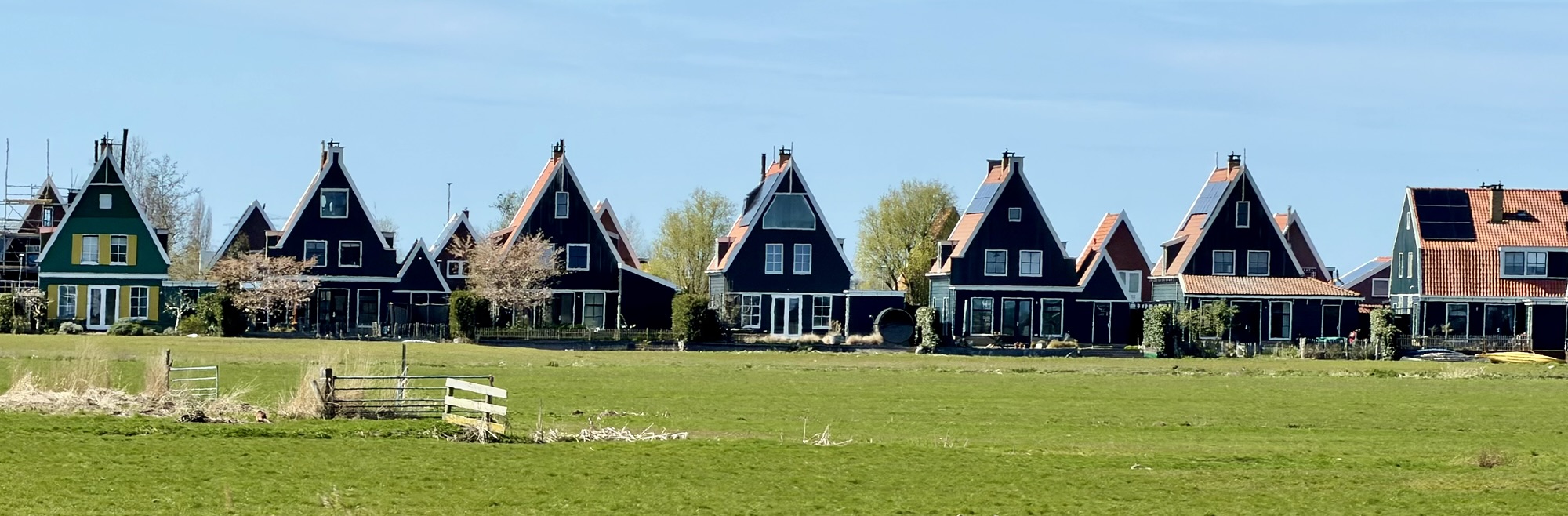
We saw this attractive row of houses just before the ferry.
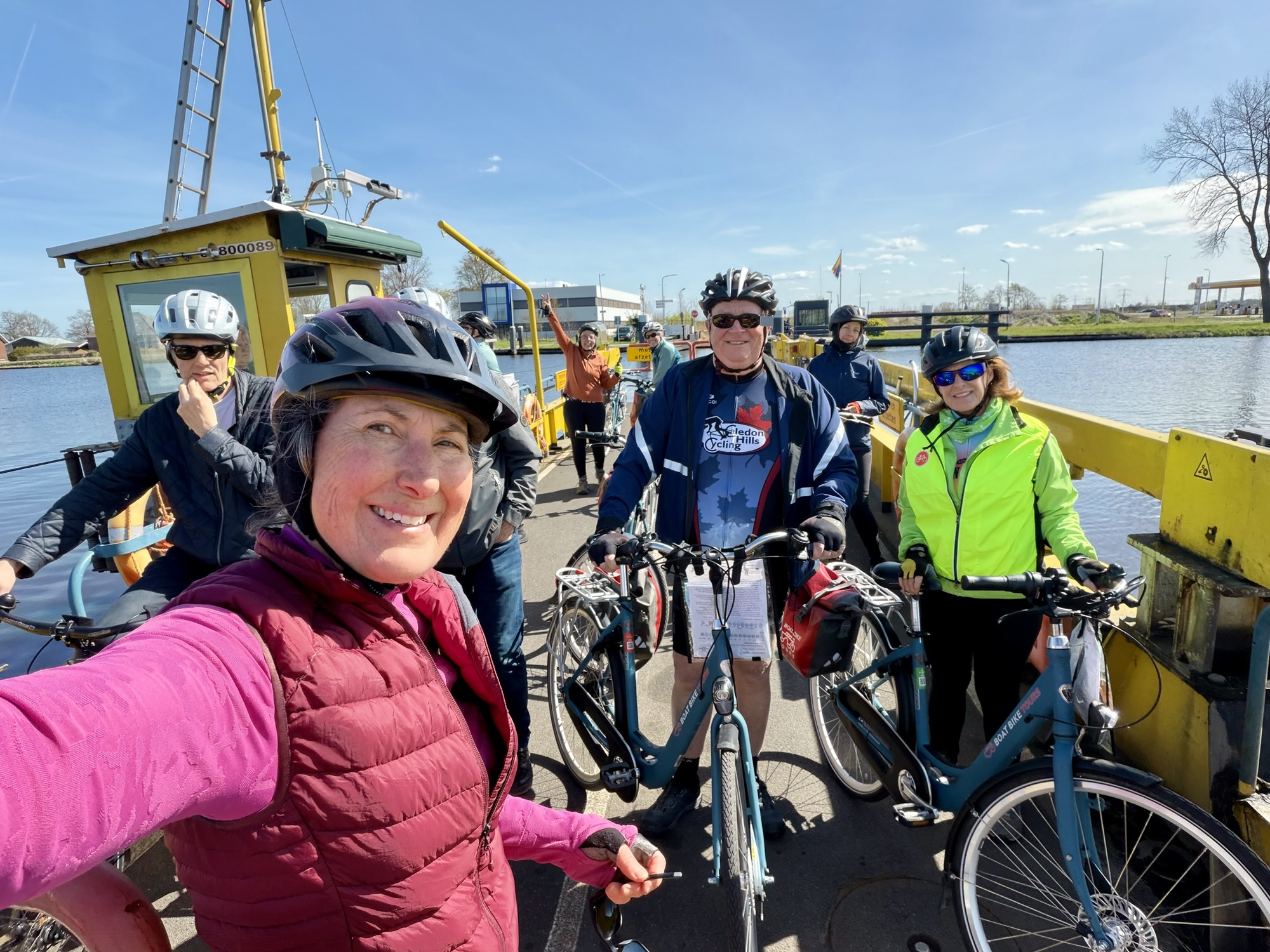
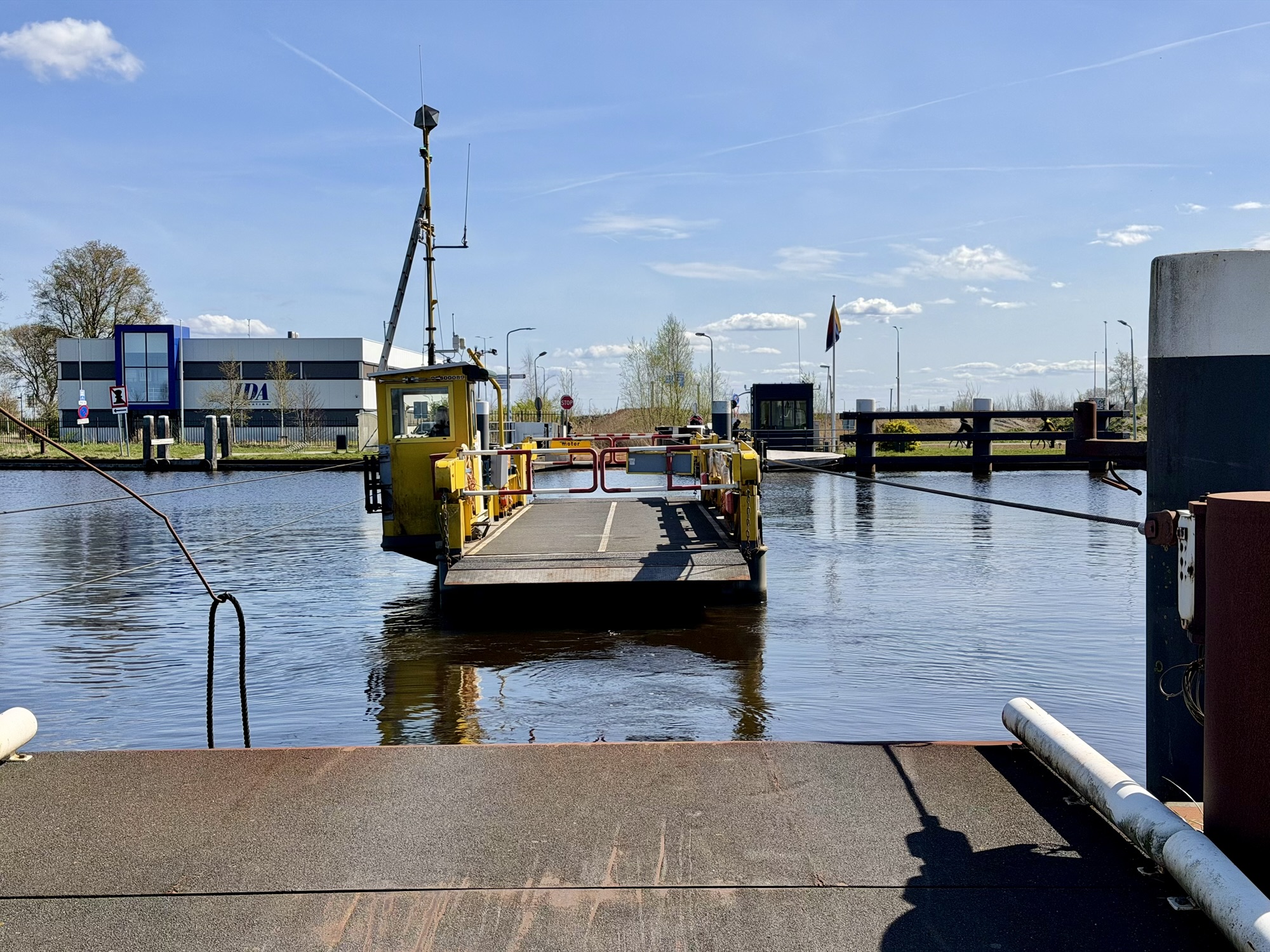
The Landsmeer – Het Schouw ferry (Pontje Landsmeer – Het Schouw) is a small ferry service in North Holland, Netherlands, crossing the Noordhollandsch Kanaal to connect Landsmeer with Het Schouw (near Broek in Waterland). It was €0.25 to cross and had to be paid with a credit card. It is a cable pulled ferry.
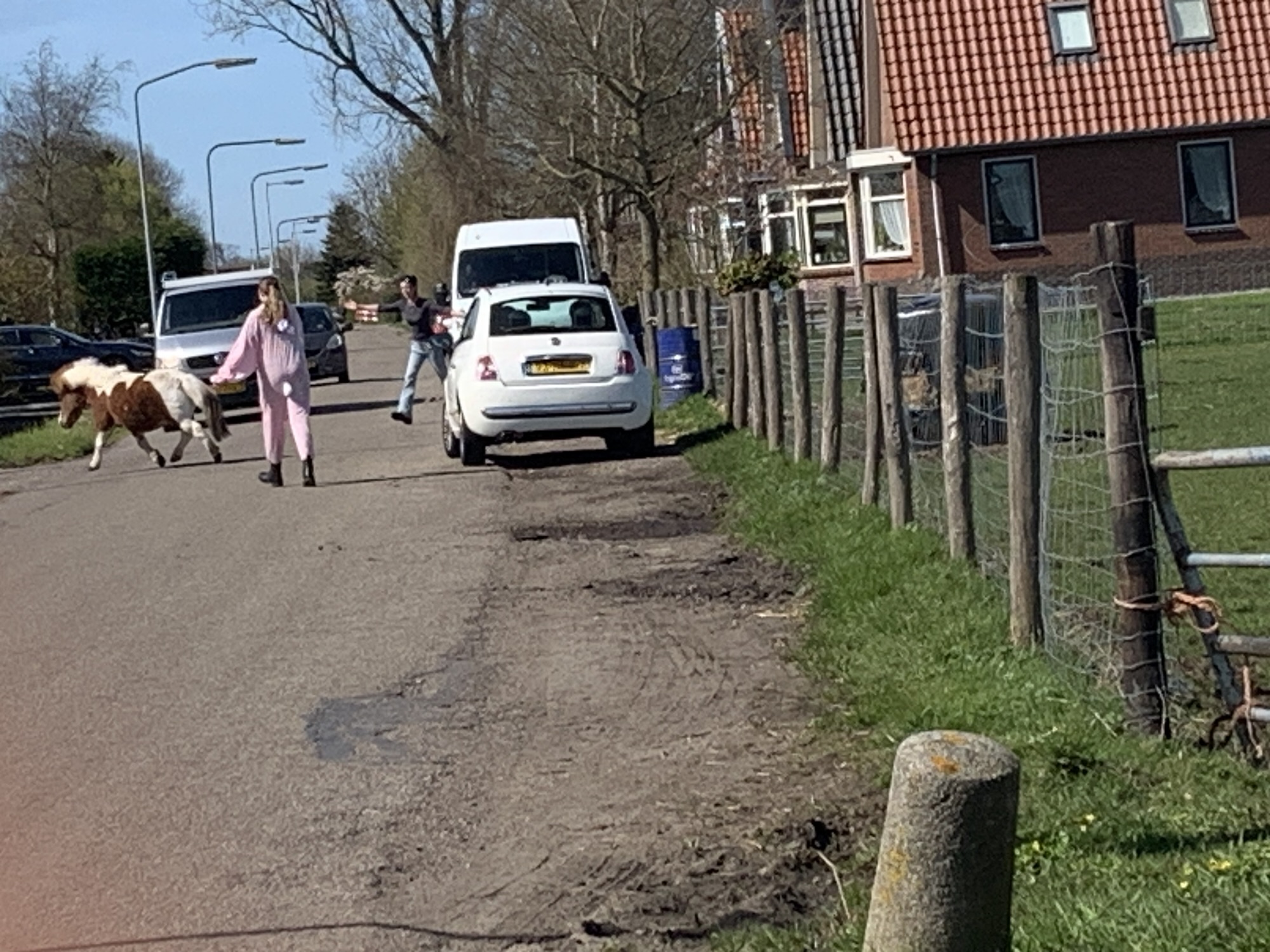
When we were on the ferry, David’s bike fell over and cut his shin. I hung back with David and Dayle, while Dayle cleaned and bandaged the cut. Unbeknownst to us, the group ahead of us witnessed a pony getting loose and the pony owner, dressed as a pink bunny, chasing the pony to try and catch it. Wayne stopped traffic so they could safely recover the pony.
Image credit: Alina
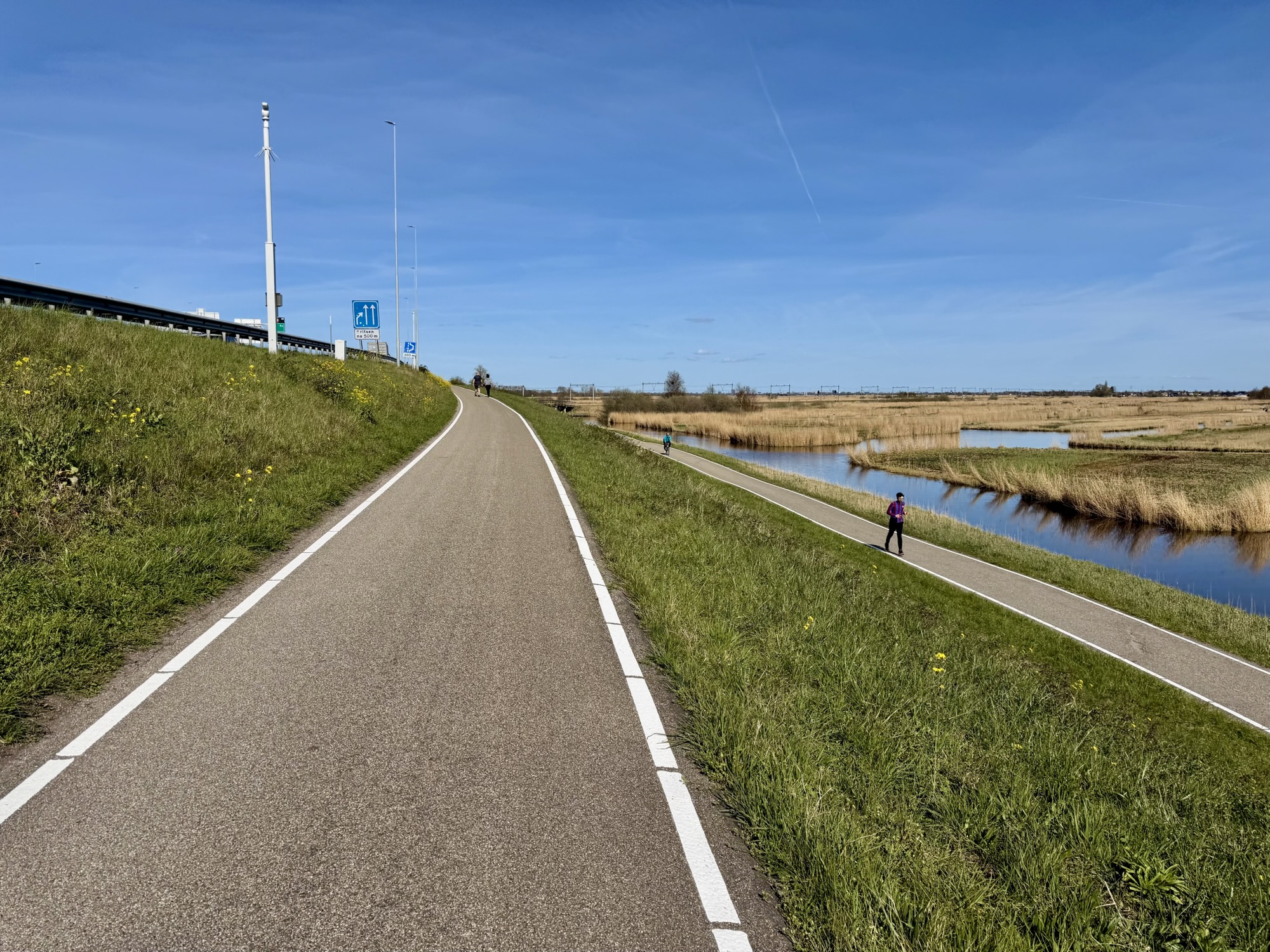
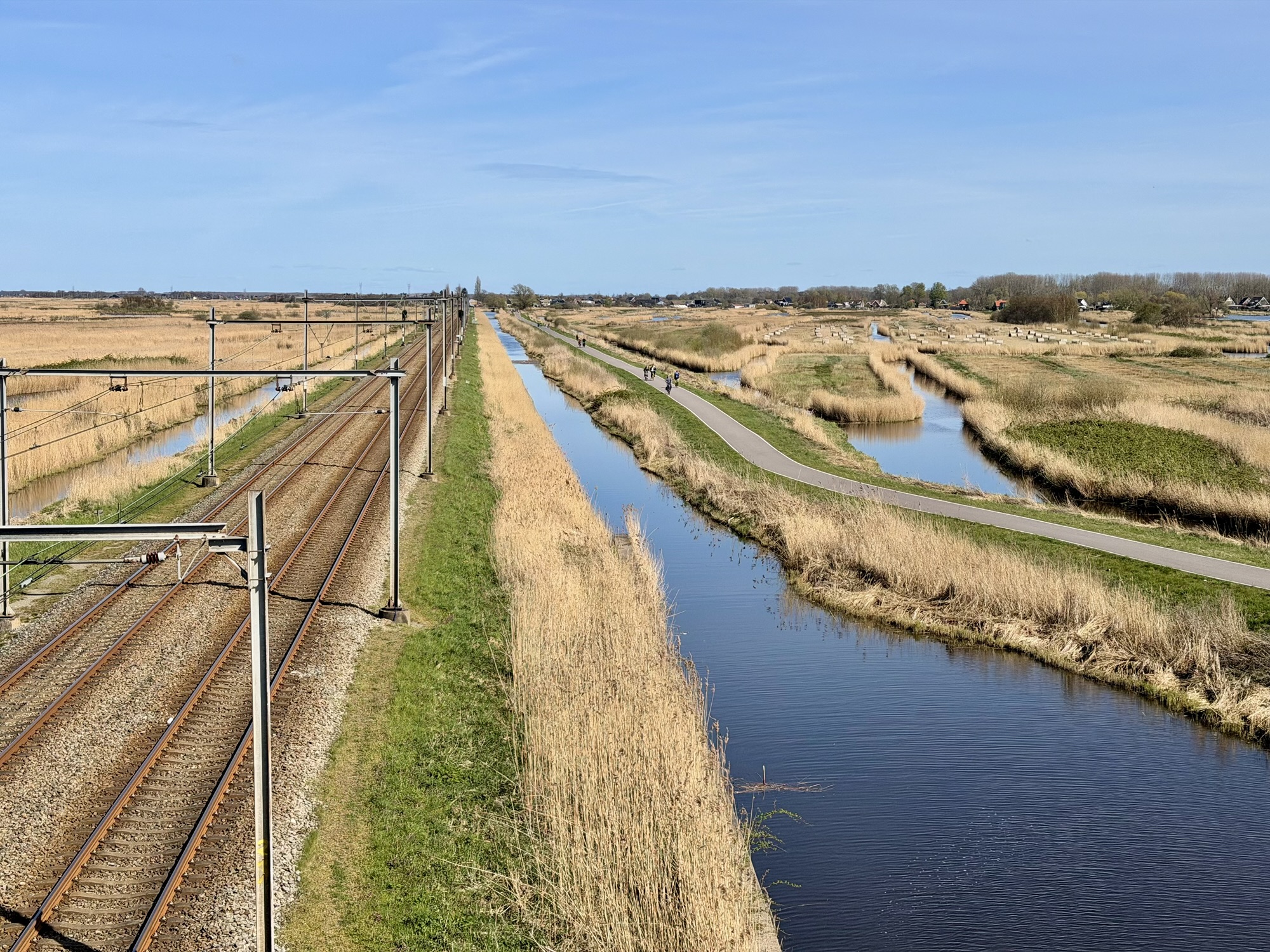
Shortly thereafter, we had to change sides on the canal where there was a highway and a real line. We rode quite a distance to one side before climbing up to the level of the highway on a gentle incline, and then doing the same in reverse on the other side. The only “hills” we have encountered here are bridges and underpasses, but they build them with such gentle slopes that they are easily managed.
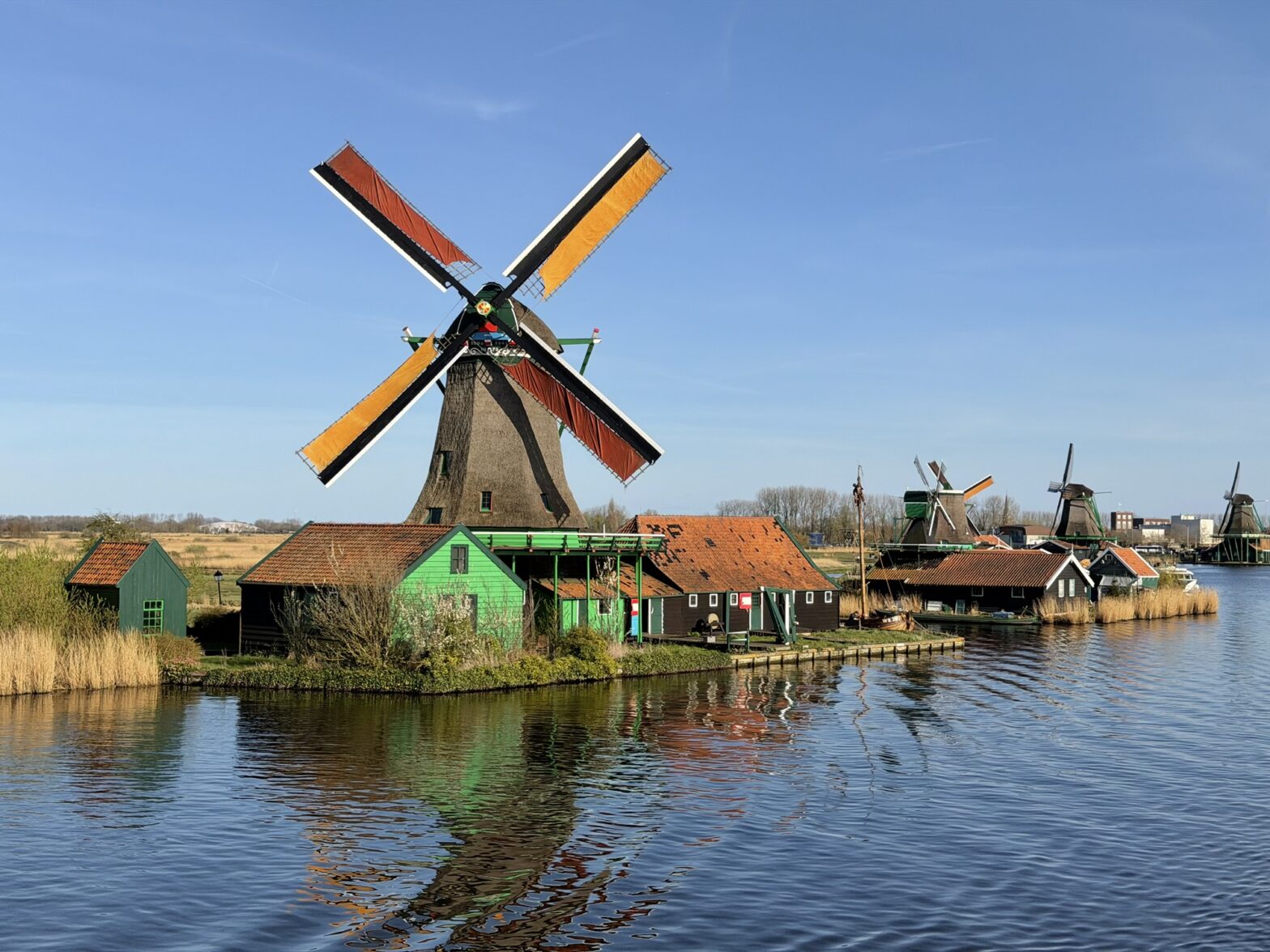
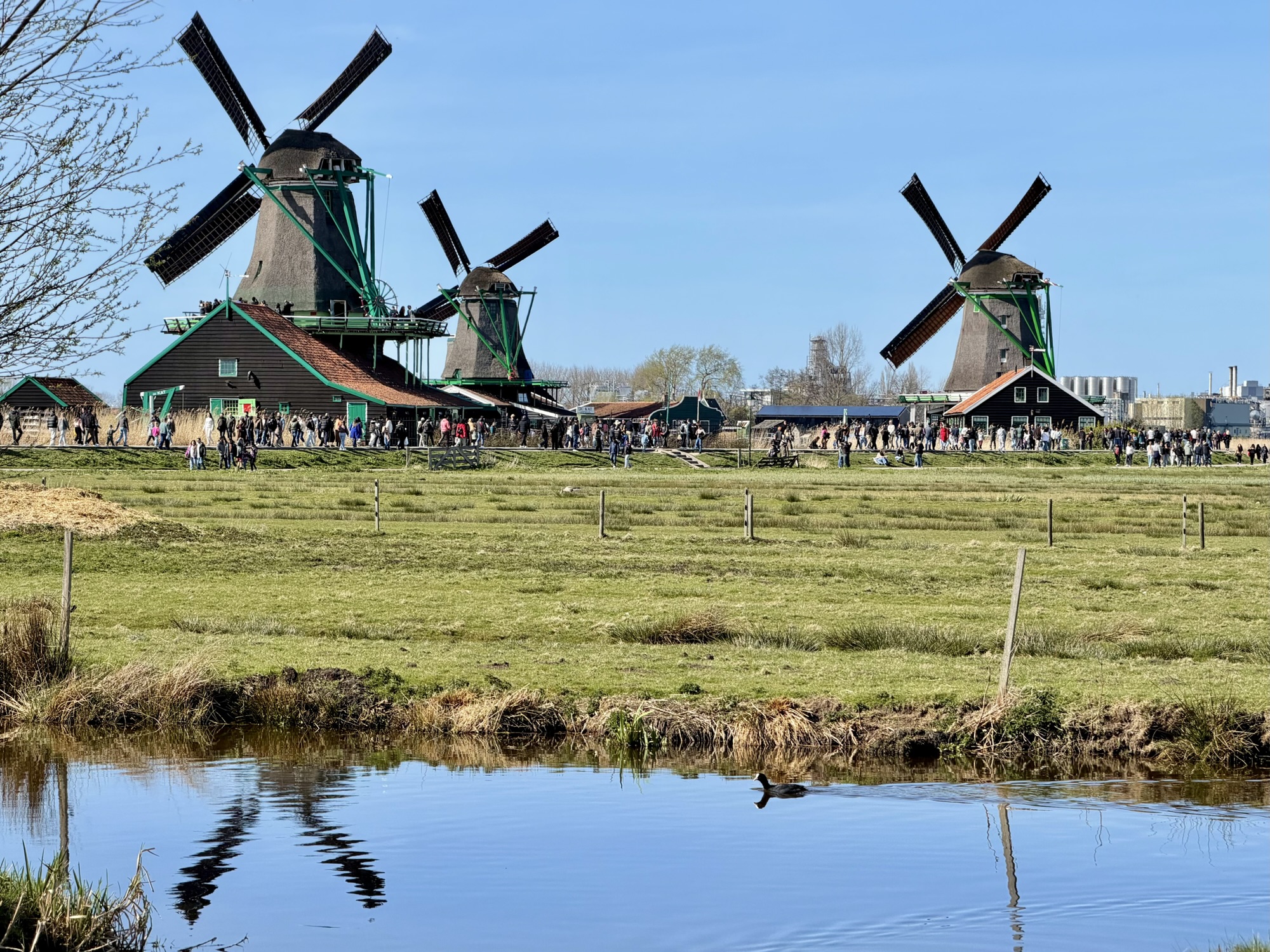
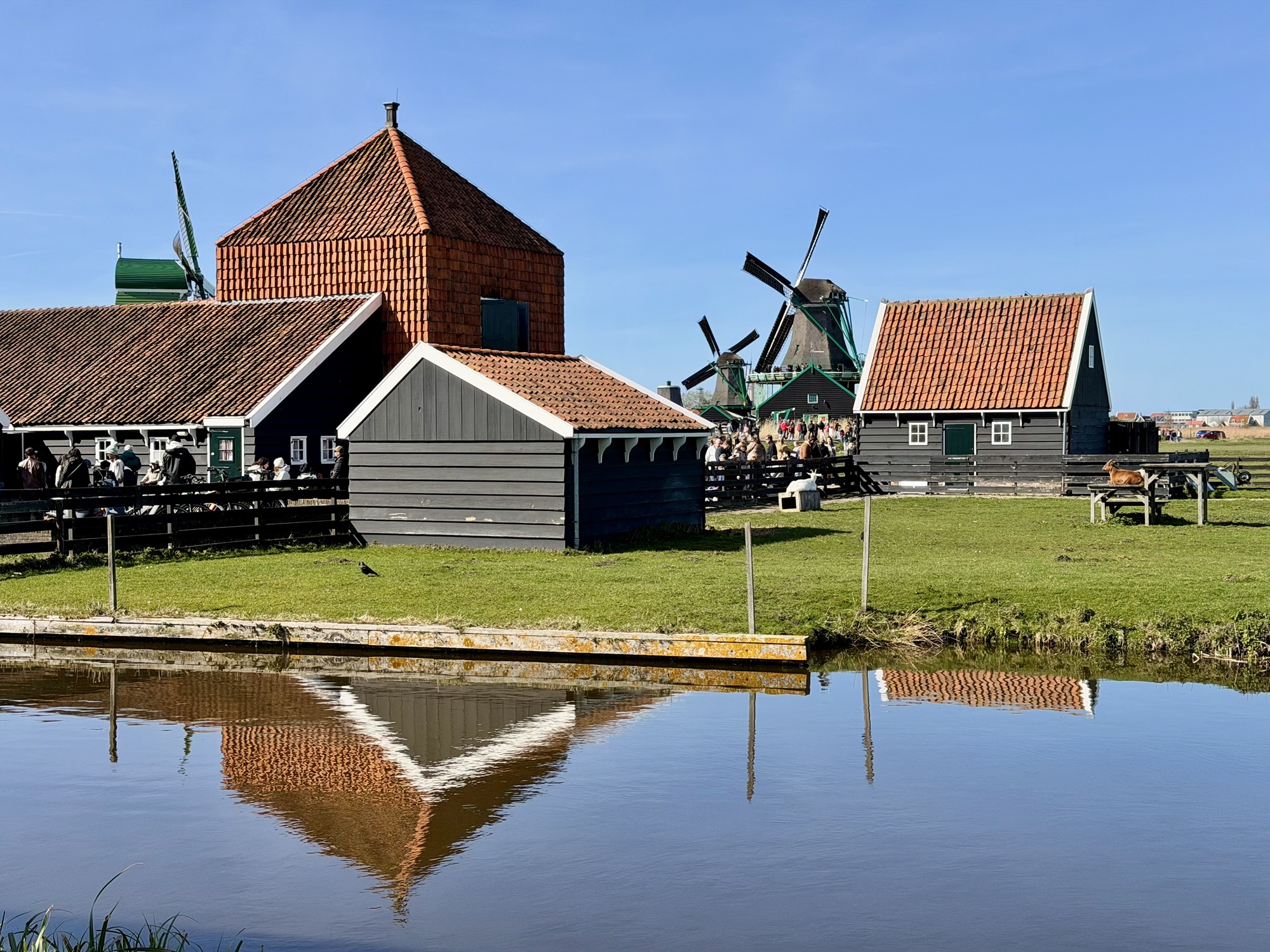
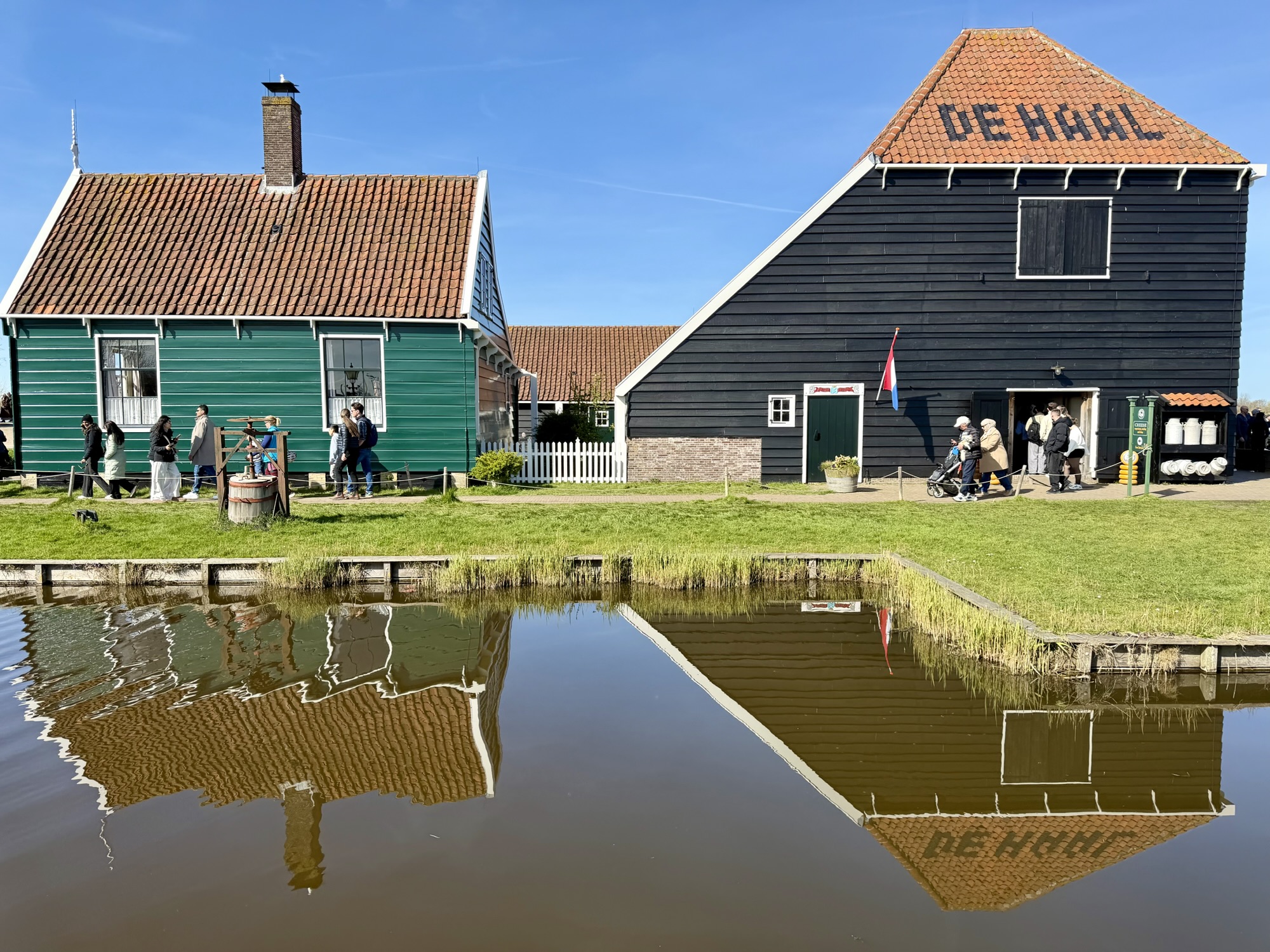
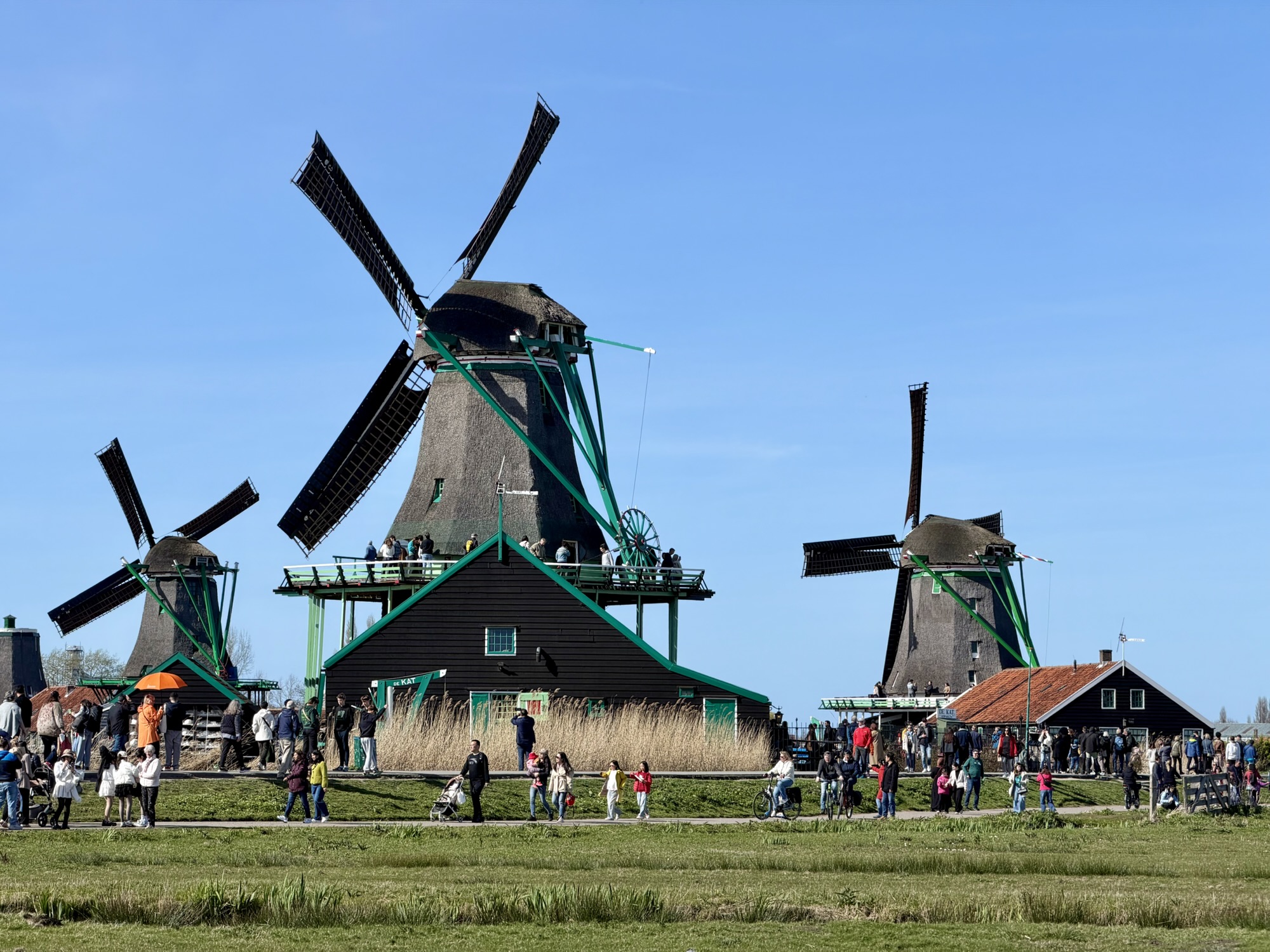
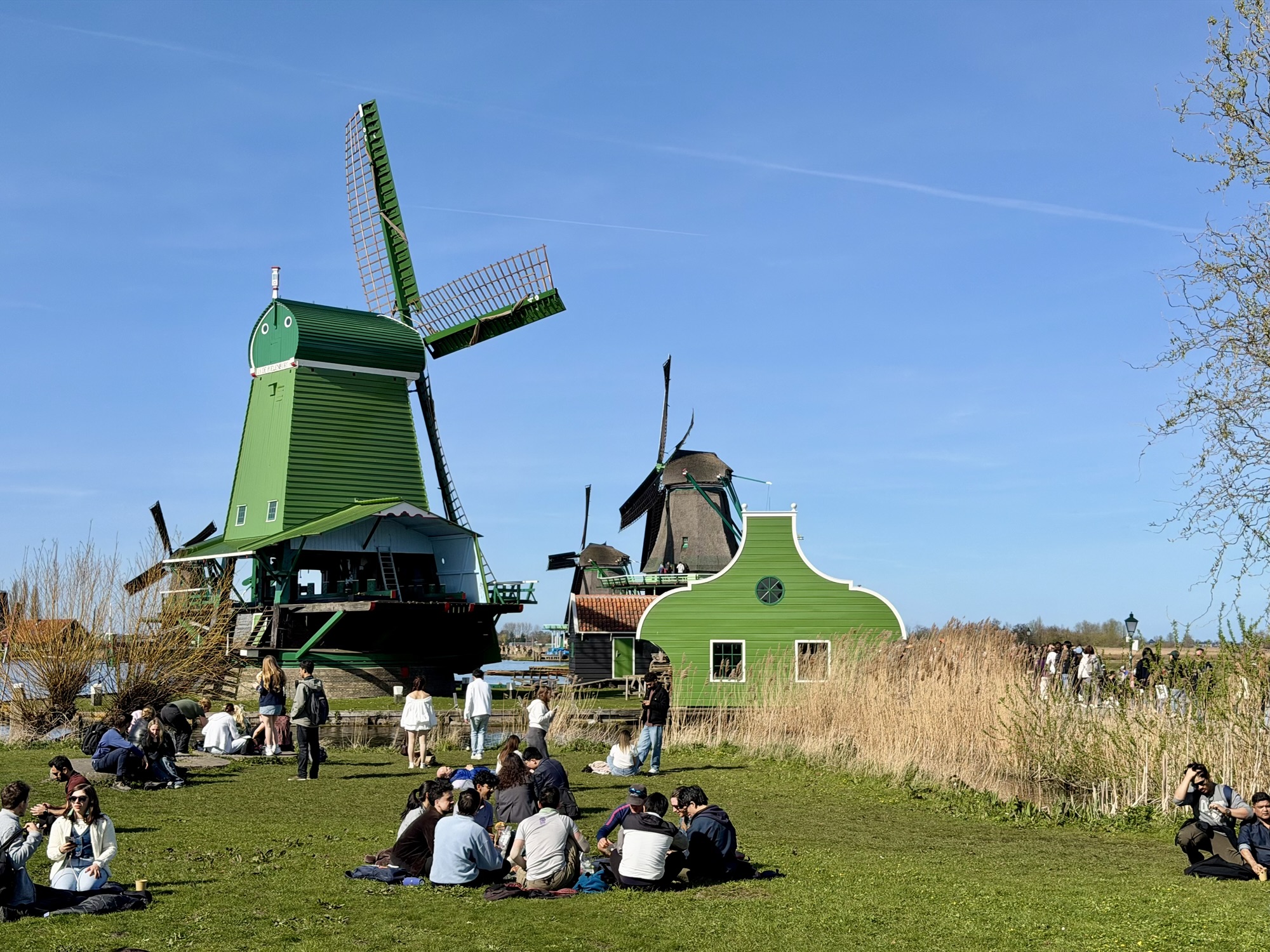
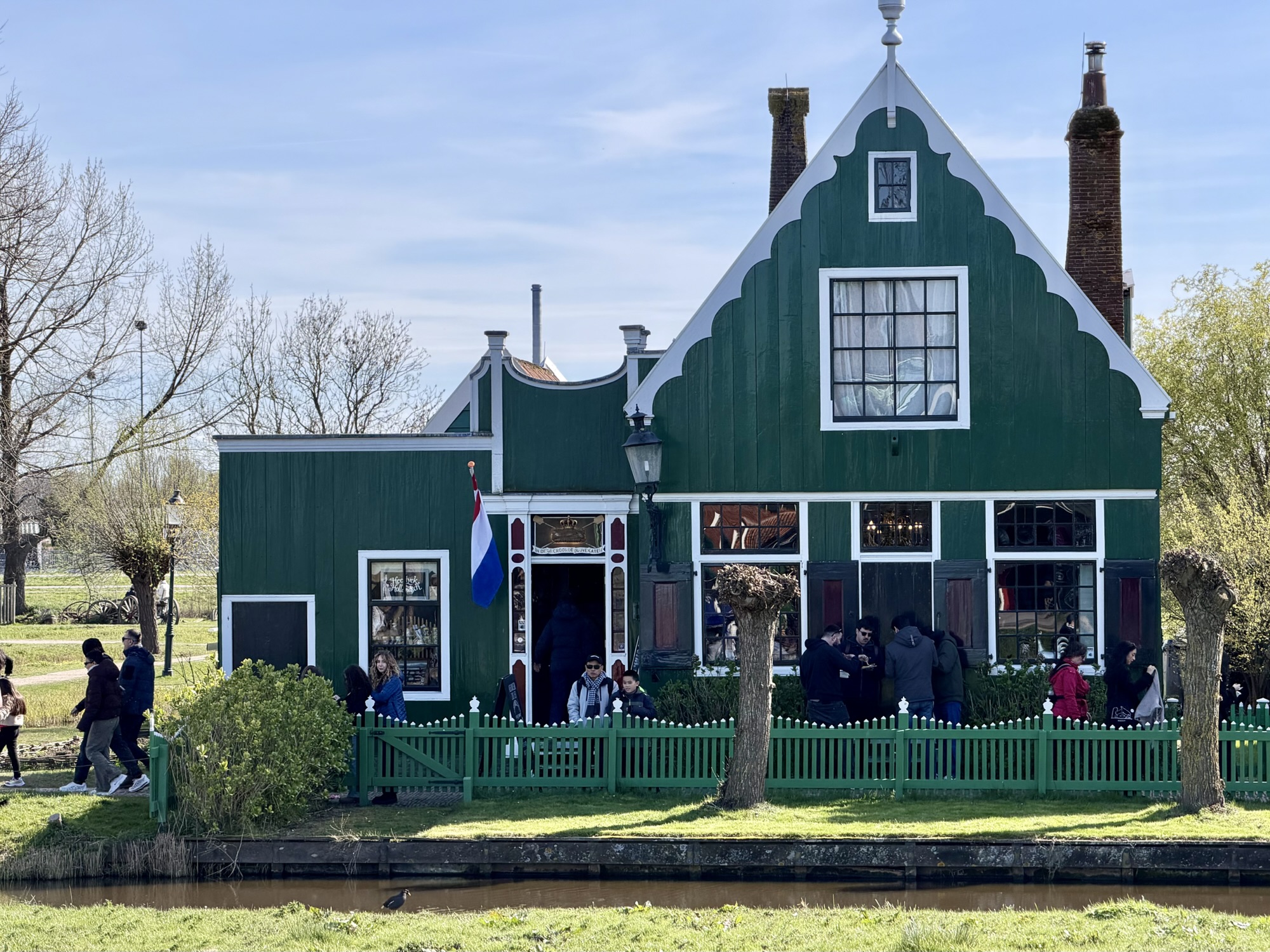
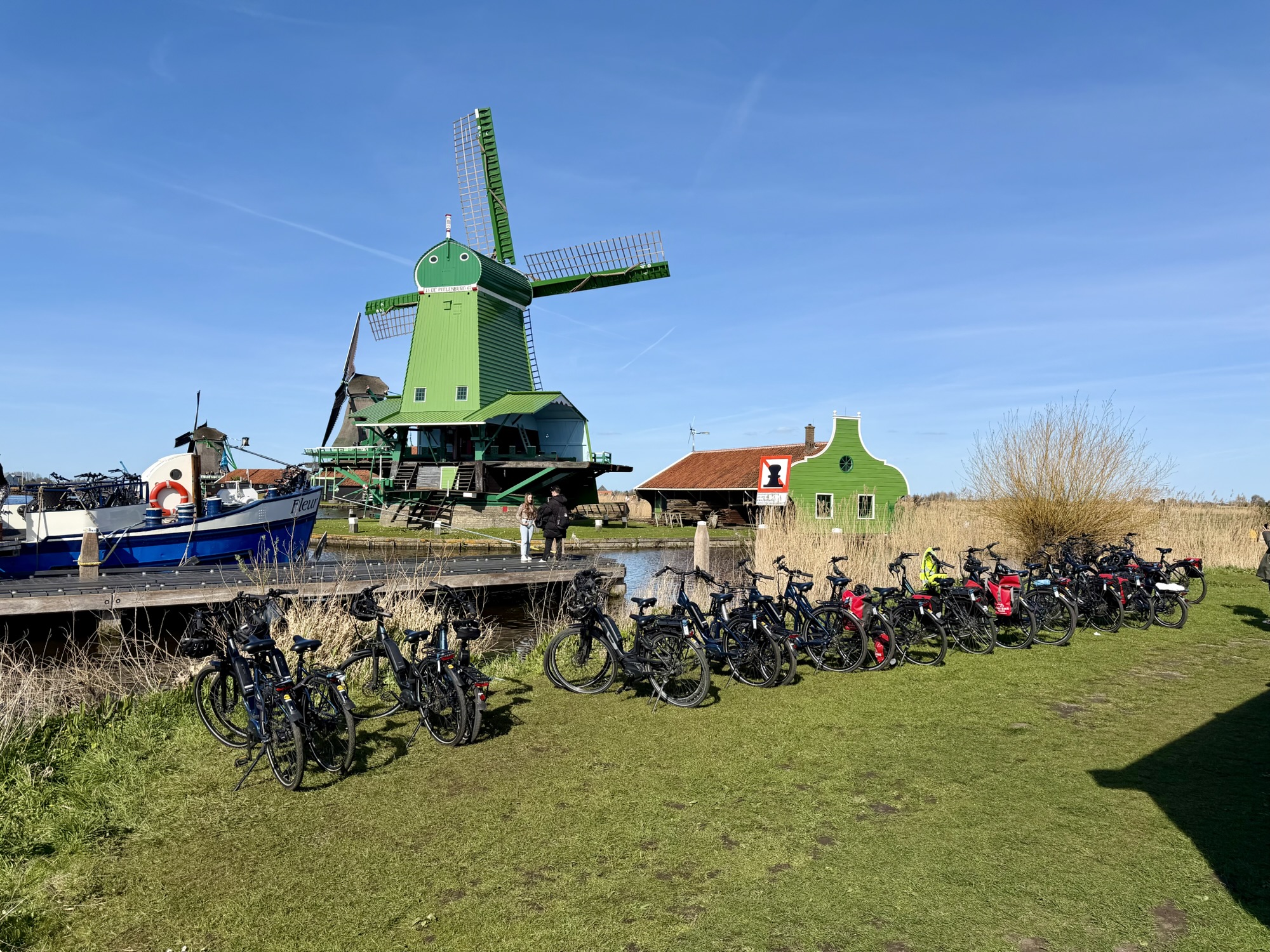
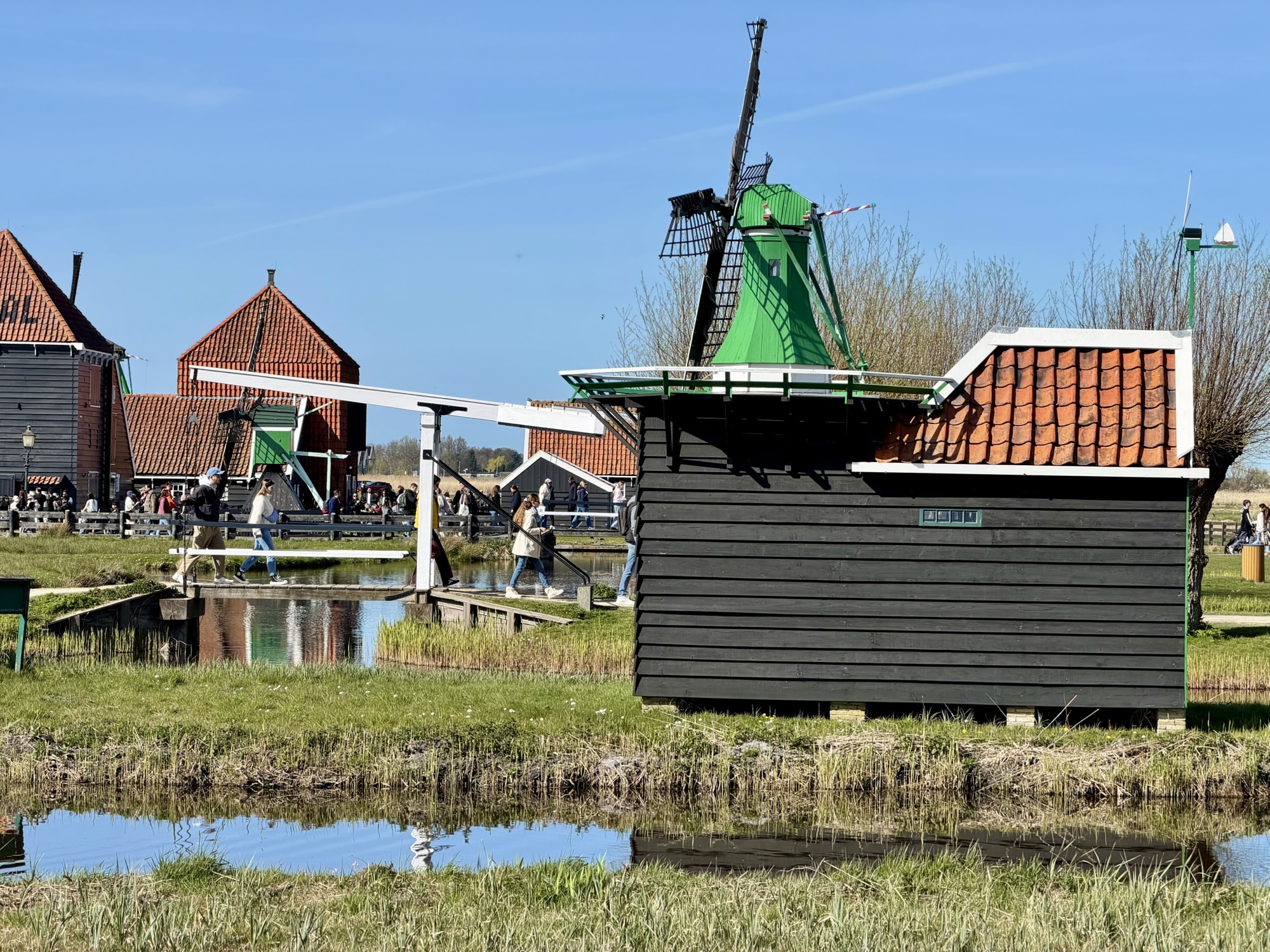
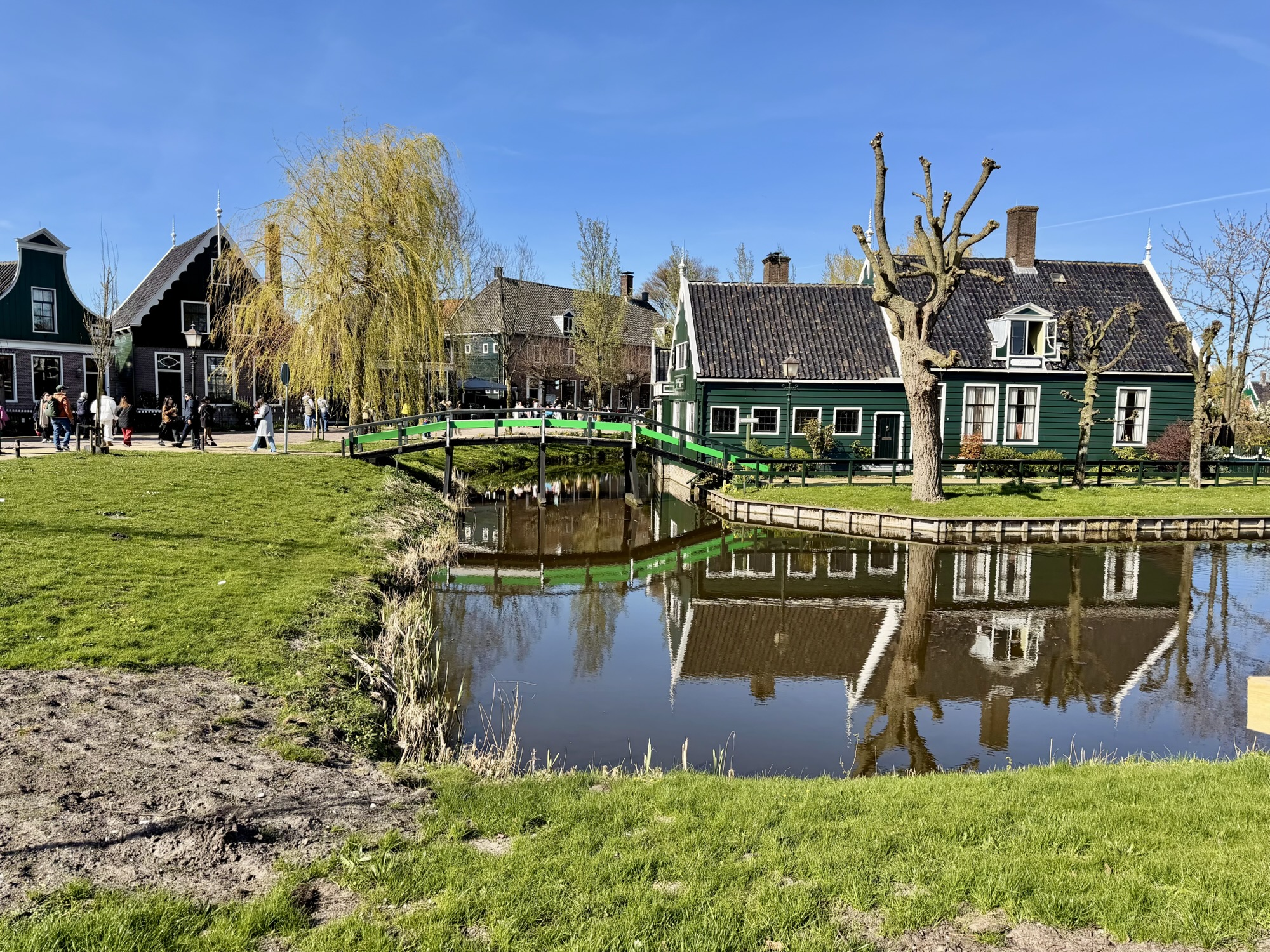
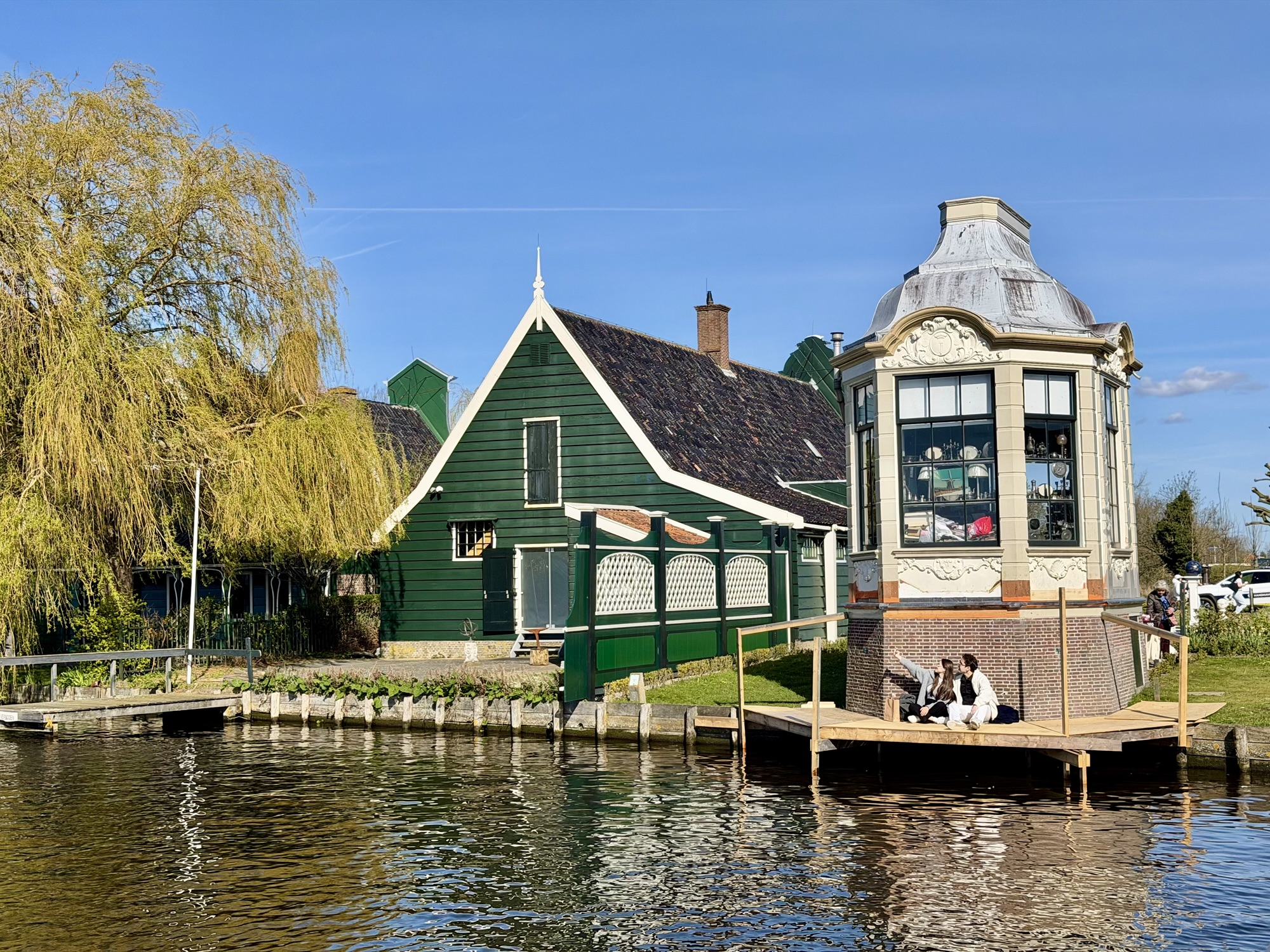
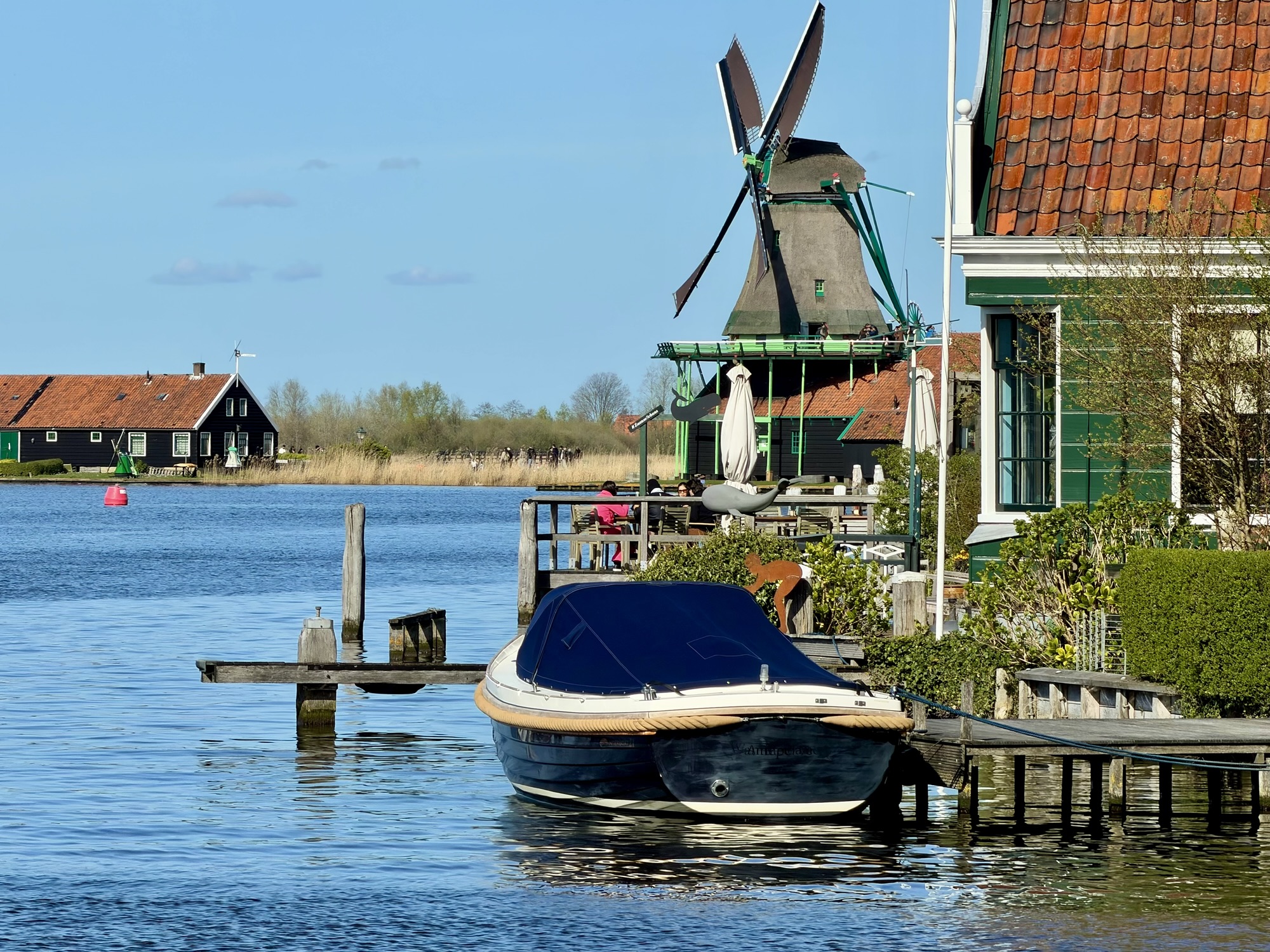
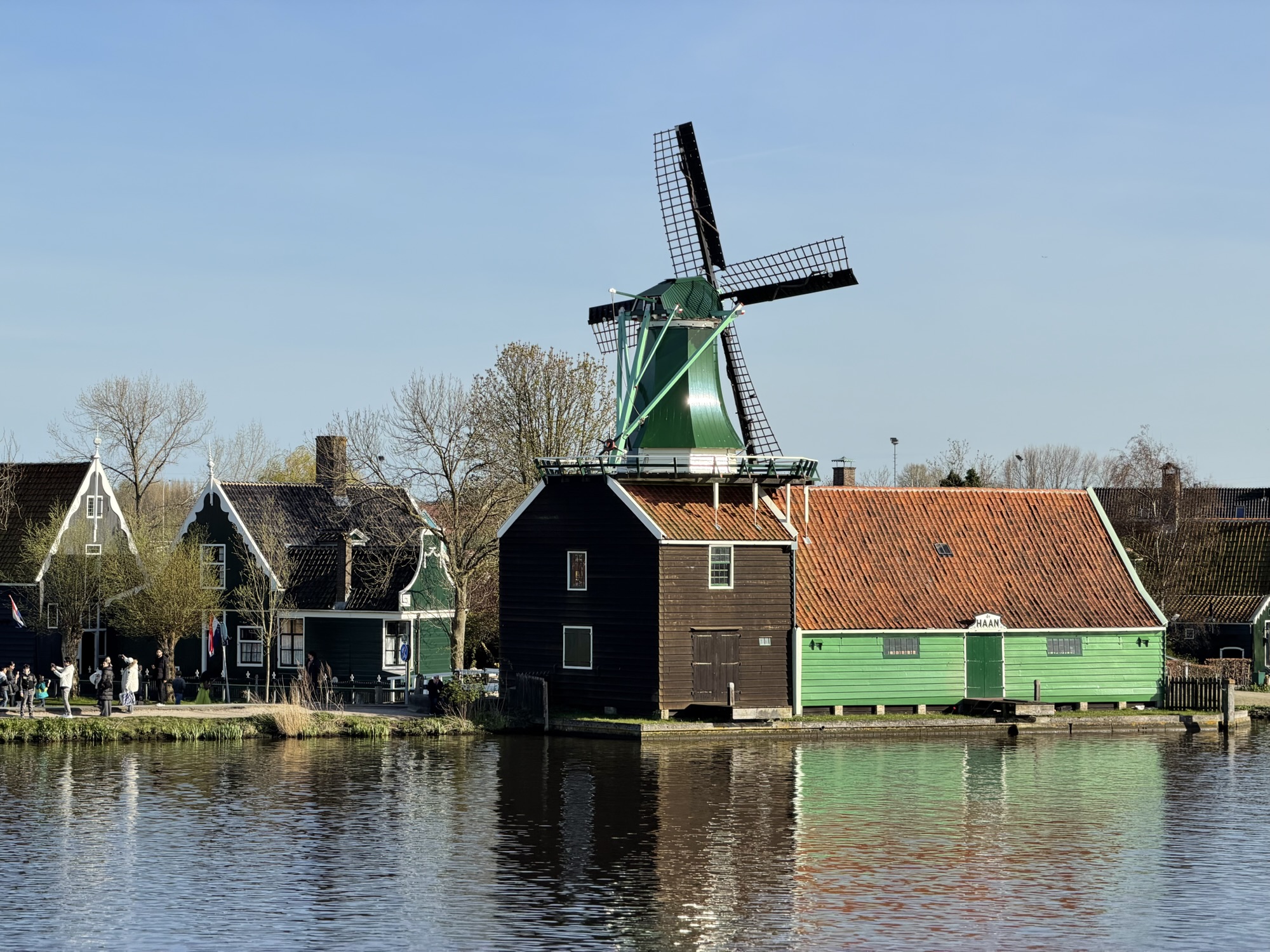
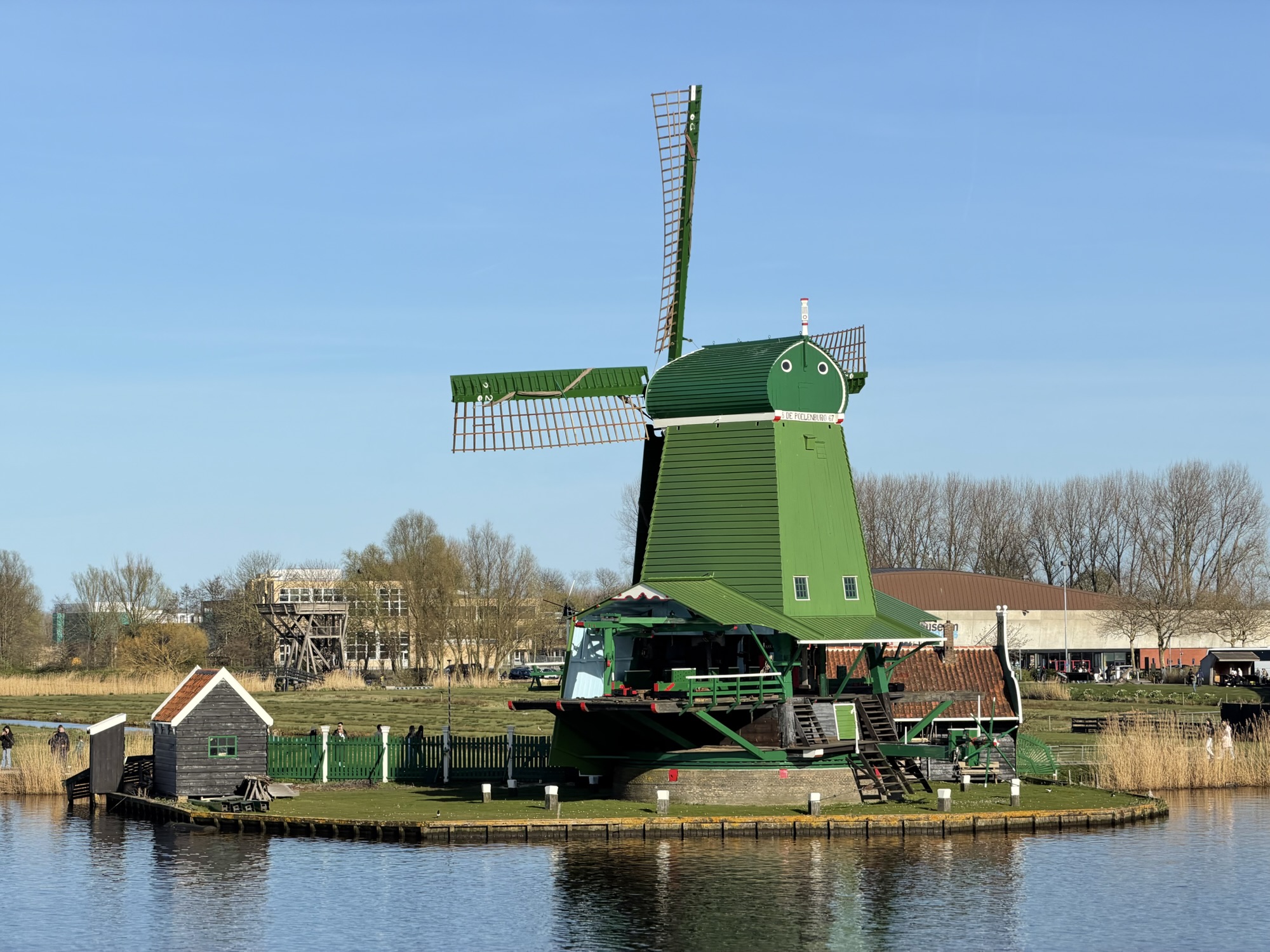
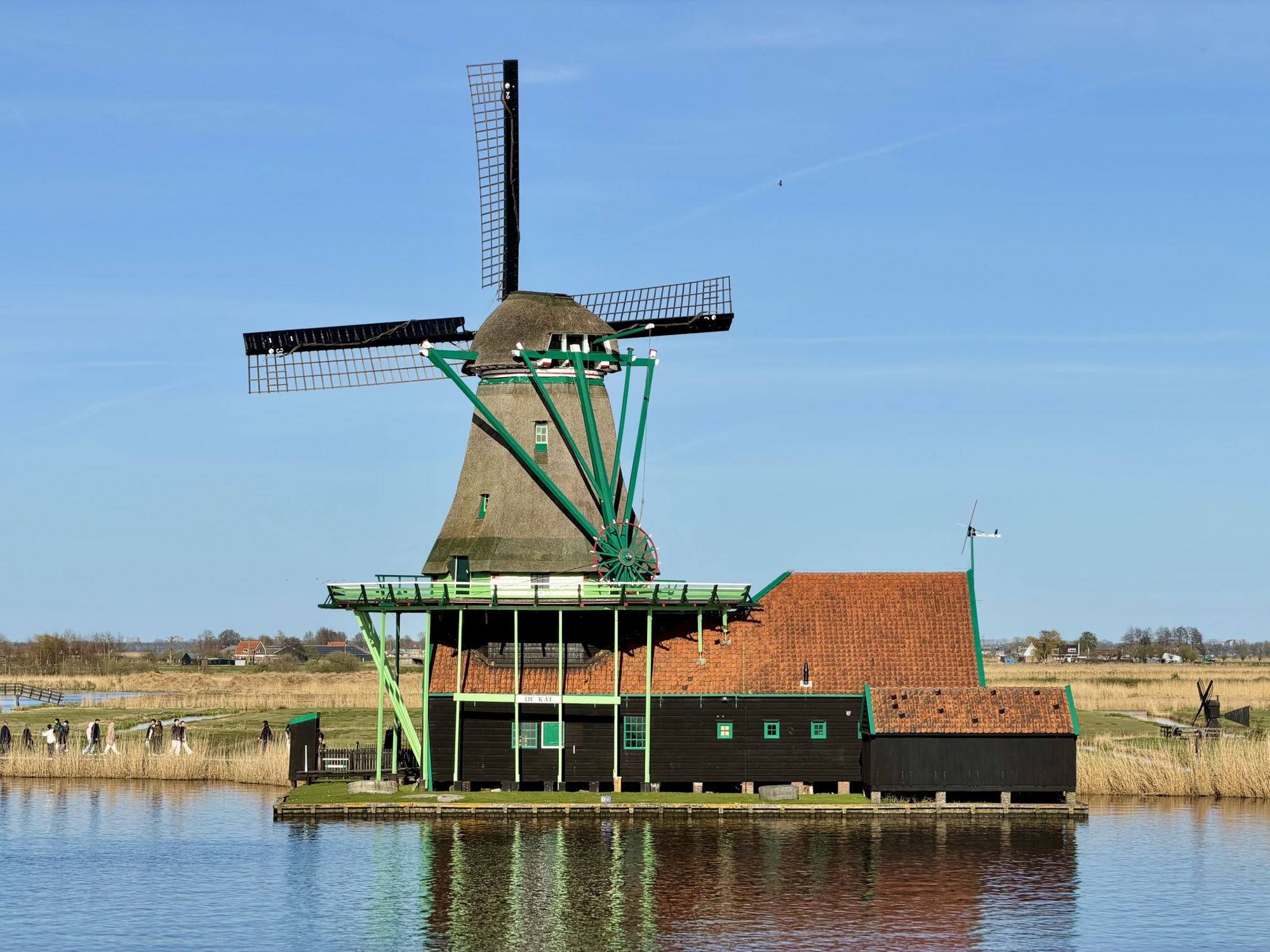
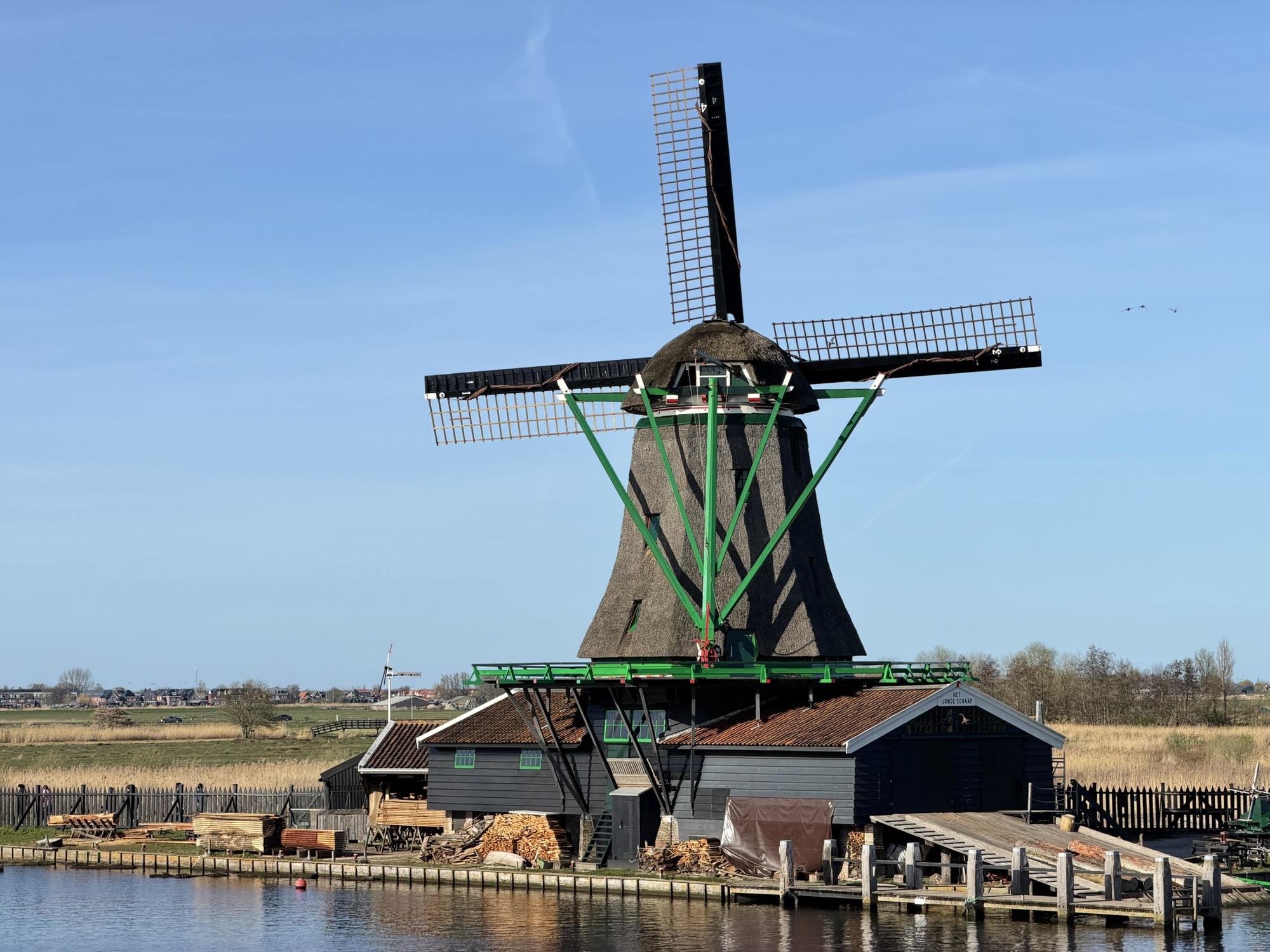
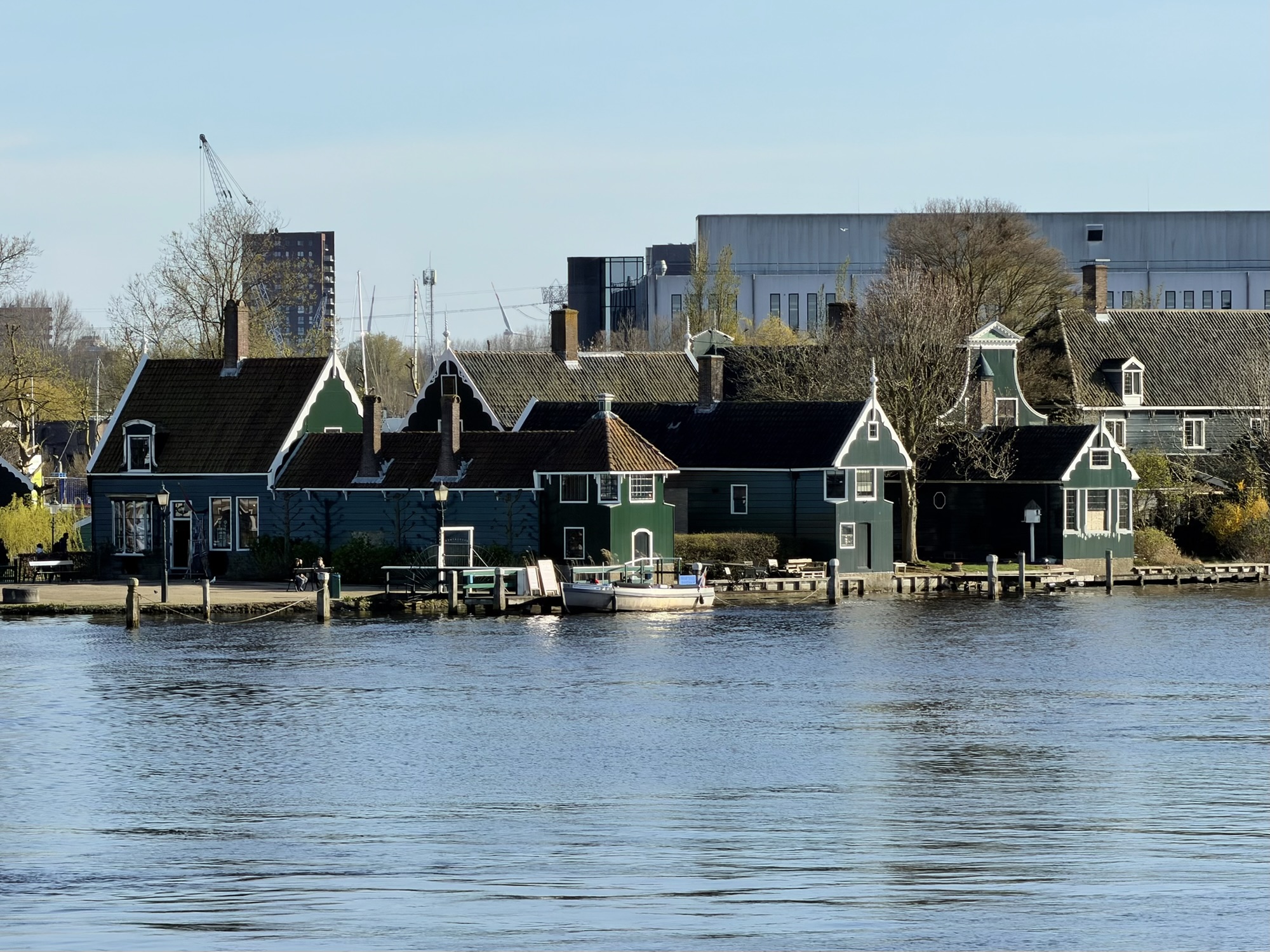
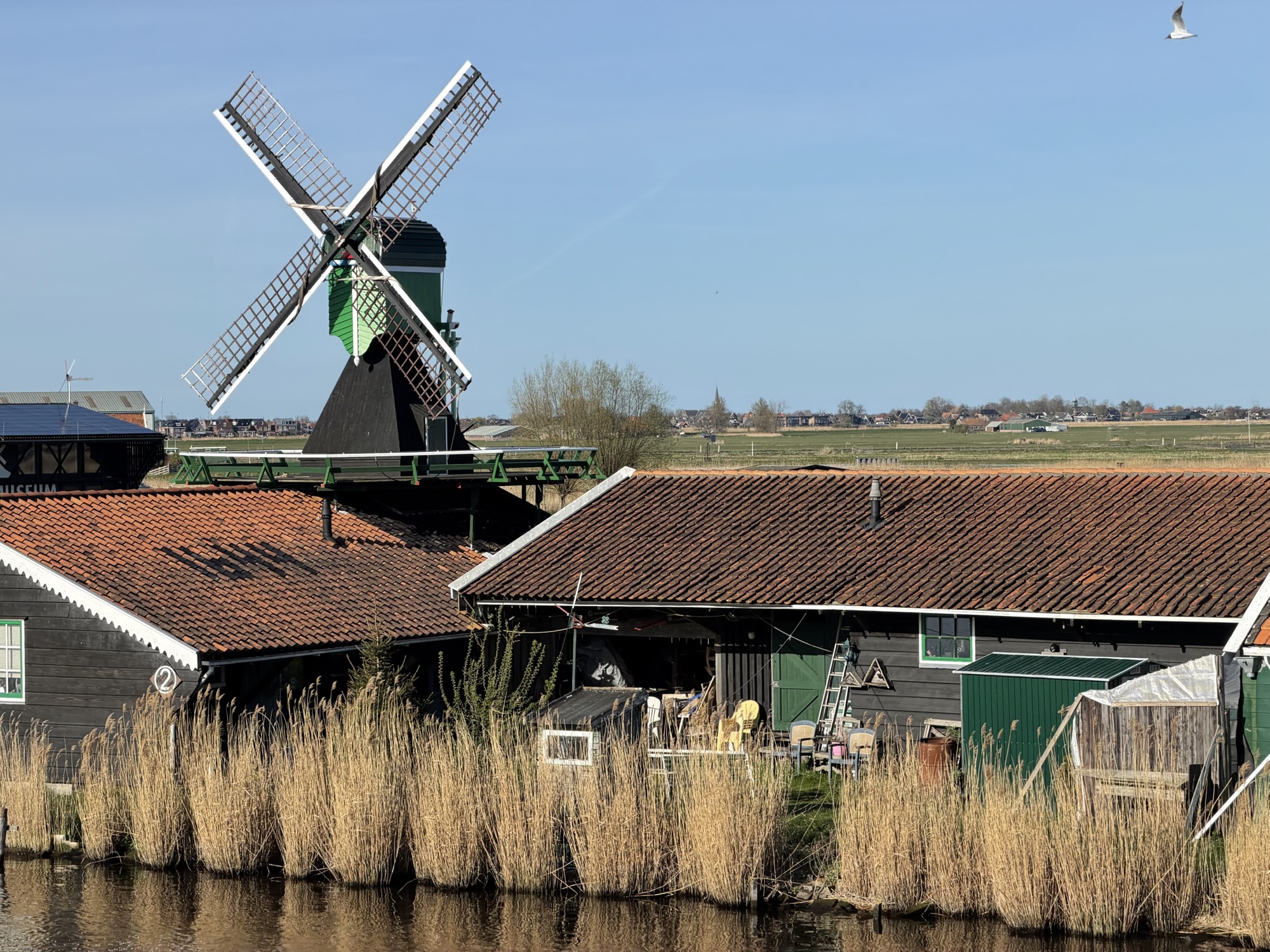
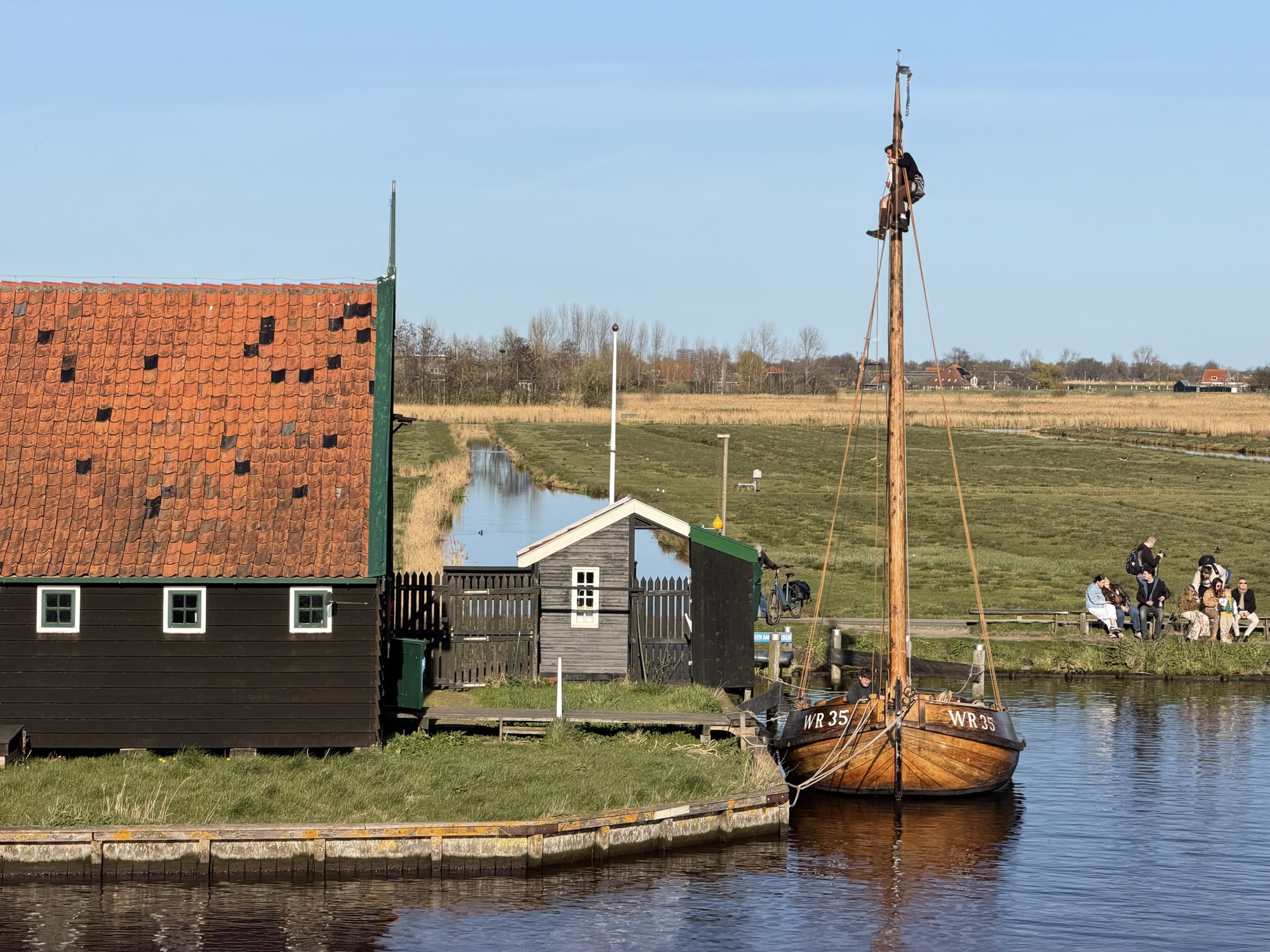
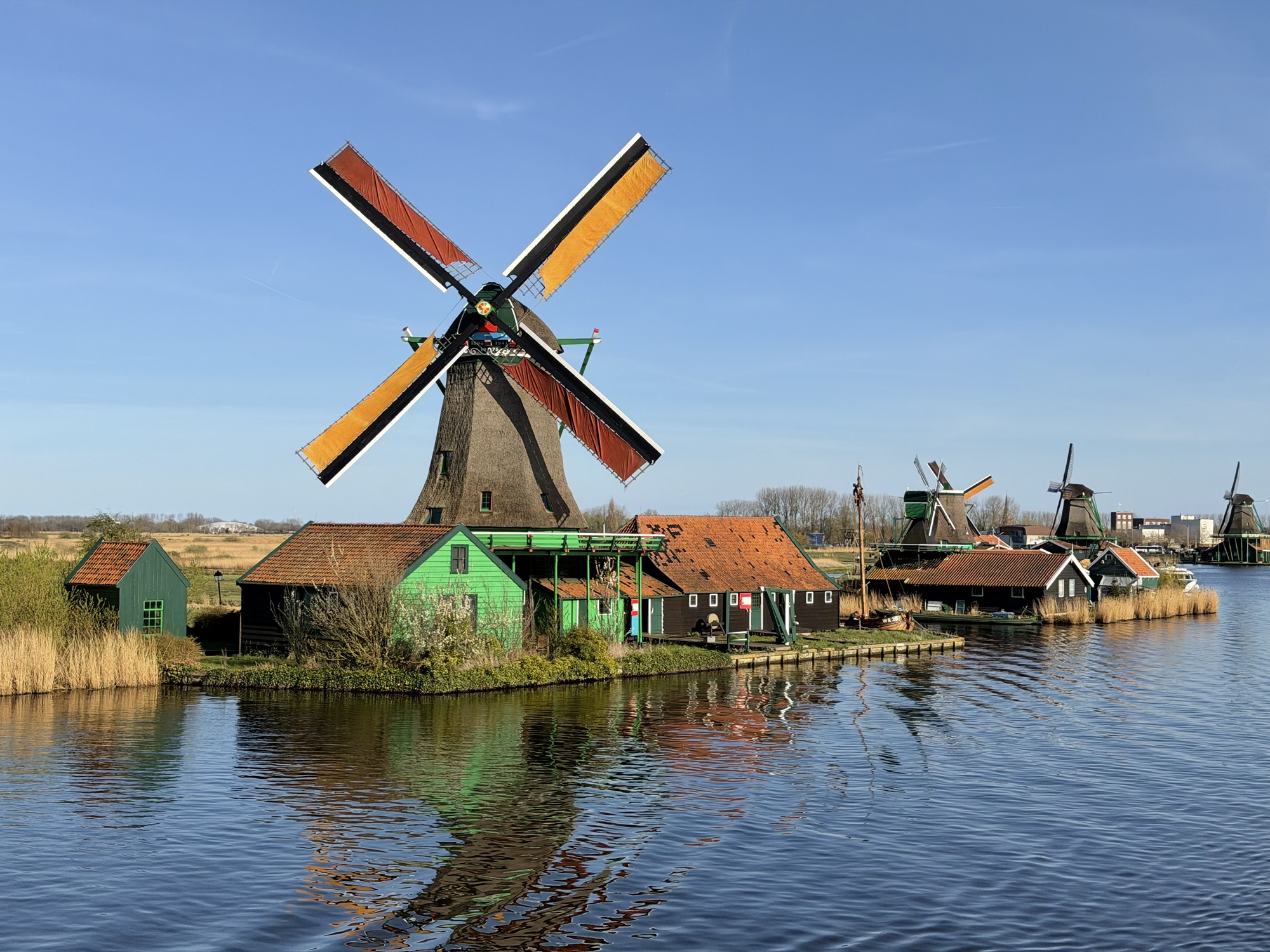
Zaanse Schans is a famous open-air heritage site showcasing 18th-19th century Dutch life. It is a living, residential community open to visitors, currently free to enter, although that might be changing in the future.
It was established between 1961 and 1974 to preserve the Zaan region’s industrial 18th-19th century heritage. It features relocated historic windmills, wooden houses, and workshops that show the area’s history as Europe’s first major industrial zone.
I had gotten ahead of the group of nine of us that have been riding together often and on, at the point when I spotted Zaanse Schans. It was incredibly crowded with tour buses, cars, bikes, and mostly people on foot. So I parked my bike in the bicycle parking and messaged the rest of the group about where I was and then started walking.
I spent about 15 minutes walking around and then ran into the group who were still on their bikes. They had seen Simone, who told them that normally people could ride their bikes through the area but they needed to be very careful or walk them given how many people were there today.
I soon tired of the crowds, and was quite tired after a second day of doing more than 50 km, so I rode the last few hundred metres to the barge.
I laid down on my bed and reviewed some of my pictures. My phone camera worked perfectly well today. I am so relieved it seems to have been just a temporary software issue.
The barge started its journey to Alkamaar about 5:45pm. I was still in the cabin when I realized that it was going right the Zaanse Schans windmills, and that the light was perfect. I dressed and raced up to this sun deck, where I took many more pictures which are in the slideshow below.
I also took a video as we were leaving Zaandijk.
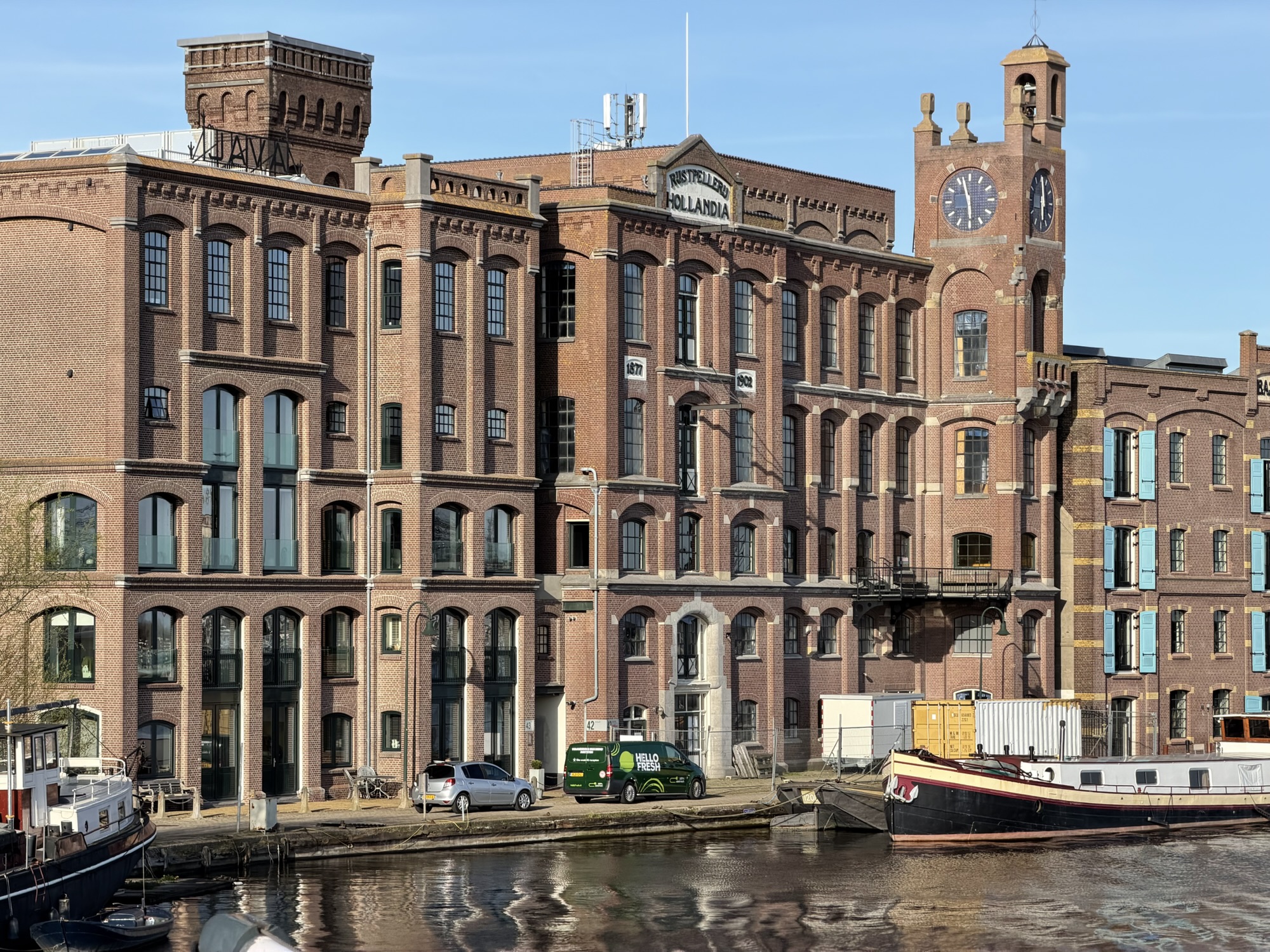
There were many beautiful old industrial buildings and ships in Zaandijk. The bridge, in the first image of the slideshow below, was lifted for our barge to go underneath.
Dinner was served at six, as usual. I think this was my favourite meal so far. The steak was perfectly done. And we had a delicious dark chocolate lava cake for dessert.
Our usual evening briefing about the next day followed, and then I headed to the cabin to work on the blog.
This was the scene that greeted me out our cabin window. And then again an hour later after the sun had set.
The planned distance for the day was 51 km. We were in the dining room just before eight where we were able to serve ourselves breakfast from a buffet, and pack lunches in paper bags. We were to be on the dock at nine for bike fitting. I had asked about bringing my own seat, but didn’t get a reply, telling me that it wouldn’t be compatible, until after I had arrived in the Netherlands. But when I saw them adjusting seats this morning, I realized mine was compatible. I went back to the room to get it, and one of the crew members put it on for me. It’s early in the year to be doing 280 km in six days so I want to have the seat to which I’m accustomed. I also put my QuadLock on the bars. Here we are ready to go.
We had a few stops for various things, including making adjustments to seat height. Before we were out of town, I fumbled my phone, getting it off the bars, and it fell onto the hard brick road. Fortunately, it seemed to be alright.
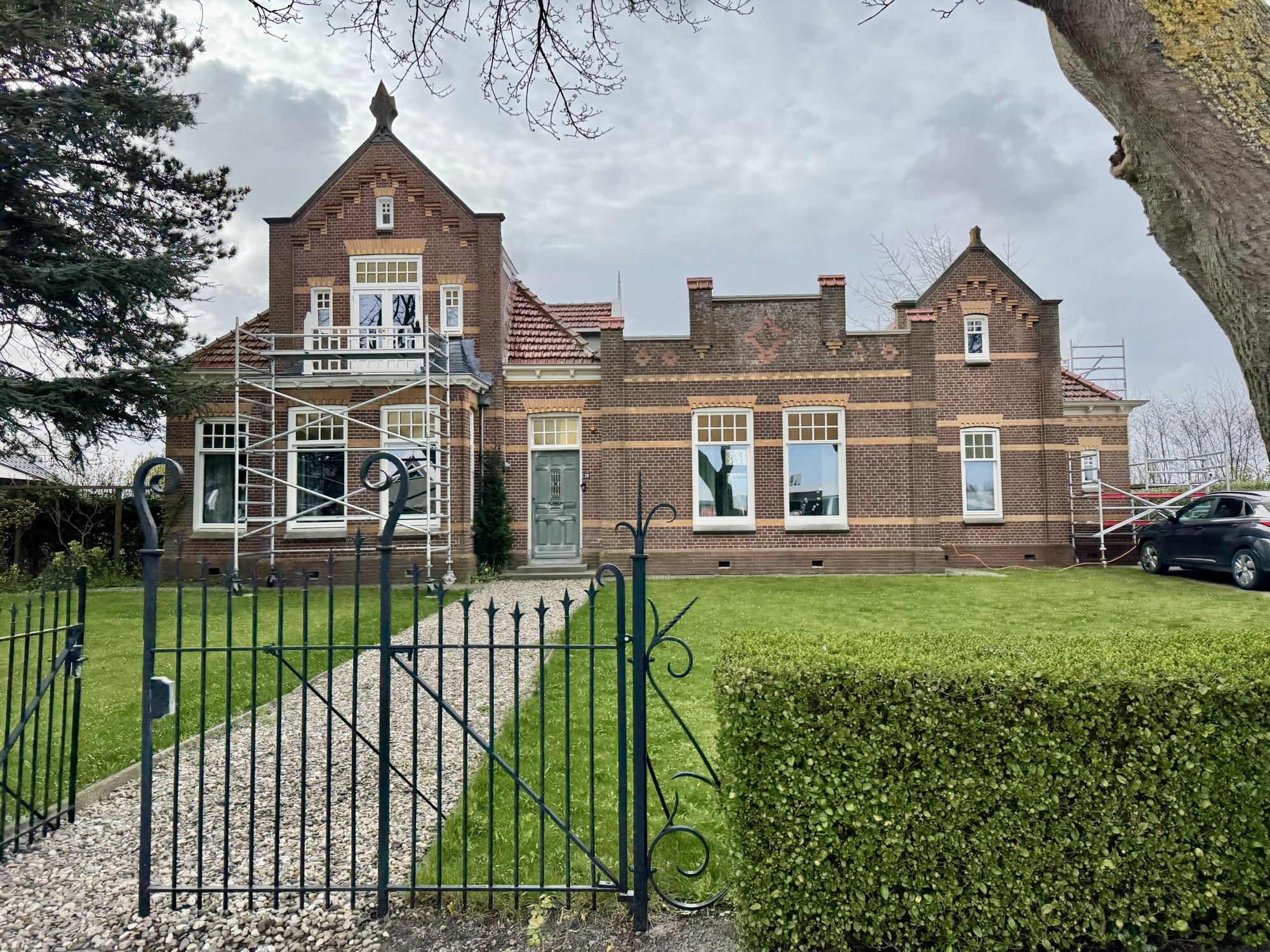
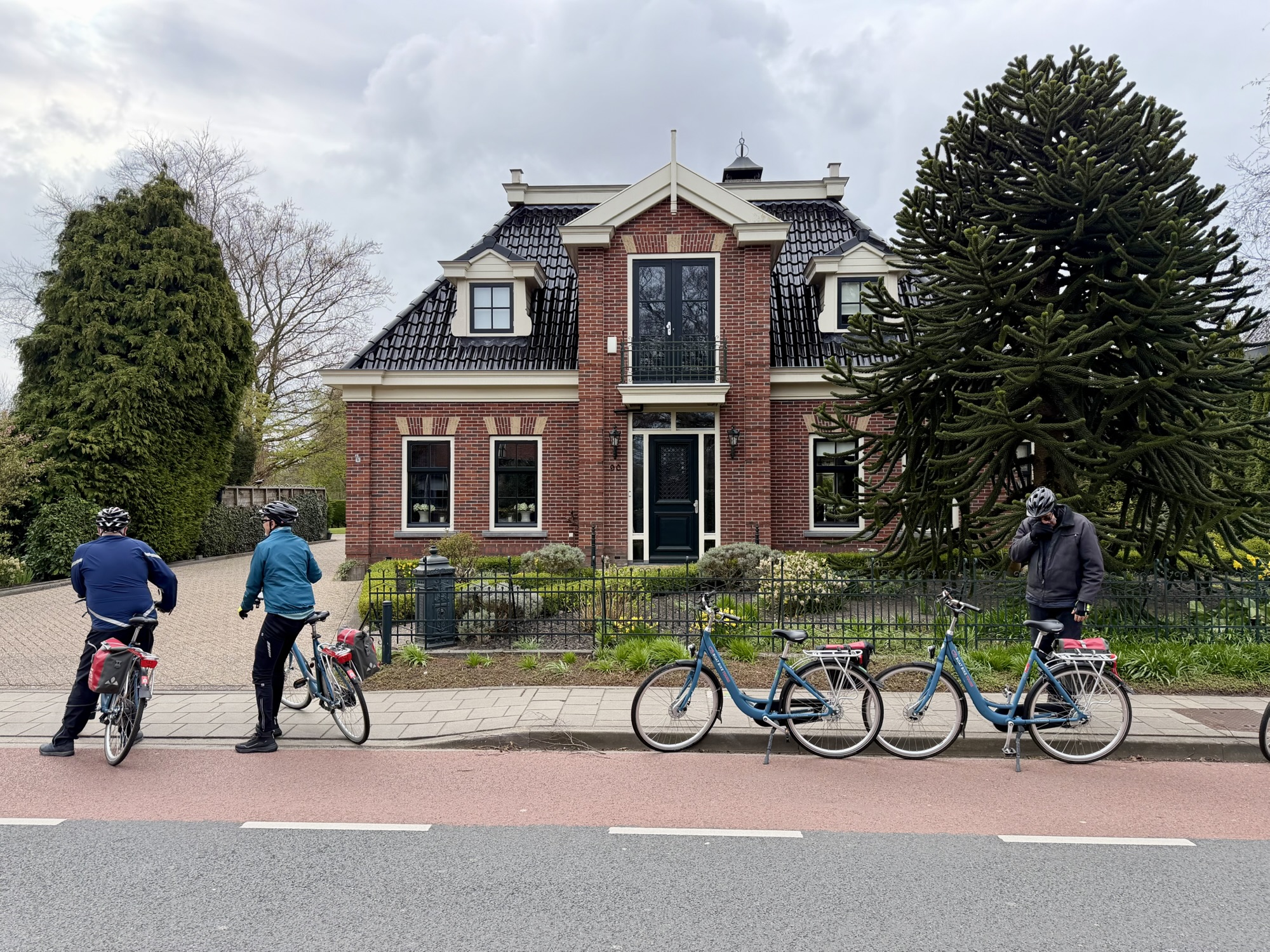
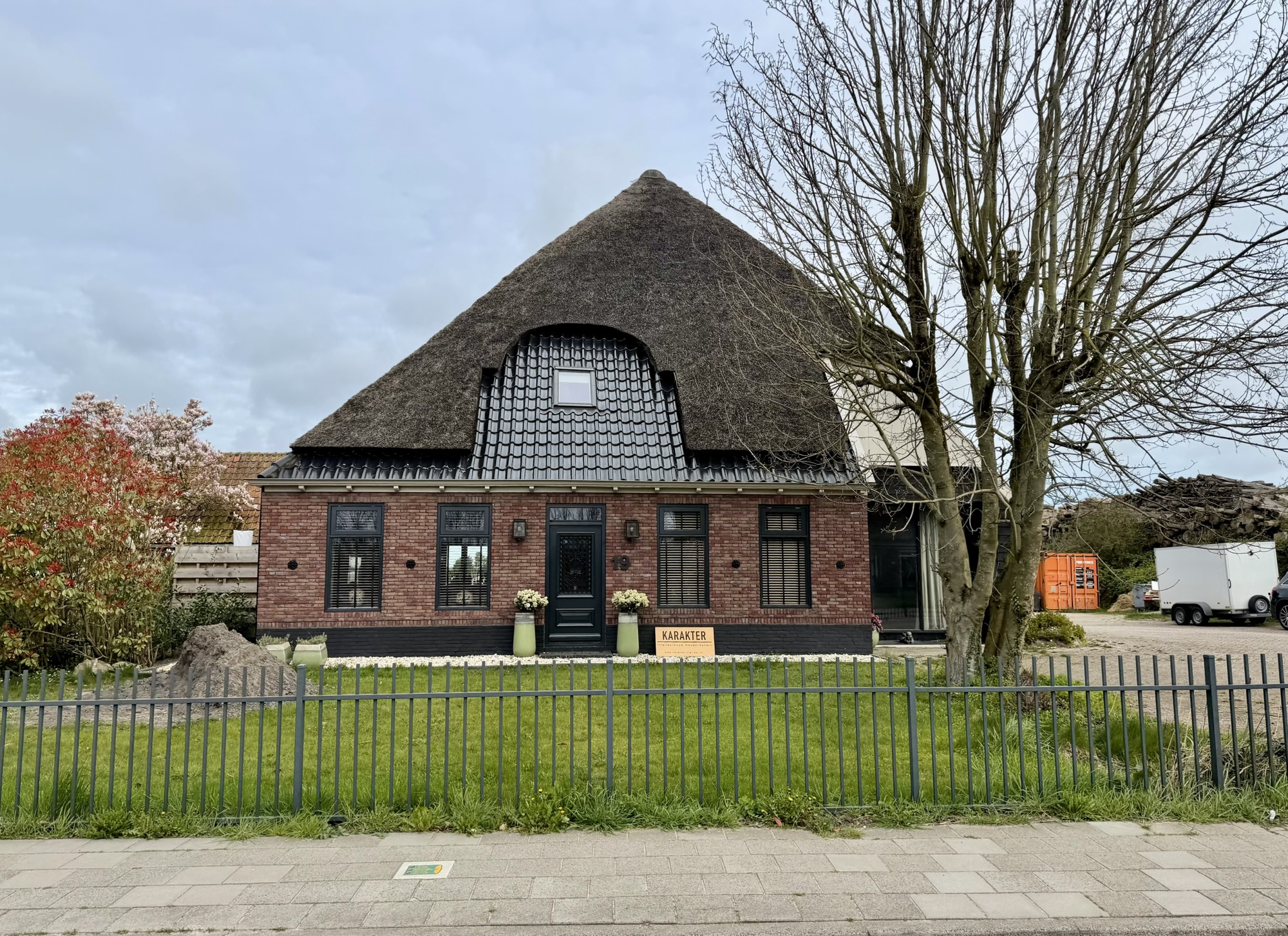
We saw so many interesting houses today. Early on in the Ride quite a few of the houses had a mix of tile and thatch roofing. I couldn’t think of why they would mix it like that so I asked Google: Dutch houses often mix thatch (reed) and tile roofing for a combination of durability, historical tradition, and practicality. Thatch is used on steeper, upper sections for excellent insulation and aesthetics, while durable tiles are placed on lower, high-wear areas to prevent rot, fire damage, and manage water runoff.
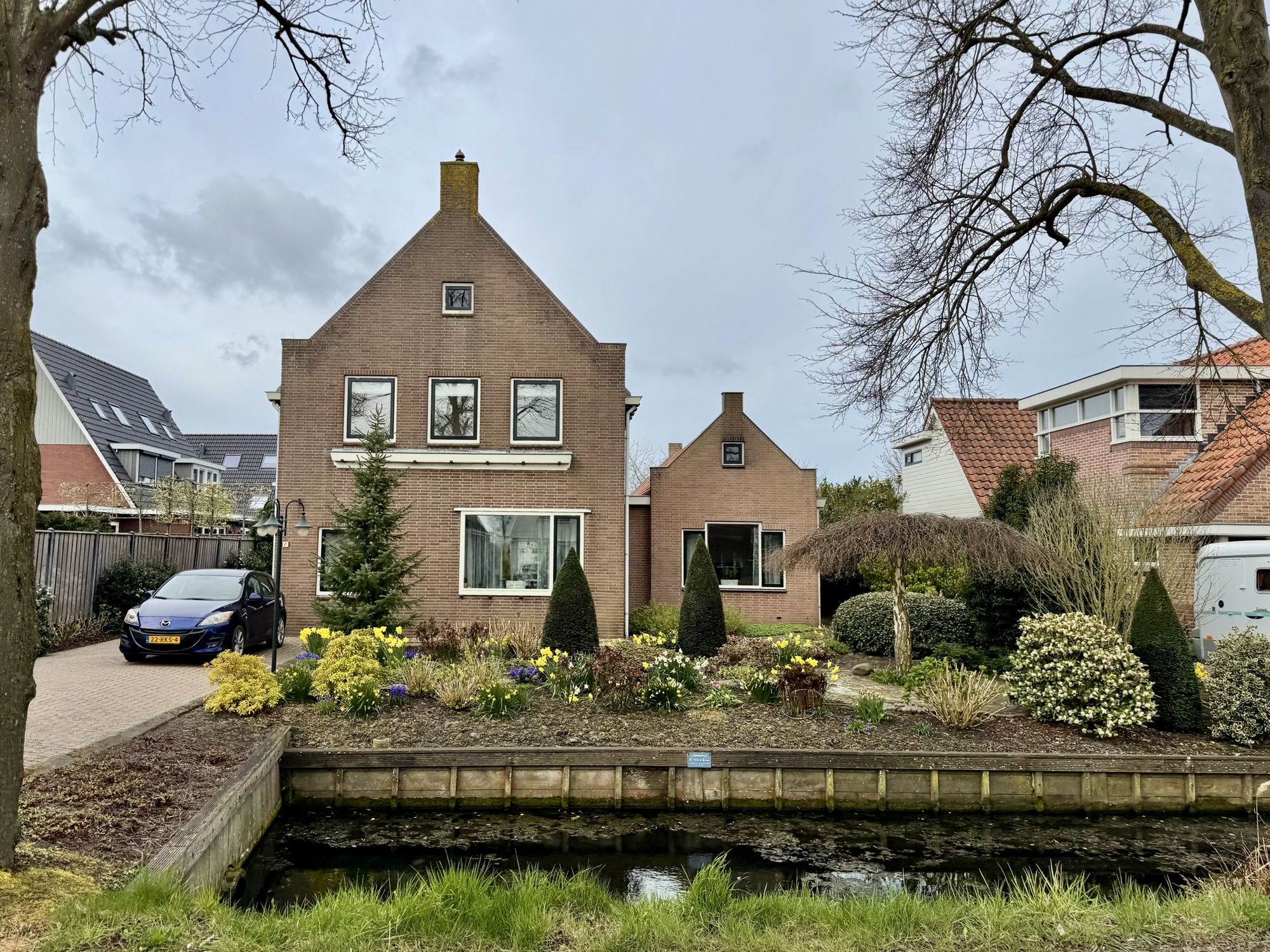
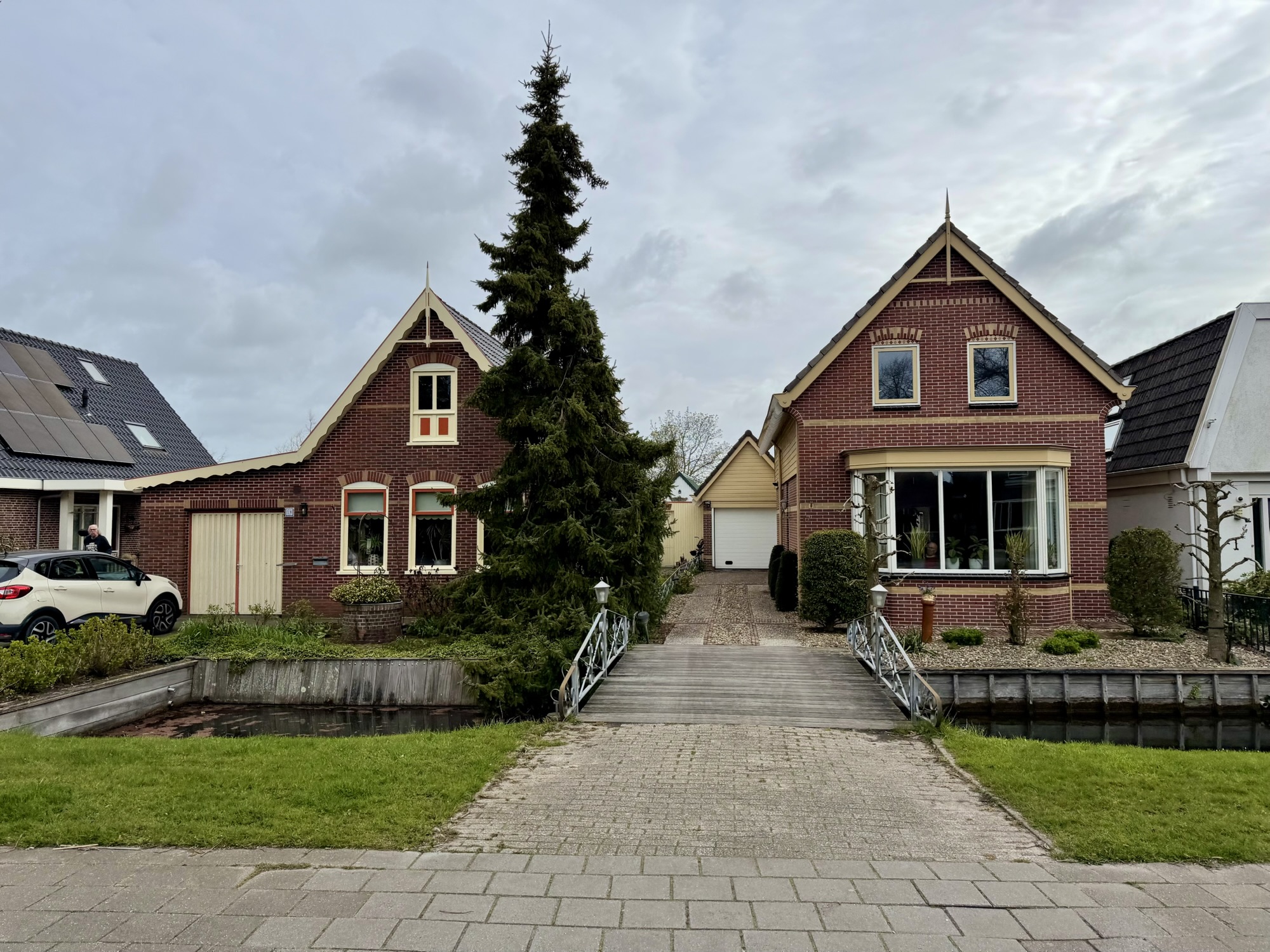
We also saw many homes that had a canal between the road and the house so needed a bridge across the canal was required for each driveway.
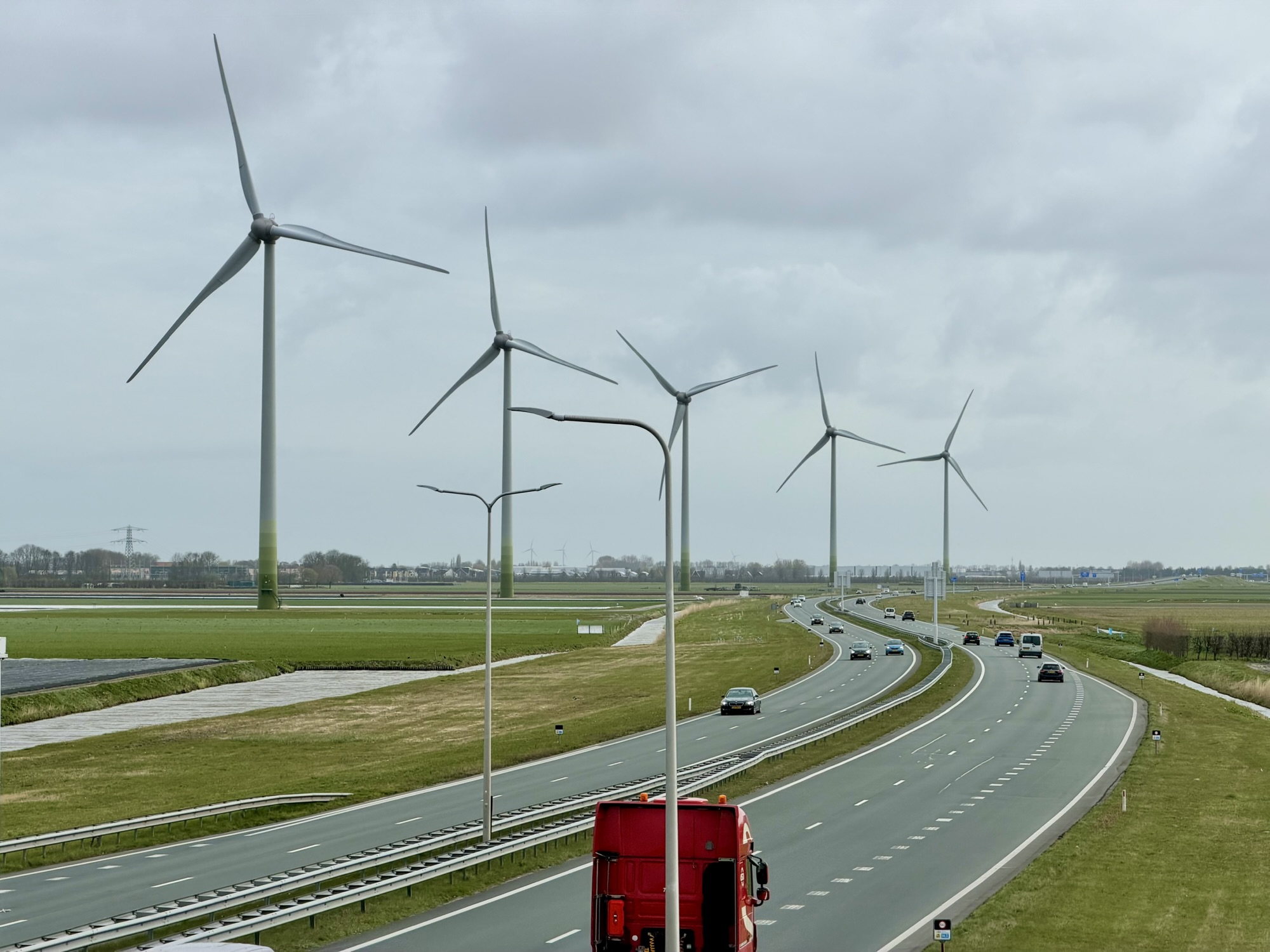
There was a nice gentle rise and cycling infrastructure to cross this highway, which gave us a good view of some of the many turbines we have passed since we got here.
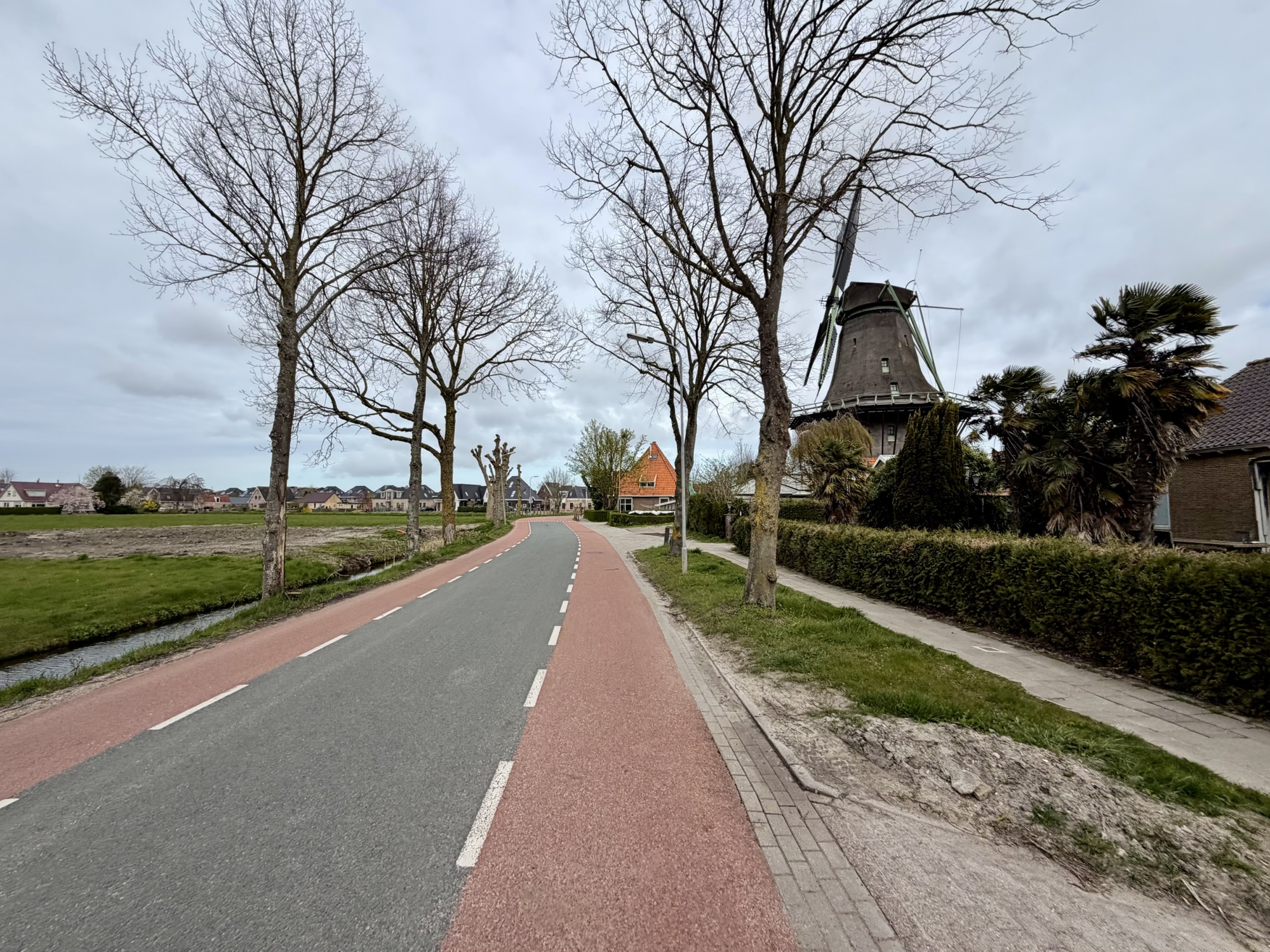
We were on many advisory bike lanes (fietssuggestiestroken) today. They are painted, dashed-line lanes, often red, designed for shared use on narrow roads where space for segregated lanes is limited. While offering no strict legal separation, they signal a designated area for cyclists. Drivers may enter them to pass oncoming traffic, but must yield to cyclists.
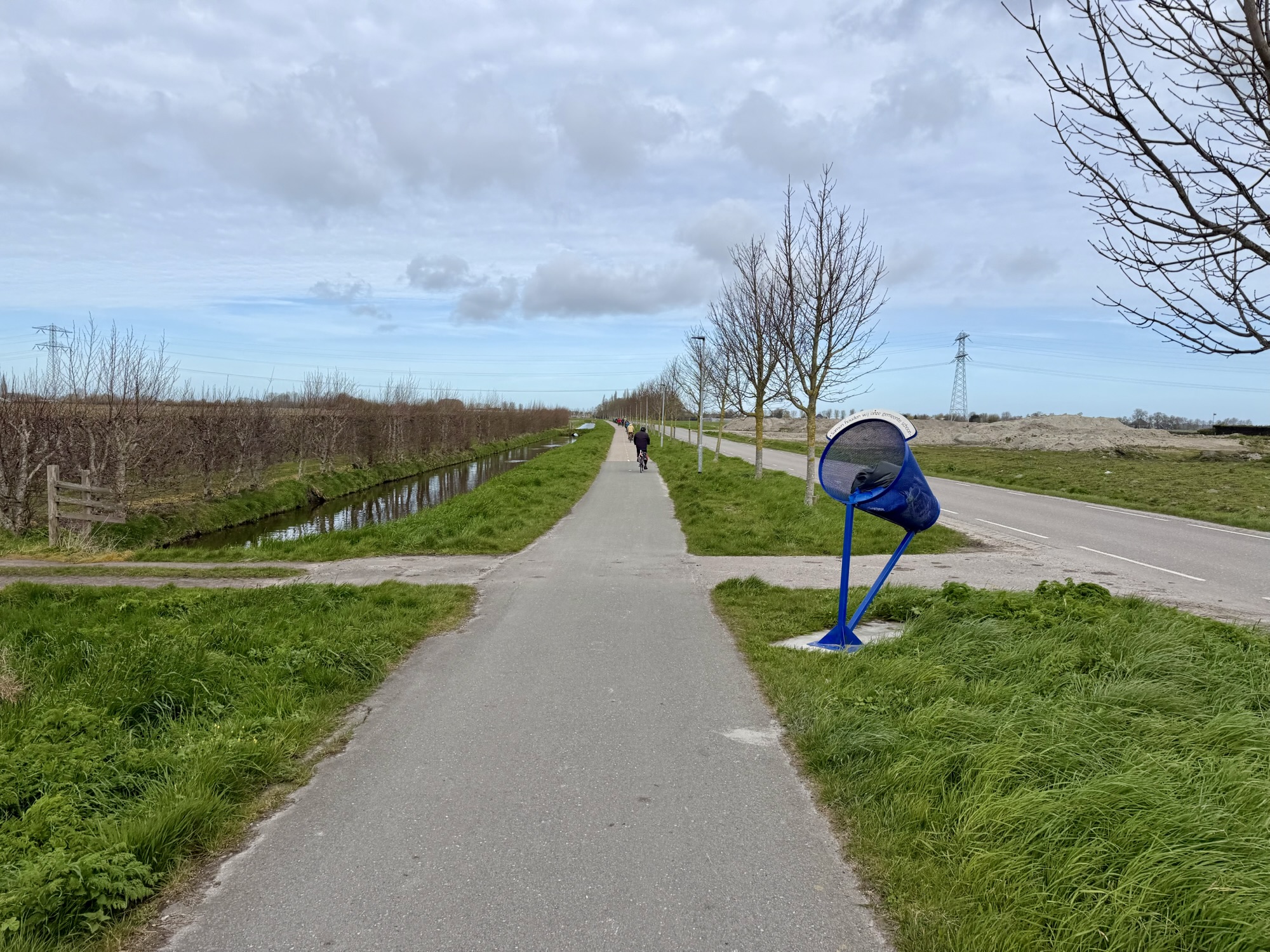
We would regularly see these garbage cans, which were angled so one can throw garbage away without stopping. I think Dutch people must have better aim than me because I don’t think I would be able to get it in. I never saw any litter on the ground around them.
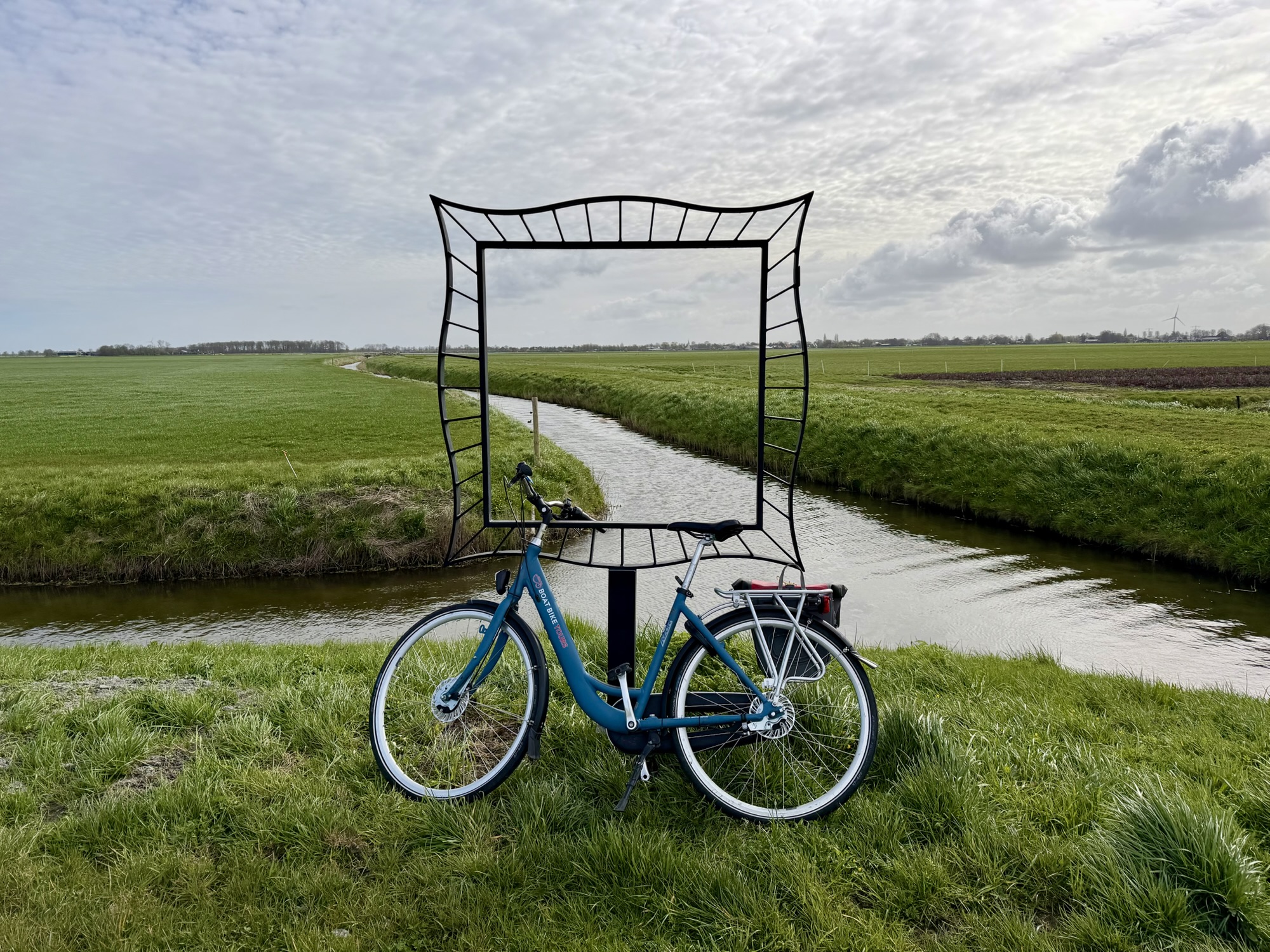
We saw these frames at various points along our route. They had QR codes on them that lead to Vimeo videos which presumably explain what you’re seeing, but require a Vimeo account which I do not have.
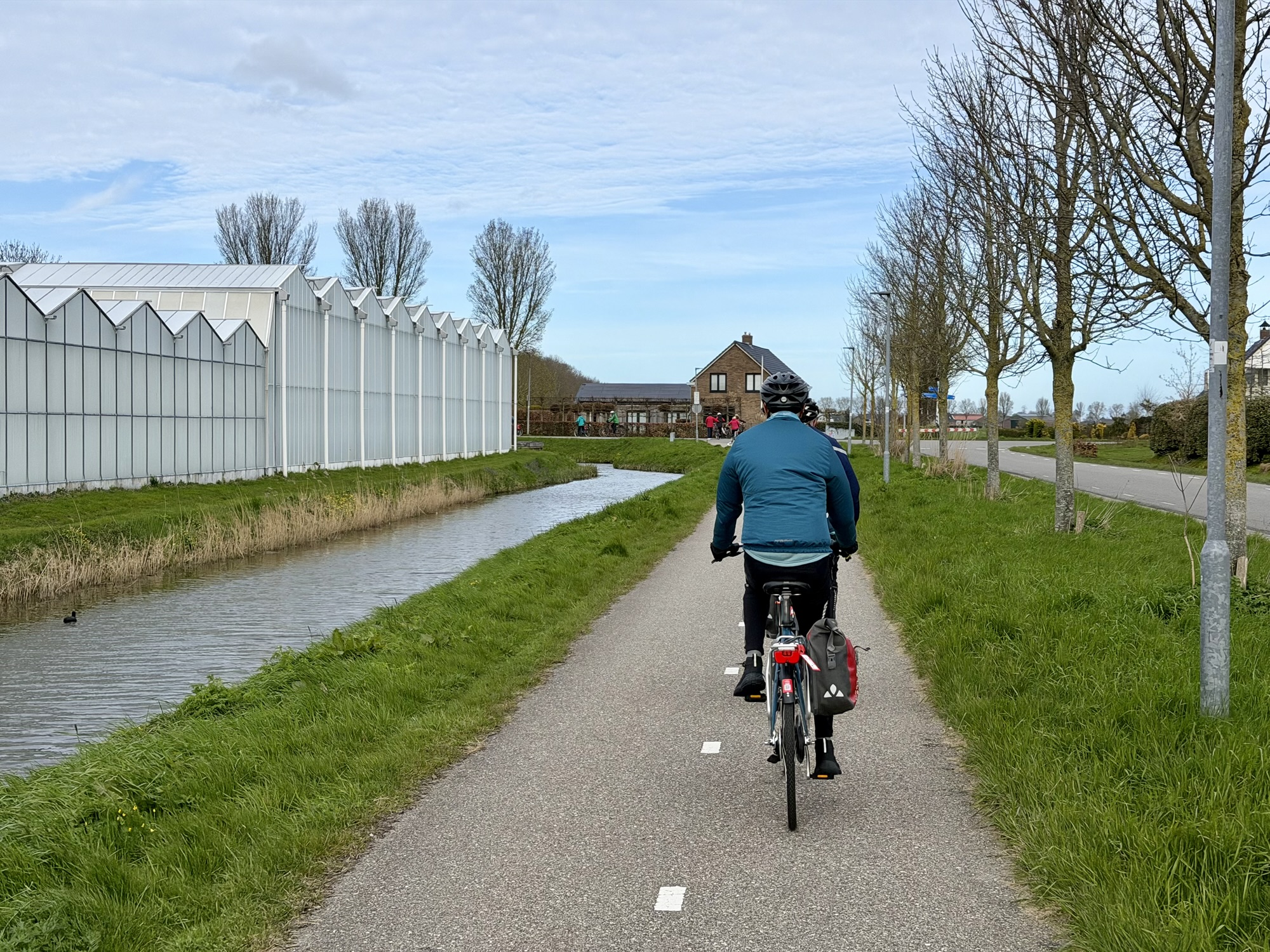
We passed several areas that had huge numbers of greenhouses lining the road.
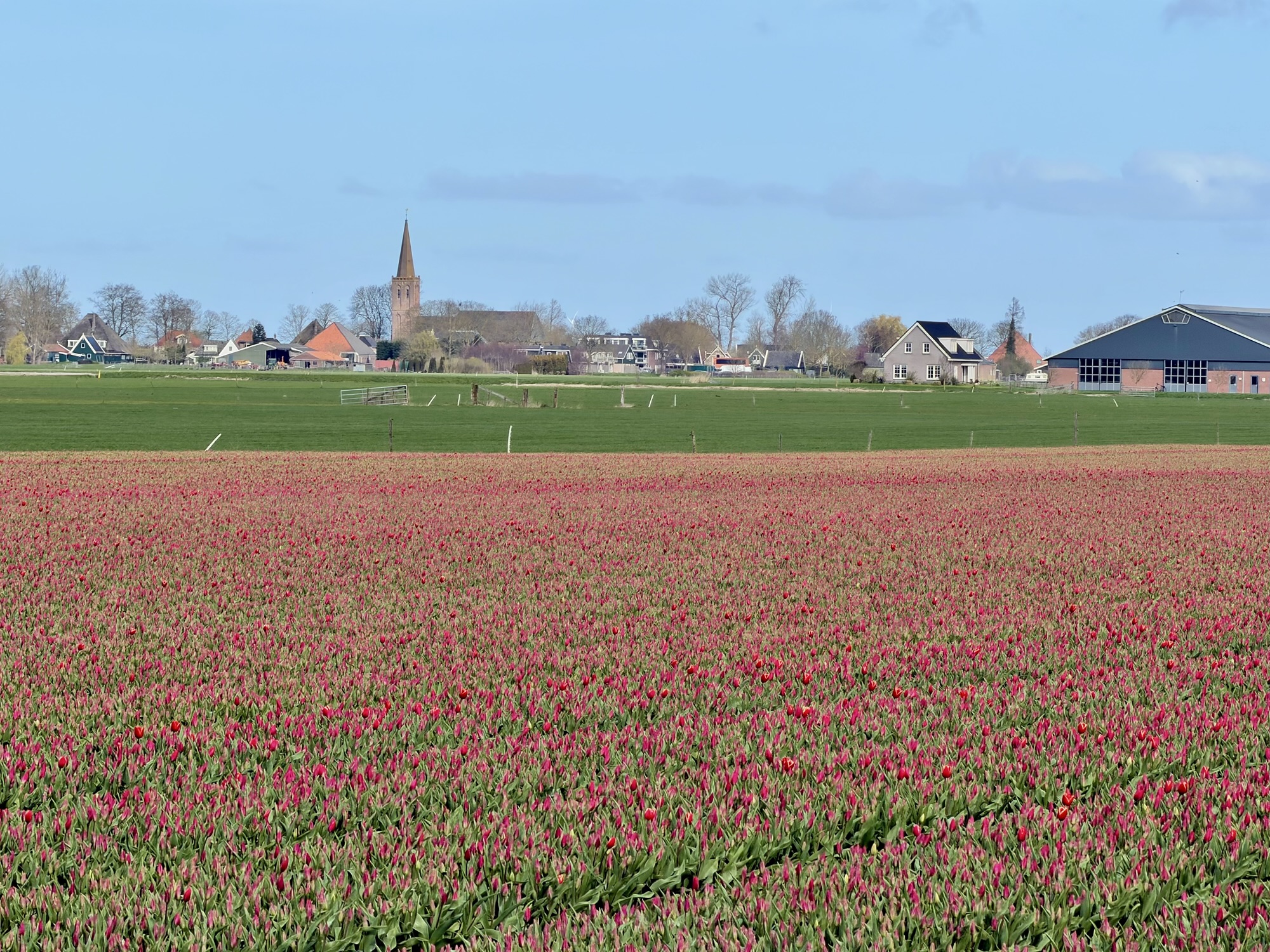
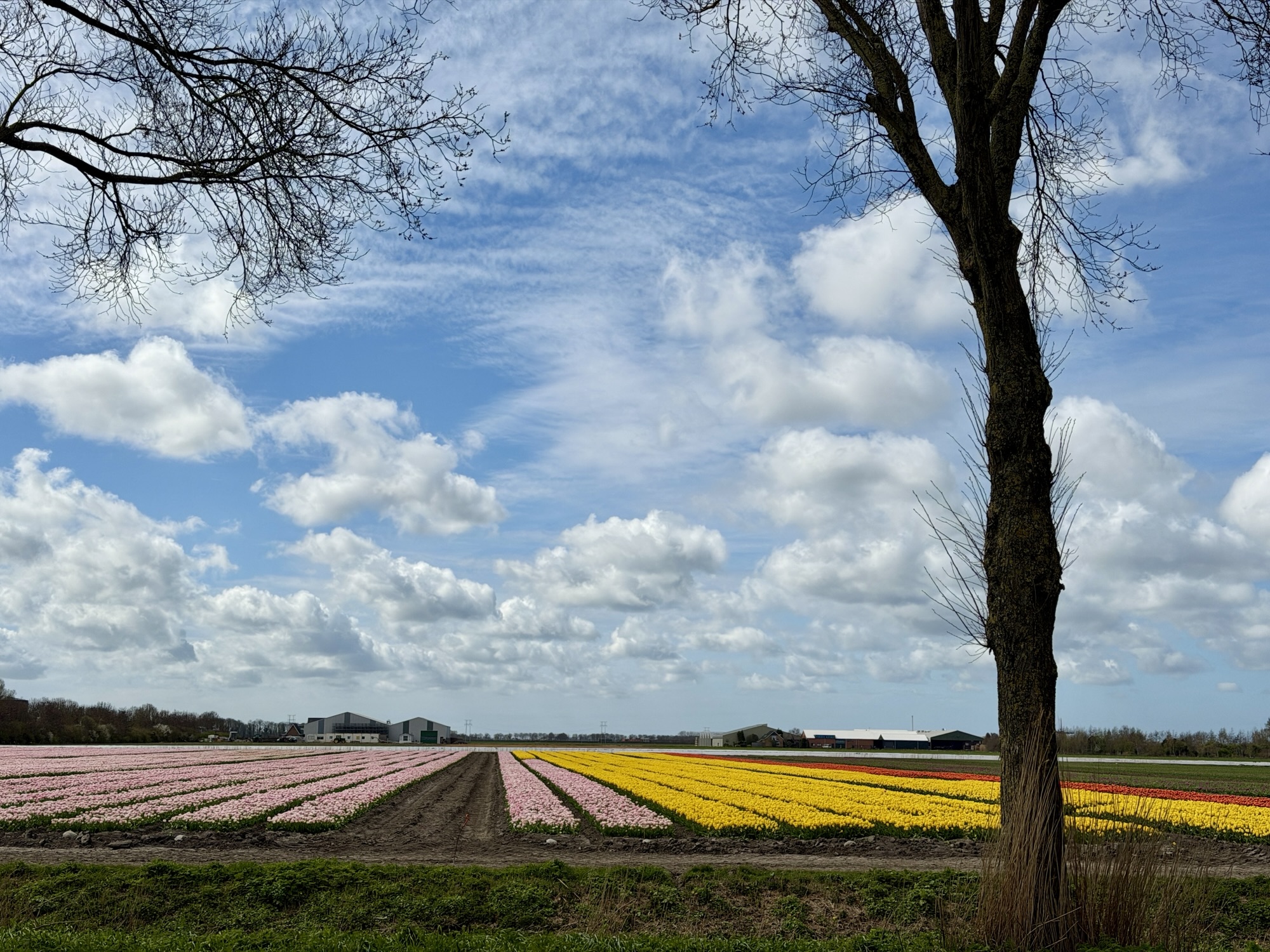
Just after this lovely little town, we came across our first tulip field.
This was one of the narrower bike paths that we travelled on.
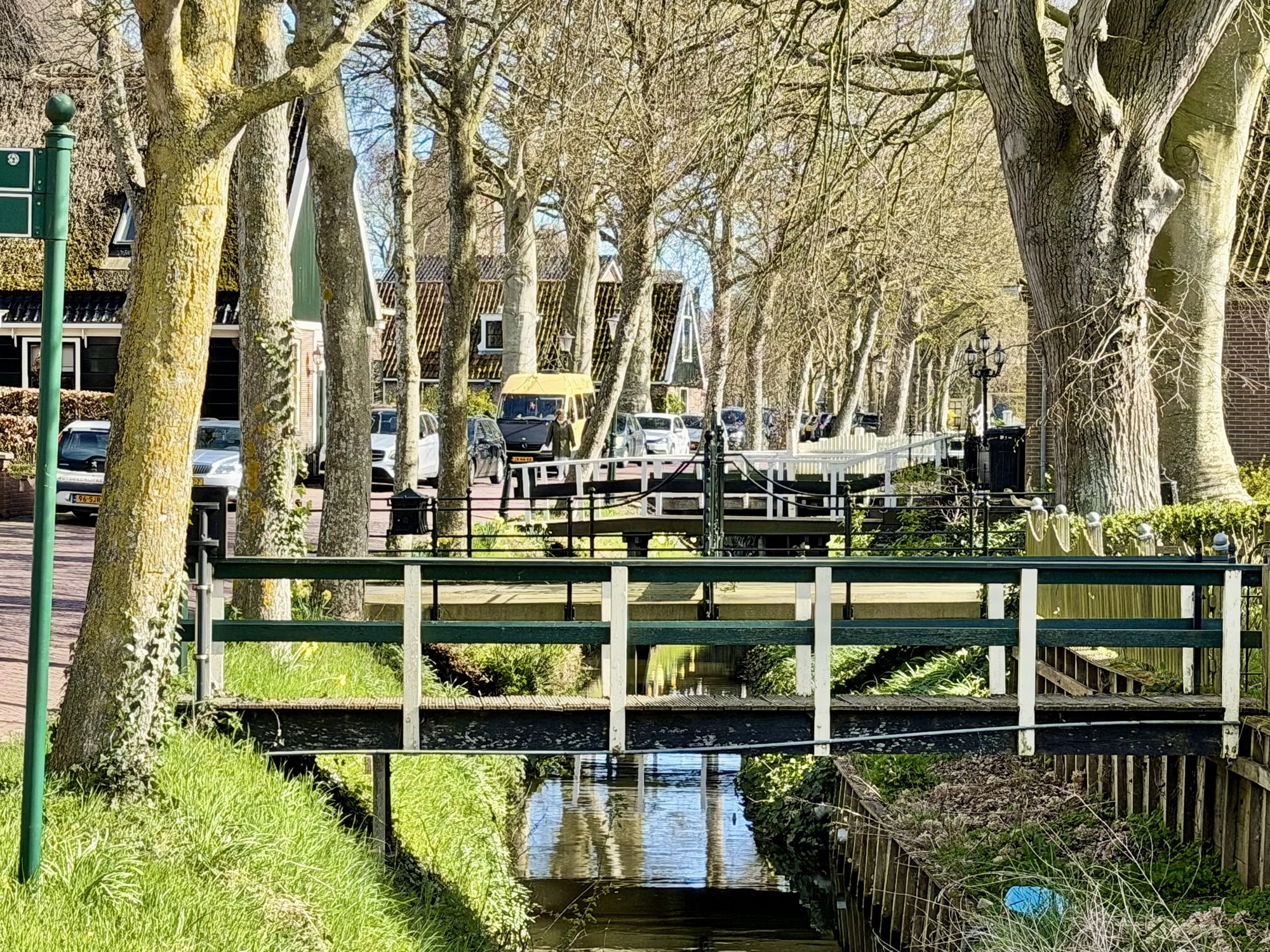
These series of bridges led from the road to people’s homes.
We were often running into other small groups from the barge.
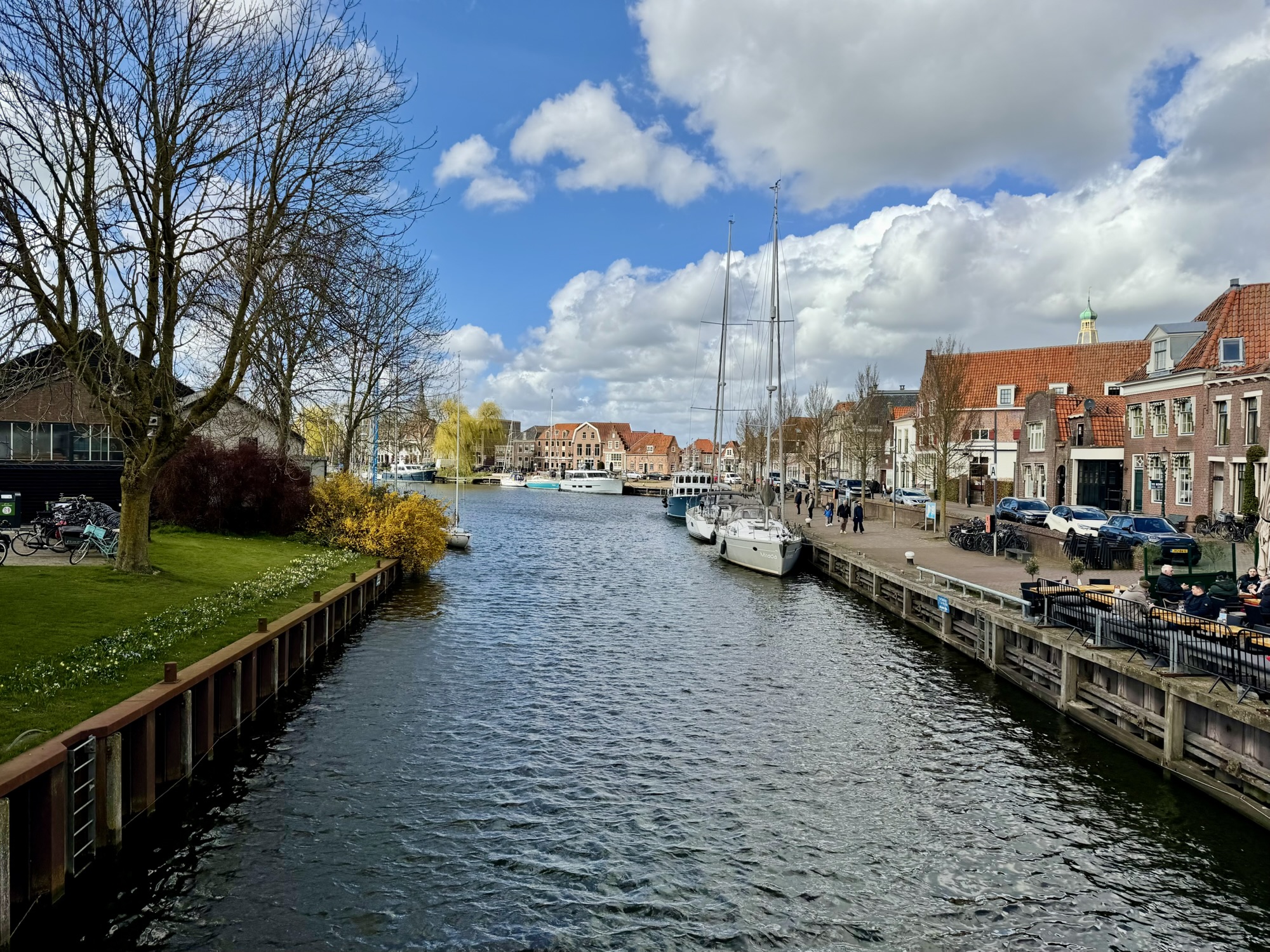
We stopped for lunch in Medemblik. It was cool and windy, but we found a somewhat sheltered step to sit on to eat our bagged lunch. We listened to the church bells on the hour and a half hour as we ate our lunch.
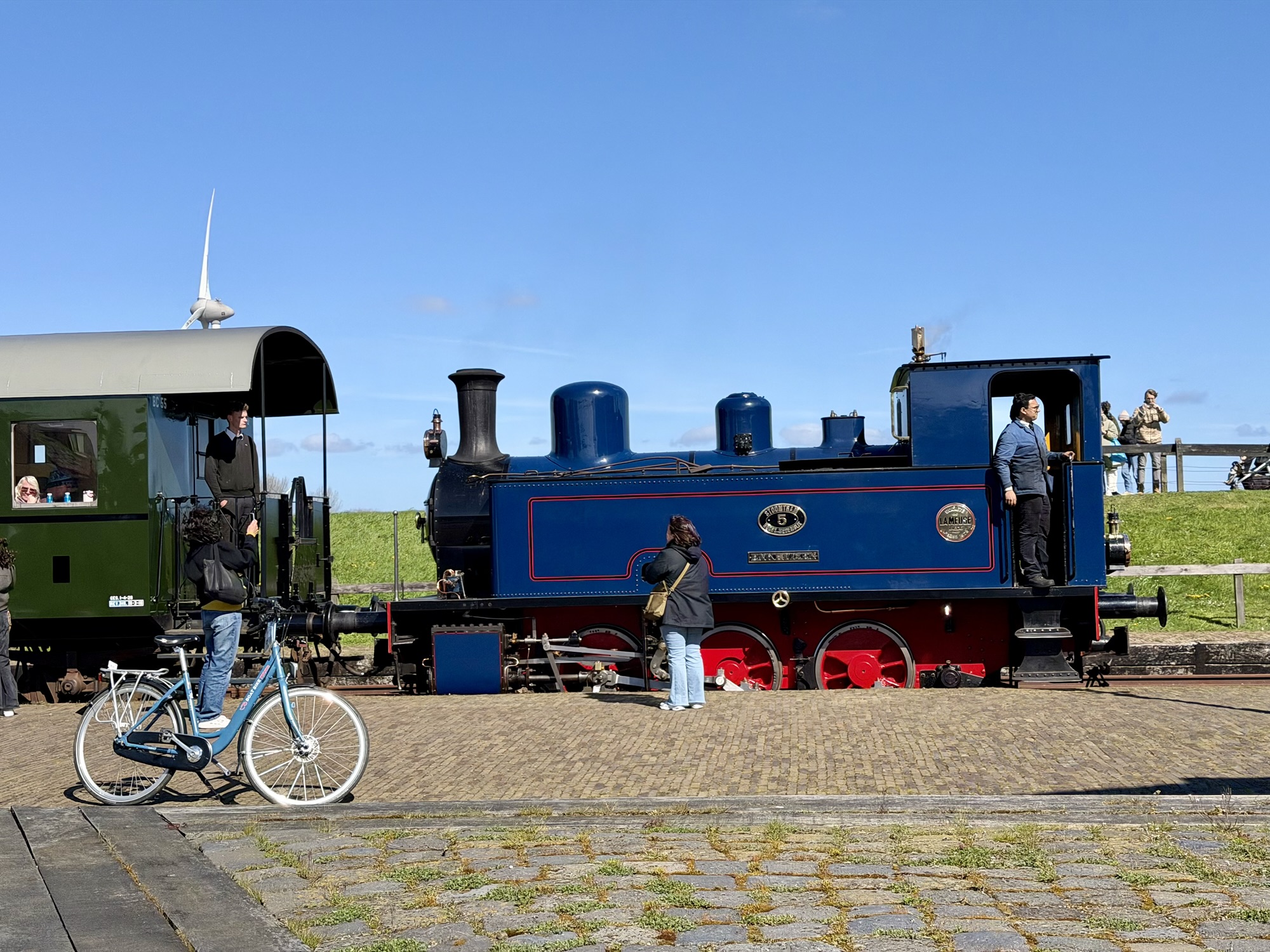
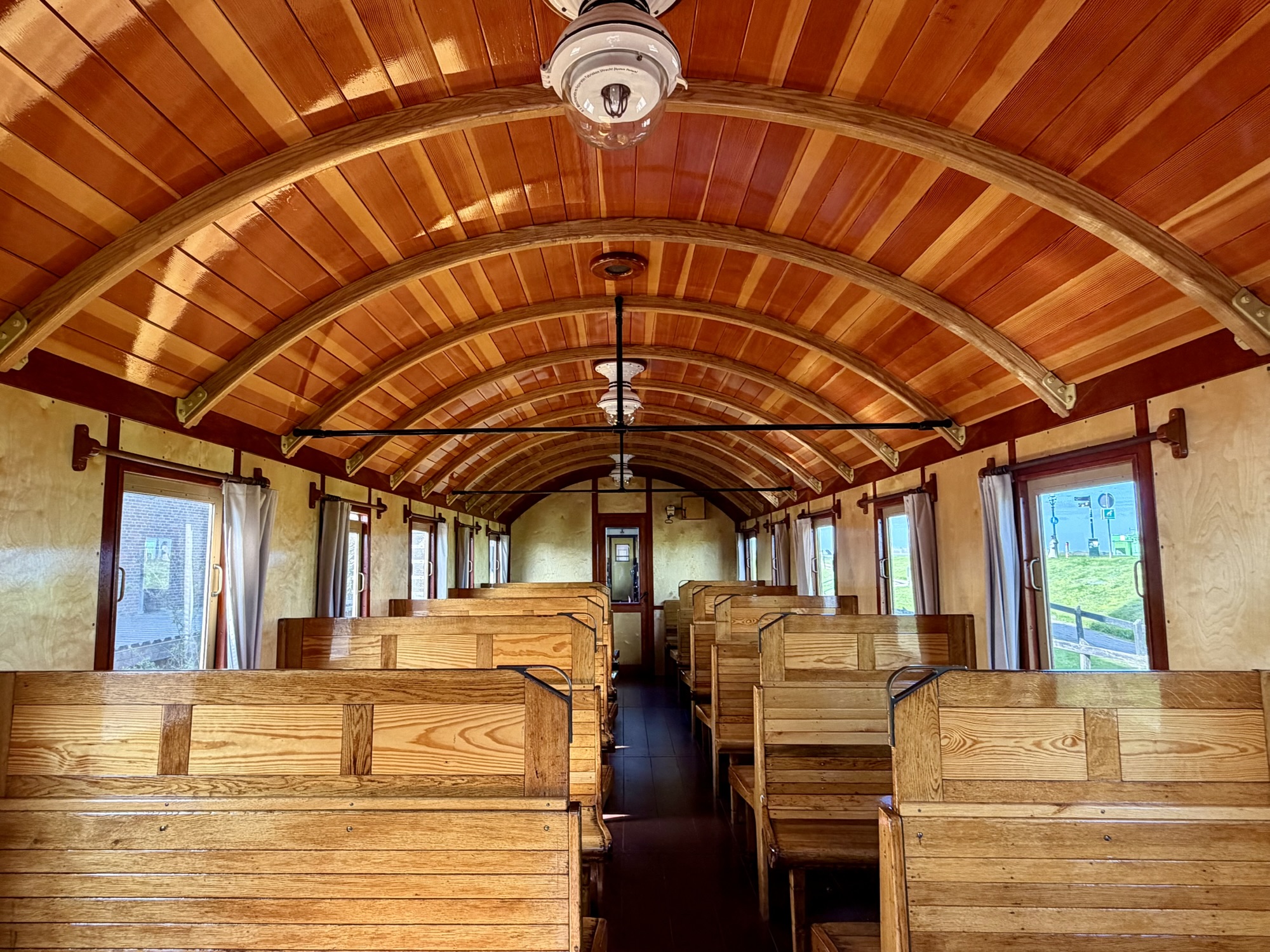
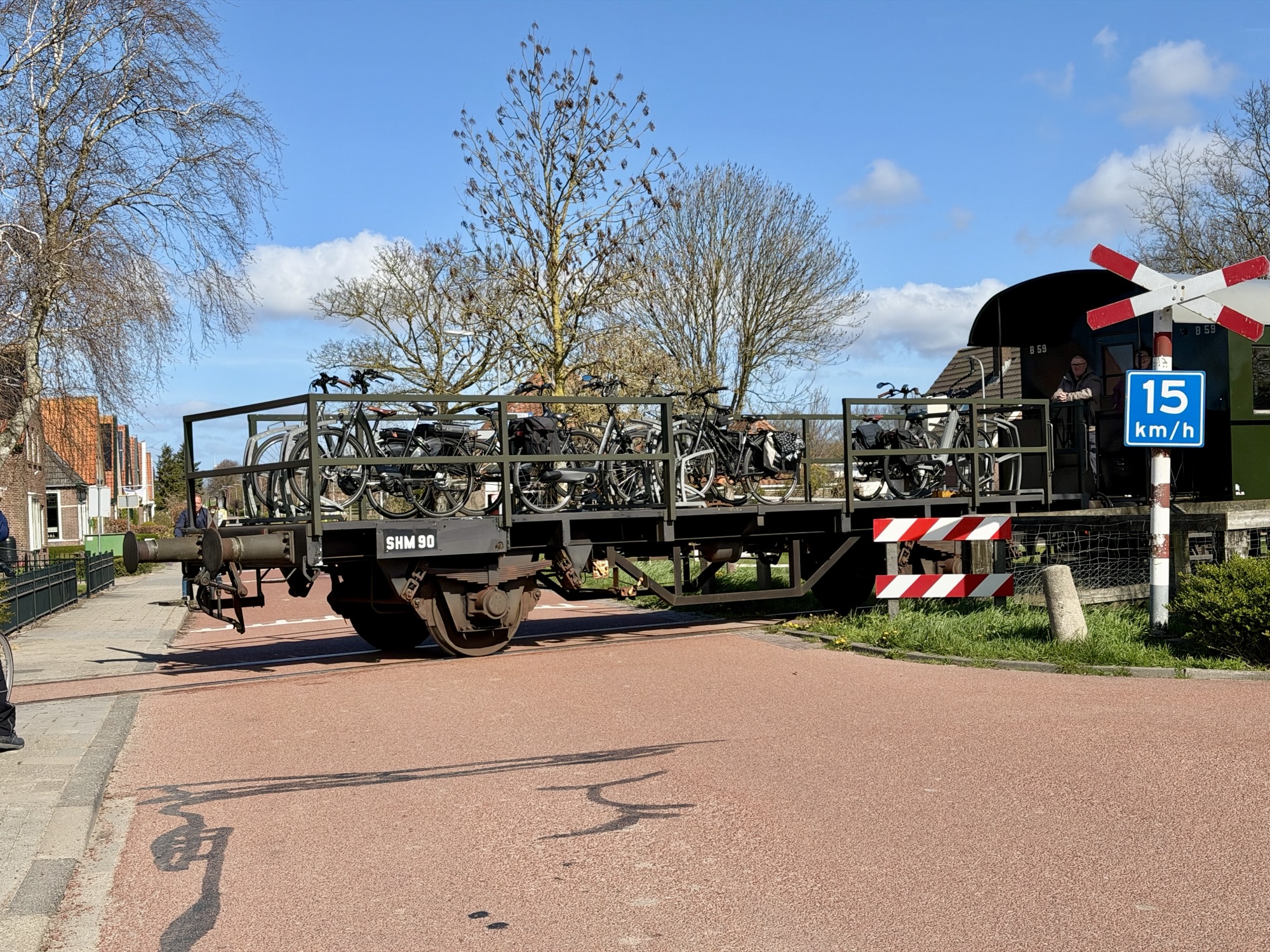
Just after we sat down the Hoorn-Medemblik steam train pulled in to the station. It had quite a few passenger coaches, a buffet car, and a bike car. Passengers had time to explore the city before the return trip. There was also a museum there, but I didn’t take time to go in.
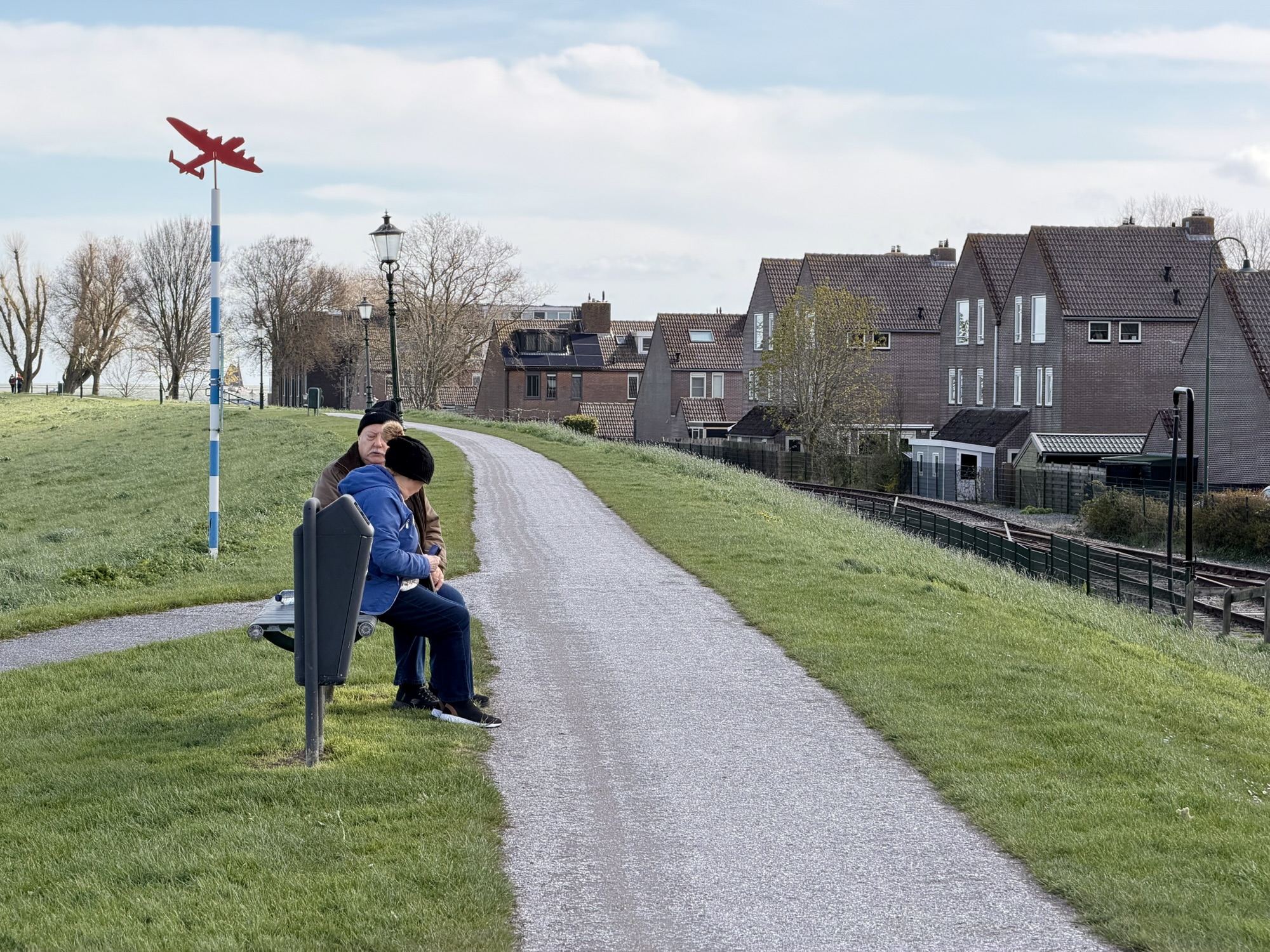
There was a large embankment behind the building. I saw several of these posts with planes along our route. This memorial in Medemblik marks two RAF bomber crashes in the IJsselmeer during World War II. A Hampden in 1942 and a Stirling in 1943 were both shot down by German night fighters. The crews—young airmen from Britain, Canada, and New Zealand—lost their lives. The sign commemorates them as part of the “Traces of the Air War” project.
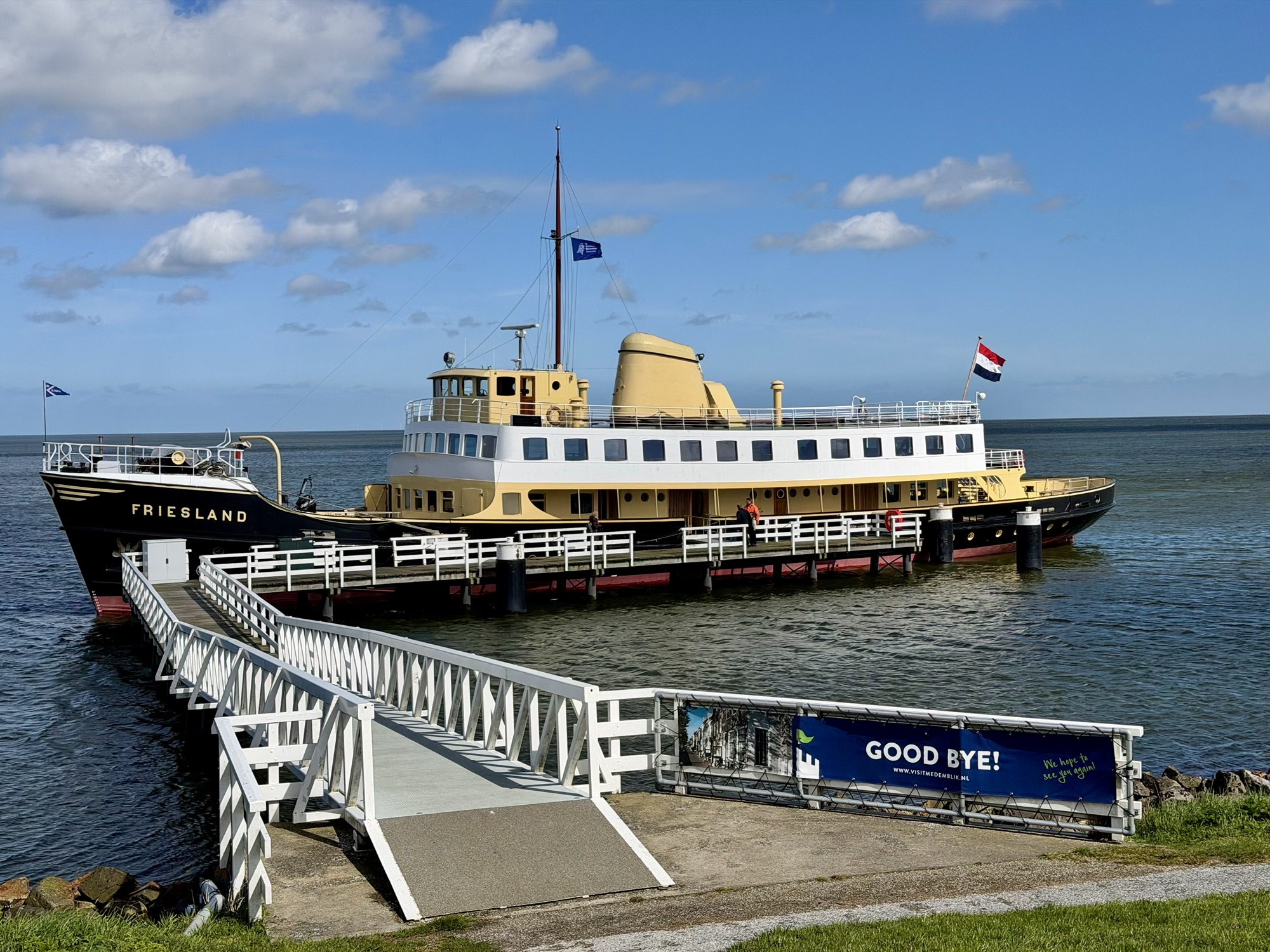
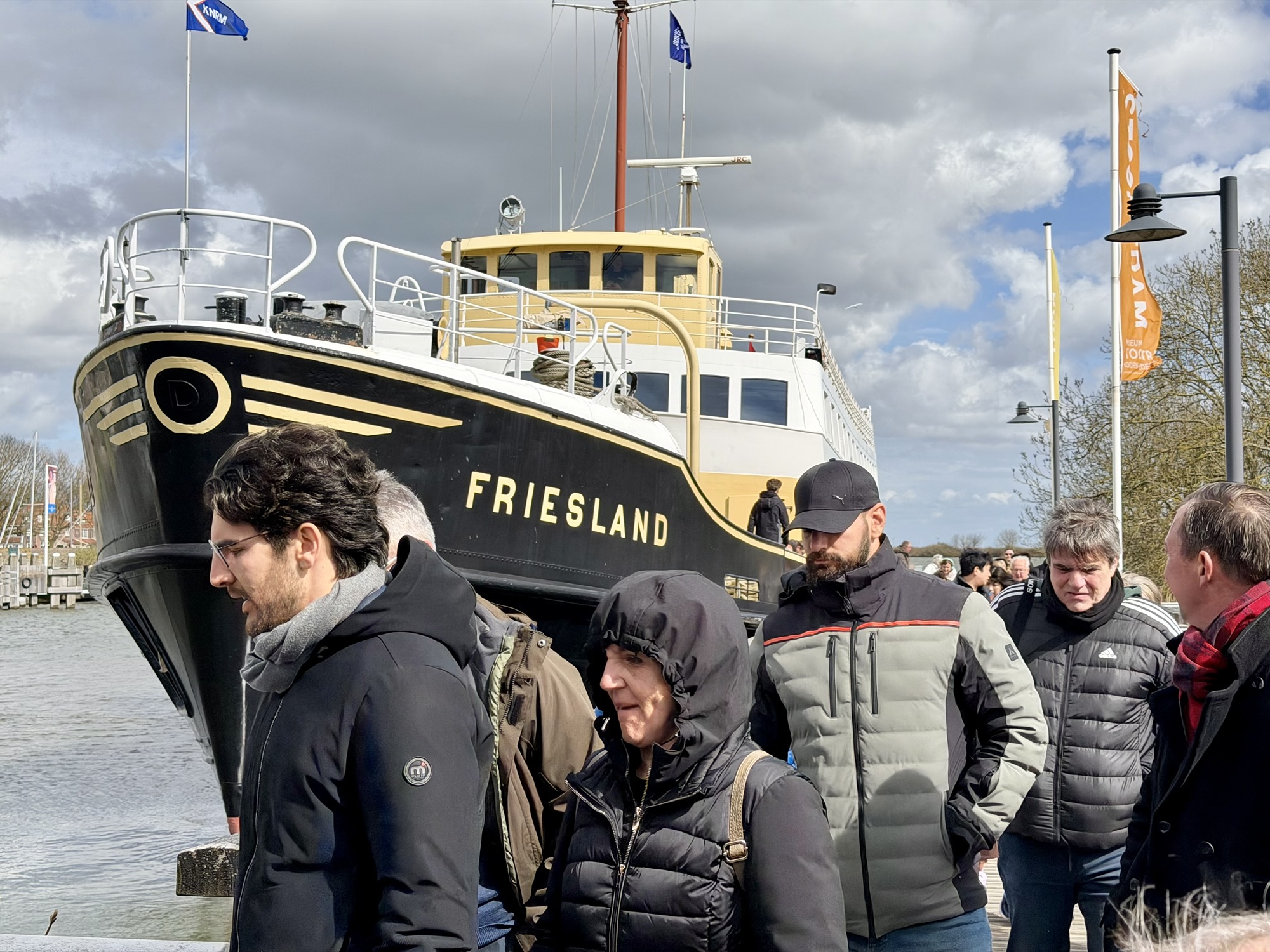
There was a day excursion ship moored near the station.
This is a marina in Medemblik.
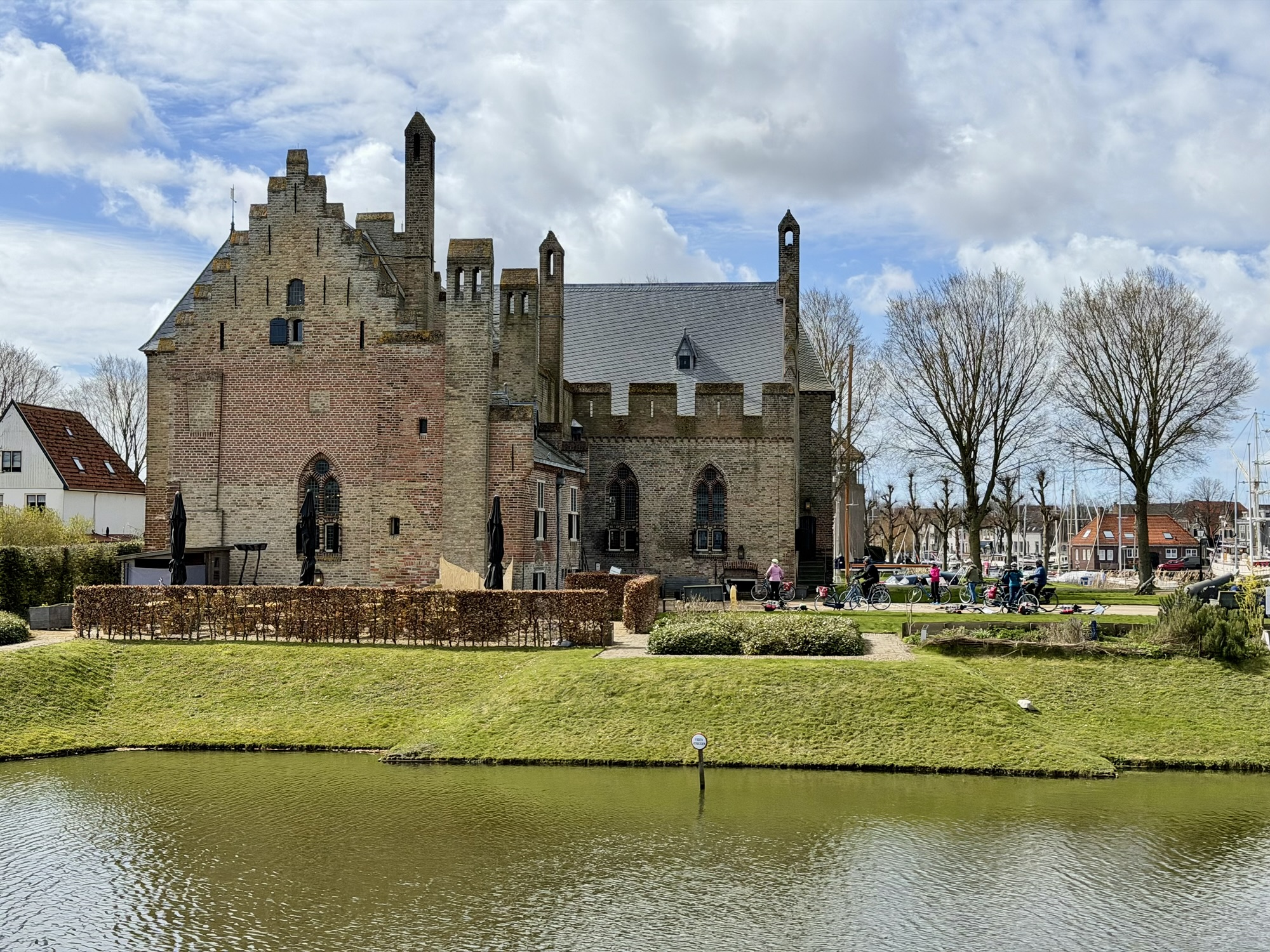
Radboud Castle. I decided to keep riding, but Alina visited. I was on my own for the last 24km. From the website: Radboud Castle was built by Count Floris V as one of five castles used, among other things, to keep the rebellious West Frisians under his thumb. Floris built these castles in the period 1282-1287. A record pace, normally in those days it took about 10 years to build one castle, let alone five. Radboud Castle is the only castle that remains. The castle has a moat.
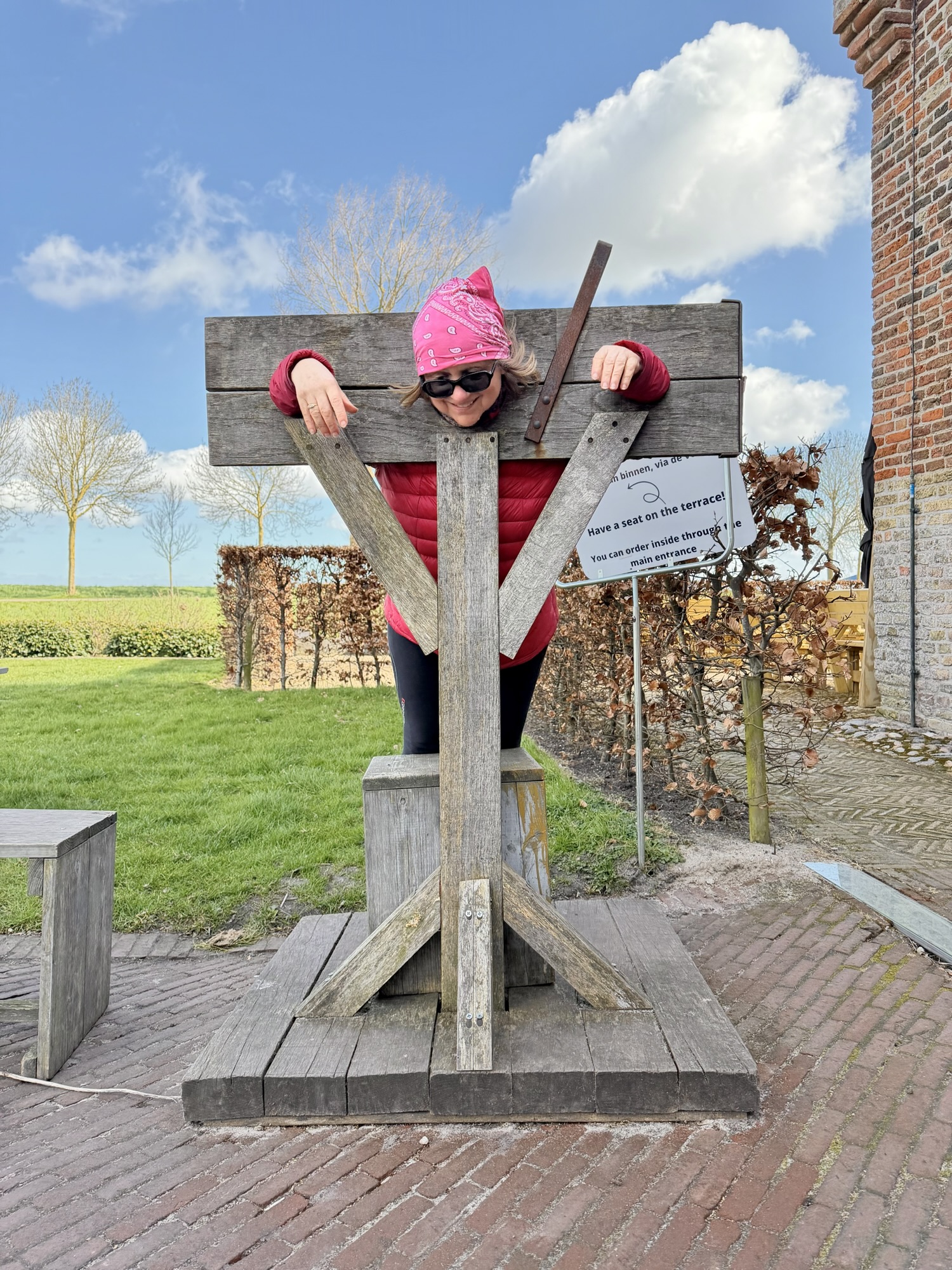
Alina posed in the stocks.
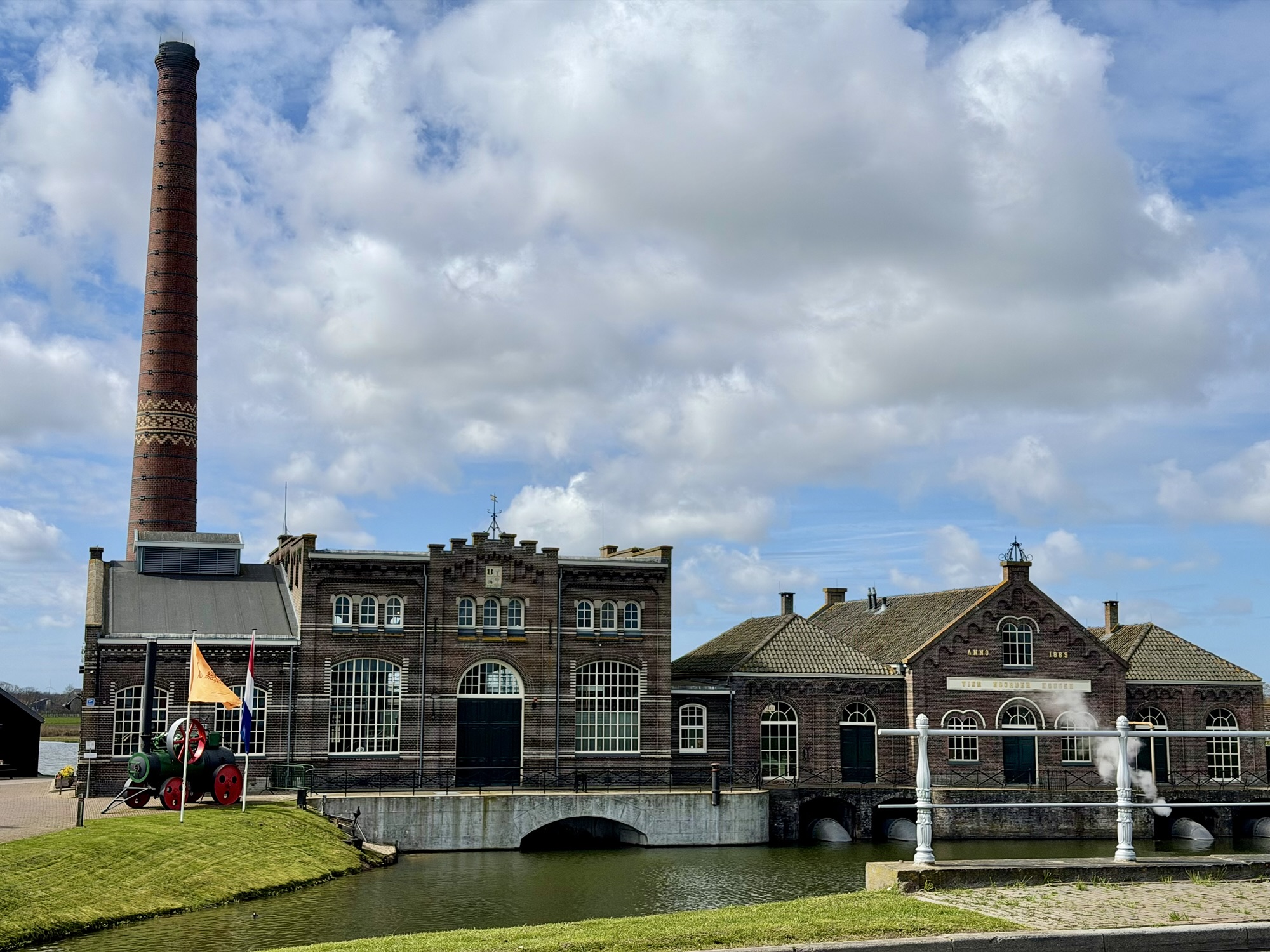
The Dutch Steam Engine Museum (Nederlands Stoommachinemuseum) in Medemblik is a premier industrial heritage site located in a former steam-powered pumping station from 1869. Situated on the IJsselmeer coast, it offers a functioning look into the history of steam technology.
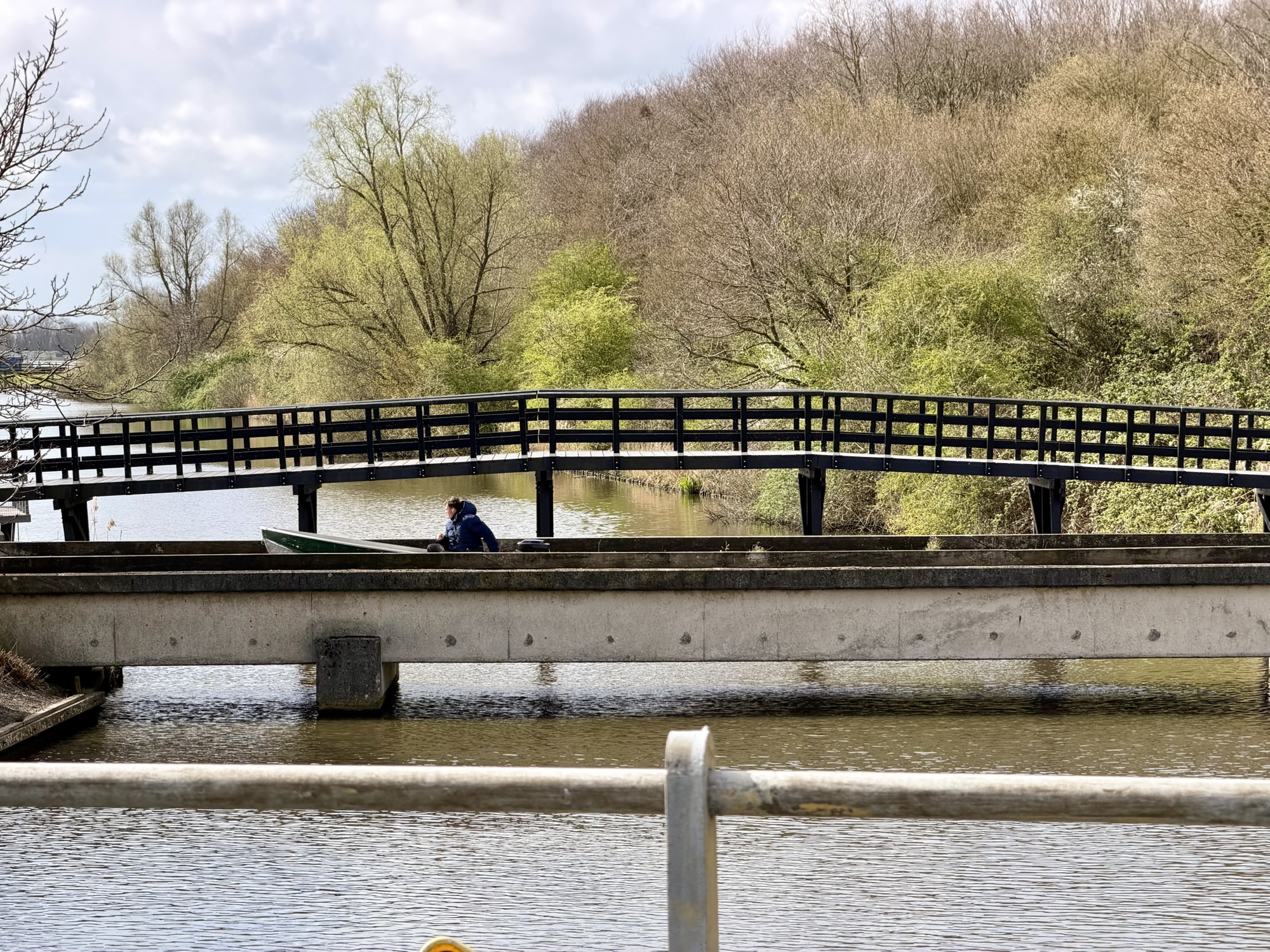
I was fortunate to see a man in a little motorboat travelling across this aqueduct over a canal.
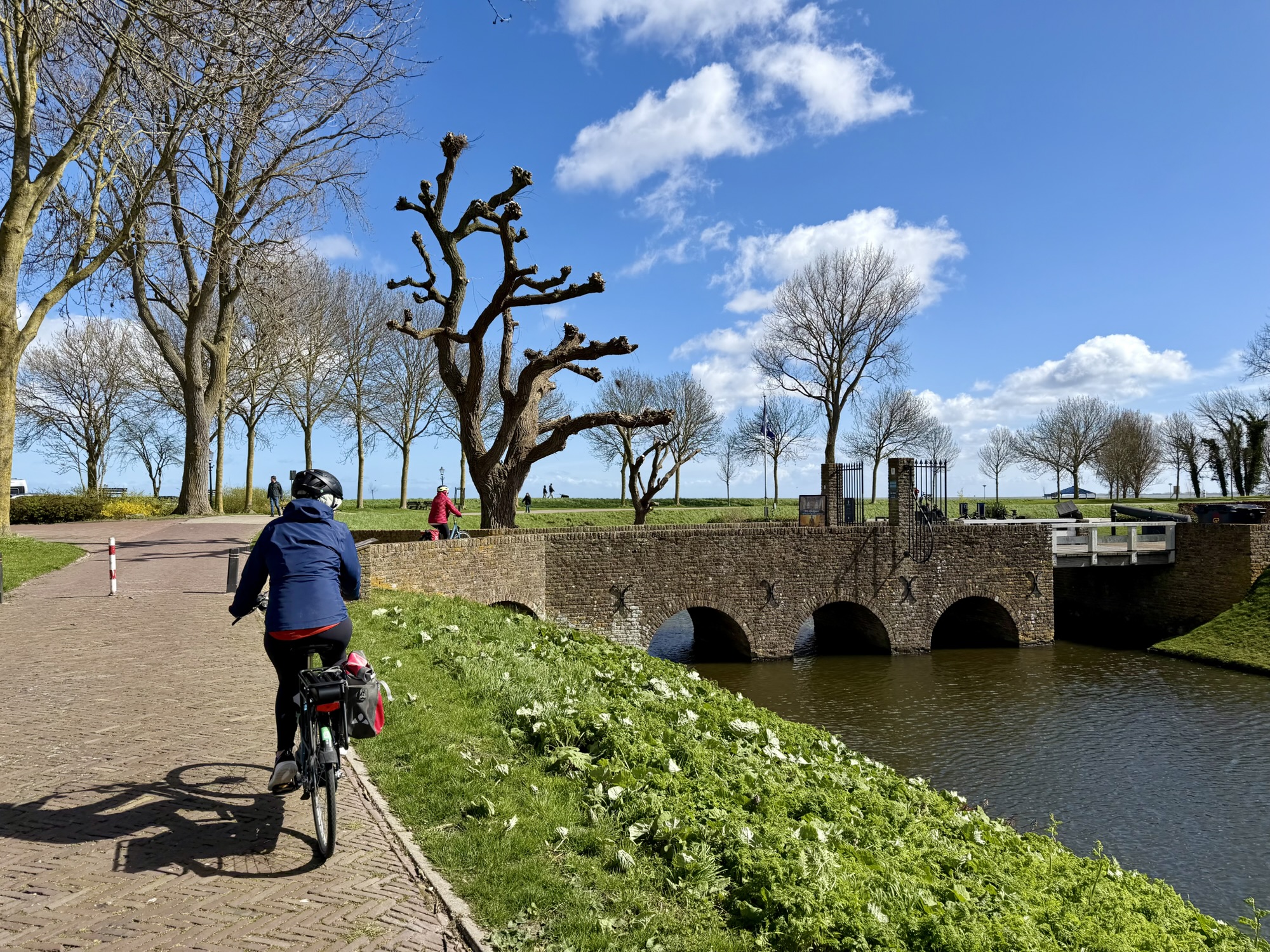
The road behind me is 60 km an hour and at the point in the picture is changing to 50 and entering of the ledge. The road is narrowed to ensure safe driving in the village.
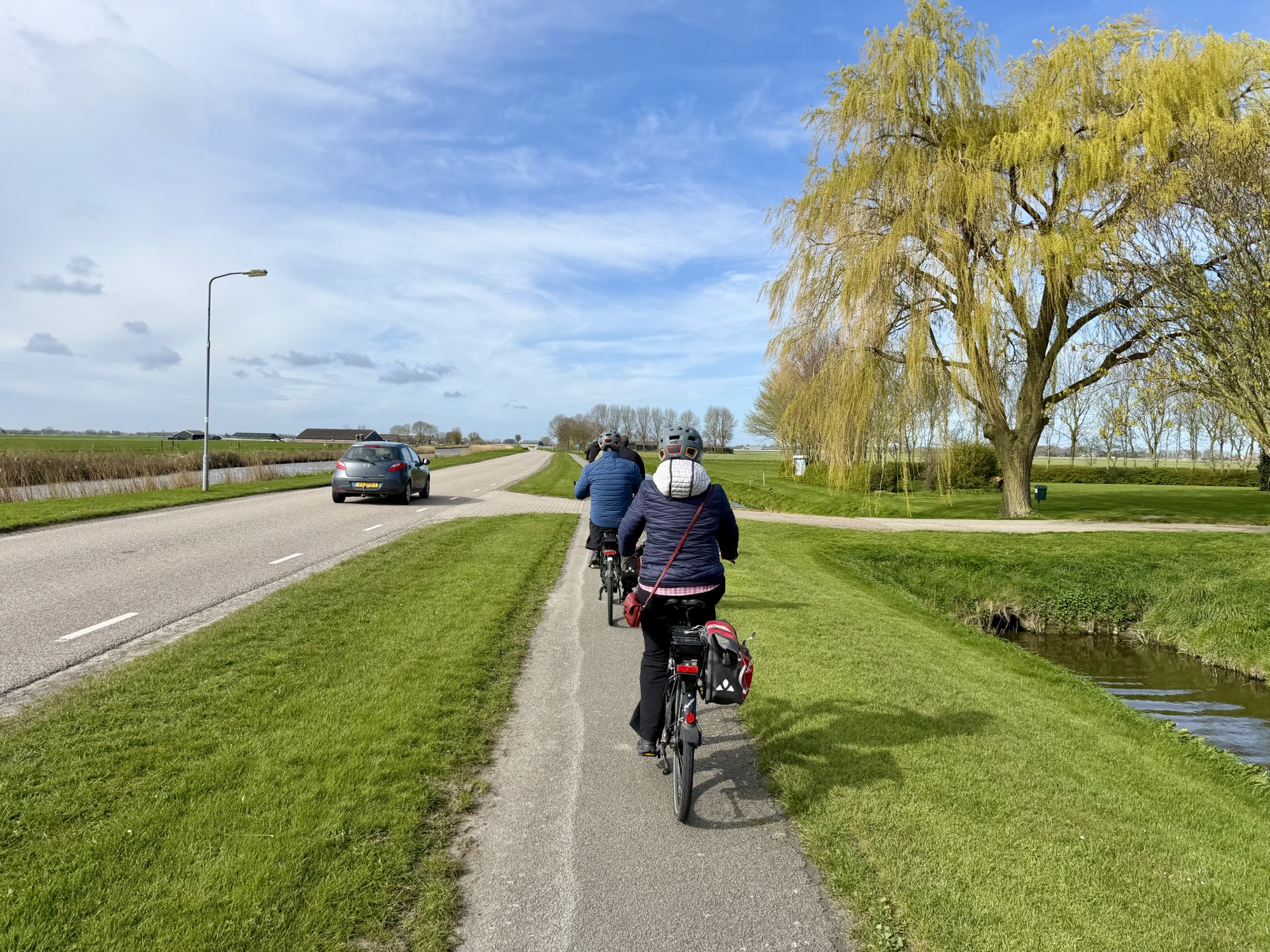
In many places, the bidirectional bike lanes are only slightly narrower than the bidirectional car lanes.
Here you can choose from the bike path on the embankment, or the advisory bike lanes below.
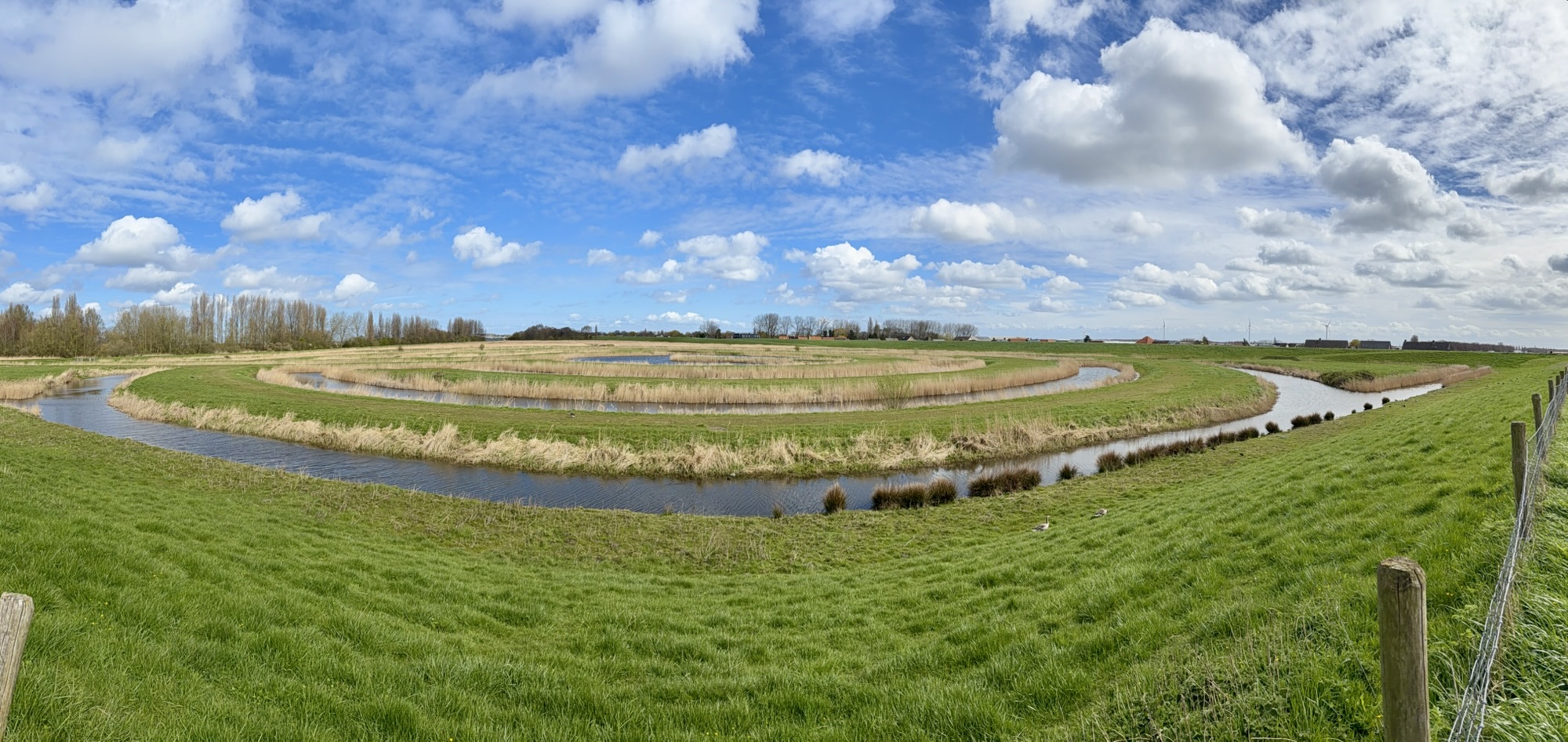
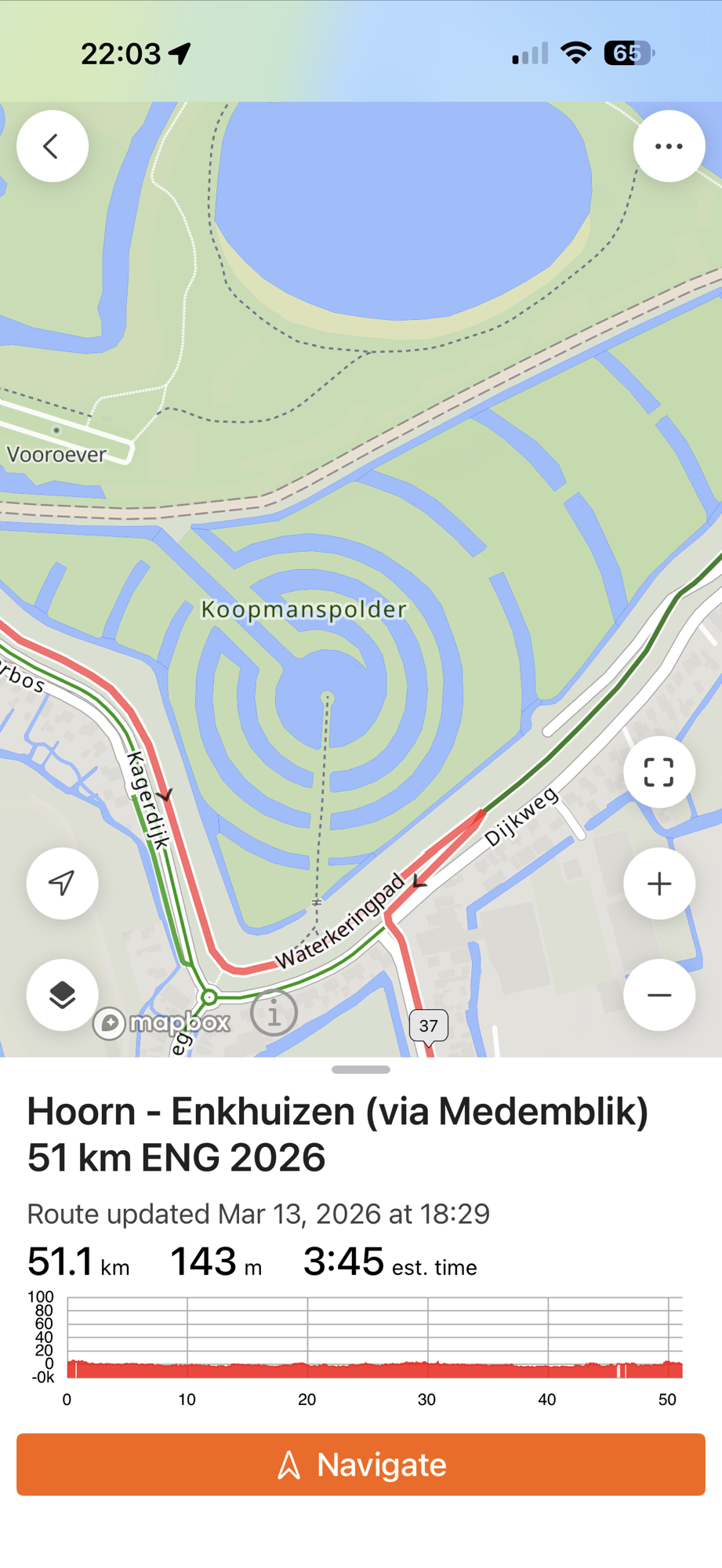
The Koopmanspolder near Andijk, is a testing ground for water management and is laid out in concentric circles.
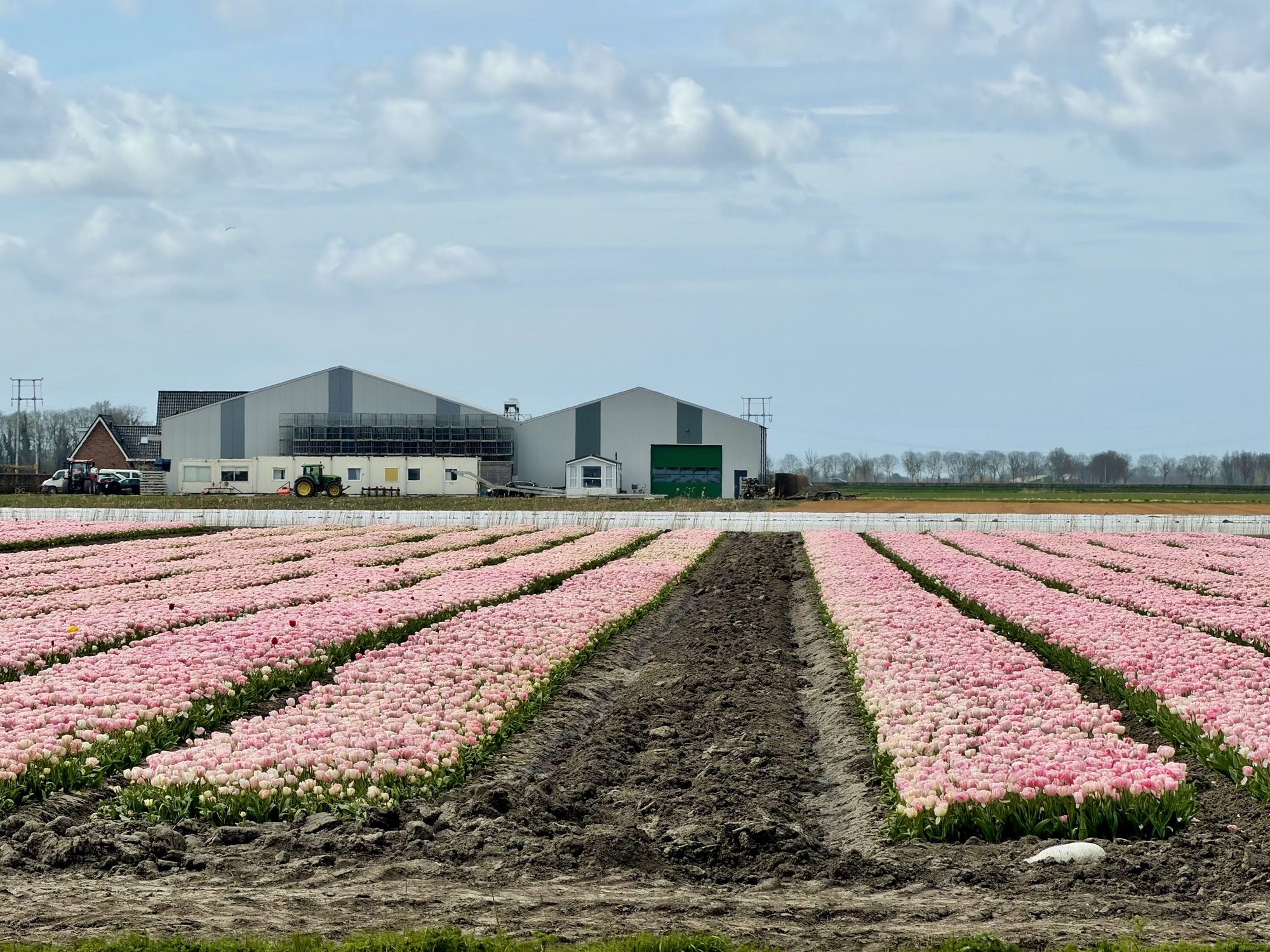
These were the most extensive tulip fields I saw all day.
We had a few kilometres through a treed area.
This is another spot where you can see that the bike lanes are almost as wide as the road.
I was getting pretty tired as I entered Enkhuizen. Here are a few of the things that I saw.
The day excursion ship I saw at lunch was just docking as I arrived by bike.
I crossed this canal along the way to the docks. The Ride with GPS file provided to us by the tour company led me right down to the docks, but I couldn’t find our ship. They have established a WhatsApp group for questions so I asked where the ship was and Simone immediately dropped a pin showing that they were just over a kilometre away and what the route was. I used Google maps to get back to the ship.
I sat down and started reviewing my photos and found that about 80% of them were out of focus. I’ve never experienced this before, and I attributed it to the fact that I had dropped the phone this morning. I googled it and it was consistent with the lenses being damaged inside the phone. I spent time I would otherwise have been working on the blog deleting all the fuzzy pictures. I was quite upset to lose all those pictures and worried about what would happen in the days to come. I took several pictures on all the lenses and they were sharp. I decided to turn off the phone and turn it on again. At dinner, I went into the recently deleted photos to show Mark what they looked like and they were all sharp! I was overjoyed to discover that it seemed to be a software issue solved by turning the phone off and on again. Fingers crossed for the coming days.
Dinner was served at six. We have been assigned tables and table mates.
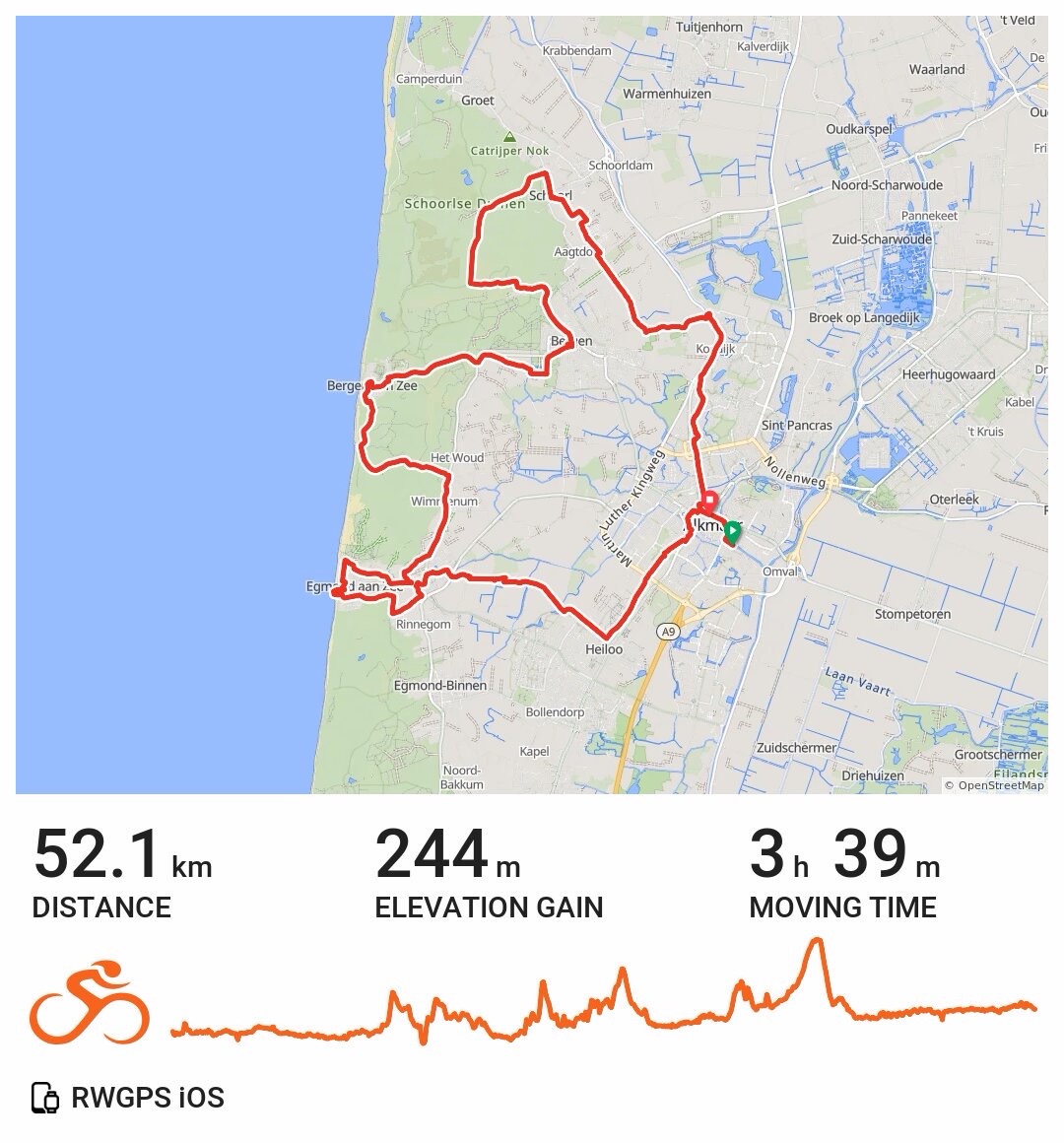
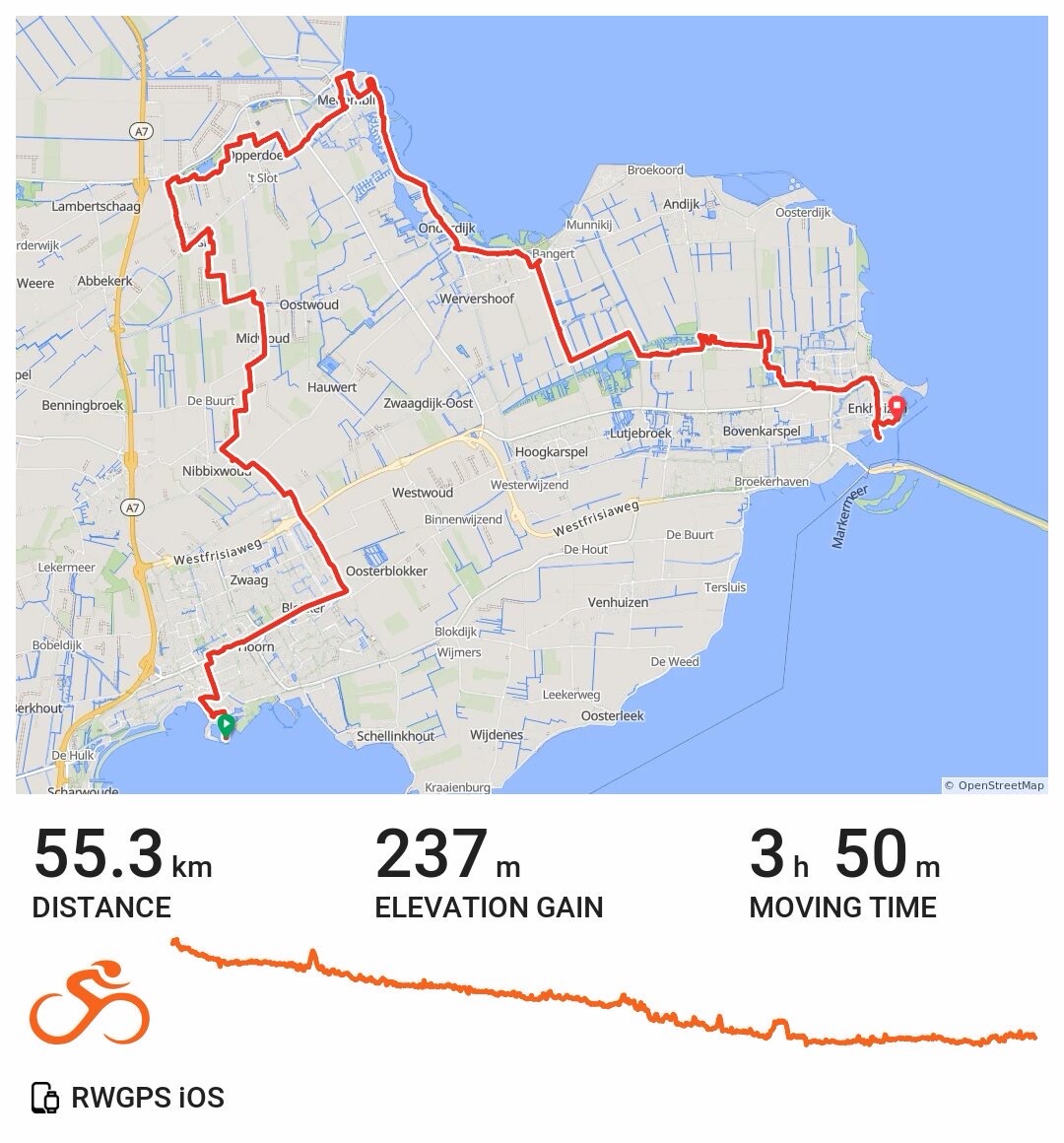
Here is a map of our route for the day. The wind was very strong, gusting to over 50 kph, but for much of the ride it was at our side or back, so it wasn’t as troublesome as I expected, when I looked at the forecast this morning.
Tomorrow we sail from about 6 AM to nine and begin our ride in a different city.
We were able to have a relaxing morning because the hotel checkout was at noon. Boarding the barge officially began at 1:30. The trip on train and ferry between the two was about half an hour. Everyone was ready to go early and we were in the lobby by 11:45.
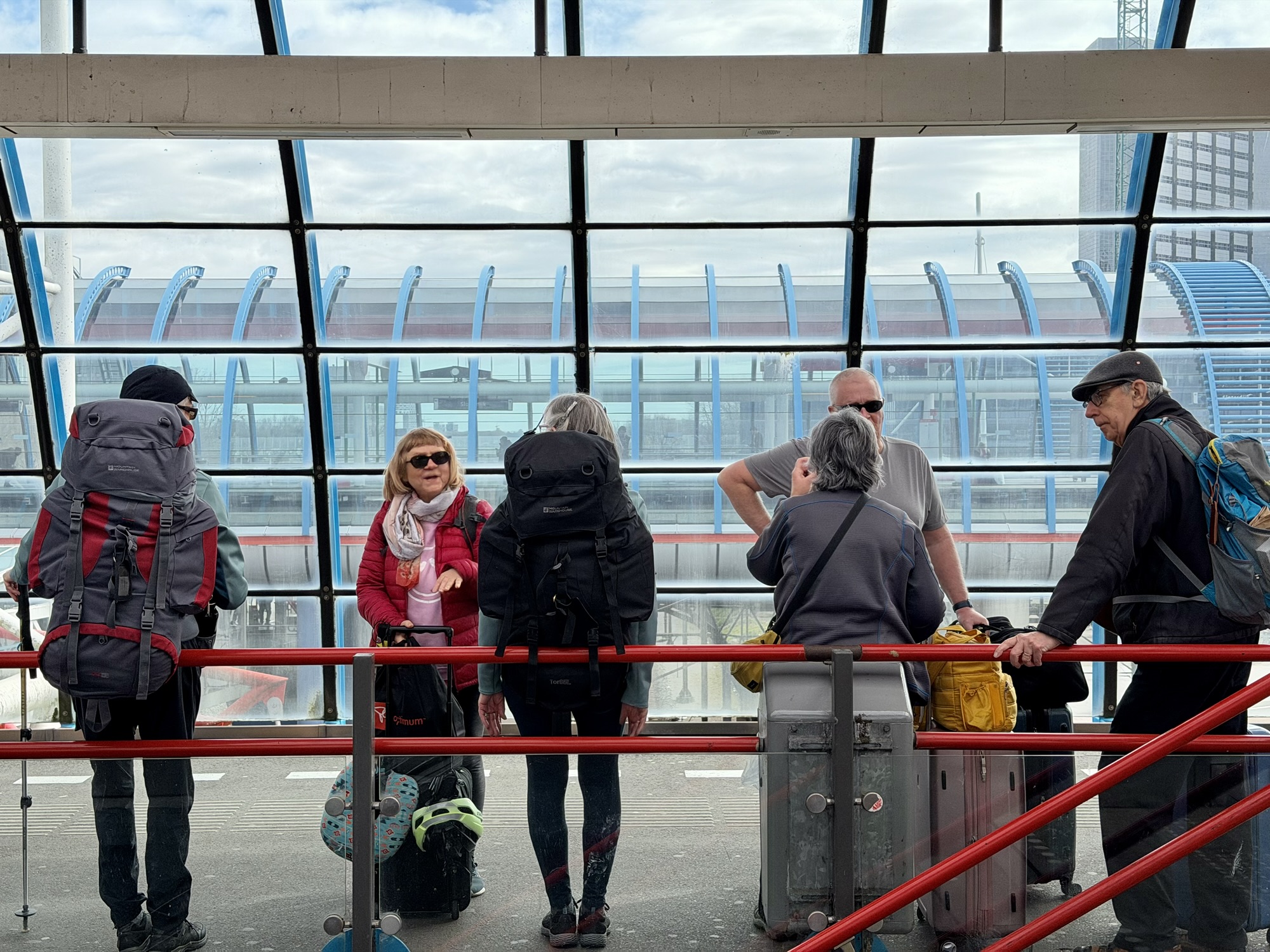
It was less than a 10 minute walk to the station, even pulling our suitcases. We were soon on the platform waiting for the train.
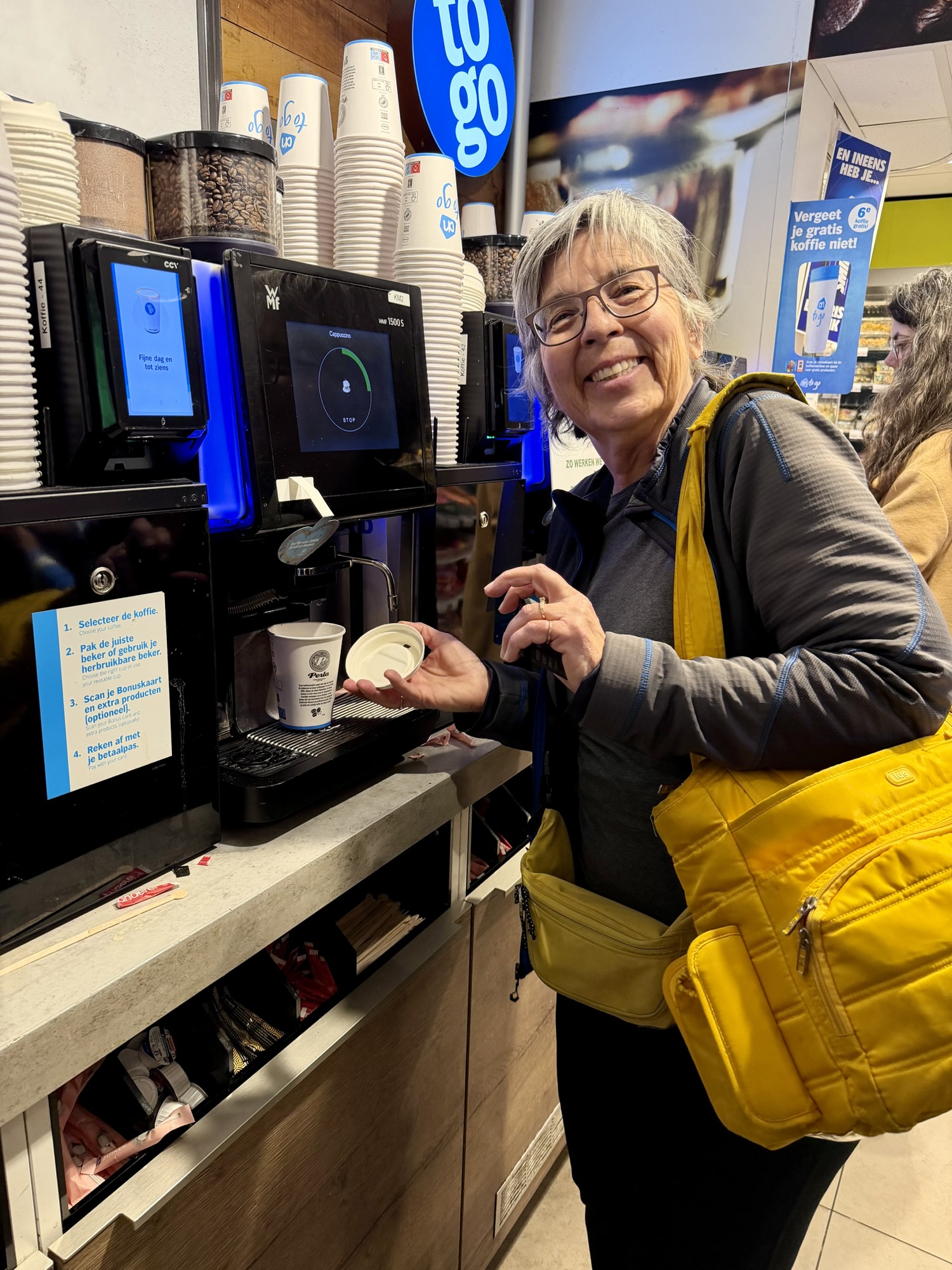
Since we had plenty of time once we were at the train station, a few of us grabbed coffees. The way the machines worked. Was you selected what you wanted and then tapped on and adjacent pad to pay. Then the machine made the coffee and you were off without interacting with a human.
I don’t think I’ll ever get used to paying for the bathroom. It was €1.1 in the train station, but since it was an hour to the official boarding time, a few of us decided that we should go.
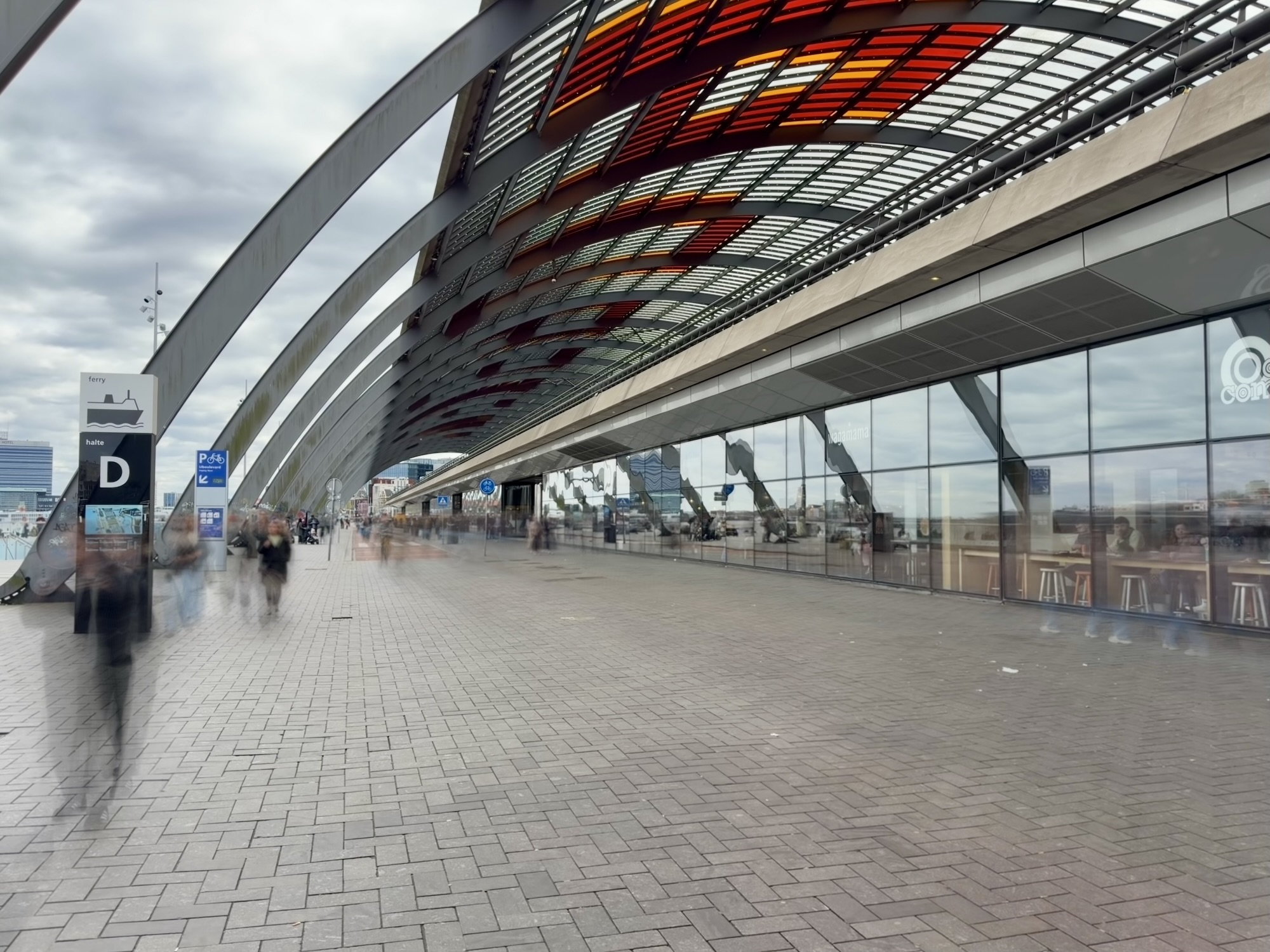
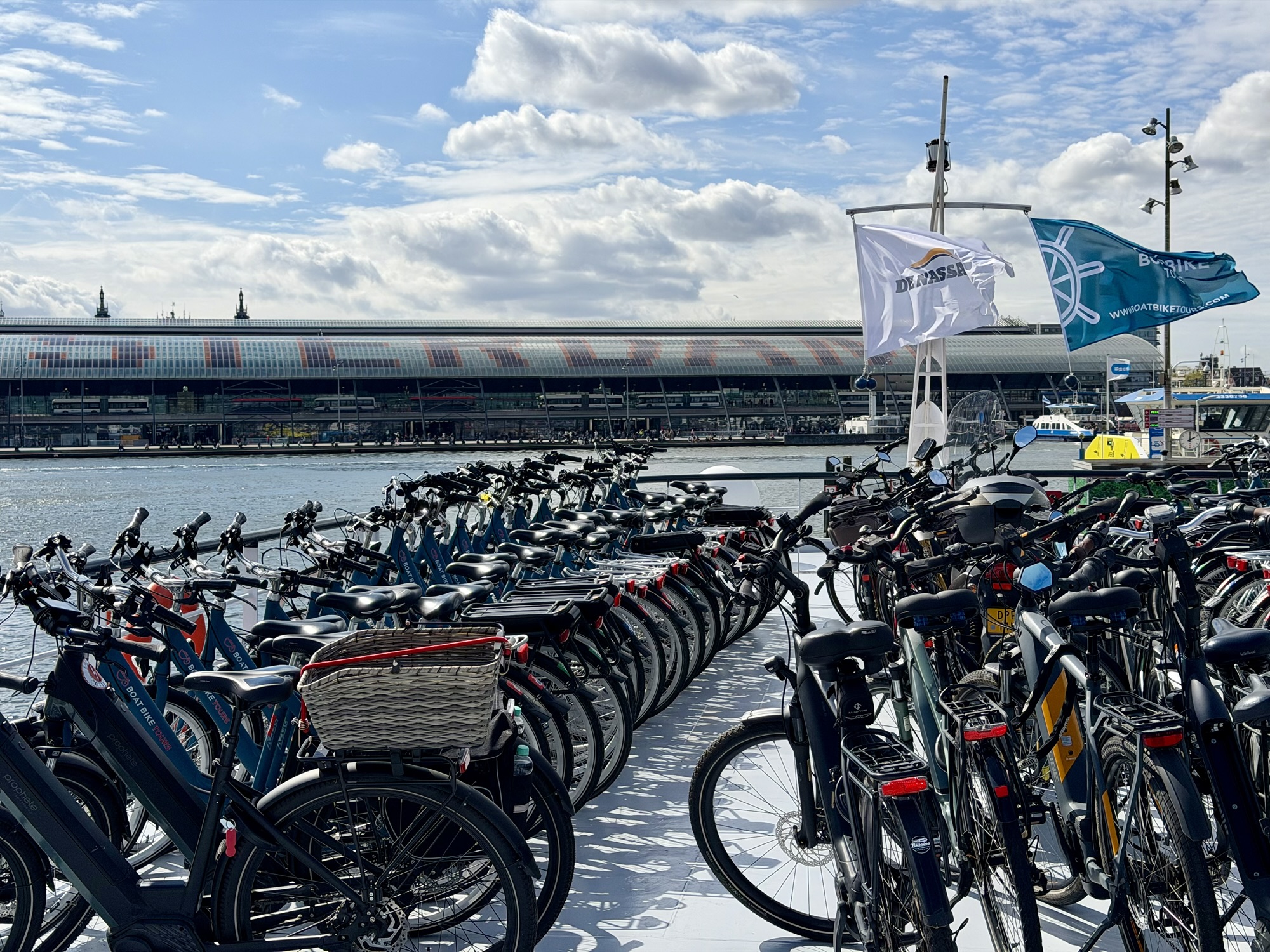
The waterside of Amsterdam Central Station has a wide cyclepath running under a colourful cover.
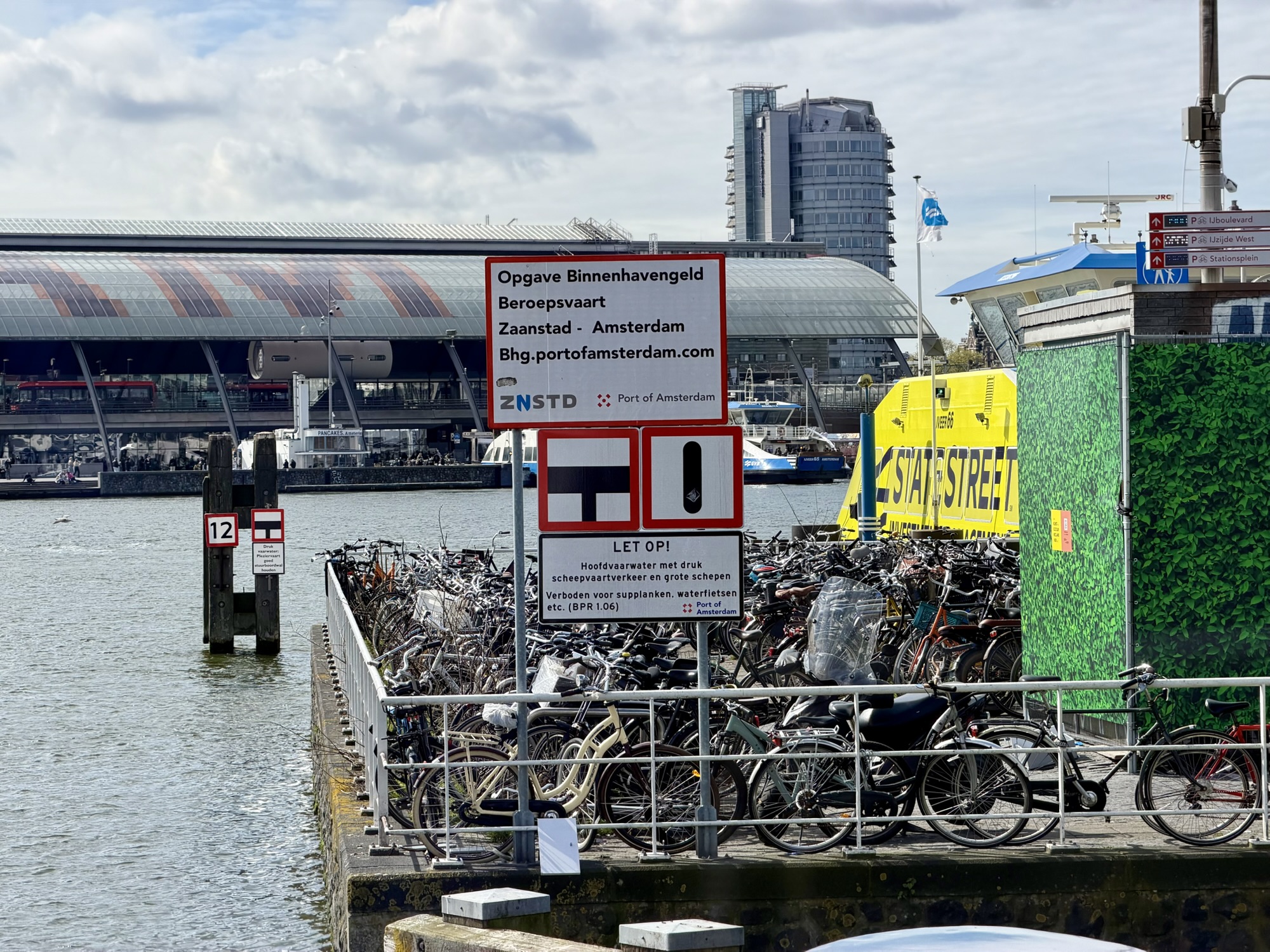
It wasn’t more than 100 m from the station door to the ferry that would take us across to the barge.
The ferry ride wasn’t much longer than the one between Bathurst Key and the island airport in Toronto. There was a single person, speed, limited motor vehicle waiting for the ferry. They seem to be allowed in all the places that bikes are allowed here.
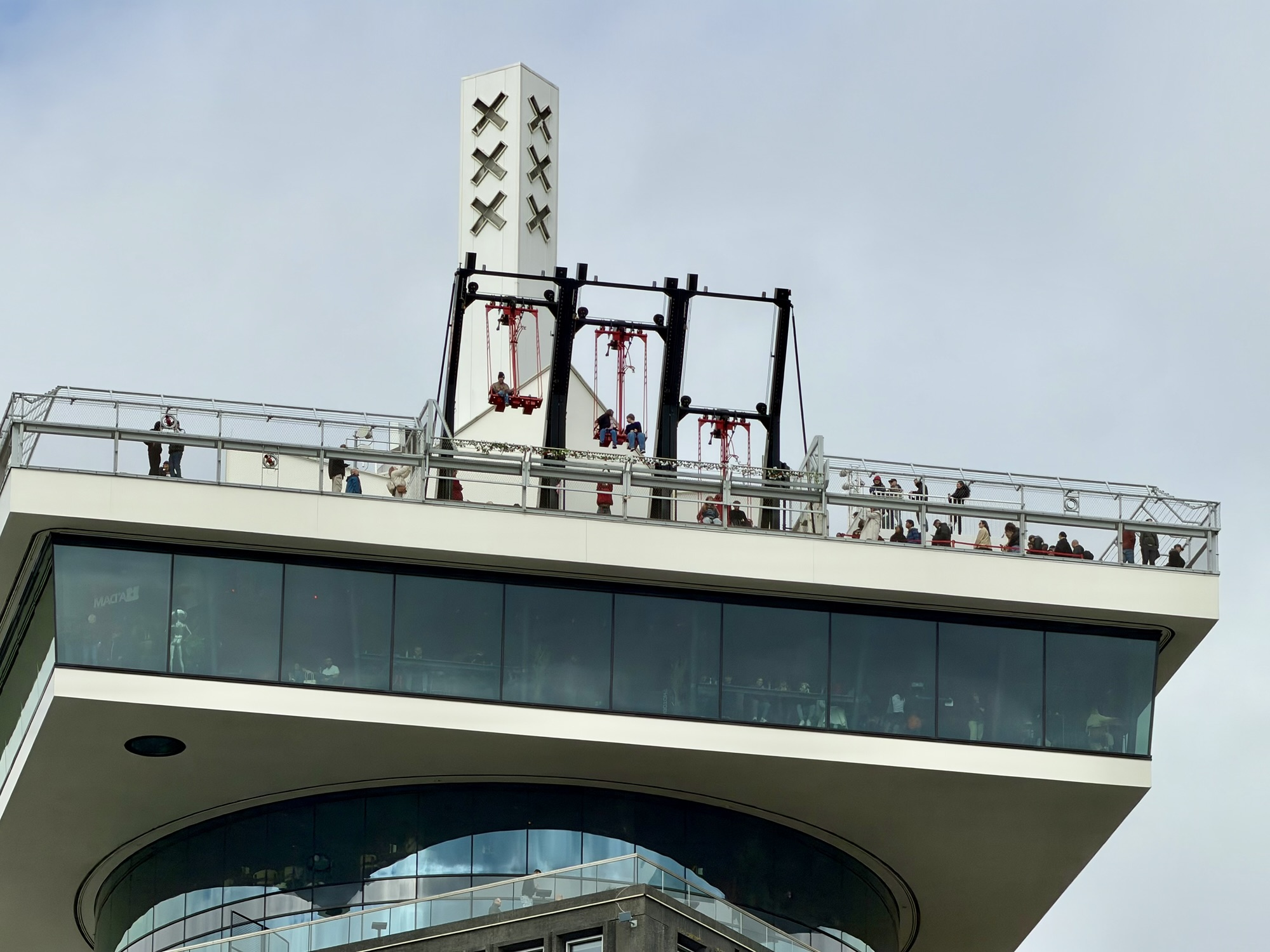
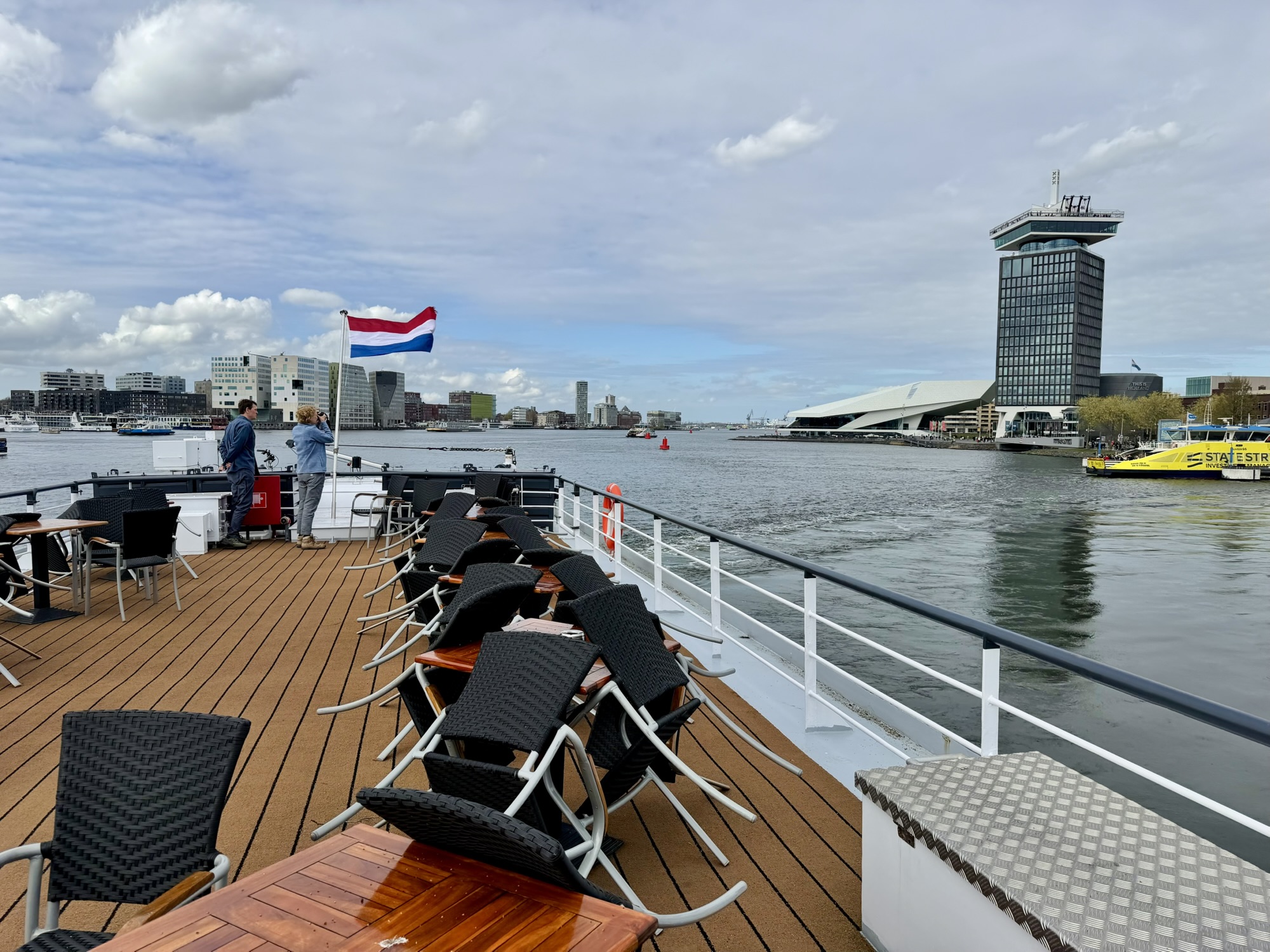
From the ferry dock, we could see a swing ride called A’dam Outlook on top of a tower.
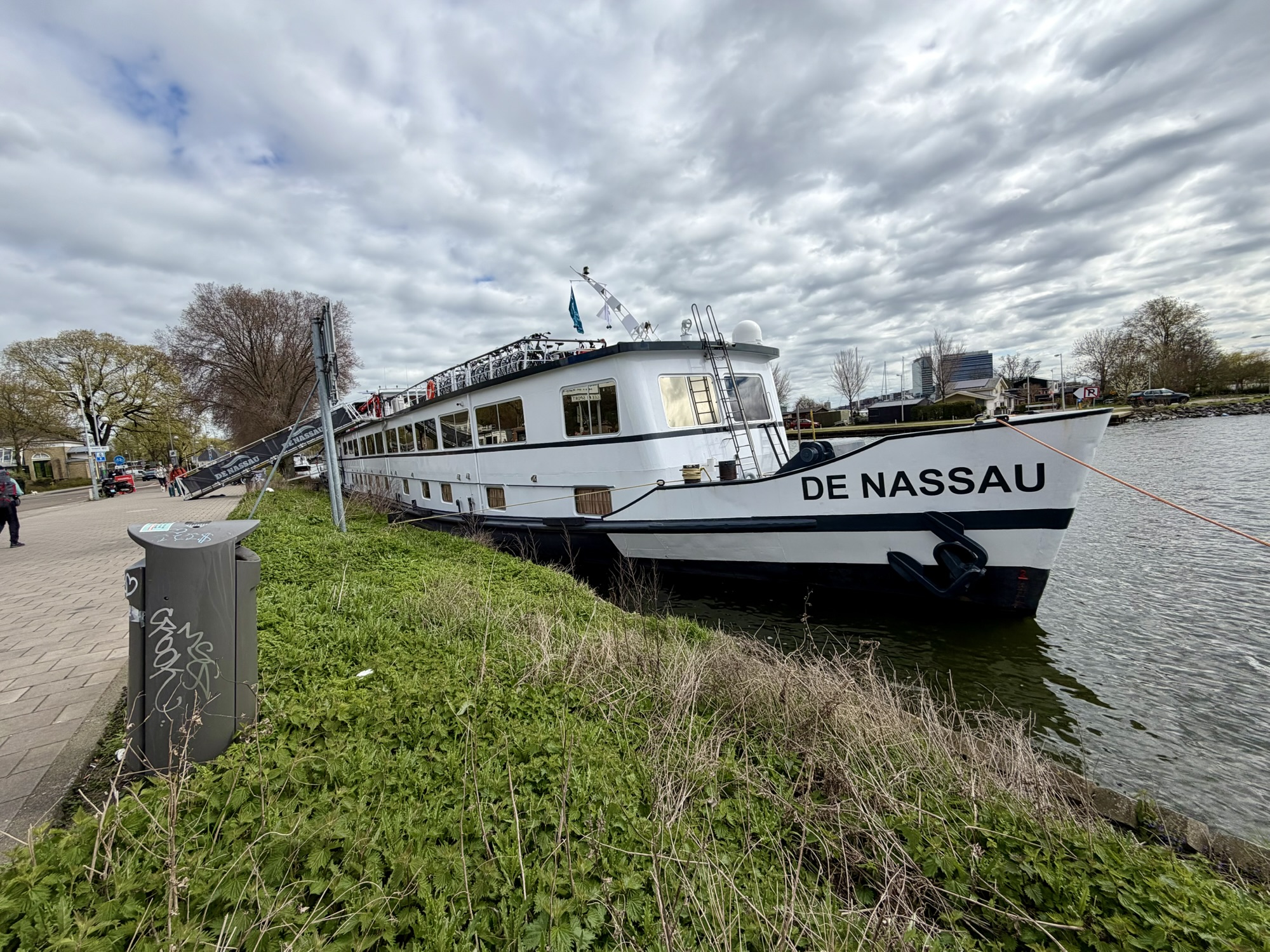
The walk from the ferry to our barge was also not much more than 100 m. It was just after 1 PM, but we were able to board right away.
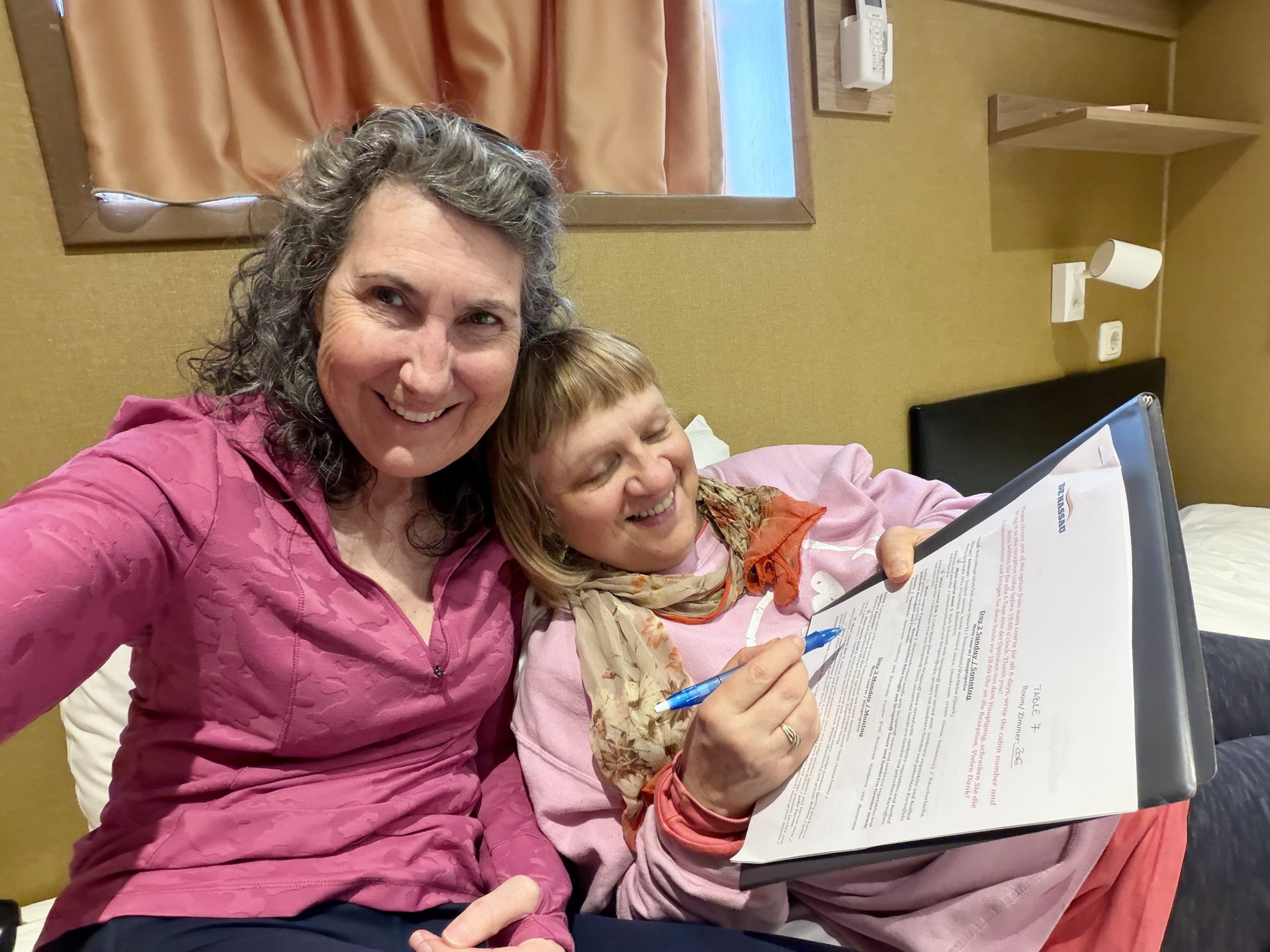
We were instructed to leave our suitcases in the entry area so staff could bring it to the cabins for us. Check-in was very quick with instructions to choose our dinners for the week by 6 PM today and two come to the lounge for a briefing once we set off. Here we are choosing our dinners on the one sheet provided per cabin.
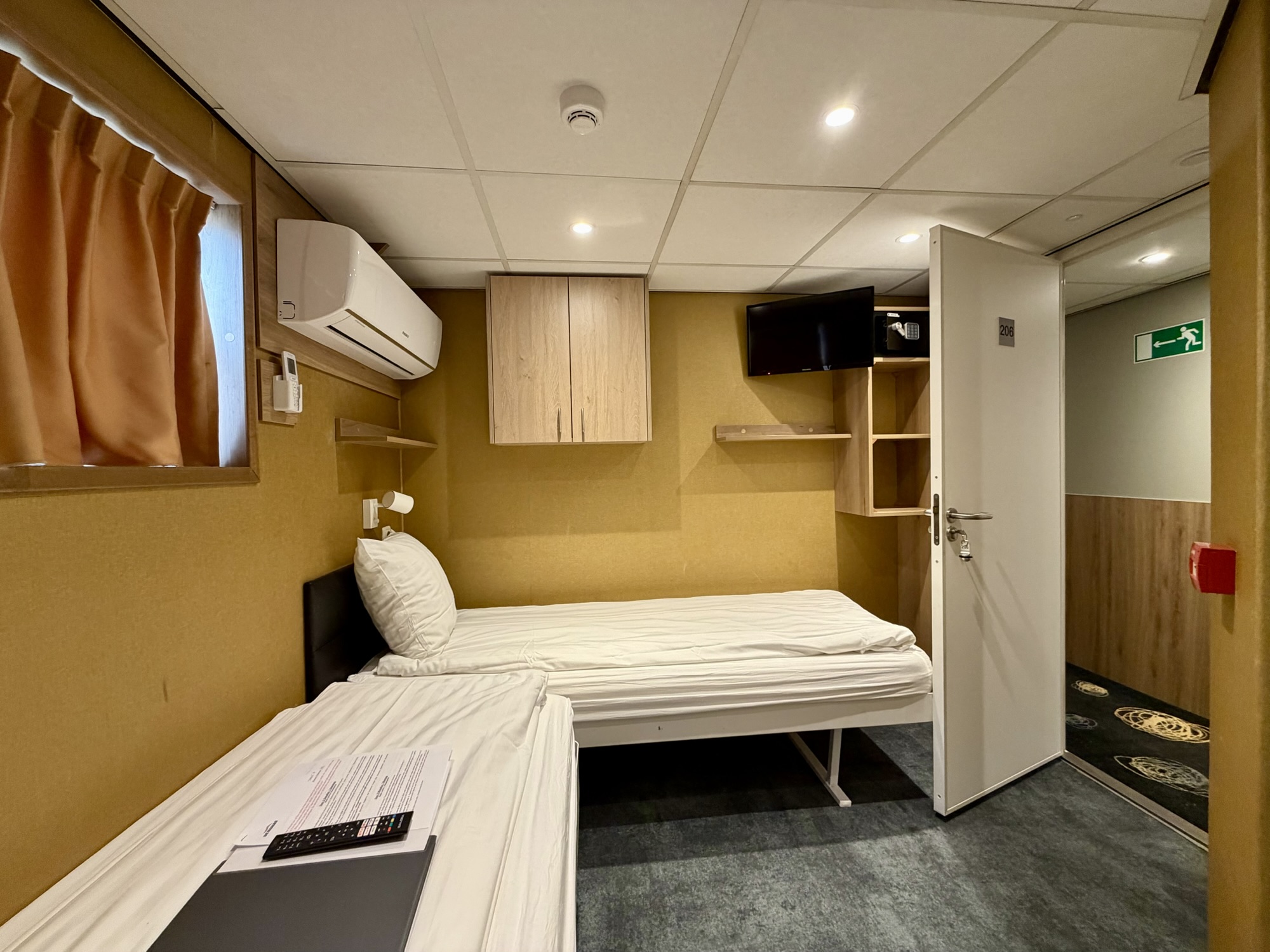
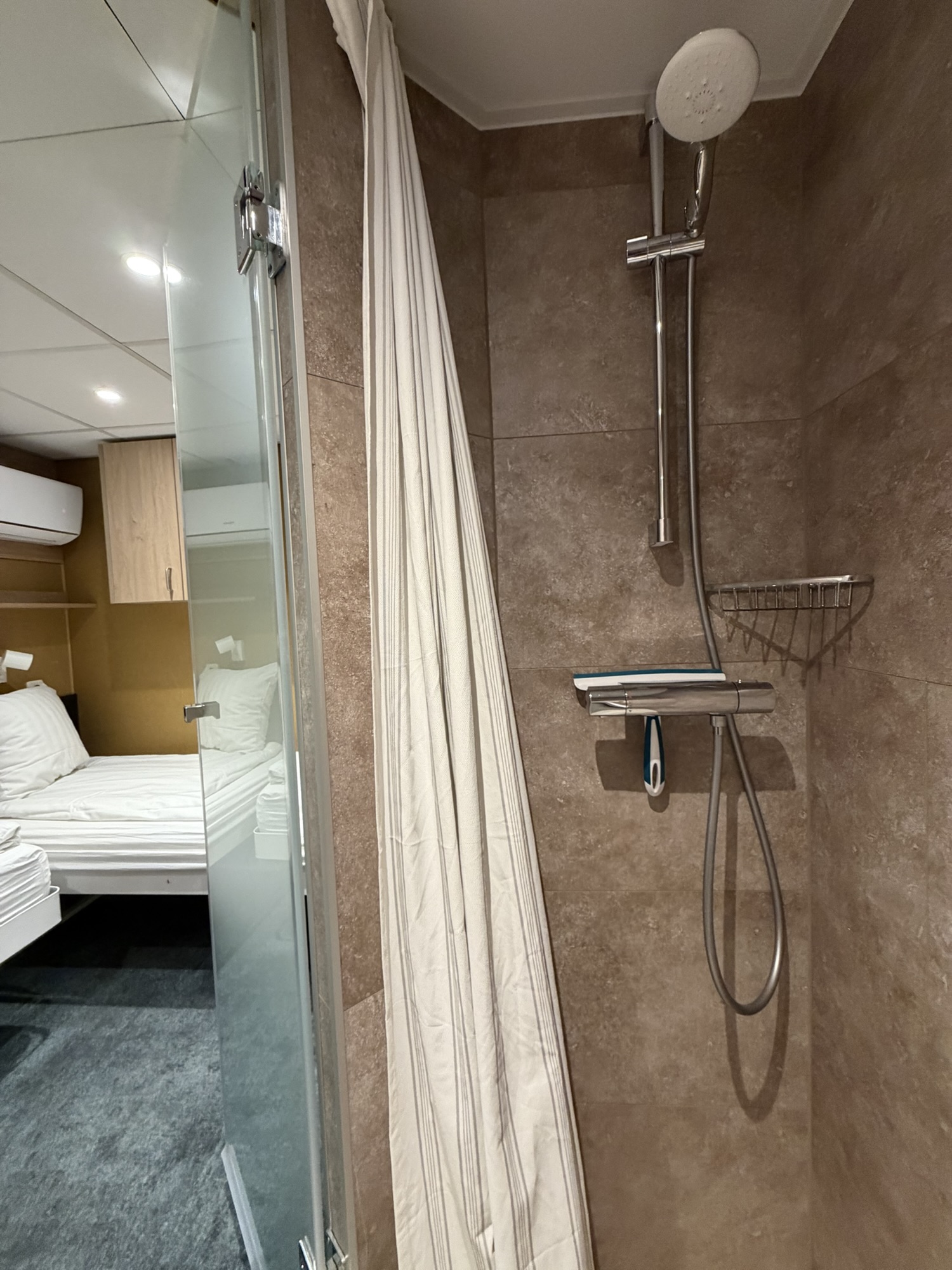
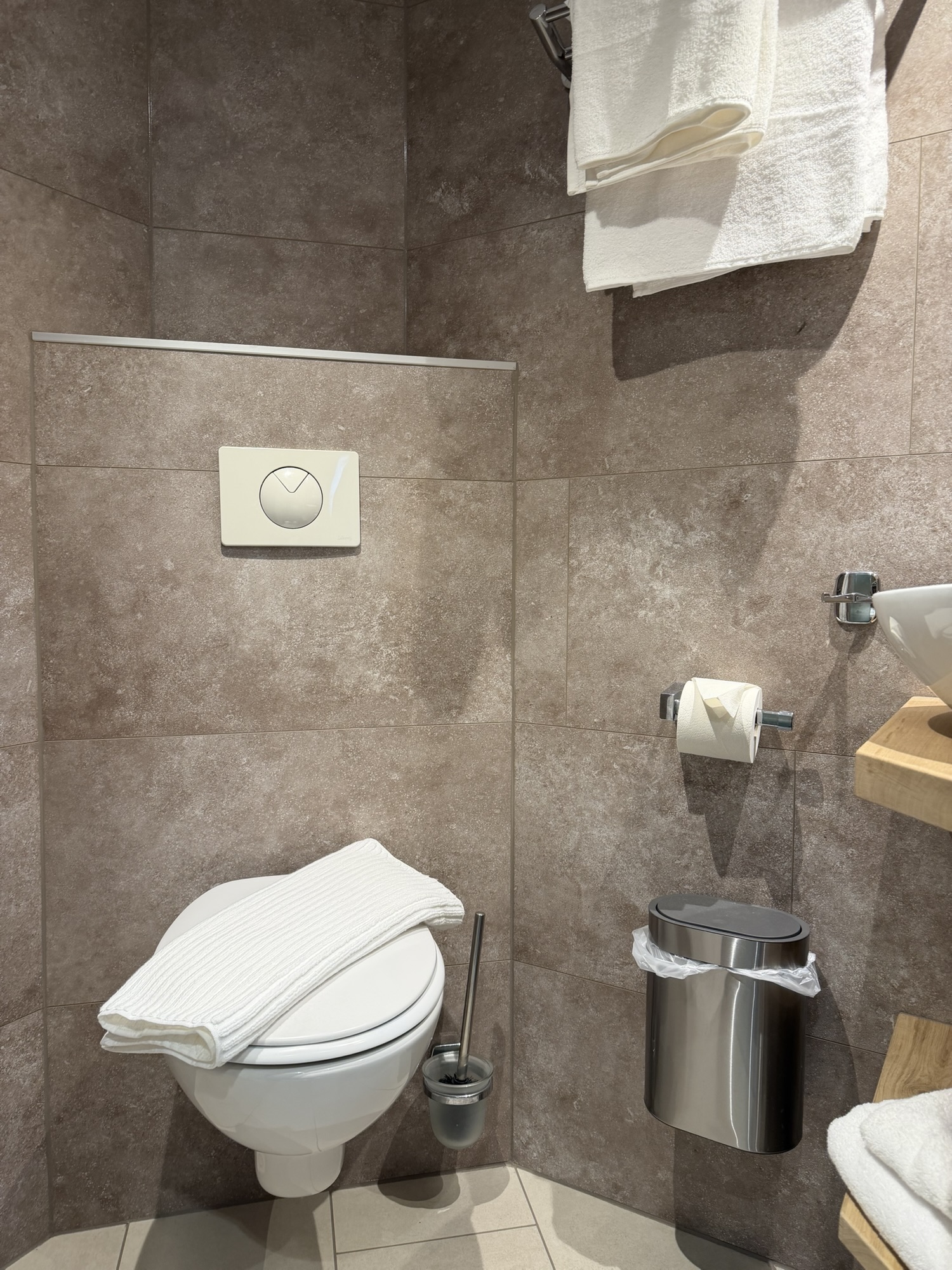
Our room is about a quarter of the size of the one we’ve been in for the last five nights, but seems to have lots of spaces to store things and room under the bed for the suitcases. The shower is only separated from the rest of the bathroom by a curtain so I think things might get quite wet. There’s a squeegee hanging in it, so I guess we can squeegee off the floor of the whole bathroom when we’re done.
Here are the scenes before leaving the dock.
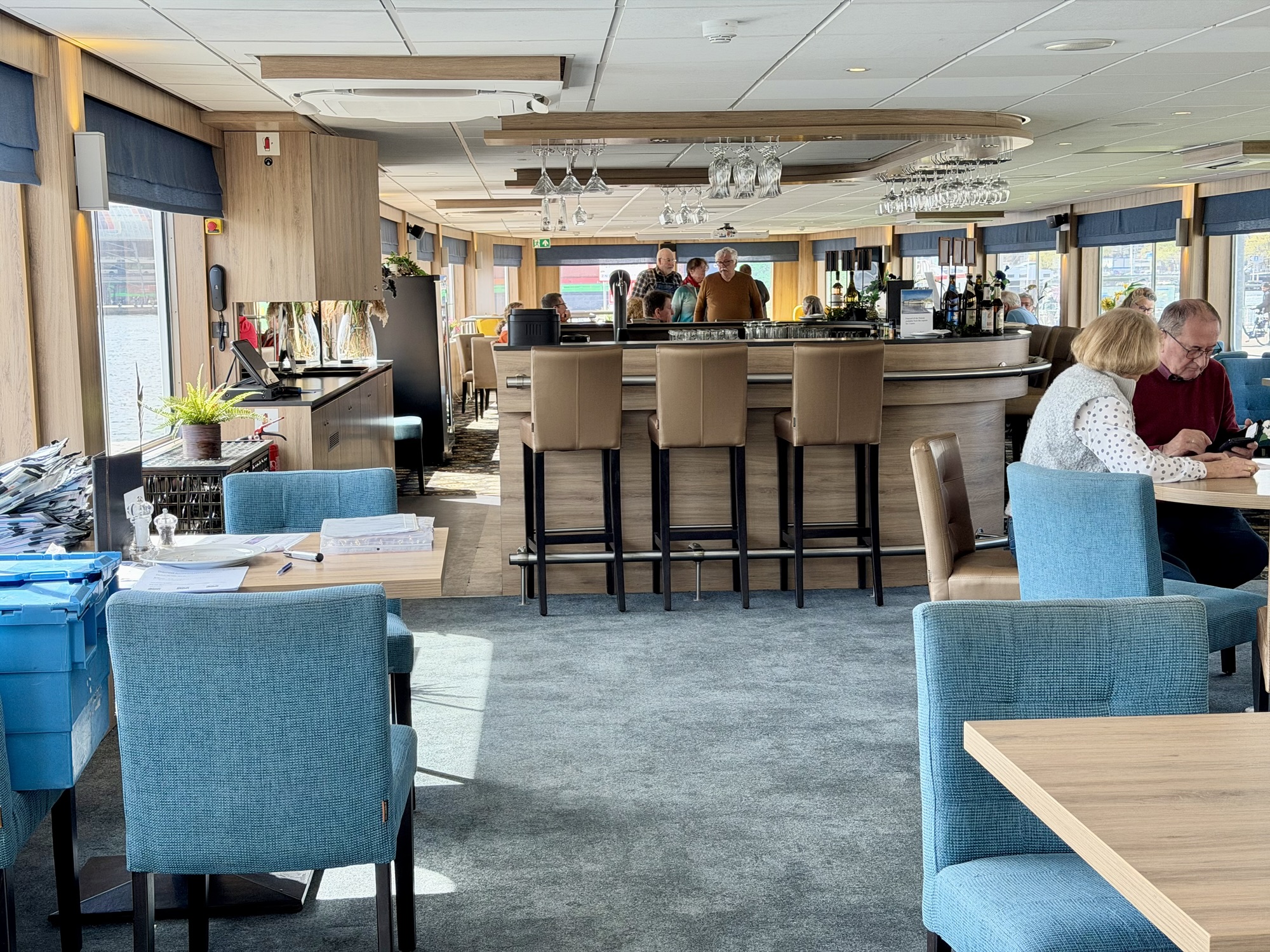
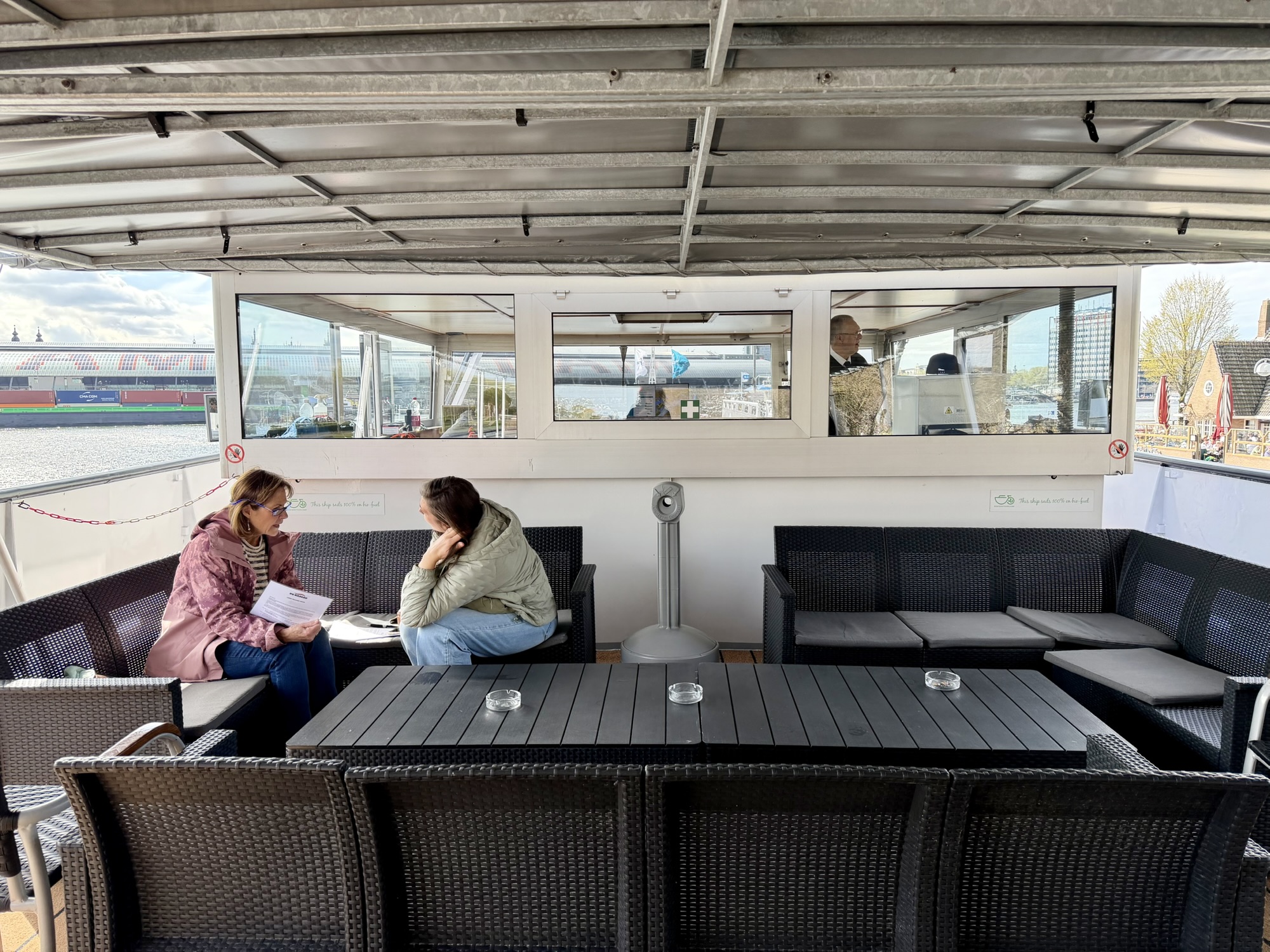
These are the public areas of the barge.
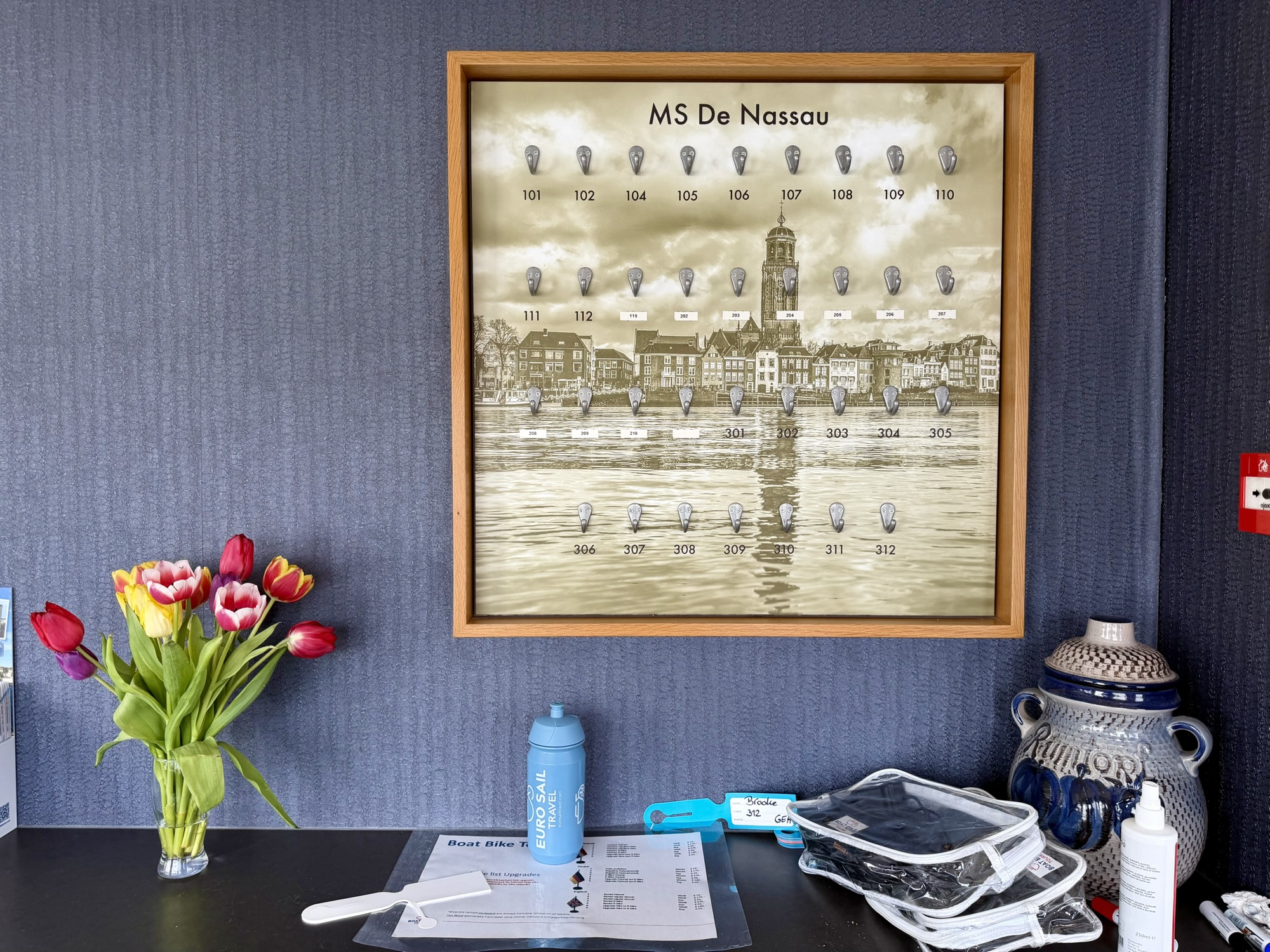
Each day when we leave the barge to ride we’re place our keys on the board so it’s easy for the crew to see who is not on board.
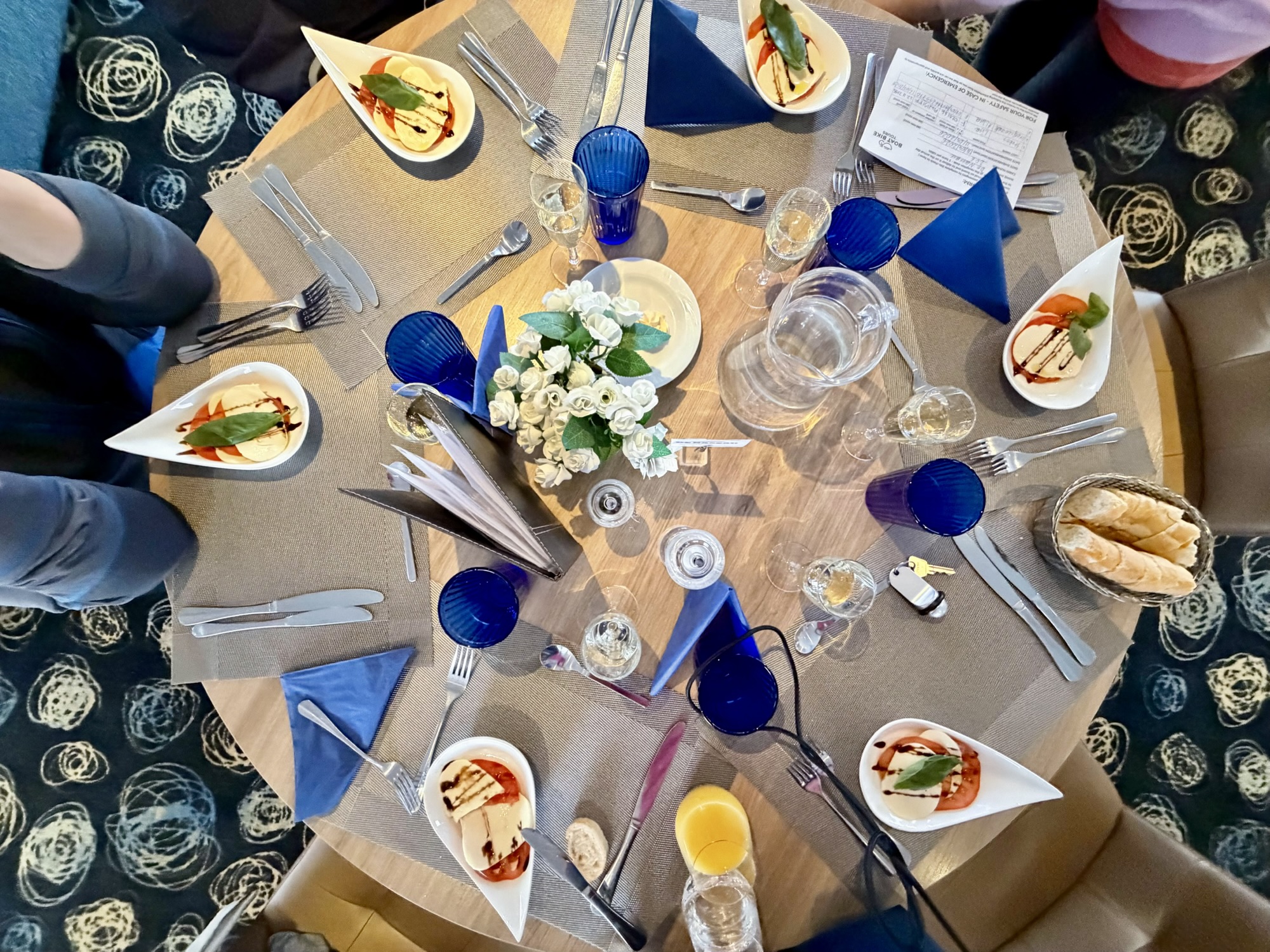
It took about three hours to sail to Hoorn. Dinner was served once we docked. There was no choice for dinner tonight. It was a vegetarian bake in puff pastry and sides. I was so hungry that I forgot to take a picture. Wayne, David and Dayle are at a table for six. Cindy and Mark and Alina and I are at a different table with a mother and daughter from Portland.
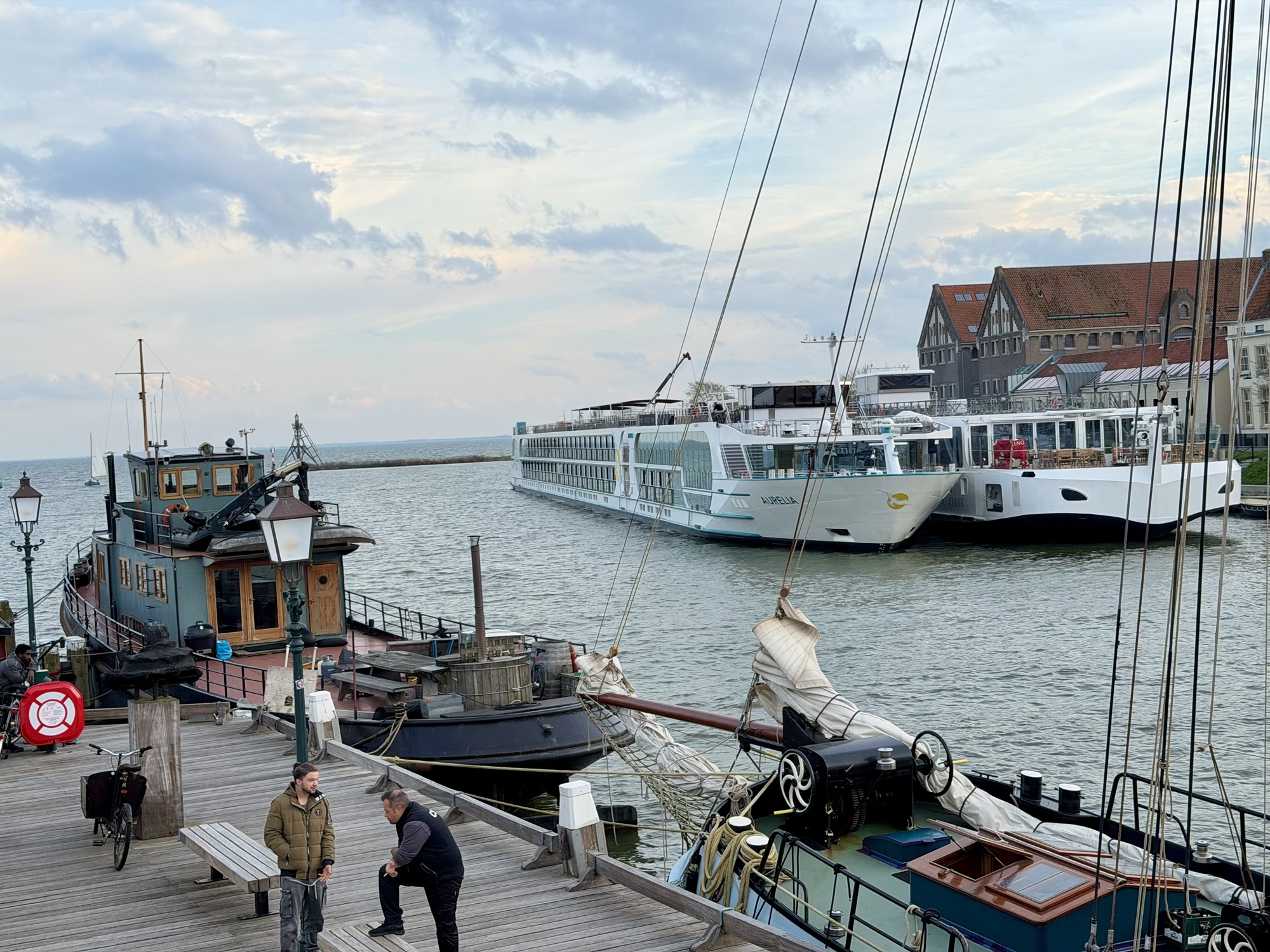
This is the view from where we are moored.
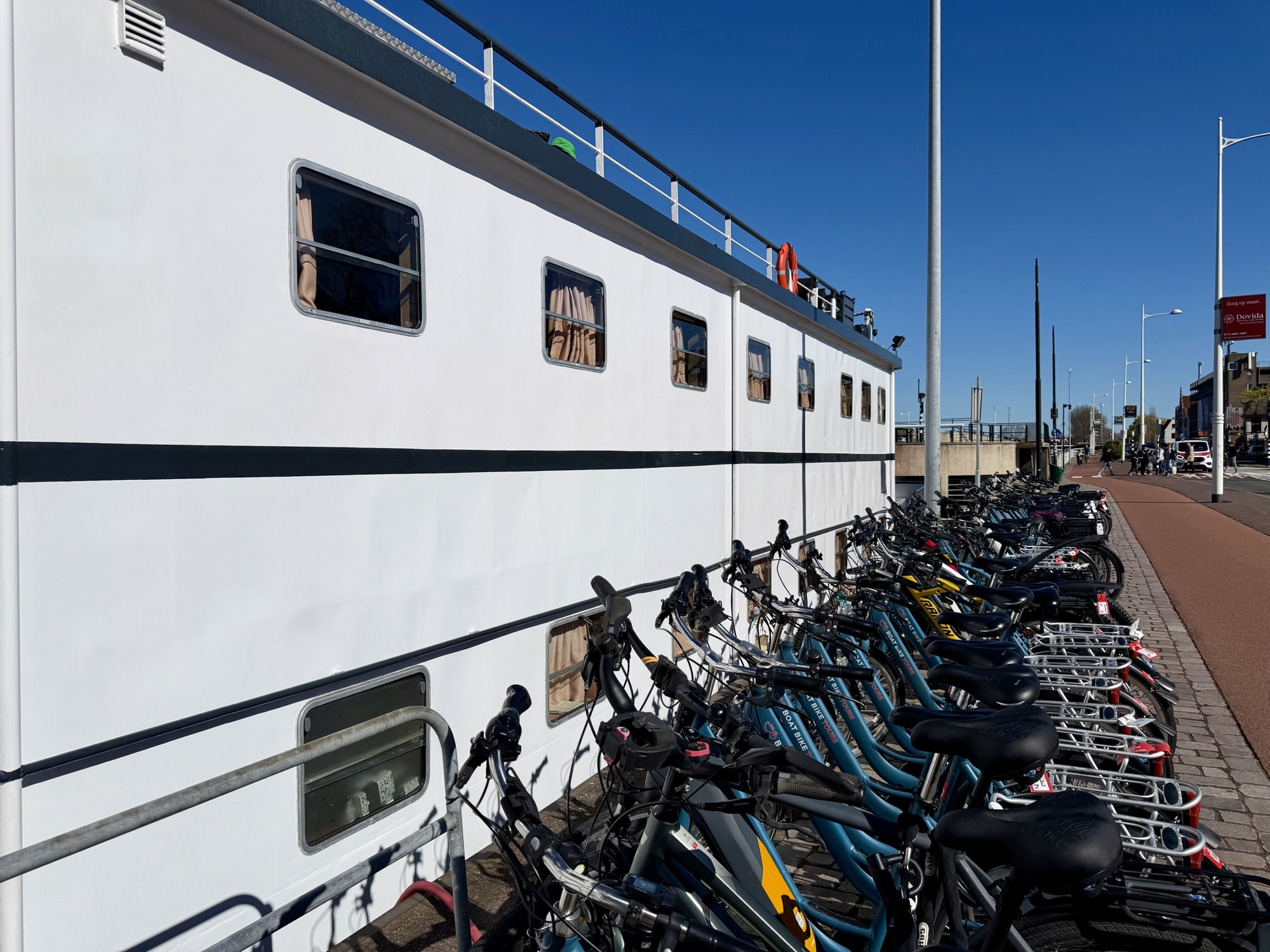
There are two other barges here that are bigger than ours. Ours has 33 rooms and 60 people.
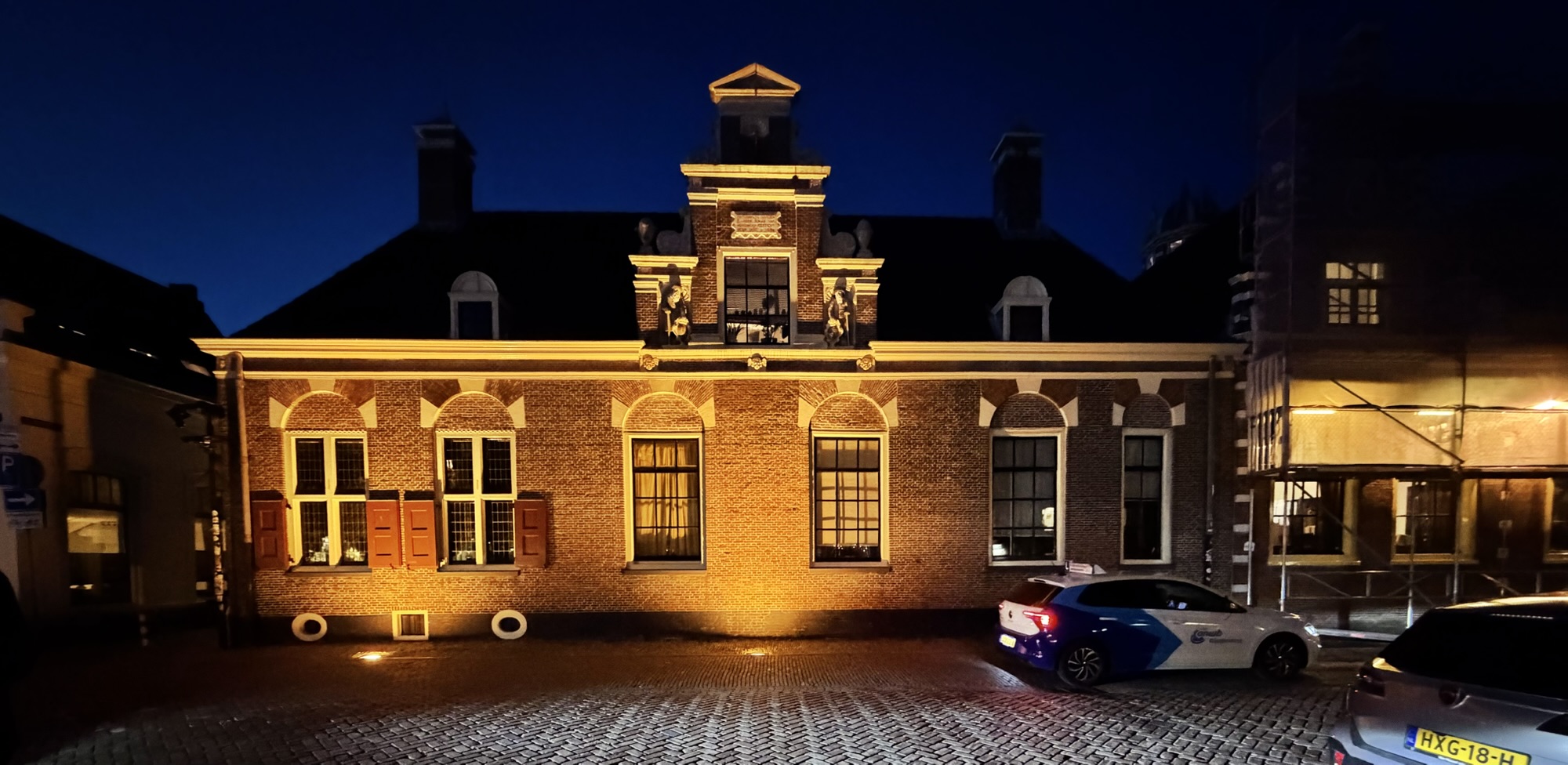
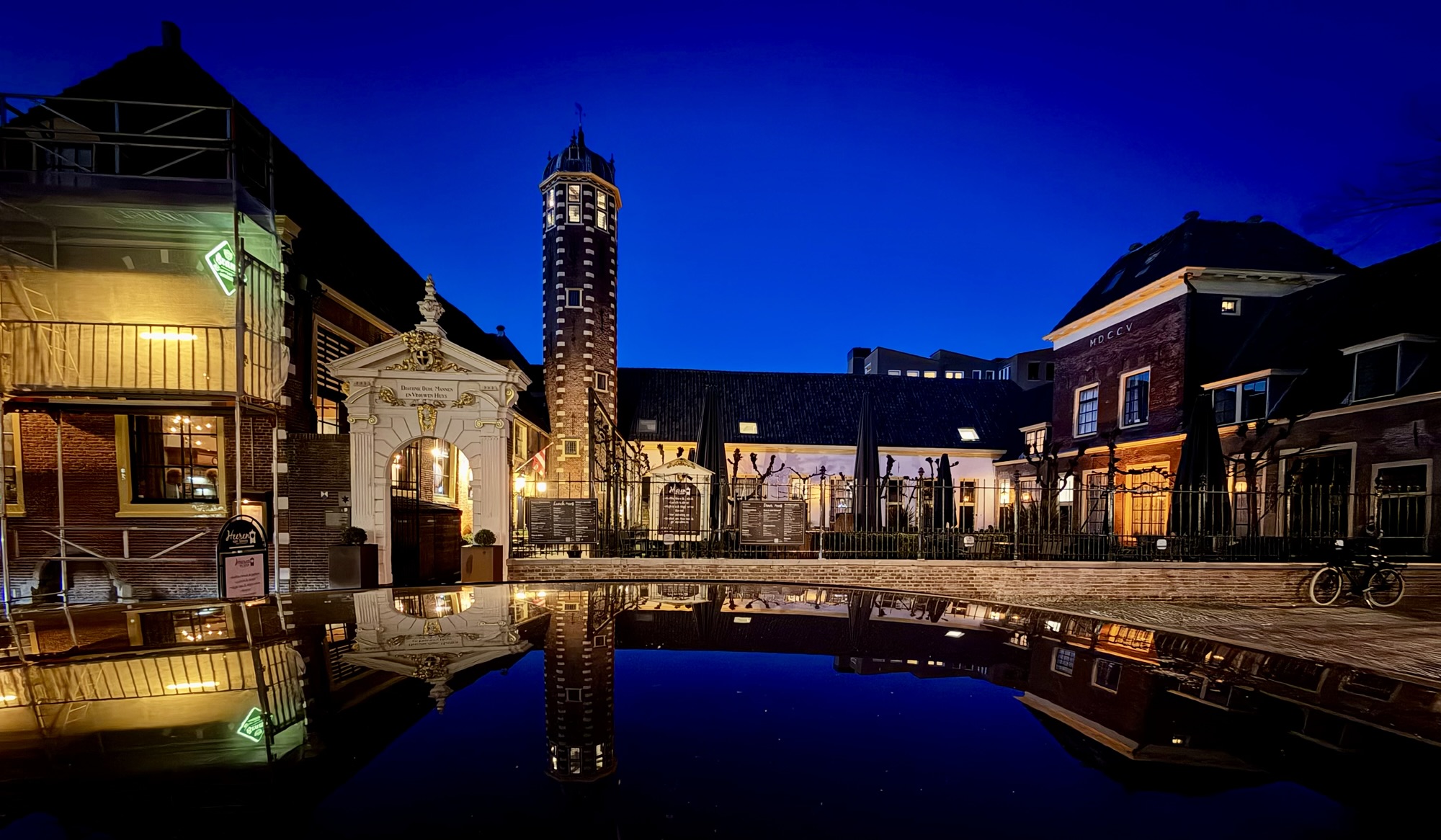
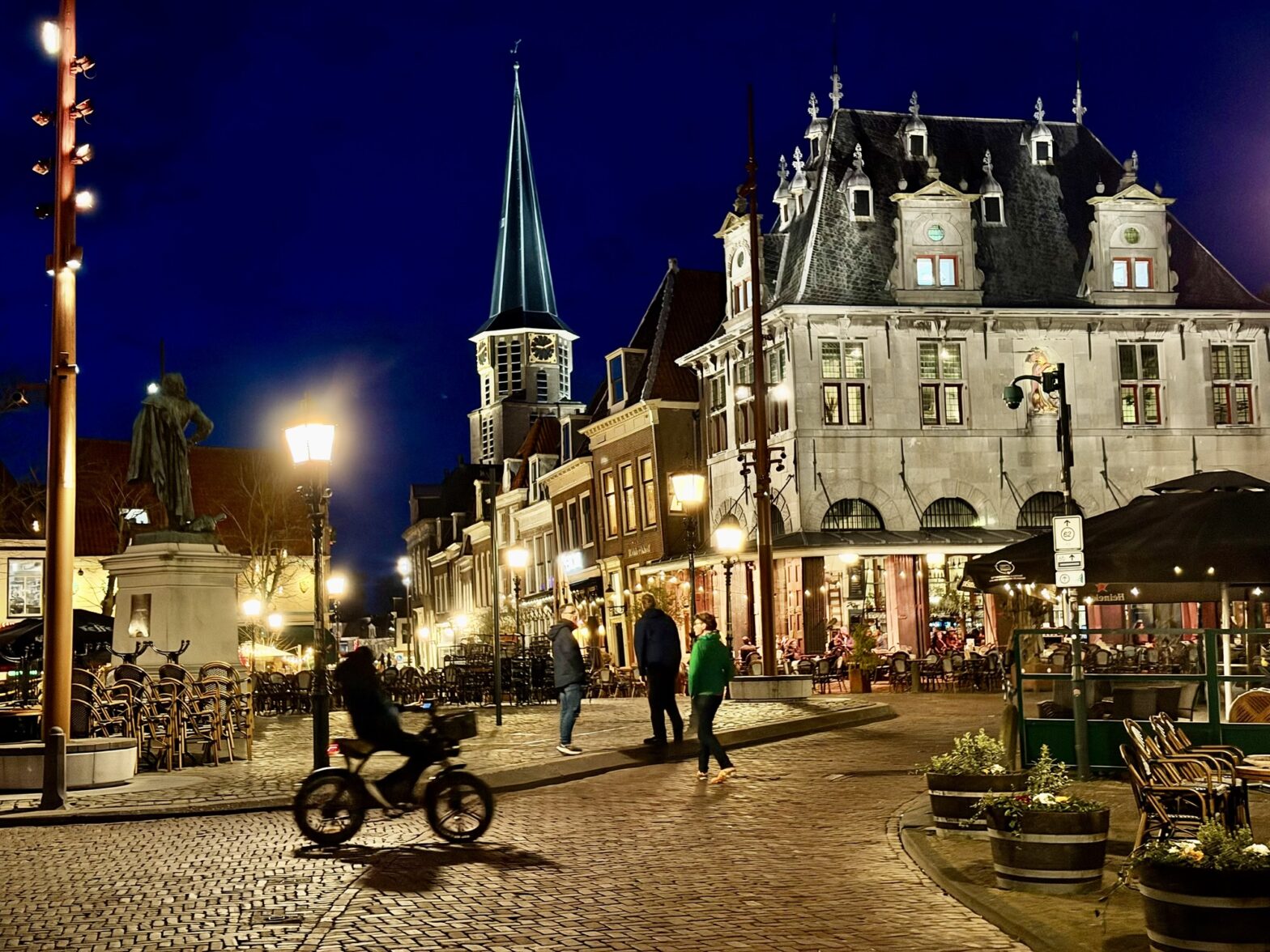
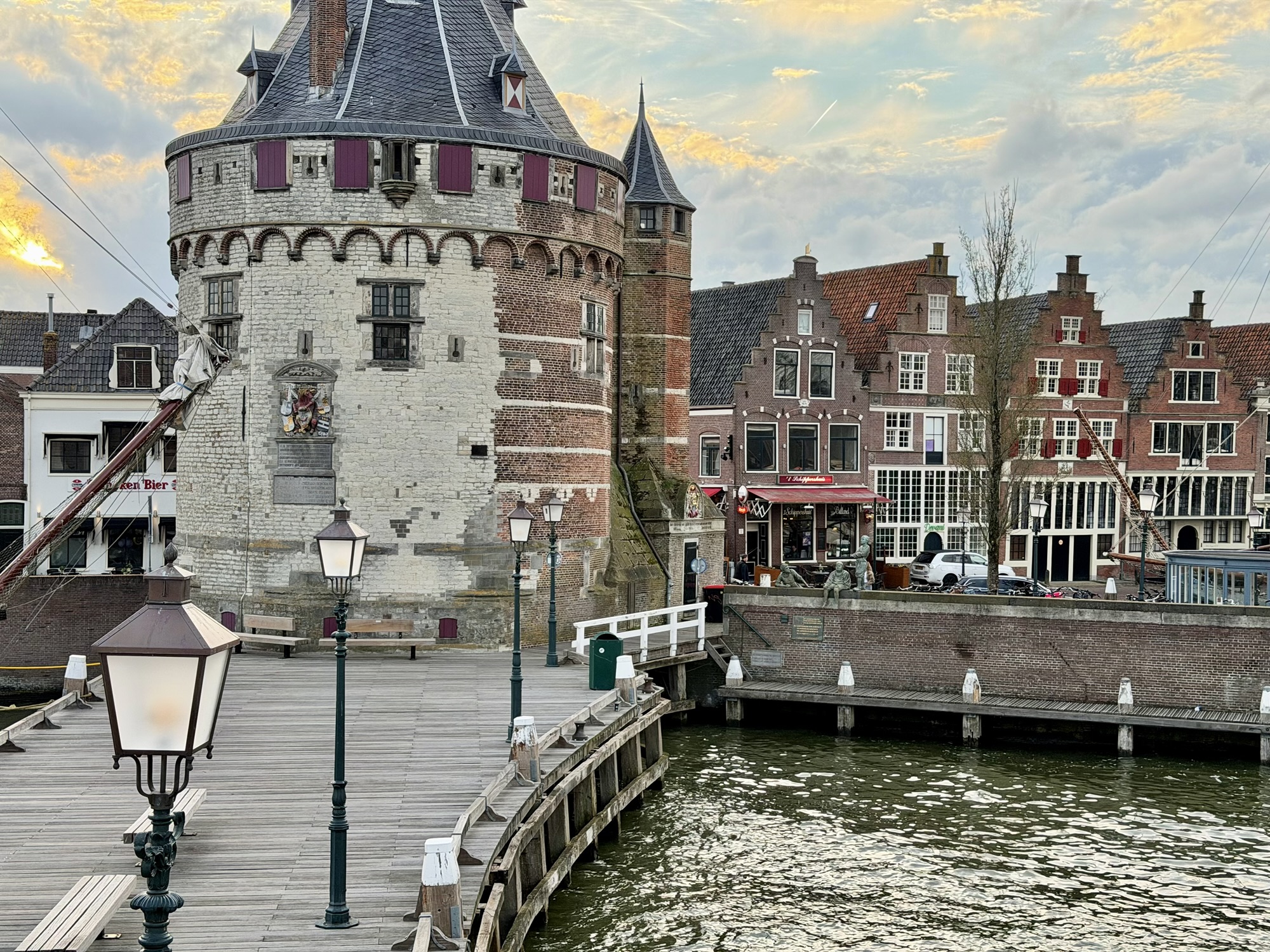
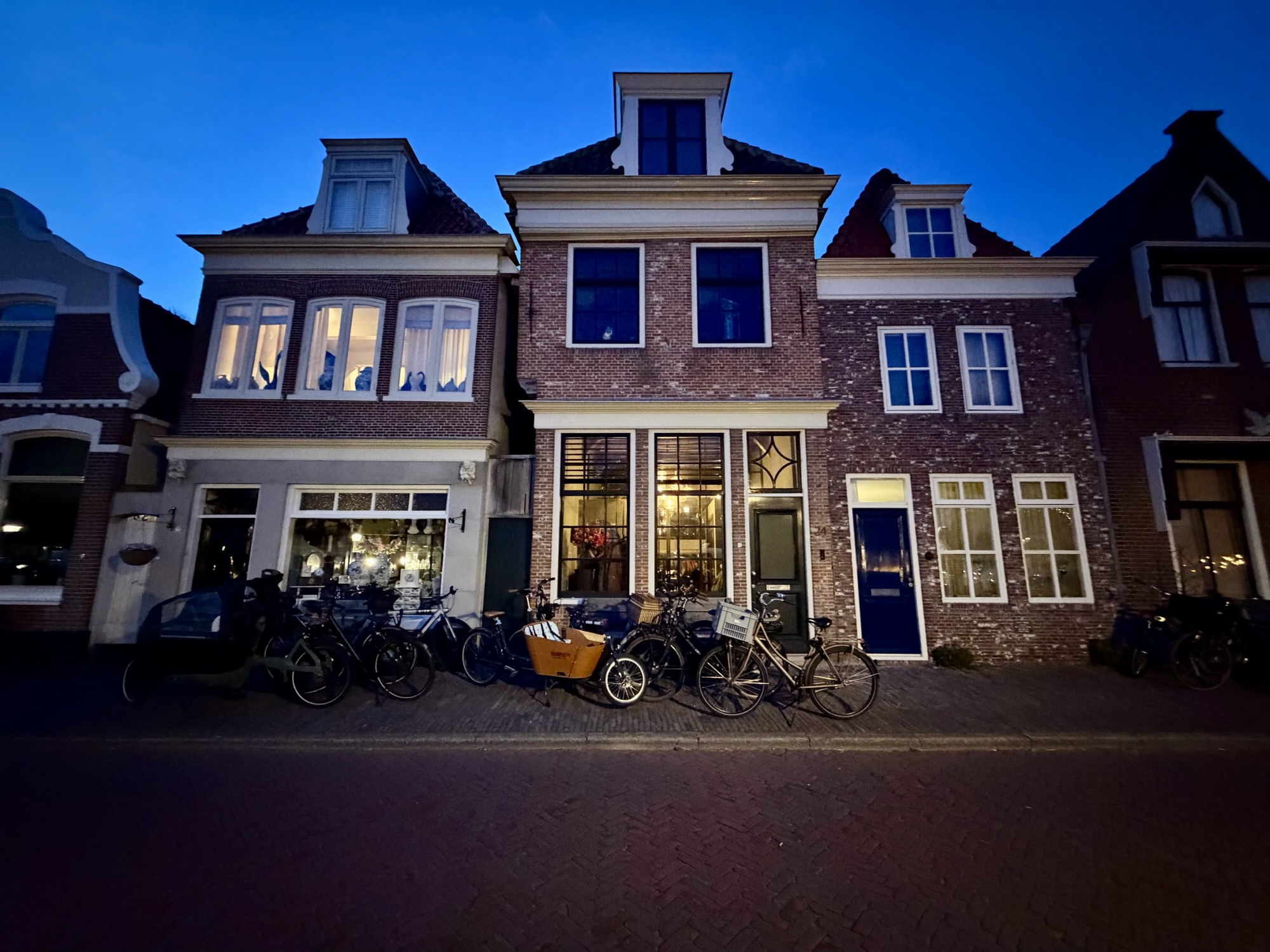
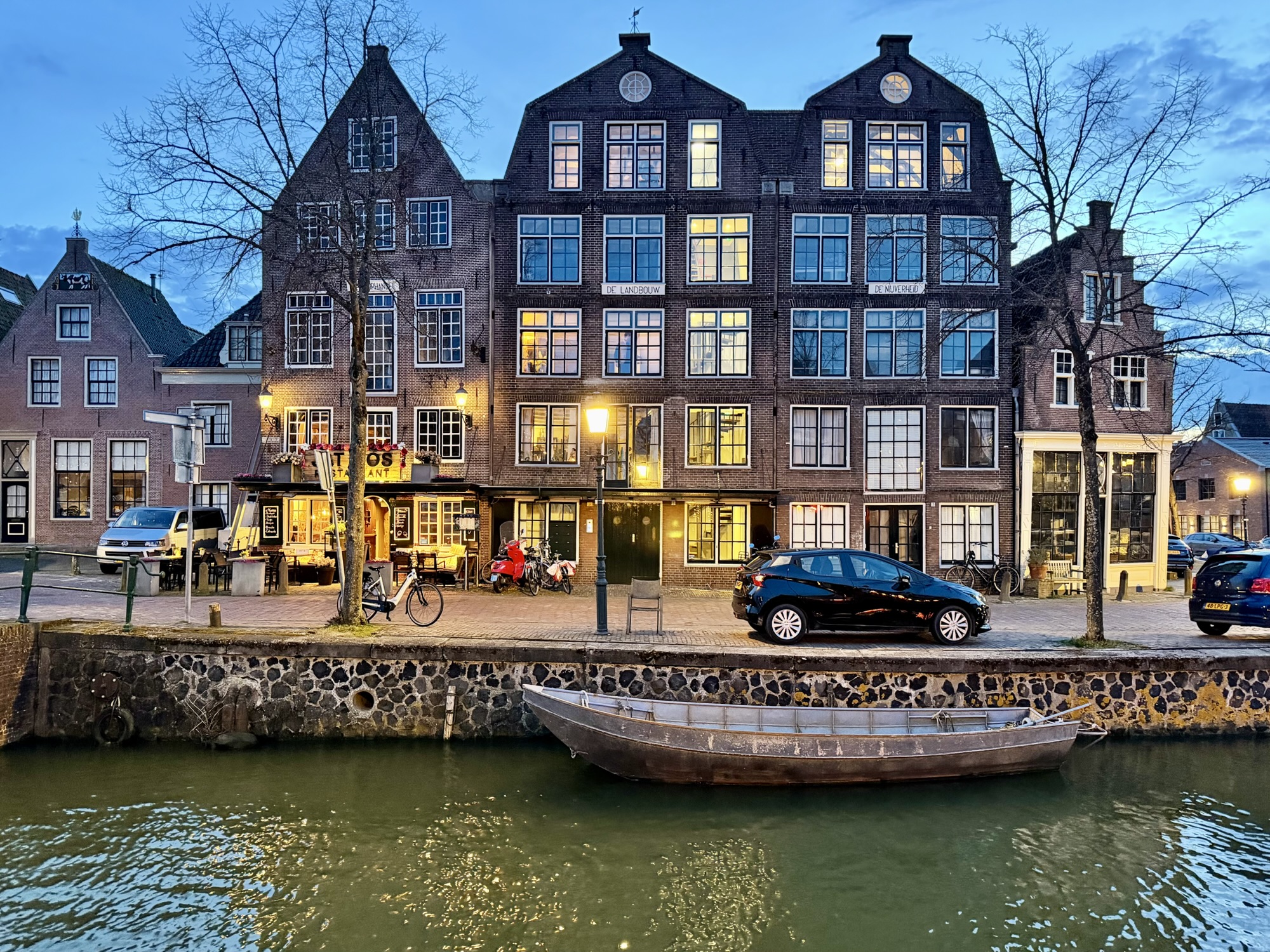
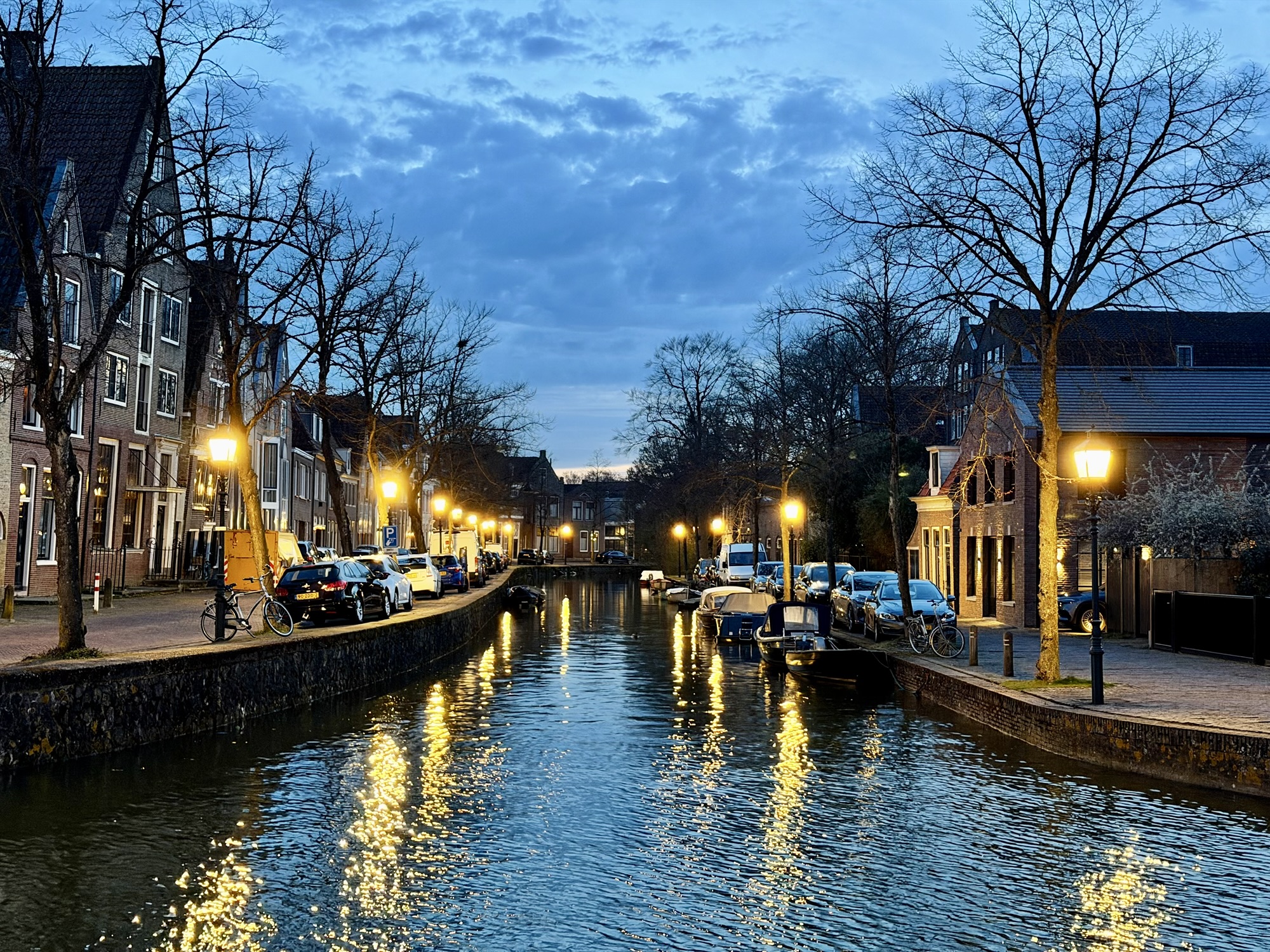
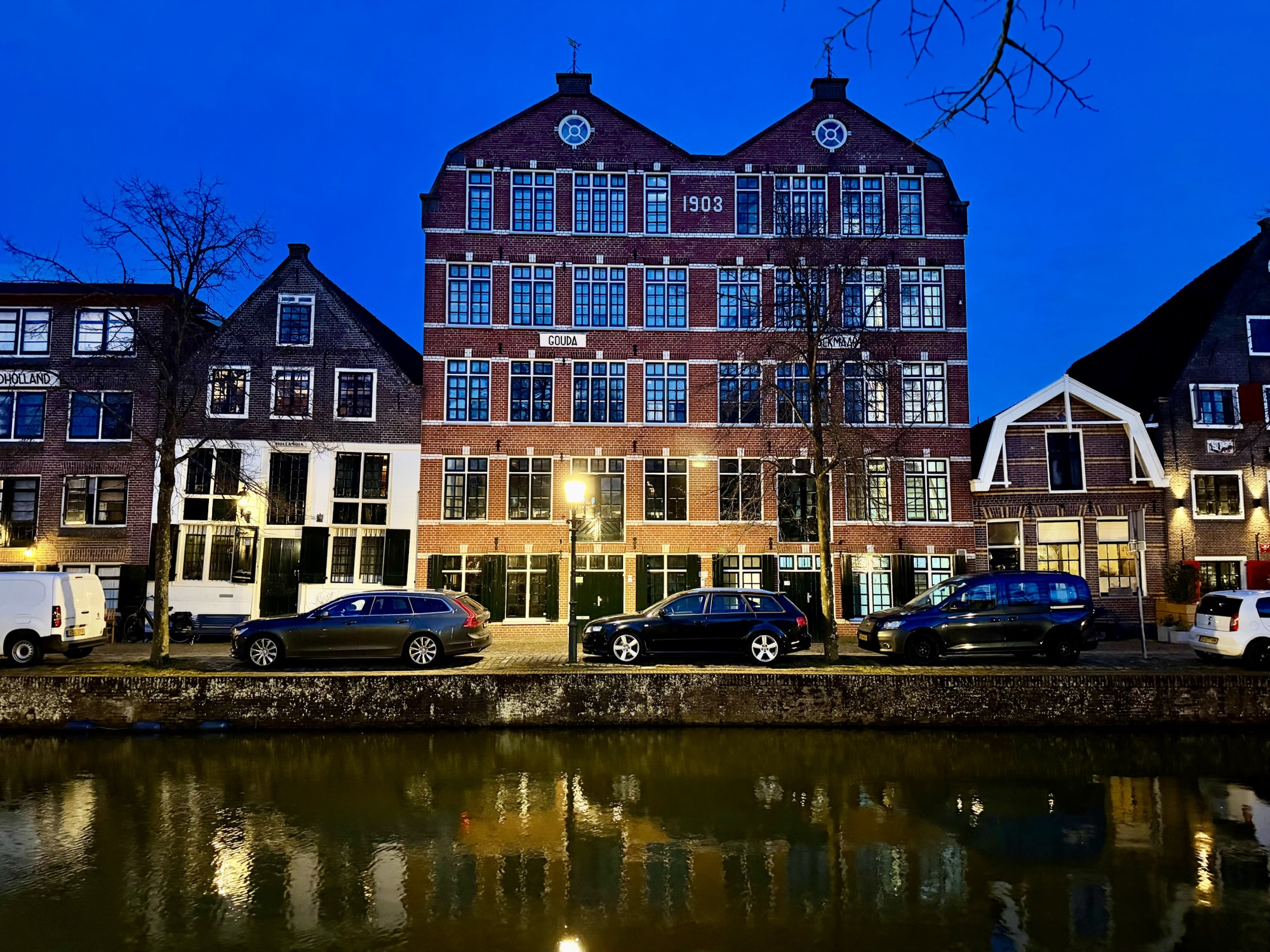
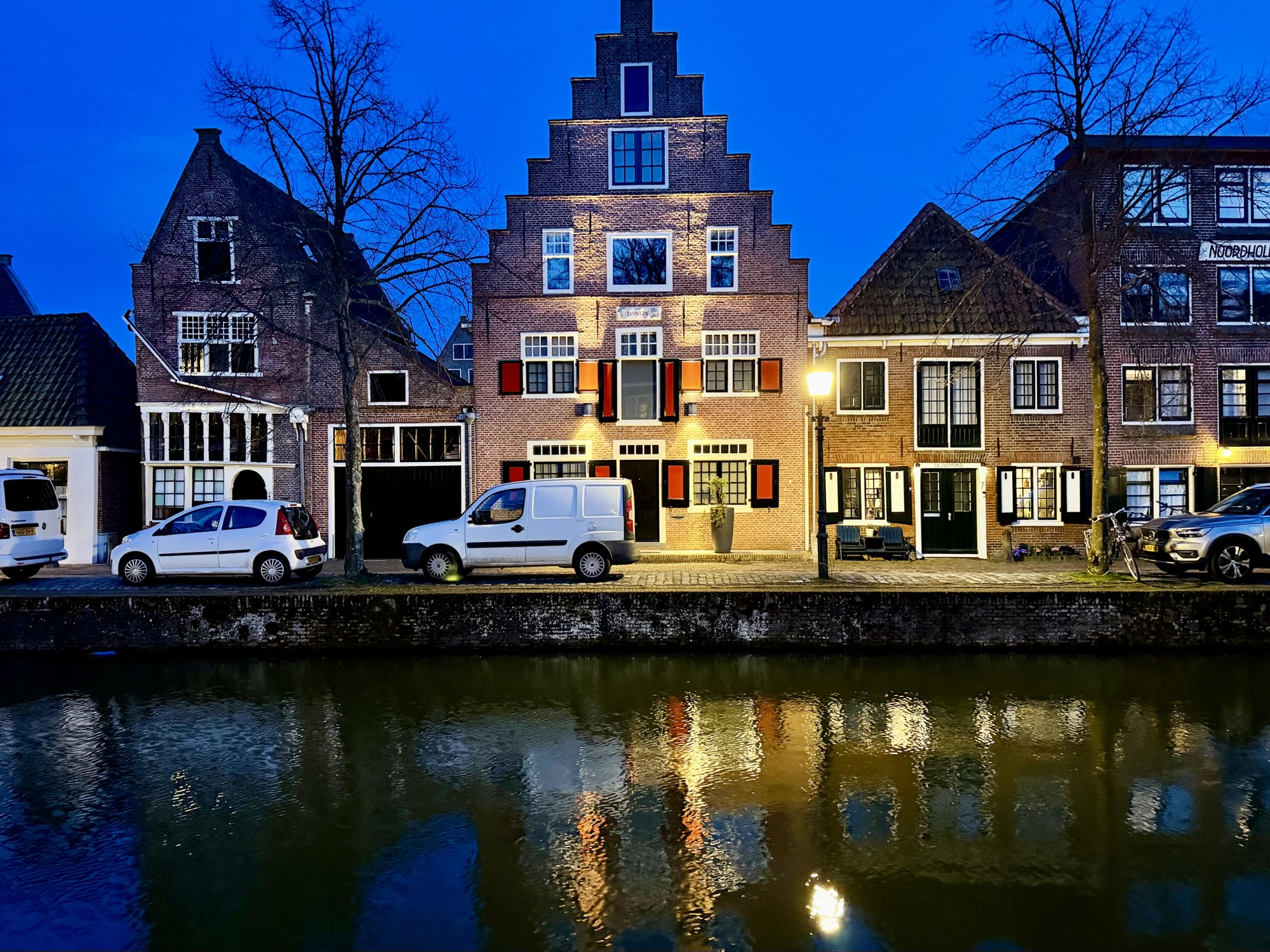
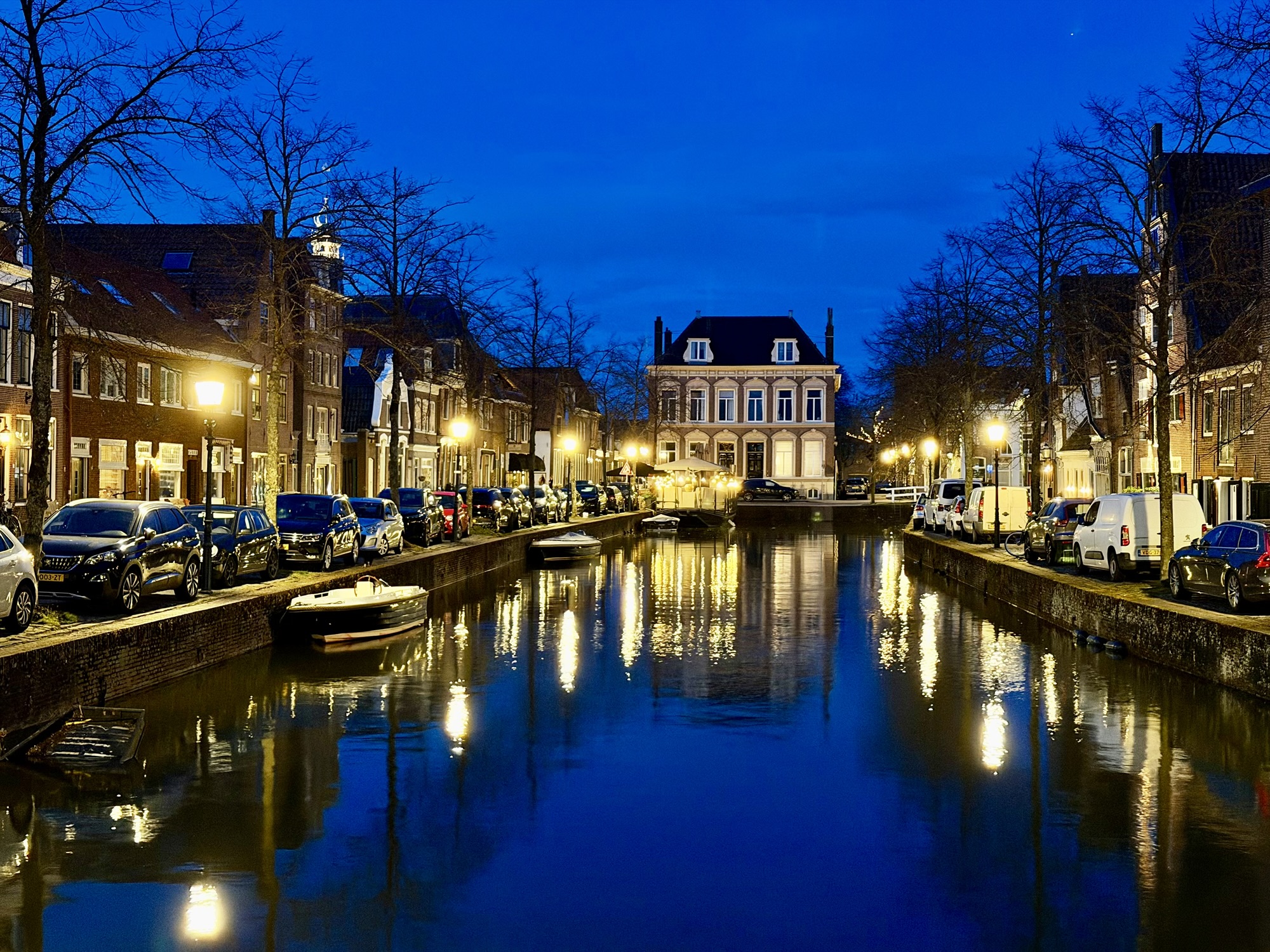
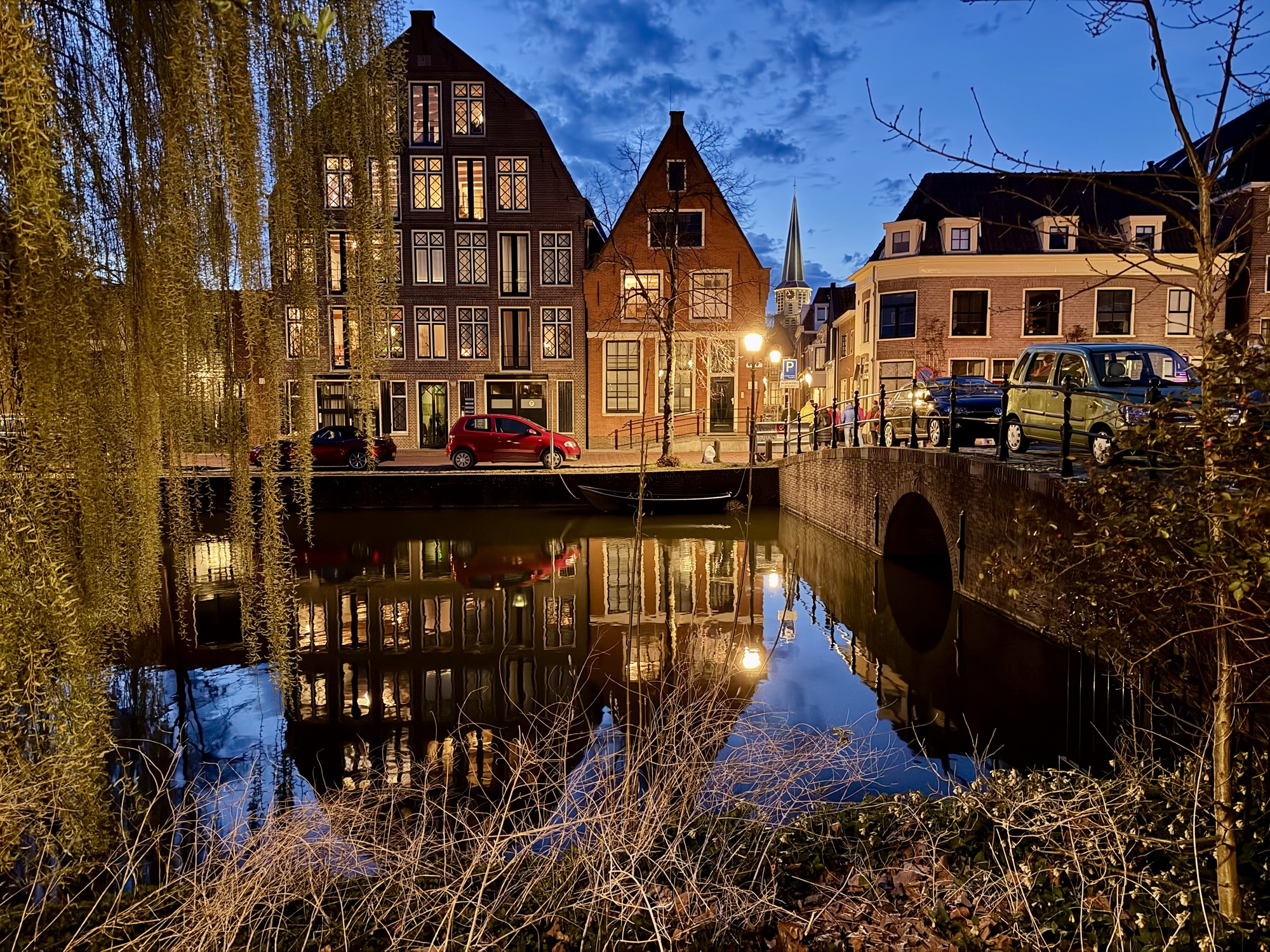
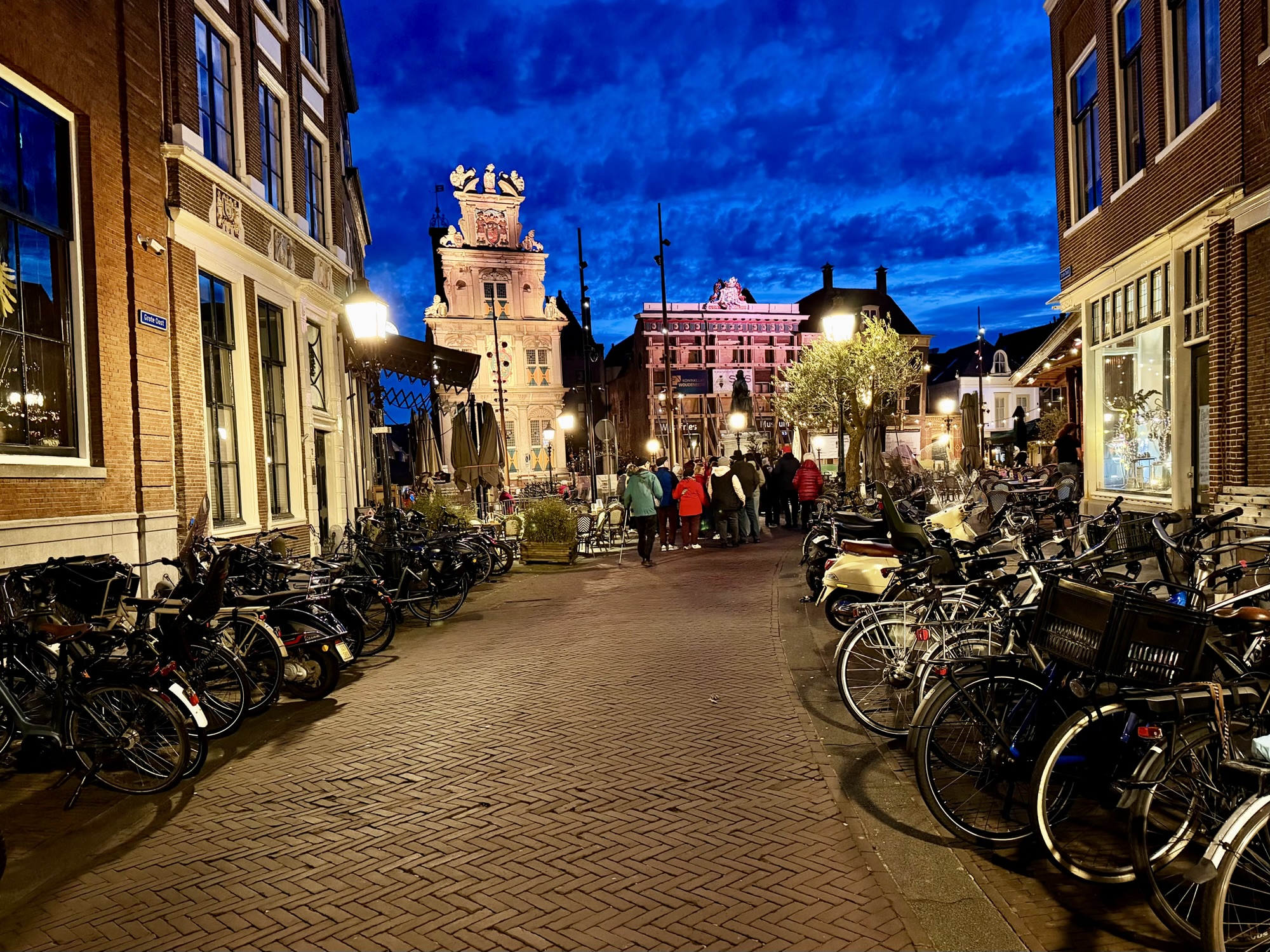
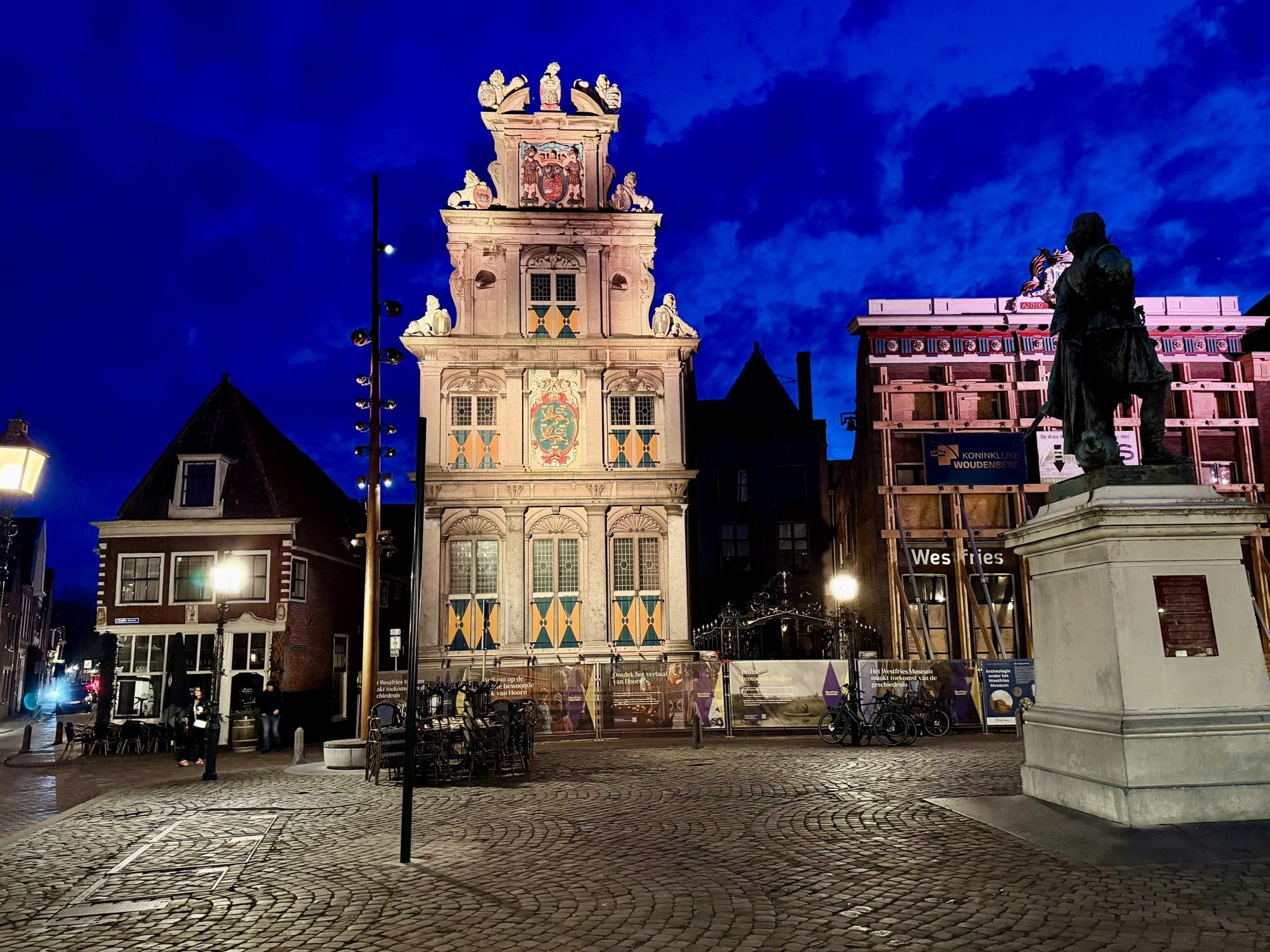
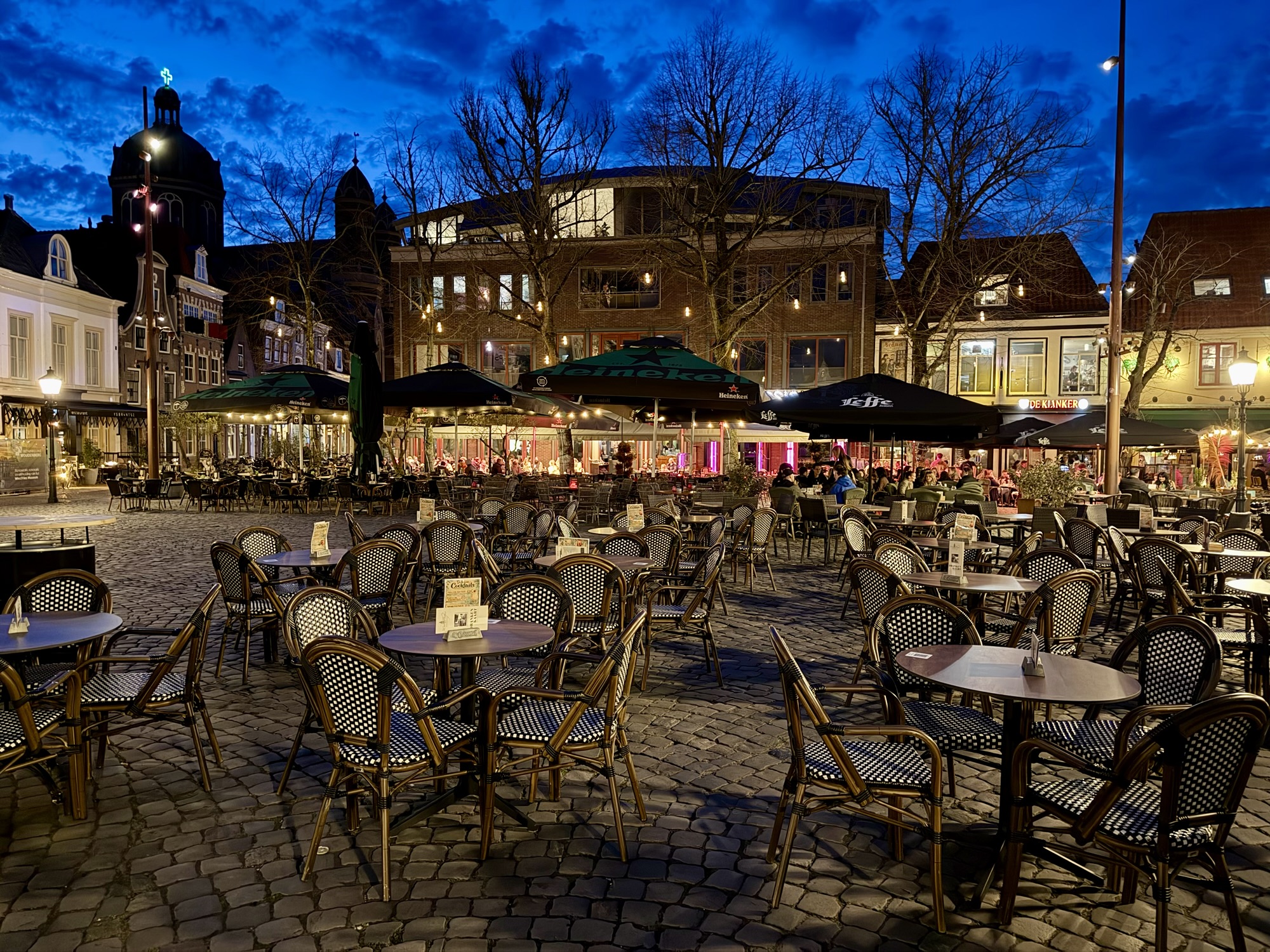
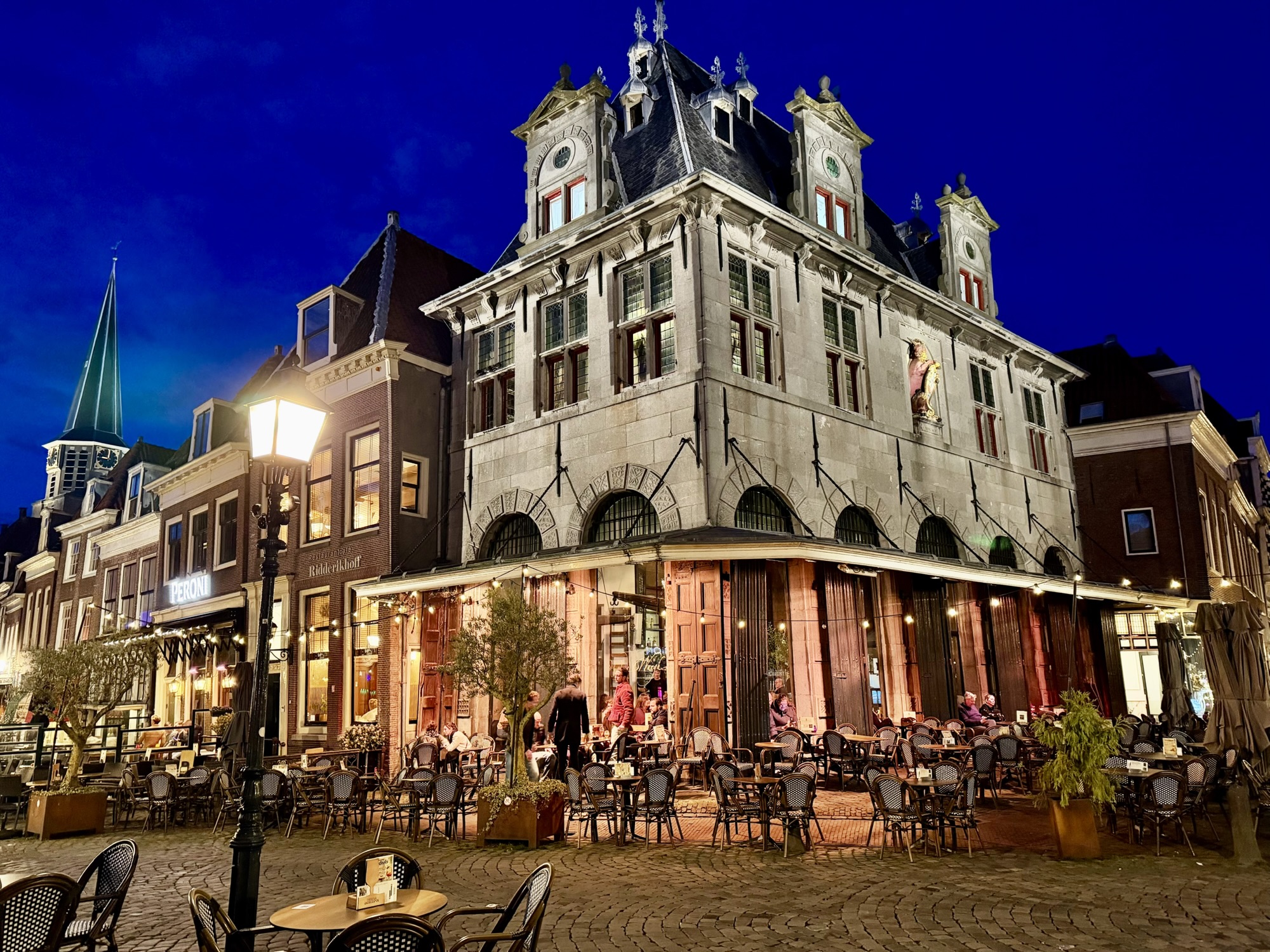
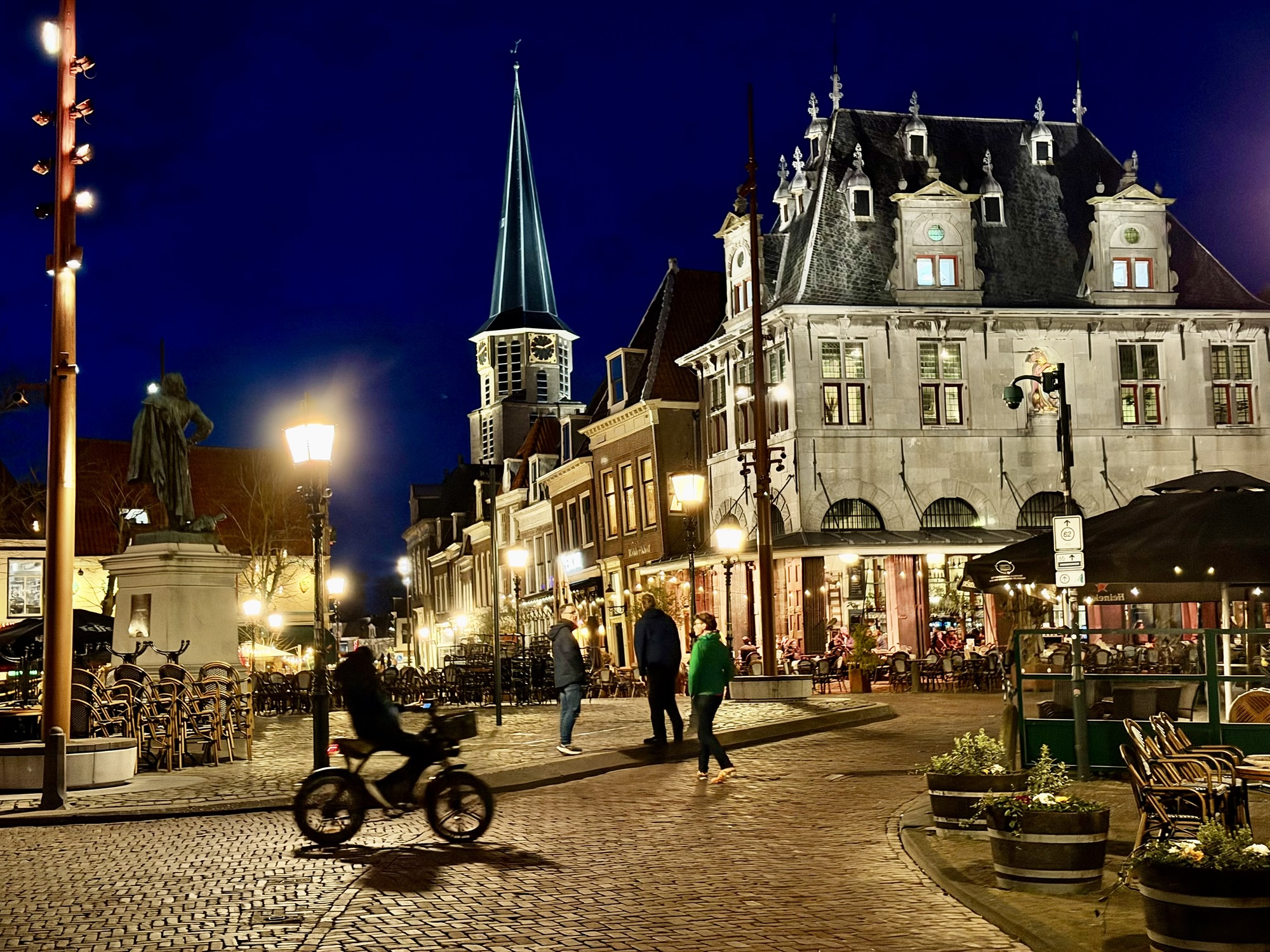
After dinner we had a briefing about the ride tomorrow which will be 52 km. Then we went for a walk around Hoorn. Hoorn is a city which dates back to the 1300s which has over 70,000 inhabitants. It was a key Dutch East India Company base in the 17th century. It is renowned for its maritime history, scenic harbour, and well preserved, golden age architecture. I took so many beautiful blue hour images that I wasn’t able to narrow it down to less than a dozen so have put it in a slideshow below.