Europe 2026 – Day 6 – Amsterdam

We split up into three groups today. David and Dayle and Wayne took the train to Alkamaar for the cheese auction. Dayle guest blogs about their day at the Alkmaar cheese auction.

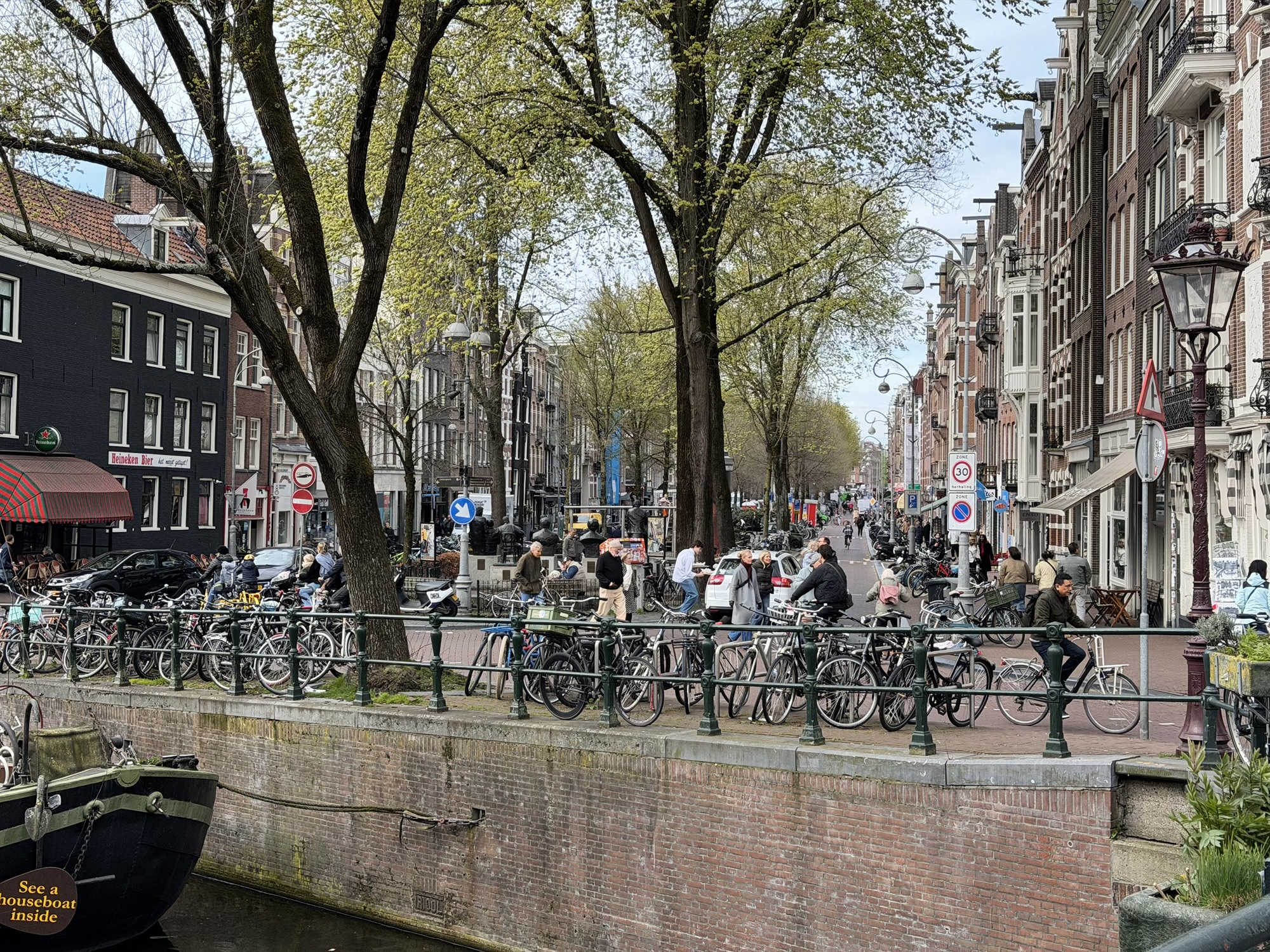
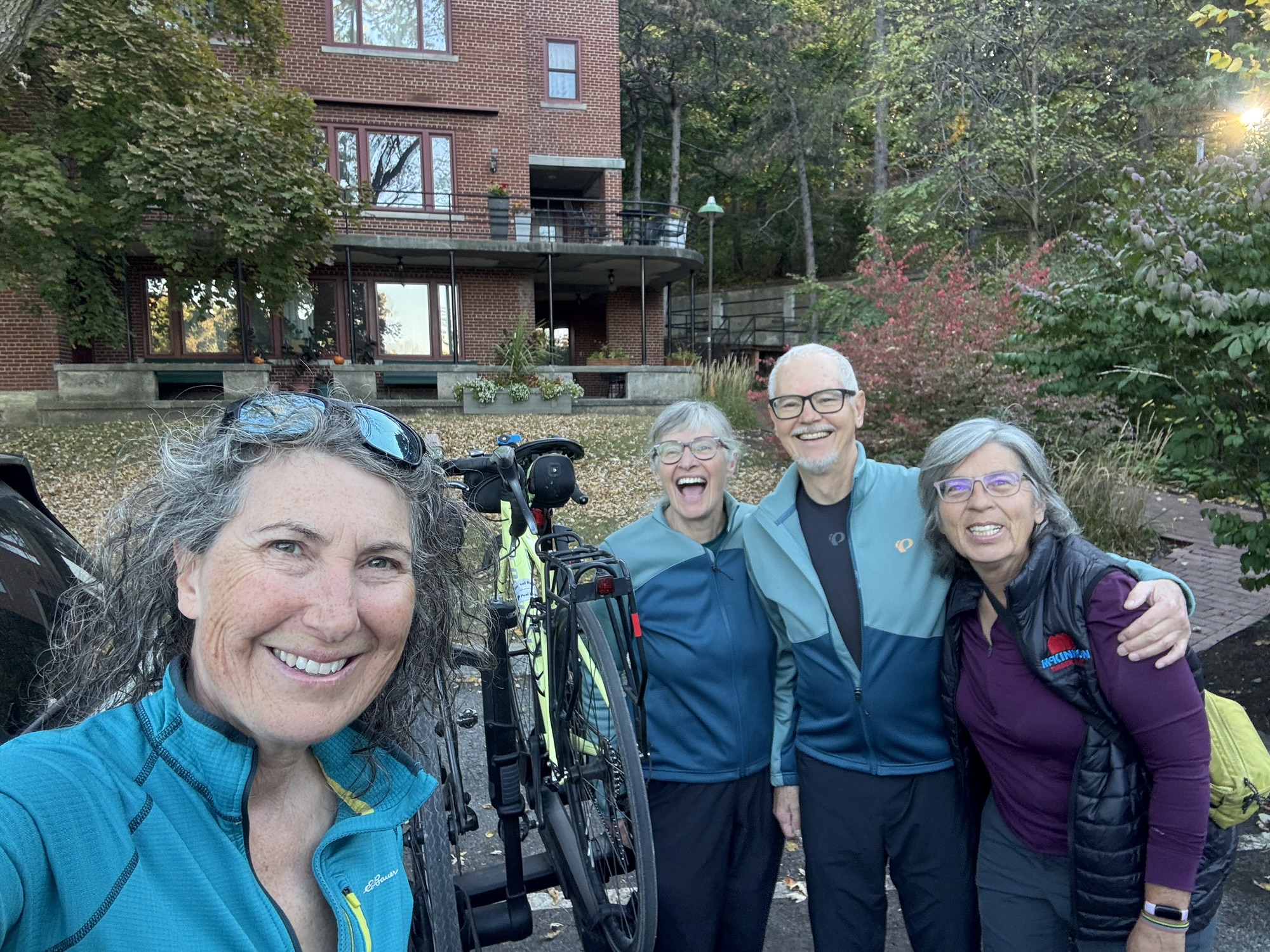
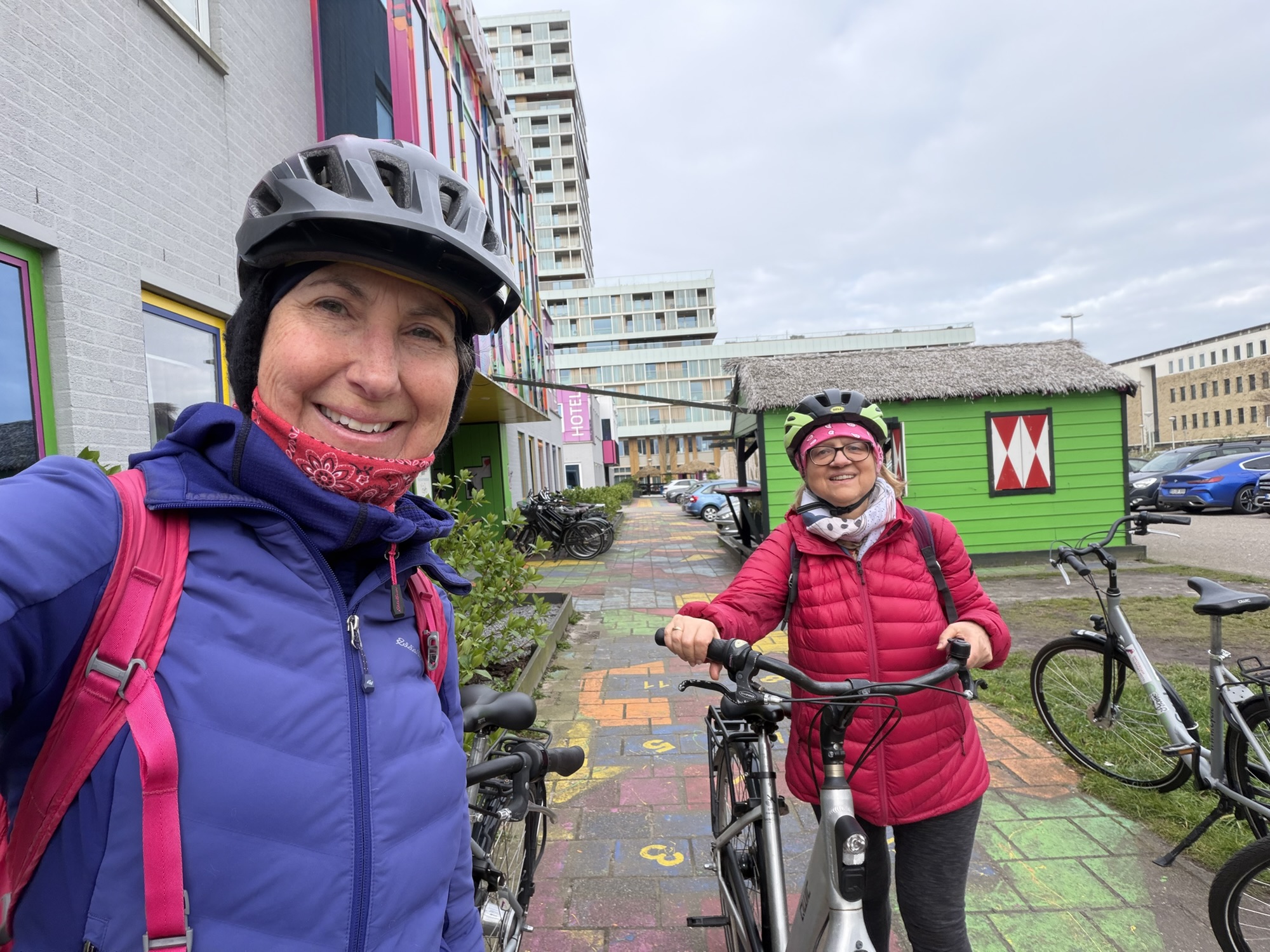
Alina and I rented Dutch bikes from the hotel and did a 44 km ride exploring greater Amsterdam.
Cindy and Mark explored Amsterdam on foot.

It was quite simple to rent the bikes. It’s a rental company that keeps their bikes at the hotel where we are staying. We went down and scanned the QR code which opened a webpage. I was able to order bikes for both of us. The reception desk received the order and provided us with keys for the frame locks on the bikes.

I couldn’t find the bike they assigned me so traded it for another. But then the second one had the seat tilted up and my Allen keys were not the right tool to adjust it. So they gave me a third bike. The seat was better, but not perfect, but I didn’t want to waste any more time so I took it. I did end up a bit sore by the end of the day so I’ll make sure the seat is perfectly adjusted when we do the Bike and Barge part of our trip, which is six days of writing for a total of about 280 km. I attached my Quad lock phone holder to the bars so I could consult the map hands-free and have it easily accessible for taking pictures. 

Before we left this morning, I dropped a dozen or so points of interest on a Ride with GPS map and then had Ride with GPS route us between them.

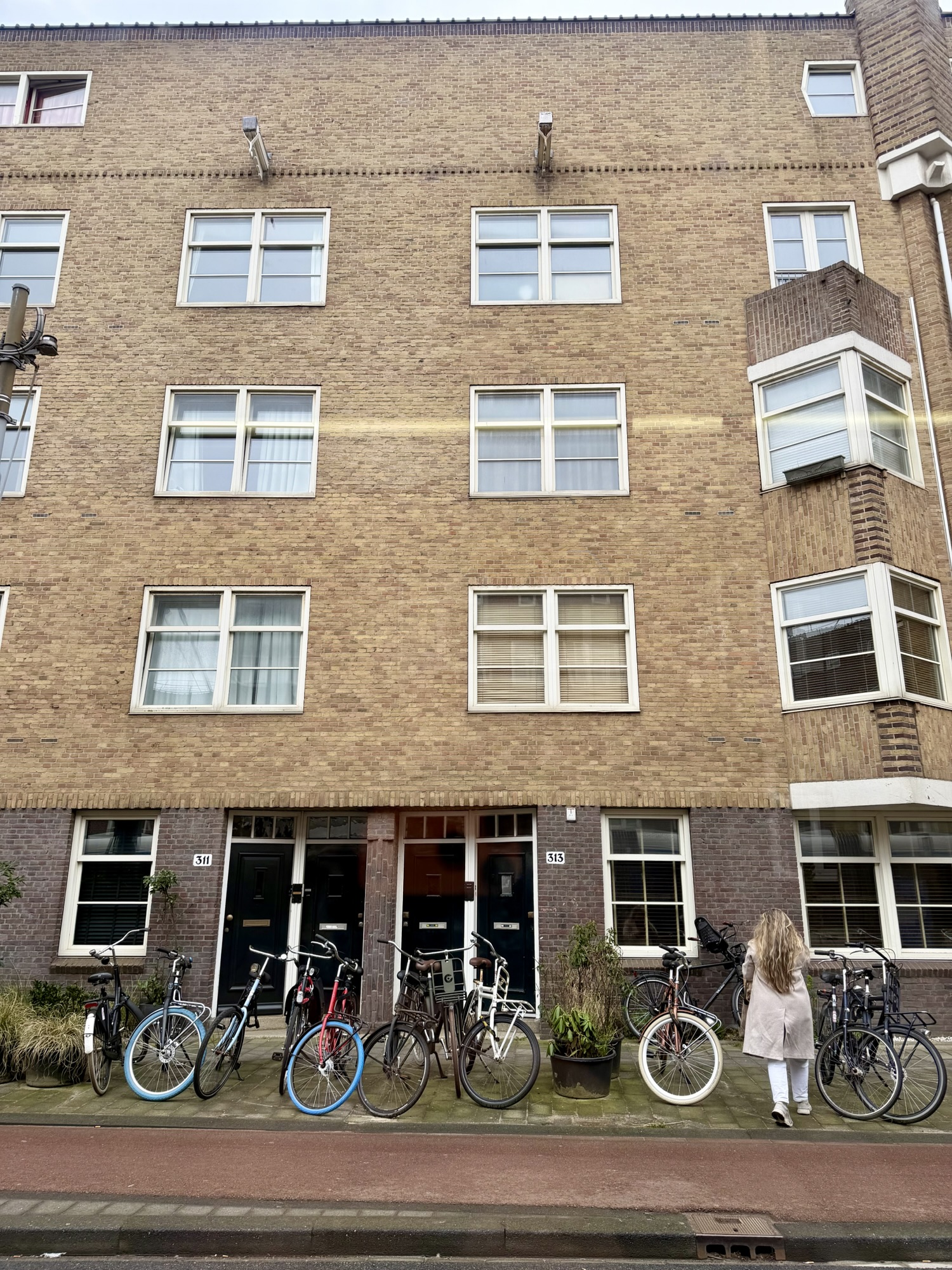
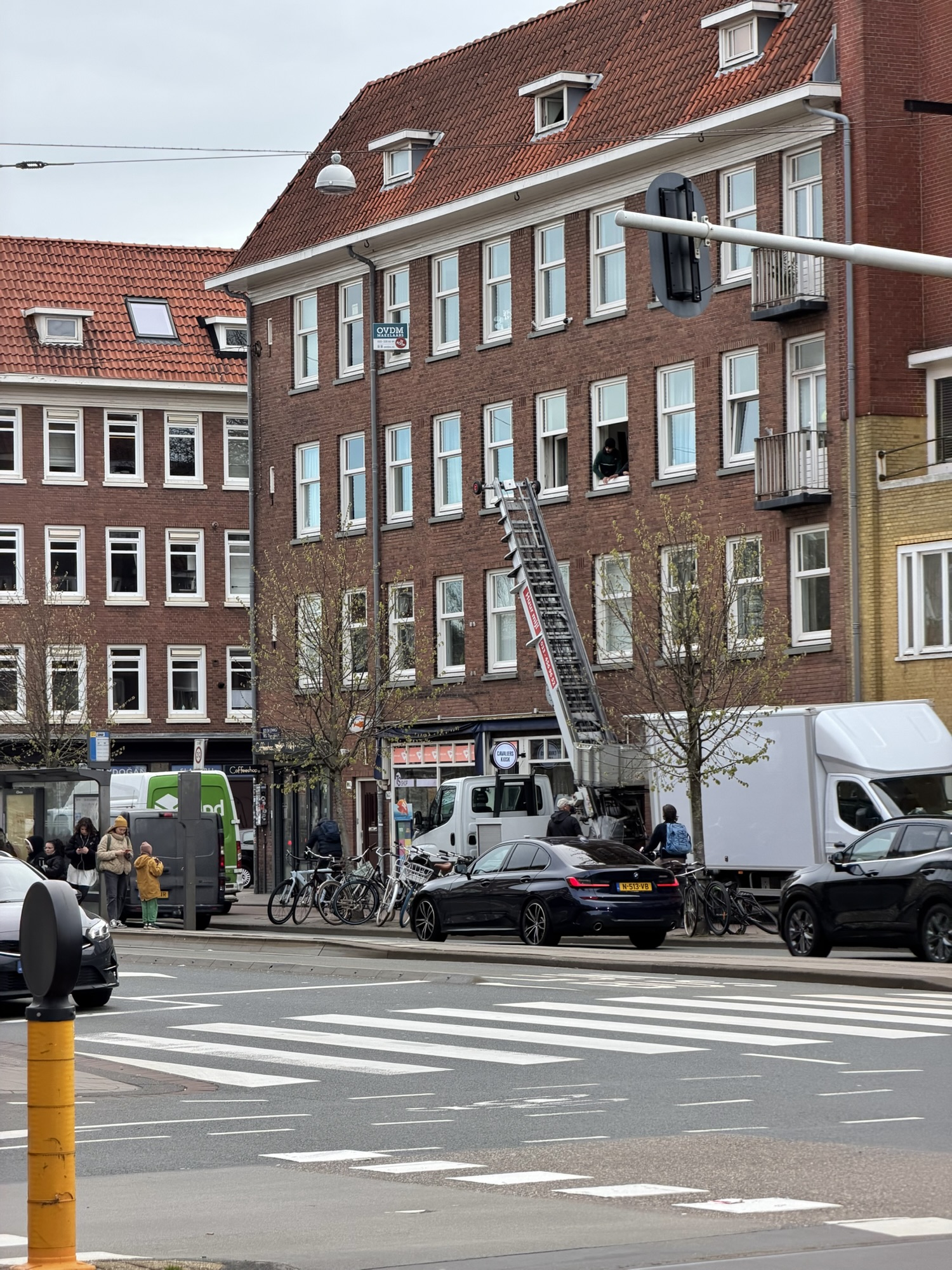
Shortly after leaving the hotel, we saw someone having something delivered using a crane.
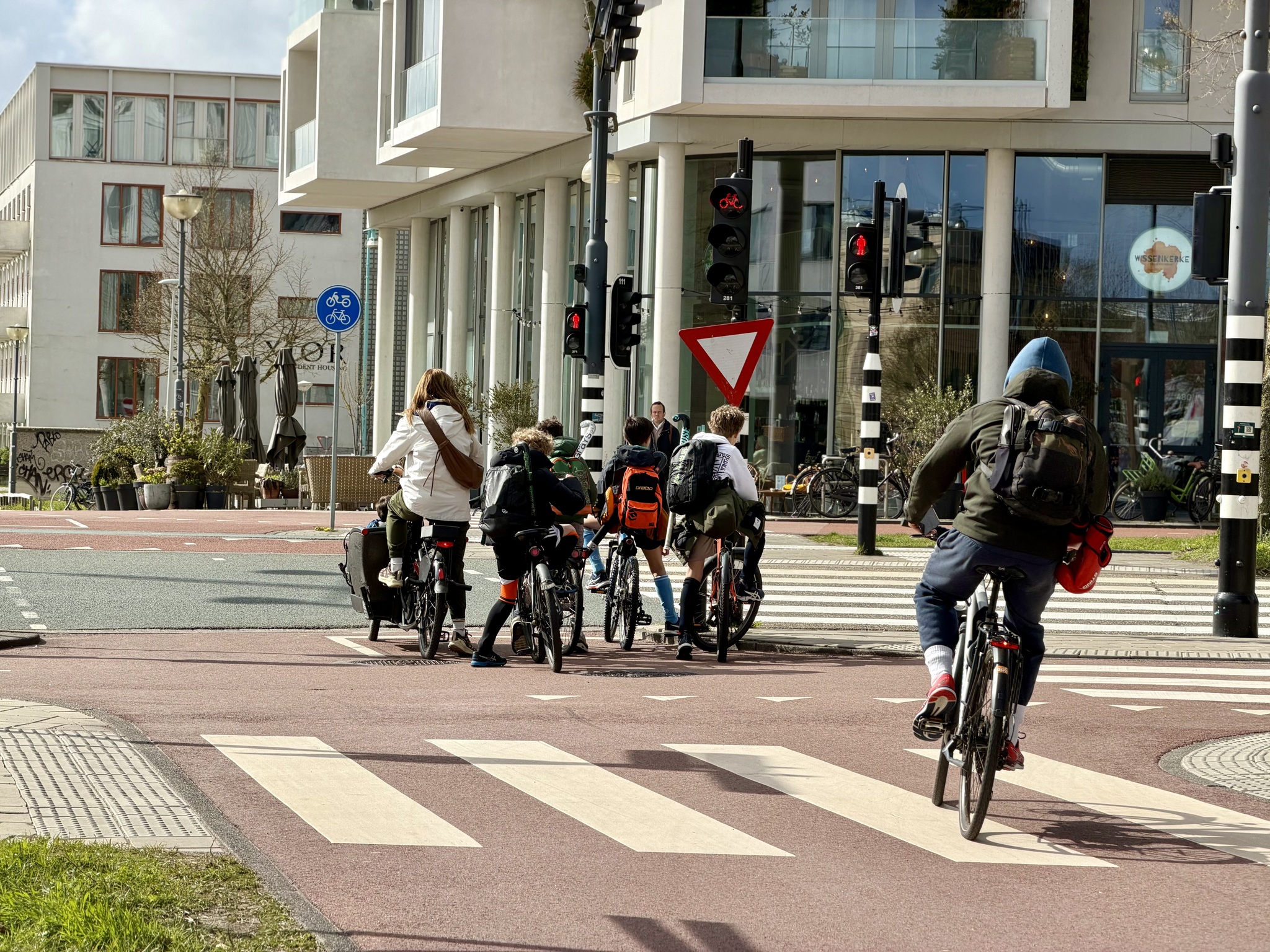
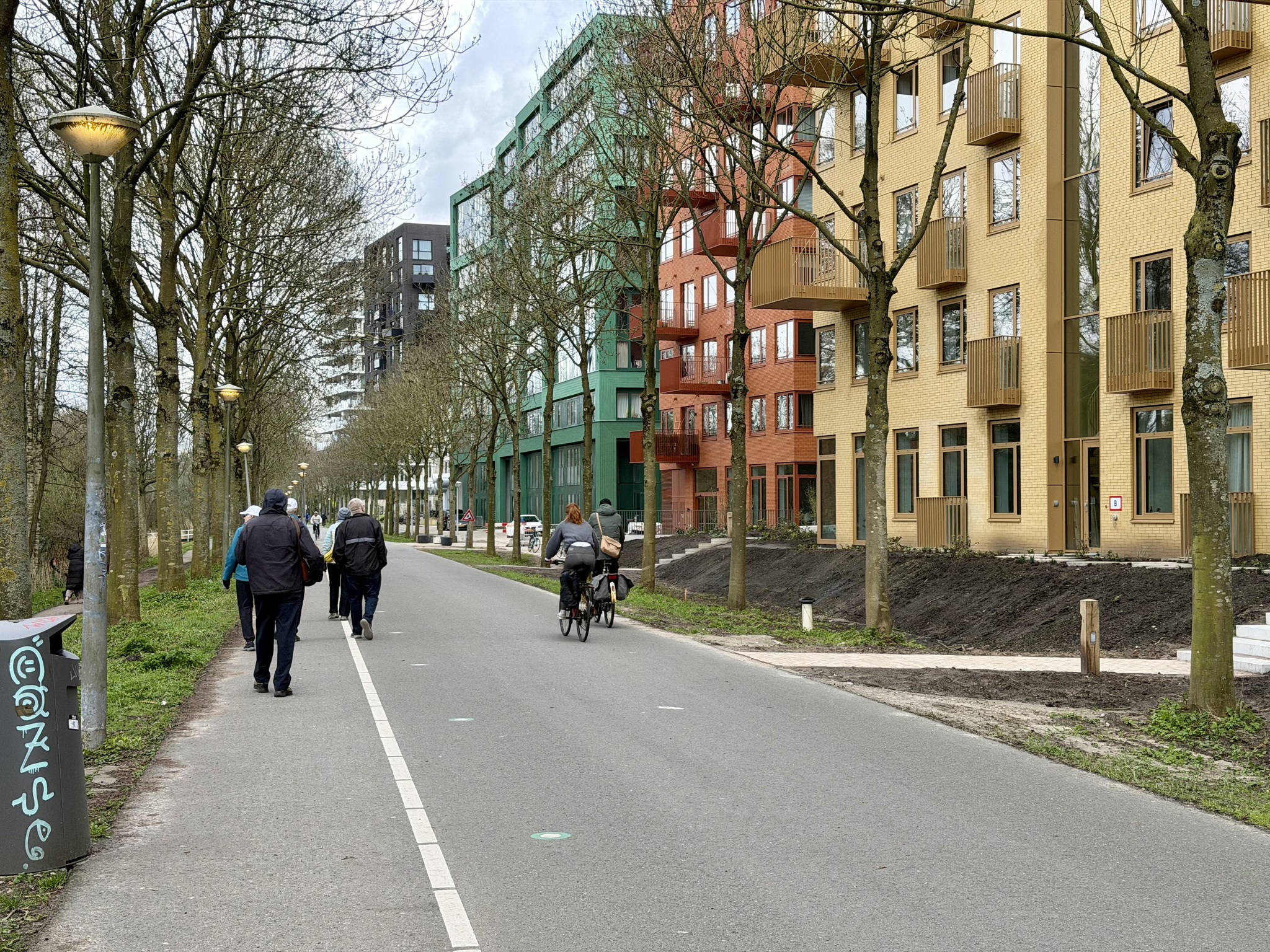
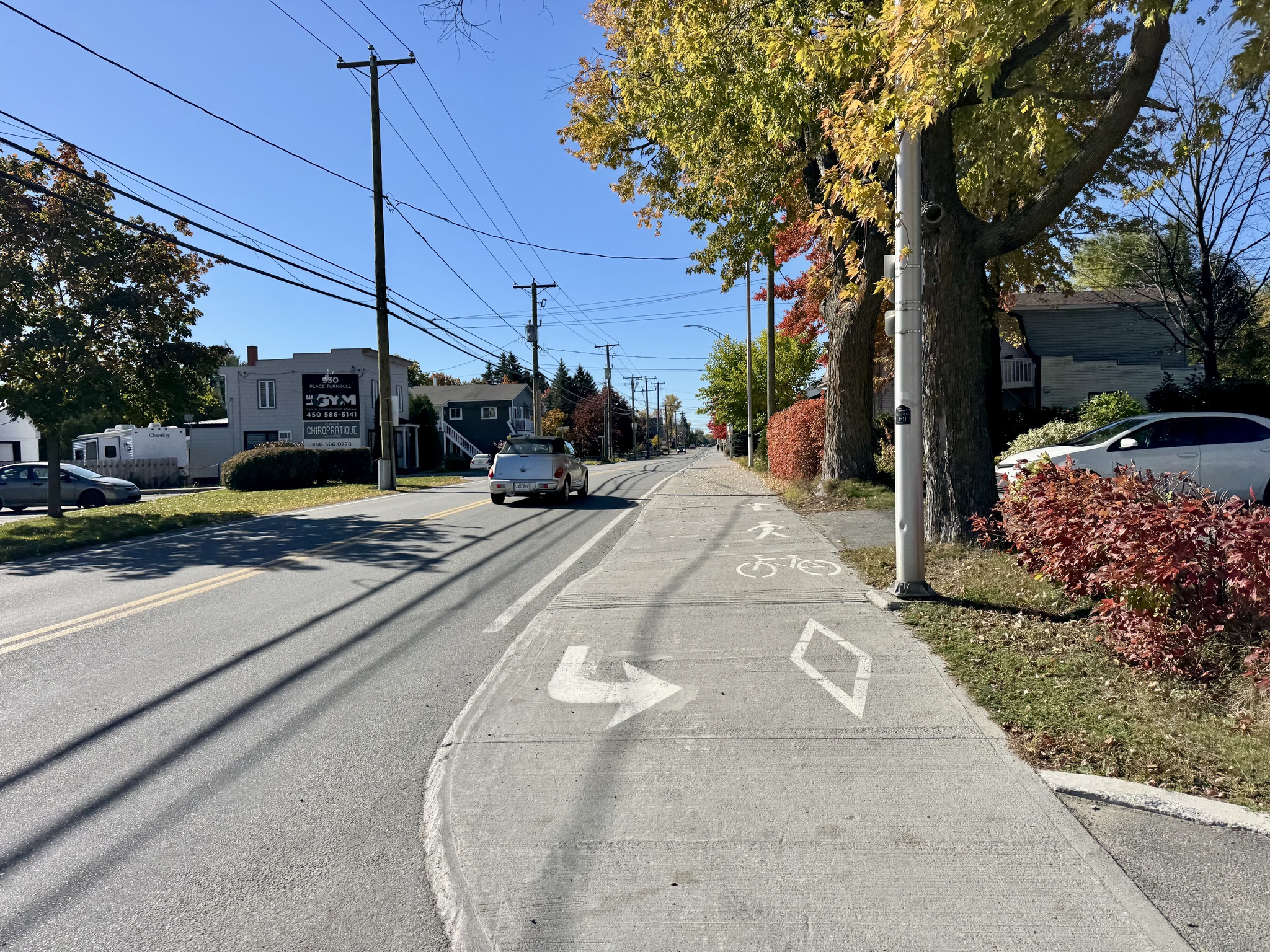
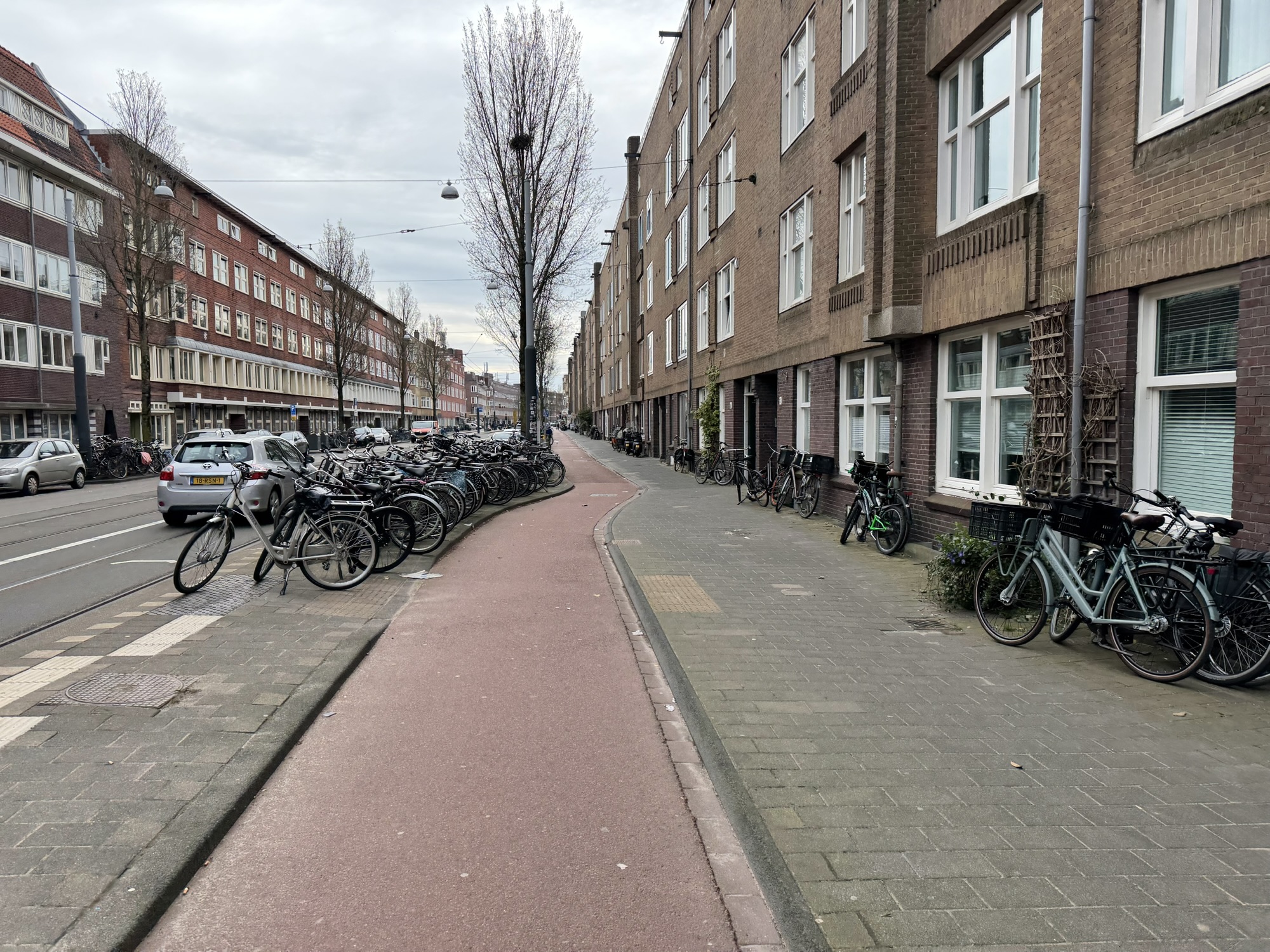
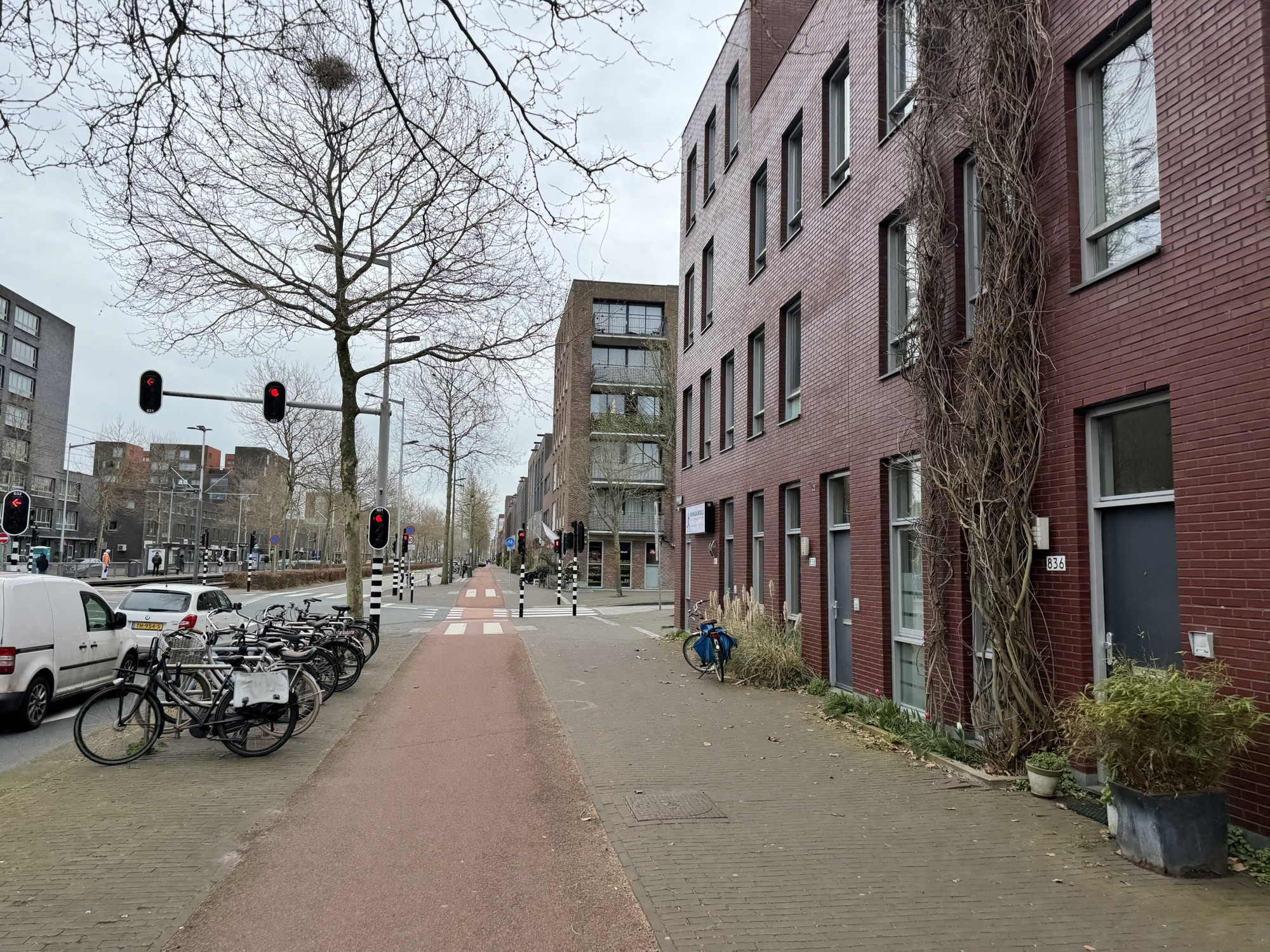
Except for in the very small brick surface central Amsterdam streets, which were shared by cars and bikes, we had separate cycling infrastructure most of the day.
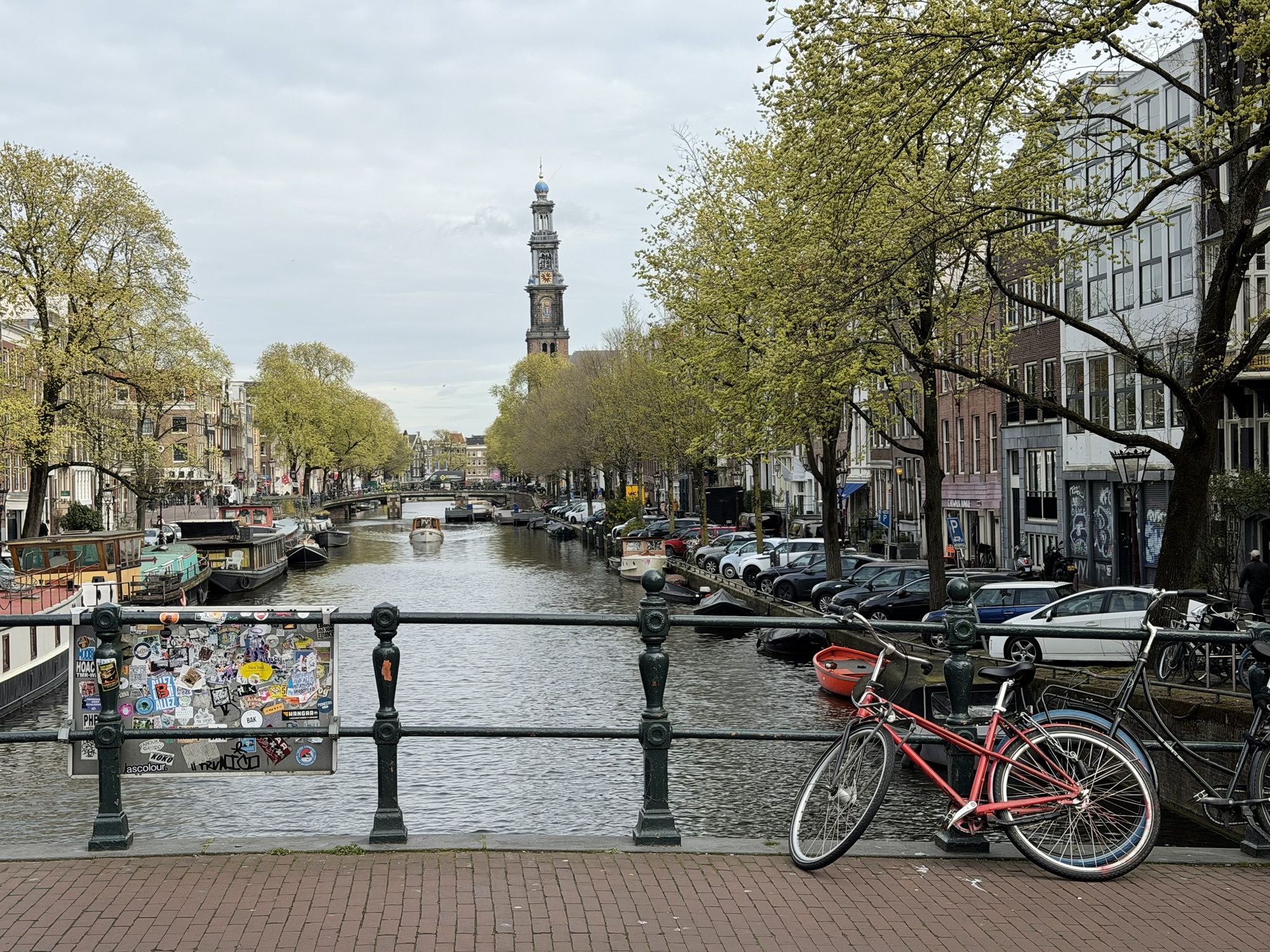
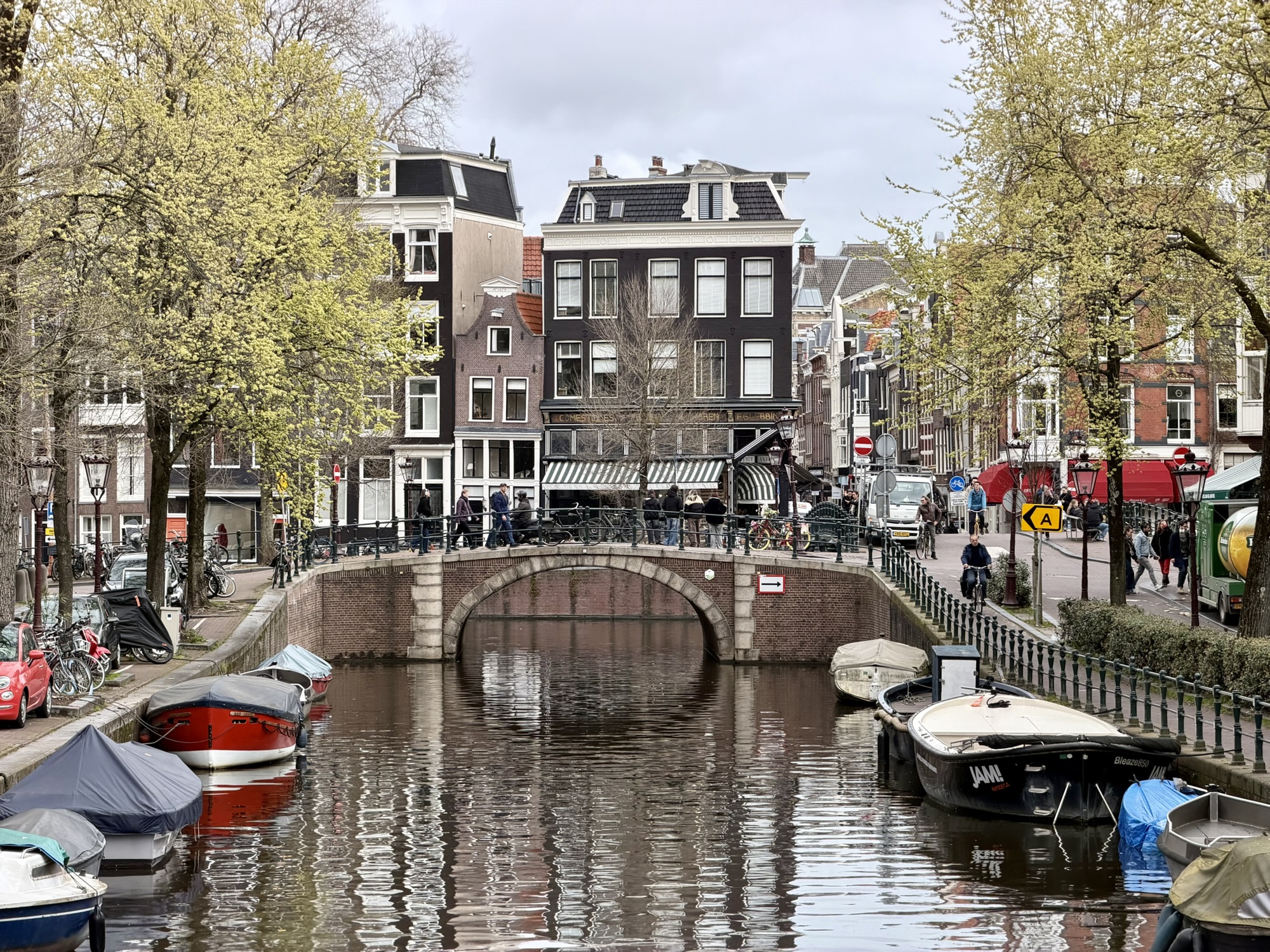
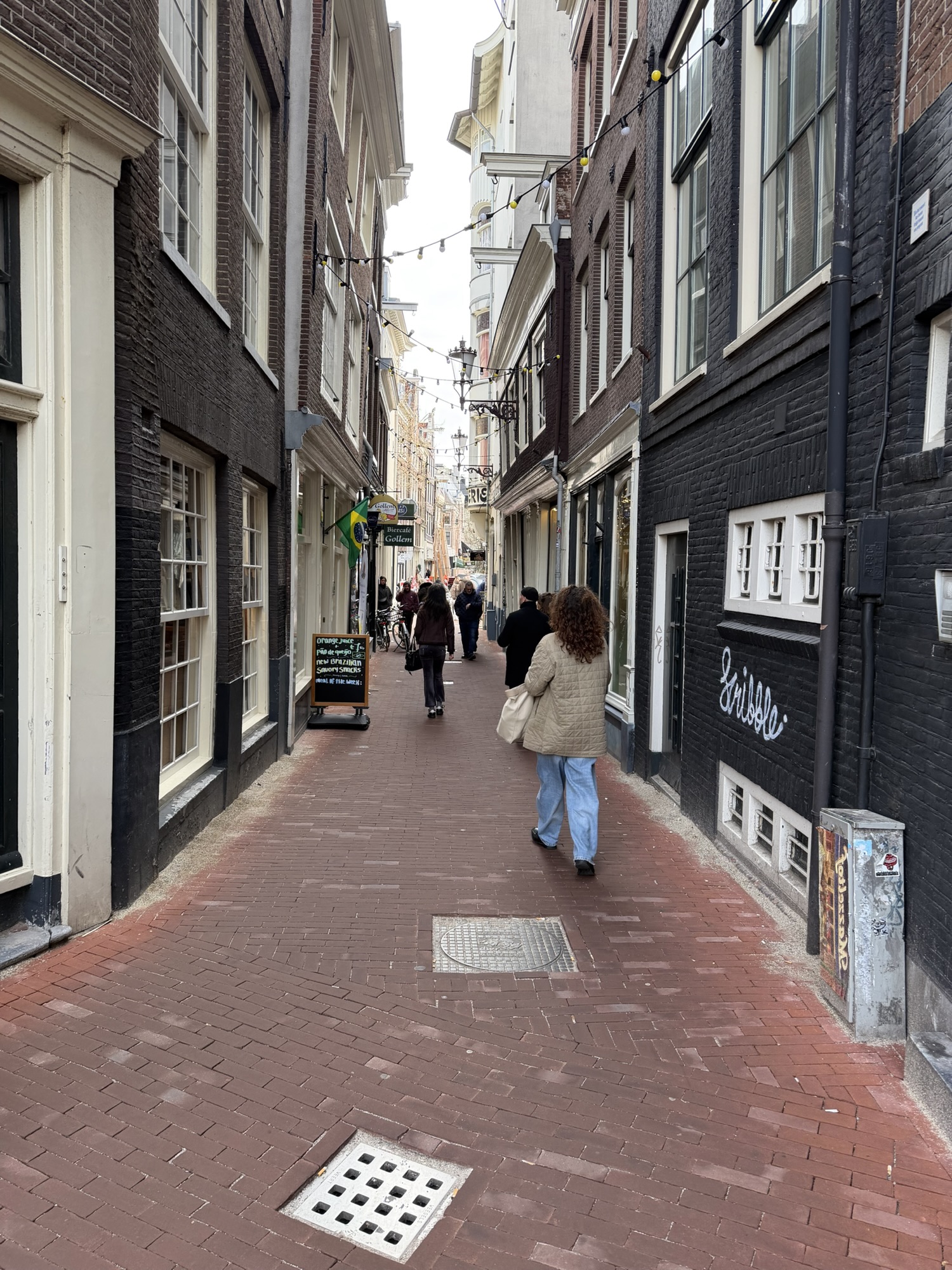
Our first stop was 9 streets. It is a series of nine very small streets in the historic area in the central Canal belt (a UNESCO world Heritage site). These streets connect the Singel, Herengracht, Keizersgracht, and Prinsengracht canals. 
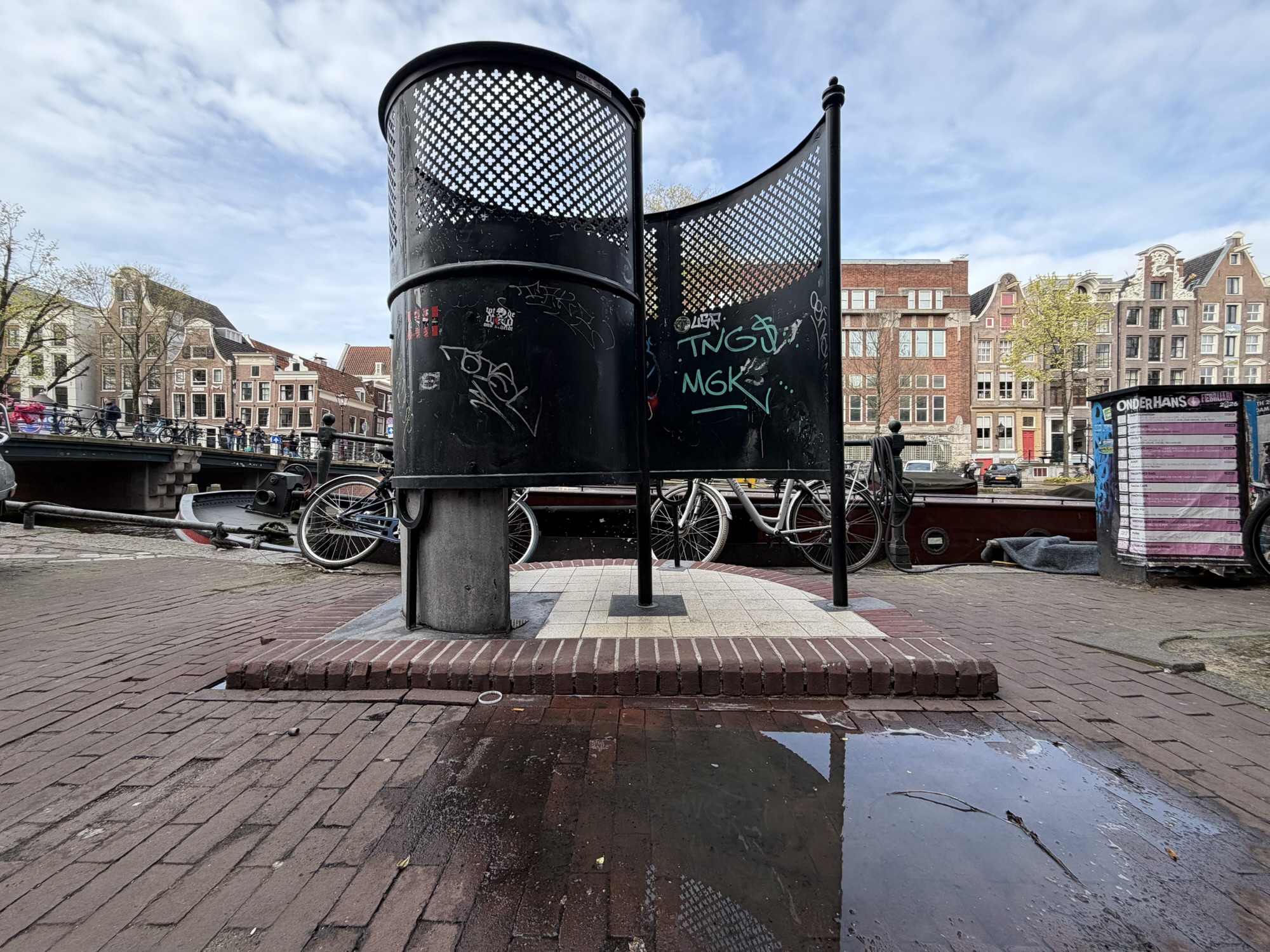
We used the frame locks, and a cable lock I brought with me, to lock the bikes up. There are bikes everywhere in Amsterdam. We found a spot where we could leave them, but it was right next to a urinal. Amsterdam outdoor urinals., colloquially known as “Pee curls“ for the shape of the screen. They take back to the end of the 19th century. There are somewhat controversial because no facilities are provided for women.
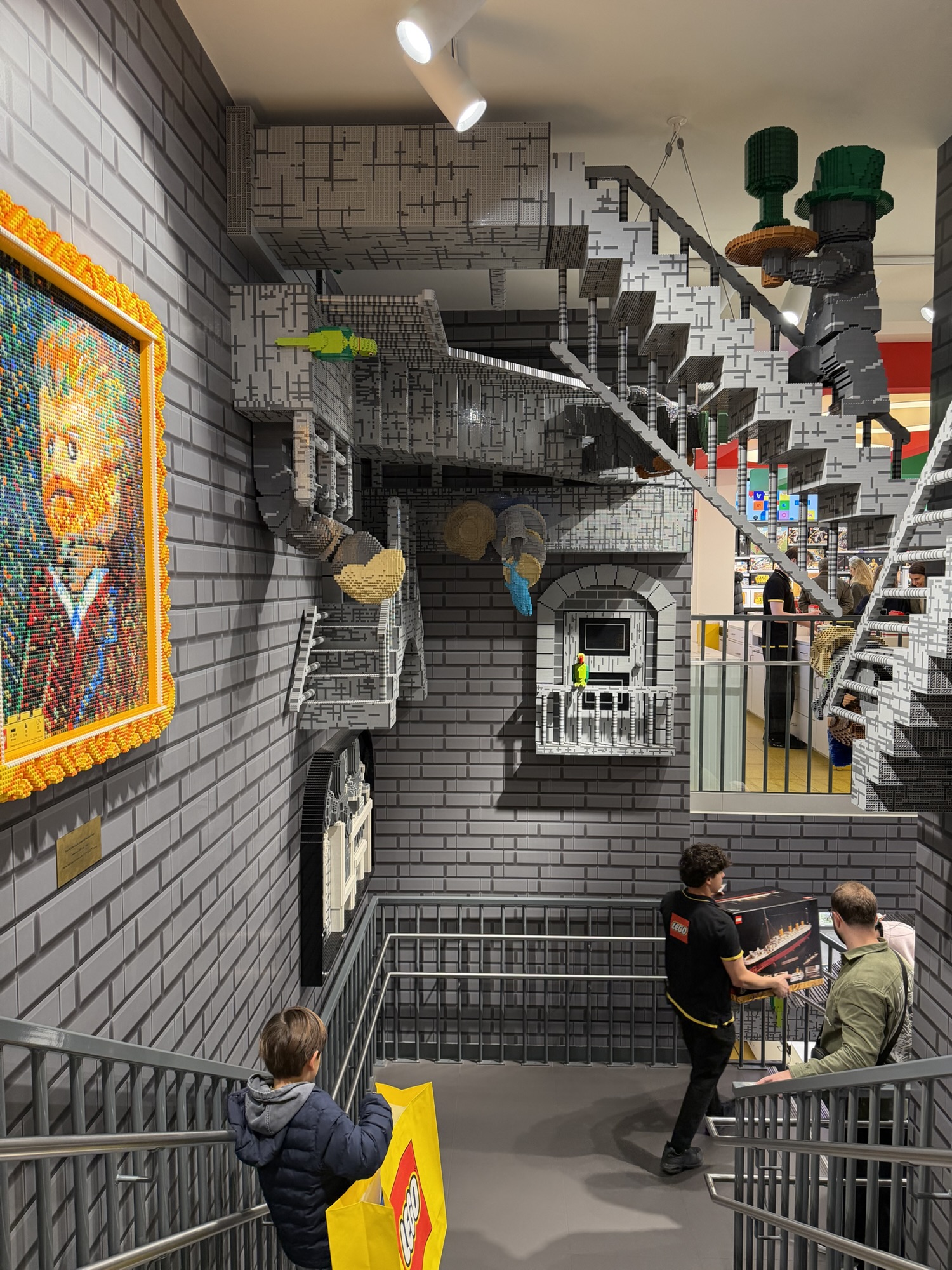
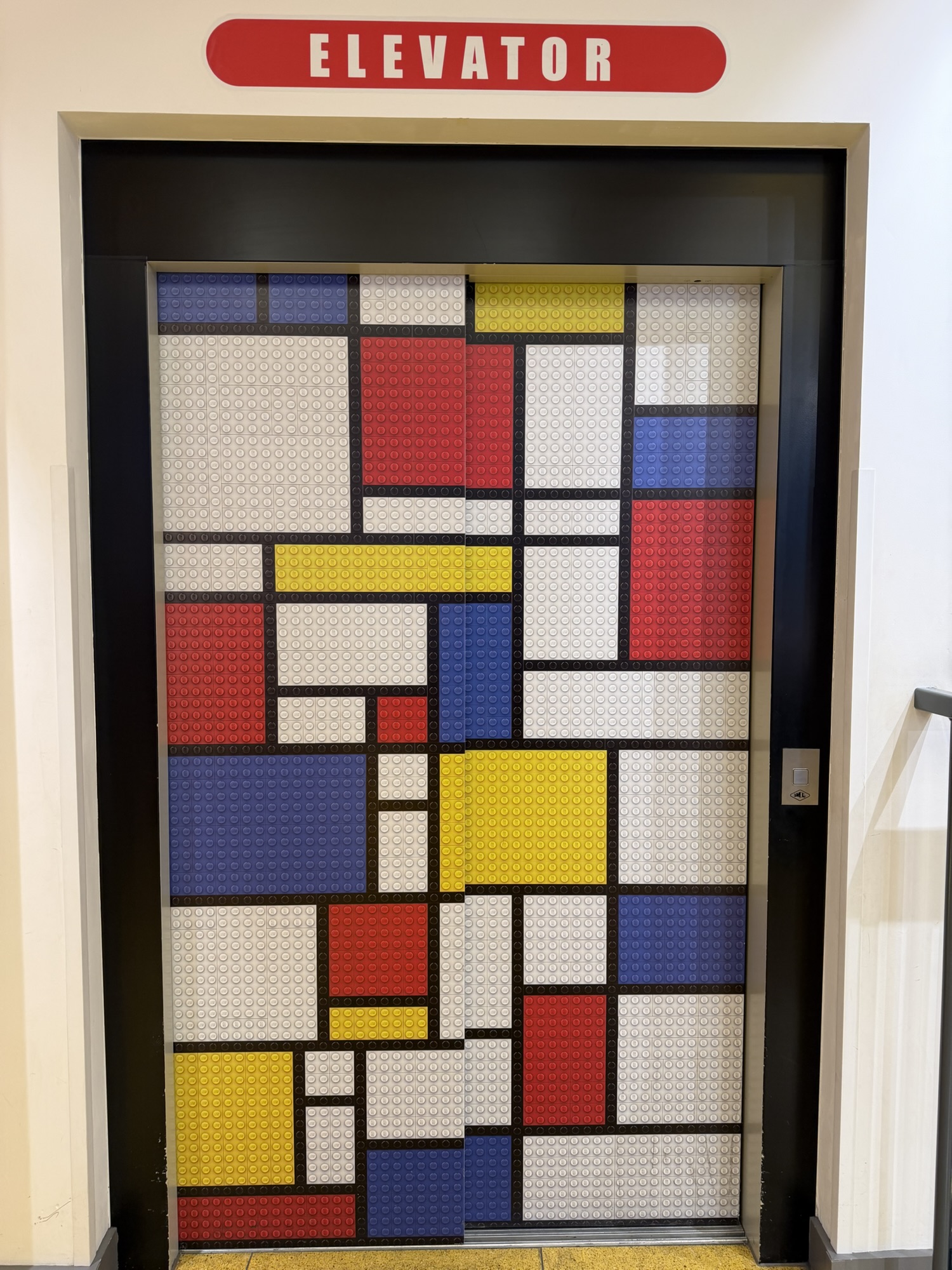
Our walk took us past the Lego store again, so this time we went in. The staircase was an homage to Escsher‘s Relativity.

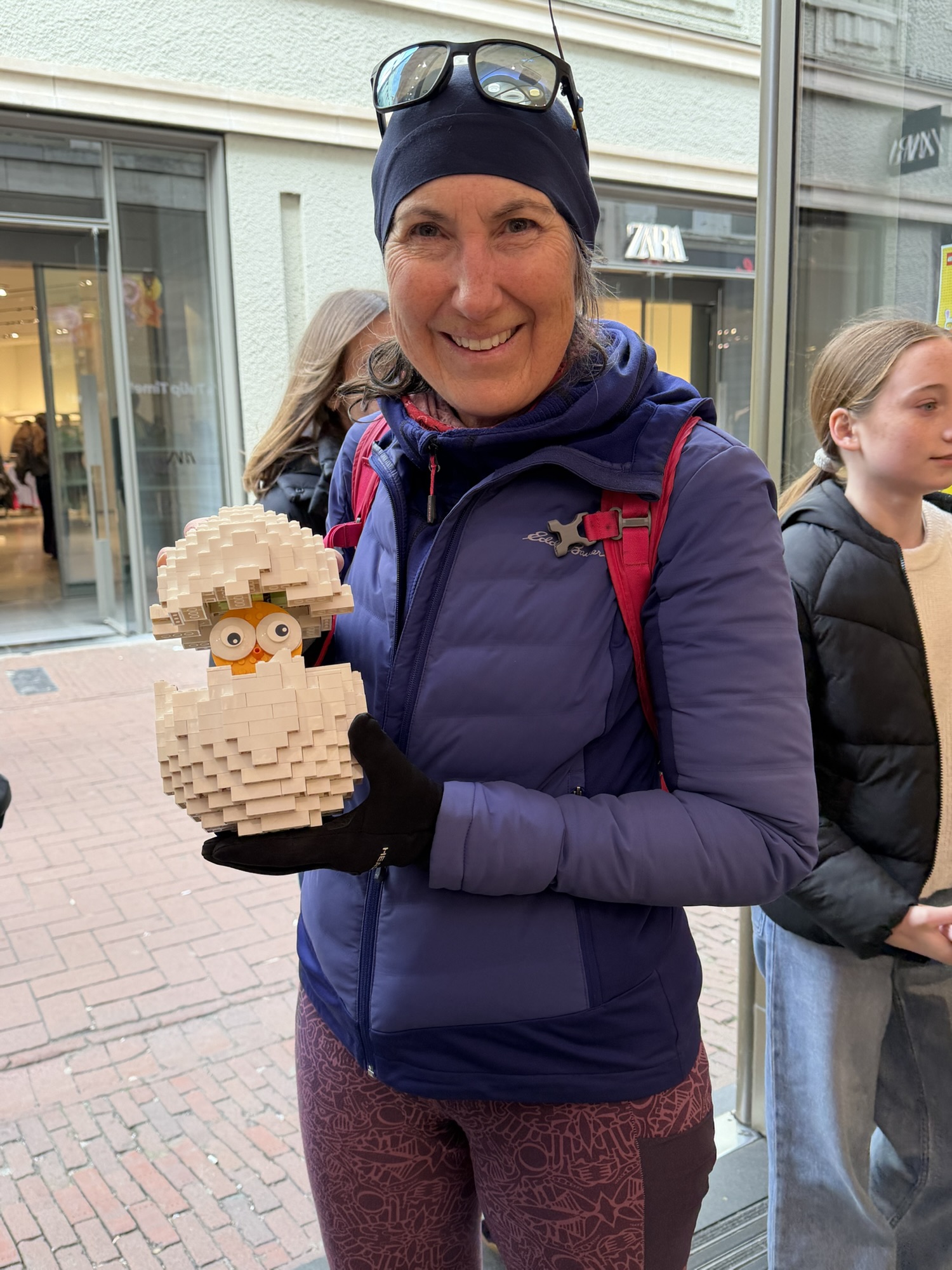
As we walked in the door, we were handed an egg shaped made out of Lego, which opened to reveal a chick.
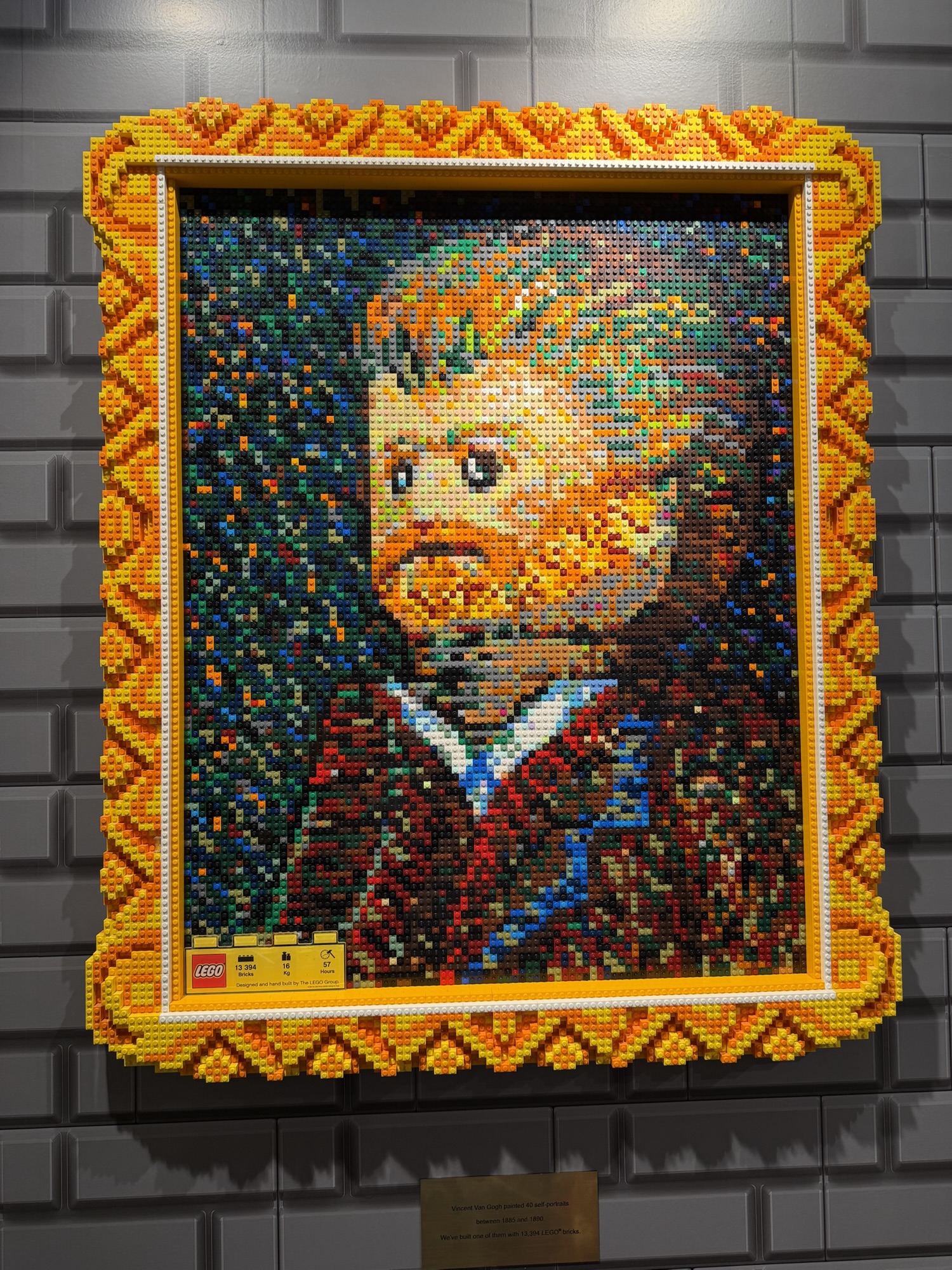
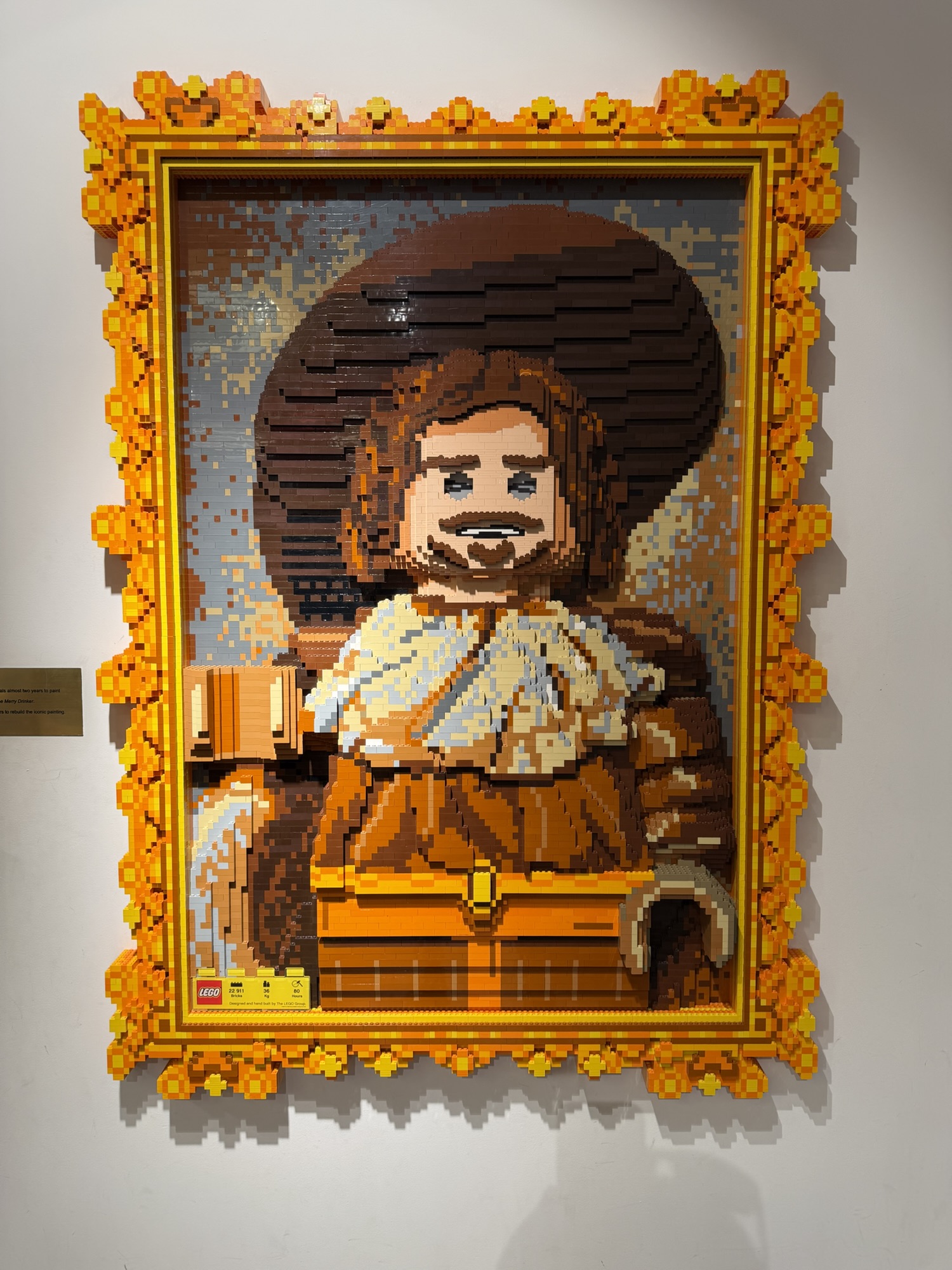
We saw more Lego replicas of Dutch work of art and other fabulous sites for an AFOL (adult fan of Lego) such as myself.
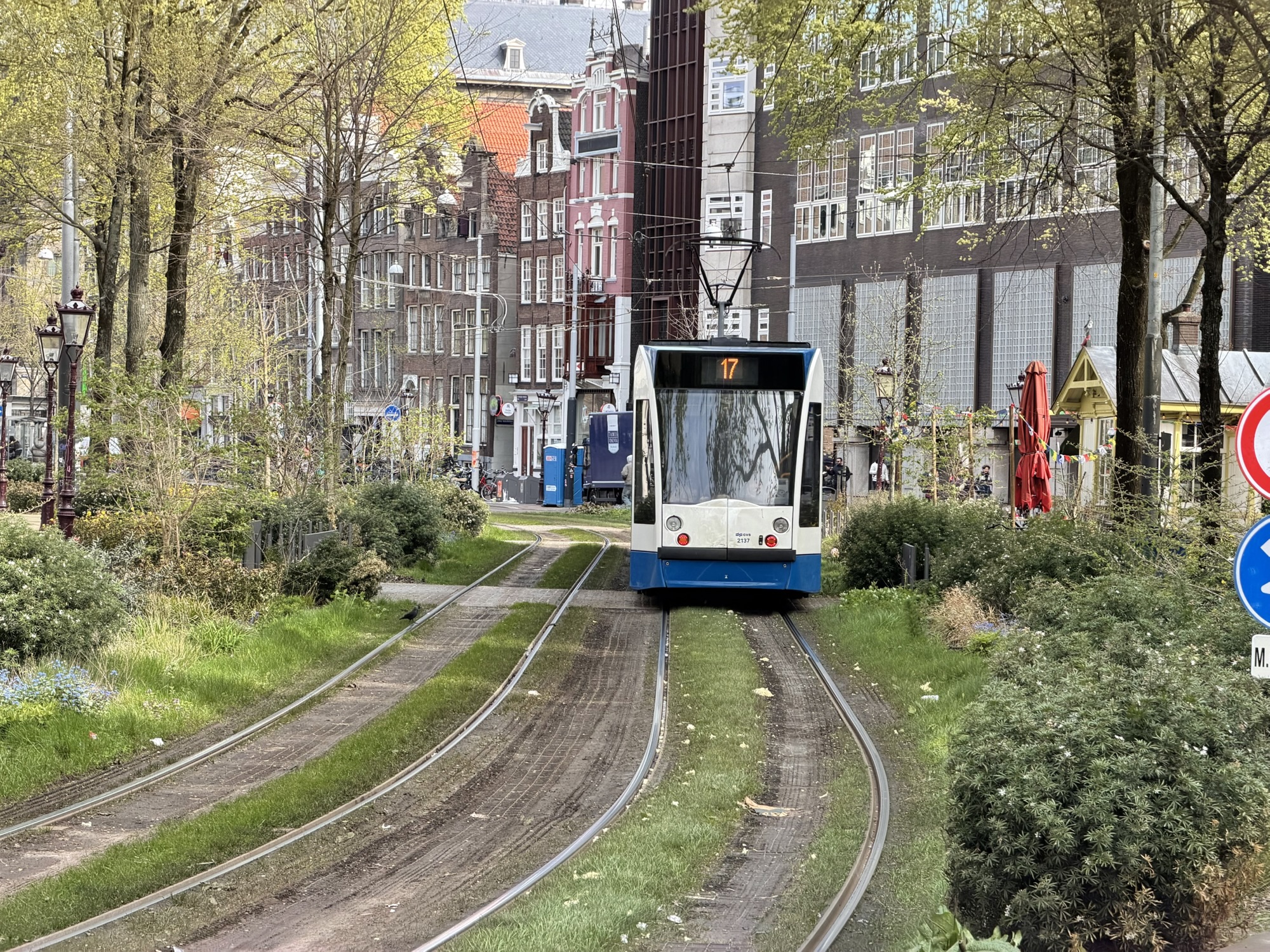
We passed the tram that was passing under tree canopy, and over grass. It was such a beautiful scene and every time I see this in Europe I question the way we’re building light rail in the GTA.
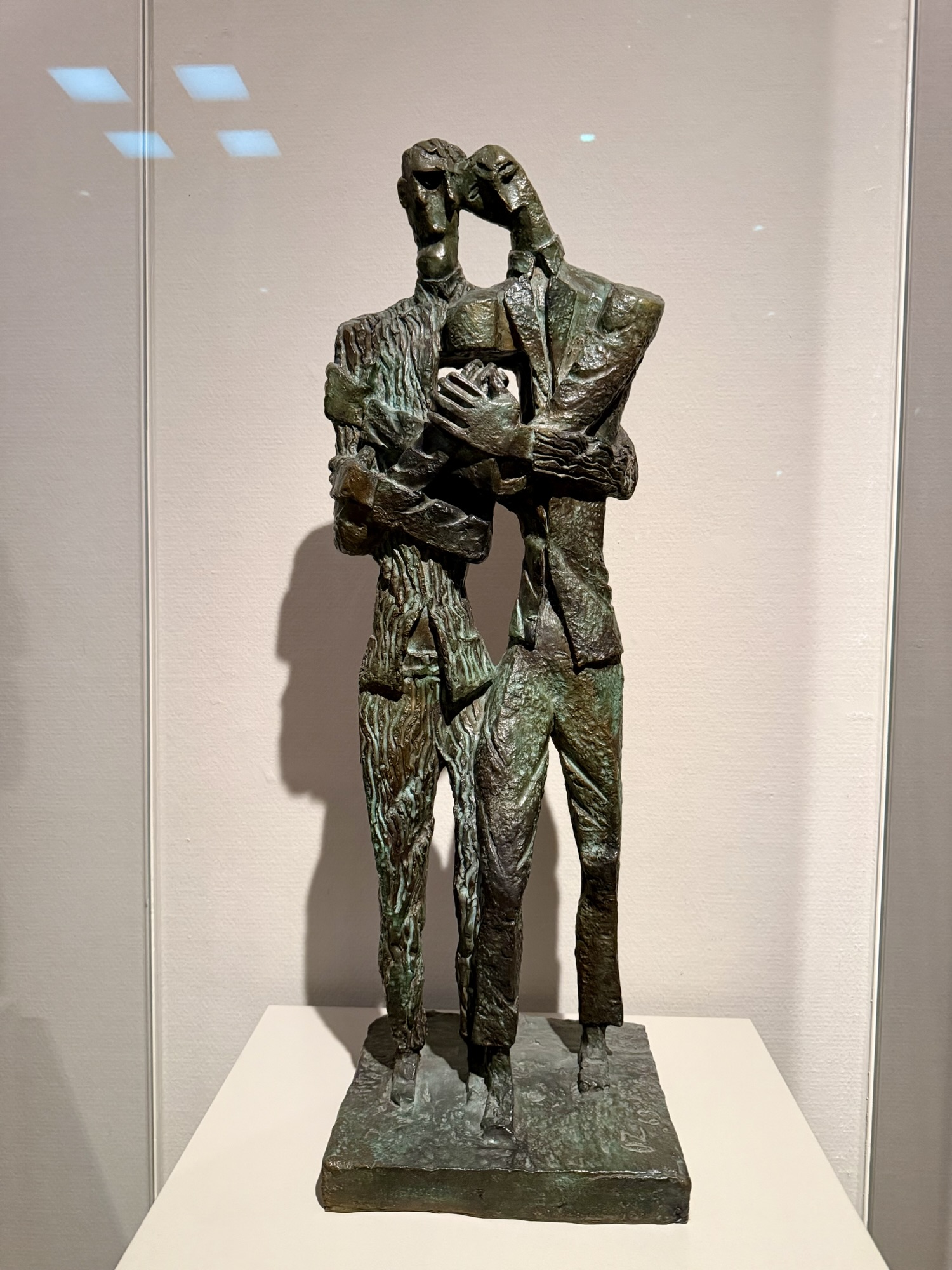
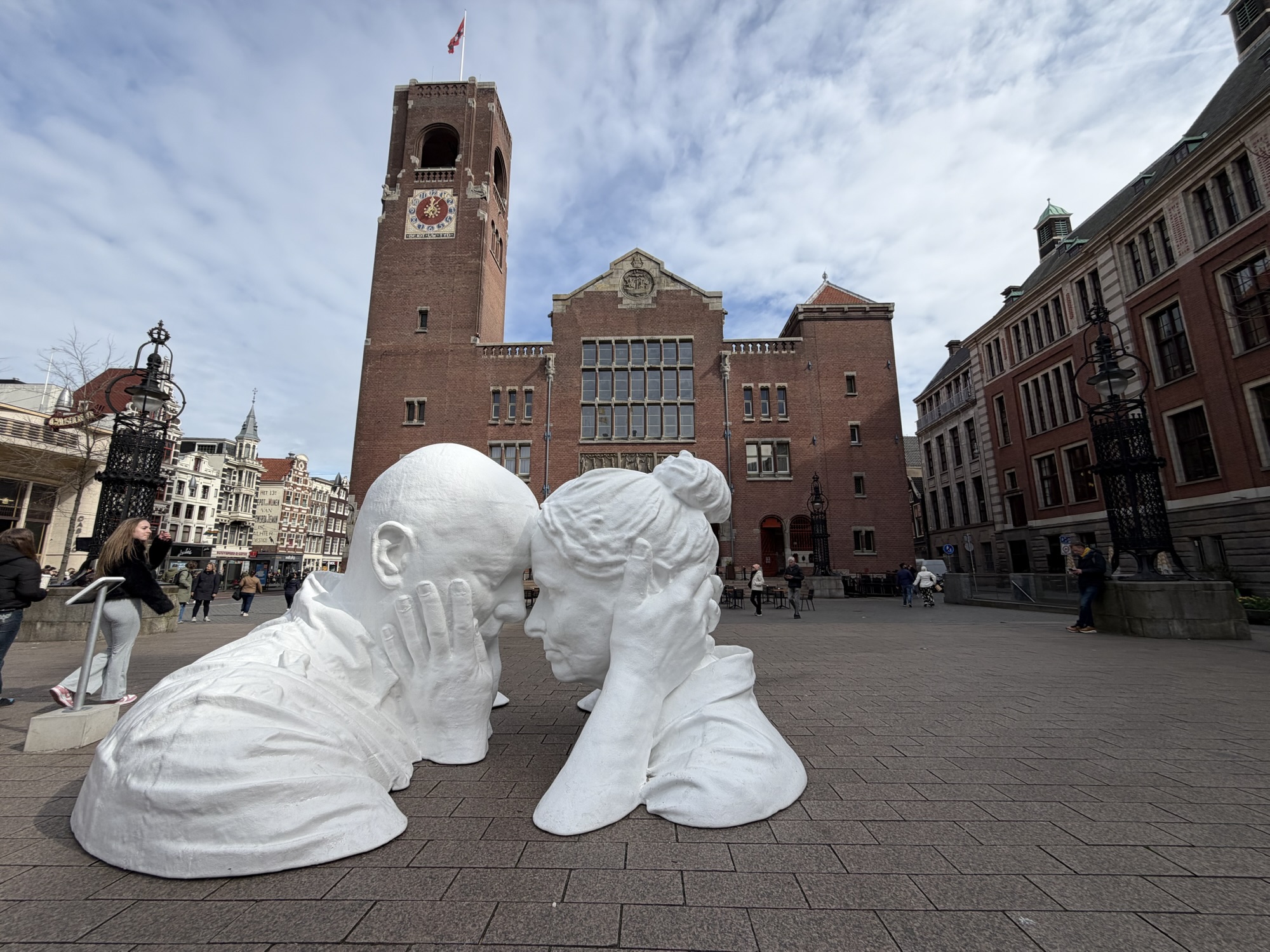
We passed an evocative sculpture of an elderly couple entitled Living to the Last: Stay Close.
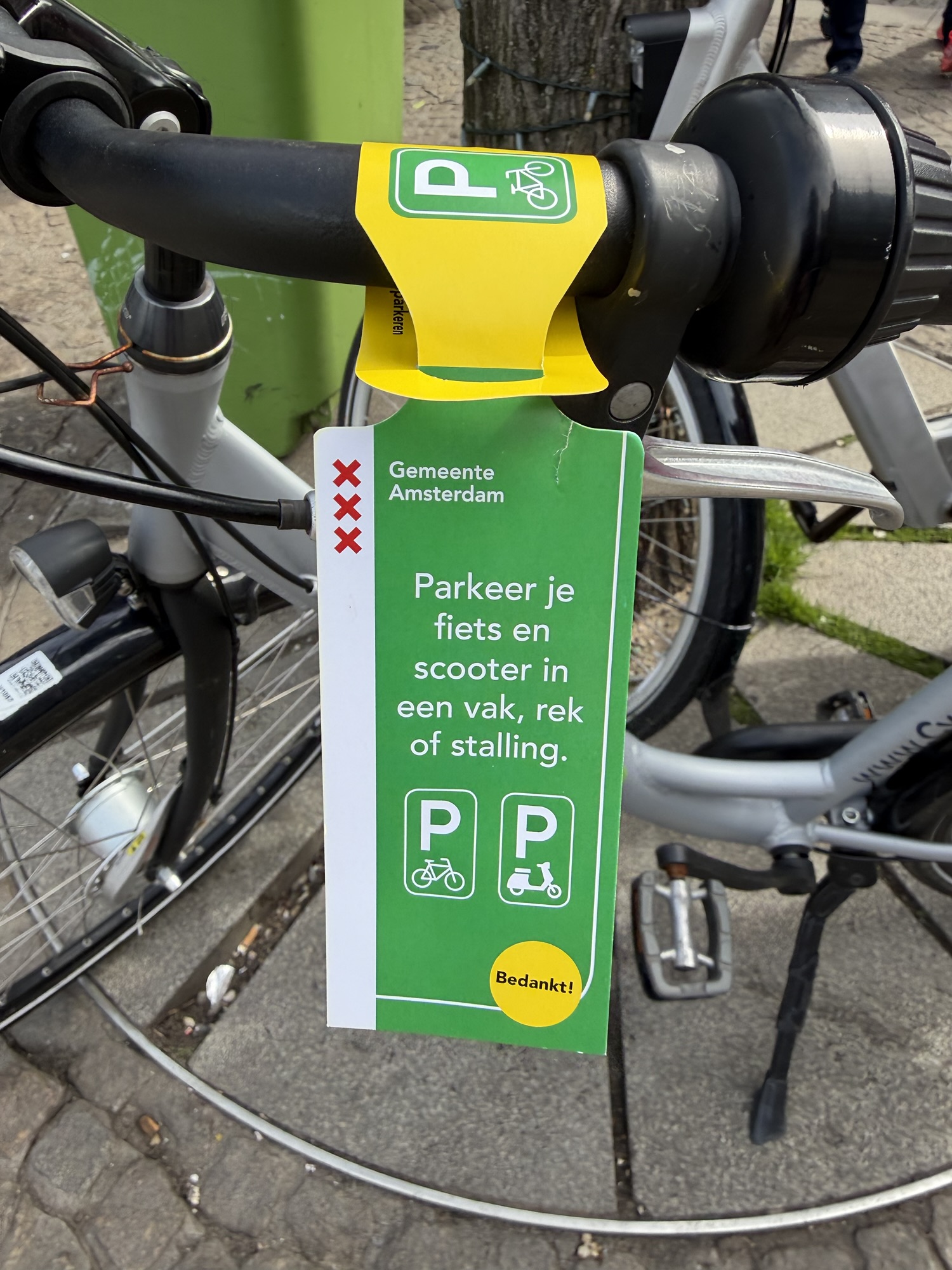
We parked our bikes across from the palace at Dam Square to take some pictures. We just use the café locks and set them near a lamp post where we thought they would be out of the way. Five minutes later, we returned to a notice hanging from our bars explaining that we were in a no parking zone. We were more careful where we left our bikes, the rest of the day.
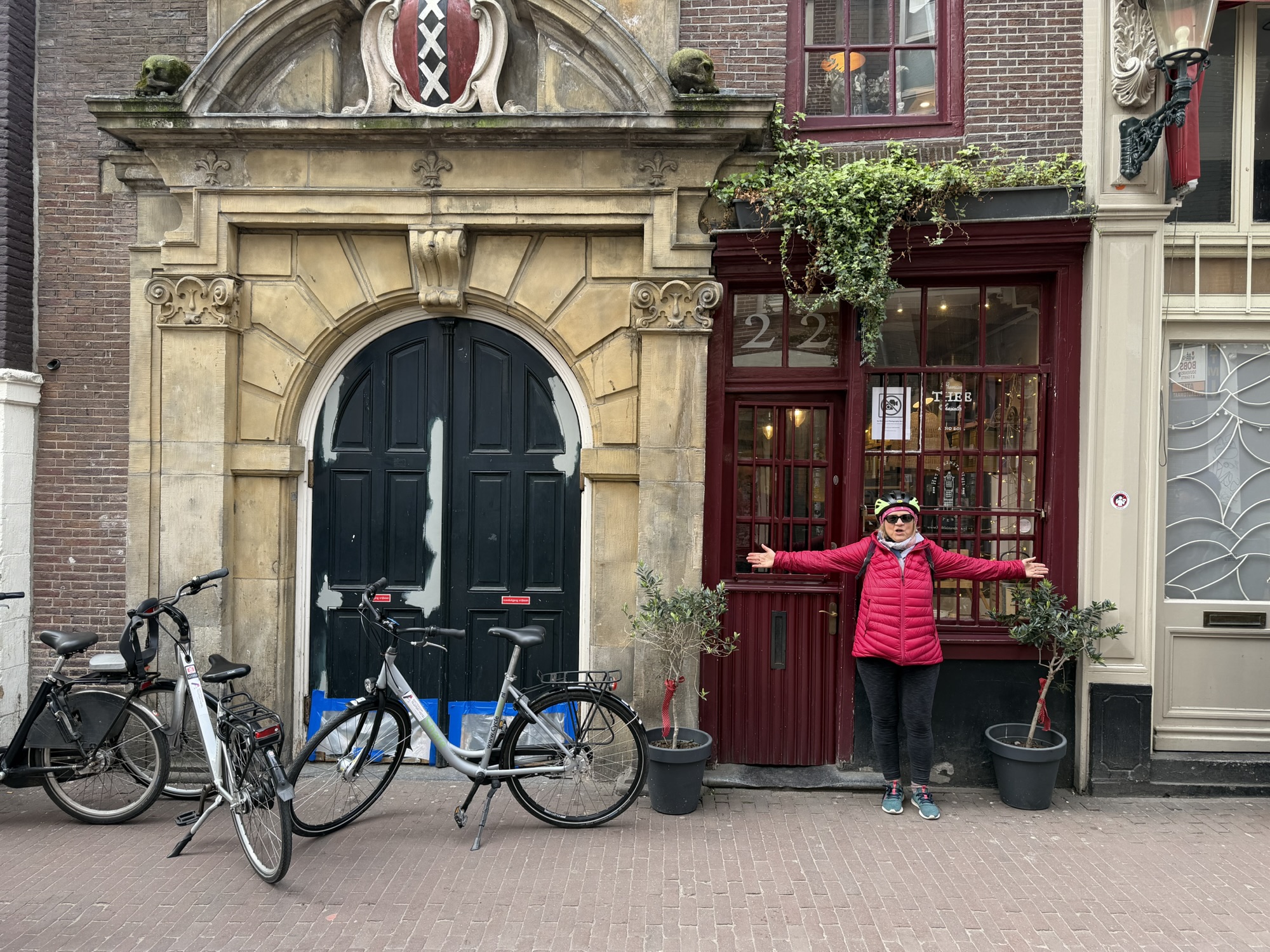
We then took some pictures in front of the narrowest facade in Amsterdam. The house was designed this way to avoid taxes which were based on the width of the façade. This caused people to build houses with narrow façades, but that were deep and widened as they went back.
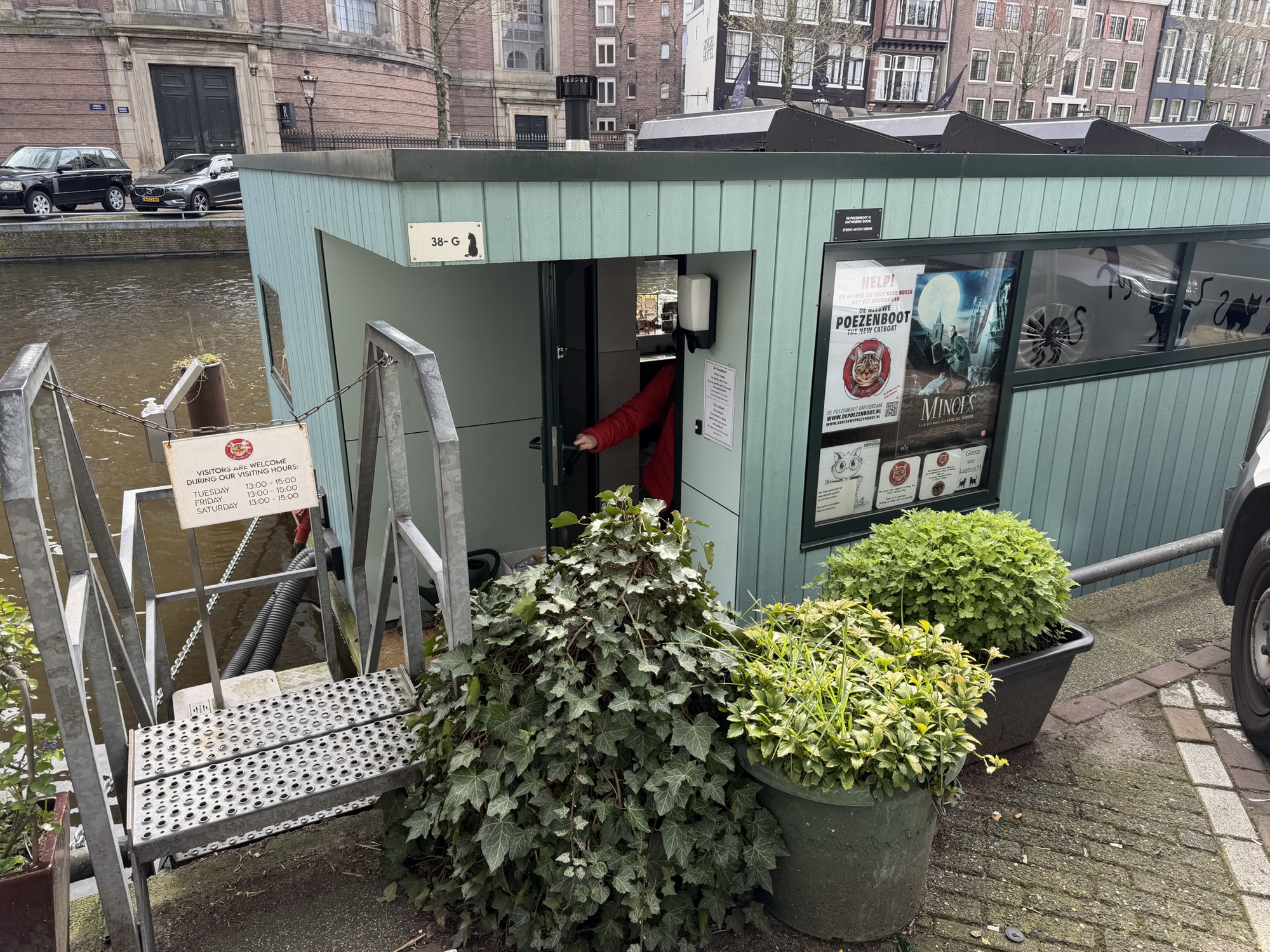
Our next stop was De Poezenboot (The Cat Boat). It is a floating cat sanctuary on an Amsterdam canal. Unfortunately it didn’t open for another hour, but there was already a line forming. A local woman in the line told us that if we wanted to get in, we would need to line up. We decided to continue on our way.
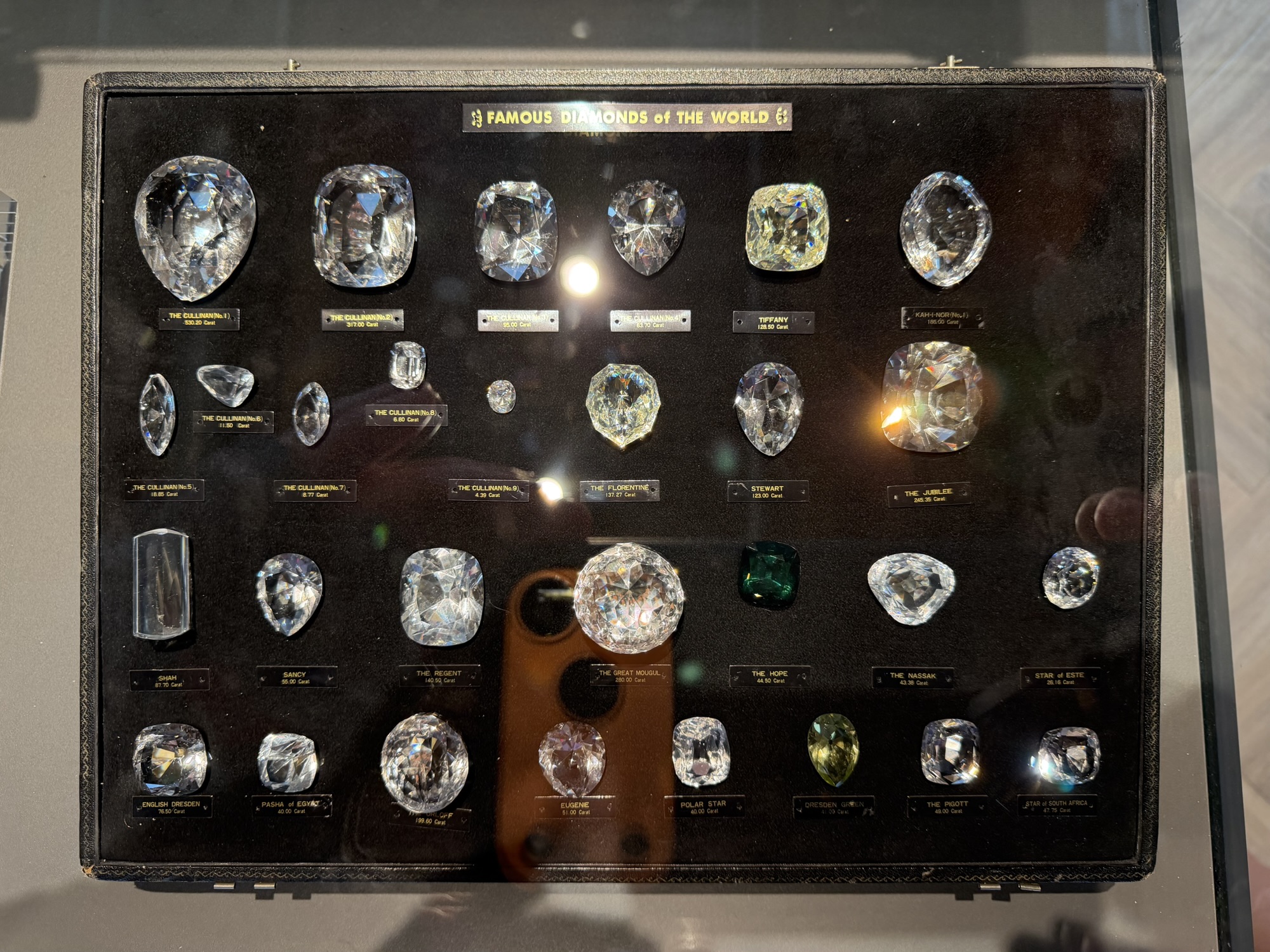
Amsterdam has been a global centre for diamond trading and polishing since the late 16th century. Alina suggested we visit the Gassan factory and store. 
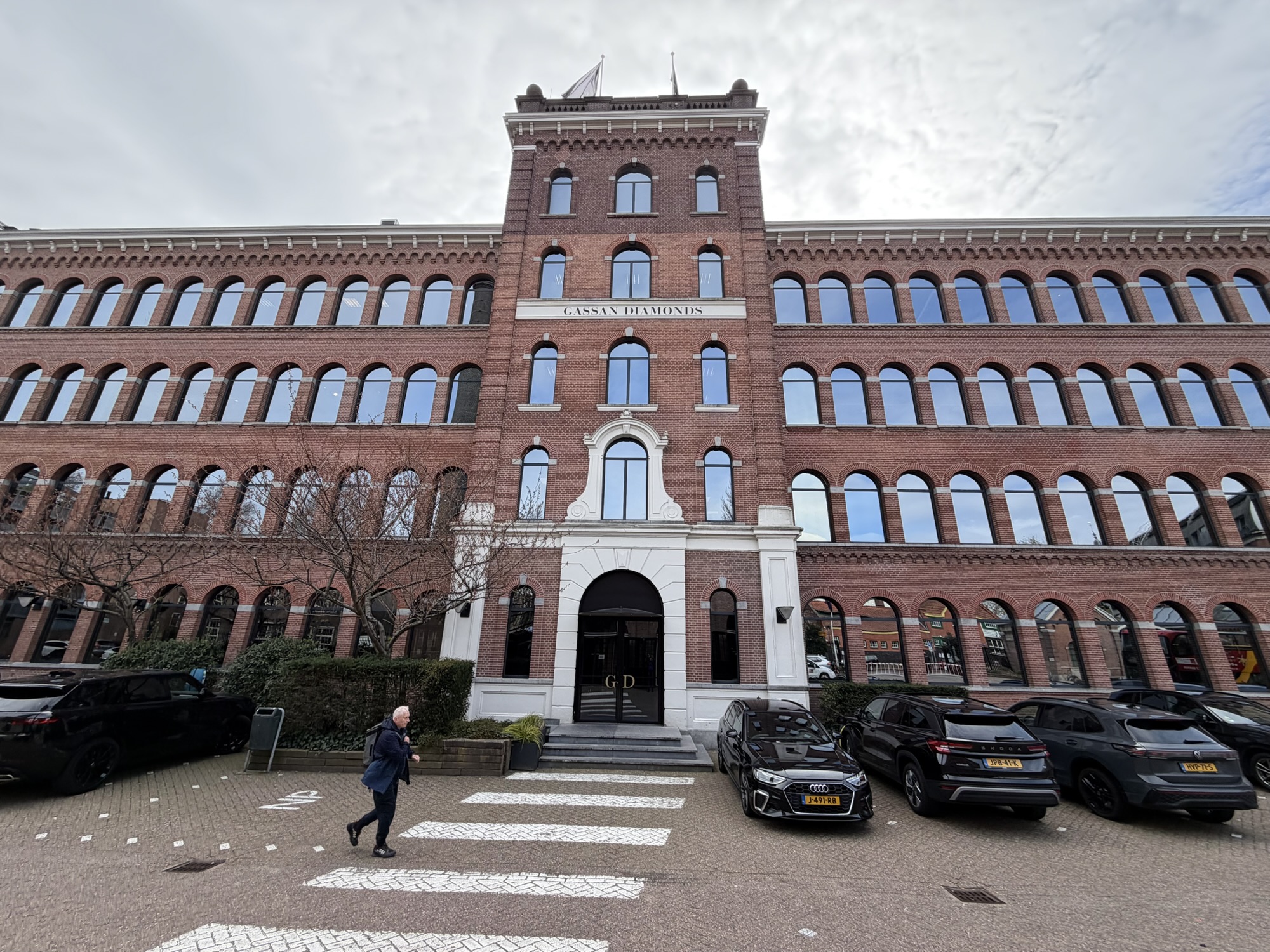
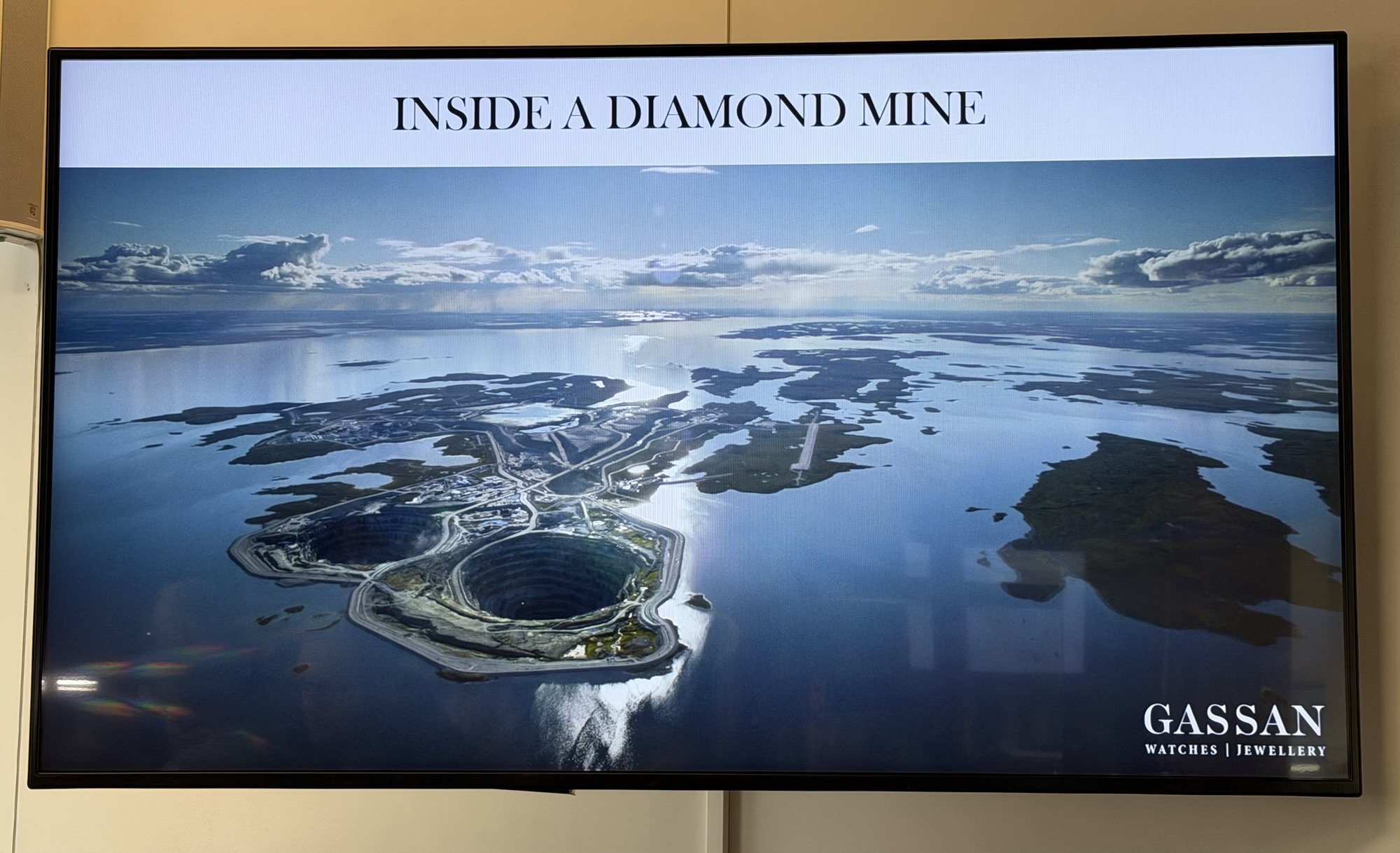
We joined the tour in progress, unknowingly skipping the security part, but the tour guide allowed us to tag along regardless. We learned that they get all their diamonds from South Africa, and that Canada recently shut down a large diamond mine in the Northwest Territories.
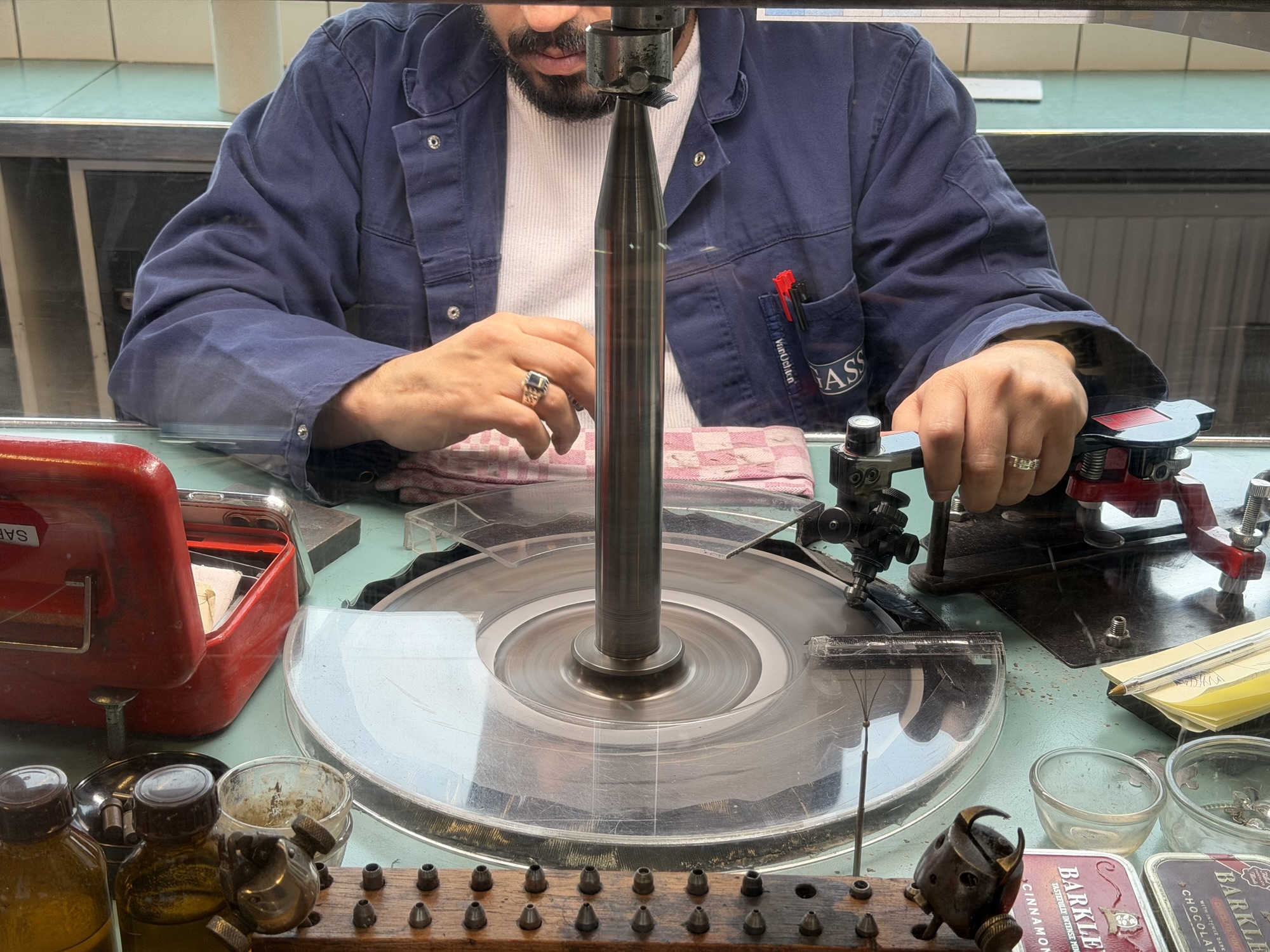
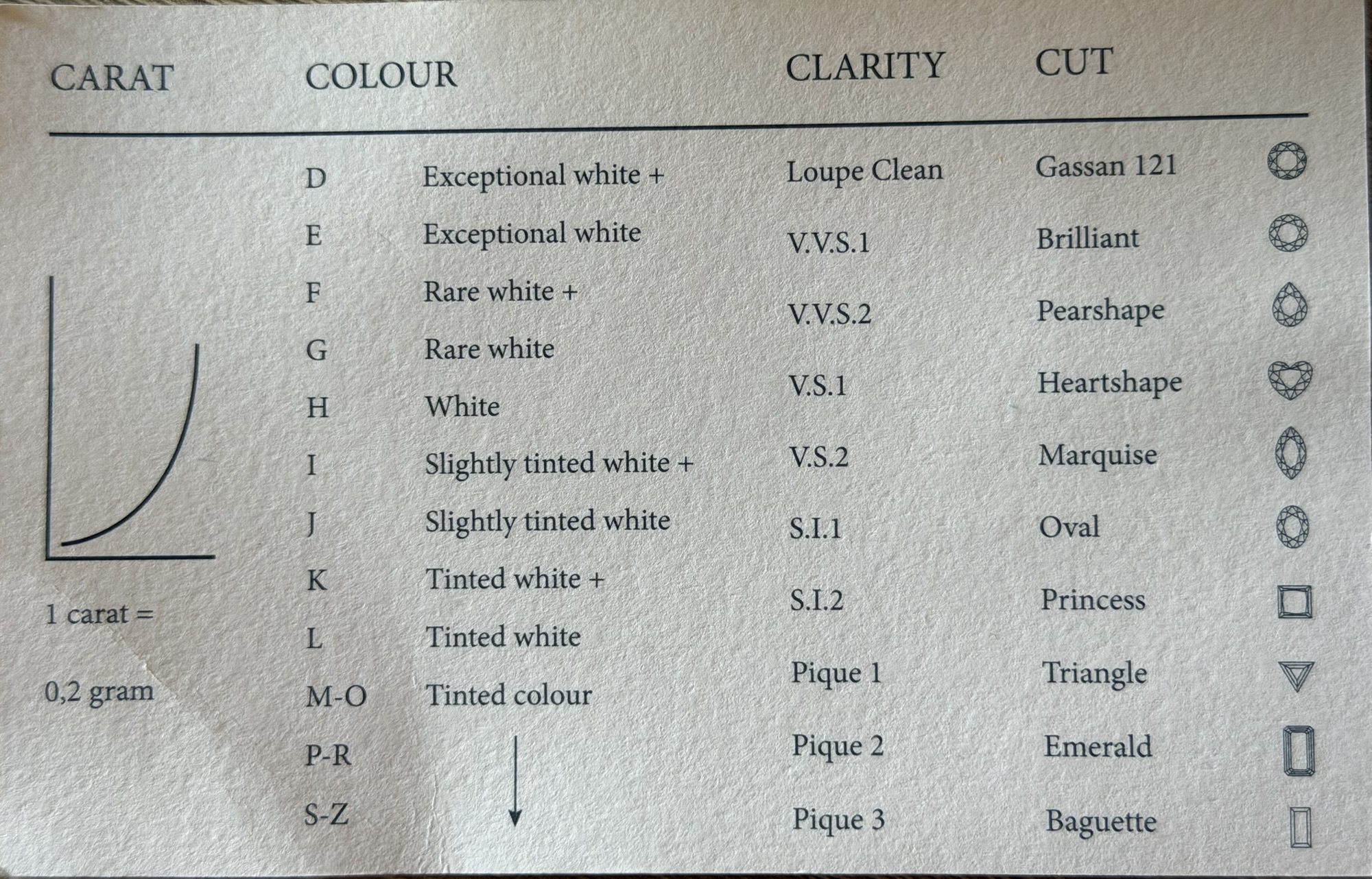
We were shown five diamonds and learned about how they’re graded. Unfortunately, no pictures were allowed. The most expensive diamond we saw was 1.7 carats cut with Gassan’s patented 121 facets, priced at €24,000.
The guide was very open that the reason for the tours was to generate sales, but she was very welcoming despite the fact that we said we wouldn’t be buying. The tour was free, and they also had free bathrooms, which are in short supply here, and free coffee.
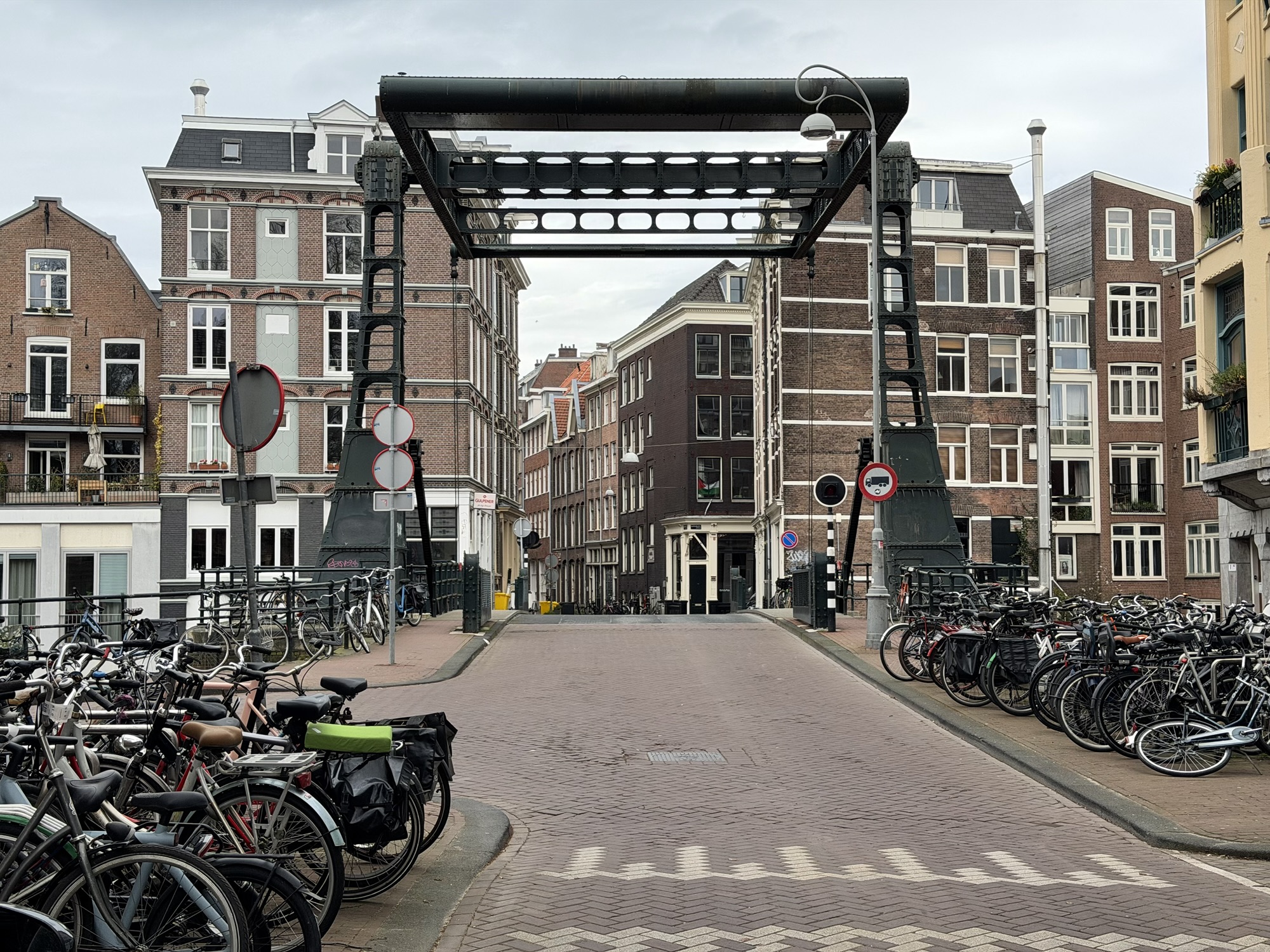
We passed over one of the many lift bridges on our way to the science museum for lunch.
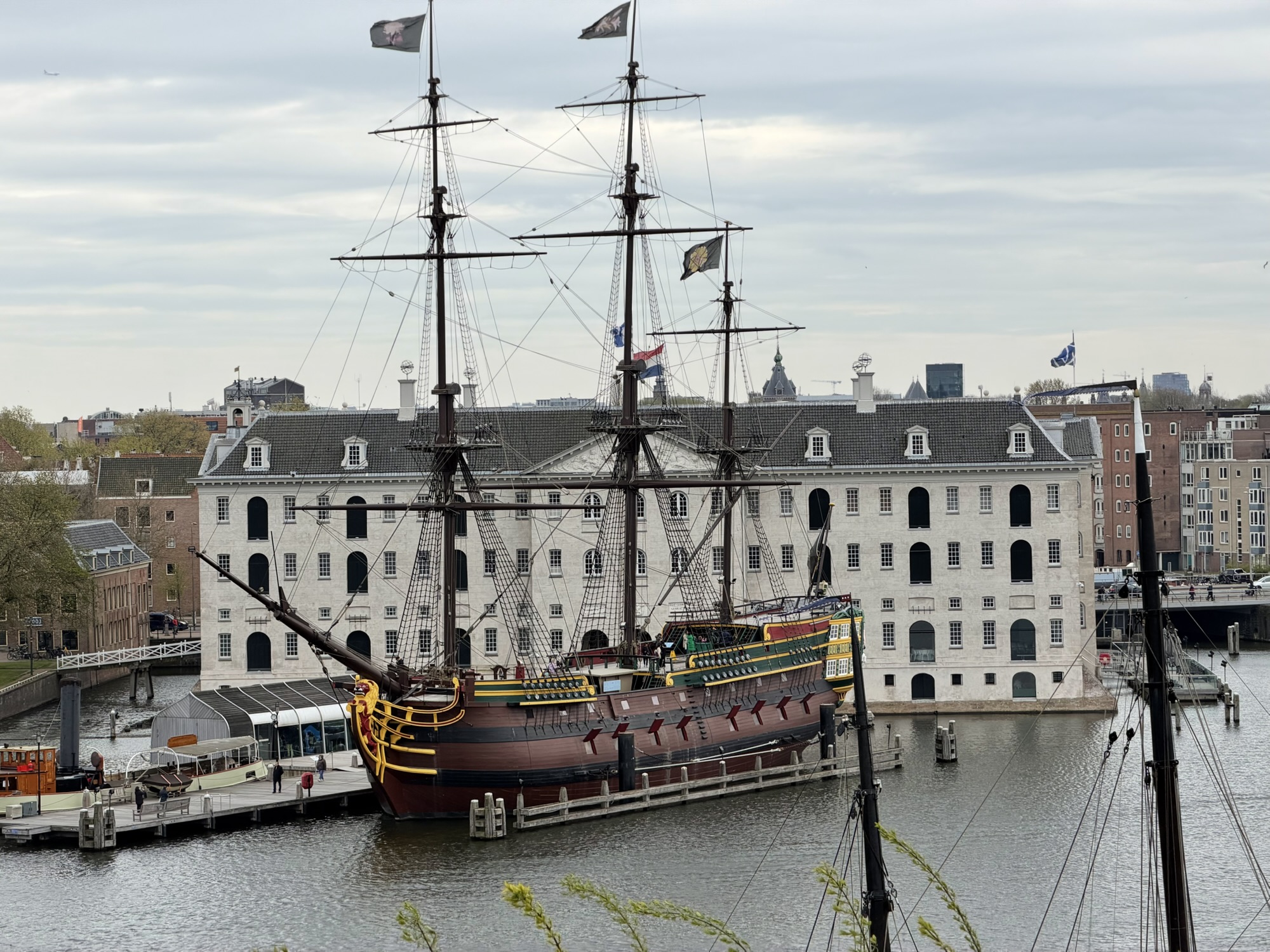
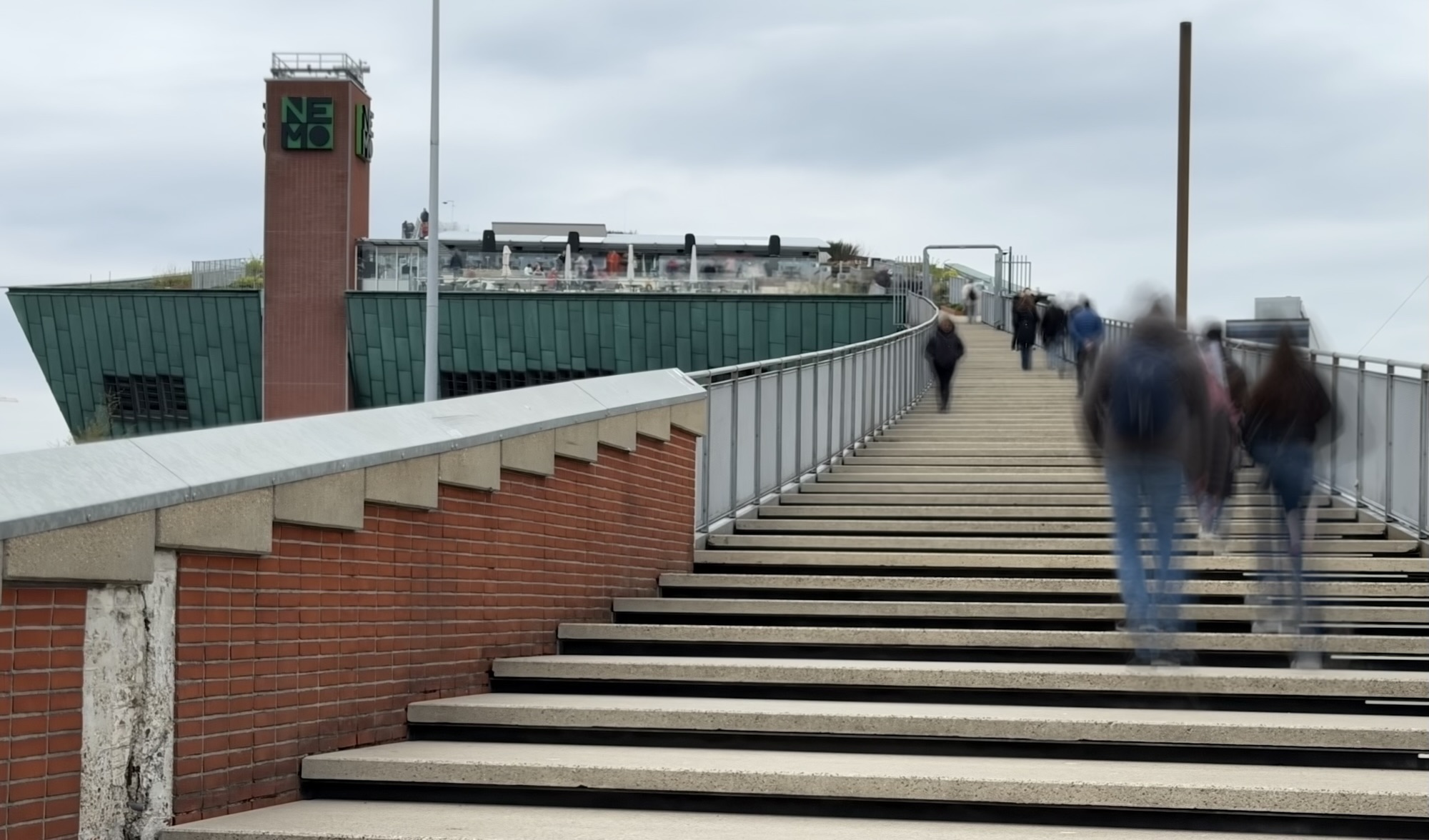
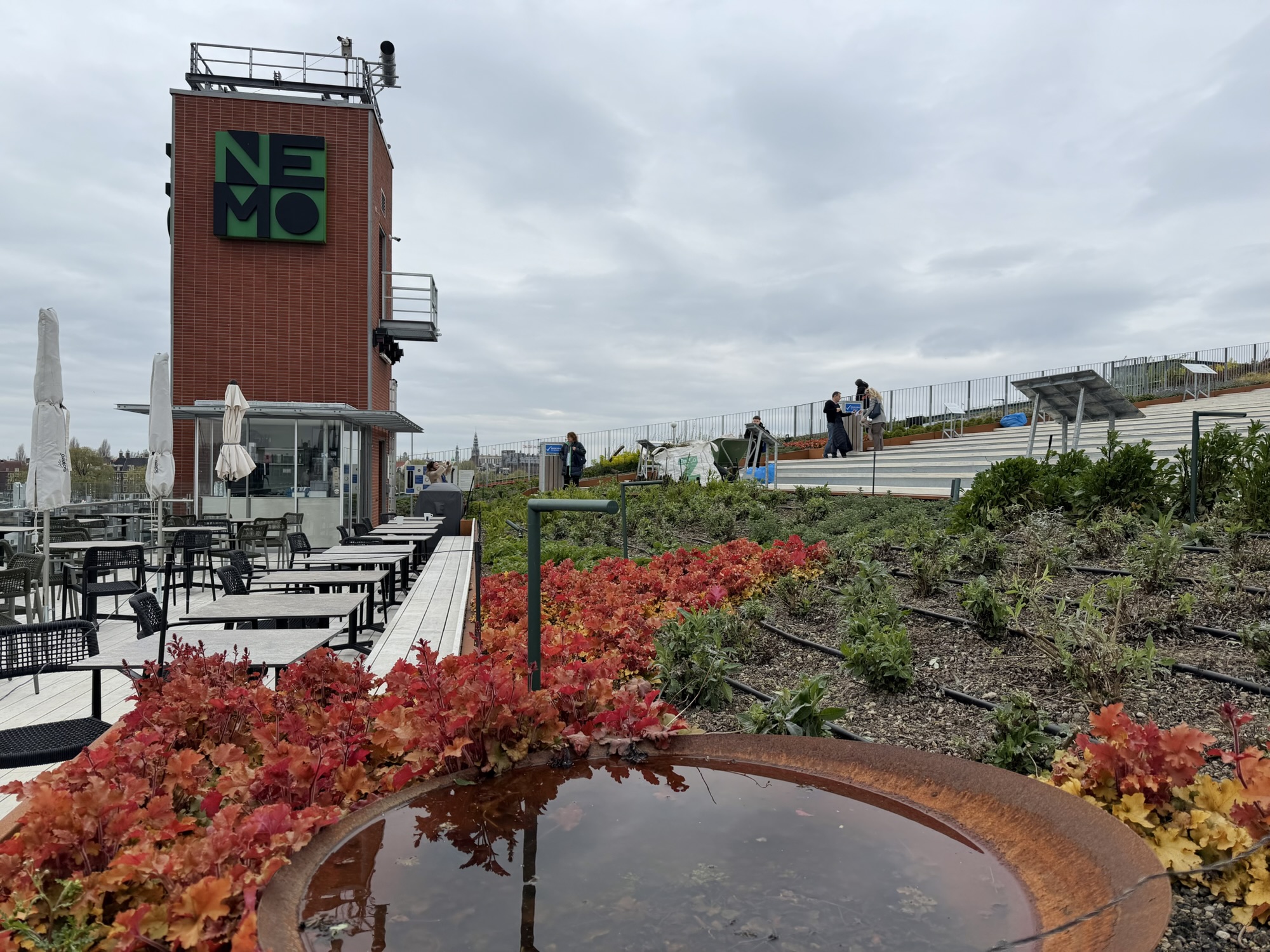
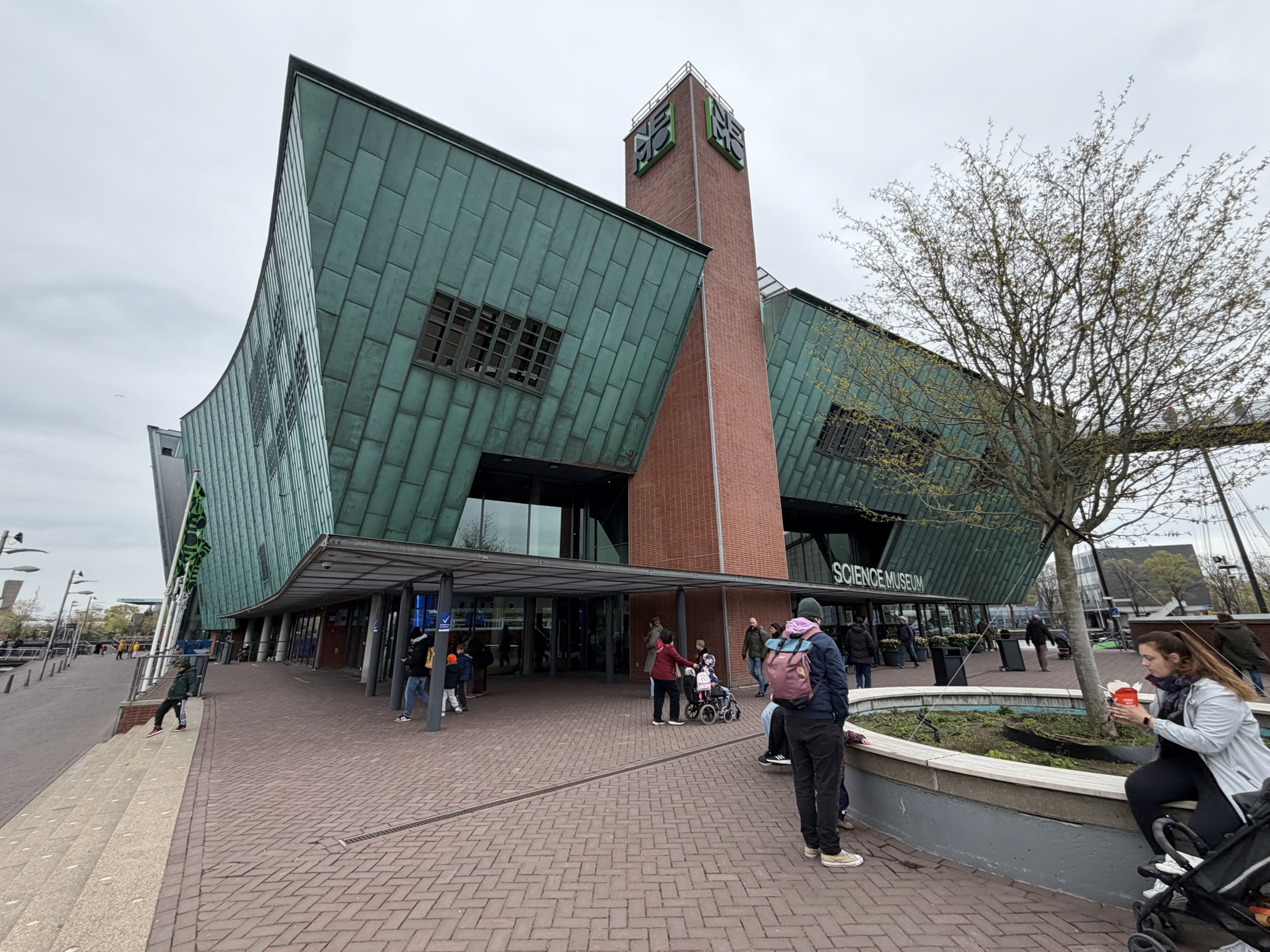
We were starting to get hungry, so we didn’t delay on our way to the free-to-access rooftop space at the NEMO Science Museum. It was quite cold and windy as we climbed the stairs, but we found a bright sunny spot to eat the lunch we bought in the café.
The views were terrific.
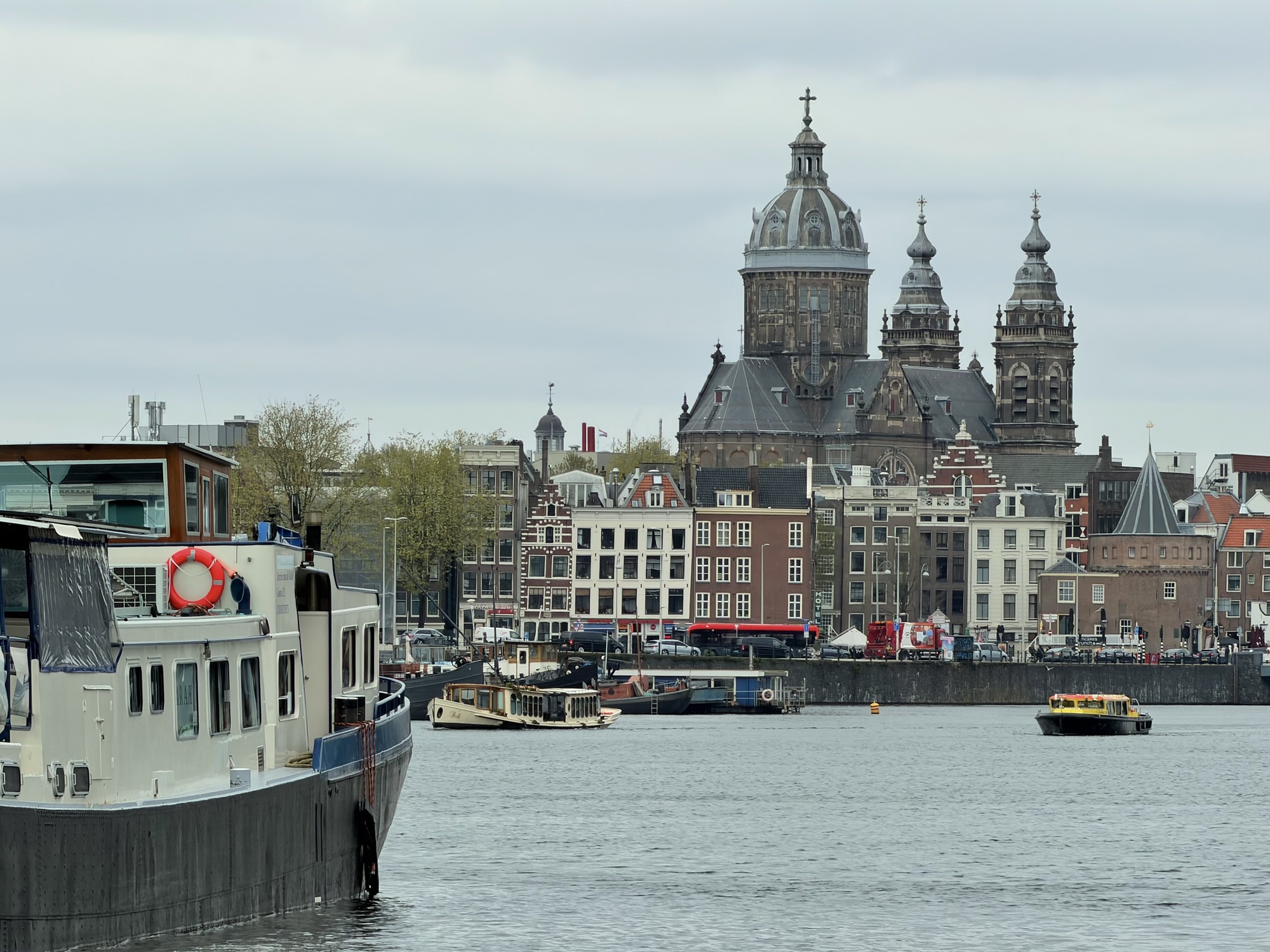
There were many interesting sites between the science museum and a lift bridge that we had to cross over, despite the short distance
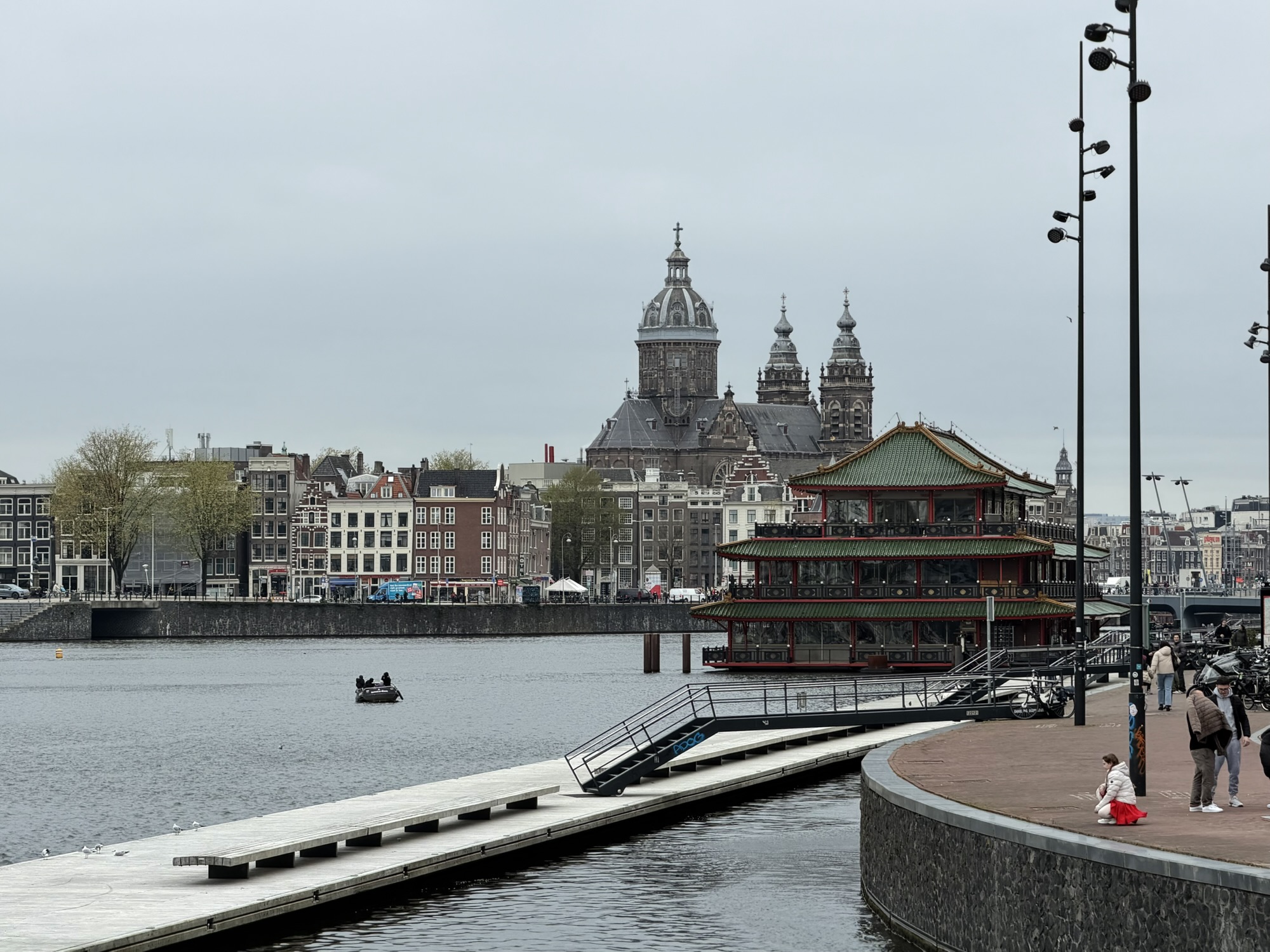
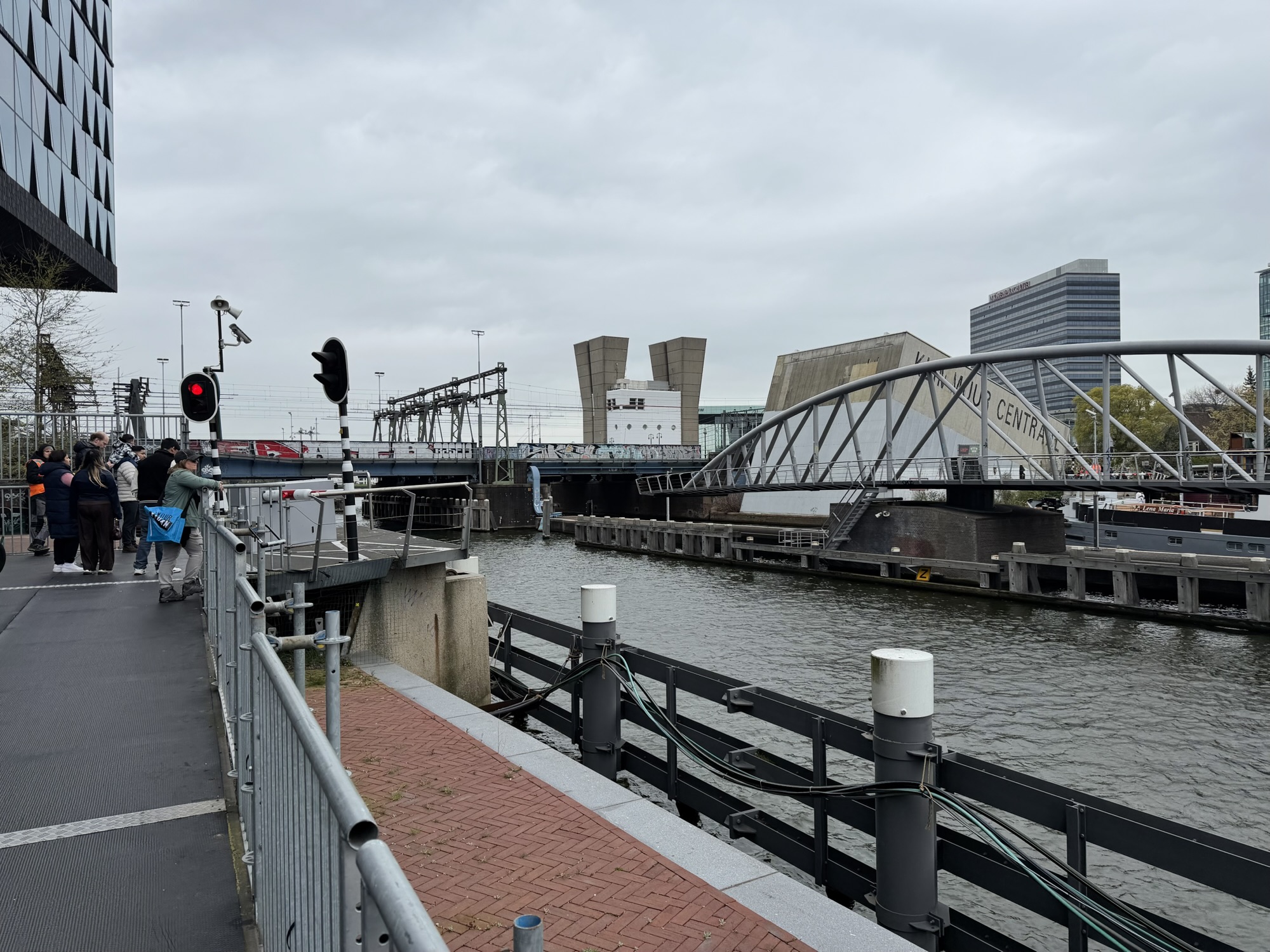
Our route, then took us over a swing bridge, which was open when we arrived. We had to wait several minutes for a barge to go through and the bridge to swing back into place. I thought I took a video of it, but it turns out I didn’t press the record button. Sigh.
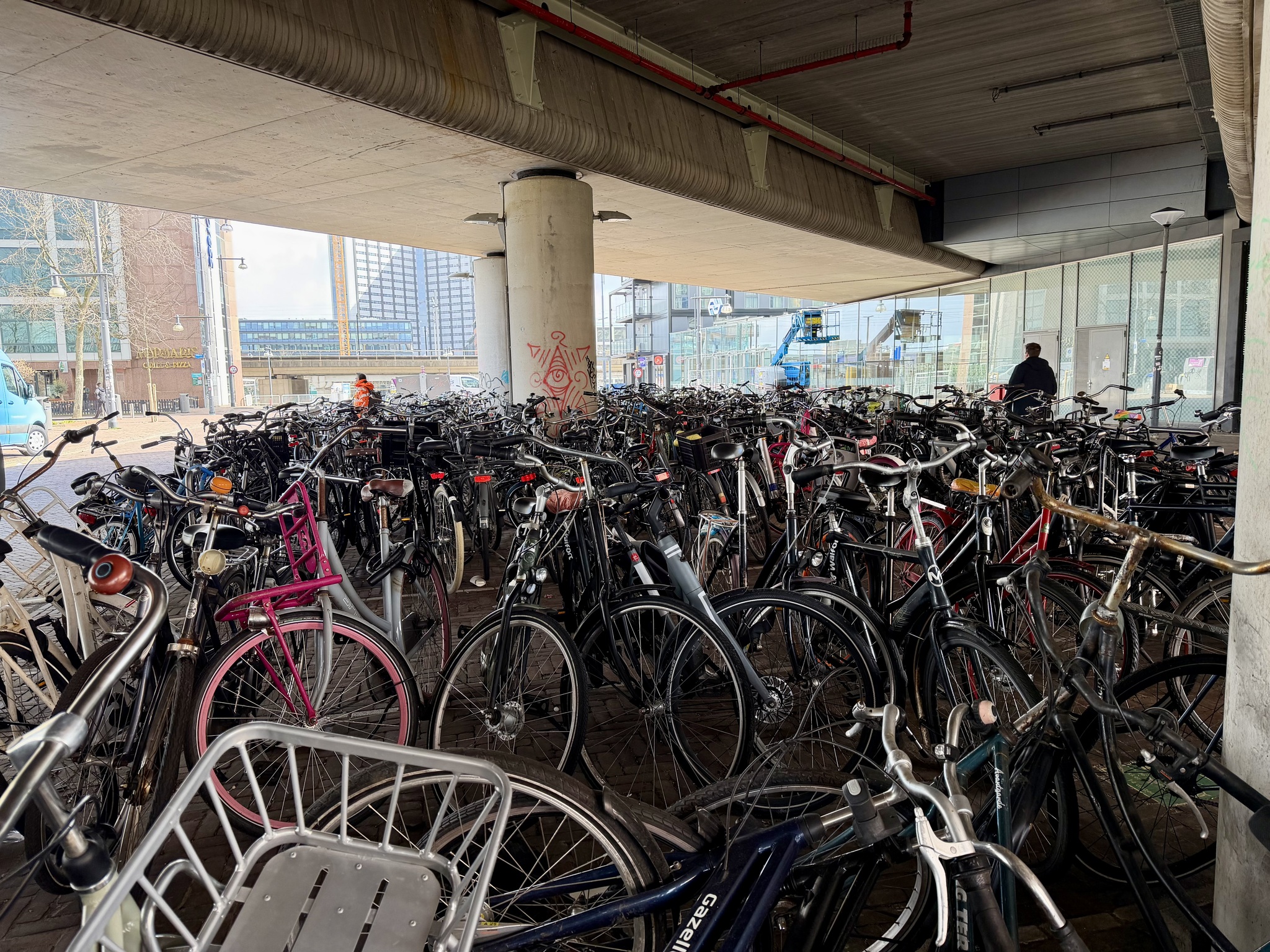
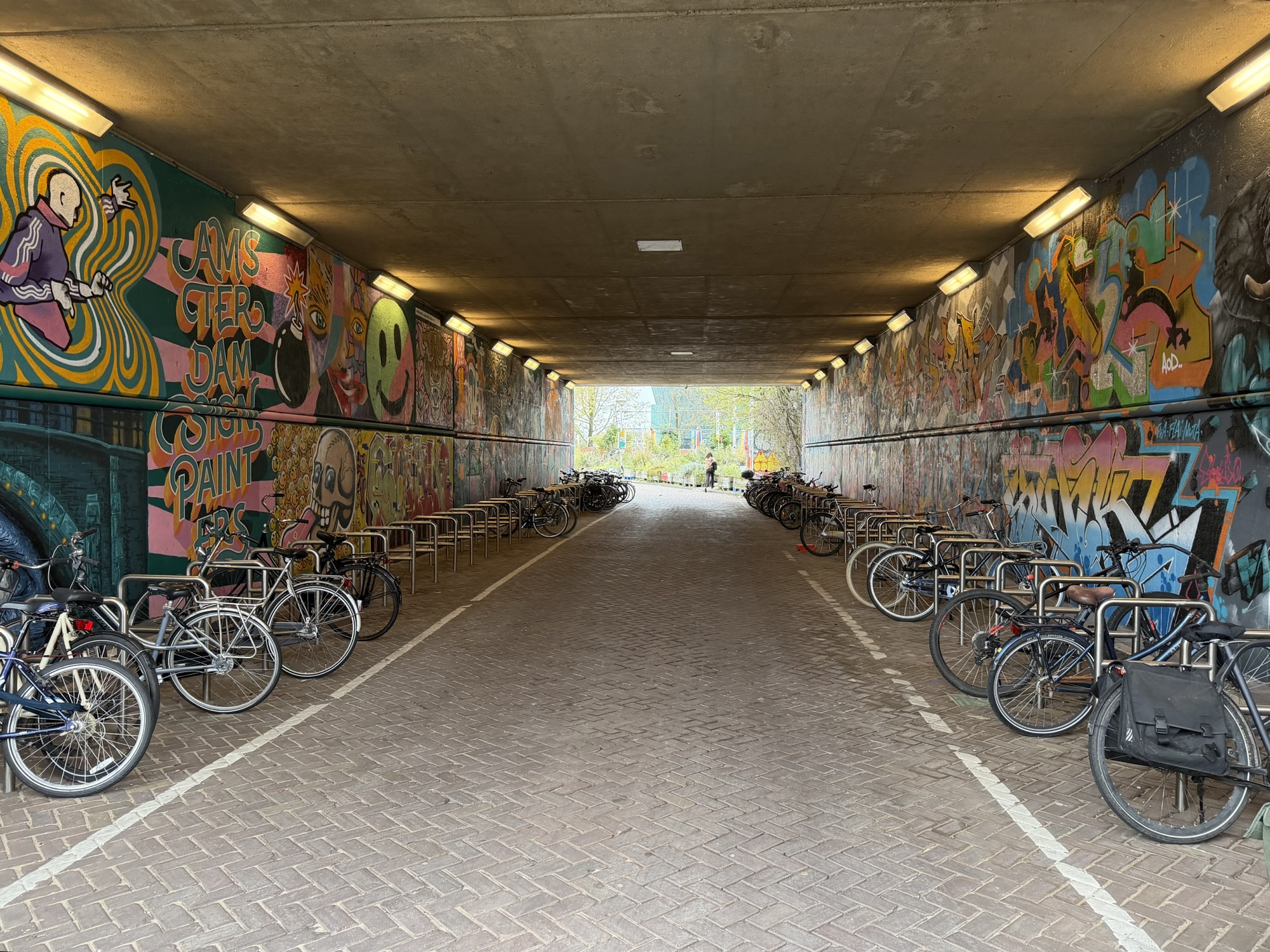
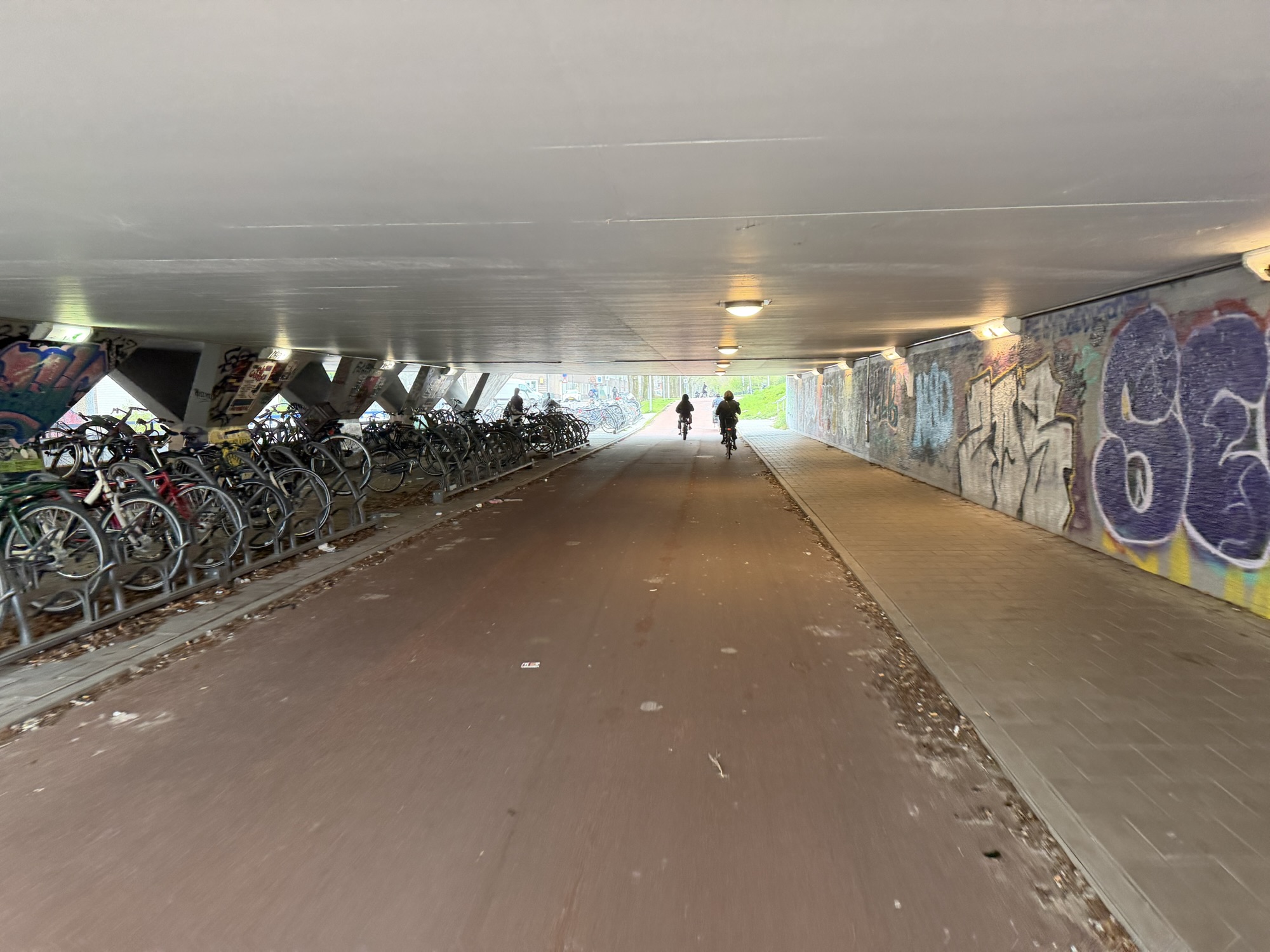
We passed several places where there was bike parking in highway underpasses.
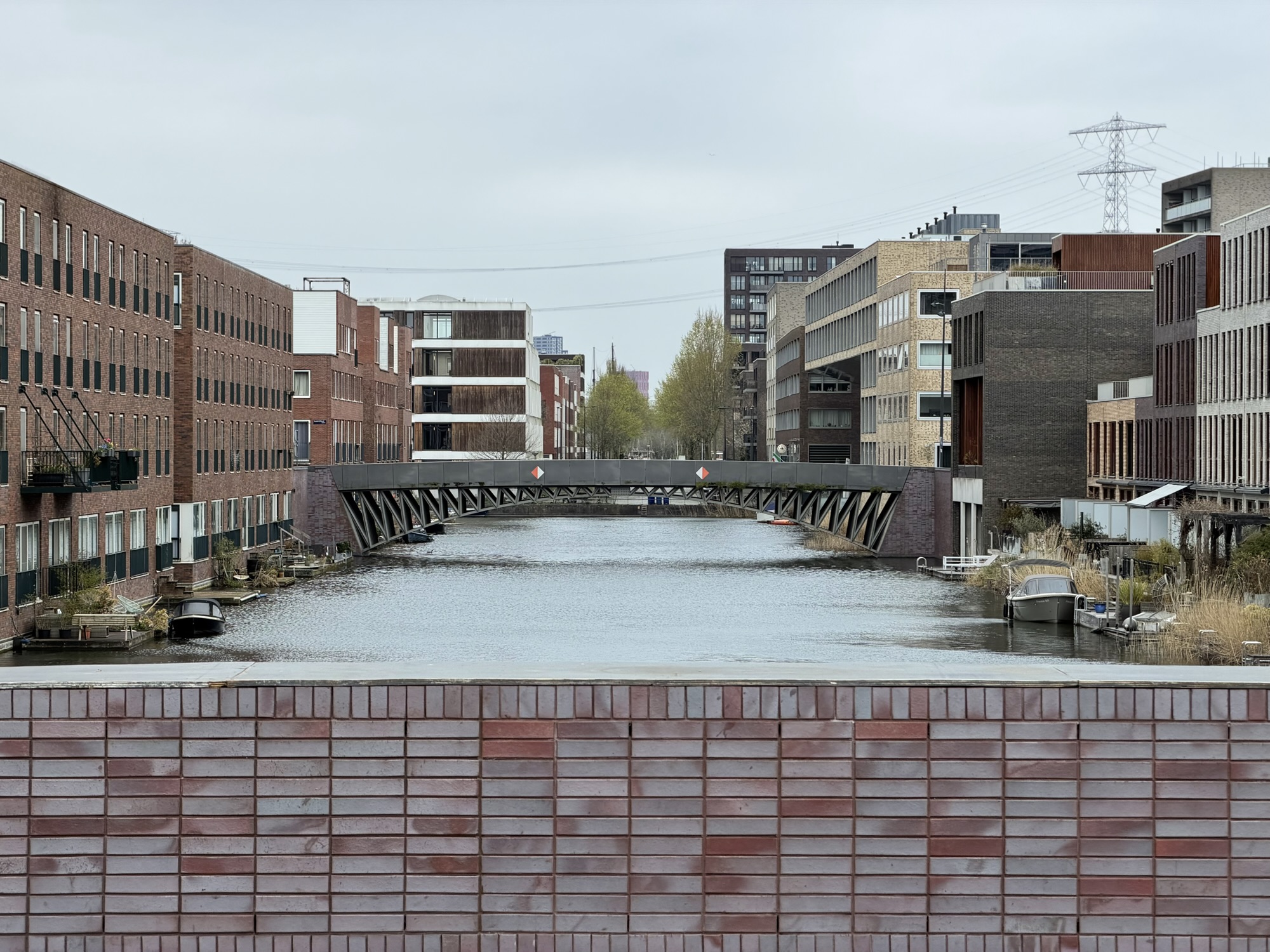
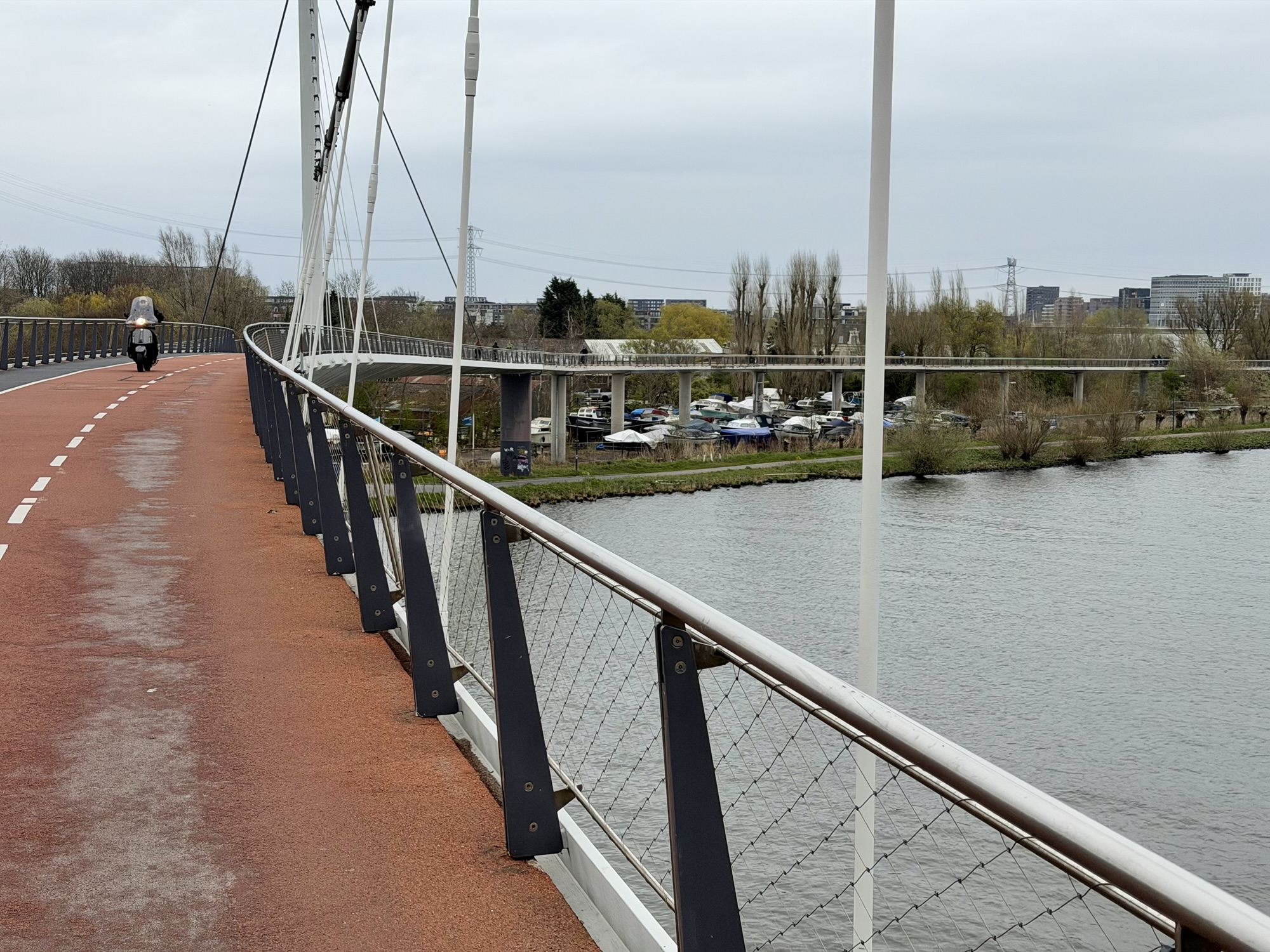
We had water on both sides of the cycling path here as we approached the Nescio Bridge (Nesciobrug) in Amsterdam. It is a 780-meter-long, curved suspension bridge exclusively for pedestrians and cyclists, completed in 2006. Spanning the Amsterdam-Rhine Canal, it links IJburg to the city center and is notable as the Netherlands’ first pedestrian/cycle-only suspension bridge, featuring a self-anchored design to manage soft soil conditions. I thought I had read that it is the longest in the Netherlands, but apparently there is an 800 m one Groningen. Nevertheless, it was a very impressive piece of active transportation infrastructure. Every bridge we’ve been on here that carries motor vehicle lanes also has separated, cycling and walking spaces.
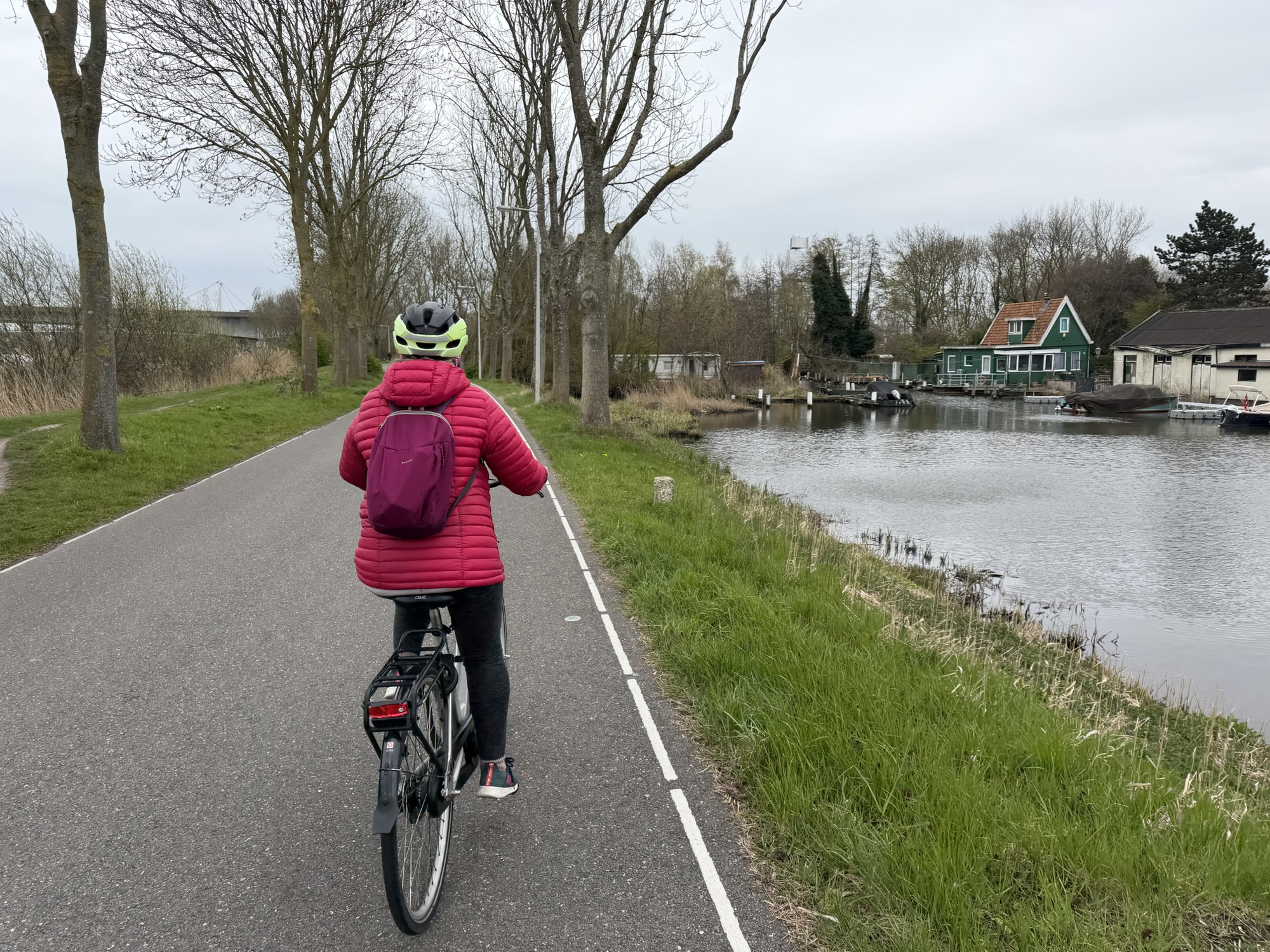
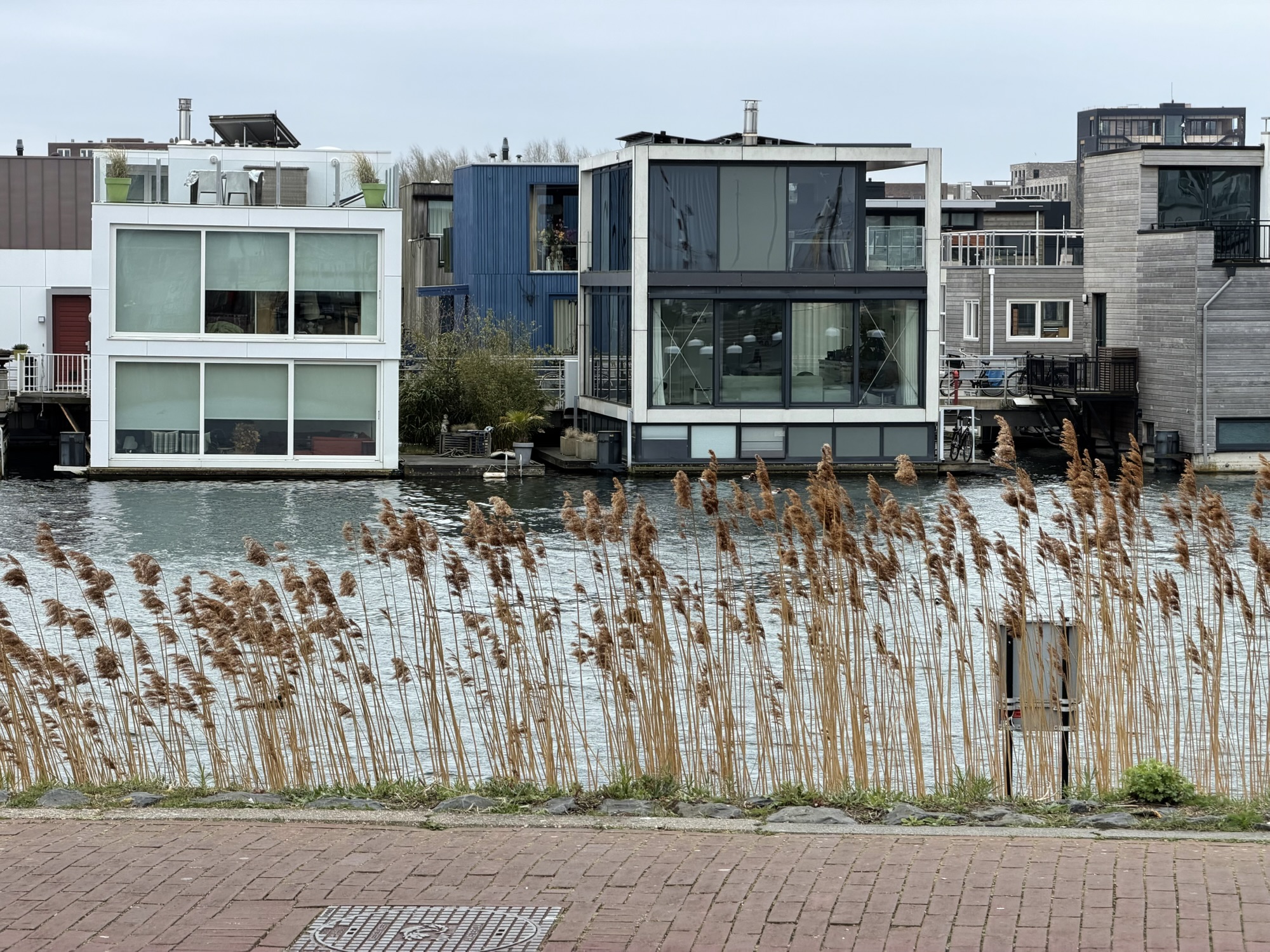
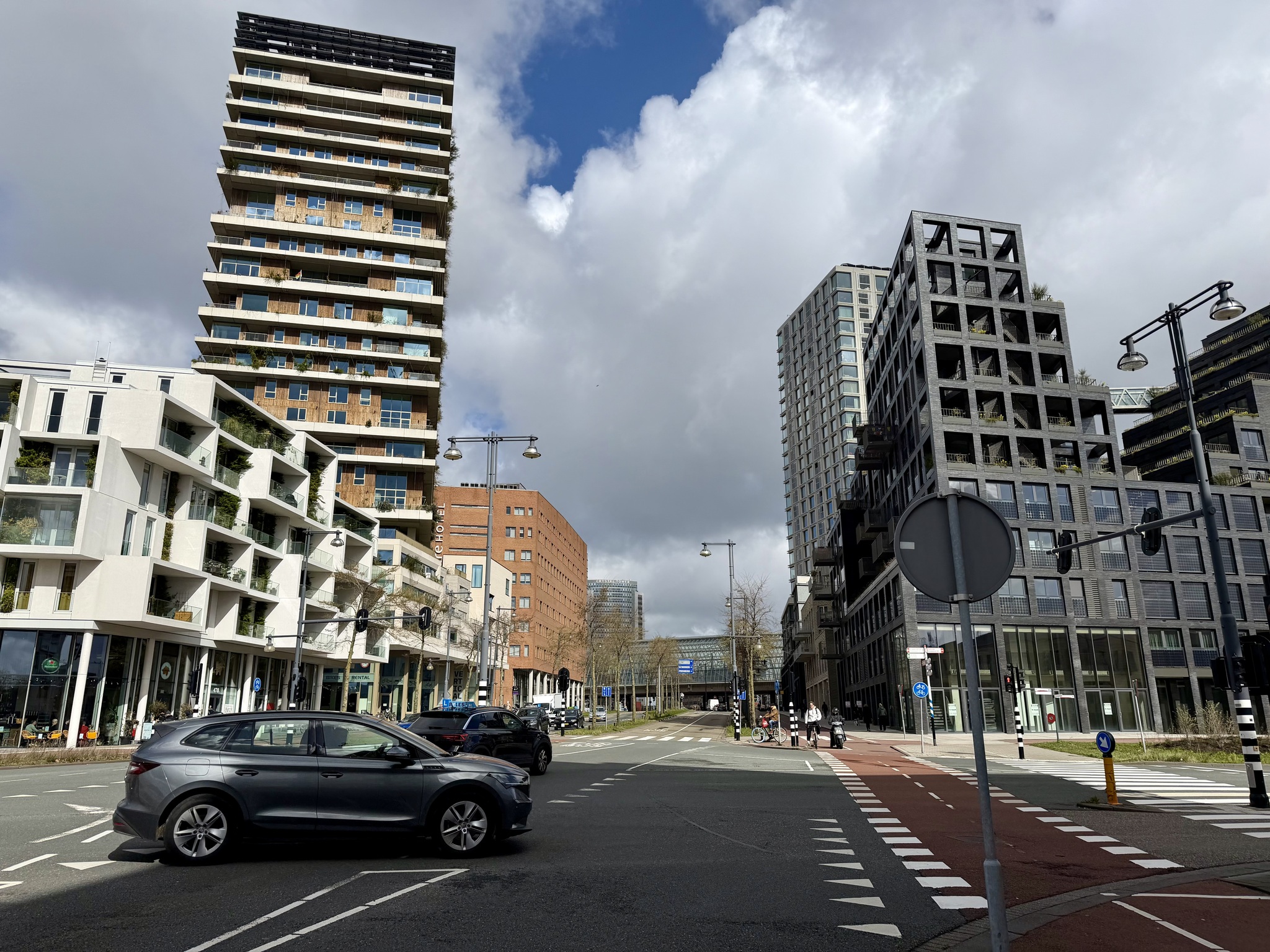
We were heading to a new neighbourhood IJburg, built on reclaimed land in IJmeer, a lake near Amsterdam.  It is known for its contemporary architecture, sustainable design, and water rich environment. It has 18,000 homes for 45,000 residents. It also has tram access to the city.
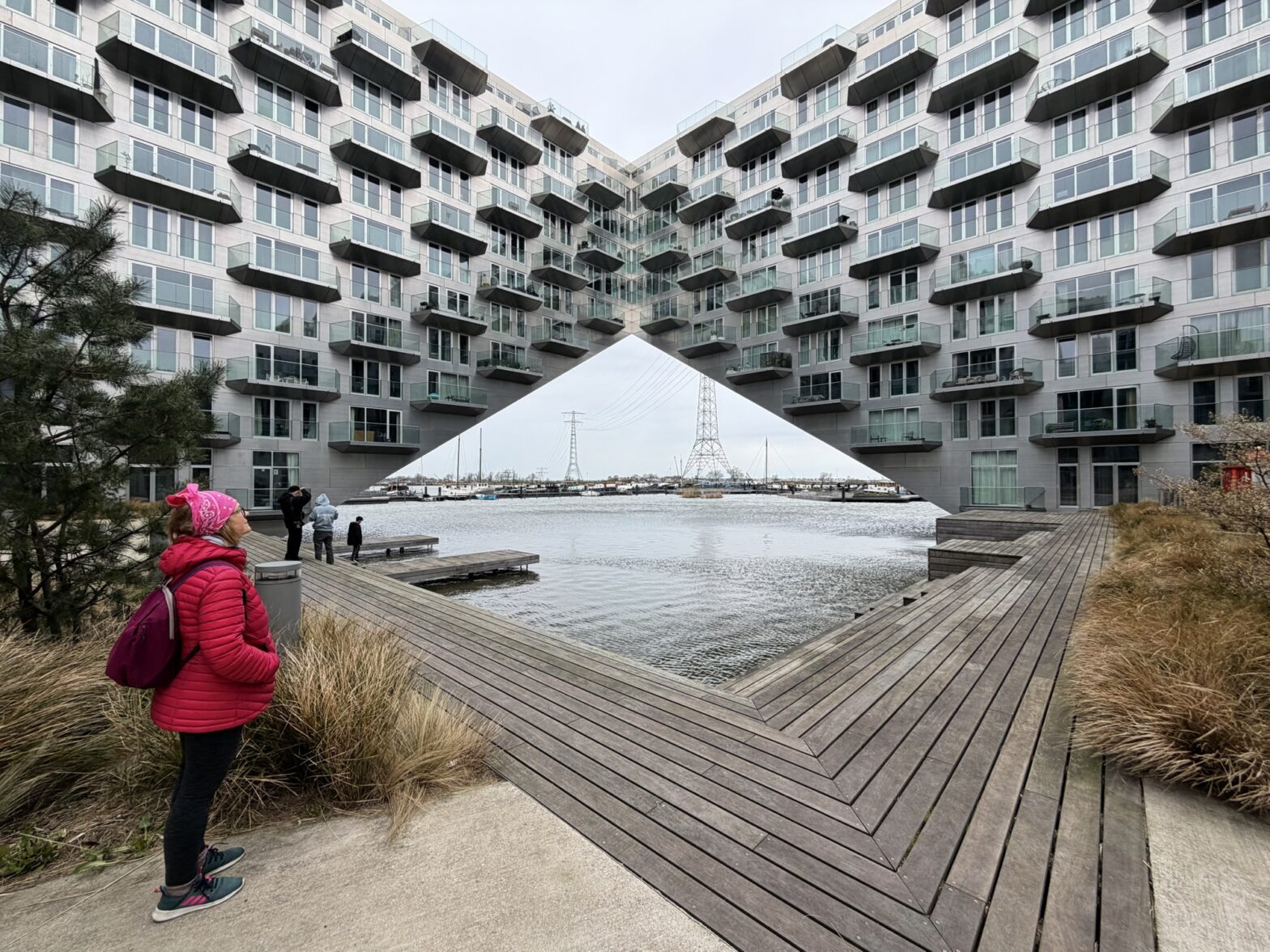
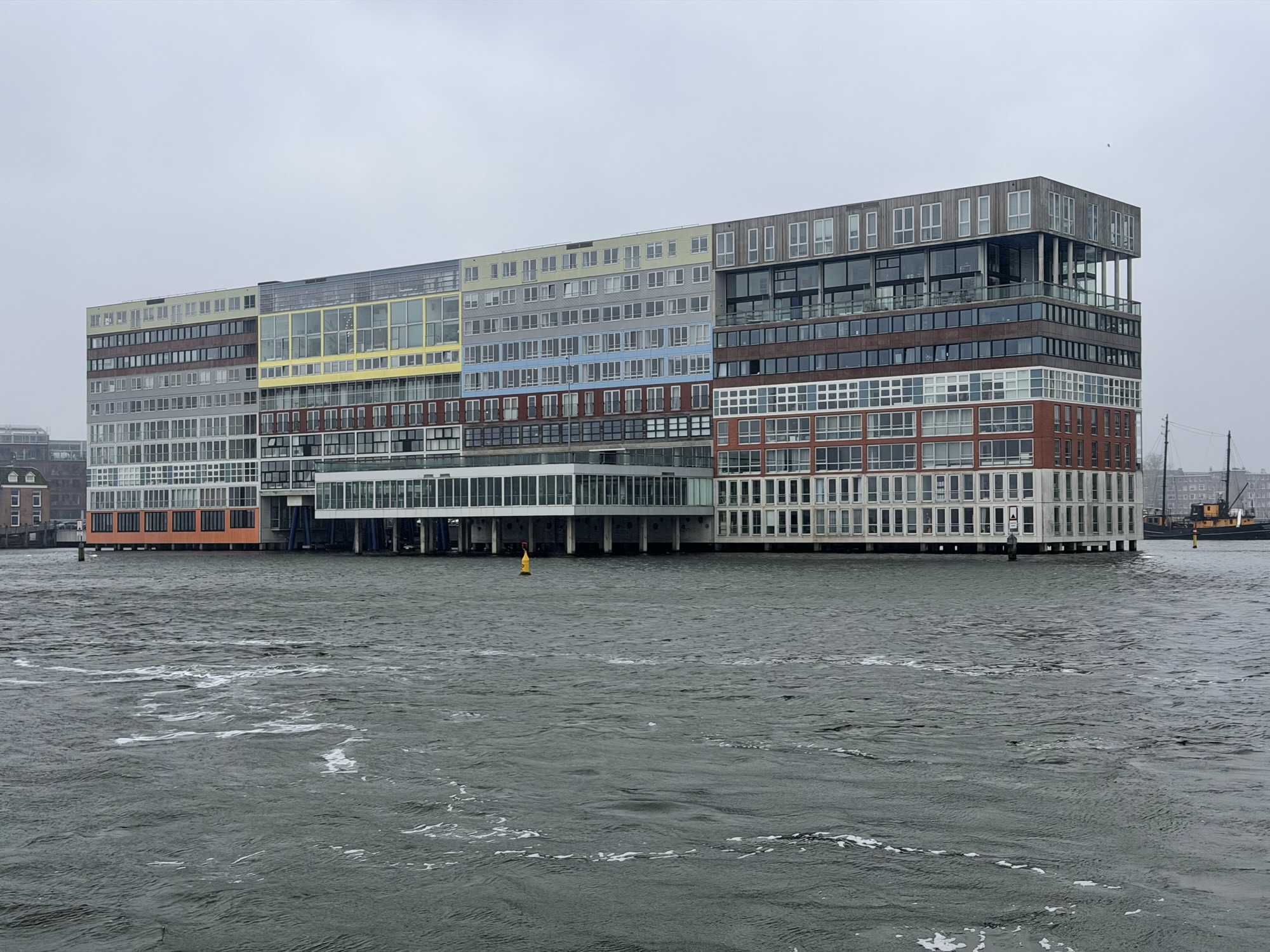
The main reason that I wanted to come out to this area was to see Sluishuis. If there’s an apartment building OJBurg which opened in July 2022 and was designed by by Bjarke Ingels Group, an architecture firm based in Copenhagen, and in collaboration with Rotterdam-based Barcode Architects.
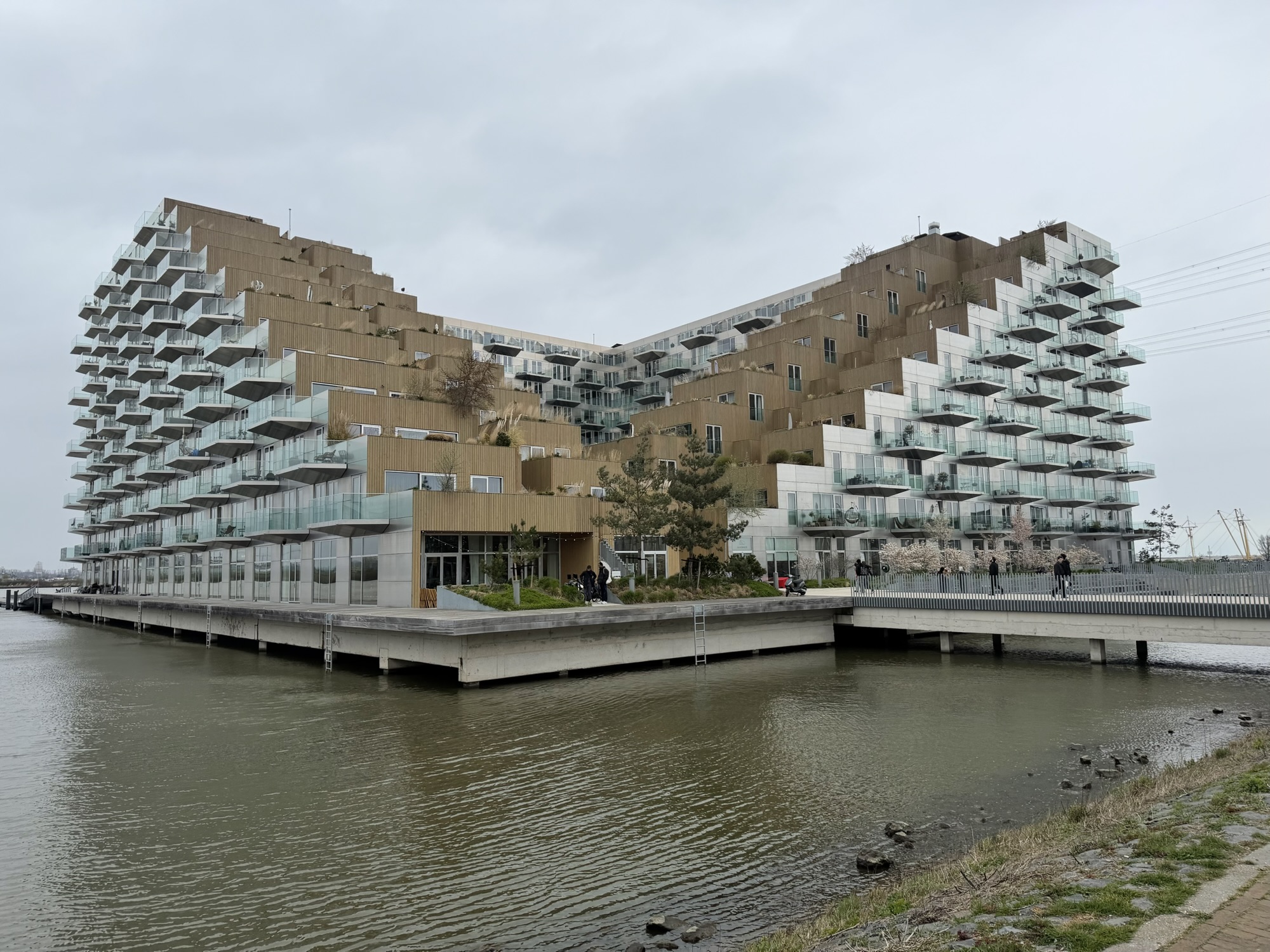
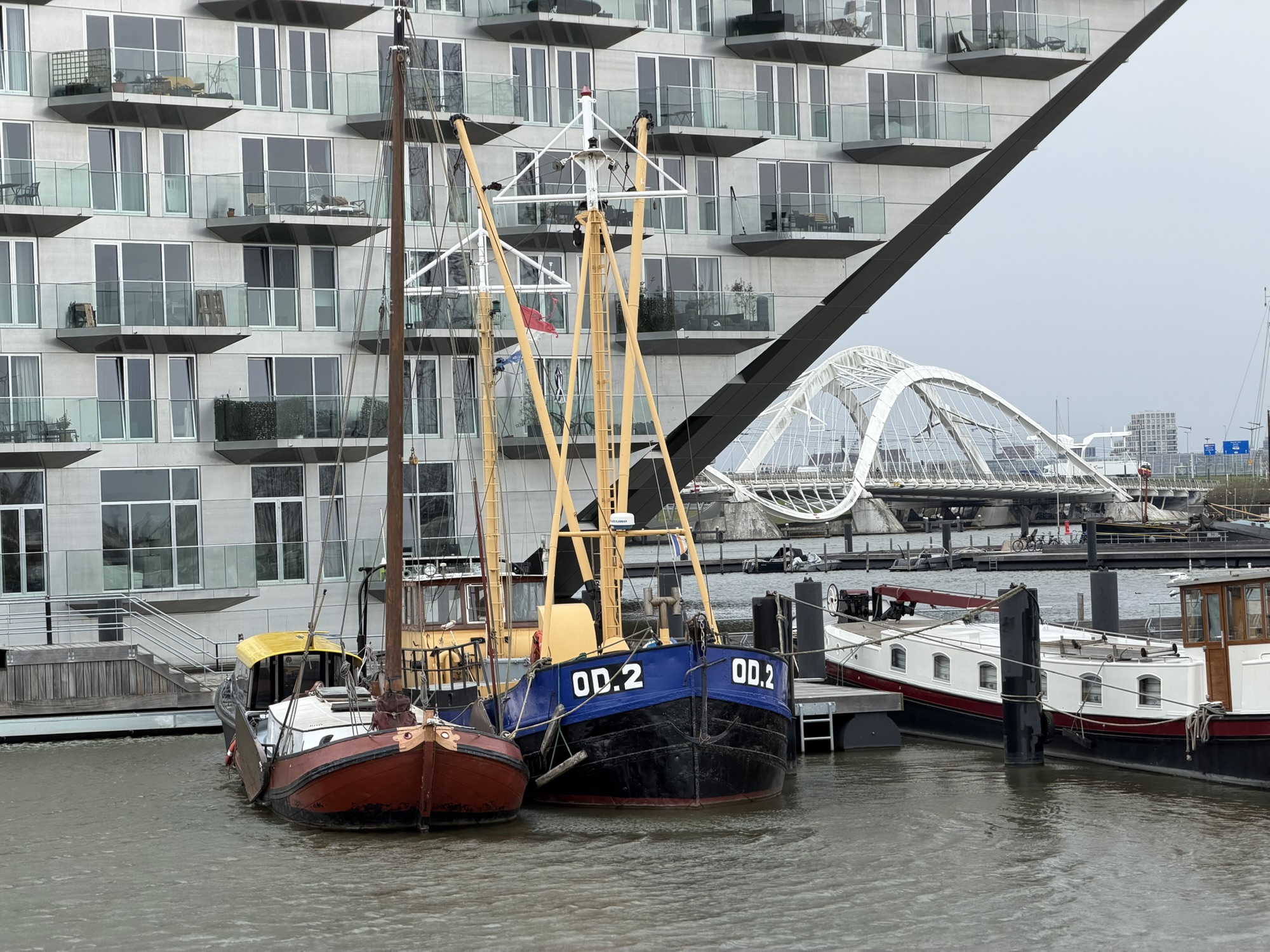
I was concerned that the most iconic view would be inaccessible to non-residents, but there was just a sign asking visitors to be respectful.
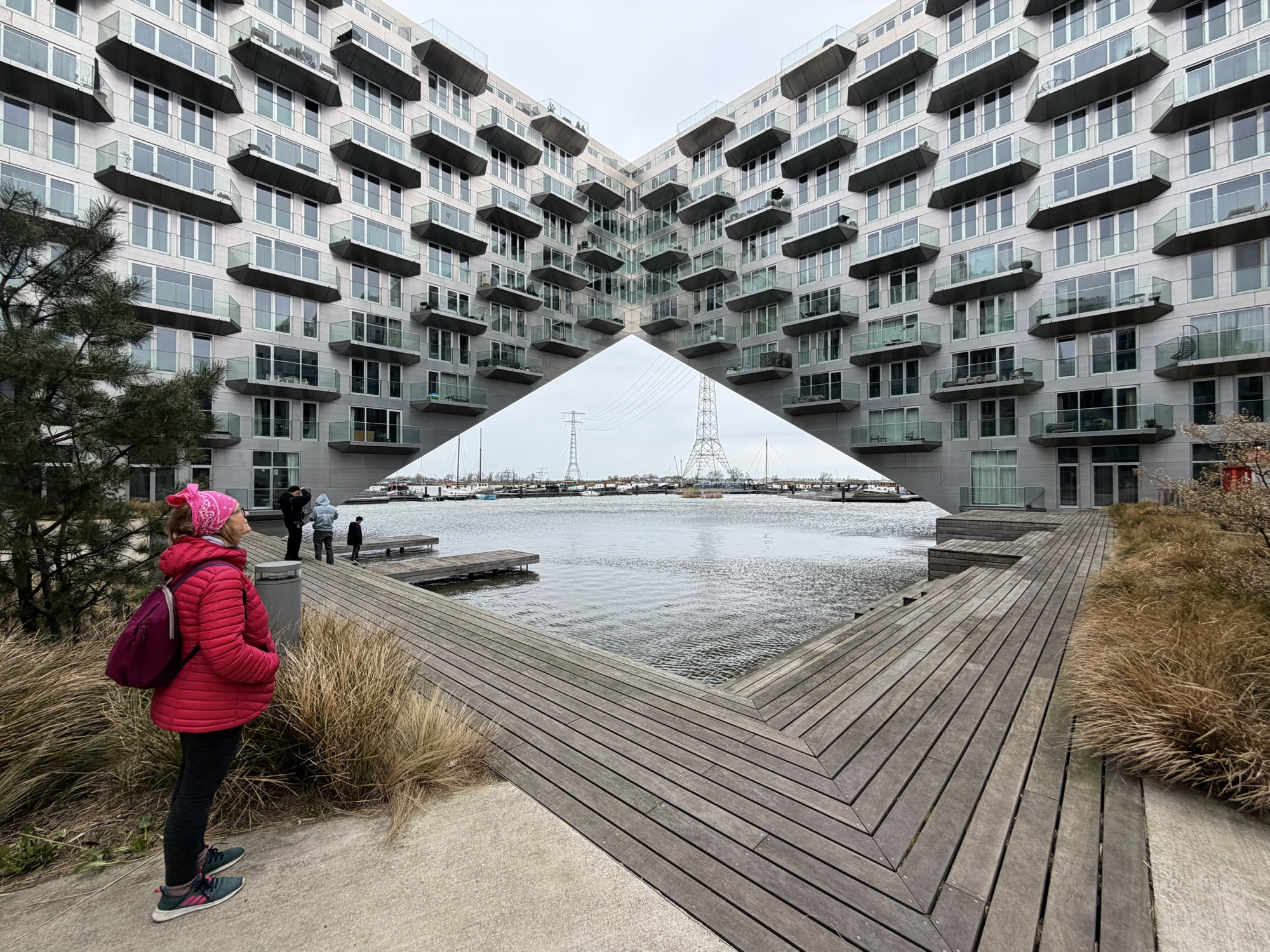
It is a sustainable building with solar panels on the roof which provided for the lighting, heating, ventilation, and air conditioning in the building. The courtyard has a publicly accessible jetty where boats can moor. It was the winning design in a competition held by the city of Amsterdam for an image defining building.

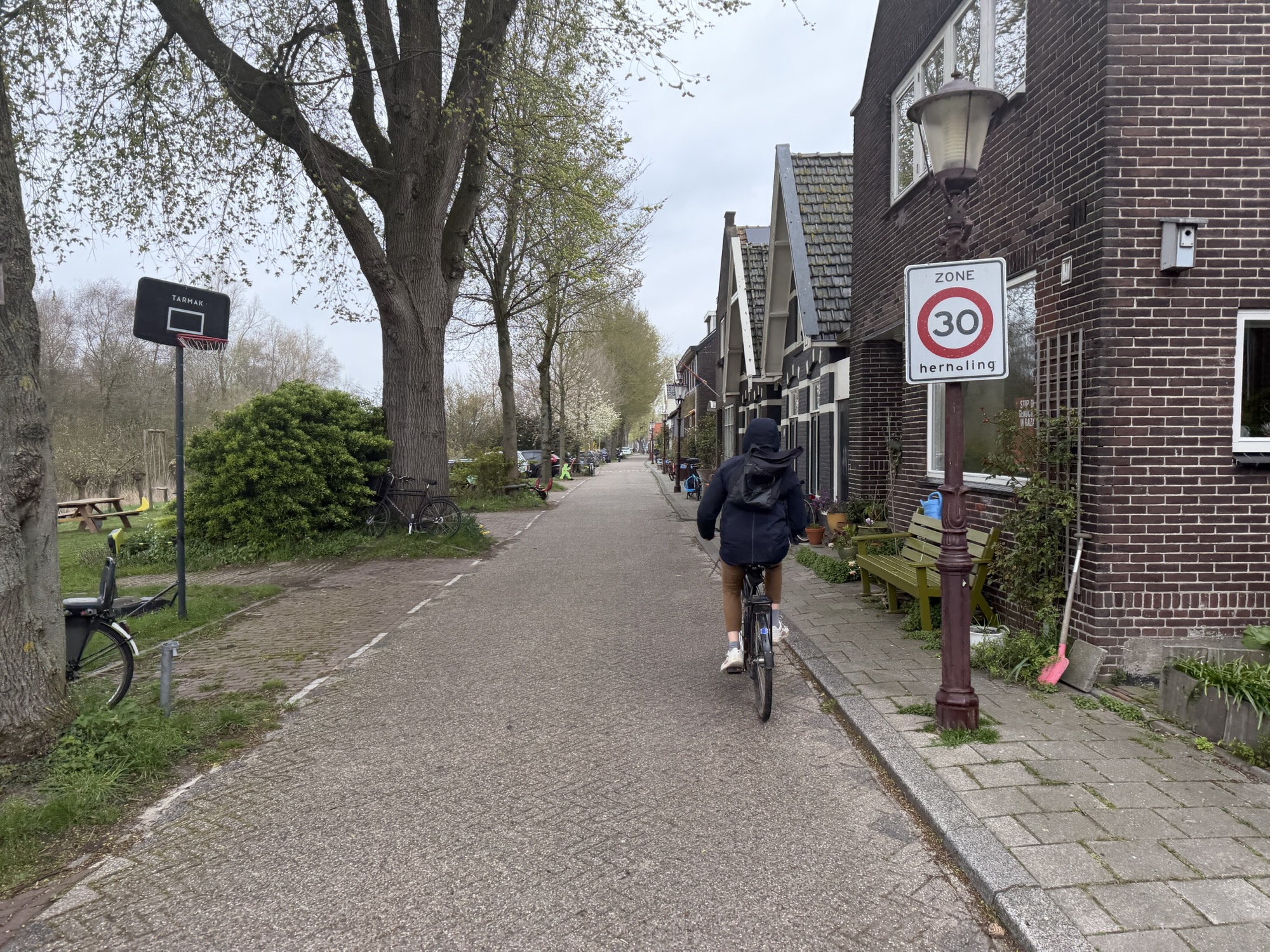
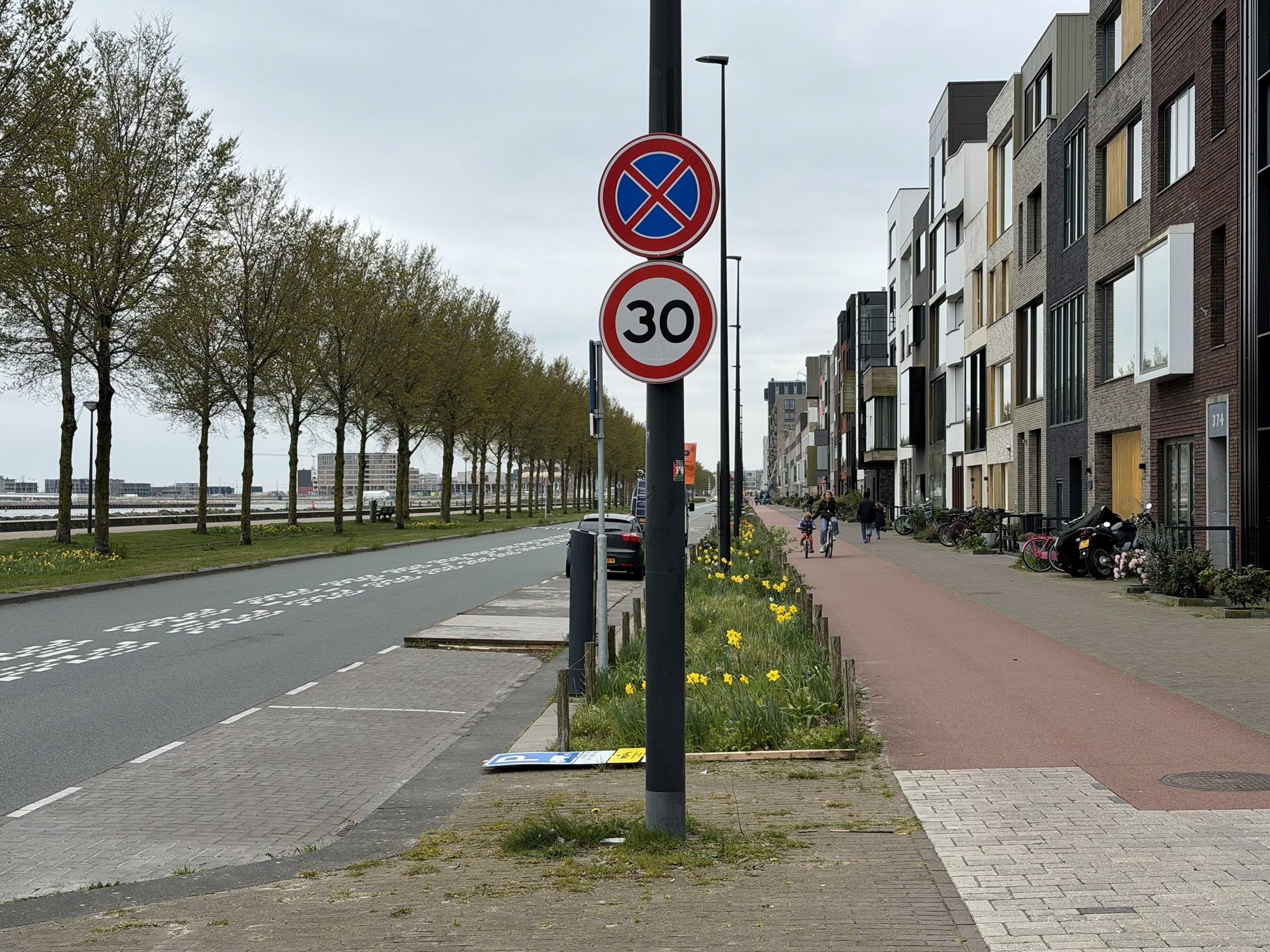
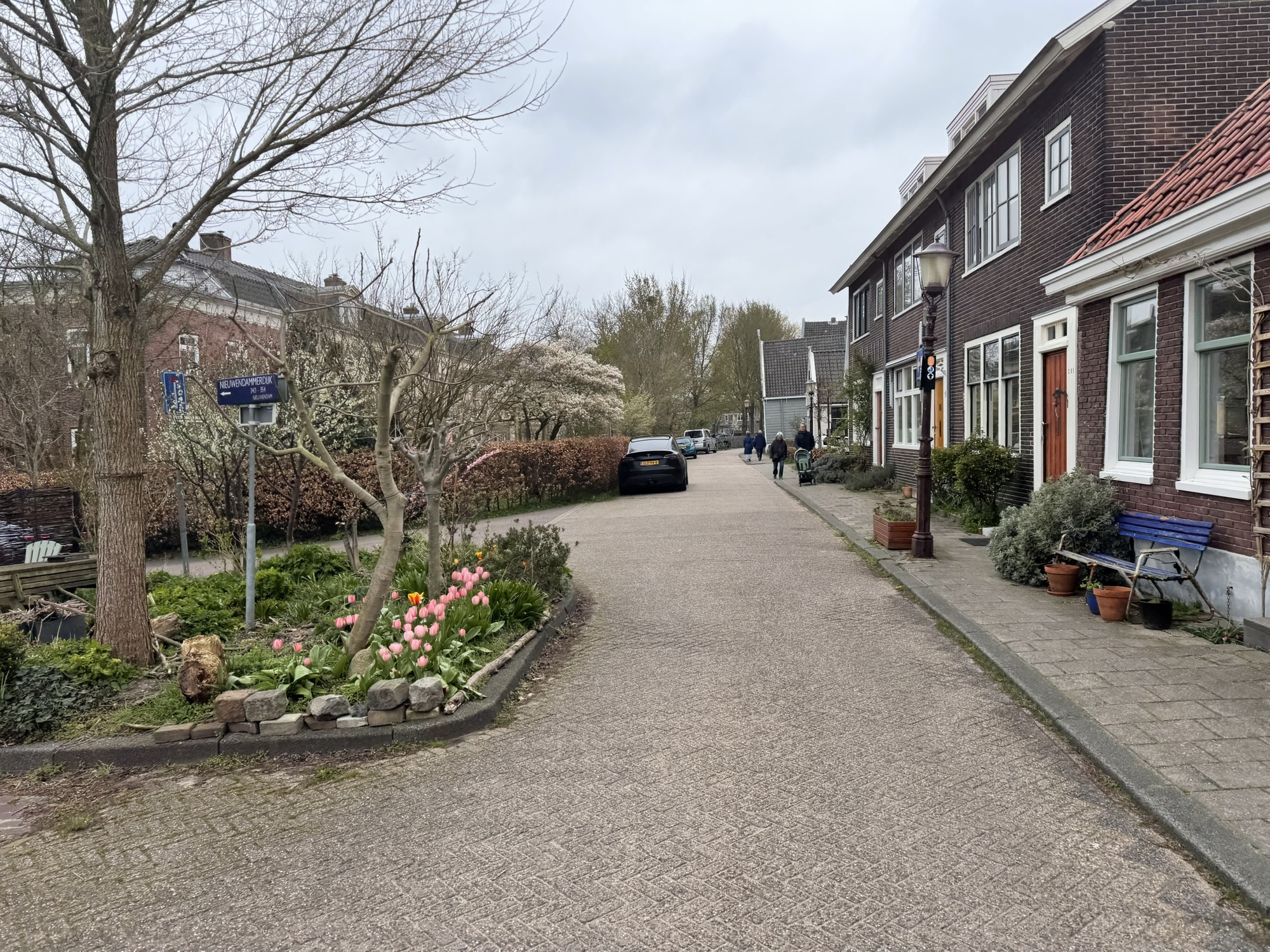
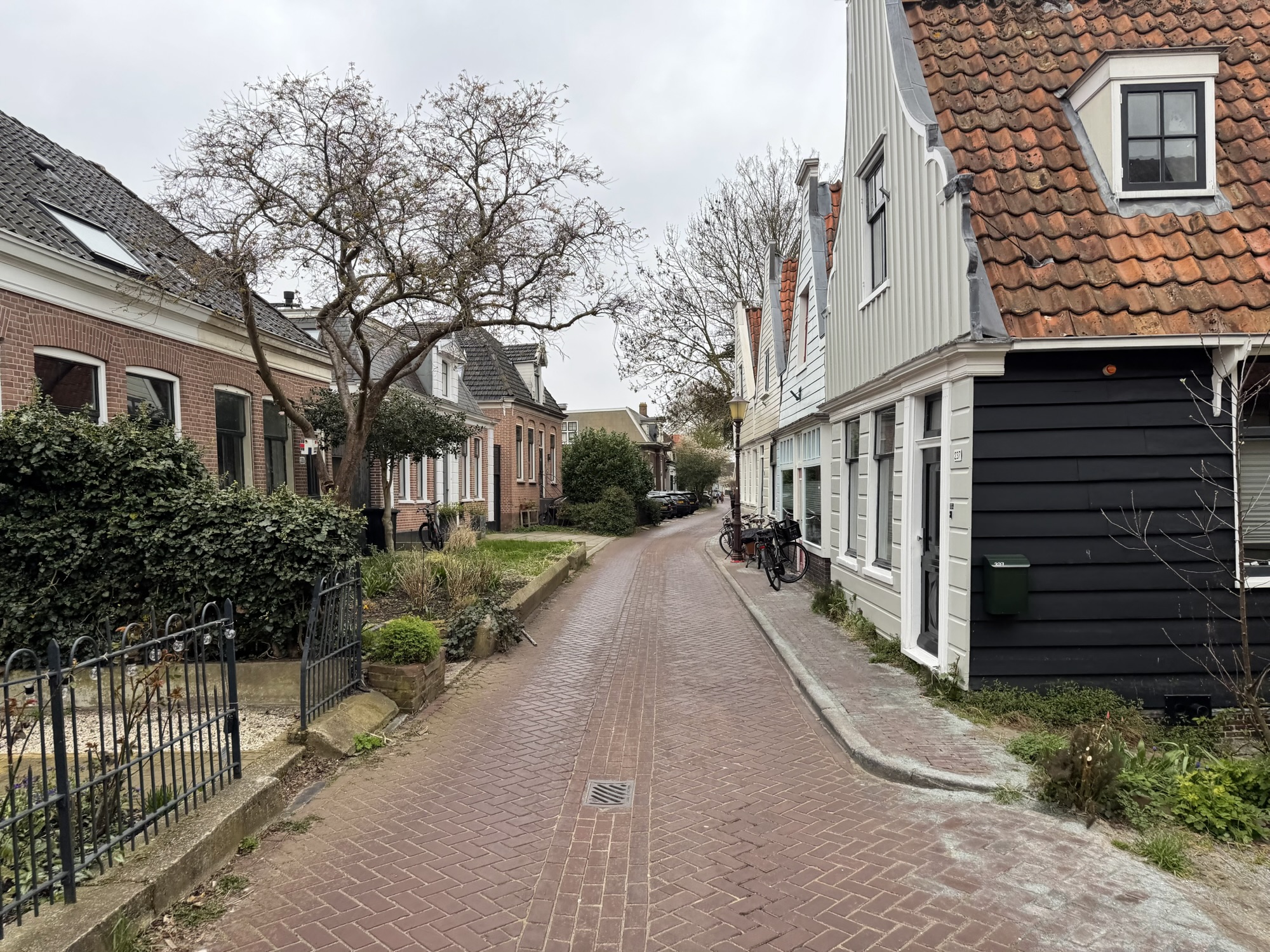
Our return trip on the north side of IJ River took us through some lovely Dutch woonerf streets. The street has shared space, traffic, calming, and speed limits for cars set at the speed of bikes. It was getting quite windy, but the narrow woonerf street sheltered us.
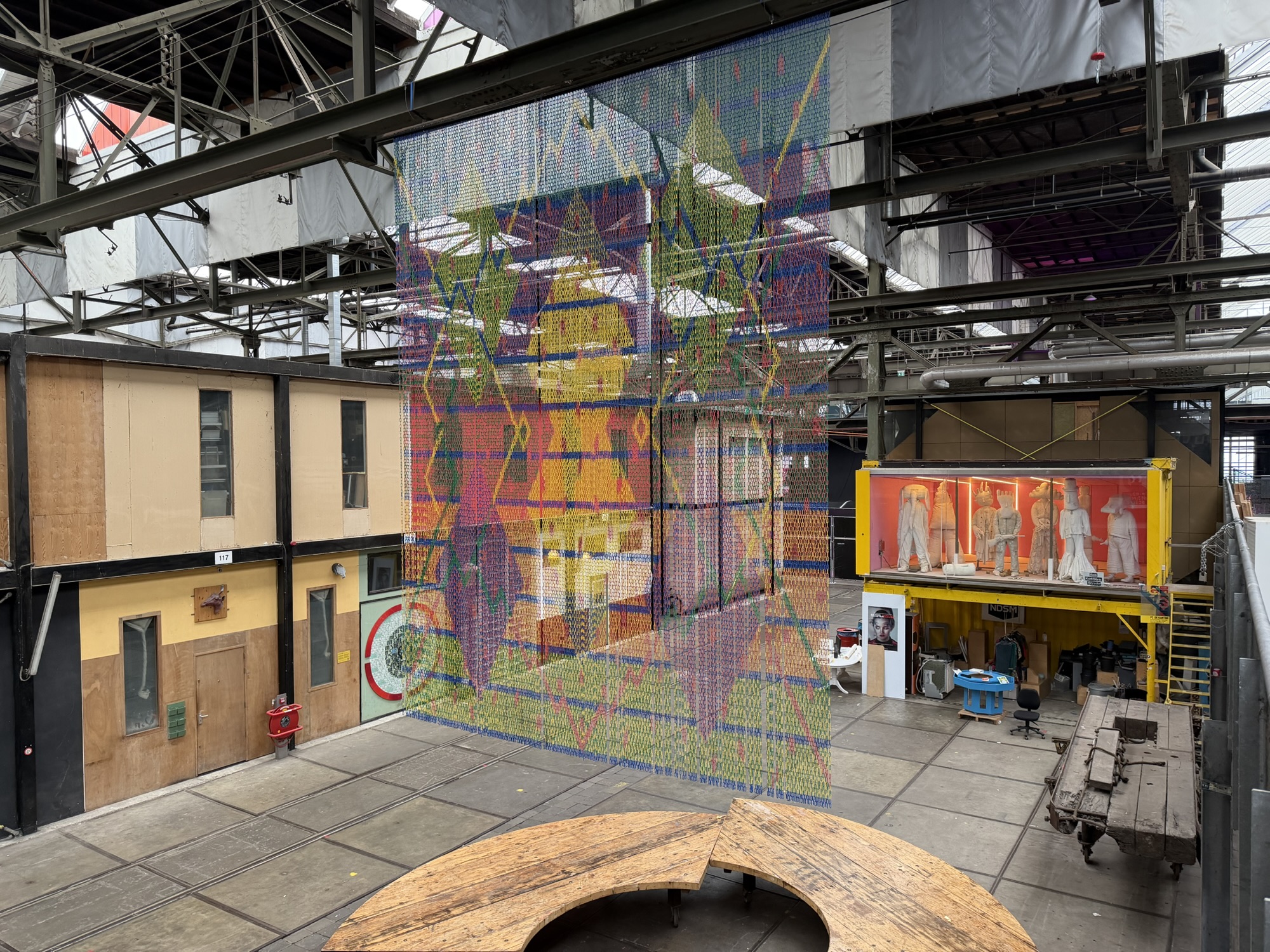
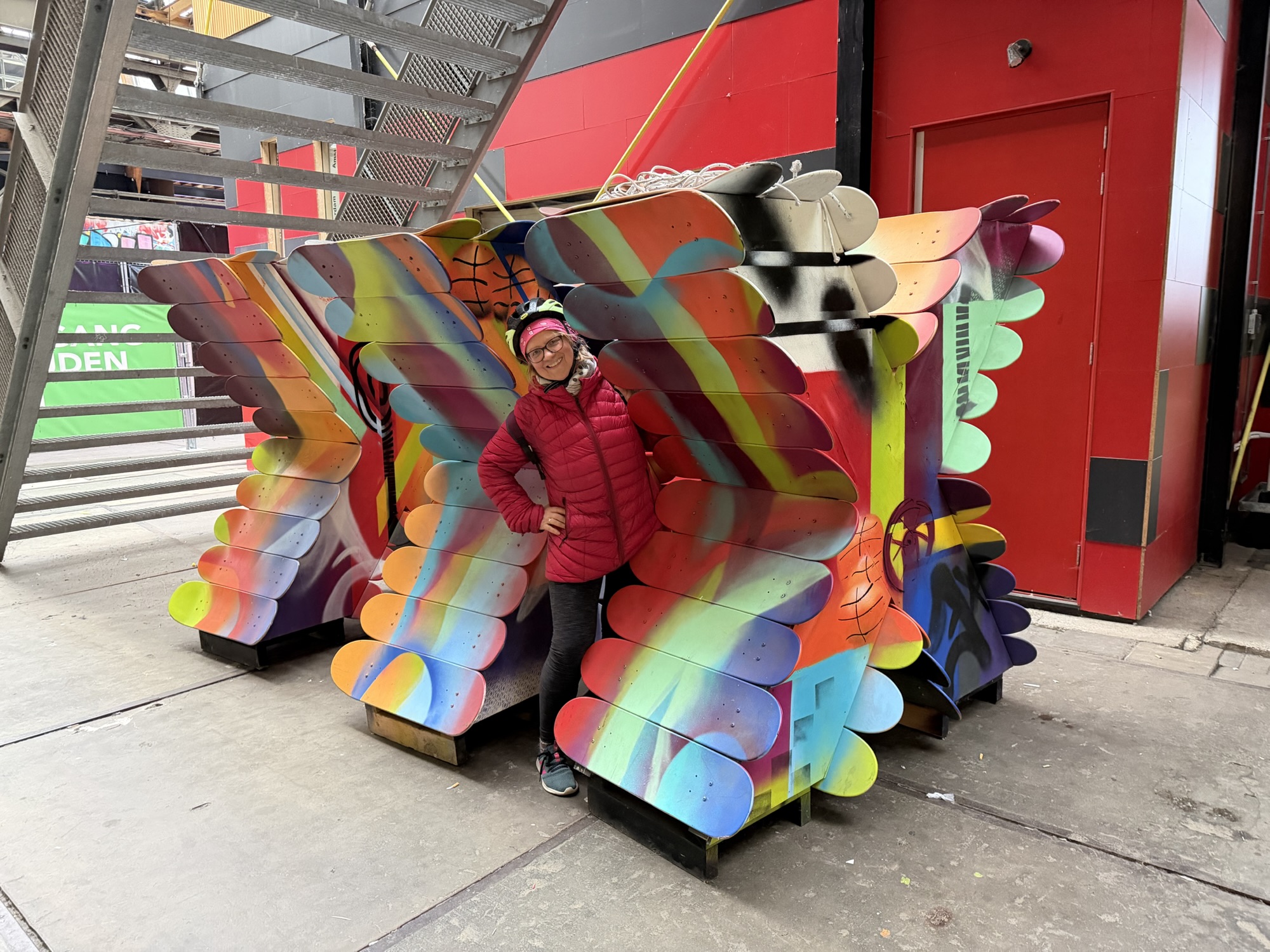
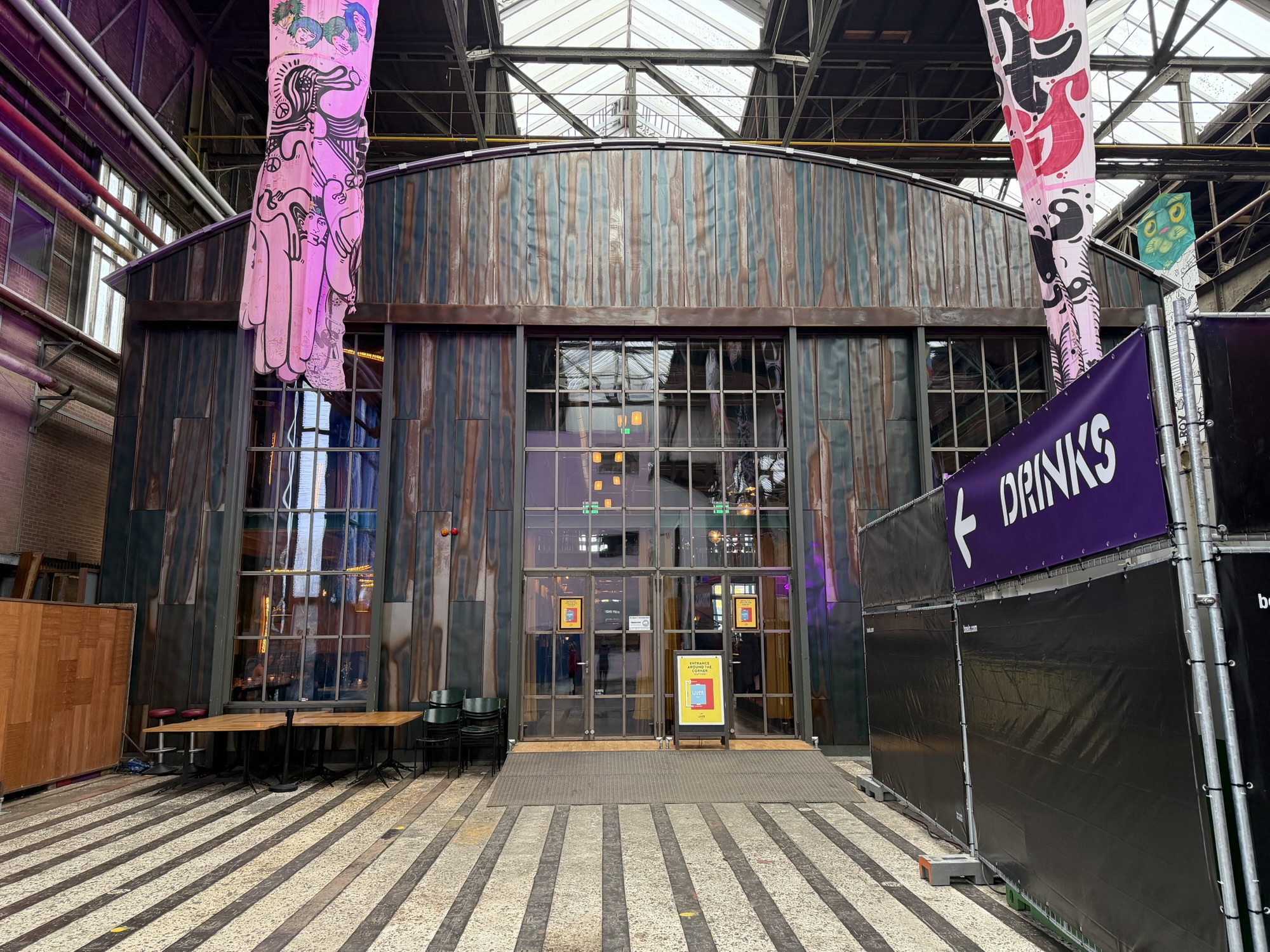
I had two final stops planned. The first was NDSM. By the time we got there, it had been raining for about half an hour. I was just going to take pictures of the outside of the building. However, a man (beckoning us from the doorway in the image above) who has been in instrumental in creating a vibrant, creative, cultural hub from a former shipyard that went bankrupt in the 80s, invited us in and told us about the space.
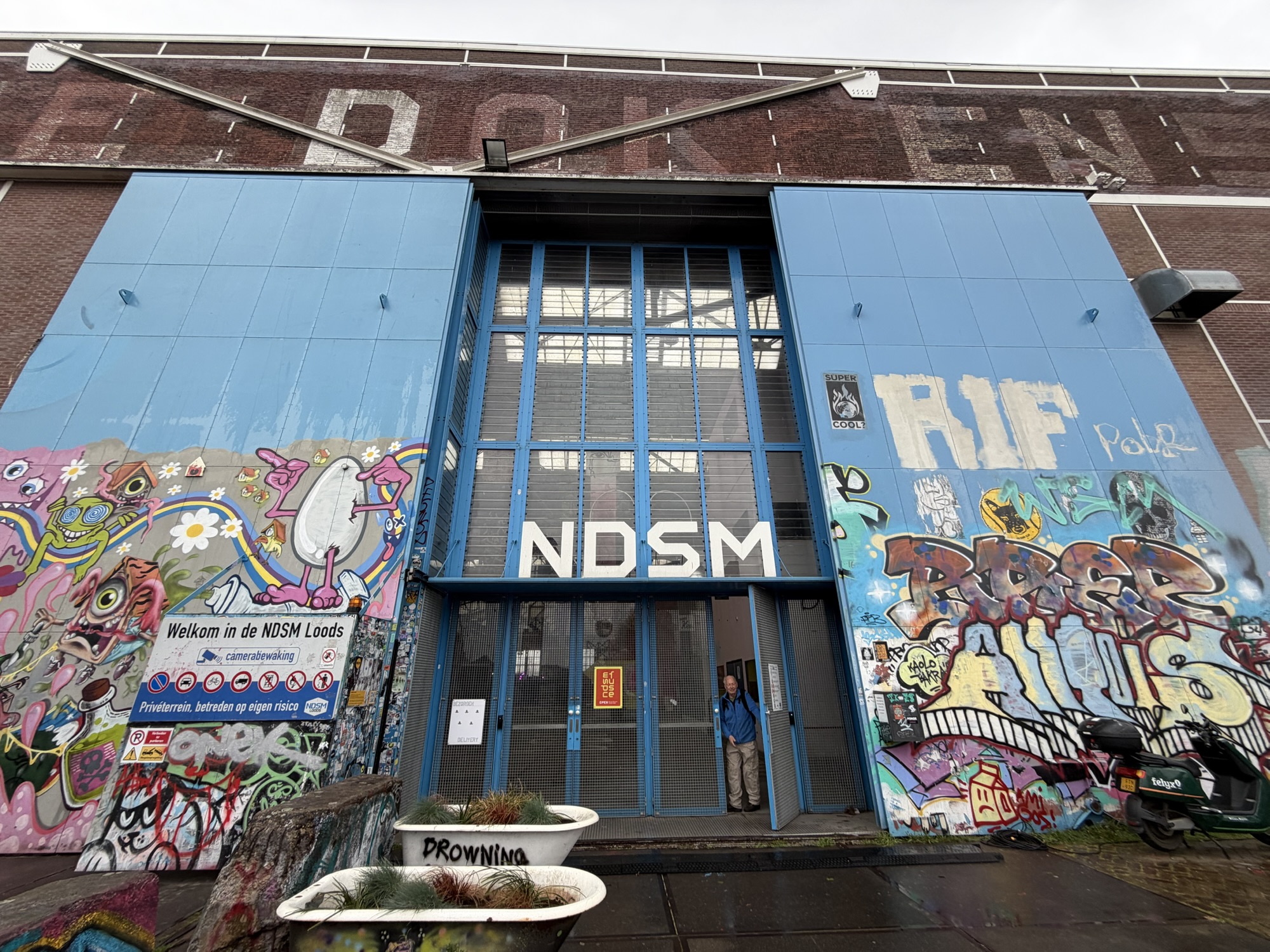
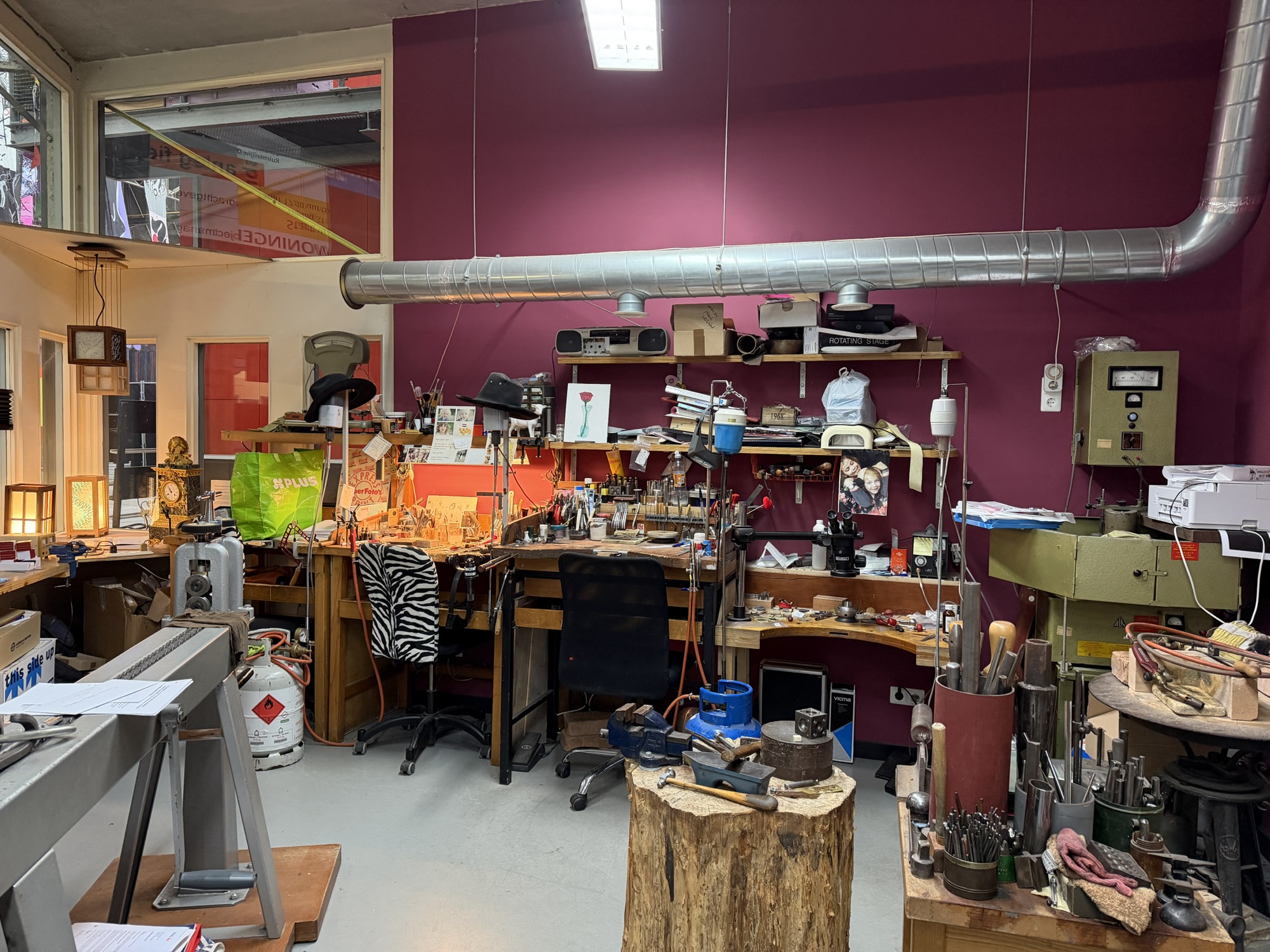
He was quite proud of it and, I think, would have talked to us as long as we were willing to listen. We chatted for about 15 minutes. He showed us his atelier where he creates custom jewellery, and told us about some of the other artists in the place and how are the nonprofit structures itself.
Rent is incredibly cheap for people who have little to no, income, but becomes more expensive as people become successful, or for those who decide to run a commercial business there.
He told us some artists would pay as little as €100 a month to rent the space while the restaurant and bar paid €24,000.
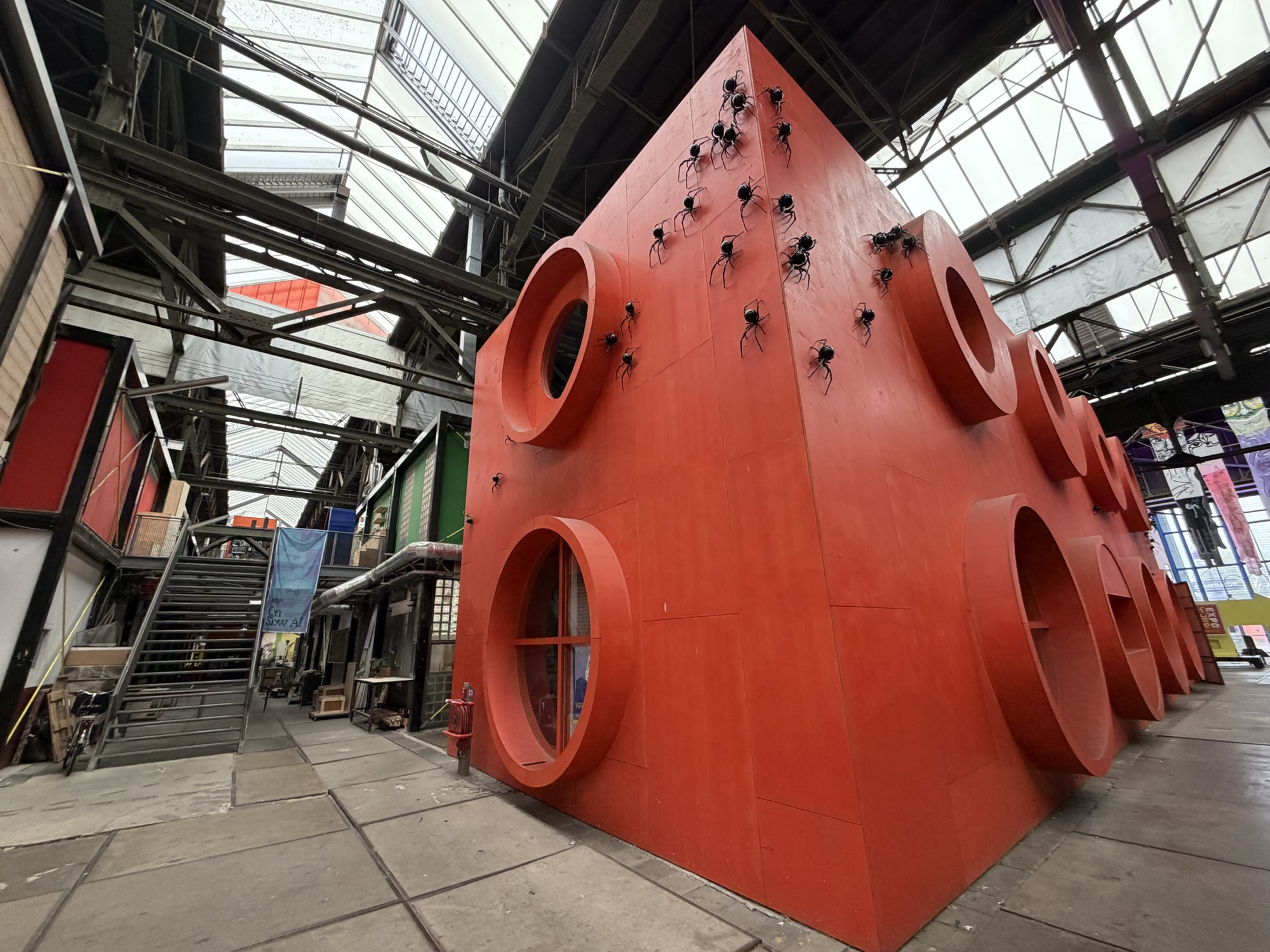
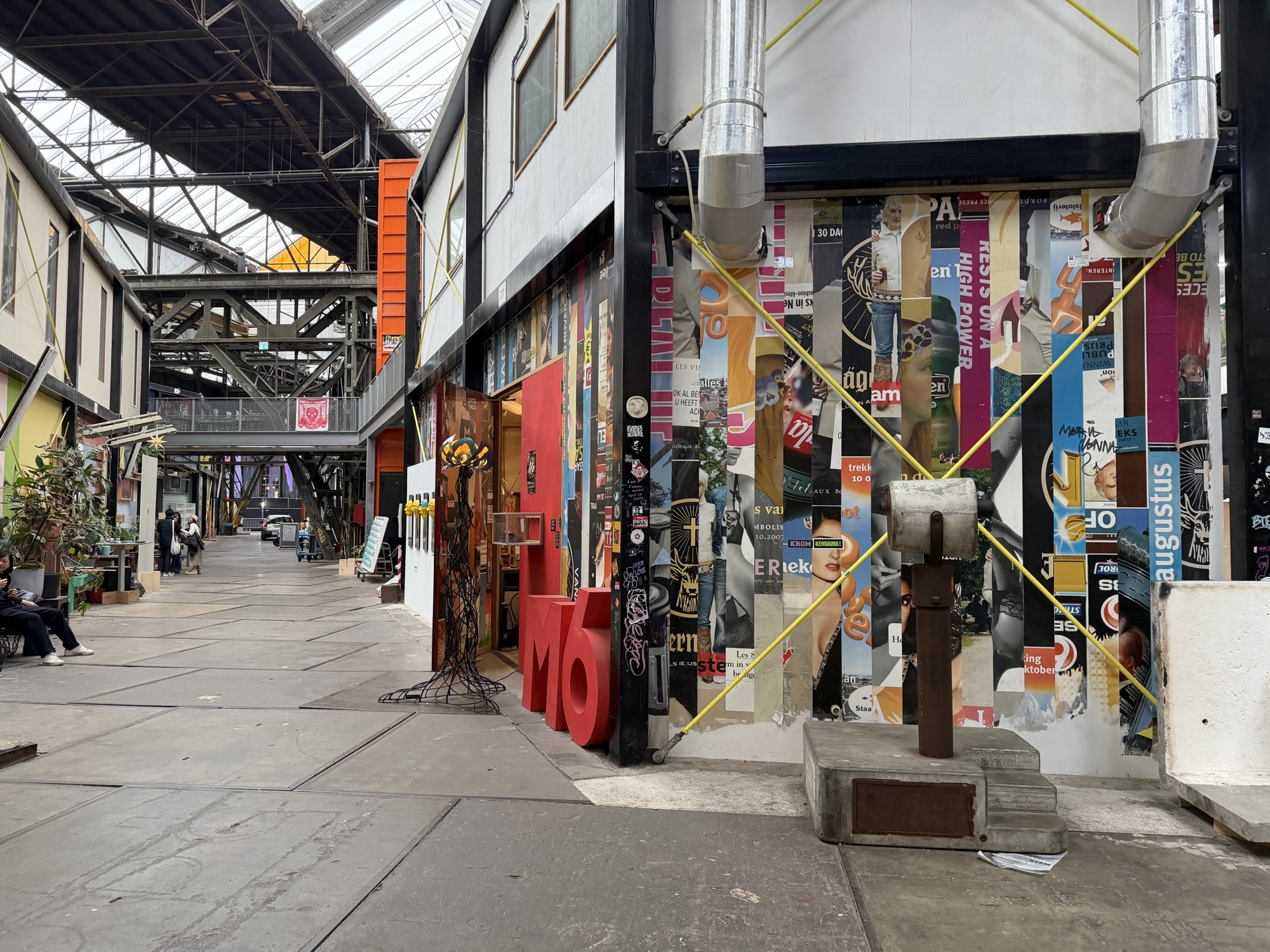
The space is so large that they have constructed buildings inside the building, and people working there bring in their motor vehicle vehicles and bicycles.
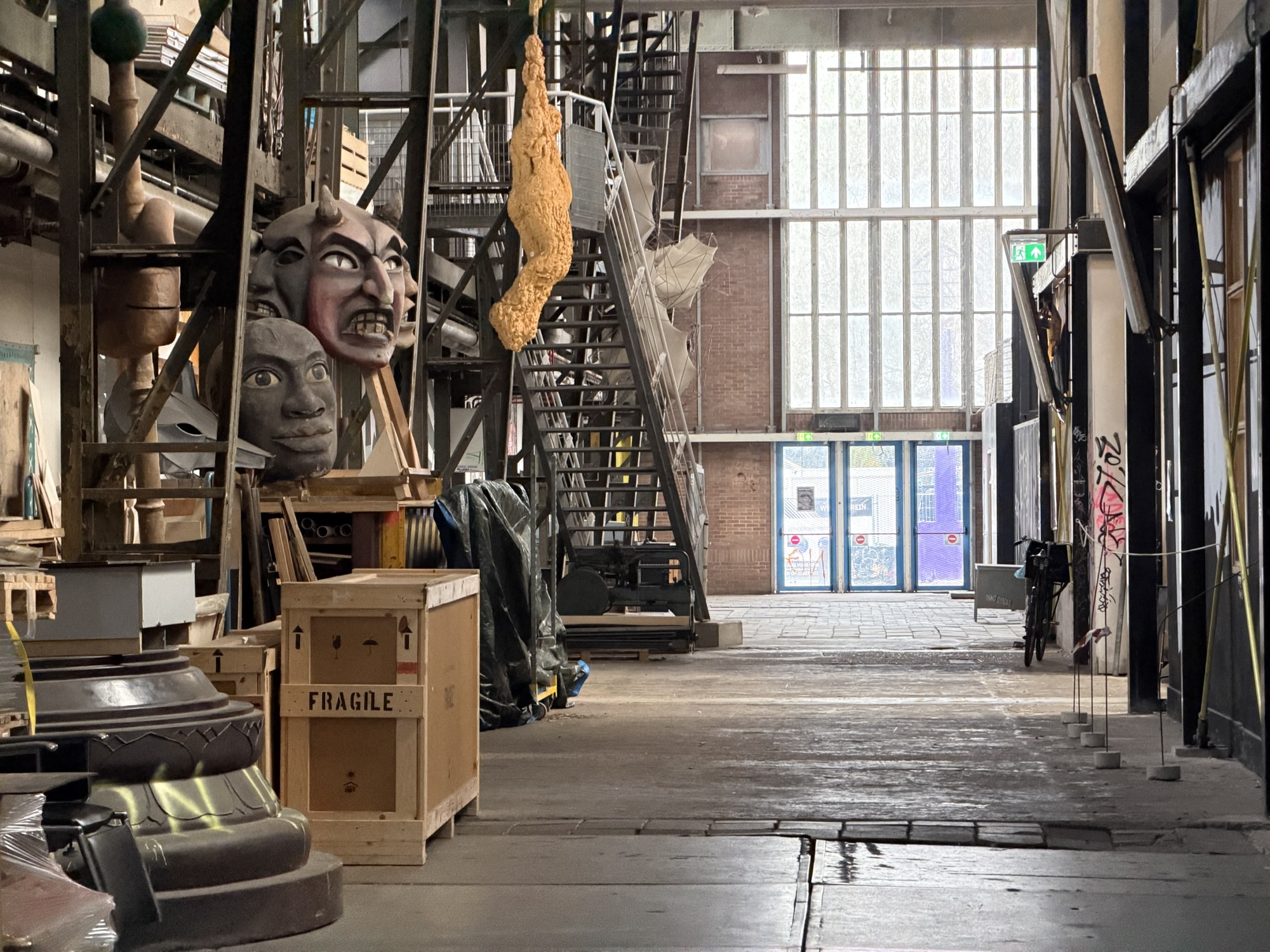
There was a festival starting at 10 PM this evening with up-and-coming music and dance artists. They tested the sound system while we were there and we thought it was a train running through the place. It was deafening.

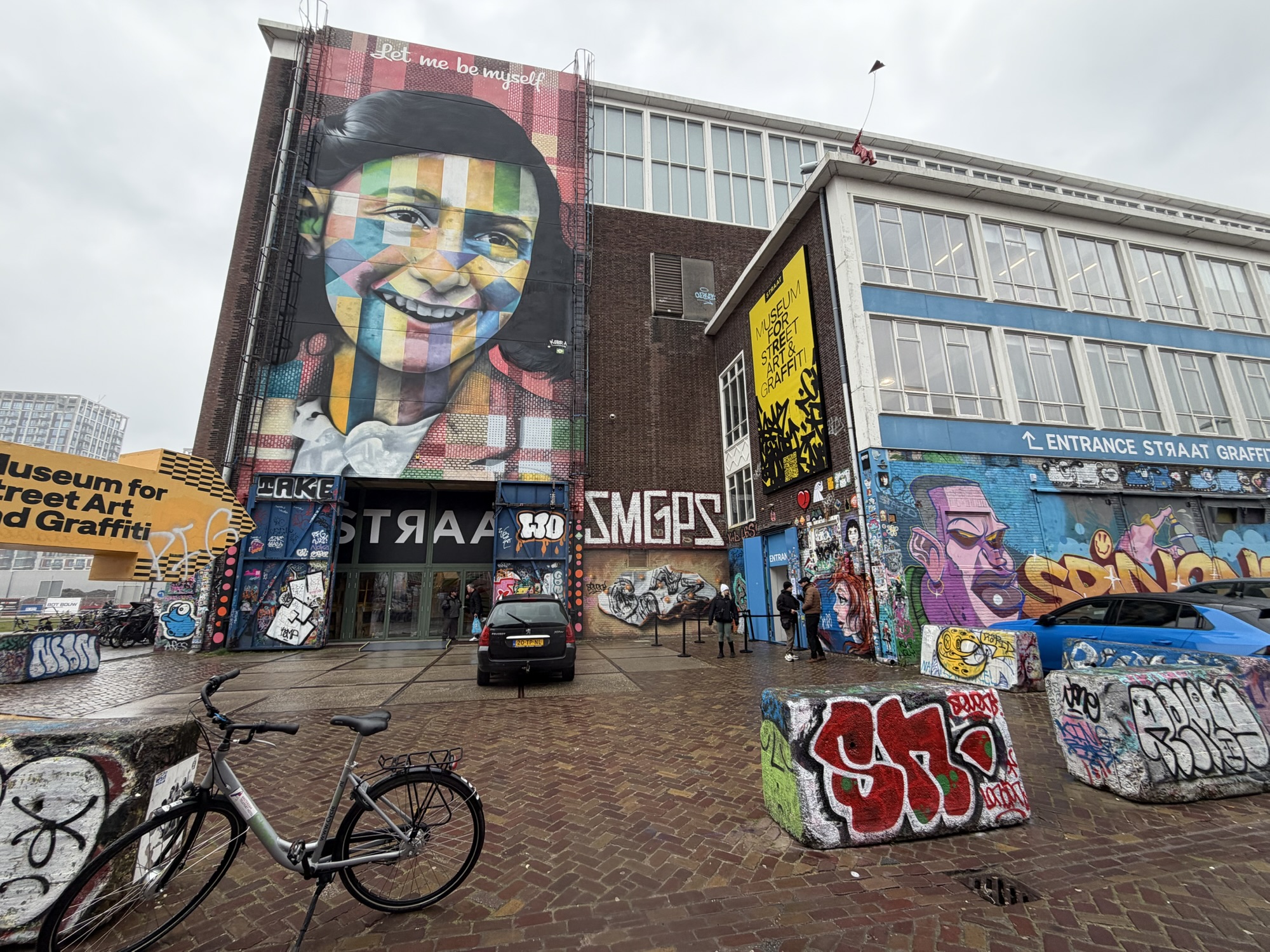
Our final stop was STRAAT Museum, a street dart museum, which is part of NDSM, but we still had a 30 minute ride and the rain was continuing so we didn’t take the time to go in.
Ride with GPS rid of us to a ferry landing where I have been expecting a bridge. It looks like it was about to leave, and I called out to someone getting on board, where do we buy tickets? She said none were required so we jumped on board.
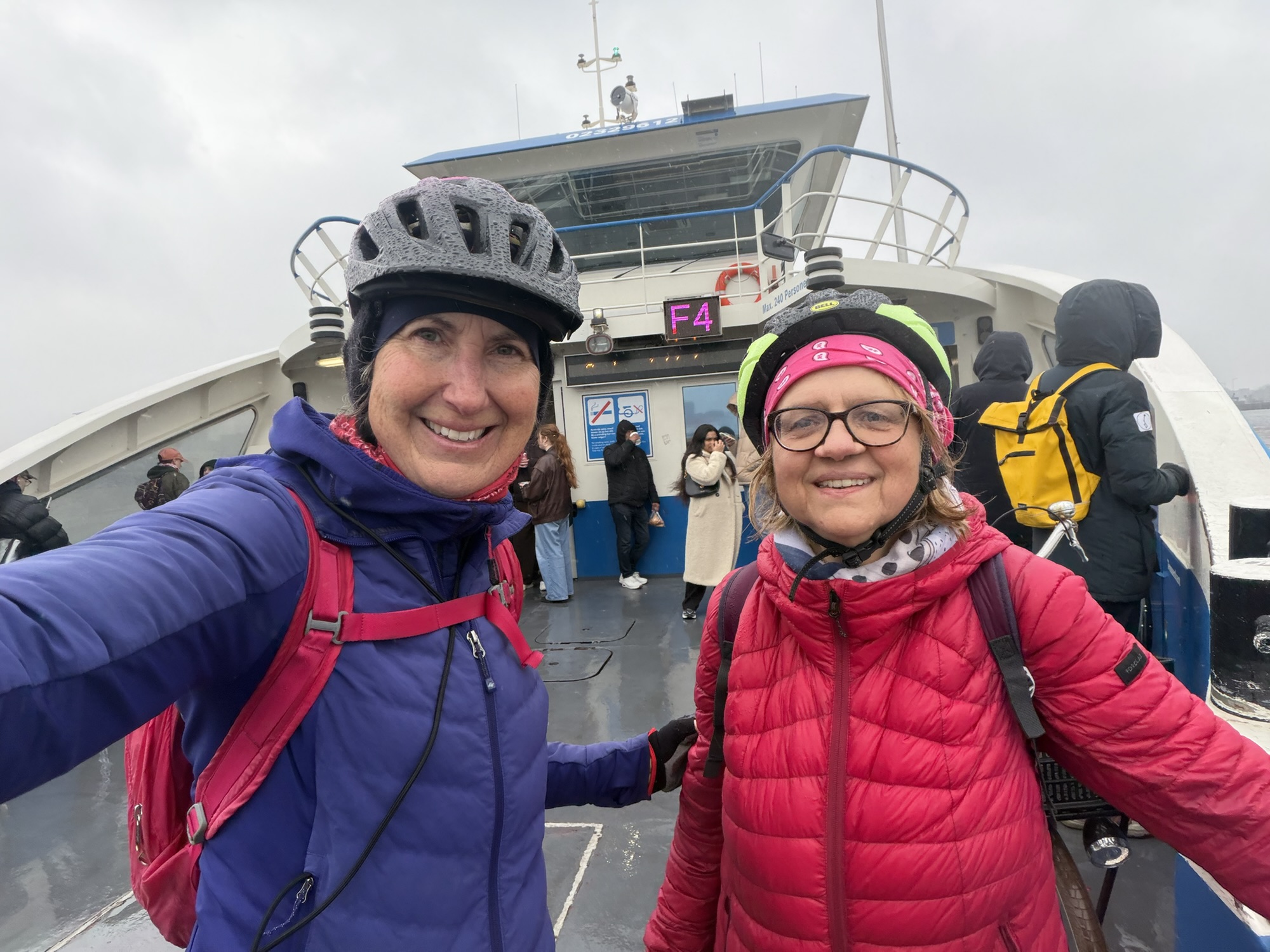
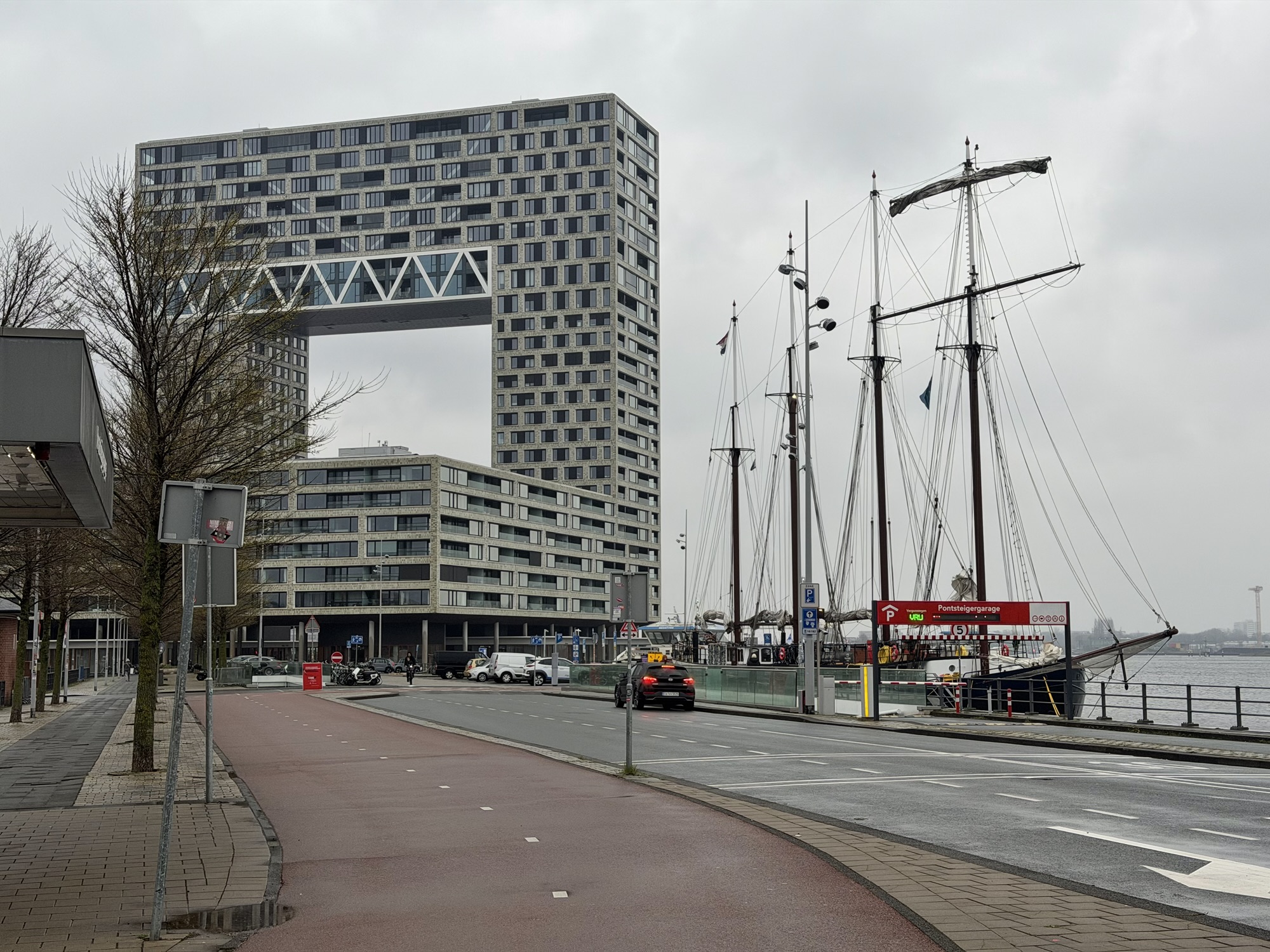
The ferry didn’t go where we expected it to go, but took a longer trip to Central Station so we had to ride a couple kilometres to get back on to our route. Perhaps the next ferry would’ve taken to where Ride with GPS had planned, but it didn’t really matter. From the ferry we saw this building and several others on reclaimed land.
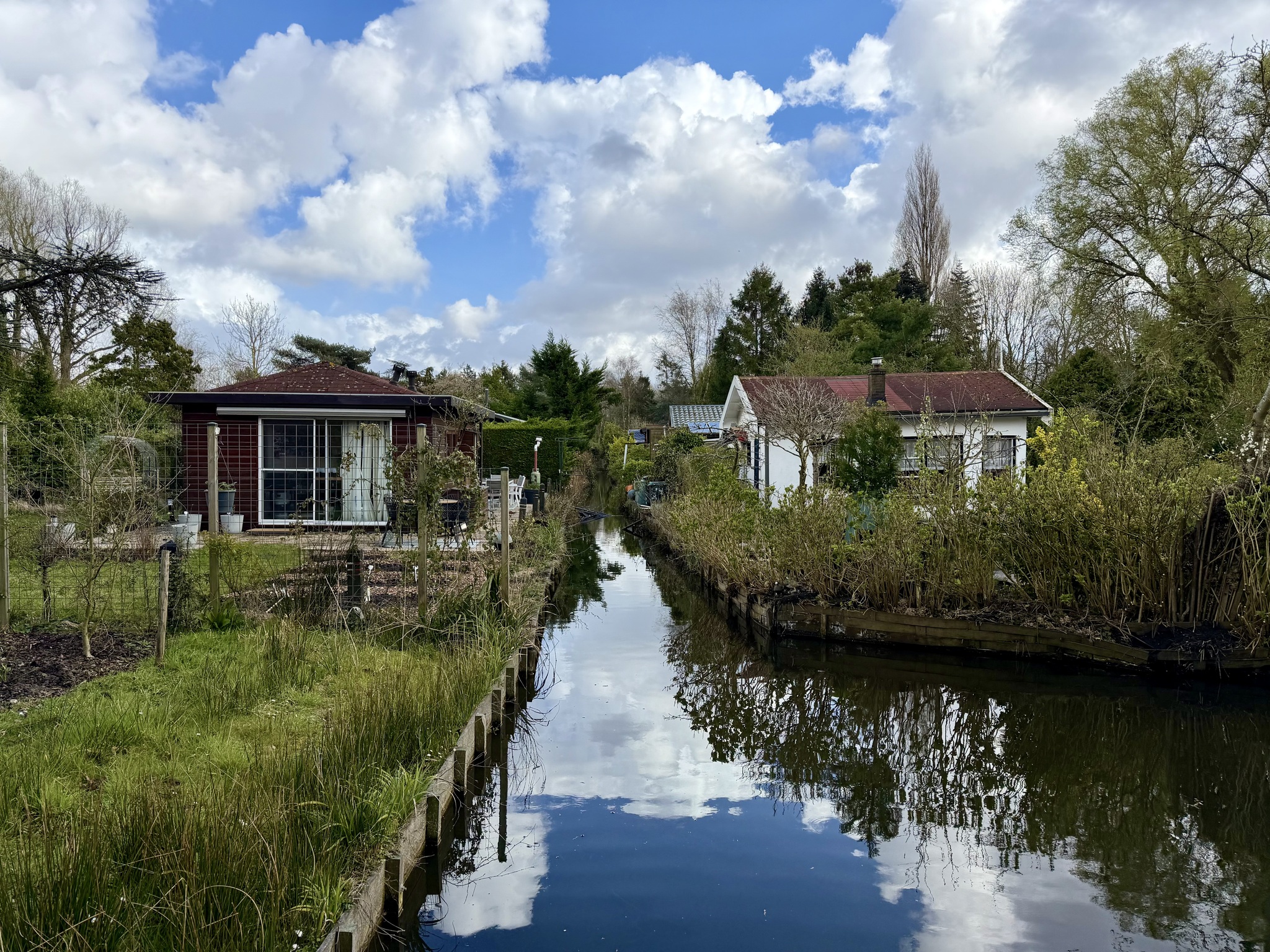
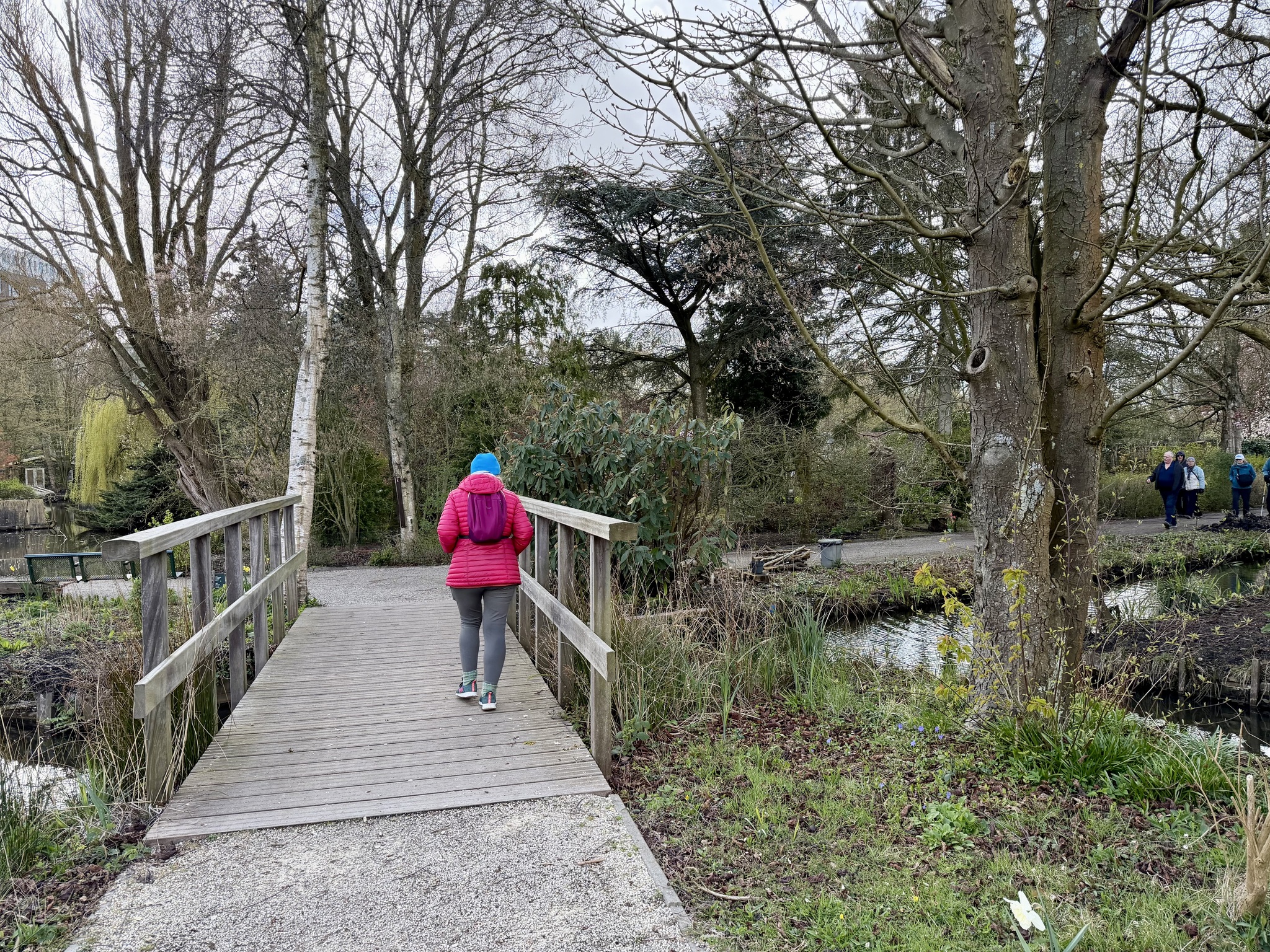
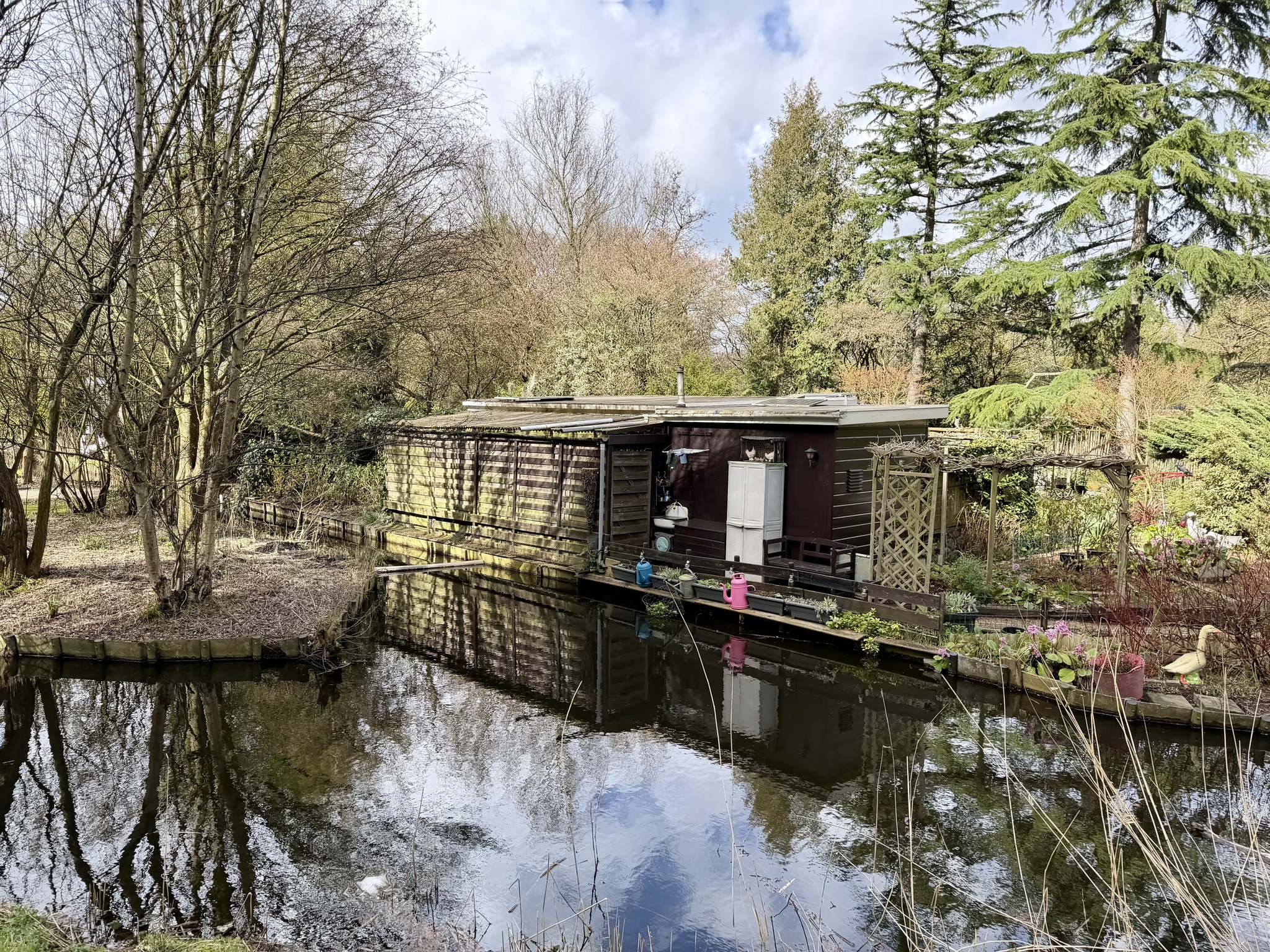
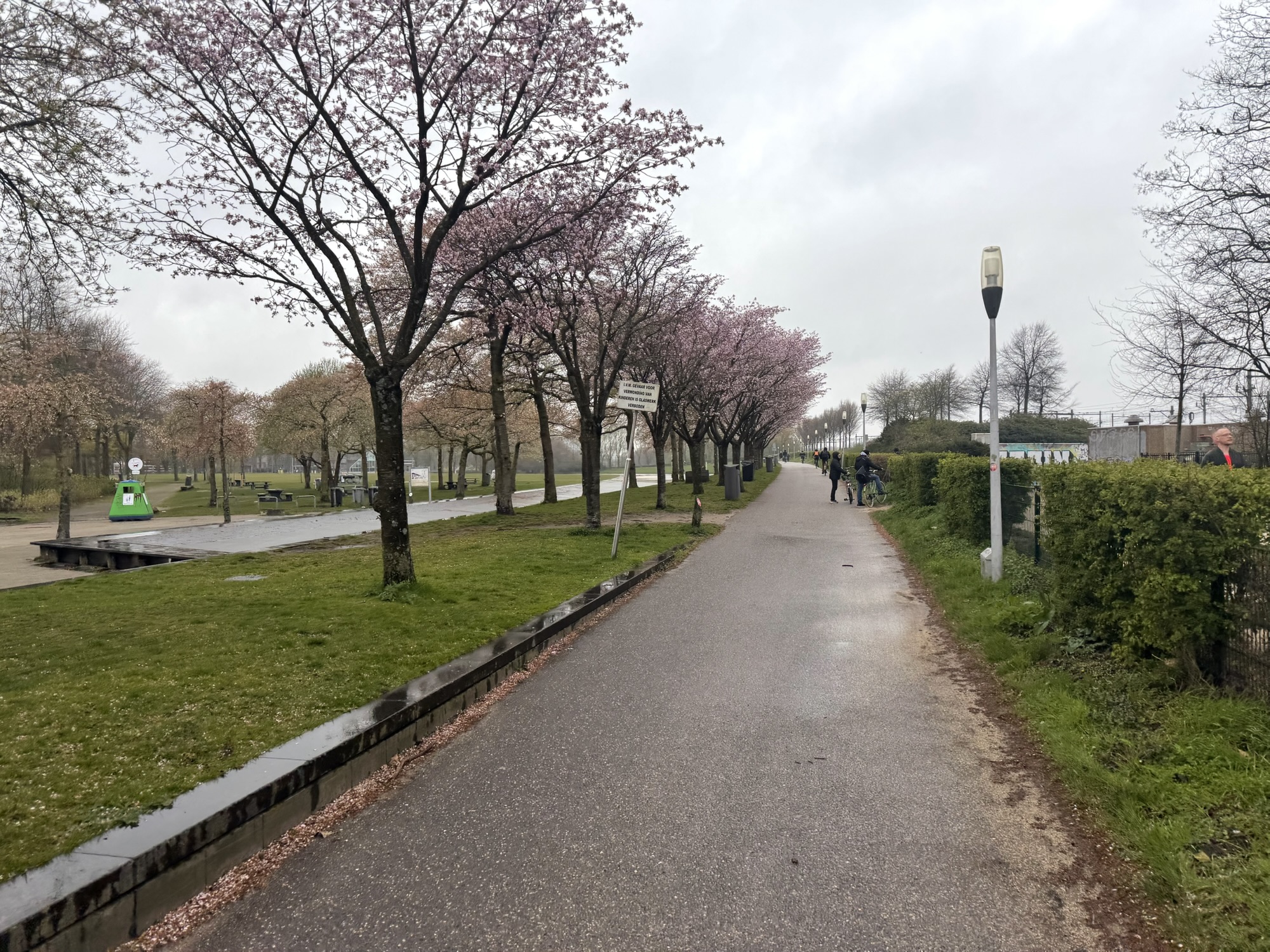
The last three kilometres were through a lovely park that brought us out near the community gardens we explored on our first walk after arrival. The flowering trees were just beginning to bud. I’m hoping we’ll see some lovely displays of flowering trees, as well as tulips, in the coming days. 
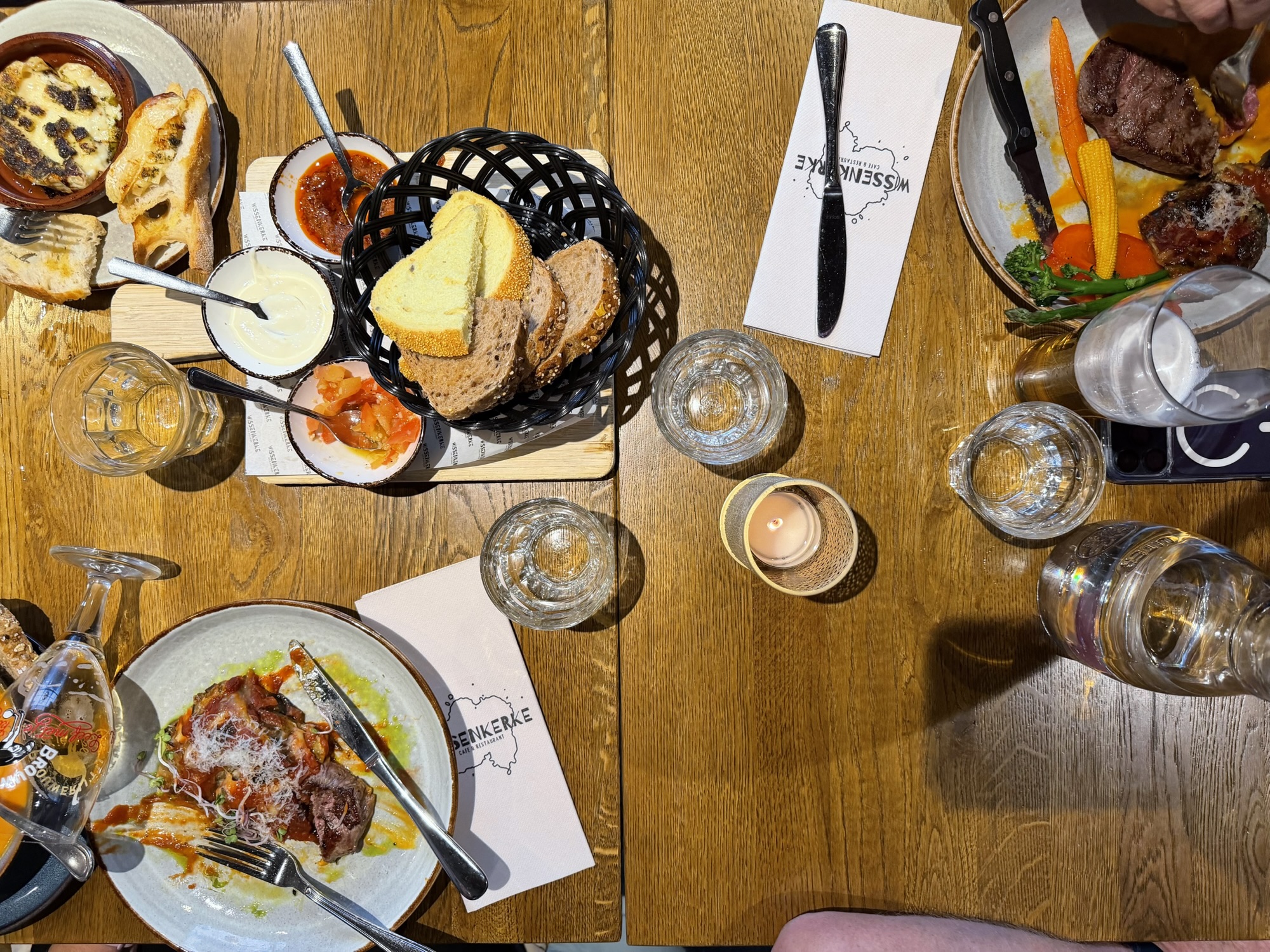
Cindy made a reservation for across the street for our final dinner in Amsterdam before sailing tomorrow afternoon.
Europe 2026 – Day 6 – Guest Blog – Dayle

This is the link to Lisa and Alina’s day.

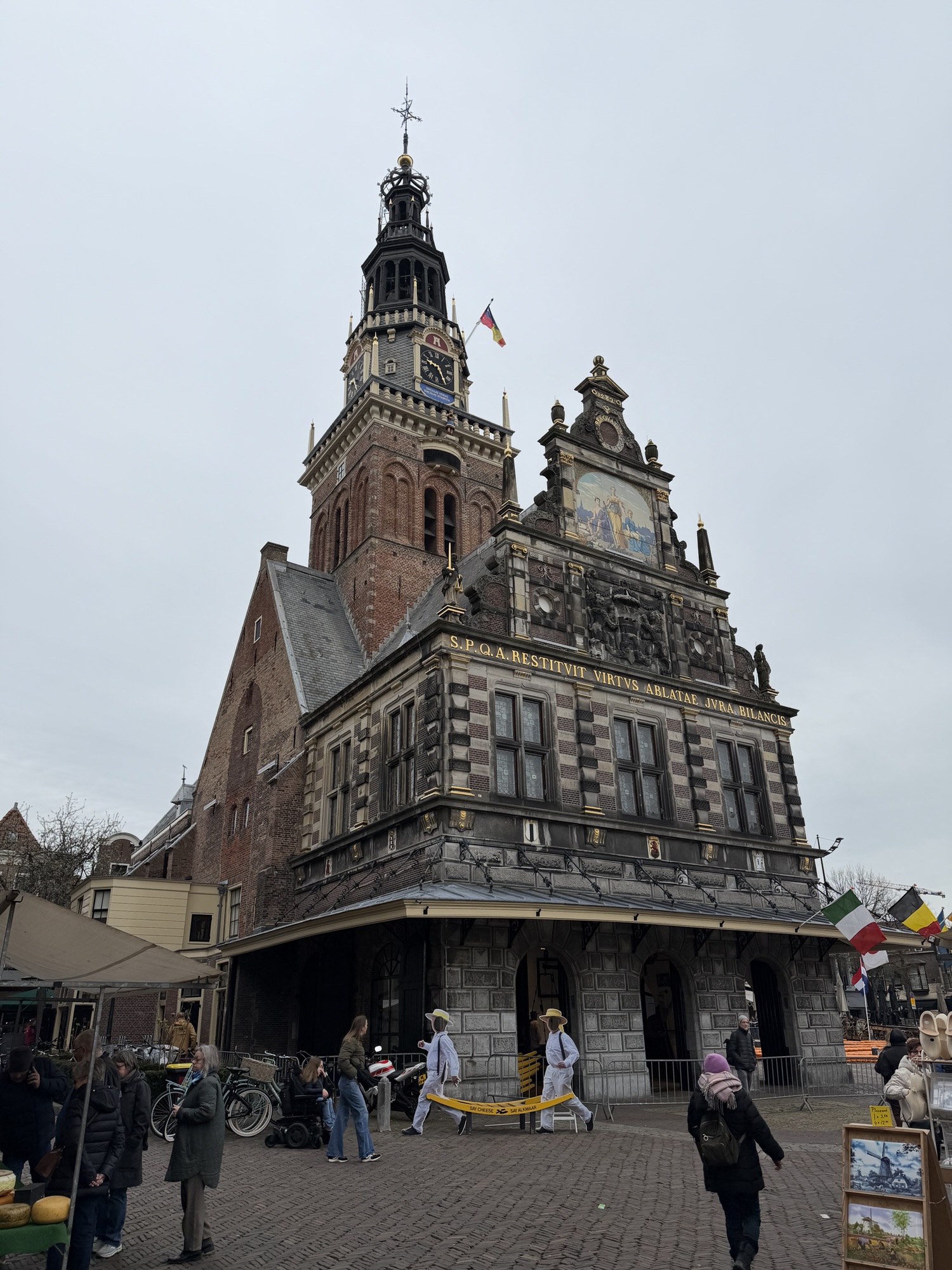
David, Wayne and Dayle took an early train from Sloterdijkdirectly to Alkmaar, where the quite narrow streets were starting to fill with Good Friday tourists. 

The Alkmaar Cheese Market is the oldest and largest in the Netherlands. The tradition continues since Alkmaar had its first cheese scale in 1365.

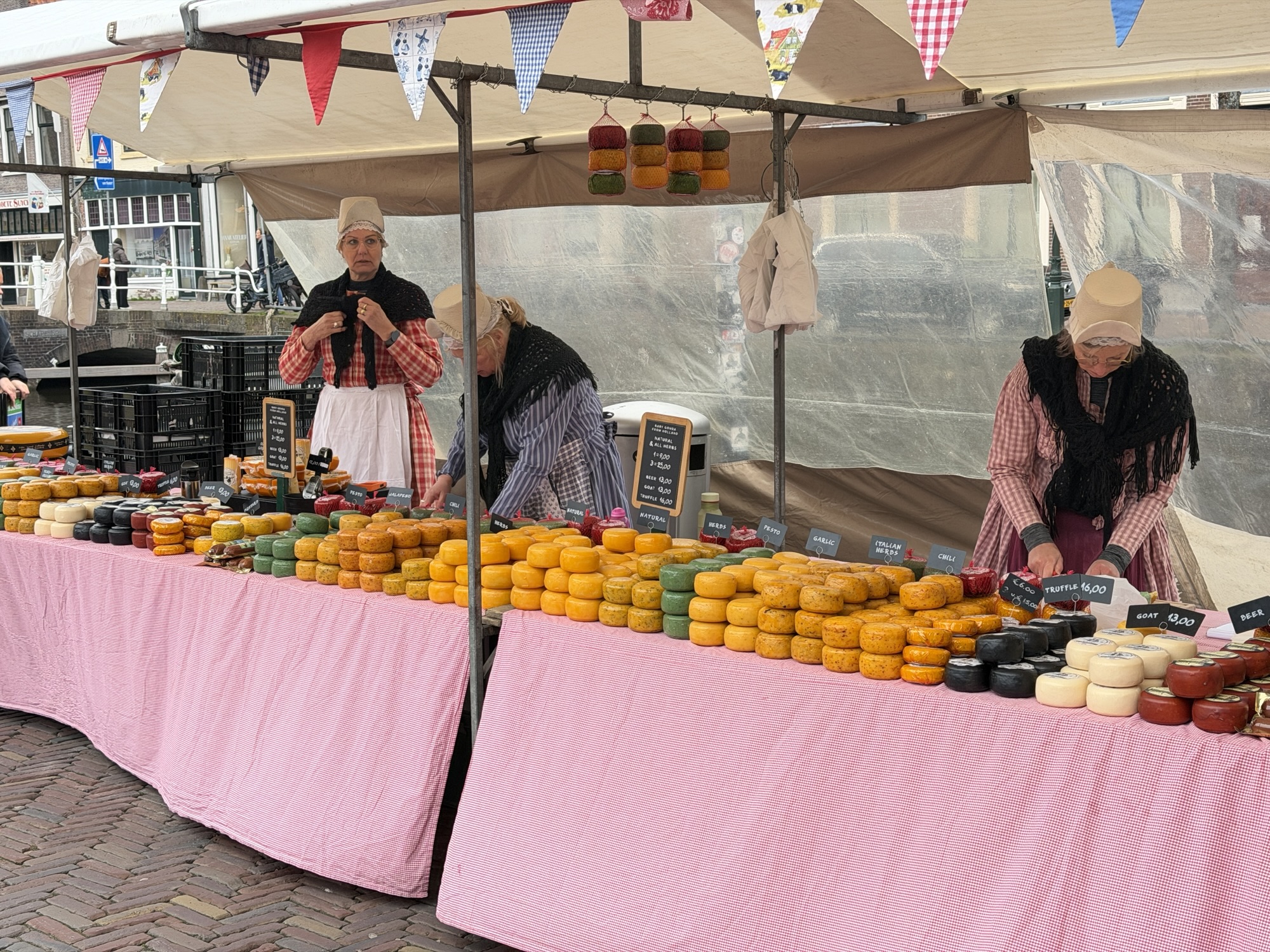
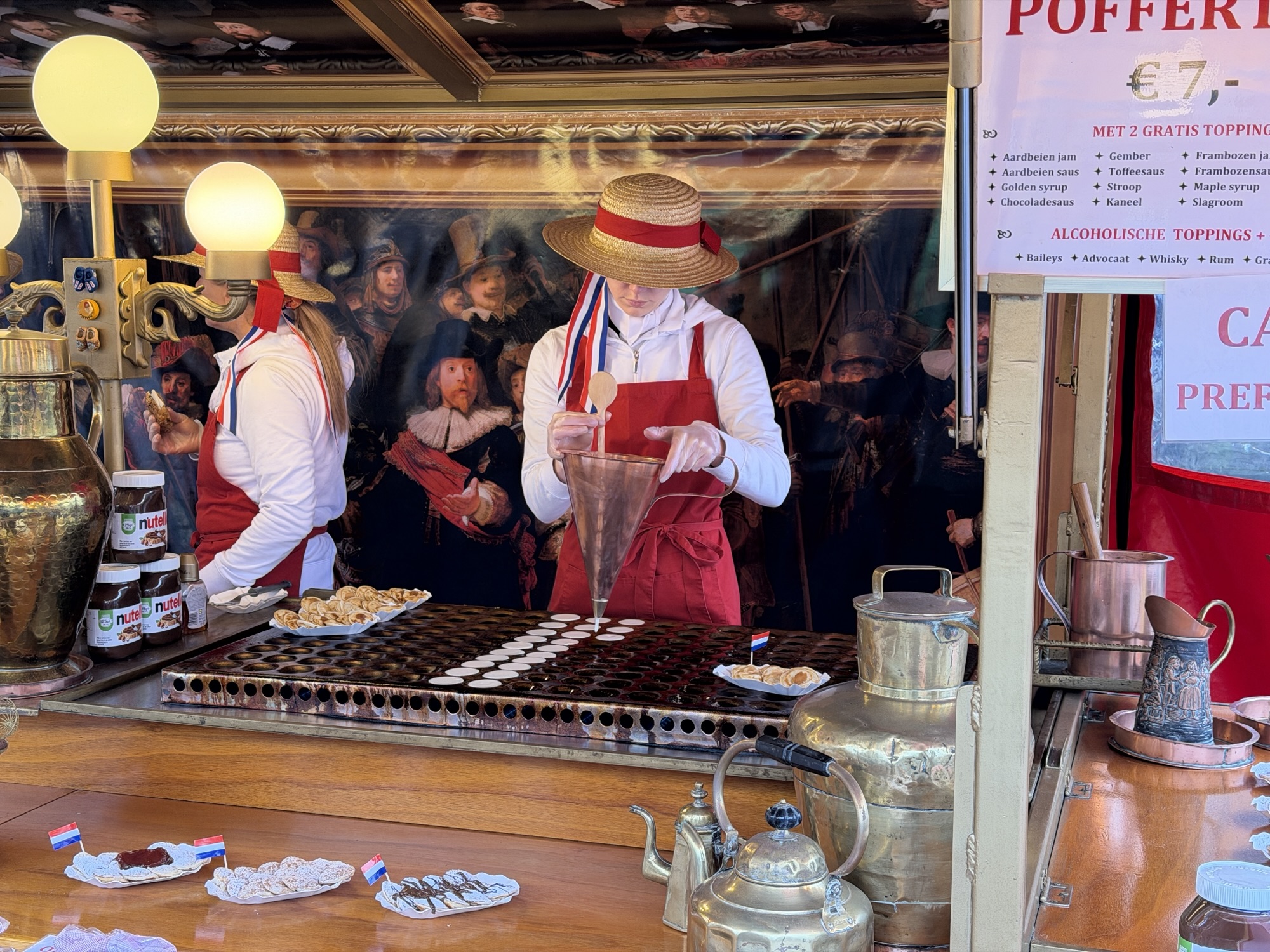
Good Friday was the opening day, held every Friday 10:00-1:00 until the end of September. Street vendors set up cheeses, waffle and sweet treats and handmade crafts.


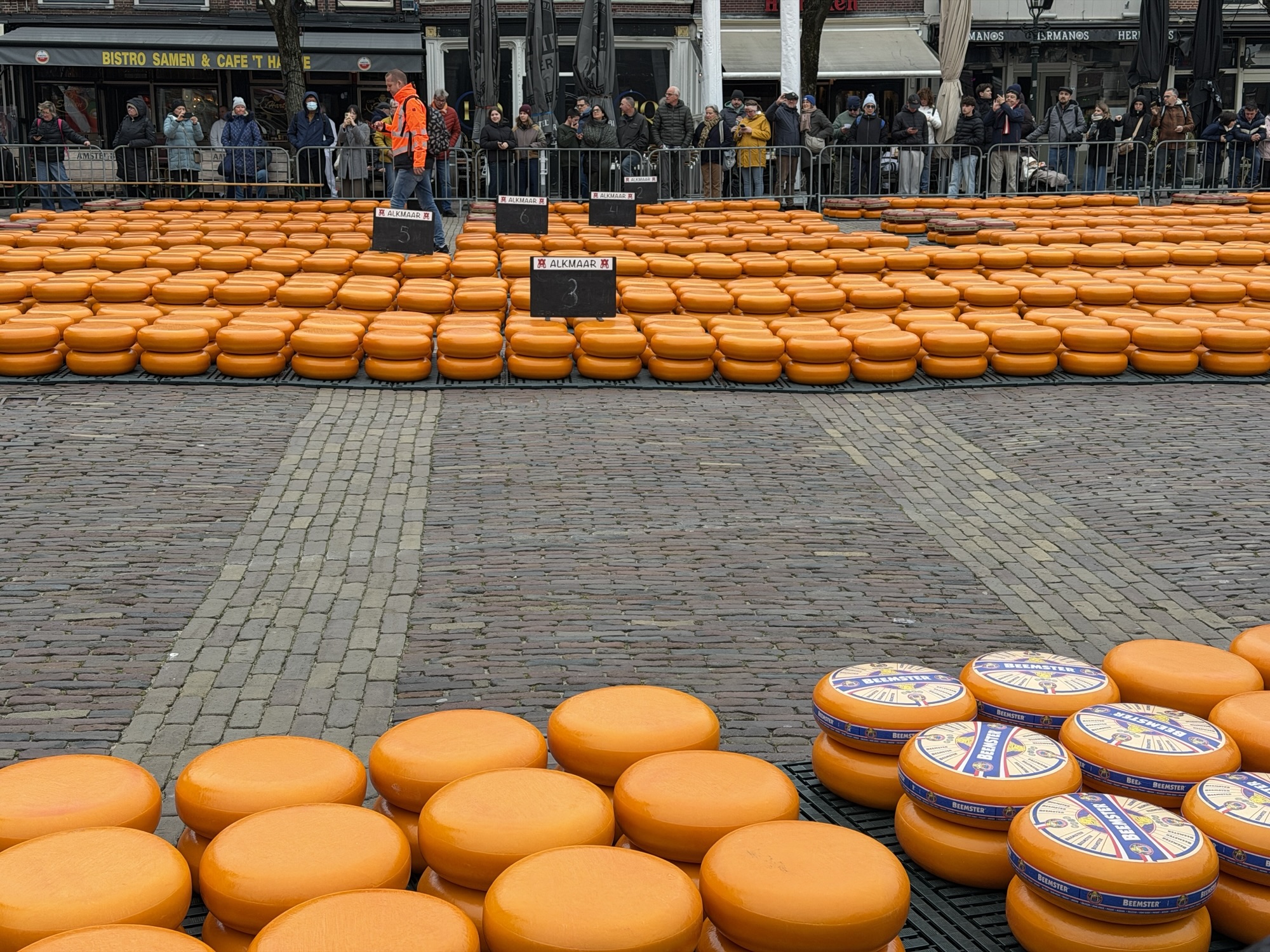
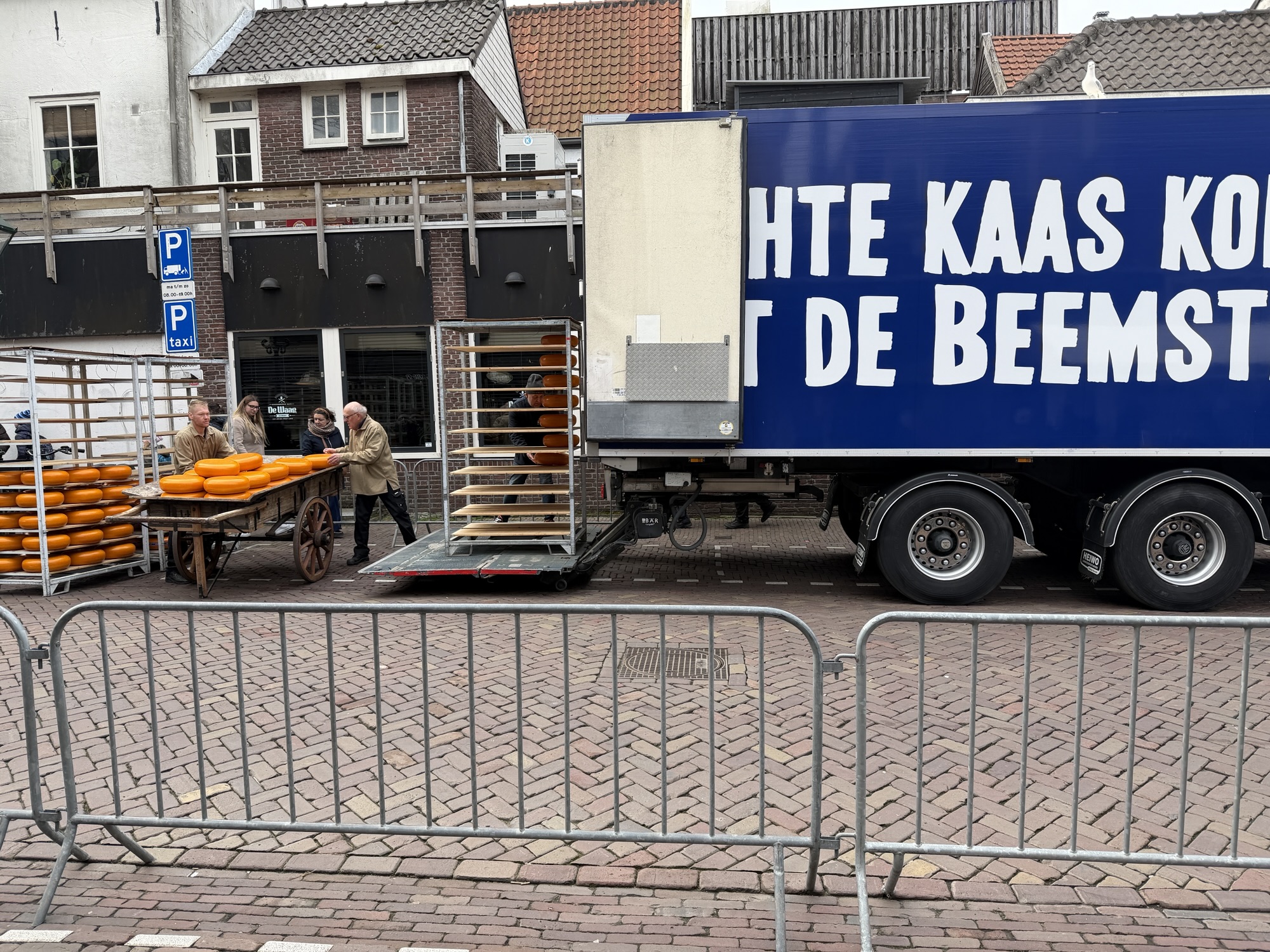
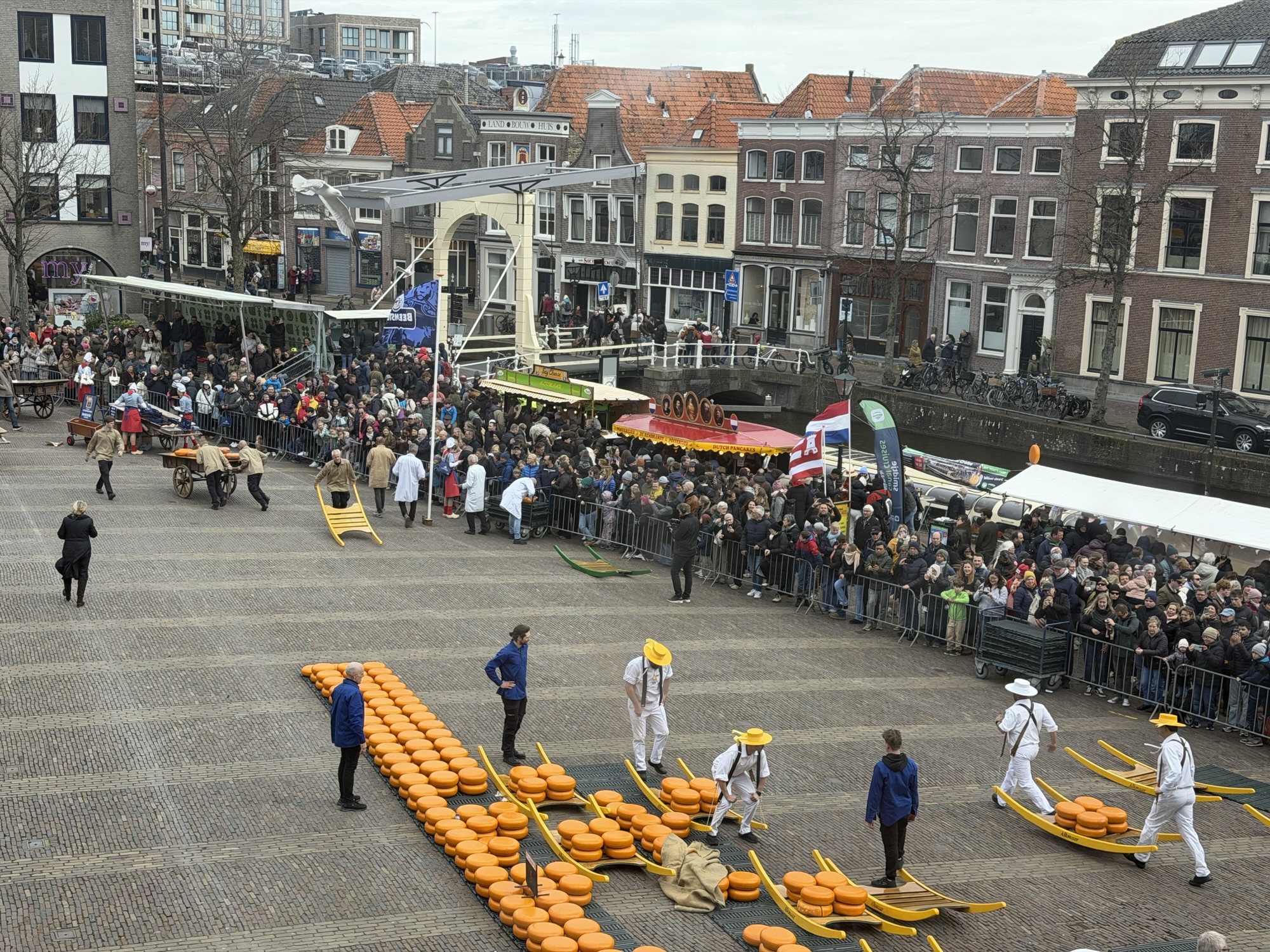
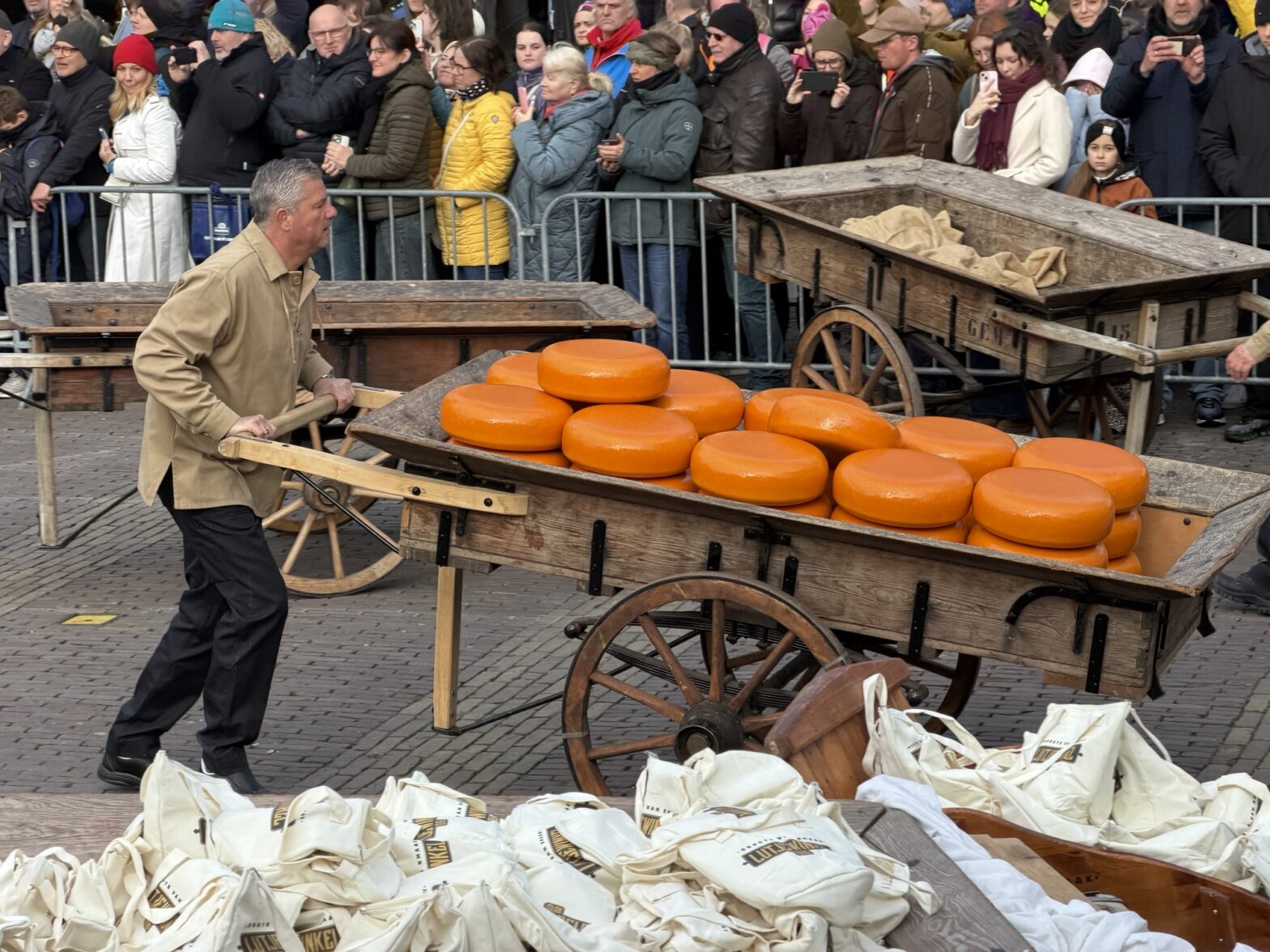
Trucks deliver as many as 2,400 of the 12.5kg Gouda cheese wheels on the market square (Waagplein).

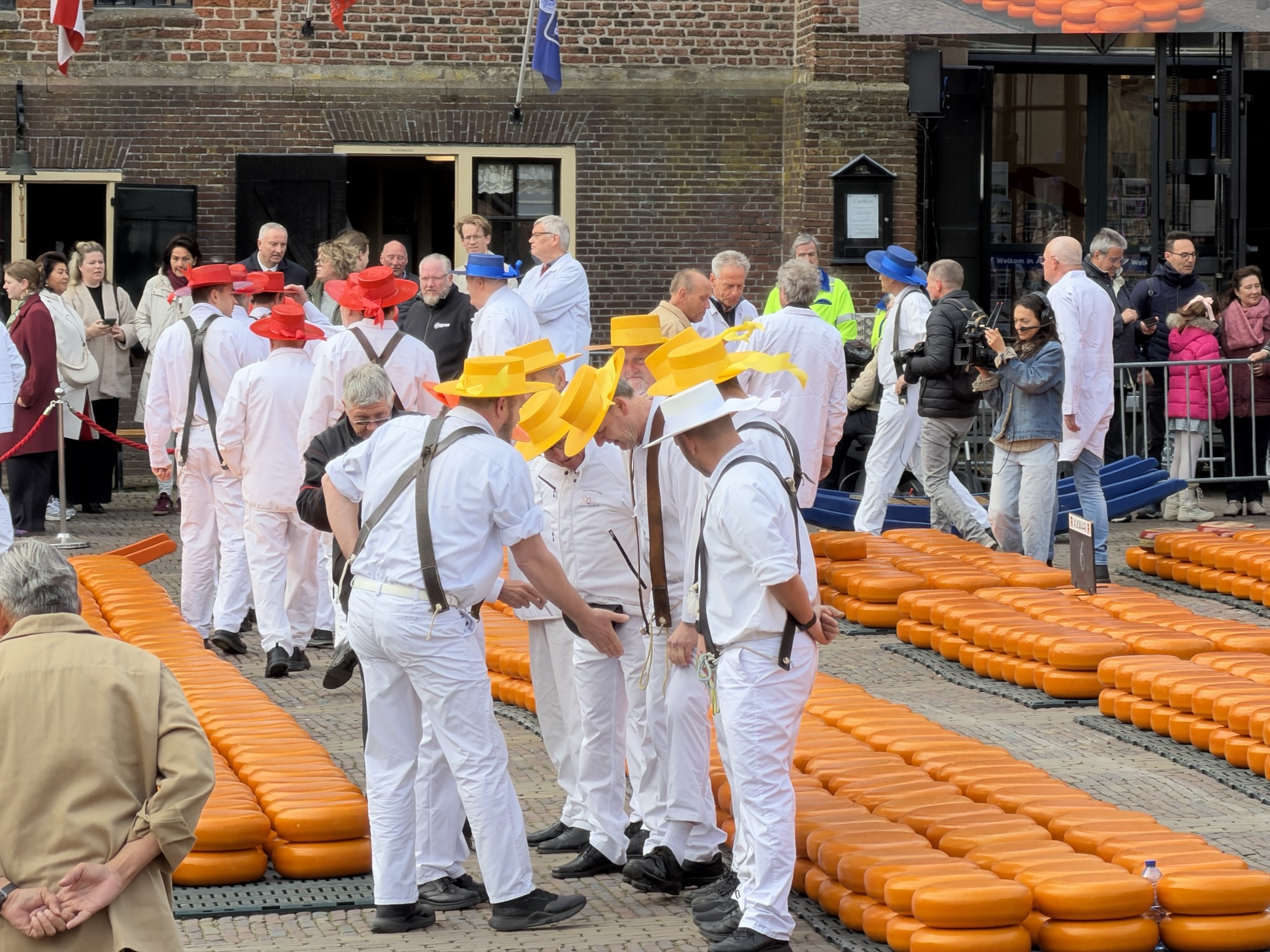
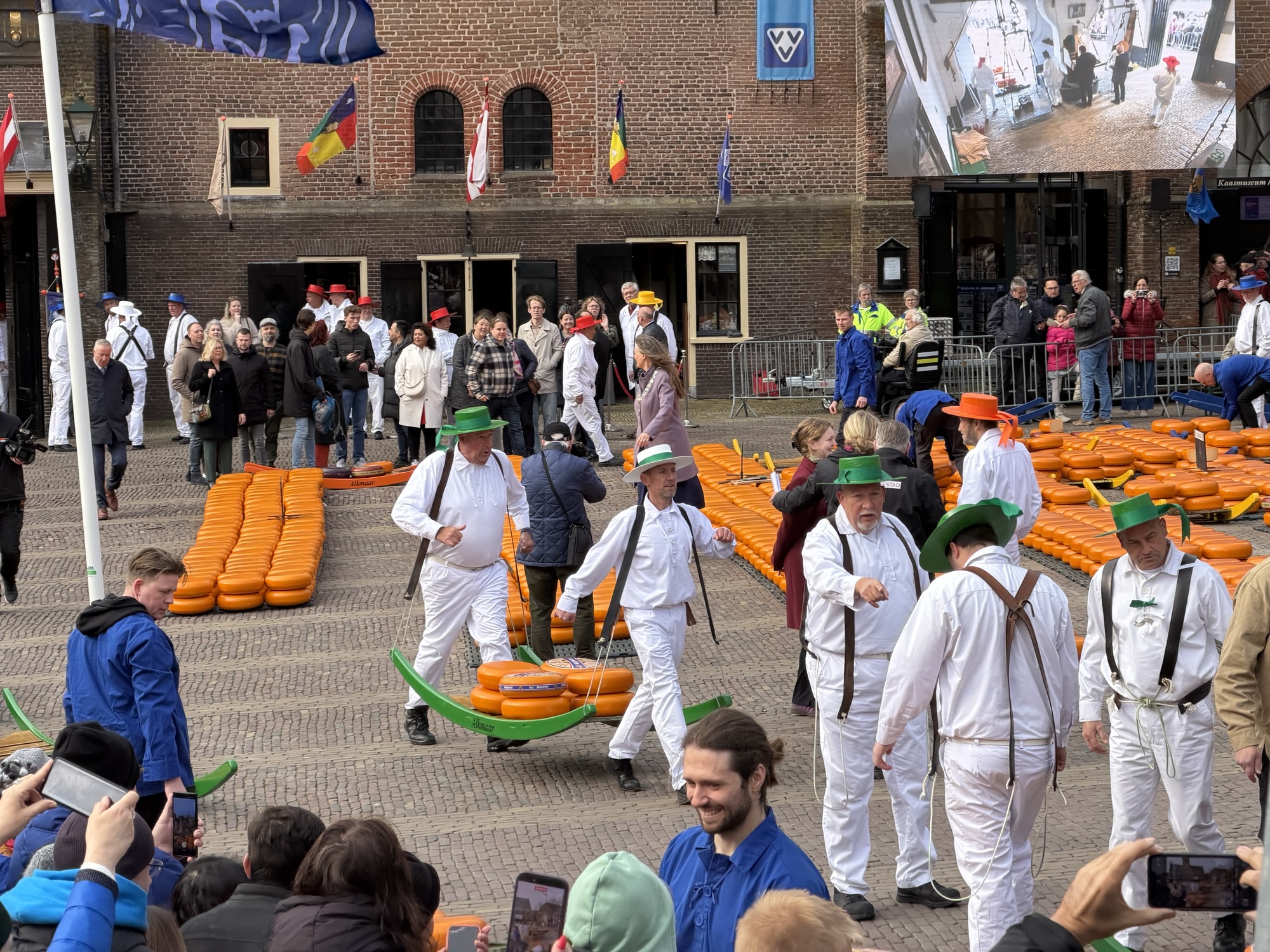
The cheese carriers, who join the guild and train for 2 years, arrived promptly by 9:30am. They wore white clothes with red, blue, yellow or green hats to signify their company. The white-hatted Cheese Father called the roll and inspected each carrier.

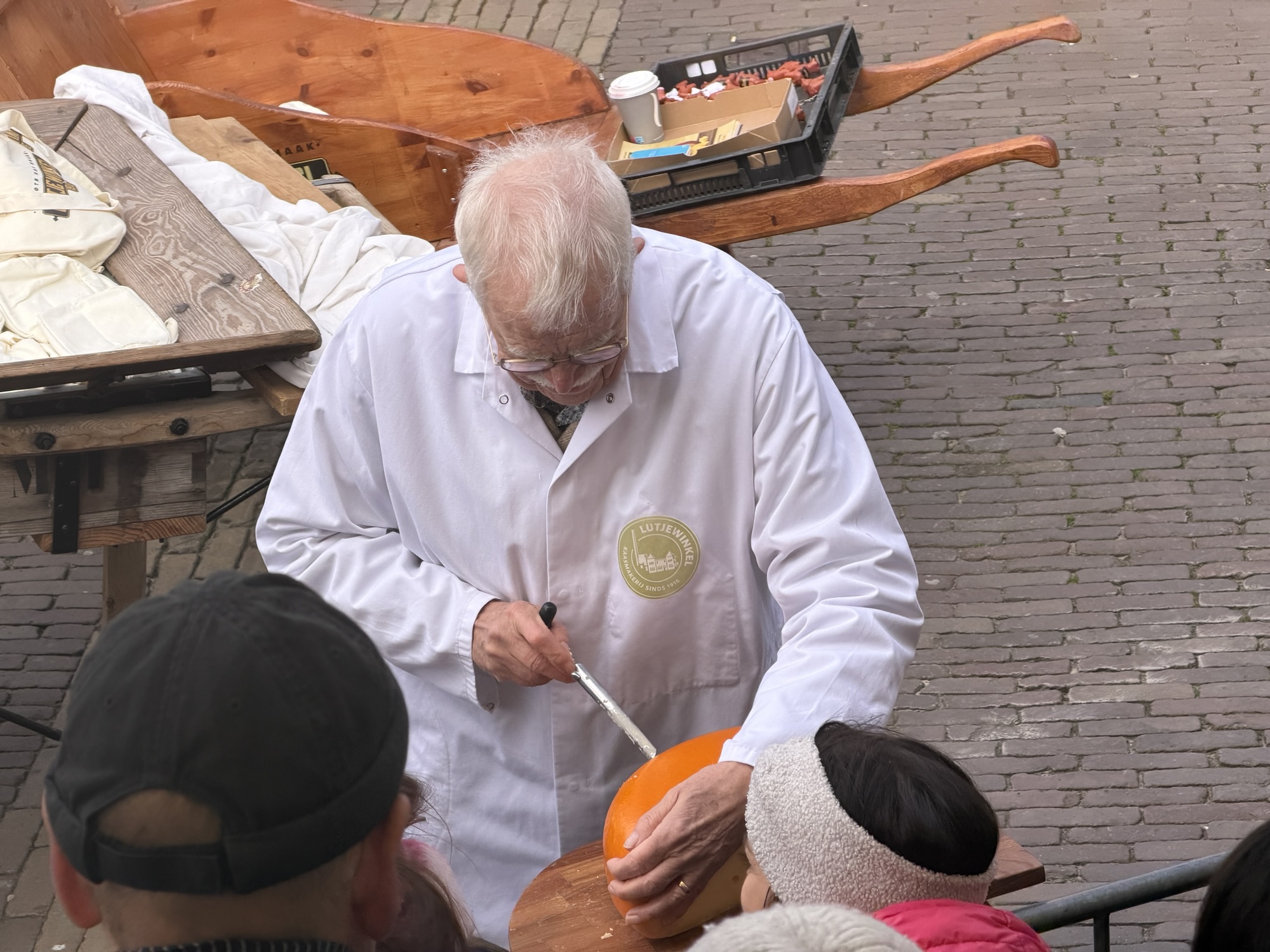
At 10:00 sharp, the Cheese Bell was rung. The honour this year went to the newly elected municipal councillors. The inspectors examined the cheeses, bore a sample, tap, feel and taste them.Smell and elasticity indicate fat content. They cut a wheel in half to view the number and distribution of holes.

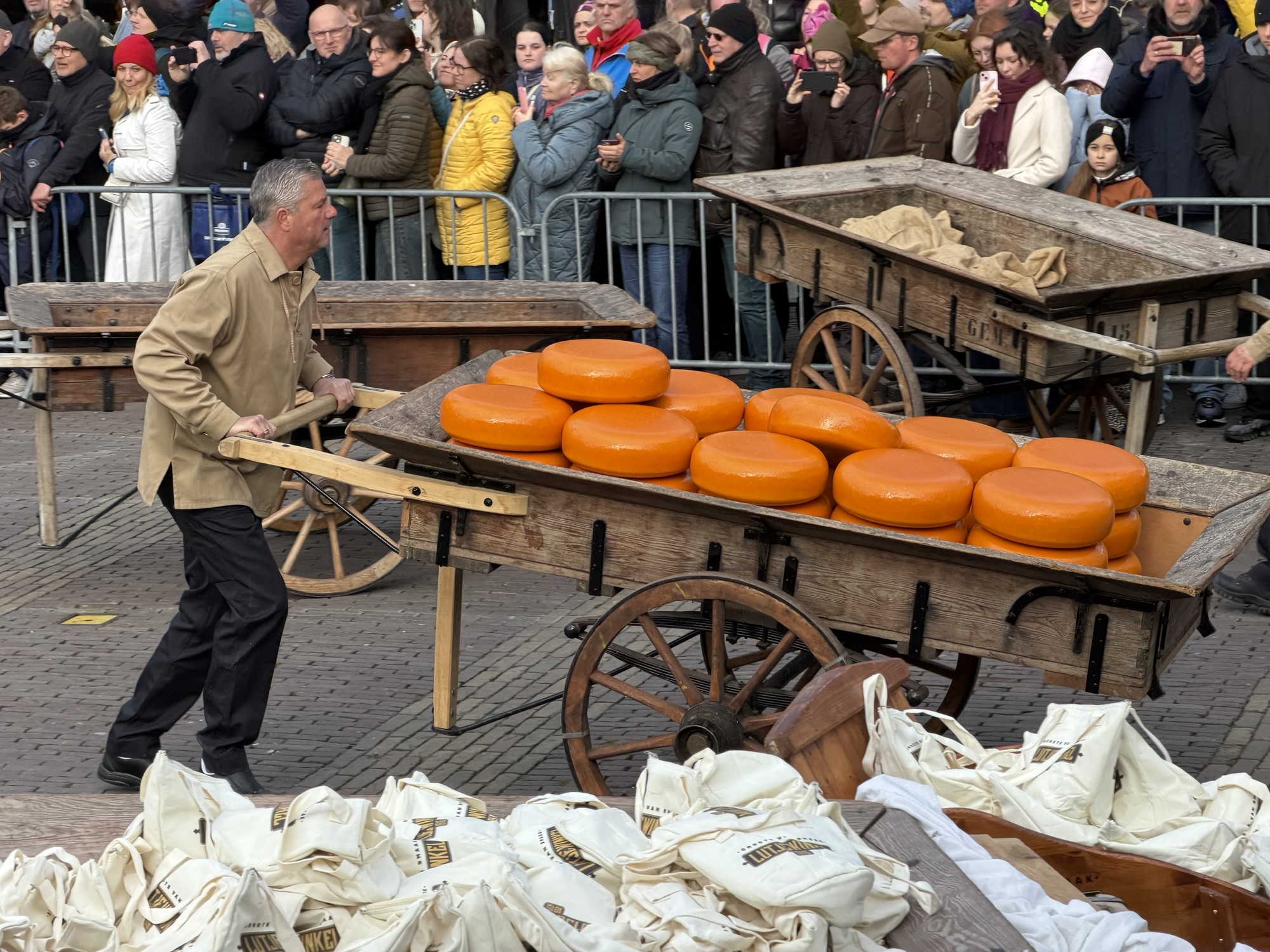
The auction price for all the cheese is determined by hand-claps, as is the tradition. As each batch is sold, the Cheese Carriersloaded 8 wheels onto their sled and carried to the weighing house. Carriers are trained in a trotting manner (kassdragersdribbel), which allows the cart (berrie) to remain still. Spilling the cheeses would not do!

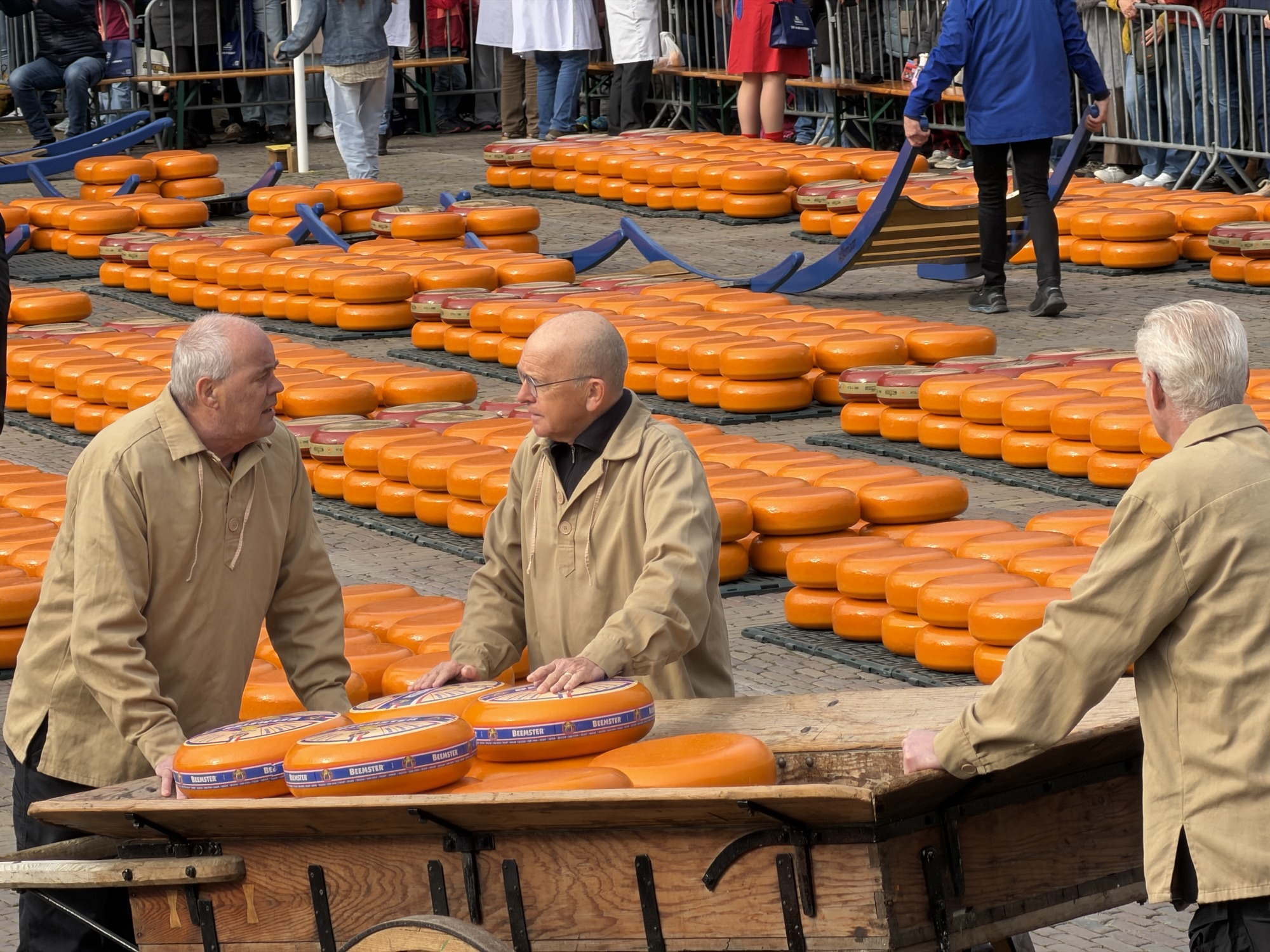
The carriers returned to the square, where the workers(ingooiers) in brown shirts loaded the cheeses onto hand carts to be moved around the corner to the waiting buyers’ trucks.


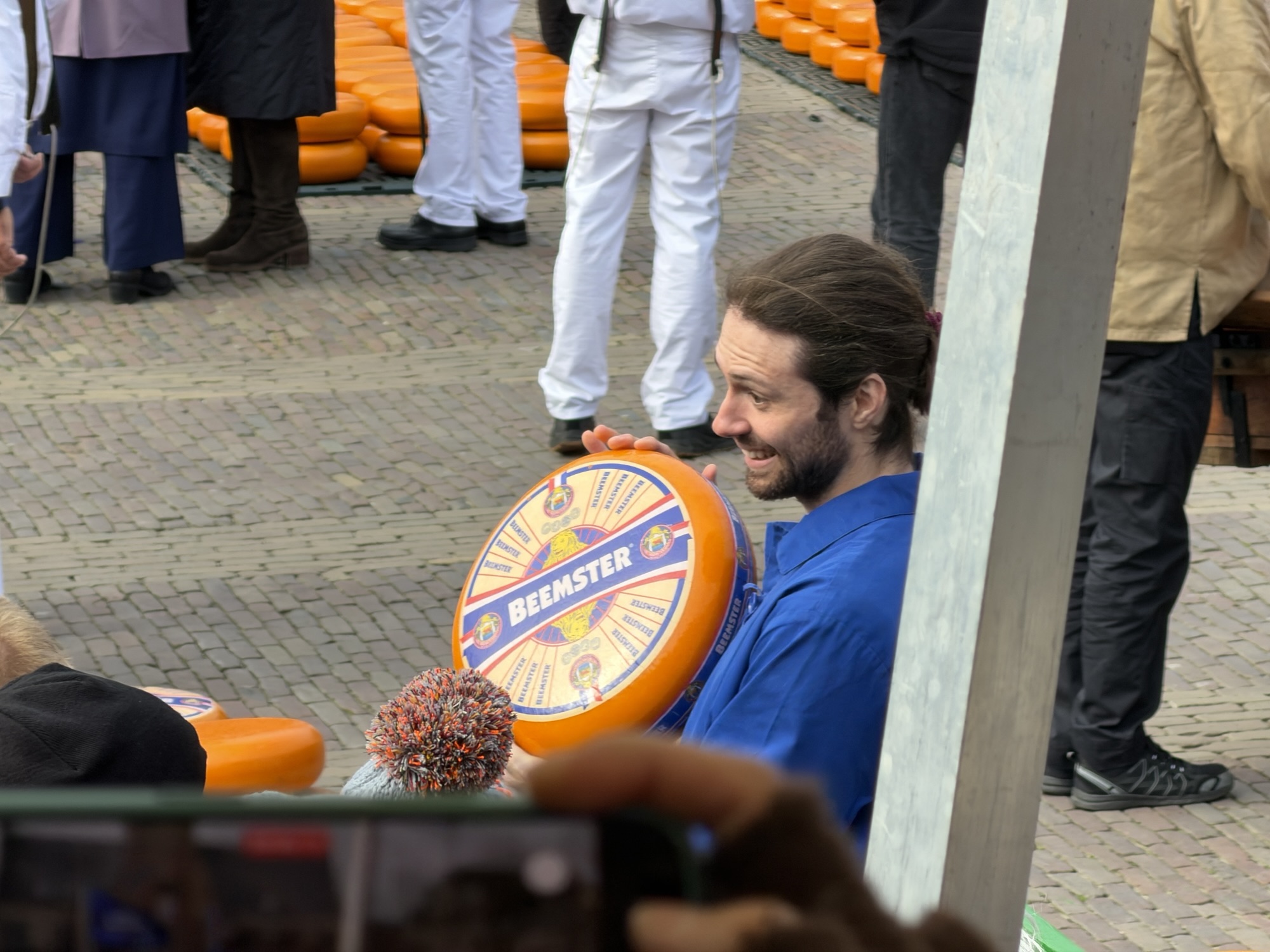
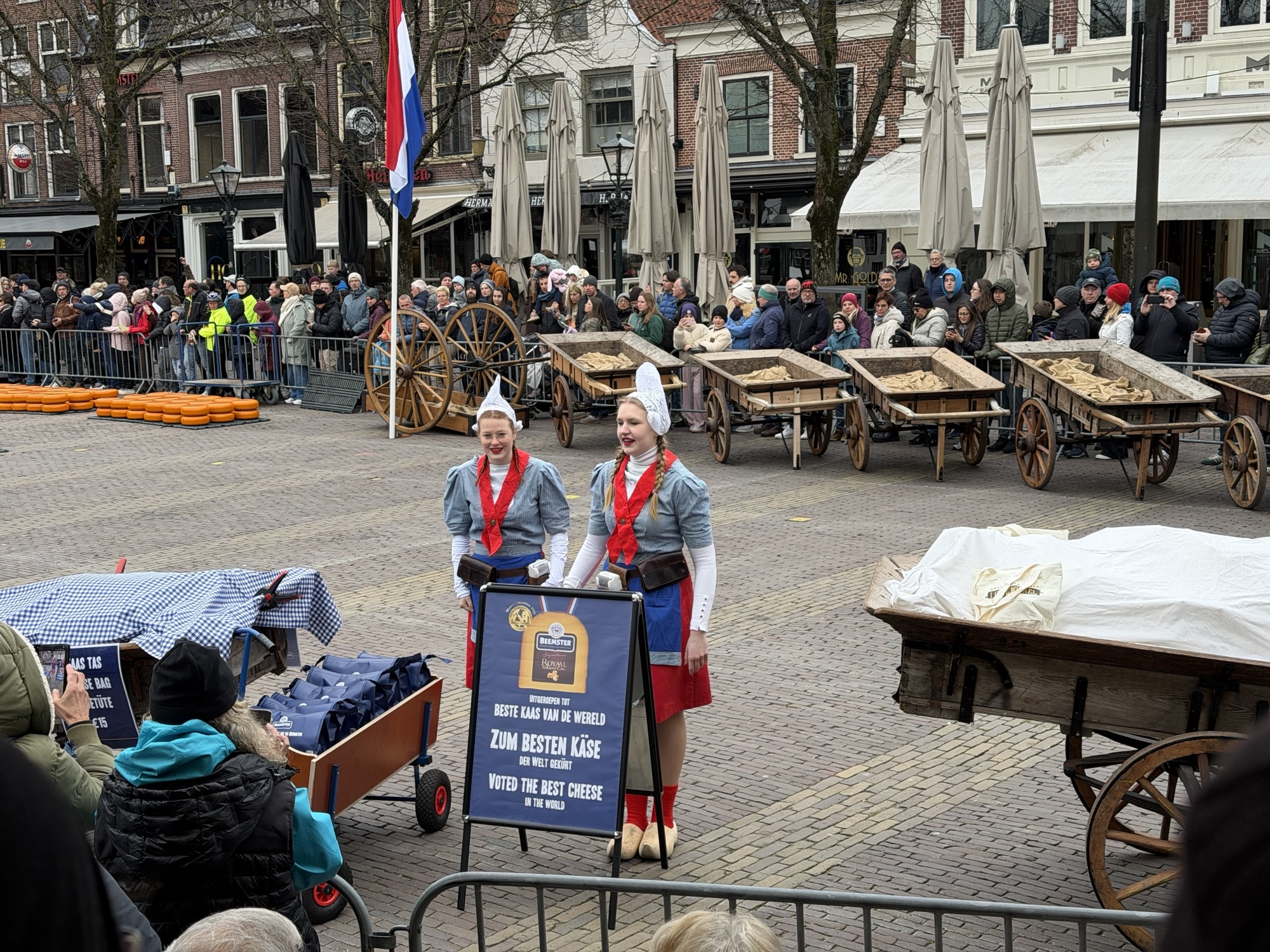
The crowd was entertained by the carriers, the mistress of ceremonies, the inspectors and works showing off the huge wheels of Gouda. Young ladies moved around the perimeter of the square selling E15 cooler bags of 3 cheeses. 


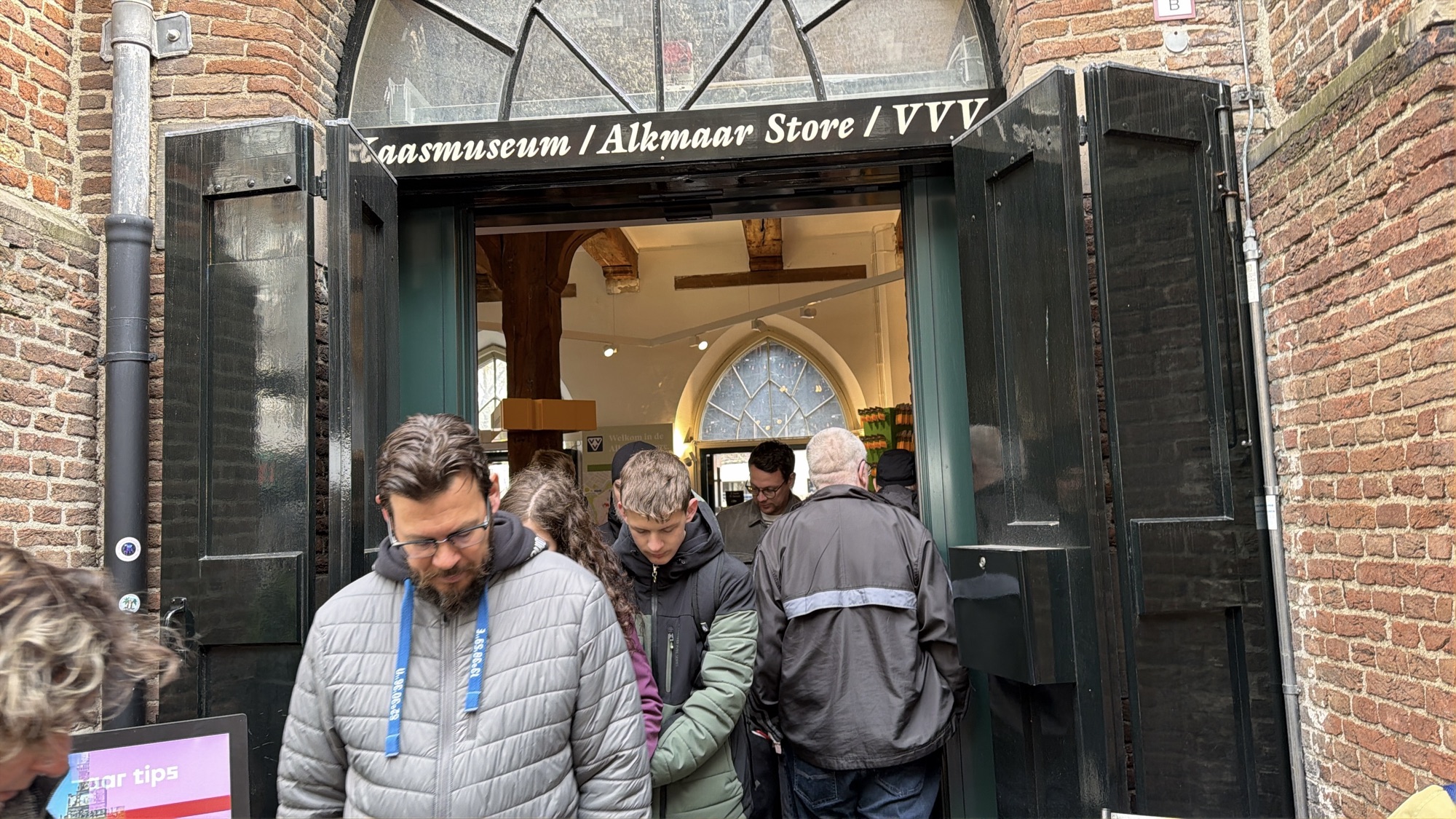
We visited the cheese museum inside the weighing building.

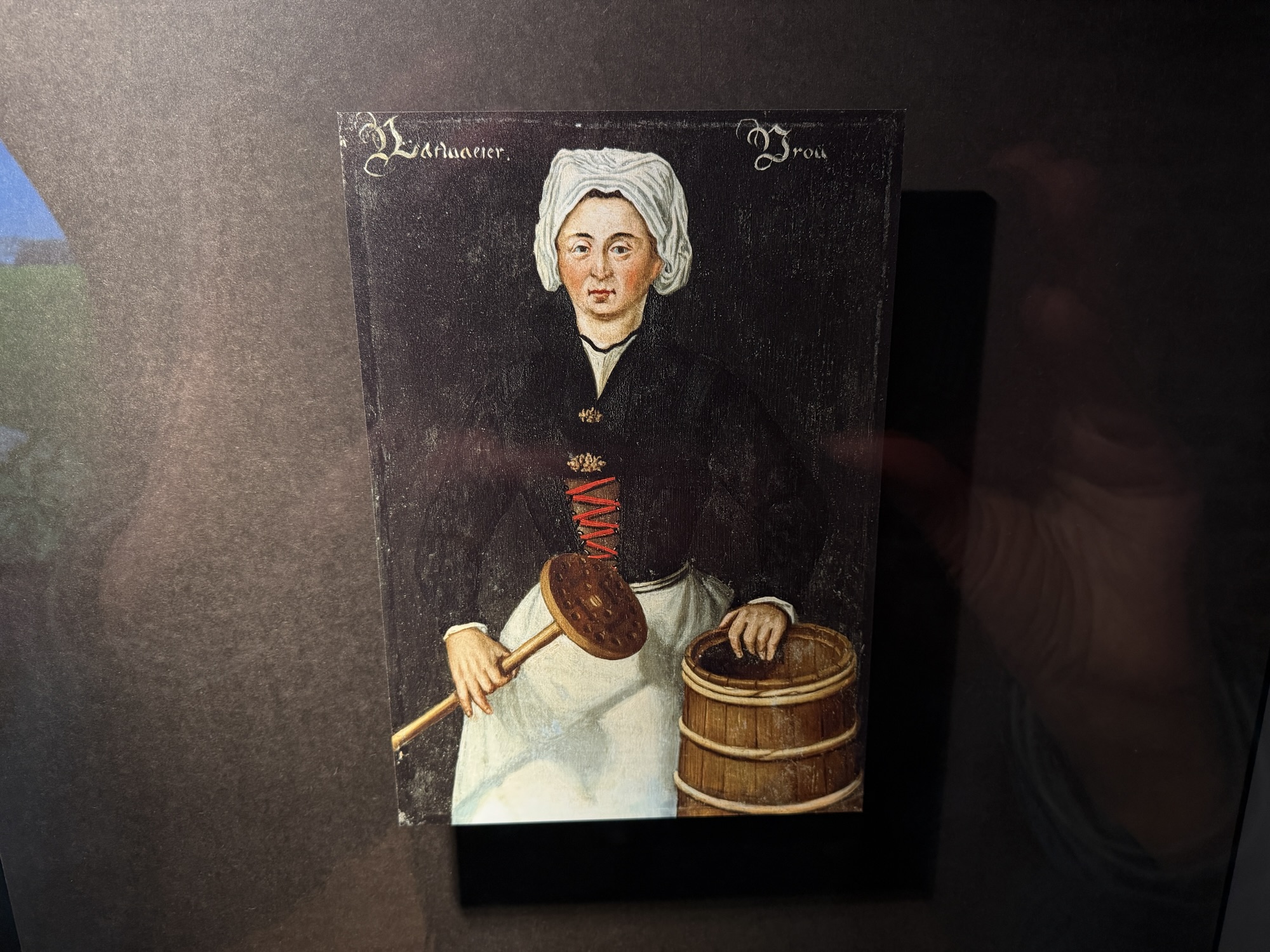
An interesting collection of different antiques and art conveyed the history. The dairy farmers tended the cows and their wives churned butter and made the cheese. This Rijksmuseum reproduction of an unknown artist 1500-1574.

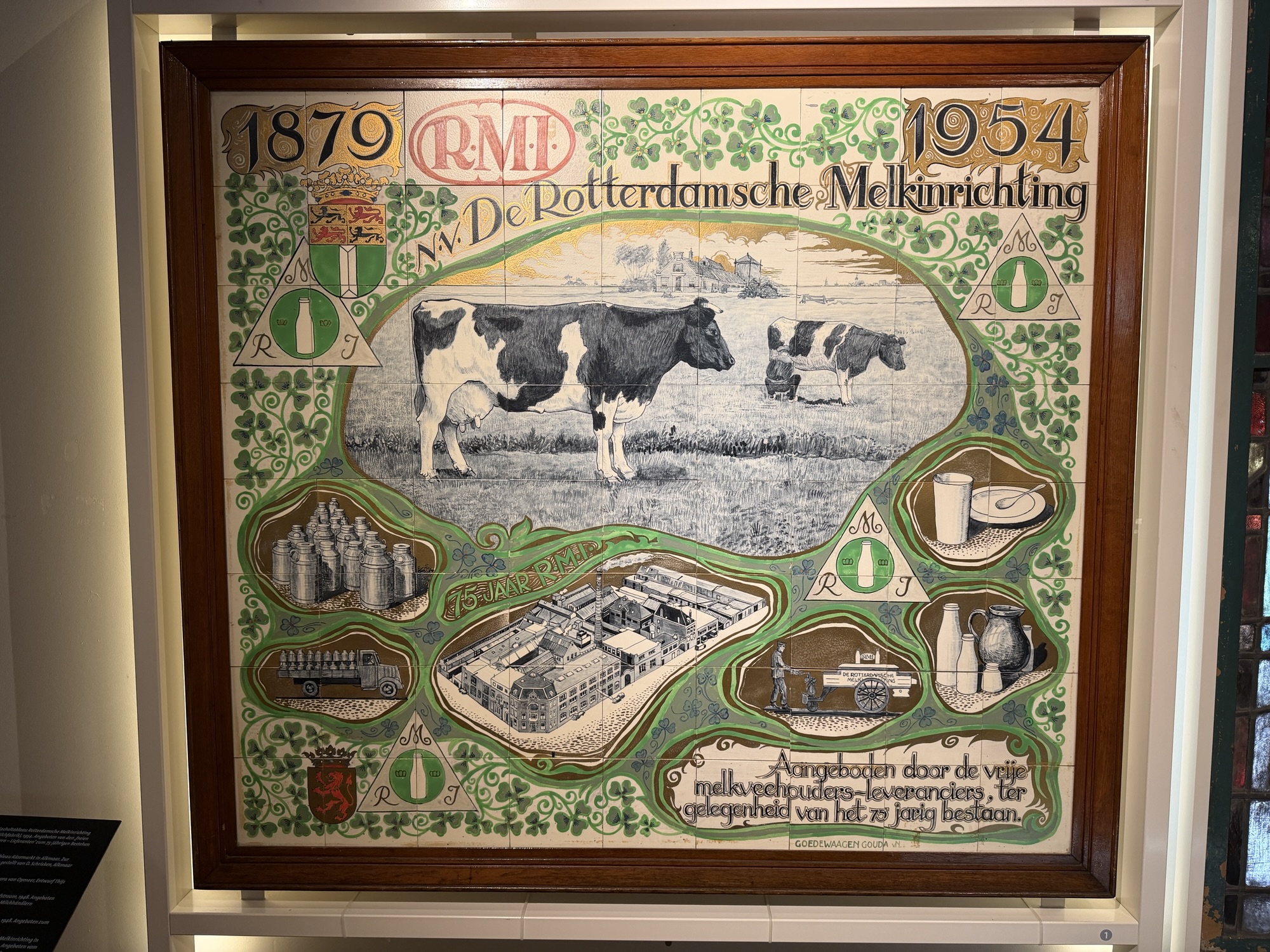
This group of tiles celebrated 75 years of cheese making. 

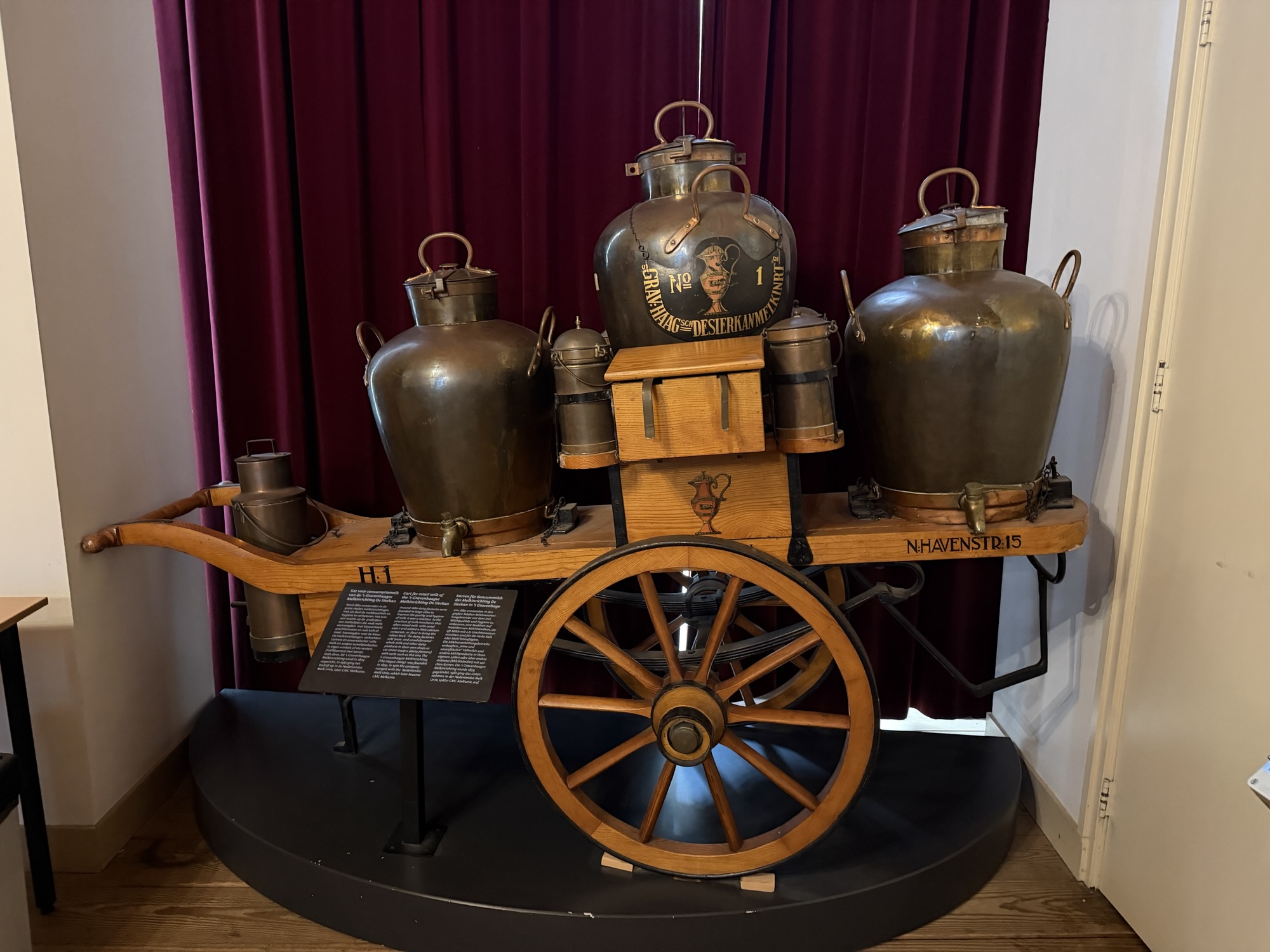
As standards improved and processing moved to factories, this type of dairy cart c1880 was used by street vendors,

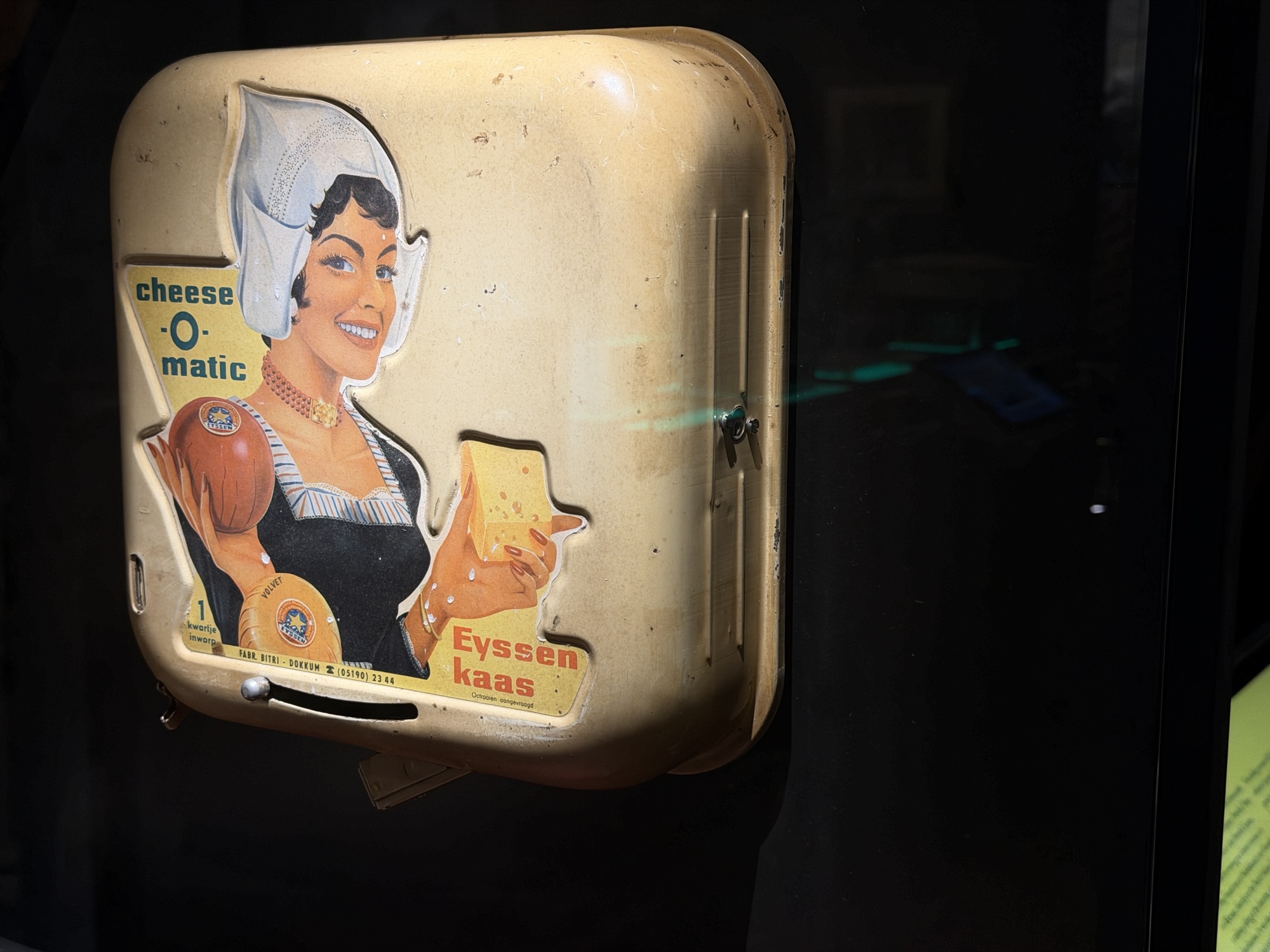
In the 1950s, time-saving machines were invented, including this Cheese O Matic vending machine.

Looking from the second floor window of the museum, we could see the market square almost clear of cheese. It was time for lunch and heading back to the train station.

Europe 2026 – Day 5 Amsterdam

We slept a little later today. I ate breakfast in the room and got ready for our meeting time of 10am in the lobby. Then I continued to work on yesterday’s blog. I still wasn’t finished when it was time to go.

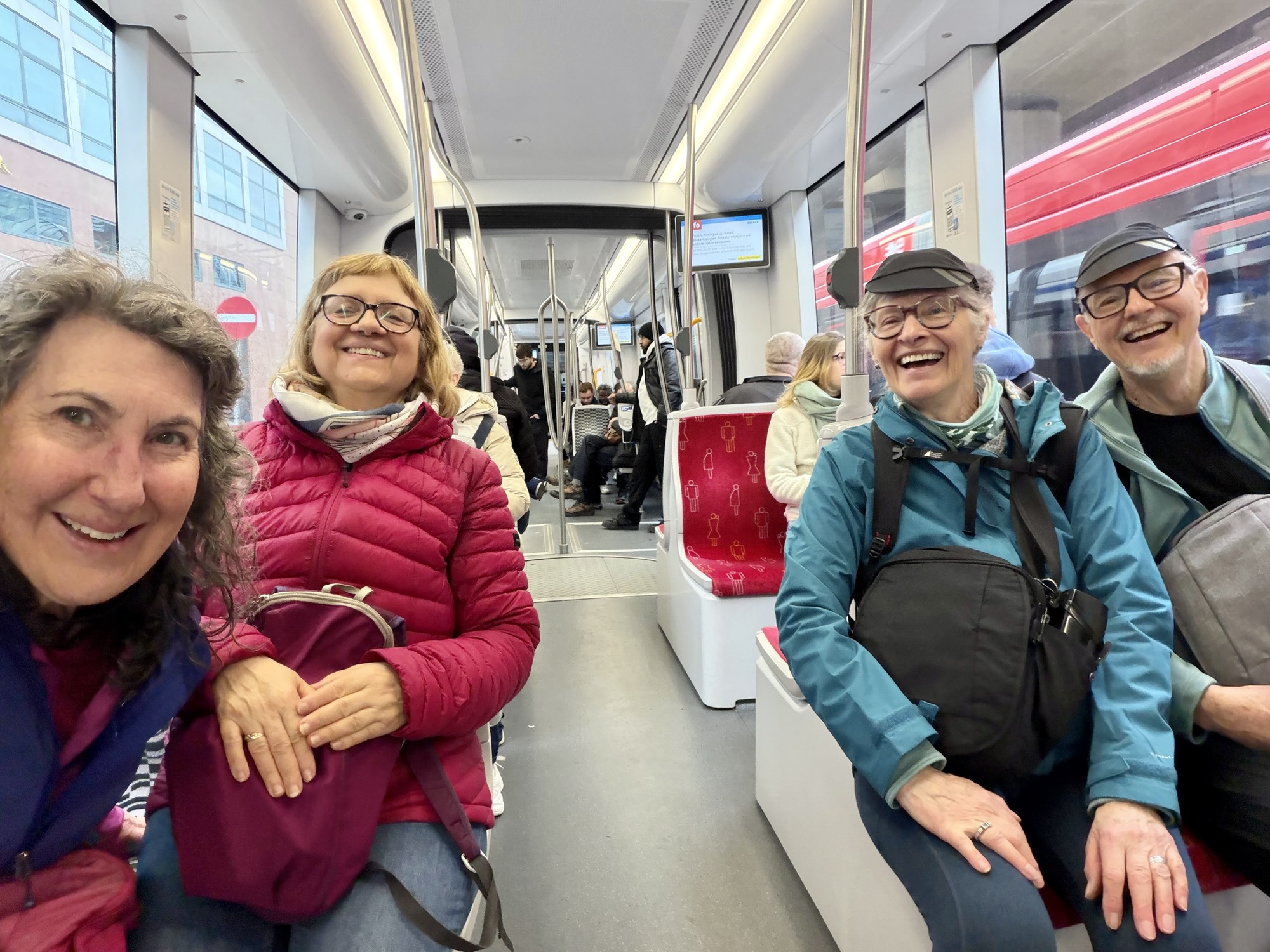
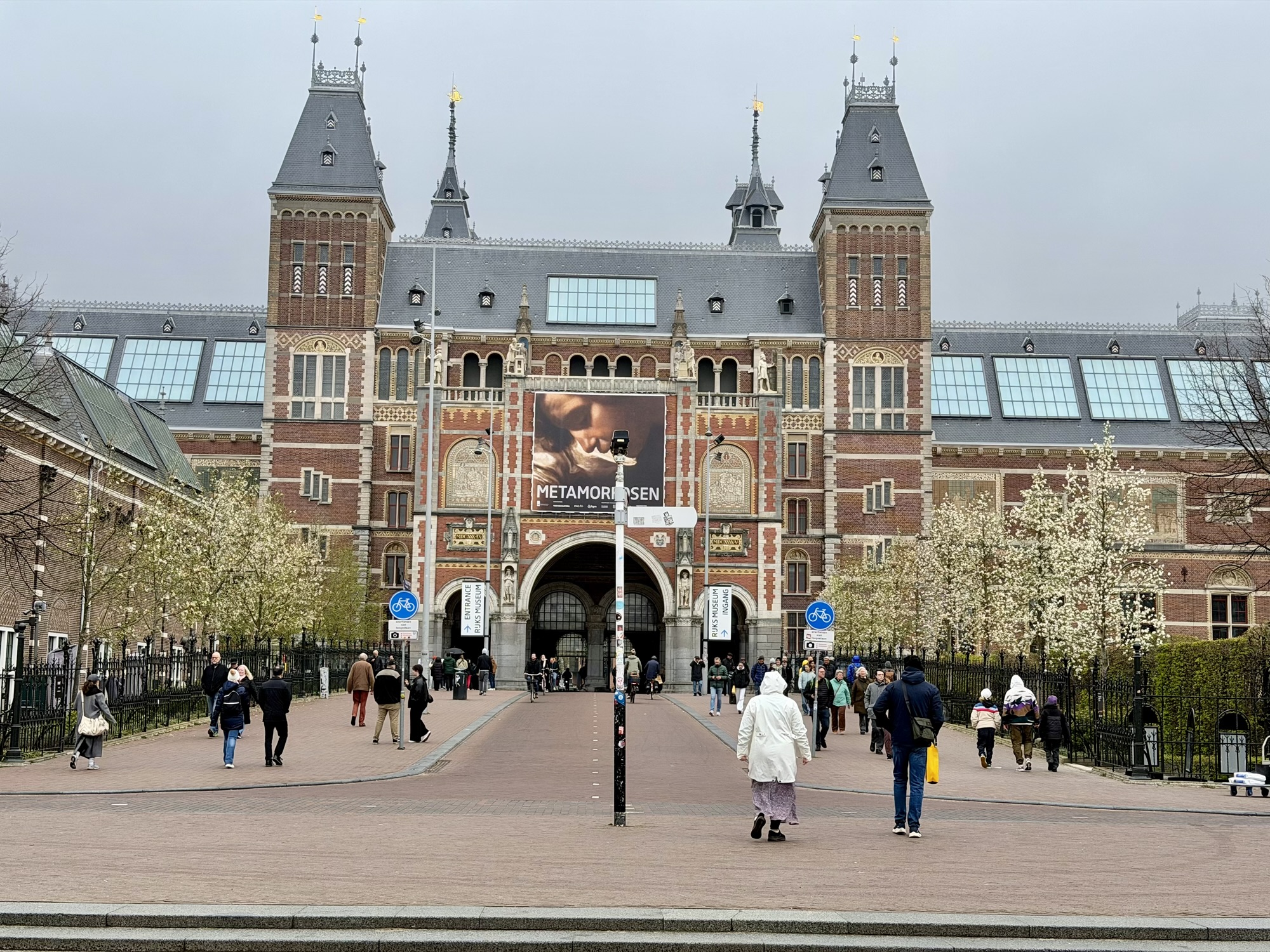
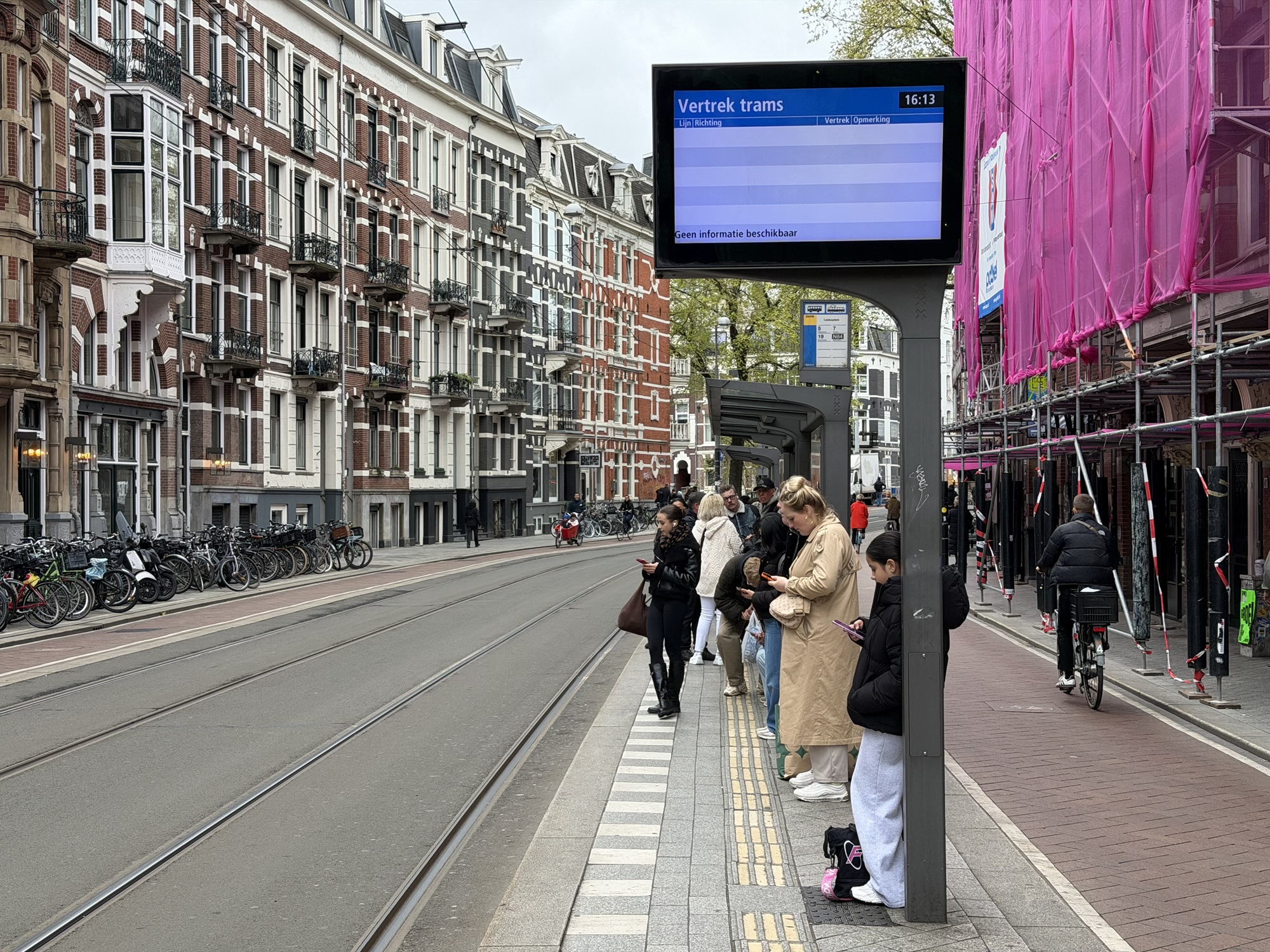
We walked to the Line 19 tram stop at Slotrdijk Station. It arrived within a few minutes and we tapped on. It dropped us in front of the Rijksmuseum. It was faster and cheaper than taking the private regional rail, Sprinter, to Central Station, then transferring onto municipal public transit. We used our phones or credit cards to tap on and off on the tram.

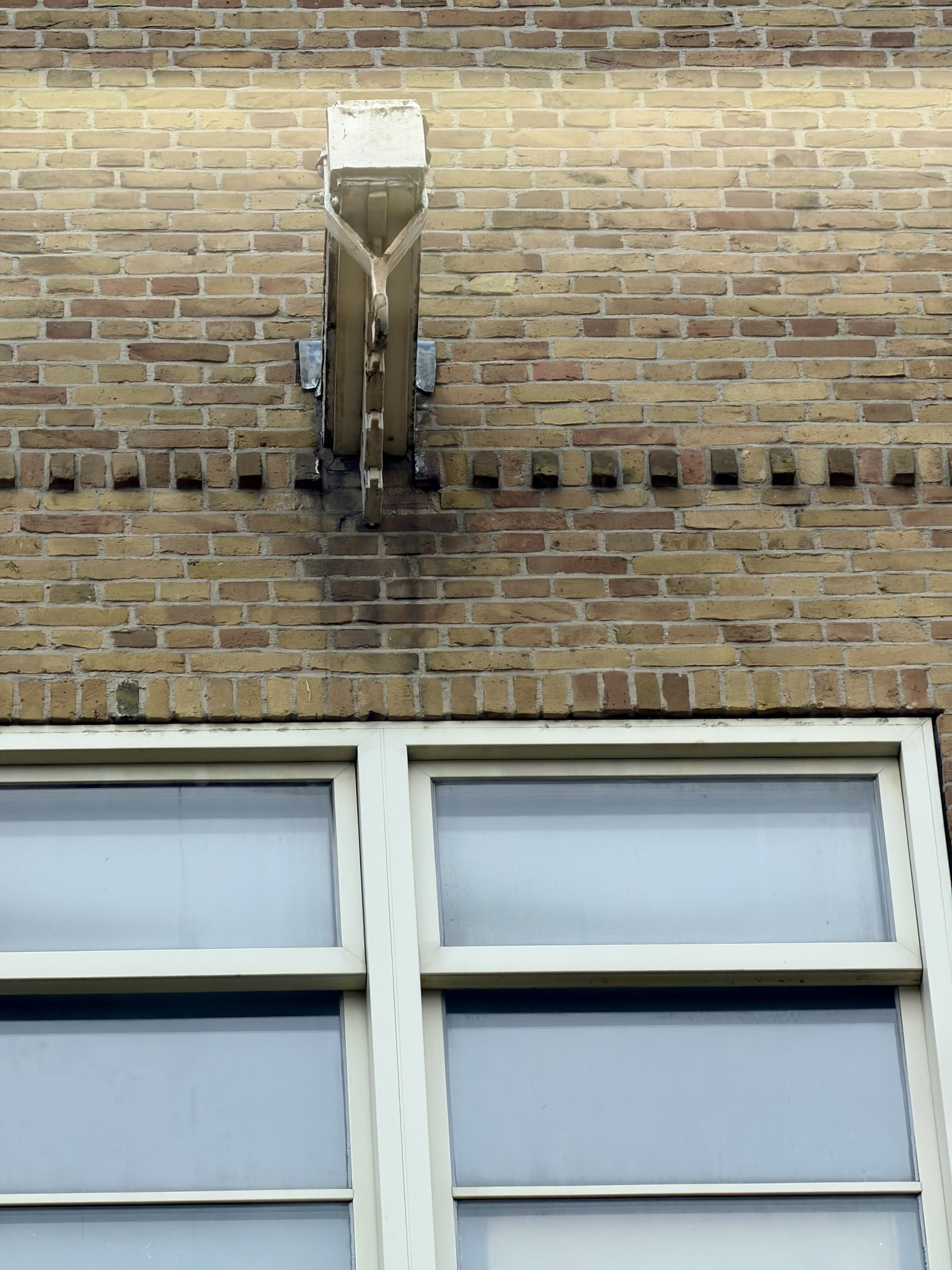
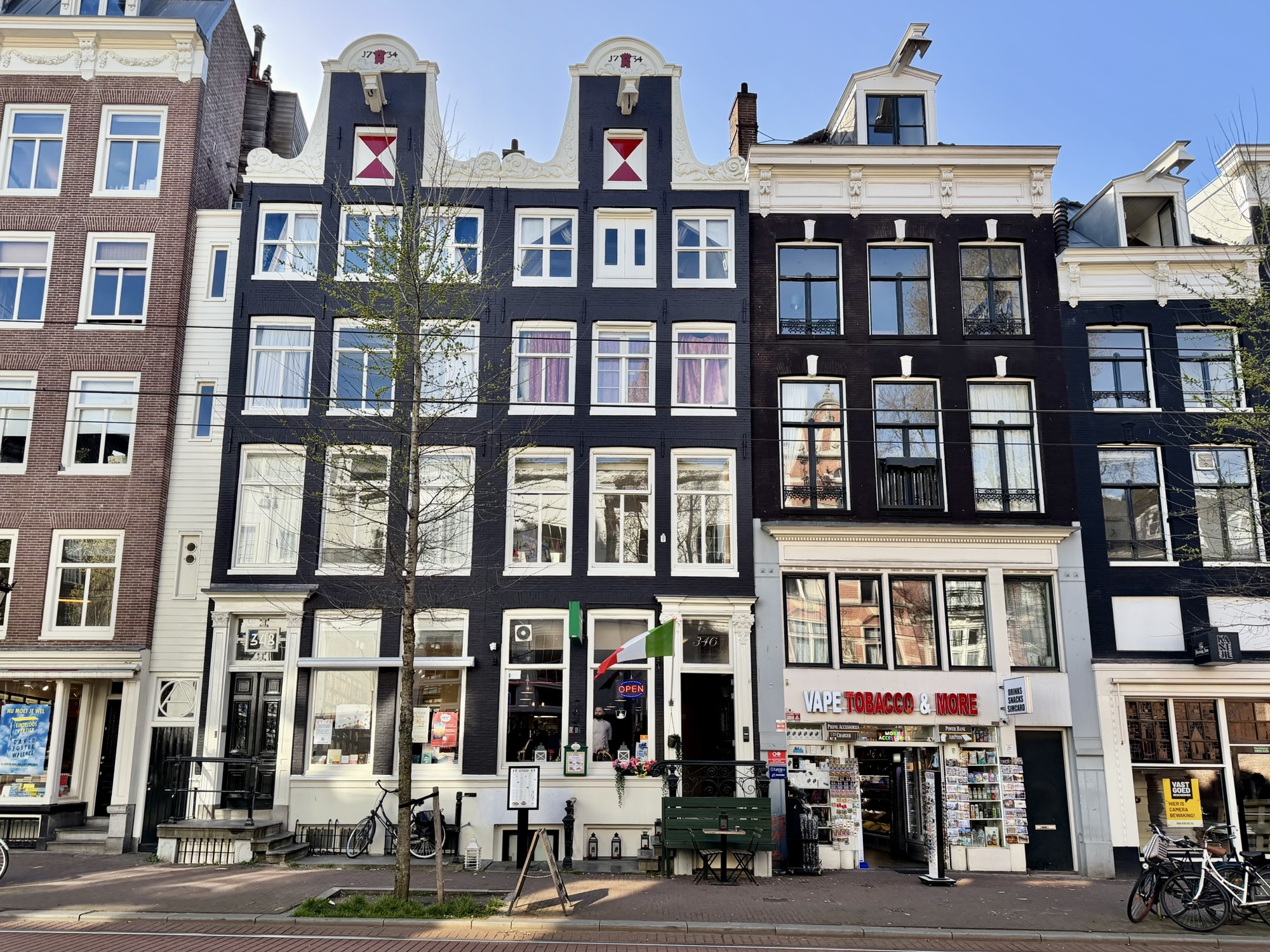
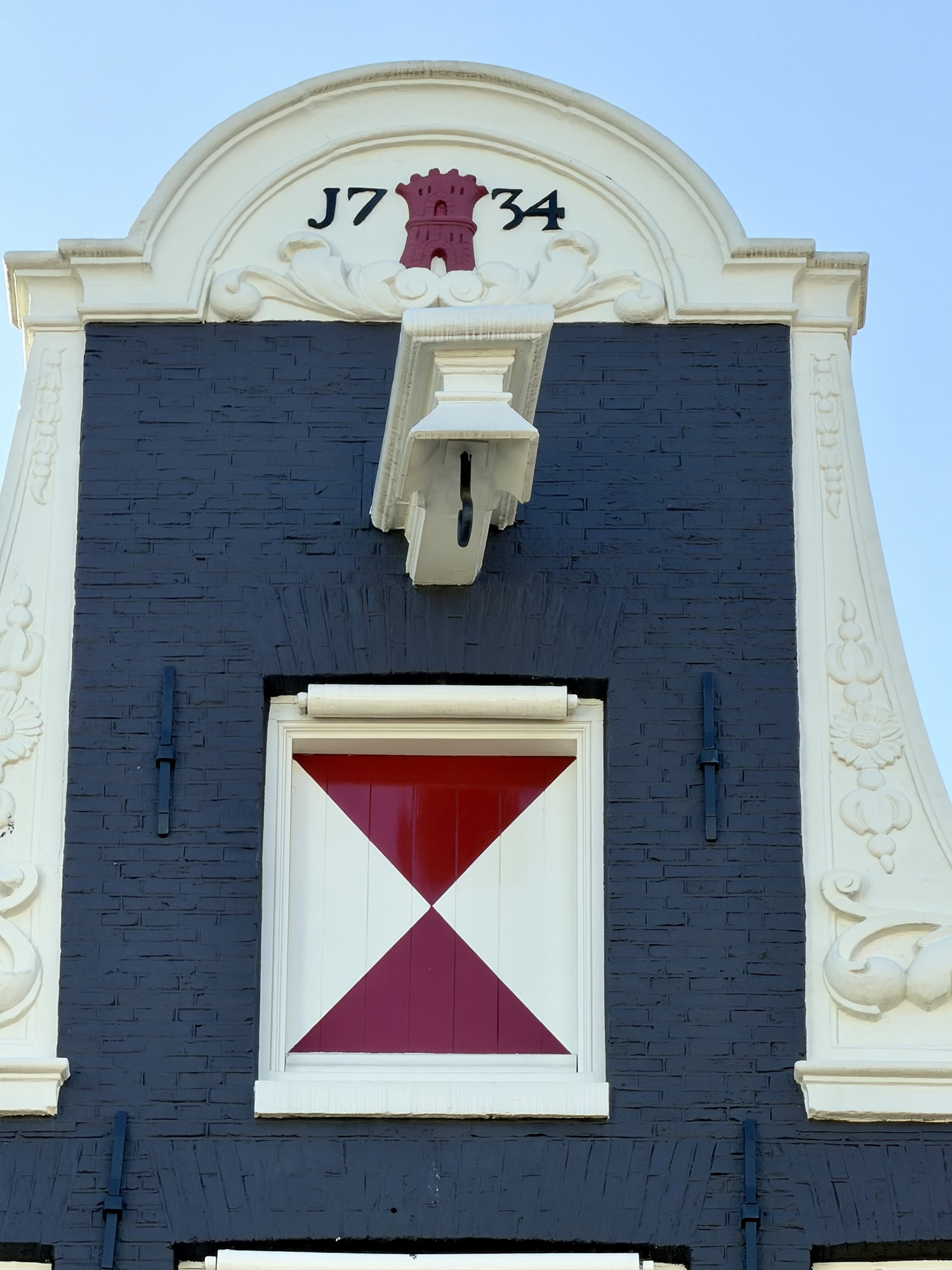
There were a lot of relatively modern homes along the tram route, and they all had hooks on the top floor for moving furniture in and out through the windows.

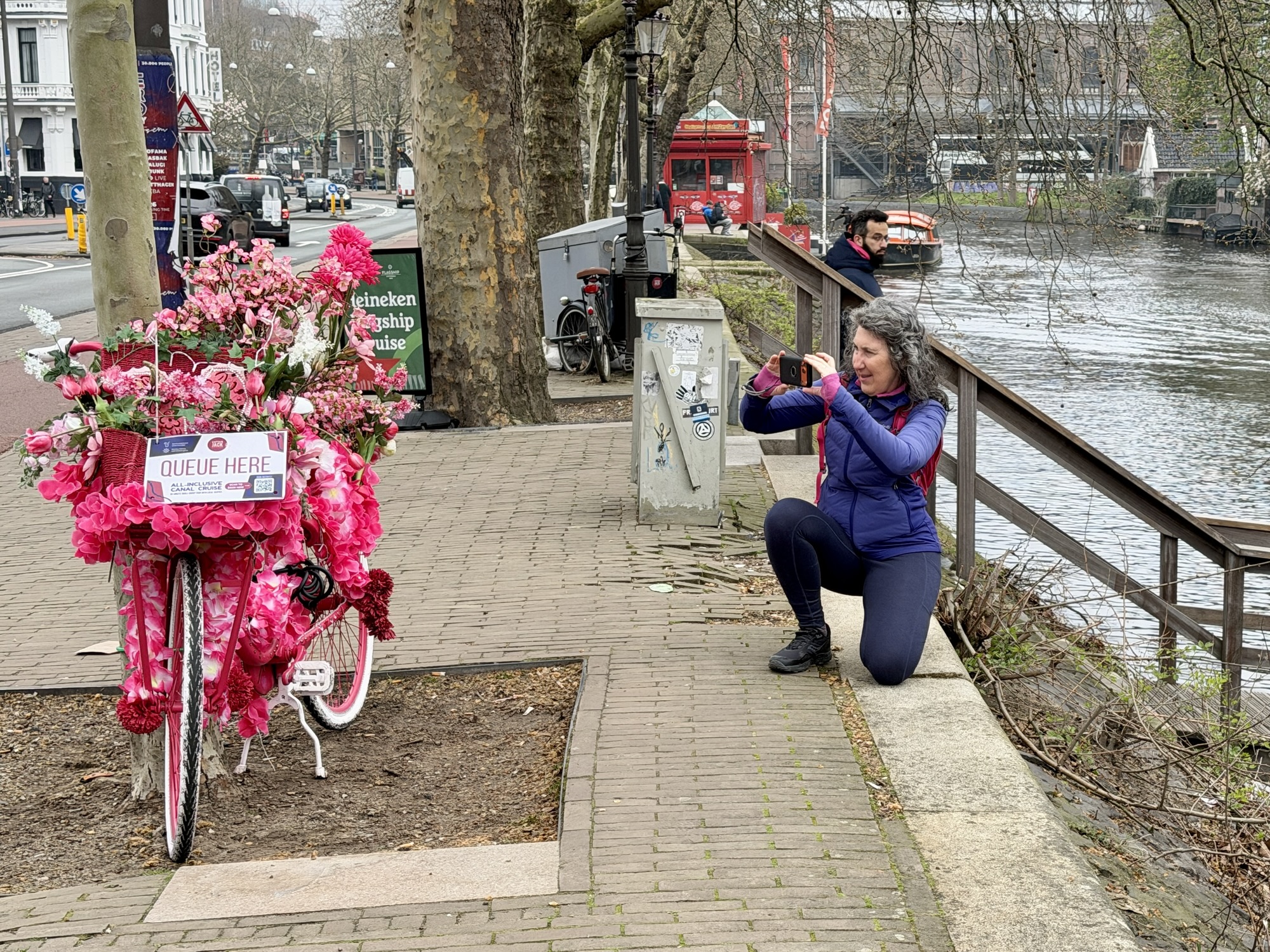
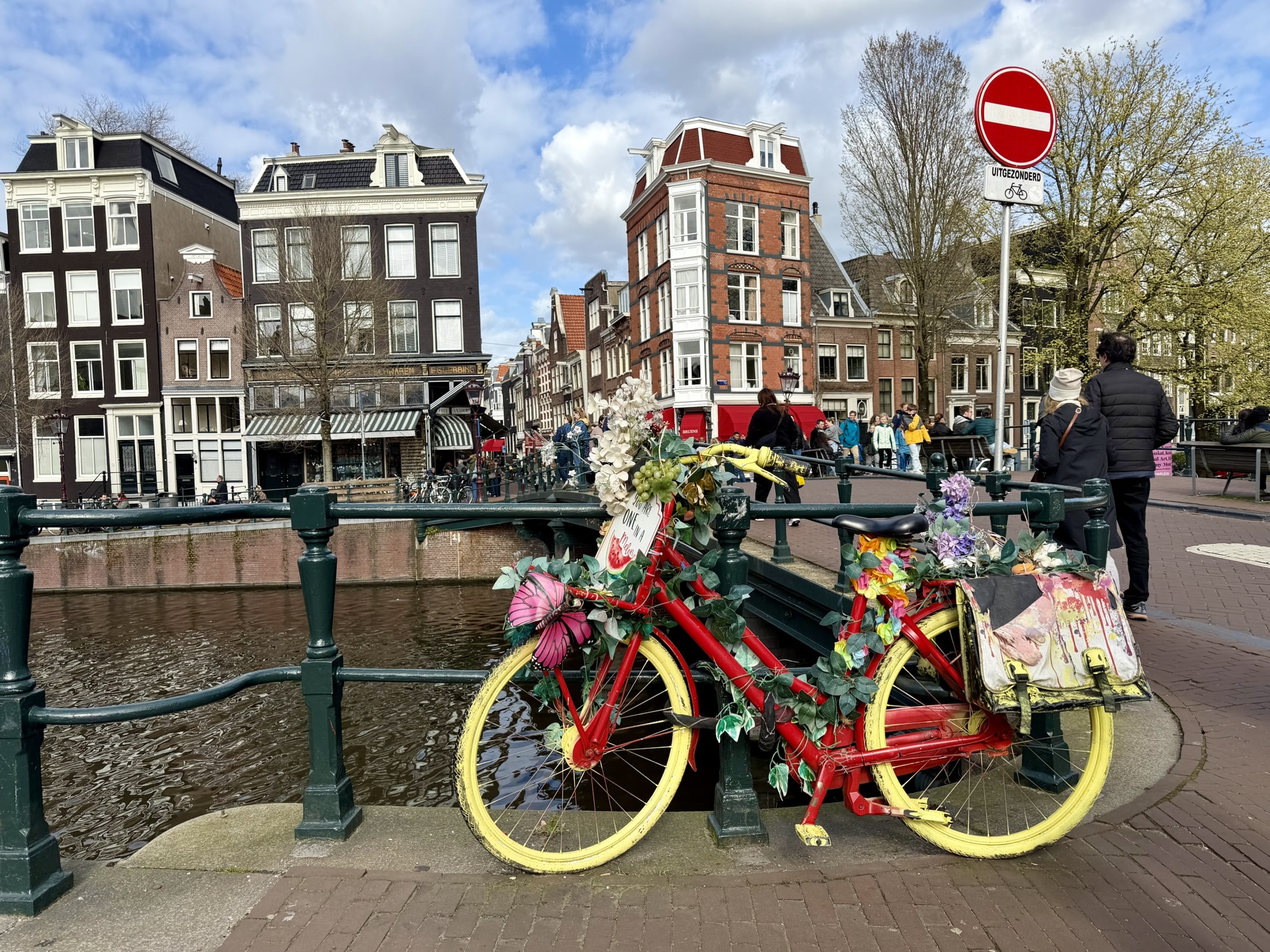
This bike is advertising group bike tours.

Image credit: Dayle

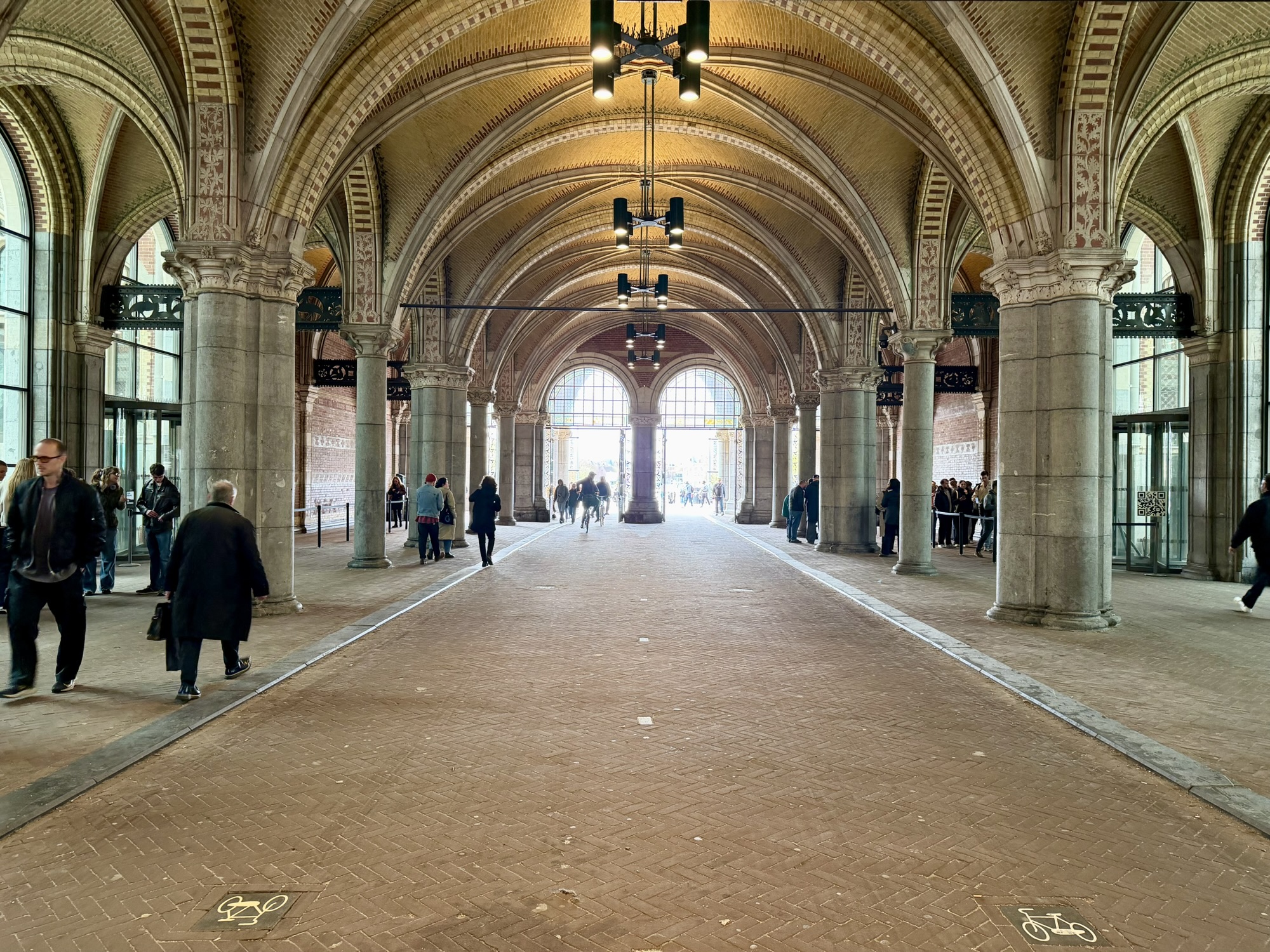
It was a short walk through the bike and pedestrian tunnel in the Rijksmuseum, to the Van Gogh Museum.  Fortunately we bought tickets months ago because when we got to the ticket counter and gift shop there was a sign indicating tickets had sold out for the day.

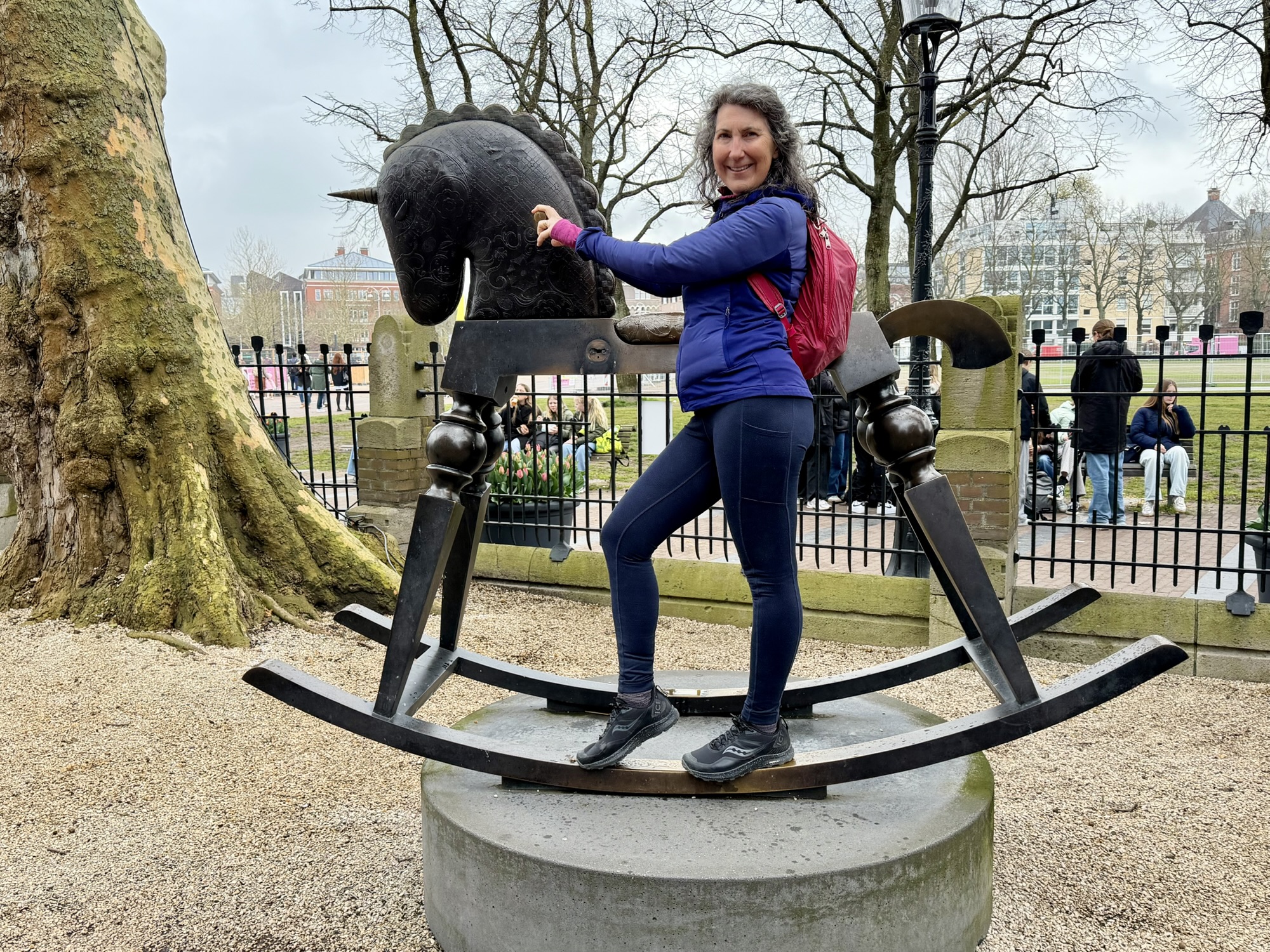
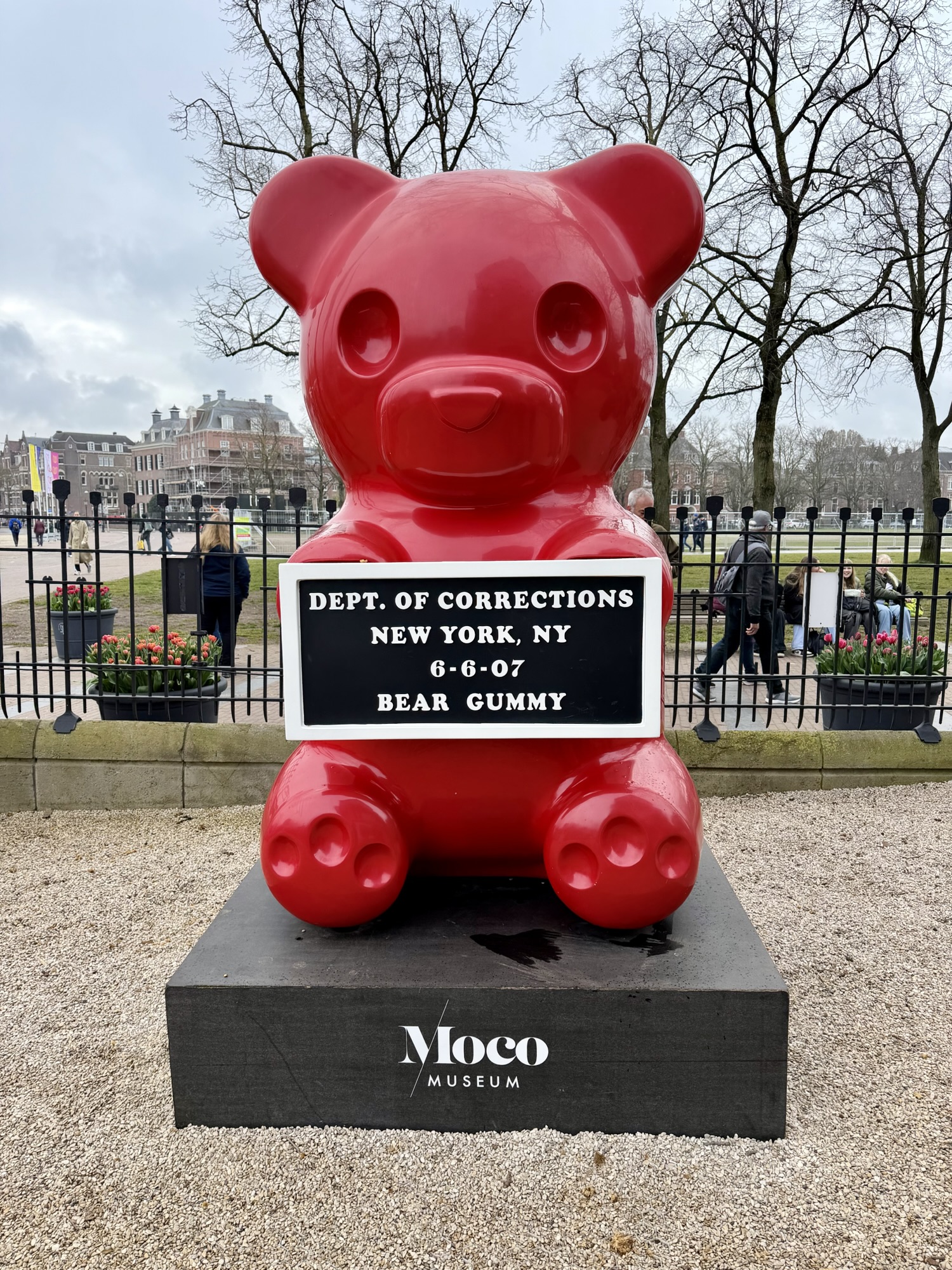
The modern contemporary museum of Amsterdam, Moco Museum, had a few items displayed outside. It is between the Rijksmuseum and the Van Gogh Museum. There were several other museums in this area known as The Amsterdam Museum Quarter.

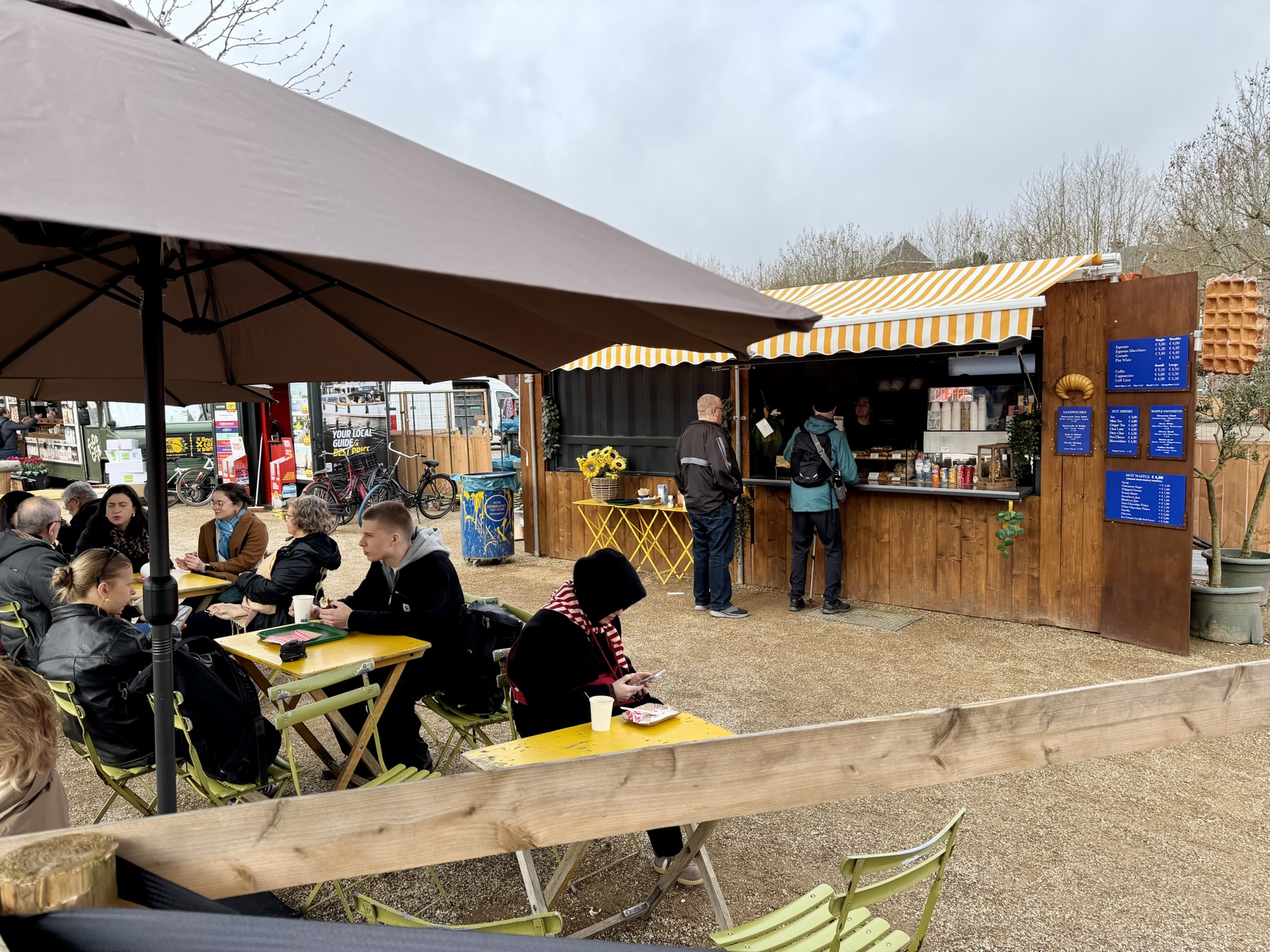
Once we knew where we needed to be at 11:45 we walked back through he park to where there were food stalls for coffee and/or treats.

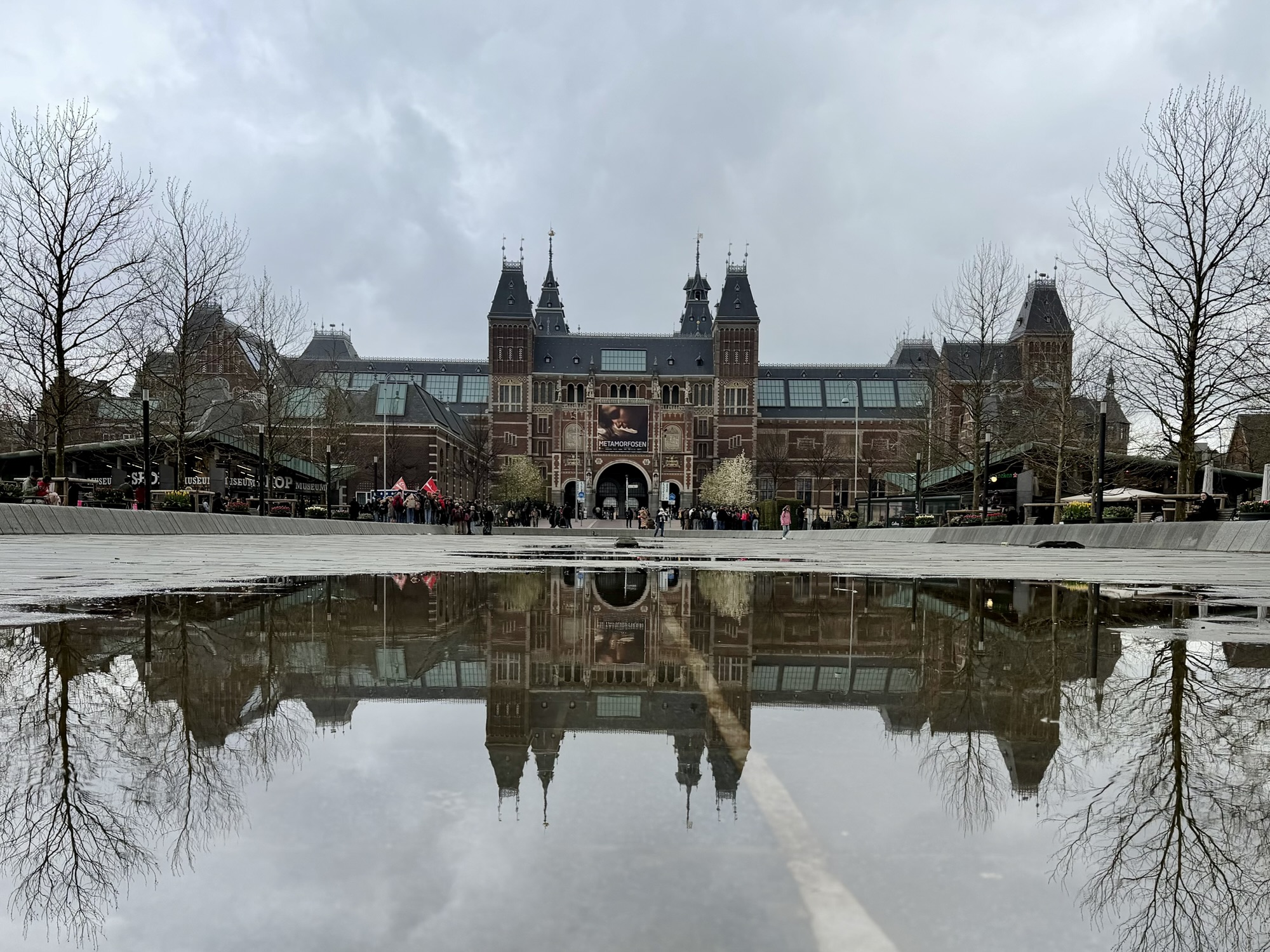
This reflecting pool hasn’t been filled yet this year, but there was a small puddle that allowed me to get a reflection of the back of Rijksmuseum.

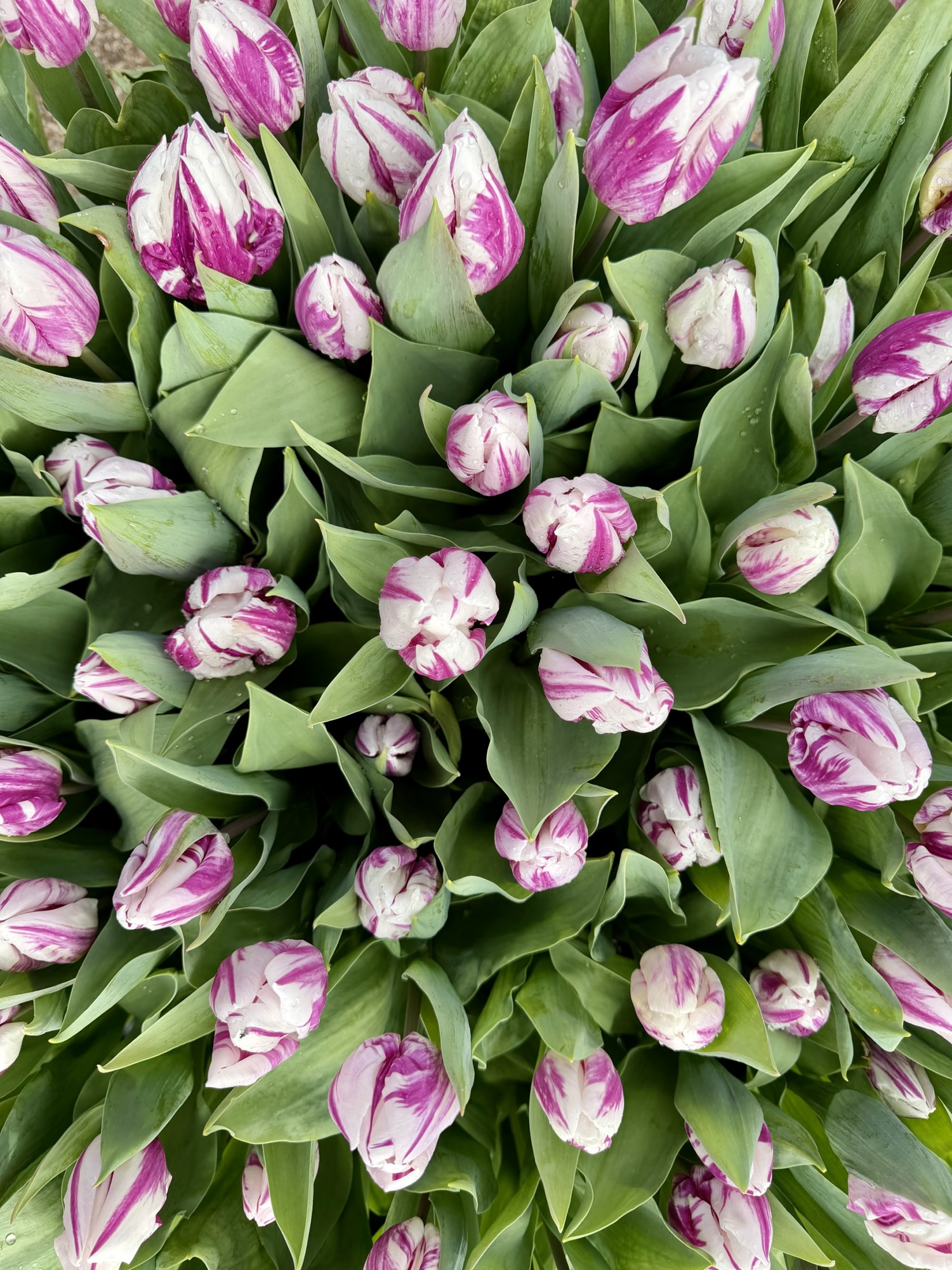
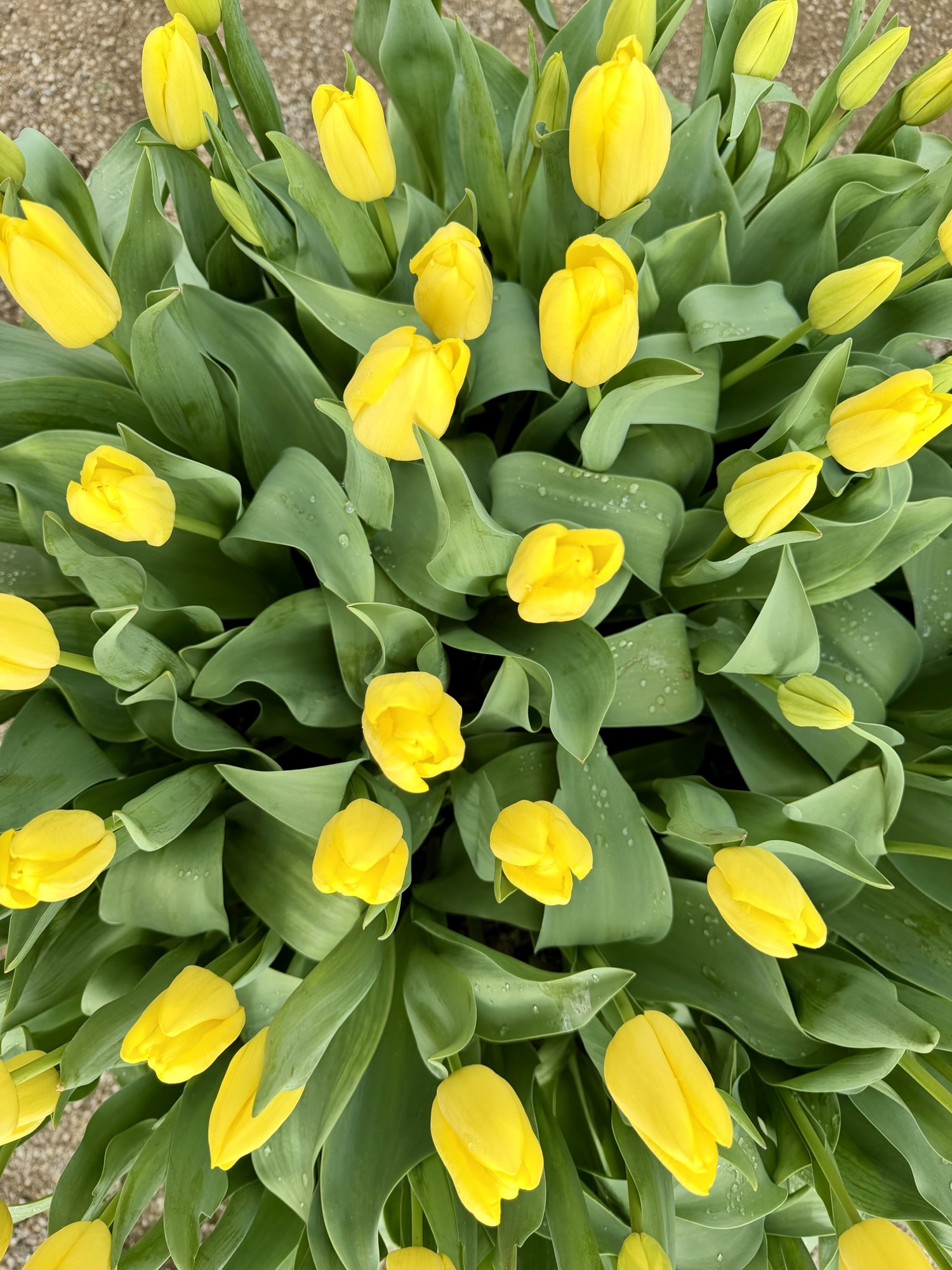
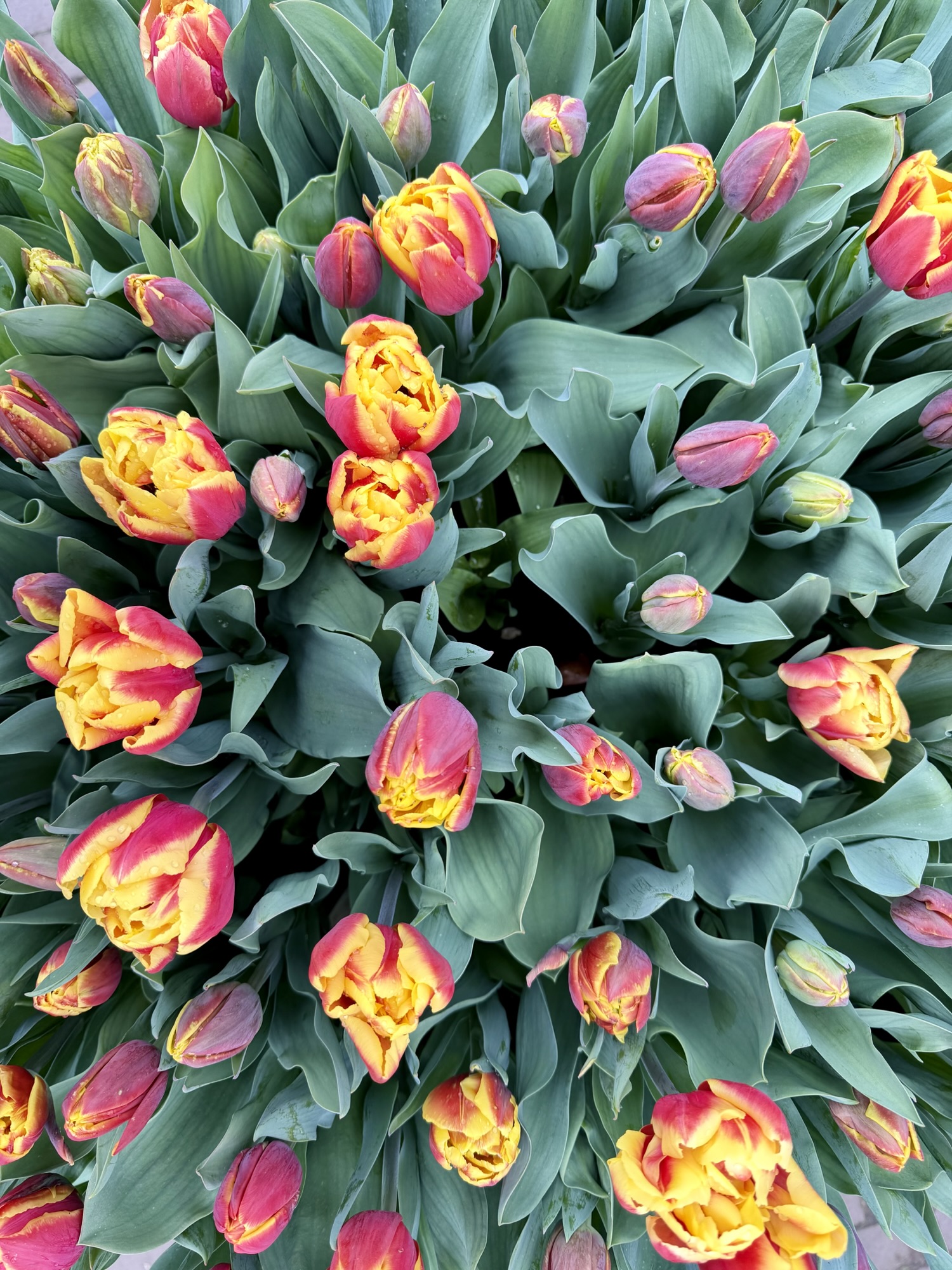
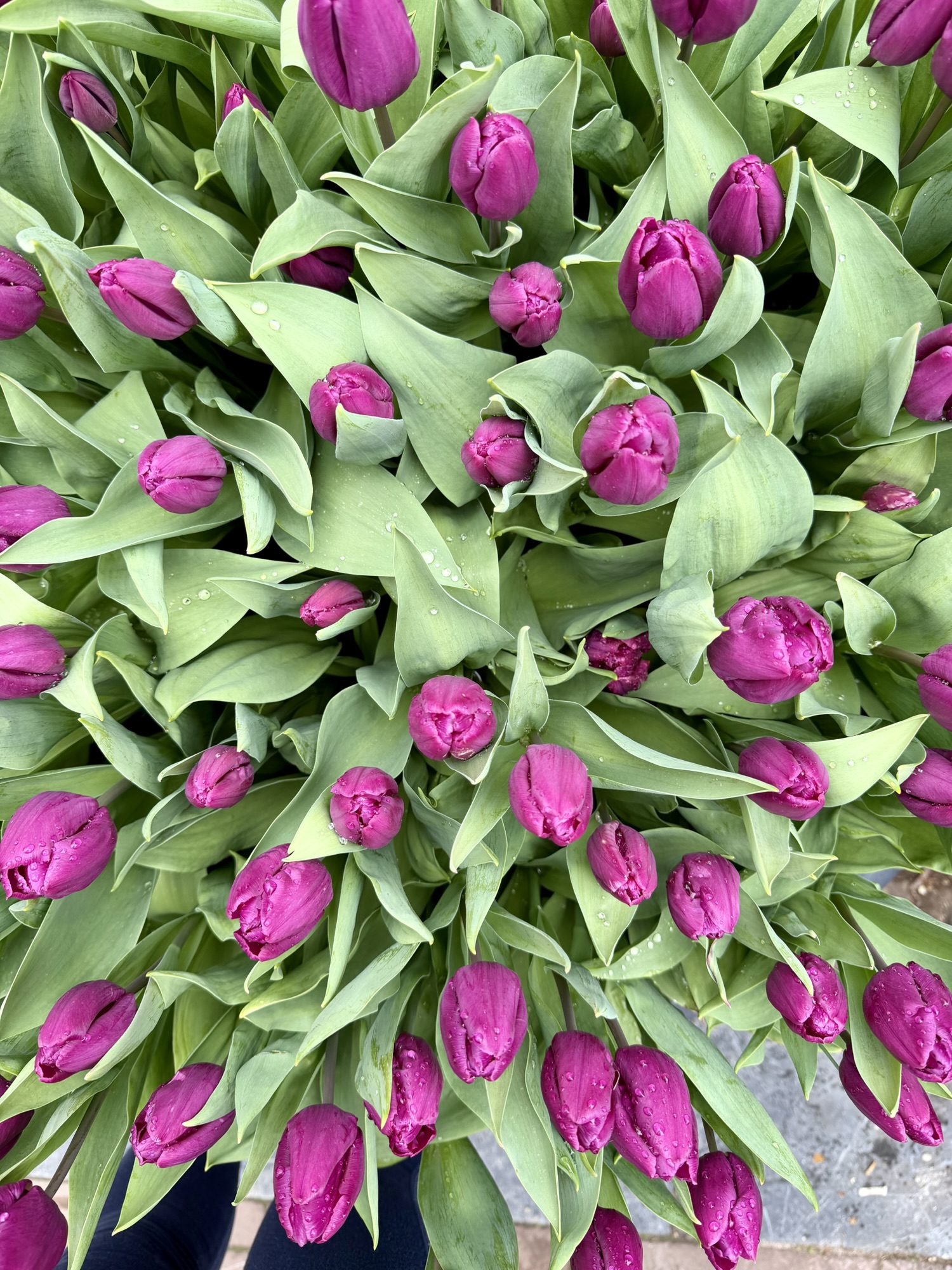
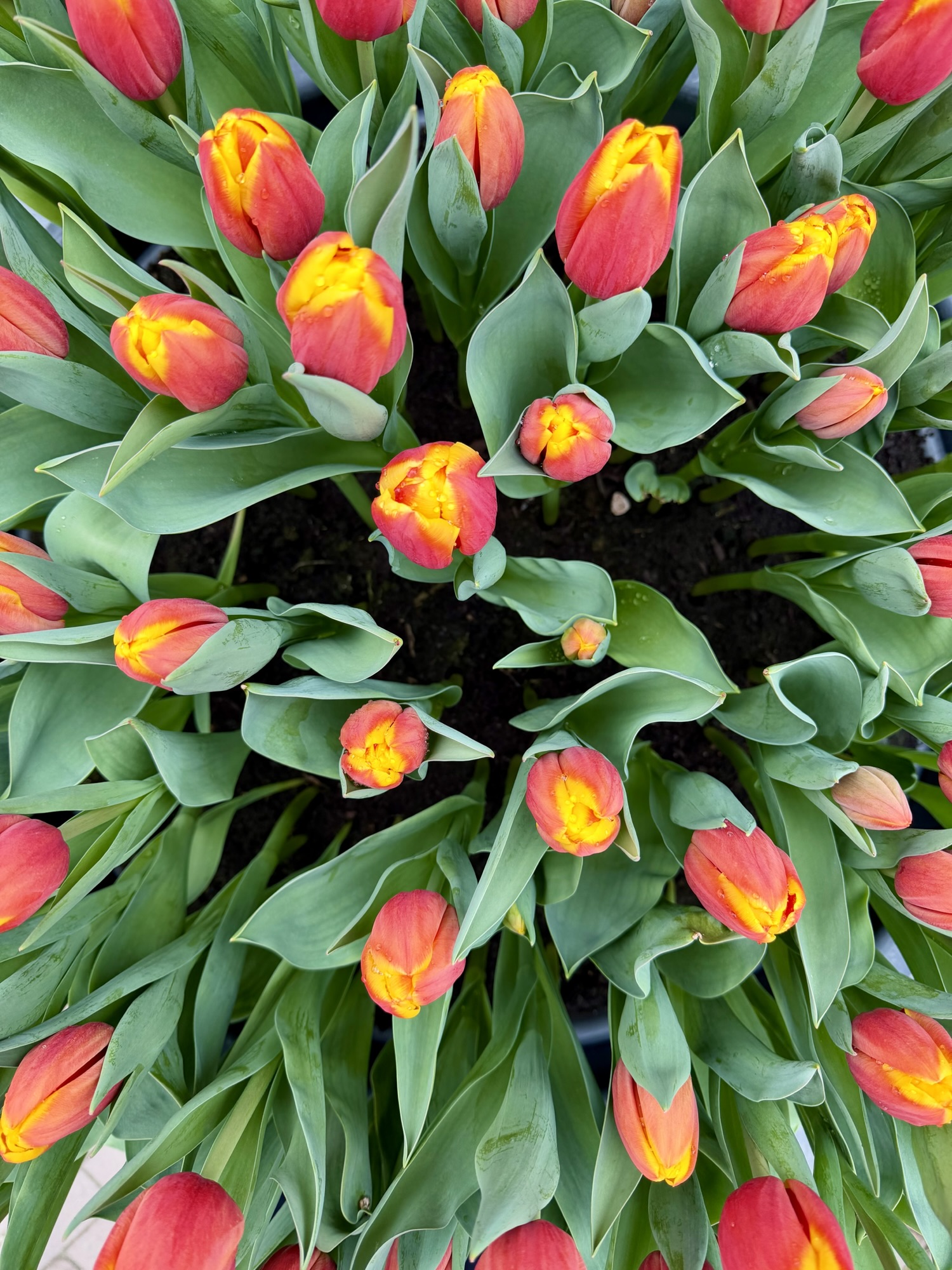
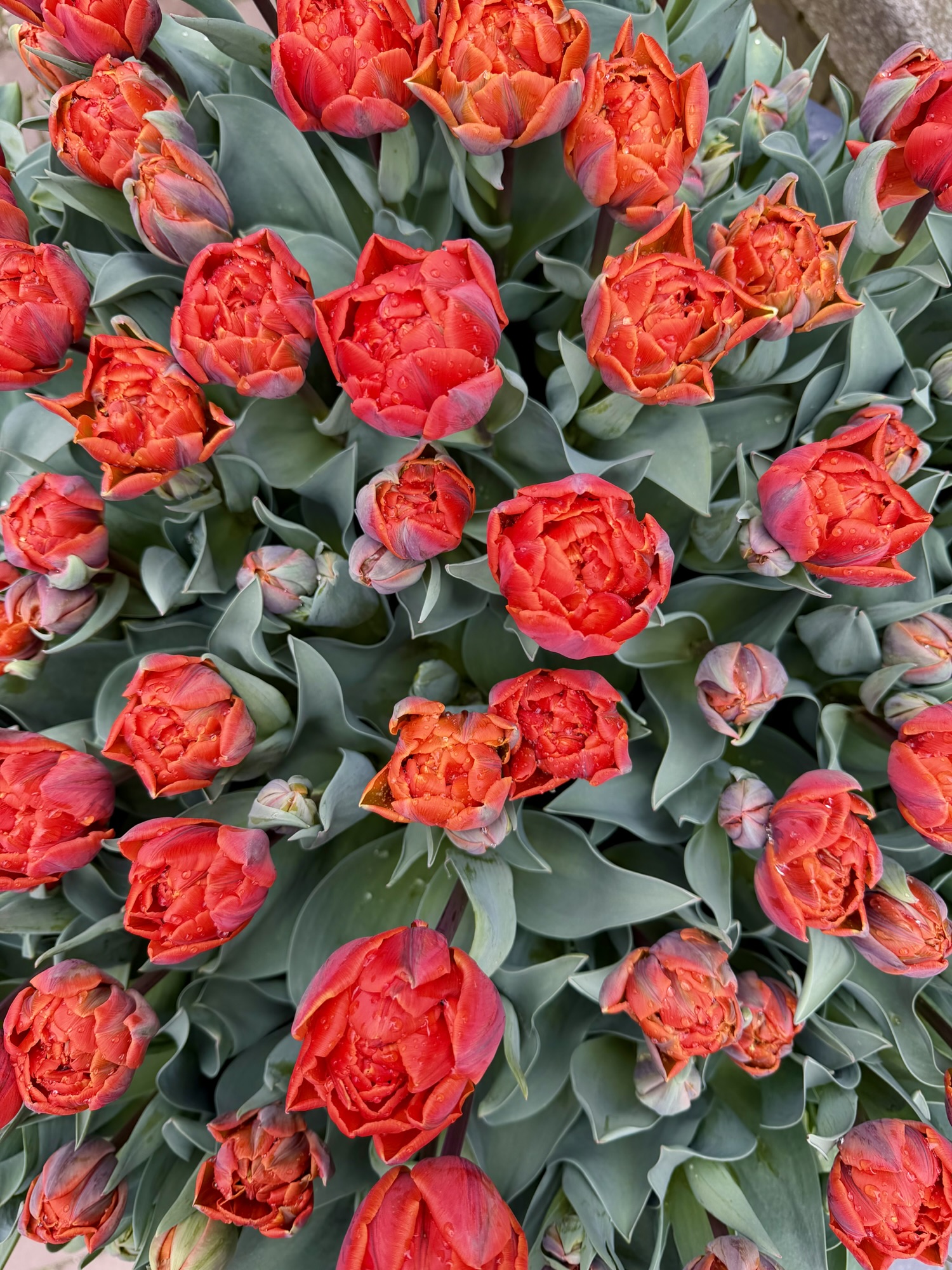
There were many planters of tulips beautifully in bloom in the Museum Quarter.

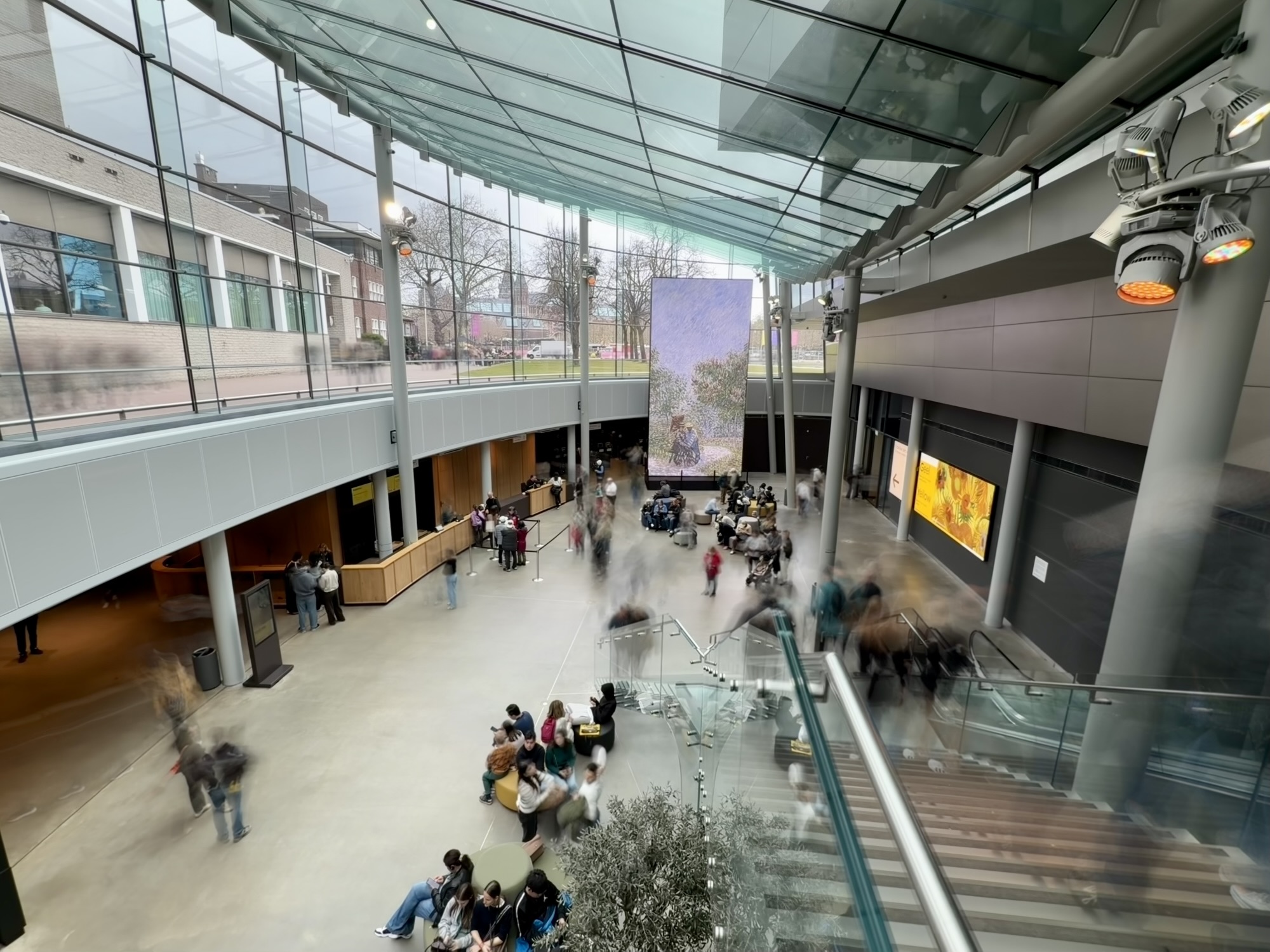
The entrance to the Van Gogh Museum leads to a well-lit subterranean level with exhibit space, bathrooms, lockers, and gift shop. It was one of three gift shops! The lockers were free to use.

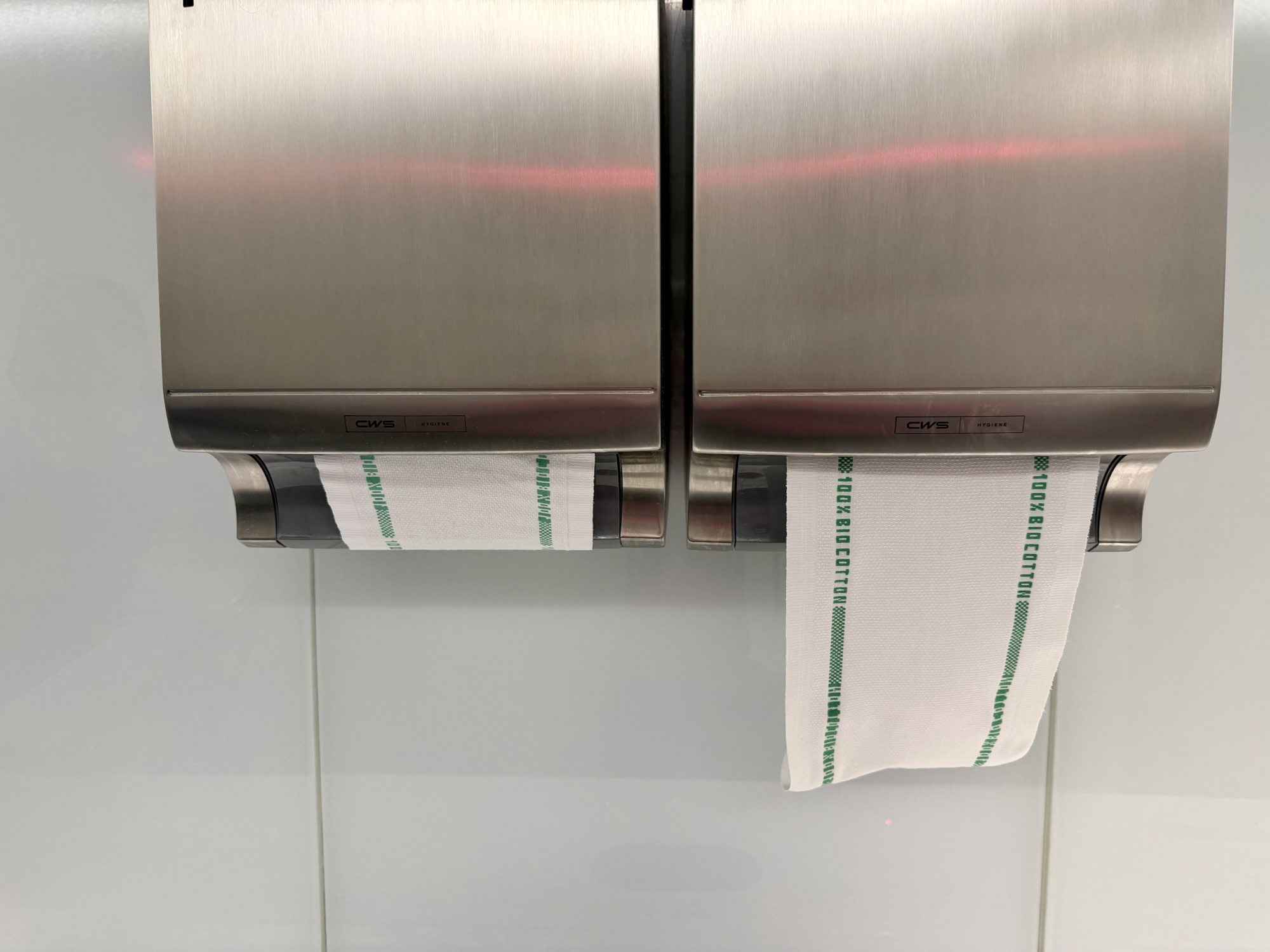
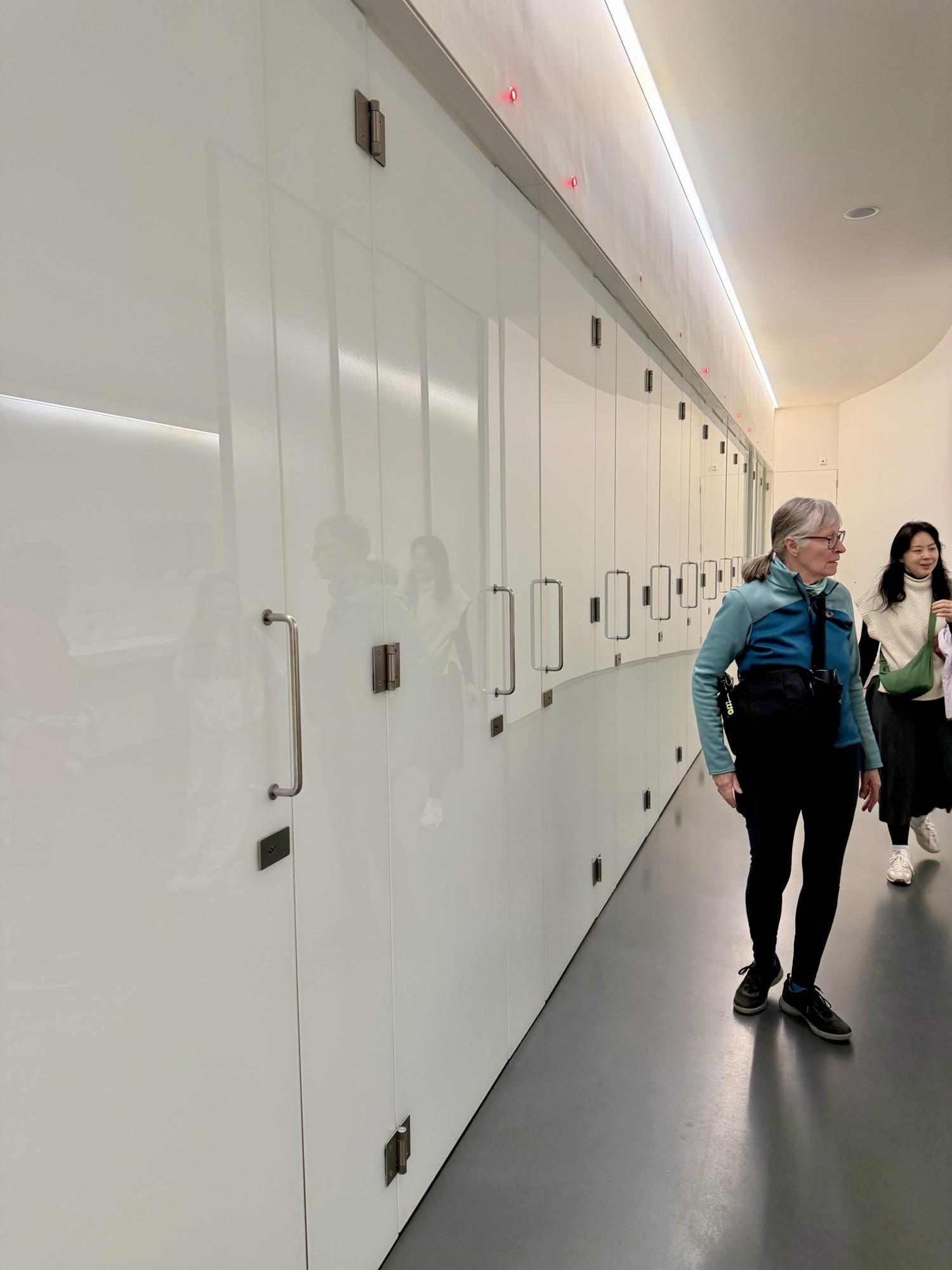
Most of the bathrooms here have doors that completely enclose the stall top and bottom. This one was particularly clever because it had a red light over each door,which was locked and occupied. I haven’t seen these roll towels for a long time.

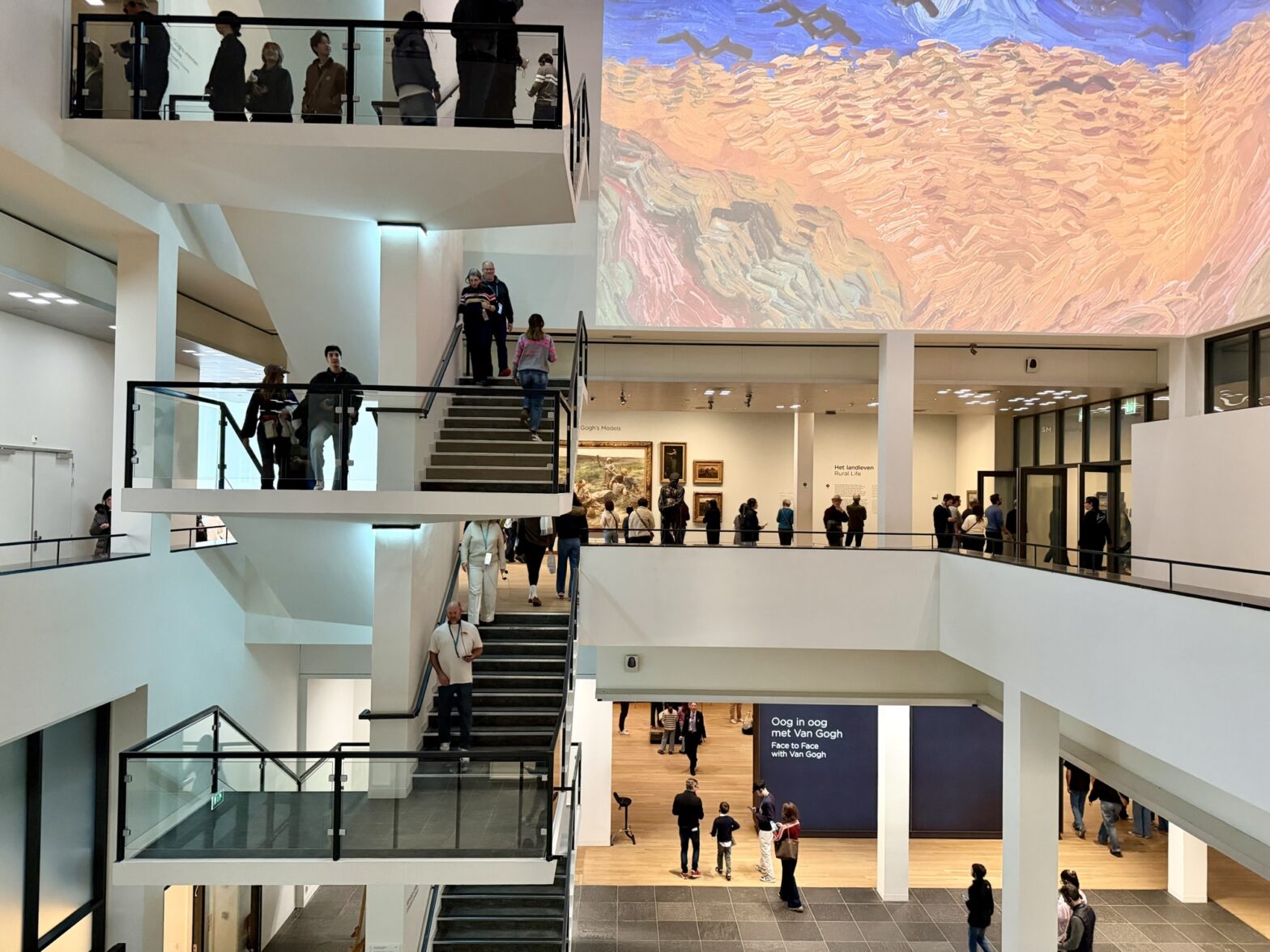
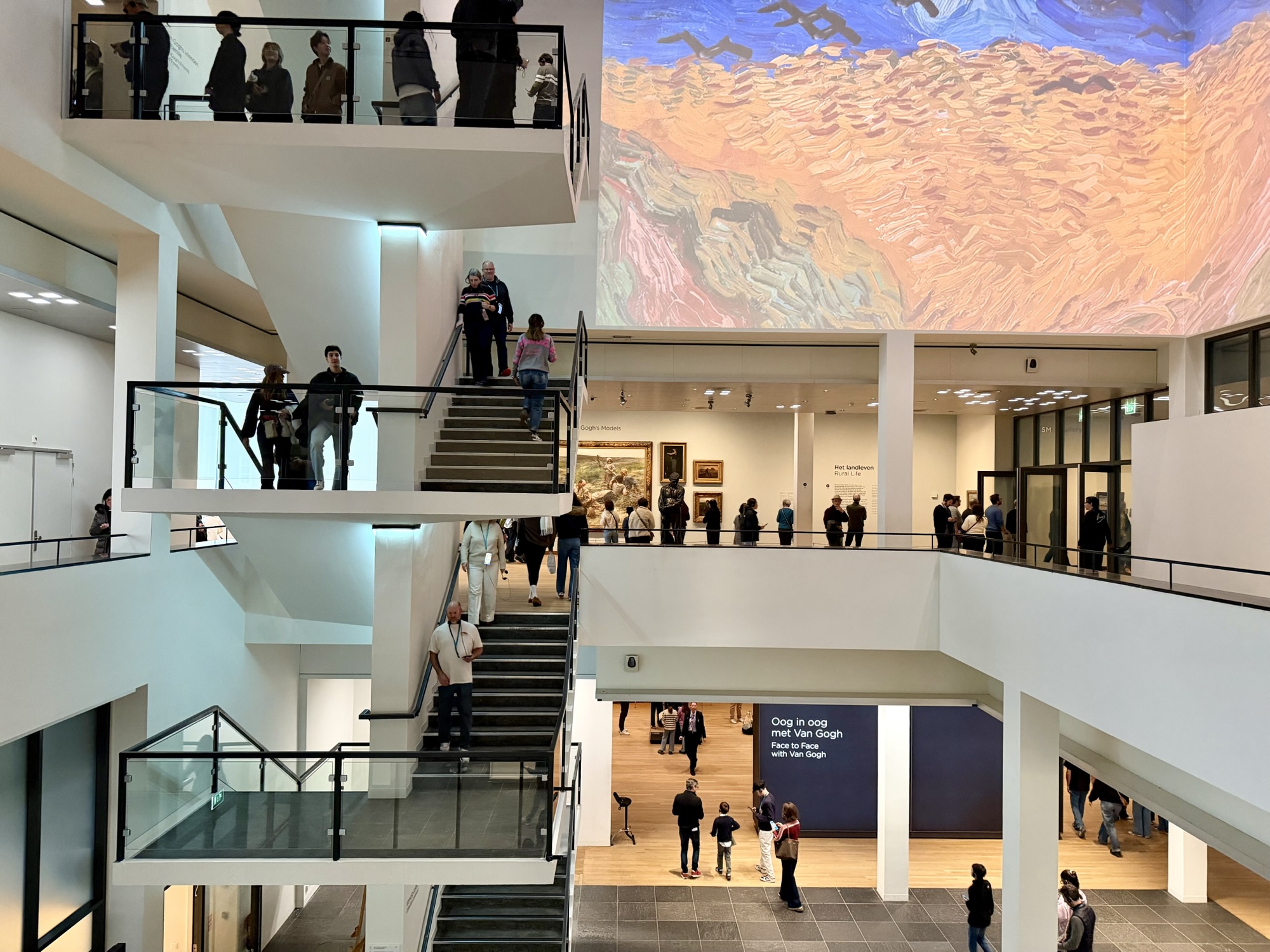
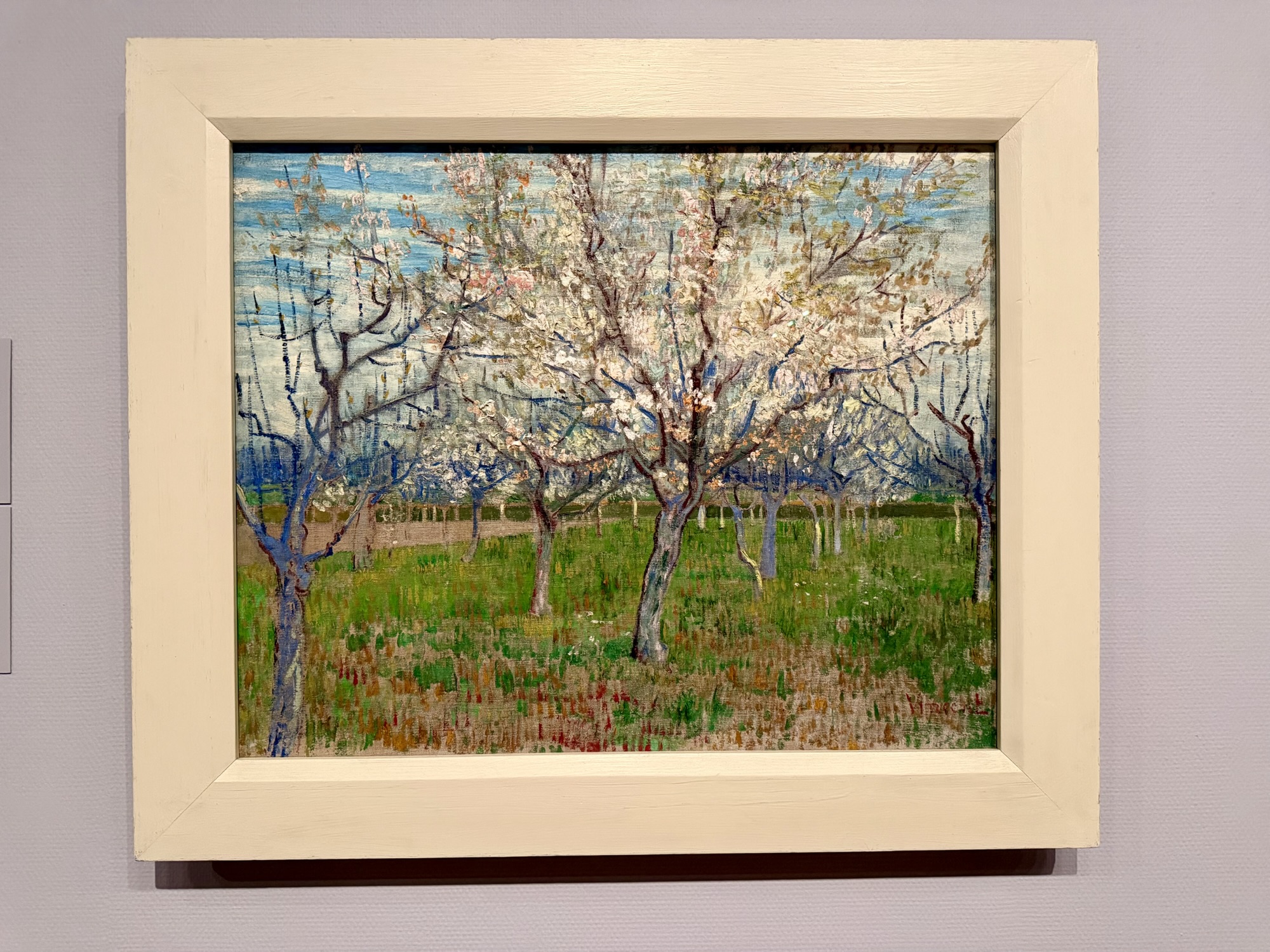
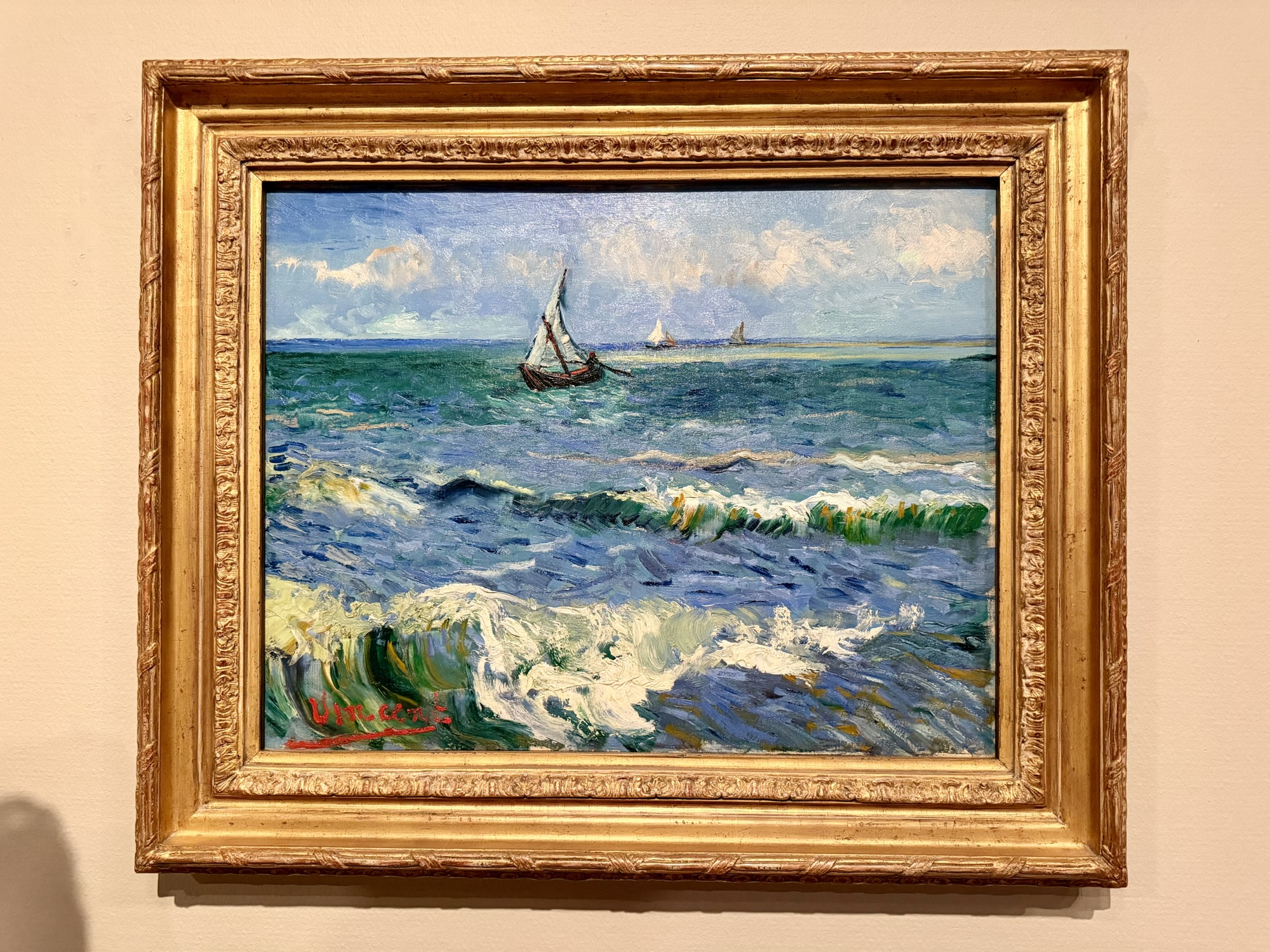
We agreed to check in on our group WhatsApp in an hour and separated, although we did keep bumping onto each other. Different pieces of Van Gogh’s art was projected in the top corner of the atrium. The museum had four levels.

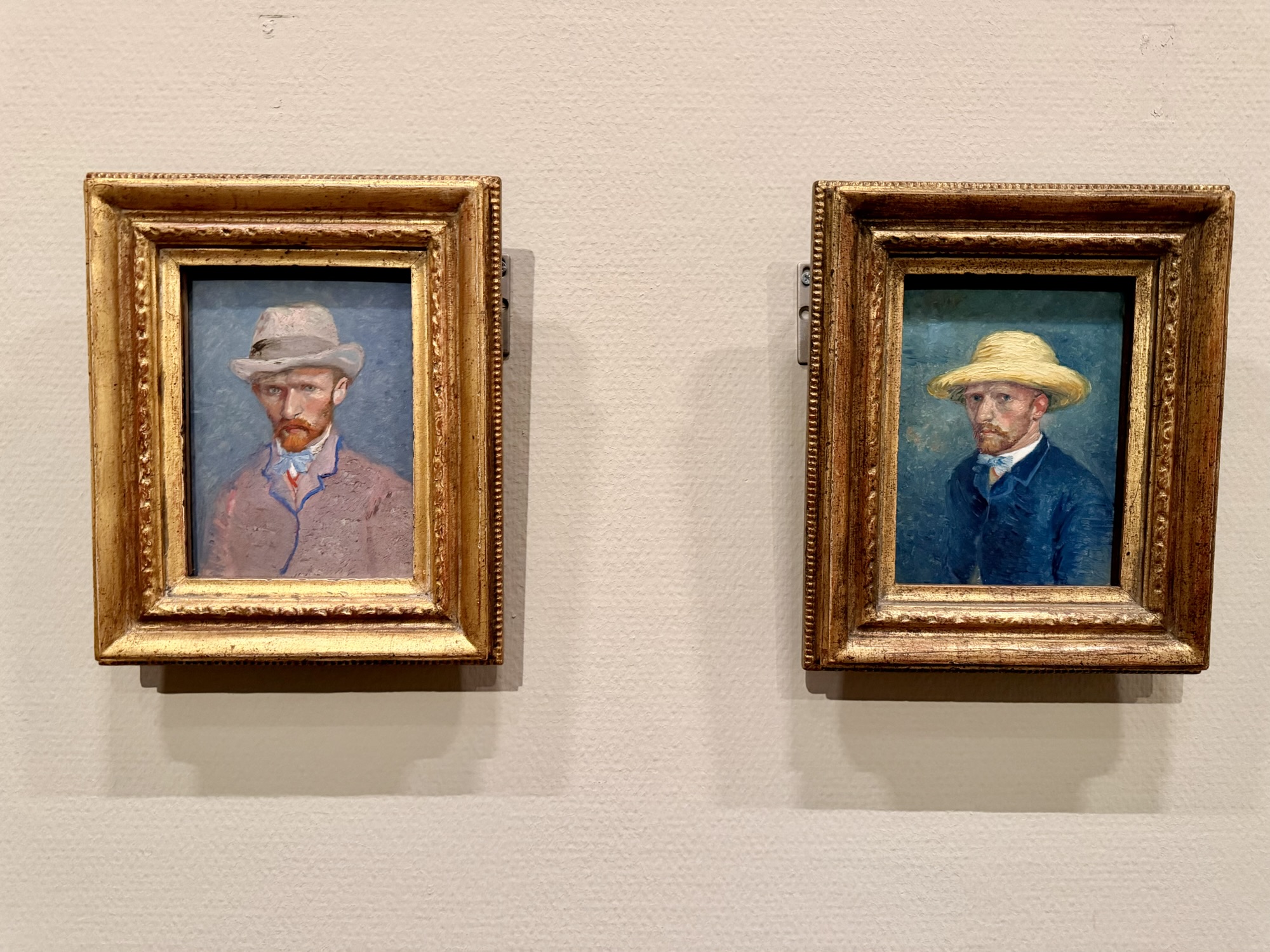
The size of his pieces of art ranged from small canvases for the many self portraits he did to some very large canvases of landscapes.

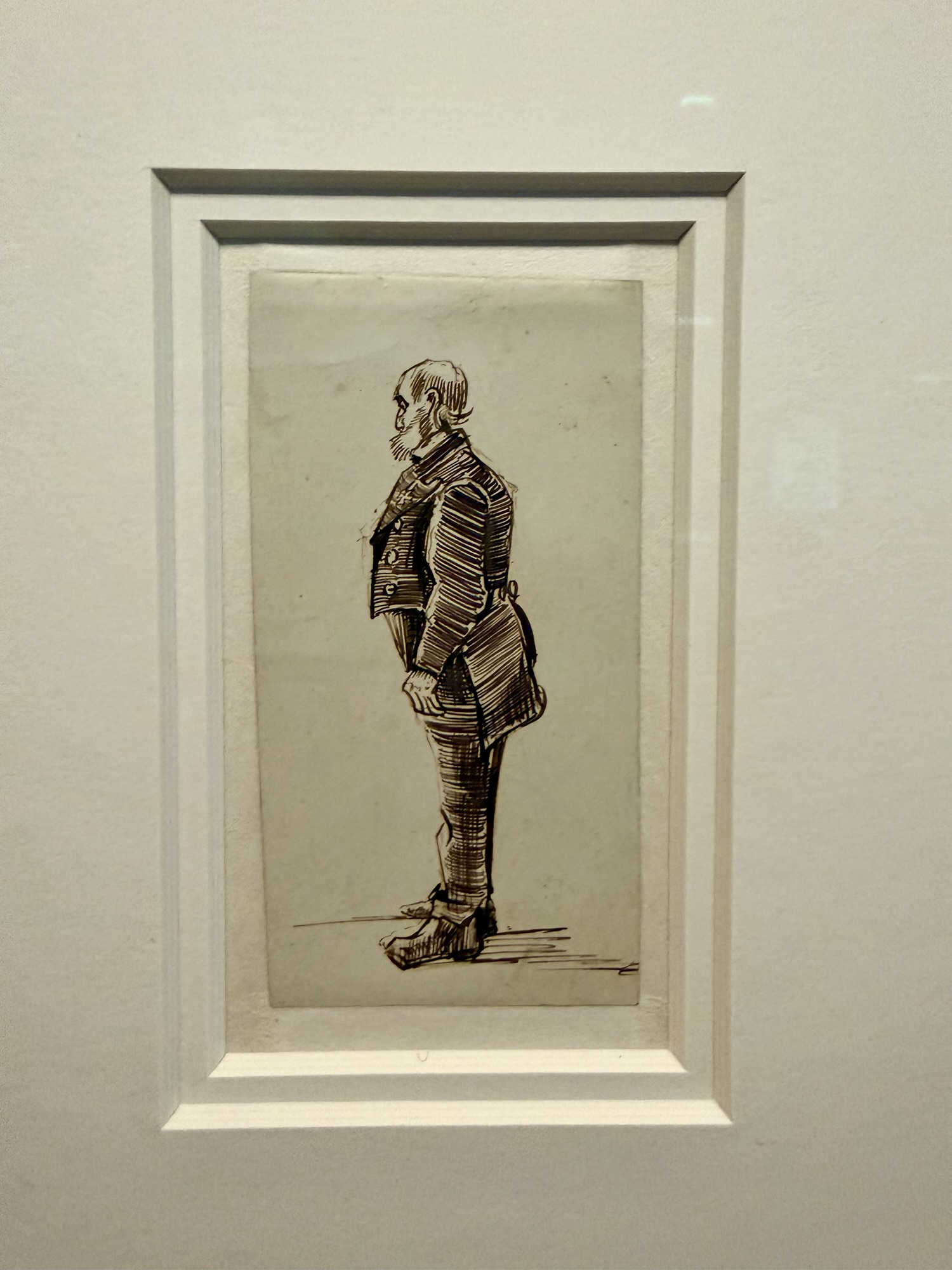
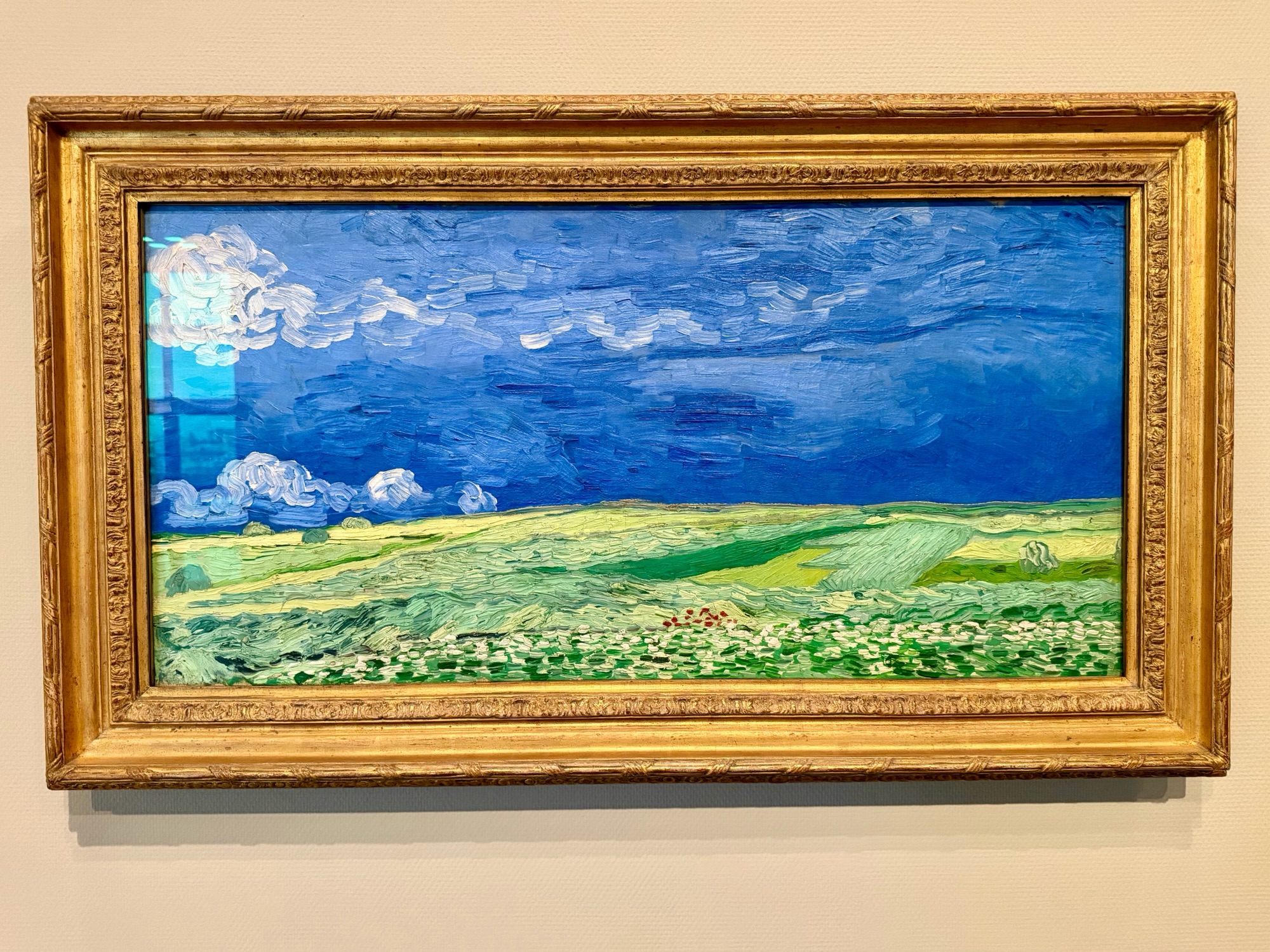
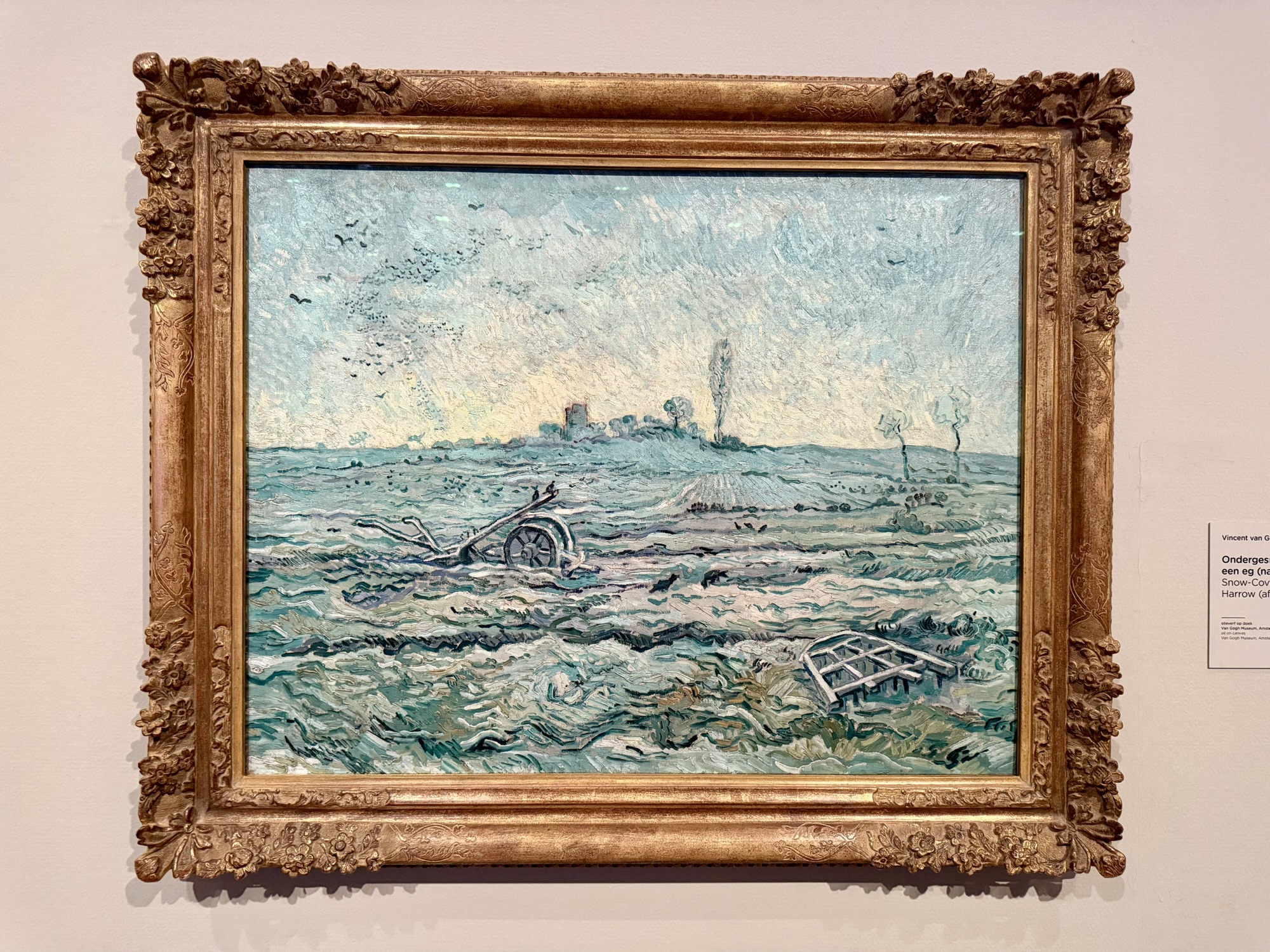
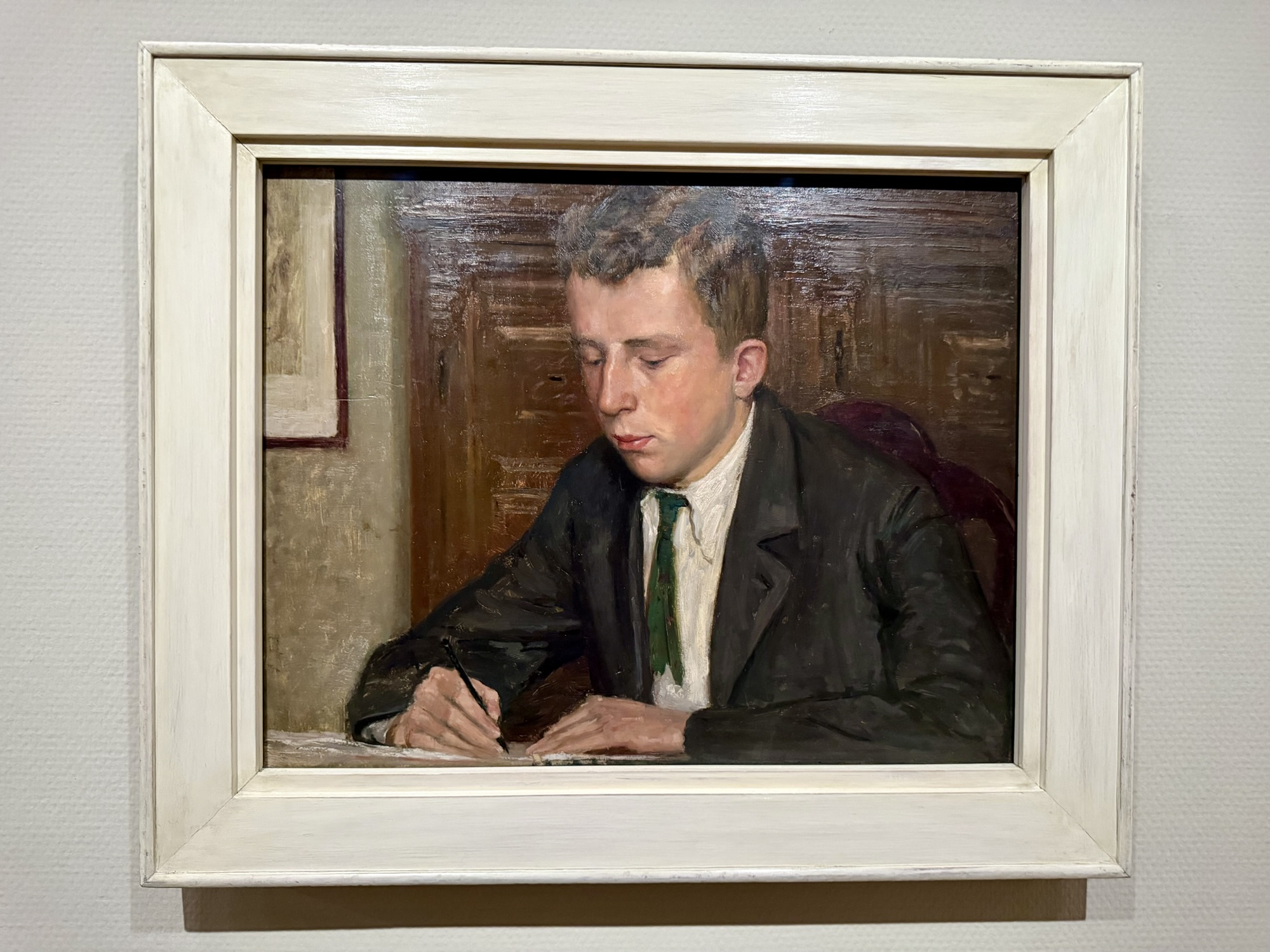
Vincent Van Gogh was born in the Netherlands in 1853. From 1869 to 1876. He worked for an art dealer. From 1878 to 1880 he worked as a lay preacher among the miners. He decided, at the age of 27, to become an artist and practised through drawing. 

He takes drawing and painting lessons in 1881. Vincent spends three months in Hoogeveen and Nieuw-Amsterdam in the Drenthe countryside, where he paints and draws the landscape in 1883. He lives on and off with his parents during these years. In 1885 he studies for a brief period at the art Academy in Antwerpen. From 1886 to 1888 Vincent lives with his brother Theo he becomes acquainted with Neo-impressionist painting, and befriends Henri de Toulouse-Lautrec, Émile Bernard, and Paul Gauguin. In 1888 he paints Sunflowers, lives briefly with Paul Gauguin, and cuts off his ear.

In 1889 he admitted himself to a psychiatric institution. He produced an average of one painting per day in 1890. He shot himself in the chest and died two days later on July 29.

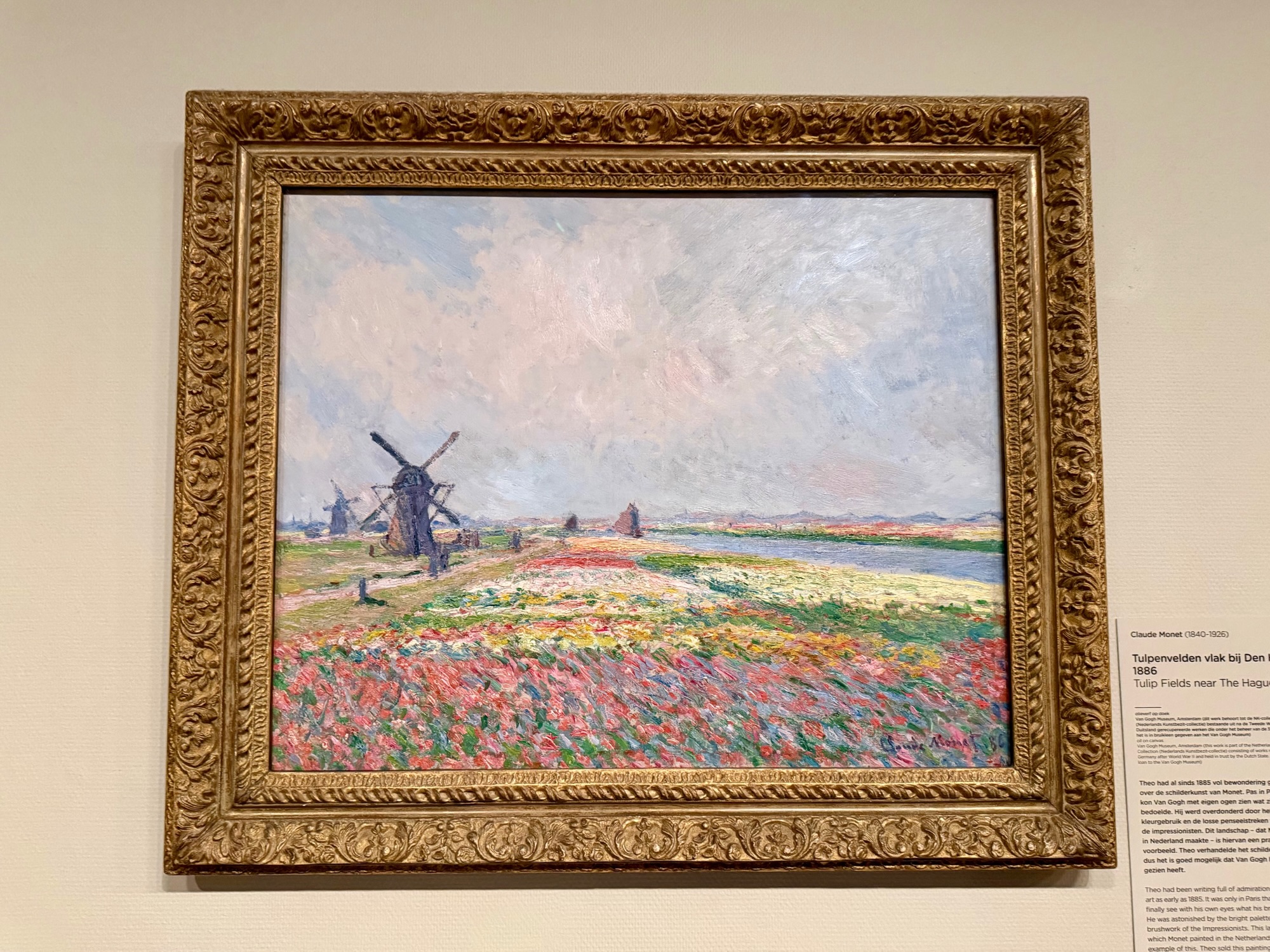
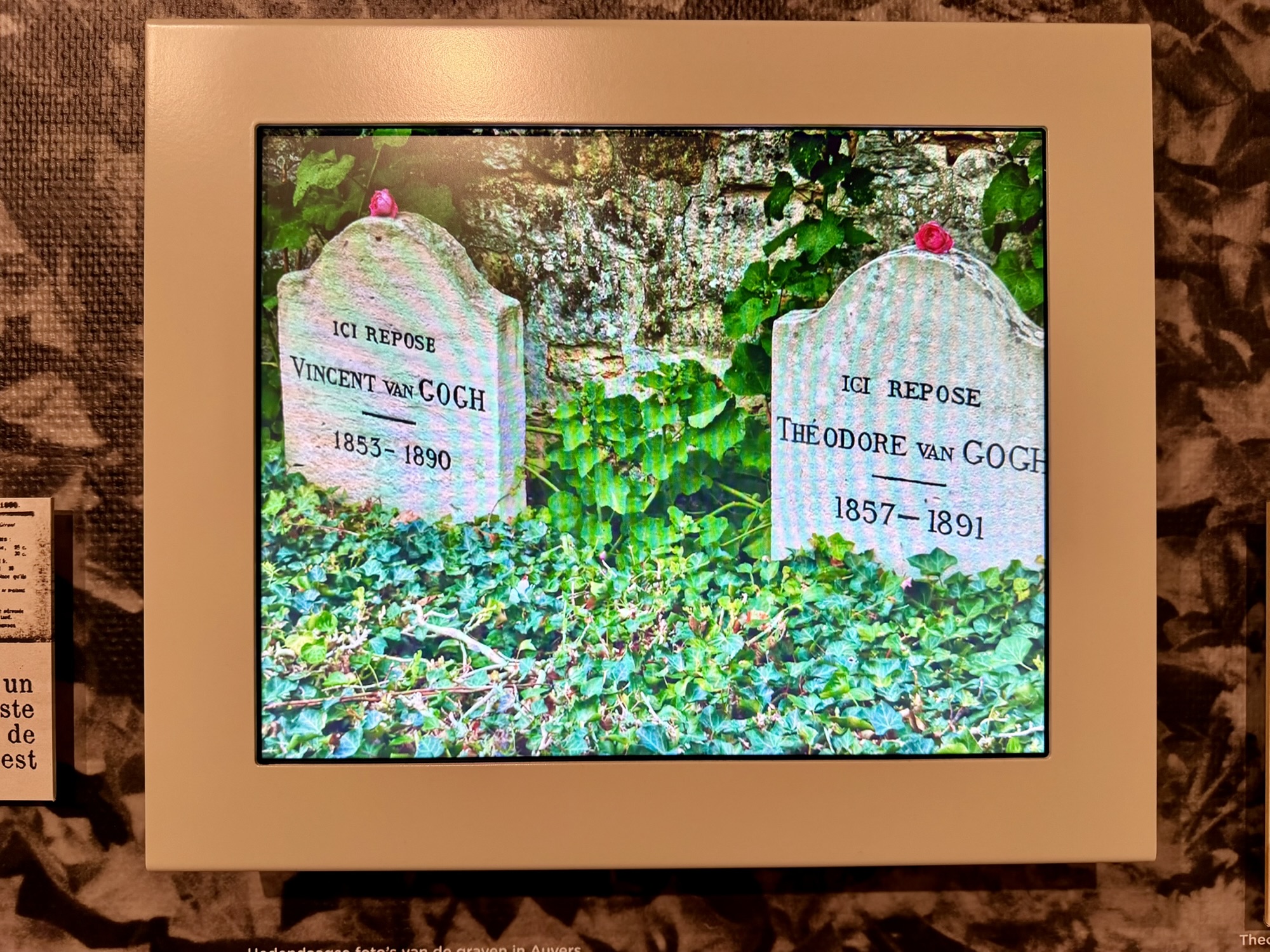
Theo Van Gogh, Vincent’s younger brother supported him and was able to do so from his work as an art dealer in Paris. Theo and his brother were very close as portrayed in this design for a monument to the Van Gogh Brothers.

“Theo died shortly after Vincent in 1891. His widow Jo was left with their infant son, Vincent, and hundreds of artworks and letters. It was Theo‘s dearest wish that his brother would gain recognition for his art and Joe saw it has her duty to realize that dream. She took charge of the estate and devoted her life to raising awareness of van Gogh art. She did this by organizing exhibitions, making strategic sales and publishing Vincent’s correspondence with Theo. It is partly thanks to her that Van Gogh’s oeuvre became known all over the world.”

They were initially buried separately, but Jo had her husband remains exhumed and buried next to Vincent’s.

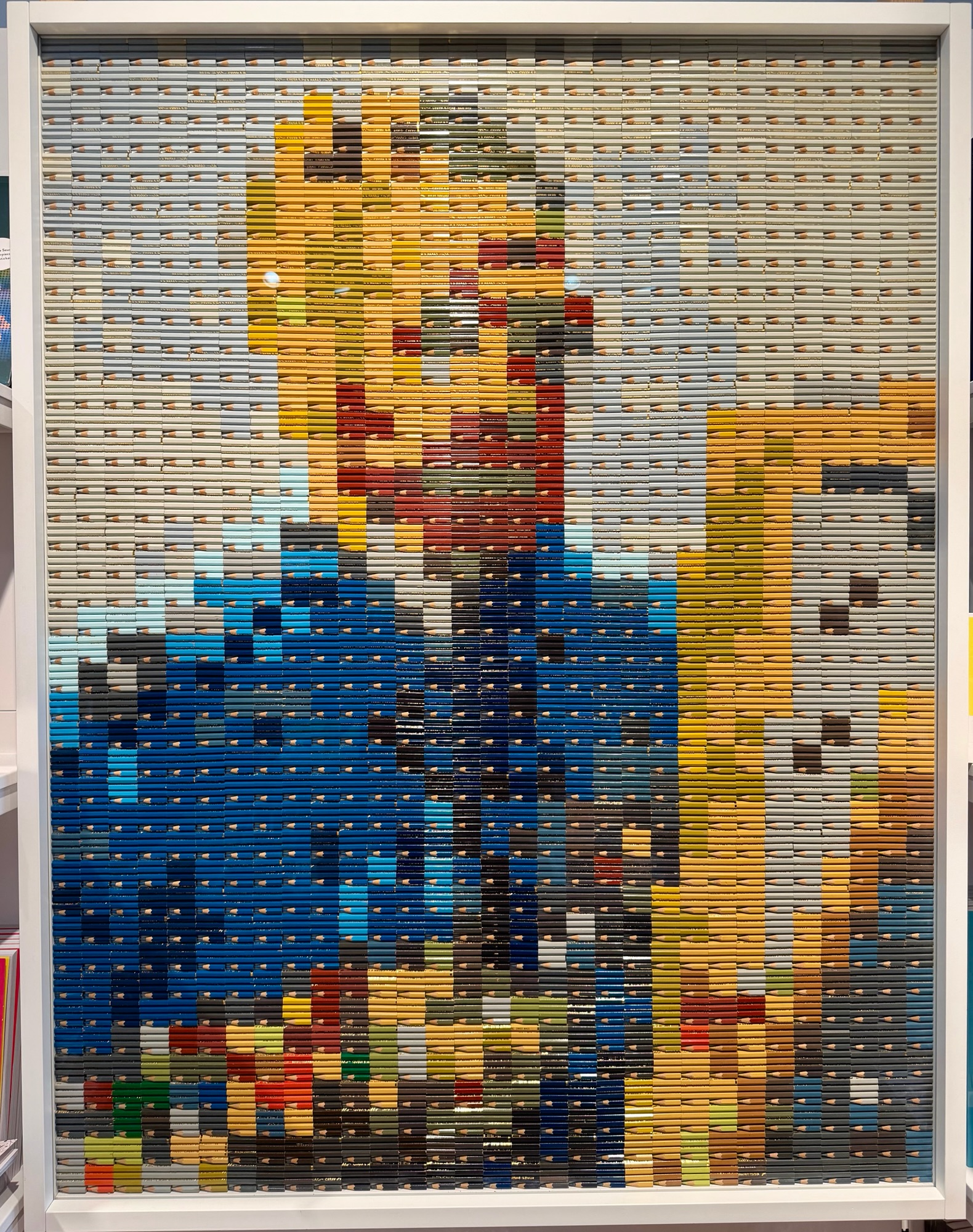
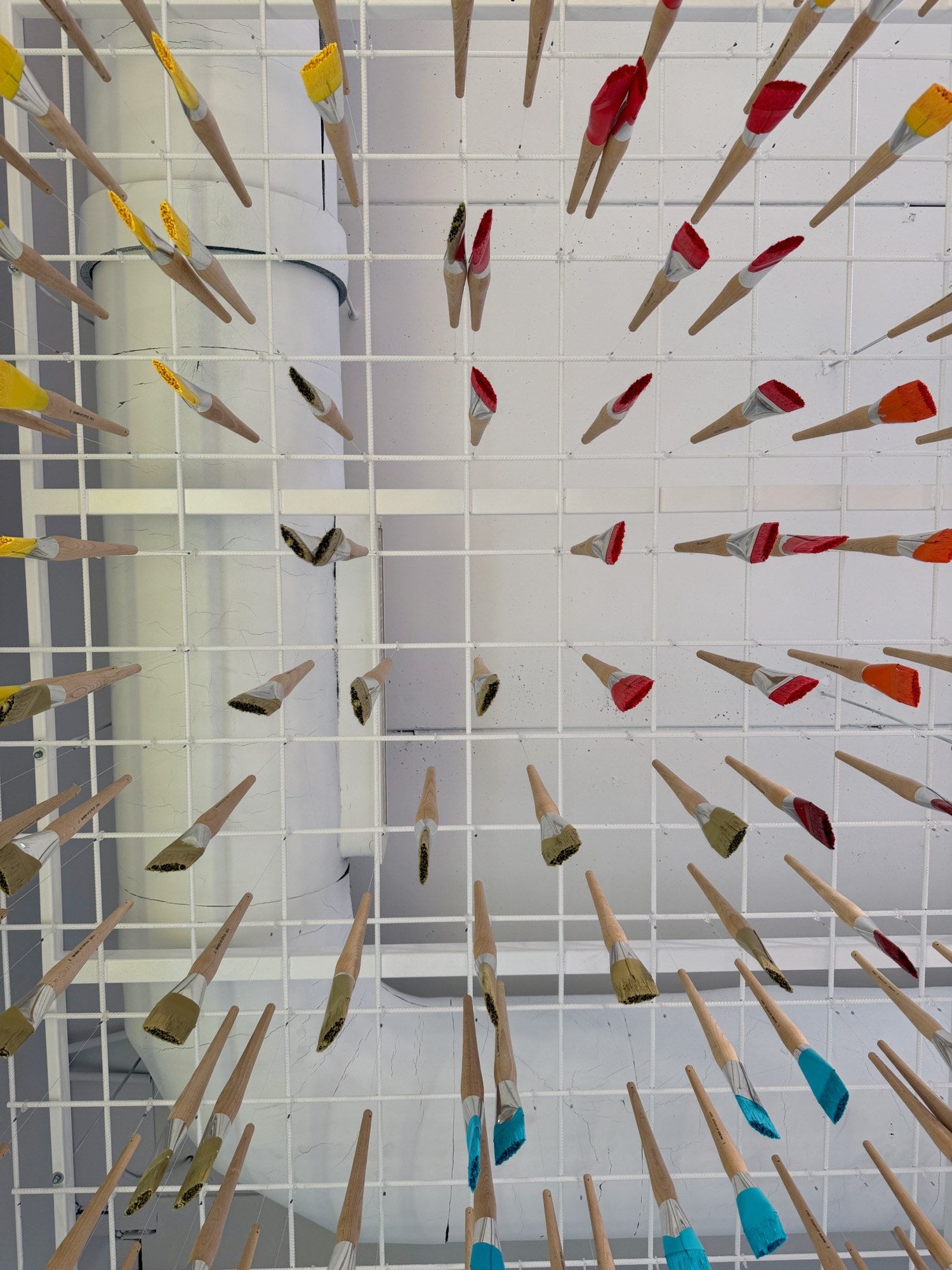
In the gift and bookshop on the third floor. There was a self portrait of Vincent made out of pencil stubs. There was also an art piece of hanging paint brushes.

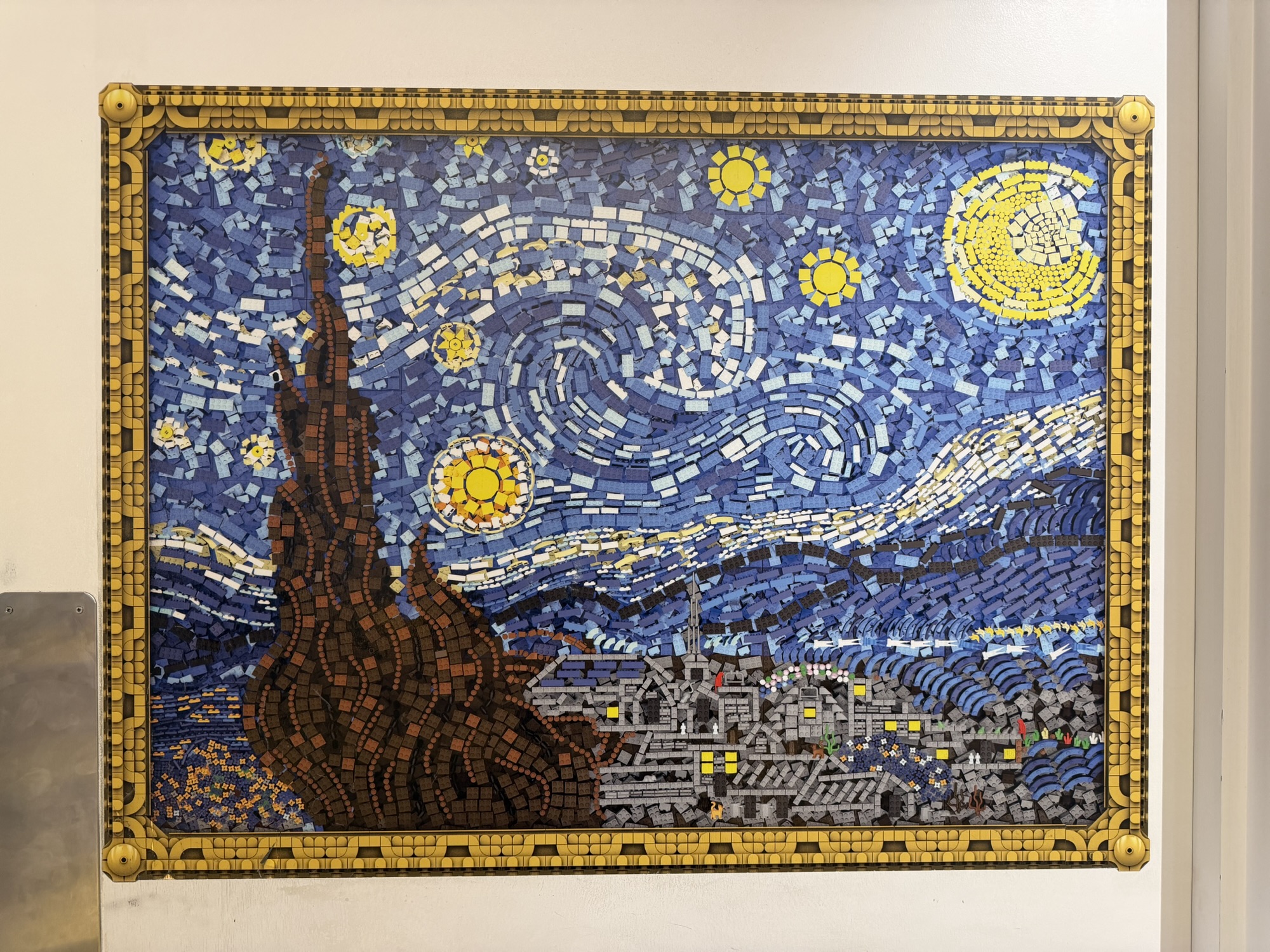
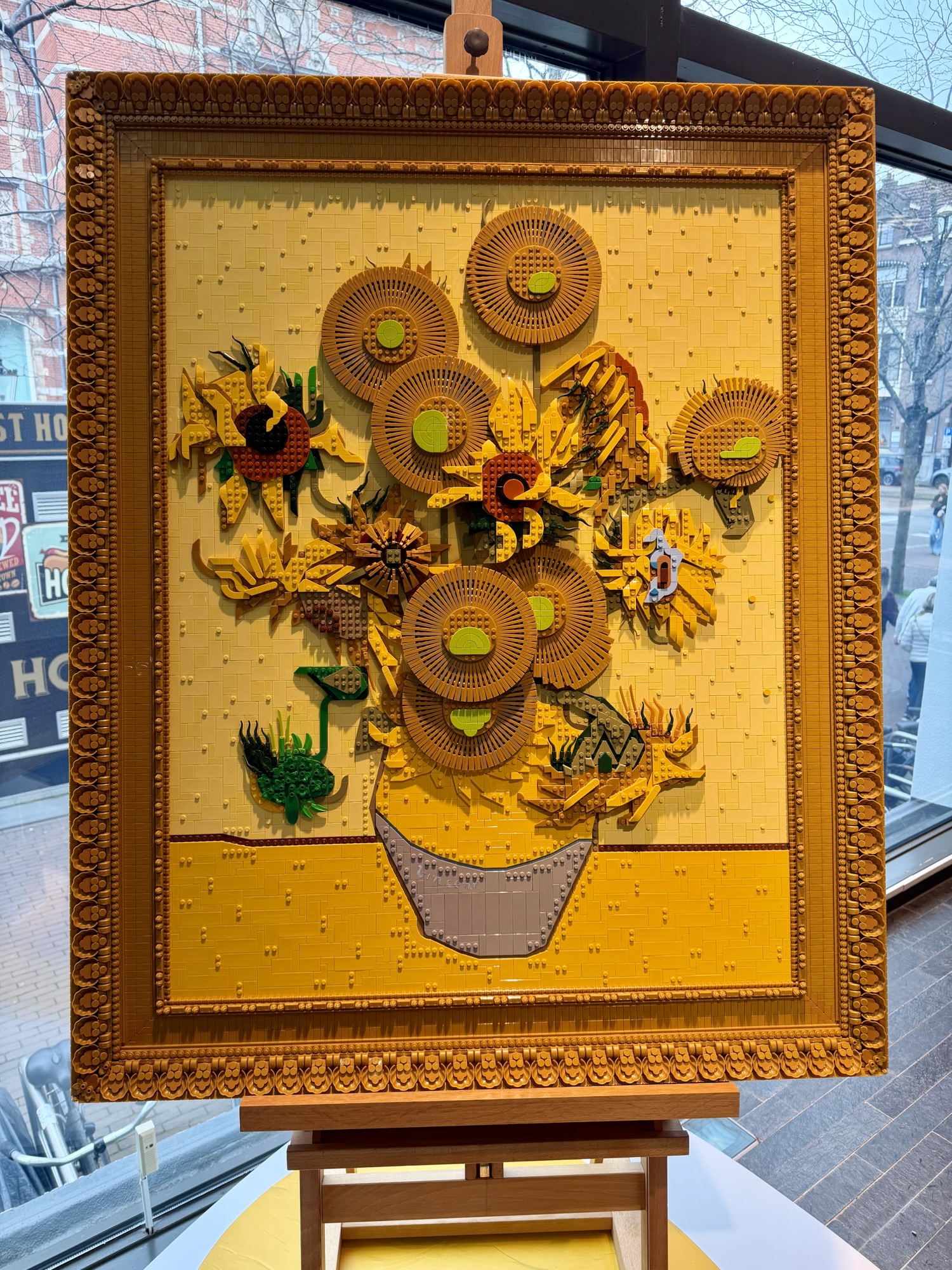
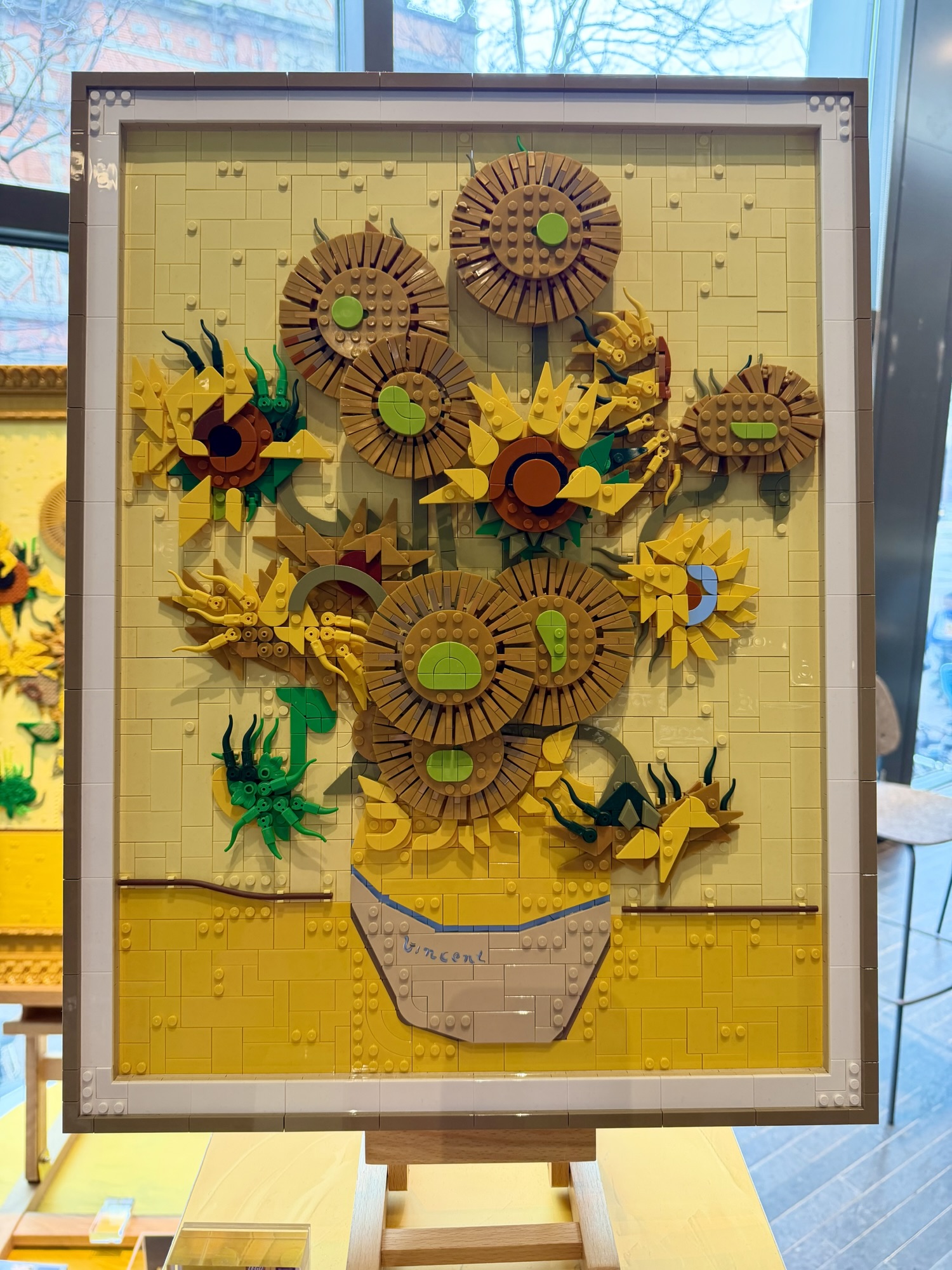
The museum also had Lego versions of a couple of van Gogh‘s works.

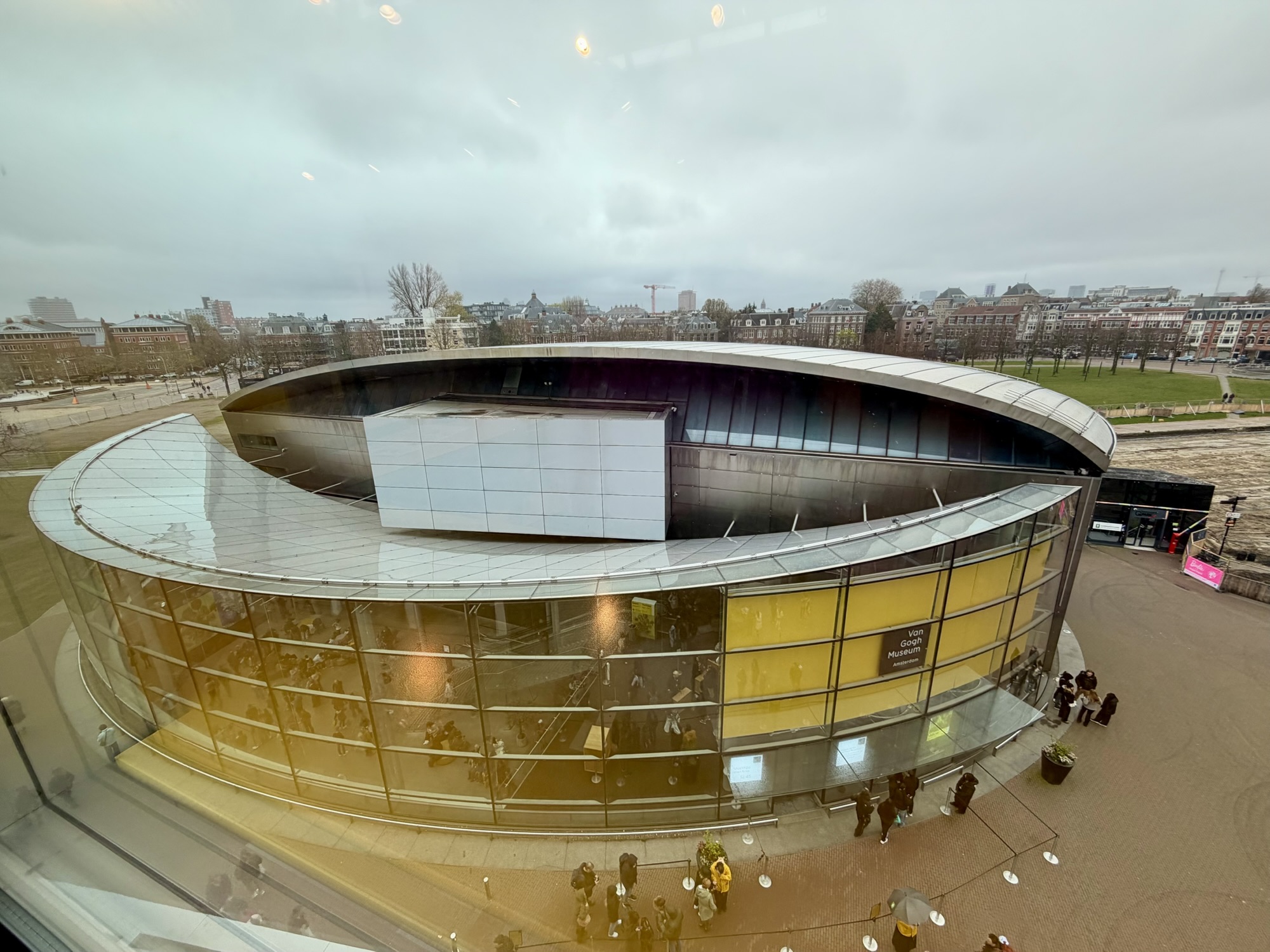
This is what the entrance to the museum looked like from the top floor of the adjacent building connected underground.

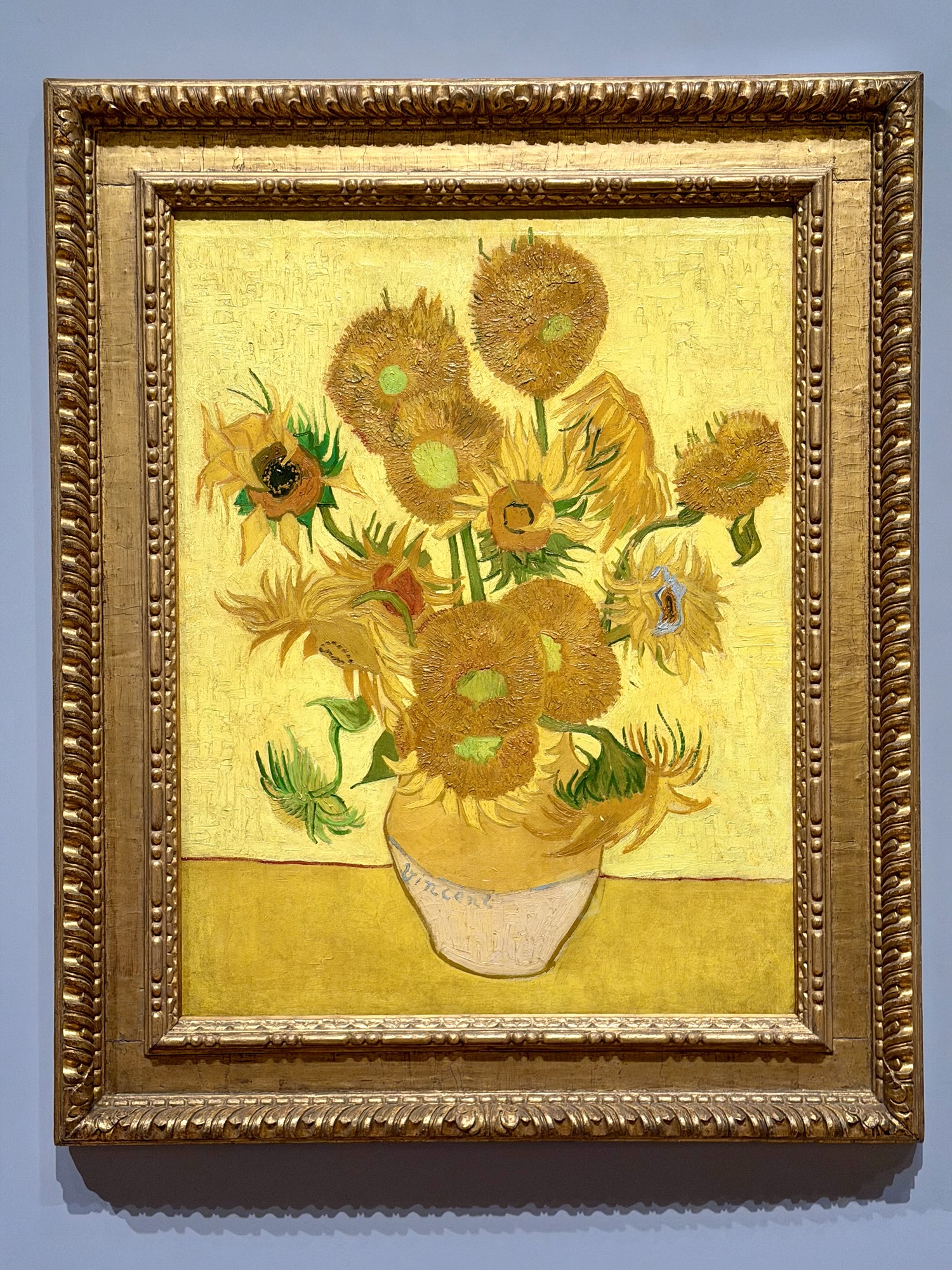
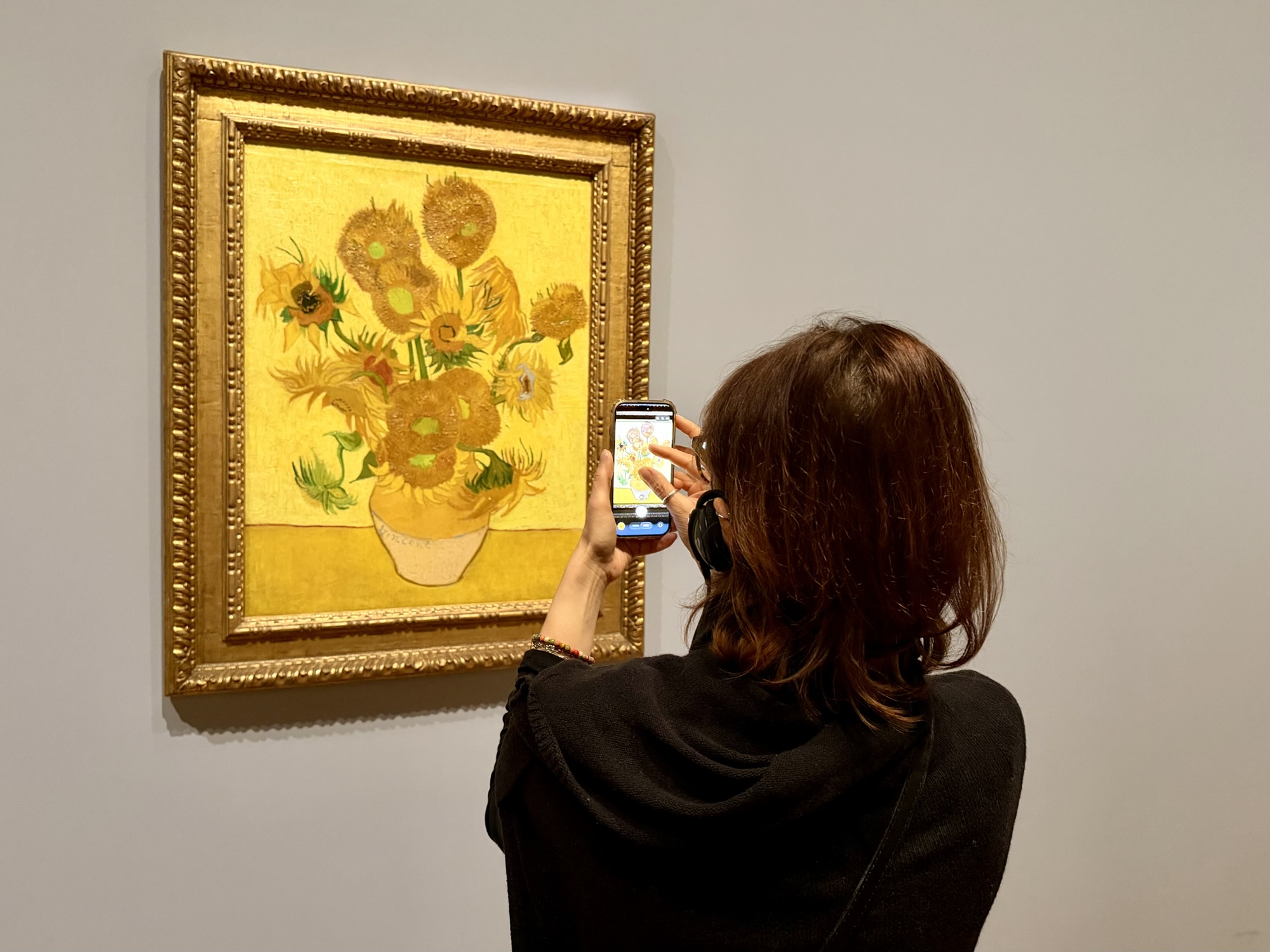
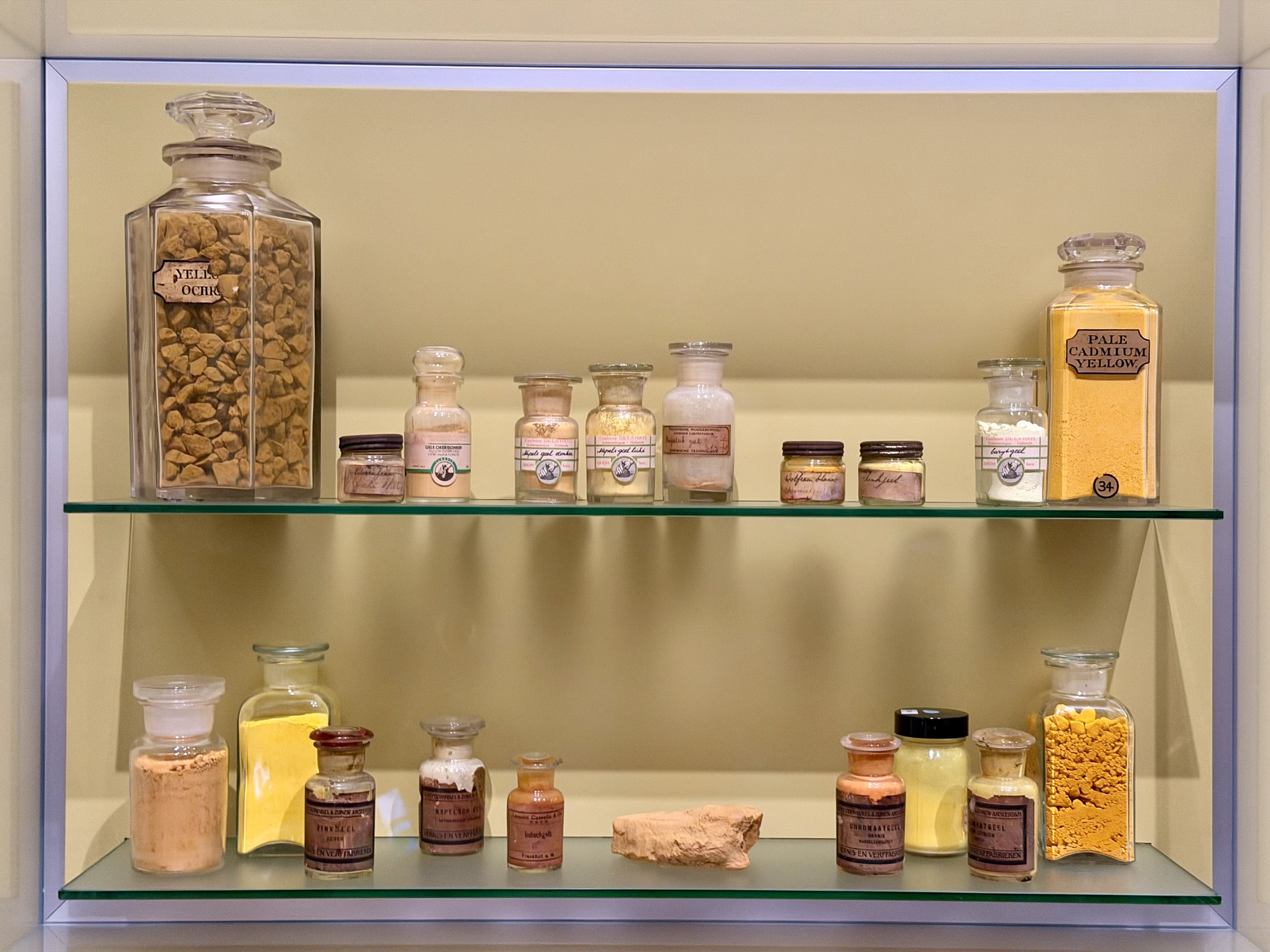
There was a special exhibit, entitled, yellow that contained many of his yellow works including one of his most famous Sunflowers. I included someone taking a picture of it for scale.

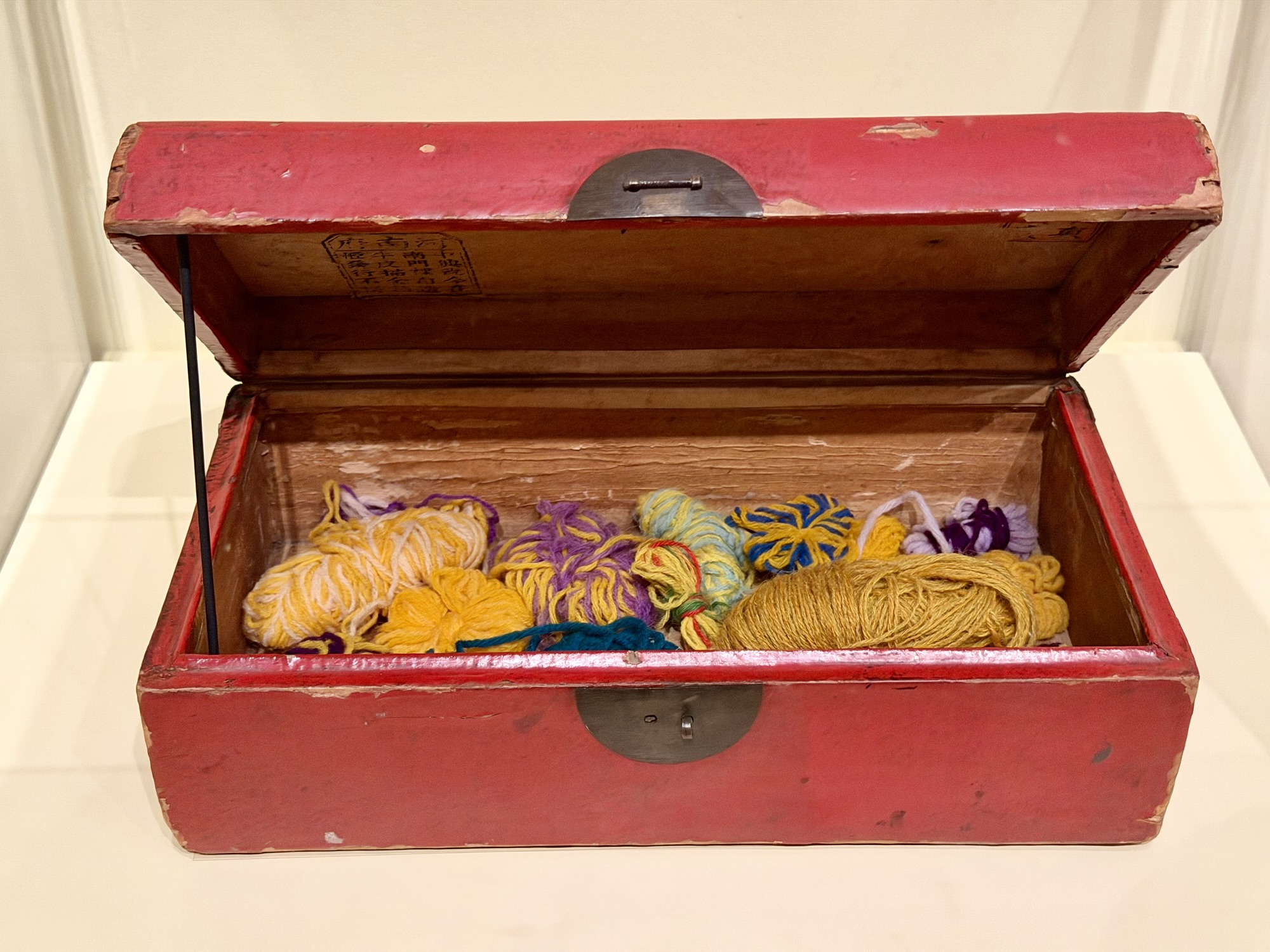
When Vincent wanted to play with colors, he often used wool rather than much more expensive pigments.

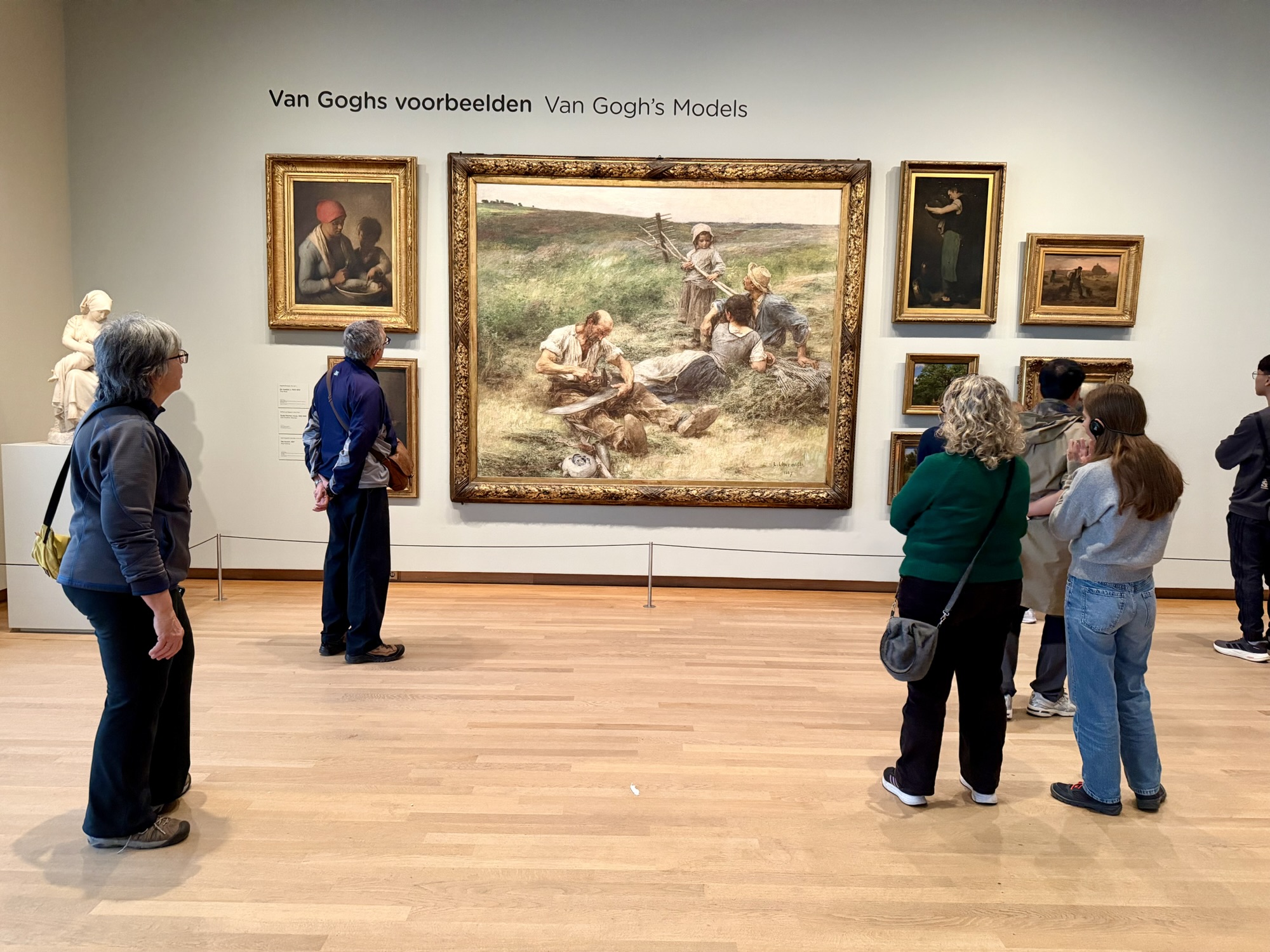
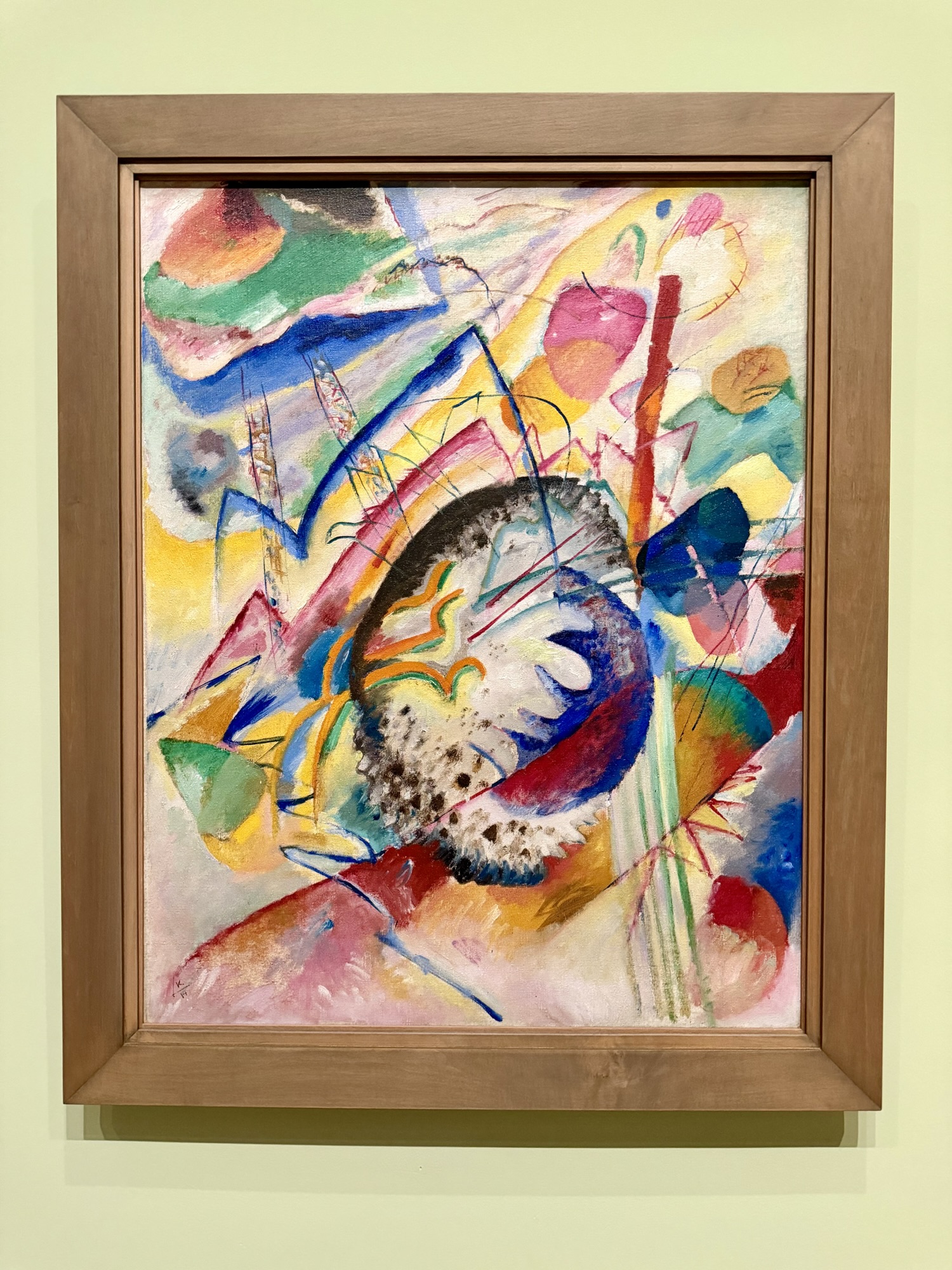
The museum, primarily showcase van Gogh’s work, but also showcase some of his contemporary, including this Kandinsky.

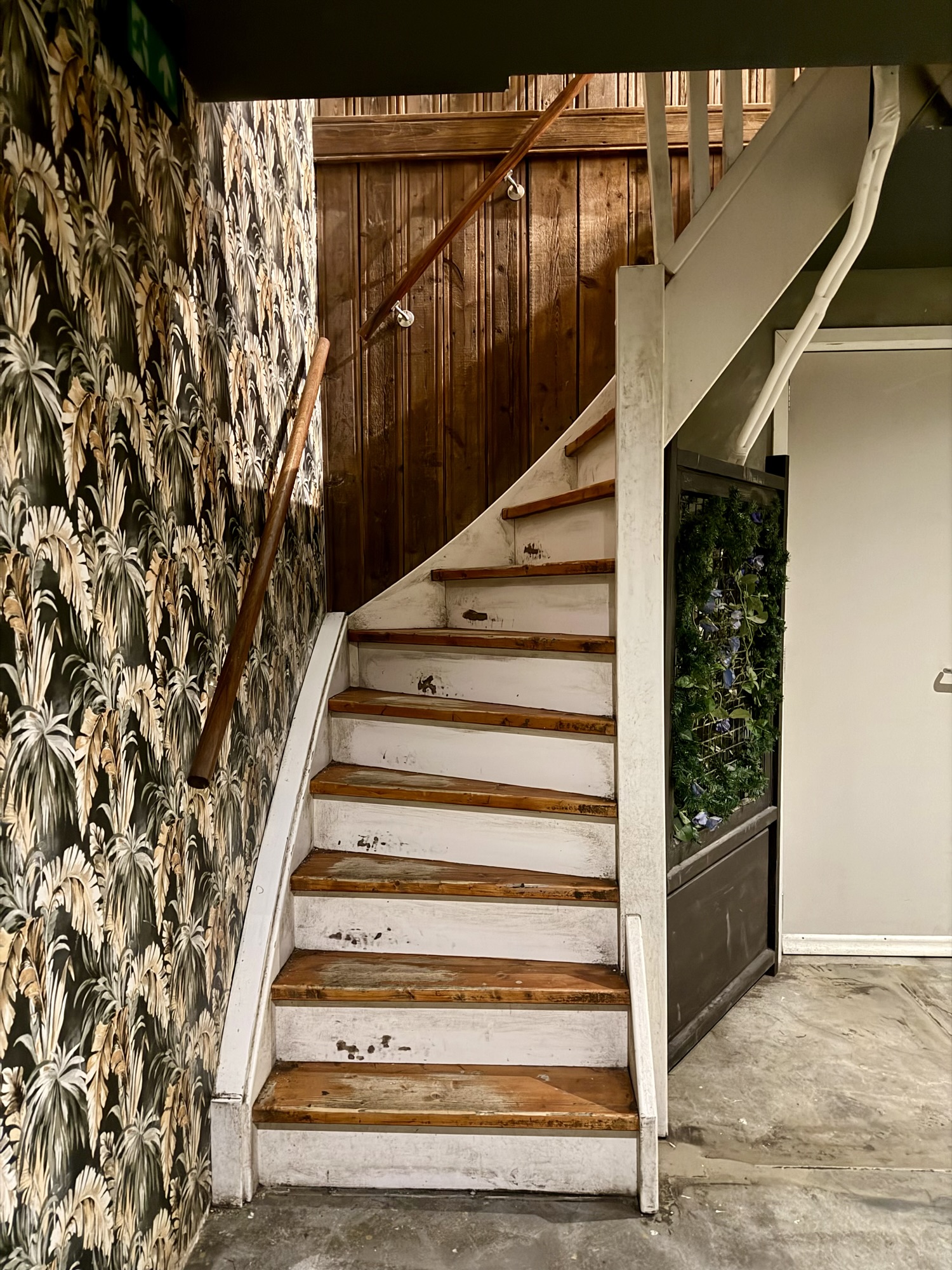
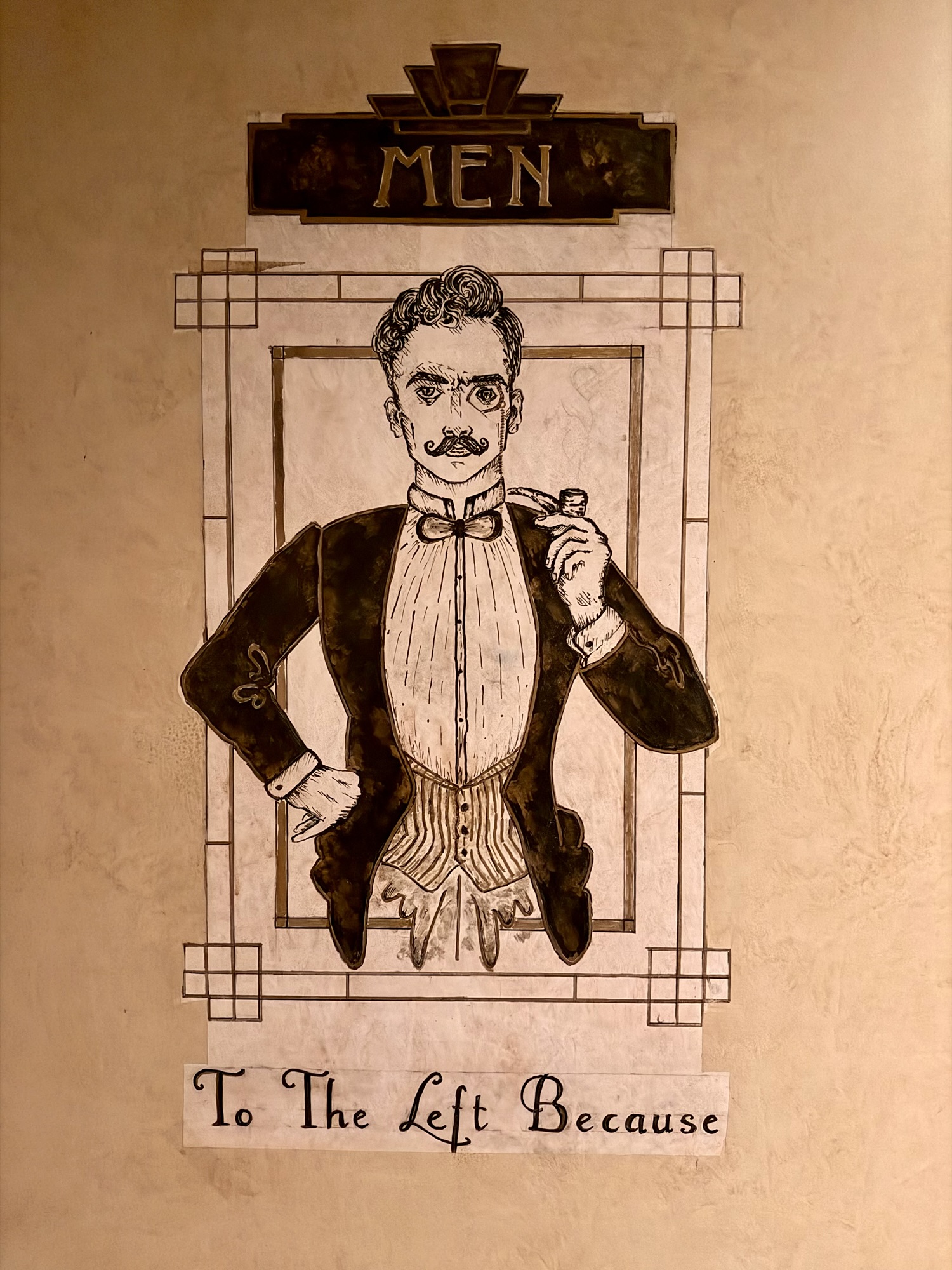
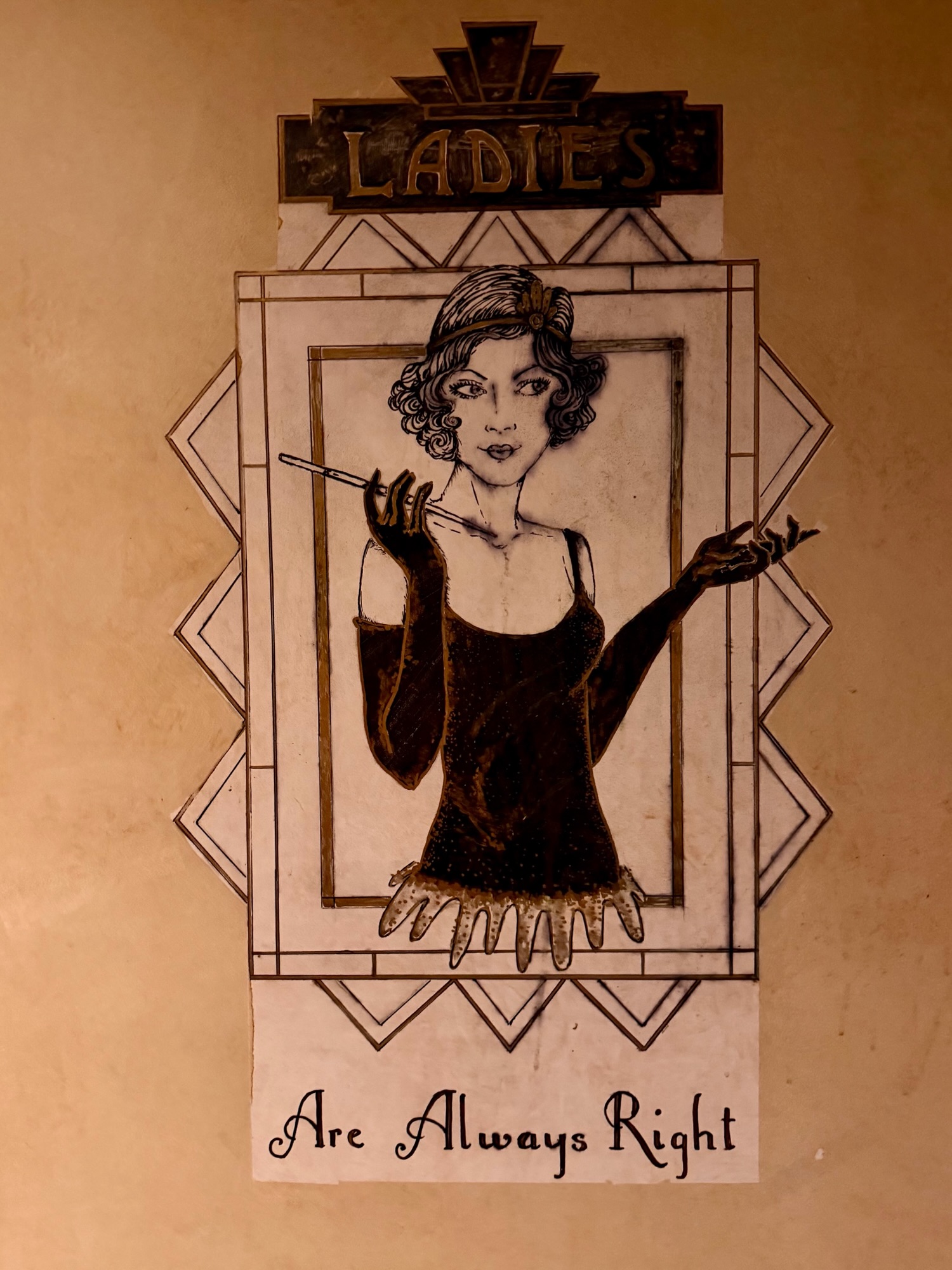
We all needed another half hour to finish the museum and then headed to a nearby café for lunch. Bathrooms are generally in the basement here and the stairs are often quite steep and twisted.

This is how the bathrooms were labeled.

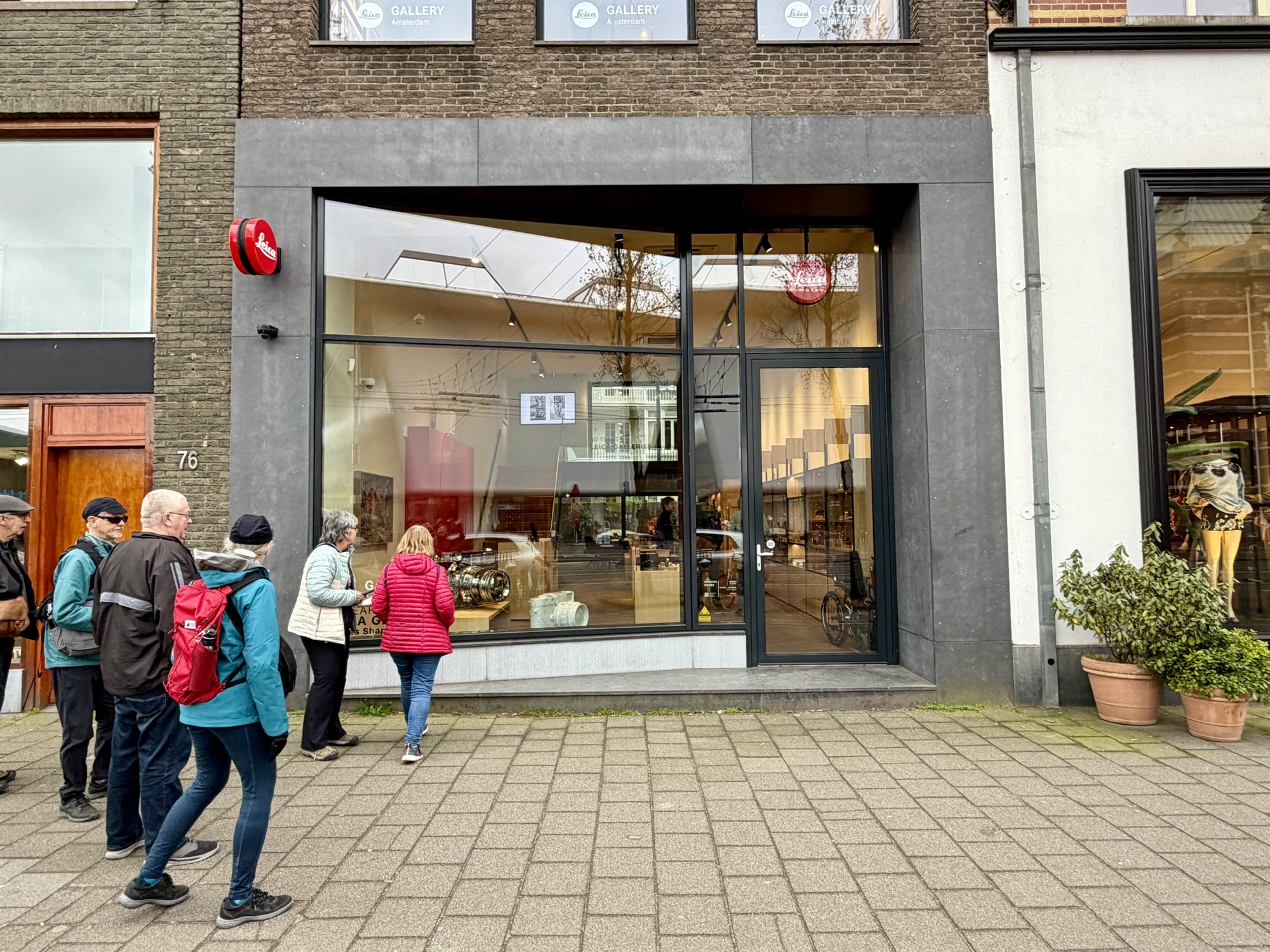
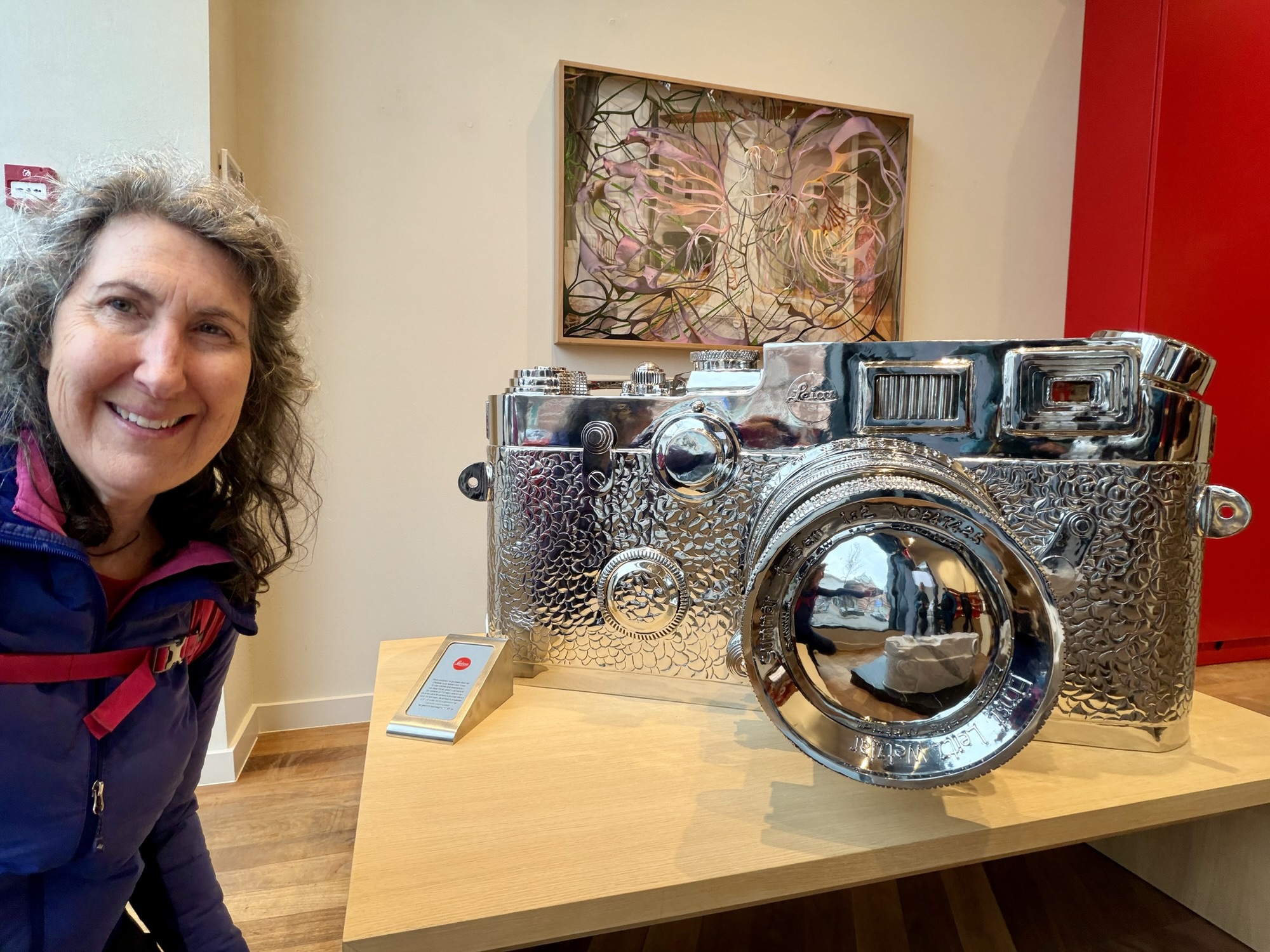
A few doors down from the restaurant was The Leica Store. I recently read that some of these stores have free photography gallery in them and was pleased to learn that Amsterdam was one of the places that had one. I had added it to my Google maps list of things to do in Amsterdam. At lunch, I opened up my list on the map and chose the number of the things on it that were nearby.

After the photography gallery, Alina, Mark, and Cindy went to MOCO while I lead the others on a walk to see some of the things on my list.

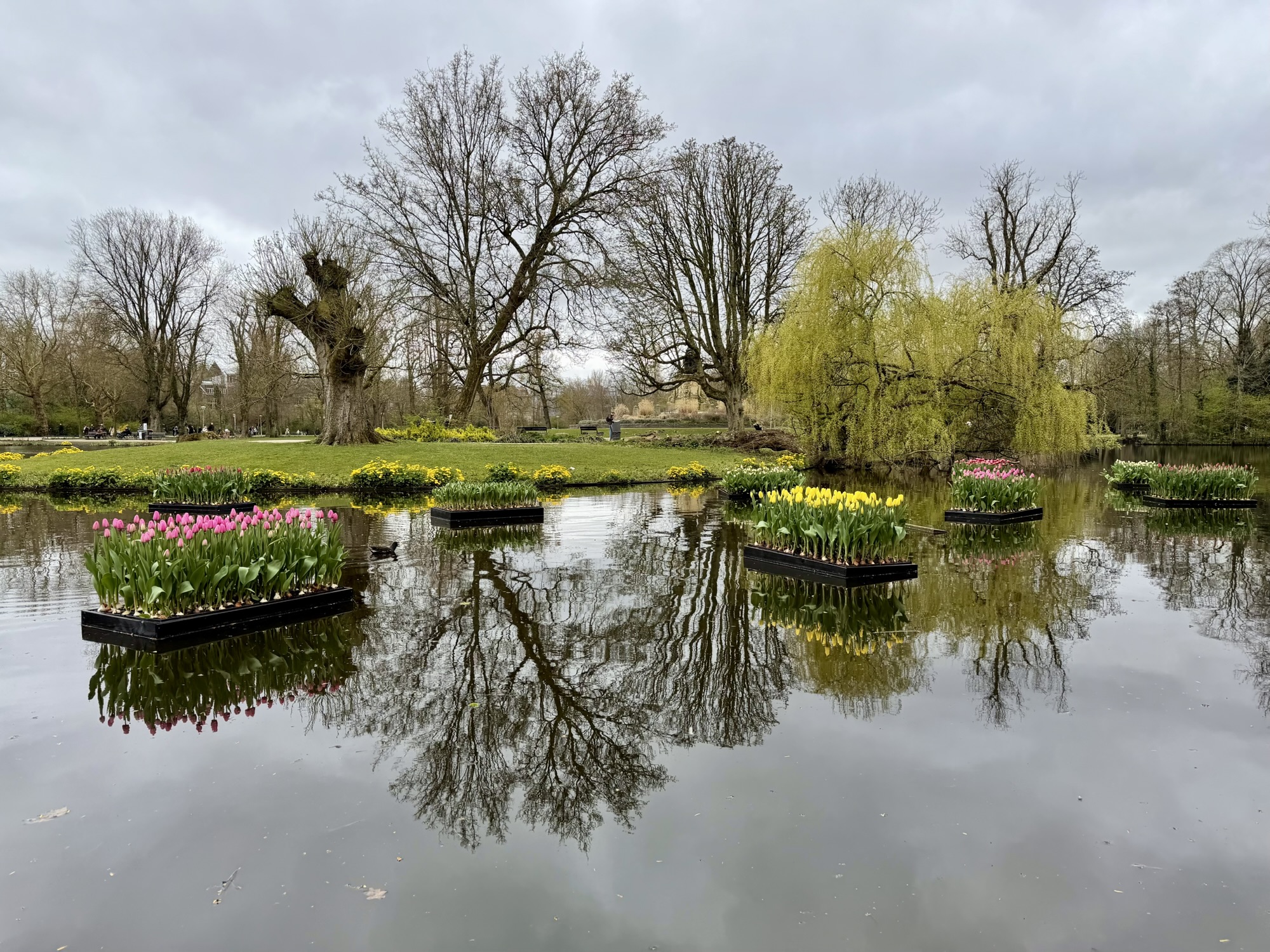
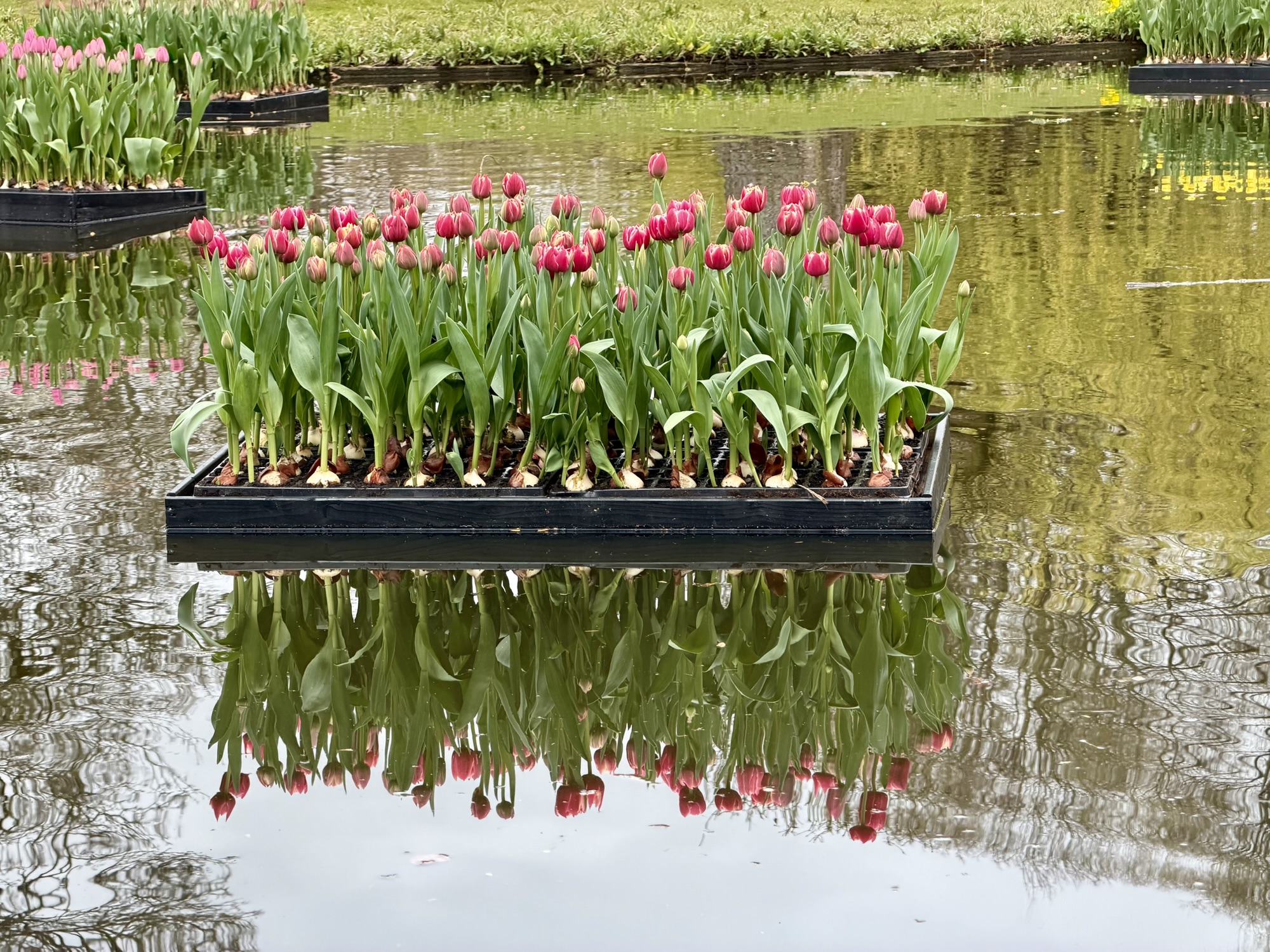
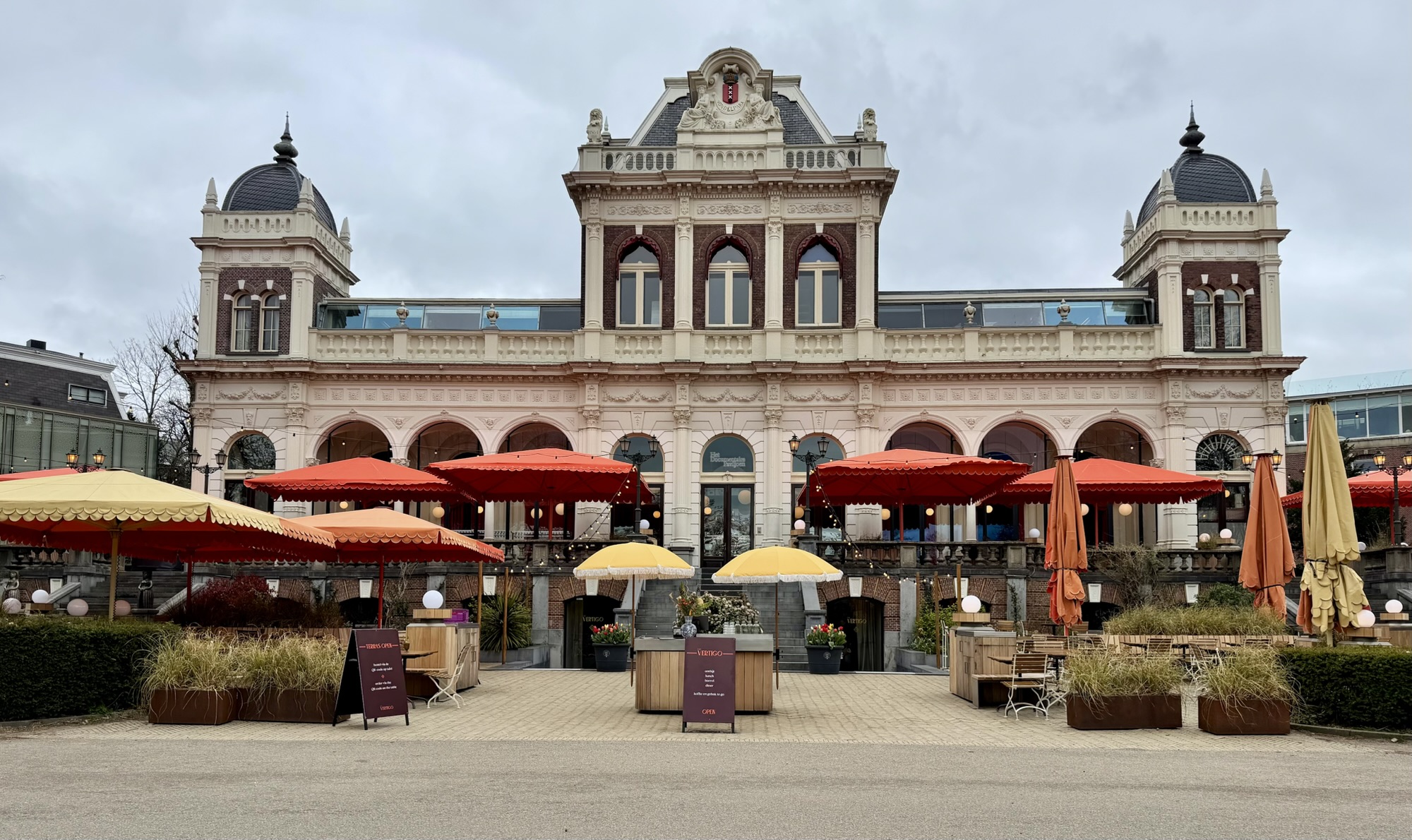
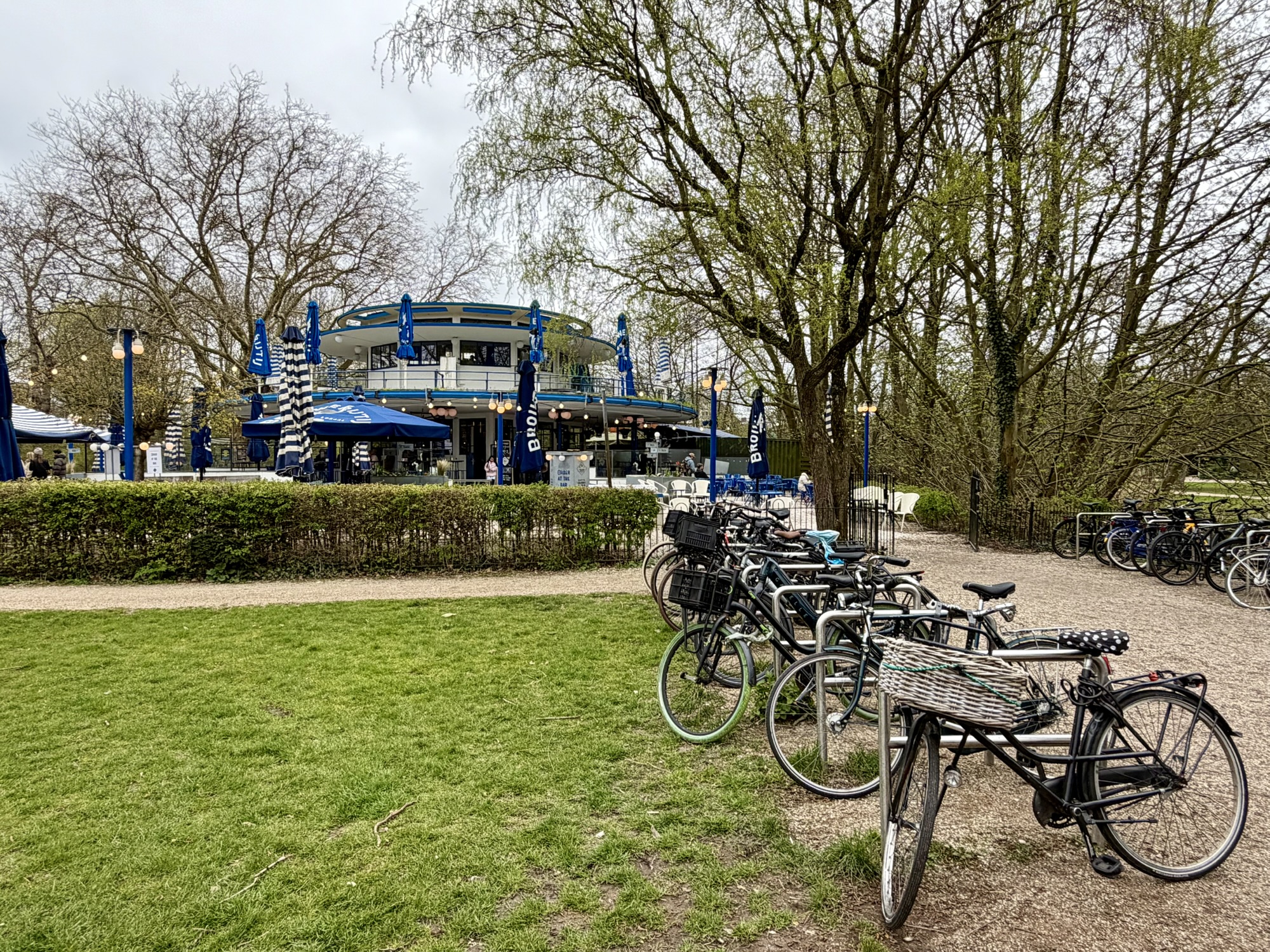
We walked through beautiful Vondelpark, the largest park in Amsterdam, which states back to 1865. We came across two restaurants and these beautiful displays of floating flowers.

The number of people riding their bikes through the park was astonishing.

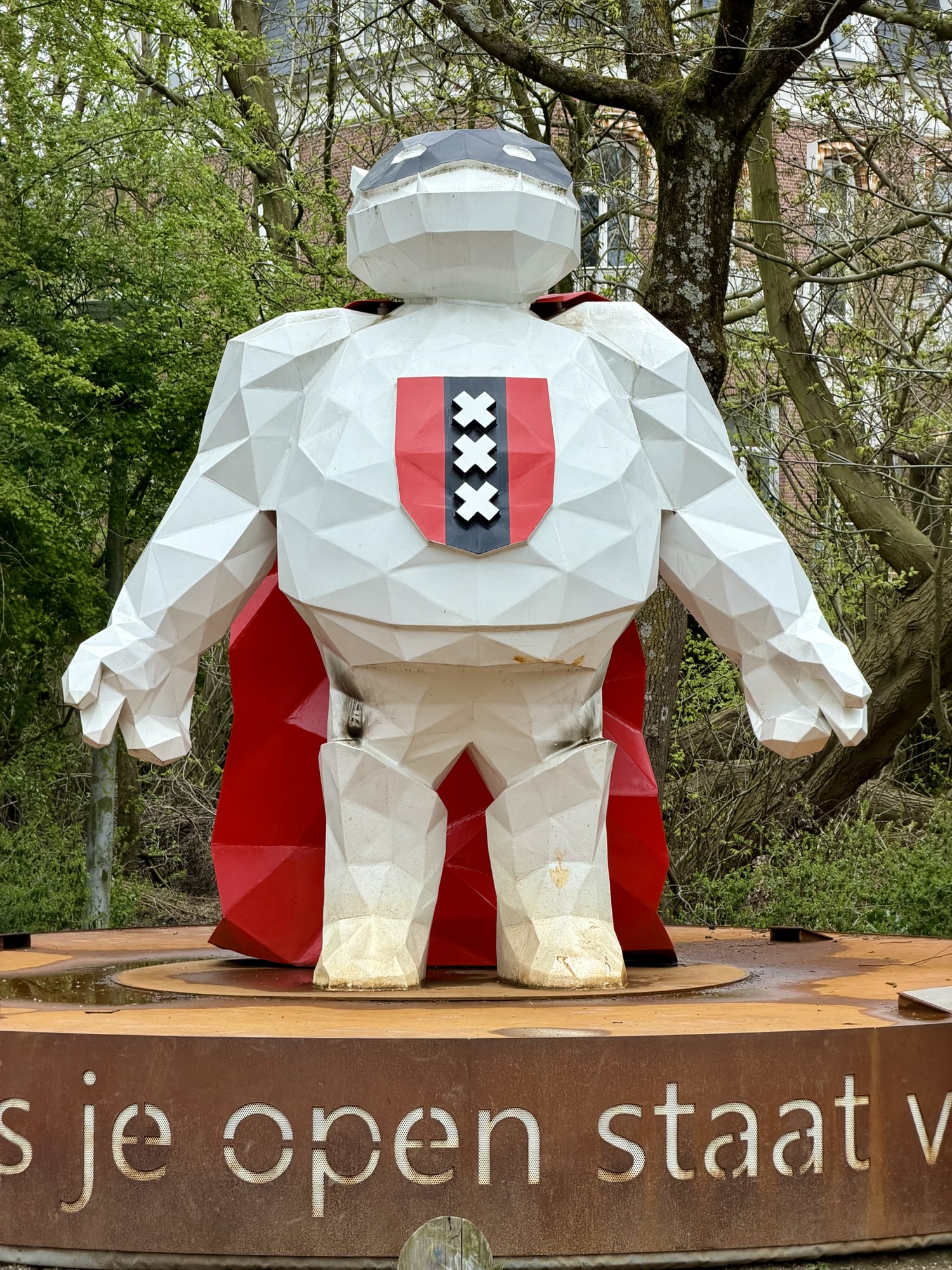
The Amsterdam Monster Factory is a state of the art Augmented Reality /immersive educational tool for everyone. Brought to life as a fun quest through the city, it entails visiting nine animated AR storytelling installations, where the waiting Monsters tell the history of that location through the values that they represent, and connect it to the open minded spirit of Amsterdam.” This was one of the monsters. Because I hadn’t heard about it, and we didn’t have the option installed we weren’t unable to interact with it.

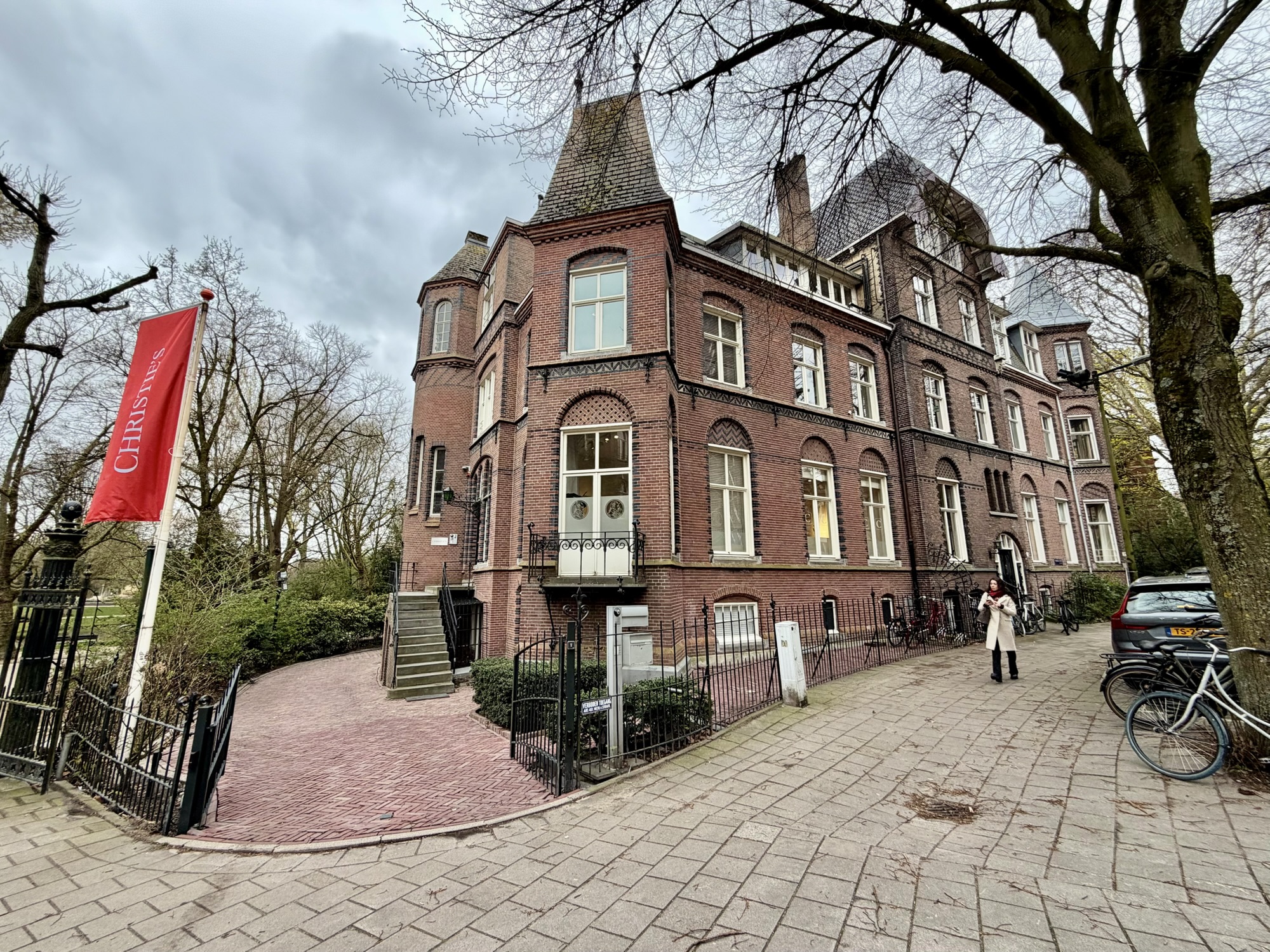
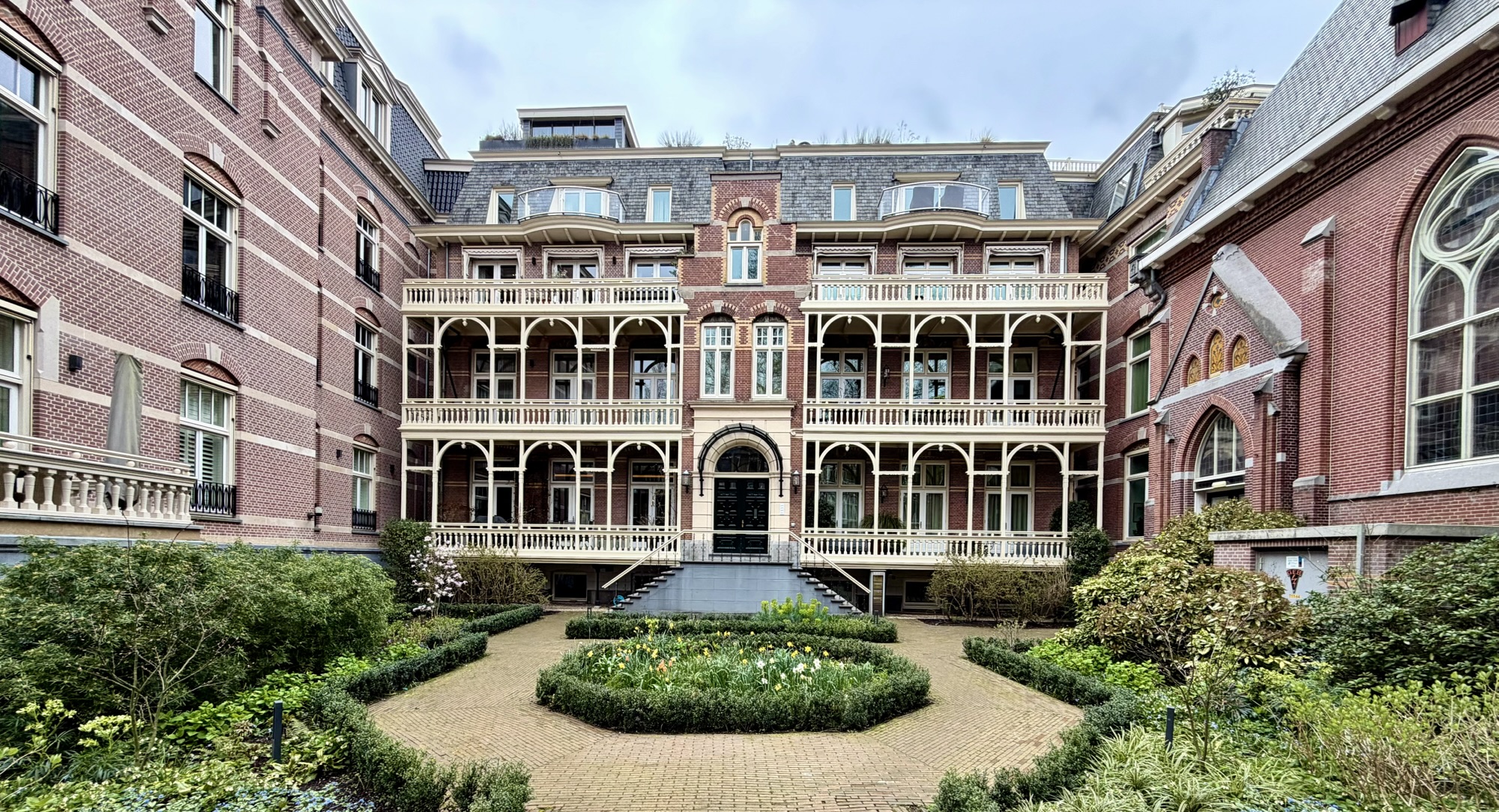
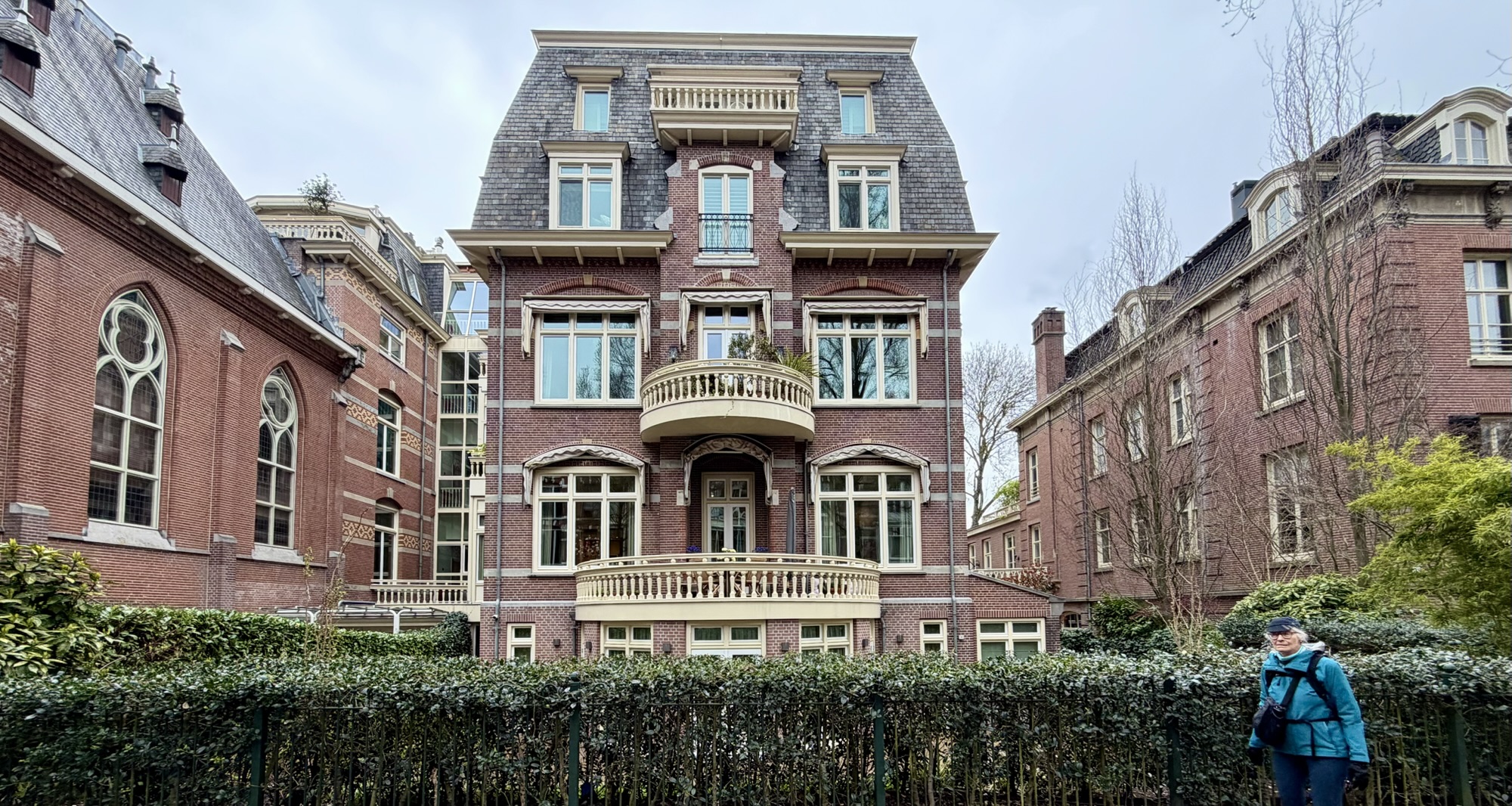
Our next stop was the home of Pierre Cuypers, architect of Central Station, and The Rijksmuseum.

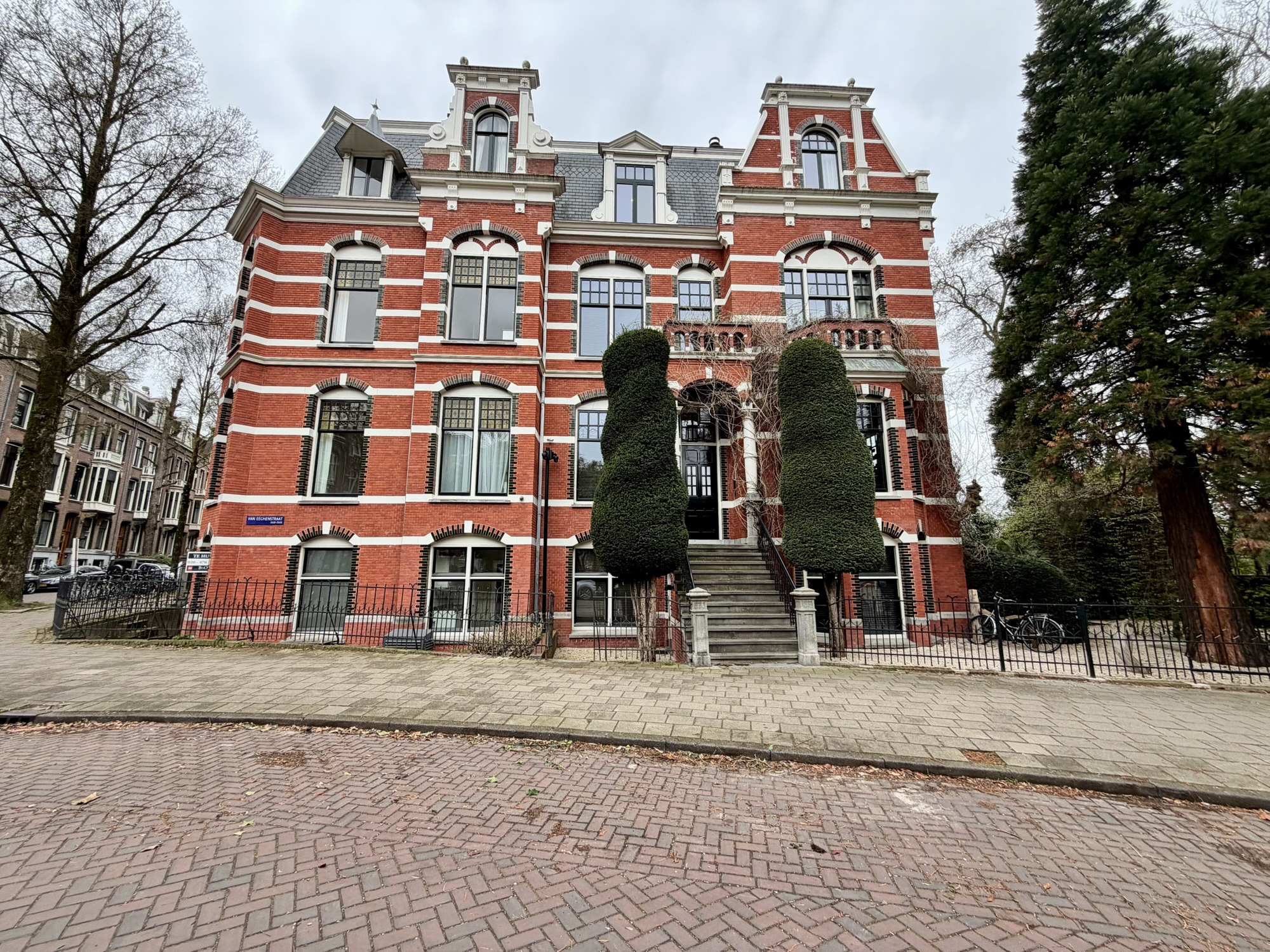
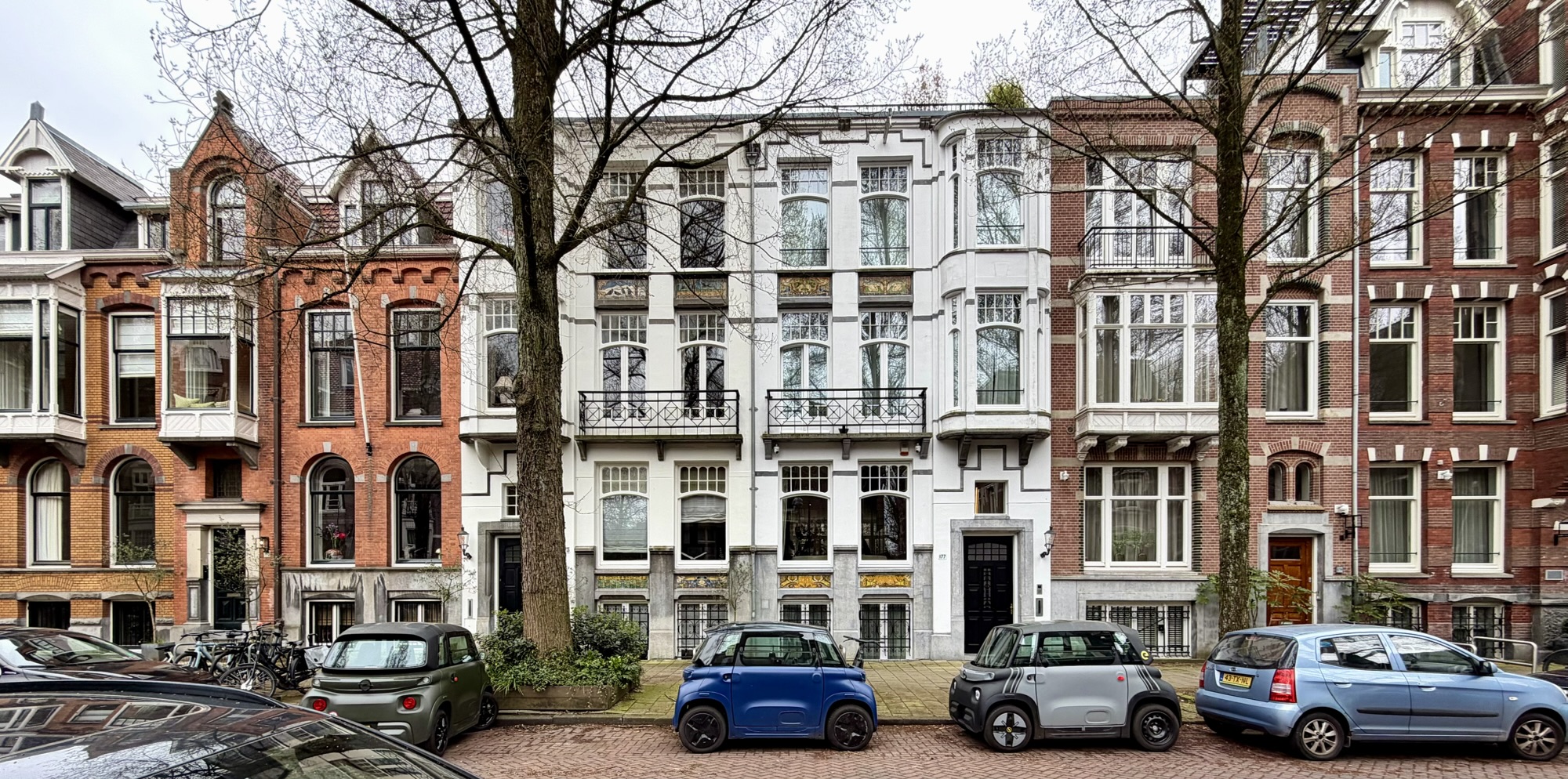
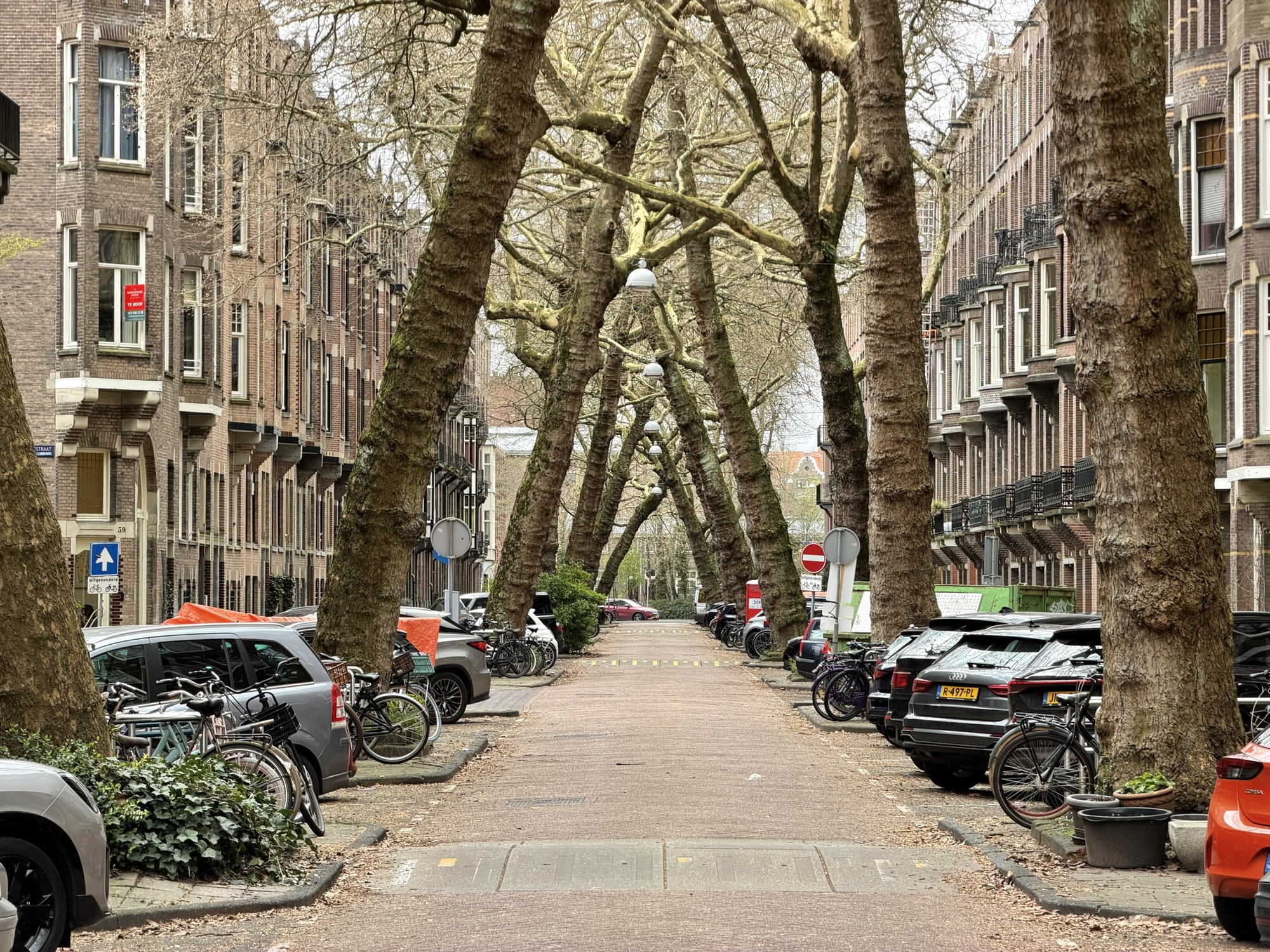
Then we walked to the famous Lomanstraat where the trees are angled and meet in the middle. On the way, we passed through a neighbourhood of beautiful homes.

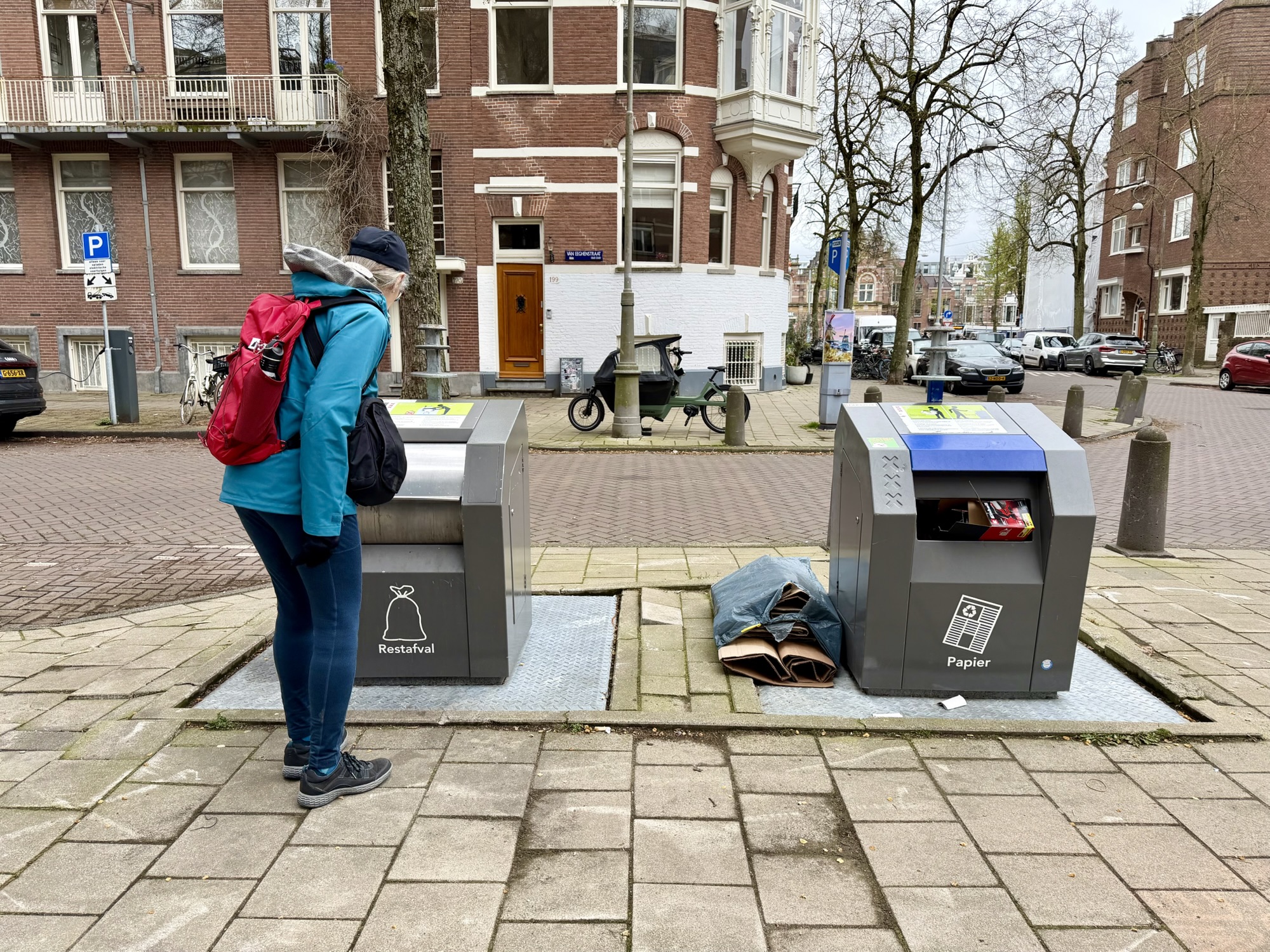
Amsterdam uses a network of underground, central collection bins for household garbage, reducing street clutter and odor. Residents sort waste (residual, paper, glass, plastic/packaging, organic) and use a digital pass to open designated neighbourhood containers. The bins are automatically emptied by specialized trucks. 

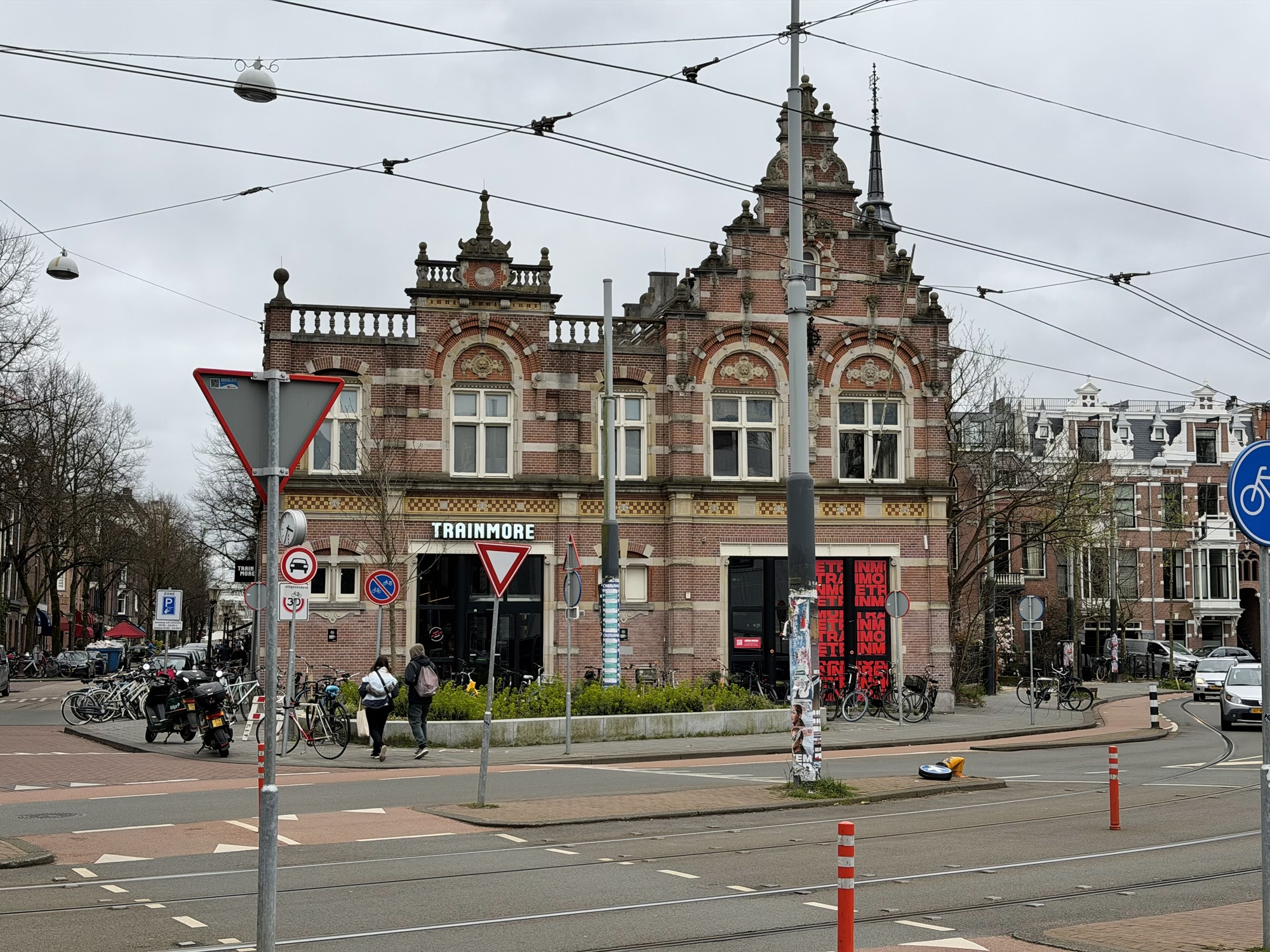
This beautiful building is an old tram depot which dates back to 1893. It was built for horse drawn trams.

I couldn’t pass up, capturing this iconic Dutch scene.

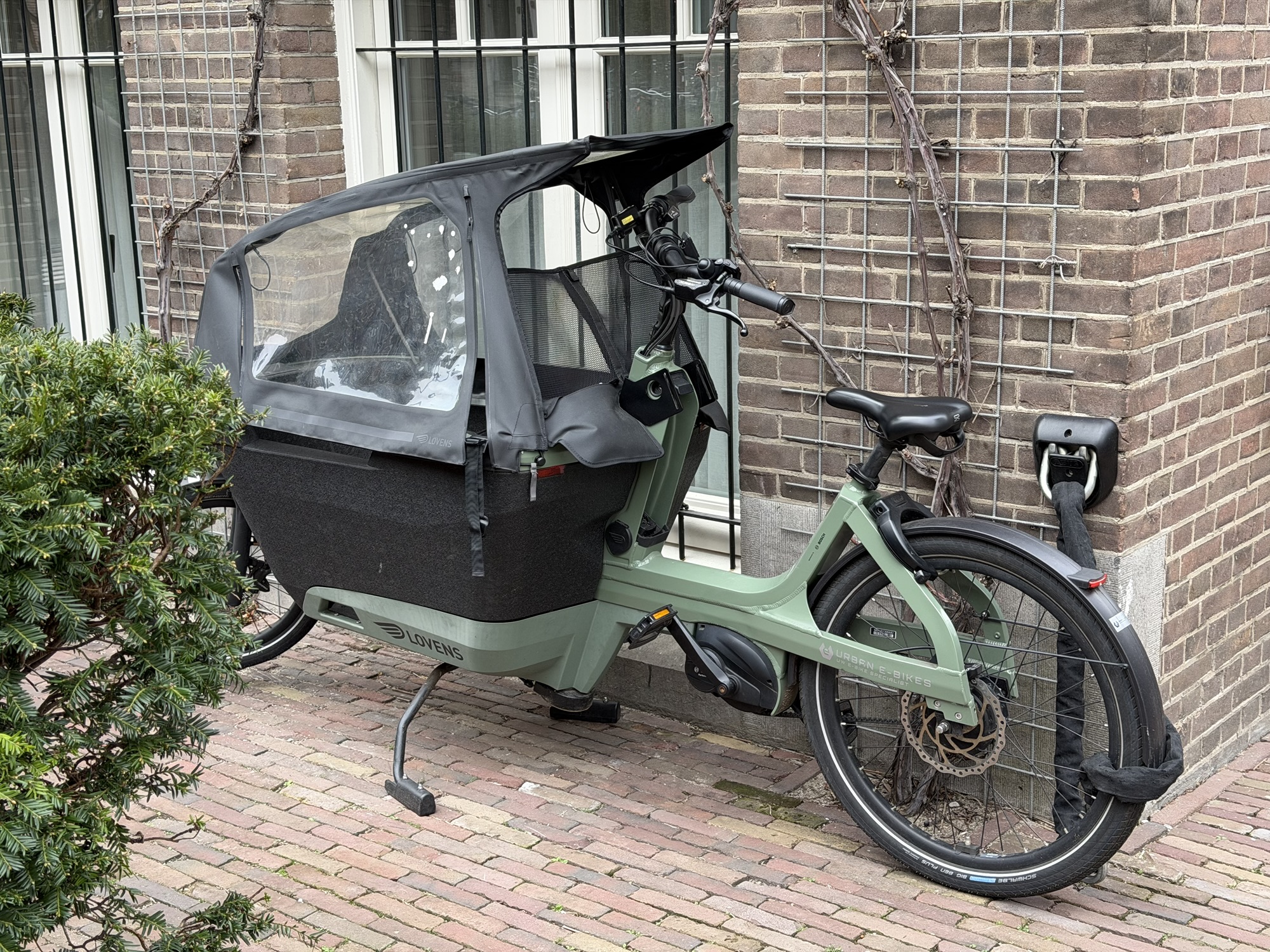
This house had a fixture in the wall for chaining up their cargo bike.

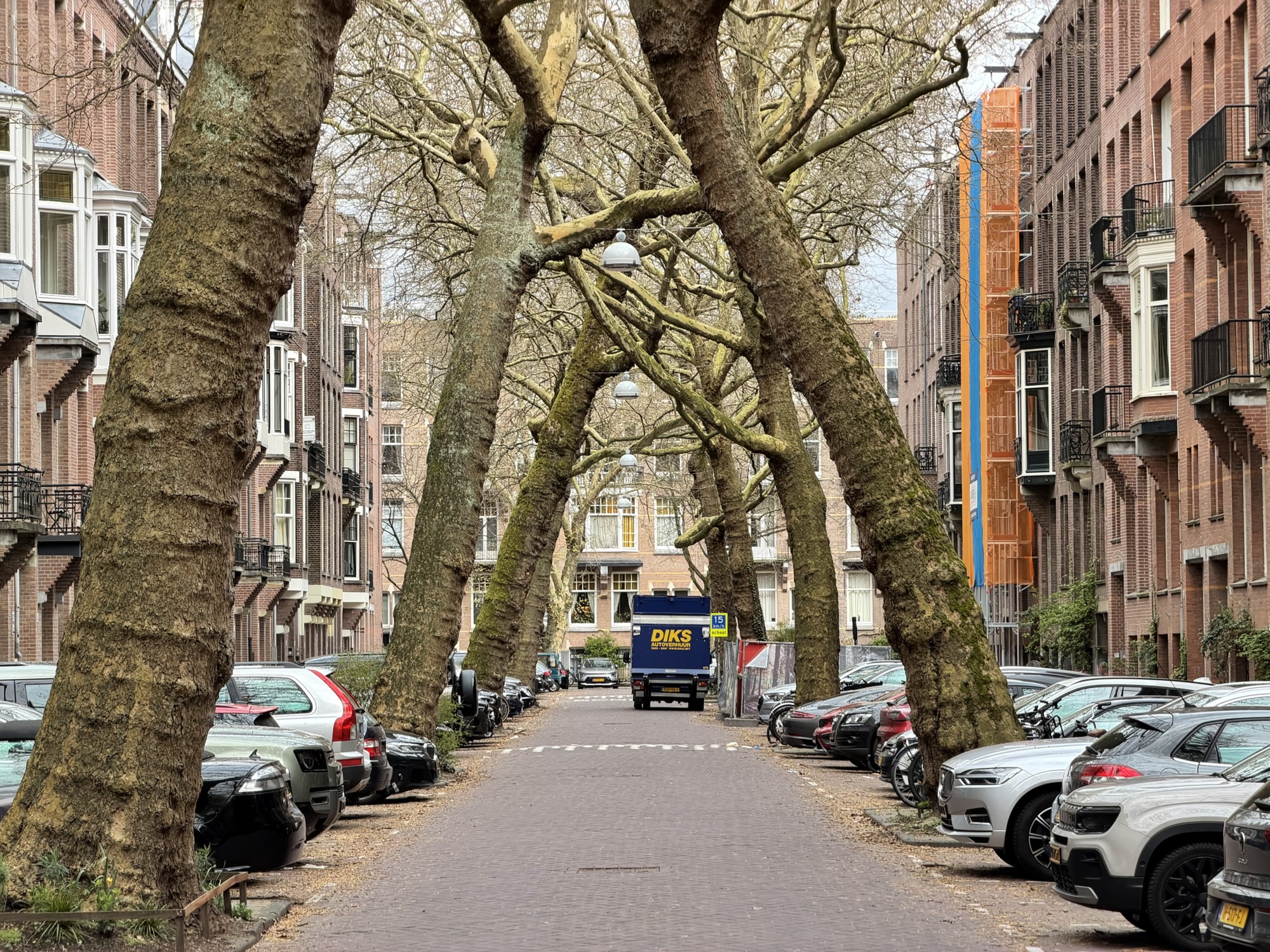
This is the famous Lomanstraat. “is a quiet, picturesque residential street renowned for its unique canopy of, century-old, leaning London plane trees. These trees grow toward the center, forming a natural, tunnel-like effect that makes it one of the city’s most photographed, scenic spots, particularly in autumn.”

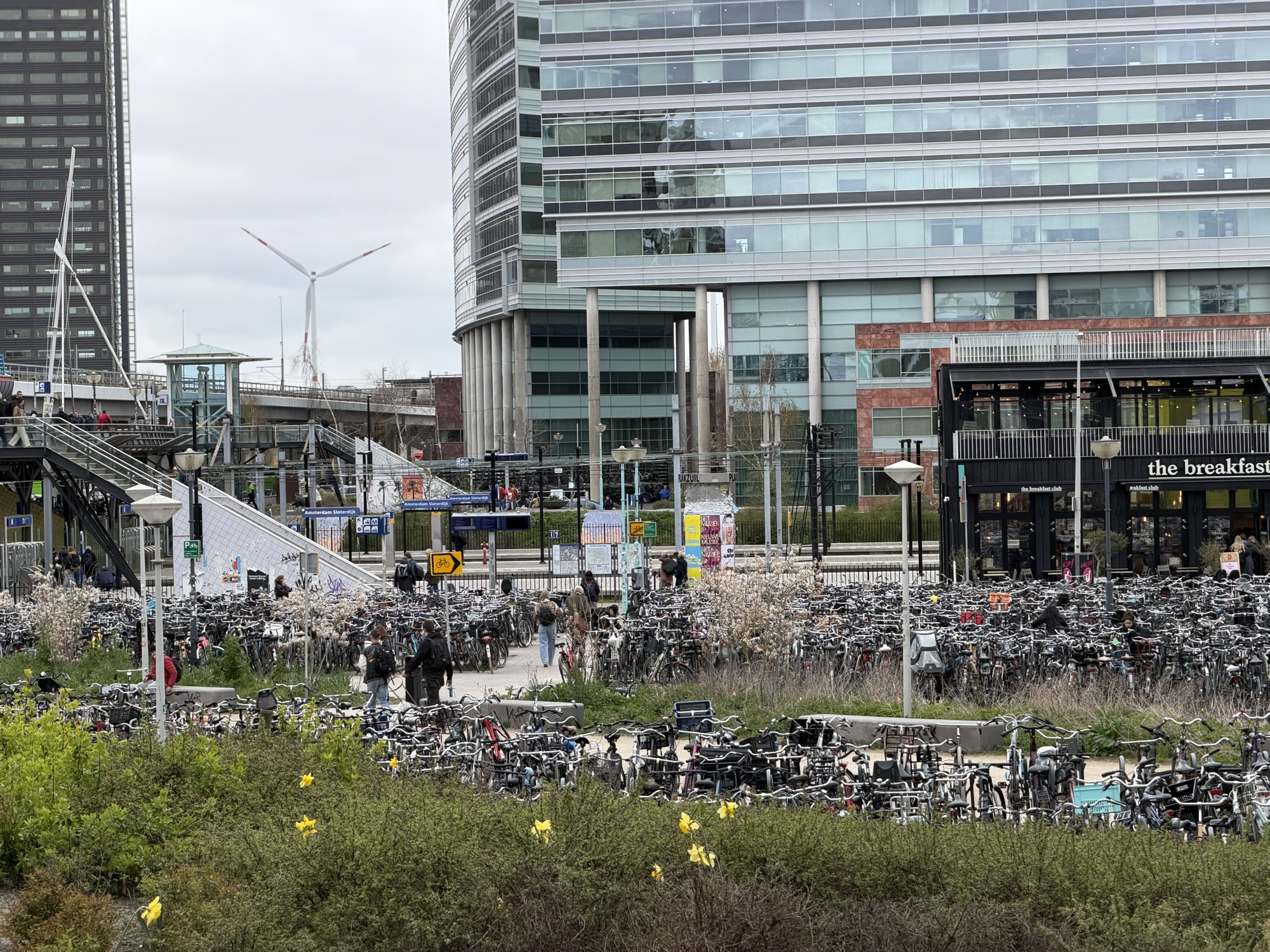
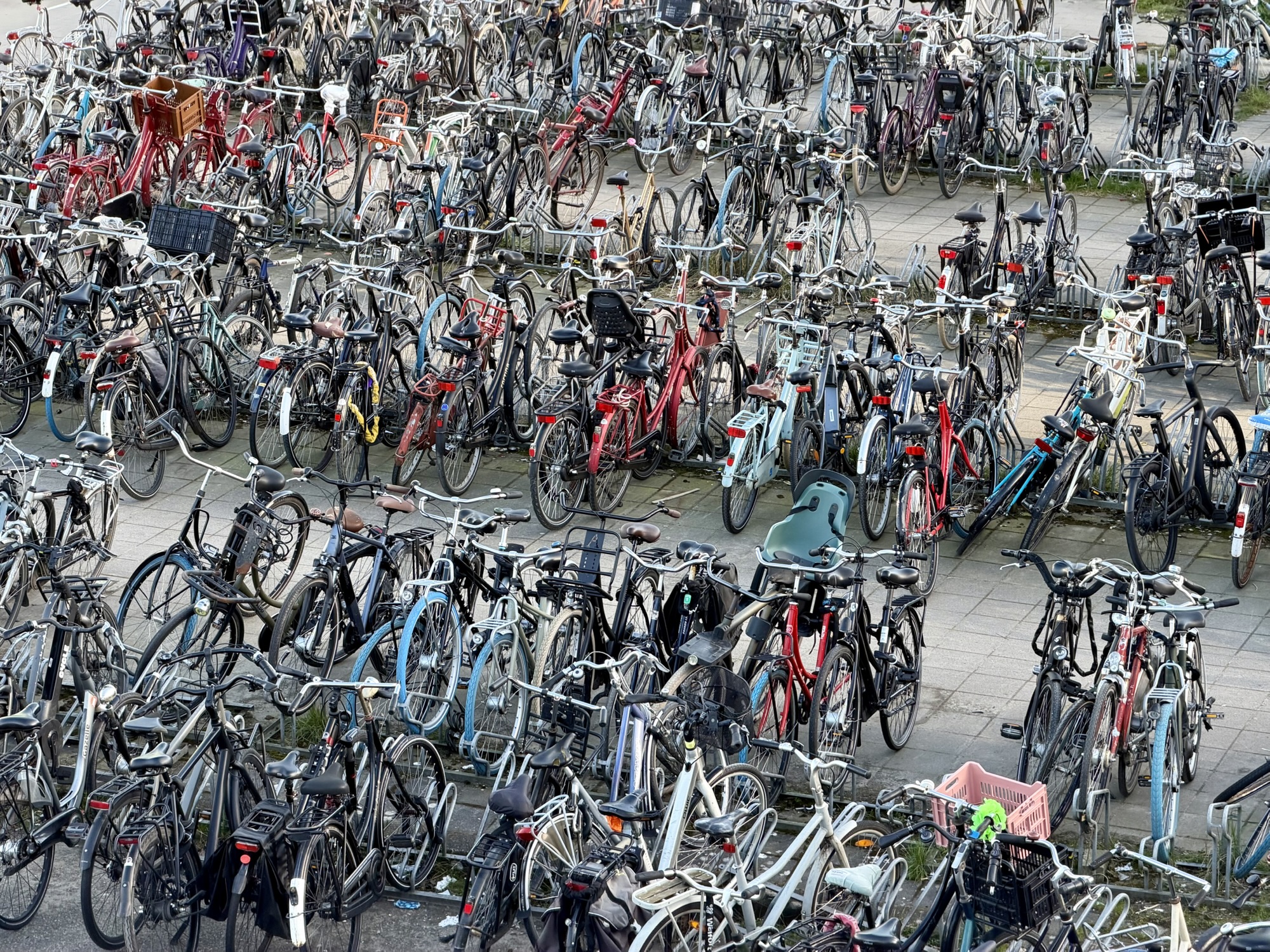
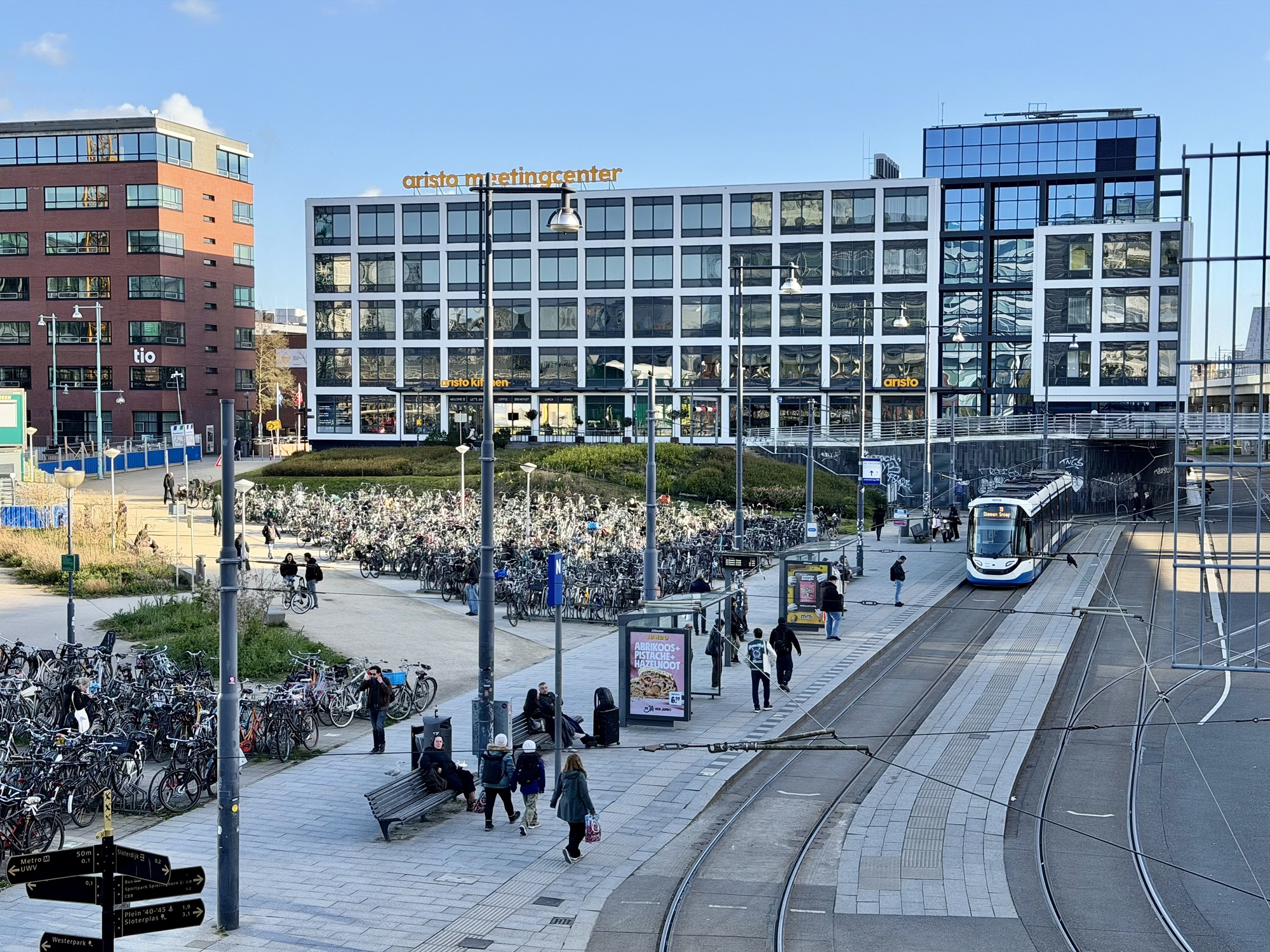
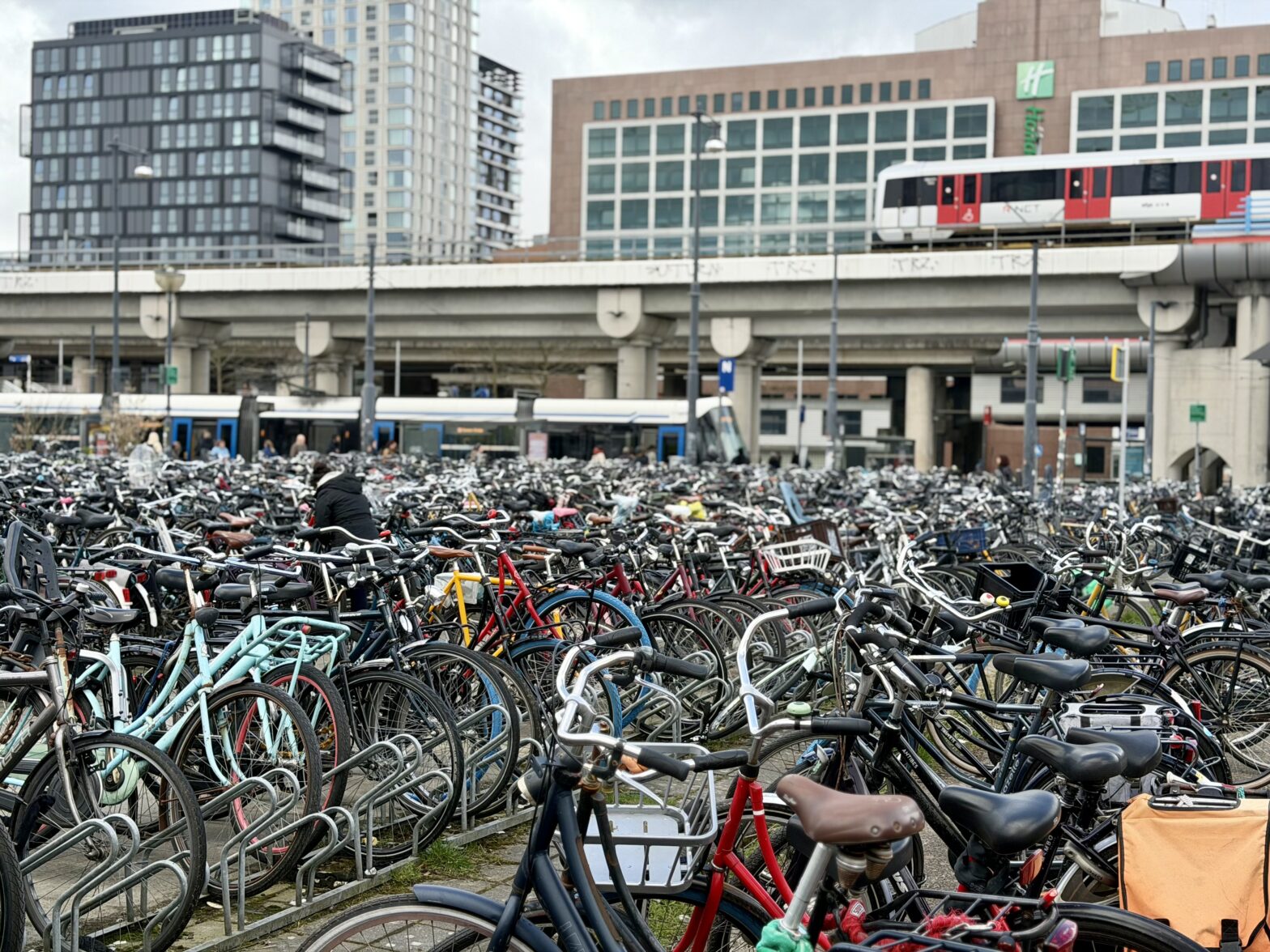
We then took two trams back to Slloterdijk Station where I couldn’t resist photographing all the bikes once again from an elevated level.

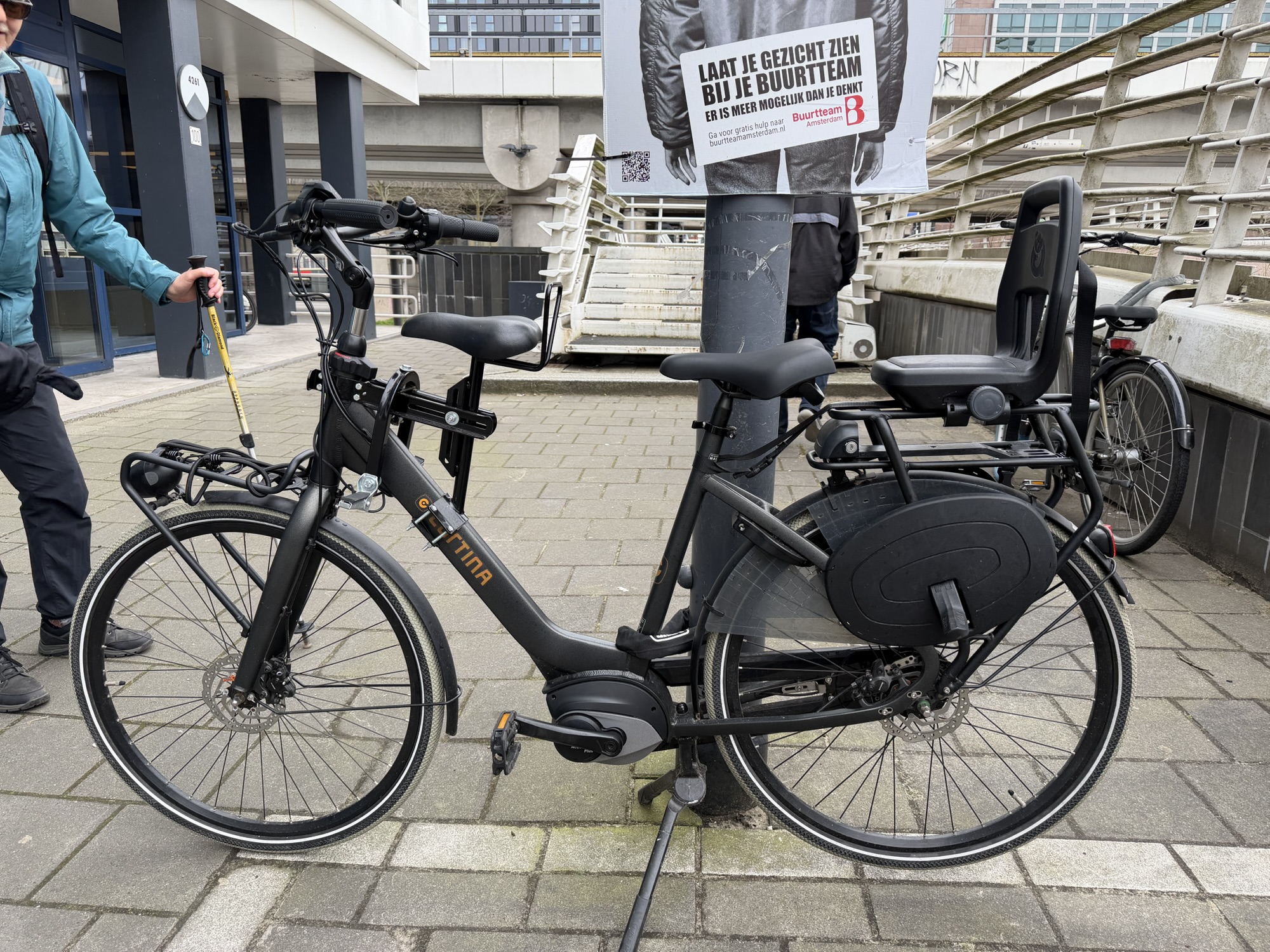
This bike is set up for carrying two children. One in front of the rider with a seat on the crossbar, and one with the seat on the rack.

We got back to the hotel a little earlier than usual today so that I could finish yesterday’s blog.

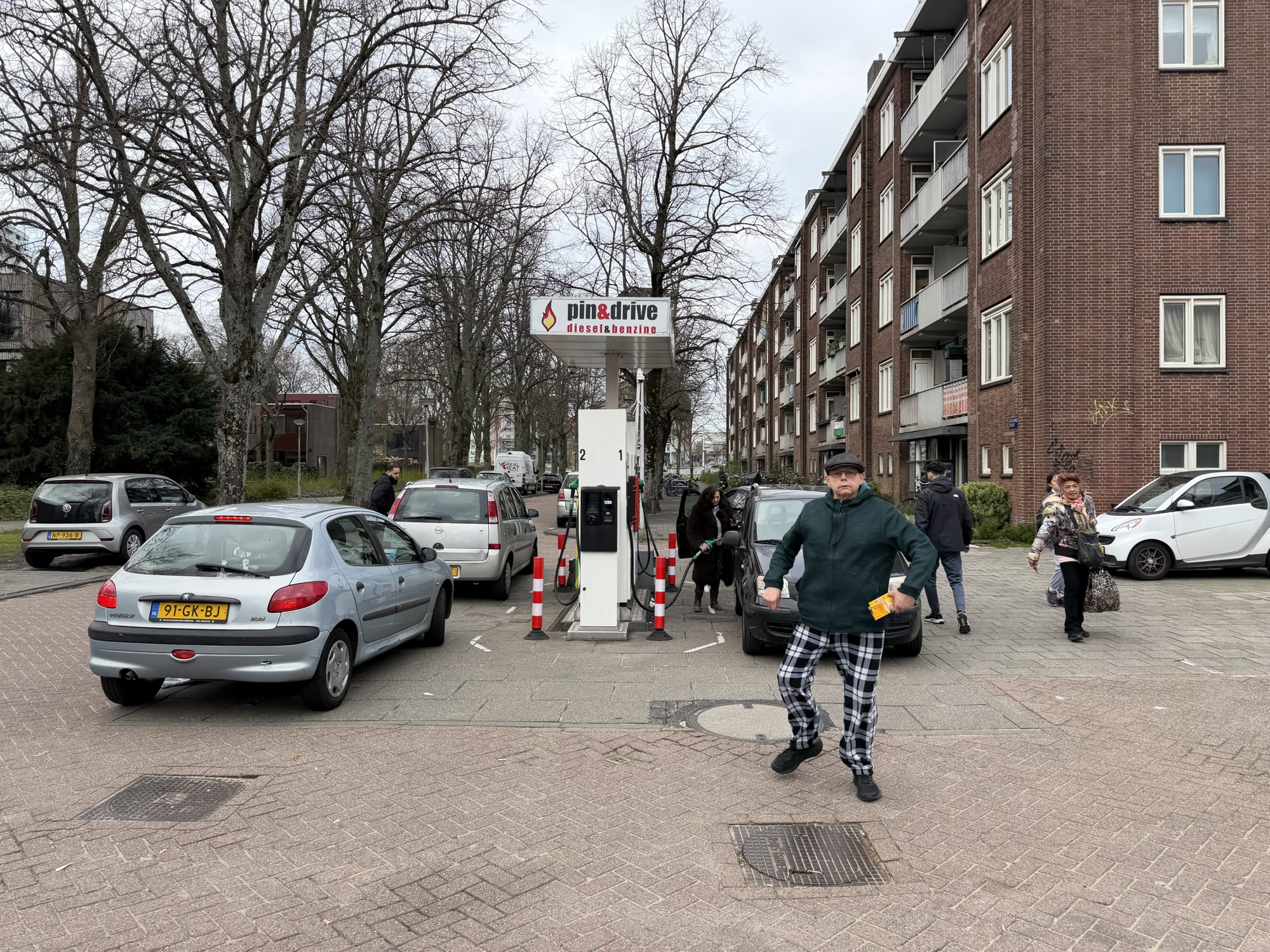
Other than at the highway service stations this is the first gas station I’ve seen in Amsterdam. We were on our way to dinner.

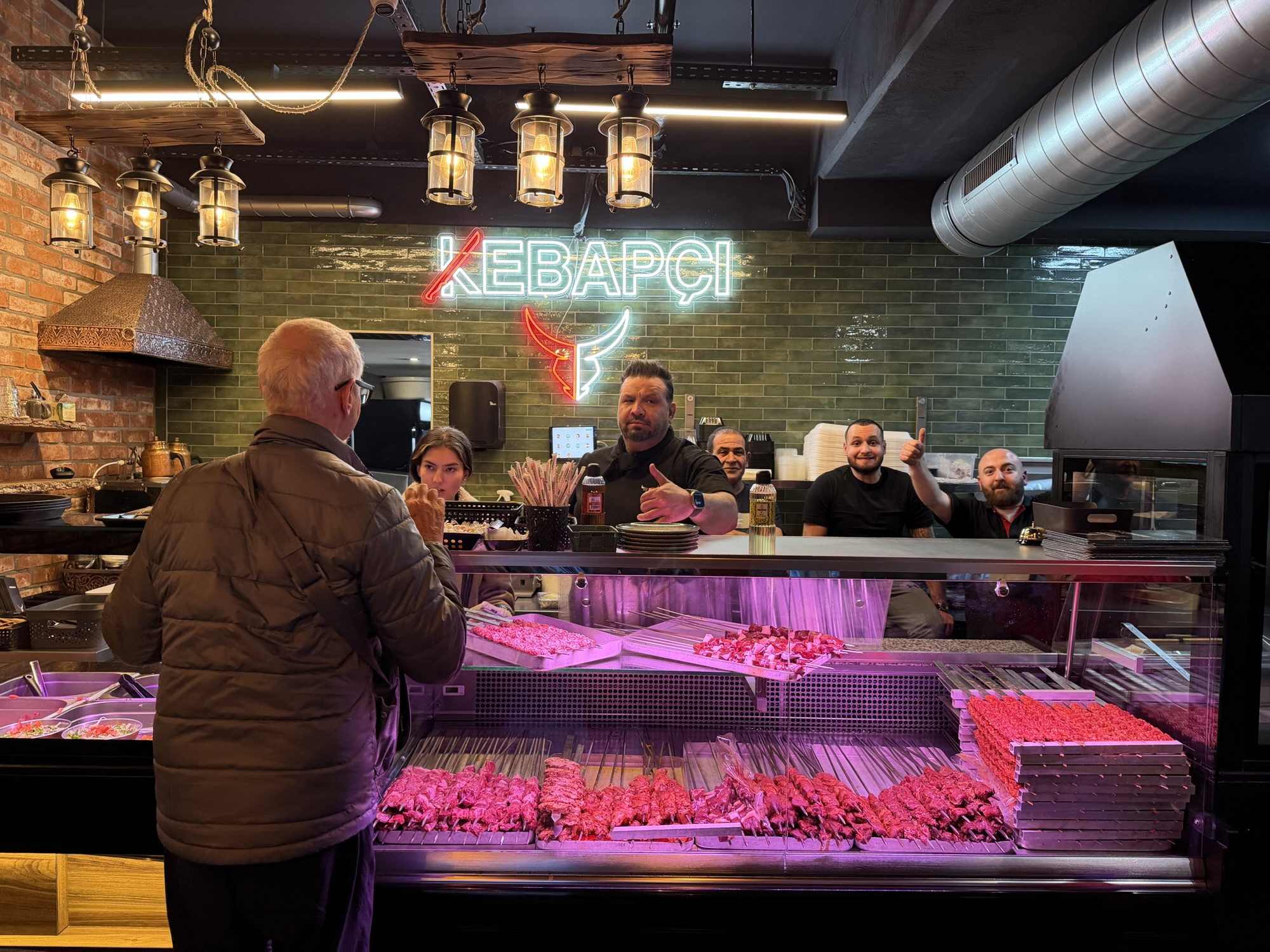
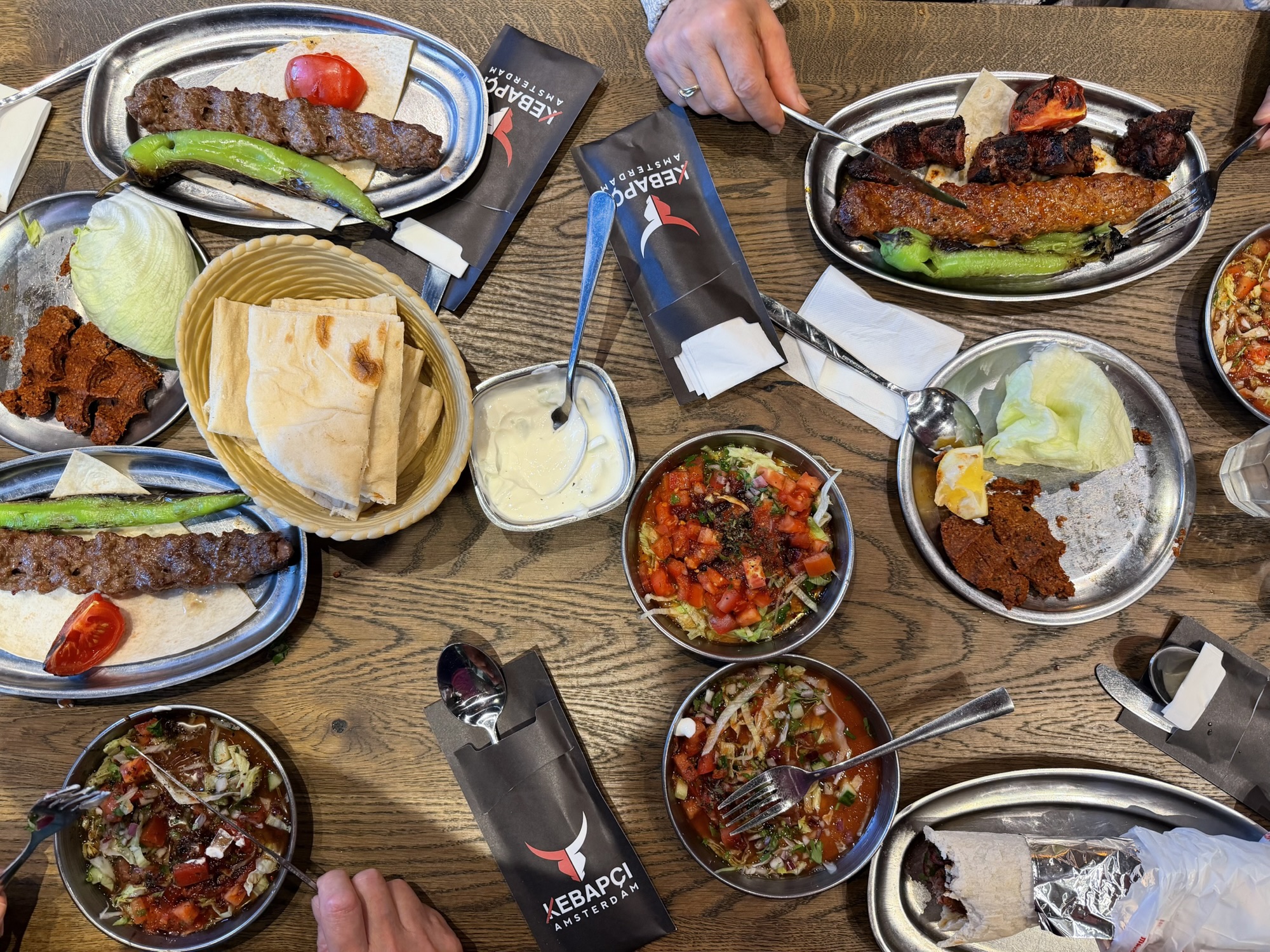
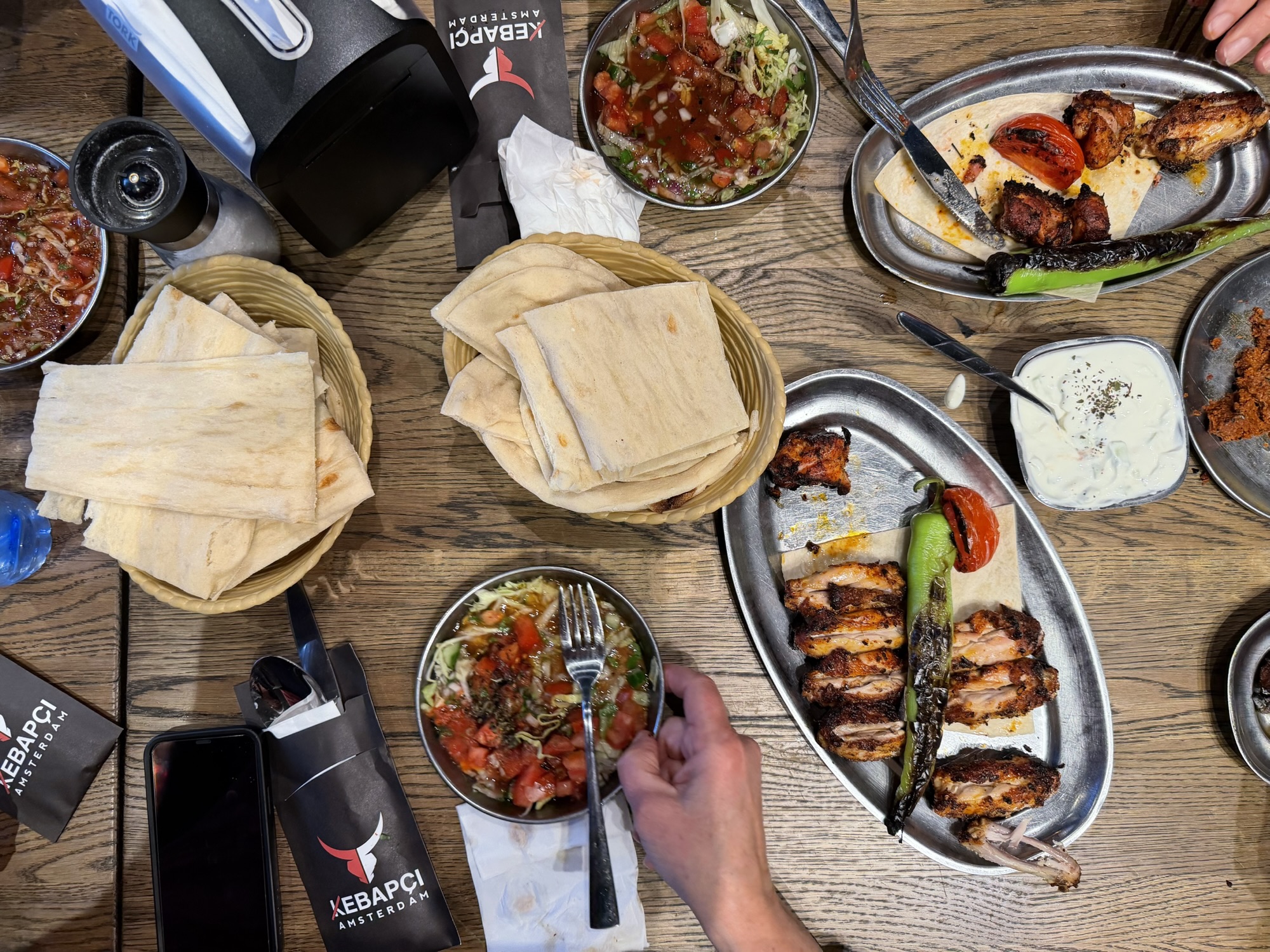
We went to a Turkish restaurant for dinner tonight. The food was delicious.

Tomorrow the group is splitting up again with Wayne, David and Dayle heading to a cheese auction. Alina and I are going to try riding bikes into Amsterdam‘s craziness. I’m not sure what Mark and Cindy will be up to. Perhaps I can get Cindy to guest blog about some of the things that she has done separate from me.

Europe 2026 – Day 4 – Rotterdam, Delft, The Hague

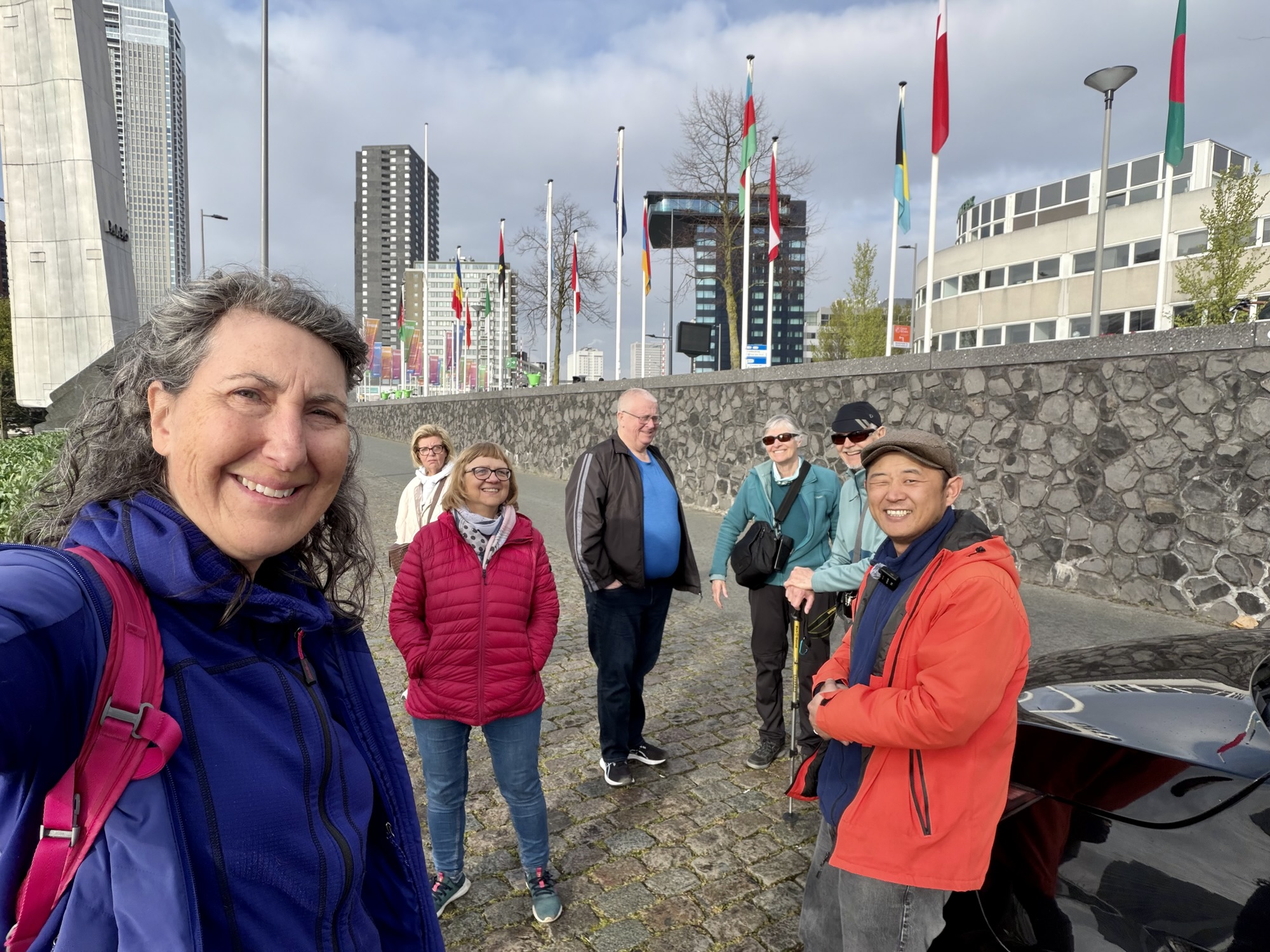
Today David and Dayle, Alina, Wayne and I took a guided tour to Rotterdam, Delft and The Hague. Our driver was Pete, who was born in Rotterdam. There was a couple from Chicago, and a woman from Melbourne. We were in a nine seat Mercedes van.

The couple from Chicago were MAGAs. They believe the Minnesota welfare scam story. They don’t believe in climate change. They think that the Obama‘s enriched themselves more than during their his presidency, than Trump has during his. I said to them twice we should stop talking about this. There was no point.

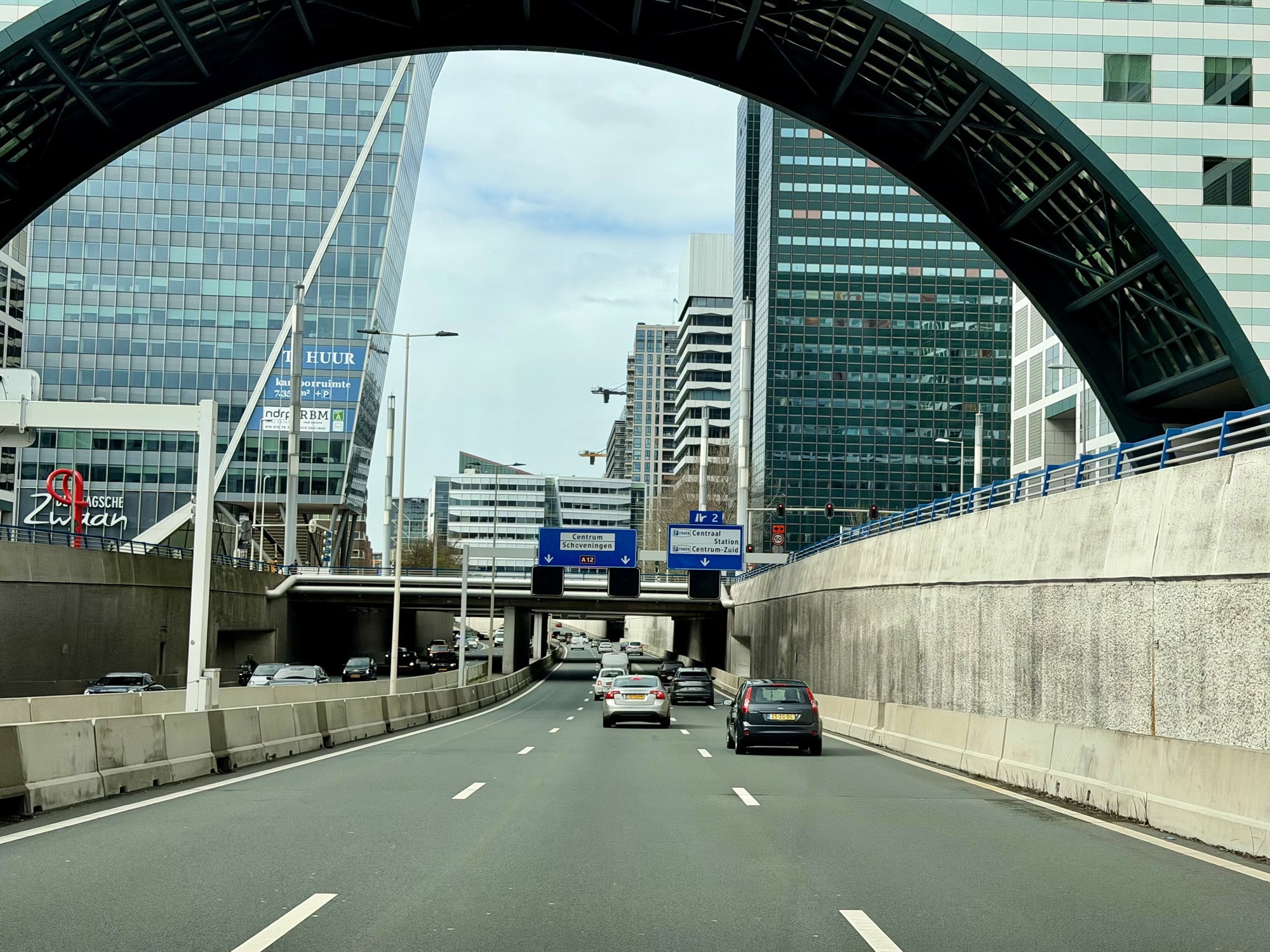
Regional electric rail, runs next to the highway. Trains go 130-200kph here. Amsterdam to Rotterdam is about 30 minutes by rail, twice that by car.

I took almost 500 pictures today and have whittled down t what I will share in the blog to about 70. It’s already 11 PM as I begin to write so I’m going to try to be somewhat brief. I apologies in advance for any typos. It was an amazing day of new experiences and they’re just isn’t enough time to go into a lot of detail. At the end of my descriptions and photos, I will include a verbatim description that came from the tour company.

Rotterdam and The Hague are the second and third largest cities in The Netherlands.

All of the tallest buildings in the Netherlands are in Rotterdam, Rotterdam is more open and green than Amsterdam, and more car friendly, but still has lots of bicycles.

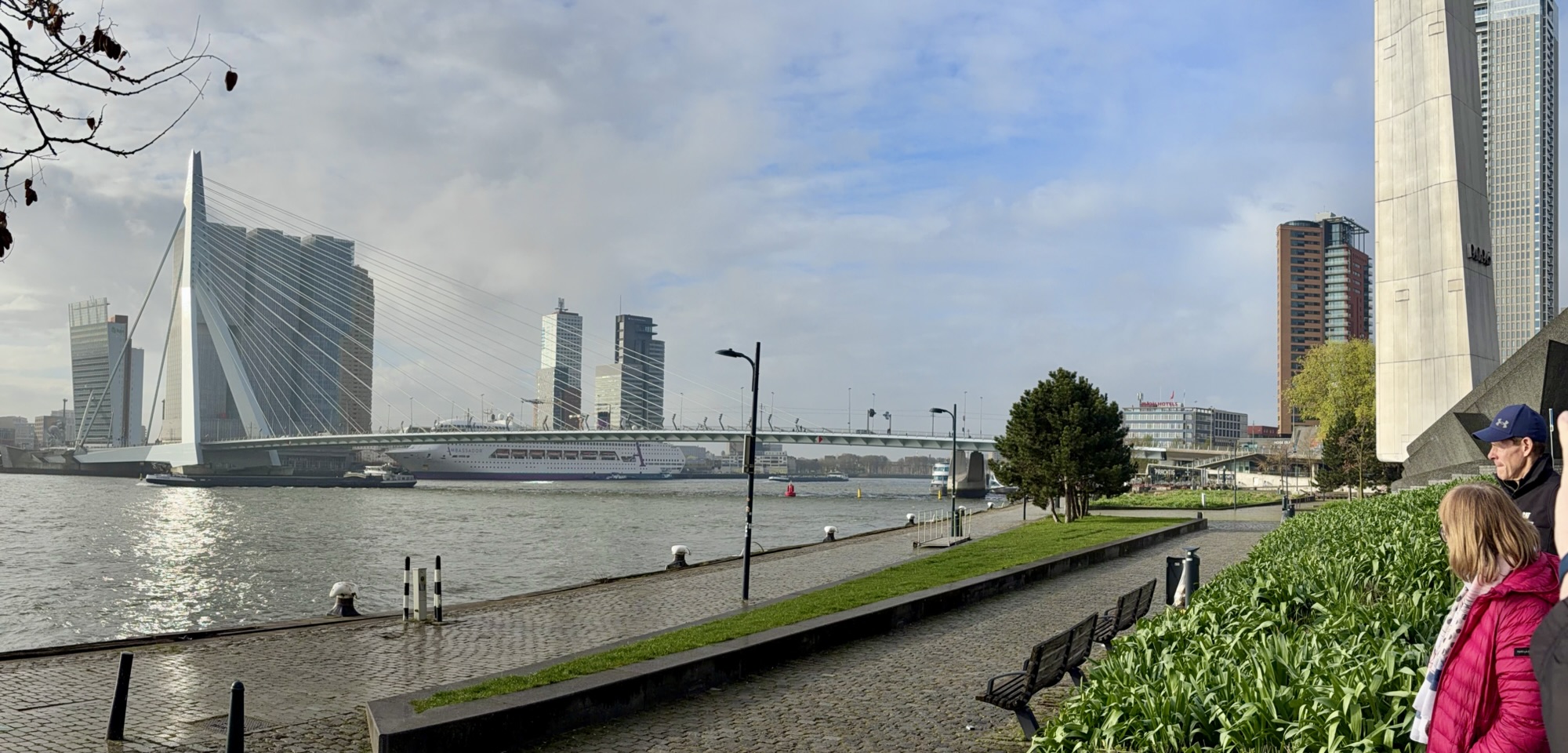
Erasmus Bridge was built in 1997. Rotterdam port is the largest in Europe and at one point in time was the largest in the world.  Due to its proximity to the sea, it is a very windy city.  On the day, the bridge was meant to open. It was unable to do so because of the amount that it was swaying in the wind. It used to be closed many days per year until it was reinforced, and now there were many fewer closures. The bridge has two lanes of motor vehicle traffic, two sidewalks, tram, lines, and bike lanes.

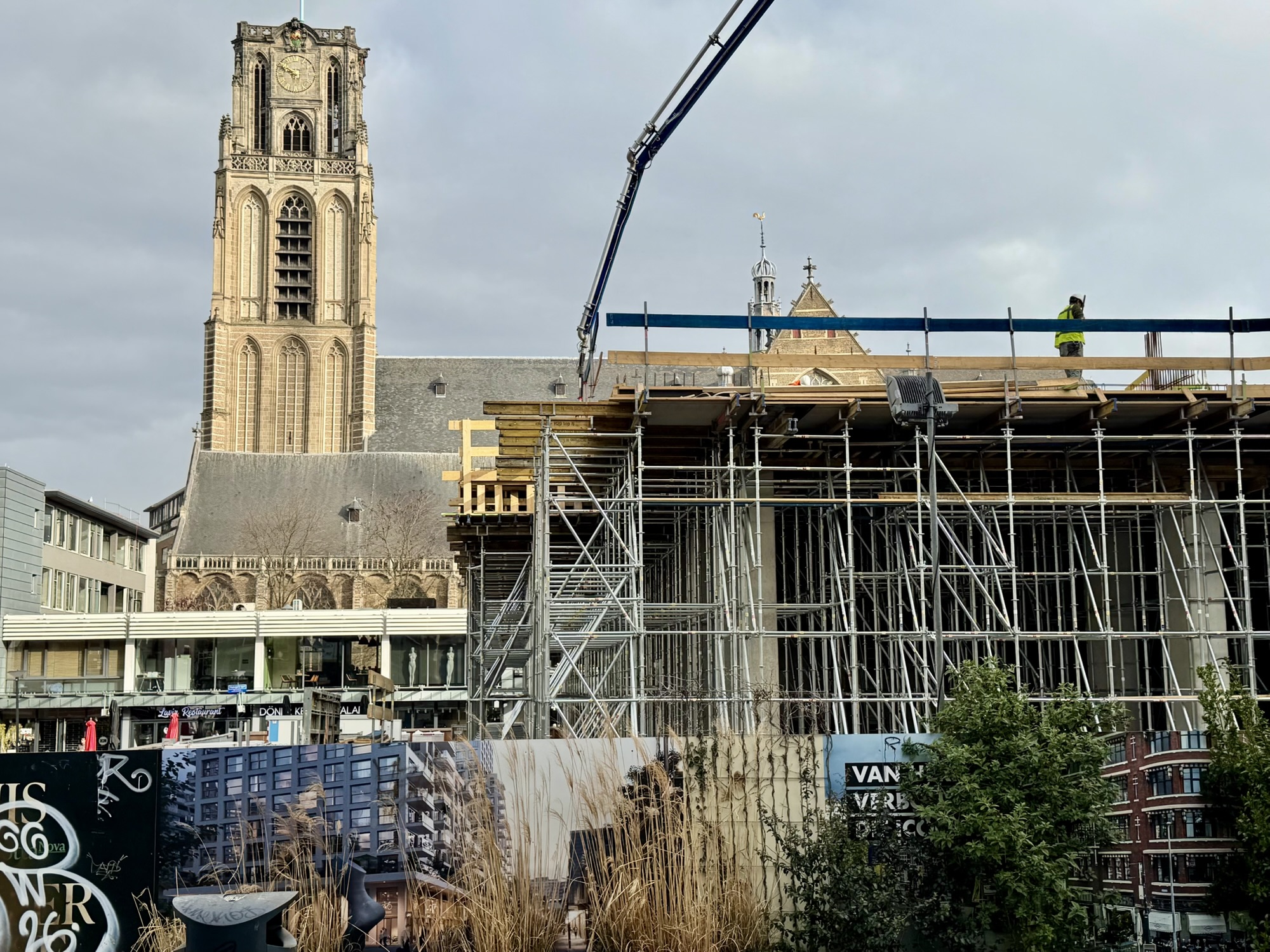
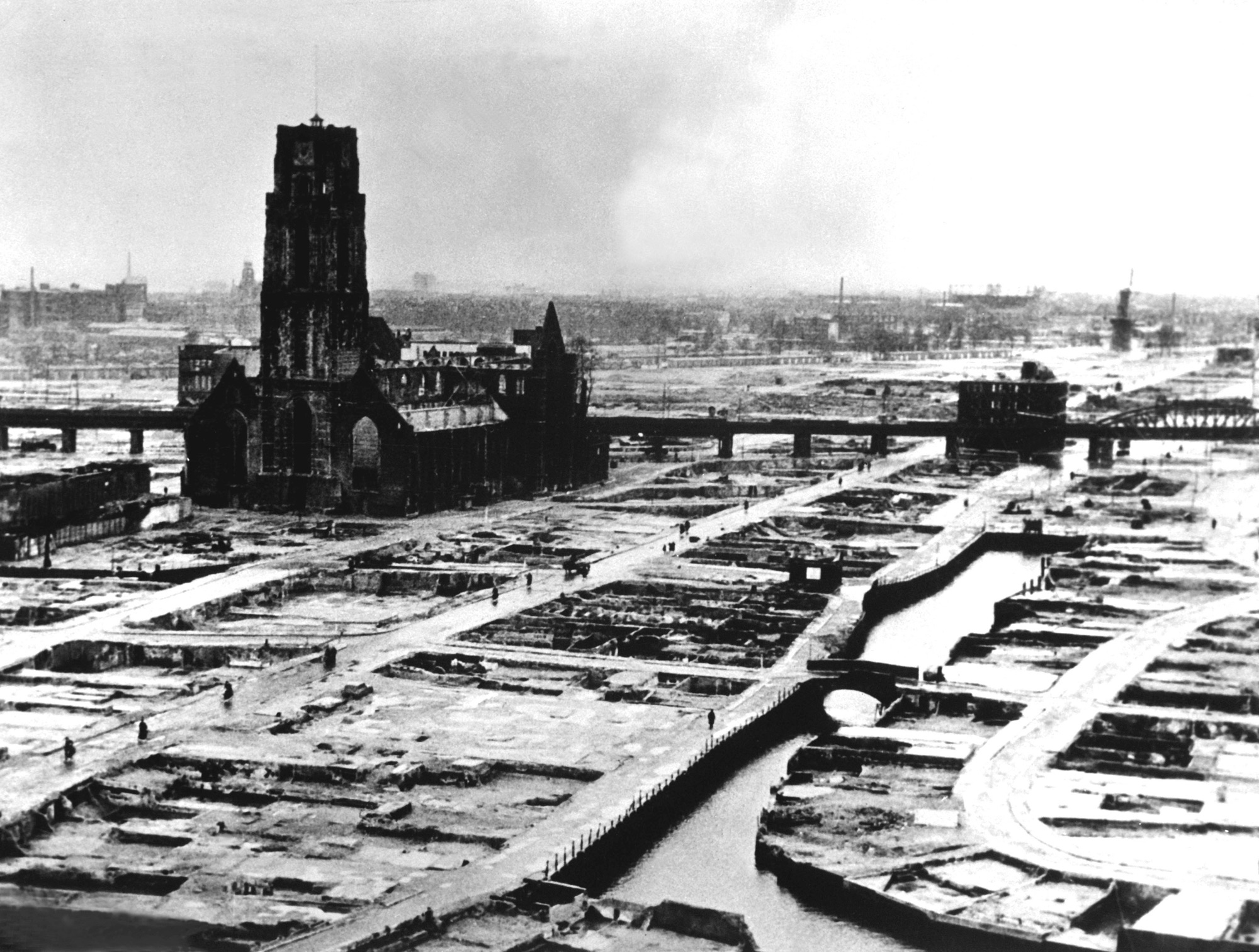
Only two cities in the Netherlands were heavily bombed during World War II. : Rotterdam and  Arnhem, which is near the German border. The church in this picture was about the only thing standing at the end of the war as you can see in this picture shared by our guide Pete. The German ultimatum ordering the Dutch commander of Rotterdam to cease fire was delivered to him at 10:30 a.m. on May 14, 1940. At 1:22 p.m., German bombers set the whole inner city of Rotterdam ablaze, killing 30,000 of its inhabitants.

The church was built in 1572. Only 13% of people in the Netherlands are religious. In the Netherlands, a rooster on a church steeple is commonly used to indicate a Protestant (Reformed) church, serving as a distinct visual marker that sets it apart from traditional Catholic churches, which typically feature a cross. The use of the rooster is rooted in both theological symbolism and historical tradition, often functioning as a weathervane.

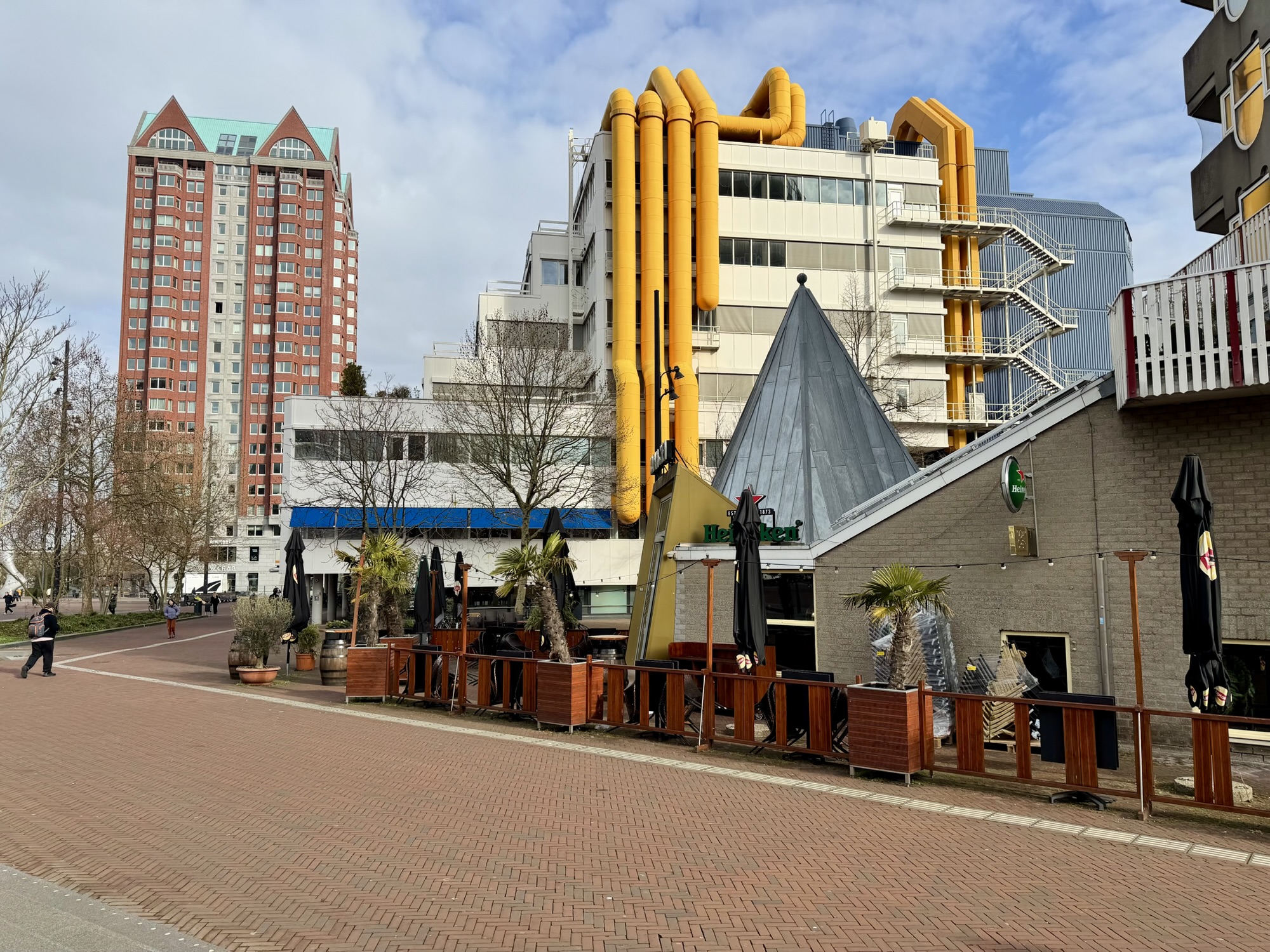
The public library is colourful, and known as The octopus, for the yellow ducts surrounding it. The building in front of it is colloquially known as The Pencil. 

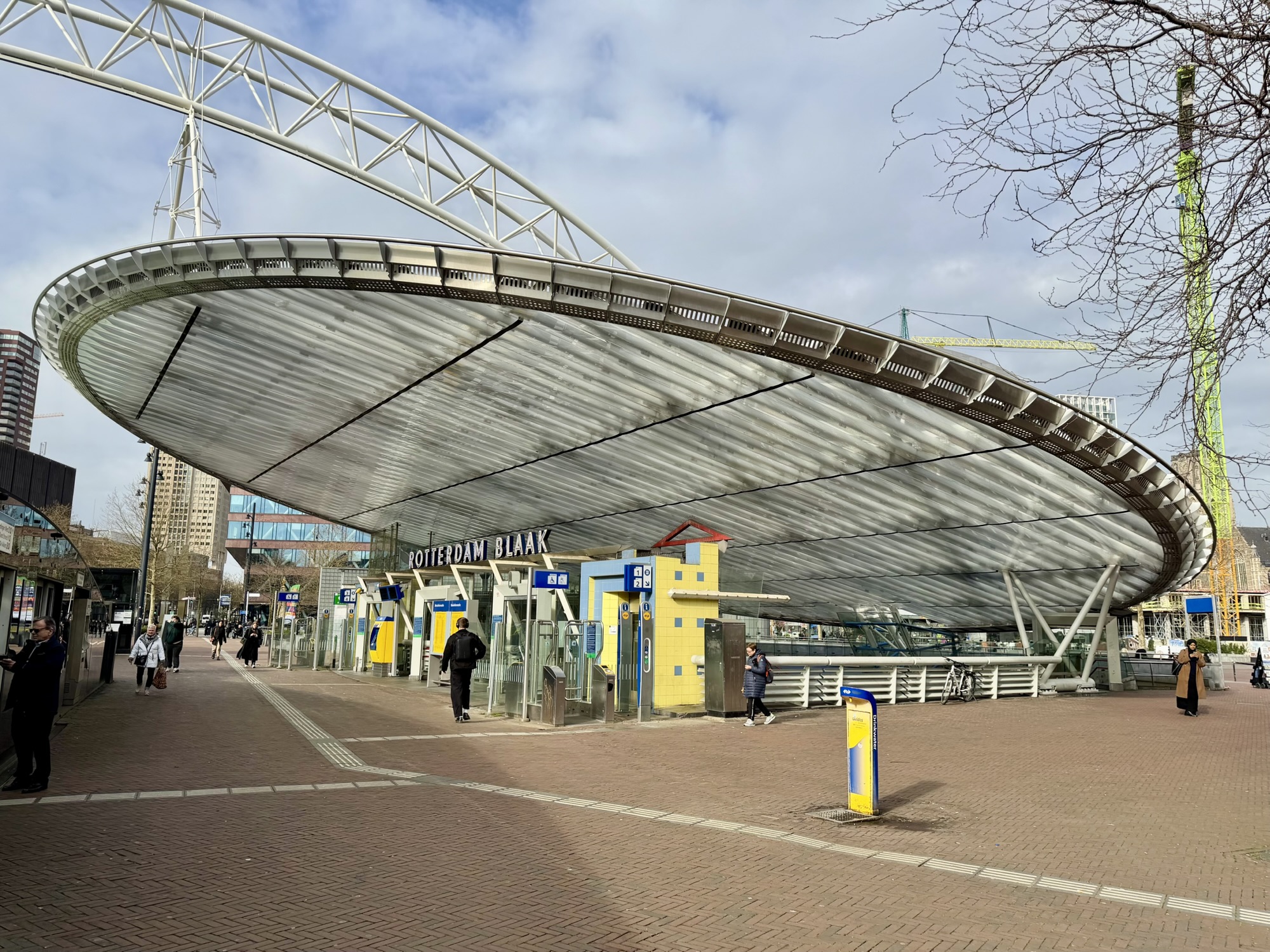
The transportation hub is known as the lid of the kettle.

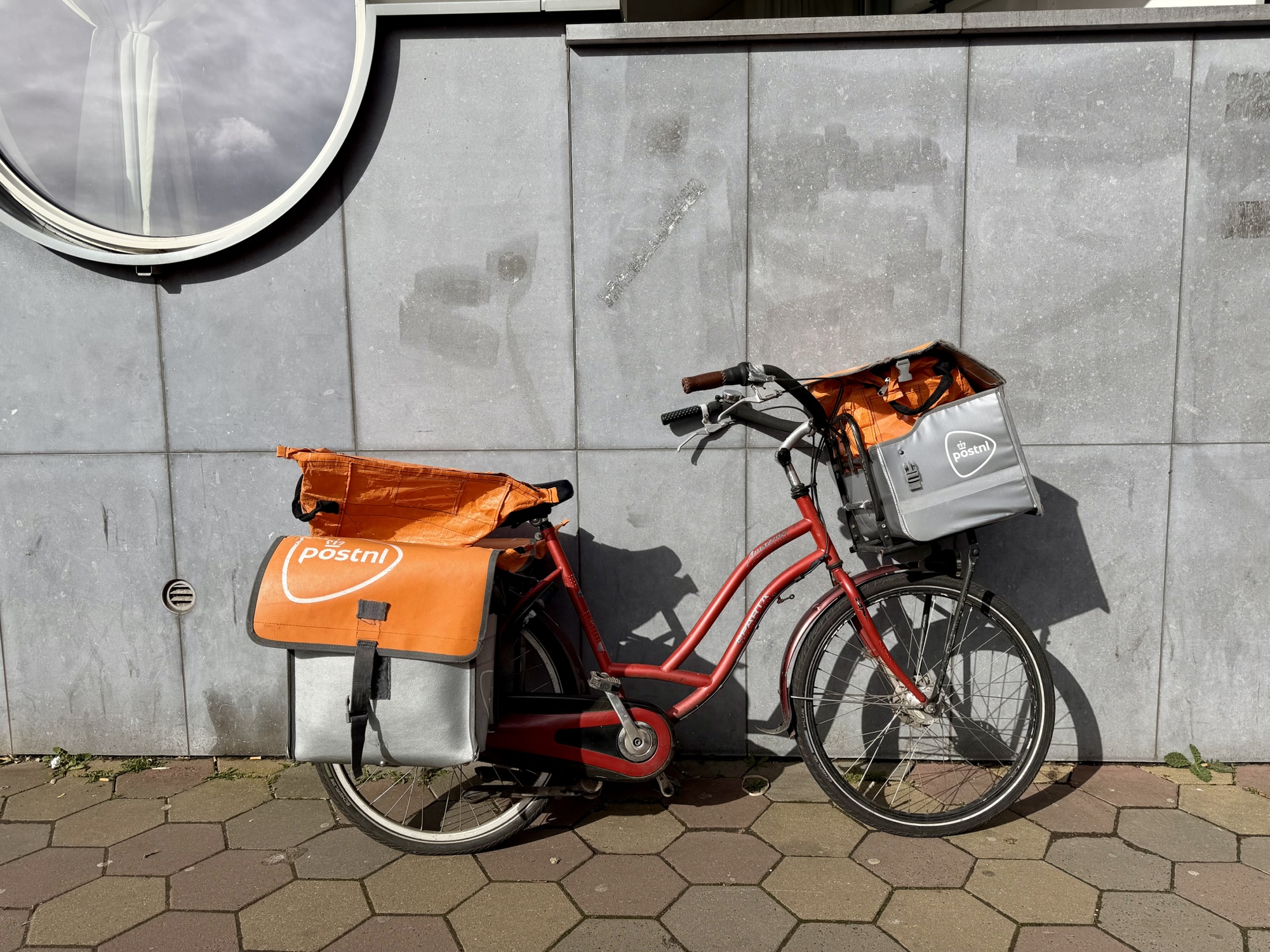
We saw a postman arrive on his bike to deliver the mail.


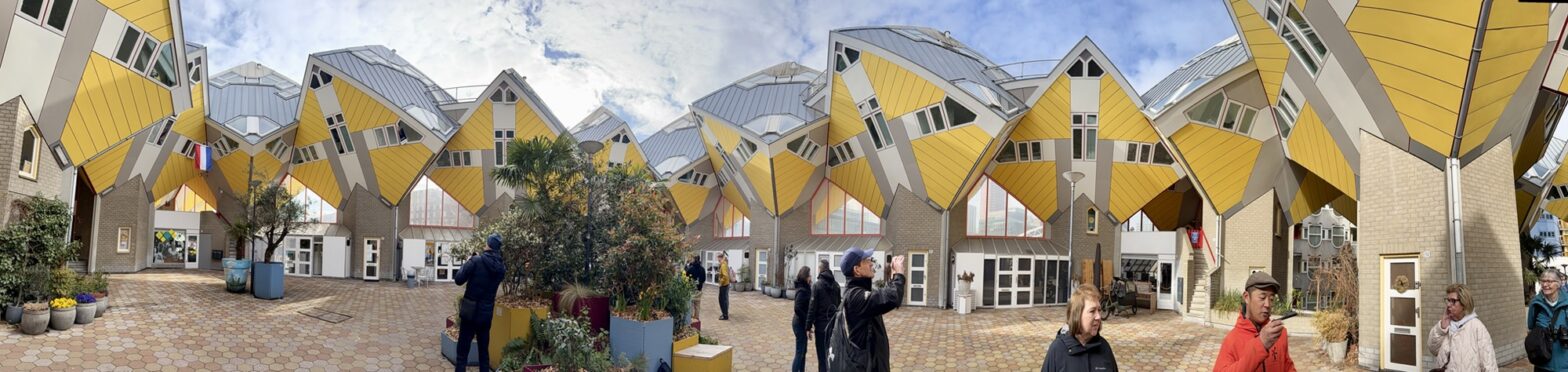
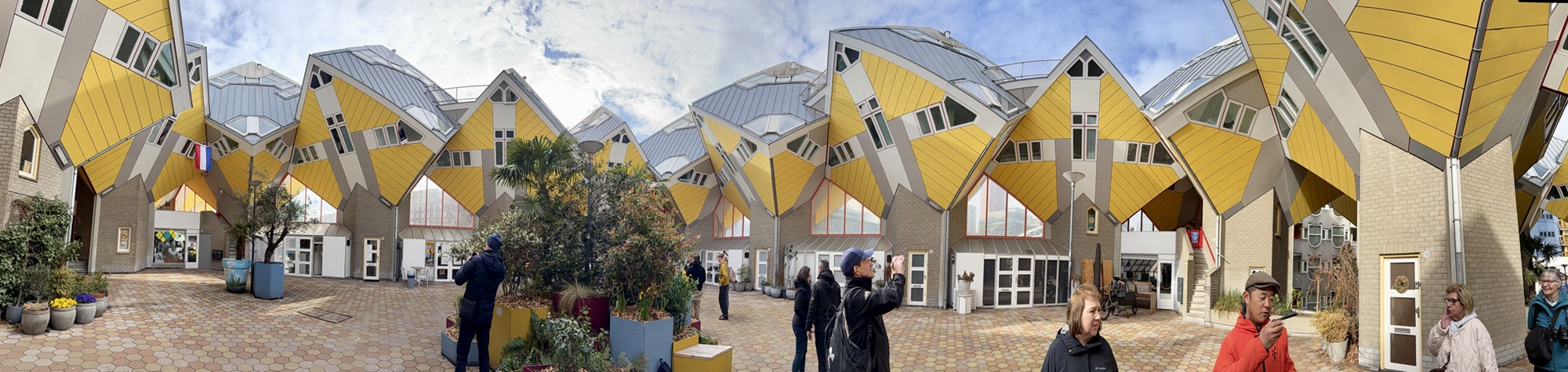
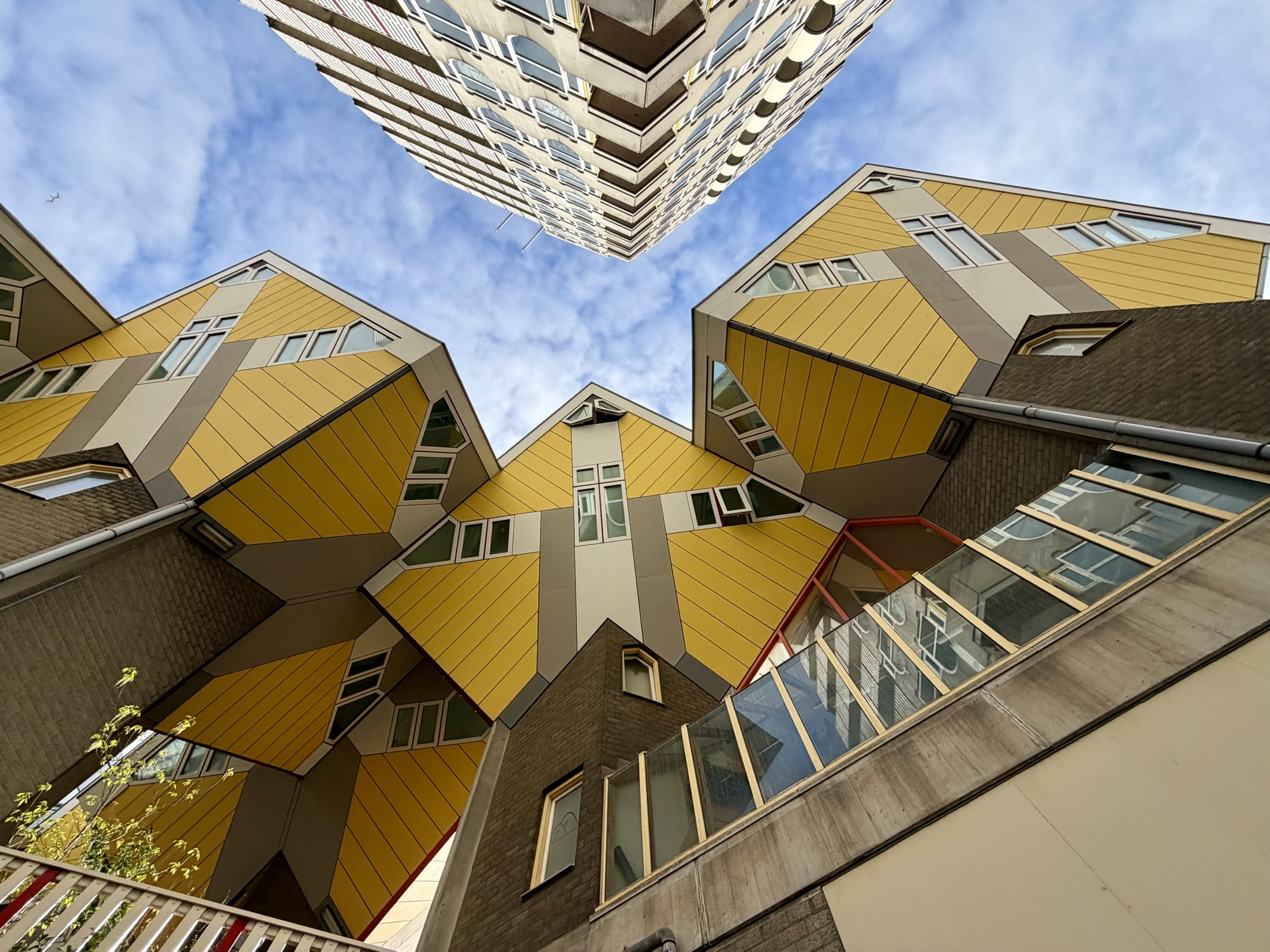
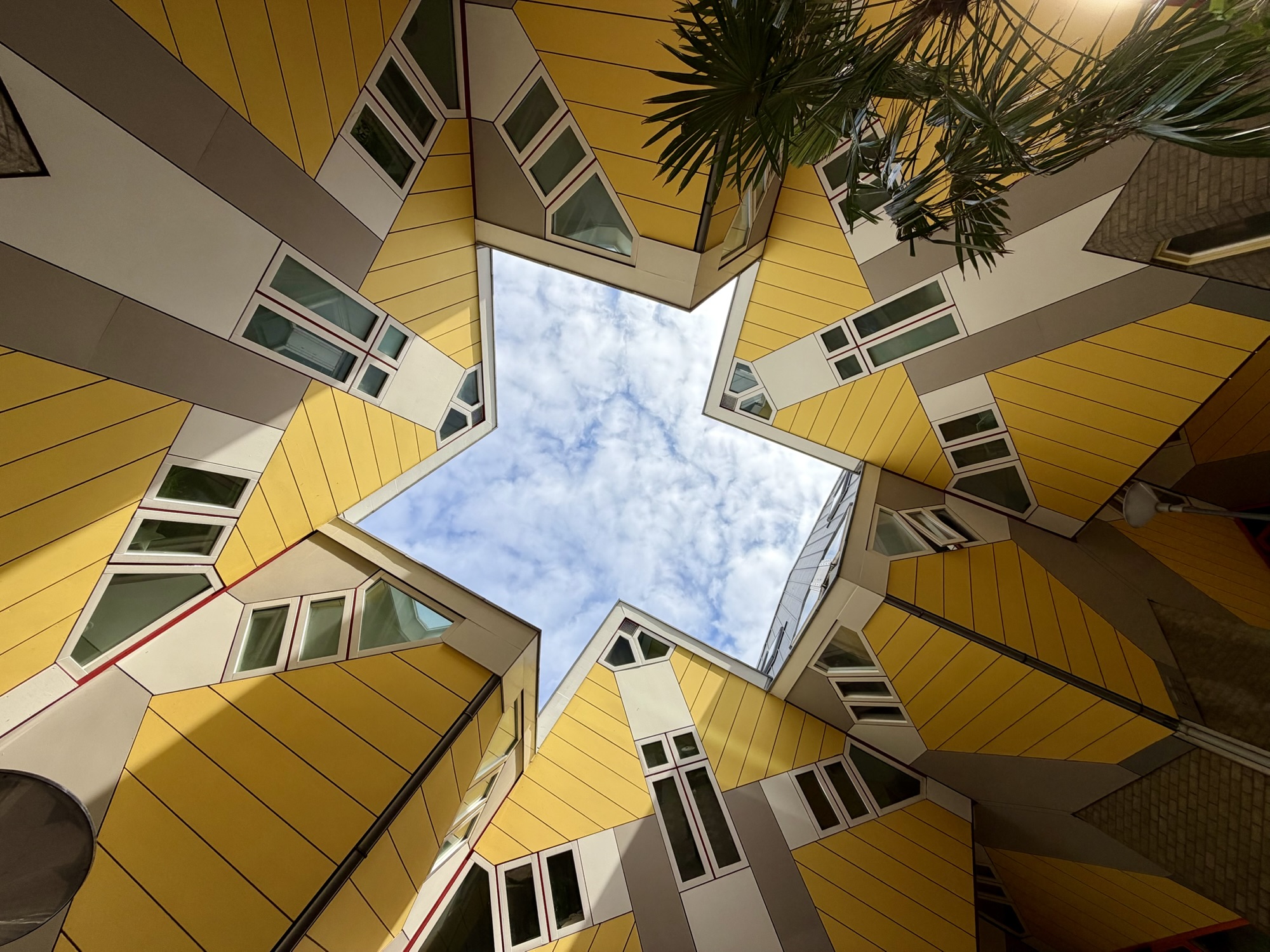
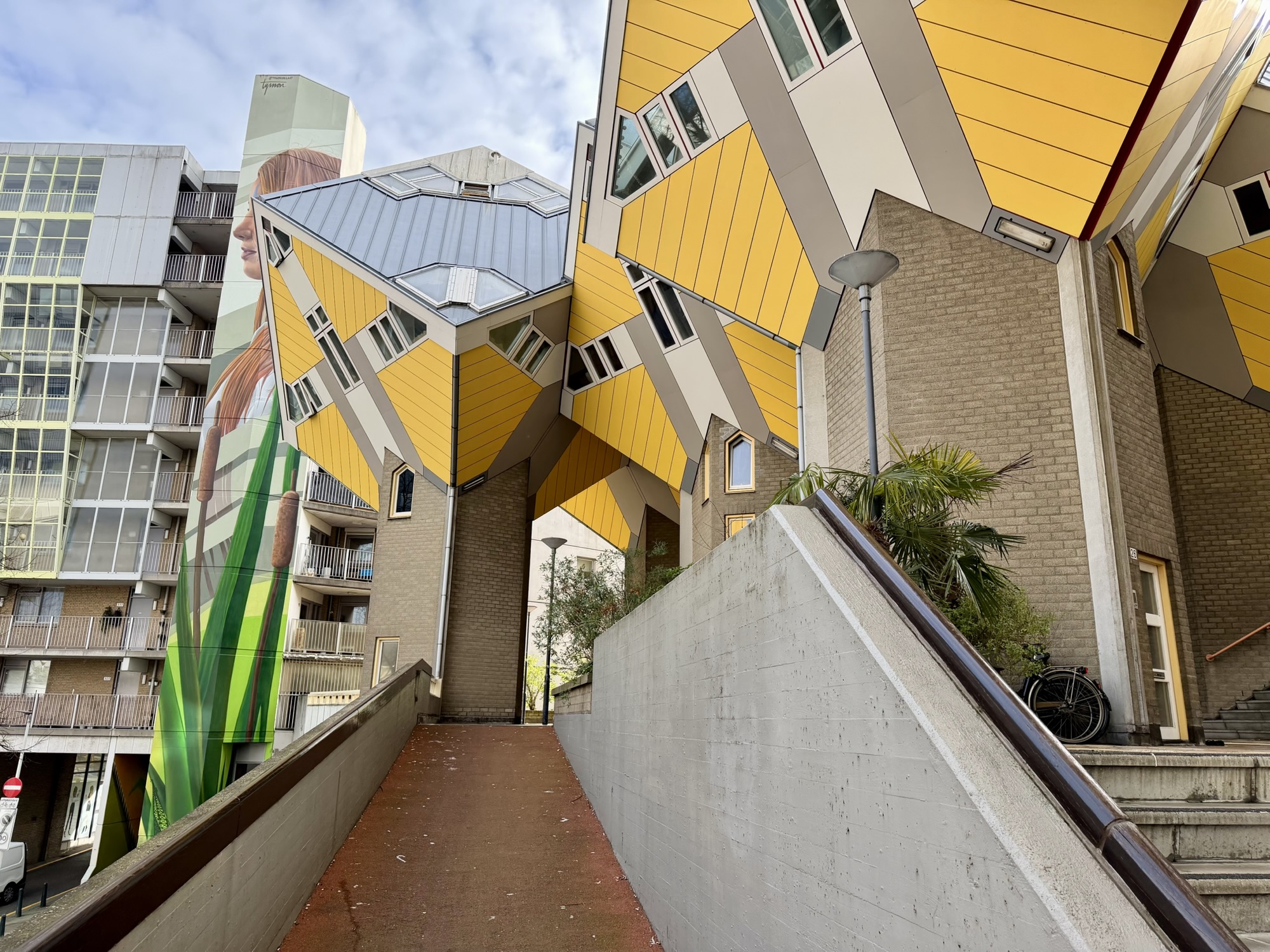
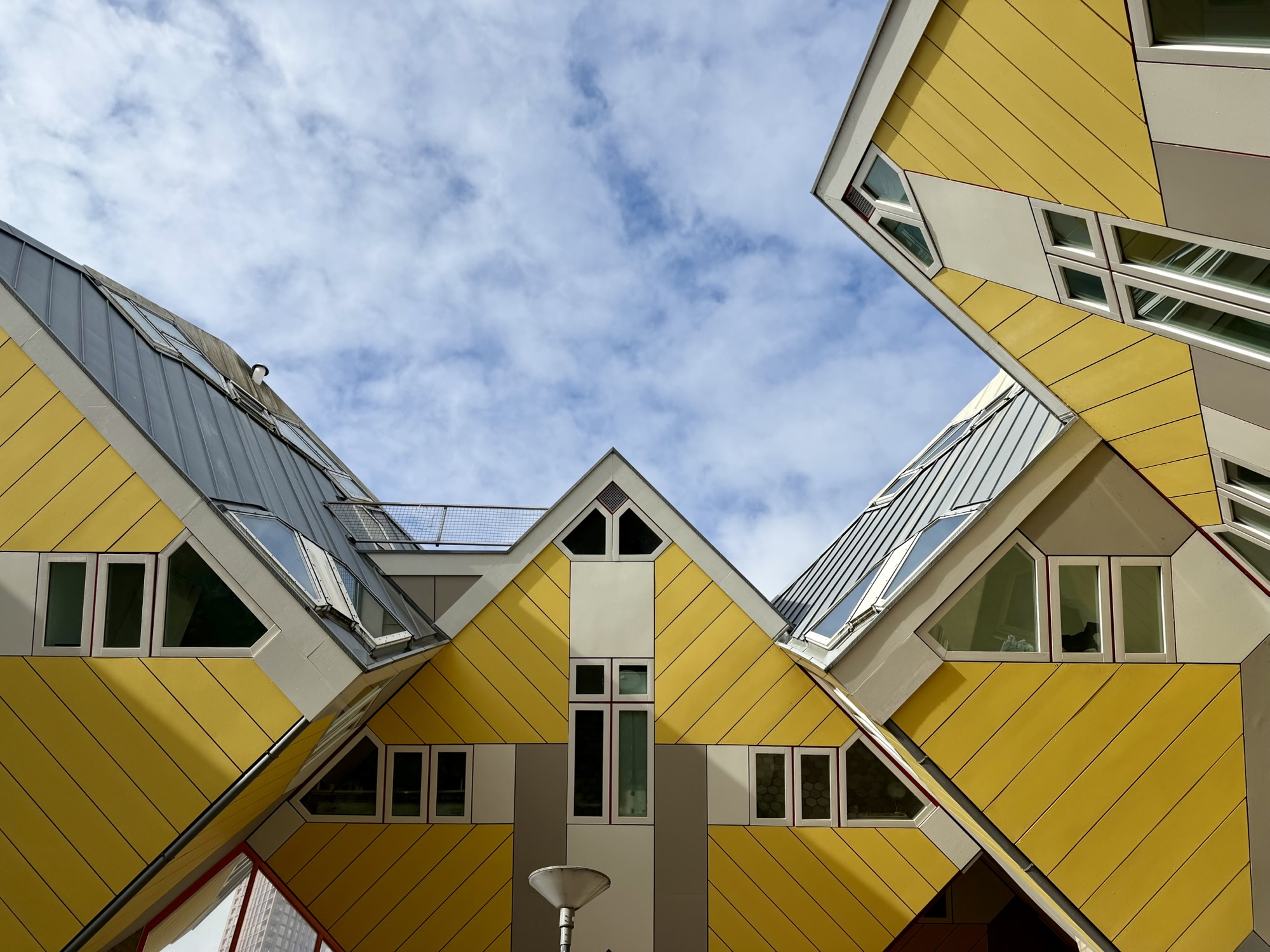
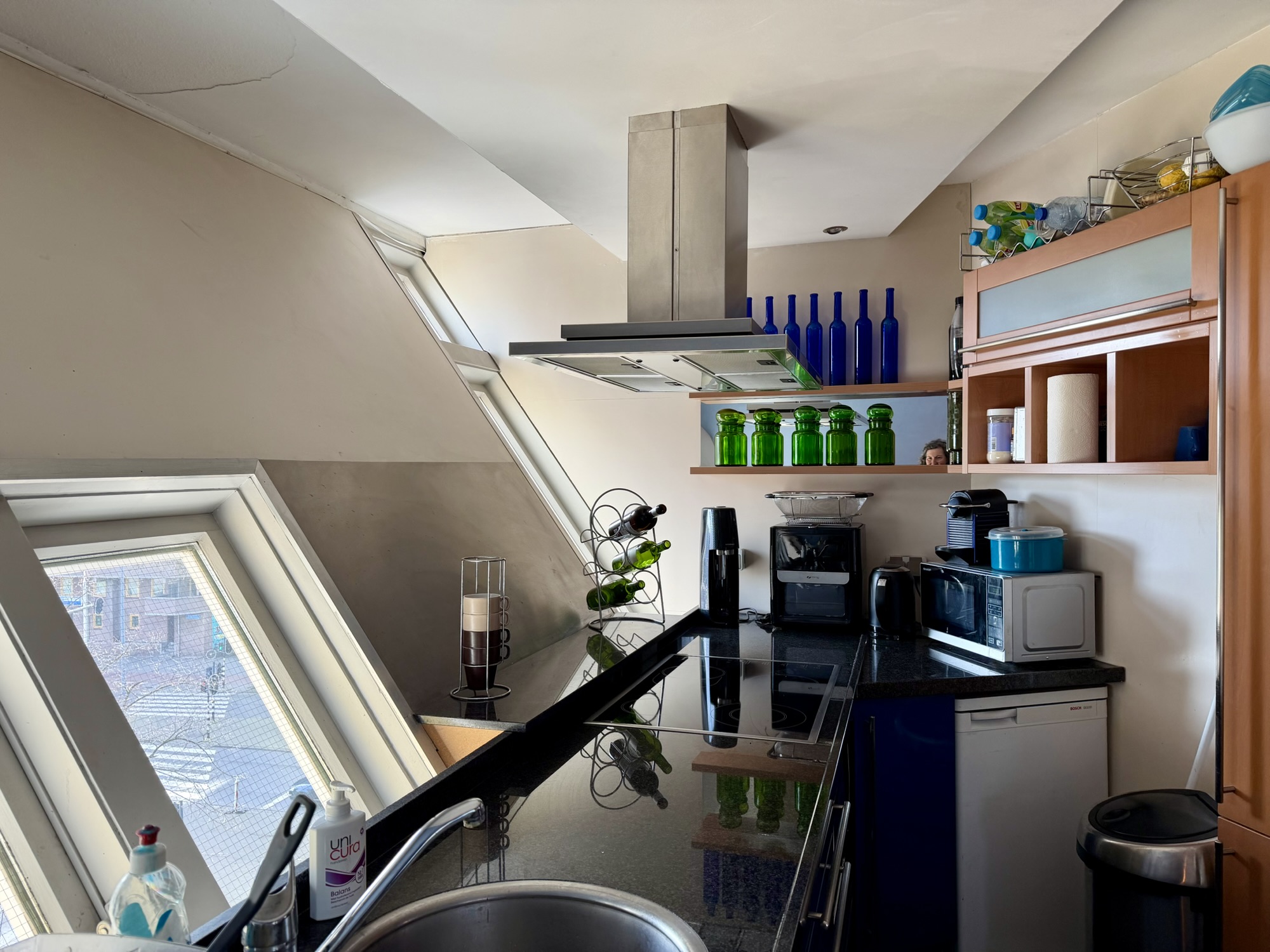
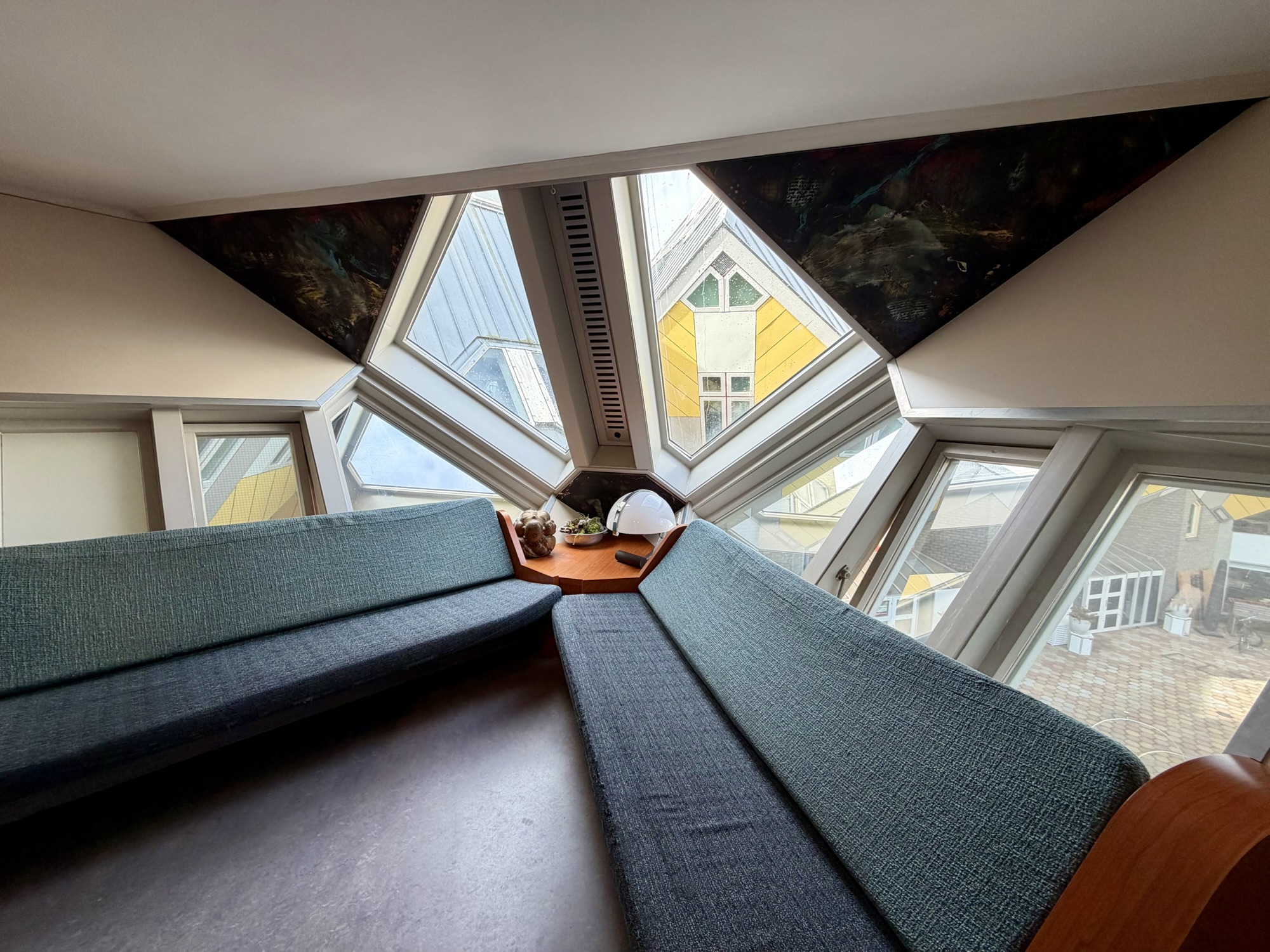
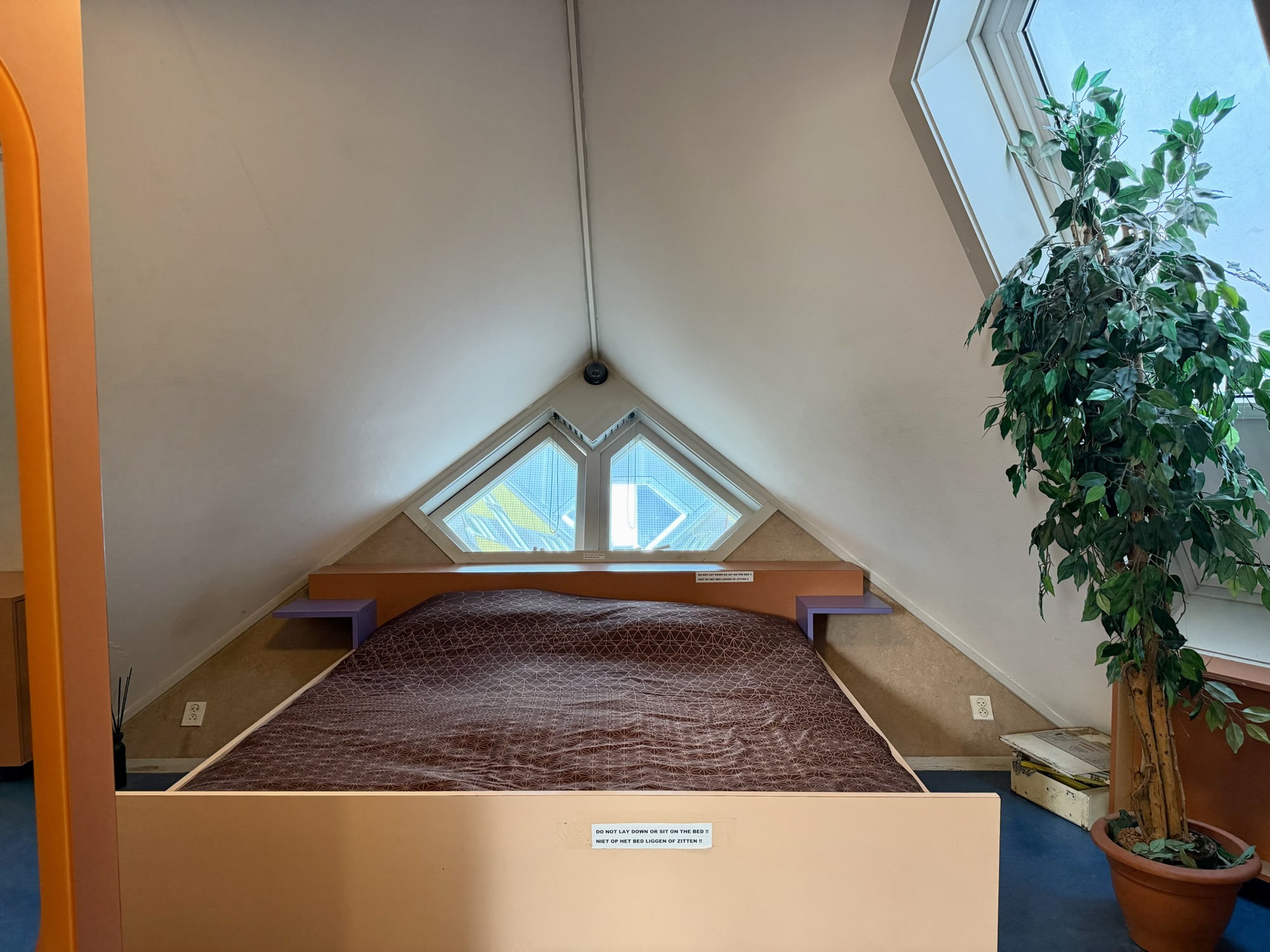
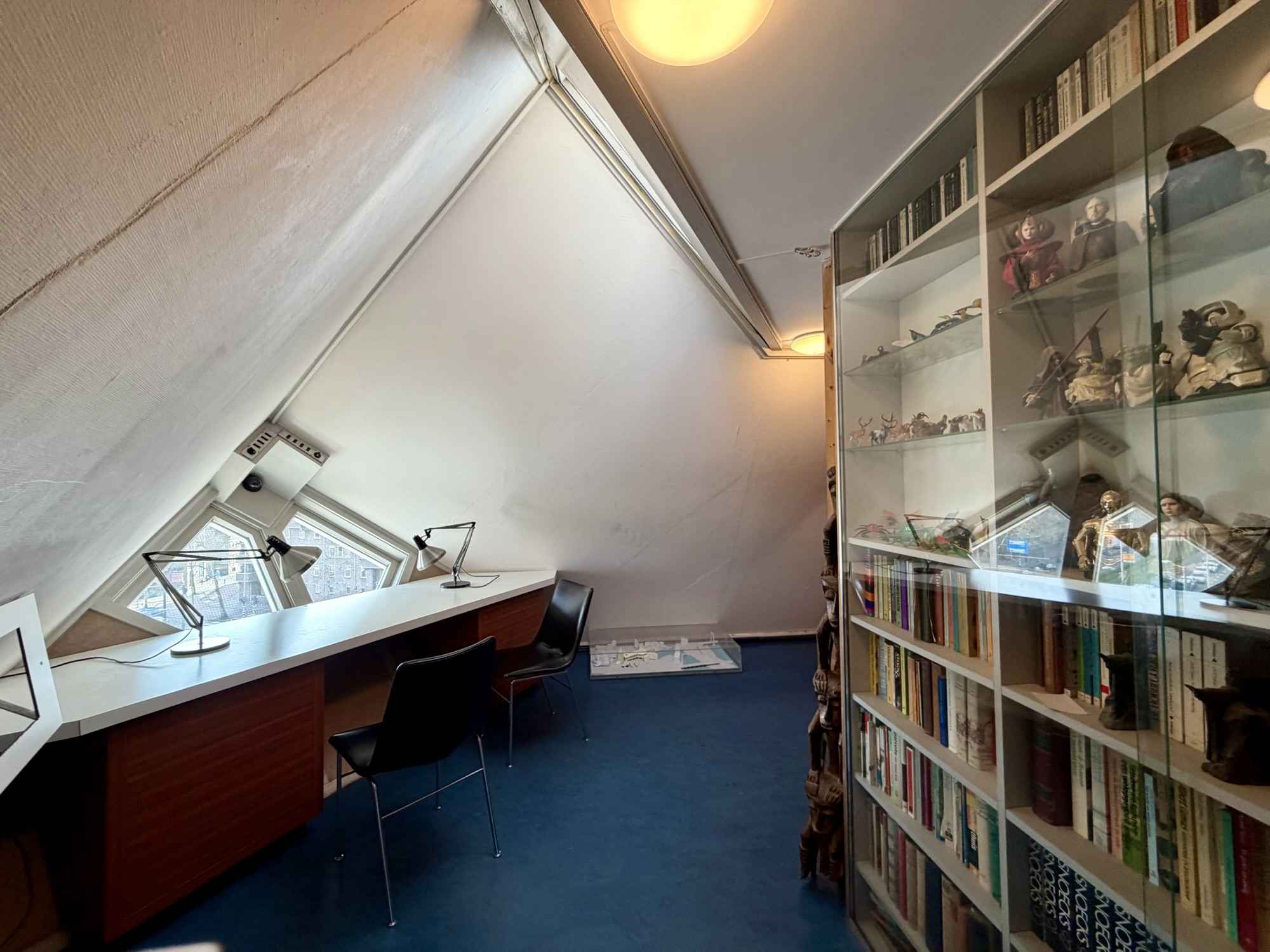
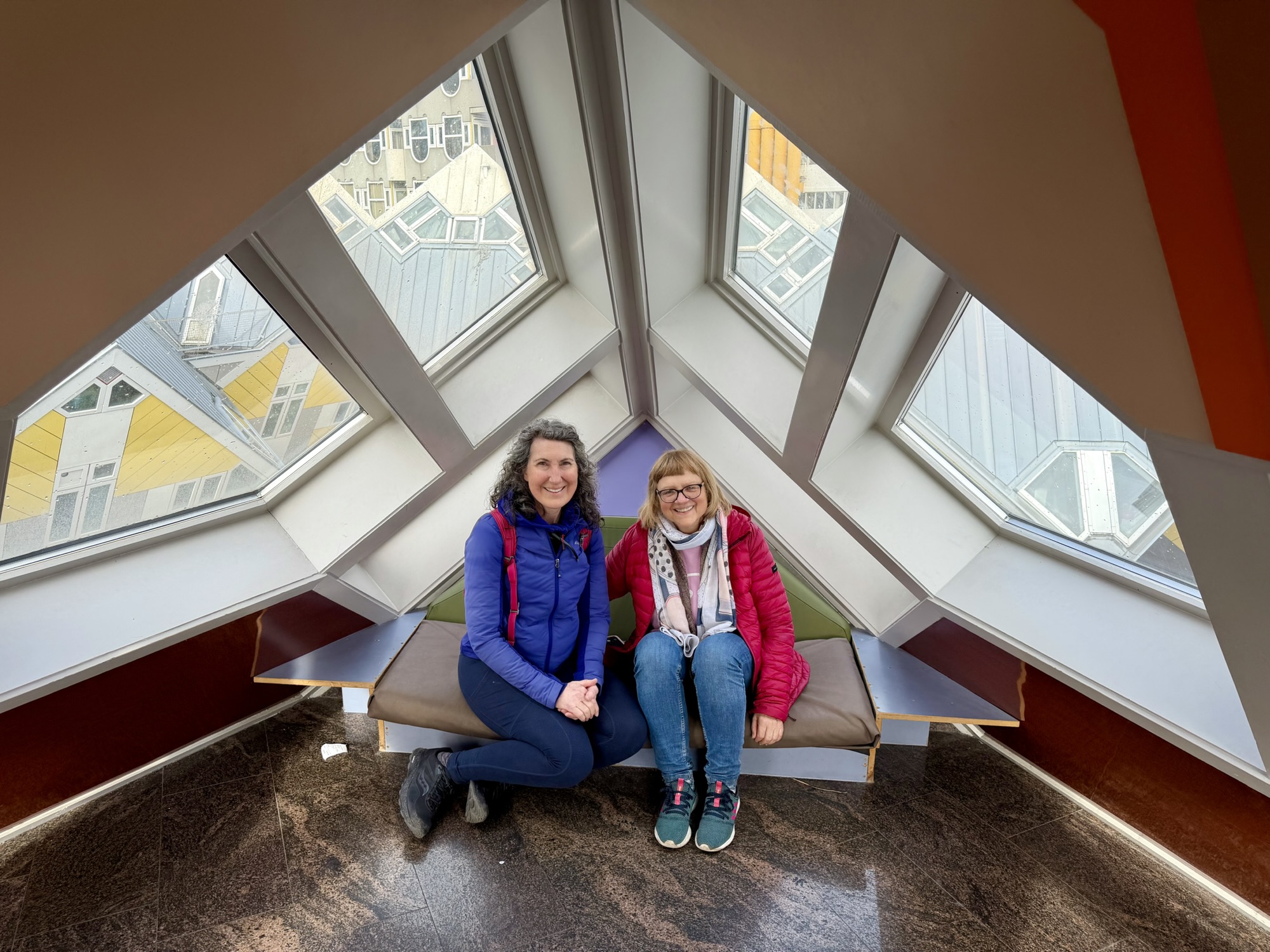
The iconic Cube Houses  were built in 1984. They were designed by Dutch architect Piet Blom  and are about 1000 ft.² inside. One sold last year for about €400,000.

Here’s a slideshow. Use the arrows at the sides to scroll through it.

Each house contains three floors. Because each cube is placed on its corner about a quarter of the space is unusable. One of the residents has opened his home to curious tourists and makes a living showing it. Alina and I paid €3.50 each to visit.

There are three cubes on Sumach Street in Toronto, which were inspired by the Rotterdam cubes.

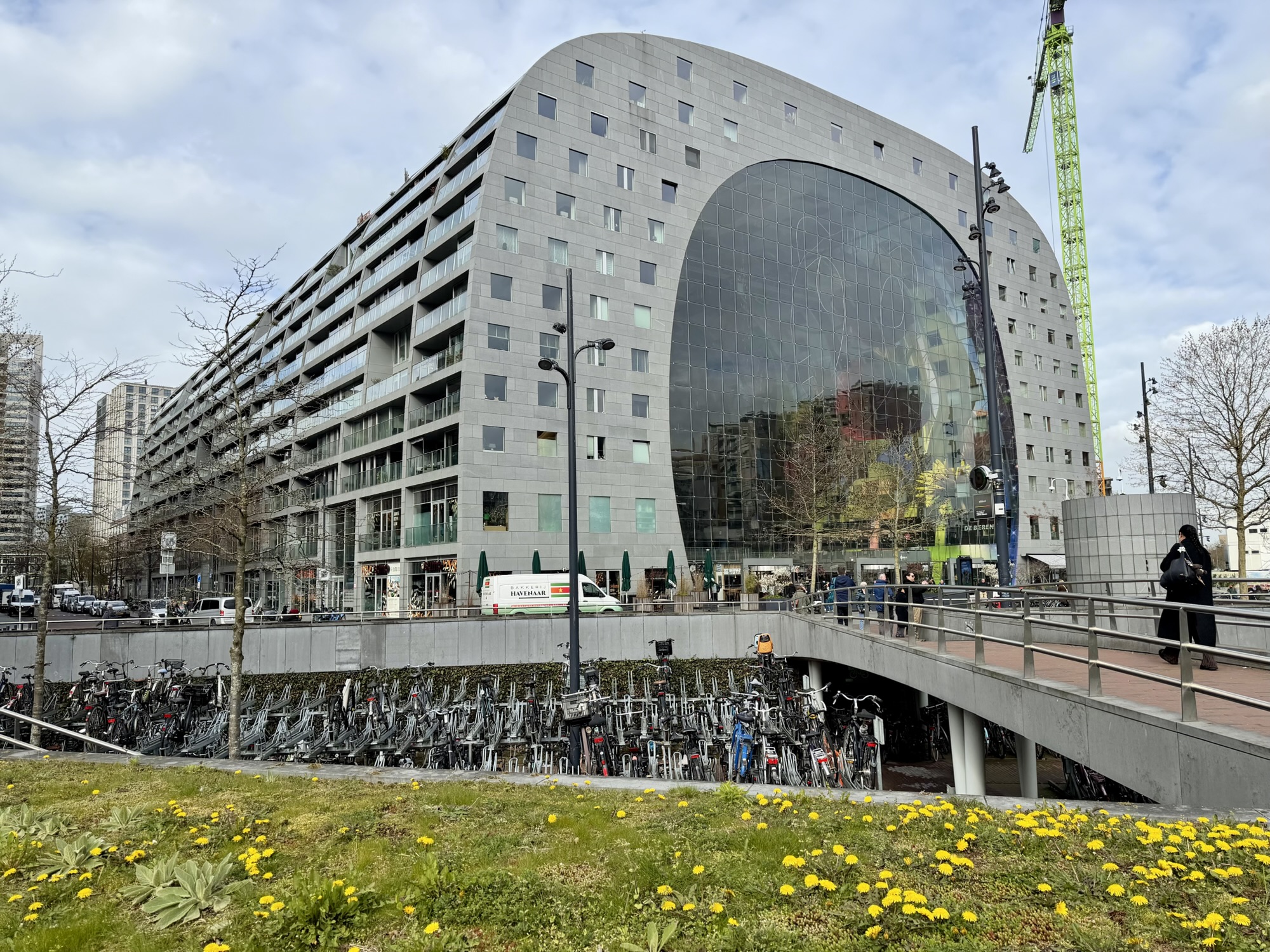
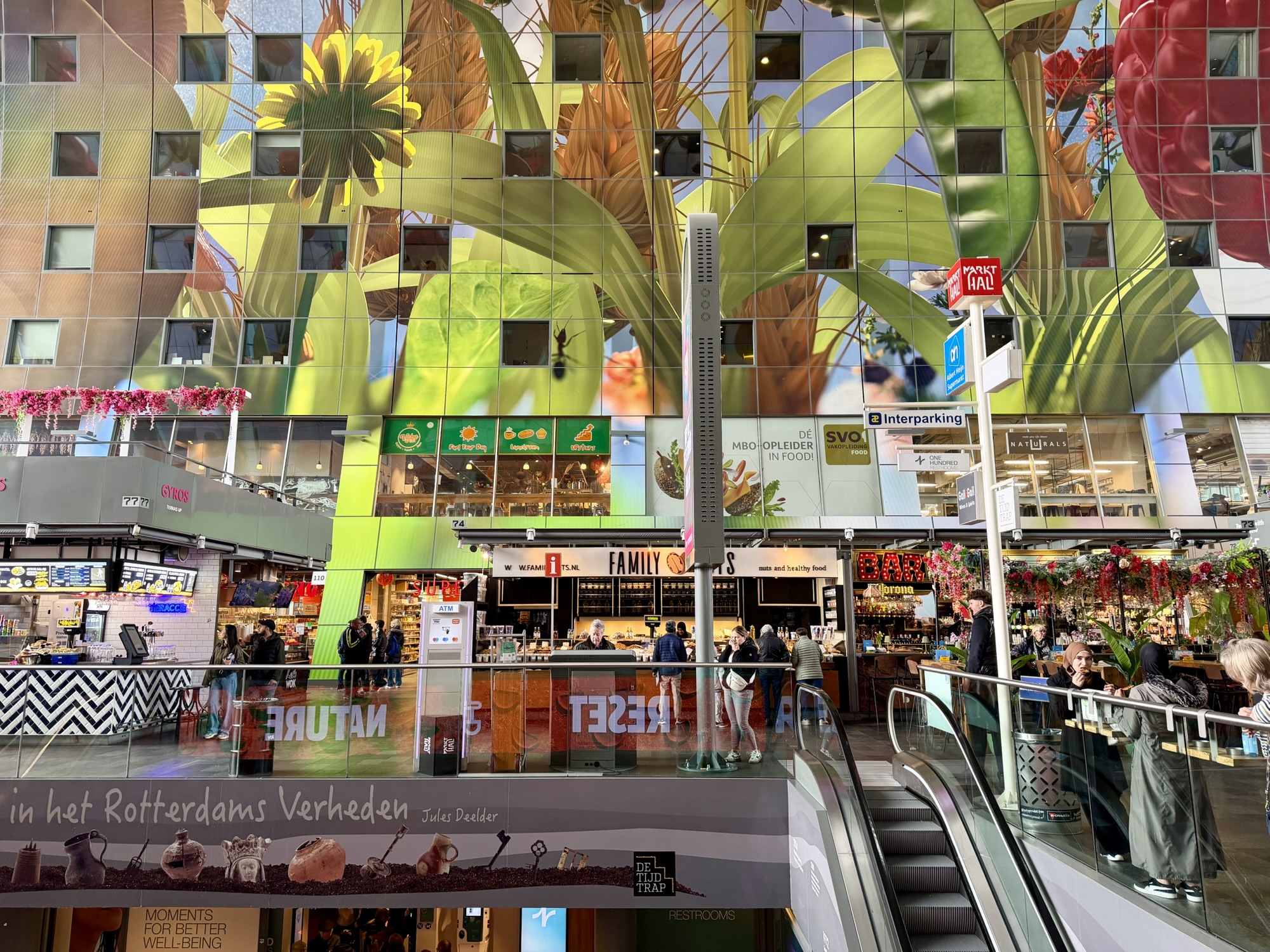
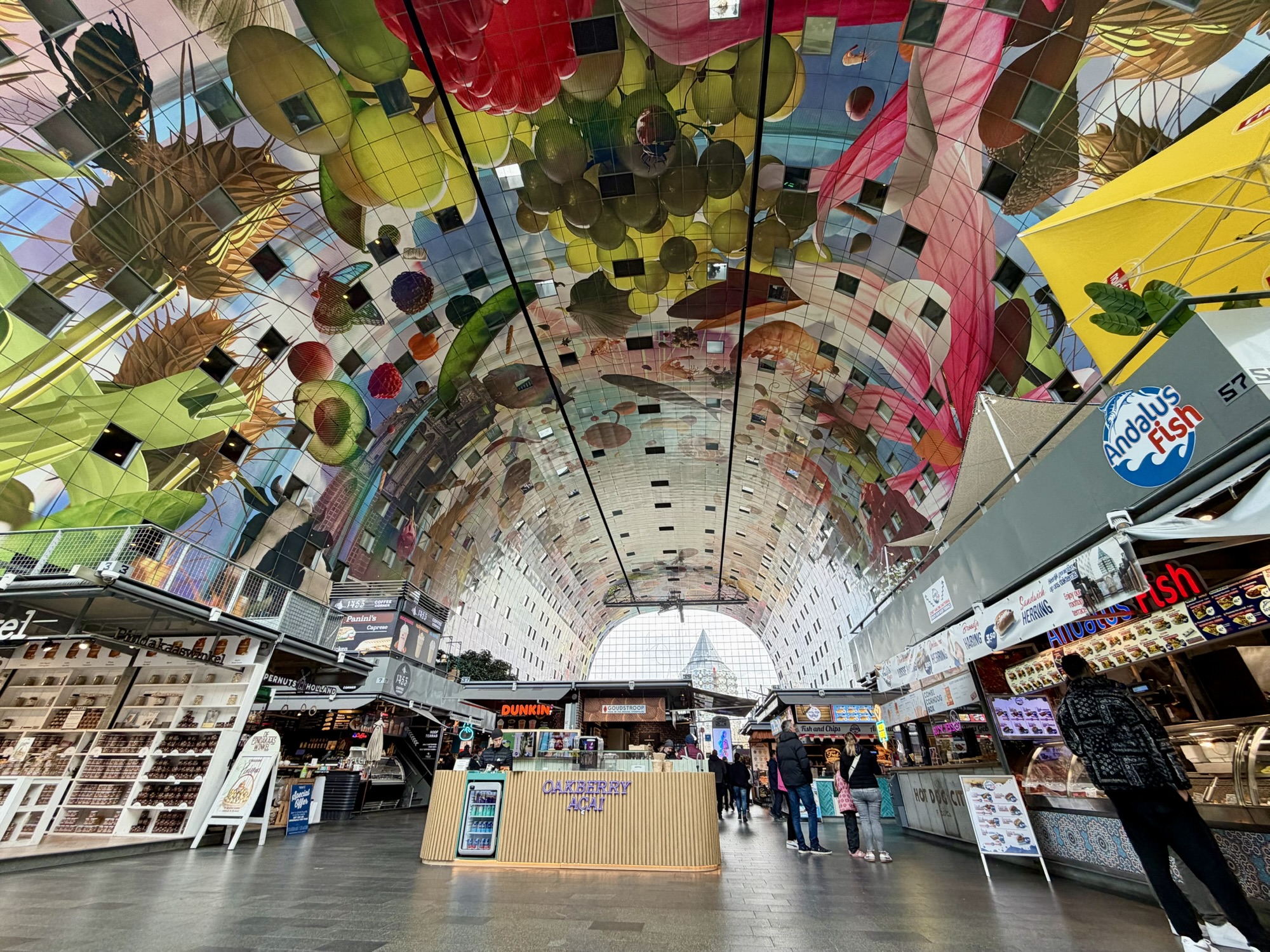
The Markthall residential and retail building designed by MVRDV. Located in the city center, it features a massive indoor fresh food market, 228 apartments, and a 4-story underground parking garage. The building is famed for its huge 11,000 m2 “Horn of Plenty” ceiling mural.

Our guide told us that a five bedroom condo had recently sold for €1.2 million which seemed like a good price to me, but he thought it was an extraordinarily high price given the average wage in Rotterdam.

We were given half an hour of free time at the Markthal. We rushed downstairs to the privately owned and operated bathrooms, which cost €1.60 to enter. They were very clean and modern and there was relaxing music in the stall, and advertising projected on the mirror. It was an odd experience. Almost half of our time was used getting into the bathroom because there was a large Toor group in front of us.

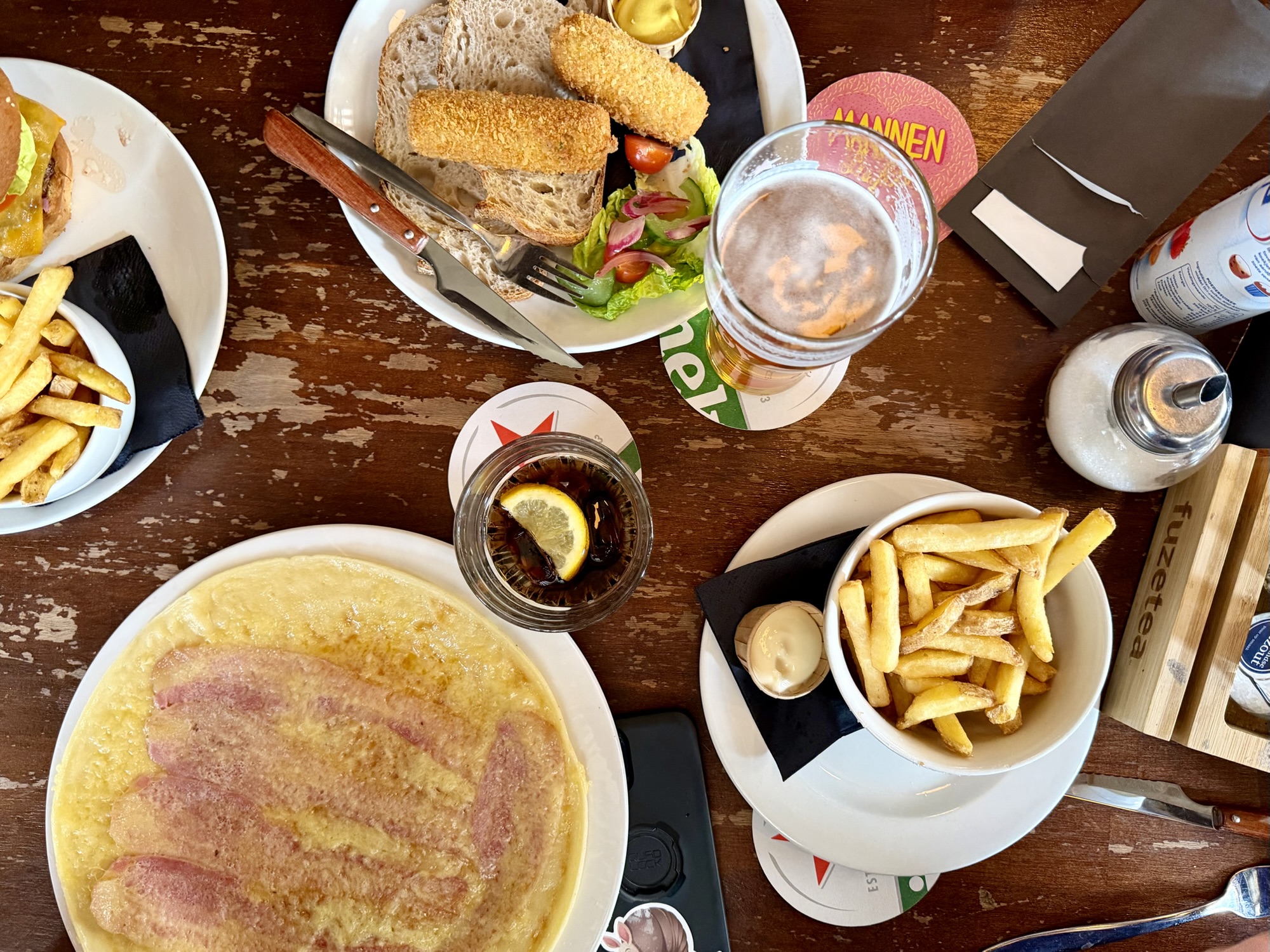
As we finished, we split up and raced around to get something to eat and get back to the van. I had a beautifully made latte and freshly made waffle with Nutella, mangoes, and strawberries. It was delicious.

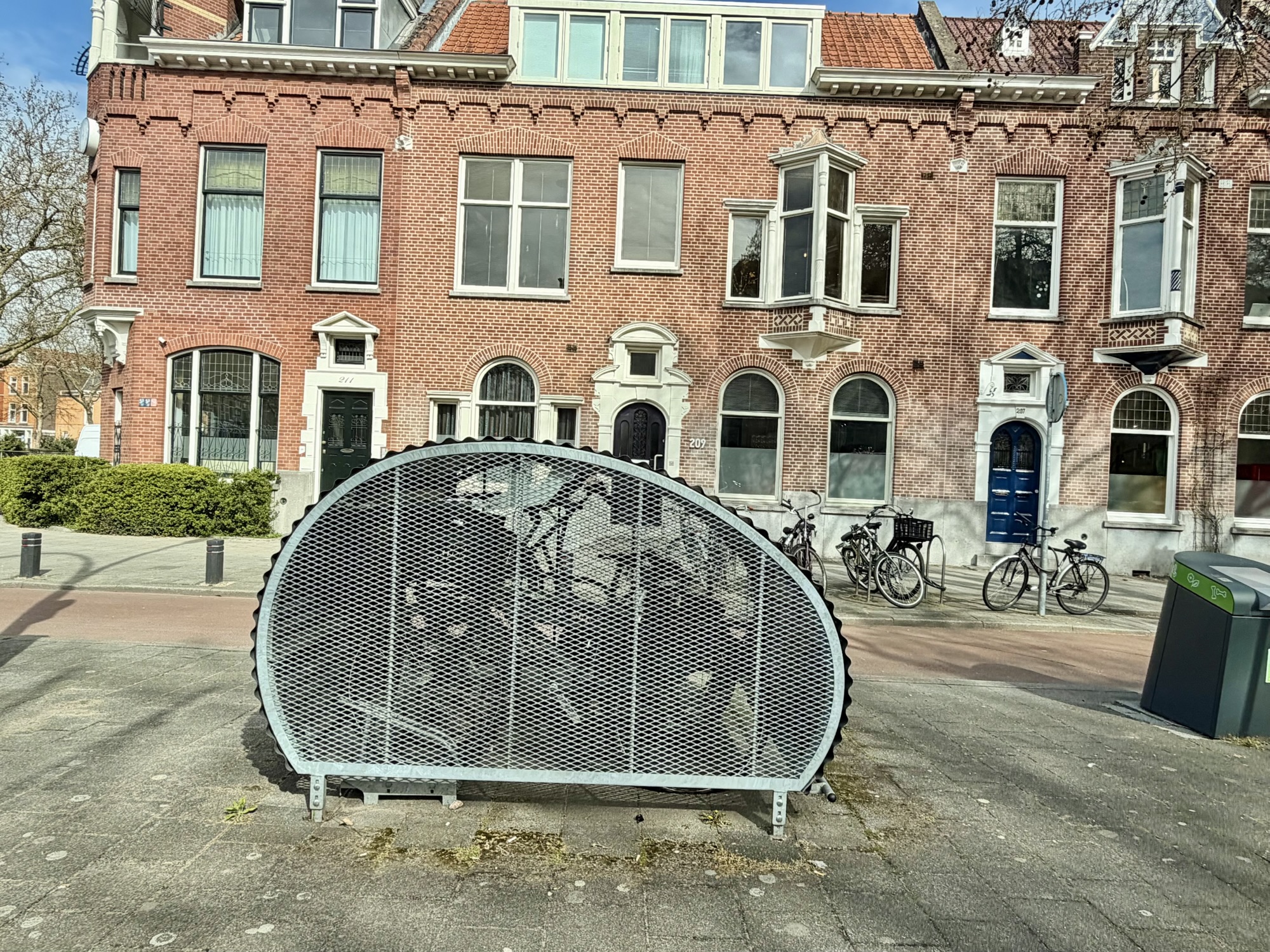
Next, we drove to Delft. On the way out of Rotterdam we saw several residential areas with enclosed bike storage. Mostly bikes are stored outside here locked up to racks and railings.

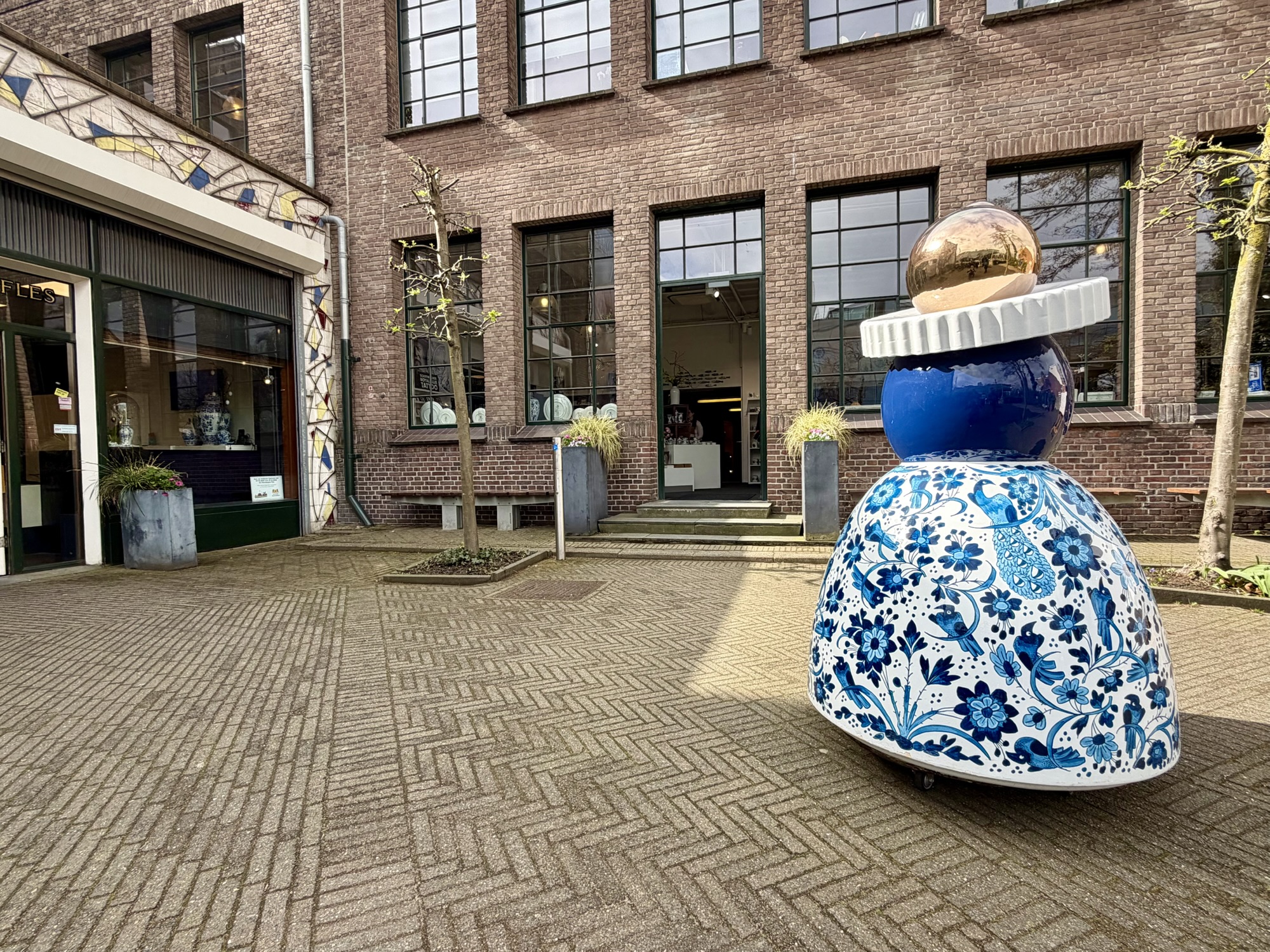
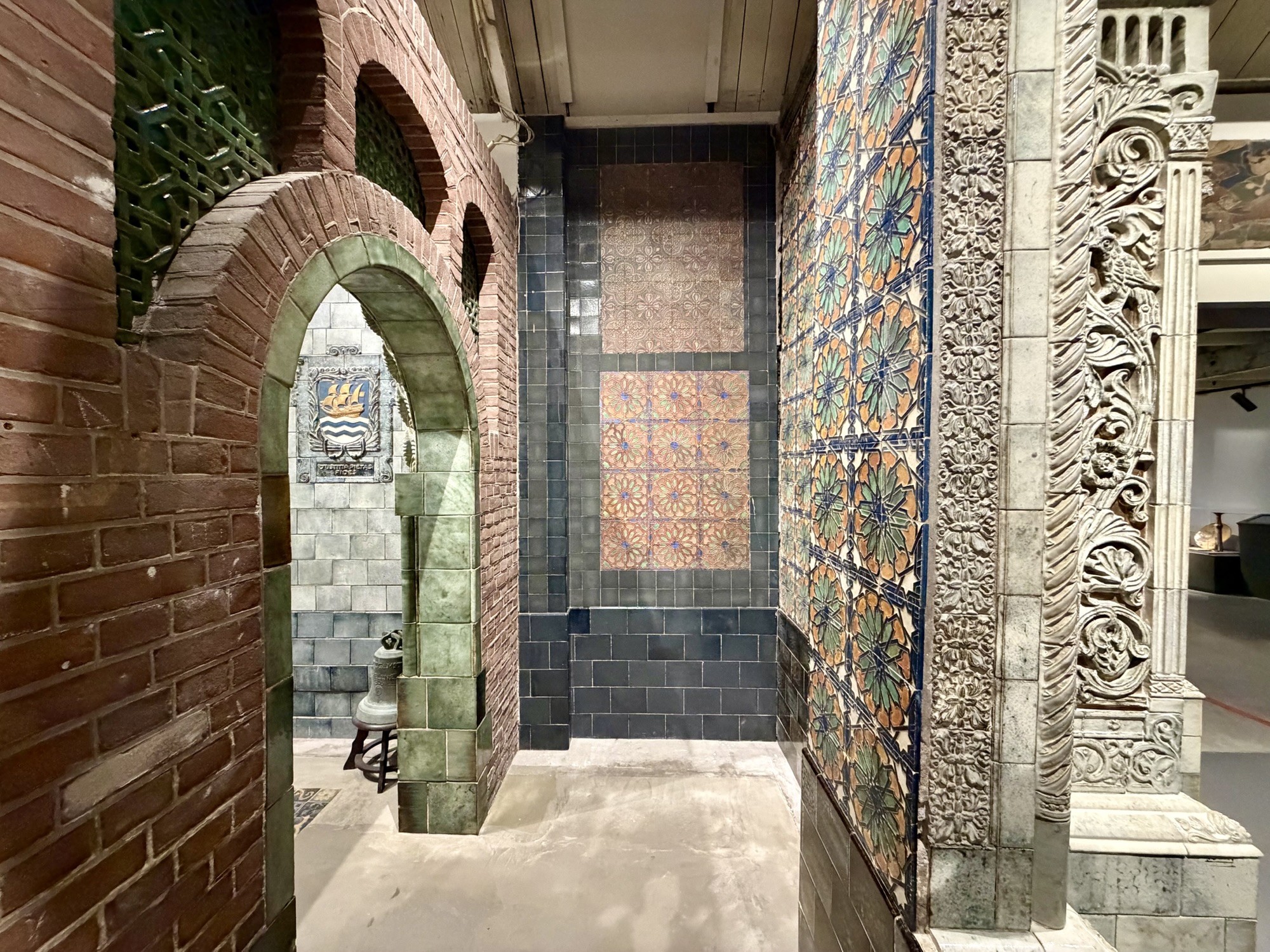
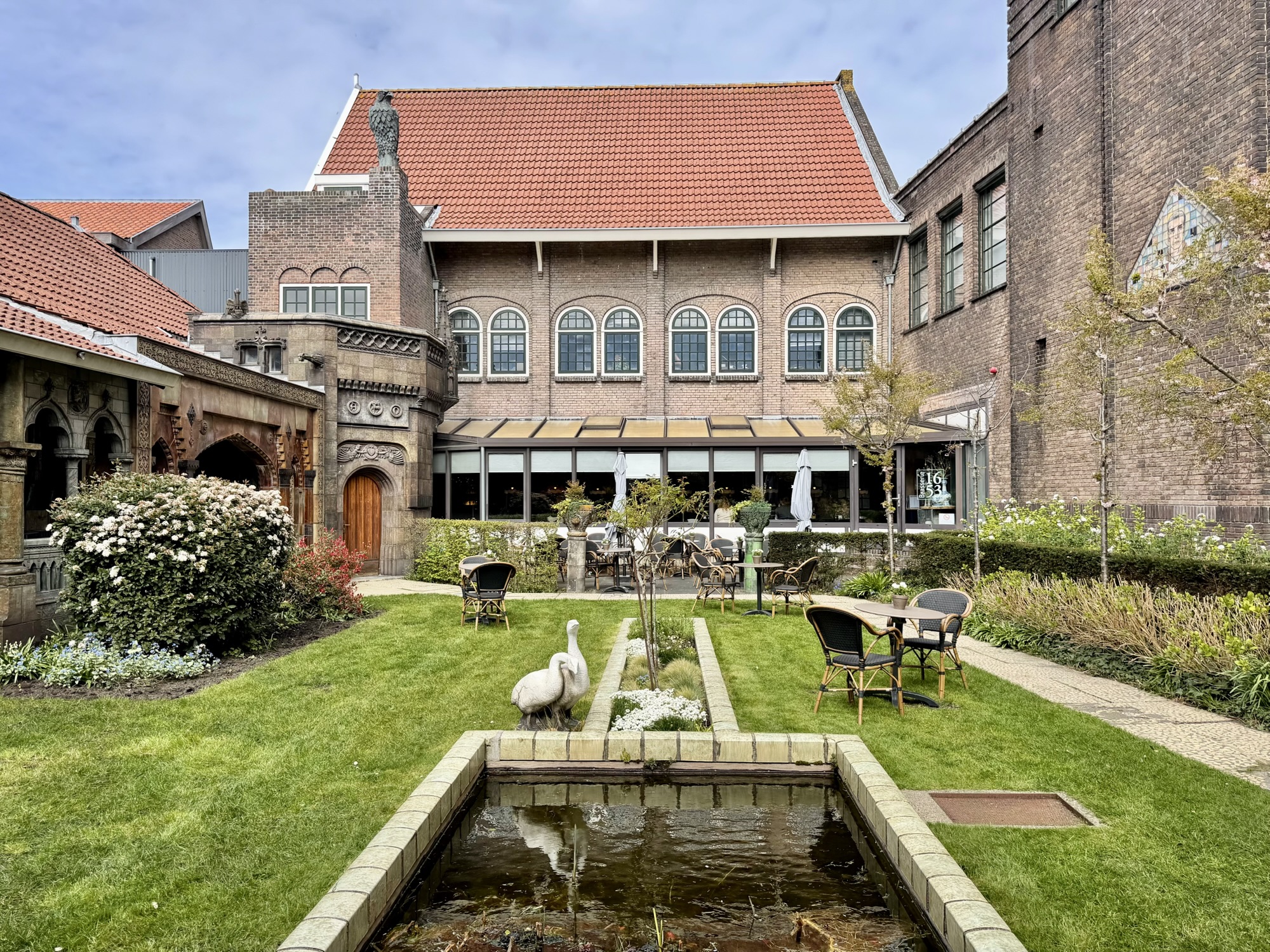
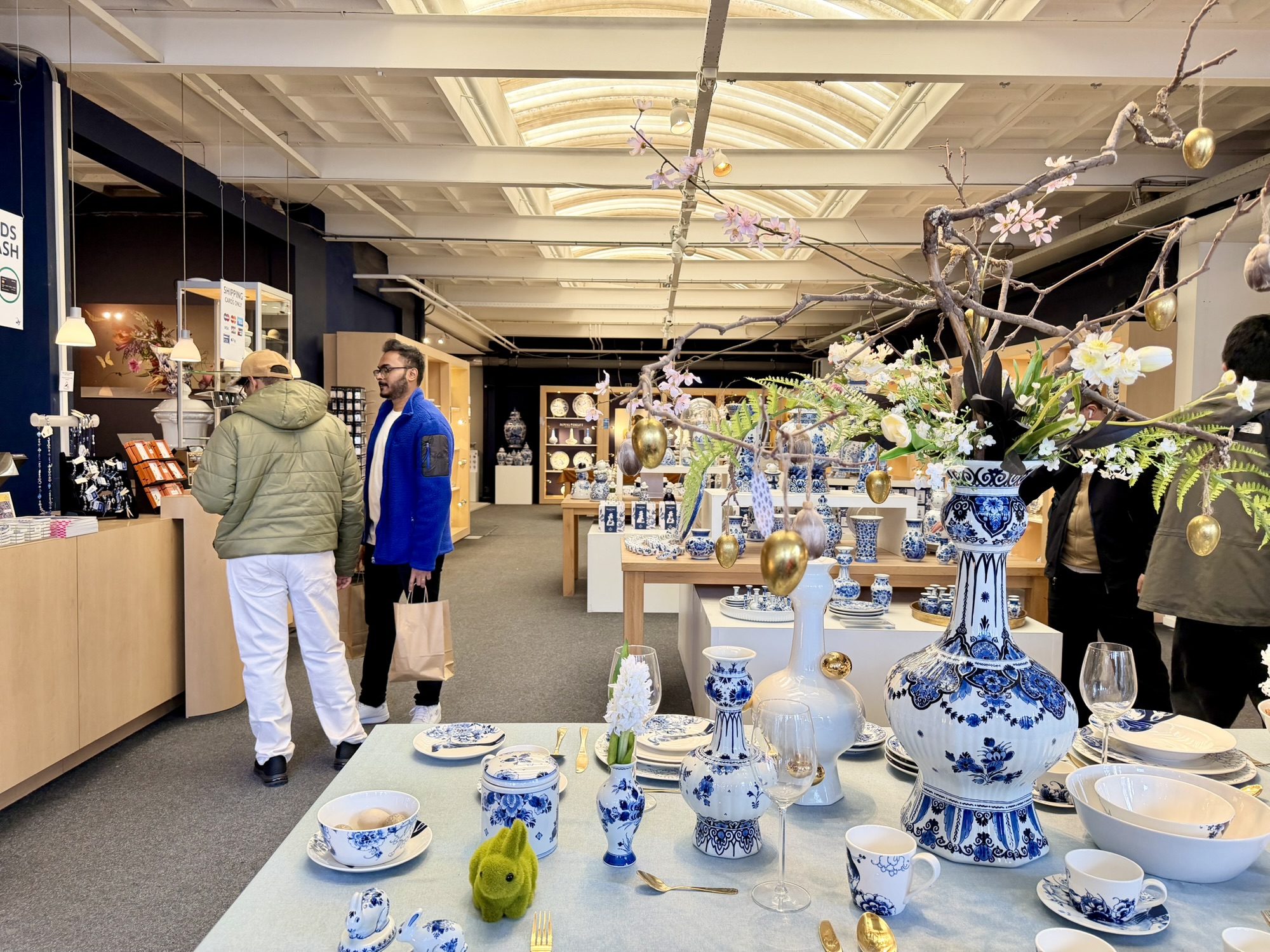
We stopped for an hour at the Delft museum. It was a lovely little museum. With many examples of Delft pottery. De Porceleyne Fles has been producing Delft pottery of all different kinds, and in all colours and sizes, since 1653.

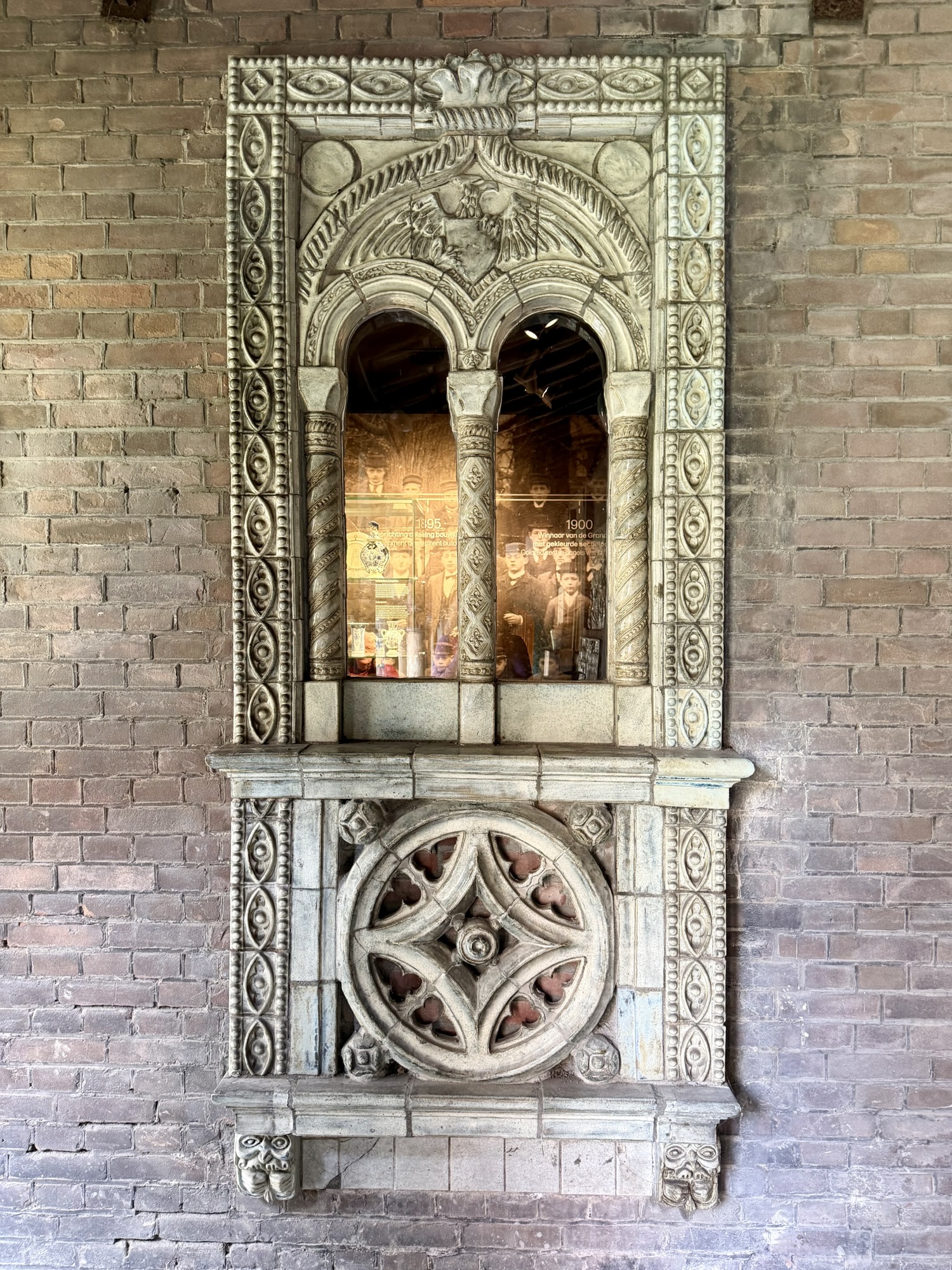
Besides Delft Blue, over the period from 1880 to 1981 Royal Delft also produced many architectural ceramics. These are ceramics specially made to adorn the façades and interiors of buildings.

This character is giving some serious side-eye.

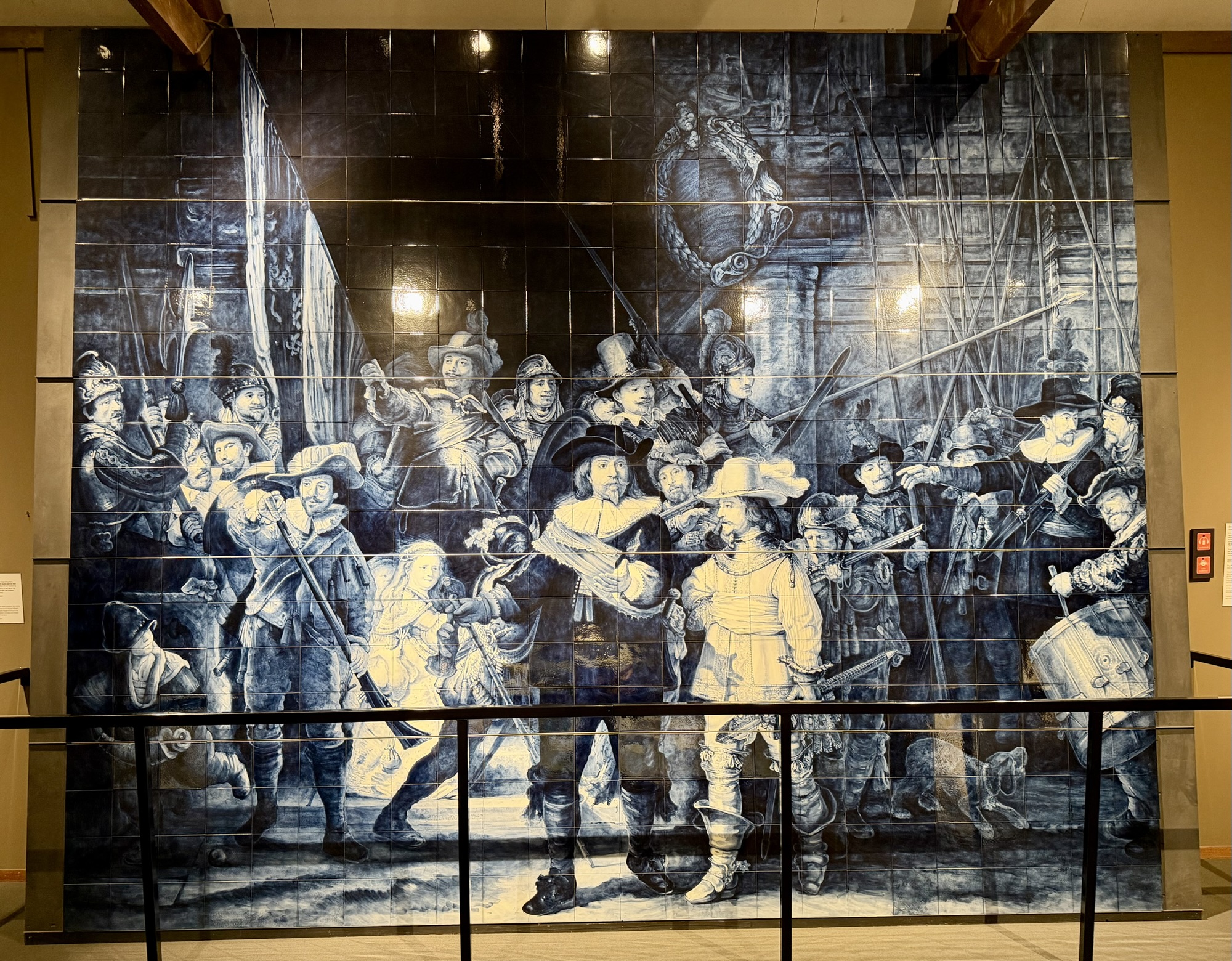
In 1602 the Dutch East India Company captured a Portuguese ship transporting a large shipment of Chinese porcelain. The sale of these items yielded a record amount. The exotic blue and white ceramics became extremely popular. Pottery manufacturers in Delft tried to imitate this unique porcelain. It took many years of experimentation before they were successful. The museum had a Delft version of The Night Watch.

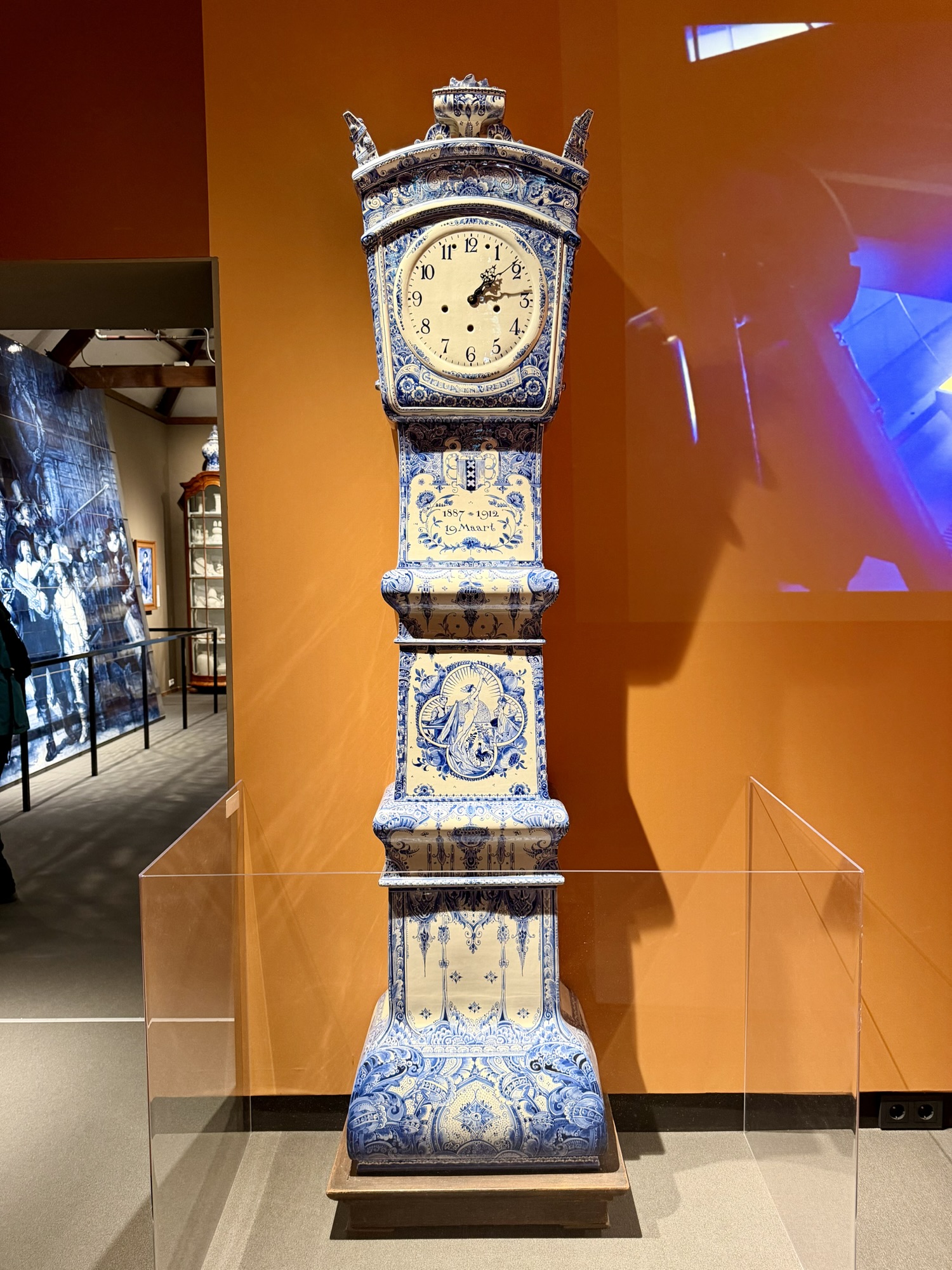
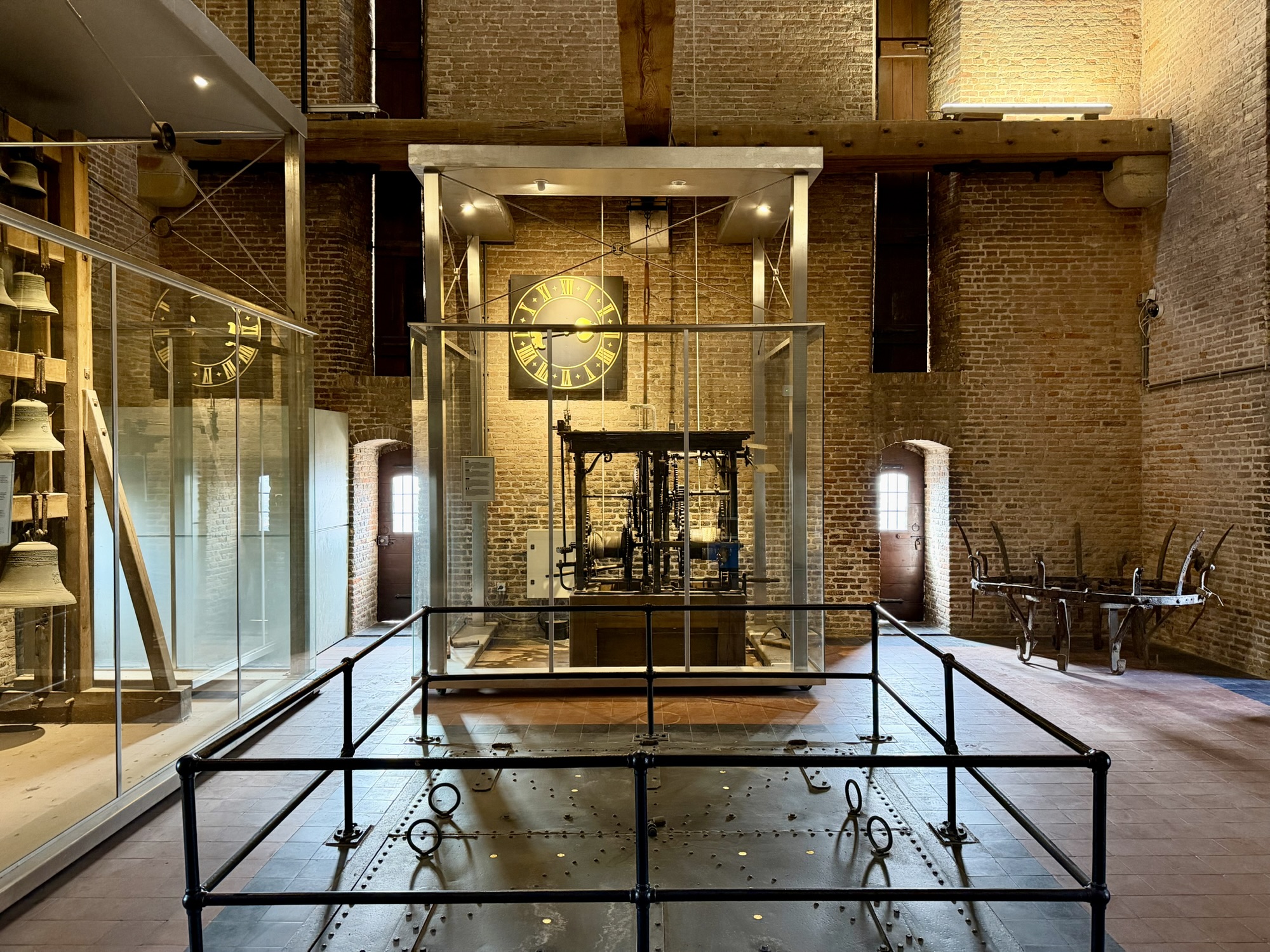
When I saw this clock the lyrics of a song from my childhood came into my head. Johnny Cash, is one of many people who recorded My Grandfather’s Clock.

My grandfather’s clock
Was too large for the shelf,
So it stood ninety years on the floor;
It was taller by half
Than the old man himself,
Though it weighed not a pennyweight more.
It was bought on the morn
Of the day that he was born,
And was always his treasure and pride;
But it stopped short
Never to go again,
When the old man died.

No of my group knew the song. But when I asked Cindy about it at dinner, she knew it, and said she had learned it in the Girl Guides. I was also a Girl Guide.

They also made home fittings.

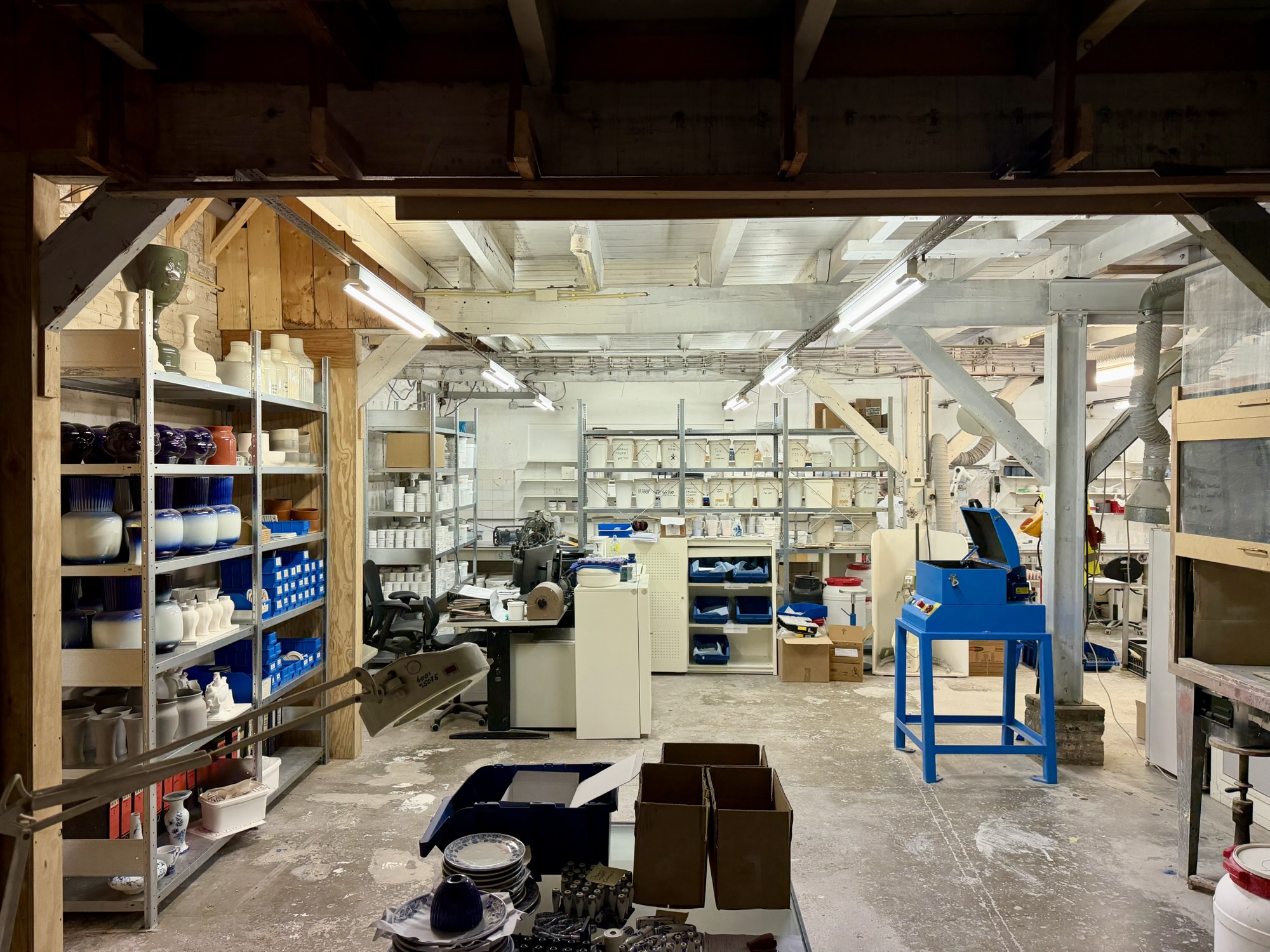
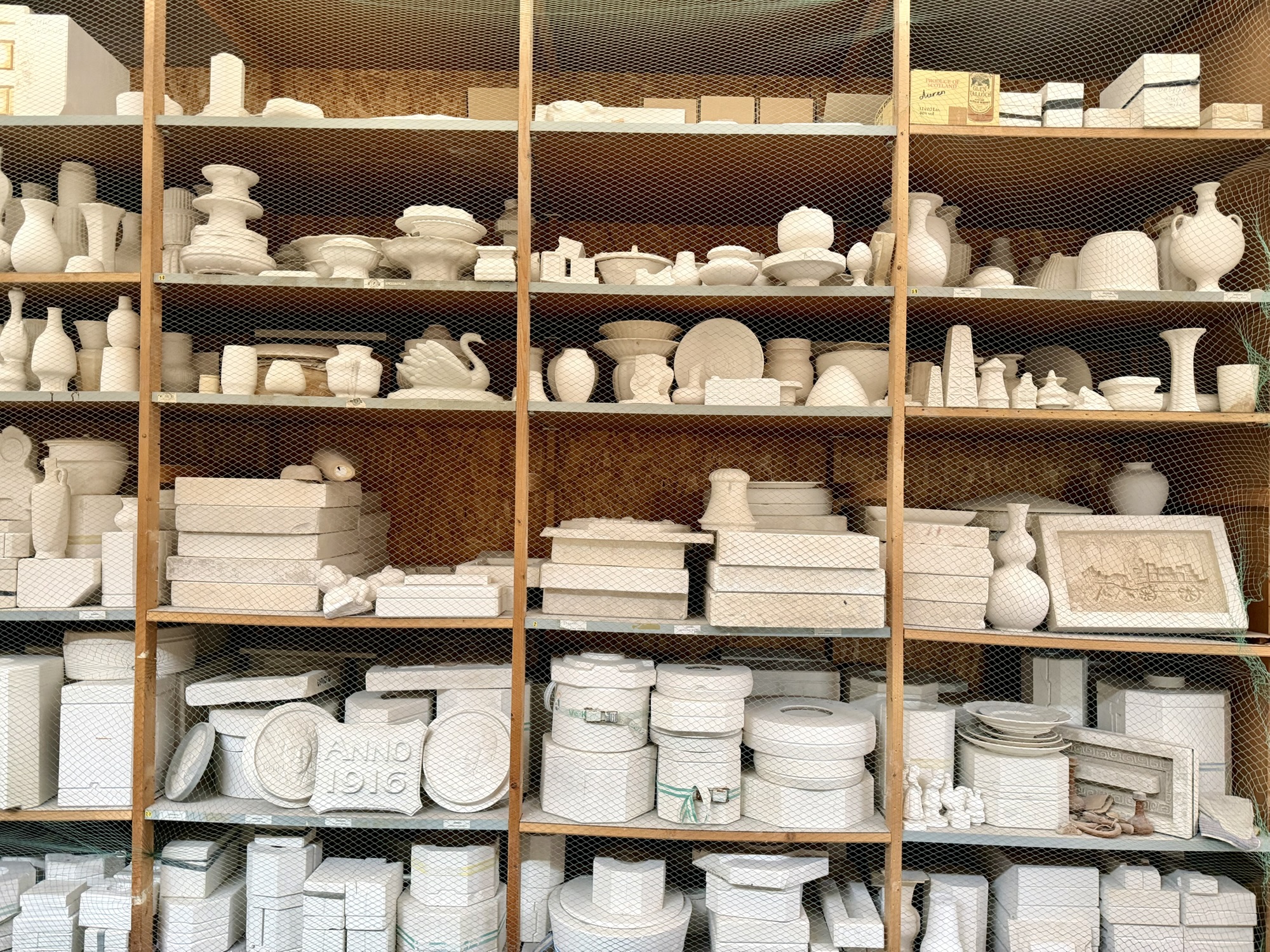
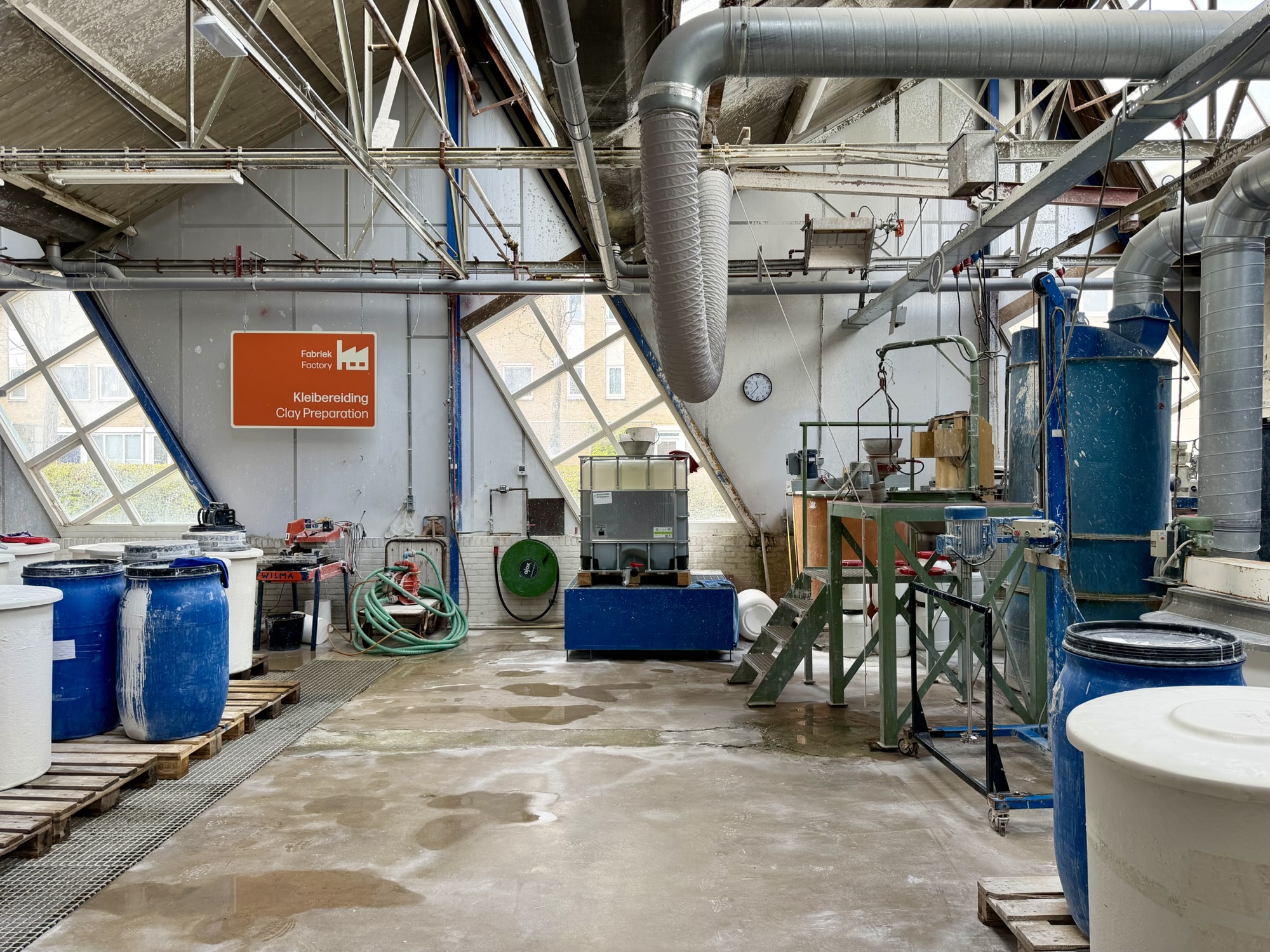
We were able to see the workshops.

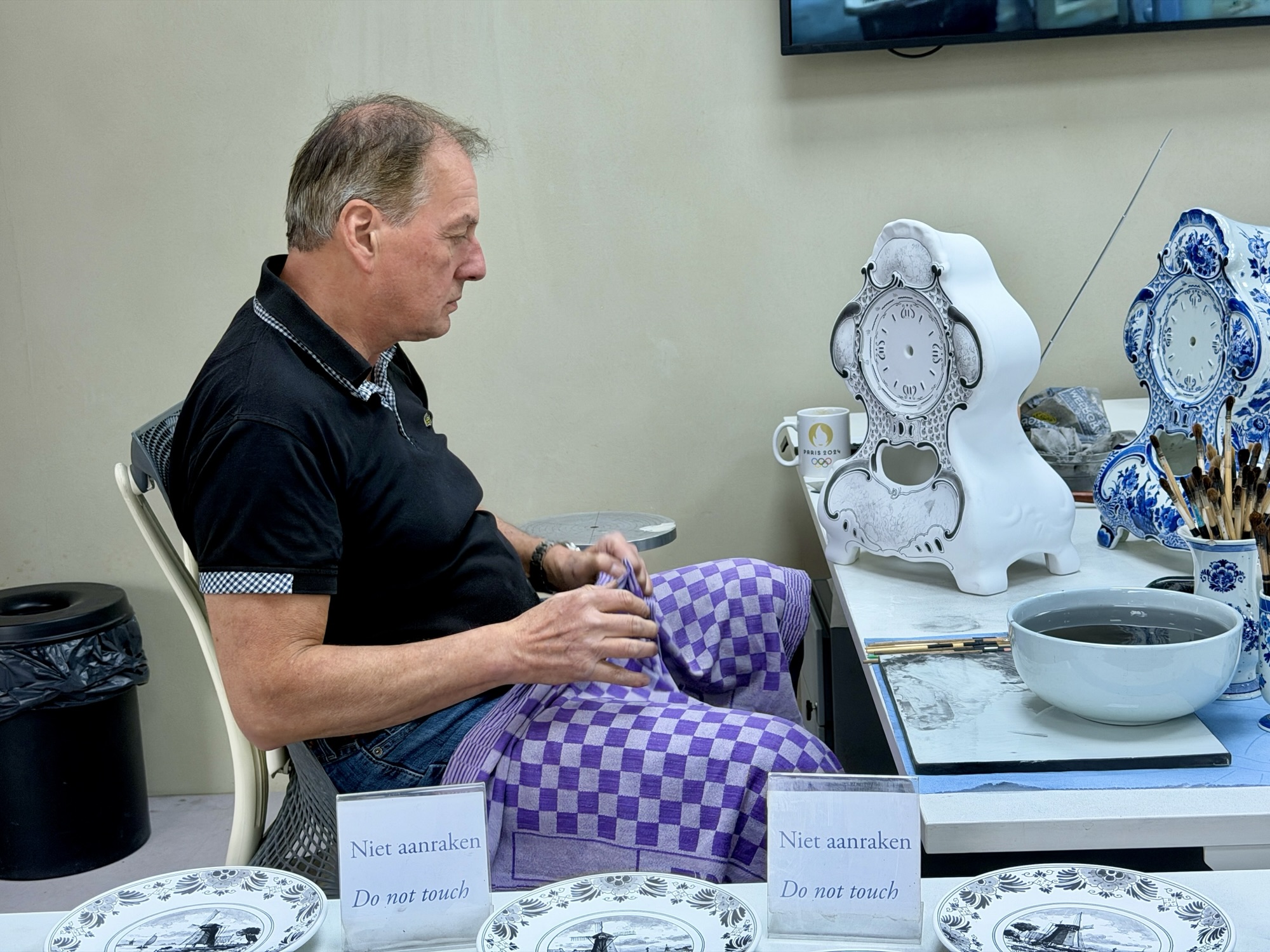
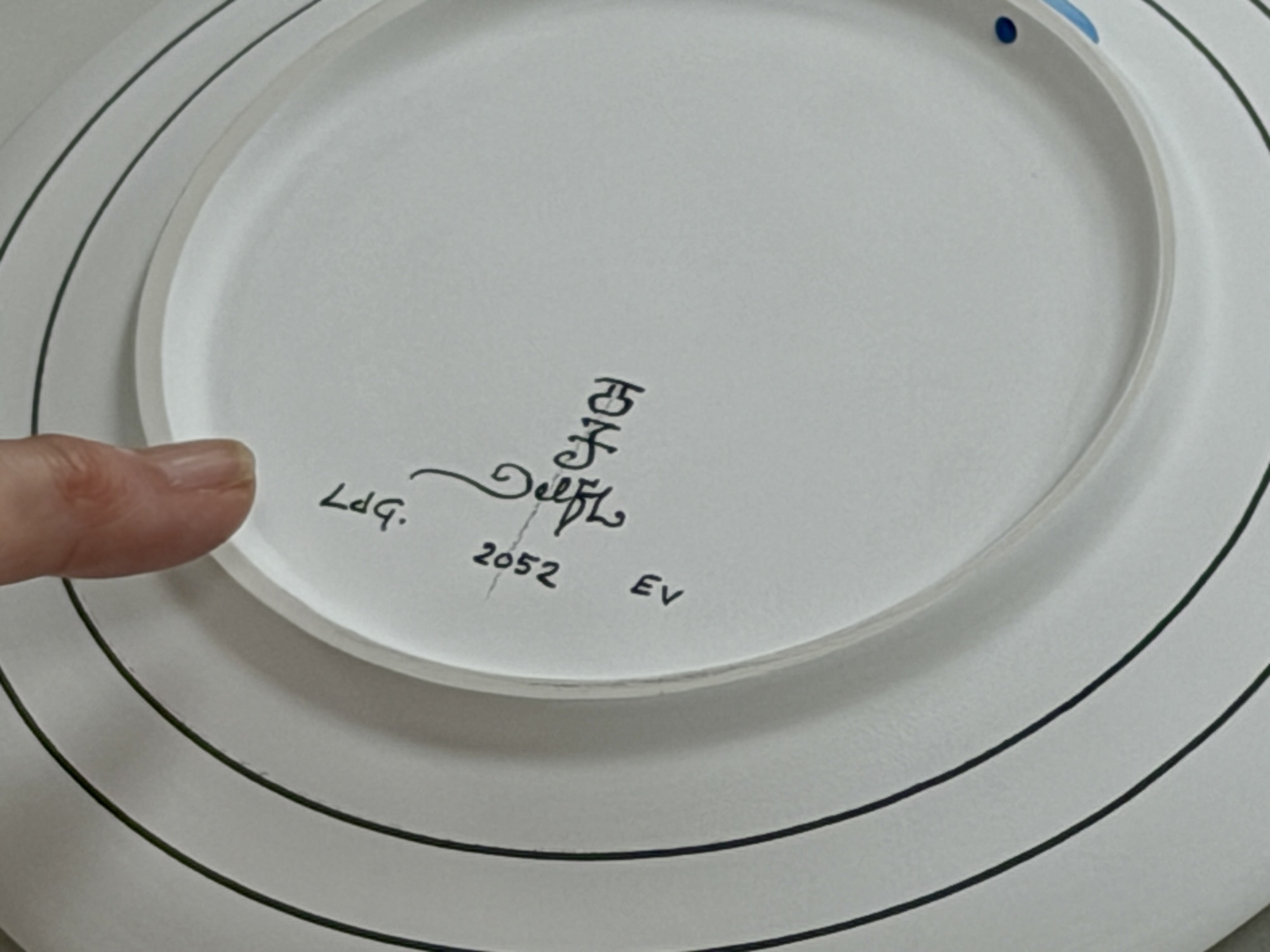
Every piece is hand painted and signed by the artist.

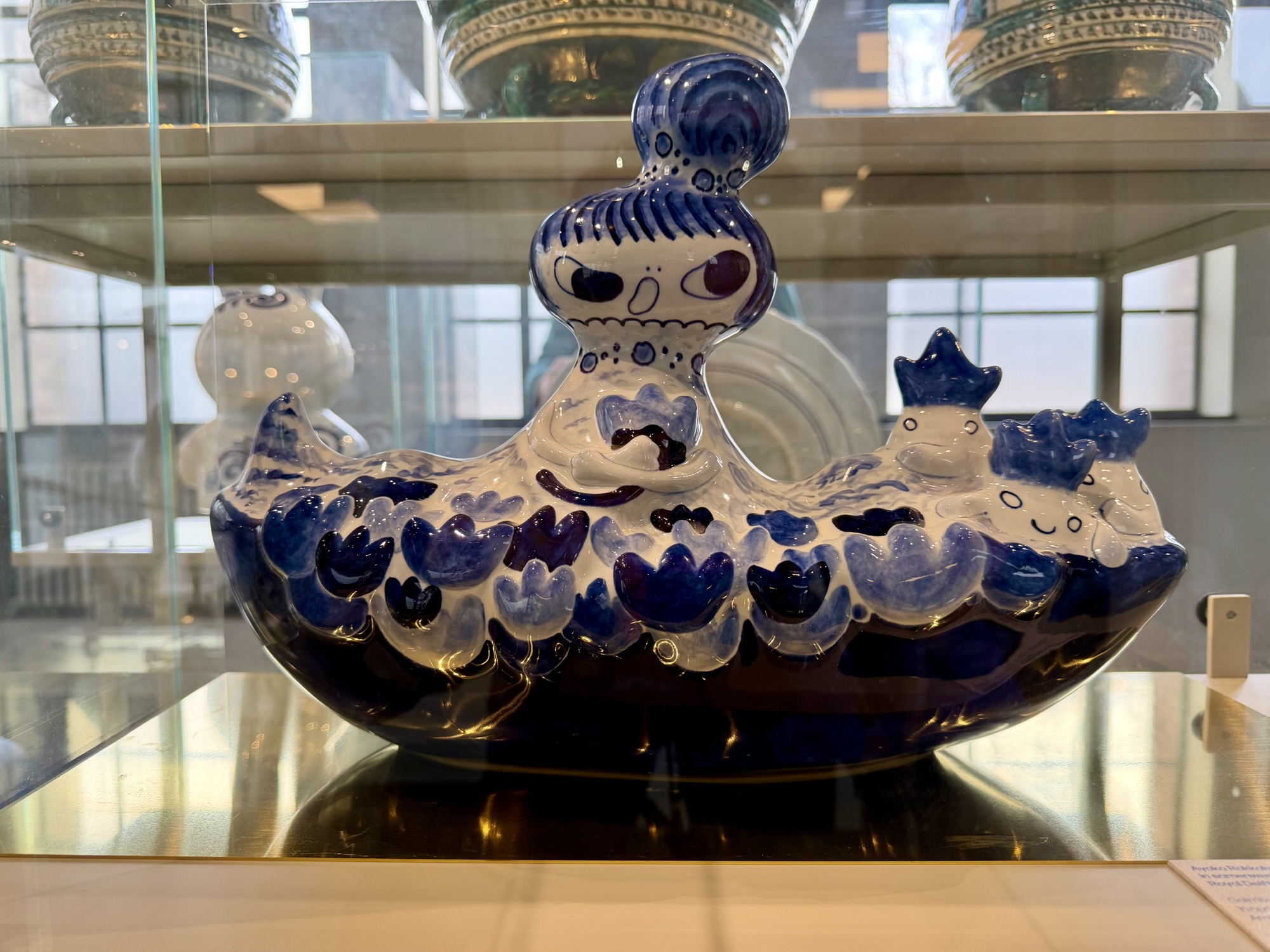
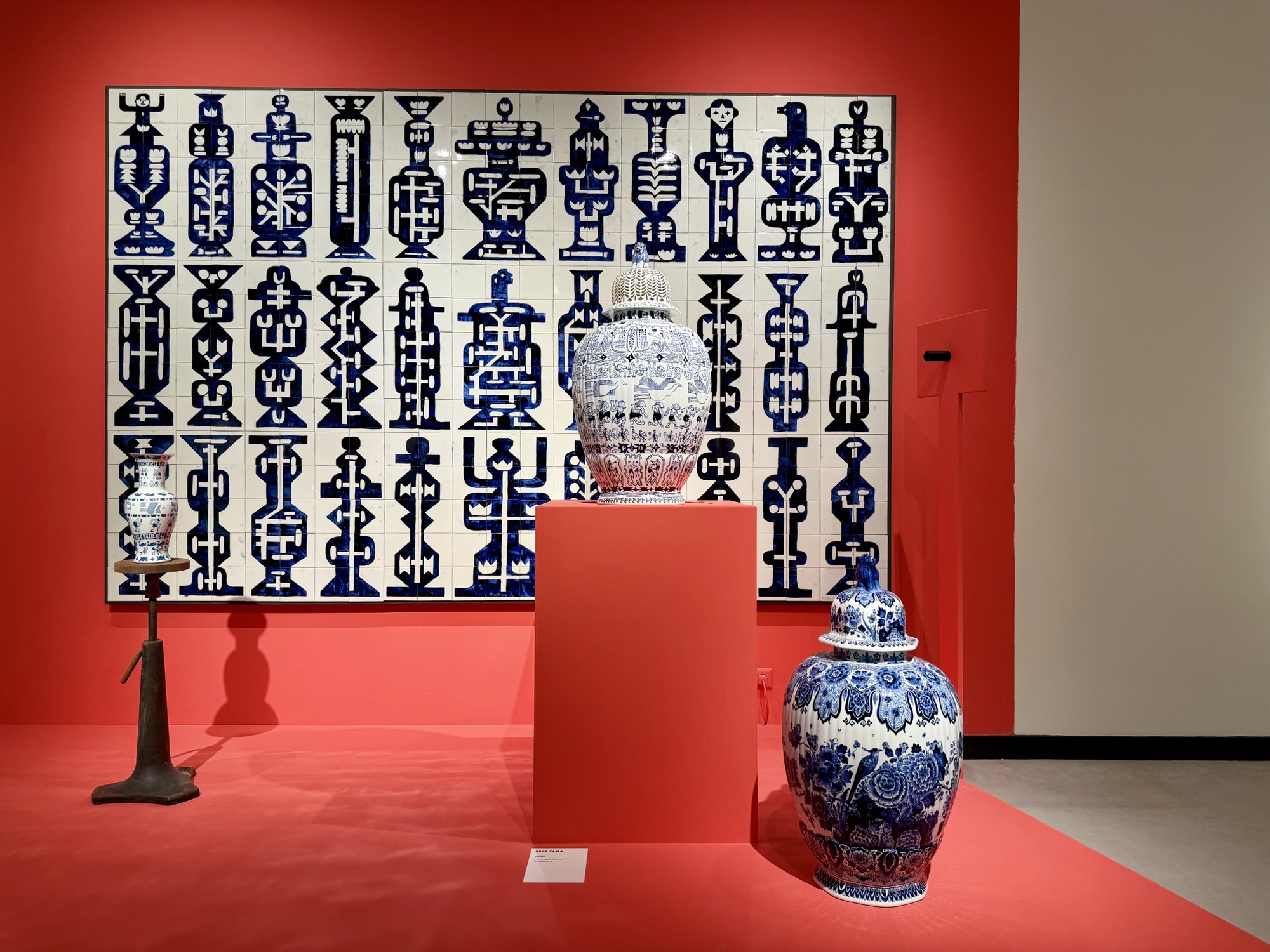
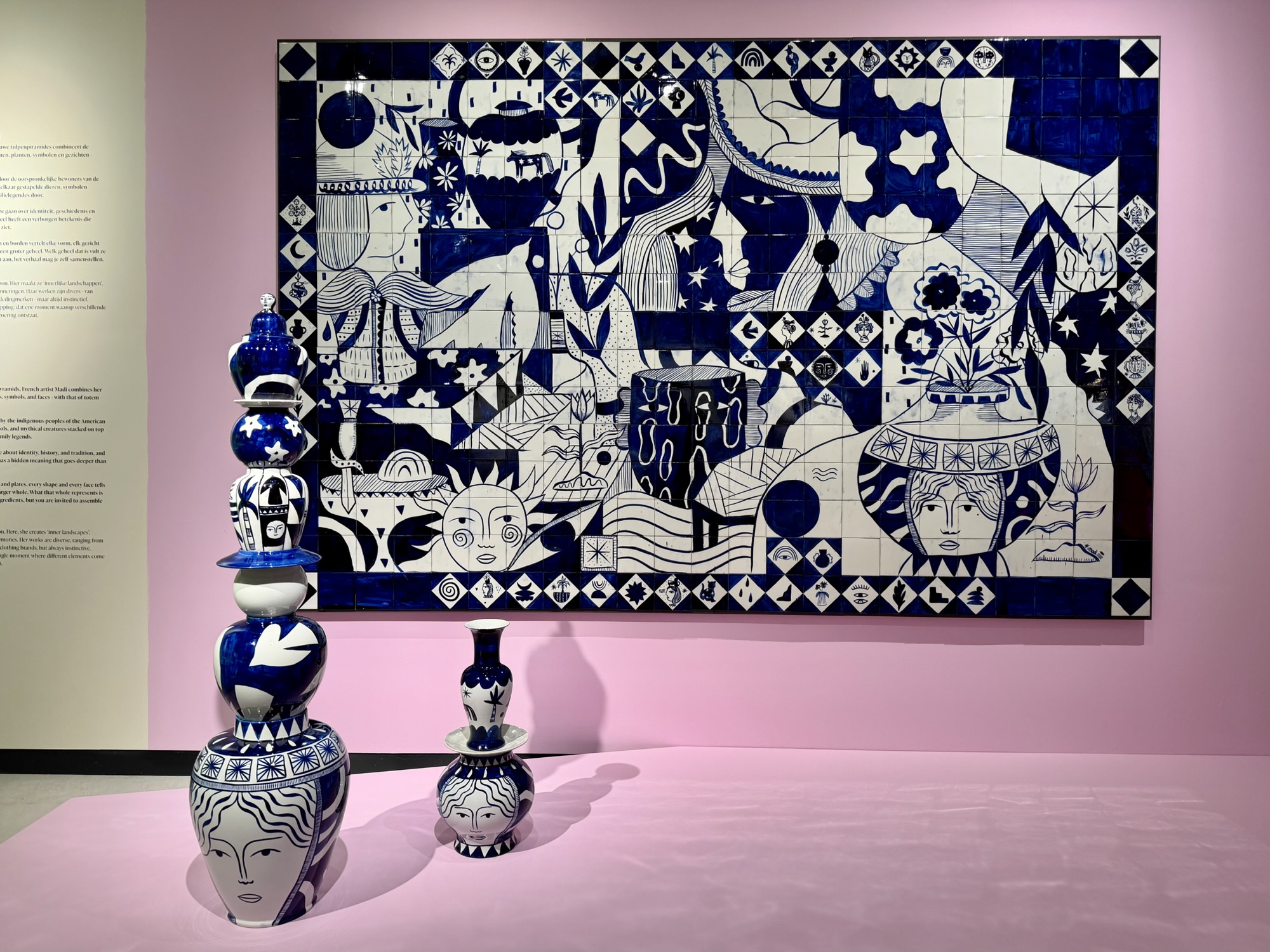
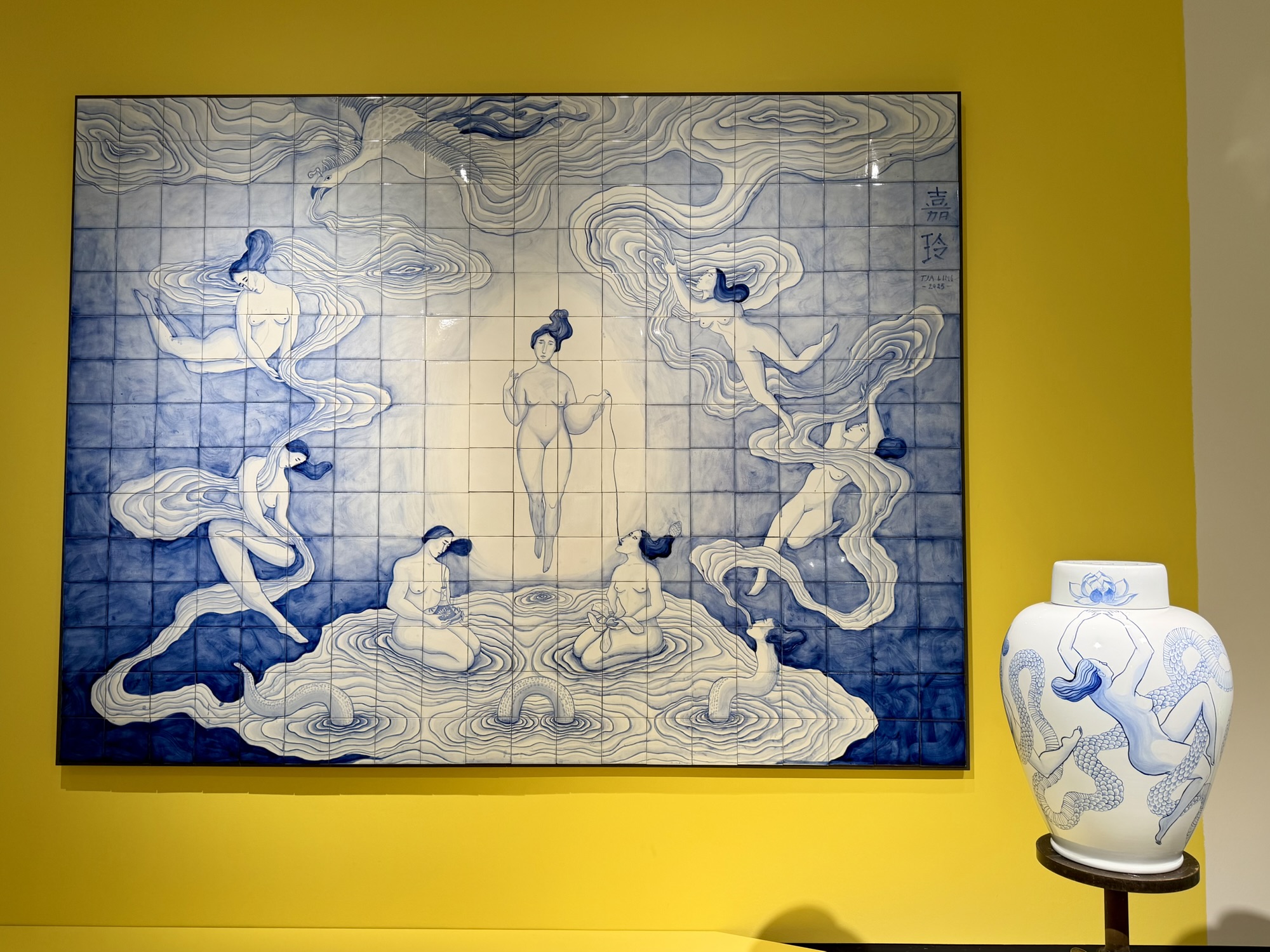
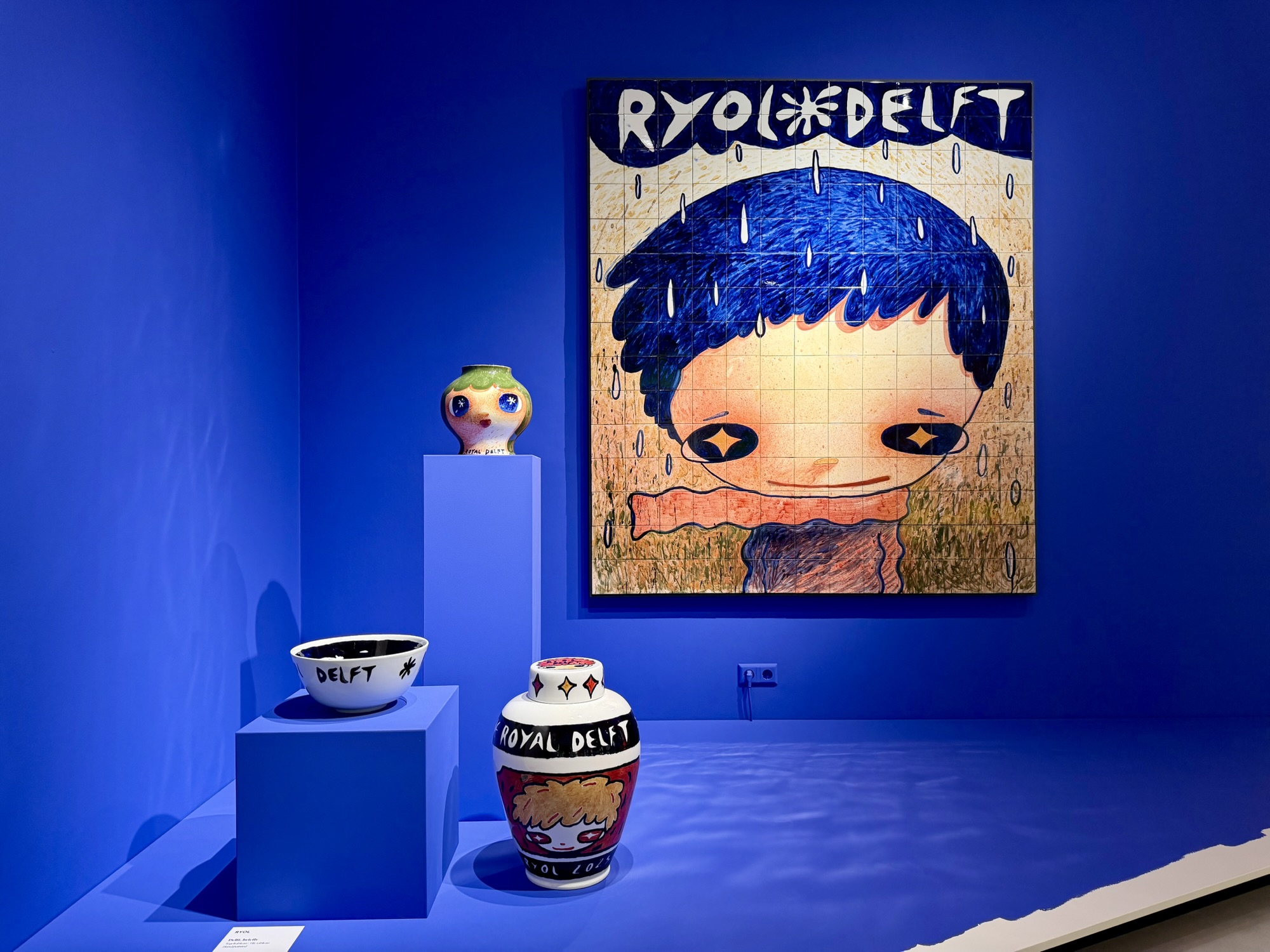
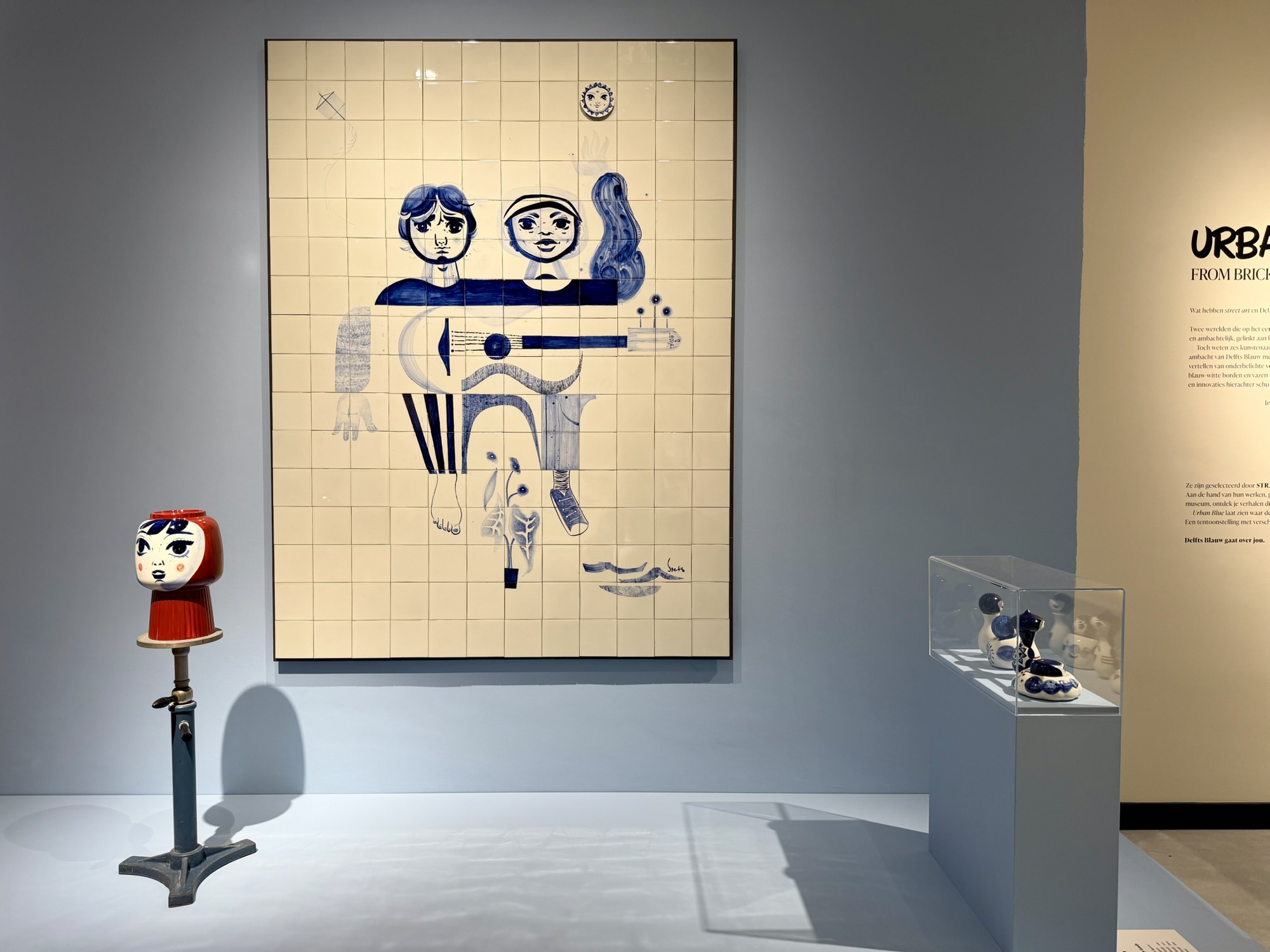
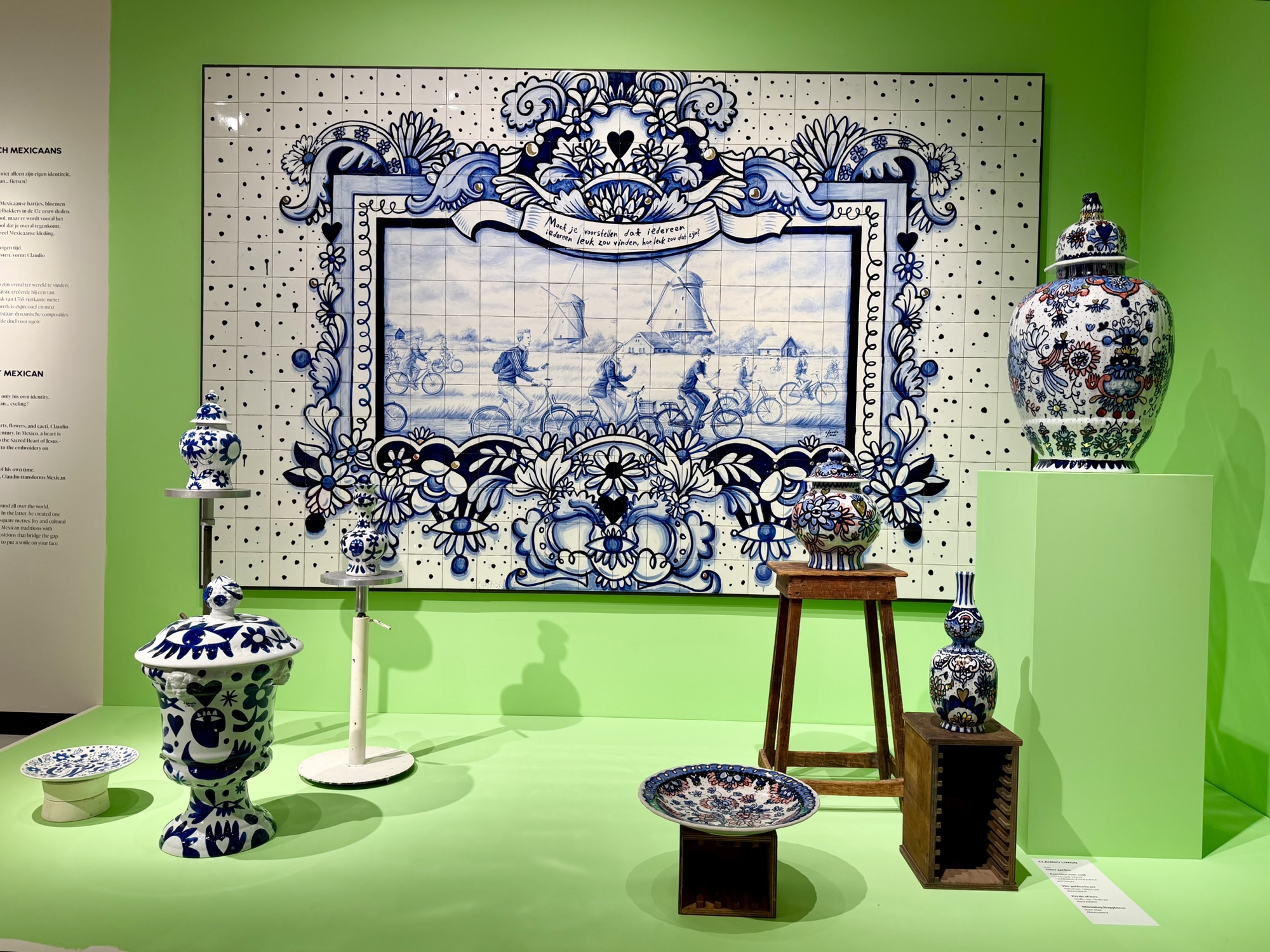
A collaboration between Amsterdam‘s street art Museum and Delta blue led to these creations shown in this slideshow of six images below. There are small arrows on either side of the slideshow to scroll though it.

The museum had a lovely courtyard, and the window frames were made out of porcelain.

We exited through the gift shop where a handpainted egg cup was on sale for €100.

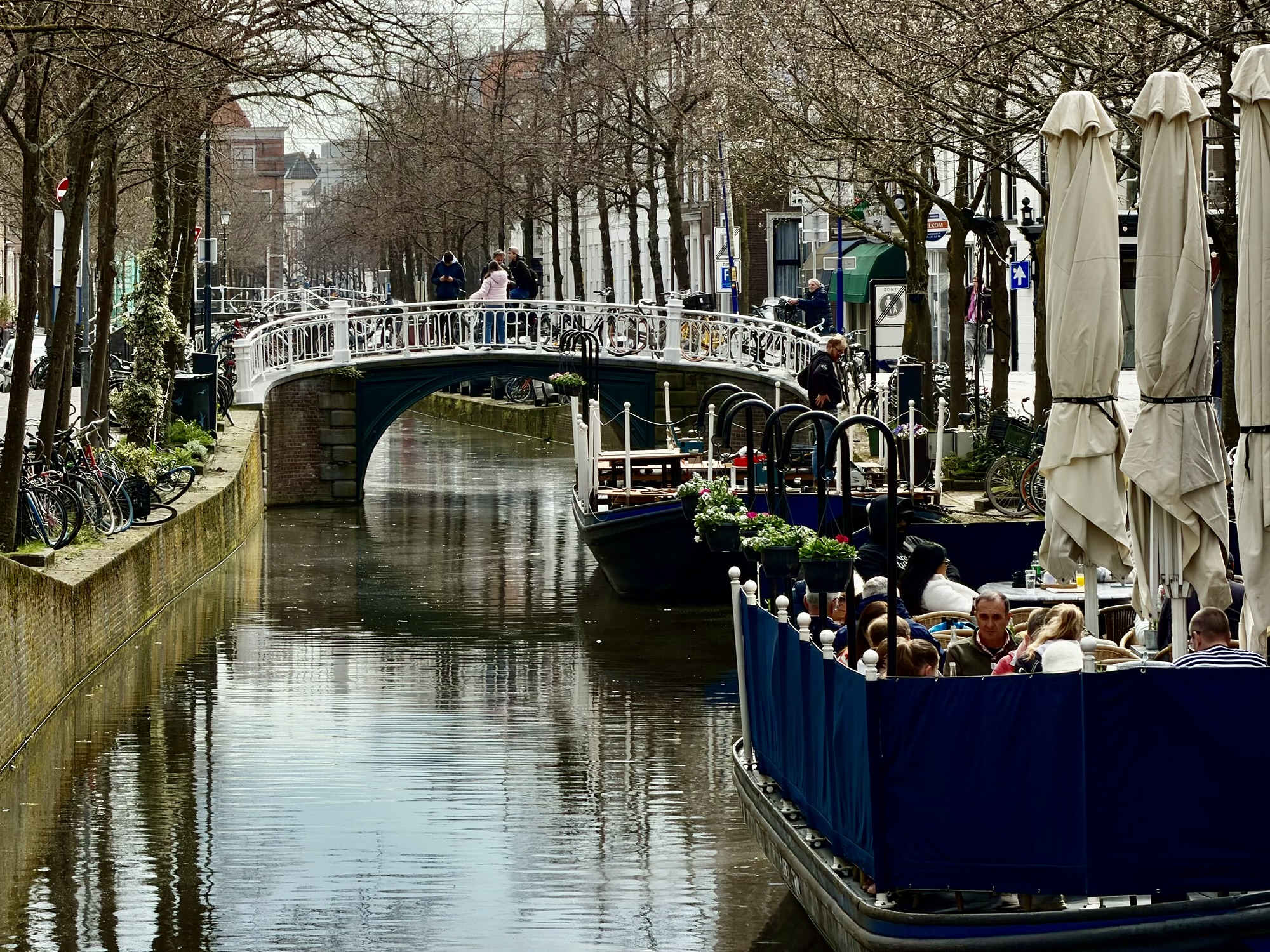
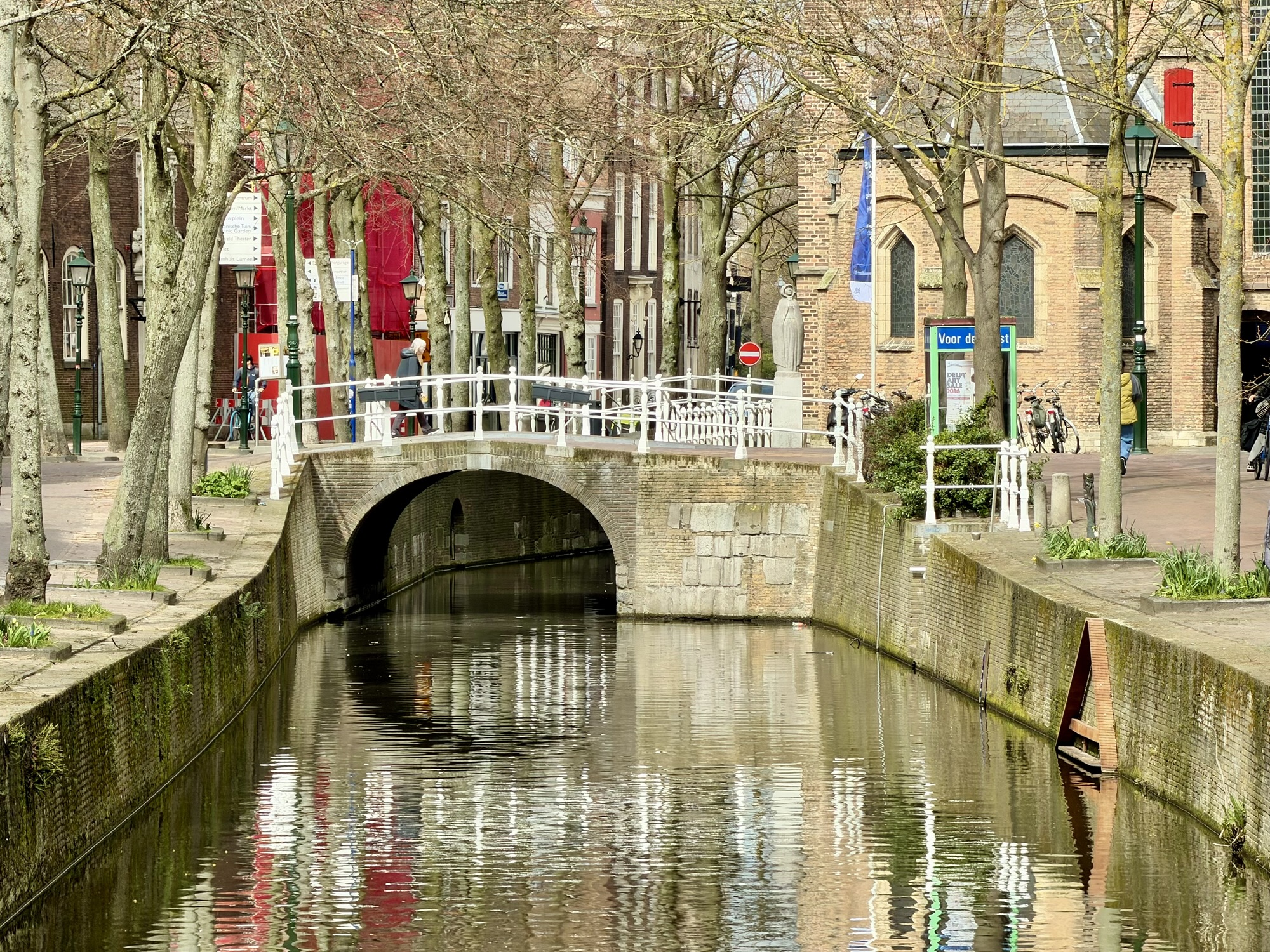
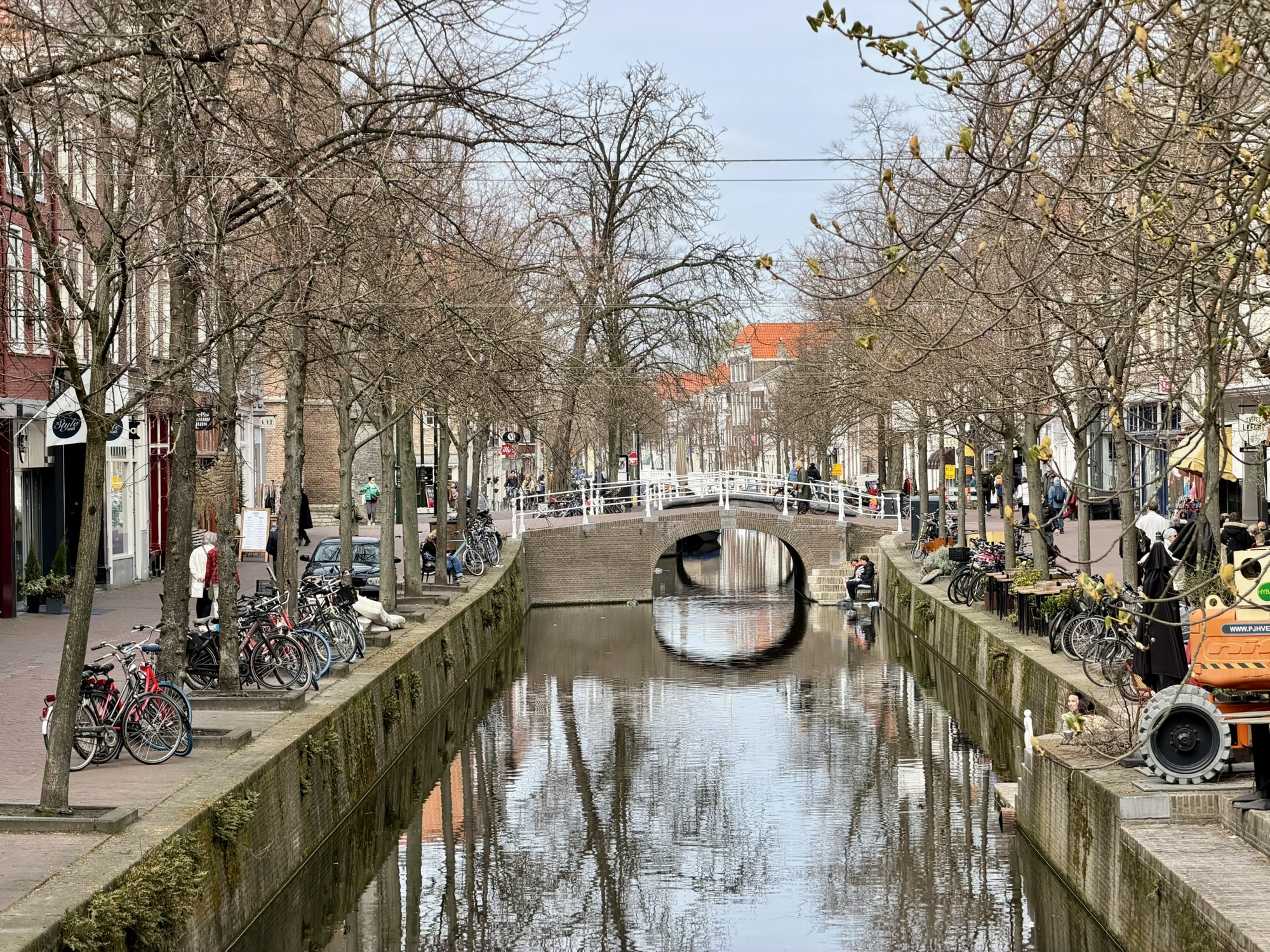
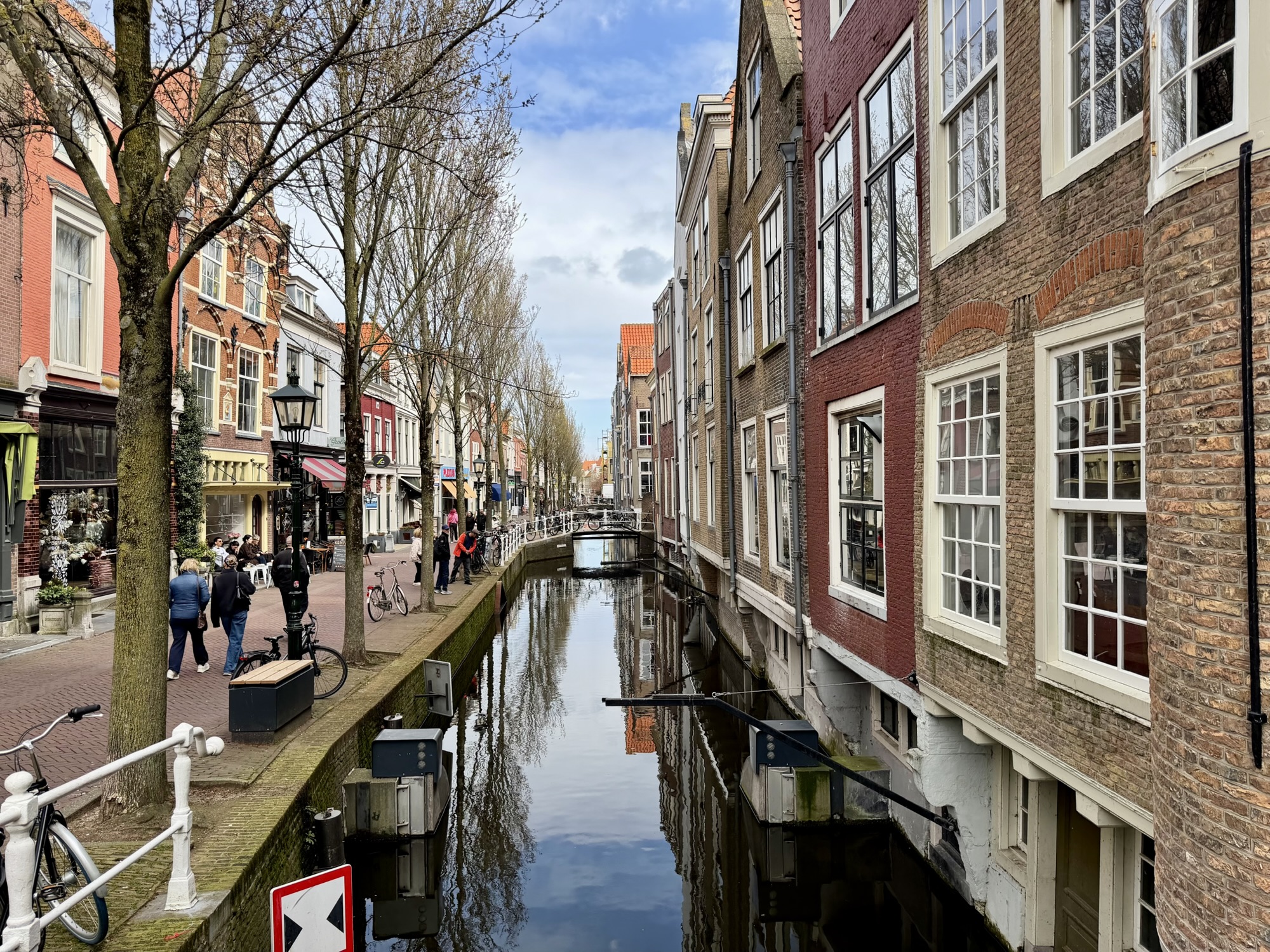
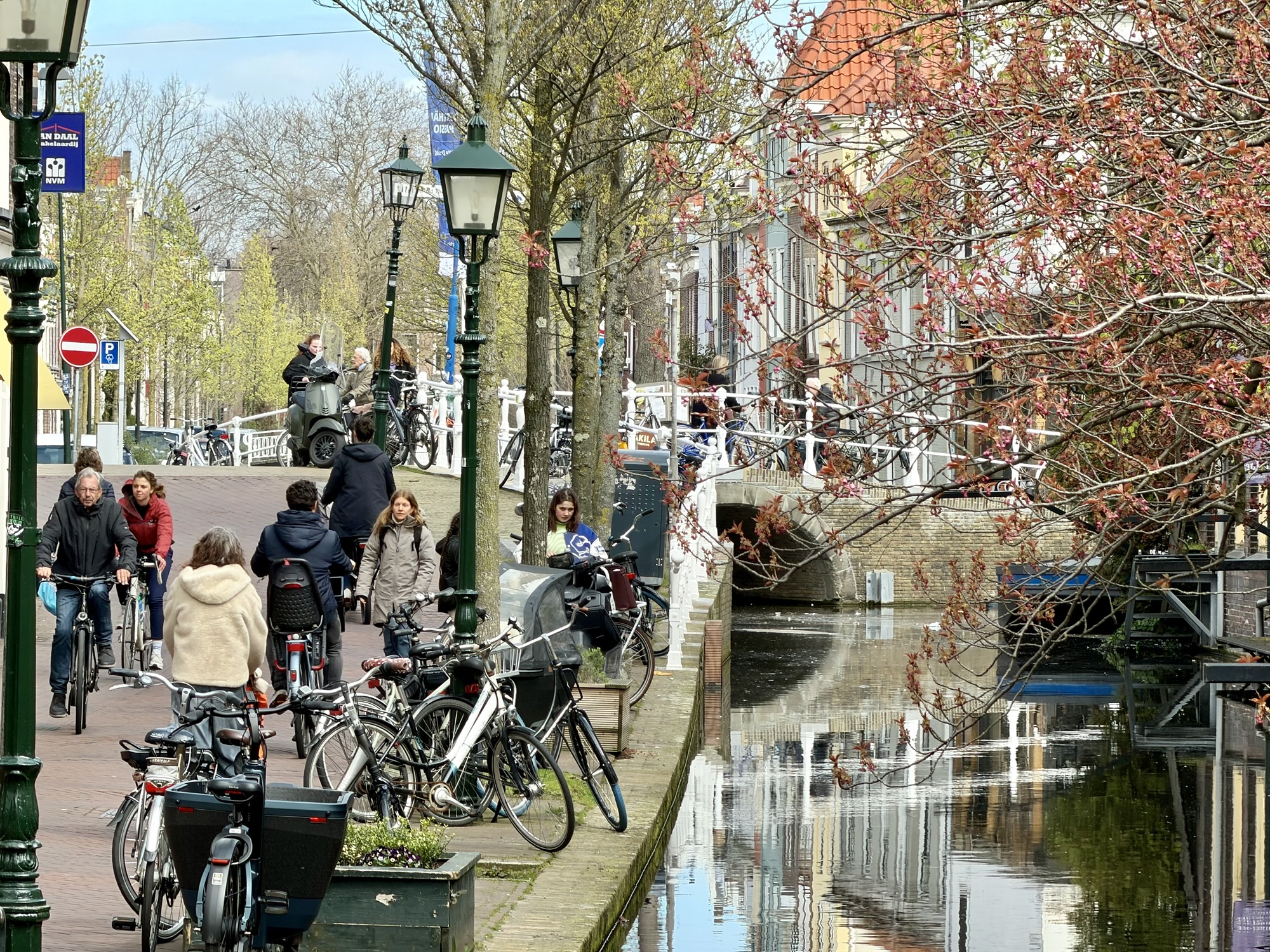
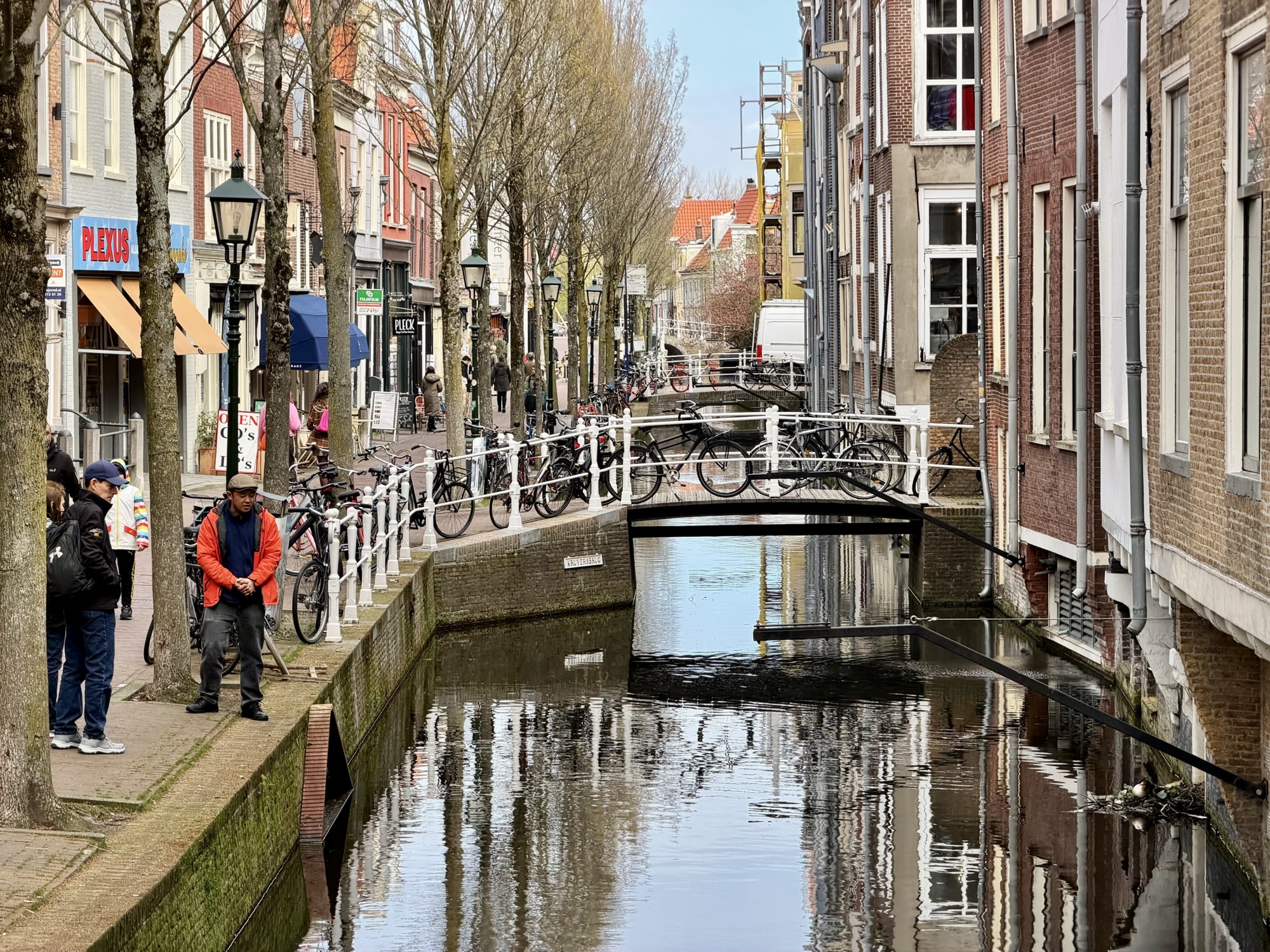
A short drive took us into the city center, which is mostly car free. There were many beautiful views of Canal bridges, shown in the slideshow of six images below.

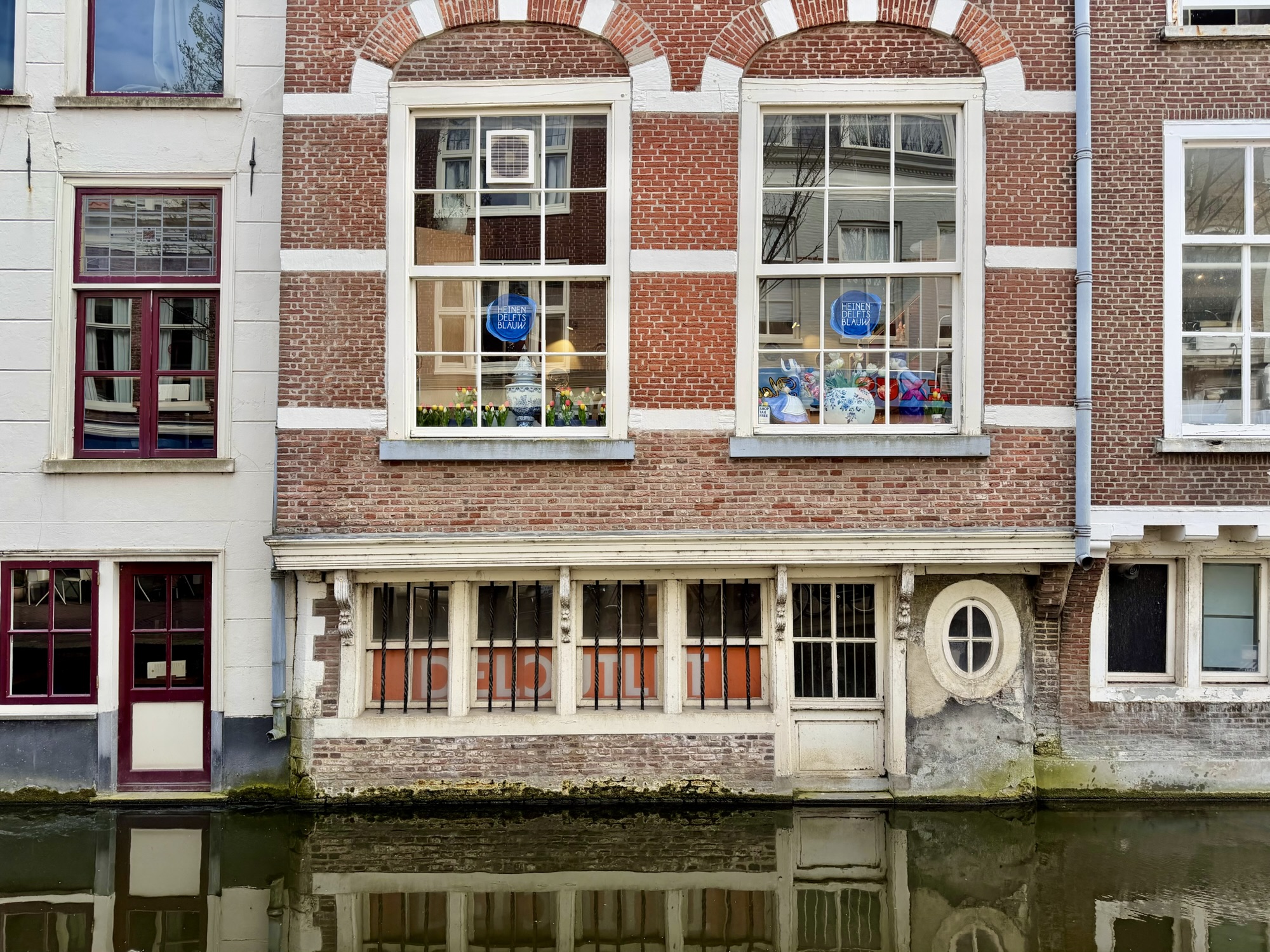
The lower level of the canal homes is right at the water level.

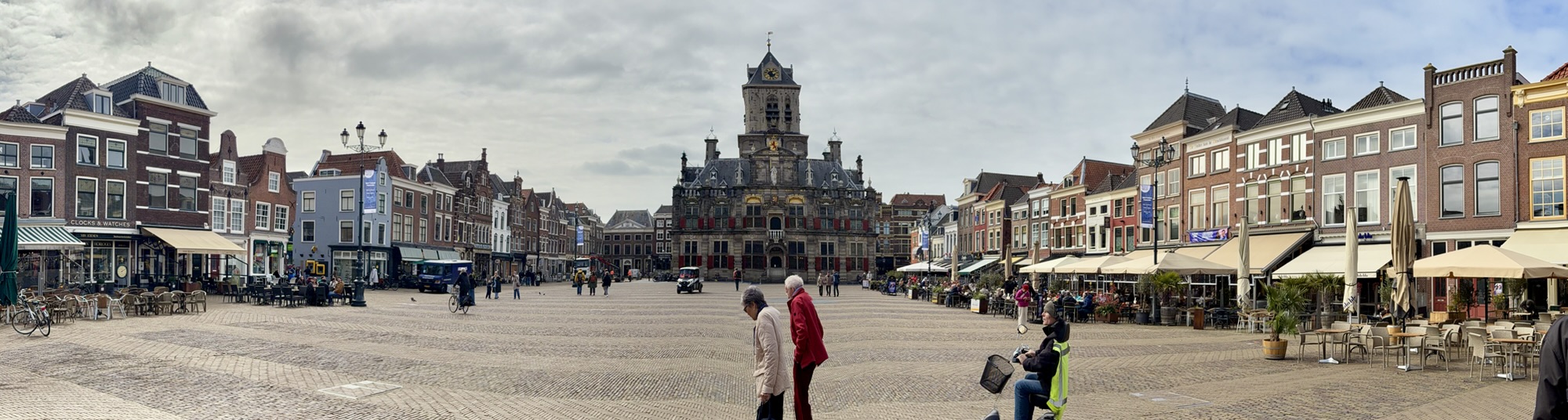
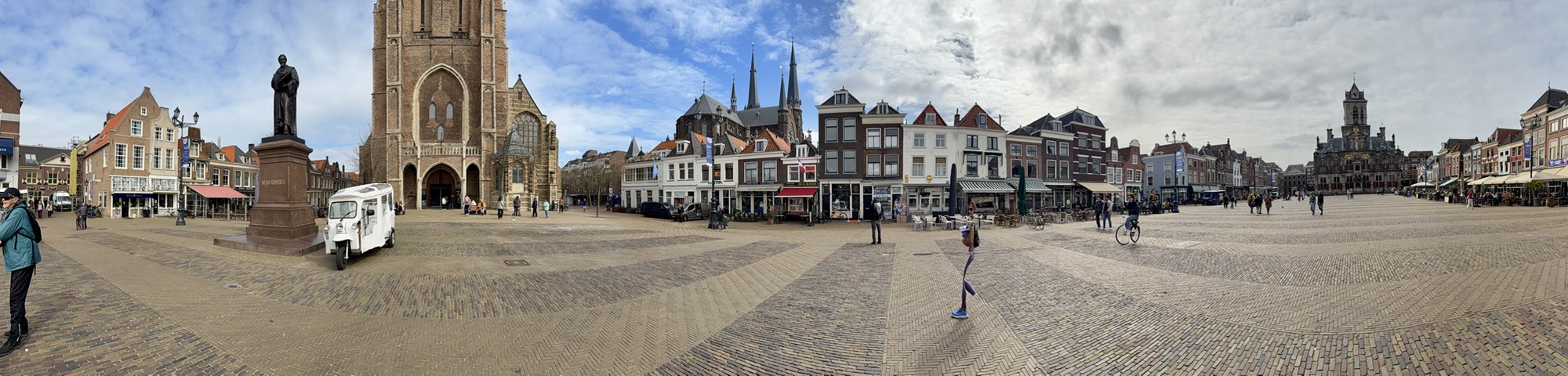
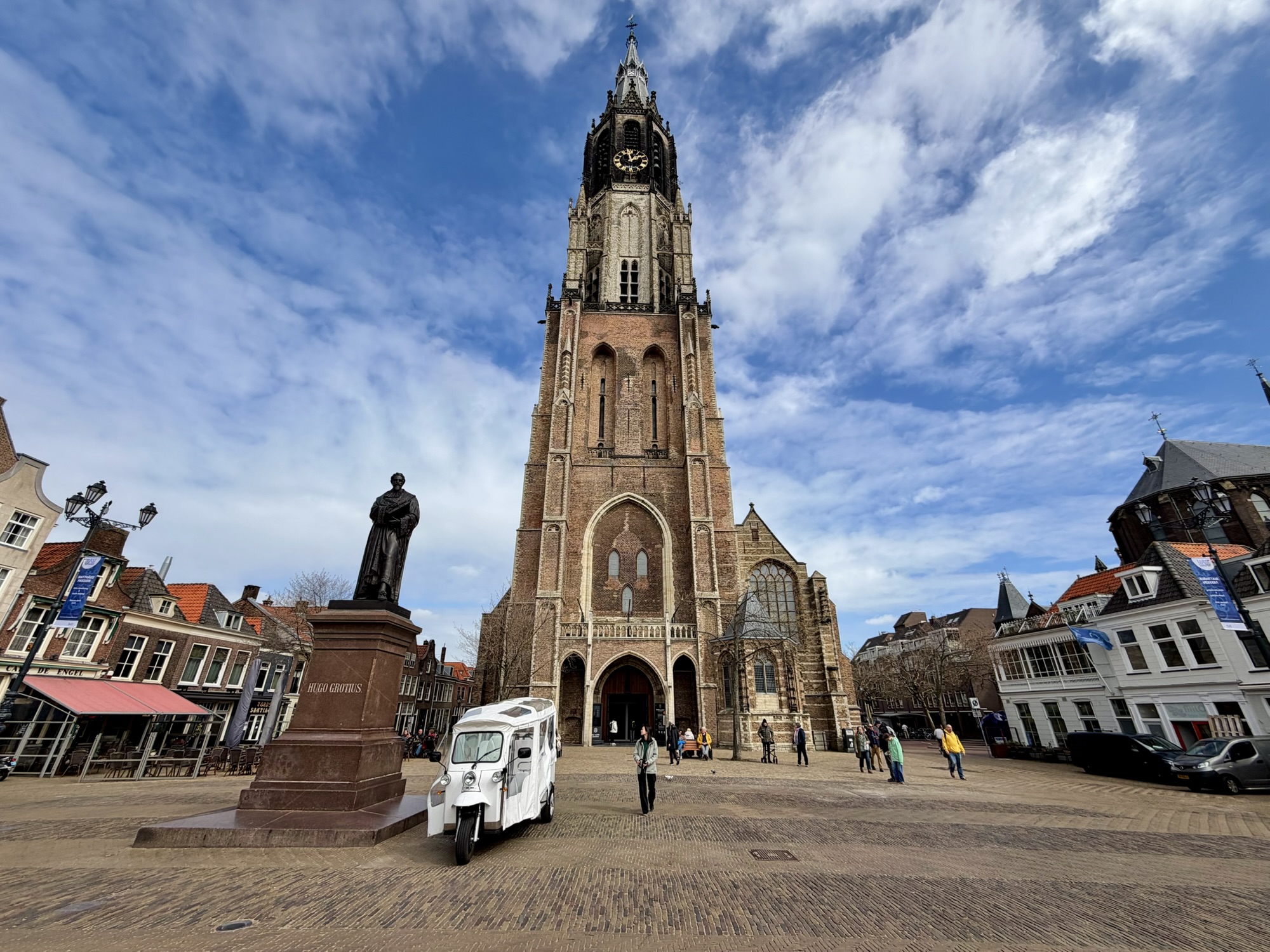
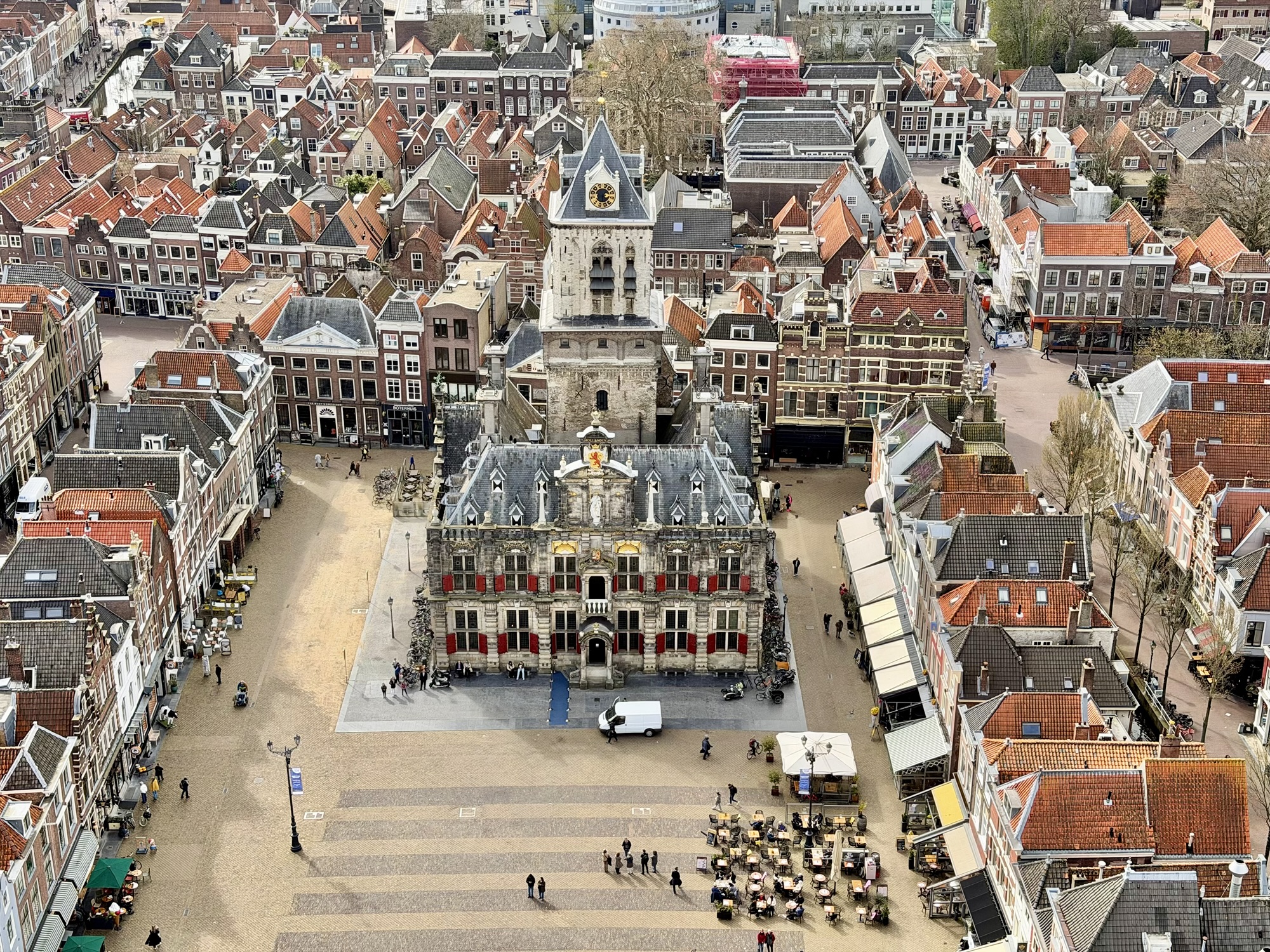
This is the main square which has City Hall at one end and new church at the other end. The Dutch Royal family are buried at the New Church. It was built between 1381 and 1510.

The statue in front of New Church is Grotius who was a priest. He was interested in law and wrote, wrote Freedom of the Sea, which became the basis for Maritime law.

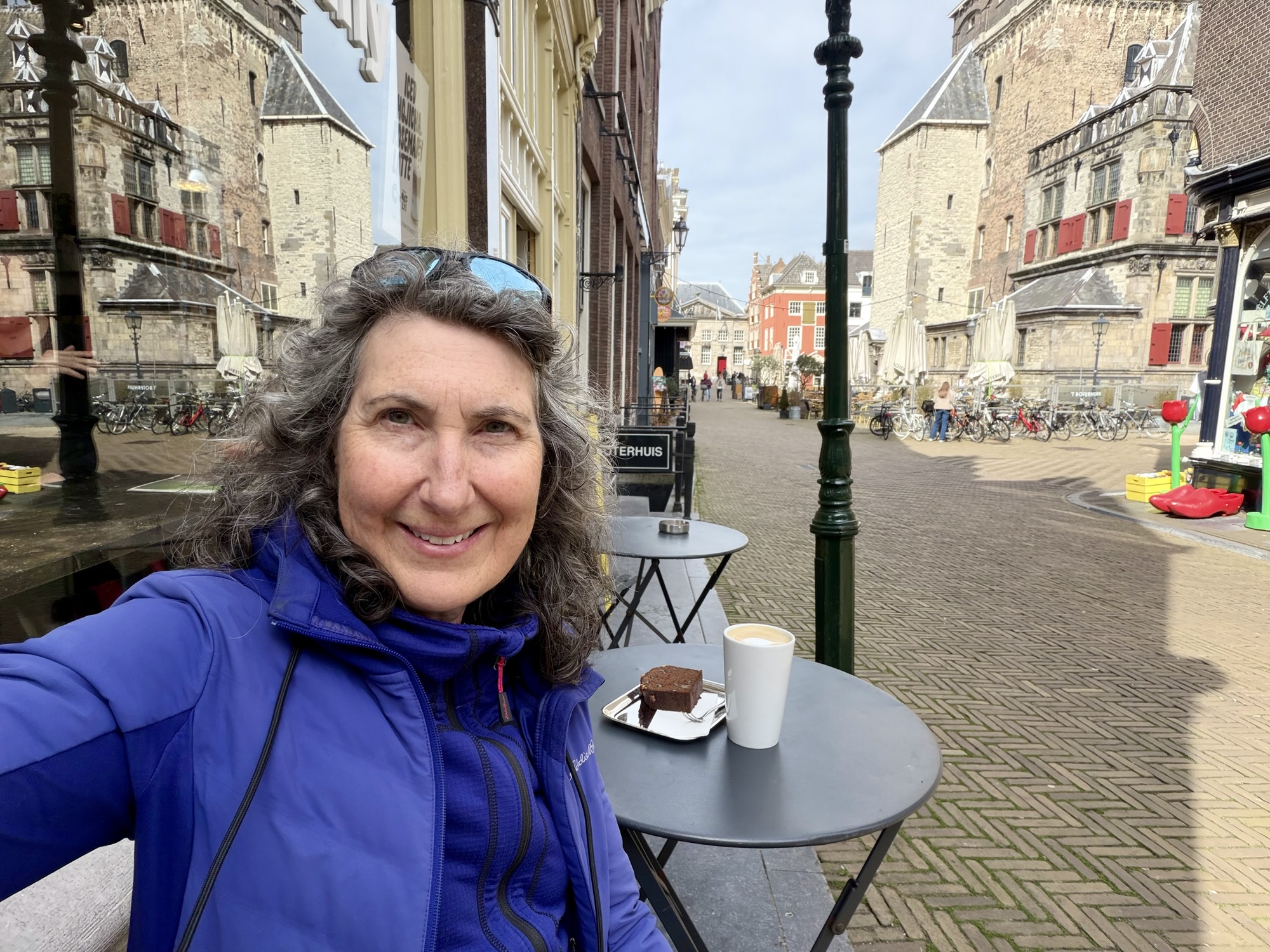
We were given about an hour of free time. We split up and got food and explored. I had another latte and some banana bread. 

I took a video of the activity on one of the small streets in Delft in mid afternoon.
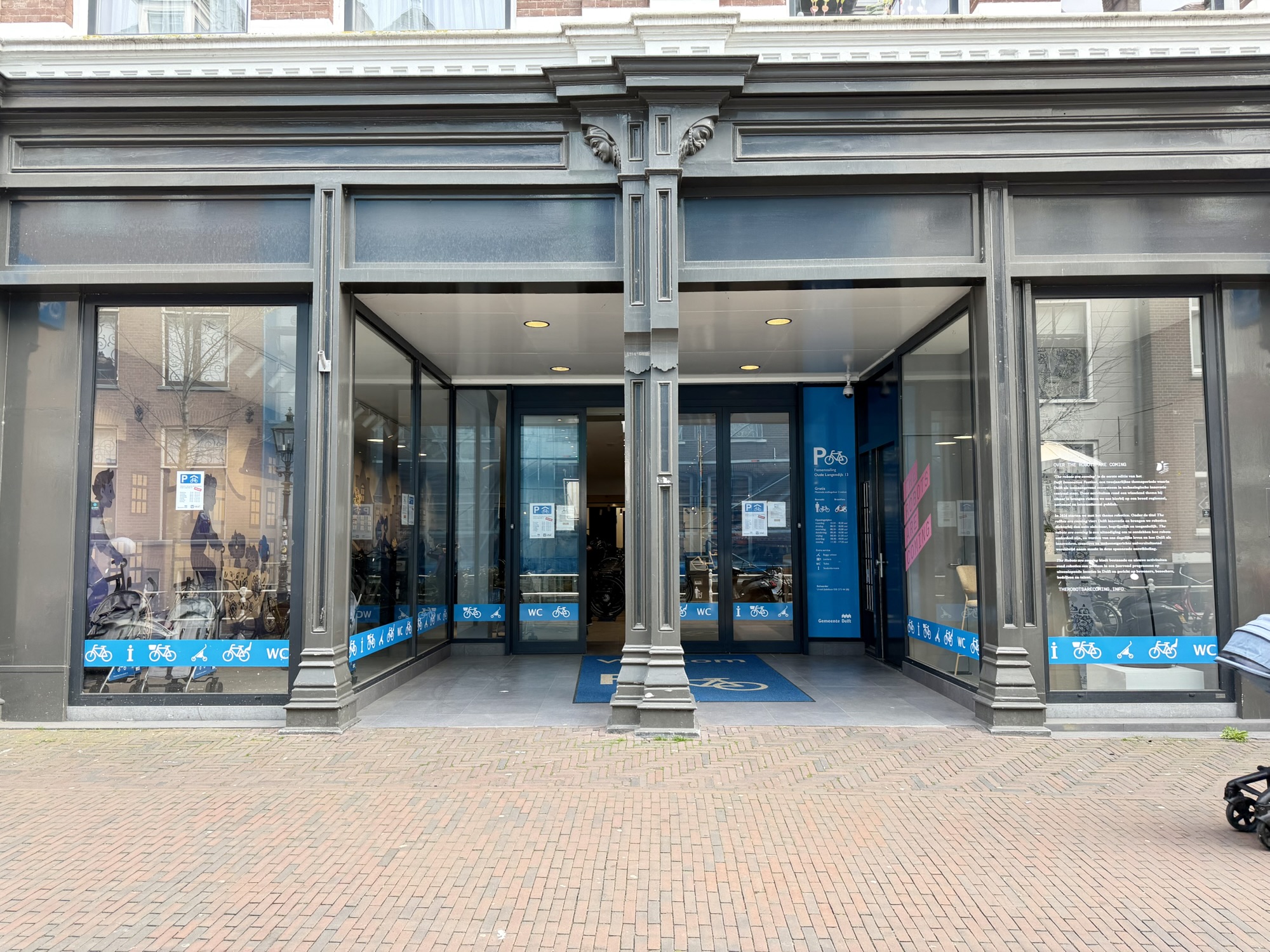
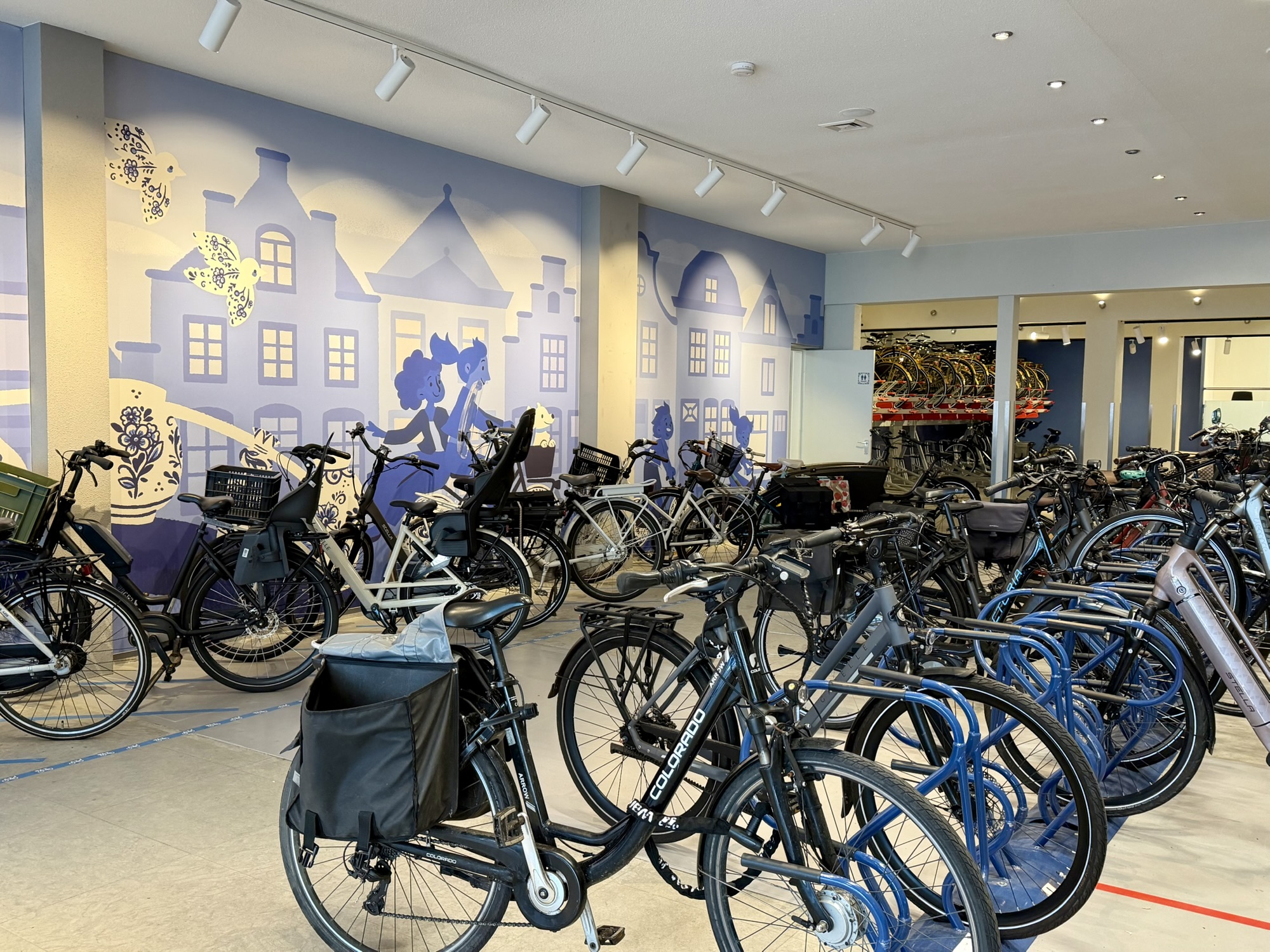
On my walk to The New Church I passed the storefront which had an indoor bicycle storage facility. It’s free to store your bike for up to two weeks. The attendant was very friendly and proud of the facility and told me his city was the best place in the world to live.

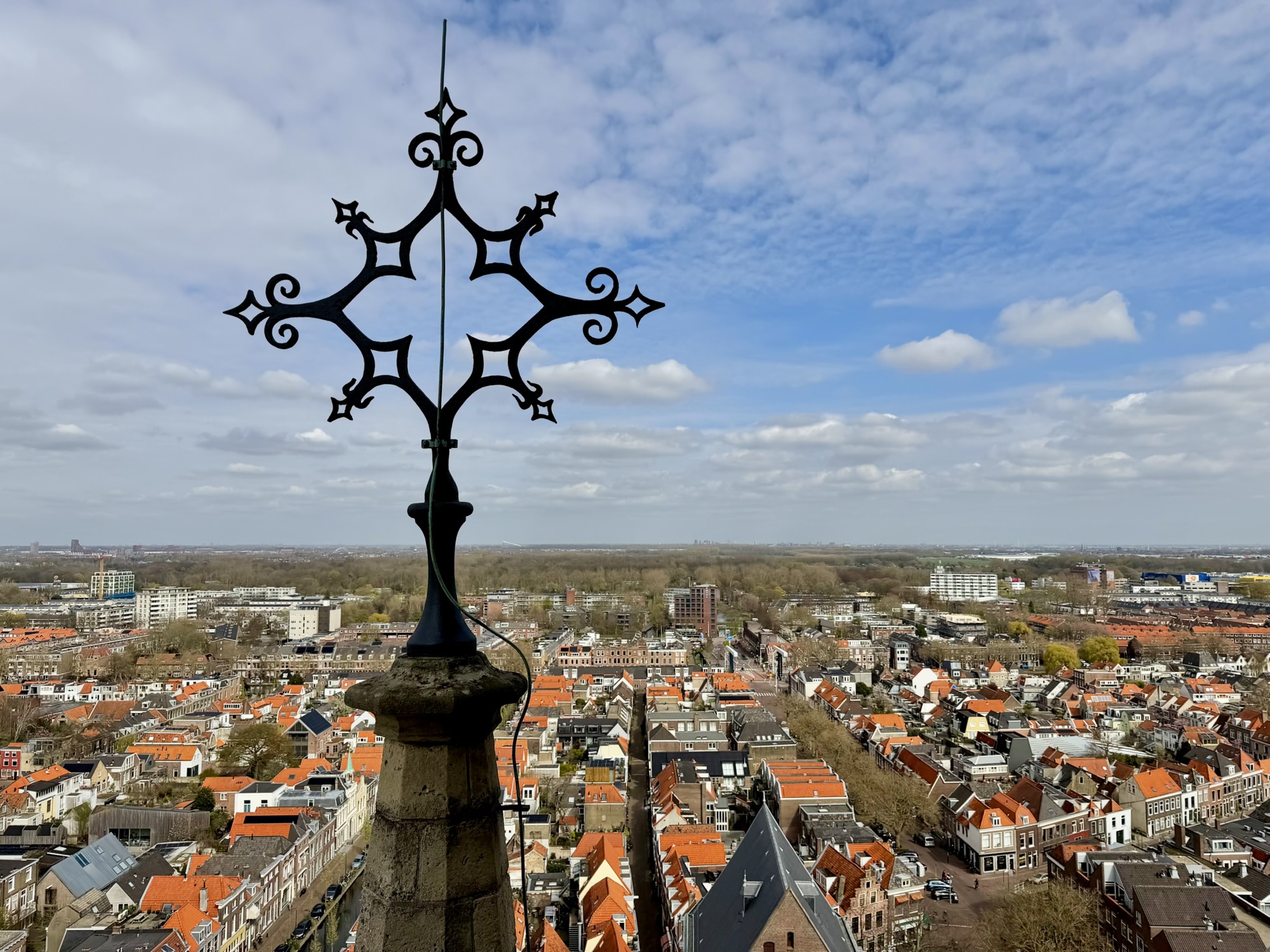
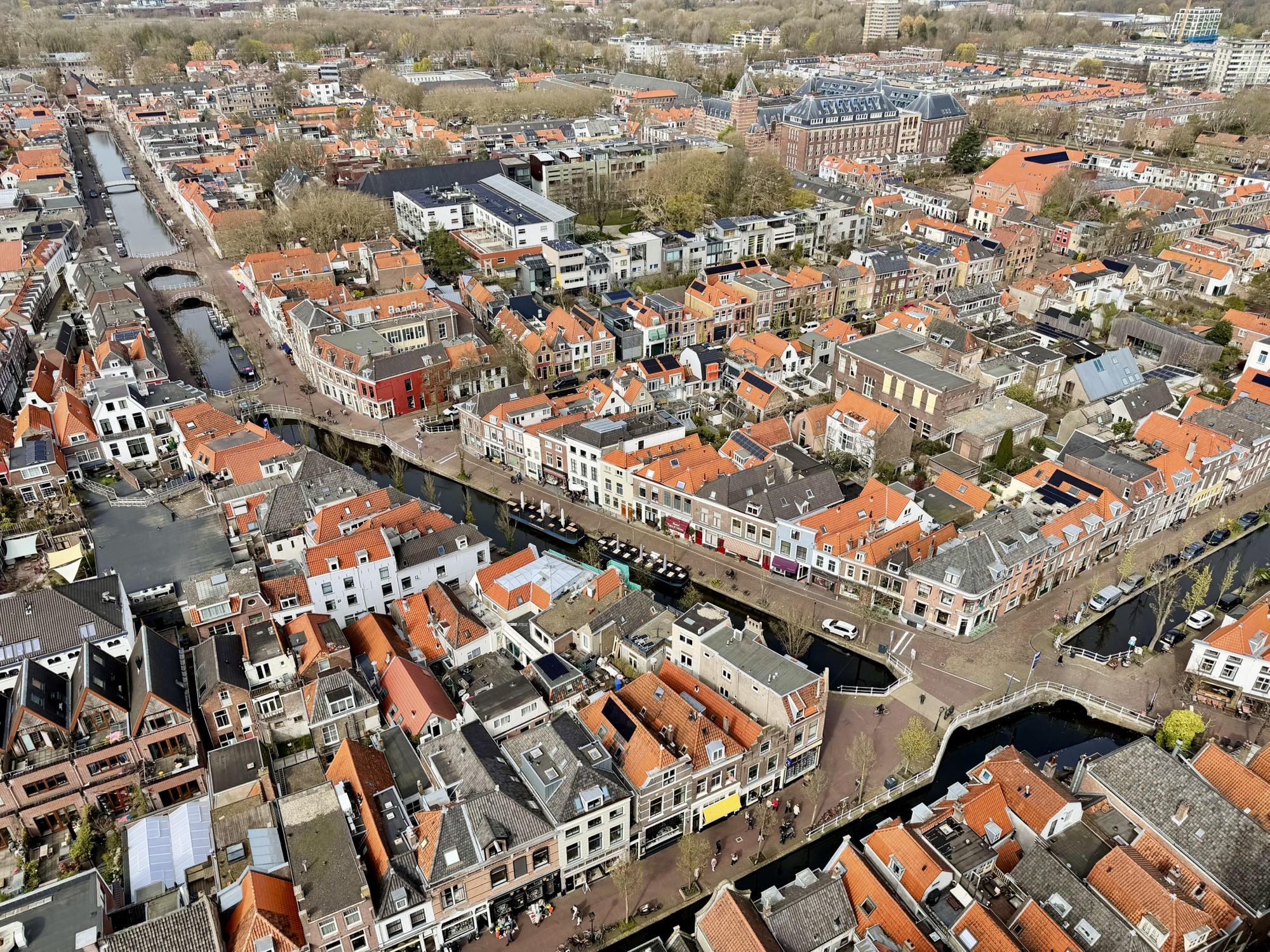
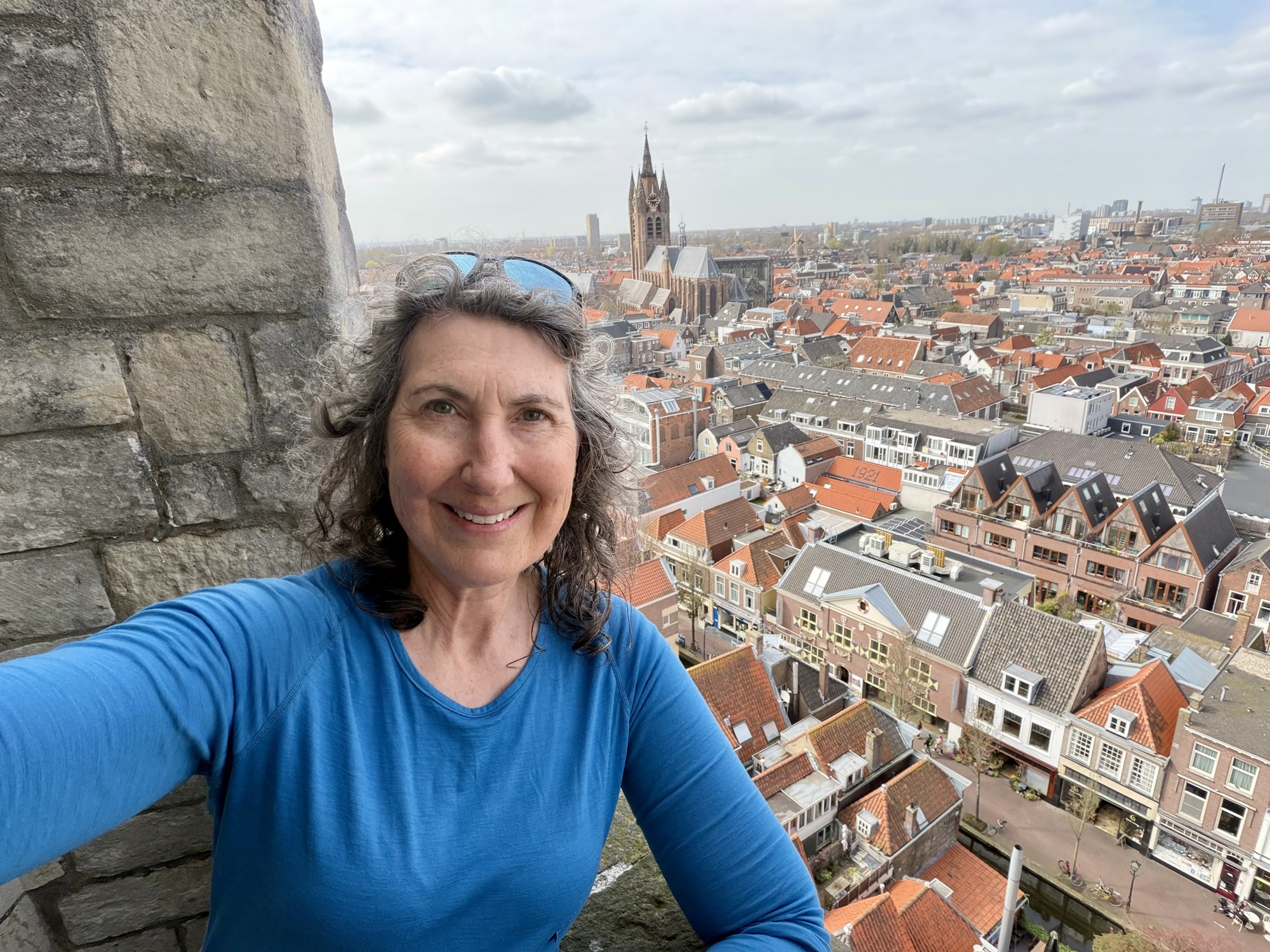
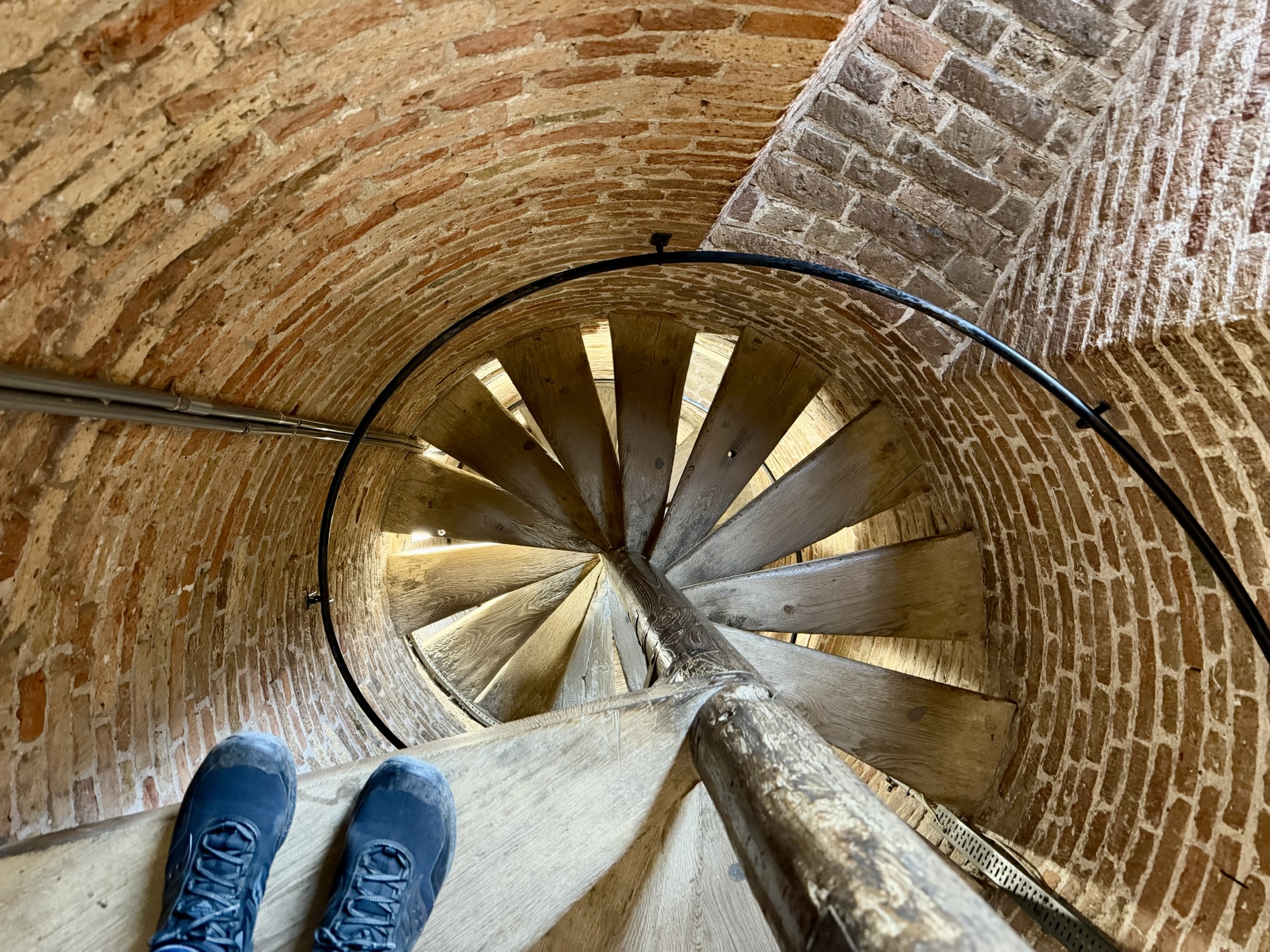
I then rushed back to the New Church to climb the stairs of the tower. It was €7.50 to climb, but it was money well spent for the beautiful views. 

I found climbing the 376 steps of the spiral staircase, quite easy. I climbed the CN Tower seven times in the past so in addition to being fewer steps, it’s I also find it easier to climb, spiral steps rather than flights of stairs.

Everyone in our group is very punctual and we were all back up the meeting spot at the requested time of 3:15 PM.

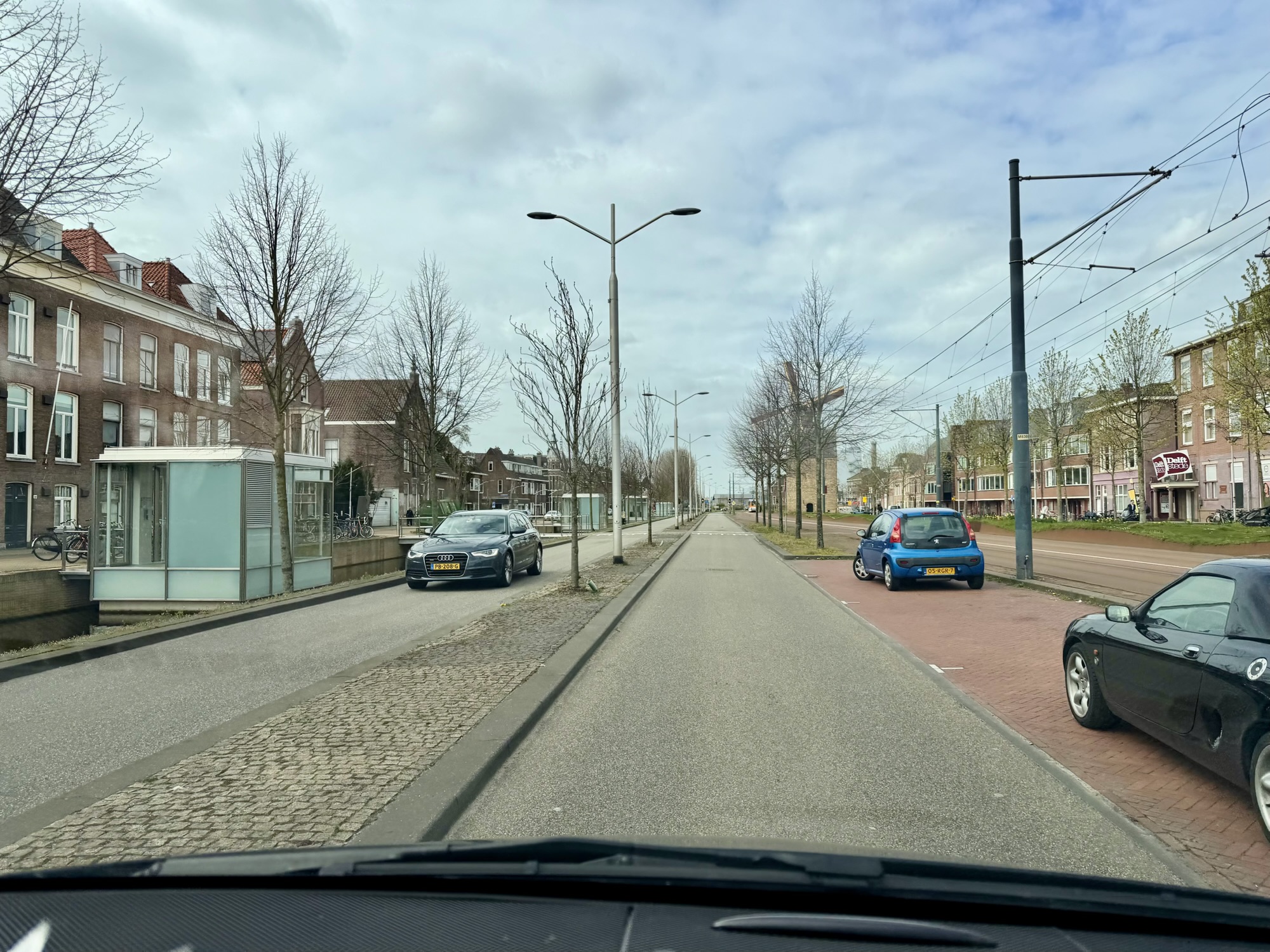
On the way out of Delft I asked Pete what the glass boxes on the left side of the road were. Delft has built an underground parking garage under the main road and these are the access points. What a great way to keep unsightly cars off the beautiful streets.

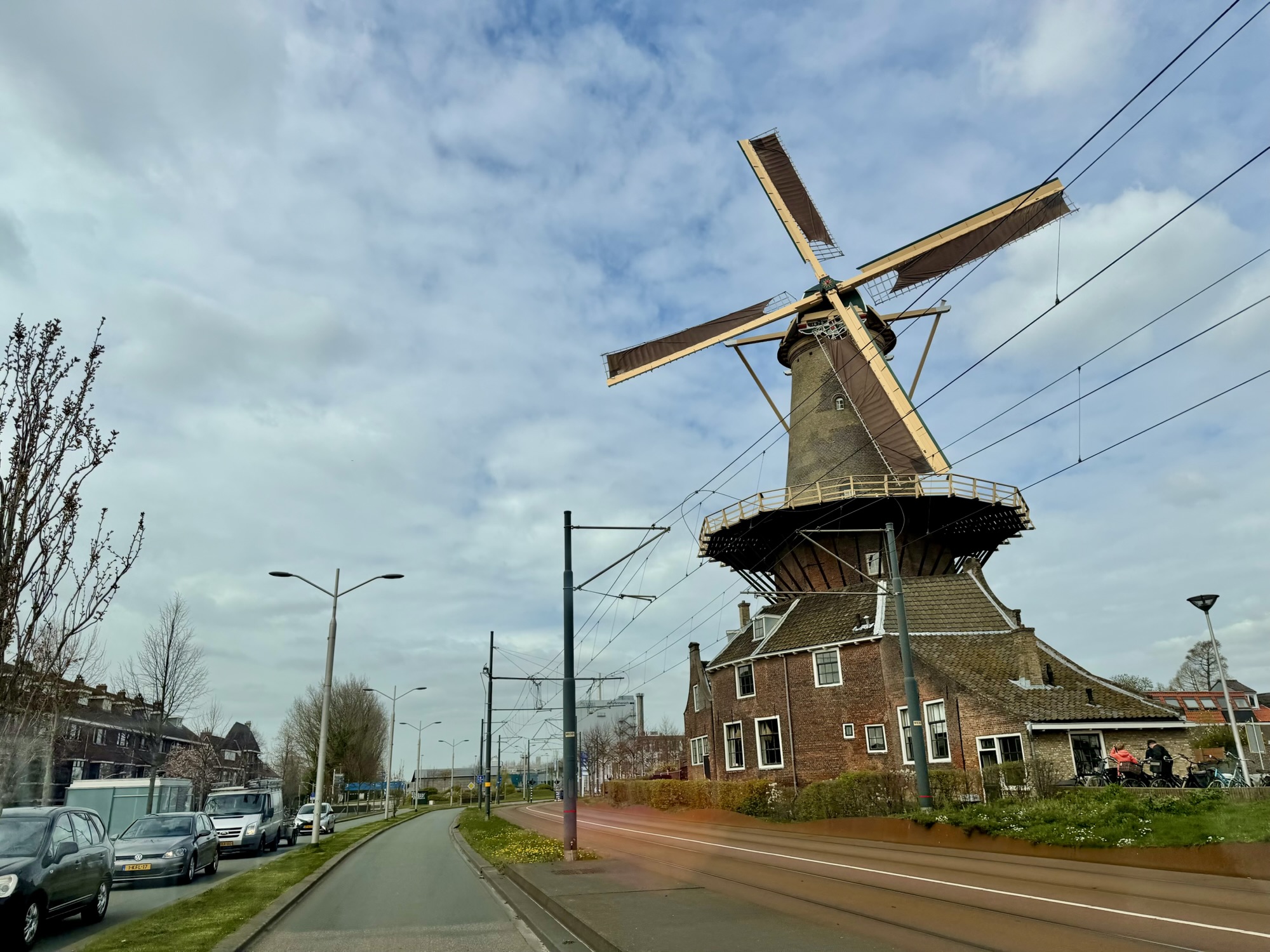
We also passed a windmill, which is still used to process barley for beer.

After a fairly short drive, we got to the modern city of The Hague, which means the hunting grounds of the counts.

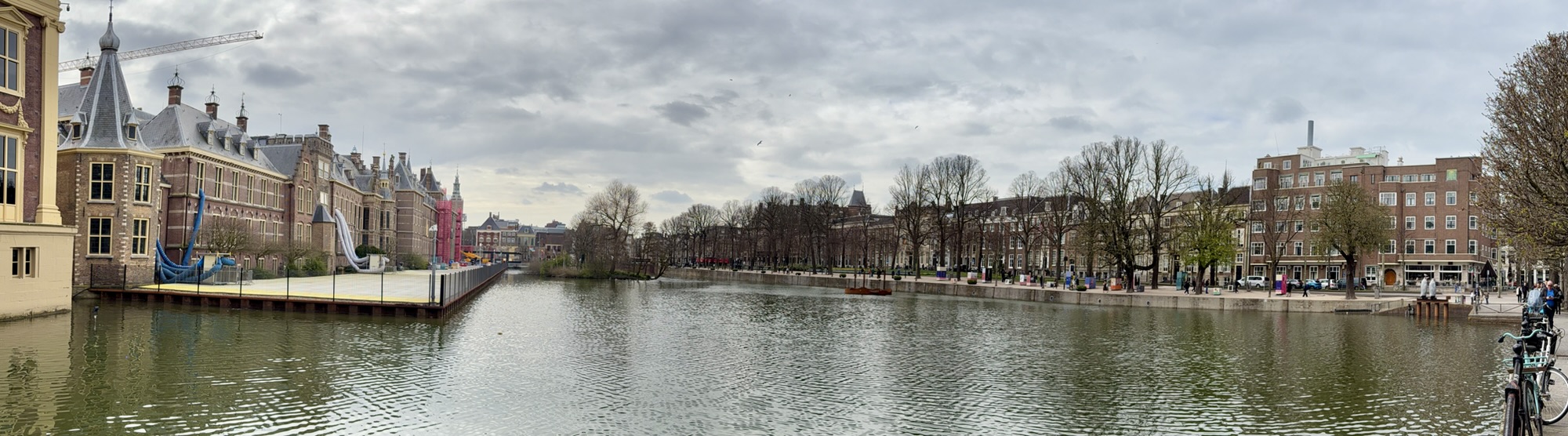
Our first stop was to view the Dutch government buildings. The hexagonal tower at the left is the Prime Minister‘s office.

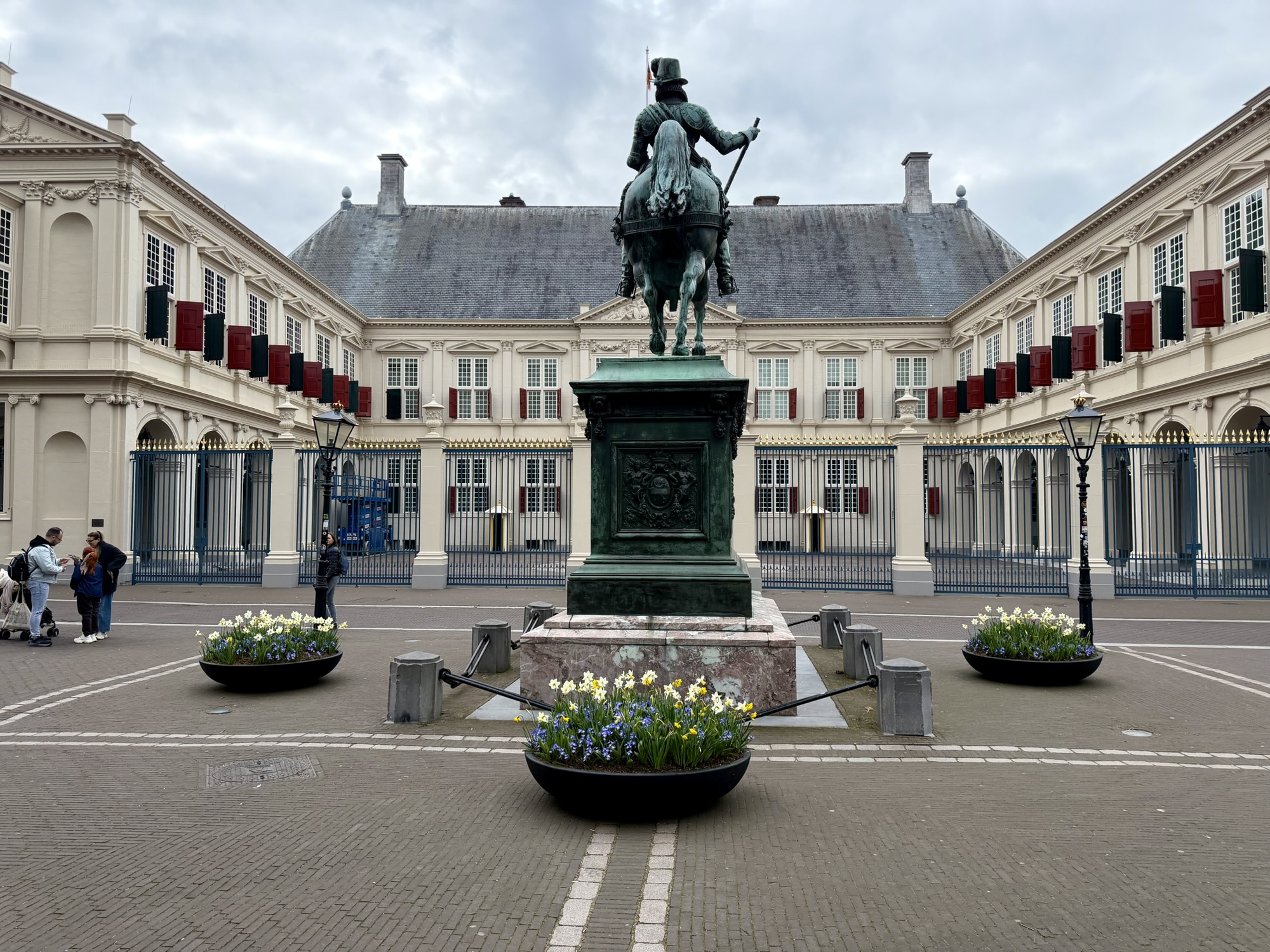
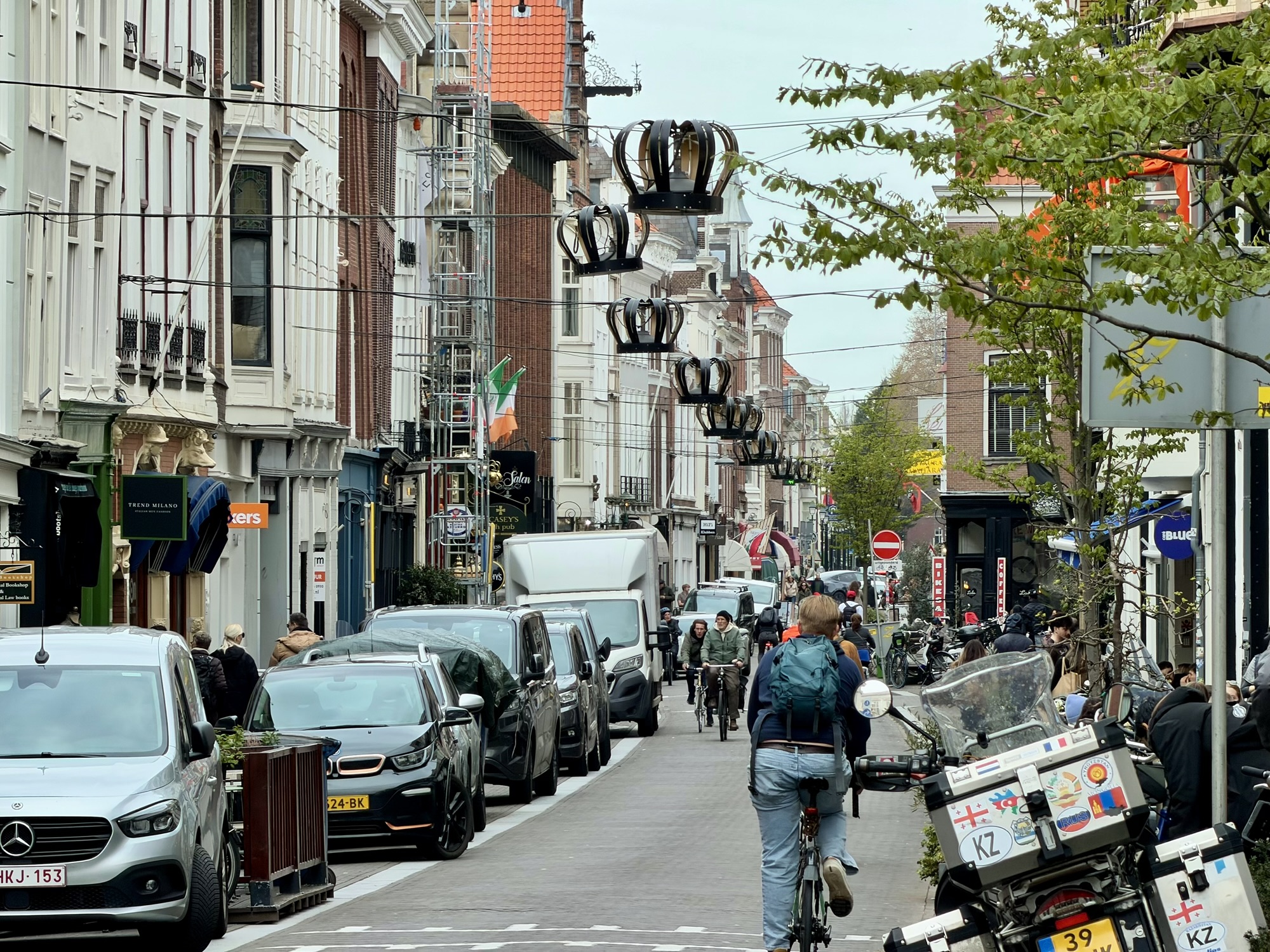
Our second stop was at the Kings Palace. In the time we stood and talked about the monarchy hundreds of cyclists passed by under the Crowns strung across the street in both directions.

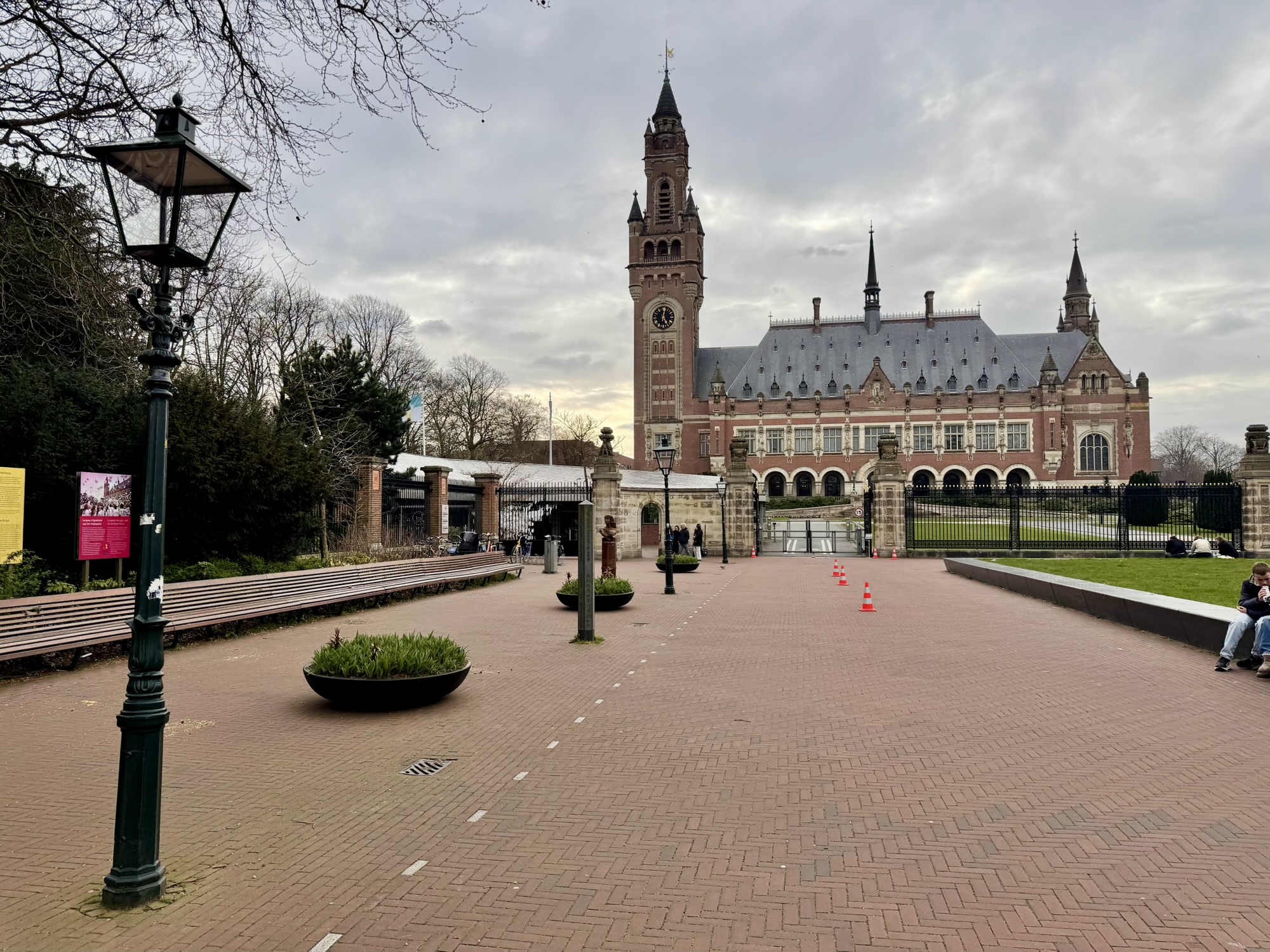
Our final stop was at the Peace Palace. It opened in 1913, and is a global icon of international law and justice.  Andrew Carnegie funded it. 

I’ve written about Carnegie in several blog posts. He built A total of 2509 Carnegie libraries between 1883 and 1929. There were 125 built in Canada, 111 of which are in Ontario

The Peace Palace houses the International Court of Justice (ICJ), the Permanent Court of Arbitration (PCA), the Peace Palace Library, and The Hague Academy of International Law. A copy of Grotius’ Freedom of the Sea it’s in the library.

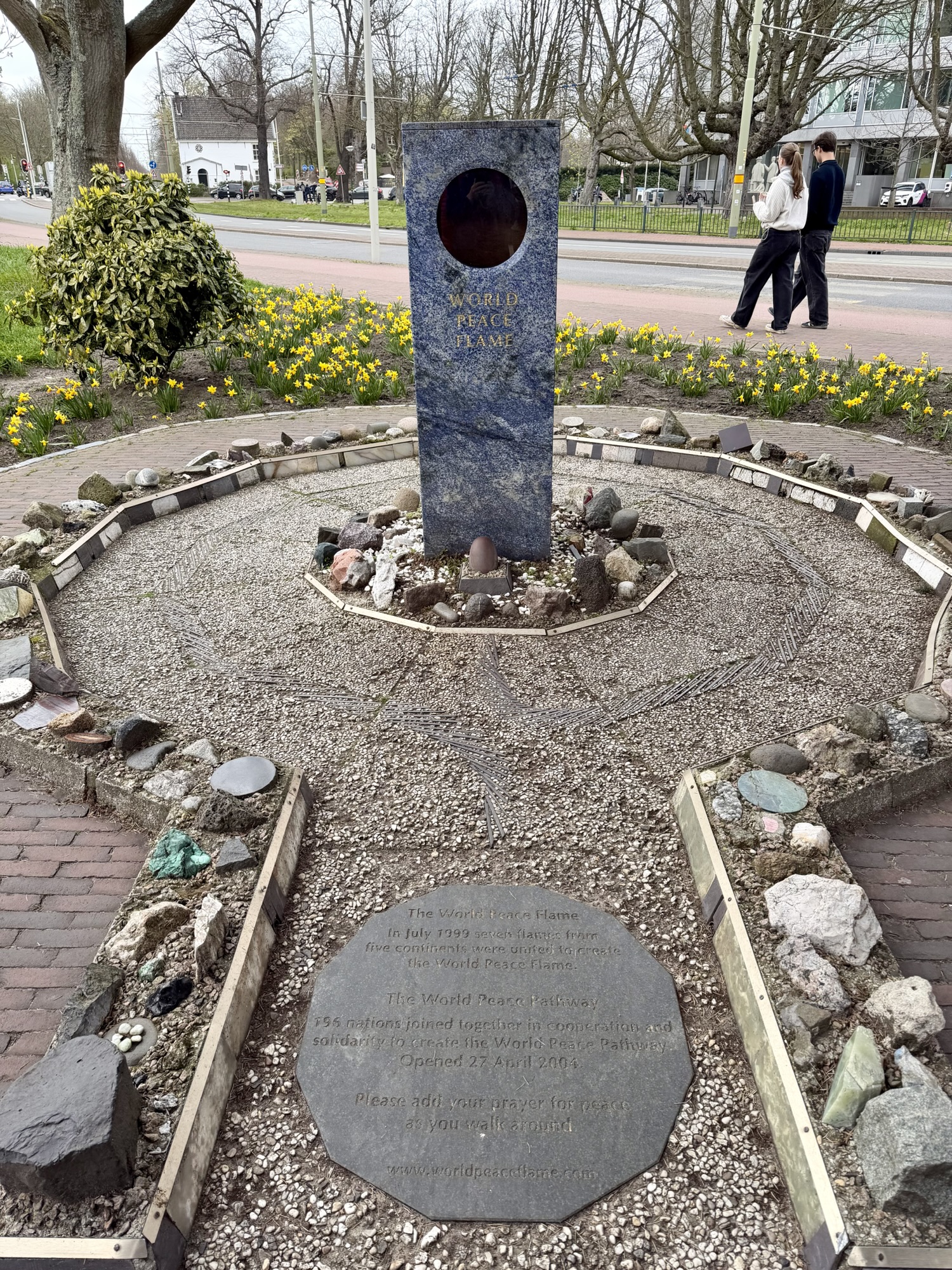
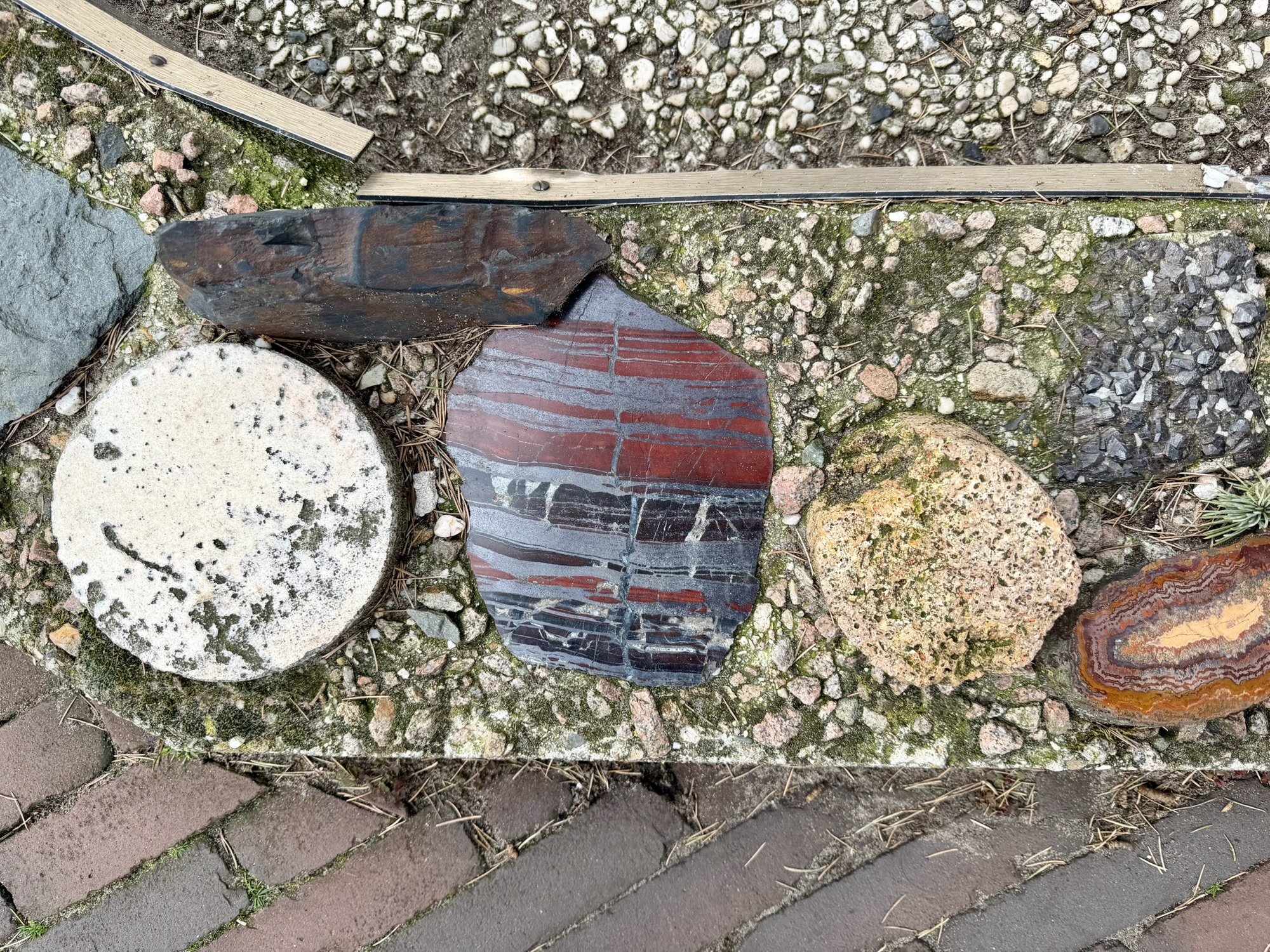
In front of the Peace Palace is the World, Peace Pathway with an Eternal Flame and a walk from every country on earth. The gray red and black one represents Canada.

It was about an hour drive back to Amsterdam and we were dropped off first where we were picked up this morning.

I took a video of the activity on the Cyclepath before starting to walk to meet Mark and Cindy.

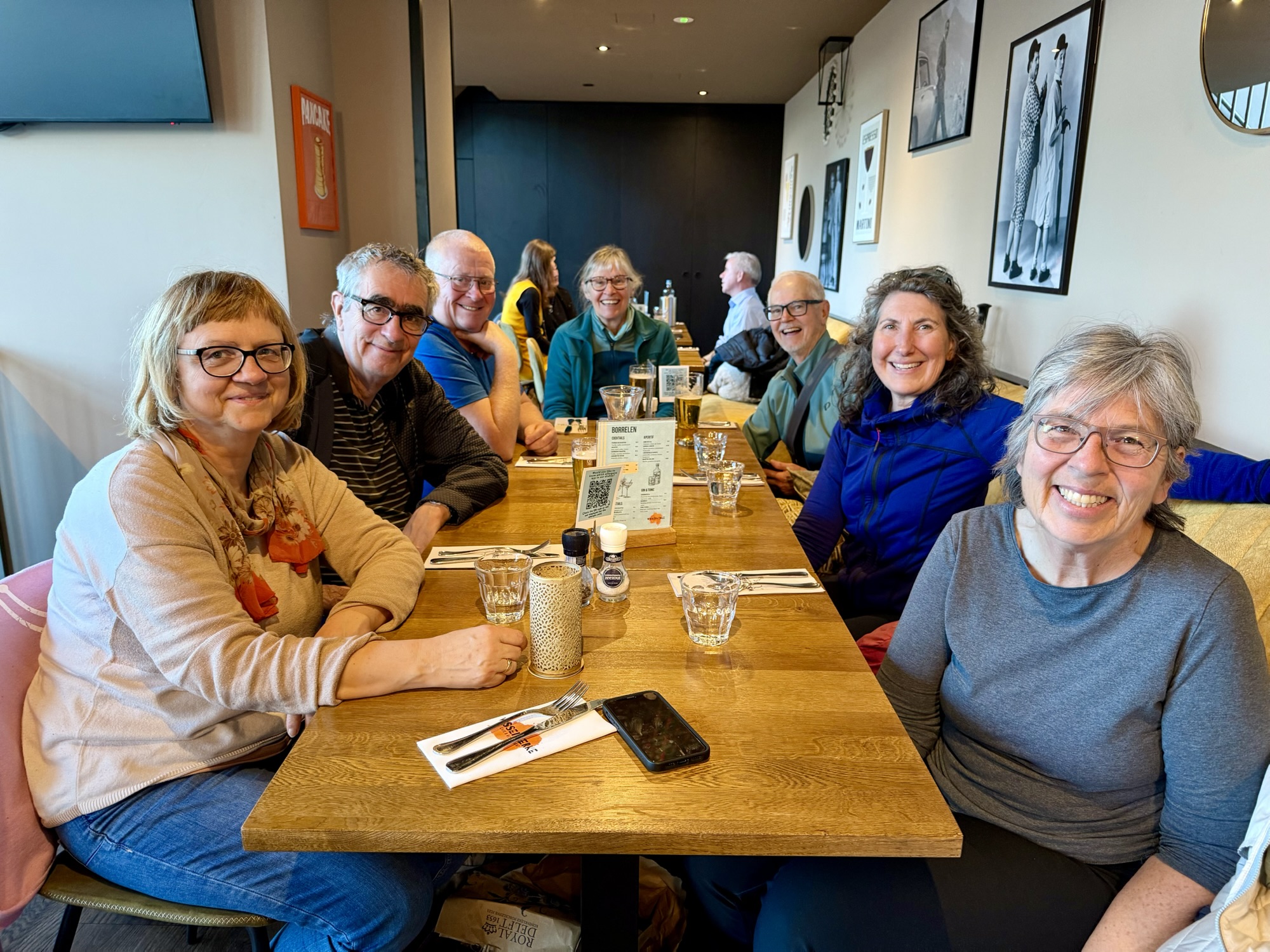
We met Mark and Cindy at a restaurant by the station, but it was very crowded and noisy. We decided to walk back to the restaurant where we had lunch on the first day and had another very good meal. It was then just a short walk across the road back to the hotel.

We spent time figuring out the train and transit system and think that we have a cheaper way to get to the city centre tomorrow where we will be visiting the van Gogh museum.

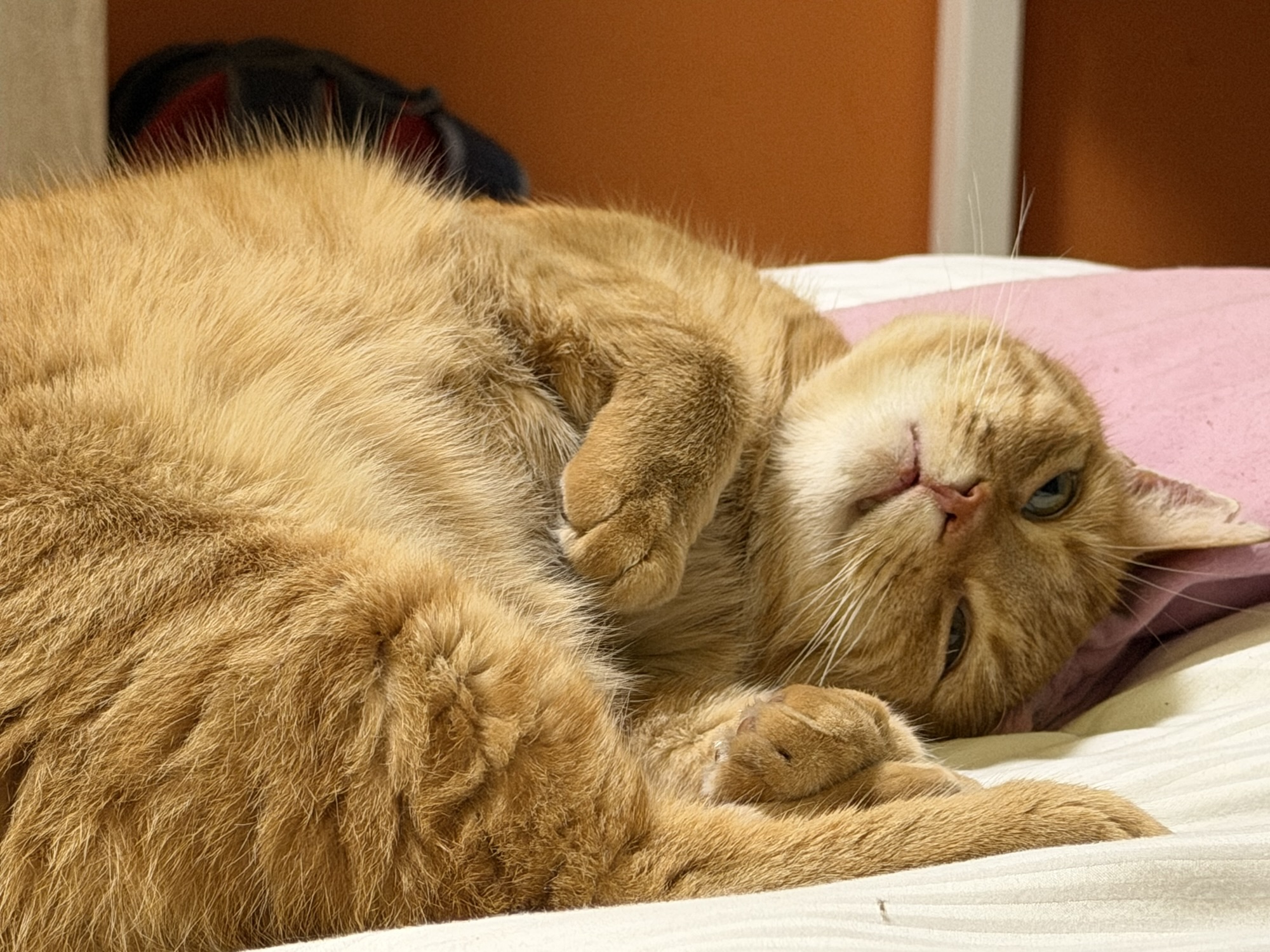
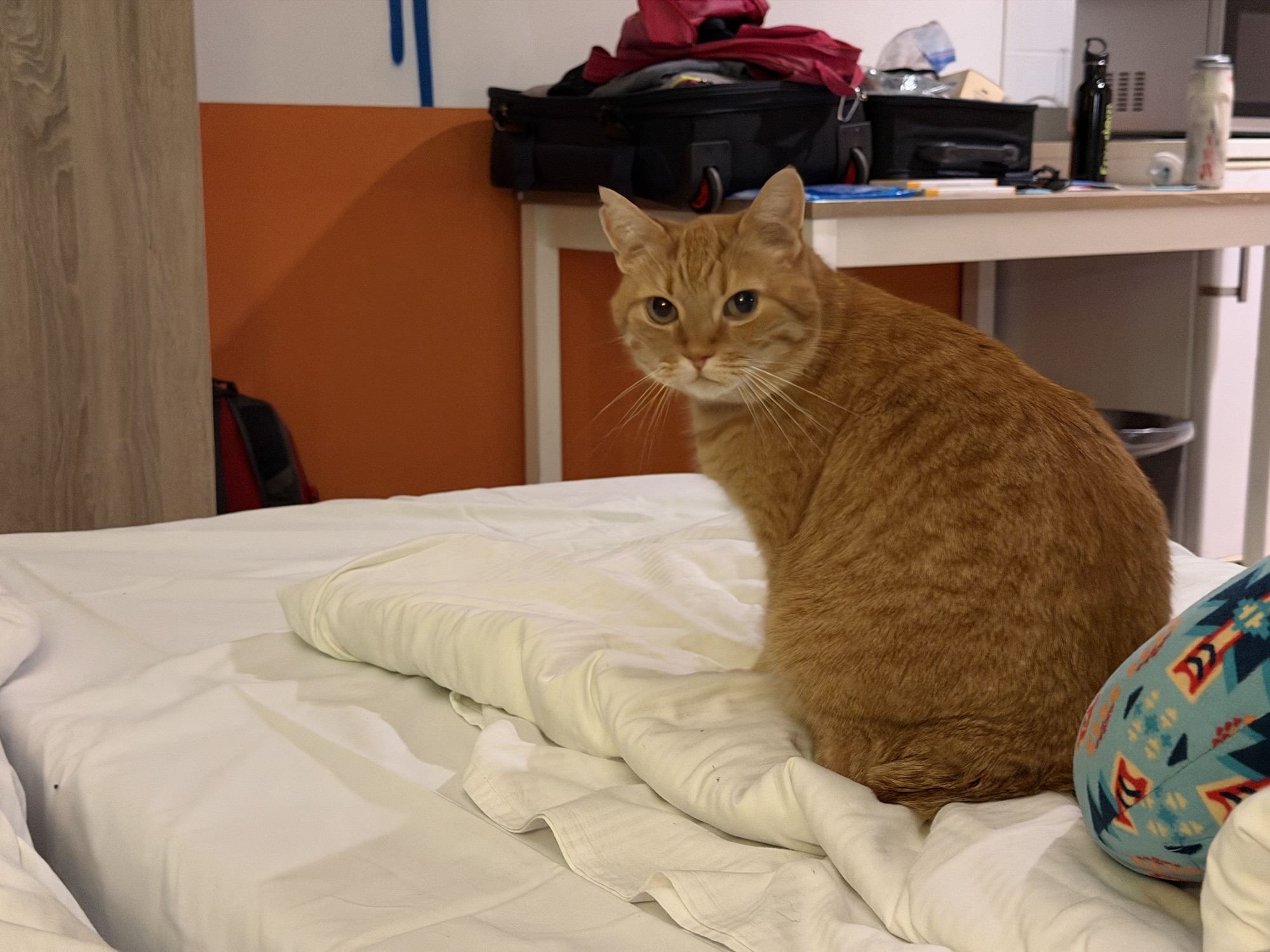
Perry, who turns out to belong to someone who lives in the neighborhood, not at the hotel, visited us again. Apparently, they reached an agreement with the owners because Perry likes to hang out at the hotel.She has a bed with a heat lamp in the lobby, but visited us again tonight and our room. She wasn’t very pleased when Alina decided it was time for her to leave for the night.

At midnight, I decided I’d better get to sleep and finish writing the blog, hopefully, in the morning.

Itinerary – verbatim from- The Hague, Delft and Rotterdam Small-Group Tour (Max. 8 People)

1 Markthal 

The first stop in our journey is Market Hall in Rotterdam. It is the largest, most beautiful and fashionable market in the world. There are nearly 11,000 m2 of indoor paintings on the walls, which are currently the largest indoor paintings in the world. It is an open market, you could see almost all tranditional Dutch food here, such as: cheese, haring fish, stroopwafel, etc.

30 minutes • Admission Ticket Free

2 Grote of Sint-Laurenskerk 

This St. Lawrence Church is the only remnant of the medieval city of Rotterdam. It is also the first all-stone building in Rotterdam. The church is destroyed in the Second World War, after several repairs it has retained its current magnificent building. In addition to its church function, nowadays it is also used as a venue for exhibitions, concerts and other activities.

20 minutes • Admission Ticket Free

3 Oude Haven 

The Old Harbour is the oldest port in Rotterdam. It was built in 1350. There are many historical buildings around here. The port nowadays is full with bars and restaurants. It is a pleasant place to enjoy the views and the food here. You could still see some old barges and modern yachts moored here. This is a great place for a casual walk.

15 minutes • Admission Ticket Free

4 Kijk-Kubus 

Cube houses are a set of innovative houses built in Rotterdam. It is designed based on the concept of “living as an urban roof”: high density housing with sufficient space on the ground level, since its main purpose is to optimise the space inside. The cube of a conventional house is turned 45 degrees, and rested it upon a hexagon-shaped pylon.
20 minutes • Admission Ticket Free

5 Erasmus Bridge 

Erasmus Bridge is a combined cable-stayed and bascule bridge. It crosses the Nieuwe Maas River in the centre of Rotterdam, connecting the north and south parts of this city. The Erasmus Bridge is Rotterdam’s most important landmark and is even part of the city’s official logo.

15 minutes • Admission Ticket Free

Euromast (Pass By)

Euromast is an observation tower in Rotterdam, It was specially built for the 1960 Floriade Flower Expo, and is a listed monument since 2010. Euromast is the highest building of the Netherlands, it is also a member of the World Federation of Great Towers.

6 Delft 

Delft is a popular tourist destination and famous for its historical connections with the reigning House of Orange-Nassau for its blue pottery. In Delft, you would enjoy the view at the city center and have lunch here.

30 minutes • Admission Ticket Free

7 Stadhuis Delft 

The City Hall in Delft is a Renaissance style building on the Markt across from the Nieuwe Kerk. It is the seat of the city’s government as well as a popular venue for civic wedding ceremonies. Most administrative functions have been transferred to an office inside the Delft railway station building.

15 minutes • Admission Ticket Free

8 New Church 

The New Church is a Protestant church in the city of Delft. The building is located on Delft Market Square (Markt), opposite to the City Hall. The church tower was completed in 1872, is the second highest in the Netherlands, after the Domtoren in Utrecht.

15 minutes • Admission Ticket Free

9 Markt 

There are many restaurants, bars, shops on the market square. You would have a walk here and have lunch at your own choice. 

15 minutes • Admission Ticket Free

10 Royal Delft – Koninklijke Porceleyne Fles 

【Choose one place to visit. We go either Madurodam or Royal Delft Blue Pottery Factory. We don’t visit both places. You could choose one of two places】The Royal Delft Factory is a Dutch manufacturer of Delft Blue earthenware. It is the only remaining factory out of 32 that were established in Delft during the 17th century. Today, Royal Delft has been active for over 360 years, you would see live painting there.

45 minutes • Admission Ticket Included

11 Madurodam 

【Choose one place to visit. We go either Madurodam or Royal Delft Blue Pottery Factory. We don’t visit both places. You could choose one of two places】Madurodam is a 1.8 square kilometers miniature ‘city’ / park and tourist attraction in The Hague. It is home to a range of 1:25 scale model replicas of famous Dutch landmarks, historical cities and large developments. In 1972, it became the smallest city in the world. The city brings together more than 120 famous buildings and historical sites in the Netherlands.

45 minutes • Admission Ticket Included

12 Peace Palace 

The Peace Palace is an international law administrative building in The Hague. It houses the International Court of Justice, the Permanent Court of Arbitration, The Hague Academy of International Law and the Peace Palace Library.

20 minutes • Admission Ticket Free

Noordeinde Palace (Pass By)

Noordeinde Palace is one of the three official palaces of the Dutch royal family. It has been used as the official workplace of King Willem-Alexander since 2013.

13 House of Representatives 

The House of Representatives is part of the parliament. It plays an important role in drafting laws, monitors the government and decides whether a cabinet (or minister) has enough confidence.

30 minutes • Admission Ticket Free

14 Binnenhof & Ridderzaal 

Binnenhof was built primarily in the 13th century, the Gothic castle originally functioned as residence of the counts of Holland and became the political centre of the Dutch Republic in 1584. It is the oldest Parliament building in the world still in use.

30 minutes • Admission Ticket Free

Europe 2026 – Day 3 Amsterdam

We saw so much today. I took over 300 pictures. It was very difficult to whittle it down to 60 or so to put in the blog.  I’ve had some technical troubles this evening, and we have an early start in the morning. So I’ll do my best to relate to the day but details and research will be a bit sketchy.

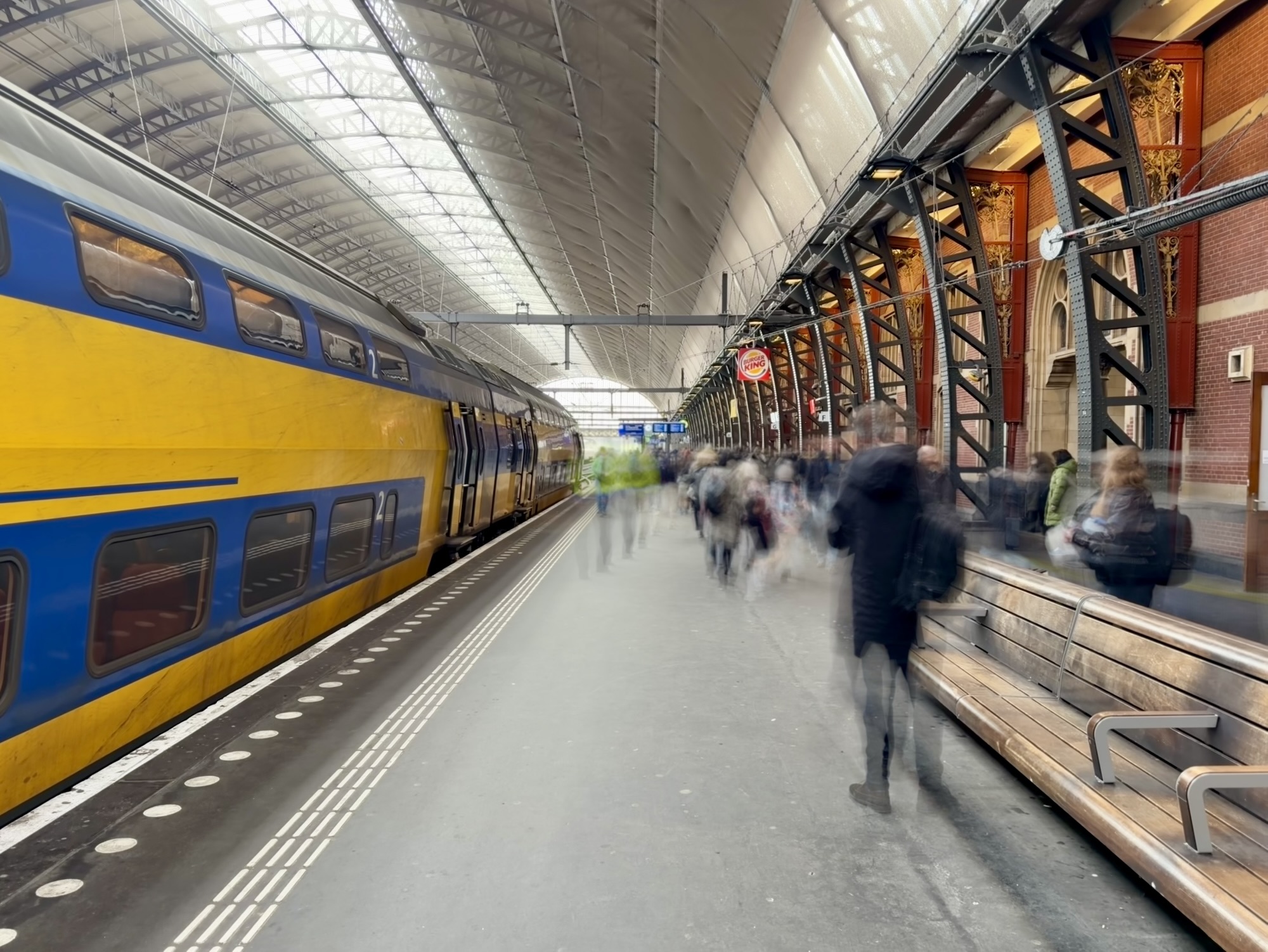
We had breakfast in our rooms and met in the lobby at 10 AM. A 1 km walk check us to Sloterdijk station where we caught what we think is a regional train, which was took us one. Stop to Amsterdam Central Station. A return ticket was €7.60 return which seemed like a lot of money, and we still had to take a tram, or walk for half an hour to get to Rijksmuseum.  So we need to do a little more research on whether or not, we are using these system as cheaply as possible. 
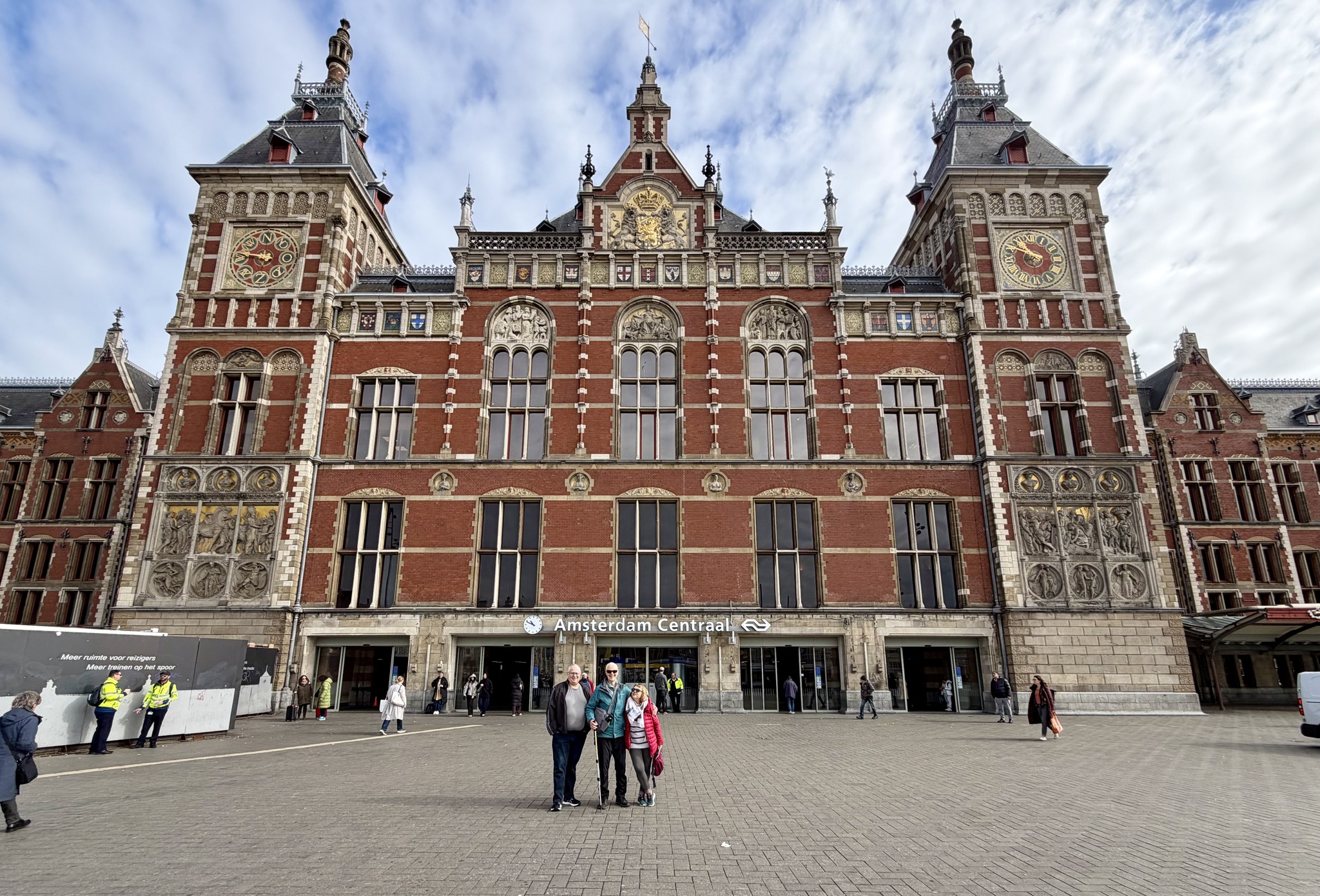
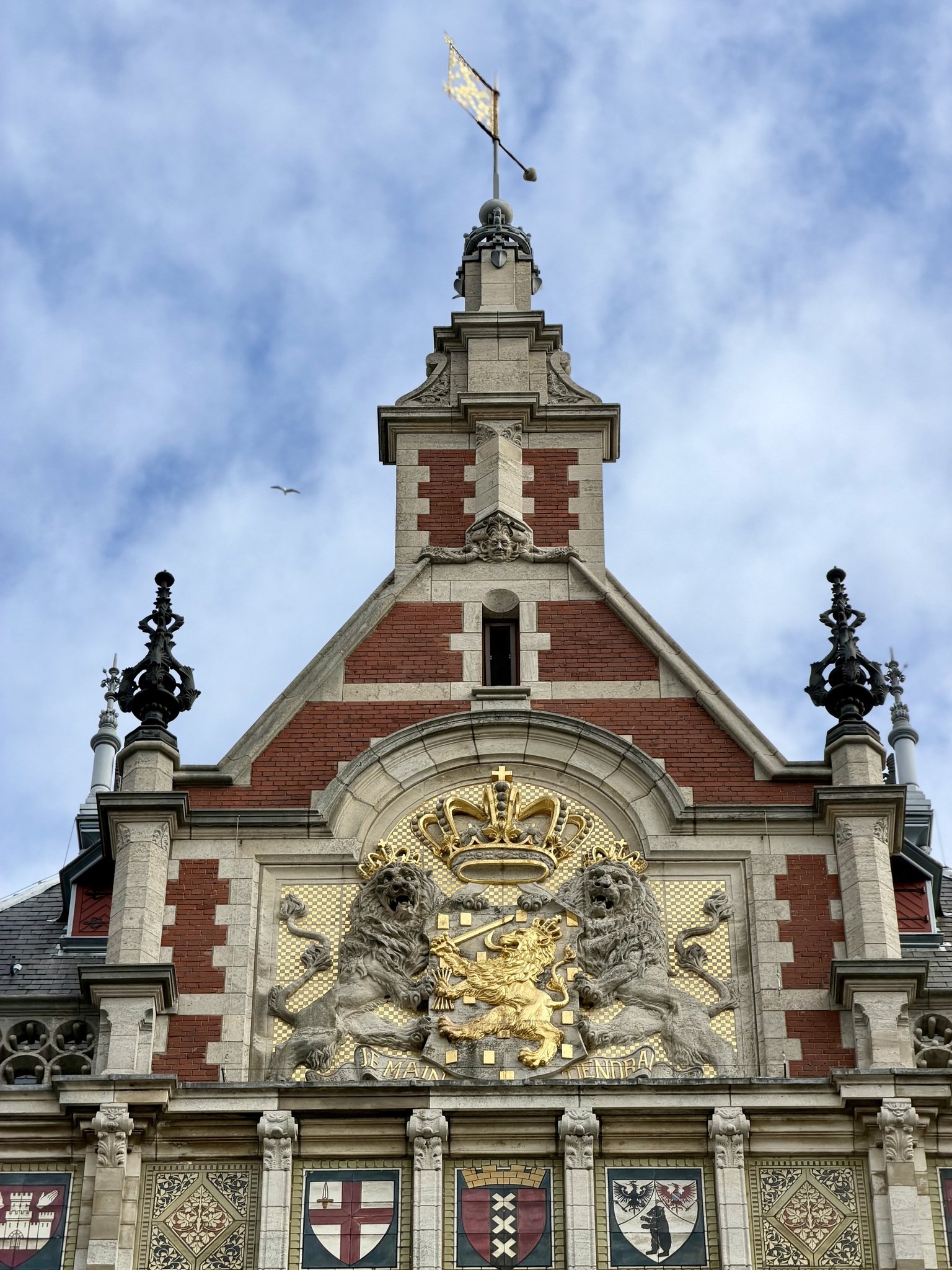
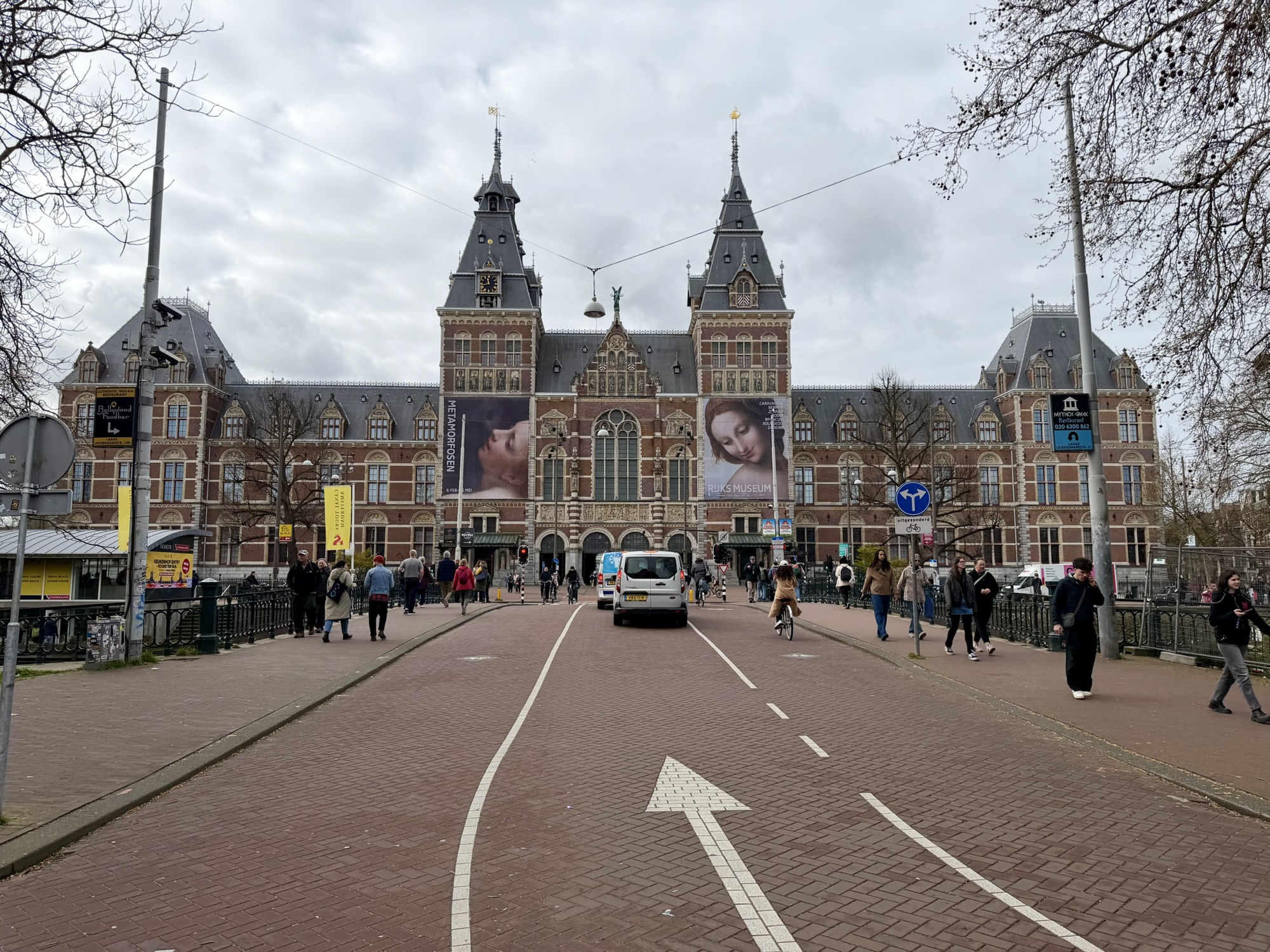
Both the Rijksmuseum (1885) and Amsterdam Central Station (1889) were designed by  Dutch architect Pierre Cuypers (1827-1921). He is known for a distinct Neo-Gothic and Neo-Renaissance style, often creating ornate, cathedral-like structures.

Wayne, Alina and I decided to walk to the museum, while David and Dayle and Mark and Cindy took the tram. They beat us by a few minutes.

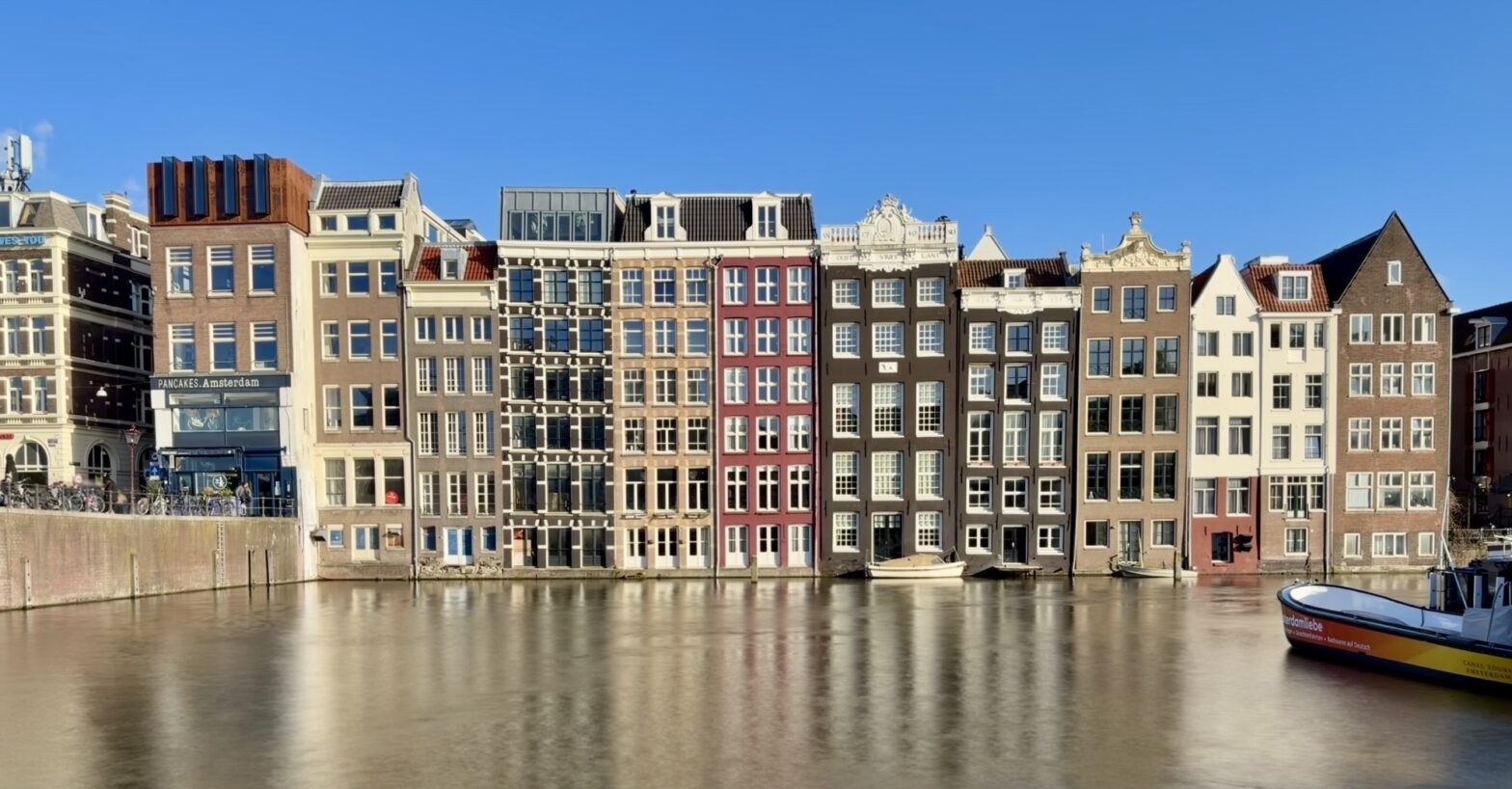
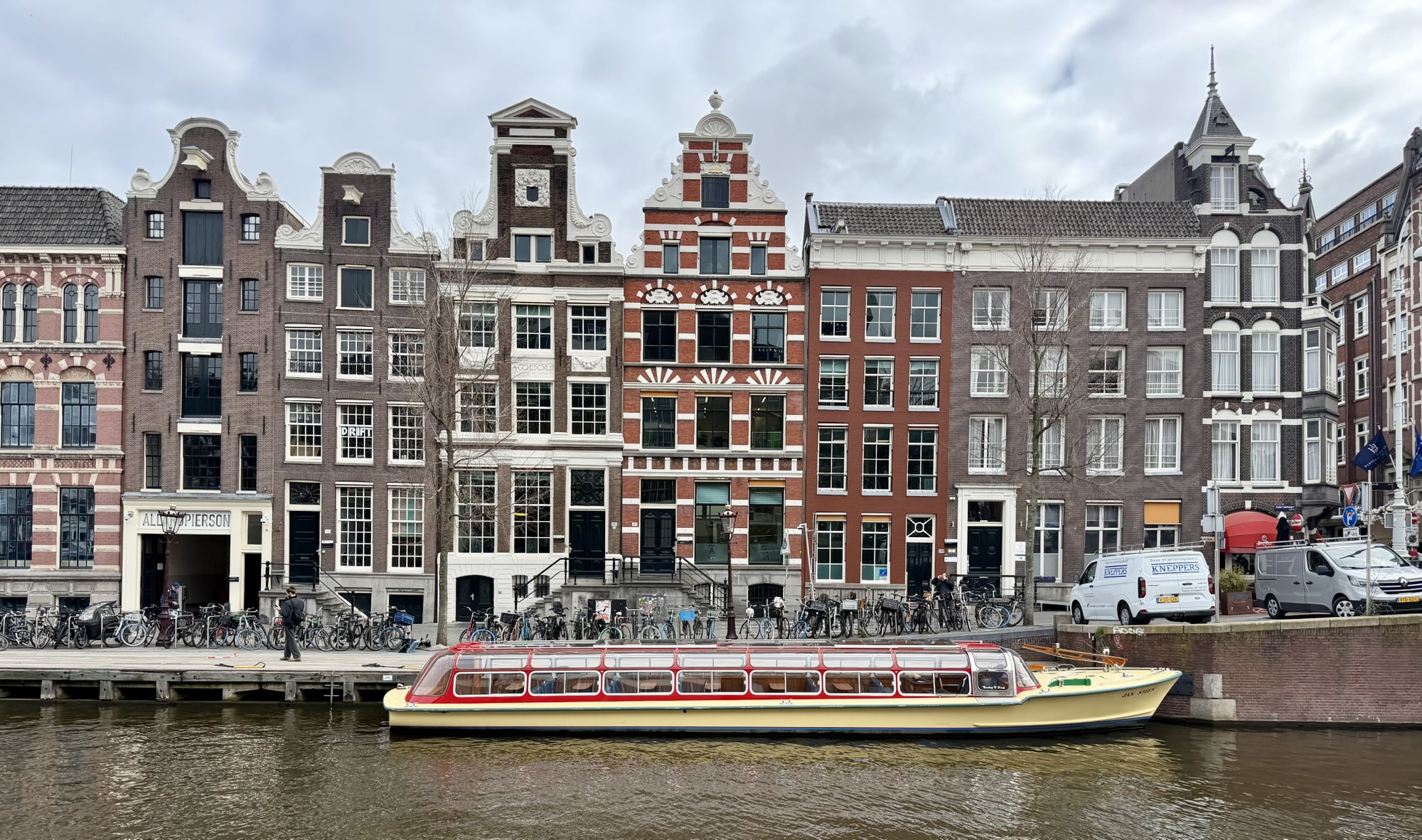
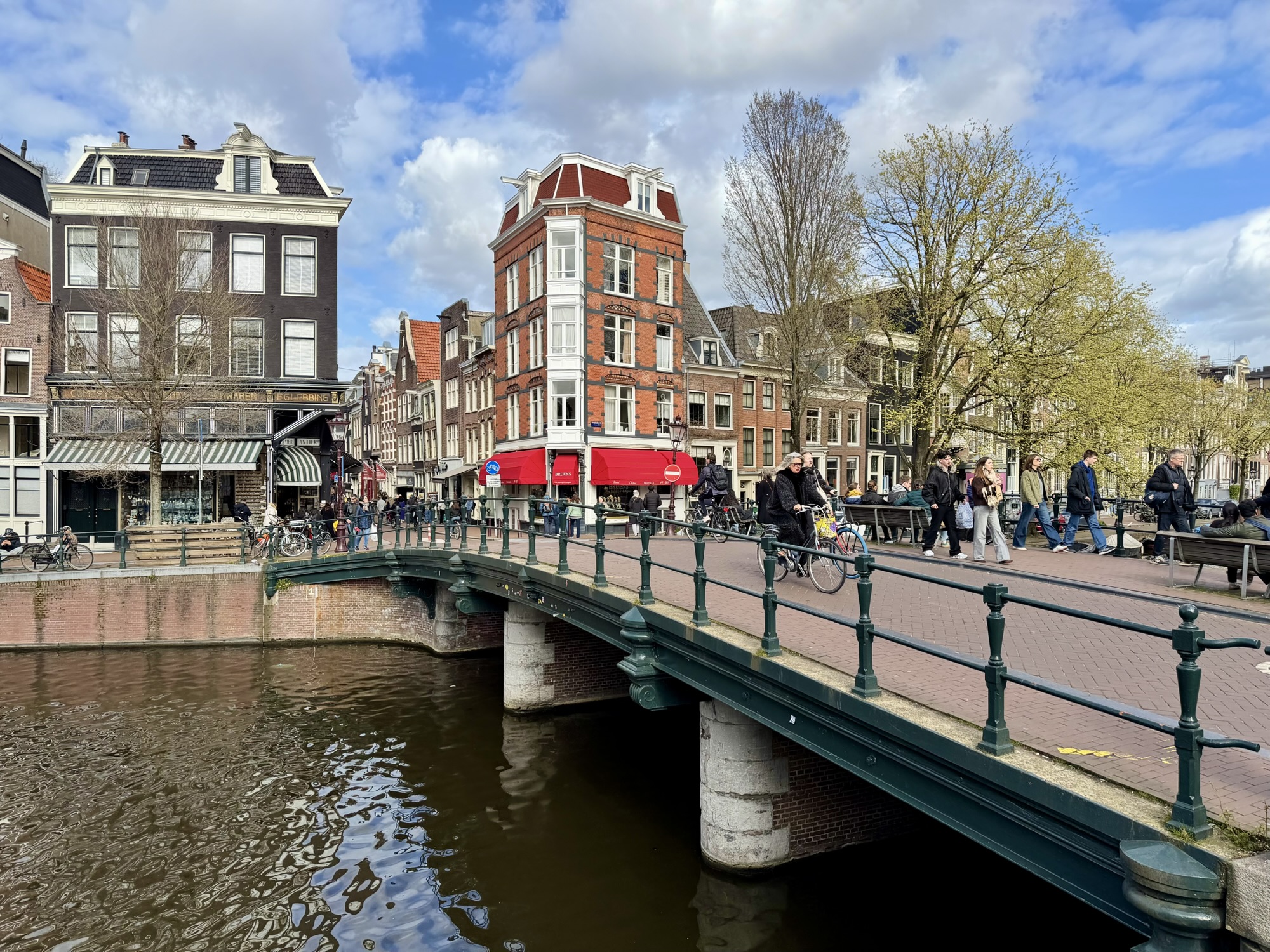
Our walk to the museum took us across the three main canals of Amsterdam – Herengracht, Prinsengracht, and Keizersgracht. The buildings are so beautiful and distinctive. These buildings are often slim, high and deep.

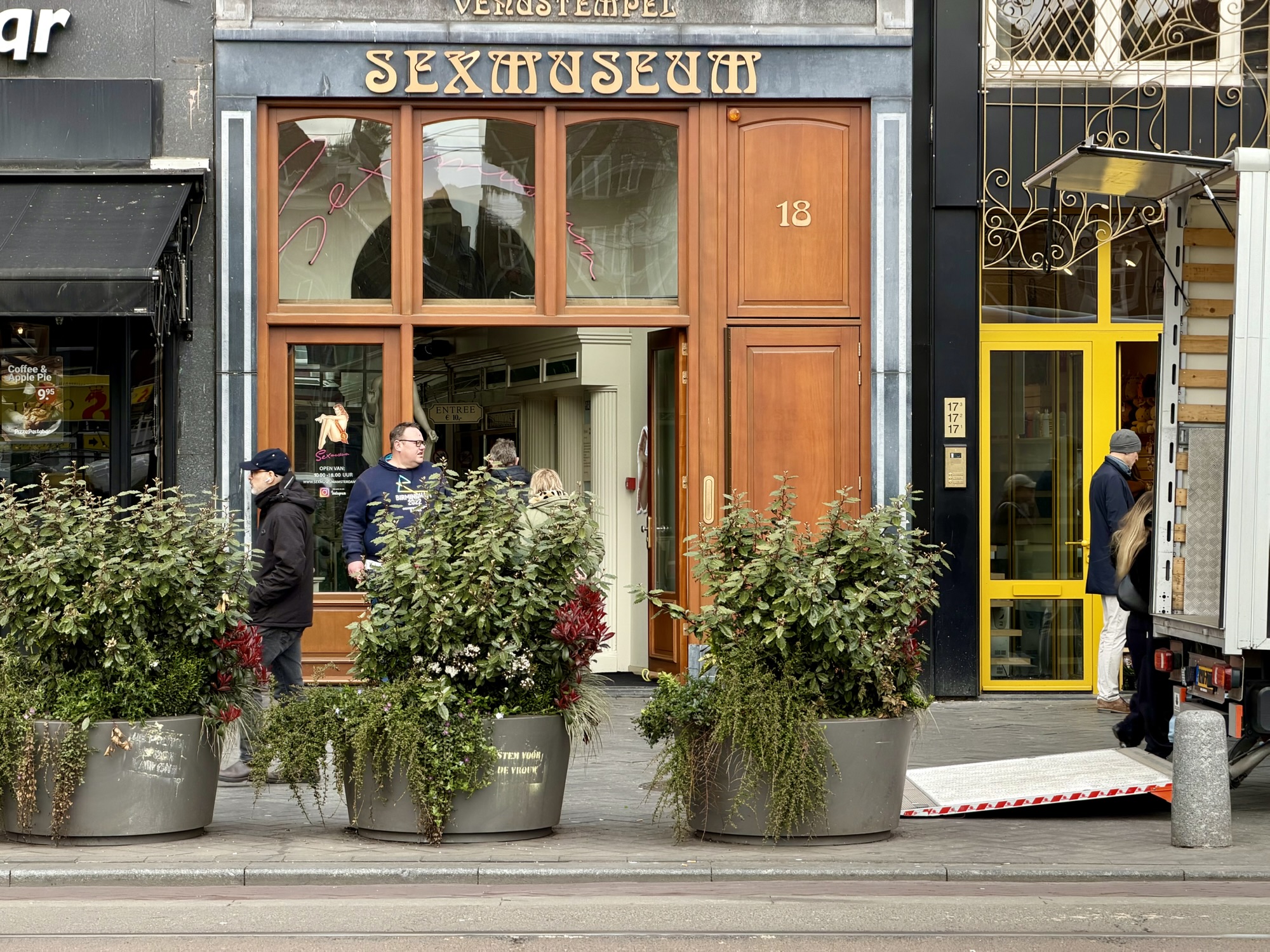
We had to give the sex museum a mess since we already had time tickets for Rijksmuseum.

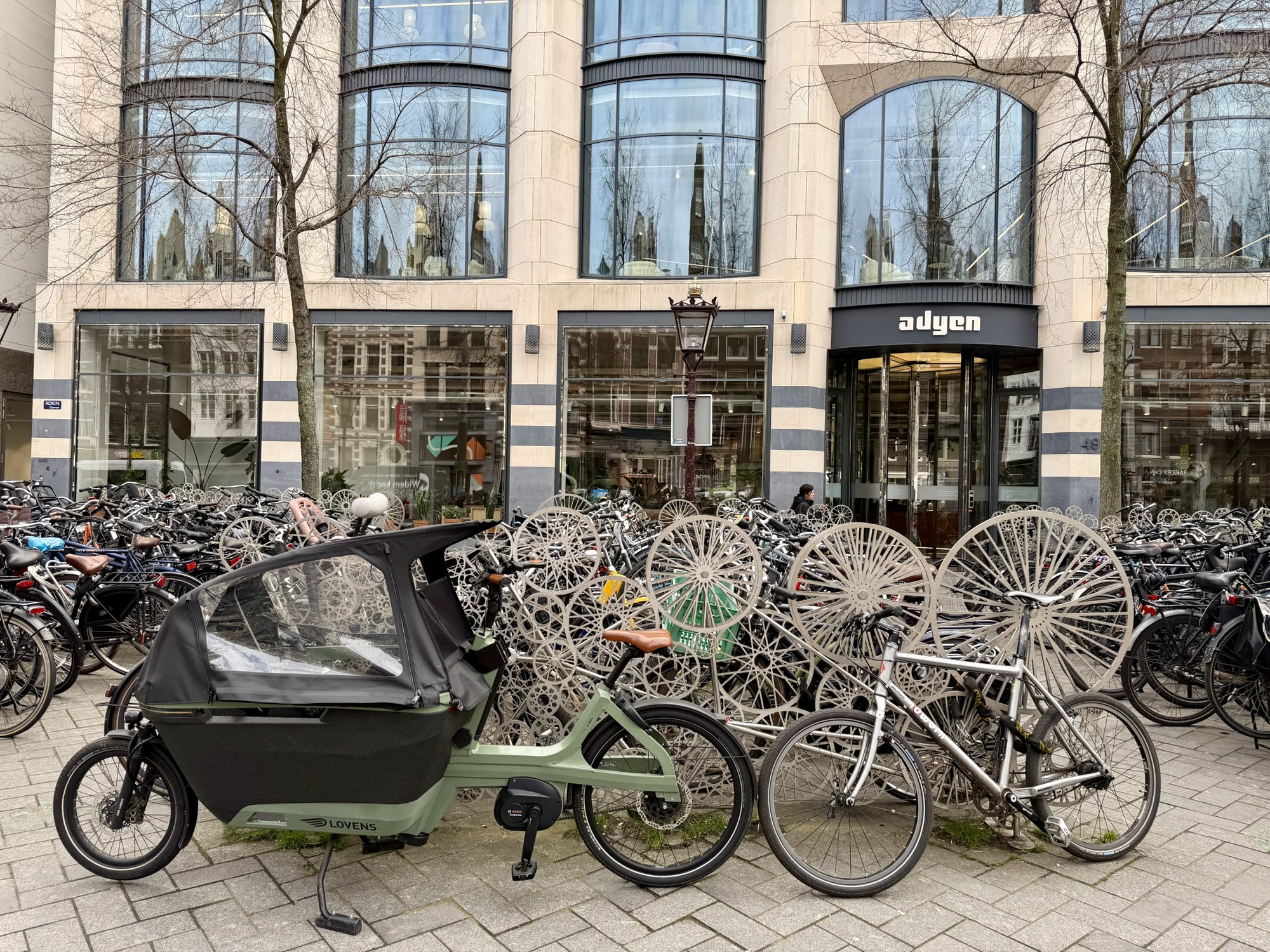
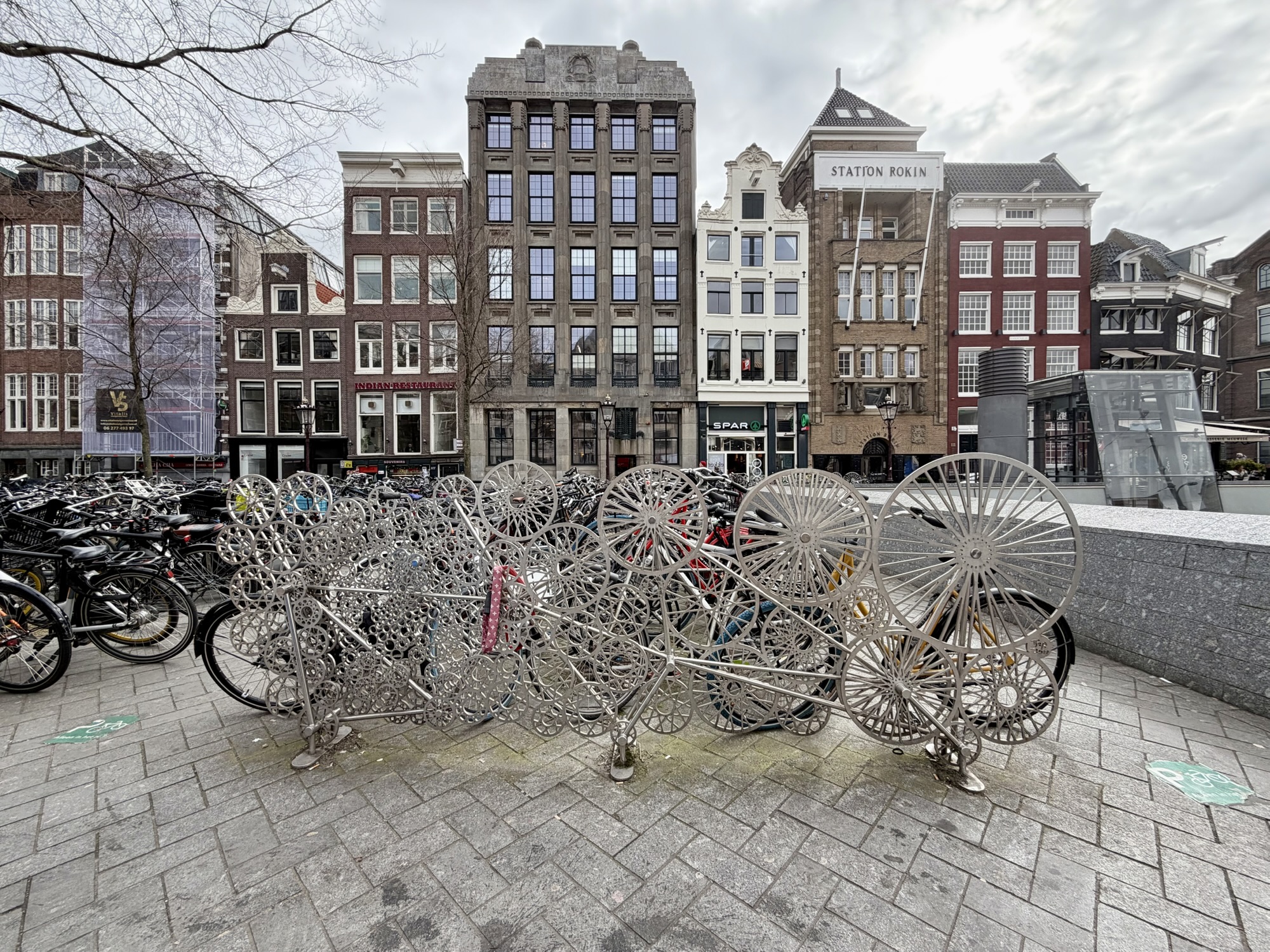
Around every subway station there were massive bike parking lots. This particular one had beautiful art, indicating the edges of the lot.

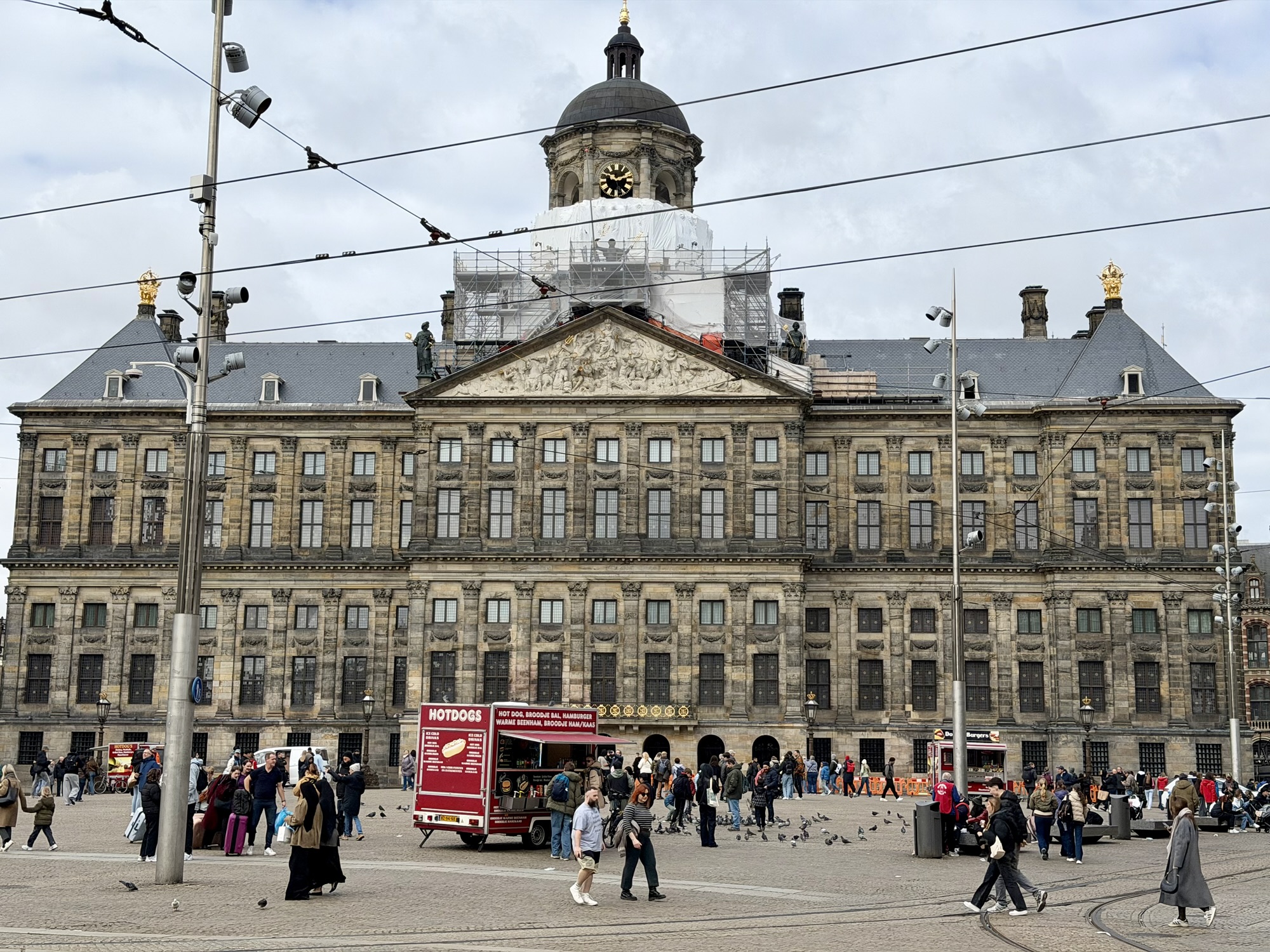
This is the Royal Palace of Amsterdam and is on Dam Square, a large open square with many impressive buildings.

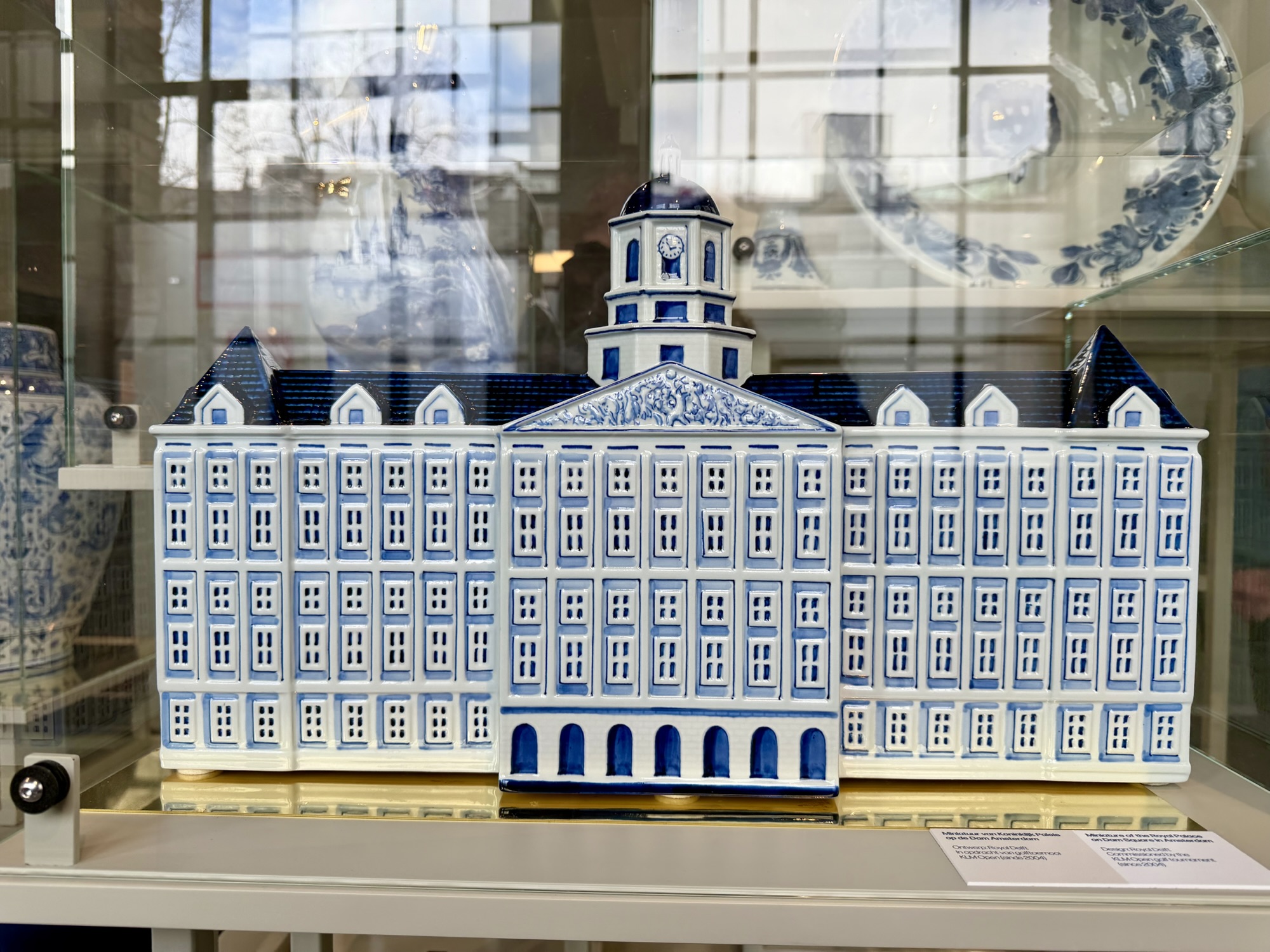
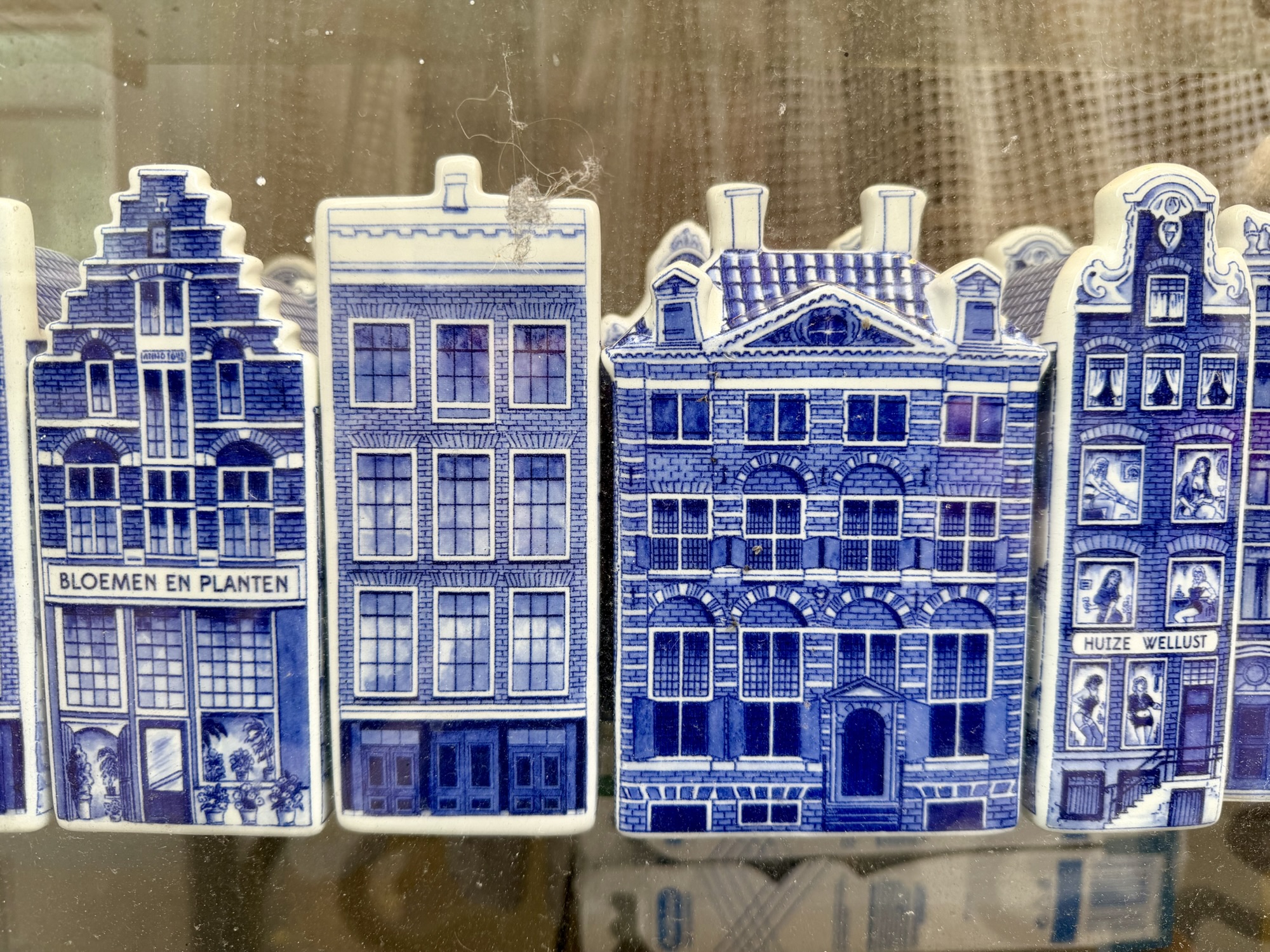
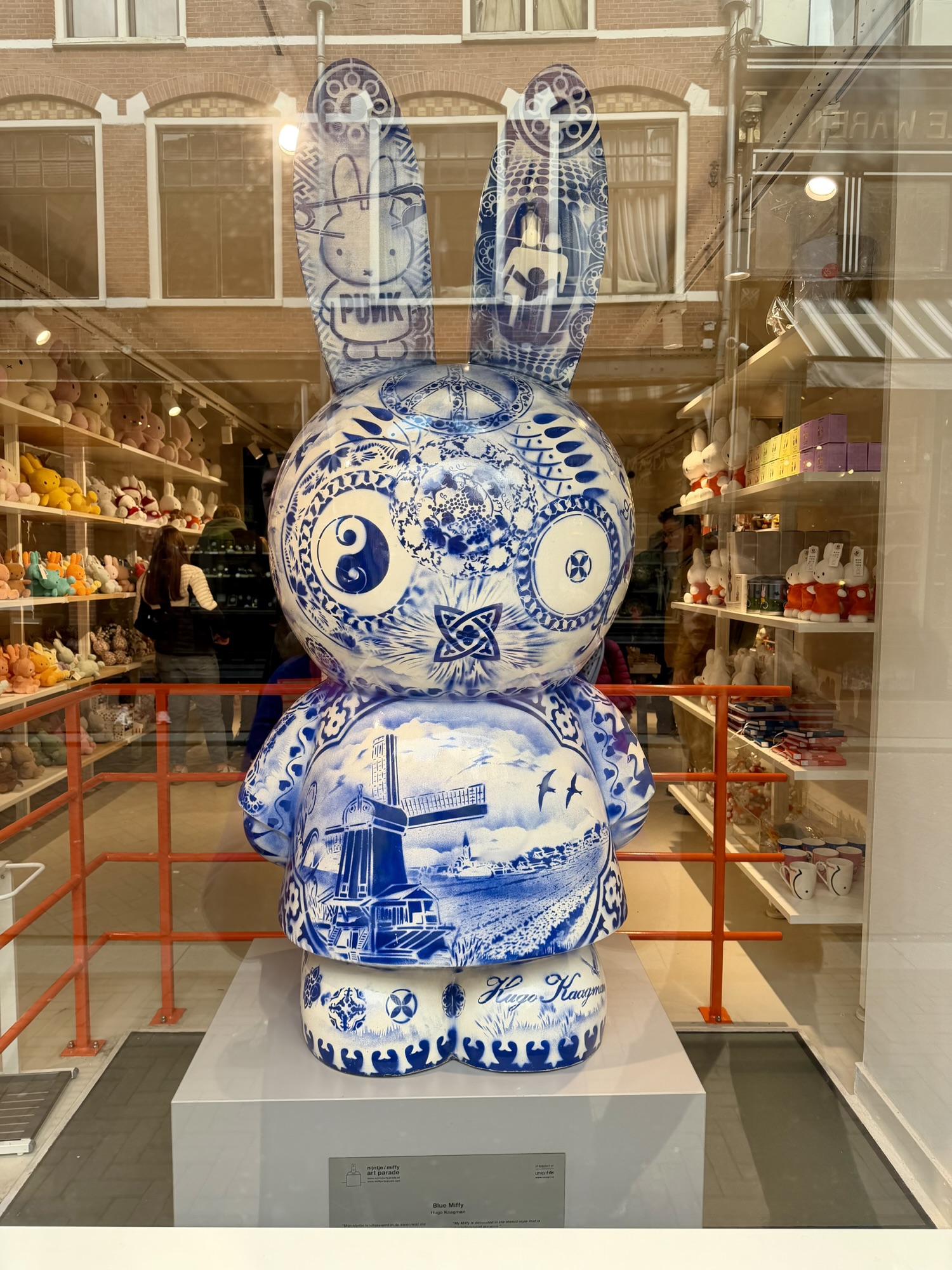
These Delft pottery inspired Canal townhomes were in a window. At one time KLM gave them out to first class passengers. Further down the street we saw a giant Delft pottery inspired Easter bunny. Tomorrow five of us will be visiting Delft.

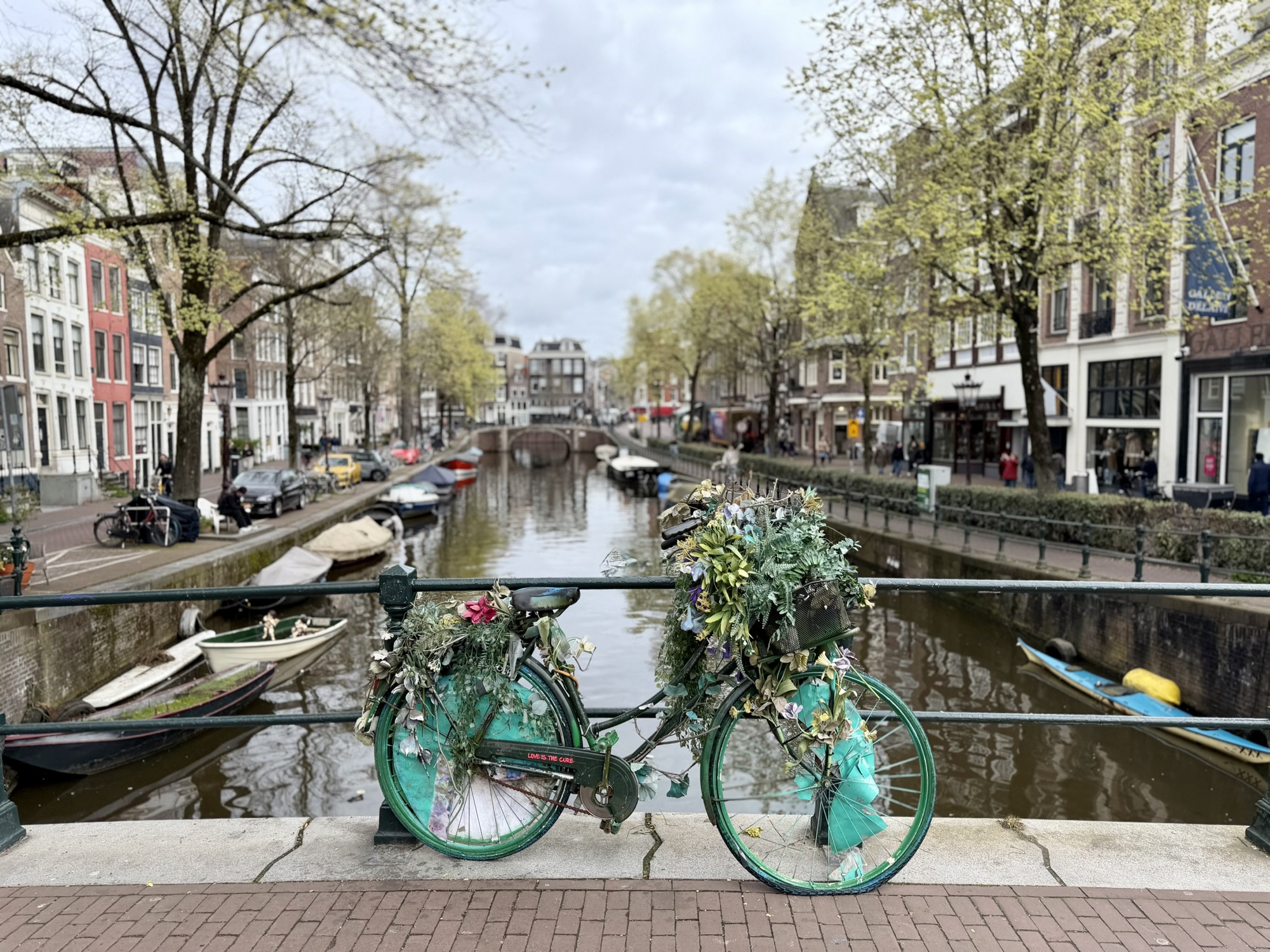
Because Amsterdam is on many canals, there are many bridges making for many beautiful scenes.

Dayle and Alina had some trouble booking their tickets online, which is required, as this, choosing an entry time slot, for the museum, but they were able to get things sorted out.

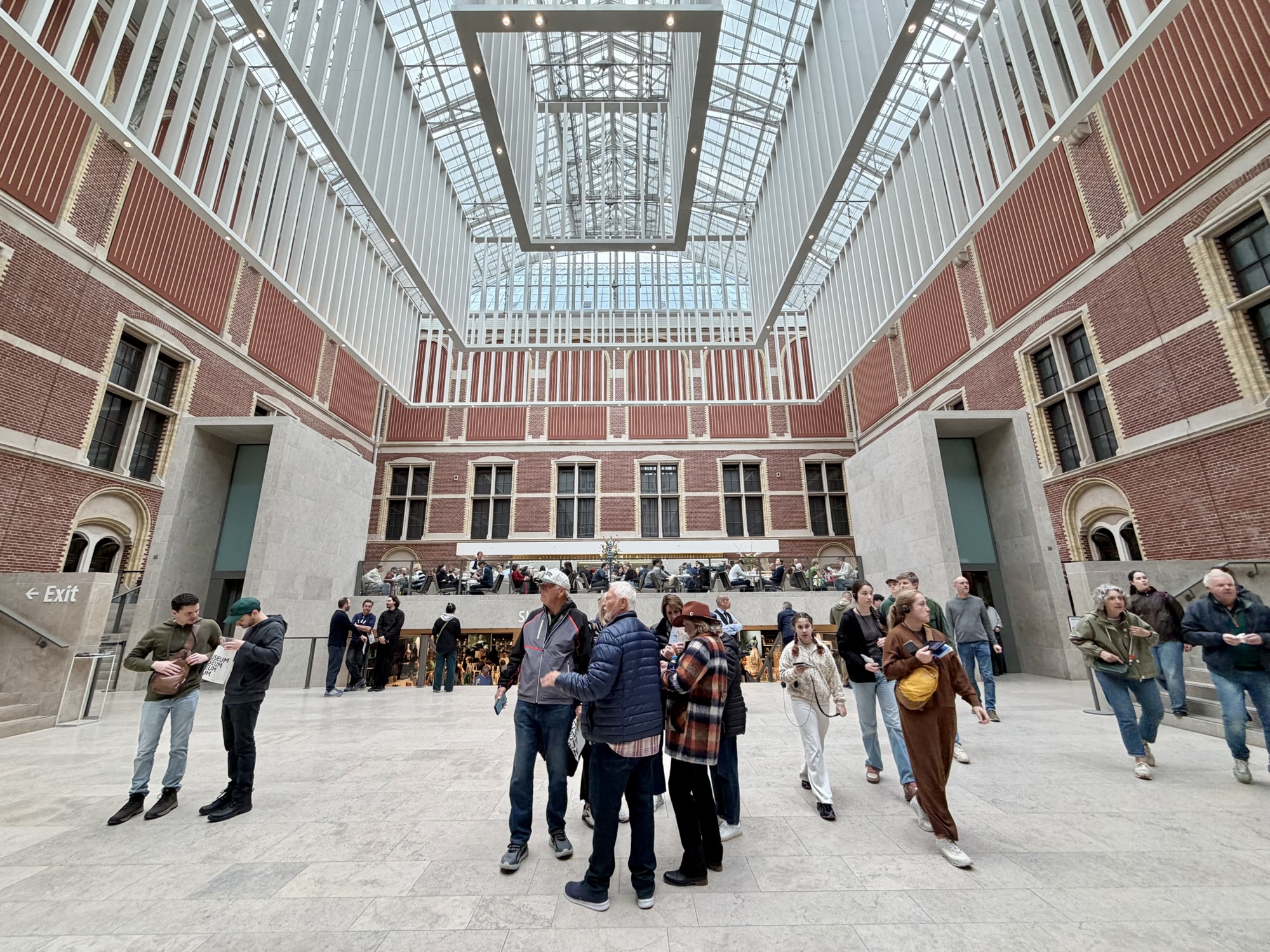
In the original design that were too large atria, which have since been covered with large glass roofs. There is a bike path between the two, which of the architects in the latest renovation would have liked to have removed, but there was a public battle against doing so. In the end, the bike path remained, and windows were put on either side of it so it can be seen from the inside of the museum and vice versa.

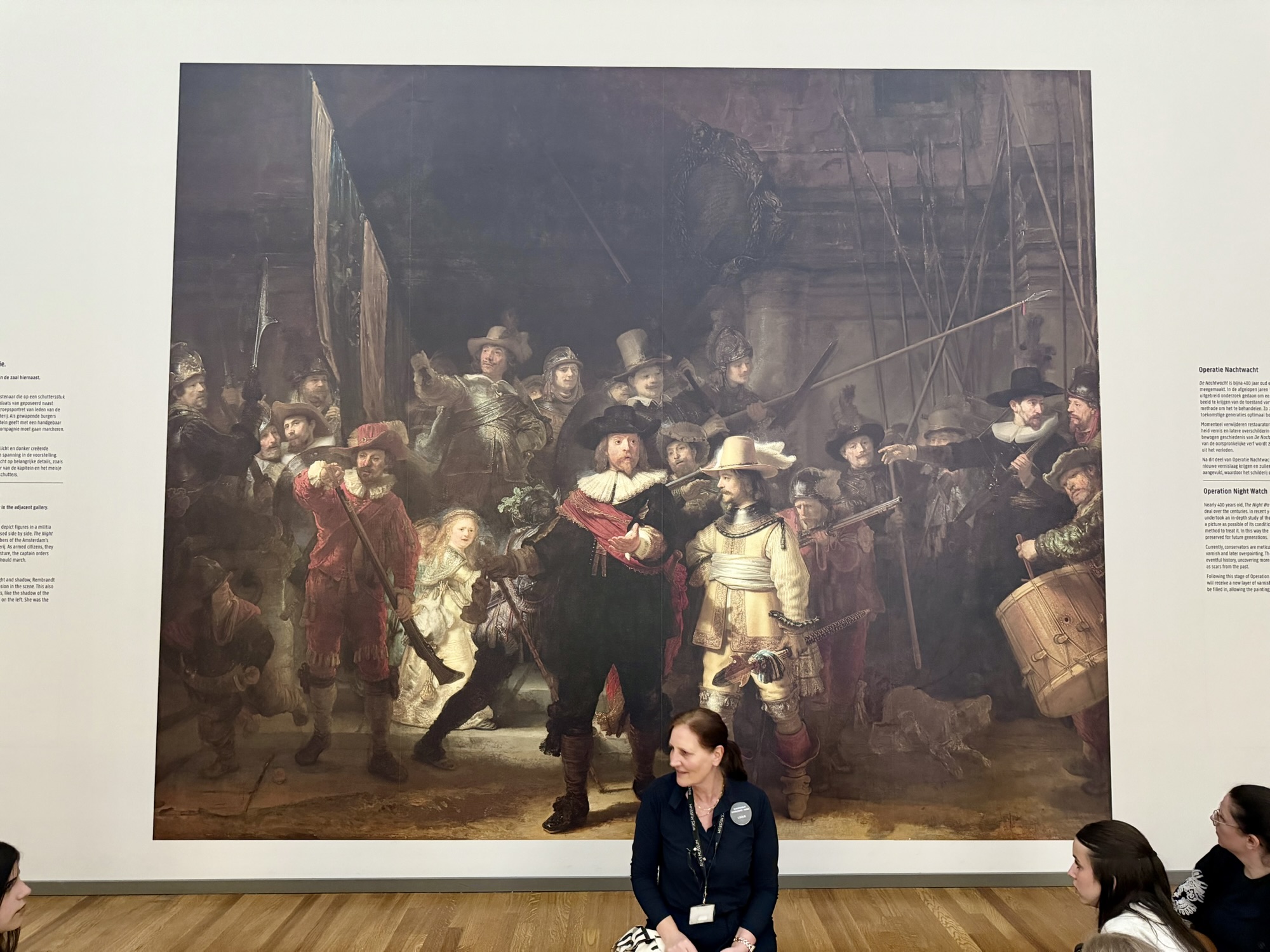
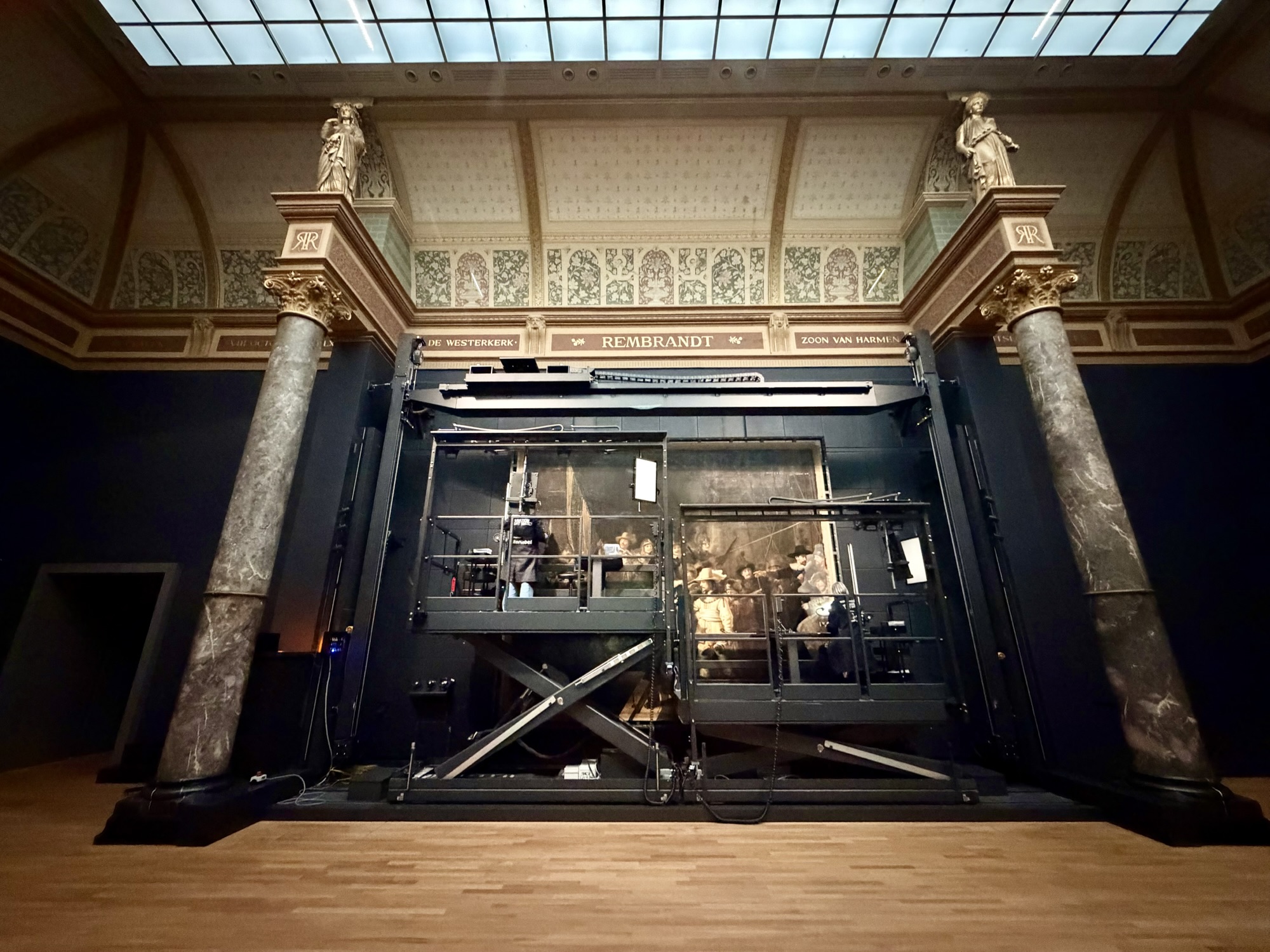
We started at one of the museums, most famous paintings, entitled The Night Watch. A large replica Matt at the top of the stairs, and at the one end of the great hall was a Glasston area where the original has been under restoration since 2019. An extremely friendly and interesting museum employee told us about the painting and the restoration.
It’s a daytime scene, but over the years, as the preserving varnish darkened and layers of dirt built up, it darkened, and it got its popular title. When the painting was moved to a smaller room, the sides were lopped off (and the pieces lost), putting the two main characters in the center and causing the work to become more static than intended. During World War II, the painting was rolled up and hidden for five years. In 1975, a madman tacked the painting, slicing the captain’s legs, and in 1990, it was sprayed with acid. It was still fully restored after each of these incidents.

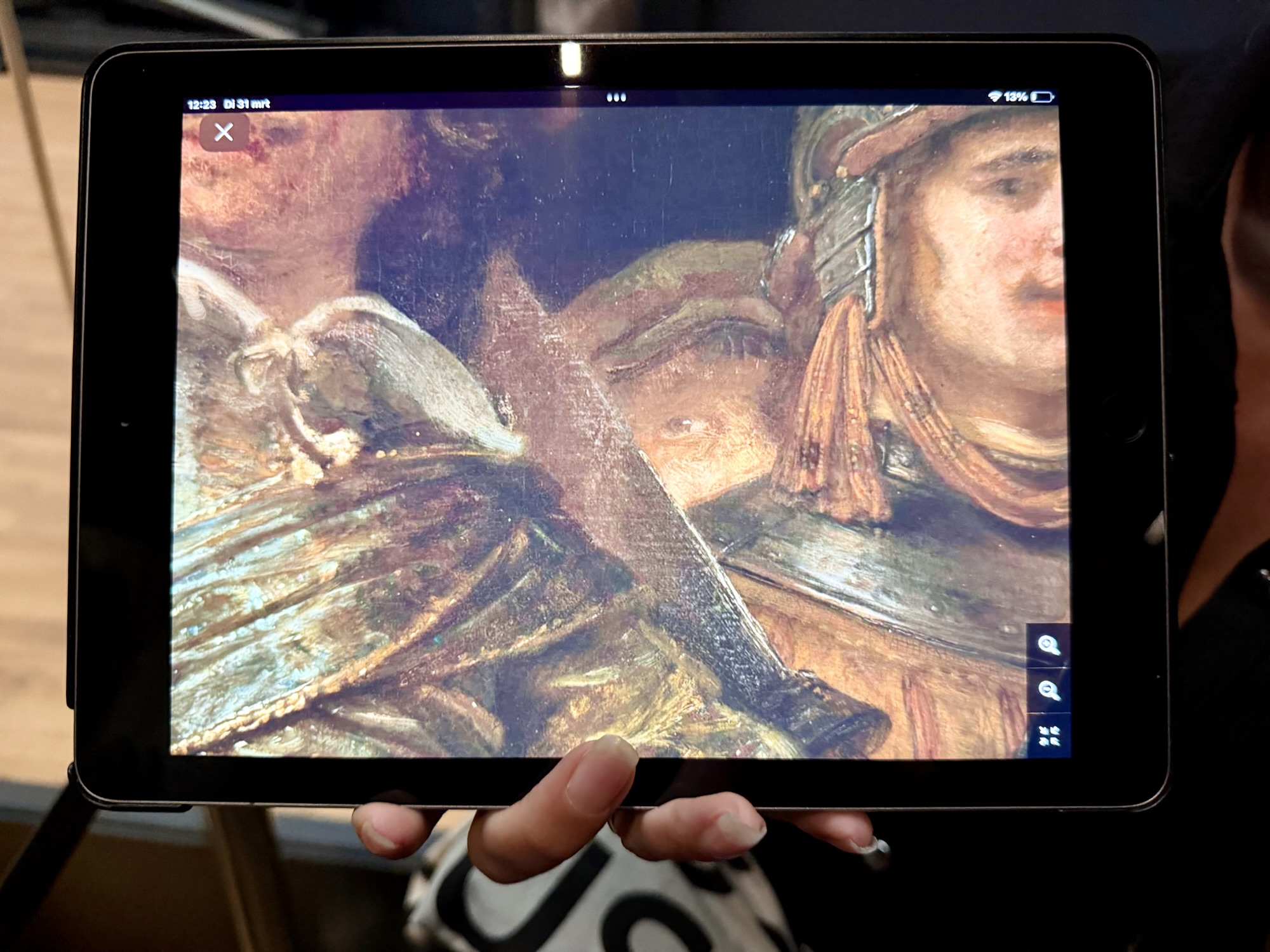
The Museum employee told us that if you look very closely, you can see Rembrandt peeking over the shoulders of people in the foreground in the picture, and showed us on her iPad.

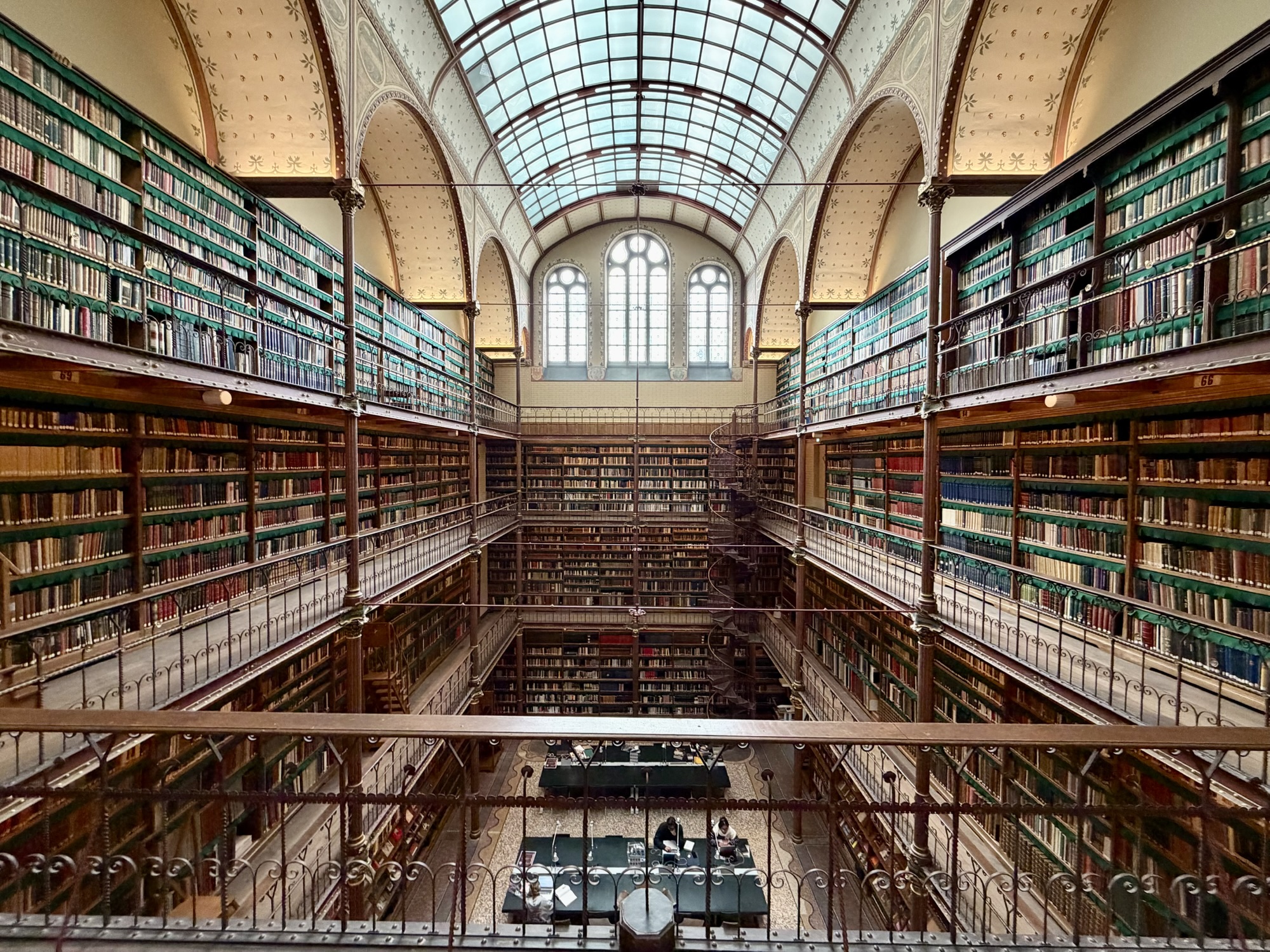
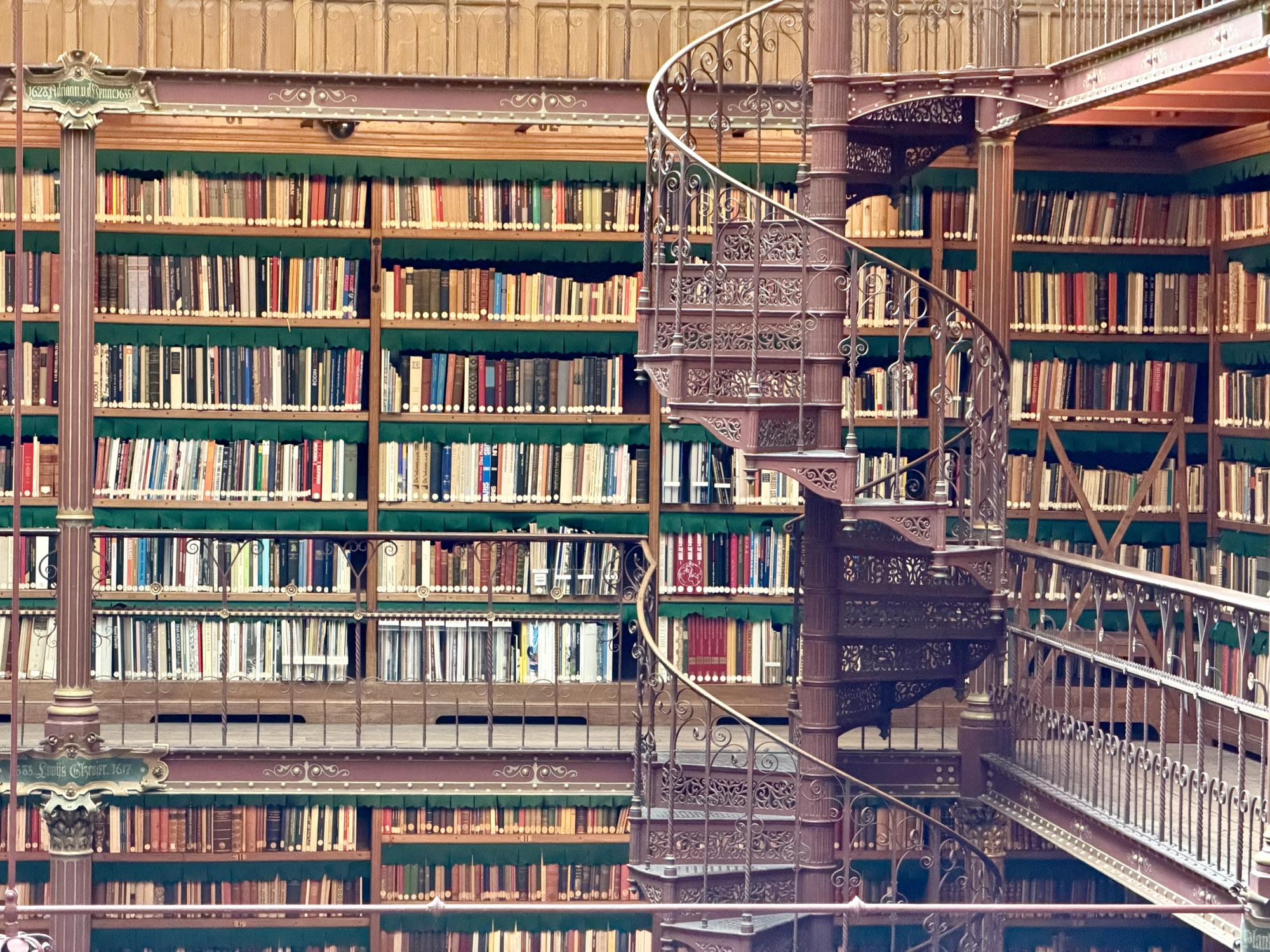
There is a beautiful library in the building.

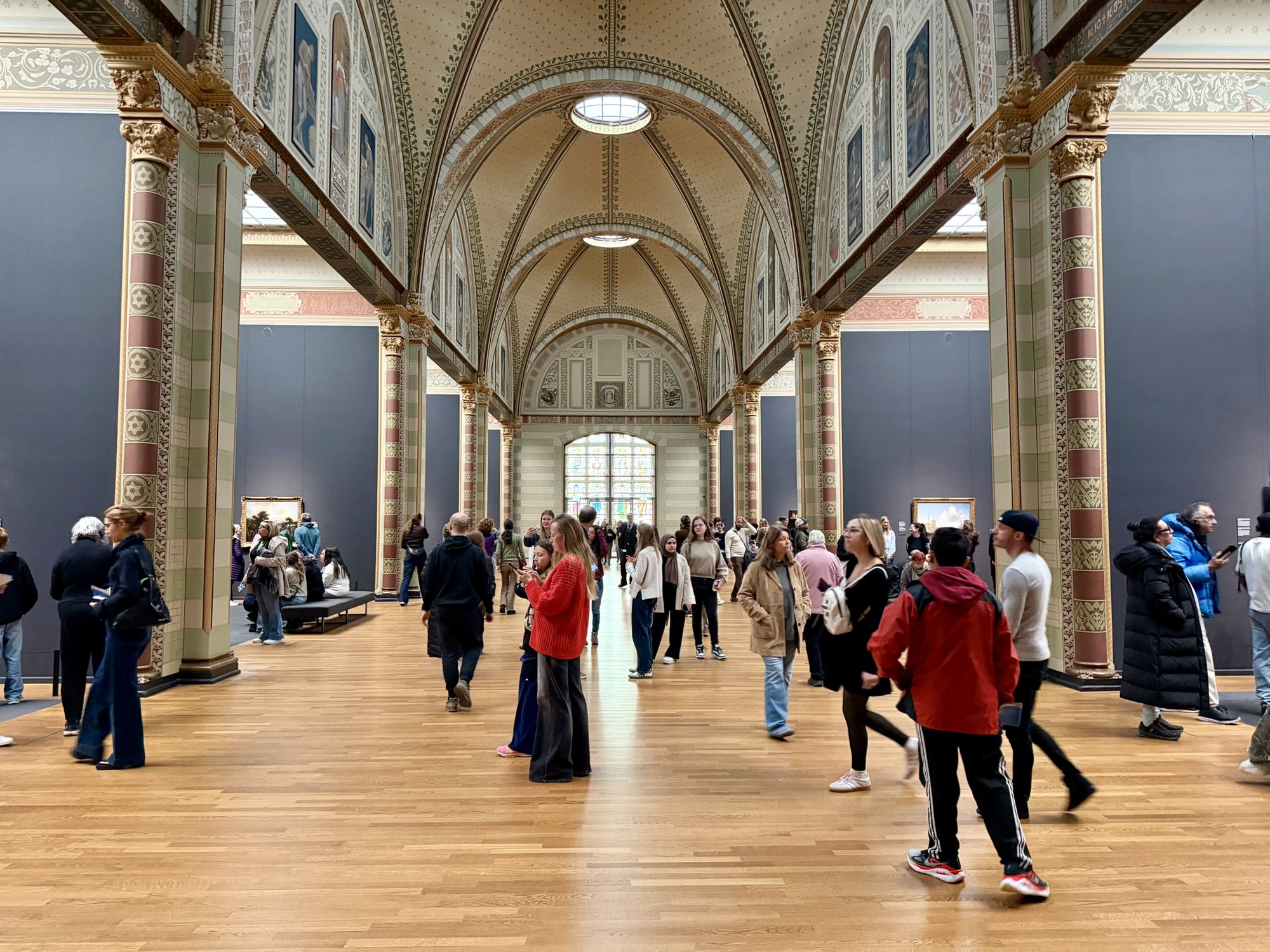
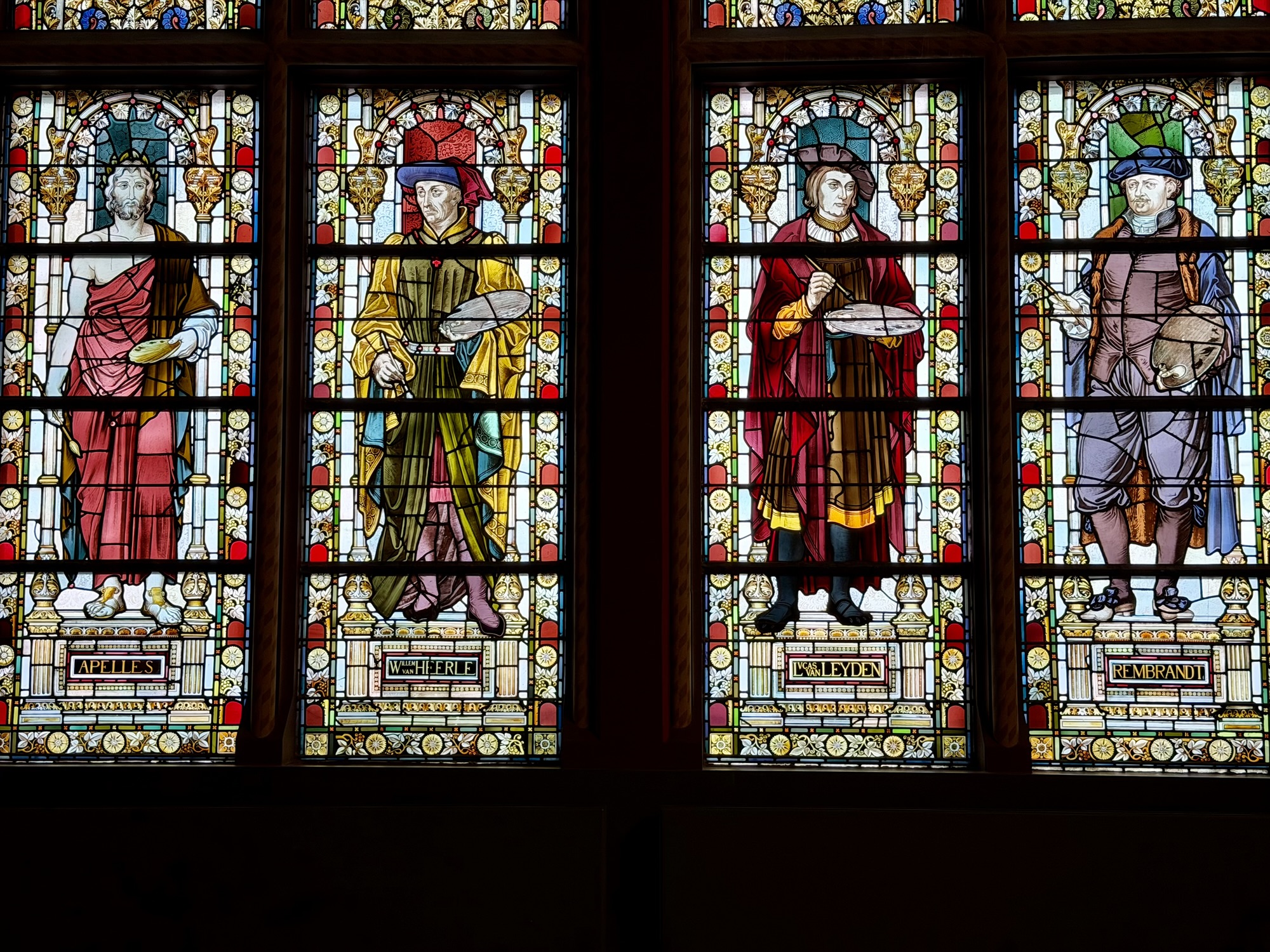
This is the great hall and it has very large stained glass windows at the opposite end to the Night Watch.

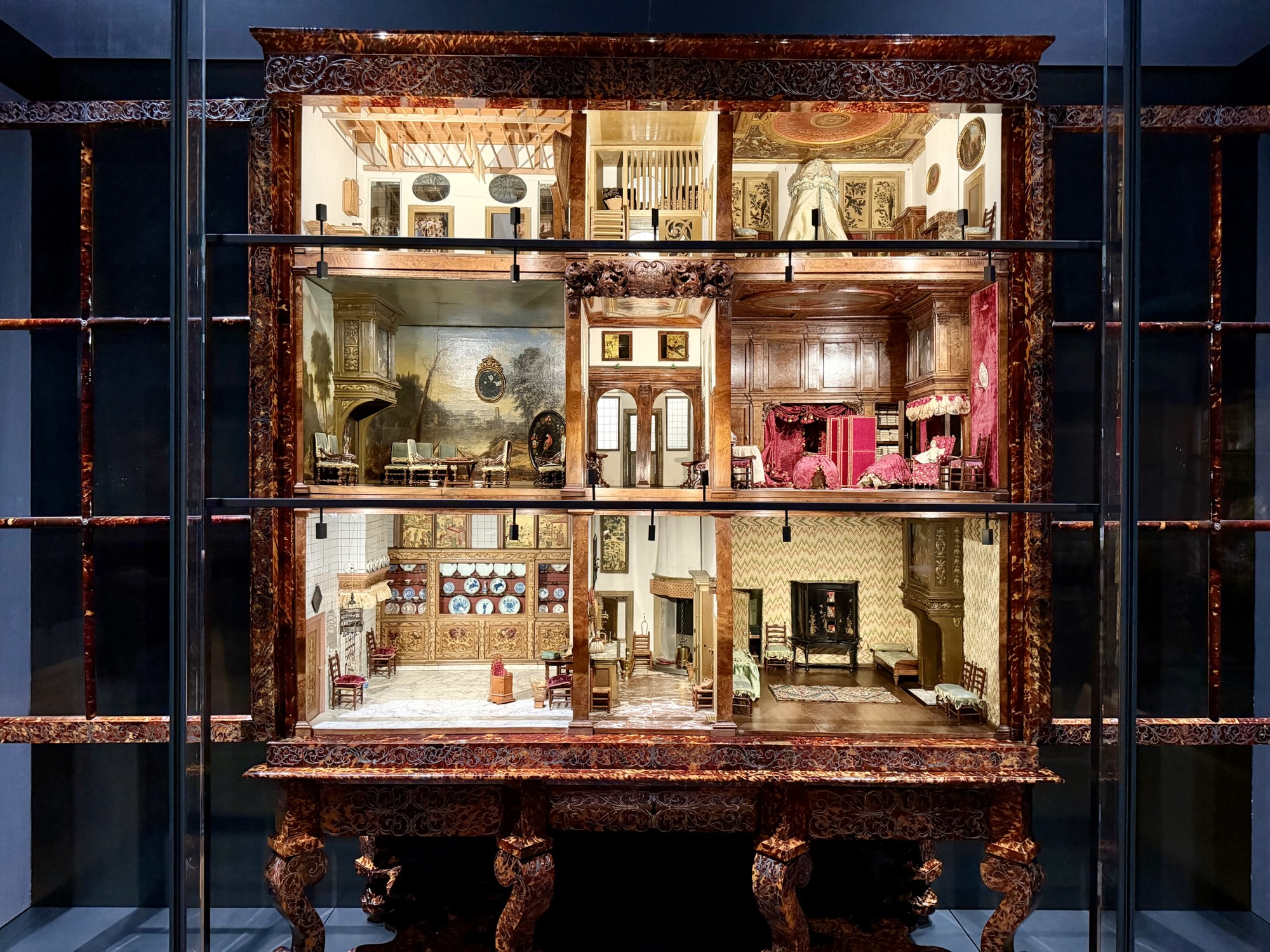
There were a couple of beautiful doll houses.

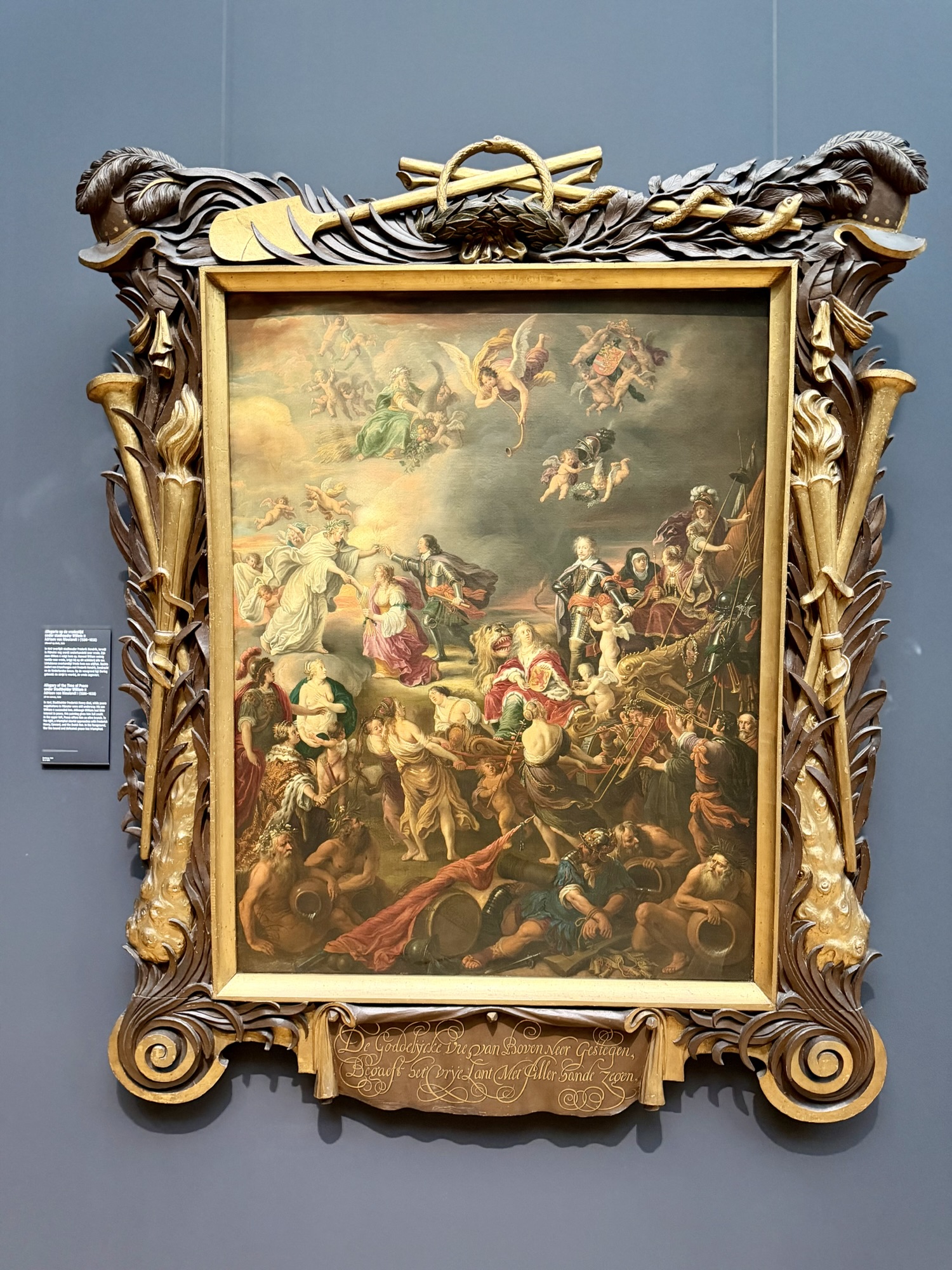
This frame caught my eye and struck me as being more impressive than the painting it contained.

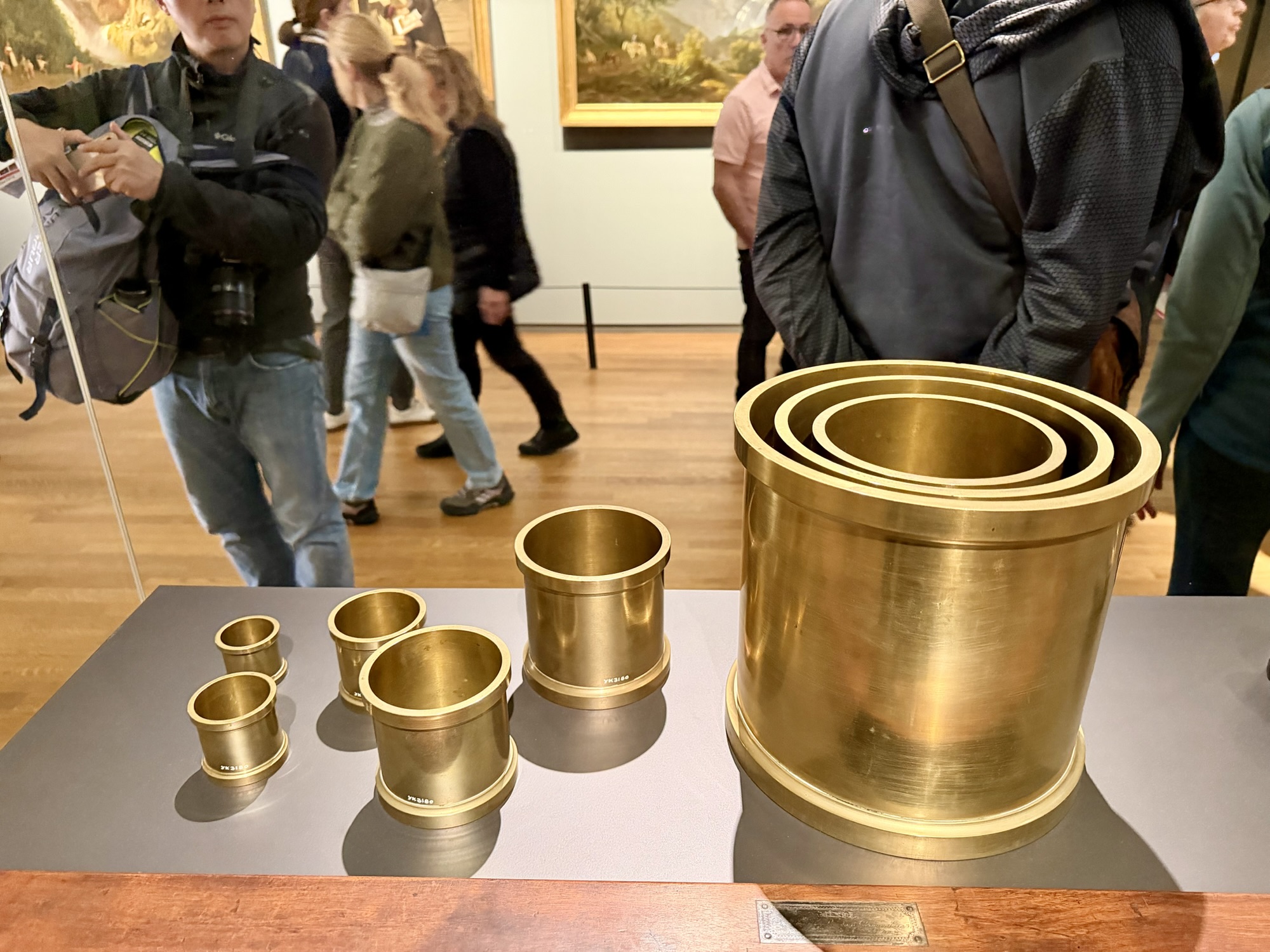
The Netherlands was the first country to standardize to the metric system, and these were standard weights.

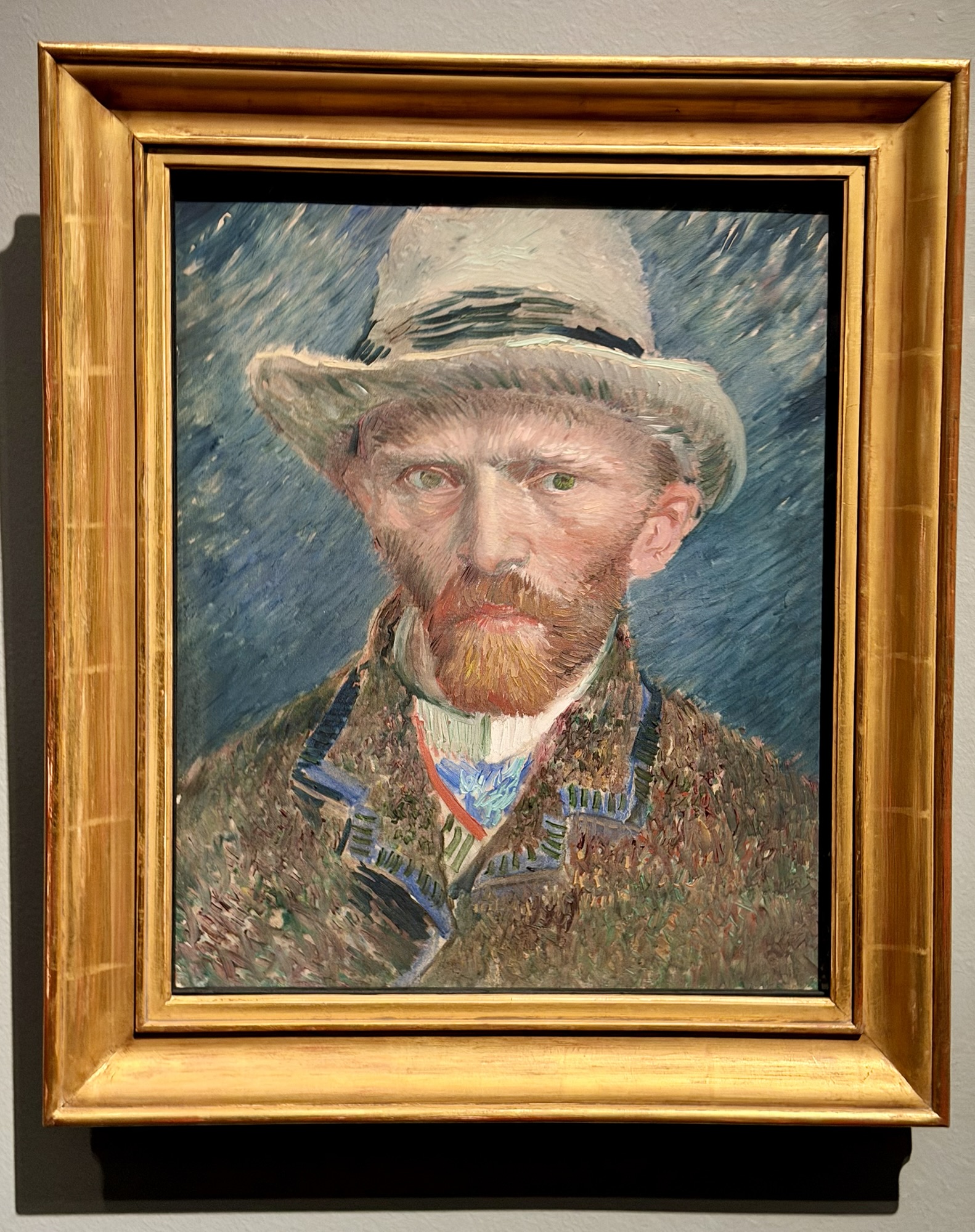
Of course, we had to see Van Gogh’s self portrait.

This was a less crowded scene near the museum just before lunch.

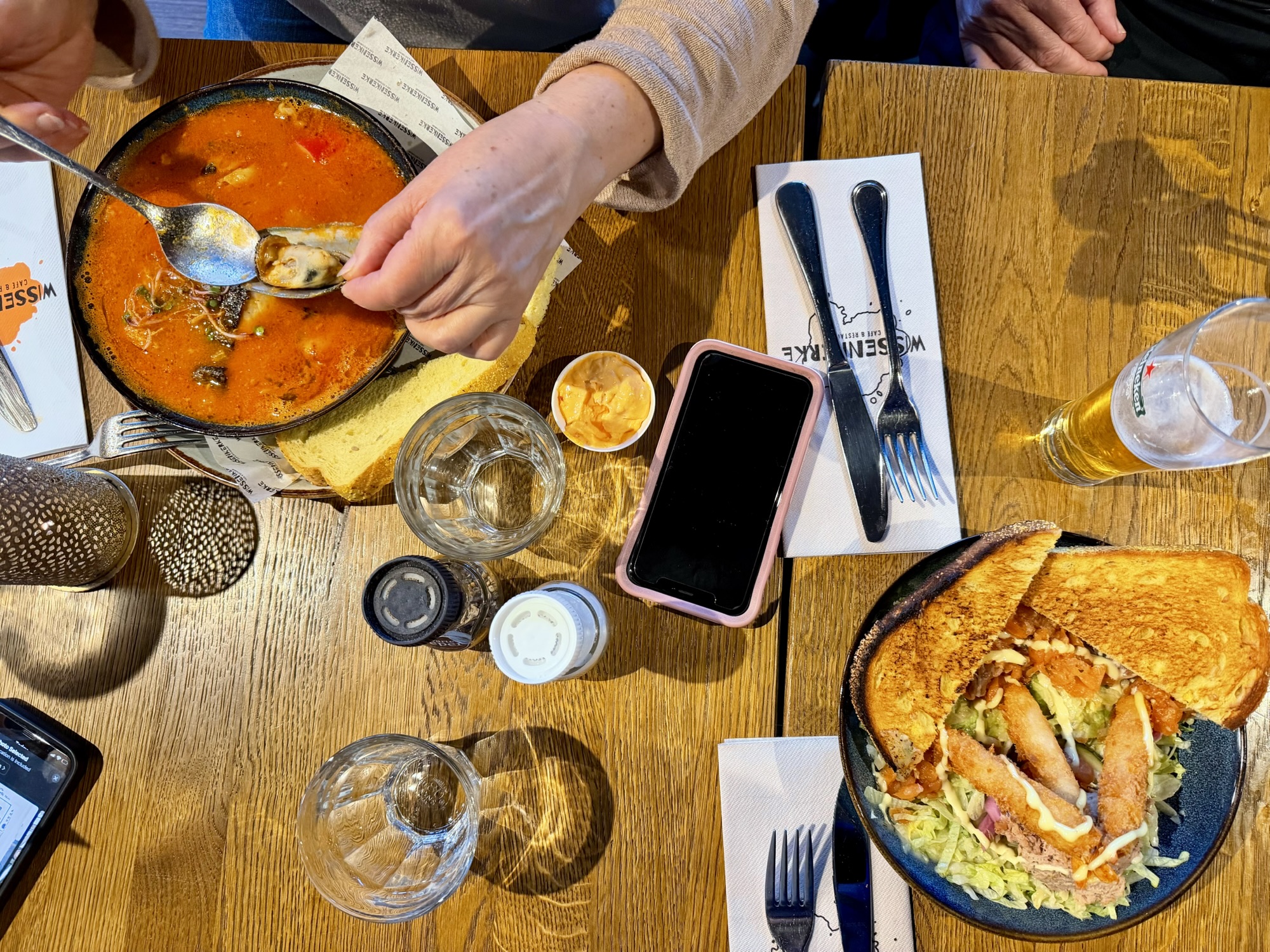
We had lunch at Cafe Hans en Grietje.  The food was delicious.

Then we wandered indirectly back towards Amsterdam Central.

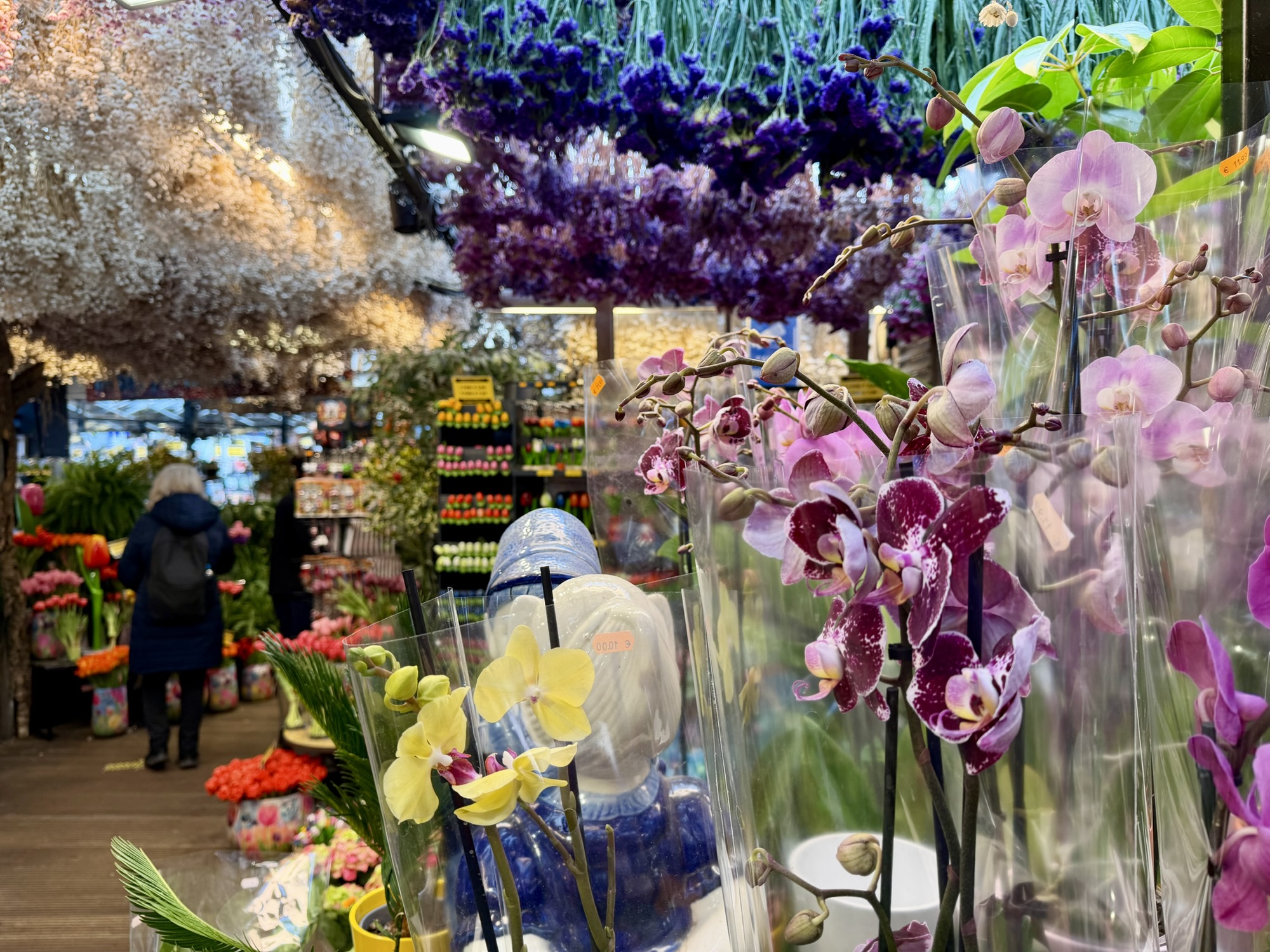
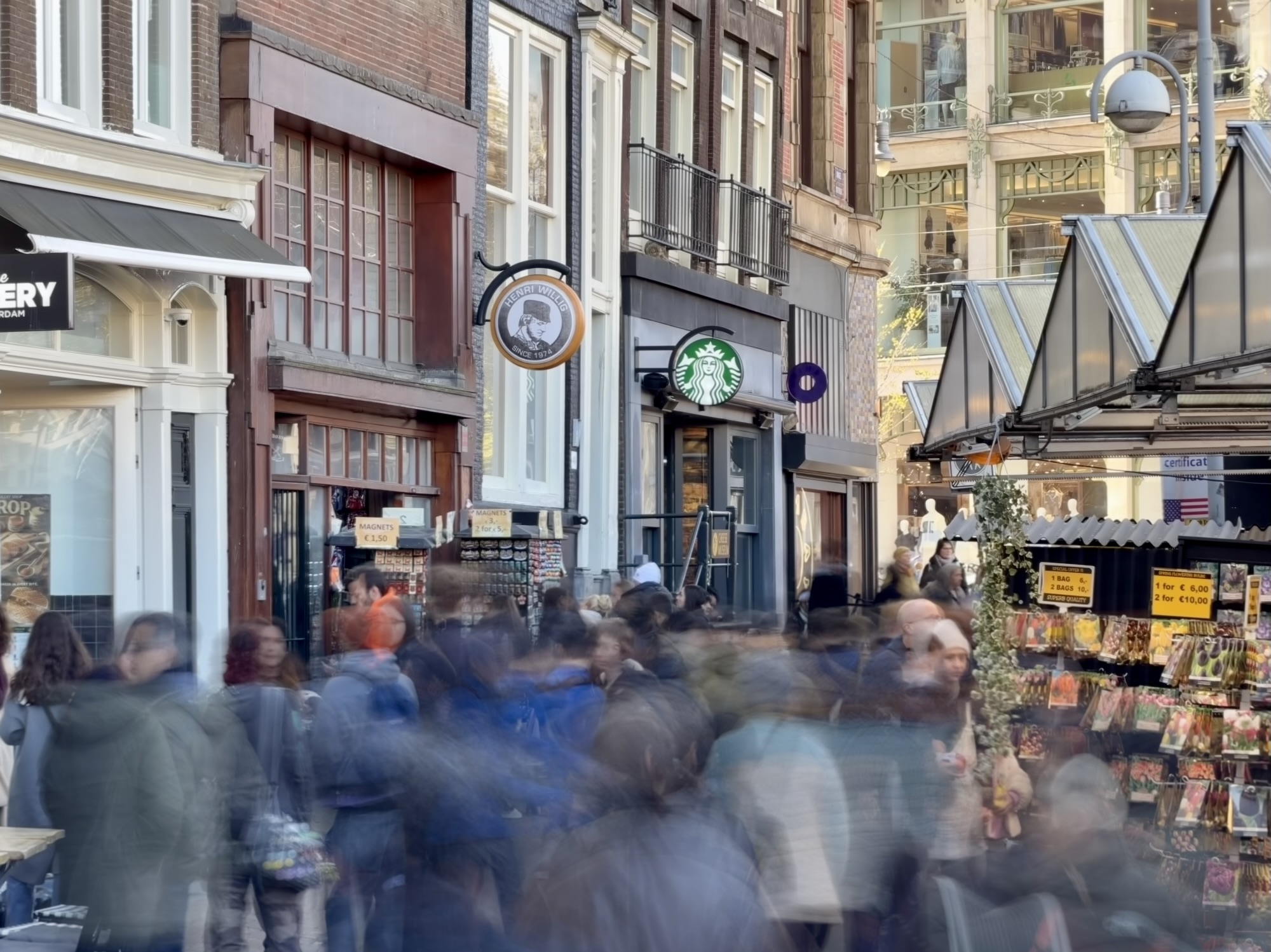
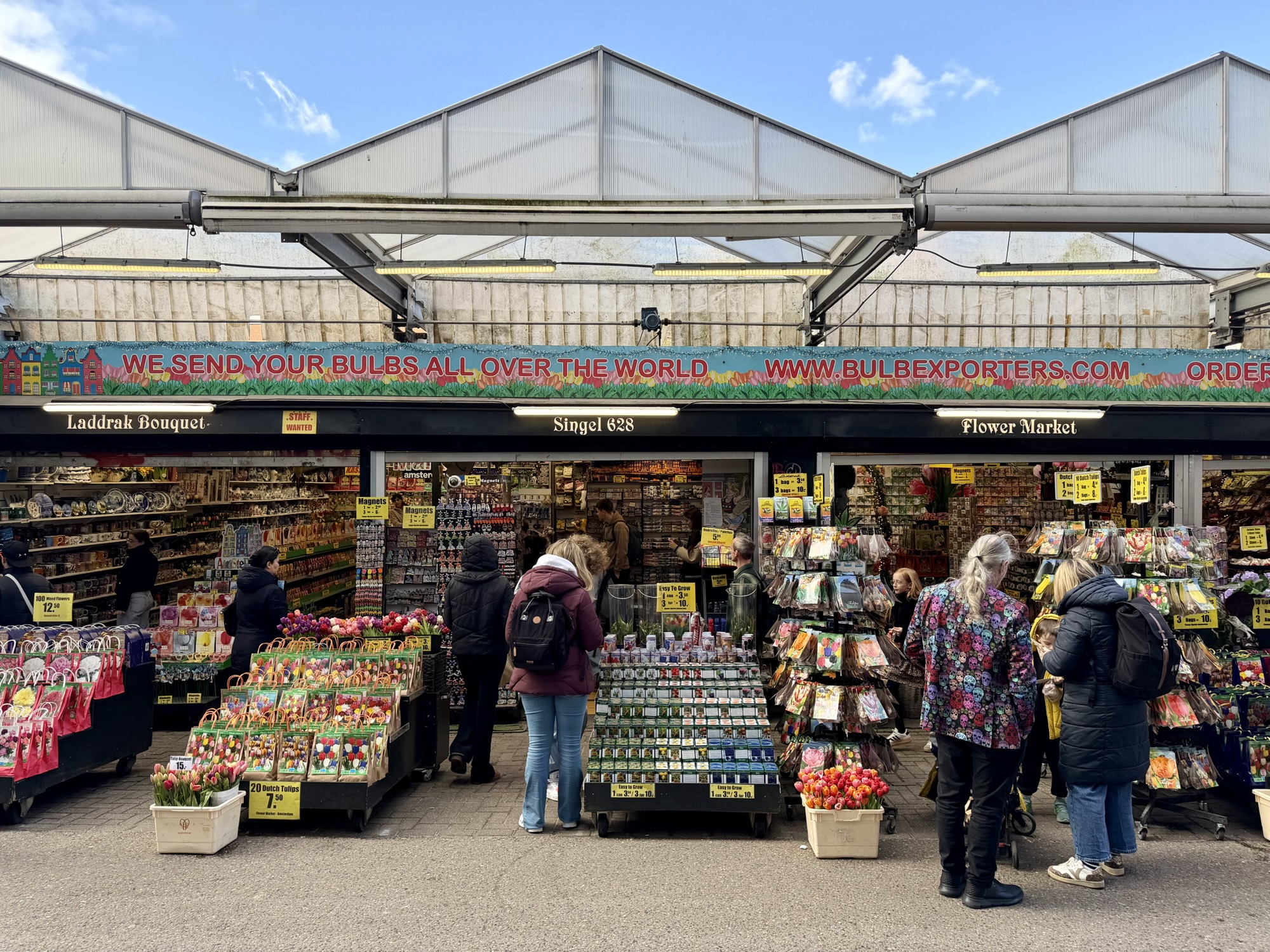
We spent some time walking around the flower market. It was very crowded.

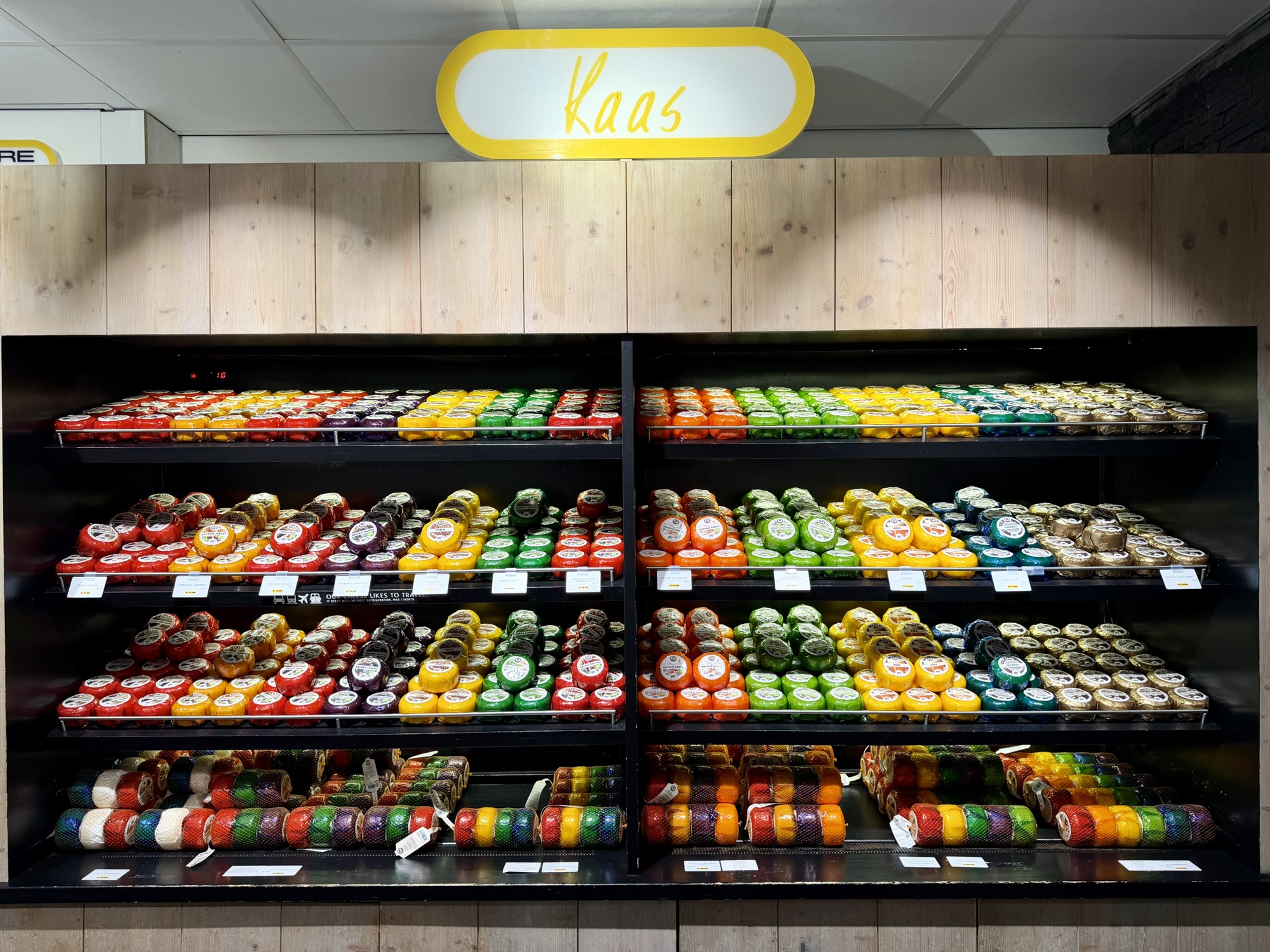
This shop sold every imaginable flavour of cheese in very colourful wax wrap.

By the time we left there, all of the streets were becoming quite crowded.

Canal house is often had a basement and loft where trade goods could be stored. A special beam or pulley would be located in the attic to hoist up valuable goods or heavier stuff.

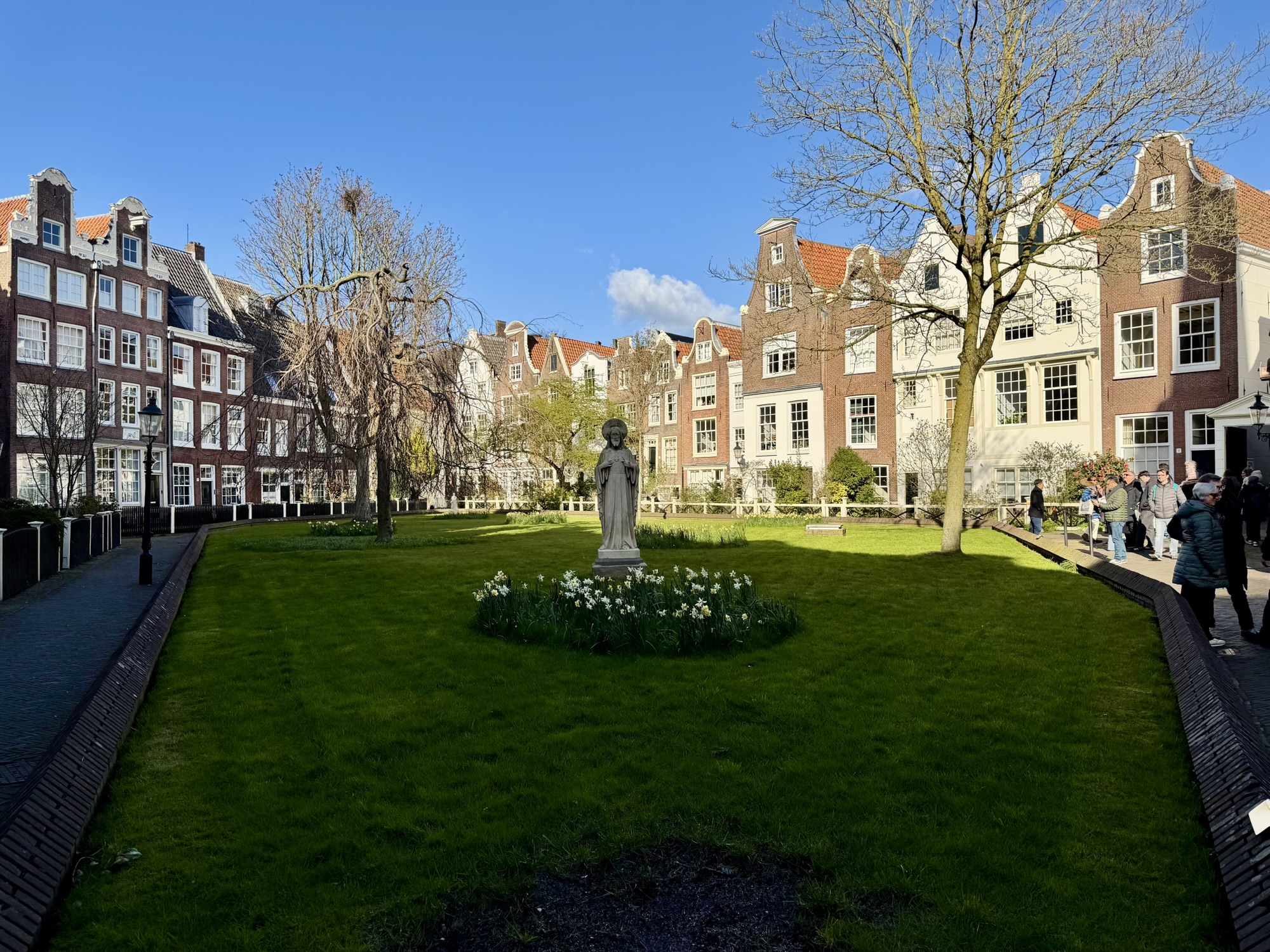
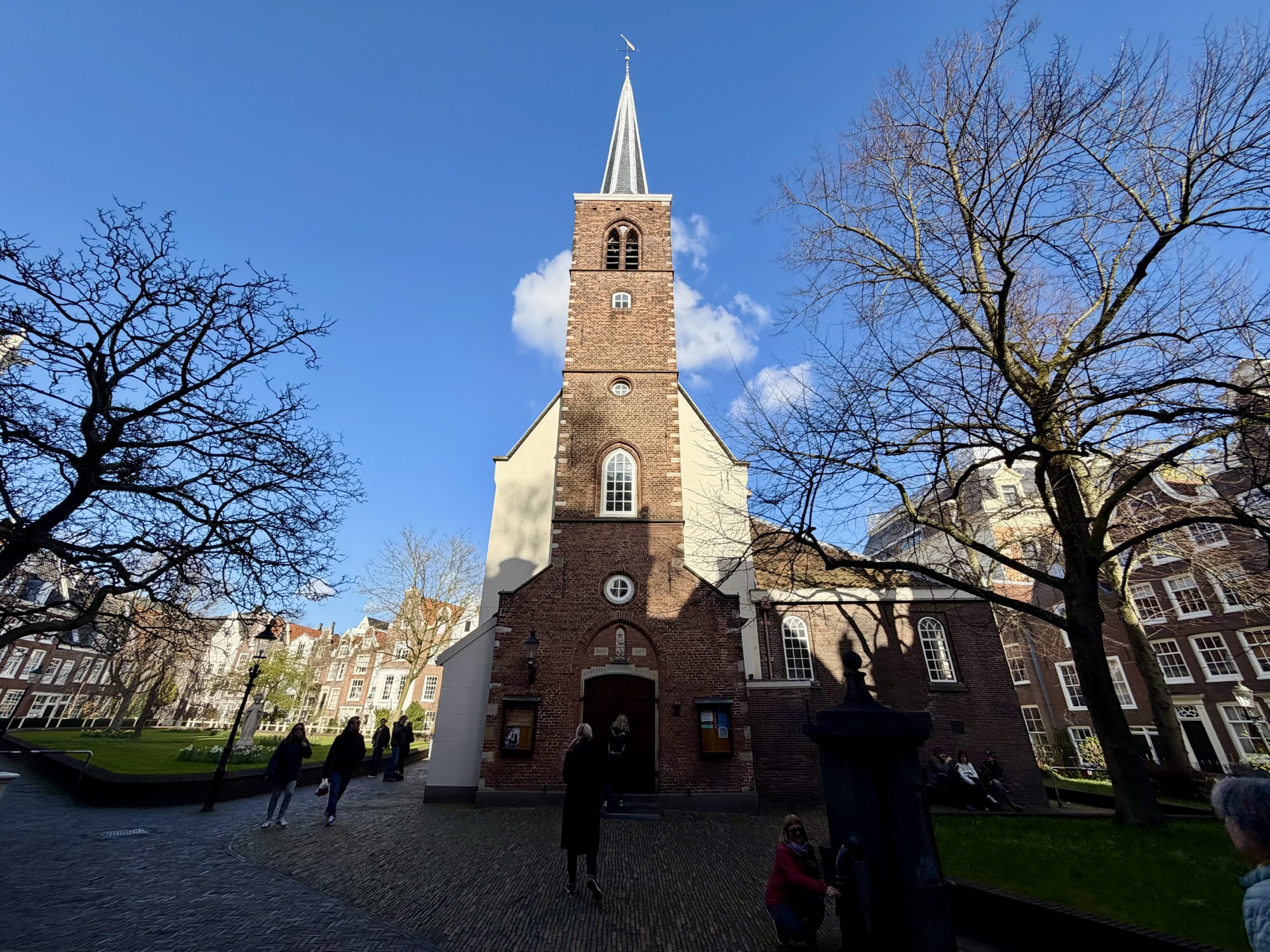
Begijnhof Chapel is located in one of Amsterdam‘s oldest inner courtyards. The Beguines were a lay female Catholic order that sought to imitate Christ: living in poverty and devotion, and for the care of others. And hidden in their hidden courtyard where they lived was a hidden church, the Begin Chapel. Today, the courtyard’s residents are no longer nuns but do remain strictly female.

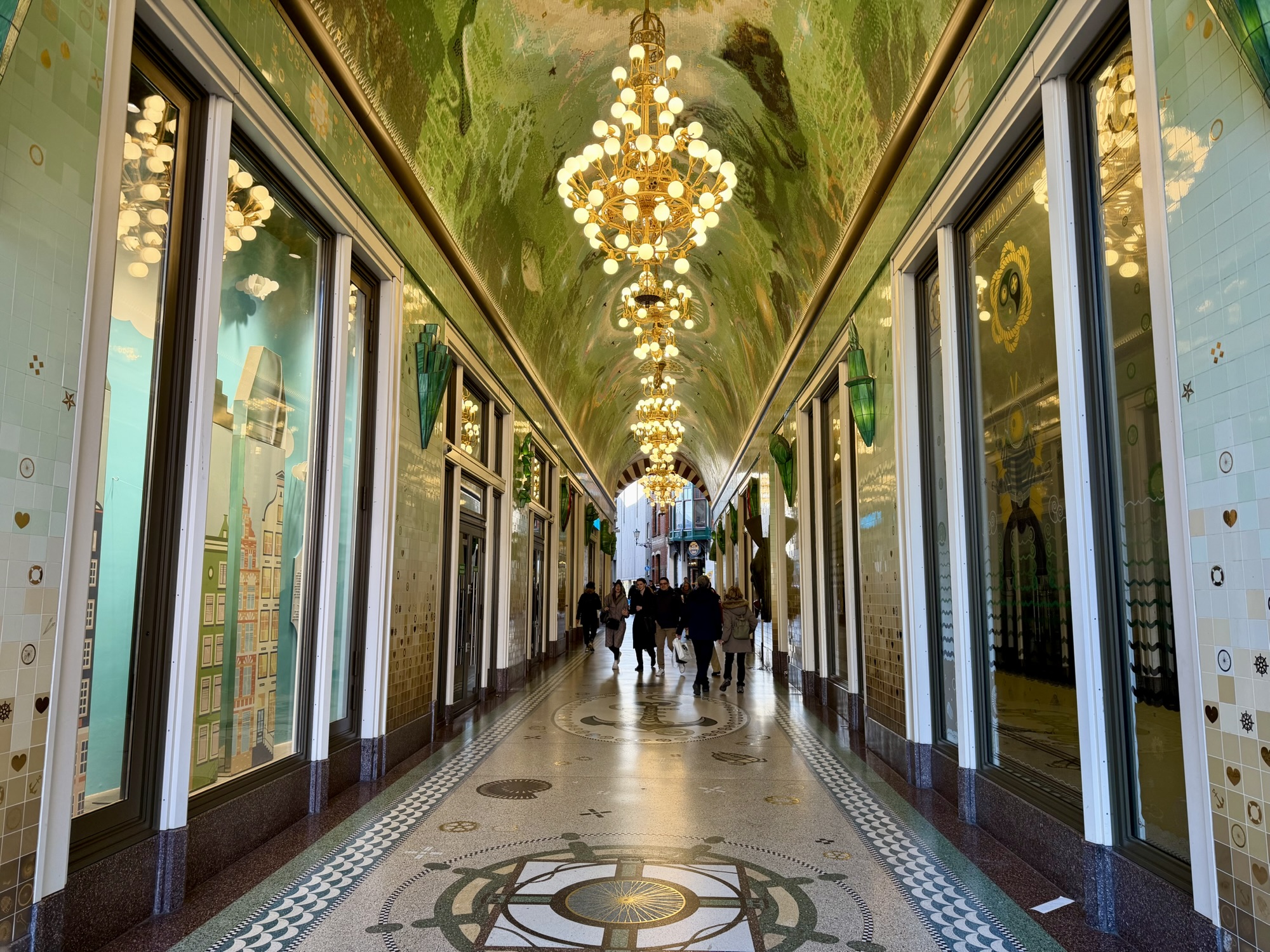
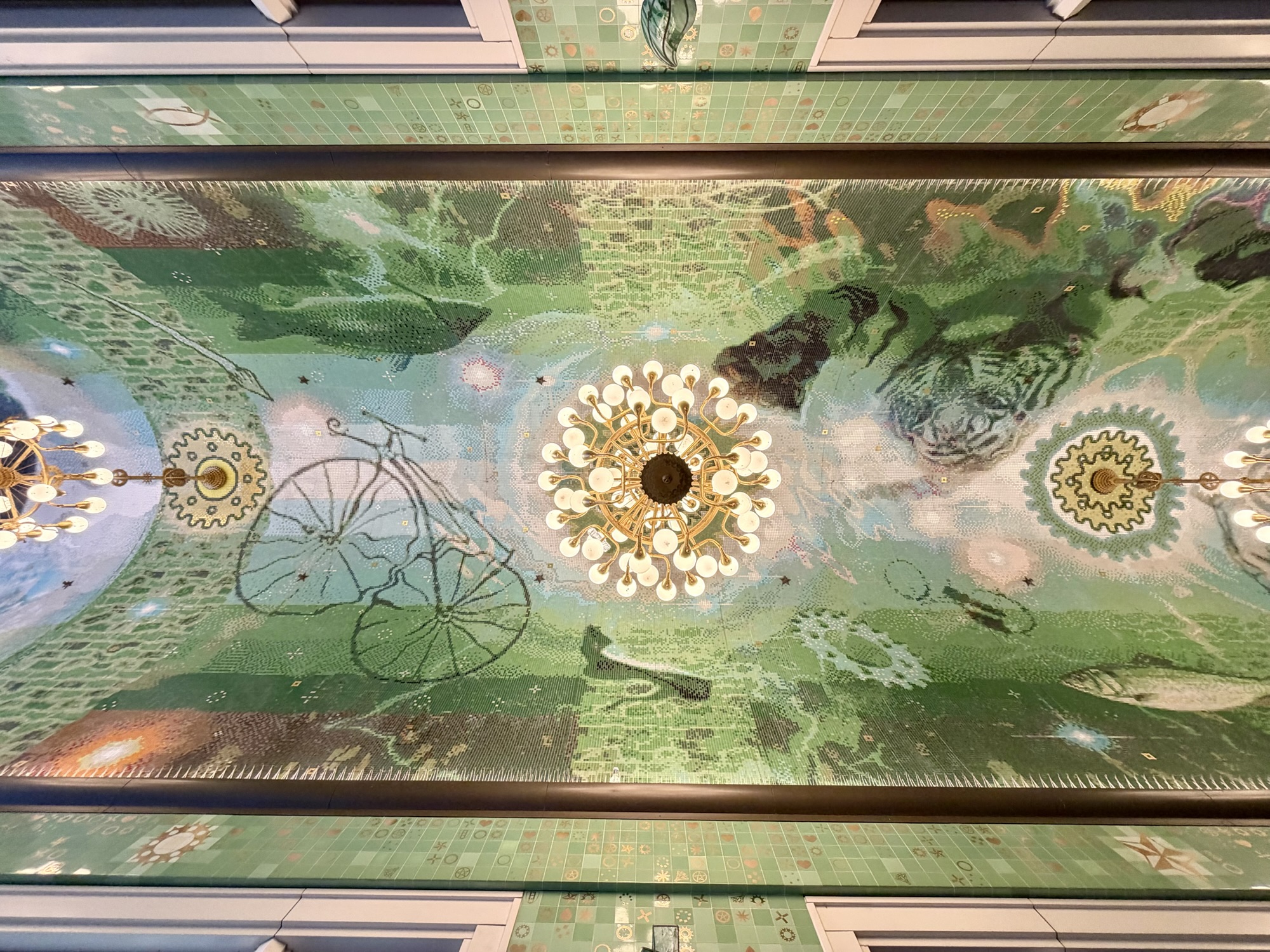
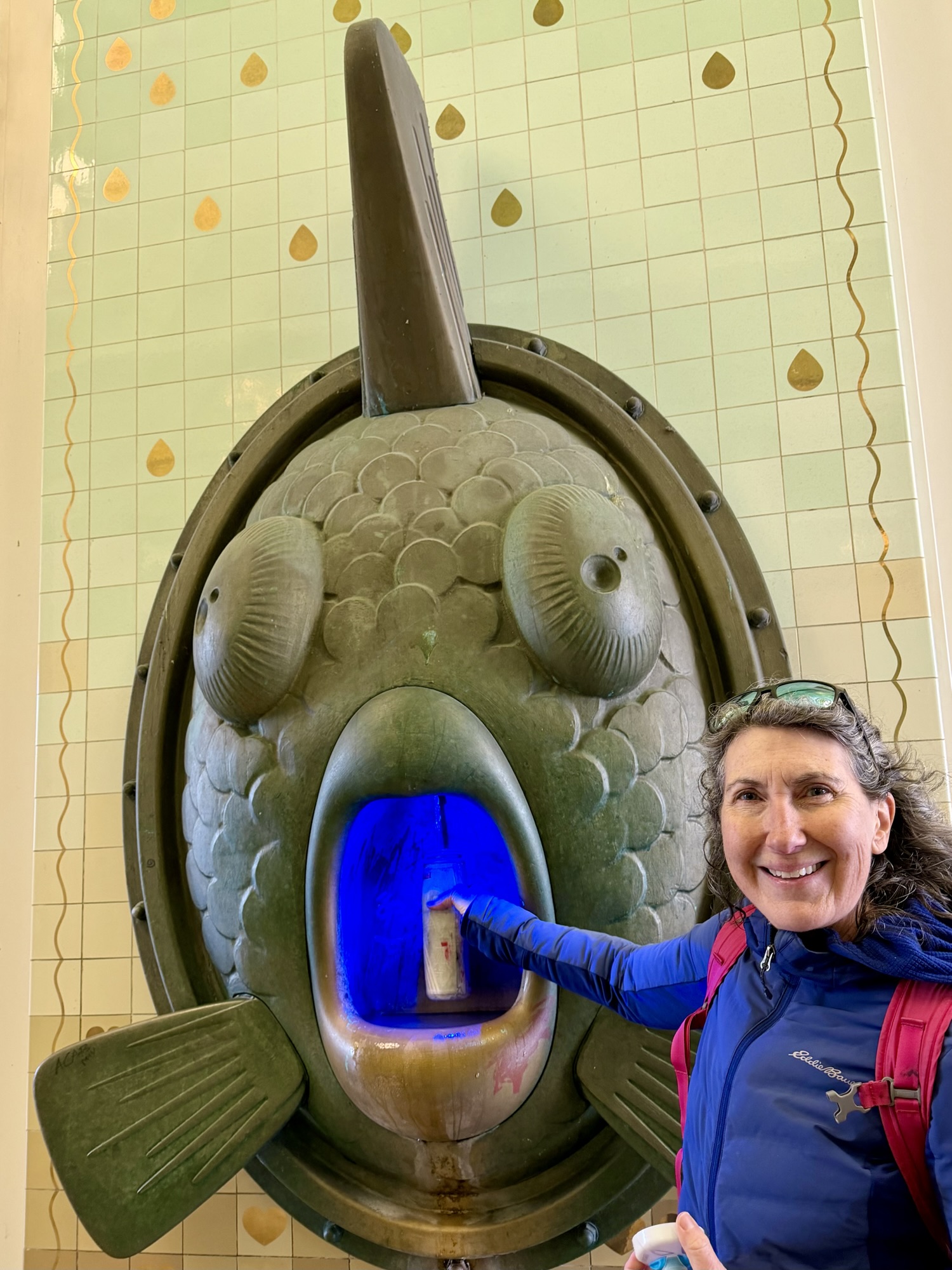
Amsterdam Oersoep is a passageway with an aquatic-themed design which pays tribute to the capital city’s famed waterways. It contains a water bottle filling station in a large fish on one of the walls.

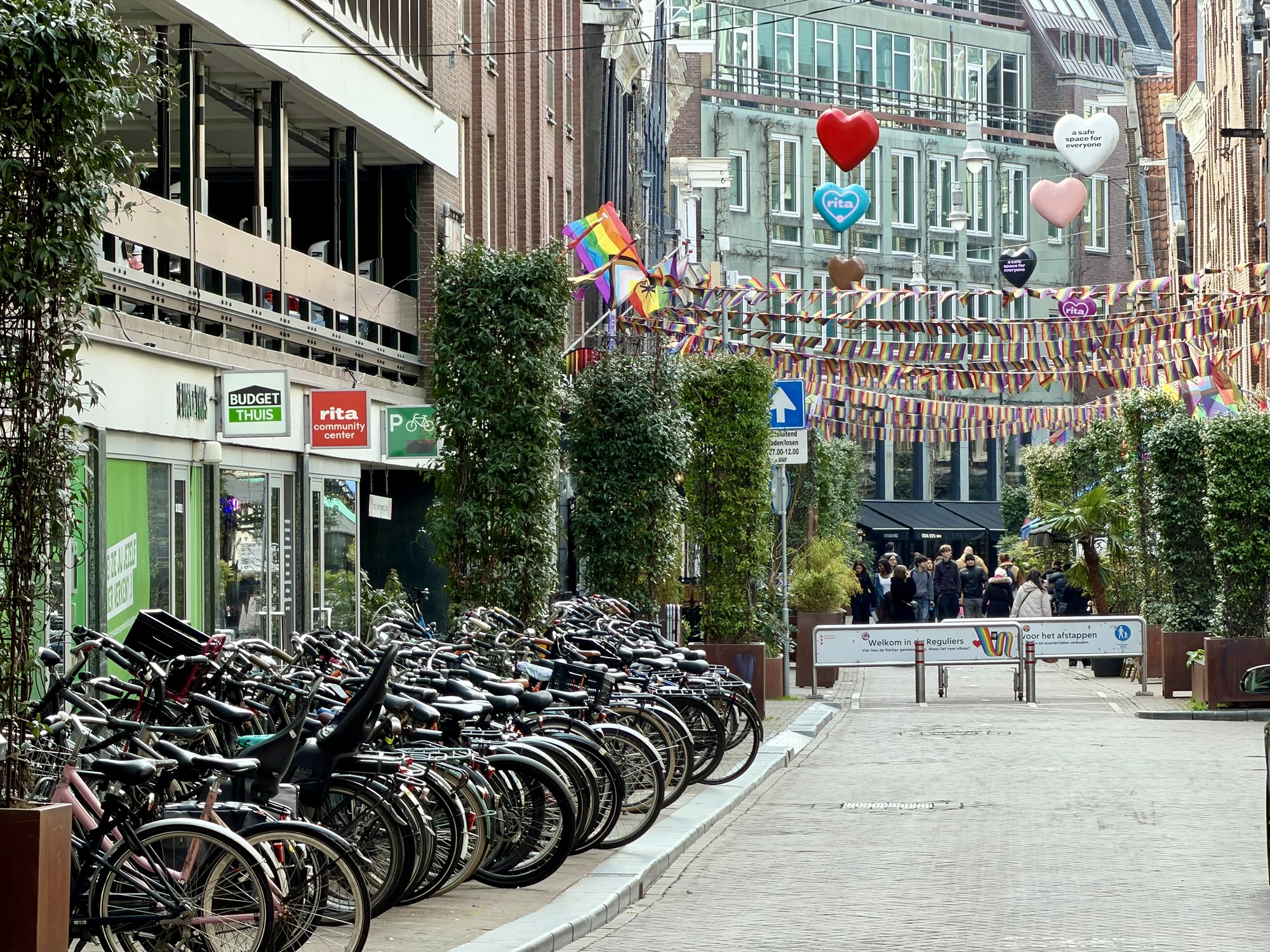
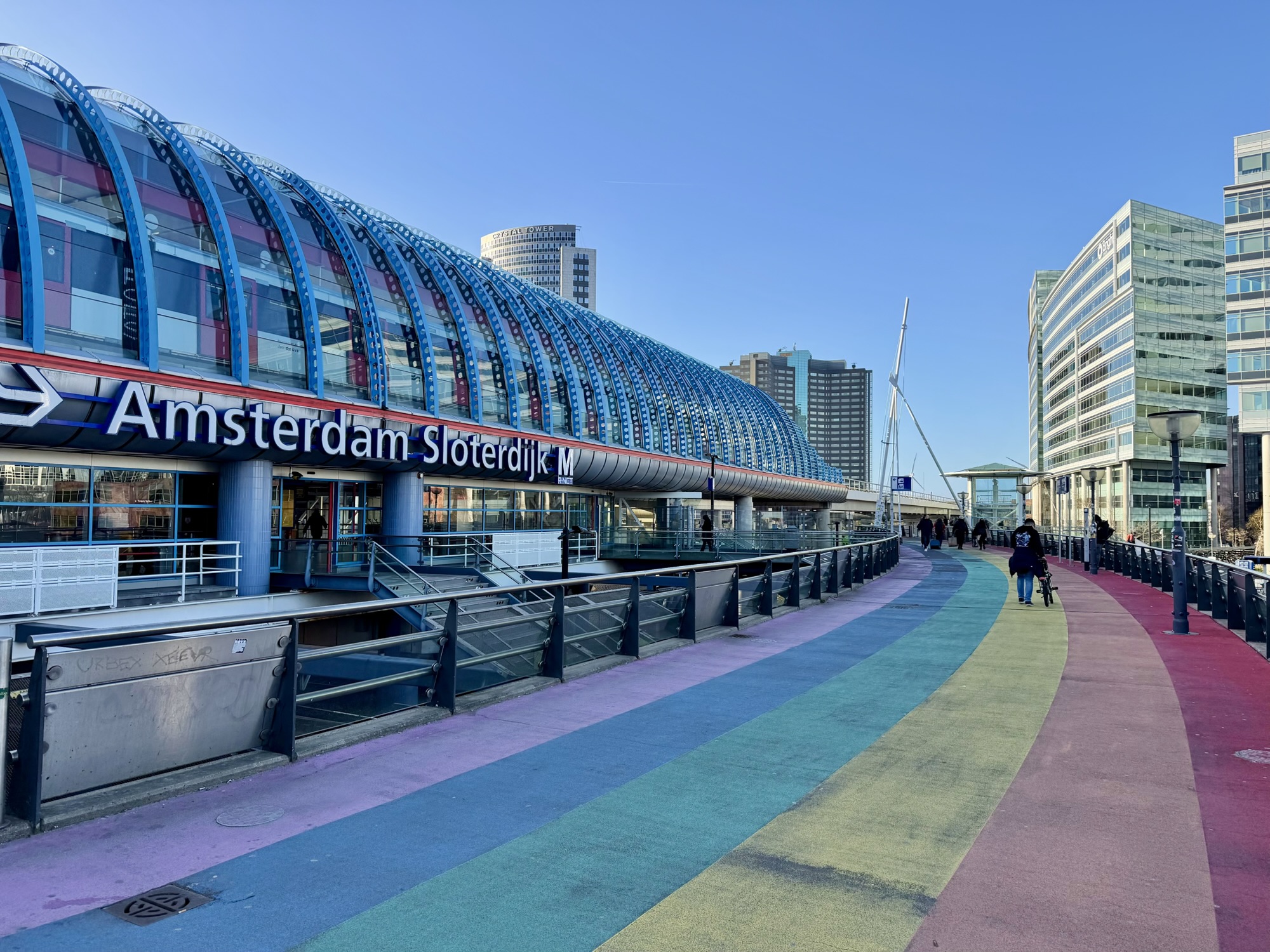
We arrived back at the train station just after six and road one stop back to the area where we are staying. We left the station a different way today and discovered an elevated rainbow path. It gave us a great view of the bike parking which we saw yesterday.

Since it was getting late, we decided to eat at the same restaurant by the station where we ate last night and then headed back to the hotel to rest, and for me to write the blog.

Late in the evening, we had a visit from the very friendly hotel cat.

Europe 2026 – Day 1 & 2 – Toronto to Amsterdam

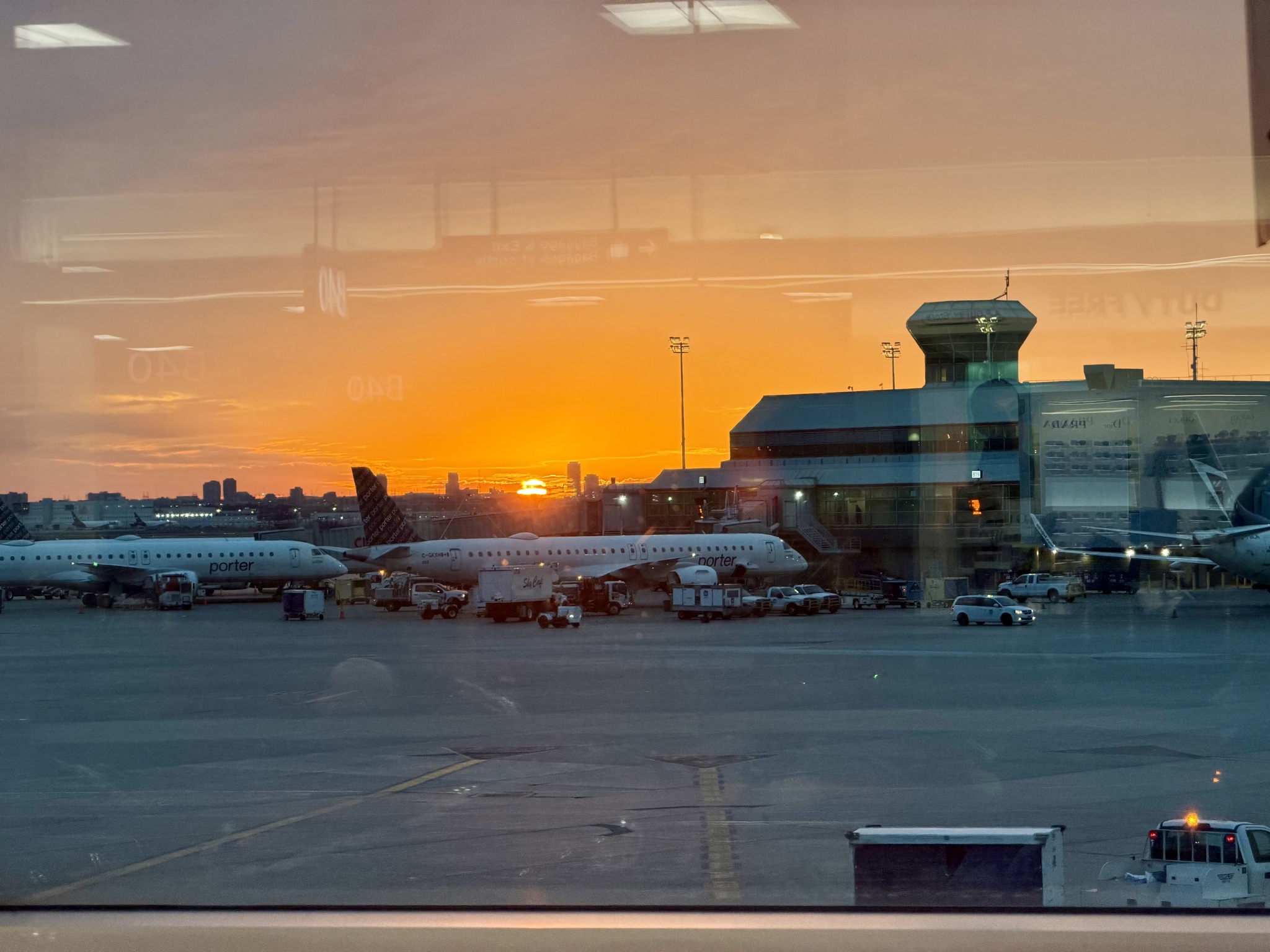
We all arrived at the airport at about the same time. Alina came by public transit, Wayne’s son dropped him off, Cindy’s daughter dropped her and Mark off. My husband Michael drove David and Dayle, and me. KLM flies out of terminal three and it wasn’t overly crowded. It didn’t take long to get our luggage tags, drop our baggage, and make it through security. There was a lovely, but fleeting, sunset as we walked toward the gate. 

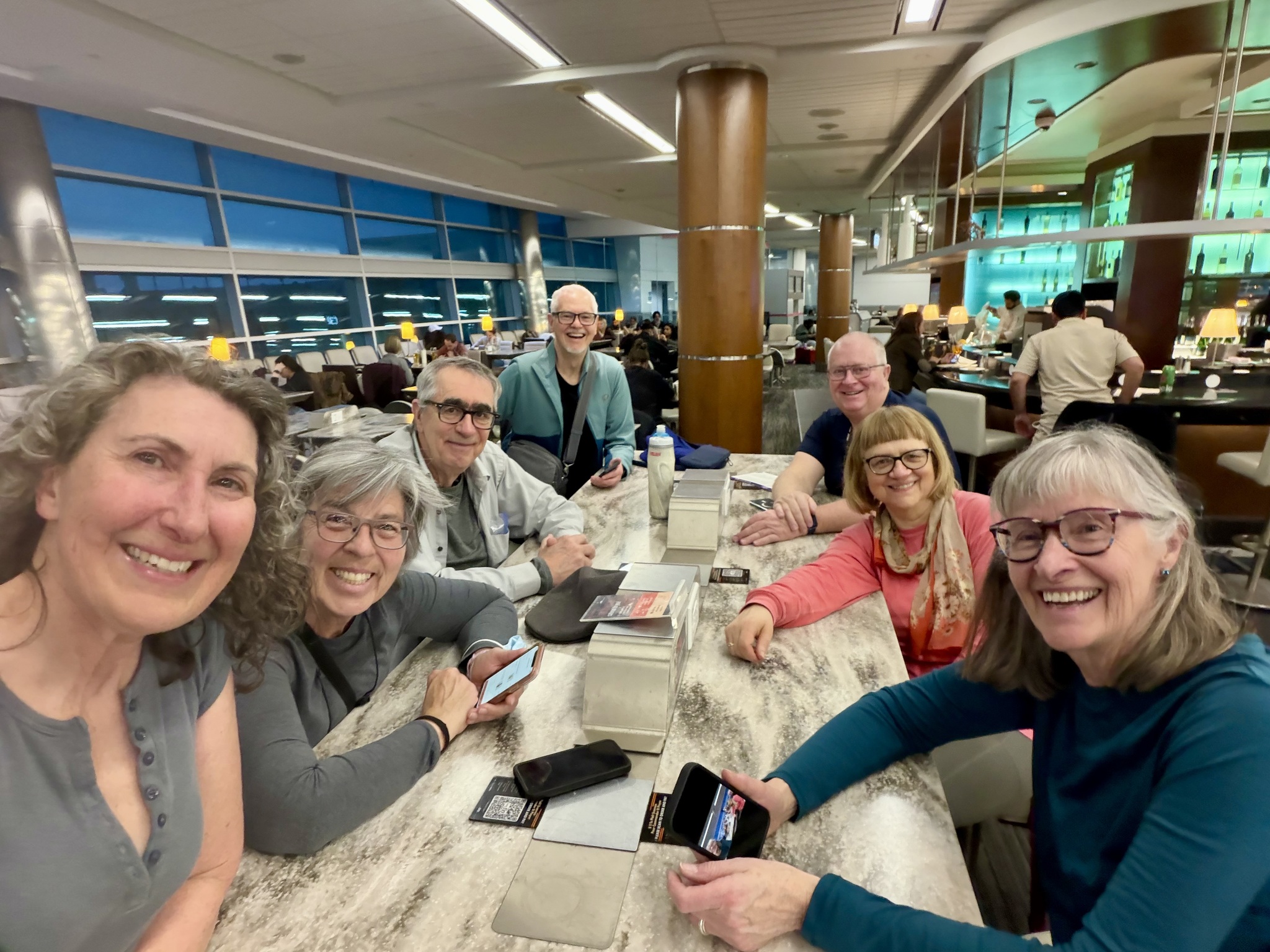
We were sitting at the gate long before boarding. Some people ate, and drinks were ordered. The time flew by.

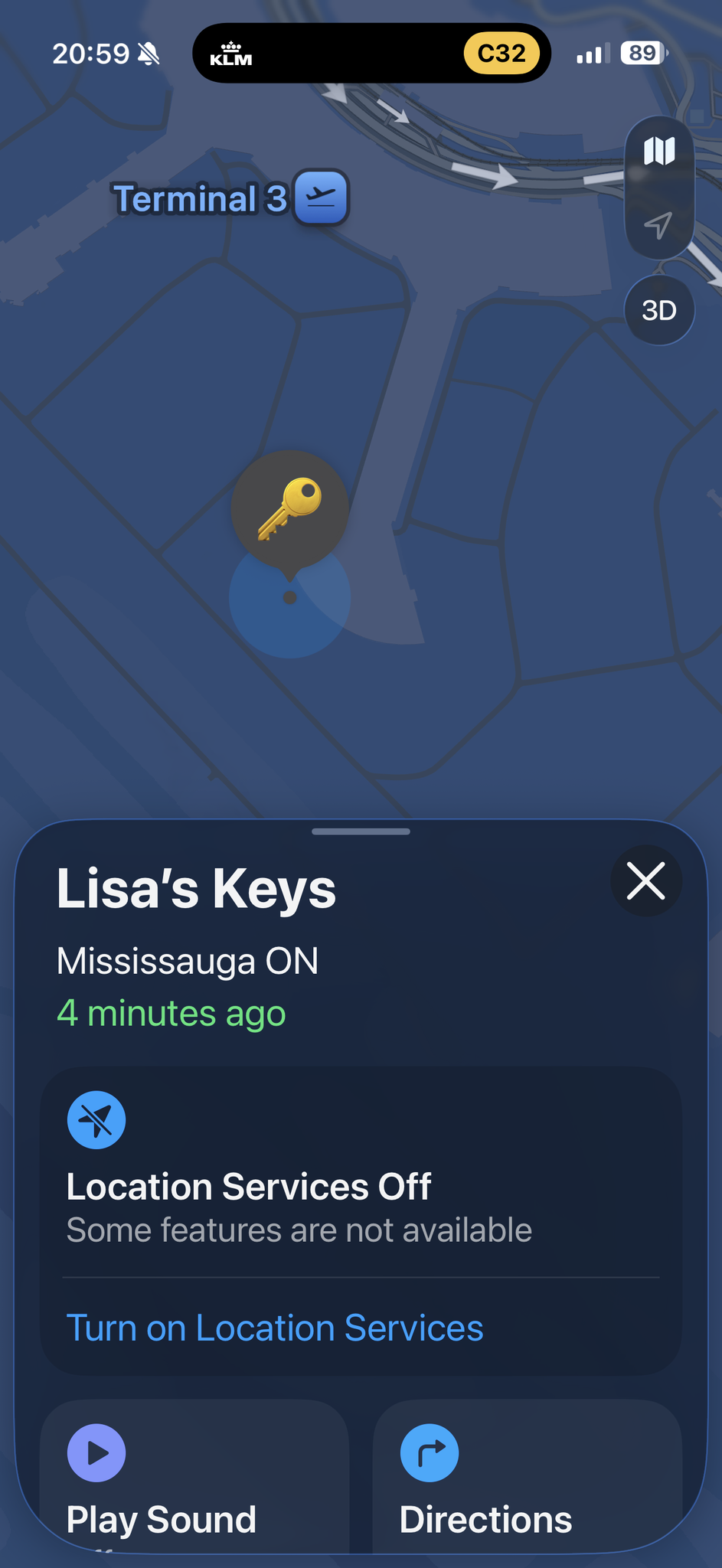
For the first time, I decided to put an apple AirTag in my luggage and it was fun and reassuring to see that it was on the airplane before I boarded.

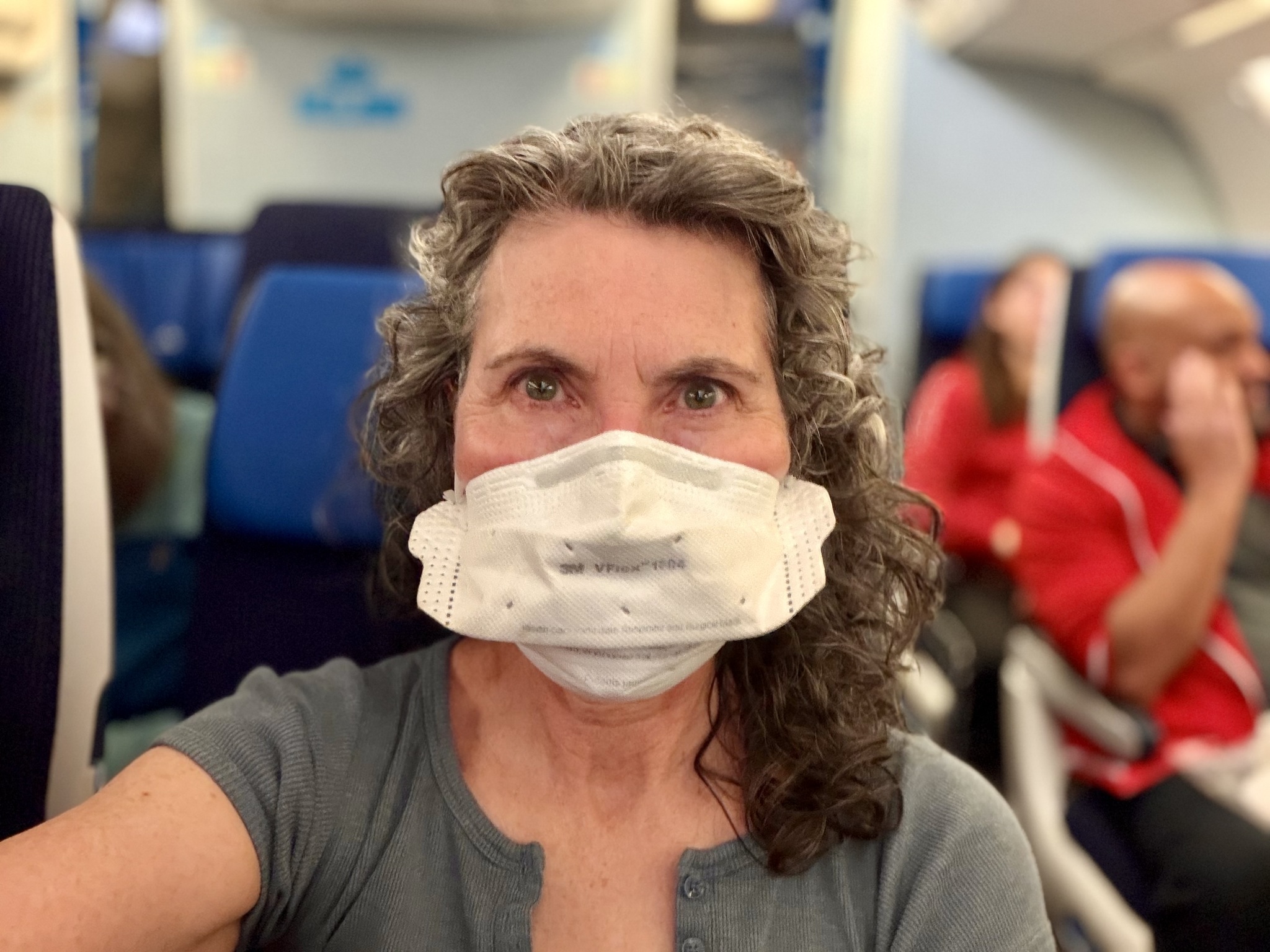
Even though the acute phase of the pandemic is long over, I am still careful in certain situations and use the CO2 monitor when I’m flying. The carbon dioxide level can be used as a proxy to determine good ventilation. Outside air has about 400 ppm of carbon dioxide. Good indoor ventilation can lower the risk of infection because it reduces and degrades aerosols in the air. CO2 above 1000ppm can harm well-being. It can cause headaches, fatigue, and lack of attention. Therefore, good ventilation is desirable even in the absence of disease. The levels on this flight range from about 1000 to 1300, which is more than is desirable, but much less than I have seen on flights in the past.
I spent the last week getting up half an hour earlier each subsequent day to try to get over half of the six hours of time change, which was ahead of me. The flight left just before 11 and once we were in the air, I went to the bathroom, then put on a sleeping mask, ear plugs and my neck pillow,and was able to sleep through dinner – waking as breakfast was being served. It’s probably the best sleep I’ve ever had on a plane.

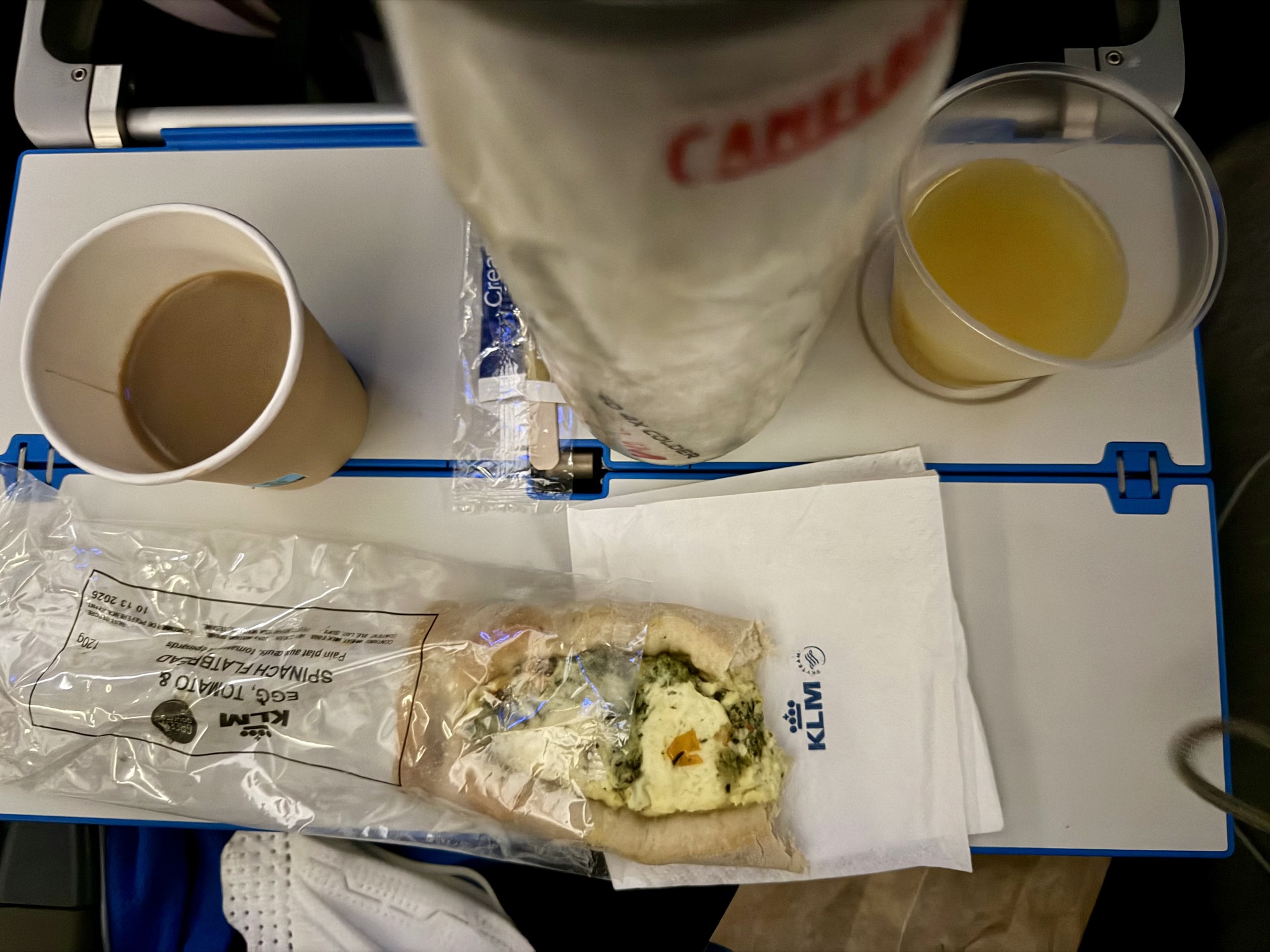
Breakfast was neither appetizing, nor filling.

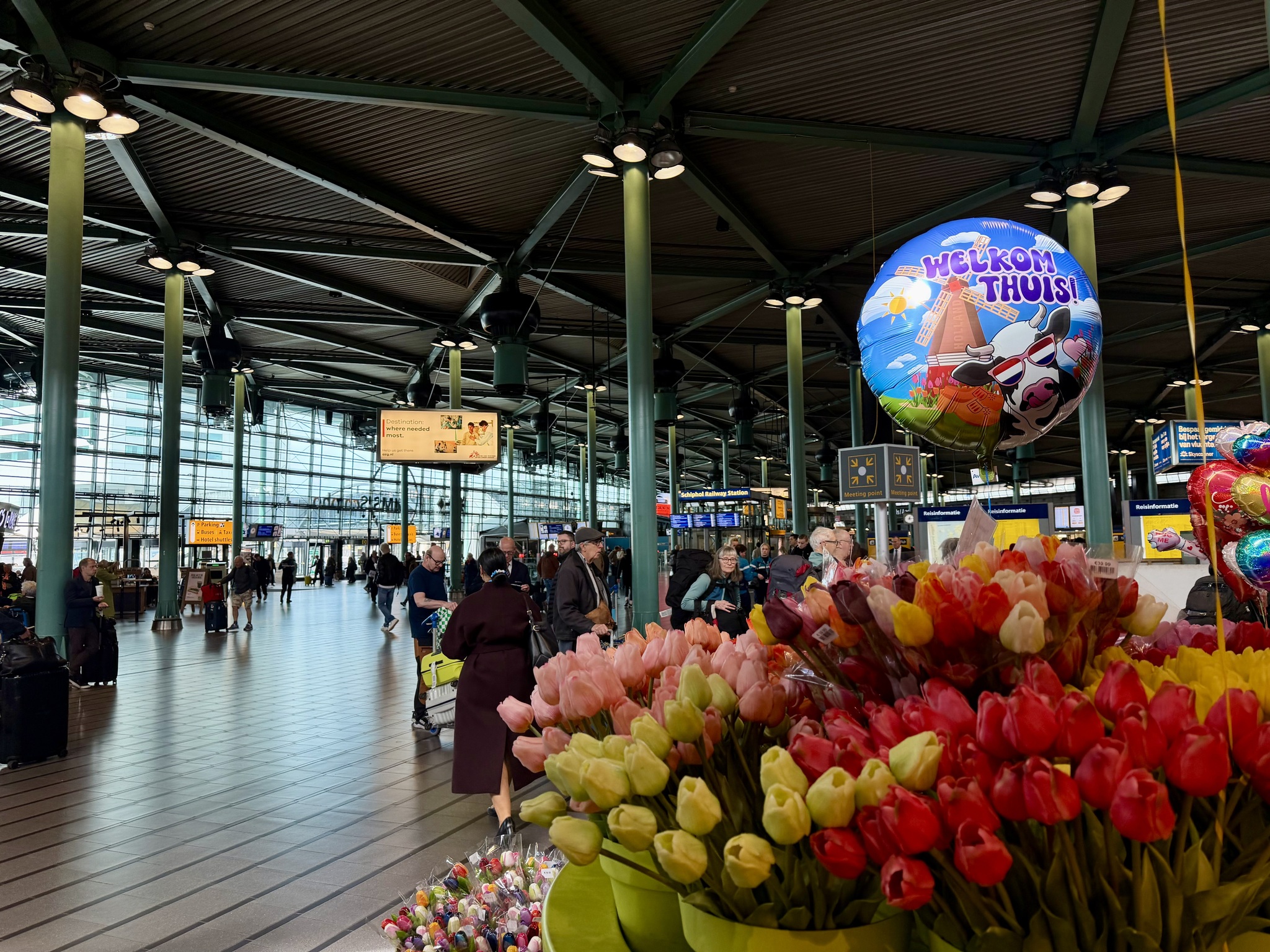
The lineup for immigration took a while, but our baggage was coming onto the carrousel as we arrived in the baggage hall. We were able to purchase tickets for the train in the baggage hall. We didn’t have to go outside to get to the train station. There were fresh tulips for sale.

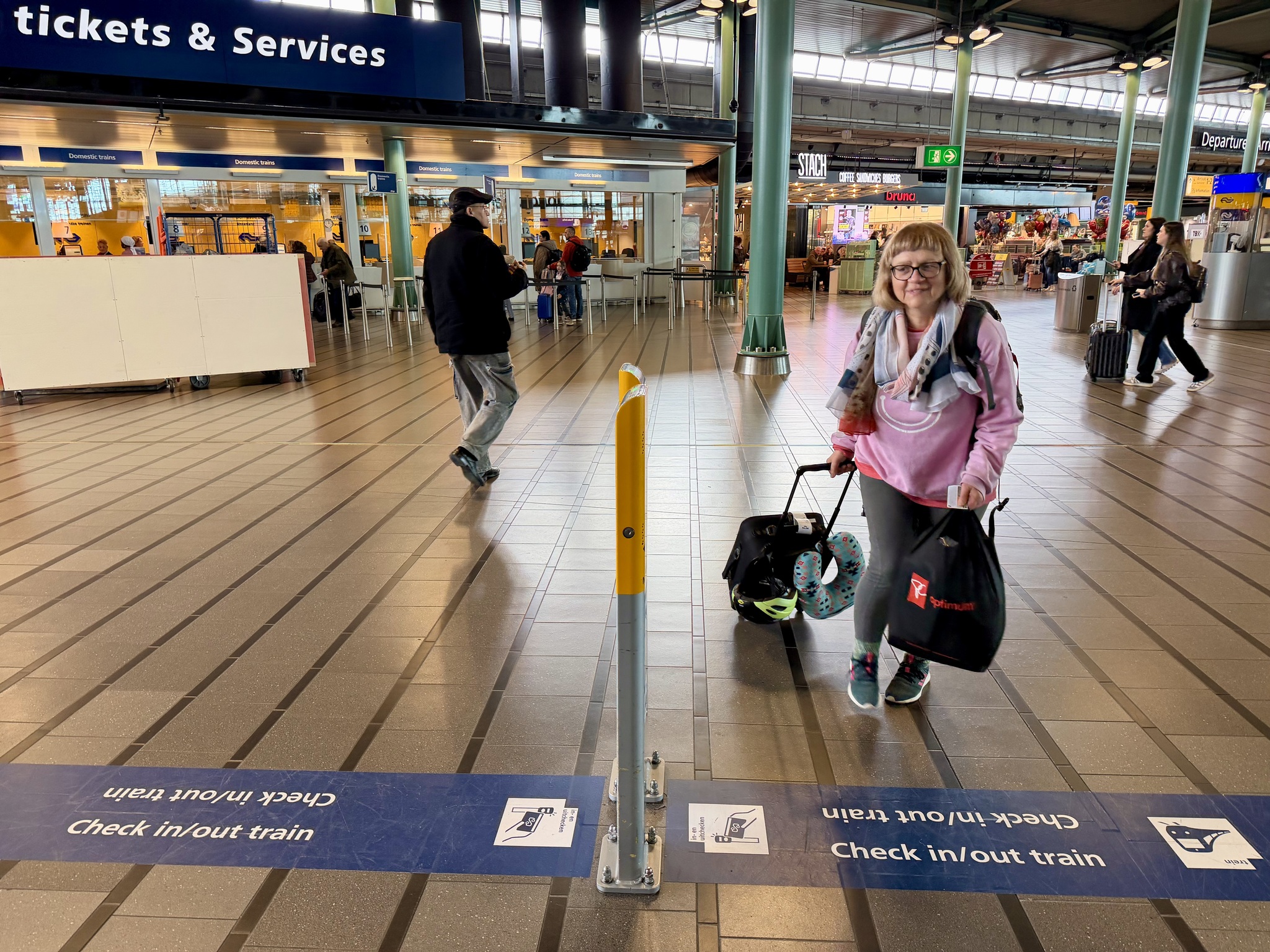
Fortunately, Wayne noticed the sign on the floor and the machine for tapping our train tickets which you can see here as Alina approaches it.

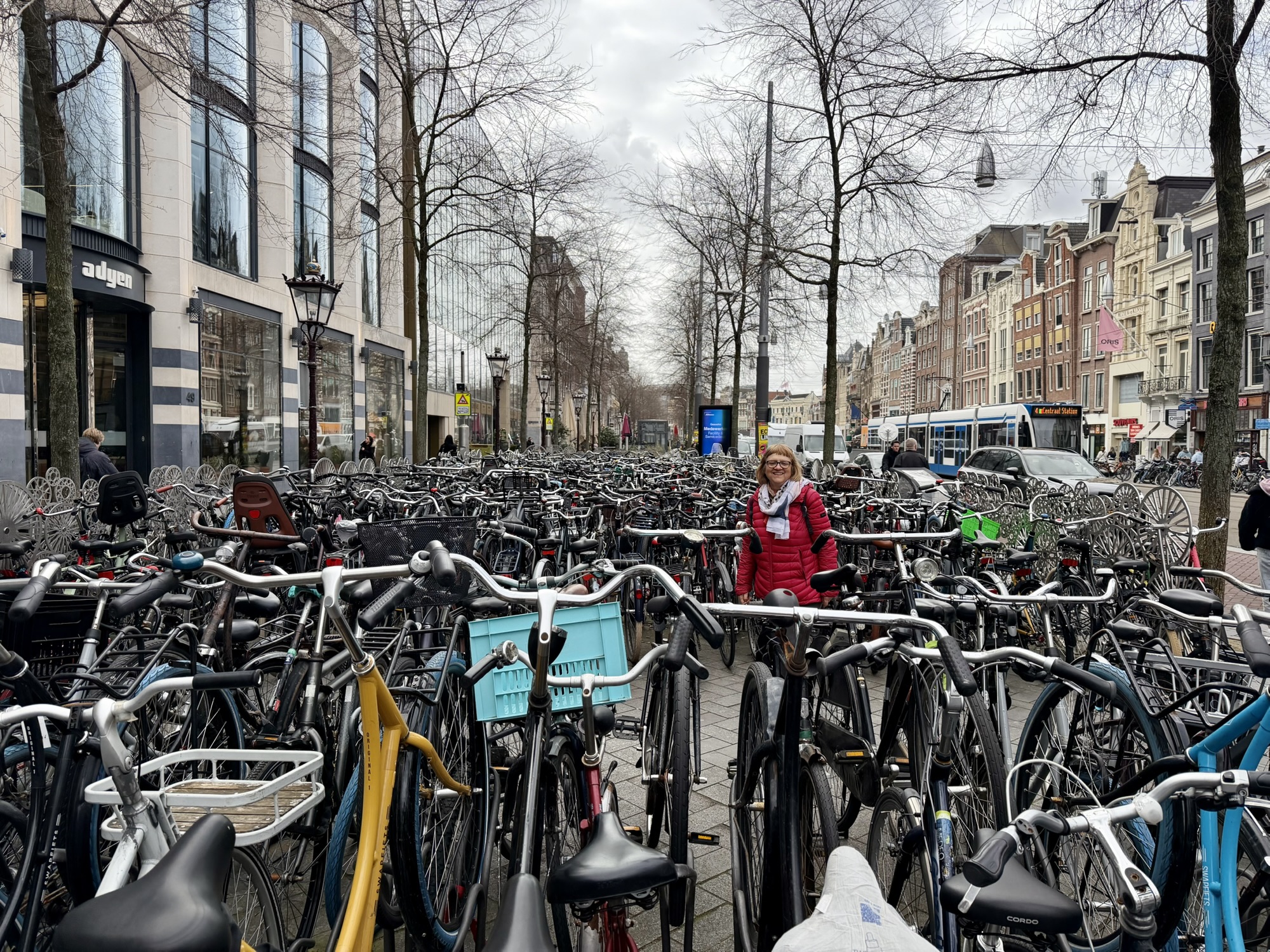
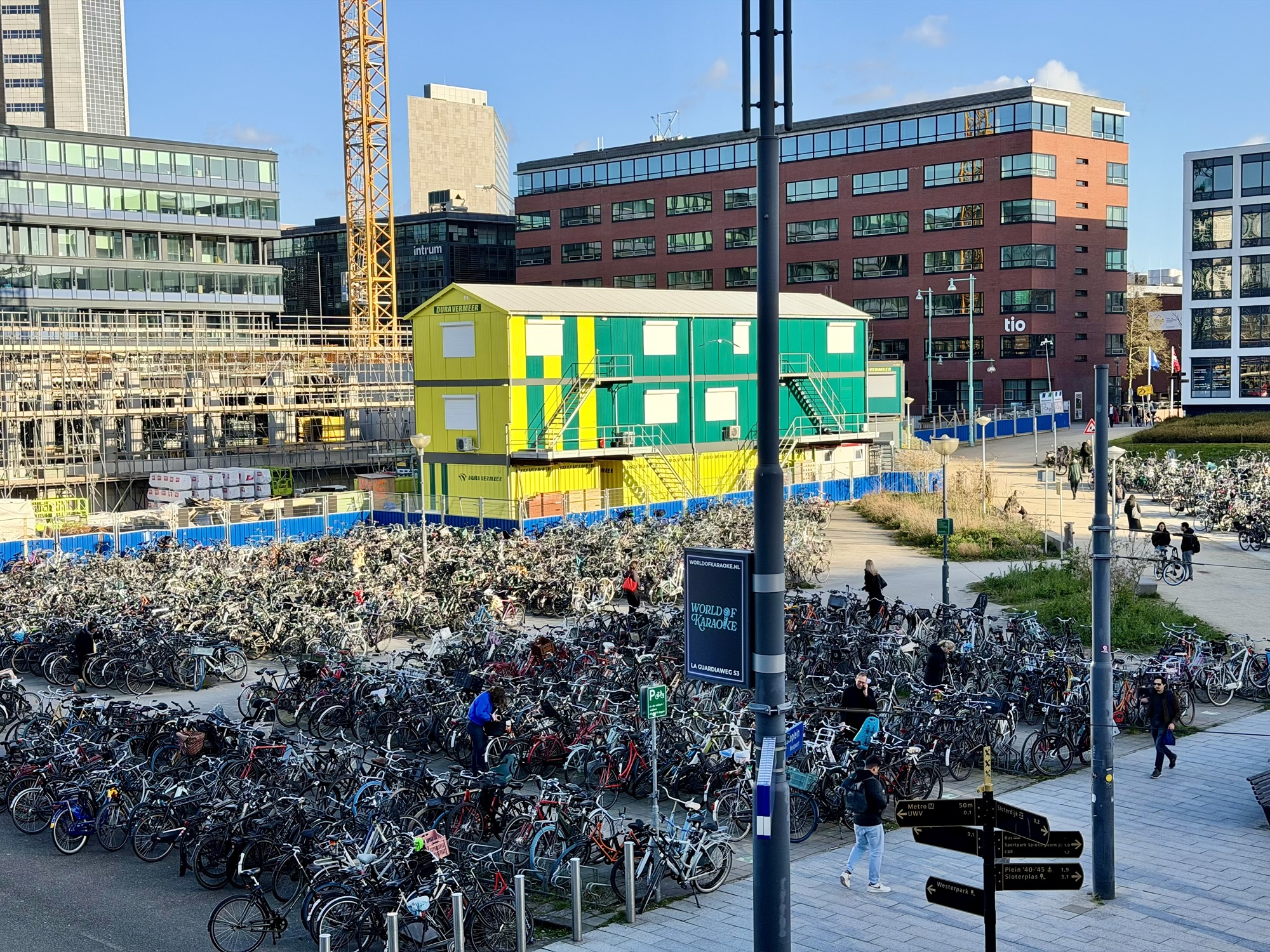
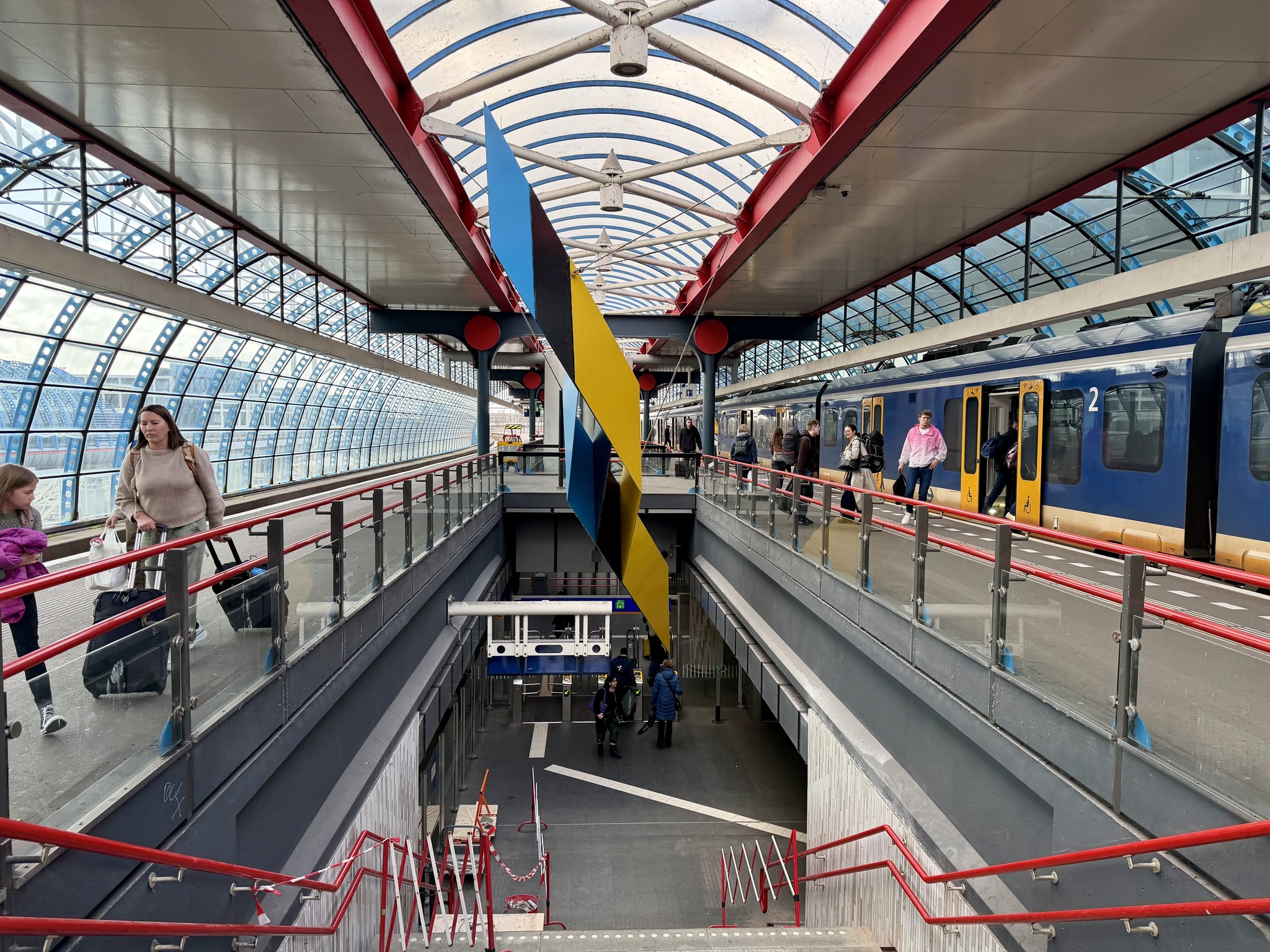
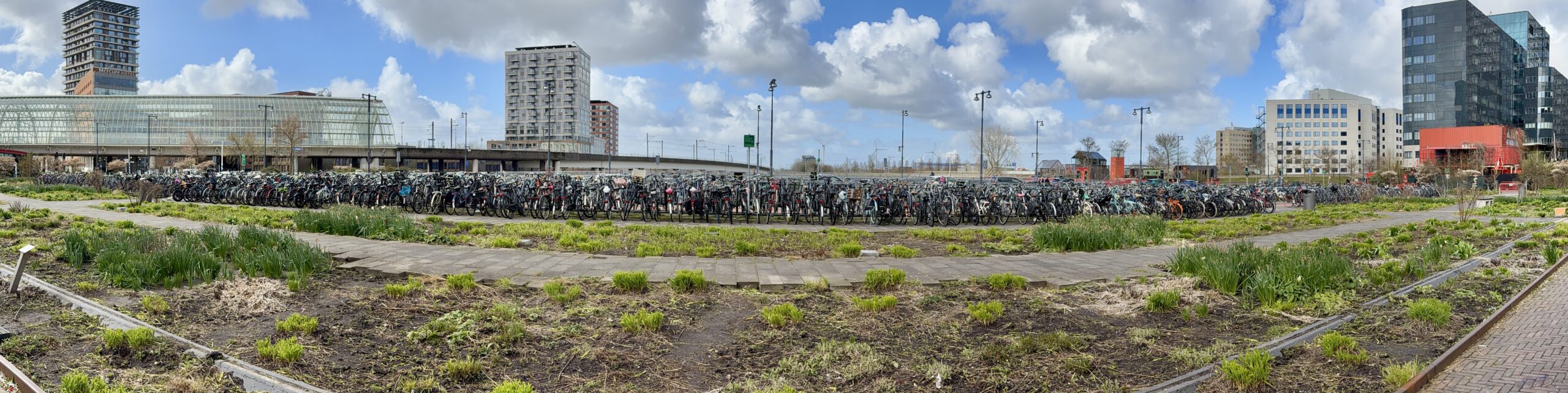
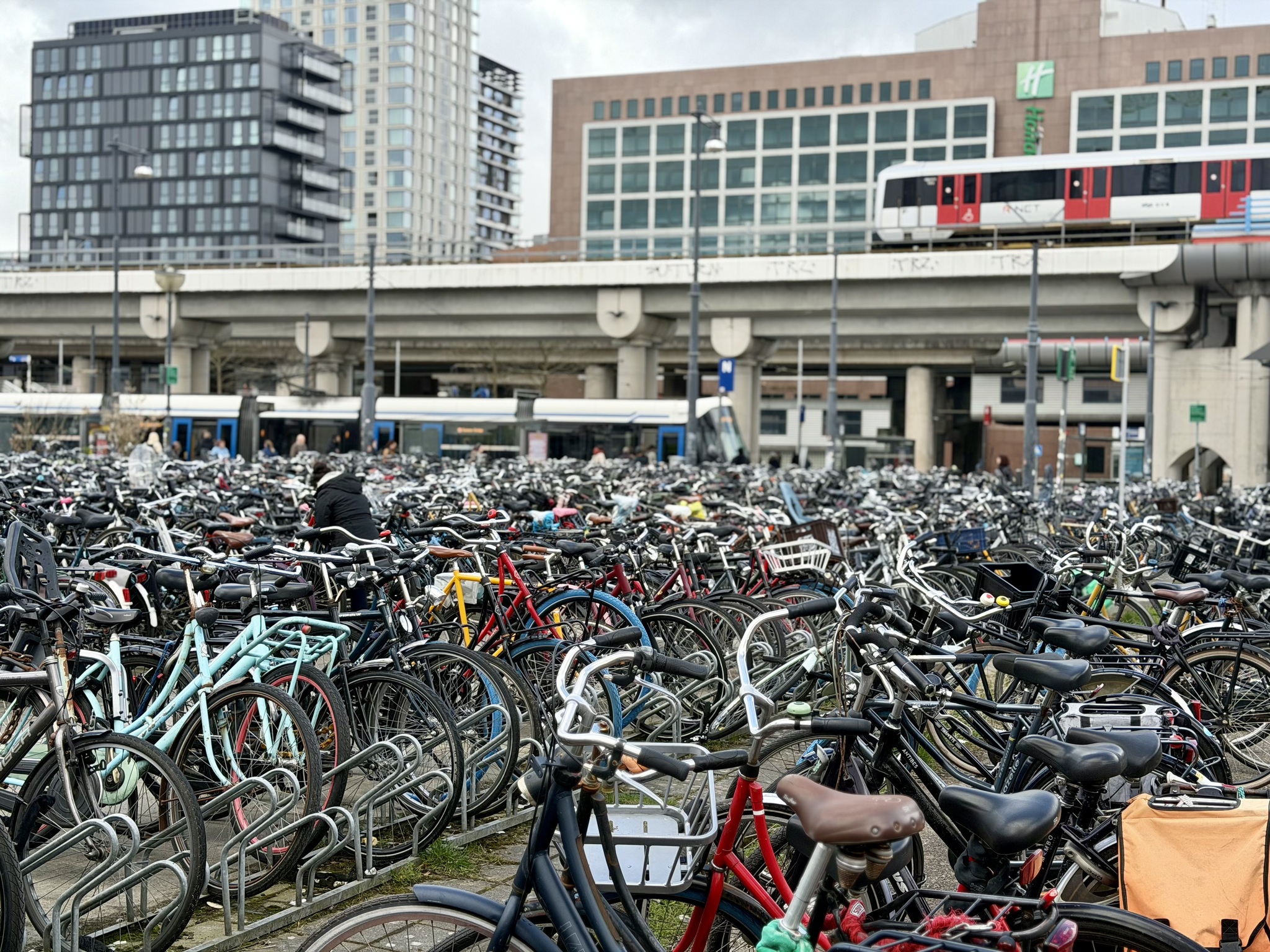
We rode two stops and emerged from Amsterdam Sloterdijk to the most incredible scene of bicycles parked. This was only one of three large bicycle parking lots at this station. This station is outside the centre of Amsterdam.

It was only a 10 minute walk to our hotel down a street which had two narrow lanes for cars, two very wide bike paths, and wide sidewalks.

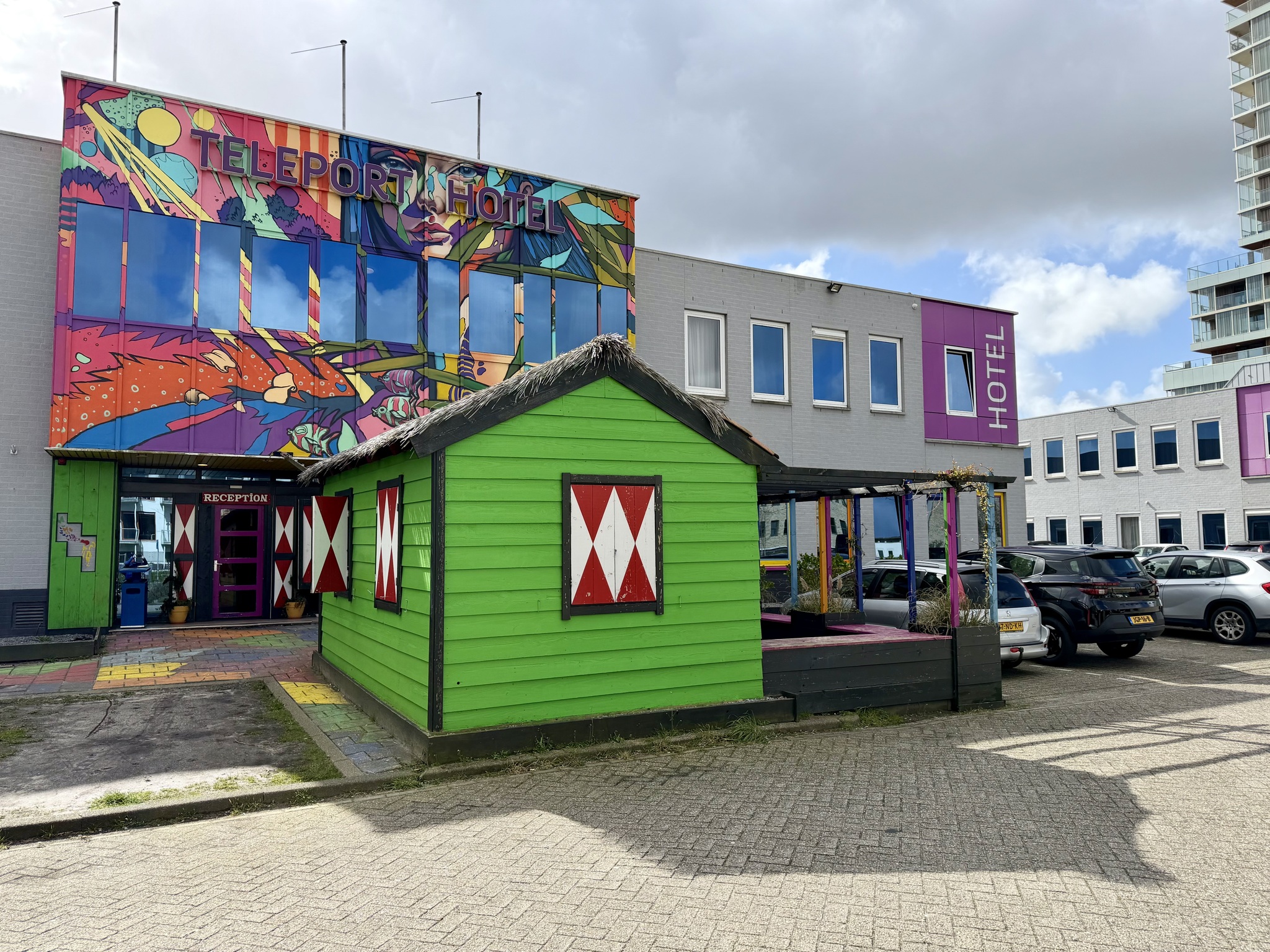
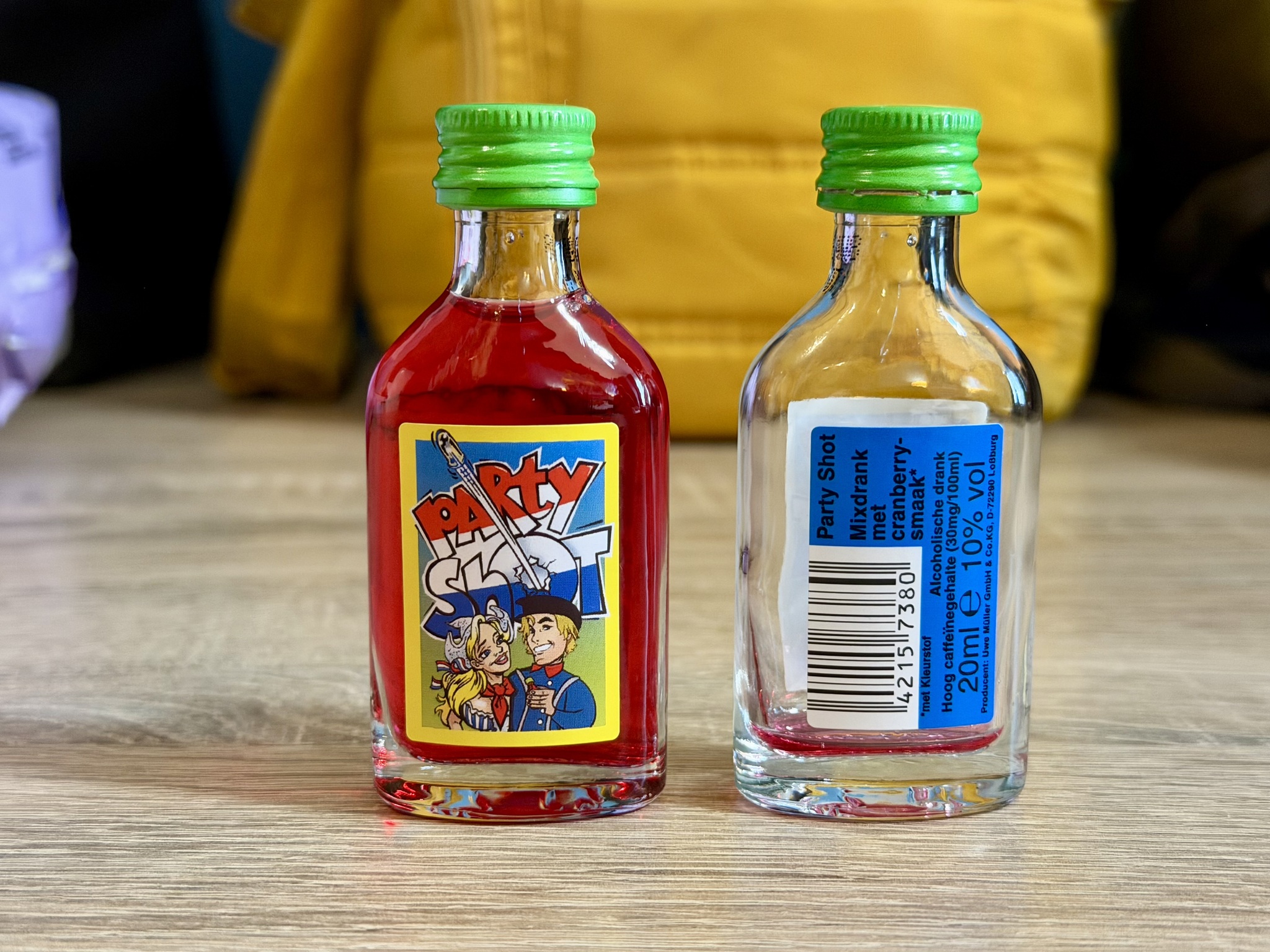
We are staying at the Teleport Hotel, a very colourful and friendly place. Everyone got a cranberry shot when we checked in. Most of the rooms were ready, but Alina and I start our suitcases in Cindy‘s room. Then we all went out to a nearby restaurant for lunch. I had a delicious brie sandwich, and everyone else seemed quite pleased with their meals, as well.

We asked the waiter if he could recommend somewhere to walk and he guided us towards  Westerpark.

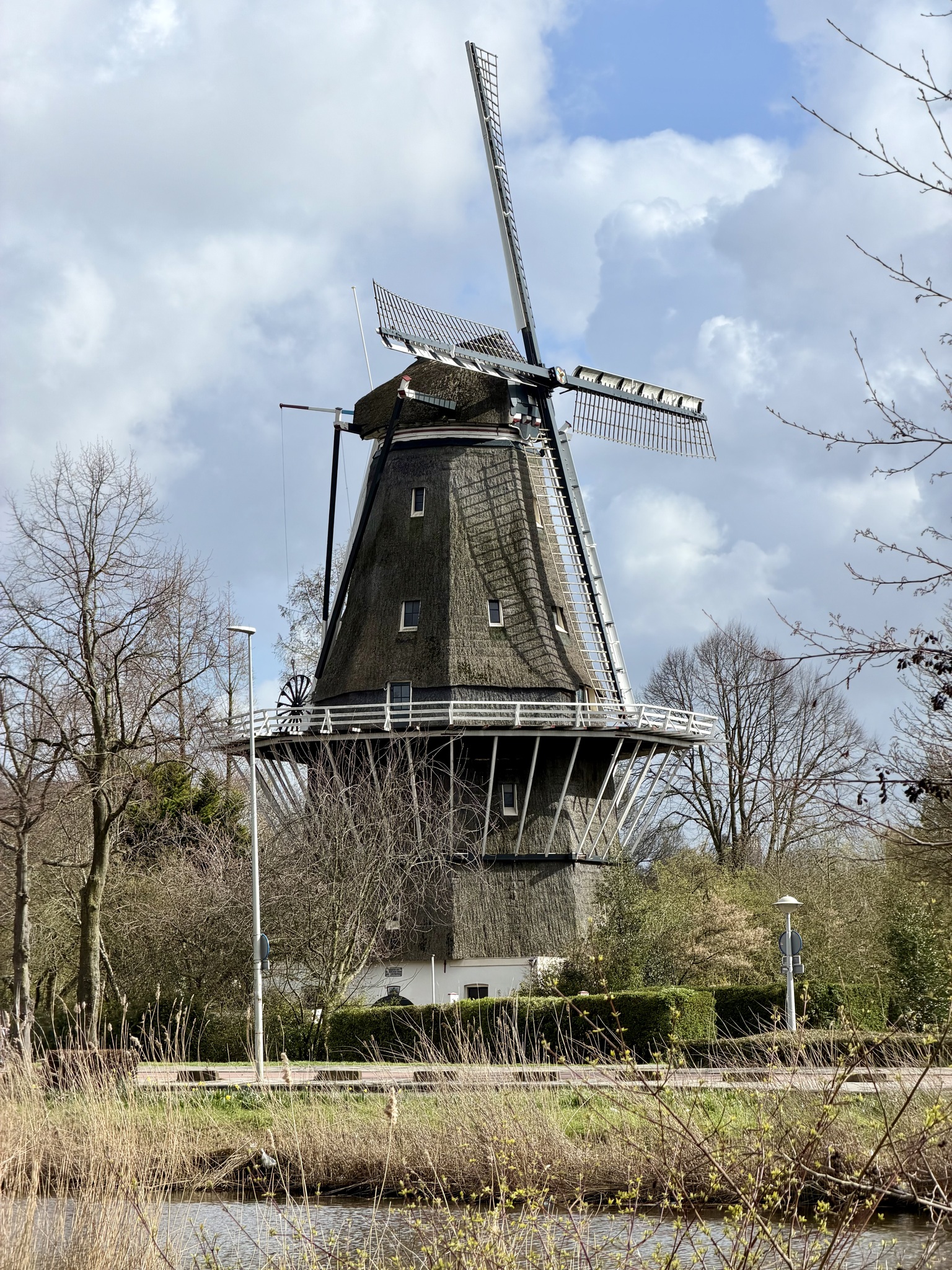
We passed quite a few midrise buildings. Traffic was separated, between cars, bikes, and pedestrians. When we got to the windmill, we turned around and walked back through Westerpark.  

Tuinpark Nut en Genoegen is a serene, gated community garden park in Amsterdam West, featuring over 200 allotment plots (volkstuinen) with small cottages along 23 gravel lanes. It serves as a recreational, non-residential green space with canals, offering city residents a place for gardening, nature, and overnight stays from April to October. 

There was car parking outside of the park. And people had wheelbarrows and bike trailers locked up for taking things from the car into the park.

As we returned, commuter, trains were running along these tracks every few minutes.

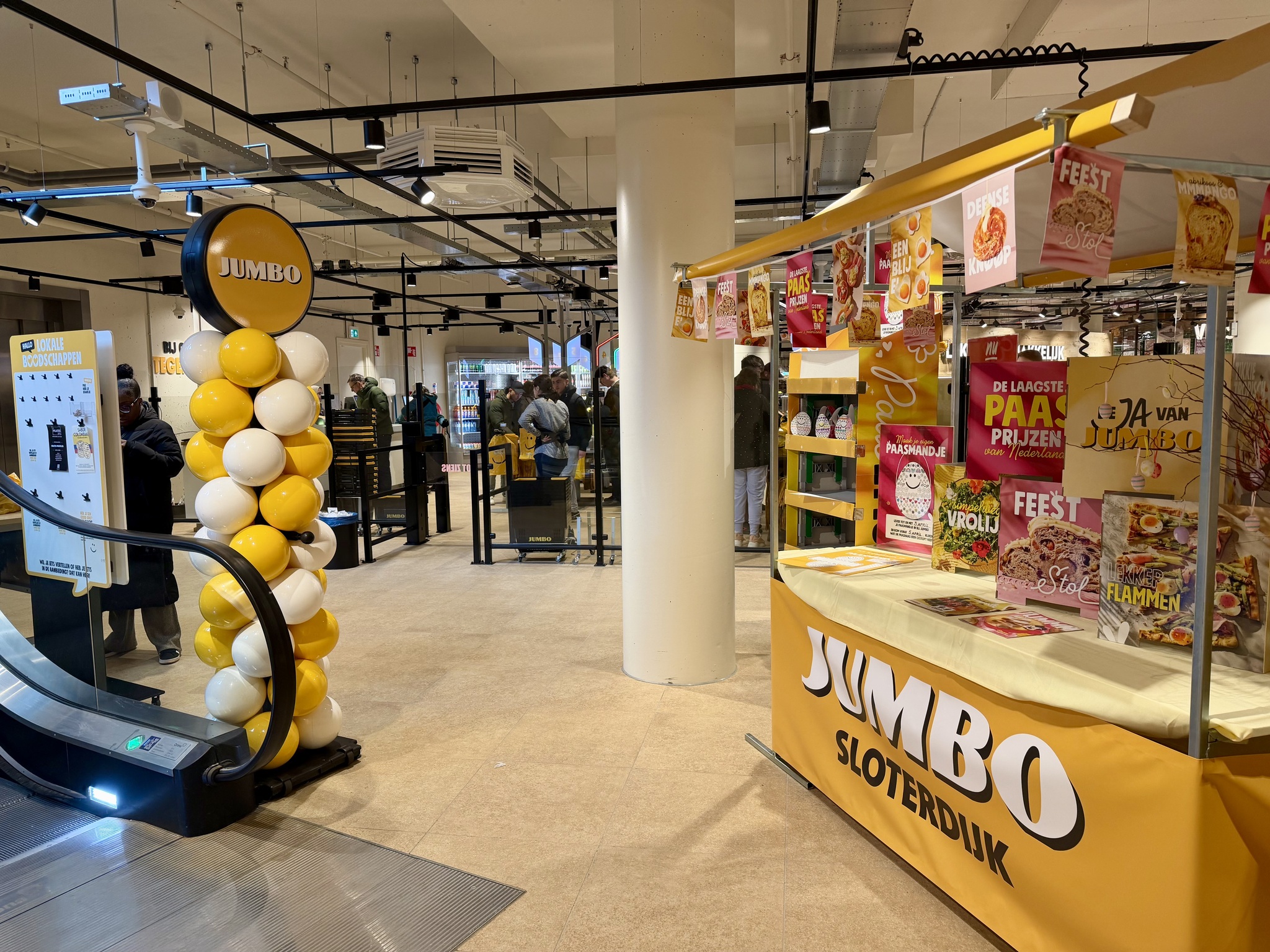
As we passed the train station, we went into jumbo, a local grocery store, and picked up things that we could eat for breakfast for the next few days.

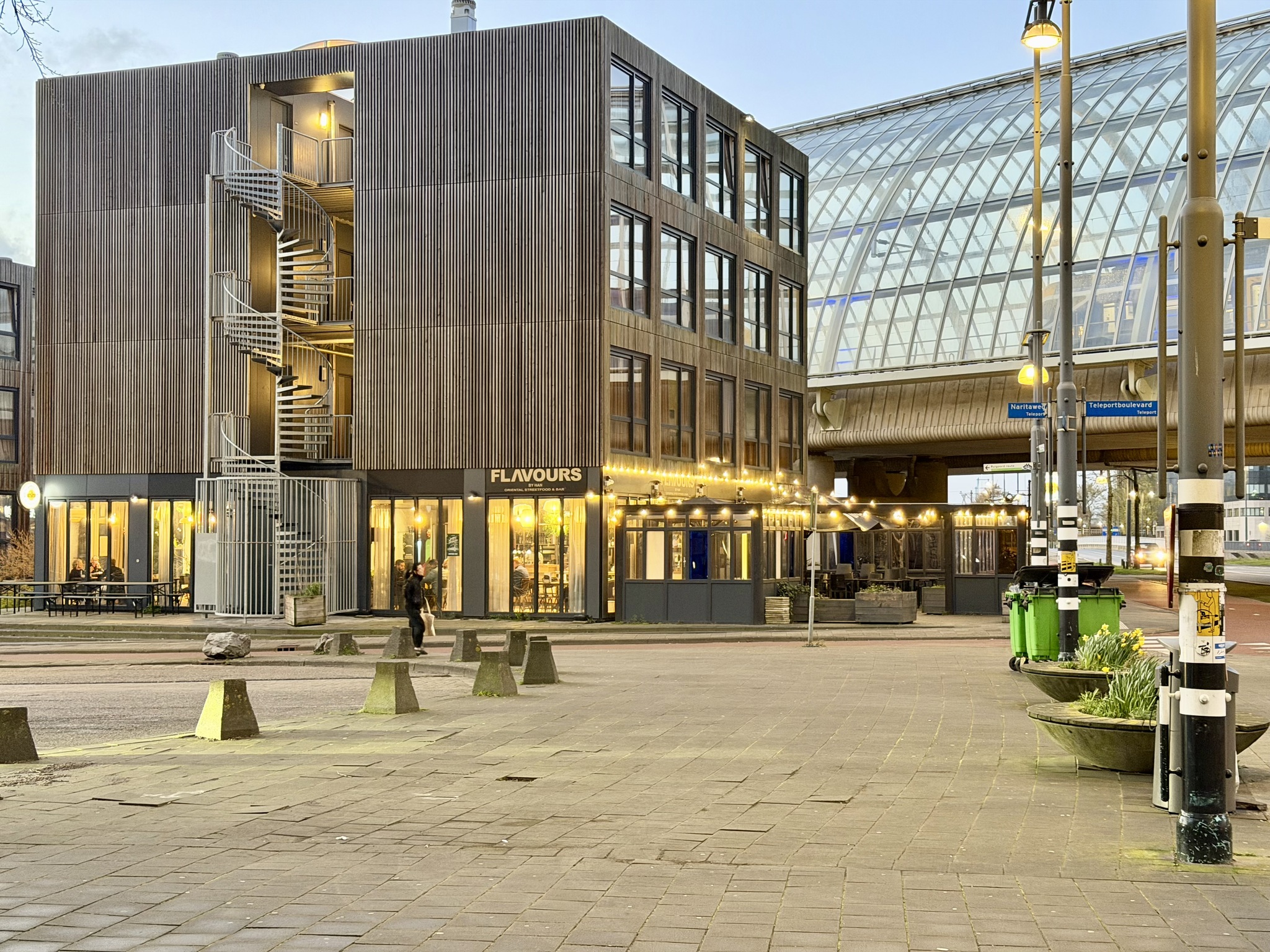
Then we went to our rooms to unpack and rest for about an hour and back out for dinner. Cindy found a delightful place called Flavours. This took us back to the train station area once again.

We stopped in the lobby of the hotel to decide on tomorrow’s plans. We decided on a relaxed start at 10, taking the train into Central Amsterdam, and visiting the Rijksmuseum, the national museum of the Netherlands dedicated to Dutch arts and history.

As I finish writing the blog at 10:30 local time, I find myself surprised not to be sleepy, yet. Fingers crossed, the three hours I transitioned my wake time over the last week, to minimize the impact of the jet lag, has been successful.

Europe 2026 – Trip Overview

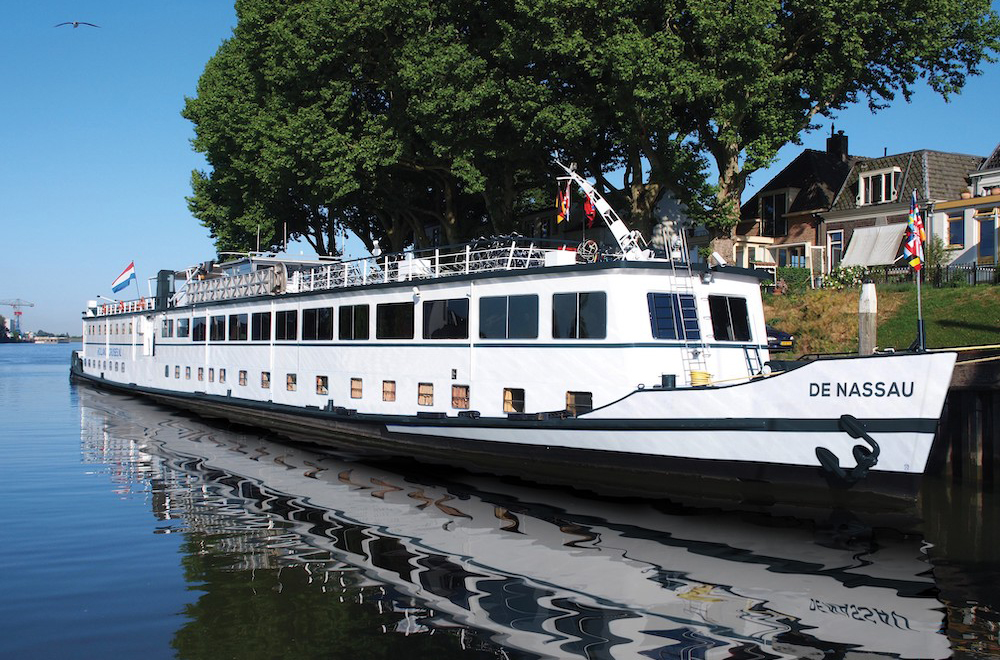
On March 30, I will be travelling to Europe for 23 days with some of my friends from BikeBrampton: David and Dayle, Cindy and Mark, Alina, and Wayne, It will be my first time travelling with Cindy’s husband Mark, and with Alina. We started planning by booking an 8 day Bike and Barge tour of the Netherlands beginning April 4. We agreed that eight days is too short a time to spend in Europe, so we built out our trip from there.

Image from tour website

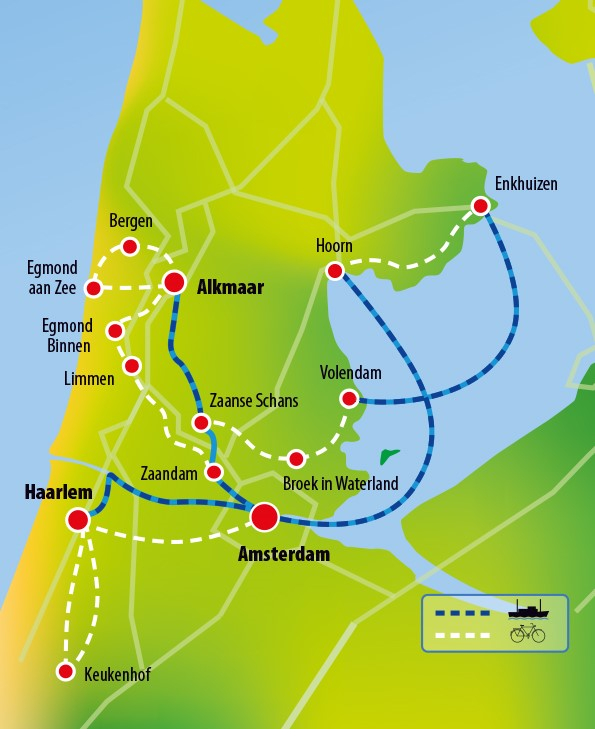
We decided to fly to Amsterdam on March 29 and spend five days in Amsterdam before boarding the barge. We will tour Amsterdam, visit the Rijsmuseum, the national museum of the Netherlands dedicated to Dutch arts and history, the Van Gogh Museum, and take a day tour to The Hague, Delft and Rotterdam. One of the cycling days on the barge part of the trip will take us to the famous Keukenhof Gardens. We have already bought our tickets to some of these places, because apparently things fill up quickly.

This image from the tour website shows the path of the barge in blue, and the routes we will be cycling in white. The tour operator has created an “Experience” in RidewithGPS. We can access it with a code to add it to our RidewithGPS account. This allows us to view the routes we will be riding. It also provides for voice navigation while riding. There were trips available with a ride leader for an additional cost, but we all agreed we prefer the self-guided option.

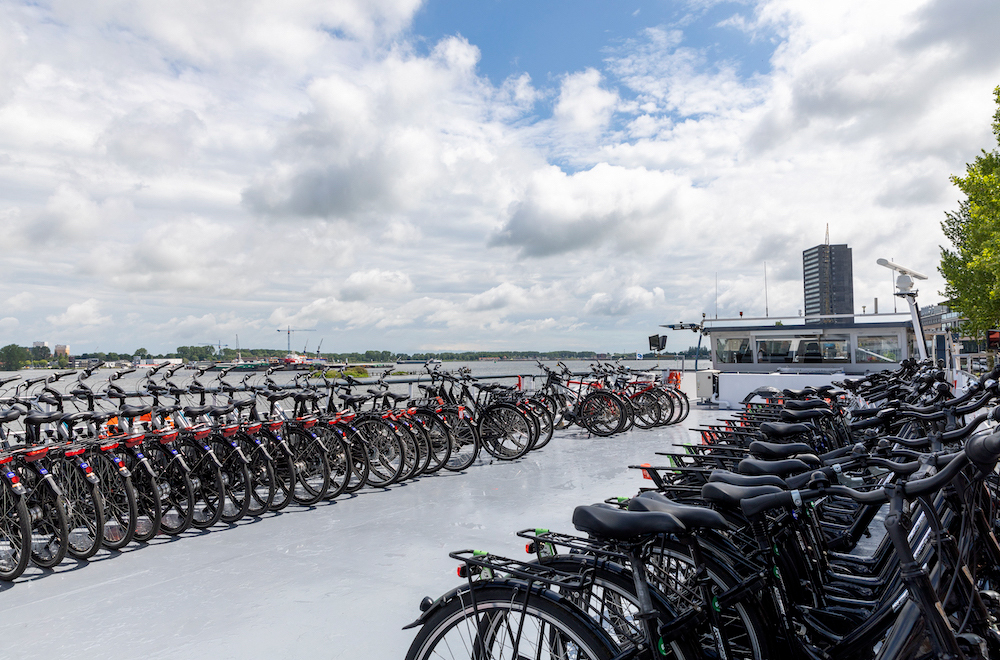
Image from tour website

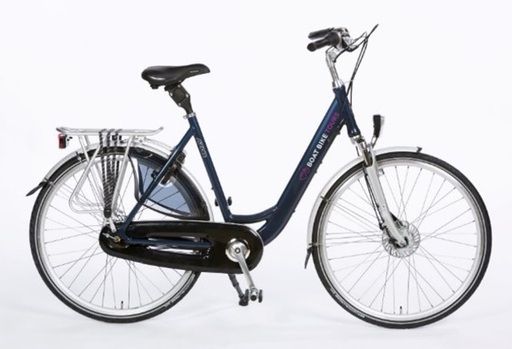
This is a picture of the bikes we will be riding. E bikes are available, but we chose acoustic.

Image from tour website

David and Dayle, and Wayne will be returning to Canada a day after the cruise. Cindy and Mark will continue to explore the Netherlands and Belgium for another week. Alina is from Wroclaw, Poland, and has an apartment there. She and I will be flying there after the cruise. We will spend five days exploring the area, and then take a train to Berlin where we will stay for three days. We will return overnight to Amsterdam on the European Sleeper, and fly home that evening.

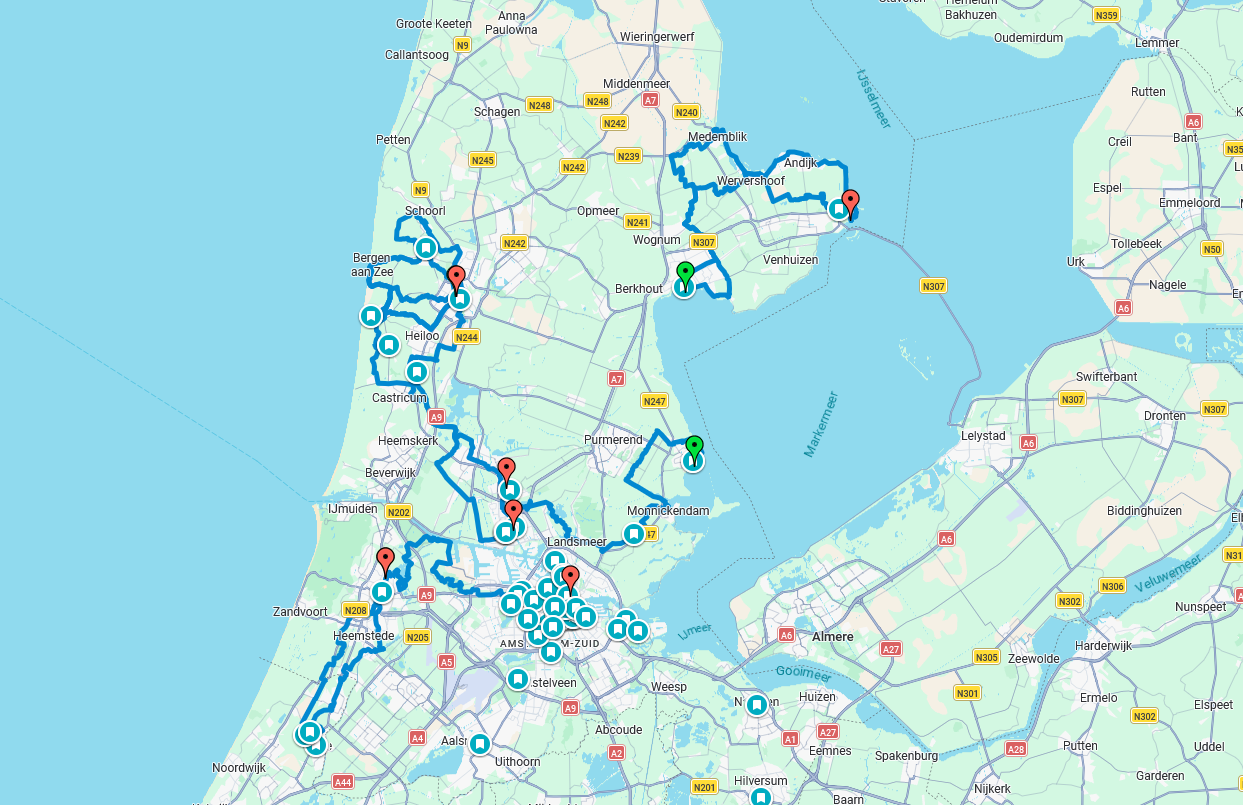
I have been creating lists in Google Maps of places I am interested in visiting. I have one for each of Amsterdam, The Netherlands, Wroclaw and Berlin. I uploaded the cycling routes from the RidewithGPS Experience to Google MyMaps so that I can see the proximity of the places in my lists to the routes we will be cycling.

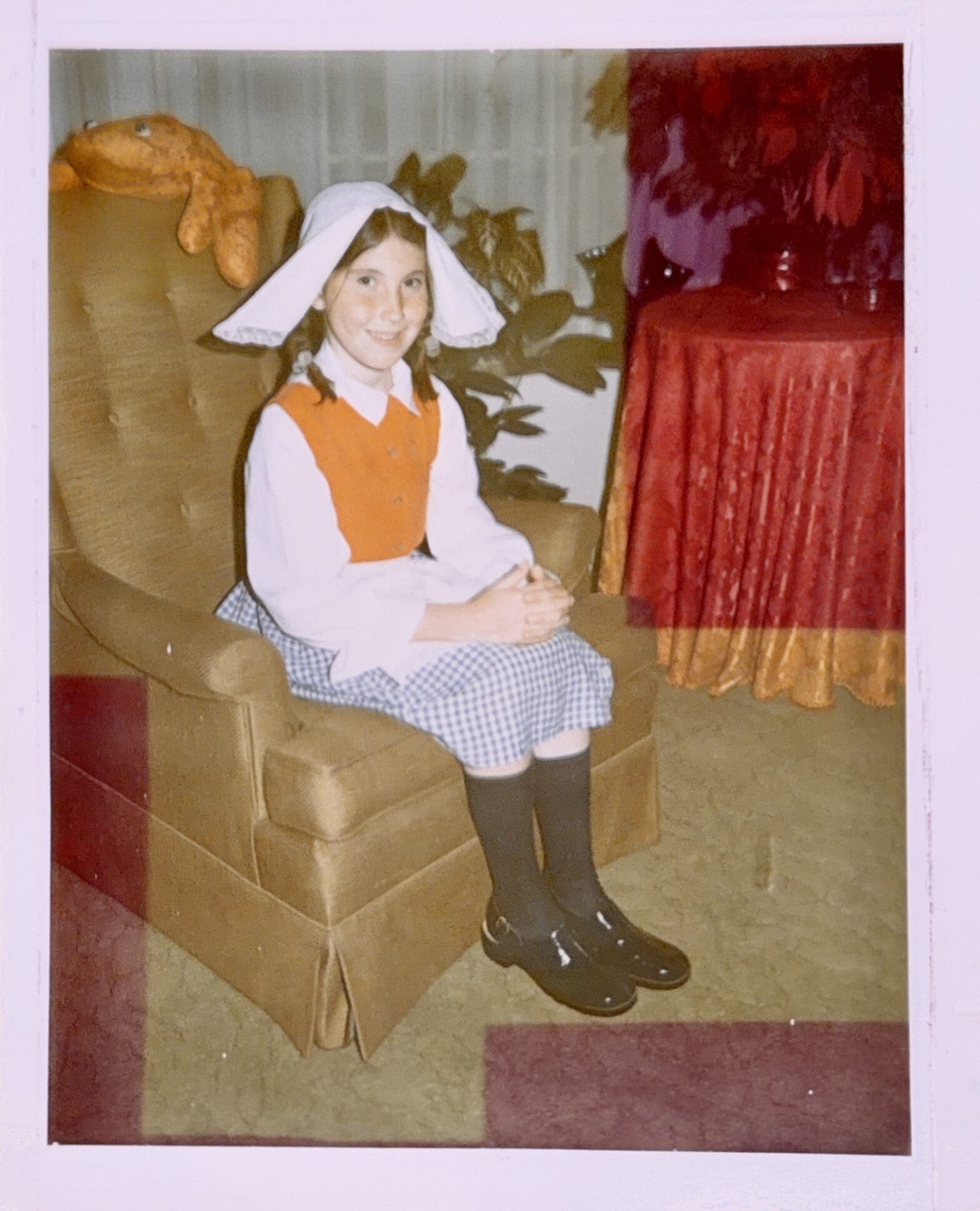
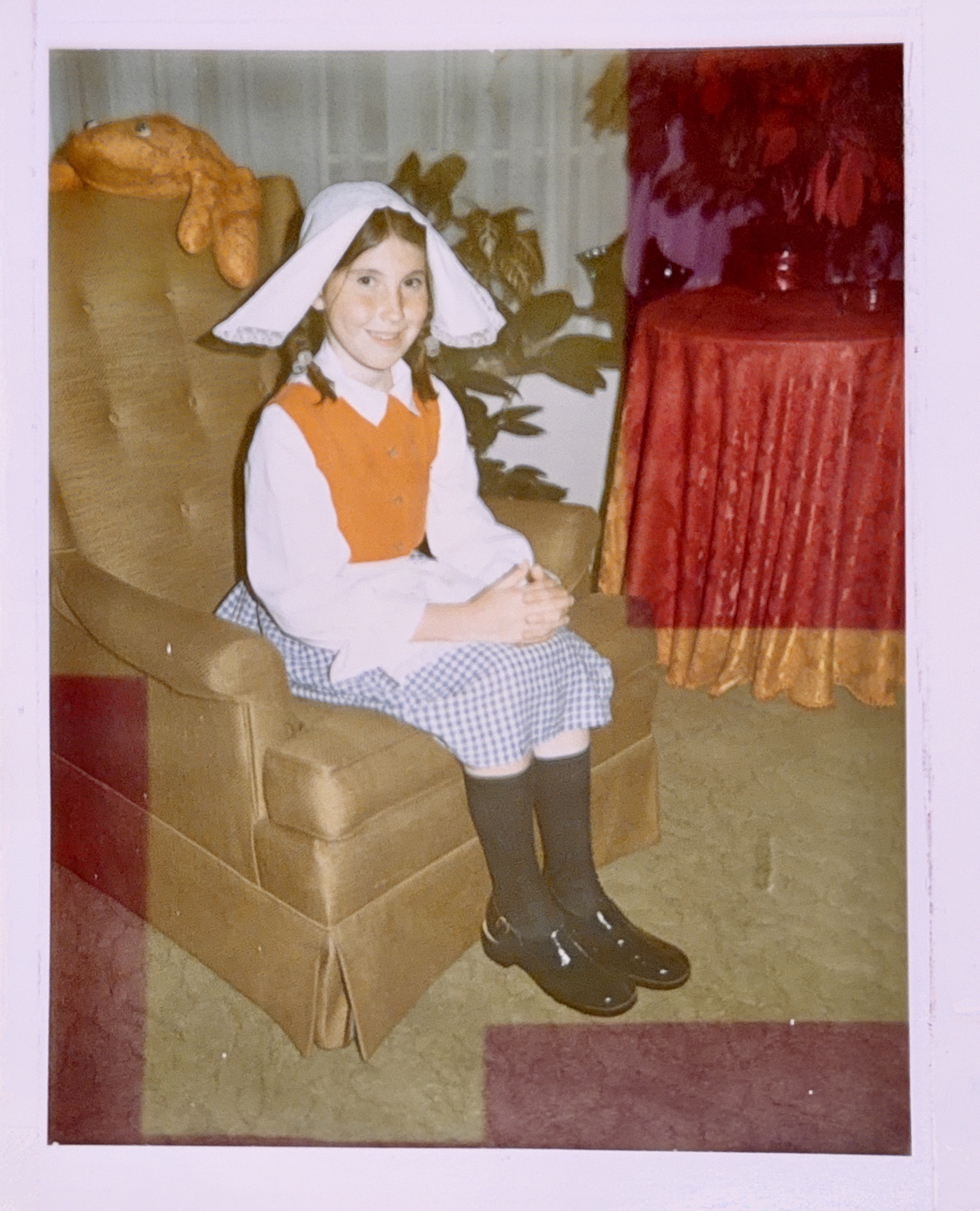
I have not visited the Netherlands, Poland, or Germany before. I do have Dutch roots. My maiden name is Van Velzer. My Halloween costume about 50 years ago was “Dutch girl”. We are counting down the days until we leave, and trying to plan as much as possible ahead of our departure, so that we maximize our time in Europe.

Bike and Barge Itinerary

The following descriptions are taken verbatim from the tour website

Day 1: Amsterdam – Hoorn

At 1.30pm, the crew welcomes you on the ship and checks you in. After a safety briefing, the ship will head out towards the IJsselmeer. Our first destination is Hoorn.

Day 2: Hoorn – Enkhuizen (40 km/25 mi. or 50 km/31 mi.)

While the exact field locations shift every year, the “West-Frisian” area is known for being the second biggest tulip region in the Netherlands. We’ve planned two different bike routes through the fields for you to choose from. Due to the semi-guided concept on this tour, you can cycle at your own pace and stop for photos as often as you’d like.

Day 3: Enkhuizen – Volendam | Volendam – Zaanse Schans (50 km/31 mi) | Zaanse Schans – Alkmaar

Early in the morning, your floating hotel will set off to take you to the famous village of Volendam. This is where today’s bike ride will start. You’ll cycle through “Waterland,” just north of Amsterdam. Hundreds of small canals and plenty of bridges make up the landscape as you cycle from one picturesque village to the next. The cycling tour ends at Zaanse Schans, an old Dutch village with beautiful windmills, still in use, and traditional wooden houses. There, you can visit artisans like a cheesemaker and a clog maker. Yet Zaanse Schans is more than just an open-air museum, because the people you see are actual inhabitants! Around dinnertime, your cruise continues on to Alkmaar.

Day 4: Alkmaar – Alkmaar (33 km/21 mi. or 50 km/31 mi.)

Today’s bike tour brings you to lovely tulip fields north of Alkmaar, then to seaside resort Egmond aan Zee, pleasantly situated in the dunes near the North Sea. The sandy beach is one of the most beautiful of the Netherlands and great for a walk, a swim or simply for enjoying the view. Close by, the pretty artists’ village of Bergen is definitely worth a visit. Both Egmond aan Zee and Bergen are close to the North Holland Dune Reserve, a 5,300-hectare (2.5 square miles) forest and dune area with unique landscapes. Return to the ship in Alkmaar for dinner.

Day 5: Alkmaar – Zaandam (38 km/24 mi. or 47 km/29 mi.) | Zaandam – Haarlem

This morning you cycle to Egmond-Binnen and then to Limmen. In this village you’ll visit the Hortus Bulborum, a unique garden museum dedicated to the preservation of rare and historic bulbs. Some of the over 3,500 tulips, daffodils, hyacinths and other flowers planted here are nearly extinct in the rest of the world. Your cycling tour continues through colorful tulip fields and brings you to Zaandam. The ship will be waiting for you to take you to Haarlem on a leisurely afternoon cruise. It will dock for the night within walking distance of the city center. Grab the chance to visit the exceptionally beautiful historical inner city at the end of the afternoon or after dinner. The Grote Markt (central market square) and St. Bavo church are impressive indeed.

Day 6: Haarlem – Keukenhof – Haarlem (49 km/30 mi.)

Today’s trip leads you through the oldest tulip fields of Holland to the Keukenhof Gardens. This flower bulb park is an overwhelming blaze of colors with seven million flowering tulips in a magnificent 80-acre setting of traditional and modern garden architecture. You can also revel in the beauty and fragrances of various hyacinths, daffodils and many other colorful flowers. In the afternoon you’ll cycle back to the ship in Haarlem. (Keukenhof tickets not included. You can book them directly online at the Keukenhof, time slot from 11 – 11.30 am. The bike ride from Haarlem to the Keukenhof is about 25 km.)

Day 7: Haarlem – Amsterdam (31 km/19 mi. or 36 km/22 mi.)

Your last bike tour brings you back to Amsterdam. You’ll enter the city from the west through a pleasant green area. You can use the afternoon to discover more of this amazing city: visit the inner-city flower market, go to the Vondelpark, enjoy a museum, or just look at life in this city that never sleeps. There is something interesting to do for everyone. For those who want to do an end-of-day canal tour, we offer tickets at a reduced price.

Day 8: Amsterdam

End of your tour. Enjoy a good breakfast before disembarkation by 9.30 am.

Montreal and Véloroute Gourmande – Days 11, 12 & Cost

Day 11 – Exploring Montreal

Dayle decided to take another rest day, and David accompanied Cindy and me. I planned a 31km ride around food and parks.

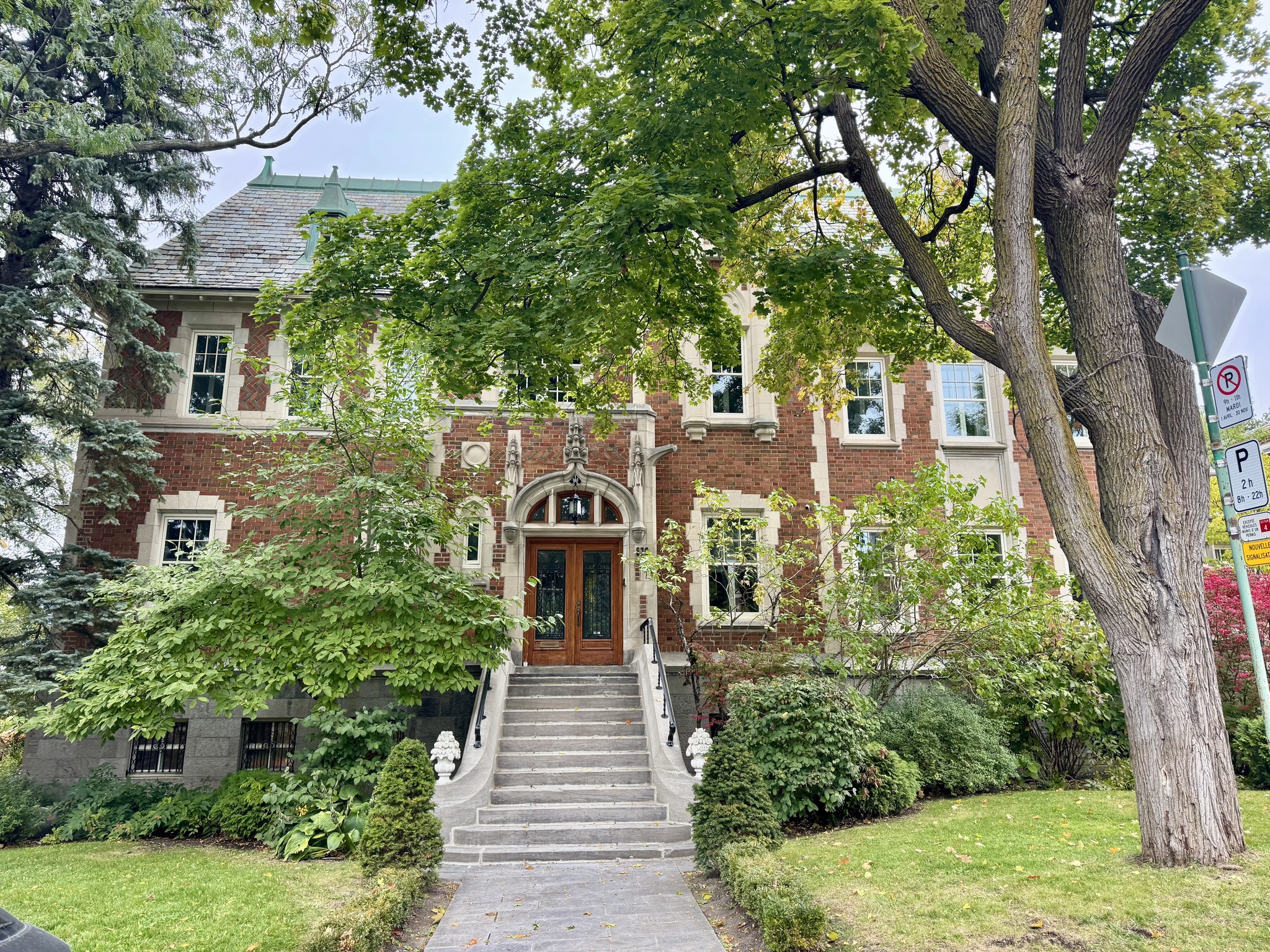
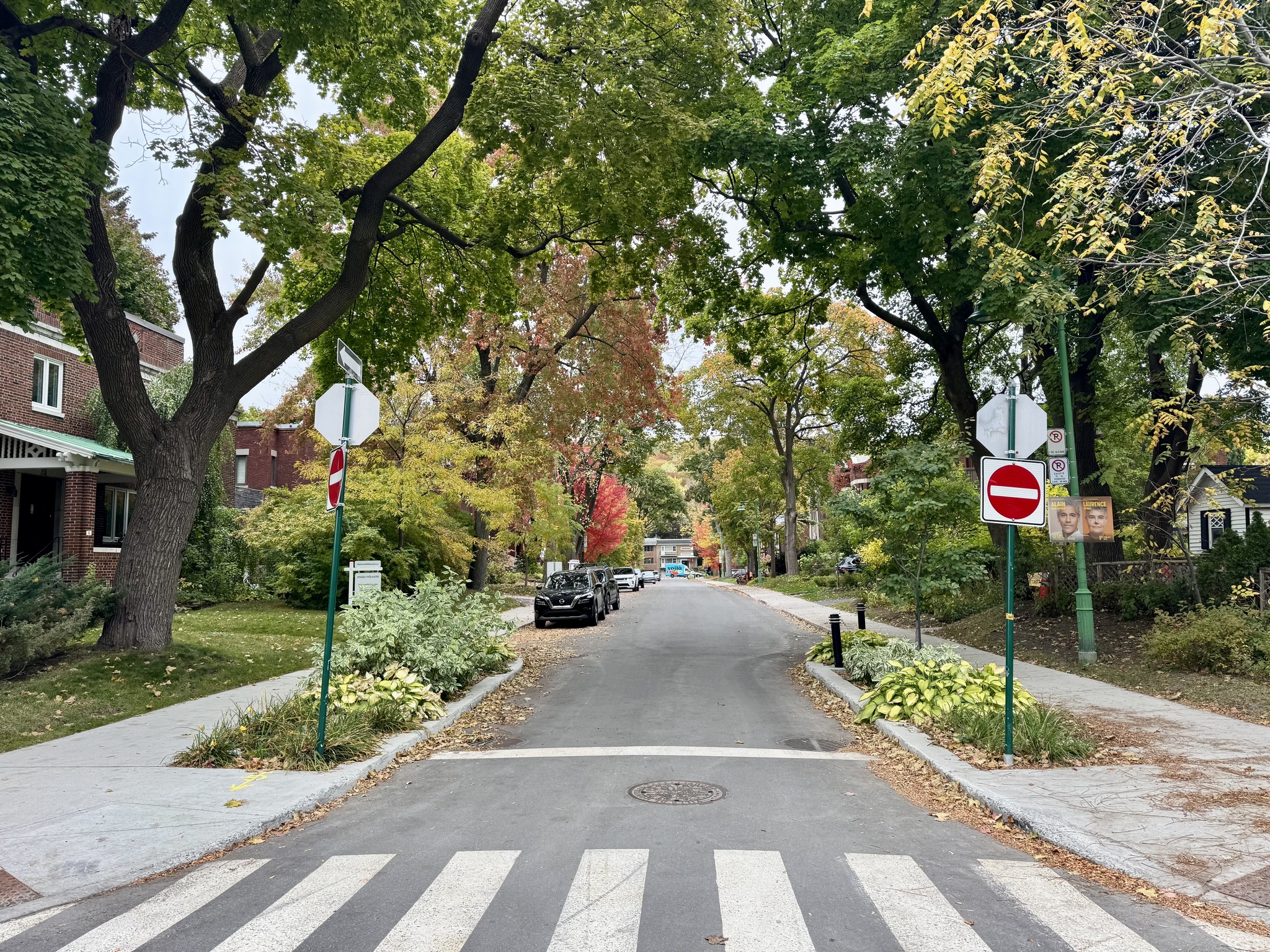
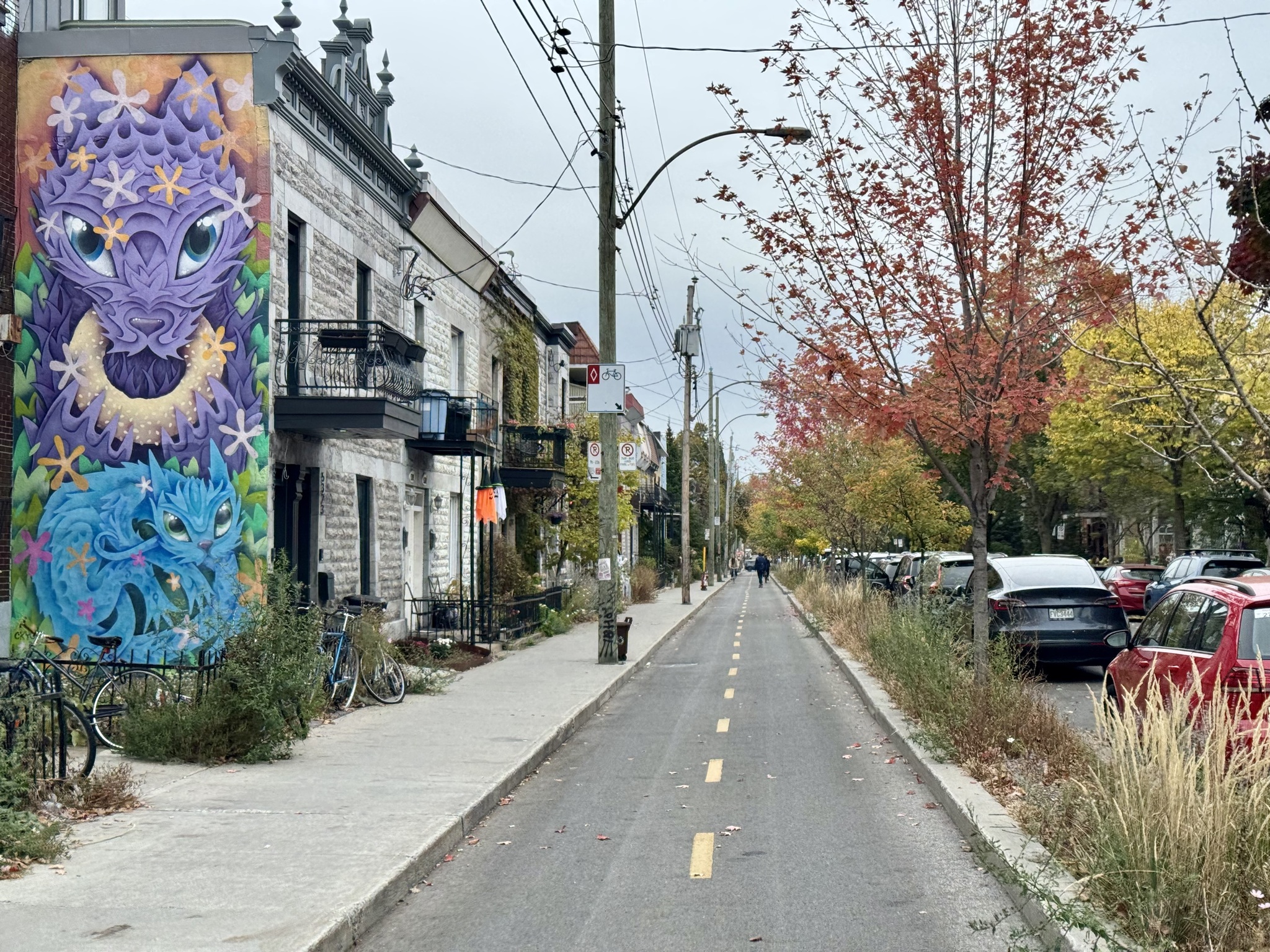
We cycled around Mont-Royal through Outremont, past beautiful homes and traffic calmed streets. 

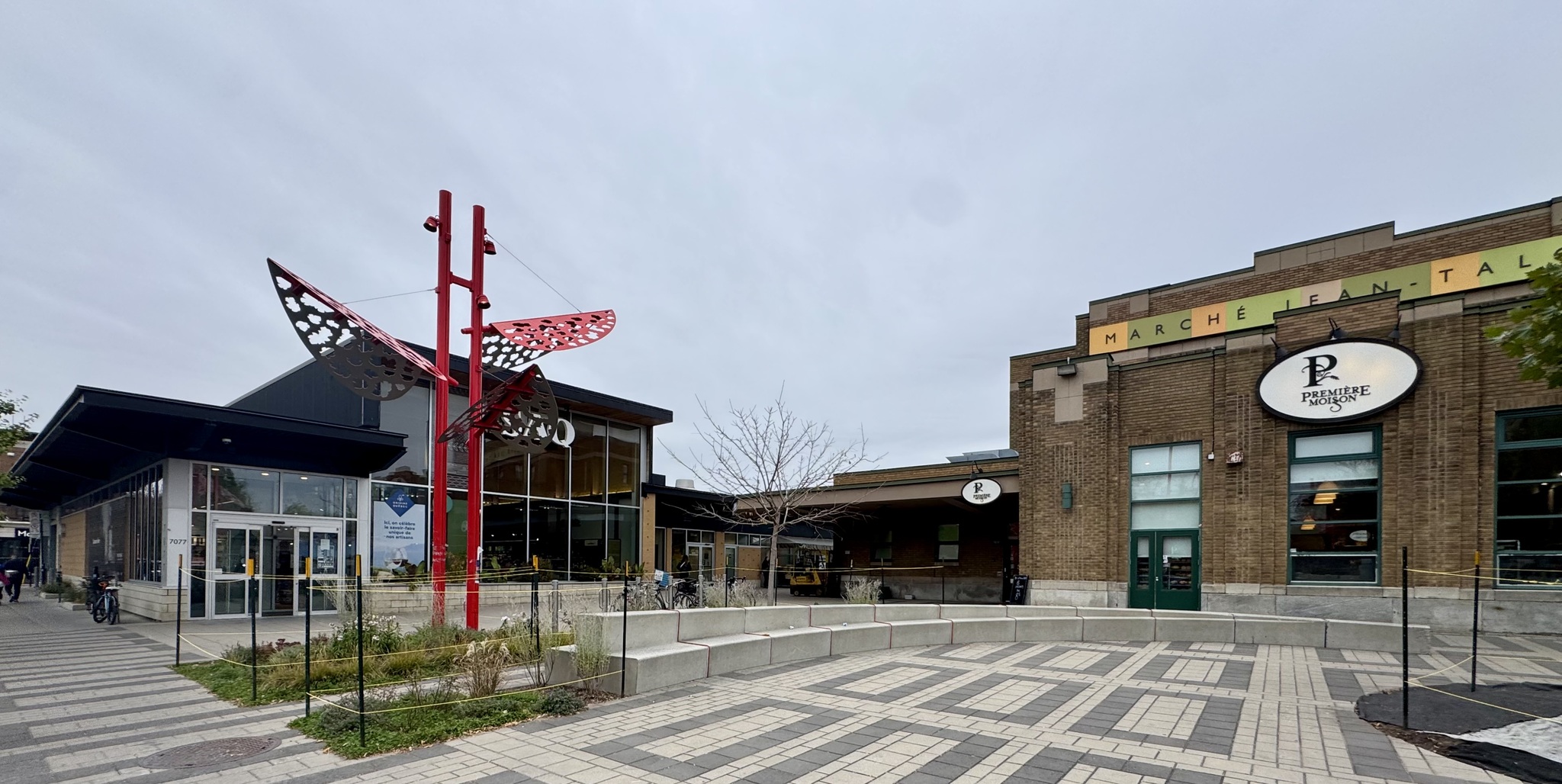
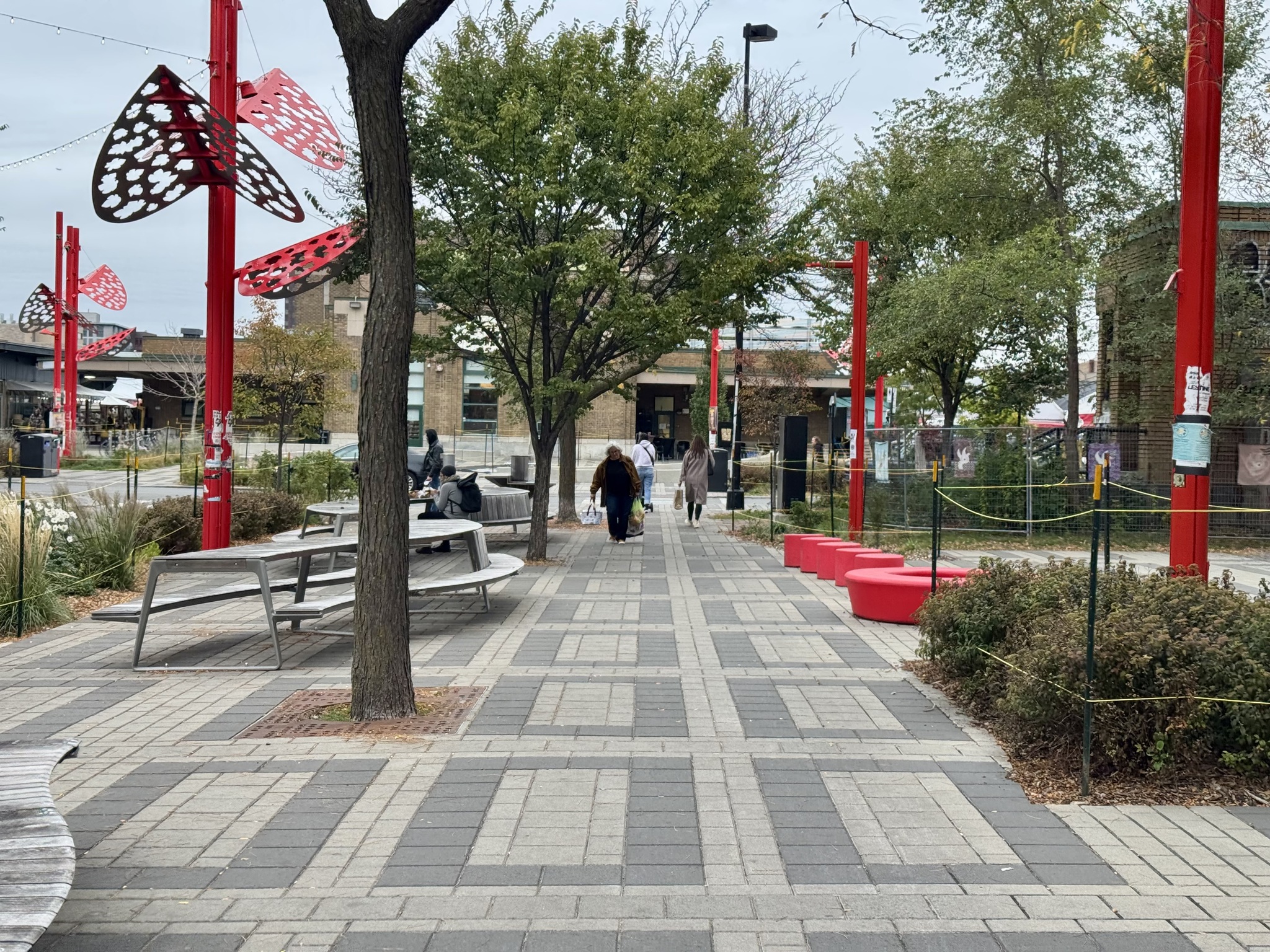
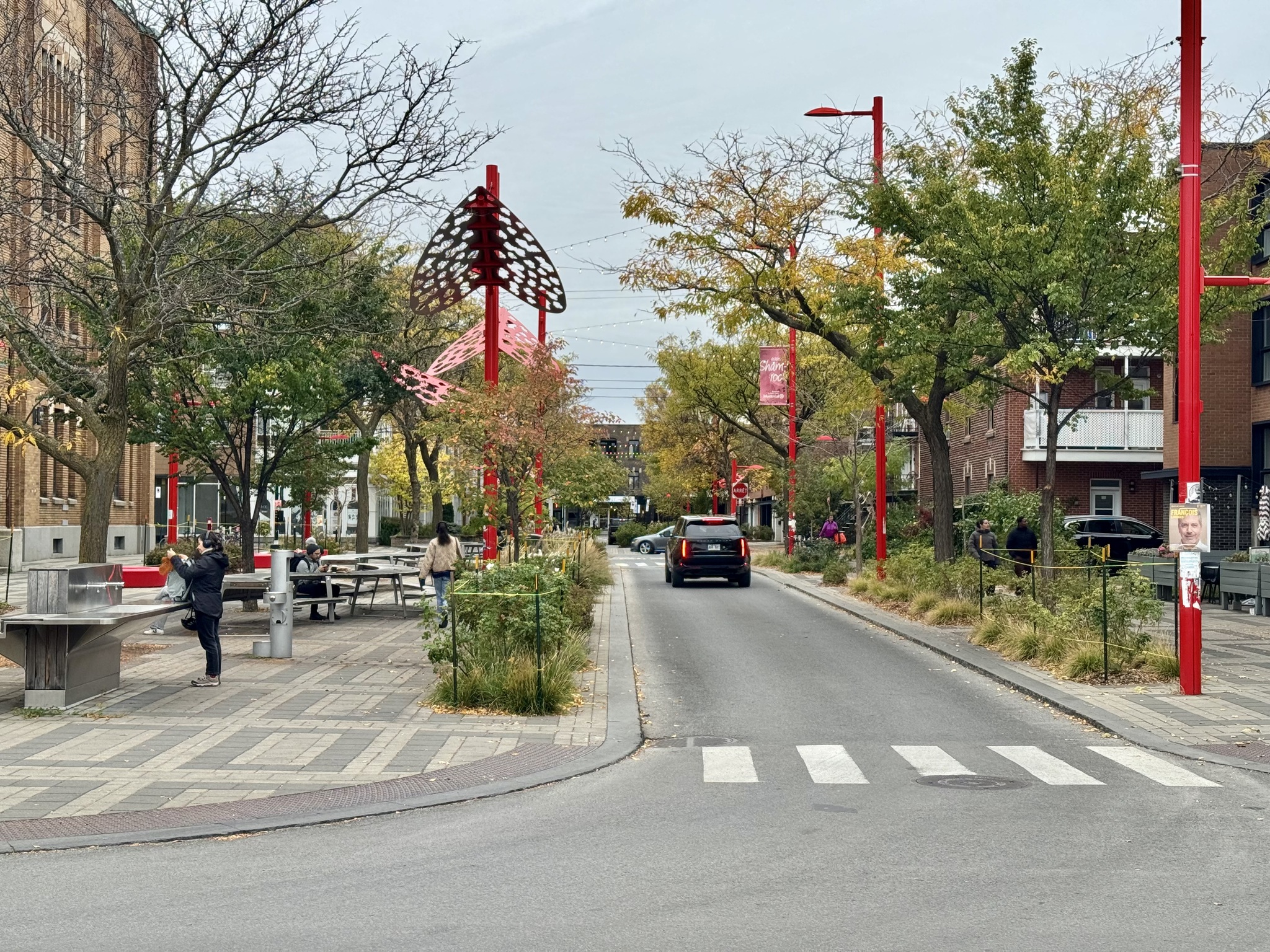
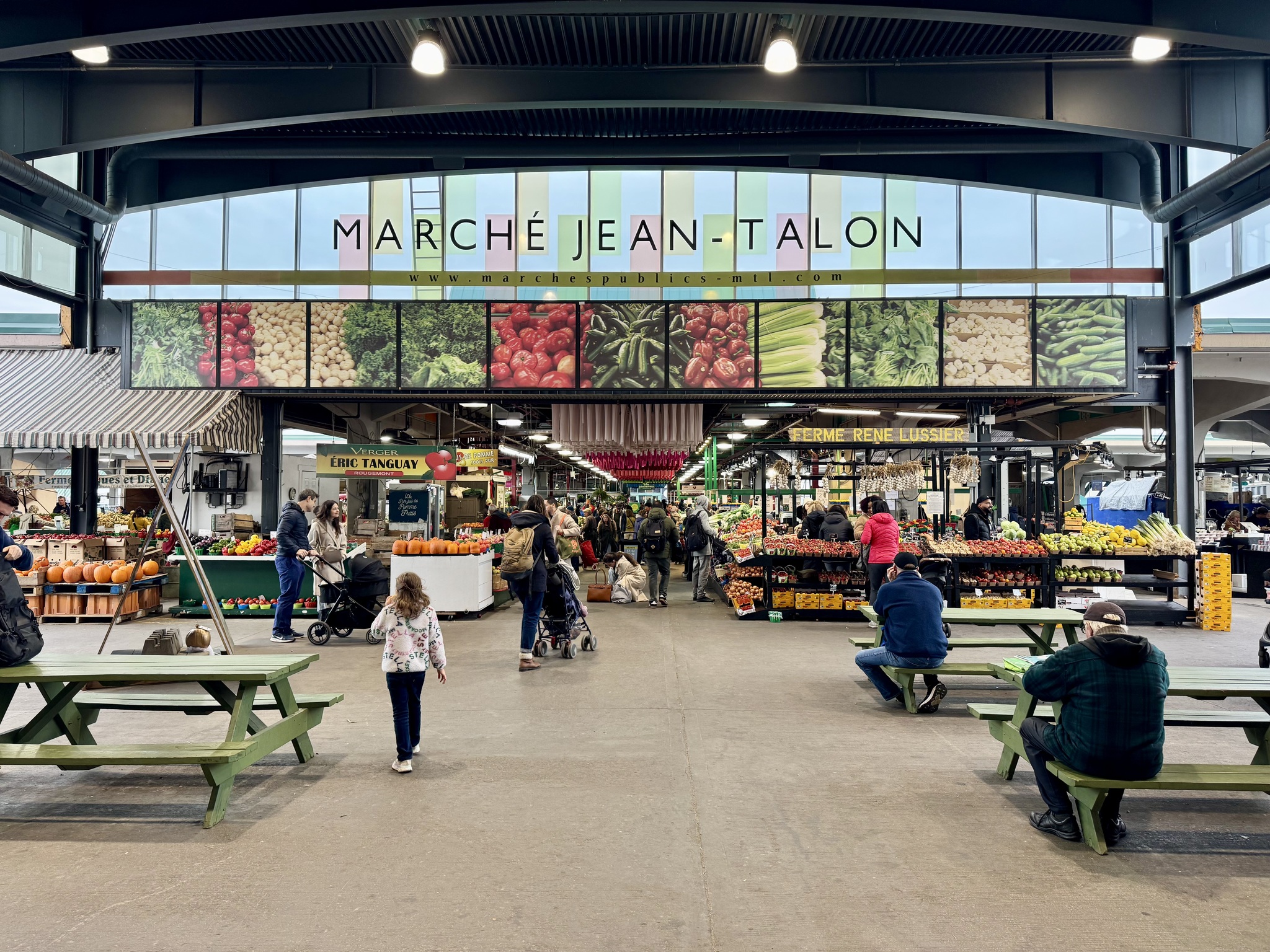
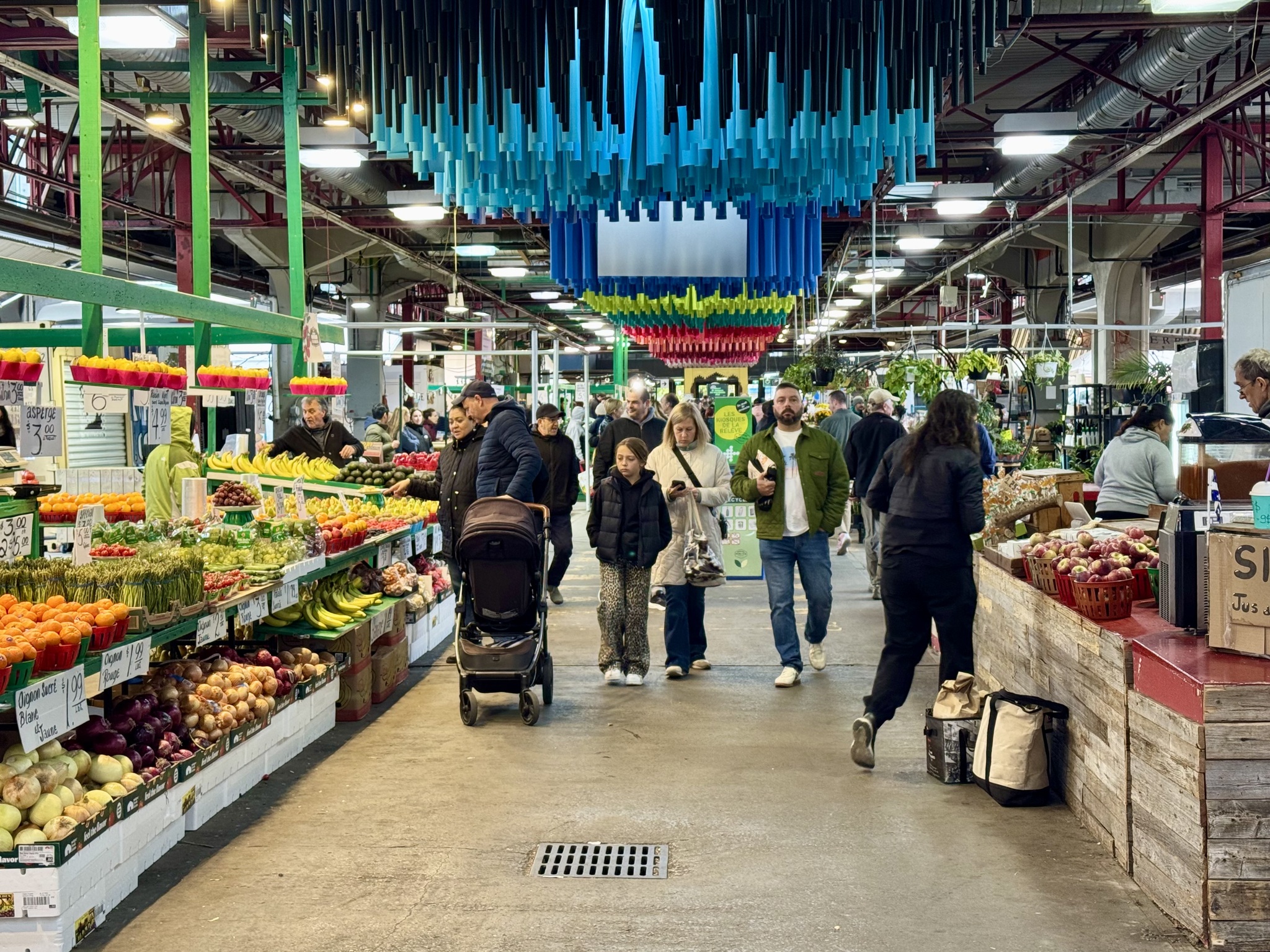
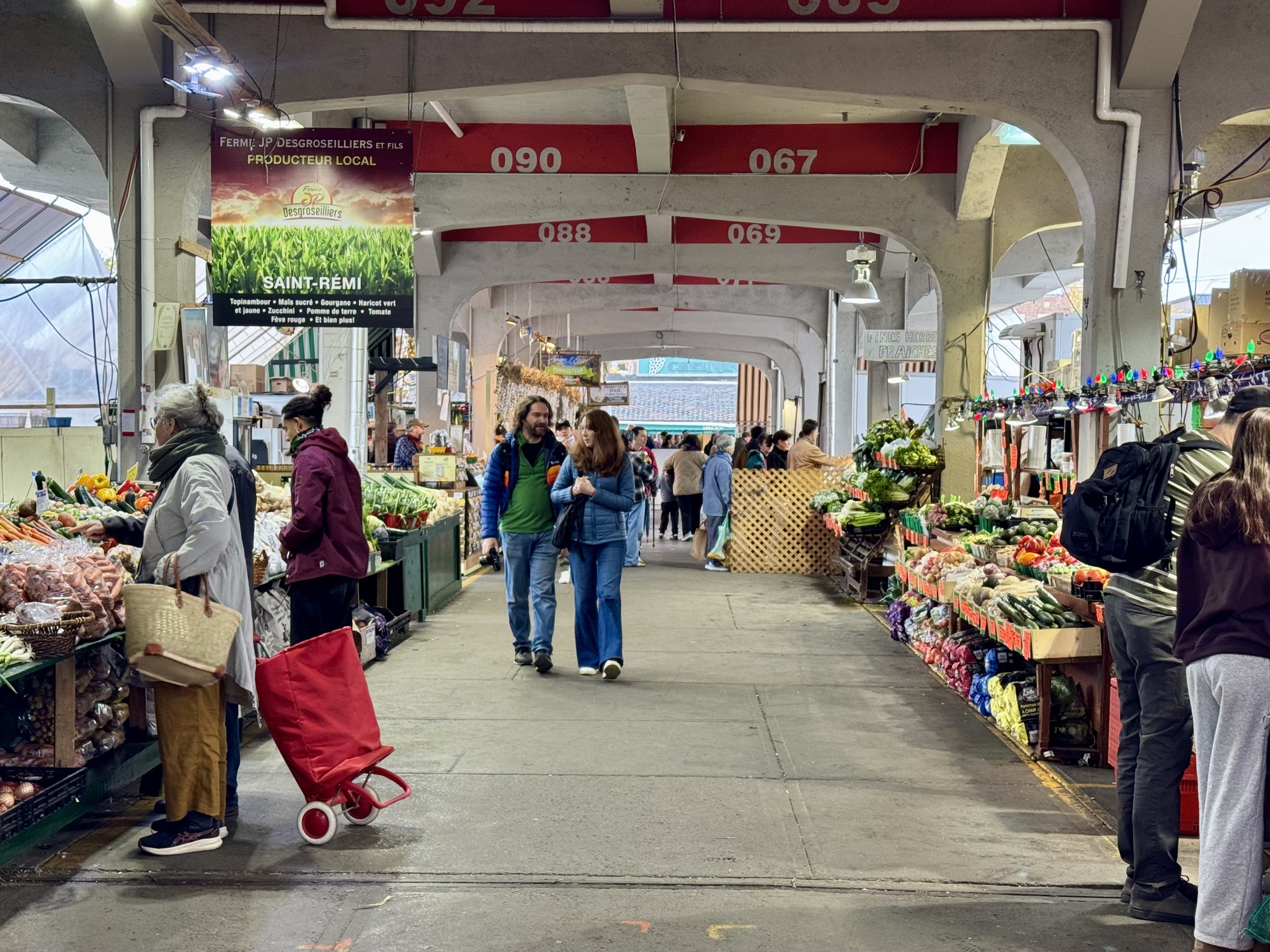
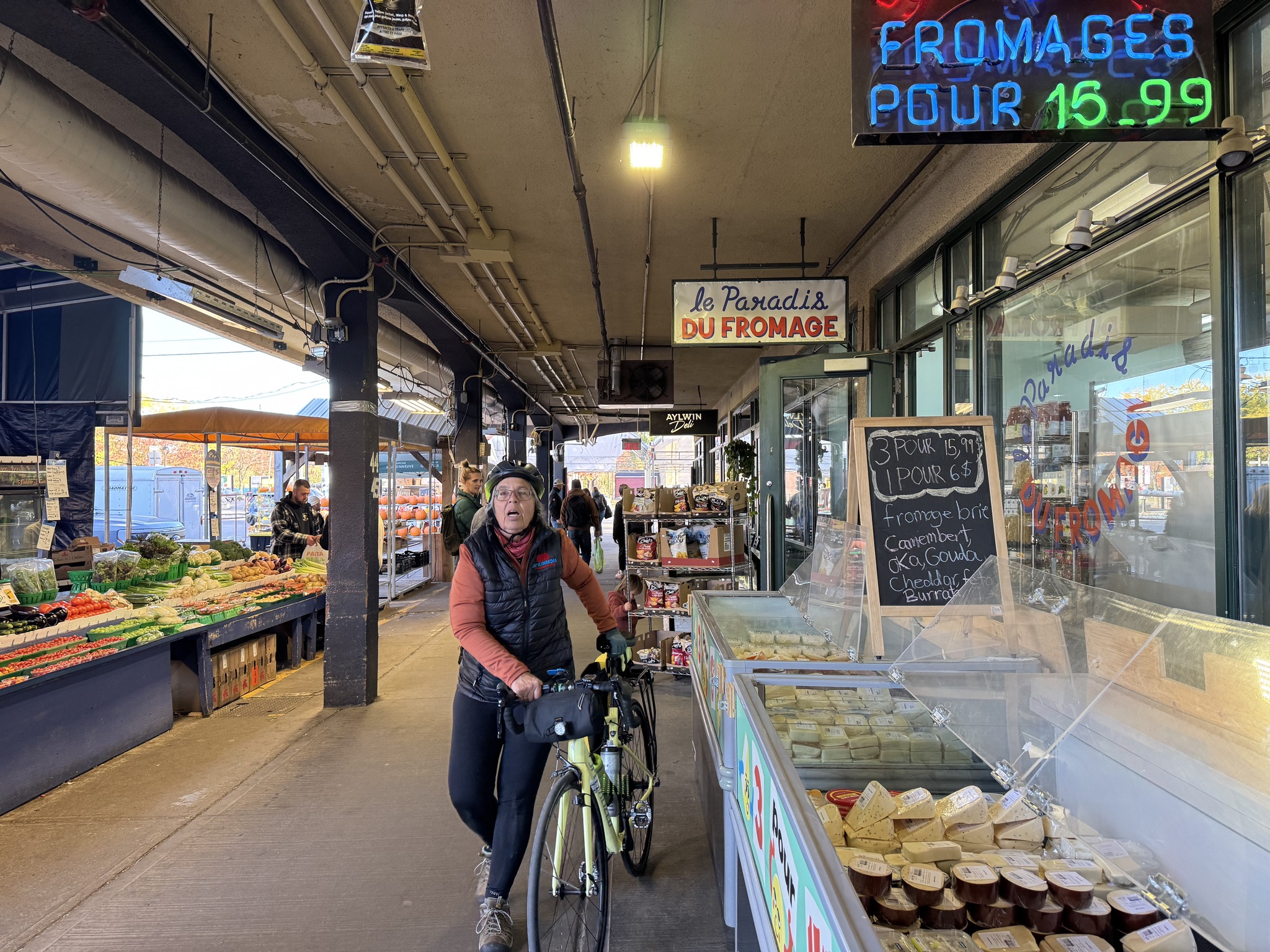
Our first stop was the Jean Talon Market. It is a large market located in Little Italy that is open year-round. It was built as a depression era project in the Art Deco architectural style. Jean Talon is the largest market in Montreal. Underground parking was added in 2004.

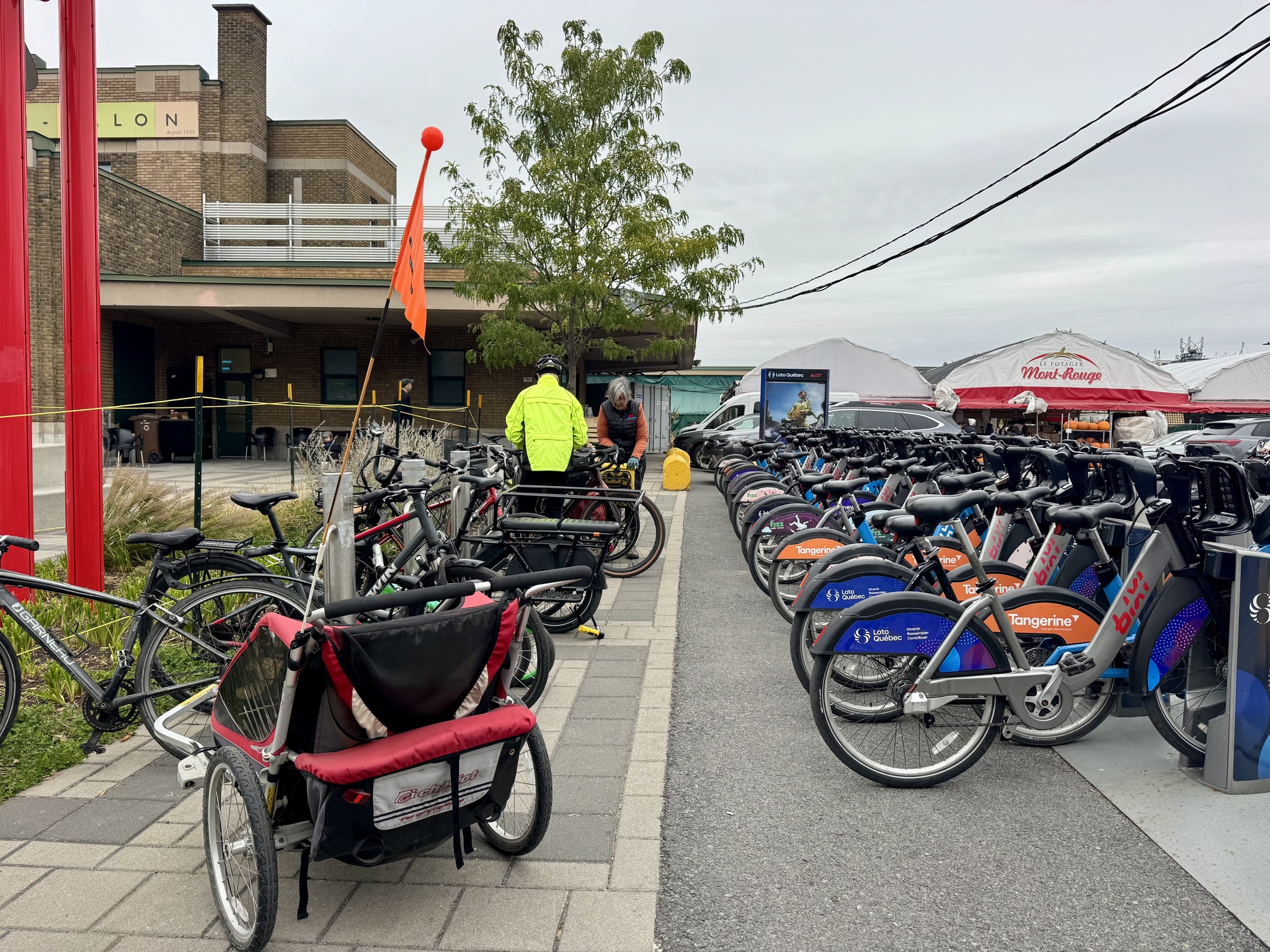
Shamrock Avenue, in front of market, was rebuilt to allow only one lane for motor vehicle traffic, creating space for wide sidewalks and parks. The front of the market was also turned into a park, eliminating a parking lot, making space for seating, bike parking, and a bike share stand.

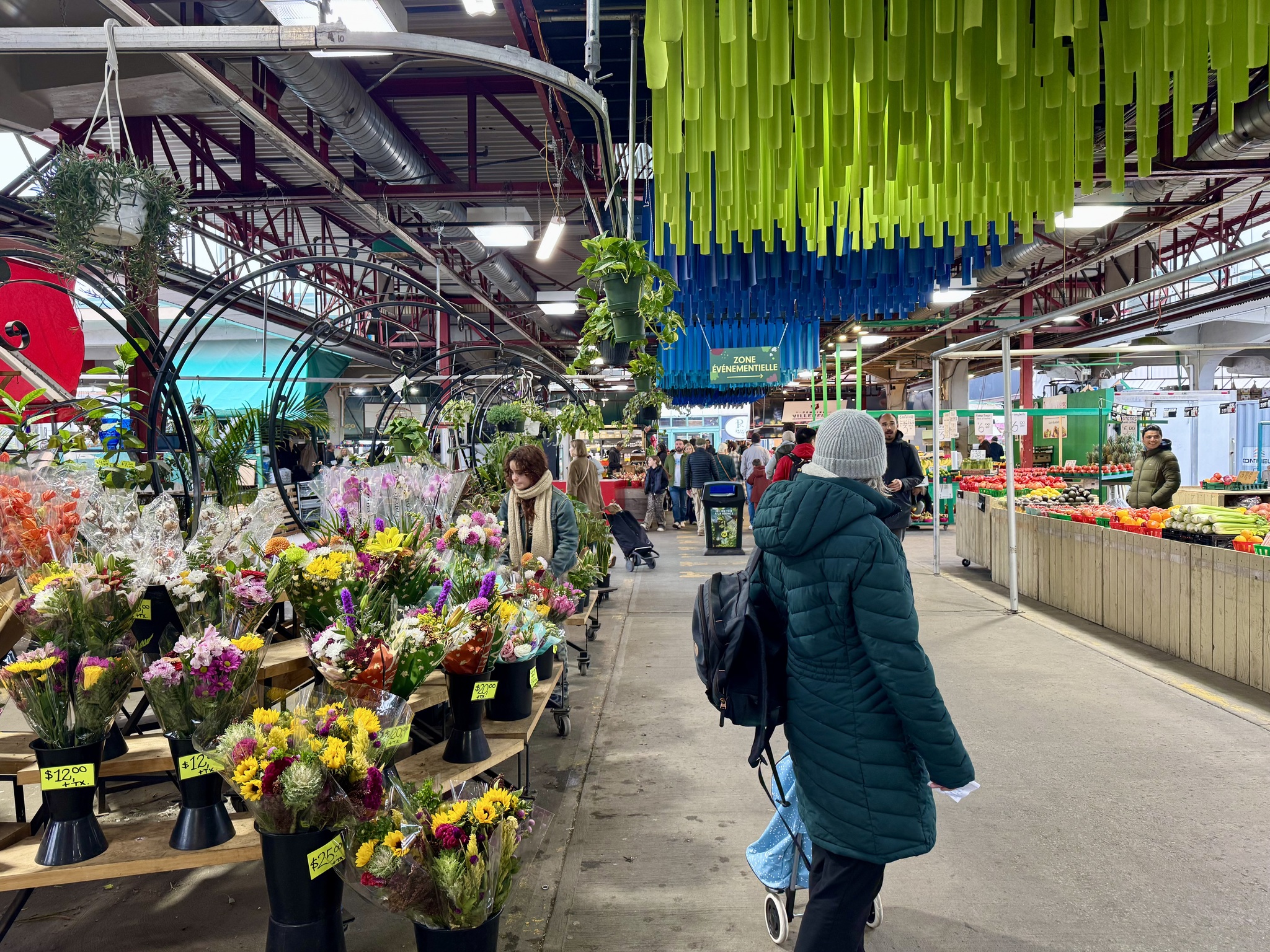
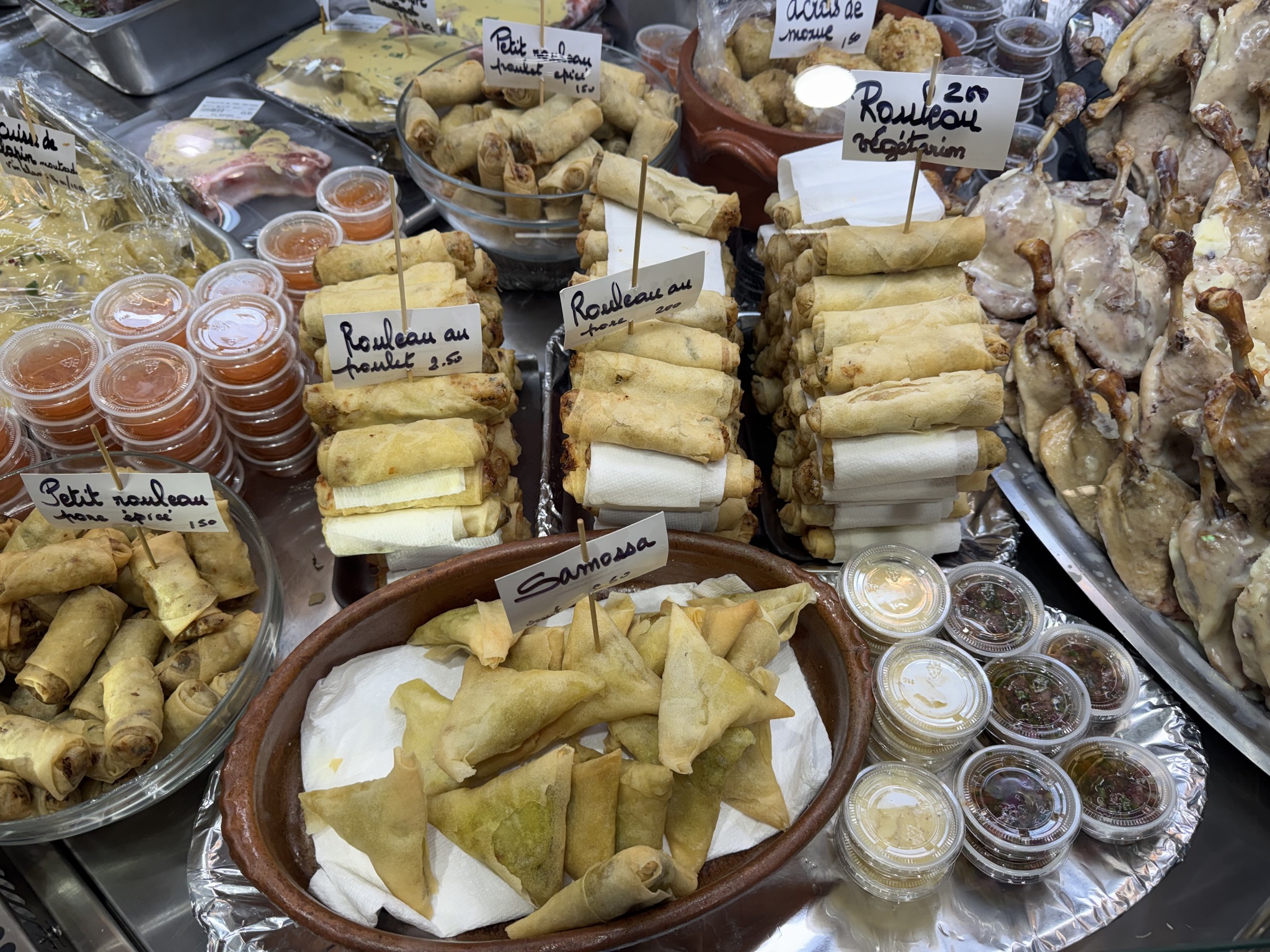
The market was large and bright. The food looked delicious.

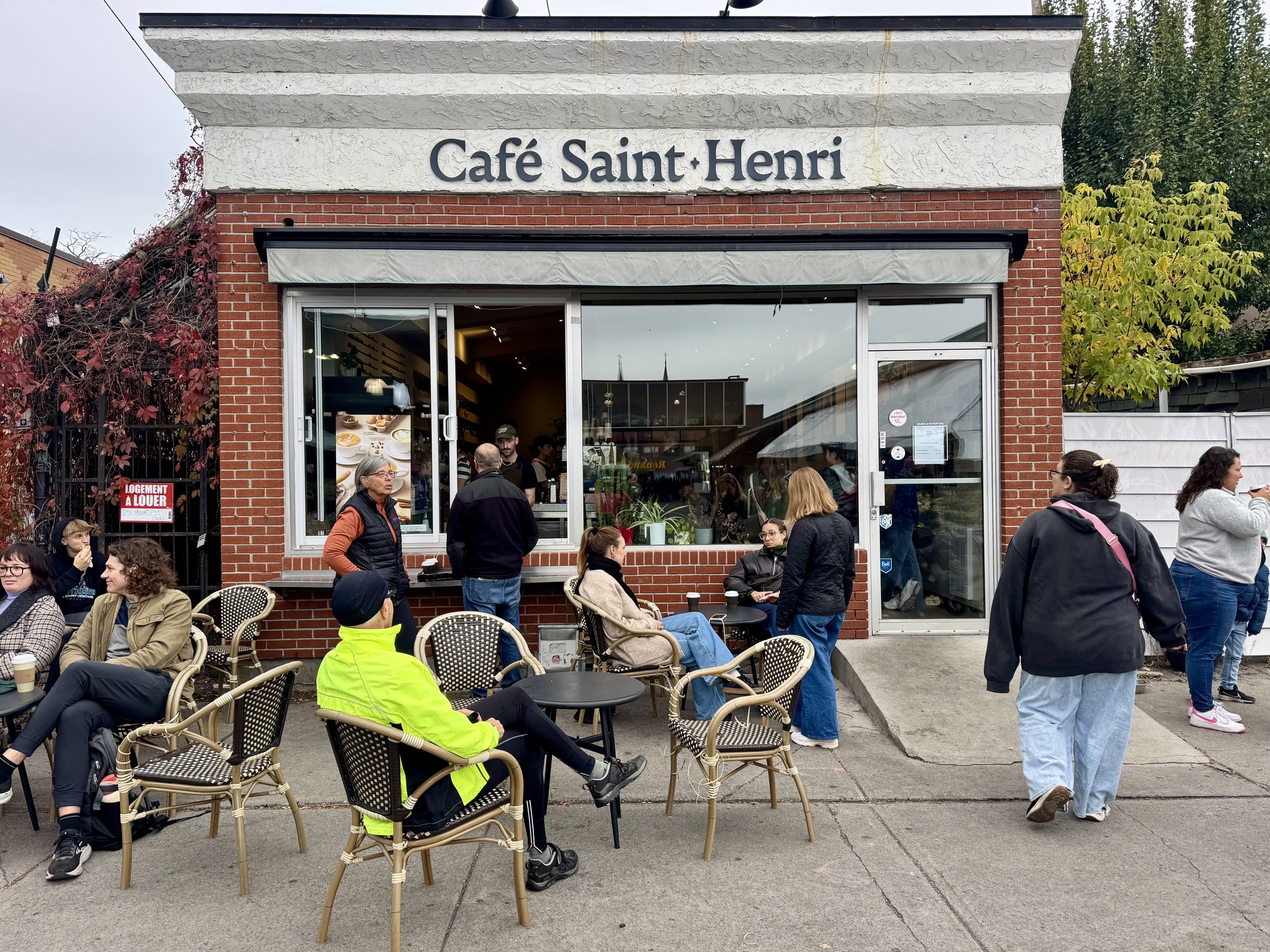
After exploring the market, we decided to indulge ourselves with hot chocolate at Café Saint-Henri.

I joked that Cindy and I felt like this cyclist after riding up the three steep hills back to the Oratory, yesterday.

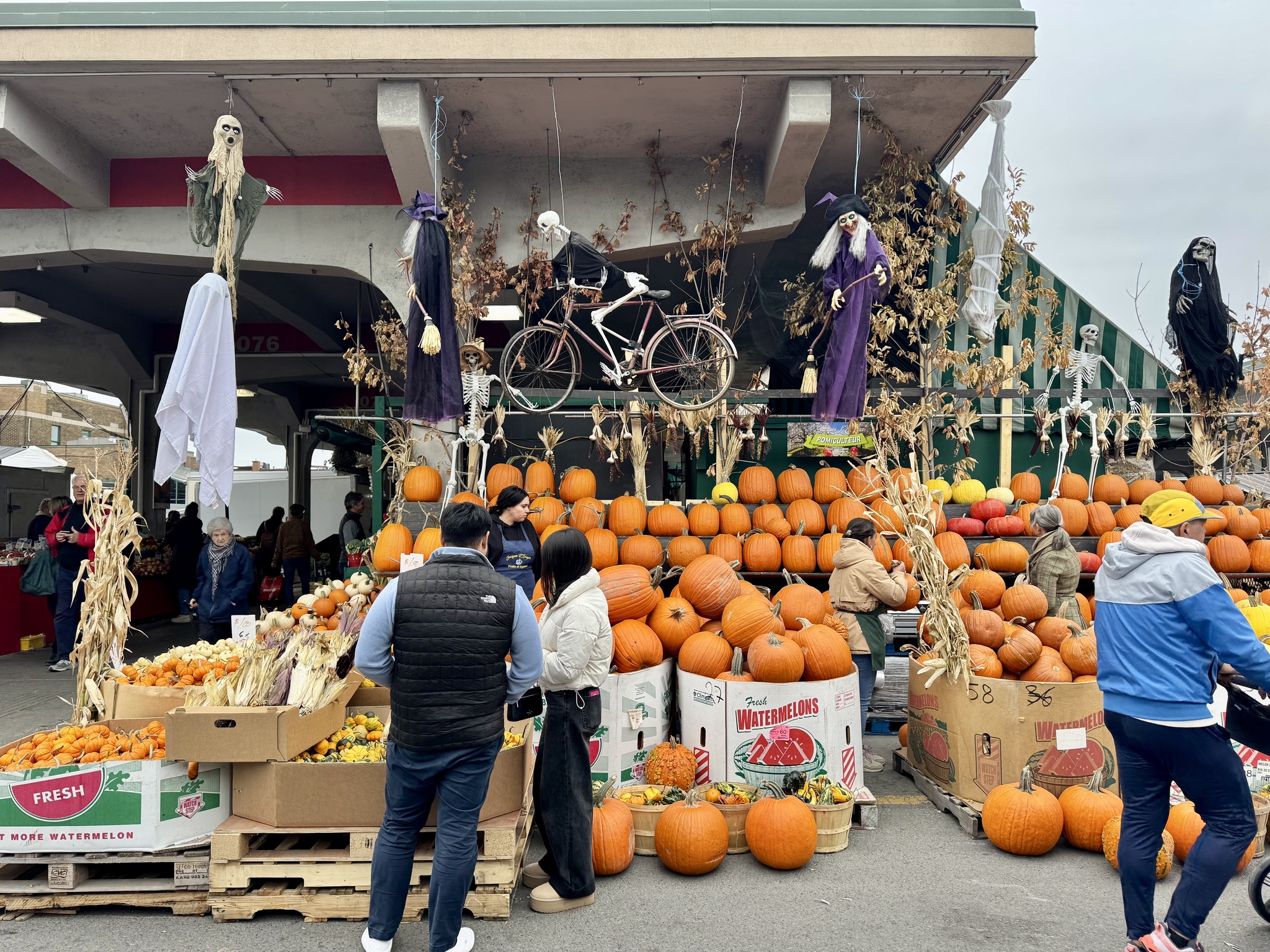
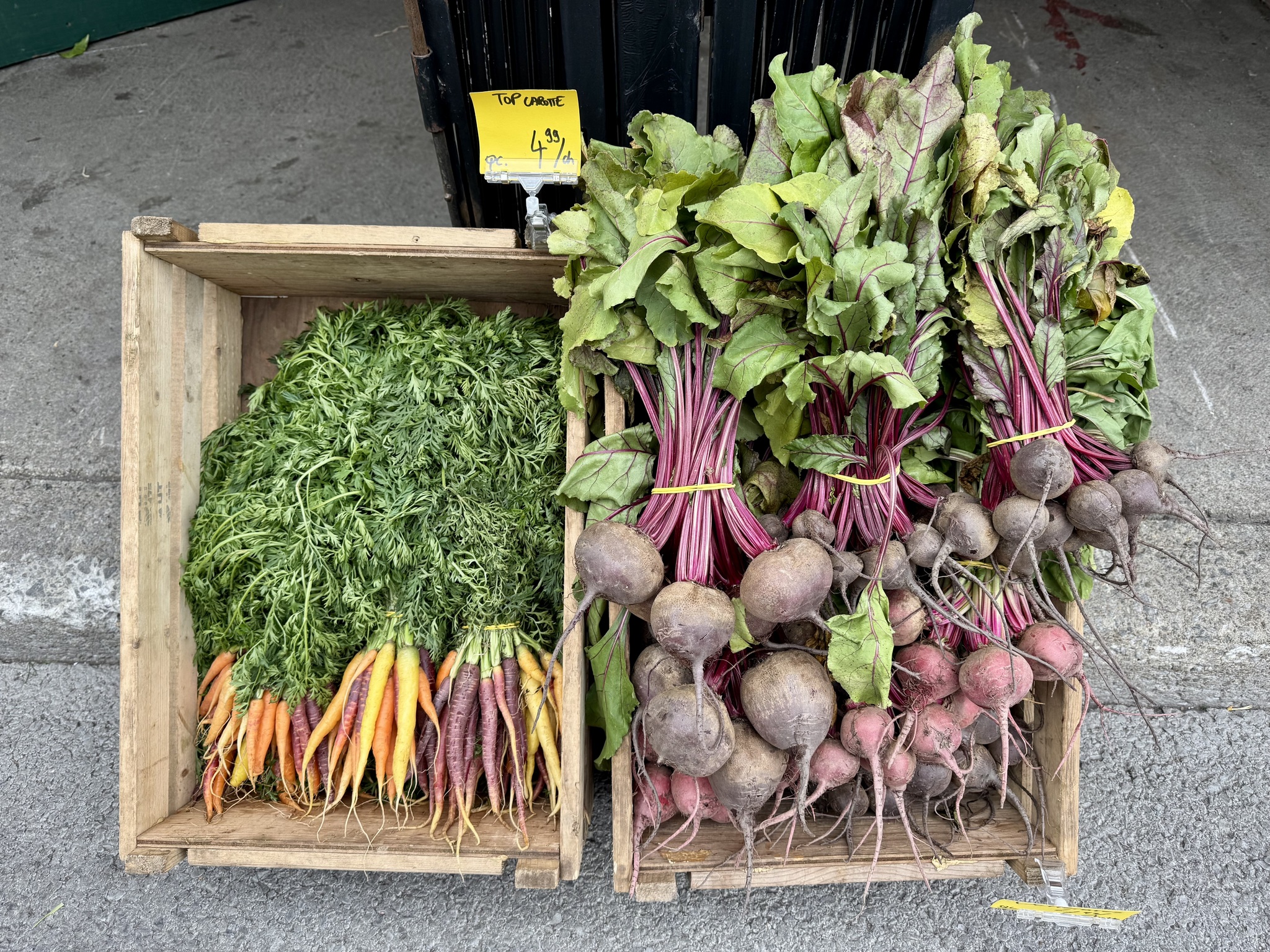
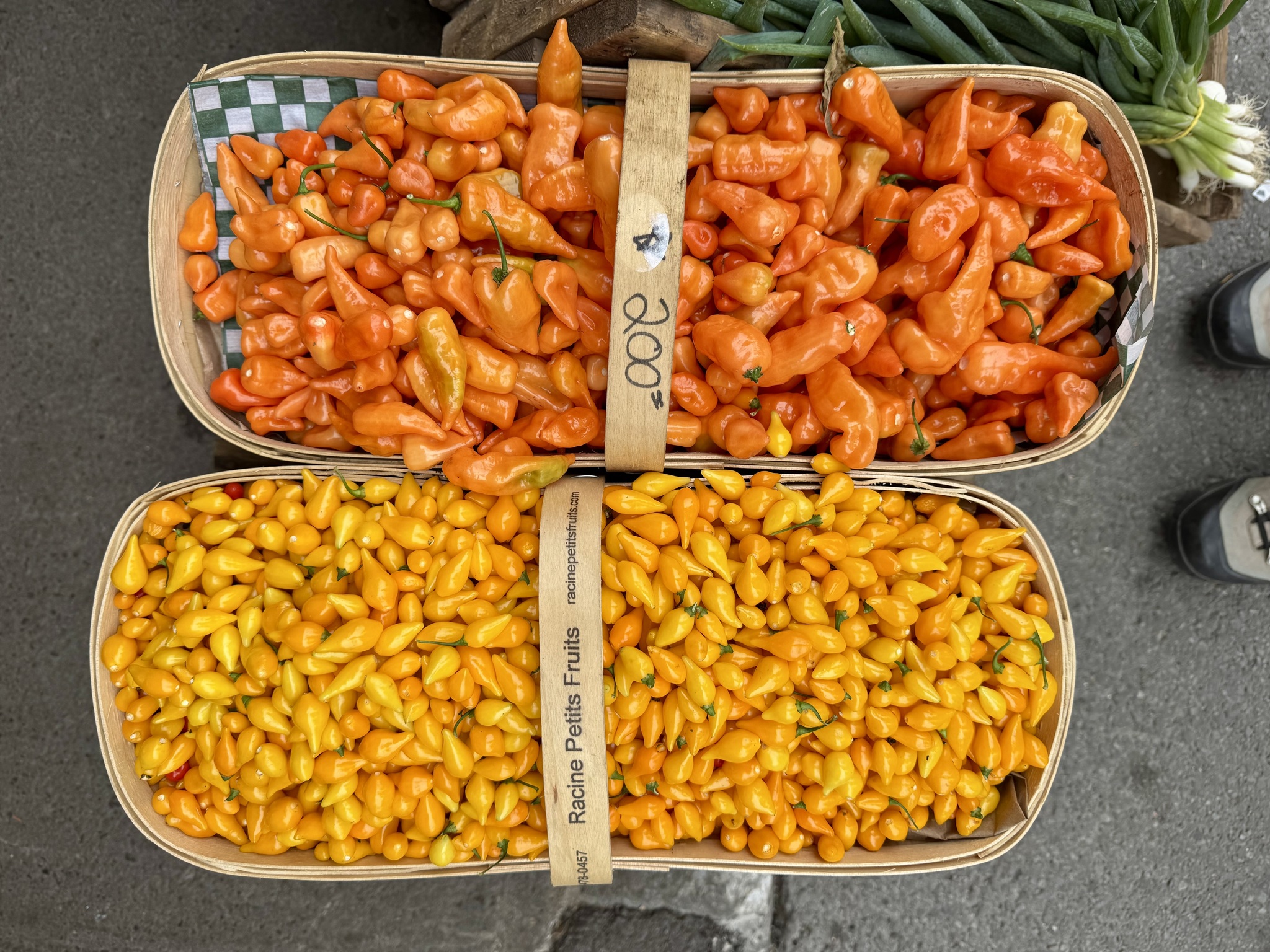
There were many stalls around the outside of the market building, as well. The produce looked amazing.

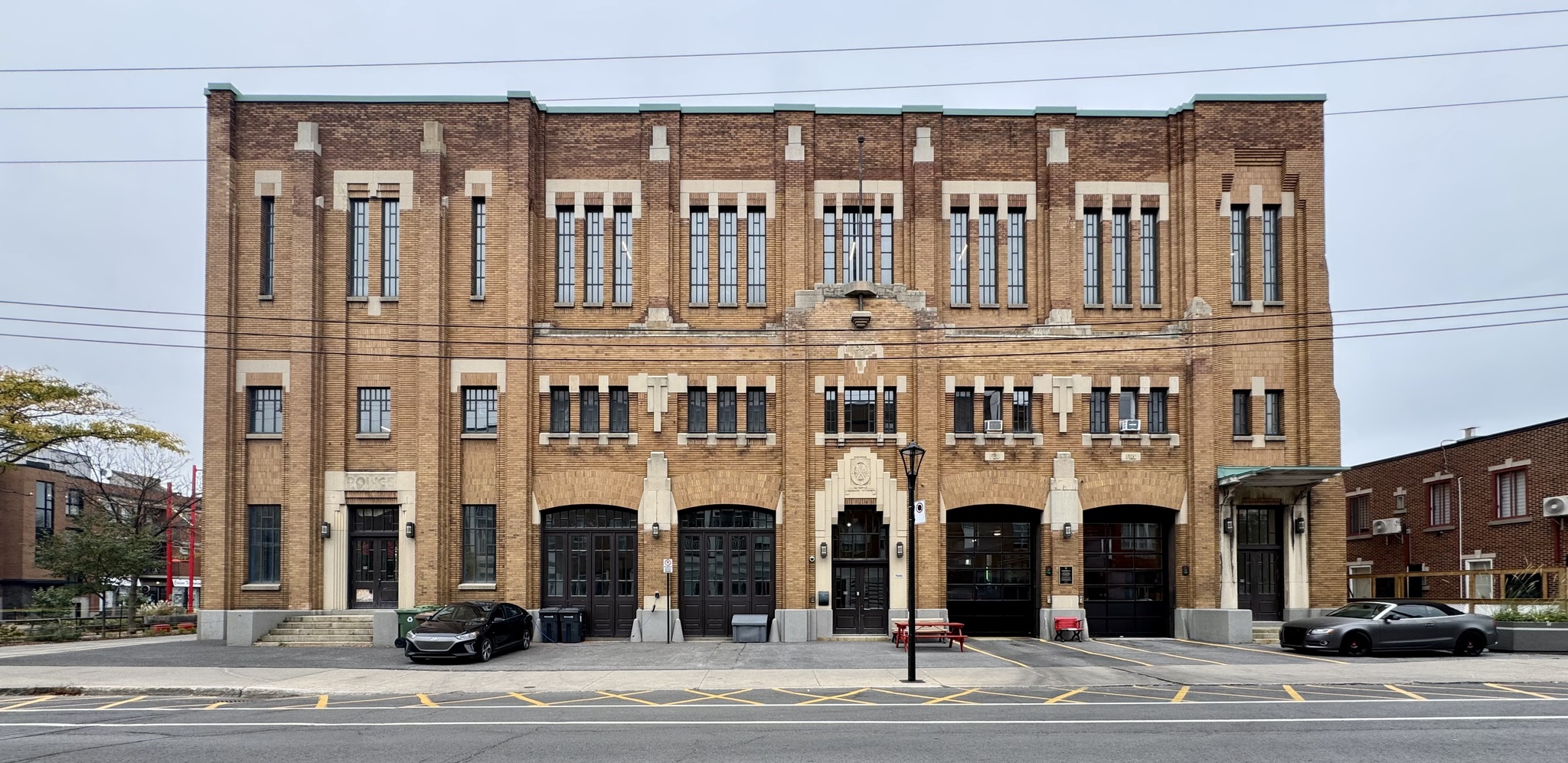
Another depression era Art Deco public works project was this combination police and fire station, just a block away from the market.

I couldn’t believe all the parked bikes on the sidewalk and porches in this neighbourhood.

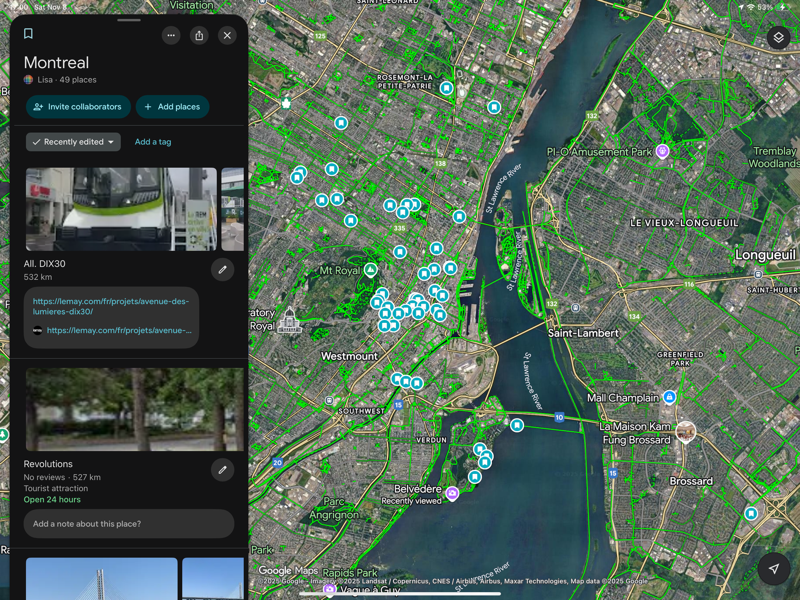
When I’m on social media and see places that I would like to visit in the future, I add them to lists on Google maps. Over the past few months, knowing I would be visiting Montreal, I regularly added places to my Montreal list. That made it reasonably simple, last night, for me to create a route of places to see, today. The places saved in a list show up as bookmarks on the map. This allows me to see which places of interest are in proximity to each other, and to build an efficient route to ride or walk.

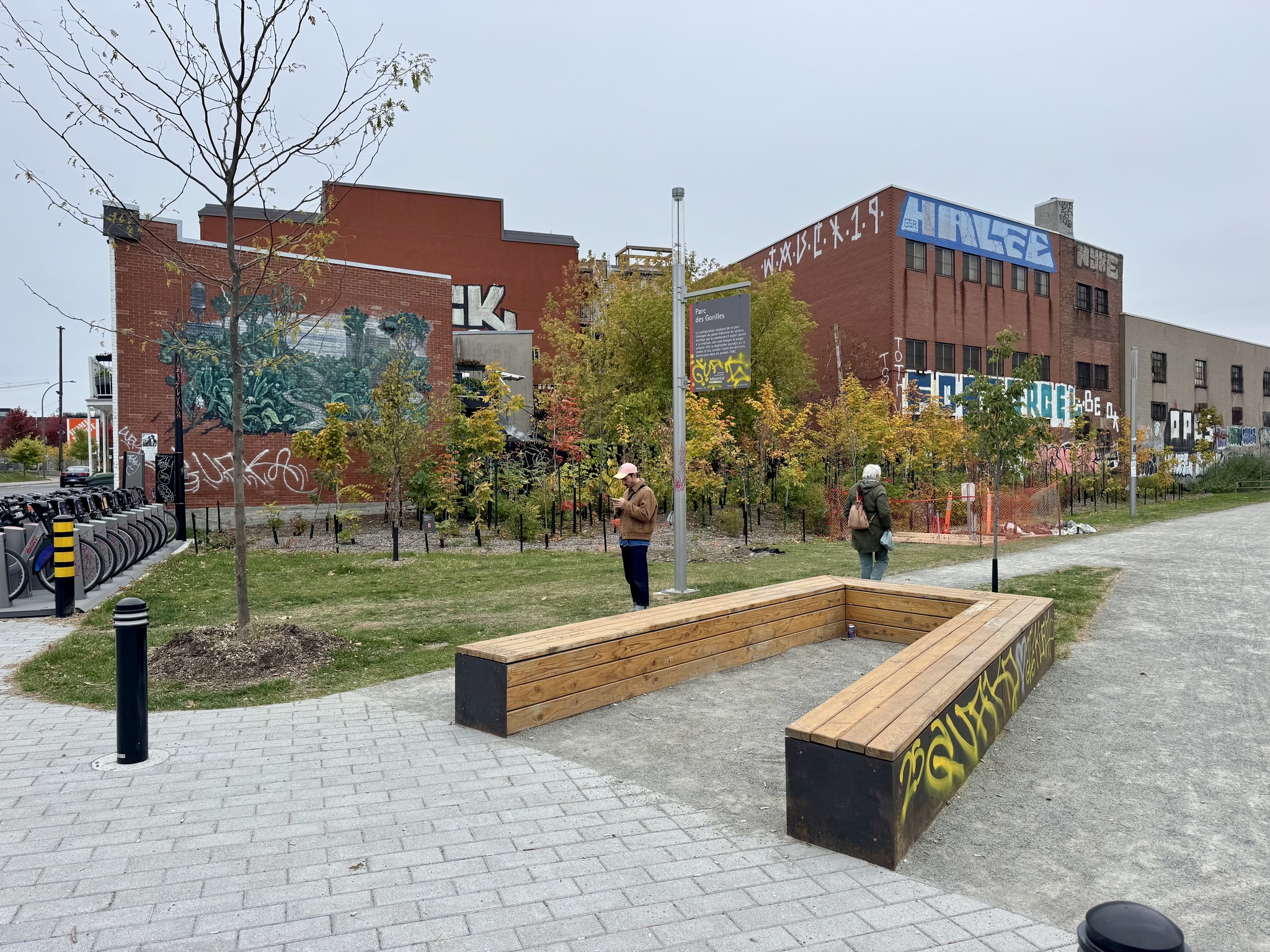
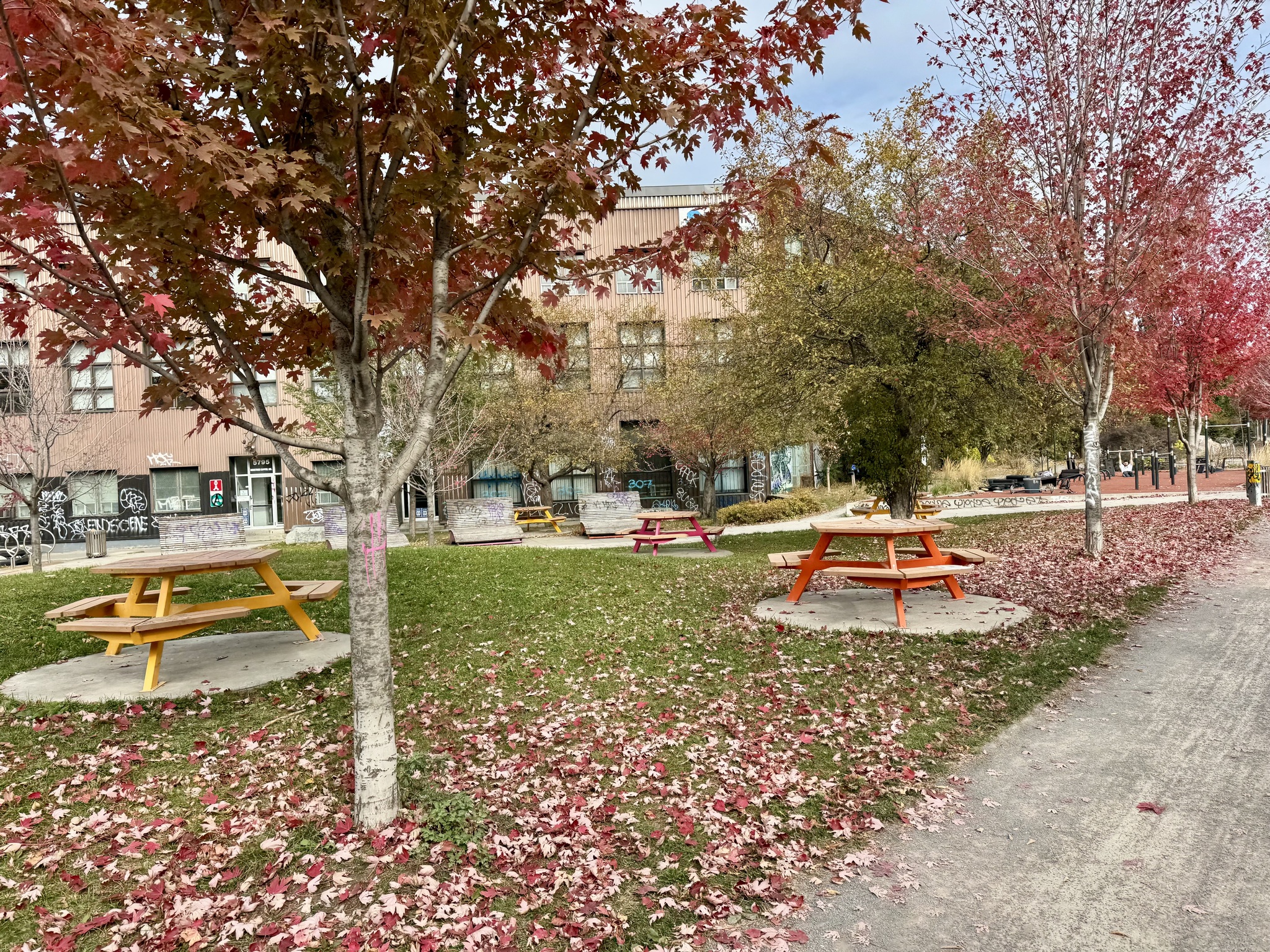
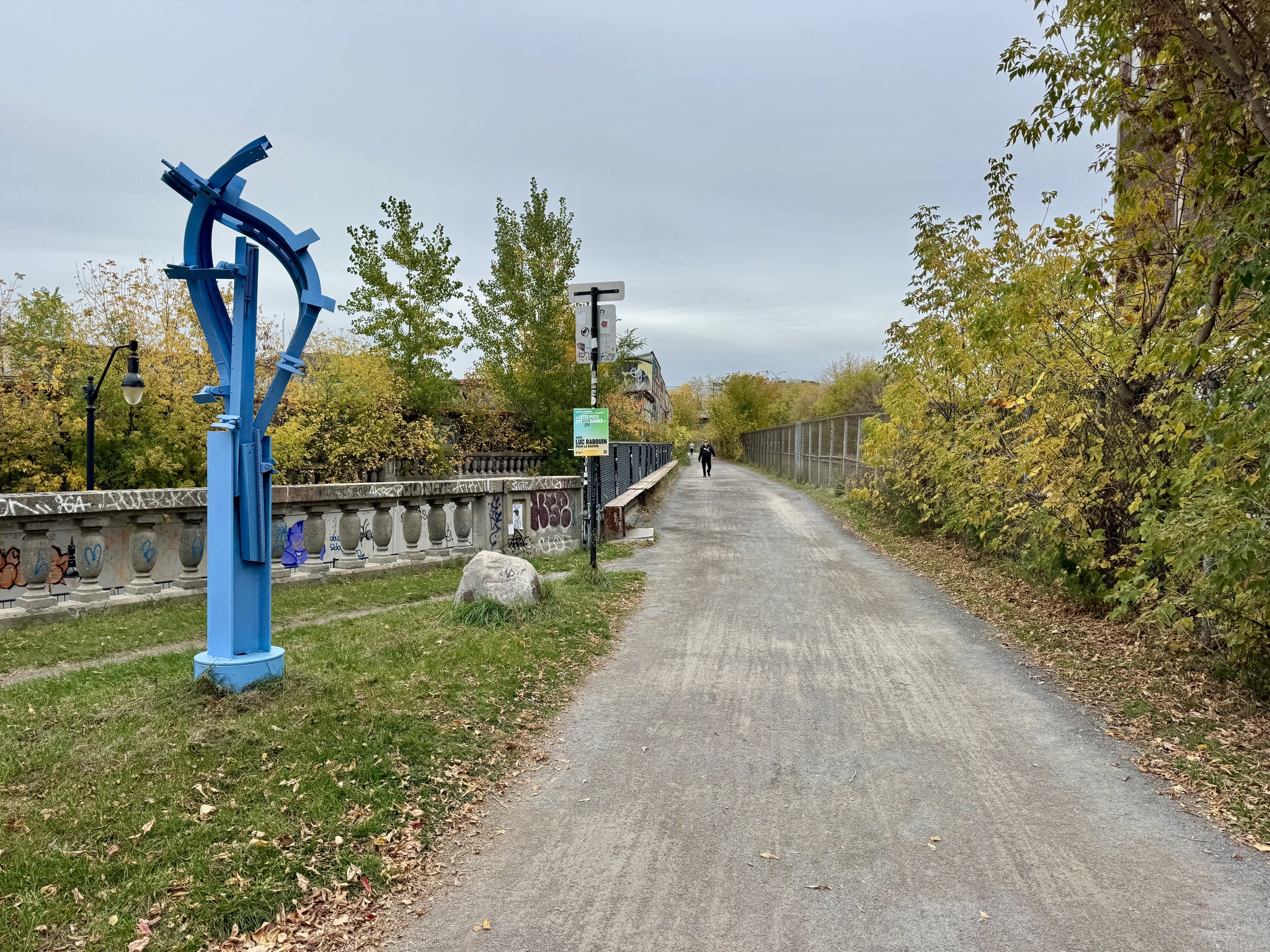
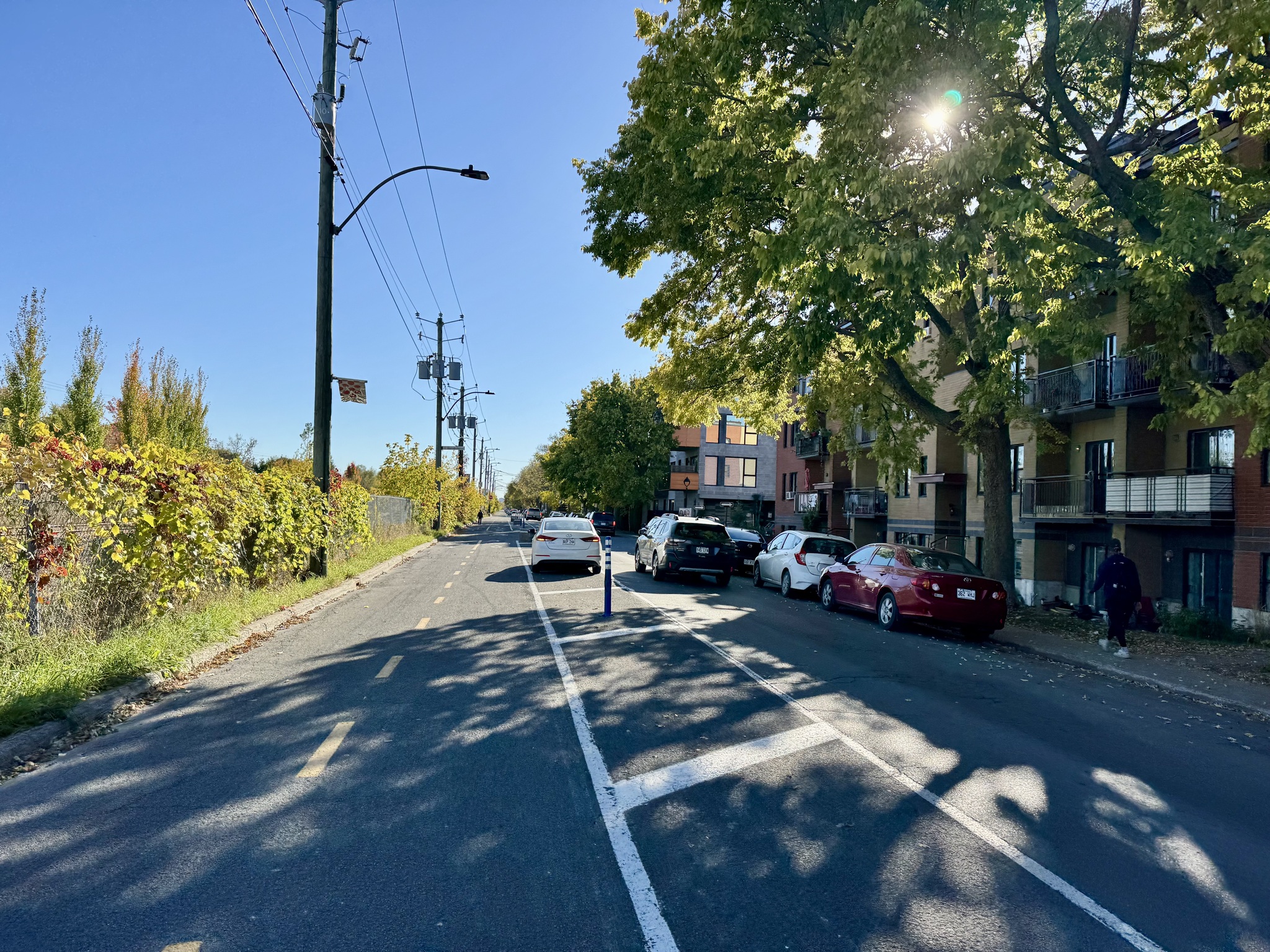
One of the places I read about recently is the Parc linéaire du Réseau-Vert, or Green Network Linear Park. The park is situated on an old rail line in an industrial area that has developed as an active transportation corridor over many years.

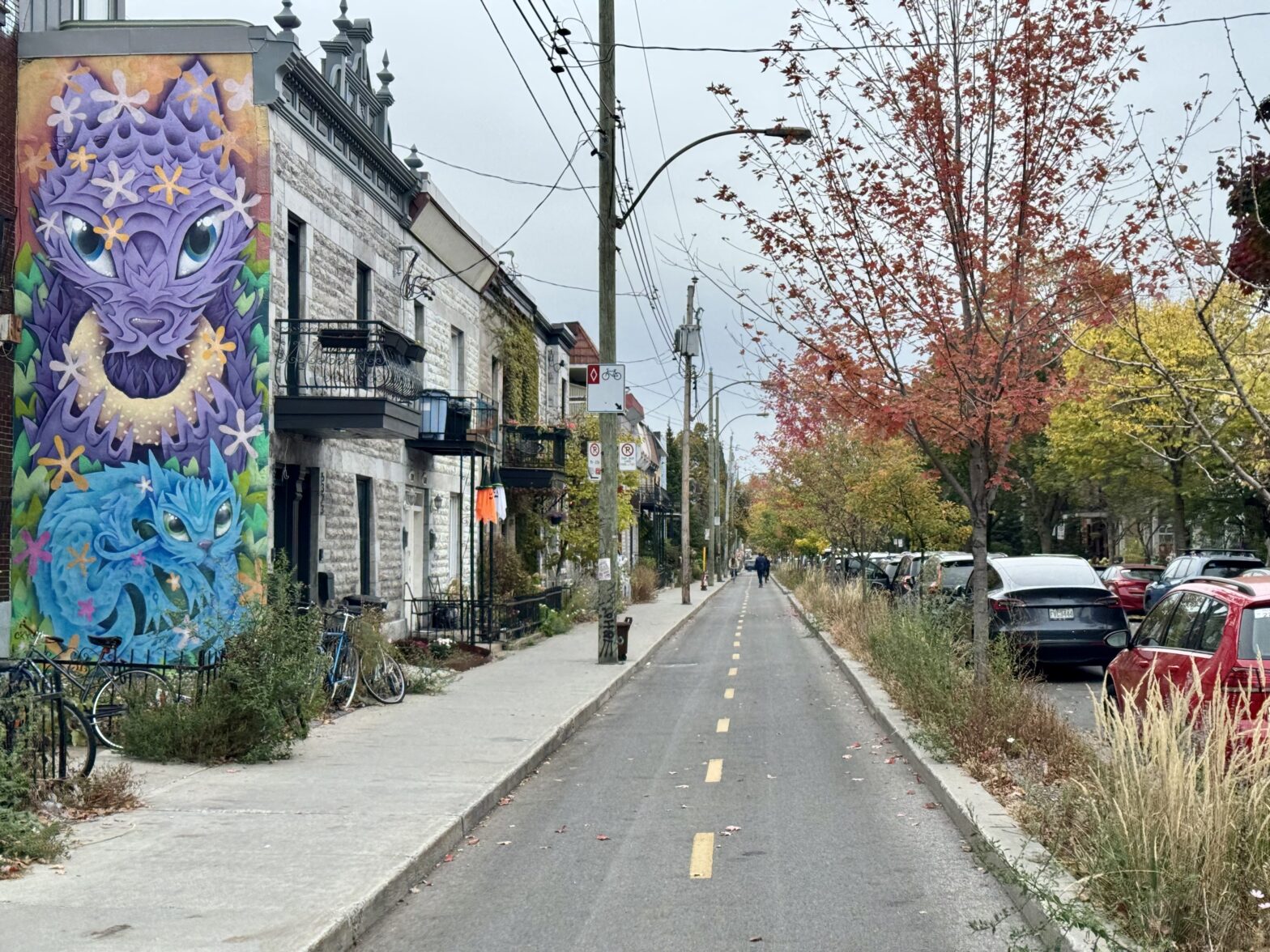
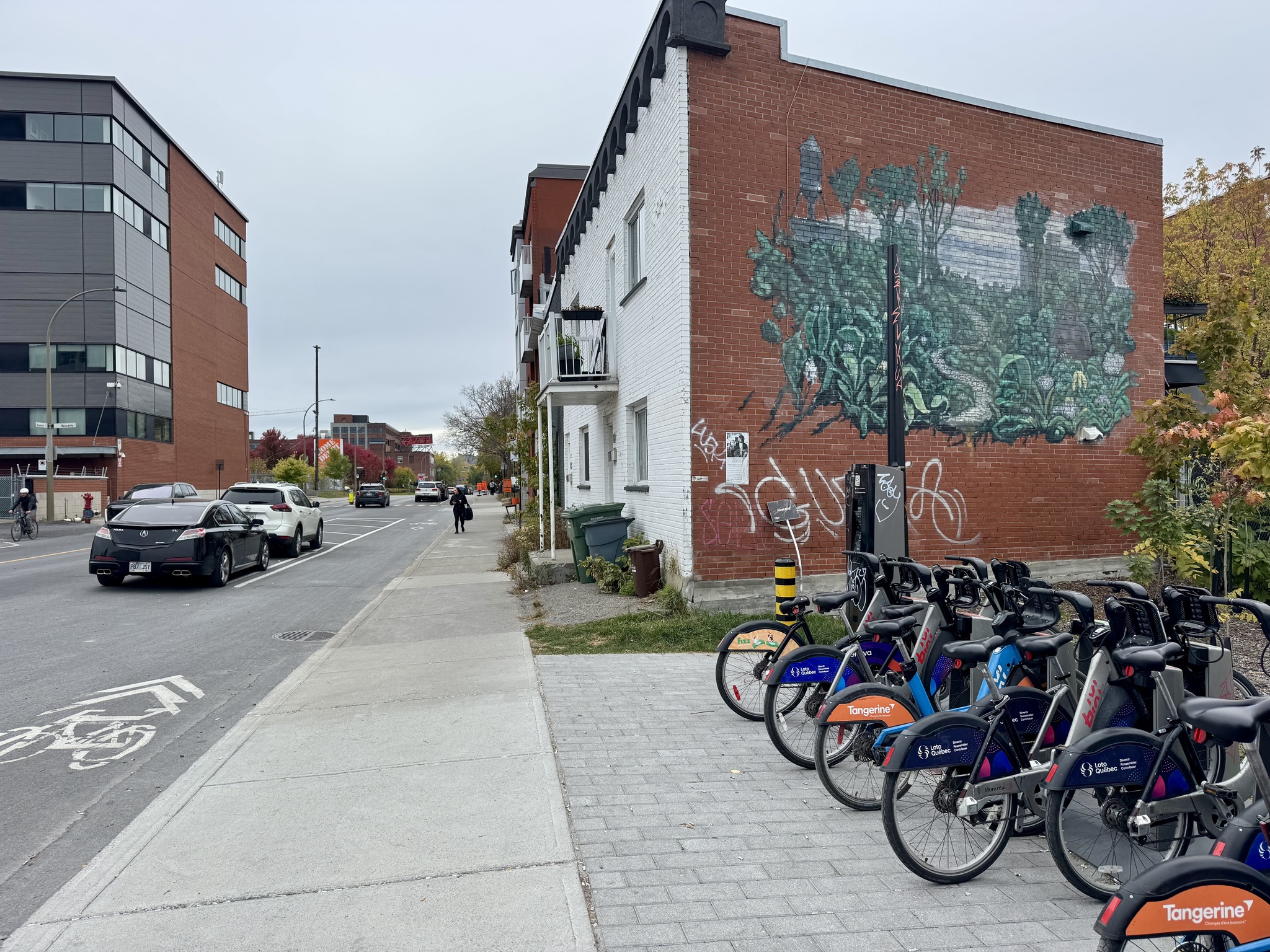
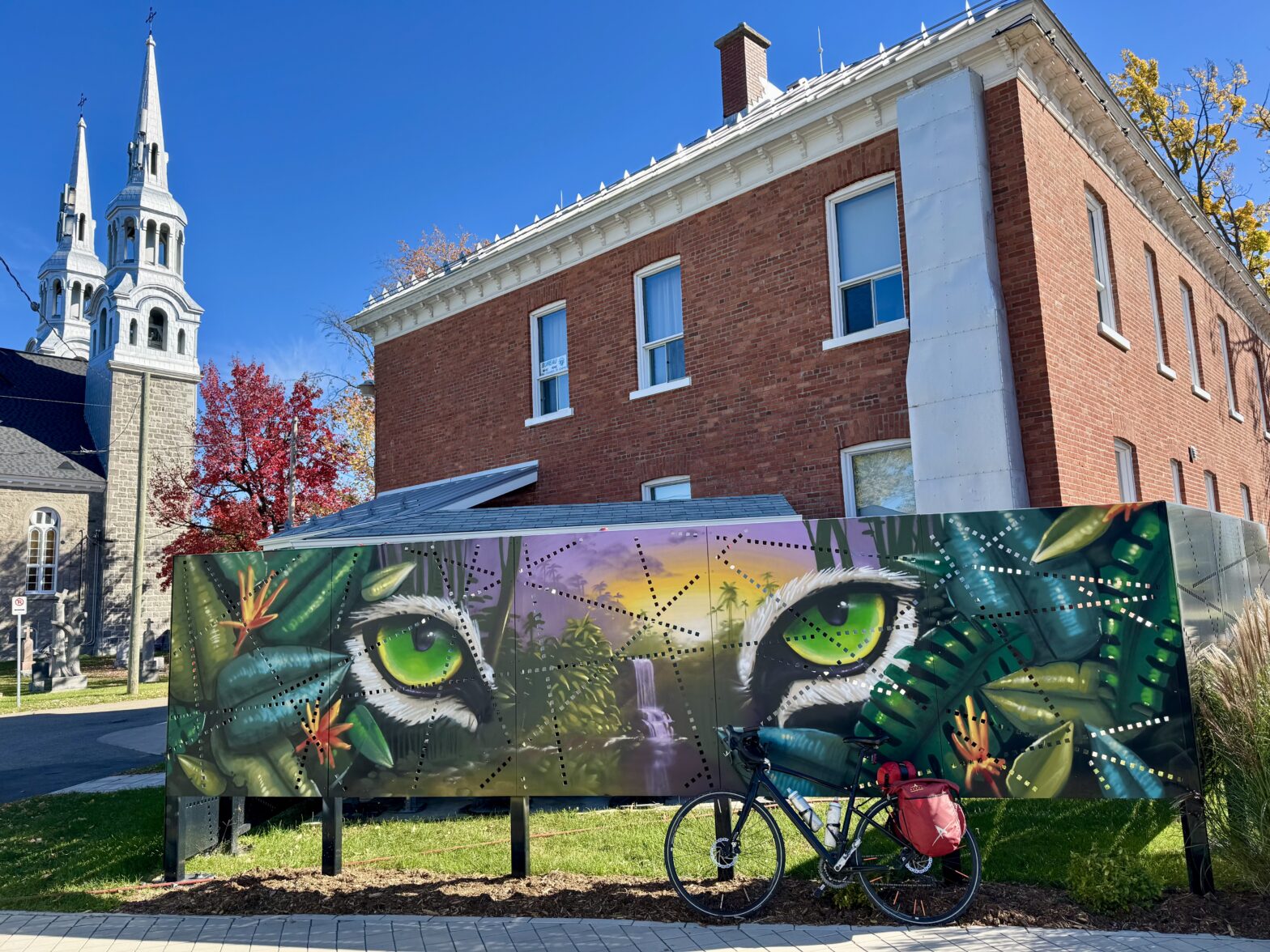
We entered at Gorilla Park, which was created by a partnership between the city and local citizens, to transform an urban wasteland. The park was named by the community. The name is reflected in this mural which shows a gorilla in the jungle if you look, if you look closely.

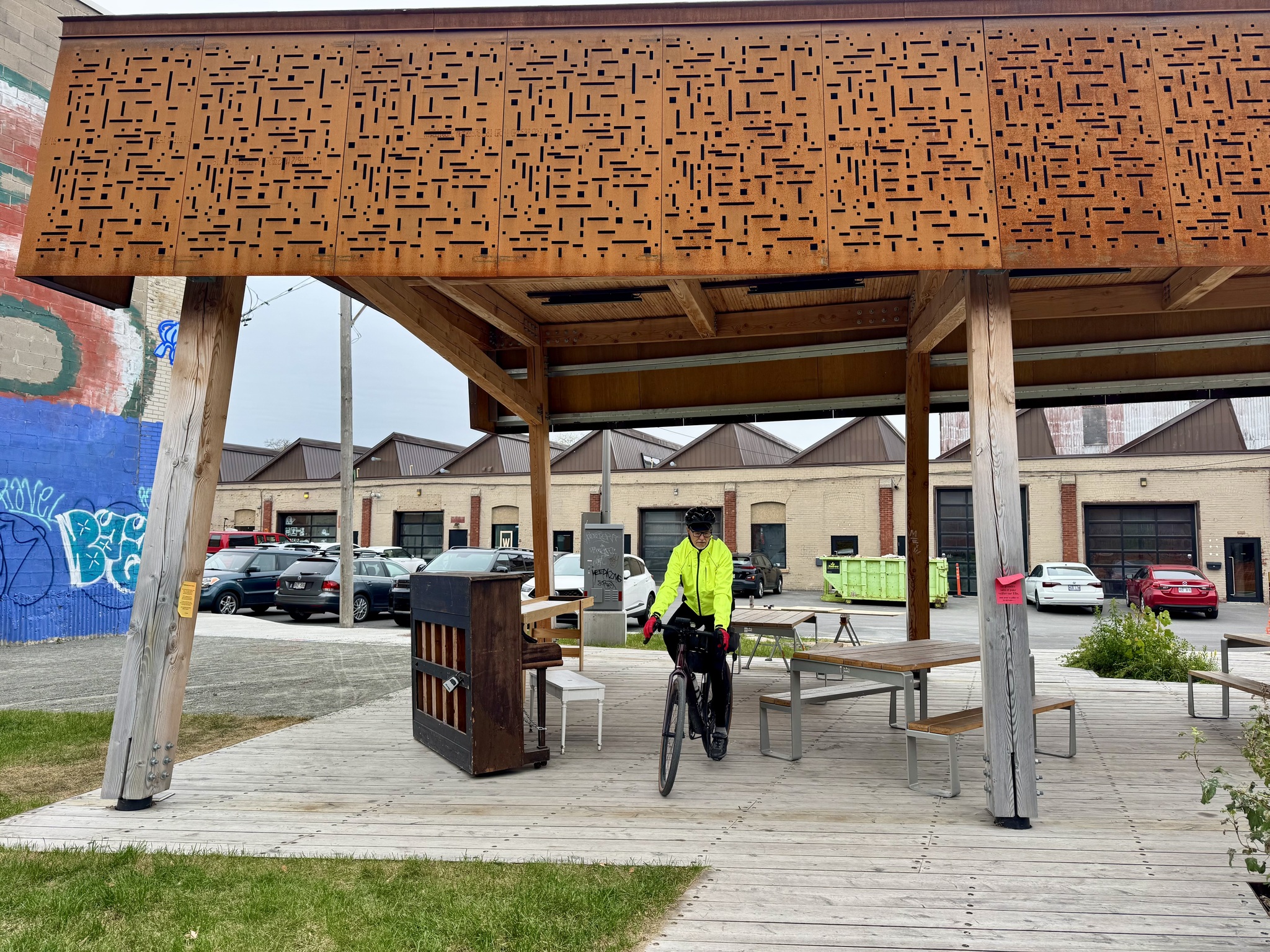
There was a piano in this covered seating area. I tried playing it, but not surprisingly, given it is outdoors, not all the notes worked, and it was out of tune.

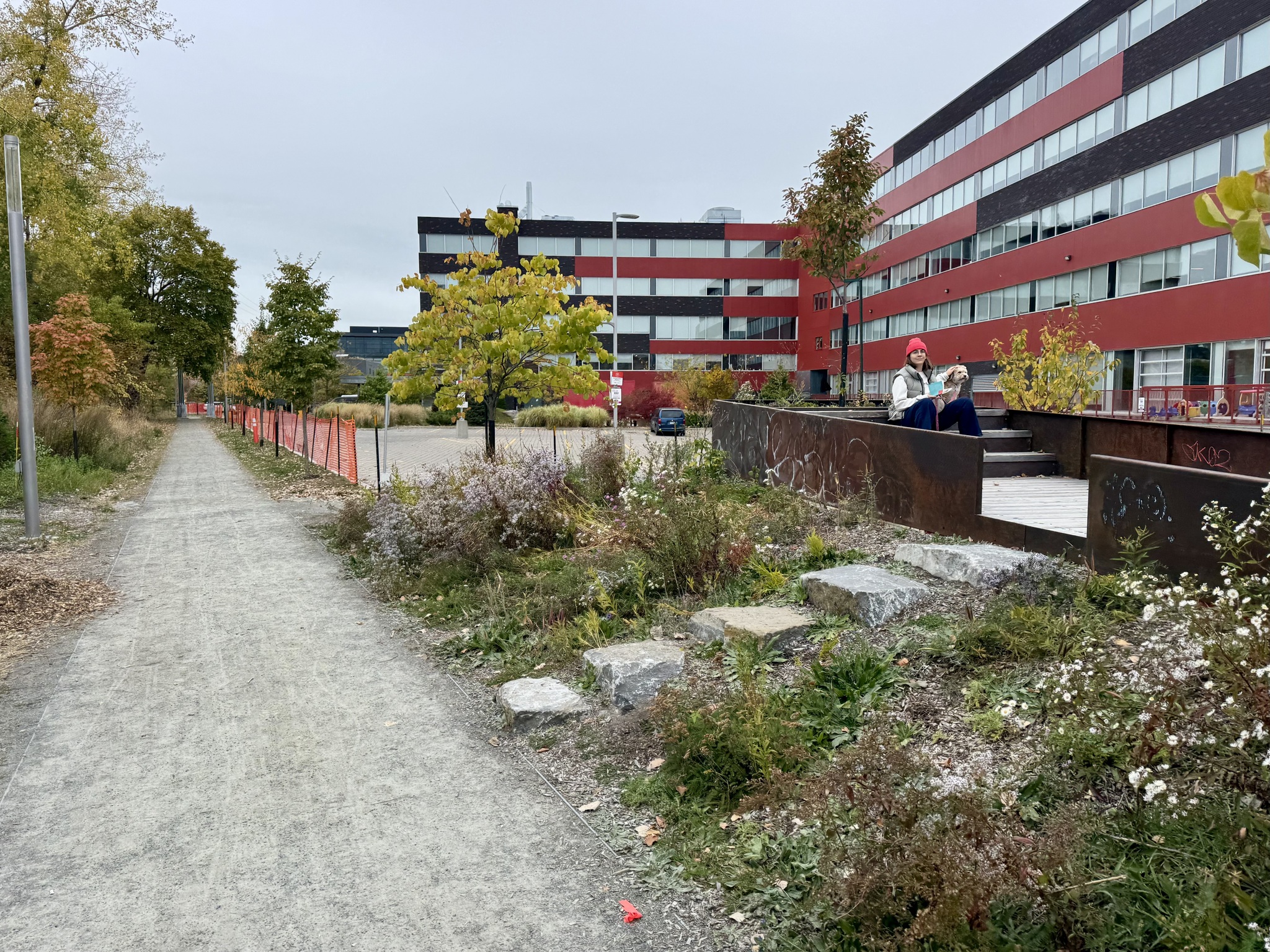
I was reminded of my visit to New York City’a High Line, which is a linear Park built on an old elevated rail line.

There were many places to sit, and art made out of reclaimed industrial bits and pieces.

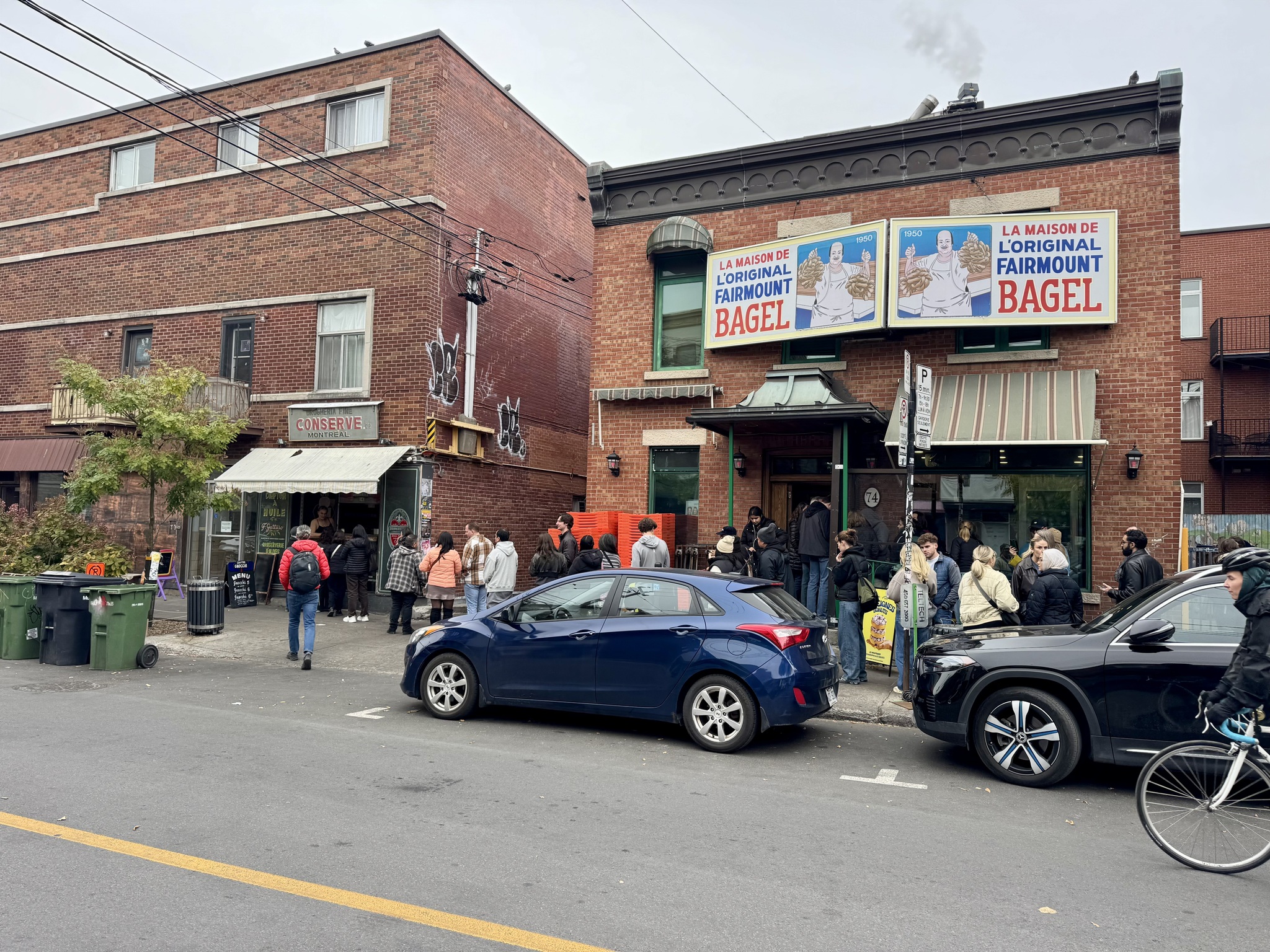
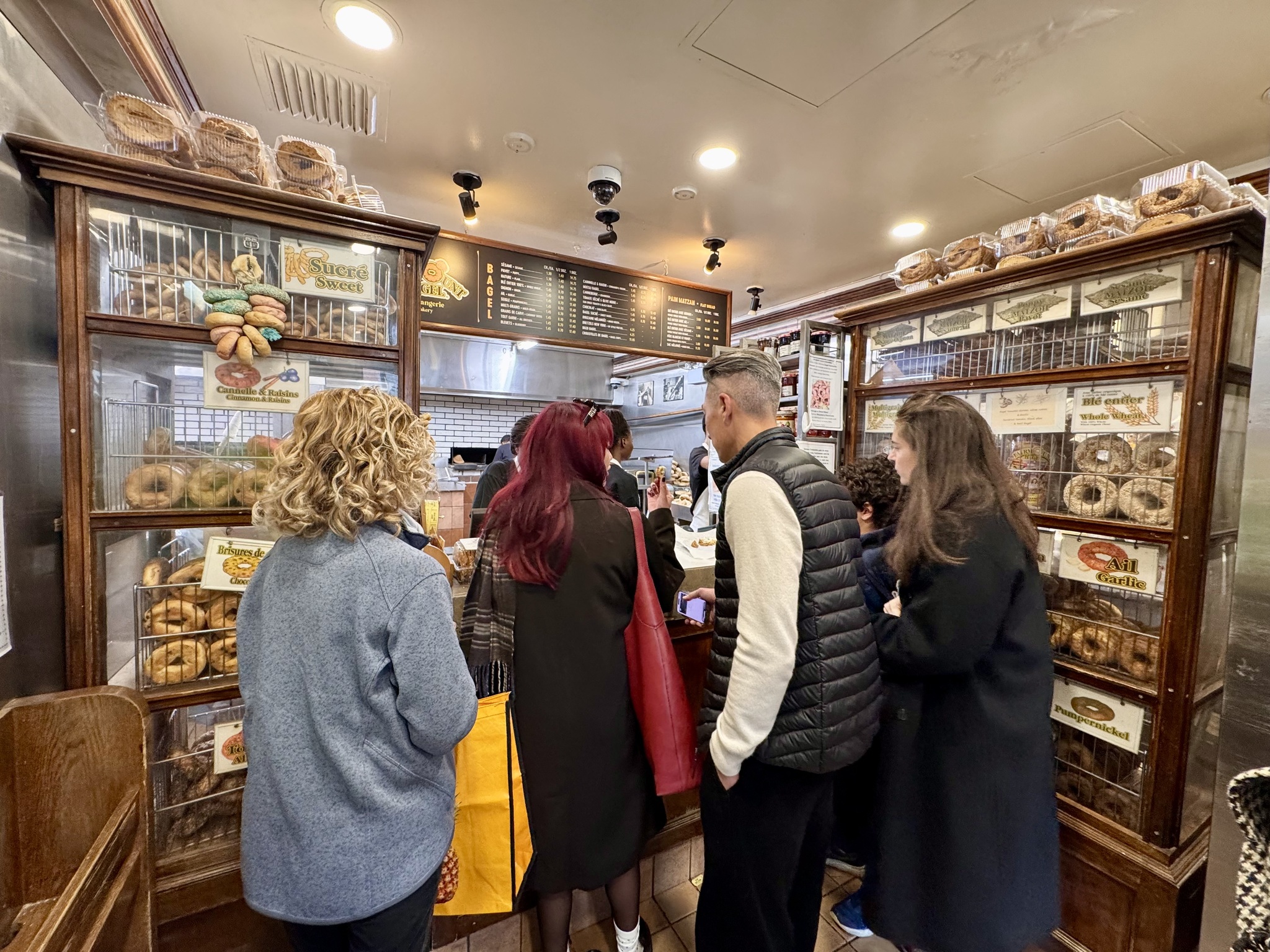
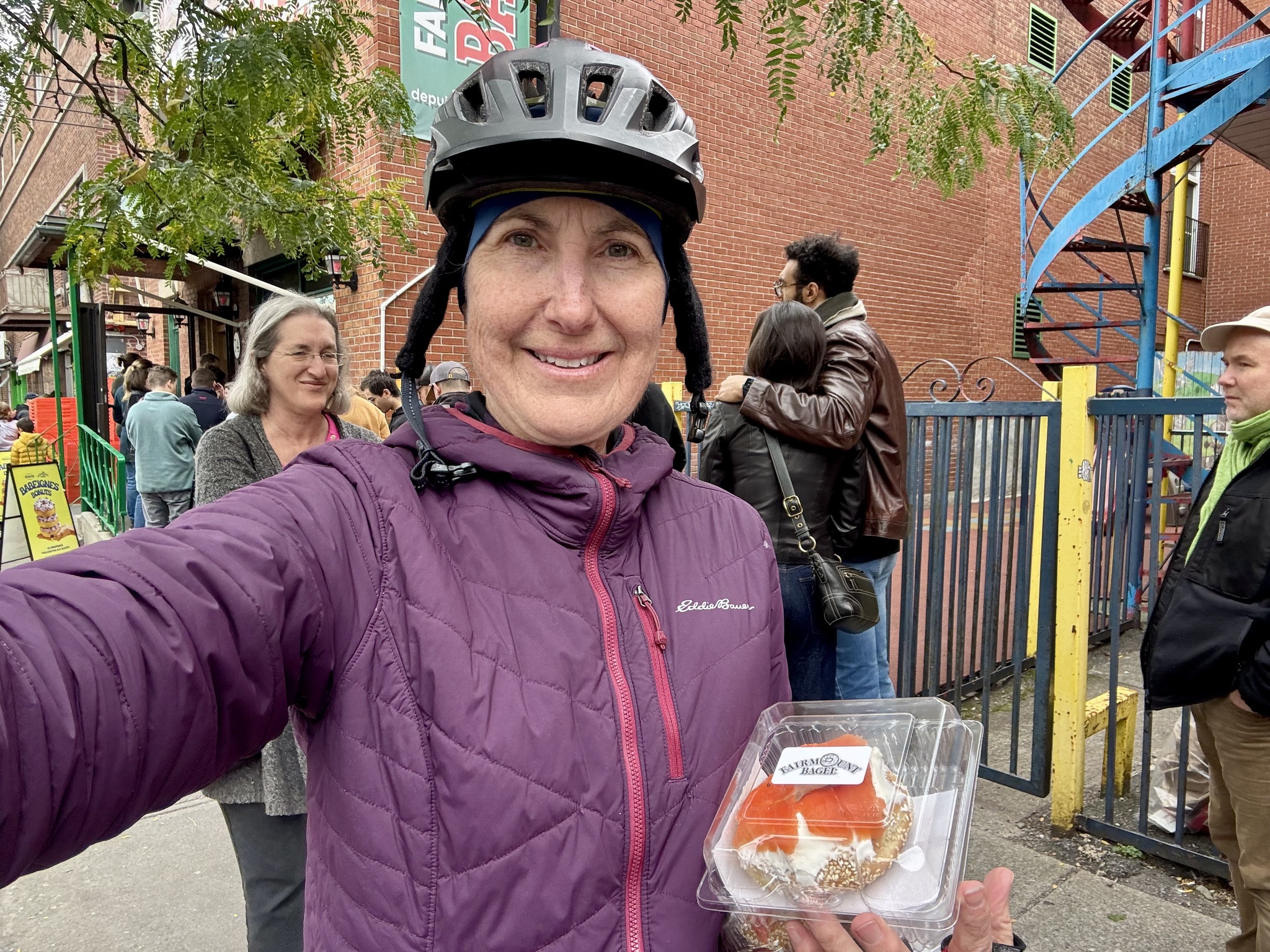
Cindy suggested a visit to Fairmont Bagel. It was started in 1919 and is operated by the grandchildren of the founder. It is open 24 hours a day. 

There’s no space to eat in. However, there were quite a few colourful benches on the wide sidewalk adjacent to the store. There was a lineup outside when we arrived, which took about 20 minutes to get through. The lineup never diminished during the time we were there.

We treated ourselves to bagels and lox. They were delicious. Cindy bought a dozen bagels to take home.

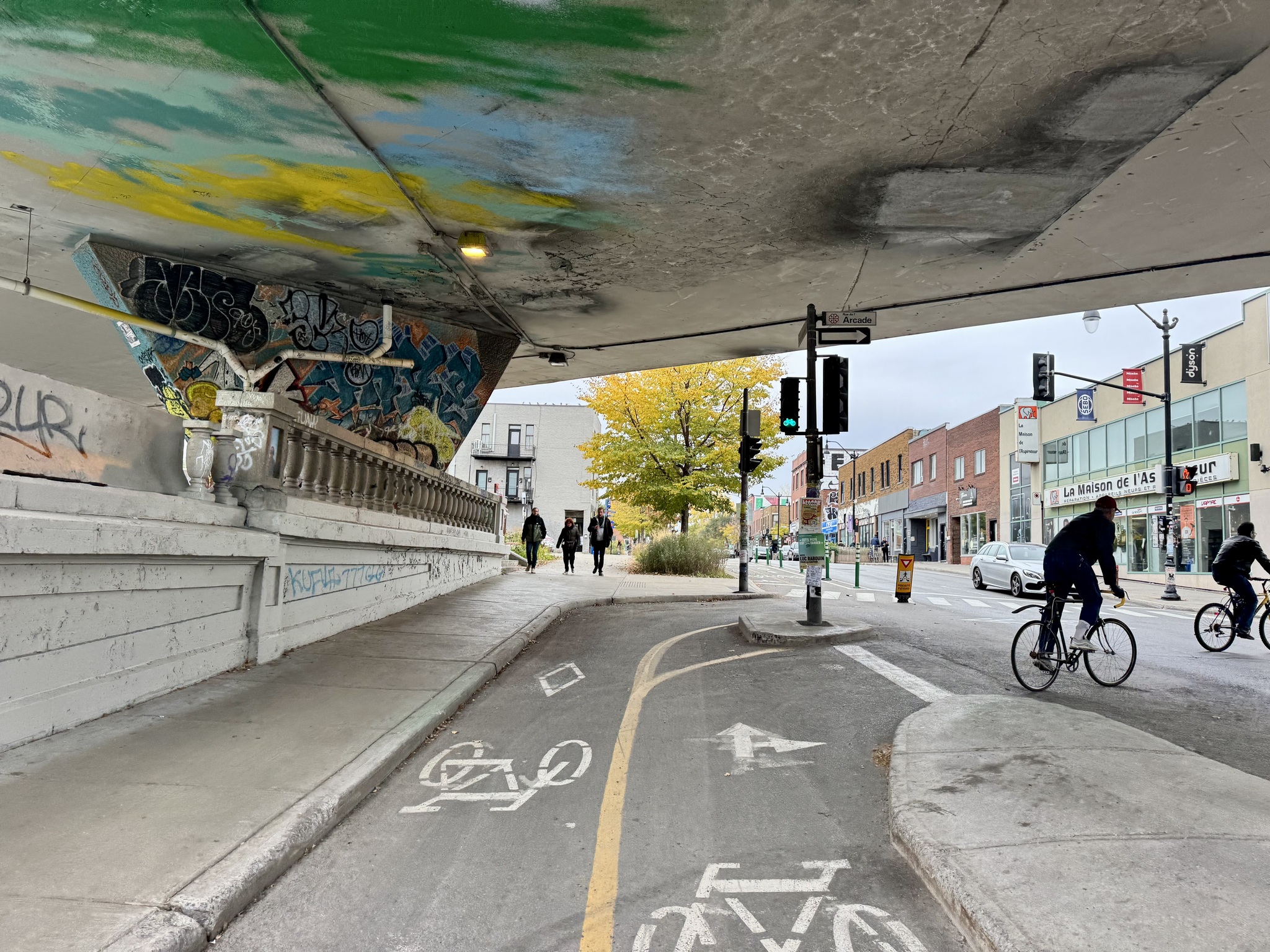
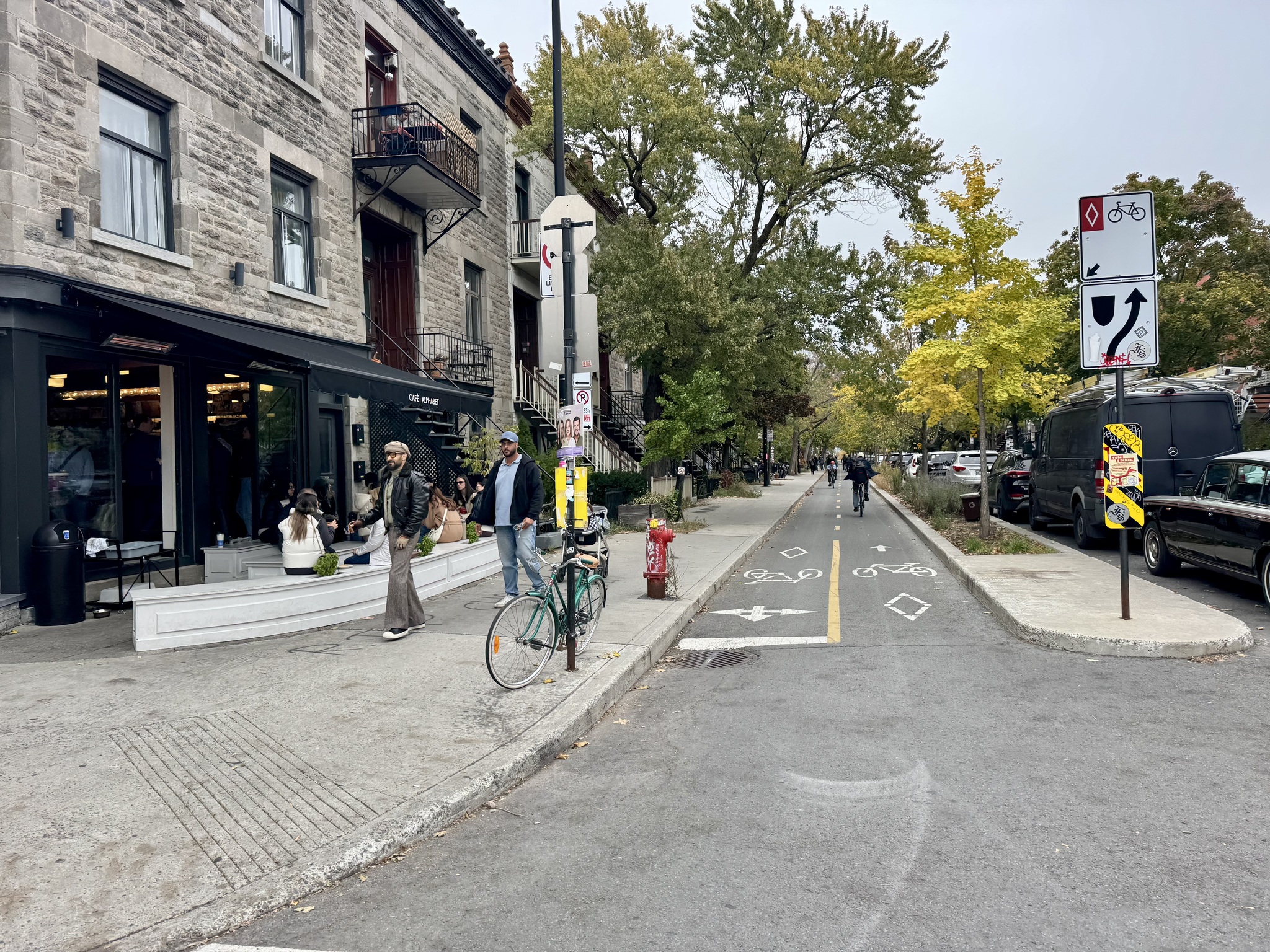
There was cycling infrastructure that took us from Reseau Vert almost all the way to Fairmont Bagel.

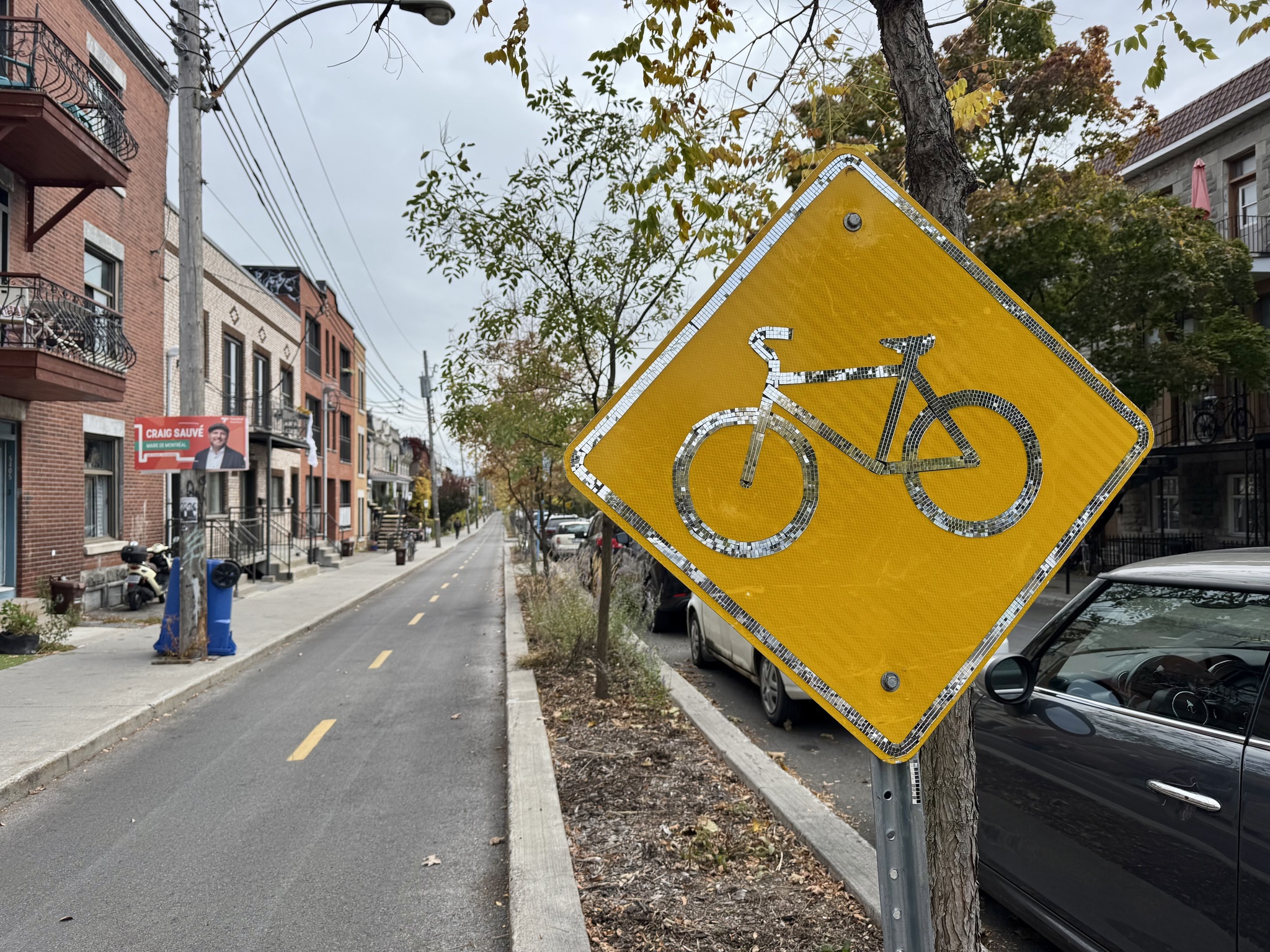
We saw this sparkly bike sign alongside the cycle track. 

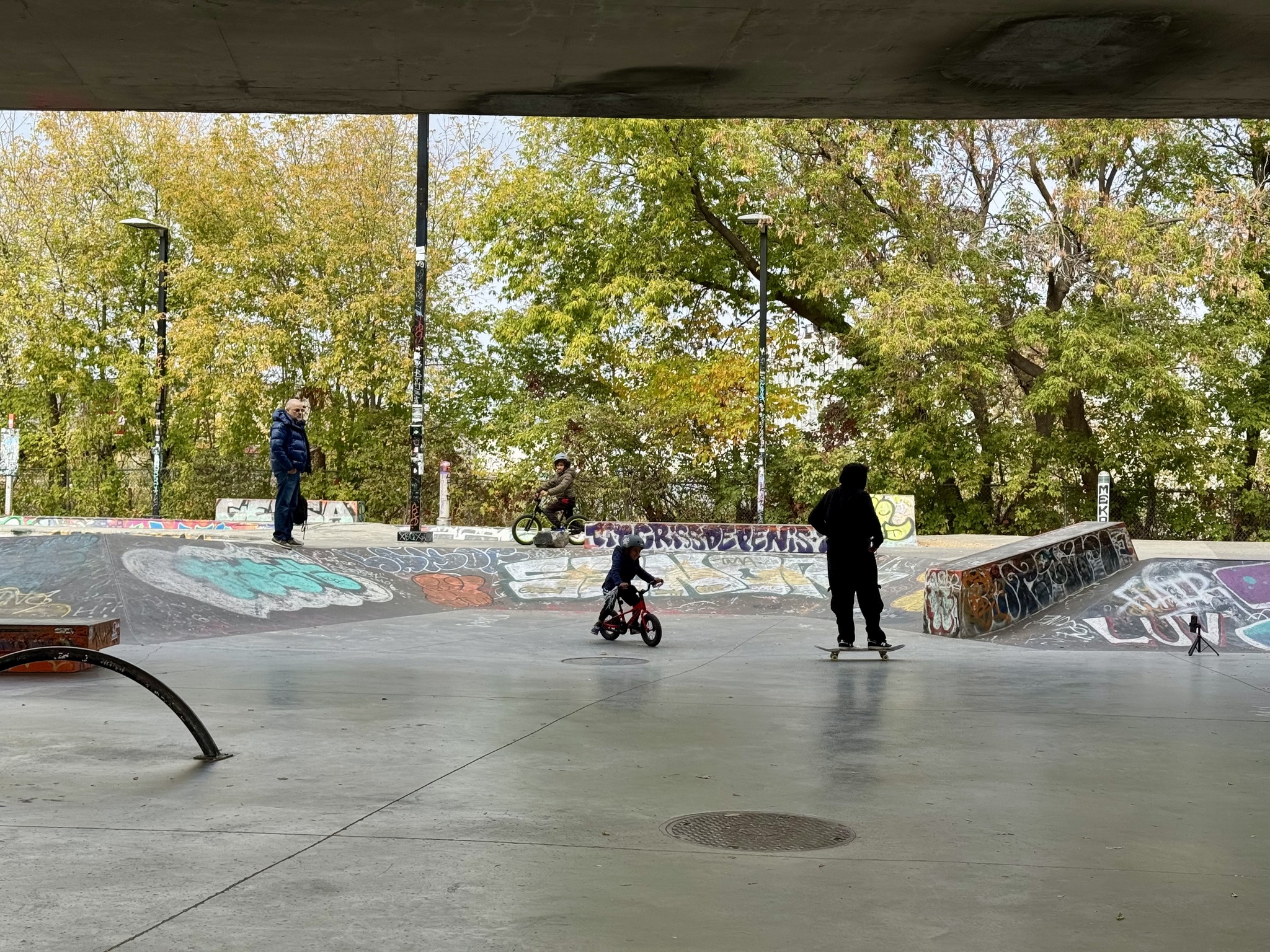
We retraced our route to continue along the Reseau Vert, passing a skateboard park in an underpass, that reminded me of Underpass Park in Toronto.

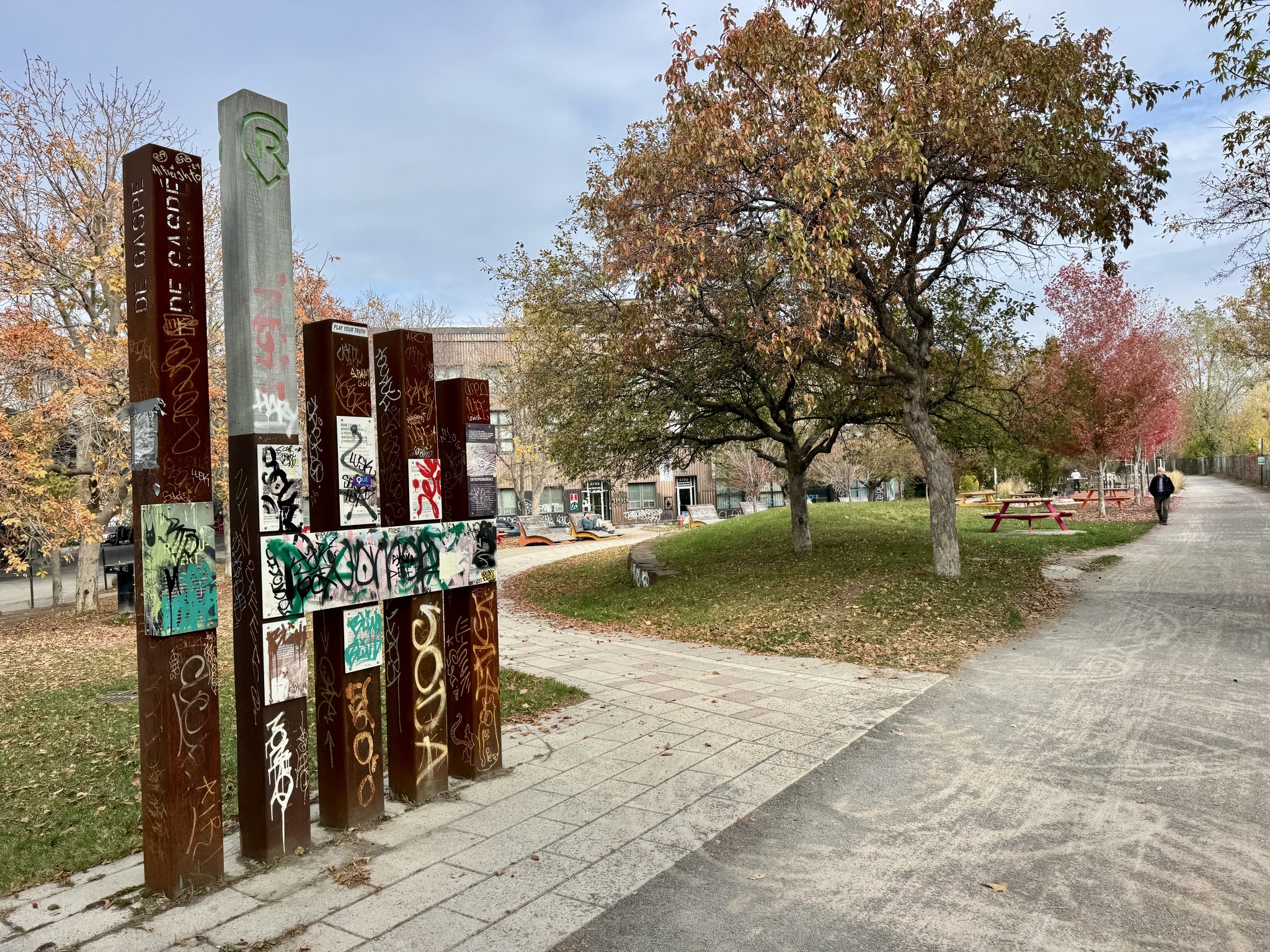
These steel beams are used as a motif in many places along the trail. Unfortunately, they’ve all been tagged quite badly.

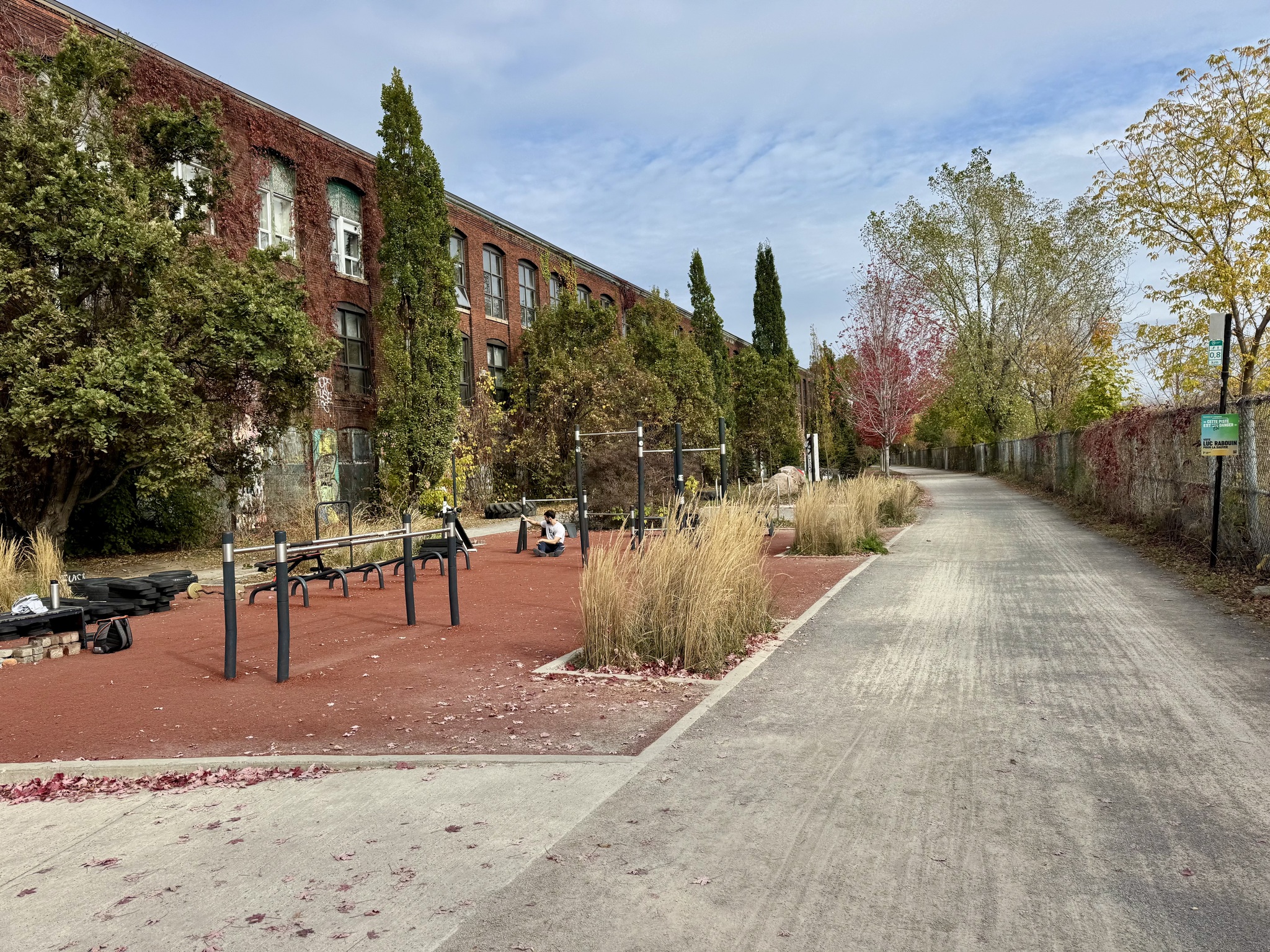
We saw more places to sit and places to work out.

When we neared the east end of the linear park, we started to ride toward the waterfront, with a planned stop at another park along the way. We passed Montreal’s first School Square. When École Paul-Bruchési, renovated to extend the school, it lost schoolyard space. They worked with the city to close the street in front of the school and build a playground to recover that space.  I love seeing roads being repurposed from motor vehicle use.

Place des Fleurs-de-Macadam is located on land previously occupied by a gas station. The ground was decontaminated and then turned into Quebec‘s first “water Square“. It is a temporarily floodable public square, and gathering place. It has lots of seating, a water fountain, and mist blowers for cooling off on hot days. It helps to reduce the heat island effect and stormwater runoff. It was designed by the same company that designed Shamrock Park.

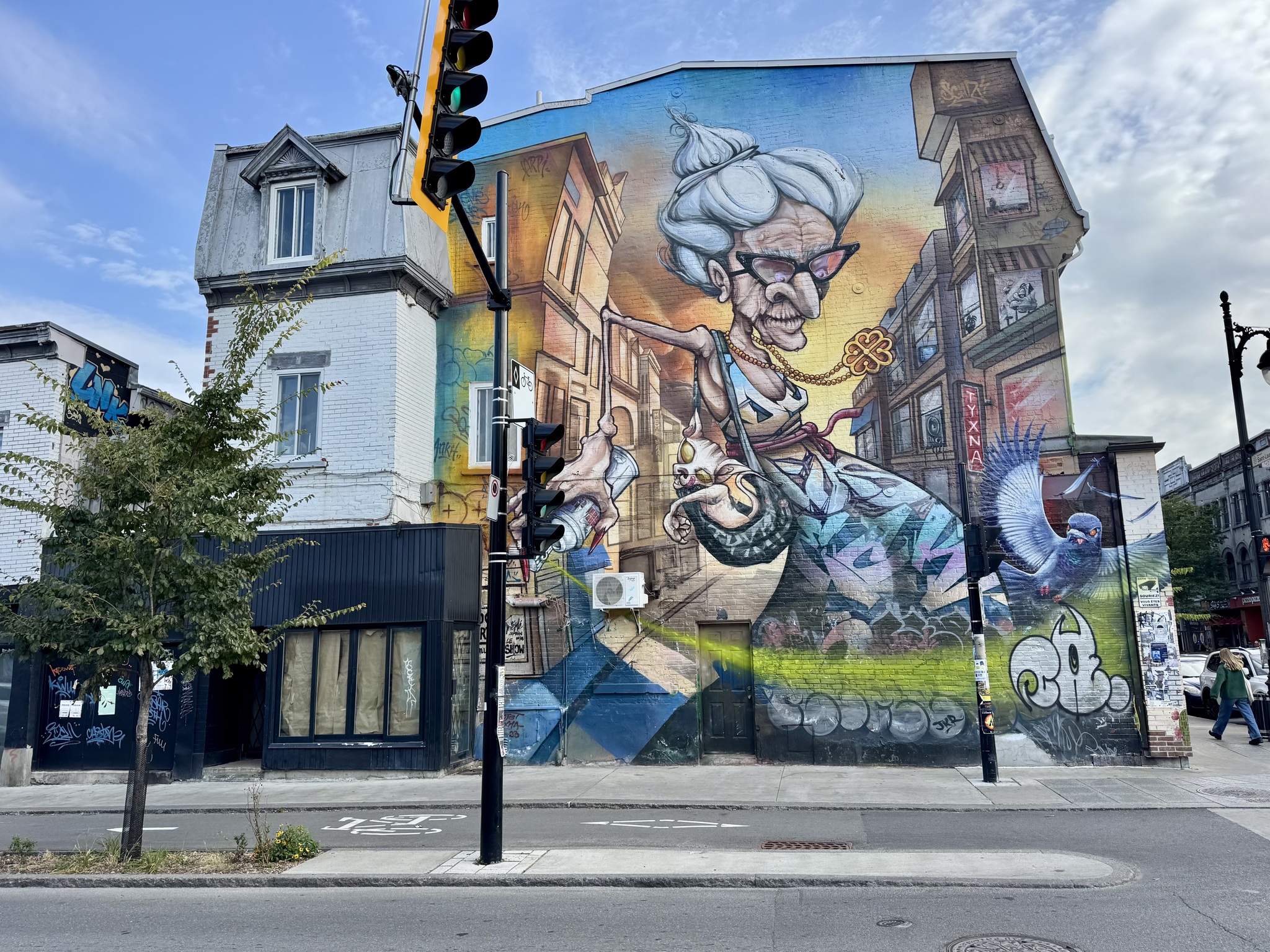
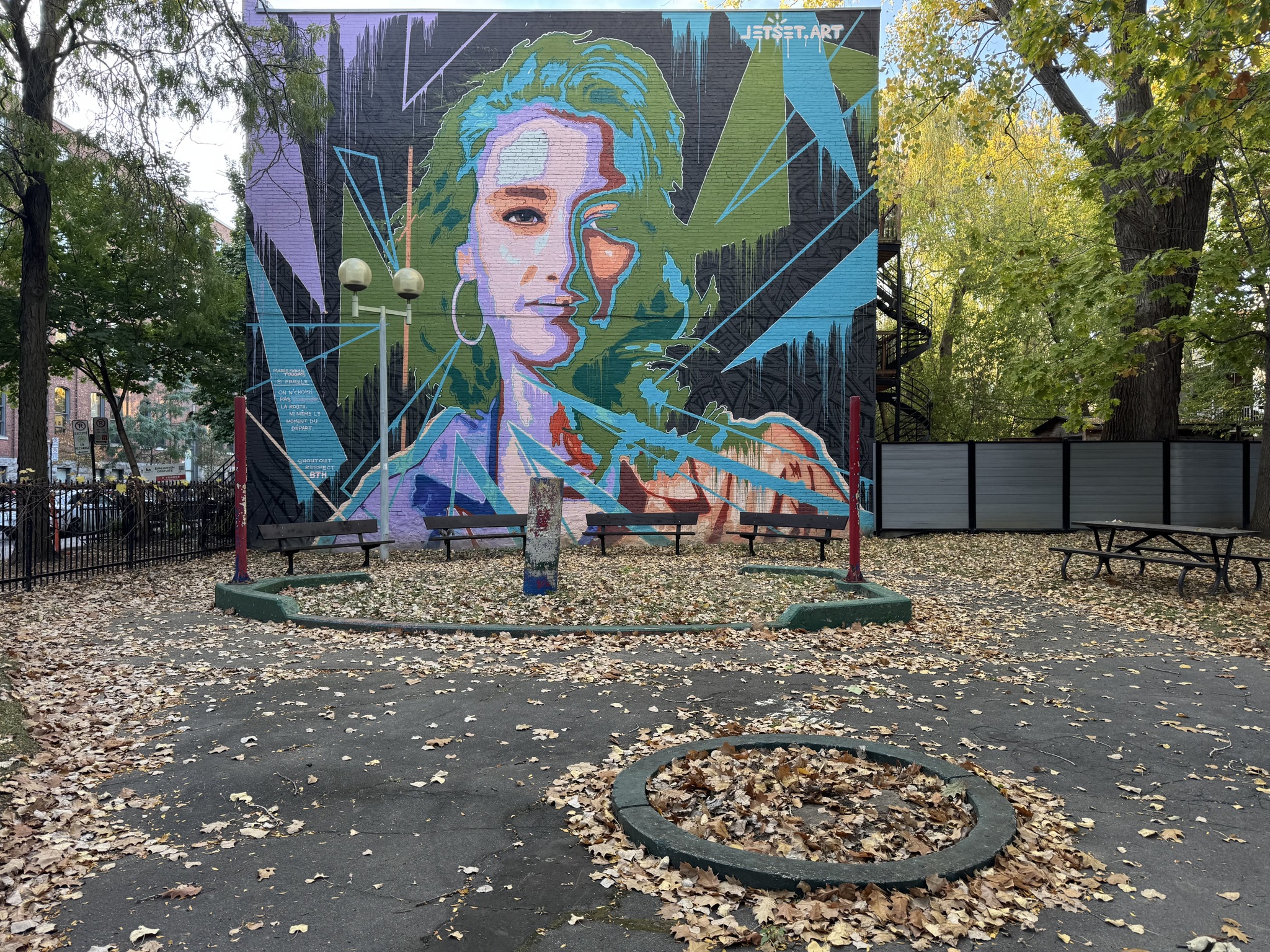
We admired this large colourful mural by TYXNA while we were stopped at a traffic light in the Plateau neighbourhood.

We knew that by going down to the waterfront, we would have to climb back up to the Oratory again, but it was still a fun descent.

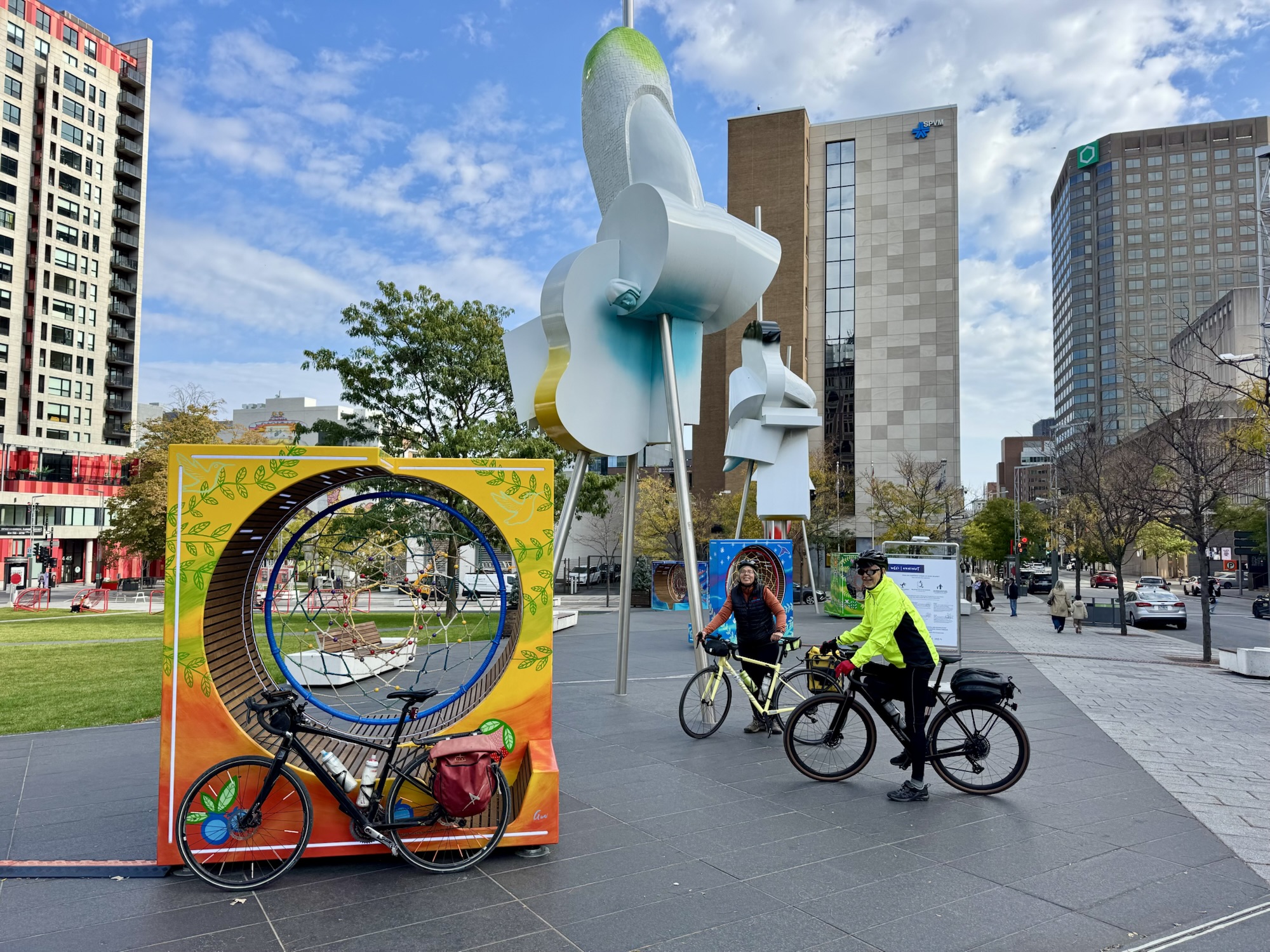
Our next stop was Parterre du Quartier des spectacles. It’s another great park, and the colourful dream catchers/benches were fabulous.

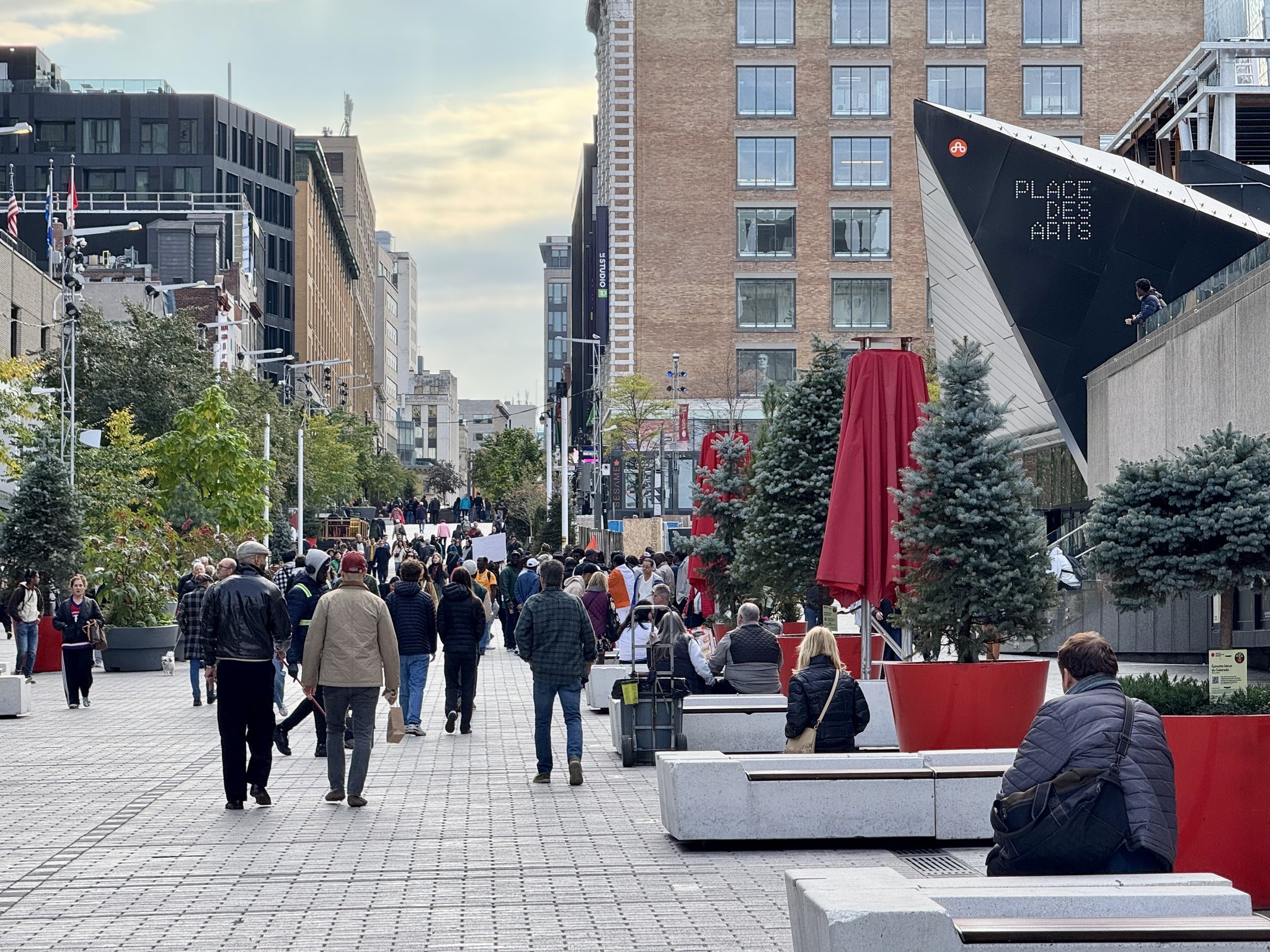
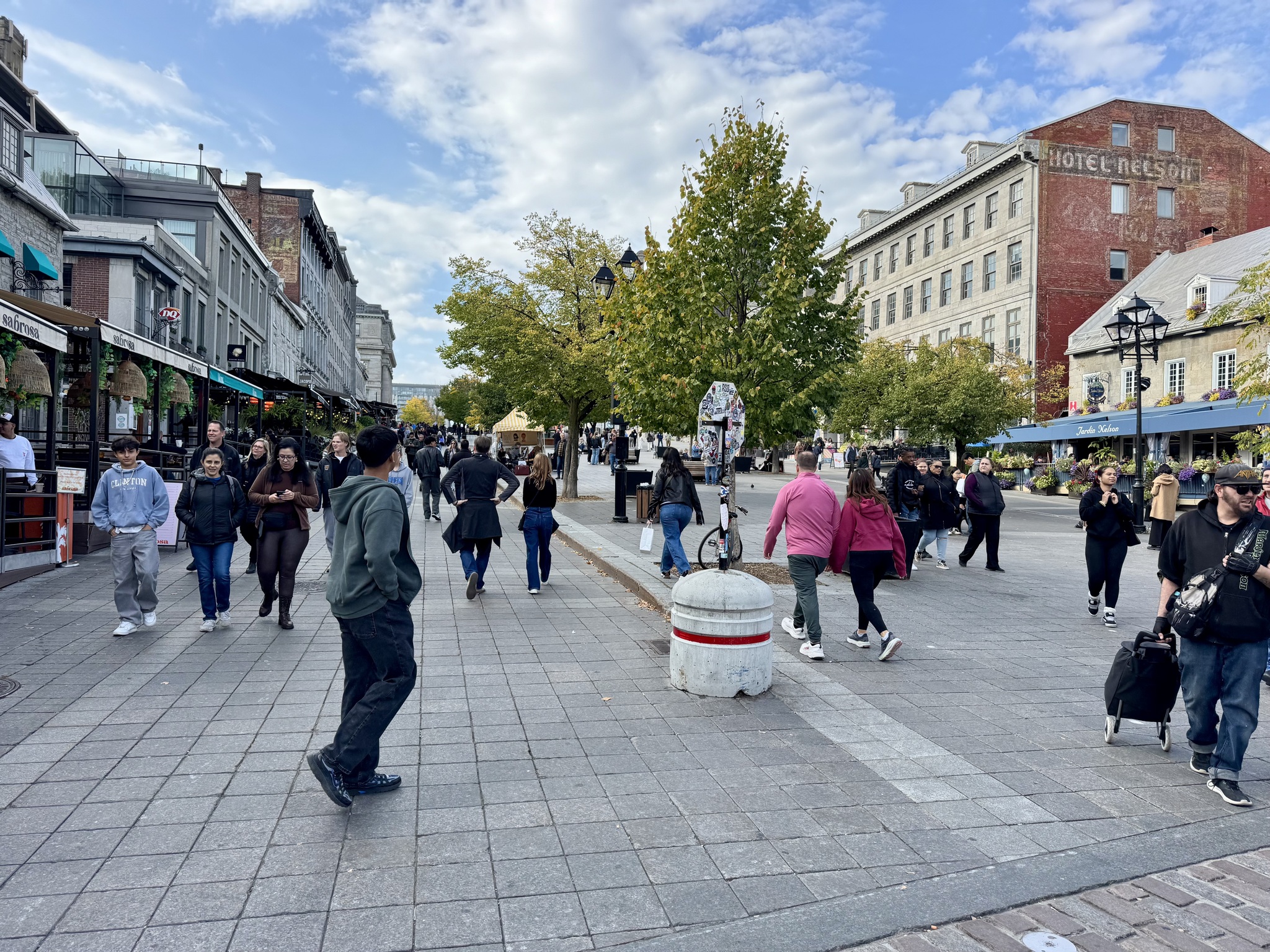
We stopped at the pedestrianized section of Saint Catherine Street just long enough to marvel at the crowds and take a few pictures.

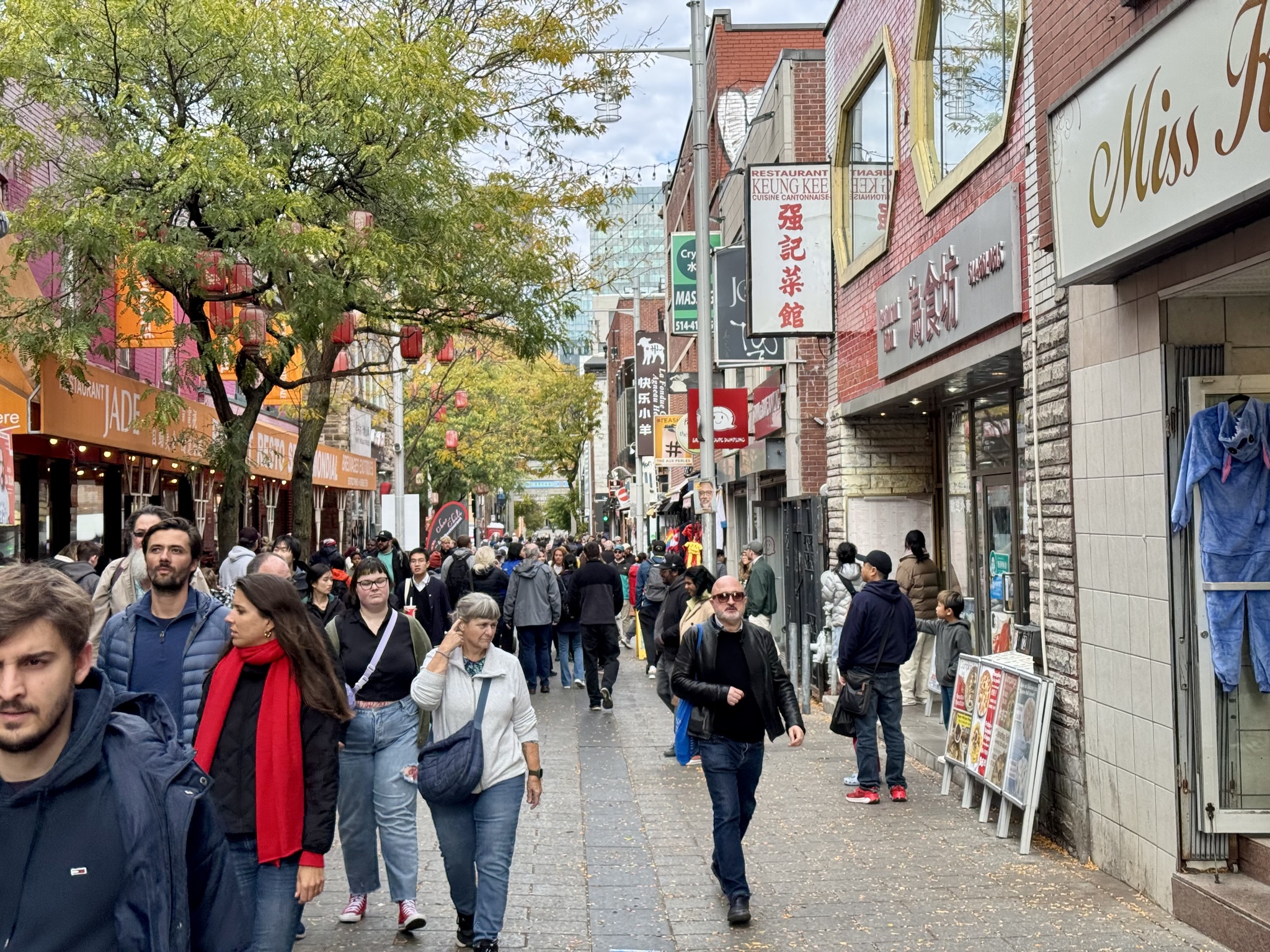
Chinatown’s pedestrianized street was even more crowded.

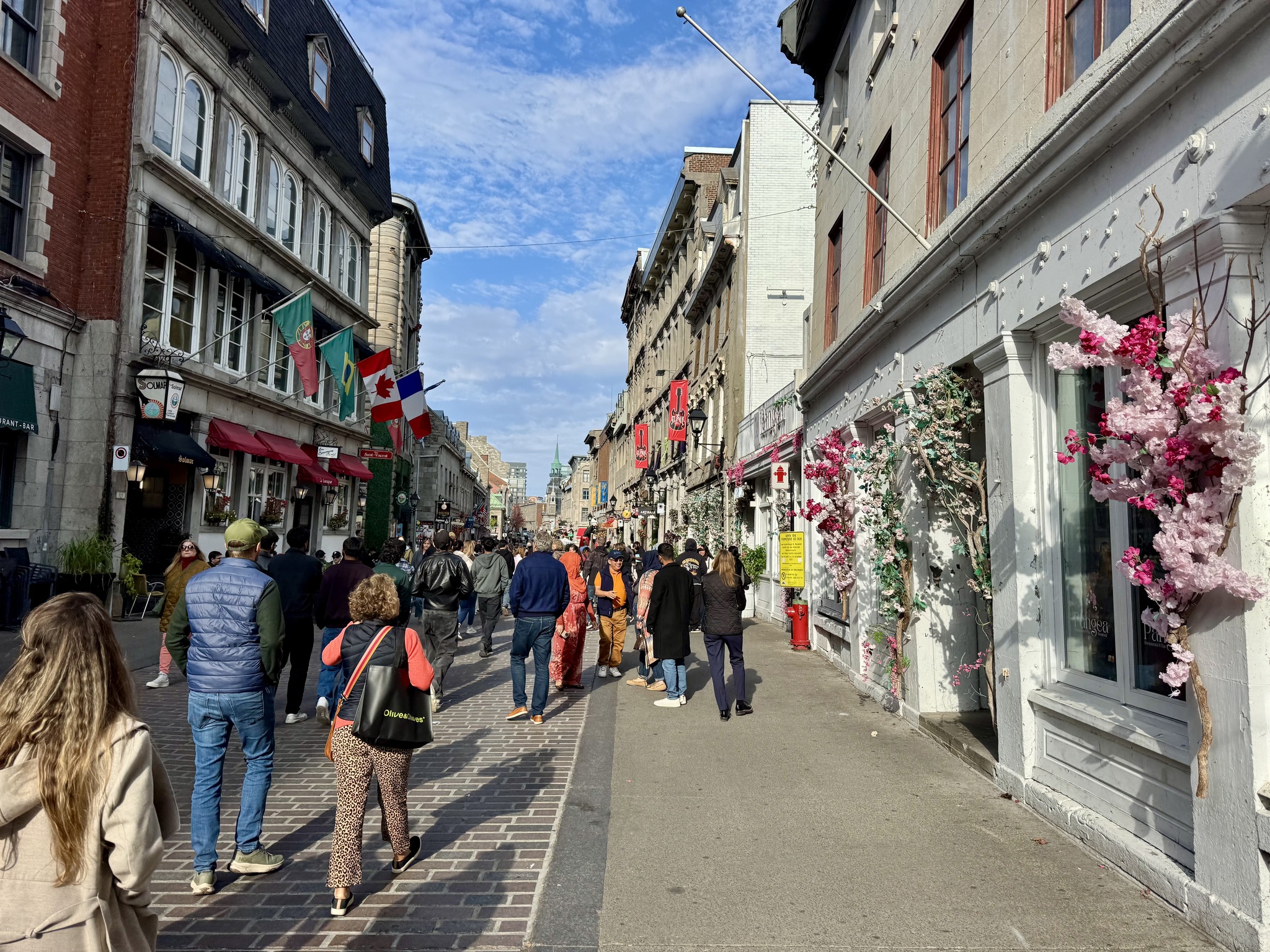
Shortly thereafter we came to Saint Paul Street, which was also pedestrian only. We had to walk our bikes on all three streets as they were far too crowded to safely ride.

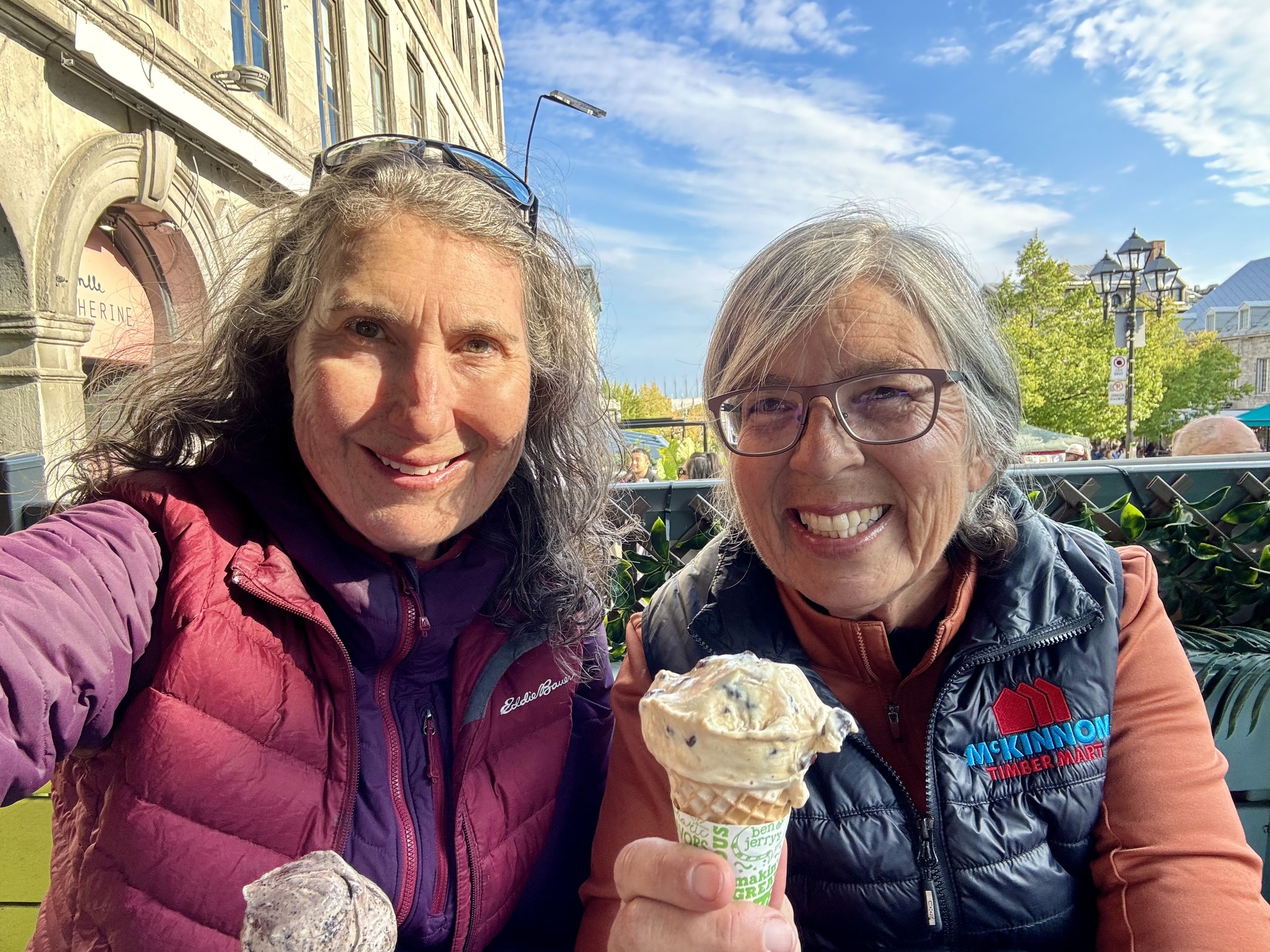
In Jacques Cartier Place we had ice cream at the Ben & Jerry’s. It was also very busy. Build a city where pedestrians feel comfortable, and you will attract lots of pedestrians.

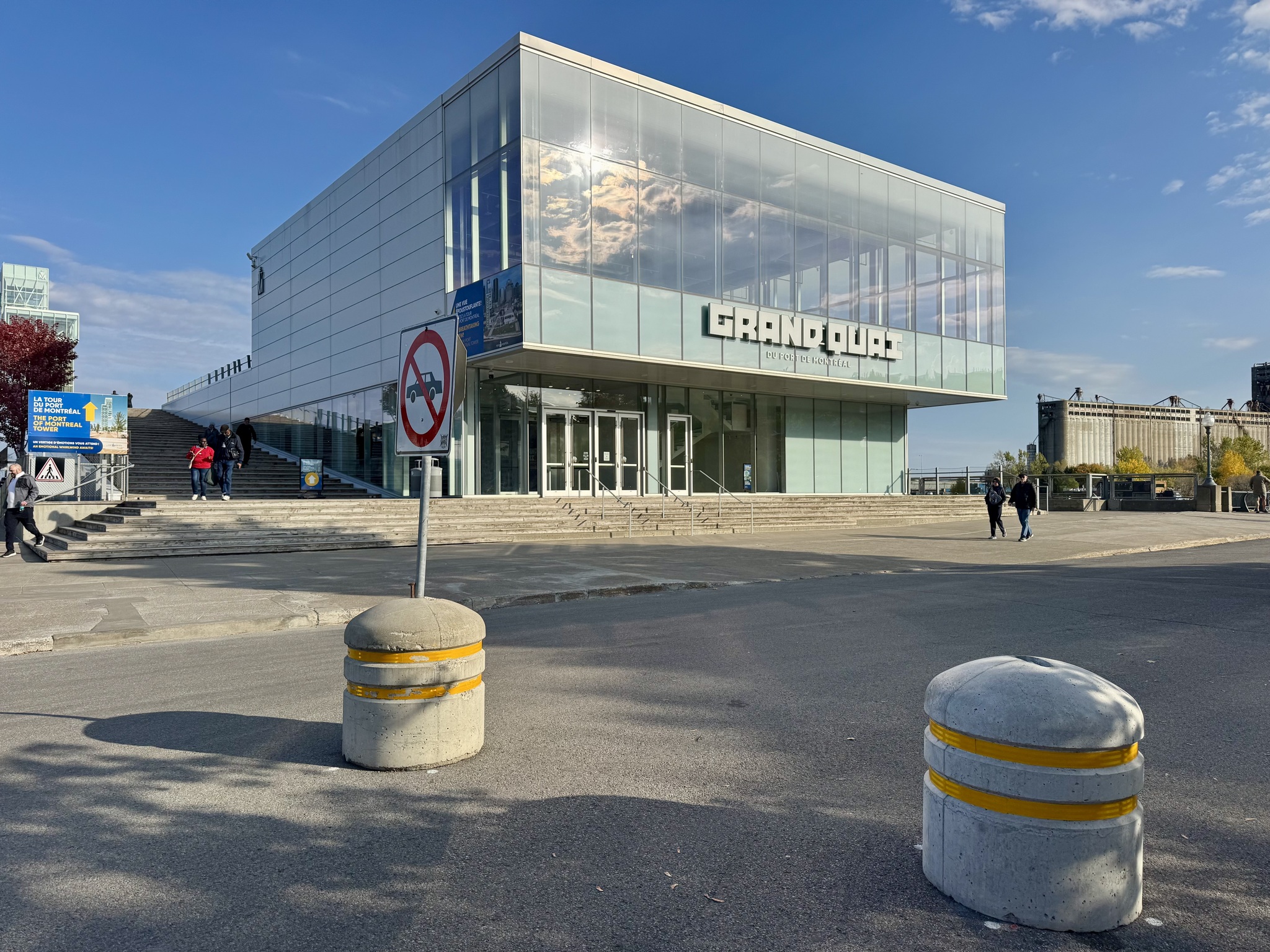
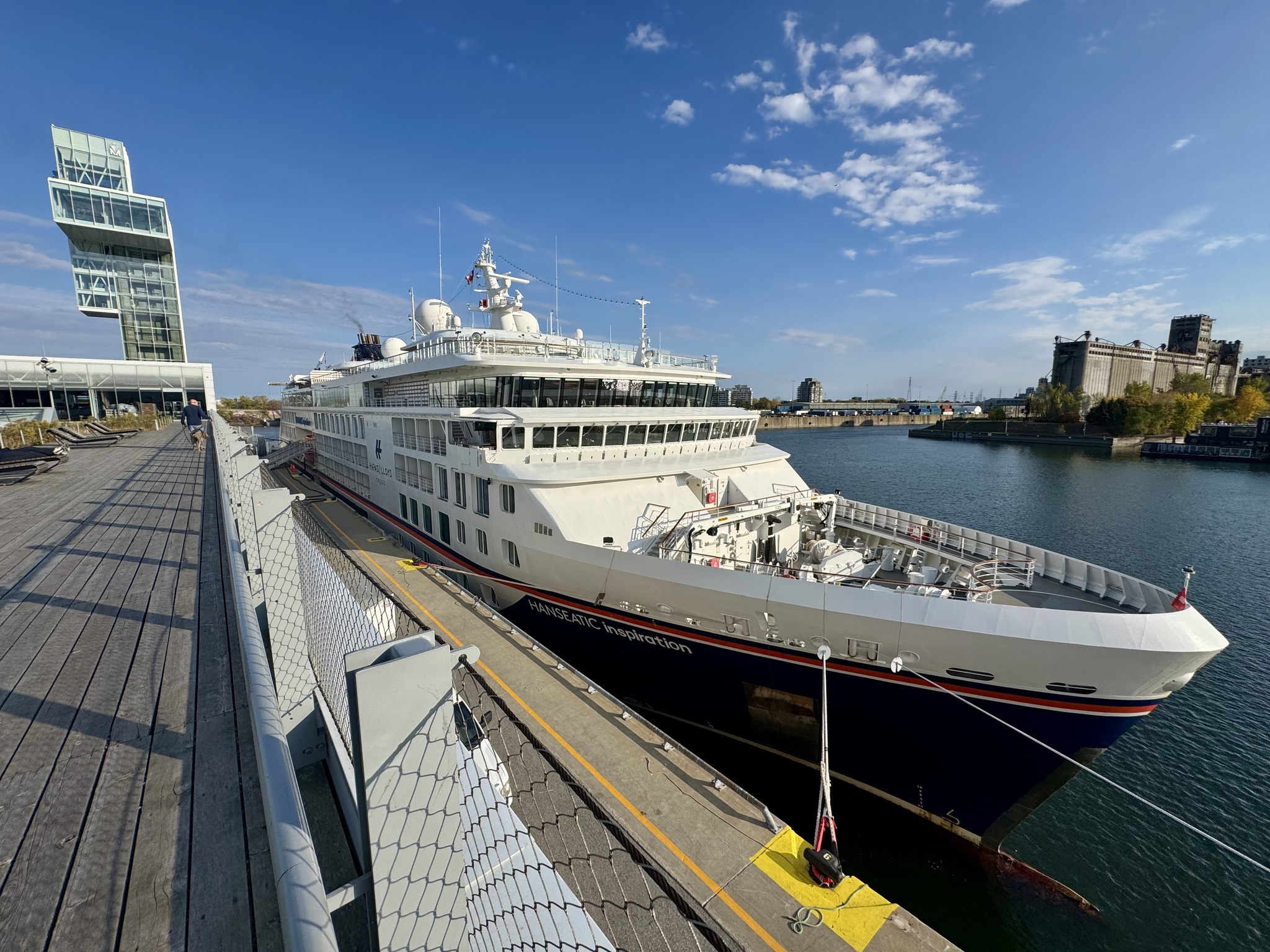
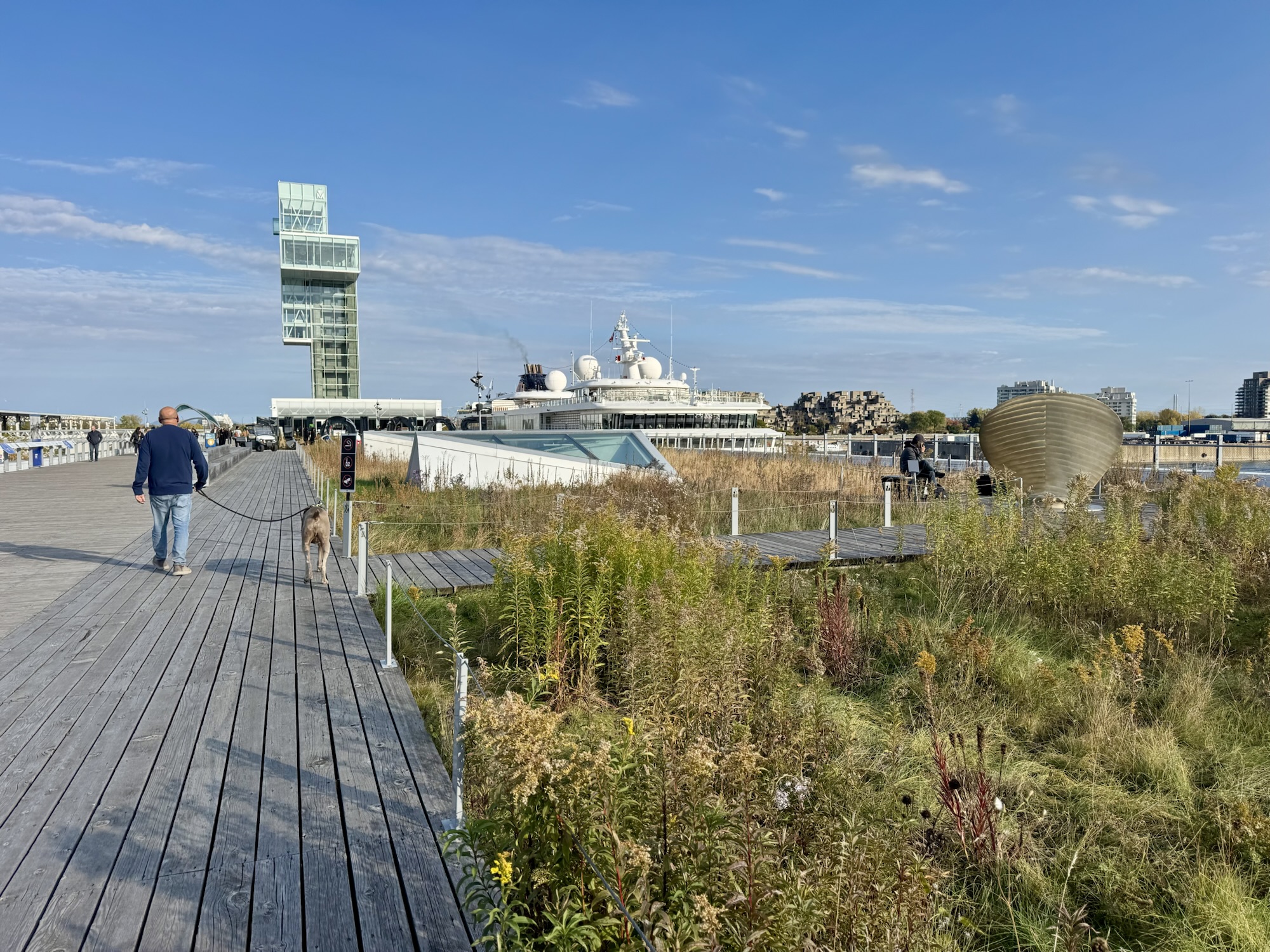
Our next stop was the cruise ship terminal rooftop park: Promenade d’Iberville. In addition to a 2200 m² area of plants, it has a 180 m long wooden walkway which leads to spectacular views over the port.

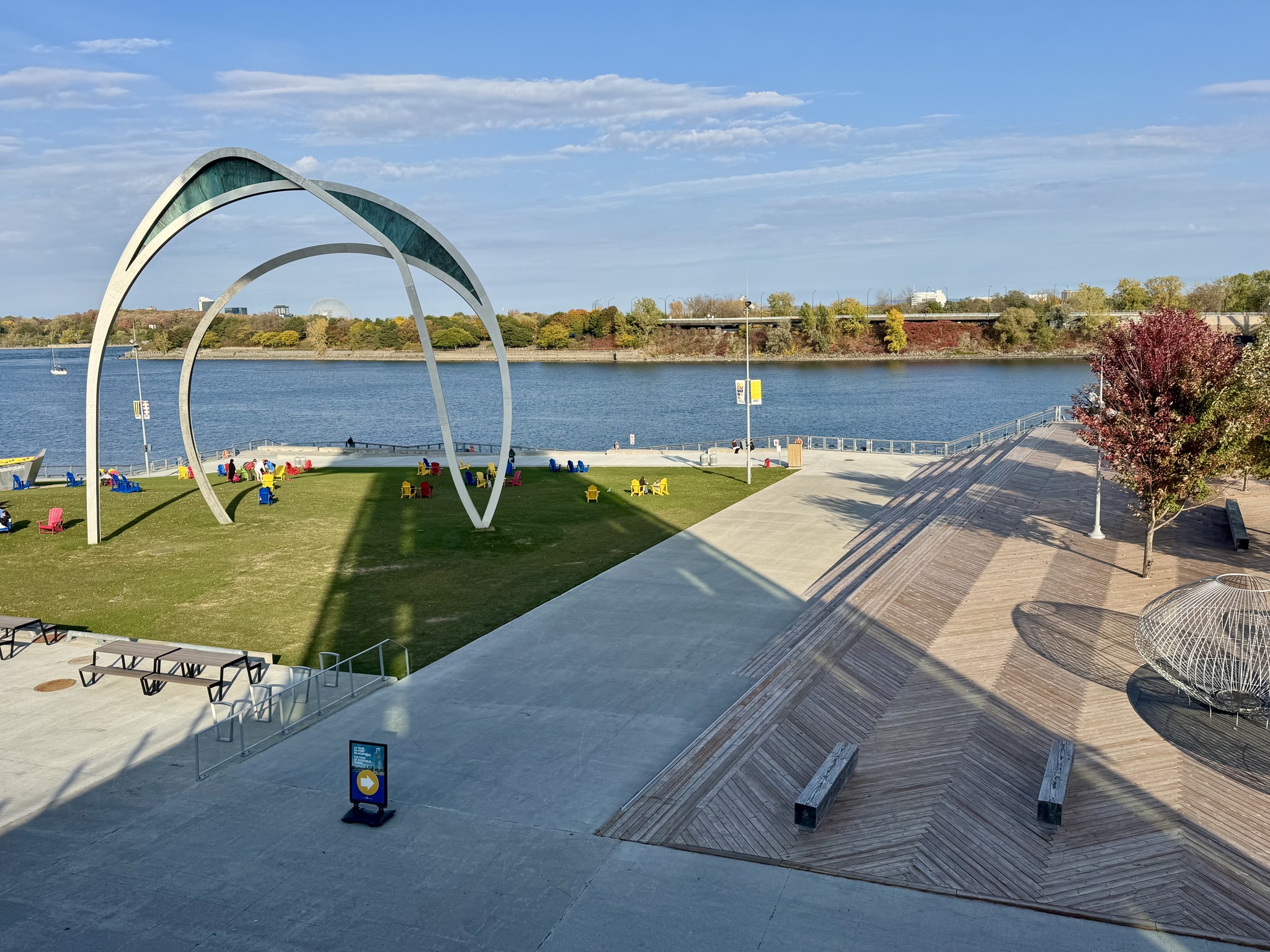
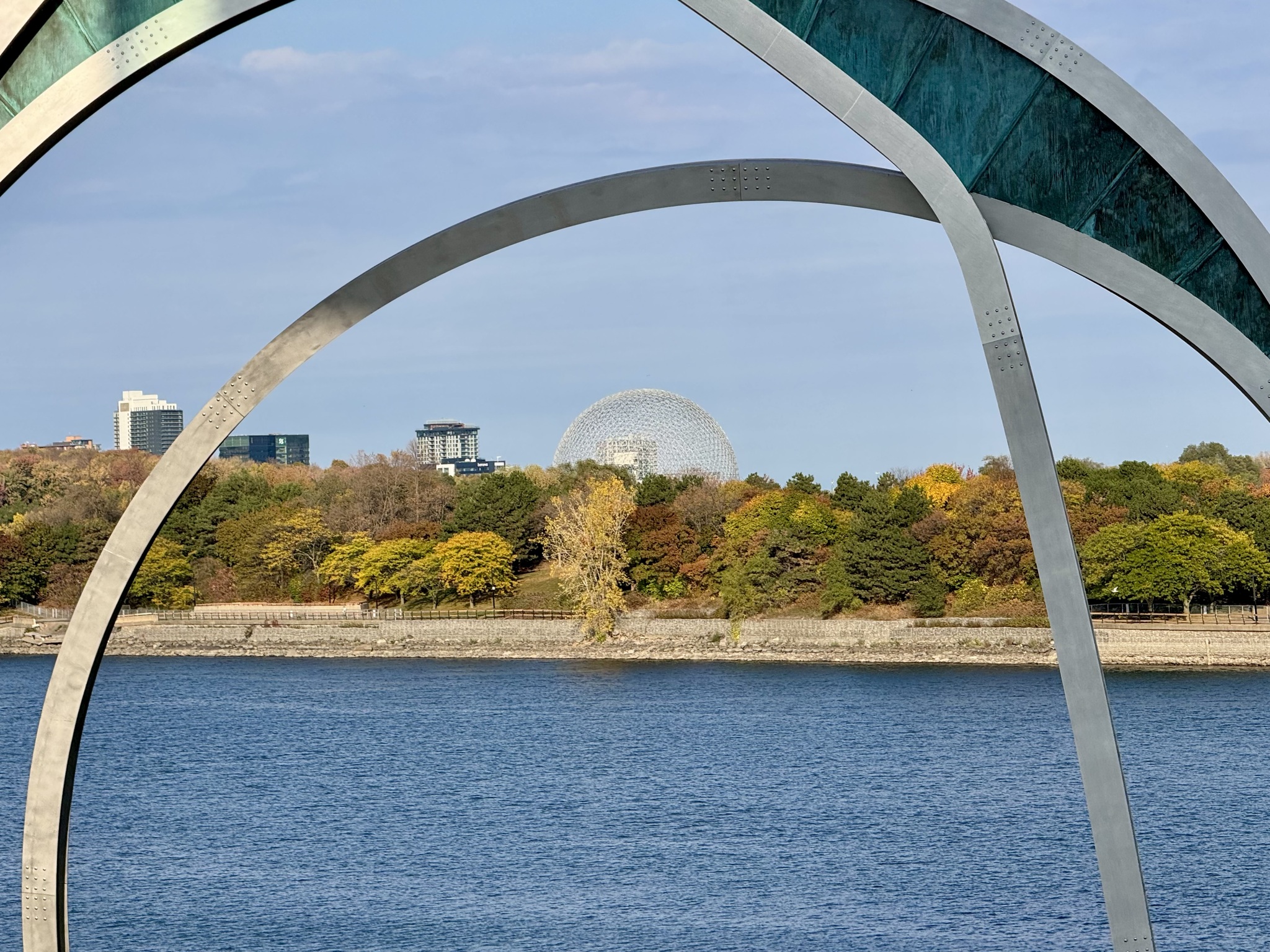
It leads down to a waterside park, Commencement Square,  with a large piece of public art, entitled Leurs effigies, that frames the biosphere in Jean Drapeau Park. 

From there, we had about a 6 km ride back to the Oratory. We walked the same first steep hill as yesterday. However, I changed the route slightly, for the second two hills we walked yesterday, to ones that were less steep but longer. We all walked the first hill. I walked part of the second hill. And we all made it up the third hill on our bikes.

We passed Westmount City Hall. Westmount is an independent city surrounded by Montreal.

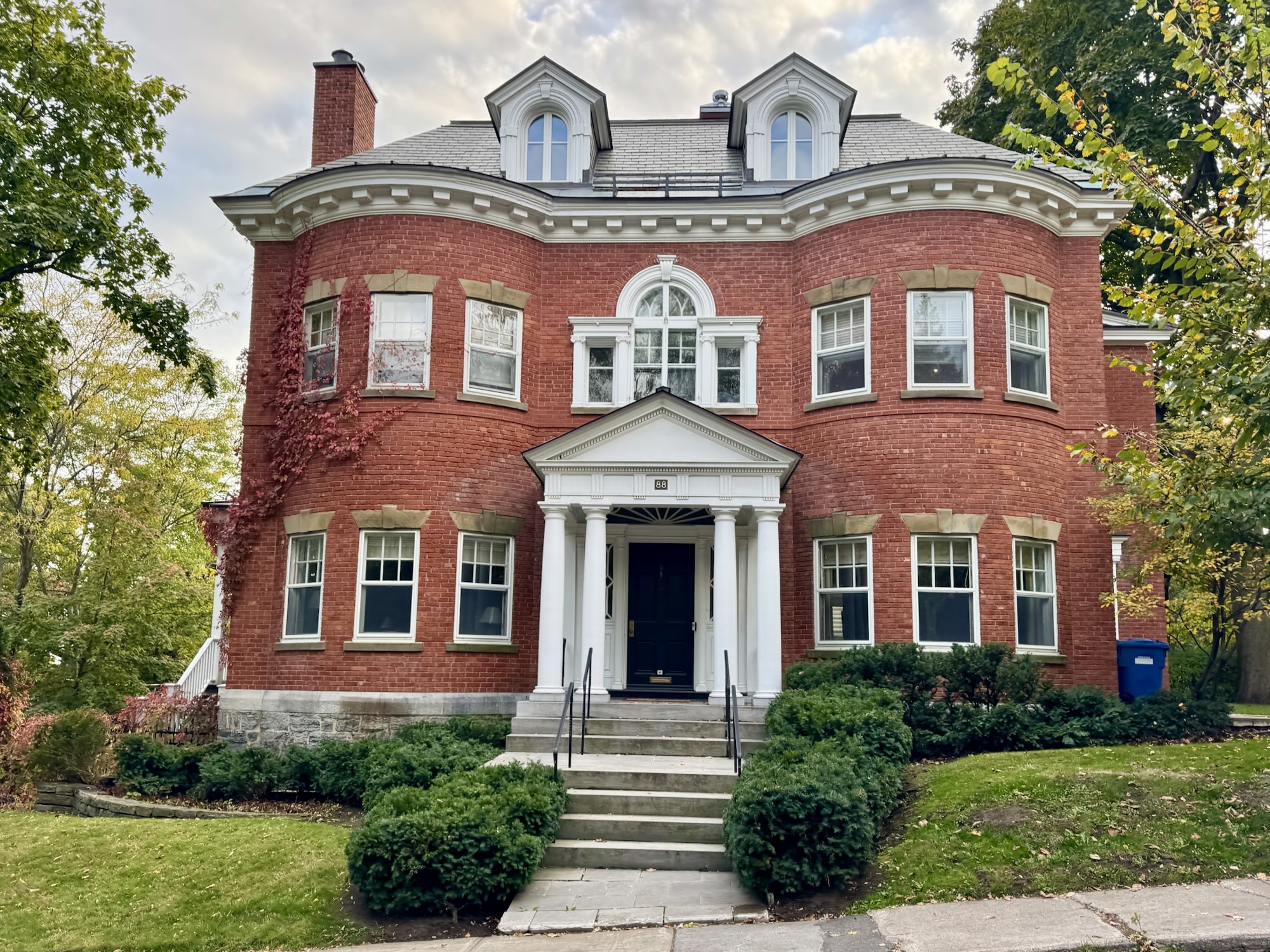
Once again, we were treated to many beautiful homes as we rode through Westmount.

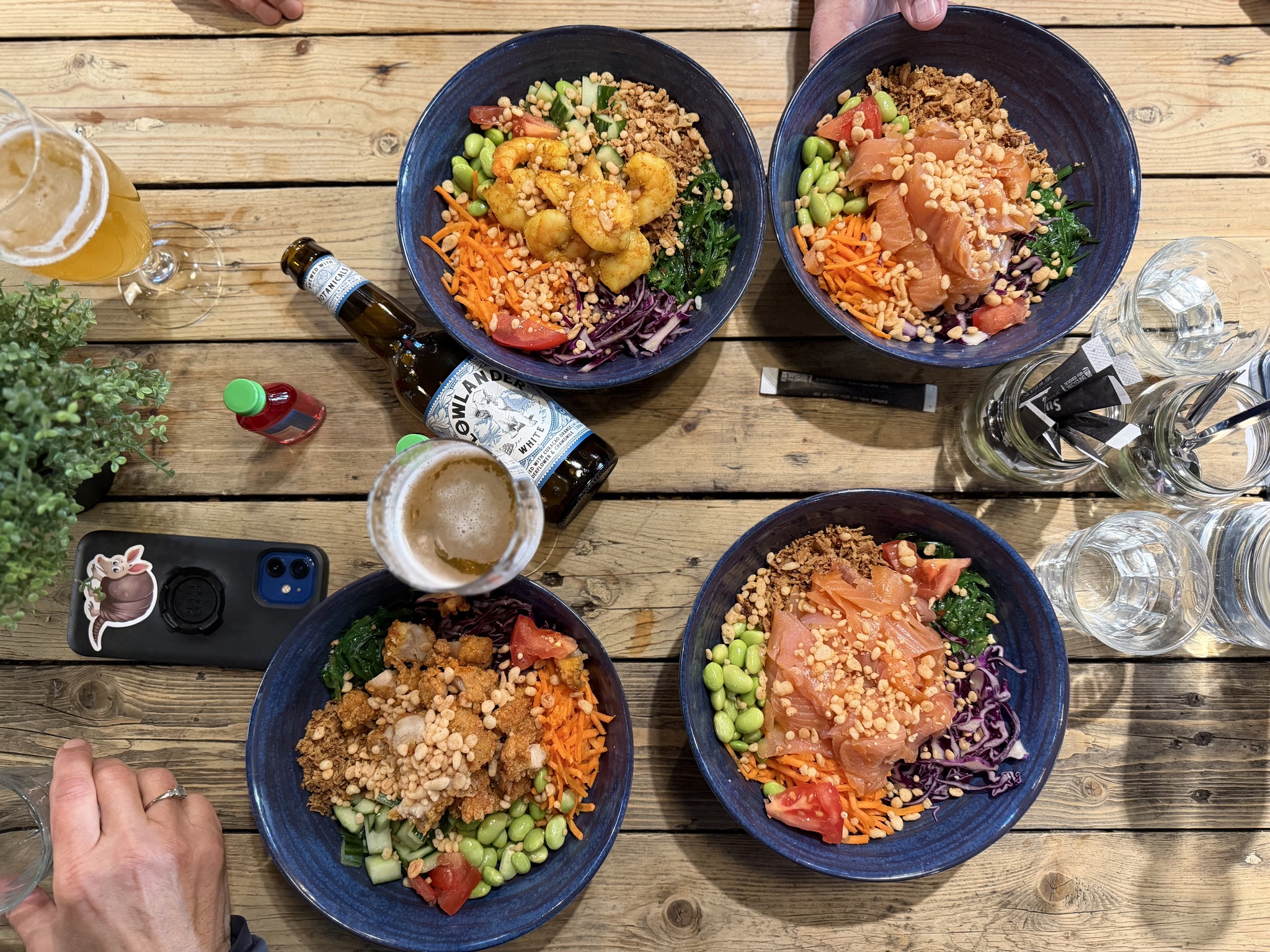
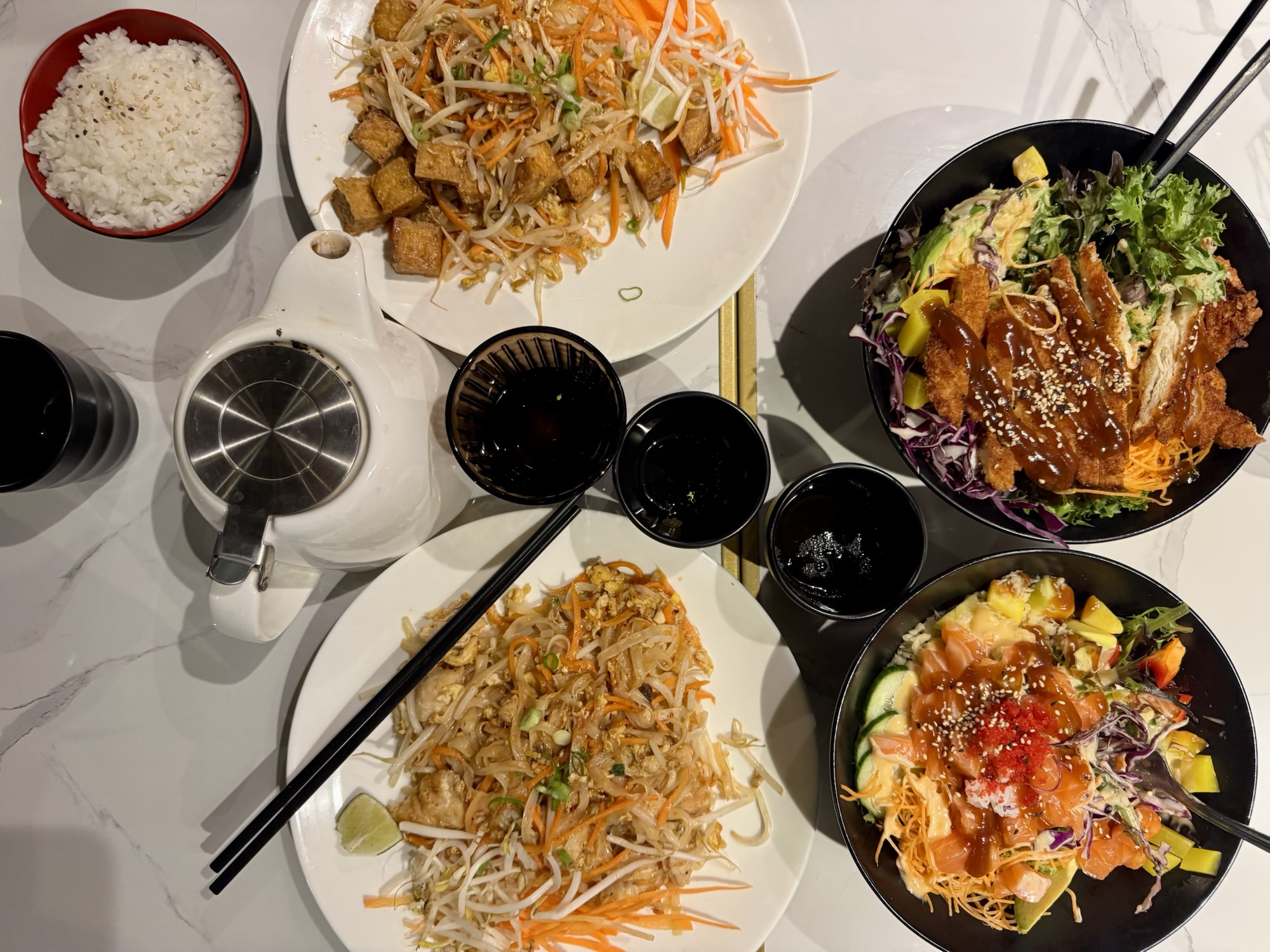
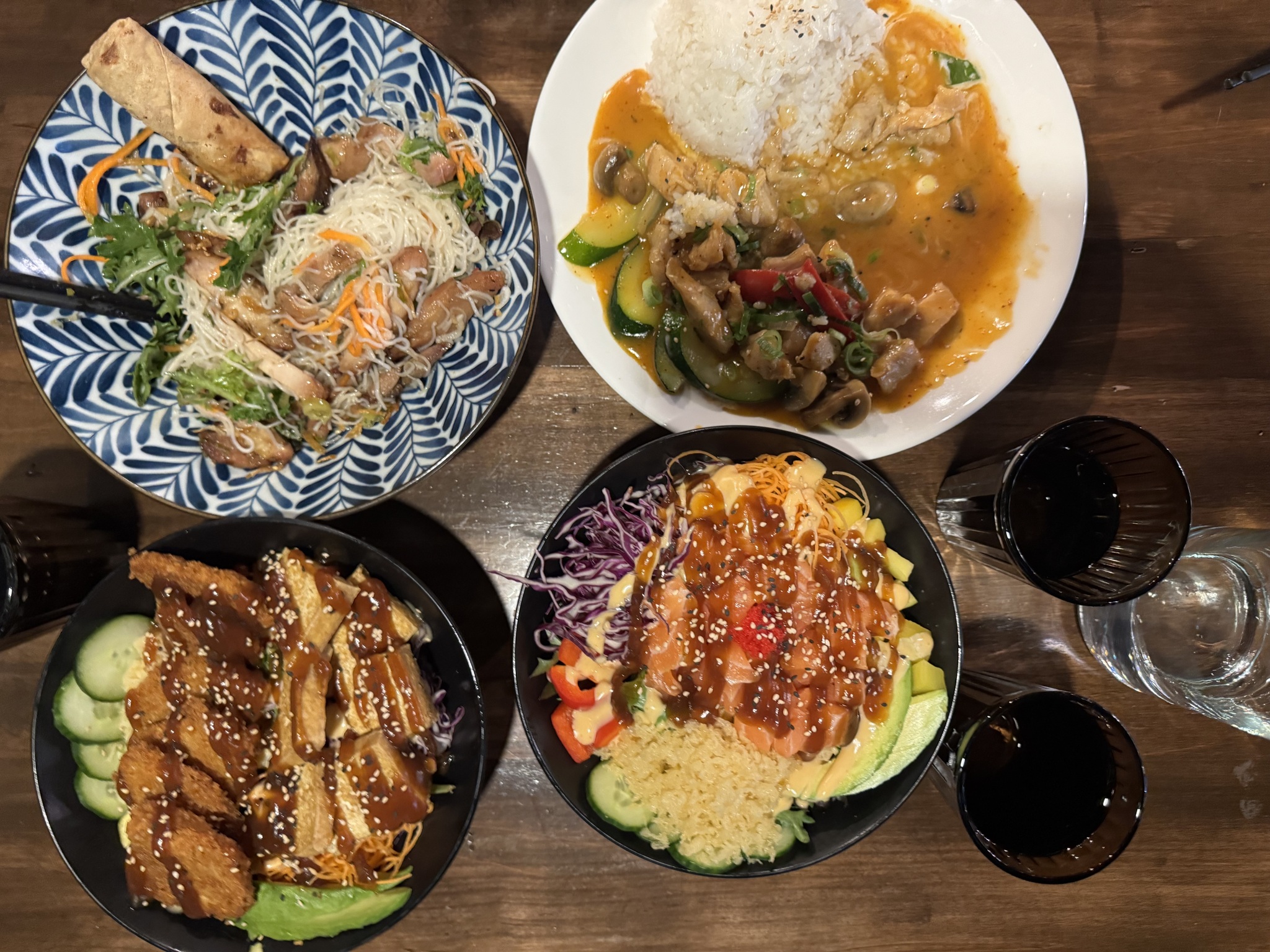
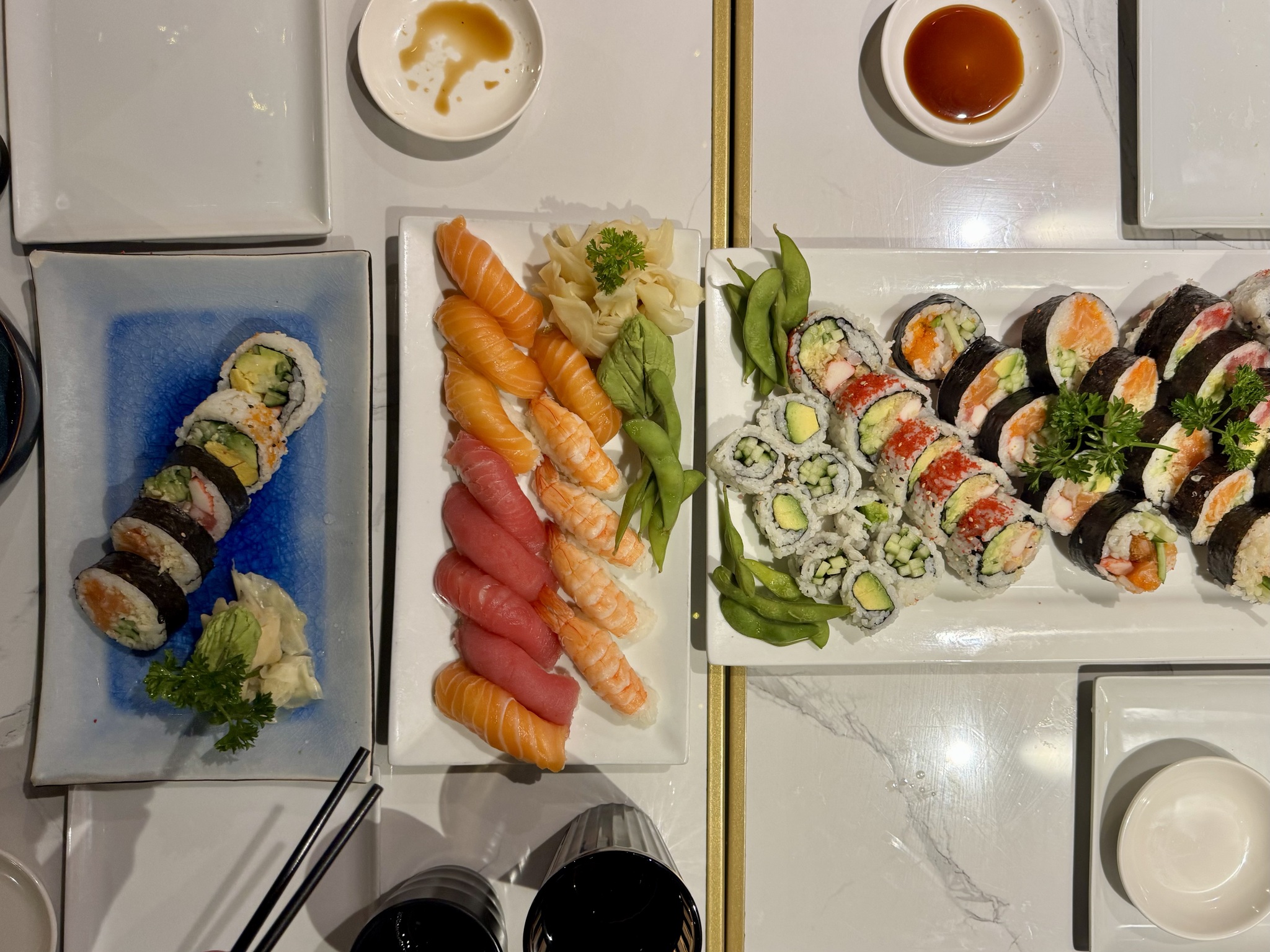
We had dinner at sushi shūshū again.  My Poké bowl was so good last night that I ordered it for a second time. We didn’t linger because we wanted to see the basilica that had so far eluded us.

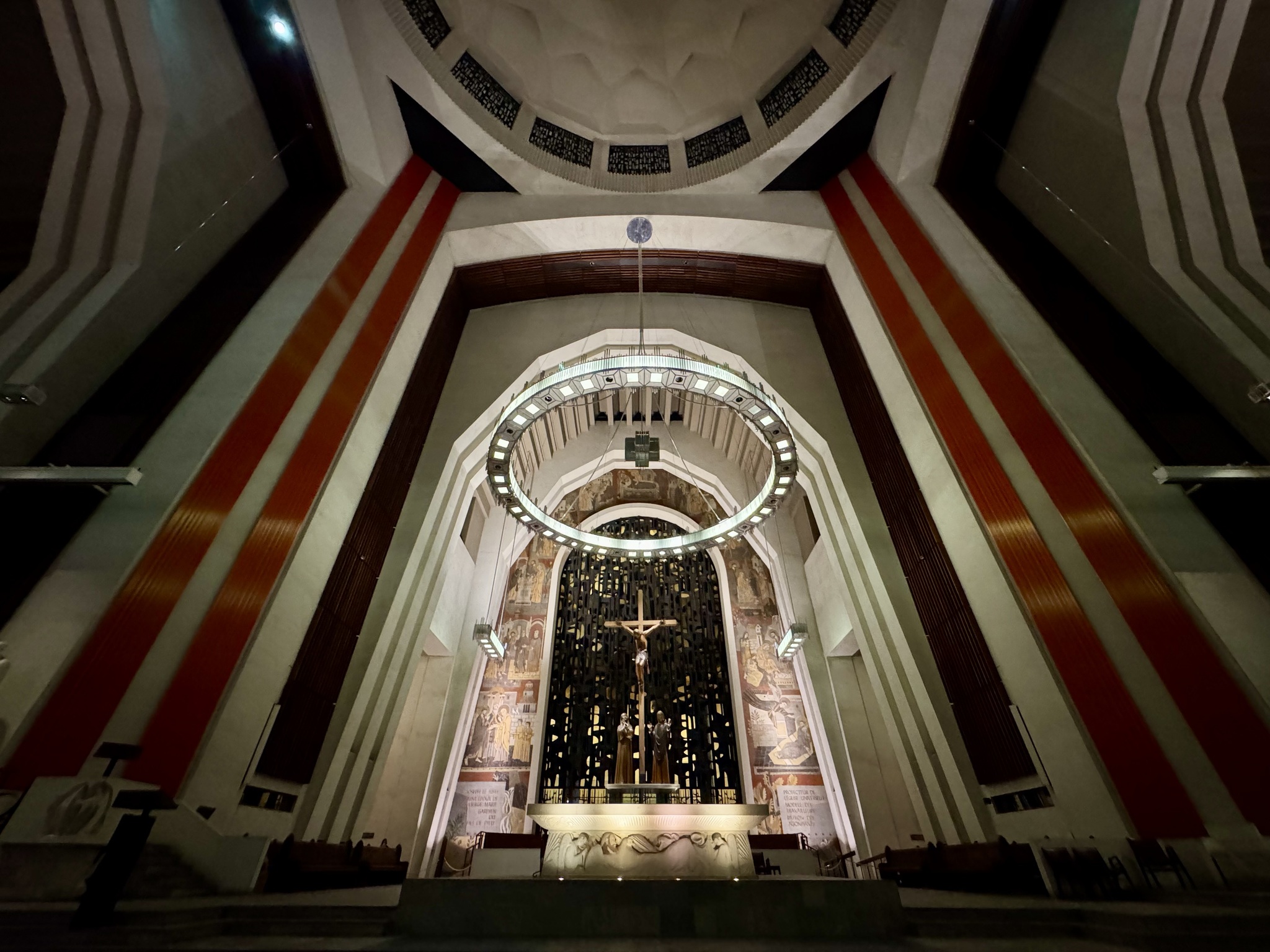
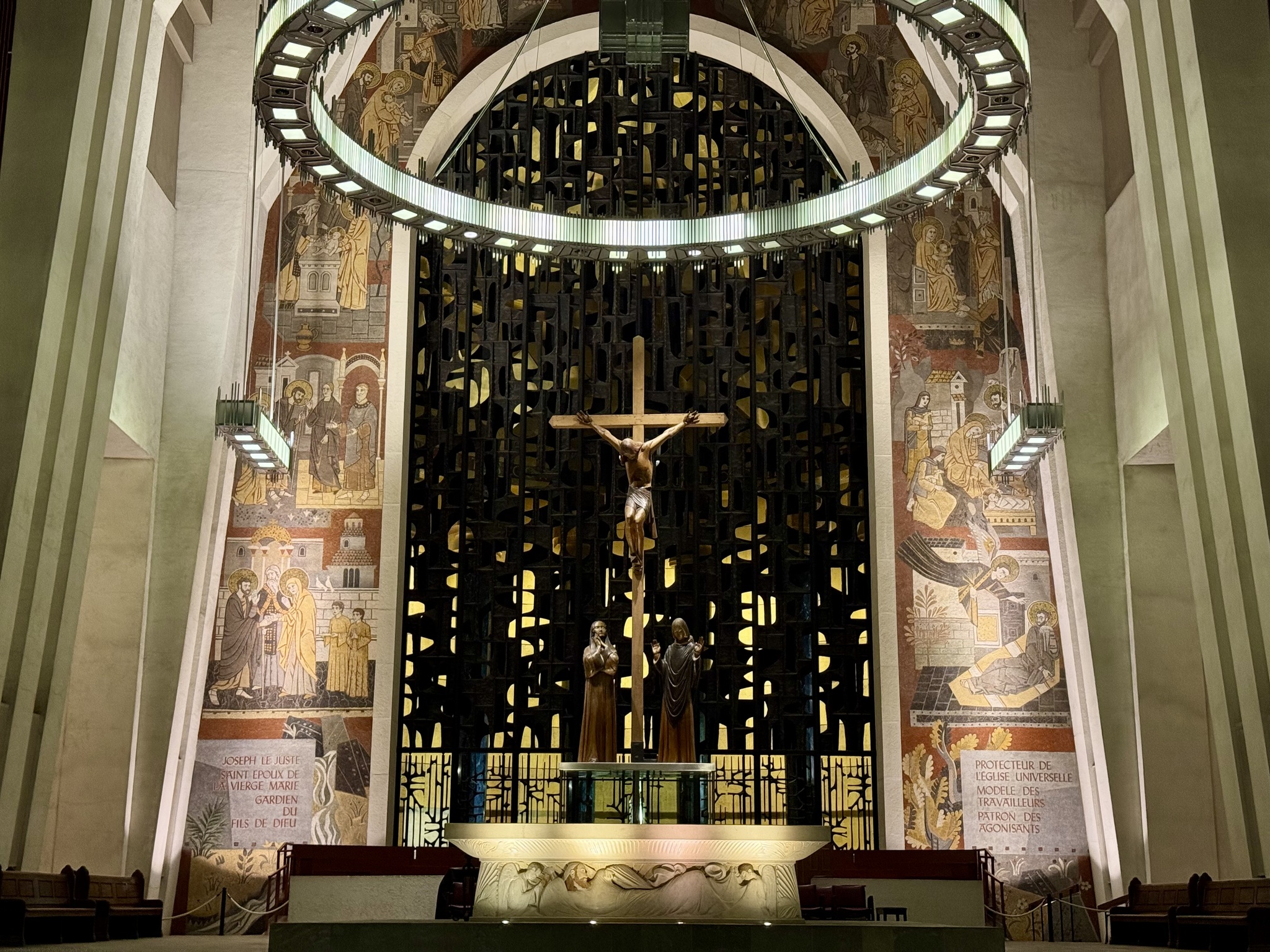
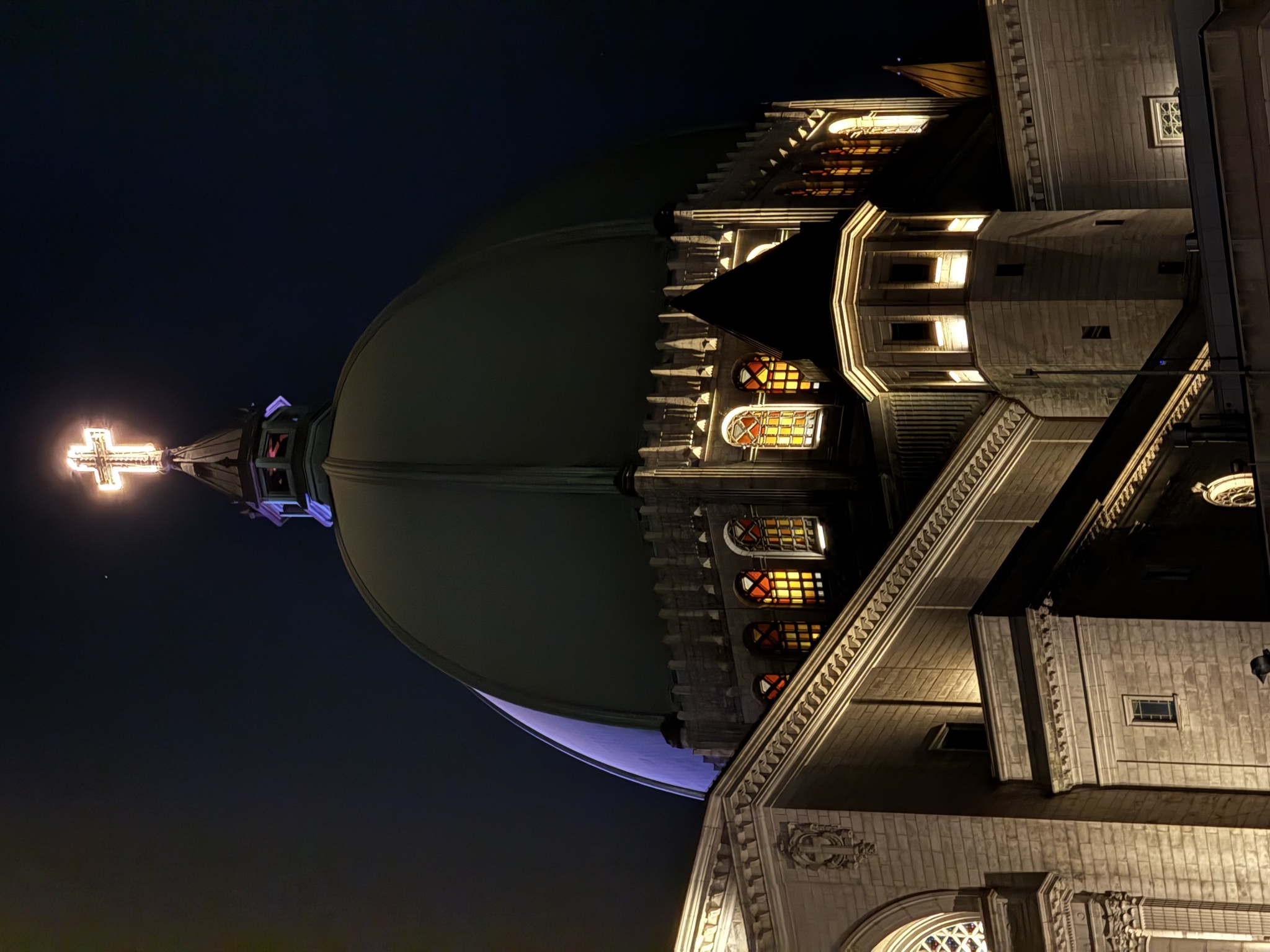
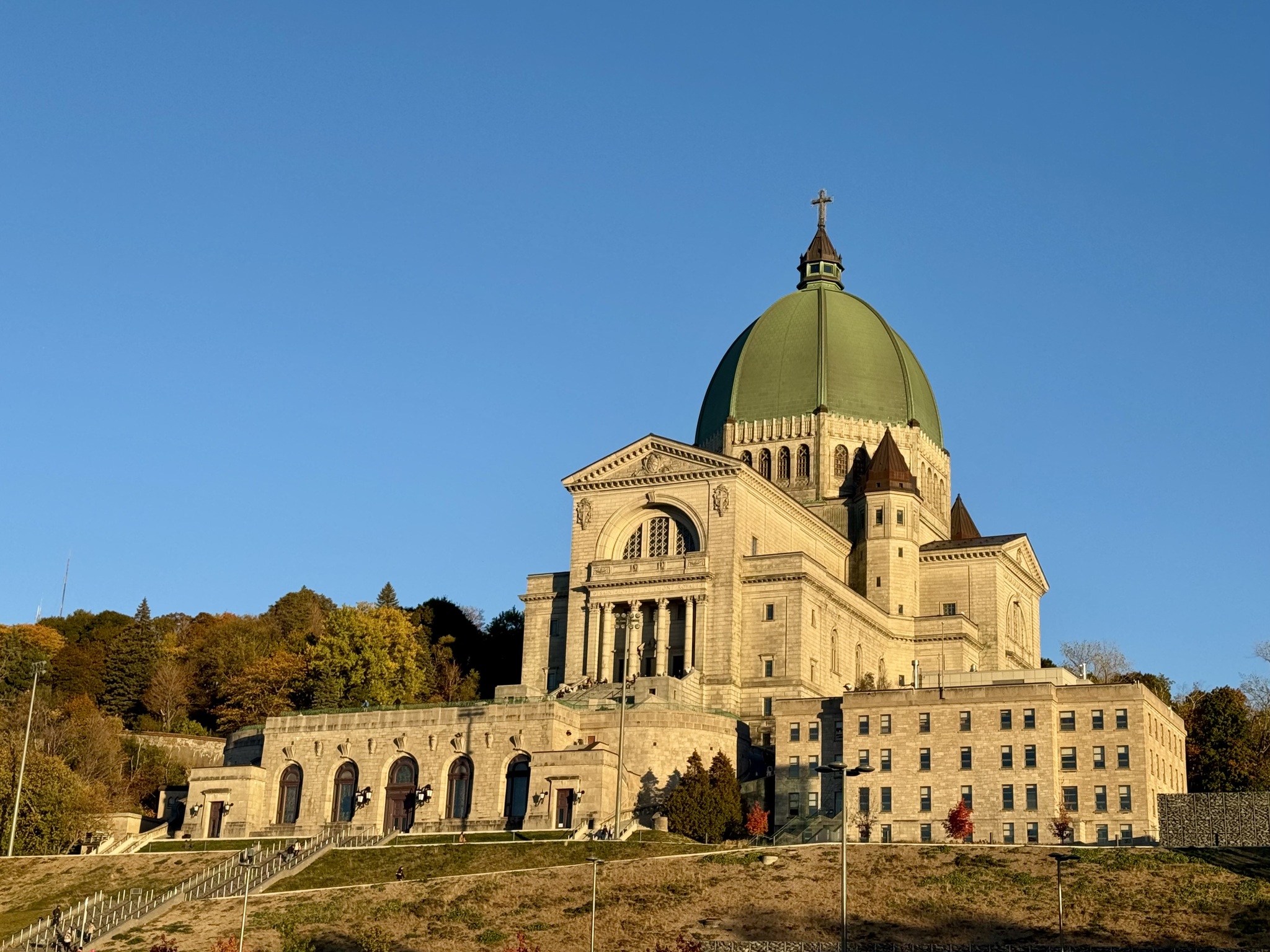
Saint Joseph’s Oratory is Canada‘s largest church. The interior of the main basilica is art deco architecture. The interior was completed in 1966. It has a seating capacity of over 2000. 

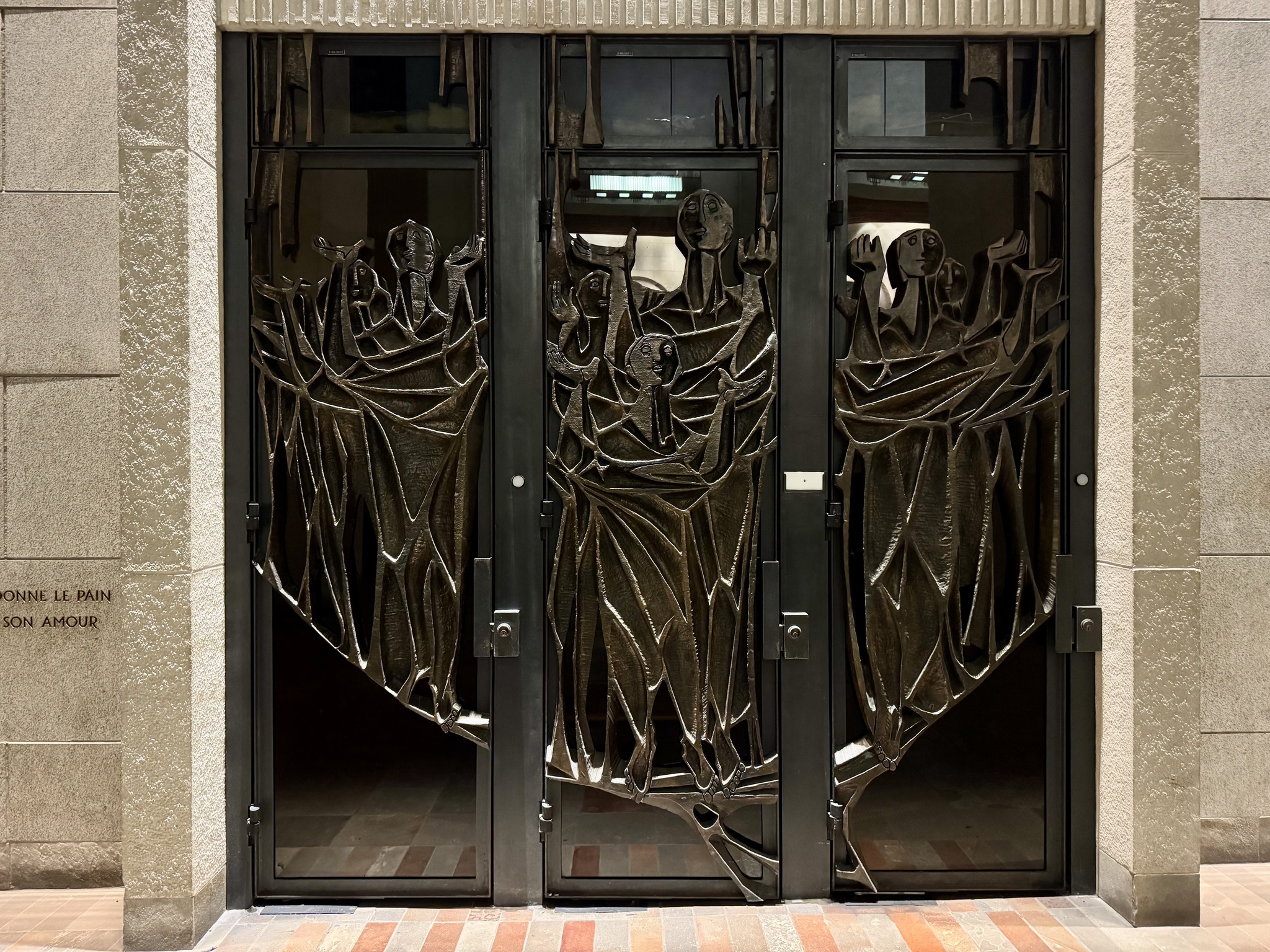
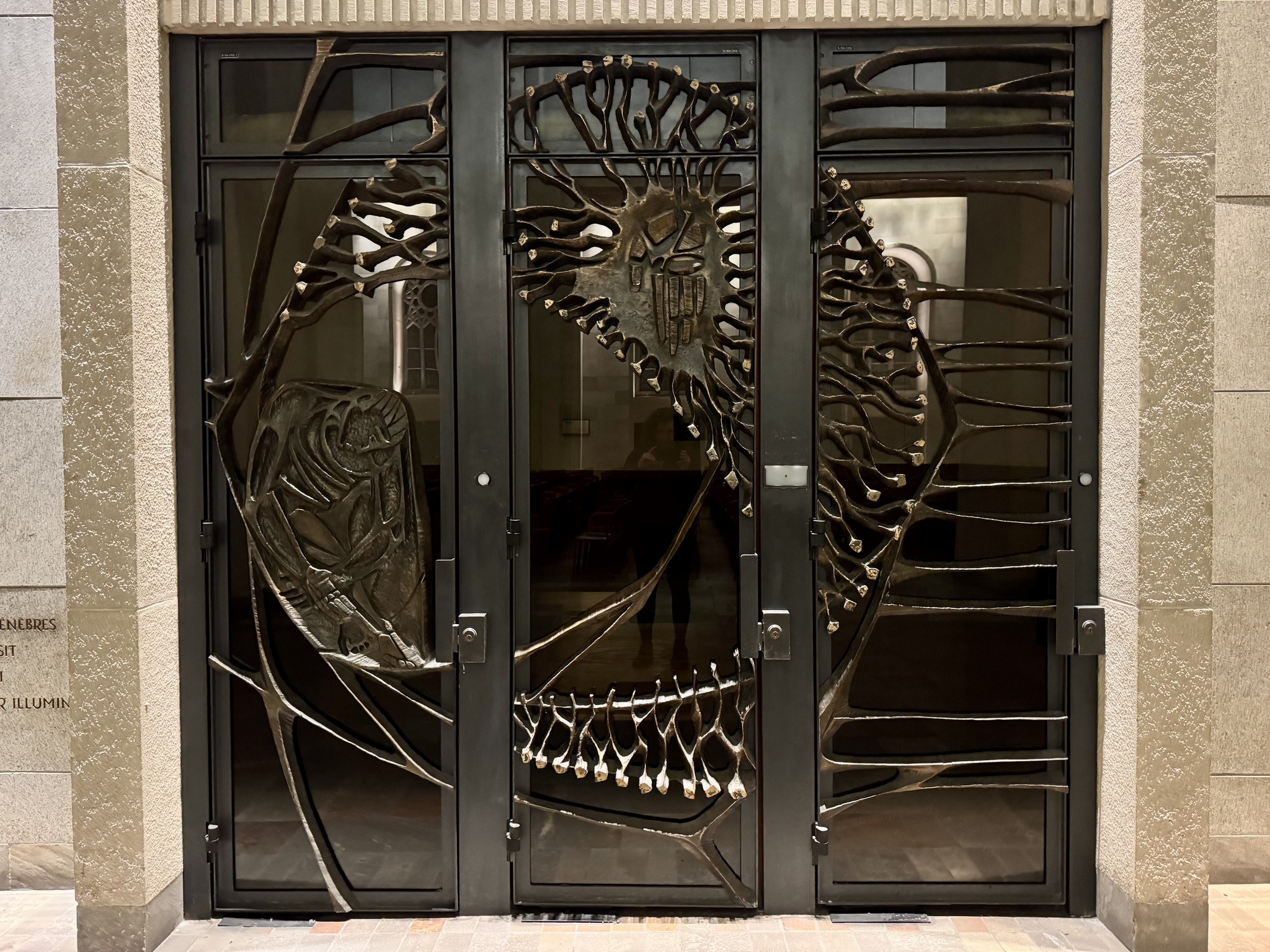
These are the doors to the Basilica from the lobby. The Oratory website has detailed information about the many design features of the basilica.

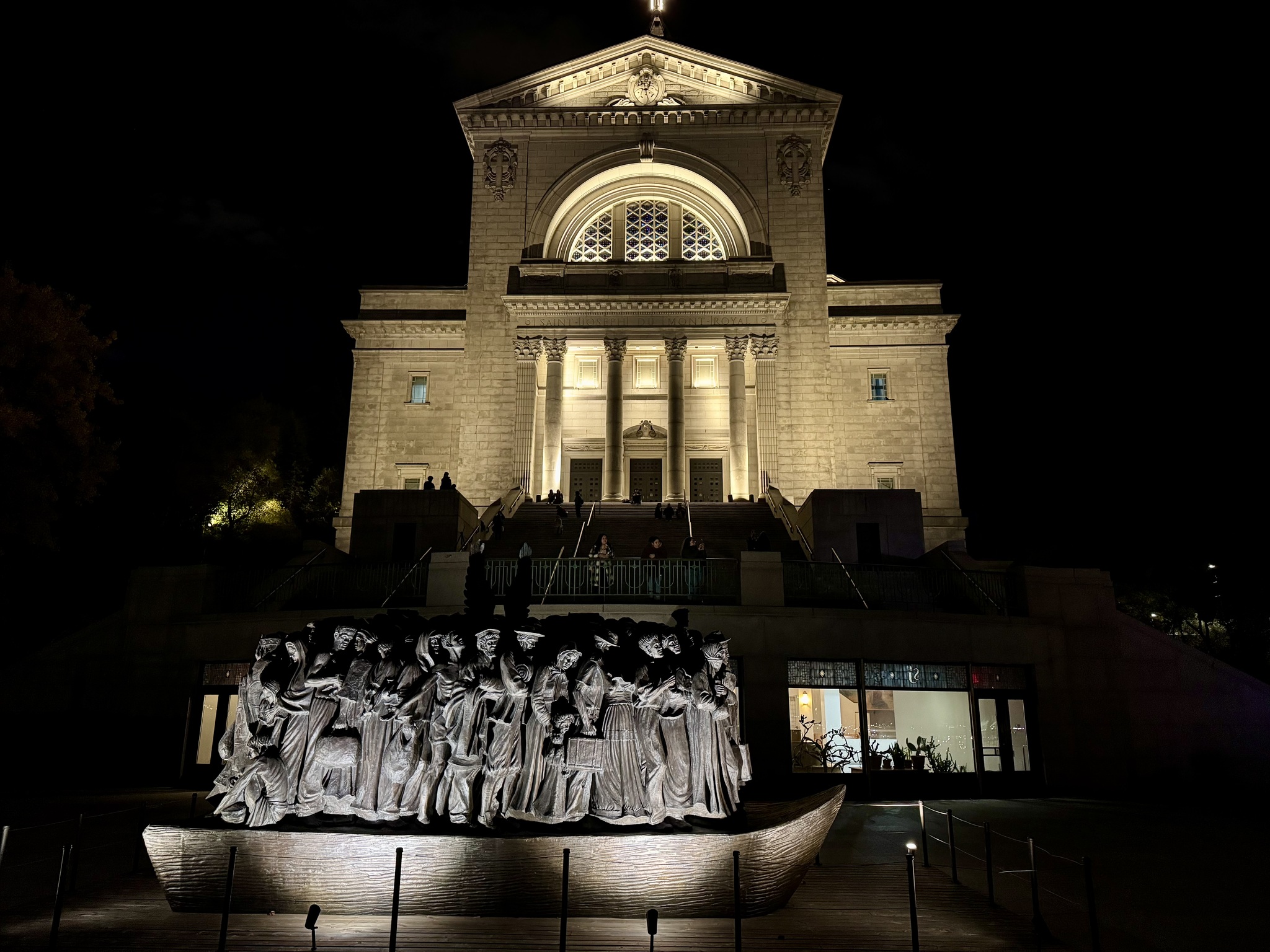
This sculpture, entitled Angels Unaware by Canadian sculptor Timothy Schmaltz is a replica of one in Saint Peter’s Square in the Vatican.  It depicts immigrants and refugees from every corner of the world on a boat.

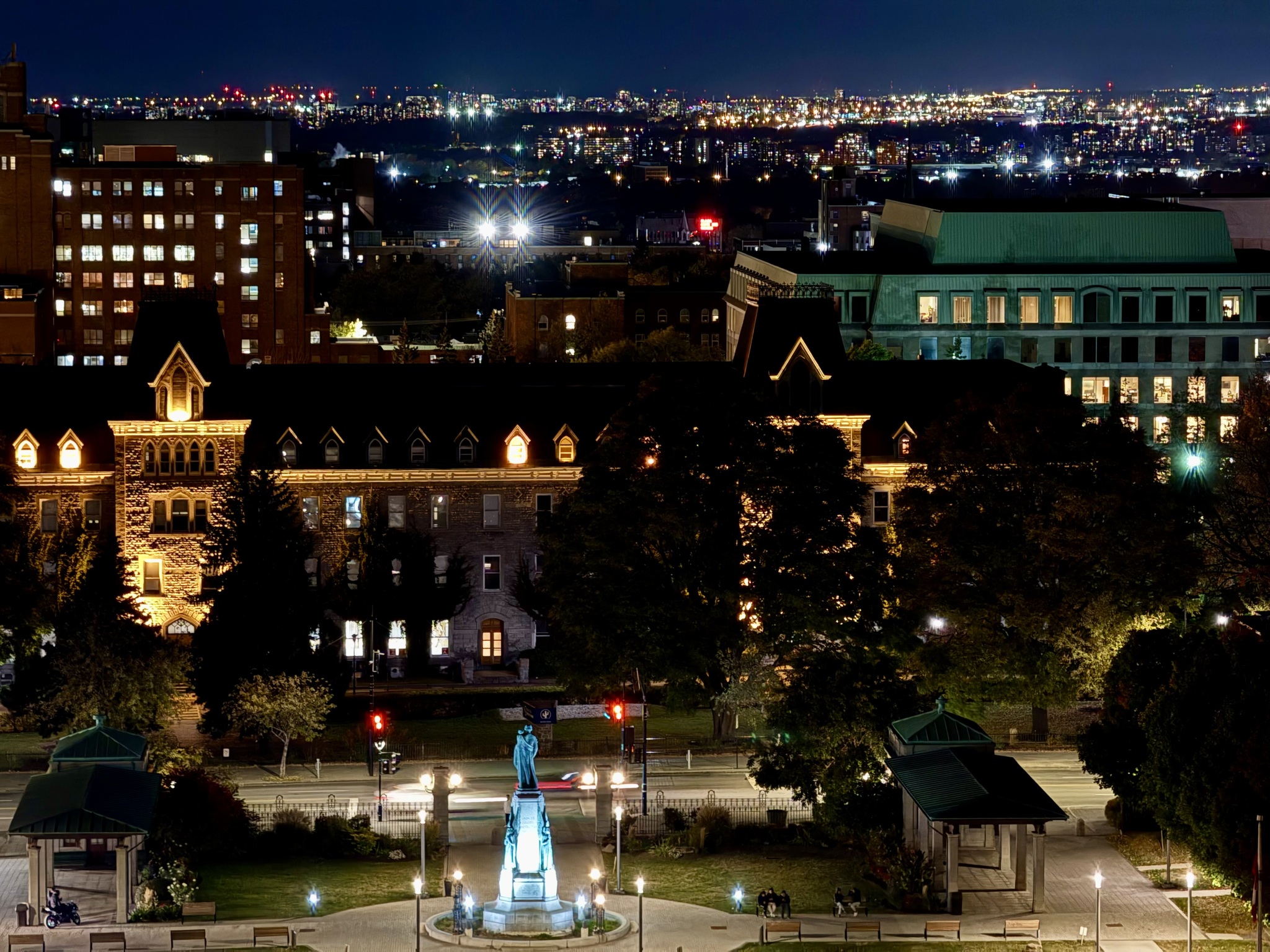
And this is the view from the terrace on the seventh floor.

After finally successfully seeing the basilica, we headed back for our final night at the residence.

Day 12 – Travelling Home

Here we are ready to roll, in the van, rather than on our bikes. The day is forecast to be absolutely beautiful to begin with, followed by heavy rain as we get to Toronto.

My cousin lives in Cornwall, a 90 minute drive from Montreal, and I arranged to stop at her house for coffee and a visit. It was so good to catch up, but we couldn’t linger with the long drive still ahead of us.

When we got out of the car at the Mallorytown service centre for lunch it was 23°.

The rain started just as we were getting on the 407 at the east end of the city, but wasn’t as bad as forecast. David and Dayle dropped us off in reverse order, Cindy first, and then me.

It was an absolutely delightful trip, which I would highly recommend.

Cost

In 1957 Arthur Frommer published a book entitled Europe on 5 Dollars a Day. It was a revolutionary concept at a time when one needed to be wealthy to travel to Europe. It was timed perfectly for the rise of air travel to Europe versus ship. The final editions of Frommer’s first series were titled Europe from $95 a Day. The concept no longer made sense when hotels could not be had for less than $100 a night, so that series was discontinued in 2007. Unfortunately, travel is becoming so expensive again that it is beyond the reach of many people.

I don’t usually share the cost of my trips, but I thought there might be readers who would like to plan a trip like this for themselves, who might be interested in knowing what our trip cost. Our trip didn’t included air travel, but I was still very happy to do our trip for $102/day. By comparison, a similar trip we did along the Erie Canalway in New York last year, cost me $152 Canadian per day.

Here’s what was included in the $102 per day.

  • Gas and 407 tolls
  • Accommodation for 11 nights, seven including breakfast, split two ways when Cindy and I shared on eight nights, and split four ways when the four of us shared a full apartment. The apartments were relatively expensive due to the cleaning fee that is applied when one books through AirBnB not being spread over multiple nights. However, it was challenging to find accommodation over the Thanksgiving weekend. When we have rented full apartments or houses in the past, for multiple days in a row, this has proved to be an economical option, because it allowed us to prepare our own breakfasts and dinners. When staying just one night in an apartment it didn’t make sense to spend time grocery shopping, and trying to transport leftovers on our bikes. Staying at Saint Joseph’s Oratory of Mount Royal accommodation, for the five nights we were in Montreal, was key to keeping our accommodation costs down.
  • Parking was included for the nights we stayed at the Oratory, and they only charged us $5 per night (an amazing rate in a big city like Montreal) during the time we left the car there, when we were on our self supported trip. Small fee for ferry crossing.
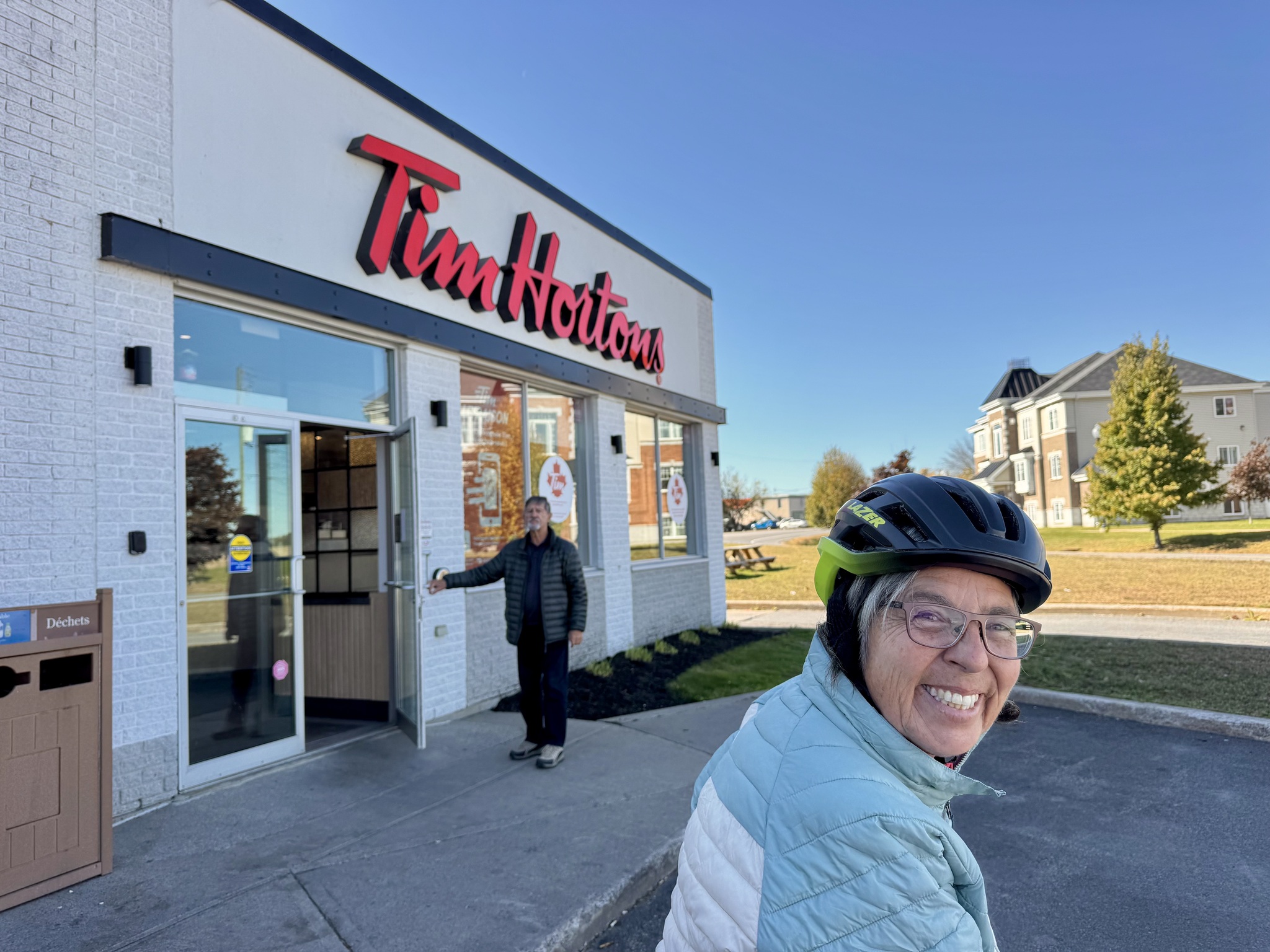
  • 12 days of meals. We packed a lunch at home on the first day. We bought groceries for breakfast one morning. The rest of the meals were in restaurants. We had some quite expensive lunches, such as the one right beside the trail in Granby, which cost me $42, but we also had some more reasonable ones at chain restaurants like Tim Hortons or Subway. In Montreal, we found a good and reasonably priced Japanese restaurant and ate there four of the five nights.

Montreal and Véloroute Gourmande – Day 10

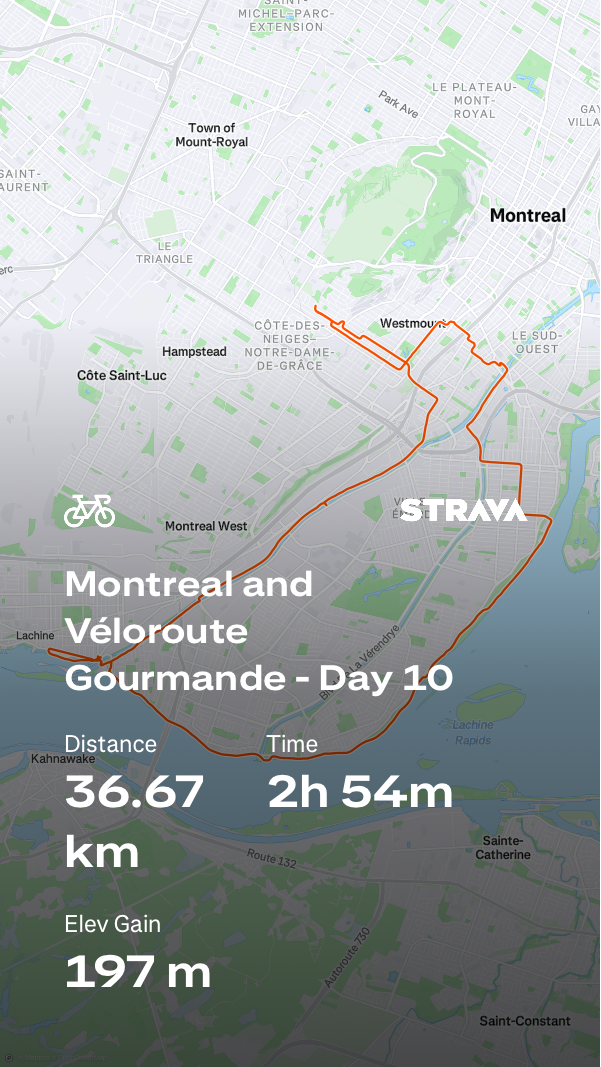
We met for breakfast a little later this morning. We are all feeling quite tired after 557 km of riding over the last eight days, without a rest day. David and Dayle have decided to take a rest day. Cindy and I planned a loop along the Lachine and Aqueduct canals. However, because the route is only 34 km, we went back to the room to relax for a while before setting out. 

About 11am we got dressed, and went to the lobby to get our bikes.  We discovered that Cindy’s tire was completely flat, for the third time in as many days. David and Cindy went to work, but could find no hole in the tube, or debris in the tire. The new tube Cindy bought yesterday was the wrong size. They pumped it back up and we set off.

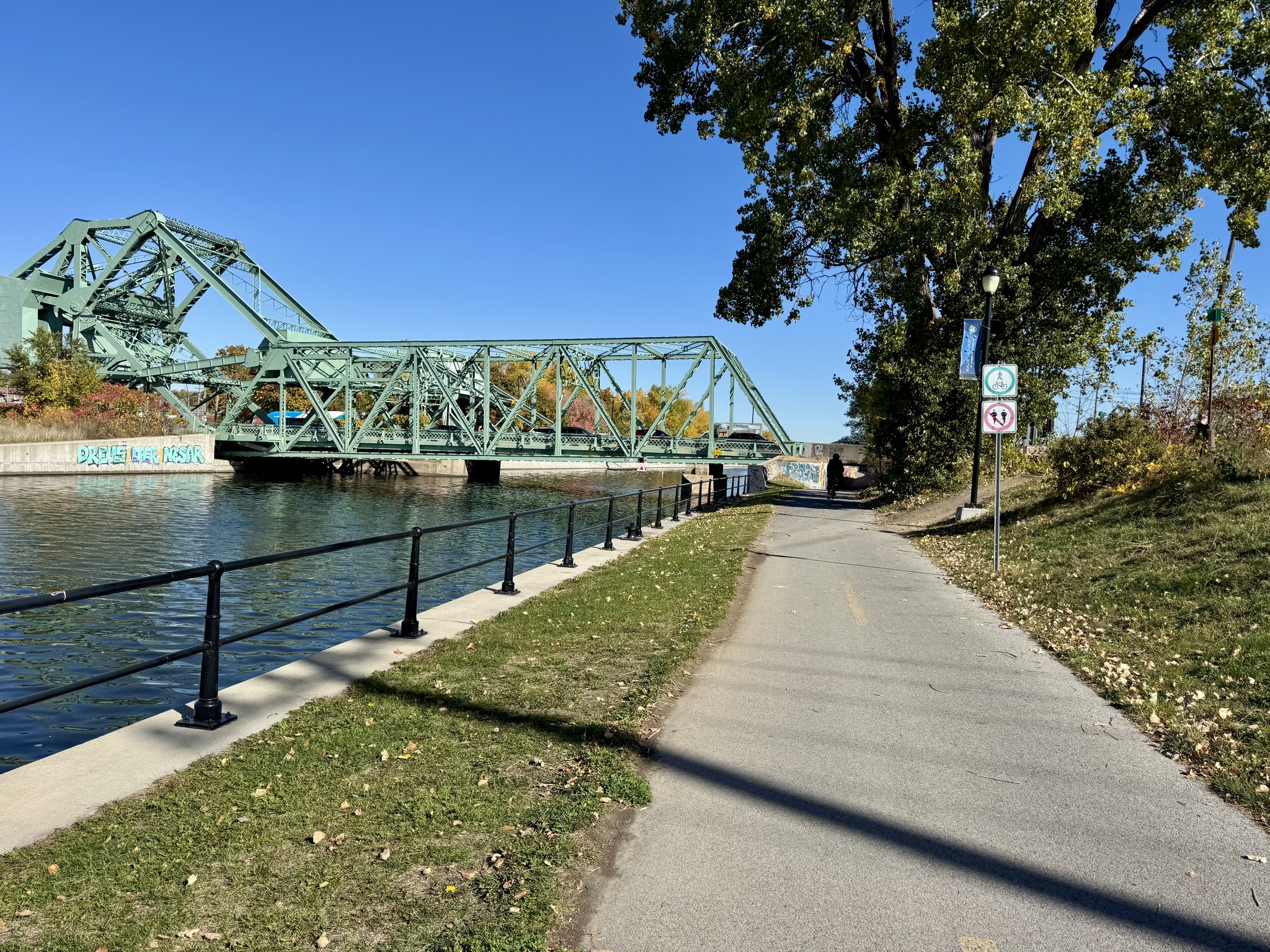
We had an exhilarating descent down to the waterfront. We were either on calm, residential streets or cycling infrastructure. 

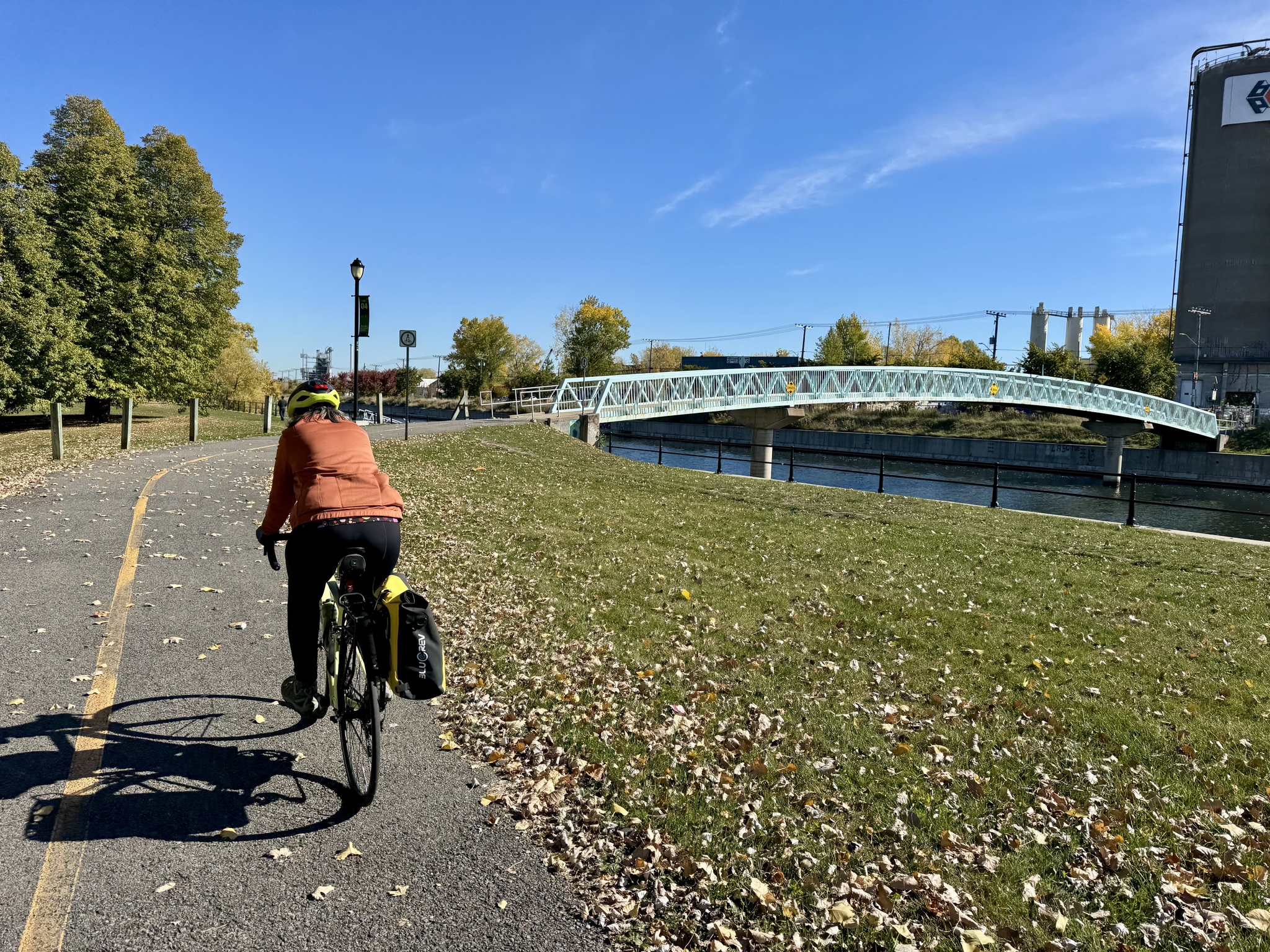
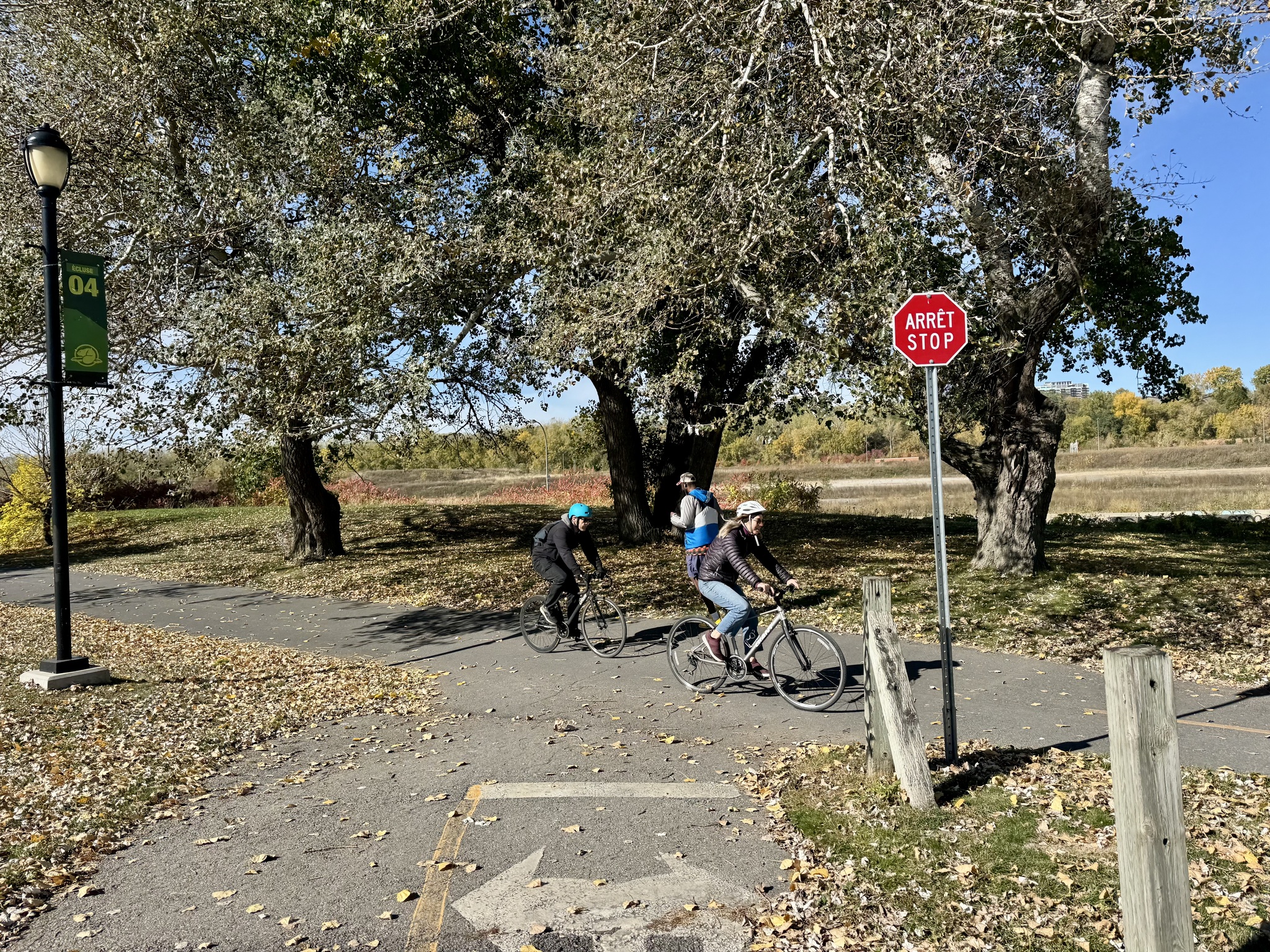
The paved paths along the canals are lovely. There are crossings for active transportation, in addition to road crossings.

They get busy enough that at some intersections there are stop signs.

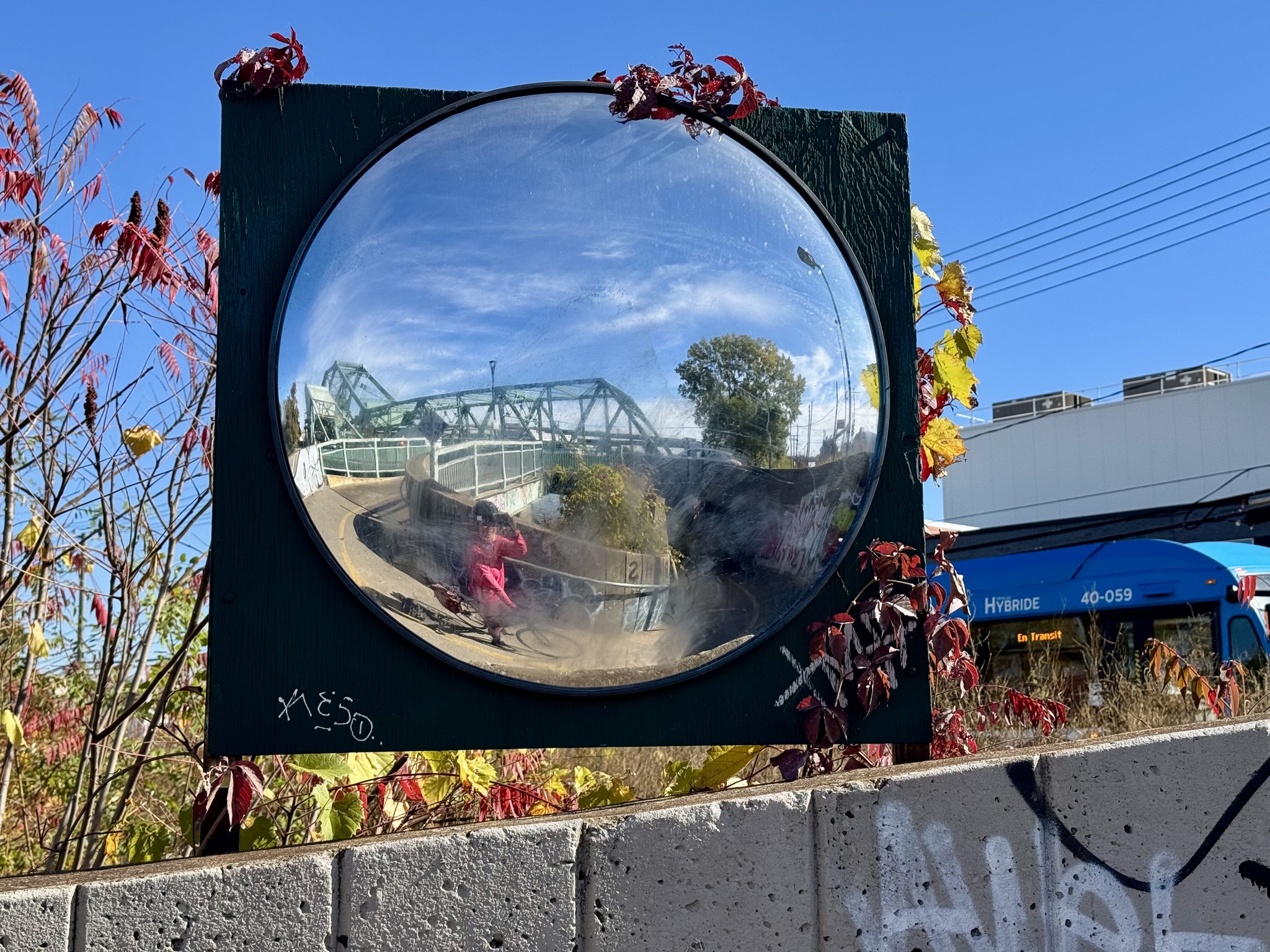
The path went under the road at this bridge crossing.

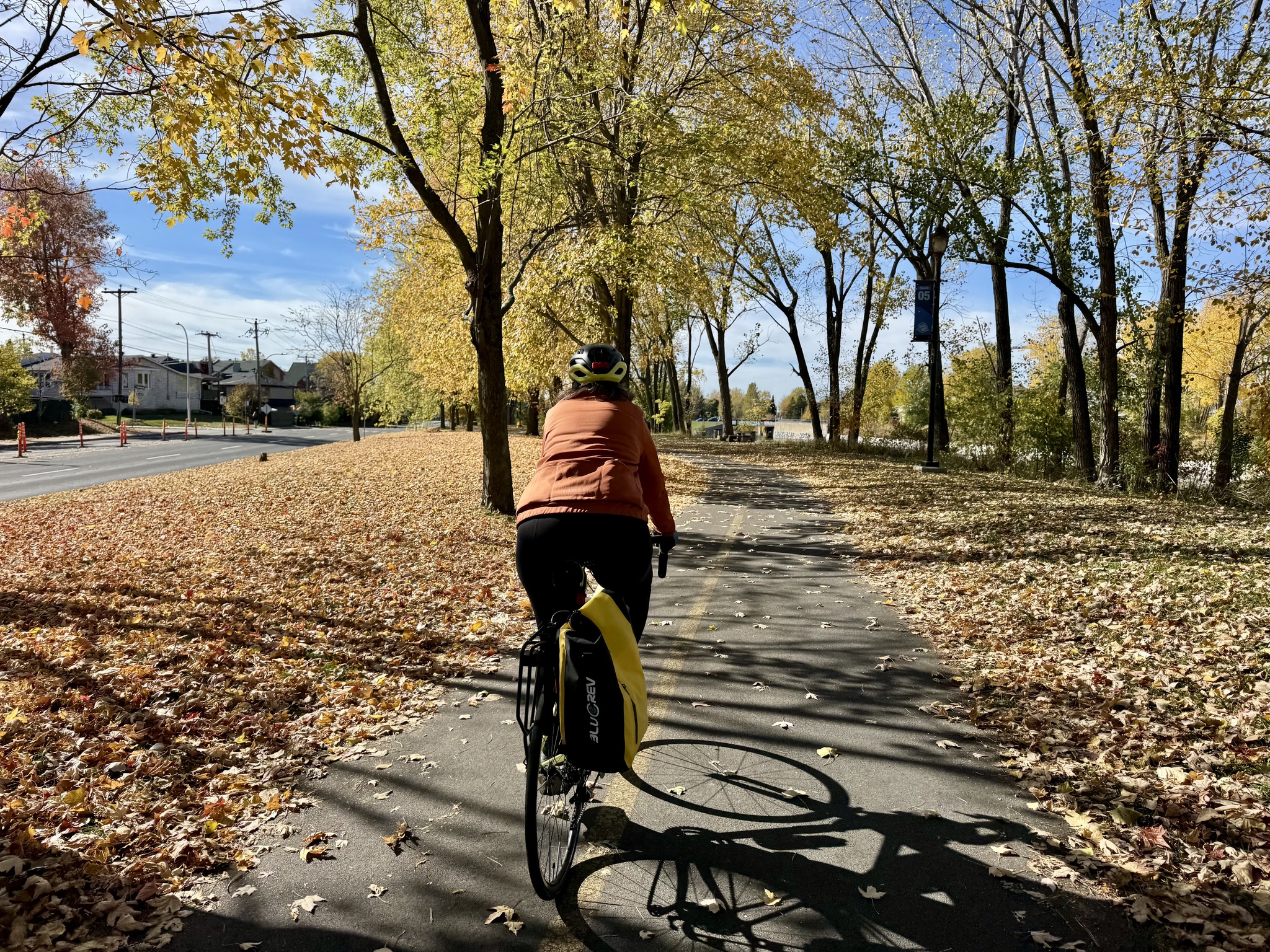
There was still plenty of autumn colour.

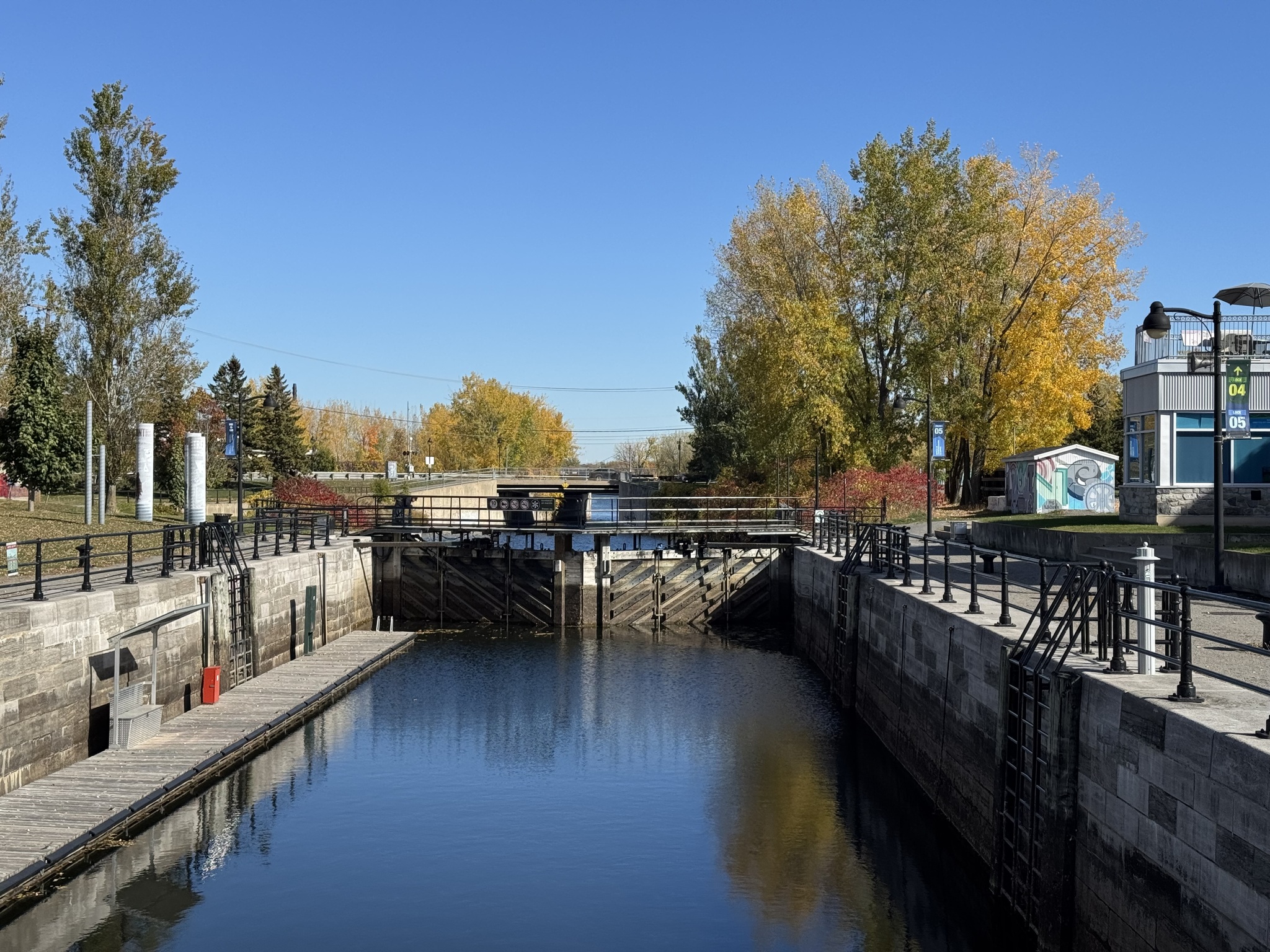
The Lachine Canal was built in 1825 to bypass the Lachine Rapids, which had previously prevented ships from reaching the Port of Montreal. It operated until 1959 when the St. Lawrence Seaway opened.

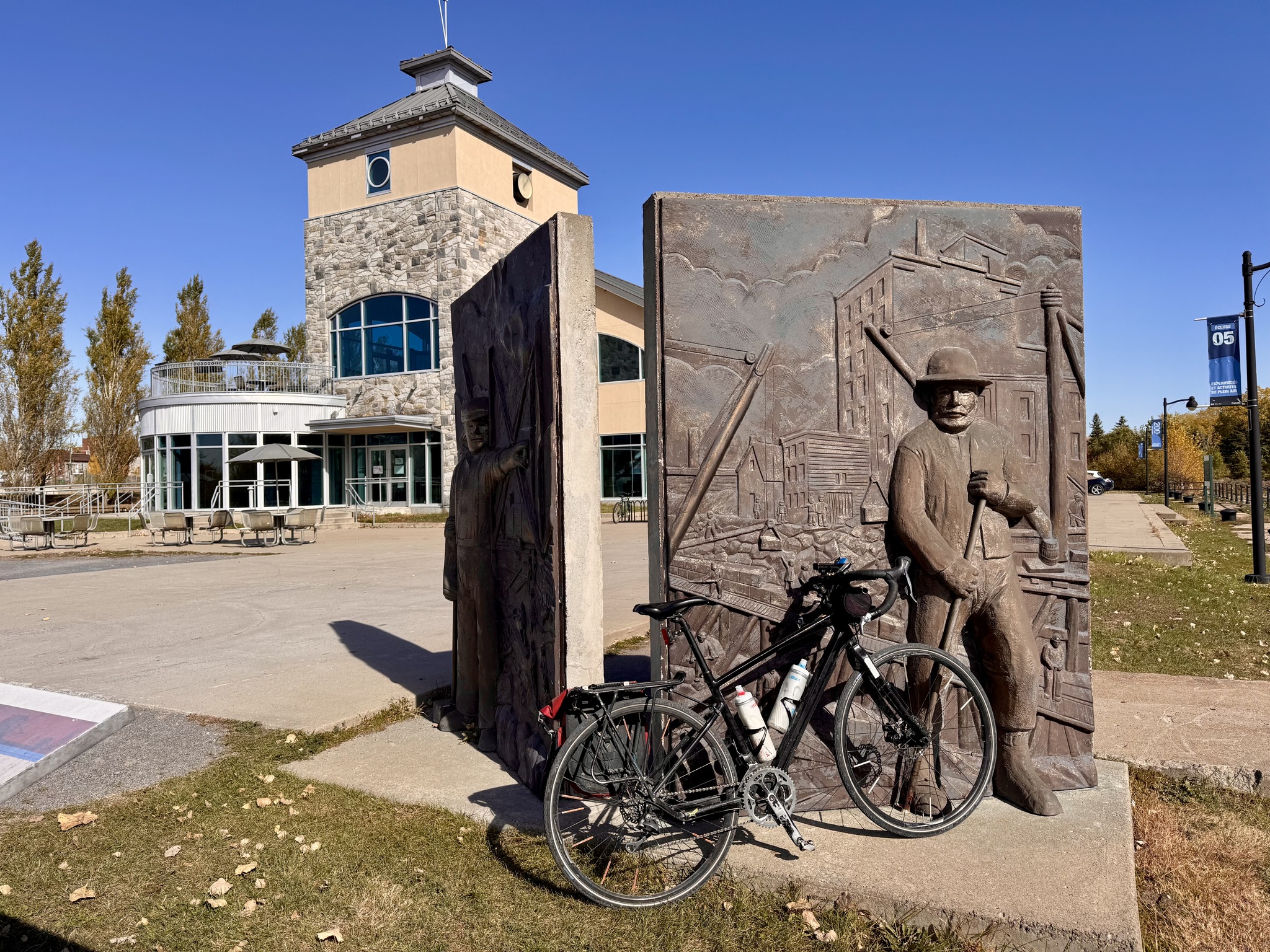
This is the Lachine Canal visitor centre at lock one. The Lachine Canal takes its name from the nearby Lachine Rapids, which were named because of a misunderstanding in early French exploration.  French explorers believed a route to China might lie up the St. Lawrence River. When they failed to get past the dangerous rapids, the rapids were mockingly called “La Chine,” meaning China.

We were only about 12 km into the ride, at the west end of the Lachine Canal, but given our late start, we were ready for lunch. We were still a ways from where I had planned to have it, so I searched Google maps for “cafés near me”.  We found one that looked appealing about a kilometre away.

We were able to continue along a multi use path. We passed Saint Anne’s College.

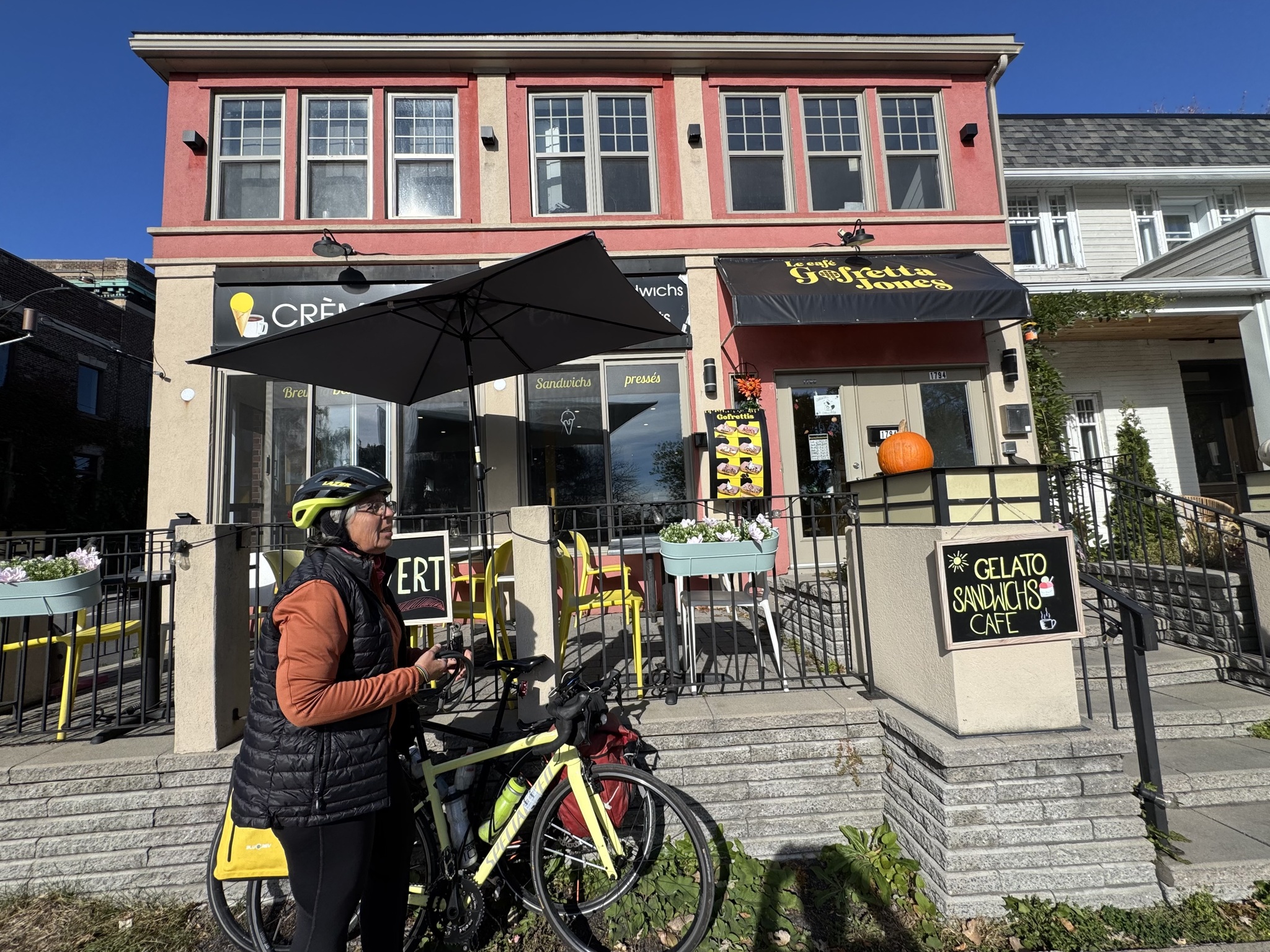
A few metres off the path we stopped at Gofretta Jones Café.

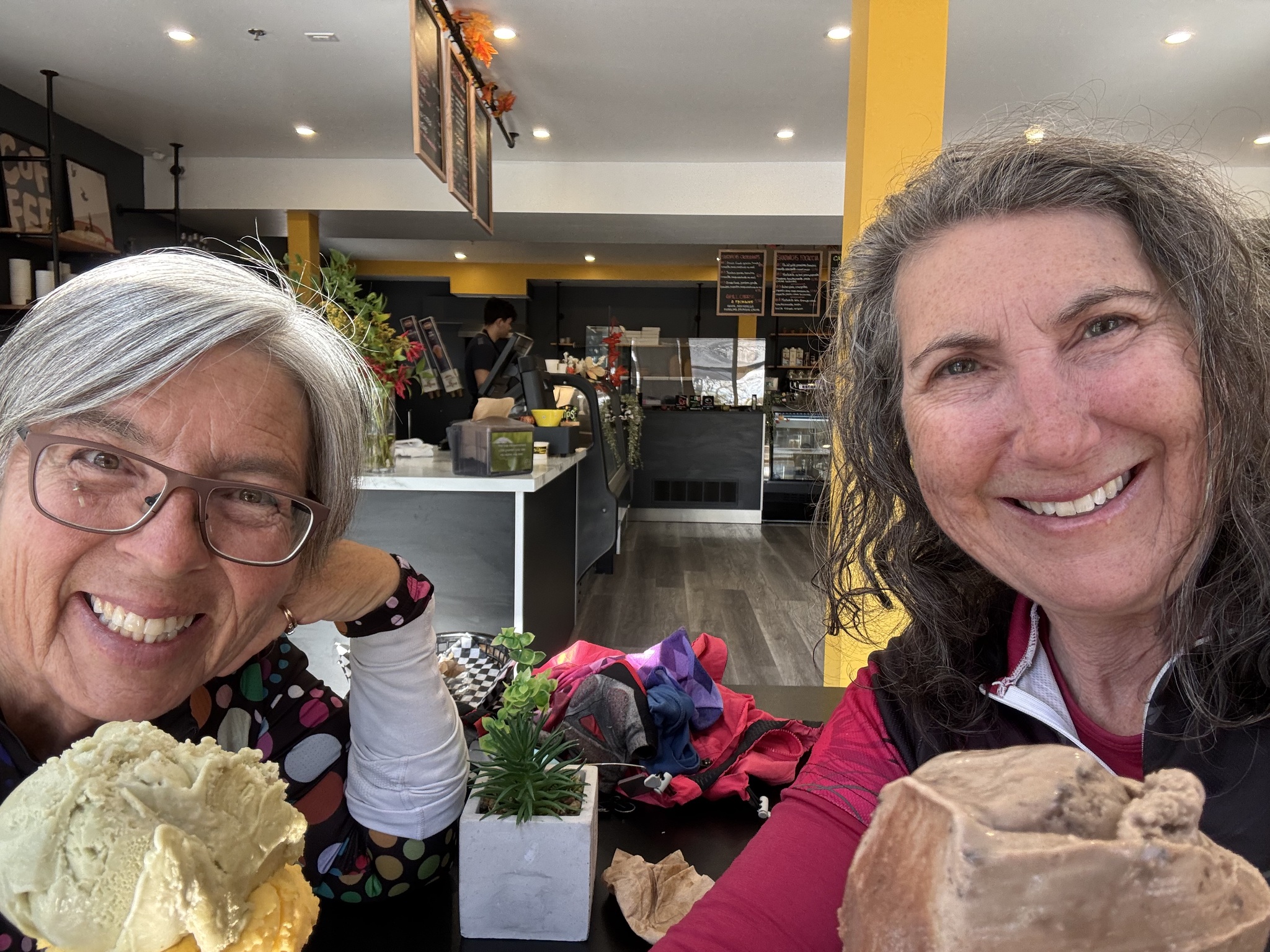
It was hard to decide what to eat as everything sounded so good. We each ordered a different sandwich and then split them. After the sandwiches, we moved onto gelato. The warm sunshine filled the café.

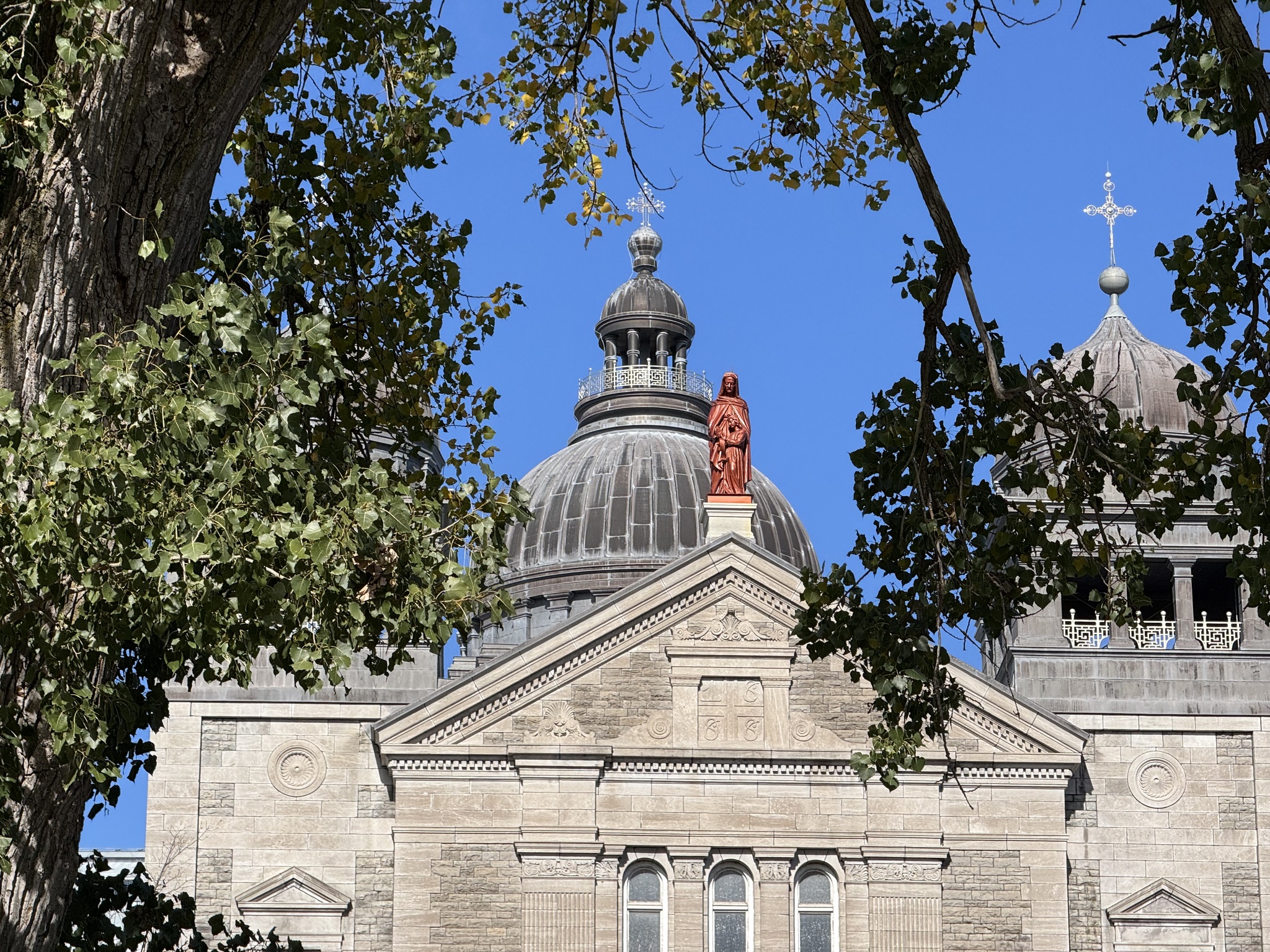
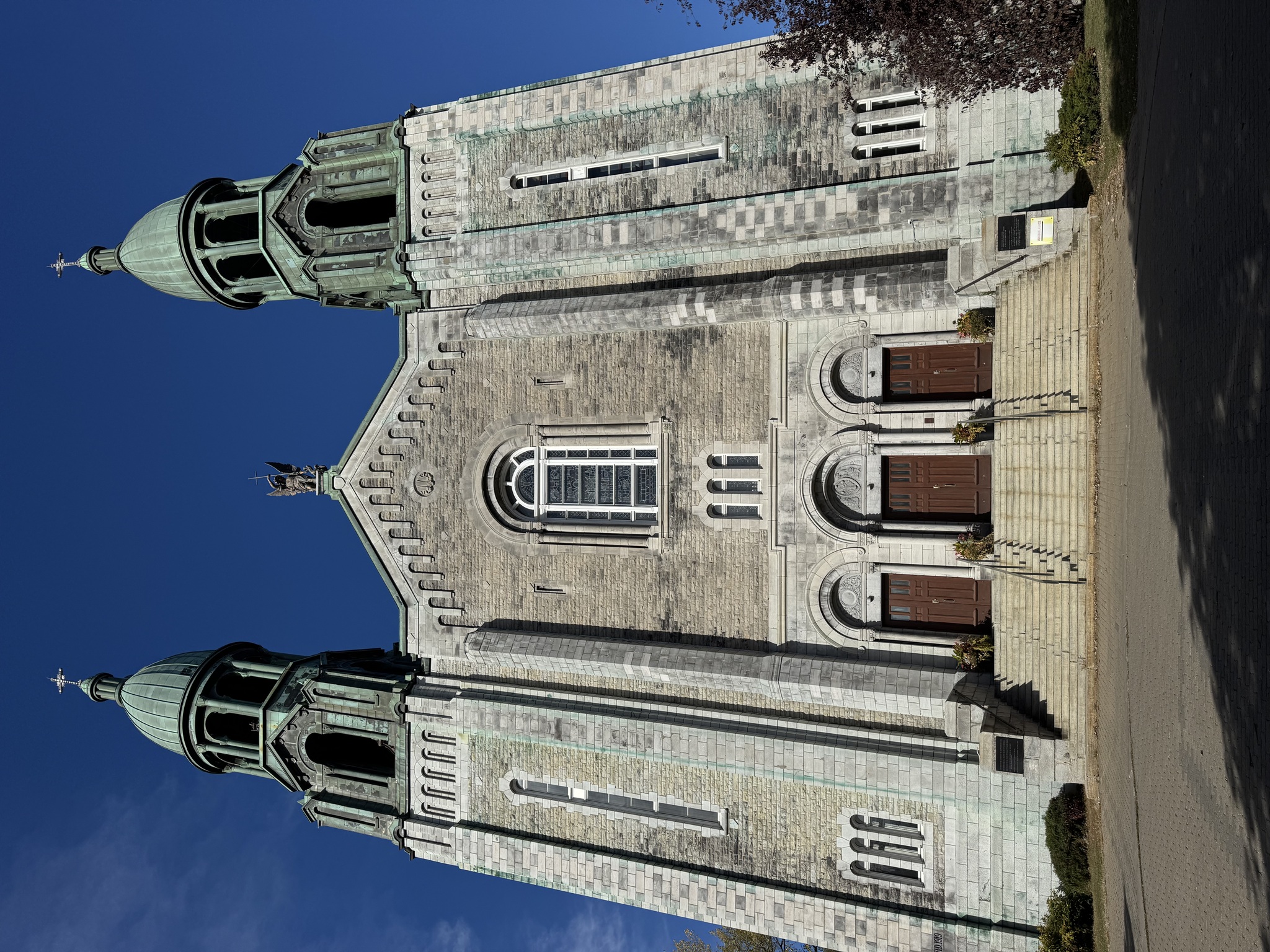
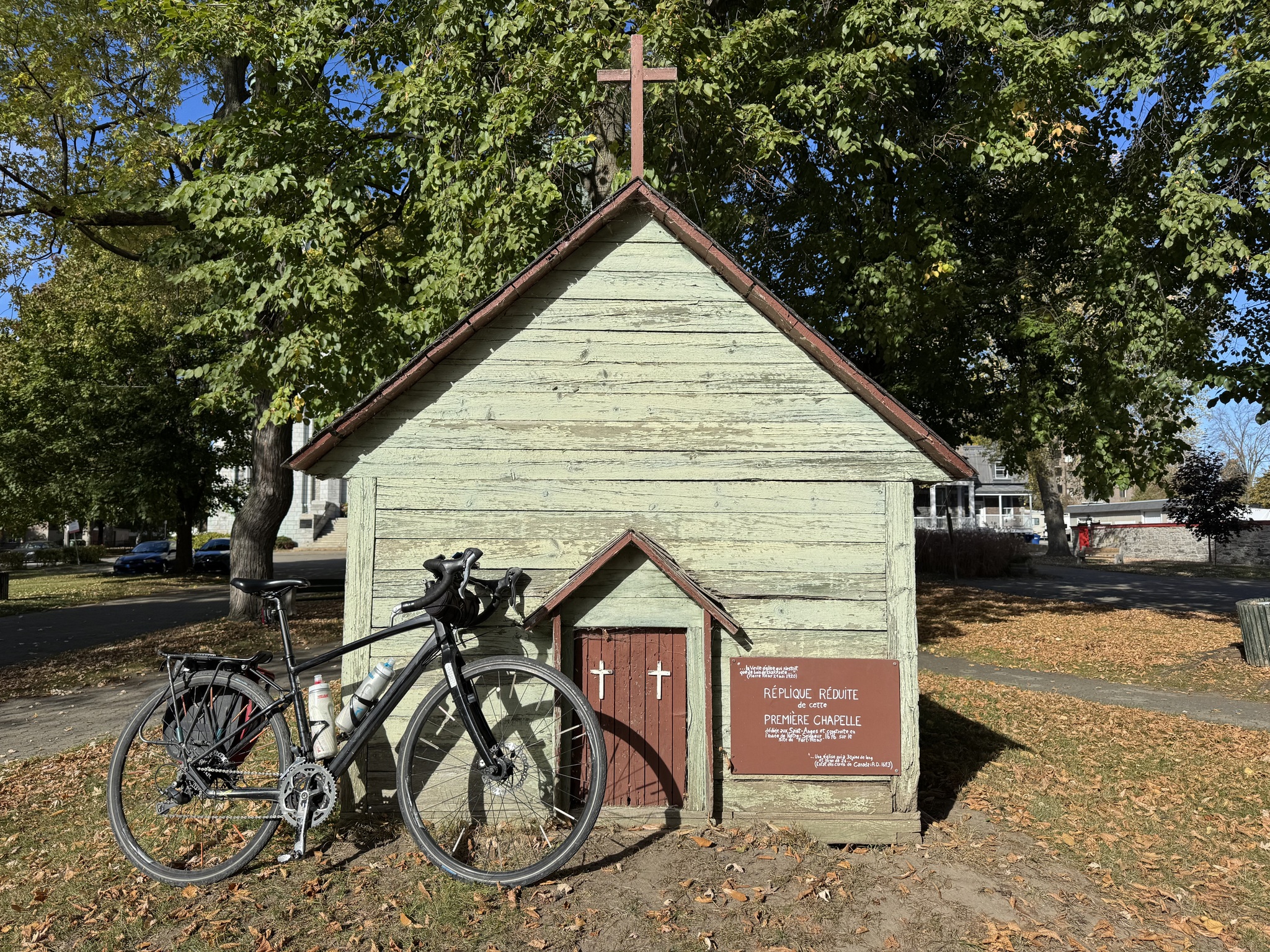
After lunch, we cycled back toward the route I had planned. We passed the Holy Guardian Angels of Lachine Catholic Church. The first wooden chapel was built nearby in 1676. It was replaced by a larger fieldstone church in 1703. A wealthy merchant offered the church the land on which this church, built in 1919, stands. It replaced the previous church on this site, which burned to the ground in 1915. The architect, Alphonse Venne, also designed Saint Joseph’s Oratory of Mount Royal.

This is replica of the first wooden chapel.

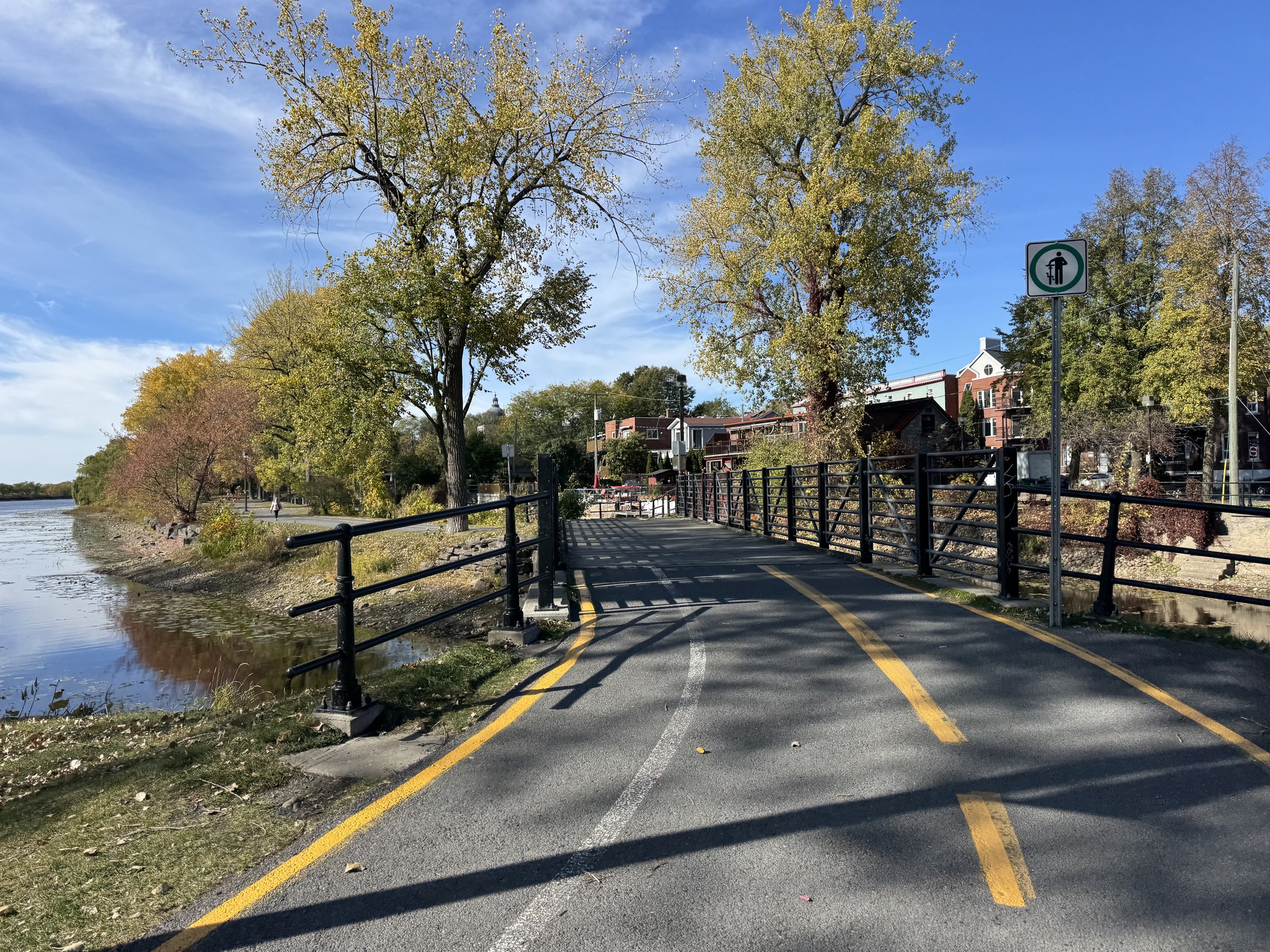
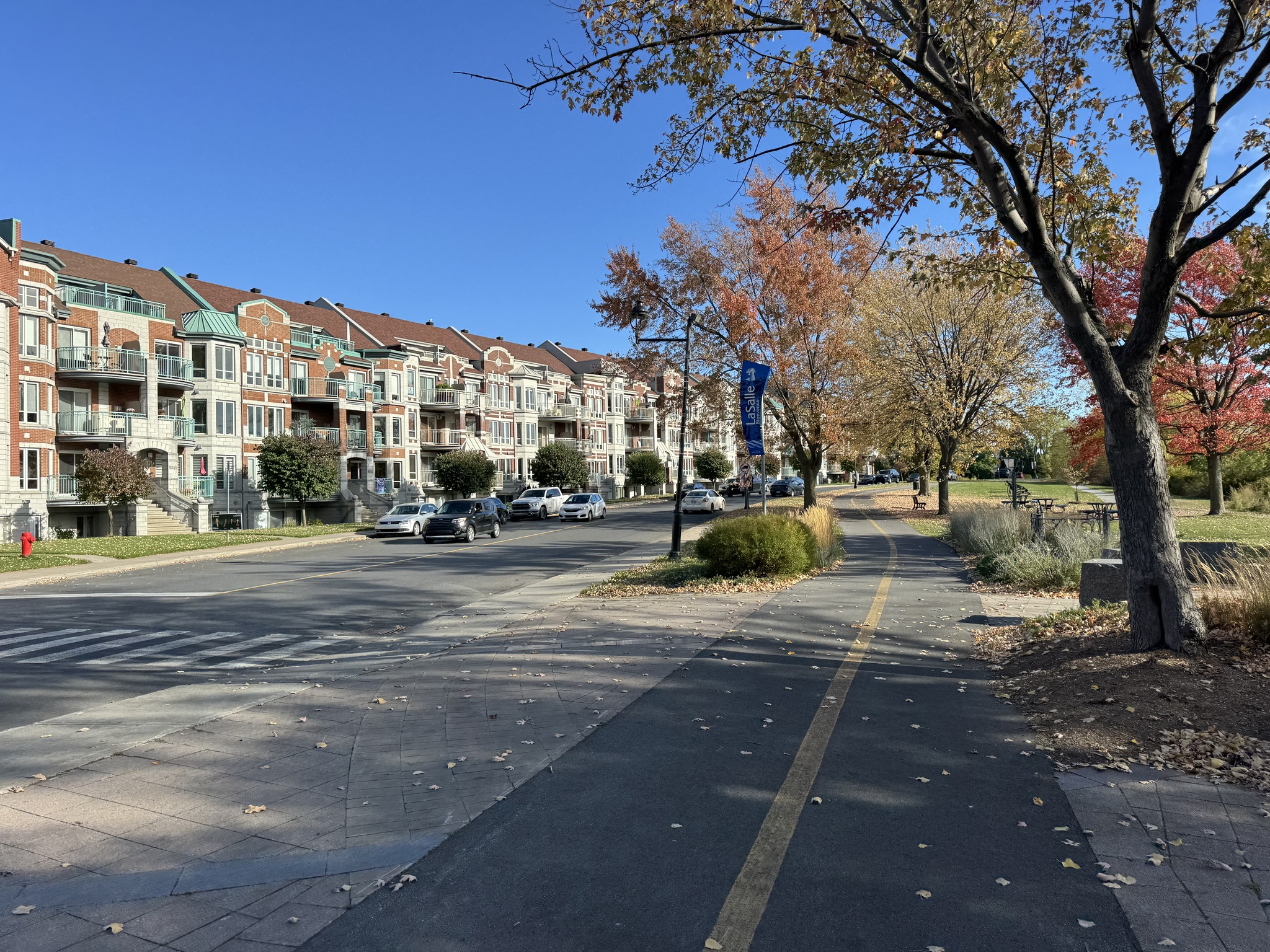
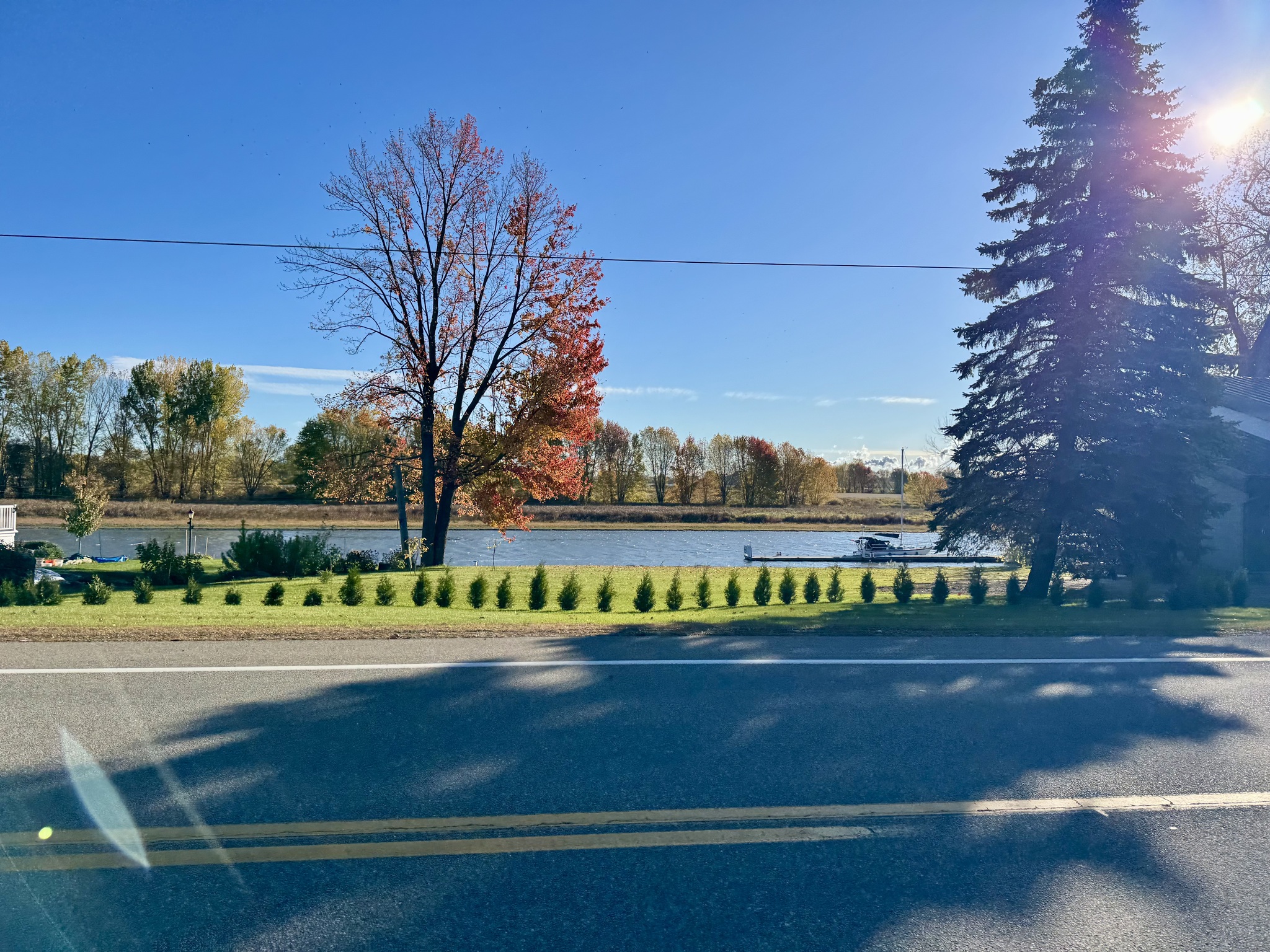
LaSalle is a borough of Montreal. A multi use path runs along the St. Lawrence, and was lovely to ride with the fall colours and the views.

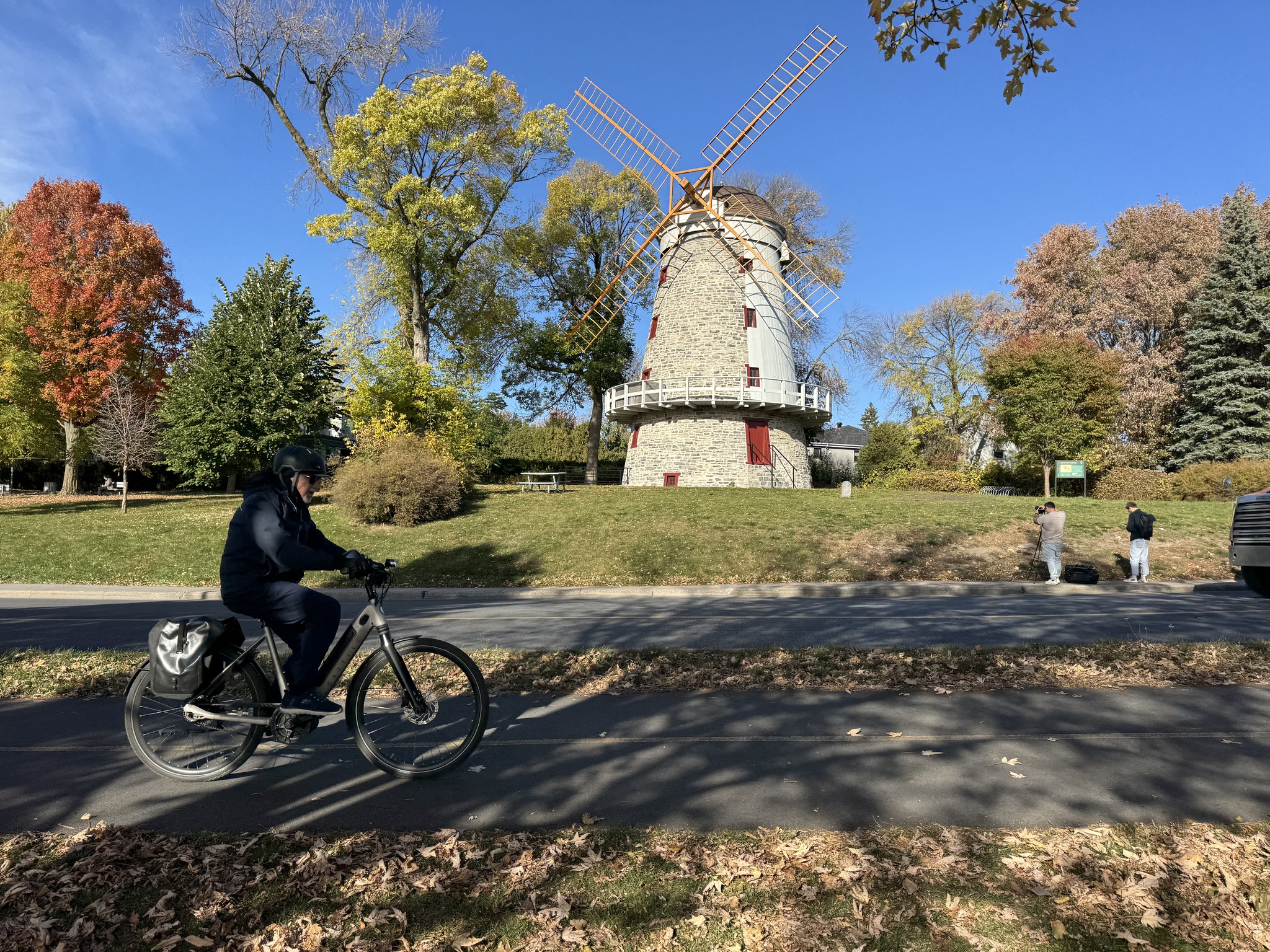
The Fleming windmill is a five storey stone tower, which was built in 1827 by William Fleming to grind wheat. Its ceased operations in 1891. It is one of the last remaining windmills in Quebec, and the only one of its type on the island of Montreal.

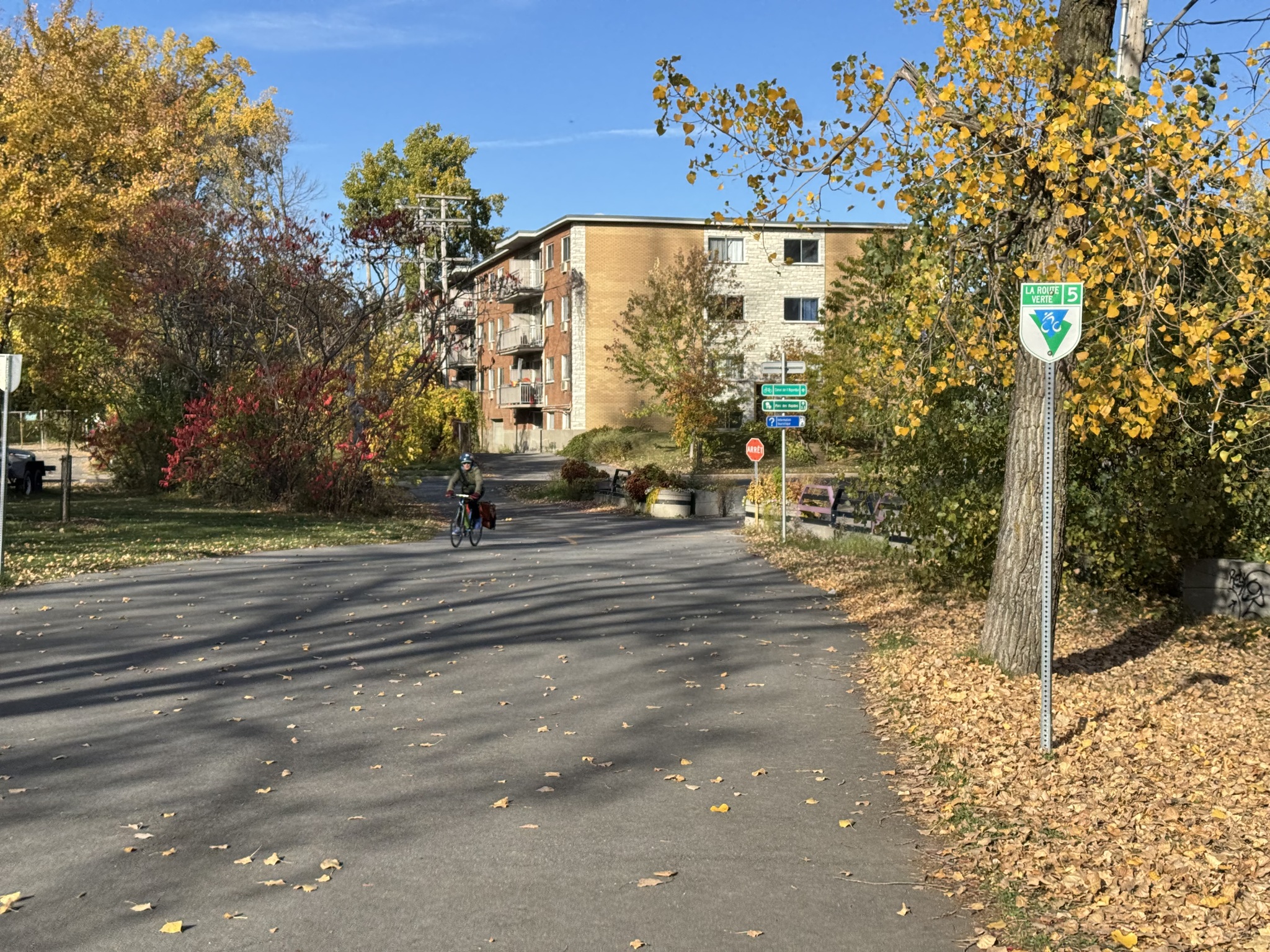
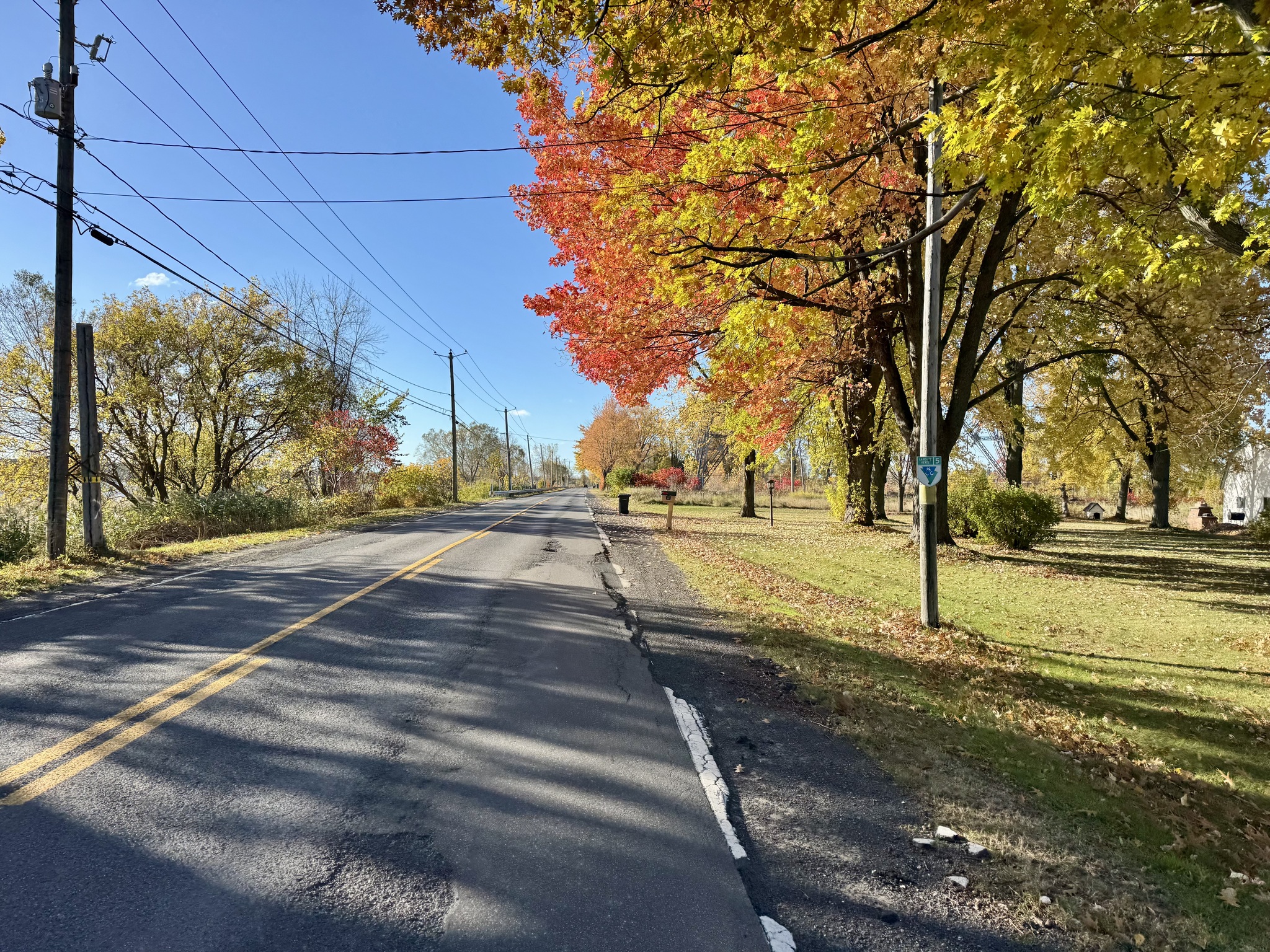
Route Verte 5 runs along the St. Lawrence through LaSalle.

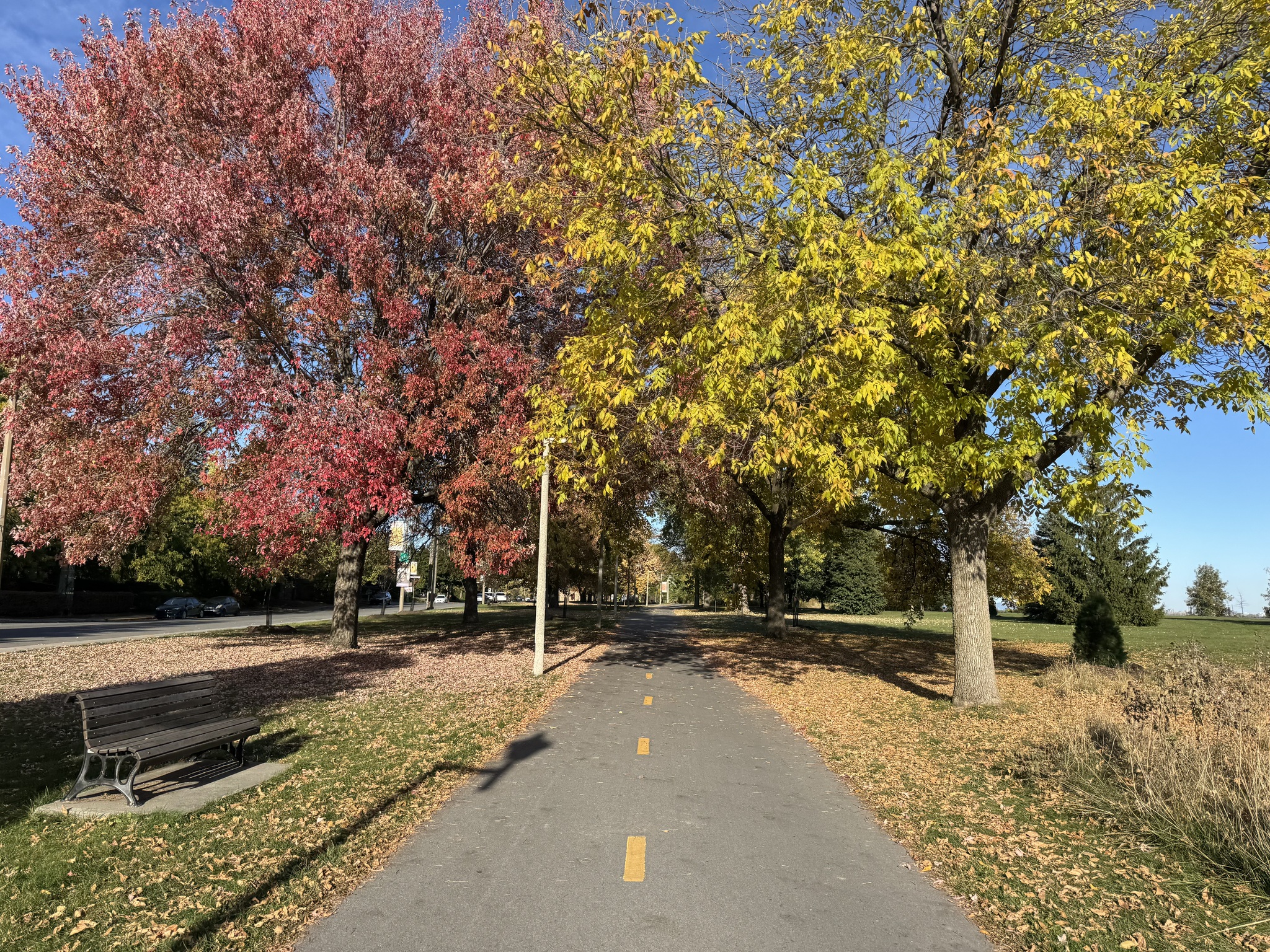
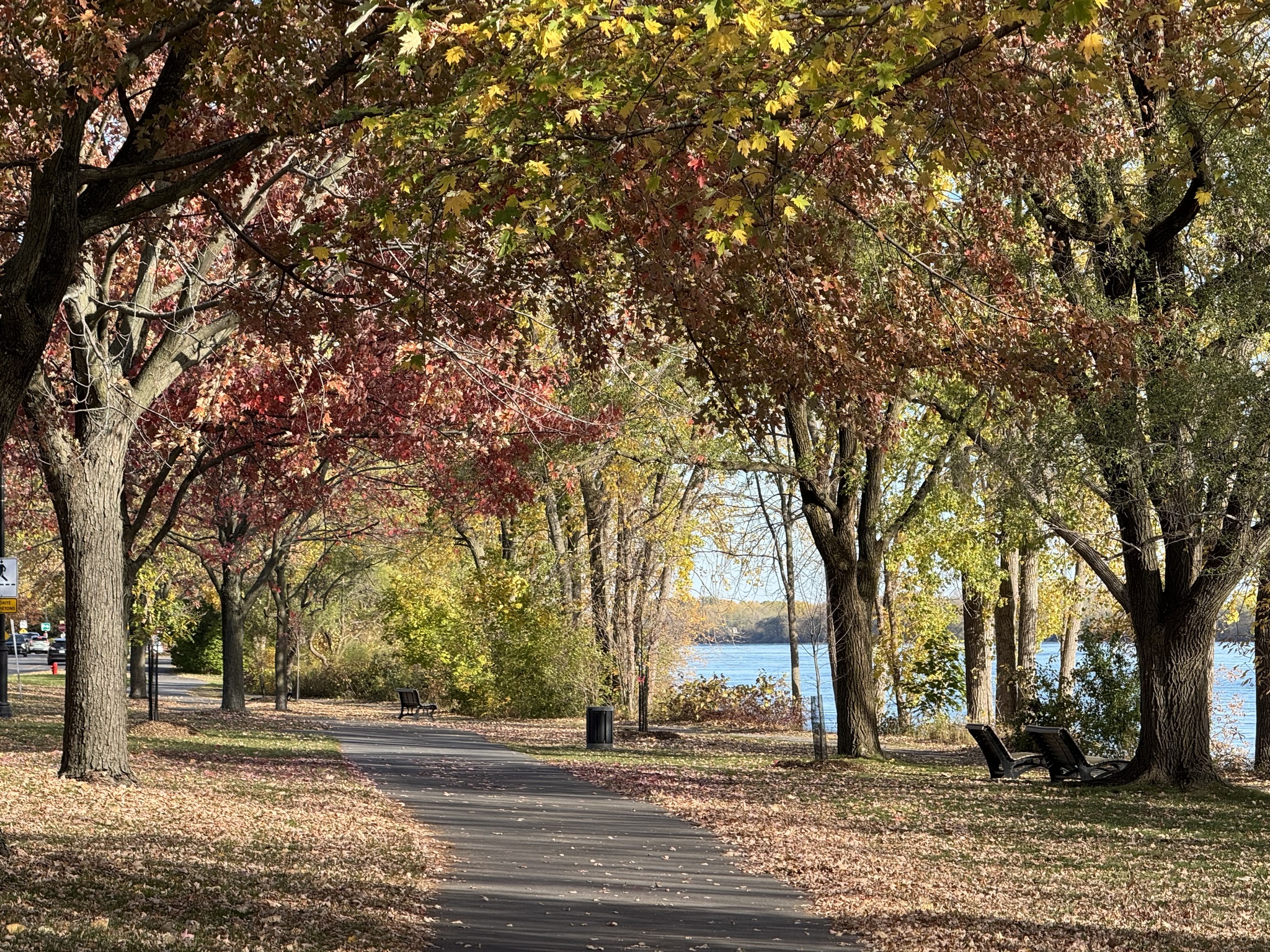
The sun was strong and highlighted the beautiful autumn colors. In some places, the trees met over the top of the path.

I had planned to return along the Aqueduct Canal, but we missed the cue, and continued along the St. Lawrence. When I realized we decided to carry on rather than turning back, because the ride along the St. Lawrence was so pleasant. There are two canals so close together because the water in the Lachine Canal became so polluted that a second canal was built to bring water from the St. Lawrence into a water treatment plant for the growing Montreal population.

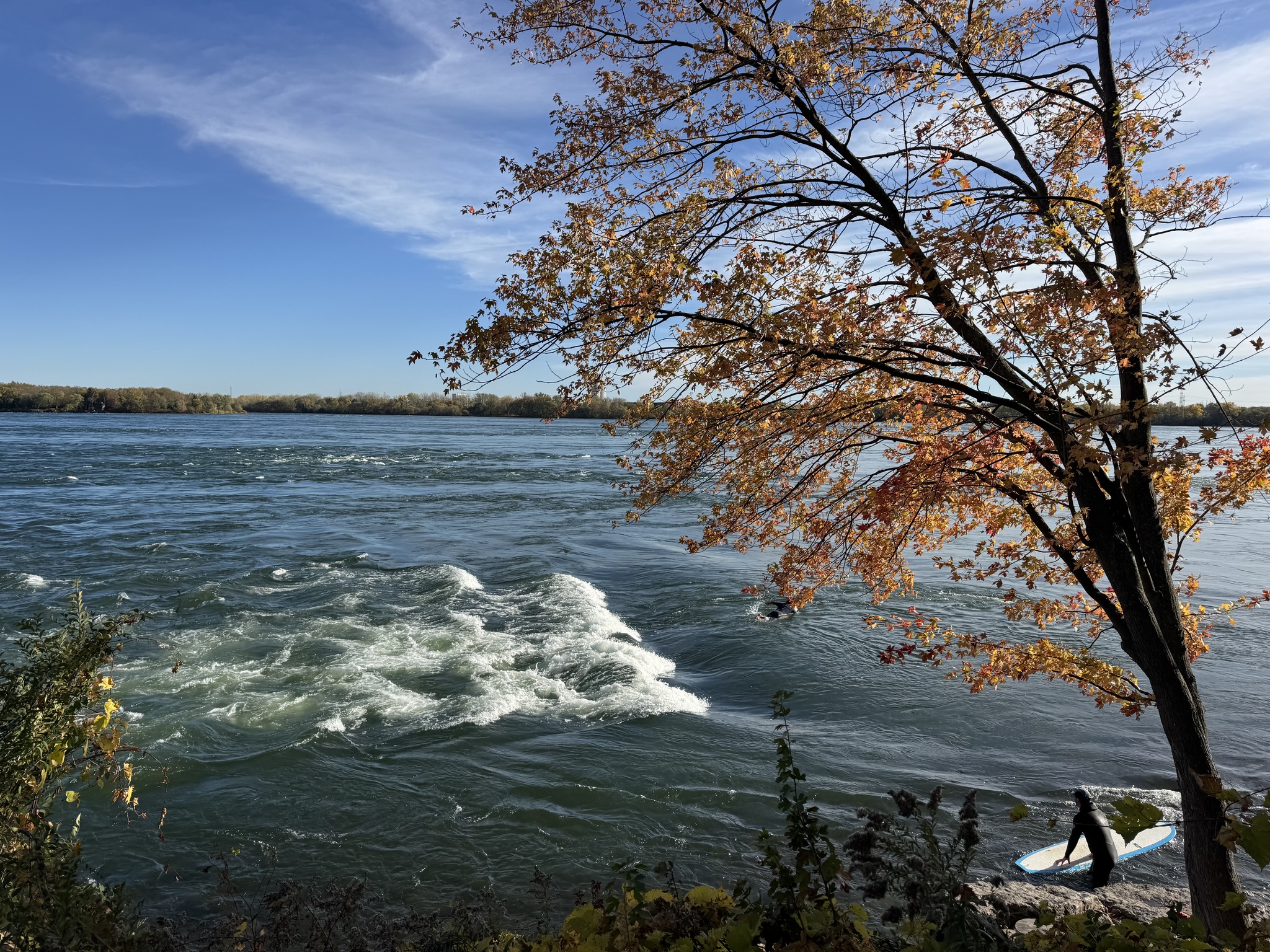
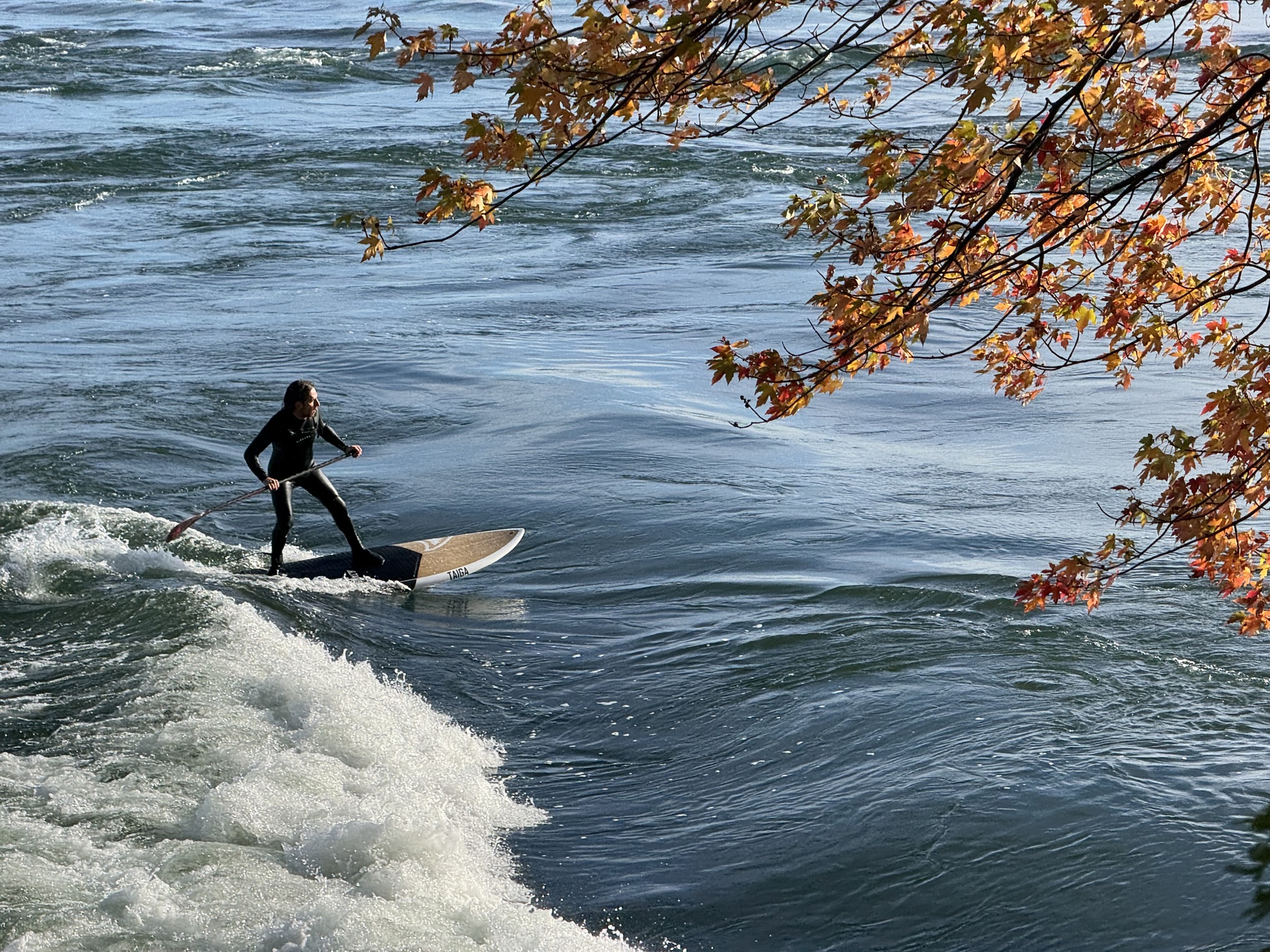
There was a small rapid here where people were surfing on stand-up paddle boards.

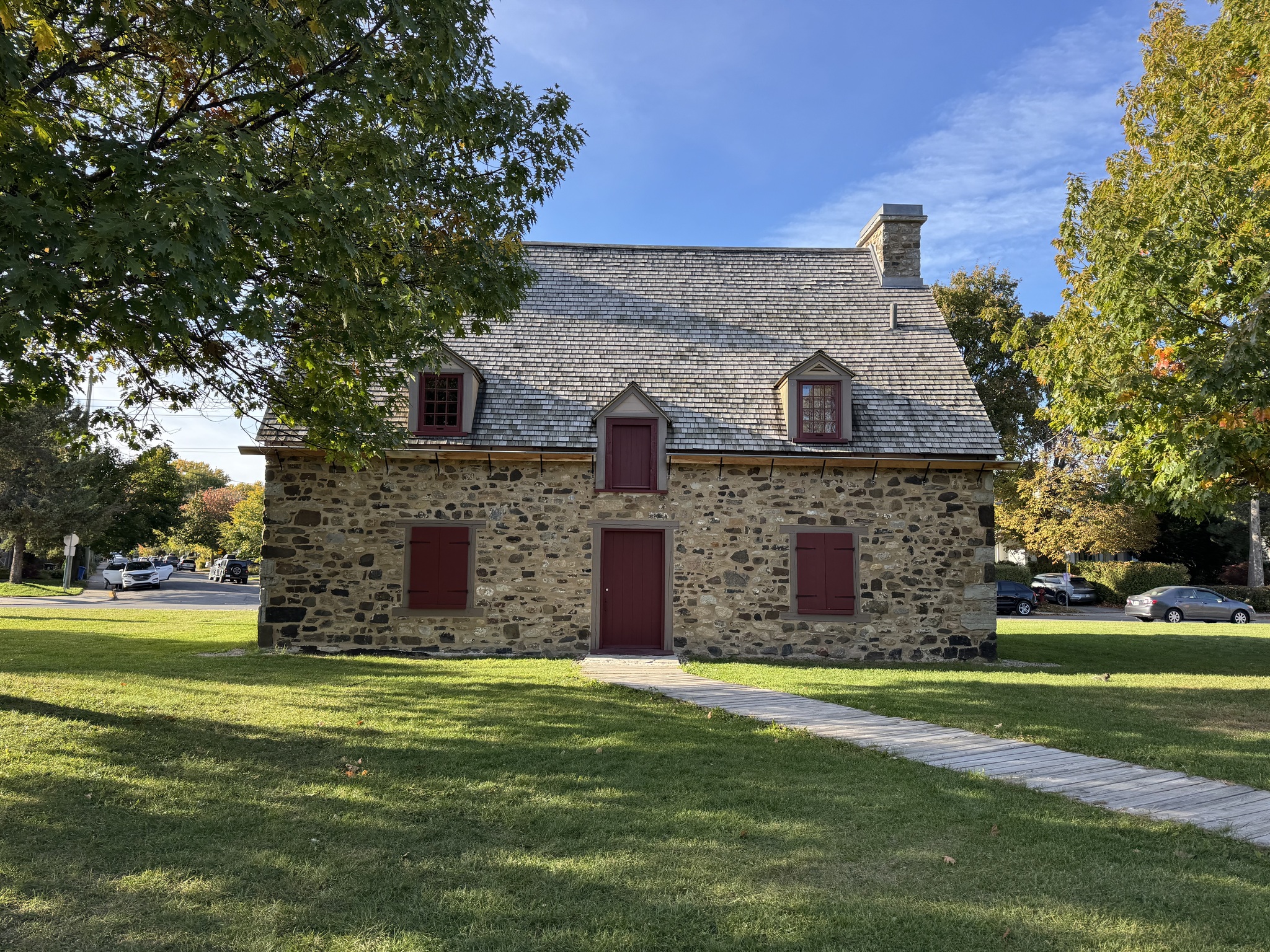
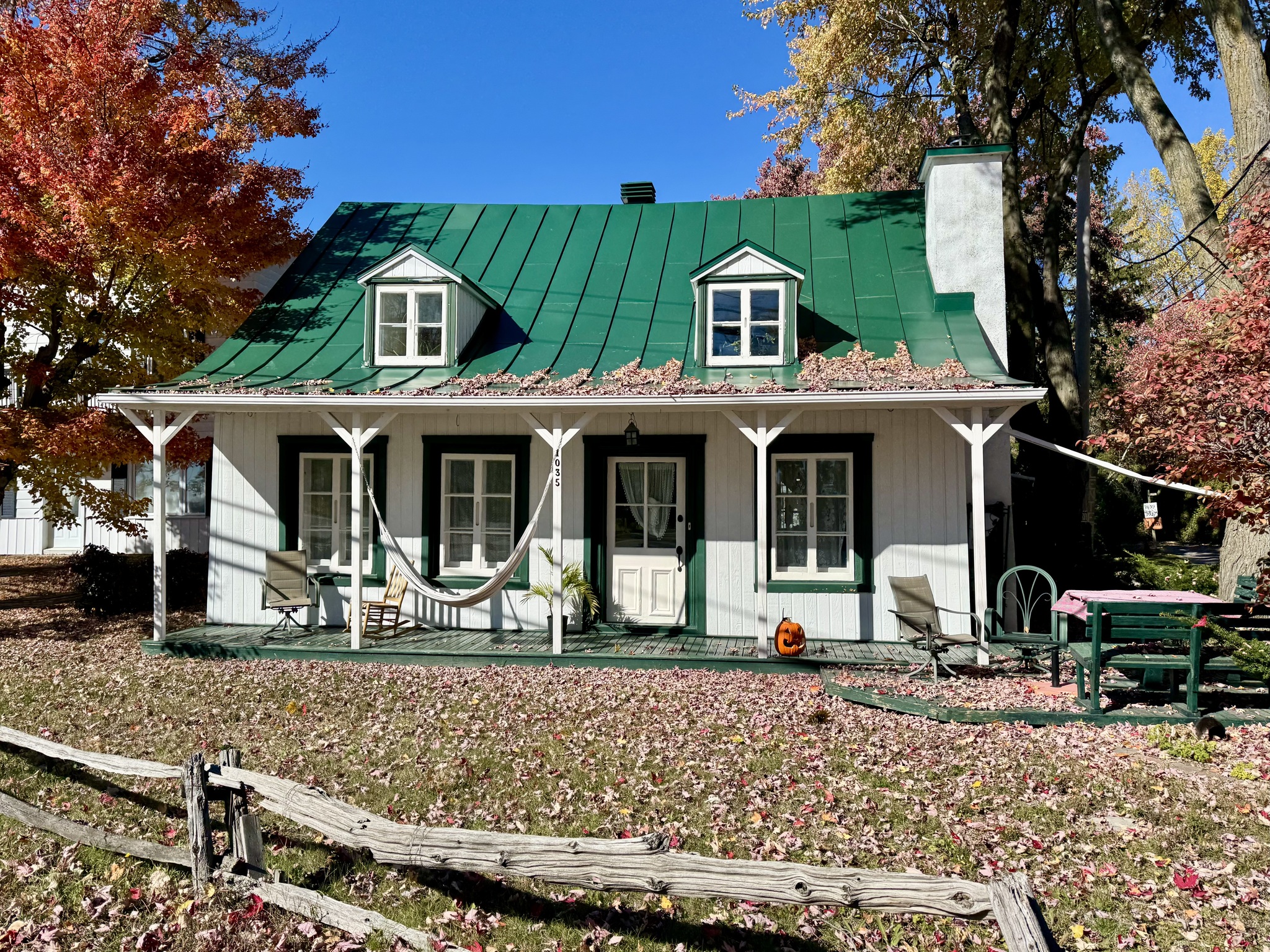
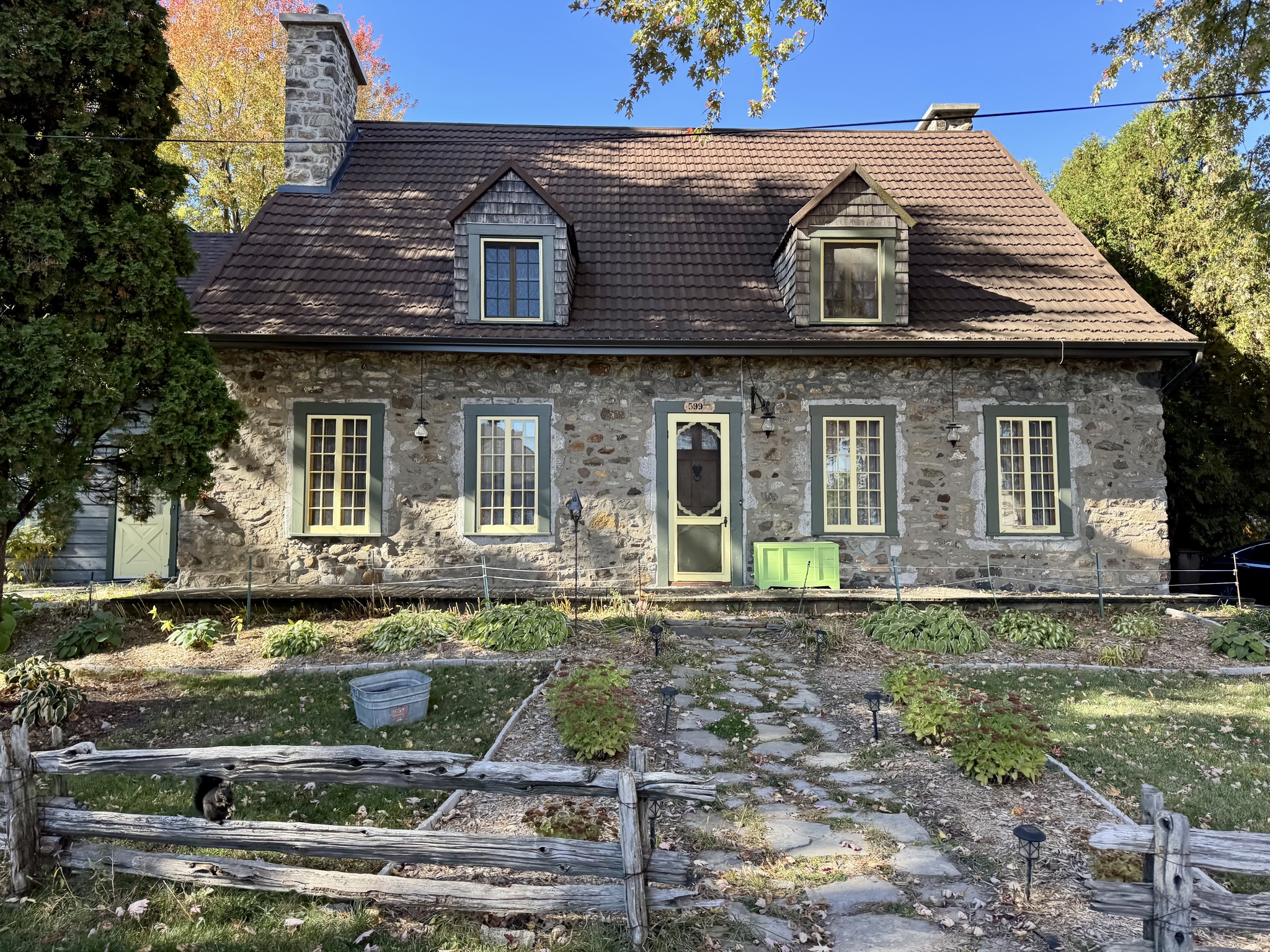
Maison Nivard-De Saint-Dizier is an example of rural architecture from the early days of French settlement. It was built in 1710.

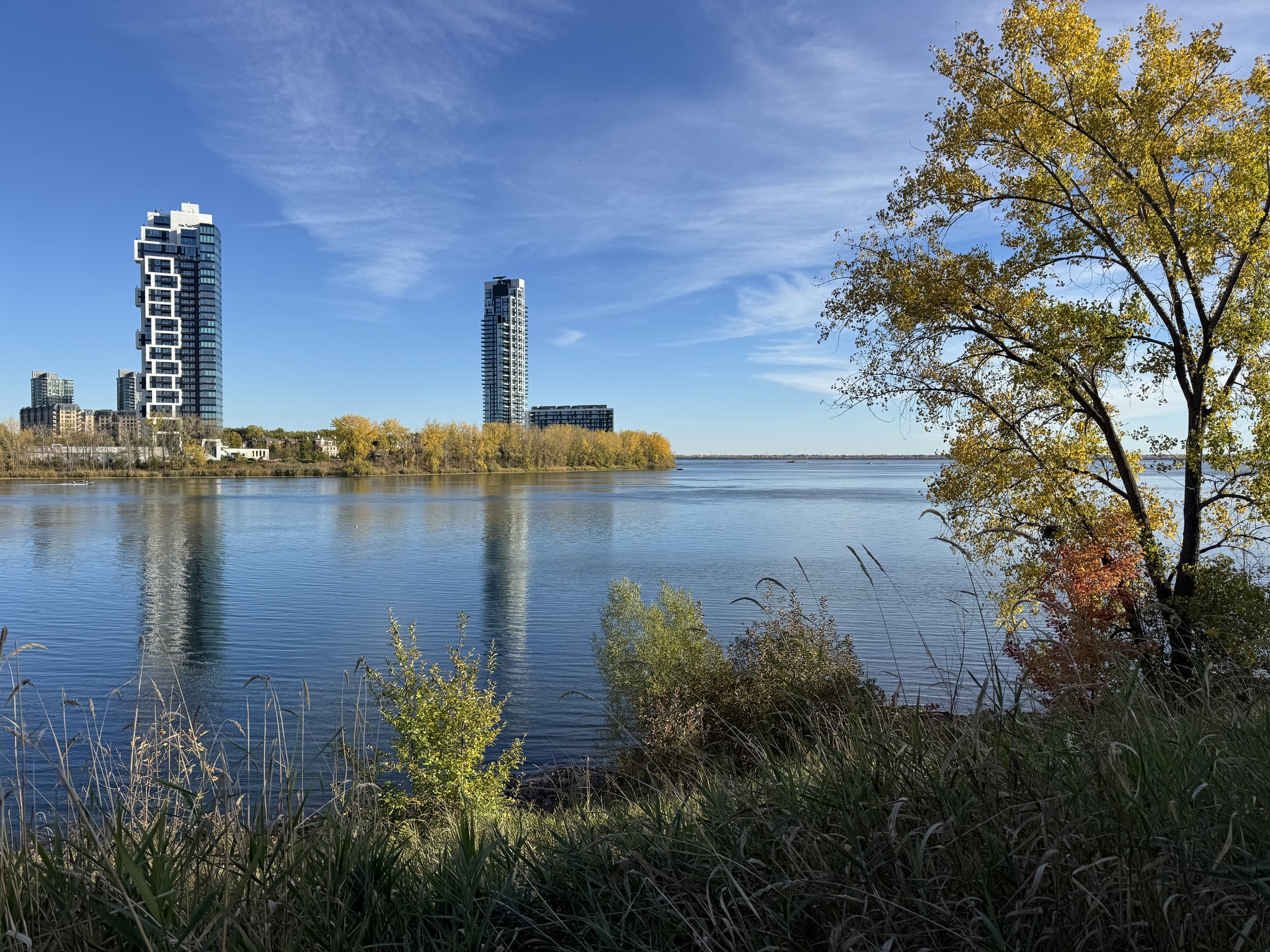
Nuns’ Island (Île-des-Sœurs) was owned by the religious order Congrégation de Notre‑Dame. The nuns use the land for farming for about 200 years. In 1956 they sold the island for large scale development.  The population of the island in 2021 was 21,000. I would like to explore the island in the future. There are several Ludwig Mies van der Rowe buildings on the island.

We left the path along the St. Lawrence and cycled through Verdun, which had a lot of traffic calming and cycling infrastructure.

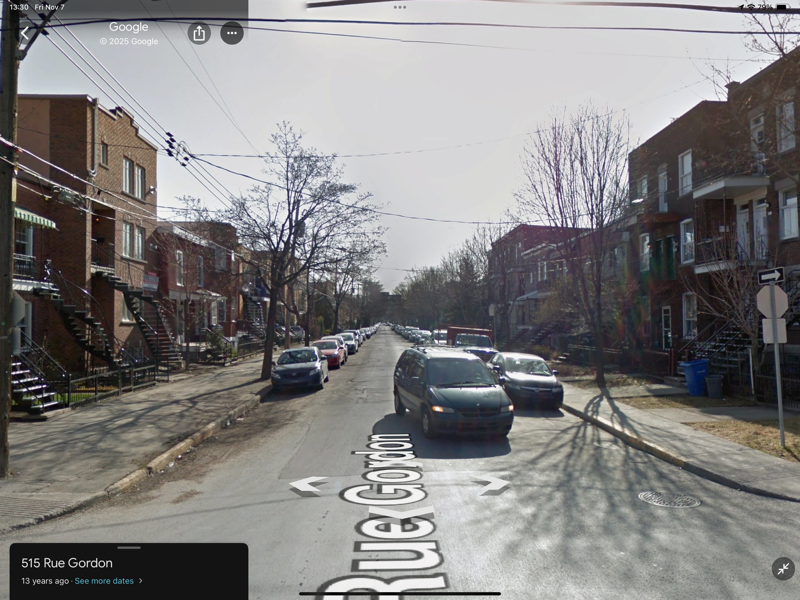
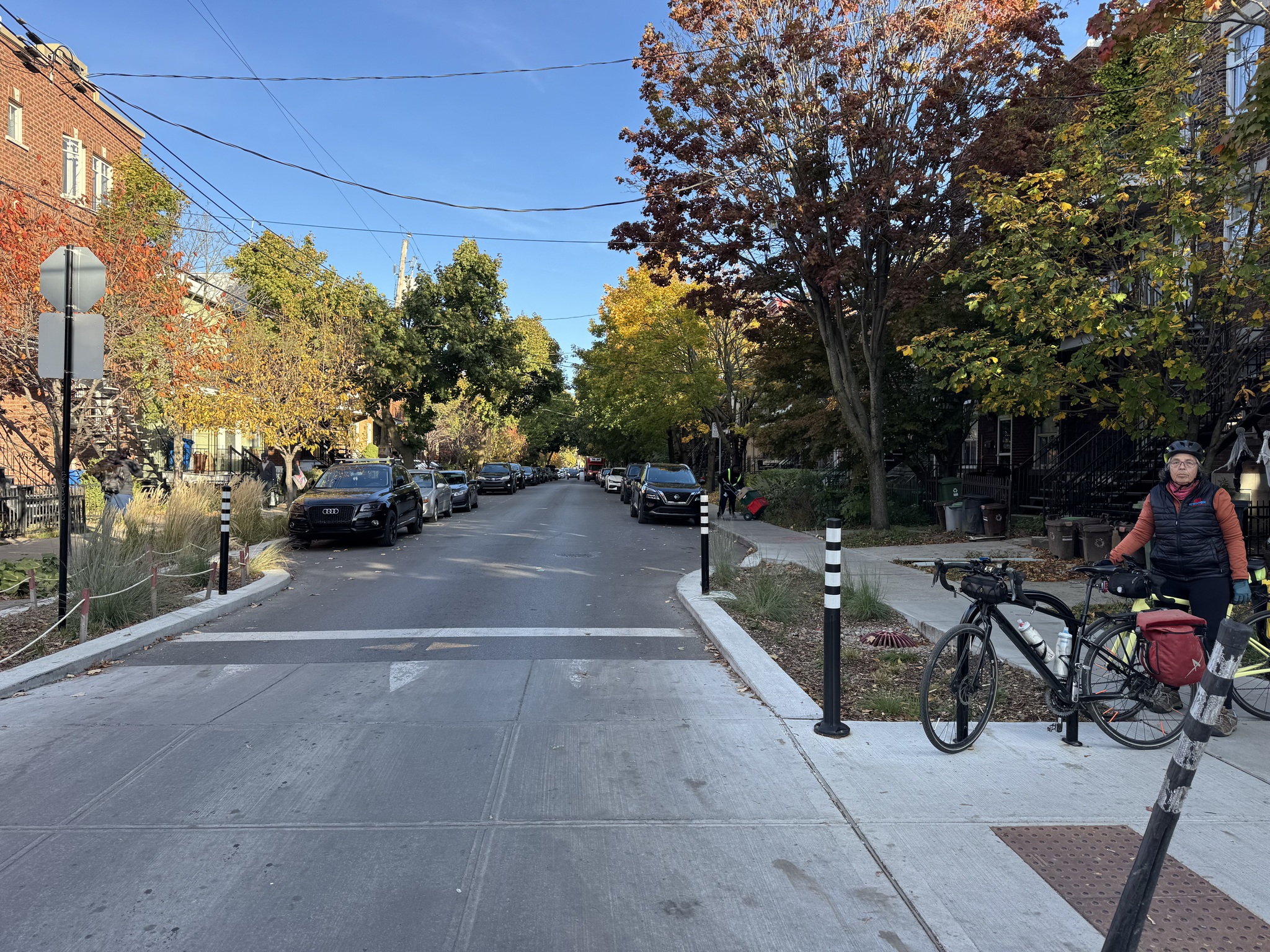
Rue Gordon has been traffic calmed by “daylighting” the intersection. Daylighting is the practice of removing parking spaces adjacent to an intersection, and narrowing the distance that pedestrians need to cross. This intersection also has a raised crosswalk so that pedestrians stay at the same level in the road, but cars have to drive up and down a ramp, which discourages speed. I took a screen cap from Google maps to show what the intersection used to look like. The amount of consultation that cities have to do to make our roads better for everyone, as opposed to optimized for driving, infuriates me. It always shocks me how people so fiercely protect the car centric status quo. Imagine preferring the before picture to the after! There were a lot of cars in the area, but it was still quite quiet because they were all driving slowly due to the environment being engineered to make that happen.

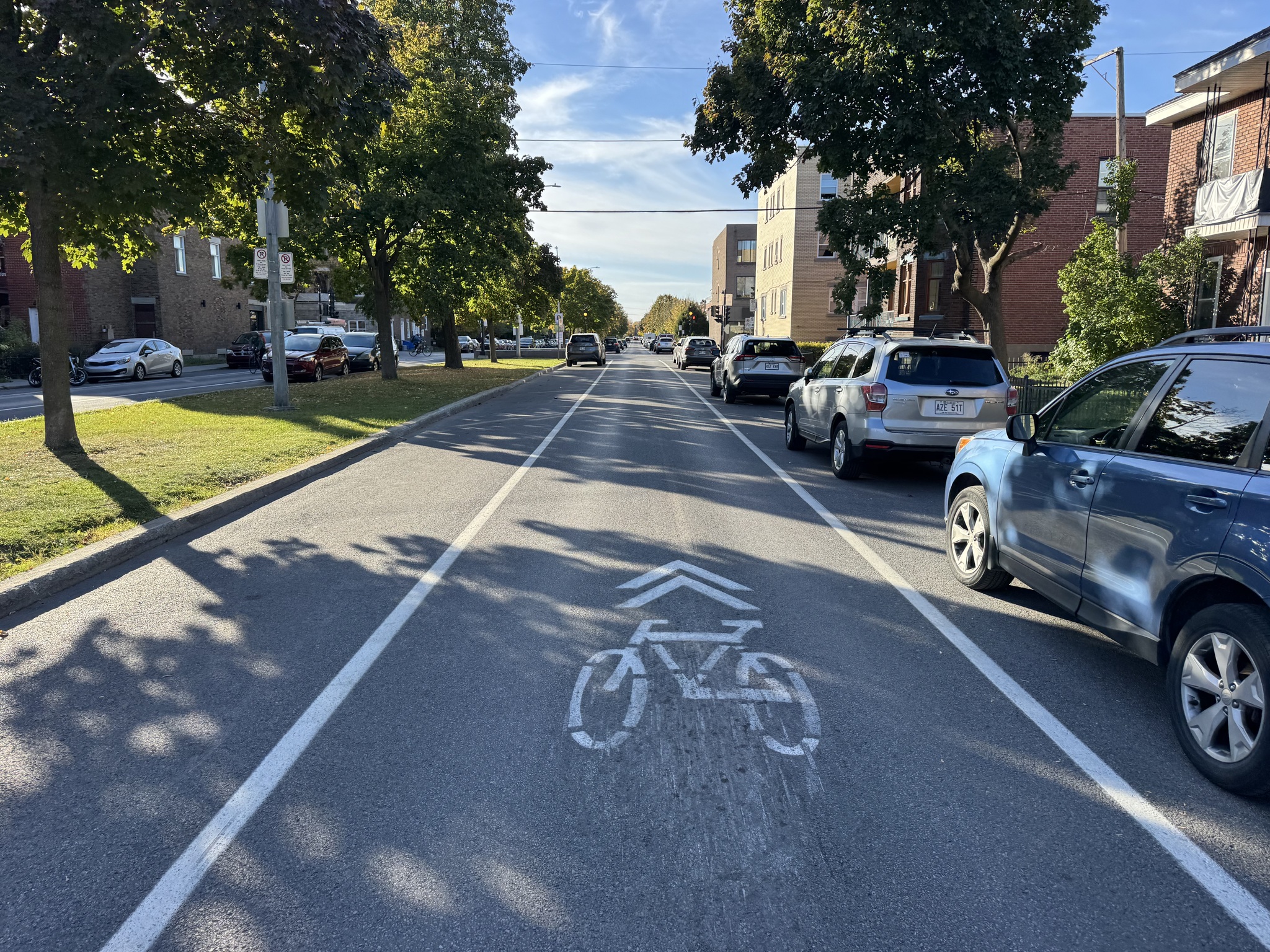
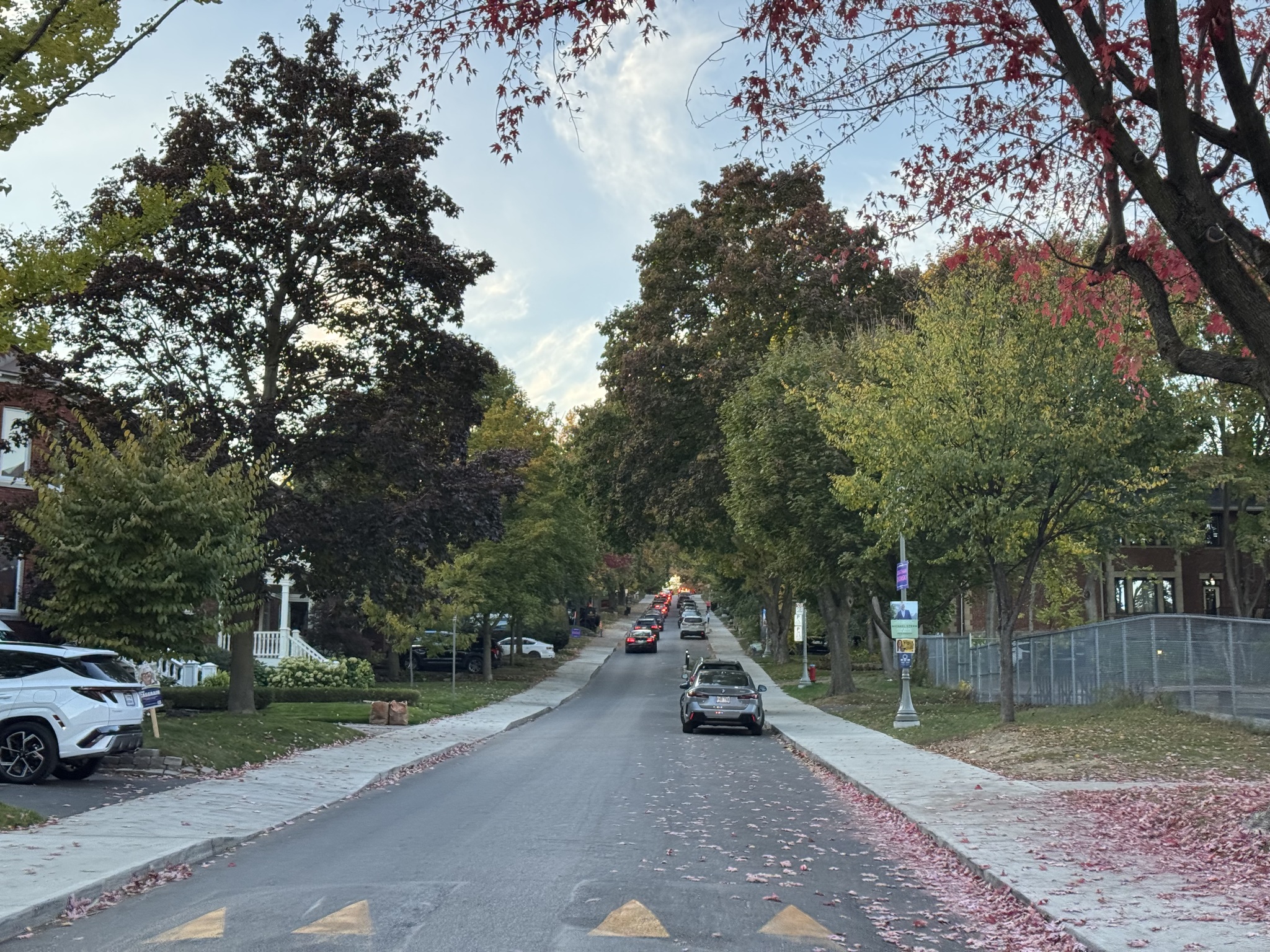
This street only had sharrows, however, with a boulevard down the middle, a shared travel lane for cars and bikes, and four lanes of parking, it felt comfortable.

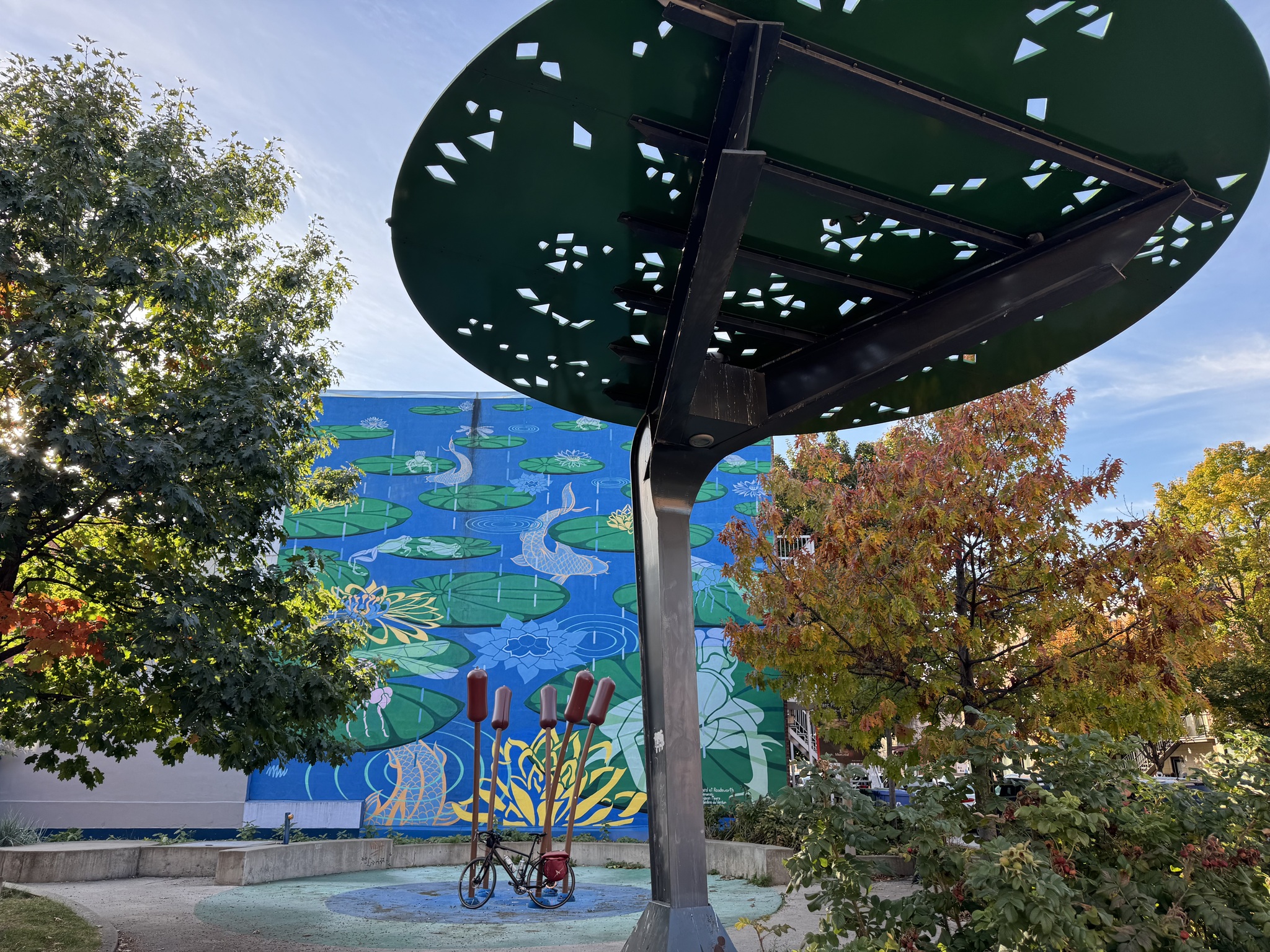
Philippe-Zotique-Milette Park has been designed to combat urban heat islands. It has permeable surfaces that filter water, a water play area with foggers that produce fine droplets of water, that cool through evaporation, and shade structures.

The mural depicts endangered, native species as part of a marsh threatened by urban development.

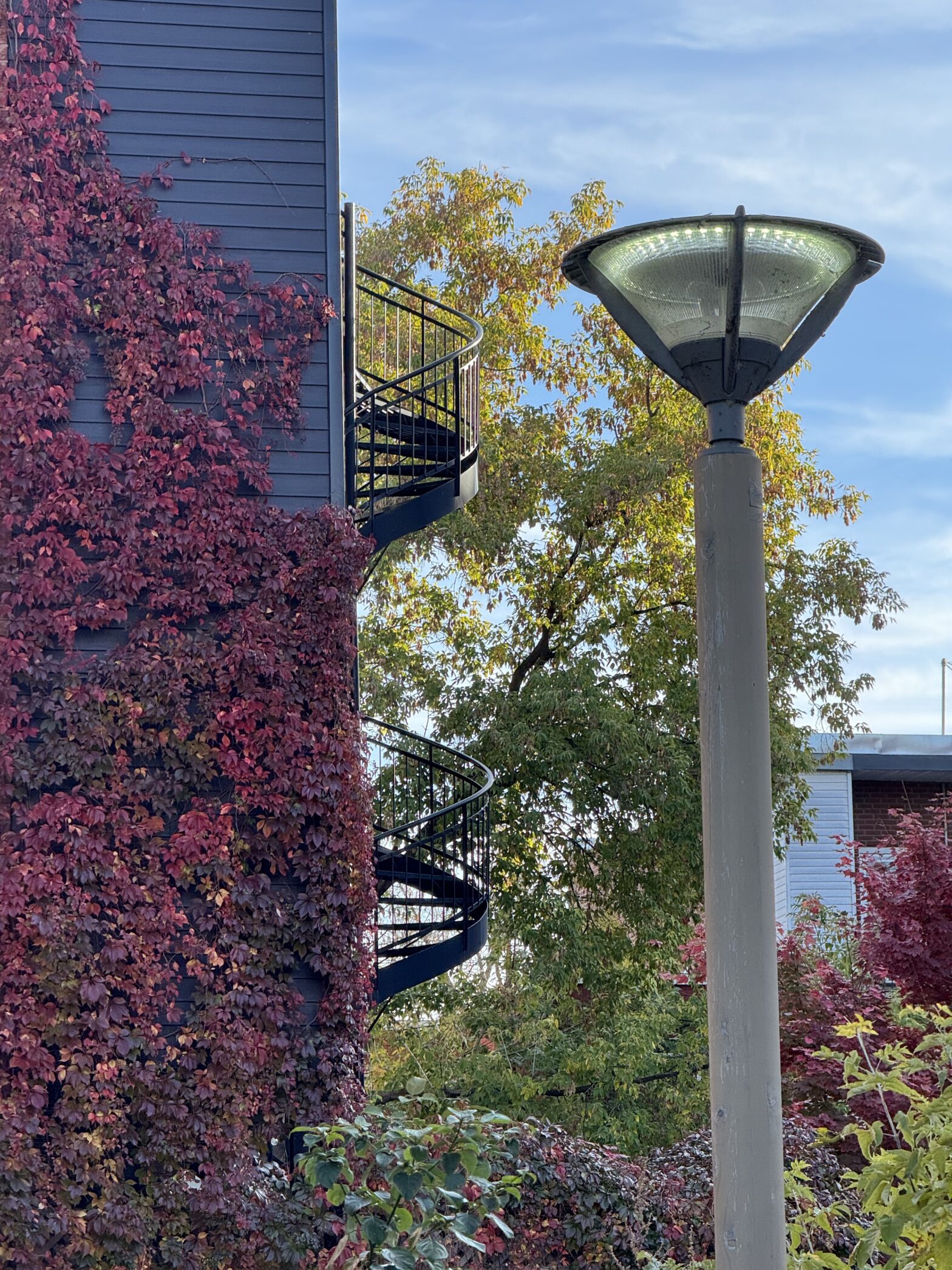
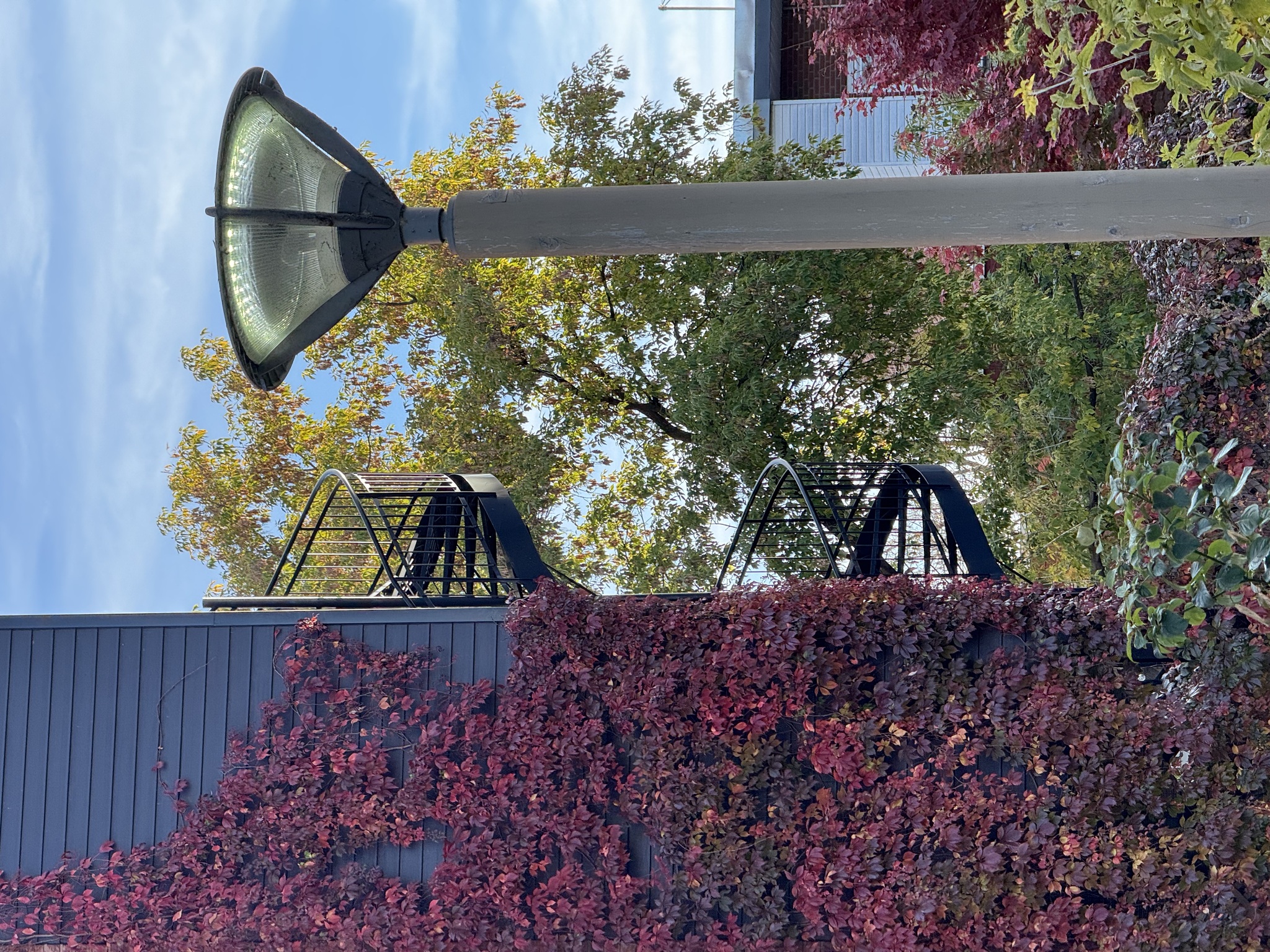
This small apartment next to the park caught my eye with the beautiful ivy and iconic Montreal outdoor staircase.

We were heading to Atwater Market, which is on the Lachine Canal. This area is so busy that they have built a cyclo-pedestrian roundabout to manage the traffic. With the many arrows they leave absolutely no question as to which direction one should navigate the roundabout.

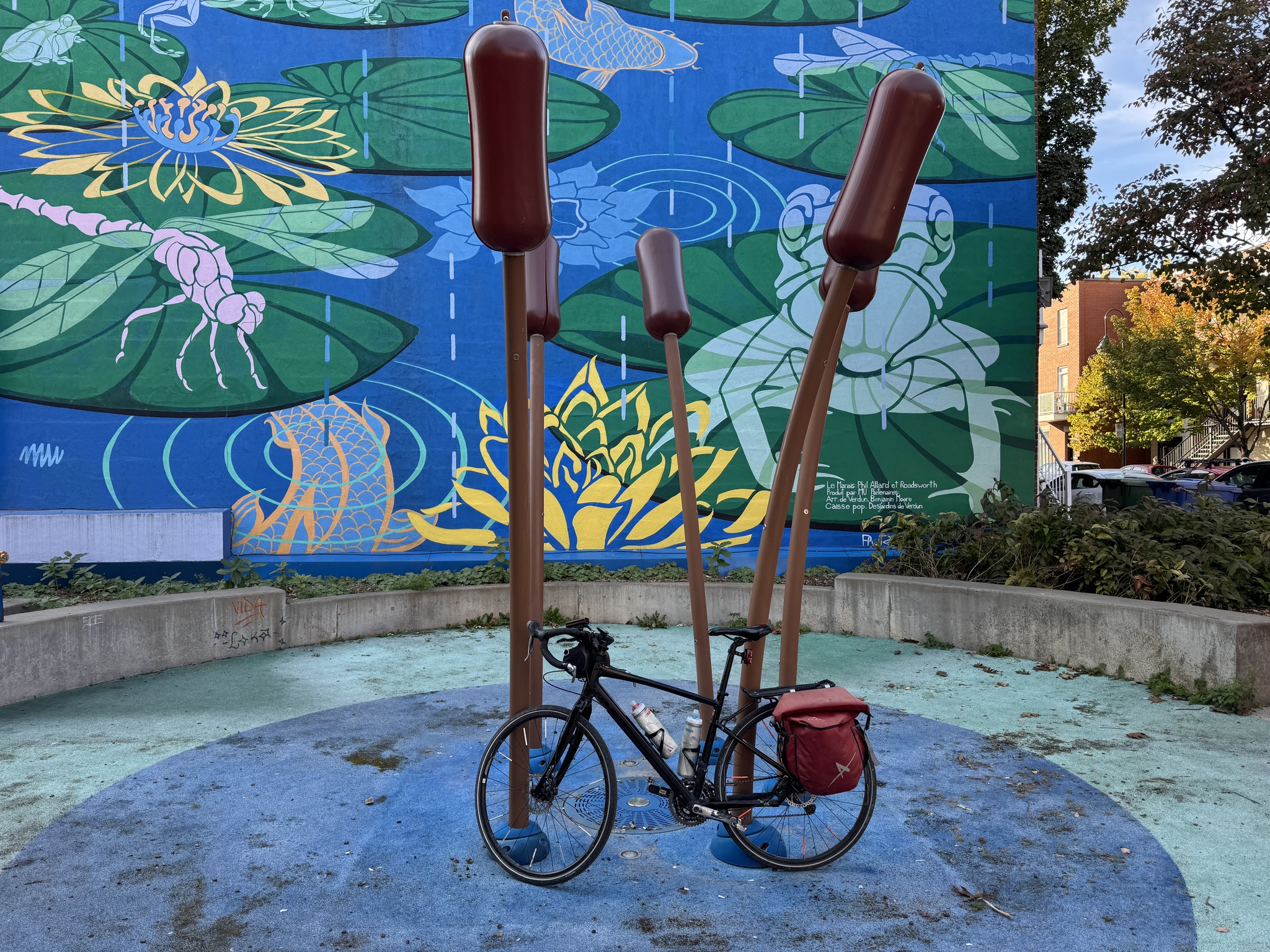
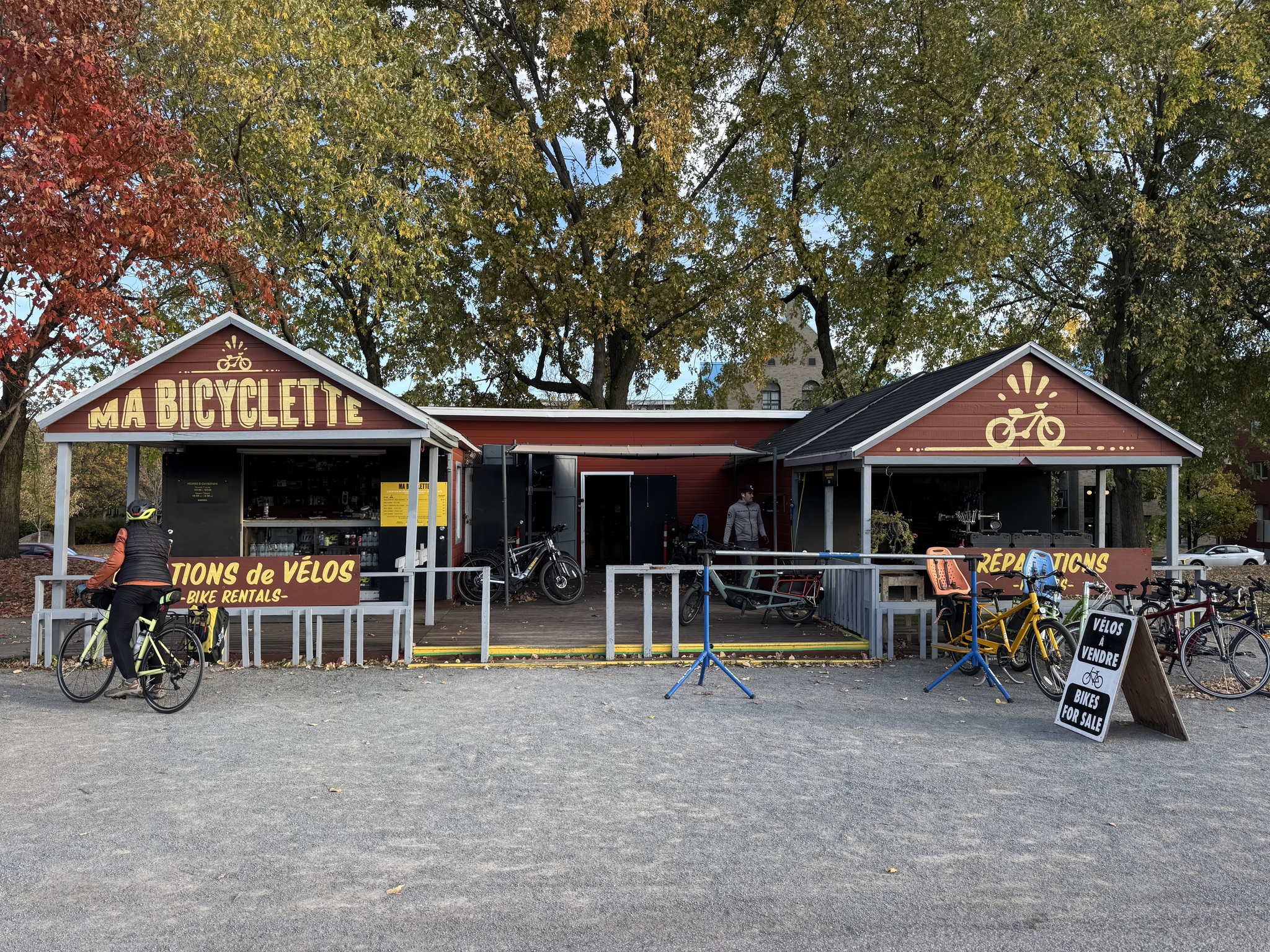
We stopped at this bicycle rental, parts, and repair business so that Cindy could purchase the correct size tube, in case she encountered another flat. However, despite finding nothing wrong first thing this morning, her tire remained inflated.

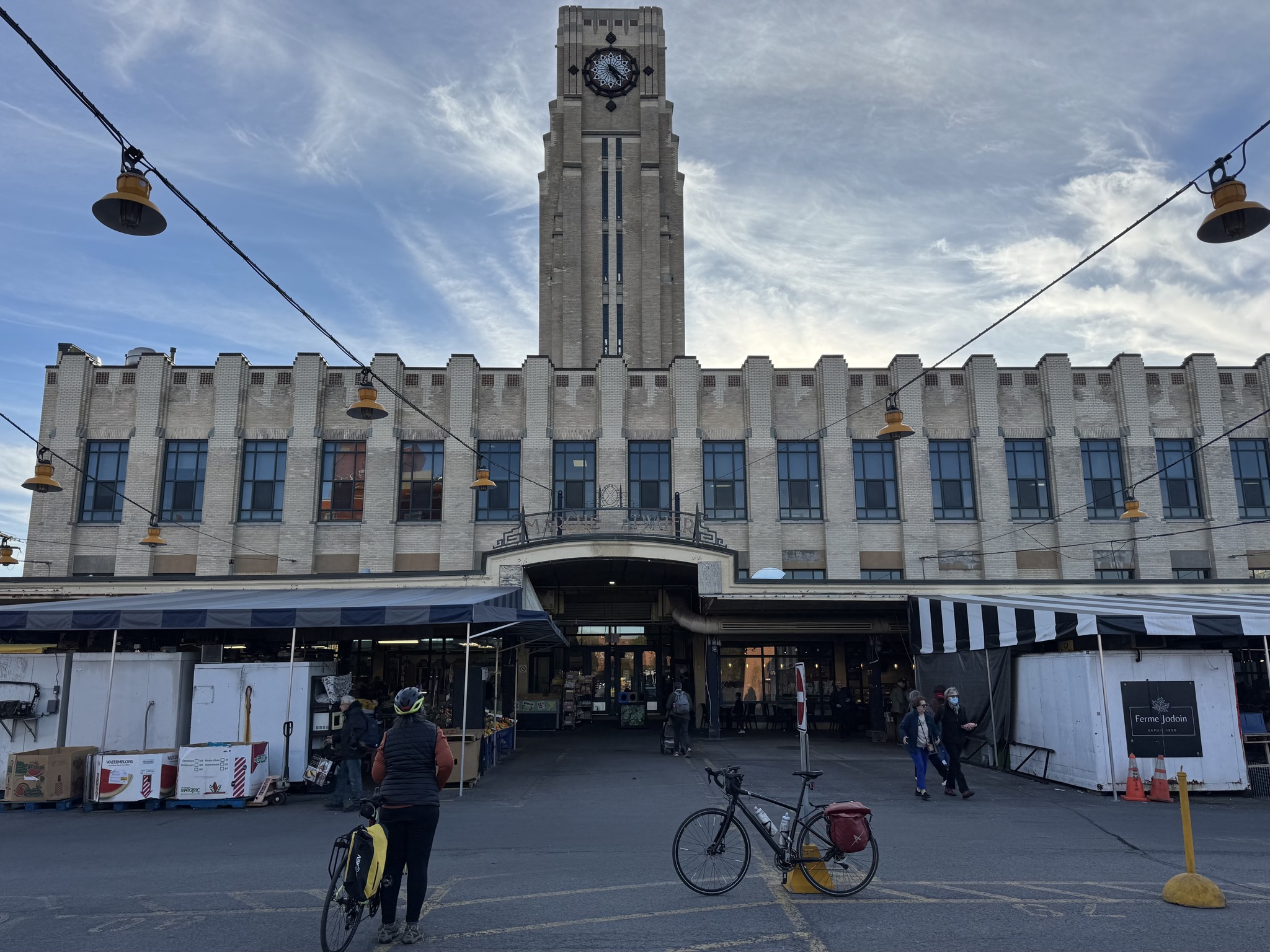
This is Atwater Market.  It opened in 1933, in an Art Deco-style building designed by architect Ludger Lemieux in response to the Depression-era push for public works. 

Everything looked absolutely delicious.  There were stalls outside selling vegetables and cheese

Inside there were butchers and prepared food among other edibles.

We reluctantly left without making any purchases, and began the uphill trek back to Saint Joseph’s Oratory. We stopped briefly at a small park with a large mural.

We rode on a new raised cycle track with bioswales. 

Then, the climb began. There were three distinct steep sections with plateaus in between. Our legs were quite tired, since we had not had a rest day in over 500 km, so we walked parts of all three hills.

This was one of the flat areas with a bi-directional cycle track between the first and second climb.

We cycled up to the parked cars here and then walked the steep section.

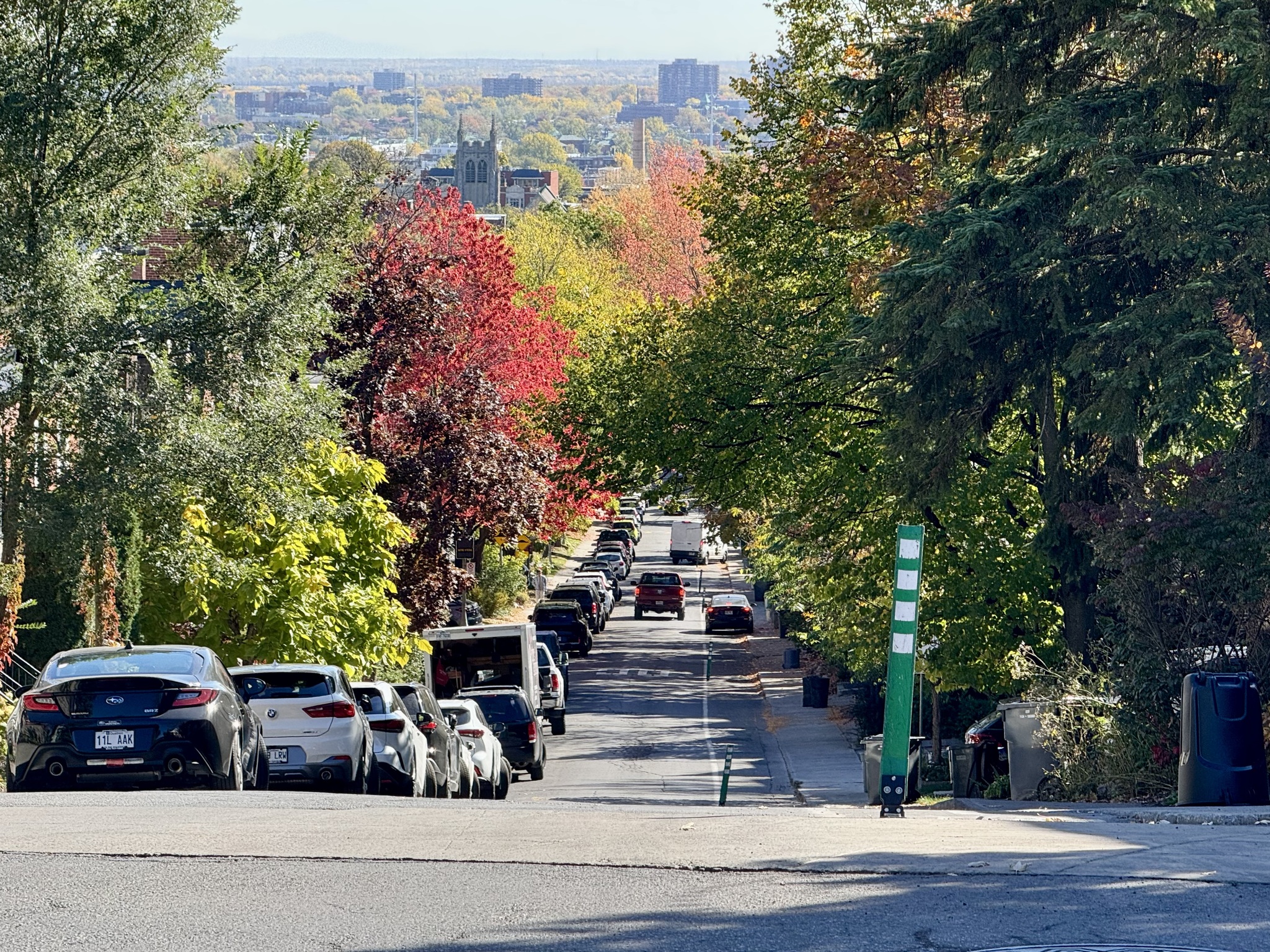
It’s often difficult in pictures to get a sense of how steep a hill is. This image, looking at the houses that line the street,  illustrates the steepness of the slope.

Here, we rode to the parked white car and then walked the rest of the way. We were walking faster than the cars.

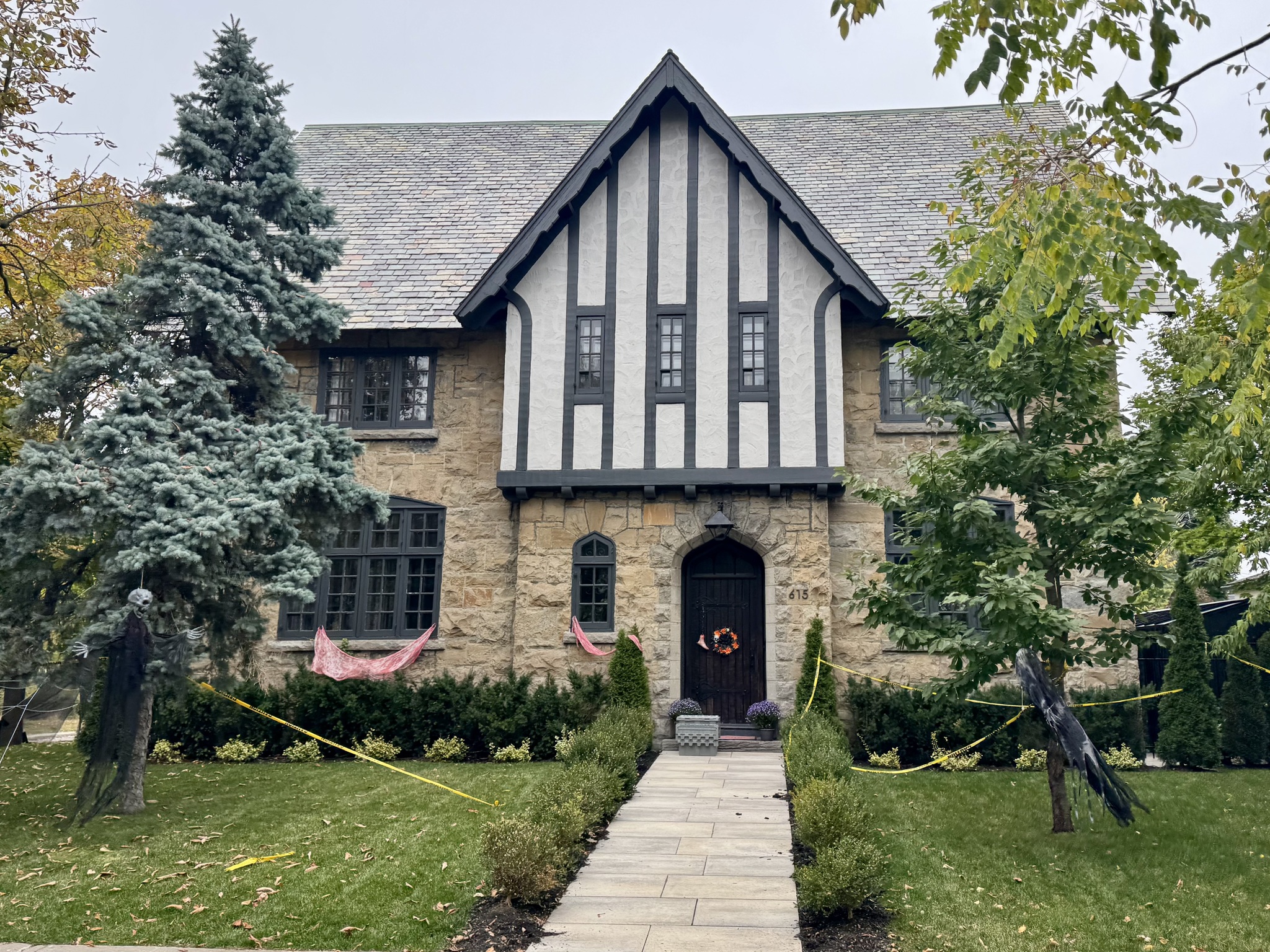
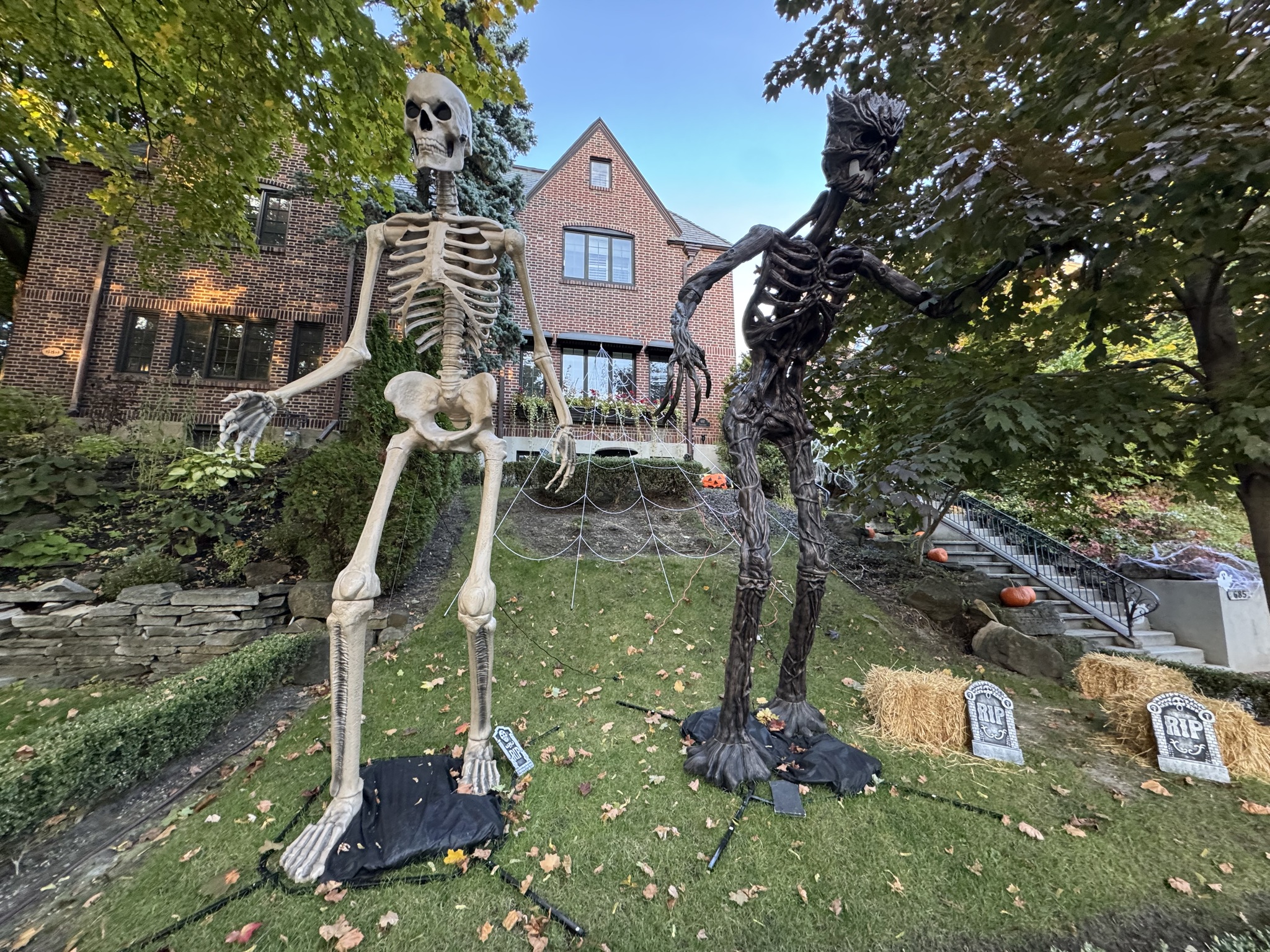
Back in Westmount many homes had over-the-top Halloween displays.

When we got back to the accommodation, we changed, and then went back to the same restaurant, sushi shūshū for dinner, as we had our previous two nights in Montreal. Once again, the food was delicious, and the waiter, excellent.

After dinner David and Dayle decided to continue with their rest day. Cindy and I tried to see the Basilica at the Oratory, which we had arrived too late to see last week.

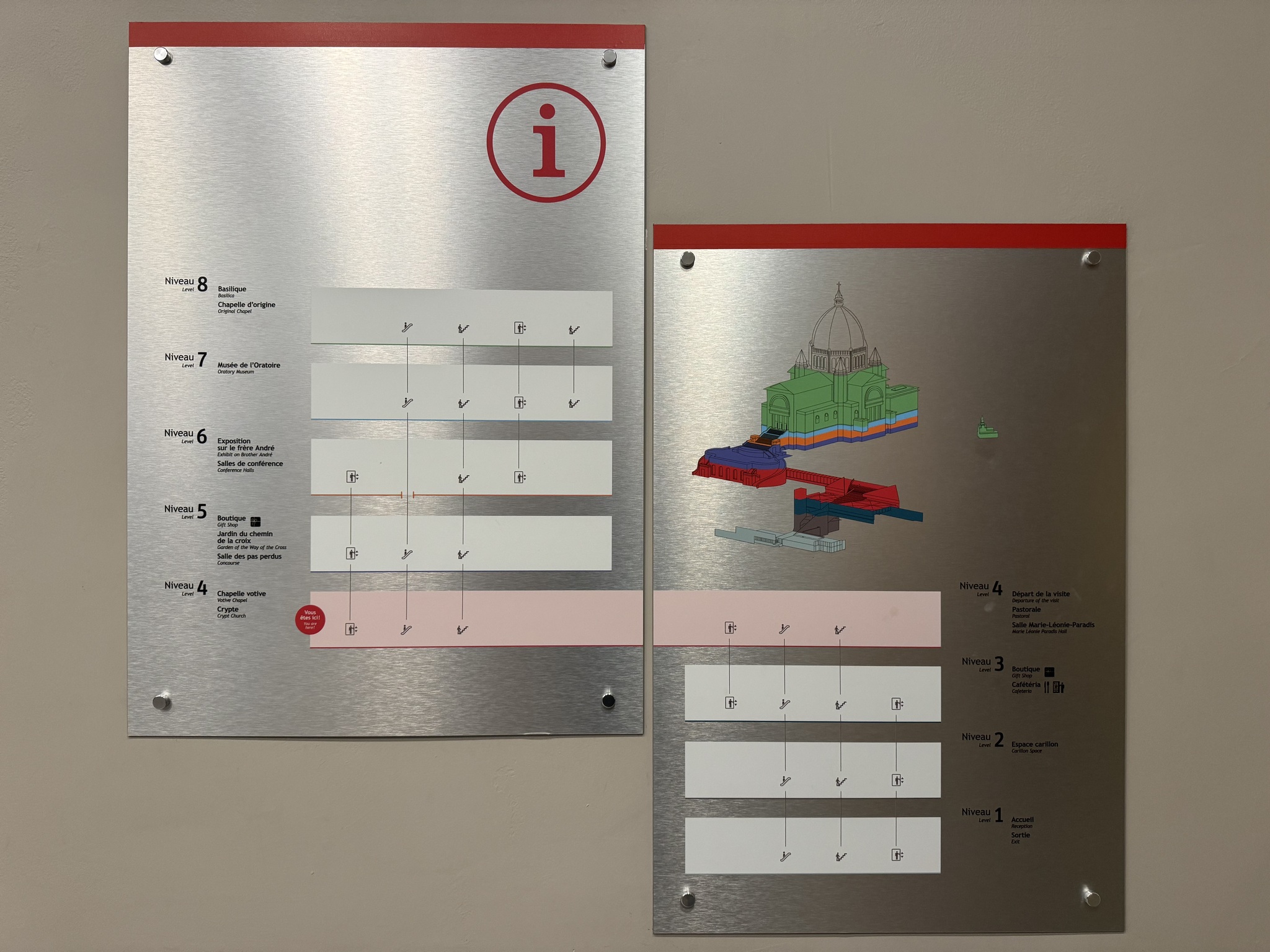
We rode the escalators up to the fourth floor, and then walked past the crypt into an area that had additional escalators to go up to the basilica. However, when we got to those escalators, we could see that there was a gate locking access to the fifth floor. We turned around to walk back out and discovered that we had been locked in. There was one other couple with us. The door to the outside was chain closed. The woman who locked the doors had seen us come in, but locked them and left, nevertheless. Fortunately, the other couple were fluent in French. The woman walked up the escalator to the fifth floor, and called out until a security guard came. The security guard opened the gate to allow us access to an elevator, which took us down to the fourth floor on the other side of the locked door. It was a very odd experience.

We have one night left in Montreal, and will try to get back to see the basilica earlier, tomorrow.

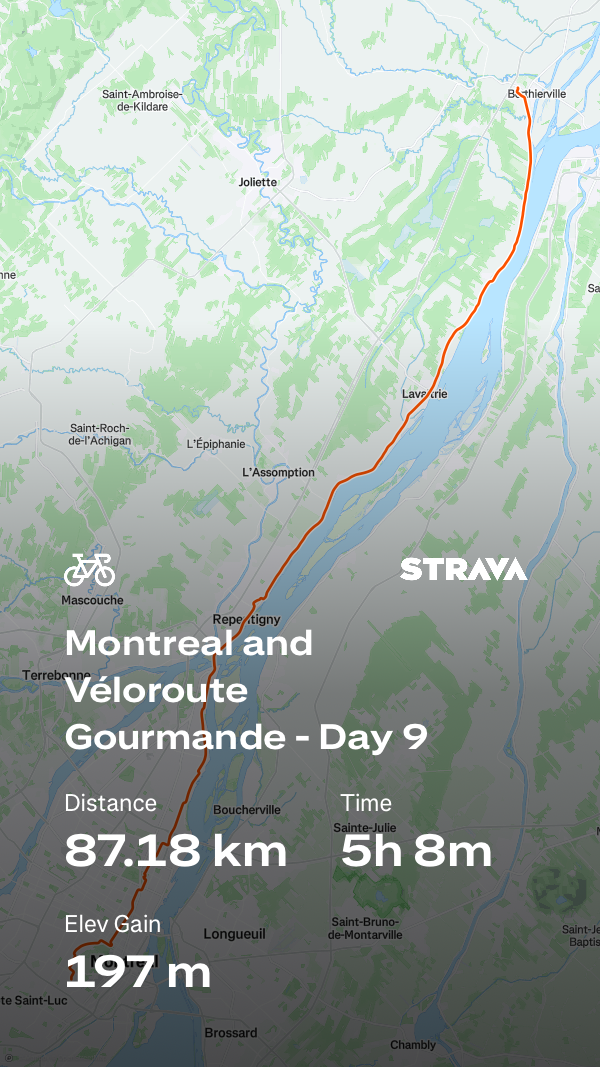
Montreal and Véloroute Gourmande – Day 9

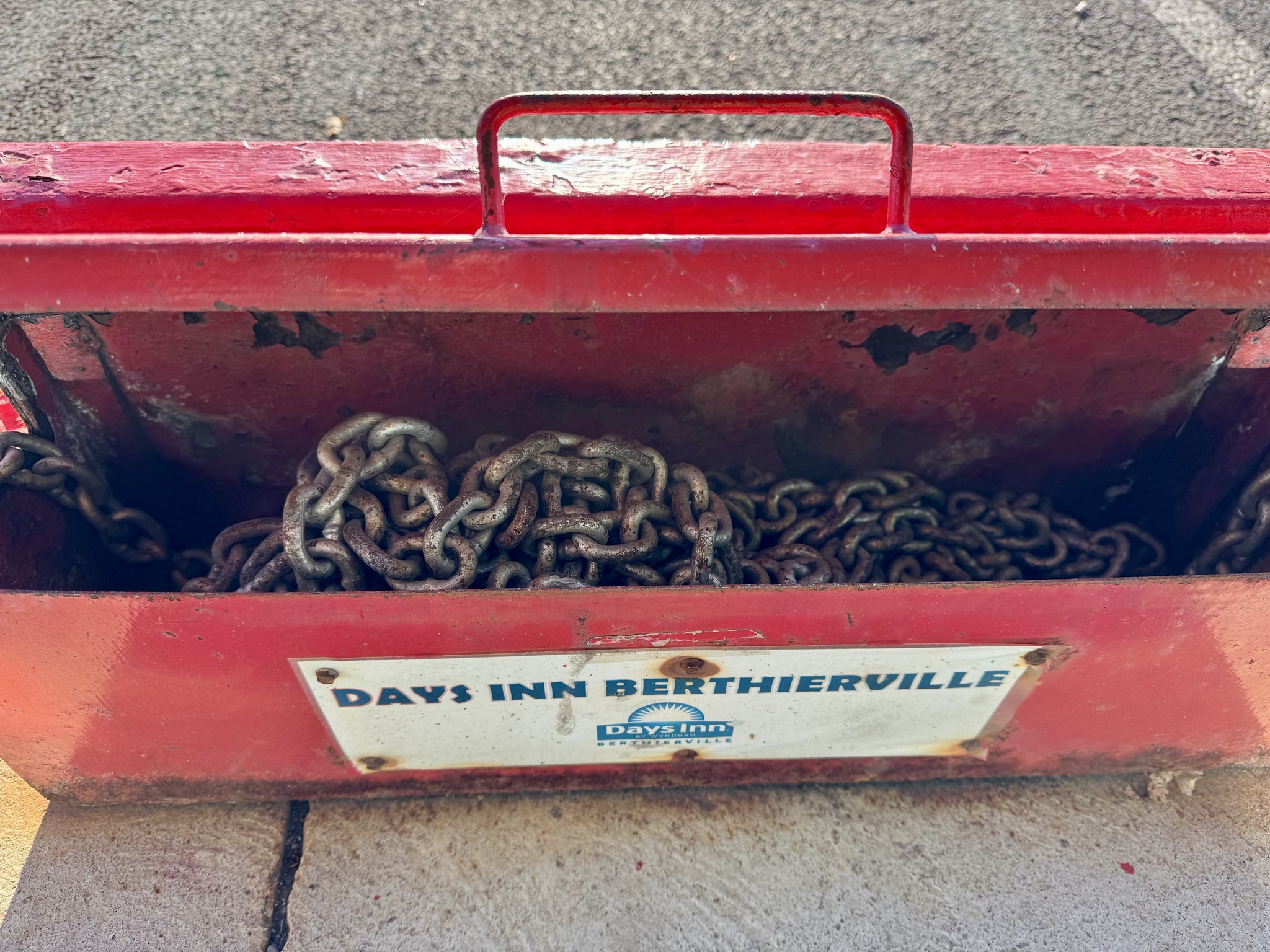
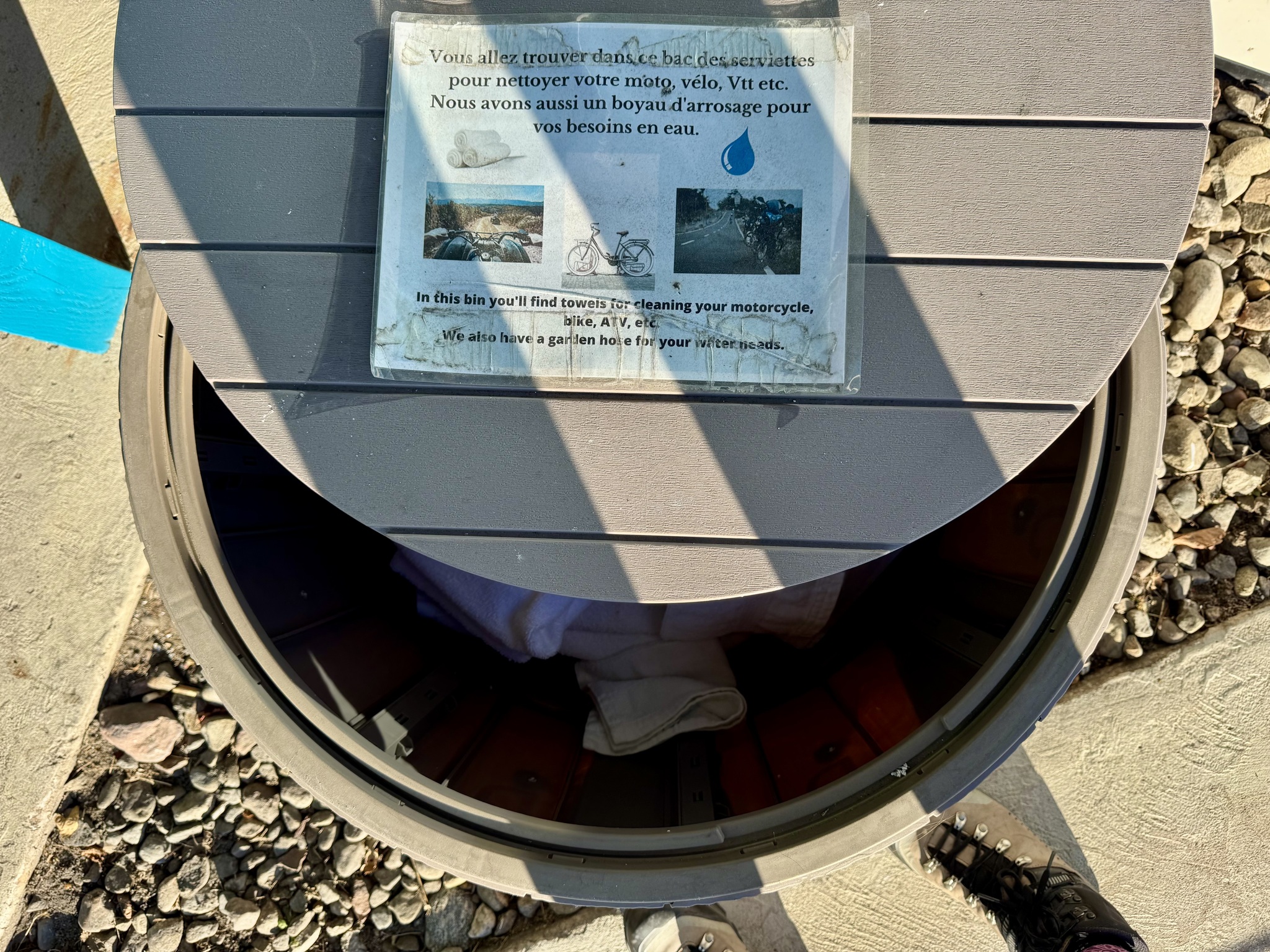
Breakfast was included with our hotel last night. It was the best hotel breakfast we have had so far. We stayed at the Days Inn Berthierville. It was excellent – whimsically decorated and with lots of thoughtful touches.  They have five parking spots for snowmobiles with chain in a box so that you can chain them up. They also had a barrel of washcloths and towel towels for cleaning your bike or snowmobile.

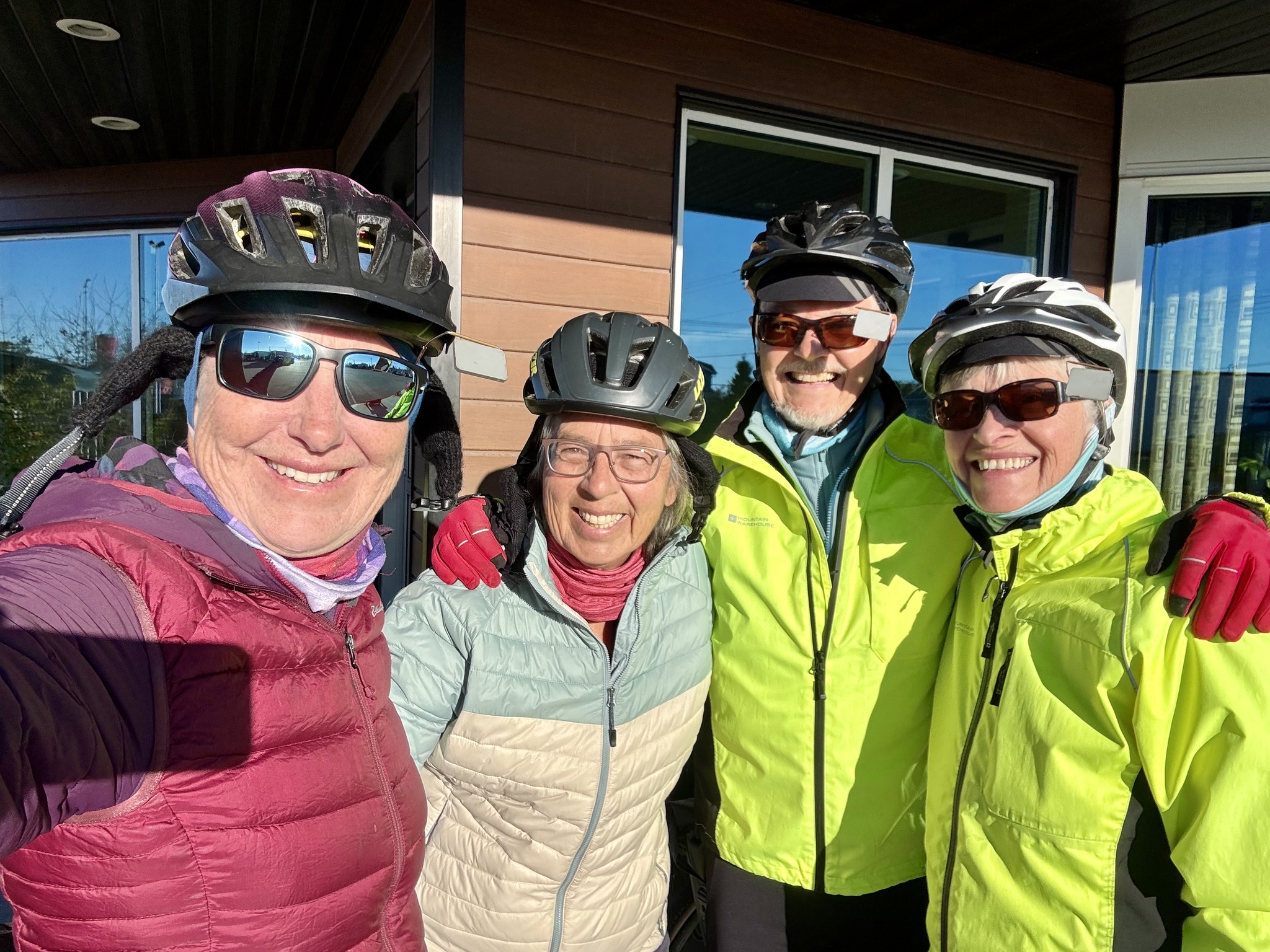
Here we are ready to go.

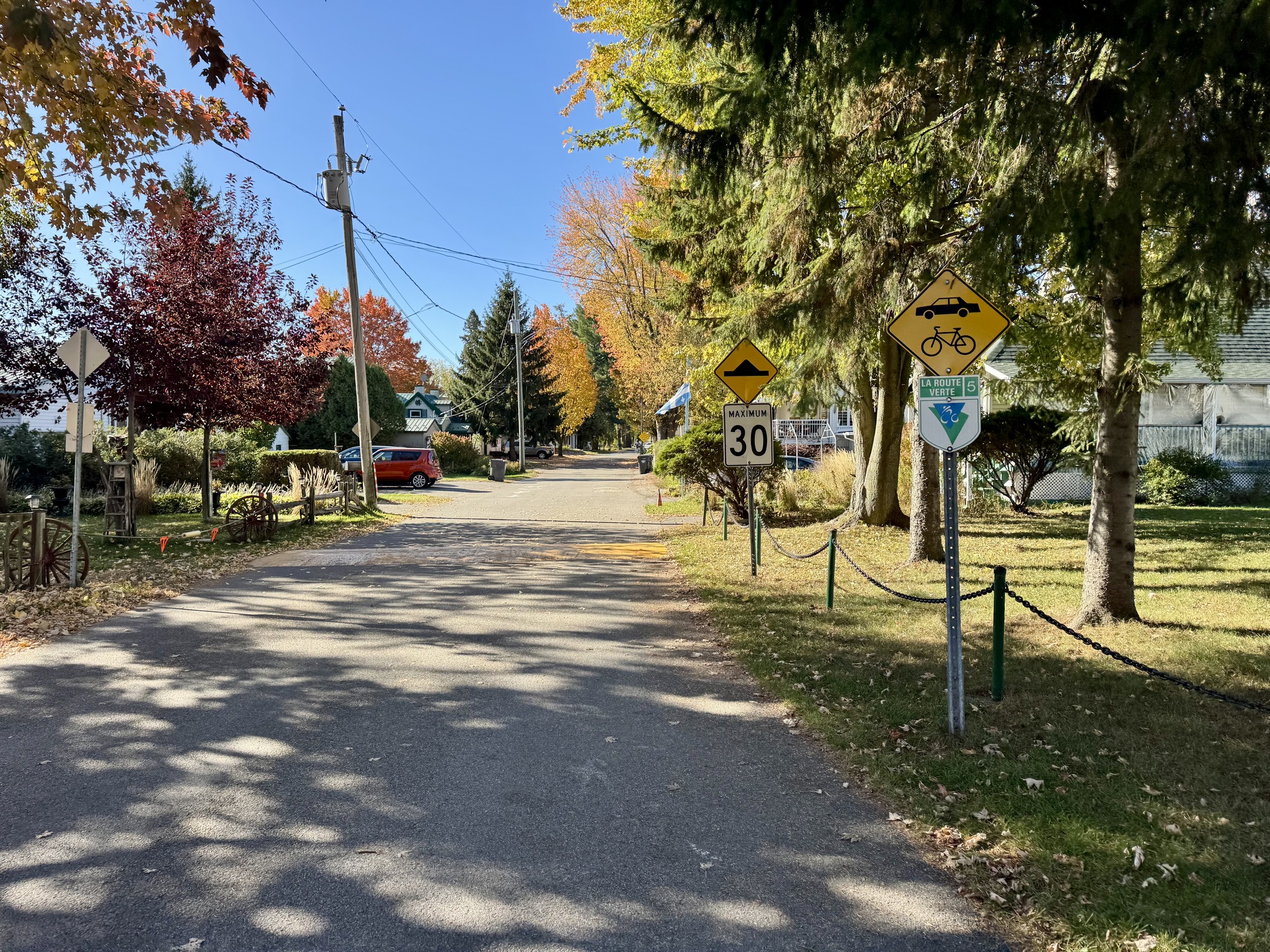
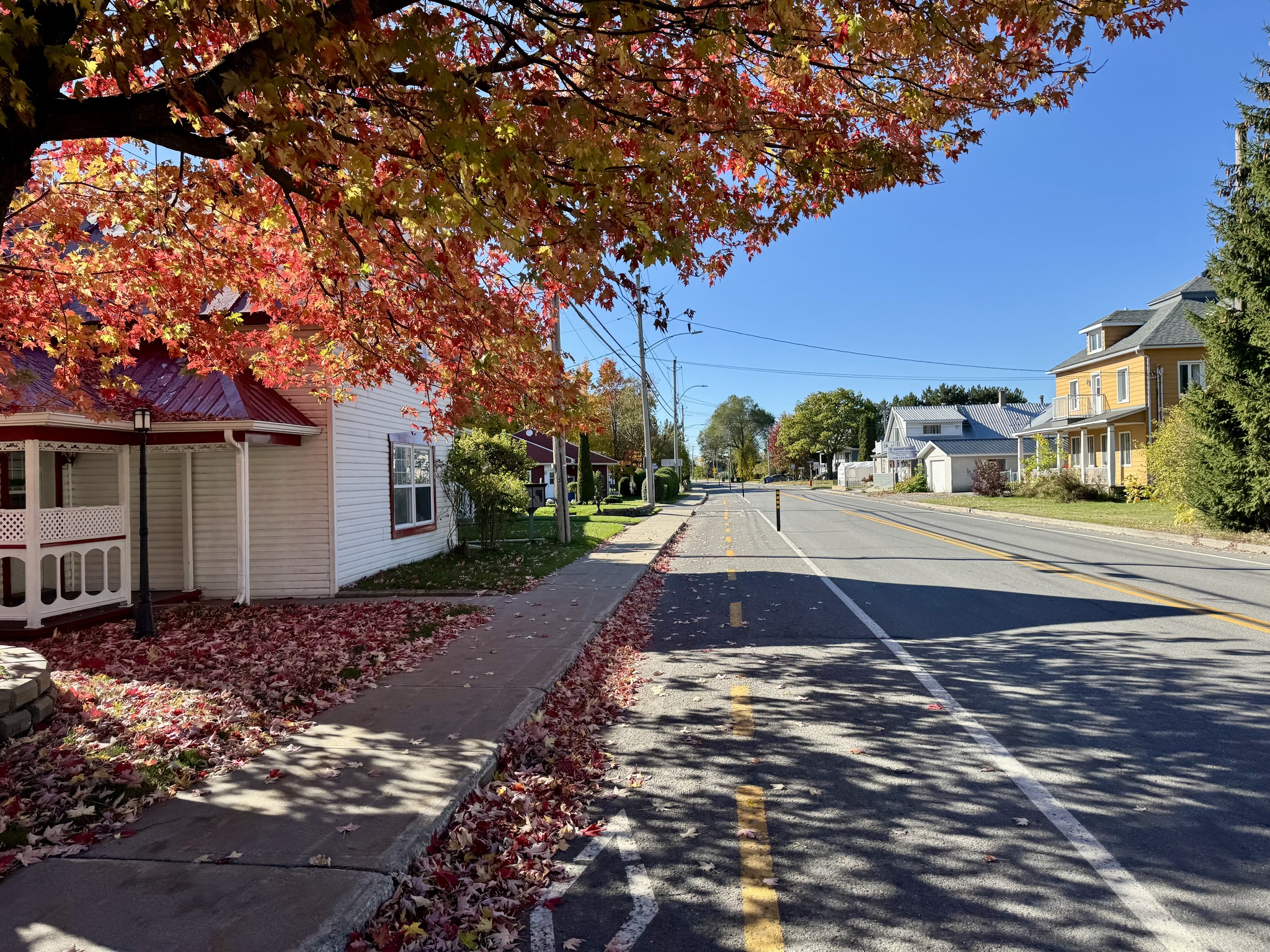
It was cool, but sunny, and with a mild tail wind or crosswind the entire day. It was mostly flat, as we were riding along the St. Lawrence river, until we got into Montreal. Most of the day the riding felt nearly effortless. The pavement quality wasn’t as good along Vélo Route 5 in many places, which we followed much of the day, as along Vélo Routes 1 and 3.

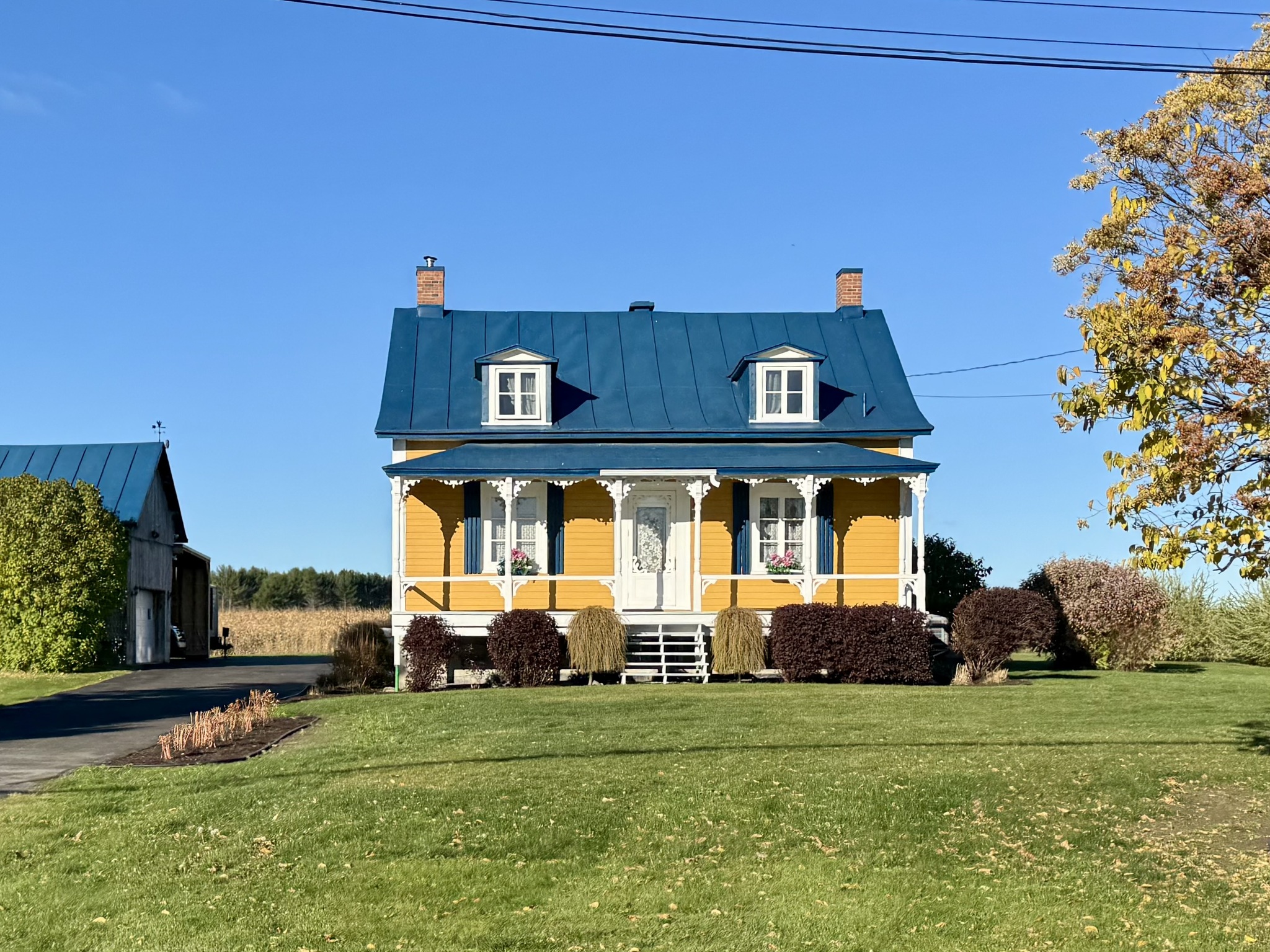
I saw so many lovely homes today. I’ve decided to put them all in a slideshow.

This is the view of the St. Lawrence.

We continued to enjoy autumn foliage.

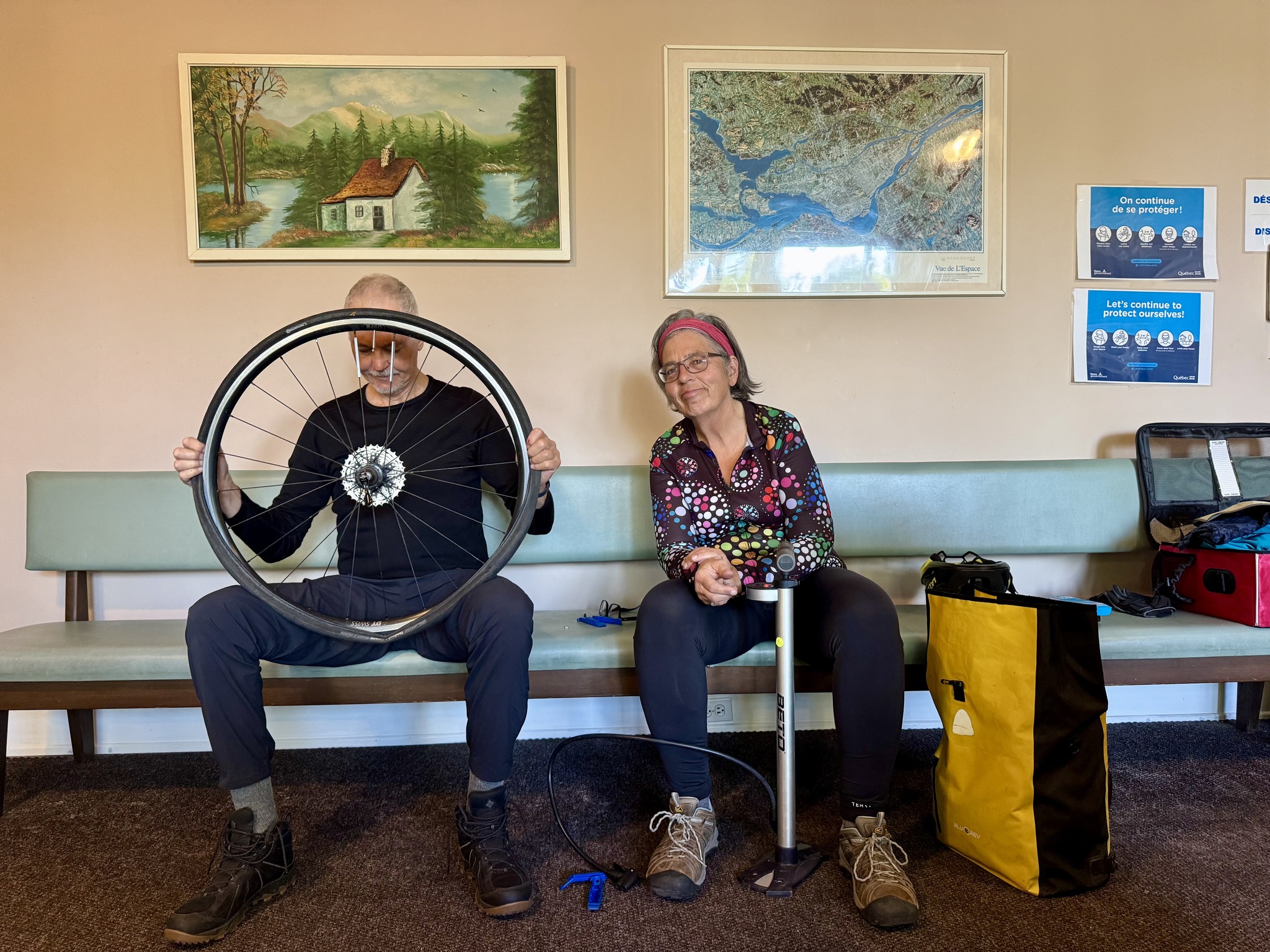
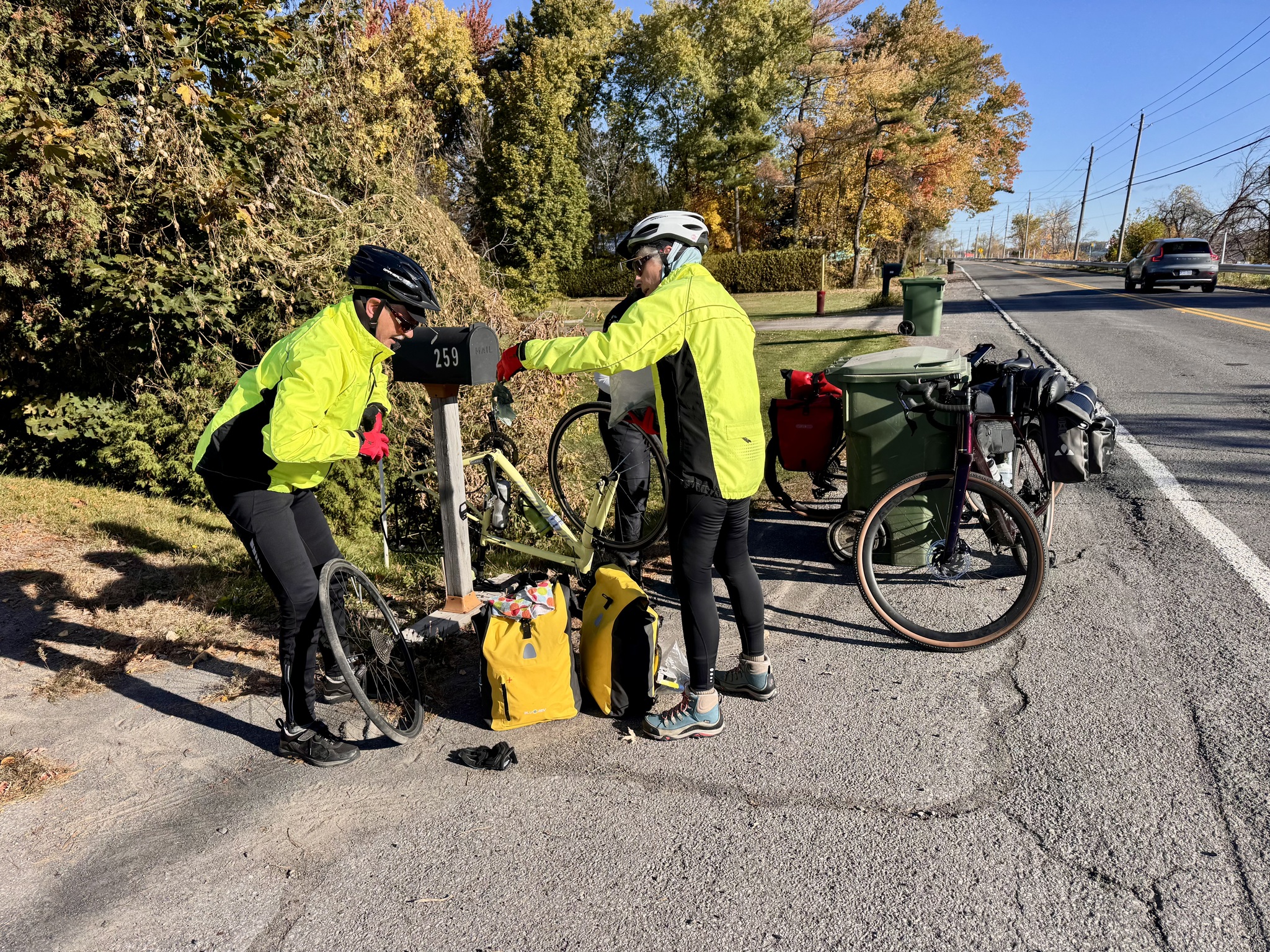
We were making really good time, and then Cindy got another flat. She didn’t have a new tube anymore, and I discovered that I left my repair kit somewhere, so I didn’t have a tube, either. Neither did David and Dayle. The first tube that we repaired failed when we pumped it up. We succeeded with the second. The first time. It delayed us an hour.

We’ve seen a number of these signs along the Vélo Routes.

Lanoraie had a lovely street of homes overlooking the St. Lawrence, and a beautiful church. 

They also had a short stretch of bi-directional cycle track through the town. Most of the time we were travelling on a good size shoulder outside of the towns.

Lavaltrie had an even larger church.

It had a beautiful park beside the church.

We stopped at a bakery in town and Cindy got a couple pastries. They didn’t have any tables inside so we just quickly snacked and then continued onto our planned. Lunch spot 10 km ahead.

We determined that there was a bike shop in town, and Cindy wanted to pick up a new tube, David and Dayle set off towards our lunch spot while Cindy and I stopped at the bike store. She got a tube, and we both pumped up our tires.

Lavaltrie also had cycling infrastructure through town.

We stopped at Tim Hortons for lunch in Saint-Sulpice.

Repentigny is an off island suburb of Montreal. There was a lot of new construction of mid-rise housing there.

We saw a number of these huge, fun map pins in Repentigny.

We crossed over two bridges from Repentigny to the island of Montreal. Both bridges had separated cycling infrastructure. On the first part of the first bridge the cycling infrastructure was under construction, so a lane was taken away from motor vehicle traffic for bikes.

Once we were on the island, we had cycling infrastructure most of the rest of the way back Saint Joseph’s Oratory of Mount Royal where we are staying for another three nights.

There was a really fabulous by directional cycle track through Parc de la Traversée. It consisted of a 4.25 km-long pedestrian path and a two-way bicycle path, as well as four themed rest stops.

At one point there was a choice of an on road bi-directional cycle track or the one in the park.

This is an example of the ubiquitous Montreal outdoor staircase to a second floor apartment.

Five years ago Av. Souligny  had one lane in each direction for cars with parking on both sides, and a narrow curb facing sidewalk on one side. It has been reconfigured to be only one way for motor vehicles, and has a bi-directional cycle track . Most of the parking was retained.

This was our first sighting of Olympic Park. Unfortunately, the incline elevator is being renovated. It was also being renovated when I was here in 2022. It was supposed to open for the 50th anniversary of the Olympic Games in 2026, but the work will not be done by then.

We rode through the Olympic site.

Adjacent to the site there were cycle tracks and a wide sidewalk.

We rode along Rue Rachel’s bi-directional cycle track and Mont-Royal taking roughly the same route as we did on day two of this trip when we explored Montreal by bike.

When we spotted the dome of the auditory, we knew we were almost done.

Here’s our finishing picture for the seven day, 520 km self supported part of our trip. It was a wonderful week and just flew by. I’m kind of sad it’s over, but grateful that we still have another two days to explore Montreal.

We returned to a restaurant we ate at last week and had sushi for dinner. Tomorrow we will ride along the LaChine Canal.